

Perhaps you’ve found yourself staring at a finished piece, feeling that something is missing. You’ve followed the pattern, chosen your colors, yet it lacks a certain depth, a quiet confidence you see in the work you admire.
The secret often isn’t in adding more color, but in taking it away. When you limit your palette, you invite texture to become the main voice of your work. Every knot, braid, and stitch comes forward, not as a means to fill a shape, but as a sculptural element in itself.
Here, you’ll discover how to use thread to build surfaces that catch the light, create shadows, and tell a story through touch. These ideas are more than just patterns; they are techniques for thinking about embroidery as a form of low-relief sculpture. This is your invitation to create art for your walls that feels as intentional and serene as you want your home to be.
1. Sculpt a Mountainscape with Dimensional Knots

Instead of filling shapes with satin stitch, build topographic layers using French knots in varying sizes.
Use a thicker, six-strand floss for the foreground areas to create a dense, bumpy texture that suggests closeness.
For the distant peaks and snowcaps, switch to a finer, two-strand thread and use bullion knots or long straight stitches to create a smoother, more elongated texture.
This technique turns a simple landscape into a tactile relief map, inviting the viewer to not just see, but feel the dimension.
2. Render Architecture with Stitch Density

Capture a cityscape not with color, but with the texture of light and shadow on building facades.
On a dark, tightly woven canvas, use a single strand of white or silver thread to create different surfaces.
Fill one building with dense, vertical satin stitches to suggest reflective glass, and another with tightly packed seed stitches for a concrete-like finish.
This contrast in stitch patterns creates a dynamic, architectural rhythm that is both minimal and incredibly detailed.
3. Couch Chunky Roving for Soft Sculptural Art
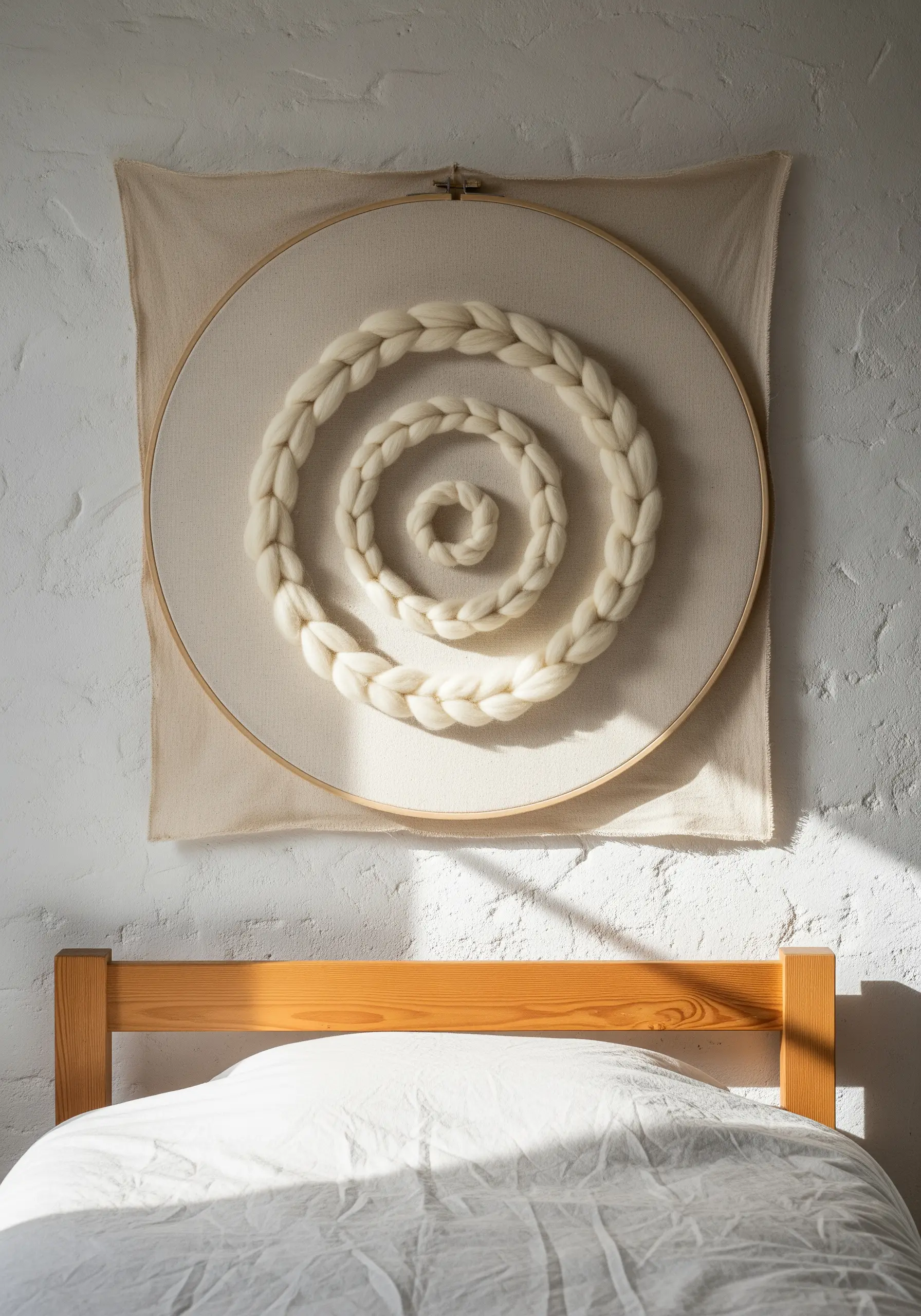
For a piece with dramatic, soft dimension, work with unspun wool roving instead of traditional thread.
Lay the roving on your fabric in the desired shape—a spiral, a wave, or an abstract line—and use a matching, standard embroidery floss to tack it down with tiny, invisible stitches.
Space your couching stitches about half an inch apart on straightaways and closer together on curves to maintain the form without compressing the wool’s loft.
This is one of the quickest ways to create large-scale modern yarn wall art with a high-impact, cozy feel.
4. Curate a Gallery of White-on-White Stitch Samplers
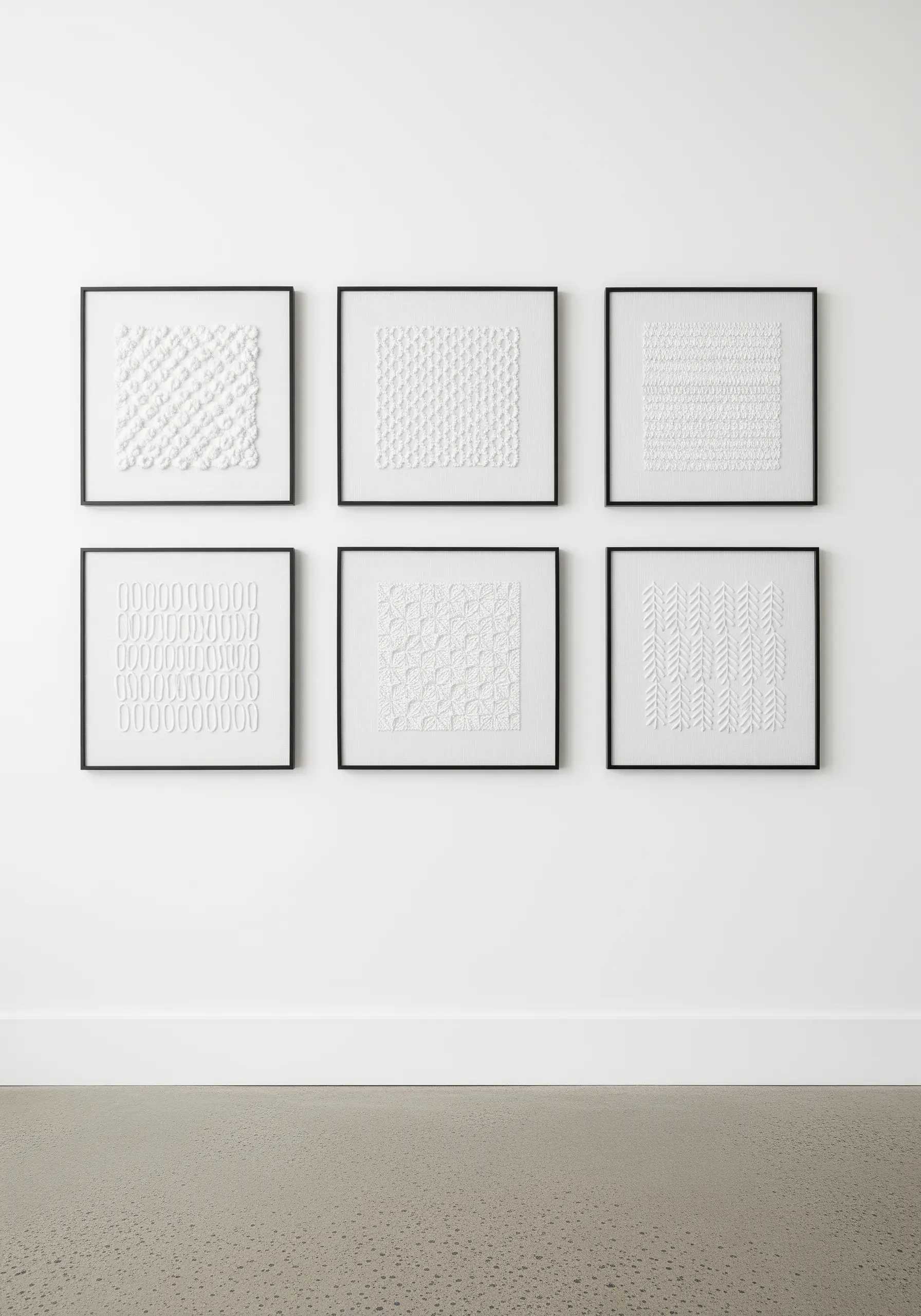
Turn your stitch practice into a sophisticated art installation by creating a series of small, monochrome samplers.
Choose six to nine different textural stitches—like the woven picot, drizzle stitch, cast-on stitch, or raised stem band—and dedicate one square to each.
Working with white thread on white linen forces the eye to focus solely on the form and shadow of each stitch.
Frame them identically in a grid to create a ‘stitch library’ that feels like a collection of delicate textile fossils.
5. Stitch a Soundwave for Personalized Minimalism

Translate a meaningful sound—a laugh, a line from a song, a baby’s heartbeat—into a piece of tactile art.
Print a visual of the soundwave and transfer the outline to your fabric.
Use a simple running stitch or backstitch to fill the shape, varying the stitch height to match the peaks and valleys of the audio.
Stitching on a dark, wide-format canvas in a single contrasting color turns personal data into a powerful, abstract statement piece for your wall.
6. Weave and Couch Rope on Open-Weave Fabrics
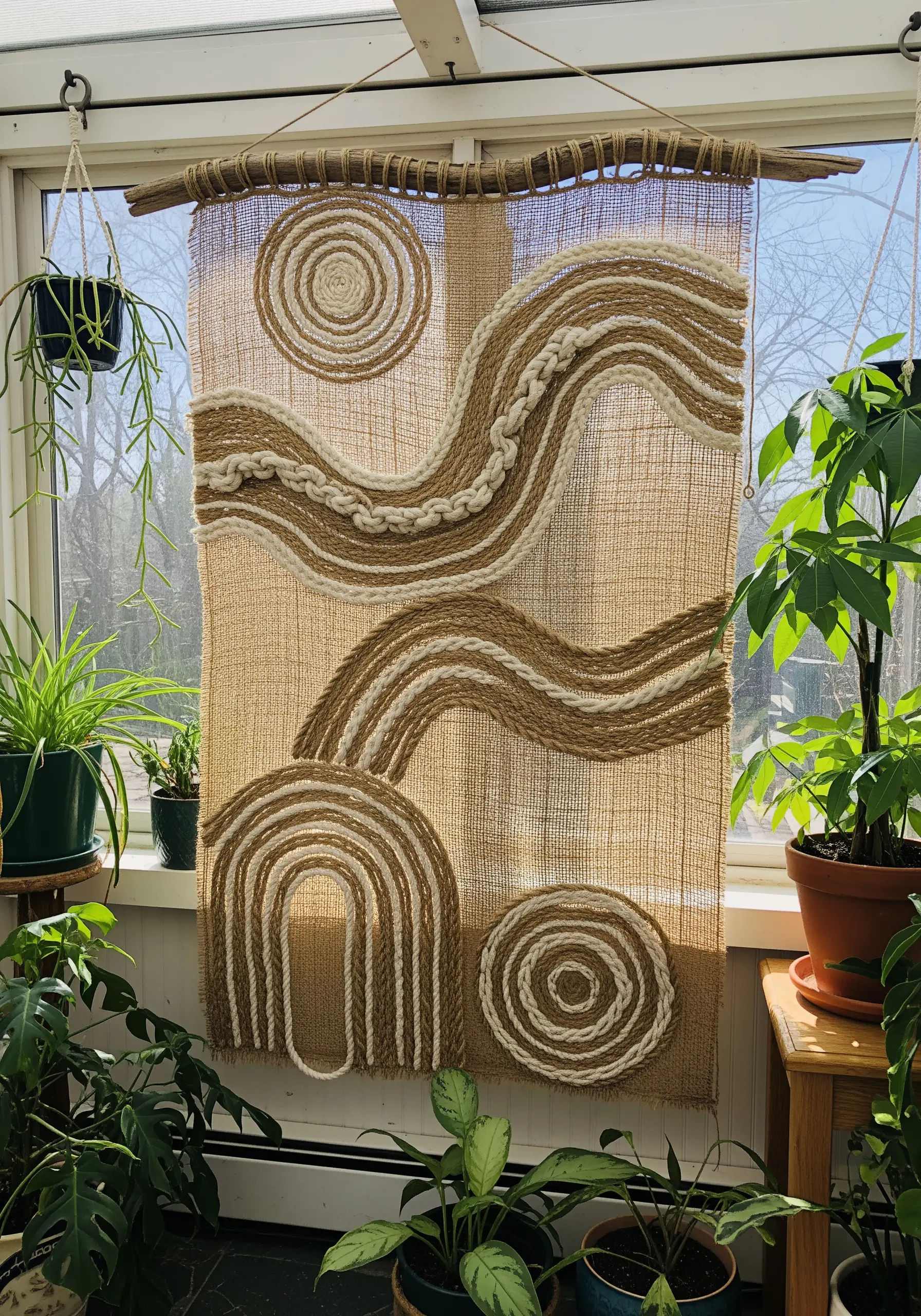
Embrace rustic materials by working with jute rope or thick cotton cording on a burlap or loose-weave linen background.
Instead of stitching *through* the fabric, couch the thick fibers onto the surface using a matching heavy-duty thread for a bold, graphic look.
Play with different rope textures—a smooth cotton rope next to a braided jute—to add another layer of contrast.
This method allows you to create large, boho-inspired textile wall art that highlights the raw beauty of natural fibers.
7. Craft 3D Clouds with Padded Appliqué
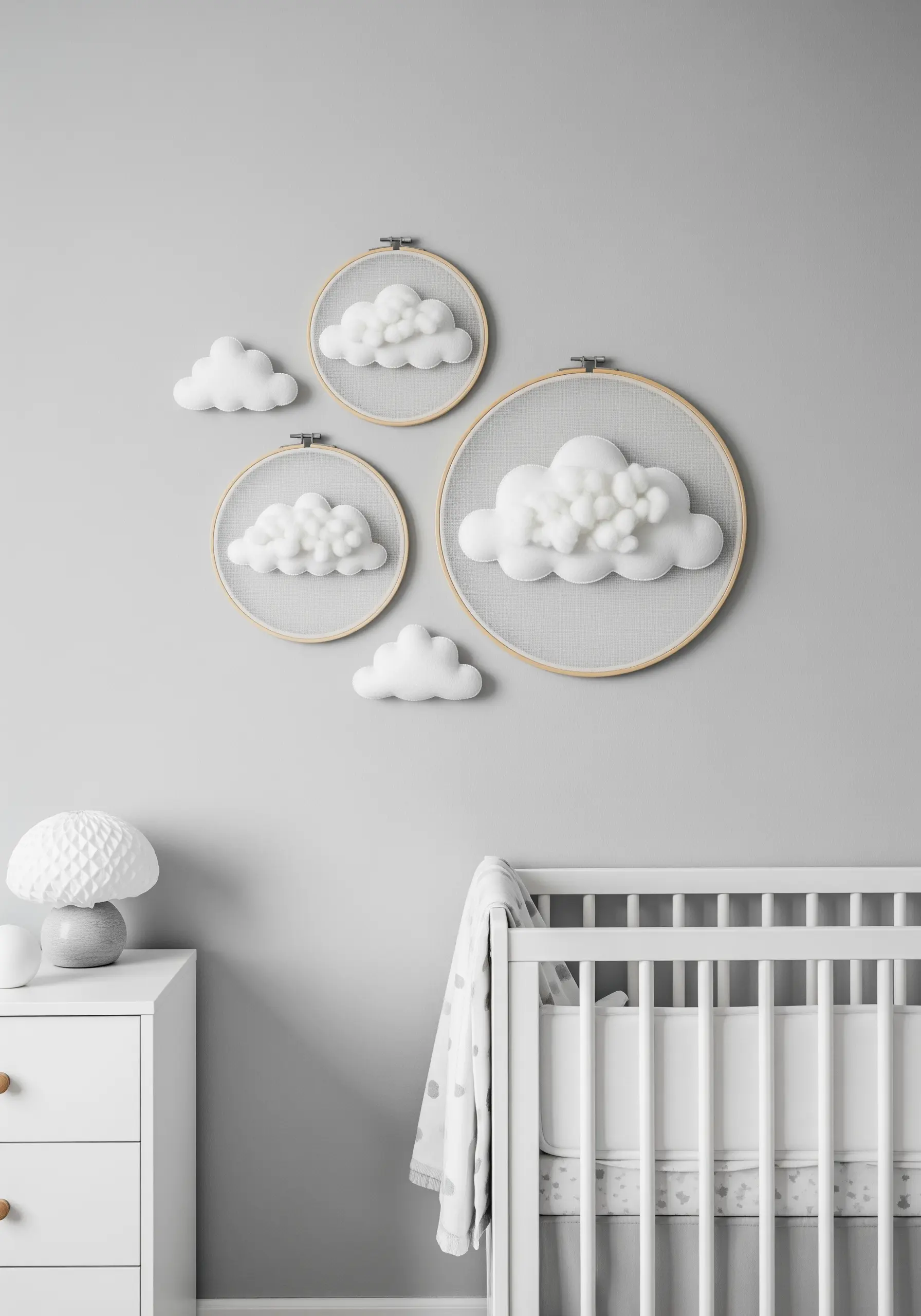
Create soft, dimensional clouds that literally float off the fabric for a dreamy, serene effect.
Cut your cloud shape from a piece of felt or soft cotton fabric, then place a small amount of polyester stuffing in the center on your base fabric.
Lay your felt shape over the stuffing and stitch it down around the edges using a small, neat blanket stitch.
For extra puffiness, you can add clusters of French knots to the surface of the cloud, creating a whimsical addition to nursery walls.
8. Define Geometric Knots with Padded Satin Stitch

Give intricate geometric or Celtic knot patterns a raised, three-dimensional quality using padded satin stitch.
First, outline your knot design with a split stitch. Then, fill the inside of the lines with small, straight seed stitches, laying them down as a padding layer.
Finally, cover the entire padded area with smooth, tight satin stitches worked perpendicular to the direction of the line.
This technique makes the lines pop from the background, creating a sharp, sculptural effect that emphasizes form and precision.
9. Compose a Vertical Sampler of Braids and Chains

Create a tall, narrow art piece that serves as a modern encyclopedia of textural stitches.
On a long strip of fabric, work different linear stitches side-by-side, such as the Pekinese stitch, braided chain stitch, and heavy chain stitch.
Using a single color of thread forces the viewer to appreciate the unique structure and shadow of each technique.
This is a meditative project that not only looks stunning in a narrow space like a kitchen or hallway but also sharpens your skills.
10. Command a Room with Large-Scale Couched Cording
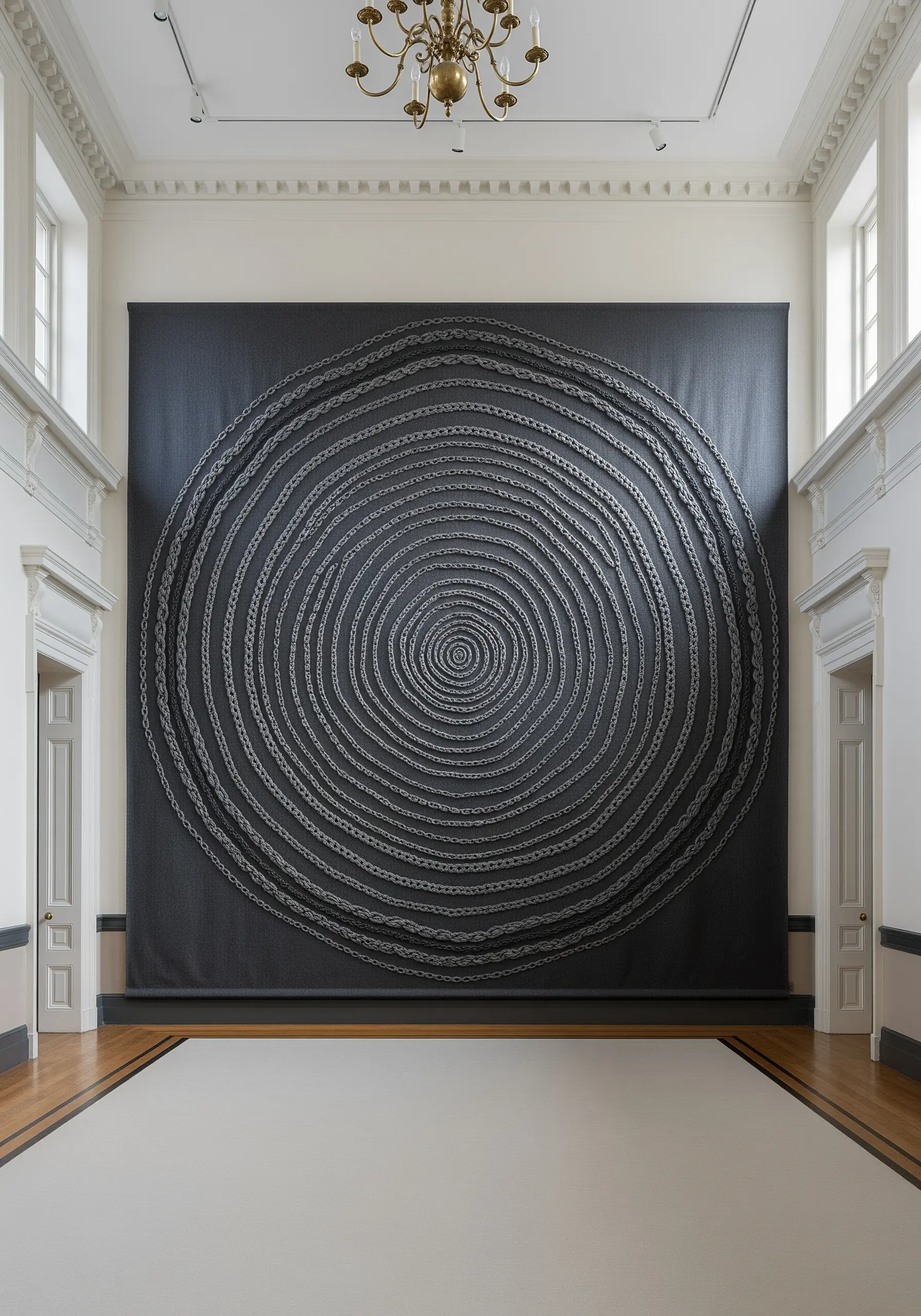
To create a truly monumental piece, think beyond the hoop and work with architectural-scale materials.
On a large, stretched canvas, map out a simple, bold design like concentric circles or a single, meandering line.
Use a thick, braided cotton rope or utility cord and couch it onto the canvas with a heavy-duty, matching thread and a curved upholstery needle.
This method transforms a simple line into a statement-size embroidered textile hanging, proving that texture can command a space more powerfully than color.
11. Pair Representational and Abstract Textures
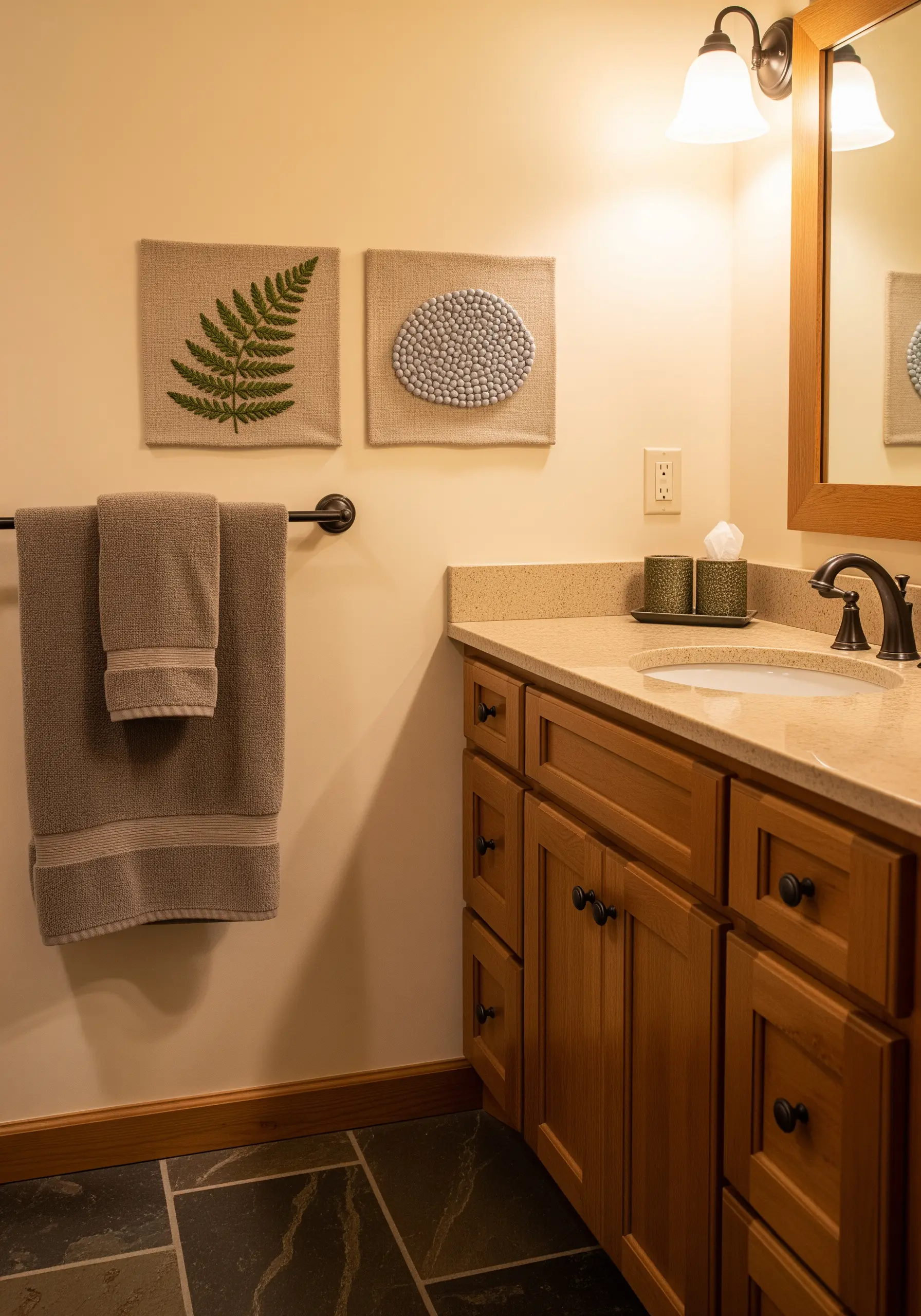
Create a sophisticated diptych by pairing a recognizable botanical motif with a purely textural abstract.
On one canvas, stitch a fern using a fishbone stitch for the leaves to create a smooth, directional pattern.
On a second canvas of the same size, fill the surface with dense French knots or bullion loops using a thread of a similar color.
The contrast between the structured form of the fern and the organic chaos of the knots creates a visual dialogue that is balanced and compelling.
Focusing on realistic leaf vein details you can stitch on one side makes the abstract texture on the other even more impactful.
12. Radiate Energy with Directional Stitches
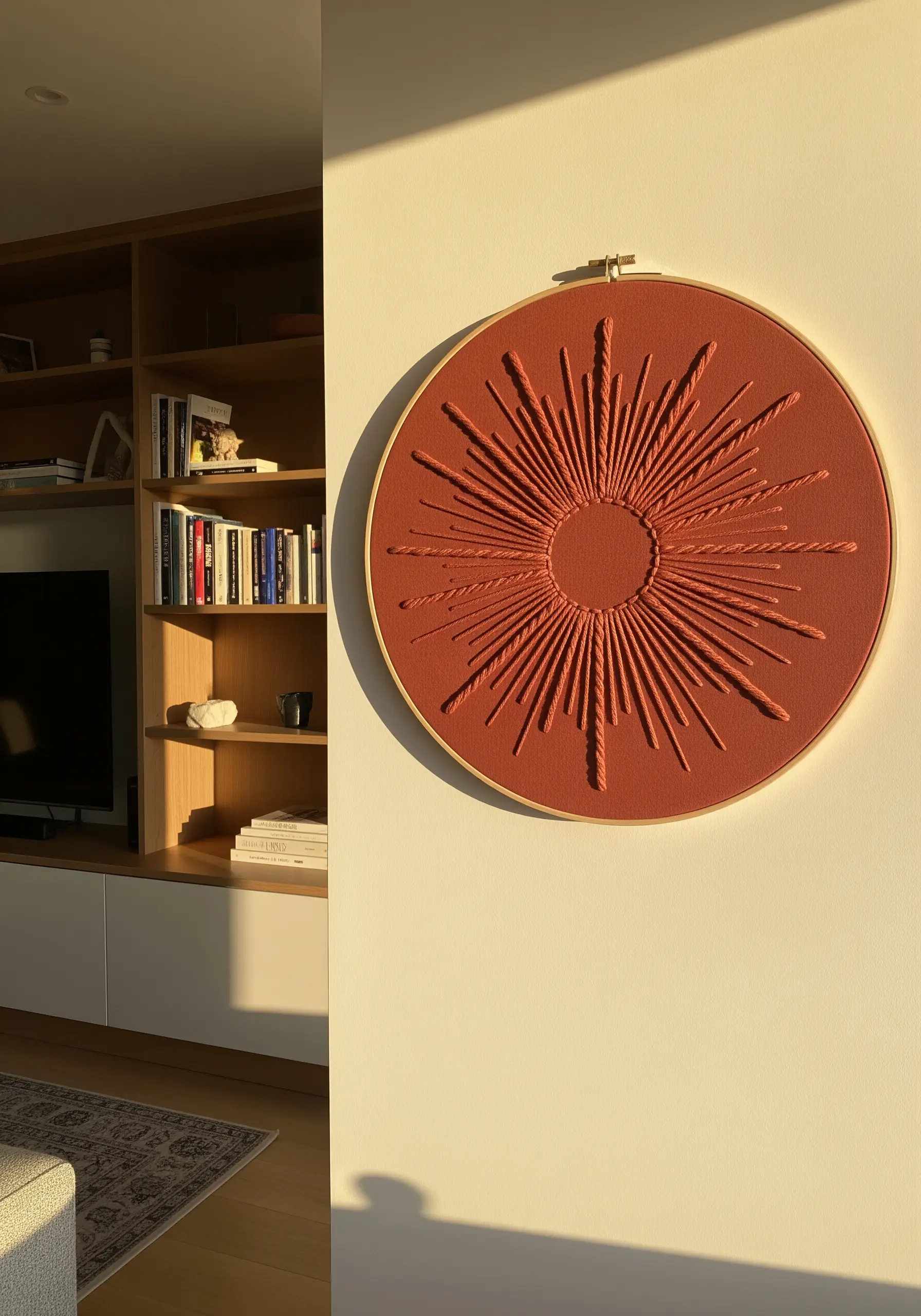
Capture the dynamic energy of a sunburst by strategically varying your stitch length and type.
Start with a central circle of satin stitch, then work straight stitches radiating outwards.
Instead of making them all uniform, alternate long, single stitches with shorter, thicker lines made from a twisted chain stitch or stem stitch.
This subtle variation breaks up the pattern and creates a more organic sense of light and movement, making the piece feel alive.
13. Depict Motion with Shifting Stitch Density

Embroider the power and grace of a wave using only white thread on a white canvas.
Create the frothy crest of the wave with hundreds of tightly packed French knots, using a six-strand floss for maximum volume.
For the smooth face and base of the wave, transition to long, flowing straight stitches using just one or two strands of floss.
The dramatic shift from high-density, chaotic knots to smooth, directional lines is what gives the piece its incredible sense of movement and depth.
14. Embrace Freeform with an Abstract Fiber Collage

Let go of patterns and plans and build a purely intuitive, textural surface.
On a stretched canvas, combine different fibers and techniques without a set design: create coils of thick yarn, dense patches of French knots, flowing lines of chain stitch, and even macrame-style knots.
Allow elements to overlap and build upon each other, focusing on the interplay of different textures and thicknesses.
These abstract thread layering techniques create a rich, complex piece that is deeply personal and endlessly fascinating to look at.
15. Create Industrial Elegance with a Stitched Chain
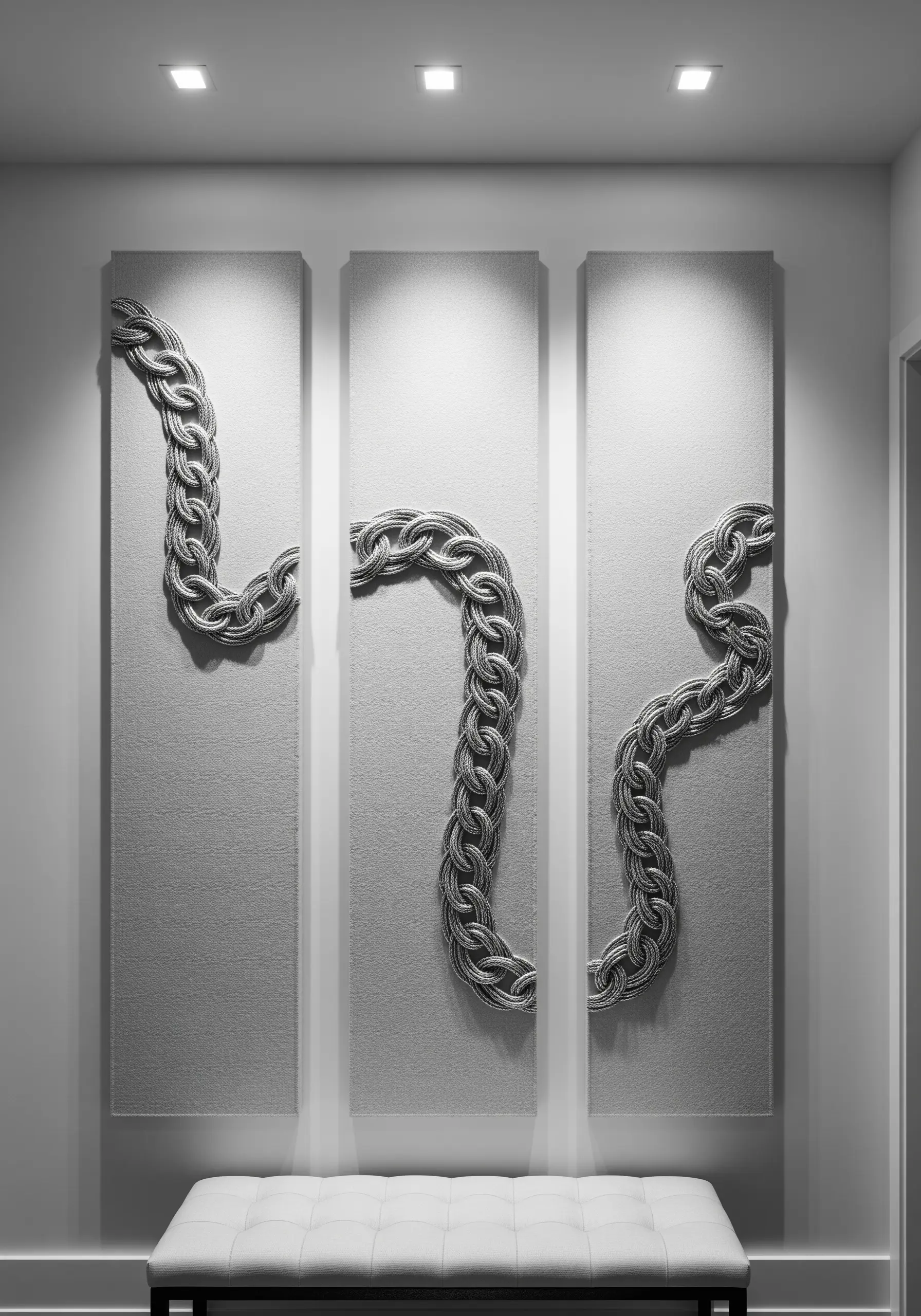
Mimic the look of a heavy, metallic chain using padded stitch techniques for a modern, industrial aesthetic.
Use a thick, silvery-grey cord or a heavy-plied metallic thread to create the links.
To give each link a rounded, 3D effect, use a padded satin stitch or couch the cord down tightly, ensuring each link interlocks realistically.
Splitting the design across multiple vertical panels adds a sense of rhythm and movement, turning a simple object into a piece of graphic art.
16. Explore Harmony with Negative Space

The most powerful element in your design can be the part you don’t stitch.
Instead of outlining a shape, fill the area *around* it with a single, uniform texture, like hundreds of tiny, detached chain stitches or eyelets.
This technique reverses the typical embroidery process, making the bare fabric the focal point.
An abstract thread design using negative space creates a quiet, contemplative piece that feels both full and empty at the same time.
17. Map the Stars with Knots and Lines
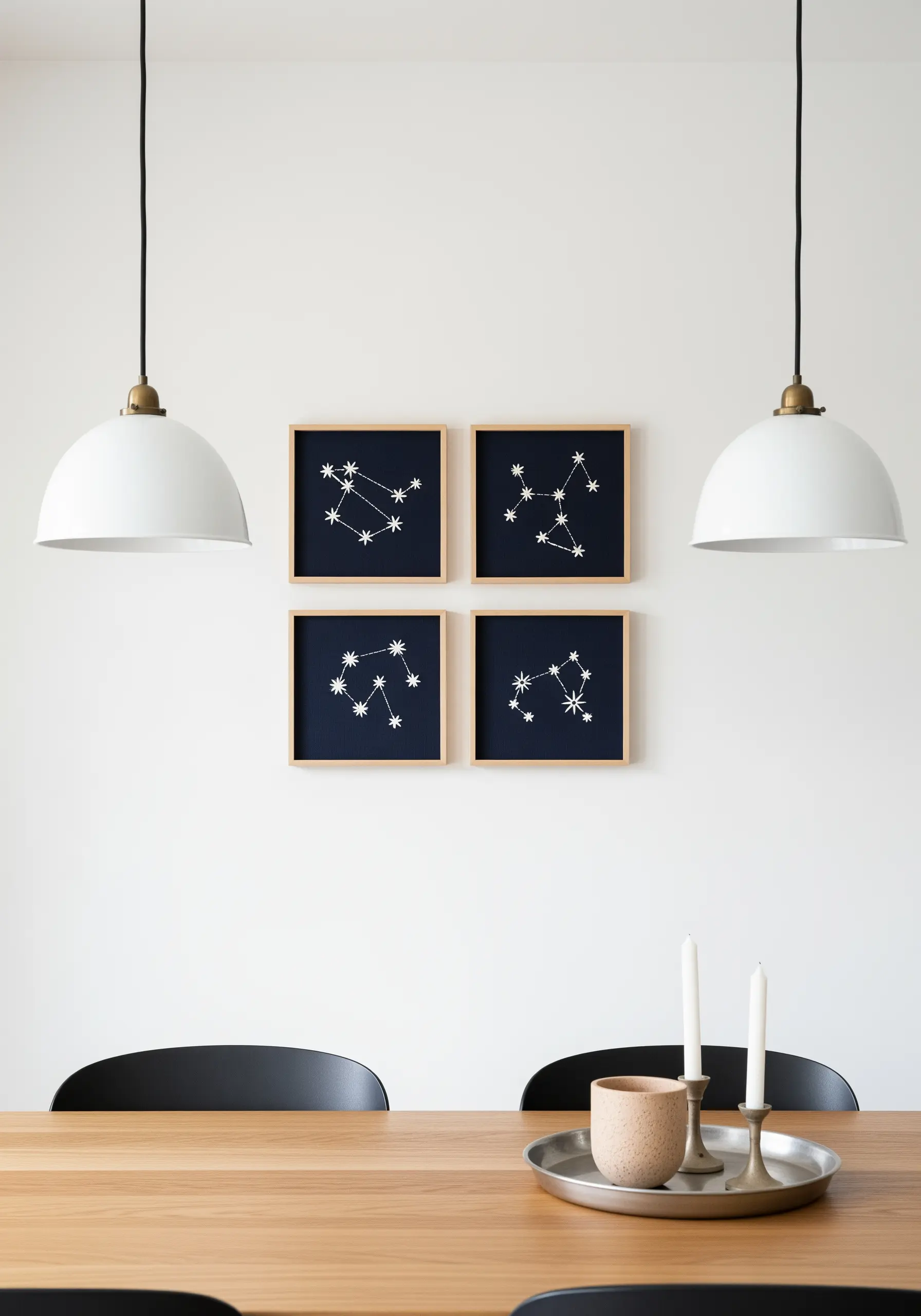
Stitch your favorite constellations for a design that is both personal and universally understood.
On a dark navy or black linen, use a crisp white or metallic silver thread to stand out.
Use French knots for the main stars, making them slightly larger or smaller to indicate their brightness. Connect them with fine, single-strand backstitches.
Framing a small collection of them creates a celestial gallery wall that is minimal, graphic, and full of quiet wonder.
18. Construct Architectural Forms with Couched Cord
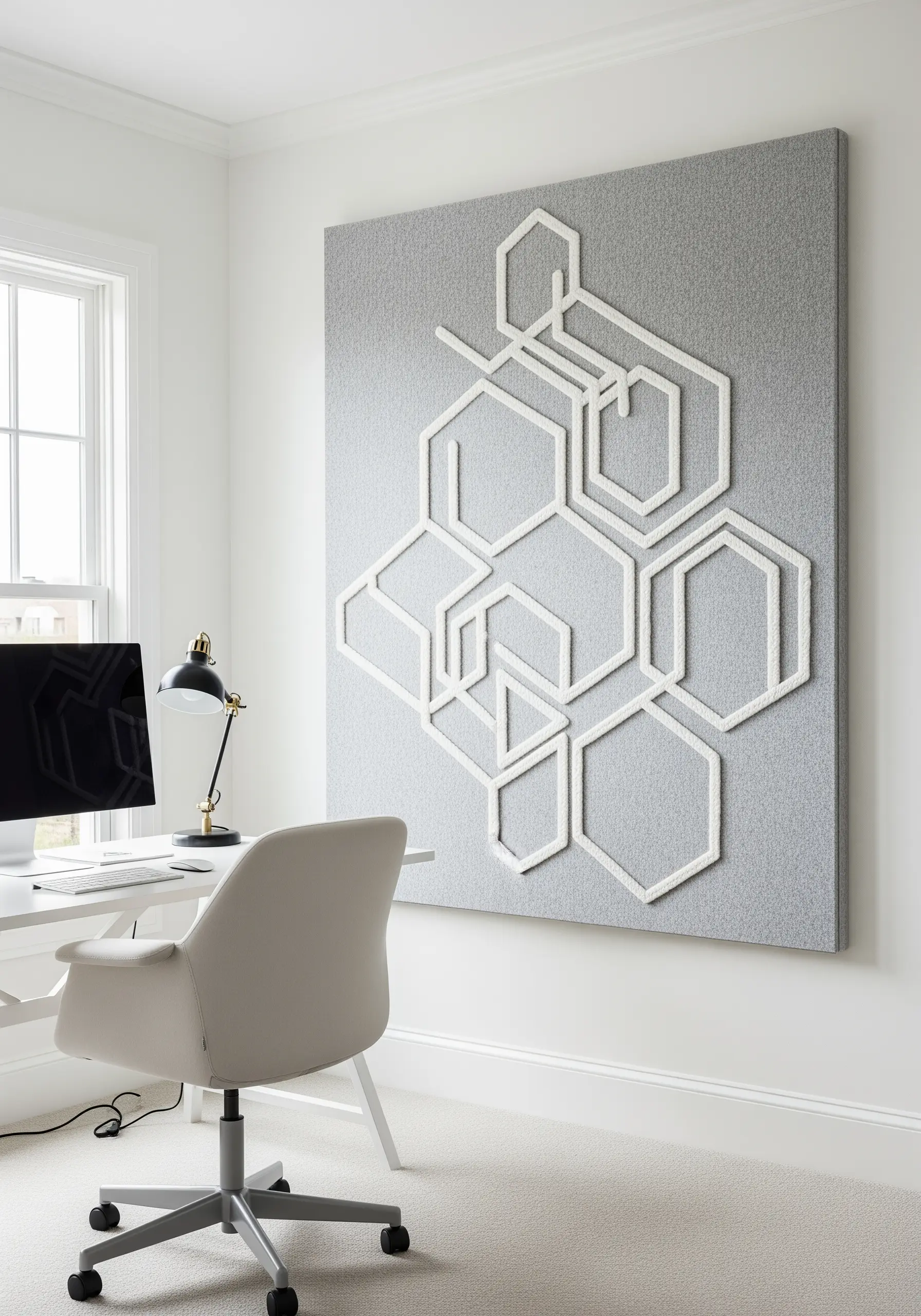
For clean, graphic lines with a tactile presence, couch thick cotton cord onto a textured background like felt or heavy linen.
Draw your geometric design first, then carefully lay the cord along the lines, securing it with small, matching stitches.
The contrast between the smooth, raised cord and the flat, matte fabric creates a sharp architectural feel.
This is a perfect geometric framed embroidery pattern for a modern office or living space, adding texture without adding clutter.


