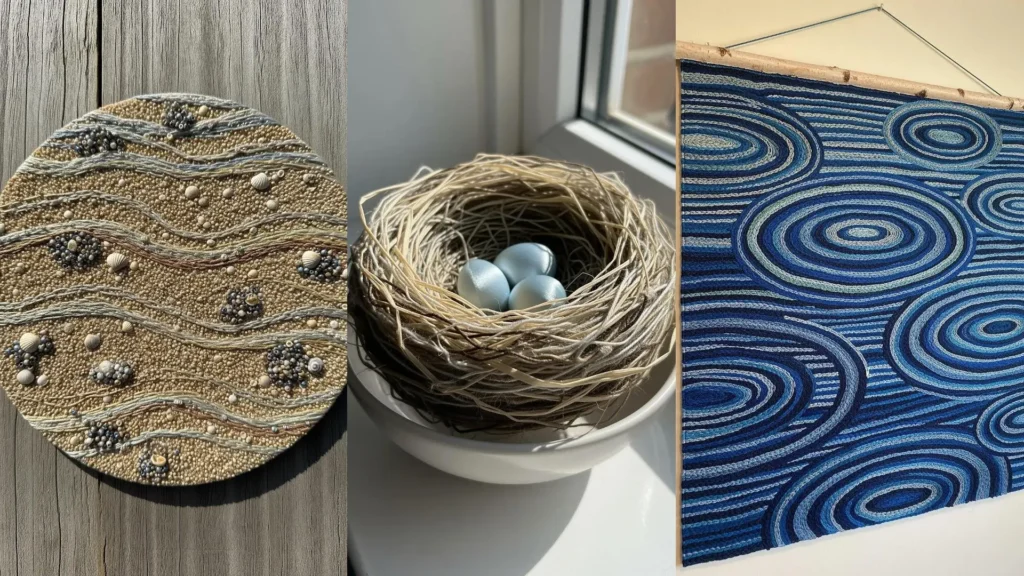
It’s easy to feel that the next step in your embroidery journey requires more: more colors, more complex patterns, more time. But what if the path to more beautiful, intentional work is actually about subtraction, subtlety, and focus?
True artistry in stitching often comes from small, deliberate choices. It’s in the way you angle a satin stitch to catch the light, the decision to use one strand of thread instead of two, or the courage to leave a space beautifully empty. These subtle shifts are what transform a simple project into a piece of personal art.
This collection is an invitation to explore that quiet confidence. Here, you’ll find inspiration rooted in earthy textures, balanced compositions, and the simple elegance of a well-placed stitch. Let this be your guide to creating work that feels not just finished, but truly alive.
1. Architectural Arches with Textural Contrast
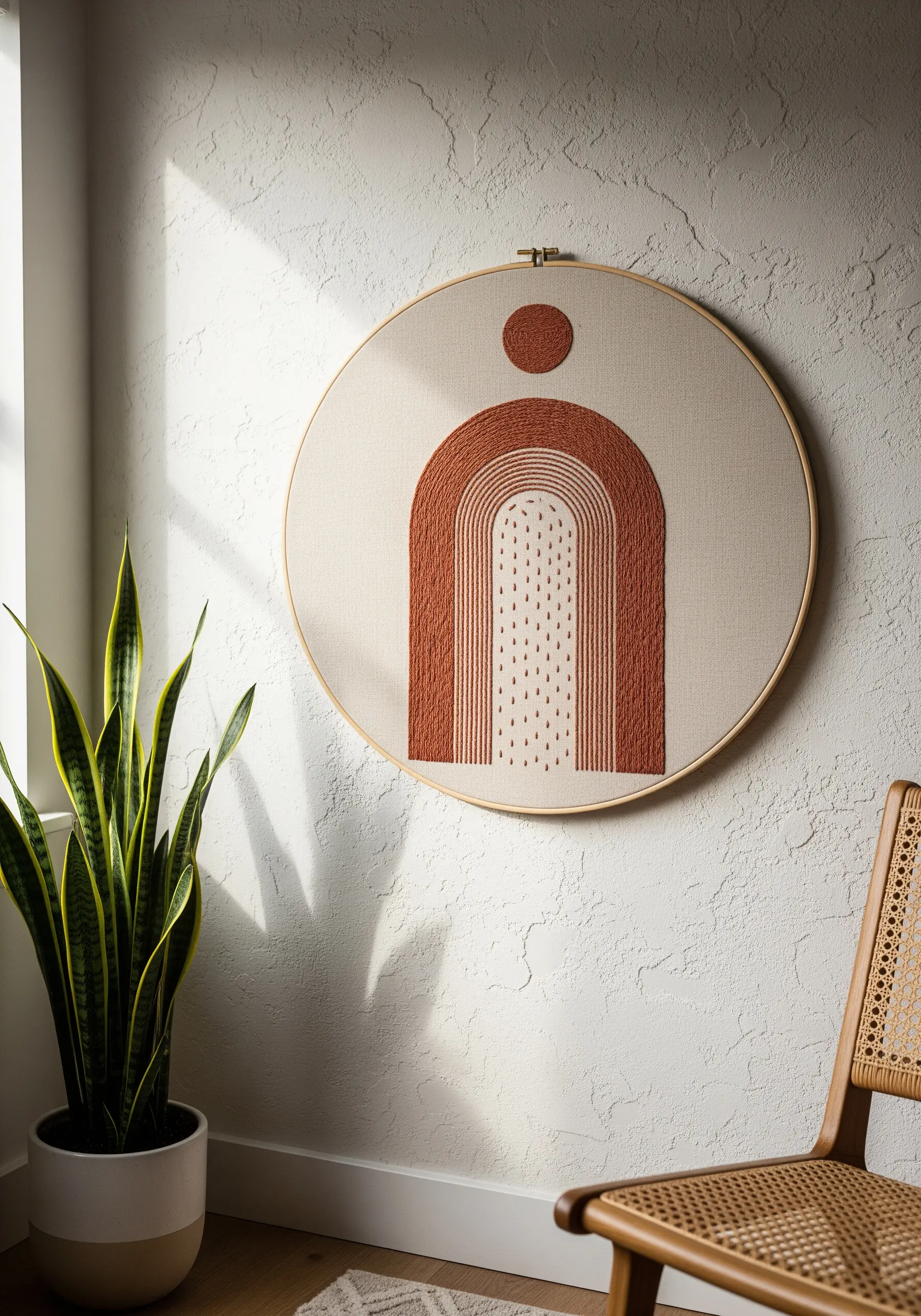
Create a powerful sense of depth by pairing dense, smooth satin stitch with a scattering of delicate seed stitches.
For the solid arch, use three to four strands of a matte cotton floss in a rich terracotta to achieve a flat, opaque finish.
Inside the arch, switch to a single strand of thread in a slightly lighter tone. This subtle shift in weight and color creates a gentle, rain-like texture that draws the eye inward, adding complexity without clutter.
2. Layered Landscapes with Directional Stitching

To build abstract thread landscapes with convincing depth, let the direction of your stitches define the terrain.
Use a long-and-short stitch, but angle the stitches for each mountain range differently—some horizontal, some diagonal—to mimic natural geological layers.
Work with a palette of five or six analogous colors, like dusty blues and sage greens, blending them subtly where the hills overlap to create soft, atmospheric transitions.
3. Dimensional Pampas Grass with Turkey Work
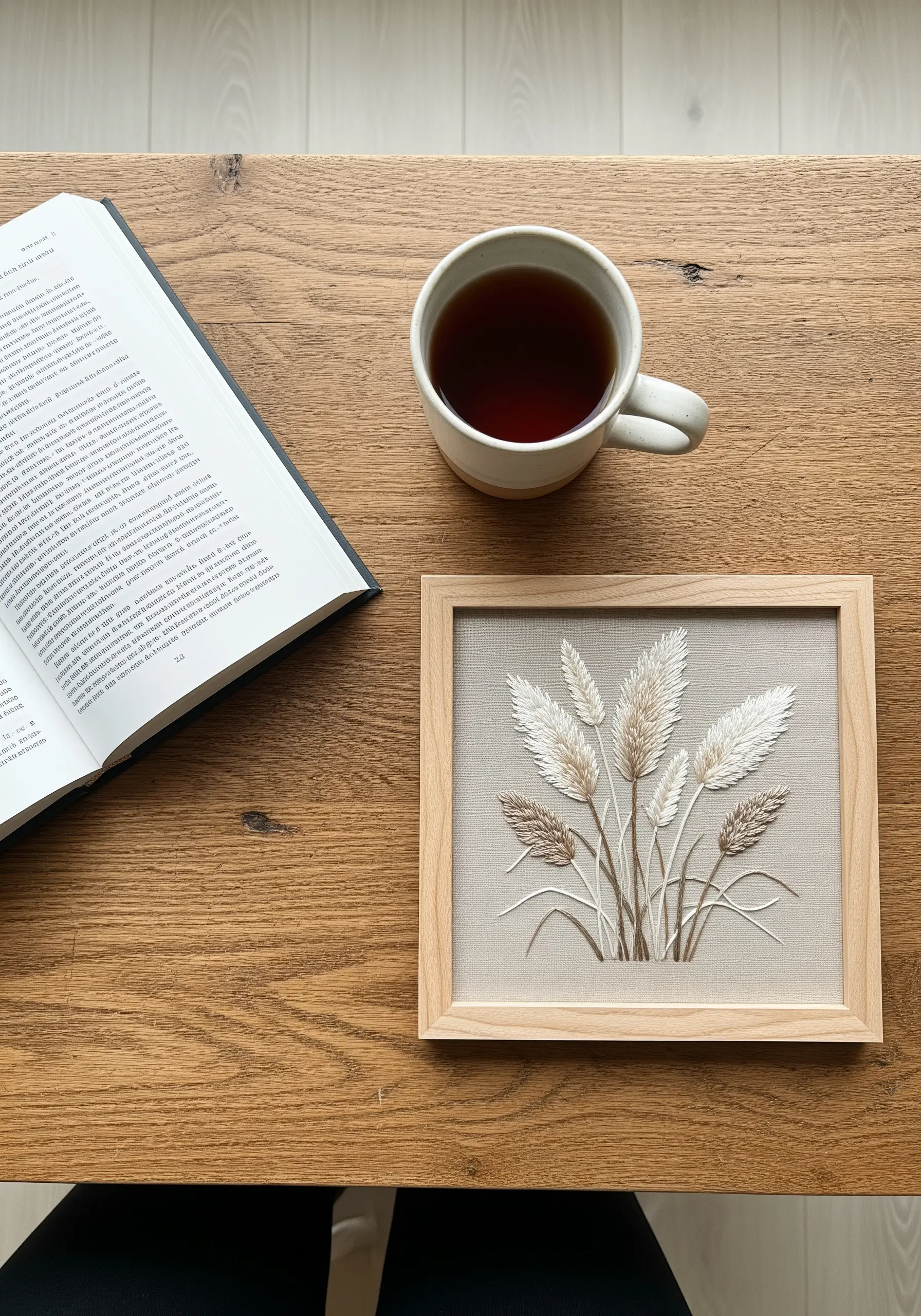
For convincingly fluffy textures that stand off the fabric, the turkey work stitch is your best technique.
Work rows of loops, keeping them dense for a full look, and then carefully snip them open with sharp embroidery scissors.
Contrast these feathery plumes with sleek, simple stems and seed heads stitched in a clean satin or backstitch. This juxtaposition of textures is what makes the final piece so visually engaging.
4. Celestial Motifs with Intricate Fill Stitches
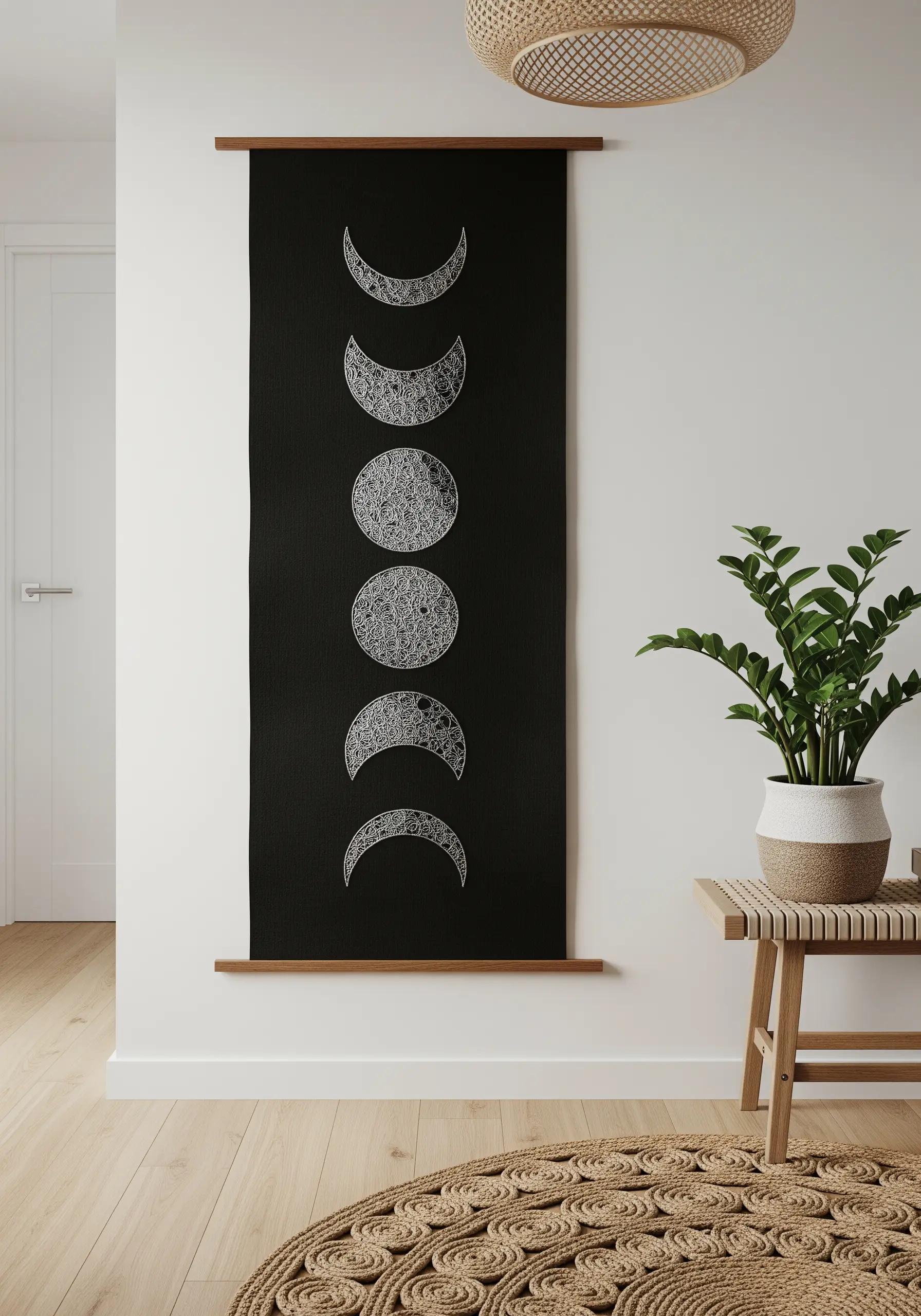
Elevate simple moon phase outlines by treating them as tiny canvases for detailed fill patterns.
On high-contrast black fabric, use a single strand of bright white or silver metallic thread to create intricate designs inside each shape.
Experiment with latticework, woven wheel stitches, or tiny, patterned French knots. This approach turns a graphic motif into a delicate, lace-like study of texture and light.
5. Sculptural Landscapes with Yarn Couching
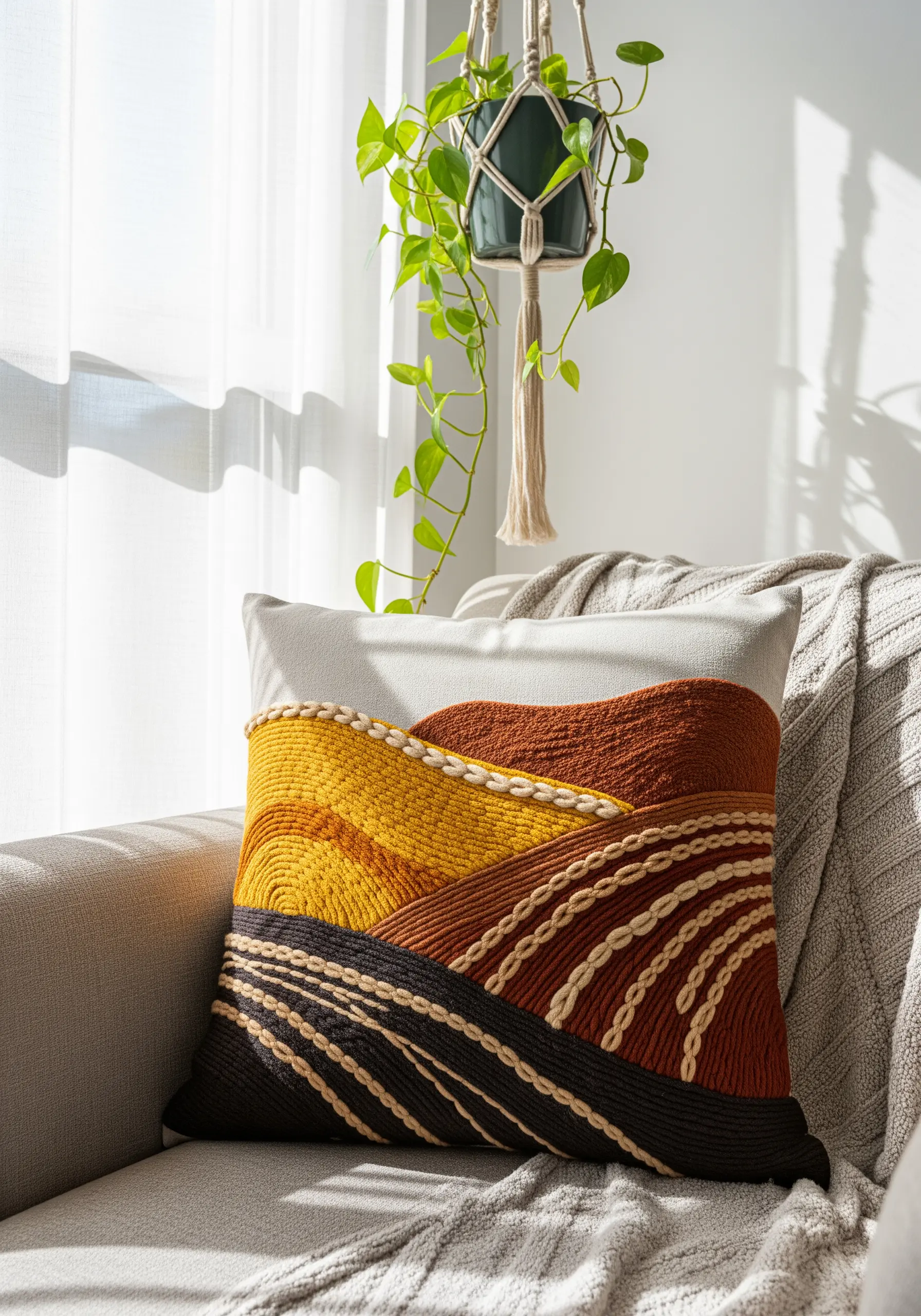
For bold, textural lines that cover ground quickly, couching is an incredibly effective technique.
Lay down thick yarn or roving in the shape of hills and fields, then use a thinner, matching embroidery floss to tack it to the fabric with small, evenly spaced stitches.
This method adds dimension and a satisfyingly tactile quality, making it perfect for decorative pillows and wall hangings.
6. Expressive Botanicals with Minimal Line Art

You can capture the complex essence of a flower with just a single, unbroken line.
Use a stem stitch or backstitch with two strands of floss for a clean, defined look. The key is to let your line flow, varying the length of your stitches slightly to add a sense of organic movement.
This minimalist embroidery design feels both modern and timeless, especially when stitched in a single earthy tone on natural linen.
7. Three-Dimensional Texture with Woven Picot Dots
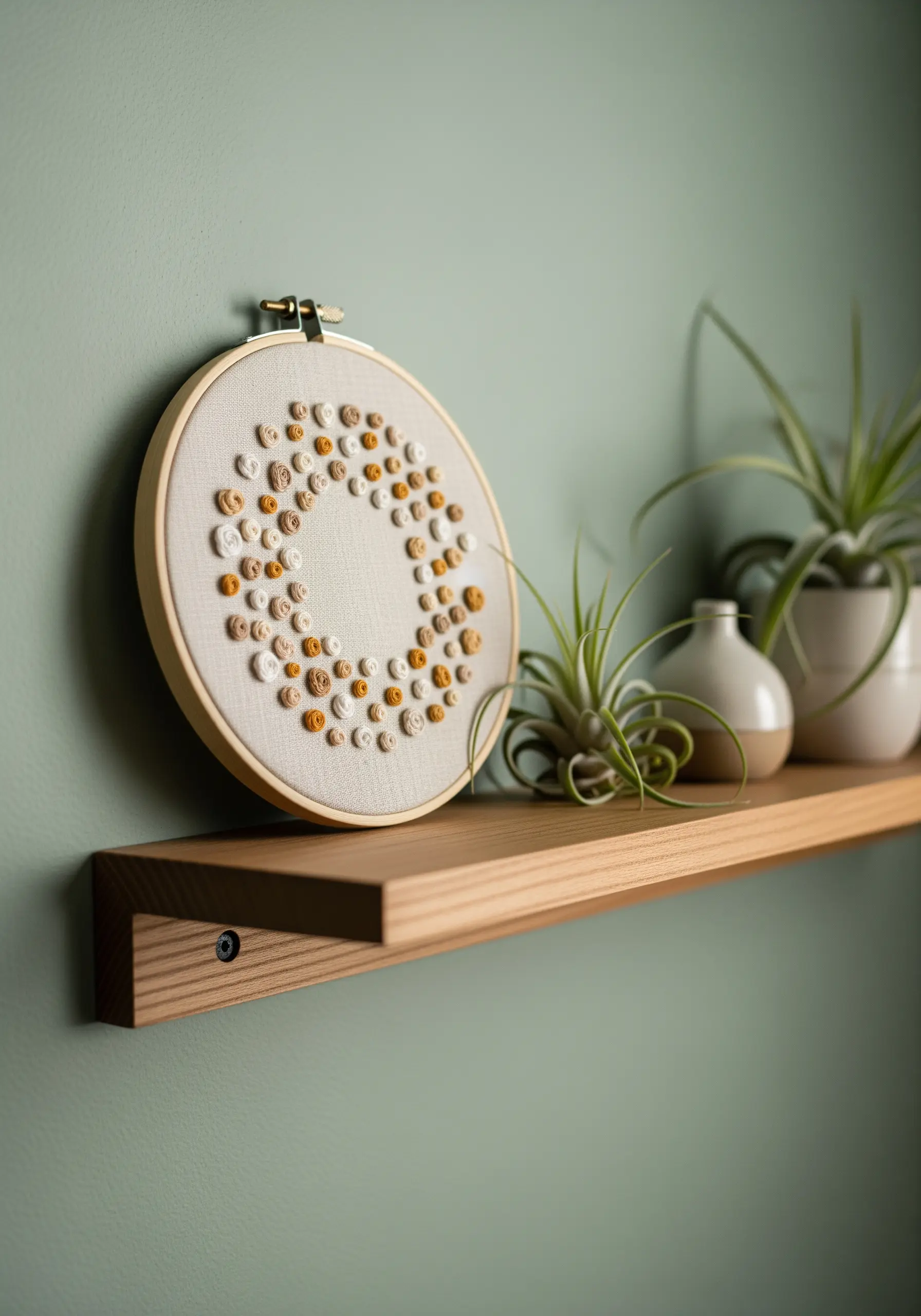
When you want texture that literally stands up from the fabric, the woven picot stitch is a beautiful alternative to French knots.
Create a foundation of three or five straight stitches radiating from a central point, then weave your thread over and under these spokes to build a raised, woven dot.
By varying the tension and number of wraps, you can create dots of different sizes, perfect for forming a textural wreath or abstract pattern.
8. Architectural Lines with Raised Chain Stitch

To make a bold graphic statement on home textiles, switch from floss to a thicker fiber like wool yarn.
Use a large-eyed needle to work a raised or heavy chain stitch. This stitch creates a prominent, braided line that adds substantial texture and visual weight to your design.
It’s an excellent choice for geometric patterns on blankets, pillows, or rugs where you want the design to feel truly integrated with the object.
9. Botanical Triptychs with Satin Stitch Shading
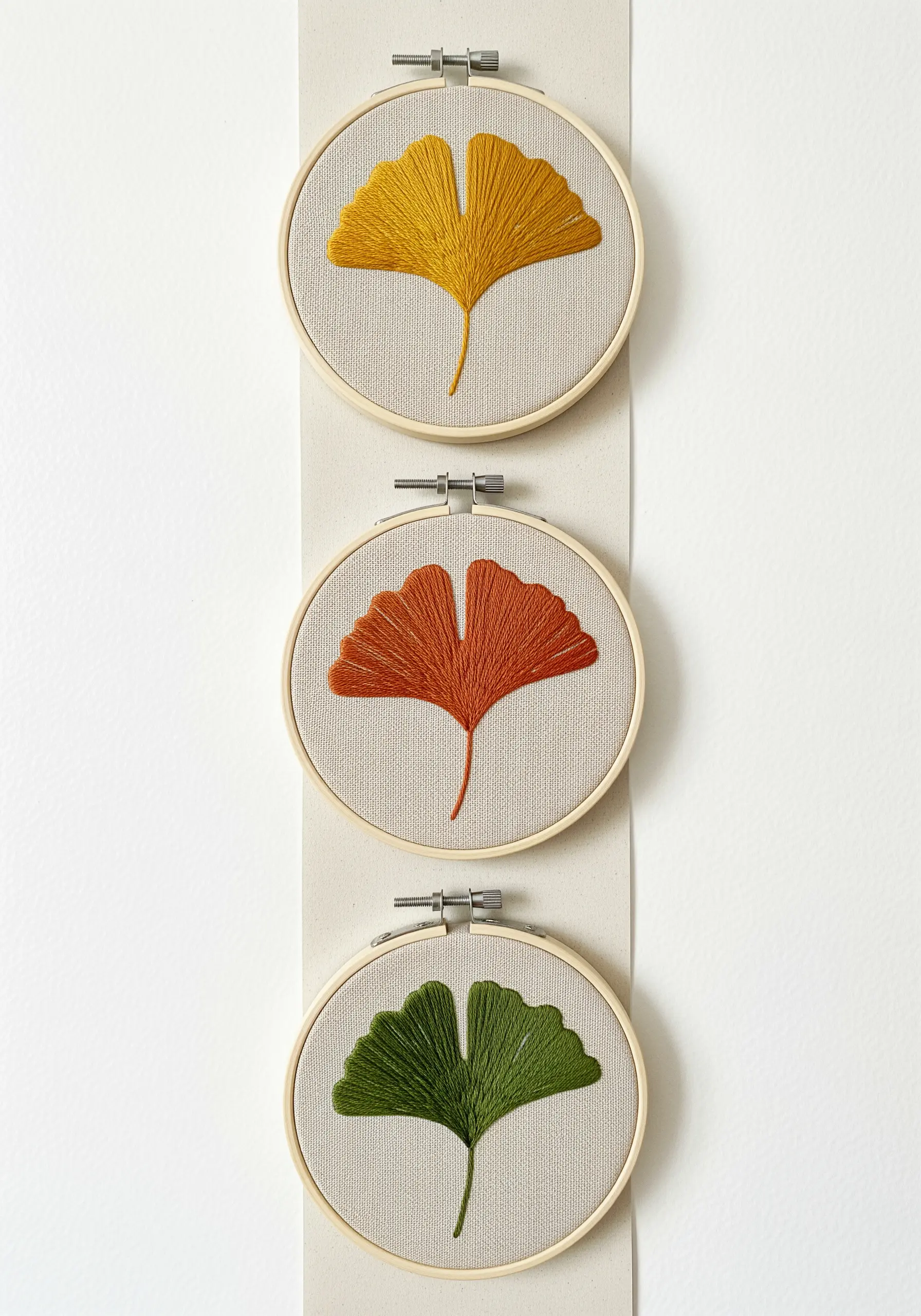
Create a sophisticated, cohesive display by stitching the same motif across three separate hoops, using a different seasonal color for each.
For a ginkgo leaf, orient your satin stitches to follow the natural, fanning veins of the leaf. This directional stitching technique creates subtle light and shadow, giving a flat shape beautiful dimension.
Display them vertically or in a tight cluster for maximum impact.
10. Elegant Borders on Everyday Linens
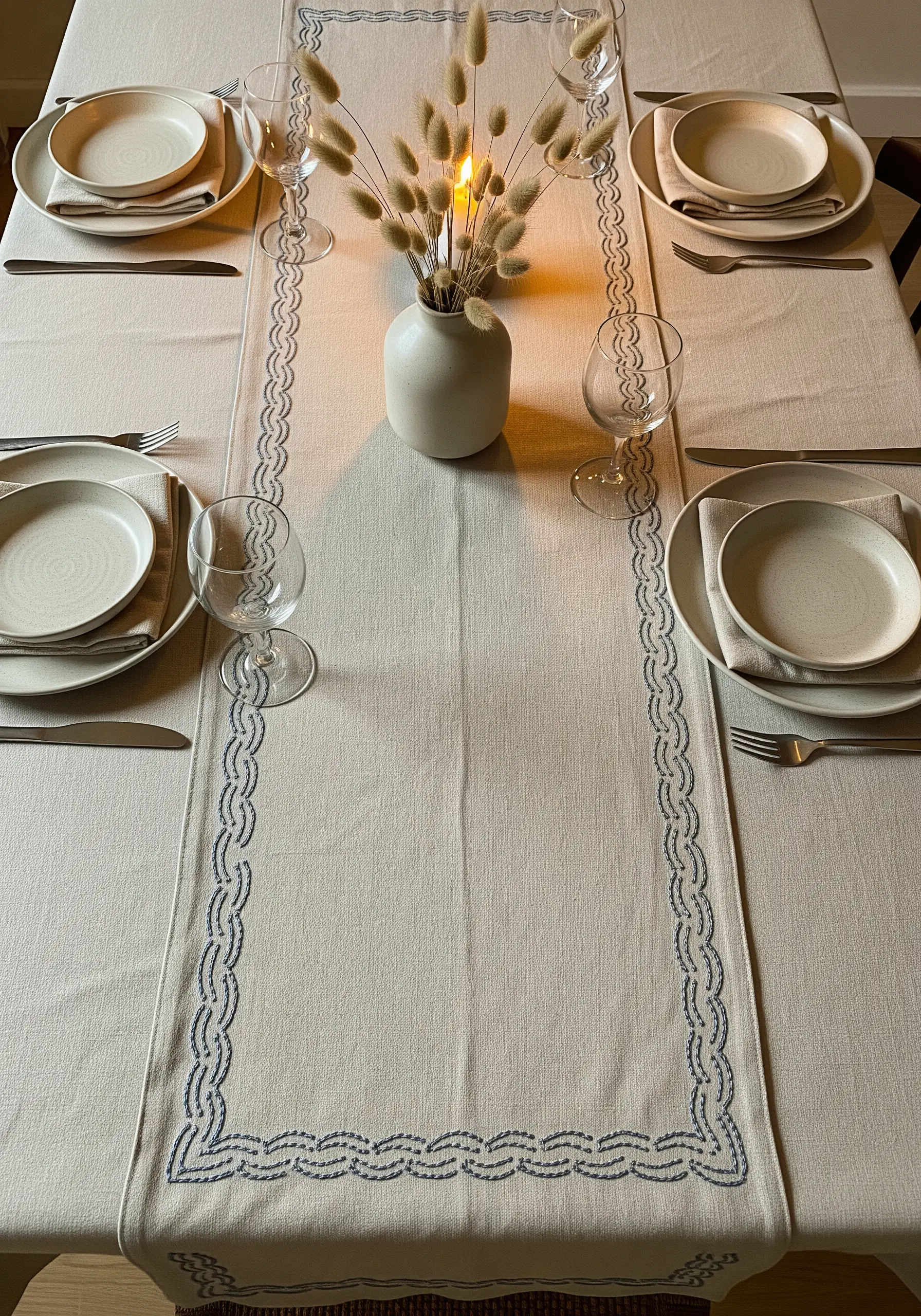
Transform a simple table runner or napkin set with a thoughtfully stitched border.
Instead of a basic backstitch, elevate your design with a more decorative option like the Pekinese stitch or a threaded running stitch.
These stitches create a beautiful, intertwined line that adds a touch of bespoke luxury and frames your tablescape with intention.
11. Serene Waves with Whipped Running Stitch
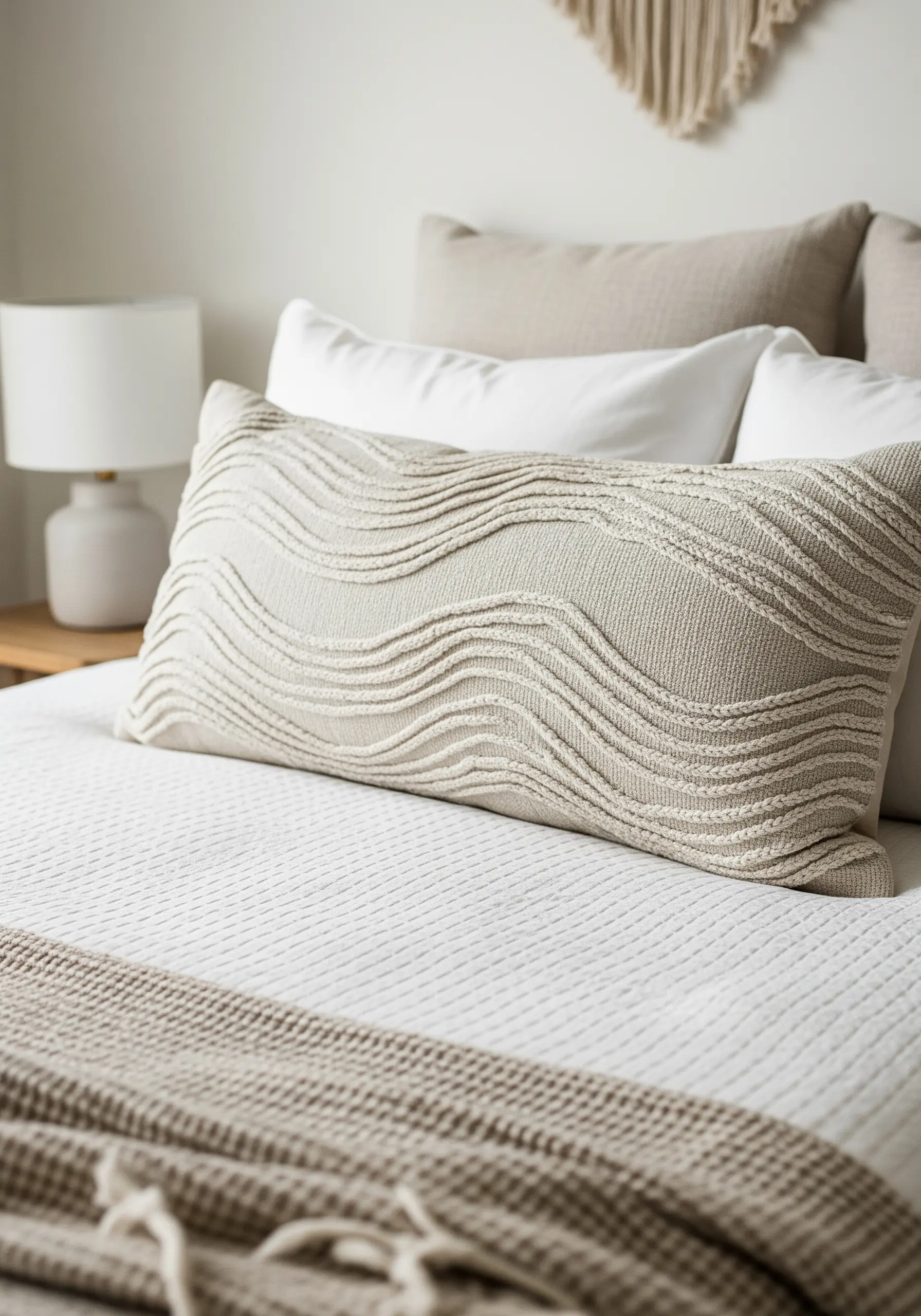
For smooth, raised lines that flow beautifully across the fabric, the whipped running stitch is a perfect choice.
First, lay down a foundation of simple running stitches along your desired curve. Then, using a blunt tapestry needle, loop a second thread around each stitch without piercing the fabric.
This technique creates a clean, cord-like line ideal for abstract waves or topographical patterns, especially in a calming, tone-on-tone color scheme.
12. Topographical Contours with Minimal Backstitch
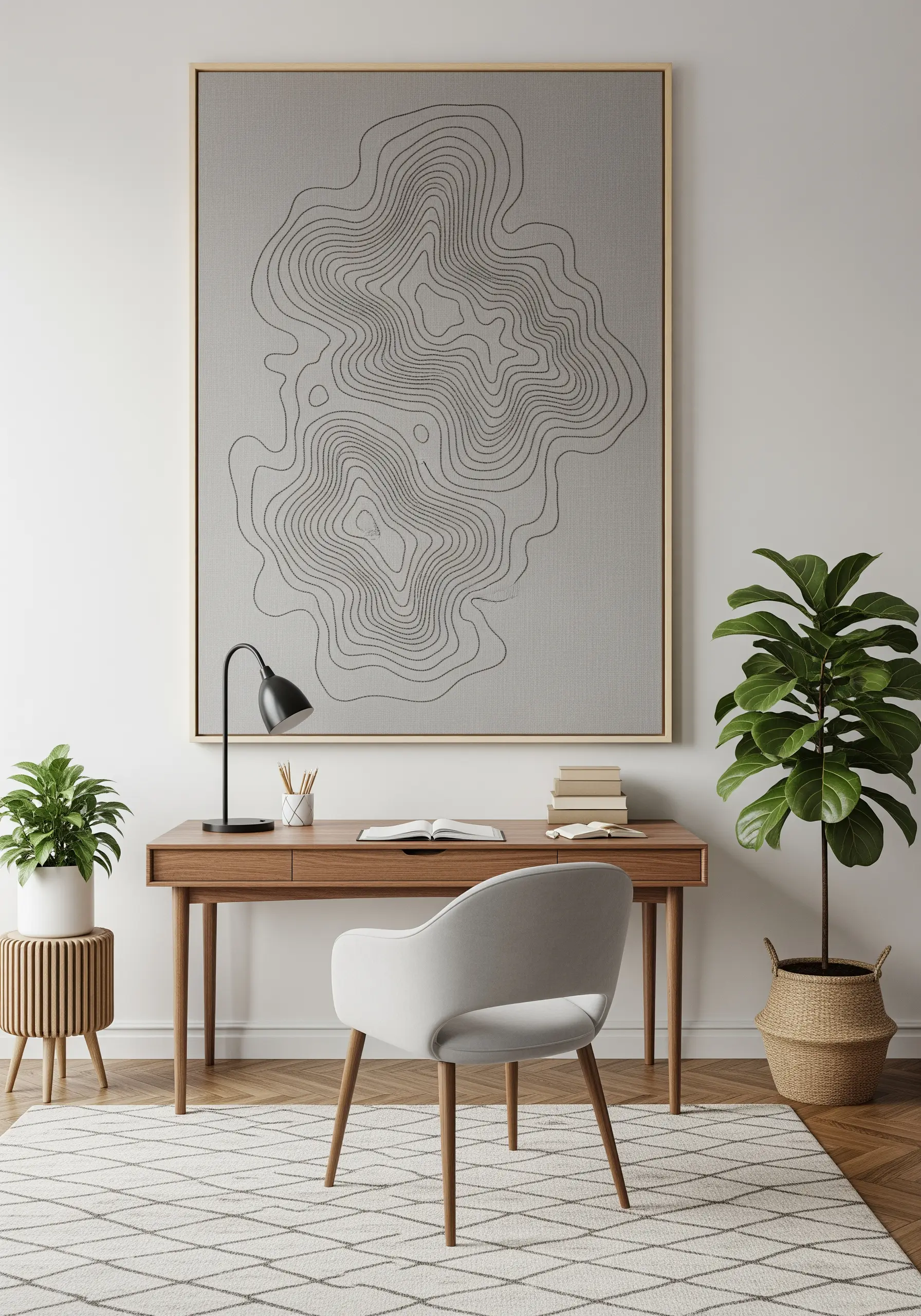
The beauty of this design lies in its meditative simplicity and graphic impact.
Using just a single strand of black floss and a consistent backstitch, you can trace the intricate lines of a topographical map.
The density of the lines creates the texture and shading, transforming a simple stitch into a complex and meaningful landscape. Choose a map of a place that is special to you for a truly personal piece of art.
13. Delicate Botanicals on Sheer Fabric
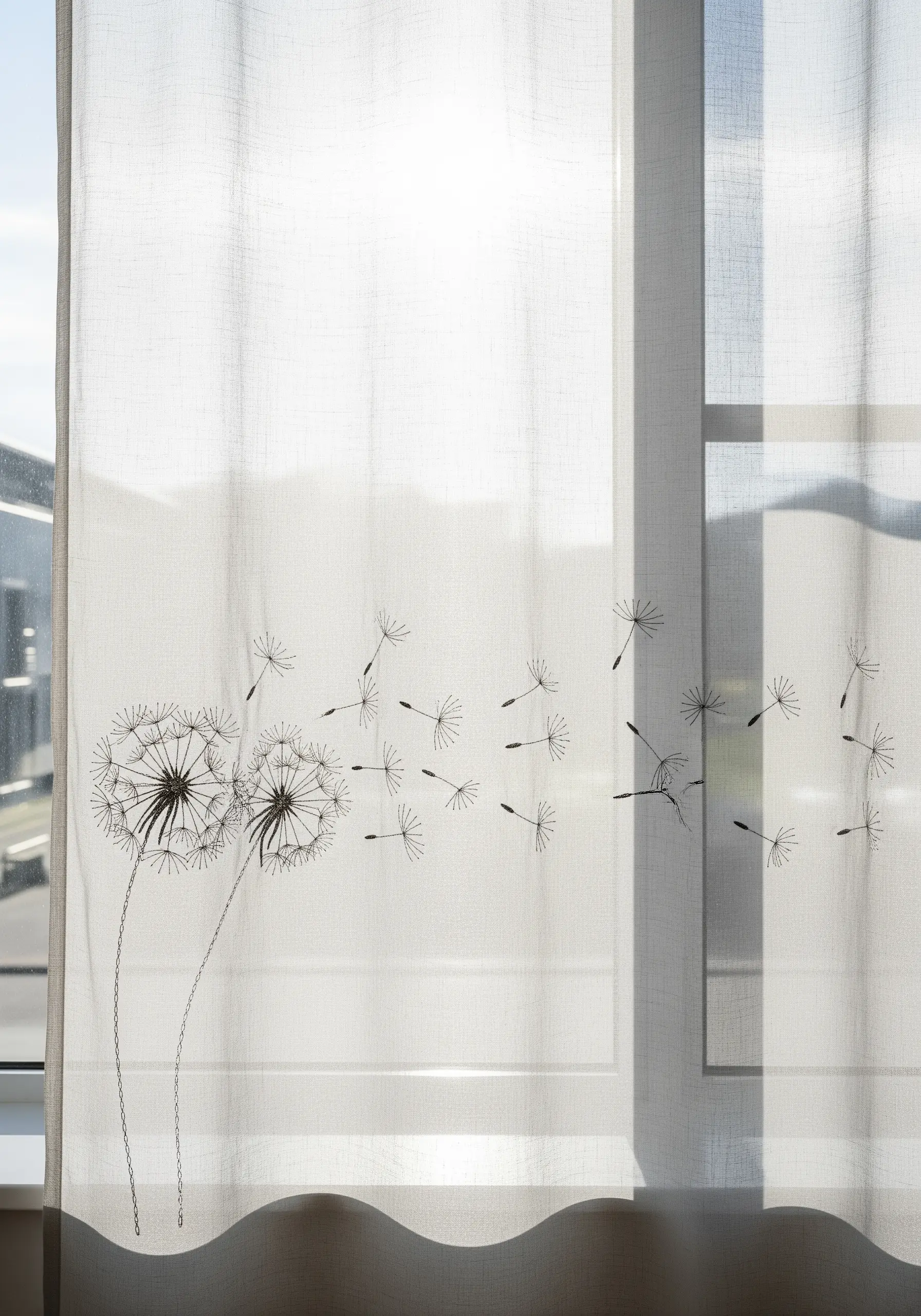
Embroidering on sheer fabrics like organza or voile creates an ethereal, almost magical effect.
To prevent puckering, always use a stabilizer—a water-soluble one is ideal as it washes away completely. Work with a fine needle and only one or two strands of floss to keep the design light and airy.
The finished embroidery will seem to float, catching the light beautifully on a curtain or wall hanging.
14. Radiant Sunbursts with Contrasting Textures
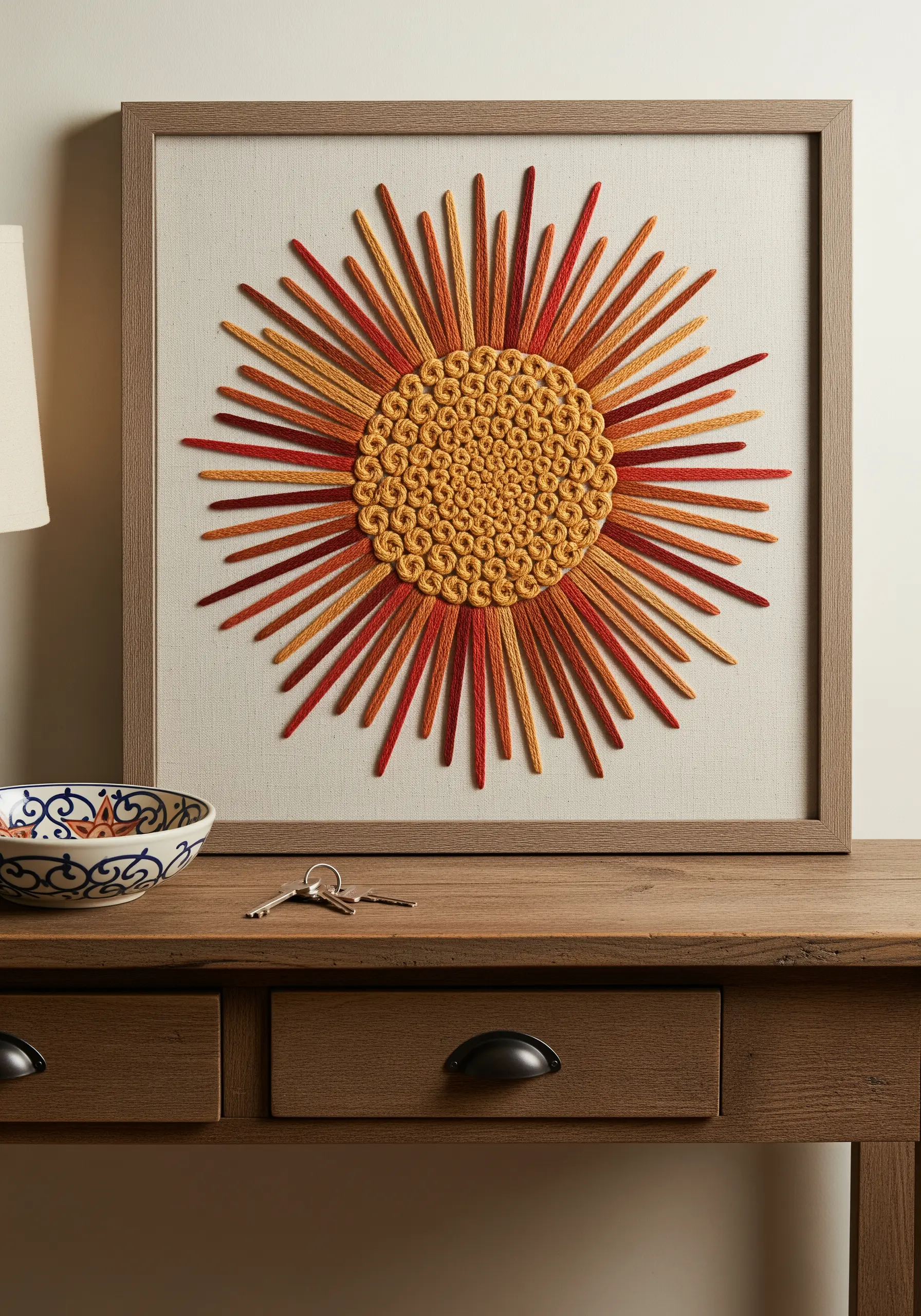
Create a dynamic sense of energy by combining two different stitch textures in a single motif.
For the sun’s center, use a woven wheel stitch to create a dense, textured circle. From this central point, radiate long, straight stitches outwards in warm, fiery colors.
This contrast between the woven core and the sleek rays makes the design feel vibrant and alive.
15. Subtle Embellishments on Functional Linens
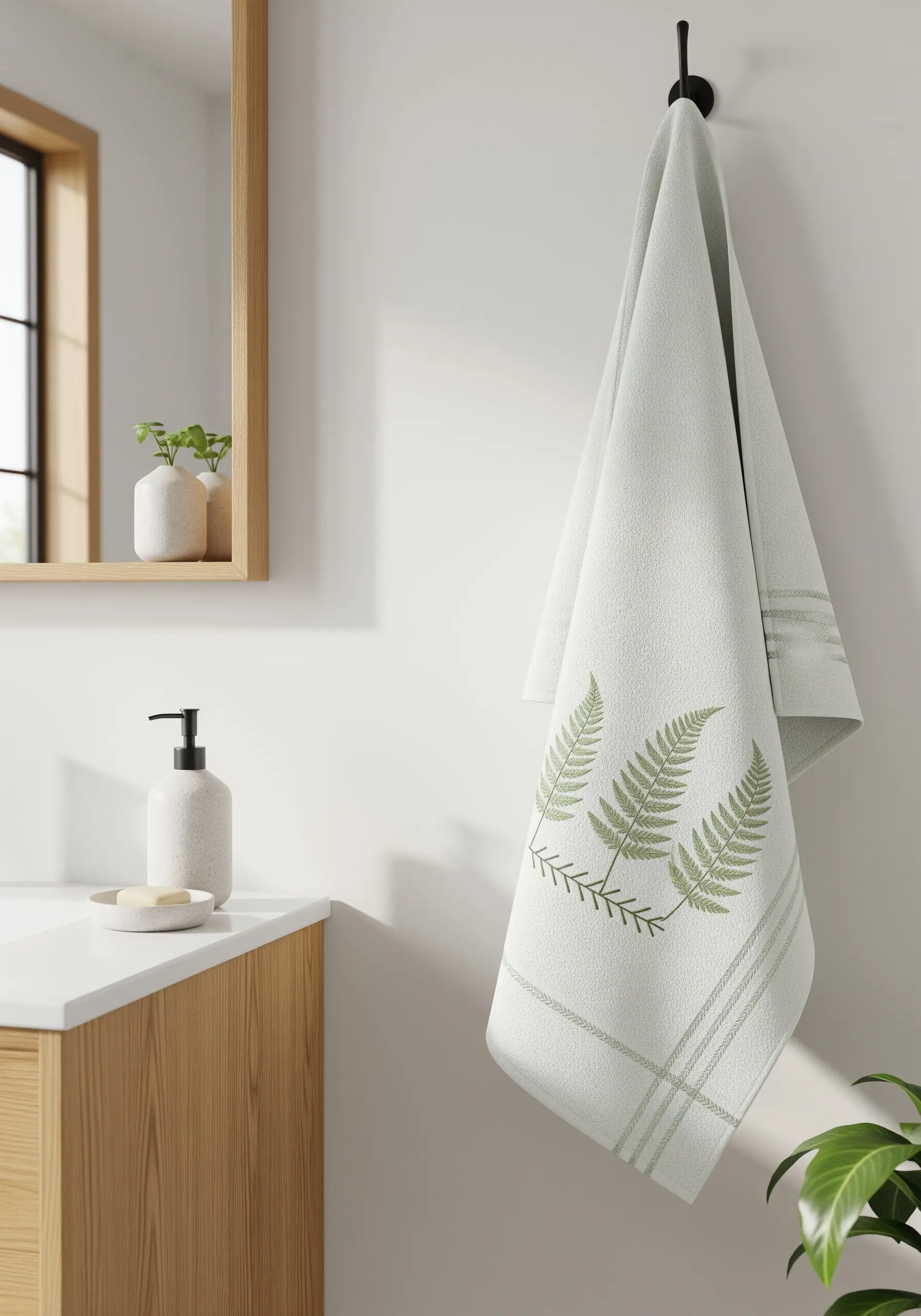
A small touch of embroidery can elevate an everyday object into something special.
For fern leaves on a hand towel, the fishbone stitch is ideal. It creates a central vein and angled sides simultaneously, mimicking the structure of a real frond.
Choose a thread color just a few shades darker than your fabric for a sophisticated, tone-on-tone look that feels both subtle and luxurious.
16. Textural Mosaics with Varied Fill Stitches

Create a design that is as interesting to touch as it is to see by focusing on texture over color.
Draw a series of organic, pebble-like shapes and fill each one with a different stitch: dense French knots, straight darning stitches, smooth satin stitches, or tiny seed stitches.
Working within a cohesive, muted color palette ensures your abstract texture play becomes the star of the show.
17. Geometric Balance with Negative Space
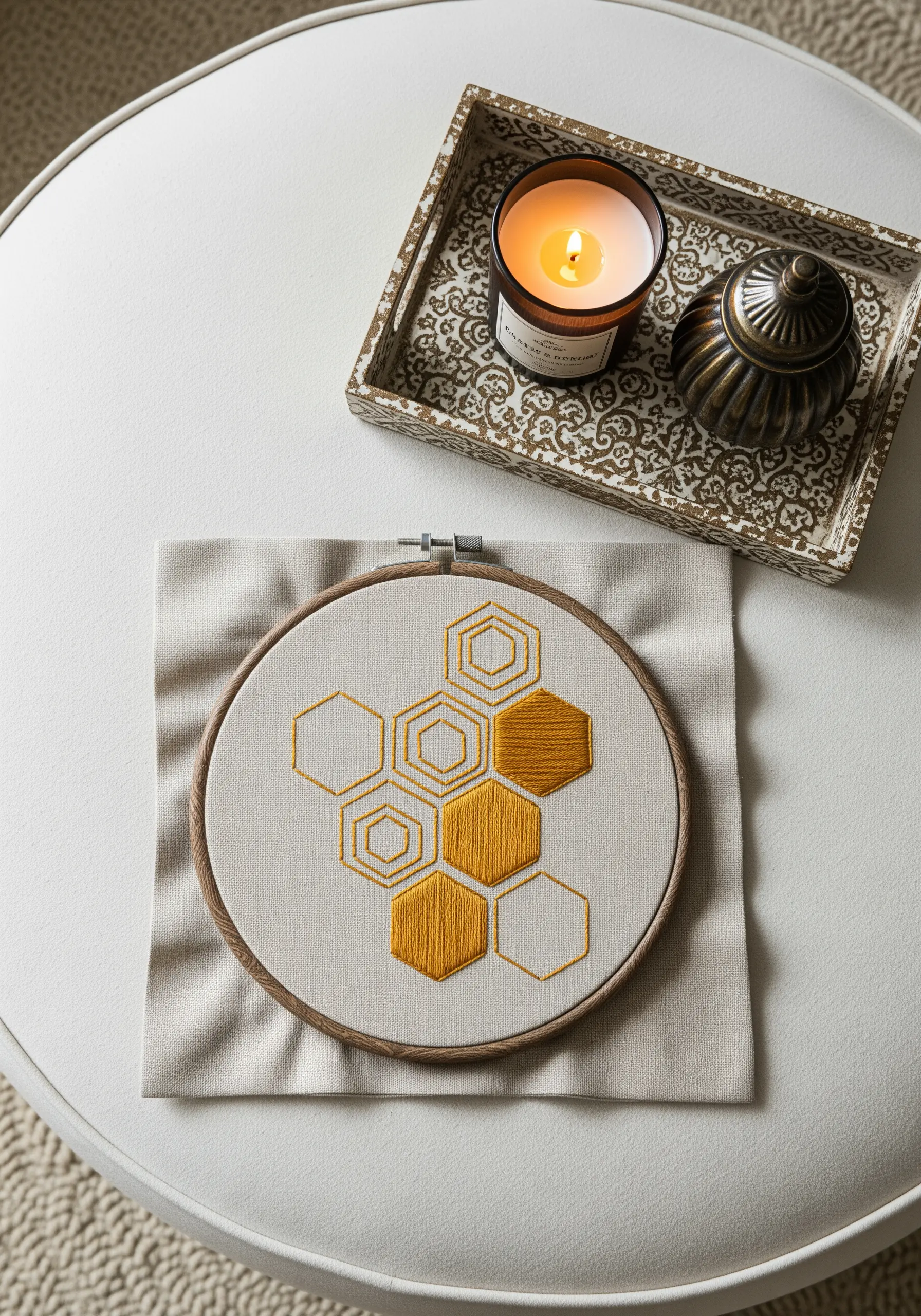
A powerful design tool in embroidery is deciding what not to stitch.
Outline a clean geometric pattern, like this honeycomb, using a simple backstitch. Then, strategically fill only a few of the shapes with solid satin stitch.
This selective filling creates a focal point and allows the empty space to become an active, intentional part of the composition, resulting in a modern and balanced piece.
18. Bold Botanicals with Padded Satin Stitch
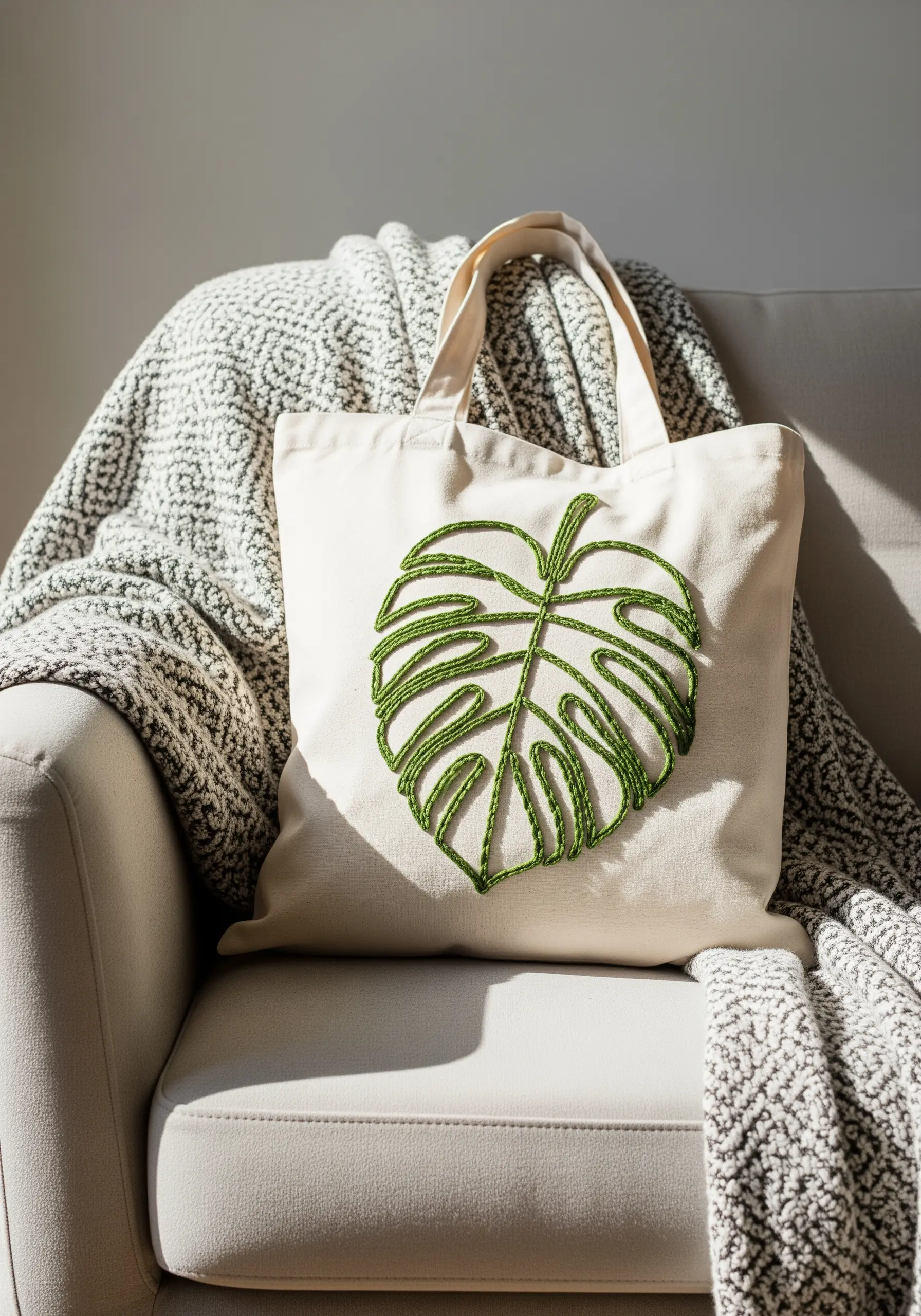
To make your embroidery physically pop from the surface of a tote bag or jacket, use padding.
Before you begin your satin stitch, fill the area with an underlayer of split stitches or running stitches. You can also tack down a small piece of felt cut to shape.
Stitch your final satin stitch over this padding. The raised effect creates subtle shadows and gives your work a professional, dimensional finish.
19. Celestial Canvases with Varied Star Stitches
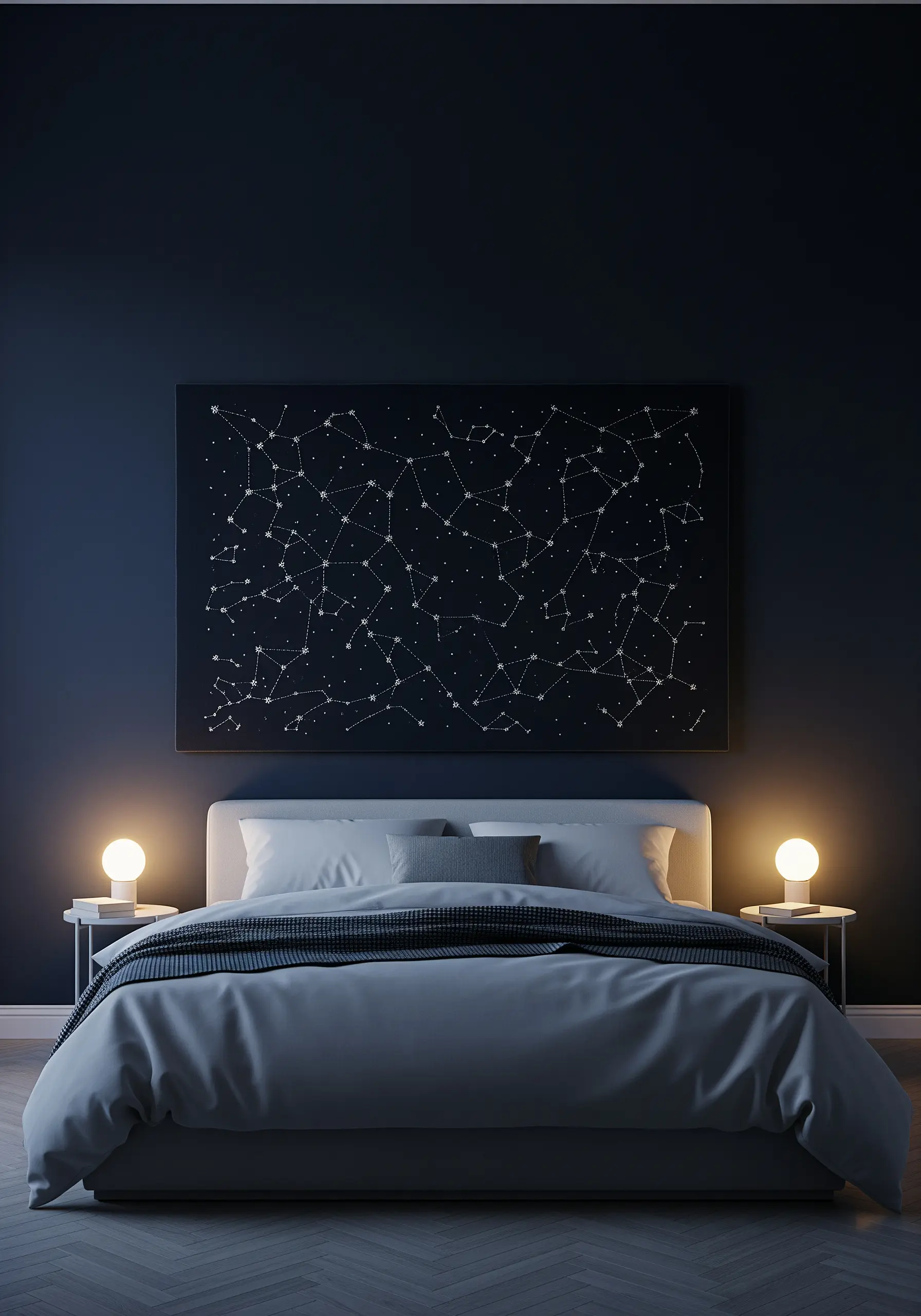
Recreate the depth of the night sky by varying the weight and style of your stitches.
Use a simple backstitch for the connecting lines of constellations. For the stars, use a star stitch or a single French knot.
To indicate brightness, vary your thread: use two or three strands of a metallic floss for prominent stars, and a single strand of white cotton for the fainter, more distant ones. This adds a layer of realism and visual interest.
20. Minimalist Motifs for Thoughtful Vignettes

A single, beautifully executed motif can carry as much weight as a complex scene.
Choose a simple form, like this seedling, and stitch it with a clean, deliberate outline stitch like a split stitch or stem stitch. The elegance is in its simplicity.
Create a charming still life by placing your finished hoop among real houseplants, blurring the line between your art and the natural world.
21. Organic Realism with Thread Painting
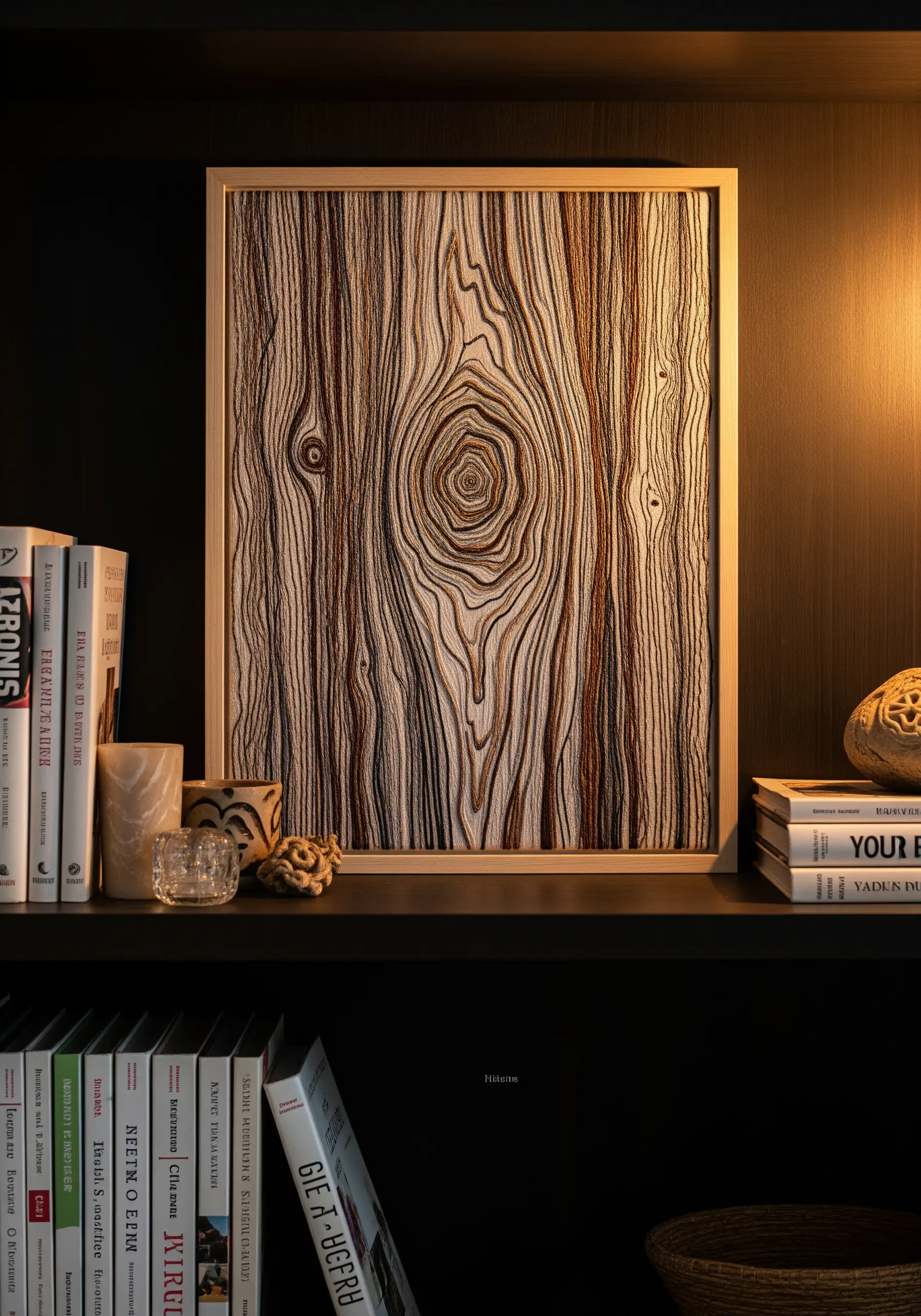
To capture the authentic texture of wood grain, think like a painter, but with thread.
Use single strands of floss in multiple shades of brown, cream, and charcoal. Work with long, straight stitches, laying them side-by-side to follow the organic swirls and lines of the grain.
This form of abstract thread painting allows the colors to blend optically, creating a stunningly realistic effect.
22. Abstract Topographies with Knots and Coils
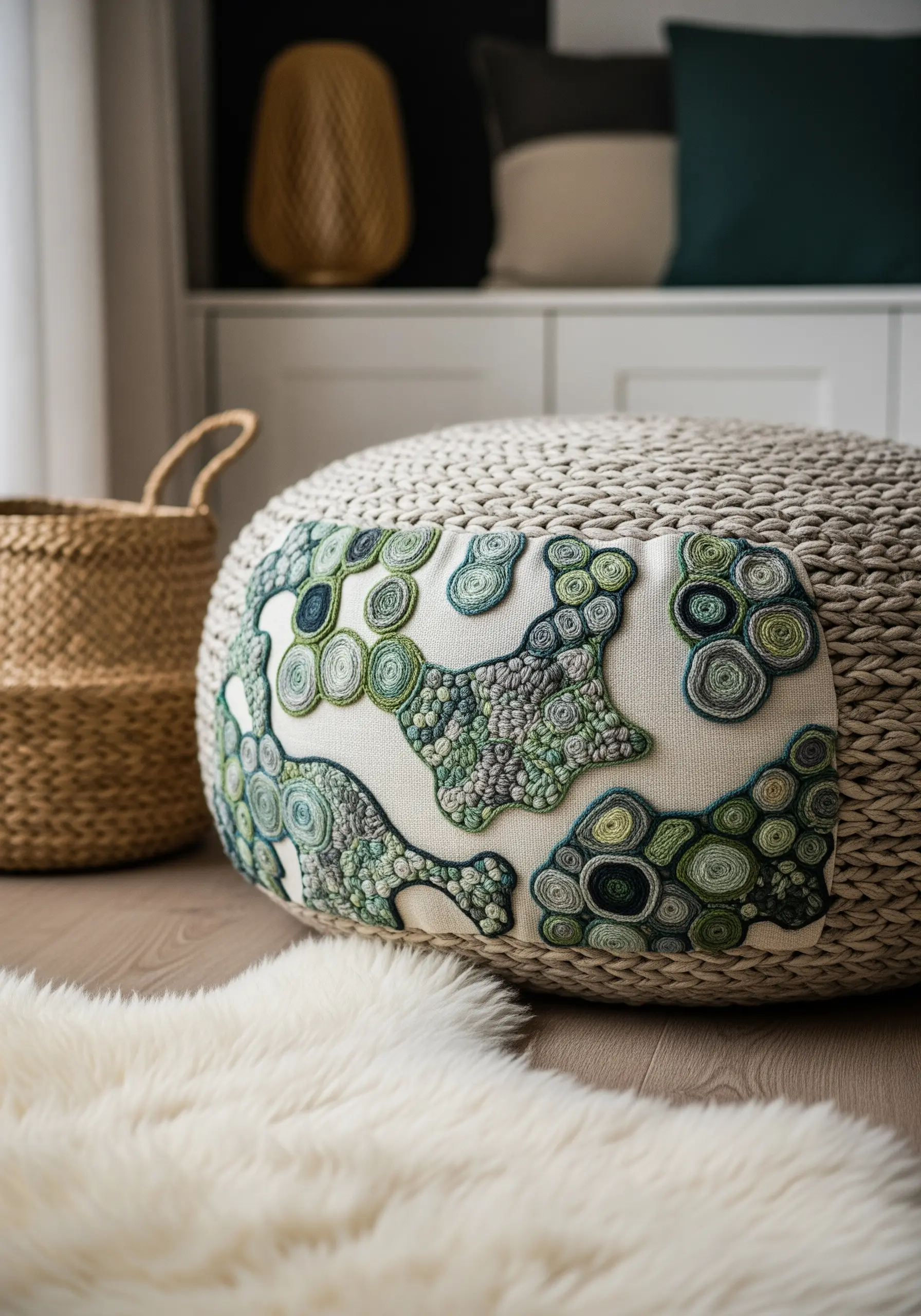
Build up rich, organic textures that evoke moss or lichen by layering dimensional stitches.
Fill larger areas with dense clusters of French knots for a pebbled effect. For raised, circular shapes, use bullion knots or create coils of thread that you can tack down.
Playing with the density and height of these stitches allows you to sculpt a truly unique and tactile surface.
23. Delicate Herbal Sprigs for Kitchen Linens
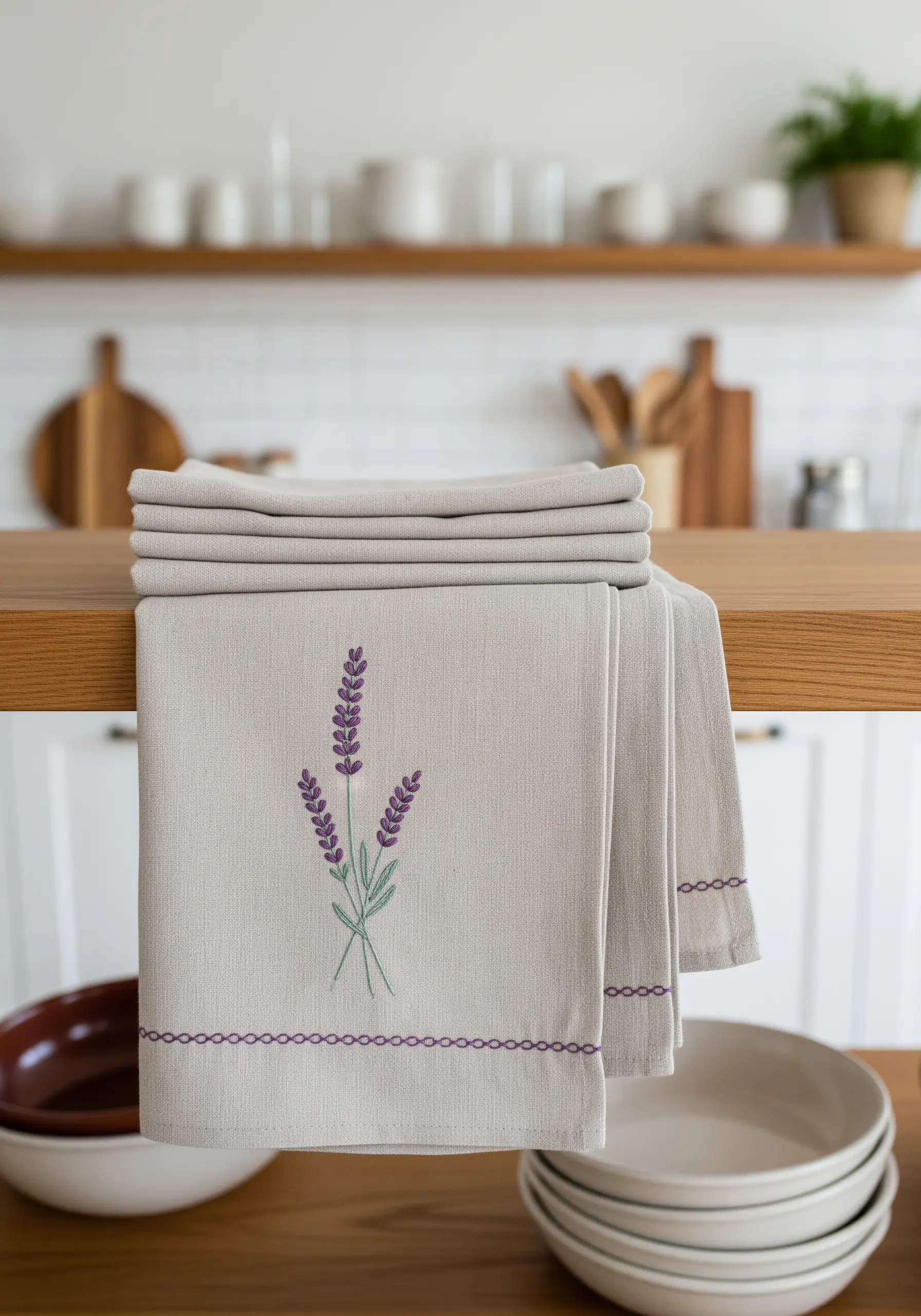
Bring a touch of the garden into your kitchen with simply stitched herbal motifs.
For lavender, use detached chain stitches (lazy daisies) for the individual buds, clustering them at the top of the stalk. A simple stem stitch works perfectly for the stems themselves.
The key to a refined look on functional items is consistency in your stitch length and tension, which ensures the design holds up beautifully through use and washing.
24. Layered Textures on Plush Fabrics
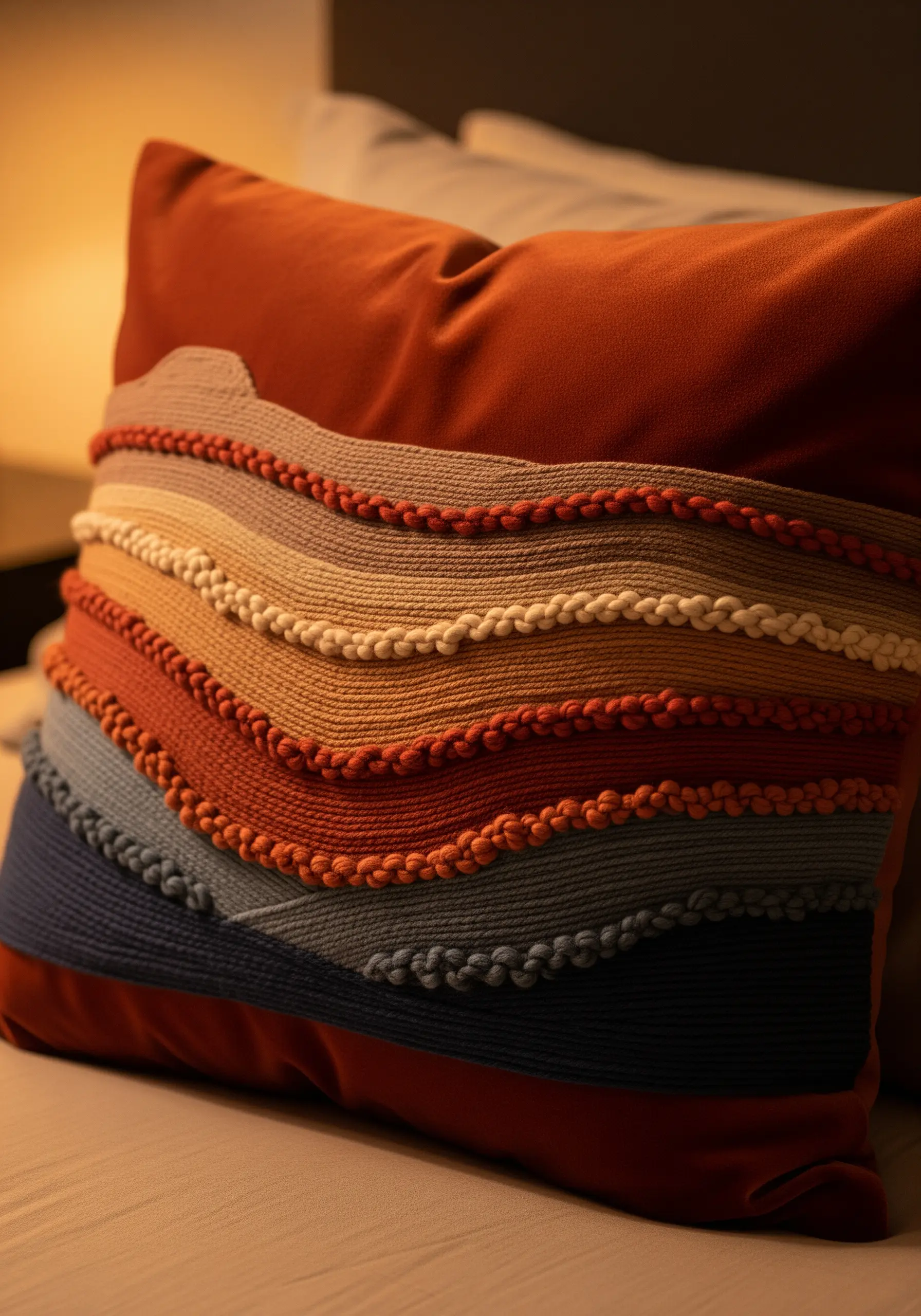
When stitching on a fabric with a deep pile like velvet or corduroy, your stitches need to have presence.
Choose techniques that create bold dimension. Couching thick cords or braids will define your shapes clearly, while areas of densely packed French knots or colonial knots will create solid textural blocks that won’t get lost in the fabric.
This approach results in a luxurious, multi-sensory piece where texture is paramount.
25. An Autumnal Study with Varied Leaf Stitches
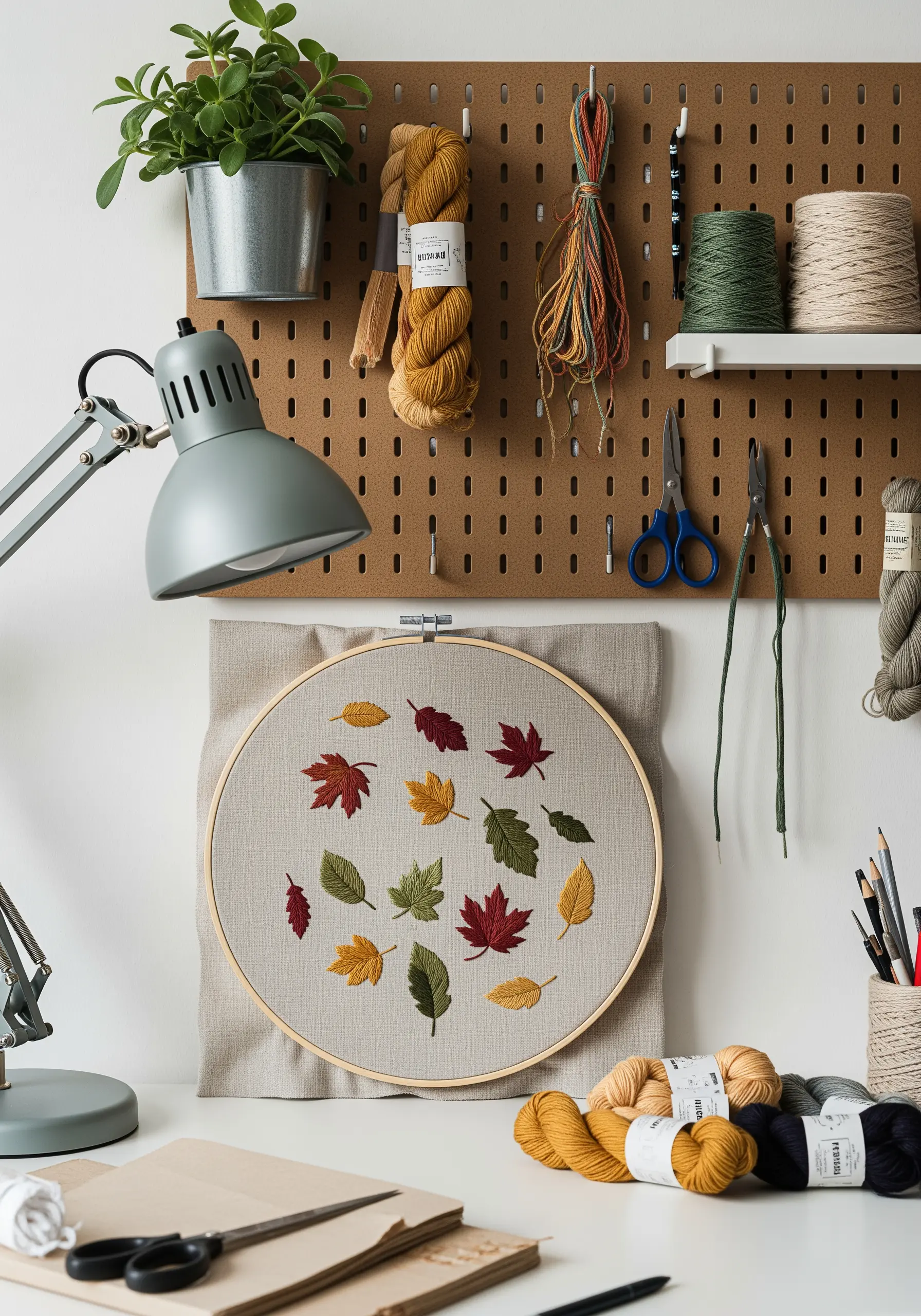
Turn a simple collection of leaves into an intricate sampler of your stitching skills.
Assign a different stitch to each leaf shape to capture its unique character. Use a smooth satin stitch for a maple leaf, a textural fishbone stitch for an oak leaf, and a fly stitch to form the delicate structure of a smaller leaflet.
This exploration of leaf vein details and forms creates a piece that is both beautiful and educational.