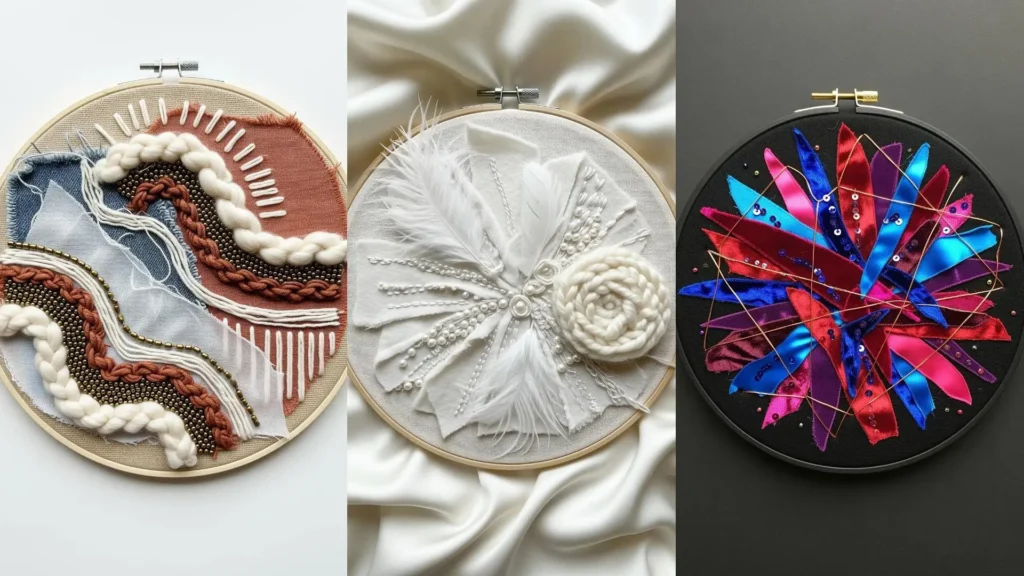
That denim jacket in your closet holds more potential than you might think. It’s not just an old favorite; it’s a canvas waiting for a modern touch. Forget complex, time-consuming patterns for a moment and consider the power of pure shape and color.
This is where you can truly transform your stitching. By focusing on abstract forms and smooth color gradients, you can create something that feels intentional, artistic, and deeply personal. It’s about elevating your craft beyond the traditional, using thread to paint, sculpt, and design directly onto the fabric you already love.
Here, you’ll find techniques that offer immediate visual impact. We’ll explore how to handle thread, texture, and composition to achieve a clean, modern finish that looks polished and professional. It’s time to pick up your needle with a new sense of purpose and turn that jacket into a true work of art.
1. Master the Satin Stitch Gradient
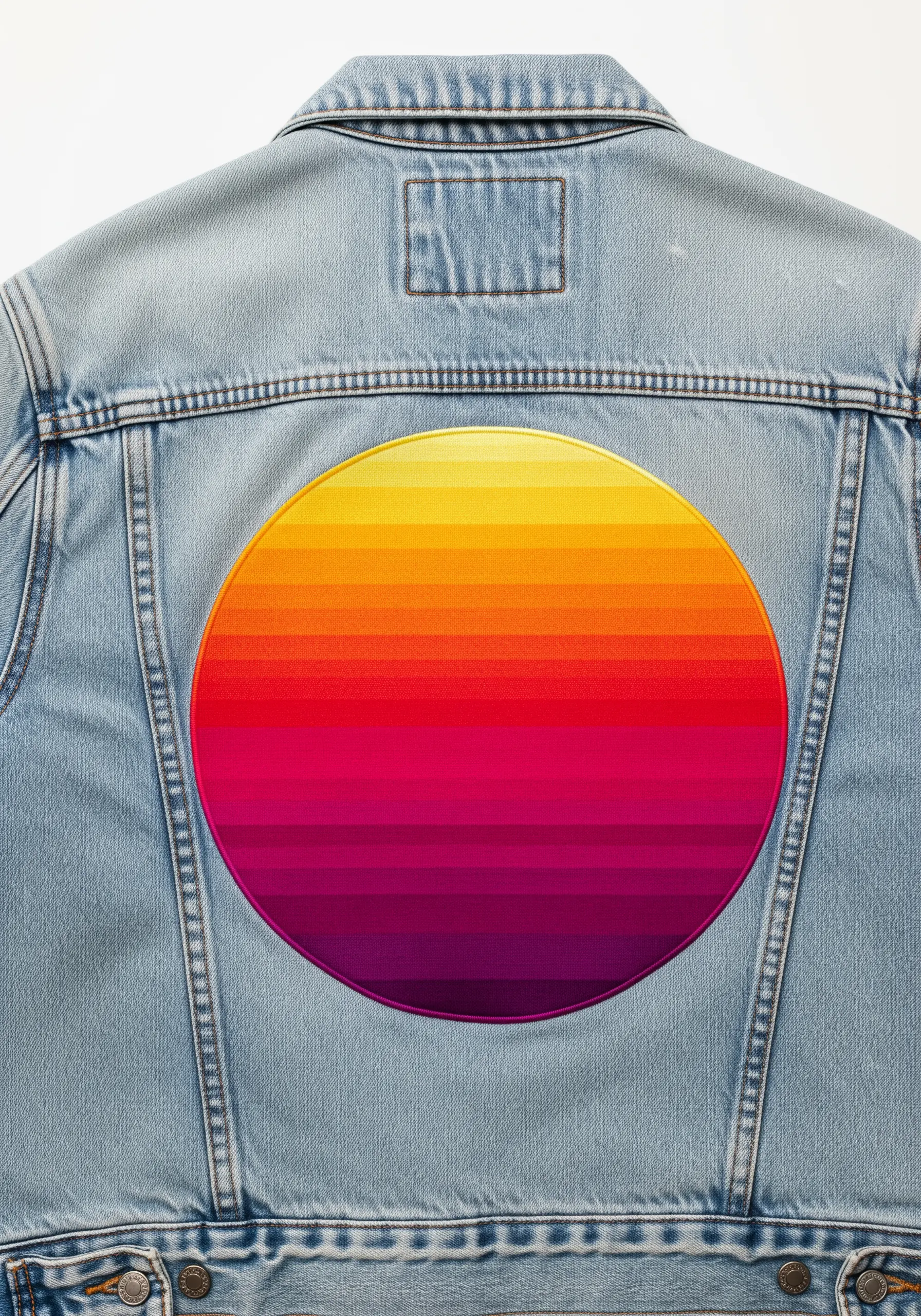
Transform the back of your jacket with a flawless circular gradient.
Achieve this ultra-smooth look by dividing your circle into horizontal bands and filling each with a dense, perfectly aligned satin stitch.
Use a single color per band, selecting at least 15-20 progressive shades for a seamless transition from light to dark.
The key is keeping your stitch direction absolutely consistent; any deviation will disrupt the clean, graphic finish.
Before you begin, stabilize the denim with a firm fusible interfacing to prevent puckering under the weight of the thread.
2. Define Shapes with Geometric Fills
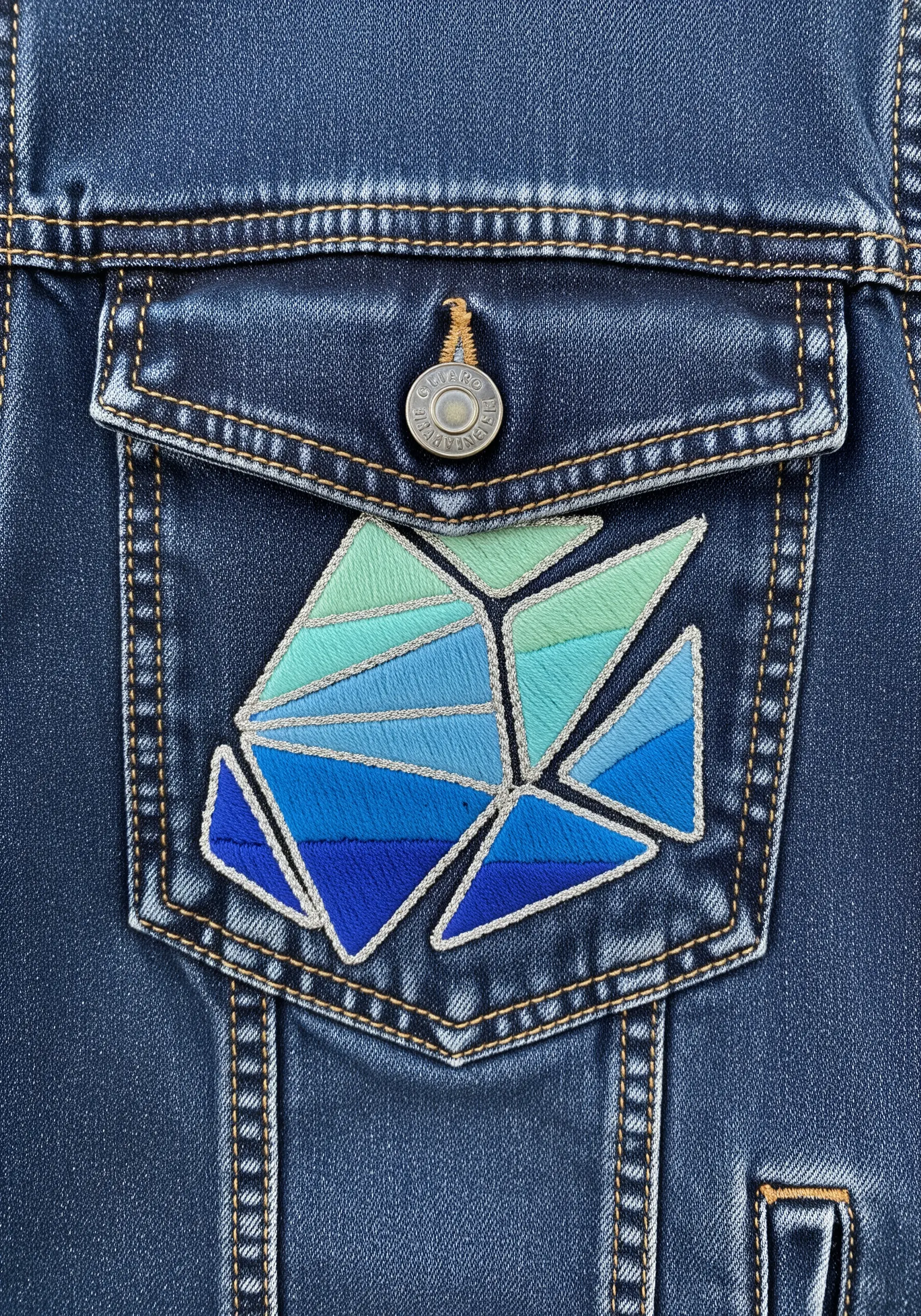
Elevate a simple pocket with a modern, mosaic-style motif.
Start by outlining your geometric fish shape with a crisp split stitch in a contrasting color like silver or white—this creates a sharp boundary that contains your fill stitches.
Fill each polygon with a directional satin stitch, varying the angle of your stitches in adjacent sections to create the illusion of facets and light.
Stick to a monochromatic color palette, like these shades of blue, to maintain a cohesive and sophisticated look.
3. Create Fluid Motion with Chain Stitch
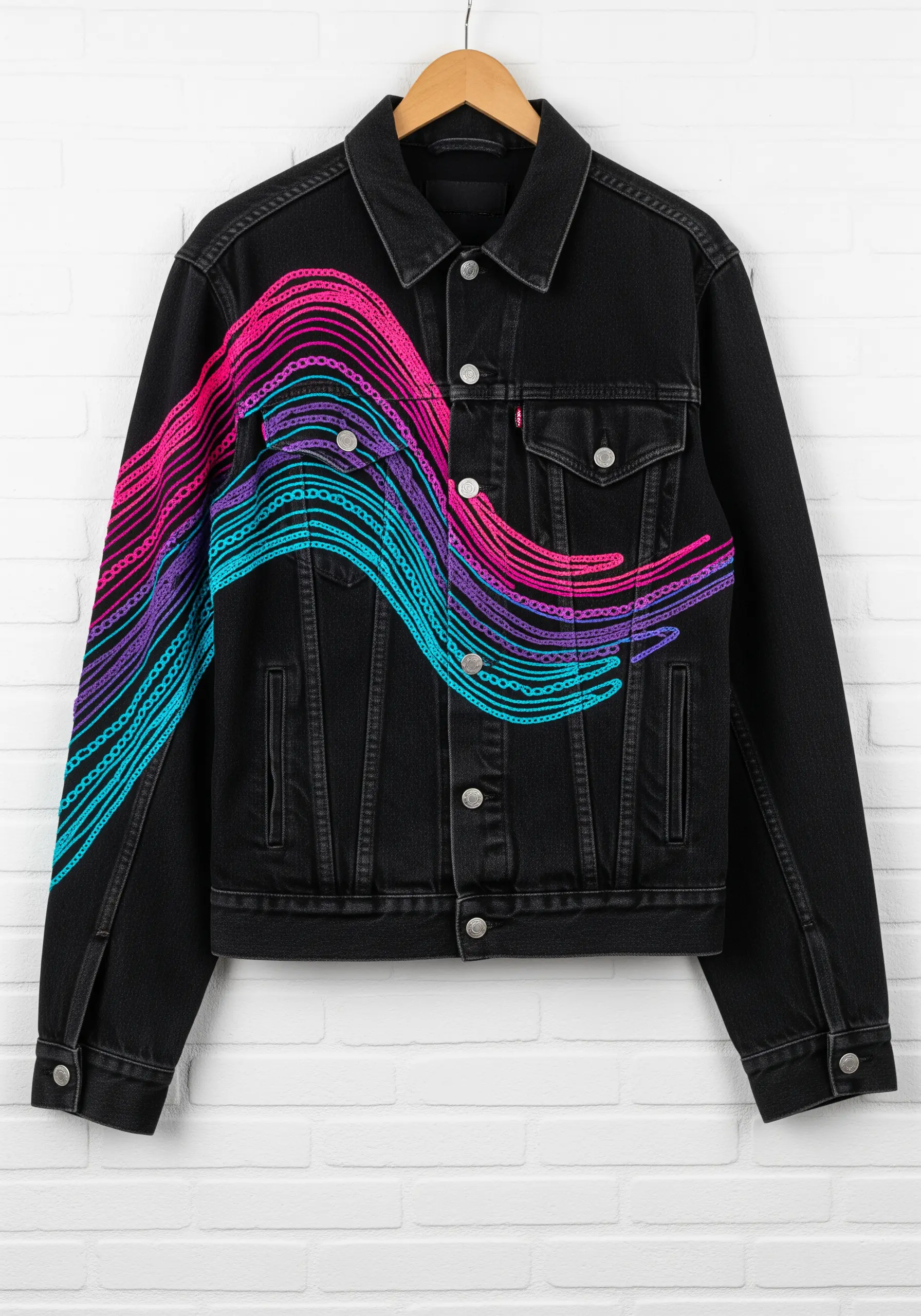
Use vibrant chain stitch to create dynamic, flowing lines that feel both graphic and energetic on dark denim.
Instead of a single line, work multiple rows of chain stitch side-by-side, allowing the colors to weave and blend into one another.
This technique builds texture and visual weight, making the design pop against the black fabric.
Choose high-contrast neon threads for a retro-futuristic feel, and let the design flow organically across the seams and panels of the jacket for maximum impact.
4. Build Texture with Appliqué and Padded Satin Stitch
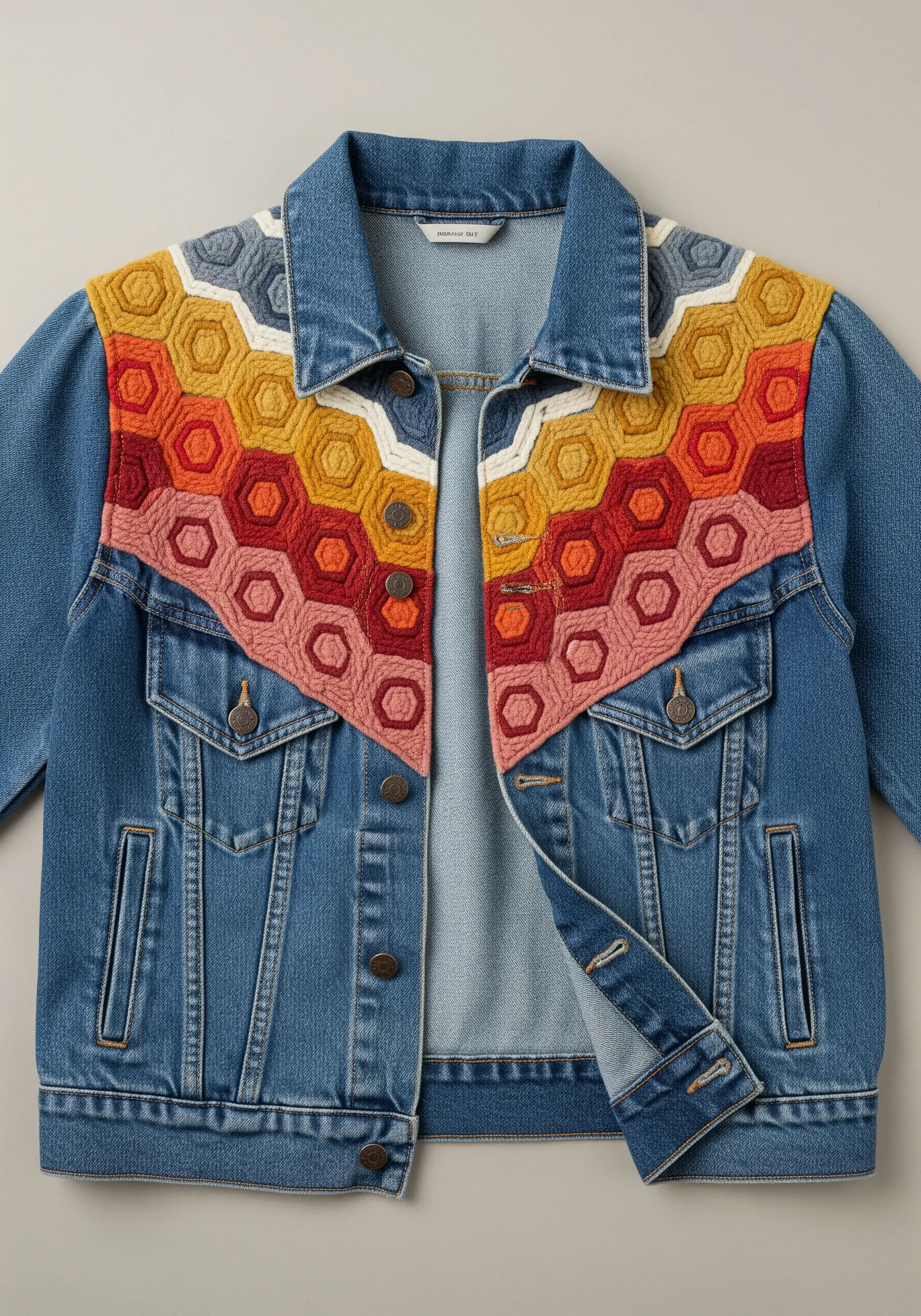
Reimagine the jacket’s yoke with a statement-making hexagonal pattern that combines texture and color.
Create each hexagon separately as a patch using felt or thick fabric, and fill with a padded satin stitch to give it a three-dimensional, quilted quality.
Arrange the patches in a gradient pattern before stitching them securely to the jacket. This modular approach is more manageable than embroidering a large area directly and ensures a clean finish.
5. Add Subtle Elegance with Collar Arcs
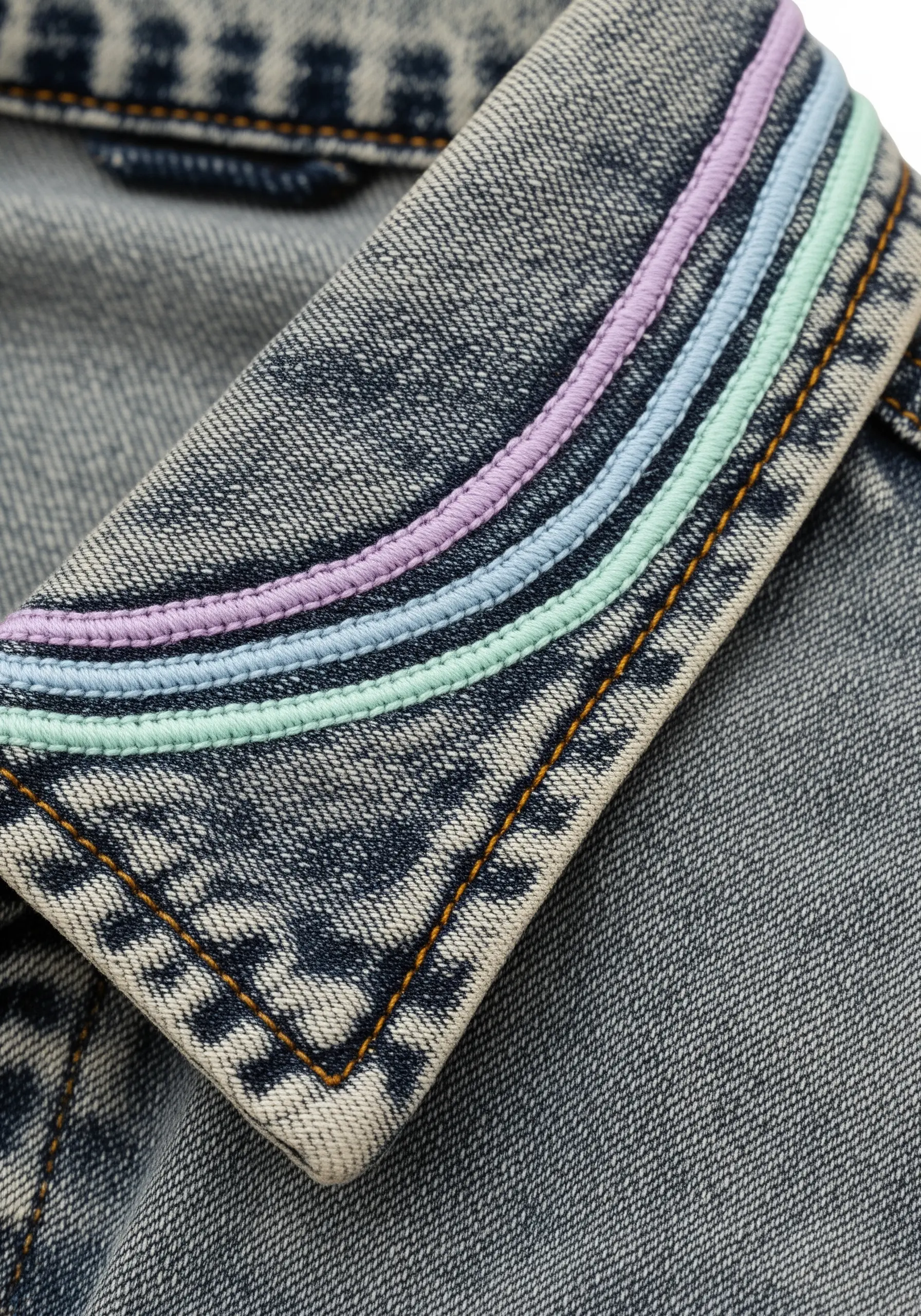
For a touch of understated style, embellish the collar with clean, curved lines of satin stitch.
Use a water-soluble marker and a compass or curved ruler to draw perfect parallel arcs.
Work with three strands of floss for a line that is substantial but not bulky, and choose a soft, complementary pastel palette that whispers rather than shouts.
A split stitch outline beneath your satin stitch will give you an exceptionally smooth and raised edge.
6. Explore Monochrome Texture Blocking
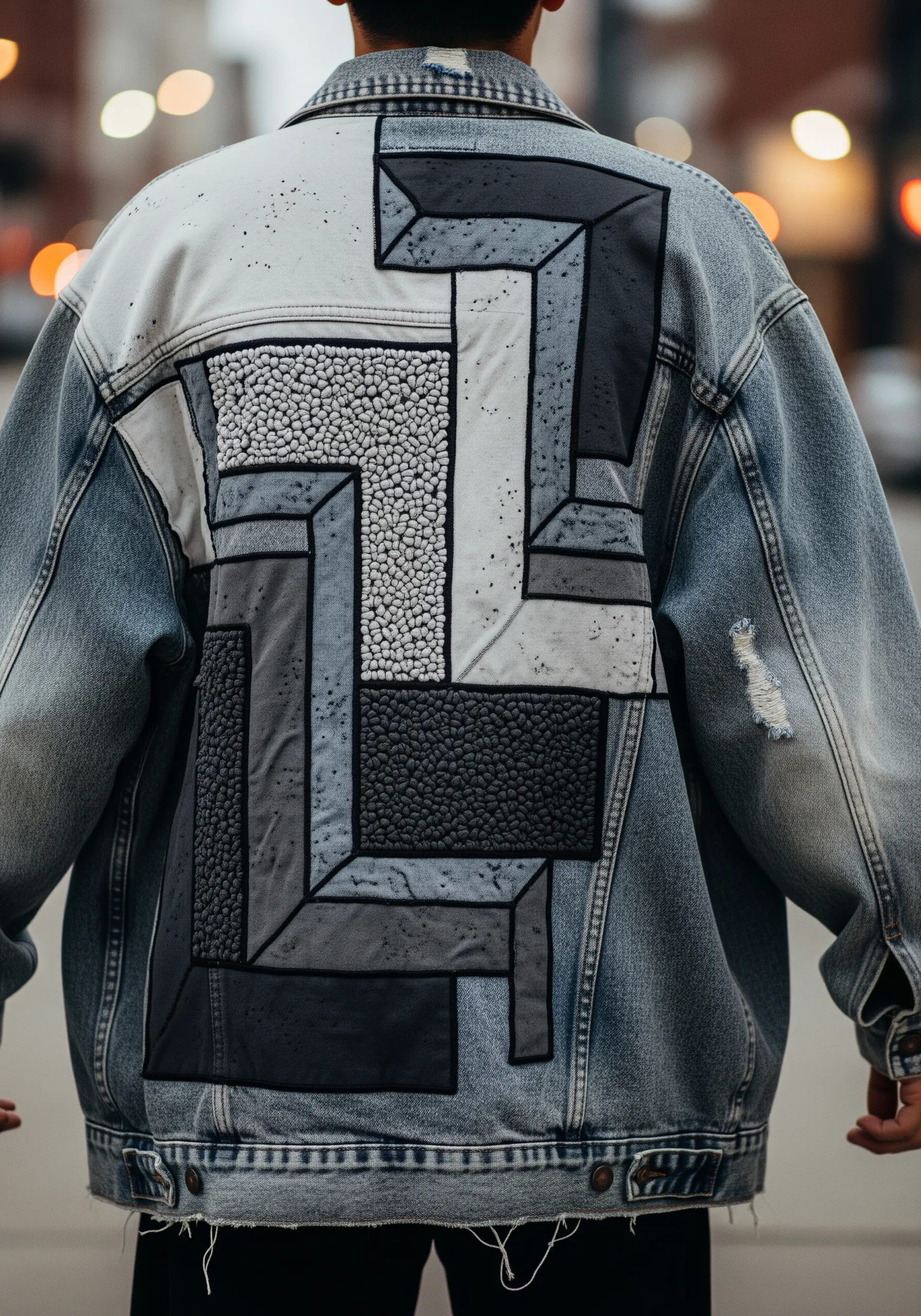
Create a sophisticated, architectural design by focusing on texture instead of color.
Combine different appliqué materials—like faux leather, canvas, and suede—with densely embroidered sections.
Fill some blocks with thousands of French knots for a stippled effect, and others with seed stitch for a flatter, woven texture.
Keeping the entire piece in a grayscale palette allows the different surfaces and stitch densities to become the main focus, resulting in a design that is both subtle and complex.
7. Craft a Celestial Scene with Thread Painting
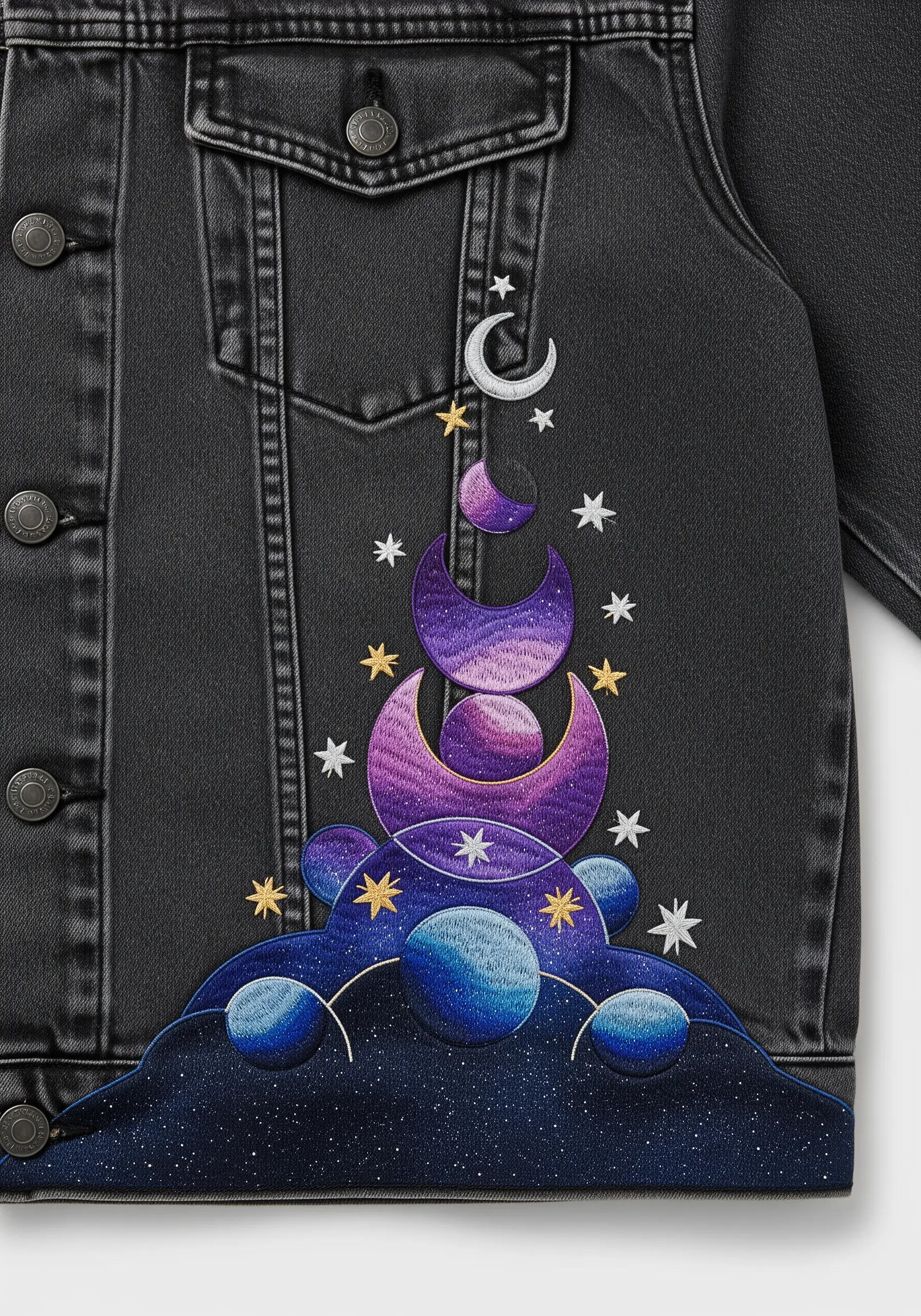
Bring a touch of magic to your jacket with a celestial motif that blends appliqué and embroidery.
Use fabric appliqué for the base shapes of the planets and moons, choosing fabrics with a subtle shimmer or texture.
Then, use long-and-short stitch to add gradients and shadows, creating a sense of dimension and a soft, painterly quality.
Scatter tiny straight stitches and white French knots around the design for a field of distant stars, completing the cosmic scene.
8. Stitch a Digital Gradient with Pixel Blocks
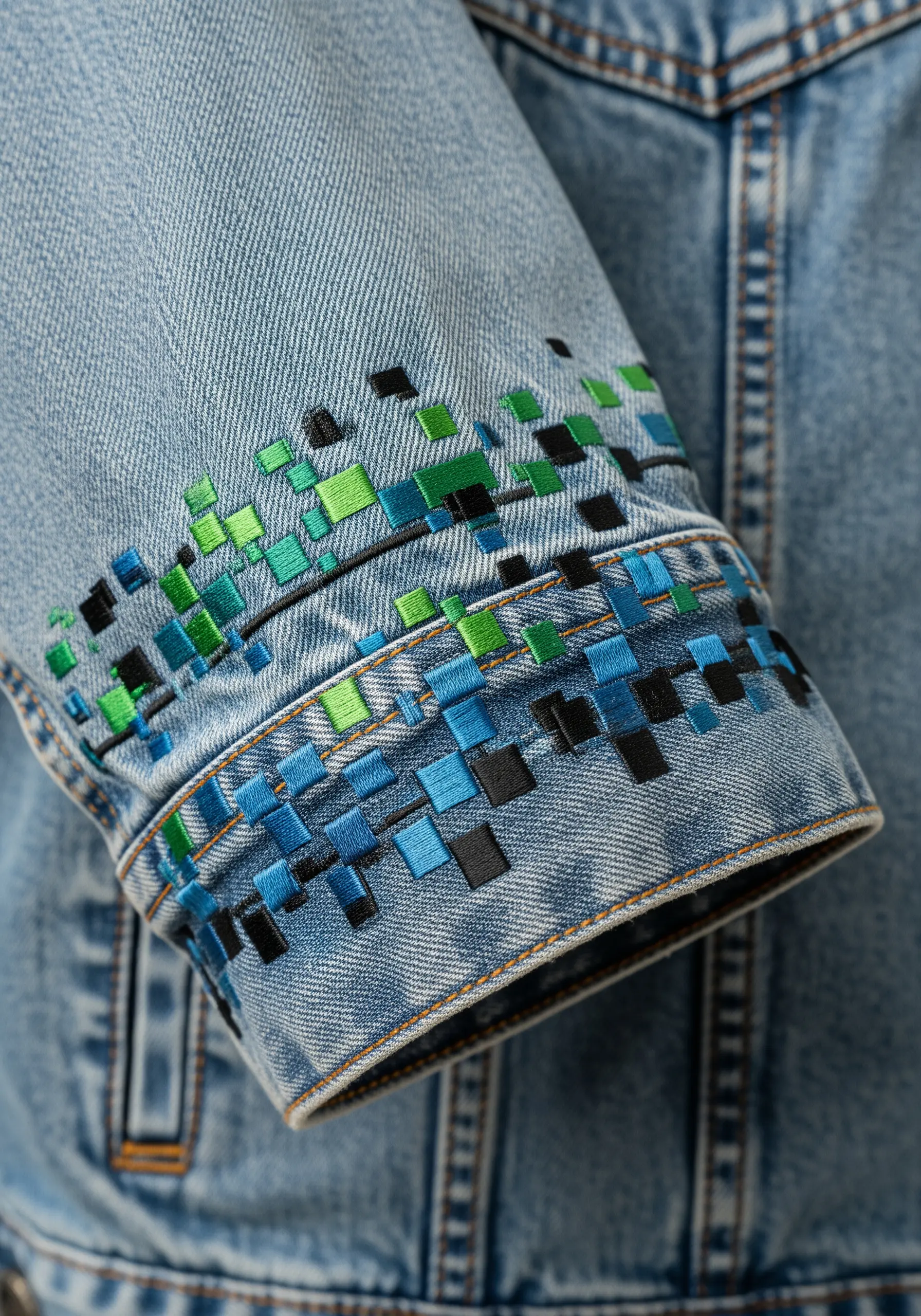
Add a modern, tech-inspired detail to your cuffs with a pixelated satin stitch design.
Draw a grid on your denim using a fabric marker to guide your stitches.
Fill each small square with a dense satin stitch, ensuring your stitches are uniform and tightly packed.
Arrange the colored squares to create a digital gradient that fades from one hue to another. The contrast between the rigid, geometric stitches and the soft denim fabric is visually striking.
9. Paint with Thread Using Long, Couched Stitches
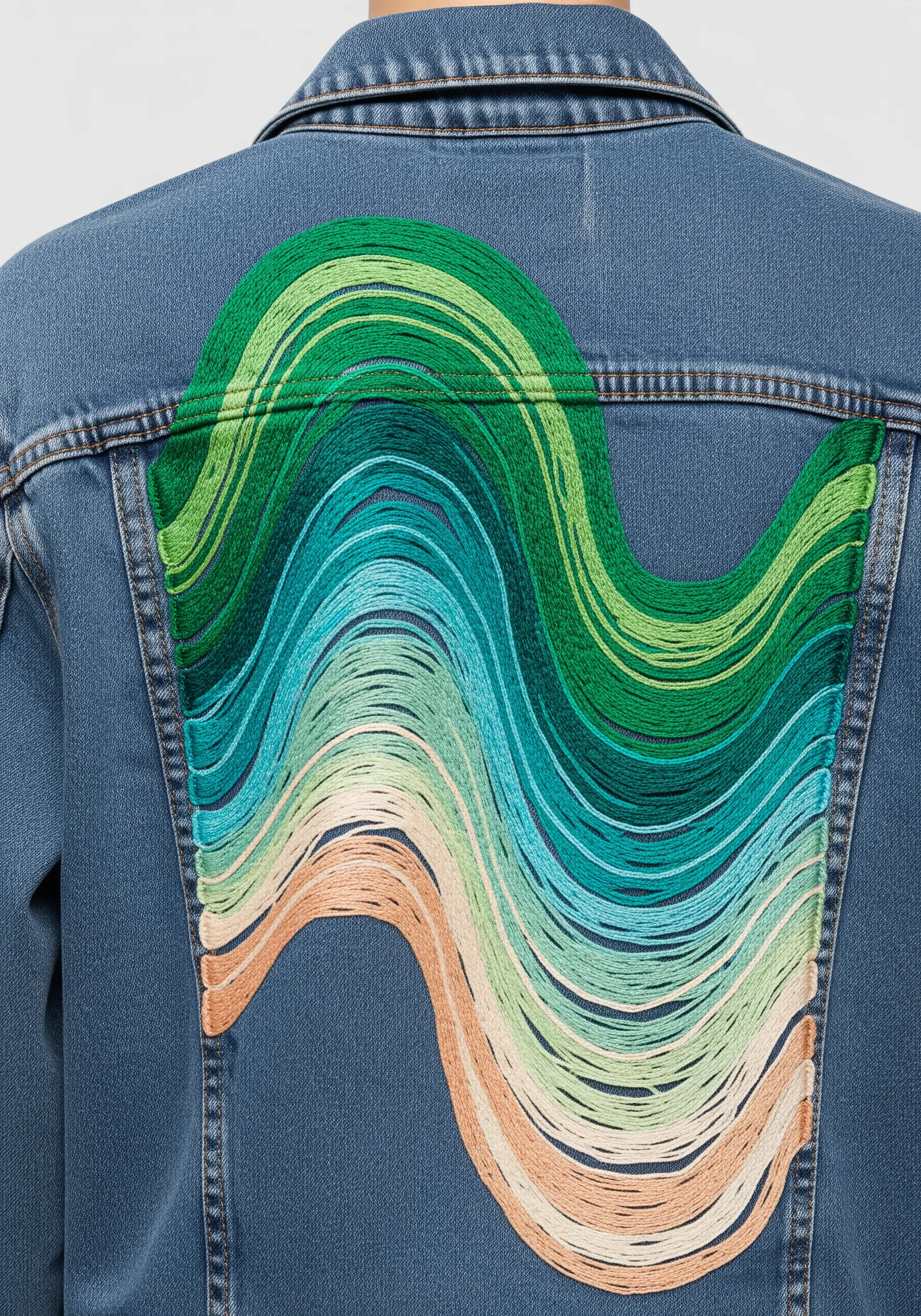
Create a large, flowing abstract piece on the back panel using long, expressive stitches.
Lay down long strands of embroidery floss across the design area, following the curves of your wave pattern.
Then, use a single, contrasting thread to tack these long stitches down at regular intervals—a technique called couching.
This method allows you to cover a large area with a smooth, painterly effect without the risk of snagging long, loose threads.
10. Stack Geometric Shapes for a Graphic Statement
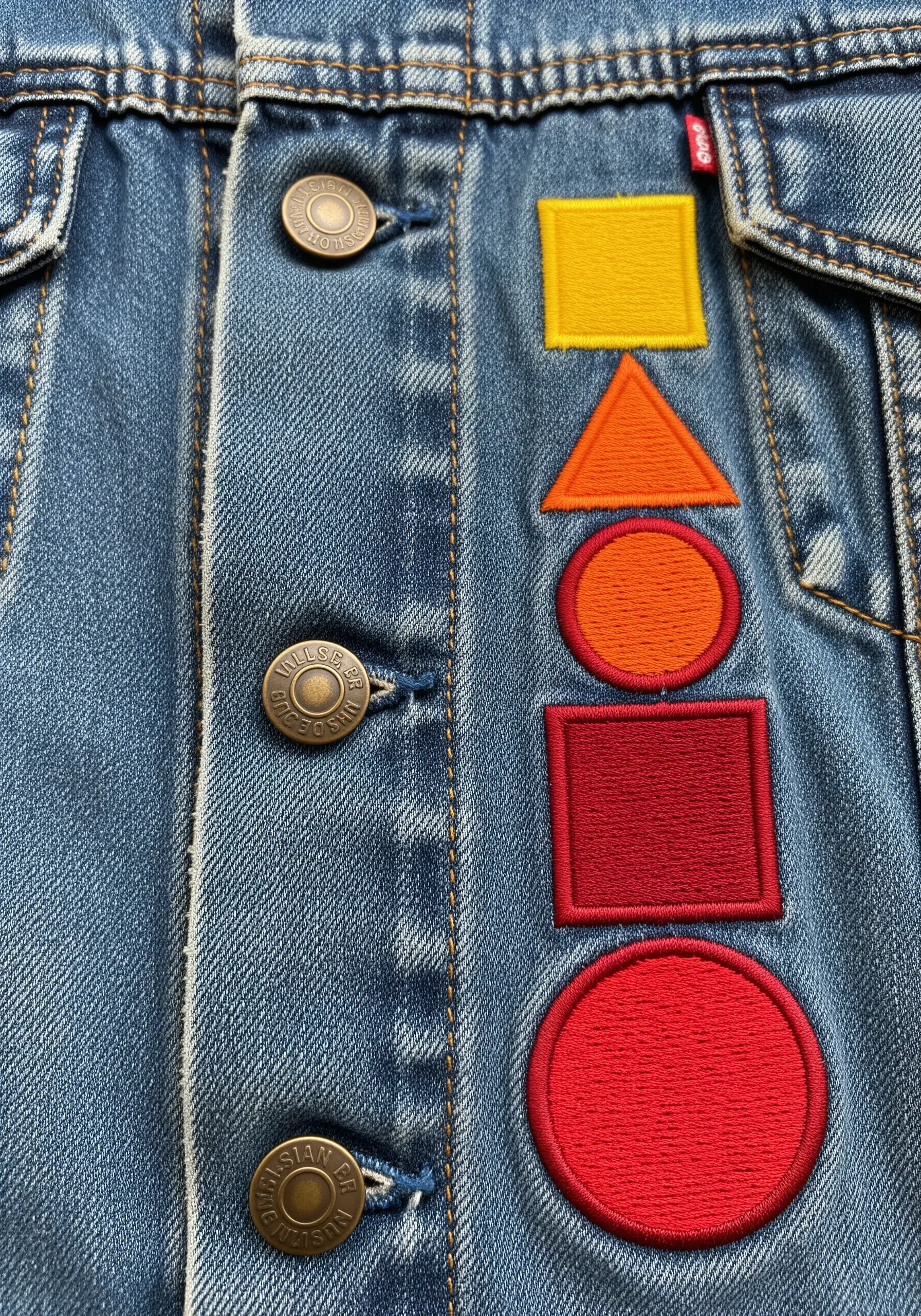
Create a bold, vertical accent along the button placket with a series of simple geometric shapes.
Give each shape a thick, raised outline using a padded satin stitch over a foundation of split stitches.
Fill the interior with a smooth, dense satin stitch in a slightly lighter shade to create subtle dimension.
Arranging the shapes in a color gradient from warm to cool adds a sense of order and visual pleasure to the minimalist design.
11. Achieve Natural Gradients with Fishbone Stitch
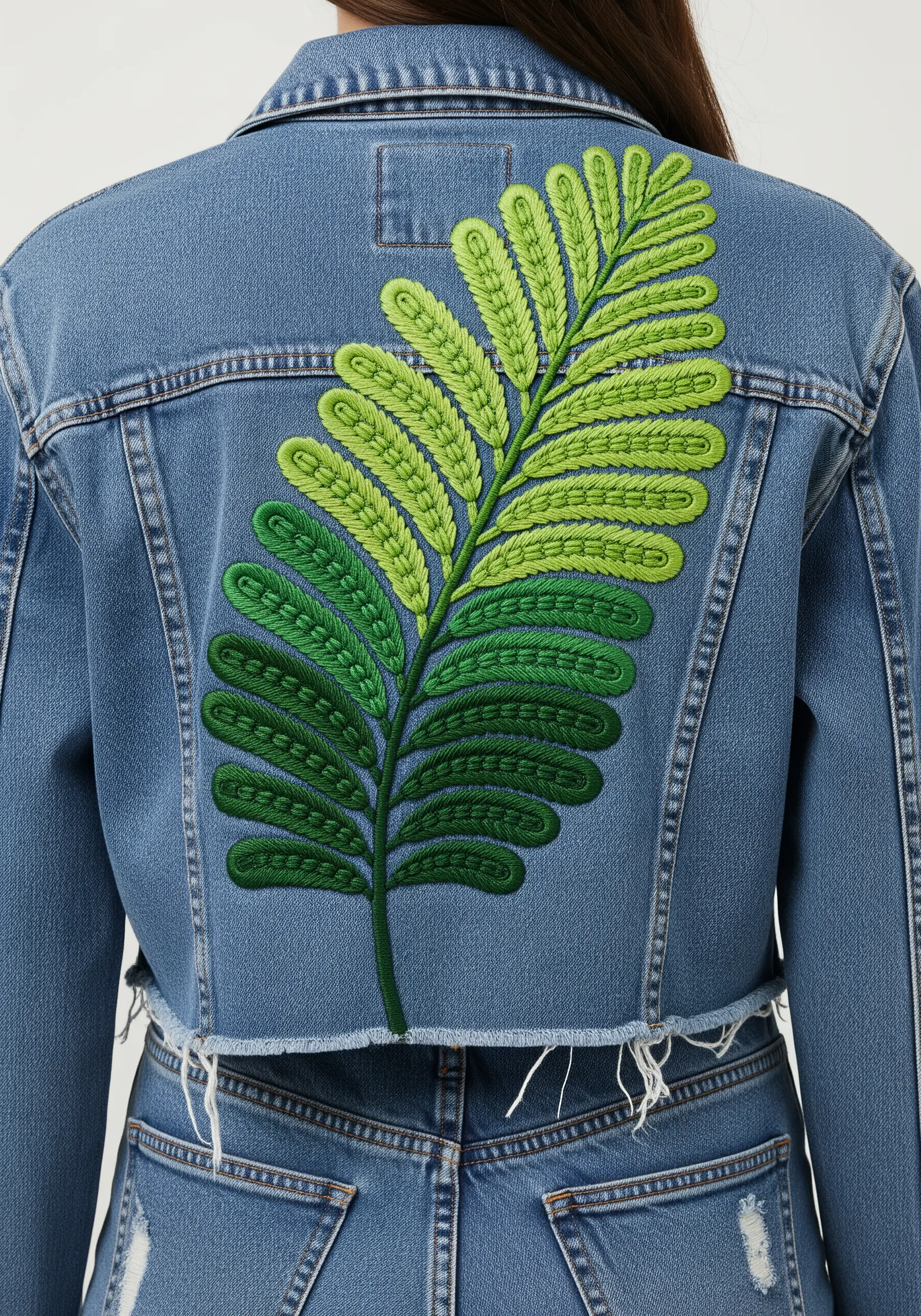
Embroider a large botanical motif, like this fern, and bring it to life with a natural color gradient.
Use a fishbone stitch for the leaflets, as it creates a beautiful central vein and allows for easy color blending.
Start with your darkest green at the base of the fern, transitioning to a new shade every few leaflets as you work your way to the lighter tip.
This subtle shift in color gives the design a realistic, sun-kissed appearance.
12. Blend Soft Pastels with Metallic Outlines
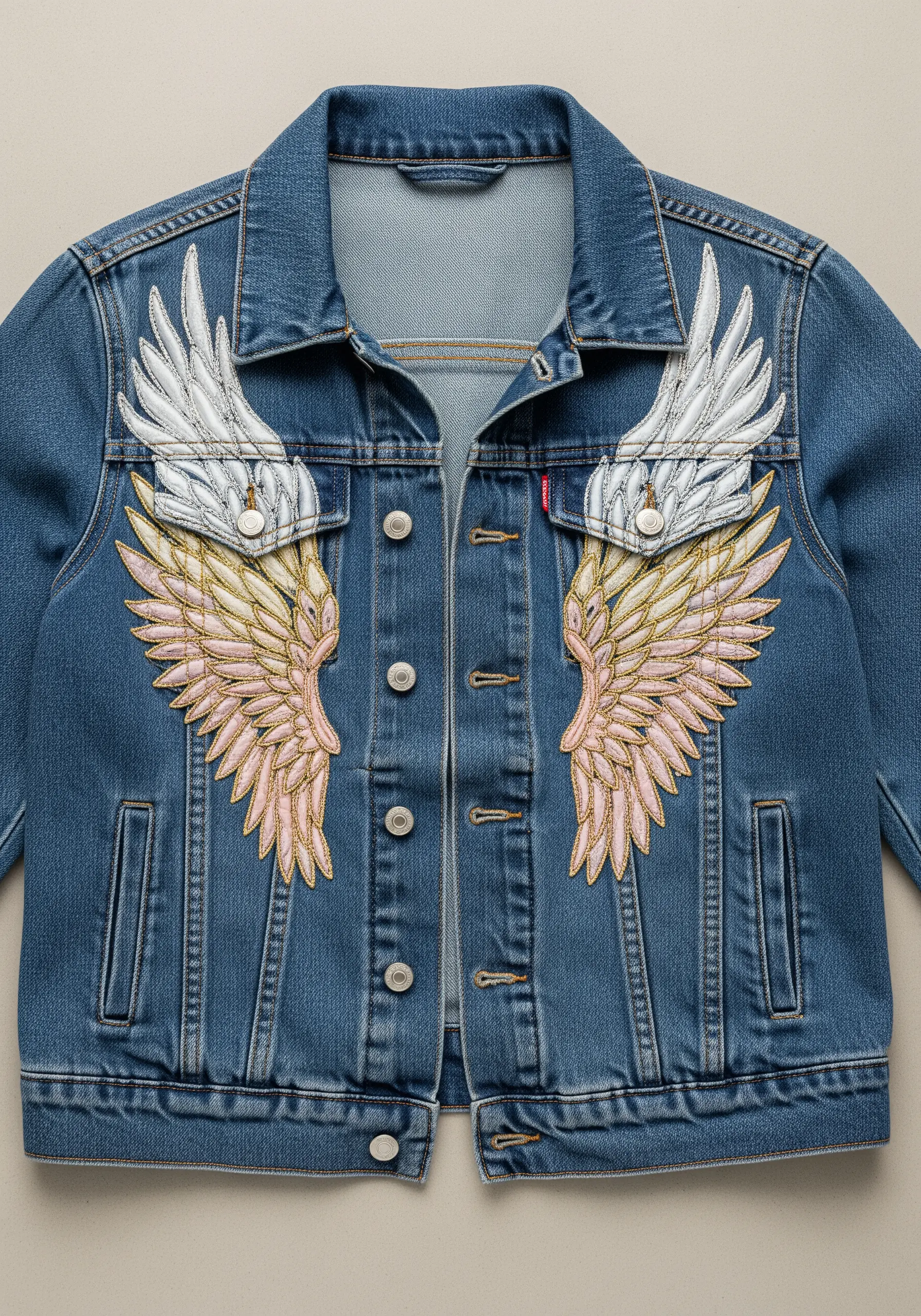
Create ethereal wings by combining soft thread painting with a sharp, metallic outline.
Use long-and-short stitch to blend pale pinks, yellows, and whites, creating a gentle gradient that suggests soft feathers.
Once the fill is complete, define the entire shape with a crisp backstitch or stem stitch using a fine gold metallic thread.
This contrast between the soft, matte floss and the shimmering metallic outline gives the design a refined, illustrative quality.
13. Create Radiating Energy with Mixed Stitches
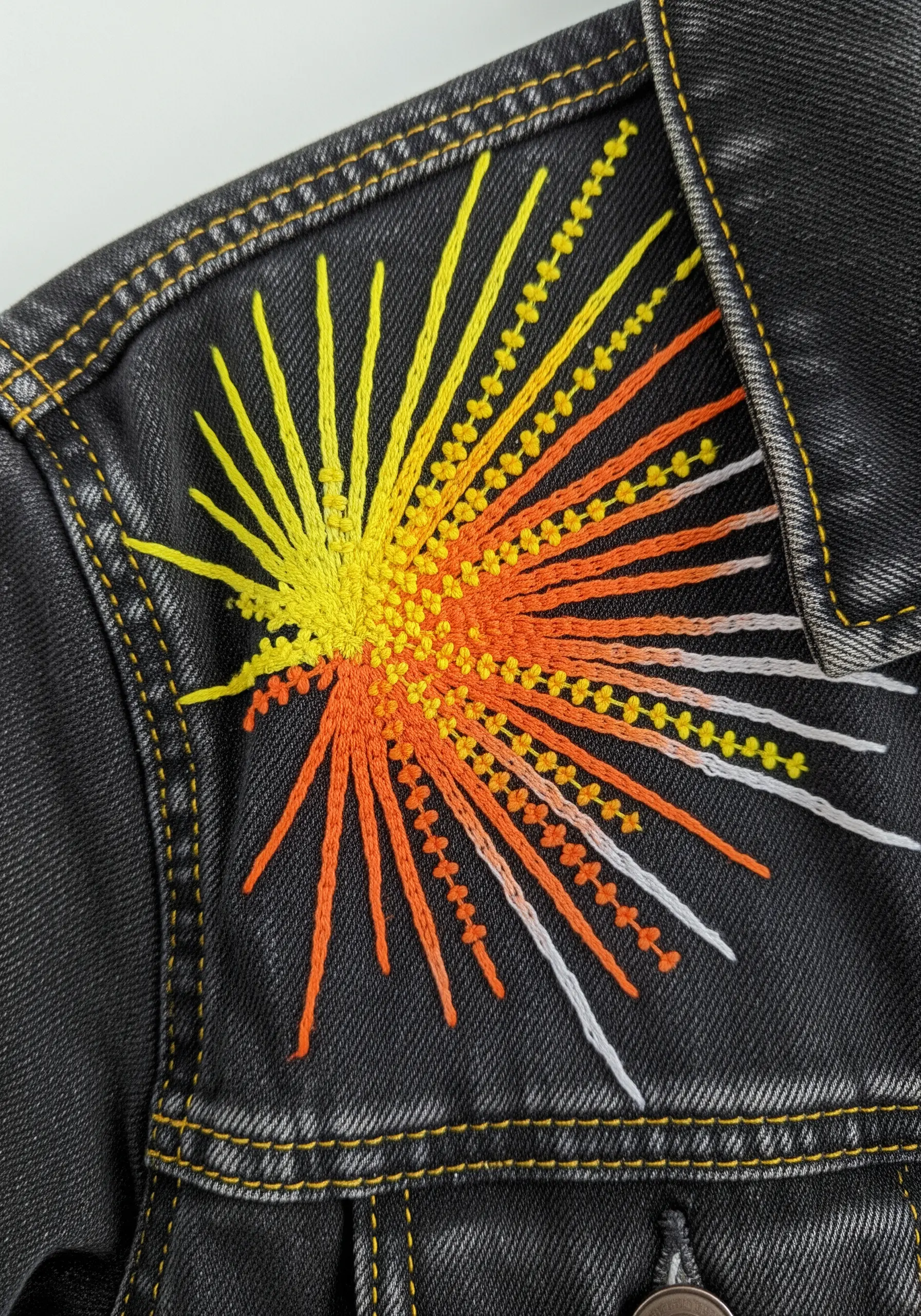
Capture the explosive energy of a sunburst by combining different stitches for texture and direction.
Start with a dense cluster of yellow French knots at the center to create a packed, pollen-like core.
Radiate outwards with straight stitches in orange and yellow, varying their lengths for a dynamic effect.
Incorporate rows of decorative stitches, like the tied herringbone stitch seen here, to add another layer of pattern and complexity to the rays.
14. Layer Fabric for an Abstract Landscape
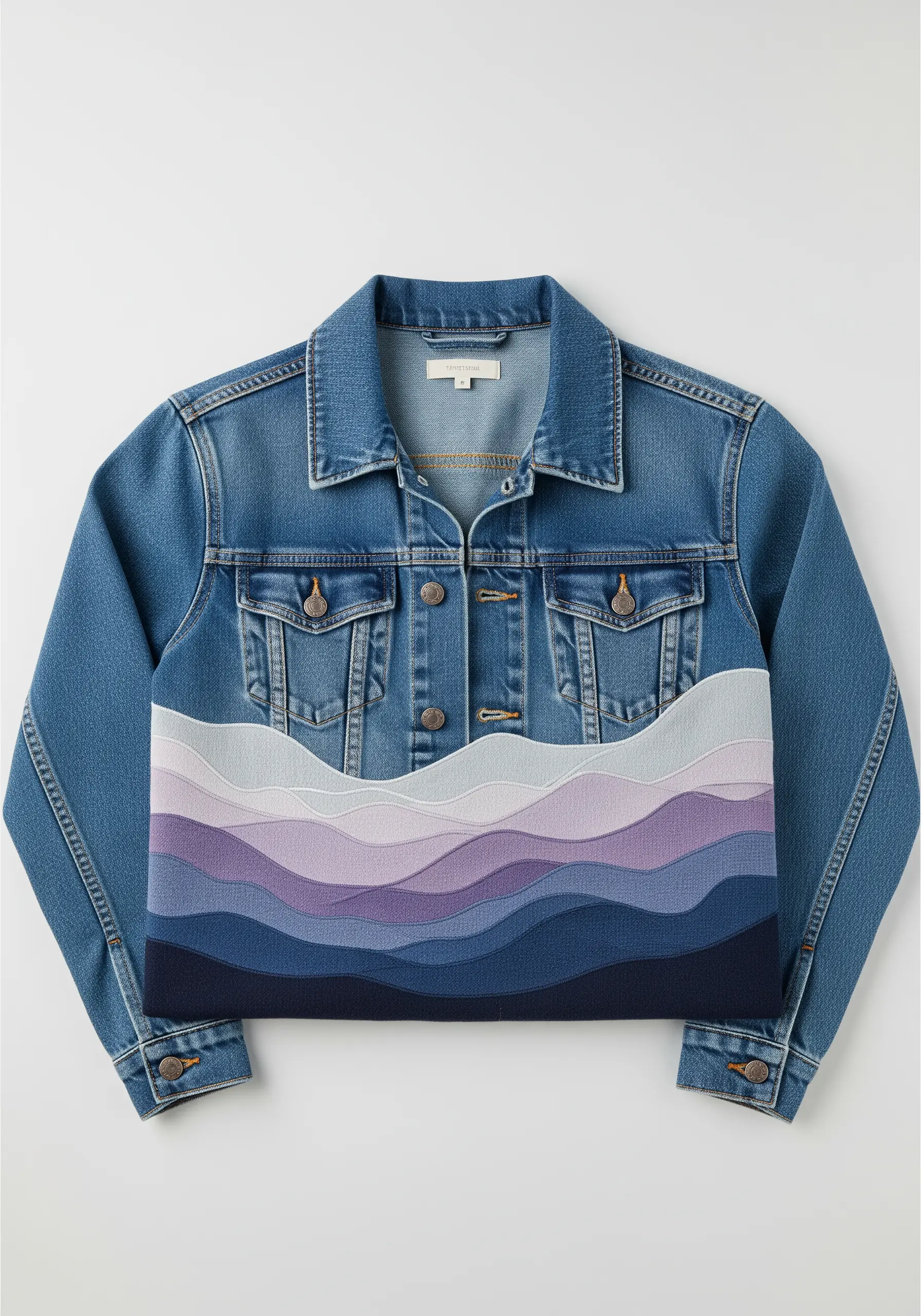
Construct a modern, abstract landscape across the bottom of your jacket using layered fabric appliqué.
Cut wavy strips of cotton or felt in a range of analogous colors, like these purples and blues.
Arrange the strips from darkest to lightest, tucking the edge of each new layer slightly under the last to create a sense of depth.
Secure each piece with a neat, almost invisible slip stitch or a subtle running stitch for a clean, graphic finish.
15. Stitch a Subtle, Personal Soundwave

Add a hidden, meaningful detail inside the collar with an embroidered soundwave.
Record a short clip of a favorite song, a loved one’s voice, or even your own laughter, and use an app to visualize the soundwave.
Sketch this pattern onto the denim and fill it with short, vertical satin stitches.
Use a simple gradient of four to five shades to give the design visual interest while keeping it personal and subtle.
16. Use Satin Appliqué for Bold Color Blocking
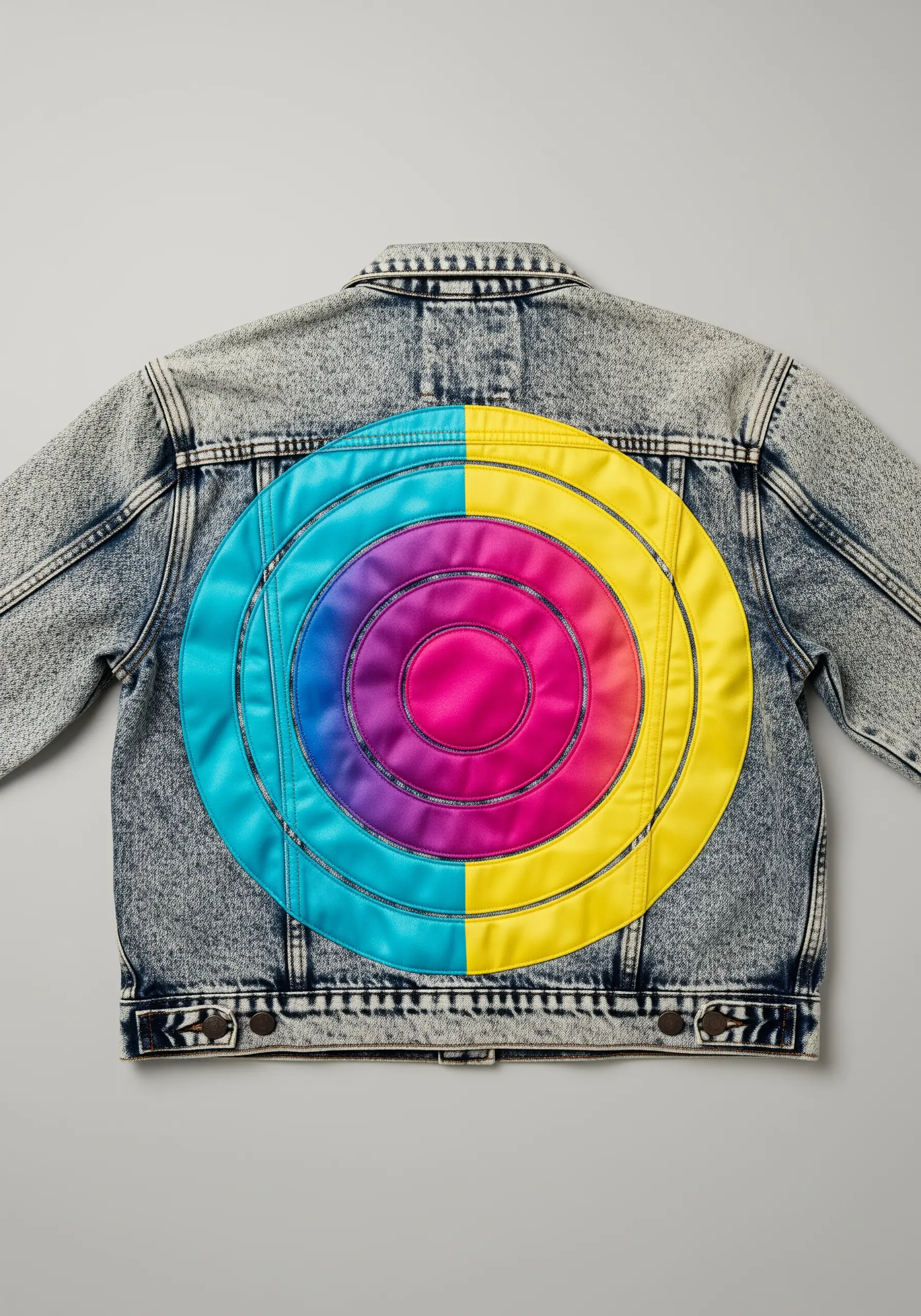
For a high-impact, retro look, use shiny satin fabric to create a bold, color-blocked design.
Cut concentric rings and shapes from different colors of satin, and use a lightweight fusible web on the back to prevent fraying and make placement easier.
Arrange your pieces on the jacket and topstitch them down with a matching thread close to the edge.
The contrast between the shiny satin and the matte denim creates a striking visual effect that’s fast to execute.
17. Couch Metallic Chains for Topographic Lines
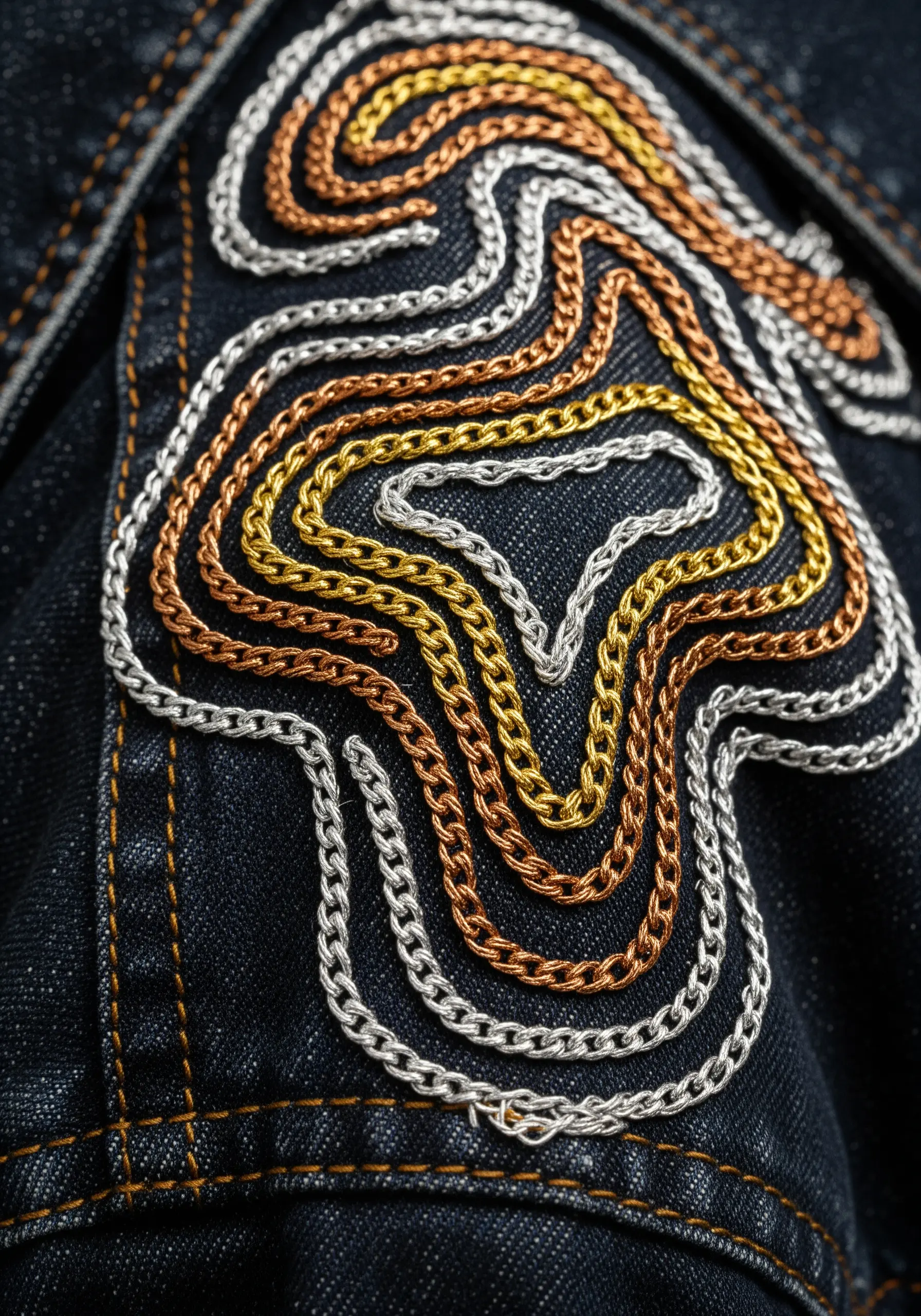
Create an abstract, map-like design with incredible texture by couching fine jewelry chains onto your denim.
Draw your organic, contouring lines onto the jacket first.
Lay the chain along your drawn line and, using a strong sewing thread in a matching color, make tiny stitches over the chain to tack it securely to the fabric.
Alternate metallic finishes like silver, gold, and copper to create a rich, layered effect that catches the light beautifully.
18. Fill Organic Shapes with Directional Stitching
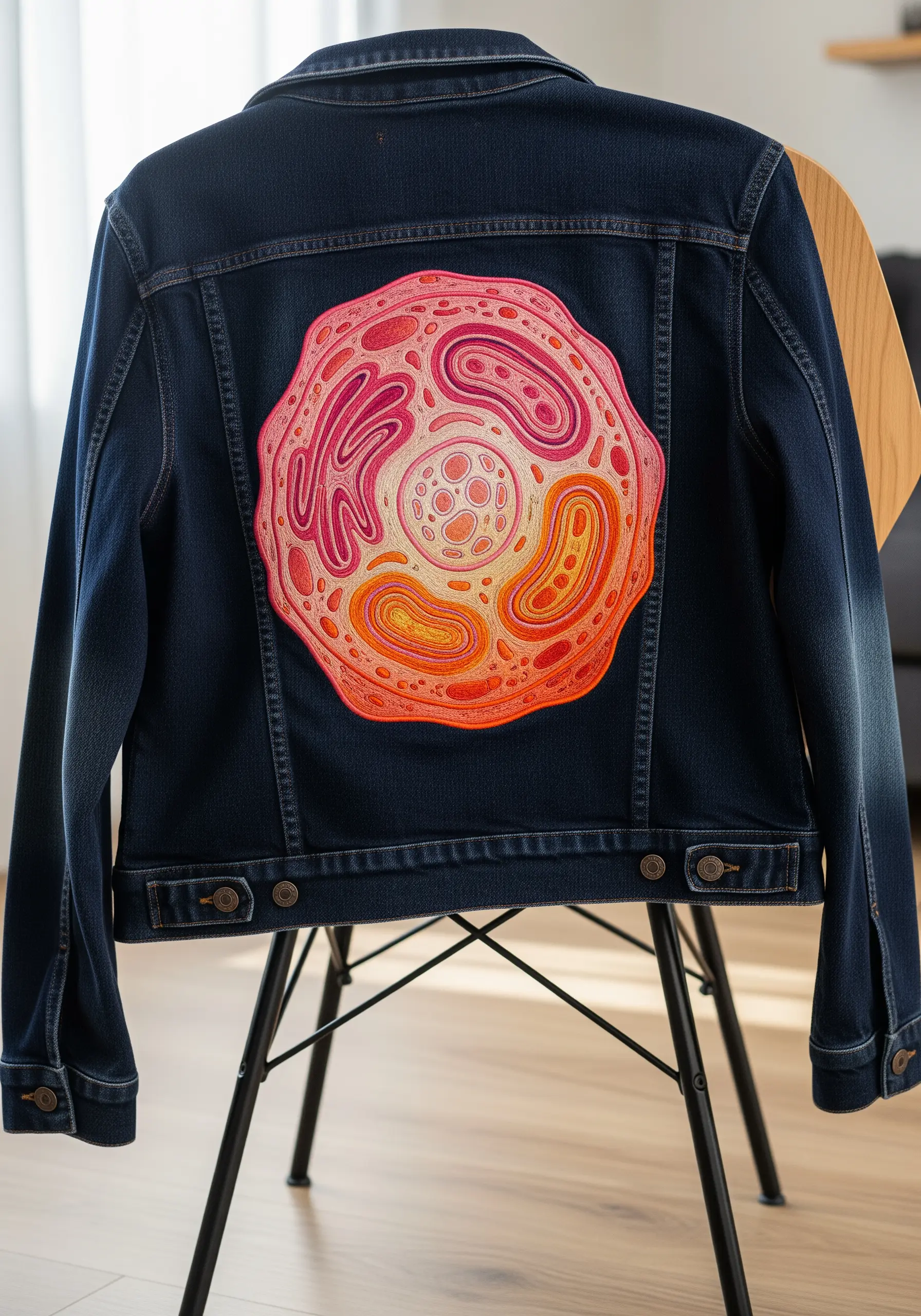
Create a mesmerizing, cell-like design by filling organic shapes with flowing lines of stem stitch or split stitch.
Instead of a uniform satin fill, let the direction of your stitches follow the curves of each internal shape.
This technique creates a sense of movement and internal structure, much like the patterns found in nature.
Use a warm, analogous color palette to enhance the design’s organic, biological feel.
19. Emulate Digital Effects with Thread
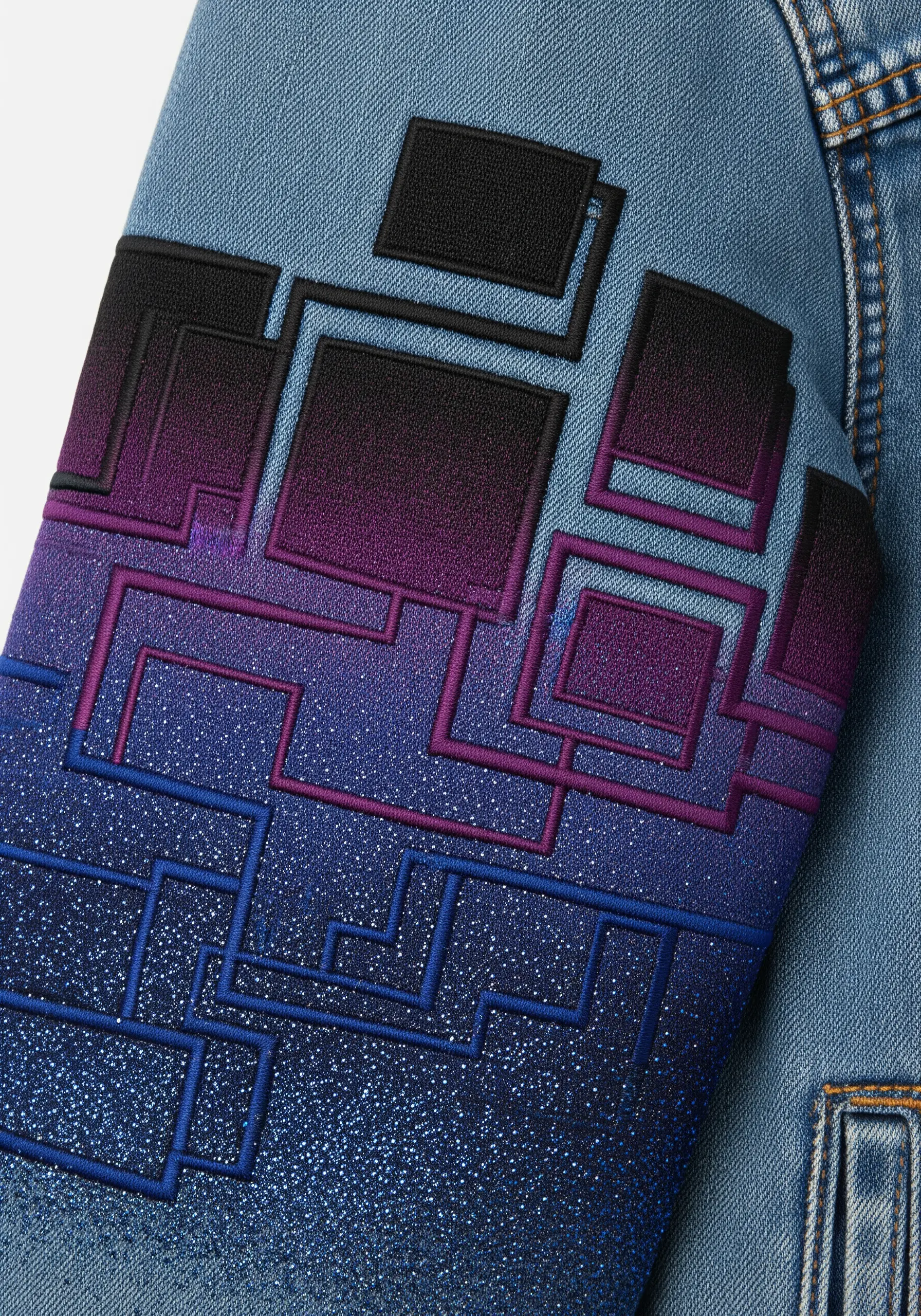
Capture a futuristic, digital aesthetic on a sleeve using thread painting techniques that mimic spray paint and pixels.
Create the soft, ‘sprayed’ background by using sparse, scattered seed stitches in different shades.
For the geometric overlay, use a crisp backstitch for the outlines and fill the shapes with a dense satin stitch, blending two or three colors within each shape to create a smooth gradient.
This combination of textures creates a truly unique, multi-layered look.
20. Add Sculptural Texture with Turkey Work Stitch
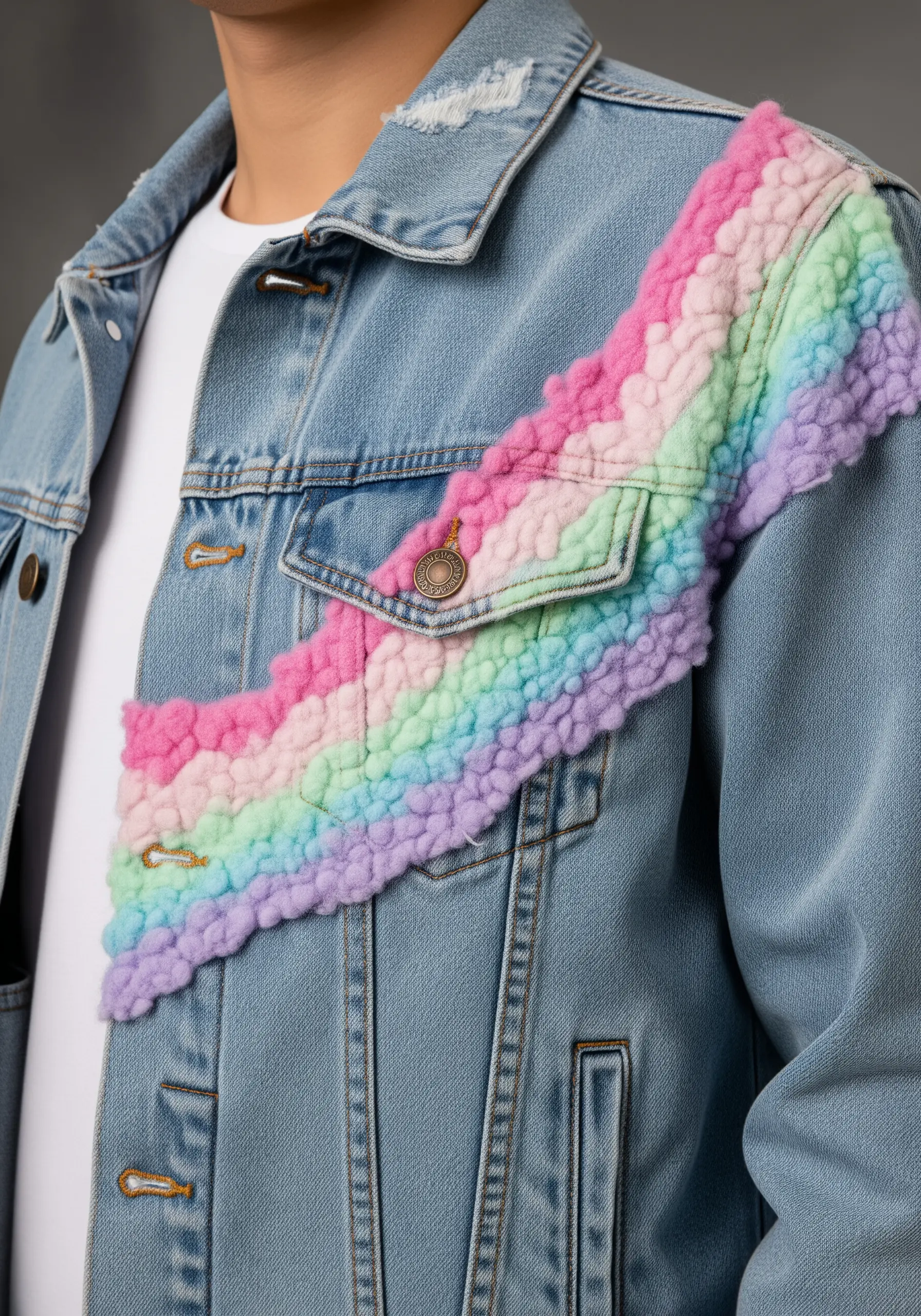
For a soft, fluffy, and highly tactile design, use the Turkey work stitch with thick yarn or chenille thread.
Stitch your design in rows, leaving the loops uncut as you go for a loopy texture, or trimming them for a plush, carpet-like finish.
Arrange your colors in soft rainbow stripes for a playful, cloud-like effect.
This stitch adds incredible dimension and is perfect for creating bold, abstract shapes that invite touch.
21. Create a Gradient Spine with Faux Leather Appliqué
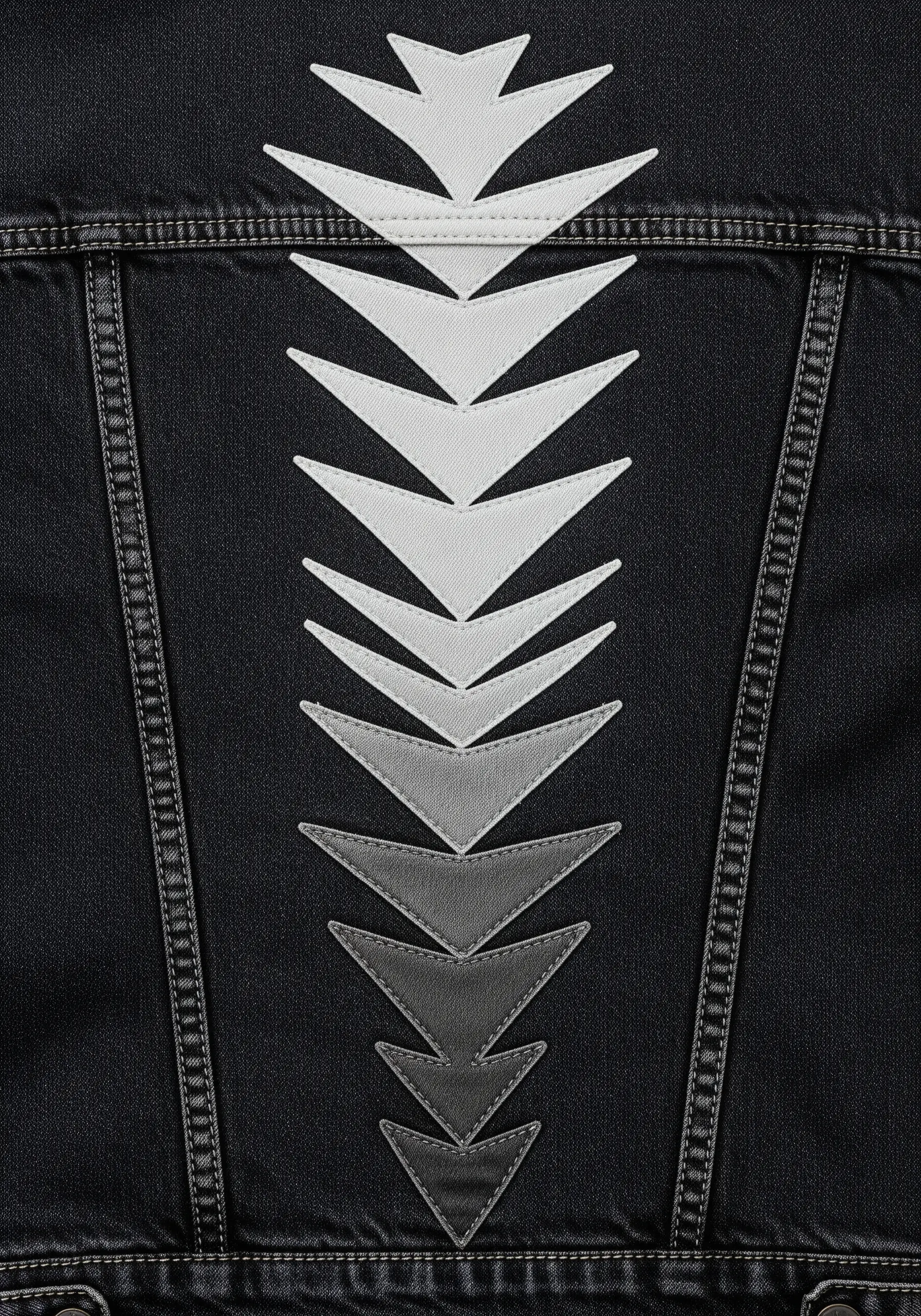
Achieve a sleek, almost futuristic look by applying geometric shapes of faux leather down the center back.
Cut identical arrow-like shapes from different shades of gray and white faux leather.
Arrange them in a perfect gradient from top to bottom for a striking visual effect.
Secure each piece with a clean, precise machine topstitch or a meticulous hand-stitched backstitch just inside the edge for a professional finish.
22. Paint Gradient Orbs with Circular Stitches
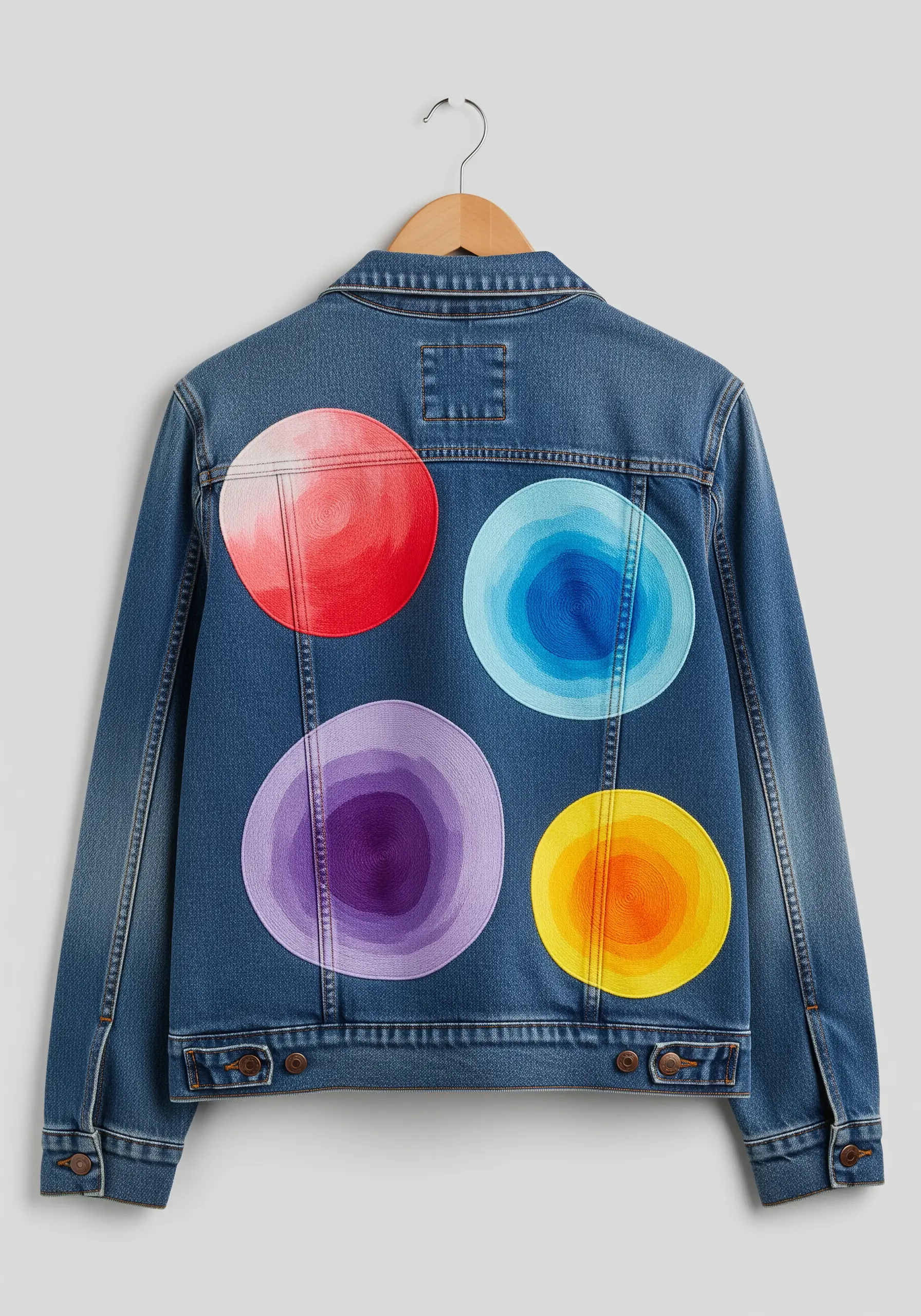
Give your abstract circles a stunning sense of depth by using a circular long-and-short stitch.
Instead of stitching back and forth, work in concentric rings, starting from the outer edge and moving toward the center.
Gradually introduce lighter shades of thread as you move inwards, blending each new ring of stitches into the last.
This method creates a beautiful, painterly effect that makes the flat circles appear three-dimensional and luminous.
23. Use Buttonhole Stitches as a Graphic Element
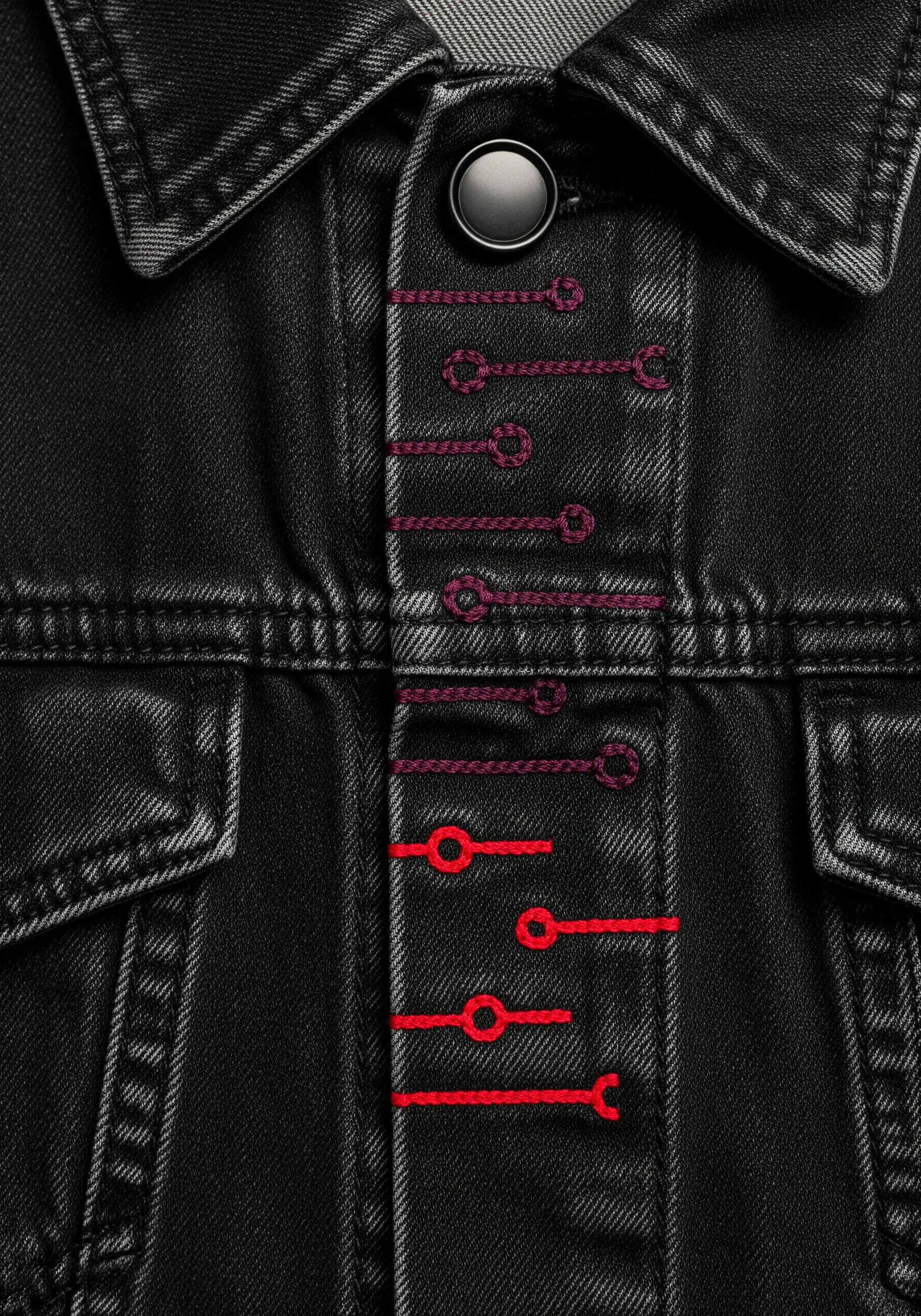
Transform a functional stitch into a striking decorative feature along the button placket.
Work a series of detached buttonhole stitches, or tailor’s tacks, in a vibrant, contrasting thread.
Create a subtle gradient by switching your thread color from a deep purple to a bright red every few stitches.
This minimalist addition draws attention to the jacket’s construction and adds a pop of intentional, handcrafted color.
24. Weave an Interlocking Gradient Pattern
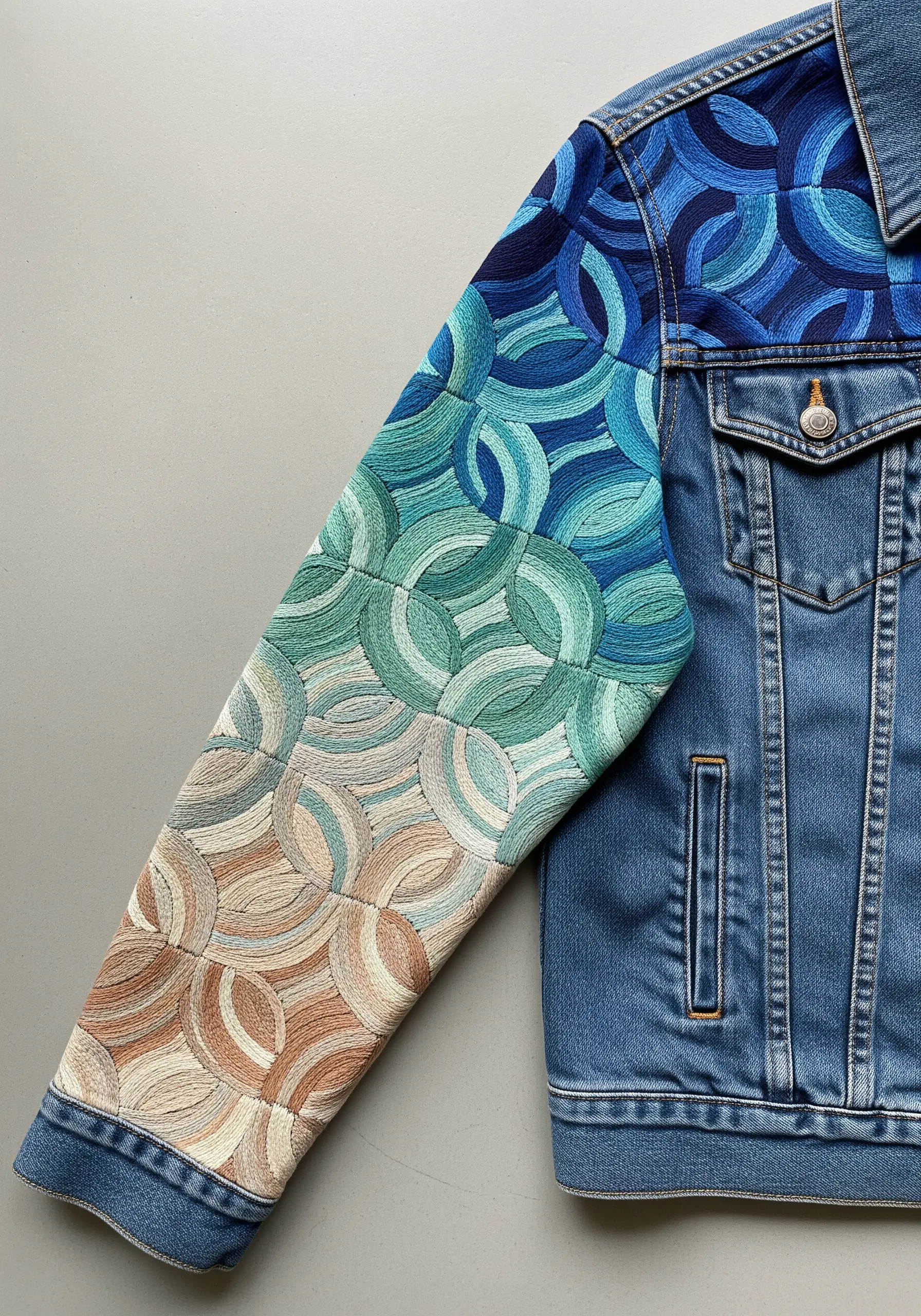
Cover an entire sleeve with a complex, interwoven pattern for a truly show-stopping piece of wearable art.
Break the design down into a repeating motif of interlocking arcs or circles.
Fill each small section with satin stitch, carefully planning your color placement to create a large-scale gradient that flows down the arm.
Using an embroidery hoop and a good stabilizer is essential to keep the denim from warping under the tension of so many stitches.
25. Outline a Gradient with Shattered Lines
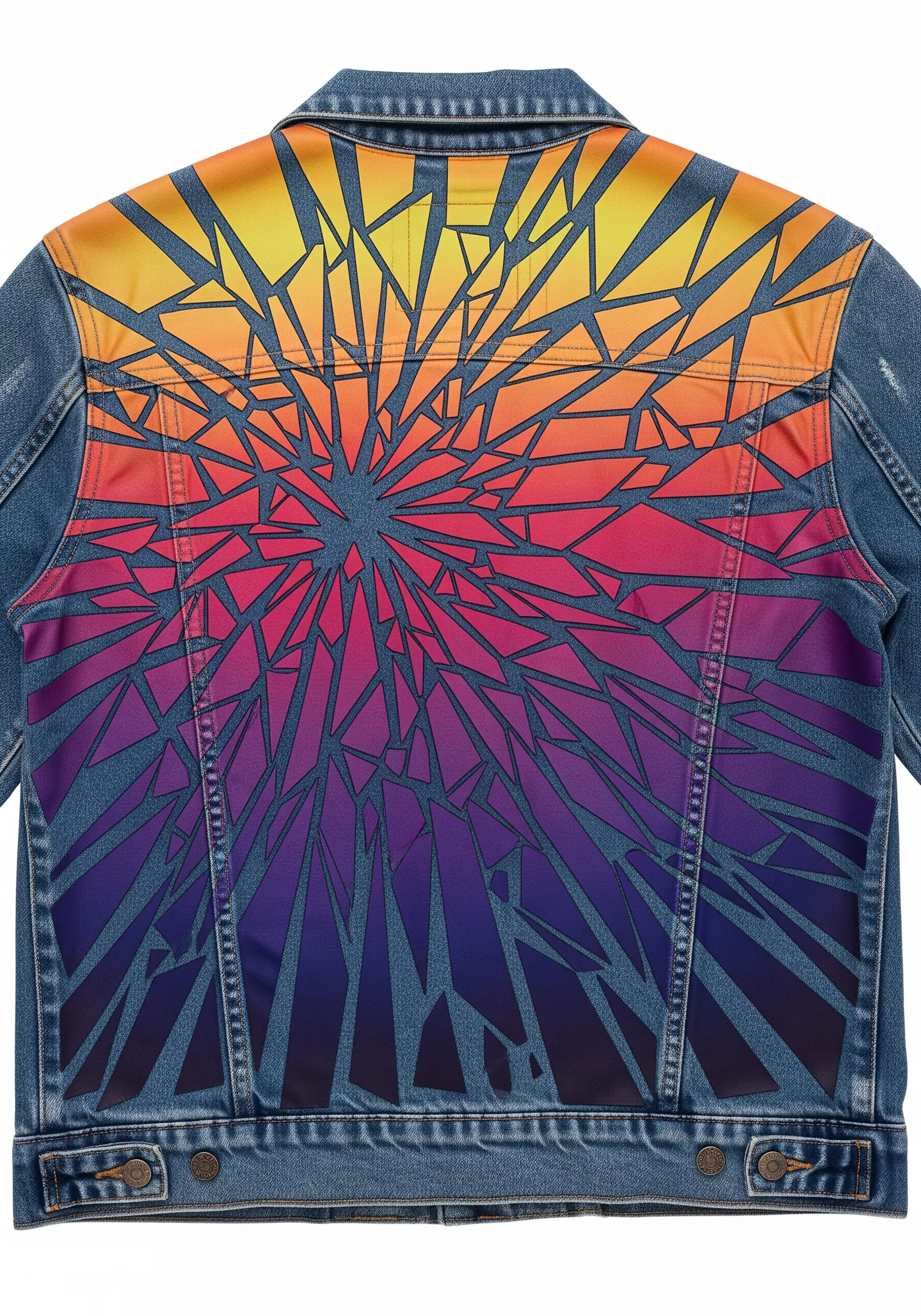
For this look, combine a fabric panel with stitched details to create a shattered glass effect.
Start with a piece of fabric printed or painted with a vibrant sunset gradient and apply it to the back panel of the jacket.
Then, using a dark gray or black thread, add a network of sharp, radiating straight stitches to create the ‘cracks’.
The contrast between the soft, blended color and the hard, sharp lines makes for a dynamic and eye-catching design.
26. Stitch Flowing Waves on a White Canvas
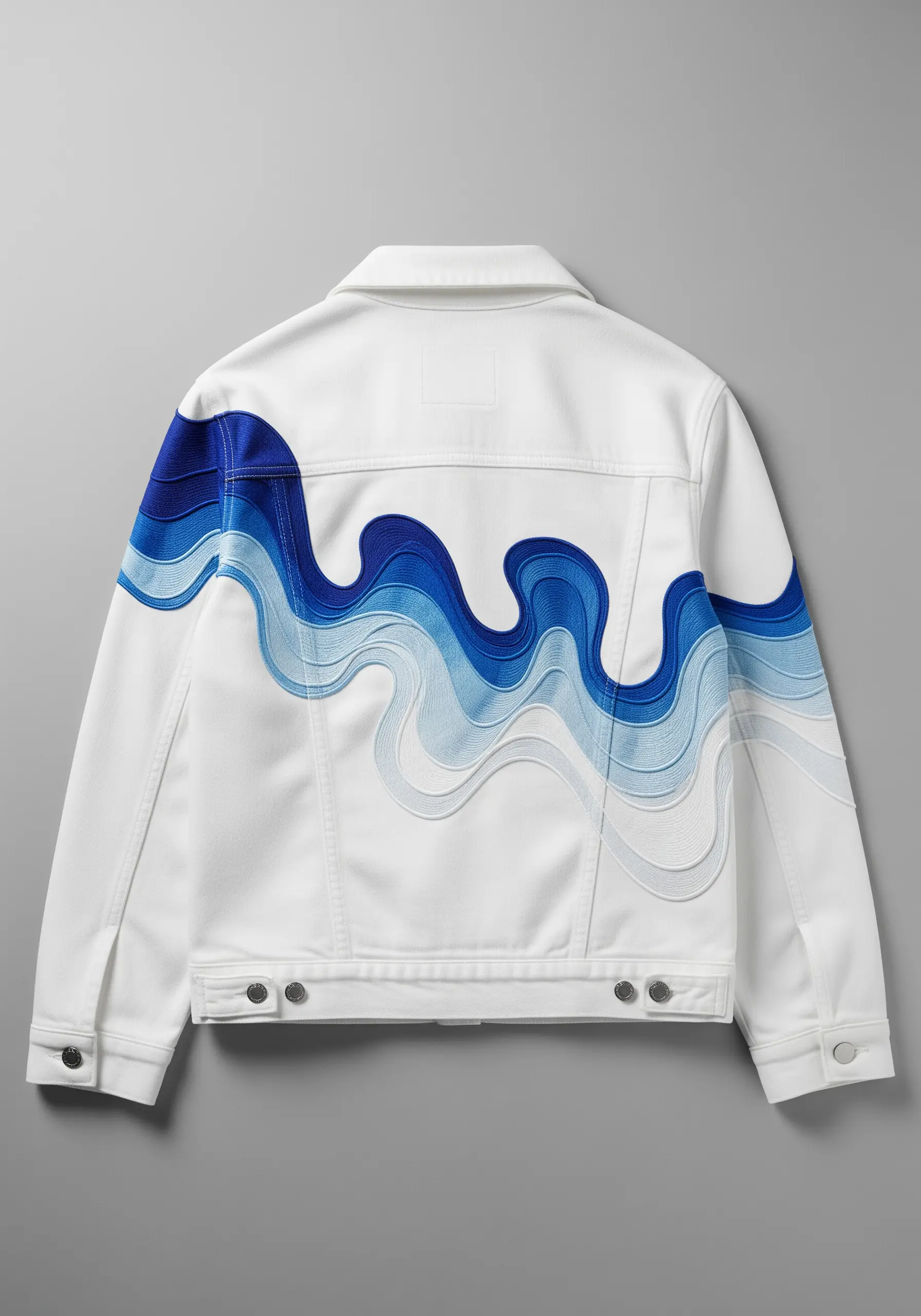
Use a white denim jacket as a canvas to make your colors appear even more vibrant and clean.
Create an abstract, wave-like form using thread painting, letting the design flow across the back seams.
Use long-and-short stitch to smoothly blend shades of blue, from deep navy to the lightest sky blue, and finally into pure white to merge with the jacket itself.
This technique creates a design that feels integrated and seamless with the garment.
27. Emulate Woven Textures with Darning Stitch
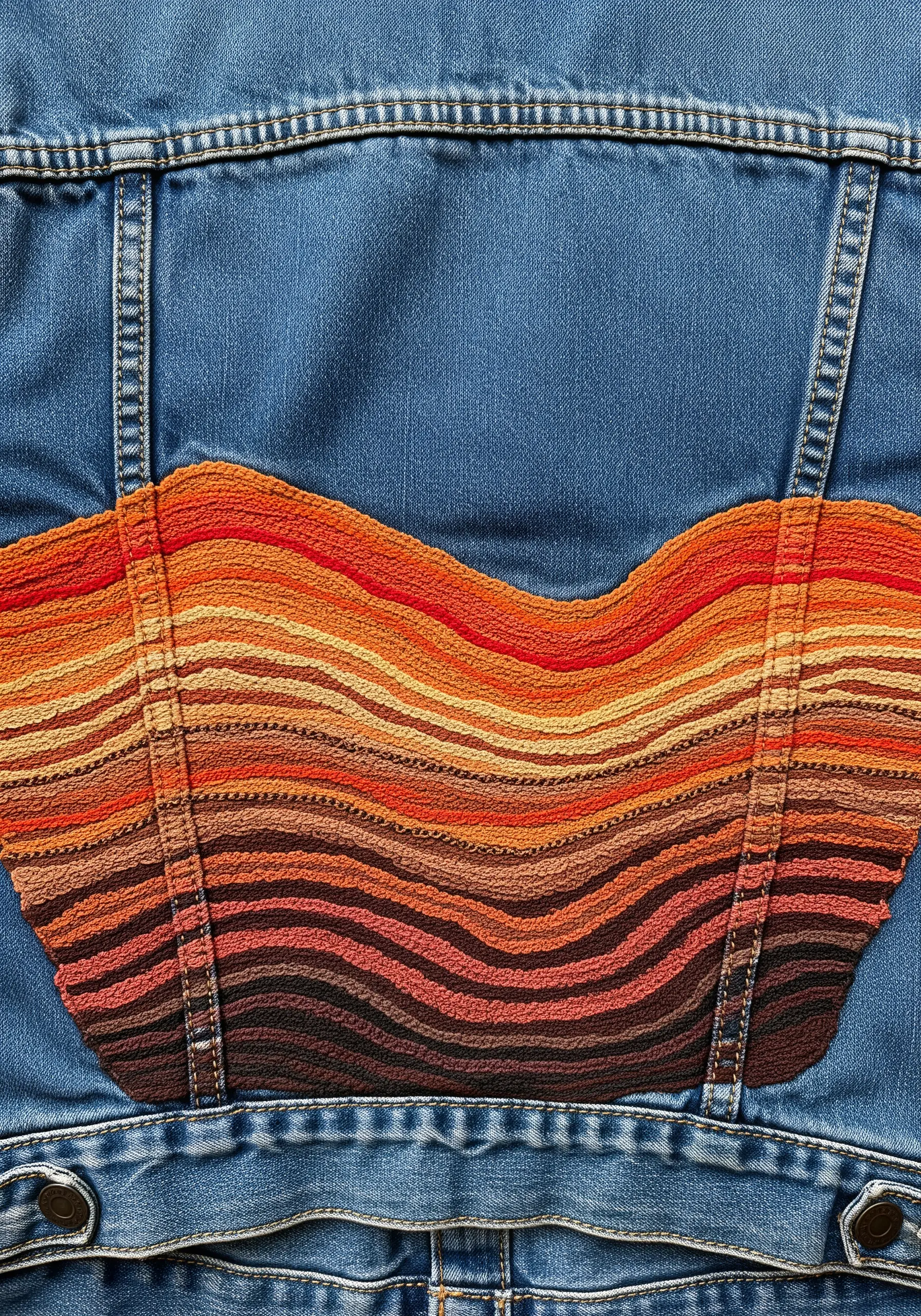
Fill an abstract shape with a stitch that mimics the look of woven fabric for a uniquely tactile result.
Use a darning stitch or basket weave stitch, working with a slightly thicker thread like pearl cotton.
Alternate your thread colors row by row within a warm, earthy palette to create subtle, horizontal stripes.
This technique gives the embroidery a dense, fabric-like quality that contrasts beautifully with the denim’s twill weave.
28. Design a Clean and Minimalist Sunrise
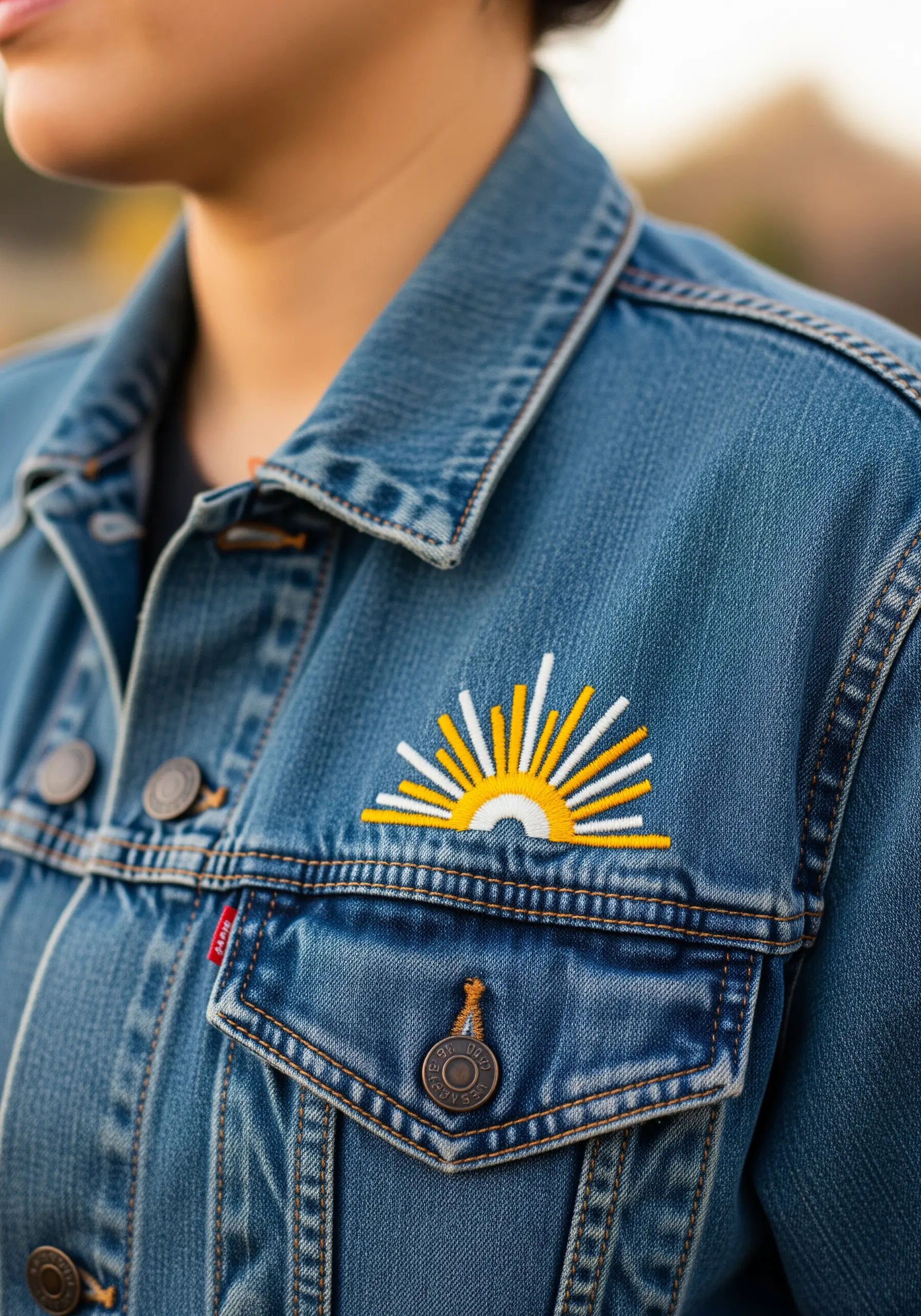
Even a small, simple design can have a big impact when placed thoughtfully.
Embroider a minimalist sunrise over a pocket for a subtle yet cheerful detail.
Use a satin stitch for the half-circle of the sun, and clean, sharp straight stitches for the rays.
Alternate two or three colors—like yellow and white—to add dimension without overcomplicating the design. The negative space is just as important as the stitches here.
29. Appliqué with Iridescent Sequined Fabric
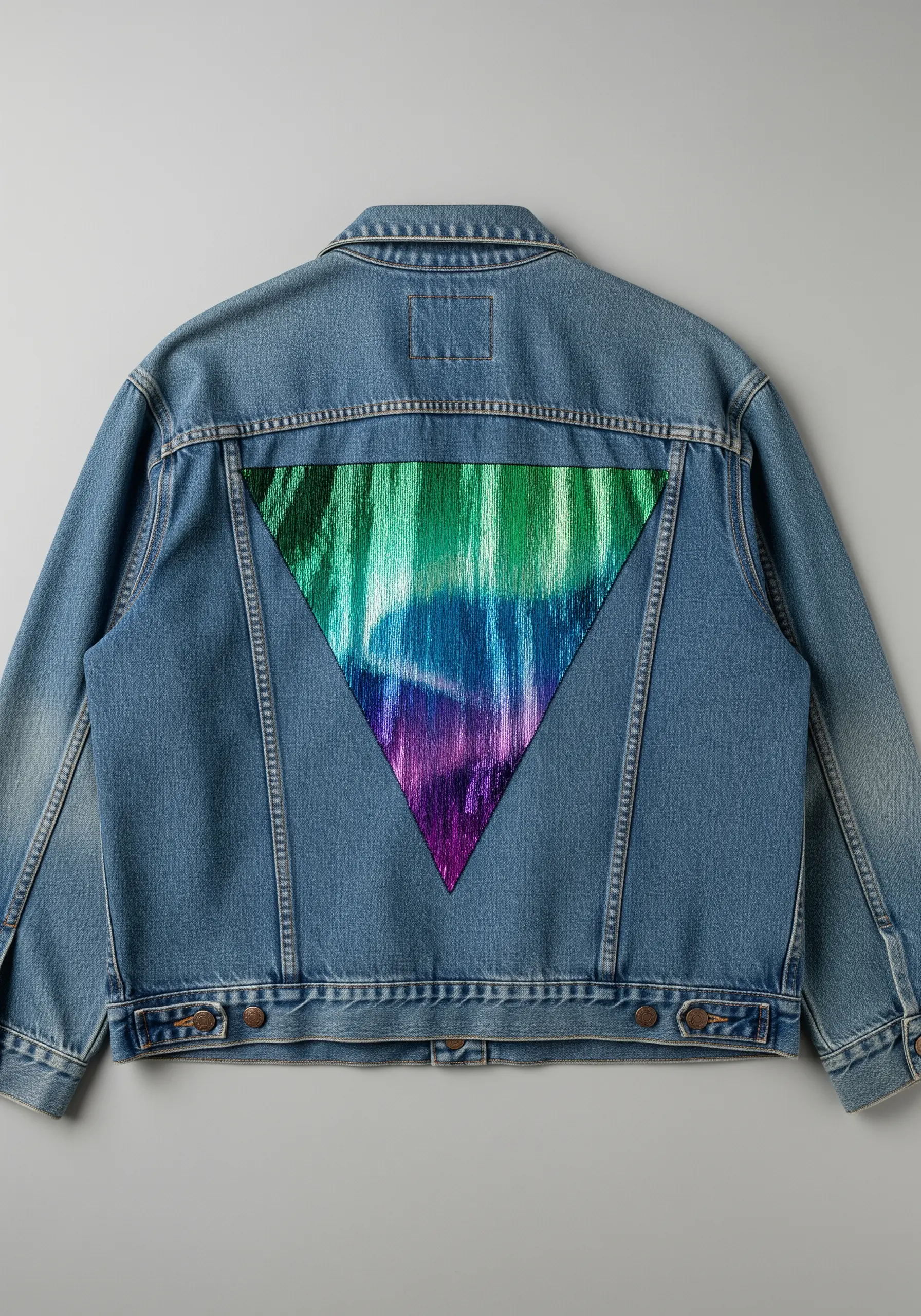
For maximum sparkle and a futuristic feel, use sequined fabric to create a bold geometric shape.
Choose a fabric where the sequins are densely stitched onto a stable backing.
Carefully cut your desired shape—a triangle works well—and iron a fusible interfacing to the back to prevent unraveling.
Stitch it securely to the jacket, either by machine or with a tidy backstitch by hand, for an instant dose of high-wattage glamour.
30. Weave a Delicate Network of Knots
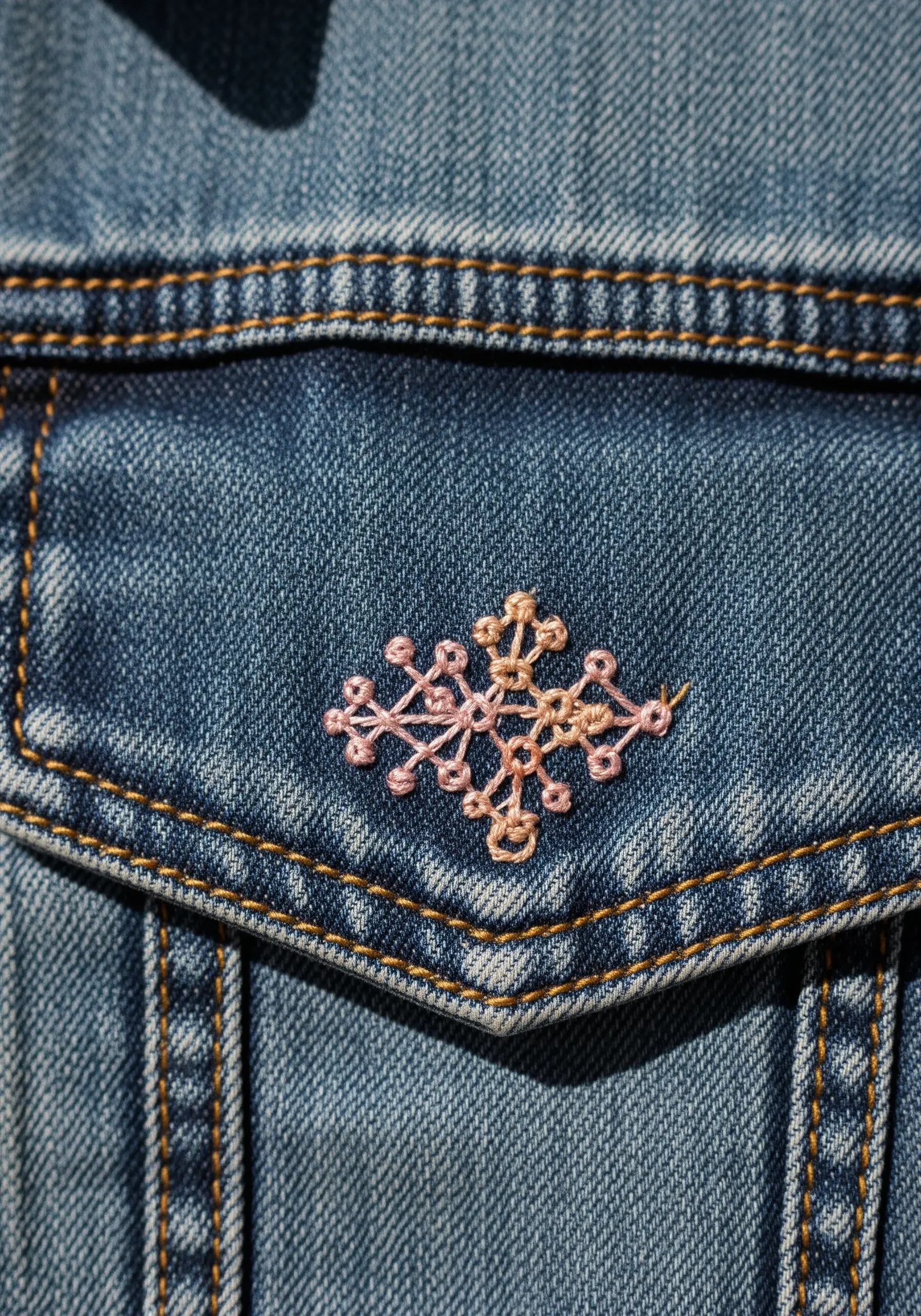
Create an intricate, lace-like detail on a pocket using a combination of French knots and straight stitches.
Place French knots at the intersections of your pattern to act as anchors.
Connect them with straight stitches to form a delicate, geometric lattice.
Use two closely related colors, like pale pink and beige, and blend them randomly throughout the design for a subtle, variegated effect that looks incredibly detailed.
31. Build Fiery Gradients with Fabric and Thread
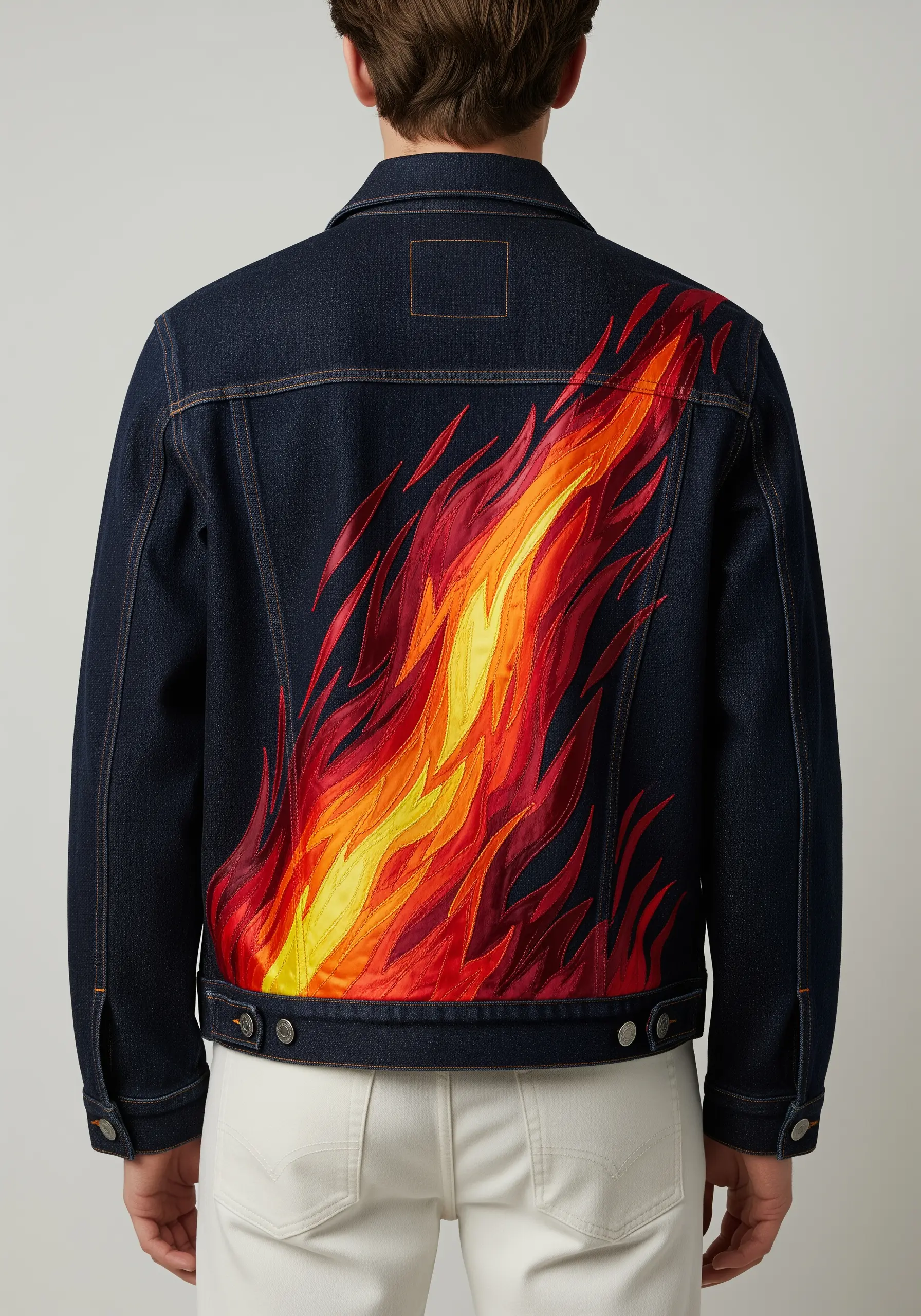
Capture the intense energy of fire by layering appliqué fabrics and blending them with thread painting.
Cut flame shapes from cotton fabrics in shades of red, orange, and yellow, and appliqué them onto the jacket in layers.
Then, use a matching long-and-short stitch along the edges where the fabrics meet to seamlessly blend the colors together.
This combination technique is faster than embroidering the whole design and creates a vibrant, multi-layered effect.
32. Stitch a Faceted Gem with Directional Satin Stitch
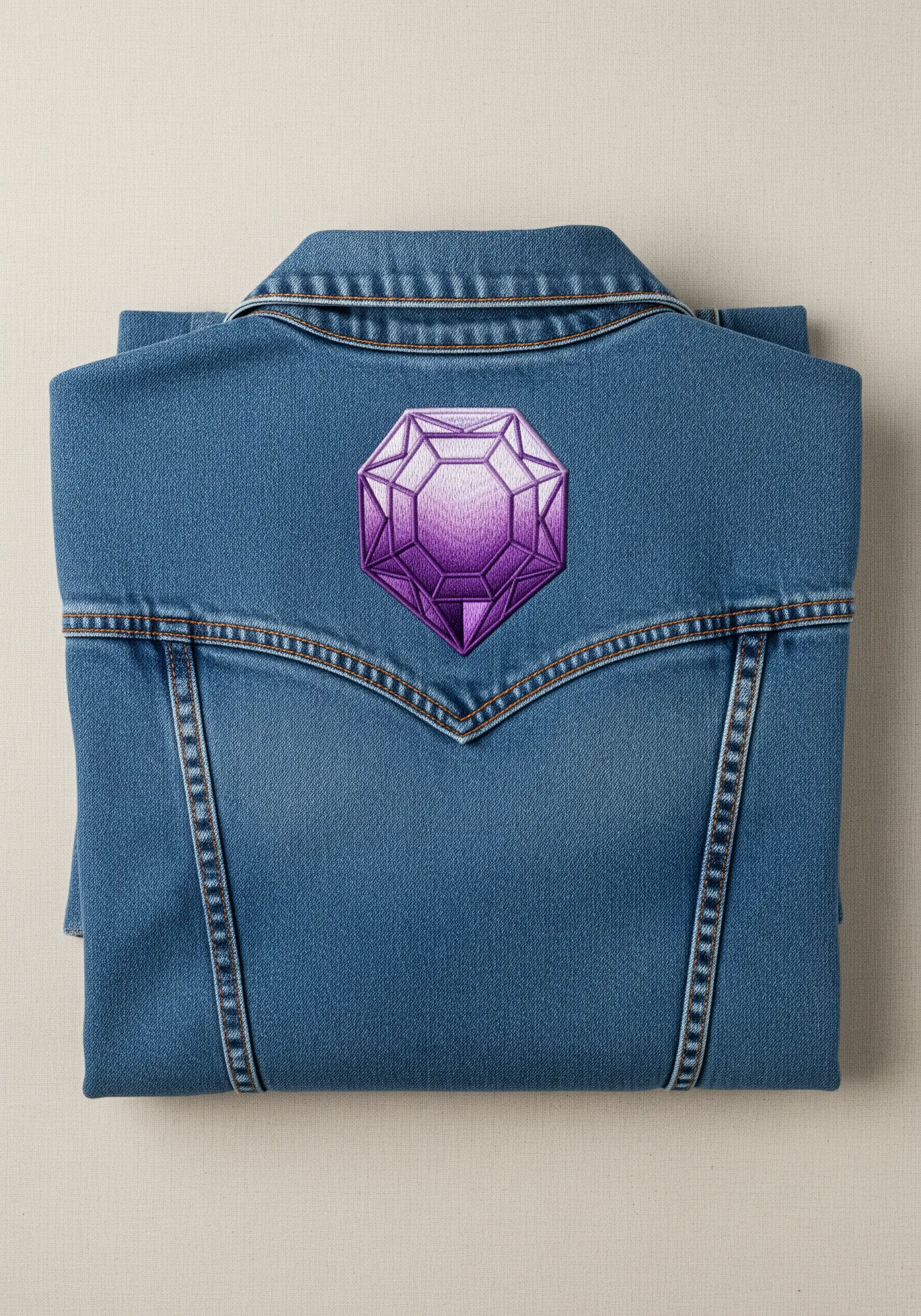
Create the illusion of a sparkling, multi-faceted gemstone using the power of directional satin stitch.
Draw your gem shape and divide it into smaller triangular and quadrilateral facets.
Fill each facet with satin stitch, carefully changing the angle of your stitches for each section.
Use a range of tones from the same color family—from dark to light—to mimic how light would hit the different planes of the gem, creating a stunning 3D effect.
33. Create a 3D Gradient with Woven Picot Knots

Add a highly sculptural and textural element to your sleeve with a cascade of woven picot knots or bullion knots.
These three-dimensional, rosette-like stitches stand up from the fabric surface.
Work them in clusters, starting with your darkest shade at the top and gradually transitioning to the lightest shade at the cuff.
This creates a stunning tactile gradient that is both visually and physically impressive.
34. Mimic Paint Drips with Thread Painting
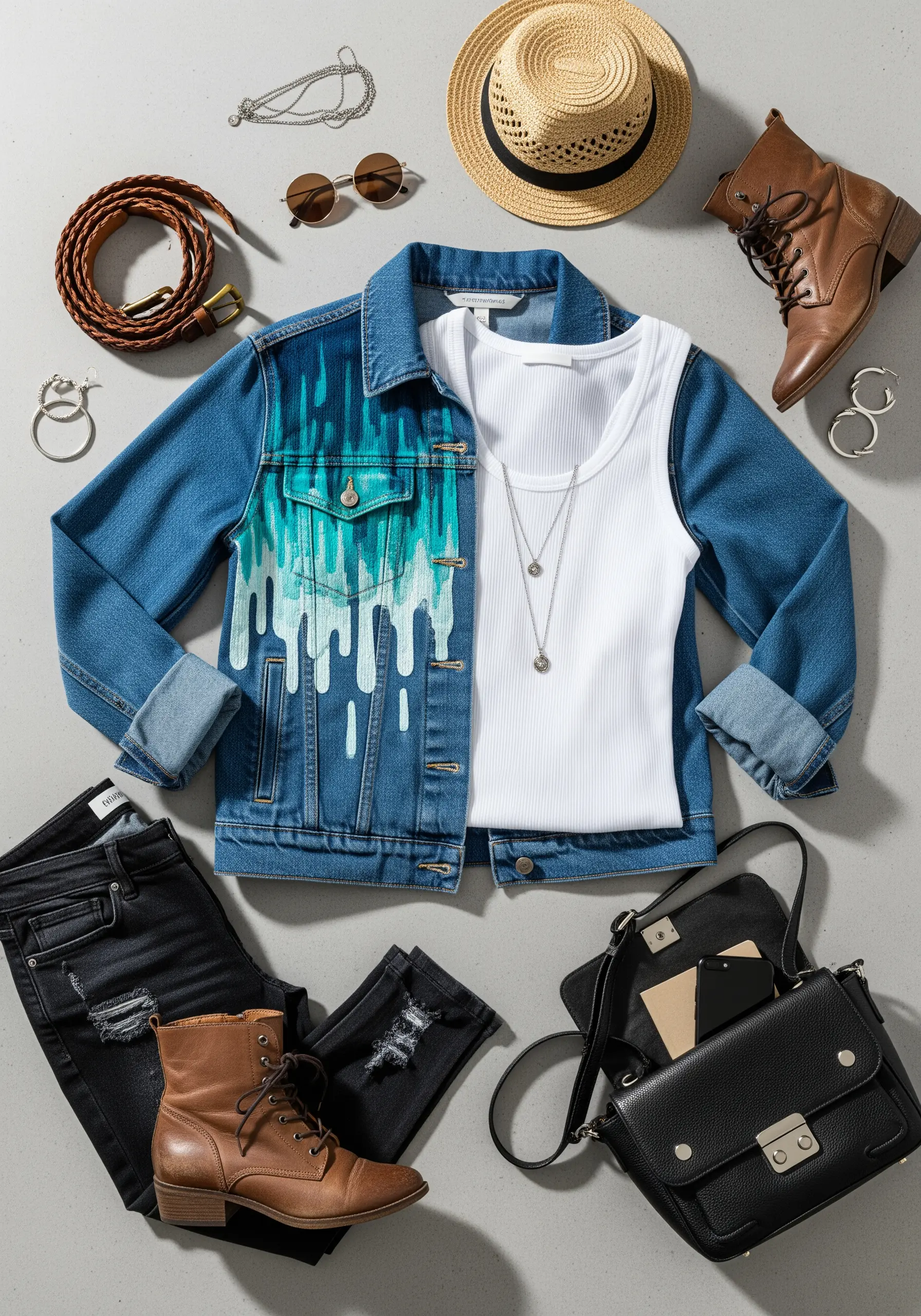
Achieve a cool, street-art-inspired paint drip effect using vertical thread painting.
Sketch out your dripping shapes along the yoke of the jacket.
Fill the shapes with a vertical long-and-short stitch, blending from a dark shade at the top to a lighter one at the bottom of each drip.
This technique perfectly captures the fluidity and color variation of wet paint, creating a design that is both edgy and artistic.
35. Layer Translucent Fabrics for a Pastel Wash
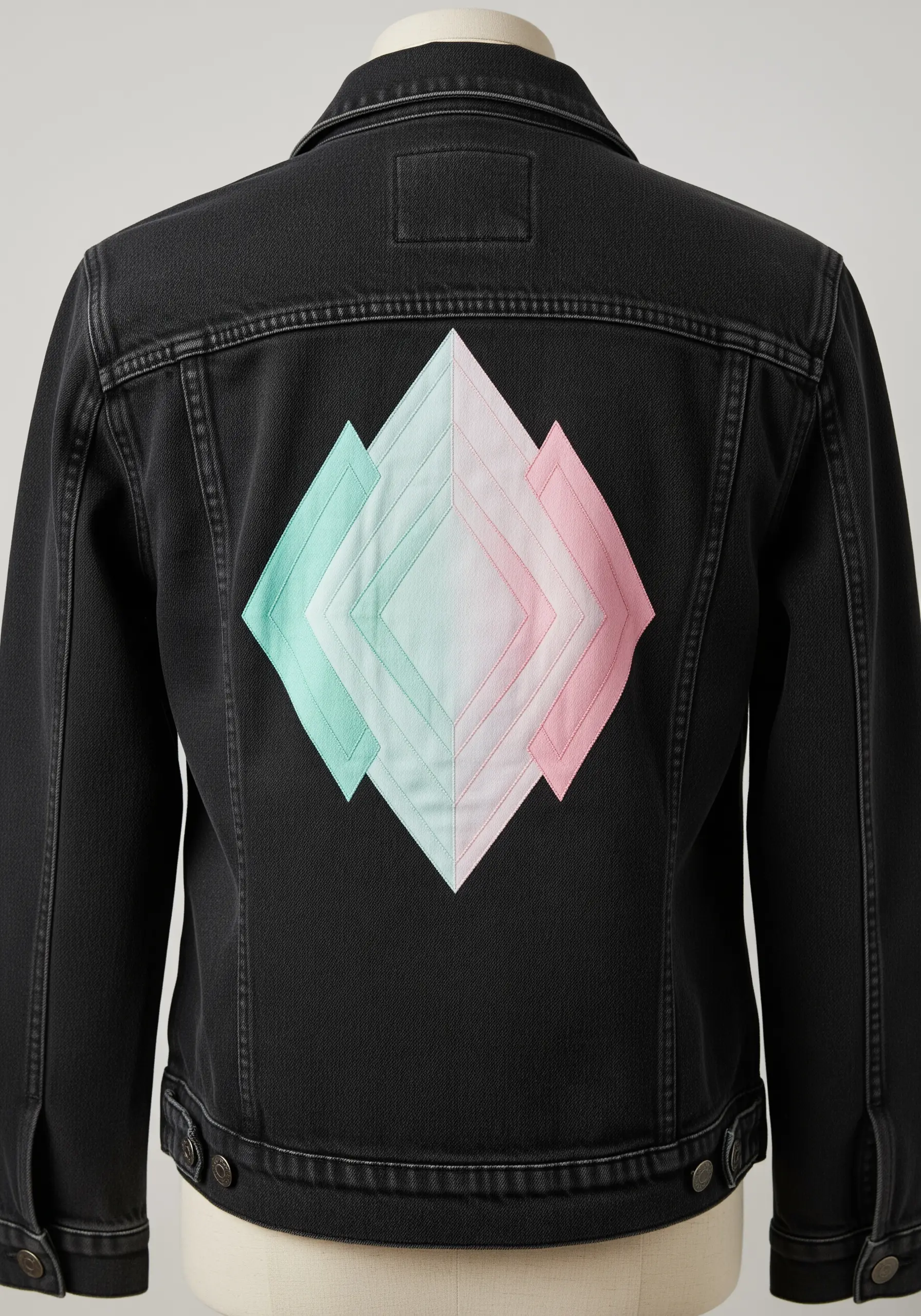
Create a soft, ethereal geometric design using layers of sheer or lightweight pastel fabrics.
Cut your diamond shapes from fabrics like organza or lightweight cotton voile.
Layer them in an overlapping pattern on the back of a dark jacket; the dark denim showing through will deepen the colors where they overlap.
Secure the shapes with simple, clean running stitches to create a quilted effect that adds subtle texture to the dreamy design.