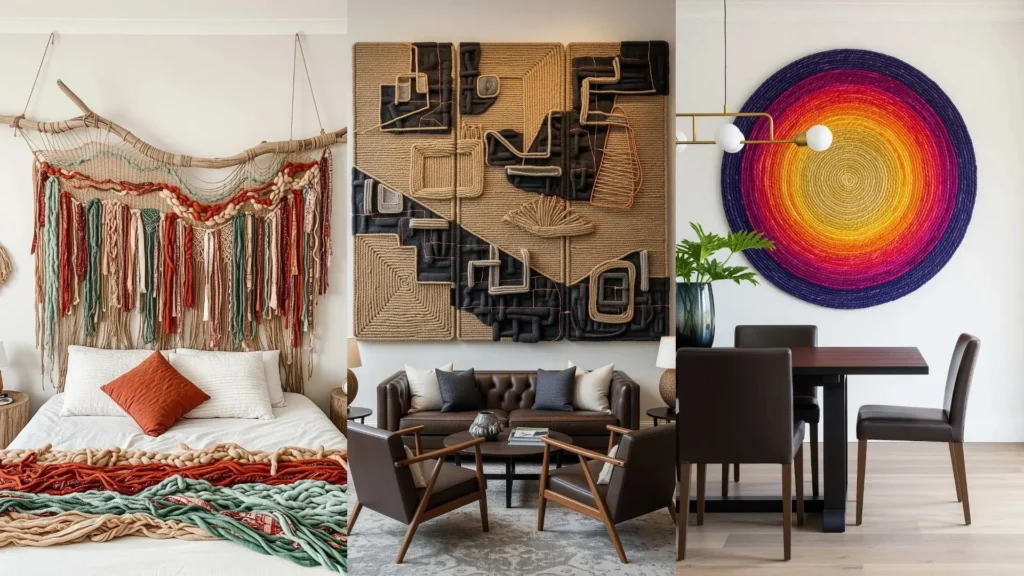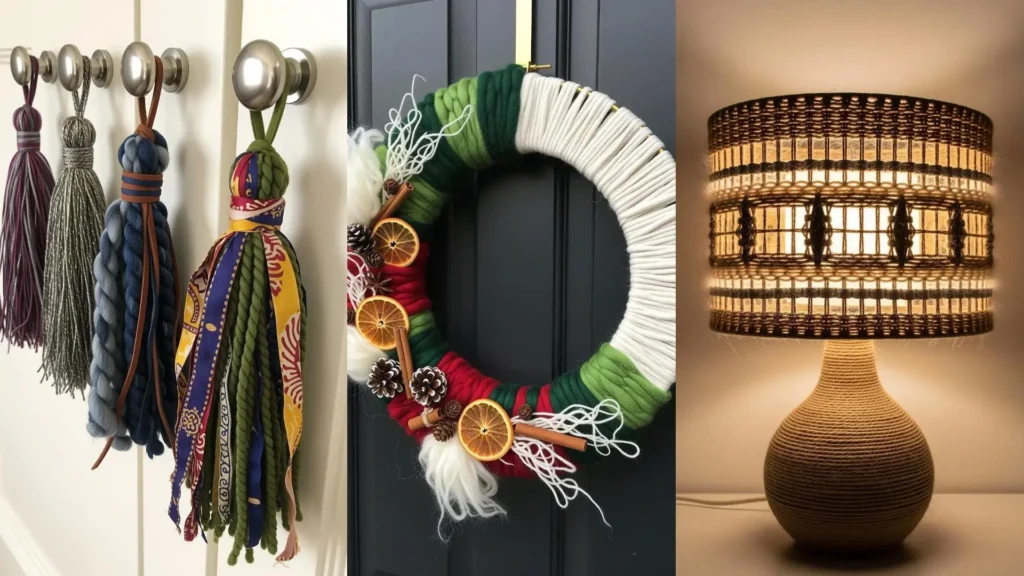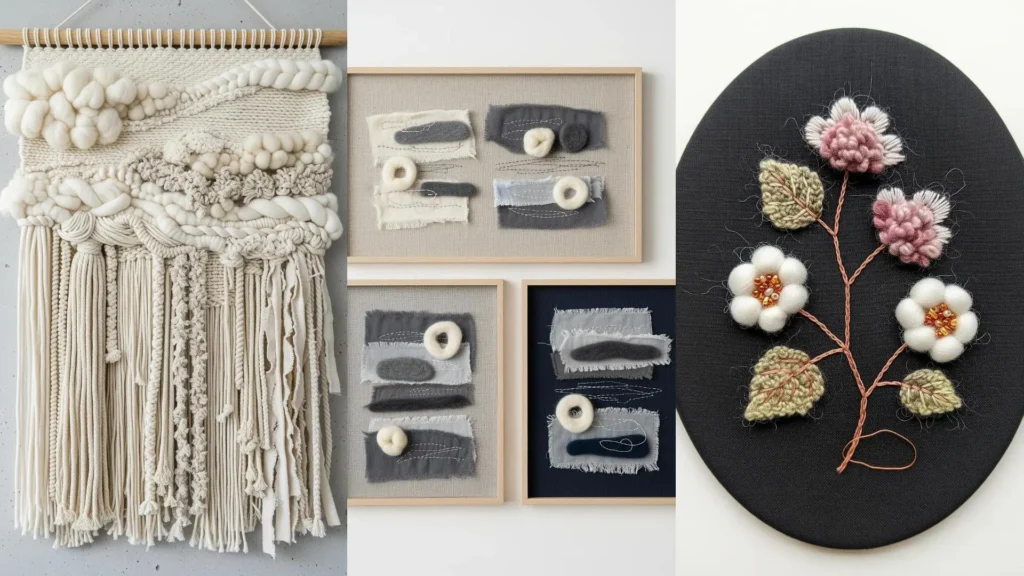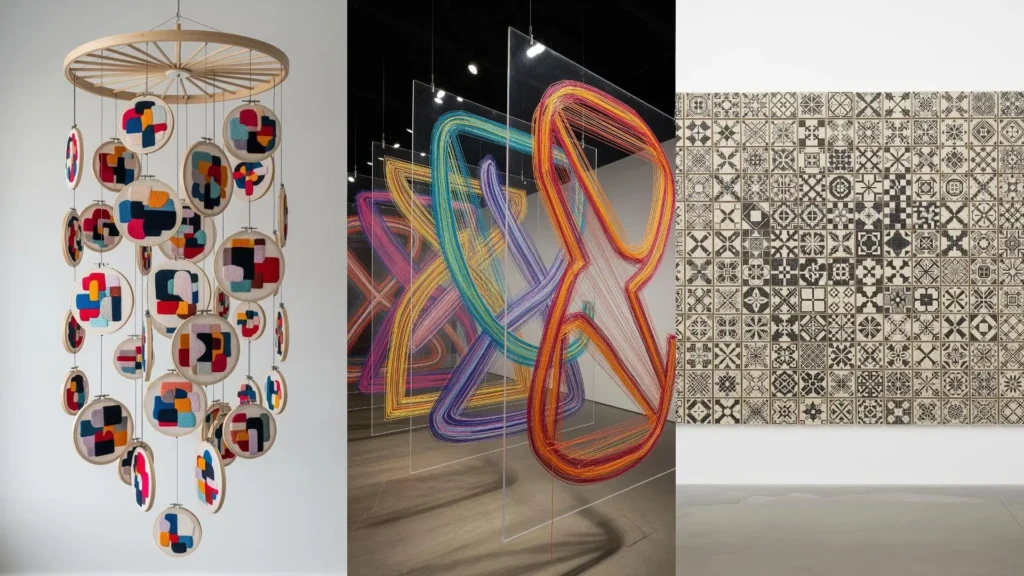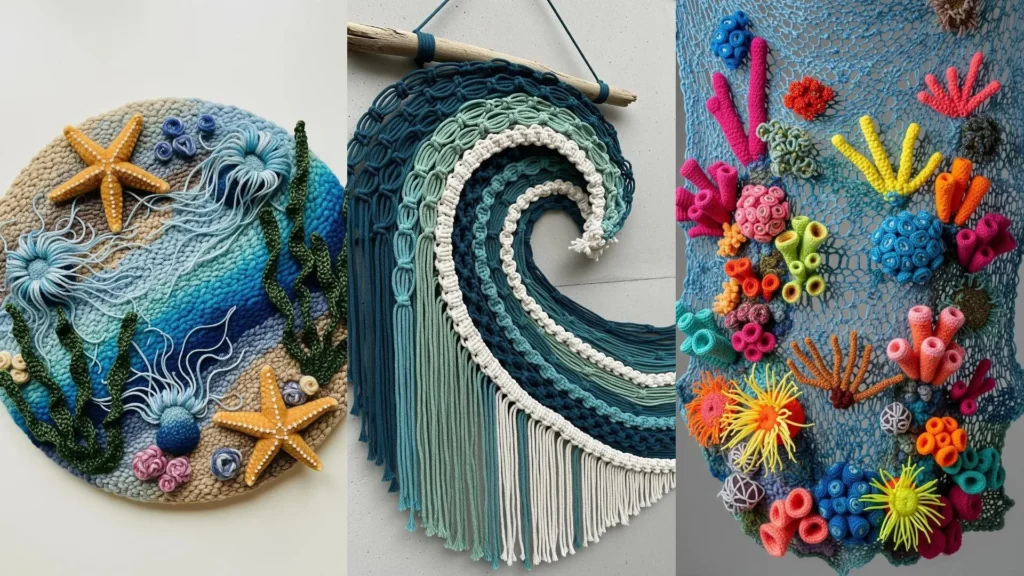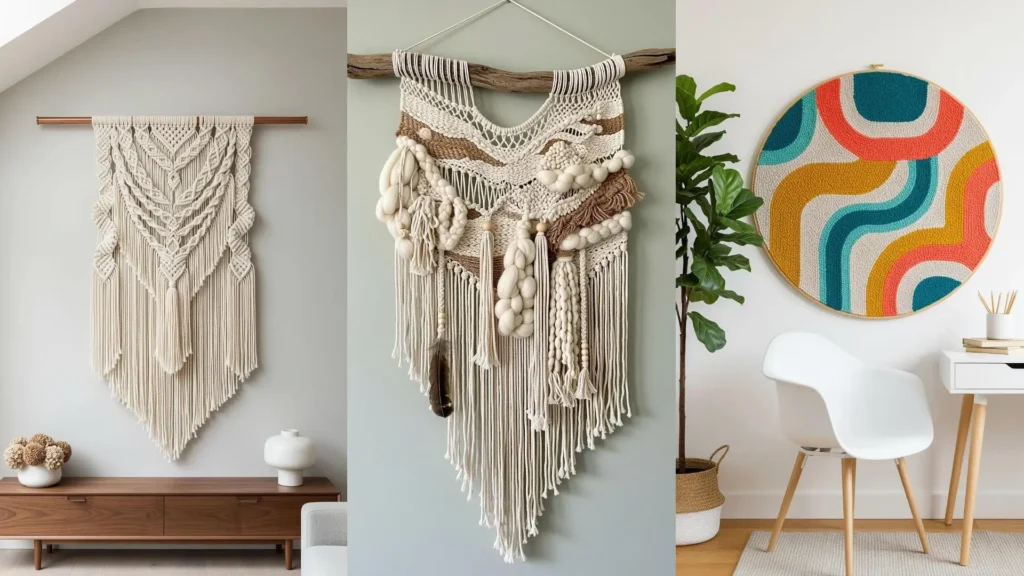
Before you begin your next project, I want you to reconsider the yarn in your hands. It’s not just a material for knitting or crochet; it’s a sculptural medium, a filament for painting, a line for drawing. The wall art you dream of creating—the kind that feels intentional, textured, and truly yours—is closer than you think.
It doesn’t require complex new equipment. Instead, it asks for a shift in perspective. Think about how a tightly packed knot creates shadow, how a loose weave creates airiness, or how a single, bold line of yarn can command more attention than a thousand tiny stitches.
In these ideas, you won’t find fleeting trends. You’ll find principles of texture, color, and form that will empower you to translate your vision into a piece that not only decorates a wall but also resonates with the quiet, creative confidence you’ve been building with every stitch.
1. Architectural Macramé with Varied Knot Density
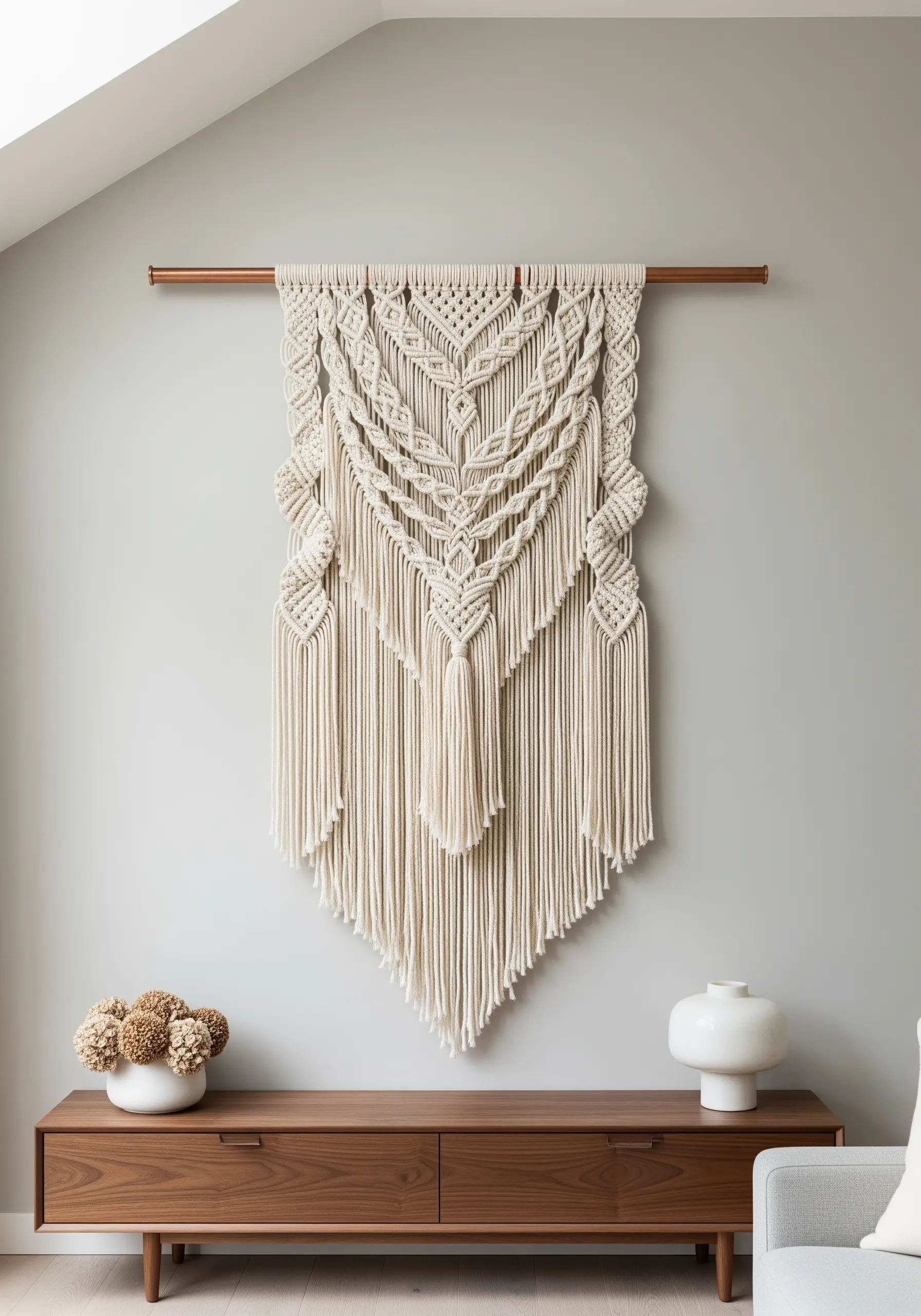
Move beyond basic macramé by treating your knots as architectural elements.
Create visual weight and shadow by clustering dense square knots, then open up the design with long, un-knotted sections of cord.
This contrast between tight, intricate patterns and loose, flowing fringe is what gives the piece a sophisticated, sculptural quality.
Choose a thick, single-twist cotton cord for soft, defined knots that feel both substantial and elegant.
2. The Woven Triptych Landscape
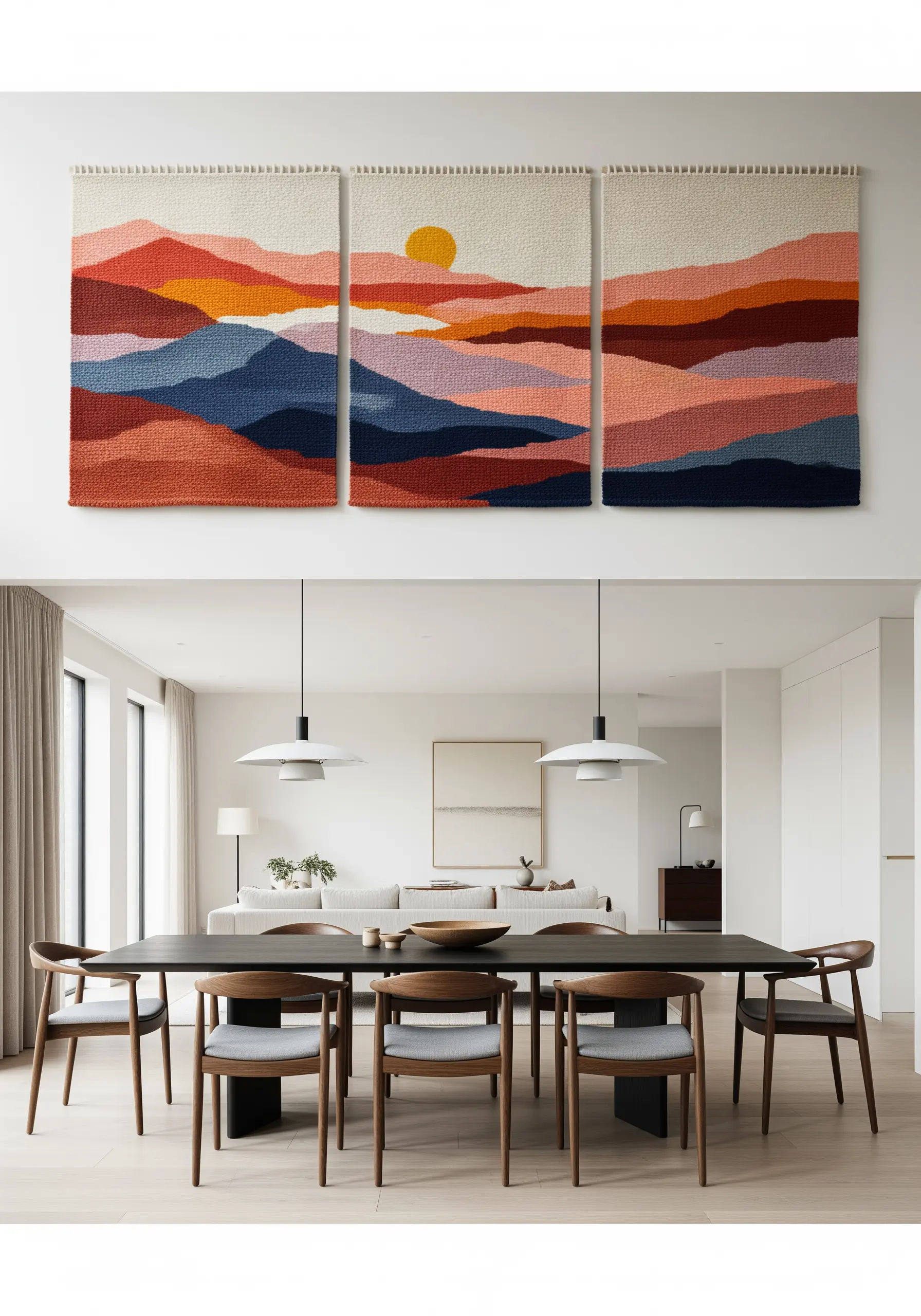
Elevate a simple landscape by dividing it into a triptych—three separate panels that form a cohesive whole.
Use a punch needle or latch hook technique with chunky yarn to achieve that dense, rug-like texture that absorbs light beautifully.
To ensure your design flows seamlessly, create a single master sketch and trace one-third onto each of your canvases before you begin.
This method allows you to create statement-size embroidered textile hangings without needing a massive, custom-built loom or frame.
3. Graphic Punch Needle Hoop Art
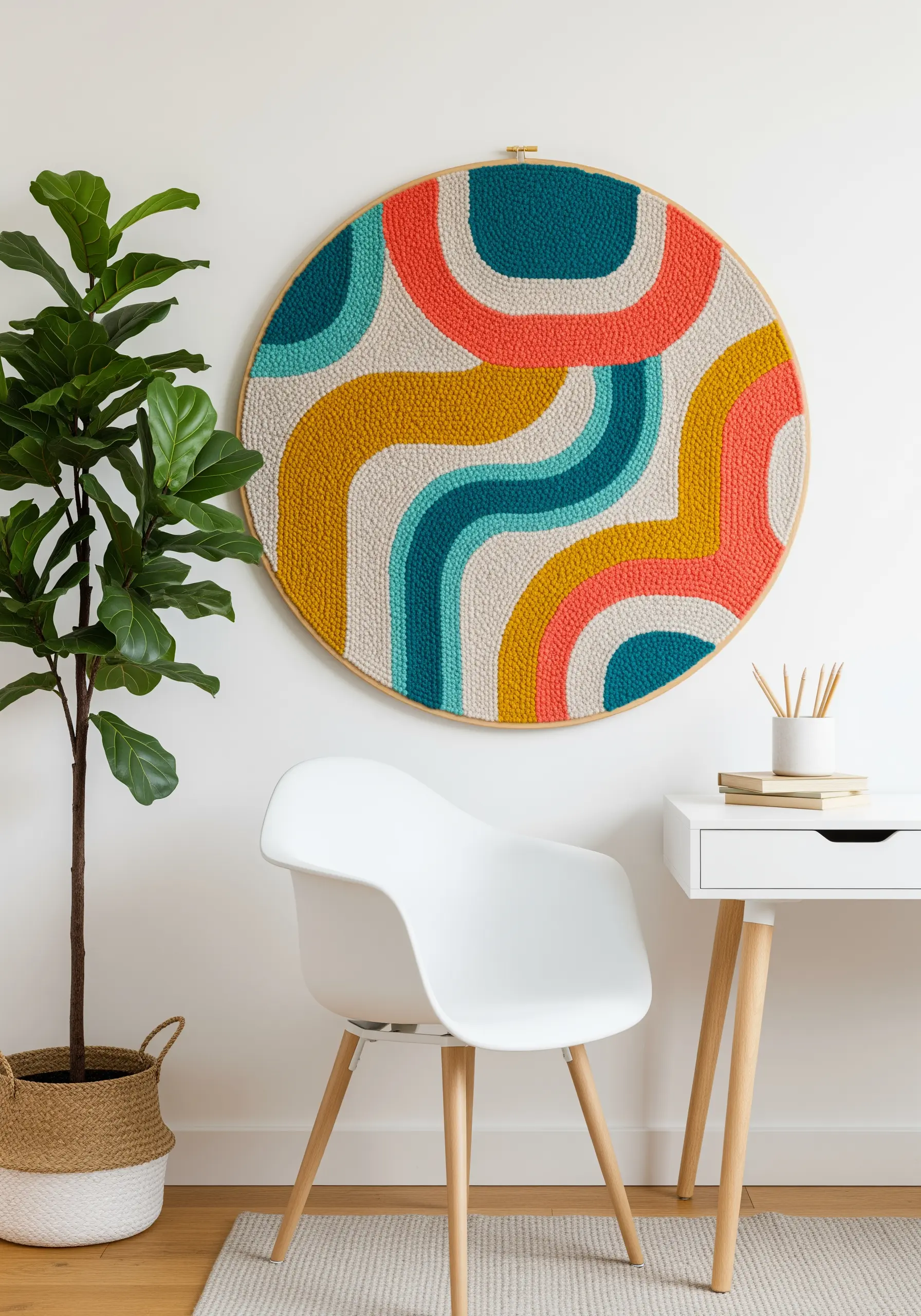
Use the loop side of punch needle embroidery to create bold, graphic art with satisfying texture.
Map out your abstract design with a marker, focusing on thick, flowing lines and color-blocked shapes.
For crisp, clean divisions between colors, work your outlines first, then fill in the larger sections.
Varying the loop height slightly can add subtle dimension, but maintaining consistency is key for this clean, modern aesthetic.
4. Retro-Inspired Latch Hook Tapestry
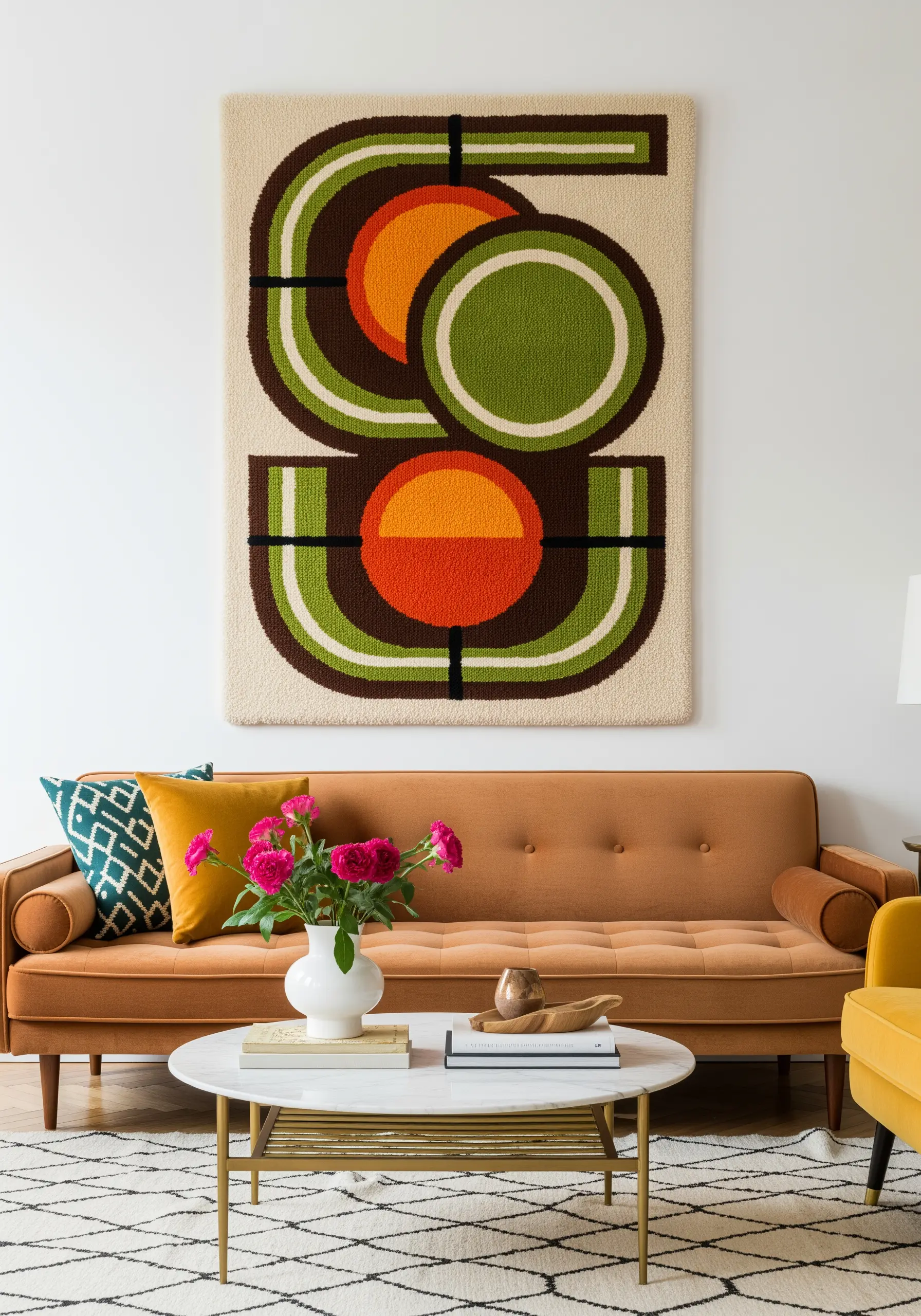
Channel a 70s vibe by creating a large-scale wall hanging using latch hooking techniques.
Choose a palette of harvest gold, avocado green, and burnt orange to instantly evoke a retro feel.
The key to this look is the plush, consistent pile created by the latch hook tool, which gives the geometric shapes a soft, inviting presence.
This is one of the most effective retro 70s style pillow embroidery designs translated to a larger wall format.
5. Sculptural Yarn Line on Canvas
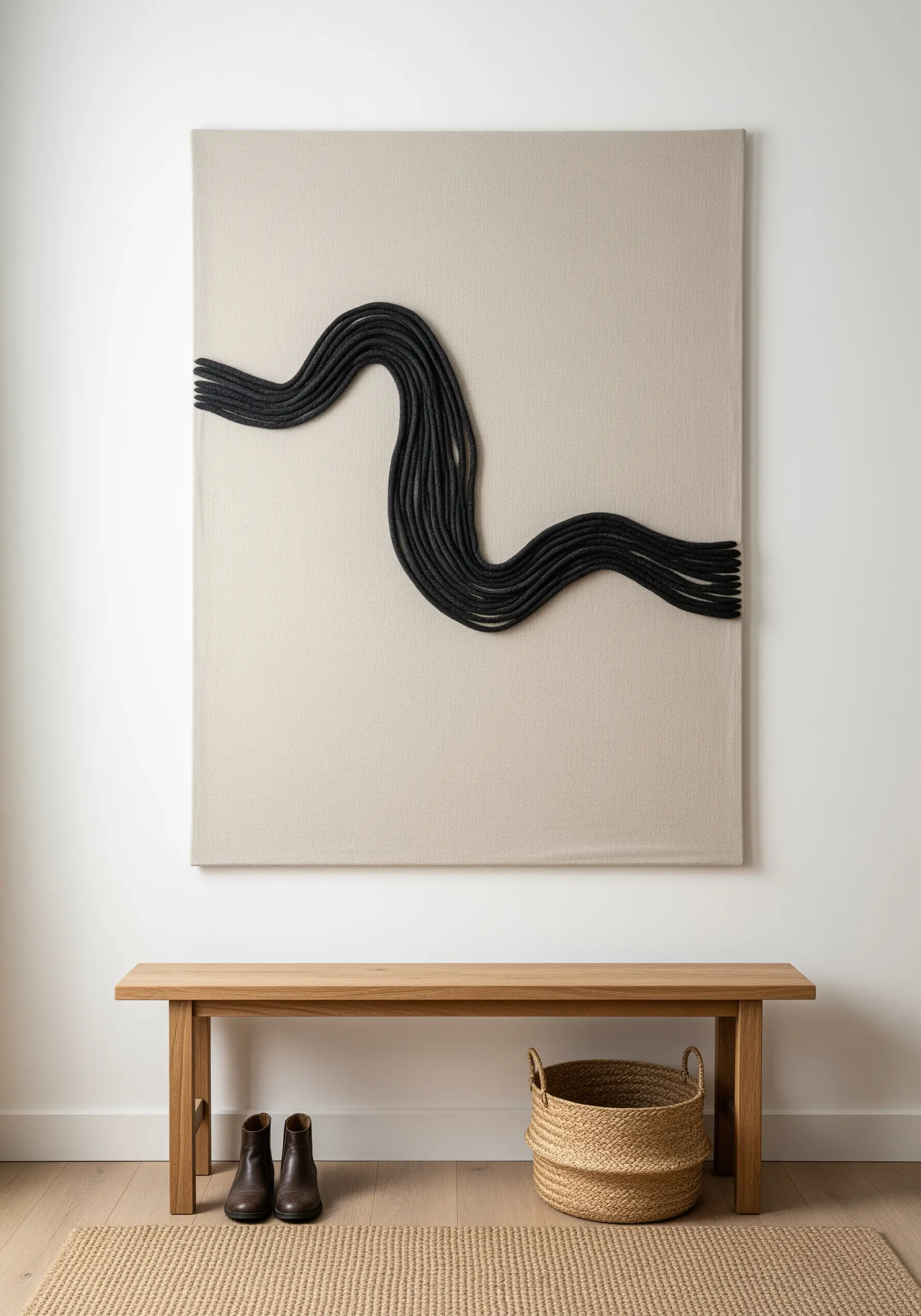
Create a powerful minimalist statement by applying a single, sculptural line of yarn to a stretched canvas.
Bundle multiple strands of thick black yarn together and wrap them tightly with a matching thread to form one cohesive, rope-like element.
Arrange this ‘rope’ in a fluid, organic curve on a neutral linen canvas, securing it from behind with heavy-duty thread.
The beauty of this piece lies in its use of negative space and the dramatic shadow cast by the raised yarn.
6. Mixed-Texture Woven Wall Hanging
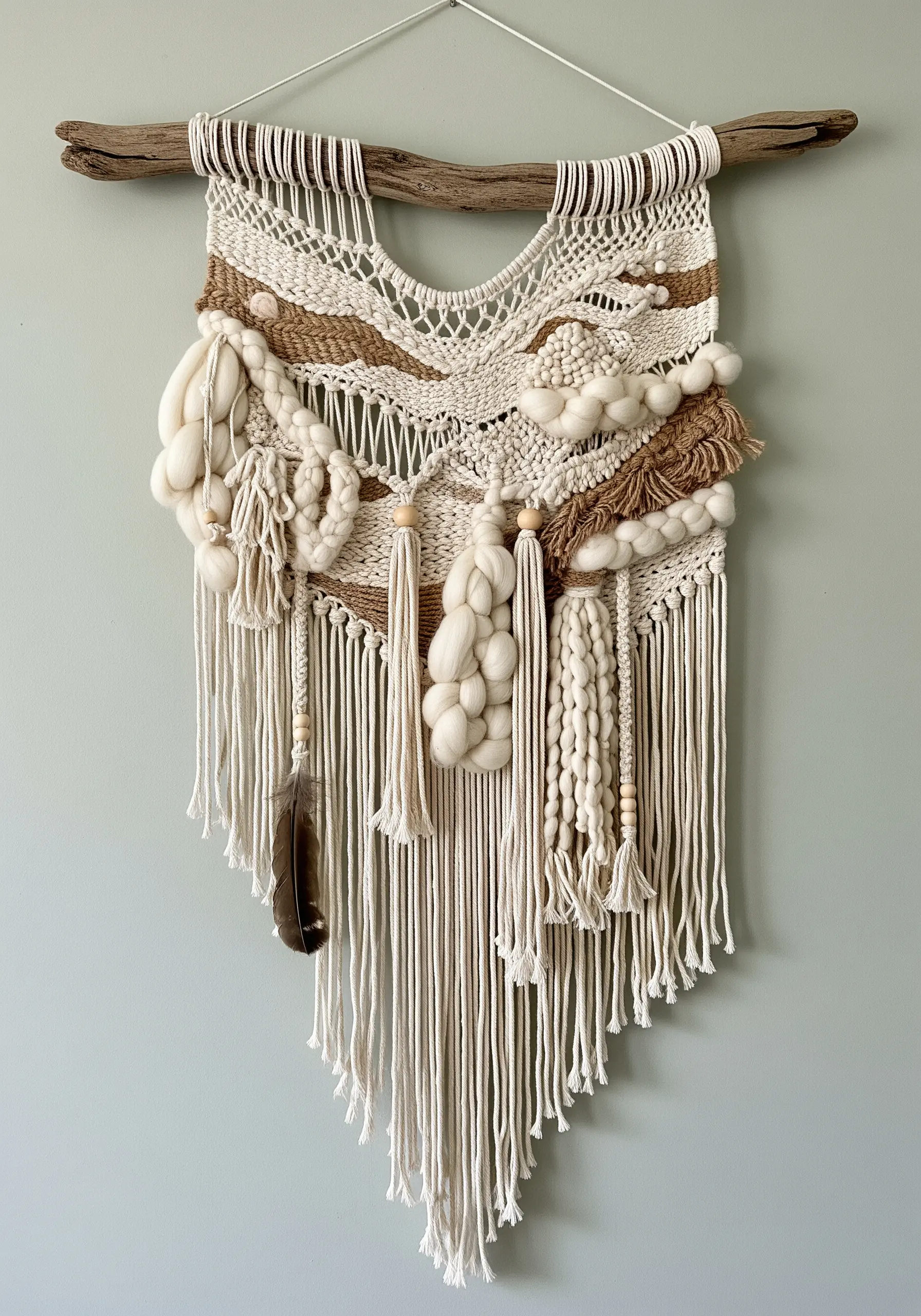
Incorporate extreme texture into your weaving by integrating unspun wool roving and Soumak stitches.
Use thick, cloud-like roving to create soft, puffy shapes that contrast dramatically with tightly woven sections.
Introduce different yarn weights, from fine cotton to chunky jute, to build layers of visual interest.
This is a perfect way to create organic texture embroidery designs that feel intuitive and expressive, using a simple lap loom.
7. Macra-Weave Hybrid with Color Blocking

Combine the structure of macramé with the color and texture of weaving in a single piece.
Start with a top section of classic macramé knots, like the diamond pattern, to establish a strong geometric foundation.
Transition into a woven section below, using the macramé cords as your warp threads.
Here, you can introduce bold color by weaving in various materials like chunky yarn, velvet ribbons, and fabric strips for a rich, layered effect.
8. Sculptural Jute Rope Installation

Transform humble jute rope into a large-scale, three-dimensional wall sculpture.
Use a thick rope and wrap it tightly around a flexible wire or tubing core to create poseable, structural forms.
Bend and interlock these forms to create an abstract, knotted composition that interacts with light and shadow.
This technique allows you to move beyond the flat plane and create fiber art installations with genuine physical presence and depth.
9. Floor-to-Ceiling Gradient Installation
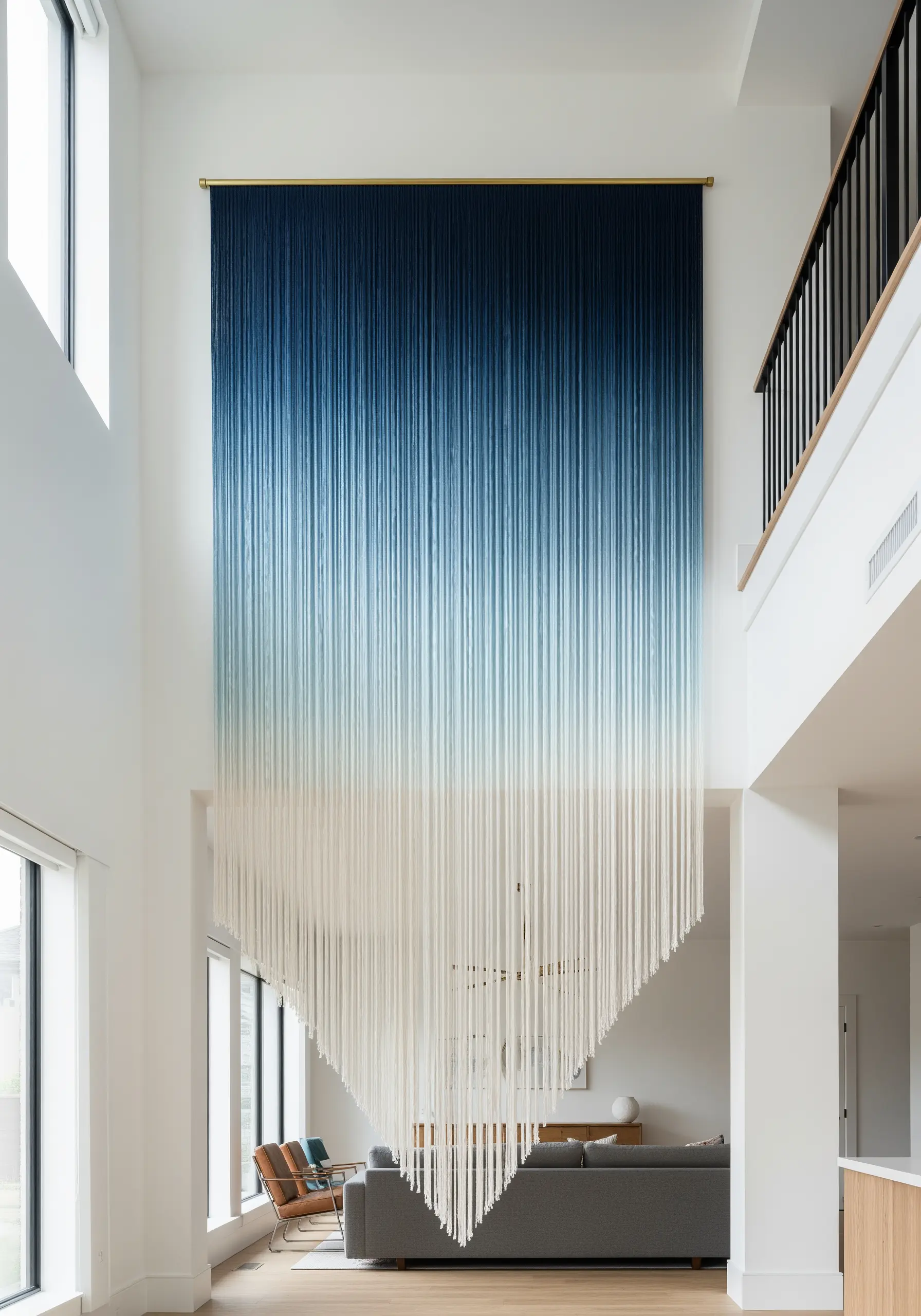
Create a breathtaking focal point with a dip-dyed yarn installation that cascades down a large wall.
To achieve this seamless ombré effect, you’ll need to dye your yarn or cotton cord in batches before hanging.
Carefully plan your color transition and hang each strand individually from a ceiling-mounted rod, ensuring they are perfectly straight and evenly spaced.
The final piece feels like a curtain of liquid color, transforming the entire architectural space.
10. Abstract Embroidery with Textural Fills
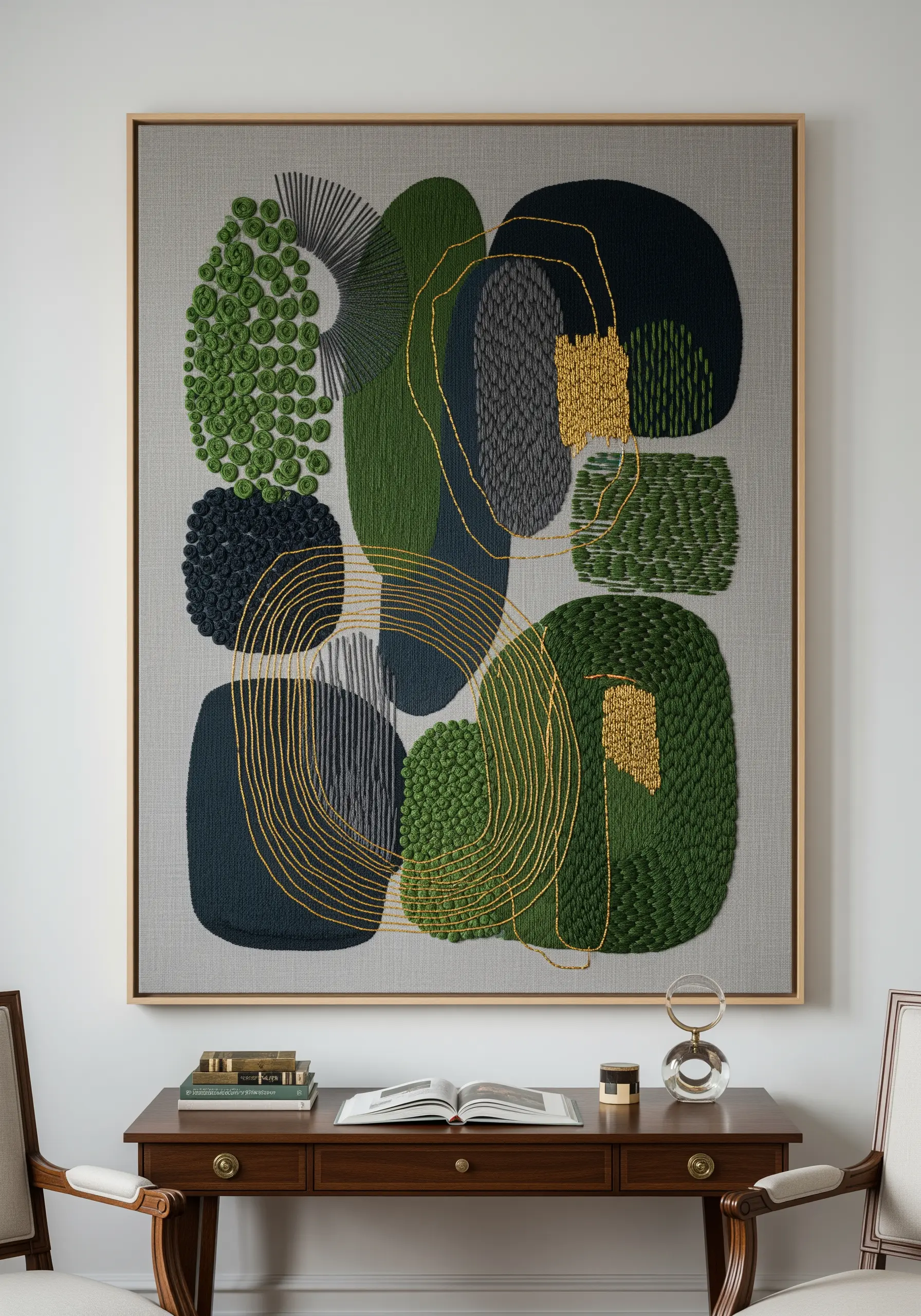
Compose an abstract piece on linen using a vocabulary of different textural stitches.
Instead of focusing on outlines, fill organic shapes with dense fields of French knots, seed stitches, or tightly packed straight stitches.
Let one texture flow into another to create a tactile collage effect.
Introduce a single, contrasting element, like a fine metallic thread, to create looping lines that unify the composition and add a touch of modern elegance.
11. Geometric Yarn-Wrapped Panel Grid
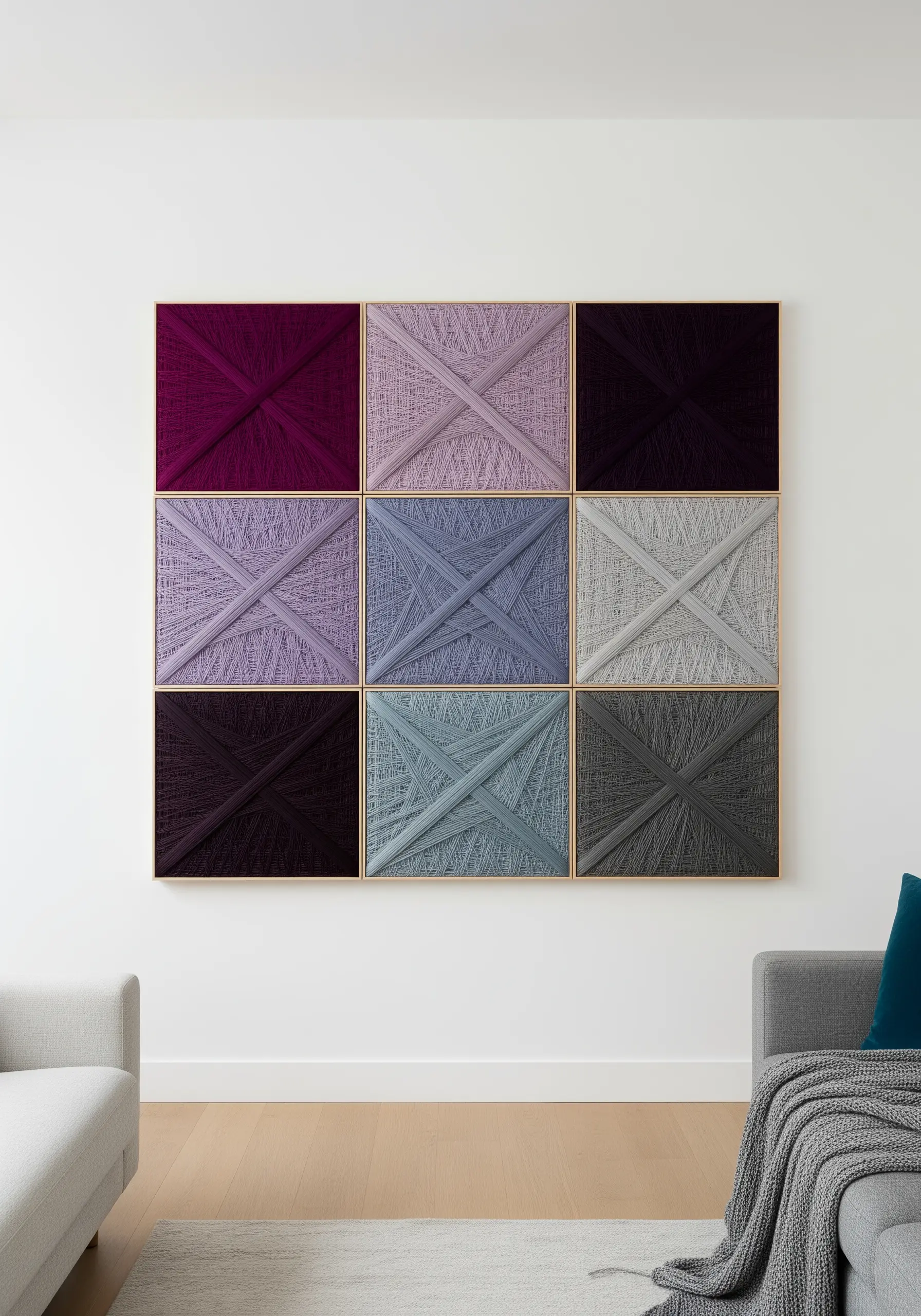
Construct a large, graphic art piece by arranging multiple yarn-wrapped panels in a grid.
Each panel is a simple square frame wrapped methodically with yarn to create geometric patterns and textures.
Plan your color story in advance, arranging panels to create a subtle gradient or a checkerboard of complementary hues.
This modular approach allows you to create geometric framed embroidery patterns on a grand scale with a clean, contemporary finish.
12. Oceanic Weaving with Found Textures
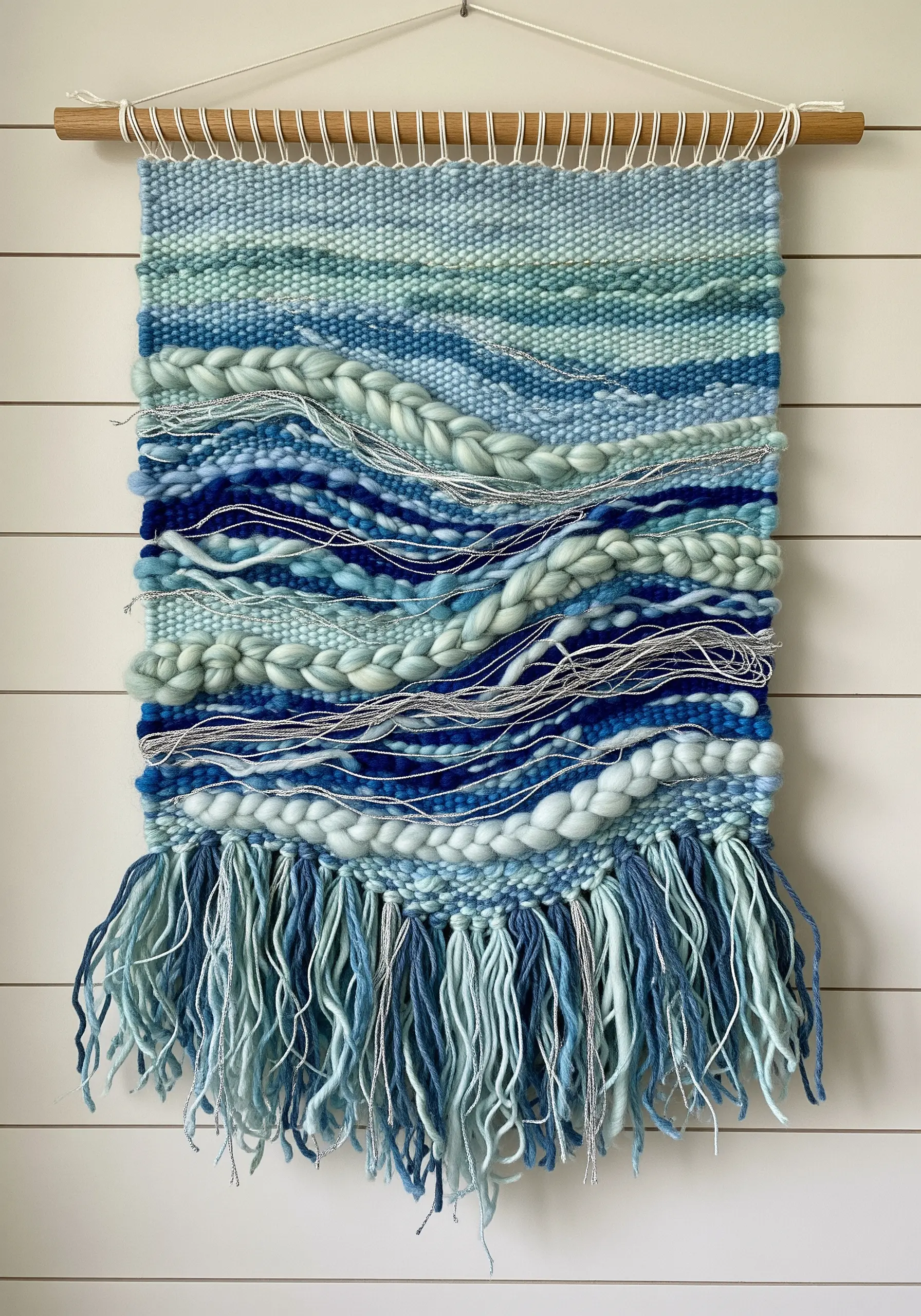
Evoke the feeling of the sea by weaving with a palette of blues, greens, and sandy whites.
Incorporate various yarn textures—thick, thin, fluffy, and smooth—to mimic the movement of waves and seafoam.
Introduce a fine, shimmering thread, like a silver metallic or a silk blend, to catch the light and suggest the glint of sun on water.
Leaving a long, uneven fringe adds to the organic, untamed feel of a coastal landscape.
13. Minimalist Line Art with Hoops and Cords
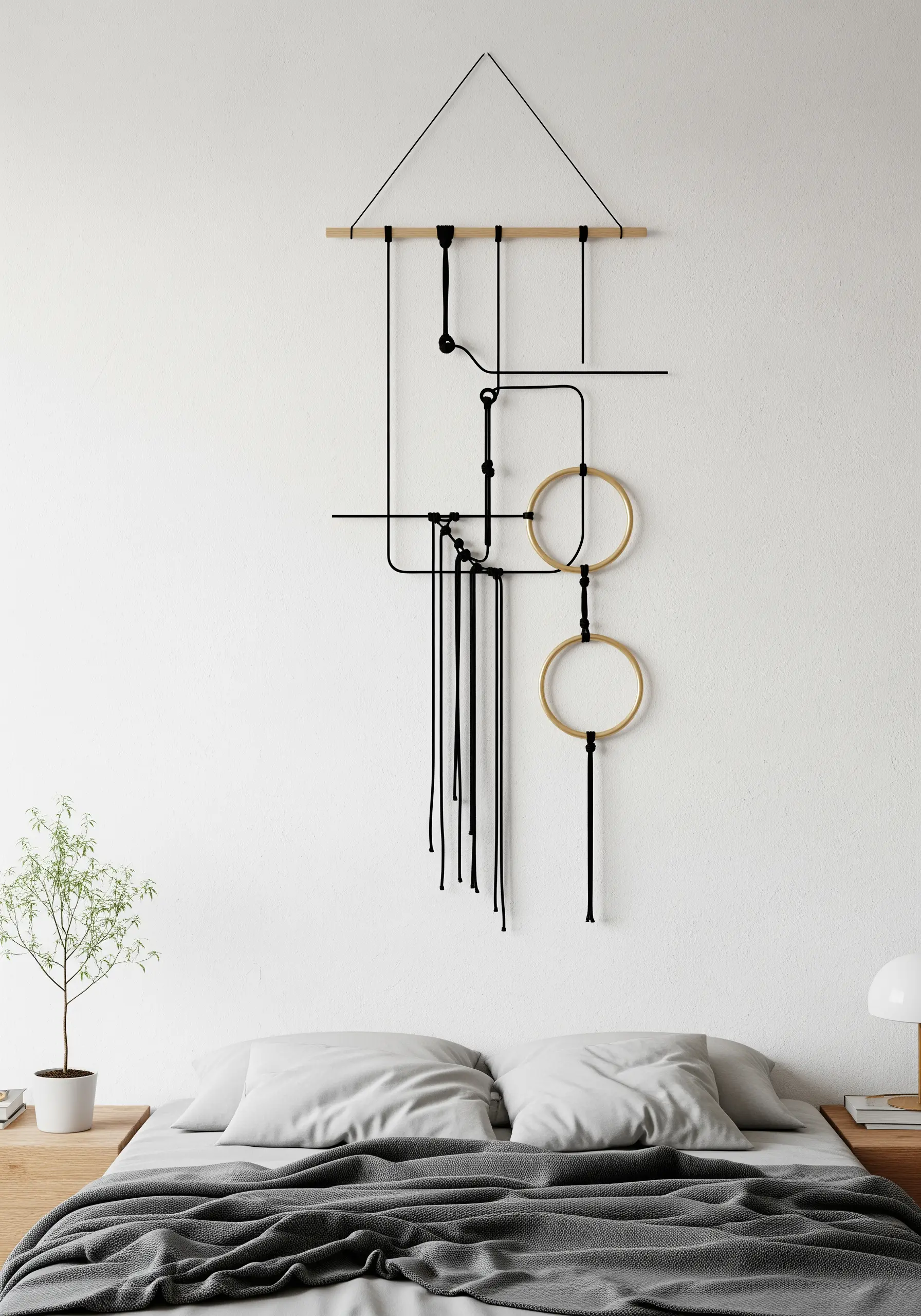
Create a deconstructed, graphic wall hanging using minimal components: a dowel, black cord, and wooden hoops.
This style is about precision and balance, treating the cords like lines in a drawing.
Secure the cords to the dowel and hoops with carefully placed knots, allowing them to hang with clean, intentional lines.
This is a perfect example of how to combine thread and negative space to achieve luxury minimal art for modern interiors.
14. God’s Eye (Ojo de Dios) Woven Mandala
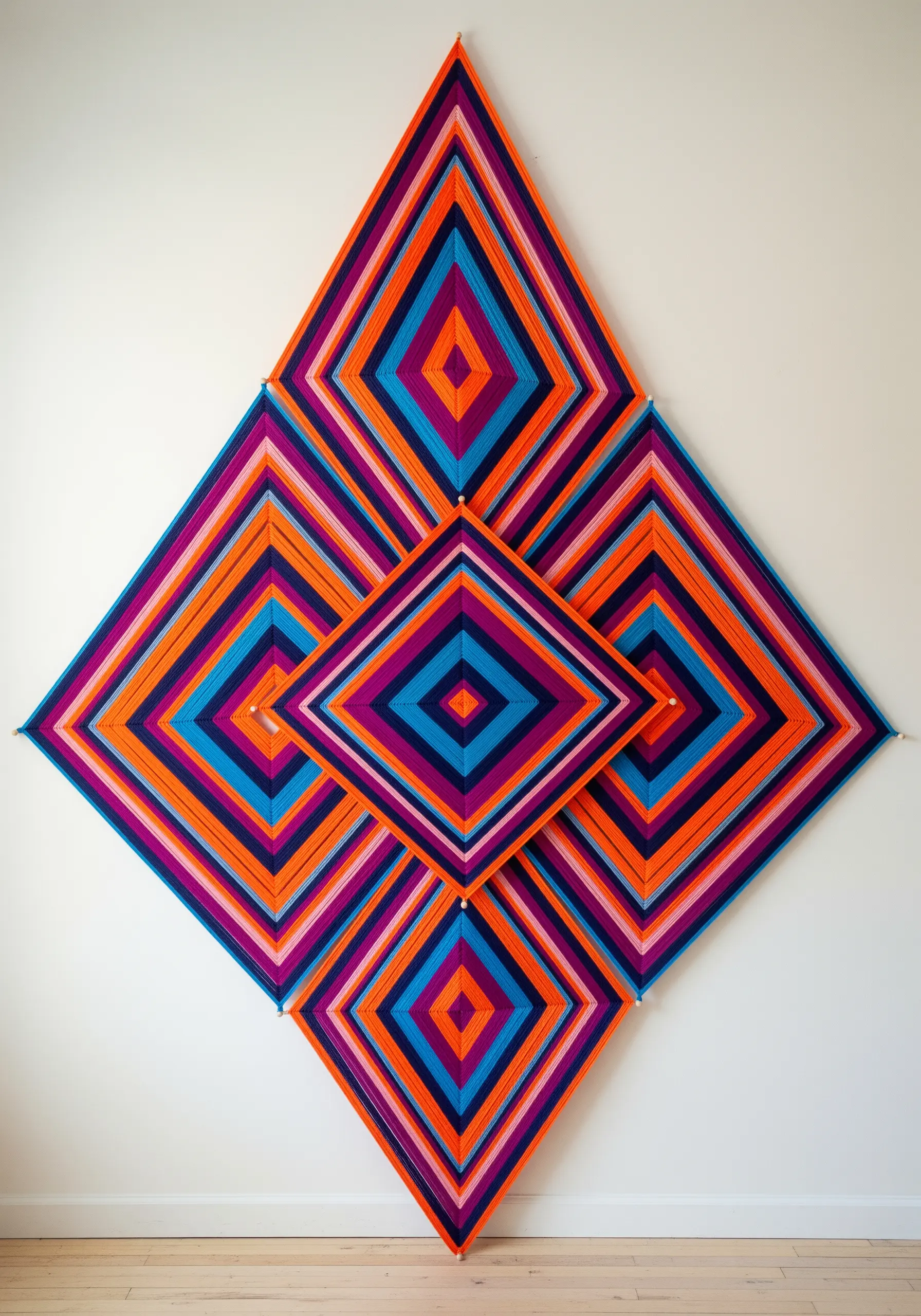
Explore the meditative process of weaving a God’s Eye, or Ojo de Dios, for a vibrant, geometric statement piece.
This technique involves wrapping yarn around a frame of crossed sticks to create concentric diamond shapes.
The magic is in the color play. Plan bold, high-contrast color combinations to make the geometric patterns pop.
By layering multiple woven diamonds of different sizes, you can build a complex, multi-dimensional mandala that feels both traditional and contemporary.
15. Monochrome Chunky Roving Weave
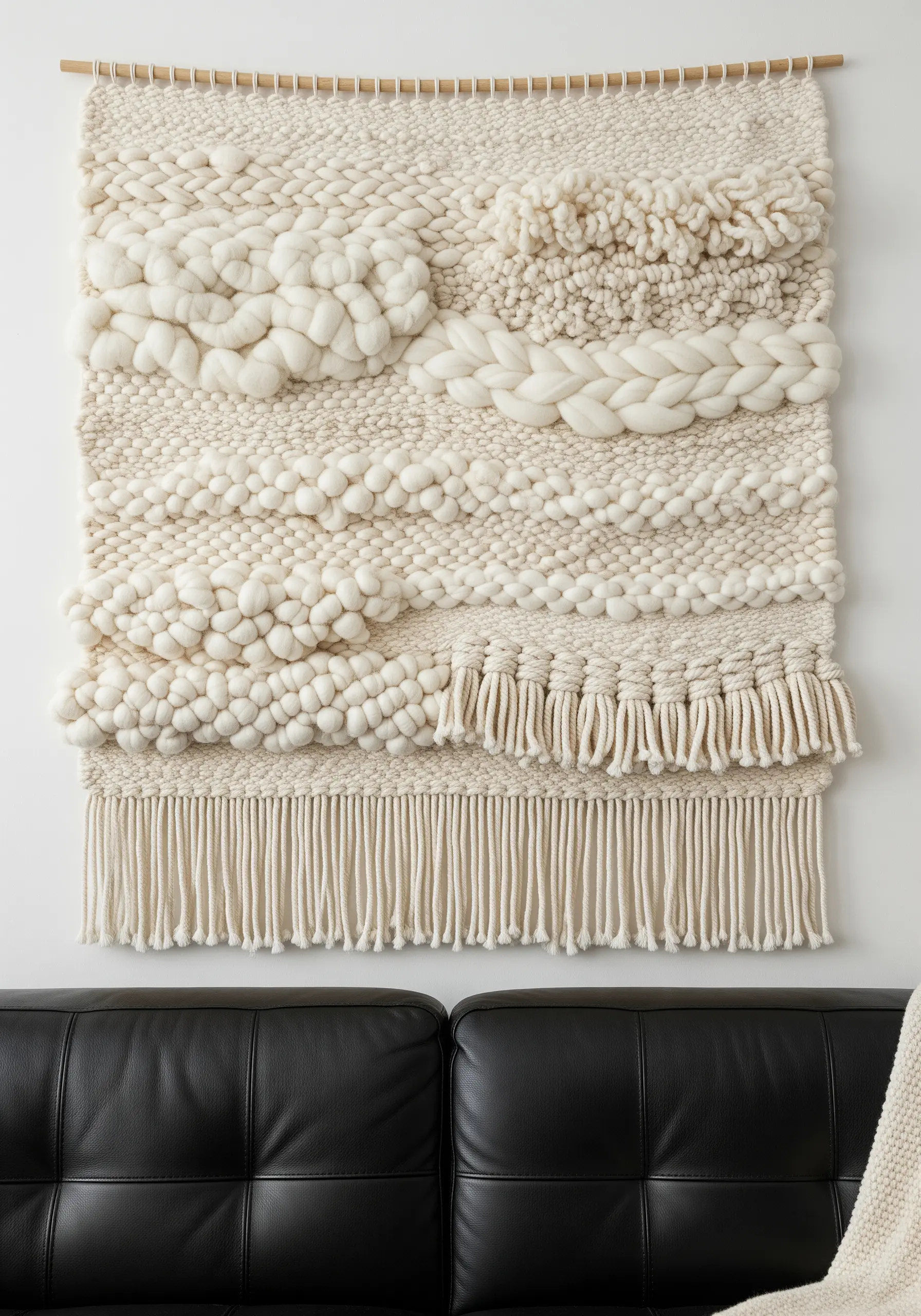
Explore a universe of texture using only a single color of yarn and roving.
Working in monochrome forces you to focus entirely on form and texture.
Create braids, plush bubbles using unspun roving, and dense soumak stitches to build a landscape of tactile sensations.
This approach results in handmade organic pieces that are incredibly sophisticated and calming, perfect for neutral-toned interiors.
16. Immersive Fiber Art Installation
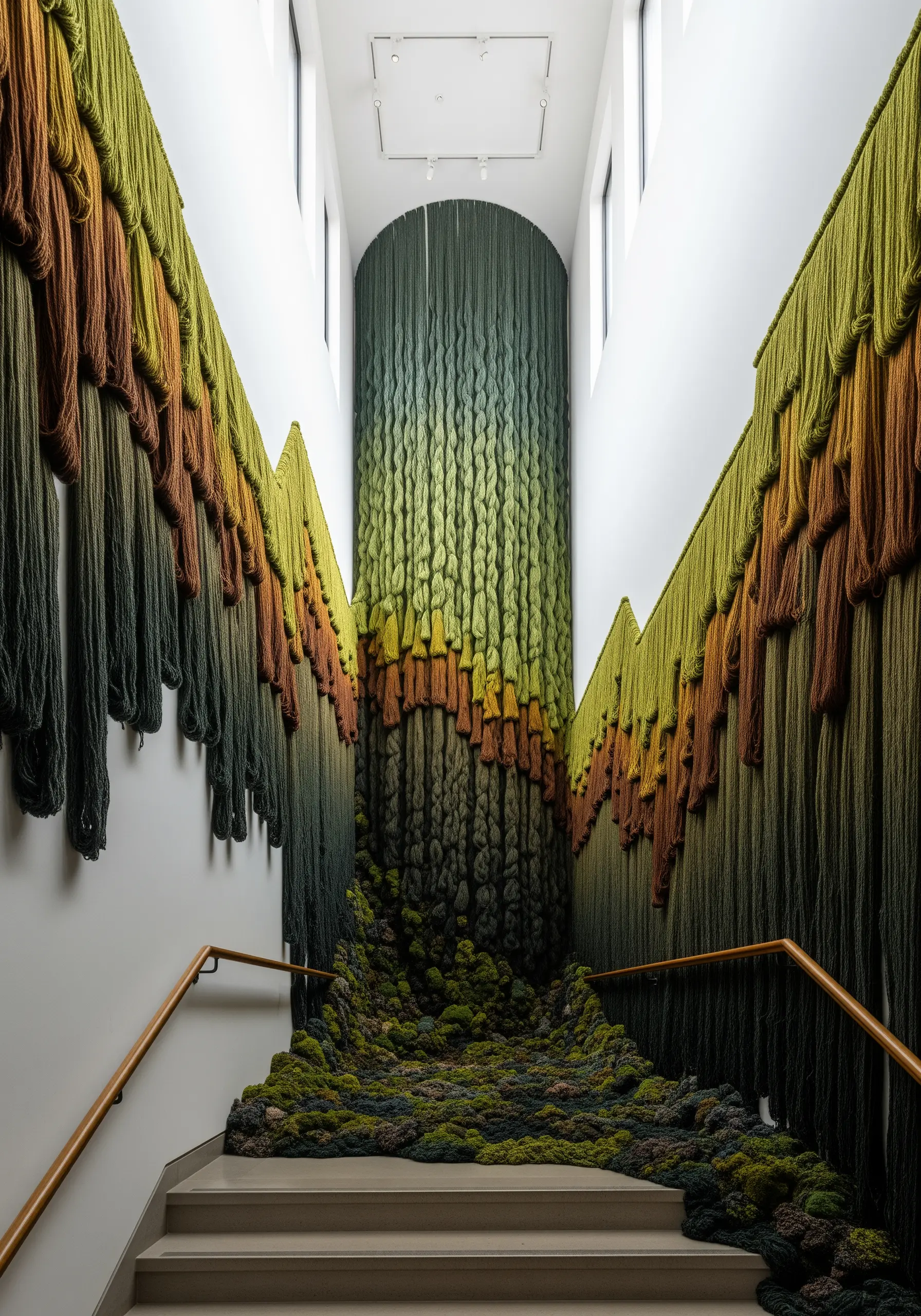
Think beyond the frame and create a yarn installation that interacts with the architecture of a room.
This monumental piece uses thousands of strands of yarn in earthy tones, draped and sculpted to create a moss-like, organic environment.
You can replicate this effect on a smaller scale by creating dense, textured ‘moss’ patches with turkey work or French knots on fabric, then mounting them to cascade down a wall or staircase.
It’s the ultimate expression of creating nature texture wall hangings that feel truly alive.
17. Woven Landscape on a Circular Loom

Break free from rectangular weaving by working on a circular loom or a repurposed embroidery hoop.
Warping a circular frame allows you to create compositions that feel more organic and less constrained.
Weave a gentle, abstract landscape using soft textures and a pastel color palette for a dreamy, calming effect.
Leaving sections of the warp threads exposed adds a delicate, airy quality to the finished piece.
18. Topographical Yarn Couching
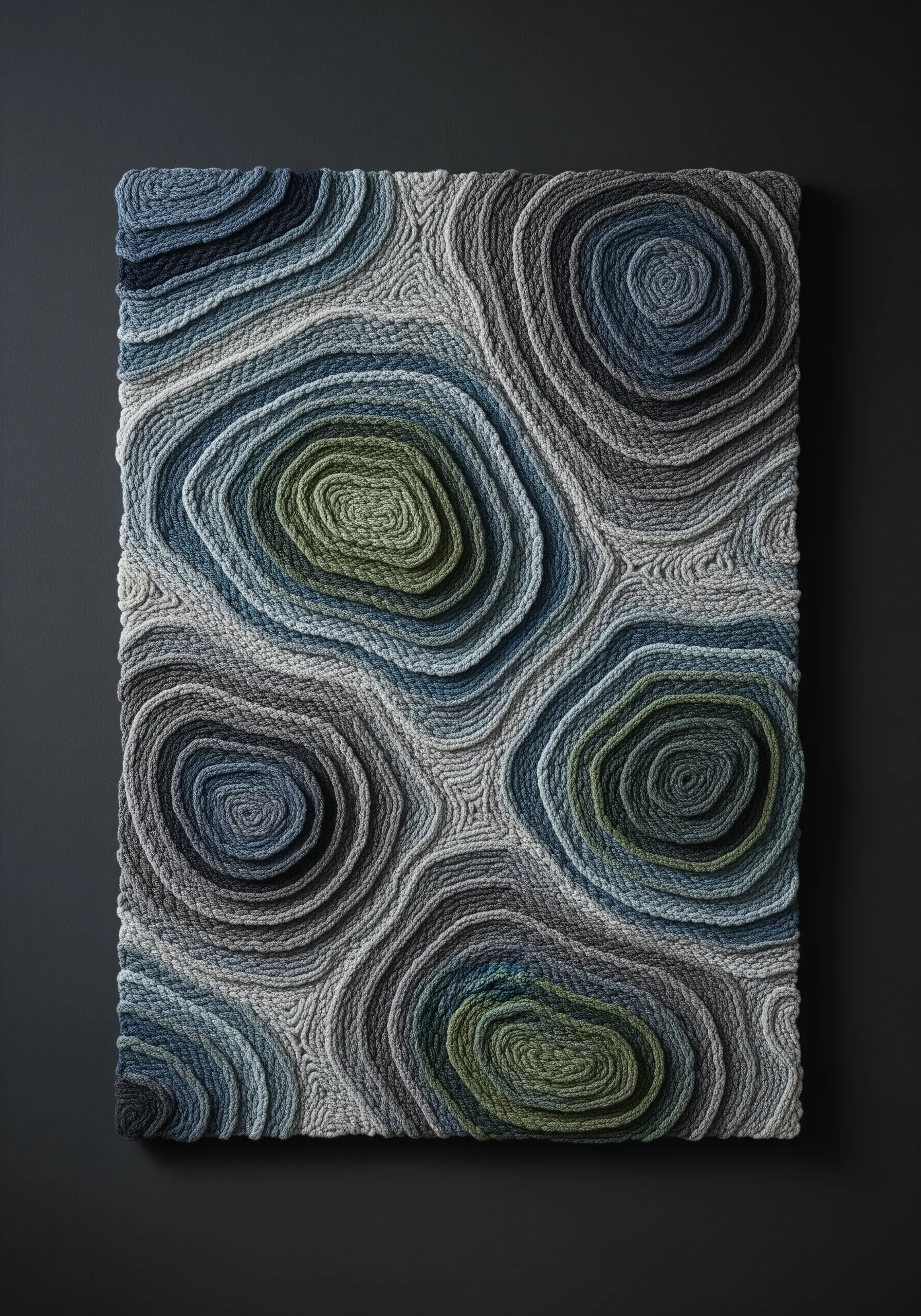
Build a contoured, three-dimensional surface by couching thick yarn onto a canvas base.
Couching is the technique of laying a thick yarn onto a surface and securing it with small, perpendicular stitches using a thinner thread.
Create a topographical map effect by arranging the couched yarn in concentric, swirling lines, building up layers for height.
This method allows you to essentially ‘draw’ with texture, creating embroidery ideas inspired by stones, sand, and soil.
19. Modern Geometric Woven Runner
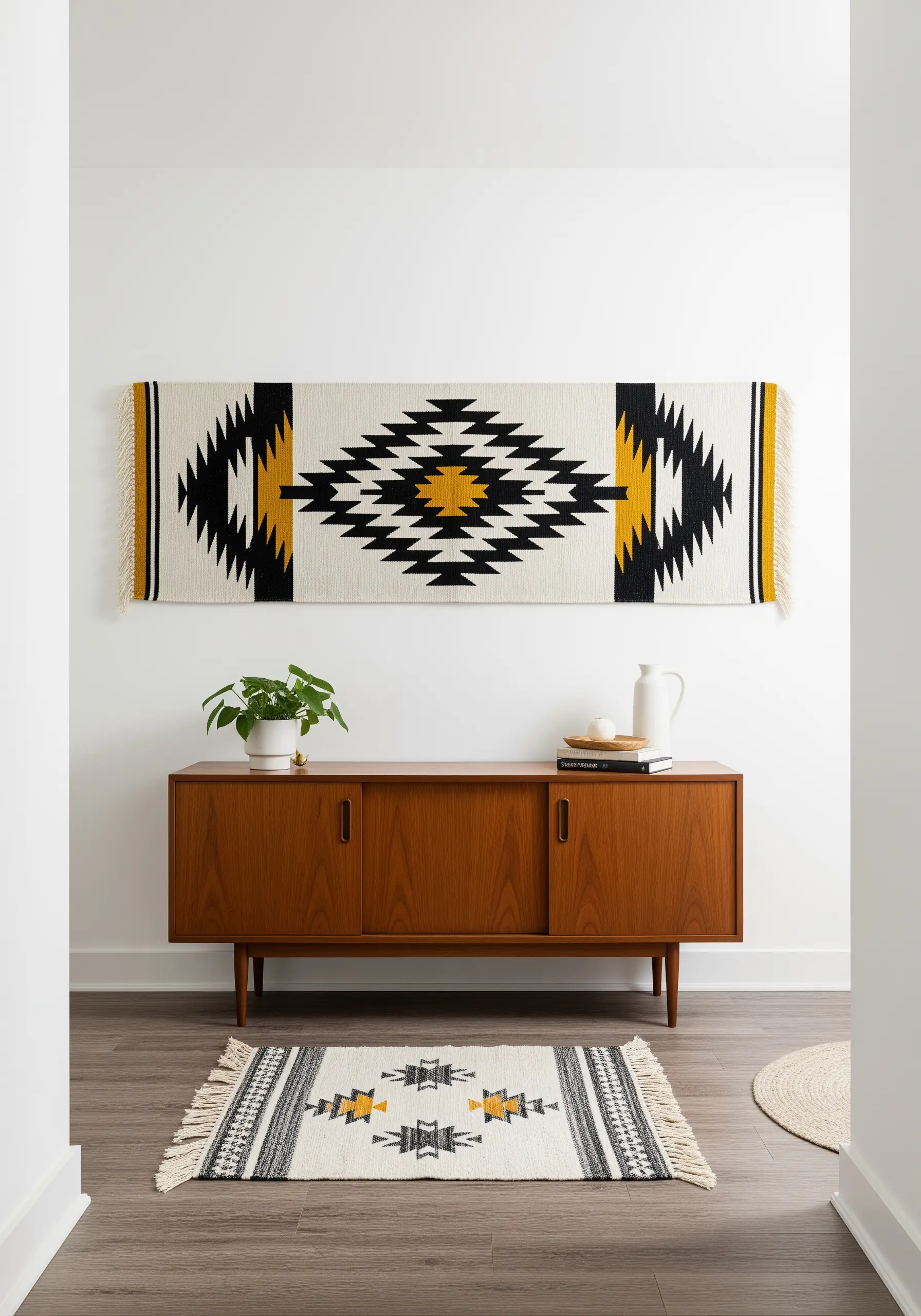
Weave a long, narrow tapestry that can double as a wall hanging or a decorative table runner.
Focus on crisp, geometric patterns inspired by Southwestern or Bauhaus design for a timeless, modern look.
High-contrast colors like black, white, and a single accent like gold or yellow will make the design sharp and impactful.
Finishing the ends with a clean, short fringe gives the piece a polished, gallery-ready appearance.
20. A Study in Contrasting Textures
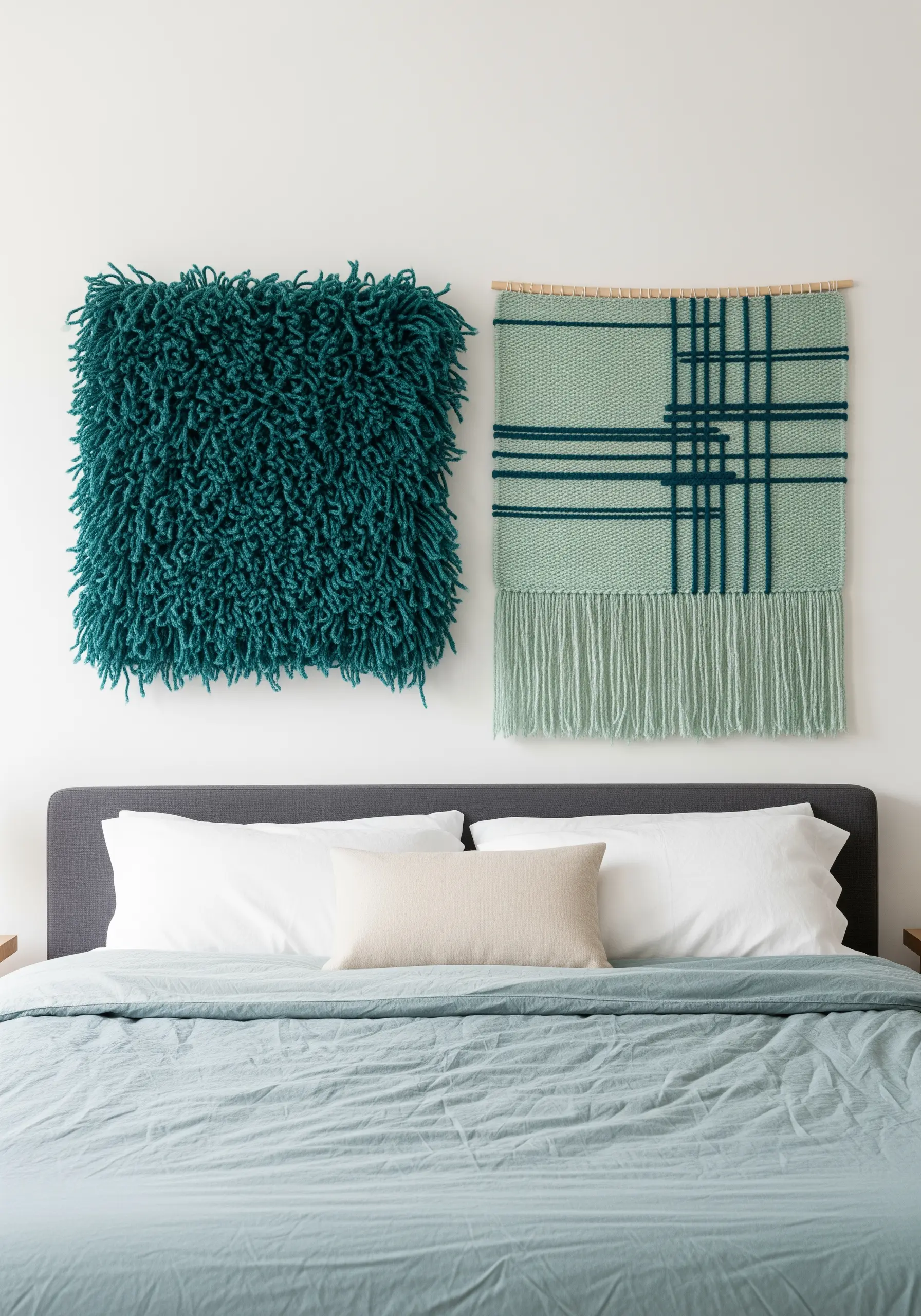
Create a diptych—two individual pieces designed to be displayed together—that explores contrasting yarn techniques.
On one panel, create a deep, shaggy texture using latch-hooking or by cutting loops of yarn.
For the second panel, create a flat, graphic weave with clean lines and a smooth surface.
Displaying these two opposing textures side-by-side creates a dynamic conversation about form and finish, making both pieces more interesting.
21. Upcycled Fabric and Fiber Weaving
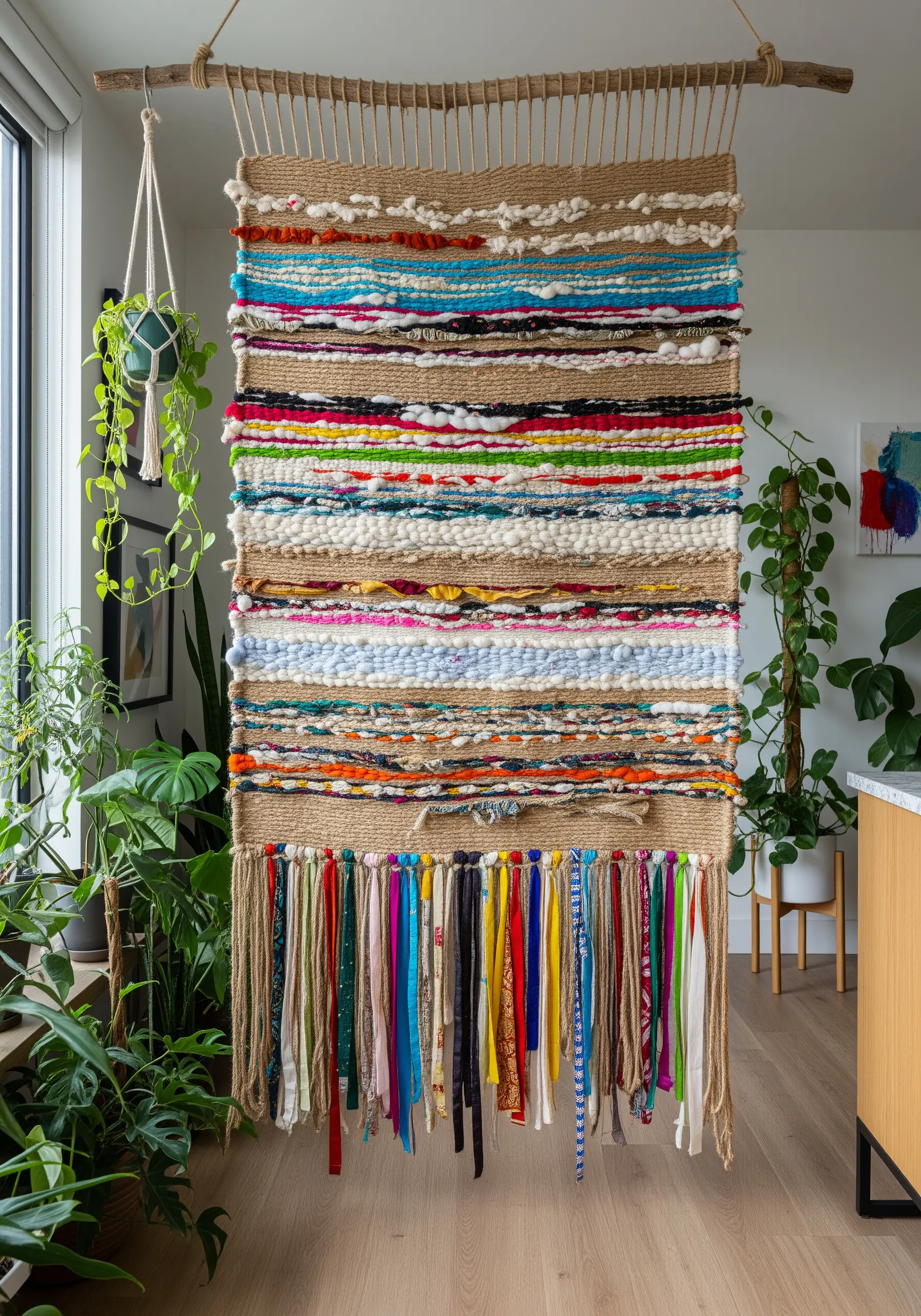
Create a vibrant, story-filled tapestry using scraps of fabric, old ribbons, and leftover yarn.
This ‘memory weave’ is less about precise technique and more about intuitive composition and color play.
Cut old clothing or textiles into thin strips and weave them alongside traditional yarns for unexpected pops of pattern and texture.
This is one of the most beautiful and personal eco-friendly embroidery decor ideas for small apartments, turning waste into meaningful art.