

Your entryway is the first hello and the last goodbye. It deserves more than just a place to drop your keys; it deserves a touch of intention, a quiet piece of art that says, ‘welcome home.’ This is where minimalist embroidery finds its perfect purpose.
Forget dense, complicated patterns that take months to complete. Instead, I want you to think about the power of a single line, the rhythm of a simple, repeating shape, or the subtle texture of thread on natural linen. These are not just patterns; they are moments of quiet, handcrafted beauty that can transform a space from a passageway into a destination.
Here, you’ll find ideas that celebrate simplicity without sacrificing elegance. We’ll explore how to use basic stitches to create sophisticated designs, how to play with scale for dramatic effect, and how to add a personal touch to the most functional items. Let’s begin.
1. Render a Landscape with a Single Thread
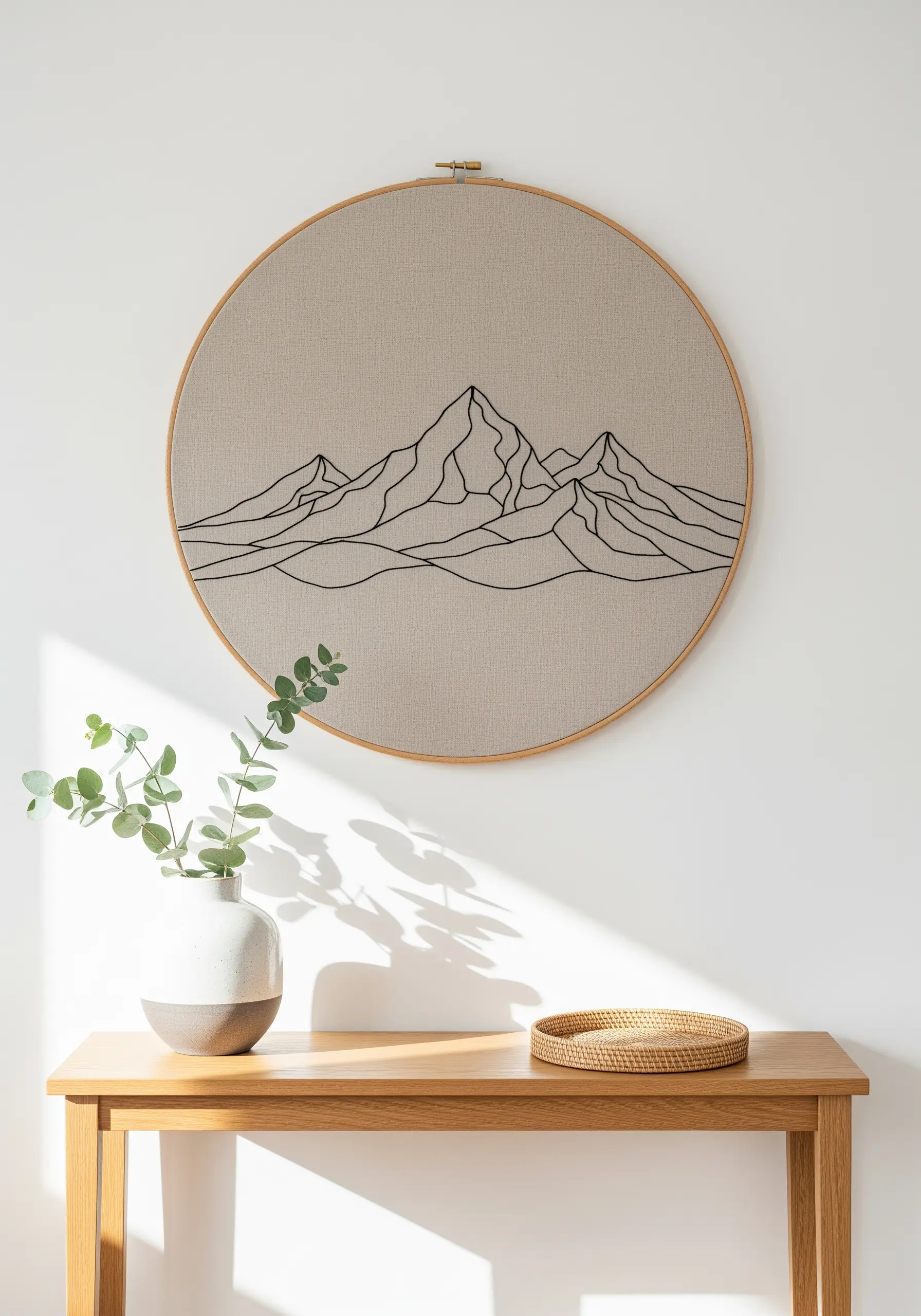
Create a striking focal point by reducing a complex mountain range to its essential lines.
Use a consistent backstitch or stem stitch with three strands of black floss to maintain a uniform line weight, which gives the piece a clean, graphic quality.
The key is selecting a fabric with a visible weave, like a linen or cotton-linen blend; its natural texture provides depth and prevents the minimalist design from feeling flat.
For a large-scale piece like this, ensure your fabric is drum-tight in the hoop to prevent any puckering along the long, straight lines.
2. Use Abstract Stitches on Functional Decor
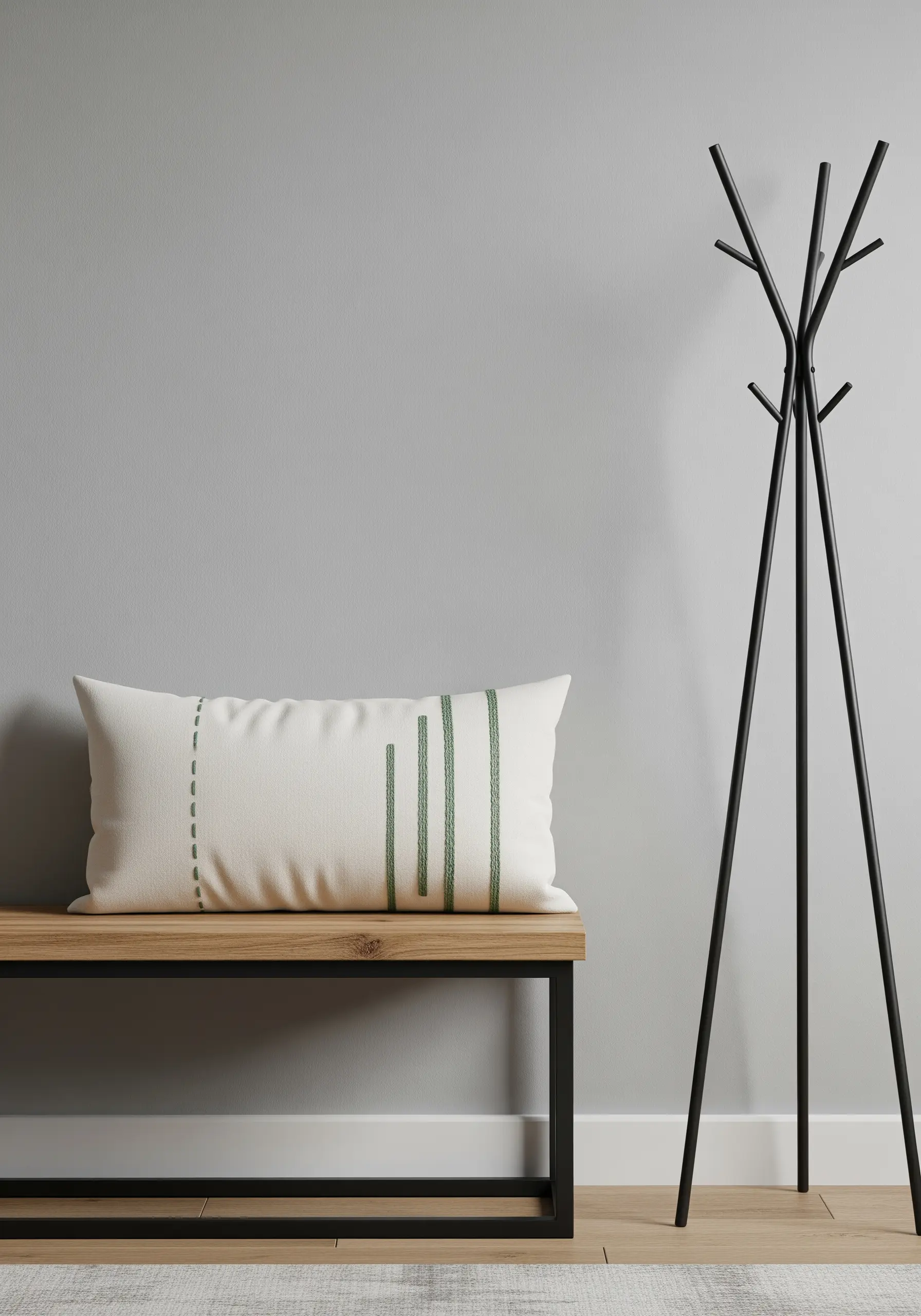
Elevate an ordinary entryway bench pillow with an abstract, rhythmic pattern.
Instead of a complex motif, use simple vertical satin stitch bars and a contrasting dotted running stitch.
Vary the length and grouping of the bars to create visual interest that feels intentional, not random.
This technique works because it adds texture and a bespoke detail without sacrificing the pillow’s modern, clean aesthetic.
Choose a thread color that complements other accents in your entryway, like a nearby plant or art piece, to create a cohesive look.
3. Curate a Trio of Geometric Statements
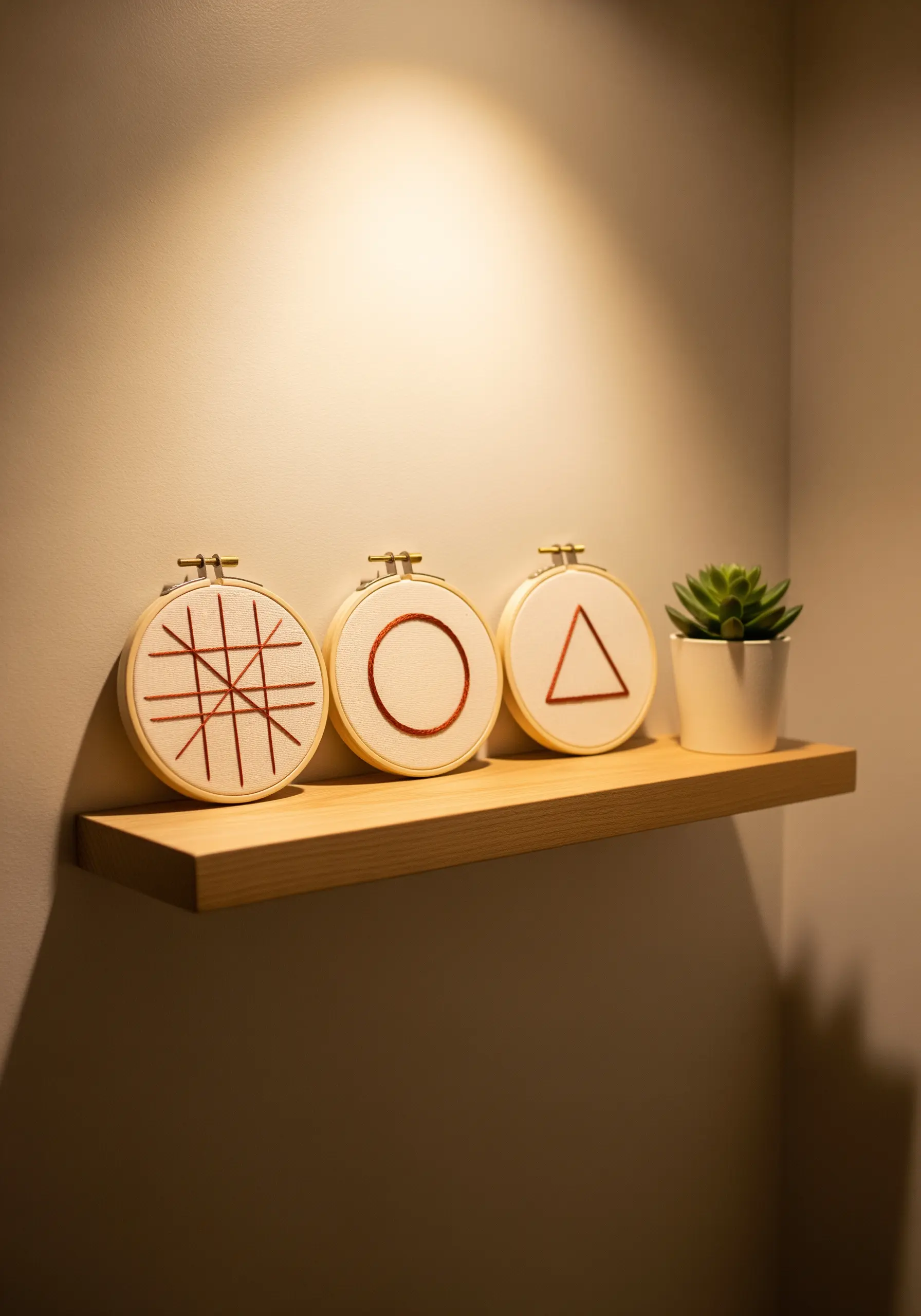
Group small hoops to create a mini-gallery wall that feels both personal and curated.
Embroider simple, bold geometric shapes—a circle, a triangle, a grid—using a dense satin stitch for a clean, filled effect.
Using the same color thread across all three hoops ties the collection together, creating a cohesive visual narrative.
This approach allows you to explore form and line on a small scale, making it a perfect project for using leftover thread and fabric scraps.
Arrange them on a narrow shelf or in a small niche to draw the eye and add personality to an often-overlooked space.
4. Embrace Large-Scale Sashiko-Inspired Art
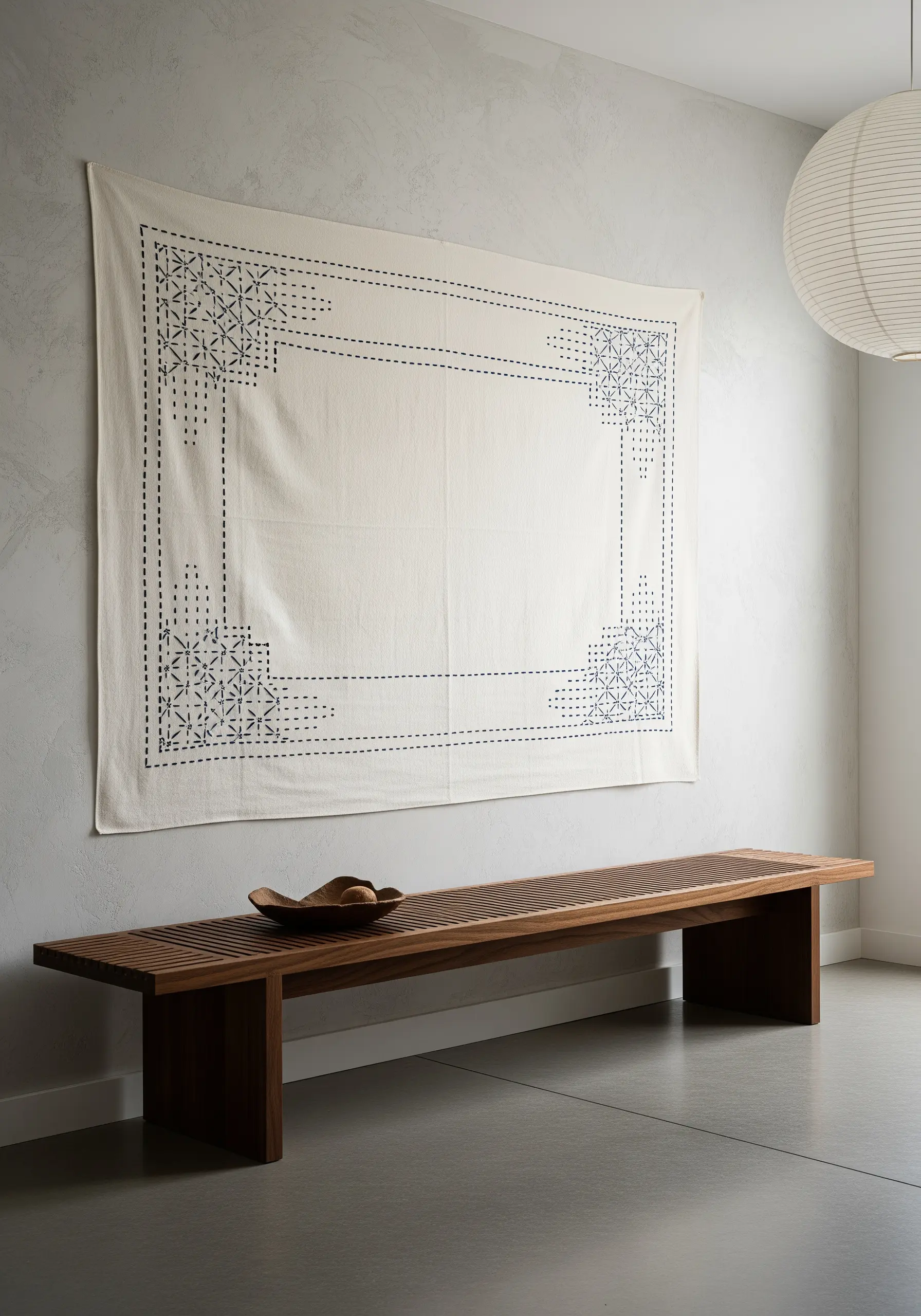
Make a significant impact in a spacious entryway by taking stitchwork to an architectural scale.
Use a simple running stitch with a thick, contrasting thread—like a pearl cotton or sashiko thread—to create a geometric border on a large piece of canvas or heavy linen.
The beauty of this technique lies in the rhythm and texture of the visible stitches, turning a basic stitch into a sophisticated pattern.
This project is less about intricate detail and more about mindful repetition, making it a meditative piece to create and a calming presence in your home.
5. Layer Stitches on Sheer Fabric for an Ethereal Look
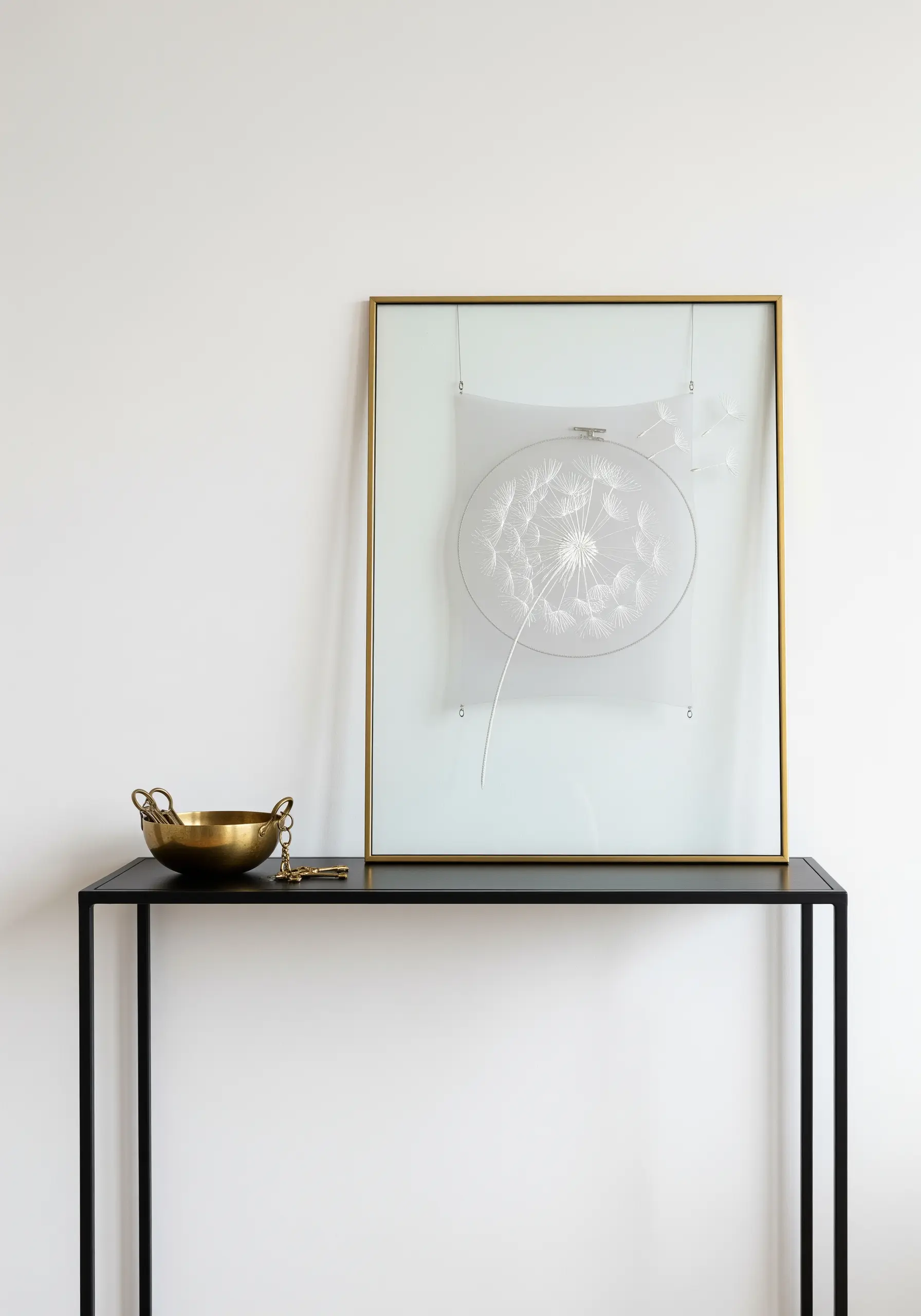
Create a floating, dreamlike effect by embroidering on a sheer fabric like organza or tulle.
Use a lightweight, single-strand white thread to stitch a delicate dandelion; the transparency of the fabric makes the motif appear suspended in air.
When framing, mount the sheer fabric in a floating frame or hang the hoop itself to let light pass through, enhancing the airy, weightless quality of the design.
This technique challenges you to consider both the positive space of the stitches and the negative space seen through the fabric.
6. Combine Appliqué and Stitching for Graphic Impact
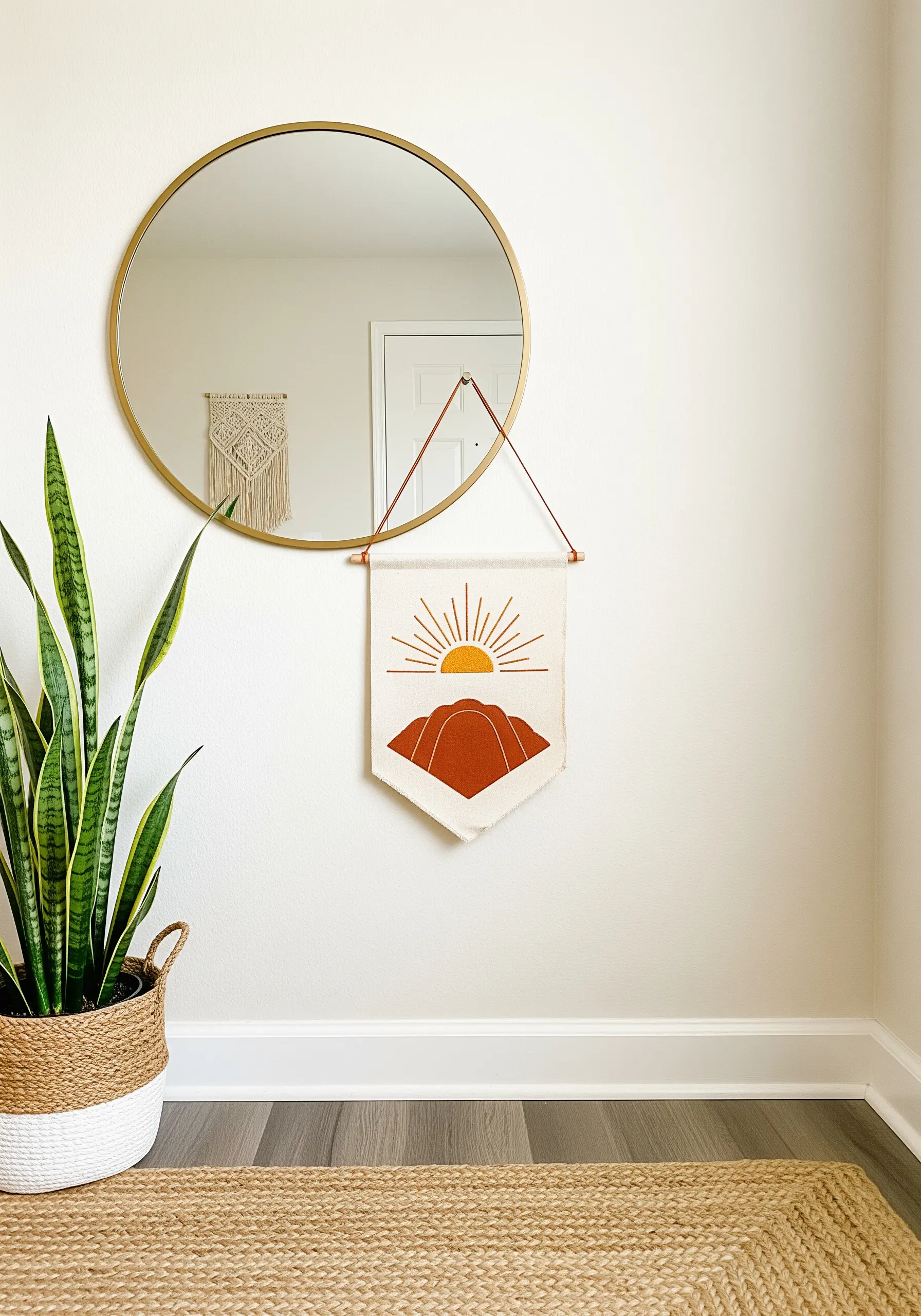
Create bold, graphic shapes by combining fabric appliqué with simple embroidery.
First, cut your primary shape from a contrasting fabric—like the rust-colored mound here—and secure it to your base fabric.
Then, add stitched details, like the sun rays, using a simple backstitch or straight stitch.
This mixed-media approach allows you to create solid blocks of color quickly and efficiently, saving the thread for fine, linear details.
Finish it as a wall banner for a modern, boho-inspired textile wall art piece.
7. Create Texture with Repeating Plus Signs
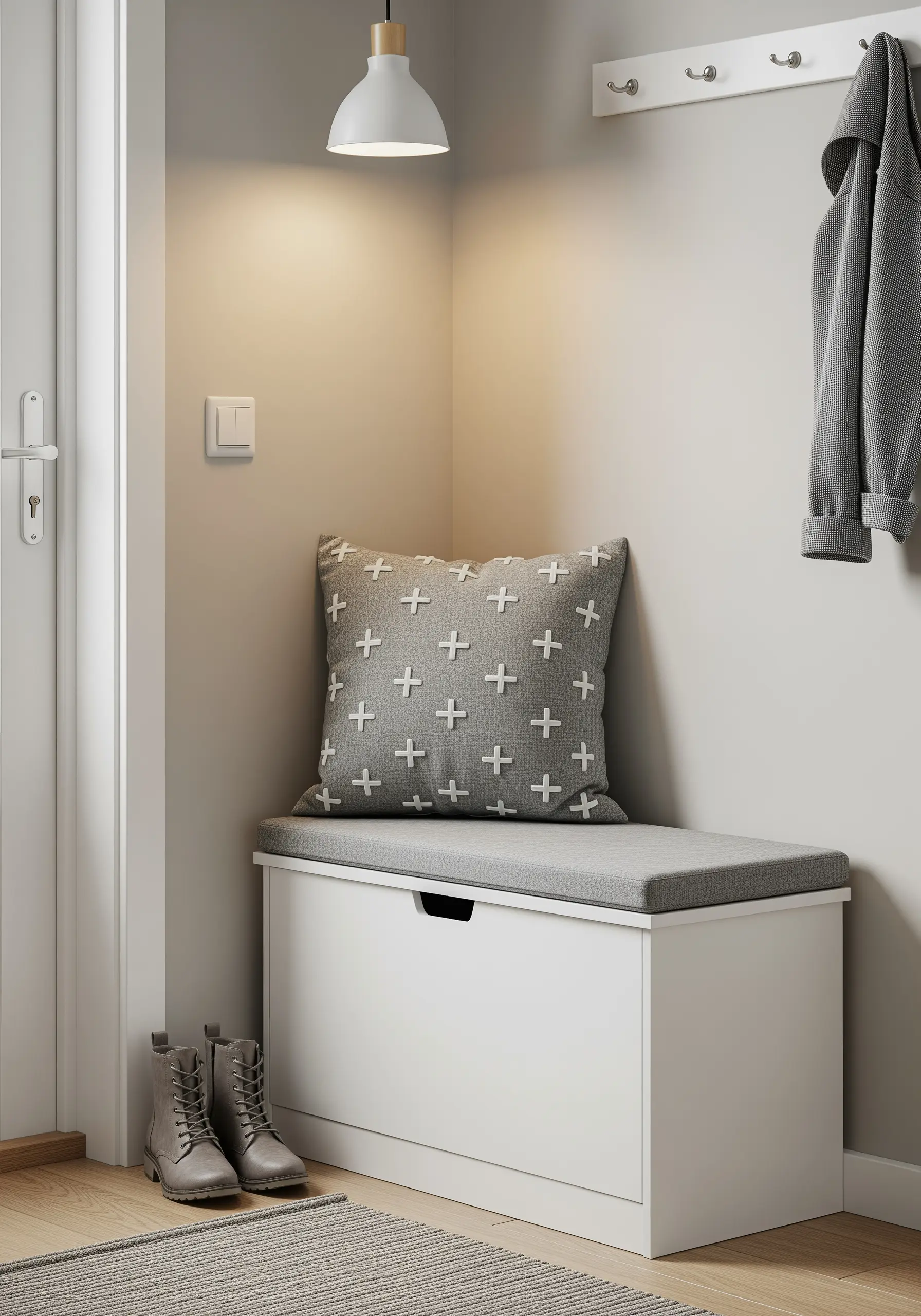
Design a sophisticated, modern pattern using a simple, repeated motif like the plus sign.
Use a thicker floss, such as all six strands of standard cotton or a pearl cotton thread, to give each stitch a chunky, textural quality.
Stitch your pattern on a durable, medium-weight fabric that can handle the density of the embroidery, like a cotton twill or canvas.
The key to a polished look is maintaining consistent stitch length and spacing, so consider lightly marking your grid with a water-soluble pen before you begin.
8. Add a Delicate Botanical Touch to Functional Items
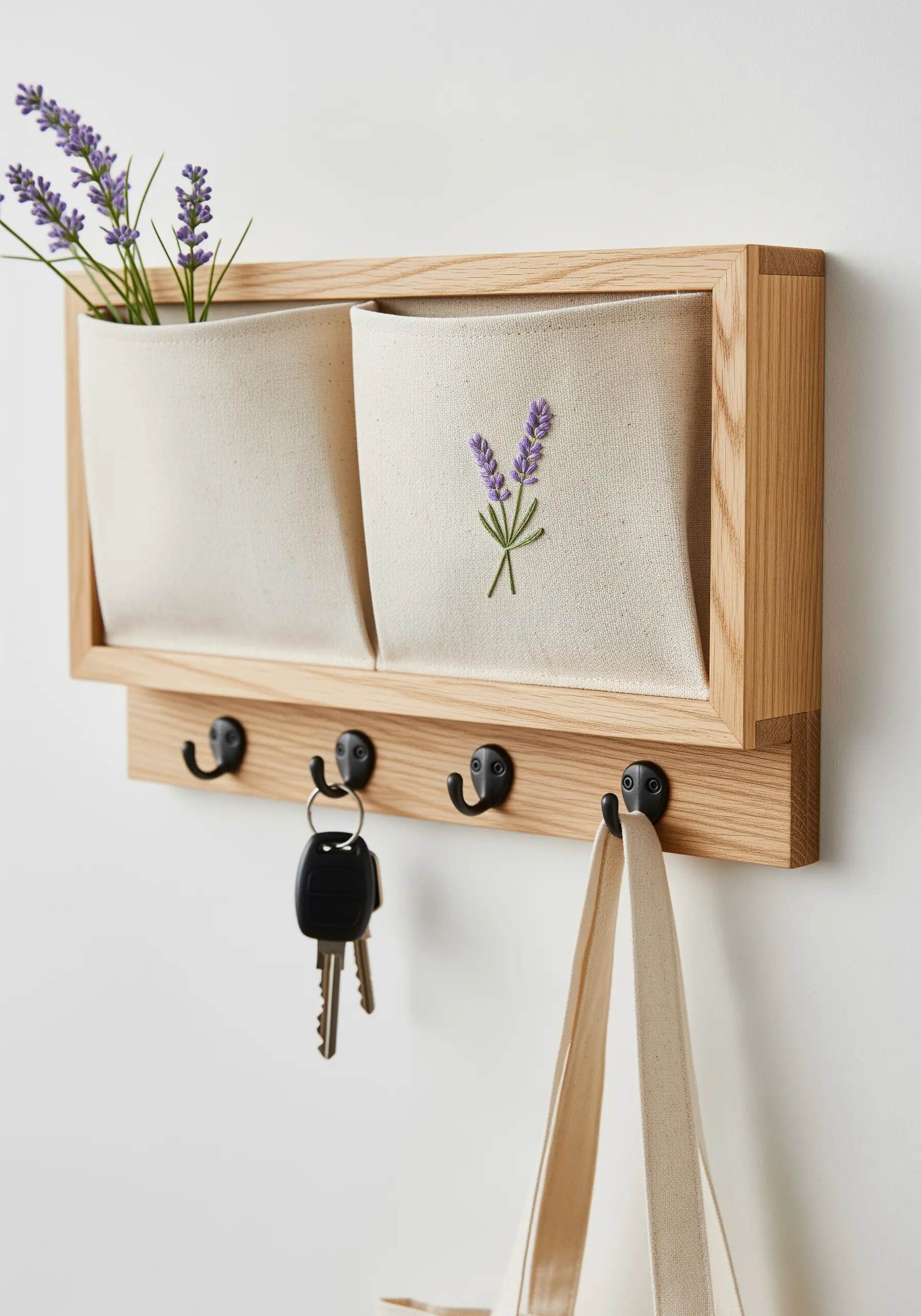
Infuse a bit of nature into your entryway by adding a small botanical motif to a functional organizer.
A single sprig of lavender, stitched with satin stitch for the blossoms and a delicate stem stitch for the stalk, adds a personal, handcrafted feel.
Position the embroidery thoughtfully—placing it slightly off-center feels more organic and less rigid than a perfectly centered design.
This small detail transforms a simple storage solution into a piece of decor that is both beautiful and useful.
9. Master High-Contrast Typography
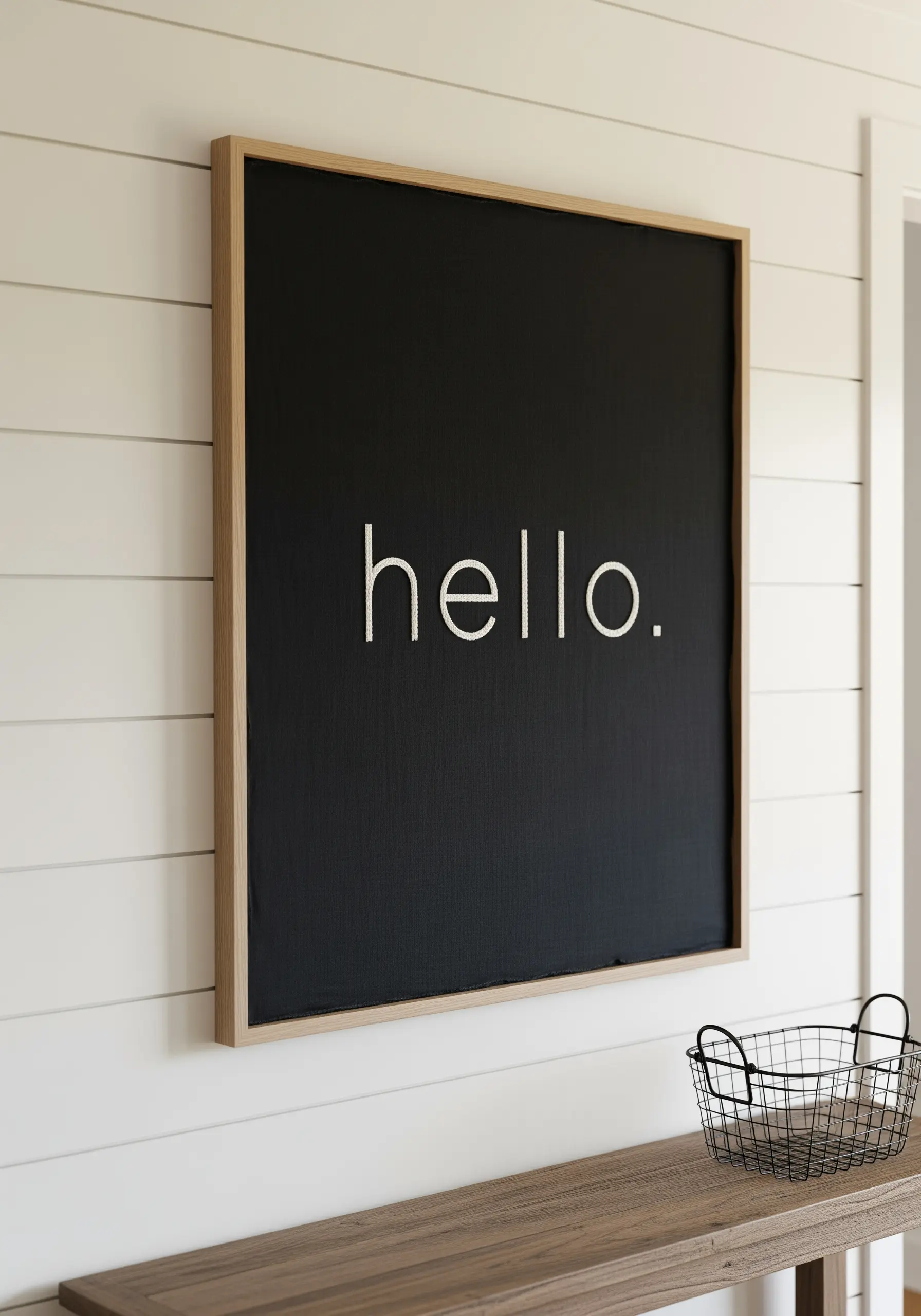
Make a welcoming statement with clean, minimalist typography that commands attention.
Stitching light thread on a dark background creates a powerful visual contrast.
For crisp, smooth lettering, first outline the letters with a split stitch, then wrap that foundation with a second thread—a technique known as whipped backstitch.
This method ensures your curves are fluid and your straight lines are sharp, giving your text a professional, polished finish.
Stretching the dark fabric over a canvas frame provides a taut, stable surface essential for preventing puckering.
10. Scale Up Abstract Lines for Architectural Impact
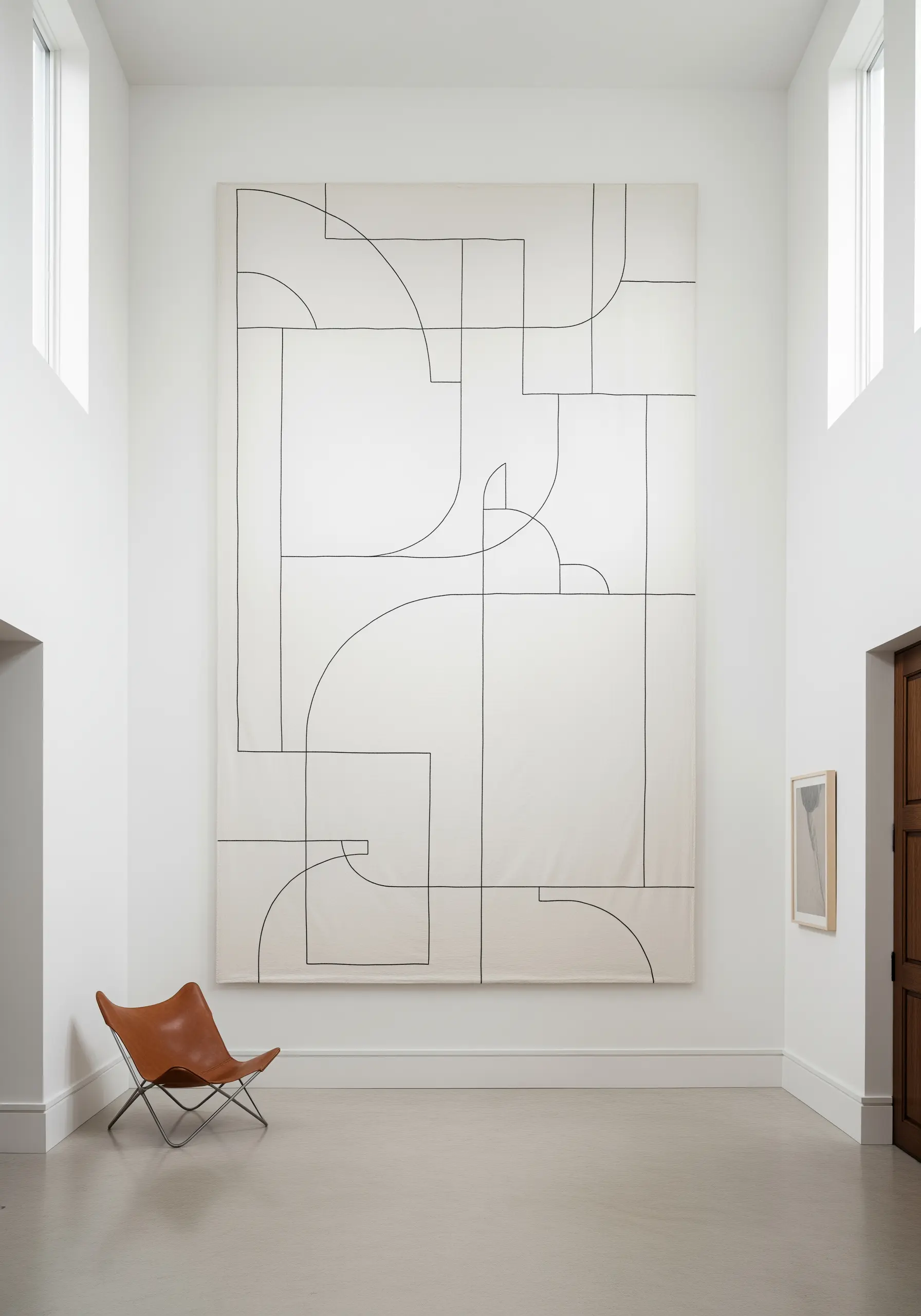
Transform your embroidery from a small craft into a piece of architectural art by dramatically increasing its scale.
For a piece this large, standard embroidery floss is too fine; instead, use a thicker yarn or cord and apply it using a couching stitch.
This involves laying the thick yarn along your pattern line and tacking it down with a thinner, matching thread, allowing you to create bold lines efficiently.
The result is a commanding piece of abstract thread embroidery that redefines the wall it hangs on.
11. Stitch a Refined Monogram for a Personal Touch
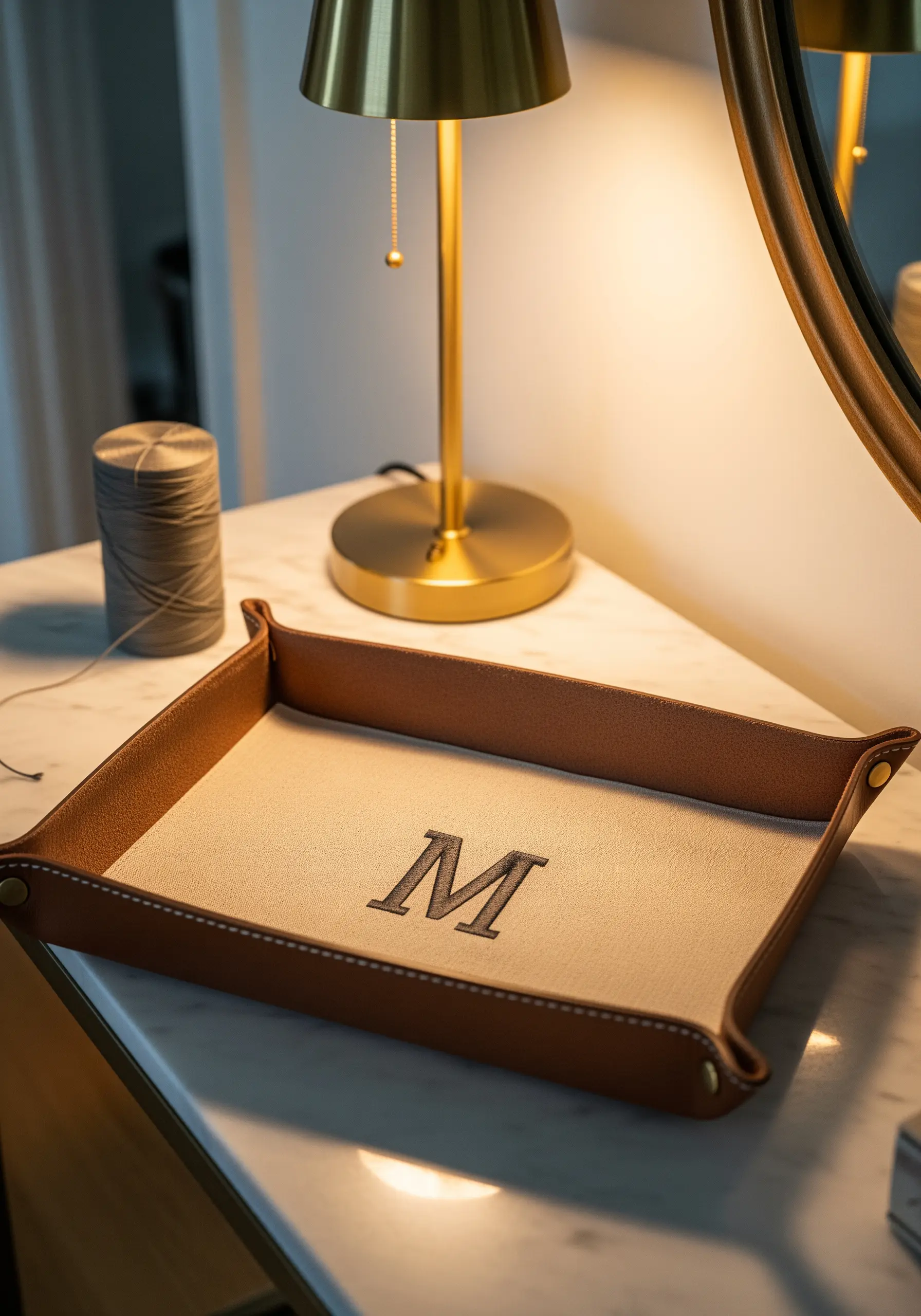
Add a classic, personal detail to an entryway catch-all tray with an elegant monogram.
To achieve a raised, almost embossed effect, use a dense satin stitch, ensuring each stitch lies flat and close to the next.
For a perfect finish on a serif font, use short straight stitches to define the serifs first, then fill the main body of the letter.
This technique creates sharp, defined edges and gives the monogram a luxurious, substantial feel.
Choose a thread color that is just a few shades darker than the fabric for a subtle, tone-on-tone result.
12. Create Movement with Tone-on-Tone Waves
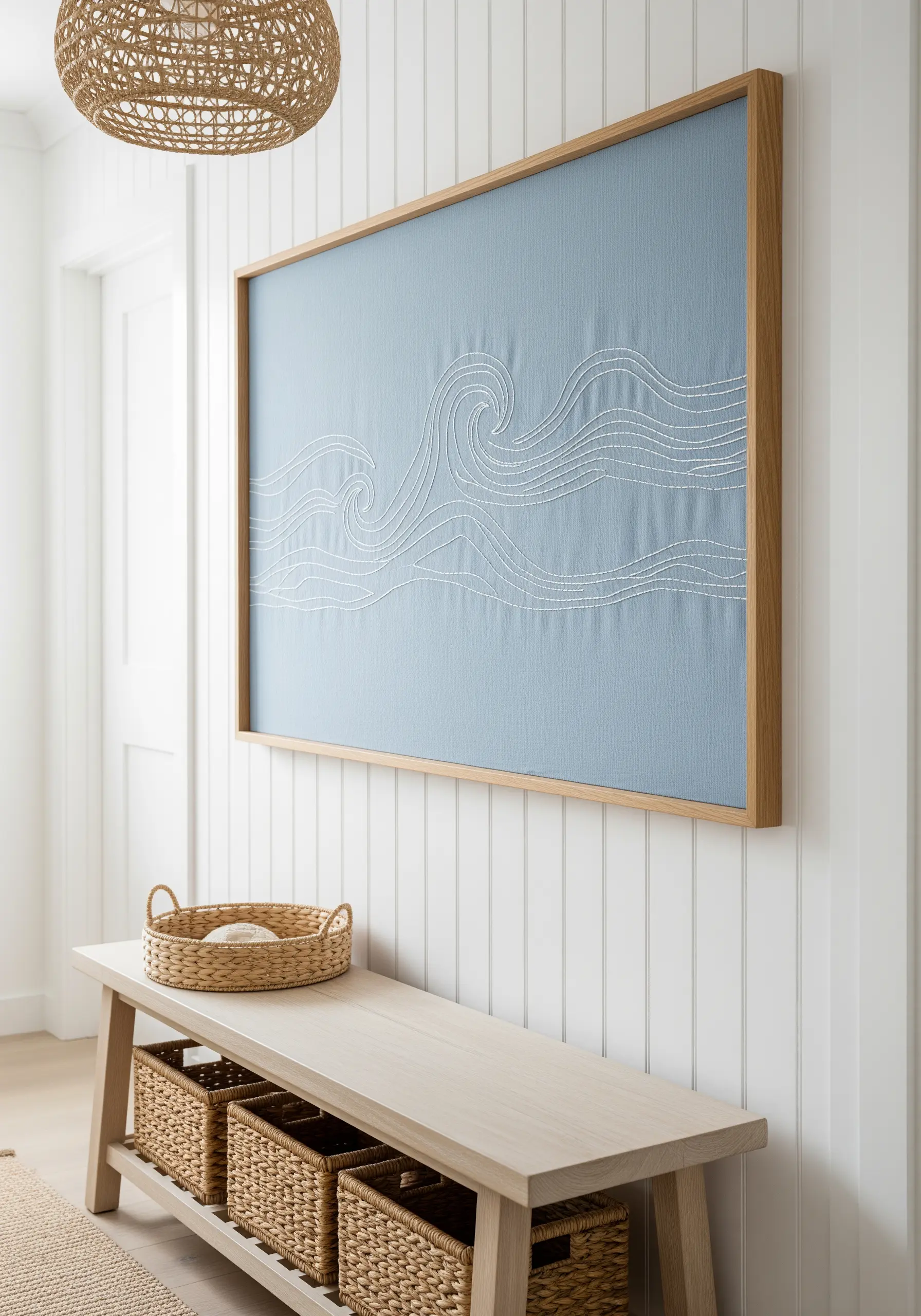
Capture the serene energy of the ocean by stitching waves in a tone-on-tone color palette.
Use a simple backstitch or running stitch with a thread just a shade lighter than your fabric—the subtlety is what makes it sophisticated.
Vary the length and curve of your lines to mimic the natural, organic movement of water.
This minimal ocean-inspired embroidery relies on texture and line, not color, to create its calming effect, making it a perfect addition to a tranquil entryway.
13. Explore Bold Graphics with Yarn Wrapping
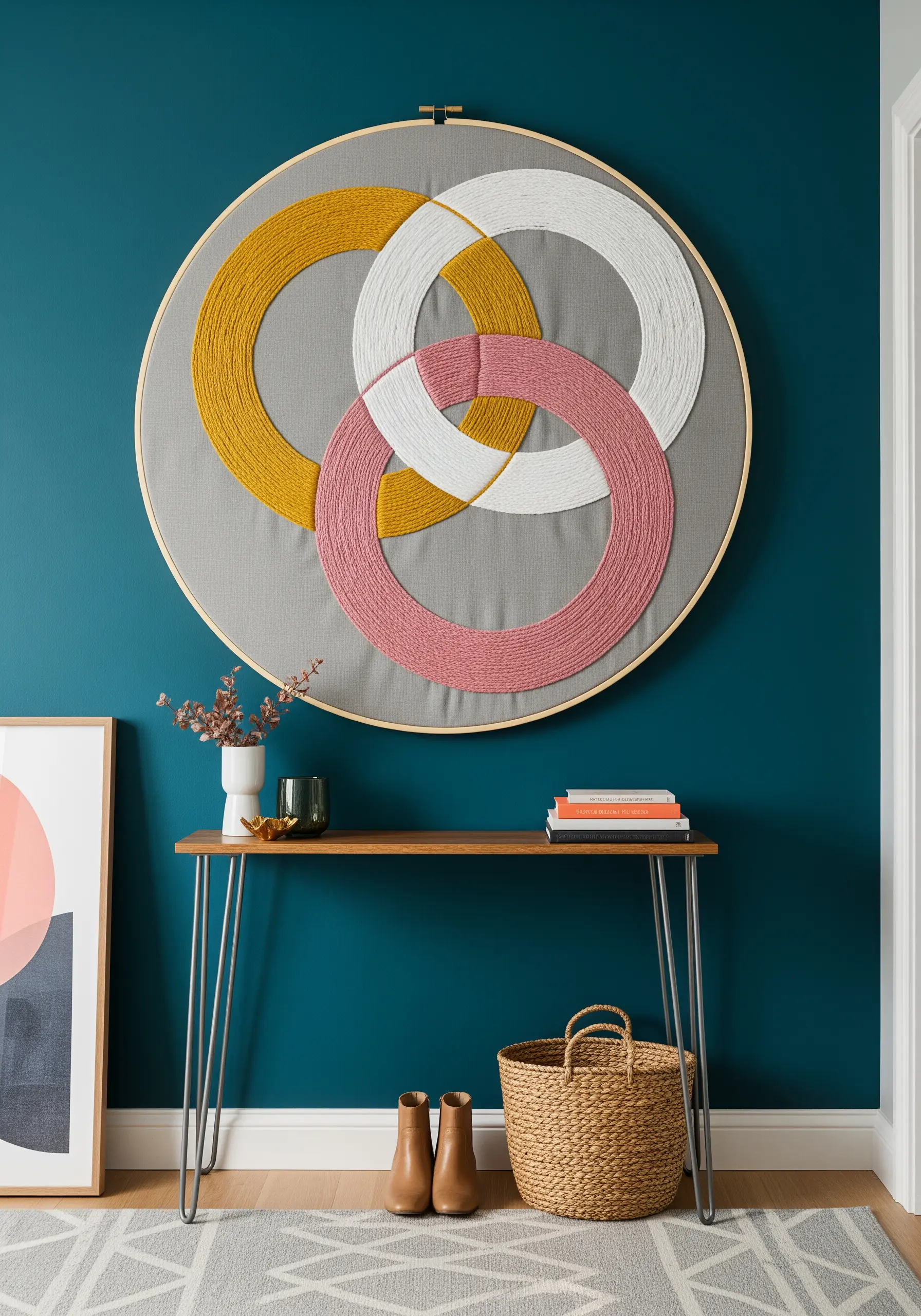
Achieve a bold, dimensional effect by using yarn instead of floss to create your design.
These interlocking rings are created by wrapping yarn tightly and evenly around a pre-drawn shape, a technique that produces a highly textural, sculptural surface.
To execute this, you can couch a thick yarn down or use a very wide chain stitch.
The contrast between the soft, bulky yarn and the flat background fabric makes the design pop, turning your hoop into a vibrant piece of modern fiber art.
14. Find Beauty in the Imperfect Enso Circle
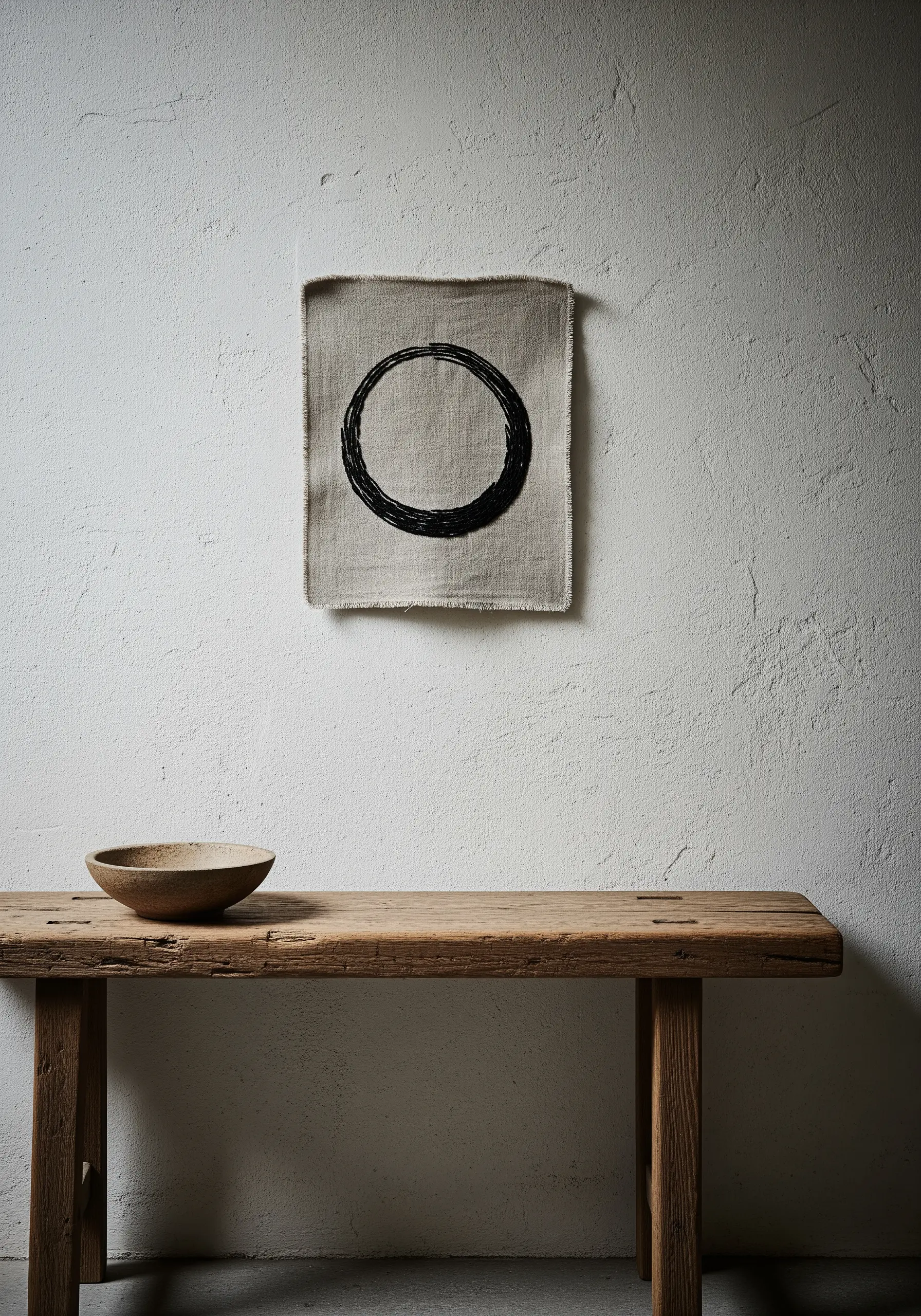
Embrace the wabi-sabi philosophy by stitching an Enso, or Zen circle, which represents wholeness and imperfection.
Instead of aiming for a perfect line, use a textured stitch like the split stitch and allow for natural variations in your tension and stitch length.
This creates a line that feels hand-drawn and expressive, almost like a brushstroke.
Stitch it on raw, unbleached linen with a frayed edge to enhance the organic, earthy aesthetic, perfect for Japandi style interiors.
15. Design a Functional, Interactive Wall Calendar
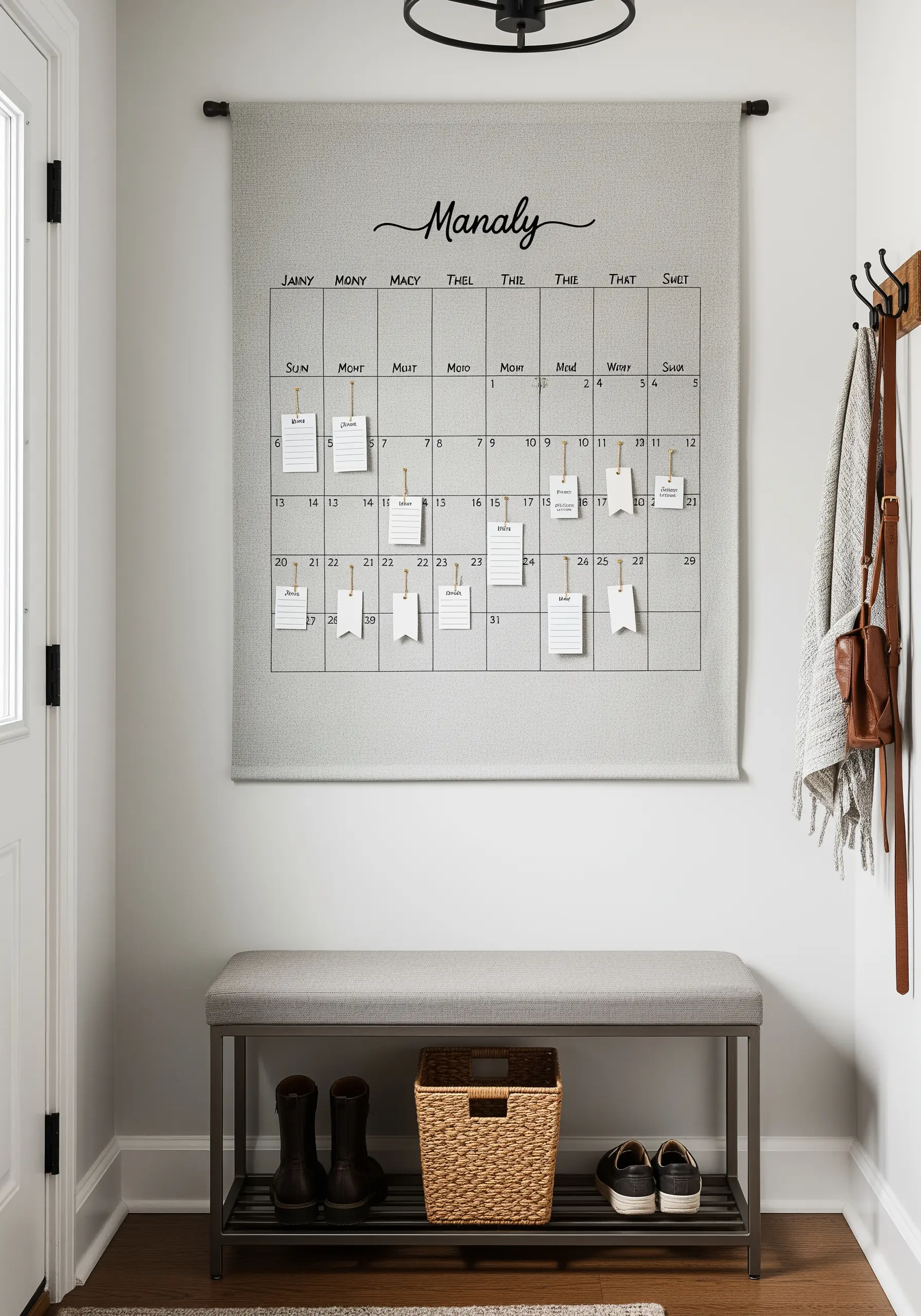
Combine embroidery with function to create a beautiful, reusable wall calendar for your entryway.
Use a simple backstitch to create the grid and a light, elegant script for the lettering.
The brilliance of this design is its interactivity; you can add small hooks or clips to hang notes for each day.
Choose a durable, neutral fabric like a heavy linen blend that will hold its shape and serve as a quiet, elegant backdrop for your family’s schedule.
16. Capture Delicate Motion on Transparent Fabric
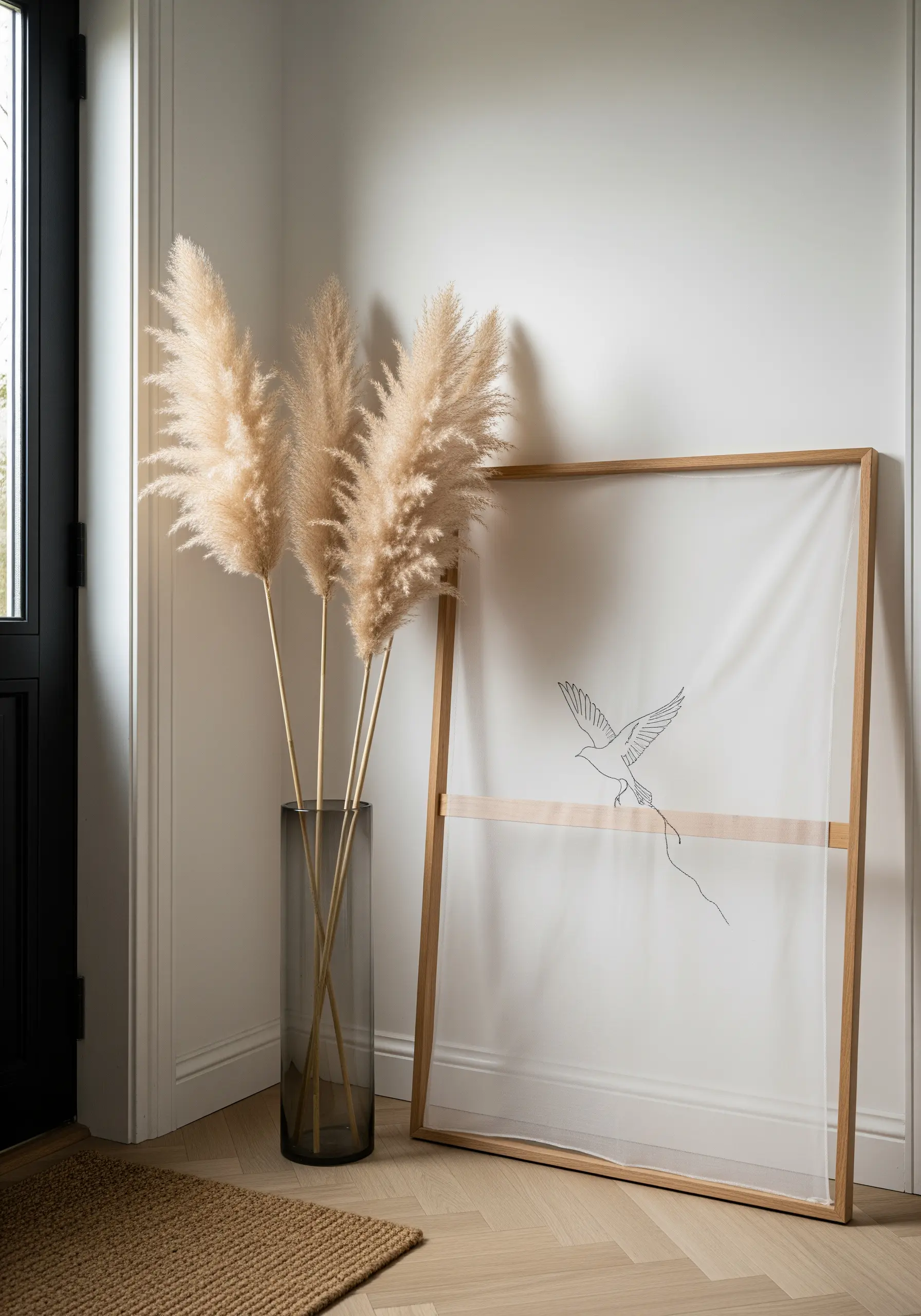
Illustrate the delicate grace of a bird in flight by stitching it on sheer fabric.
Use a single strand of black floss and a fine needle to create a clean, sketch-like line that doesn’t overwhelm the delicate material.
Allow a long, trailing thread to hang from the design, suggesting movement and adding a subtle, three-dimensional element.
Displayed in a simple wooden frame, this piece becomes a study in minimalism, line, and light.
17. Organize with Simple, Stitched Icons
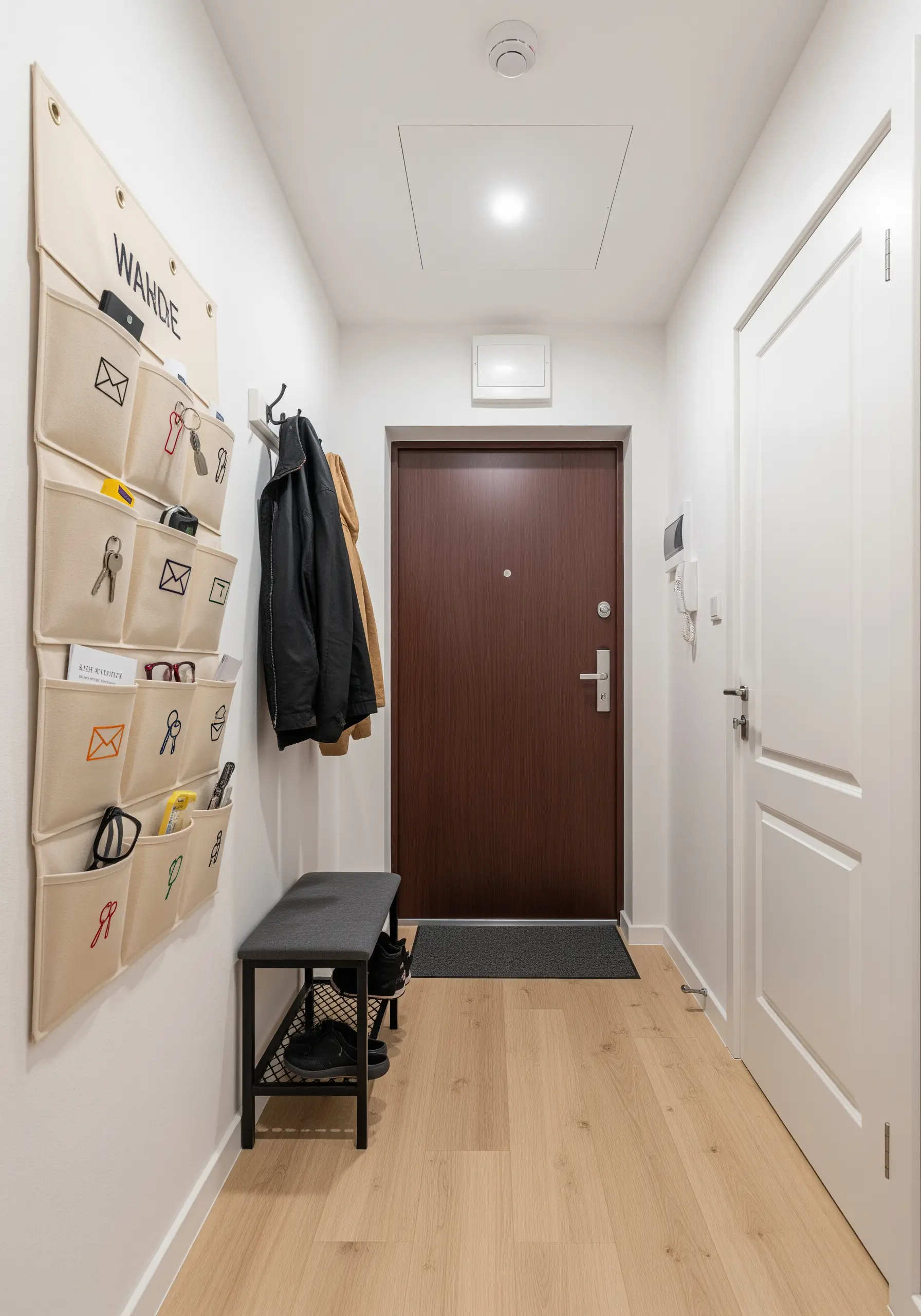
Bring clarity and charm to a wall organizer by embroidering simple icons on each pocket.
Use a basic backstitch to create universally understood symbols for keys, mail, glasses, and other essentials.
A single, vibrant color for each icon adds a playful touch while maintaining a clean, minimalist look.
This is a wonderfully practical application of embroidery that not only enhances your decor but also makes your daily routine a little bit easier and more beautiful.
18. Add a Whimsical Outline to a Doorstop
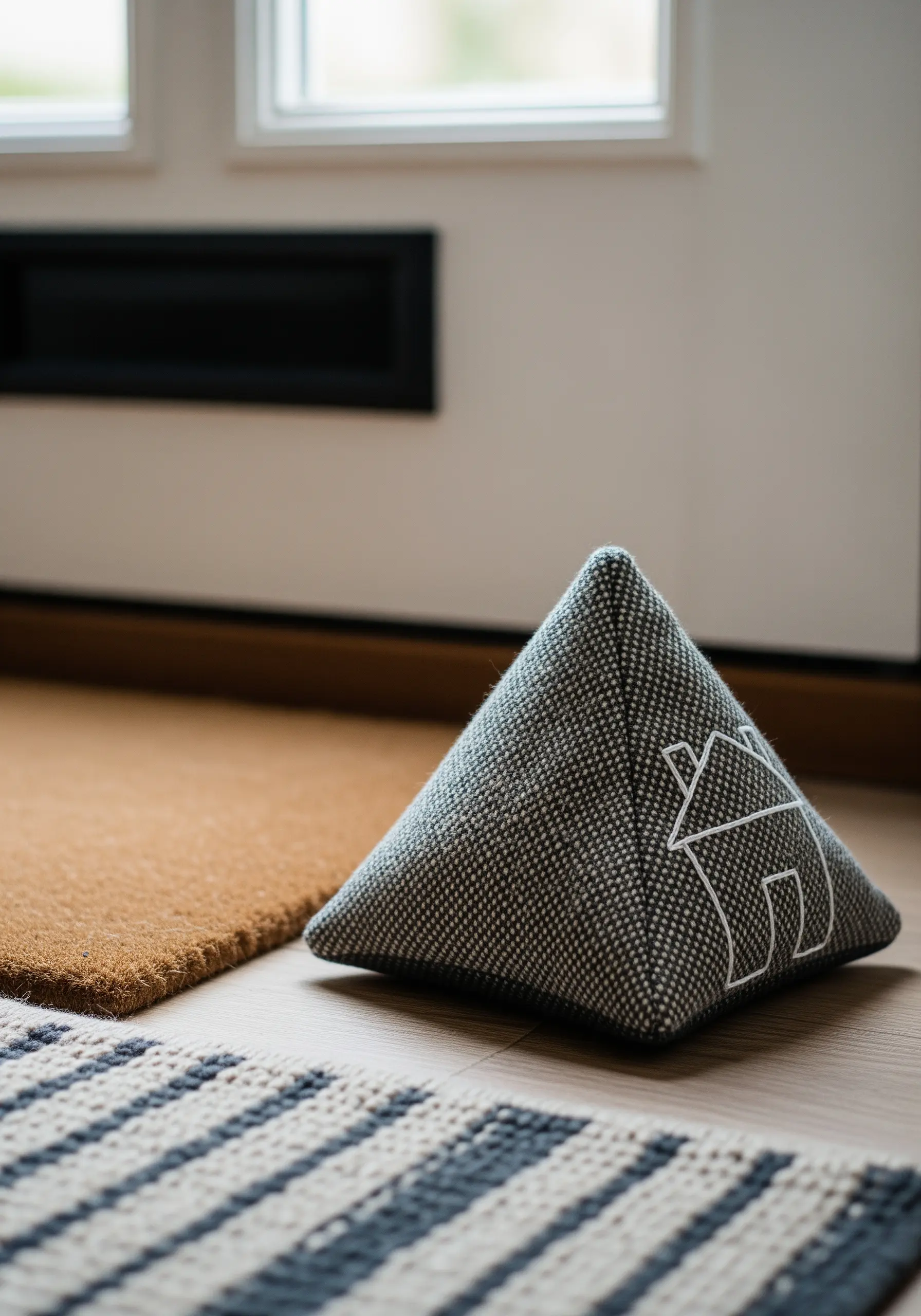
Transform a purely functional object, like a doorstop, into a delightful piece of decor with a simple embroidered outline.
Choose a heavy, textural fabric like tweed or felt that is durable enough for its purpose.
A simple house shape stitched in a crisp, white backstitch creates a charming contrast against the dark fabric.
This small, unexpected detail demonstrates how embroidery can bring warmth and personality to even the most practical items in your home.
19. Chart a Constellation on a Dark Canvas
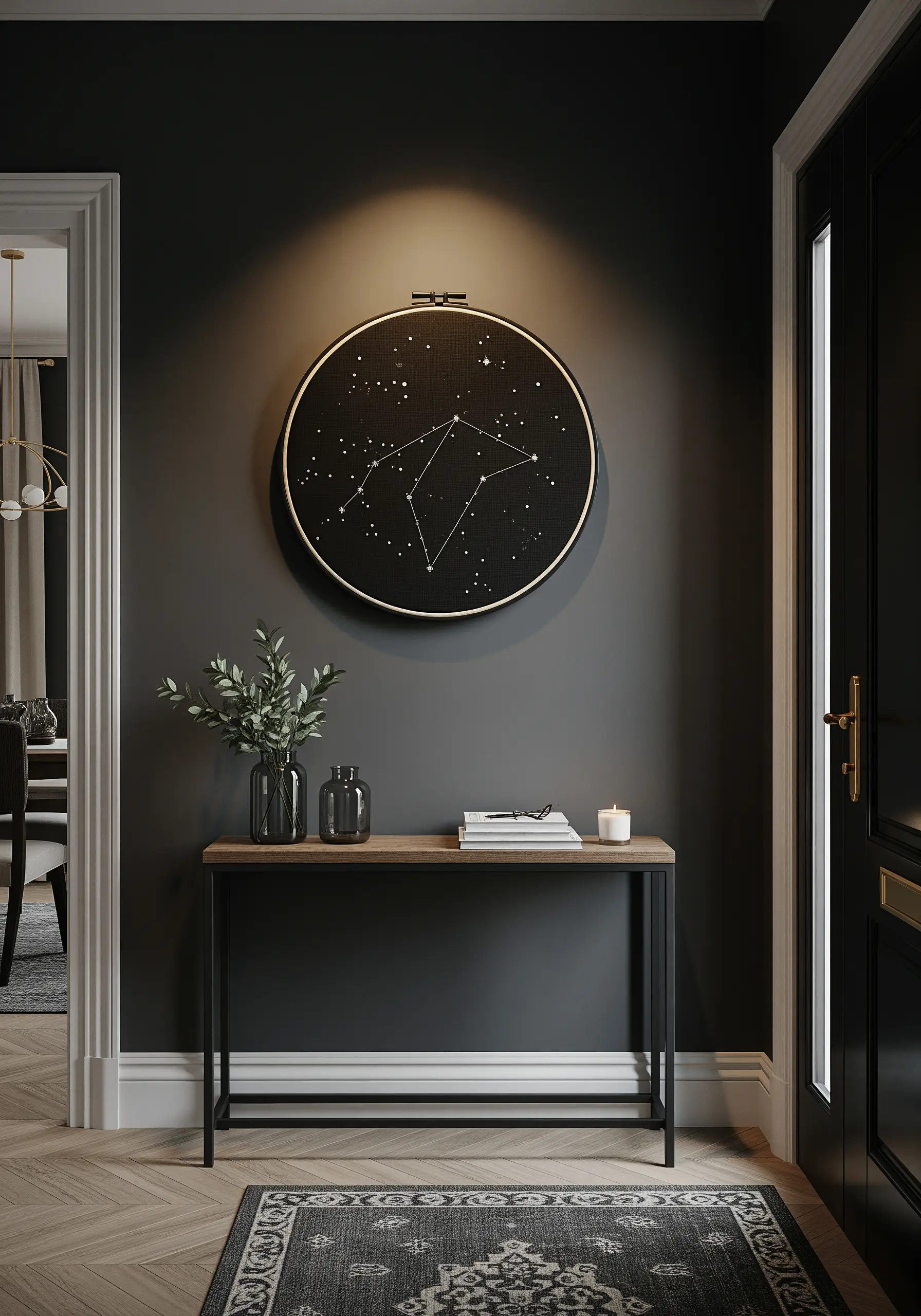
Create a dramatic and sophisticated piece by embroidering a constellation against a dark, night-sky background.
Use a crisp white or metallic silver thread for high contrast. Employ small French knots for the stars to give them dimension, and connect them with fine, precise straight stitches.
Stretching black or navy fabric in a hoop provides the perfect canvas for this celestial design.
This project is a beautiful way to personalize your decor with a meaningful zodiac sign or a favorite star pattern.
20. Communicate with a Series of Abstract Glyphs
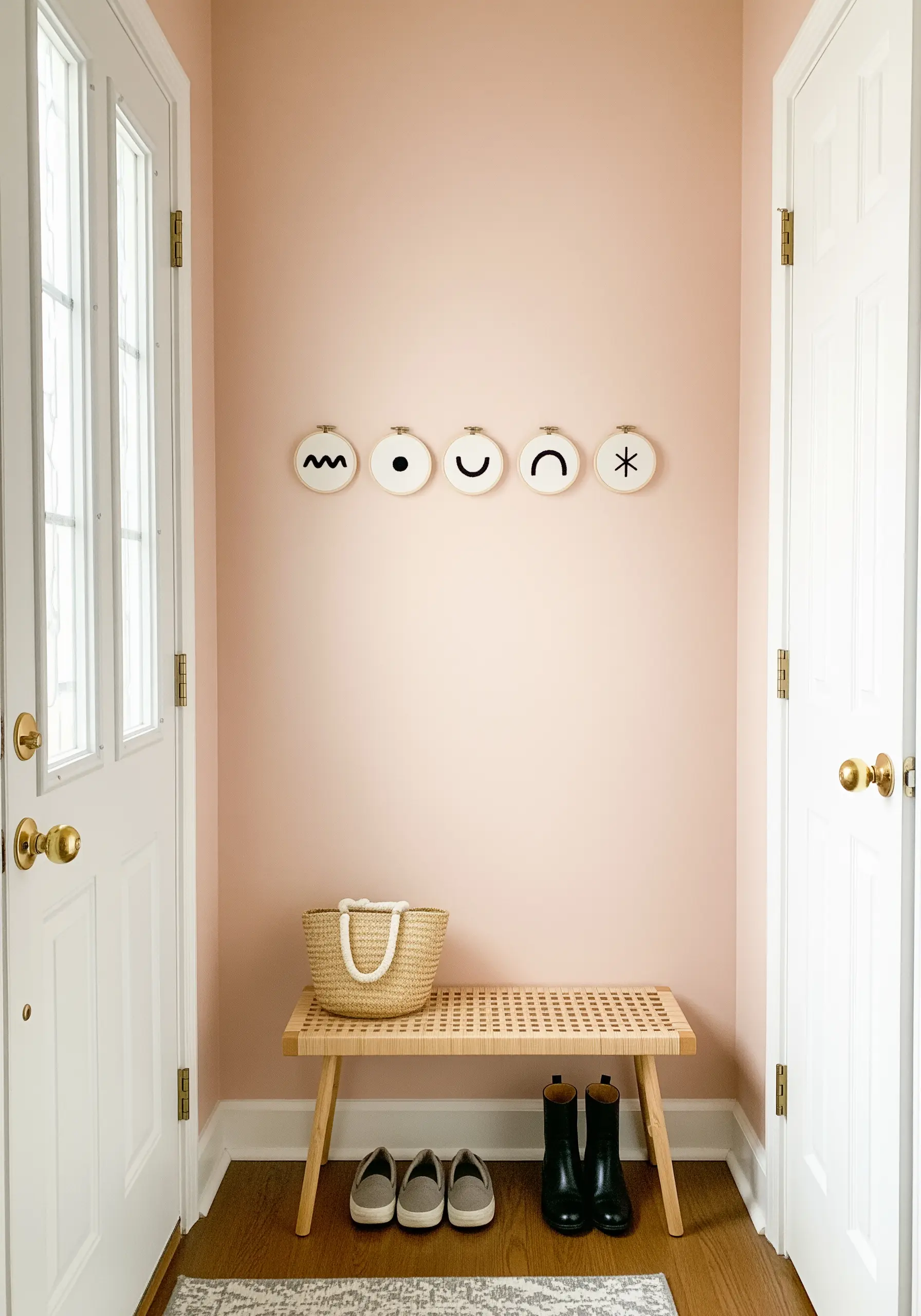
Craft a subtle, personal narrative in your entryway by displaying a series of small hoops with abstract symbols or glyphs.
Each symbol can be stitched quickly using a simple backstitch or stem stitch, allowing you to focus on the form and meaning of each mark.
The power of this idea comes from the collection; displayed together in a clean, horizontal line, the individual pieces create a cohesive and intriguing visual statement.
This is an excellent way to create hooped wall collage layouts that feel both modern and meaningful.
21. Stitch a Meditative Labyrinth Pattern
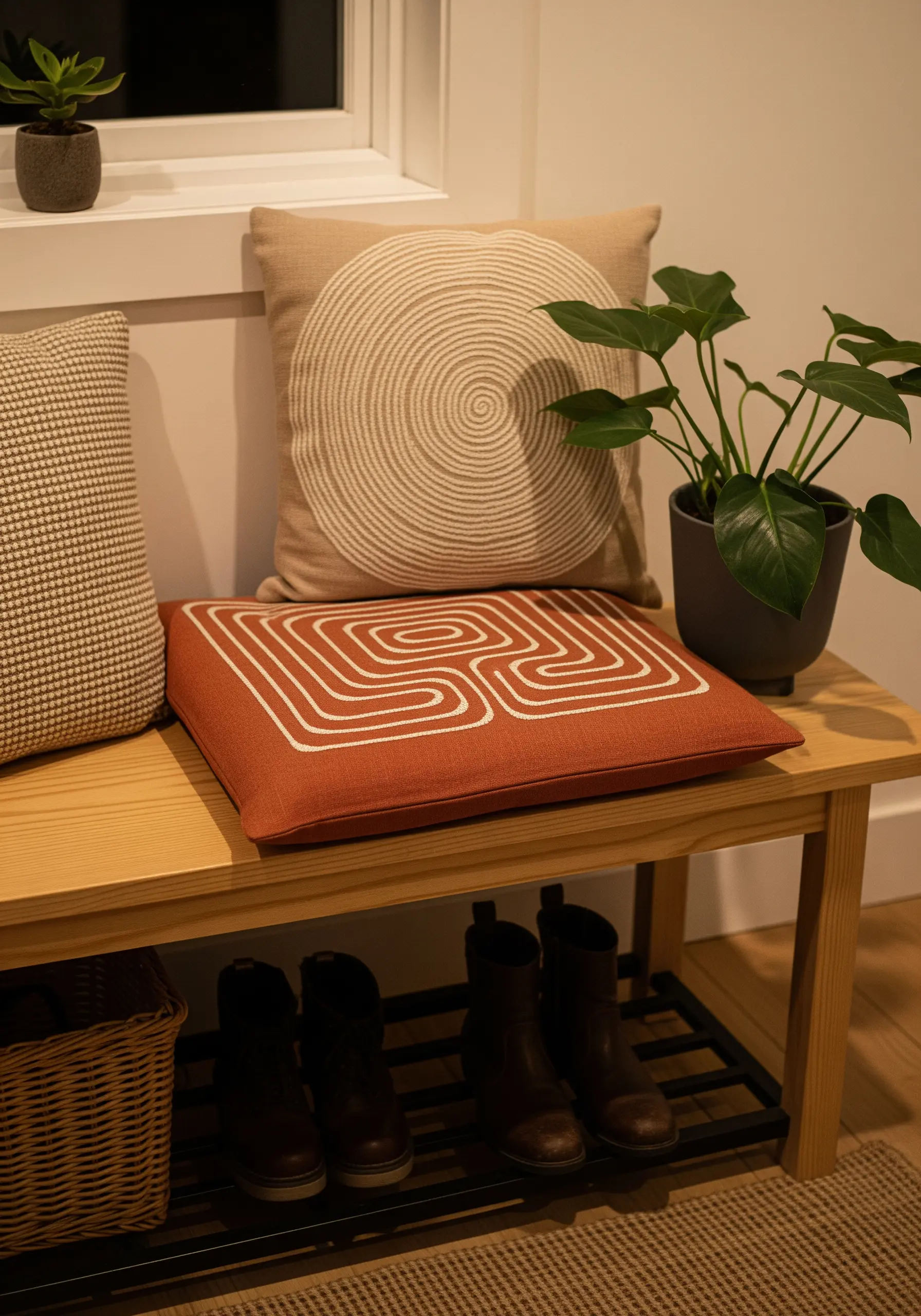
Bring a sense of calm and focus to your entryway with a meditative labyrinth or spiral pattern.
For a smooth, continuous line that flows around curves, use a whipped backstitch or a stem stitch.
The key to this design is the texture and repetition, not intricate color changes. A single, neutral-colored thread on a contrasting fabric creates a powerful graphic effect.
Stitching a pattern like this can be a wonderfully calming process, and the finished piece will radiate that peaceful energy into your home.
22. Capture a Skyline with Minimalist Line Art
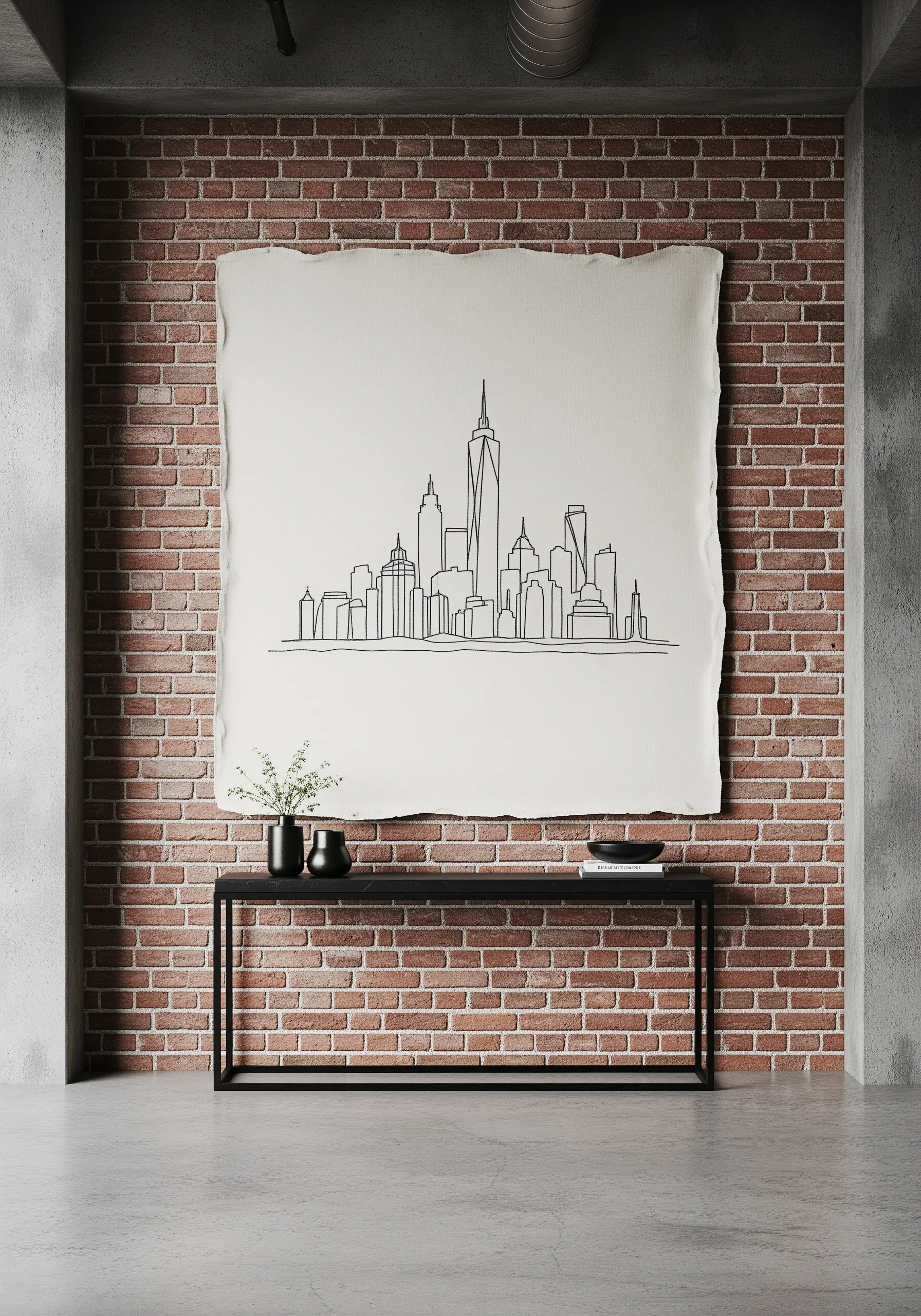
Distill the complexity of a city skyline into a clean, elegant line drawing with thread.
A simple backstitch using two or three strands of black floss is all you need to render the architectural forms.
The choice of canvas—a raw, deckle-edged fabric—becomes part of the artwork itself, adding texture and an organic feel that contrasts beautifully with the sharp, man-made lines of the city.
This is a sophisticated way to pay homage to a favorite place.
23. Integrate a Botanical Border into Furniture
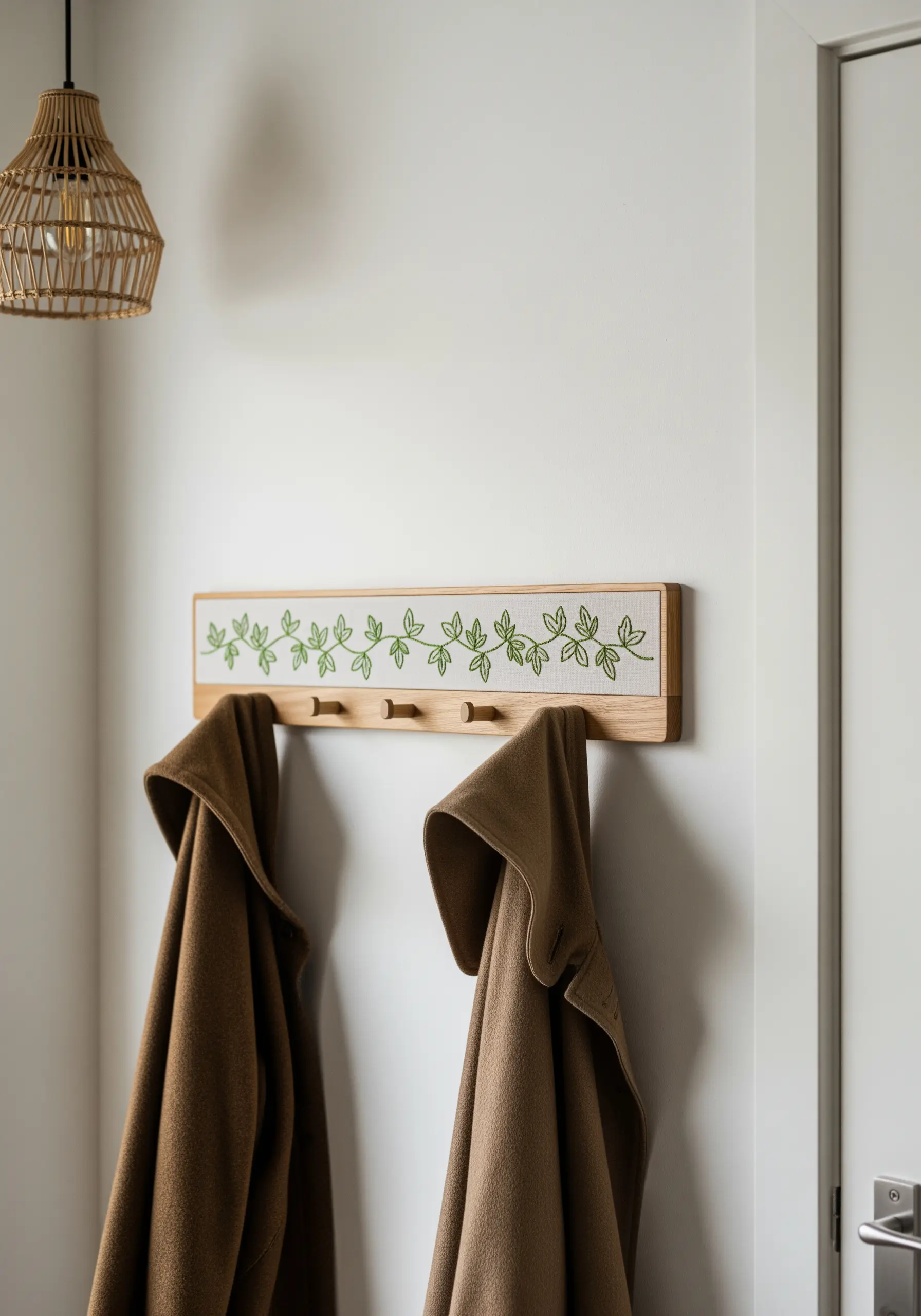
Seamlessly blend your embroidery with your decor by incorporating it directly into a piece of furniture, like a coat rack.
Embroider a simple, repeating leaf vine on a strip of linen or canvas first, then affix the panel to the wooden rack.
Use a classic leaf stitch, alternating the angle of each leaf slightly to create a more natural, flowing look.
This thoughtful detail elevates a standard item into a custom piece that feels uniquely yours.
24. Create Dynamic Tension with Geometric Repetition
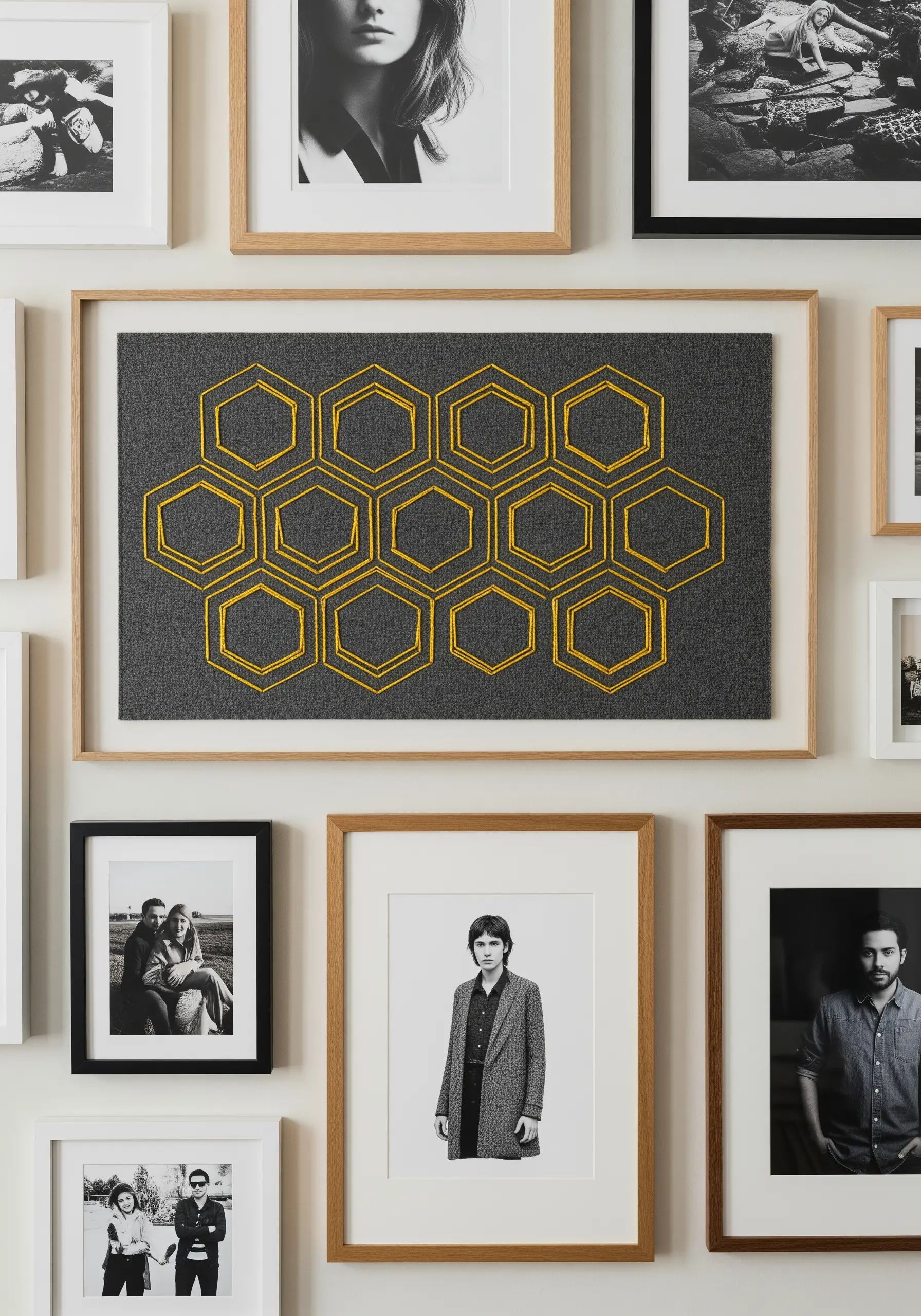
Explore the power of geometric patterns by embroidering a crisp honeycomb design.
The high contrast between the golden-yellow thread and the dark charcoal felt fabric makes the pattern visually pop.
To ensure your hexagons are uniform, use a water-soluble marker to draw a precise grid before you start stitching.
A disciplined backstitch will give you the sharp lines and clean angles necessary for a polished geometric piece that feels both structured and vibrant.
25. Achieve a Subtle Ombré with Stitch Spacing
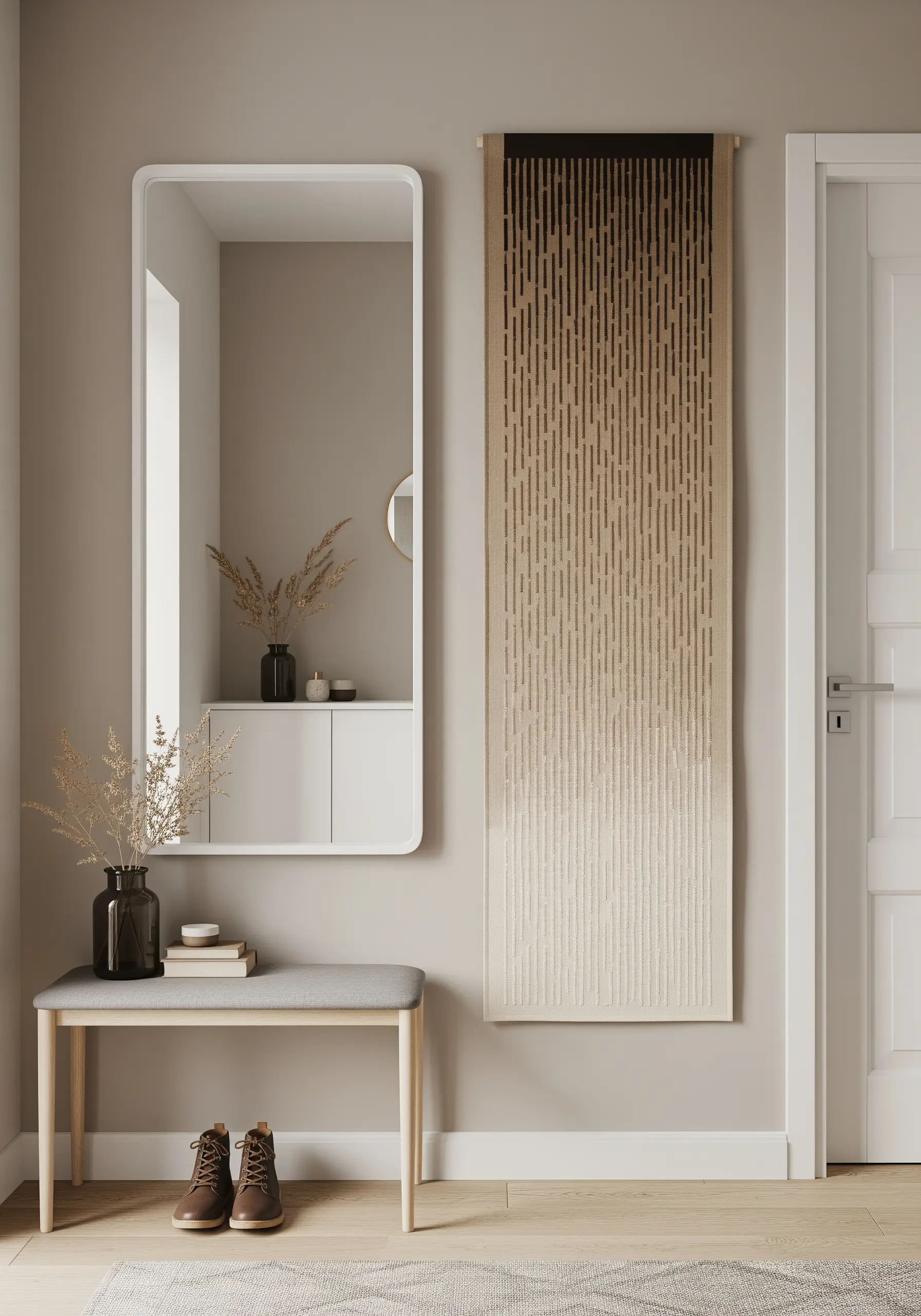
Create a stunning gradient effect not by changing thread colors, but by adjusting the density of your stitches.
Fill your design area with simple, vertical straight stitches.
At the top, place the stitches very close together for a dense, solid appearance. As you move down, gradually increase the space between each stitch.
This technique creates a seamless transition from dark to light, resulting in a sophisticated ombré wall hanging that is both minimalist and visually complex.
26. Convey Emotion with an Abstract Line Art Portrait
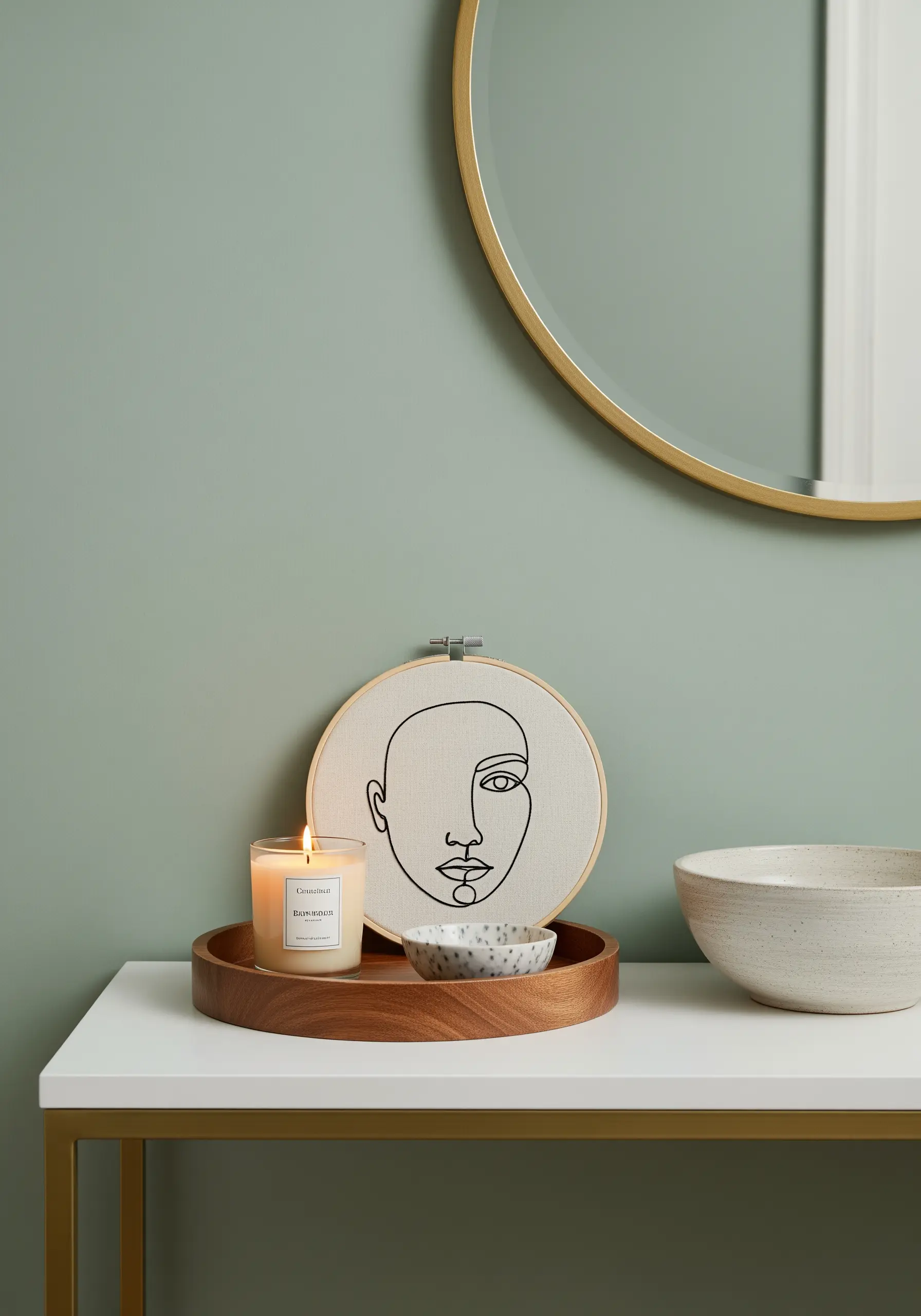
Capture the essence of a face with just a few flowing, expressive lines.
A stem stitch is the perfect choice for this style, as it creates a smooth, rope-like line that handles curves beautifully.
The minimalism of the design places all the emphasis on the quality of your line and the negative space that defines the features.
This abstract line art silhouette is a powerful way to add a touch of human connection and modern artistry to your entryway console.
27. Define a Path with Bold, Textural Stitches
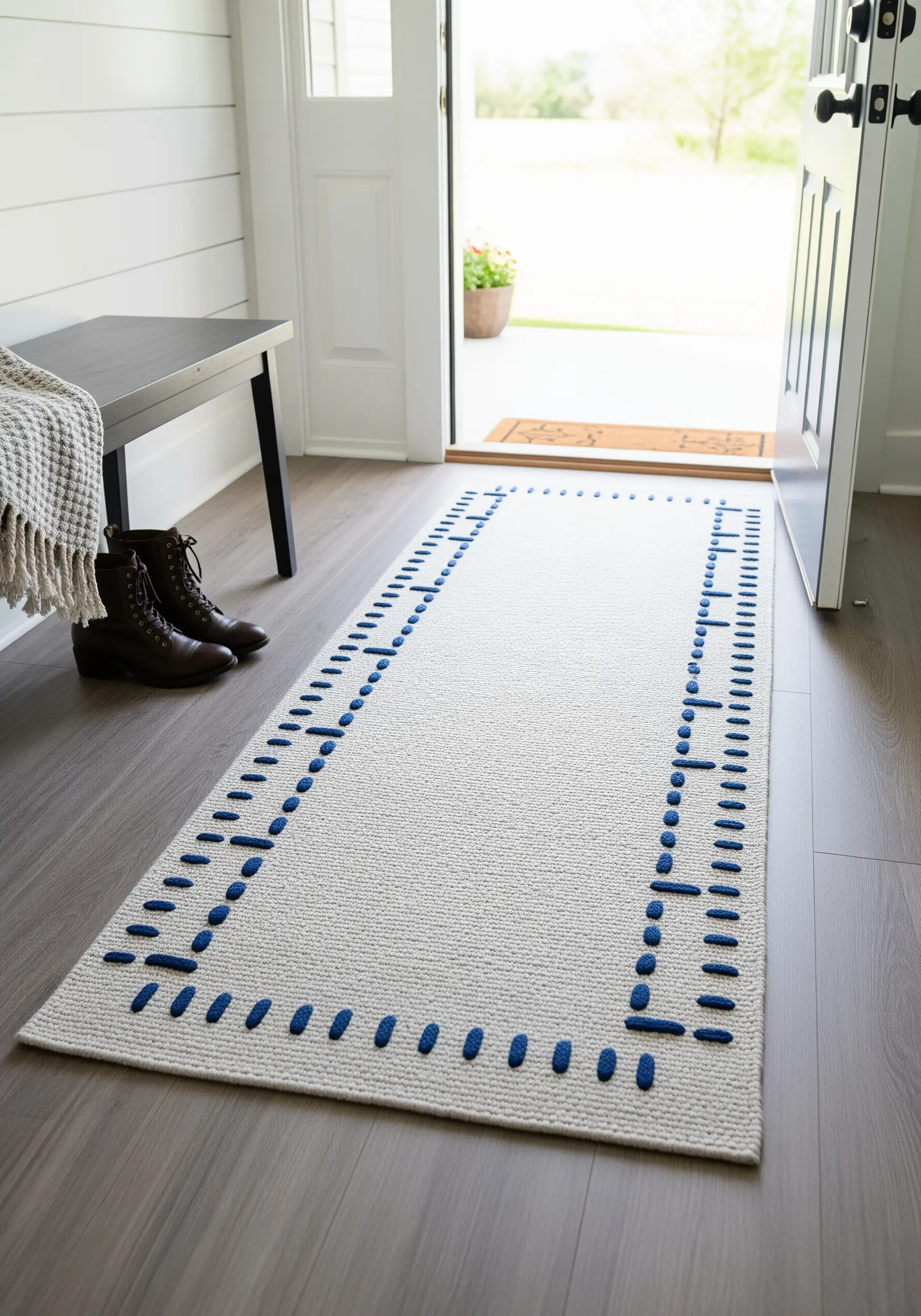
Take embroidery to the floor by creating a custom runner with a bold, graphic border.
To achieve this highly textural, raised effect on a rug, use a punch needle with thick yarn, or couch a heavy cord onto the surface with a durable, invisible thread.
The dashed-line pattern is simple yet effective, guiding the eye and defining the space.
This technique demonstrates that embroidery isn’t just for hoops; it can be used to create impactful, functional art for any surface in your home.


