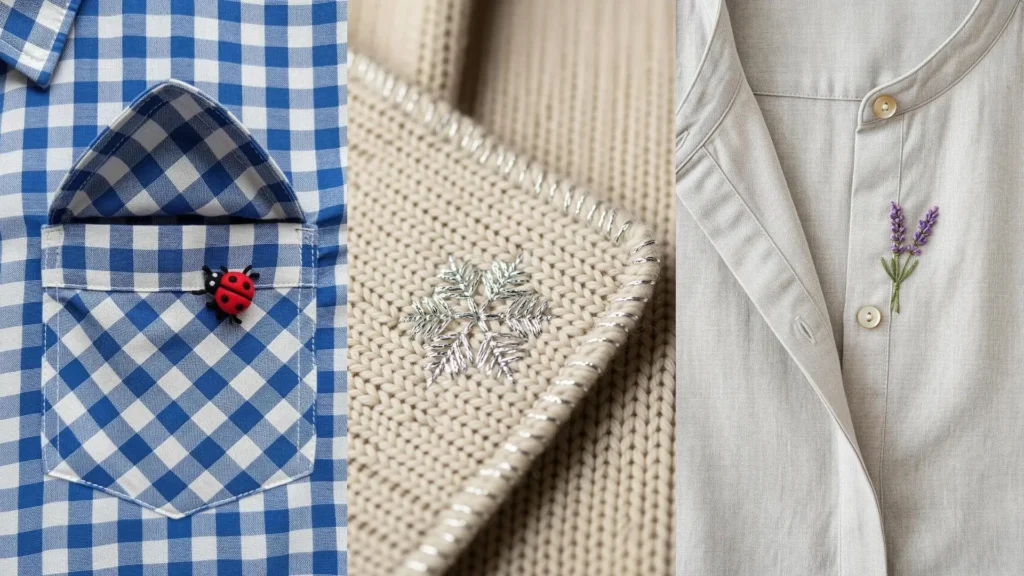
Look at your collection of fabric scraps—the pieces of old jeans, the remnants of a favorite dress, the Liberty print you couldn’t bear to throw away. These aren’t leftovers; they are stories waiting to be told. A simple tote bag is the perfect canvas to give them a new voice, transforming a utilitarian object into a piece of wearable, sustainable art.
Here, you won’t find impossibly complex patterns. Instead, you’ll discover how to use foundational techniques like appliqué, visible stitching, and textural layering to create designs that are intentional, modern, and deeply personal. It’s about seeing your materials not for what they were, but for what they can become through the simple, meditative act of stitching.
Let these ideas be a starting point. Trust your instincts, combine patterns, mix textures, and let the fabric guide your needle. Your most powerful tool is your own creativity. It’s time to pick up that tote and begin your next story.
1. Layered Landscapes with Raw-Edge Appliqué
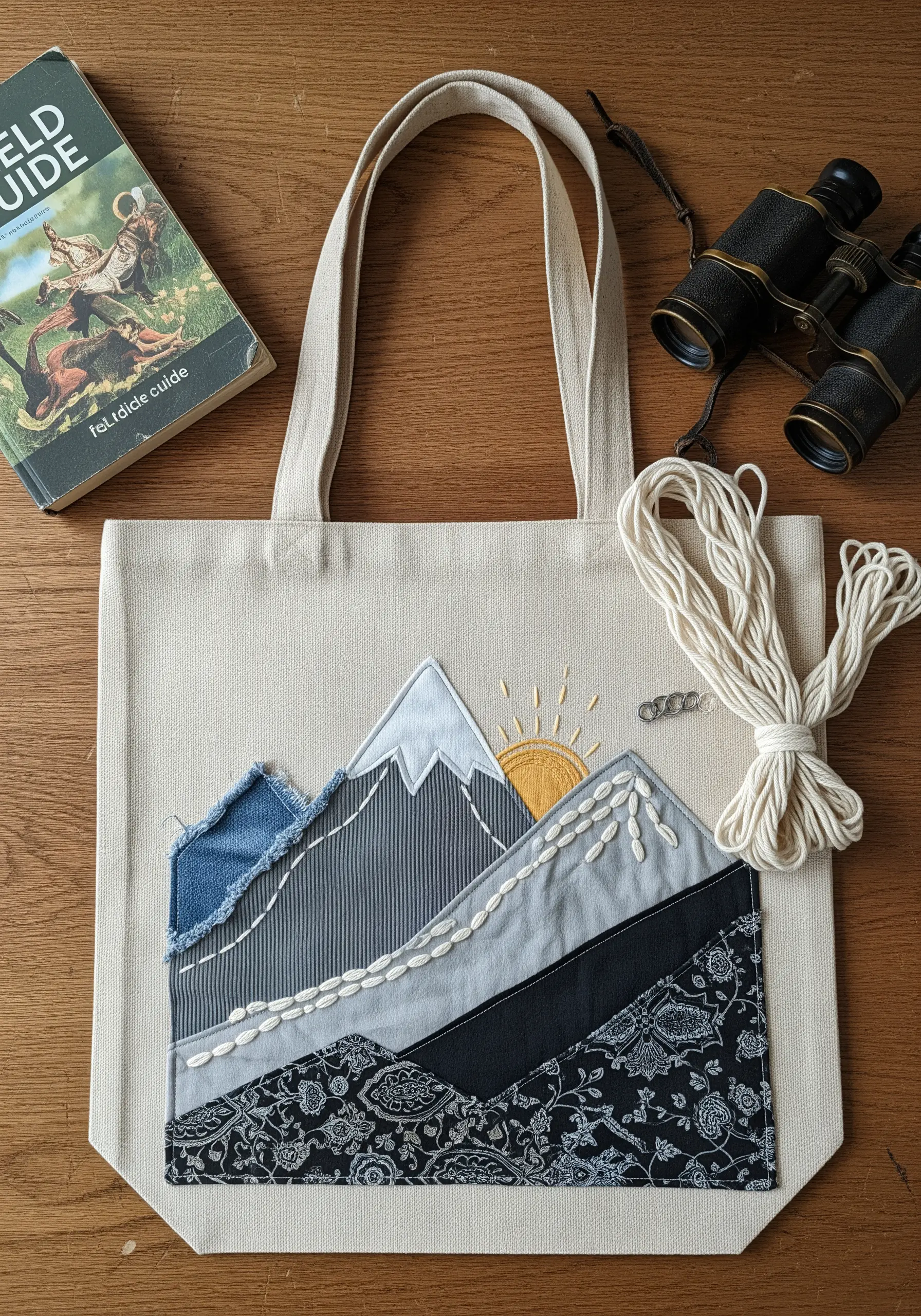
Build a dynamic mountain scene by layering scraps of varied textures—think denim for strength, corduroy for ridges, and soft cotton for snowy peaks.
Instead of turning the edges under, leave them raw.
This adds a modern, slightly deconstructed feel and celebrates the material itself.
Secure each fabric piece with a simple running stitch, then introduce a bold textural element like thick yarn or rope to define the snow line with a couching stitch.
The sun can be a simple patch of yellow fabric or a burst of radial straight stitches.
2. Mindful Mending with Sashiko Patchwork
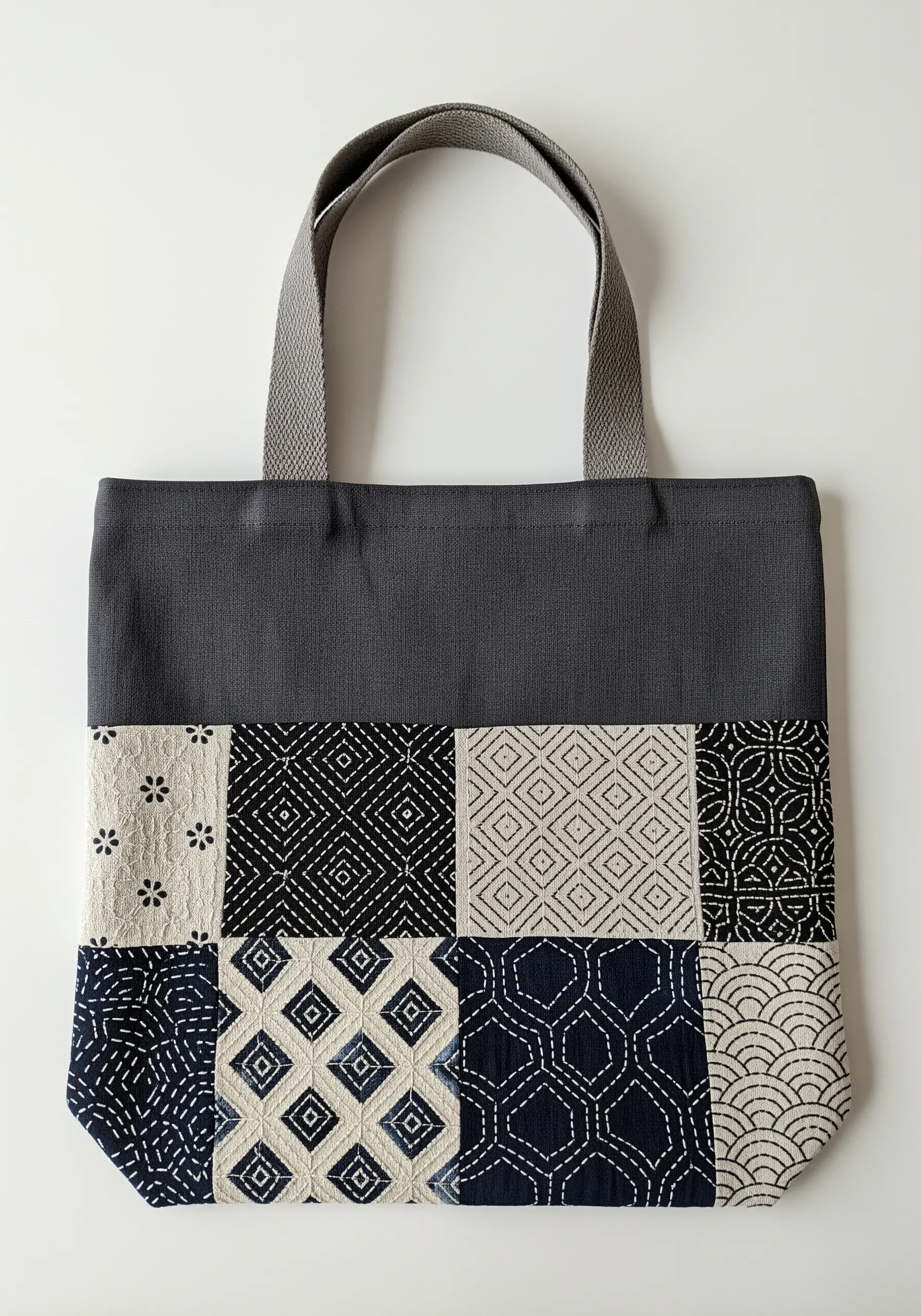
Transform a simple tote into a canvas for mindful stitching with sashiko-inspired patchwork.
Gather scraps of indigo, dark denim, and cream-colored linen or cotton.
The beauty of this technique lies in the rhythmic consistency of the running stitch, so use a proper sashiko needle and thread to glide through the fabric effortlessly.
Each geometric pattern tells a story, turning the act of stitching into a meditative, calming practice.
Don’t strive for machine-like perfection; the slight irregularities of your hand are what give the piece its soul.
3. Botanical Collage with Stitch-Defined Details
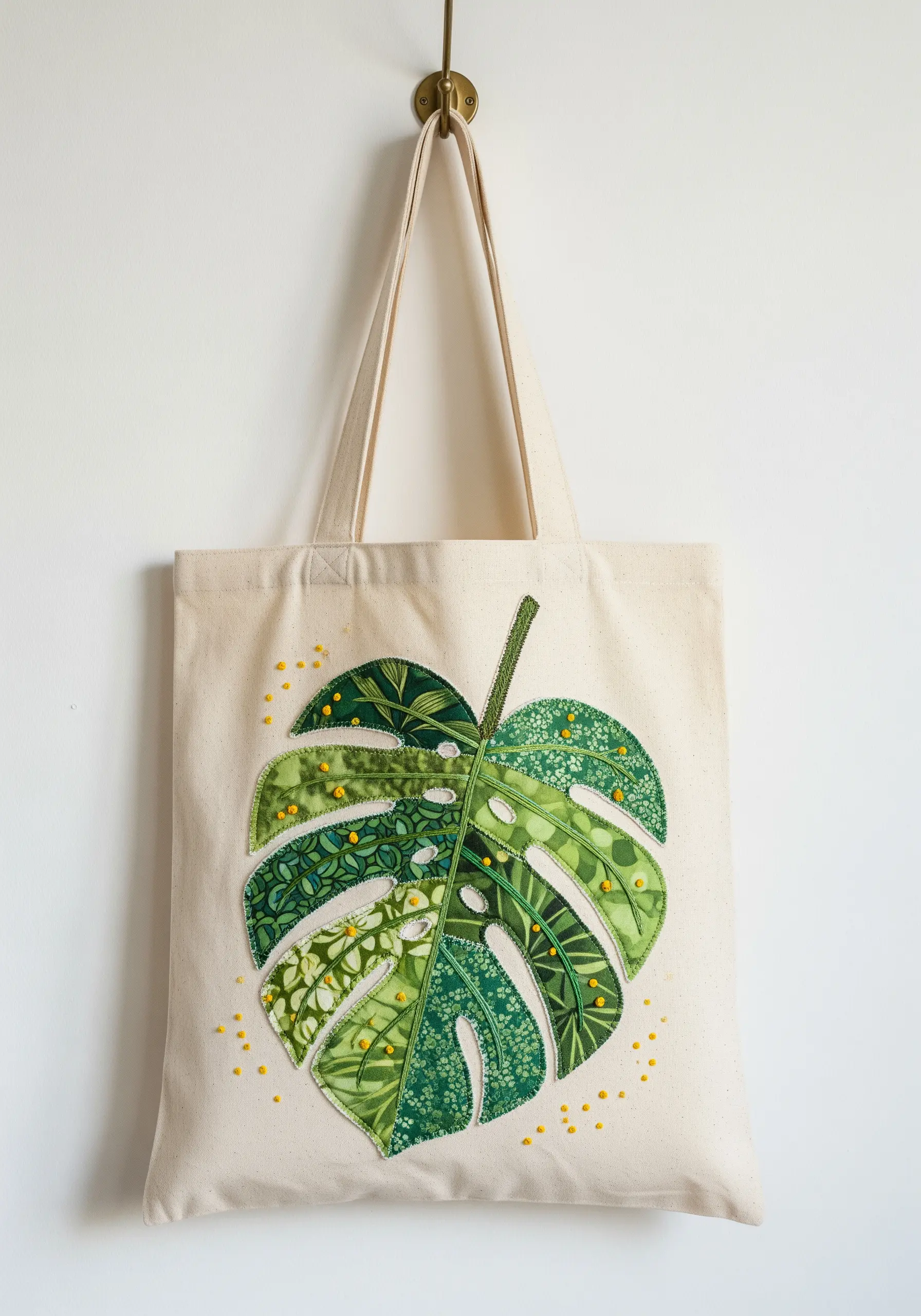
Create a stunning monstera leaf by “painting” with fabric scraps.
Begin by cutting the primary leaf shape from a base piece of fabric, then layer smaller, patterned green scraps on top to create depth and variegation.
Secure the edges of each scrap with a simple running stitch or a neat blanket stitch.
To elevate the design, scatter clusters of bright yellow French knots across the surface, suggesting pollen or sunlight.
This method allows for incredible creativity without needing complex drawing skills.
4. Storybook Scenes with Layered Appliqué

Craft a whimsical forest scene using felt scraps for your central motifs.
Felt is ideal for appliqué because its edges don’t fray, allowing you to cut clean, crisp shapes for mushroom caps and stems.
Layer the pieces to build dimension, securing them with a simple whipstitch.
Use embroidery to add the finer details: white French knots for the spots, straight stitches for grass, and a textured chain stitch to create a charming path through the woods.
5. Bold Statements with Continuous Line Embroidery

This design’s power lies in its elegant simplicity and the confidence of a single, unbroken line.
Choose a minimalist line-art portrait and transfer it to your tote.
Use a full six strands of black embroidery floss, or even a thicker perle cotton, to give the line weight and presence.
A stem stitch or whipped backstitch will provide the smoothest, most consistent curve.
Working on a color-blocked background, as seen here, instantly transforms the tote into a piece of modern art.
6. Celestial Compositions on Upcycled Denim
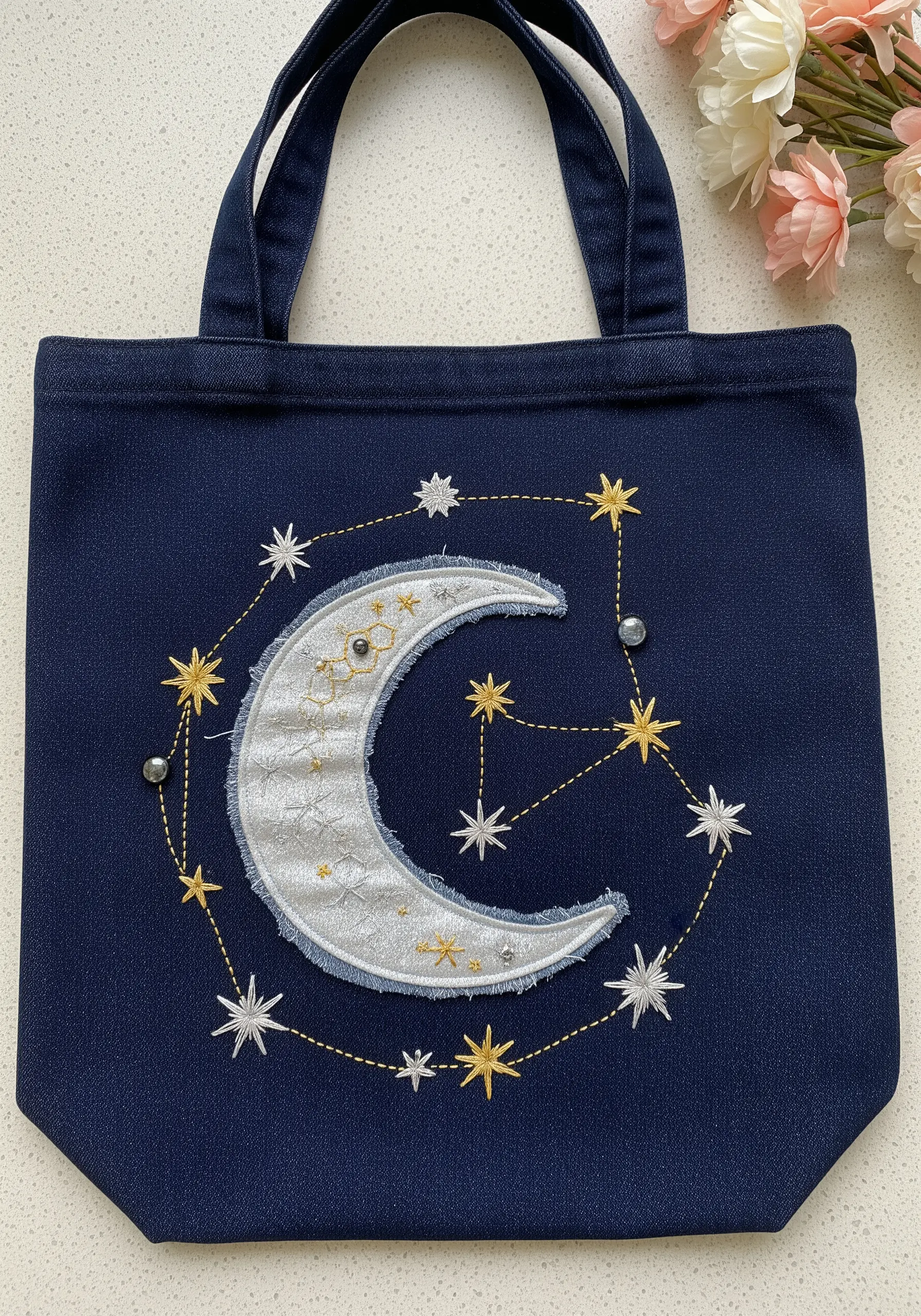
Elevate dark denim with a dreamy celestial scene.
Use a scrap of frayed linen or light-colored denim for the moon appliqué, letting the raw edges add a soft, ethereal texture.
Stitch the constellations using a shimmering metallic thread to catch the light.
Create visual interest by varying your star stitches: use small satin stitches for bold stars and simple straight stitches connected to a central point for twinkling starbursts.
The contrast between the rugged denim and delicate metallics is what makes this design so compelling.
7. Capturing Movement with Raw-Edge Fabric Collage
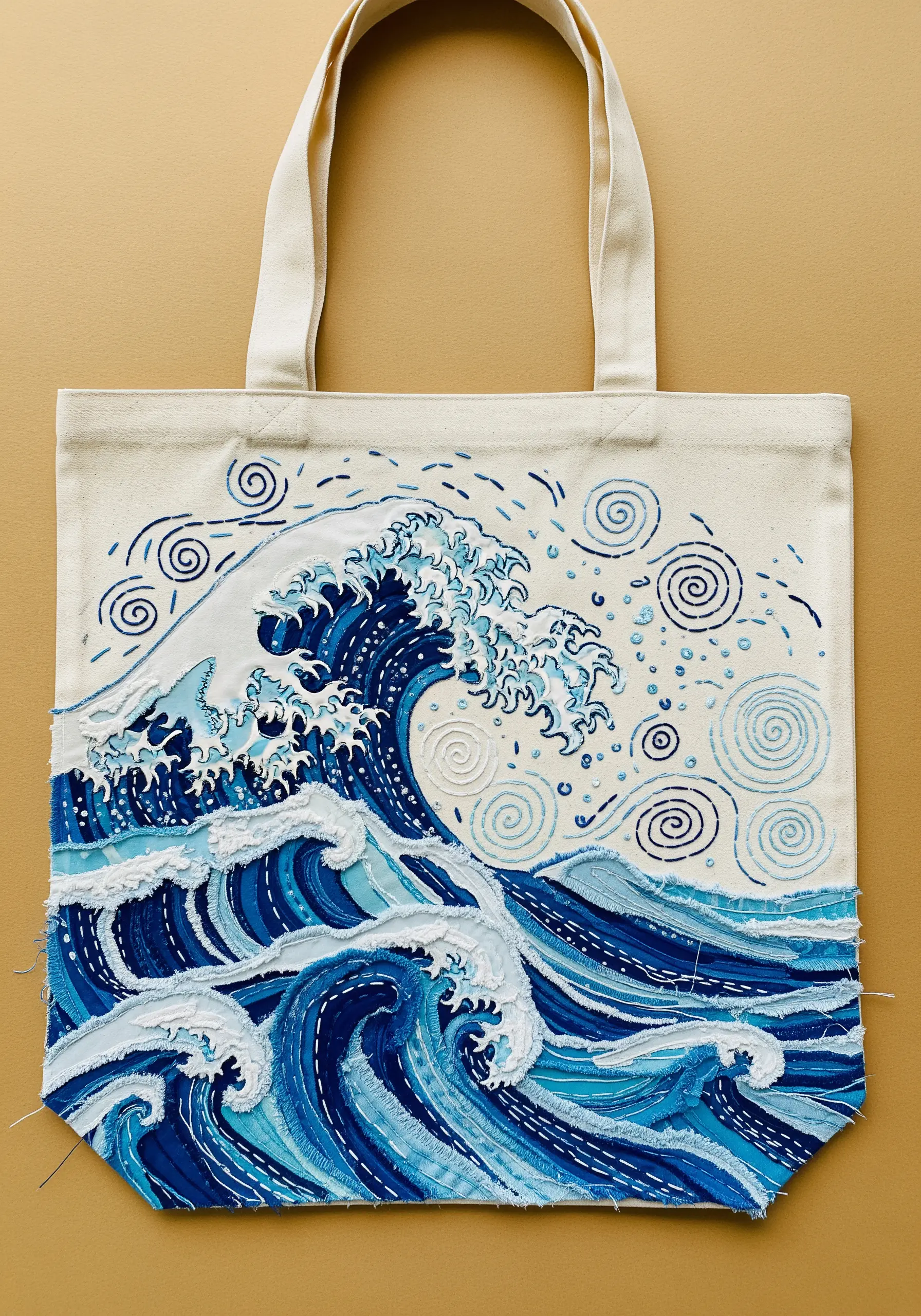
Channel the energy of a crashing wave by layering scraps of blue, white, and indigo fabrics.
Intentionally cut or tear your fabric pieces, allowing the edges to fray to mimic seafoam and spray.
Arrange them to create a sense of depth and motion, then secure them with either free-motion machine stitching or expressive hand stitches.
Embroider swirls and lines with a simple backstitch to add graphic detail and direction, turning static fabric into a dynamic scene.
8. Abstract Art with Visible Mending Stitches
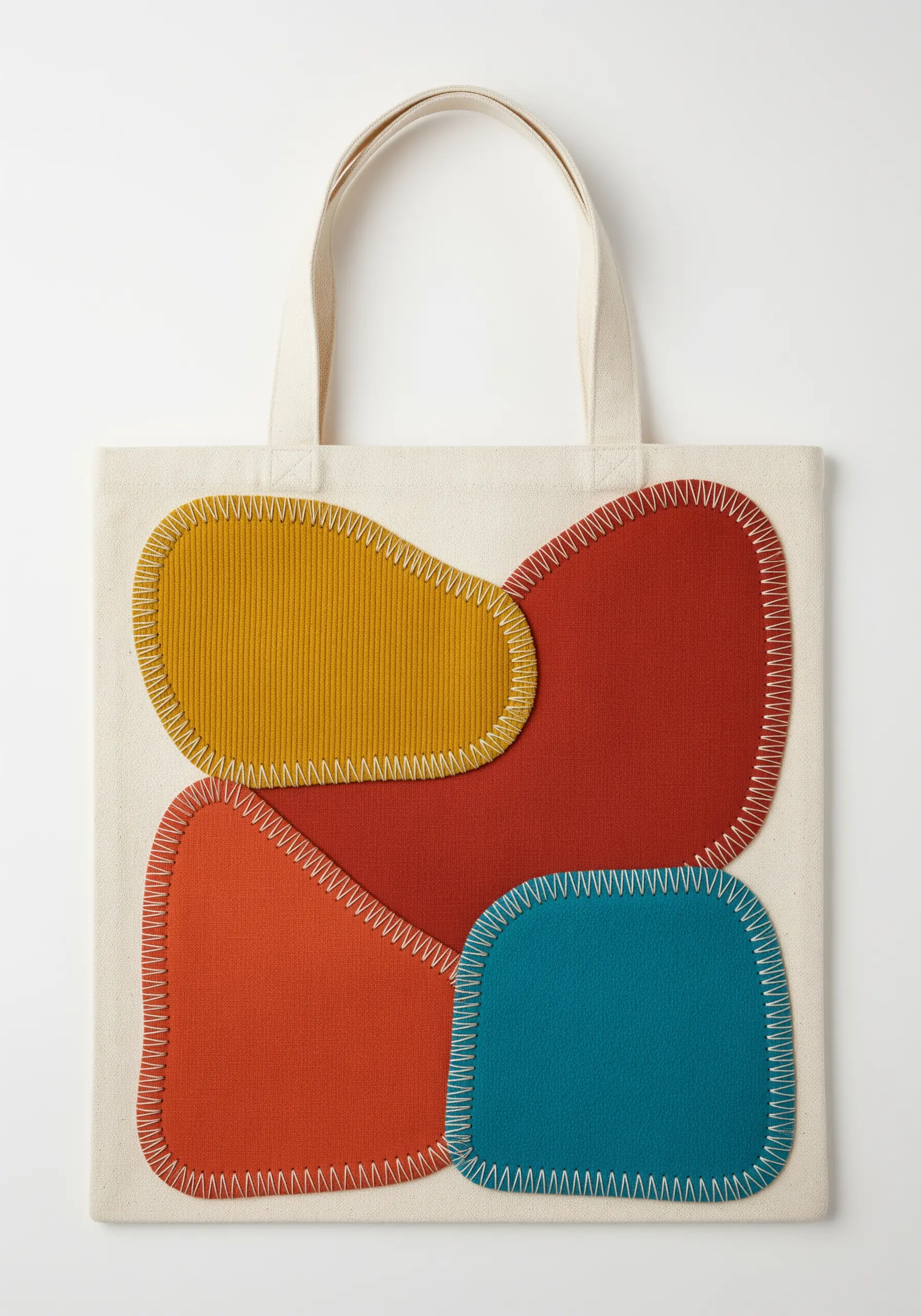
Transform simple fabric shapes into a modern, graphic composition.
Cut organic, rounded forms from solid-colored scraps, ideally with interesting textures like corduroy or wool felt.
Instead of hiding your stitches, make them a central feature of the design.
Use a contrasting, thick thread to work a bold blanket stitch or whip stitch around the perimeter of each shape.
This visible mending approach adds a thoughtful, handcrafted feel that celebrates the construction of the piece.
9. Elegant Lettering Within a Botanical Frame
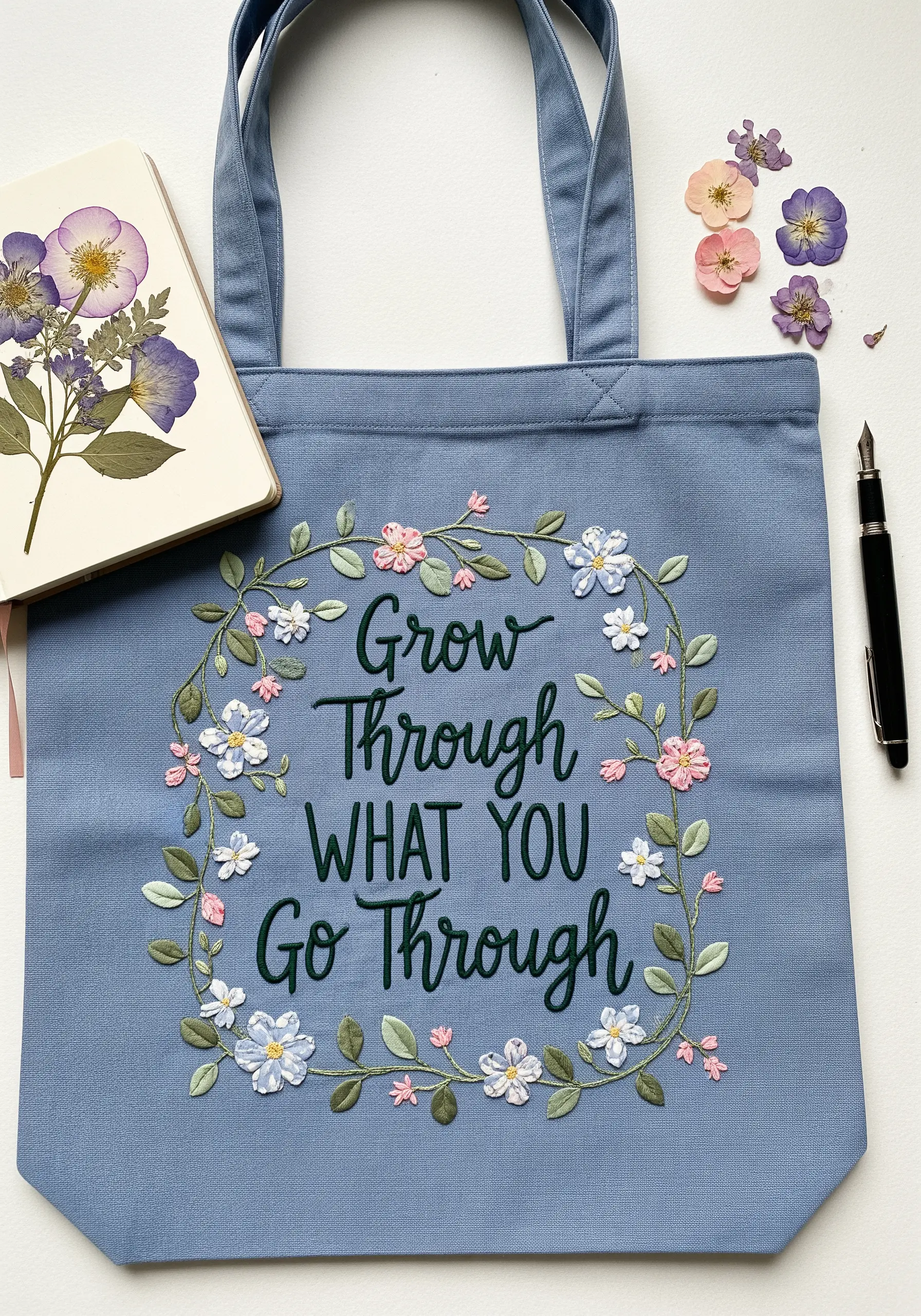
To create a balanced design with lettering, always place your text first.
Use a simple backstitch or a smooth stem stitch with three strands of floss to ensure the words remain crisp and legible.
Then, build your floral wreath around the quote, allowing vines to weave naturally around the letters.
Combine satin-stitched petals, lazy daisy leaves, and delicate French knots for textural variety.
A limited color palette ensures the entire composition feels harmonious and refined.
10. Joyful Expression with Folk-Art Fabric Collage

This is the perfect project to finally use your most cherished and vibrant fabric scraps.
Create a simple folk-art bird silhouette, then piece together smaller, patterned scraps for the wings.
Don’t overthink the color combinations—the charm of this style comes from its spontaneous and joyful mix of pattern and hue.
Secure each piece with a simple running stitch in a contrasting color to outline the shapes and add another layer of handmade detail.
11. Upcycled Denim with a Touch of Whimsy
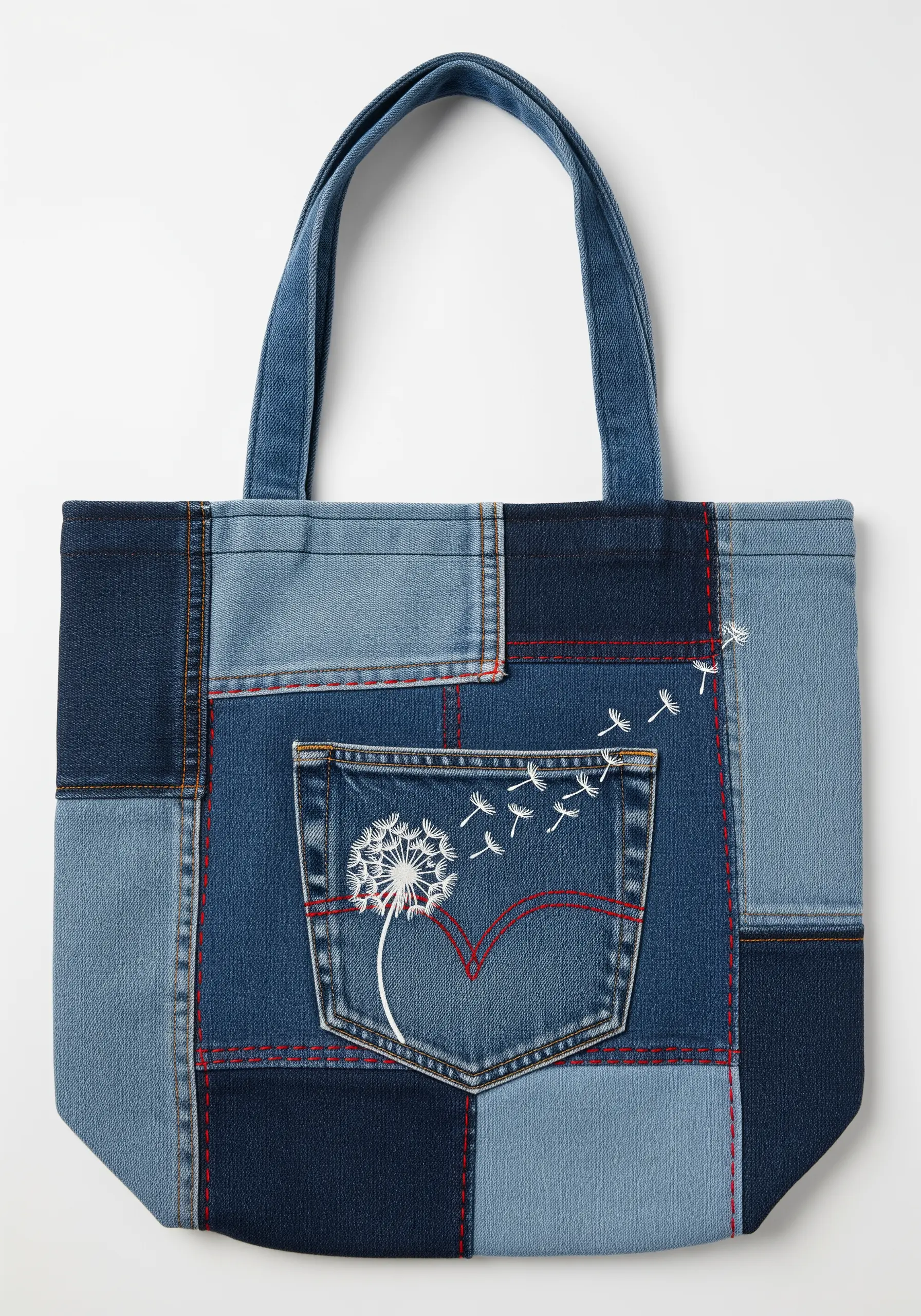
Create a durable and stylish tote by quilting together patches from old jeans.
Incorporate an existing back pocket into your design to serve as a natural frame for a small embroidered motif.
A delicate dandelion, stitched in high-contrast white thread, creates a beautiful juxtaposition against the rugged denim.
Use a satin stitch for the flower’s core and detached chain stitches for the seeds, letting them float whimsically across the patchwork.
This design beautifully marries utility with delicate artistry.
12. Building a Meadow with Sculptural Stitches

Create an immersive floral landscape by prioritizing texture over realism.
Fill the background with dense French knots in varying shades of green to build a mossy, textured ground.
For the flowers, use highly dimensional stitches like woven wheels for roses, and experiment with silk ribbon for lustrous, soft petals.
Combine different types of thread—matte cotton, silky rayon, and thick perle cotton—to give each botanical element a unique character.
This technique is a form of abstract thread painting that invites touch.
13. Clean Lines with Layered Felt Appliqué

For a clean, graphic style, felt is your best friend.
Its non-fraying edge allows you to cut precise shapes for the succulent leaves and pot.
Create depth by layering leaves cut from slightly different shades of green felt.
A simple backstitch down the center of each leaf is all you need to secure them while adding a touch of illustrative detail.
This minimalist approach is incredibly effective and perfect for beginners who want a polished result.
14. Capturing Autumn with Felt & Vein Stitching

Evoke the feeling of a crisp autumn day with scattered felt leaves.
Cut classic leaf shapes from felt scraps in warm, earthy tones.
Arrange them in a dynamic, random pattern on your tote to mimic them being caught in the wind.
The transformative detail is the embroidered veins.
Use a contrasting thread and a simple backstitch or stem stitch to add a central vein and a few branches to each leaf, instantly bringing the simple shapes to life.
15. Symbolic Contrast with Stitch & Appliqué
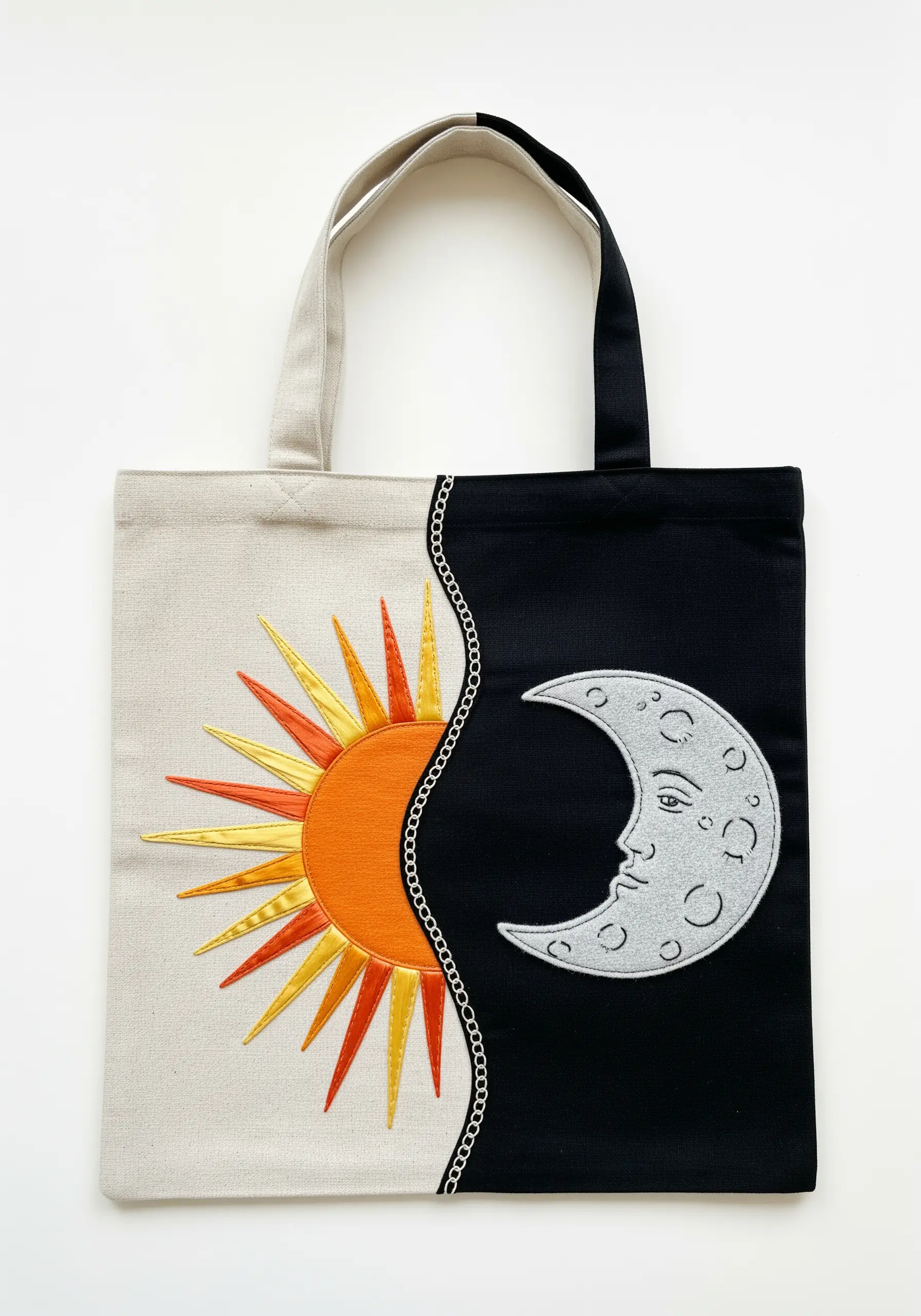
Explore the theme of duality with a striking sun and moon design.
Physically divide your tote into two contrasting halves—one light, one dark.
On the light side, create the sun using a long-and-short stitch gradient with warm threads to achieve a glowing effect.
On the dark side, use a silver fabric appliqué for the moon, adding craters and details with metallic thread.
A clean chain stitch border provides a perfect separation between the two celestial bodies.
16. Expressive Portraiture with Thread Sketching
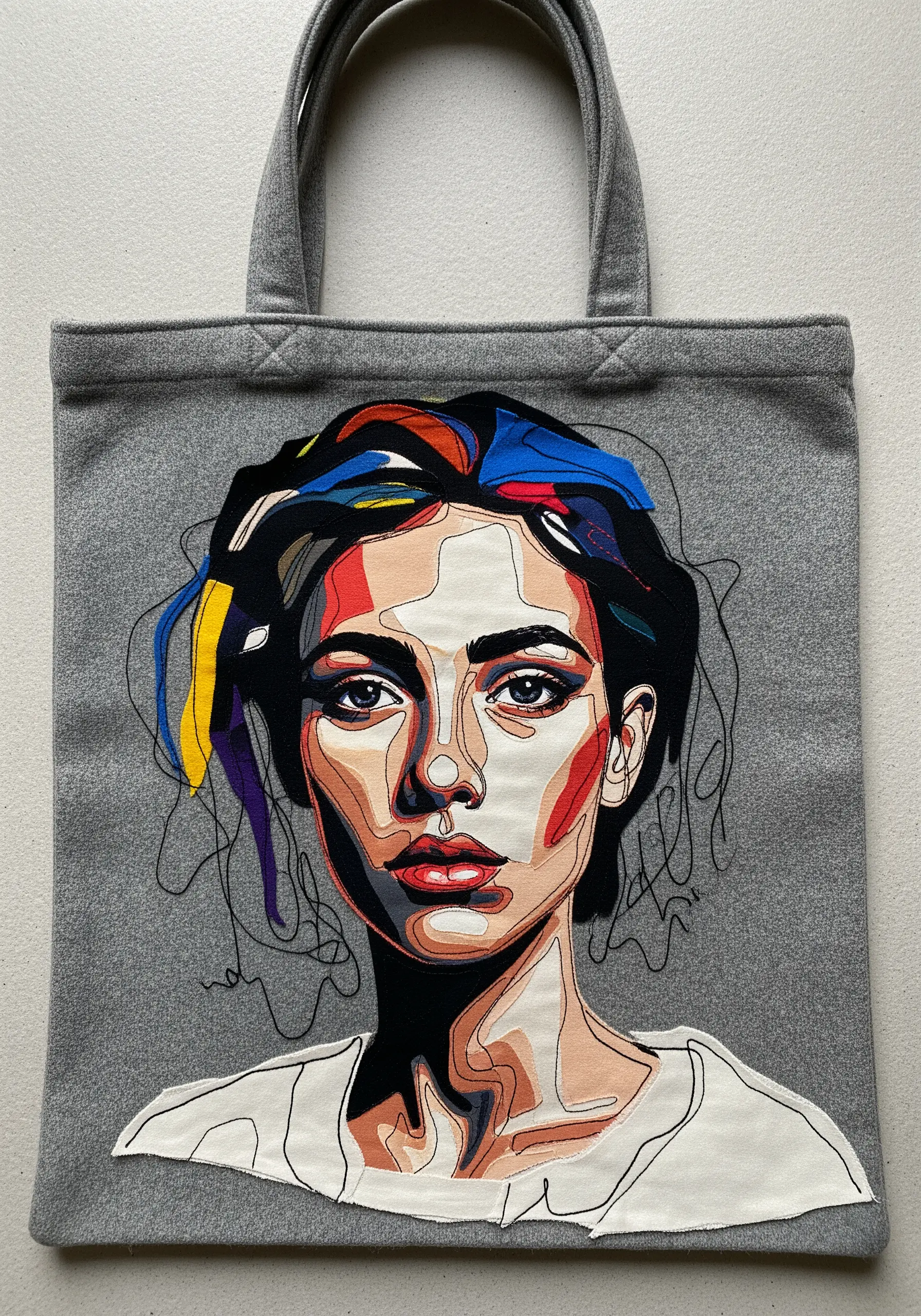
This advanced technique treats your needle and thread like a pen and ink.
Start by creating the basic color blocks of the face with fabric appliqué.
Then, using free-motion machine embroidery or a freehand backstitch, “sketch” the facial features and hair with black thread.
Embrace imperfection and allow your lines to be loose, energetic, and overlapping.
The power of this style comes from its raw, illustrative quality, which captures emotion more than perfect likeness.
17. Painting a Skyline with Thread Gradients

Create an atmospheric cityscape by using thread to paint a gradient sky.
Use the long-and-short stitch to blend shades of purple, pink, and orange, ensuring your stitches overlap slightly to create a smooth transition of color.
For the buildings, use black felt appliqué to achieve sharp, clean silhouettes against the soft sky.
Tiny French knots or single straight stitches in a bright yellow thread are all you need to suggest windows glowing in the dusk.
18. Meditative Mandalas with Folded Fabric Layers

Build a richly textured mandala using fabric manipulation instead of just stitches.
Create each concentric circle by layering different fabrics.
For the ruffled effect, simply fold a long strip of fabric and secure it in a circle with a running stitch along the folded edge.
Once your fabric layers are in place, embellish them with decorative stitches in a contrasting thread, like a gold chain stitch or feather stitch, to add a final layer of ornate detail.
19. A Curated Collection of Stitched Treasures

Turn your tote bag into a “cabinet of curiosities” by stitching a collection of small, meaningful objects.
Start by drawing a simple grid to act as your display shelves.
Then, fill each compartment with a different tiny treasure.
This is a wonderful opportunity to play with a variety of techniques: use a small piece of appliqué for a feather, try stumpwork for a 3D beetle, or practice your satin stitch on a seashell.
Each square becomes a miniature study in texture and technique.