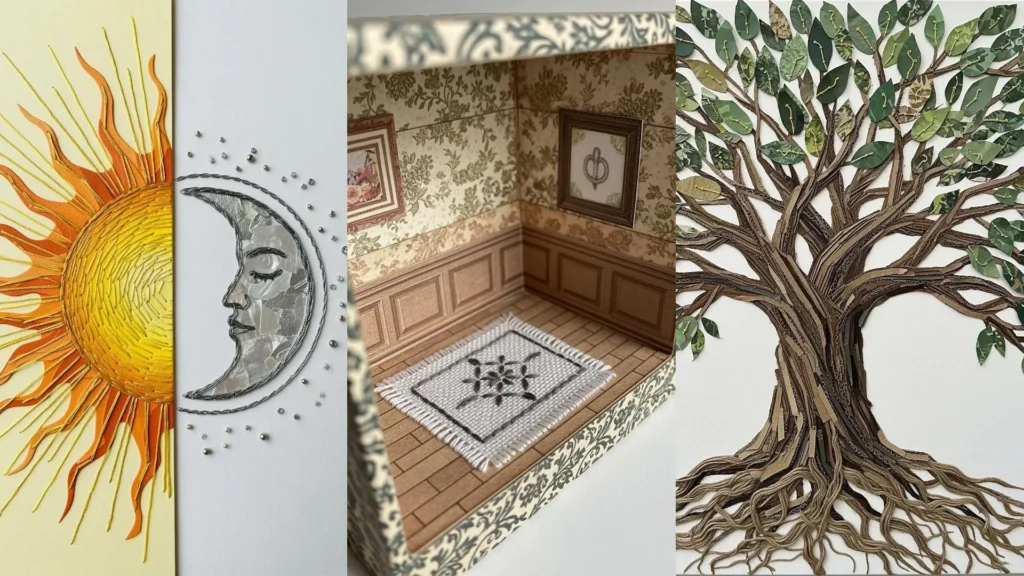
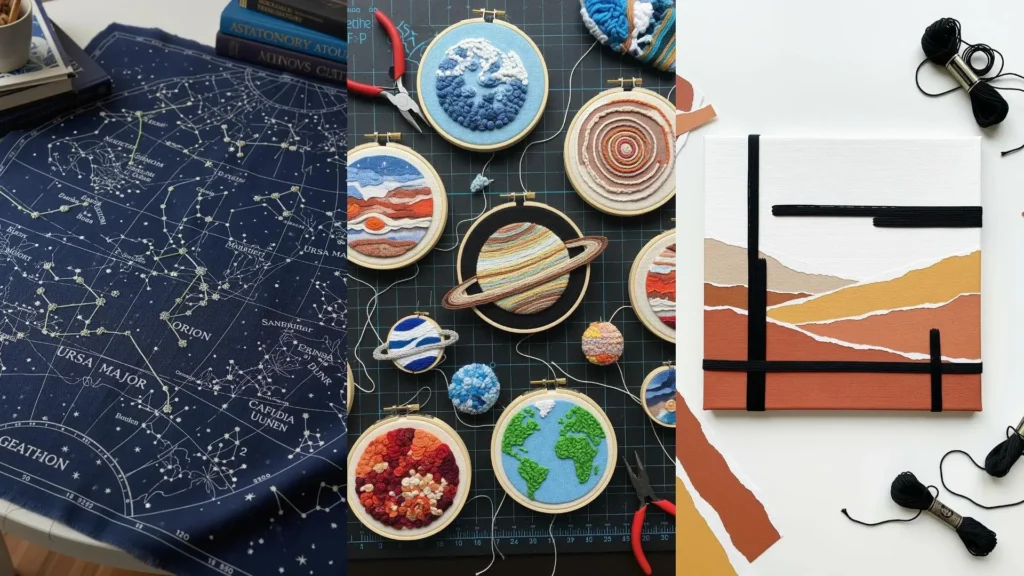
When you combine collage with embroidery, you are not just decorating a surface—you are building a story with layers, textures, and lines.
Think of paper and fabric as your foundation, the broad strokes of color and form. Then, introduce thread. It is not merely an embellishment; it is the thoughtful detail that connects, defines, and elevates everything.
Here, you will discover how a single, well-placed stitch can add depth to paper, how yarn can become a sculptural element, and how the simplest running stitch can turn disparate scraps into a cohesive, intentional work of art. Let’s move beyond the hoop and explore what your needle and thread can truly do.
1. Layer Celestial Textures with Thread and Tulle
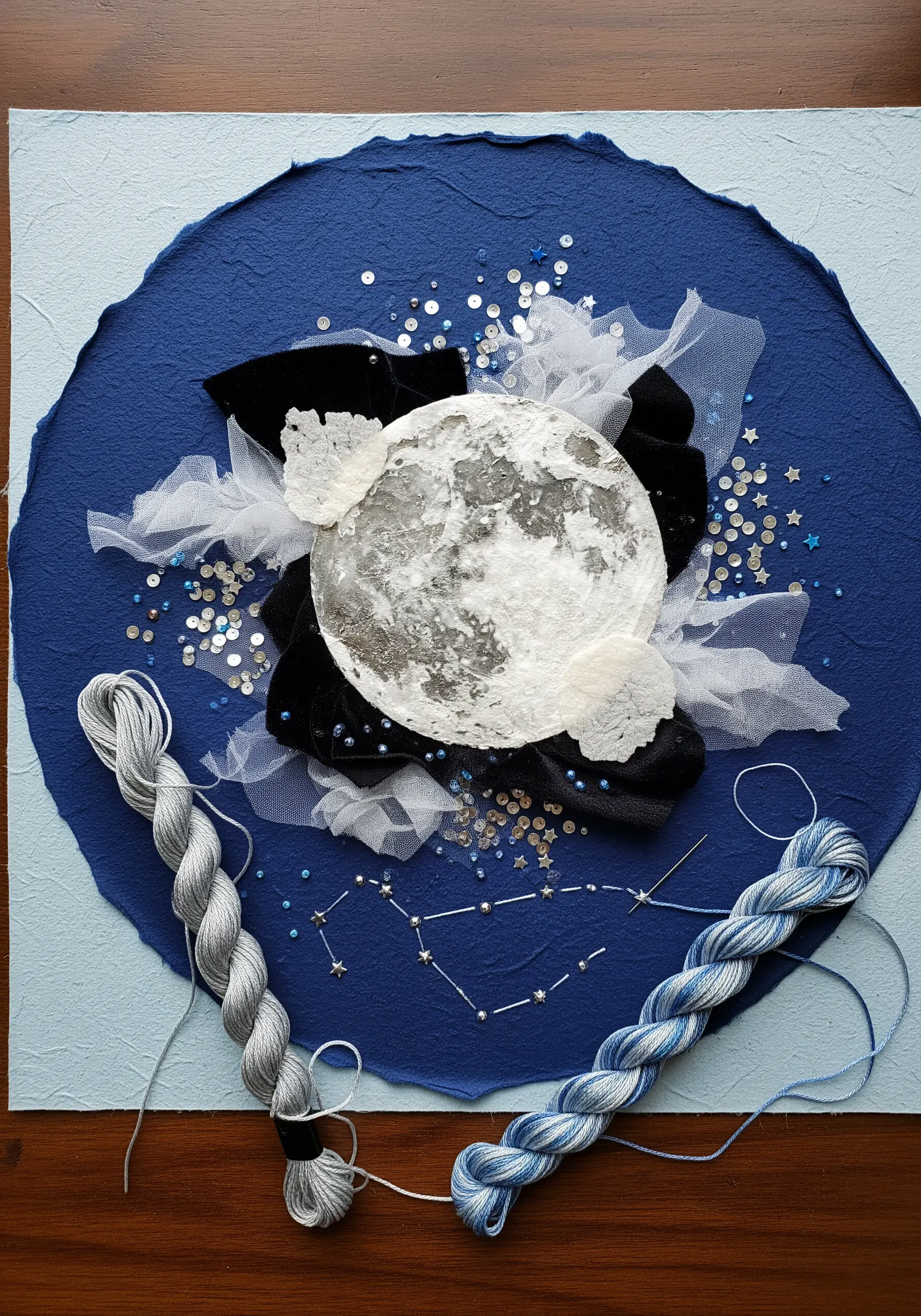
Create an atmospheric collage by layering textures that suggest depth and light.
Start with a textured paper base, like a rich, handmade cotton paper in deep indigo.
Build your focal point—a moon, for instance—from mulberry paper or a fabric scrap treated with silver paint to give it a cratered texture.
Surround it with contrasting materials like black velvet for shadow and airy tulle for a nebula-like glow.
Finally, use metallic silver thread to stitch a constellation directly onto the paper, connecting the disparate elements with a few precise French knots and straight stitches.
This technique turns thread into a quiet, structural detail that unifies the entire piece.
2. Define a Focal Point with a Single Stitched Detail
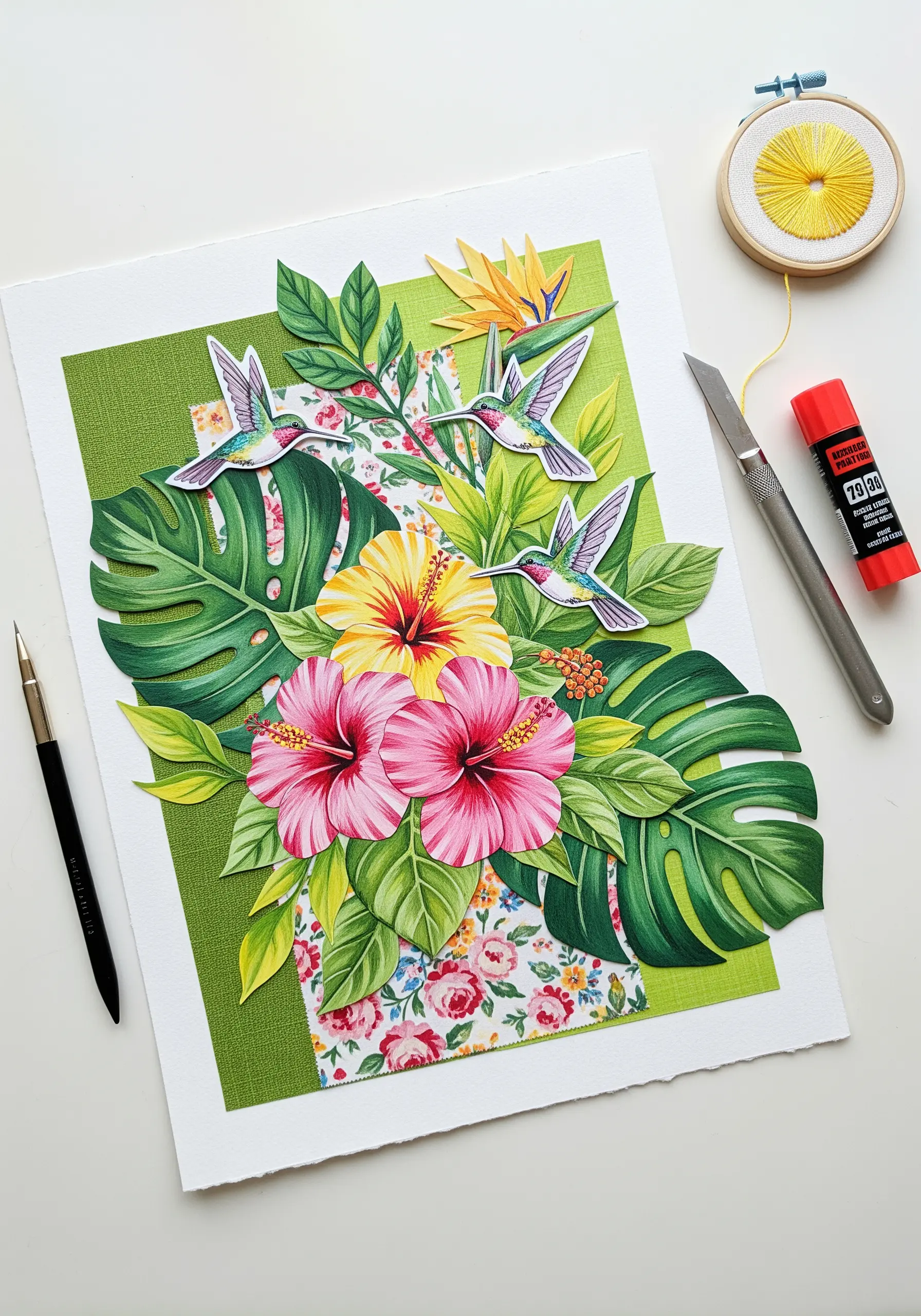
In a busy paper collage, a small touch of embroidery can direct the viewer’s eye and add a sophisticated, handmade finish.
After composing your layered paper elements, identify one central detail that would benefit from texture—like the center of a flower.
Instead of filling the entire shape, use a contrasting color of embroidery floss to work a dense Woven Wheel stitch or a cluster of French knots right in the middle.
This small, concentrated area of texture creates a satisfying focal point, making the entire composition feel more intentional and complete without overwhelming the paper details.
3. Unify a Landscape with Braided Yarn and Running Stitch
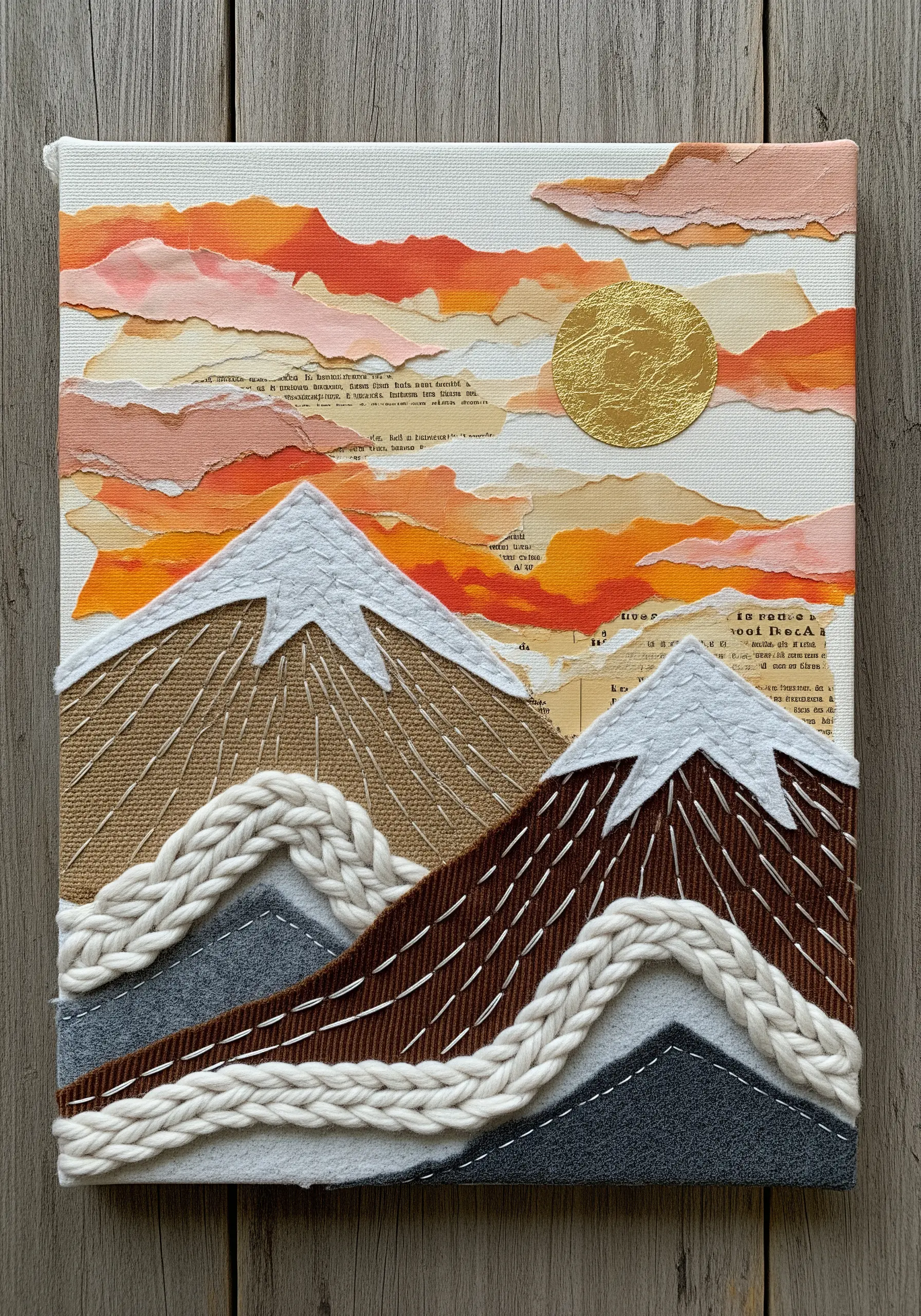
When collaging with heavily textured fabrics like burlap and felt, your stitching should serve to connect and define the shapes.
Create bold, graphic lines by braiding thick yarn and couching it down along the contours of your landscape elements, such as the rolling foothills of a mountain.
This adds a sculptural quality that simple stitching can’t achieve.
Then, use a simple running stitch with a contrasting perle cotton to add subtle detail, echoing the lines of the fabric pieces and harmonizing the composition.
This combination of bold texture and quiet stitching makes the piece feel cohesive and dynamic.
4. Add a Human Touch to Geometric Art with a Single Thread
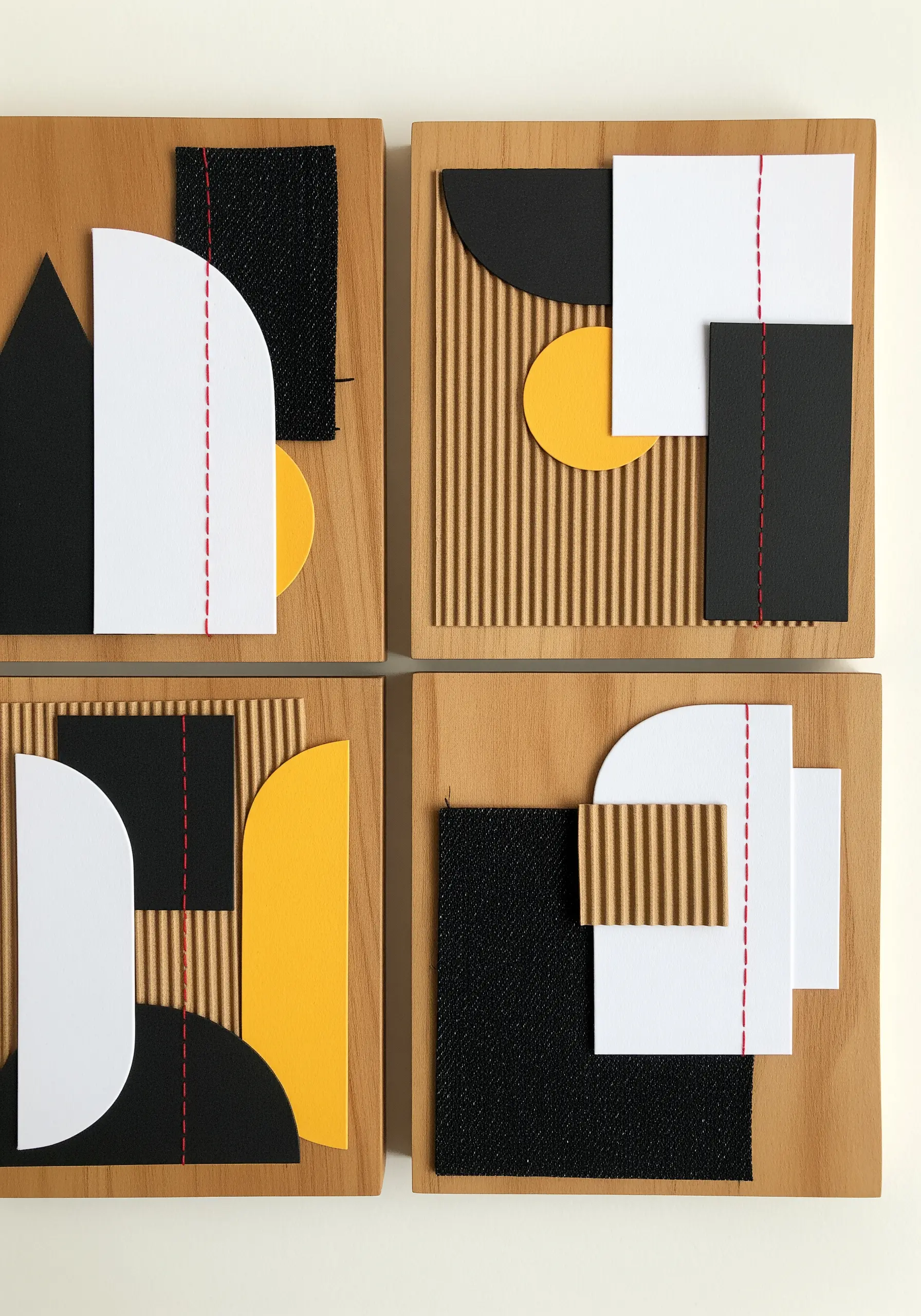
Elevate a minimalist geometric collage by introducing a single, deliberate line of hand-stitching.
On a composition of stark paper shapes and corrugated cardboard, a simple running stitch in a high-contrast color, like red on black and white, acts as a powerful graphic element.
It breaks the clean, machine-made feel of the paper cuts and introduces a subtle, handmade rhythm.
Stitch directly through the paper and wood panel to create a line that not only adds color but also creates a delicate, tactile shadow, adding unexpected depth to the flat surface.
5. Sculpt Expressive Hair with Couched Yarn
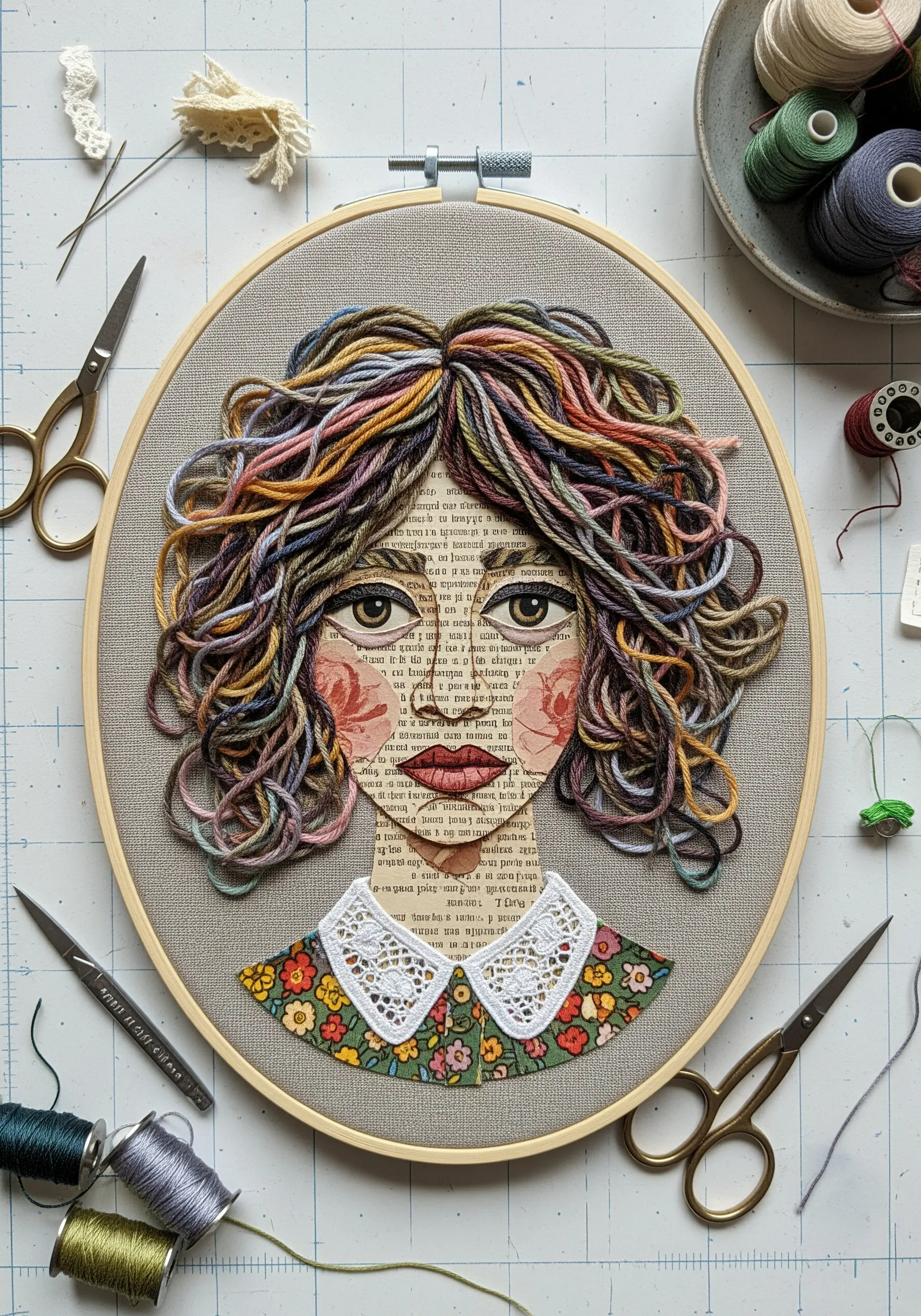
Transform a flat paper portrait into a vibrant, textural piece by sculpting hair from threads and yarn.
Arrange bundles of multi-colored yarn in loose, organic waves to create the shape and movement you desire.
Instead of stitching each strand, use a single, neutral-colored thread to couch the yarn bundles in place with small, discreet tacking stitches.
This technique secures the yarn while allowing it to retain its natural volume and texture, turning the hair into a 3D element.
Combine this with a paper collage face and a fabric or lace collar to create one of these stunning handmade art pieces.
6. Capture Chaotic Energy with Freeform Stitching

When your collage represents something wild and elemental, like crashing waves, your stitching should reflect that energy.
Create a base of layered, ripped denim and fabric scraps to mimic the churning water.
Then, using a fine white thread, add clusters of chaotic, overlapping straight stitches to represent sea spray and foam.
Don’t aim for perfection; let the threads loop, cross, and tangle. This freeform approach adds a layer of dynamic movement that contrasts beautifully with the heavy, grounded texture of the denim.
7. Embellish Appliqué with a Tapestry of Stitches

Turn simple fabric appliqué into a rich, decorative surface by treating each piece as a mini-sampler.
Cut your shapes from patterned fabrics and secure them to your base.
Then, use a variety of embroidery stitches to add detail and dimension. Outline shapes with a bold chain stitch, fill sections with tiny seed stitches, and add focal points with French knots and woven spider wheels.
This technique transforms flat fabric cutouts into a vibrant, tactile illustration that invites closer inspection.
8. Secure Delicate Layers with Functional Stitches
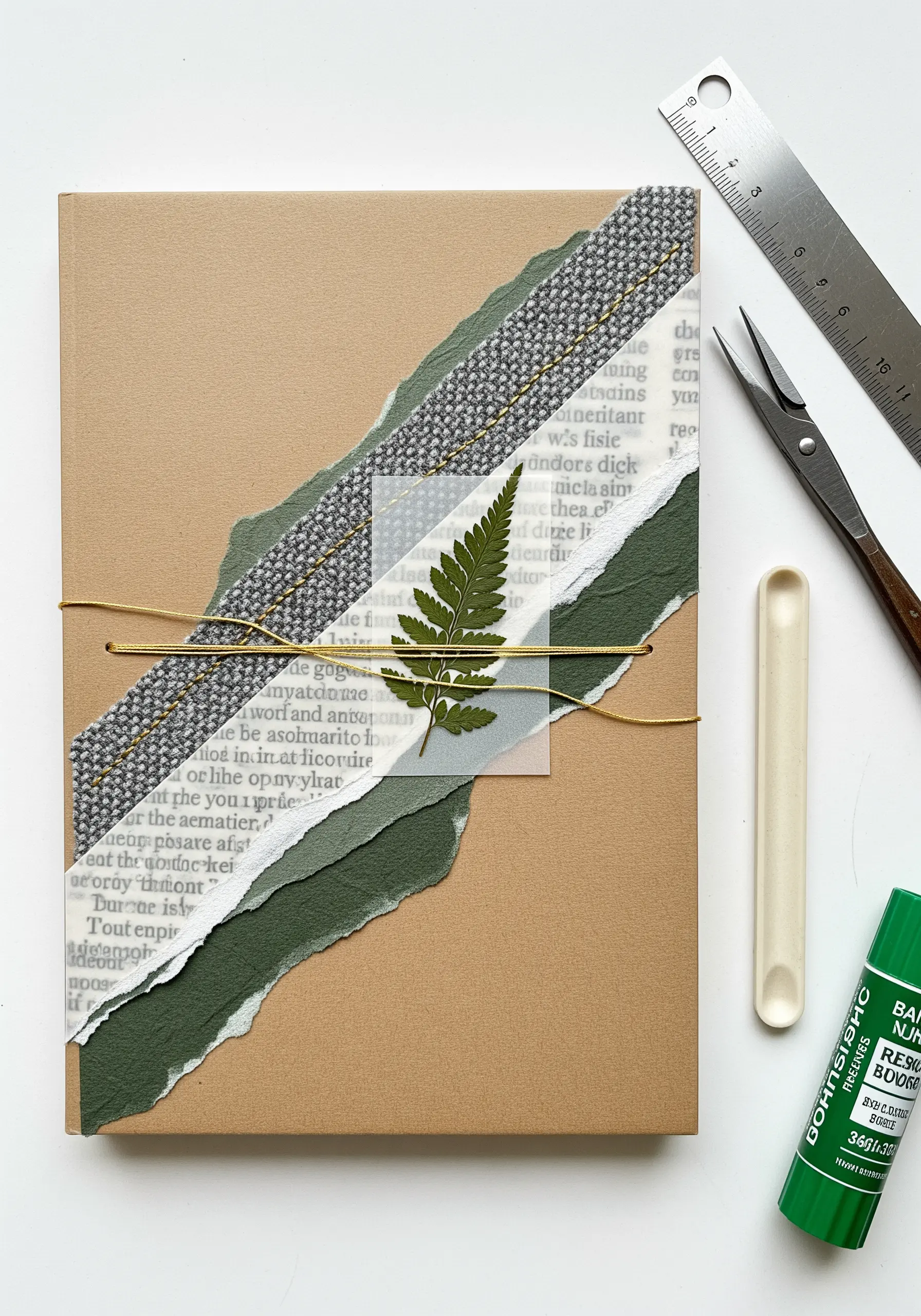
When incorporating delicate materials like pressed botanicals or vellum into a collage, your stitching can be both beautiful and functional.
Use a single strand of metallic or silk thread to anchor these fragile elements to your base.
A few tiny cross stitches at the corners of a vellum square or a long straight stitch along the stem of a pressed fern is all you need.
This method avoids messy glue marks and turns the functional act of securing an object into a deliberate, elegant design choice, perfect for mixed-media crafts with embroidery.
9. Ground 3D Elements with Embroidered Stems

If your collage features three-dimensional paper elements, like these floral rosettes, use embroidery to visually anchor them to the background.
Arrange your paper flowers and then connect them with simple embroidered stems using a basic backstitch or stem stitch in shades of green.
Add a few lazy daisy stitches for leaves to complete the botanical illusion.
This simple addition of thread creates a sense of cohesion, making the 3D flowers feel like they are growing from the canvas rather than just sitting on top of it.
10. Create Architectural Lines with Precise Stitching

Use thread to introduce clean, architectural lines into a paper collage, adding a layer of texture and precision.
After arranging your layered paper shapes, stitch sharp, geometric lines using a single strand of contrasting thread and a sharp needle.
A backstitch will give you a perfect, unbroken line that mimics an architectural drawing.
This technique works especially well on minimalist or abstract compositions, where the stitched line adds a tactile dimension that contrasts with the flat smoothness of the paper.
11. Explore a Monochrome Palette Through Texture
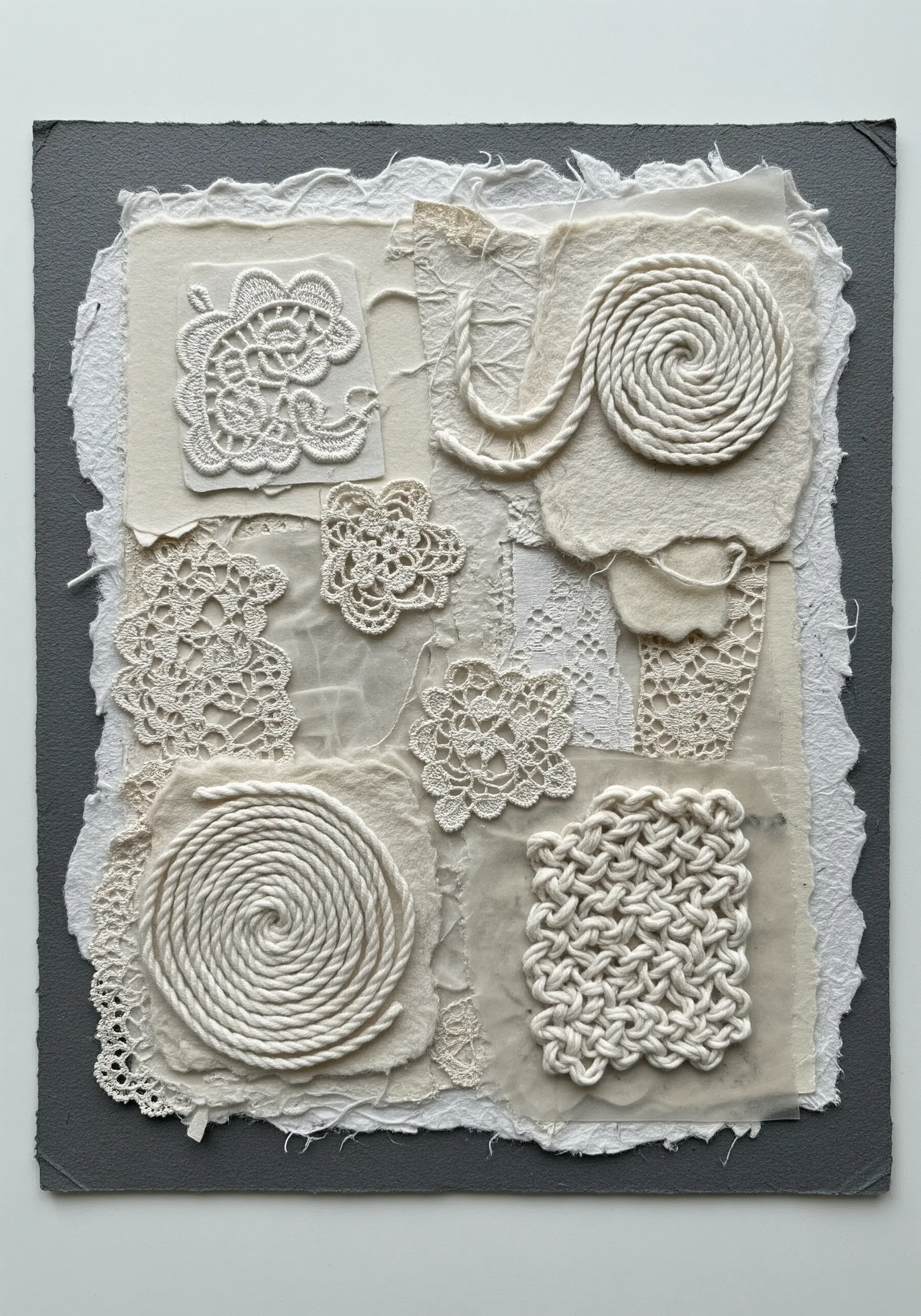
Challenge yourself to create a compelling composition using only one color, focusing entirely on texture.
Gather scraps of lace, rope, woven fabrics, and handmade paper in shades of cream and white.
Experiment with embroidery techniques that build dimension: couch thick cord into tight spirals, create dense patches of woven bars, and use satin stitch to create smooth, light-catching areas.
By removing color, you force the viewer to engage with the tactile qualities of the piece, creating a sophisticated and serene work of art. These neutral thread texture combinations can make any piece look high-end.
12. Suggest Shimmer and Movement with Metallic Thread

Bring an underwater scene to life by using specialty threads to capture the reflective quality of light and water.
After creating your background with watercolor washes and fabric appliqué seaweed, stitch the details that suggest movement.
Use a fine, silver metallic thread to create a stream of rising bubbles with a combination of French knots and tiny circles in backstitch.
Add delicate straight stitches to the fabric seaweed to mimic veins. The subtle shimmer of the metallic thread will catch the light, adding a touch of magic and motion.
13. Trace a Journey with a Bold Couching Stitch

Document a memory or trace a journey by stitching directly onto a paper map.
Choose a thick, vibrant thread like perle cotton or yarn that will stand out against the delicate lines of the map.
Instead of trying to pierce the paper repeatedly, lay the thread along your desired path and use a finer, matching thread to couch it down with small tacking stitches every centimeter or so.
This technique protects the paper from tearing and creates a bold, raised line that tells a story with texture and color.
14. Define Appliqué Letters with a Graphic Outline
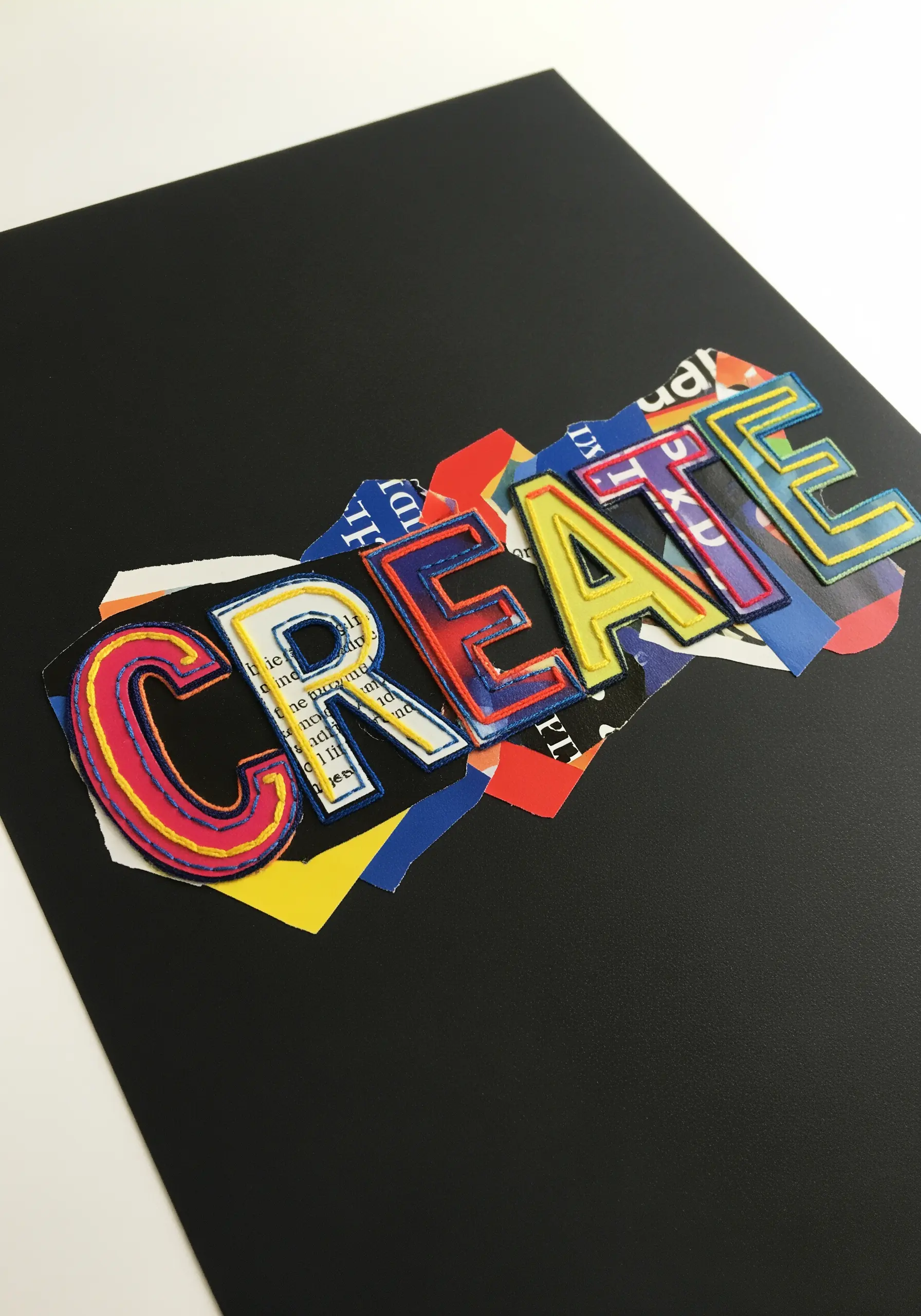
Make your message pop by combining bold fabric appliqué with a clean, embroidered outline.
Cut your letters from vibrant fabrics and arrange them over a collage of torn paper for an energetic background.
Secure the letters with a bit of fabric glue, then stitch a crisp outline around each one using a contrasting thread color.
A split stitch or a two-stranded backstitch will create a solid, graphic line that cleans up the edges of the fabric and makes the letters stand out with professional clarity.
15. Build a 3D Foreground with Clustered Knots

Create a convincing sense of depth in a landscape collage by building up a highly textured foreground.
After layering paper and sheer fabric to create a misty forest background, use embroidery to craft the mossy ground.
Work dense clusters of French knots and bullion knots using thick, variegated green yarn or wool thread.
Vary the size and density of the knots to create an organic, uneven surface that looks and feels like a forest floor, making the flat background recede into the distance.
16. Add a Touch of Luxury with Metallic Veins
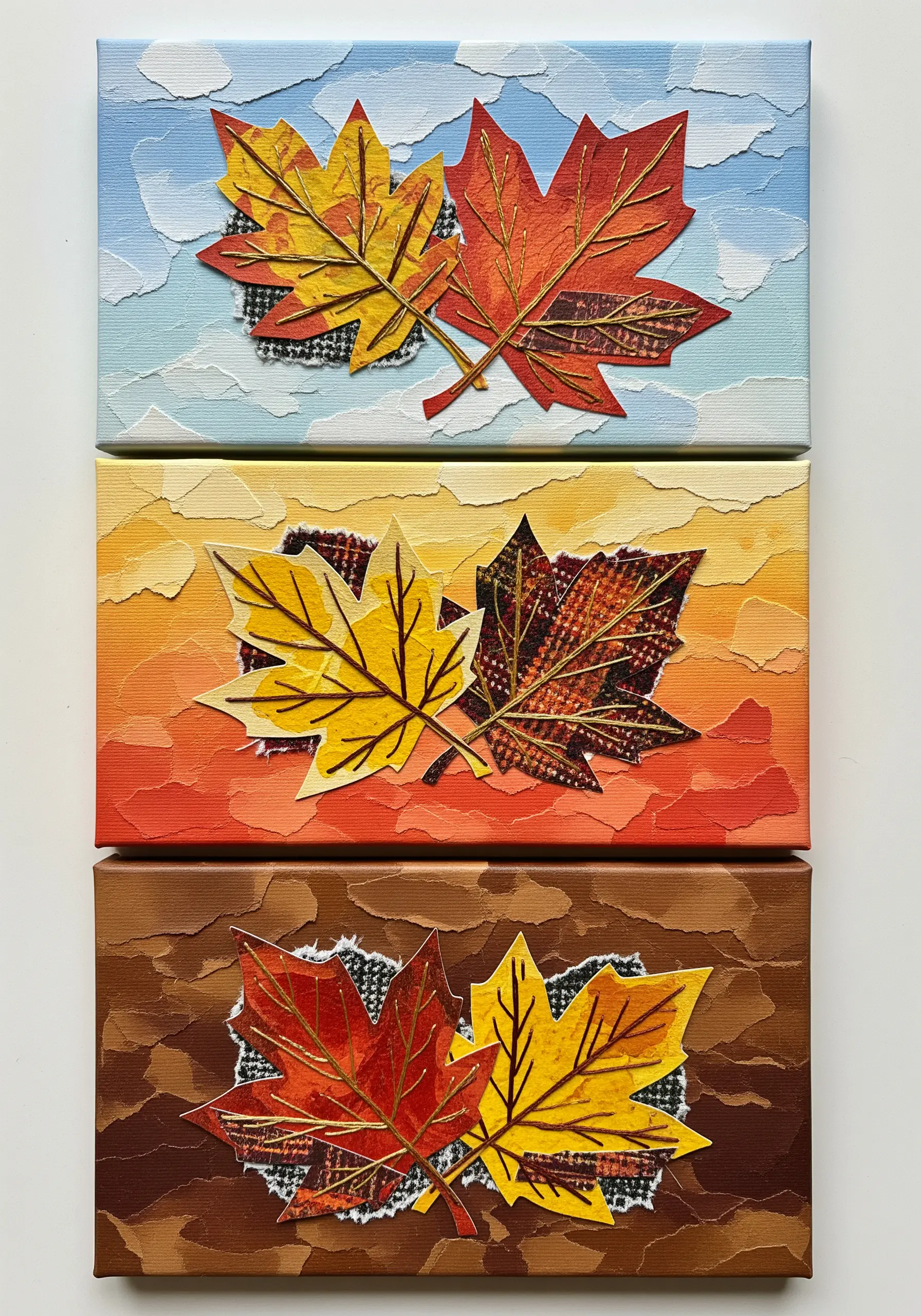
Elevate simple paper or fabric leaf cutouts by stitching their veins with a fine metallic thread.
On a painted canvas background, layer your collaged leaves, mixing paper and fabric for subtle texture variation.
Then, using a single strand of gold or copper metallic thread, stitch the central vein and smaller branching veins with a simple backstitch or stem stitch.
This delicate detail catches the light and adds an unexpected touch of elegance, transforming a simple autumn motif into a refined piece of art.
17. Anchor Fabric Petals with Decorative Running Stitch

When creating a mandala or floral design with fabric appliqué, use your anchoring stitches as a decorative element.
After arranging your fabric ‘petals’, secure them with a simple running stitch worked in a contrasting thread color, a short distance in from the raw edge.
This not only holds the fabric in place but also adds a charming, rustic detail that complements the patterns of the fabric.
Incorporate small shisha mirrors for a traditional touch, anchoring them with a buttonhole stitch framework.
18. Juxtapose Hard and Soft with Industrial Stitching

Create a powerful visual contrast by pairing industrial materials like metal and wire mesh with soft textiles like denim.
Emphasize the juxtaposition by using a deliberately bold and rustic stitch.
Use a thick, dark thread, like a black linen or sashiko thread, to work large, widely spaced running stitches.
This type of stitching feels structural rather than decorative, complementing the raw, deconstructed aesthetic and unifying the hard and soft elements of your collage.
19. Define Shapes with a Unifying Outline Stitch
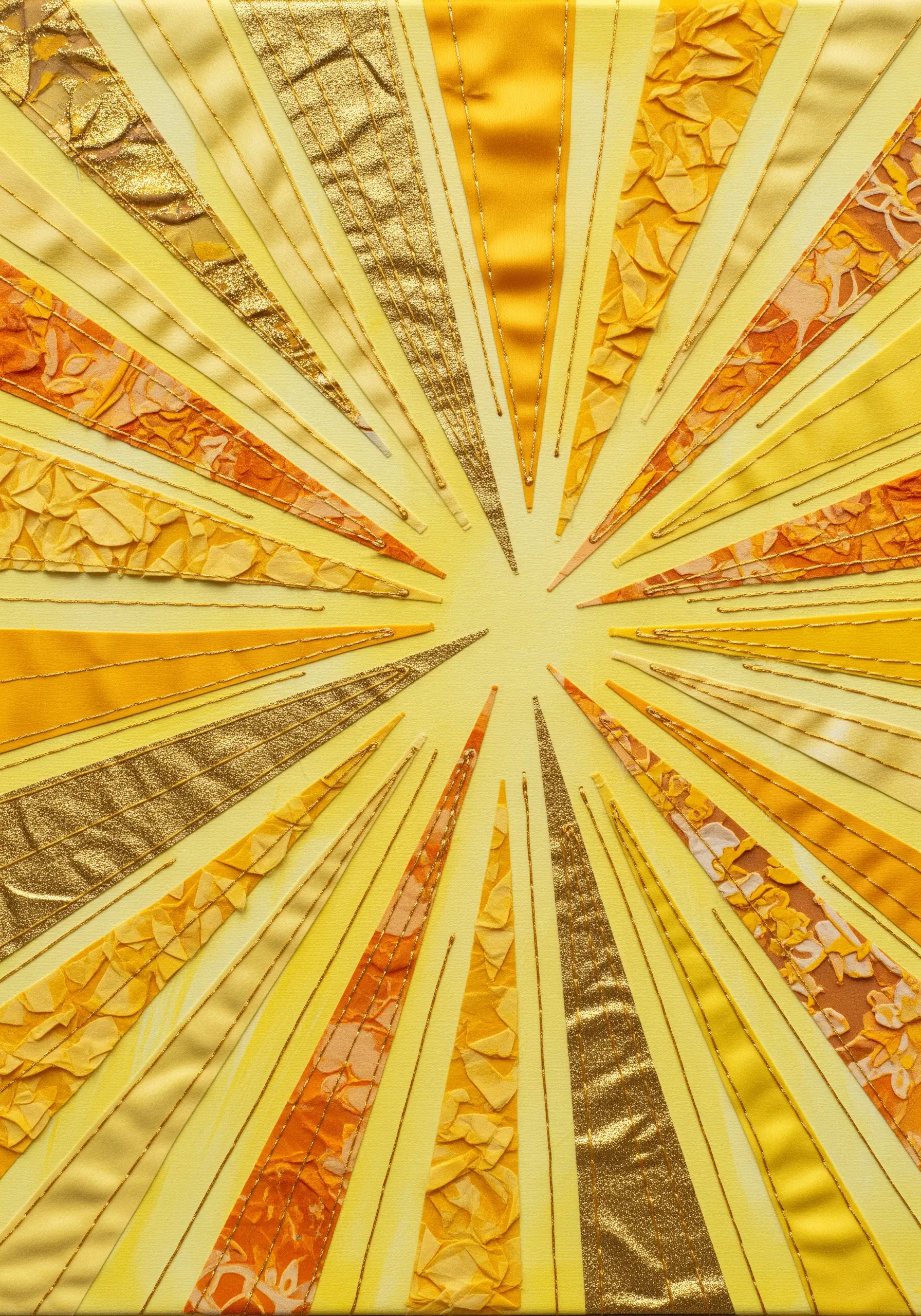
In a collage made from many different fabrics and ribbons, a consistent outline stitch can bring order and cohesion to the design.
After arranging your pieces, like the rays of a sunburst, use a single color of thread to outline each shape.
A simple backstitch or stem stitch worked along the edges will define each element clearly while visually tying them all together.
This technique is especially effective for creating sharp, geometric designs from soft, varied materials.
20. Add Hand-Drawn Charm to Felt with Simple Stitches
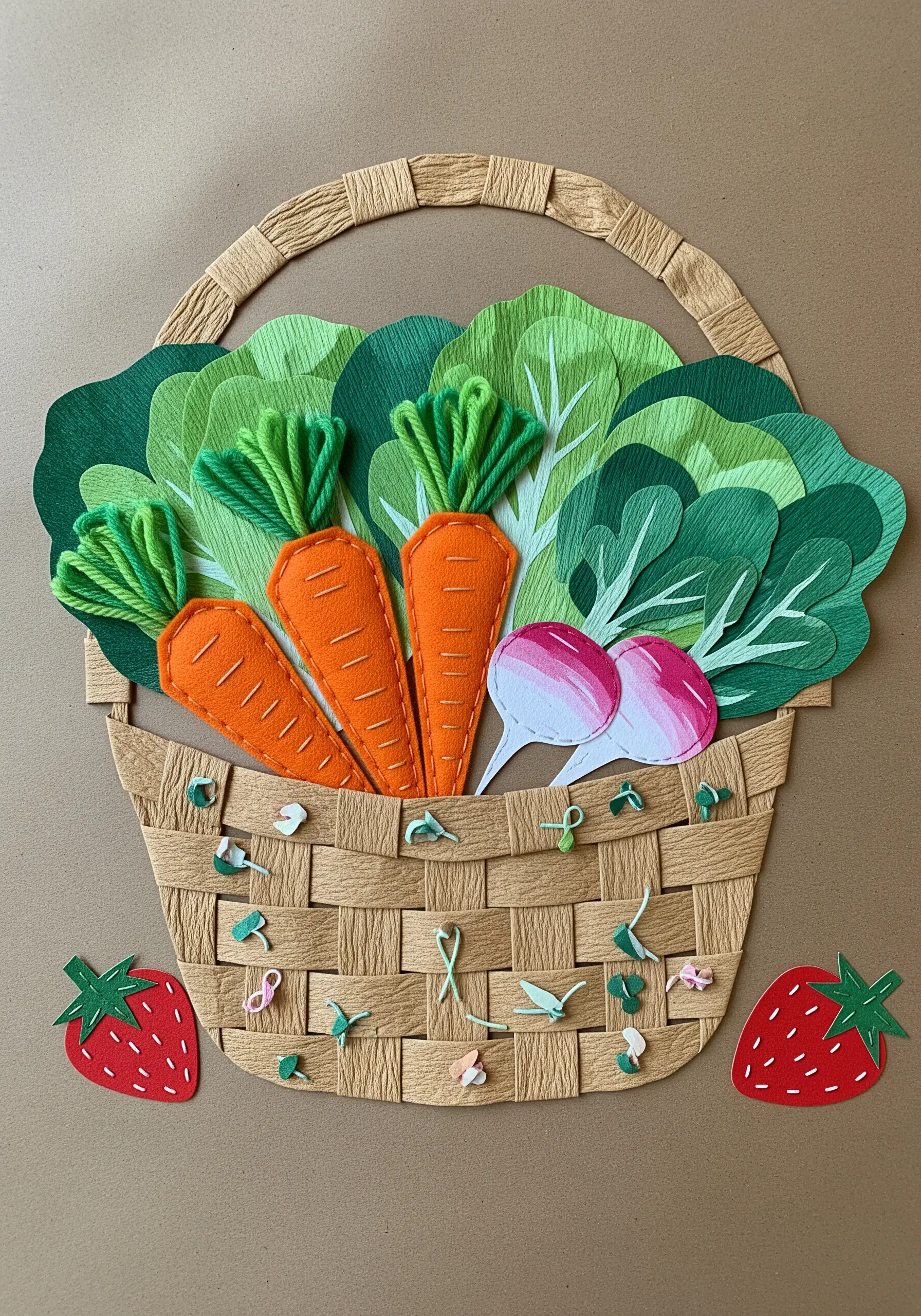
Give felt cutouts personality and a charming, illustrative quality with minimal stitching.
On simple shapes like these carrots, a basic running stitch in a contrasting color (like white on orange) instantly adds detail and a hand-drawn feel.
There’s no need for complex fills or shading; the simplicity of the stitch is what makes it effective.
It’s a quick way to elevate basic felt shapes, making them feel thoughtfully crafted and unique.
21. Secure Botanicals with Nearly Invisible Stitches
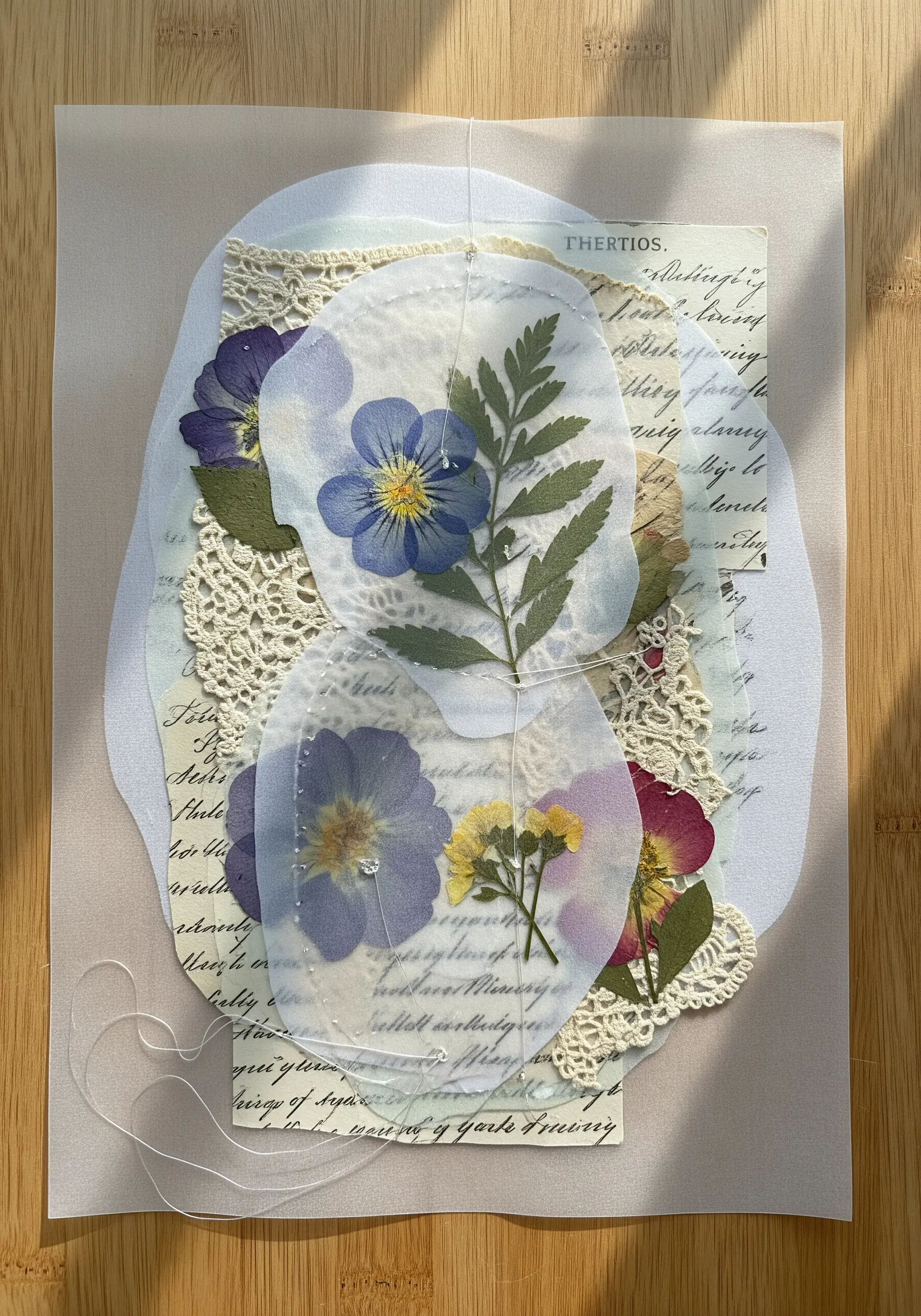
When your collage includes delicate botanical pressed flower designs, the goal is to secure them without distracting from their natural beauty.
Layer them between or on top of translucent papers like vellum or glassine.
Then, using a single strand of fine, neutral-colored sewing thread, make tiny tacking stitches over the stems or at the center of the flowers.
These stitches become almost invisible, allowing the botanicals to appear as if they are floating within the layers while ensuring they are securely attached.
22. Create an Explosion of Energy with Directional Threads
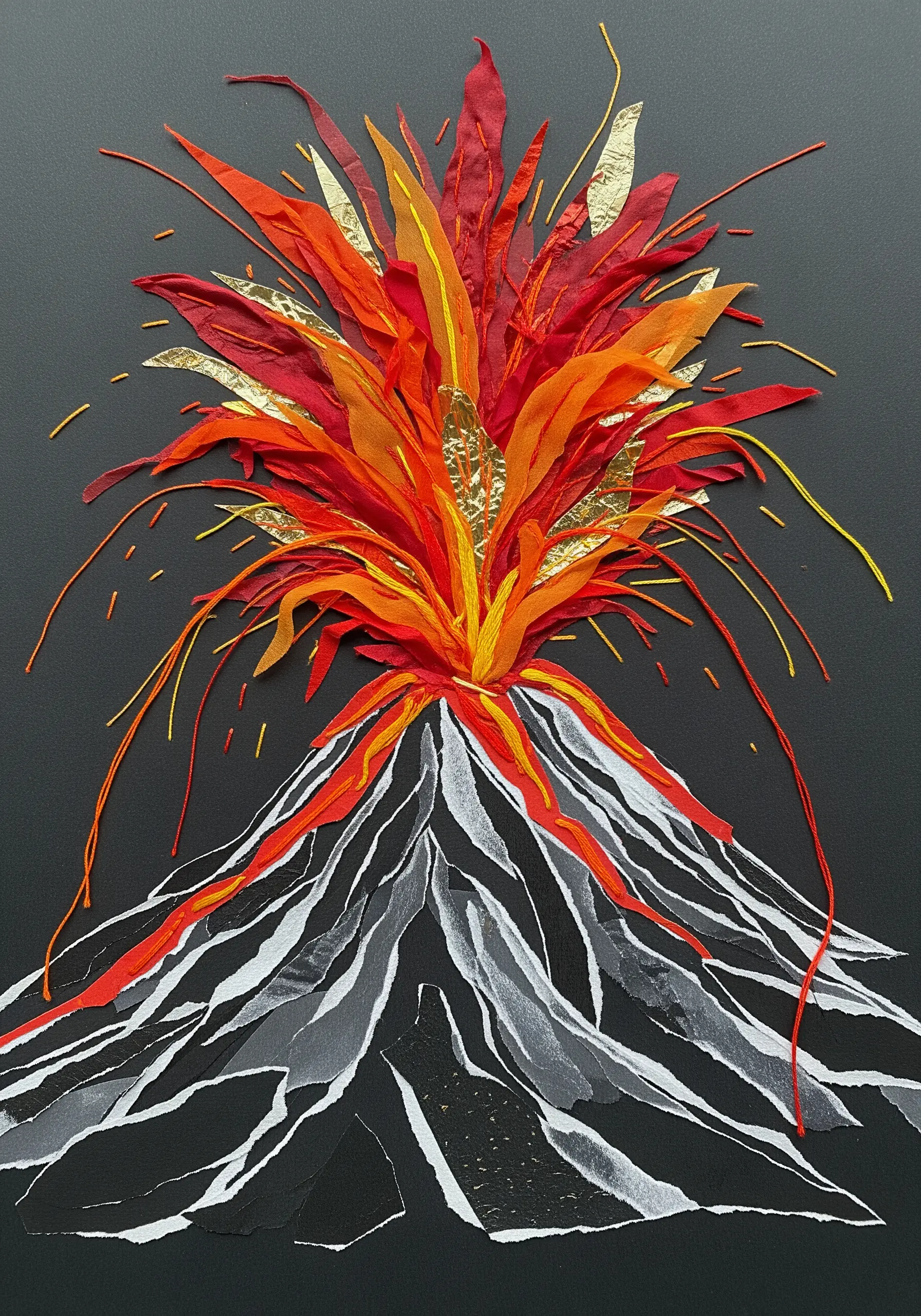
Capture the dynamic force of an eruption by using thread to create powerful directional lines.
Build the main form with torn paper and fabric scraps, focusing on fiery colors at the peak.
Then, add long, straight stitches radiating outwards from the center using threads in shades of red, orange, and yellow.
Let some threads hang loose and extend beyond the central mass. This technique uses the straight, energetic lines of the thread to convey immense speed and movement, making the collage feel like it’s bursting off the page.
23. Draw with Thread for Expressive, Flowing Lines
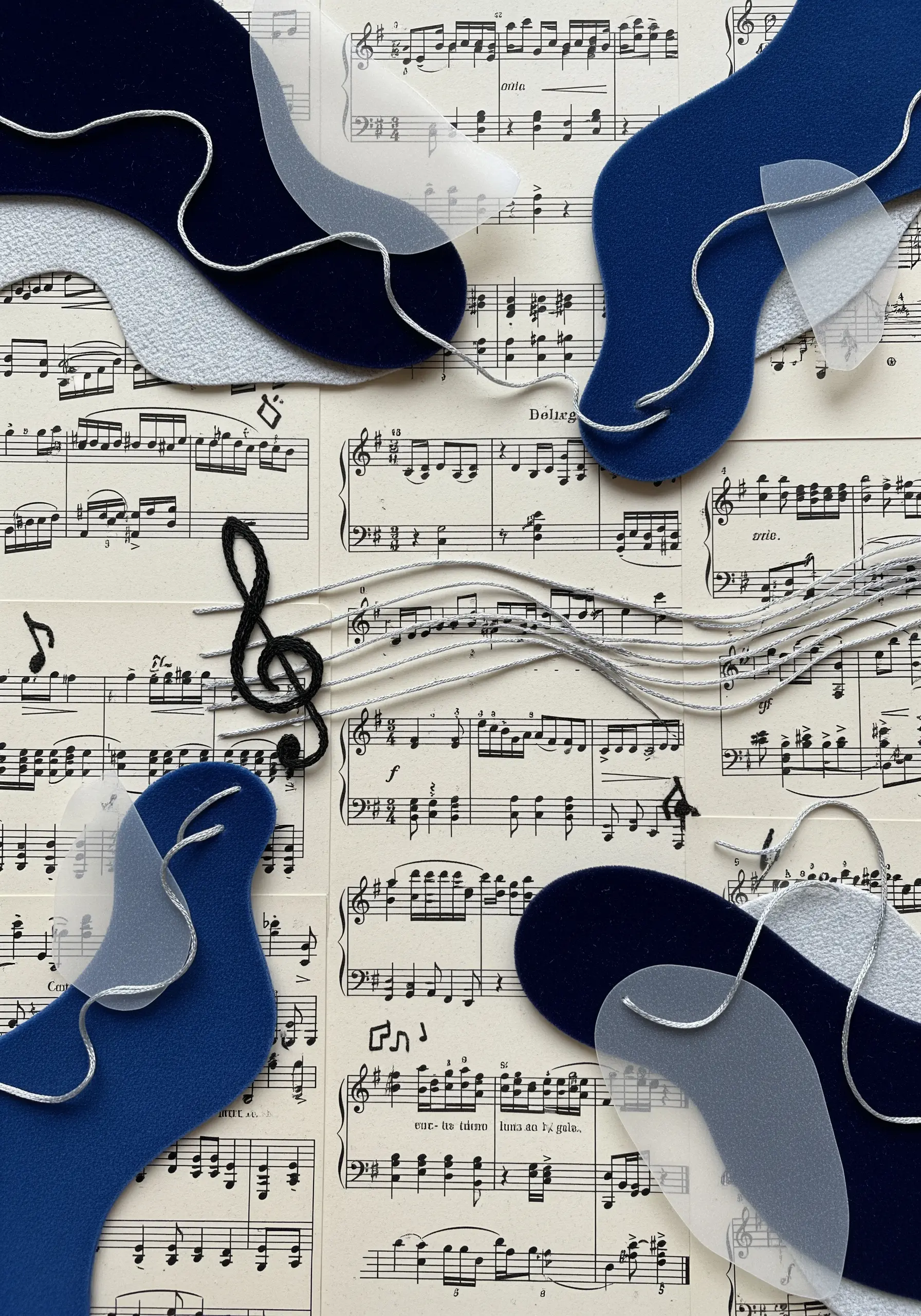
Use thread as a drawing tool to add fluid, expressive marks to your paper and fabric collage.
Instead of filling shapes, think of your thread as an ink line.
Lay down a thicker thread or yarn, like this silver cord, in a loose, calligraphic shape over your background.
Then, use a finer, matching thread to couch it into place. This method allows you to create graceful, unbroken lines that would be impossible with traditional stitching, adding a layer of musicality and movement.
24. Sculpt 3D Steam with Stiffened Thread
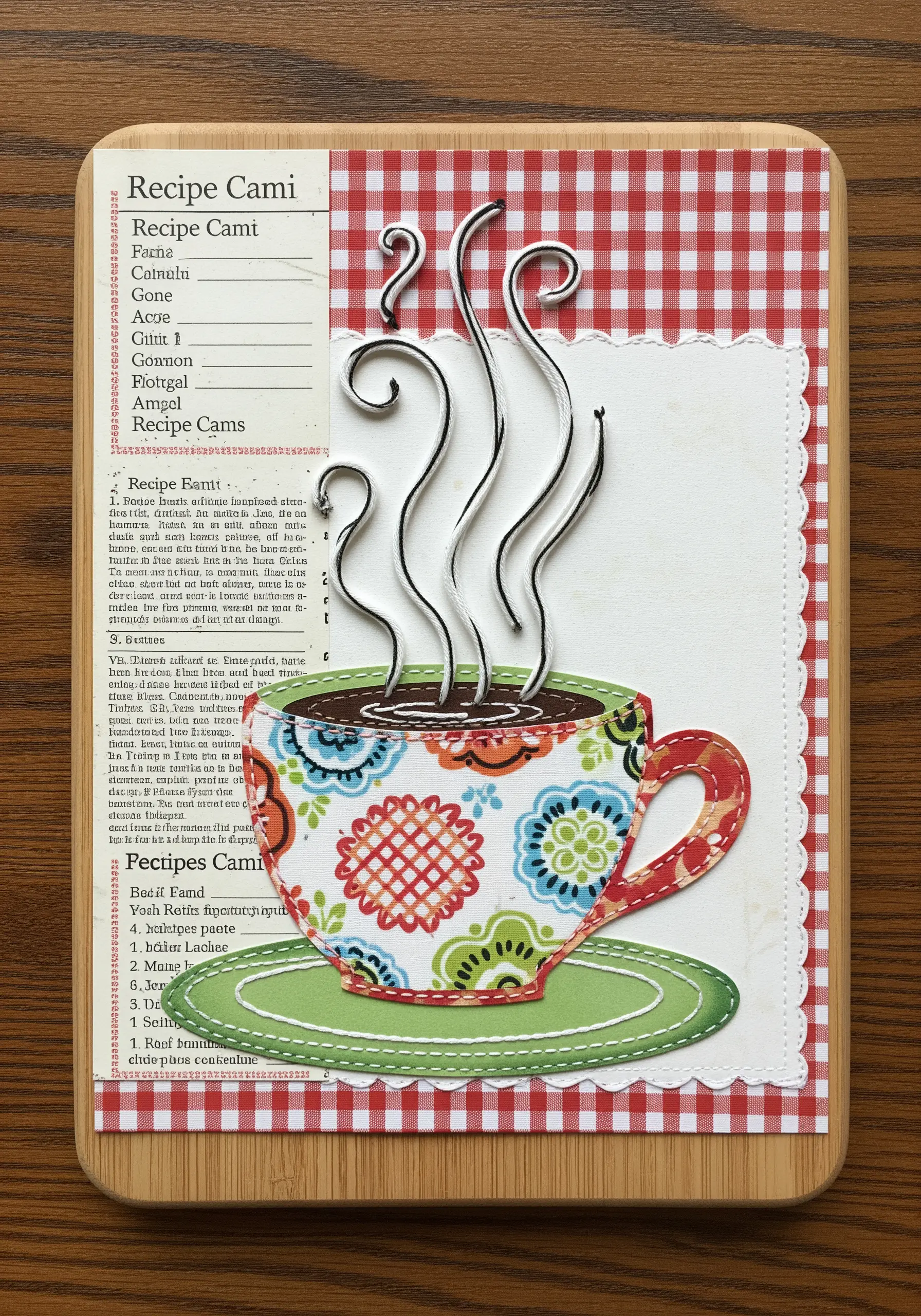
Add a playful, three-dimensional element to your collage by sculpting with thread.
To create the whimsical steam rising from a coffee cup, use a thicker, semi-rigid material like a fine gauge wire wrapped in thread, or simply stiffen a length of perle cotton with fabric stiffener or watered-down glue.
Once it’s dry and malleable, you can bend it into elegant swirls and secure the ends to your collage base.
This technique allows thread to break free from the two-dimensional surface, adding surprising depth and character.
25. Create a Galaxy with Layered Tulle and Seed Beads
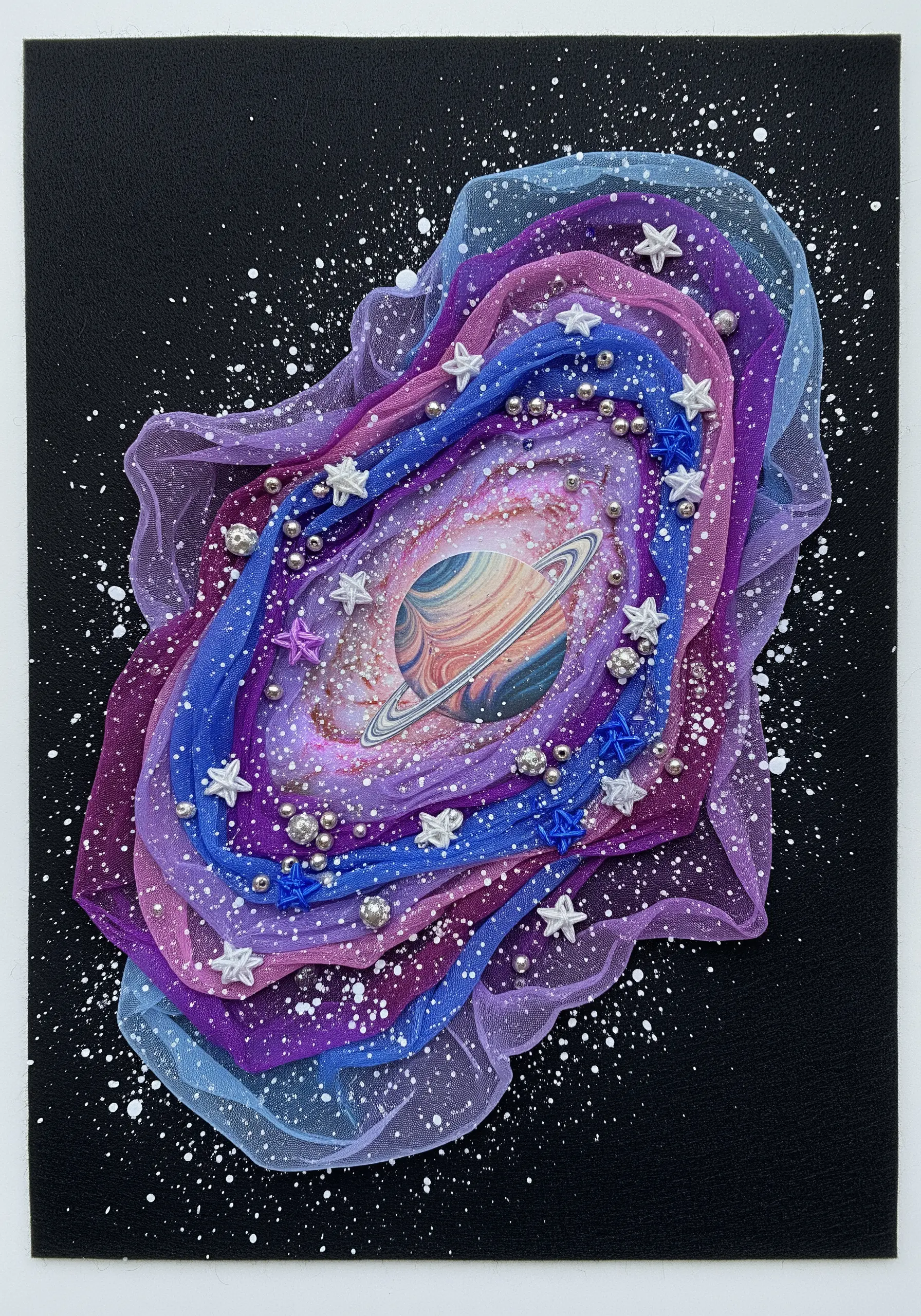
Build cosmic depth by layering sheer, colorful fabrics like tulle or organza.
Cut organic, swirling shapes from several different colors and stack them to create a nebula effect.
Your stitching serves a dual purpose here: use it to anchor the layers together and to add celestial detail.
Scatter tiny silver seed beads and stitch small star shapes throughout the layers. The beads will catch the light and secure the delicate fabric, resulting in a dreamy, multi-layered galaxy.
26. Weave Dimension with Ribbon Embroidery

Integrate the lush texture of ribbon embroidery into a paper collage for a stunning mix of flat and dimensional elements.
After creating your background scene and main structure, like this paper garden gate, add foliage and flowers using silk or satin ribbon.
Use a simple ribbon stitch to create leaves and folded ribbon roses for the blossoms.
The ribbon’s width and sheen create plump, realistic botanicals that lift off the page, providing a beautiful textural contrast to the paper elements. These are perfect floral-inspired ribbon embroidery ideas for any project.
27. Define Felt Shapes with a Contrasting Running Stitch
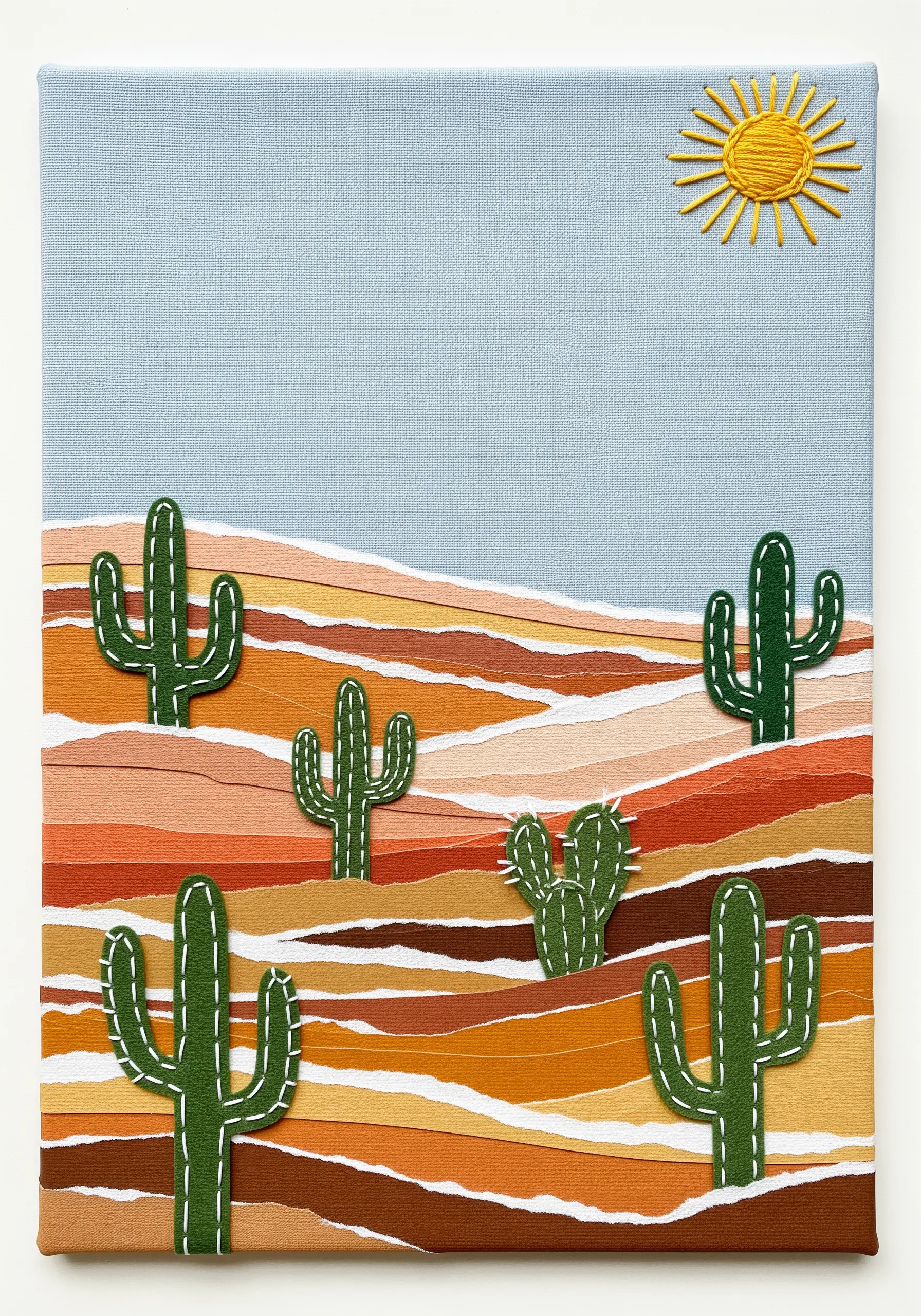
Emphasize the simple, graphic shapes of felt appliqué with a clean, visible outline stitch.
After layering torn paper to create a desert landscape, place your felt cacti shapes.
Using a thick, contrasting thread—like white perle cotton on green felt—work a simple running stitch just inside the edge of each cactus.
This stitch adds a charming, illustrative detail that defines the form and adds a touch of handmade texture, unifying the entire composition.