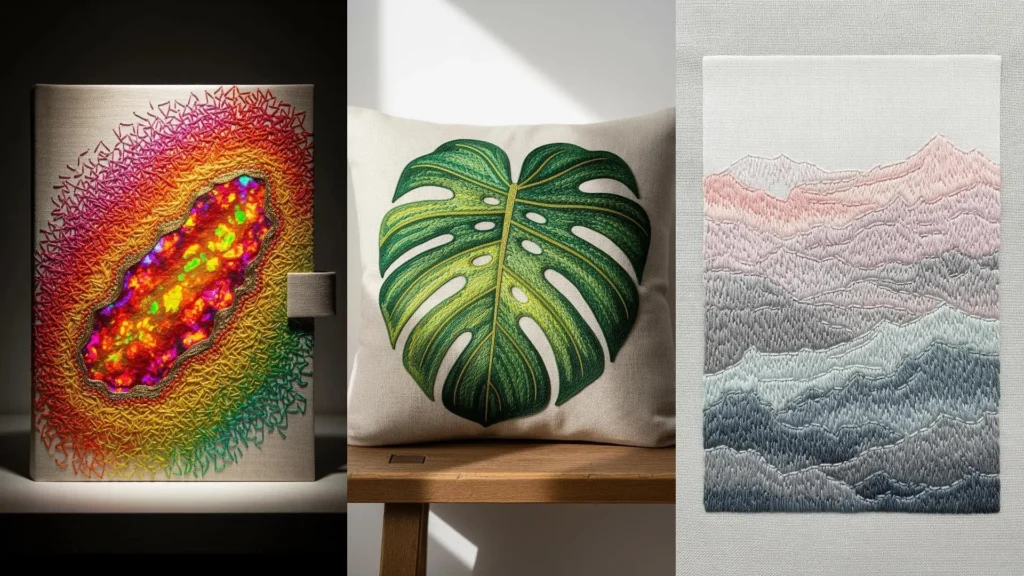
If you’re here, it’s because you feel that your embroidery can be more than just a hobby—it can be a form of art. You love the quiet focus of stitching, but you want your finished pieces to feel more intentional, more modern, and more emotionally resonant.
The secret to elevating your work isn’t found in learning dozens of complicated new stitches. Instead, it lies in how you approach the line itself. It’s about choosing the right thread weight for your fabric, mastering tension to create a seamless curve, and understanding how a simple line can carry immense weight and meaning.
These designs are more than just patterns; they are exercises in artistic intention. They will teach you to see thread not just as a colorful strand, but as a tool for drawing, sculpting, and storytelling. You are closer than you think to creating work that feels polished, personal, and profoundly beautiful.
1. The Beauty of a Single, Unbroken Line
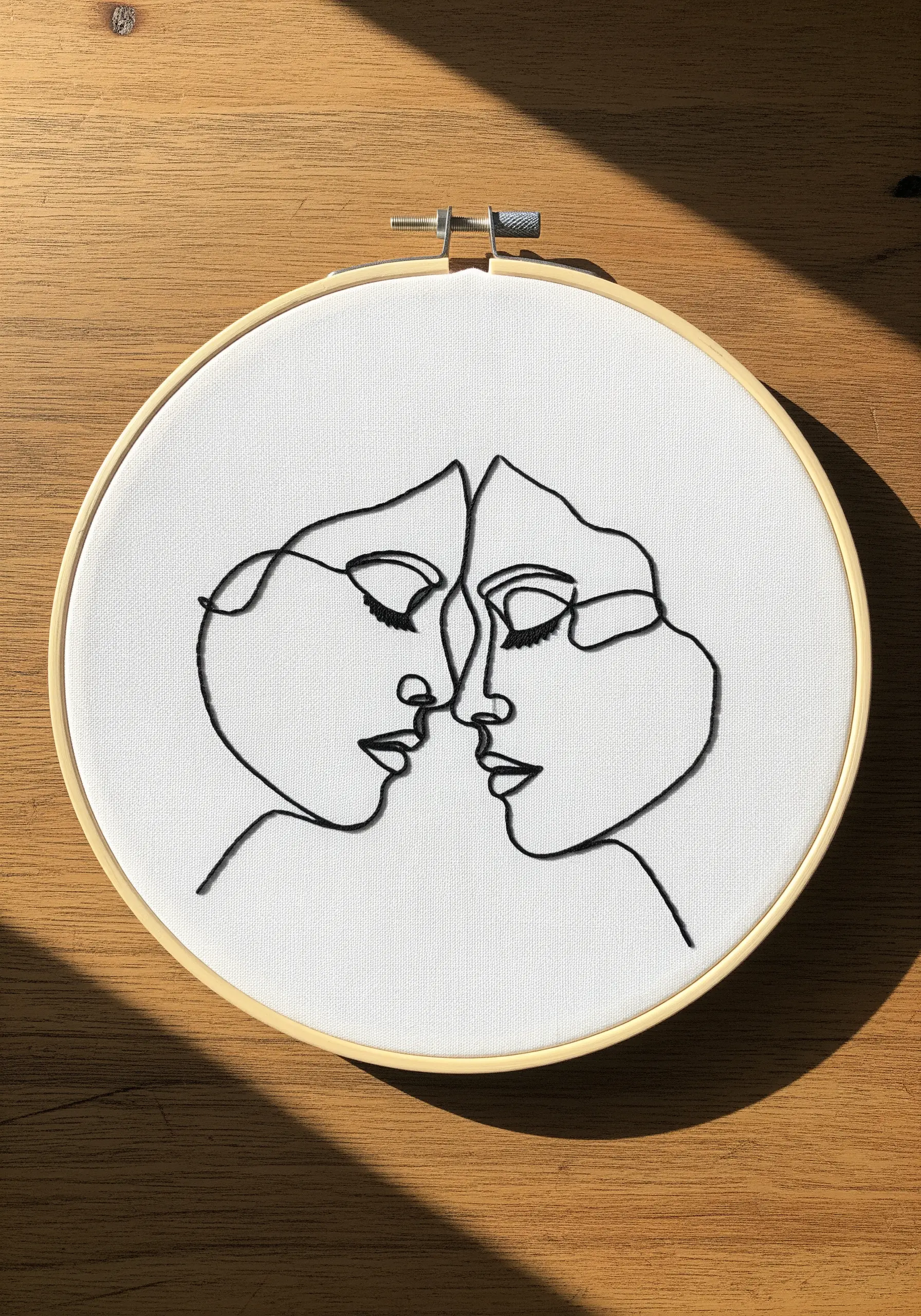
To achieve the fluid, ink-like quality of continuous line art, your stitch choice and thread tension are everything.
Opt for a whipped backstitch or stem stitch, which creates a smooth, solid line without the visible gaps of a standard backstitch.
For a bolder look, couch a thicker thread like pearl cotton by tacking it down with a finer, matching floss.
This method gives you complete control over curves, ensuring your final piece is seamless and expressive.
2. From Hoop to Wall: Scaling Your Line Art
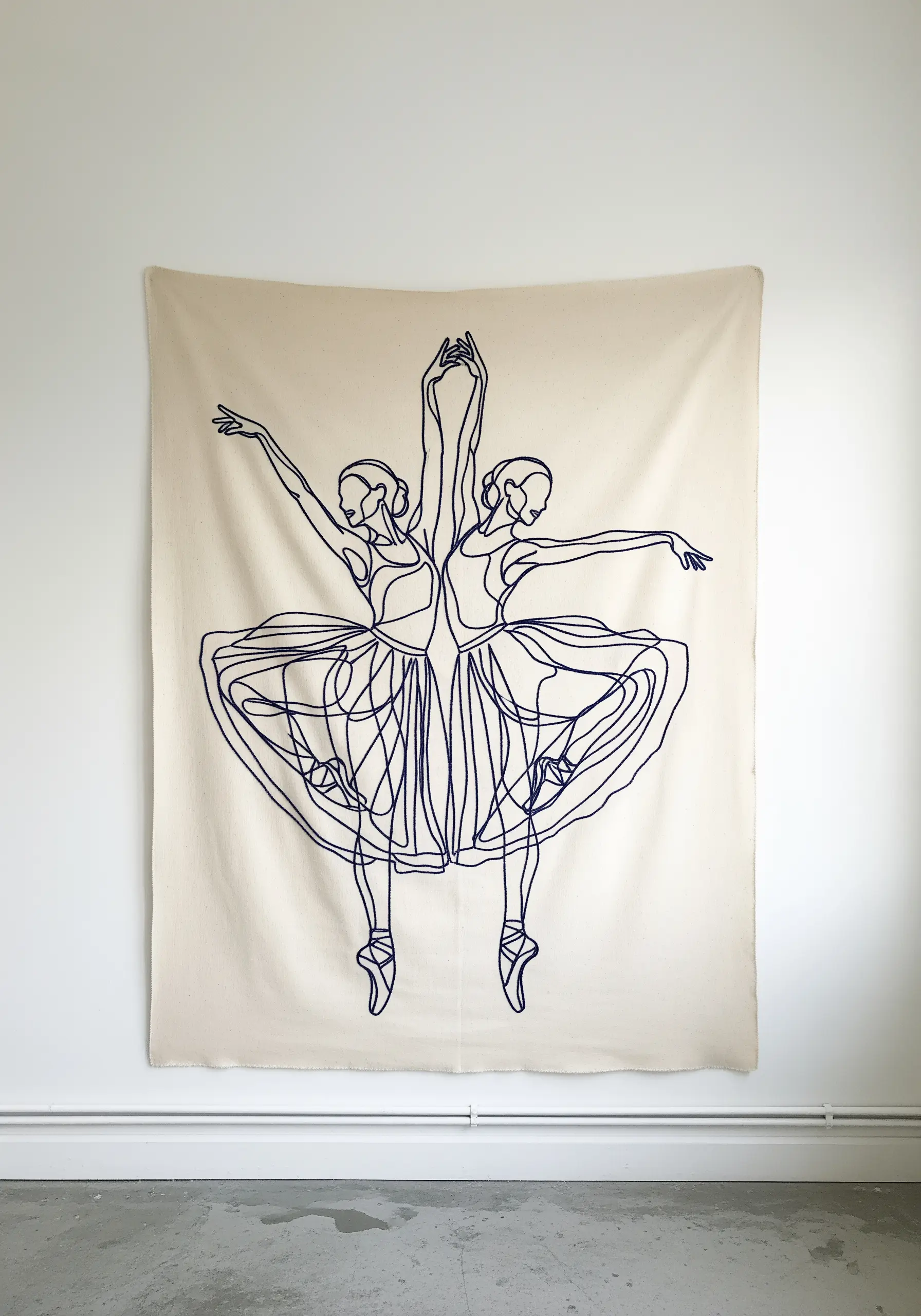
When you translate a small drawing to a large wall hanging, standard embroidery floss loses its impact.
Instead, switch to a thick yarn or even a soft cotton rope to give your lines the weight and presence they need to command a wall.
Use a simple couching stitch—laying the yarn on the fabric and securing it with a smaller, matching thread—to maintain the design’s fluid curves on a grand scale.
This technique transforms simple line art into dramatic, modern embroidered tapestry designs.
3. Stitching on Denim: Precision and High Contrast
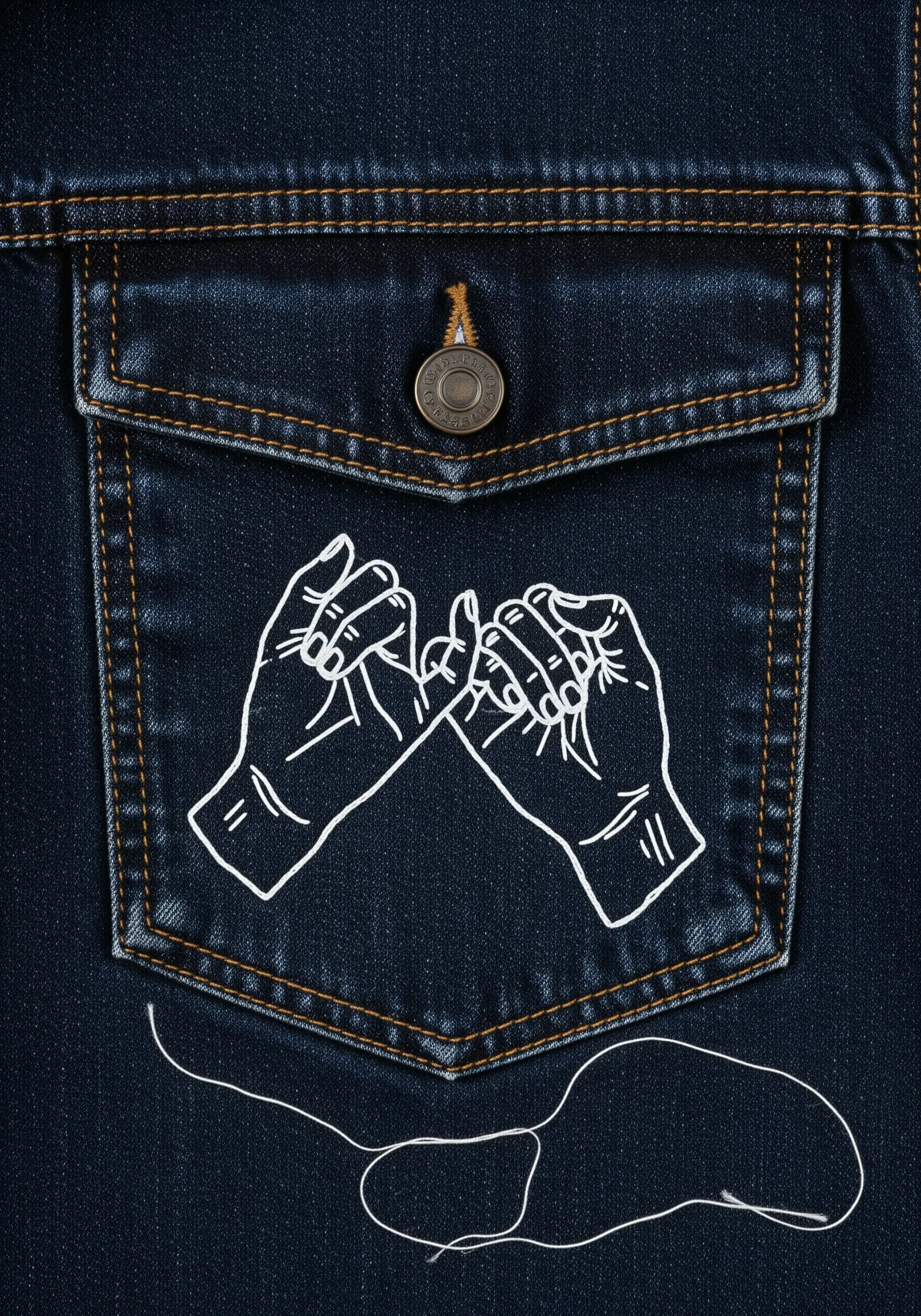
To embroider clean lines on a heavy fabric like denim, a stick-and-stitch stabilizer is your most valuable tool.
It provides a clear pattern guide that washes away, leaving no marks, and prevents the fabric from stretching as you work.
Choose a thread that offers high contrast, like a bright white on dark denim, using three or four strands of floss to ensure the line is bold and visible.
Add personal, meaningful art to jackets and jeans that feels intentional and sharp.
4. Landscape in Lines: Creating Depth with Thread
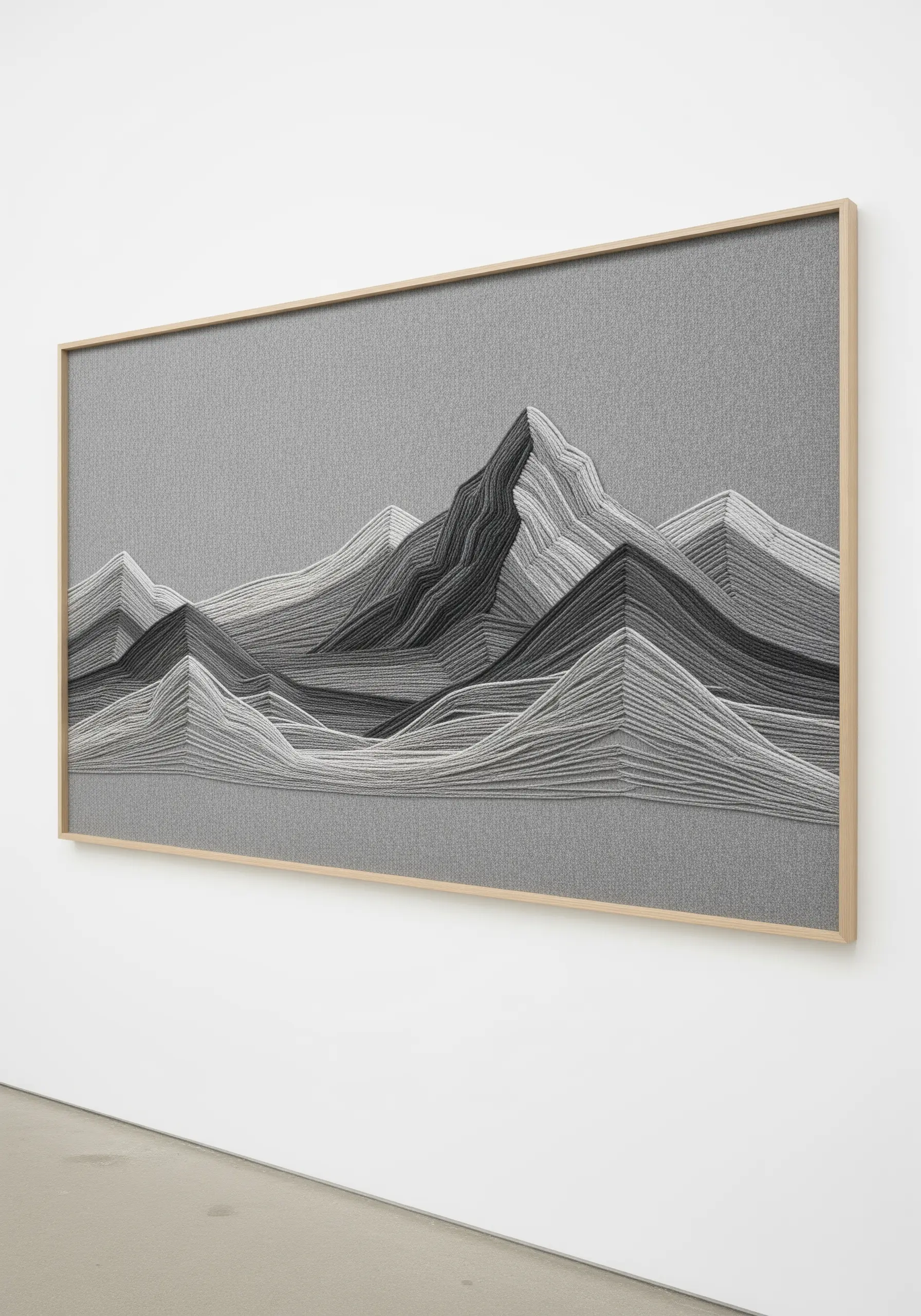
Move beyond outlines and sculpt landscapes with dense, directional straight stitches.
You can create the illusion of peaks and valleys by layering different shades of gray, black, and white thread.
Vary the stitch density—tighter, more compact stitching in shadowed areas and sparser lines for highlights—to build topographical texture.
This approach turns a flat surface into one of the most compelling abstract thread landscapes, rich with visual depth.
5. The Elegance of Minimalist Botanicals
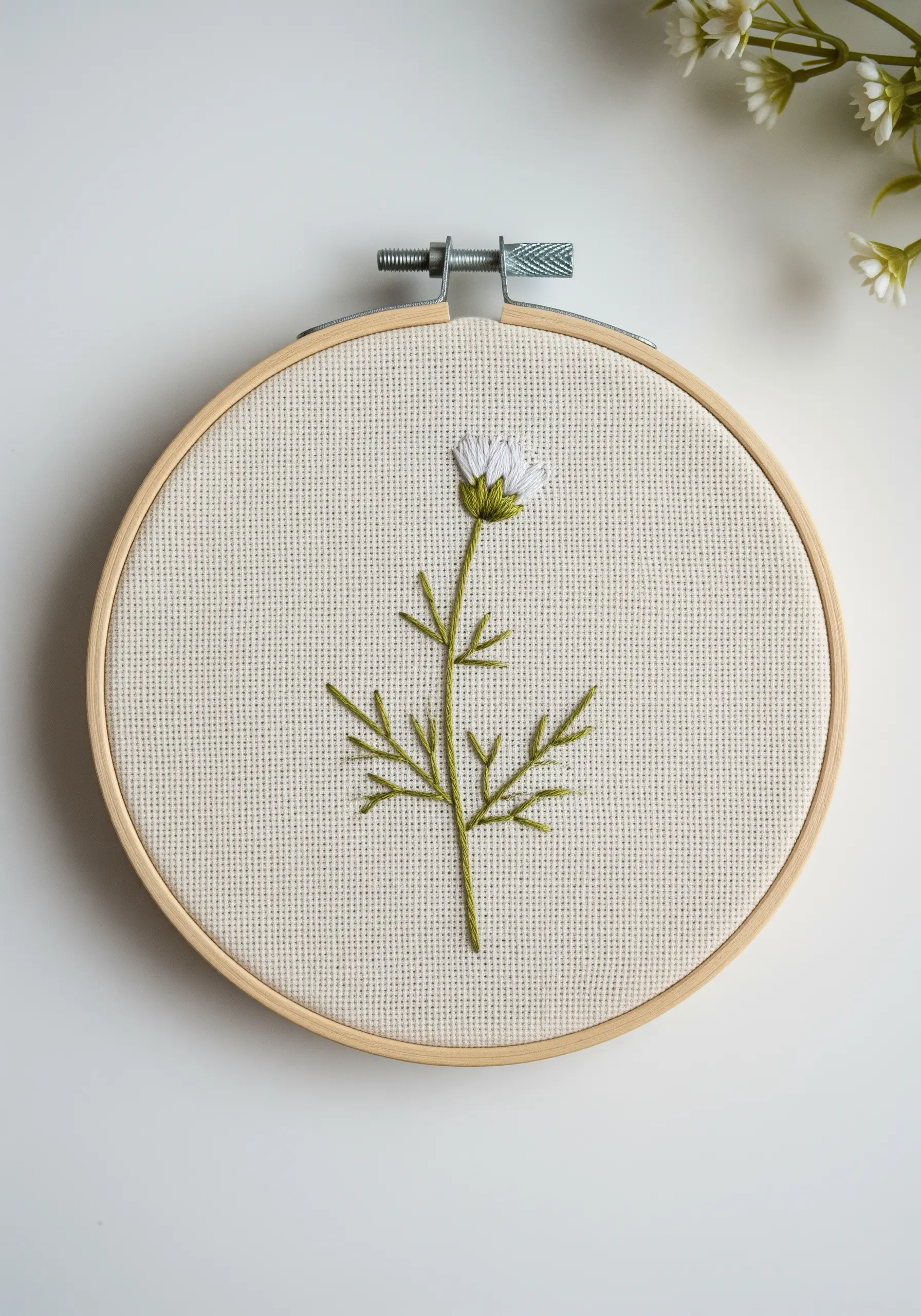
To elevate a simple floral, focus on combining distinct stitch textures for a polished finish.
Use a split stitch for the stem and branches to create a clean, rope-like line that has substance.
For the petals, a few well-placed satin stitches provide a block of solid fill that contrasts beautifully with the delicate linework.
This intentional combination of stitches turns simple minimalist botanical stitch designs into sophisticated art.
6. Texture and Sheen: Chain Stitch on Velvet
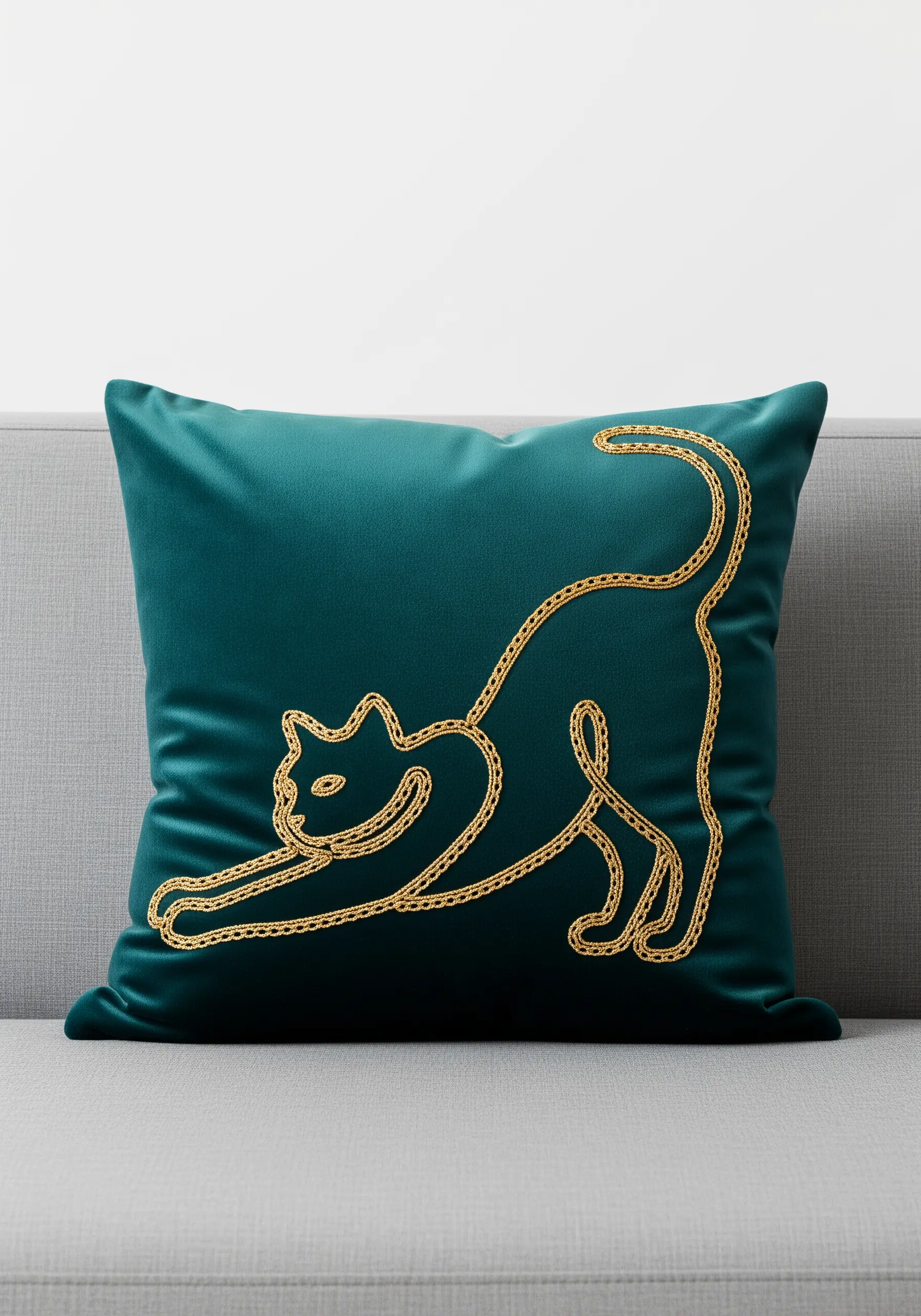
When stitching on a plush, high-pile fabric like velvet, you need a stitch that won’t get lost in the texture.
The chain stitch is perfect, as it creates a raised, braided line that sits beautifully on top of the pile.
Using a metallic thread introduces a luxurious sheen that catches the light, creating a stunning contrast against the matte finish of the velvet.
This combination instantly elevates home décor pieces like pillows and throws.
7. Giving Line Art Weight and Volume
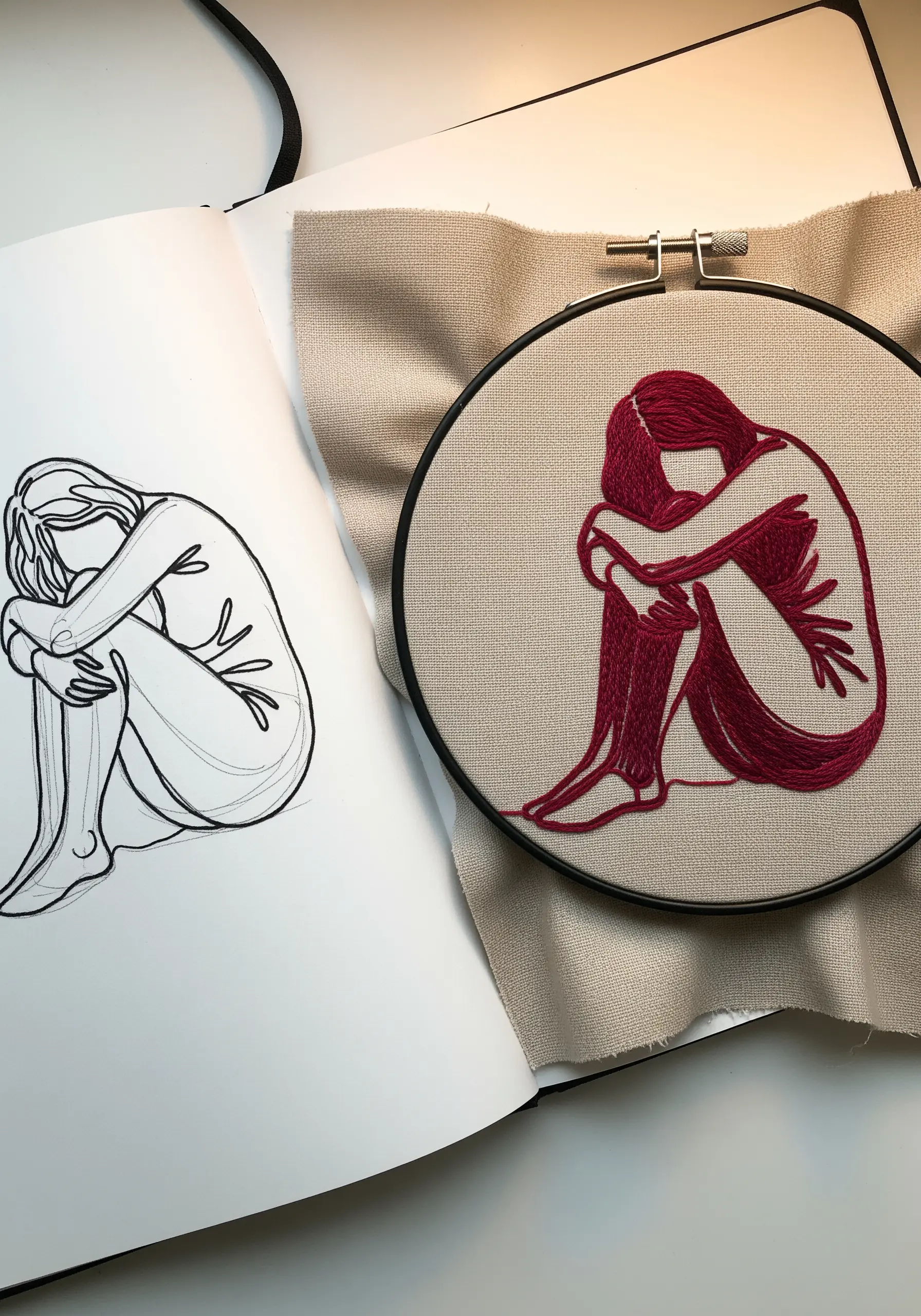
Transform a simple outline into a solid, emotional form by using the line as a boundary for fill stitches.
Instead of just tracing a contour, fill the entire shape with a dense satin stitch or a more forgiving long-and-short stitch.
To create a sense of realism, direct your stitches to follow the natural curves of the subject, as if you were shading with a pencil.
This technique gives your line art a powerful, textural presence.
8. Capturing Motion with Disconnected Stitches
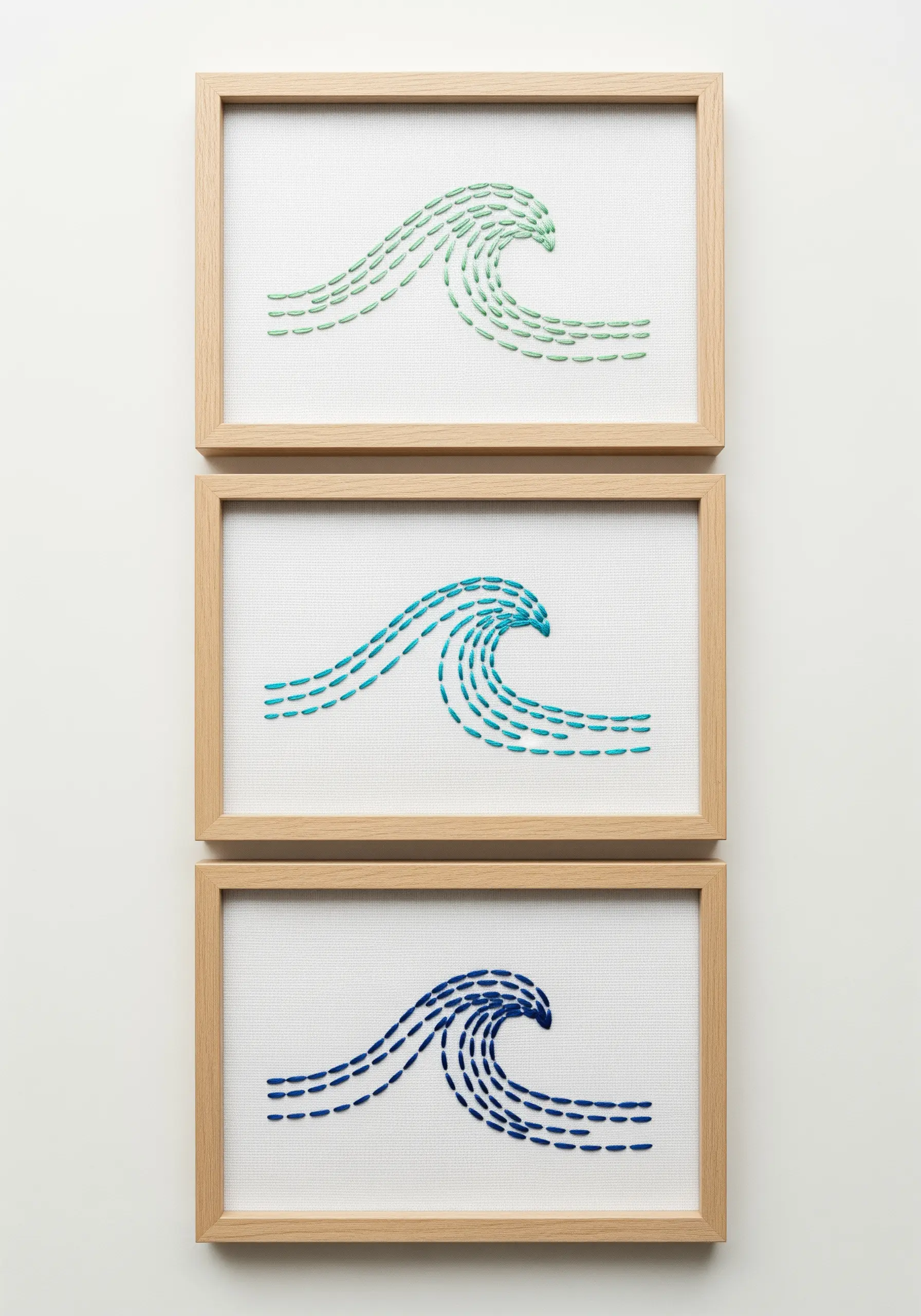
You don’t always need a continuous line to define a shape. You can create the illusion of movement and form with carefully placed seed stitches or short running stitches.
Arrange these small, separate stitches to follow a curve, like a wave, varying their density to suggest foam and shadow.
When displayed as a series with a subtle color gradient, the effect is a beautiful, minimalist depiction of motion over time.
9. The Narrative Power of Contrasting Textures
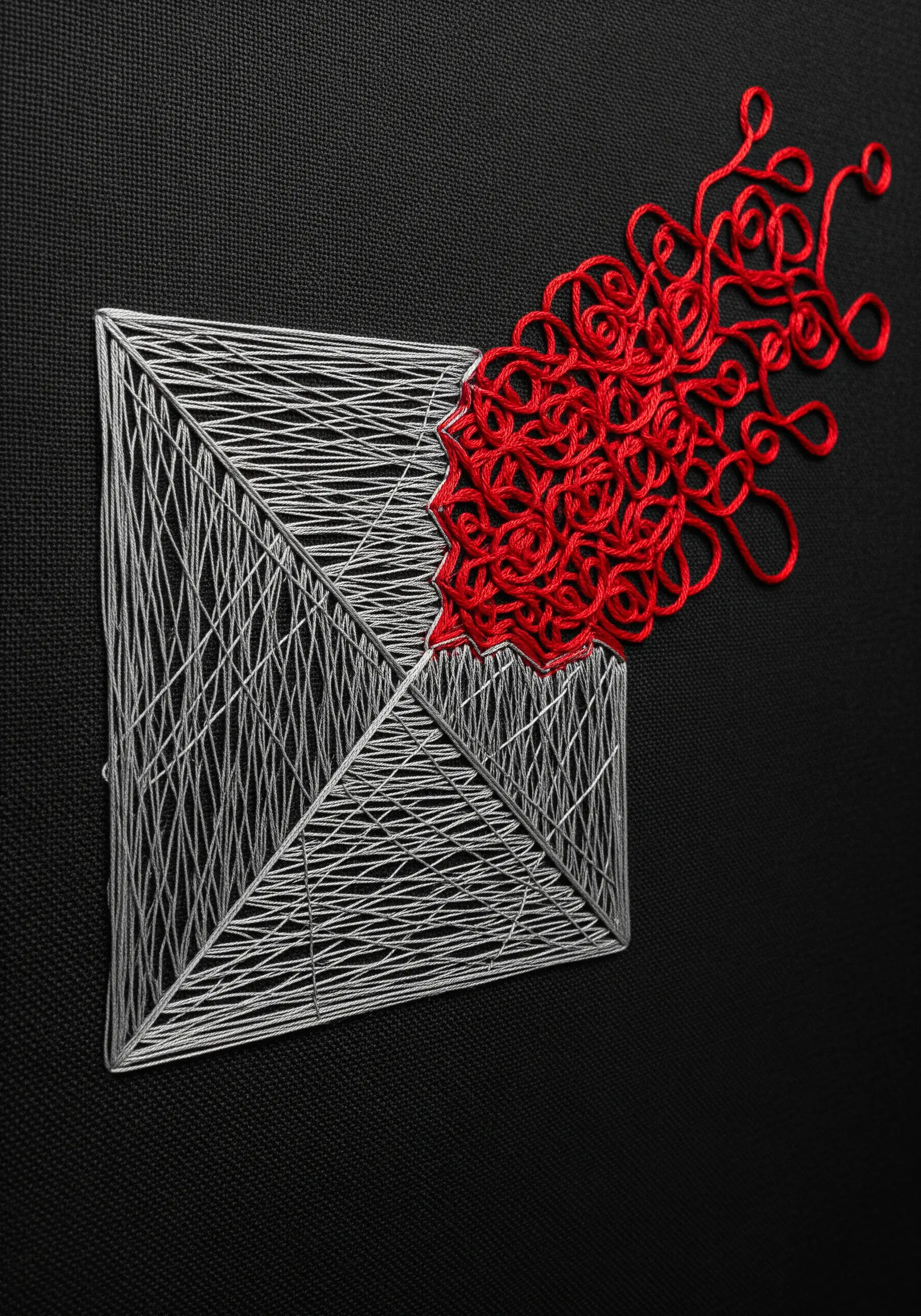
Tell a compelling visual story by juxtaposing structured, orderly stitches with free-form, chaotic texture.
First, build a geometric foundation with precise, parallel straight stitches that create a clean grid.
Then, allow a contrasting color to erupt from it using a tangle of French knots, bullion stitches, and loose, couched loops.
This technical contrast between control and release adds a layer of emotional narrative to your abstract work.
10. The Refined Outline for Functional Art
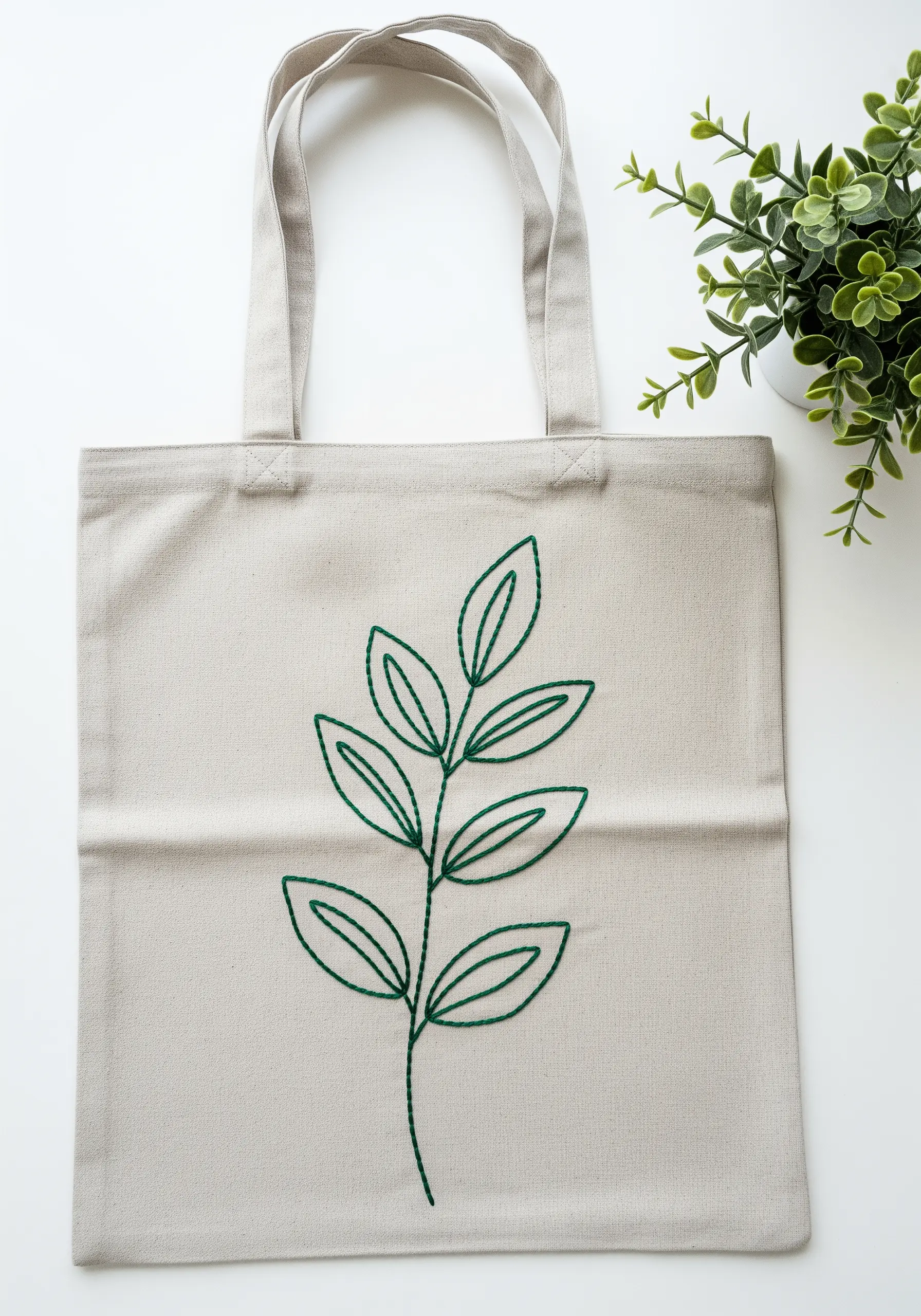
For items that need to be both beautiful and durable, like a tote bag, the whipped backstitch is your best choice for clean outlines.
Stitch a standard backstitch line first, then wrap a second thread around each stitch without piercing the fabric.
This simple second step conceals the gaps between stitches, creating a perfectly smooth, slightly raised, and snag-proof line.
It’s a small technical adjustment that helps turn plain tote bags into fashion statements.
11. Introducing Dimension with 3D Stitches
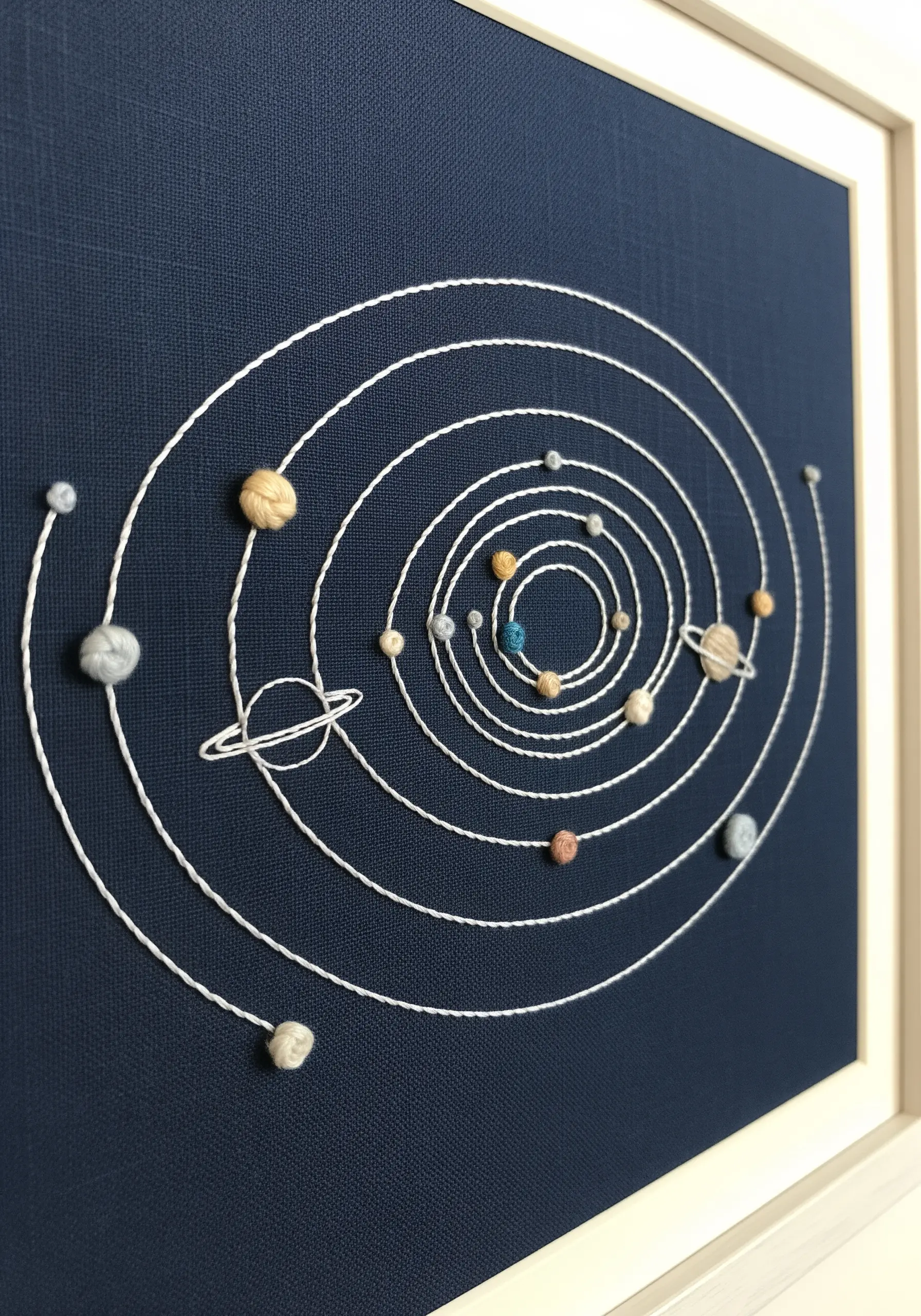
Allow your minimalist designs to pop off the fabric by incorporating simple, three-dimensional elements.
After creating the orbital paths with a clean backstitch, form the planets using techniques that build texture and height.
Tightly packed French knots, woven wheel stitches (also known as spider web stitch), or even thread wrapped around small beads can create tactile spheres.
This unexpected texture adds a playful, sculptural quality to otherwise flat line art.
12. A Complete Story in a Single Line
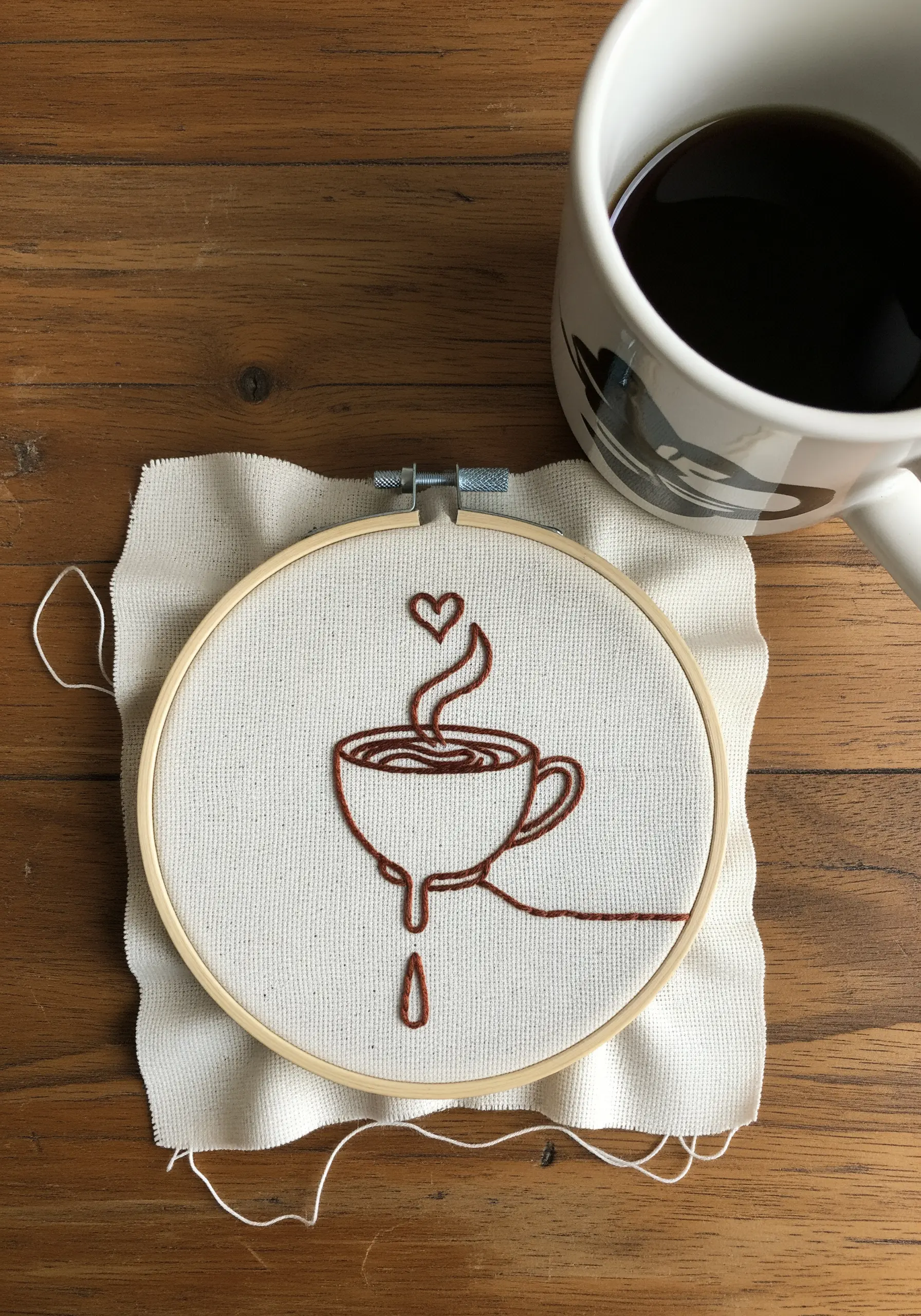
The magic of continuous line art lies in its elegant efficiency, but success depends on planning your thread’s journey.
Before making a single stitch, lightly trace your design on paper and follow the path with your finger to find the most seamless, unbroken route.
Use a consistent stem stitch or split stitch to achieve a fluid, ink-like quality that brings your simple narrative to life.
13. Graphic Precision with Couched Cord
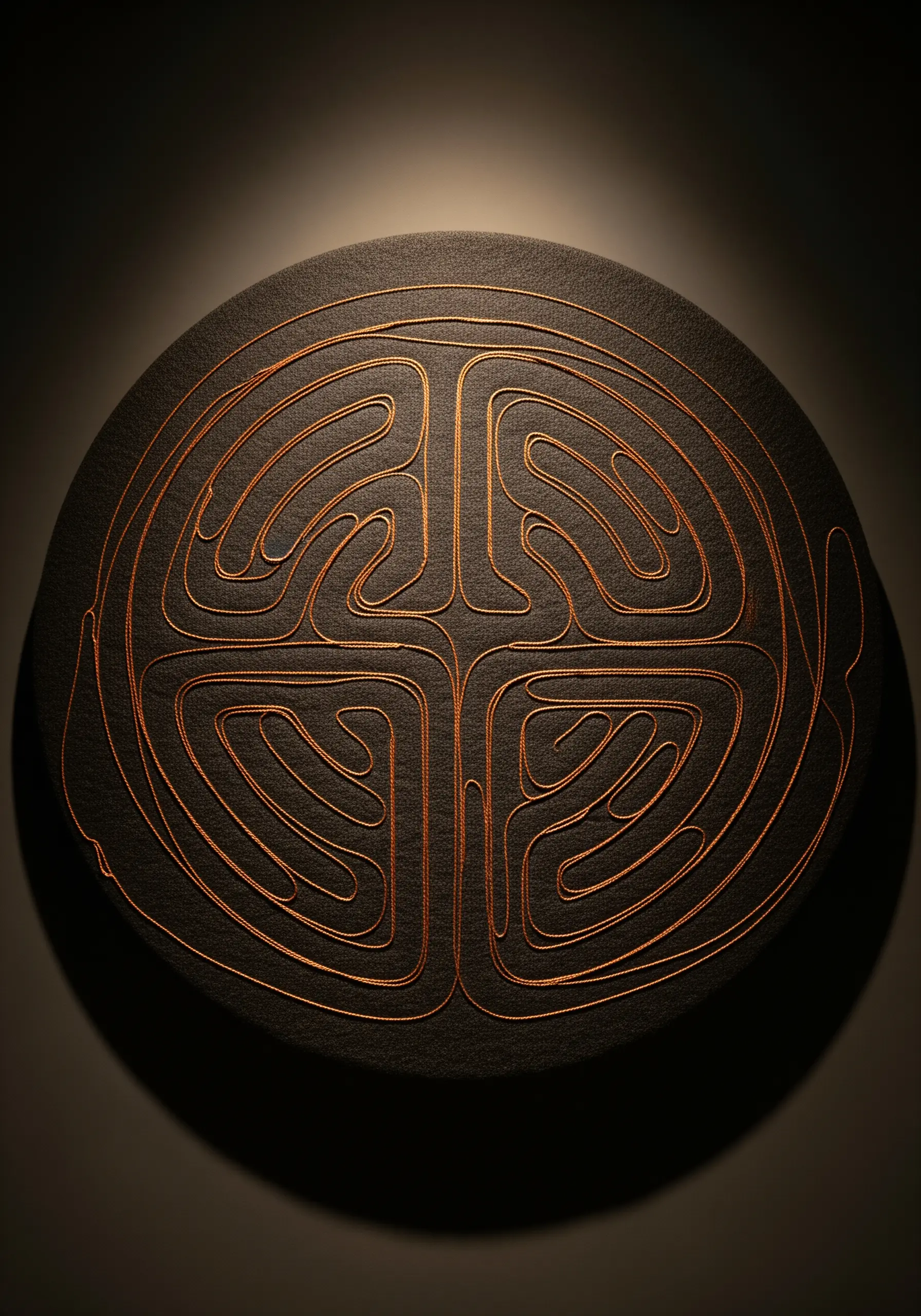
To create bold, perfectly uniform lines for geometric patterns, the couching technique offers unparalleled control.
Lay down a thick cord or yarn along your design, then use a finer, matching thread to tack it down at regular, small intervals.
Using a high-sheen metallic cord against a dark, matte fabric like black linen creates a dramatic, high-contrast effect that feels both modern and powerful.
14. Creating Bold and Wearable Line Art
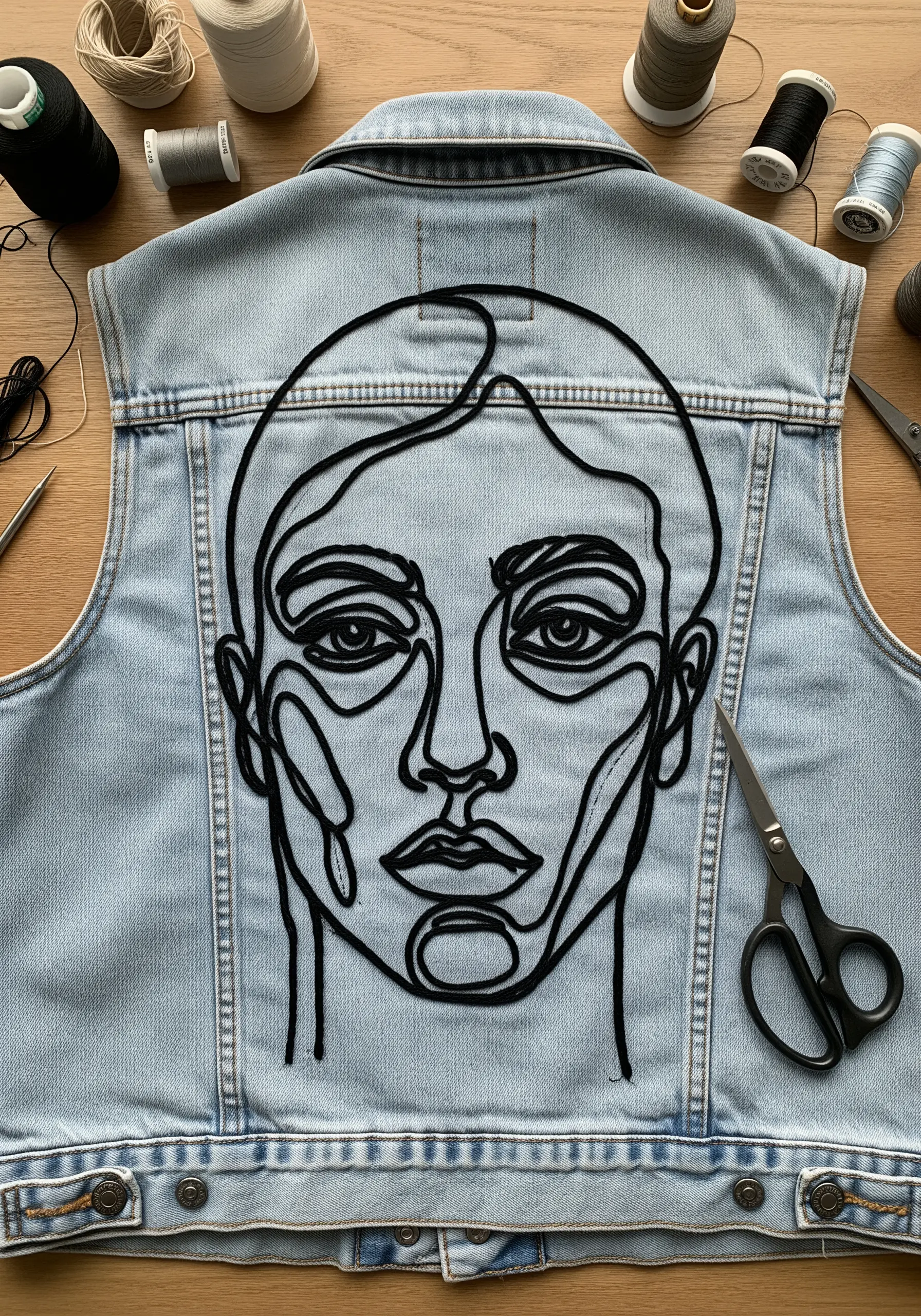
To make a line art portrait truly stand out on apparel, scale up your materials.
Instead of the standard six-strand floss, use a thick yarn or a thin cotton cord to give the lines the necessary weight and visibility.
Couch the yarn down firmly with a matching all-purpose thread. This technique ensures the design is both flexible enough for comfortable wear and bold enough to turn a simple garment into a piece of unique, wearable art.
15. The Strategic Power of an Accent Color
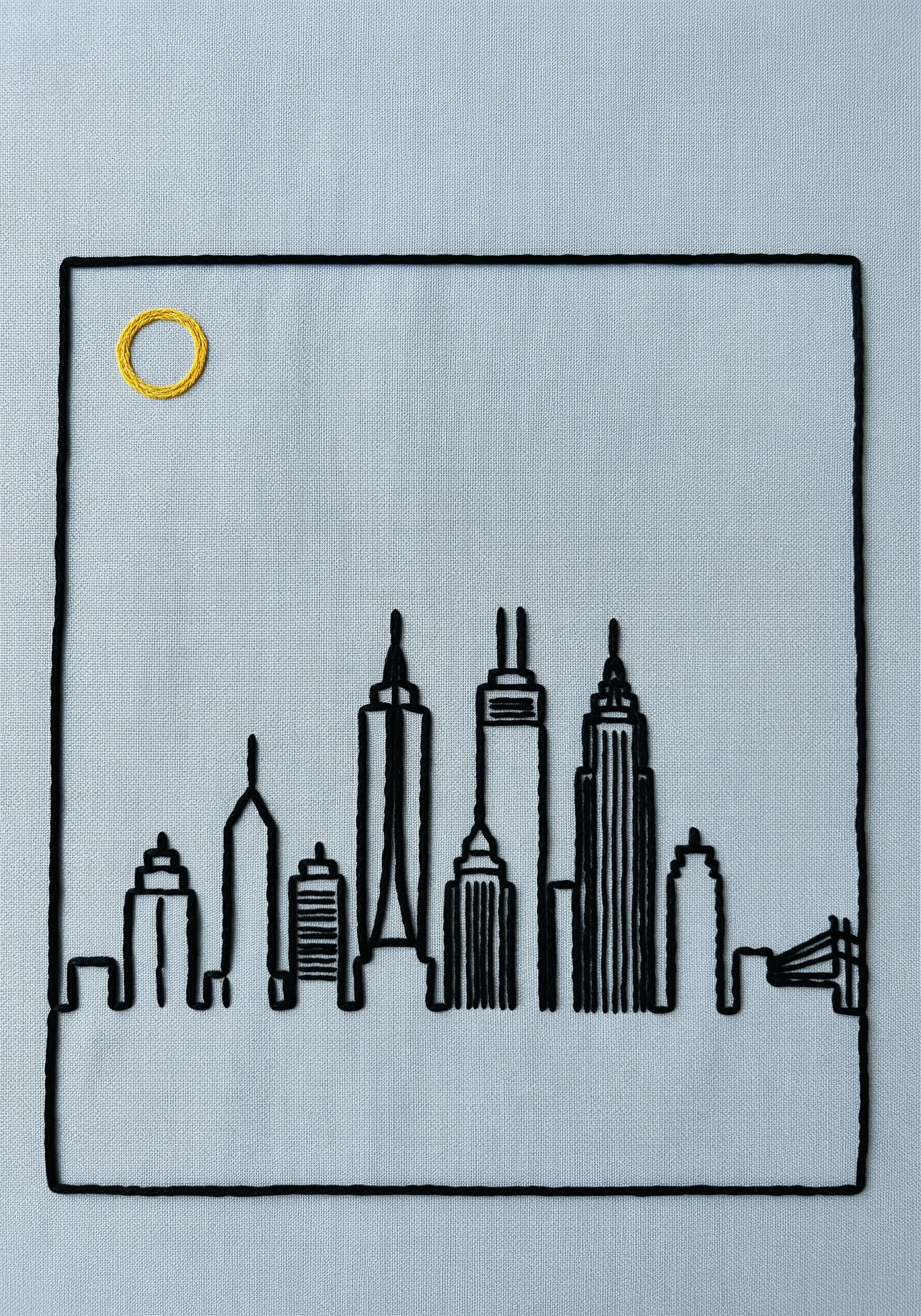
Direct the viewer’s eye and completely shift the mood of a monochrome design with one small, intentional pop of color.
Keep the main subject—like a cityscape—stitched in simple black outlines or minimal satin stitch.
Then, choose a single element, like the sun, and render it in a vibrant, contrasting color using a textural stitch like a woven wheel or a cluster of French knots.
This focal point adds warmth and a clear narrative to the piece.
16. A Visual Meditation on a Single Thread
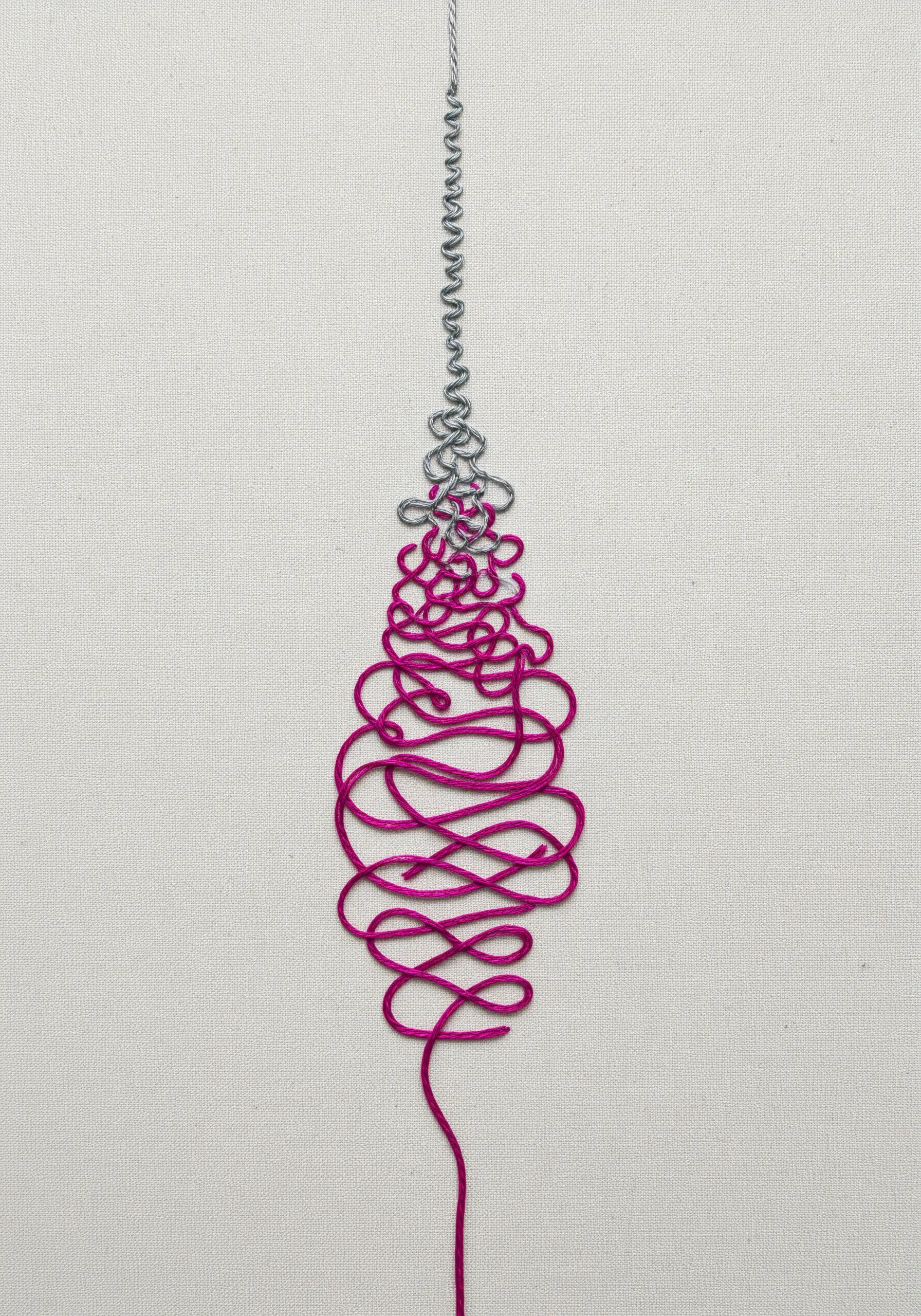
Explore the concept of control versus freedom within a single piece by transitioning your stitching style.
Begin with a highly structured technique, such as a perfectly uniform coil or a disciplined braid stitch.
Gradually, allow the stitching to unravel into loose, organic loops, tangles, and knots.
This evolution from order to chaos creates a powerful visual narrative about transformation, making the process as meaningful as the final artwork.
17. Thread Painting for Delicate Realism
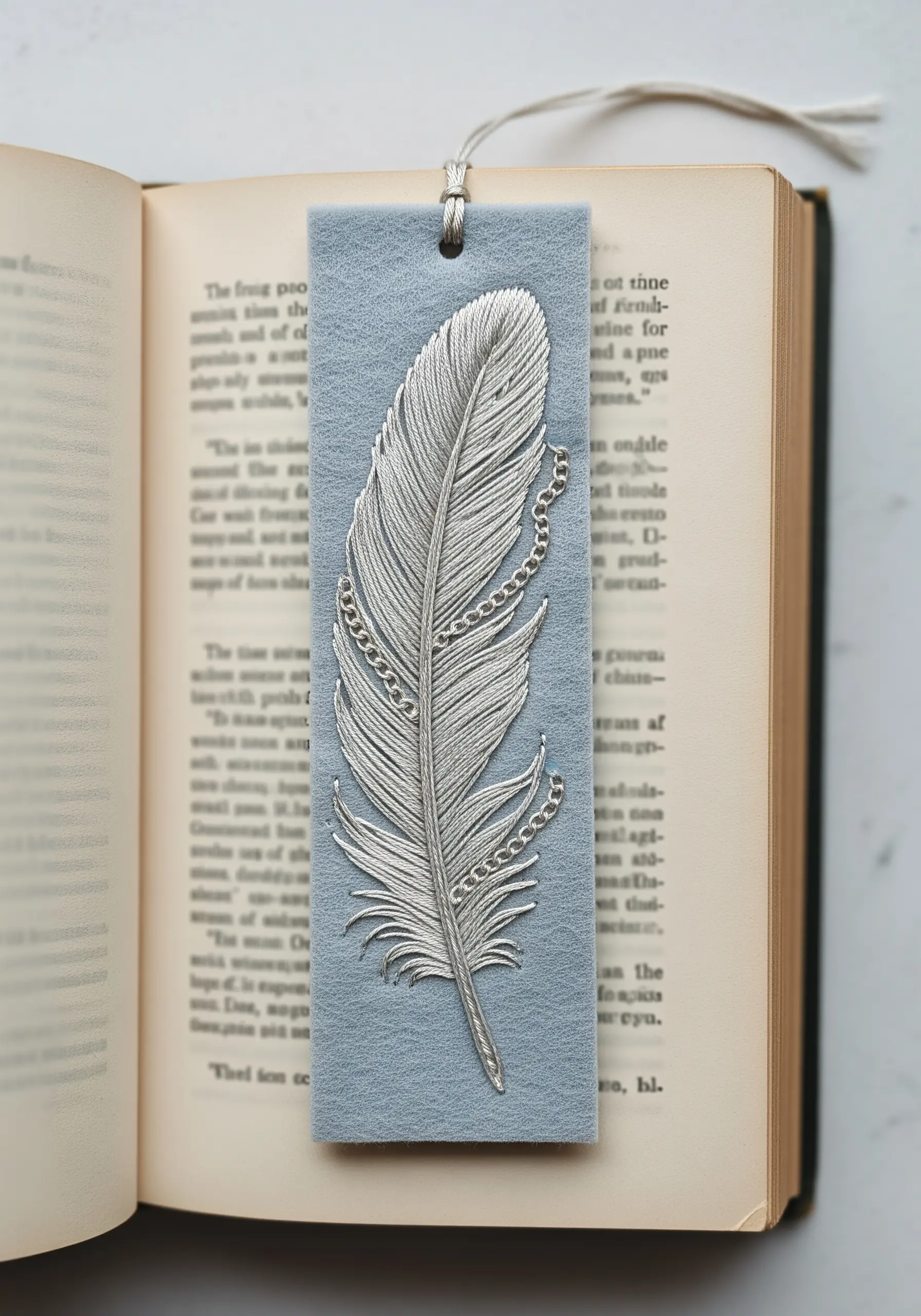
You can achieve photorealistic detail using only directional straight stitches, a technique known as thread painting.
To create the soft texture of a feather, use a single strand of floss in two or three similar shades, placing your stitches close together to mimic the natural direction of the feather’s barbs.
Stitching on a sturdy, non-woven fabric like felt provides a stable base that doesn’t require a hoop, making it perfect for functional objects like bookmarks.
18. Letting the Thread Escape the Canvas
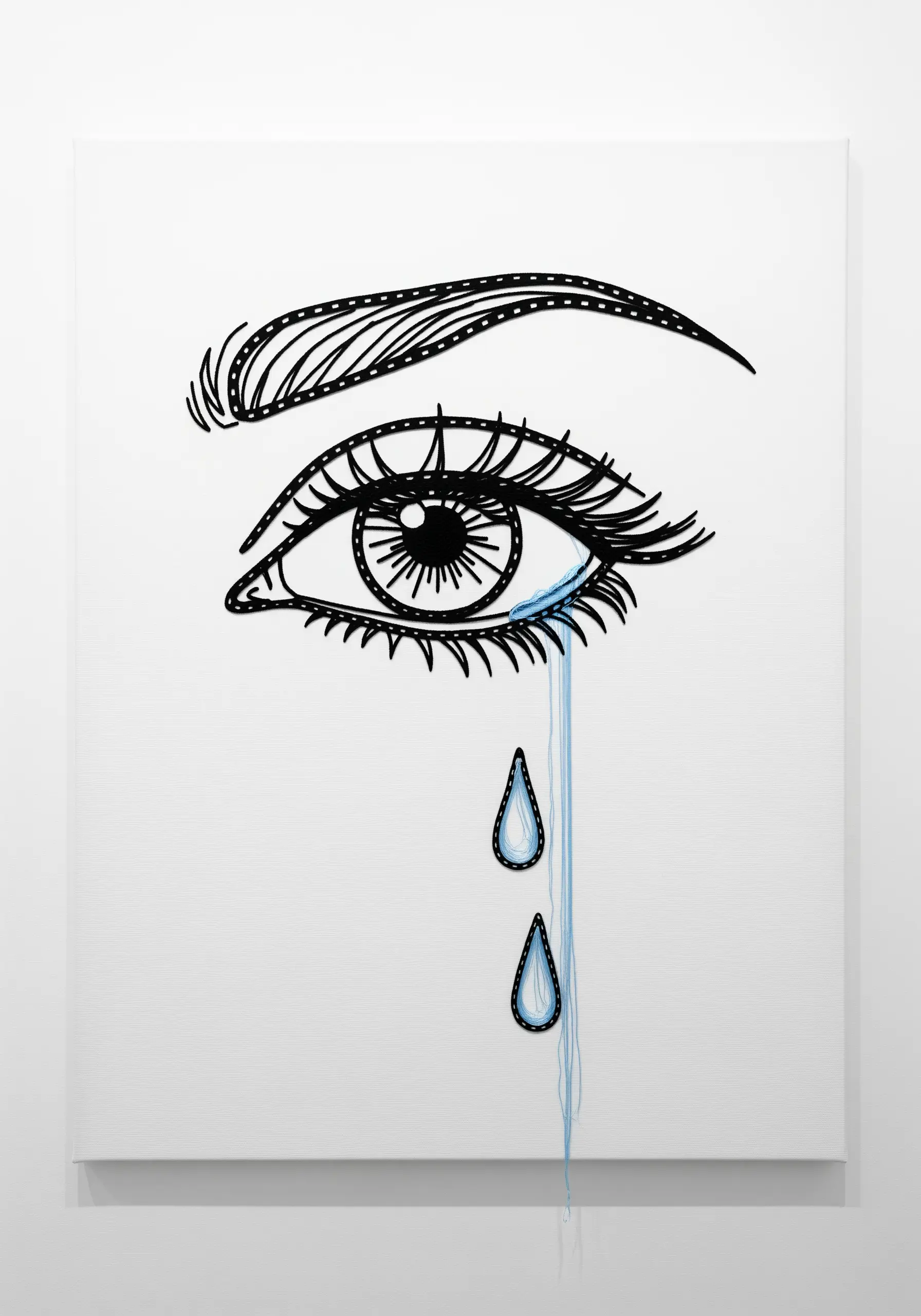
Add a powerful conceptual layer to your work by allowing the thread to physically leave the surface of the fabric.
After stitching a design element like a teardrop, don’t trim the thread tails. Let them hang loose, extending beyond the embroidered area.
This simple decision breaks the two-dimensional plane, adding a tangible sense of emotion, movement, and story that a conventional stitch cannot.
19. Achieving Precision on Stretchy Fabrics
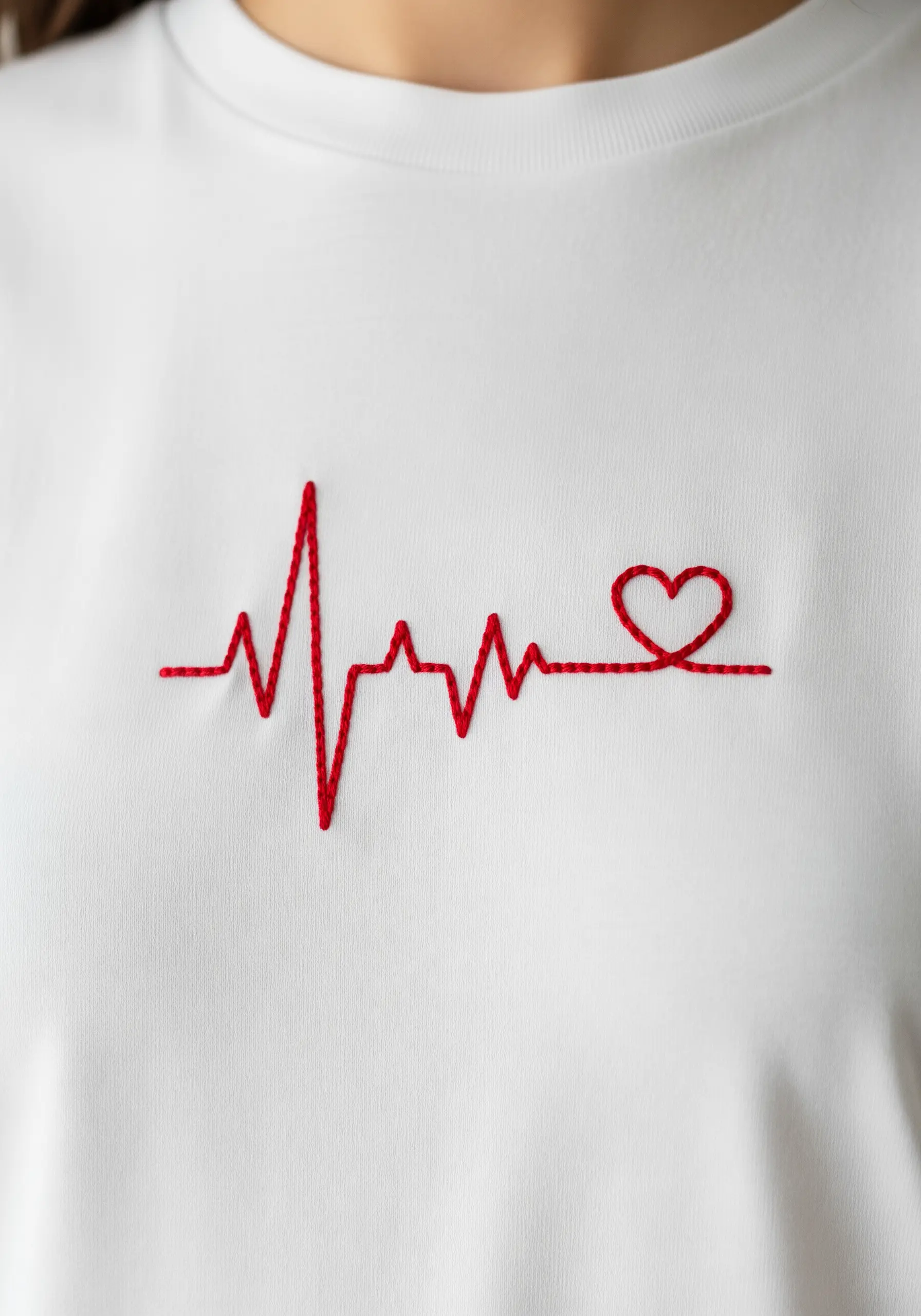
The secret to achieving crisp, professional-looking lines on knit fabrics like T-shirts is stabilization.
Before you begin, apply a high-quality iron-on or self-adhesive stabilizer to the back of the area you plan to stitch.
This prevents the fabric from stretching, puckering, or distorting while you work, allowing you to create a dense, clean satin stitch that looks sharp and intentional, not warped.
20. Sculpting Form with Radiating Stitches
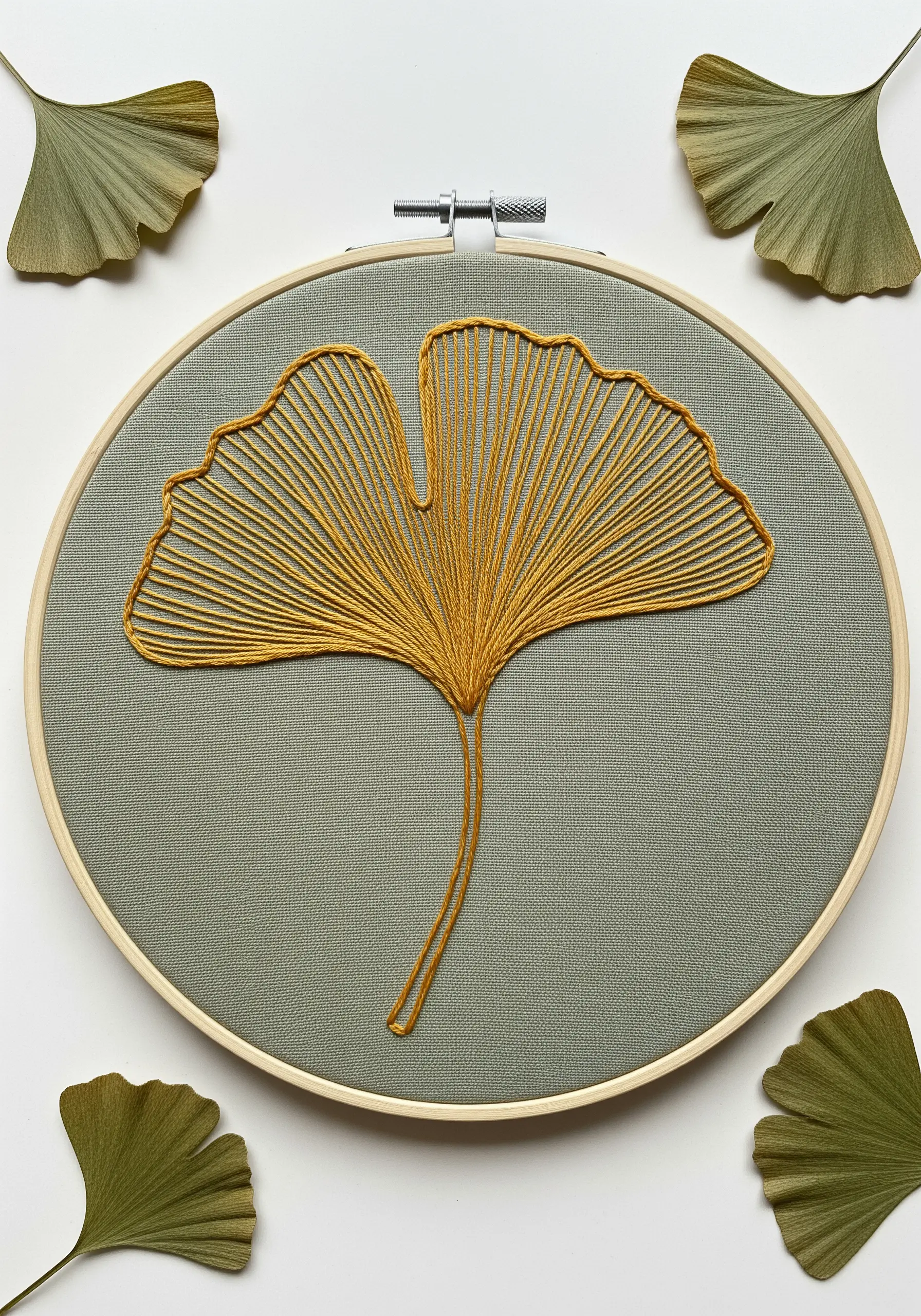
Create the illusion of a curved, fanned shape using only straight stitches by carefully controlling your anchor points.
To form a ginkgo leaf, start every stitch from a single point at the base of the stem and radiate them outwards toward the leaf’s edge.
This technique not only fills the shape efficiently but also perfectly mimics the natural vein structure, creating a beautiful sense of growth, light, and movement.
21. Contained Energy: Filling an Outline with Texture
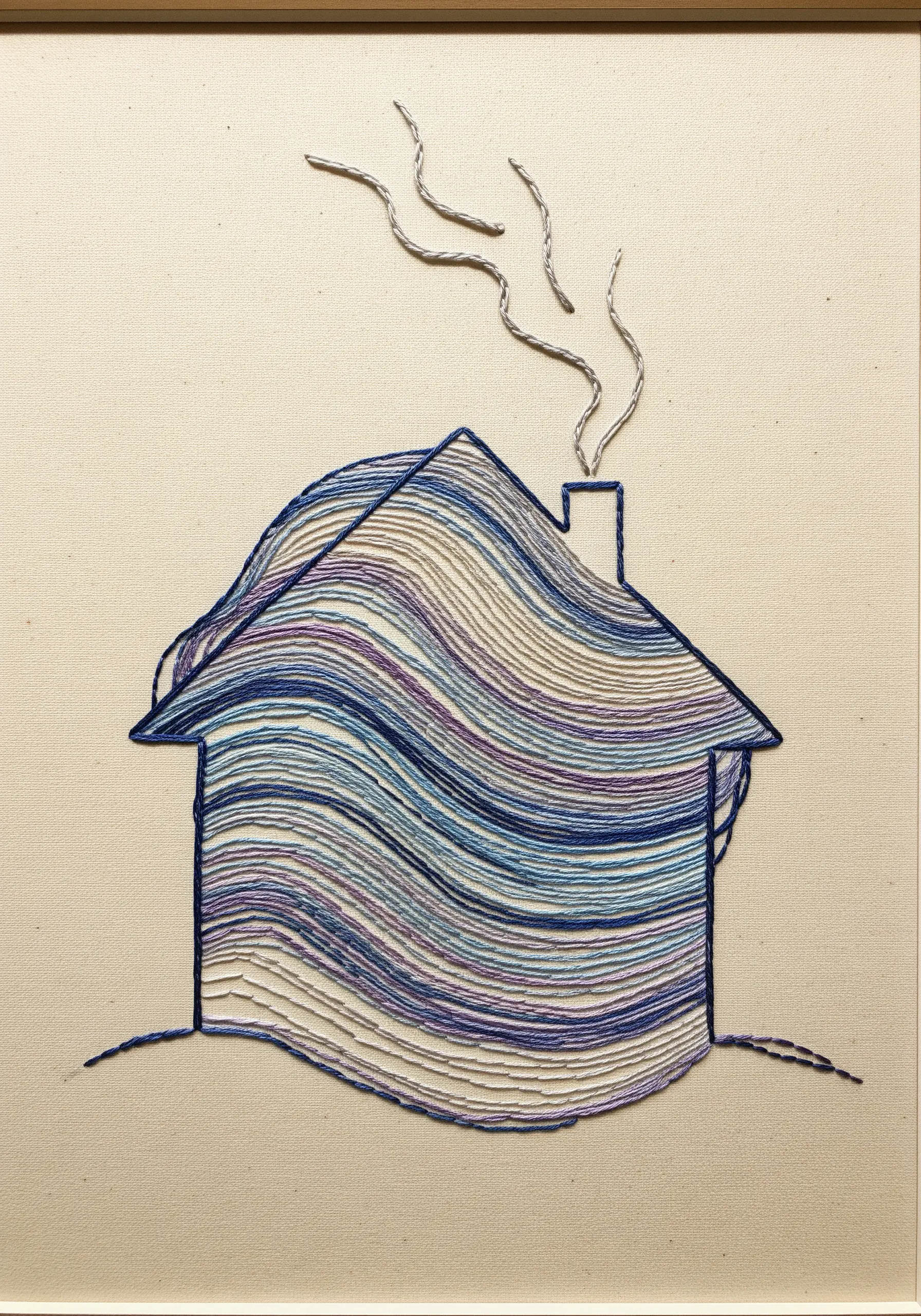
Create a visually compelling piece by contrasting a rigid outline with a dynamic, textured fill.
First, establish the simple shape of the house with a clean backstitch or stem stitch.
Then, fill the interior with free-flowing, wavy straight stitches, using variegated thread or multiple colors to create a sense of movement.
This contrast between a simple outline and a complex, textured fill makes the composition feel alive and energetic.
22. Beyond Thread: Sculptural Fiber Art
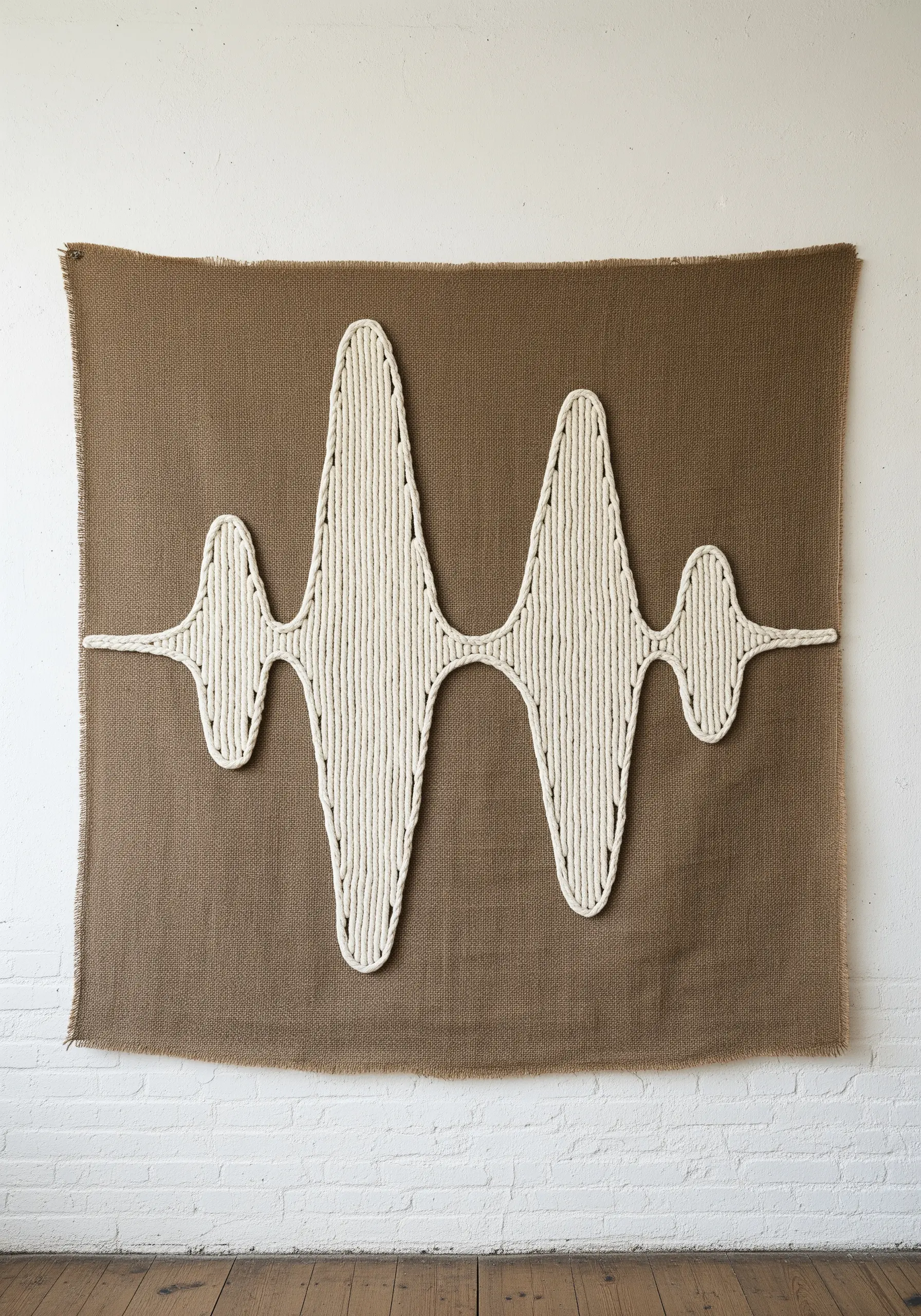
Elevate your line art into a three-dimensional statement piece by swapping embroidery floss for thick cotton rope.
Couch the rope onto a coarse, textural fabric like burlap, which provides a rustic and sturdy background.
To create the tightly wrapped sections, secure the rope in place, then wrap it with a thinner cord before continuing to tack it down.
Sculptural fiber art like this focuses on high-relief texture, creating a powerful tactile and visual impact.