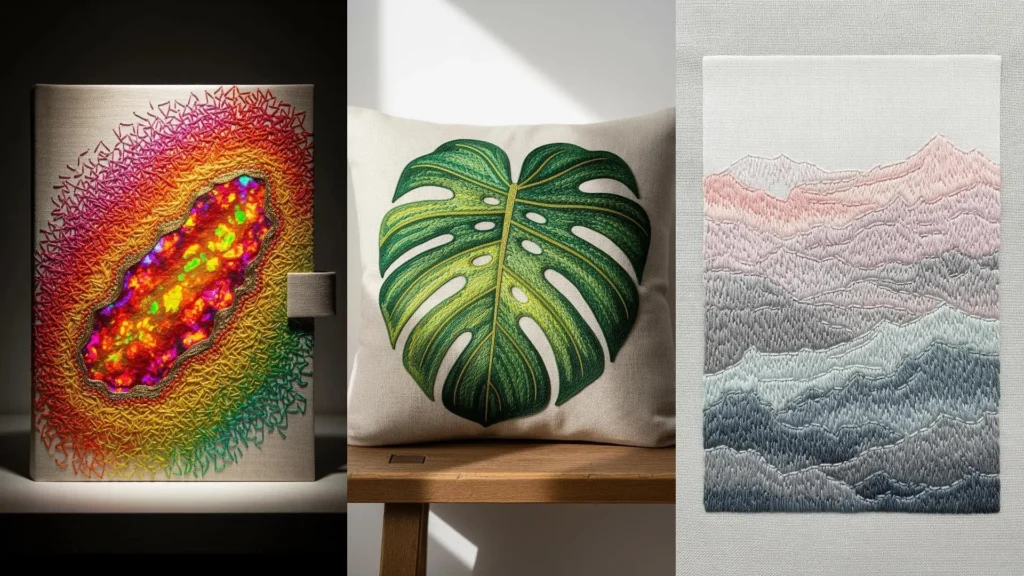
Metallic thread often feels intimidating—it can snag, unravel, or simply refuse to cooperate. But what if you saw it not as a difficult material, but as liquid gold in your hands? A tool for adding light, structure, and a touch of preciousness to your work that no other thread can replicate.
The secret isn’t in mastering complex stitches. It’s in understanding how to let the thread do what it does best: reflect light. It’s about choosing the right fabric to make it pop, the right stitch to let it lie smooth, and the right moment to let it stand as a bold, singular statement.
Here, you’ll find ways to use metallics with intention—to sculpt, to draw, to shimmer. Think of these ideas as starting points for transforming your embroidery from simple decoration into modern artwork that feels deliberate, polished, and uniquely yours.
1. Build a Mandala with Contrasting Metallic Textures
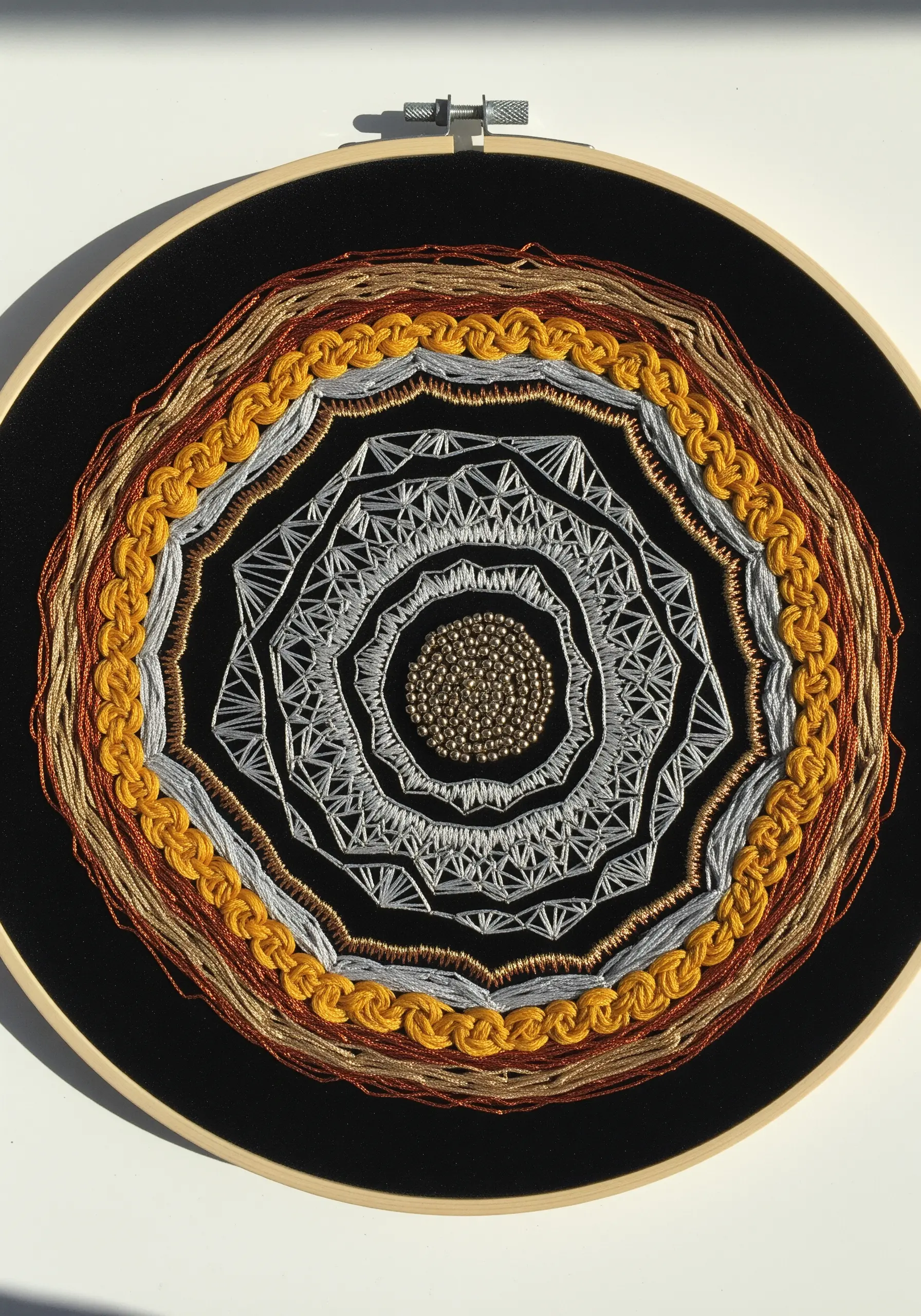
Create a mandala that feels rich and dimensional by layering different types of metallic threads and stitches.
Start with a core of metallic seed beads for a tight, reflective center.
For the surrounding rings, alternate between couching thick, twisted metallic cords and stitching geometric patterns with a fine, smooth metallic floss.
This contrast between a heavy, rope-like texture and delicate line work creates visual rhythm and makes the design feel like a handcrafted artifact.
Using a dark, matte fabric like black cotton drill makes the metallics appear even more luminous.
2. Render Architectural Blueprints with Precision Stitching
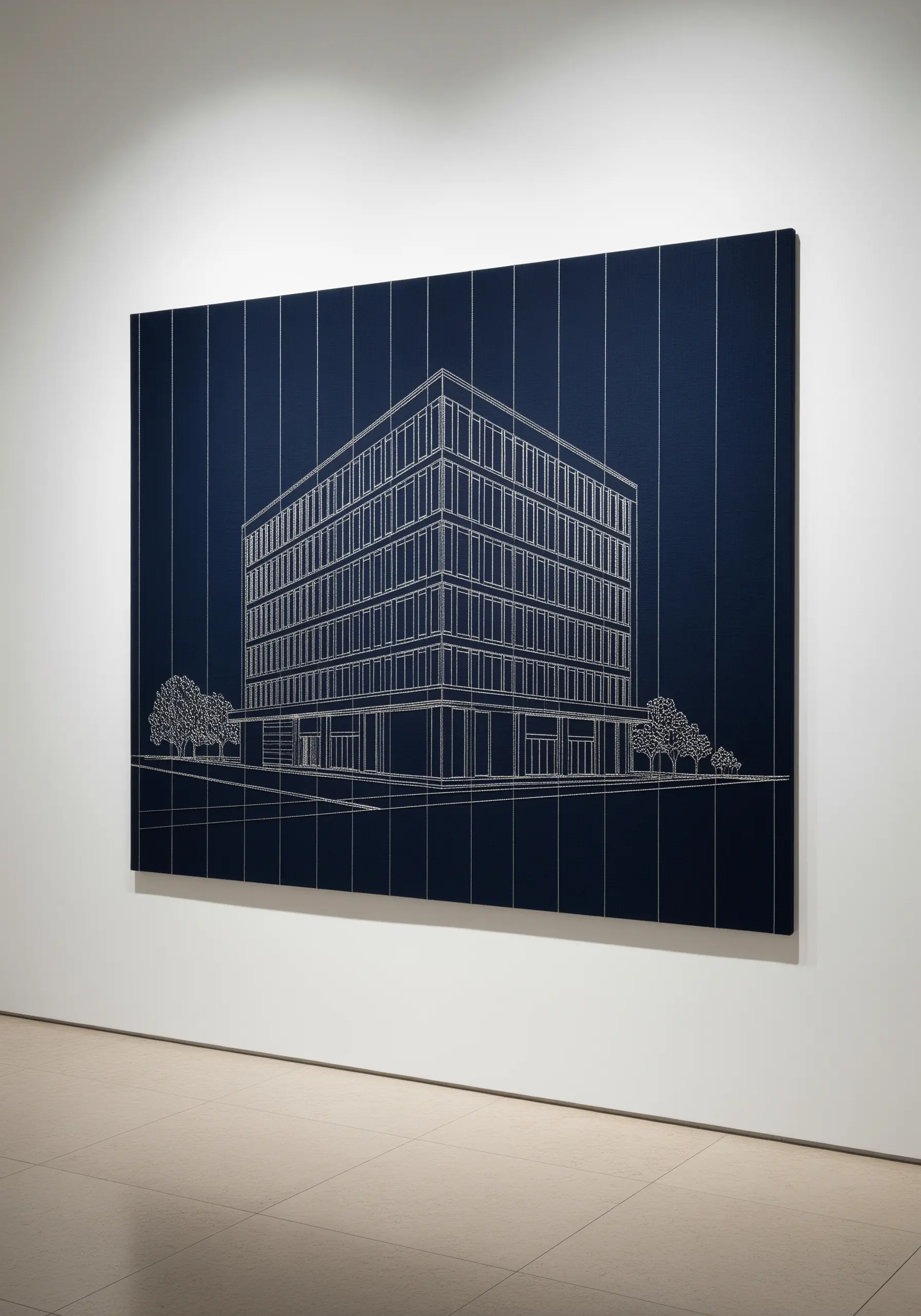
Translate the clean, technical lines of architectural drawings into sophisticated textile art.
Use a single strand of fine, bright silver metallic thread on a deep navy or black canvas for a high-contrast blueprint effect.
To keep your lines perfectly straight and prevent puckering, apply a stick-on, wash-away stabilizer to the front of your fabric.
Stitch directly through your printed pattern and the stabilizer, then dissolve it afterward—this ensures every line is crisp and every corner is sharp.
This method transforms simple backstitching into a polished, graphic statement.
3. Sculpt Three-Dimensional Forms with Metallic Wire
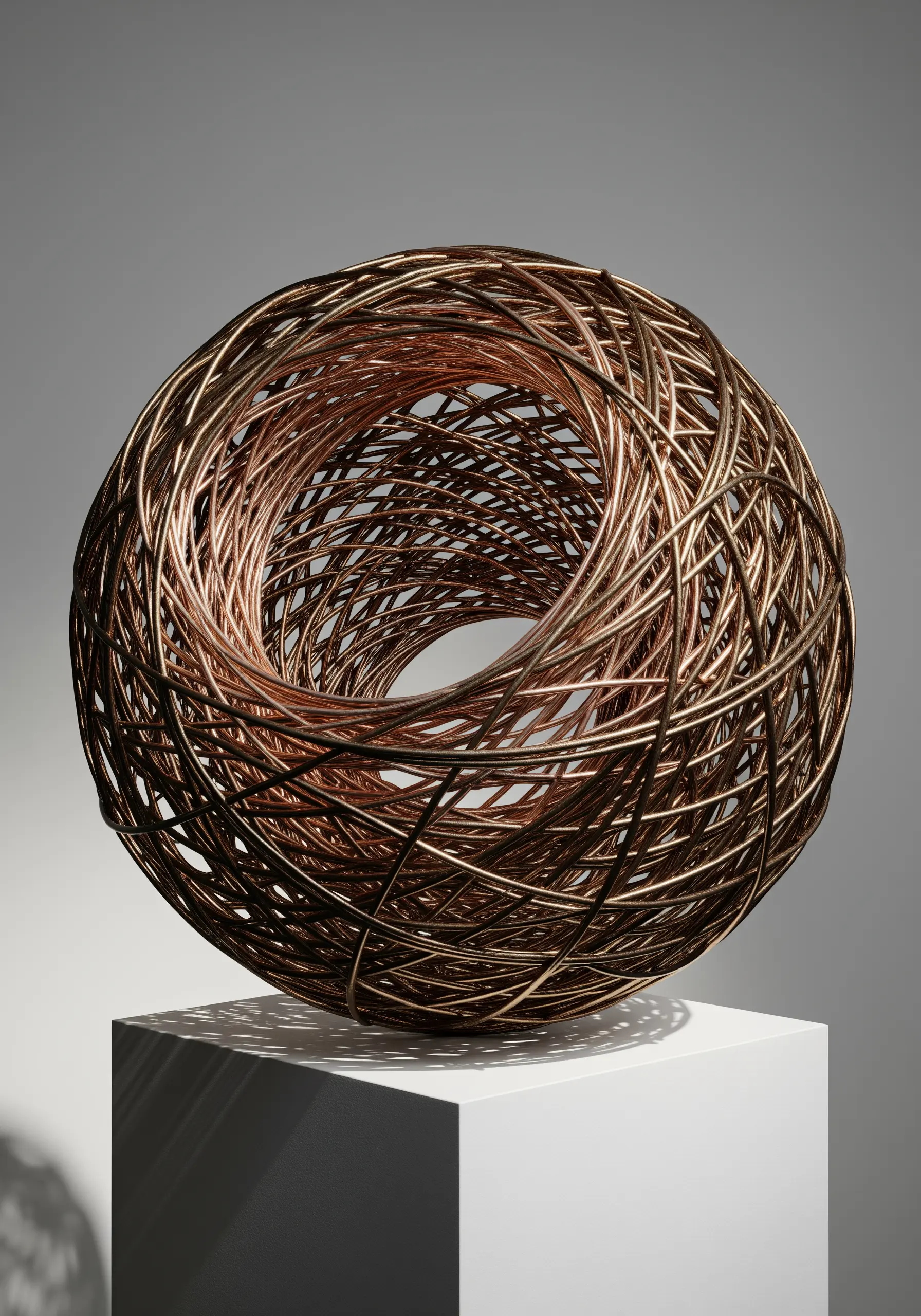
Move your embroidery off the canvas by using stiff metallic wire or gimp to create self-supporting shapes.
Begin by anchoring the wire securely to a sturdy fabric base, stitching it down with a matching, finer metallic thread.
Then, bend and weave the wire into an open, nest-like structure, allowing it to hold its own form without filler stitches.
This technique turns thread into a sculptural medium, perfect for creating abstract thread sculpt designs that play with light, shadow, and negative space.
4. Weave Metallic Threads Through Sheer Fabrics
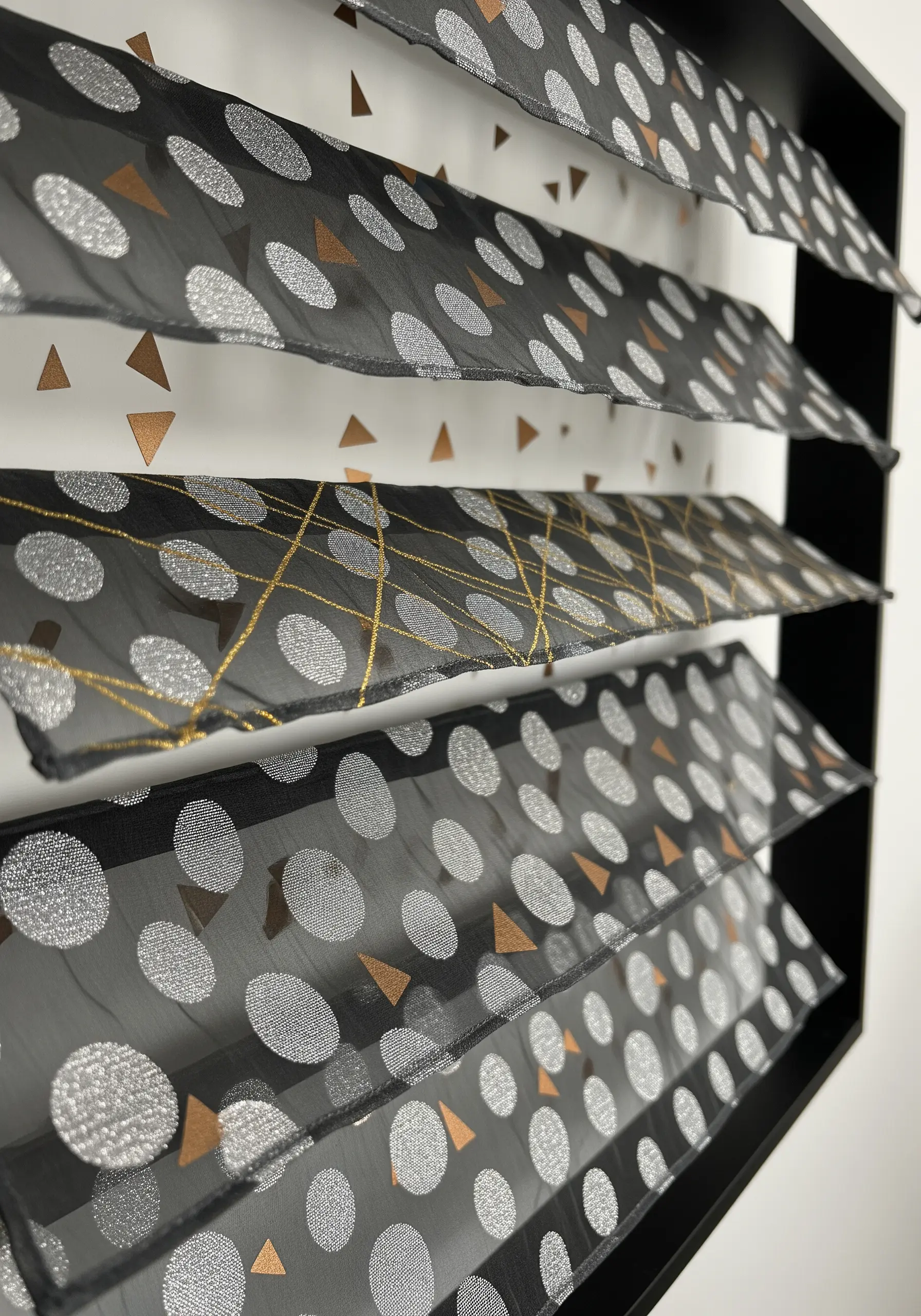
Create an illusion of floating geometry by stitching on transparent fabric like organza or tulle.
Stretch sheer fabric panels within a frame and use a simple running stitch with gold metallic thread to create delicate, intersecting lines.
The transparency of the fabric makes the metallic stitches appear suspended in mid-air.
You can layer multiple embroidered panels to build depth and create complex, moiré-like patterns that shift as the viewer moves.
This is a beautiful way to explore light and shadow in your work.
5. Visualize Sound with a Metallic Thread Soundwave
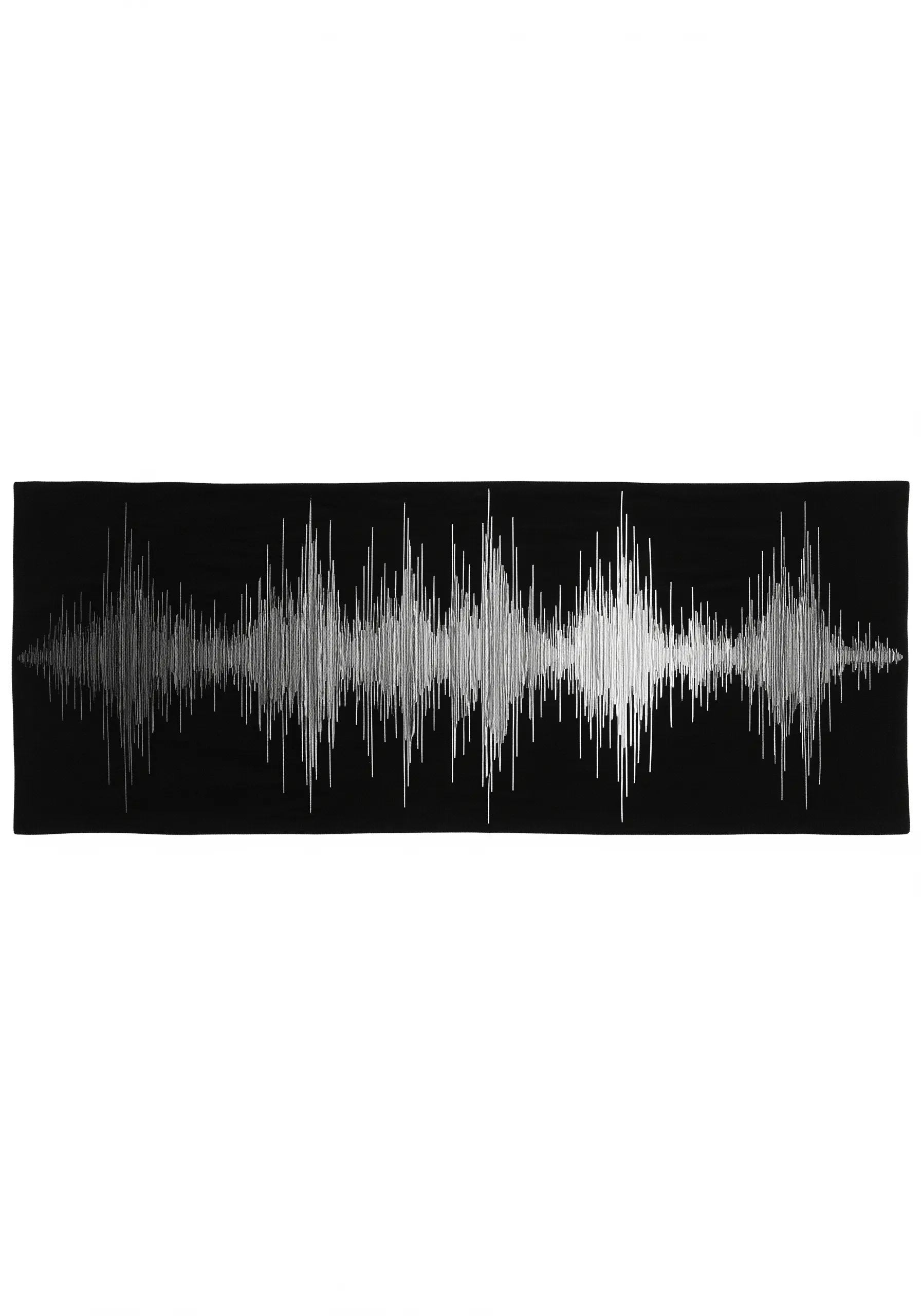
Translate a personal audio clip—like a favorite song or a loved one’s voice—into a striking piece of minimalist art.
Use a soundwave generator app to create a visual of your audio, then transfer the pattern onto black fabric.
Stitch the soundwave using a single strand of silver metallic thread and dense, straight stitches of varying lengths.
The metallic thread against the dark background creates a sharp, graphic representation of sound, turning an intangible memory into a modern, meaningful artifact.
6. Emulate Kintsugi with Couched Gold Thread
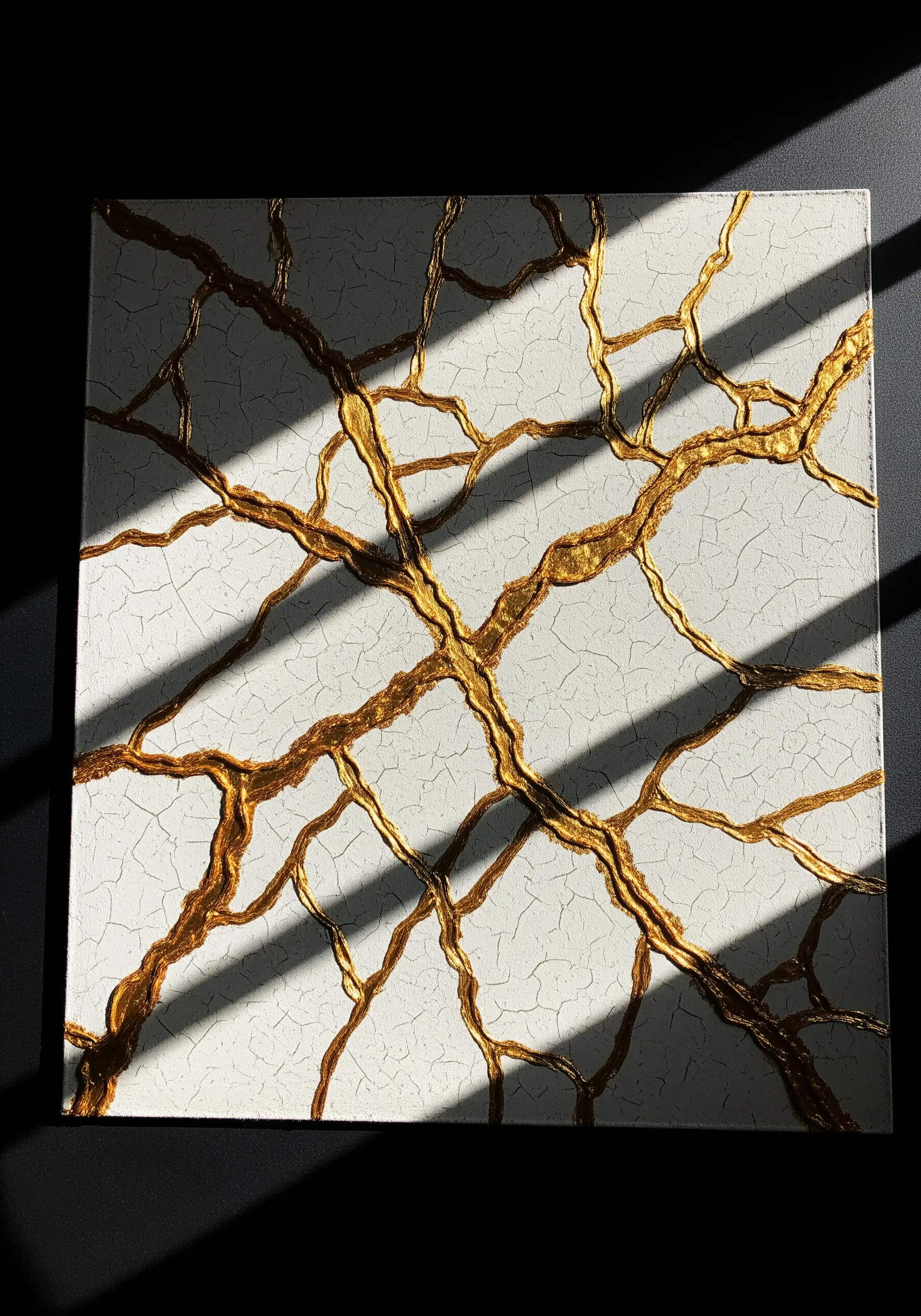
Channel the Japanese art of repairing broken pottery by creating a ‘mended’ textile surface.
Start with a piece of fabric that has a textured, crackled finish—you can achieve this by painting the fabric with gesso and letting it crack as it dries.
Then, lay a heavy gold metallic cord along the cracks and couch it down with a fine, matching thread.
Vary the thickness of your couched lines to mimic the way golden lacquer would pool in a real ceramic repair, celebrating imperfection and history.
7. Design a Minimalist Circuit Board
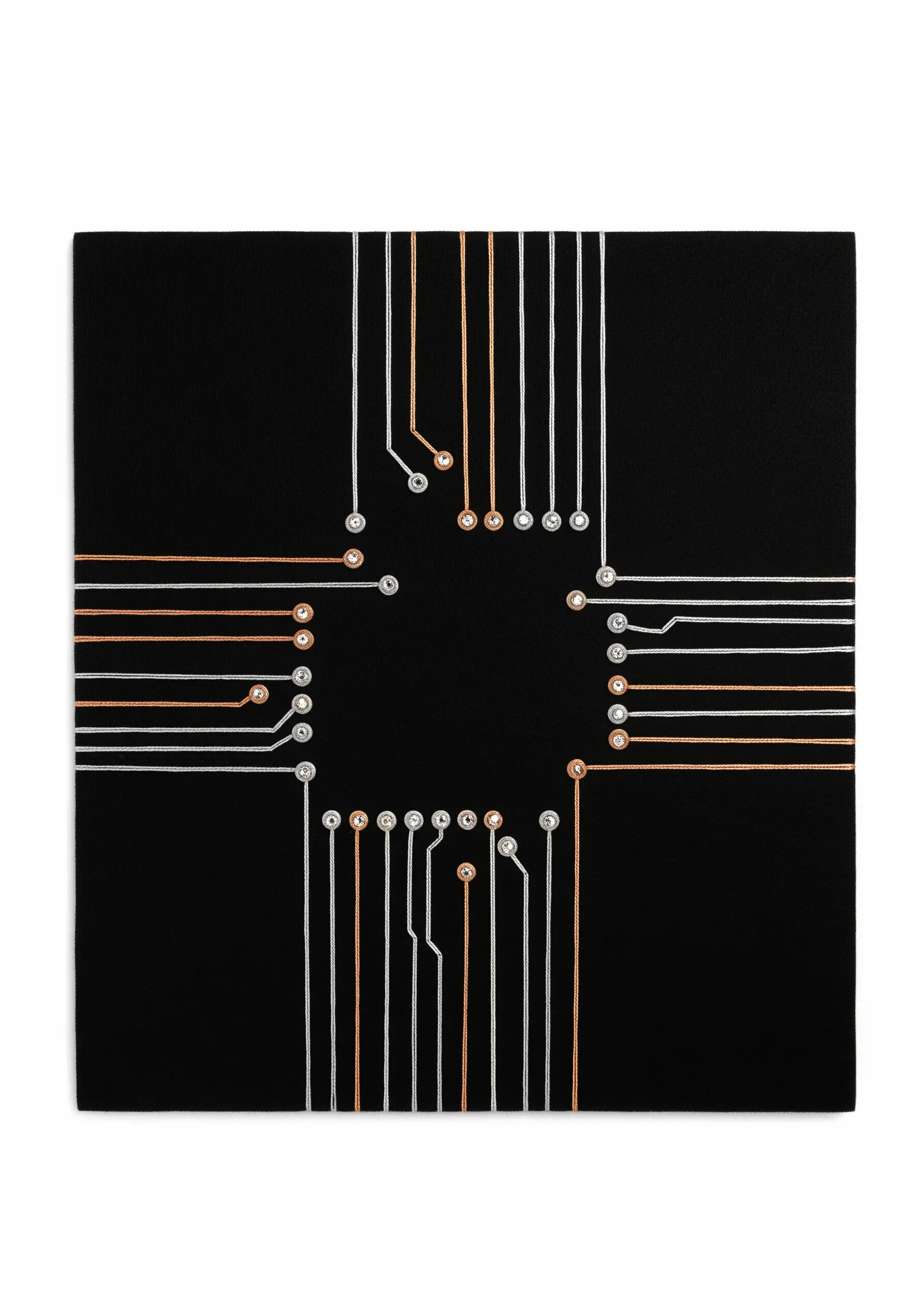
Transform the functional beauty of a circuit board into a sleek, graphic embroidery pattern.
On a black canvas, use backstitch or stem stitch with silver, copper, and white threads to create clean pathways and connection points.
For the solder points, use small, tightly packed French knots in a bright silver metallic thread to give them a raised, bead-like appearance.
This project merges a tech aesthetic with a traditional craft, creating a piece of minimalist thread art that is both precise and visually satisfying.
8. Stitch Celestial Maps on Velvet

Capture the magic of the night sky by embroidering constellations onto deep blue velvet.
The plush texture of velvet absorbs light, making your metallic threads shine with exceptional brilliance.
Use a single strand of a fine, bright silver metallic thread for the delicate connecting lines (backstitch) and tiny seed stitches or French knots for the stars.
For a truly ethereal effect, paint a faint, watercolor-like nebula onto the fabric first using textile paints, creating a dreamy, embroidery mixed media backdrop for your stitched stars.
9. Create Molten Drips with Puffy Paint and Couching
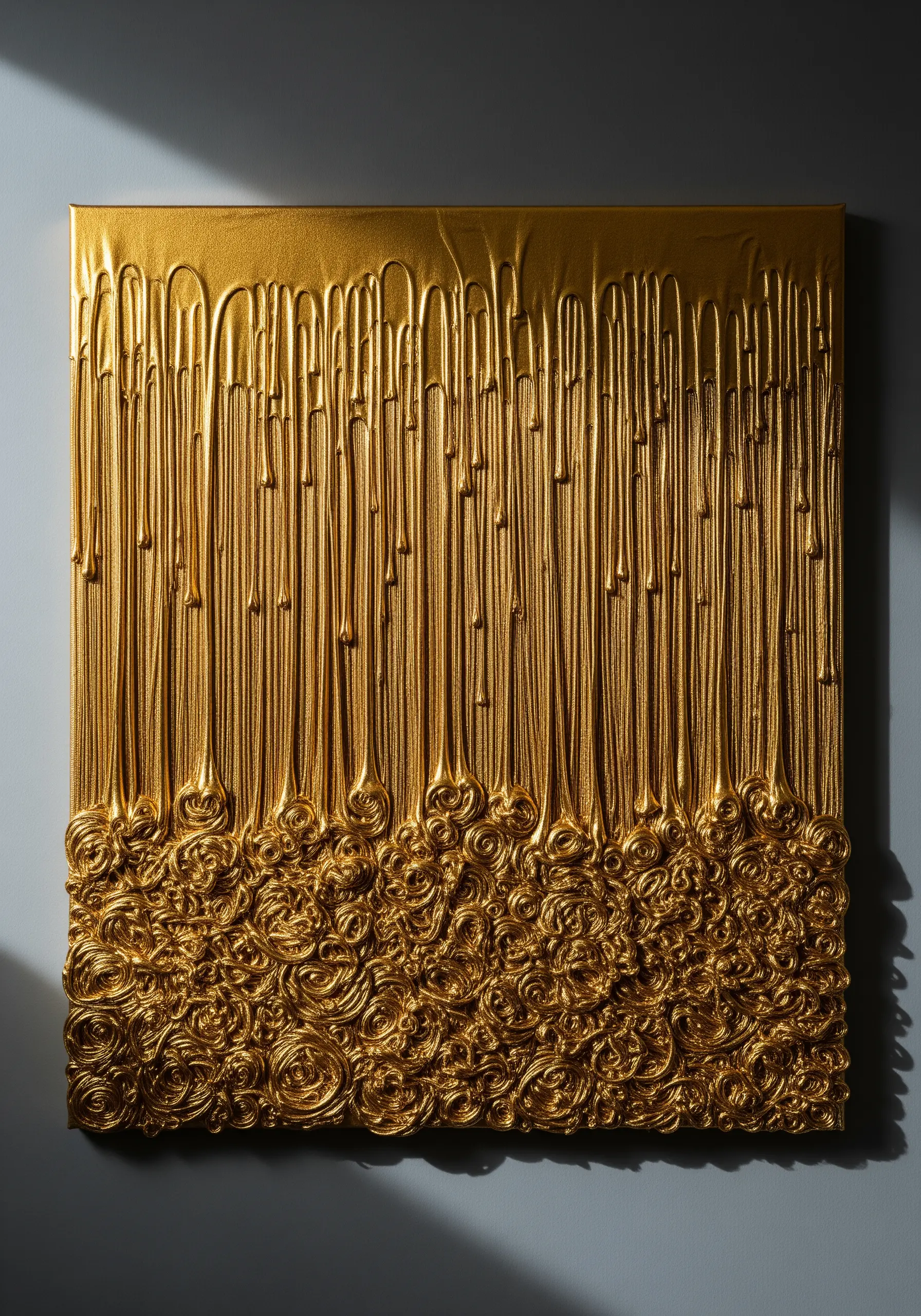
Achieve a three-dimensional, liquid gold effect by combining thread with a dimensional medium.
First, create the drips and swirls on your canvas using gold puffy paint or a thick acrylic gel medium.
Once it’s completely dry, lay a high-shine gold metallic cord directly on top of the raised lines.
Couch the cord into place with a fine, invisible thread, ensuring it follows every curve perfectly. This technique gives your work a heavy, molten texture that feels both luxurious and sculptural.
10. Appliqué Metallic-Infused Fabrics for Graphic Impact
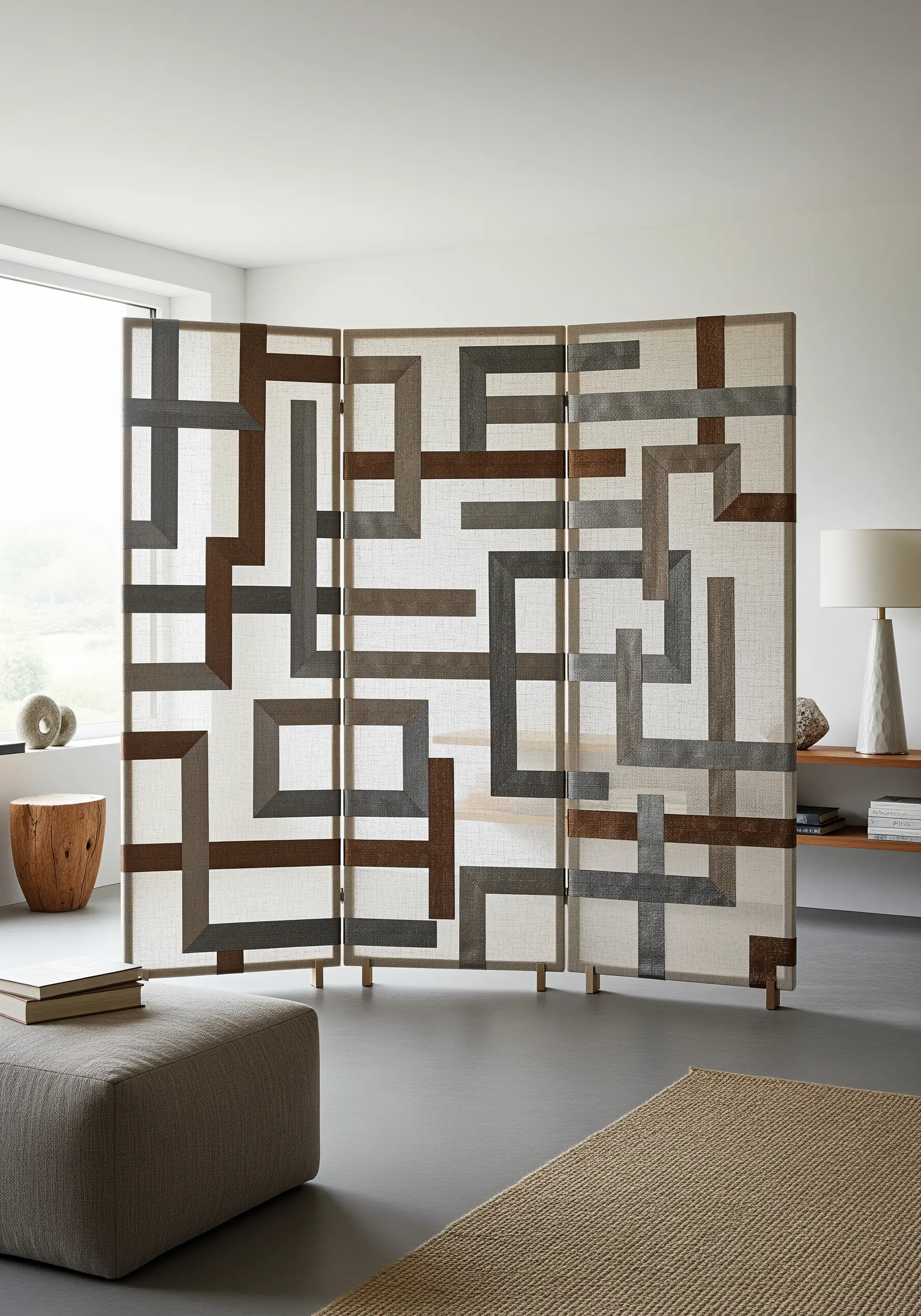
Instead of stitching solid shapes, use fabric appliqué for bold, clean geometric designs.
Choose linen or cotton fabrics that have metallic threads woven into them, offering a subtle shimmer without the difficulty of stitching large filled areas.
Cut your geometric shapes, iron on a fusible backing for clean edges, and arrange them on a lightweight, semi-sheer base fabric.
Stitch the edges down with a simple running stitch in a matching matte thread to let the fabric itself be the focus.
11. Map Topography with Metallic Seed Beads
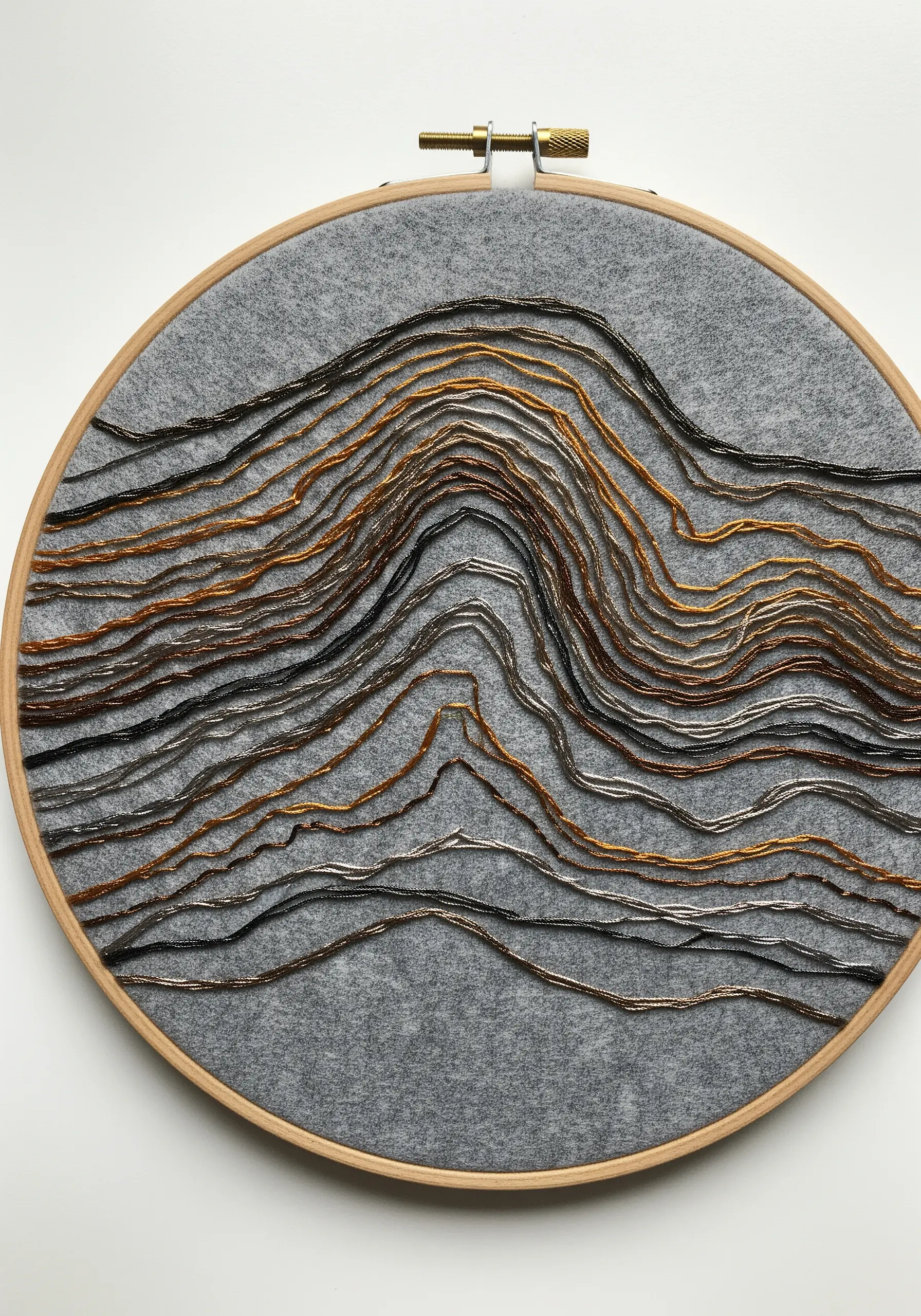
Translate the contour lines of a topographic map into a tactile, shimmering landscape.
Instead of thread, stitch your contour lines using tiny metallic seed beads in shades of bronze, gunmetal, and silver.
Working on a soft, matte fabric like gray felt provides a perfect neutral background and is easy to stitch through.
The subtle variations in bead color will create a sense of depth and shadow, turning a simple map into a piece of abstract art with a beautiful, light-catching texture.
12. Craft a Jeweled Insect with Wire and Crystals
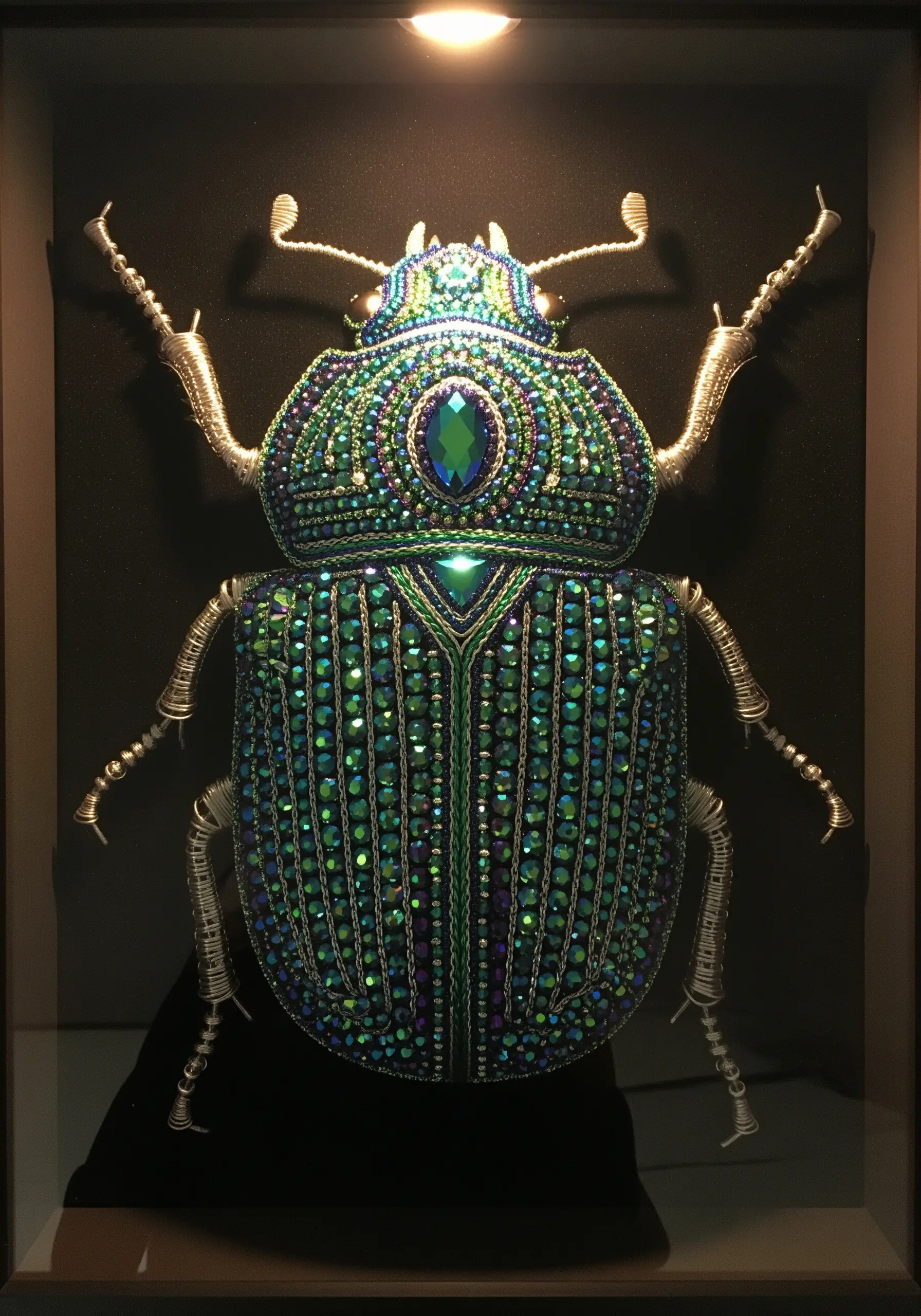
Construct an intricate, three-dimensional beetle that looks like a piece of high-end jewelry.
Create the legs and antennae by wrapping fine silver metallic thread around a heavier gauge wire, which allows you to bend them into realistic positions.
For the body, outline sections with couched metallic cord and fill them with a dense mosaic of crystals, beads, and metallic French knots.
This transforms your embroidery into a stunning piece of handmade embroidered jewelry, best displayed in a shadow box to protect its delicate dimension.
13. Illustrate a Cityscape with Metallic French Knots
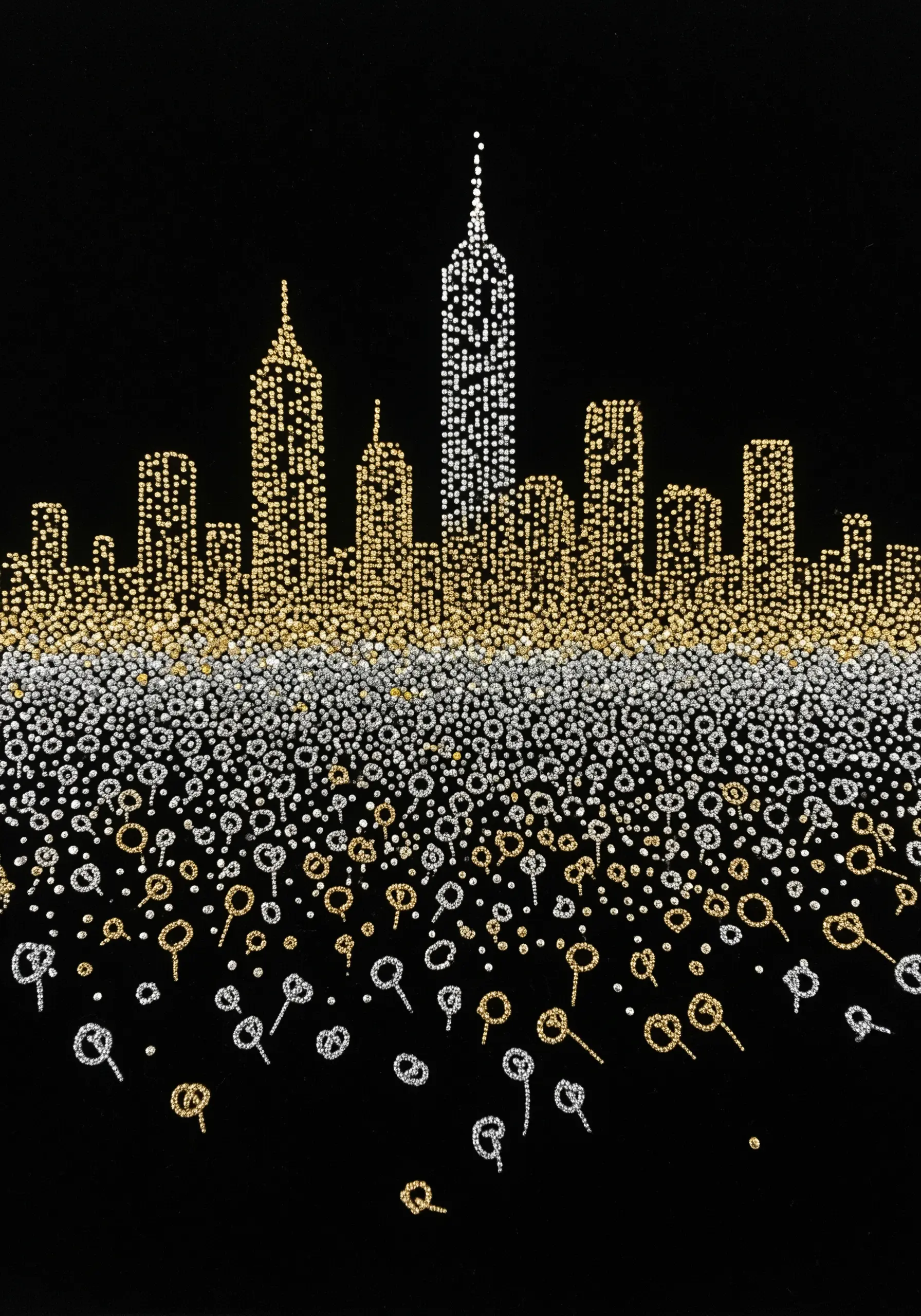
Build a sparkling city skyline using pointillism-inspired stitch work.
Outline your buildings on black fabric, then fill them with thousands of tiny French knots in gold and silver metallic threads.
Use a denser concentration of knots for the solid buildings and scatter them more loosely toward the bottom to create a sense of dissolving light or reflections.
This technique creates a gorgeous, shimmering texture that catches the light from every angle, turning a simple silhouette into a vibrant, dynamic scene.
14. Stitch a Starburst with a Metallic Gradient
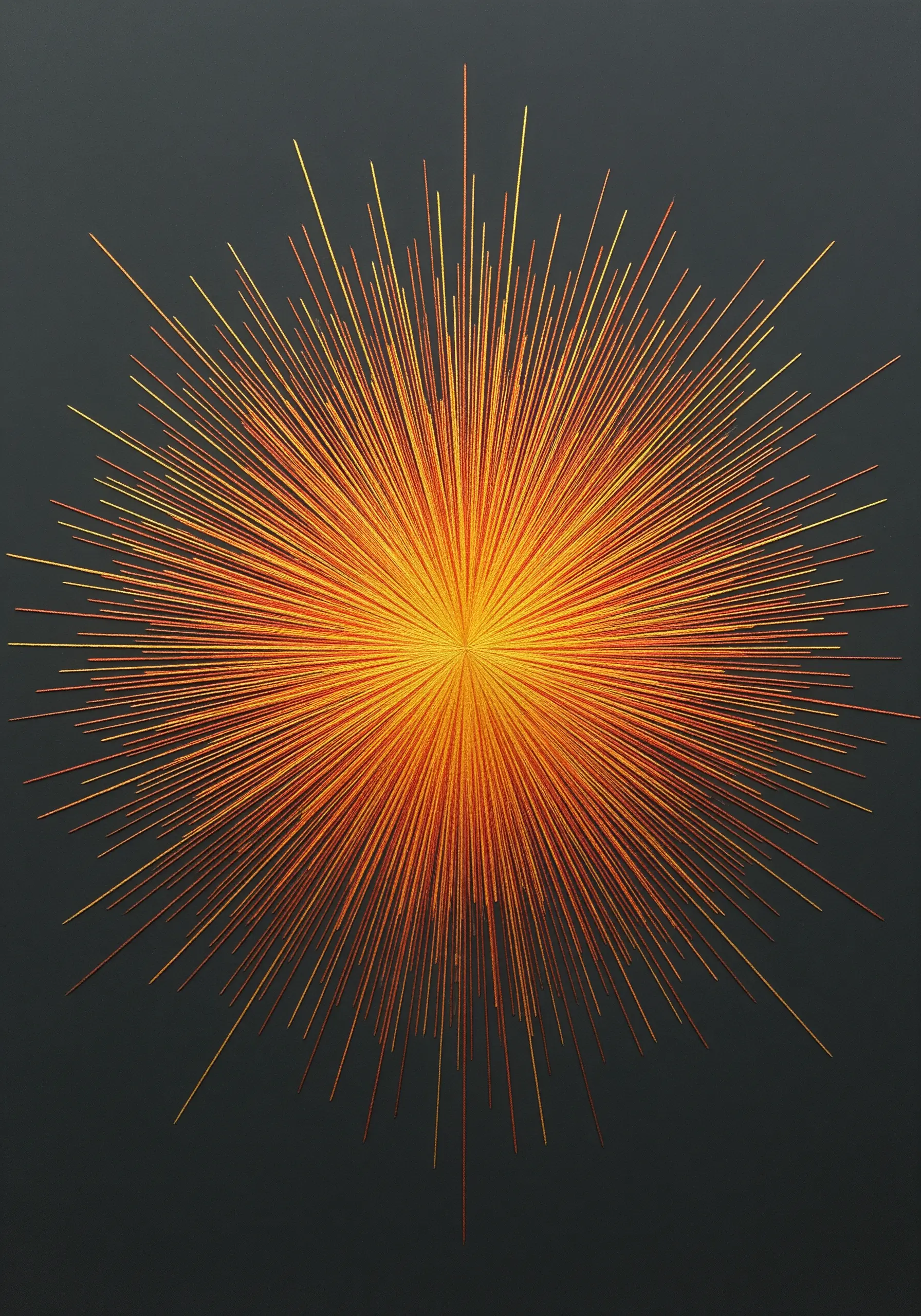
Create a powerful illusion of radiating light using carefully blended metallic threads.
Start at the center with a bright yellow or pale gold thread, stitching long, straight stitches outward.
Gradually introduce orange and then deep red metallic threads as you move toward the edges of the burst.
To ensure a smooth transition, slightly overlap the stitches of different colors. This technique gives the static design a sense of kinetic energy and warmth, making it feel like it’s glowing from within.
15. Weave with Faux Metallic Leather
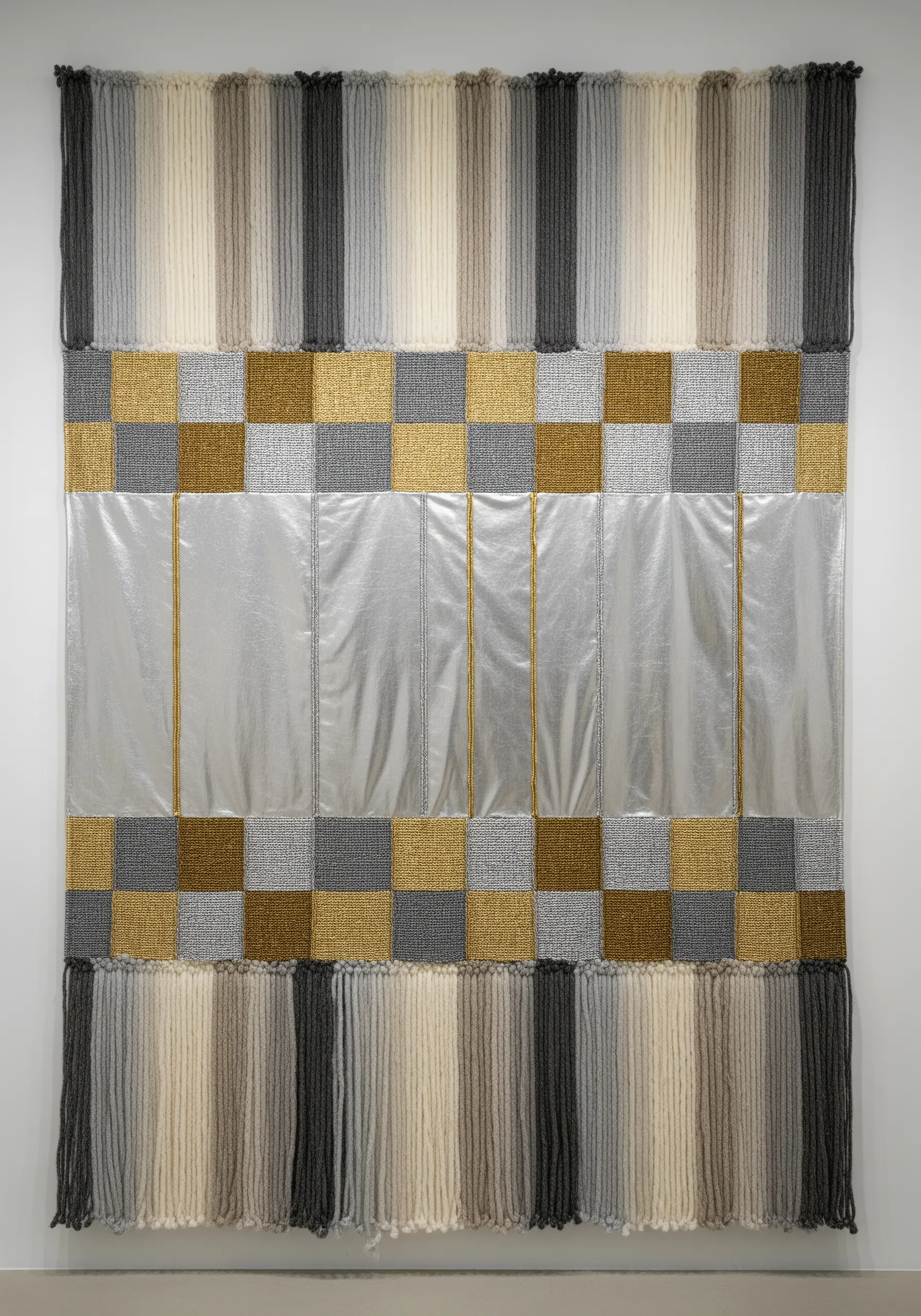
Incorporate unexpected materials by weaving strips of faux metallic leather directly into your textile art.
Combine traditional yarn weaving with wide, flat strips of silver or gold faux leather for a bold, modern look.
The smooth, reflective surface of the leather creates a dramatic contrast against the soft, matte texture of the yarn.
This mixed-fiber approach is perfect for large-scale wall hangings and adds an element of high-fashion construction to your work.
16. Create a Shattered Glass Effect with Metallic Vinyl
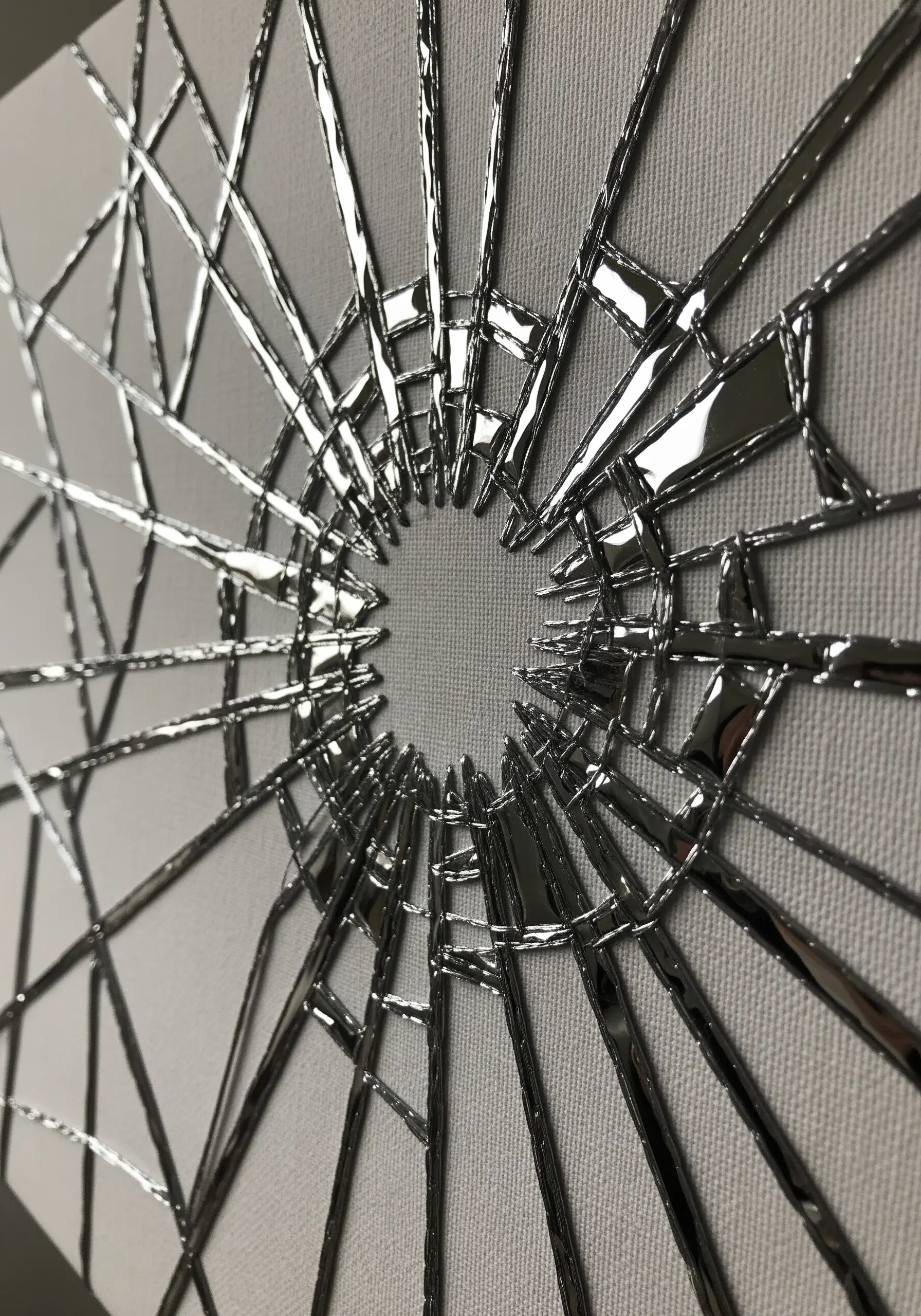
Mimic the sharp, reflective shards of broken glass using an unconventional material.
Cut fragments of silver metallic heat-transfer vinyl (HTV) and arrange them in a radial, shattered pattern on your canvas.
Use a hot craft iron to fuse them into place. The high-shine, mirror-like finish of the vinyl is impossible to achieve with thread alone and creates a dramatic, graphic effect that feels both fragile and dangerous.
This is a fast, no-sew way to add a powerful metallic element to your art.
17. Form Elegant Script with Wrapped Metallic Cord
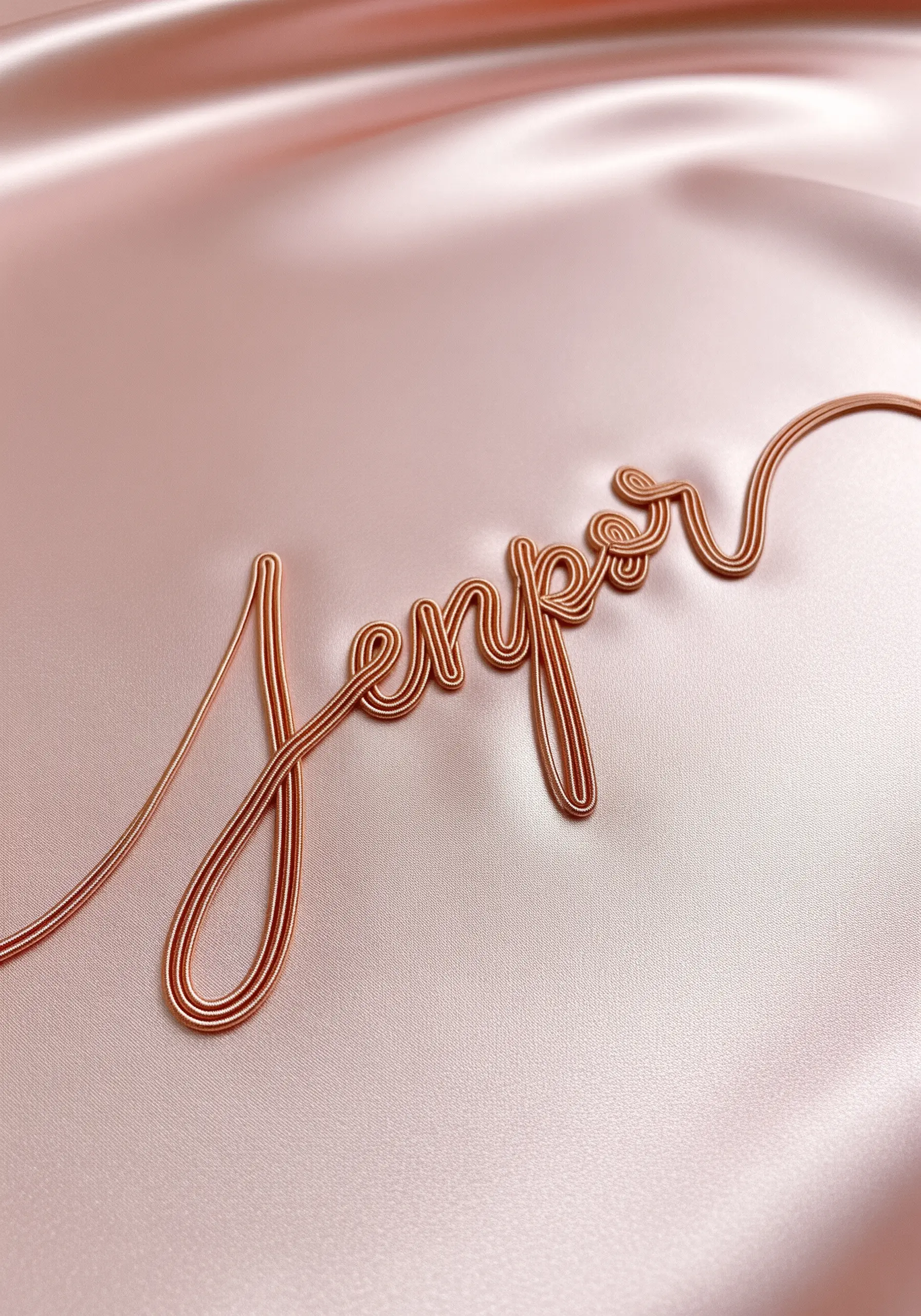
Achieve perfectly smooth, raised lettering by using a wire-wrapping technique.
First, bend a piece of craft wire into your desired word or name.
Then, tightly wrap the entire wire form with a single, continuous strand of fine metallic thread, securing the ends with a dab of glue.
Finally, stitch the finished word onto your fabric (like satin or silk) with a few discreet couching stitches. This method gives you flawless curves and a calligraphic elegance that is difficult to achieve with direct stitching.
18. Mimic Coral Structures with Dimensional Stitches
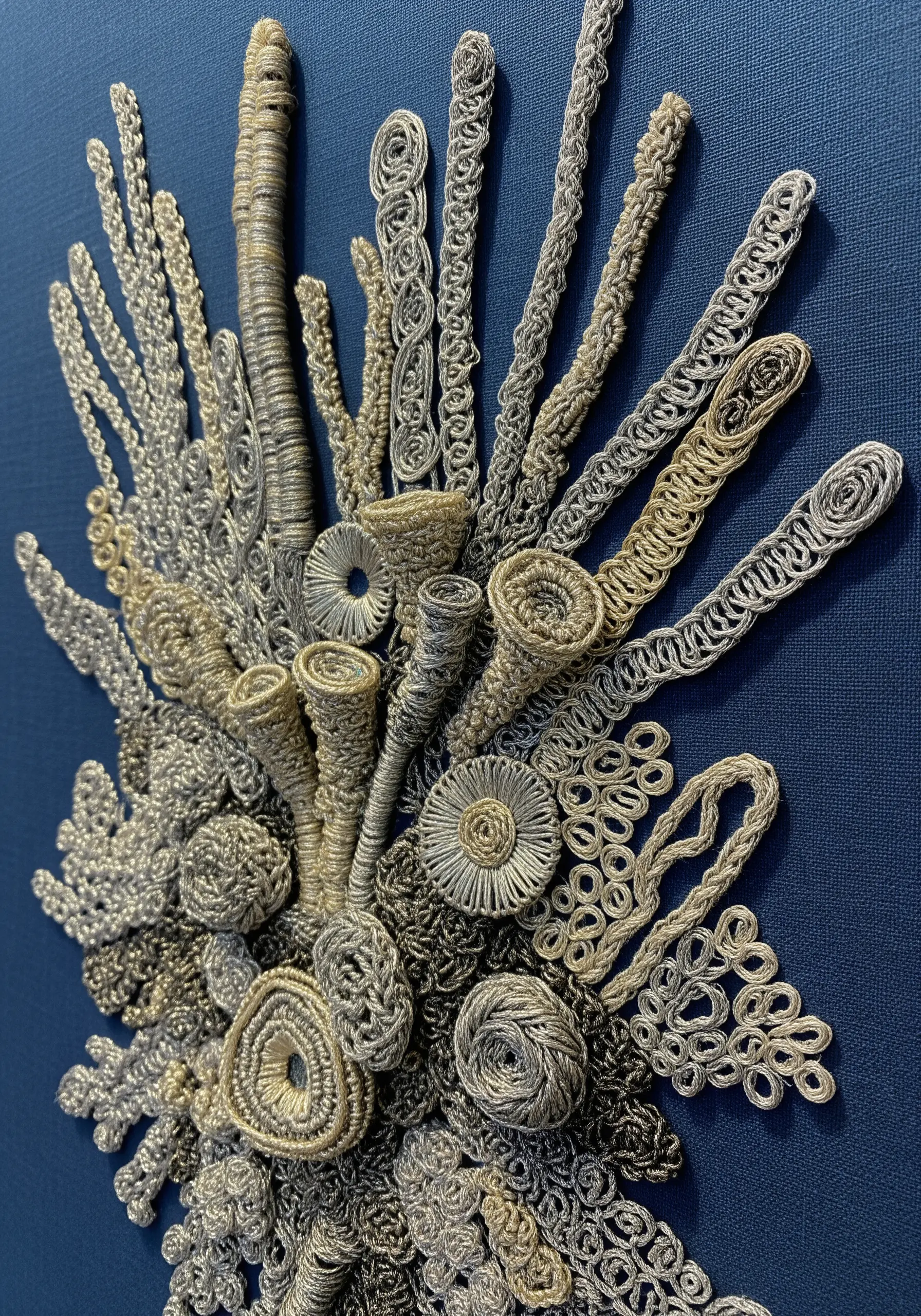
Build an undersea world by replicating the intricate textures of a coral reef.
Use a variety of dimensional stitches with silver and pewter metallic threads. Create branching forms with the cast-on stitch, tube-like shapes with bullion knots, and porous textures with dense clusters of French knots.
Experiment with different thread weights—a heavier gimp for the main structures and a finer floss for the delicate details—to create a rich, tactile ecosystem that invites closer inspection.
19. Explore Optical Illusions with String Art
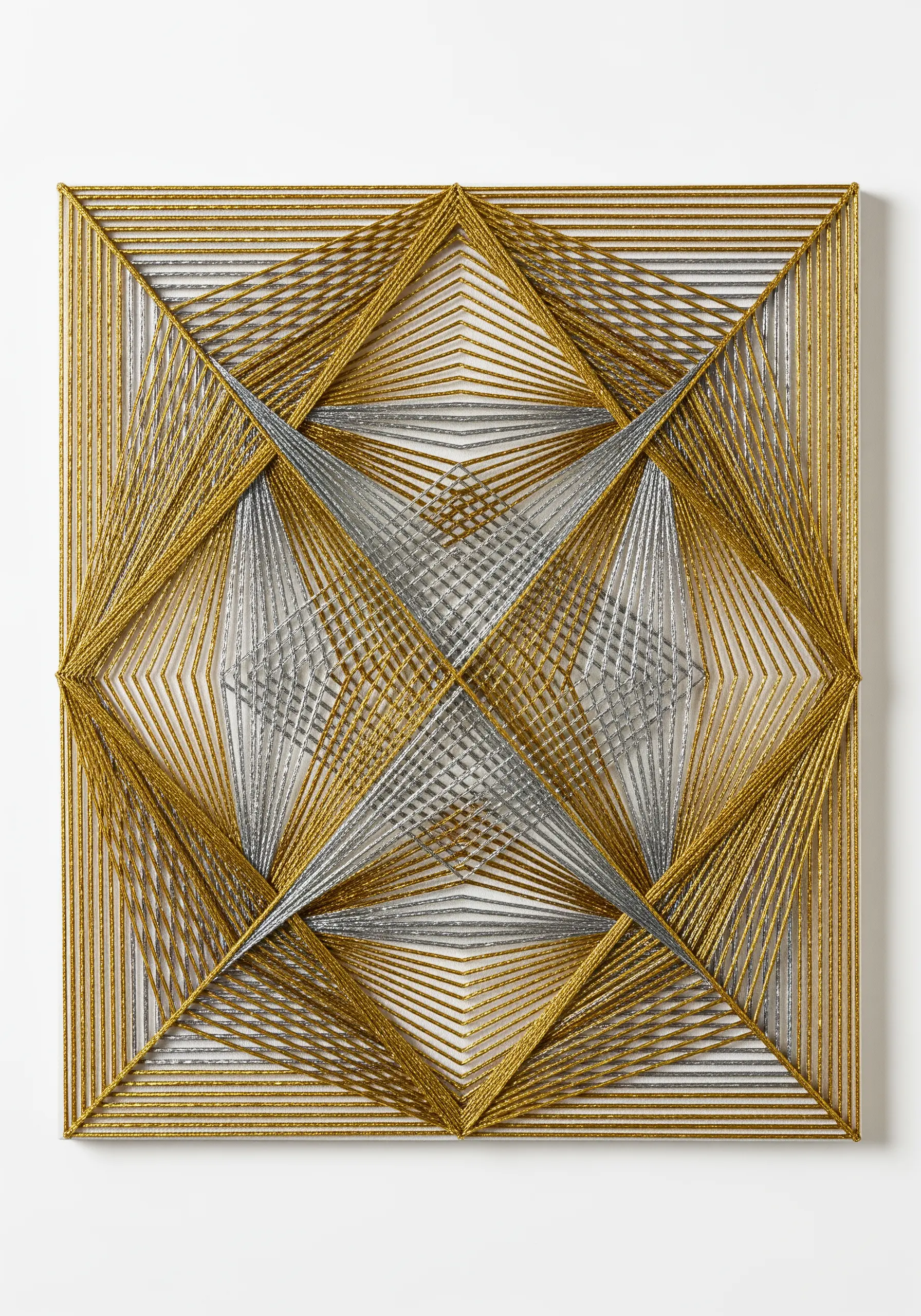
Create mesmerizing geometric patterns that seem to shift and move by adapting string art techniques to your canvas.
Instead of nails, use a grid of tiny, strong stitches as your anchor points around the edge of a shape.
Then, wrap metallic thread in straight lines from point to point, layering gold over silver to create overlapping patterns.
The precise, mathematical nature of the lines combined with the metallic sheen produces a hypnotic, almost three-dimensional effect.
20. Embroider an Art Deco Lampshade
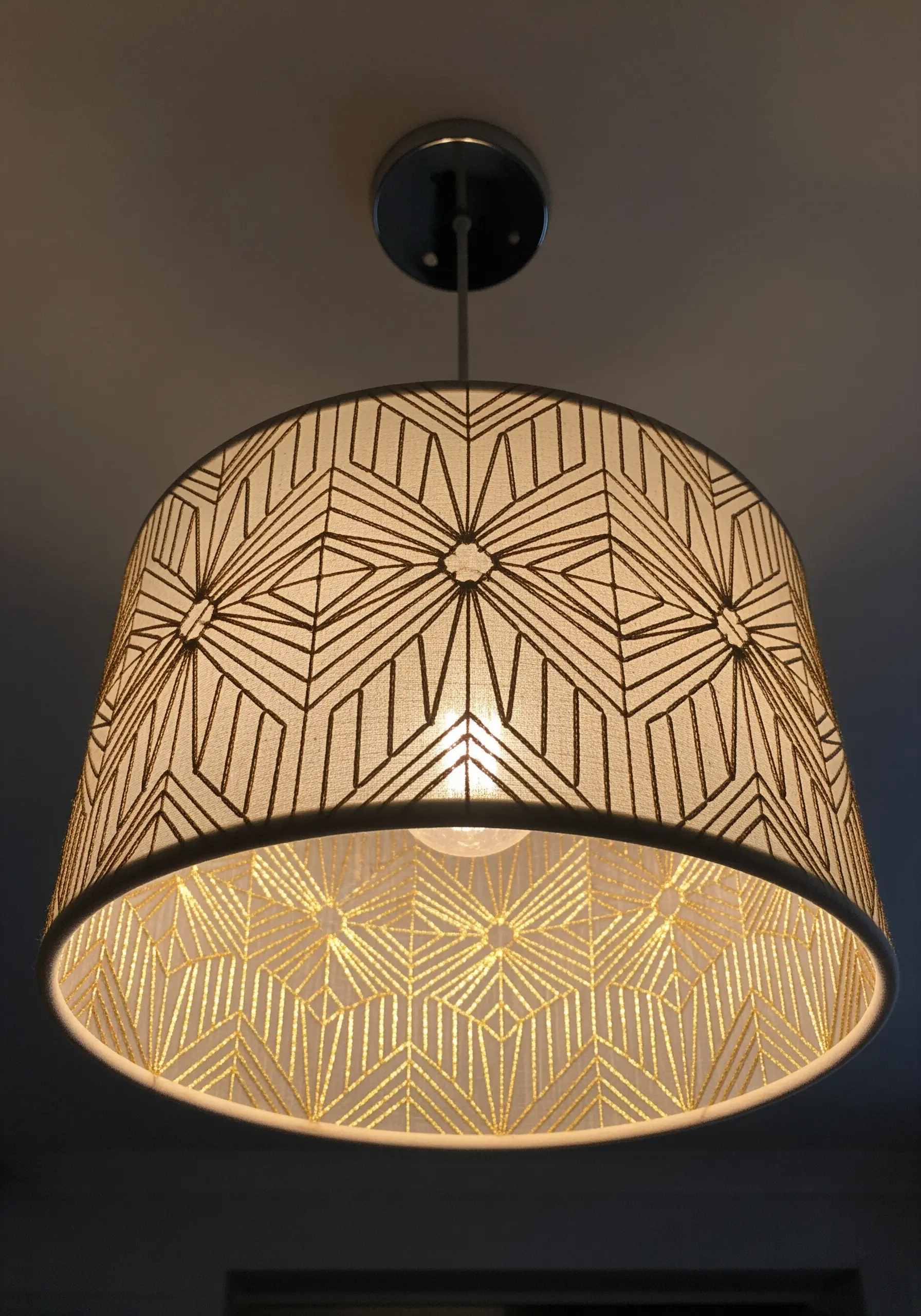
Turn a plain lampshade into a functional piece of art that truly comes to life when illuminated.
Choose a lampshade made from a light-colored, heat-safe fabric like linen or cotton.
Use a thick, high-sheen gold metallic thread to stitch a bold, Art Deco-inspired geometric pattern.
When the light is off, it’s an elegant decorative object. When it’s on, the light shines through the fabric, silhouetting the metallic embroidery and making the pattern glow from within.
21. Color-Block with Satin and Glitter Fabrics
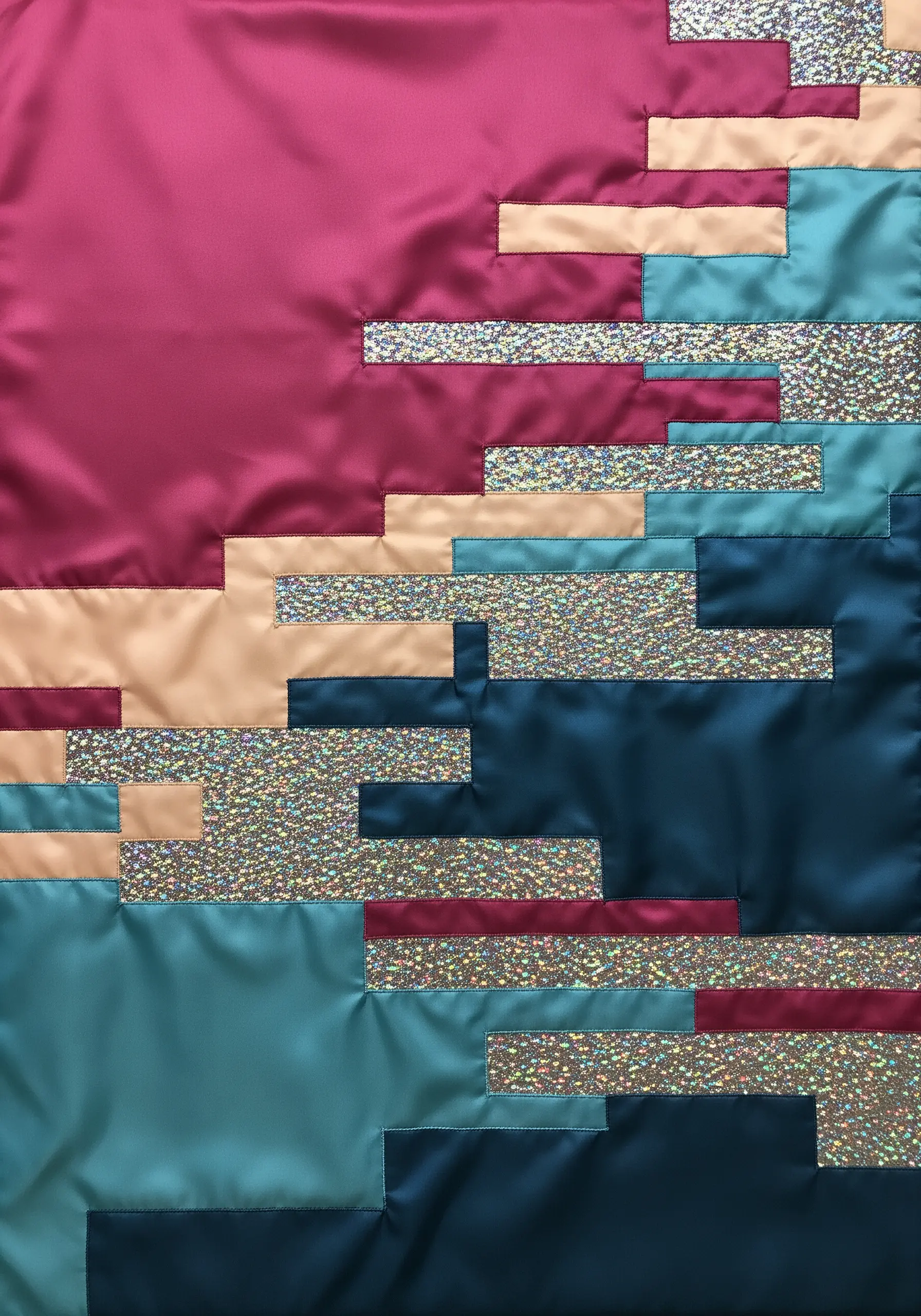
Create a modern, abstract composition by combining different fabric textures in a color-blocked design.
Instead of filling areas with thread, appliqué pieces of jewel-toned satin next to patches of iridescent, glitter-flecked fabric.
The interplay between the smooth sheen of the satin and the textured sparkle of the glitter creates a rich visual dynamic.
Use a simple machine stitch to join the pieces for a clean, graphic finish that emphasizes shape and material over intricate stitching.
22. Replicate Liquid Mercury with Raised Appliqué
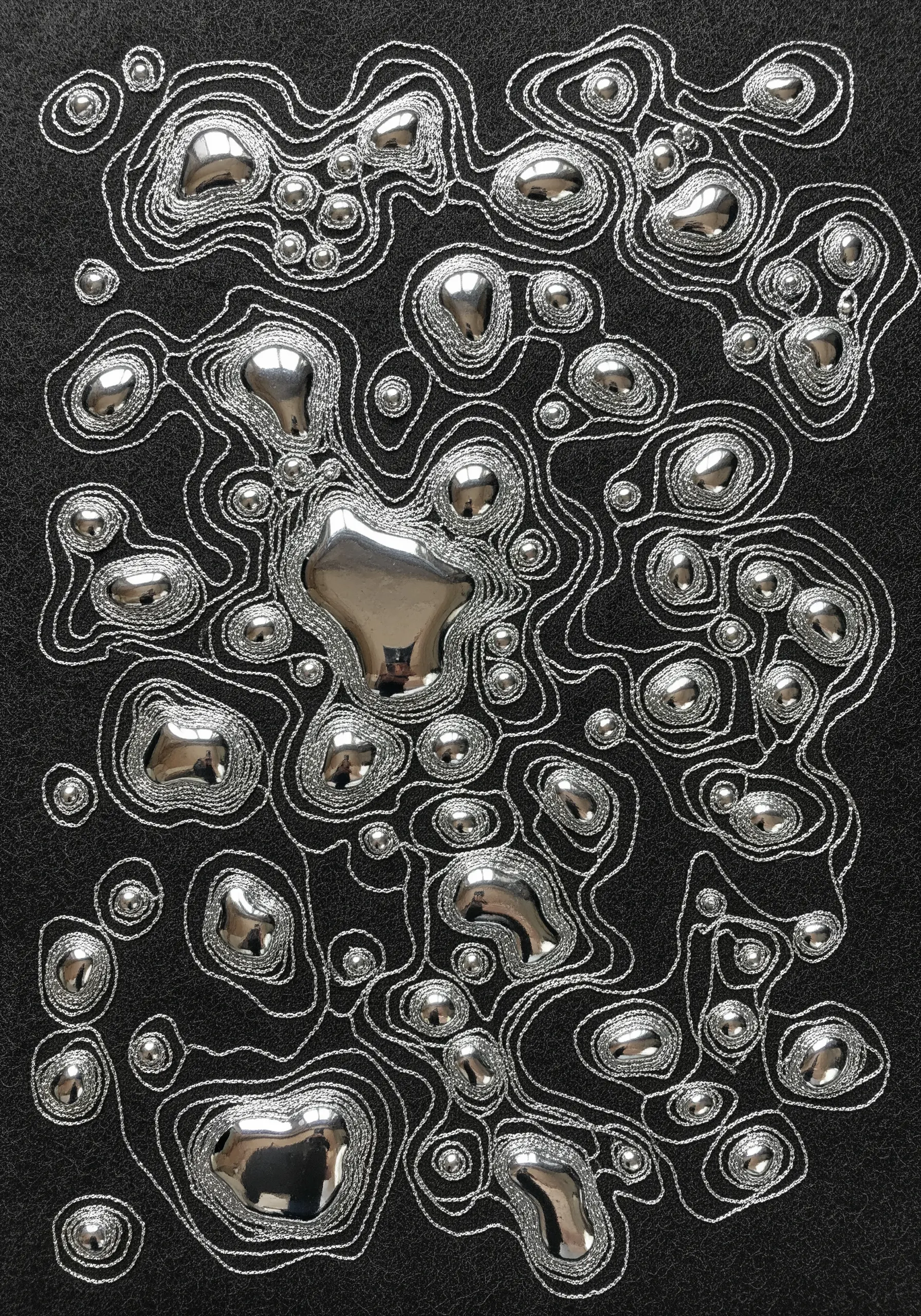
Create the look of pooling, molten metal using a combination of appliqué and contour stitching.
Cut organic, blob-like shapes from a high-shine silver lamé or faux leather fabric.
Before attaching them, place a thin layer of batting or felt underneath each shape to give it a soft, raised dimension.
Secure the shapes to a black felt background, then outline them with a fine, sparkling silver thread using a tight backstitch. This defines the edges and enhances the illusion of liquid depth.
23. Construct an Immersive Light Installation
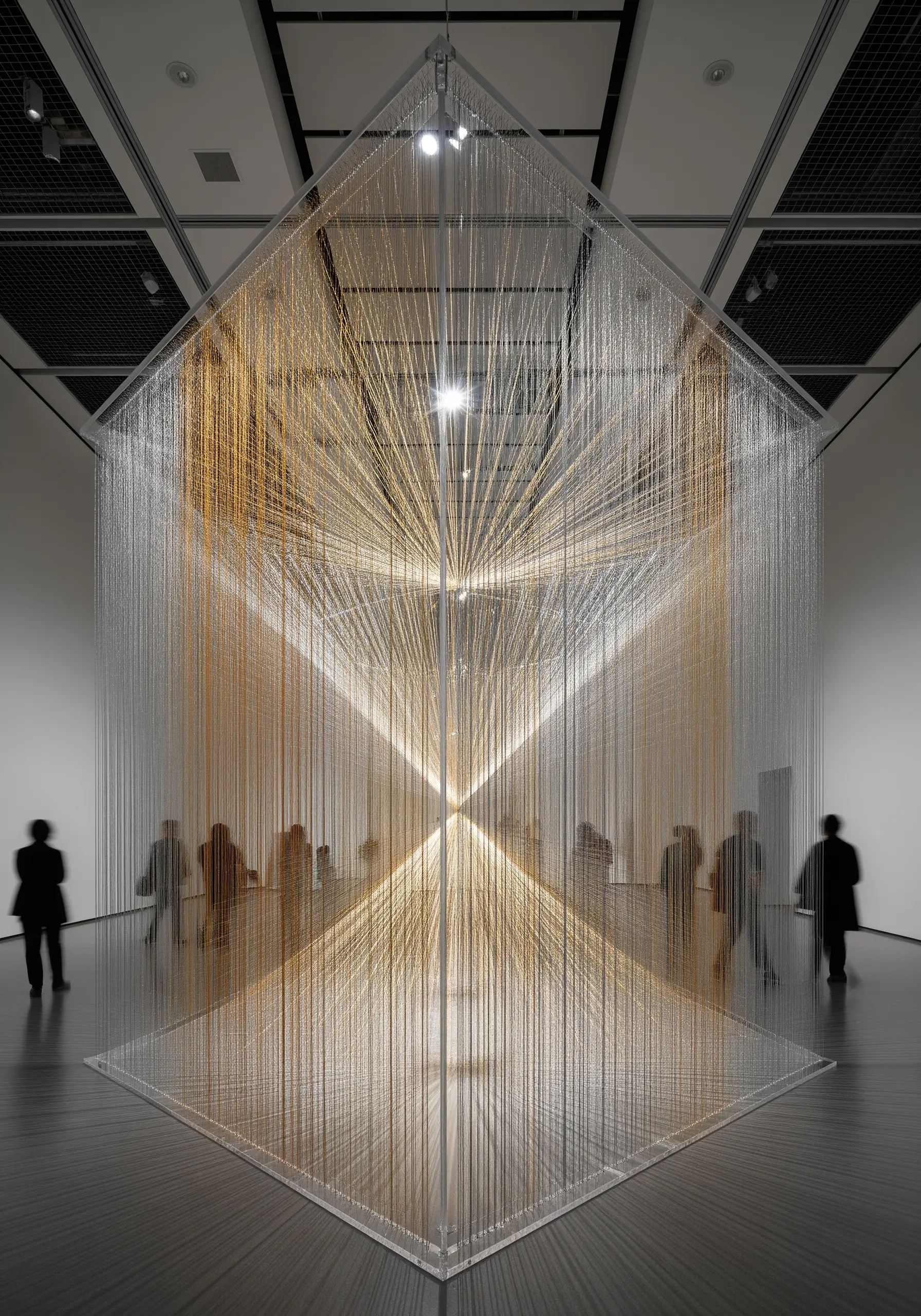
Think beyond the hoop and use metallic thread to create a large-scale, architectural installation.
Stretch thousands of individual strands of gold and silver metallic thread from floor to ceiling within a frame to create shimmering, transparent walls of light.
Strategic lighting is key: position spotlights to hit the threads at different angles, making them sparkle and seem to appear and disappear as people walk around them.
This transforms a simple material into an immersive, ethereal experience, proving that fiber art installations can redefine a space.
24. Master Art Deco Patterns with Satin Stitch
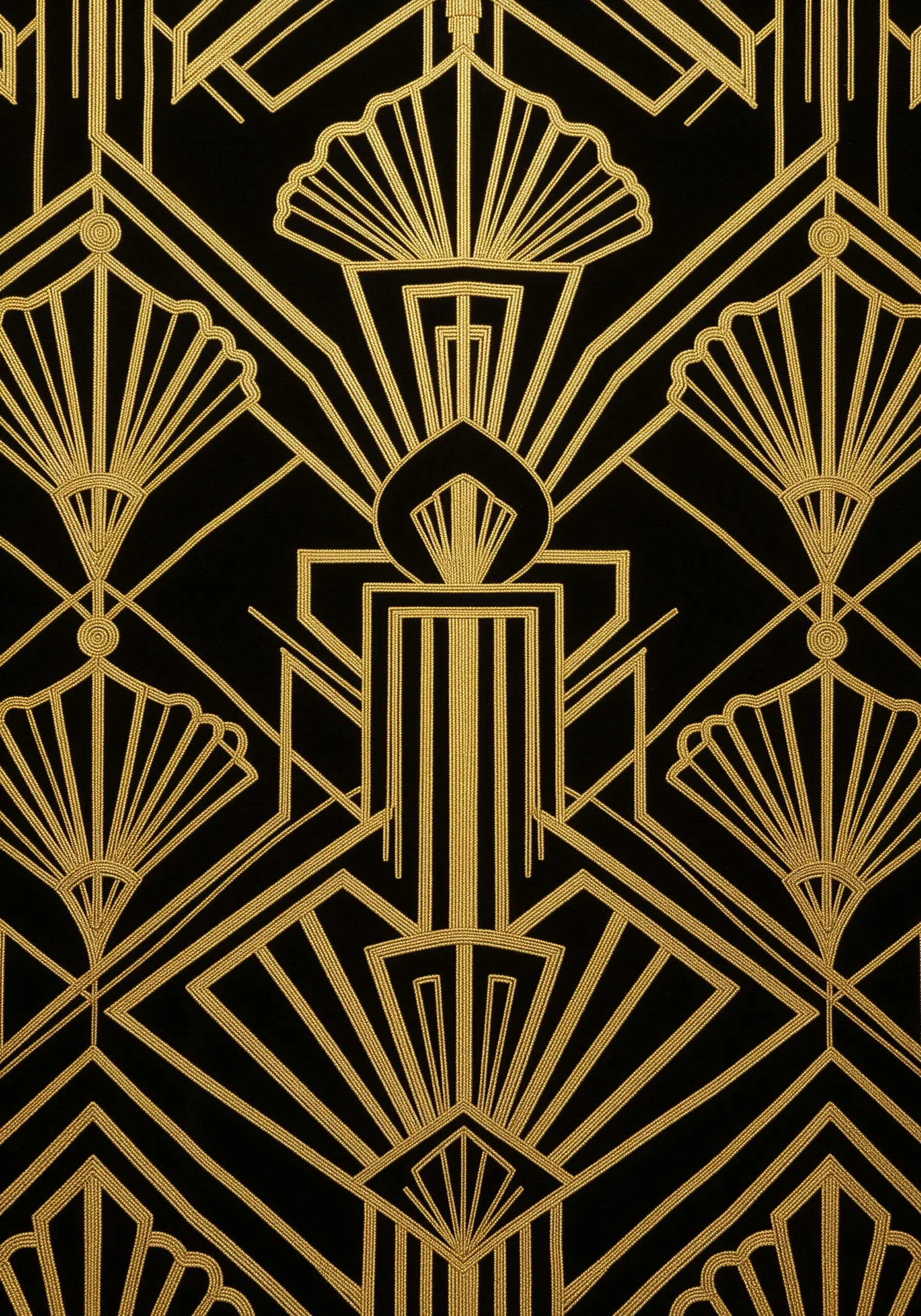
Capture the opulence of the Art Deco era with bold, graphic patterns stitched in gold.
Use a thick, multi-strand gold metallic thread and fill geometric shapes with disciplined satin stitches on a black fabric background.
To keep your satin stitches perfectly smooth and uniform, use a laying tool or a large tapestry needle to stroke the threads into place before each stitch.
This ensures the strands lie flat and parallel, maximizing their light reflection and creating a seamless, liquid-gold surface.
25. Outline Watercolor with Metallic Thread
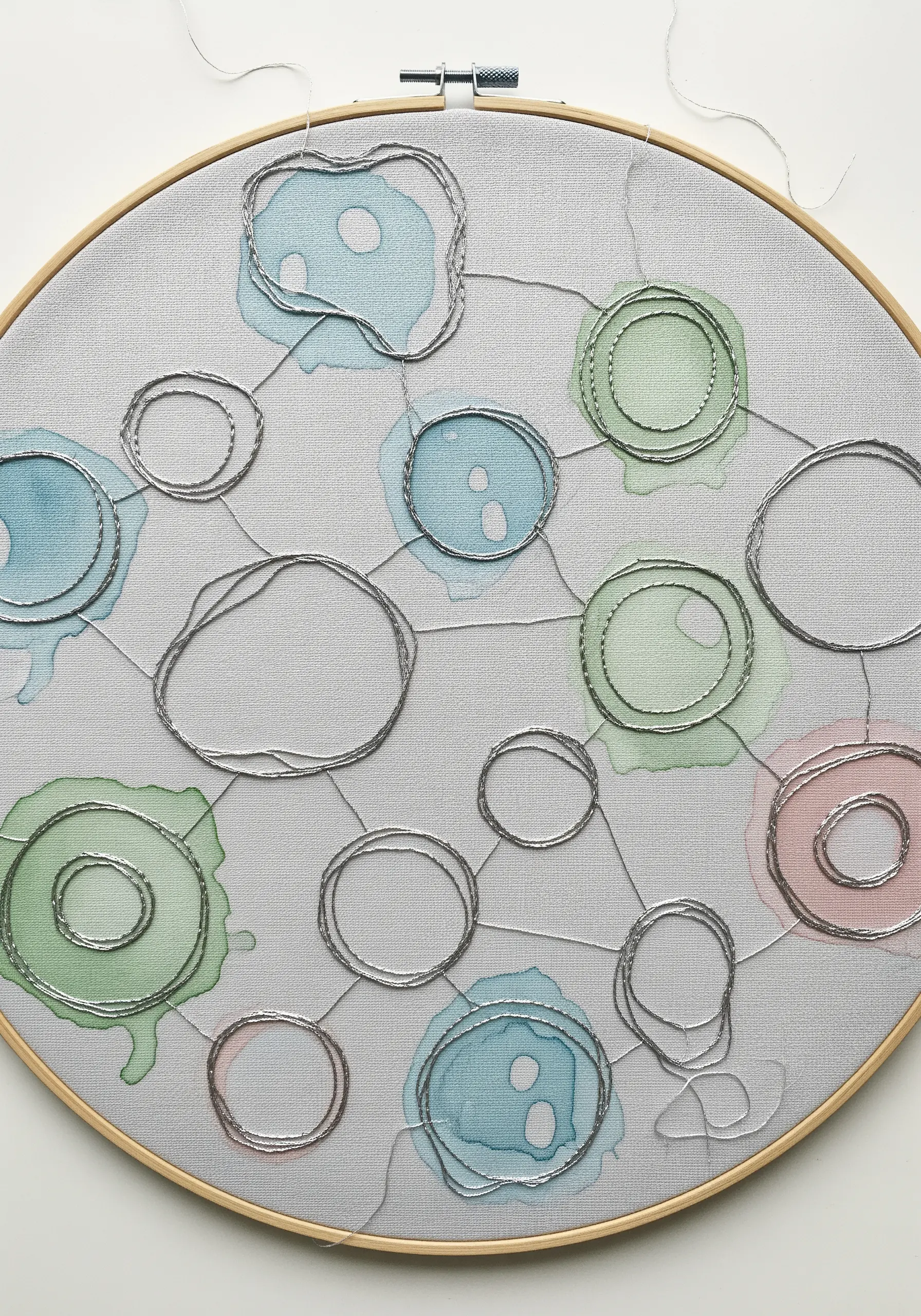
Combine the soft, bleeding edges of watercolor with the sharp, defined line of metallic thread for a beautiful mixed-media effect.
First, paint loose, abstract color washes onto a light-colored cotton or linen fabric and let it dry completely.
Then, use a silver metallic thread to stitch organic, circular outlines around and within the painted shapes.
The contrast between the fluid color and the precise, shimmering line adds structure and sophistication, turning simple paint splotches into a finished composition.
26. Evoke Corrosion with Distressed Metallics
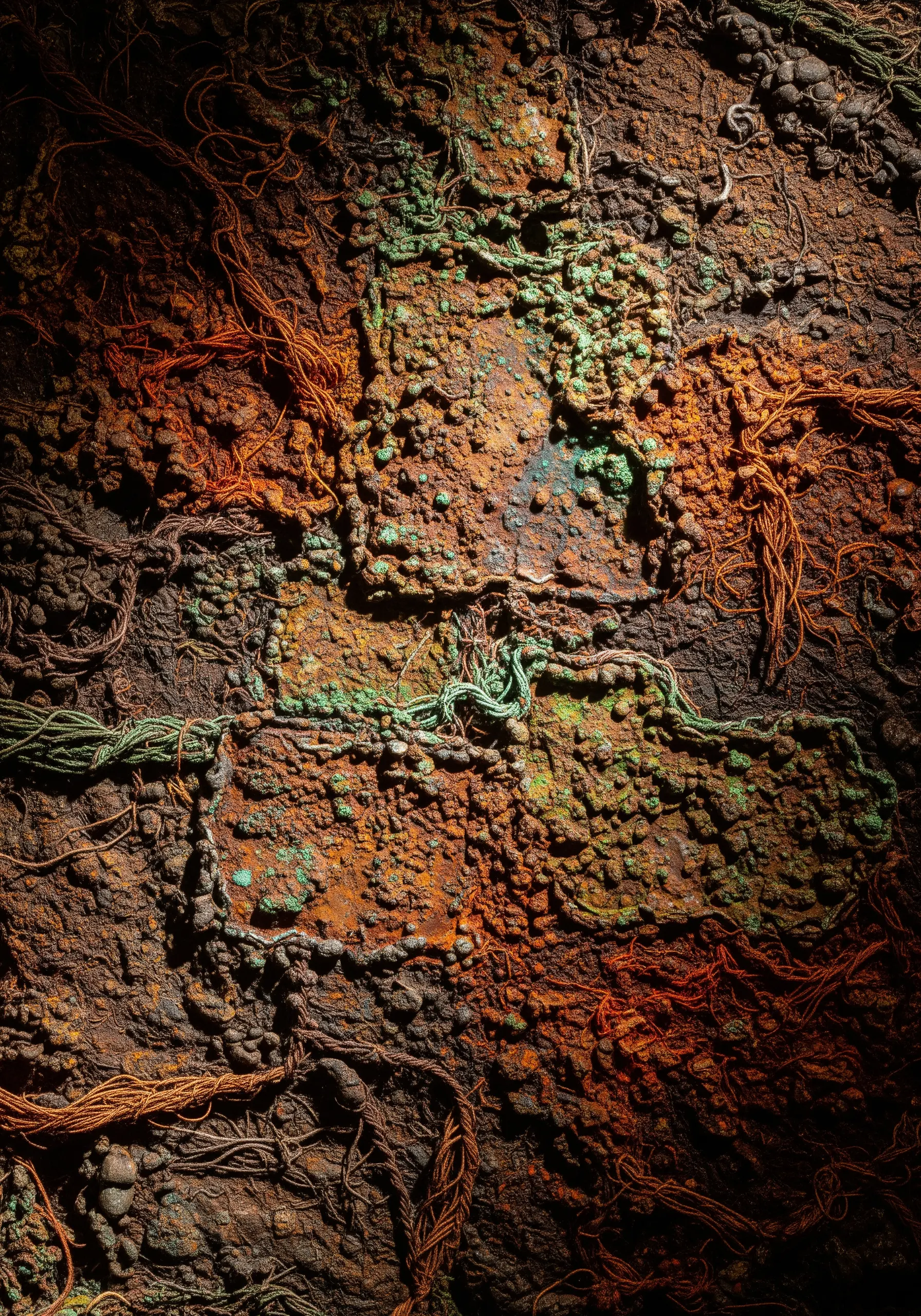
Create a beautifully decayed, earthy texture that mimics rust and verdigris.
Start with a base of heavily textured, sculptural stitching using matte brown and rust-colored cotton threads.
Then, weave in small, targeted sections of tarnished-looking copper and turquoise metallic threads.
Fray the ends of the metallic threads and stitch them loosely to create a messy, organic feel. This technique tells a story of age and weathering, adding a layer of raw, historical depth to your abstract work.
27. Paint with Light Using Free-Motion Stitching
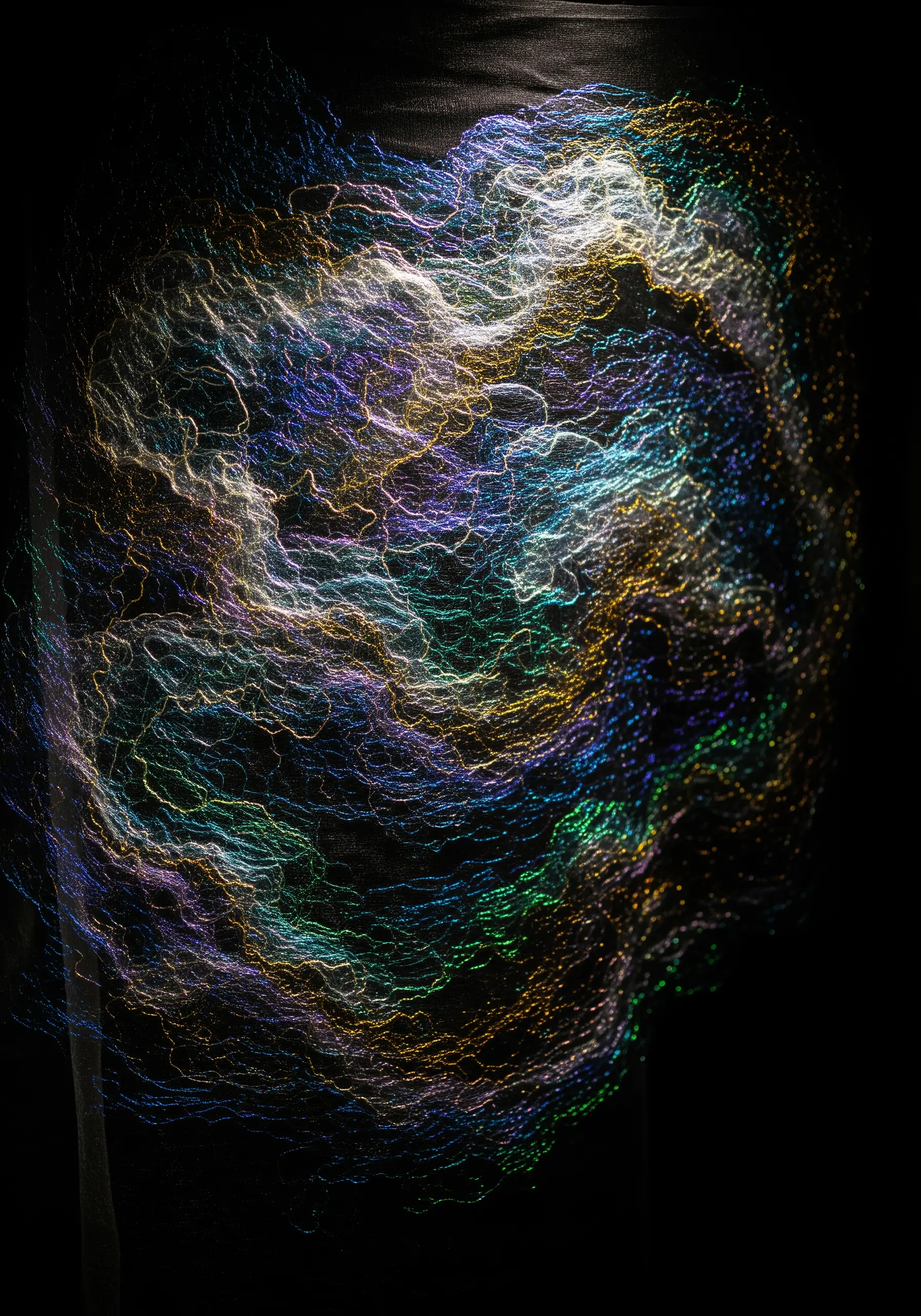
Use your sewing machine to ‘paint’ with iridescent and holographic metallic threads on a dark canvas.
With the feed dogs down for free-motion embroidery, move the fabric quickly and erratically under the needle to create dense, overlapping scribbles of thread.
Combine multiple colors of holographic thread—purples, blues, greens, and golds. The way these threads catch and refract light will create an electrifying, nebula-like effect that seems to move and shimmer with a life of its own.
28. Explore Monochrome Metallic Textures
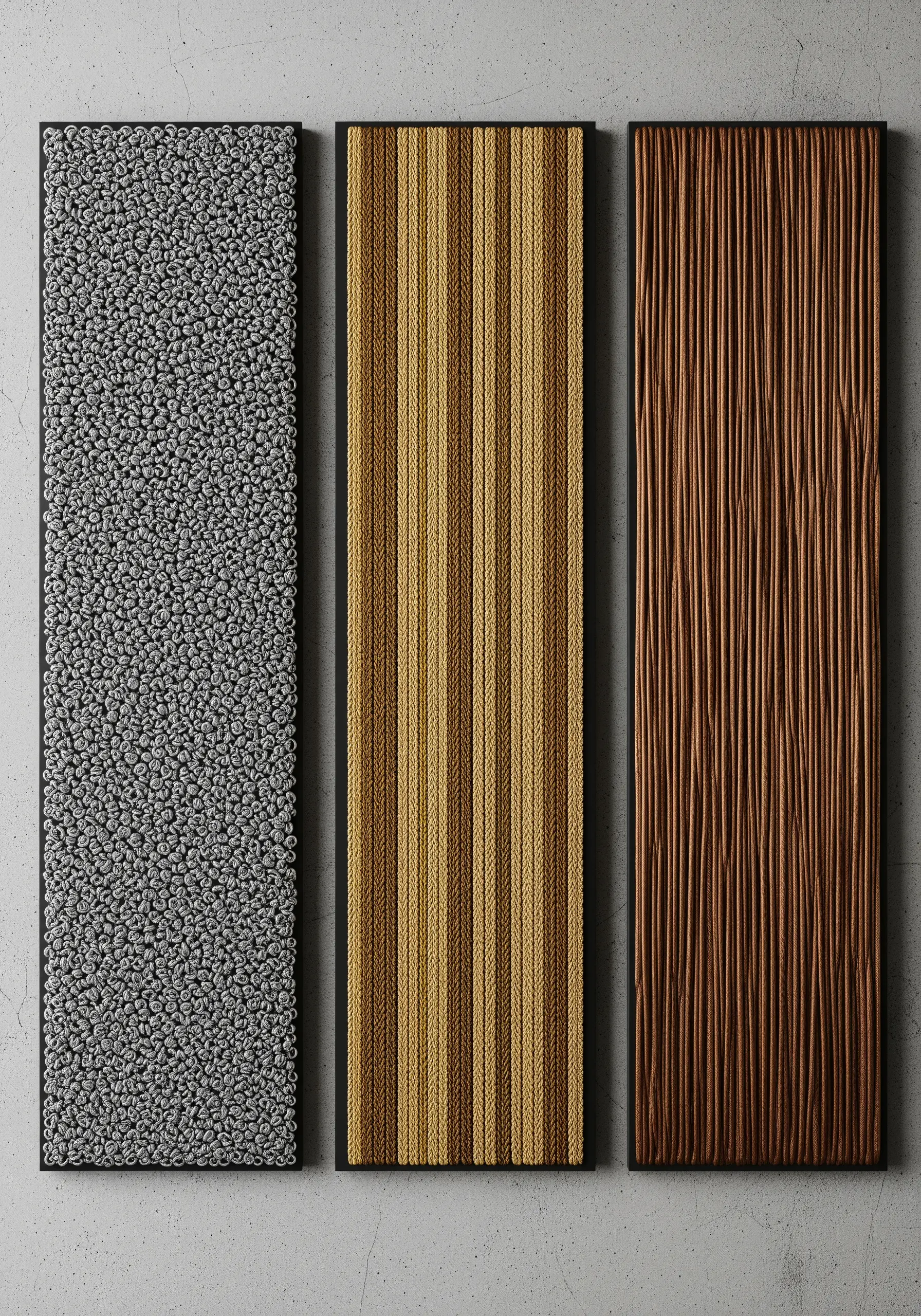
Challenge yourself to create a dynamic piece using only one metallic color family but multiple textures.
Assemble a triptych of panels, dedicating each to a different stitch. On one, create a field of dense French knots in silver.
On another, stitch clean vertical lines of braided gold cord. On the third, use a textured, boucle-style metallic yarn for a rougher finish.
This exercise in abstract texture play proves you can create immense visual interest without relying on a wide color palette.
29. Create a Meditative Spiral with Couched Cord
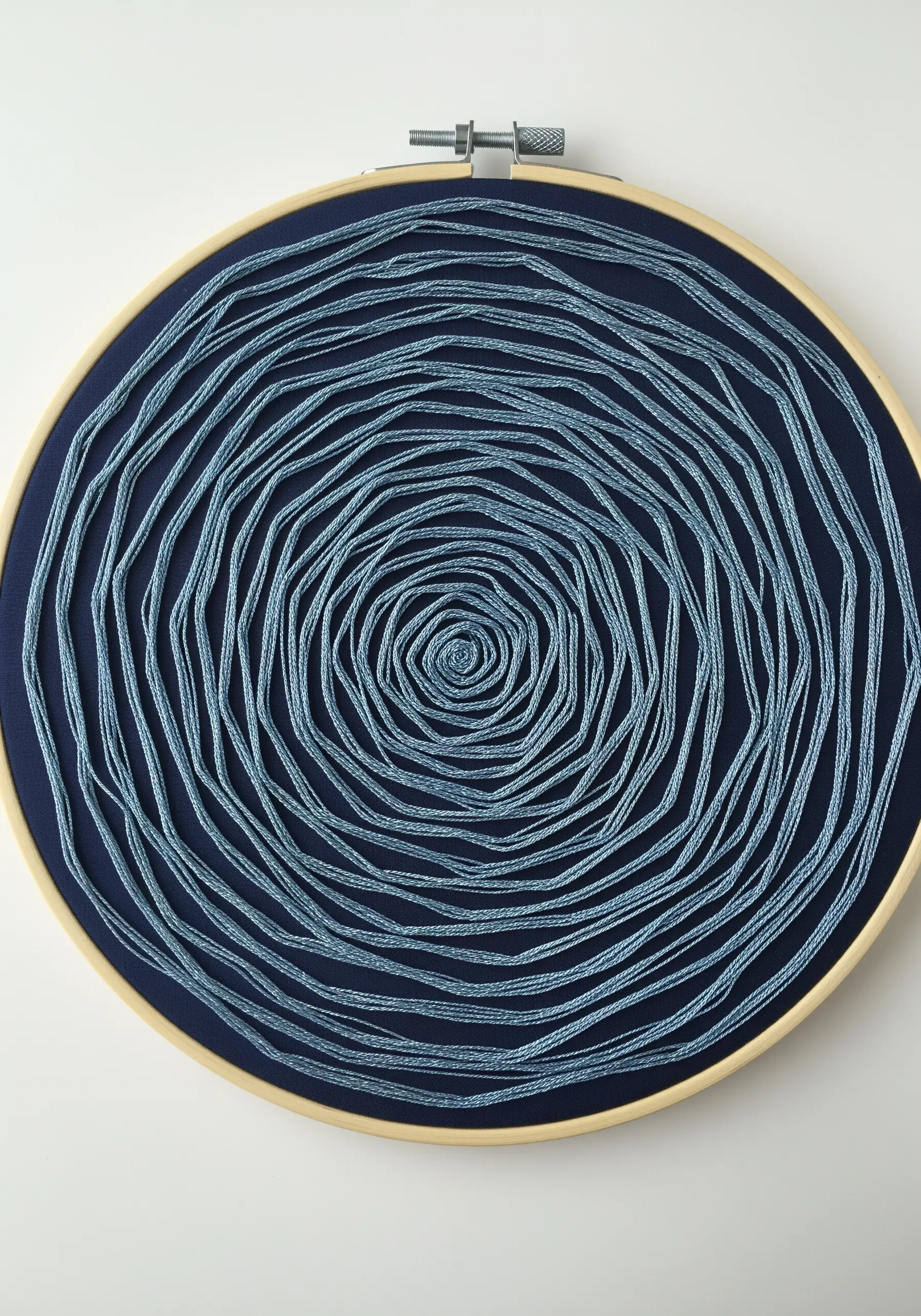
Stitch a simple, continuous spiral that encourages a sense of calm and focus.
Instead of drawing a perfect circle, let the line be slightly organic and irregular, like a thumbprint.
Use a single, long piece of textured metallic cord—like a braided or twisted gimp—and couch it onto a solid-colored fabric.
The rhythmic motion of securing the cord stitch by stitch becomes a meditative process, and the resulting piece is a minimalist statement on simplicity and flow.
30. Design a Barcode with Metallic Ribbons
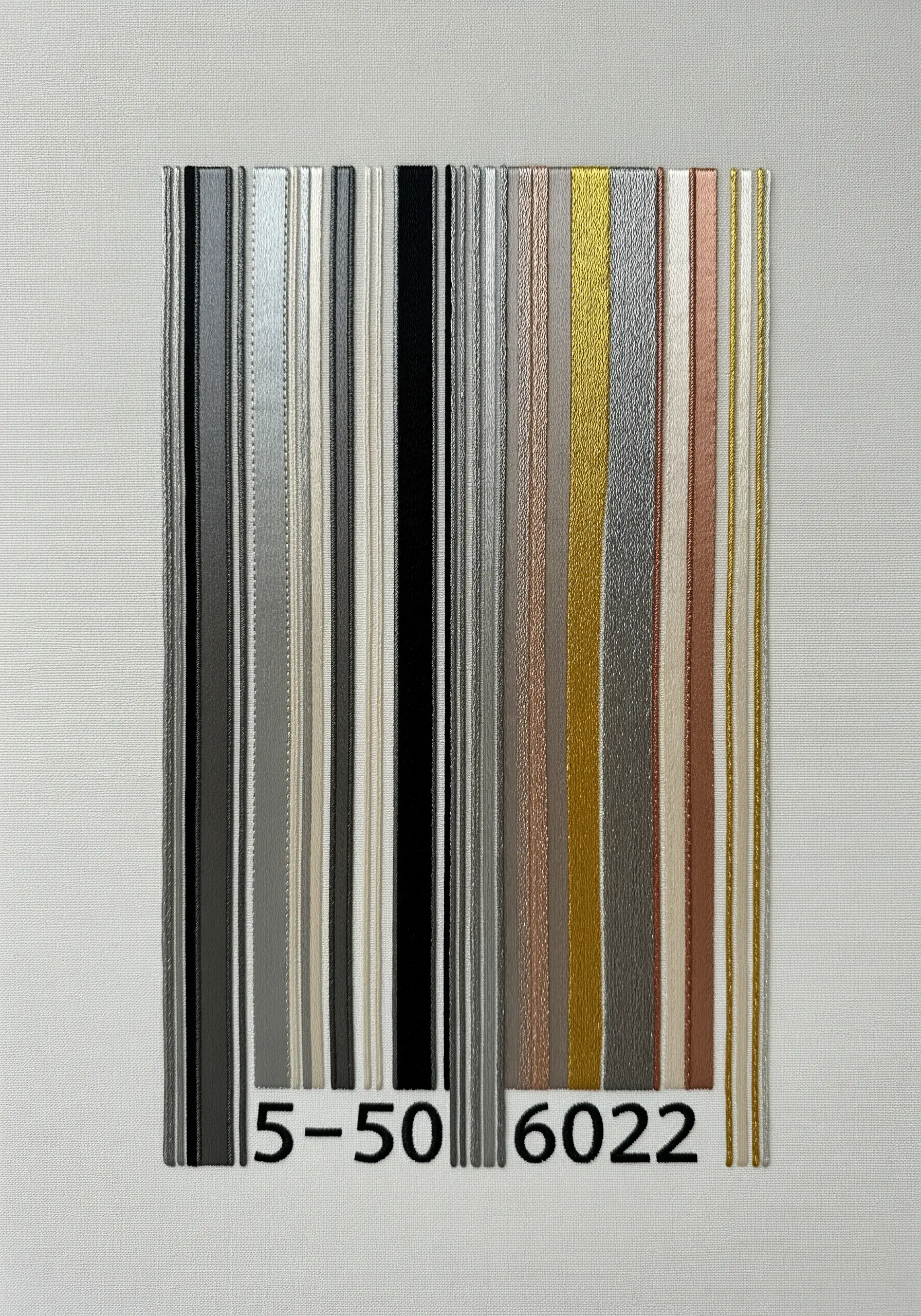
Elevate the everyday design of a barcode into a piece of sleek, modern art.
Use a combination of flat metallic ribbons and threads in varying widths and finishes—matte silver, shiny black, brushed gold, polished copper.
Stitch them down as vertical stripes on a white canvas, keeping the lines perfectly parallel and dense.
The mix of different sheens and textures creates a surprisingly sophisticated palette, transforming a utilitarian symbol into a commentary on commerce and value.
31. Weave an Intricate Metallic Mandala
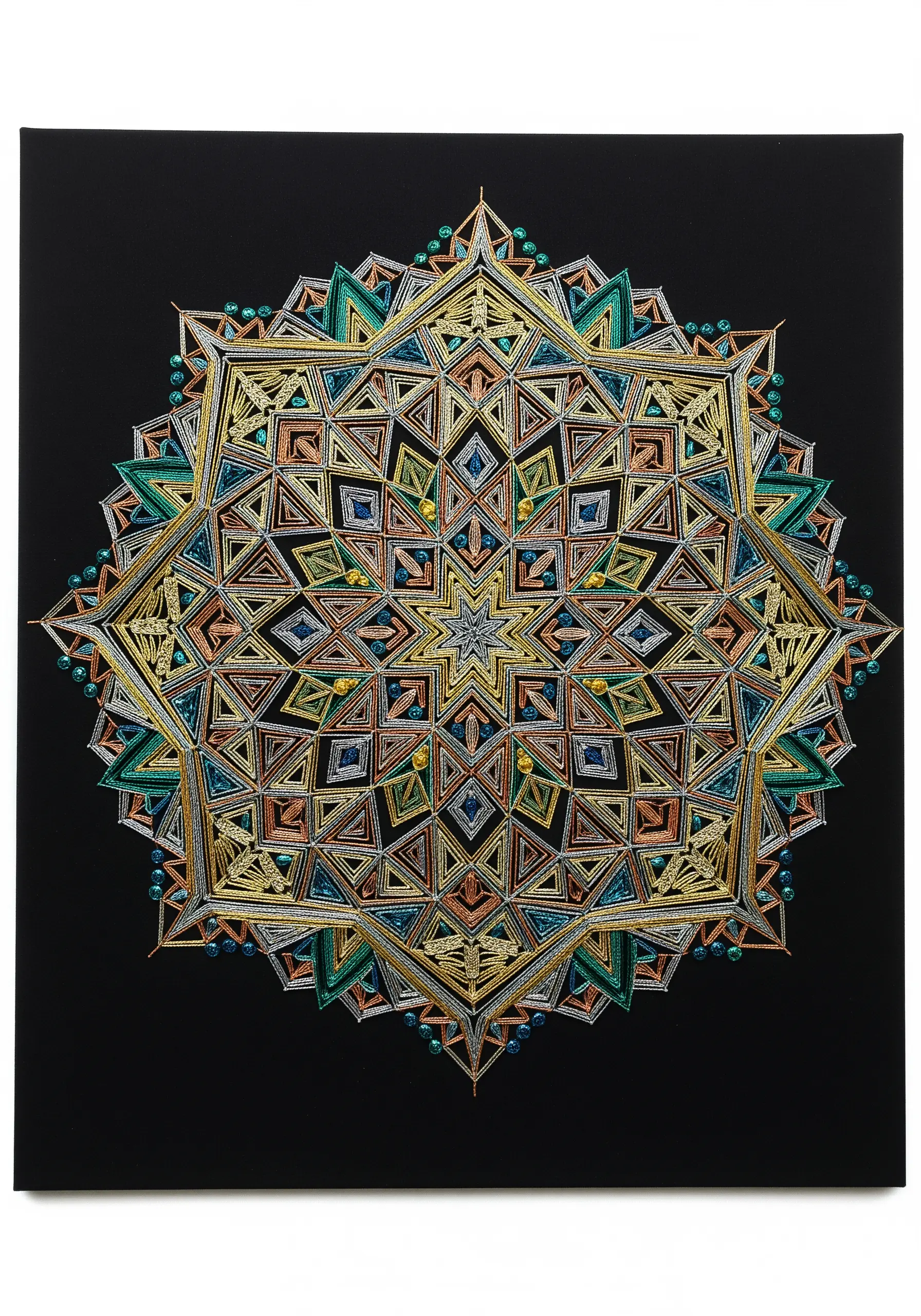
Go beyond simple stitches and construct a mandala by weaving threads around anchor points.
Create a framework of intersecting lines on a sturdy canvas or board, then weave different metallic threads—gold, silver, copper, emerald—over and under the framework to build up geometric patterns.
This technique, similar to Ojos de Dios (God’s Eyes), allows you to create incredibly complex, layered designs with sharp angles and perfect symmetry. Embellish with beads for extra sparkle.
32. Create Abstract Brushstrokes with Thread

Capture the energy and movement of a painter’s brushstroke using nothing but straight stitches.
On a neutral canvas, lay down dense, parallel lines of a single metallic thread—like gold or silver—to form the body of the brushstroke.
To create the tapered, feathered edges, use fewer strands of floss and make your stitches more sporadic and uneven in length.
This technique translates the expressive gesture of painting into a tactile, shimmering form, creating abstract thread embroidery projects with a sense of fluid motion.