Sometimes, the desire to create isn’t about starting another complex project, but about finding a quiet moment to make something beautiful and calming. A wall hanging is more than just decor; it’s a piece of tranquility you craft with your own hands, a soft texture or a peaceful scene to rest your eyes on at the end of the day.
Elevating your work isn’t about mastering dozens of difficult stitches. It’s about making intentional choices. It’s in choosing a slightly thicker yarn to create more texture, in pairing a delicate stitch with a bold fabric, or in seeing how a simple French knot, repeated a hundred times, can build a rich, tactile surface.
These ideas are designed for that feeling. They are approachable, designed to be completed over a cozy weekend, and focus on techniques that deliver a sense of accomplishment and artistry. Let’s stitch a little calm into your space.
1. Lunar Phases in Textured Seed Stitch
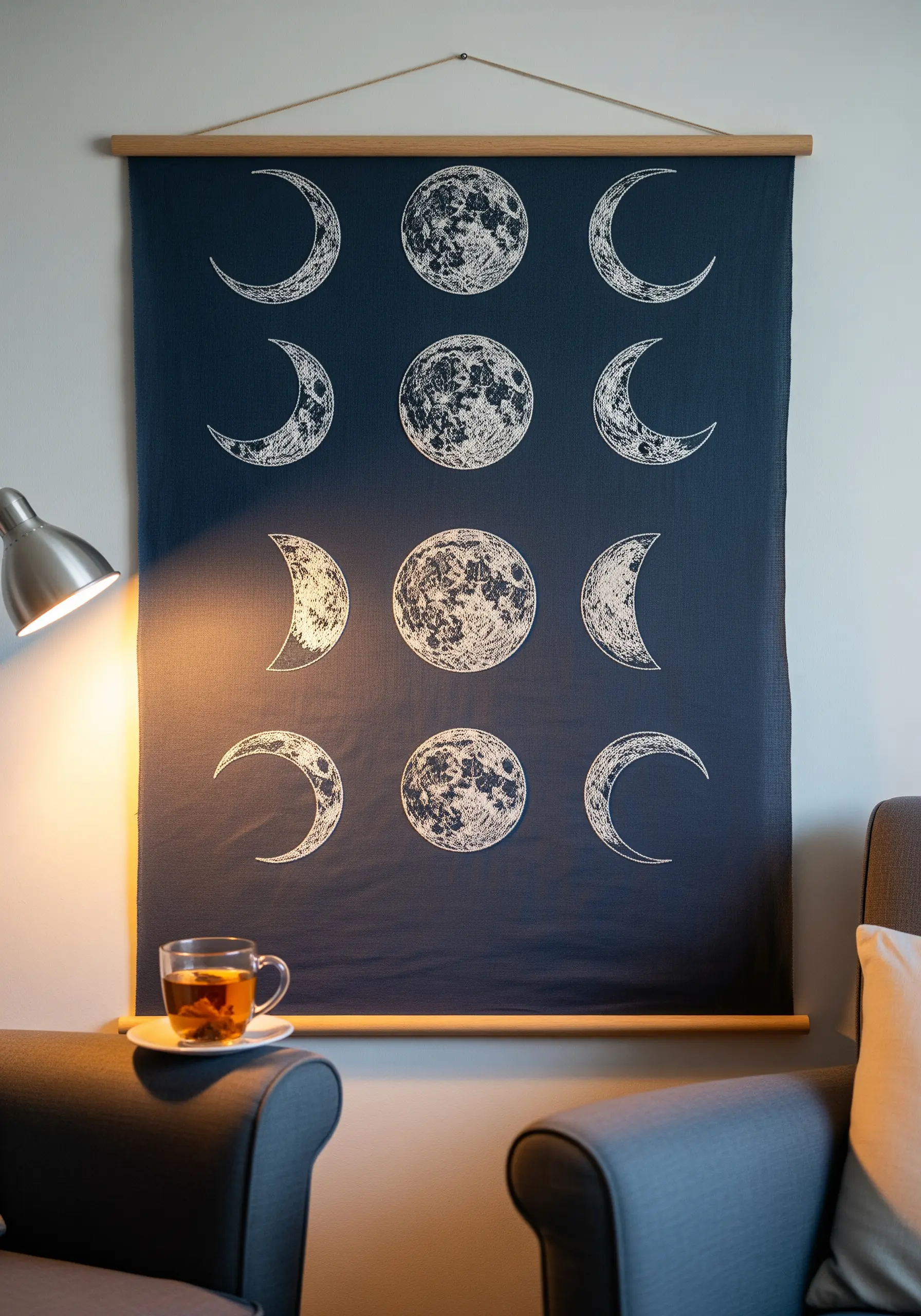
To capture the cratered surface of the moon, fill each shape with dense seed stitches using a single strand of white or silver metallic thread.
Varying the direction and density of your stitches is what creates the illusion of shadow and texture, making the surface feel dimensional.
For perfectly crisp crescent edges, outline the shape first with a simple backstitch; this creates a firm boundary and prevents your fill stitches from looking messy.
Using a dark navy or black linen fabric makes the white thread pop, creating a dramatic, high-contrast effect perfect for a statement wall hanging.
2. Sculptural Rainbow with Chunky Roving
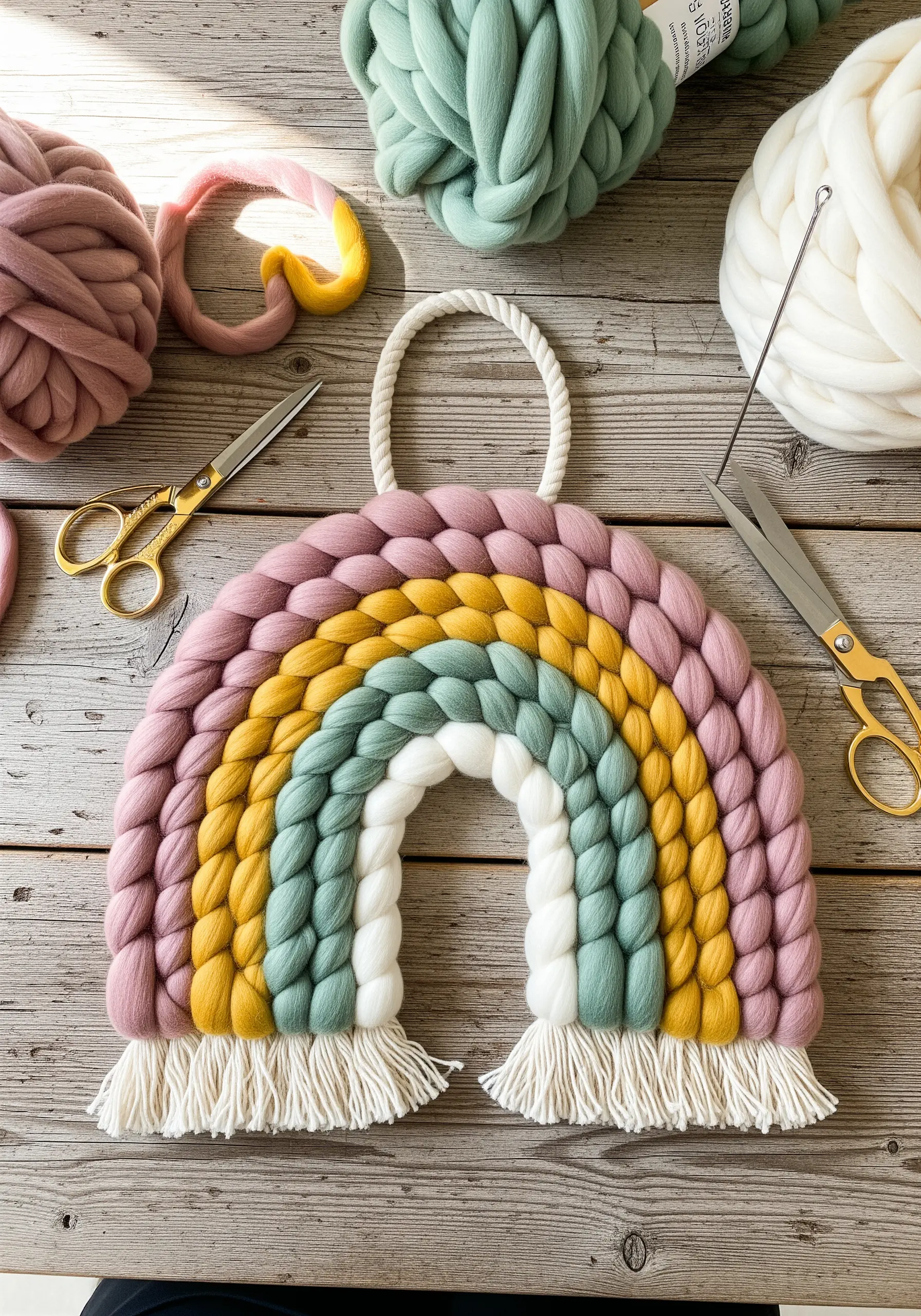
Instead of thread, this project uses thick merino wool roving to create a soft, sculptural form.
For each arch, wrap the roving tightly around a thick cotton rope core—this provides structure and ensures the rainbow holds its shape.
Secure the wrapped roving by making small, discreet stitches on the back with a needle and matching all-purpose thread.
This technique turns fiber into a three-dimensional form, adding instant softness and scale to your wall, making it a perfect addition to nursery decor.
3. A Curated Botanical Hoop Gallery
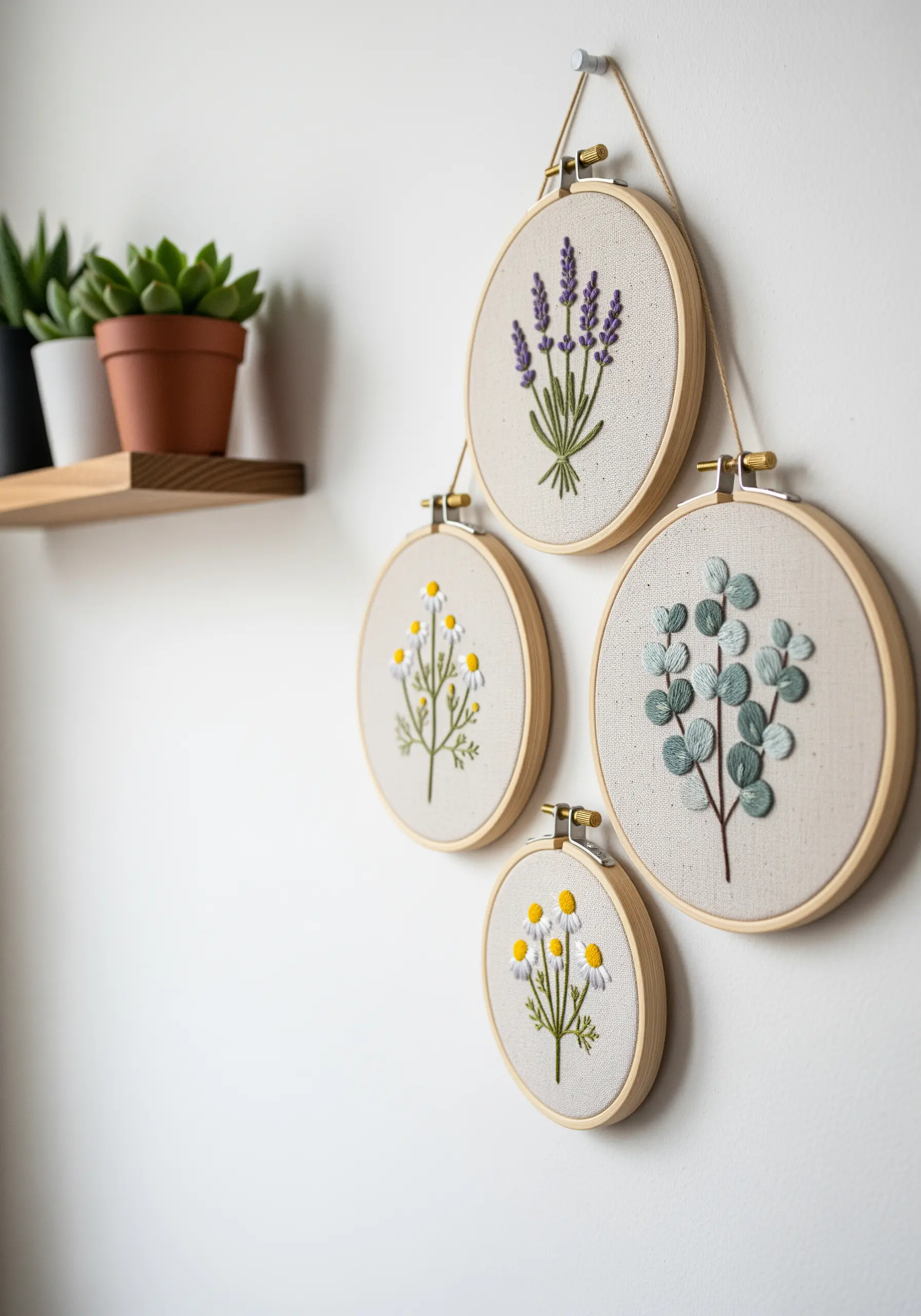
Grouping small hoop embroidery ideas creates a far more impactful statement than a single piece.
To give your lavender realistic dimension, use French knots for the tiny buds and a detached chain stitch (lazy daisy) for the leaves.
For the eucalyptus, work a satin stitch with a silvery-green thread and slightly alter the angle of your stitches on each leaf to mimic the irregularity of natural growth.
This thoughtful variation in stitch choice is what makes each plant feel distinct and alive.
4. Weaving Geometric Calm
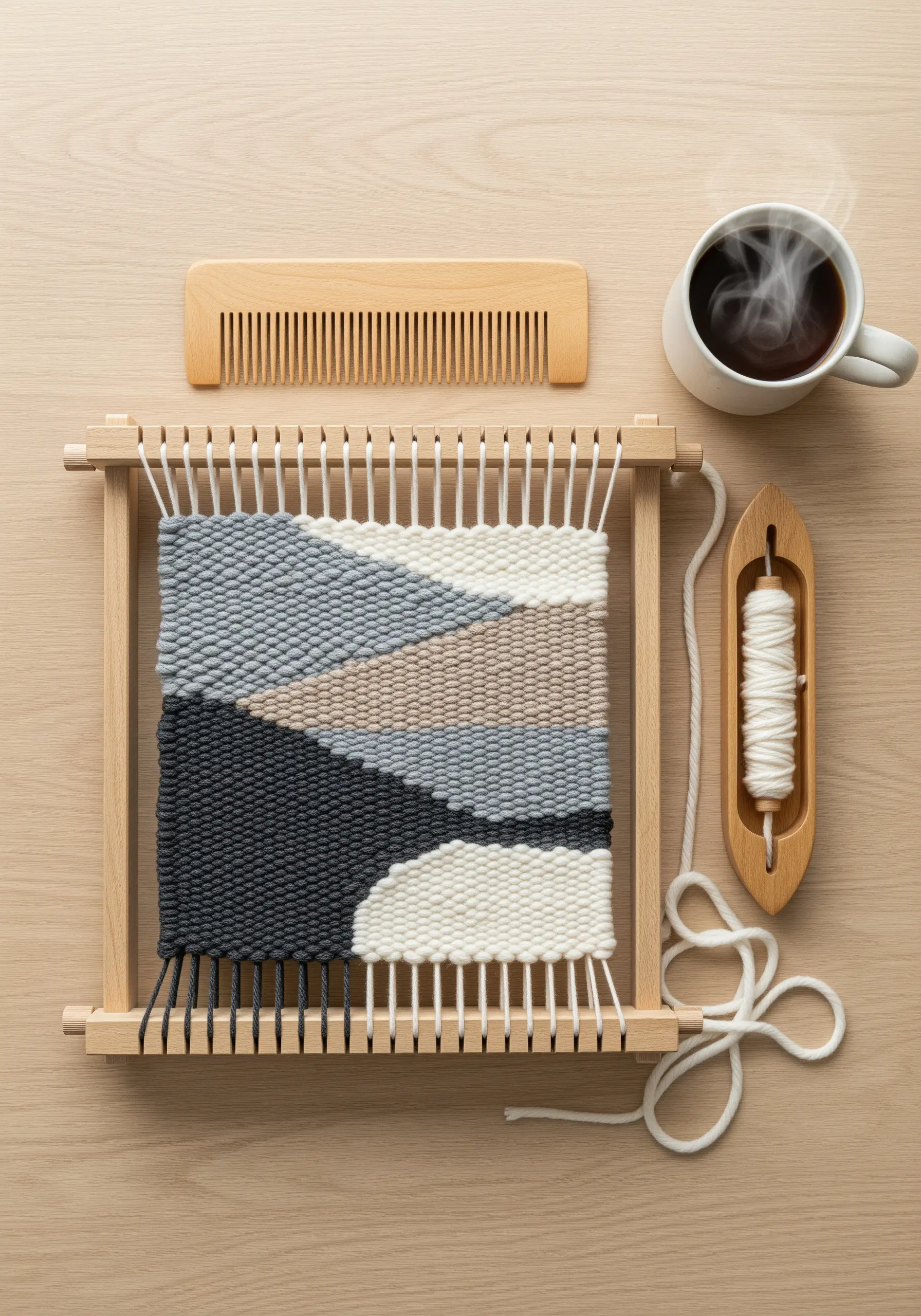
This is frame loom weaving, a cousin to embroidery that explores texture on a larger scale.
Use a simple tabby weave (over-one, under-one) to create your solid blocks of color.
The key to achieving those sharp diagonal lines is to interlock the threads where two colors meet; simply wrap the new color around the old one at the end of a row.
This simple step prevents gaps from forming and is the secret to clean, graphic woven designs.
5. Punch Needle Sunset Gradient
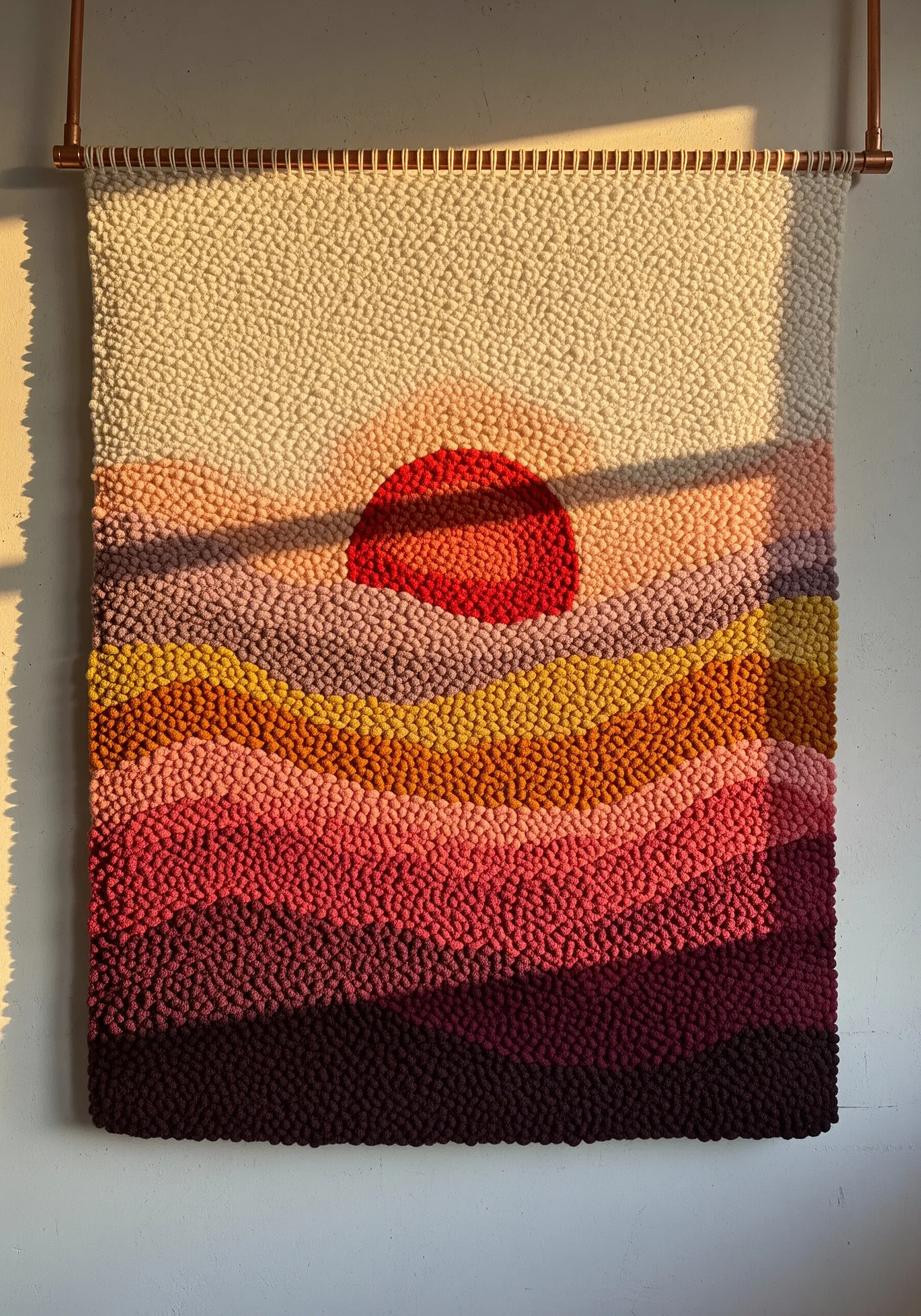
Achieve this plush, painterly effect with a punch needle, which creates dense loops of yarn.
To get this soft, bumpy texture, you’ll work from the back side of the fabric, which pushes the loops out to the front.
For a smooth gradient, gently blend your color blocks by punching a few stitches of the new color into the edge of the previous one.
This subtle overlap breaks up any hard lines and mimics the soft, diffused light of a real sunset.
6. Layered Felt Mountainscape
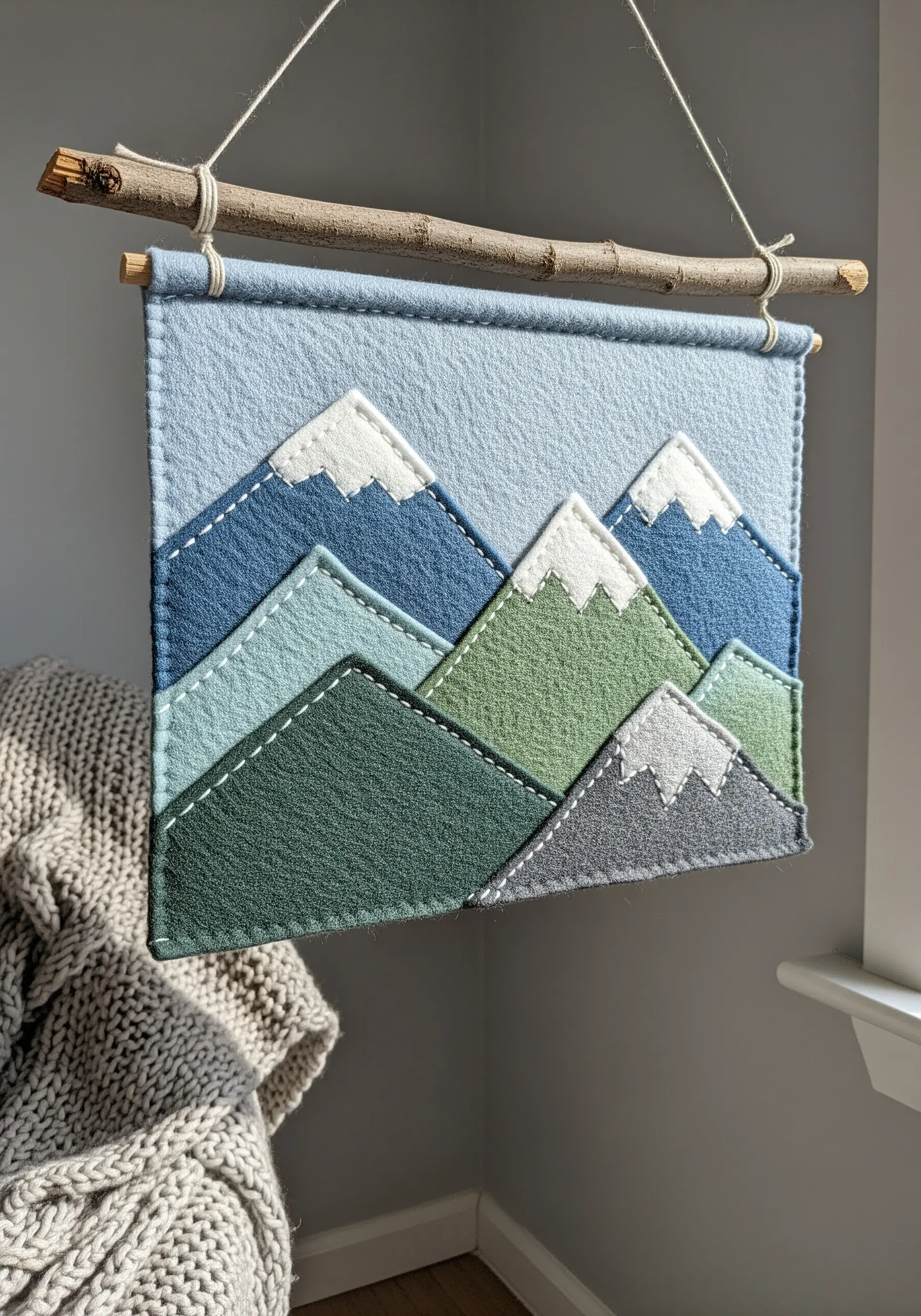
Create a modern, graphic landscape by combining simple felt appliqué with a decorative running stitch.
Cut layers of felt in varying shades of blue and green to create a sense of atmospheric depth.
Instead of trying to hide your stitches, use a contrasting thread like white or cream for your running stitch.
This intentional choice turns a functional seam into a beautiful design element that highlights the handmade quality of your work.
7. Celestial Star Stitch Constellation
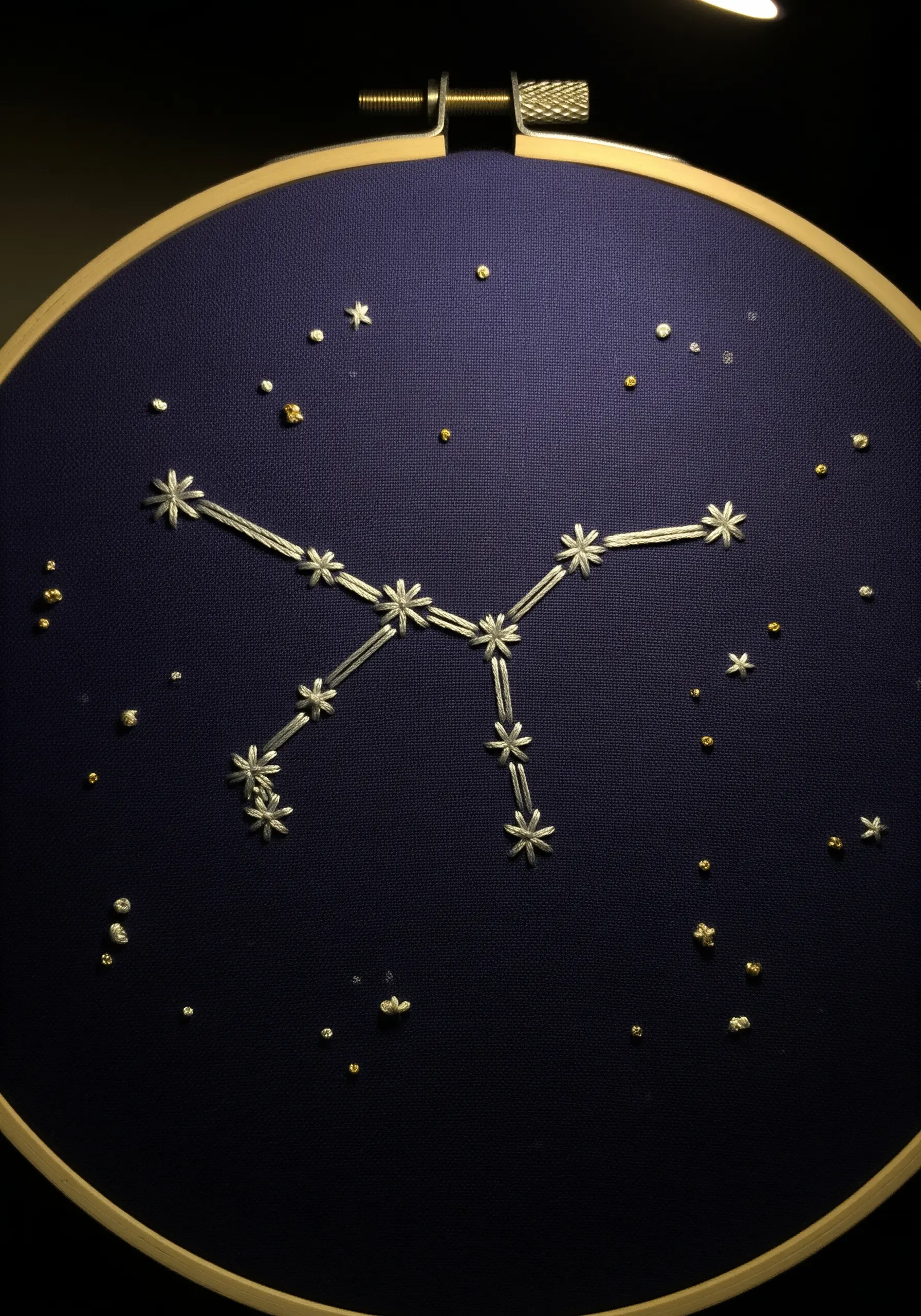
To make your stars truly sparkle, use a star stitch instead of a simple cross stitch or French knot.
For extra shimmer, work with two strands of thread at once: one strand of white cotton floss and one strand of a fine silver metallic thread.
Create a sense of a vast, deep sky by scattering tiny seed stitches in a gold metallic thread to represent distant stars.
This variation in stitch and luster is what gives a simple design its magic.
8. Macrame with Woven Texture Blocks
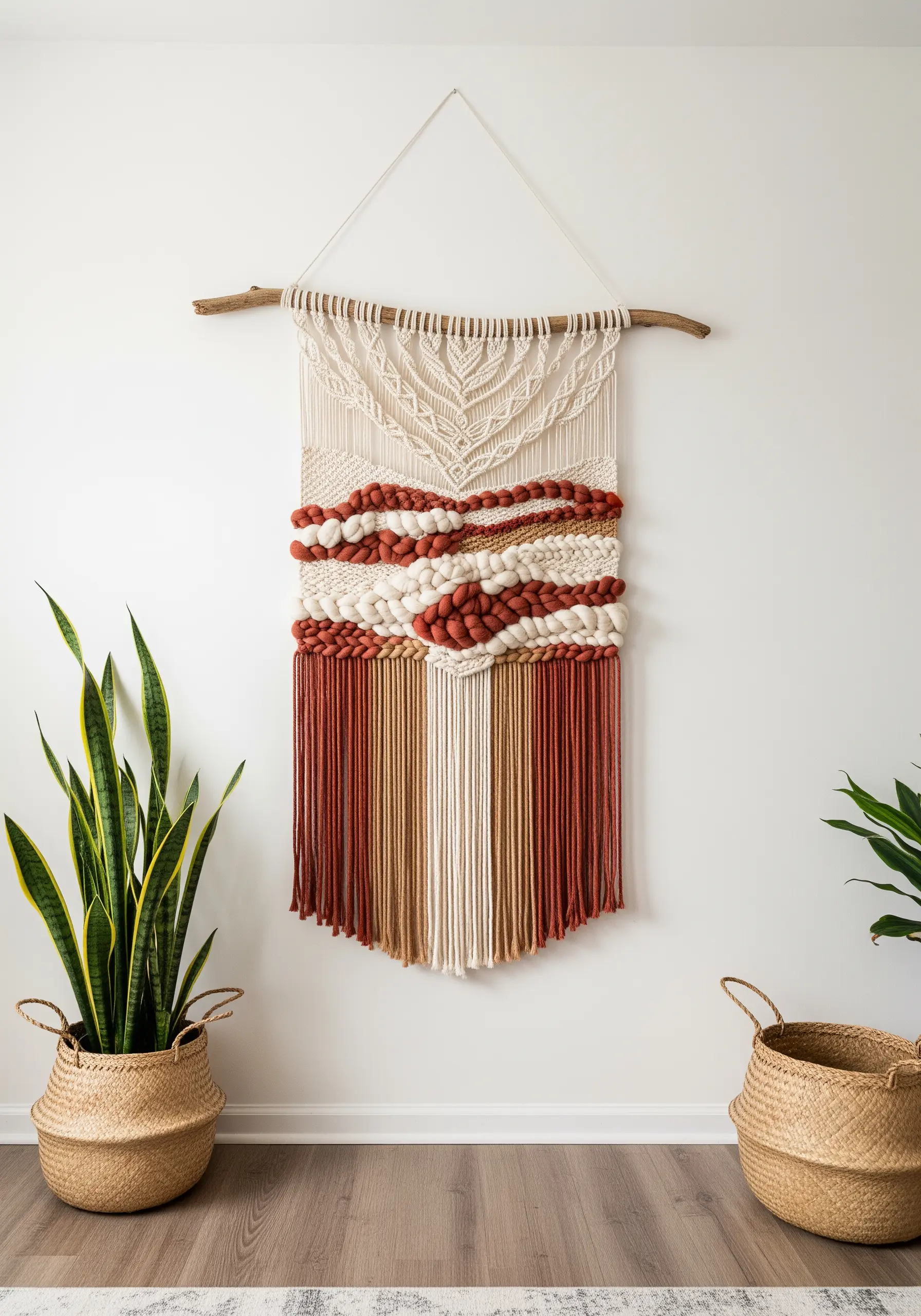
Elevate a standard macrame wall hanging by weaving yarn directly into the vertical cords created by your initial knots.
Use a super-chunky roving or thick wool yarn for these woven sections to create a bold textural contrast.
The interplay between the intricate, structured knots of the macrame and the soft, pillowy bands of weaving adds sophistication and visual weight.
It’s a perfect way to introduce color and softness into a traditional macrame design.
9. Tasseled Macrame with Wooden Beads
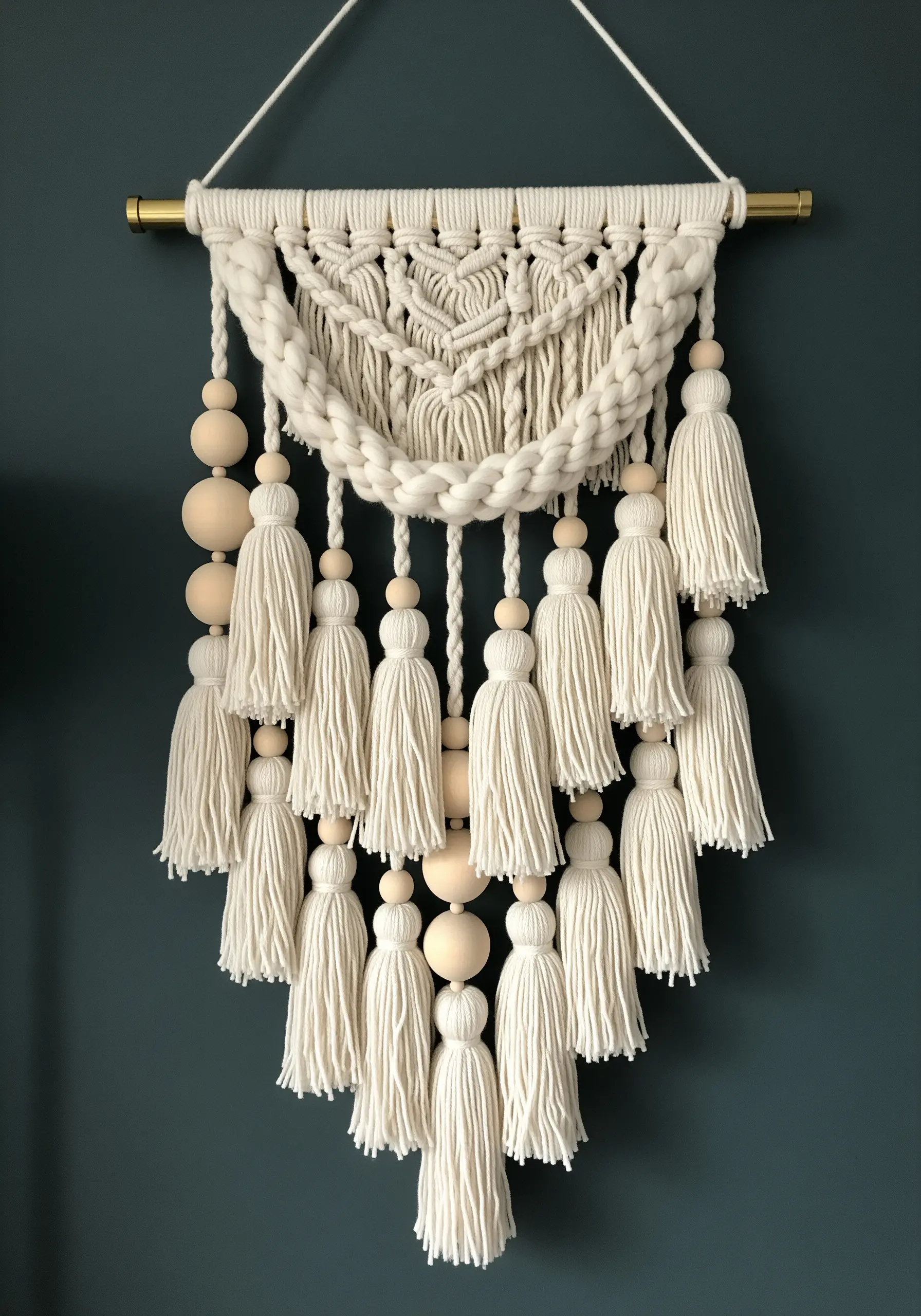
The beauty of this design lies in its satisfying rhythm and repetition.
To create those ultra-fluffy tassels, use a generous amount of cord and comb it out thoroughly with a fine-tooth comb or a pet brush.
Incorporate large, unfinished wooden beads between the tassel sections. They add a natural, grounding element that breaks up the texture of the cotton and gives the piece a pleasing weight.
10. Meditative Mandala Weaving
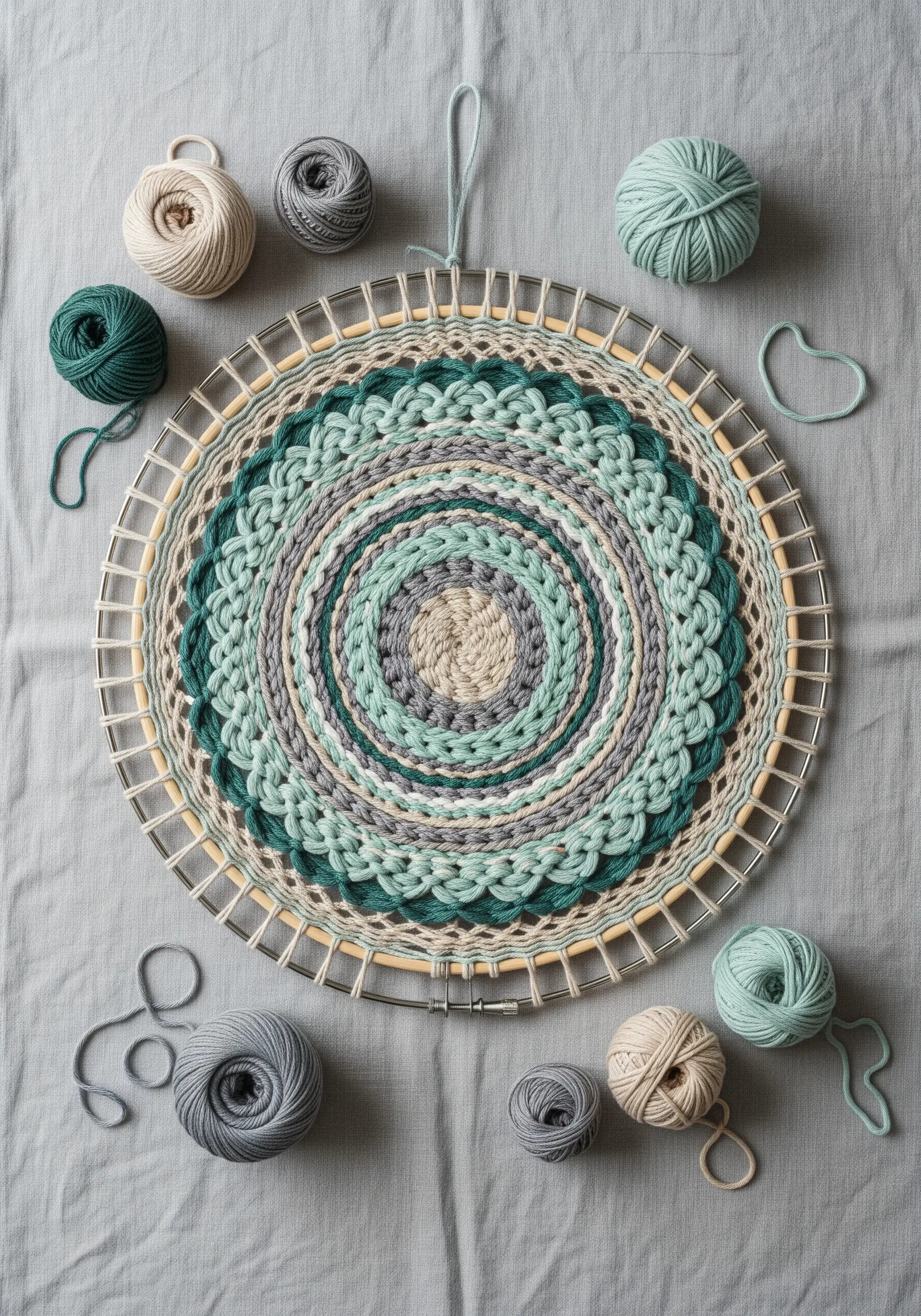
Instead of a traditional square loom, try weaving on a circular frame like a sturdy metal ring or embroidery hoop.
The warp threads radiate from the center like spokes on a wheel, guiding your design.
Alternate between a simple over-under tabby weave and a looped ‘soumak’ weave to create raised, decorative rings of texture.
The process of stitching a mandala is inherently rhythmic and meditative, resulting in a beautifully balanced piece.
11. Minimalist Raised Lettering Art
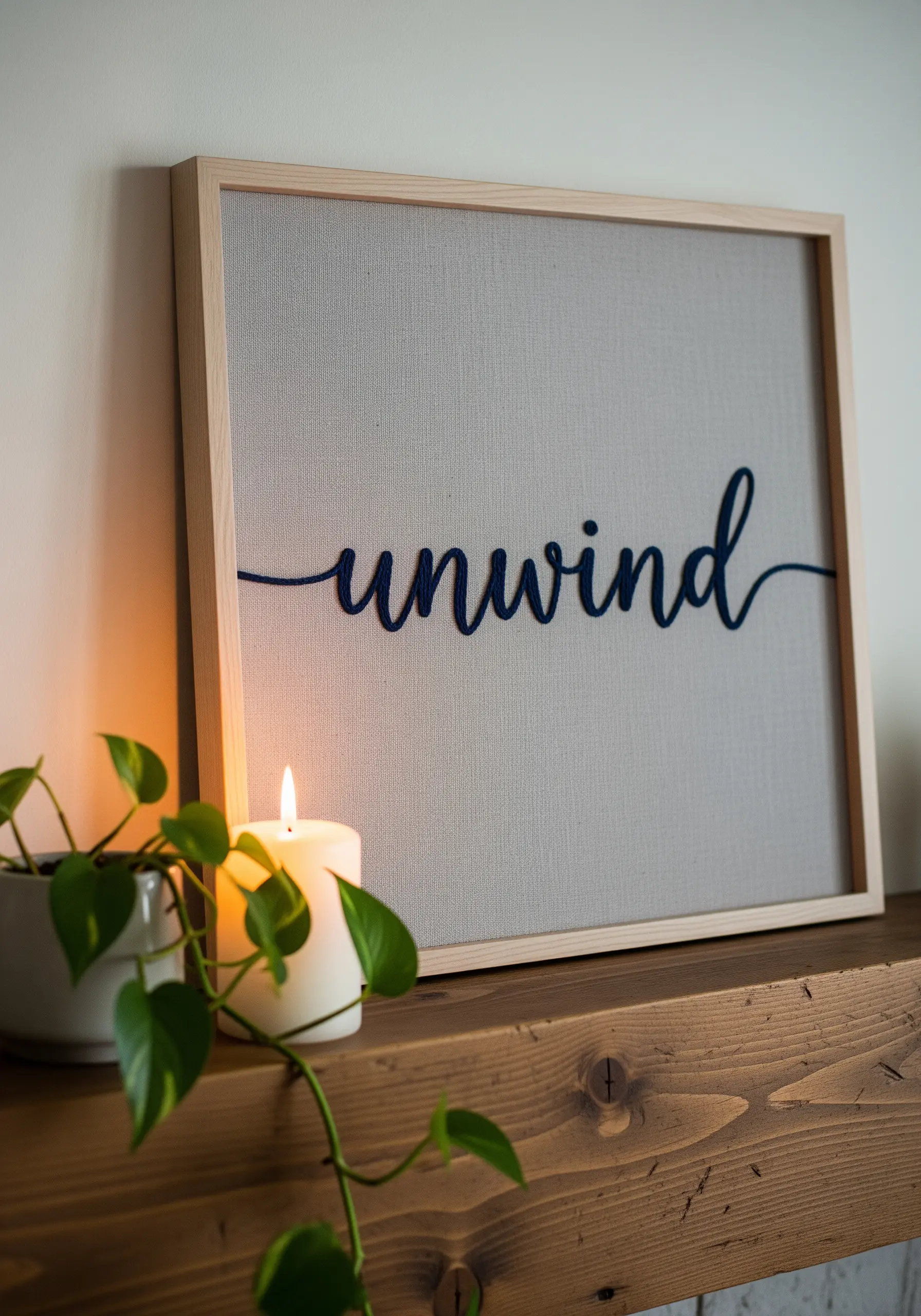
This ‘unwind’ sign uses a clever couching technique to create a 3D effect with minimal effort.
First, form your word using a thick cord or even a pliable wire, and place it on your stretched fabric.
Then, using a single strand of matching floss, tack the cord down with tiny, almost invisible stitches that go over the cord and into the fabric.
Framing the finished piece in a shadow box will enhance the floating effect, turning it into a sophisticated art piece.
12. Embroidered Stems for Pressed Flowers
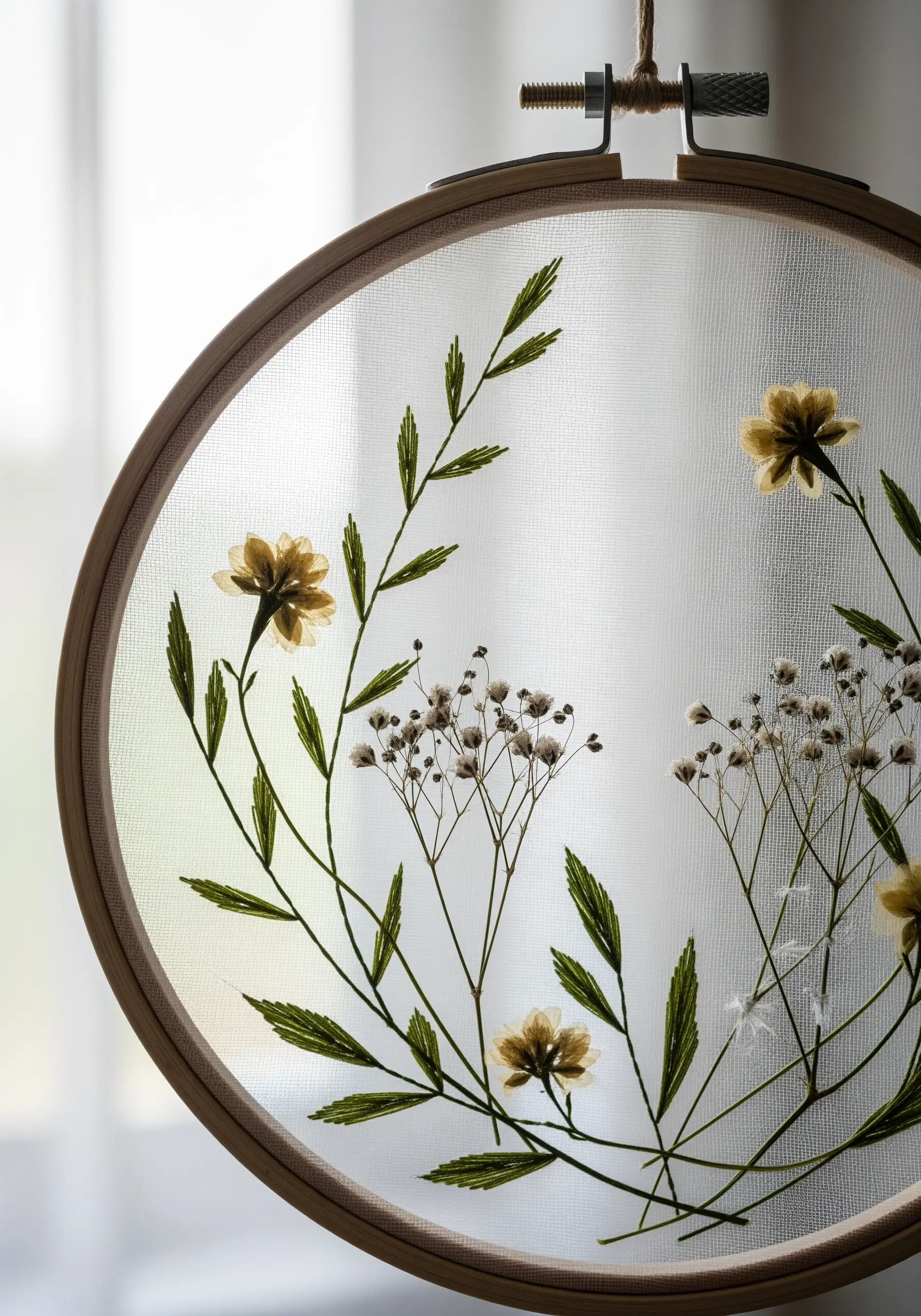
Combine delicate embroidery with real pressed botanicals for a beautiful mixed-media piece.
Begin by stitching your stems and leaves onto a sheer fabric like organza or tulle; a simple stem stitch works perfectly.
Next, carefully arrange your dried flowers on top and secure them with a tiny, discreet drop of acid-free fabric glue or a few nearly invisible stitches.
The transparent fabric creates a magical, floating effect, especially when hung in a window where light can pass through.
13. Weaving Textural Ocean Waves
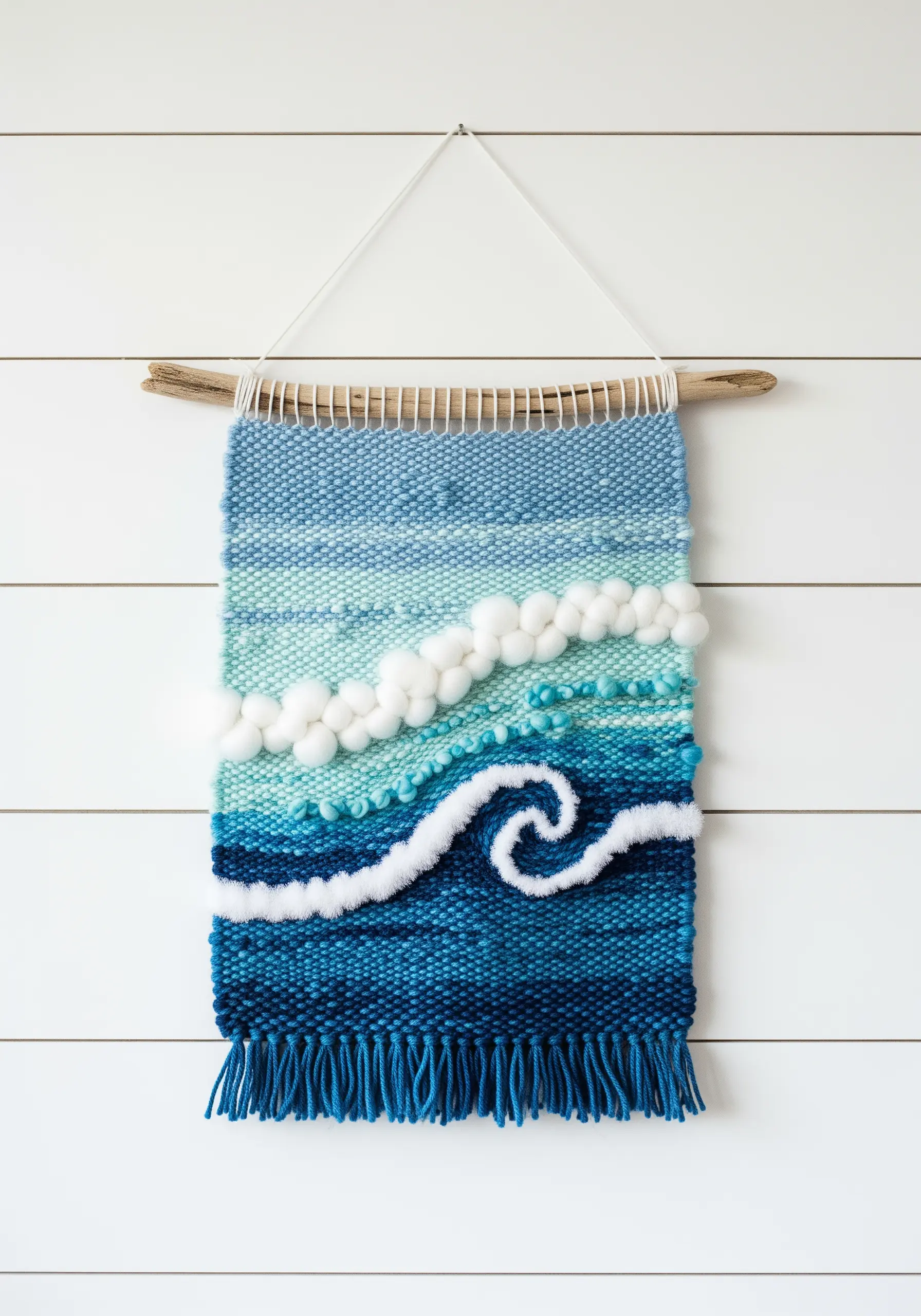
You can capture the kinetic energy of water by incorporating highly textural fibers into your weaving.
Create the frothy sea foam by weaving with a fluffy, unspun wool roving, using a soumak braid to make it stand out.
For the crest of the wave, use a single, curving piece of plush chenille yarn, allowing it to sit on top of the flatter background weave.
This deliberate contrast in texture is what brings the entire ocean scene to life.
14. Embroidered Sun on a Macrame Banner
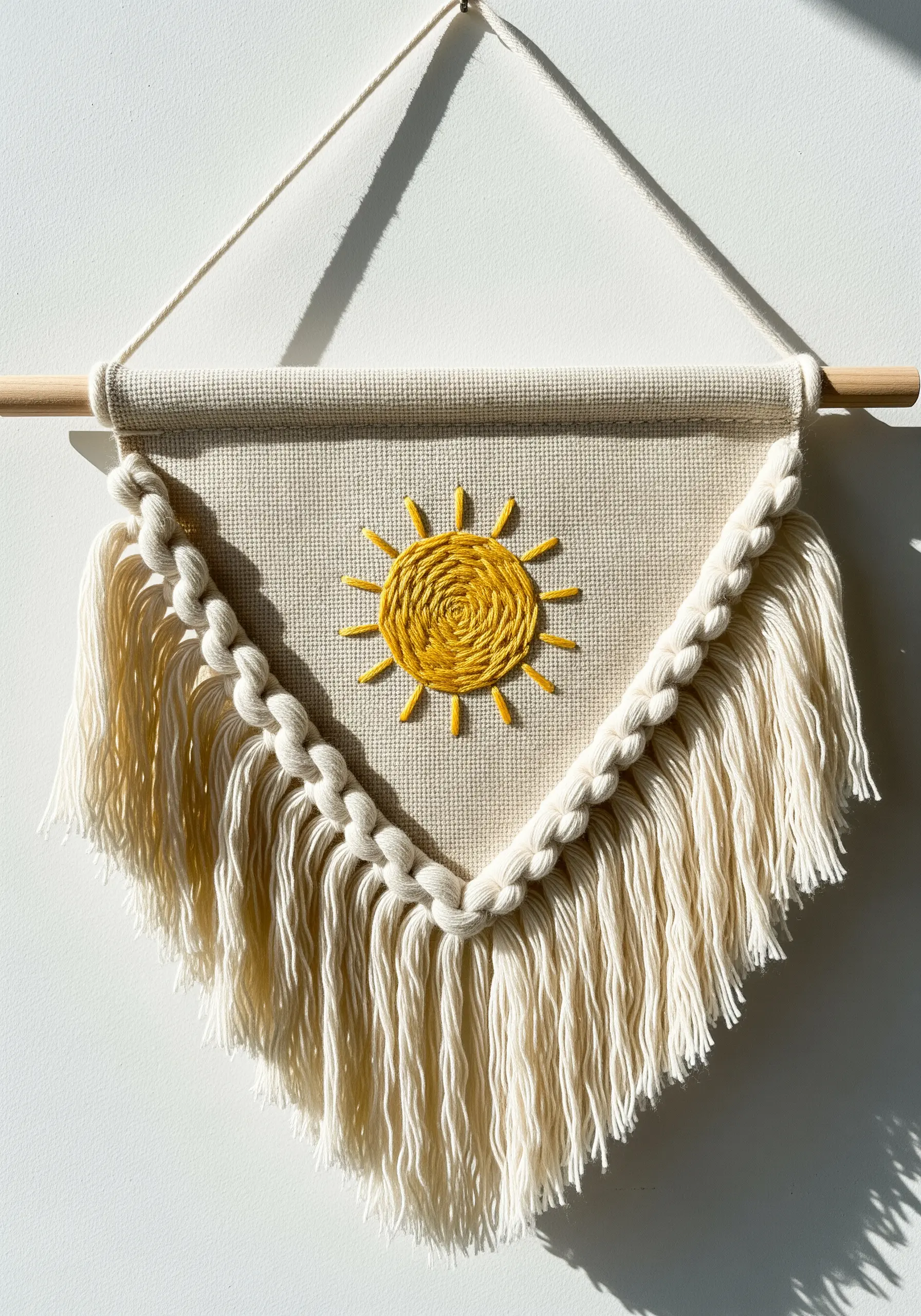
Combine two beloved fiber crafts into one cohesive and charming wall hanging.
Start with a simple canvas banner and add a decorative macrame border using a series of square knots.
For the central sun motif, use a satin stitch, working in a spiral from the center outwards. To ensure your stitches have a beautiful, uniform sheen, use all six strands of cotton floss and focus on keeping your tension smooth and even.
15. Woodland Mushroom Trio with Dimension
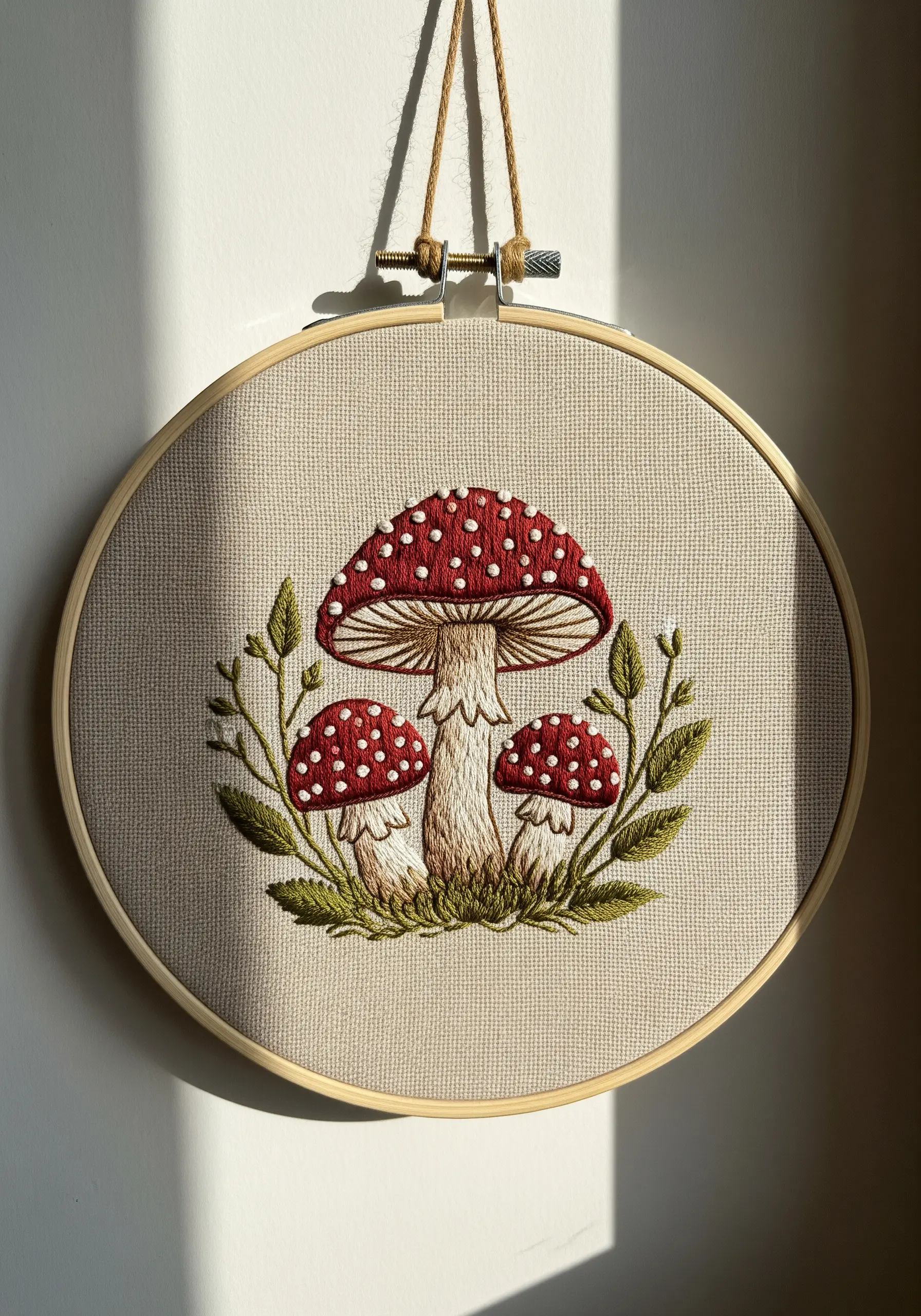
To create the rounded, realistic caps of the mushrooms, use a long-and-short stitch to blend shades of red and crimson.
This technique, often called thread painting, eliminates hard lines and creates a soft, shaded gradient.
For the iconic white spots, use raised satin stitch dots or small, tight French knots. This textural difference makes the spots physically sit on top of the red fill, giving the entire piece a wonderful, tactile quality.
16. Folk Art Felt Table Runner
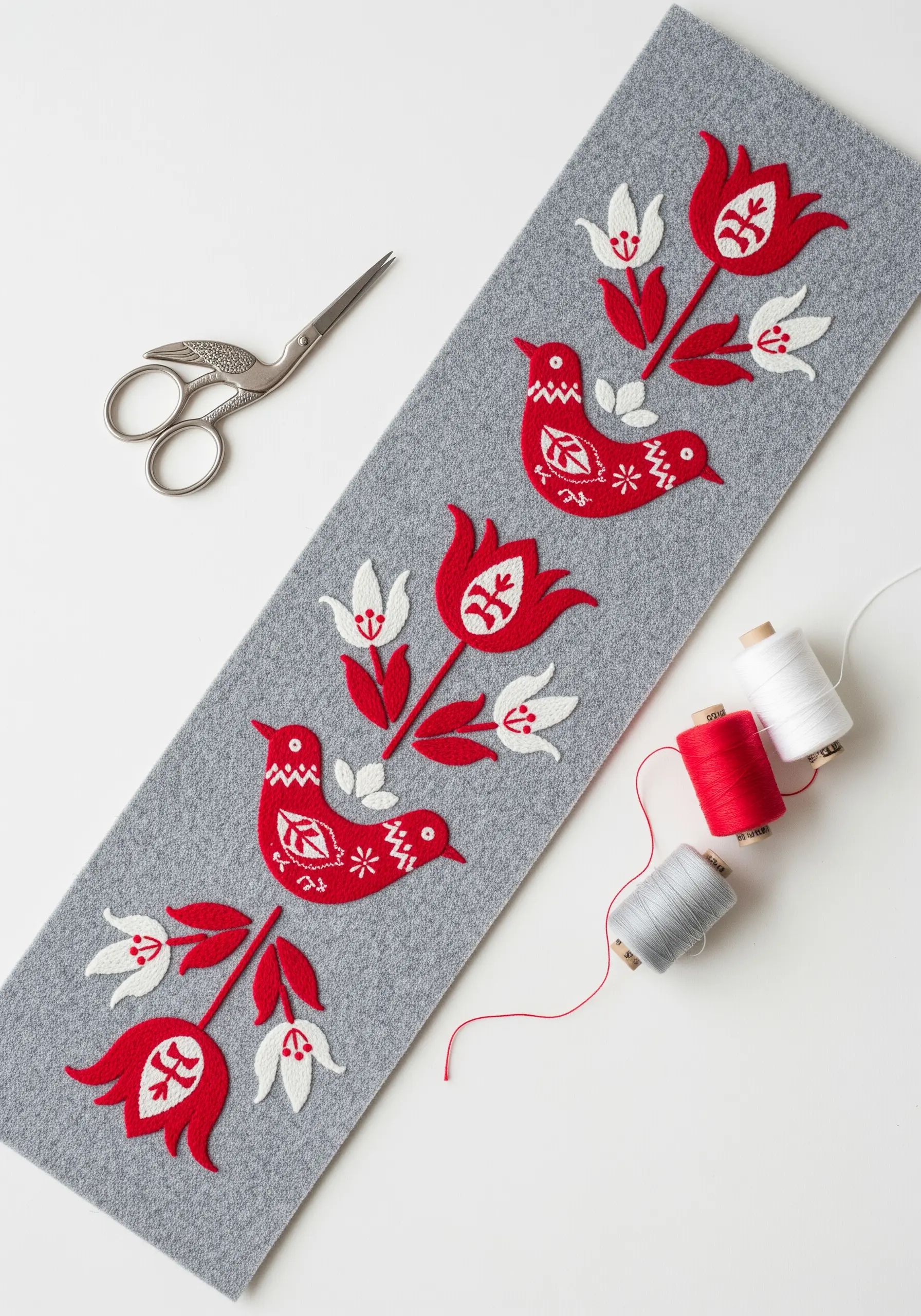
This clean, graphic design relies on the natural precision of felt appliqué.
Use a very sharp pair of small scissors or a rotary cutter to get perfectly crisp edges on your felt shapes.
Secure each piece to the grey background with a simple whipstitch, using a matching thread color for a nearly invisible finish.
Add the small decorative details, like the bird’s eye and wing patterns, with a contrasting thread using backstitch or tiny satin stitches.
17. Celestial Union Appliqué Hoop
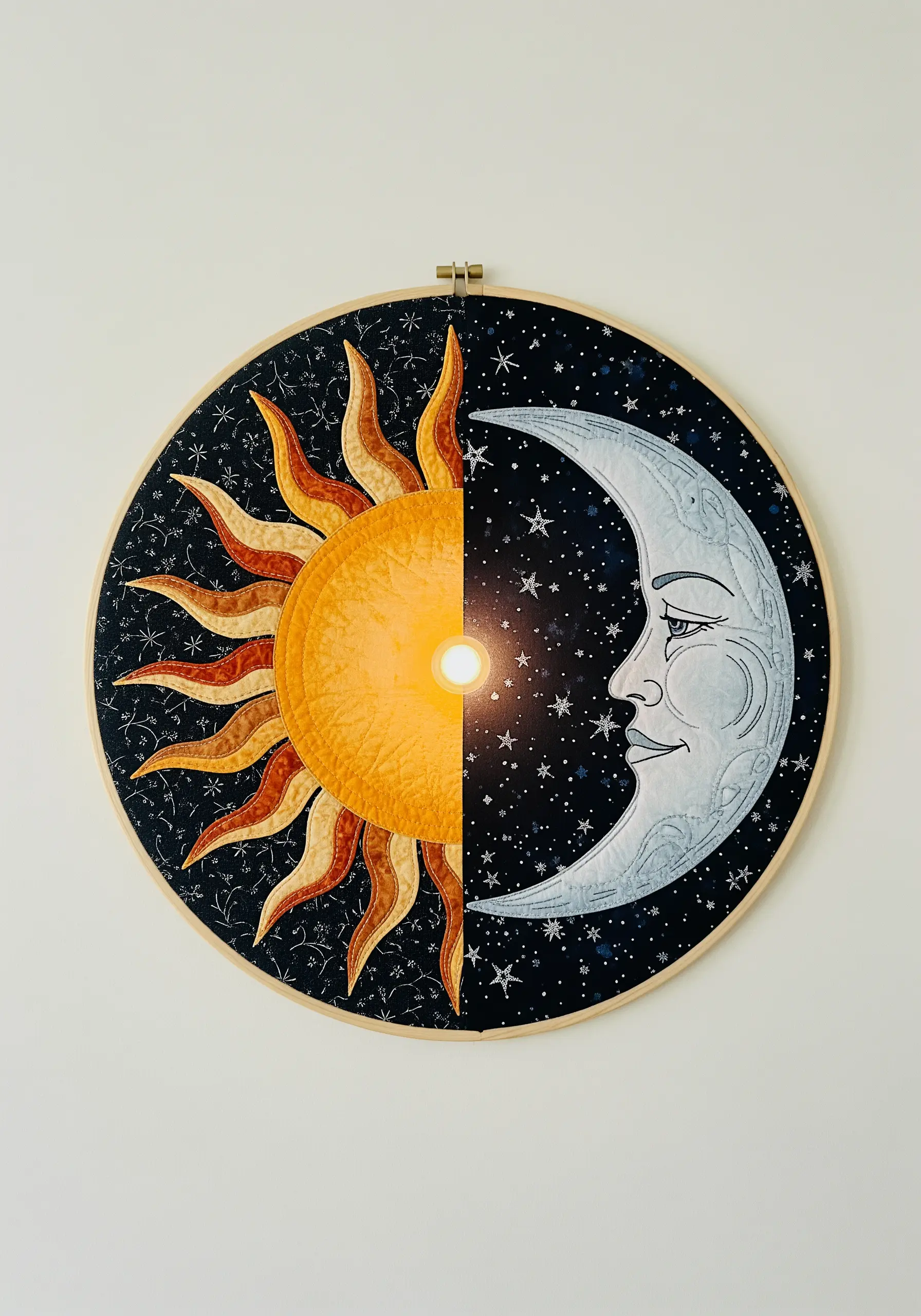
This stunning piece masterfully combines quilting, appliqué, and fine-line embroidery.
To create the sun’s fiery gradient, use a fabric collage technique, layering and stitching down small pieces of different colored fabrics.
Add embroidered rays with a satin stitch for sharp definition. For the delicate details of the moon’s face, switch to a single strand of silver or grey thread and use a tiny backstitch to create the look of an elegant ink drawing.
18. Monochrome High-Texture Weaving
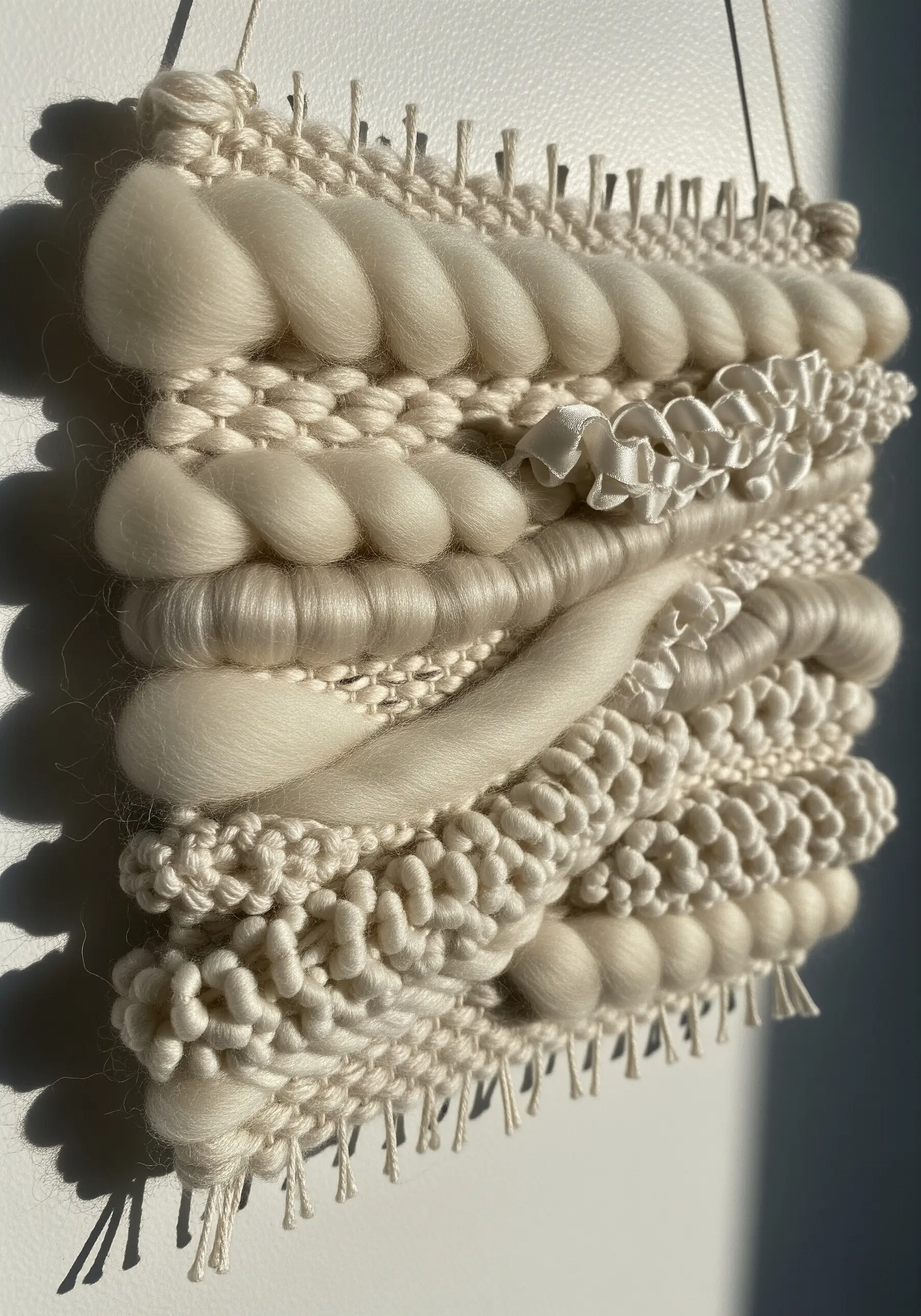
Create a tactile masterpiece by focusing entirely on texture, not color.
Use a single shade like cream or ivory, but gather yarns in a wide variety of weights and materials—chunky merino roving, smooth cotton cord, thin silk ribbon, and nubby bouclé.
Experiment with different weaving techniques in each row: chunky soumak braids, raised rya knots, and simple tabby weave.
The play of light and shadow across the different surfaces creates all the drama you need for a stunning minimalist piece.
19. Stitched Succulent Terrarium
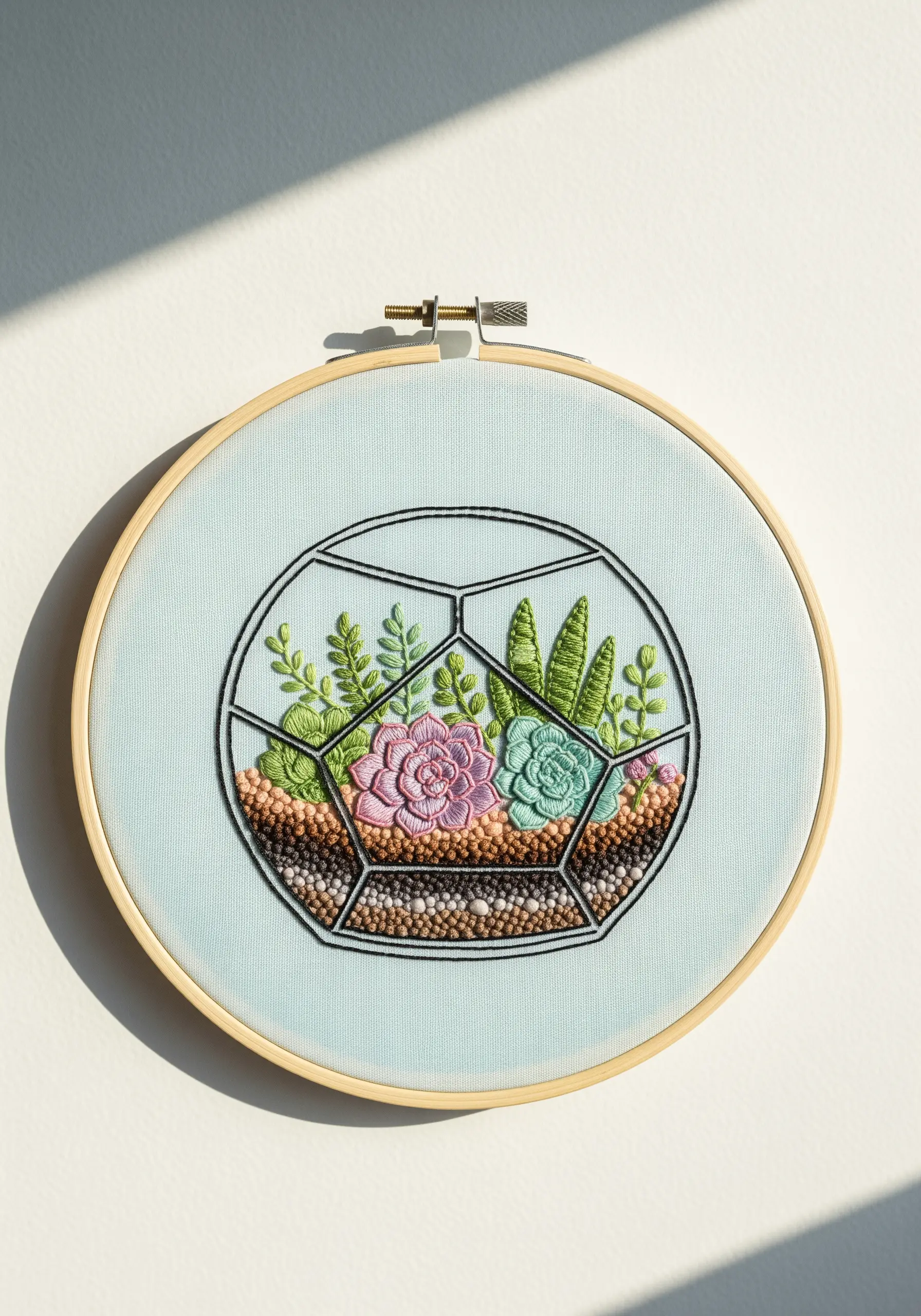
The success of this design lies in the beautiful contrast between the sharp, graphic outline and the soft, organic plants within.
Use a crisp, two-stranded backstitch in a dark color to define the geometric frame of the terrarium.
Fill the succulents with highly dimensional stitches like bullion knots or woven picot stitches to mimic their fleshy, layered leaves.
For the gravel at the bottom, use a dense scattering of French knots in three or four different neutral shades to create realistic depth and texture.
20. Embroidered Night Sky Star Chart
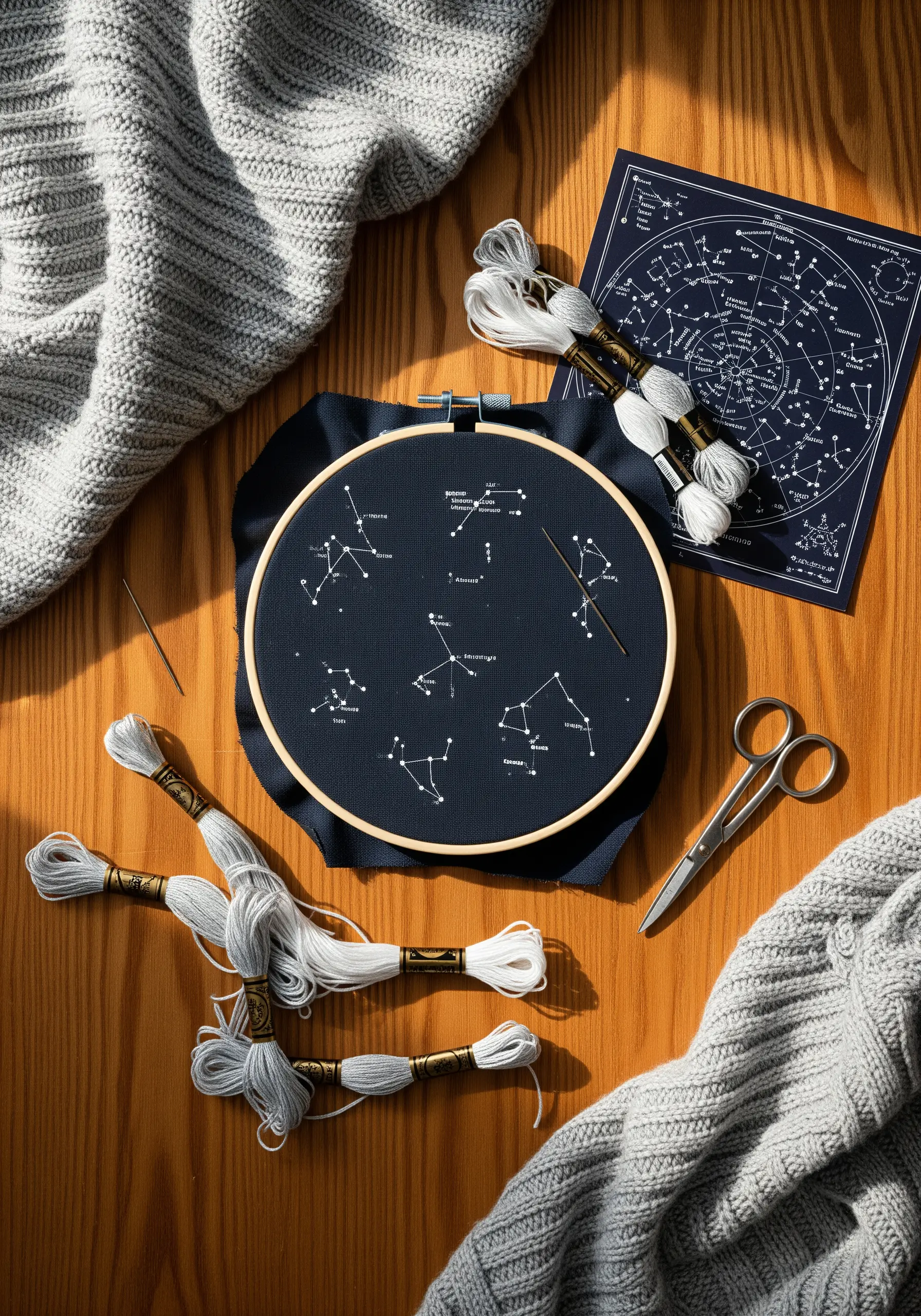
Transform a simple astronomical chart into a refined work of art with precise stitching.
Use a fine, single strand of white or glow-in-the-dark thread for the constellation lines to keep them looking delicate and scientific.
To help the main stars in each constellation stand out, use a slightly larger star stitch or secure a single, tiny silver bead or sequin at each point.
The methodical precision against the dark fabric creates a sophisticated, celestial look.
21. Continuous Line Portrait Banner
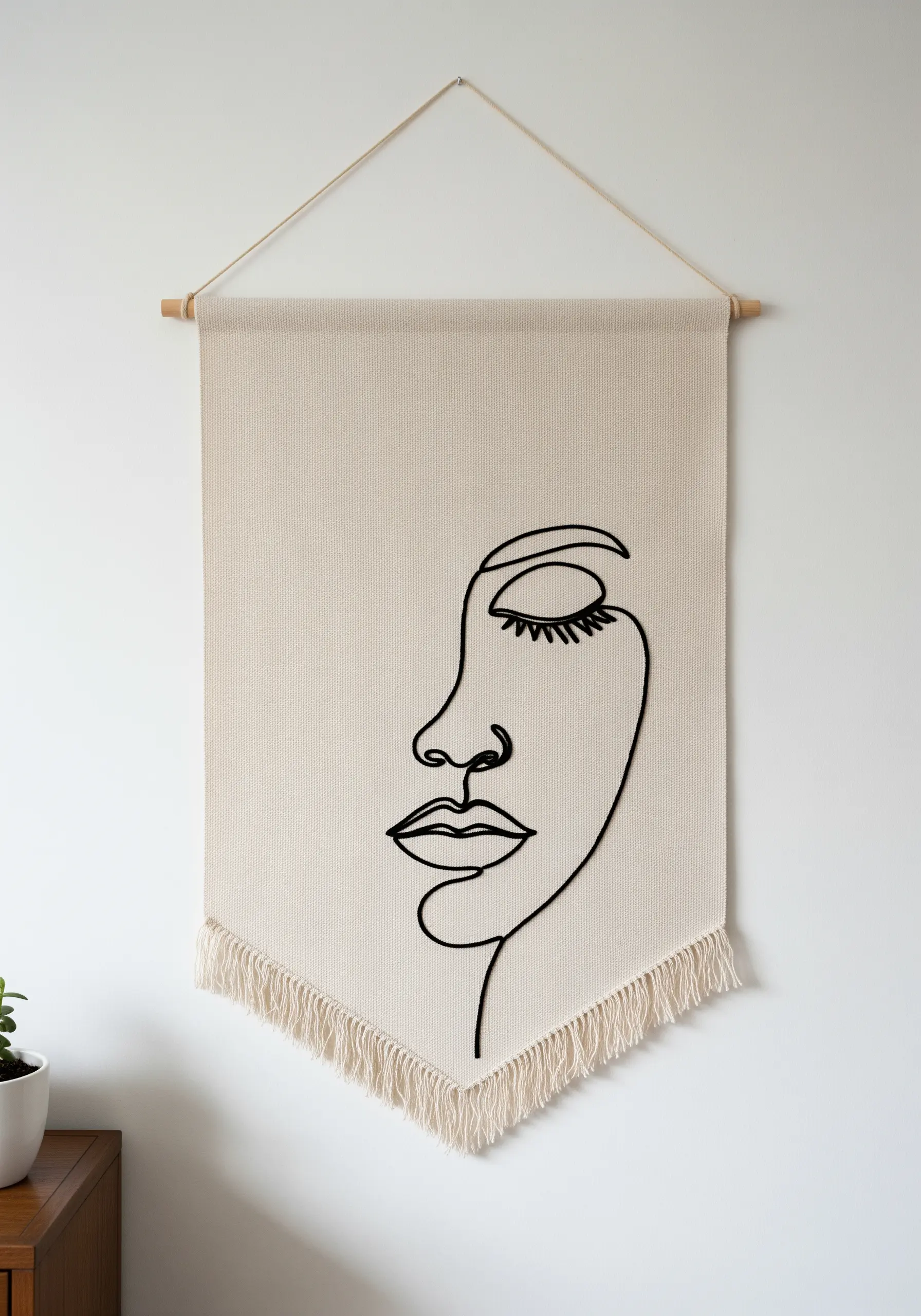
The elegance of this piece comes from its confident, minimalist line.
To achieve that smooth, unbroken look, use a whipped backstitch or a stem stitch, as both are designed to create fluid curves.
Give the line presence and weight by using a thicker thread, like a pearl cotton #8 or all six strands of standard embroidery floss.
The goal is to mimic the steady, fluid stroke of an ink pen, so practicing consistent stitch length is key to a seamless result.
22. Organic Abstract Color Block Tapestry
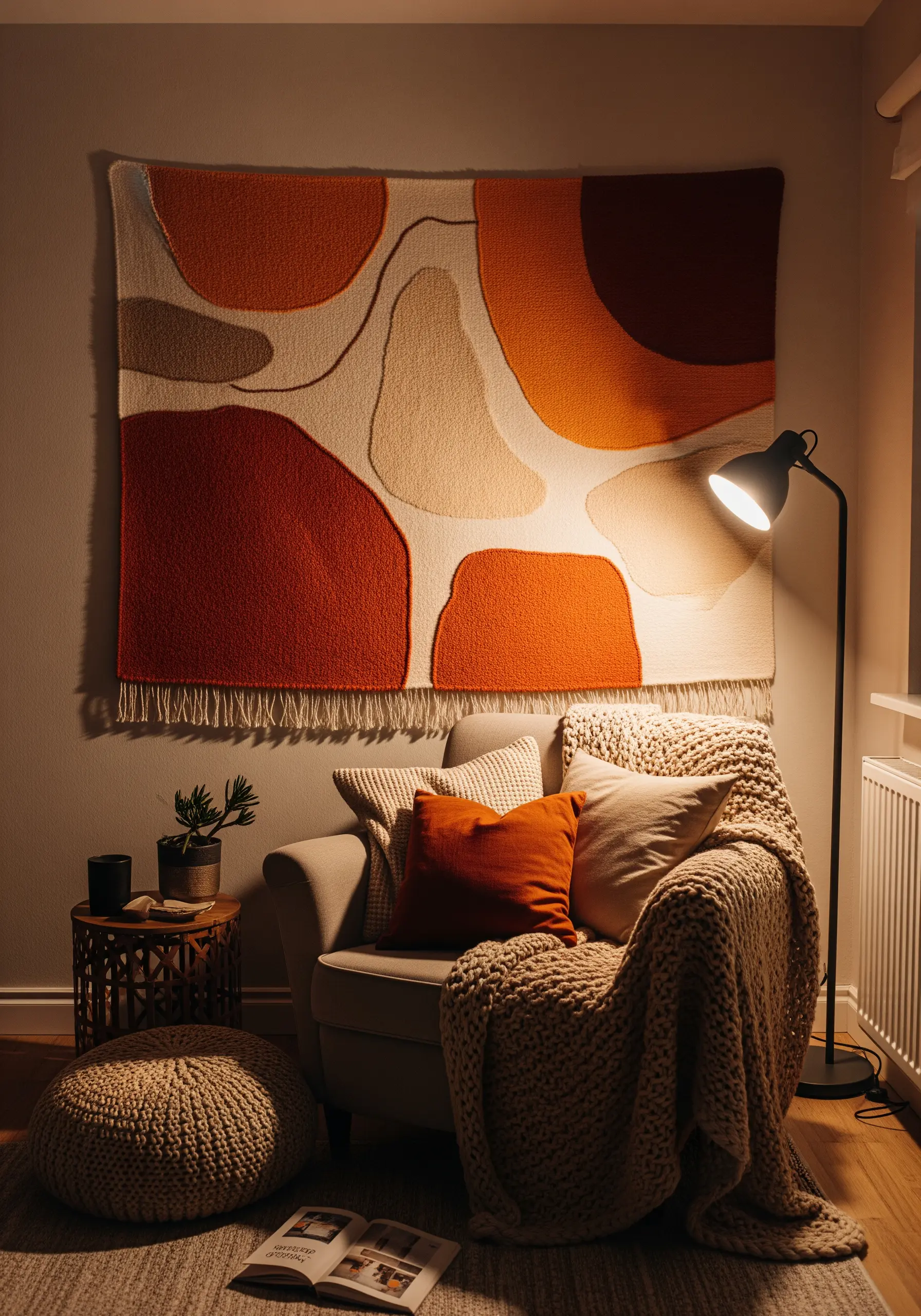
For a large-scale, texture-rich piece like this, a punch needle or a latch hook tool is your most efficient and effective choice.
Sketch your abstract shapes directly onto the backing fabric with a disappearing ink pen.
To create the soft, organic edges where colors meet, allow the loops of one color to slightly intermingle with the loops of the next.
This avoids a hard, geometric line and creates a more natural, painterly transition between the blocks of color.