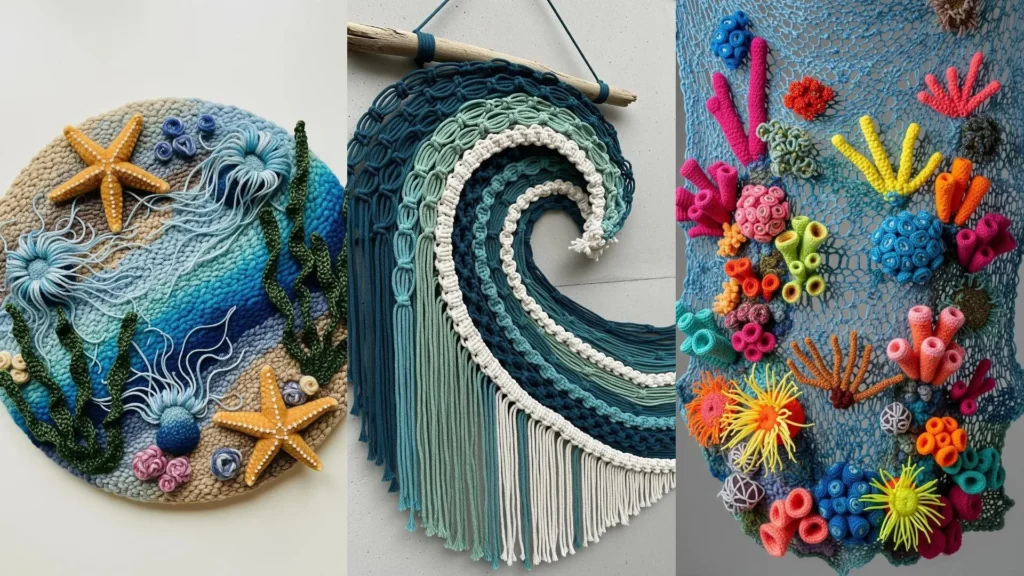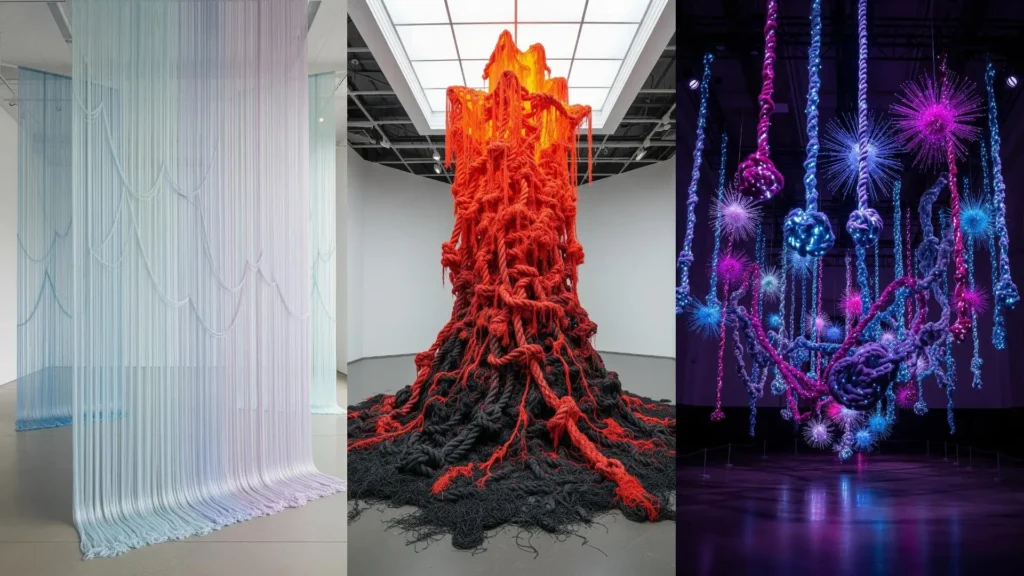
Sometimes, the path to elevating your work isn’t about learning a more complicated stitch. It’s about rethinking the very materials you hold in your hands.
Fiber is more than thread on a spool; it’s a sculptural line, a plane of color, a vessel for texture. By exploring scale, dimension, and the interplay of light, you can unlock an entirely new emotional language in your art.
Consider these installations not as untouchable gallery pieces, but as a direct invitation. An invitation to see the immense possibility in a single strand of yarn, to build worlds with color, and to create pieces that resonate with feeling, long after the last stitch is made.
1. Create Ethereal Veils with Suspended Threads
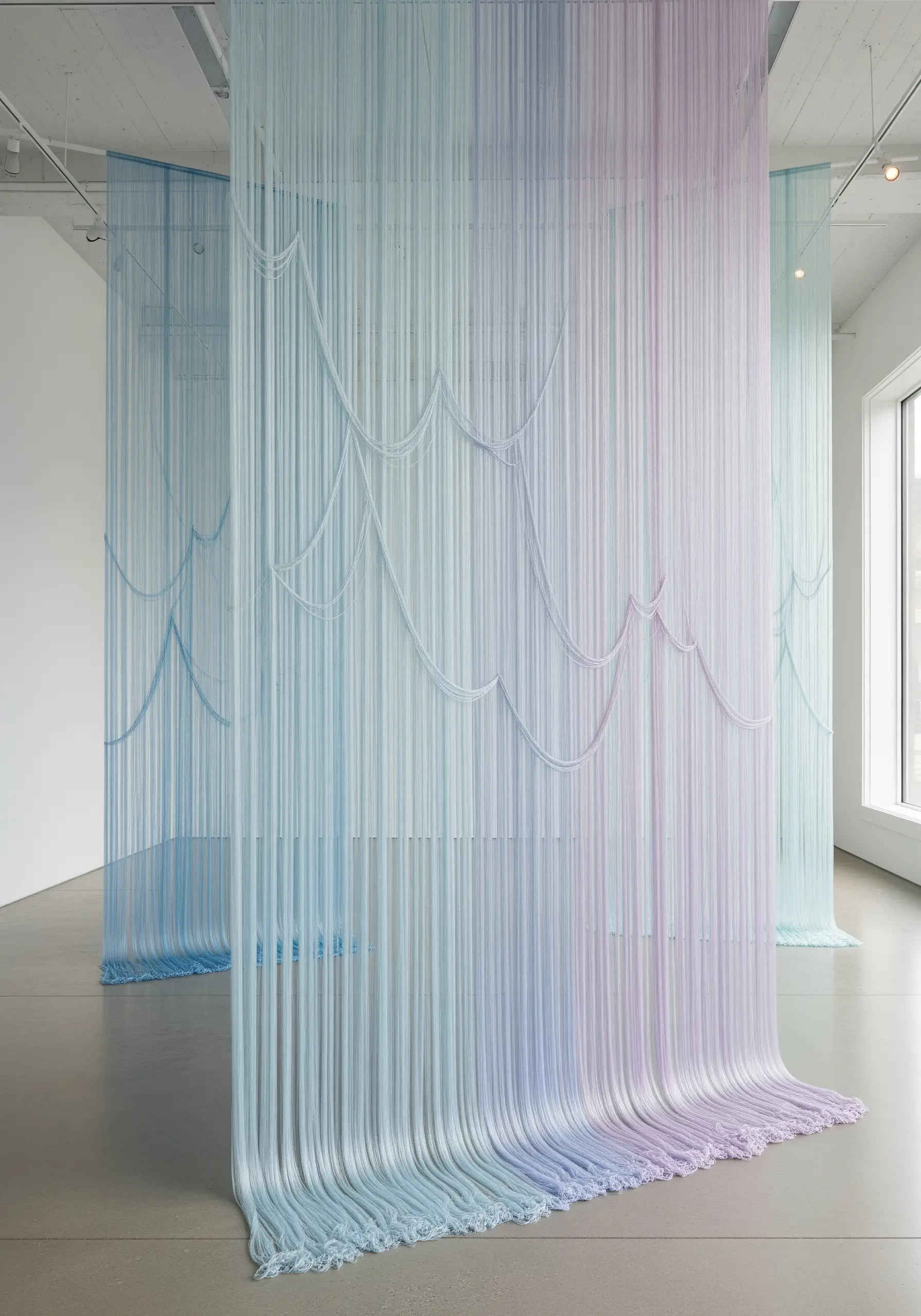
You can achieve this atmospheric effect by suspending single strands of fine yarn or embroidery floss from a ceiling-mounted frame or rod.
Create a subtle color gradient by arranging threads in gentle blocks of analogous colors—like soft blues transitioning into lilac and mint.
The magic is in the movement and transparency; the piece changes as you walk around it, creating layers of color that interact with the light.
This is one of the most effective ways to build large-scale embroidery tapestries that feel light and airy, not heavy or dense.
To create the soft wave patterns, simply gather a few threads together at varying heights and secure them with a discreet knot or a tiny drop of fabric glue.
2. Engineer a 3D Burst of Color and Texture

To build a dimensional burst, start with a central anchor point and radiate dowels or lightweight rods outwards.
Wrap each rod tightly with plush, textured yarn, like chenille or boucle, securing the ends with glue.
The joy in this technique comes from the dense, tactile surface; you can achieve a similar effect on a smaller scale with wrapped pipe cleaners or wire.
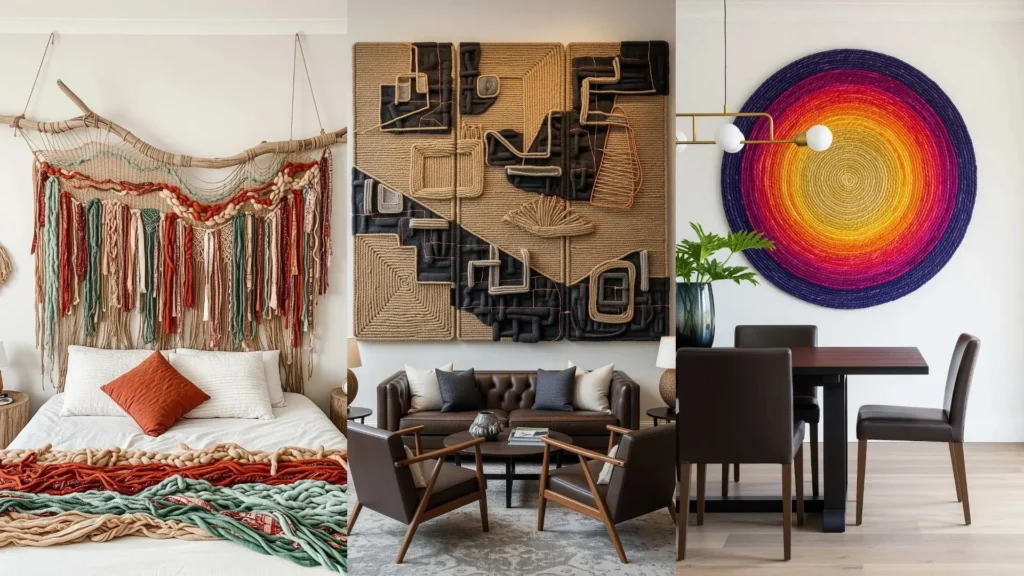
Use a vibrant, high-contrast color palette to maximize the explosive energy of the form.
These abstract thread burst techniques turn a flat wall into a dynamic focal point.
3. Explore Moody Atmospheres with Heavy Fiber

Evoke a sense of weight and gravity by using thick, heavy materials like wool roving or dyed rope.
Hang bundles of fiber from an overhead structure, letting them pool dramatically on the floor.
To add depth to a single color, use an ombré dyeing technique on the fibers before installation, creating a subtle shift from light to dark.
The ‘bleeding’ effect on the floor can be replicated by scattering loose pigment powder or dyed sand around the base of each fiber column, suggesting a connection to the earth.
This approach works beautifully for monochrome thread embroidery ideas where texture, not color, tells the story.
4. Illuminate Your Work with Integrated Light
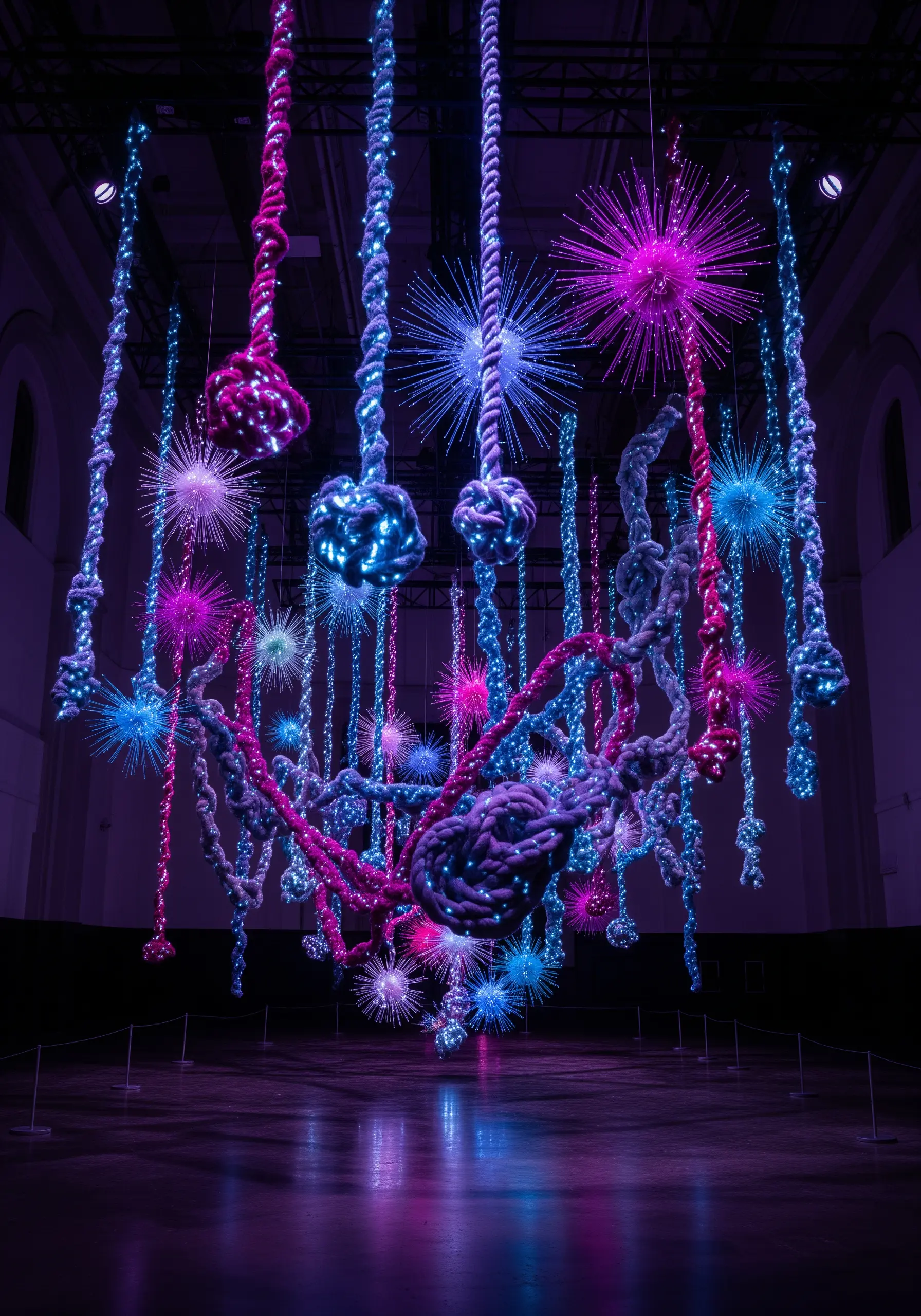
Combine fiber with light by weaving flexible, battery-powered LED fairy lights or fiber optics directly into your knots and braids.
Use thick, multi-ply yarns or ropes that can obscure the wire while allowing the light to diffuse softly through the fibers.
Experiment with different knotting techniques, like fisherman’s knots or globe knots, to create dense spheres where light can concentrate and glow from within.
This is a stunning example of mixed-media contemporary embroidery designs that blend craft with technology.
The contrast between the soft, traditional fiber and the cool, modern light creates a captivating, otherworldly effect.
5. Embrace Bold, Earthy Texture with Oversized Braids

Create a powerful visual statement by working with extremely thick ropes or bundled yarns to make oversized braids and knots.
To manage the weight, you can create a core from a lighter material (like foam tubing) and wrap it with your chosen fiber.
Let the ends unravel freely to contrast the tight structure of the braid with loose, organic chaos.
This technique is perfect for creating rustic string art farmhouse embroidery pieces with a modern, sculptural twist.
The beauty lies in the exaggerated scale, which turns a simple braid into a monumental, textural object.
6. Activate a Space with Architectural Thread Lines

Transform an entire room by stretching threads across open space, turning invisible architecture into a visible web of color.
Use strong, low-stretch fibers like nylon cord or waxed linen thread to maintain tension over long distances.
Map out your anchor points in advance to create intentional patterns—whether it’s a symmetrical grid, a chaotic intersection, or a gentle curve.
This is the ultimate form of architectural string art designs, using the room itself as your canvas.
The color choices will define the mood: a multicolored palette feels playful, while a monochrome scheme feels more dramatic and graphic.
7. Build Tension with Controlled Chaos
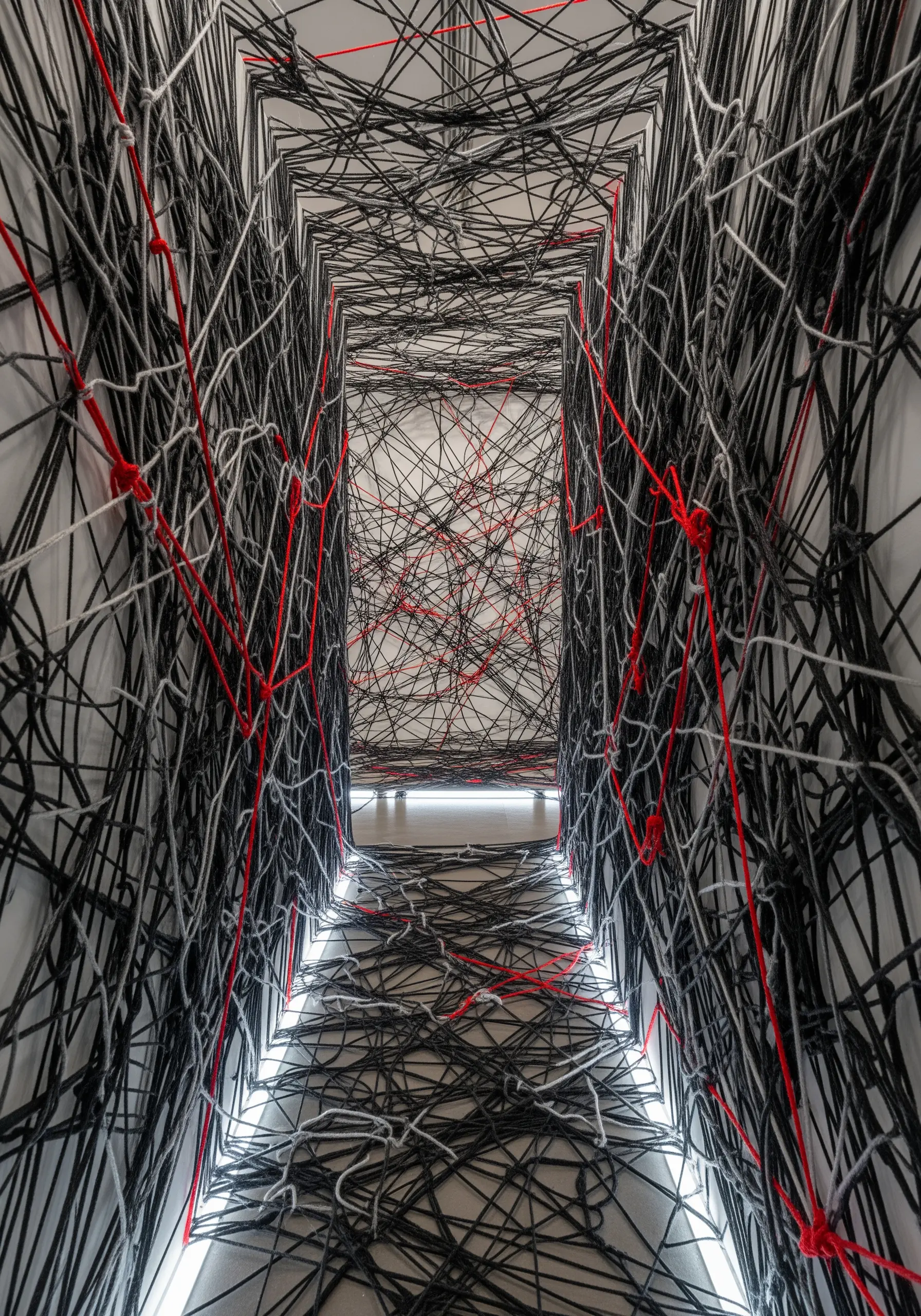
Create an immersive, cage-like environment by wrapping a space in a dense, chaotic web of threads.
Work with a limited color palette—like black, white, and a single accent color—to maintain a graphic, intentional look despite the randomness.
Vary the thickness of your yarn or cord to add visual texture and depth to the layers.
This concept can be scaled down to a shadow box or a large frame, creating a window into a tangled world.
Explore these abstract thread pattern mashups to bring a similar energy to your hoop art.
8. Define Space with Transparent Fabric Panels
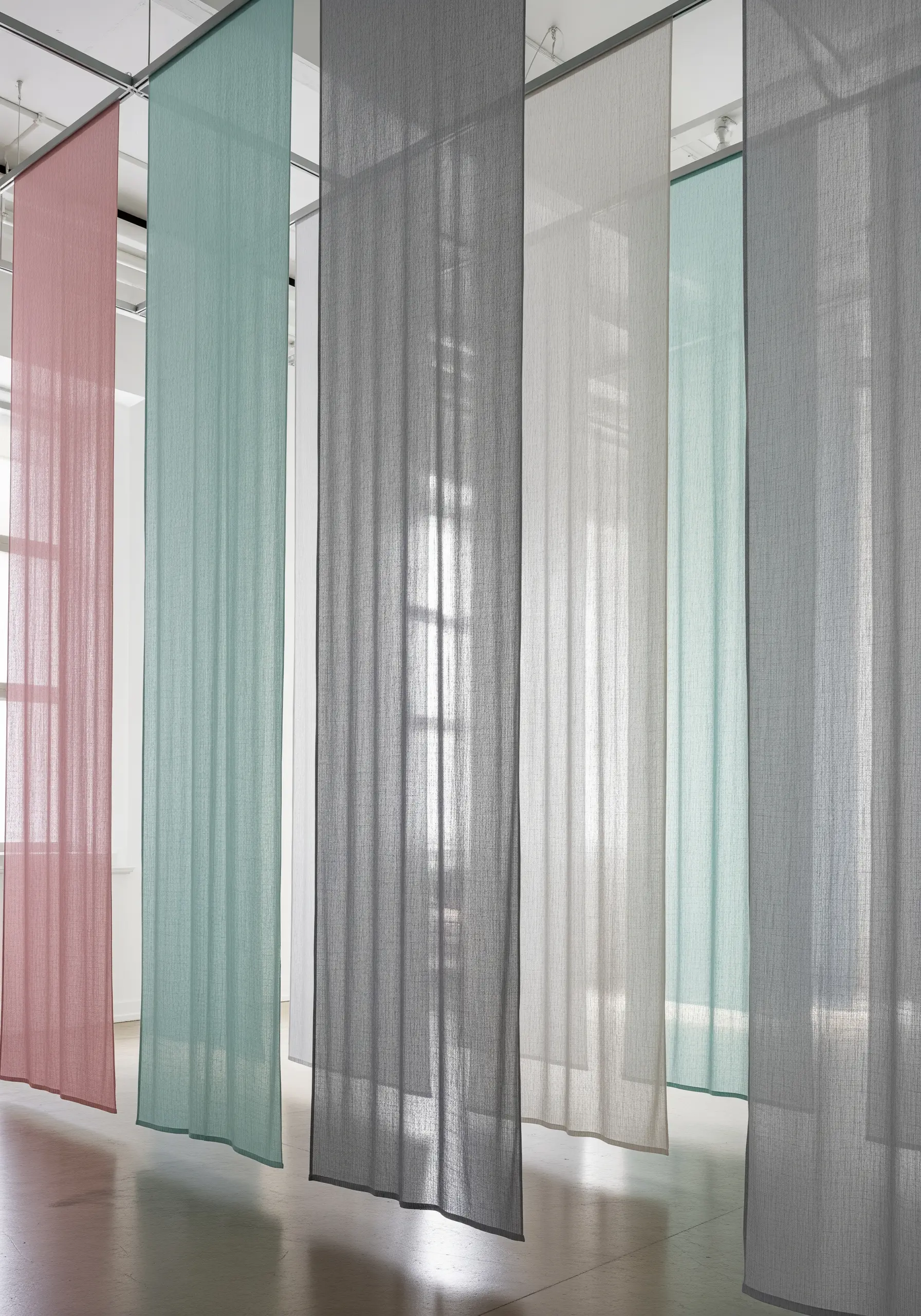
Use semi-transparent fabrics like linen scrim or cotton gauze to create soft, permeable walls of color.
Hanging panels in overlapping layers allows the colors to mix and create new, subtle hues where they intersect.
This method is perfect for dividing a large room or creating a serene walkway without completely blocking light or sightlines.
It’s one of the simplest rent-friendly embroidery wall tapestry ideas, as the lightweight panels can be hung from tension rods or temporary ceiling hooks.
The emotional impact comes from the quiet, calming effect of the muted, light-filtering colors.
9. Sculpt a Wave of Graduated Color

Create a sense of fluid motion by arranging hundreds of individual elements—like these foam tubes wrapped in fabric—in a wave-like form.
The key to the illusion is a meticulous color gradient, where each element is a slightly different shade from its neighbor.
You can replicate this effect on a smaller scale using wrapped dowels, painted spools of thread, or even colored pencils glued into a sculptural form.
The power of this piece comes from repetition and subtle variation, which is a core principle behind beautiful gradient color floral embroidery ideas.
10. Tell a Story with Deconstructed Textiles

Create a ‘memory cloth’ by patching together fragments of meaningful textiles: old denim, lace doilies, floral scraps, and even whole garments.
Embrace the raw edges, holes, and imperfections, connecting the pieces with visible, functional stitches like the running stitch or whip stitch.
The composition should feel organic and layered, revealing different histories and textures as the viewer looks closer.
These are deeply personal fabric collage embroidery compositions that honor the stories embedded in cloth.
The final piece is more than a quilt; it’s a tapestry of life, full of emotion and personal history.
11. Create a Sanctuary with Monumental Knitting

Use extreme knitting techniques with giant needles and super-chunky wool roving to create sculptural, inhabitable forms.
The simple stockinette stitch, when scaled up to this size, becomes a powerful architectural element.
The soft, natural texture of the un-spun wool creates a sense of warmth, safety, and quiet, inviting you to imagine being inside.
You can apply this principle to your own cozy mixed-fiber projects, like a chunky knit blanket or floor cushion, to create your own small sanctuary.
12. Capture Ephemeral Moments with Thread and Bead
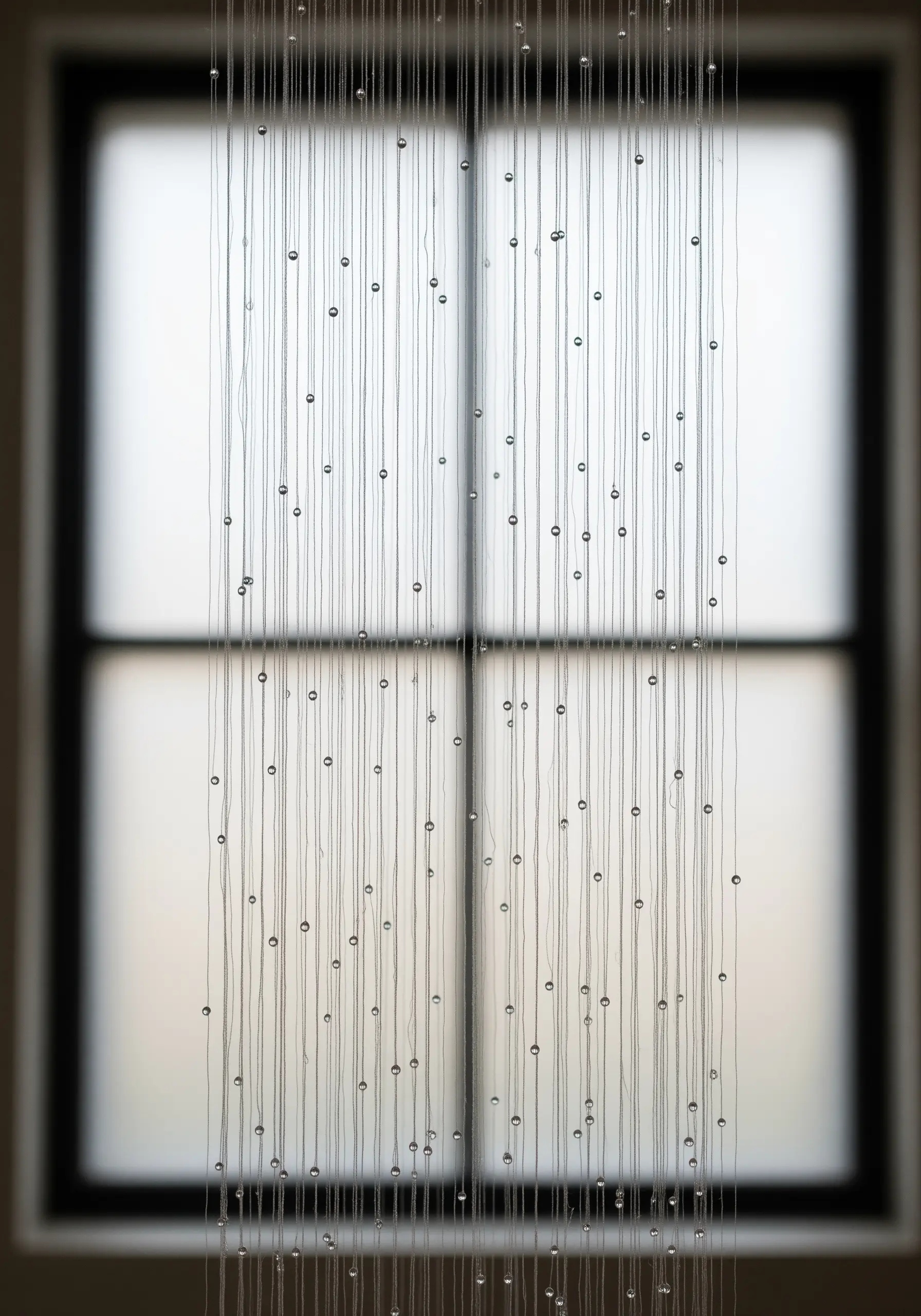
Suggest the delicacy of rain or light by suspending fine, translucent threads weighted with single, clear beads.
The near-invisibility of the thread makes the beads appear to float in mid-air, creating a magical, ethereal effect.
This technique is incredibly effective when installed in front of a window, allowing the beads to catch and refract natural light throughout the day.
Think of it as adding tiny secret embroidery ideas to a room—subtle details that reward close observation.
The feeling is one of stillness and quiet contemplation, capturing a fleeting moment in a permanent form.
13. Juxtapose Strength and Softness with Knotted Rope

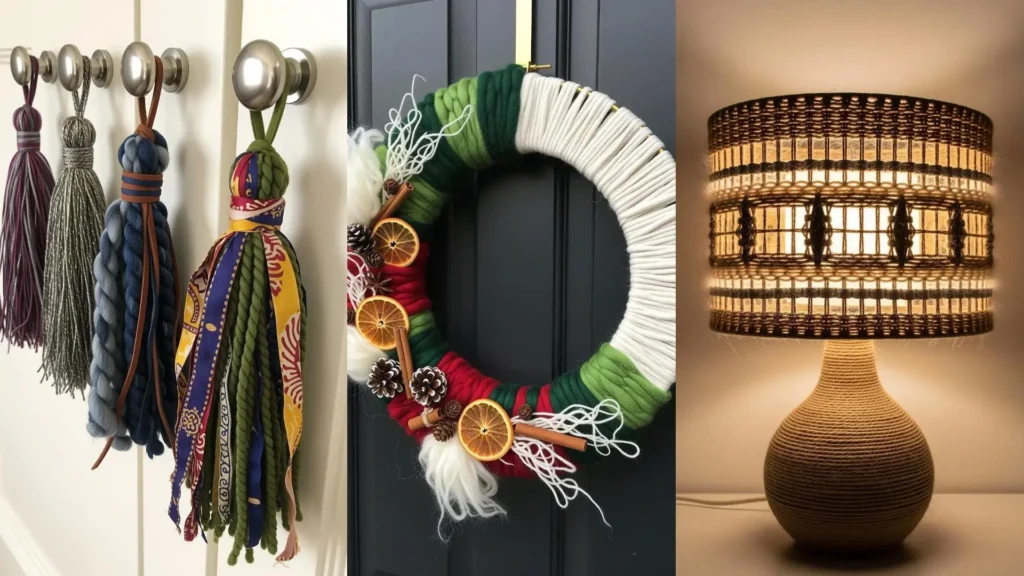
Explore the interplay of texture by combining hard, tightly-wound rope with soft, unraveled tassels.
Use oversized nautical knots, like the monkey’s fist or stevedore knot, as focal points that convey strength and complexity.
The choice of natural jute or sisal rope adds a raw, industrial feel, which is beautifully softened by the macrame and tassel details.
This balance of hard and soft is a hallmark of stunning mixed-fiber projects that feel both powerful and refined.
Hang these pieces in a space with high ceilings to appreciate their weight and dramatic presence.
14. Build a Playful World with Tufted Shapes

Create an immersive, joyful environment by crafting large, soft-sculptural forms with a punch needle or tufting gun.
The dense, plush texture is incredibly inviting and works perfectly for abstract, organic shapes.
Use a vibrant, candy-colored palette to enhance the feeling of playfulness and wonder.
You can translate this into your own work by making small, tufted ‘worry stones’ or decorative objects for a shelf.
These playful yarn wall art crafts are all about sparking joy through color and irresistible texture.
15. Evoke a Waterfall with a Cascade of Yarn
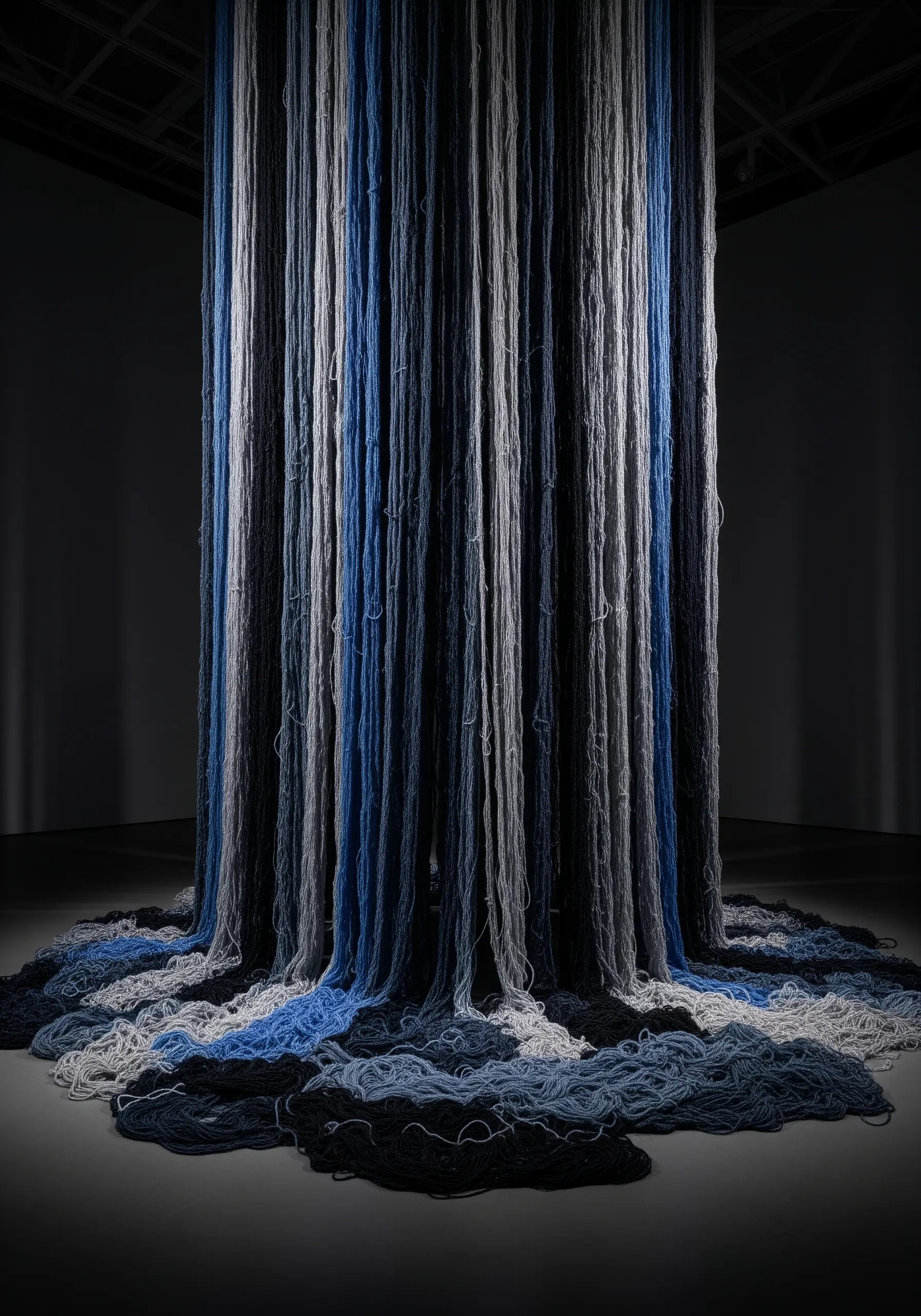
Create the illusion of flowing water by draping hundreds of strands of yarn in a dense, cascading column.
Use a carefully selected palette of blues, grays, and whites to mimic the tones of a waterfall or a stormy sea.
Allowing the yarn to pool and mix on the floor breaks the rigid vertical lines and enhances the feeling of natural, uncontrolled flow.
This method of using straight stitches on a massive scale is a great way to explore abstract thread waves & swirls in three dimensions.
16. Contrast Darkness and Light with Fiber

Create a powerful emotional narrative by juxtaposing dense, chaotic, dark fibers with a bright, radiant burst of color.
Build texture in the dark section with tangled, knotted, and overlapping yarns of varying thicknesses to suggest complexity and weight.
For the ‘light’ section, radiate single, taut strands of a vibrant color from a central point to create a feeling of energy and release.
This is a masterful way to use abstract thread embroidery ideas inspired by nature—like a storm breaking into sunshine.
The transition zone, where the colors begin to blend, is key to making the two halves feel connected.
17. Create an Immersive Corridor of Color

Guide the viewer through an experience by creating a walkway defined by vertical curtains of dense, shaggy yarn.
Use bold, saturated colors for each section of the corridor to create distinct emotional zones.
The texture is critical; the shaggy, untamed quality of the yarn makes the walls feel soft, organic, and slightly mysterious.
On a smaller scale, you could use this technique to make a unique curtain for a doorway or a tactile wall hanging.
It feels different from other modern thread art ideas because it’s not just for looking at—it’s for moving through.
18. Integrate Fiber Art into Architecture
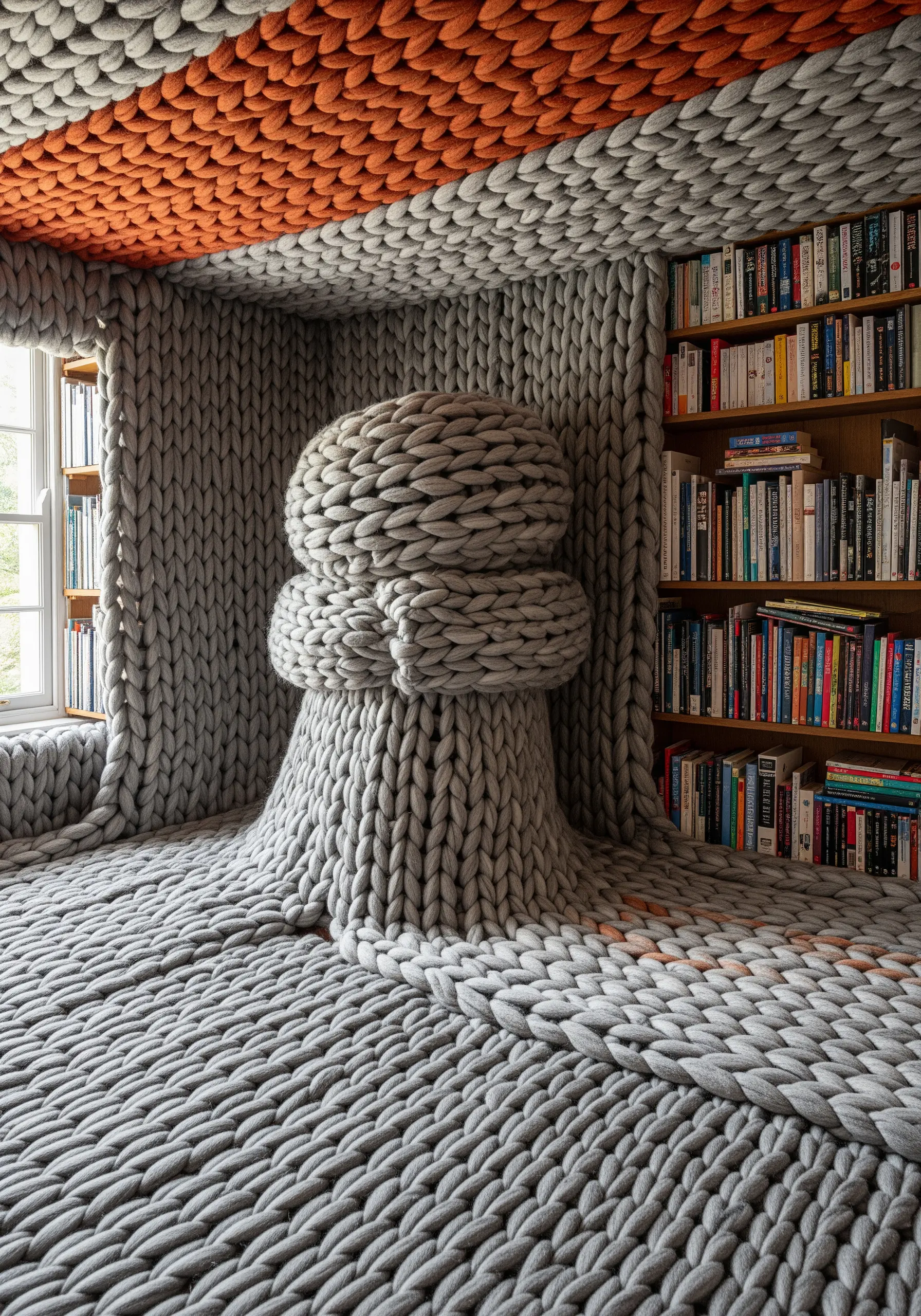
Push the boundaries of decor by using extreme knitting to create installations that become part of the room’s architecture.
Covering walls, floors, and even ceilings with a continuous knitted texture creates a profoundly cozy and surreal environment.
The contrast between the soft, pliable fiber and the hard lines of the room—like the window and bookshelves—is what makes this so visually compelling.
Use layered yarn wall art projects on a smaller scale to add this kind of immersive texture to a corner of your own home.
The addition of a contrasting color on the ceiling adds an unexpected pop that draws the eye upward.
19. Sculpt a Landscape with Tufted Contours
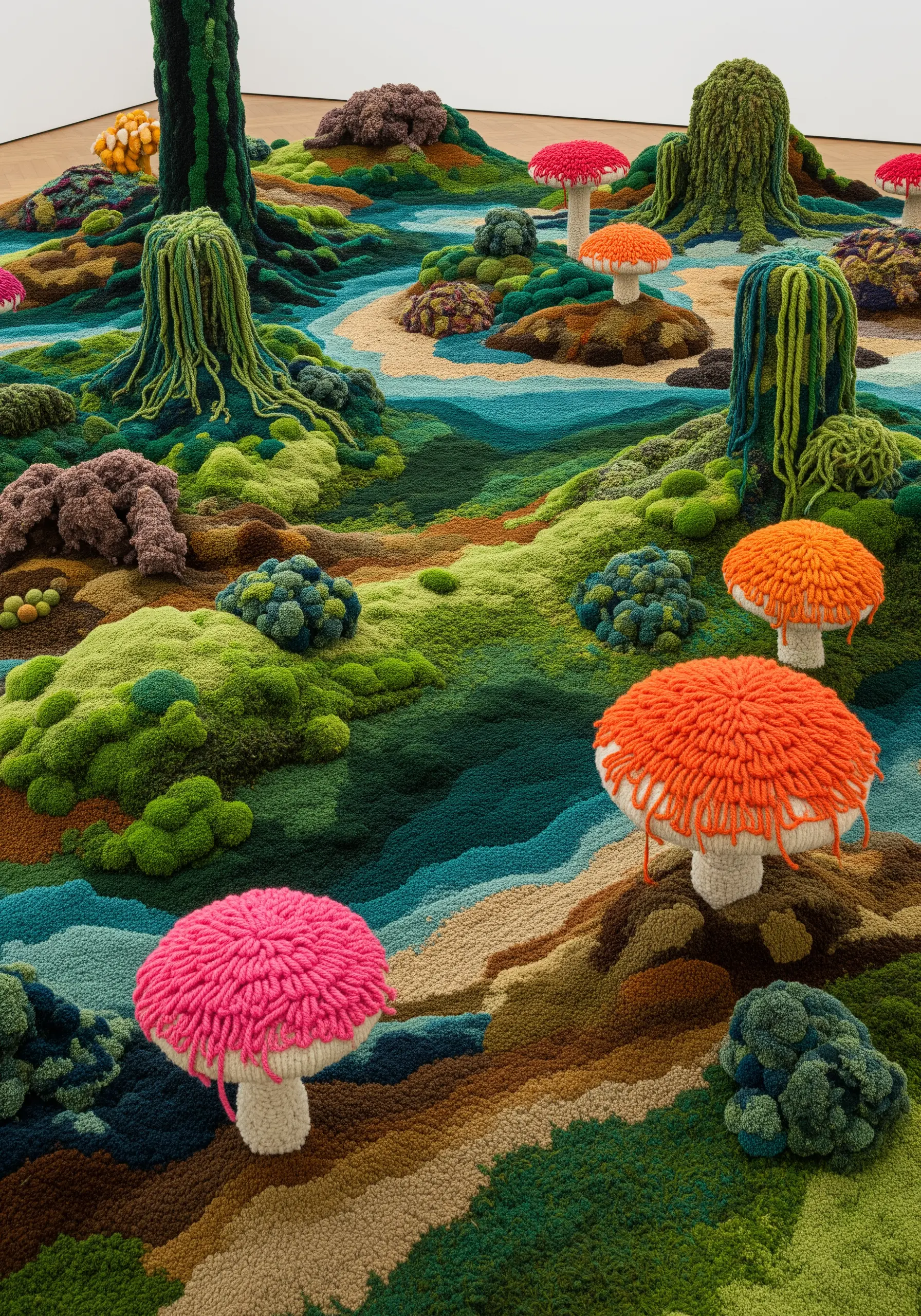
Build a three-dimensional, topographical world using dense tufting techniques to create varied heights and textures.
Use color blocking with earthy tones to define different areas of your landscape, like water, soil, and vegetation.
Incorporate 3D elements, like the mushroom forms, by tufting over pre-made sculptural bases or creating stuffed forms.
This is a masterclass in creating realistic mushroom forest floor embroidery projects on an epic, explorable scale.
The mix of loop pile (for the moss) and cut pile (for the soil) adds a subtle but effective layer of textural realism.
20. Craft an Underwater World with Crochet and Knit

Recreate the organic, complex forms of a coral reef using freeform crochet and knitting techniques.
Combine different stitches—like the crocodile stitch for scales or picot stitch for texture—to mimic the variety of coral.
Use a hyper-saturated color palette of oranges, pinks, and purples against a deep blue background to evoke a vibrant, otherworldly underwater scene.
This is a beautiful way to explore tropical leaf & flower combination patterns in a completely new context.
The overhead draping of sheer blue fabric enhances the feeling of being submerged in a gentle ocean current.
21. Suspend a Sky of Soft, Felted Clouds
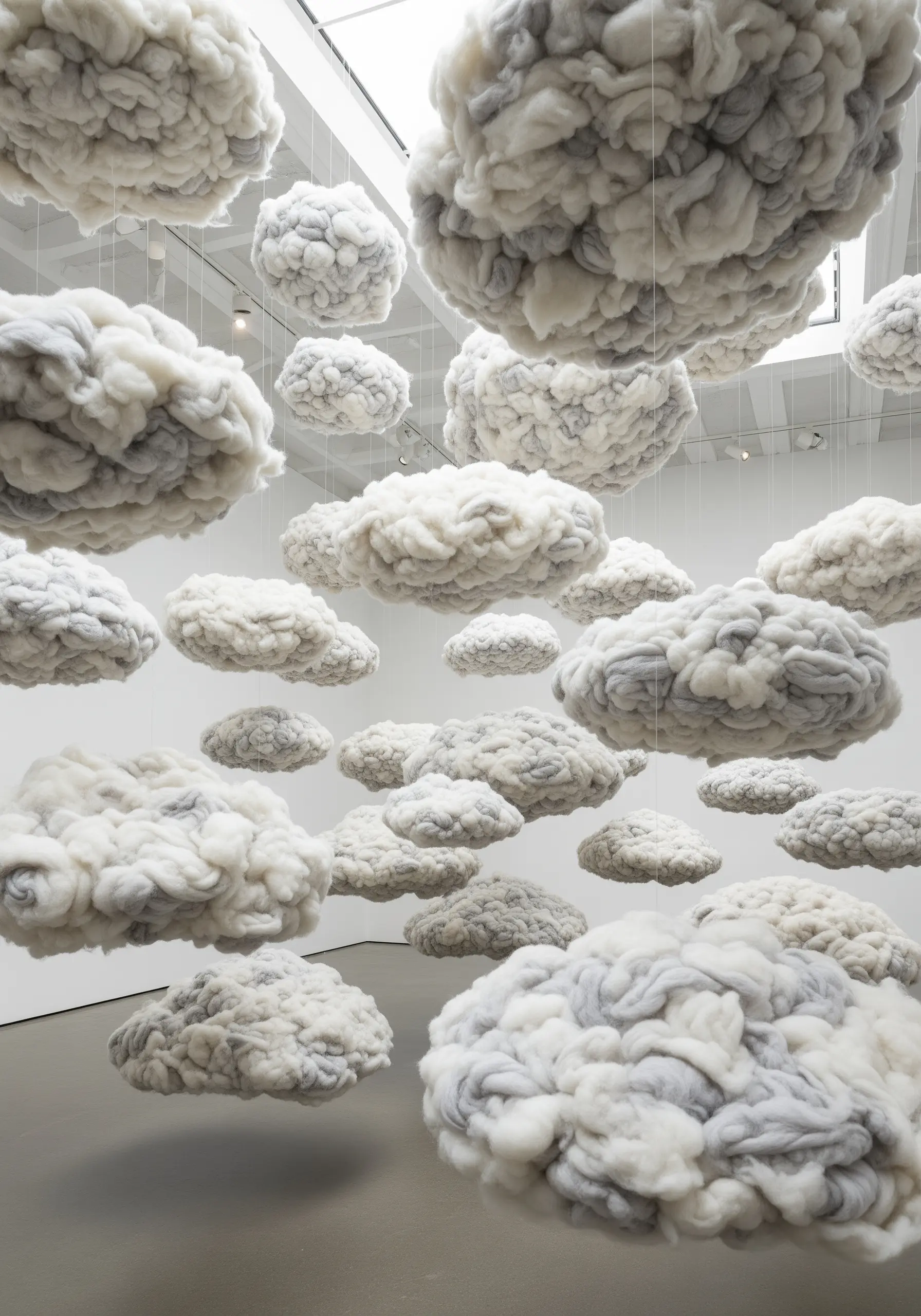
Create a dreamy, atmospheric installation by sculpting cloud forms from wool roving using needle-felting or wet-felting techniques.
Introduce subtle gray and cream tones into the white wool to give the clouds realistic depth and shadow.
Suspend the clouds at varying heights using fine, near-invisible thread to create the illusion of a floating, multi-layered sky.
These nature-calm stitching projects are perfect for creating a serene and contemplative atmosphere in any space.
The beauty of this technique is its simplicity; it relies entirely on texture and form to evoke a powerful sense of peace.
22. Embody Energy with Volcanic Fiber Forms

Evoke the raw power of a volcano by building a sculptural cone from tangled, knotted, and layered rope.
Use a dramatic color shift from black and charcoal at the base to fiery red and orange at the peak to create a sense of intense heat.
Incorporate internal lighting at the top of the sculpture to make the red ropes glow, as if filled with molten lava.
This is one of the most dynamic ways to capture nature’s textures and energies in a purely abstract form.
The loose, frayed ends spilling onto the floor suggest an unstoppable, overflowing force.
23. Explore Beauty in Decay with Distressed Textiles

Create powerful emotional resonance by intentionally distressing and deconstructing woven fabrics.
Experiment with techniques like pulling threads, cutting holes, and applying rust dyeing (using iron objects and vinegar) to create a weathered, aged patina.
Drape these fragile, damaged textiles over simple frames to highlight their delicate, transient nature.
These embroidered textile wall hangings tell a story of time, memory, and the beauty found in imperfection.
The addition of thick, trailing ropes adds a sense of weight and history to the ethereal, decaying cloth.
24. Weave a Crystalline Dreamscape
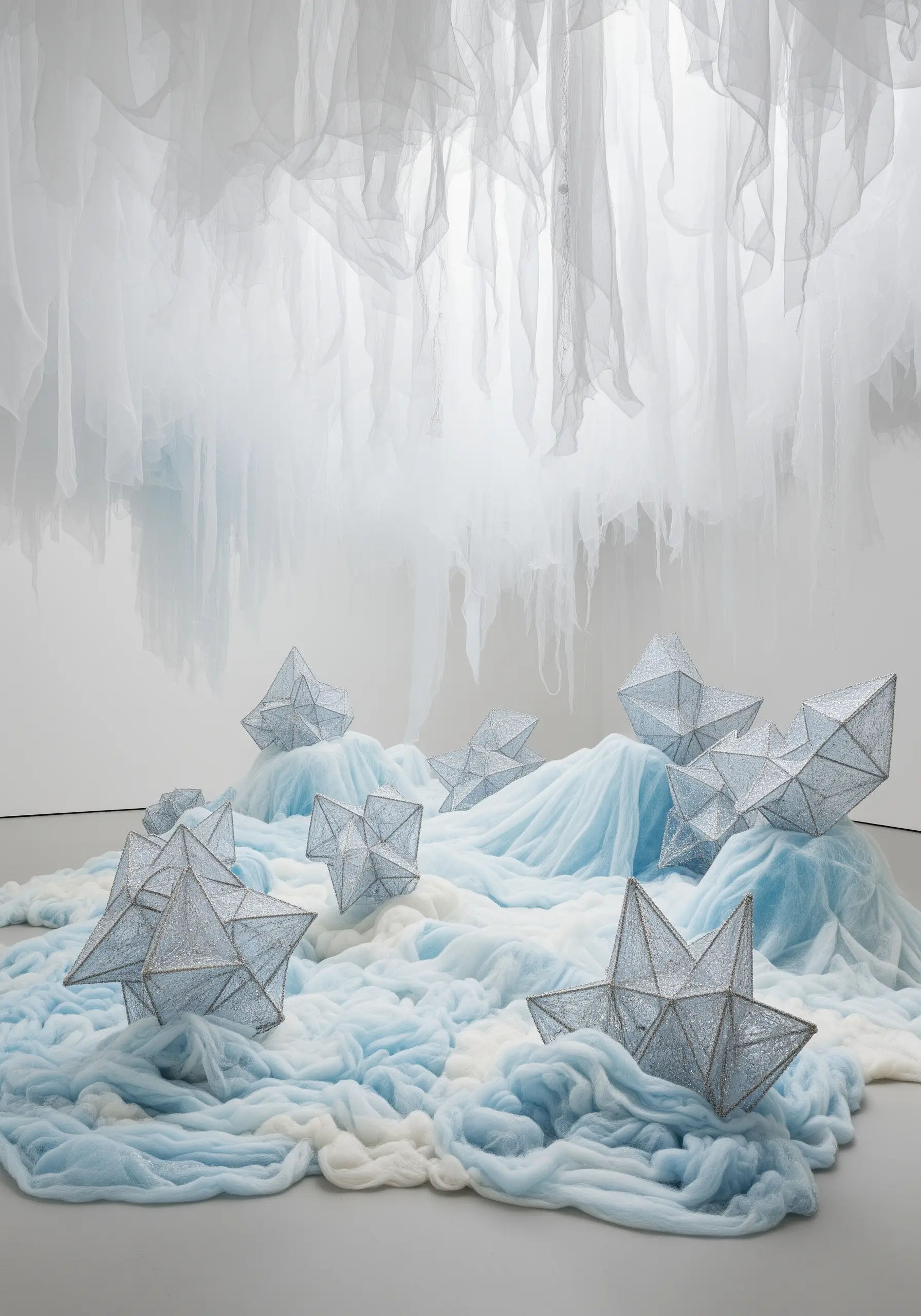
Combine soft, ethereal textiles with hard, geometric forms to create a landscape of intriguing contrasts.
Drape sheer, gauzy fabrics and soft wool roving to create a soft, snowy ground and a misty sky.
Construct geometric star-like shapes from wire frames wrapped in glittery or metallic thread to act as crystalline structures within the soft environment.
You can use this idea to enhance celestial micro-embroidery ideas by adding dimensional, beaded elements to your fabric work.
This installation creates a magical, otherworldly narrative, like a scene from a forgotten fairy tale.
25. Weave Warmth with Earth-Tone Textures
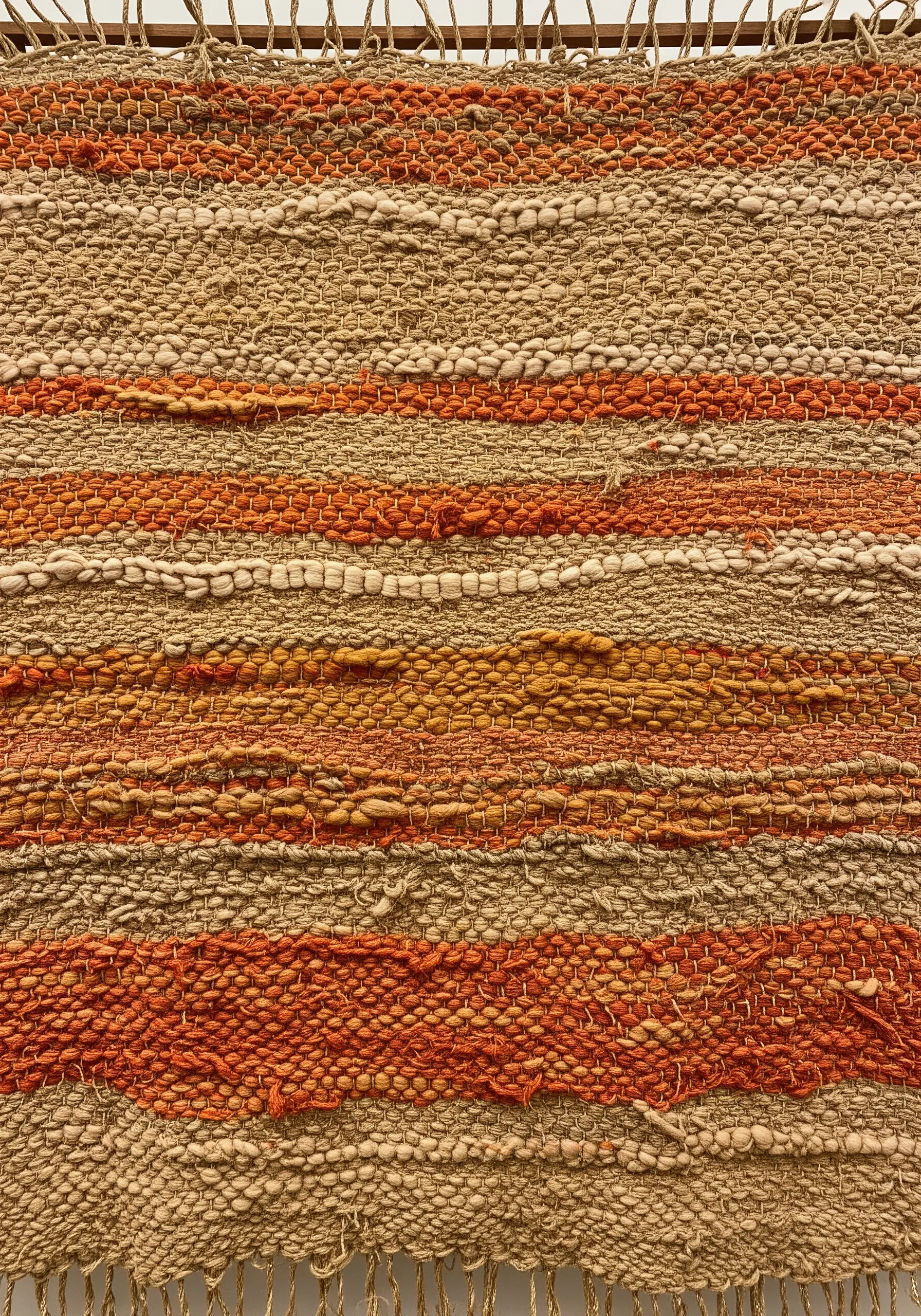
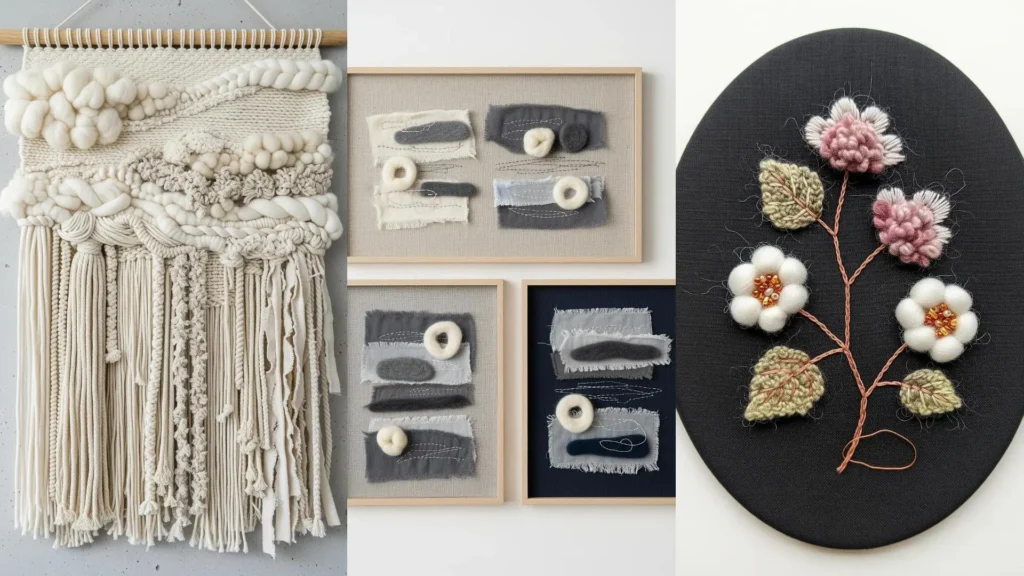
Create a rich, tactile surface by weaving with a variety of thick and thin yarns in a warm, earthy palette.
Incorporate different weaving techniques within a single piece—like plain weave for flat areas and soumak stitch for raised, braid-like textures—to add depth.
The power of this style comes from its subtlety; the texture does the work of creating visual interest, allowing the simple striped pattern to feel sophisticated.
This is a perfect inspiration for anyone who loves earth-tone patterns and wants to explore texture more deeply.
Leaving the warp threads exposed at the top and bottom adds a rustic, handmade honesty to the finished piece.
26. Draw with Light and Fluorescent Thread

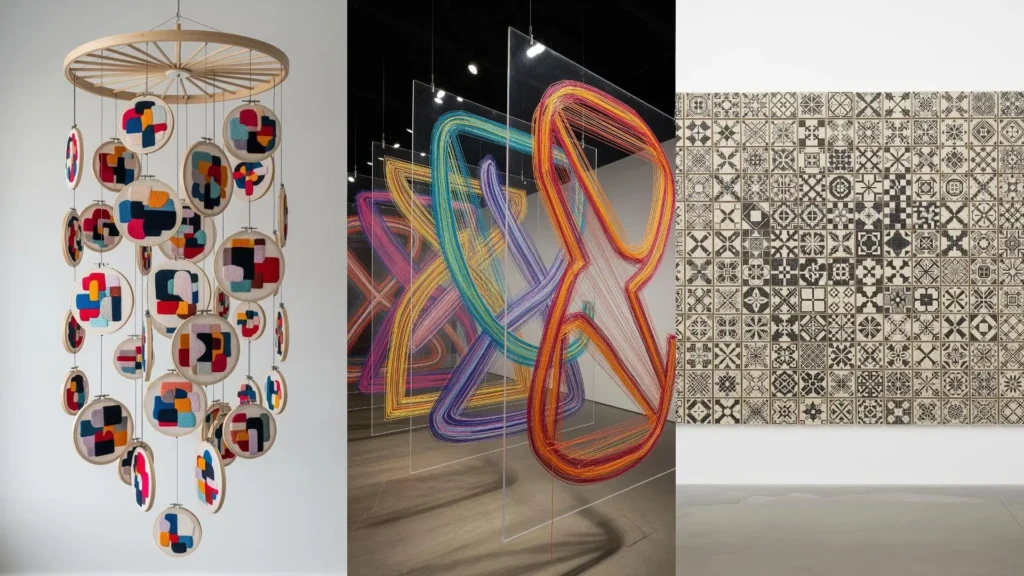
Create dynamic, graphic installations by stretching fluorescent-colored threads in precise geometric patterns.
Under natural light, the piece is a colorful drawing in space. Under blacklight, the threads glow, transforming the installation completely.
Use high-tension cords to ensure the lines remain perfectly straight, creating sharp angles and clean intersections.
This technique blends the precision of architectural drawing with the vibrant energy of fiber art, elevating modern grid & dot stitch concepts into an immersive experience.
The strategic layering of colors creates a complex moiré effect as you move around the piece.
27. Create a Tapestry of Textured Circles

Build a dense, mosaic-like surface by combining dozens of small, circular fiber elements.
Experiment with various techniques for each circle: woven wheels, coiled and wrapped yarn, French knot clusters, or crocheted discs.
The piece feels cohesive because of a unified, warm color palette, but endlessly fascinating due to the variety of textures and patterns.
These texture-rich thread art ideas show how simple shapes, when repeated and varied, can create an incredibly complex and beautiful whole.
This is a perfect project for using up scraps of yarn and thread in a creative, intentional way.
28. Sculpt Fantastical Forms with Soft Quilting

Move beyond flat textiles by creating large, three-dimensional sculptures using quilting and stuffing techniques.
Design your organic shape embroidery patterns on soft, slightly stretchy fabric, then stitch the two sides together and fill with poly-fil or wool batting.
The quilting lines are not just decorative; they define the contours and add structure to the soft forms, preventing them from slumping.
A gentle, pastel color palette enhances the surreal, dream-like quality of these fantastical creatures.
The way the forms seem to melt and drip onto the floor adds a sense of life and movement to the installation.