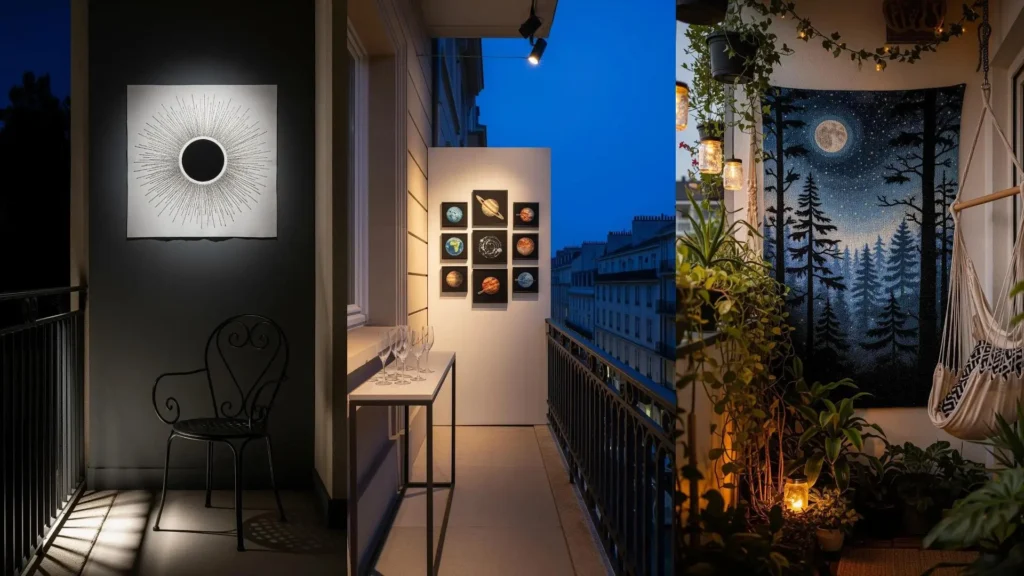
Your bare apartment walls aren’t asking for generic posters or mass-produced art. They’re waiting for something that feels like you—a texture, a story, a quiet moment of beauty that you created with your own hands.
Embroidery is more than a hobby that lives in a small hoop. It’s a versatile, accessible art form that can be scaled and styled to create stunning, personal wall decor. It’s about transforming a simple piece of fabric into a focal point that softens your space and tells your story.
Here, you won’t find impossibly complex projects. Instead, you’ll discover how a simple shift in technique—choosing a thicker thread, mastering a single stitch, or combining textures—can elevate your work into something you are truly proud to hang on your wall. Let’s begin.
1. Scale Up Botanicals into a Statement Tapestry
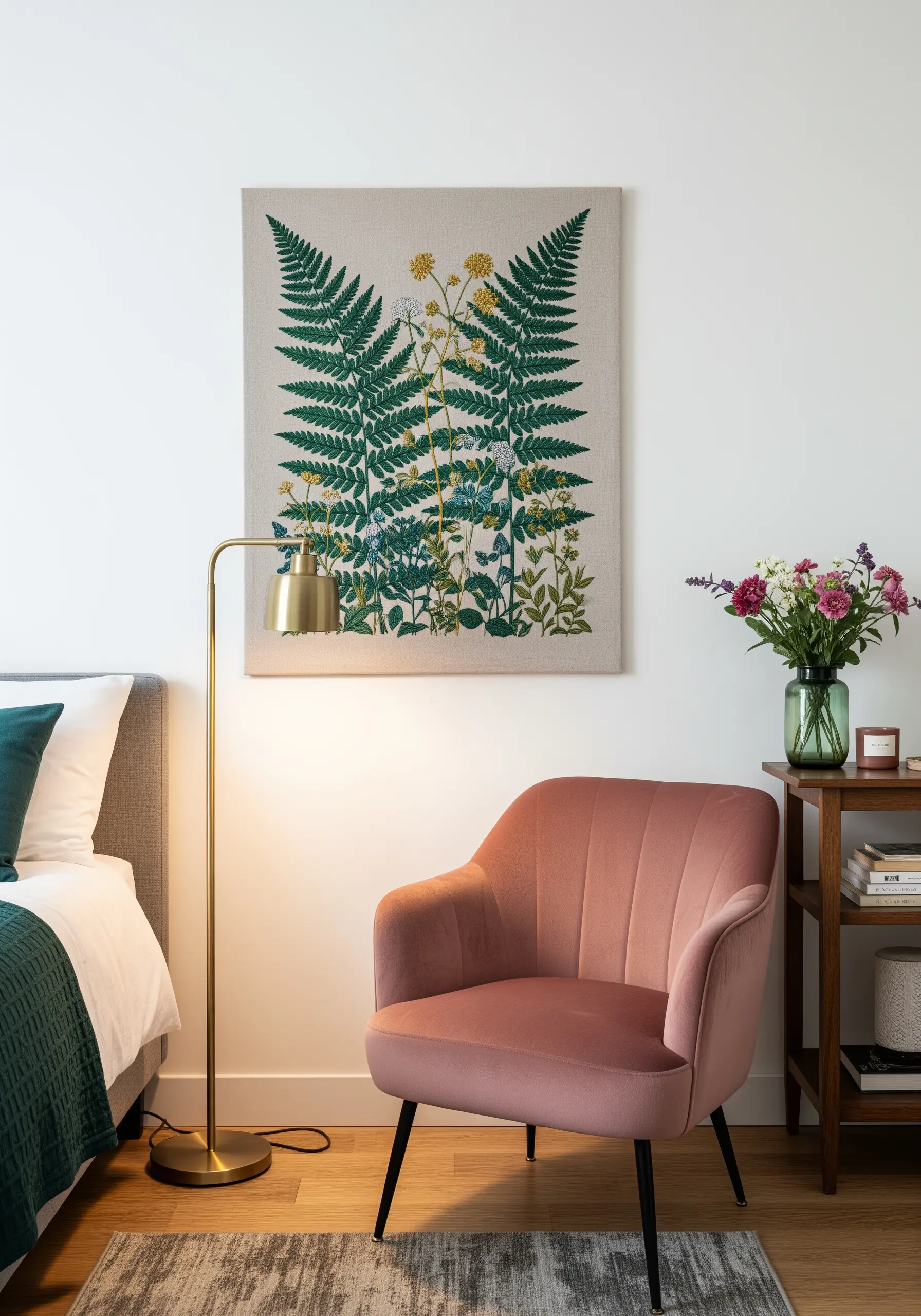
To create a large-scale wall hanging without the work feeling overwhelming, choose a heavier fabric like linen canvas that can support the thread’s weight.
Instead of standard six-strand floss, use tapestry wool or pearl cotton in a thicker weight (size 3 or 5) to fill large areas like fern leaves more quickly and with richer texture.
Use a simple fishbone stitch for the leaves, allowing the thickness of the wool to create dimension, and use stem stitch for the finer floral details.
This approach transforms a simple botanical study into a substantial piece of art that anchors a room, adding softness and a connection to nature.
2. Embrace Precision with Geometric Line Art
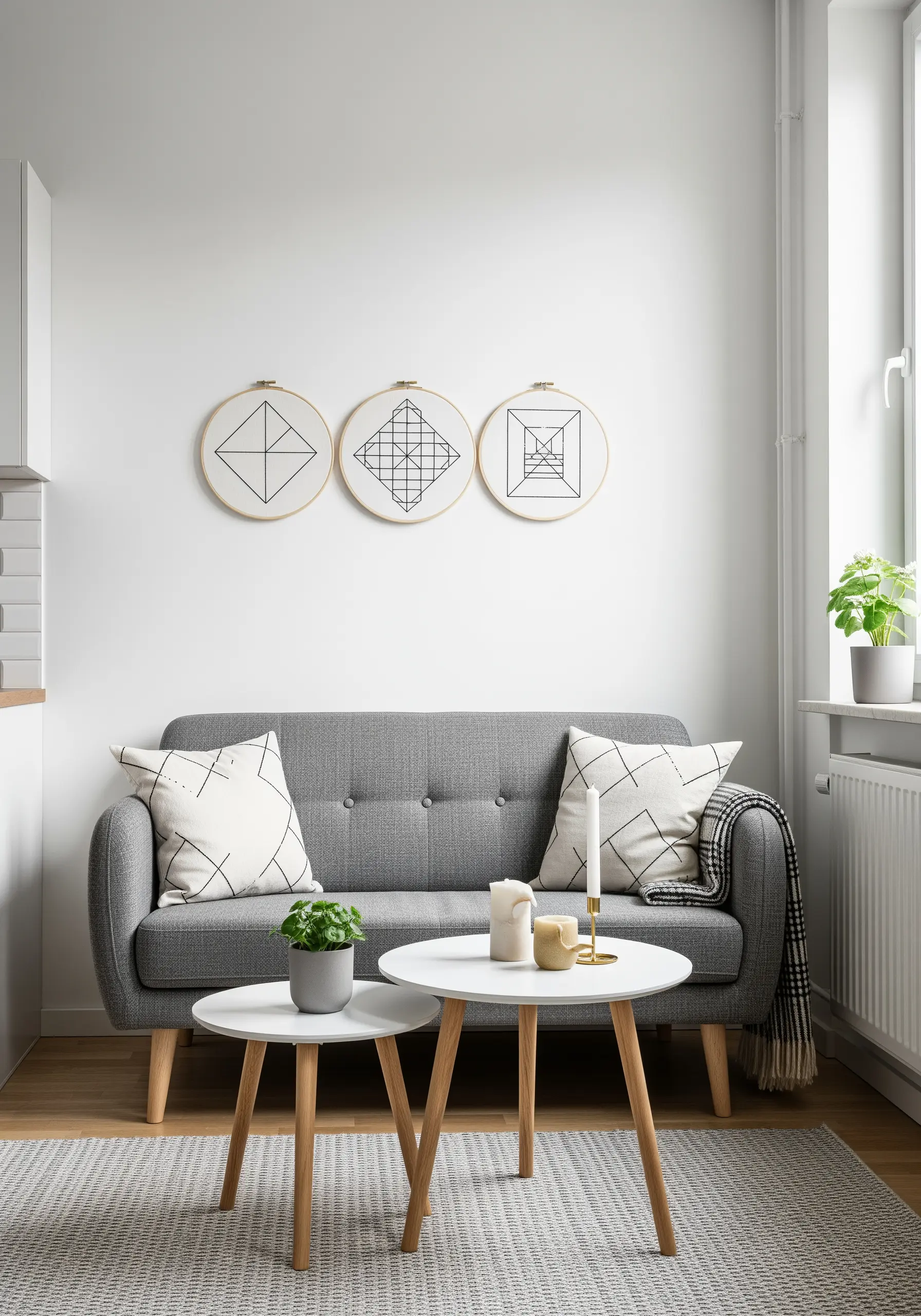
For clean, architectural lines, stitch with only one or two strands of black floss on a tightly woven white cotton or linen fabric.
Use a disciplined backstitch or split stitch, ensuring each stitch is uniform in length to create sharp, unwavering lines and crisp corners.
Before you begin, lightly draw your geometric pattern with a water-soluble pen to use as an exact guide, which is critical for symmetrical designs.
Grouping three minimalist embroidery hoops creates a modern, cohesive triptych that adds structure to a bare wall without introducing clutter.
3. Combine Embroidery with Macrame for Textural Depth
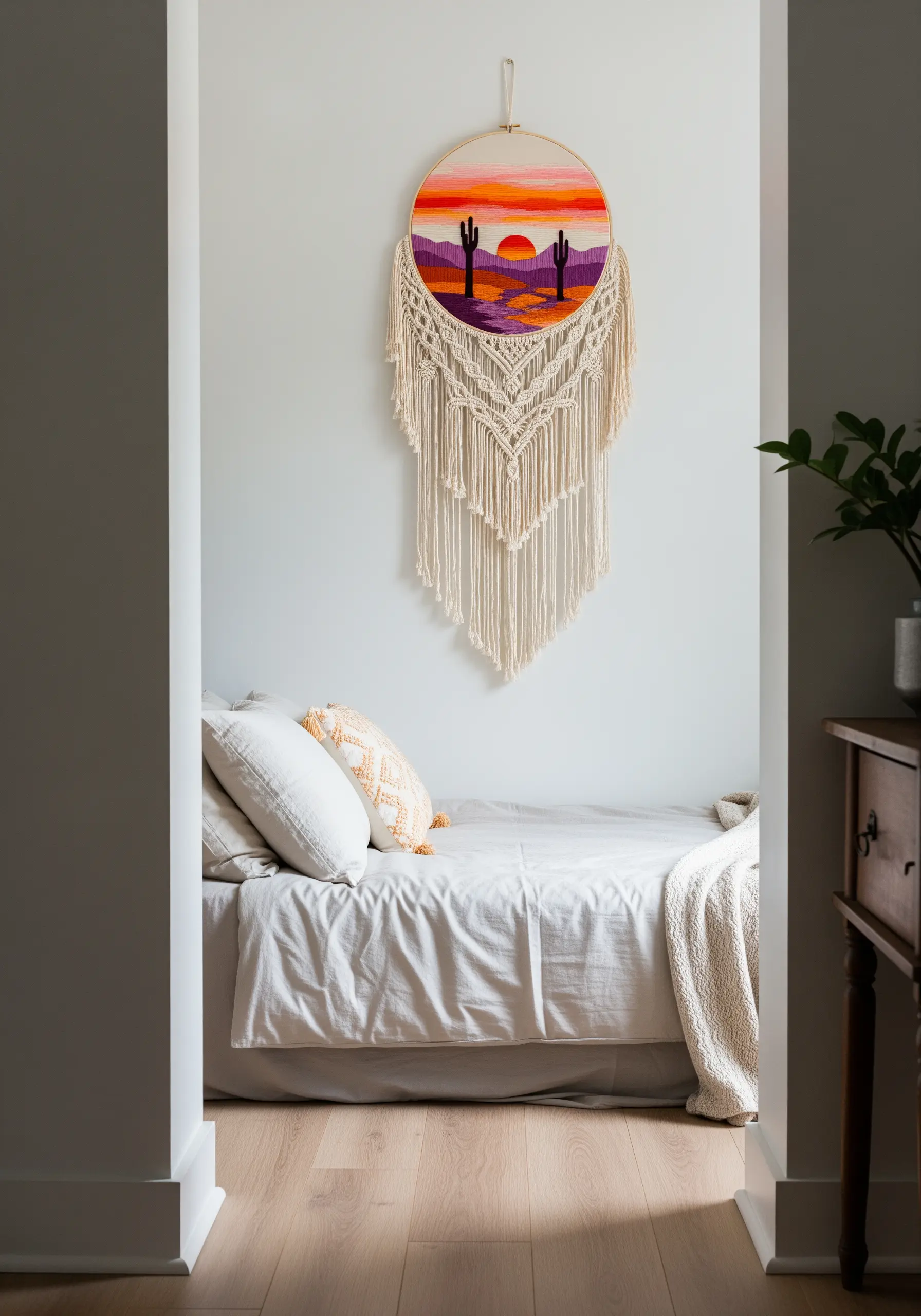
Elevate a simple landscape by adding a tactile element like a macrame fringe, which extends the artwork beyond the hoop’s circular frame.
First, complete your embroidery—using satin stitch for the bold sunset colors—and finish the back of the hoop cleanly.
Then, attach the macrame cords directly to the bottom curve of the hoop using a lark’s head knot, building your knotted design downwards.
This mixed-media approach turns a simple piece into a bohemian-inspired wall hanging with compelling texture and scale.
4. Curate a Delicate Herbarium Gallery Wall
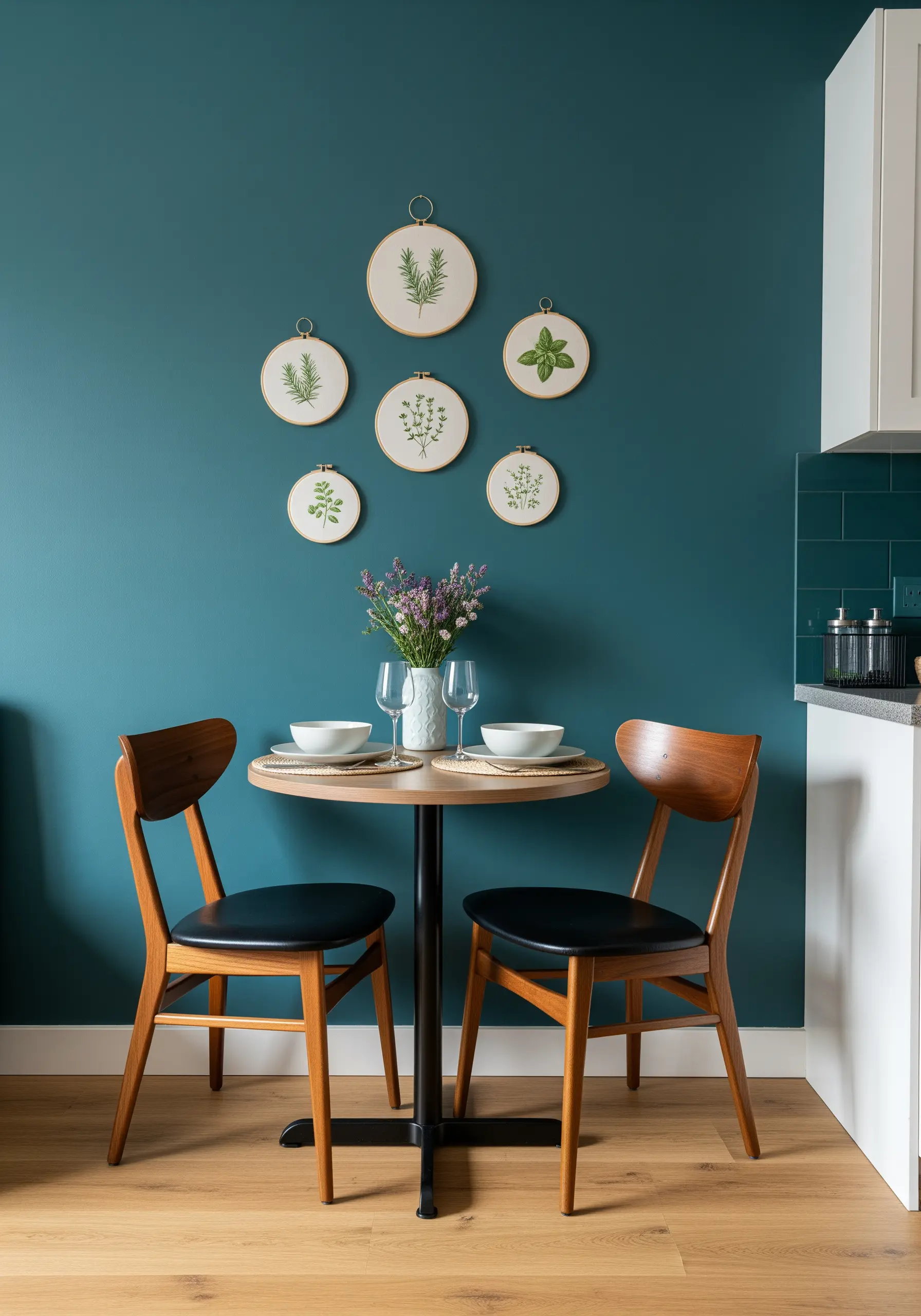
Create an elegant, cohesive collection by stitching simple herb motifs, each in its own small hoop.
Use a single fabric type—like an off-white linen—and matching wooden hoops to unify the series, allowing the subtle differences in each herb to stand out.
Focus on delicate stitches: use a single strand for the stems (stem stitch) and tiny detached chain stitches or straight stitches for the leaves.
This arrangement feels lighter and more organic than a single large piece, perfect for a kitchen or dining nook that needs a touch of freshness.
5. Stitch the Cosmos with Fine Metallic Thread
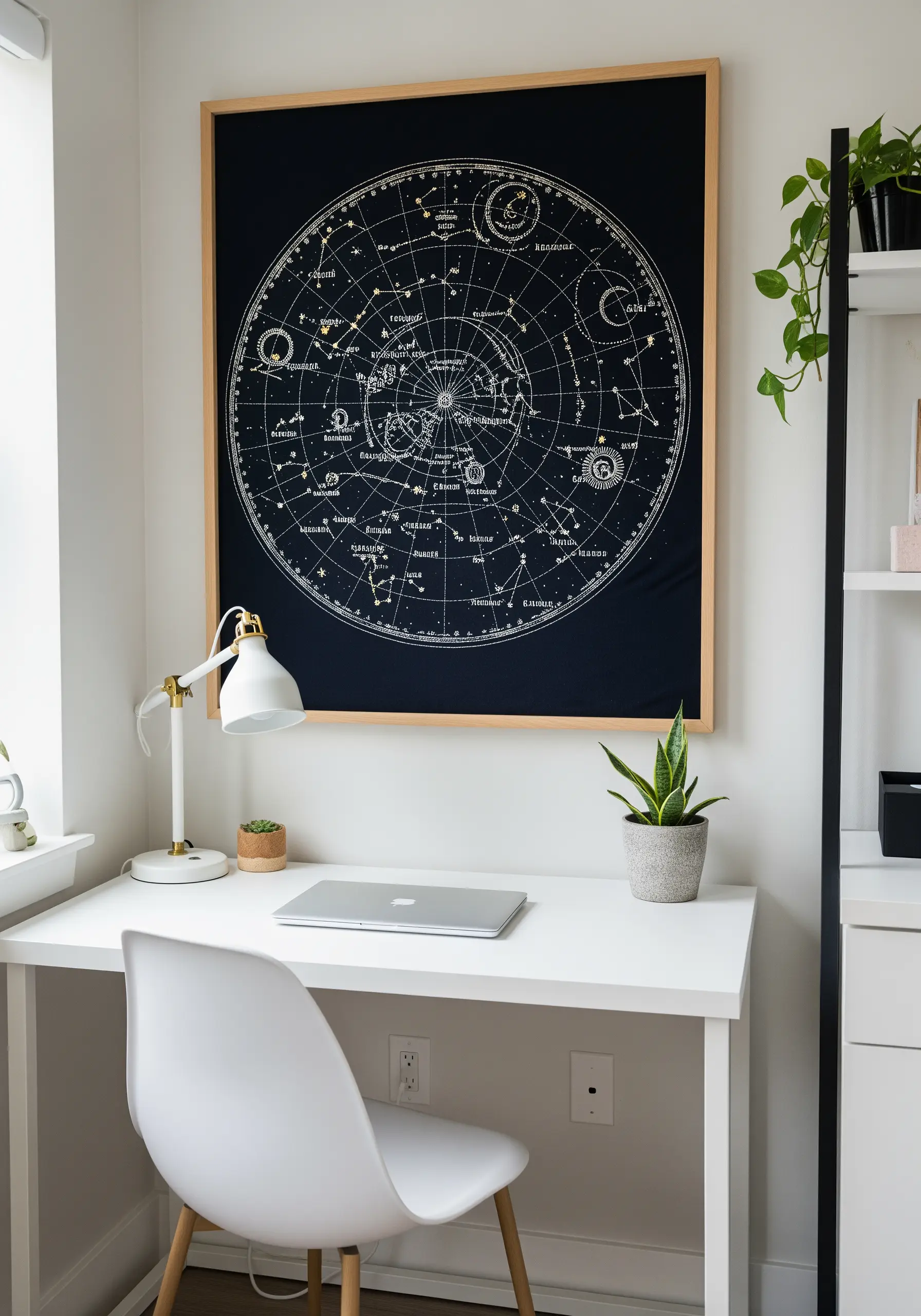
When embroidering fine details on dark fabric, transfer your design using white dressmaker’s carbon paper for crisp, visible lines.
Use a single strand of a high-quality metallic or silvery-white thread to ensure the constellations and celestial lines are sharp and legible.
For the stars, use single seed stitches or tiny French knots to create points of light that subtly catch the eye without overwhelming the intricate map.
Framing the piece in a simple, light wood frame creates a clean border that makes the dark fabric and delicate stitching pop.
6. Craft a Welcoming Wreath for Your Entryway
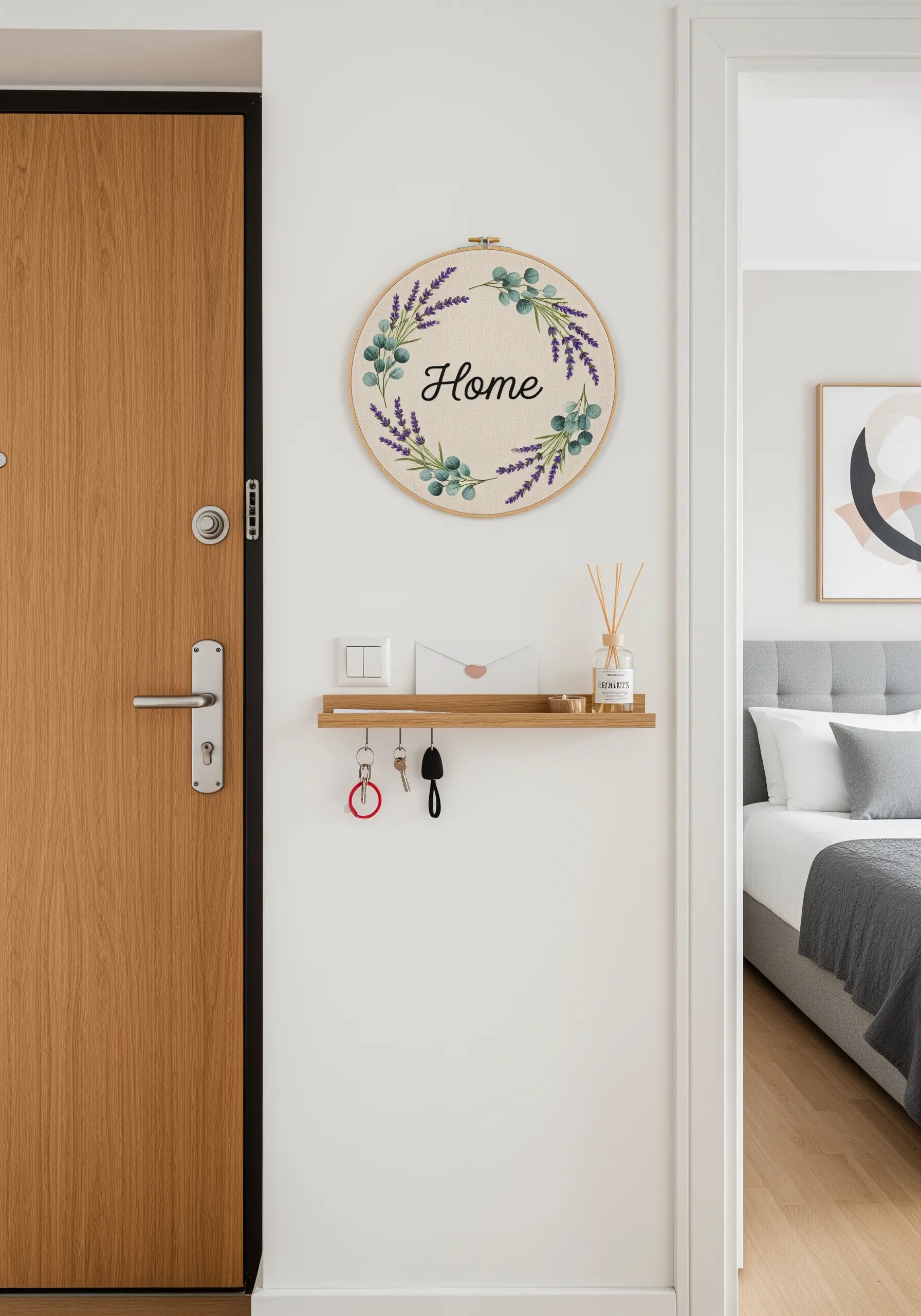
Combine typography and botanicals by first centering and stitching your chosen word, like ‘Home,’ to anchor the design.
Use a whipped backstitch for the lettering; this technique creates a smooth, rounded line that looks more refined and solid than a standard backstitch.
Frame the text with a botanical wreath using simple stitches: lazy daisies for lavender buds and fishbone stitch for the olive leaves.
This creates a warm, personalized piece perfect for an entryway, offering a handmade welcome the moment you walk in the door.
7. Create Sculptural Line Art with Thick Yarn
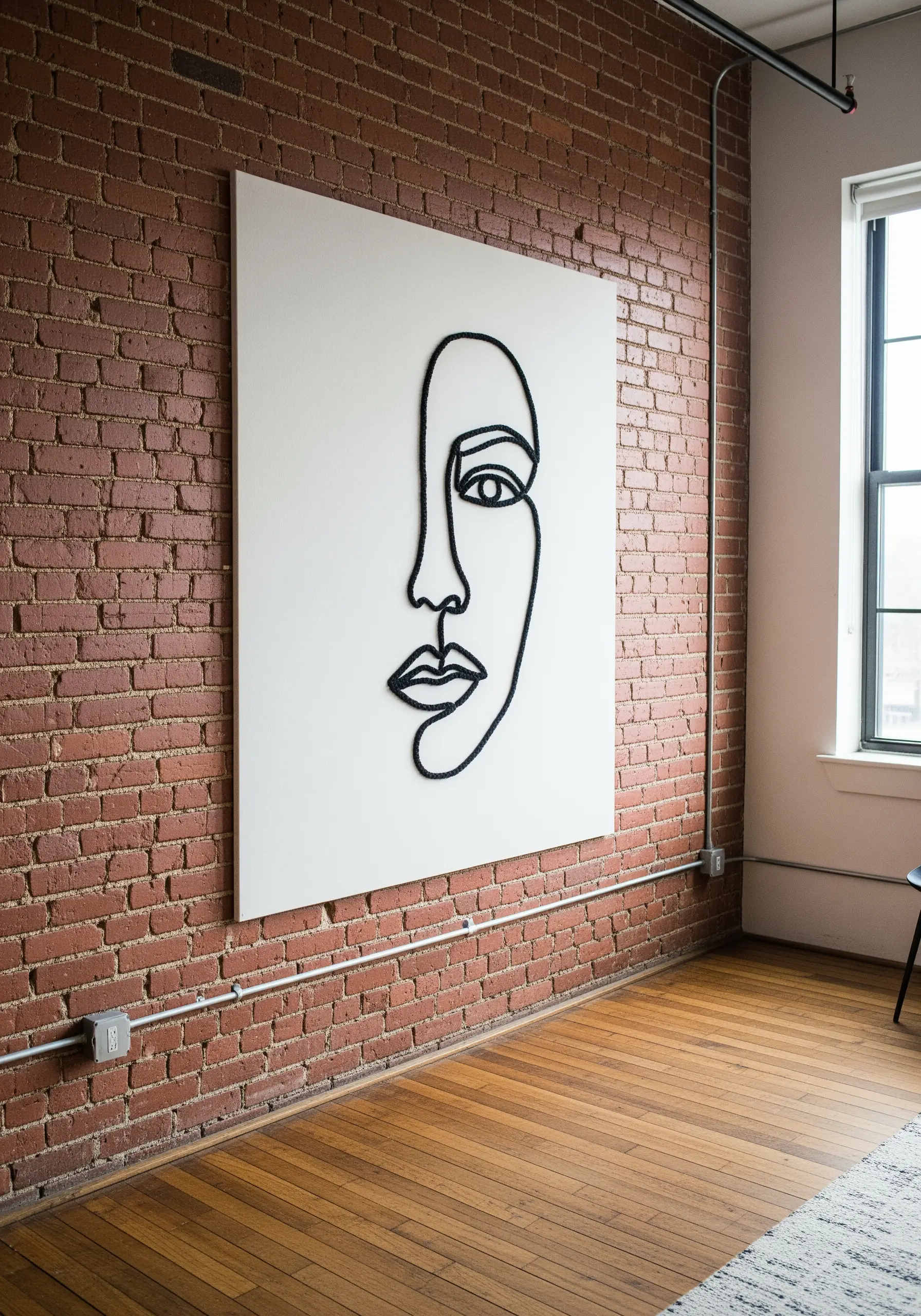
For a bold, three-dimensional effect on a large canvas, swap fine floss for thick yarn or cotton cord.
Instead of traditional stitching, use the couching technique: lay the yarn along your design line and use a thinner, matching thread to tack it down with small, evenly spaced stitches.
This method allows you to create fluid, continuous lines that stand out from the surface, turning a simple line drawing into a tactile, sculptural piece.
The high contrast of black yarn on a white canvas makes this a powerful focal point for an industrial or minimalist space.
8. Capture Fluid Motion with Directional Stitches
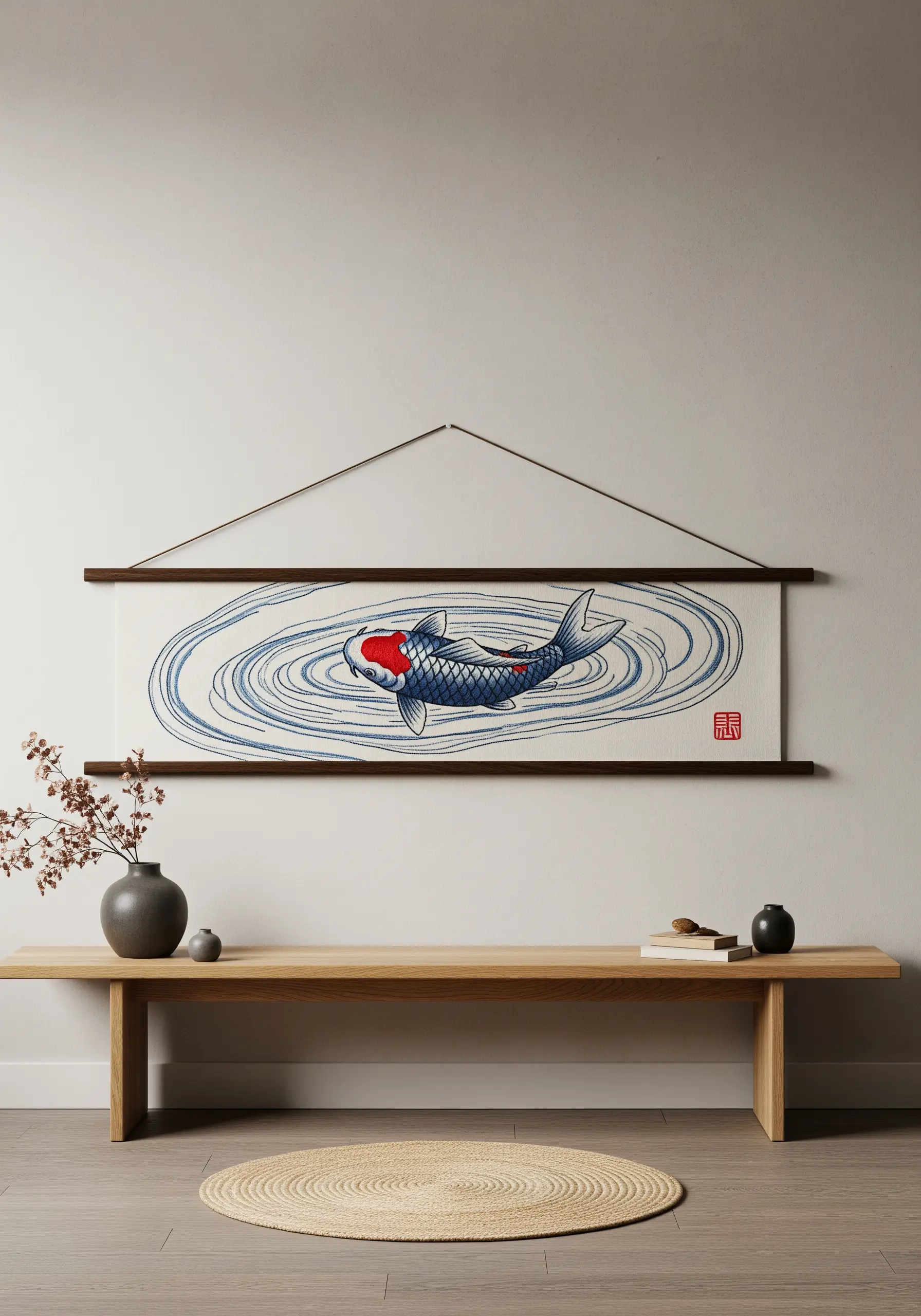
To create the illusion of rippling water, use a simple backstitch but focus entirely on thread direction and color variation.
Use several shades of blue, stitching concentric, imperfect circles that emanate from a central point. The slight wobble in your lines will make the water look more natural and fluid.
For the koi fish, use long and short stitches to blend the colors smoothly, adding a single red satin-stitched patch for a vibrant focal point.
Hanging the finished piece as a scroll with wooden dowels enhances the Japanese-inspired aesthetic and gives it a gallery-like finish.
9. Fill a Large Hoop with a Lush Tropical Pattern
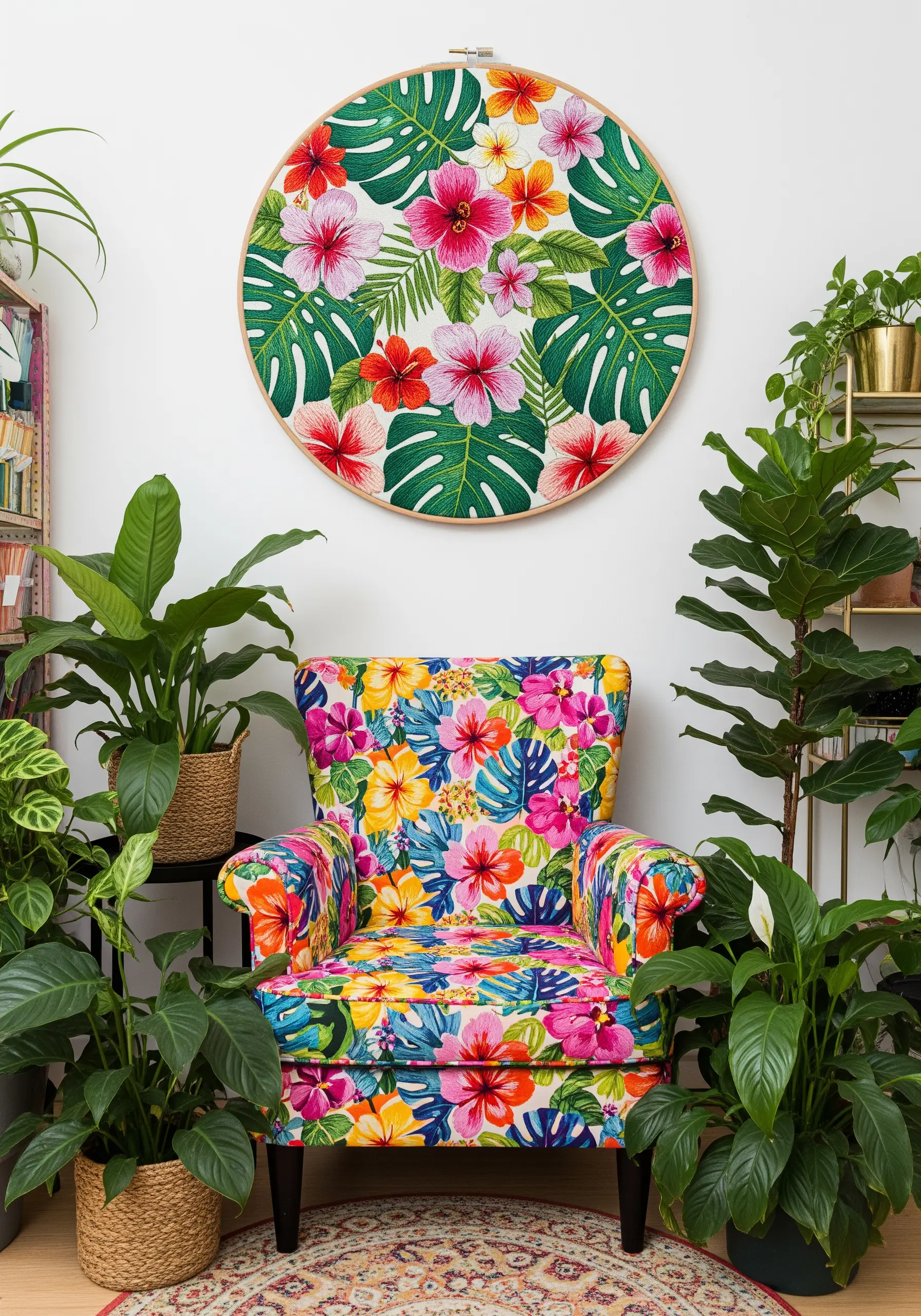
To tackle a large, dense design, think of it as painting with thread. Use long and short stitch to fill the petals and leaves, allowing you to blend shades of pink, coral, and green seamlessly.
Vary the number of strands you use—three or four for the large fills, and just one or two for the dark green veins on the monstera leaves—to create subtle shifts in texture and detail.
The oversized hoop acts as its own frame, turning the detailed needlework into a bold, singular statement piece that brings vibrant energy to a room.
10. Layer a Landscape with Monochromatic Tones
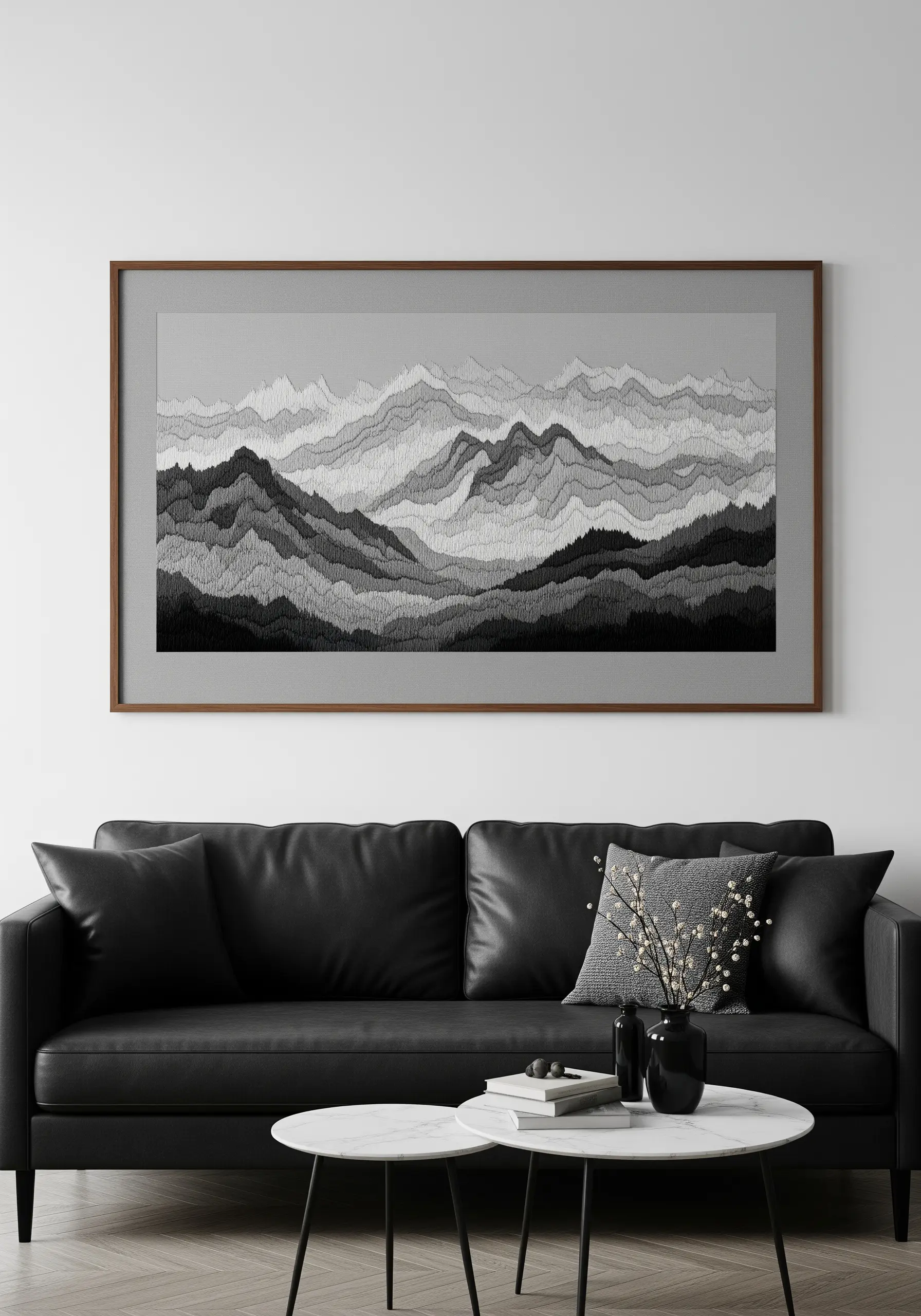
Build depth and atmosphere in a mountain scene by using a monochromatic palette—multiple shades of black, grey, and white.
Assign the darkest threads to the foreground elements and the lightest to the distant peaks to create an illusion of aerial perspective.
Use dense, straight stitches, but vary their direction in each mountain section to mimic geological layers and create textural contrast between the ranges.
This monochrome approach is sophisticated and calming, focusing the viewer’s attention on texture and form rather than color.
11. Add Whimsy with a Root Vegetable Sampler
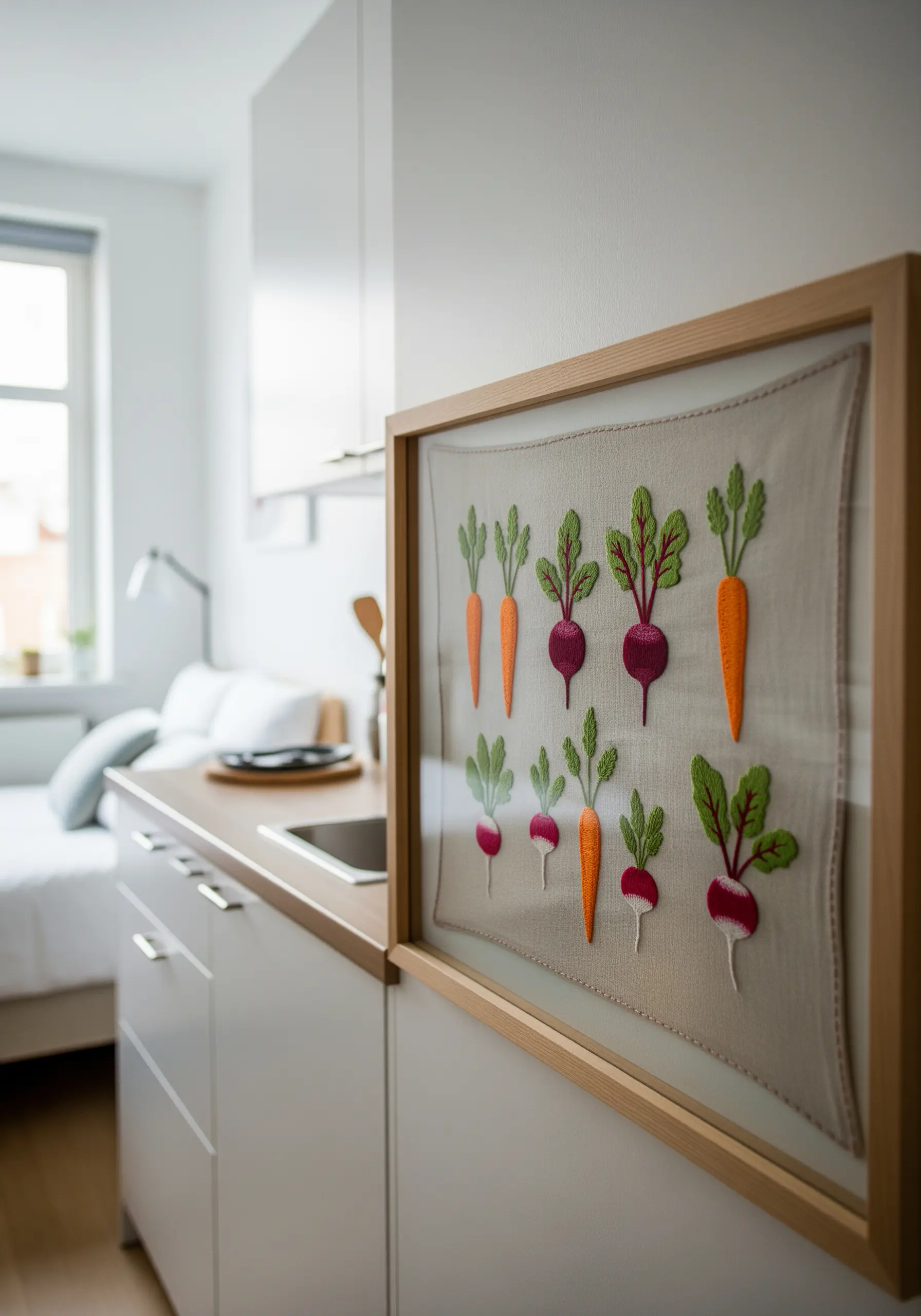
Give simple vegetable motifs a charming, plump appearance by using a padded satin stitch.
Before you stitch the main color, lay down a foundation of small, straight stitches within the shape of the beet or carrot. Then, cover this padding with your satin stitch, working in the opposite direction.
This simple step raises the surface of the embroidery, giving it a subtle 3D quality that makes the vegetables look more lifelike and tactile.
Framing it simply keeps the focus on the charming, textured subjects, perfect for adding a touch of handmade warmth to a kitchen space.
12. Weave Texture into a Moon Phase Triptych
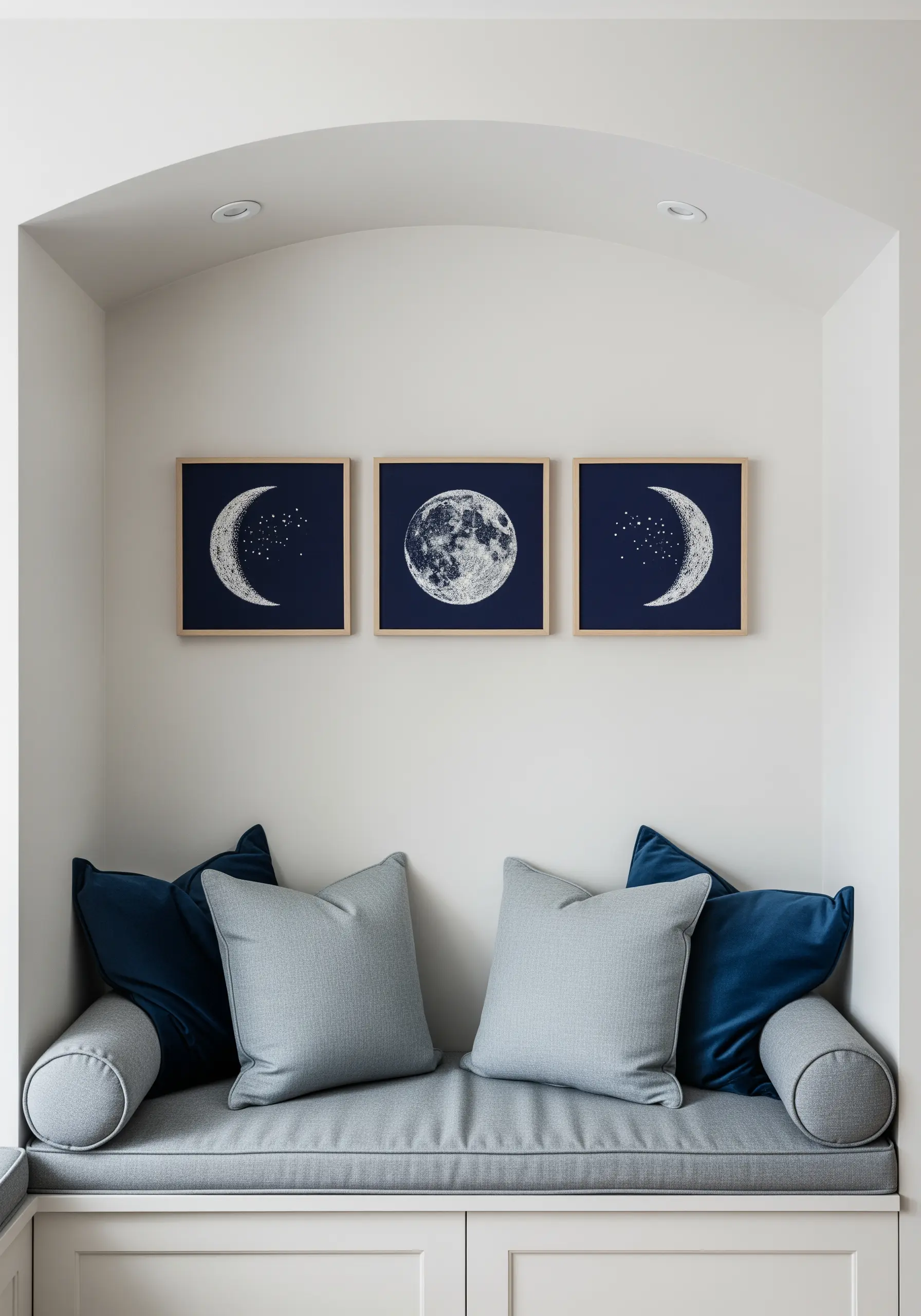
Create the moon’s iconic cratered surface not with lines, but with pure texture. Densely pack an area with French knots using two or three strands of white or silver floss on a dark navy fabric.
Vary the tightness and size of the knots slightly to create an uneven surface that mimics the light and shadow of the real moon.
For the crescent moons, fill the shape with a field of seed stitches instead of satin stitch for a softer, more ethereal glow.
Arranging the three phases in matching square frames creates a celestial narrative that is both graphic and serene.
13. Illuminate a Cityscape with Golden Knots
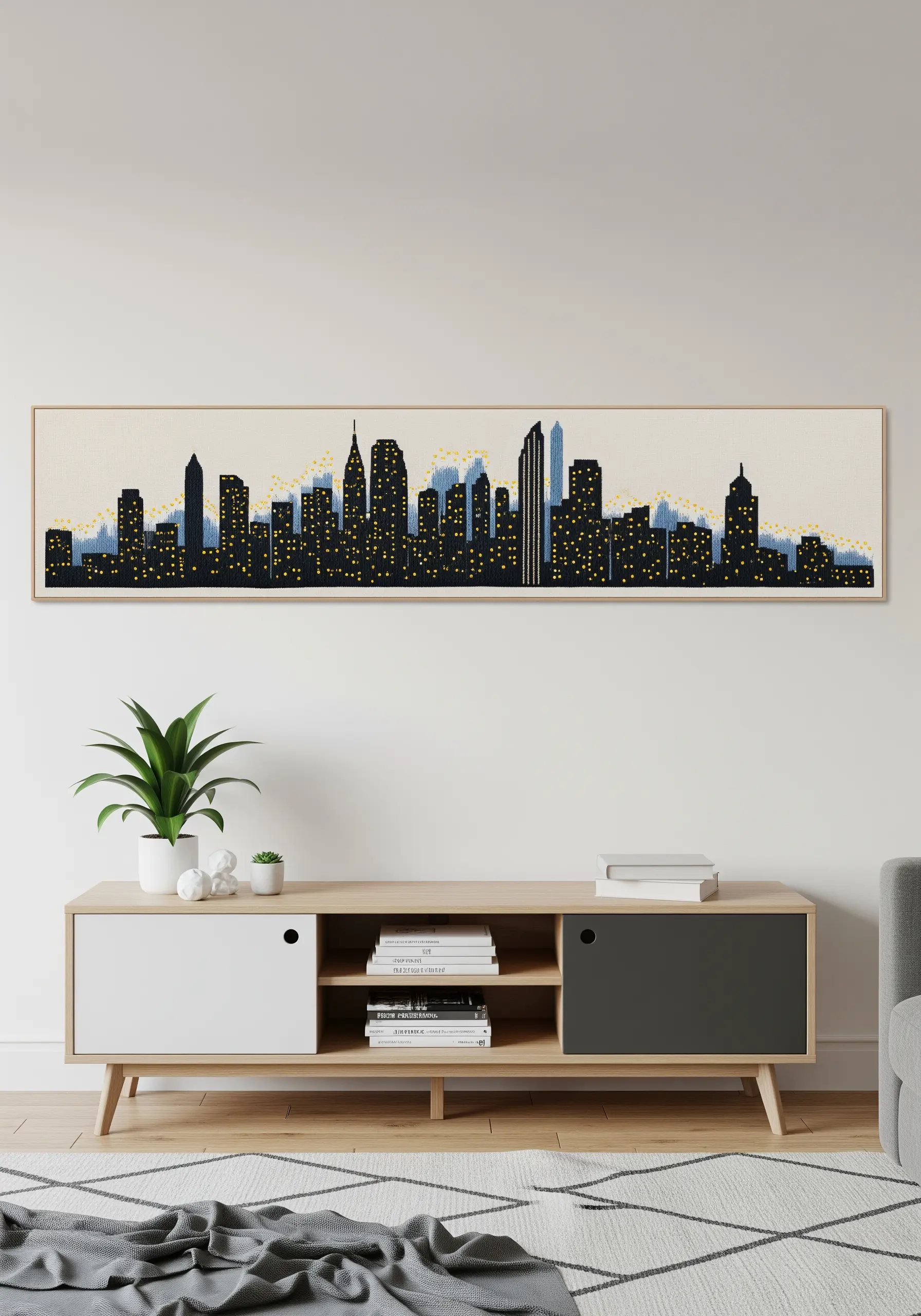
To stitch an effective skyline, first create the solid building silhouettes using a dark, matte thread and dense satin stitch.
Then, bring the city to life by adding lights. Use a bright yellow or a fine metallic gold thread to sprinkle tiny French knots and seed stitches across the buildings and in the background.
Cluster the knots in some areas and leave others sparse to create a realistic, twinkling effect that draws the eye.
The panoramic format makes this piece perfect for hanging above a console table or sofa, adding a touch of urban glamour to your decor.
14. Explore Abstract Forms with Punch Needle
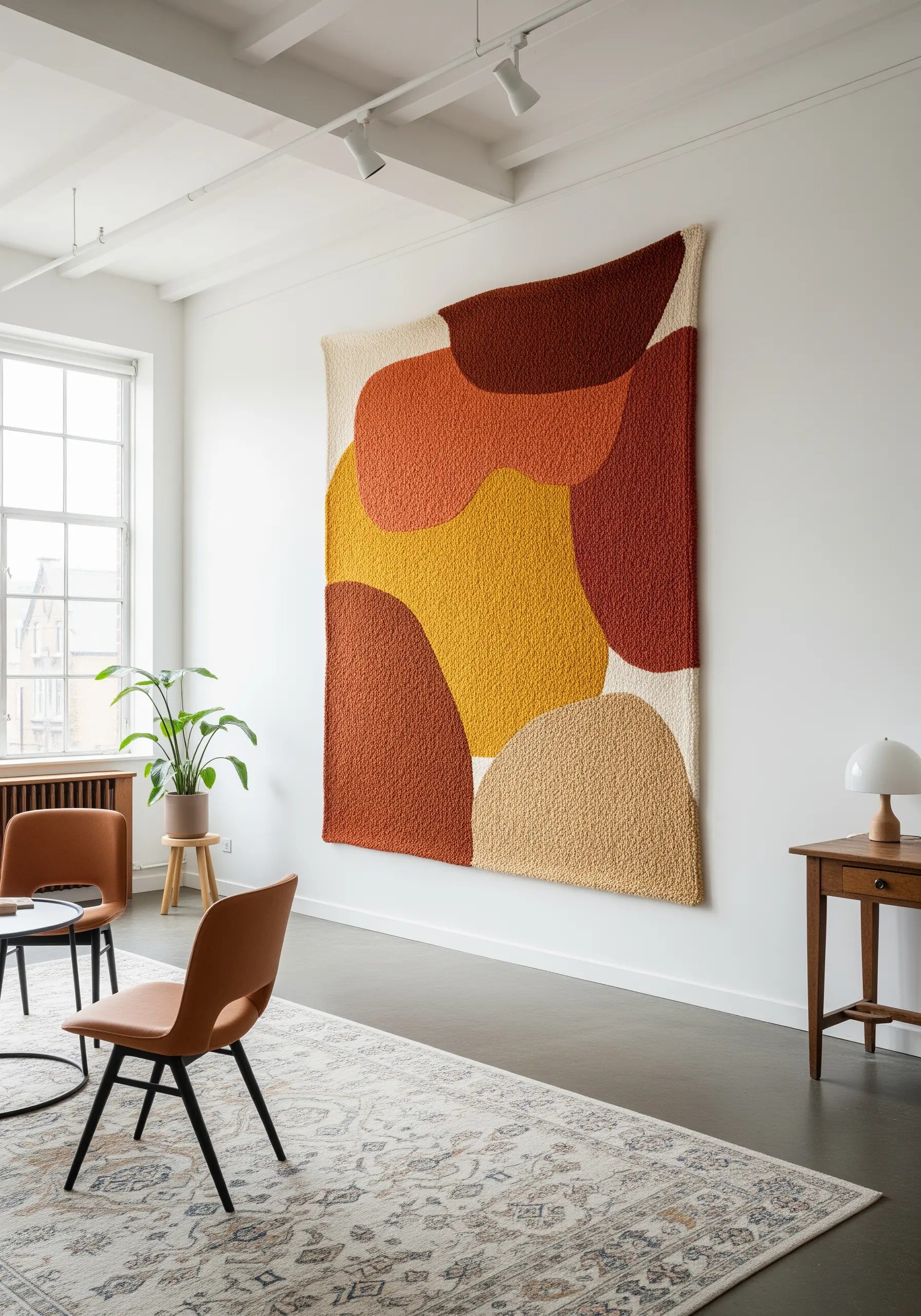
For a large-scale piece with a deeply satisfying texture, move from traditional embroidery to punch needle. This technique creates dense loops of yarn that result in a soft, rug-like surface.
Work with a neutral color palette of earthy tones to keep the focus on the organic, overlapping shapes and the rich texture.
To achieve clean divisions between color blocks, outline each shape first and then fill it in, working from the outside toward the center.
This kind of large-scale textile art adds immense warmth and acoustic softness to a room, making it ideal for a modern living space.
15. Display a Forest Scene with Natural Elements
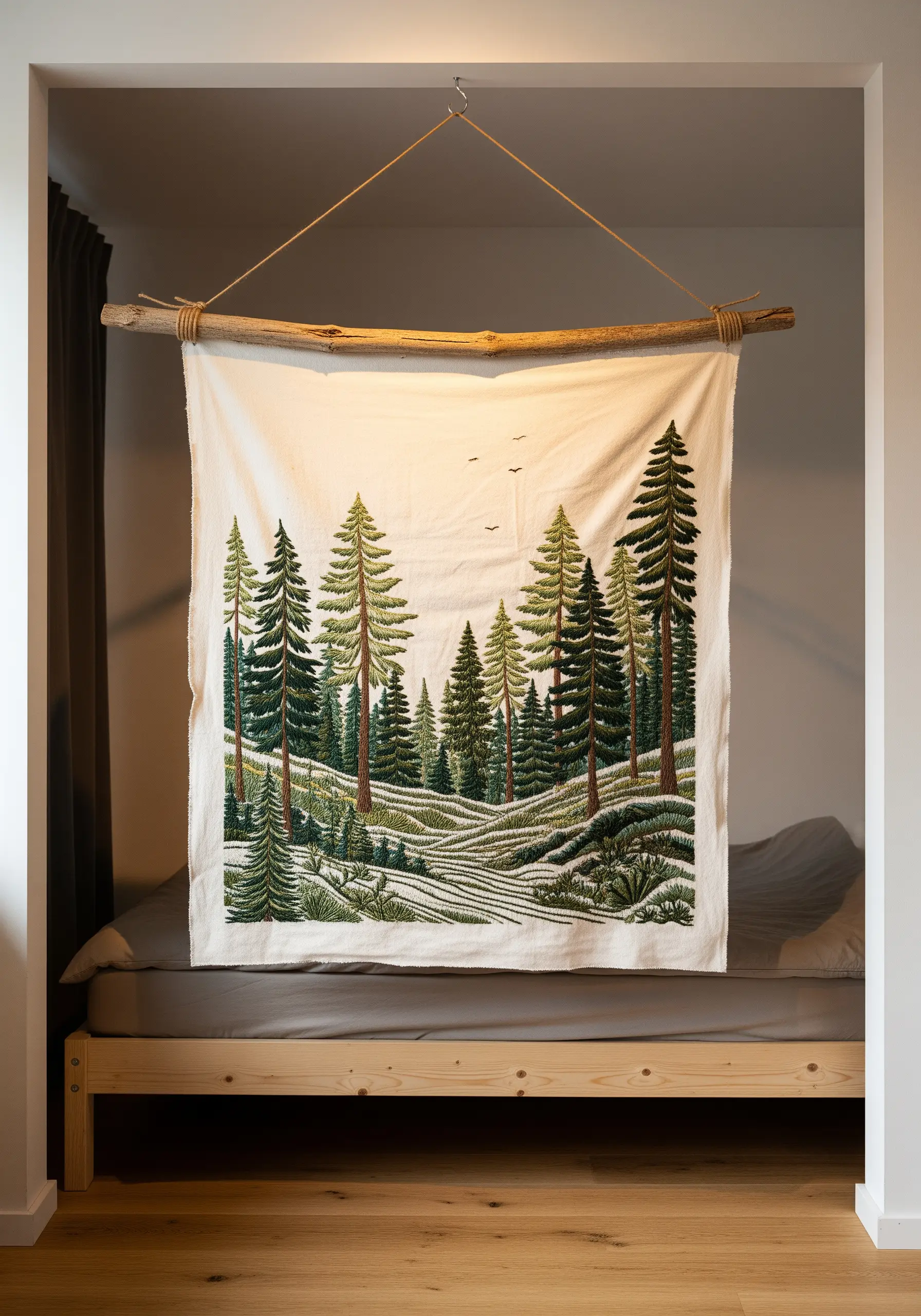
Enhance a nature-themed embroidery by forgoing a traditional frame in favor of a natural branch.
Create your forest scene on a piece of heavy cotton or linen, leaving enough extra fabric at the top to fold over and create a channel for the branch.
For the trees, use a variety of green threads and directional straight stitches to suggest the texture of pine needles and foliage, giving each tree a unique character.
This rustic presentation method connects the artwork directly to its subject matter, bringing an authentic piece of the outdoors inside.
16. Make a Typographic Statement with Bold Stitches
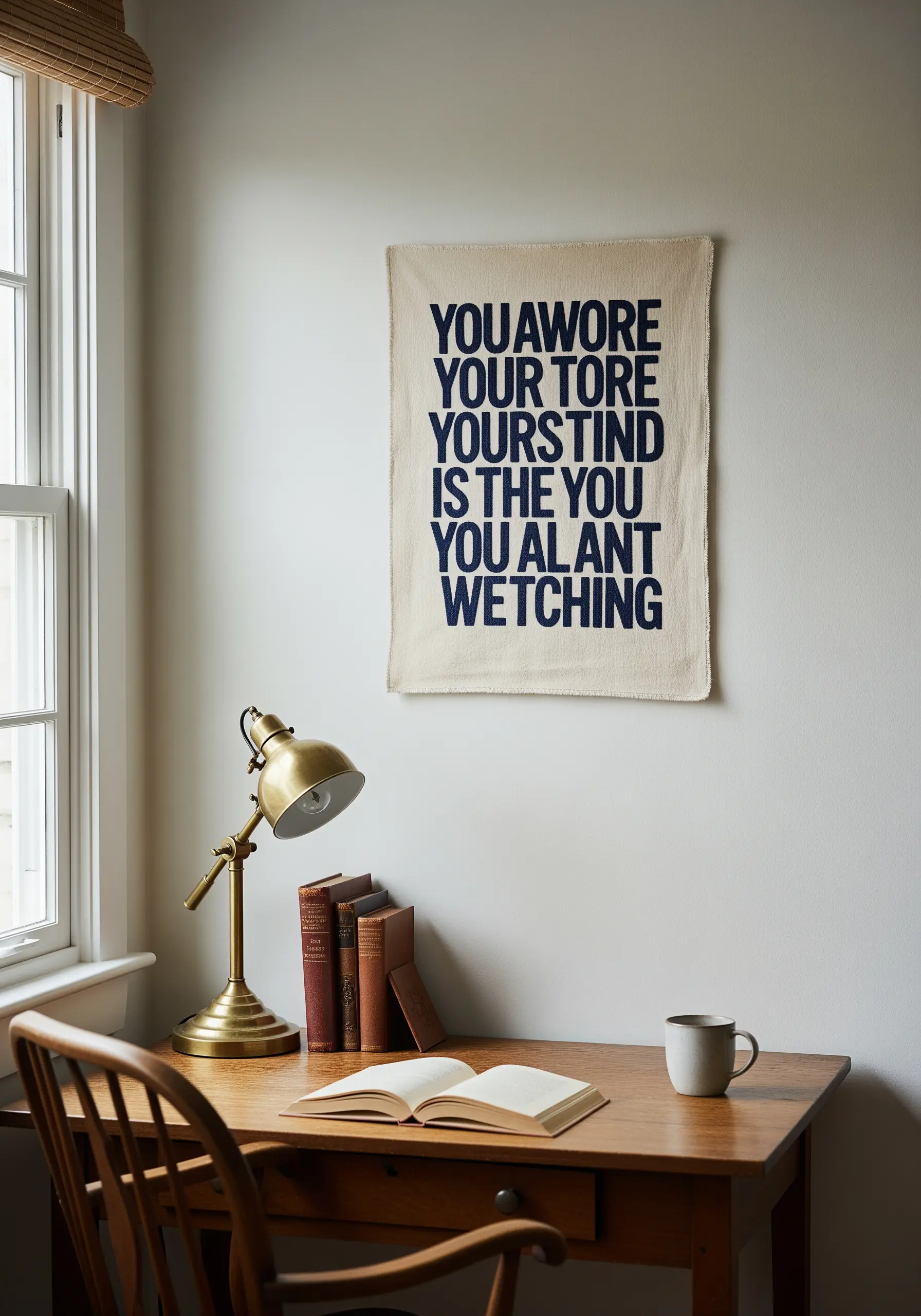
When your art is based on text, legibility is everything. Use a block-filling stitch like satin stitch or a dense long-and-short stitch to create solid, easily readable letters.
Choose a high-contrast color combination, like dark navy thread on unbleached canvas, to make the words stand out from across the room.
To ensure perfect alignment and spacing, print your text to scale and trace it onto your fabric with a light-erasable pen before you begin stitching.
This type of embroidered quote wall hanging adds a graphic, intellectual touch to a study or reading corner.
17. Achieve Art Deco Elegance with Couching
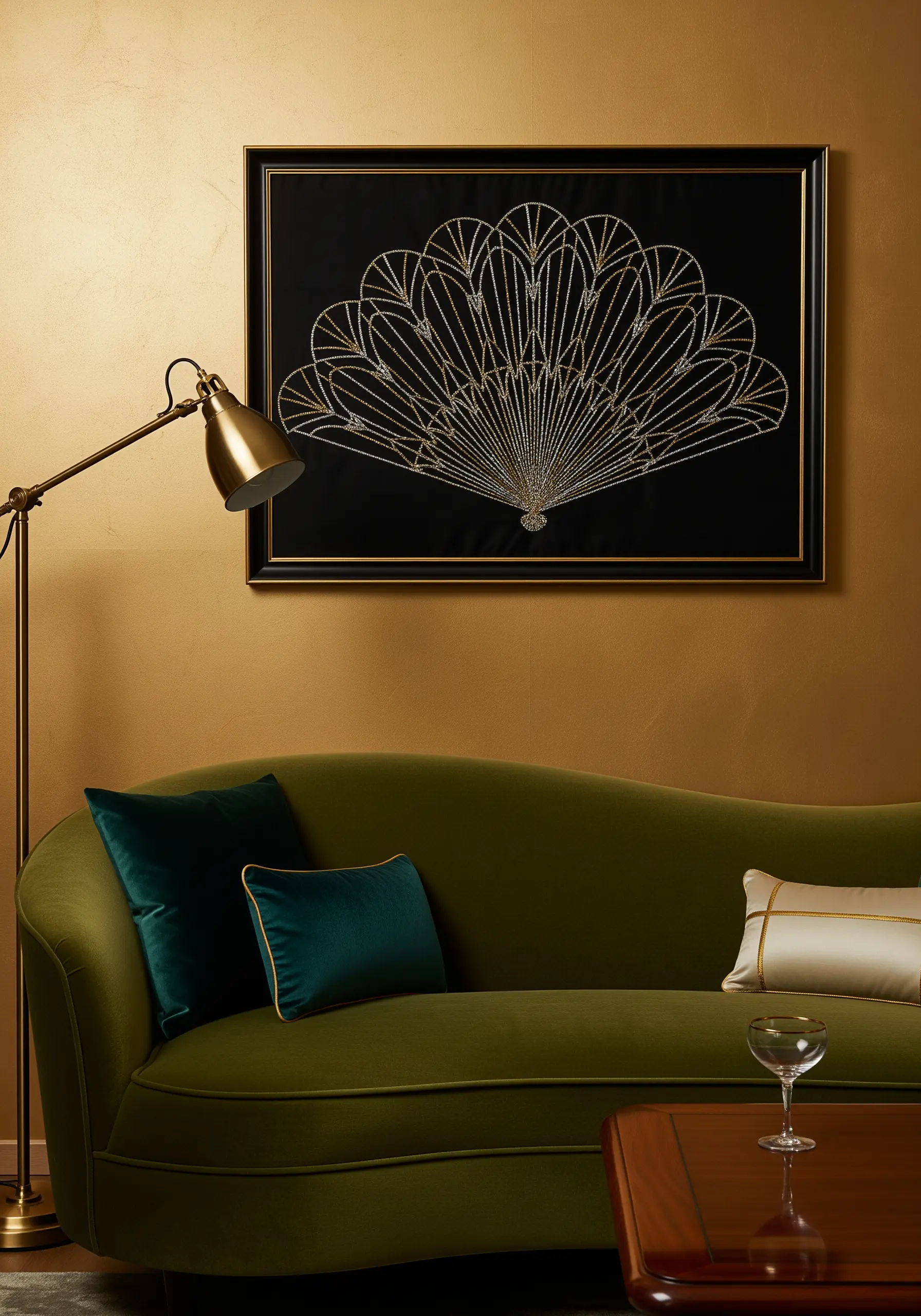
Capture the geometric grace of Art Deco design by using metallic threads on a dramatic black background.
For the long, sweeping curves, use the couching technique. This involves laying down a strand of delicate metallic thread and tacking it into place with a second, finer thread, ensuring perfectly smooth lines without pulling or puckering.
Incorporate tiny silver or glass seed beads at key intersections to add a subtle sparkle that mimics the glamour of the era.
A simple black frame allows the intricate, glittering design to remain the undisputed star.
18. Build a Desert Garden with Textural Cacti
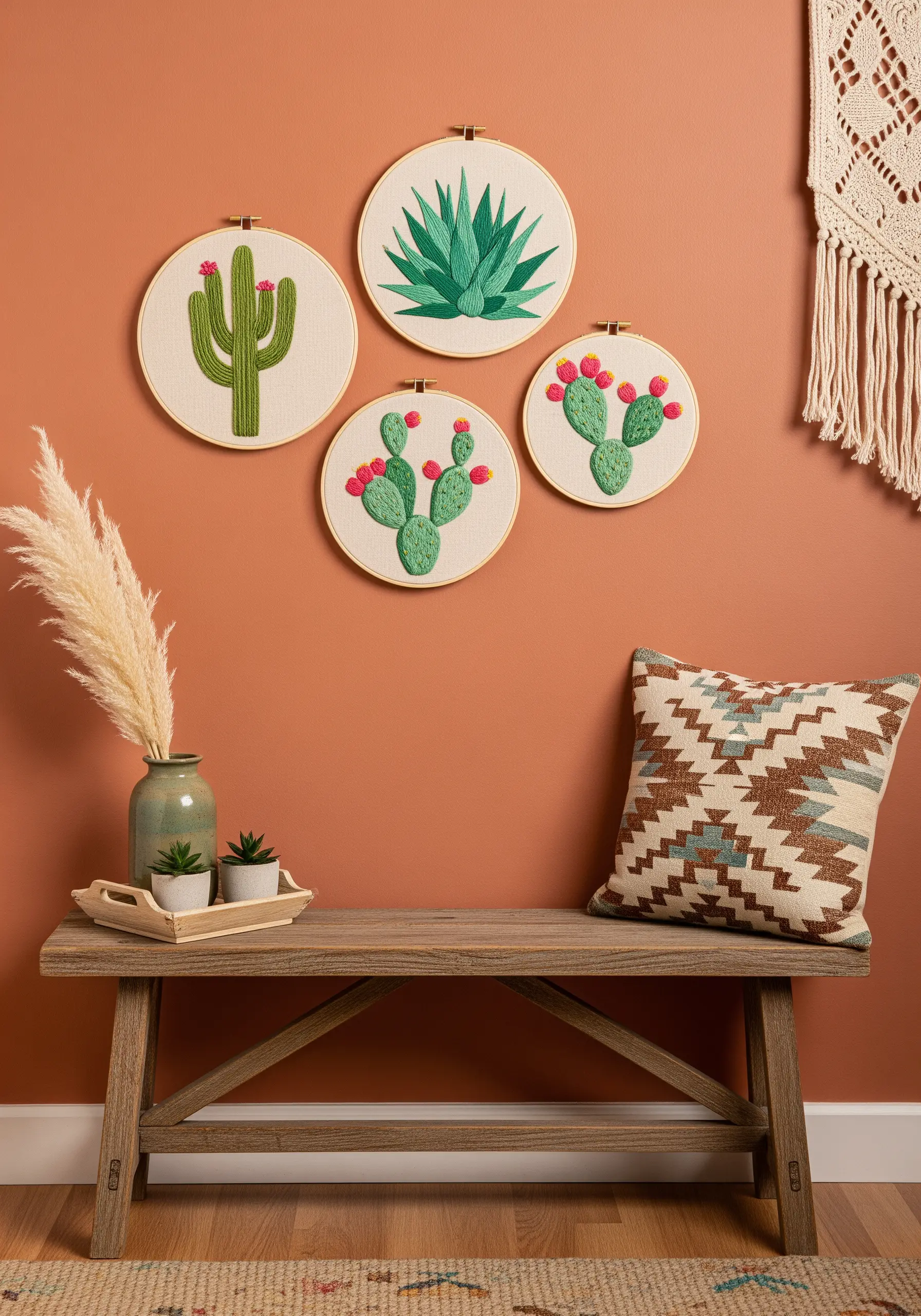
Represent the unique textures of different cacti by assigning a specific stitch to each variety.
Use vertical satin stitches for the tall saguaro, clusters of French knots for the prickly pear pads, and radiating straight stitches for the agave’s sharp leaves.
Add pops of color with bullion knots for the vibrant pink cactus flowers, which gives them a realistic, tubular shape.
Grouping the hoops together creates a charming and cohesive desert-themed gallery wall that celebrates texture and form.
19. Sculpt Crashing Waves with Thread Painting
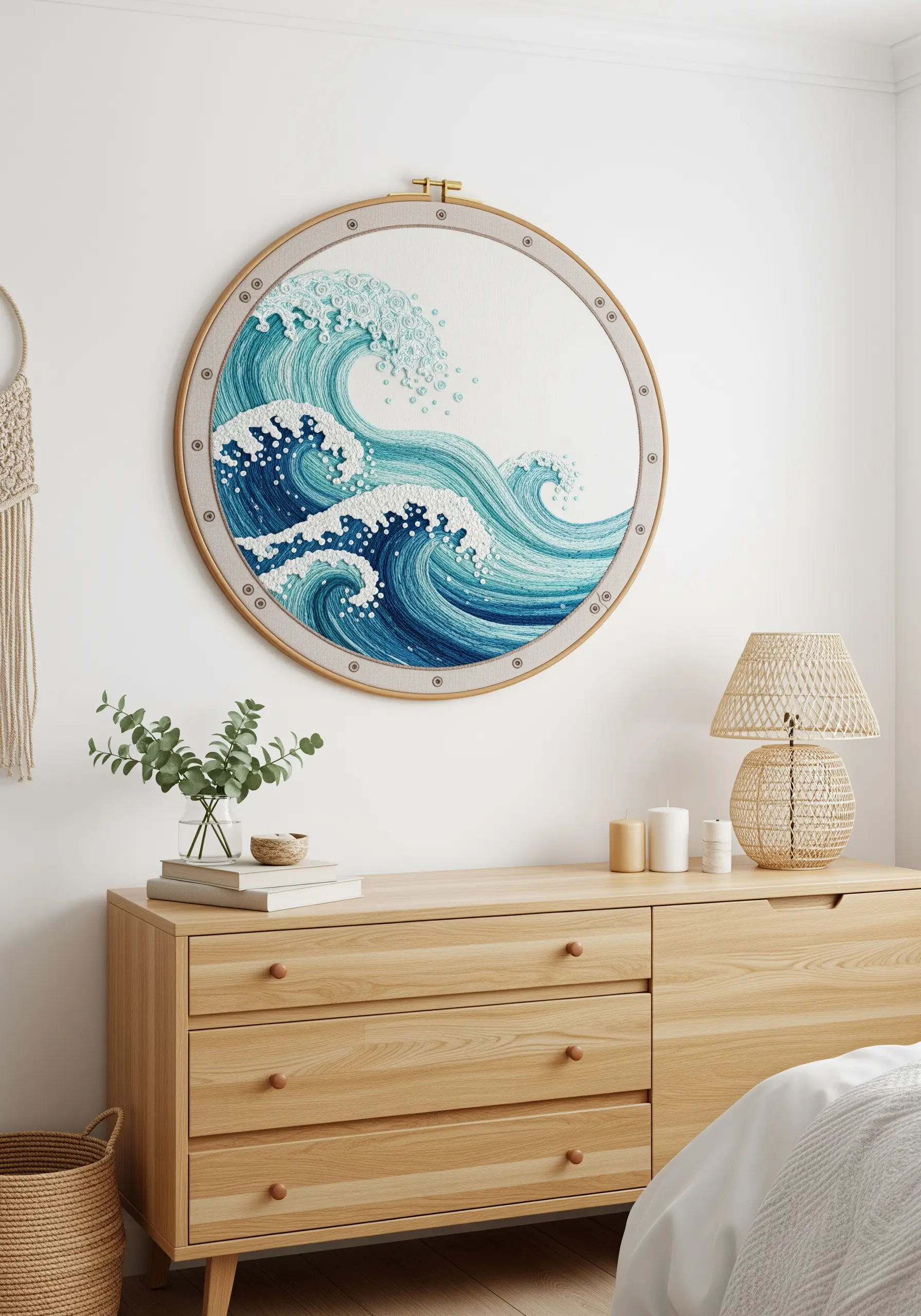
Recreate the energy of a powerful wave by blending dozens of shades of blue, teal, and white thread using the long-and-short stitch technique.
Lay your stitches to follow the curve of the wave, creating a sense of direction and flow. Use darker shades for the deep water and progressively lighter shades toward the crest.
For the sea foam, switch to dense clusters of white French knots, which provides a dramatic textural contrast to the smooth, blended water.
This large, detailed piece becomes a dynamic focal point, bringing the raw energy of the ocean into a calm space.
20. Harness the Power of Negative Space
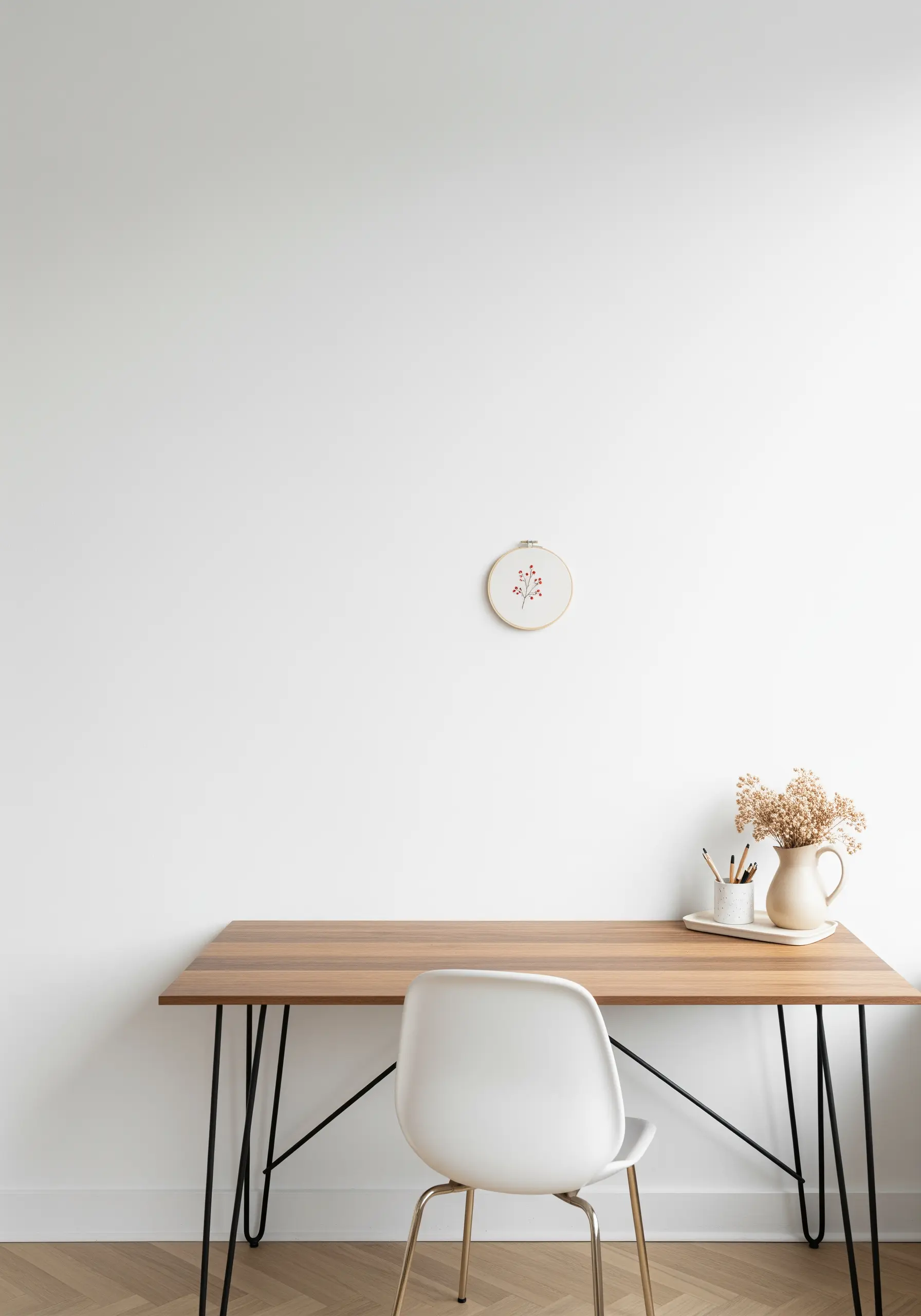
In a small apartment, visual breathing room is a luxury. Create that feeling with an embroidery that champions negative space.
Stitch a single, small, and delicate motif—like this simple sprig of berries—off-center in a standard-sized hoop.
The vast expanse of untouched fabric surrounding the tiny design forces the eye to slow down, creating a sense of calm and quiet contemplation.
This minimalist approach proves that you don’t need a large or complex design to make a significant impact.
21. Paint with Wool for Ultimate Tactile Art
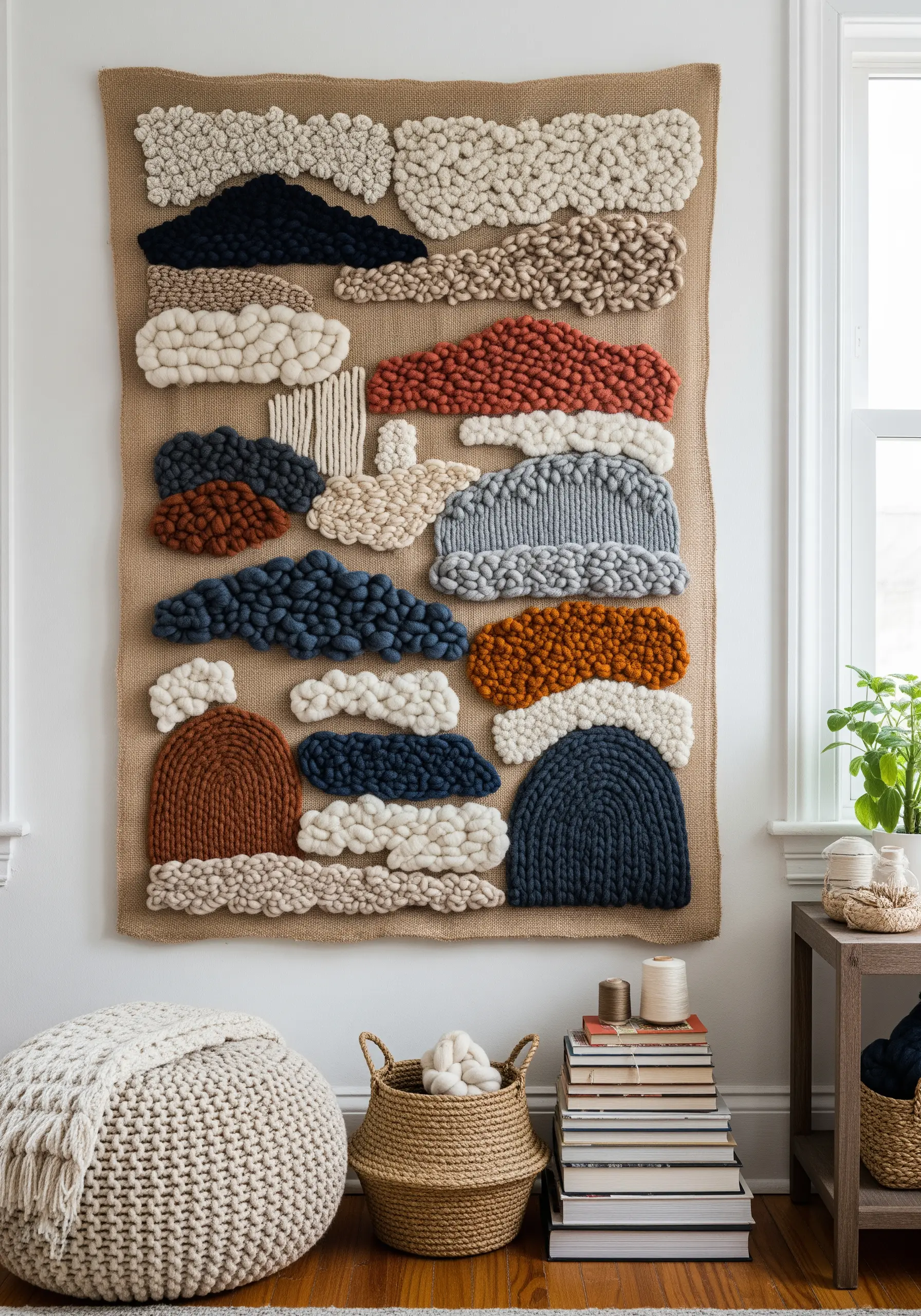
Create a stunning, high-texture wall hanging by using chunky wool roving and yarn instead of fine thread.
Employ techniques like weaving, tufting, and exaggerated French knots on a durable, open-weave backing like burlap or hessian.
Map out your abstract shapes, then fill each one with a different texture or color, creating a collage of soft, sculptural forms.
This type of fiber art installation adds incredible warmth, dimension, and sound-dampening qualities to a room, making it both beautiful and functional.
22. Blend Your Art with Living Greenery
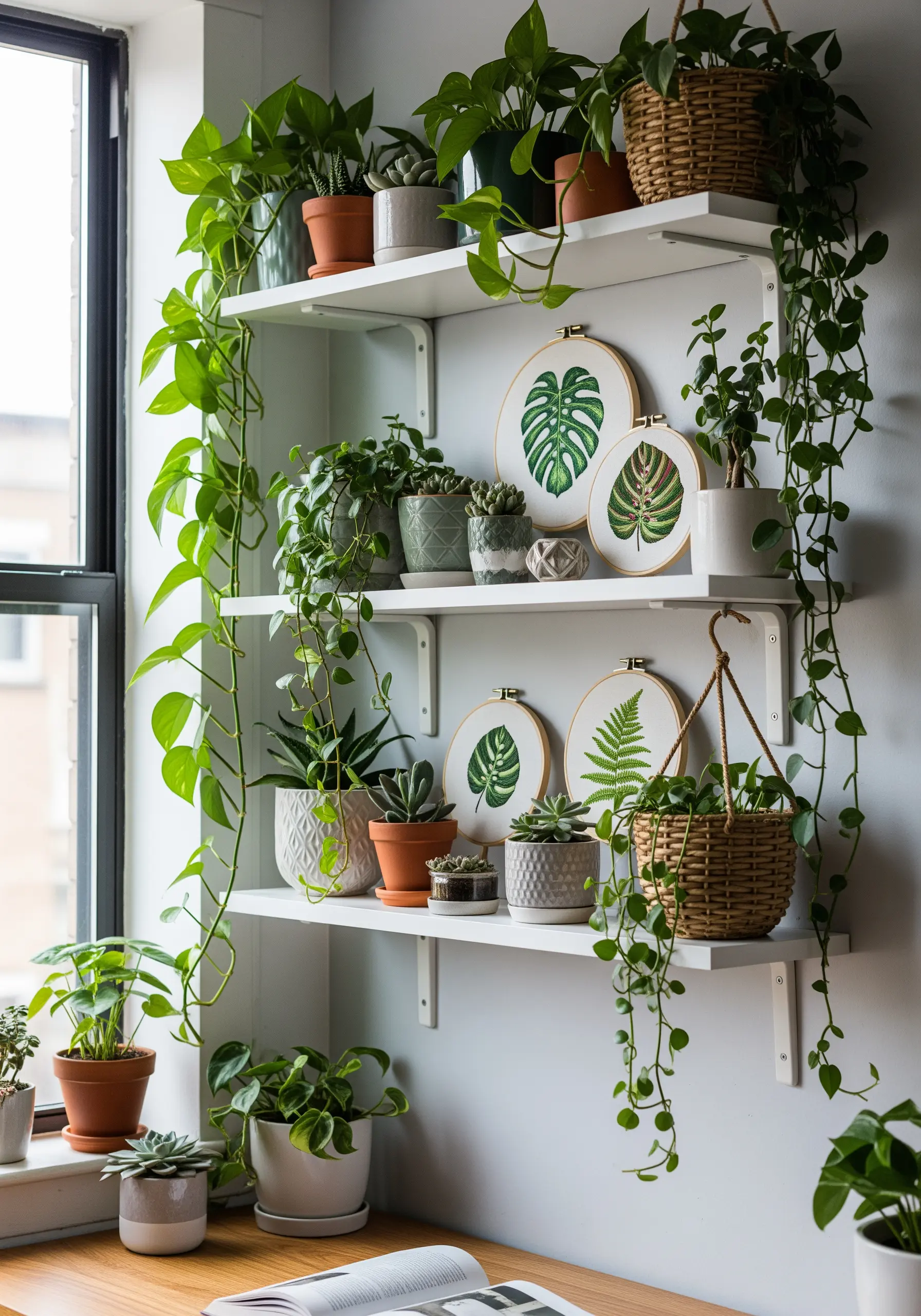
Create a seamless transition between your art and your home by stitching botanical motifs that reflect your actual houseplants.
Study the leaves of your monstera or fern and replicate their shapes and vein patterns using specific stitches—fishbone stitch for solid leaves and fly stitch for delicate fern fronds.
Displaying the finished hoops among the plants on a shelf creates a playful and cohesive display that celebrates nature, both real and rendered.
This is a perfect way to fill out a plant shelf and ensure your decor feels intentional and deeply personal.
23. Render Vintage Illustrations with Fine Linework
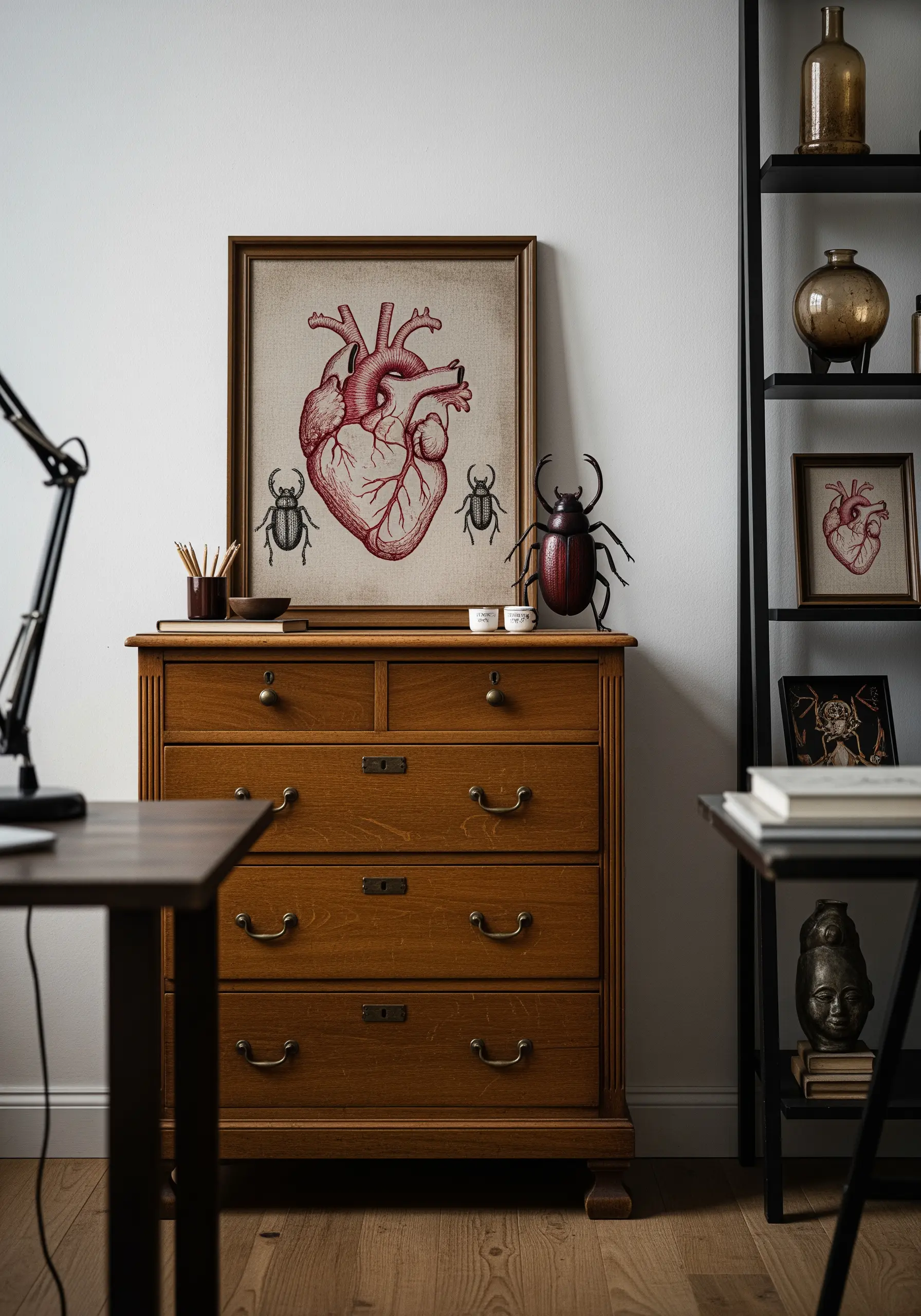
Capture the detail of antique scientific drawings by using a very fine thread—a single strand of floss is ideal—on a neutral linen background.
Rely on a precise backstitch or stem stitch to trace the intricate lines of an anatomical heart or botanical specimen, focusing on accuracy rather than texture.
Using just one or two colors, like red and black on cream linen, enhances the vintage, textbook-like quality of the artwork.
This style of embroidery adds a touch of intellectual curiosity and historical charm to a home office or study.
24. Combine Function and Beauty with an Embroidered Organizer
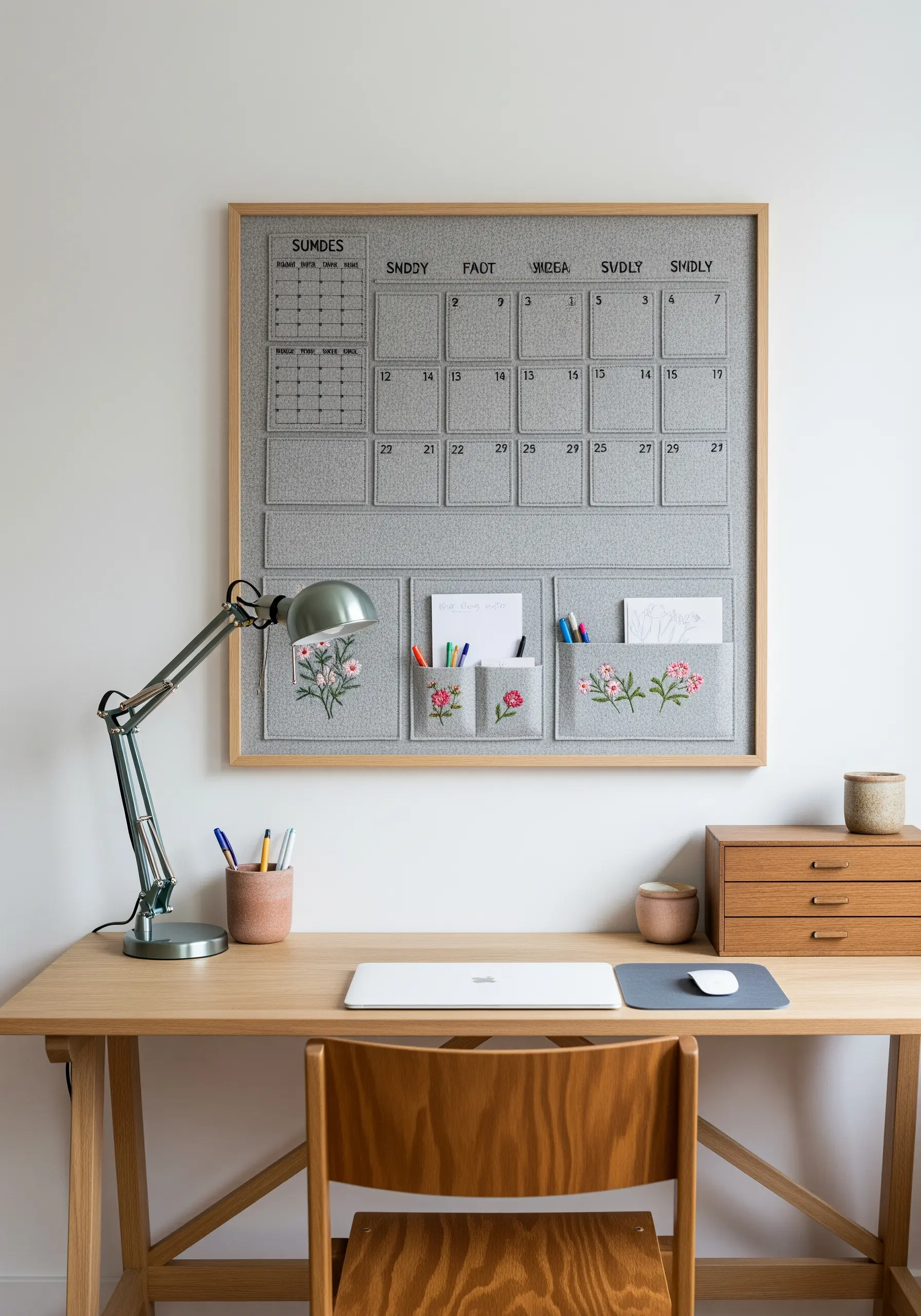
Turn a practical item into a piece of decor by adding thoughtful, hand-stitched details.
Before constructing the pockets for a wall organizer, embroider a small, simple motif on each one. Delicate florals or geometric patterns work well.
Use a reinforced stitch like a backstitch for the construction of the pockets to ensure they can withstand daily use.
This approach elevates a utilitarian object, making your organization system a beautiful and personalized part of your workspace decor.
25. Paint a Pet Portrait with Directional Stitches
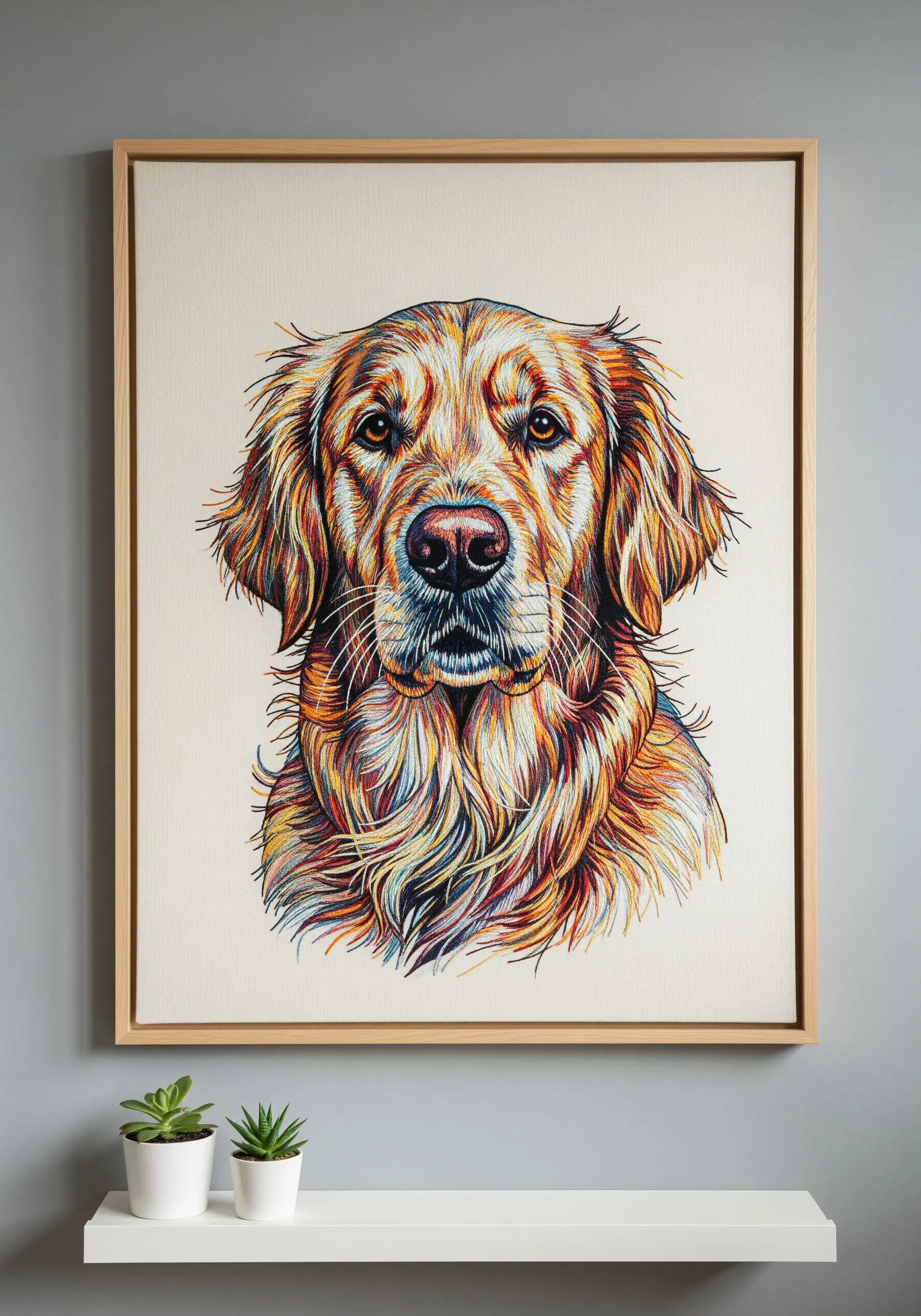
To capture the life and personality of an animal, think like a painter using thread. This is the art of contemporary thread painting.
Use single strands of floss in dozens of colors, even unexpected ones like blues and purples, to build up layers of color and light.
The key is directional stitching. Make your short straight stitches follow the natural direction of the fur’s growth. This creates movement, texture, and incredible realism.
A well-executed thread-painted portrait is a breathtaking and deeply personal piece of art that will be treasured for years.
26. Frame a Mirror with a Delicate Floral Wreath
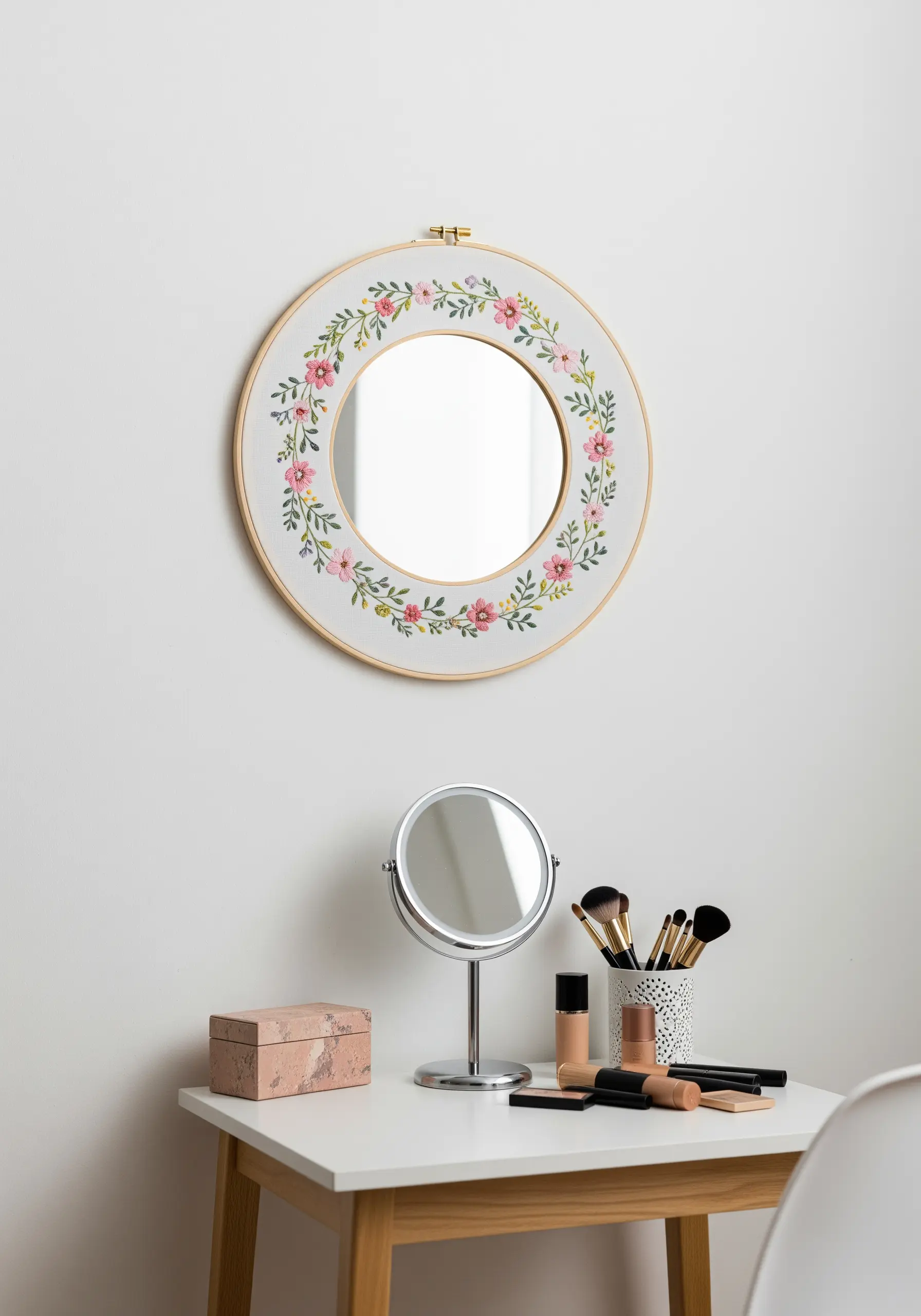
Combine decor and function by turning an embroidery hoop into a beautiful mirror frame. You can find small craft mirrors that fit perfectly inside standard hoop sizes.
Stitch your floral wreath design first, leaving the center of the fabric empty. Secure the fabric in the hoop, then glue the mirror into the center on top of the fabric.
Finish the back of the hoop neatly with a felt circle to conceal the fabric edges and the back of the mirror.
This creates a charming and practical piece, ideal for a vanity table or a small entryway where a touch of reflection is needed.
27. Stitch a Memory with Soundwave Embroidery
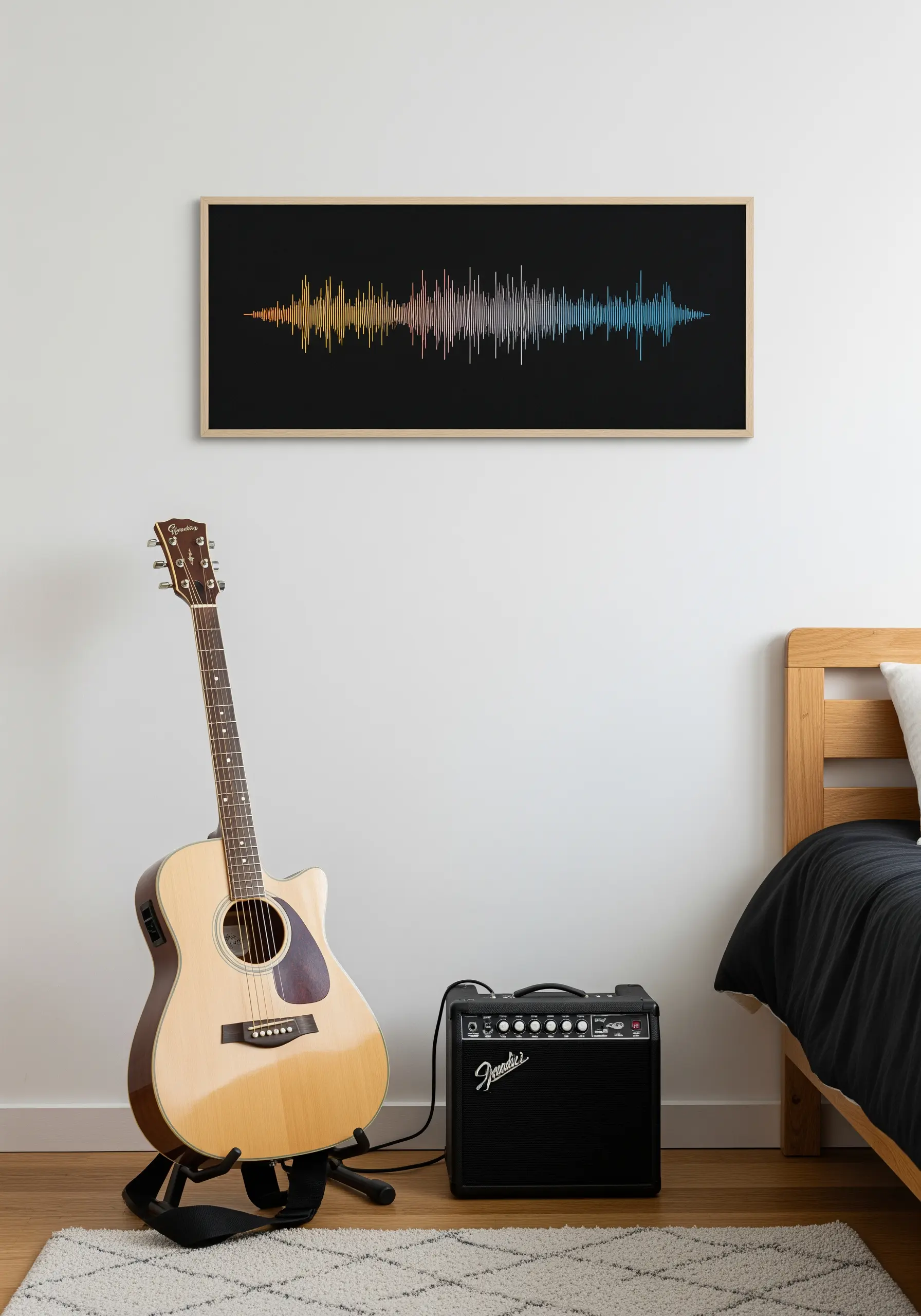
Immortalize a favorite song, a voice note, or a meaningful quote by stitching its soundwave pattern.
Use an online generator to create an image of your soundwave, then transfer the pattern to a dark fabric.
A variegated or rainbow thread works beautifully for this, as the color shifts can represent the changing frequencies. Use a simple, dense vertical satin stitch for each line of the soundwave.
This results in a deeply personal and modern piece of abstract art that holds a secret meaning only you might know.
28. Chart a Favorite Place with a Detailed Map
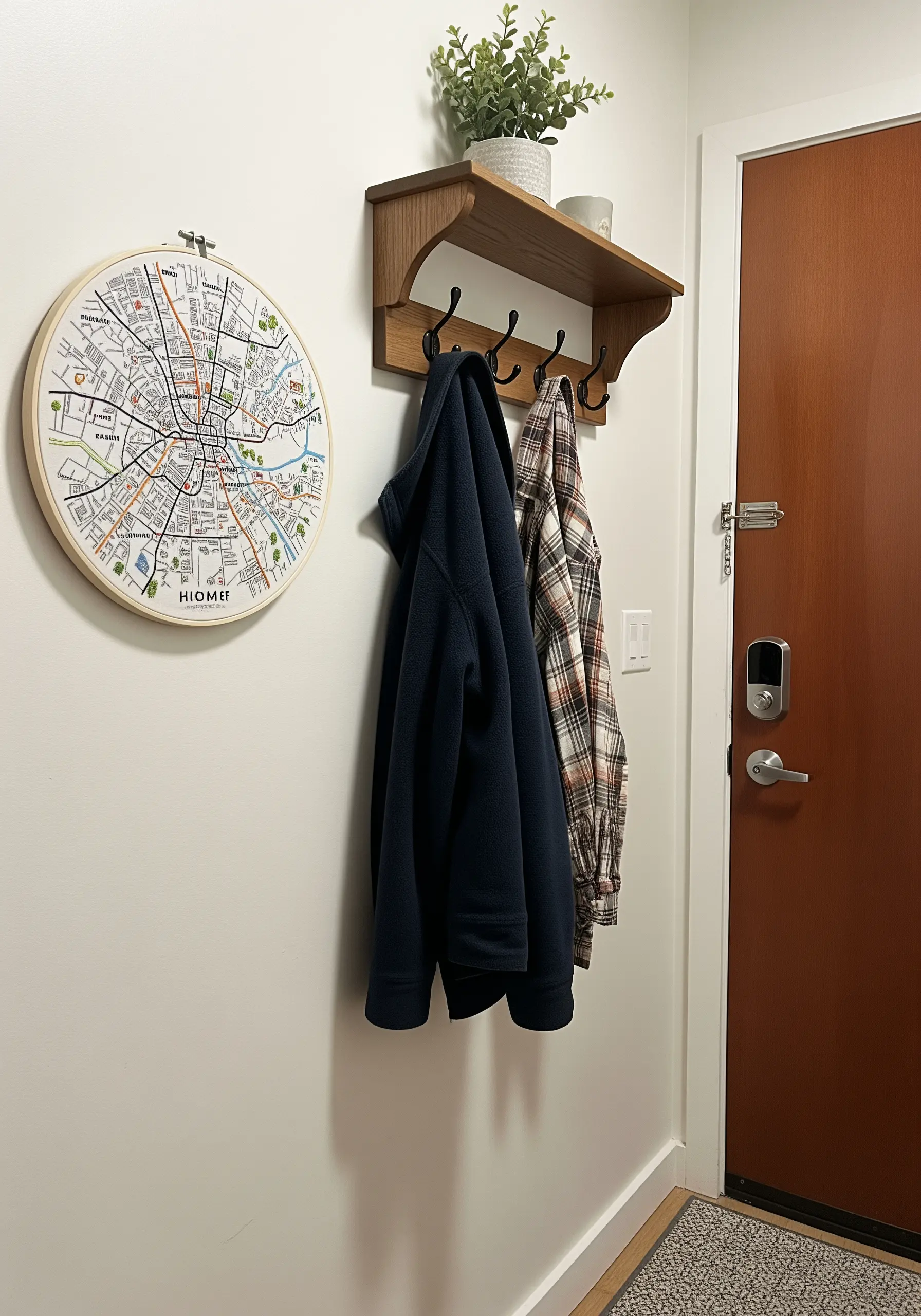
Create a deeply personal piece of wall art by embroidering a map of a meaningful location—your hometown, a favorite travel destination, or your current neighborhood.
For such a detailed design, print the map onto a sheet of water-soluble stabilizer. Simply stick it to your fabric, stitch directly over the lines, and then dissolve the stabilizer away.
Use a simple backstitch with one or two strands of thread to keep the lines clean and legible.
This creates a wonderfully graphic and sentimental piece that serves as a constant reminder of a place you love.
29. Create a Soothing Quilt with Minimalist Motifs
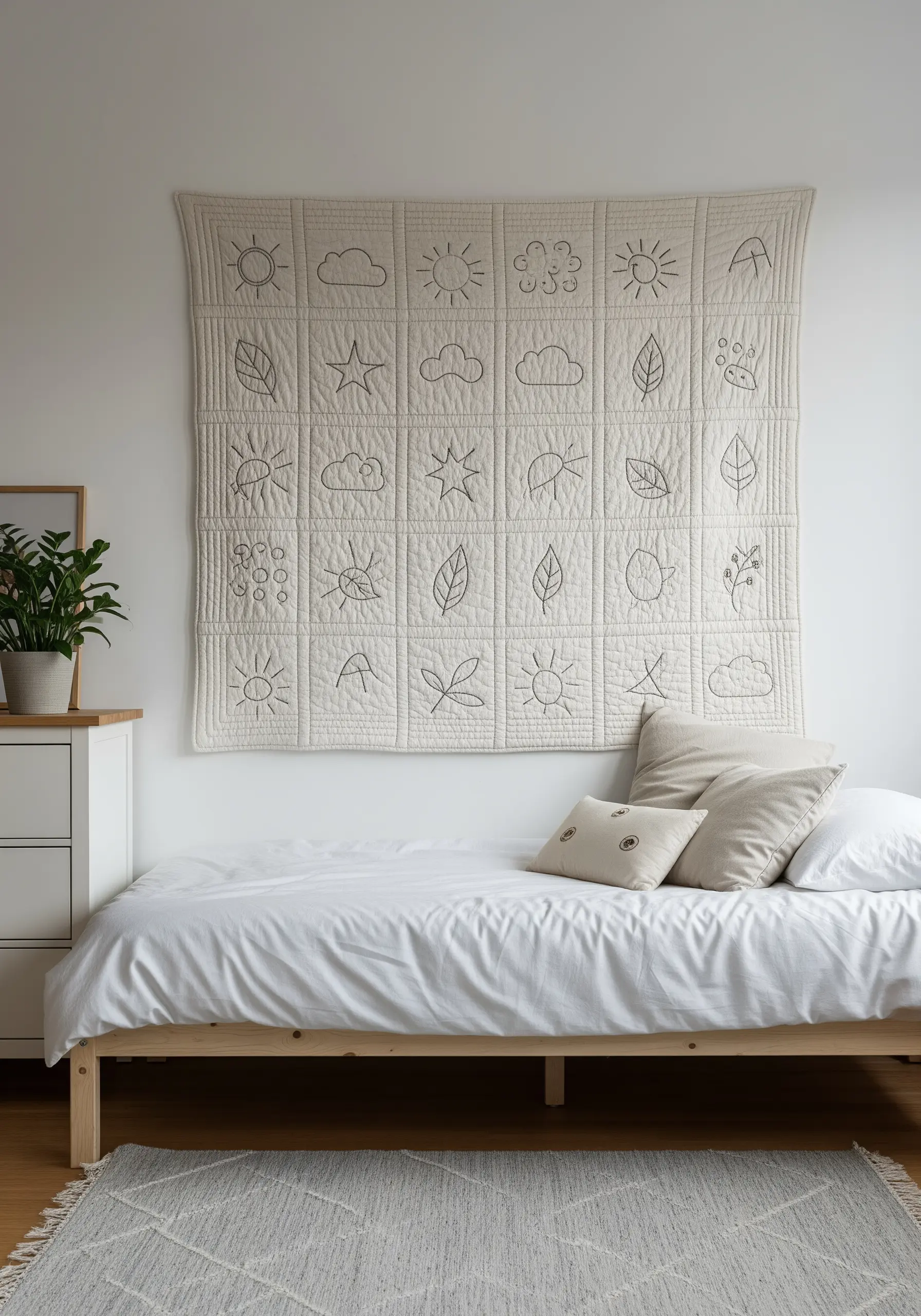
Combine the gentle arts of quilting and embroidery to create a large, textural wall hanging with a serene presence.
Use a simple running stitch in a contrasting color to both quilt the layers of fabric together and to draw the simple, nature-inspired icons in each square.
This technique, reminiscent of Japanese Sashiko, is meditative to create and results in a piece that is both visually cohesive and rich in subtle texture.
Hanging on a bare wall, it adds softness, warmth, and a sense of calm, making it perfect for a bedroom.