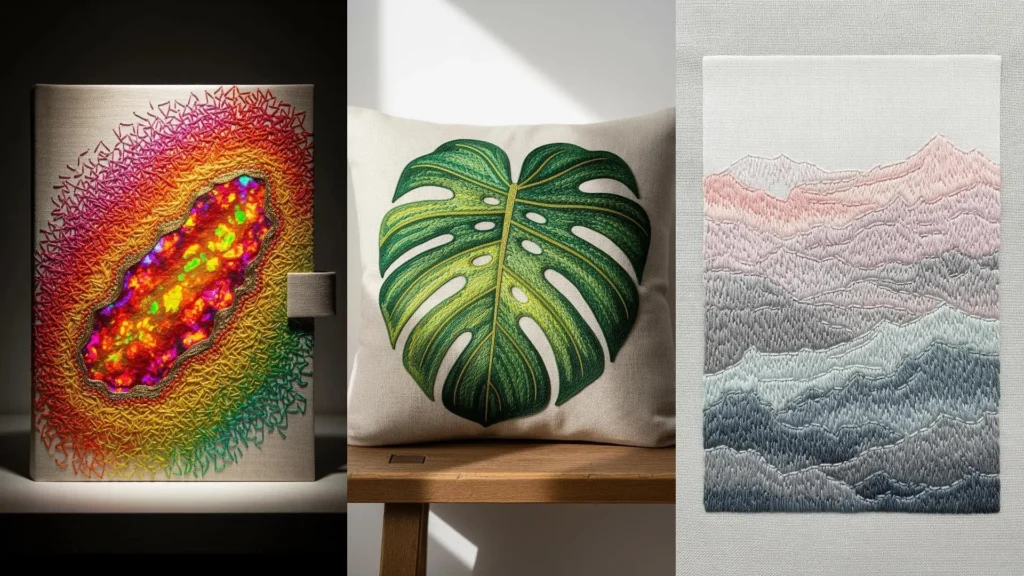
If you’re ready to move beyond predictable patterns and create embroidery that feels intentional and sophisticated, you’re in the right place. The secret isn’t always more color or more complex stitches; often, it’s about stripping back to the essentials and focusing on what makes thread art so compelling: texture, line, and form.
Working in monochrome isn’t a limitation—it’s a liberation. It frees you from the complexities of color theory and allows you to concentrate entirely on the interplay of light and shadow, the density of a stitch, and the elegance of negative space. A single color, explored through different threads and techniques, can communicate more depth and emotion than a full palette.
Think of these designs as invitations to explore. See how a change in thread weight can transform a simple line into a bold statement, or how grouping different stitches can create a landscape of pure texture. This is your opportunity to develop a refined artistic voice, one stitch at a time.
1. Create Movement with Sculptural Density
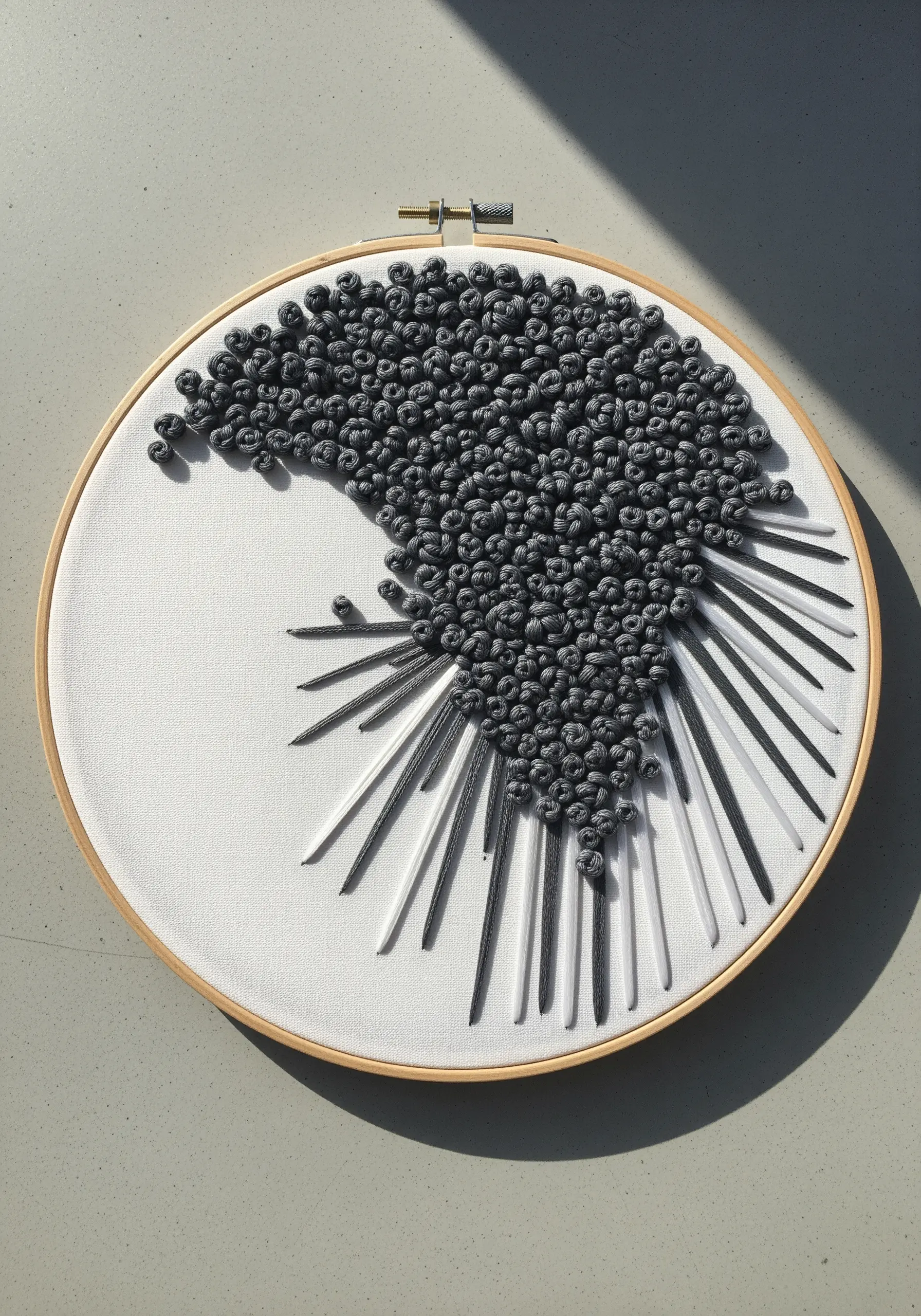
Vary the density of your French knots to create a sense of movement and visual weight, almost like a cloud formation.
Contrast the clustered, raised texture of the knots with sharp, clean straight stitches radiating outwards.
This juxtaposition between soft mass and sharp lines gives the composition a dynamic energy.
For the best result, use a heavier pearl cotton for the knots to give them volume, and a single strand of floss for the lines to keep them delicate and crisp.
2. Appliqué Thick Cording for Bold, Graphic Lines
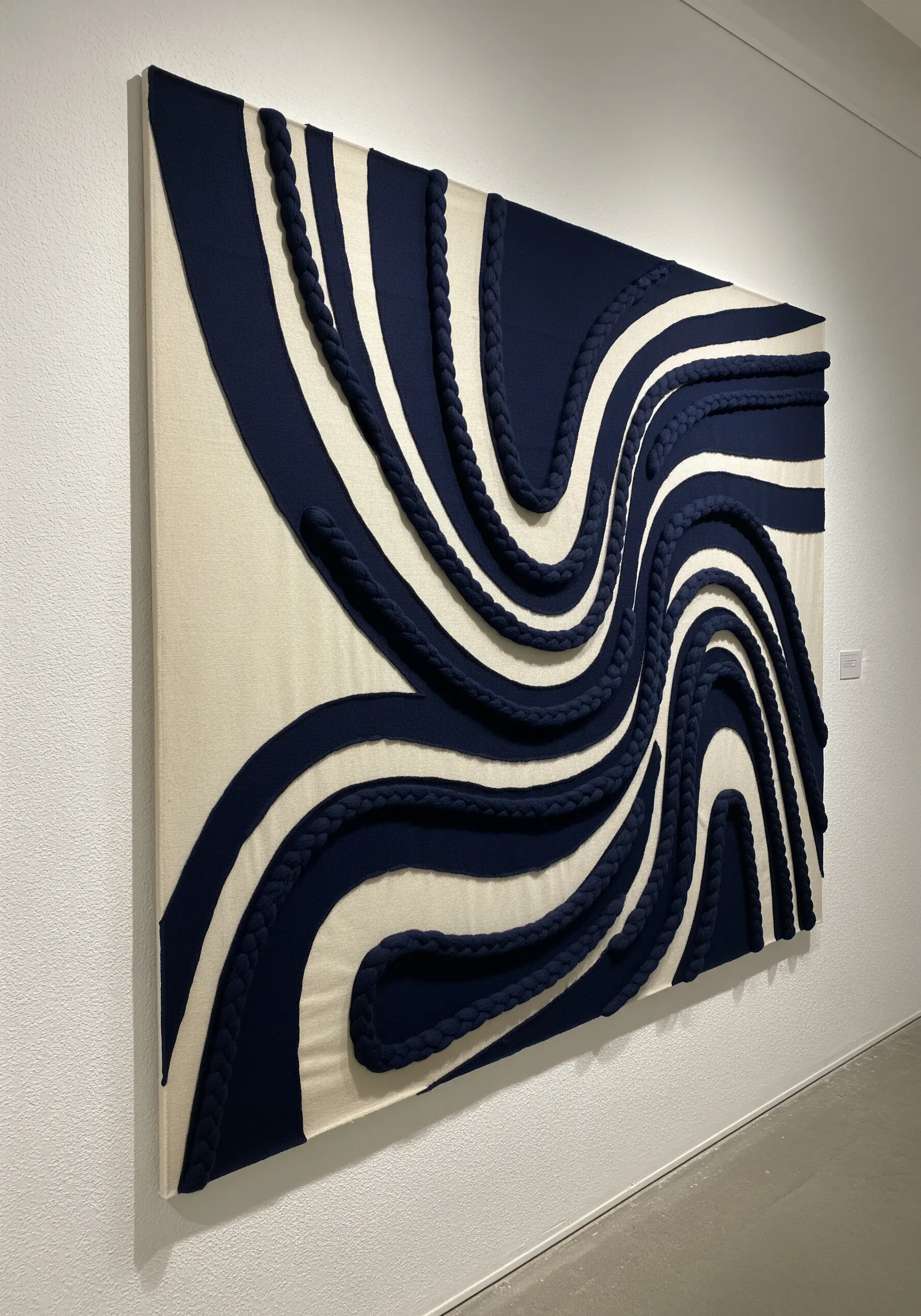
Instead of stitching every line, think sculpturally by couching thick, braided cord or yarn onto a heavy canvas backing.
This technique allows you to create bold, dimensional lines and work on a large scale without the immense time commitment of filling vast areas with stitches.
Focus on the flow of the lines and the negative space they carve out—this is where the power of the composition lies.
Use a discreet, matching thread to tack down the cording every inch or so, ensuring it follows your intended curves perfectly.
3. Explore Visual Rhythm Through Varied Line Weight

Transform simple vertical lines into a complex composition by deliberately varying their weight, texture, and spacing.
Combine thick satin stitch columns, thin whipped backstitch lines, and couched yarn to create a visual cadence that draws the eye across the piece.
Grouping different textures together adds another layer of sophistication, turning a simple concept into a statement handmade wall art piece that feels both organic and structured.
4. Harness the Power of a Single, Sculptural Line
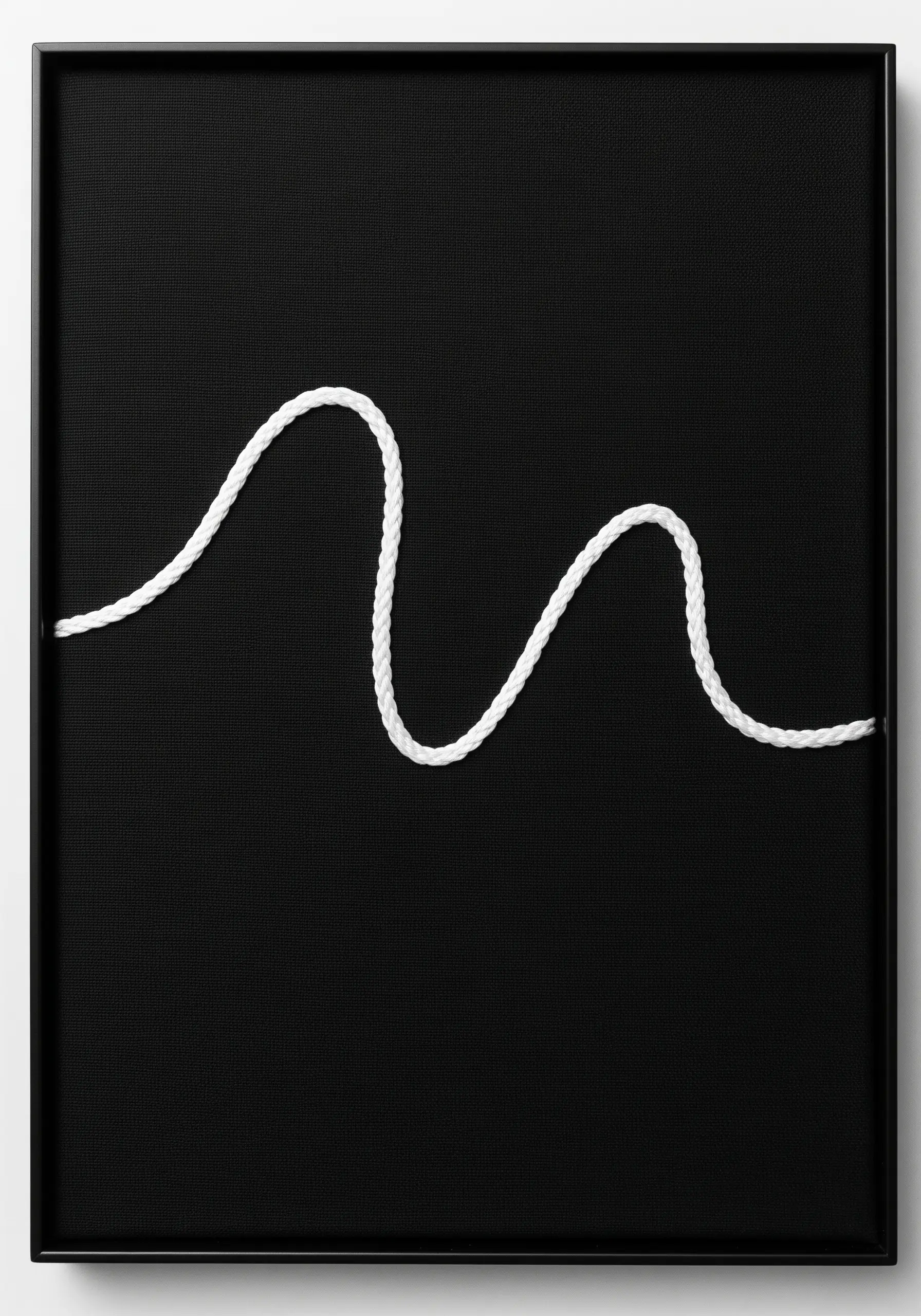
Make an entire statement with a single, impactful element.
Secure a piece of thick cotton rope to a stretched, dark canvas using discreet couching stitches in a matching thread.
The artistry here lies in the simplicity and the deliberate curve you create—every bend and wave is intentional.
This minimalist approach emphasizes form and the stark, beautiful contrast between the soft texture of the rope and the flat, taut background.
5. Use Tone-on-Tone Texture for Subtle Luxury
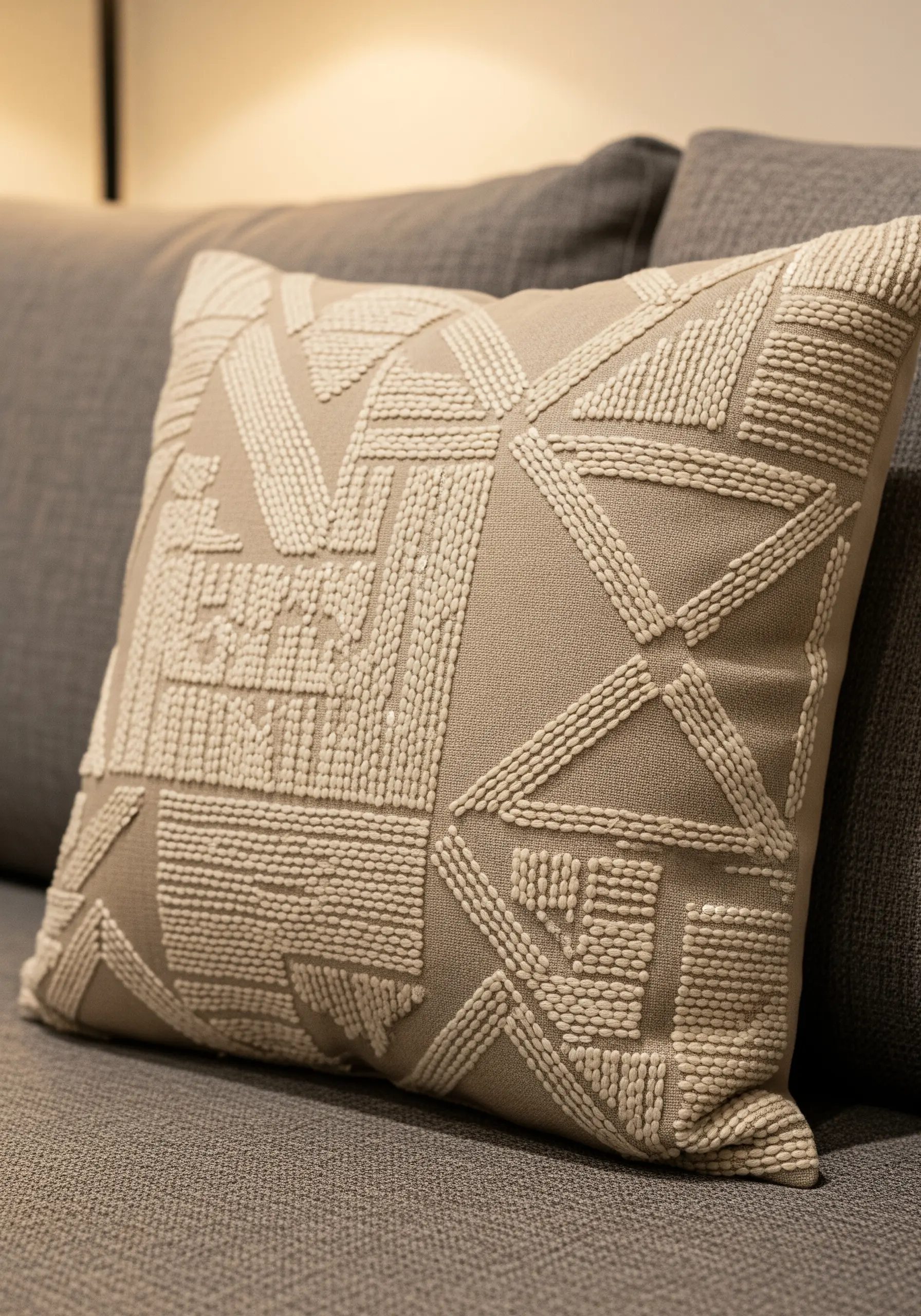
Elevate functional home décor, like a cushion, by using a thread color that is only a shade or two different from your base fabric.
This tone-on-tone embroidery technique immediately shifts the focus from color to the tactile quality of the stitches.
Use dense seed stitches or short, stacked straight stitches to fill geometric shapes. This creates a raised, touchable surface that looks and feels incredibly high-end and cohesive.
6. Stitch Meditative Gradients with Chain Stitch
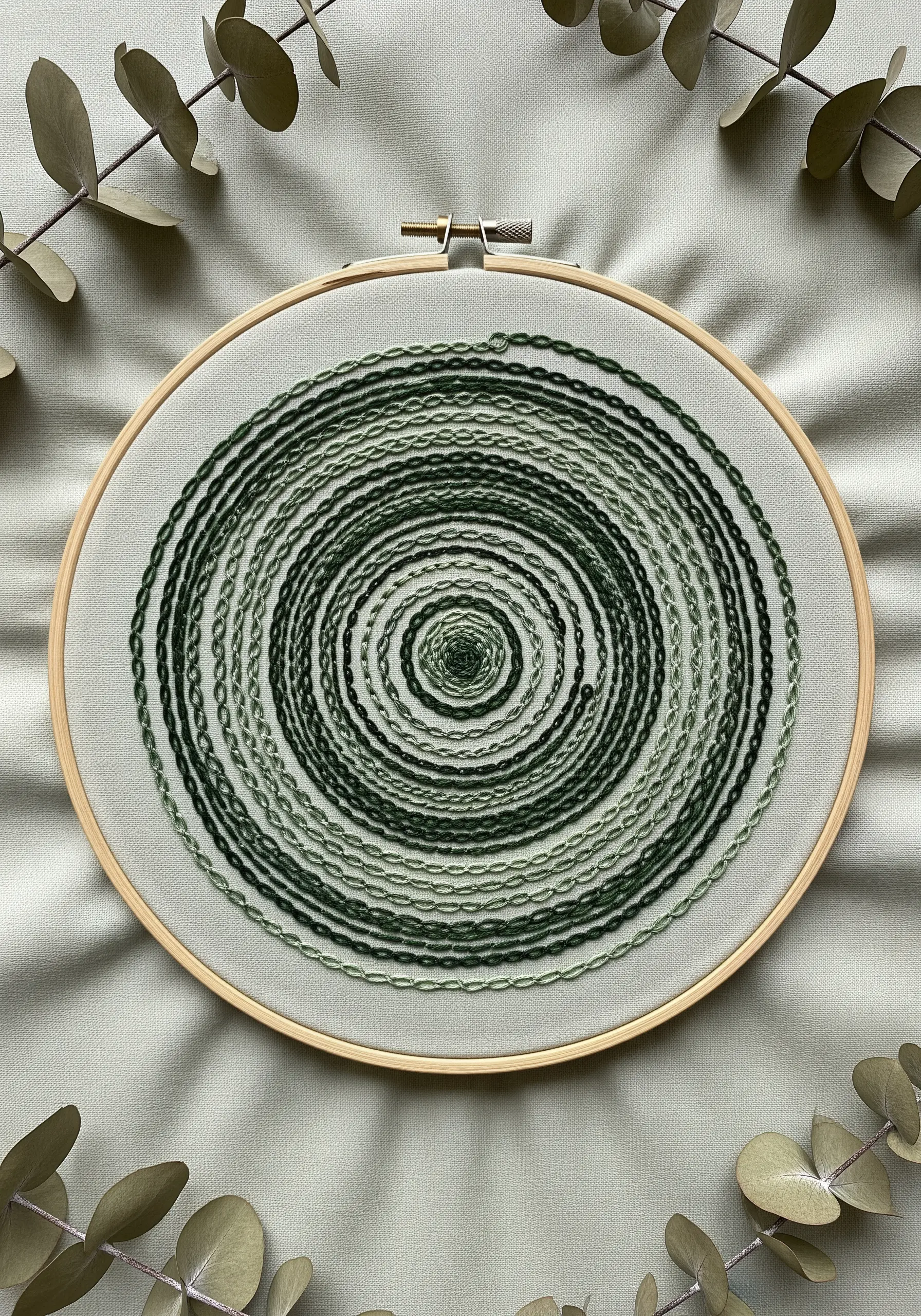
Create a mesmerizing focal point using only the humble chain stitch.
By working in concentric ovals and subtly shifting the shade of your thread, you can produce a gradient effect that has incredible texture and visual depth.
Enhance the sense of depth by varying the number of strands you use—perhaps three strands for the darker outer rings and just one or two for the lighter, inner ones.
The repetitive motion makes this a wonderfully calming and meditative project.
7. Build Architectural Depth with Satin Stitch Blocks
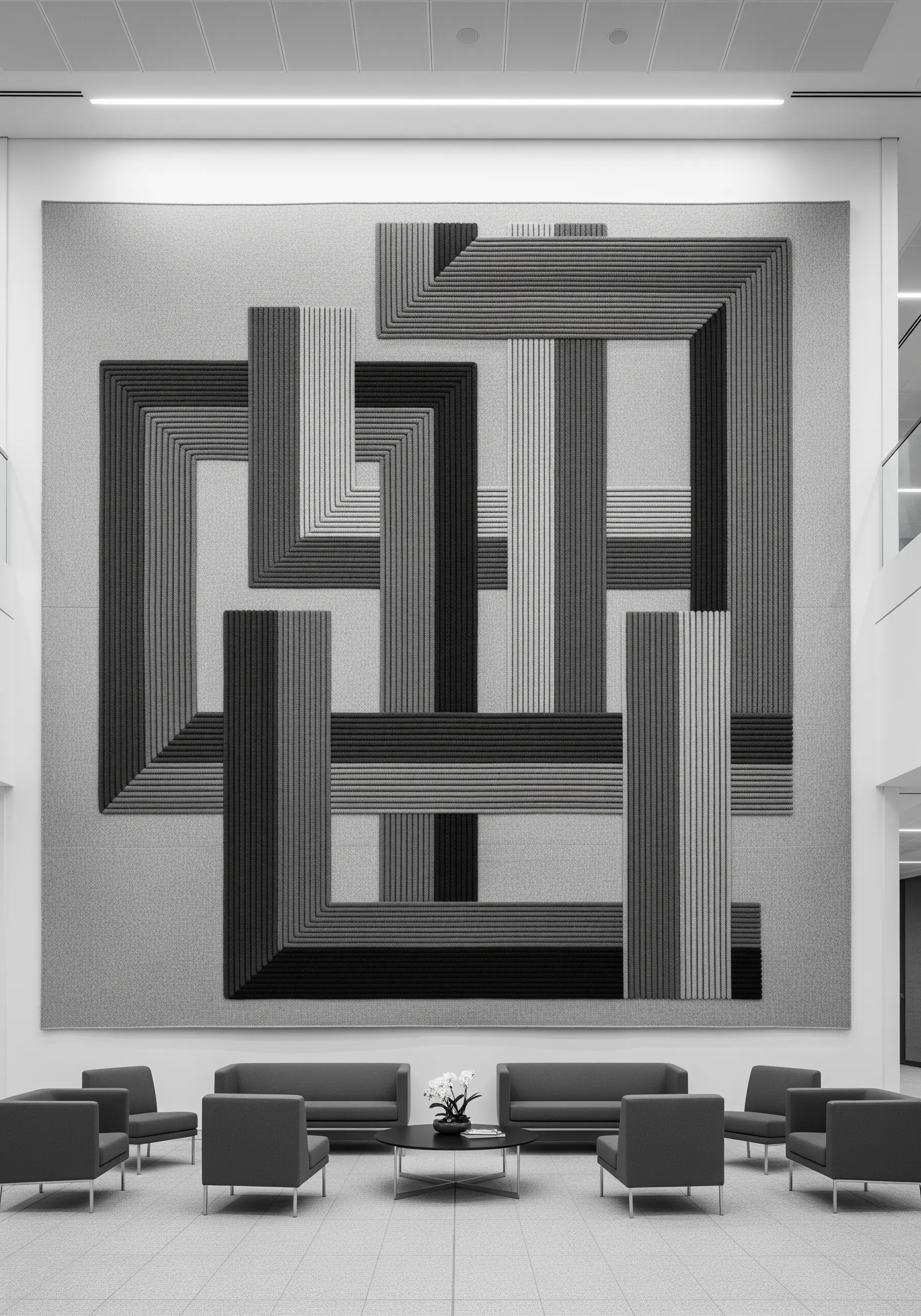
On a grand scale, treat thread as if it were paint or solid blocks of material.
Use directional satin stitch to create the illusion of overlapping planes and architectural forms.
By alternating the direction of your stitches and using shades of a single color, you can build a tangible sense of depth and perspective.
This technique requires patience and precision but results in powerful, graphic embroidered textile hangings.
8. Achieve Geometric Precision with Thread Wrapping
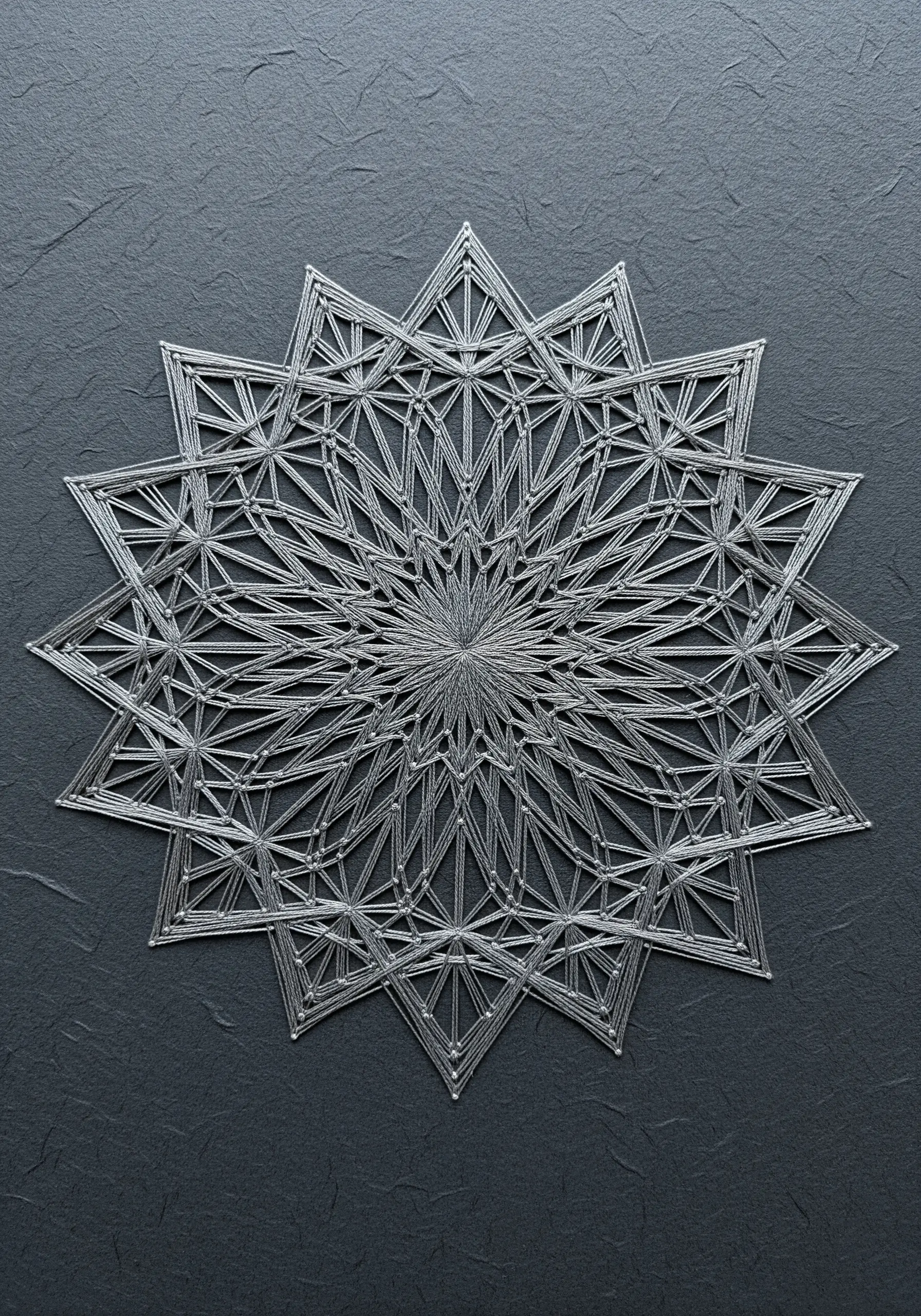
Adapt string art principles to your work for flawless geometric patterns without piercing the fabric hundreds of times.
Create a template with anchor stitches along a pre-drawn outline on your fabric, then wrap your thread between these points.
Using a single, continuous metallic or high-sheen thread creates a crisp, unbroken line that highlights the mathematical beauty of a mandala-like design.
This technique is all about tension and precision, resulting in a sharp, modern finish.
9. Translate Sound into a Personal, Precise Motif
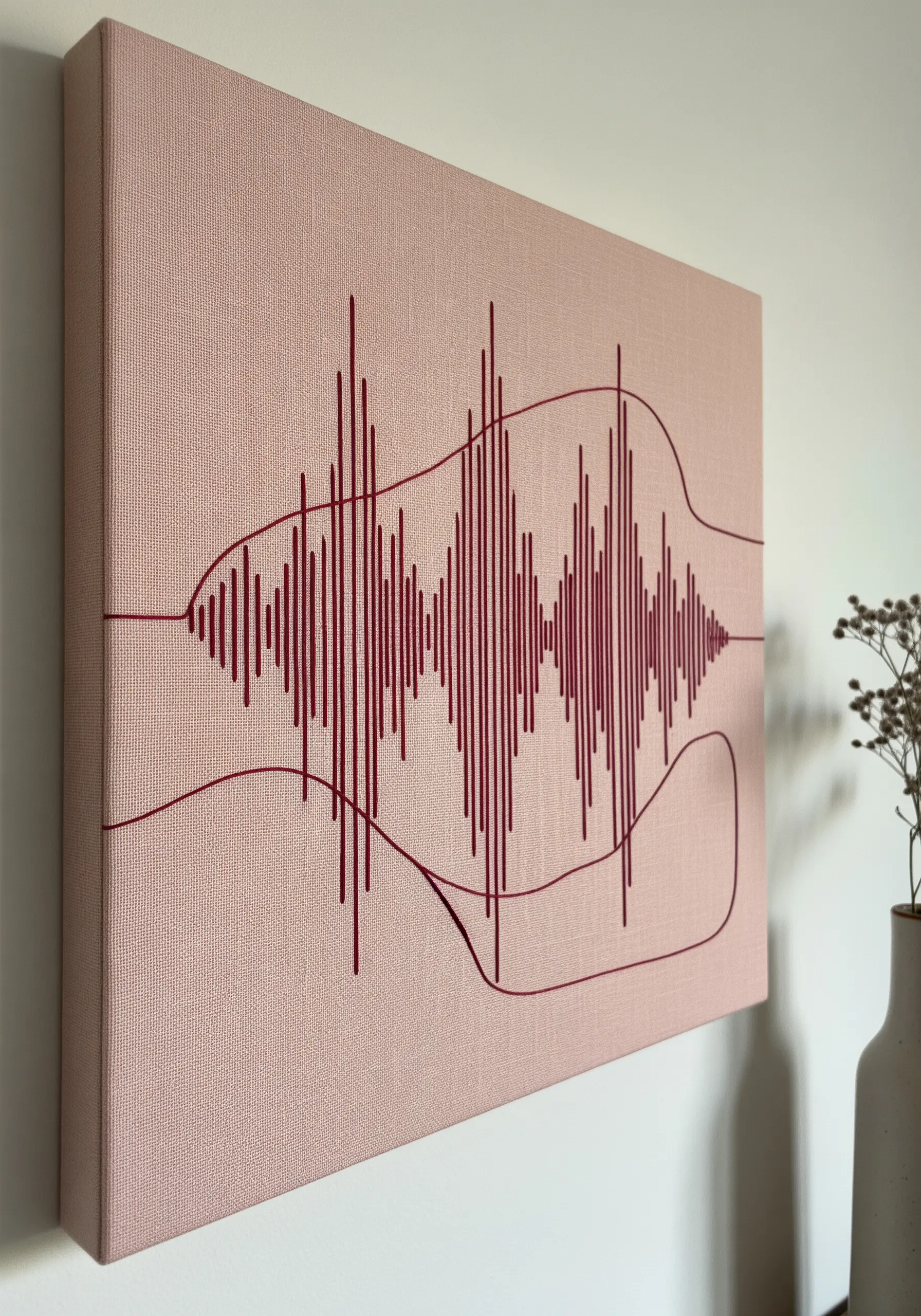
Turn a meaningful audio clip—a snippet of a song, a recorded laugh, a spoken phrase—into a tangible piece of art.
Use a free soundwave generator online to create your visual pattern, then transfer it to your canvas.
Execute the design with clean, precise backstitches or single straight stitches for the vertical lines to maintain clarity.
This method transforms an abstract concept into a deeply personalized gift that feels deep and uniquely modern.
10. Craft White-on-White Landscapes of Pure Texture
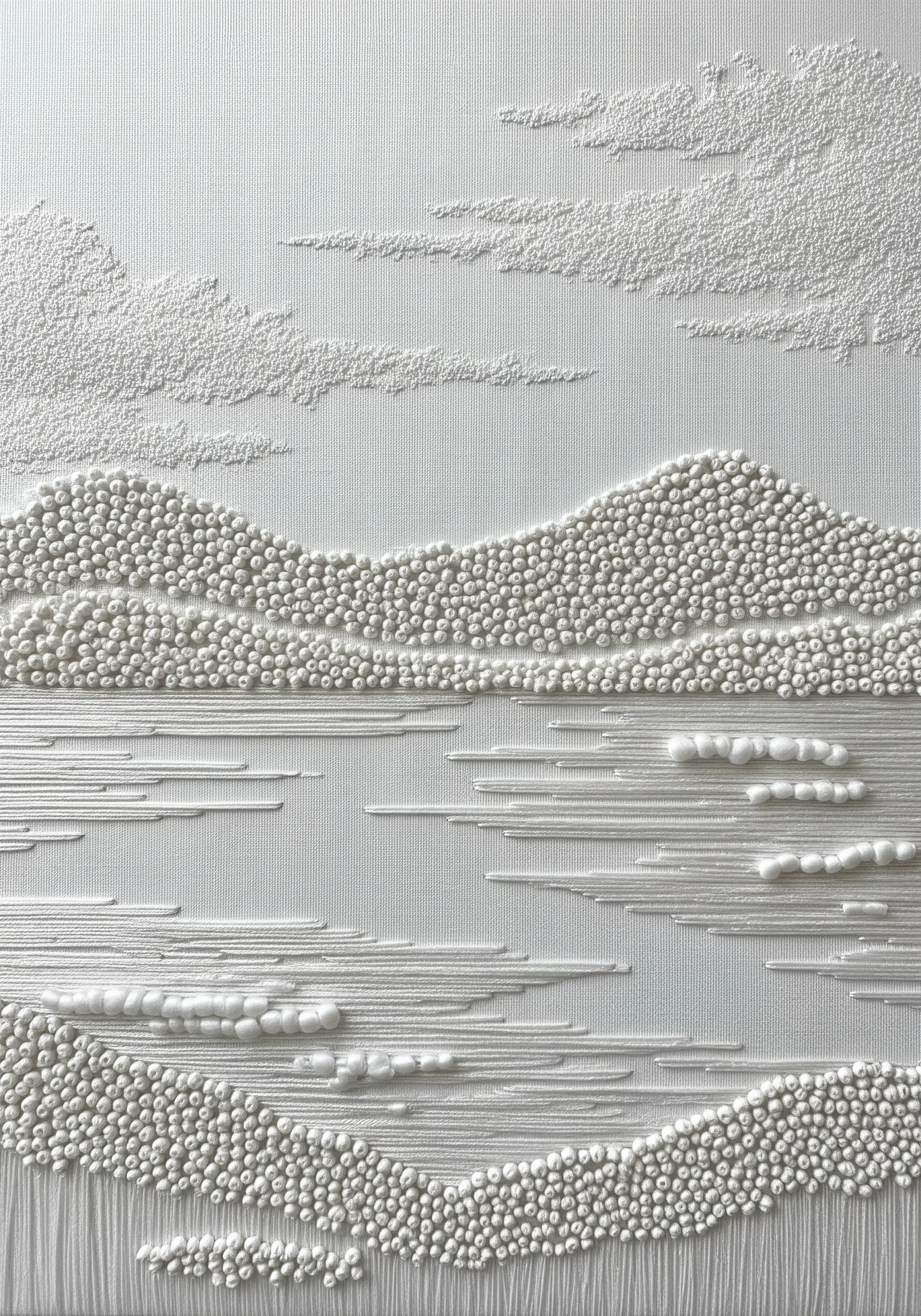
Explore the ultimate expression of minimalism by removing color entirely and letting texture define your composition.
Create an abstract landscape using only white thread on white fabric.
Use dense clusters of French knots for clouds, smooth satin stitches for water, and delicate straight stitches for distant atmosphere.
Varying the weight of your thread—from thick pearl cotton to single-strand floss—is essential for creating depth and differentiating the elements in this subtle, elegant style.
11. Design a Cohesive Triptych for Gallery Impact
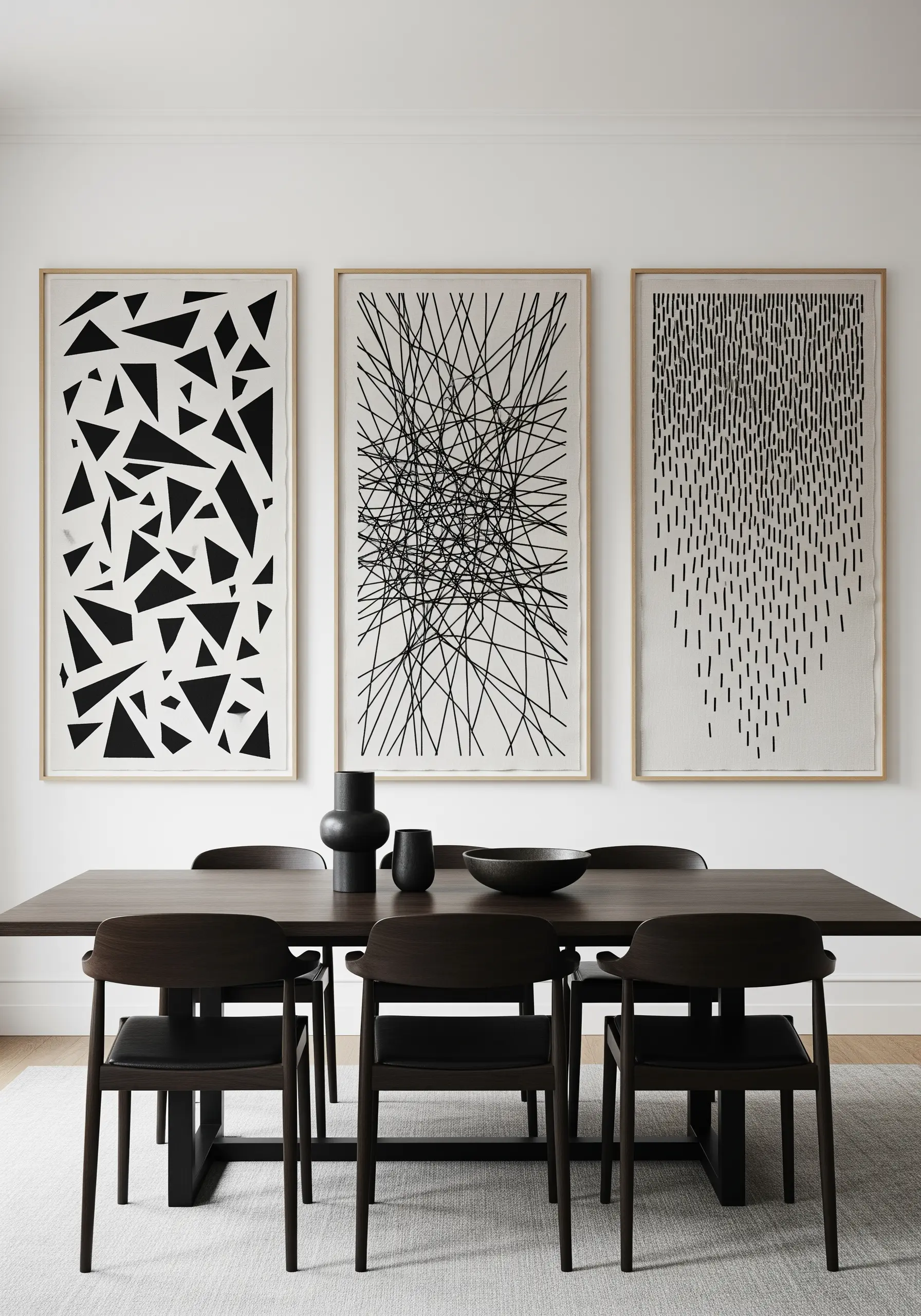
Instead of creating one large piece, explore a theme across three separate panels.
This triptych format allows you to investigate variations of a single concept—moving from dense geometric shapes to chaotic lines to rhythmic dashes.
Keeping the color palette strictly black and white and using identical frames are the keys to making the series feel unified, intentional, and impactful.
This instantly elevates your wall, giving it a curated, gallery-like feel.
12. Combine Bold Outlines with Soft Spiral Fills

Create a design inspired by organic forms like agate slices or cell structures.
First, establish strong boundaries by outlining your shapes with a bold, dark couched thread.
Then, soften the interior by filling the shapes with a spiraling backstitch or running stitch using a slightly lighter or thinner thread.
This combination of techniques creates a beautiful textural contrast between the defined, hard edge and the gentle, contoured interior.
13. Play with Rhythm and Interruption in Linear Patterns

Create a visual rhythm by stitching perfectly parallel vertical lines in distinct, separate blocks.
The clean negative space between the blocks is just as important as the stitched lines themselves, creating a pattern that feels both structured and breathable.
For ultimate precision on fabric, use a water-soluble grid guide to ensure every line is perfectly straight and evenly spaced.
This disciplined approach results in a piece that feels calm, orderly, and deeply intentional.
14. Build a Modern Mandala with Varied Stitches

Elevate the traditional mandala form by moving beyond simple line-work and incorporating a vocabulary of textural stitches.
Use braided chain stitches for heavy outlines, detached chain stitches for petal-like shapes, and directional satin stitches for solid filled sections.
By varying the texture within a monochrome palette, you give the design a modern, tactile dimension that encourages closer inspection.
15. Recreate a Painterly Brushstroke with Seed Stitch
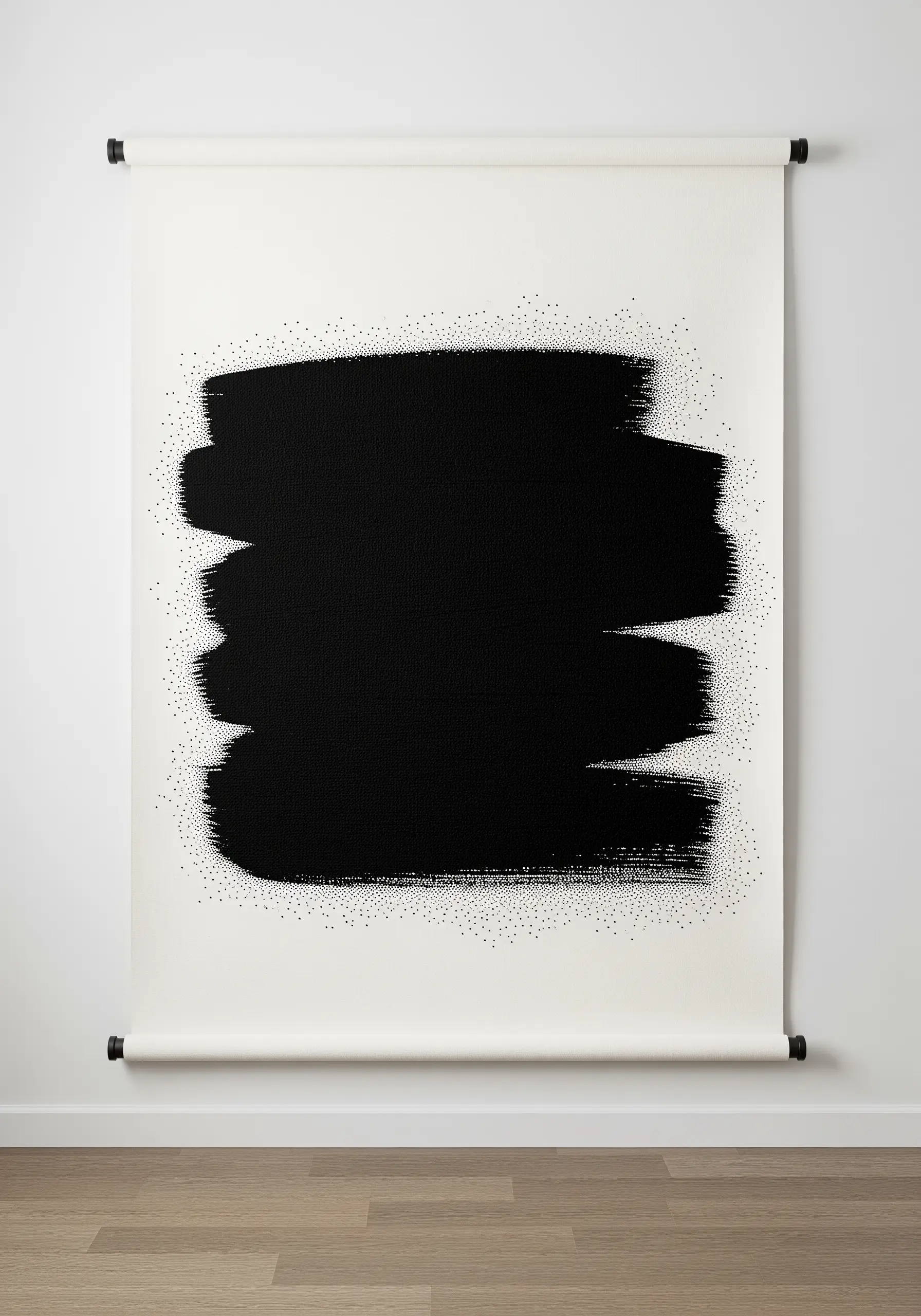
Capture the raw, expressive energy of a paint stroke using thousands of tiny seed stitches.
To mimic the texture of drying paint, concentrate the stitches densely in the center of the shape and scatter them more sparsely toward the edges.
This abstract thread painting technique transforms a simple form into a piece with immense texture, depth, and visual weight, proving that thread can be as powerful as paint.
16. Illustrate the Transition from Order to Chaos

Tell a visual story of transformation within a single piece of fiber art.
Begin by creating a structured, woven grid on one side of your canvas.
Then, allow the threads to gradually break free from the rigid pattern, transitioning into a chaotic, tangled mass on the other side.
This powerful abstract concept explores the relationship between structure and entropy, and it works best with a semi-rigid material like a fine-gauge wire or heavily starched yarn.
17. Create Geometric Tension with Intersecting Yarn
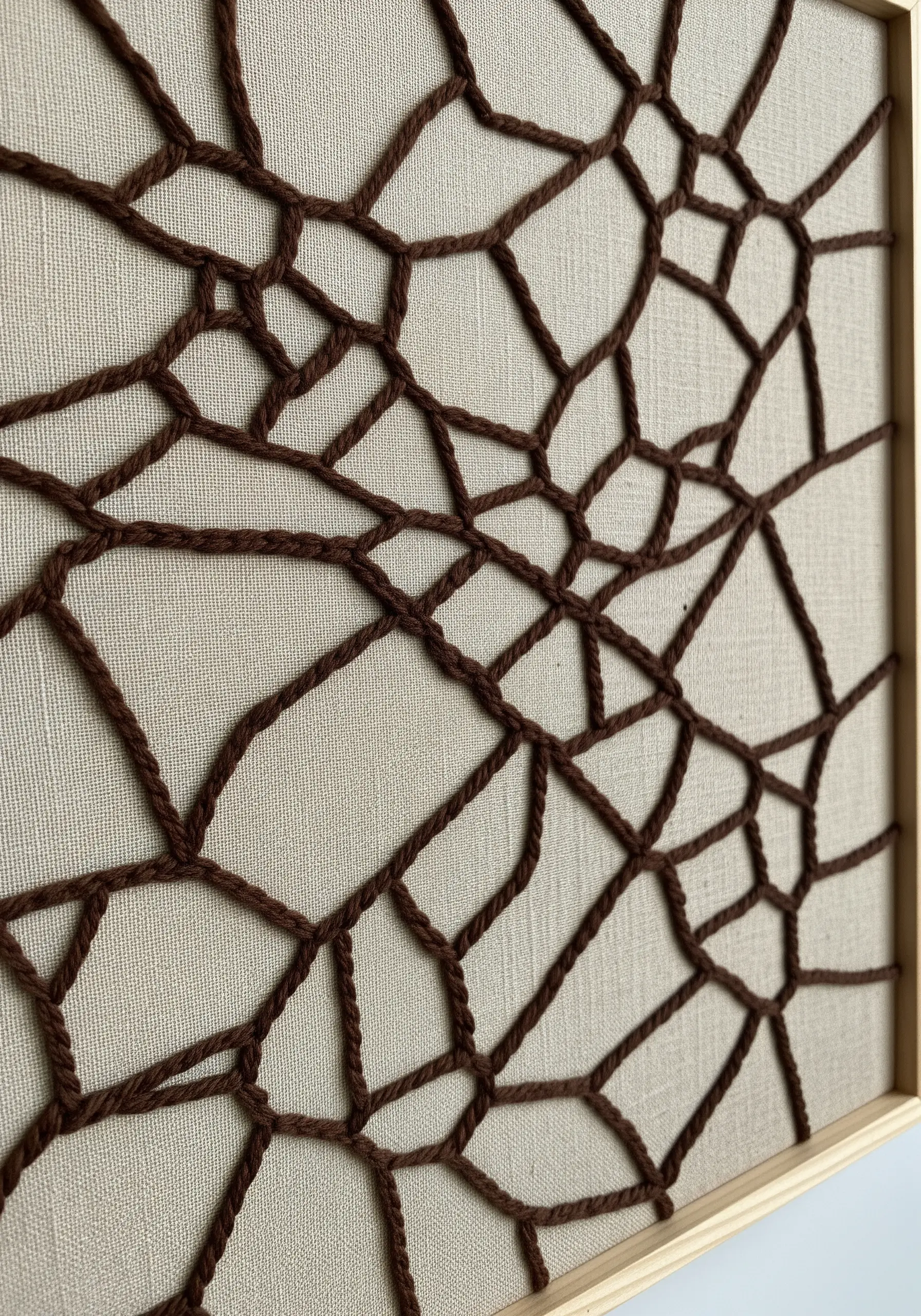
Construct a dynamic, web-like pattern using a single, continuous strand of yarn.
Instead of stitching through the fabric, stretch the yarn between discreet anchor points on the back of a frame or canvas.
This technique creates a pattern that relies on clean lines, tension, and the strategic use of negative space.
The raised quality of the yarn adds a subtle sculptural element that elevates the simple geometric design.
18. Find Beauty in the Perfectly Imperfect Circle

Focus on the quiet beauty of a single, fundamental motif.
A circle rendered in chain stitch is a classic meditative exercise, and the texture of the linked stitches provides far more character than a simple backstitch outline.
Use a high-contrast combination like white floss on black fabric to make that texture the hero of the piece.
The goal is not machine-like perfection, but a line that feels present, handmade, and intentional.
19. Apply Bold Geometric Patterns to Functional Art

Take abstract design off the wall and apply it to functional items like a table runner.
For a piece that needs to be durable, use a strong thread like pearl cotton and a flat, graphic stitch such as the satin stitch.
A repeating geometric maze pattern feels timeless yet modern.
The key to a professional finish is precise execution—measure and mark your design carefully to ensure every line is crisp and every corner is sharp.
20. Curate a Sampler of Monochrome Textures

Create a small, cohesive gallery wall by dedicating each mini-hoop to exploring a single stitch or texture.
Experiment with clusters of French knots, parallel satin stitches, woven bars, and whipped spirals.
Keeping the thread color and fabric consistent across all four hoops is what turns this technical exercise into a beautiful, unified collection.
It’s a perfect way to practice and showcase different organic texture embroidery designs.
21. Embrace Deconstructed Weaving with Raw Edges

Challenge the traditional neatness of embroidery by embracing an unfinished, organic aesthetic.
Create a central patch of simple weaving directly on your fabric, then purposefully allow the threads to spill over the edges.
Let them form loops, tangles, and long, hanging ends that add a raw, sculptural quality to the piece.
This technique celebrates imperfection and highlights the material nature of the thread itself.
22. Sculpt a Spiral with Wrapped Stitches
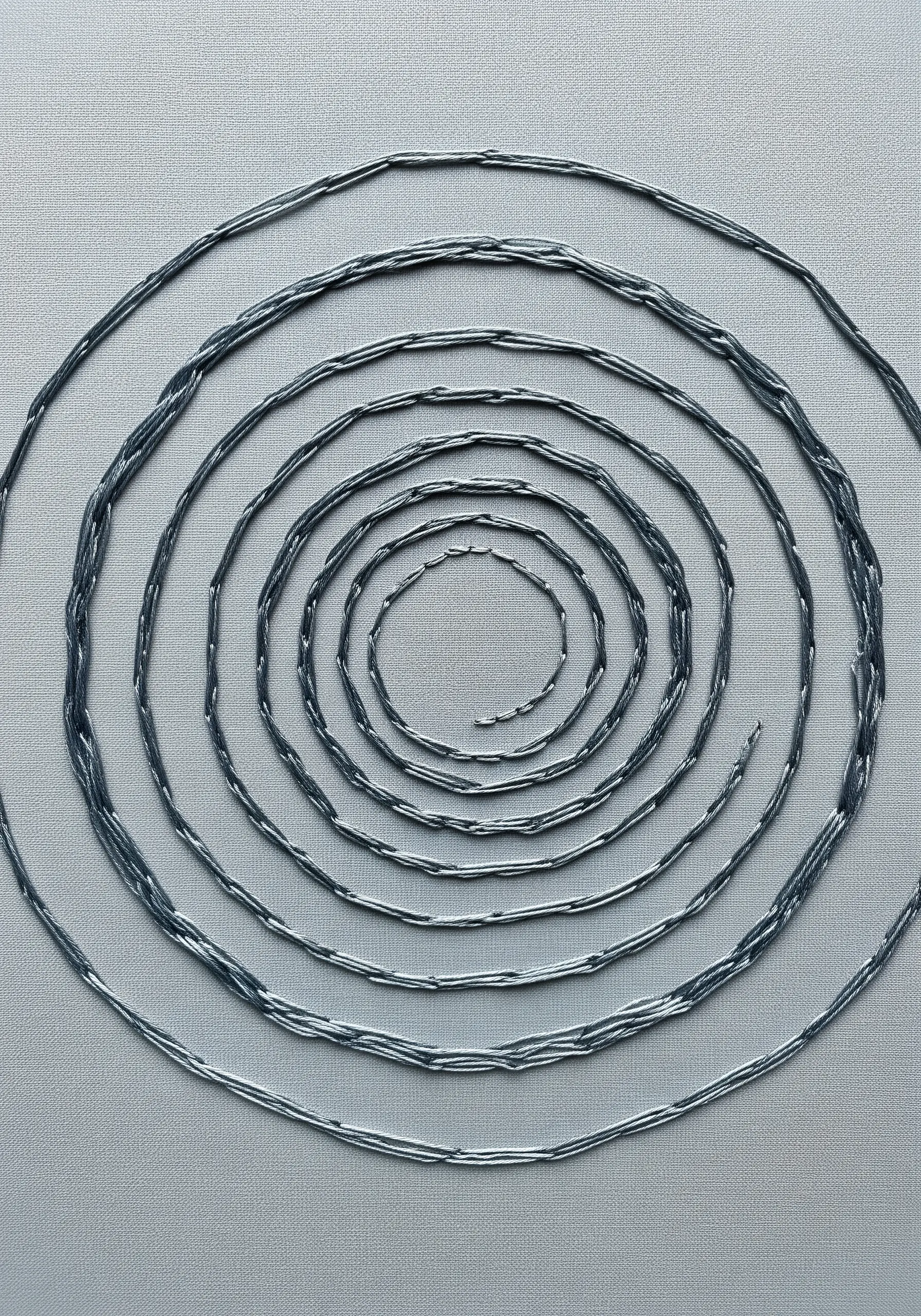
Give a simple spiral form a dynamic, three-dimensional texture by using a whipped or wrapped backstitch.
First, lay down a foundation of a simple backstitch spiral.
Then, using a second thread (perhaps in a slightly different sheen), wrap or weave it around the backstitches without piercing the fabric.
This adds a beautiful, corded effect that turns a flat line into a rounded, sculptural one.
23. Make One Bold Mark for Maximum Impact

Create a powerful statement piece by focusing on a single, confident gesture.
Instead of a complex pattern, fill one bold, diagonal slash with dense, uniform satin stitch.
This approach treats thread as a solid block of texture and color, not just a line.
The success of this minimalist piece lies in its scale and flawless execution—ensure your stitches are perfectly parallel and your edges are crisp for a clean, graphic impact that complements modern minimal embroidery patterns.