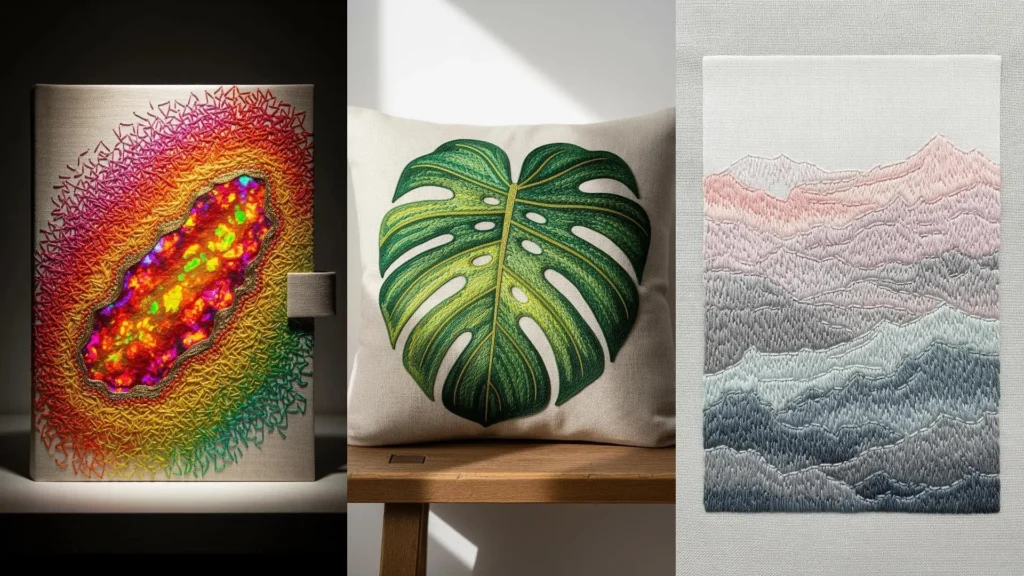
Have you ever looked at your embroidery and felt it was missing a certain something? A quiet confidence, a sense of intention that elevates it from a simple craft to a piece of art that truly belongs in your home. It’s a common feeling, but the solution is closer than you think.
The shift doesn’t require more complex stitches or expensive materials. Instead, it comes from a change in perspective—learning to see thread as a line, color as weight, and empty fabric as a crucial part of your design. It’s about making deliberate choices in texture, composition, and scale.
Here, you’ll find 21 ideas designed to sharpen your artistic eye. Each one is a practical lesson in modern minimalism, showing you how to use simple techniques to create abstract thread designs that are not only beautiful but also deeply resonant with the calm, clean aesthetic of Scandinavian décor. Let’s begin.
1. Architectural Thread-Wrapping for Large-Scale Impact
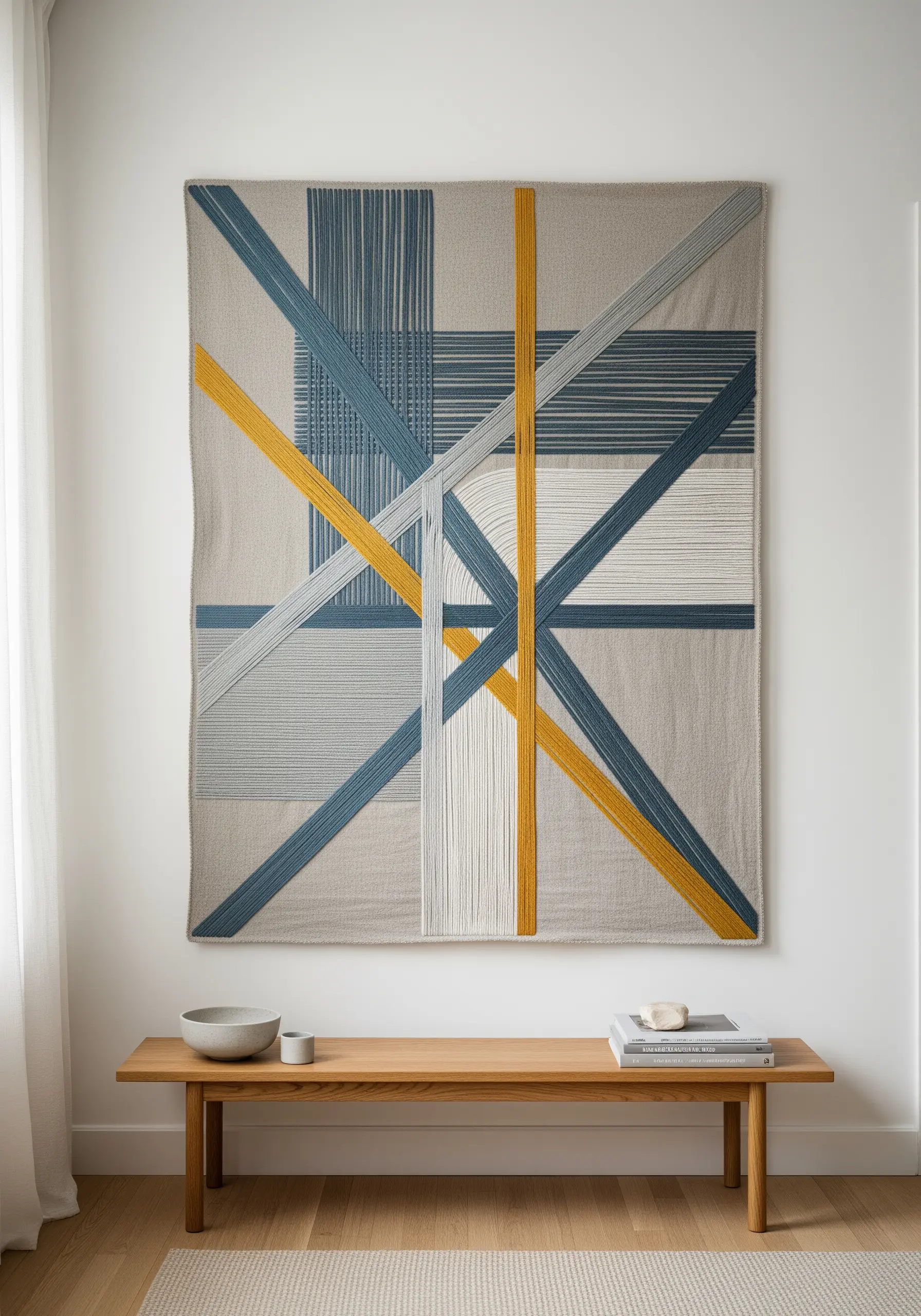
To create large-scale embroidered wall art, move beyond floss and embrace thicker yarns, cords, or even rope.
Instead of stitching through the fabric, wrap your fibers around a pre-stretched canvas or a sturdy frame, using the edges as anchor points.
The key to a clean finish is maintaining consistent, taut tension as you wrap.
Layer different colors and directions to build a composition with architectural depth, allowing some lines to visibly overlap others for a dynamic, graphic effect.
This method transforms simple lines into a commanding focal point suitable for any modern living space.
2. Isolate Simple Motifs for a Cohesive Triptych

Instead of crowding one hoop with multiple ideas, isolate individual elements into a series of three or more hoops.
This technique turns simple motifs into a curated collection, giving each one space to breathe.
For the vertical lines, create a subtle gradient by stitching with three, two, and then one strand of floss.
Use disciplined French knots or Colonial knots for the scattered pattern, focusing on placement to create a feeling of organic randomness.
A single, expressive line in a bold color demonstrates that minimalism is about confident, intentional marks, not a lack of detail.
3. Combine Couching and Chain Stitch for Sculptural Cushions
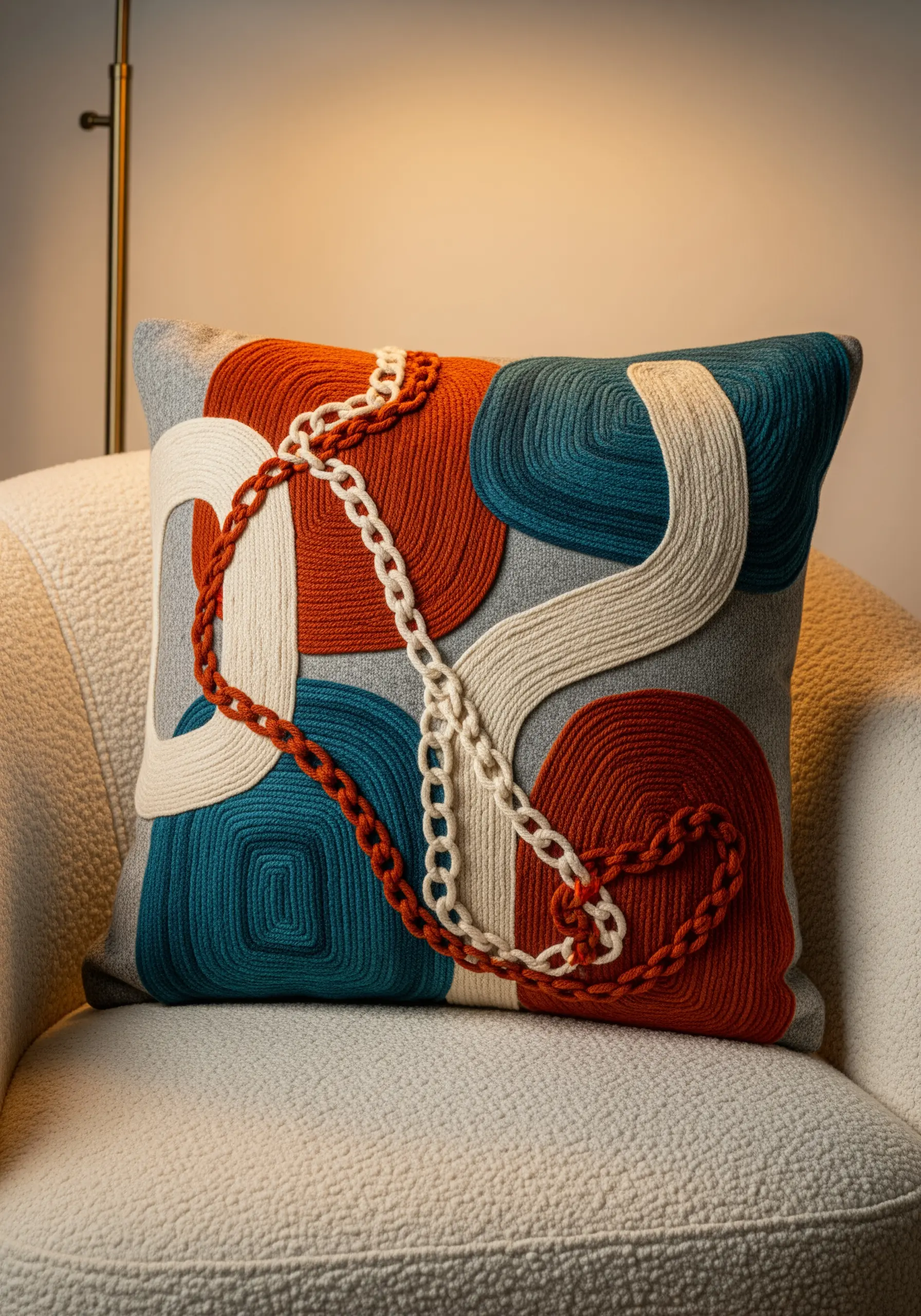
Introduce dramatic texture to home textiles by couching thick, soft yarn onto your fabric base.
Lay the thick yarn in your desired shape and use a thinner, contrasting thread to tack it down with small, evenly spaced stitches.
Fill adjacent areas with dense rows of chain stitch, which creates a braided, woven texture that beautifully contrasts with the smooth, couched yarn.
This play between high-relief lines and flat, textured fills turns a simple pillow into a sculptural piece of art, perfect for creating statement pillows.
4. Guide the Eye with a Bold, Sinuous Couching Line
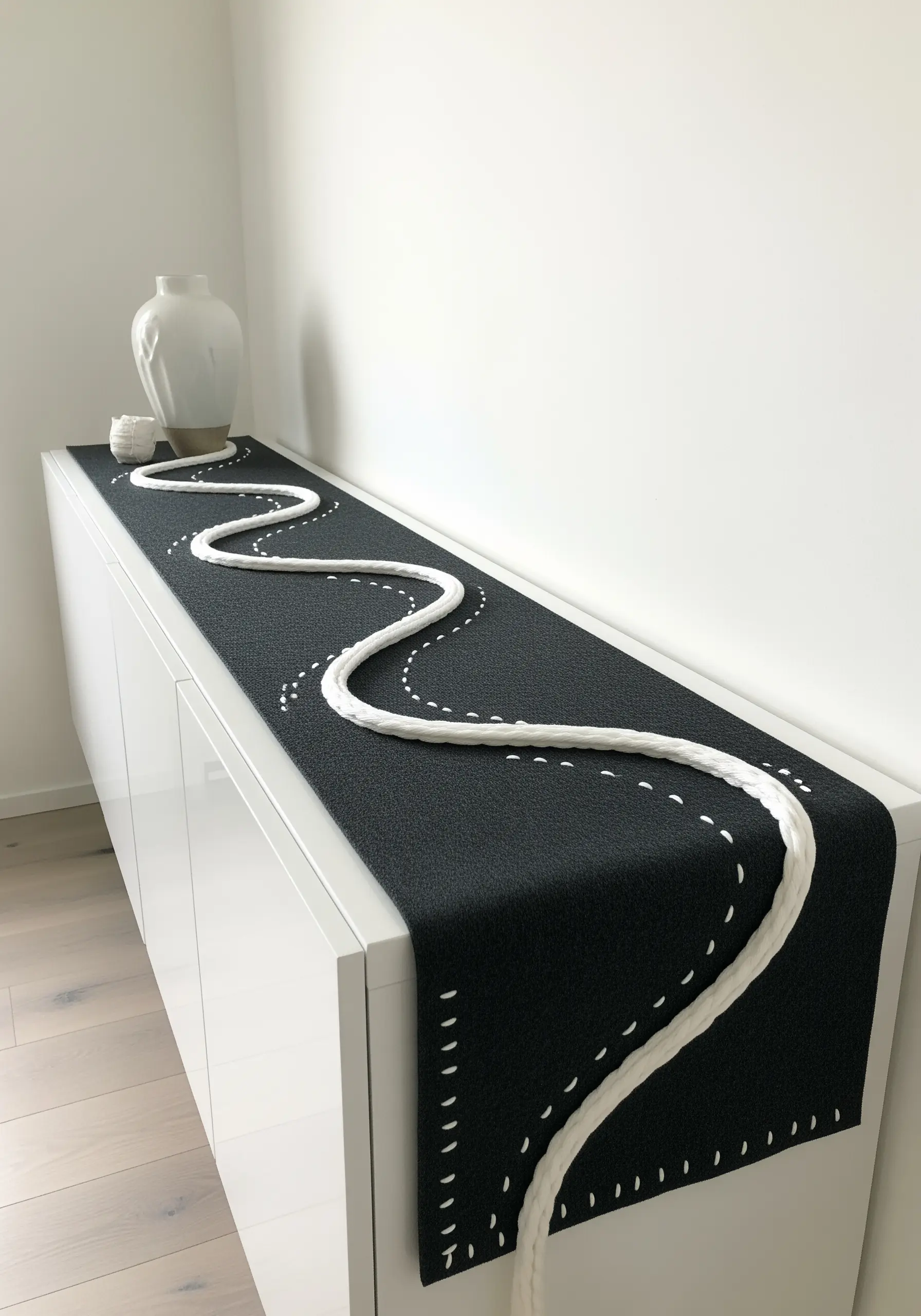
For a high-impact design on a table runner or wall hanging, choose a single, powerful element.
Couching a thick, braided cord onto a dark, heavyweight fabric creates an immediate focal point.
Use a simple whip stitch with a contrasting color to secure the cord; this secondary stitch creates its own subtle, rhythmic pattern of dashes along the main line.
The beauty of this technique is its simplicity—the meandering line does all the work, drawing the eye and adding a sense of fluid movement to a static object.
5. Paint with Seed Stitches for Textured Gradients
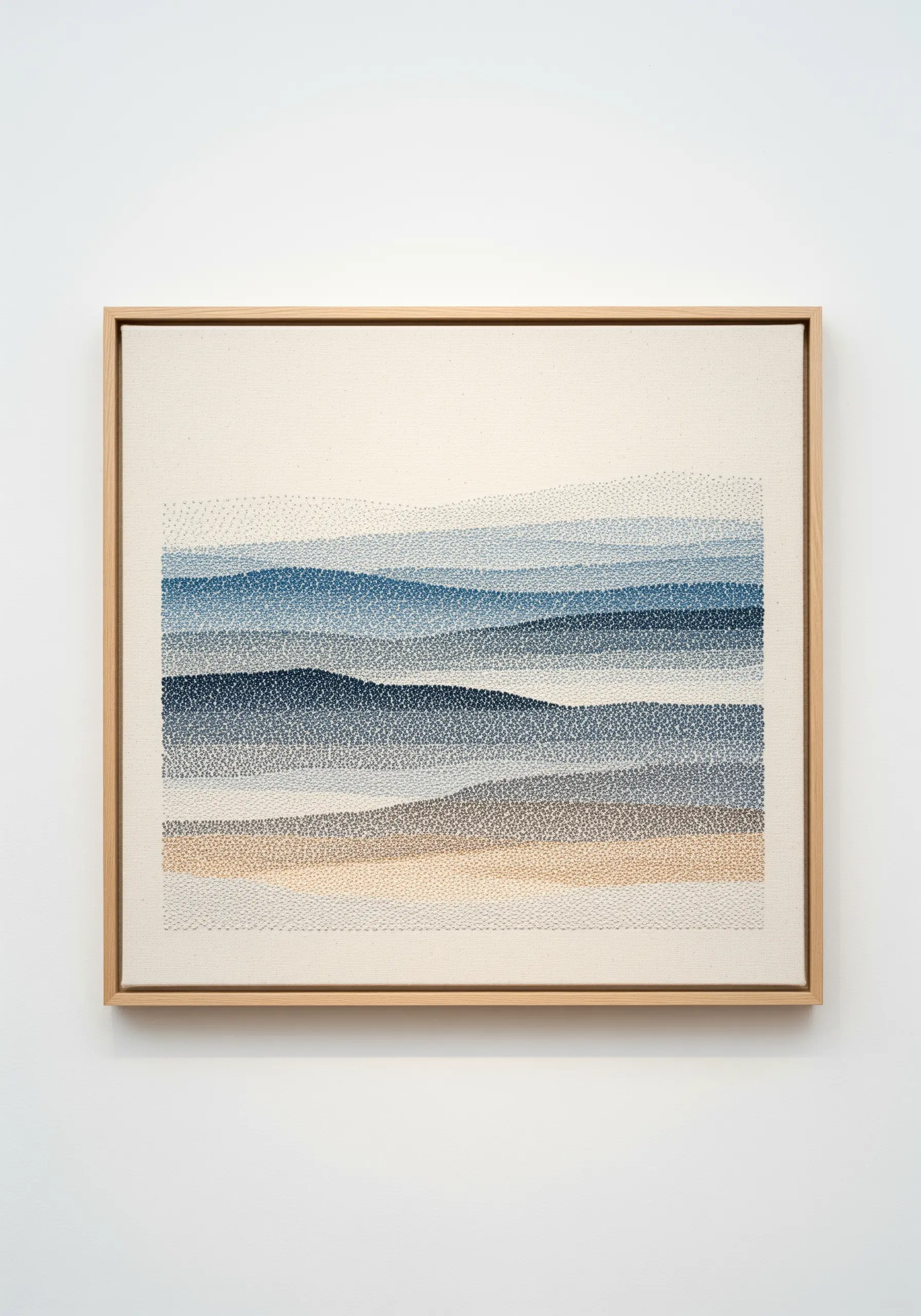
Create a stunning, atmospheric landscape using nothing more than the humble seed stitch—a series of small, simple straight stitches.
The magic is in the density.
Cluster your stitches very close together to build areas of deep color and shadow, then scatter them farther apart to create a sense of light and airiness.
By working with several shades within the same color family (like blues and greys), you can achieve a soft, painterly gradient that relies entirely on texture and tone, not outlines.
6. Master Directional Satin Stitch on Heavyweight Paper
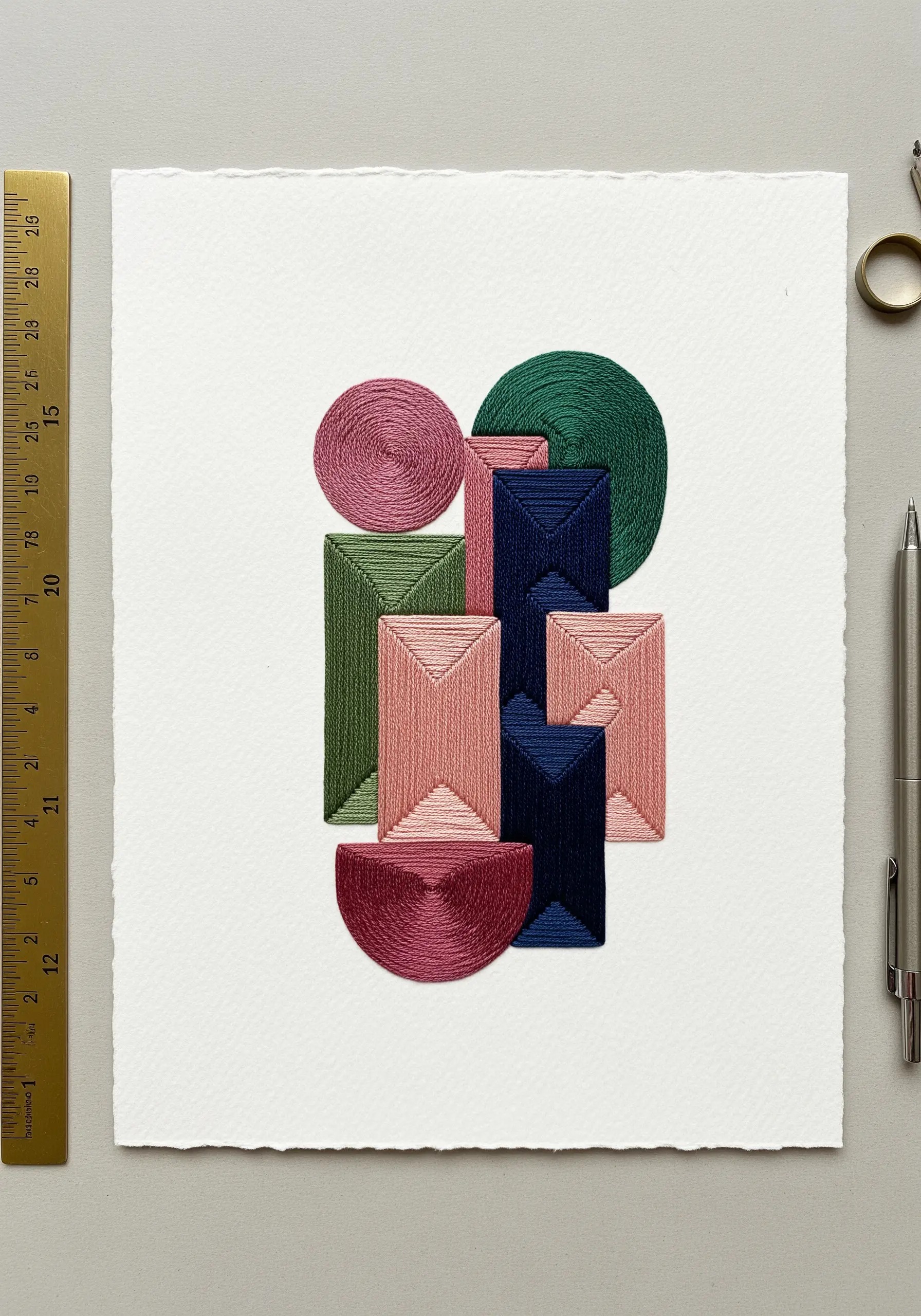
Stitching on paper offers a crispness that fabric cannot, but it requires precision.
Always pre-pierce your entry and exit holes with a fine needle to avoid tearing the paper as you stitch.
For each geometric block, fill it with a disciplined satin stitch, ensuring your threads lay flat and parallel.
Critically, change the direction of your stitches for each adjacent shape—this simple shift creates a stunning play of light across the thread, making the flat composition feel dynamic and three-dimensional.
7. Create a Kinetic Hoop Art Mobile
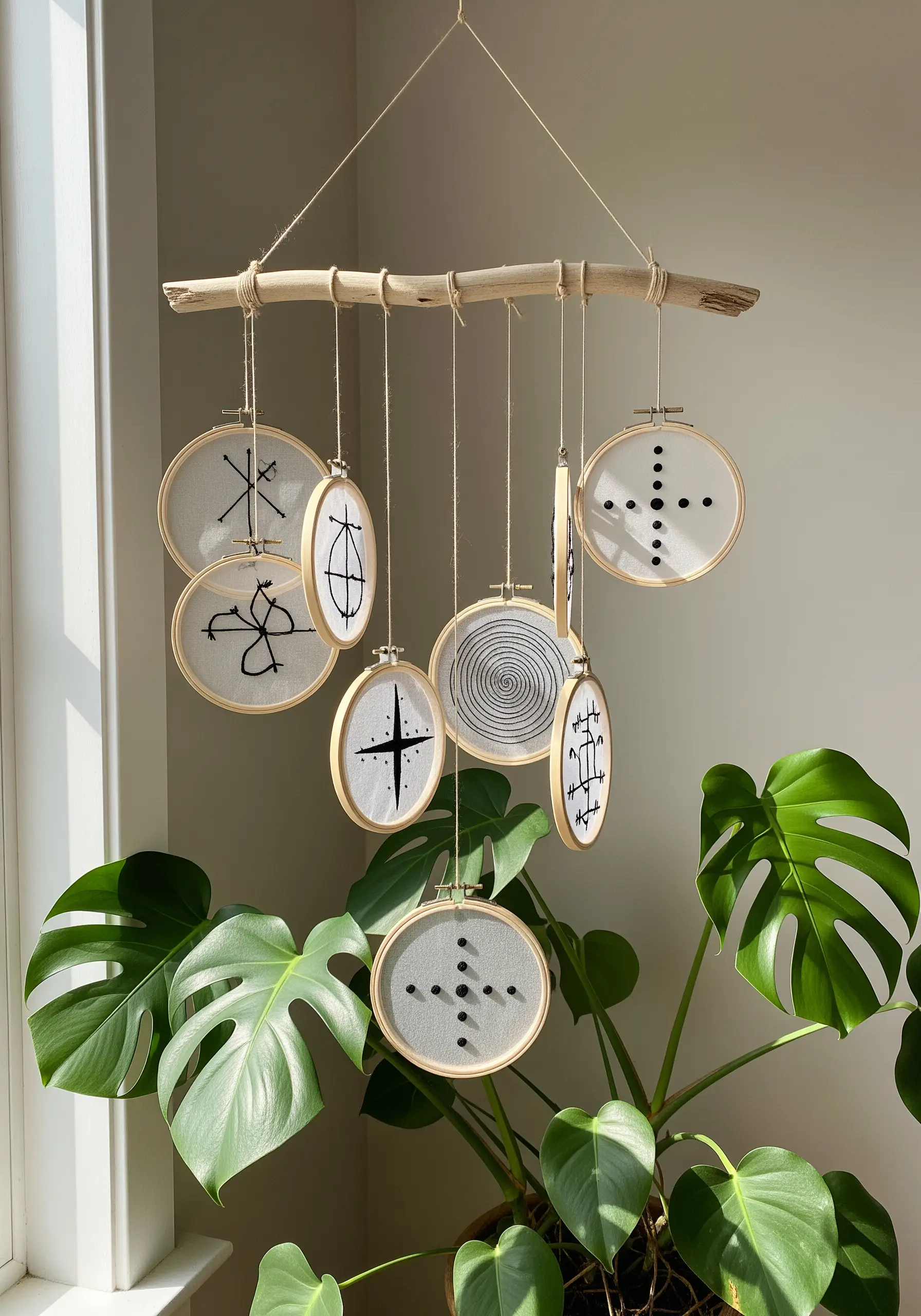
Take your embroidery off the wall and into the third dimension by designing a hanging mobile.
Stitch bold, graphic symbols onto a lightweight, semi-sheer fabric—this allows light to filter through, adding an ethereal quality.
Use hoops of varying sizes and hang them at different heights from a piece of driftwood or a metal ring to encourage gentle movement.
This transforms static hoop art projects into a dynamic installation that interacts with its environment.
8. Defy the Frame with Sculptural Floor-to-Wall Art
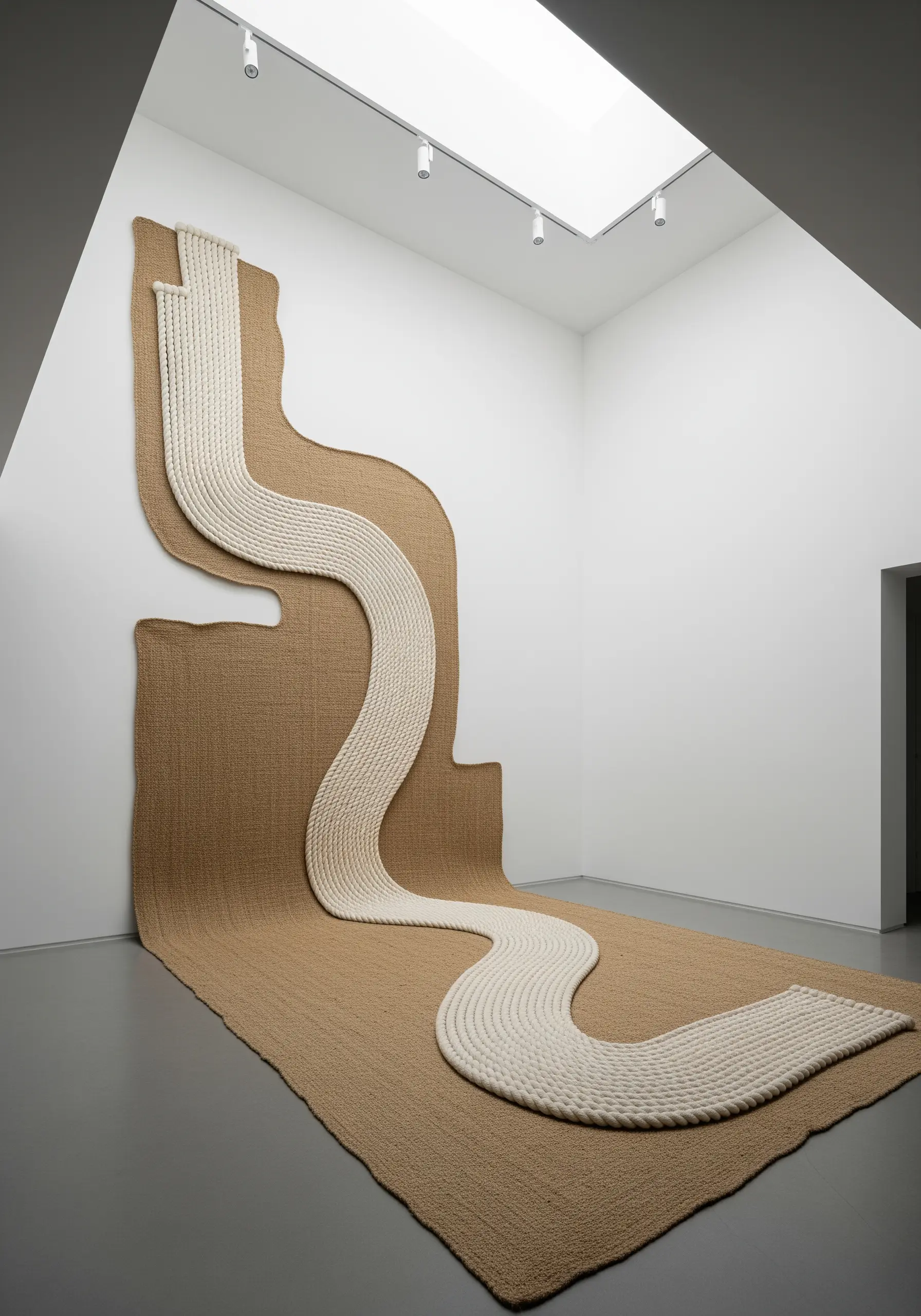
For a truly immersive piece, challenge the conventional boundaries of embroidery by allowing your art to spill from the wall onto the floor.
Start with a large-scale, textural base fabric like jute or raw canvas.
Create bold, organic pathways by couching down immense bundles of rope or fiber, guiding the flow in a natural, river-like pattern.
This installation technique makes the art a part of the room’s architecture, creating a powerful, tactile experience that invites interaction.
9. Elevate Everyday Objects with Geometric Satin Stitch
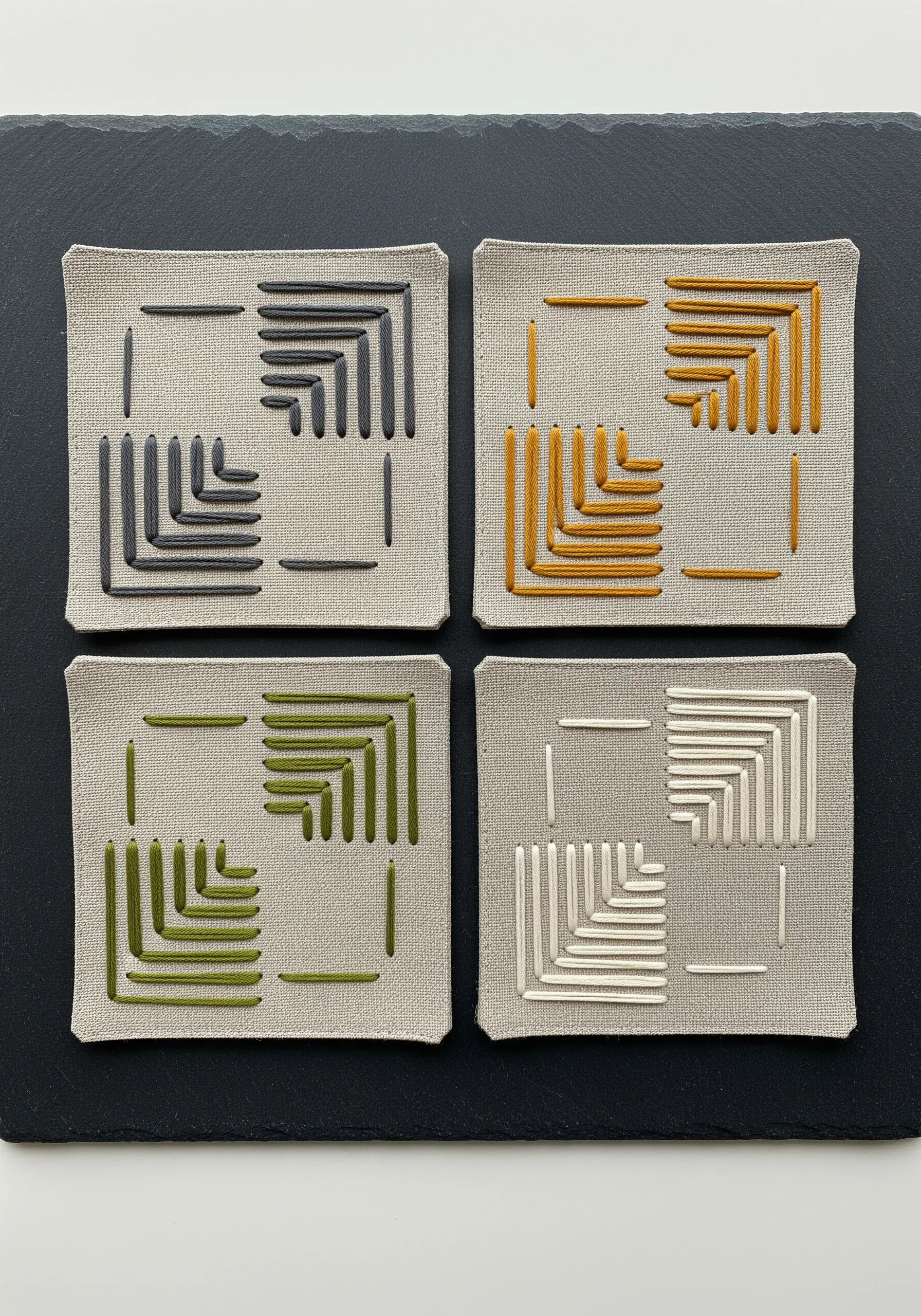
Transform functional household items, like coasters or napkins, into miniature works of art.
Use a disciplined satin stitch to build clean, graphic patterns that feel intentional and modern.
To achieve perfectly crisp lines, lightly draw your geometric design onto the fabric with a heat- or water-erasable pen before you begin stitching.
Working on a high-quality linen-cotton blend ensures your stitches remain smooth and the finished pieces are durable enough for daily enjoyment. These make for perfect small DIY textile decor pieces.
10. Explore Mark-Making with Textural Knots and Stitches
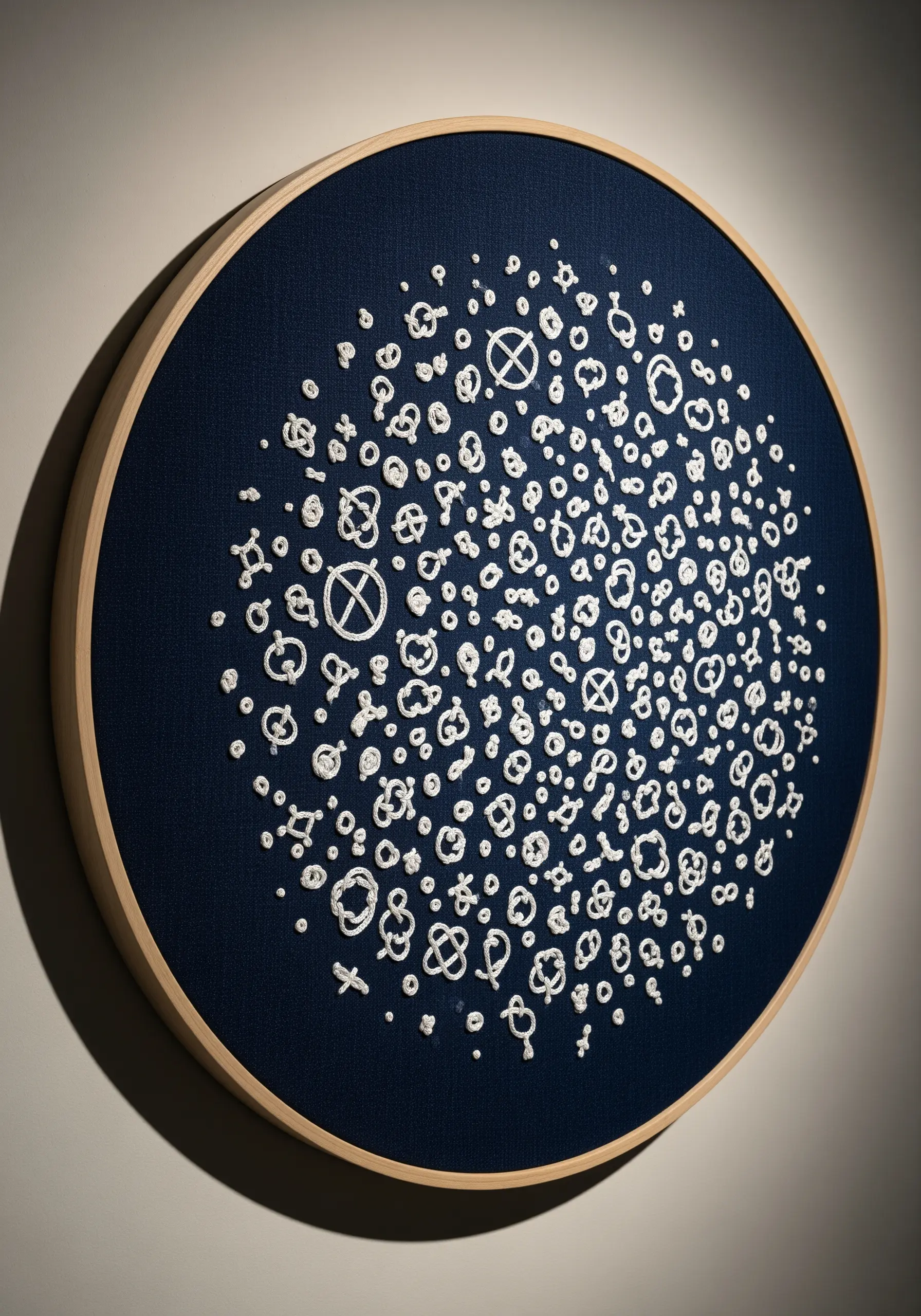
Use a high-contrast dark background like navy or charcoal linen to make your stitches the hero.
Instead of following a rigid pattern, approach the fabric as a canvas for intuitive mark-making.
Combine a vocabulary of small, textural stitches: French knots, single seed stitches, tiny cross stitches, and bullion knots.
Create visual rhythm by clustering them densely in some areas while leaving others sparse, resulting in a composition that feels as organic and complex as a constellation.
11. Harness Chaotic Stitching for Controlled Impact

This advanced technique makes negative space as the subject of your artwork.
Lightly trace a simple geometric shape onto your fabric, then fill the entire area *around* it with dense, chaotic, multi-directional stitches—either by hand or with a free-motion embroidery machine.
The tension between the pristine, untouched shape and the energetic frenzy of the surrounding thread creates a powerful visual statement.
It’s a design defined not by what you stitch, but by what you choose *not* to stitch.
12. Weave Mixed Media Elements into a Grid Composition
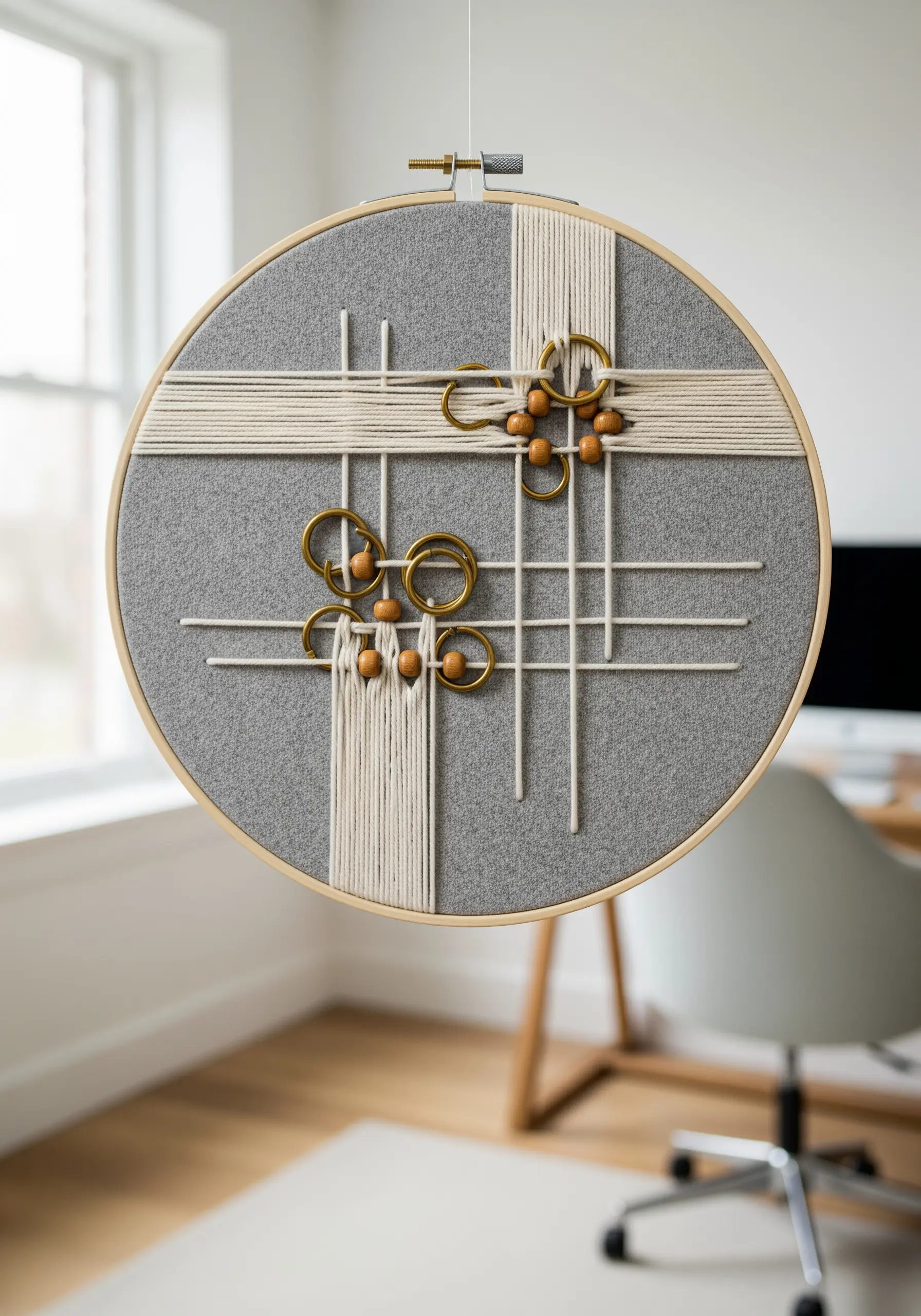
Go beyond thread and incorporate hard, smooth textures into your work for a compelling sensory contrast.
Begin by creating a simple grid, wrapping yarn tightly across a hoop to form a warp and weft.
Use this structure as a miniature loom to secure other materials, such as smooth wooden beads or cool metallic rings.
This mixed-media technique transforms a simple hoop into a tactile, multi-dimensional piece that engages more than just the eye.
13. Thread-Paint an Abstract Seascape with Layered Satin Stitch
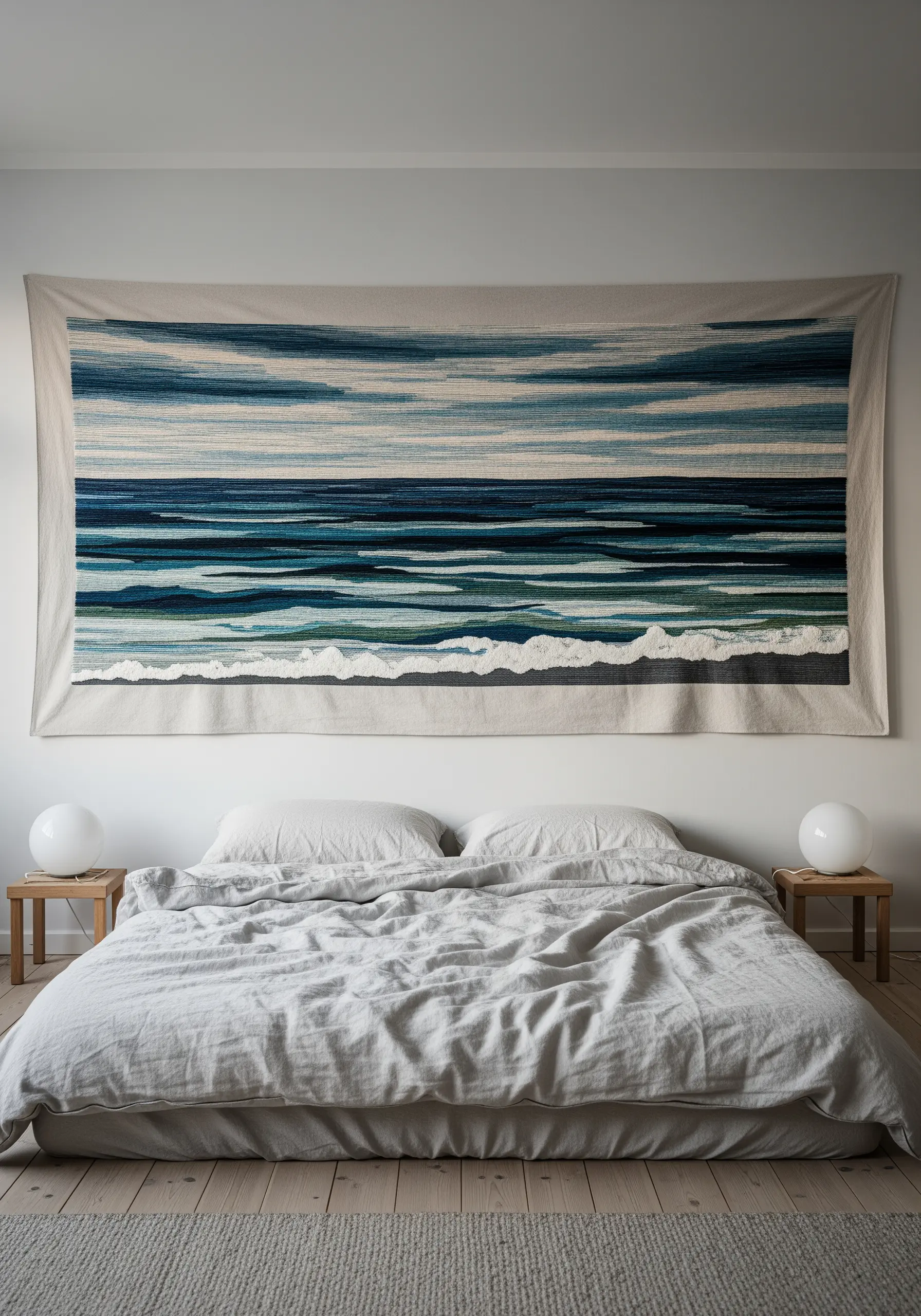
To achieve a painterly effect on a large scale, think in blocks of color rather than fine lines.
Use a combination of long-and-short stitch and satin stitch to fill in broad sections representing the sea and sky.
Allow the edges where colors meet to be slightly irregular and overlapping; this enhances the sense of movement and fluidity.
Layering multiple shades of blues, teals, and whites gives the final piece incredible depth, making it a perfect tapestry for a calm, coastal-inspired room.
14. Create a Tone-on-Tone Study in Sculptural Stitches
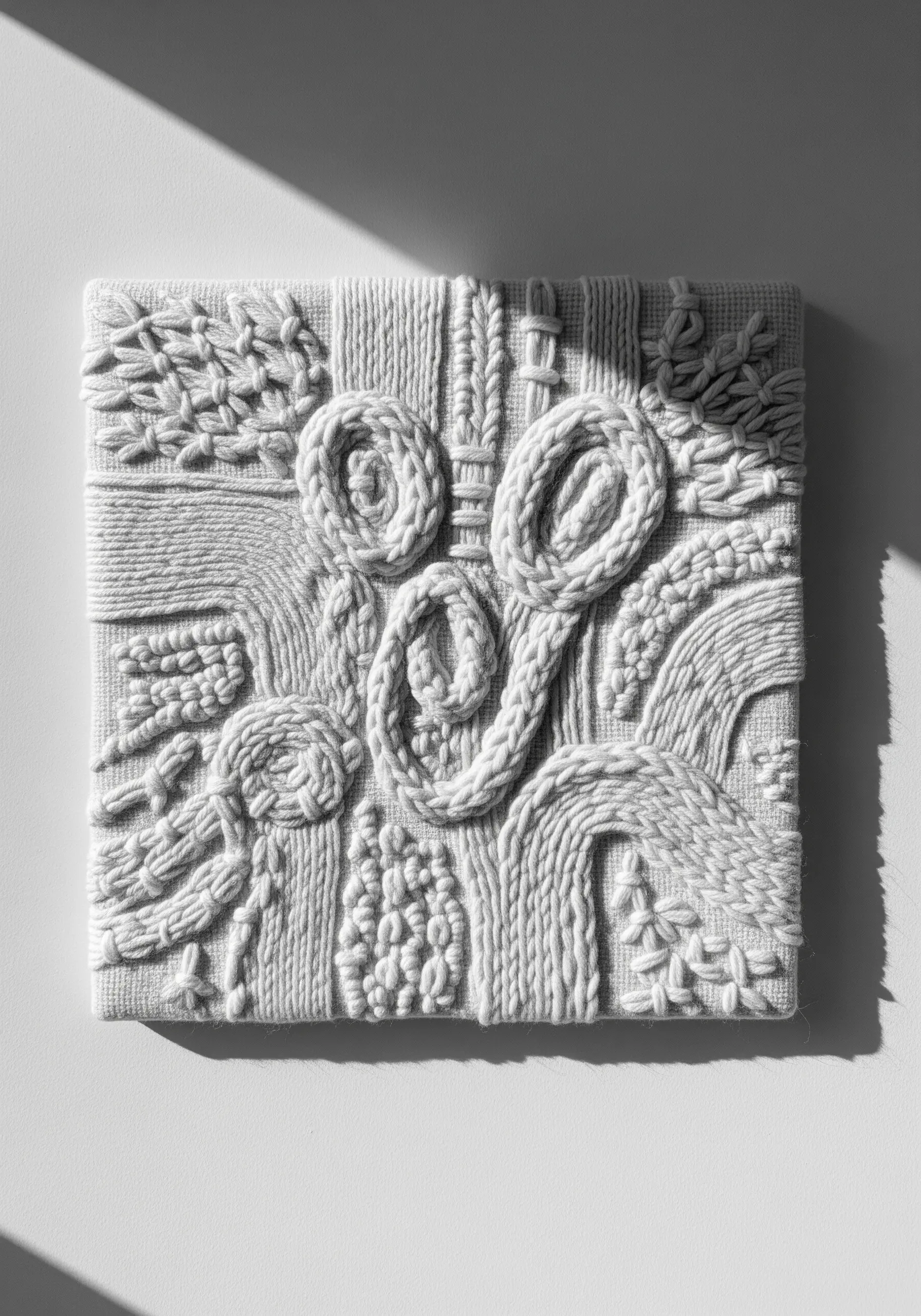
Discover the immense power of texture by limiting your color palette to a single hue.
A Tone-on-Tone piece forces you to communicate through form and shadow alone.
On an off-white linen, build up a sculptural surface using a variety of stitches in matching off-white thread: padded satin stitch for raised shapes, bullion knots for worm-like coils, and couched cords for bold outlines.
The way light interacts with the different heights and textures is what creates the design, resulting in a piece that is quiet, sophisticated, and deeply complex.
15. Embrace Deconstruction and Unexpected Materials
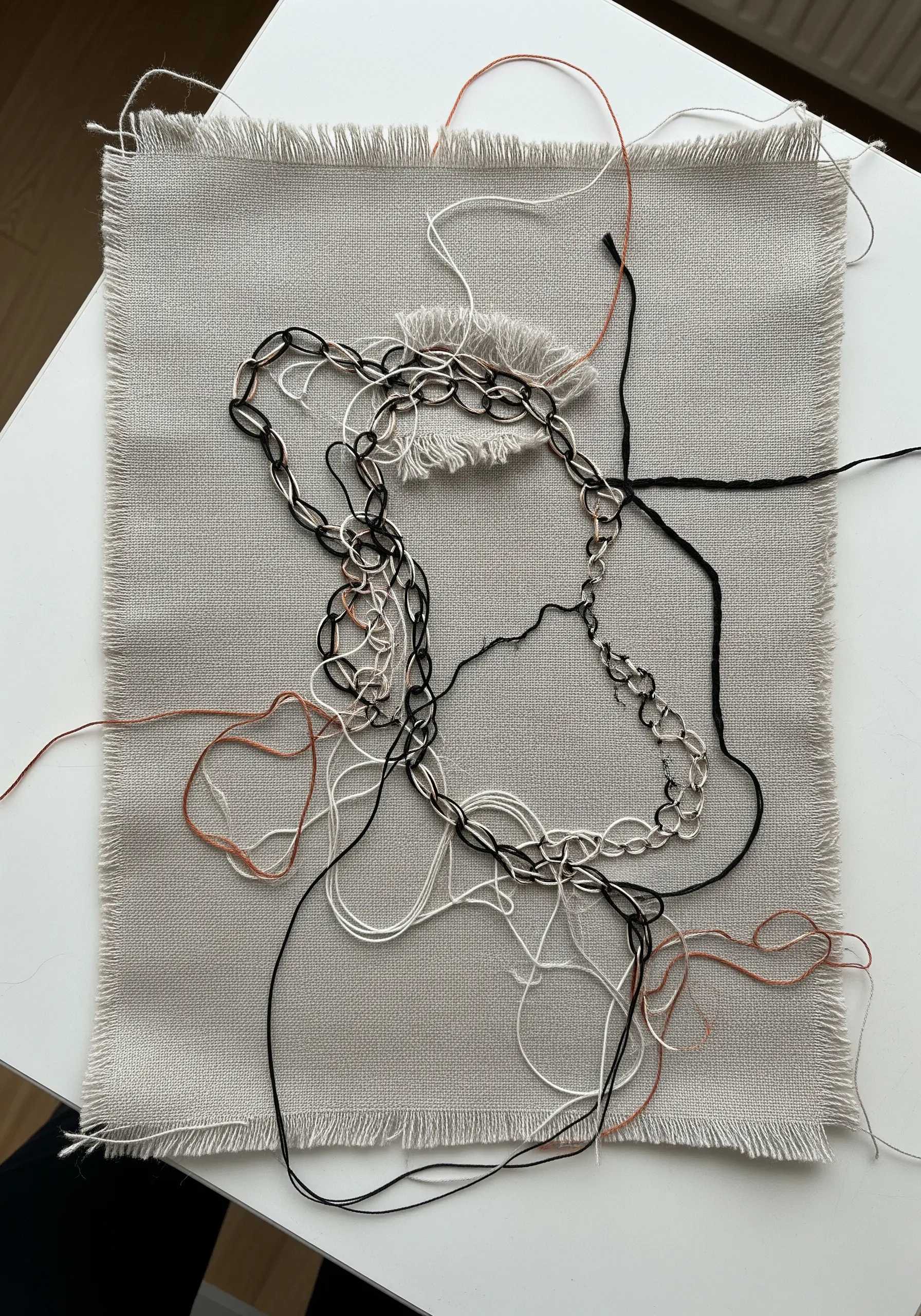
Challenge the notion of a perfectly ‘finished’ piece by intentionally leaving elements raw and deconstructed.
Allow threads to hang loose, leave fabric edges frayed, and integrate unconventional materials like metal chain links directly into your stitching.
This approach transforms your work from a simple decoration into a statement about process, materiality, and the beauty of imperfection.
It’s a bold form of mixed-media embroidery that prioritizes expression over polish.
16. Use Vertical Space with a Repeating Geometric Banner
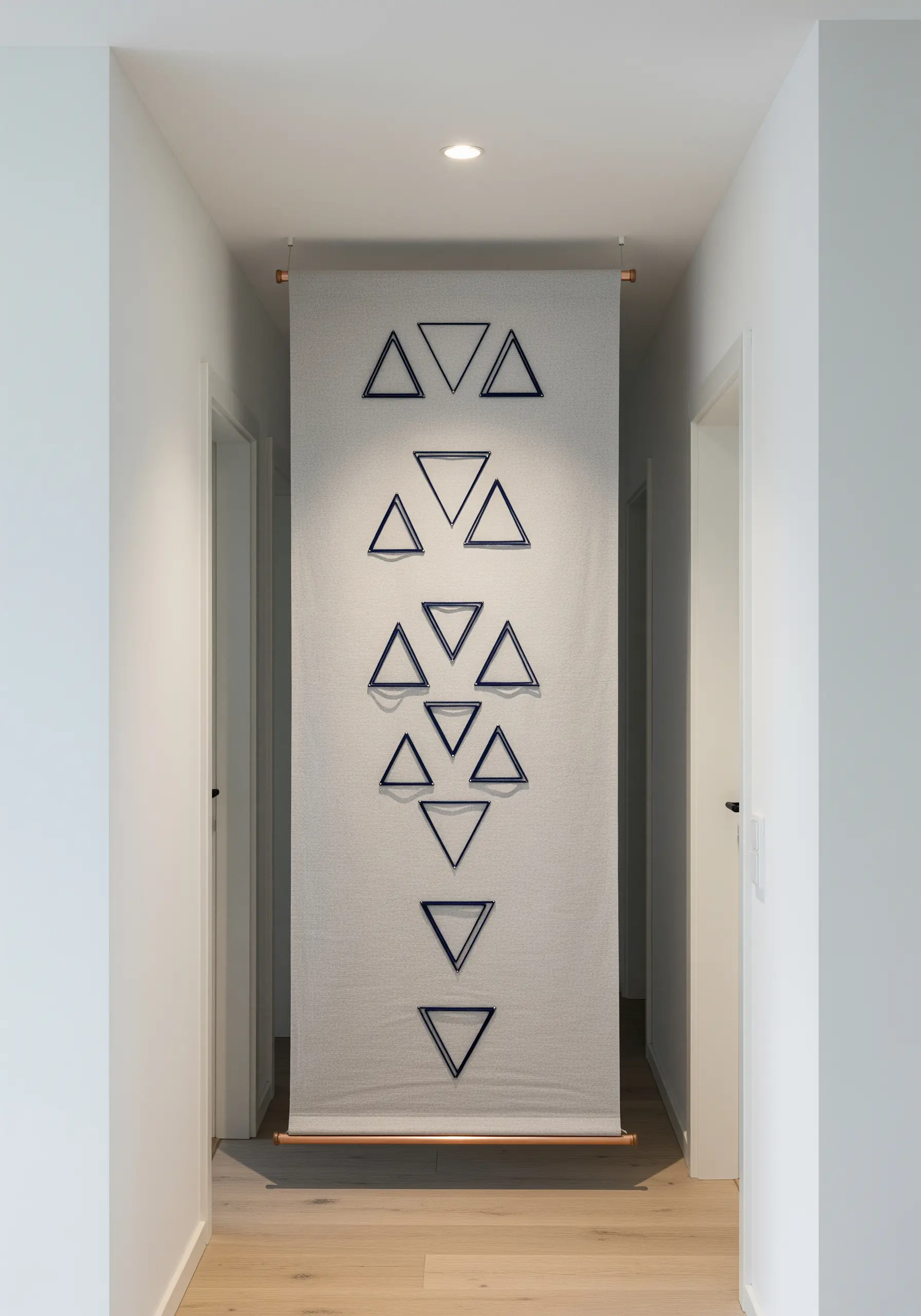
Make a significant impact in a narrow space, like a hallway or entryway, by creating a long, vertical hanging.
The design’s power comes from repetition.
Stitch a series of identical geometric motifs down the length of the fabric to create a strong visual rhythm that draws the eye upward.
Use a heavier-weight thread, such as pearl cotton or fine yarn, to give the outlines a bold, graphic presence that can be appreciated from a distance.
17. Create Optical Texture with Spiraling Straight Stitches

This design looks complex, but it’s built entirely from simple straight stitches.
Divide your hoop into distinct color-blocked sections.
Working from the center of each section outward, lay down tightly packed straight stitches in a continuous spiral.
The dense, parallel threads create a corded, almost woven texture.
Where the different colored sections meet, the abrupt change in stitch direction forms a crisp, dynamic line, adding to the mesmerizing optical effect.
18. The Power of a Single, Monumental Motif
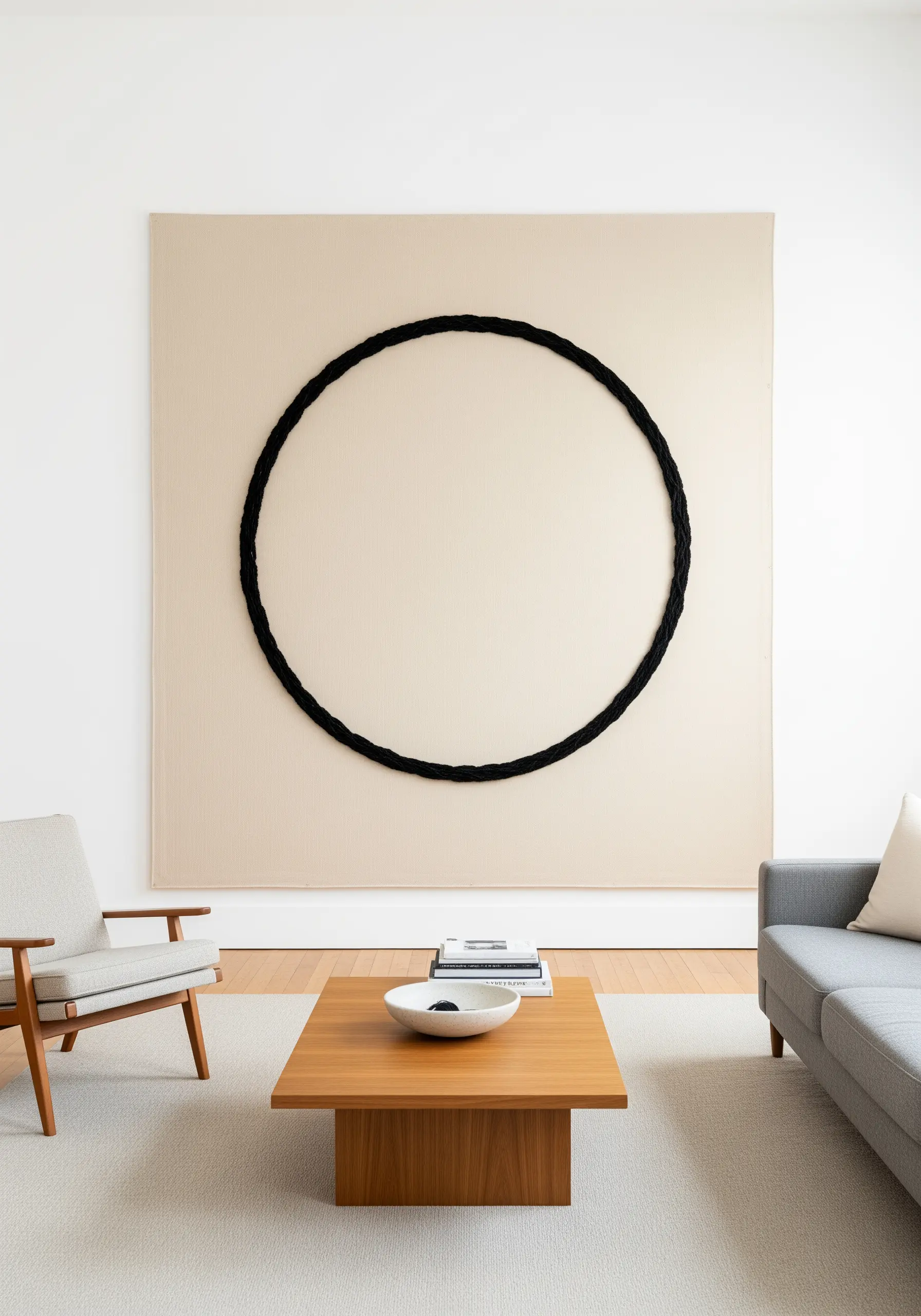
In minimalist art, the careful use of negative space is as important as the stitched element itself.
Instead of filling a large canvas, command attention with a single, perfectly executed gesture.
Couch a thick, textured black rope into a simple circle, leaving the vast majority of the neutral fabric untouched.
The stark contrast and monumental scale turn this simple shape into a powerful, meditative focal point that anchors the entire room.
19. Contrast Sculptural and Graphic Lines for Visual Tension
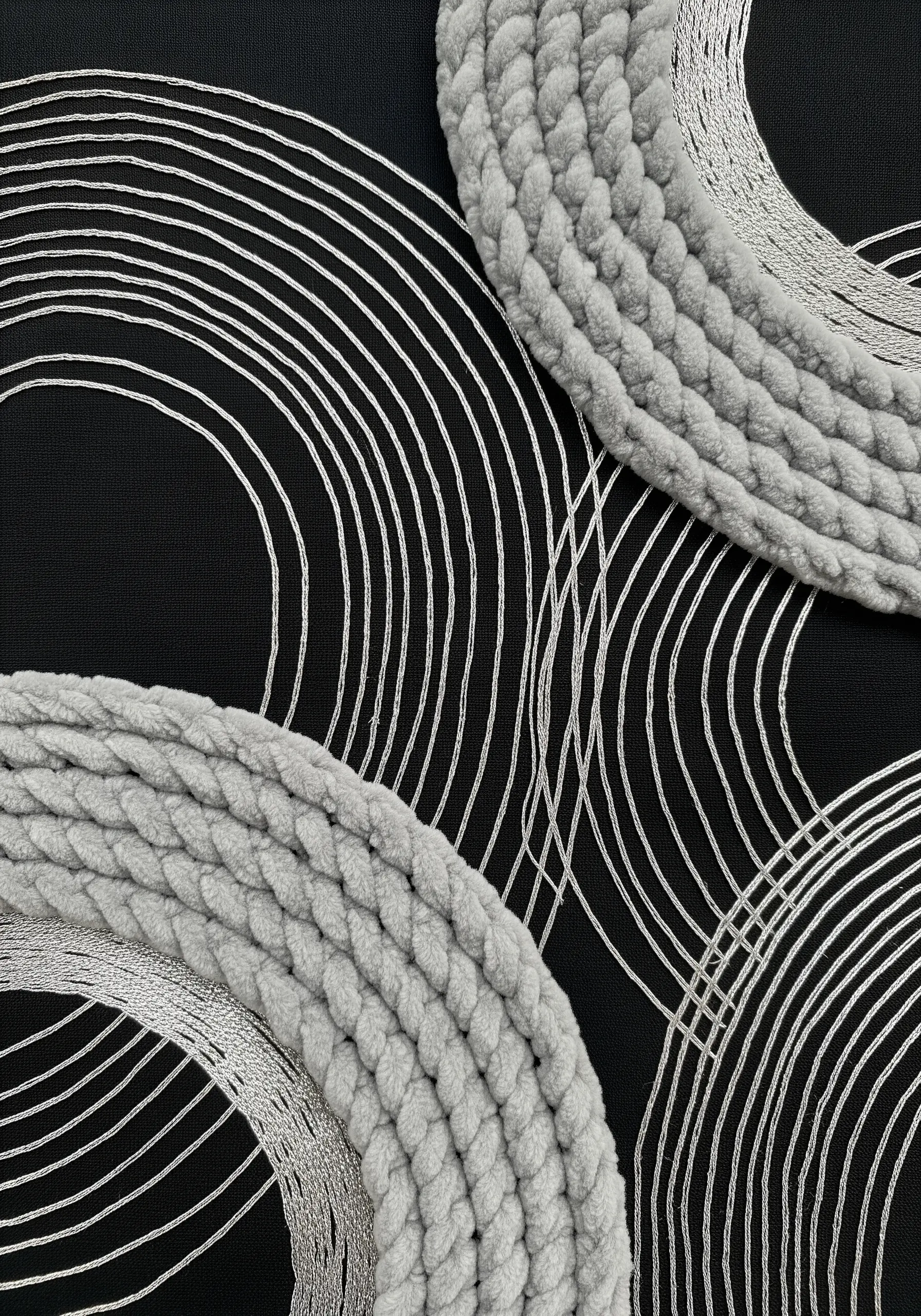
Create a dynamic abstract design by pairing materials with opposite physical properties.
First, couch down a thick, soft, and matte braided cord to serve as a bold, sculptural element.
Then, contrast this by stitching delicate, concentric lines around it using a fine metallic thread.
The interplay between thick and thin, soft and sharp, and matte and reflective surfaces generates a sophisticated visual energy that is unmistakably modern.
20. Define Botanical Shapes with Minimalist Straight Stitch
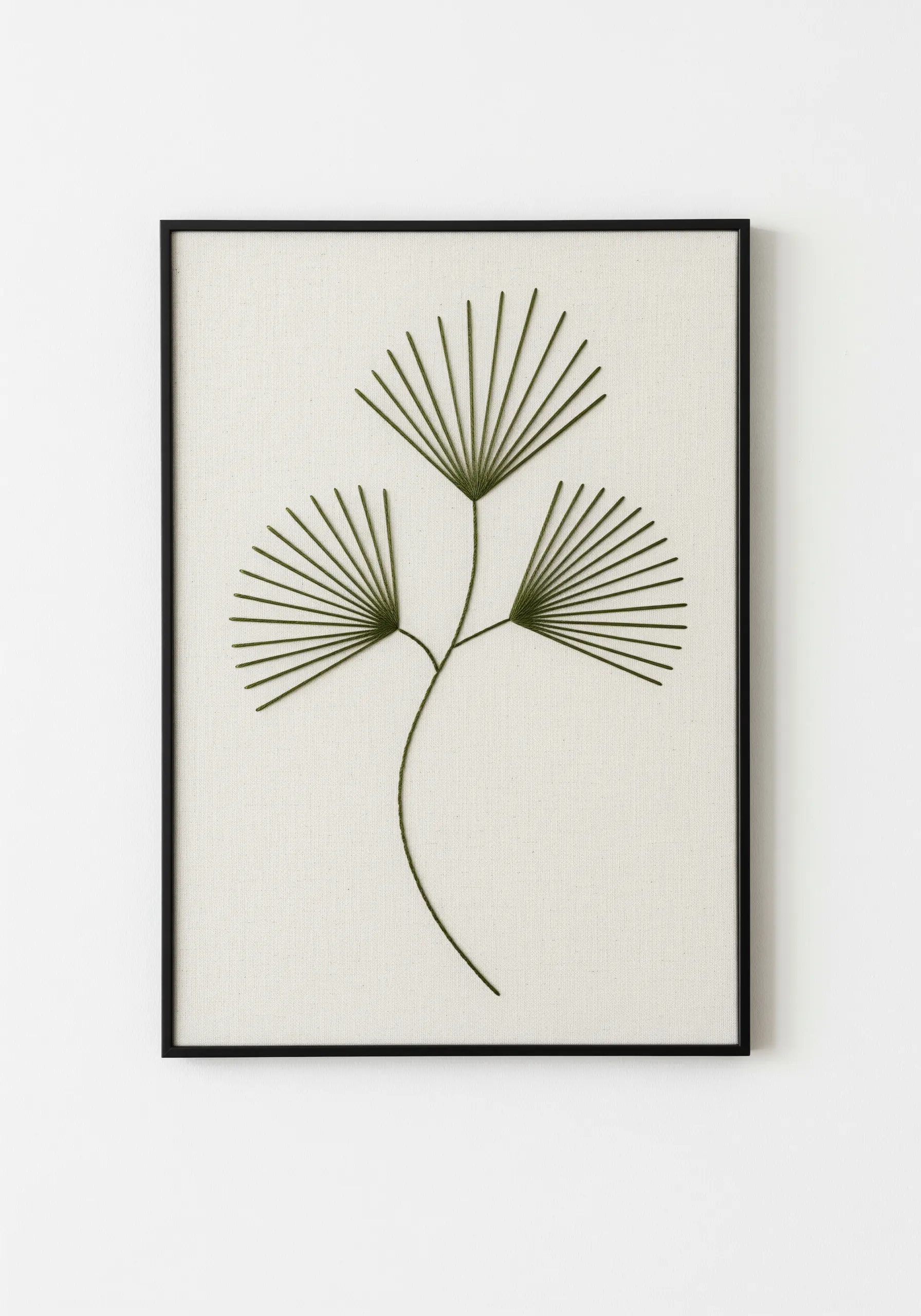
Capture the essence of a botanical form without stitching a single petal or leaf.
This style of minimalist botanical embroidery relies on precisely placed straight stitches that radiate from a central stem.
The key is maintaining uniform tension and perfect spacing to create the clean, fan-like shape.
This technique abstracts a natural form down to its essential lines, resulting in a design that feels both organic and elegantly architectural.
21. Build Dynamic Compositions with Layered Thread Blocks
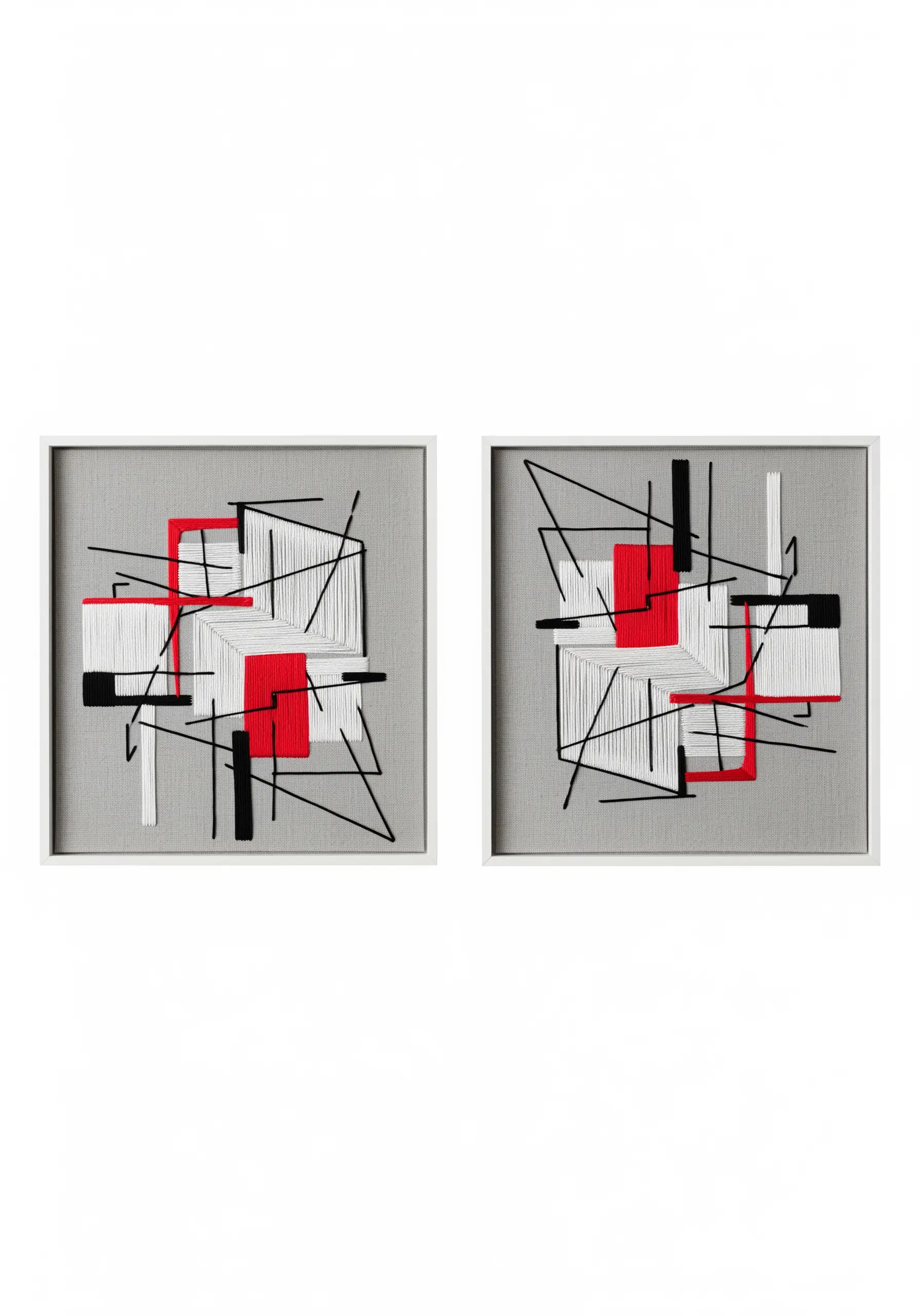
Create an abstract piece that feels layered and architectural.
Begin by establishing solid blocks of color using a dense, smooth satin stitch.
Next, stitch sharp, intersecting lines over and under these blocks using a contrasting color and a simple backstitch.
This layering technique creates a tangible sense of depth and movement, making the shapes appear to float and recede.
The final composition feels like a dynamic collage, constructed entirely from thread.