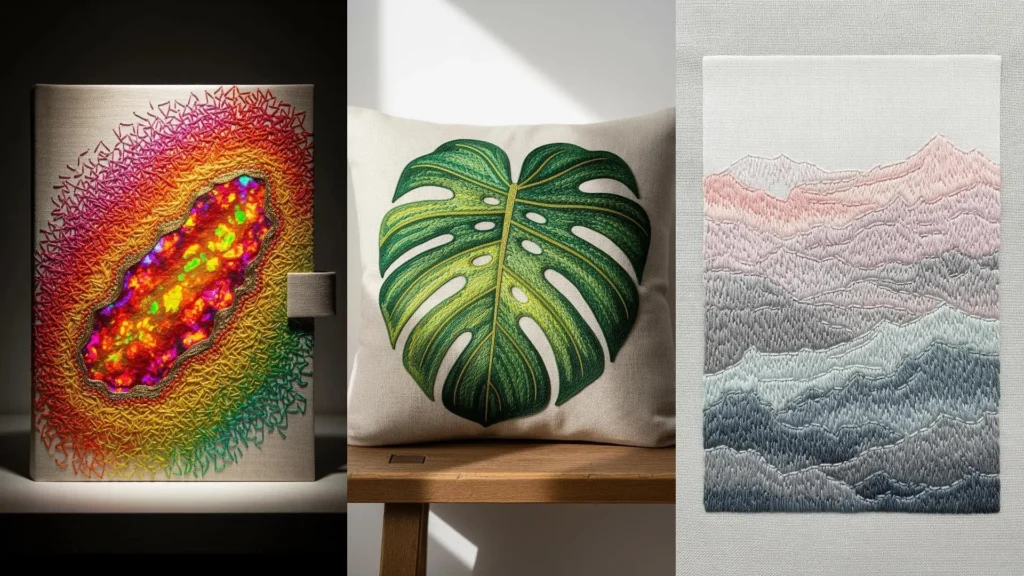
You have the thread, the fabric, the desire to create something beautiful. But how do you move beyond simply filling in a pattern? How do you make the thread itself speak—to capture the feeling of wind, the texture of a cloud, or the endless motion of water?
This is where your artistry truly begins. It’s not about learning a hundred complex stitches, but about understanding how a few simple techniques, when thoughtfully applied, can transform your work. It’s in choosing a heavier thread to give a line more weight, or laying stitches in a specific direction to change how they catch the light.
Here, we’ll explore abstract ideas inspired by nature’s elemental forces. You’ll learn not just what to stitch, but why it works—how to build texture, create depth, and convey emotion with every pull of the needle. Prepare to see thread and fabric in a new, more expressive light.
1. Sculptural Cloudscapes with French Knots

Create extraordinary cloud texture by focusing on French knots of varying sizes and densities.
Use a full six strands of cotton floss or even a fine perle cotton for the fluffiest, most prominent parts of the clouds.
For shadowed areas, switch to a medium grey thread and pull your knots tighter to make them smaller and more compact.
Contrast these dense, bumpy textures with delicate, single-strand backstitches for the wispy lines connecting the cloud masses, adding a sense of atmospheric lightness.
2. Mixed-Fiber Storm on a Felted Wool Base

Choose a non-woven fabric like felted wool for your background; it provides a stable, rich base that resists puckering under heavy textural work.
Couch thick wool roving to form the clouds, securing it with a finer, matching thread that disappears into the fiber.
Incorporate a fine metallic silver thread for the lightning bolts, using a simple straight stitch to create jagged, light-catching lines.
Use long stitches in deep blues and black to represent driving wind and rain, creating a dynamic composition against the soft wool.
3. Large-Scale Thread Painting for Dynamic Flow
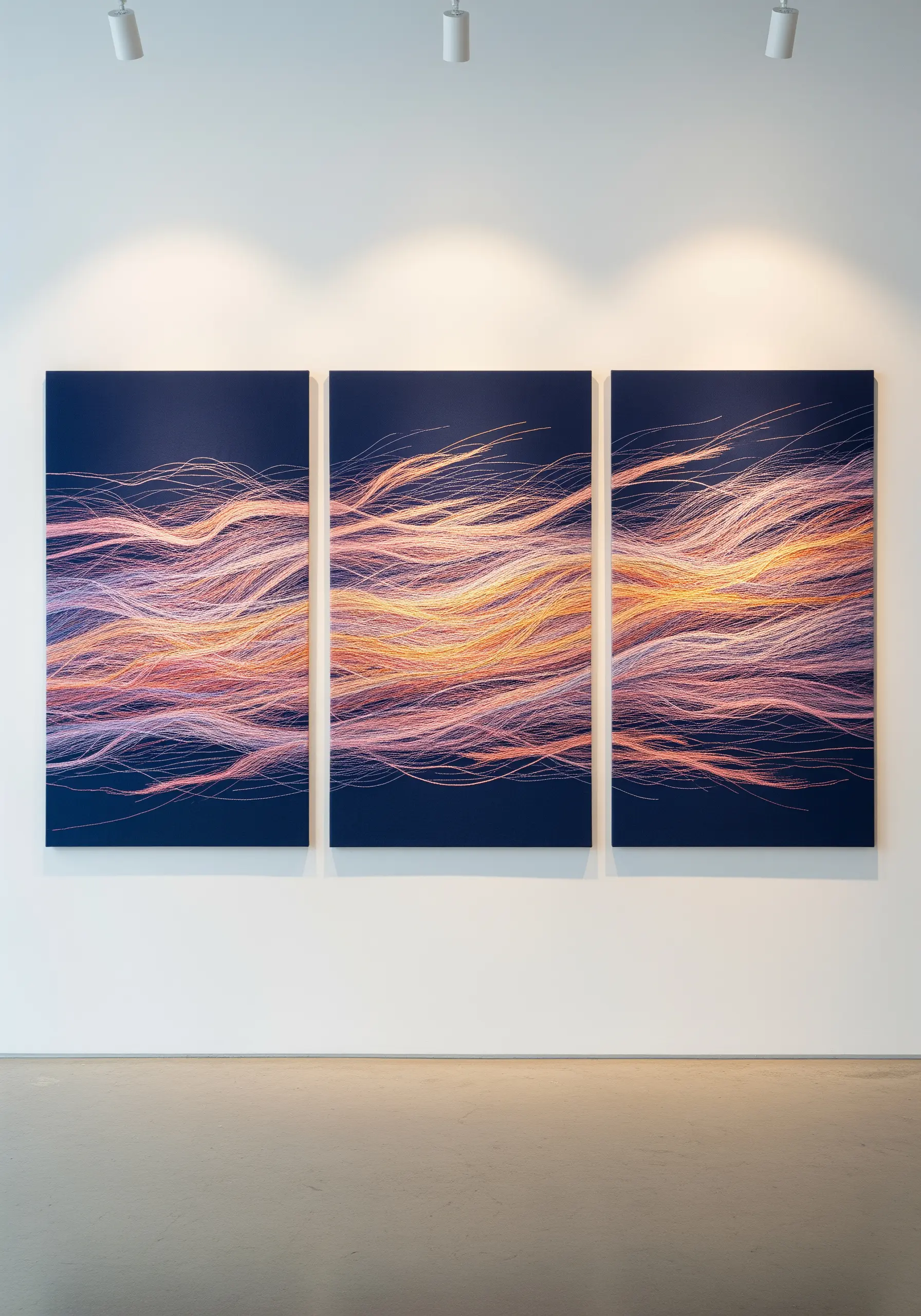
To tackle a large surface like this triptych, you can use either a sewing machine with free-motion capability or work by hand with long straight stitches.
Build up subtle color transitions by layering threads in a similar color family—like pinks, peaches, and creams—to create a soft, glowing gradient.
Embrace imperfection in your lines; slight variations and overlaps will give the final piece an organic, wind-swept energy that feels alive.
This painterly approach transforms thread into stunning fiber art installations that command a room.
4. Meditative Rings of Texture and Tone

Create a mesmerizing sense of depth by alternating the texture of each concentric ring.
Use a smooth, raised stitch like a whipped backstitch for some rings, then switch to dense French knots or bullion stitches for others.
Working with a monochromatic palette of greys, creams, and whites ensures that the focus remains entirely on the tactile journey from one texture to the next.
This project is a fantastic exercise in stitch consistency and rhythm, making it a truly meditative process.
5. Ethereal Water Currents on Organza

Stitching on a sheer fabric like organza or silk voile gives your work a delicate, floating quality.
Always use a stabilizer, such as a water-soluble or tear-away type, to prevent the fine fabric from puckering as you stitch.
Employ a simple running stitch or backstitch, but intentionally vary the length of your stitches to mimic the unpredictable rhythm of water currents.
In this style, the negative space is just as crucial as your stitched lines, creating a composition that feels light and airy.
6. Blending Thread and Roving for a Fiery Sunset
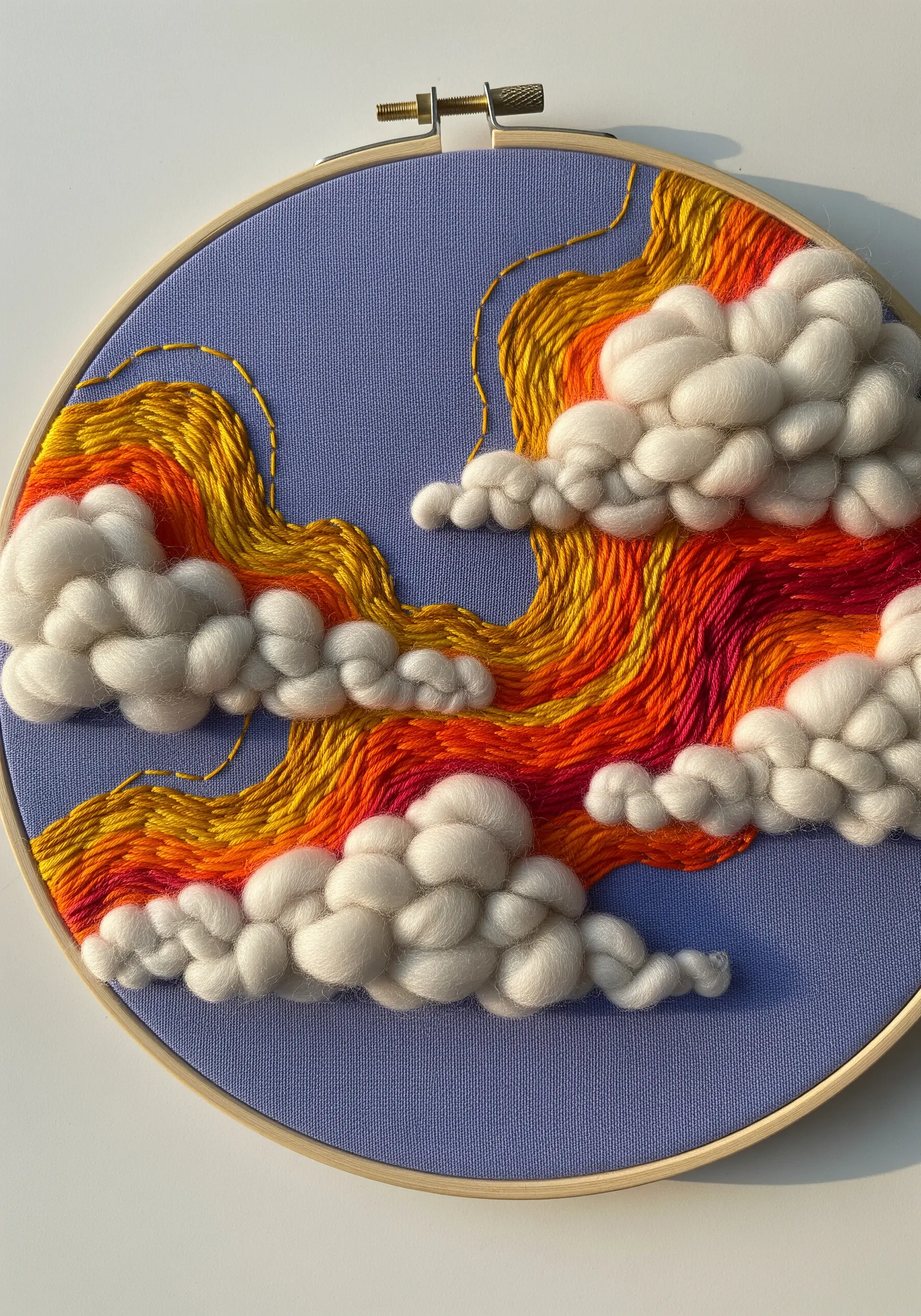
Create a powerful textural contrast by combining smooth thread painting with chunky wool roving.
Use a long-and-short stitch with variegated floss in sunset tones to create the fiery sky, allowing the colors to blend seamlessly into one another.
Once the background is complete, couch thick, fluffy wool roving on top to form the clouds.
This juxtaposition of smooth, shimmering color and soft, matte texture makes the clouds appear to float in front of the vibrant sky.
7. Graphic Cloud Shapes with Dense Satin Stitch

To achieve this crisp, modern aesthetic, focus on executing a flawless satin stitch.
For perfectly sharp edges, first outline each cloud shape with a split stitch; this creates a raised boundary that your satin stitches can press against.
Keep your stitches perfectly parallel and packed tightly together for a smooth, uniform fill.
Using a limited palette of high-contrast greys and black enhances the design’s bold, graphic quality, making this one of those minimal embroidery patterns that look harder than they are.
8. Capturing Electric Energy with Reflective Threads
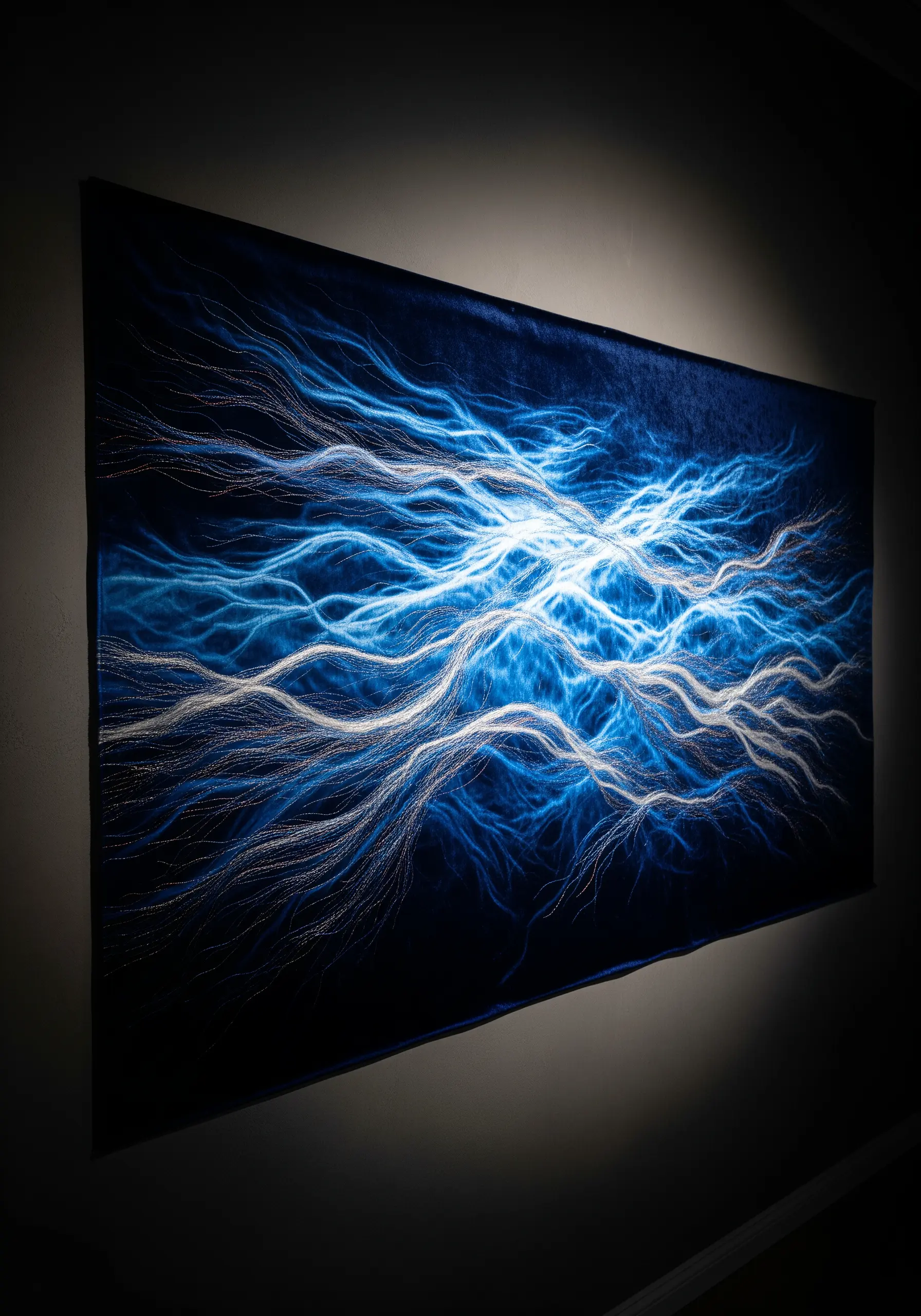
The success of this design hinges on your choice of materials.
Use a dark, non-reflective fabric, such as matte velvet or velveteen, as your canvas to absorb light and make your stitches pop.
Select threads with a high natural sheen, like rayon or silk, in vibrant blues and stark white.
Incorporate a fine metallic silver thread into the brightest areas to create a sense of crackling, kinetic energy.
9. Layered Appliqué for Translucent Cloud Formations
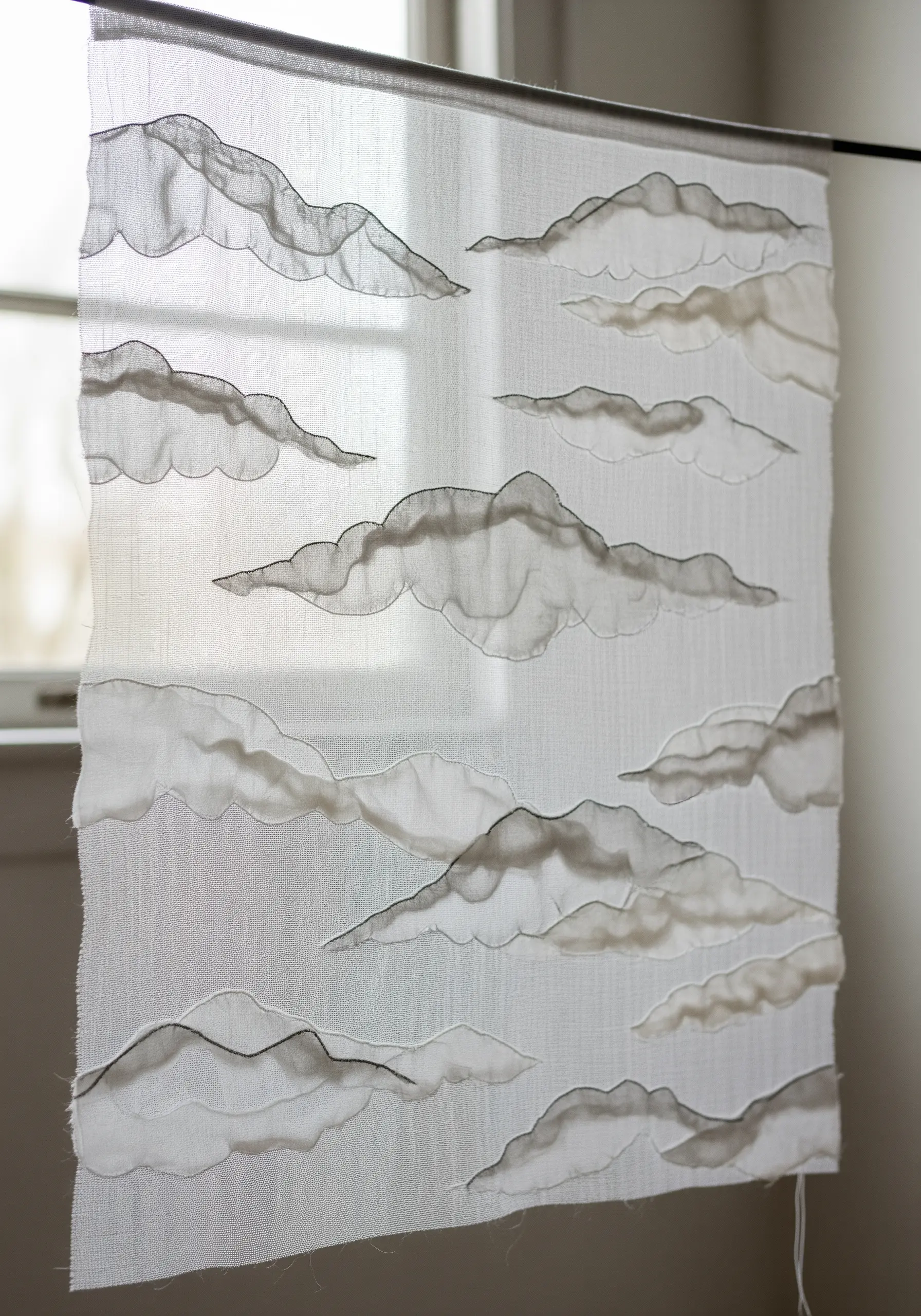
Create subtle depth and dimension by using appliqué with sheer fabrics.
Cut your cloud shapes from different weights of organza or chiffon in shades of white, grey, and ecru.
Layer them onto a lightweight linen or cotton background, securing each piece with a delicate, minimalist running stitch along the edges.
The overlapping layers create gentle shifts in opacity and tone, perfectly mimicking the ethereal, layered look of real clouds and becoming beautiful DIY framed embroidery art.
10. Sculpting Ocean Foam with High-Density French Knots

To replicate the churn of sea foam, pack dense clusters of French knots together using white and pale blue threads.
Vary the size of your knots by changing the number of times you wrap the thread around the needle and by switching between 6-strand floss and thicker perle cotton.
For the deeper water, use long, directional straight stitches or satin stitches in shades of teal and navy to create a sense of flowing movement beneath the foam.
These are the kinds of nature texture embroidery hacks every crafter needs to know to bring scenes to life.
11. Minimalist Water Ripple with Twisted Thread
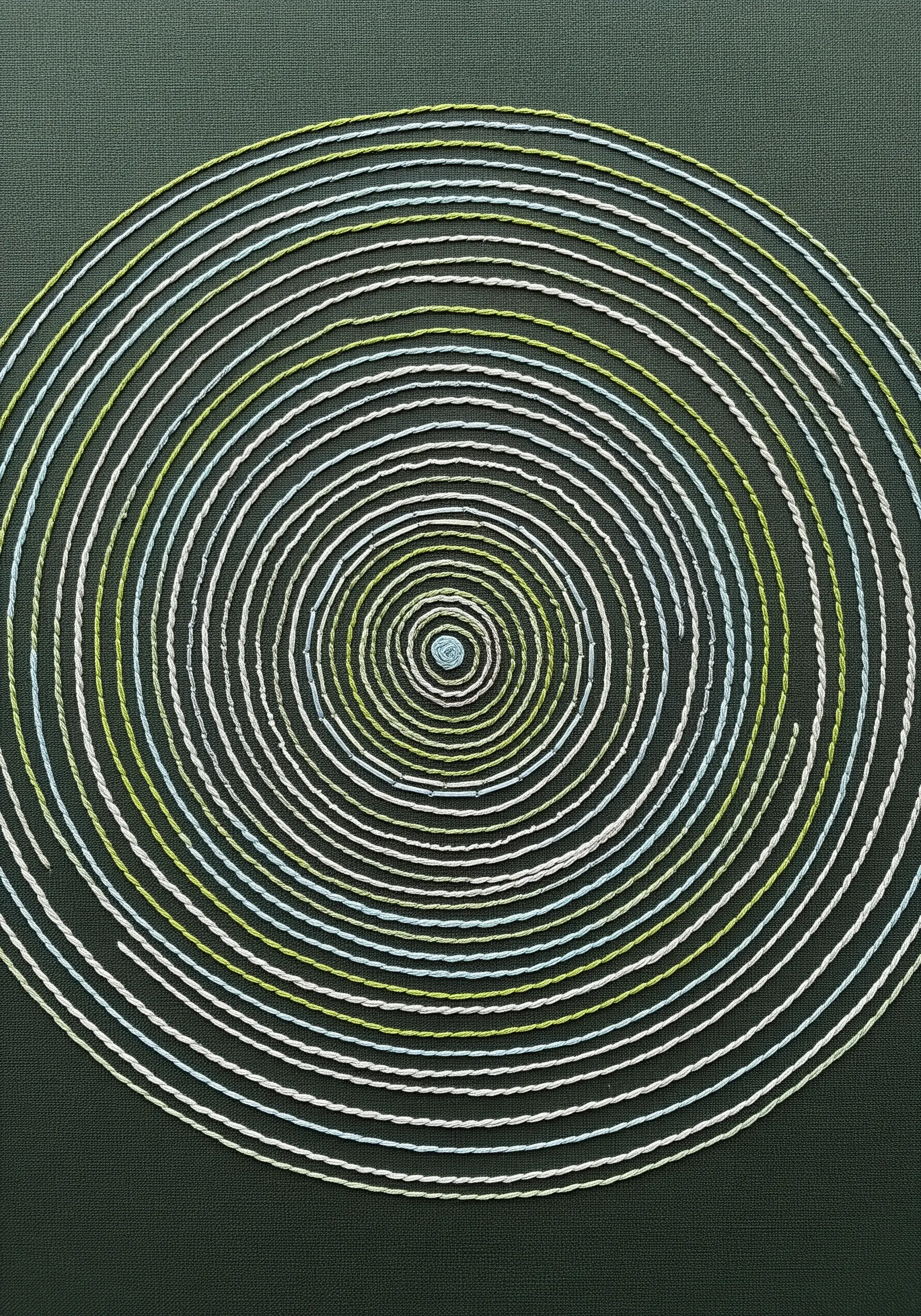
This design’s hypnotic effect comes from precision and thoughtful material choice.
Use a thread that has a defined twist, like perle cotton, as it creates a more sculptural line than standard floss.
Work the spiral using a whipped backstitch, which will give the lines a raised, cord-like appearance.
The sporadic introduction of a new color breaks the pattern just enough to draw the eye inward, mimicking how light reflects on water.
12. Abstract River Currents with Variegated Floss
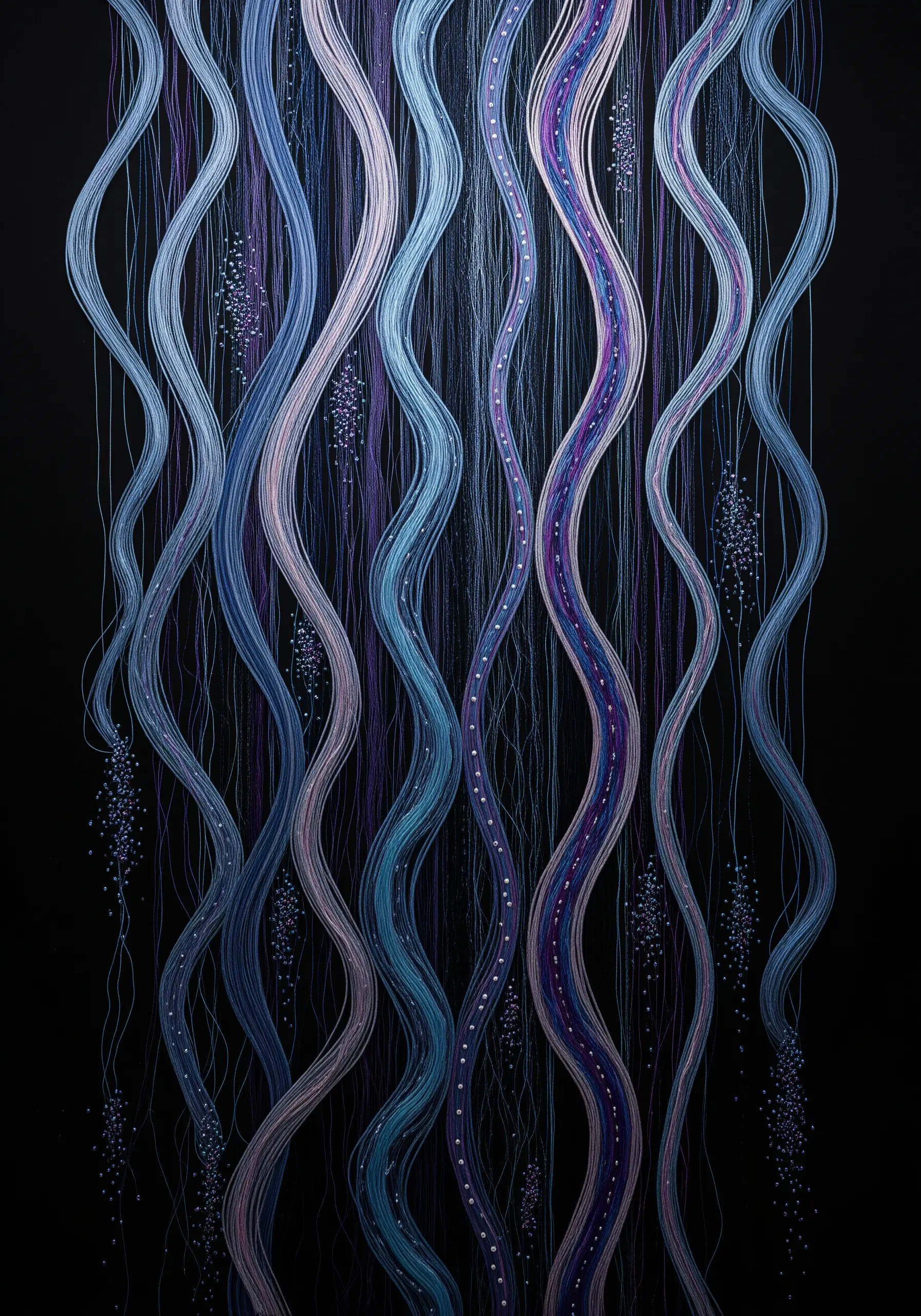
Capture the complex, shifting colors of moving water by using variegated or overdyed threads.
Lay down long, gently curving stitches, allowing the thread’s automatic color changes to create organic depth and highlights.
Add small, scattered clusters of seed stitches or French knots to represent bubbles or silt, adding pockets of fine detail that interrupt the larger flow.
This approach easily creates beautiful abstract thread waves and swirls without complex planning.
13. Three-Dimensional Rain with Suspended Threads
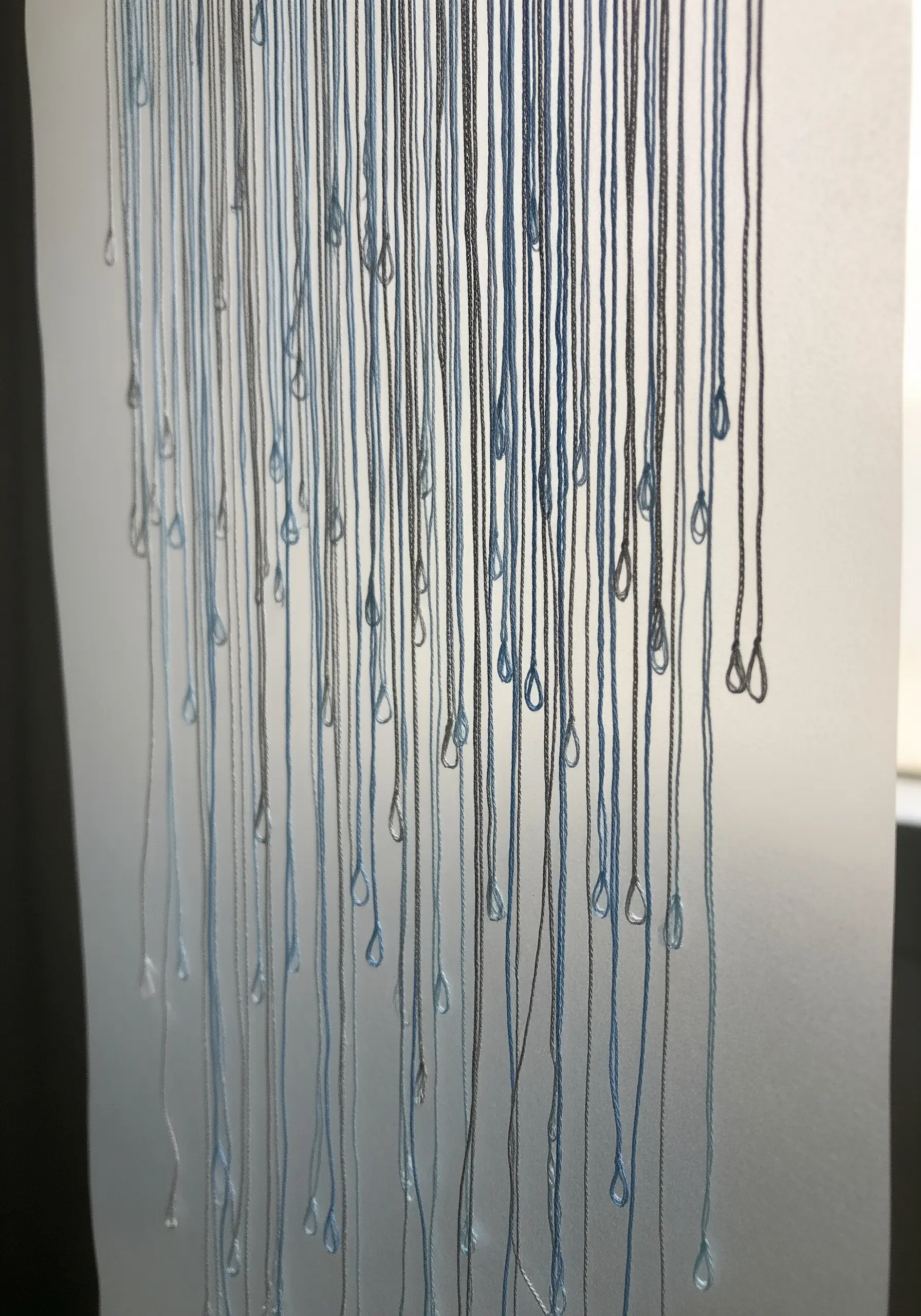
To create this delicate, off-fabric effect, you will need to work on a water-soluble stabilizer.
Stitch long vertical lines, finishing each one with a single lazy daisy stitch at the bottom to form a teardrop shape.
Once your stitching is complete, carefully wash away the stabilizer according to the manufacturer’s instructions.
The small weight of the lazy daisy stitch helps each thread hang perfectly straight, creating a fragile curtain of rain.
14. Mixed-Media Ice Shards with Appliqué and Beading

Begin by cutting your primary ice shapes from a thick, non-fraying material like white felt and appliquéing them to your base fabric.
Fill the water areas between the floes with long-and-short stitch in shades of arctic blue and turquoise.
For the final touch, add the texture of fractured ice by couching down shards of sea glass or scattering clear, angular beads.
This combination of soft felt, smooth thread, and hard, reflective elements makes for stunning mixed-media crafts with embroidery.
15. Braided Plait Stitch for a Meandering River

The braided plait stitch is the perfect choice for creating a thick, highly textured line that evokes flowing water or thick vines.
To achieve a natural, variegated look, thread your needle with multiple strands of different colors at once—try combining blues, greens, and earthy browns.
Work the stitch along a gently curving guideline to capture the organic movement of a river.
This stitch is bold enough to be the focal point of a table runner or wall hanging.
16. Geometric Abstraction of Wind and Water

Translate the fluid movement of nature into a crisp, geometric composition filled with satin stitch.
Pay close attention to the direction of your stitches within each block; changing the angle of your thread will change how it reflects light, creating subtle dimension.
For perfectly clean divisions between shapes, outline each one with a single line of backstitch before you begin filling.
This methodical approach turns simple shapes into a sophisticated, modern textile piece.
17. A Sampler of Seafoam Textures

Think of this piece as a dictionary of texture, with each row dedicated to a different stitch that evokes the feel of the ocean.
Create distinct bands using French knots, bullion knots, woven wheel stitches, and couched yarn.
By limiting your color palette to shades of white and sea green, you allow the rich variety of stitches to become the undisputed star of the show.
This is a wonderful way to practice and showcase your command of dimensional stitches in your nature texture embroidery projects.
18. Radiating Light with Satin Fabric and Sequins

To capture the brilliant effect of light reflecting on water, start with a fabric that has a natural sheen, like cotton sateen or silk.
Create the undulating waves with rows of padded satin stitch, which gives them a subtle, rounded dimension.
For the sunbeams, use long, taut straight stitches in a contrasting thread, radiating from a single point.
Finish by scattering a few iridescent sequins or clear seed beads across the water to act as points of sparkling light.
19. Capturing Autumnal Gusts with Unstructured Stitches
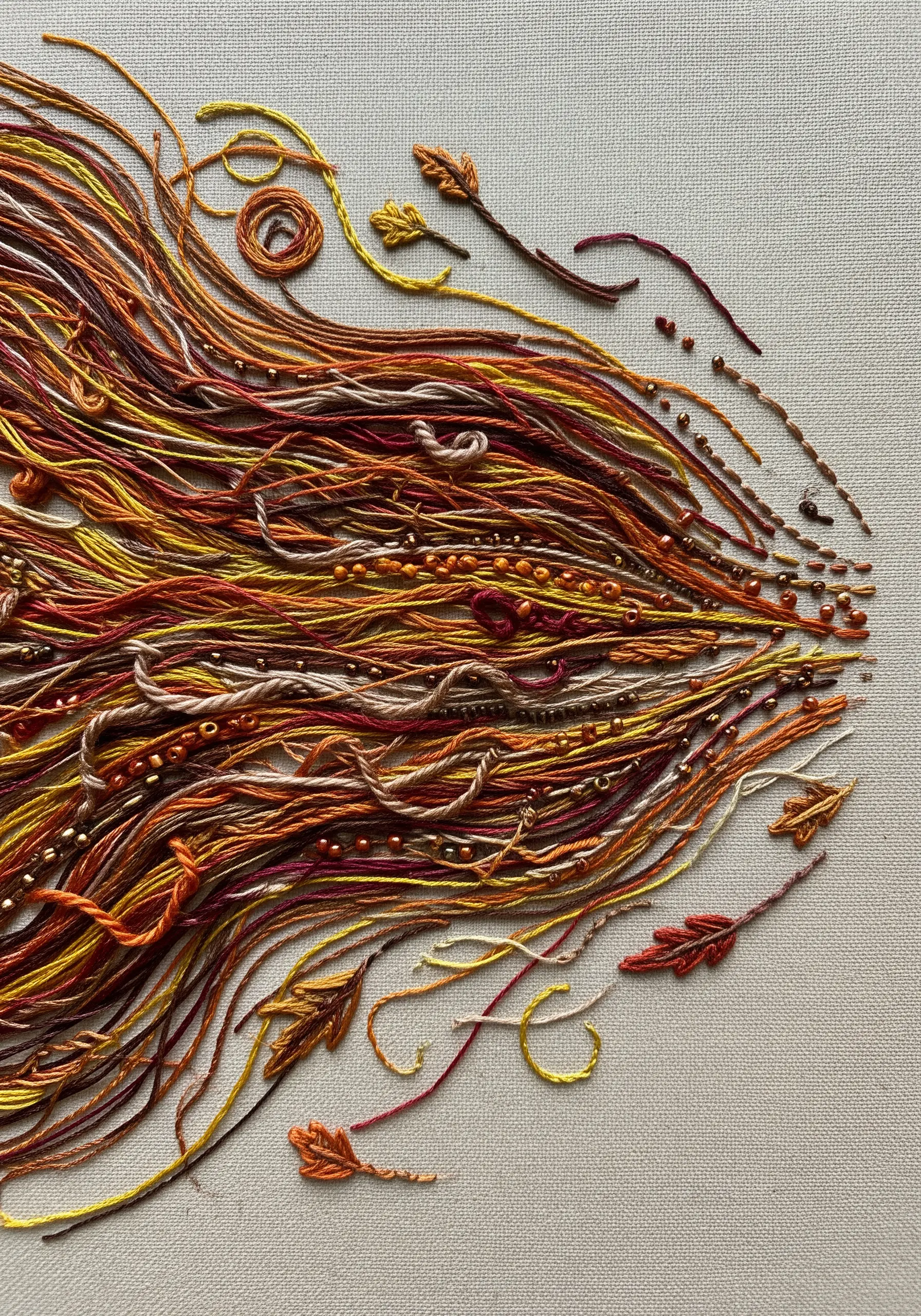
Evoke the chaotic, beautiful movement of autumn wind by abandoning rigid patterns.
Lay down threads using a combination of long, loose straight stitches and couching, allowing them to overlap and swirl organically.
Incorporate a mix of thread weights and textures, from single-strand floss to fine wool yarn, in a warm, autumnal palette.
A sprinkle of small copper seed beads adds a touch of sparkle, like sunlight glinting off swirling leaves. You can even adapt techniques from abstract fabric collage embroidery ideas for this style.
20. Essence of Motion in Whipped Backstitch

This composition demonstrates the power of restraint and refined technique.
On a plain, high-quality fabric, use a thread that offers a subtle contrast—like light grey on white—to stitch flowing, intersecting lines.
A whipped backstitch is ideal here, as it creates a smooth, raised, cord-like line that casts a delicate shadow.
The beauty of this piece lies in the graceful curves and the intentional use of negative space, making it one of the most elegant minimalist embroidery projects for calm and cozy interiors.
21. Topographic Flow with Contour Stitching
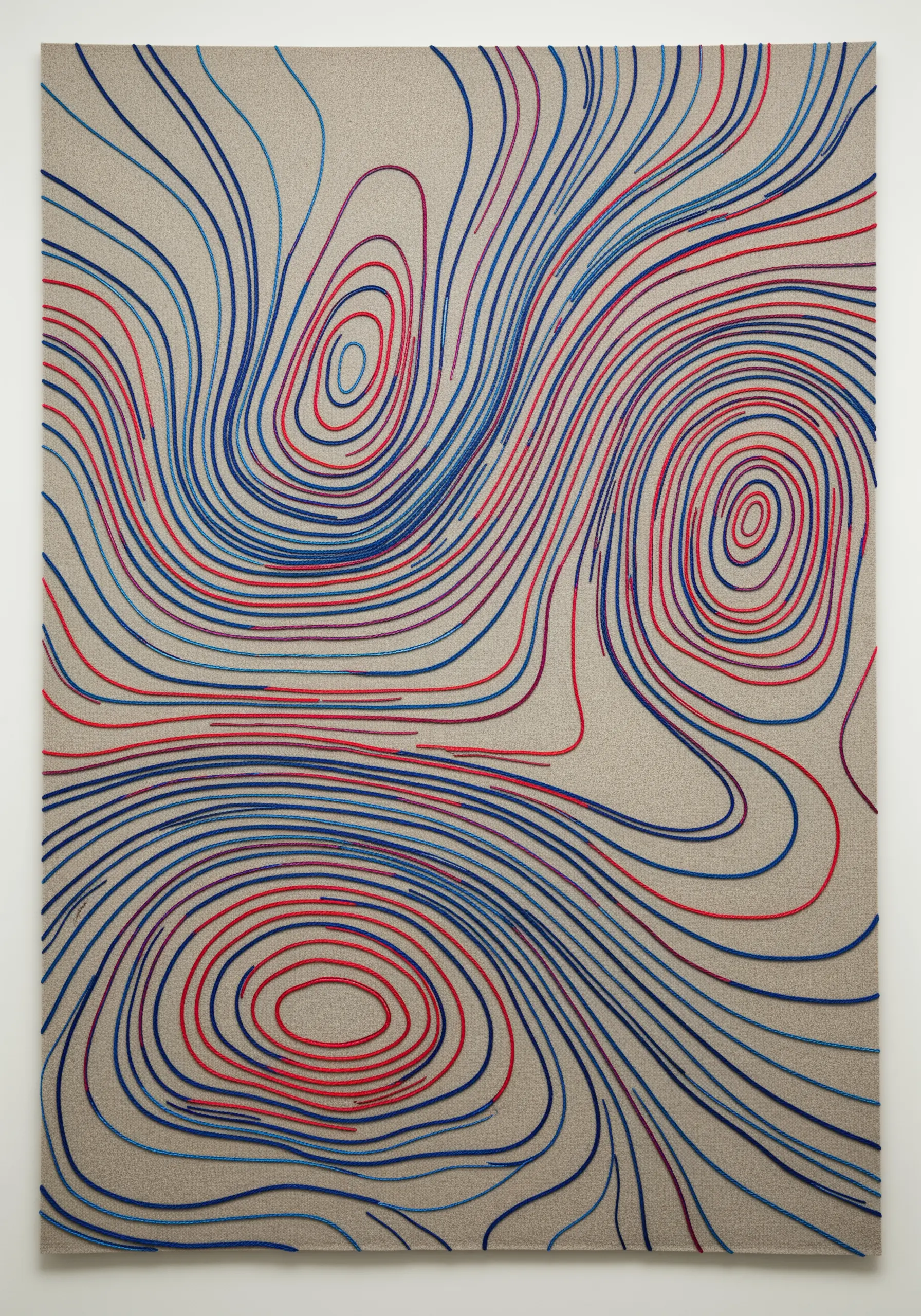
Recreate the undulating lines of a topographic map or the grain of weathered wood with continuous contour stitching.
A simple backstitch or stem stitch, executed with care, provides the clean consistency needed for this design to succeed.
Create a sense of depth and vibration by subtly shifting your thread color from warm (reds and purples) to cool (blues) as the lines flow across the canvas.
This creates an optical effect that makes the flat surface appear to have hills and valleys.
22. A Vortex of Woven Texture
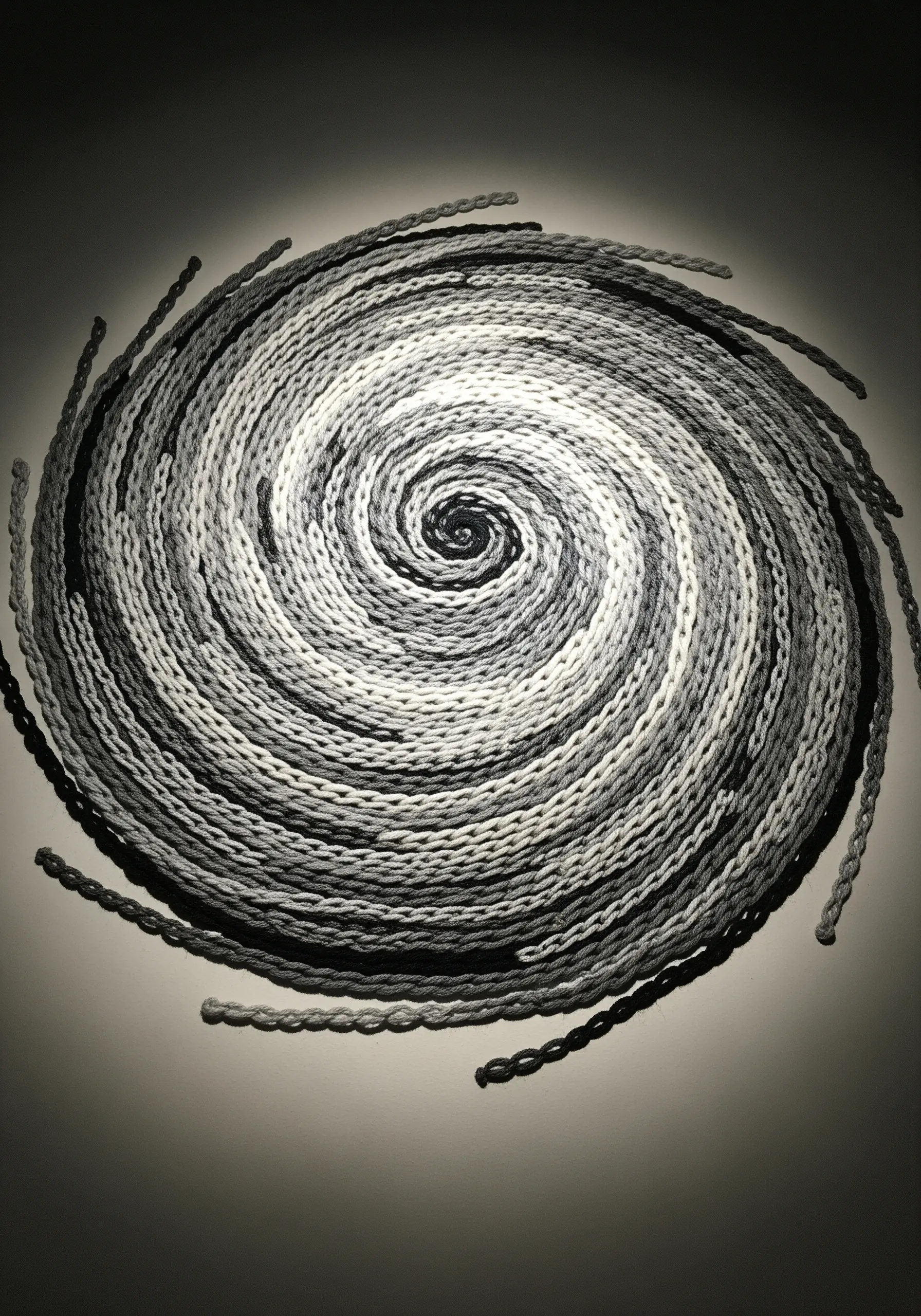
This powerful spiral effect is achieved by first creating thick cords of thread and then couching them onto the fabric.
To make the cords, take multiple strands of yarn or floss and twist them together very tightly until they begin to coil back on themselves.
As you couch these cords down in a spiral pattern, the texture will create a dynamic, swirling vortex.
Using a gradient of greys, from dark at the edges to light in the center, enhances the illusion of depth and movement.
23. Whispering Grasses with Fishbone Stitch

The fishbone stitch is perfectly suited for creating the herringbone-like texture of wheat heads and certain types of leaves.
Vary the angle and length of your stitches slightly for each wheat head to give the composition a more natural, less uniform appearance.
Use a very fine, single-strand thread for the stems, stitching them with a simple backstitch and allowing them to overlap and curve as if being moved by a gentle breeze.
Combining matte cotton and shiny rayon threads will add another layer of realistic texture.
24. Geological Strata with Layered and Frayed Fabric

Build a deeply textural surface by layering strips of fabric with raw, frayed edges.
Select a range of fabrics with different weaves and weights, such as linen, denim, canvas, and cotton, all within a cohesive, earthy color palette.
Secure the layers by stitching through them with rows of simple running stitches, which both anchor the composition and add another layer of visual texture.
This is a beautiful form of high-texture fabric collage embroidery that feels ancient and elemental.
25. Deconstructed Flow: Combining Order and Chaos
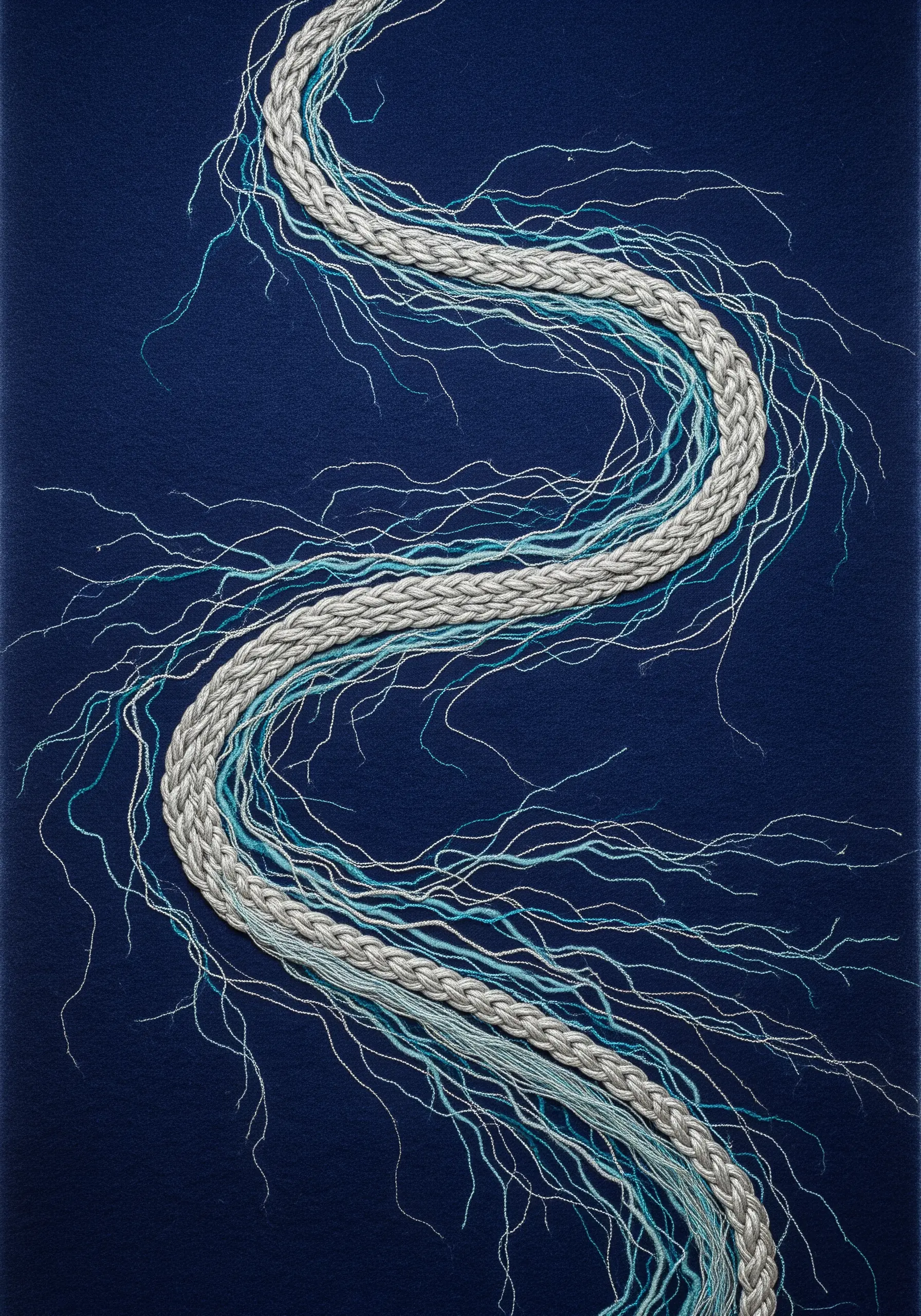
This design creates a fascinating visual tension between structured control and untamed freedom.
Begin by stitching a central, perfectly executed braided plait stitch using a thick, smooth thread that will hold its shape.
Then, surround this orderly element with ‘unraveled’ stitches—long, loose straight stitches and single, unsecured strands of thread that are couched down sporadically.
This dramatic contrast makes the central braid appear even more defined and the loose threads more wild and energetic.
26. Neon Wind Currents on a Dark Canvas

Achieve maximum visual impact by pairing fluorescent or neon embroidery floss with a stark black fabric background.
Use a smooth, consistent line stitch, such as a stem stitch or whipped backstitch, to create clean, curving lines that suggest speed and fluid motion.
The extreme contrast between the vibrant, glowing colors and the deep black background creates an electric energy that feels both futuristic and playful.
This is a perfect project for using up bright, bold colors from your thread collection.