Perhaps you’ve mastered the satin stitch and your backstitch is flawless, but you feel a gentle pull toward something more. You want your work to move beyond replicating a pattern and start expressing a feeling, an idea, or a mood. You want to create not just embroidery, but art.
This is where abstract embroidery opens up a world of creative freedom. It isn’t about more complex stitches; it’s about using the stitches you already know with greater intention. It’s about trusting your eye for color, your sense for balance, and your love for the simple, profound beauty of a single line of thread.
Here, you’ll discover how to think like an artist. You’ll learn to play with thread weight to create depth, use negative space to make a statement, and blend colors to evoke emotion. These ideas are your permission slip to experiment, to break the rules, and to transform your needle and thread into tools for creating mesmerizing, modern wall art that is uniquely yours.
1. Architectural Precision in Monochrome Thread
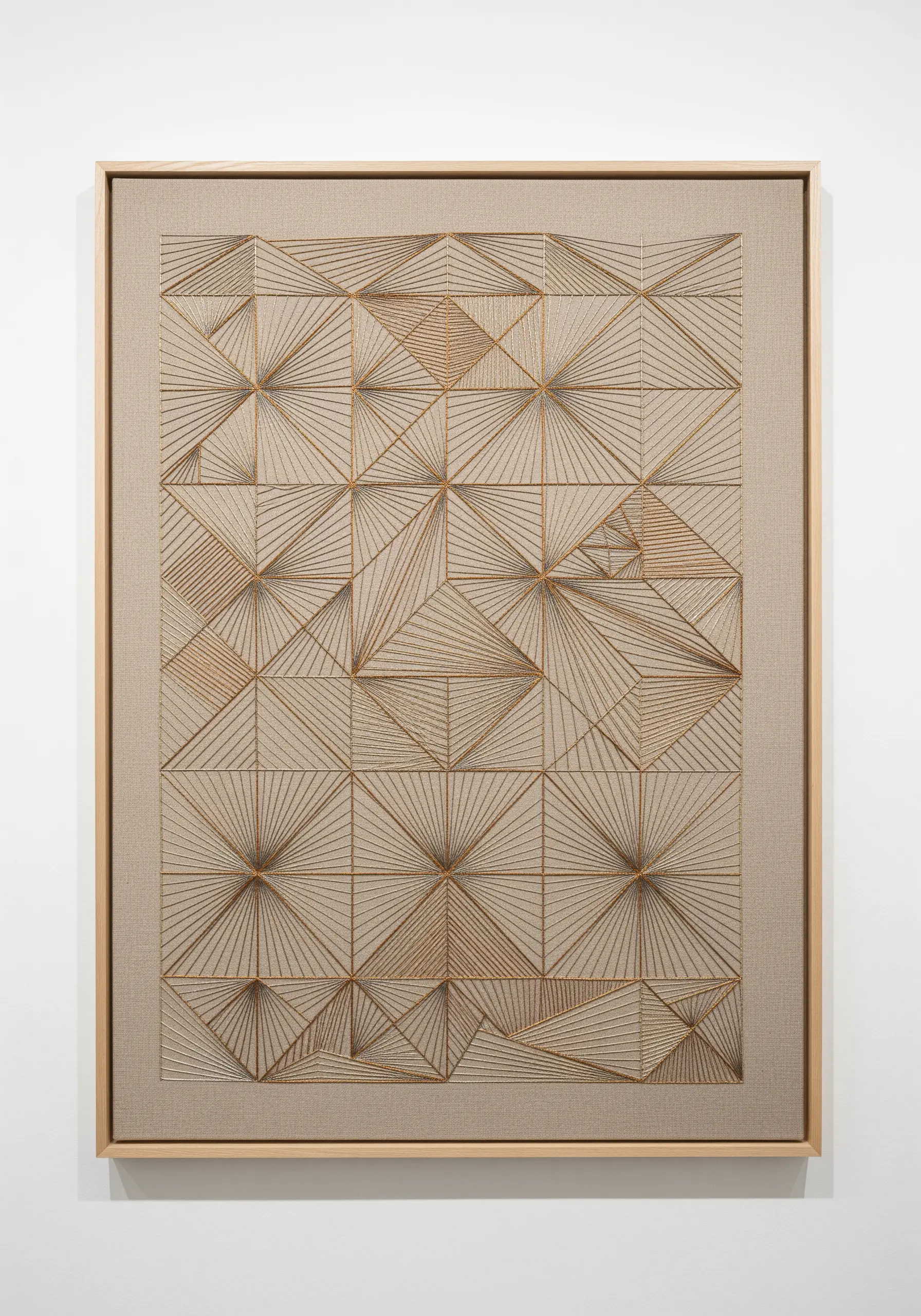
Create an intricate, architectural pattern using only straight stitches arranged on a grid.
The illusion of curves and three-dimensional shapes emerges from the overlapping lines, a technique borrowed from string art.
Working with a single thread color on a neutral linen background creates a sophisticated, graphic quality that emphasizes form and shadow.
Maintaining consistent thread tension is the key to achieving those sharp, clean lines that give the piece its polished, professional finish.
This approach transforms a simple stitch into a complex visual statement, perfect for monochrome thread embroidery ideas that feel both modern and timeless.
2. Capture Liquid Motion with Unstitched Threads
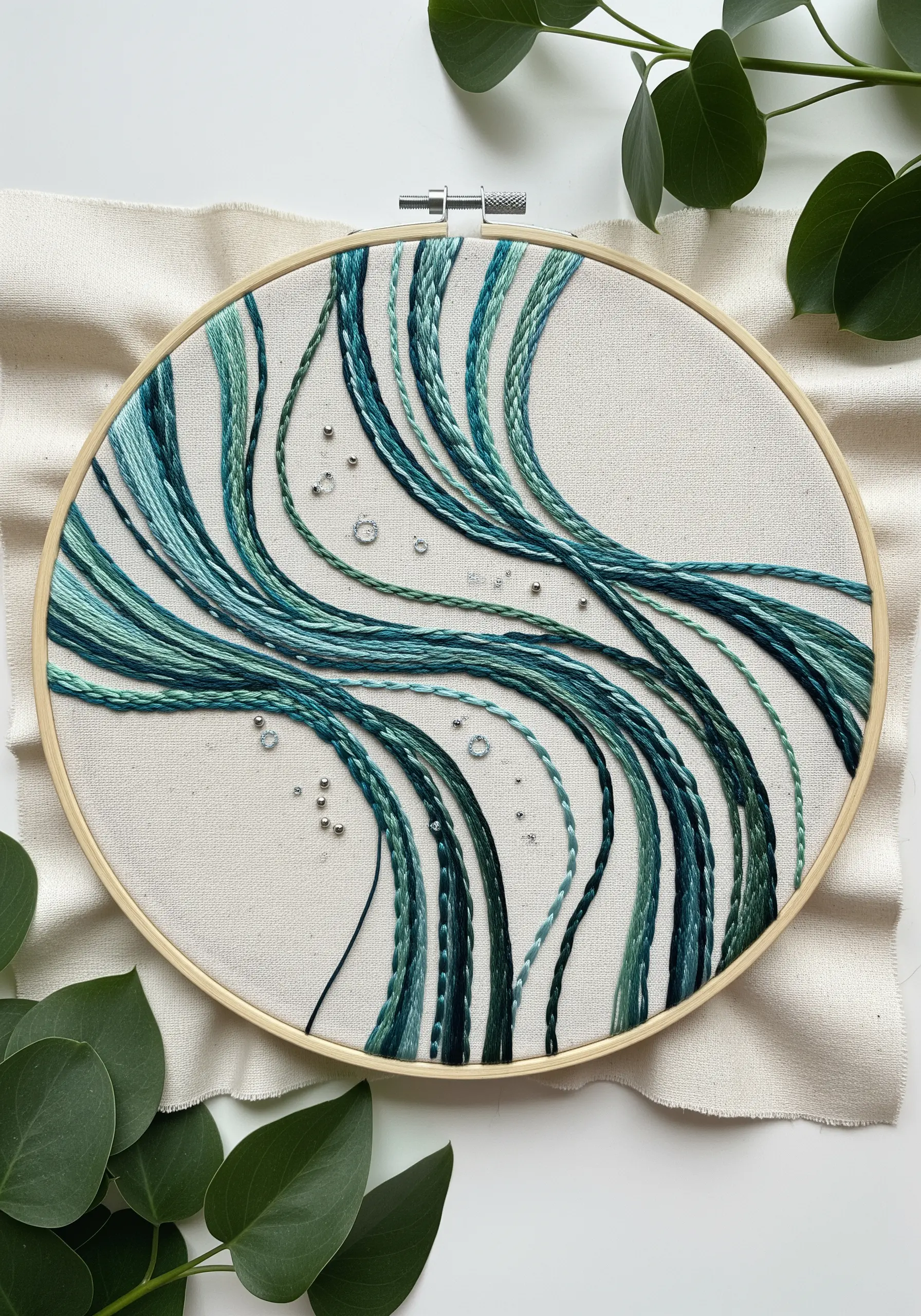
Instead of stitching threads down completely, let them flow across the fabric to create a sense of movement.
Arrange bundles of thread in varying shades of one color family—like these oceanic teals and greens—to form gentle waves.
Use a couching stitch, small and nearly invisible, to tack the bundles down at key intervals, preserving their natural drape and volume.
The addition of a few scattered silver beads mimics bubbles or light reflecting on water, adding a delicate, mixed-media highlight.
This technique turns thread into a sculptural element, ideal for ocean-inspired hoop embroidery ideas.
3. The Thread Burst: Energy in Radiating Lines
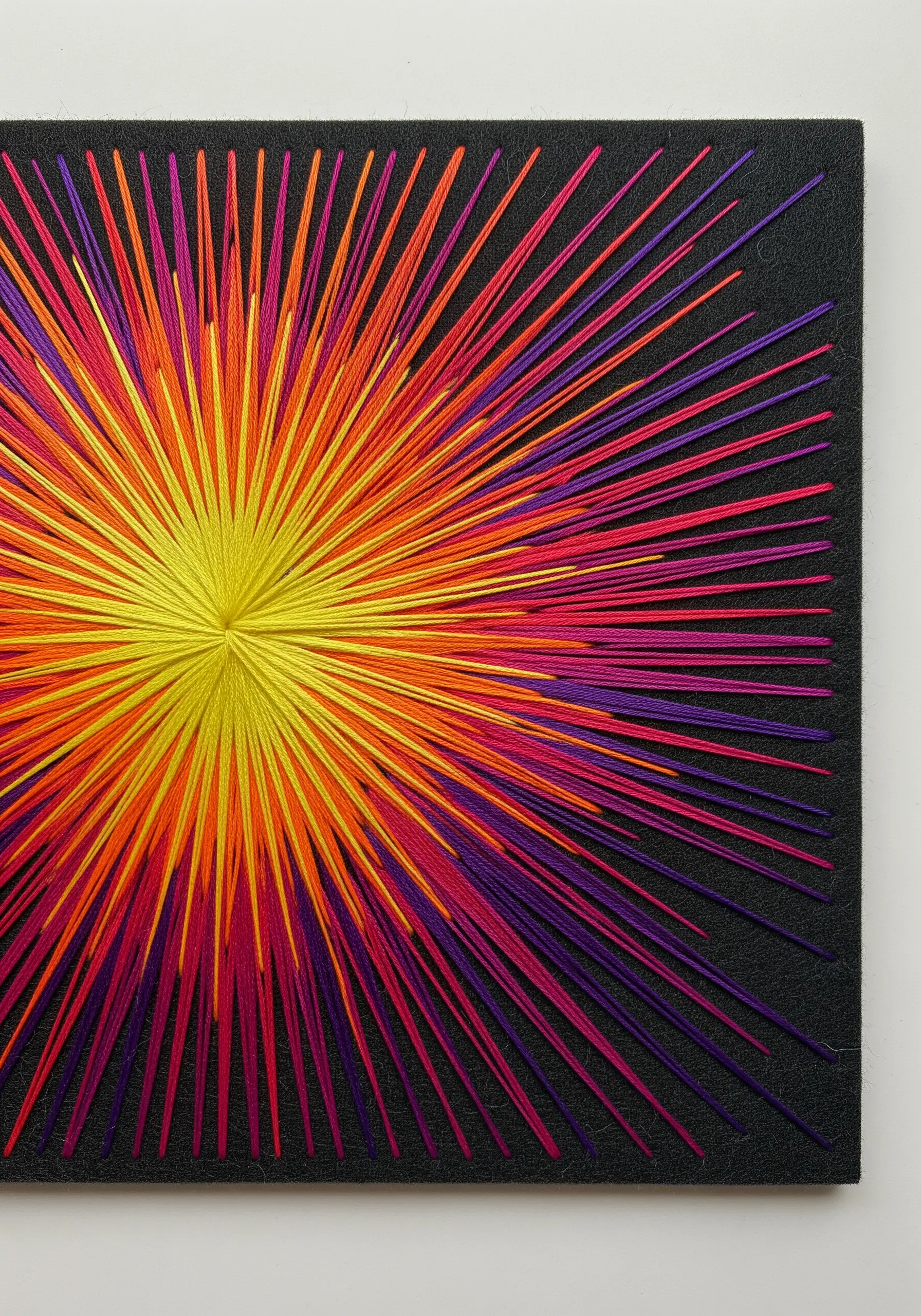
Generate a feeling of explosive energy by stitching radiating lines from a central point to the edges of your canvas.
The visual impact comes from a carefully planned color gradient. Start with the lightest color at the center and gradually introduce darker, more intense shades as you move outward.
Layering analogous colors—like yellow, orange, pink, and purple—creates a pulsating, vibrant effect that draws the eye inward.
Using a stark black background makes the colors feel electric, ensuring your abstract thread burst techniques become a powerful focal point.
4. The Elegance of a Single, Sculptural Line
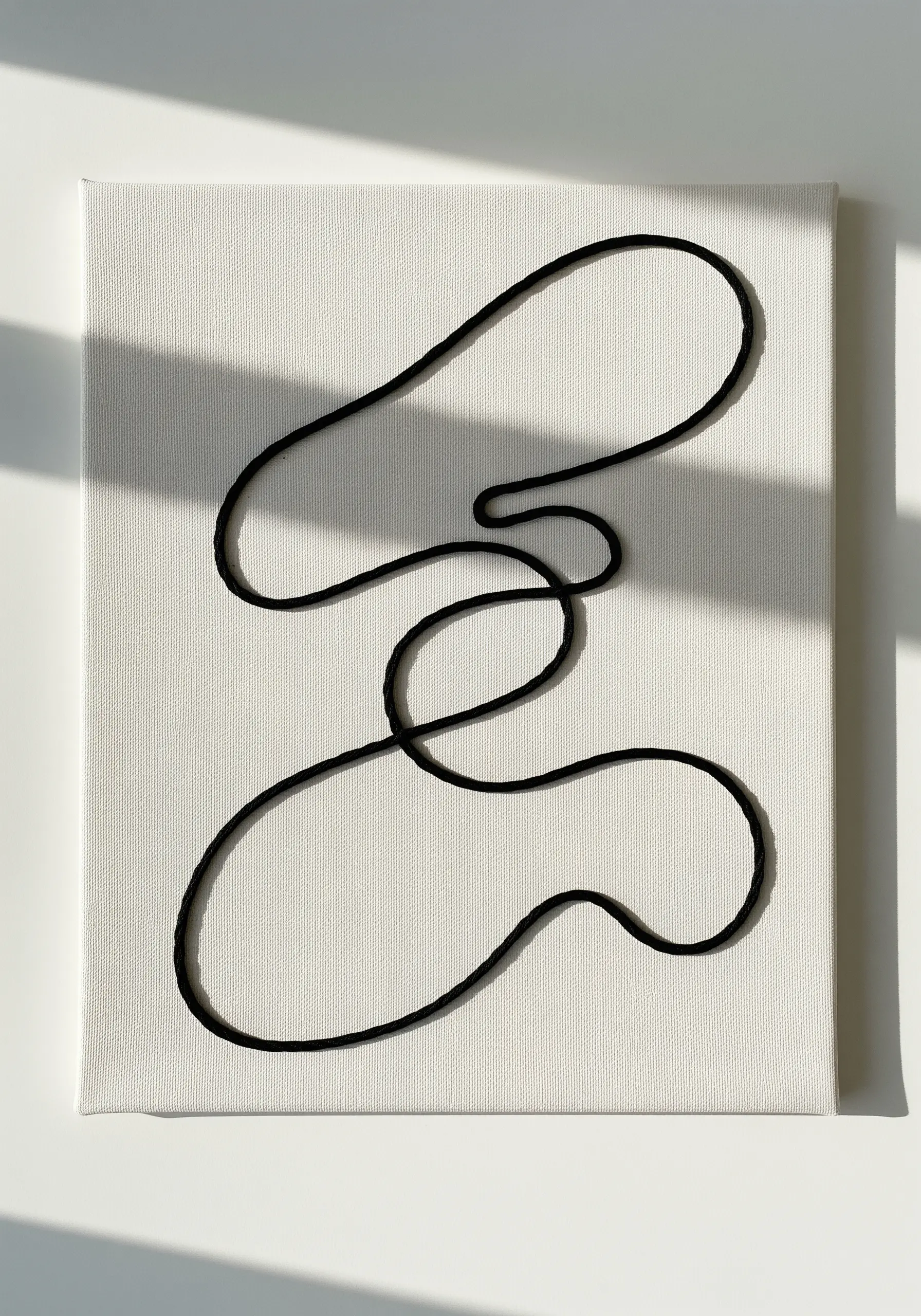
Explore the power of minimalism by making a single, continuous line the hero of your composition.
Use a thick material like yarn or soft cording and couch it onto a stark white canvas to give the line physical presence and shadow.
Before you stitch, sketch the form on paper until you achieve a balanced, fluid shape that interacts beautifully with the negative space around it.
This high-contrast approach strips embroidery back to its essential elements—line and form—for a result that is both simple and profoundly sophisticated.
5. Building Landscapes with Textured Color Fields
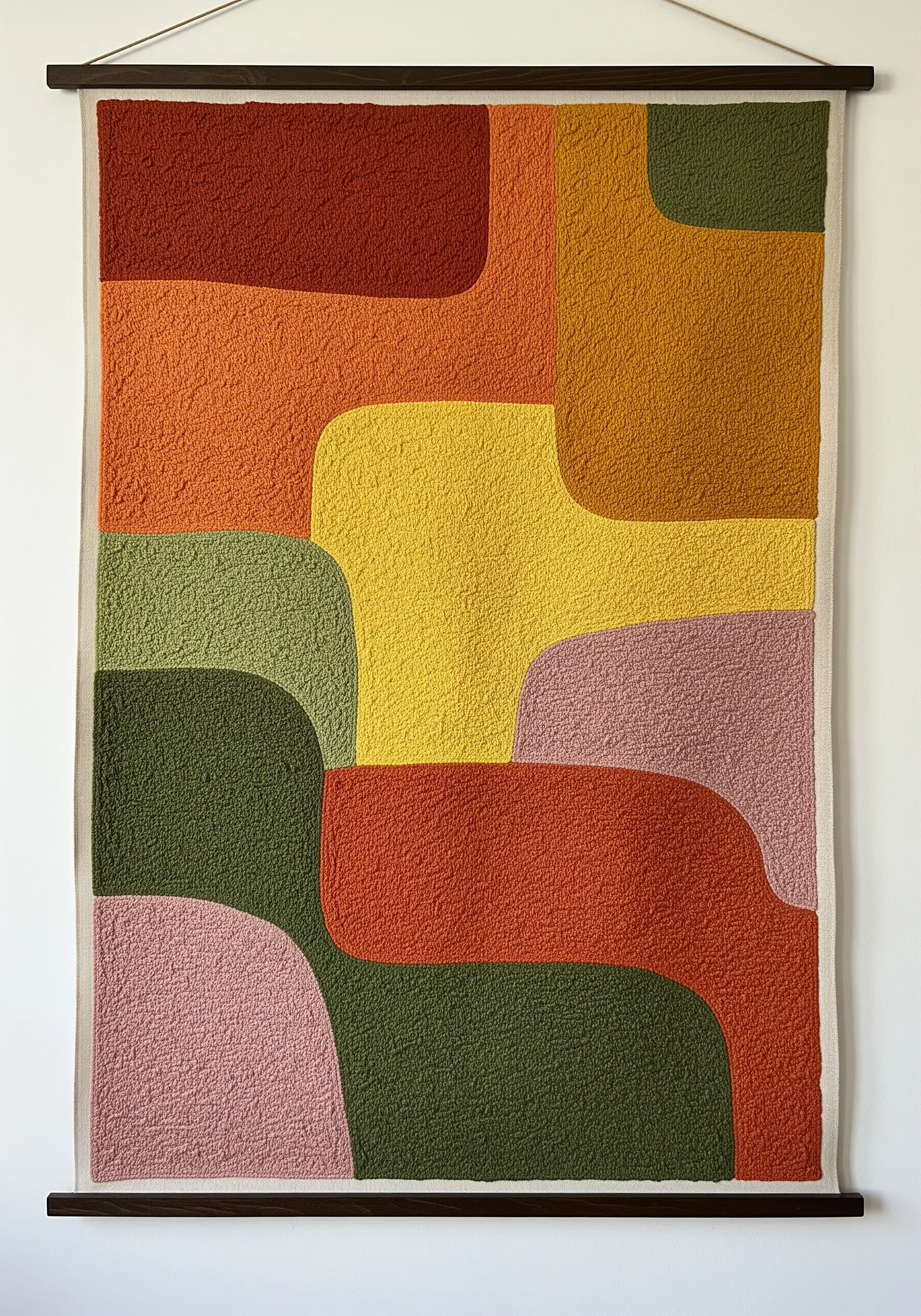
Move beyond flat color and build abstract shapes with dense, tactile stitches like the French knot or seed stitch.
Using a thicker wool or tapestry yarn will amplify the texture, creating a plush, chenille-like surface that invites touch.
Design your composition with soft, interlocking shapes and fill each one with a solid color, focusing on how the different textured blocks interact.
An earthy, warm color palette gives these abstract forms a natural, grounded feel, making it one of the most inviting texture-rich embroidery ideas for cozy interiors.
6. Shattered Geometry with Metallic Threads
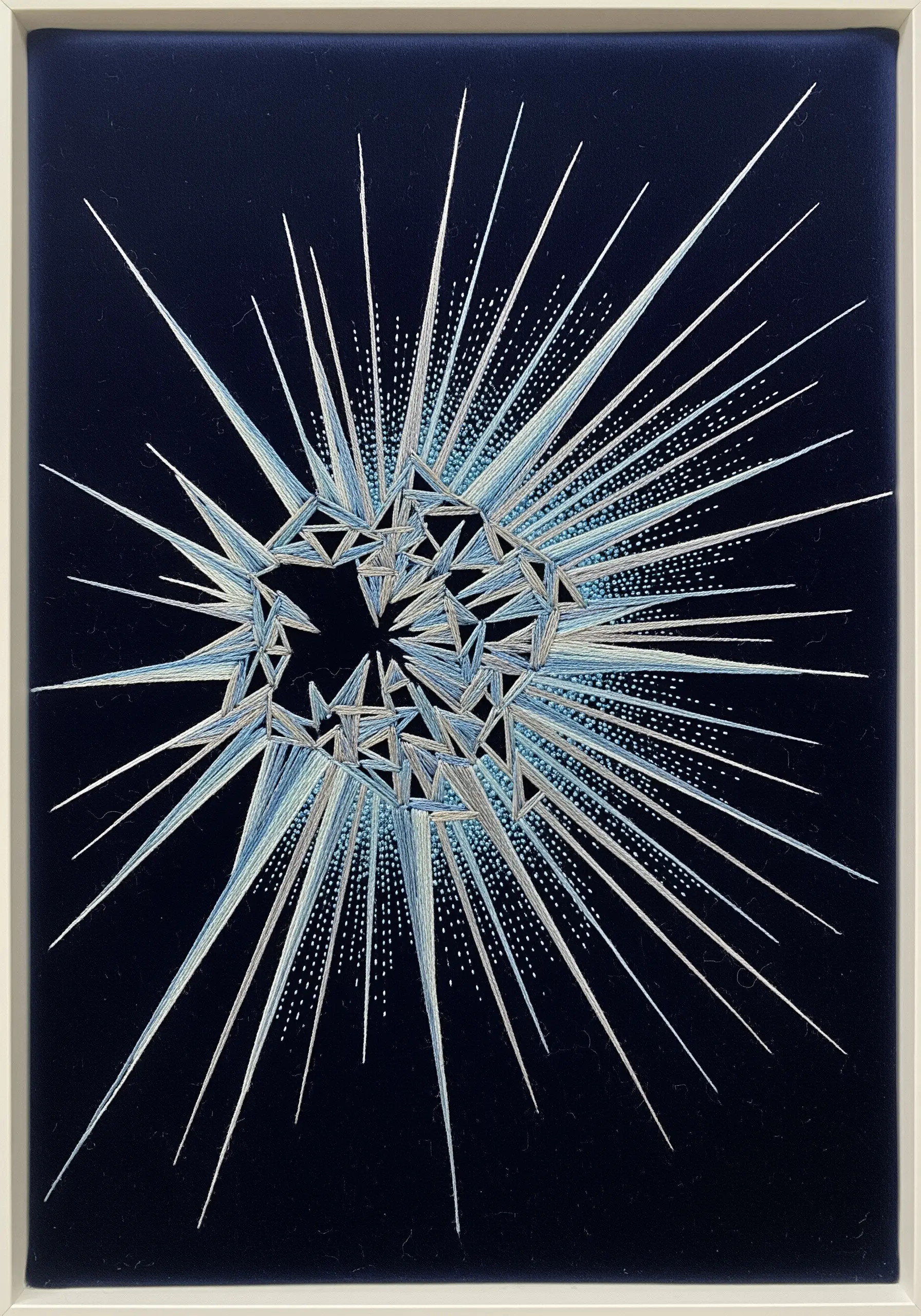
Create a dynamic crystalline structure by combining radiating straight stitches with strategically placed negative space.
Instead of a perfect starburst, interrupt the lines with sharp, geometric voids to create a shattered, explosive effect.
Choose a high-sheen or metallic thread against a dark, matte fabric like velvet or felt. This contrast enhances the light-catching properties of the thread, making the design sparkle.
Sprinkle tiny seed stitches or French knots along the rays to add another layer of delicate, star-like texture.
7. Mapping Emotion with Topographic Contours
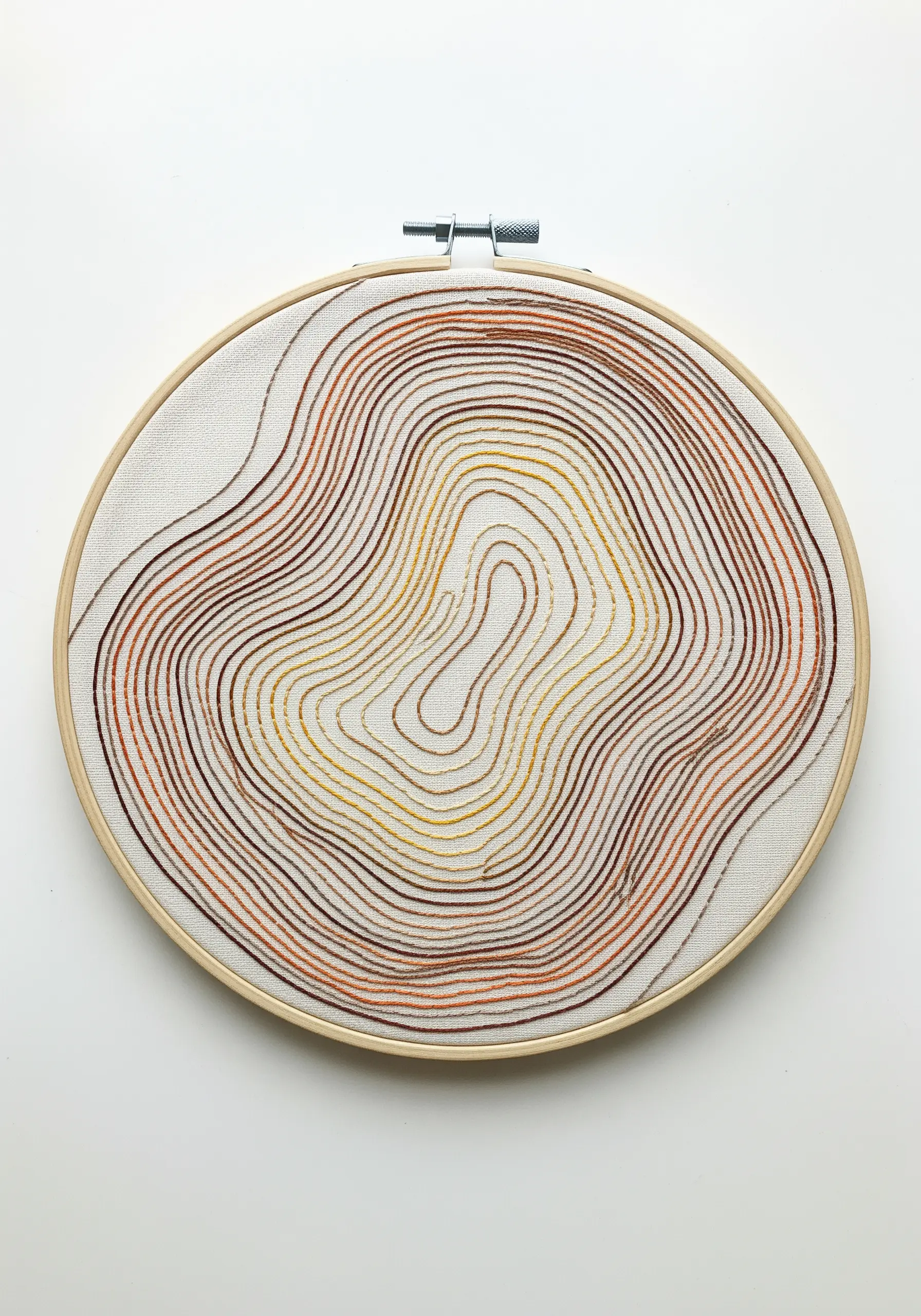
Use simple backstitch or running stitch to create organic, concentric lines that feel like a topographic map or a wood grain pattern.
The artistry lies in the subtle color gradient. Plan a palette of analogous colors and transition from one to the next every few rows.
This gradual shift in color creates a beautiful sense of depth and vibration, transforming simple lines into a mesmerizing field of color.
The free-form, imperfect shapes feel natural and calming, making it a perfect meditative stitching project among other earth-inspired embroidery designs.
8. Stitching Sound: Visualizing a Waveform
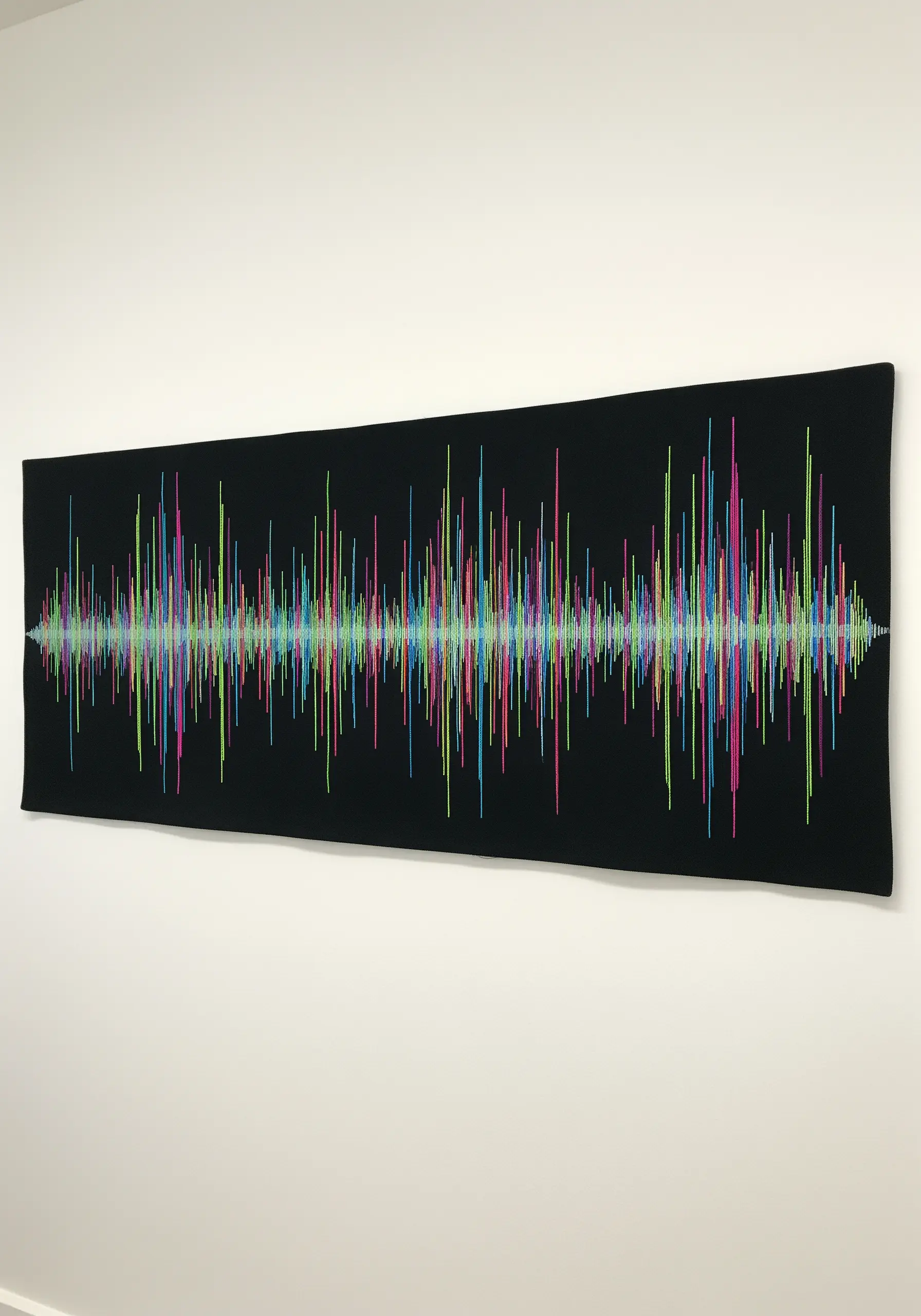
Transform a deeply personal memory—a favorite song, a loved one’s voice—into a tangible piece of visual art.
Use a free online tool to generate a waveform image from an audio clip, then transfer the outline to your fabric.
Fill the shape with vertical straight or satin stitches, varying their height to match the peaks and valleys of the soundwave.
A vibrant, neon palette against a black background gives the piece a modern, digital feel, perfectly capturing the intersection of memory and technology in abstract thread embroidery projects.
9. Deconstructing the Grid with Woven Threads
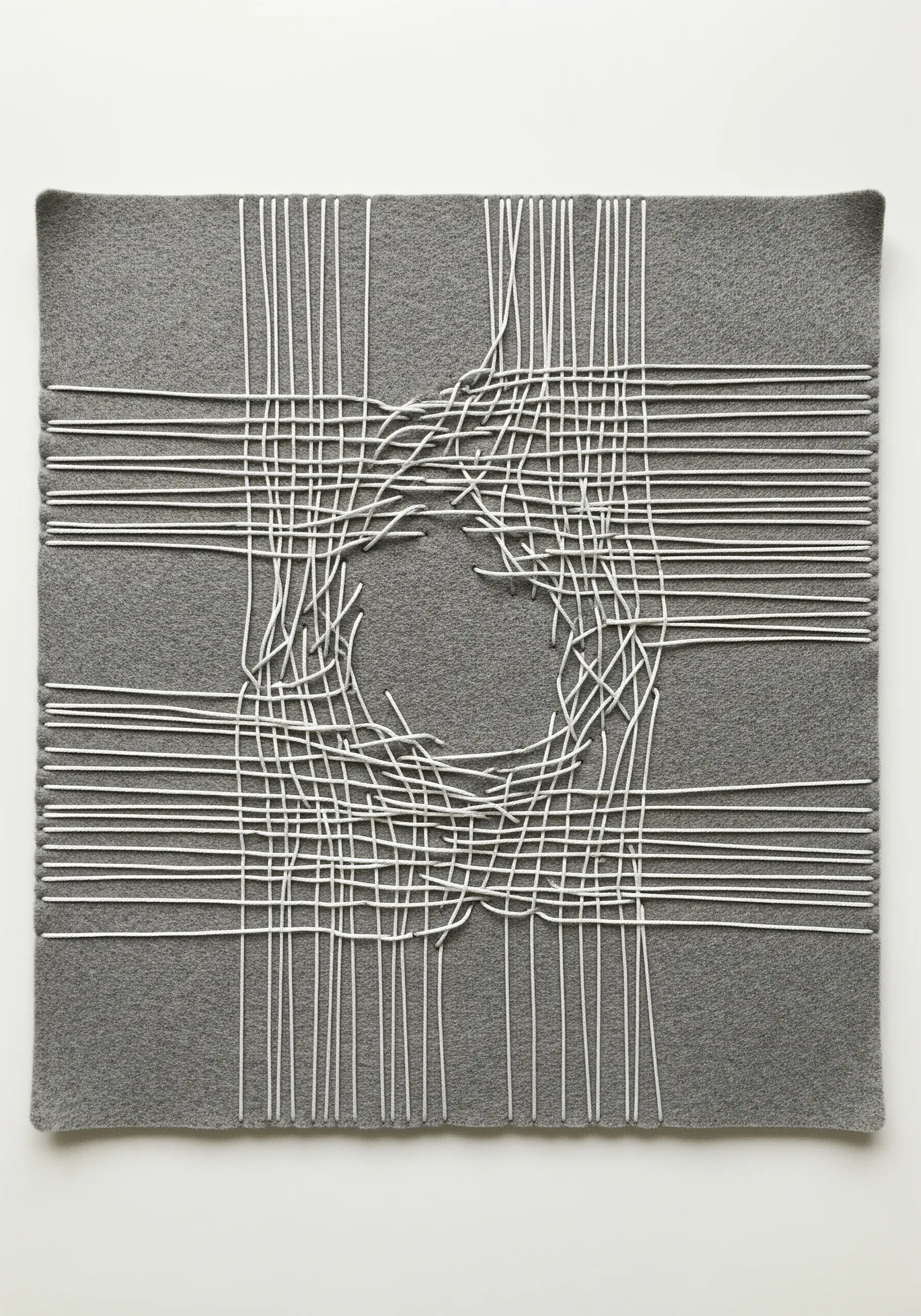
This technique plays with tension and structure by combining traditional stitching with on-fabric weaving.
First, create a stable grid of long, parallel straight stitches. This forms your loom.
Then, using a blunt tapestry needle, weave a contrasting thread through the grid. In the center, pull the woven threads taut to warp and distort the grid, creating an organic shape emerging from the rigid structure.
This contrast between order and chaos turns plain fabric into a compelling sculpture.
10. Exploring Connection with Textured Nodes
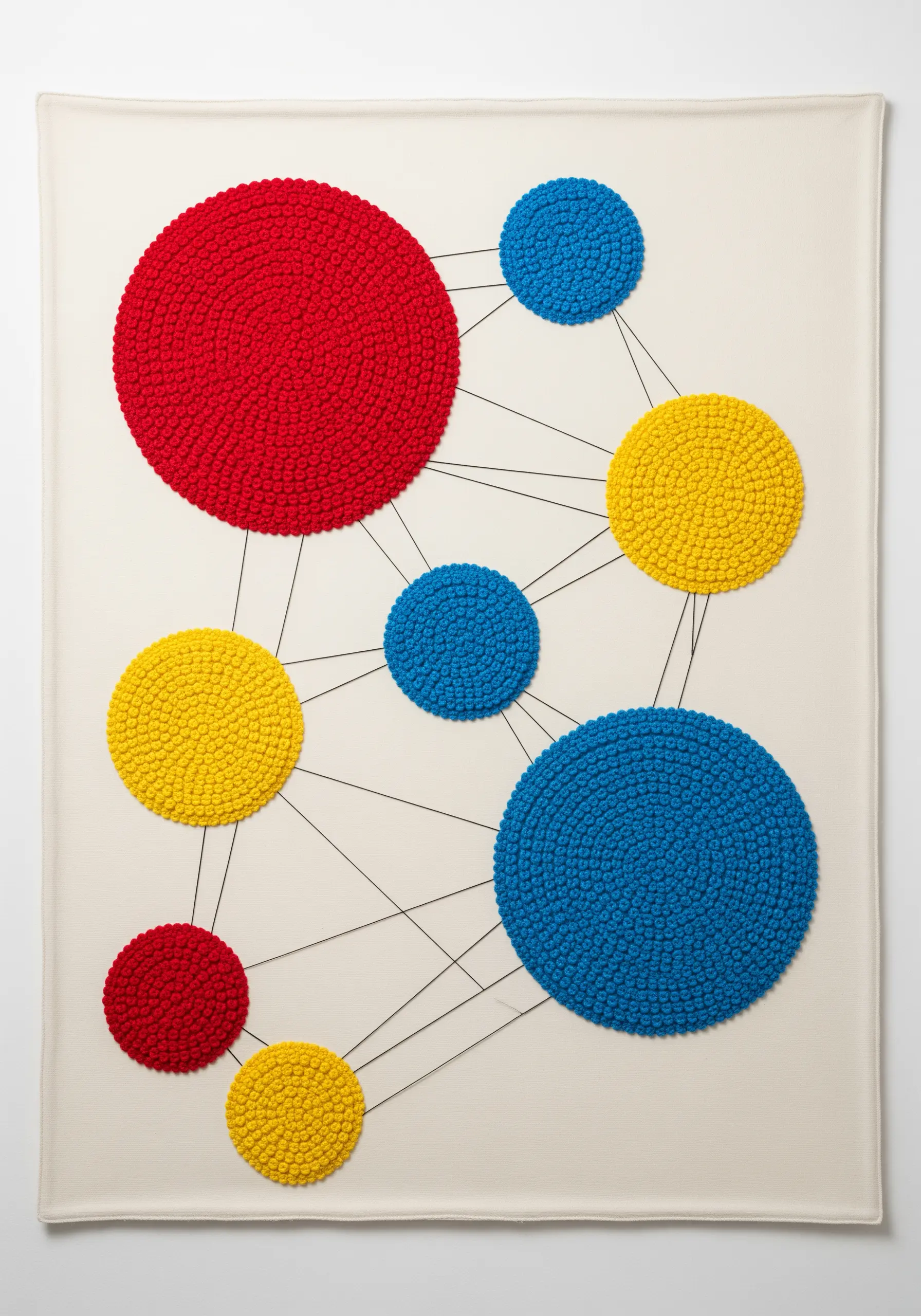
Create a dynamic composition by contrasting two distinct textures: plush, dense circles and sharp, fine lines.
Fill the circles with a highly textural stitch like French knots, using a thicker yarn to maximize their pillowy, three-dimensional quality.
Connect these tactile nodes with clean, taut straight stitches in a high-contrast color like black. This juxtaposition makes both elements stand out more powerfully.
Arrange the circles of varying sizes like a constellation or a molecular structure for a balanced, modern feel, similar to modern minimal mandala embroidery ideas.
11. The Color Drip: Cascading Thread Installation
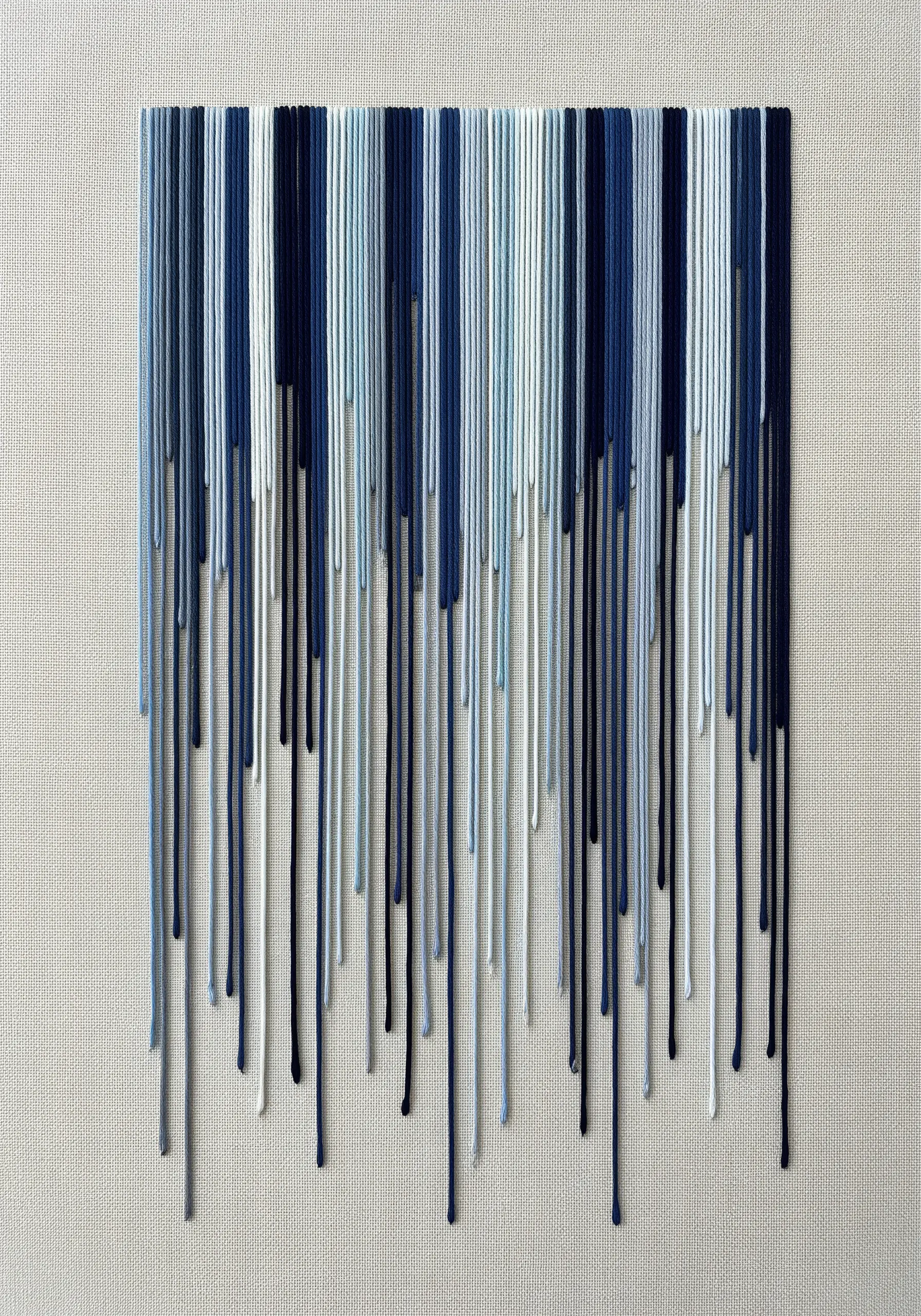
Create a stunning 3D wall hanging by allowing your threads to escape the canvas.
Stitch a dense band of Turkey work along the top edge of your fabric, but instead of trimming the loops, cut them and leave the tails hanging long.
Arrange your colors in a gradient or in bold stripes to create a waterfall effect as the threads cascade down.
The result is a piece that blurs the line between embroidery and sculpture, making it one of the most dramatic fiber art installations.
12. Hypnotic Depth with Concentric Squares
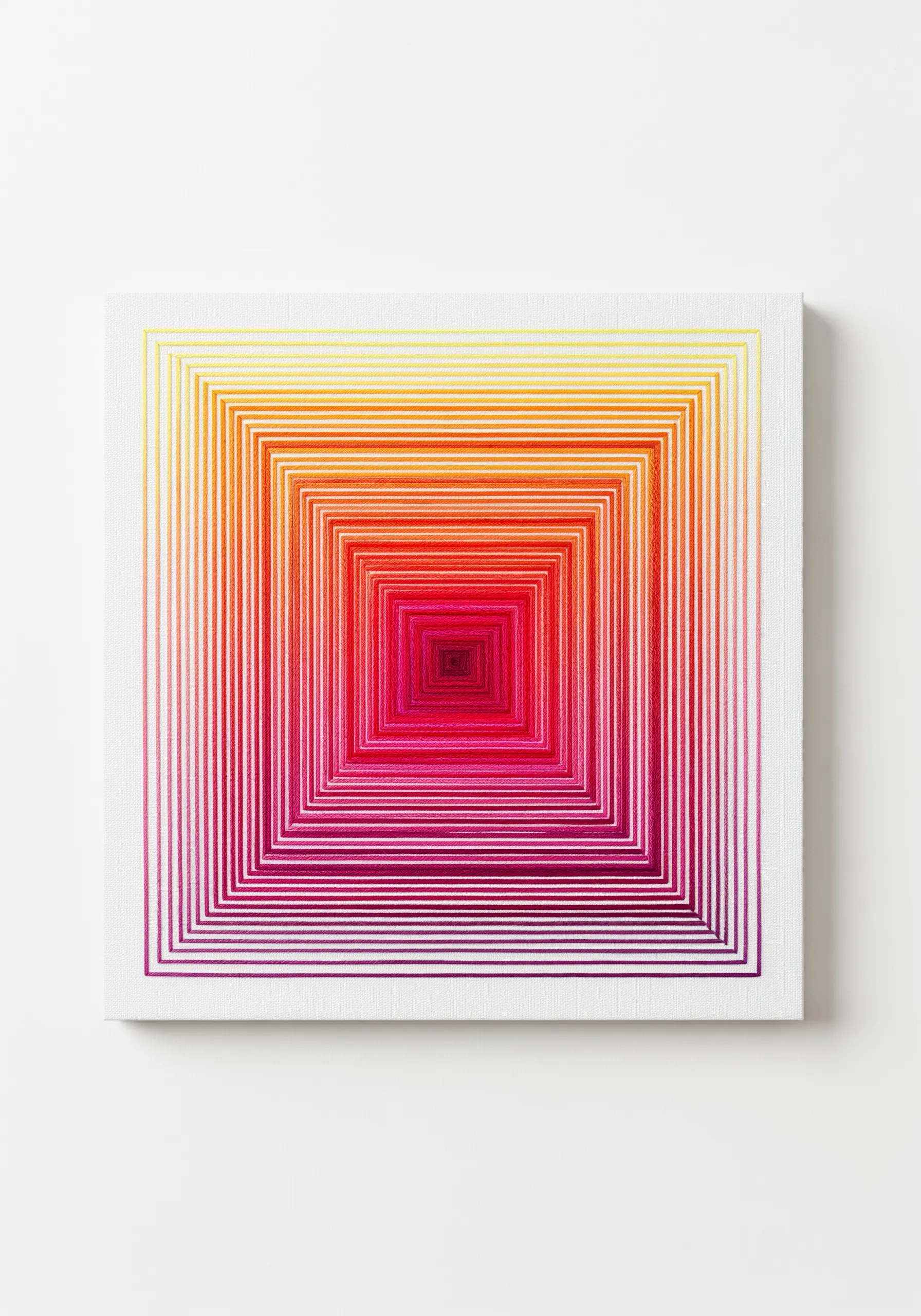
This design is a masterclass in precision and color theory, using simple backstitch to create a powerful optical illusion.
The key to the hypnotic, receding effect is a seamless color gradient. Select at least ten shades in an analogous color family, from light to dark.
Change your thread color every one or two rows of squares. This gradual transition is what tricks the eye and creates the sense of depth.
Keeping your stitch length and spacing perfectly uniform is critical for a clean, graphic result. Perfect your thread color blending tricks with this focused project.
13. A Sampler of Sculptural, Biomorphic Stitches
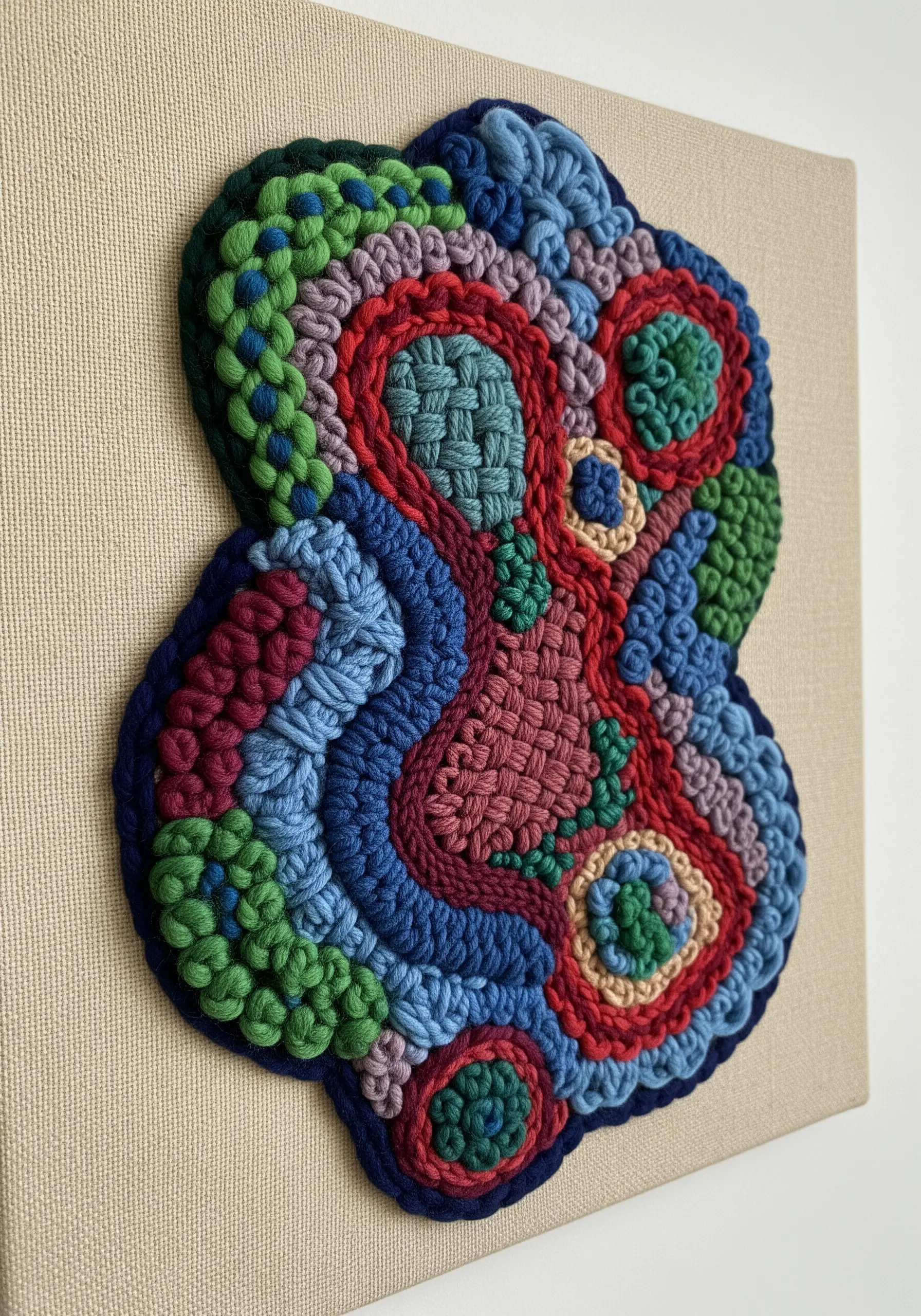
Transform a simple organic shape into a rich, tactile map by treating it as a sampler for dimensional stitches.
Divide your main shape into smaller, irregular sections. Fill each section with a different highly textured stitch—think bullion knots, cast-on stitches, woven picots, or French knots.
Use a variety of thread weights, from fine cotton floss to chunky wool yarn, to exaggerate the textural differences.
This approach celebrates the sheer variety of embroidery, showing you ways to capture nature’s textures in a single, cohesive piece.
14. Creating Atmosphere with Rhythmic Stitching
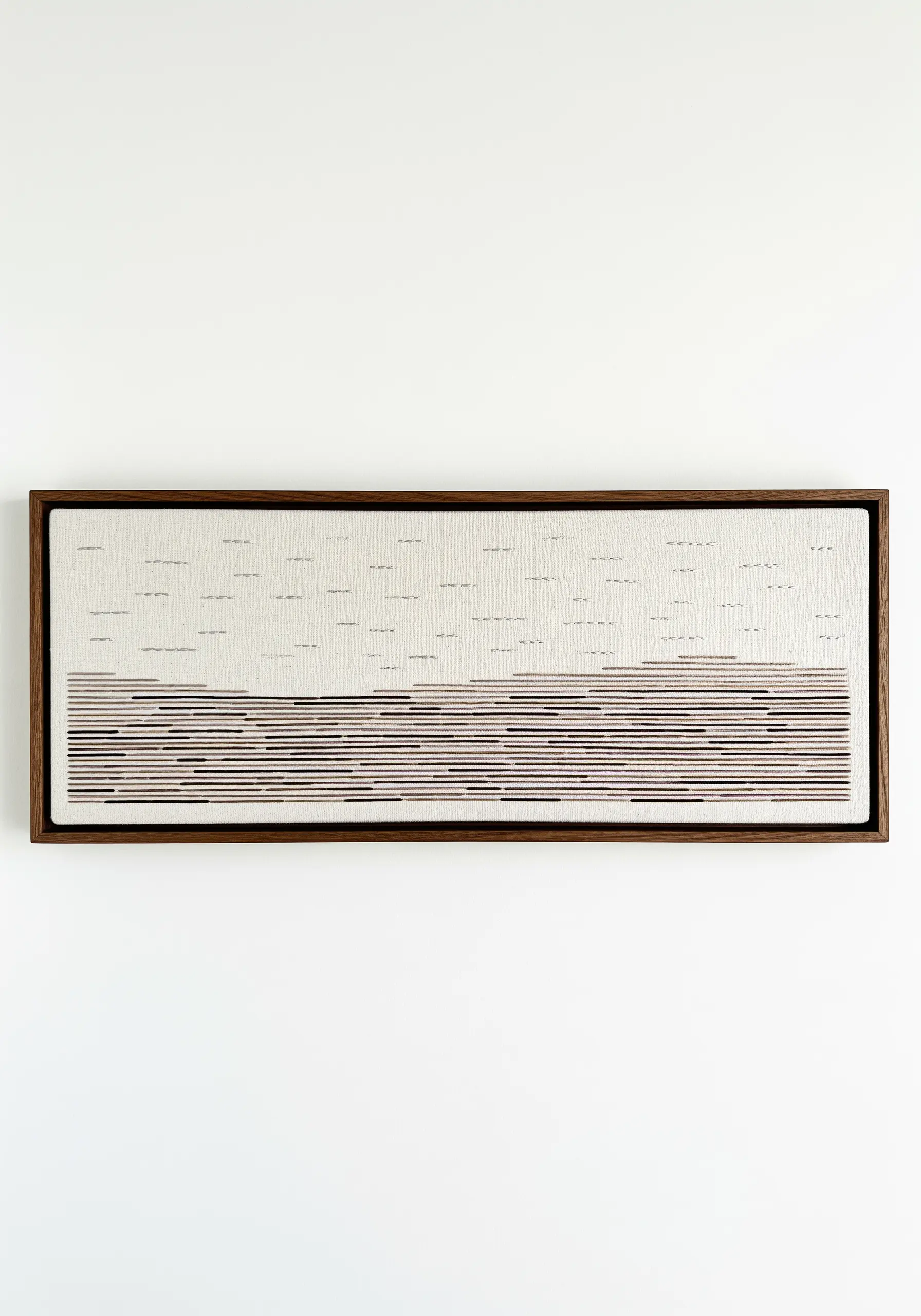
Evoke the feeling of a minimalist landscape or a serene horizon using only the rhythm and density of your stitches.
Work with short, horizontal straight stitches, clustering them tightly at the bottom of your piece to create a sense of grounding and weight.
As you move upward, gradually increase the space between stitches, allowing them to become sparse and scattered, like fading mist or distant rain.
A muted, monochrome palette on natural linen enhances the quiet, atmospheric quality, creating an elegant minimal embroidery wall piece.
15. Charting Celestial Orbits with Thread
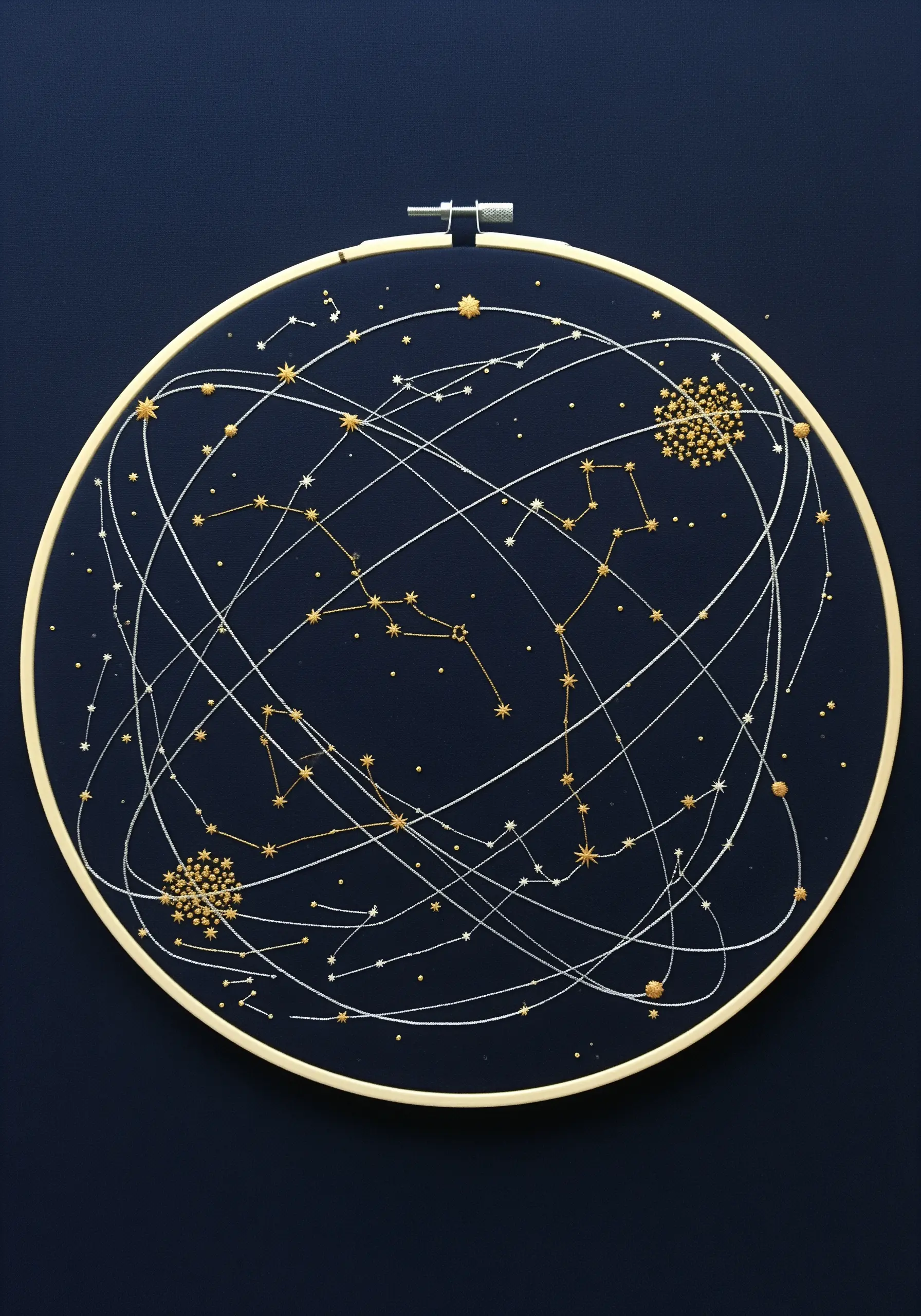
Design a dynamic cosmic scene on dark fabric, using thread to map the graceful movement of celestial bodies.
Use fine, single-strand metallic thread for the stars, creating them with tiny French knots or seed stitches for a delicate twinkle.
For the orbital paths, use a slightly thicker, contrasting thread and stitch long, elegant curves. Plan your composition to show the lines weaving over and under one another, creating a sense of depth and motion.
This style is perfect for night garden embroidery ideas where you want to evoke a sense of magic and wonder.
16. Abstracting Space with Blueprint Stitches
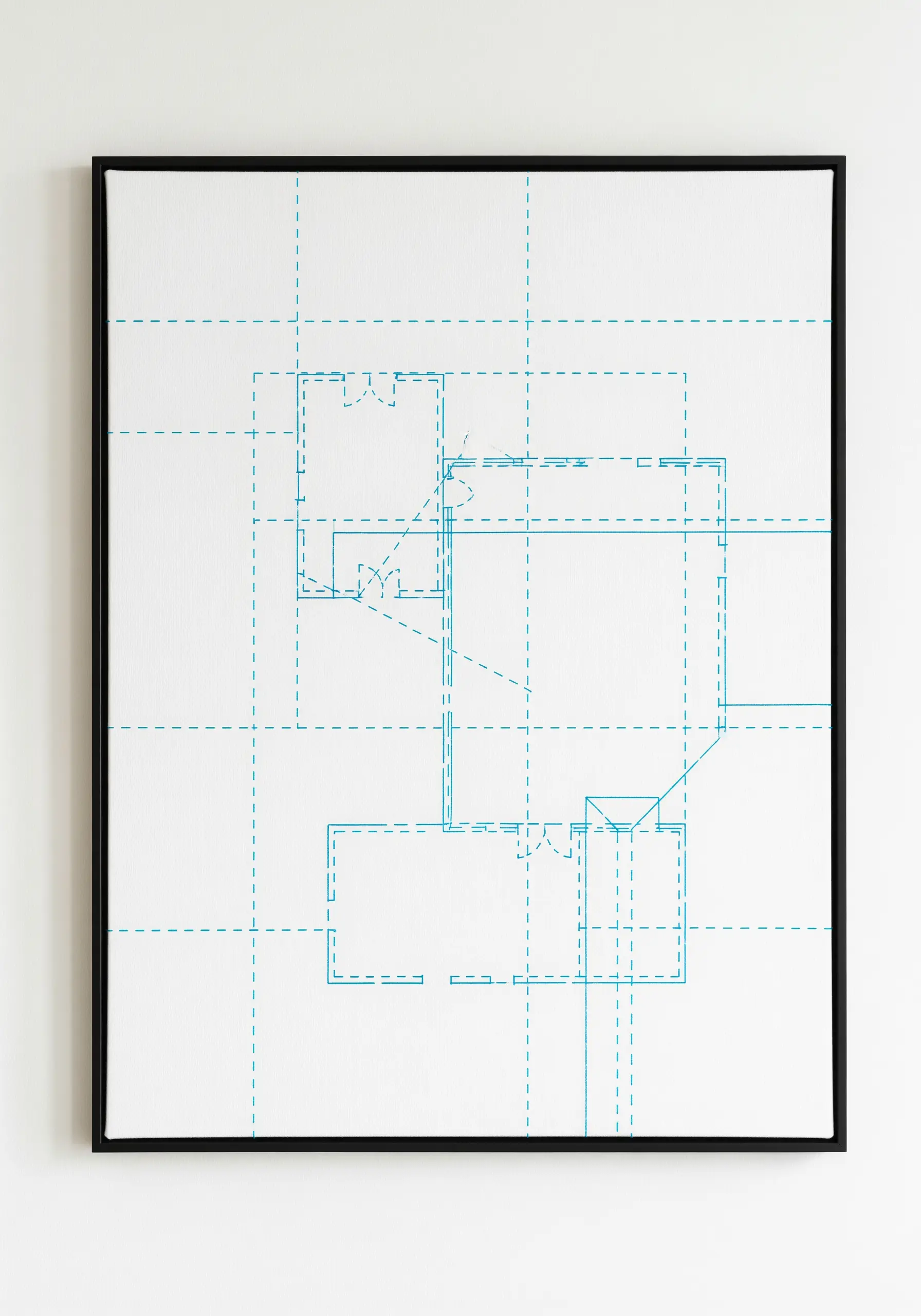
Find artistic inspiration in the technical precision of an architectural floor plan.
Transfer a simplified blueprint onto stark white canvas and use a single, bold thread color to trace the lines with a neat backstitch.
The beauty of this concept lies in removing the functional context, allowing the viewer to appreciate the pure geometry and spatial relationships of the design.
It’s a clean, intellectual take on line art, perfectly suited for modern geometric thread art ideas.
17. The Art of Controlled Chaos
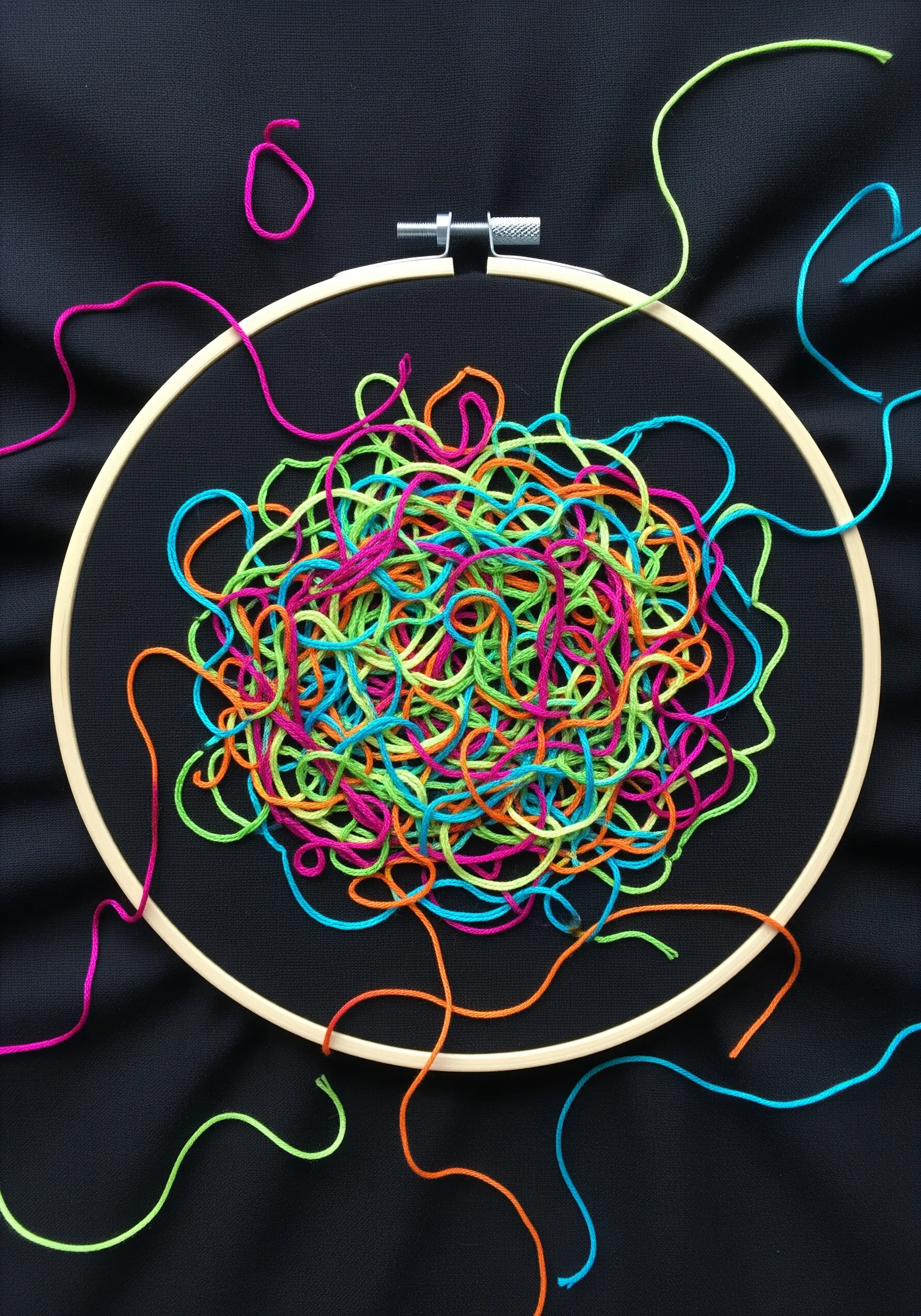
Create the illusion of a random, energetic thread splatter while maintaining complete artistic control.
Arrange a vibrant tangle of threads in the center of your hoop, playing with color and composition until you’re satisfied with the shape.
Then, using an invisible or matching color thread, secure the pile from behind with tiny, discreet tacking stitches. The threads on top remain loose and voluminous.
This method offers the expressive freedom of a scribble but results in a polished, intentional piece of art. It’s a key technique for abstract thread splatter-inspired projects.
18. Sculpting Waves with Wrapped Cording
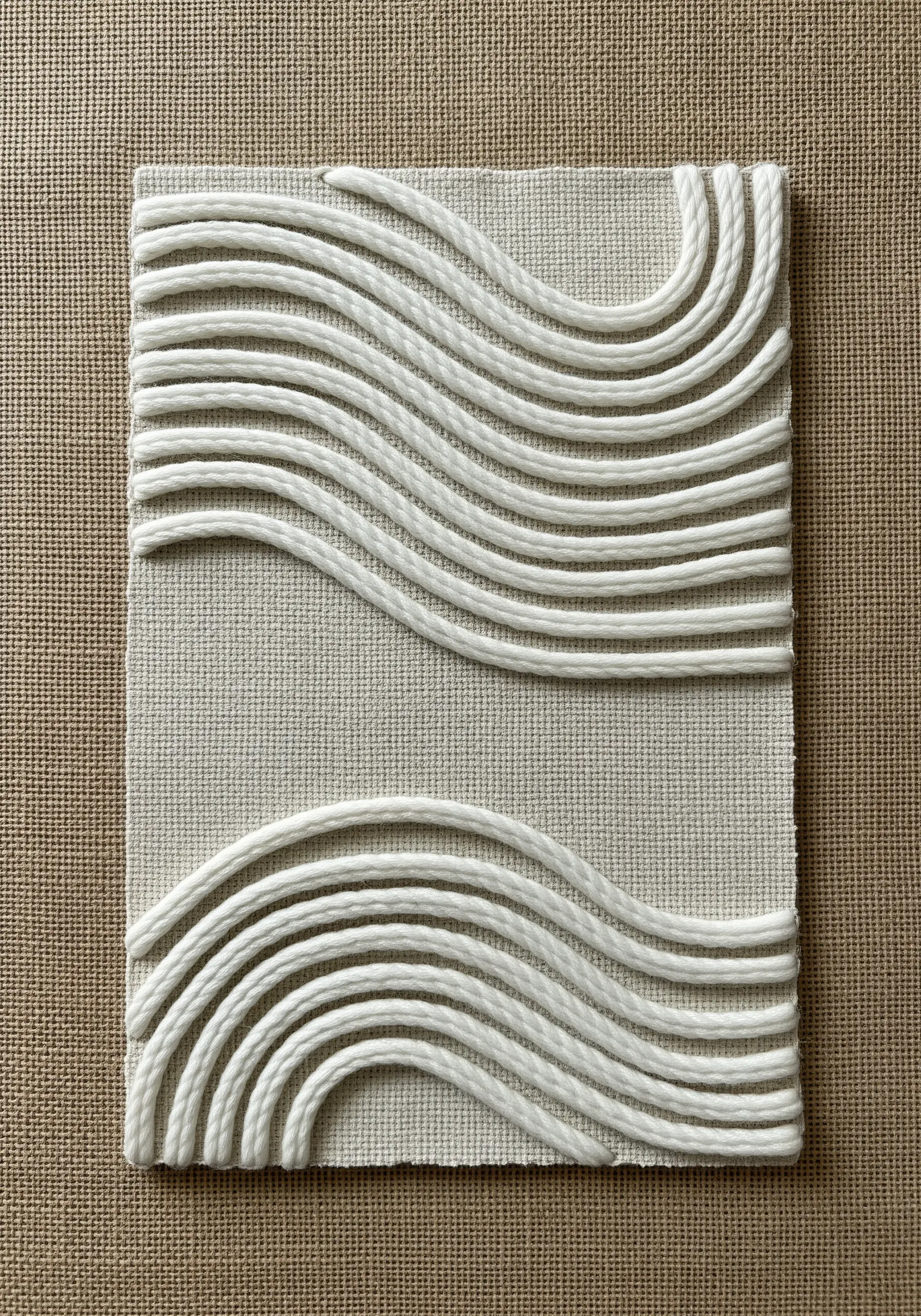
Build a stunning, high-relief surface by using thick cording as a three-dimensional base for your stitches.
First, tack down a thick cotton rope or cord onto your base fabric in a wave-like pattern.
Next, using a blunt tapestry needle, completely wrap the cord with your chosen embroidery thread, making a small stitch into the fabric every few wraps to secure it firmly.
This technique creates a weighty, sculptural effect, perfect for capturing the power and rhythm of abstract thread waves.
19. Botanical Forms: Filled, Outlined, and Deconstructed
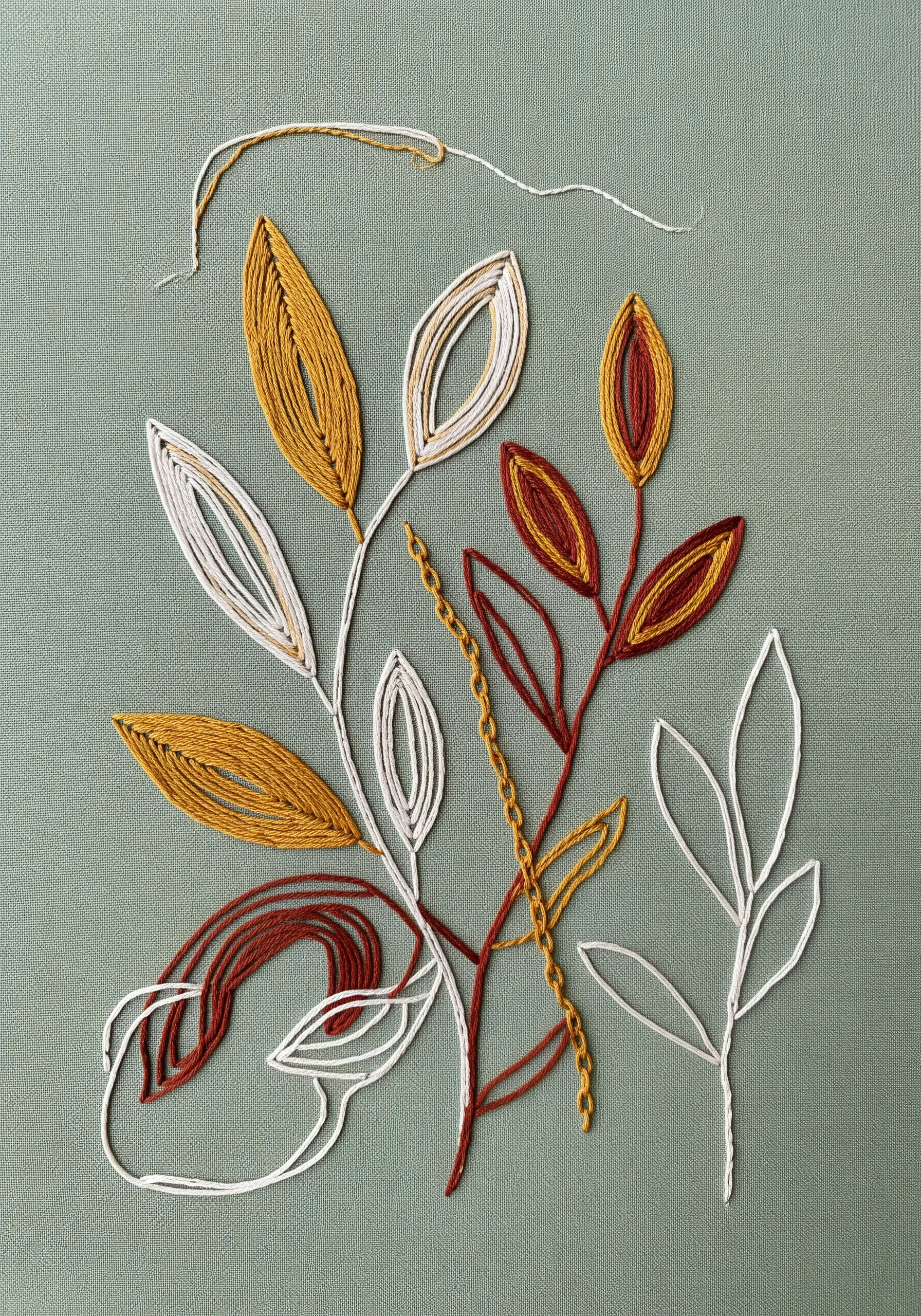
Tell a visual story within a single composition by treating the same motif in different ways.
Start with a simple botanical drawing. Fill one leaf with a perfect satin stitch, leave another as a clean backstitch outline, and allow the threads of a third to hang loose and unfinished.
This juxtaposition of finished, outlined, and deconstructed elements creates a powerful visual tension and a sense of process.
It’s a thoughtful way to explore form, turning simple abstract botanical silhouettes into a narrative piece.
20. Weaving with Thread: A Glitch in the Grid
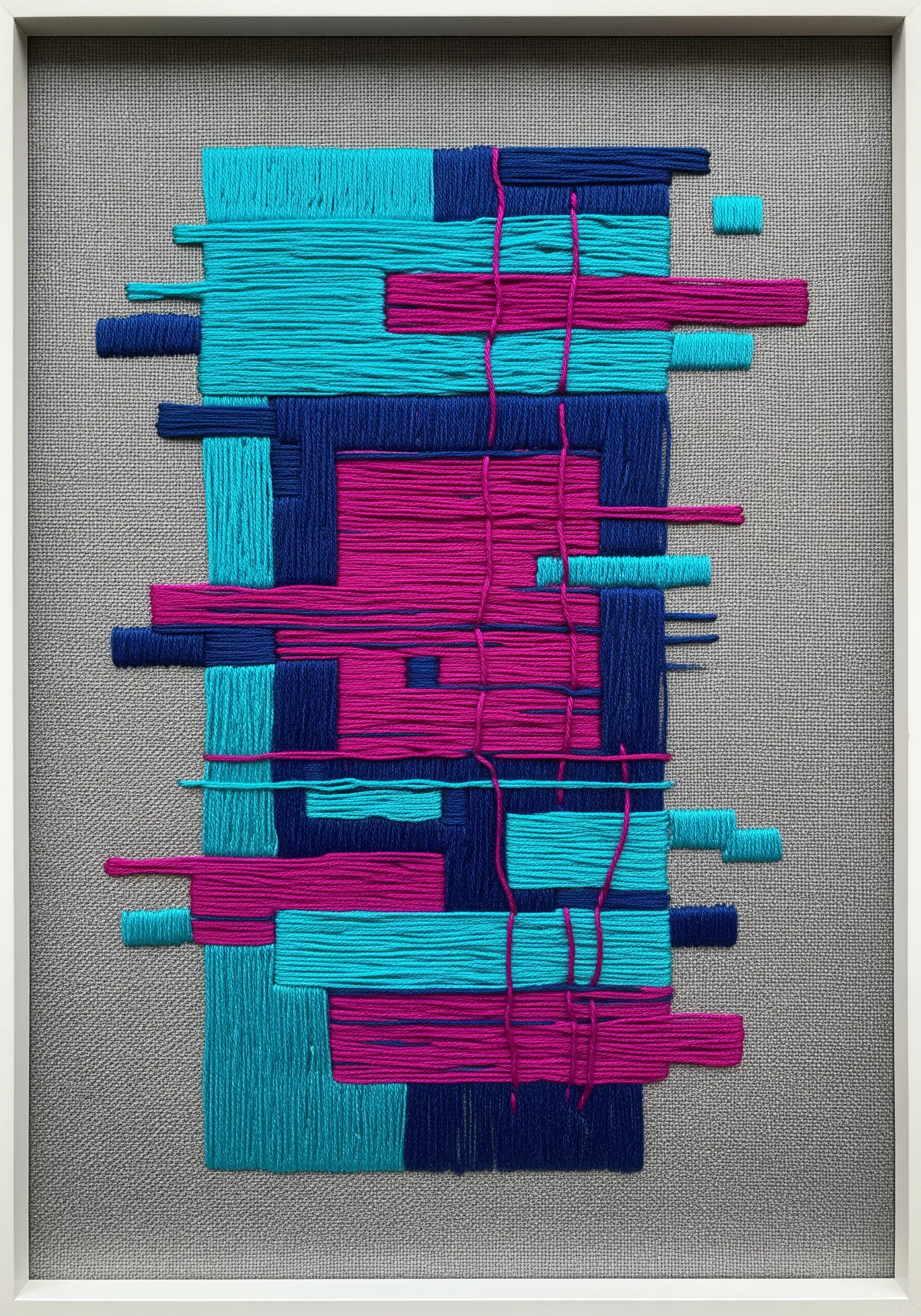
This technique creates the look of woven fabric directly on your canvas, with a modern, disruptive twist.
Lay down dense blocks of vertical straight stitches in bold colors. These are your warp threads.
Then, use a contrasting color to weave horizontally through these blocks. For a ‘glitch’ effect, occasionally pull a single weaving thread tight to cinch the vertical stitches, disrupting the perfect grid.
This interplay of order and interruption is central to many captivating abstract fabric collage embroidery ideas.
21. Painting with Knots: An Impressionistic Landscape
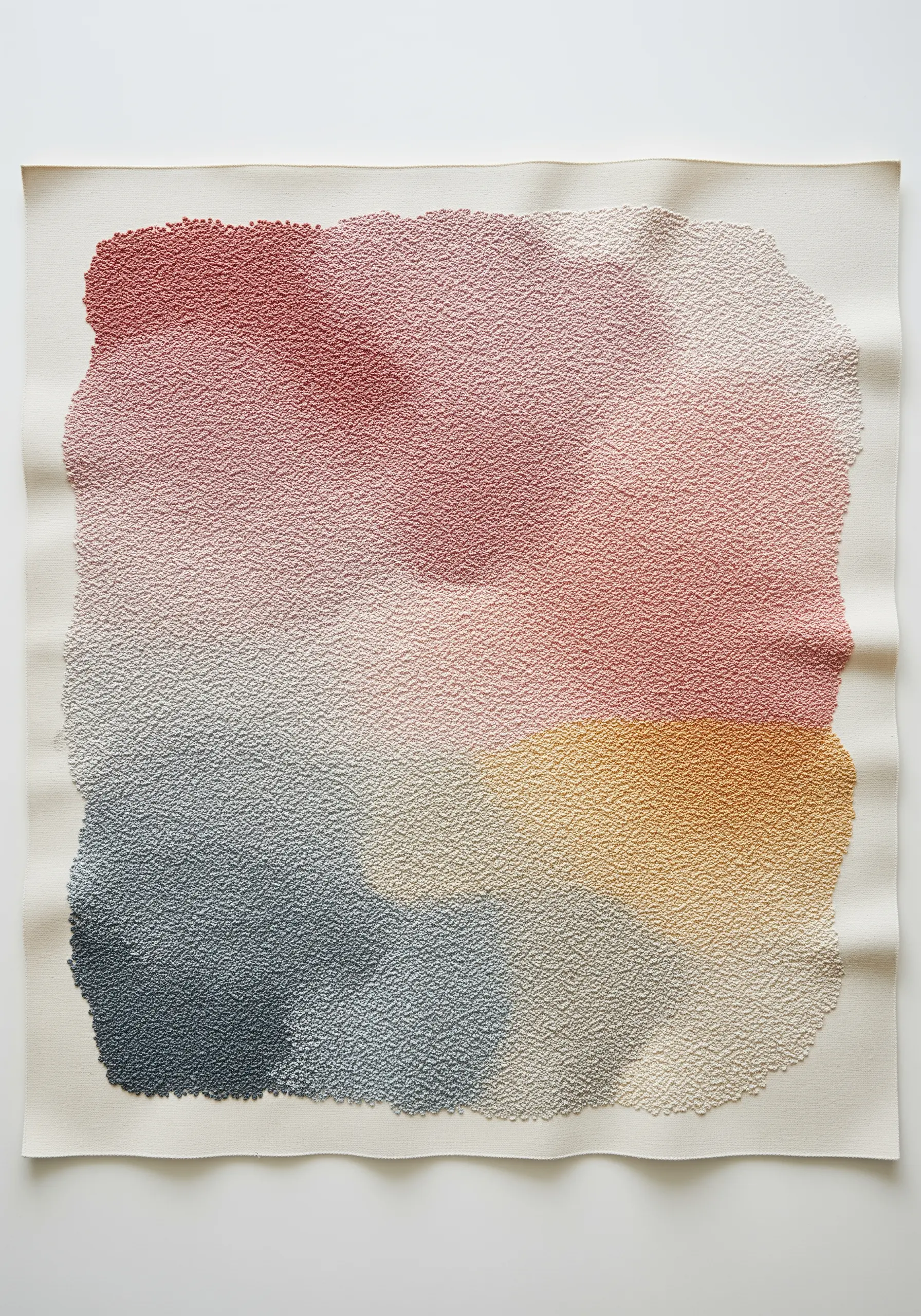
Use a dense field of French knots to create a soft, pointillist effect reminiscent of an Impressionist painting.
The magic of this technique is in the color blending. Instead of stitching solid blocks of color, allow the edges of each color field to mix and mingle.
Achieve this by scattering knots of adjacent colors into one another, creating soft, cloud-like transitions that give the piece a dreamy, atmospheric quality.
This is one of the most meditative abstract color blend stitch ideas, rewarding patience with a uniquely tactile result.
22. Transparent Layers with Thread Grids on Tulle
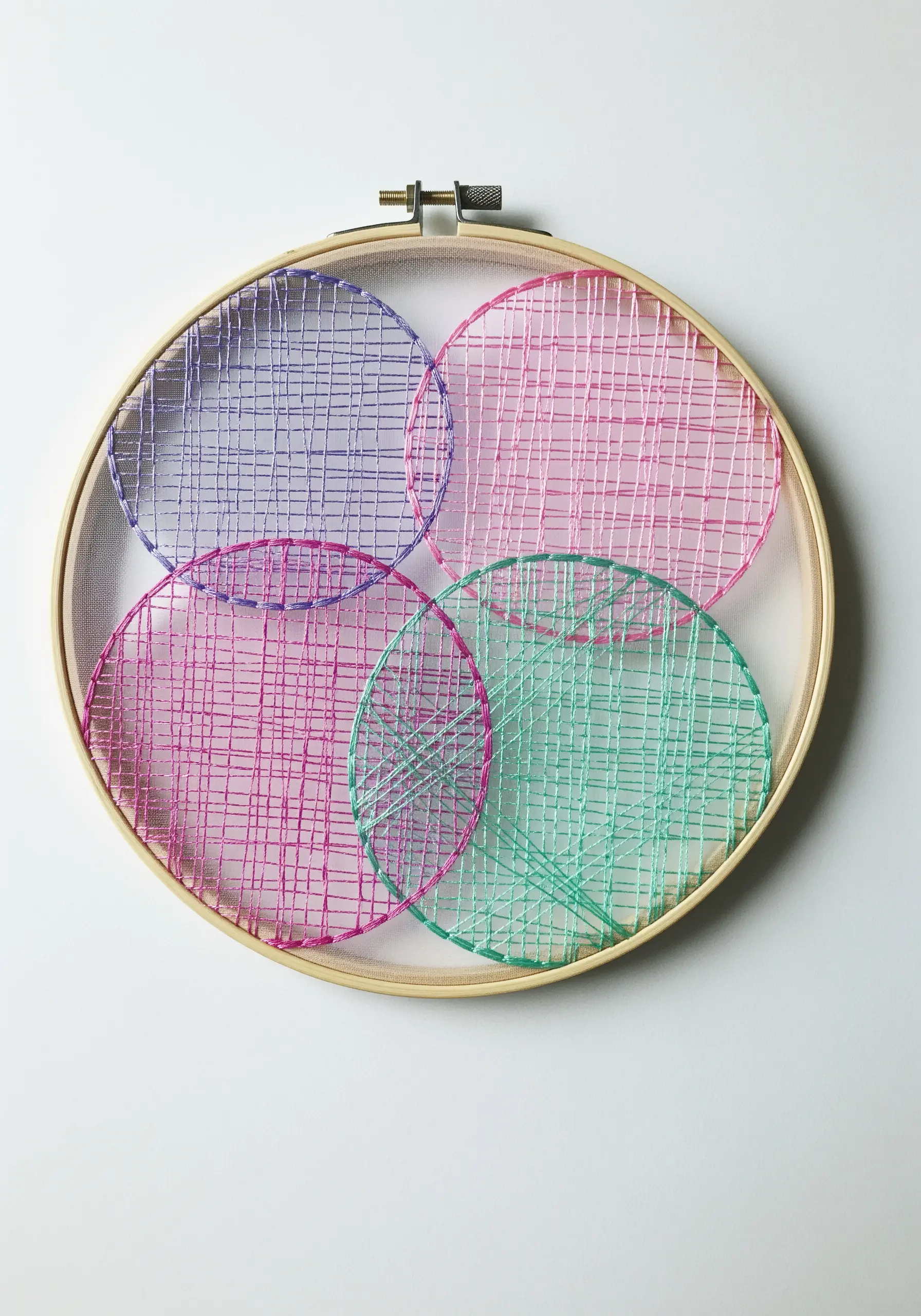
Explore transparency and depth by swapping traditional fabric for sheer tulle or organza.
Create your primary designs—like these grid-filled circles—on smaller, individual hoops or as separate appliqués.
Then, arrange and layer these semi-transparent elements within a larger hoop. Where the colors and lines overlap, new shades and more complex patterns will emerge.
This method is a cornerstone of advanced fabric collage embroidery projects using sheer fabrics, offering endless compositional possibilities.
23. A Minimalist Map of Intersecting Paths
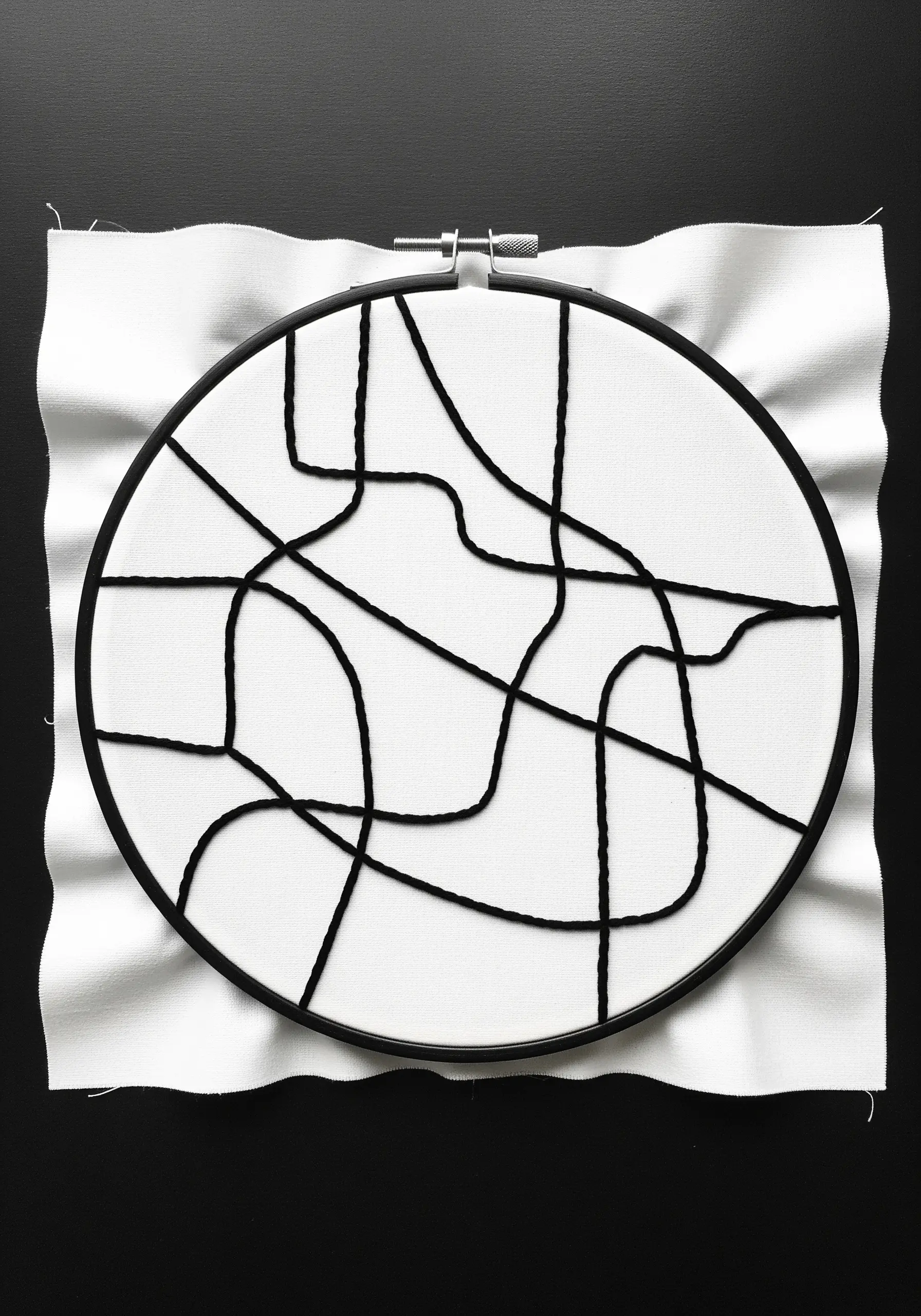
This piece focuses on the beauty of the negative space created by intersecting lines, much like a stylized city map or a Piet Mondrian painting.
Use a thick, plush yarn and the couching technique to give your lines a bold, graphic presence against the clean white fabric.
Before stitching, carefully sketch your composition. The goal is to create a sense of balanced asymmetry, where the empty shapes are just as compelling as the lines themselves.
This is a powerful execution of monochrome black thread designs where simplicity speaks volumes.
24. The Narrative Power of a Thread Scribble
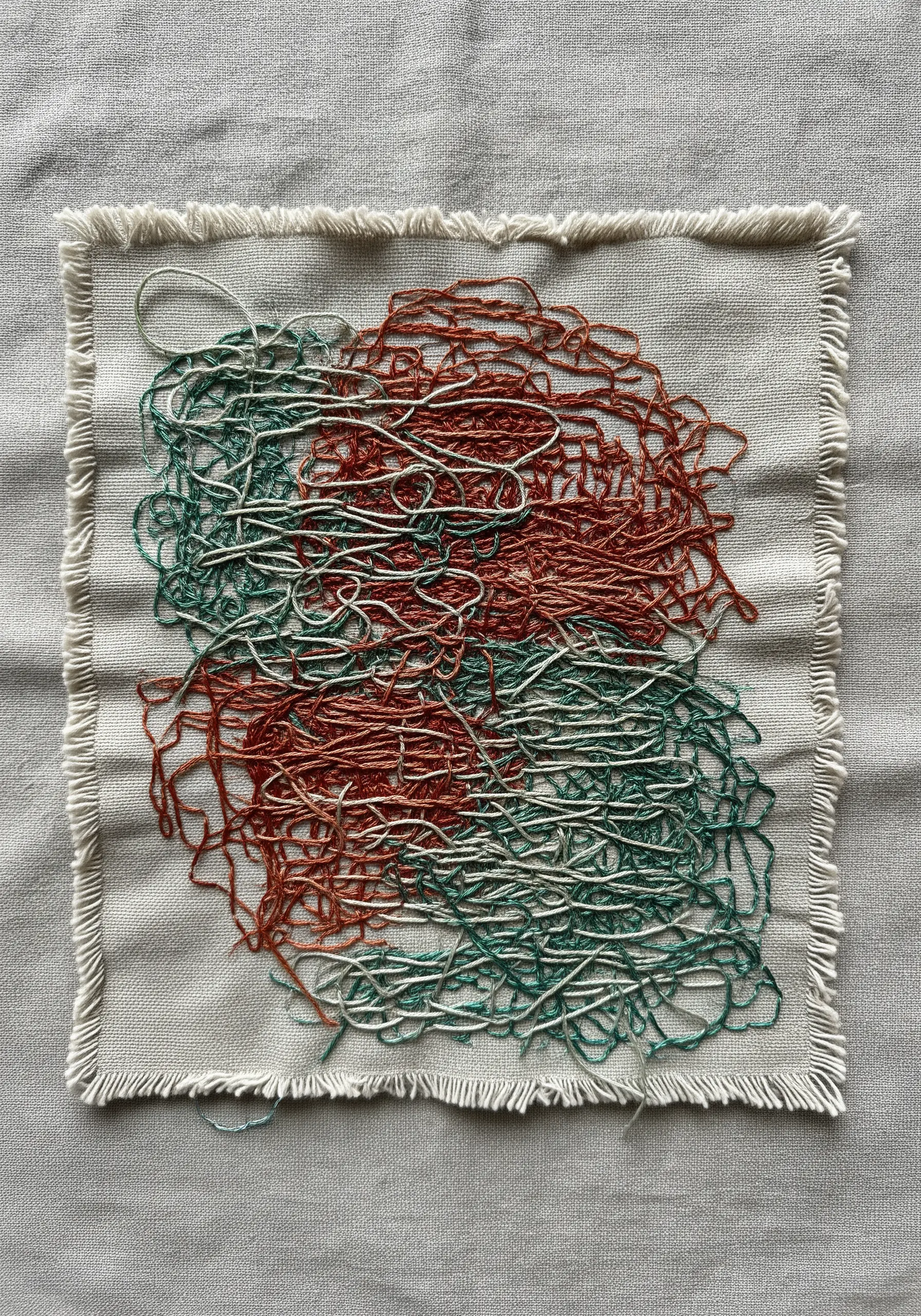
Embrace texture and imperfection with a free-form, expressive scribble stitch.
Instead of pulling stitches taut, allow your thread to loop, tangle, and overlap randomly across the fabric surface. Use a simple running stitch or couching to tack down the chaotic lines.
Define different zones within your composition by switching between two or three bold colors. The result is a raw, energetic texture that feels both spontaneous and intentional.
Finishing the piece on a raw-edged fabric square enhances its handmade, artistic aesthetic, proving that you can make incredible DIY art pieces that capture the magic of imperfection.
25. Tech-Inspired Art: The Circuit Board
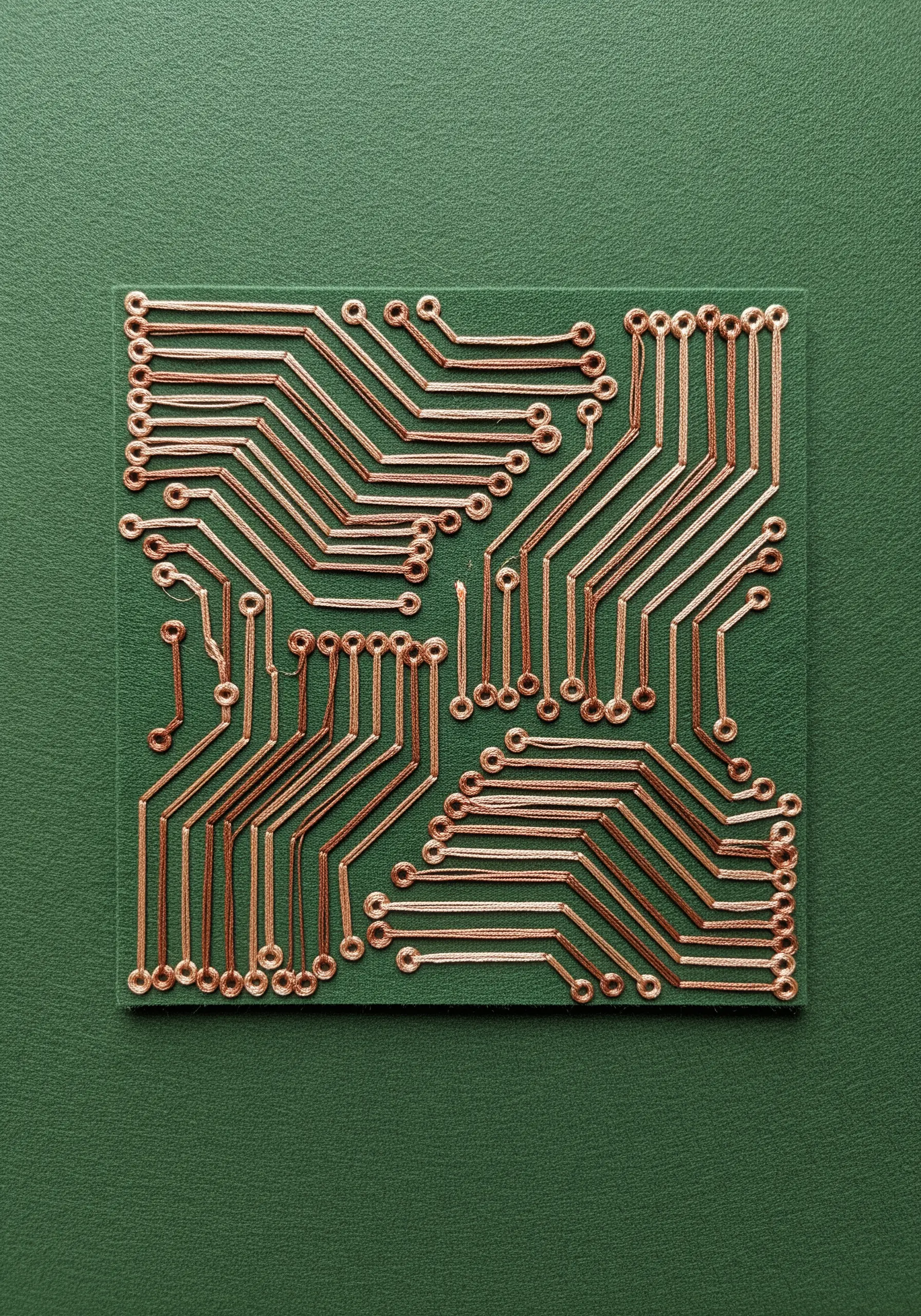
Translate the intricate, functional beauty of a circuit board into a stunning piece of fiber art.
Use a metallic copper or gold thread on a solid, saturated background like this deep green to mimic the real thing.
Precision is everything. Use a water-soluble marker and a ruler to draw your grid perfectly. Execute the pathways with neat satin stitches and the nodes with tiny, uniform French knots.
This project is a fantastic exercise in precision and control, ideal for artists who love modern grid dot stitch concepts.
26. Atmospheric Depth in a Monochrome Mountainscape
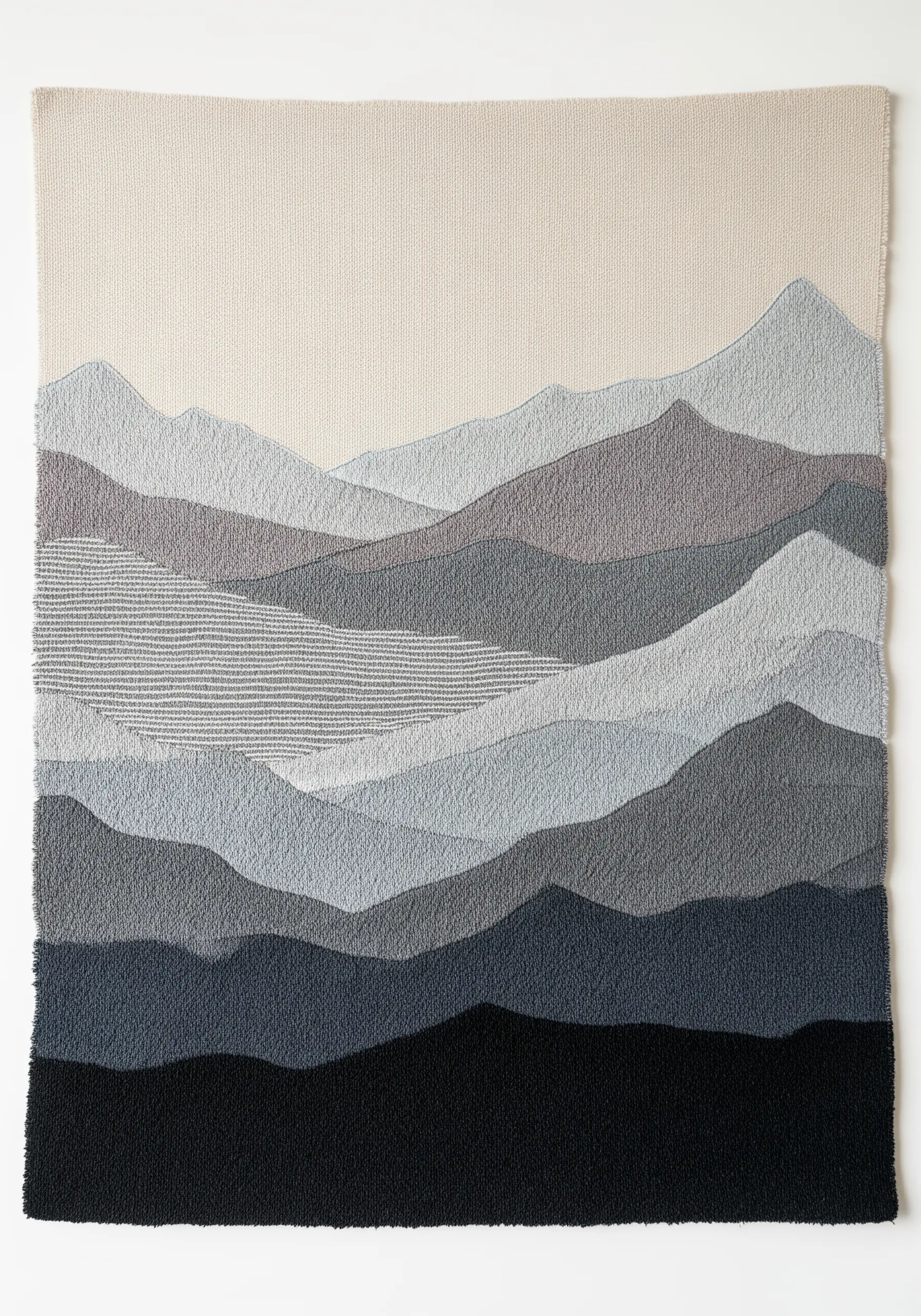
Create the illusion of a vast, misty mountain range by manipulating stitch density and direction, not just color.
Work in a limited, monochrome palette. For the most distant peaks, use sparse, horizontal seed stitches to suggest a light, foggy texture.
As you move into the foreground, make your stitches denser and more varied. Introduce sections of vertical satin stitch or dense cross-hatching to create weight and detail.
This layering of textures is what builds a powerful sense of atmospheric perspective, perfect for those who love monochrome embroidery ideas.
27. The Tactile Mandala: A Study in Texture
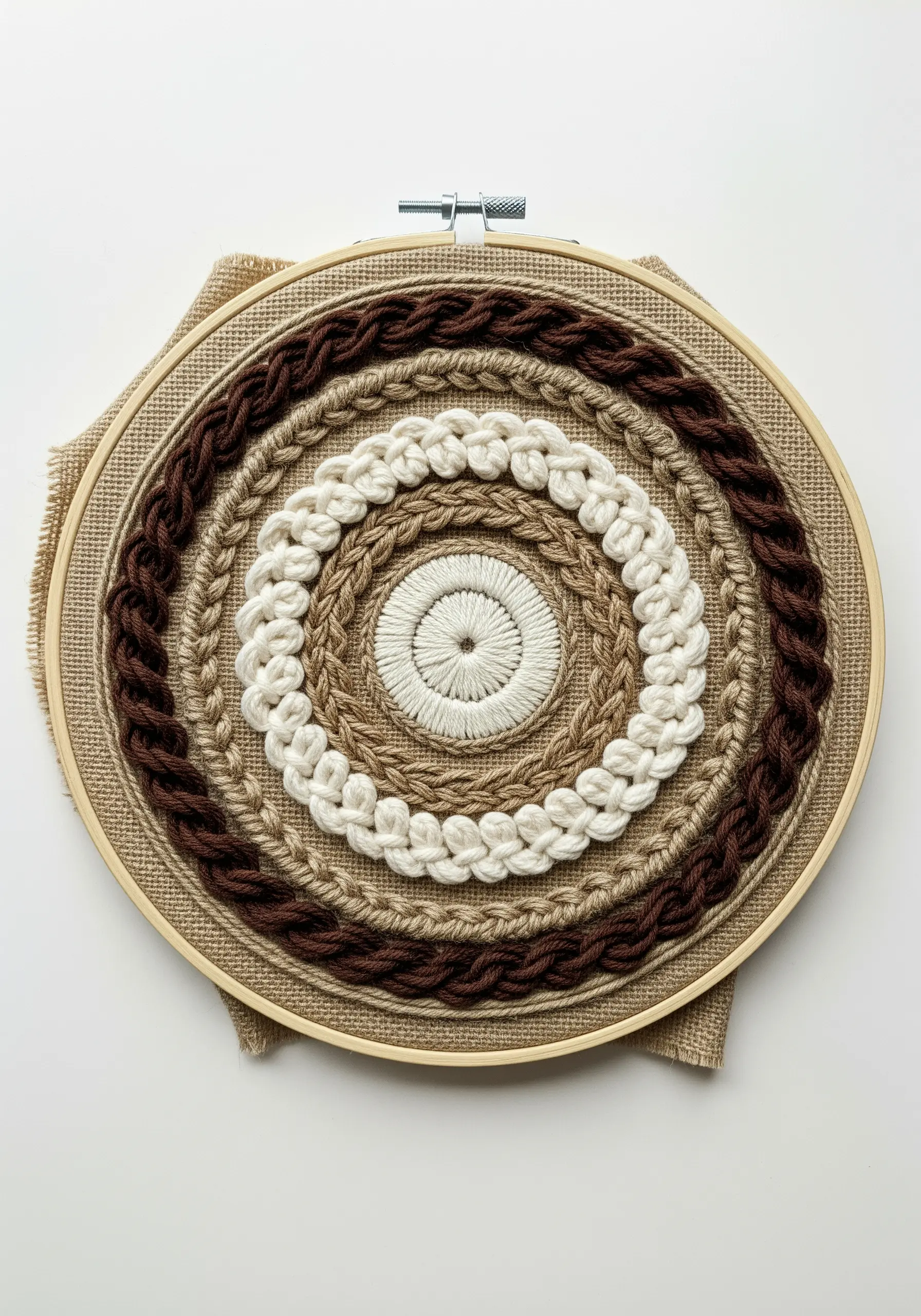
Elevate the classic mandala by building it with a variety of rich, dimensional fiber techniques.
Design your mandala in concentric circles, dedicating each ring to a different texture. Combine a smooth satin stitch center with a circle of thick, couched braids, a ring of looped bullion knots, and a border of chunky chain stitches.
Sticking to an earthy, neutral color palette ensures that the focus remains entirely on the captivating interplay of different textures.
This approach turns meditative stitching into a deeply tactile experience, perfect for creating neutral mandala embroidery patterns.