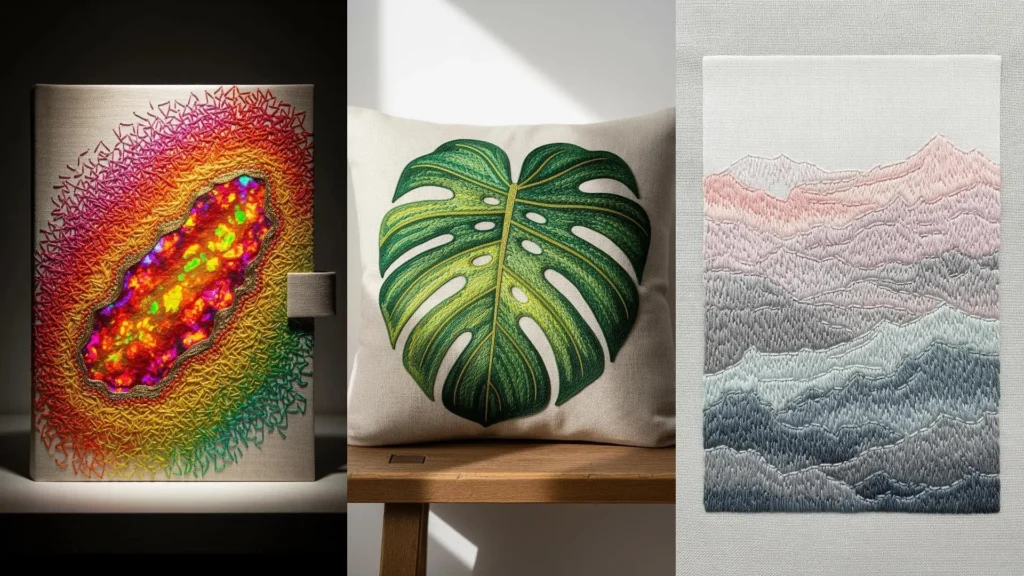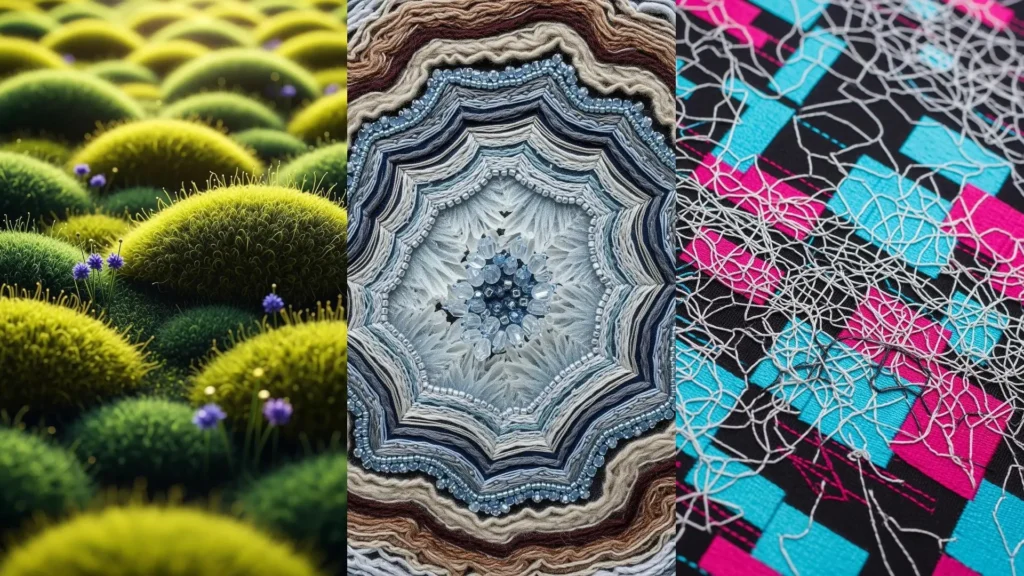
Perhaps you’ve mastered the satin stitch and your backstitch is flawless, but you feel a pull toward something more. You look at your hoop and see the potential for depth, for texture that begs to be touched, for art that feels truly alive.
This is your invitation to think of thread not just as a line of color, but as a sculptural material. By layering threads, yarns, and even unconventional fibers, you can move beyond the flat plane of the fabric and build worlds with tangible dimension. It’s about letting go of perfection and embracing the controlled chaos of texture.
Here, you won’t find complicated patterns. Instead, you’ll discover techniques that empower you to experiment. Each idea is a starting point, a way to see your needle and thread as tools for creating form, shadow, and mind-bending effects that transform your work from craft into art.
1. Construct Architectural Forms with Padded Satin Stitch
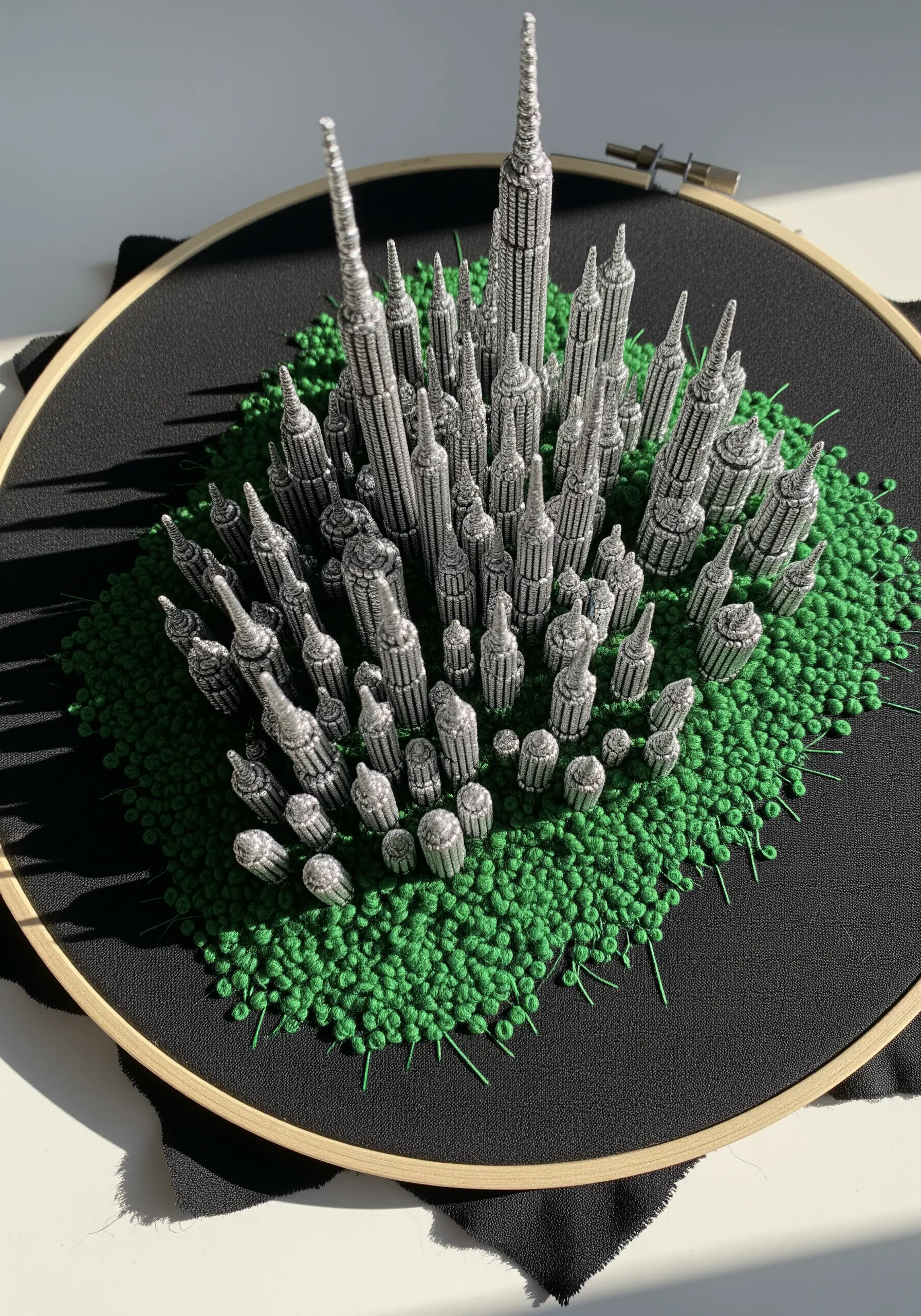
To build sculptural height, create a dense underlayer of felt padding or stacked straight stitches before covering it with satin stitch.
Use a high-sheen or metallic thread for the final layer; its smooth surface catches the light, emphasizing the three-dimensional form and creating a solid, architectural look.
For the surrounding texture, use dense French knots in a contrasting color and finish, like matte cotton, to make your raised structures appear even more prominent.
This method transforms simple stitches into abstract thread-sculpt designs that literally stand off the fabric.
2. Weave Optical Illusions with Strategic Color Blocking
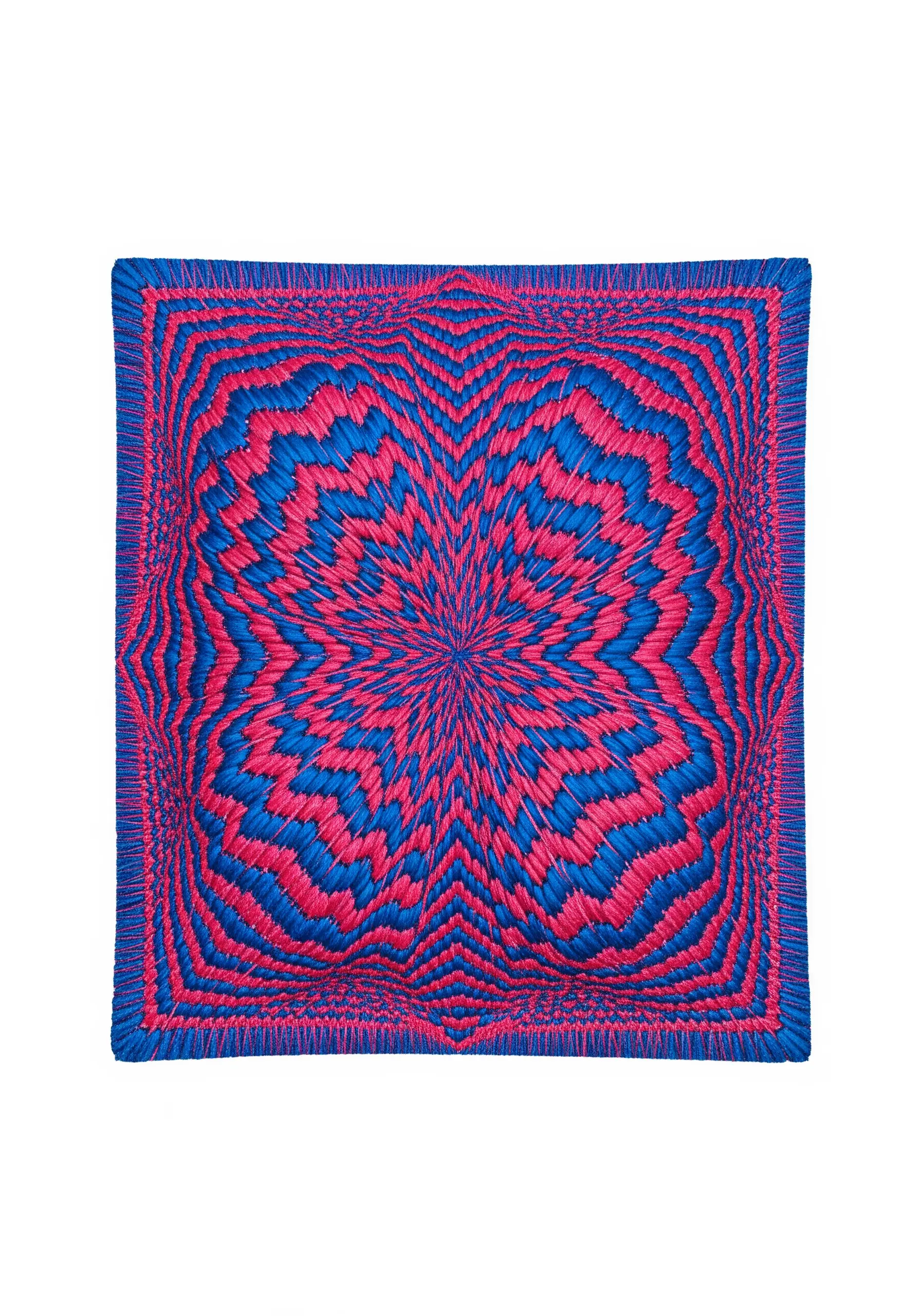
Create the illusion of a warped, three-dimensional surface by using just two high-contrast colors in a precise geometric pattern.
Work with long, directional satin stitches, ensuring each stitch lies perfectly beside the next without any gaps.
The key is the strategic placement of color—alternating between the two shades forces the eye to perceive depth and movement where there is none.
These abstract optical illusion stitches are most effective when your stitch tension is perfectly even, creating a flawless, unified surface.
3. Create Organic Pods with Woven Roving and Yarn
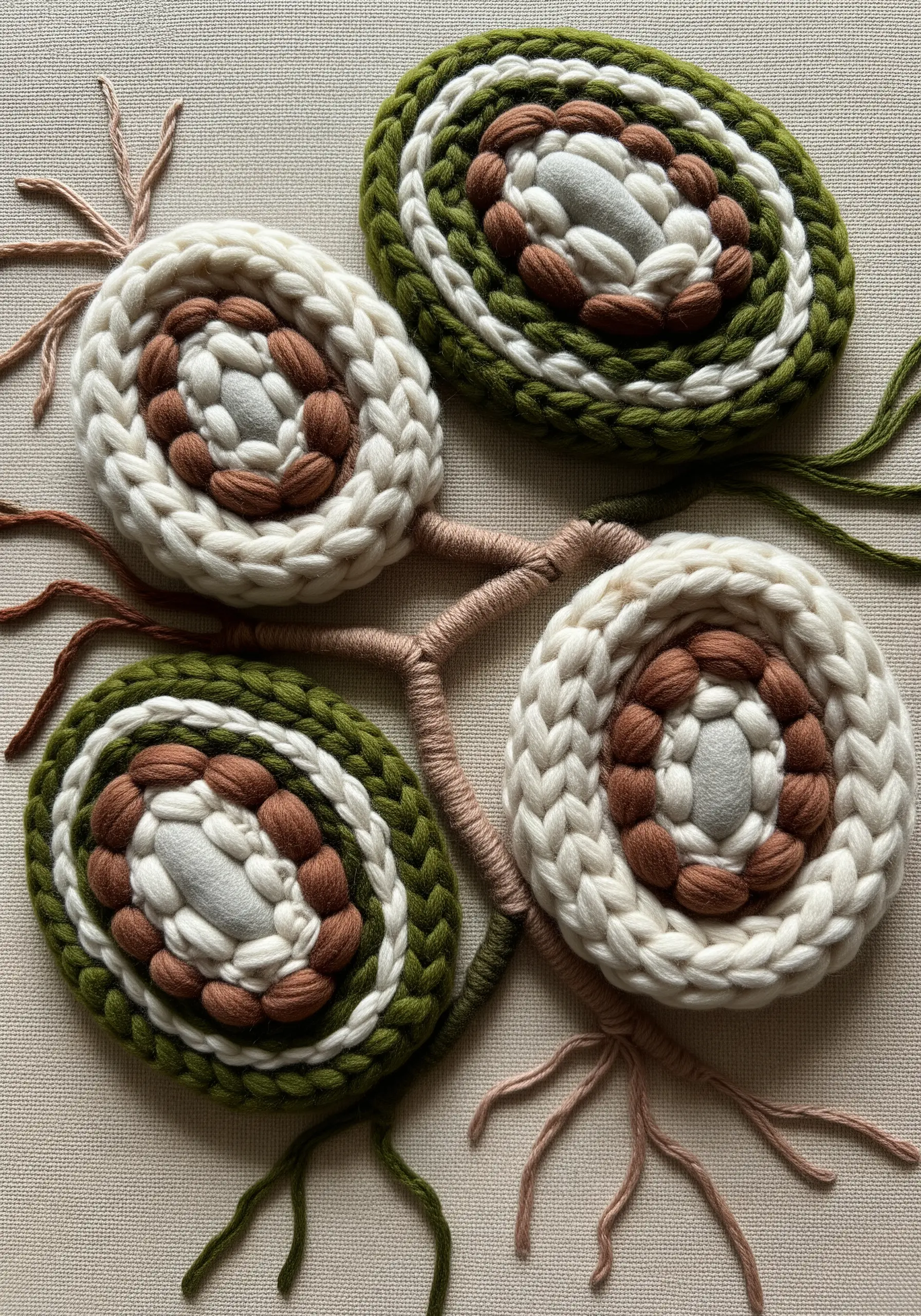
Move beyond floss by incorporating thick wool roving or chunky yarn into your work for immediate, bold texture.
Create a base of long spoke stitches (like the spokes of a wheel) and then weave your thick fiber over and under them in a circular pattern.
Vary the thickness of the yarn and the tightness of the weave within a single piece to create organic, concentric rings.
This is one of the most satisfying must-try natural texture embroidery ideas for adding warmth and a tactile quality to your wall art.
4. Spiral Threads and Beads for a Galactic Effect
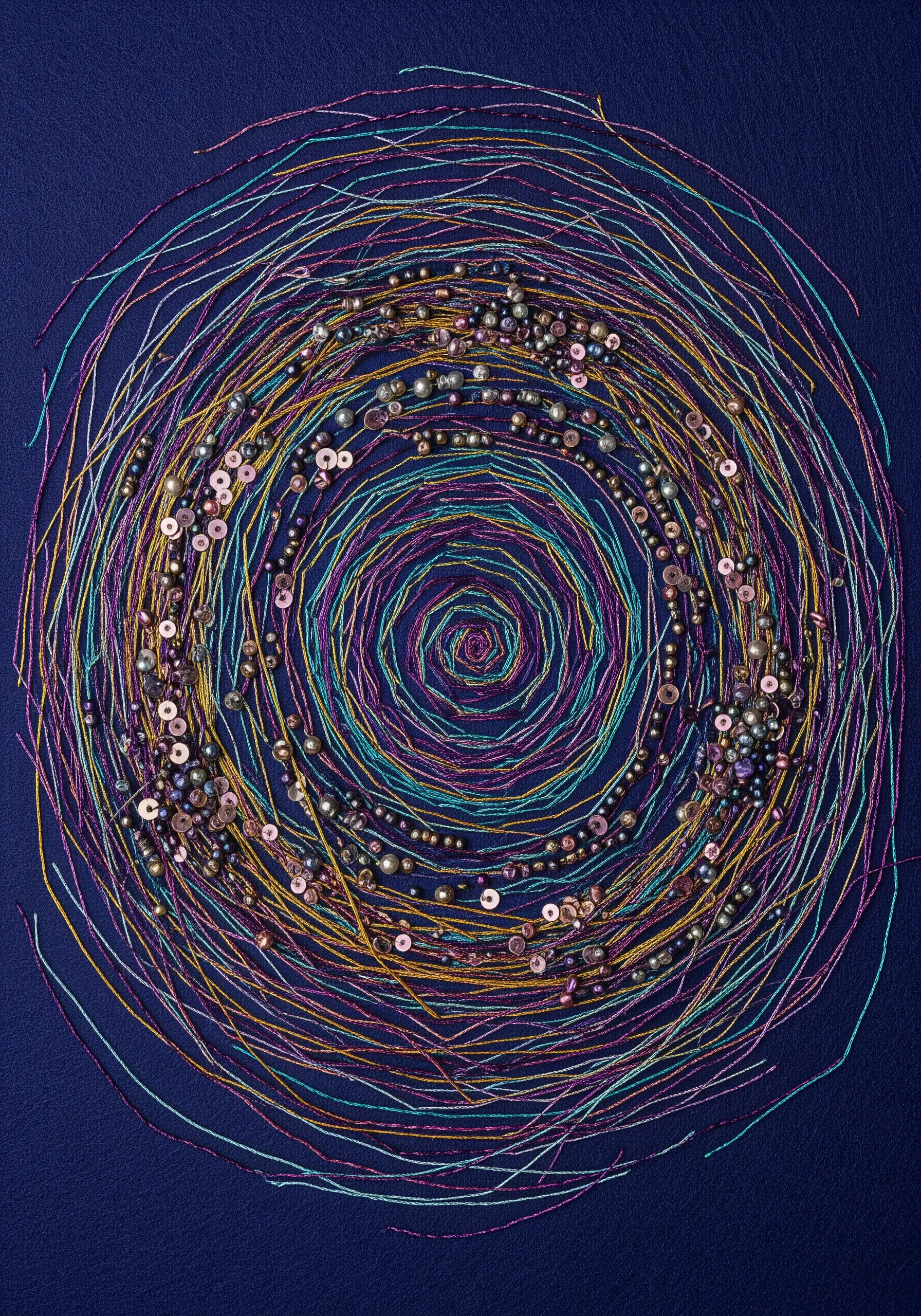
Instead of stitching a line, couch down multiple strands of thread at once to create a textured, spiraling galaxy.
Use several different colors and types of thread—like metallic, variegated, and matte cotton—held together as one unit.
As you couch the bundle down with a finer, near-invisible thread, pause intermittently to string on seed beads, sequins, or freshwater pearls.
These shimmering additions break up the linear pattern and give your work a scattered, cosmic feel, perfect for abstract metallic thread embroidery concepts.
5. Layer Deconstructed Fabrics for Raw, Abstract Collages
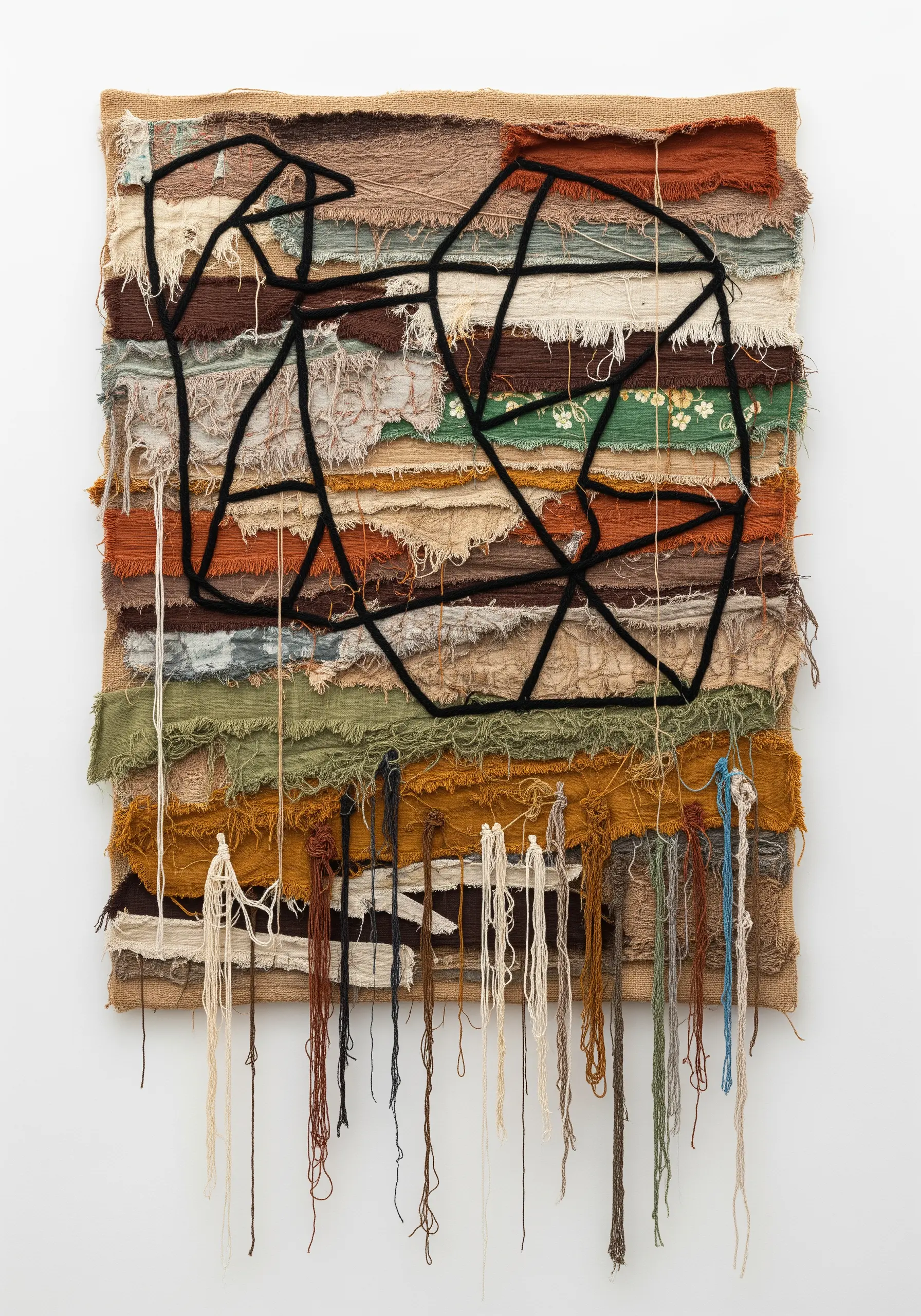
Build a composition from torn strips of fabric, embracing frayed edges and imperfections for an expressive, layered look.
Arrange the fabric scraps on a burlap or heavy canvas base, pinning them loosely in place.
Then, use a thick, contrasting thread like black yarn to add bold, graphic line work over the top, securing the layers together with large, gestural stitches.
This technique is central to creating upcycled fabric wall art projects that feel both rustic and contemporary.
6. Mimic Geodes with Beads, Crystals, and Braided Cords
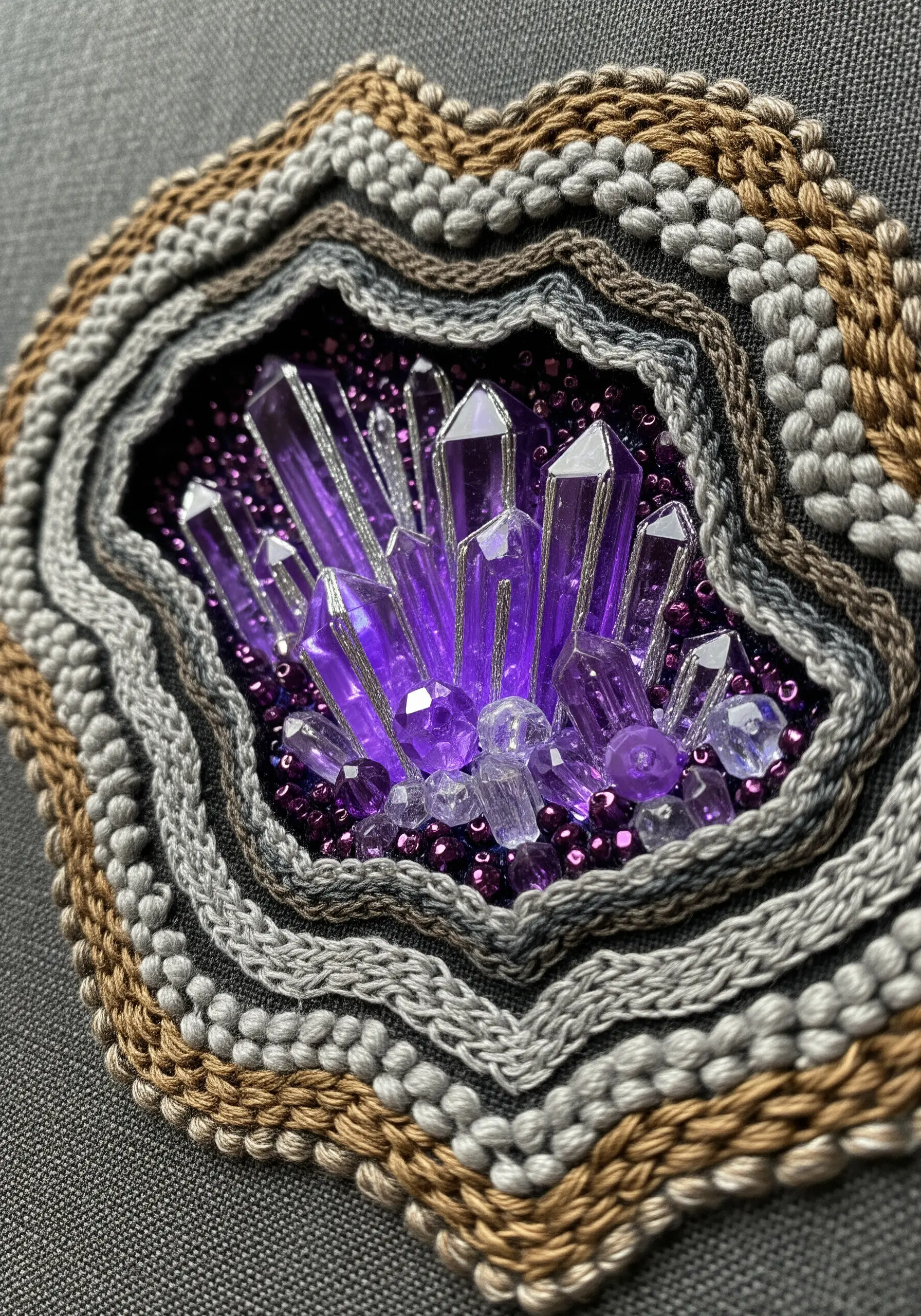
Recreate the texture of a crystal geode by combining beading with dimensional stitches.
Fill the center with a dense cluster of crystal beads and seed beads to imitate crystalline structures.
For the surrounding layers, use heavily textured stitches like bullion knots or braided chain stitch in concentric rings, mimicking the rough exterior of the rock.
These contemporary texture techniques to create raised, sculptural embroidery effects allow you to translate natural formations into fiber art.
7. Create Ghostly Layers with Sheer Fabrics
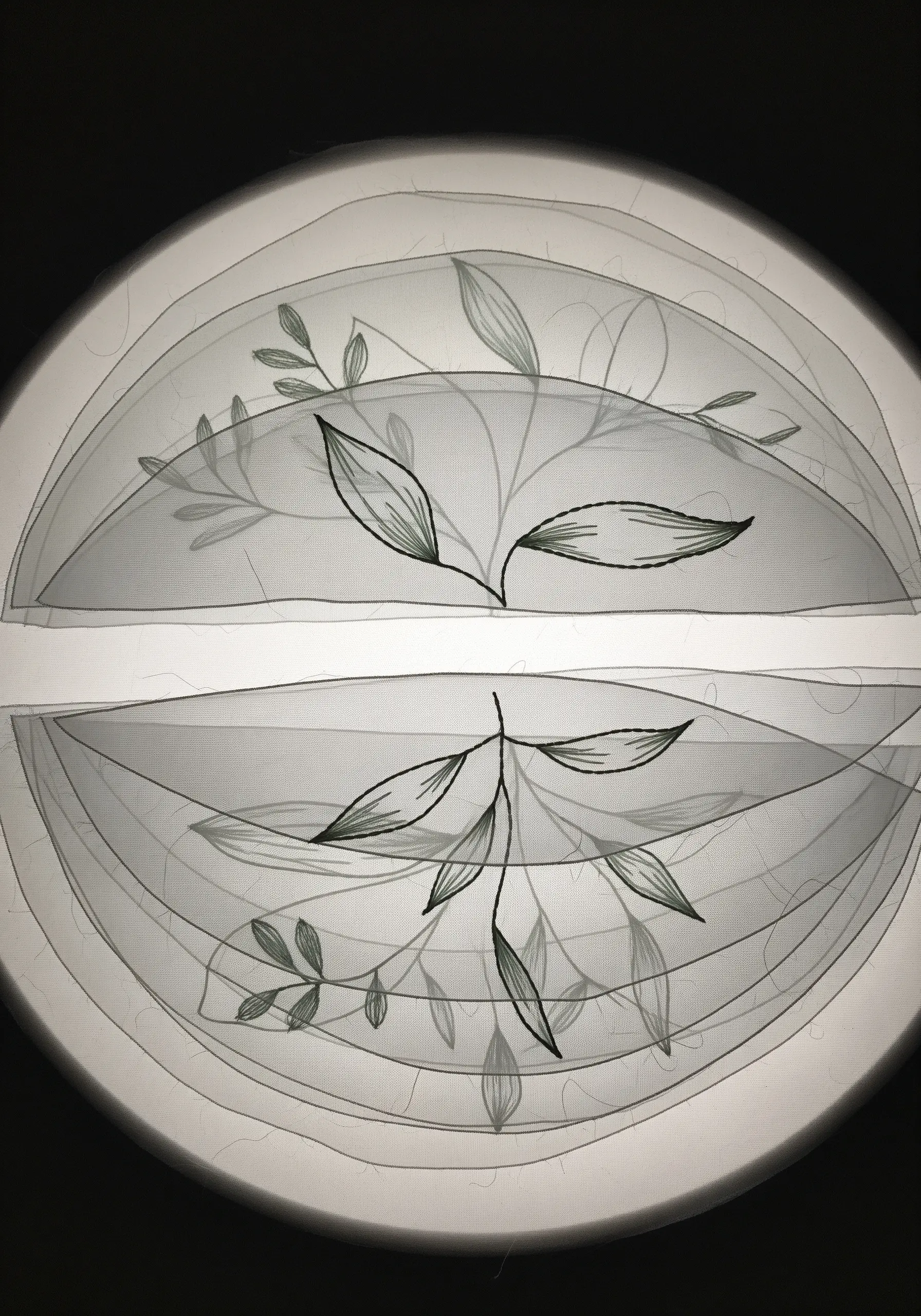
Stitch on multiple layers of translucent fabric like organza or tulle to add ethereal depth to your designs.
Hoop several pieces of sheer fabric together, one on top of the other, and stitch your motif through all layers.
You can also stitch different elements on separate layers, creating a floating, multi-dimensional effect where motifs overlap and interact in subtle ways.
This is a core technique in fabric collage embroidery projects using sheer fabrics for achieving a dreamy, layered aesthetic.
8. Sculpt Viscous Textures with Couching and Puffy Paint
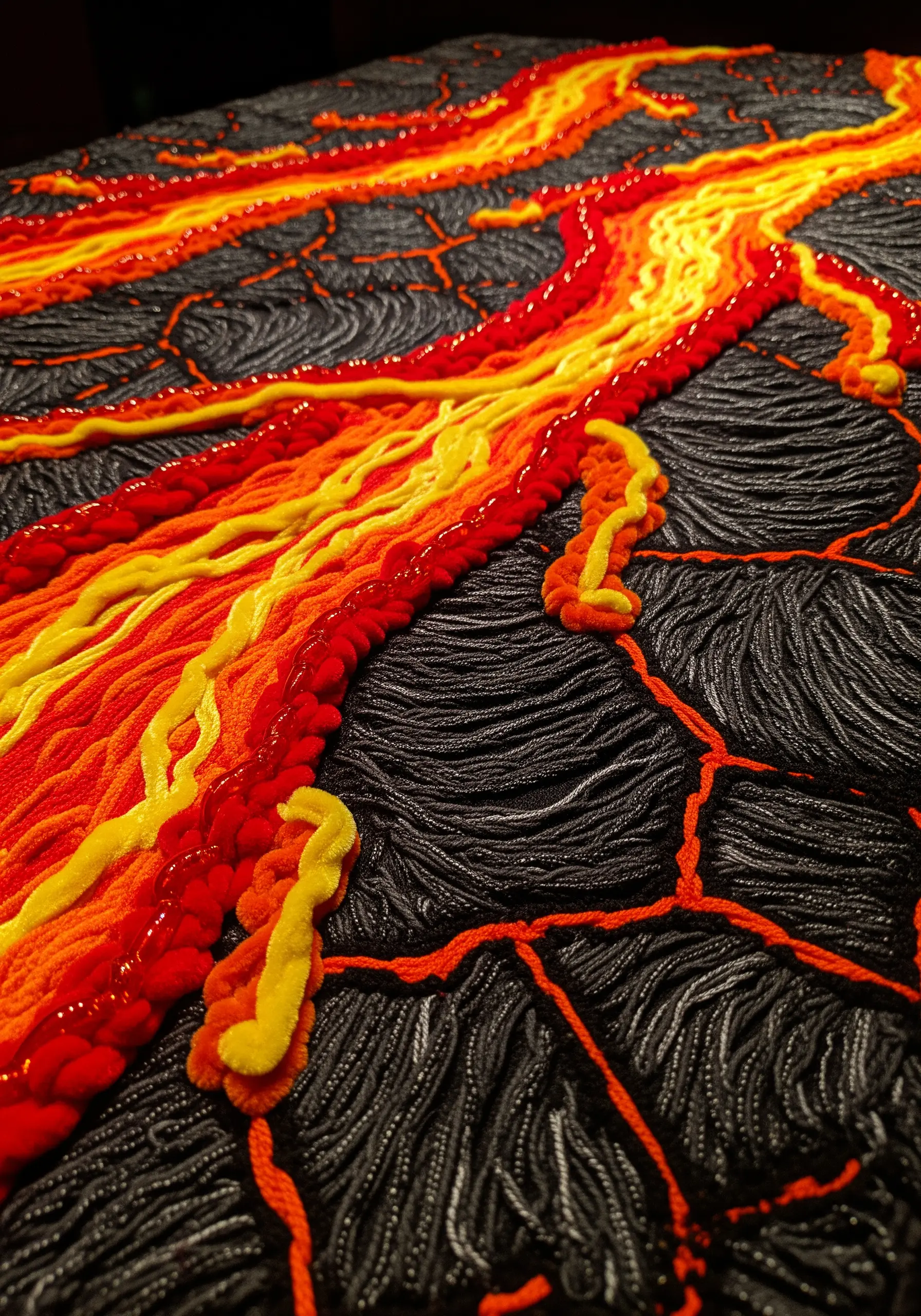
Simulate the thick, flowing movement of lava or paint by couching down bundles of thick, soft yarn.
Use a vibrant gradient of colors, from yellow to deep red, to enhance the sense of heat and motion.
For a wet, glossy finish, carefully apply a clear or colored dimensional fabric paint (like Puffy Paint) over select areas of the yarn.
This mixed-media approach is perfect for abstract thread-splatter inspired projects that feel dynamic and alive.
9. Build a Plush Surface with a Turkey Work Gradient
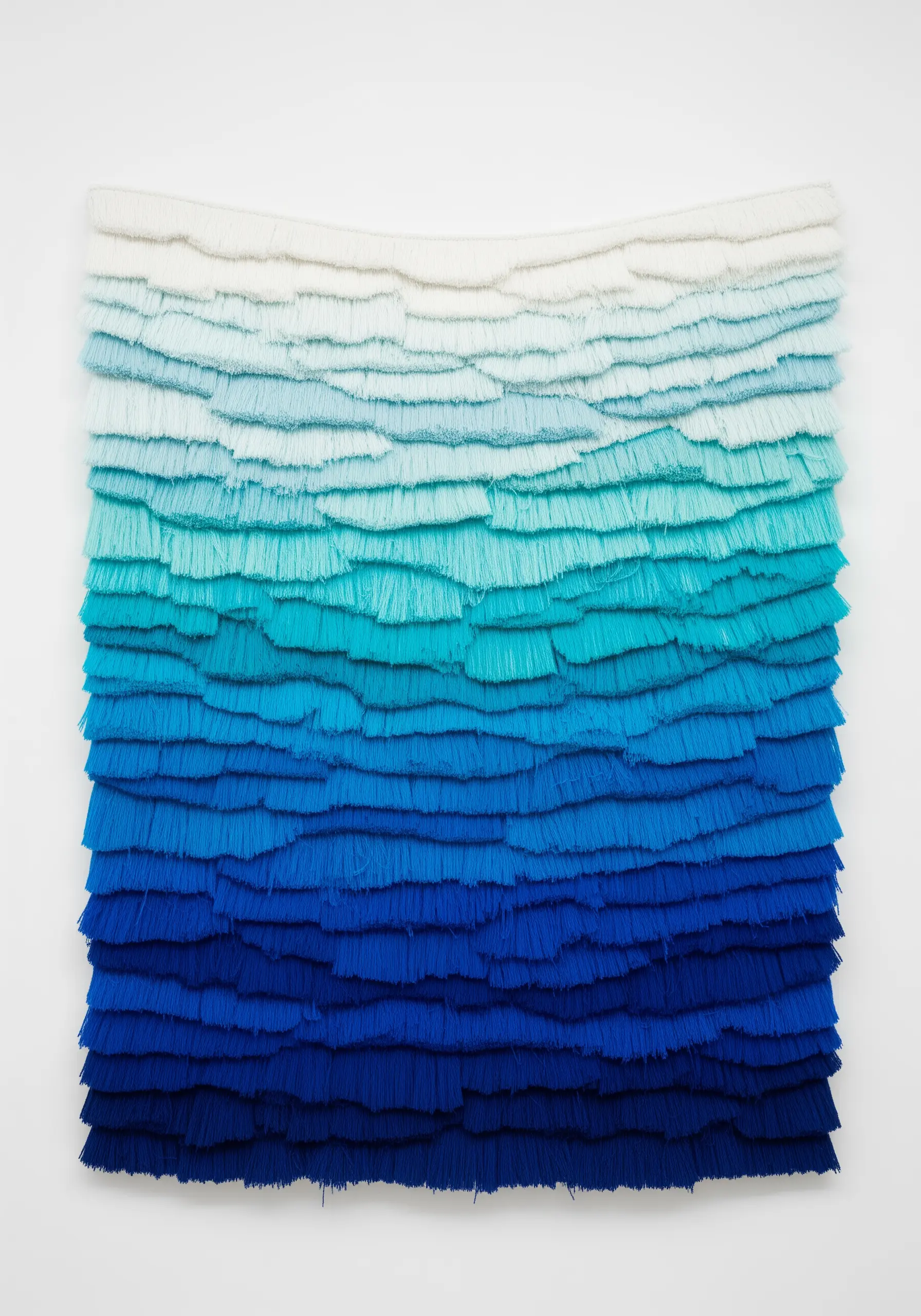
The Turkey work stitch (or Ghiordes knot) allows you to create a pile similar to a rug, which you can then trim to your desired length.
Work in horizontal rows, transitioning your thread color gradually from light to dark to create a smooth ombré effect.
Once all the loops are stitched, use sharp scissors to carefully trim the pile to a uniform height, revealing a dense, velvety texture.
This method is ideal for gentle gradient embroidery designs that are wonderfully tactile and visually soft.
10. Cast a Thread Net with Water-Soluble Stabilizer
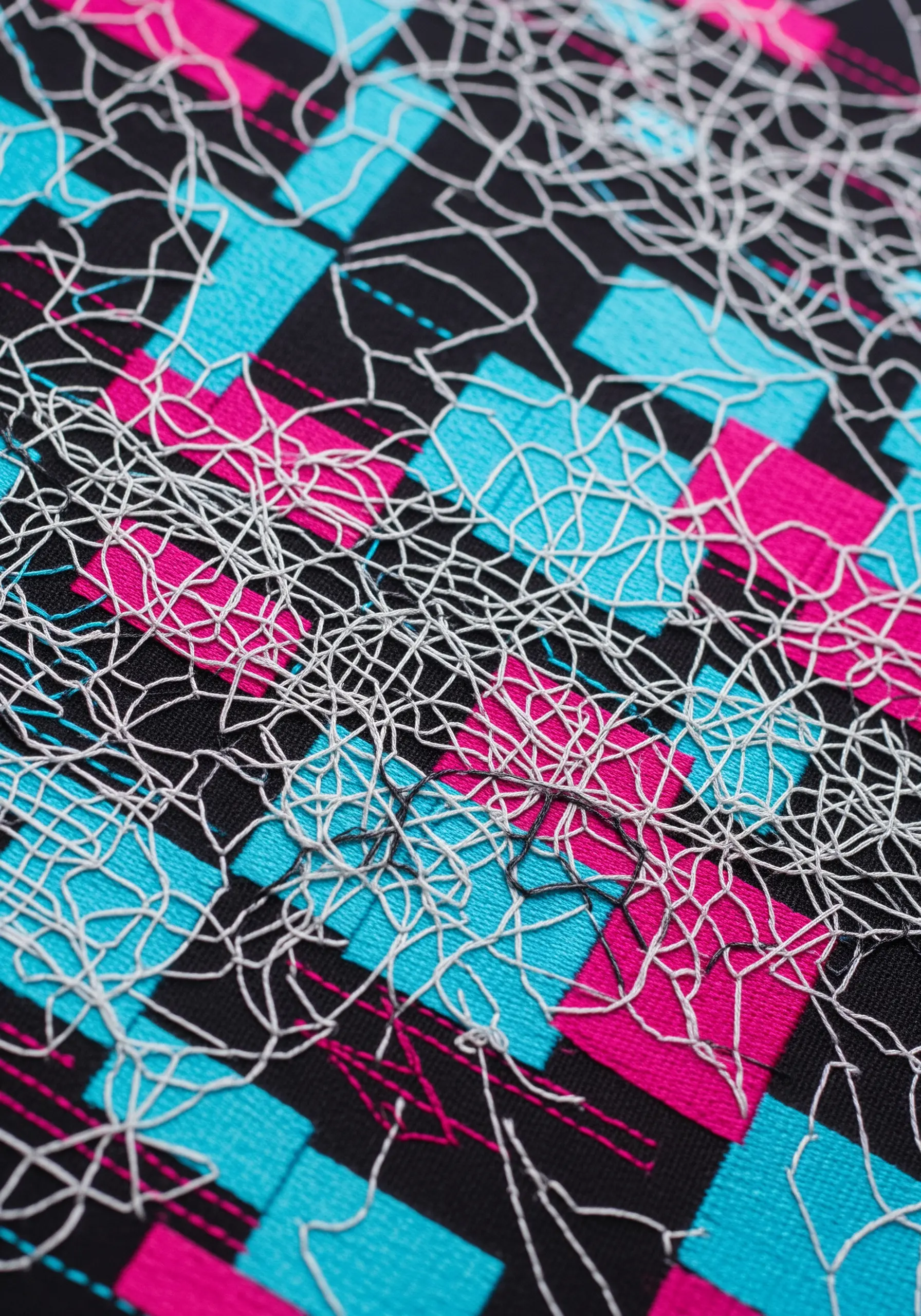
Create a delicate, web-like overlay by stitching freely onto a layer of water-soluble stabilizer placed over your main fabric.
Use a sewing machine for free-motion stitching or create a dense network of random hand stitches, ensuring the lines intersect frequently to create a stable structure.
When you are finished, dissolve the stabilizer in water, leaving behind only the thread lace, which drapes over the background fabric.
This technique elevates modern grid-dot stitch concepts by adding a layer of controlled chaos.
11. Layer Felt Appliqué for Bold, Graphic Shapes
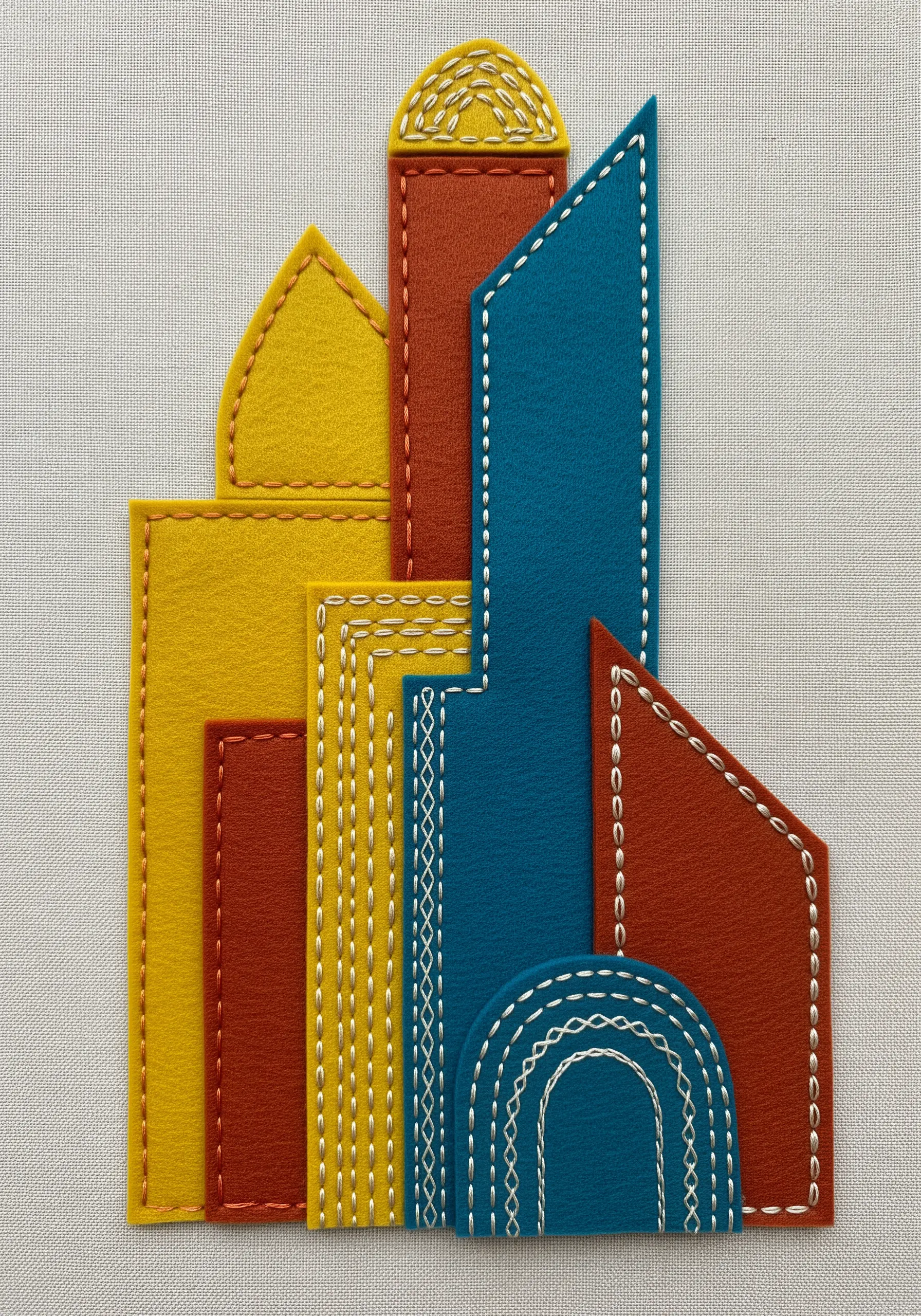
Use felt as a base for your stitching to introduce solid blocks of color and instant dimension.
Cut your felt into clean, geometric shapes and arrange them in overlapping layers on your background fabric.
Secure the pieces with decorative stitches like running stitch or chain stitch, using a contrasting thread color to create graphic outlines that become part of the design itself.
This is one of the most clever ways to combine fabric and thread for stunning art with a clean, modern aesthetic.
12. Create Pointillist Landscapes with Dense French Knots
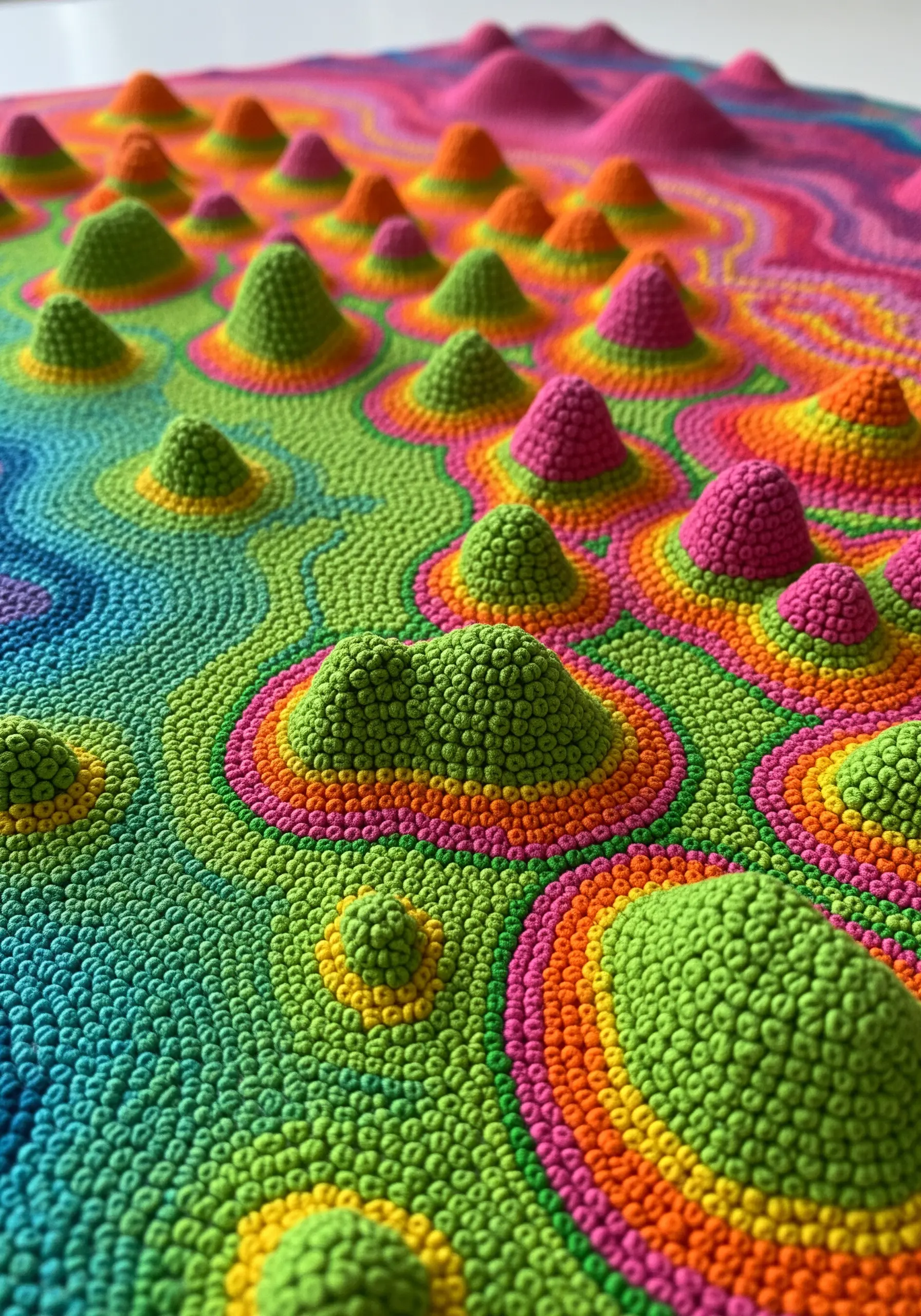
Use French knots as if they were dots of paint to build up highly textured, vibrant surfaces.
Pack the knots tightly together, using a bold, psychedelic color palette to define different areas of your composition.
By varying the number of times you wrap the thread around the needle, you can adjust the size of each knot, creating subtle variations in height and texture.
This technique is perfect for color-pop embroidery art ideas that demand attention and invite touch.
13. Weave with Fabric Strips for a Deconstructed Look
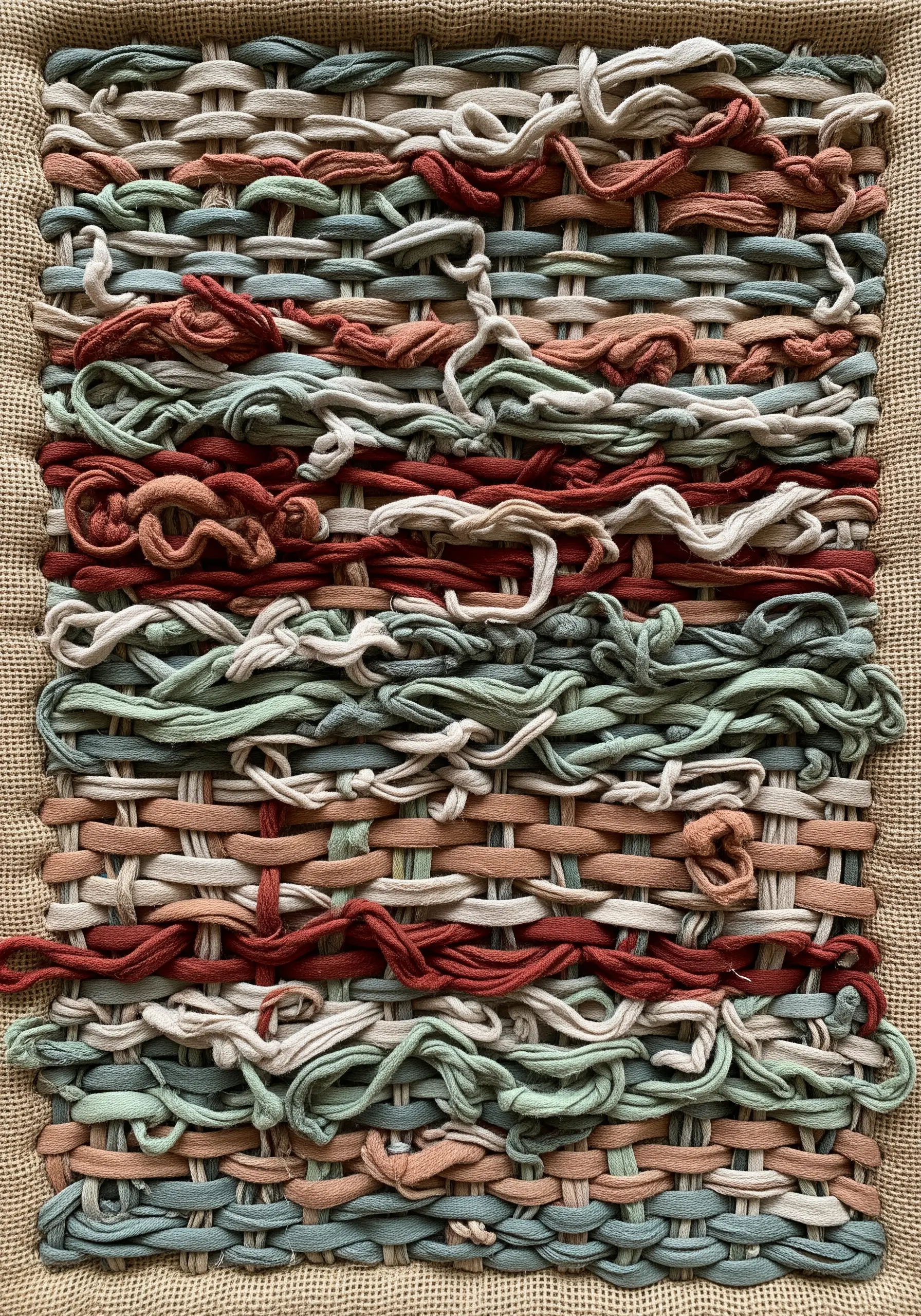
Instead of thread, weave thin strips of jersey fabric or other textiles directly through a coarse, open-weave base like burlap.
Alternate colors and textures as you weave, and don’t be afraid to leave some ends loose or create intentional loops and knots on the surface.
This technique creates a piece that feels both woven and embroidered, blurring the lines between the two crafts.
It’s an excellent way to create stunning mixed-fiber projects that turn ordinary threads into art.
14. Cultivate Velvety Moss with Ultrashort Turkey Work
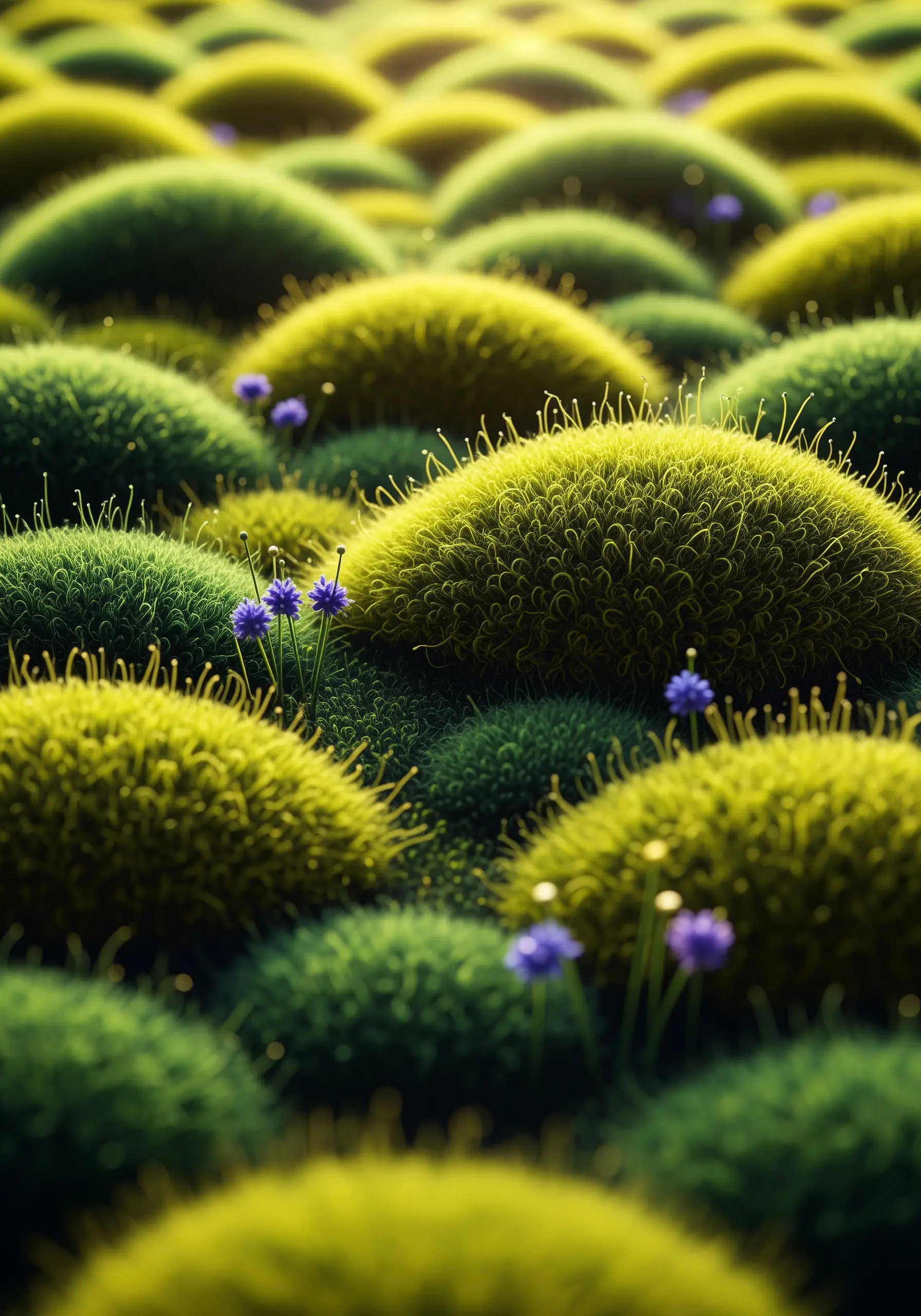
To mimic the dense, soft texture of moss, use a very fine thread (like a single strand of cotton floss) to create Turkey work loops.
Pack the stitches as tightly as possible, then trim the loops extremely short with curved embroidery scissors for a smooth, velvety finish.
Use several closely related shades of green and chartreuse within each mound to give it realistic depth and dimension.
This demonstrates inventive ways to layer leaf stitching for three-dimensional botanical texture that pops off the fabric.
15. Construct Geometric Tunnels with Thread Wrapping
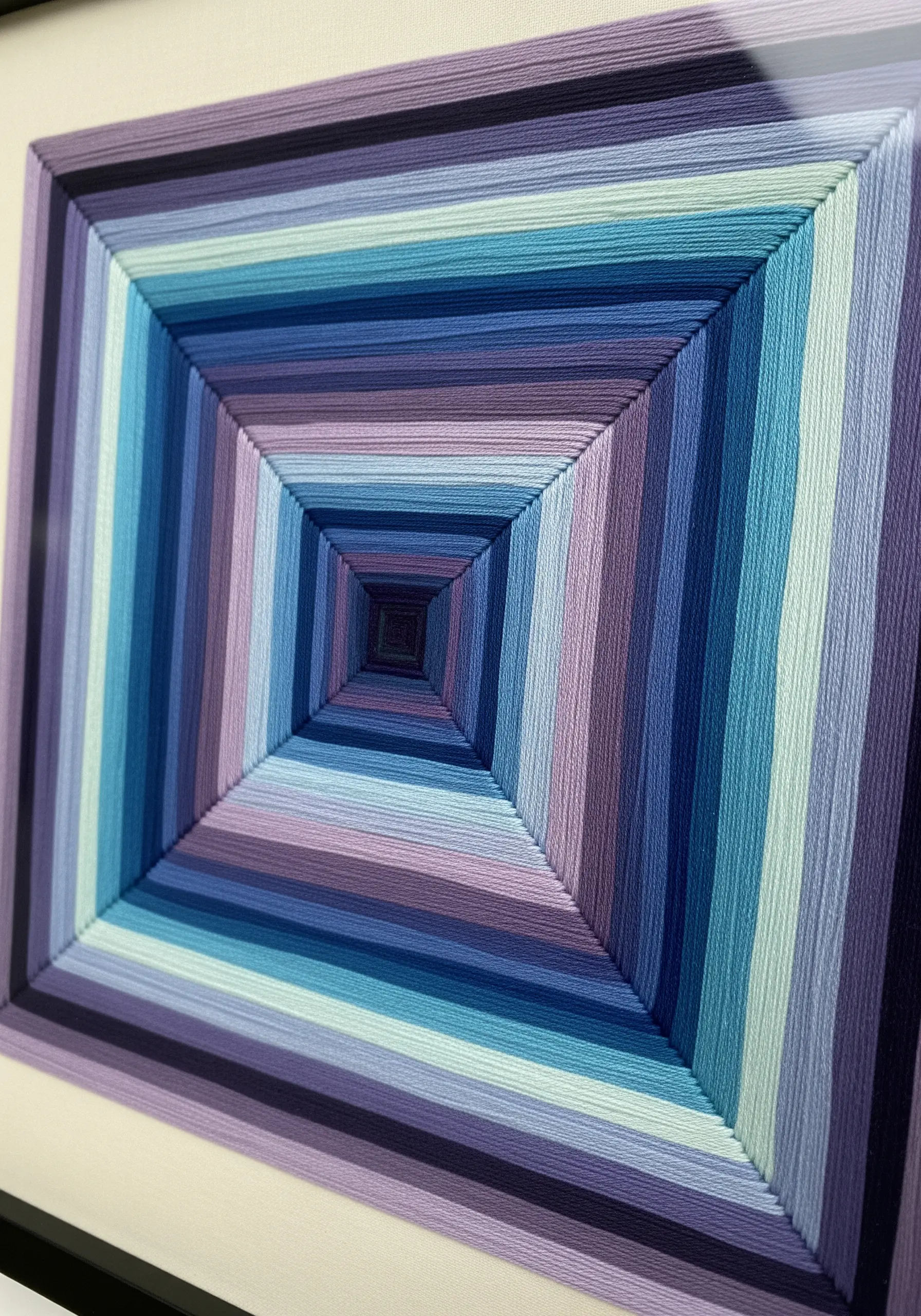
Create a stunning optical illusion of depth by stretching thread between precisely placed points on a canvas or in a frame.
The technique relies on layering straight lines of thread in a sequence; as the threads cross over each other, they form parabolic curves.
Choose a palette of analogous colors—like shades of blue, teal, and purple—to create a smooth, mesmerizing gradient that pulls the eye toward the center.
This technique elevates string art-inspired mandala embroidery designs into modern geometric art.
16. Draw with Texture Using Couched Cords
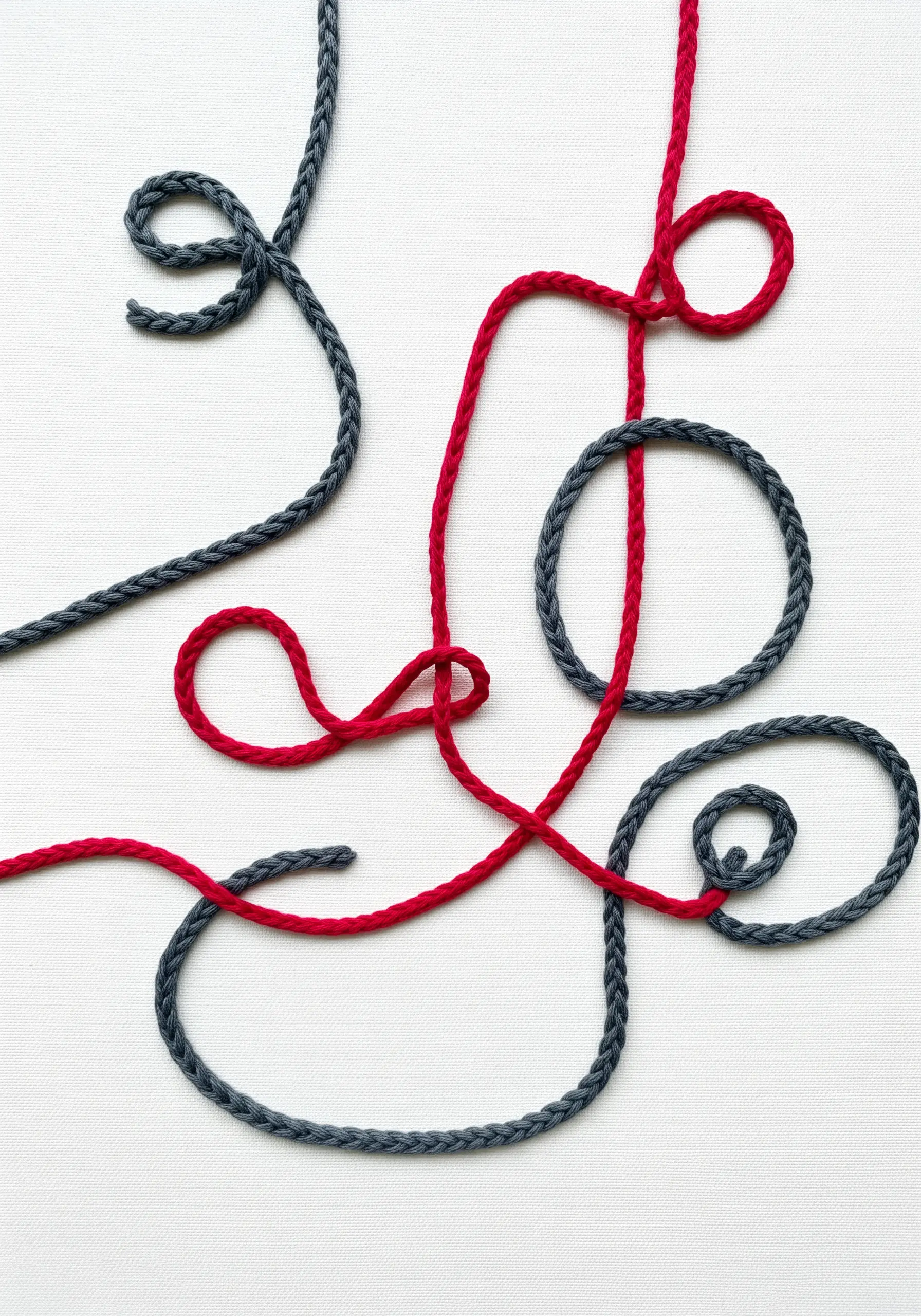
For bold lines that have physical presence, couch thick, braided cords onto your fabric surface.
This method allows you to create continuous, calligraphic lines that would be impossible with standard stitches.
Use a thinner, matching thread to tack down the cord at regular intervals, hiding your stitches on the ‘inside’ of curves to keep the line clean.
It’s a powerful way to render abstract line art silhouettes with sculptural weight and texture.
17. Build a Mandala with Concentric Rings of Texture
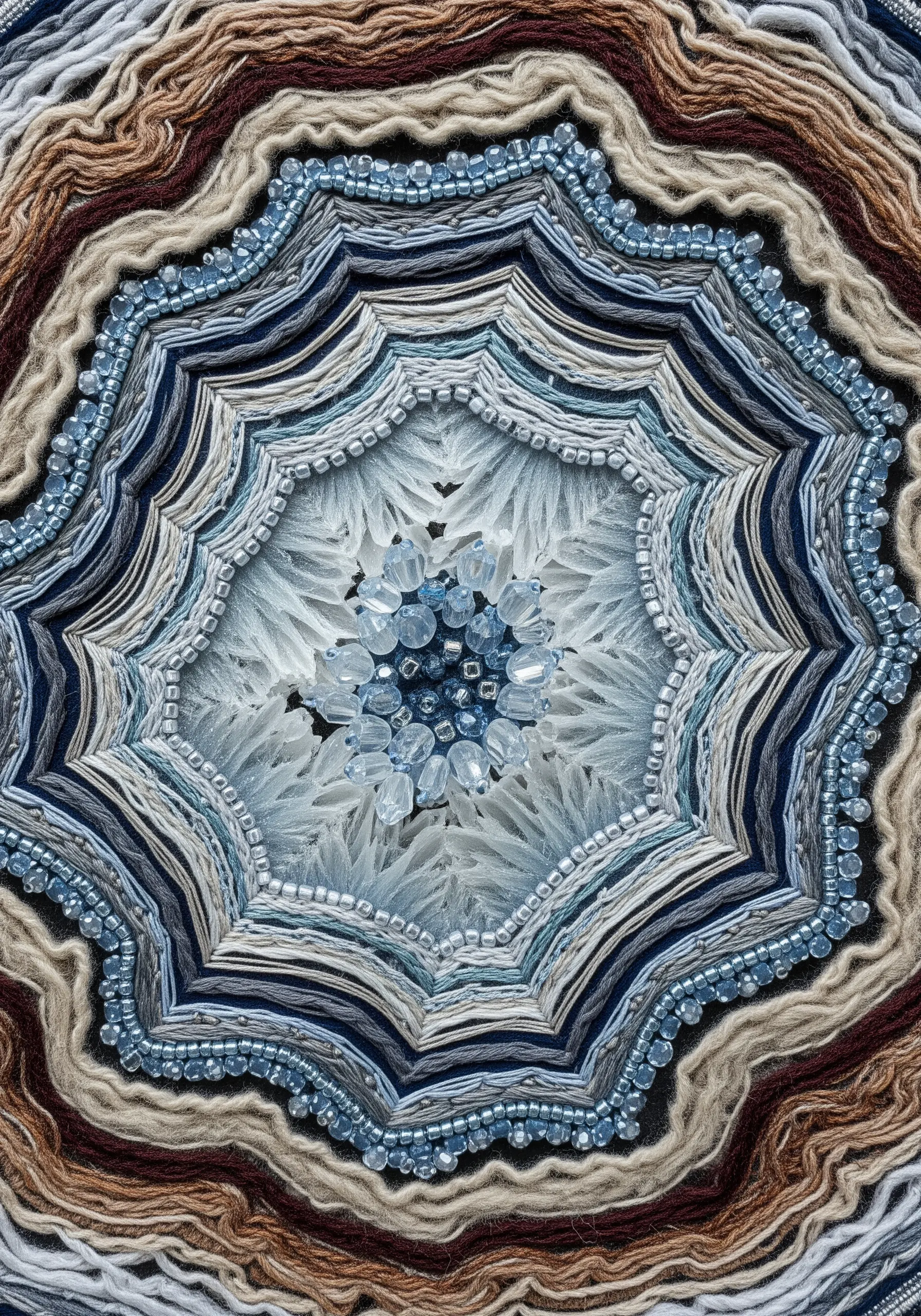
Design a complex, mandala-like piece by layering different textural stitches and materials in radial bands.
Start from a central point and work your way out, alternating between rows of beading, tufted Turkey work, couched yarn, and satin stitch.
This approach allows you to explore multiple techniques within a single, cohesive composition.
It’s one of the best mixed-fiber embroidery ideas to impress your friends on Pinterest because it showcases so much variety and skill.
18. Create Open-Work Tapestries with Netting Stitches and Tassels
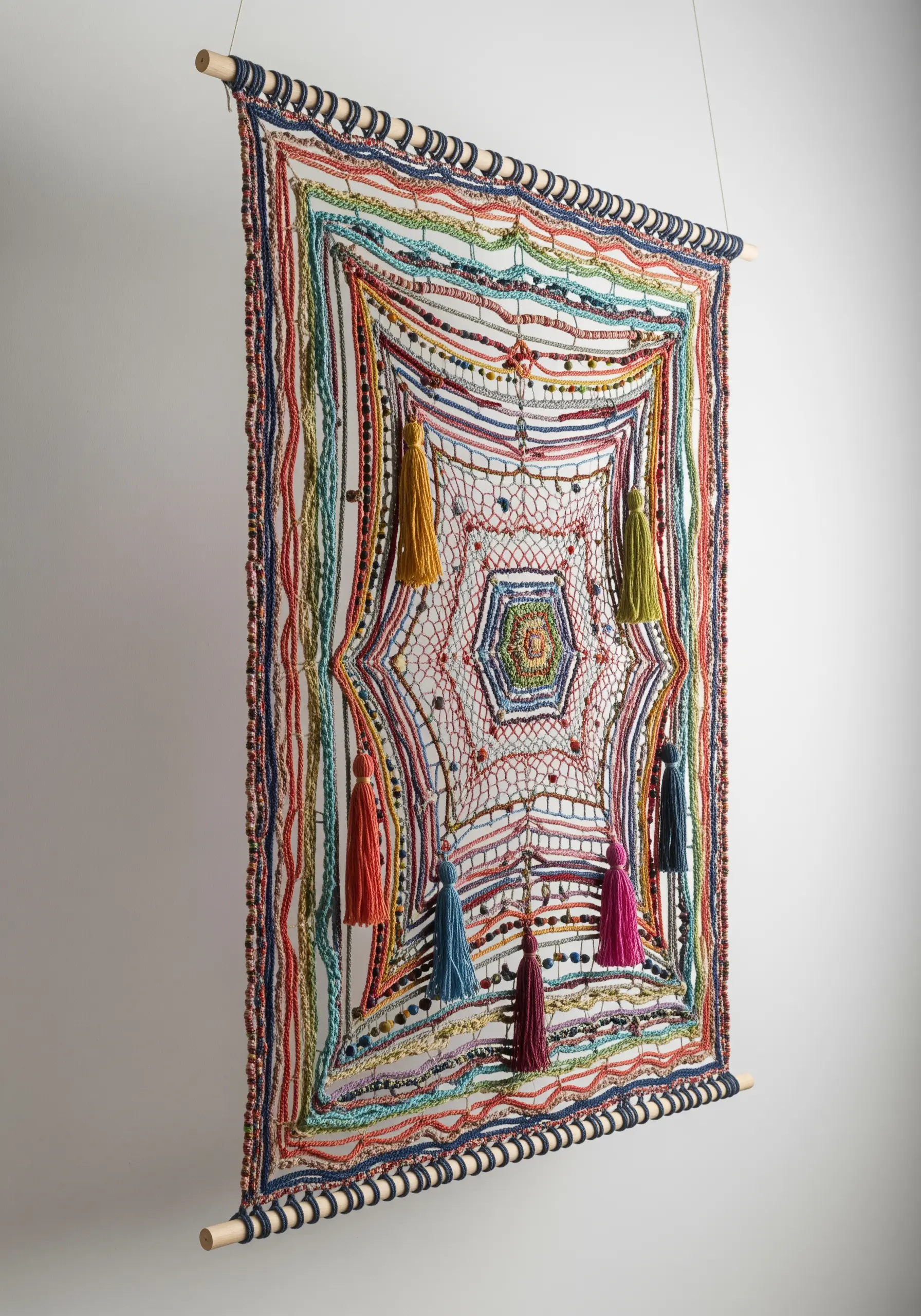
Go beyond the hoop by creating large, free-hanging pieces with an open, net-like structure.
Use stitches like detached buttonhole stitch or Cretan stitch worked in rows to build a fabric of thread, rather than stitching on top of existing fabric.
Incorporate beads directly into the stitches as you work, and finish the piece with handmade tassels for weight and movement.
This method is perfect for ambitious, large-scale embroidery tapestries that feel light and airy.
19. Sculpt Waves with Sheer Ribbon and Knotted Foam
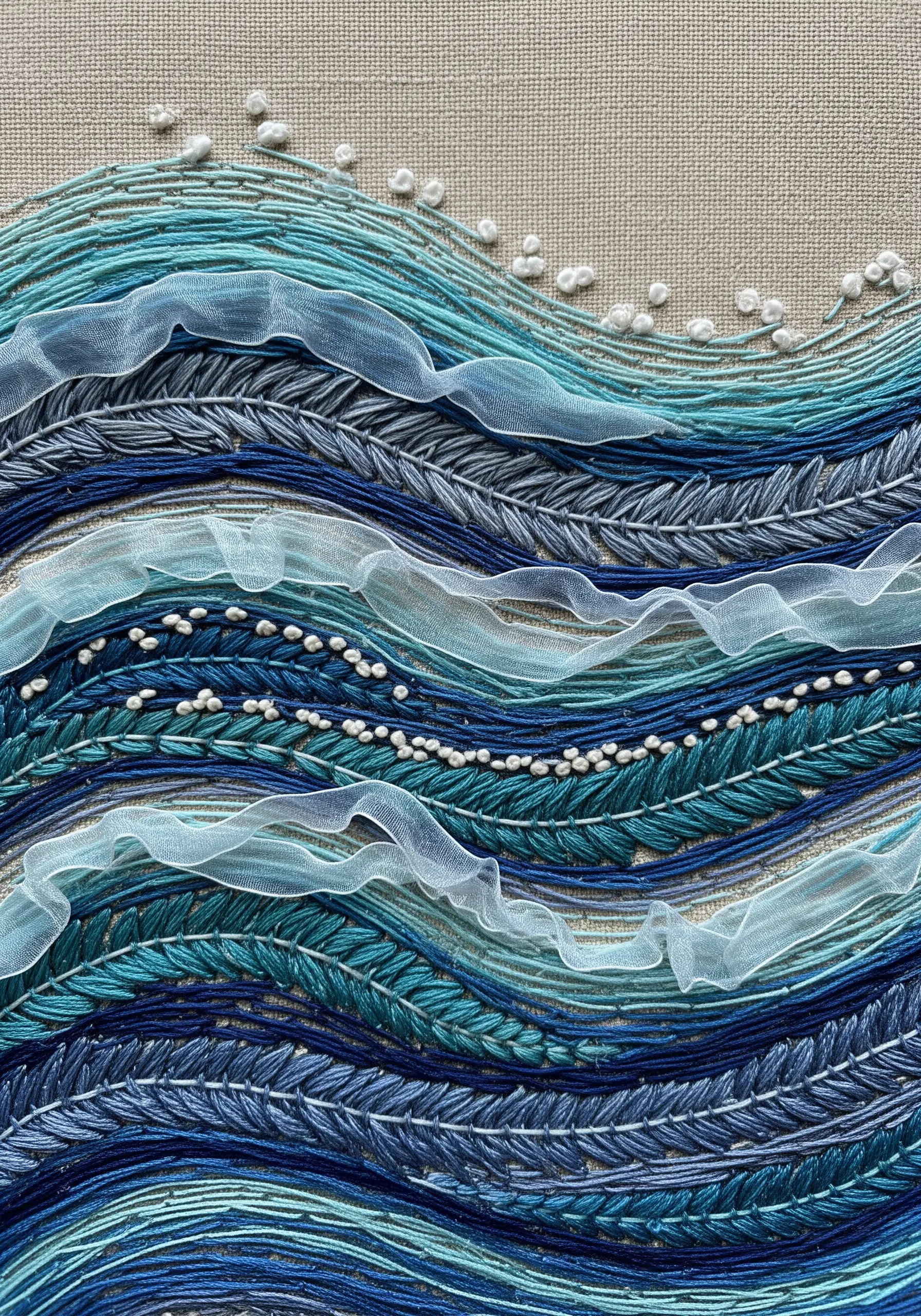
Capture the movement of water by incorporating mixed media directly into your stitching.
Use fishbone or long-and-short stitch in shades of blue to create the base of the waves.
Then, couch down a sheer, crinkled ribbon to represent the translucent crest of a wave catching the light.
Finally, add clusters of white French knots or seed beads to simulate sea foam, completing one of the most effective coastal, ocean-inspired string art ideas you can render in thread.