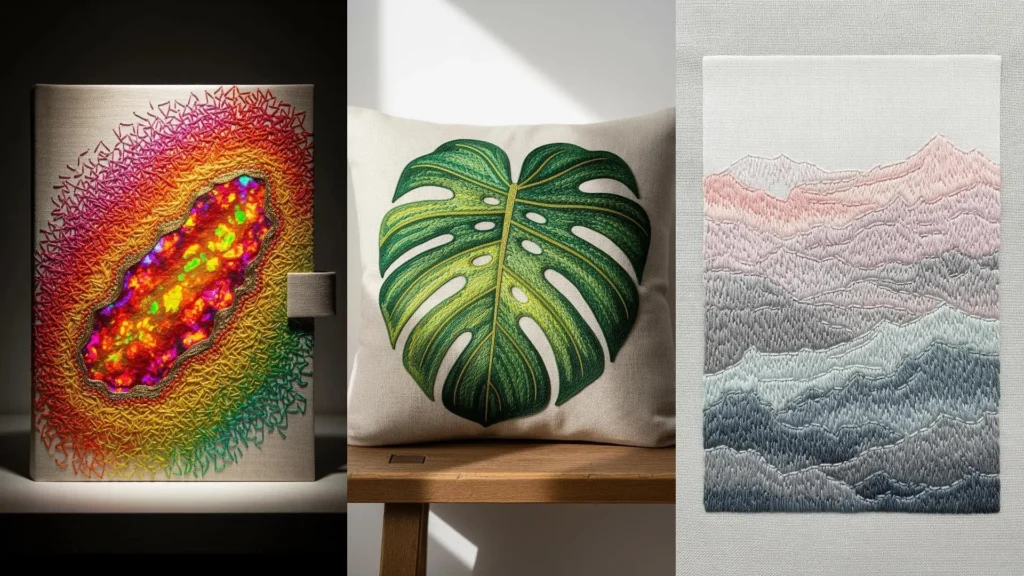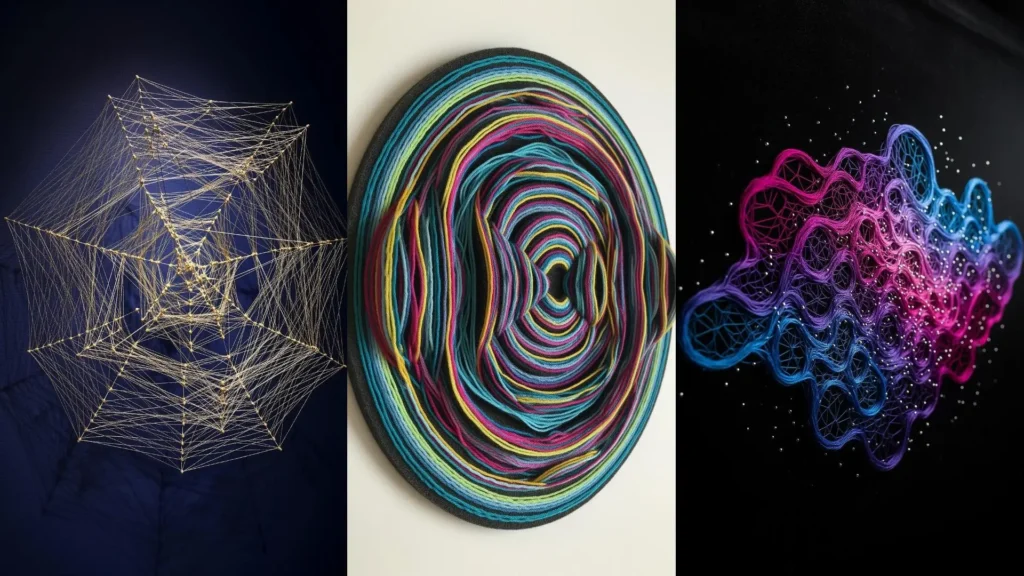
Have you ever felt your embroidery could be… more? You’ve mastered the stitches, you love the feel of thread and fabric, but you’re looking for that next step—a way to make your work stand off the canvas, both literally and figuratively.
This is where we move beyond illustration and into sculpture. Think of your thread not just as a line of color, but as a building material. It can be looped, padded, stacked, and stretched to create forms with real dimension, texture, and presence.
These ideas are not about complexity; they’re about a shift in perspective. You’ll learn how to use tension, layering, and unconventional materials to create abstract thread stitches that turn plain fabric into bold wall sculptures. It’s time to give your needle a new sense of purpose and your art a new dimension.
1. Sculpt a Coral Reef with Dimensional Knots
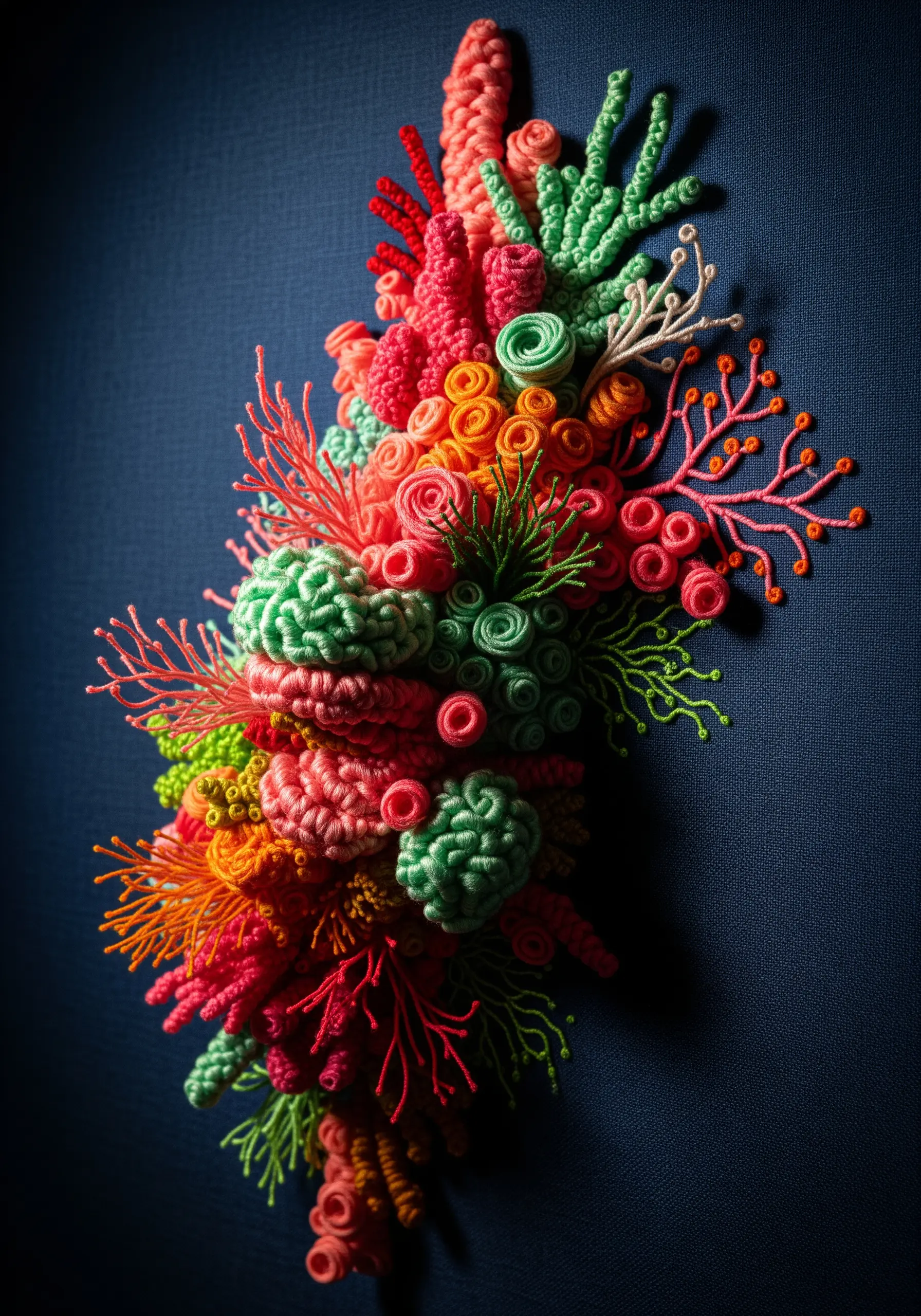
Create an organic, reef-like texture by combining bullion knots, French knots, and woven wheel stitches in varying sizes.
Use a thick, six-strand floss or even perle cotton to give each knot a substantial, coral-like volume that stands off the fabric.
For the delicate branching forms, use a single strand in a contrasting color and stitch radiating straight stitches or fly stitches.
The key is density and variation: cluster your knots tightly in some areas and leave others sparse to mimic natural growth.
This technique works best on a tightly woven, non-stretch fabric like navy or black linen, which makes the vibrant colors pop and provides a stable foundation.
2. Construct Architectural Forms with String Art
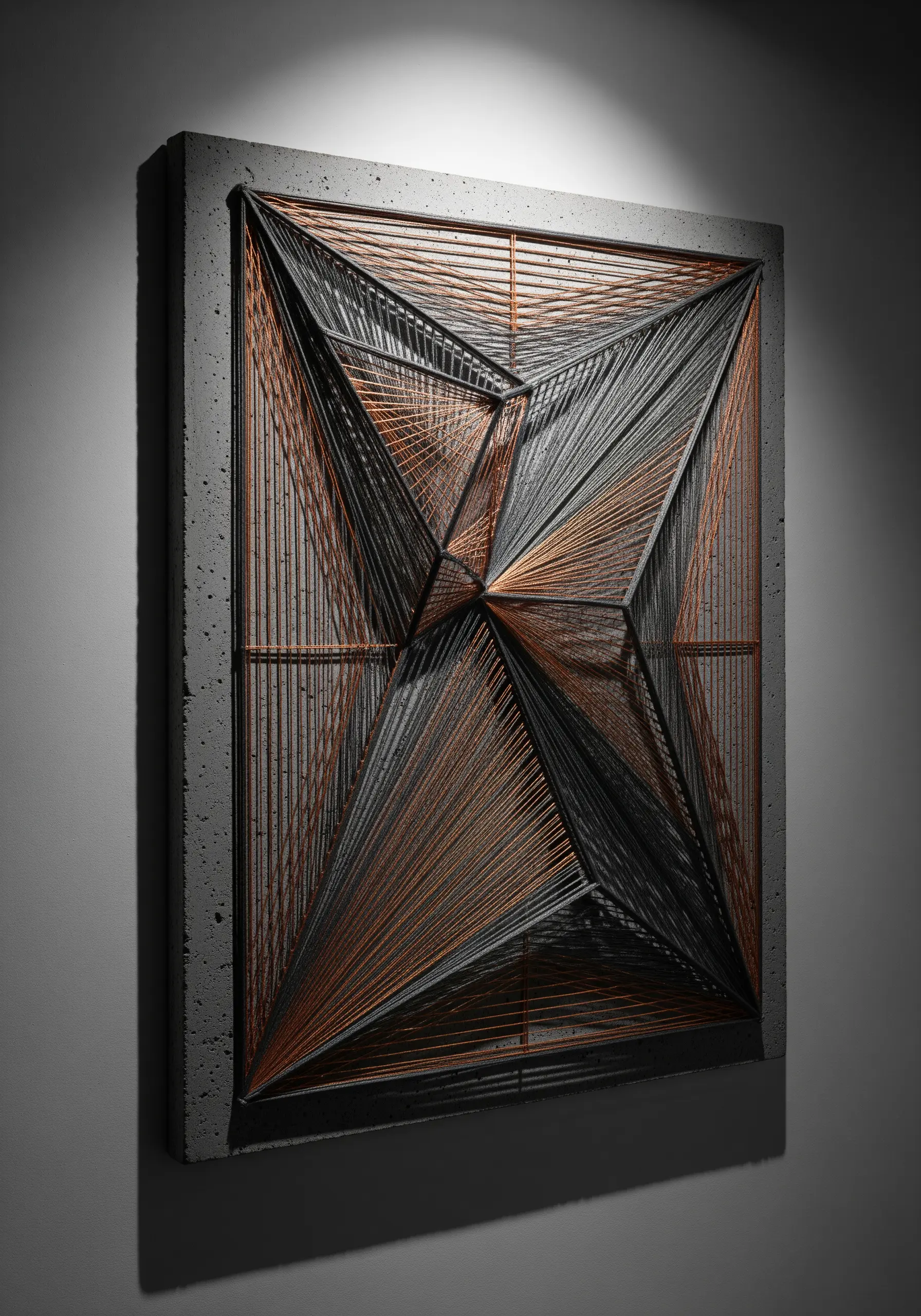
Move beyond the hoop by creating geometric string art on a solid base, like a block of wood or a custom frame.
First, create a grid of small nails or pins to act as anchor points for your thread.
Use a strong, smooth thread, like a metallic or waxed linen cord, wrapping it tautly between points to build intersecting planes of color and light.
The magic is in the layering: by wrapping thread in different sequences, you can create optical illusions of curves and depth. This is one of those abstract optical illusion stitches that trick the eye and create a sense of movement.
3. Weave a Monochrome Landscape with Chunky Fibers

Explore a single color palette by focusing entirely on texture and form. This approach turns simple stitches into a sophisticated tactile map.
Incorporate thick wool roving, chunky yarn, and braided cotton cord alongside traditional floss. Use couching stitches to secure these heavier fibers to your fabric, allowing you to create bold, raised lines.
A plush cloud can be formed with loose, puffy wool, while rolling hills are achieved with tightly packed chain stitches or rows of French knots.
Working in monochrome forces you to consider how light and shadow play across different textures, adding depth without adding color.
4. Illustrate a Celestial Cloud with Gradient Thread
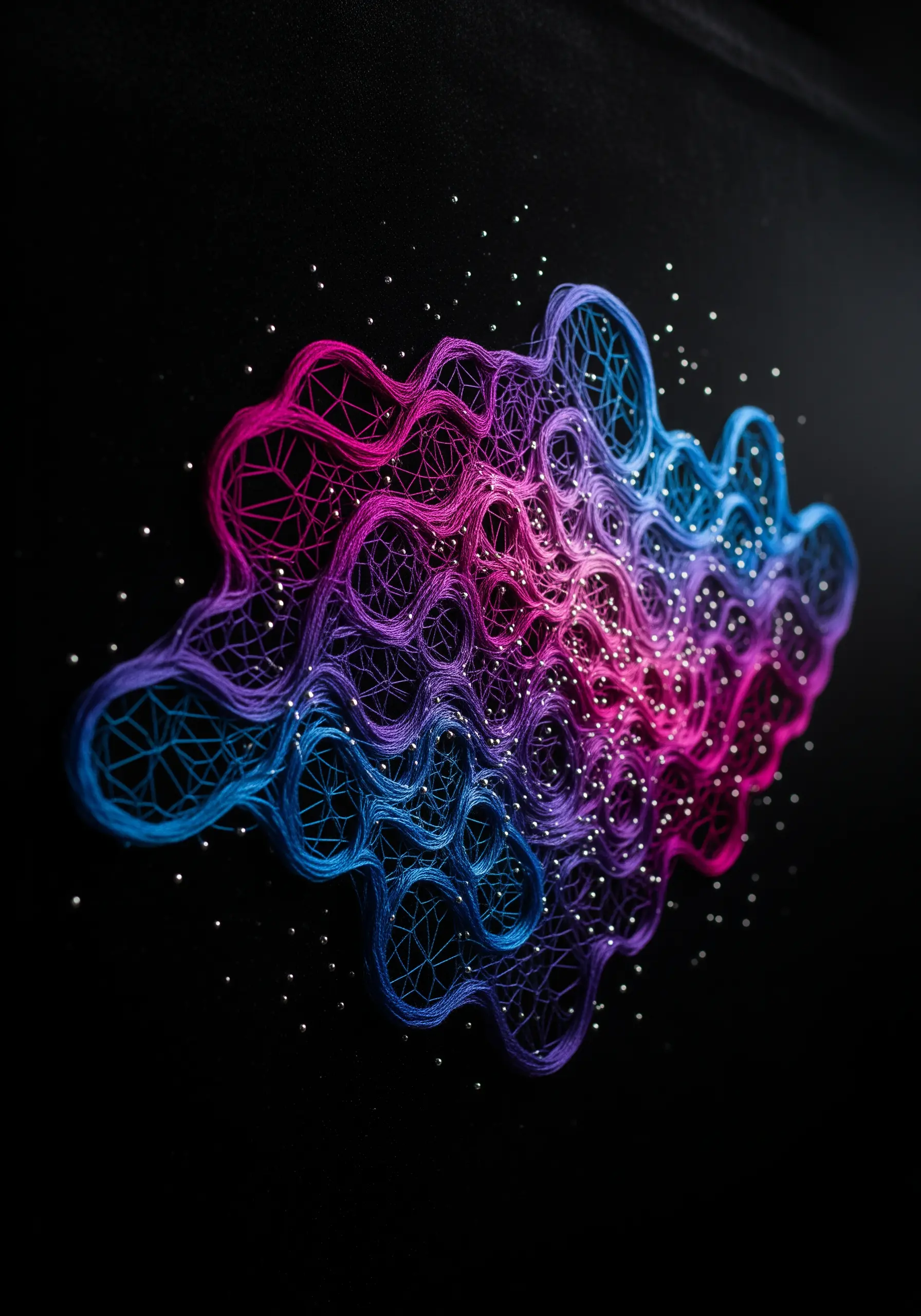
Map out an organic, cloud-like shape using a grid of pins on a black foam board or painted canvas.
Use variegated or multiple shades of thread (from magenta to blue) to wrap around the pins, creating a smooth color transition that mimics a nebula.
The overlapping threads build a delicate, web-like structure that appears to float in space.
For a final touch, stitch tiny silver beads or French knots with metallic thread to represent stars, adding points of light that catch the eye and complete the cosmic illusion.
5. Build a Forest Floor with Stumpwork and Turkey Work

Bring botanicals to life with stumpwork, a technique that involves creating raised, padded elements.
To create the mushroom caps, use padded satin stitch: fill the shape with layers of felt or stitches, then cover it with a final smooth layer of long-and-short stitch for a perfect gradient.
For the mossy texture, use the turkey work stitch. This creates loops that you can trim to different lengths, resulting in a plush, 3D carpet that’s incredibly tactile.
Mounting your work on a thick felt or wool base enhances the cozy, organic feel of these forest floor botanical stitch ideas.
6. Engineer a Metallic Burst with 3D String Art
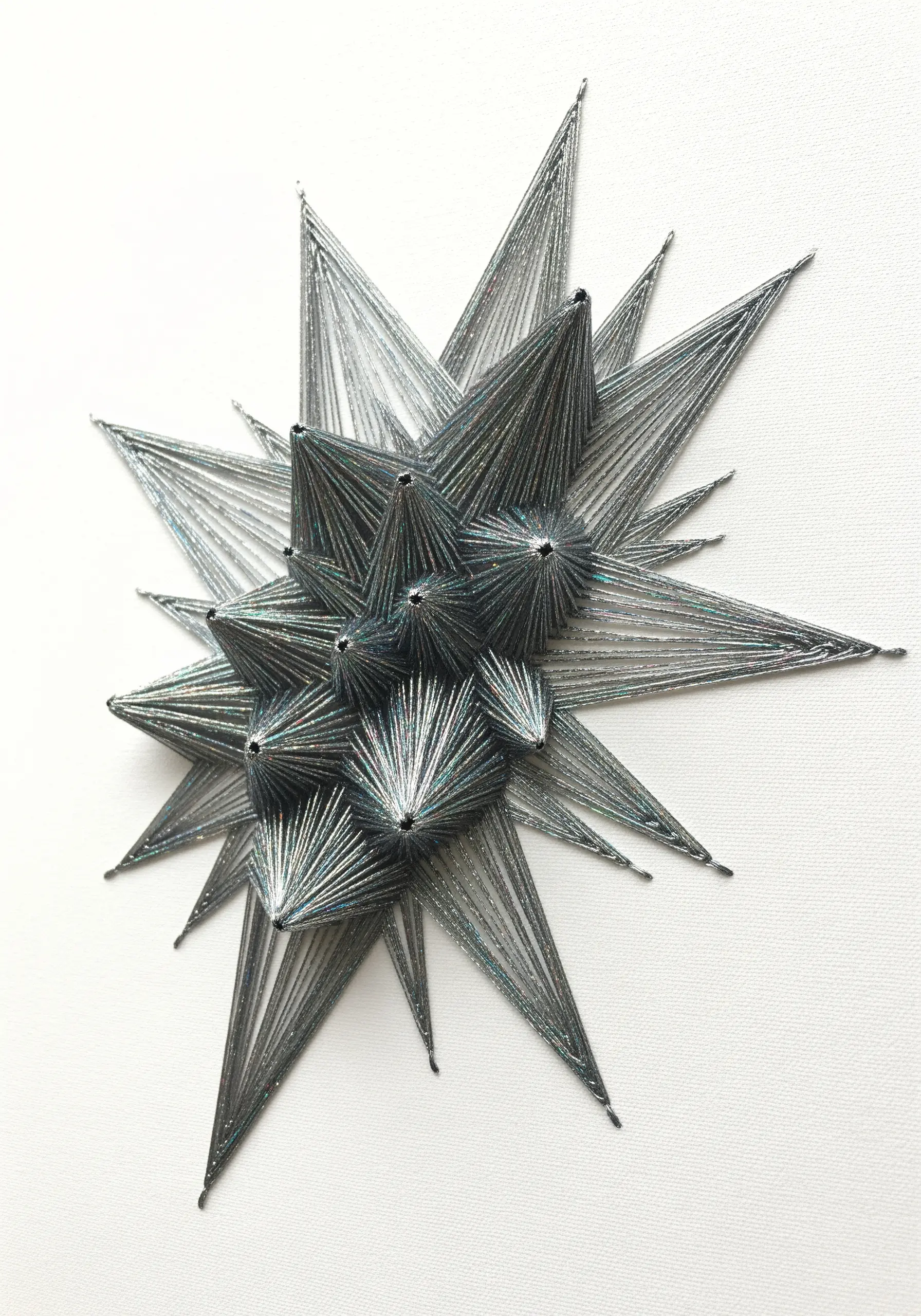
This sculptural piece relies on building conical forms that radiate from a central point.
Start by securing beads or small eyelets to a stiff canvas. These will serve as the raised anchor points for your thread.
Using a slick metallic thread, wrap it from the outer edge of your design, up and around a central bead, and back to the edge, repeating to form a cone.
The combination of multiple cones at different angles and heights creates a dynamic, star-like sculpture. The reflective quality of the metallic thread enhances the sharp, geometric shapes.
7. Layer Ribbons and Ropes to Carve Abstract Waves

Create a sense of movement by couching unconventional materials alongside traditional stitches.
Lay down flowing lines of satin ribbon, braided cotton rope, and thick yarn, securing them to the canvas with small, hidden stitches in a matching thread color.
Fill the negative space between these elements with dense blocks of straight stitches or satin stitch, creating a contrast between the smooth, woven textures and the flat thread.
This is a perfect example of modern texture-layering embroidery techniques that guide the eye across the piece like flowing water.
8. Capture Volcanic Energy with Unraveled Threads
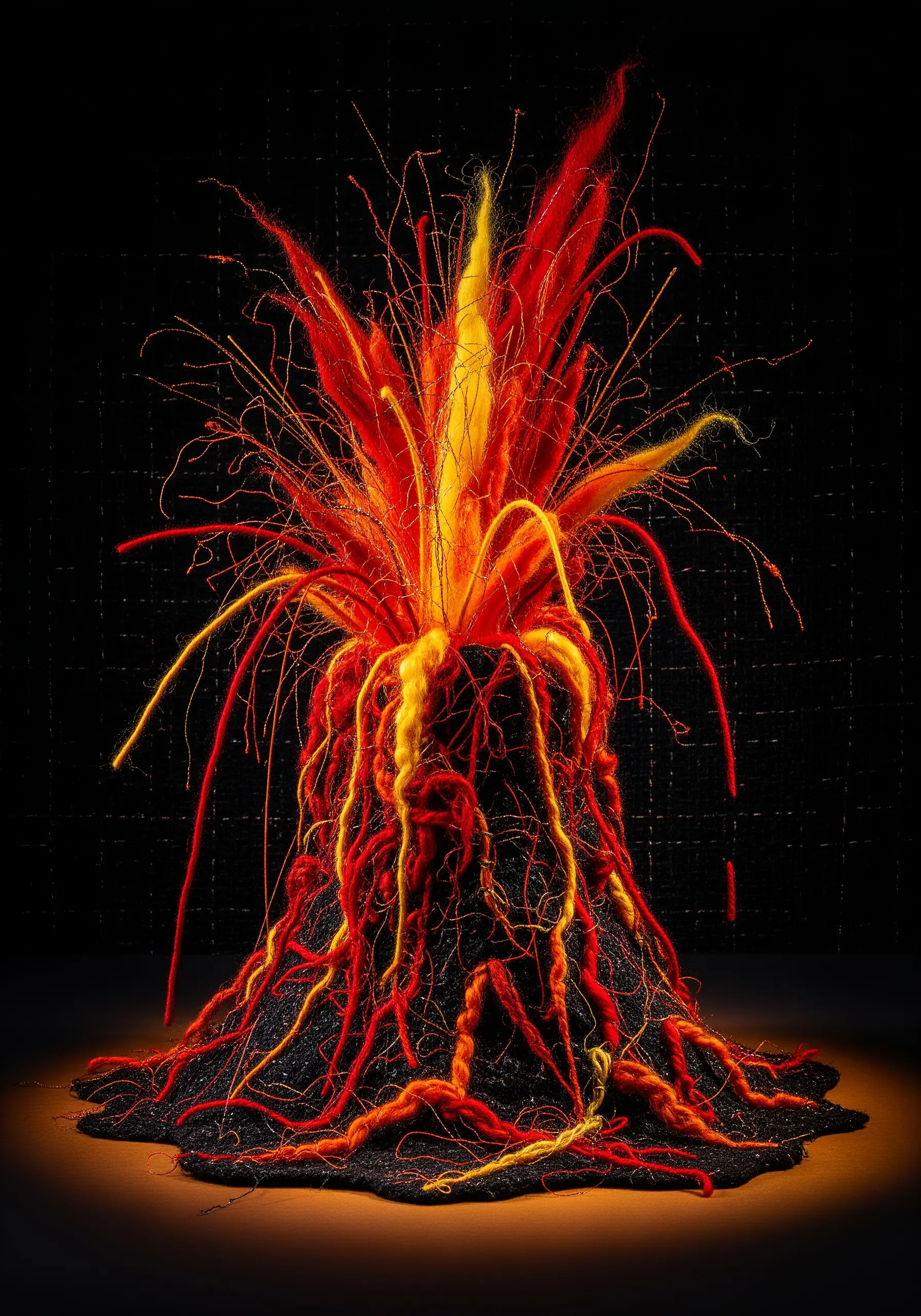
Embrace chaos by using thread in its most deconstructed form. This technique is all about expressive, untamed texture.
Create a solid base with black felt or fabric, then build up the volcano’s form with chunky, couched yarn.
For the eruption, use brightly colored wool yarn and embroidery floss. Allow the ends to fray and tangle, securing them only at the base so they burst outwards.
Leave some threads long and loose to simulate lava flow, creating a powerful sense of motion and energy that flat stitches could never achieve.
9. Suspend Stitches in Air on Sheer Fabric

Stitching on tulle or organza creates the illusion of threads floating in mid-air, making your composition feel weightless.
Because the fabric is transparent, both the front and back of your work are visible, so clean finishes are essential. Tiny seed beads can be used to secure start and end points, adding a decorative touch.
Play with thread tension to create gentle curves and sweeping lines that interact with one another. Combine thread and negative space to give the design room to breathe and enhance the ethereal quality.
10. Wrap an Industrial Grid for a Sculptural Statement

Integrate hardware into your work for a bold, industrial aesthetic. Here, nuts and bolts form the structure of the piece.
Construct a grid using metal rods and hardware, then tightly wrap each component with a neutral-colored thread for a clean, uniform finish.
The thread transforms the cold metal into a softer, tactile object while highlighting its geometric form.
This method challenges the traditional definition of embroidery by merging fiber art with industrial sculpture, creating a powerful focal point.
11. Weave a Mandala with Raised Braids and Stitches

Elevate a simple mandala design by focusing on dimensional stitches that create a woven effect.
Use a raised chain stitch or braided stitch for the primary outlines of the petals. These stitches naturally lift off the fabric, creating thick, rope-like lines.
Fill the interior sections with contrasting stitches like the fishbone or satin stitch to create a interplay between raised and flat textures.
A vibrant, high-contrast color palette makes the braided elements pop, turning the piece into a joyful, graphic statement.
12. Sculpt Topographical Forms with Couched Cord

Create miniature, sculptural landscapes by building height directly on the canvas.
Outline your topographical layers and couch thick cord or yarn along the lines. As you work toward the center of each hill, stack the couched layers to build elevation.
Fill the spaces between the raised contours with dense clusters of French knots or seed stitches to represent ground cover.
Using an earth-tone pattern enhances the natural, geological feel, making the piece look like a miniature, tactile map.
13. Embellish an Icy Structure with Sequins and Knots

Capture the crystalline quality of ice and snow by combining thread with reflective embellishments.
Create sharp, icy shards with long straight stitches in light blue and white, radiating from a central point.
For the soft, snowy texture, fill areas with dense French knots using a fluffy white yarn or chenille thread.
Finally, sprinkle in clear or iridescent sequins to catch the light, mimicking the sparkle of frost. This mixed-media approach adds a layer of magic and realism.
14. Weave a Geometric Web Between Anchor Points
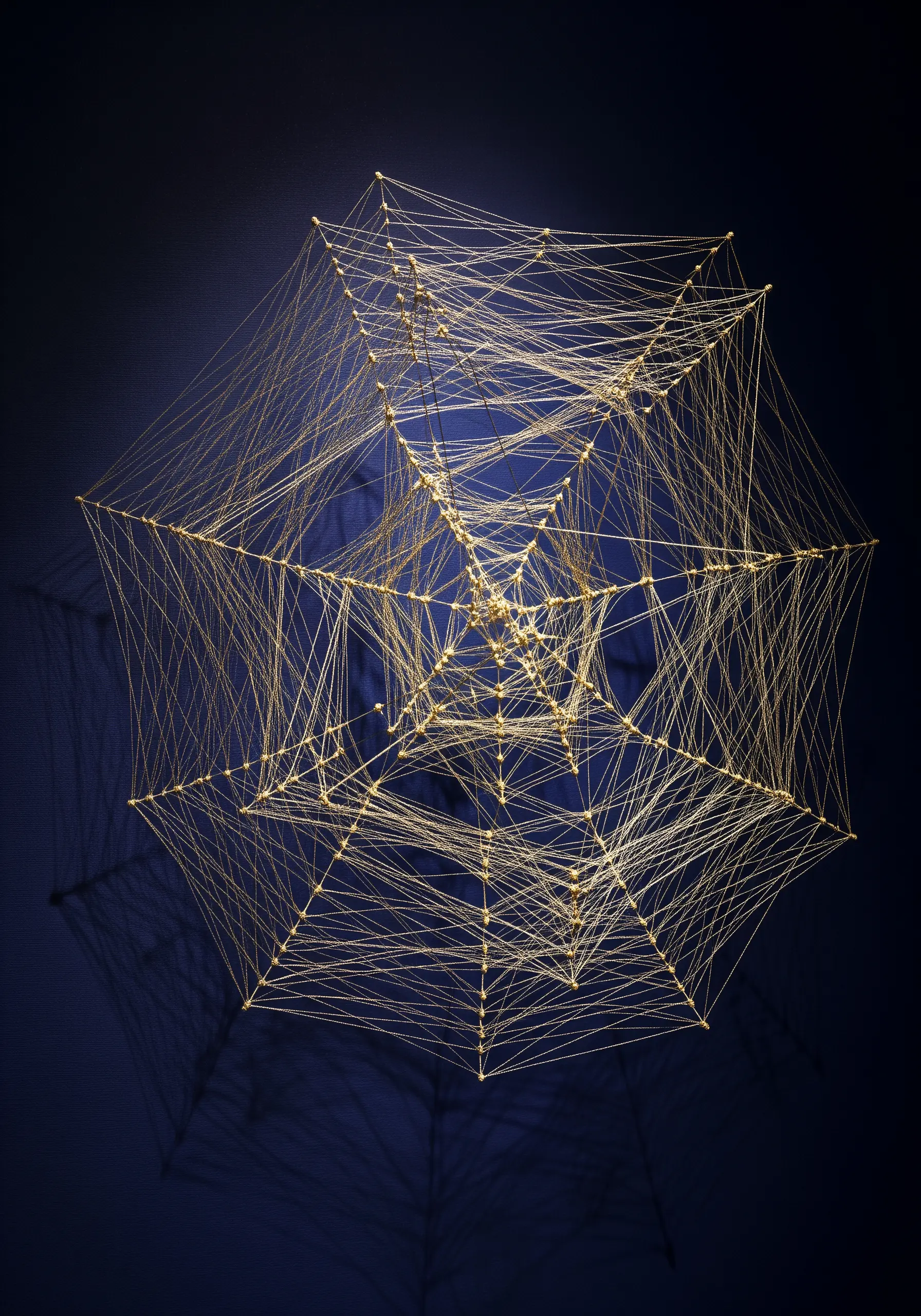
This technique is a precise art form that turns simple lines into a complex, architectural web.
Start by creating a perfectly symmetrical grid of pins or nails on a dark, rigid board. A printed template is essential for accuracy.
Using a single, continuous strand of fine, strong thread (like silk or metallic floss), weave it between the pins according to a predetermined pattern.
The overlapping lines create incredible visual complexity and moiré effects as the viewer’s perspective shifts. The beauty lies in its mathematical precision.
15. Integrate Distressed Textures with Rustic Fibers
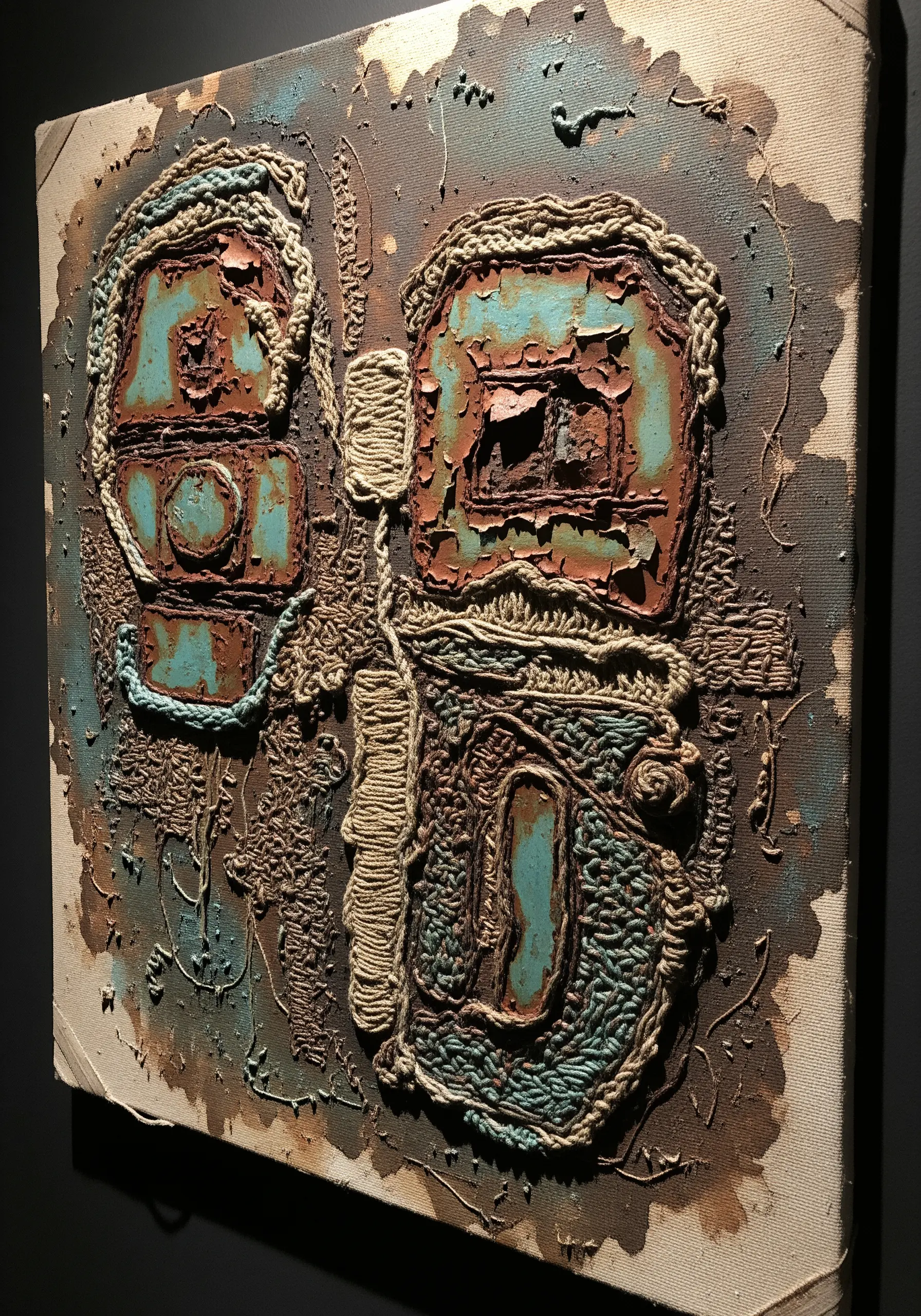
Begin your embroidery before you even thread your needle by treating the fabric itself as an artistic medium.
Apply paint, ink, or even a rust-effect medium to your canvas and let it dry completely. The cracking and weathering create a built-in history for the piece.
Then, use thick, rustic fibers like jute or undyed wool to couch around the distressed shapes, adding a coarse, sculptural outline.
This creative way to combine fabric and thread turns your embroidery into a rich, layered artifact.
16. Sculpt Neon Organisms with a Wire Armature

For shapes that defy gravity and loop in mid-air, you need an internal structure.
Bend soft, pliable craft wire into your desired abstract shapes and tack it securely to your fabric base.
Next, use a satin stitch or a simple wrapping technique to completely cover the wire with brightly colored neon yarn or floss.
This method allows you to create truly three-dimensional, calligraphic lines that twist and turn off the canvas, creating a dynamic sculpture with incredible energy.
17. Map Topography with Stacked Satin Stitch Layers

Create a 3D topographical map by building your design from the ground up.
Cut layers of felt or stiff cardstock in successively smaller contour shapes and glue them into a stack on your base fabric.
Once the foundation is built, cover each layer with perfectly smooth satin stitches. Use a different shade for each tier to create a clear gradient.
This meticulous technique results in a clean, graphic representation of elevation that is both visually striking and satisfyingly precise.
18. Create an Auditory Illusion with Channeled Thread
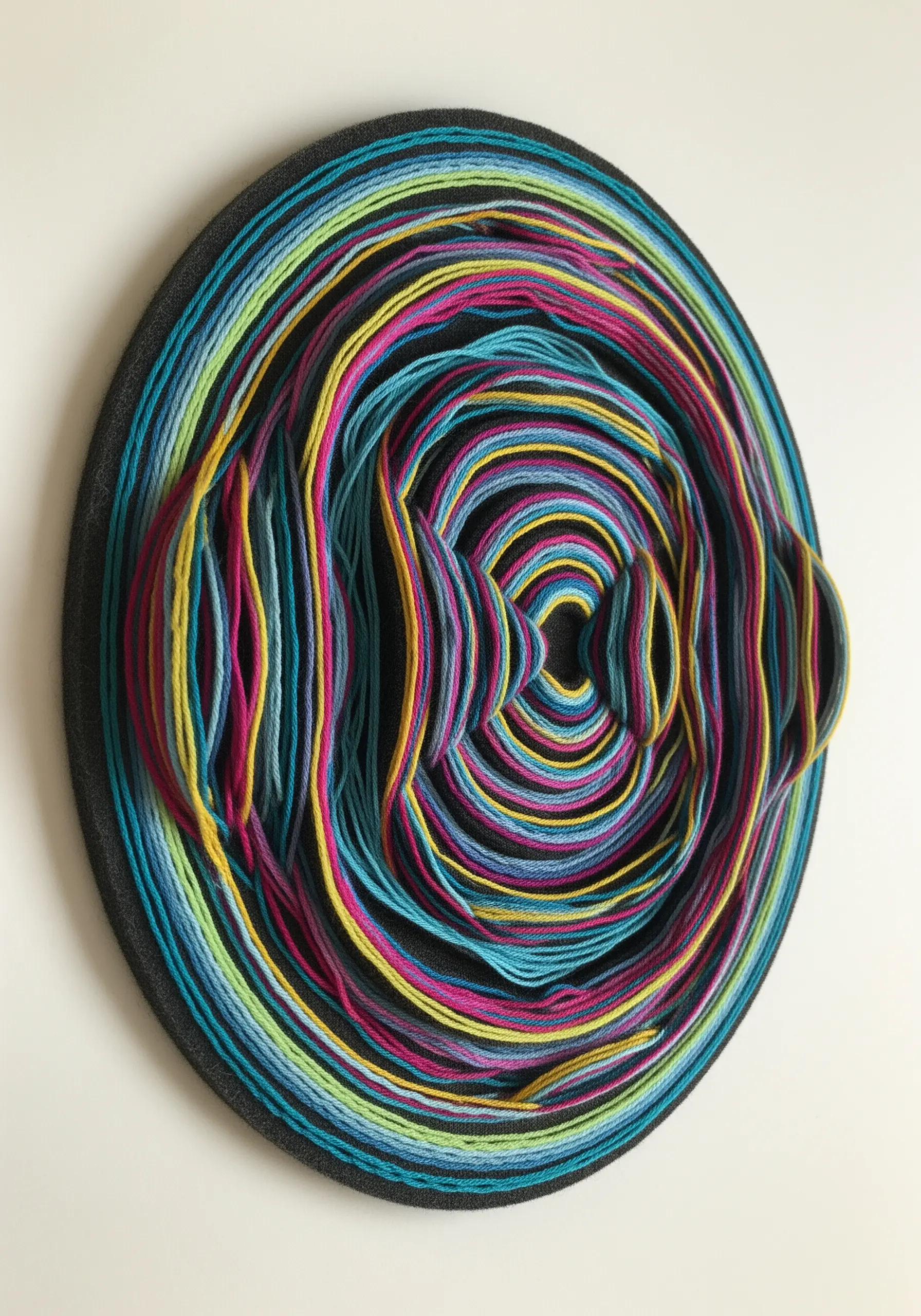
This advanced piece uses a carved base to create an undulating, layered effect reminiscent of sound waves.
Start with a thick piece of foam or soft wood and carve shallow, concentric channels into it.
Lay down your threads within these guides, allowing you to build up dense layers of color that rise and fall with the carved surface.
The interplay of bright, contrasting colors emphasizes the dips and curves, creating a mesmerizing piece that feels almost kinetic.
19. Construct an Architectural Sculpture with Thread and Planes
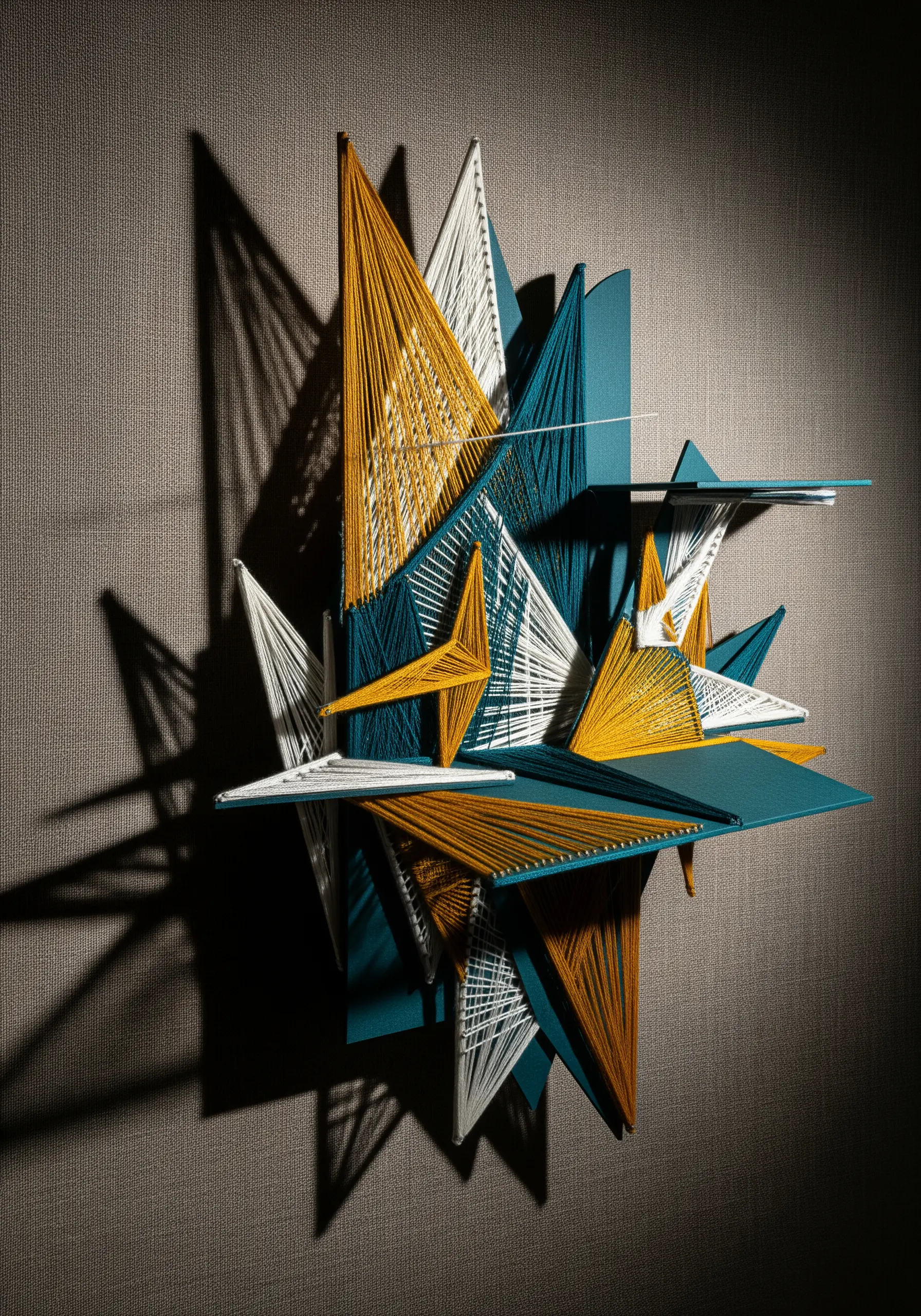
Combine string art with solid, cut-out shapes to explore the relationship between line, plane, and shadow.
Cut geometric shapes from matboard or thin wood and arrange them in a dynamic, multi-level composition.
Drill small holes or add pins along the edges of these shapes to serve as anchor points. Then, stretch thread between them to connect the planes and create new geometric forms.
Lighting is crucial for a piece like this, as the shadows cast by both the solid planes and the threads become an integral part of the artwork.