Metallic thread can feel intimidating—it’s known for being slippery and sometimes difficult to work with. But I want you to rethink it not as a challenge, but as liquid gold for your table linens. It’s the single most effective way to infuse your embroidery with a sense of occasion, turning a simple meal into a memorable event.
Your role as a host is to create a feeling of warmth and welcome, and hand-stitched details are a quiet, confident way to do that. A flash of gold on a napkin corner or a silver constellation down the center of a table runner doesn’t just decorate the space; it tells your guests that you’ve put thought and care into their experience. It’s a personal touch that store-bought linens can never replicate.
In these ideas, we’ll move beyond the basic stitches. We’ll explore how to choose the right metallic thread for your fabric, how to use stitches that maximize its shine, and how to create designs that feel both modern and timeless. You have the skill; now let’s add the sparkle that makes your work—and your table—unforgettable.
1. Frame Your Placemats with Art Deco Glamour
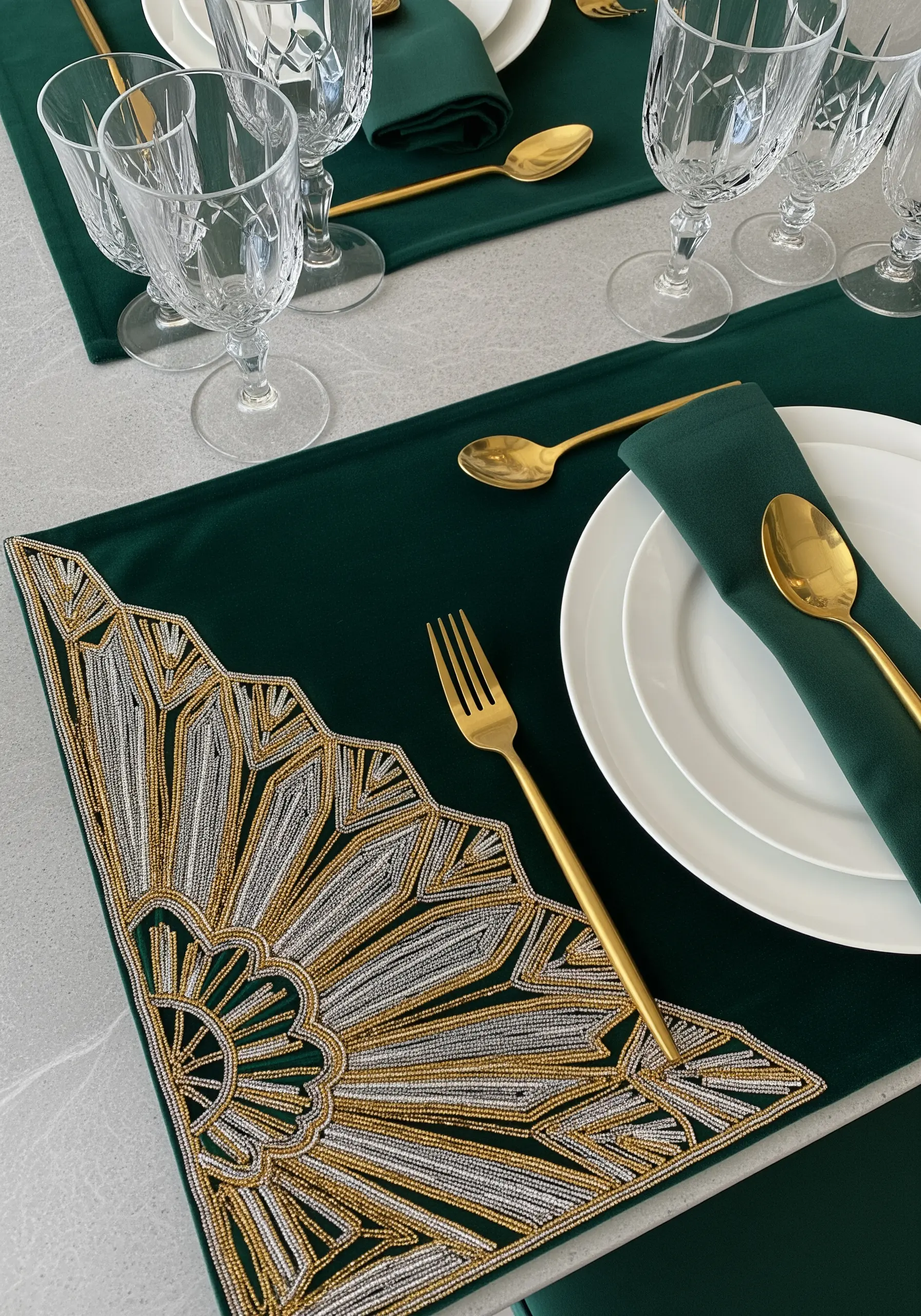
Create a high-impact corner motif by combining metallic thread with seed beads for a true Art Deco feel.
First, outline your geometric shapes using a fine, single-strand metallic thread in a tight backstitch to create a sharp guide.
For the filled sections, alternate between dense satin stitching with a pale gold thread and rows of silver seed beads to build texture and catch the light from different angles.
This technique works best on a heavier fabric like cotton duck or linen that can support the weight of the beadwork without puckering.
2. Stitch a Celestial Map on Midnight Blue
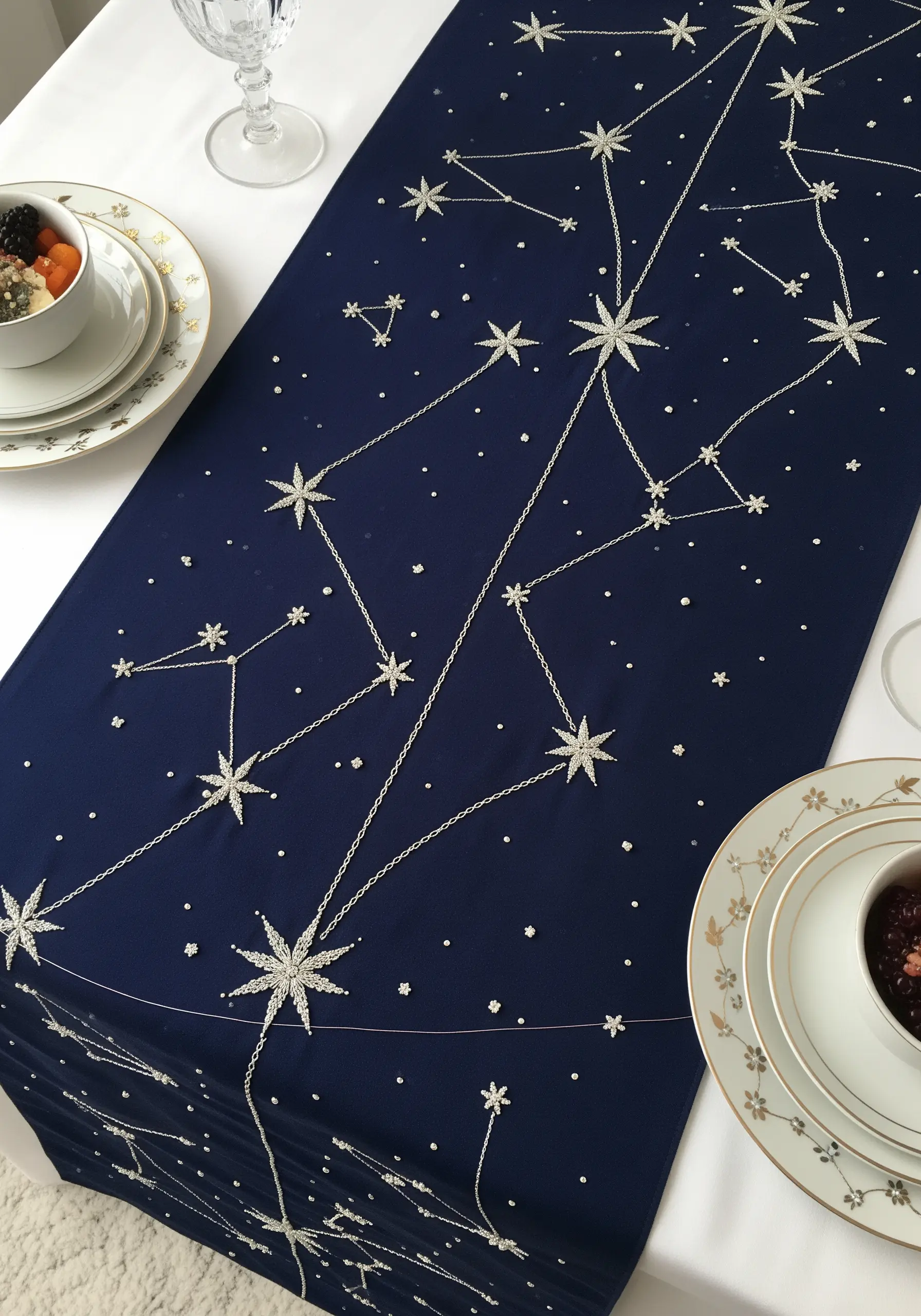
Turn a simple table runner into a celestial masterpiece by stitching constellations with a bright silver metallic thread.
Use a whipped backstitch for the connecting lines; this wraps the initial stitch, creating a smoother, more reflective line that mimics starlight.
For the stars themselves, vary your technique: use star stitches for the larger points and single French knots for the smaller, scattered stars to create depth and visual interest.
Always use a stabilizer on the back of your fabric to prevent puckering, especially with long, straight lines on fine linen or cotton.
3. Achieve Opulent Dimension with Couching
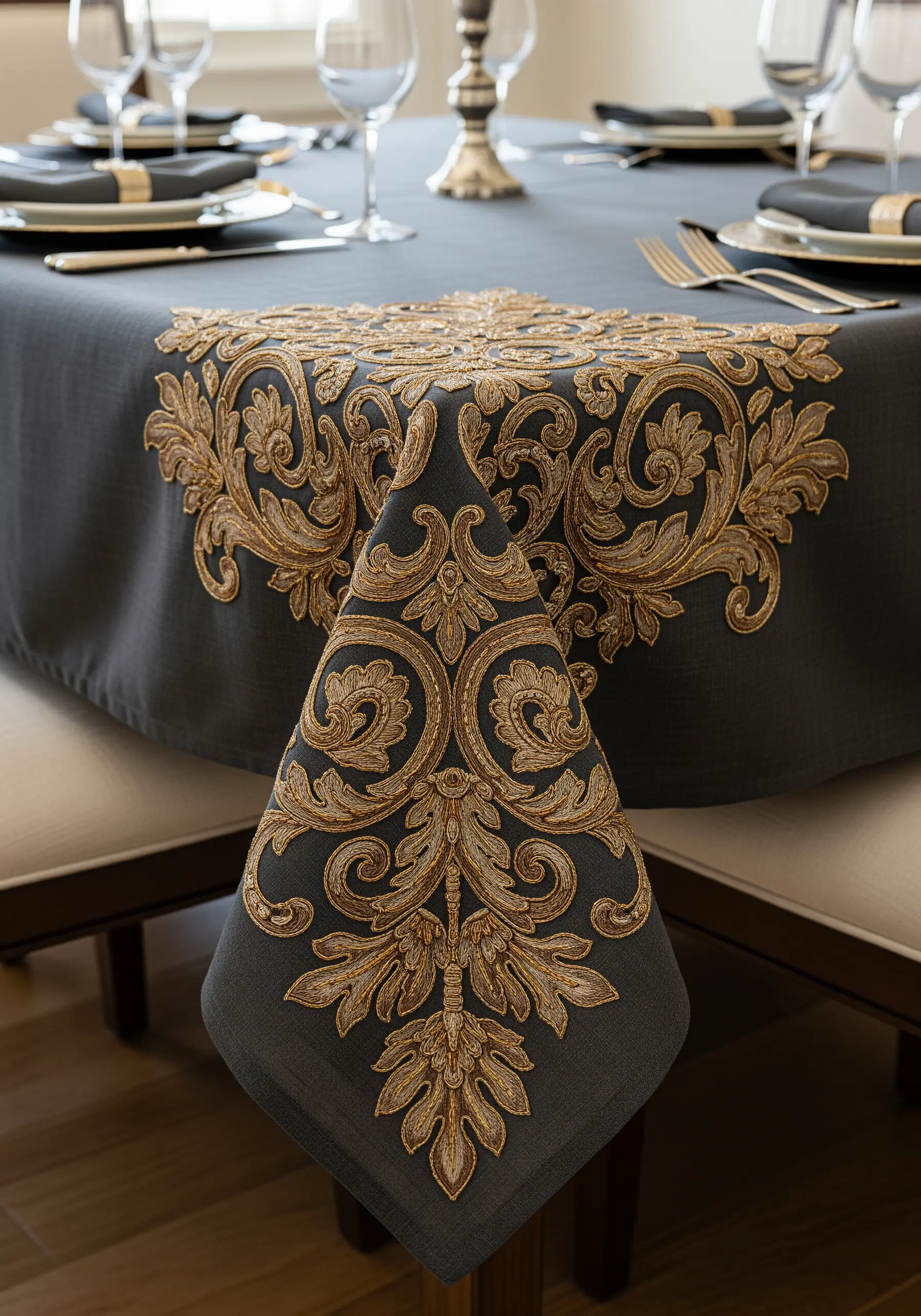
For bold, baroque patterns that look incredibly luxurious, use the couching technique instead of a simple satin stitch for your outlines.
Lay down a thicker metallic cord or multiple strands of thread along your design lines, then use a single, finer matching thread to tack it down with tiny, perpendicular stitches.
This method creates a raised, sculptural effect that stands out beautifully on dark, heavyweight fabric like this charcoal linen.
Fill the interior shapes with a slightly lighter gold thread in a satin stitch to create a subtle contrast and highlight the dimensional outlines.
4. Embrace the Elegance of Geometric Running Stitch
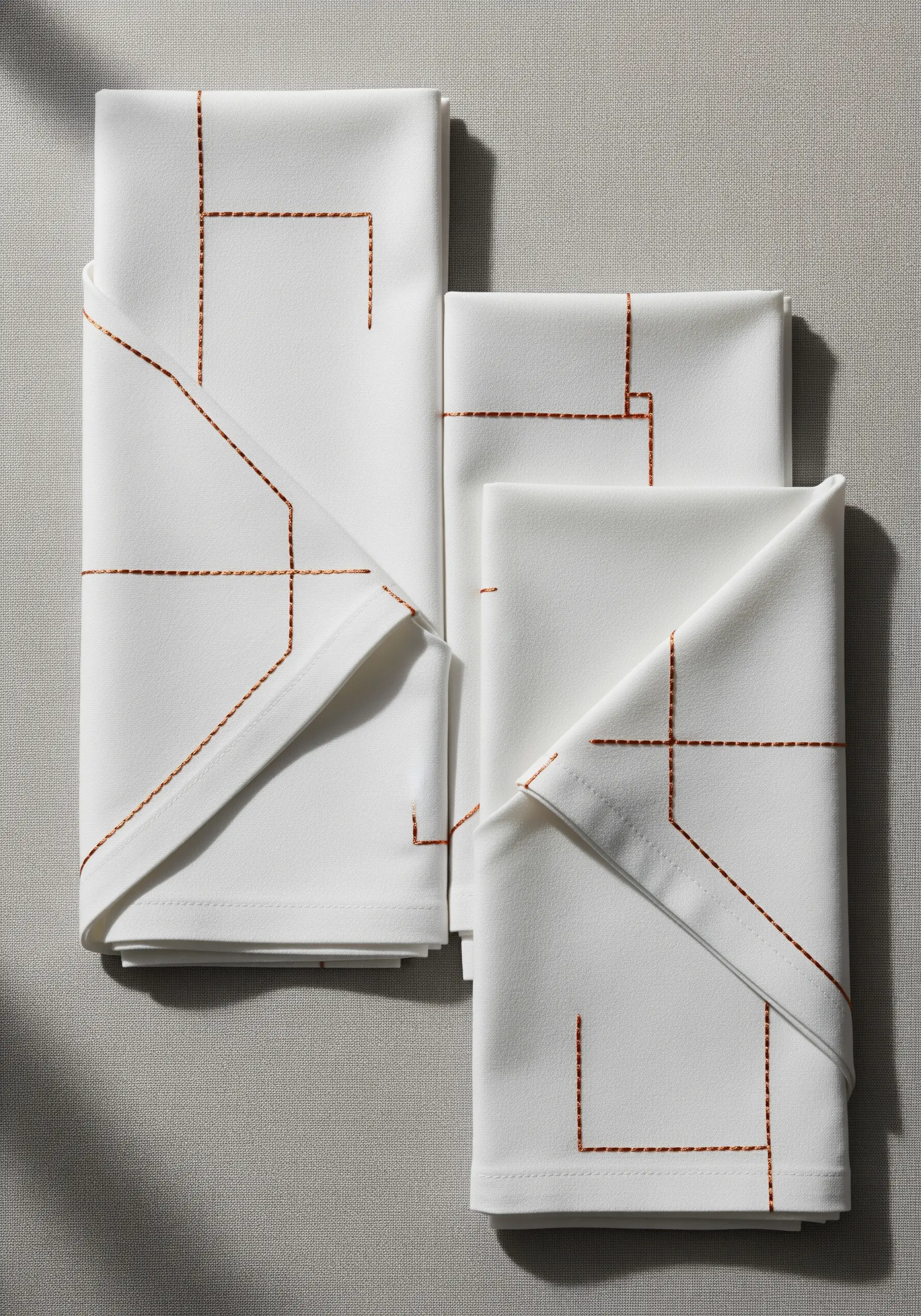
Elevate simple white napkins with the clean precision of architectural lines in a copper metallic thread.
The key to this modern look is consistency: use a running stitch and mark your stitch lengths and spacing with a water-soluble pen before you begin.
Choose a thread that has a smooth finish to avoid snagging on the crisp cotton fabric.
This design proves that you don’t need complex motifs for a sophisticated result; the beauty lies in the precision and the striking contrast between the warm metal and the cool white fabric.
5. Blend Metallic Tones for an Autumnal Cascade
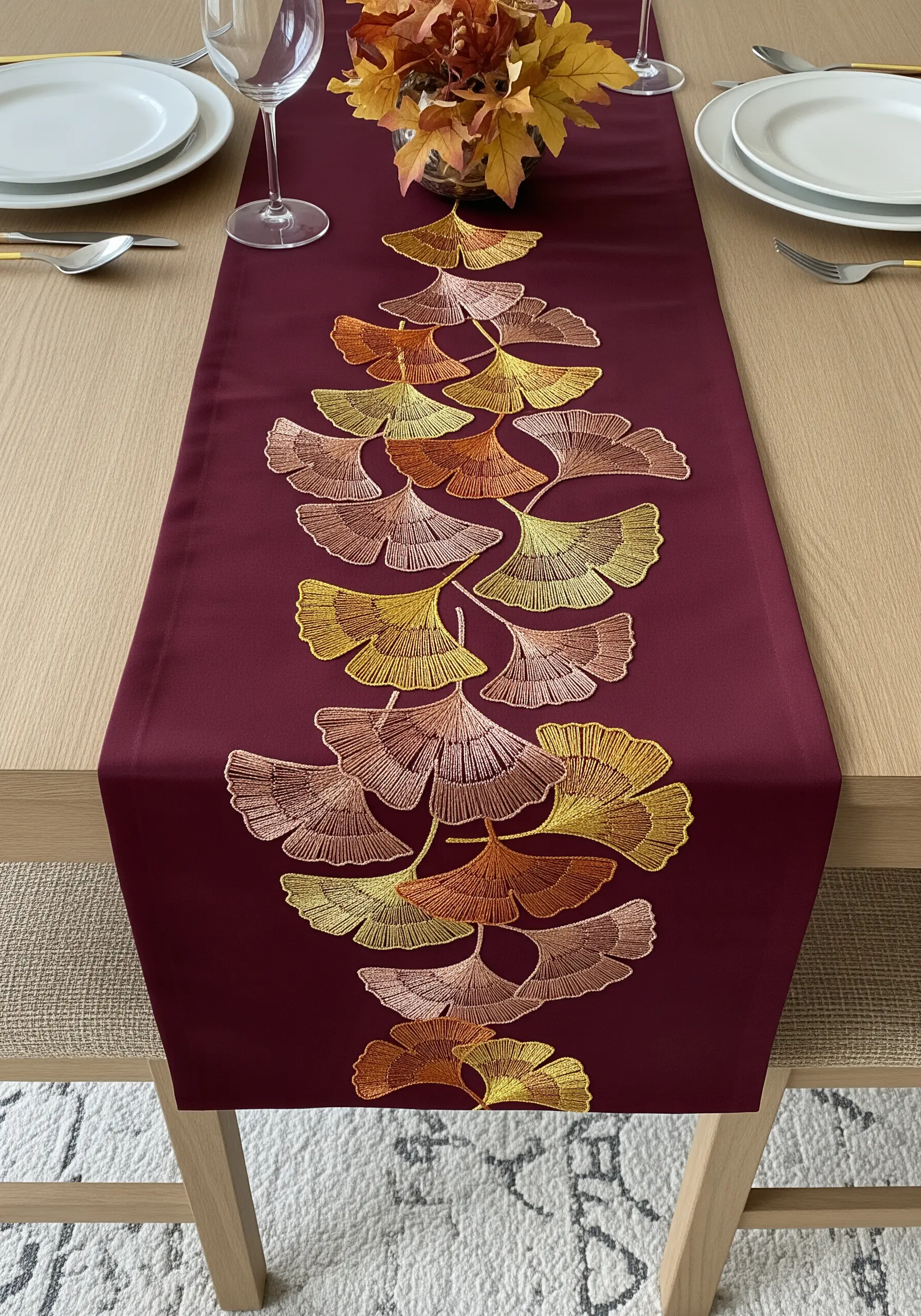
Capture the warmth of autumn by blending multiple metallic shades within a single motif, like these ginkgo leaves.
Instead of one solid gold, use three or four tones—a pale gold, a rich yellow gold, a warm copper, and a soft bronze.
Use a long-and-short stitch to fill each leaf, allowing the colors to blend softly into one another, creating a subtle, organic gradient.
This gives the design a painterly quality that feels much more dynamic than a single-color embroidery.
6. Create Dimensional Monograms on Velvet
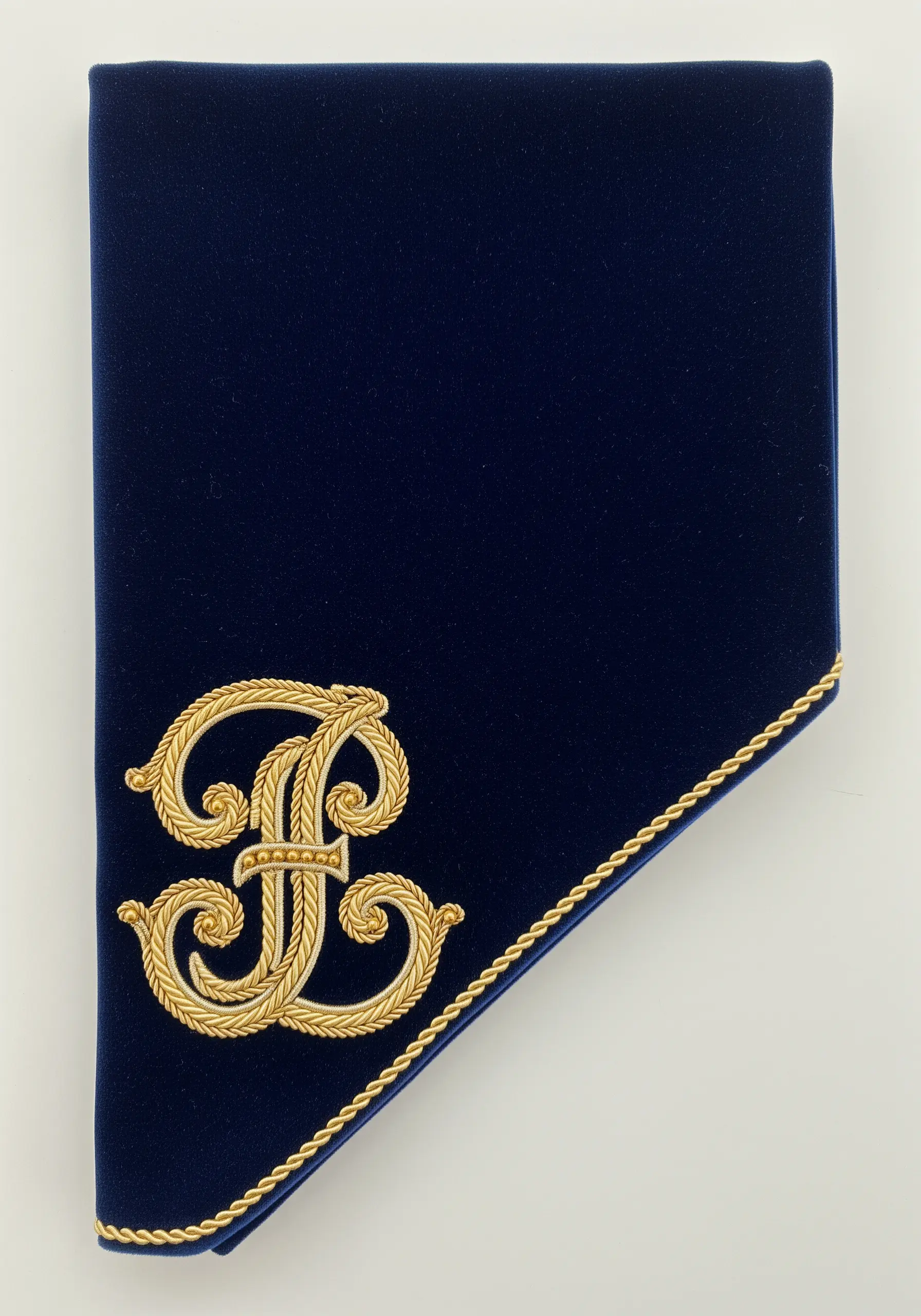
For an unapologetically luxe monogram, work on a rich navy velvet and use a padded satin stitch to give your metallic threads incredible dimension.
First, create a base layer of stitches within the outline of your letter using a standard cotton floss.
Then, stitch over this padding with your gold metallic thread, ensuring your satin stitches are tight and uniform.
The padding underneath raises the metallic thread, making it catch the light and appear almost three-dimensional against the deep, matte texture of the velvet.
7. Define Placemats with a Chain Stitch Border
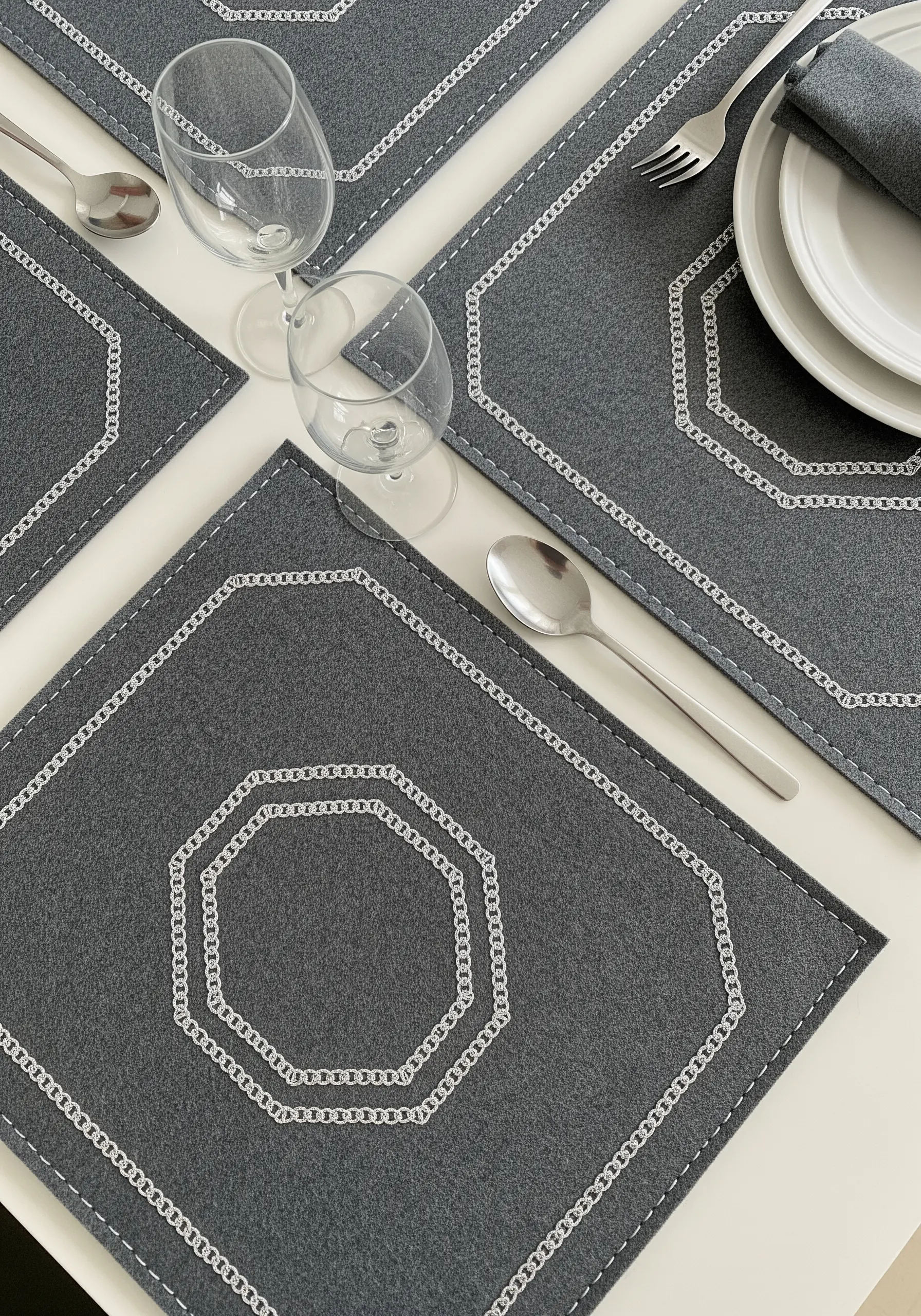
Instead of a simple backstitch, use a chain stitch for borders to create a look that is both graphic and textured.
On a felted or thick woolen placemat, the chain stitch sits beautifully on the surface, creating a crisp, defined line that mimics the look of fine jewelry.
Use a bright silver metallic thread against a dark grey fabric for a sharp, contemporary contrast that feels both modern and timeless.
This stitch is also surprisingly fast to execute once you find your rhythm, making it perfect for a full set of placemats.
8. Illustrate with Art Nouveau Line Work
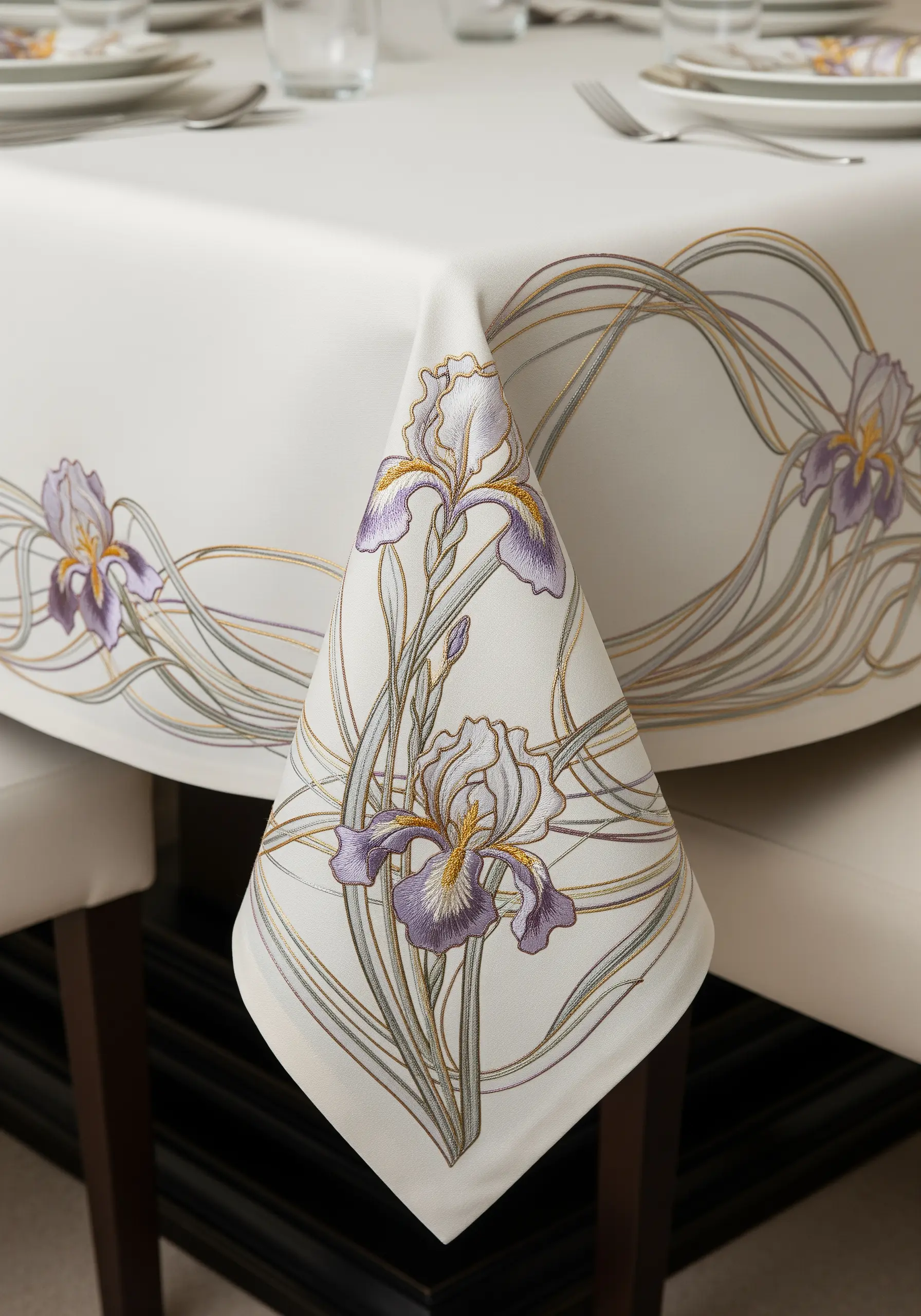
Capture the flowing, organic lines of Art Nouveau by using a single strand of metallic thread in a delicate stem stitch.
The stem stitch is perfect for creating smooth, elegant curves, essential for botanical illustrations like irises and swirling leaves.
Introduce subtle color by using a whisper of lilac and pale gold metallic thread, letting the majority of the design rely on the grace of the line work itself.
On a fine off-white linen, this technique looks less like embroidery and more like a delicate ink drawing with a hint of shimmer.
9. Scatter Joyful Stitches Like Confetti
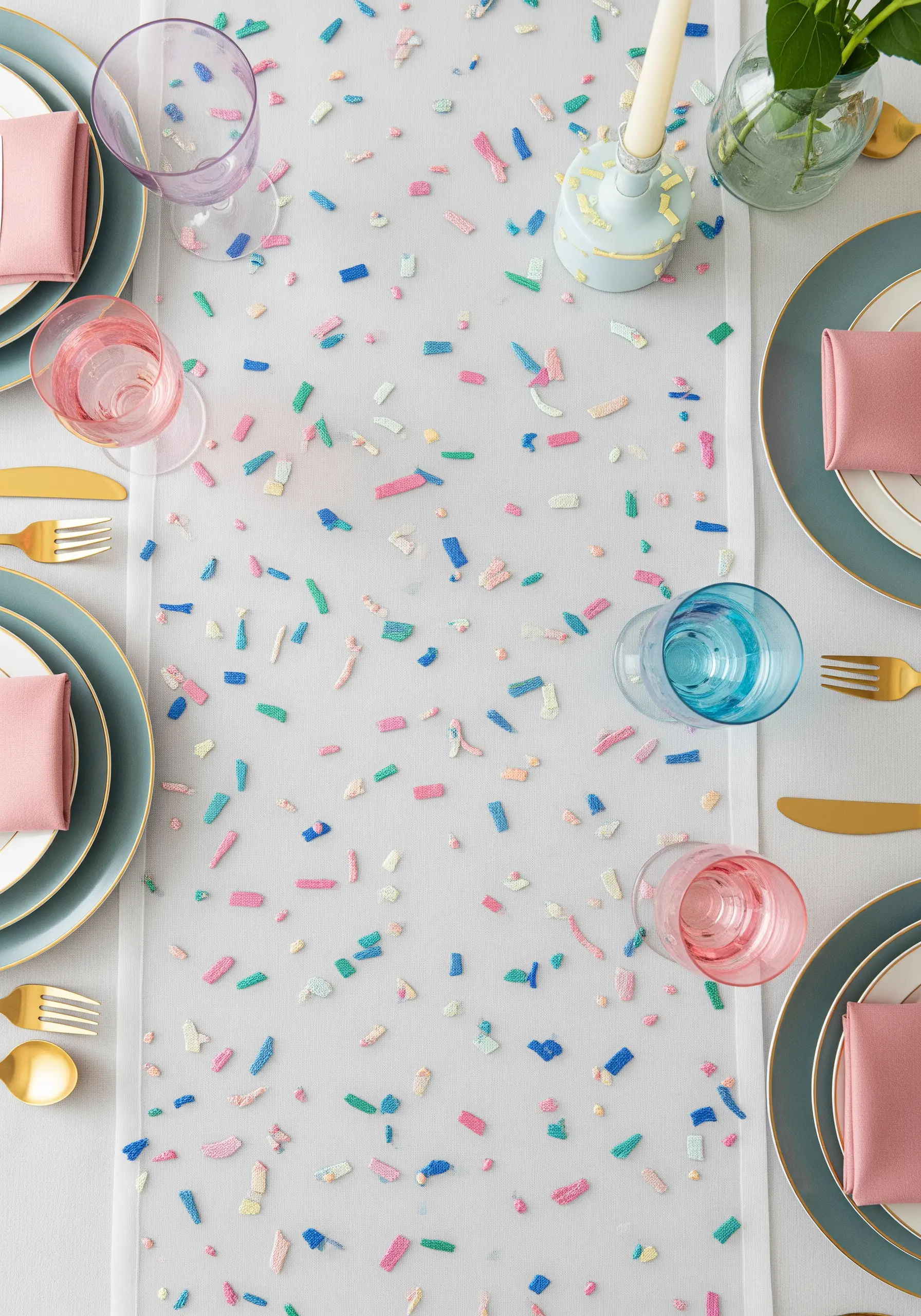
Create a playful, celebratory table runner using short, straight stitches in pastel and metallic threads to mimic scattered confetti.
Vary the length and angle of each stitch to create a sense of random, joyful movement.
Work on a sheer or semi-sheer fabric like organza, which allows the stitches to almost float on the surface, enhancing the light and airy effect.
Intersperse matte pastel threads with single strands of silver or iridescent metallic thread to add a subtle sparkle that catches the eye.
10. Tile Geometric Motifs for Maximum Impact
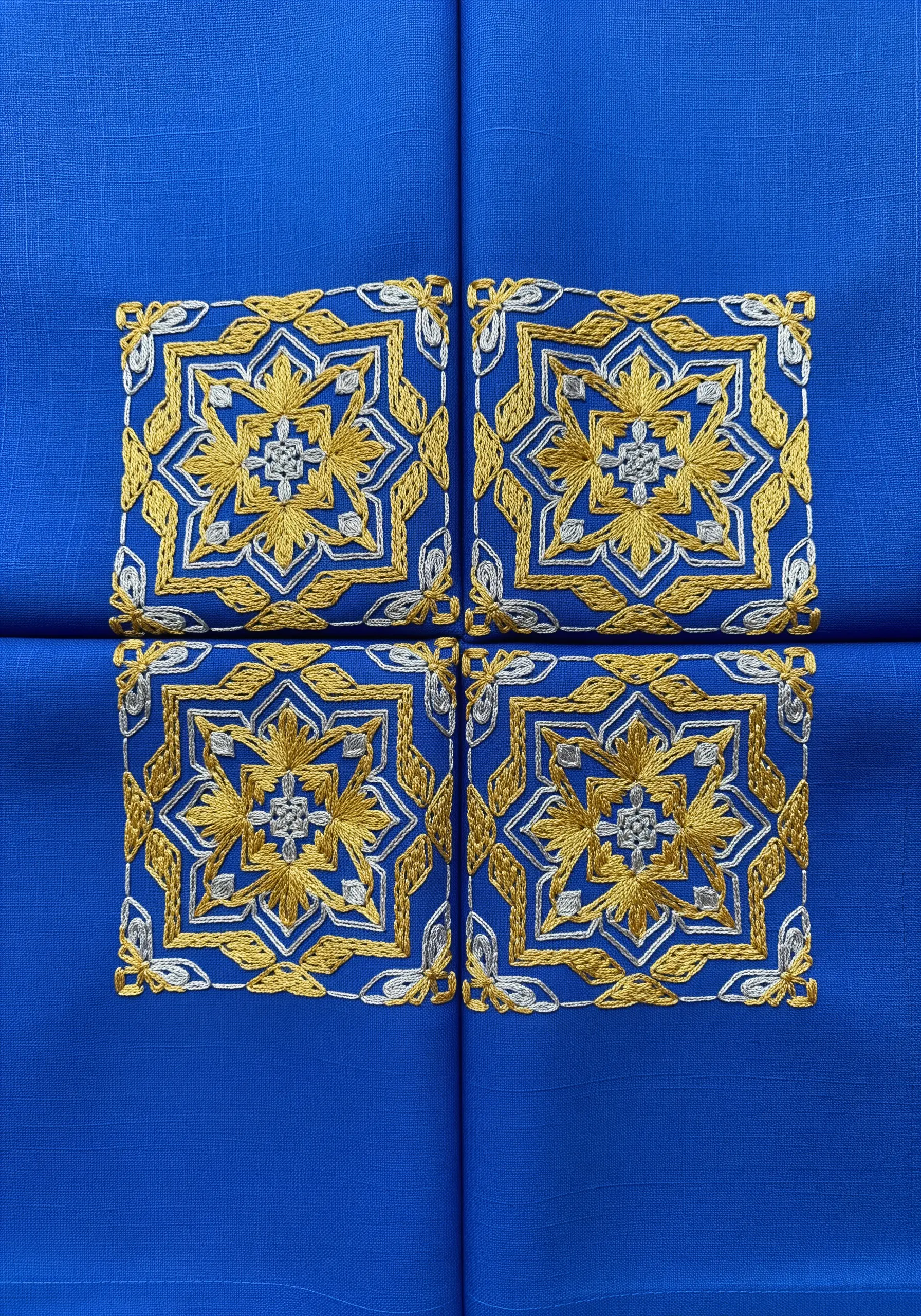
Design a small, intricate geometric motif and repeat it to create a larger, tiled pattern on napkins or placemats.
By combining a bright gold and a cool silver metallic thread against a bold cobalt blue, you create a striking contrast that feels both regal and modern.
Focus on dense satin stitches for the fill and clean backstitches for the outlines to ensure each tiled element is crisp and well-defined.
The repetition transforms a simple design into a complex, mesmerizing pattern reminiscent of intricate tilework.
11. Weave a Tone-on-Tone Metallic Vine
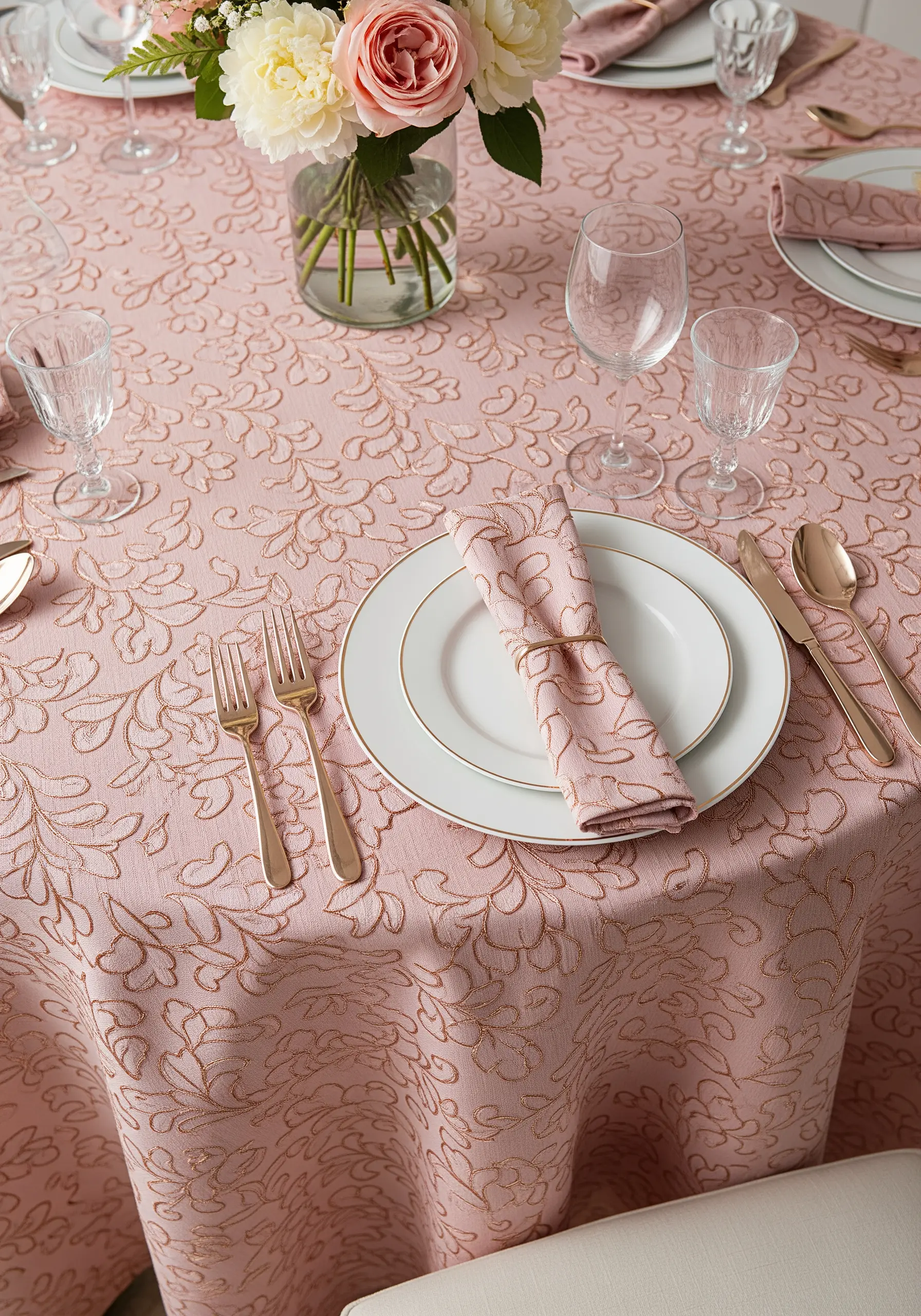
For an effect that is both subtle and luxurious, embroider your tablecloth with a metallic thread that is only a few shades lighter than the fabric itself.
Here, a soft rose gold metallic thread is used on a dusty pink linen, creating a continuous vine pattern that appears almost etched into the surface.
Use an open, flowing stitch like a stem stitch or split stitch for the outlines of the leaves and flowers.
This tone-on-tone embroidery technique adds texture and shimmer without overwhelming the table setting, perfect for a romantic, elegant dinner.
12. Contrast Bold Graphics on Black Linen
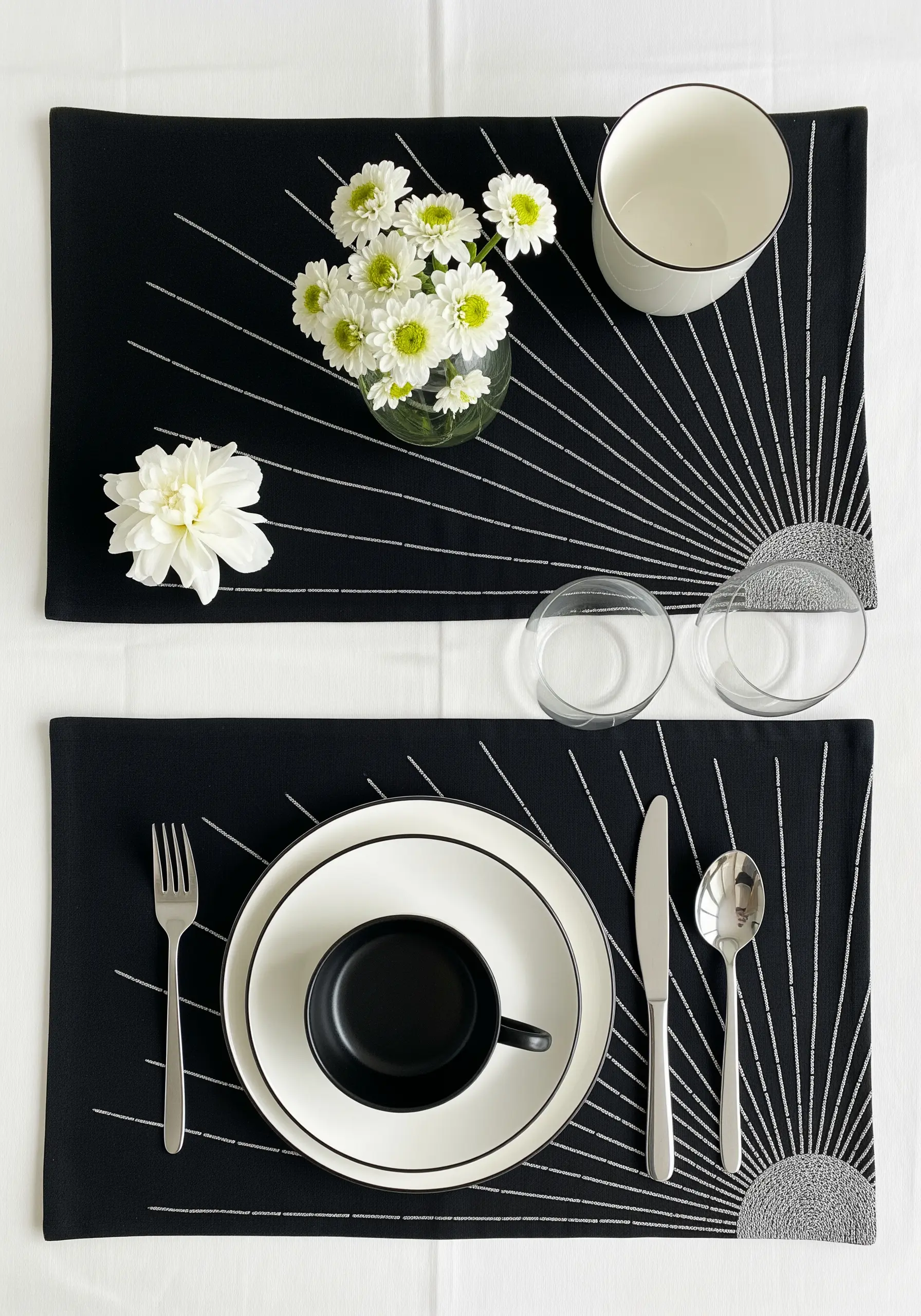
Make a powerful statement with high-contrast graphic embroidery on black placemats.
Use a bright white or silver metallic thread to stitch a radiant sunburst motif, employing straight stitches of varying lengths that emanate from a central point.
For the solid sun, use a dense circular satin stitch, working from the outside in to maintain a clean edge.
The stark contrast between the metallic thread and the black fabric creates a sharp, clean aesthetic that is perfect for a modern, minimalist table setting.
13. Center Your Runner with a Harvest Sheaf
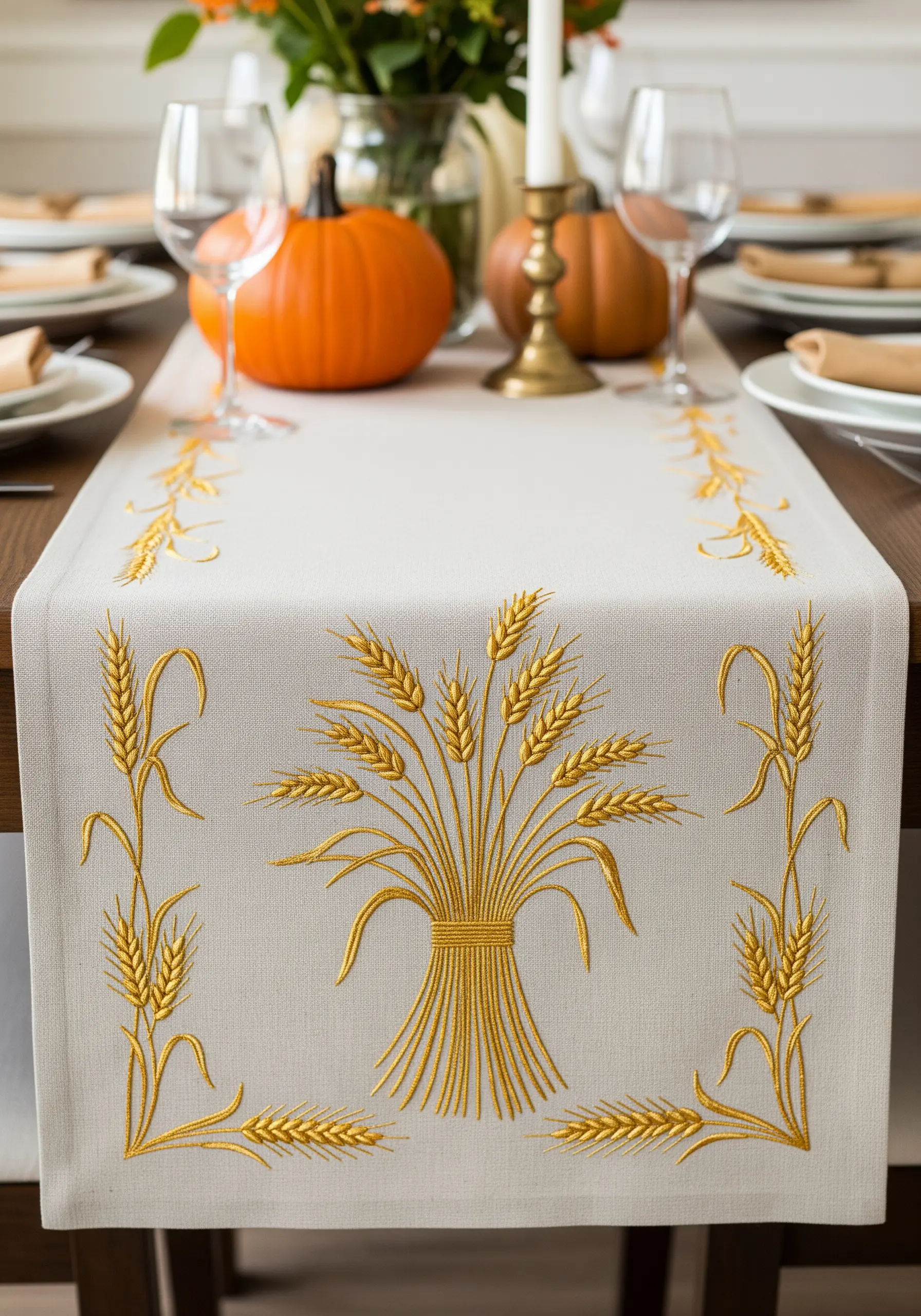
Create a classic, celebratory motif like a sheaf of wheat using just two primary stitches for a clean, polished look.
Use a satin stitch for the individual grains and the binding, ensuring your stitches are laid closely together for a smooth, solid appearance.
For the delicate stems and wisps, switch to a simple backstitch or stem stitch to create fine, graceful lines.
A single, rich gold metallic thread on a natural linen or oatmeal-colored fabric evokes a sense of warmth and abundance perfect for autumn feasts.
14. Craft a Frosty Winterscape with Metallics

Evoke the shimmer of fresh snow by embroidering snowflakes with a combination of silver and iridescent metallic threads.
Create each snowflake with a series of straight stitches for the main arms and smaller straight stitches or French knots for the intricate details.
Alternate between a matte silver thread and a sparkly, iridescent one to give the snowflakes varying levels of frost and shine, making them look more realistic.
Stitching on a pale blue or silver fabric enhances the icy, wintery feel of the design.
15. Create Abstract Texture with Layered Stitches
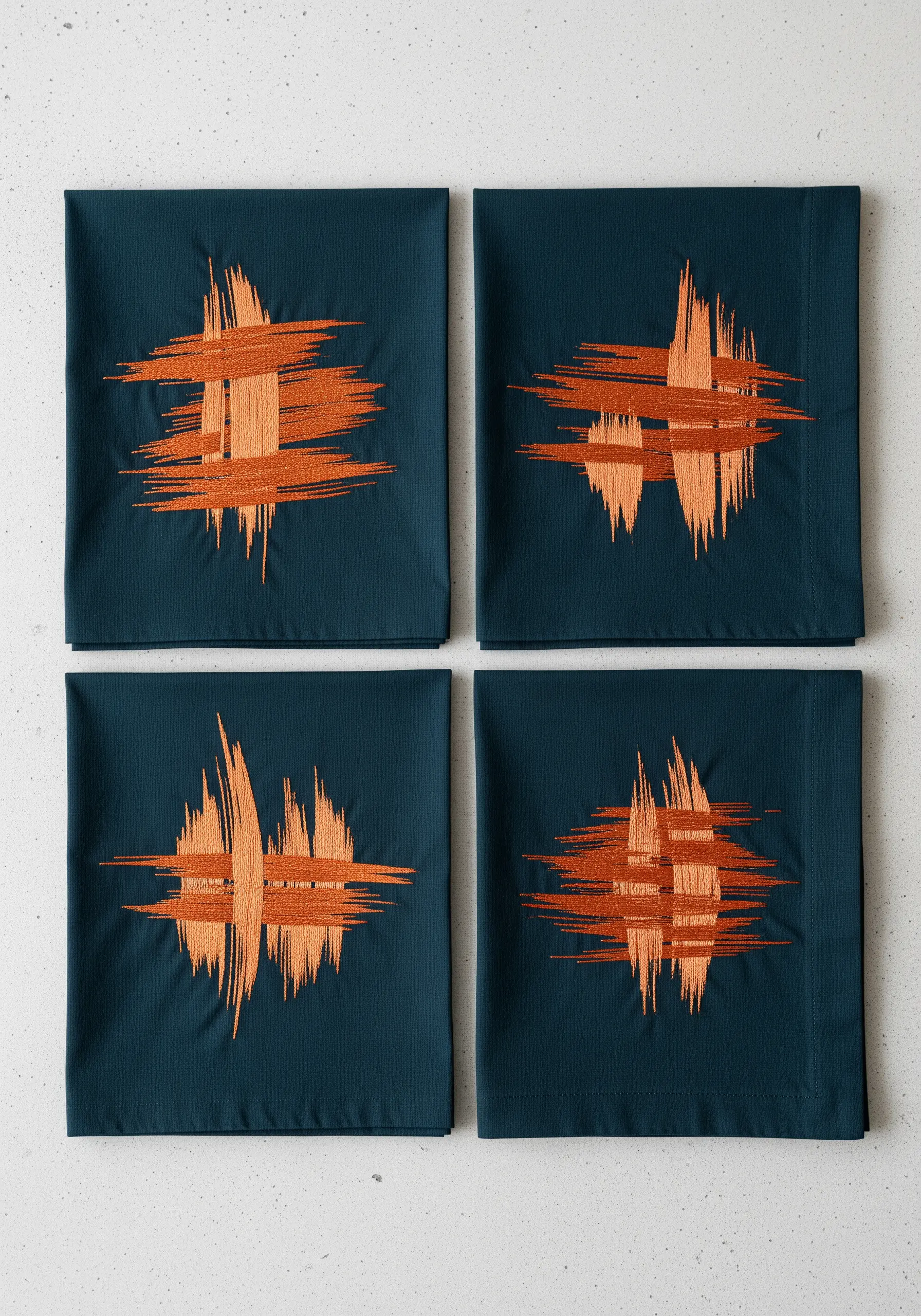
Move beyond traditional motifs and explore abstract textures by layering satin stitches in a metallic thread.
Work with a rich copper or bronze metallic thread on a dark teal or navy napkin for a sophisticated, moody color palette.
Create a base of horizontal satin stitches, then layer vertical satin stitches on top, allowing some of the bottom layer to show through.
This creates a woven, almost digital texture that is visually complex and feels incredibly modern.
16. Outline Placemats with a Geometric Spiral
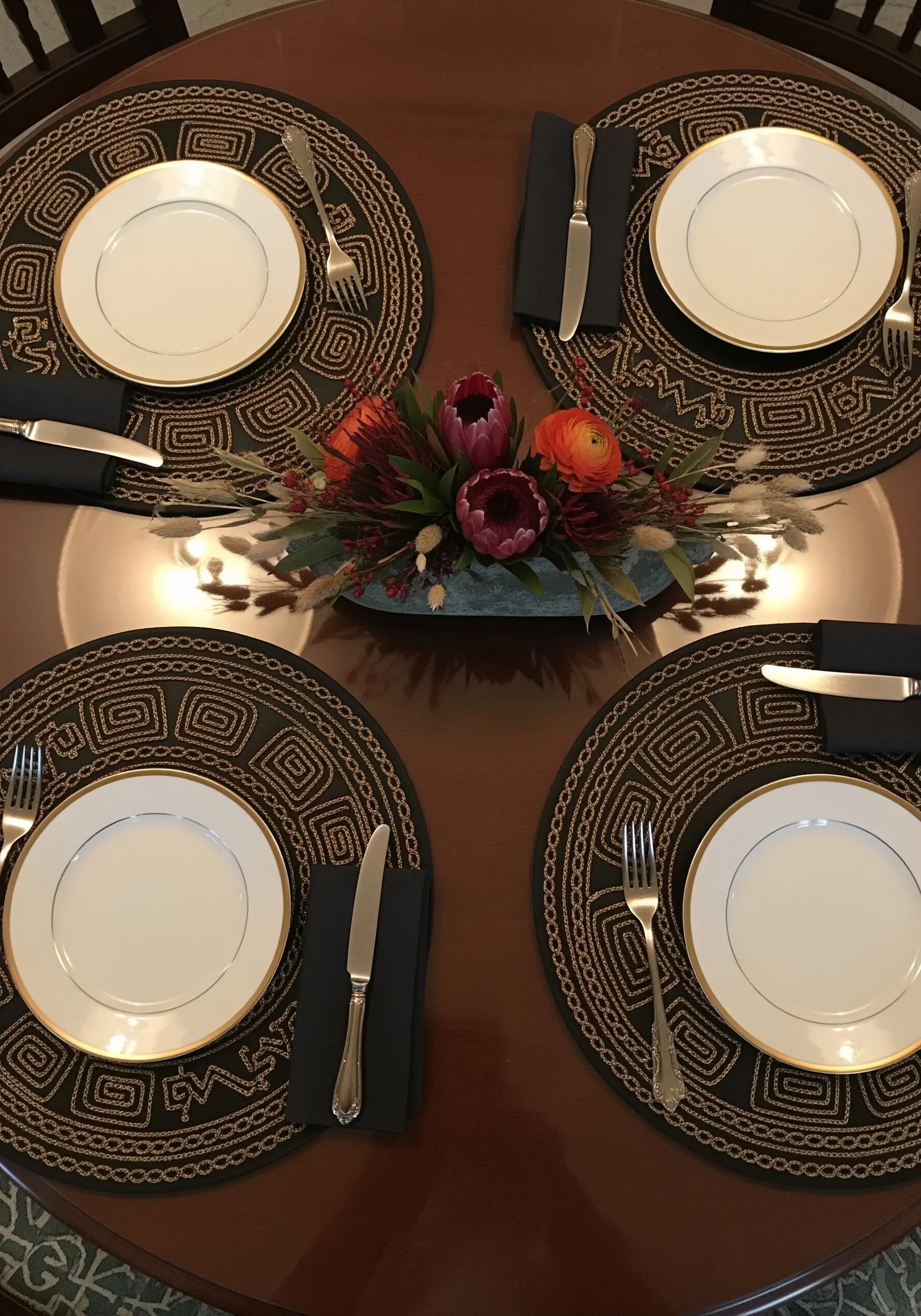
Frame your placemats with a geometric pattern that feels both ancient and modern, like this continuous spiral.
Use a thick, cord-like metallic thread and apply it using a couching stitch for a bold, raised effect that defines the circular shape of the placemat.
This technique is not only decorative but also adds a pleasing weight and structure to the edge of the placemat.
The dark gold thread on a black background creates a dramatic, high-end look perfect for formal evening dinners.
17. Paint with Thread: The Variegated Koi
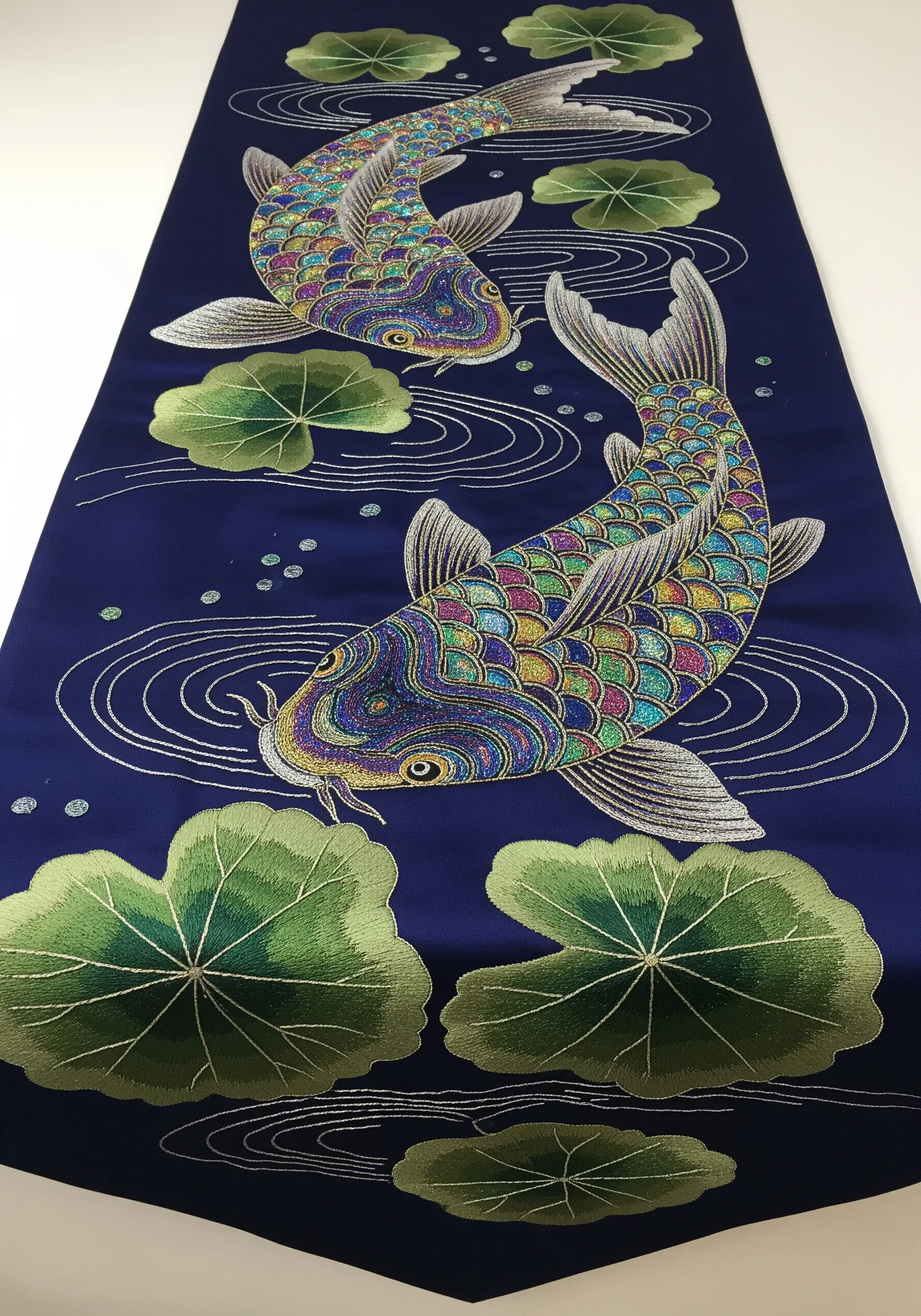
Achieve a stunning, painterly effect by using variegated metallic threads for your main motif.
These threads contain multiple colors that change along the length of the strand, creating automatic color blending and depth as you stitch.
Use a long-and-short stitch to fill the scales of the koi fish; the thread will naturally create the iridescent, multi-toned effect without you needing to switch colors.
Outline the details with a fine silver or black thread to give the design structure and make the colors pop.
18. Create an All-Over Pattern with Interlocking Rings
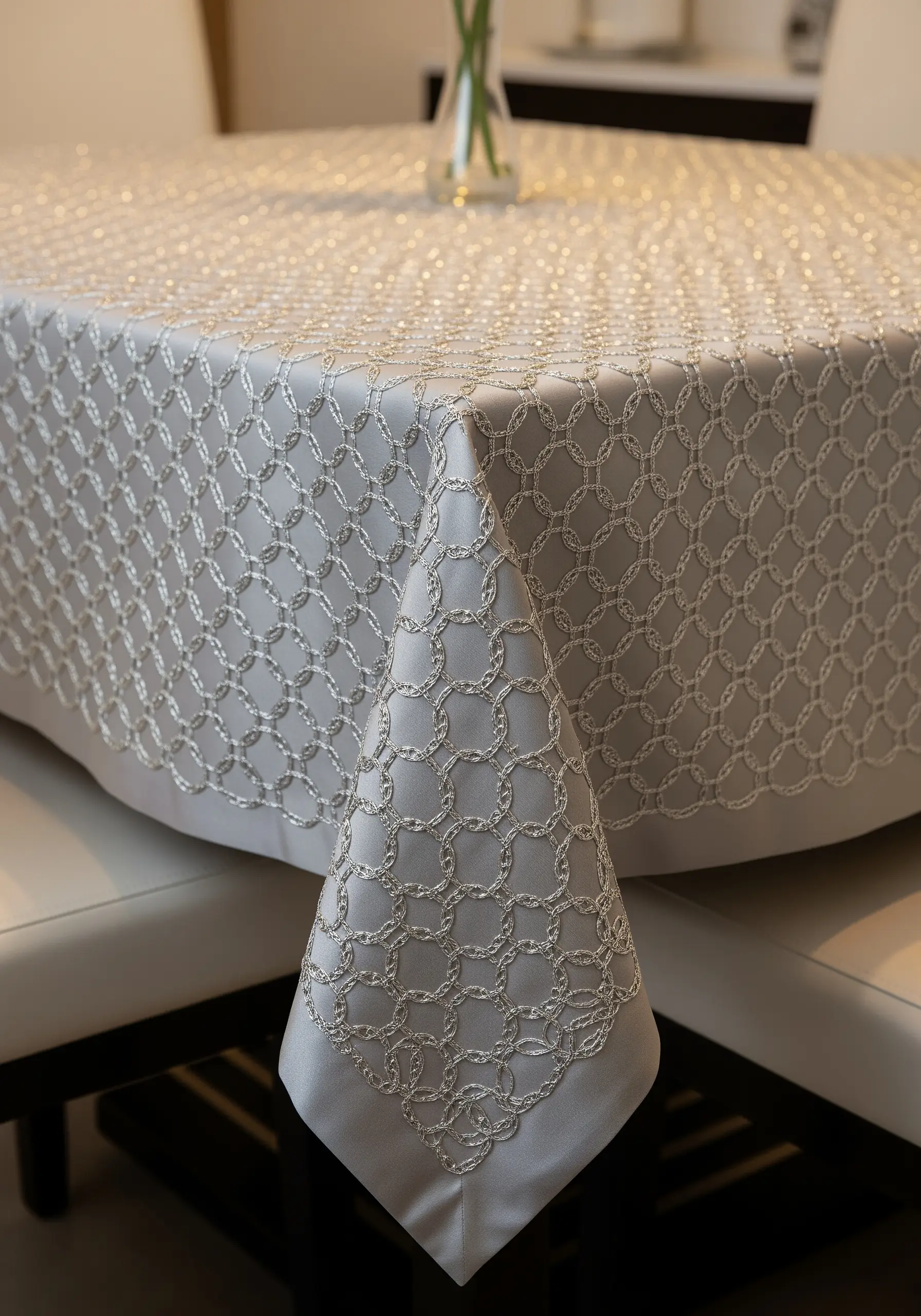
Transform a plain tablecloth with a sophisticated, all-over pattern of interlocking rings stitched in a single metallic color.
Use a bright silver thread on a soft grey or white fabric for a chic, contemporary look.
A simple chain stitch or split stitch works perfectly for the rings, providing enough texture to be interesting without overwhelming the design.
The key is a well-planned grid to ensure the rings are evenly spaced and interlock perfectly across the entire surface.
19. Frame Your Table with a Classic Laurel Wreath
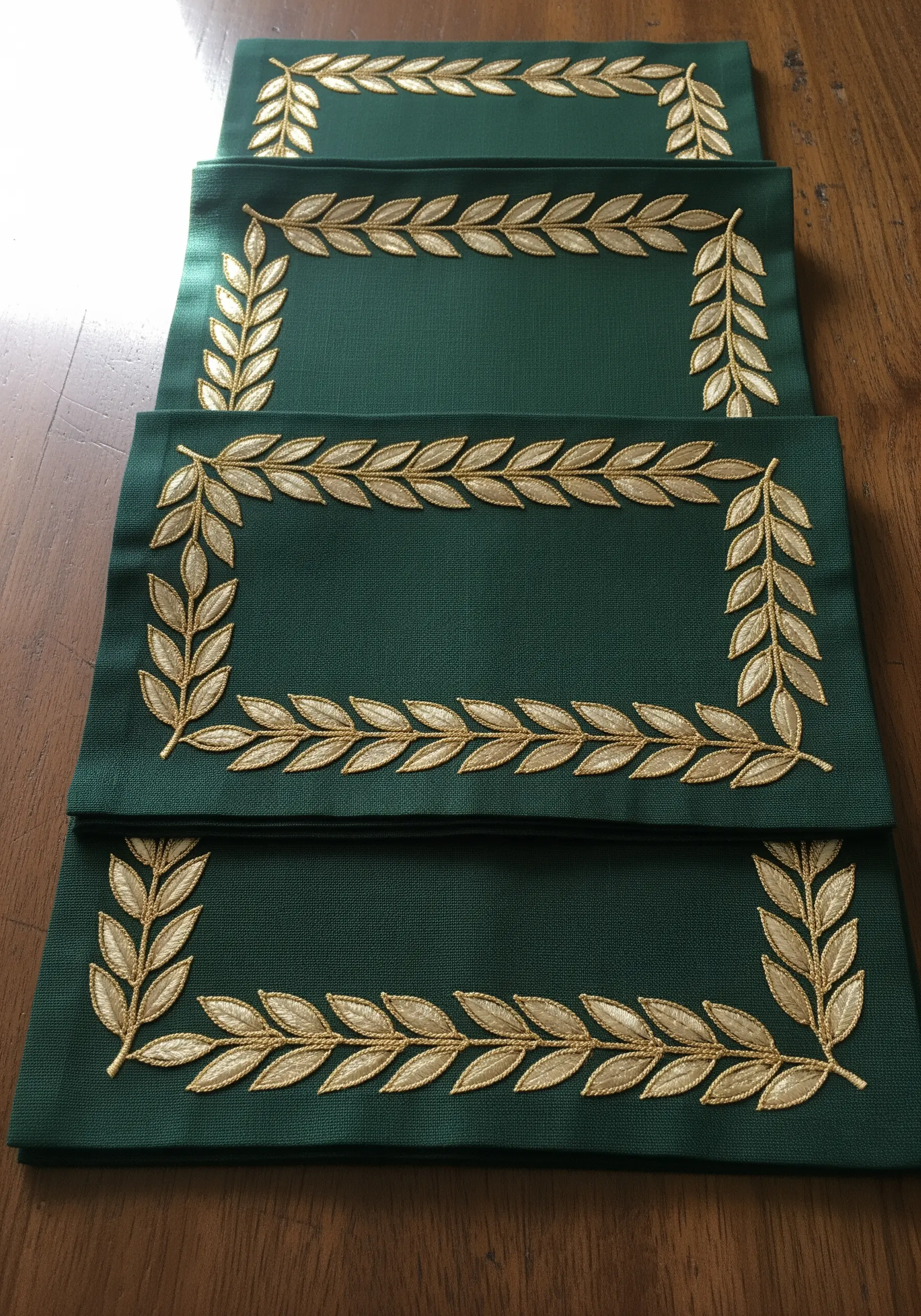
Add a touch of classic elegance to your placemats with a beautifully executed laurel wreath border.
Stitch each leaf using a fishbone stitch. This creates a central spine and angled sides, perfectly mimicking the structure of a real leaf and adding beautiful texture.
A rich, classic gold metallic thread on a deep forest green fabric is a timeless combination that feels both stately and welcoming.
Ensure your stitches are angled consistently for a polished, professional finish.
20. Stitch a Skyline with Architectural Precision
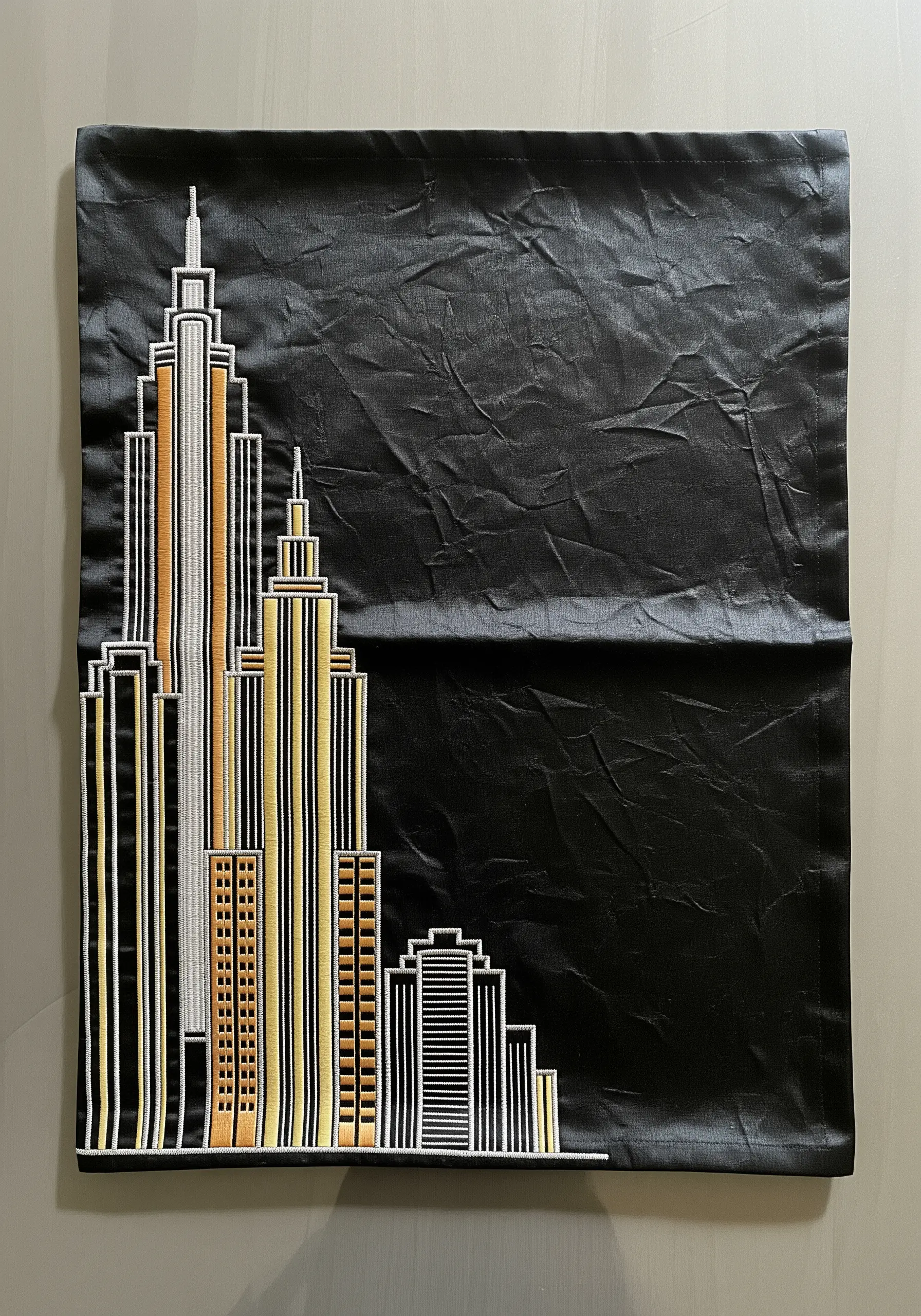
Capture the essence of a city skyline with clean, vertical satin stitches on a dark, dramatic fabric.
Use different shades of metallic thread—silver, pewter, gold, and bronze—to represent different buildings and create a sense of depth and perspective.
The success of this design lies in perfectly straight, parallel satin stitches. Use a stabilizer and take your time to ensure each stitch is laid down smoothly.
Leaving negative space at the top of the placemat balances the dense embroidery and draws the eye to the architectural details.
21. Adorn Velvet with Ornate Paisley Motifs
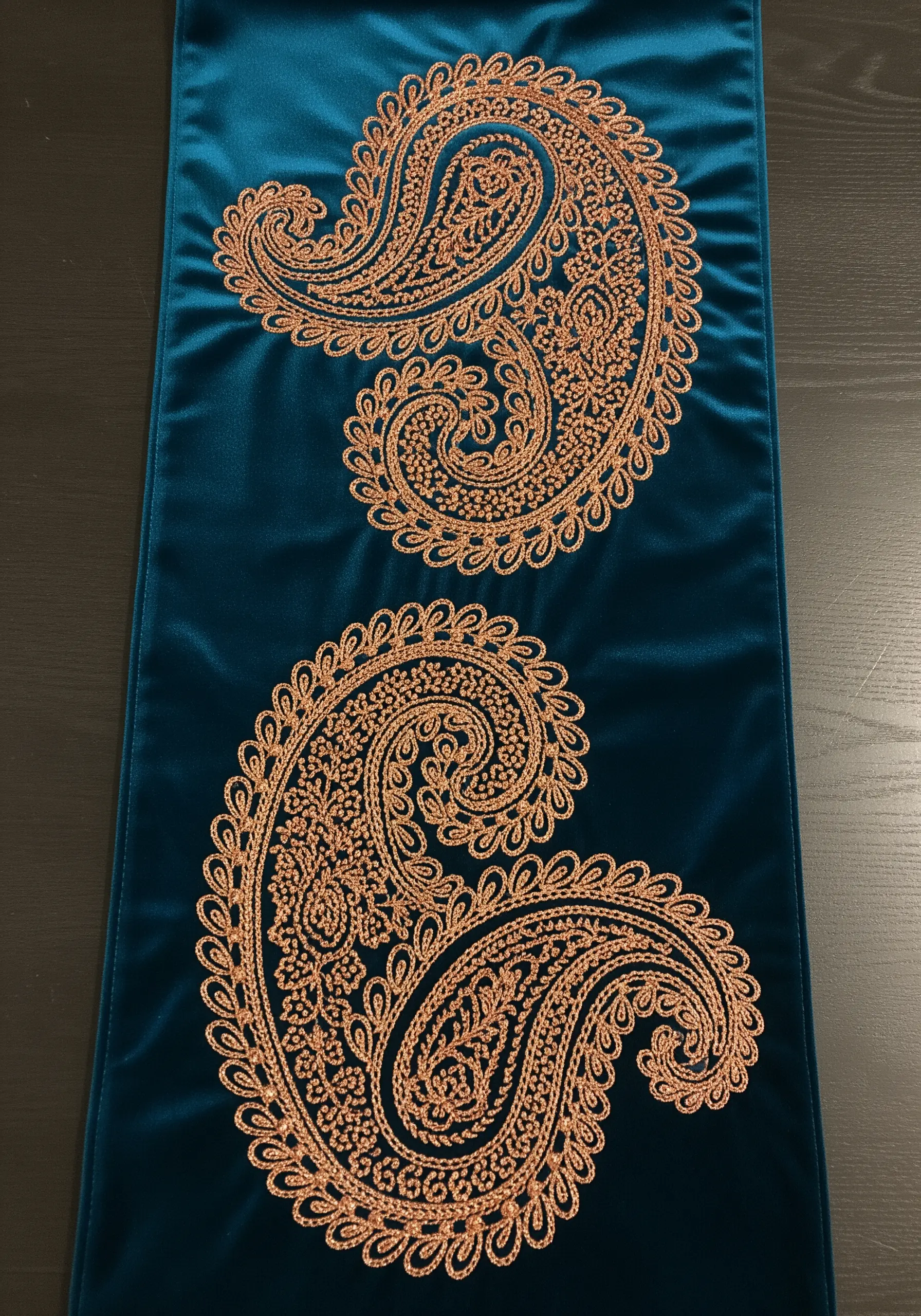
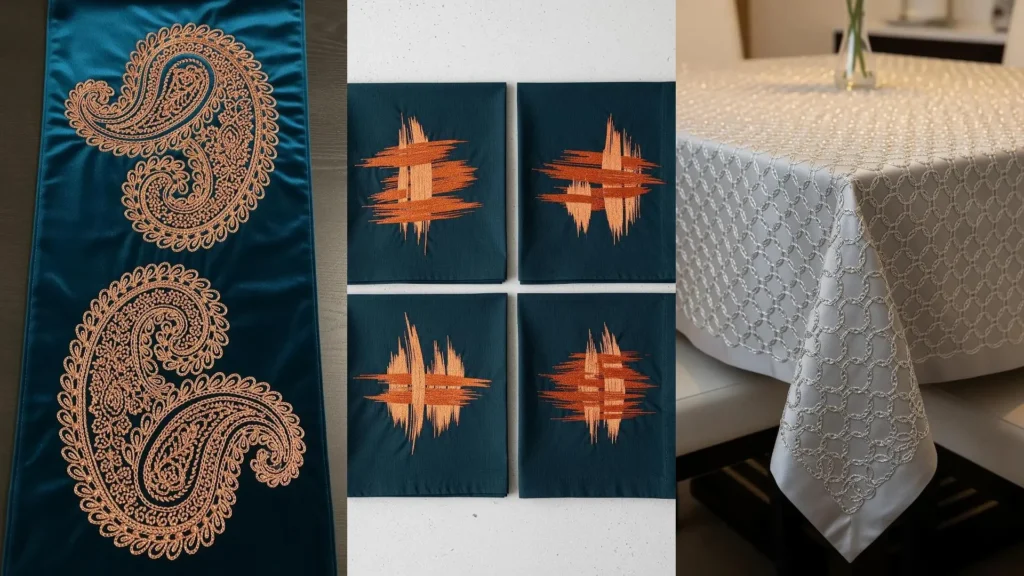
Let intricate paisley motifs shine by stitching them in a single, warm copper metallic thread against a jewel-toned velvet.
The high pile of the velvet provides a luxurious, dark backdrop that makes the metallic thread appear even brighter and more detailed.
Use a combination of tiny seed stitches for the textured fill and a fine backstitch for the delicate swirling outlines.
Working on velvet requires a sharp needle and good tension control to prevent the fabric from puckering, but the result is undeniably opulent.
22. Capture Delicate Coral in Silver Thread
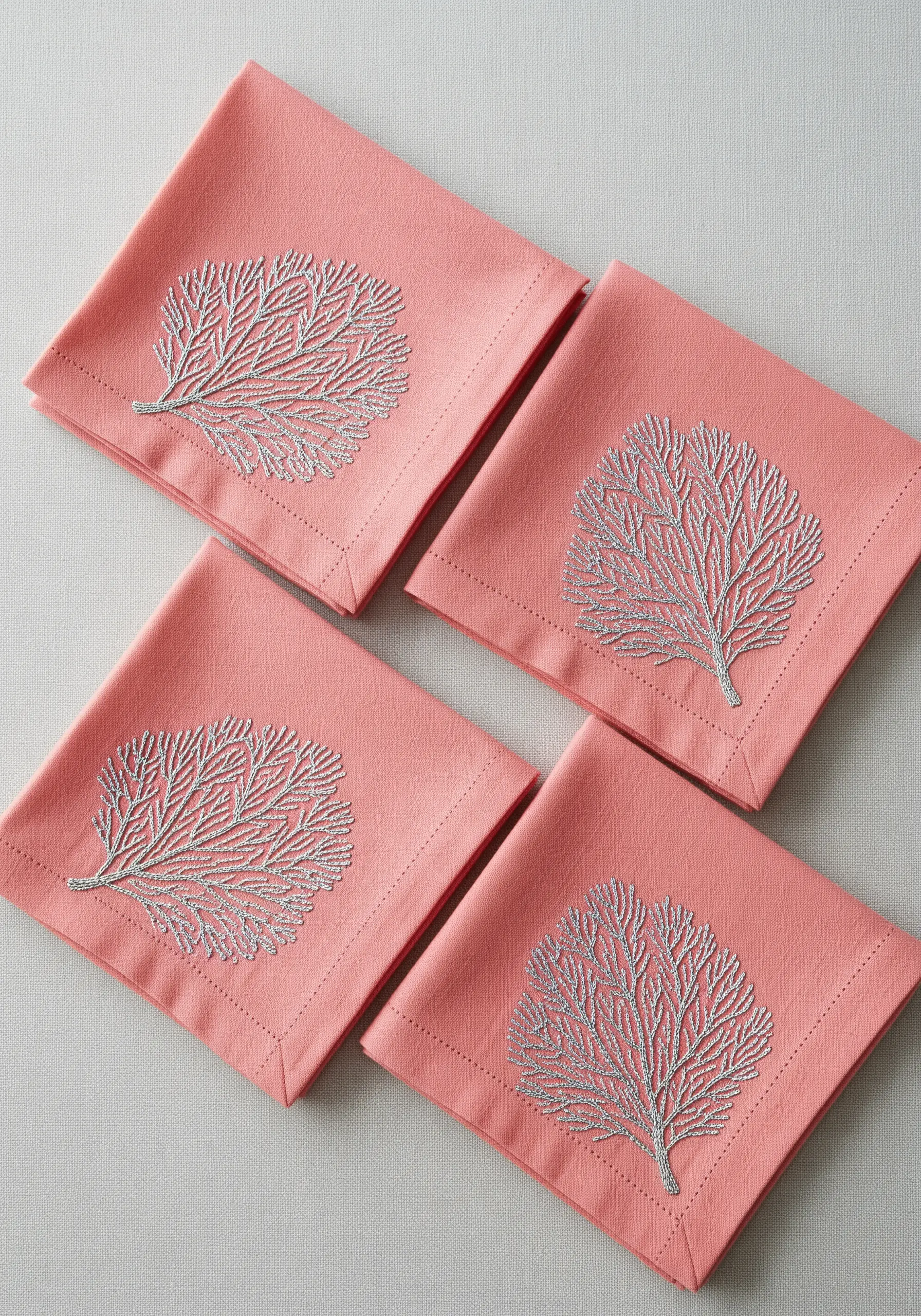
Embroider the delicate, branching structure of sea coral using a silver metallic thread on a contrasting coral-colored napkin.
A whipped backstitch or stem stitch is ideal for creating the fine, continuous branches of the coral.
Vary the thickness of your lines by using one or two strands of thread to create a more organic, natural look.
This design is a beautiful example of how a nature-inspired motif can feel incredibly modern and chic when executed with a minimalist approach.
23. Add a Regal Bee and Wreath Emblem
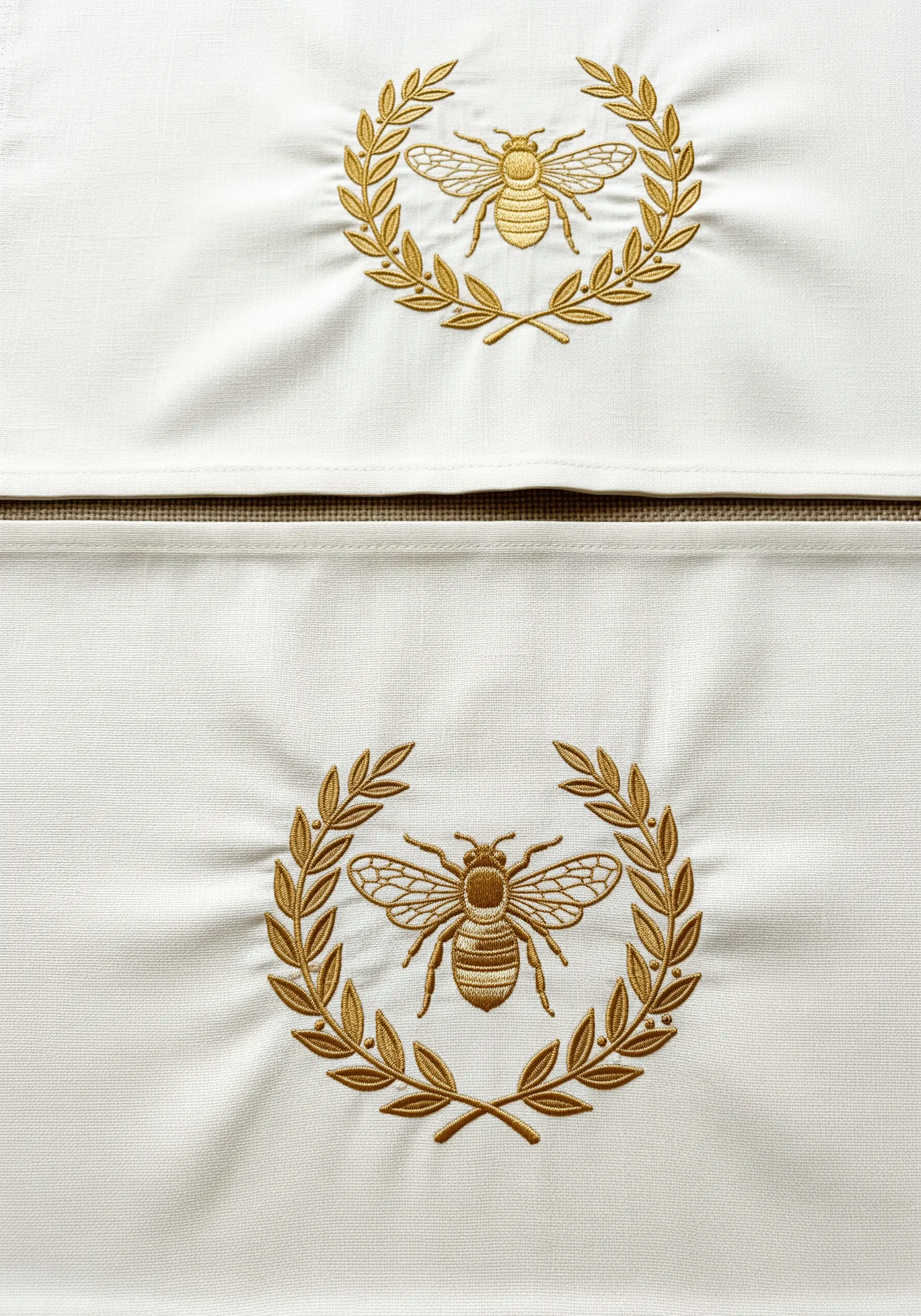
Create a timeless and regal emblem by combining a central motif, like a bee, with a classic laurel wreath.
For the bee’s wings, use an open fill stitch like the fly stitch to create a light, airy texture that suggests transparency.
Contrast this with a solid satin stitch for the body and the fishbone stitch for the leaves of the wreath, as seen in a previous example.
A single shade of antique gold metallic thread on a crisp white or cream linen gives this classic design a fresh, sophisticated feel.
24. Chart the Night Sky in Gold on Black
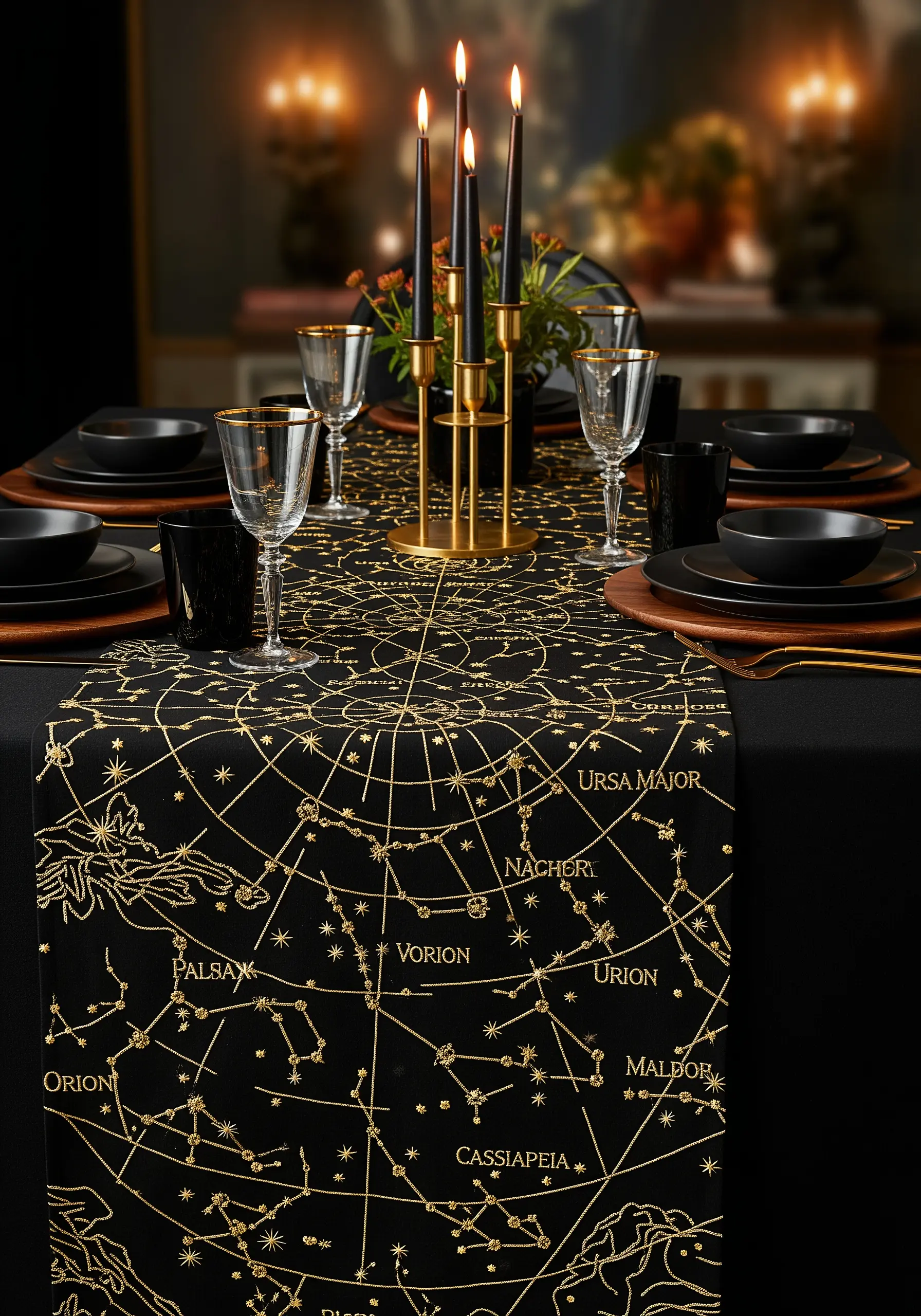
Go beyond simple constellations and stitch an entire star chart, complete with names and celestial paths, for a truly showstopping table runner.
Use a fine, single-strand gold metallic thread and a simple backstitch to keep the lines crisp and legible.
Tiny star stitches or French knots can mark the major stars, adding points of focused light to the delicate line work.
This design works best on a black or deep navy fabric to create the perfect ‘night sky’ backdrop for your golden thread.
25. Create Soft Dimension with Cherry Blossoms
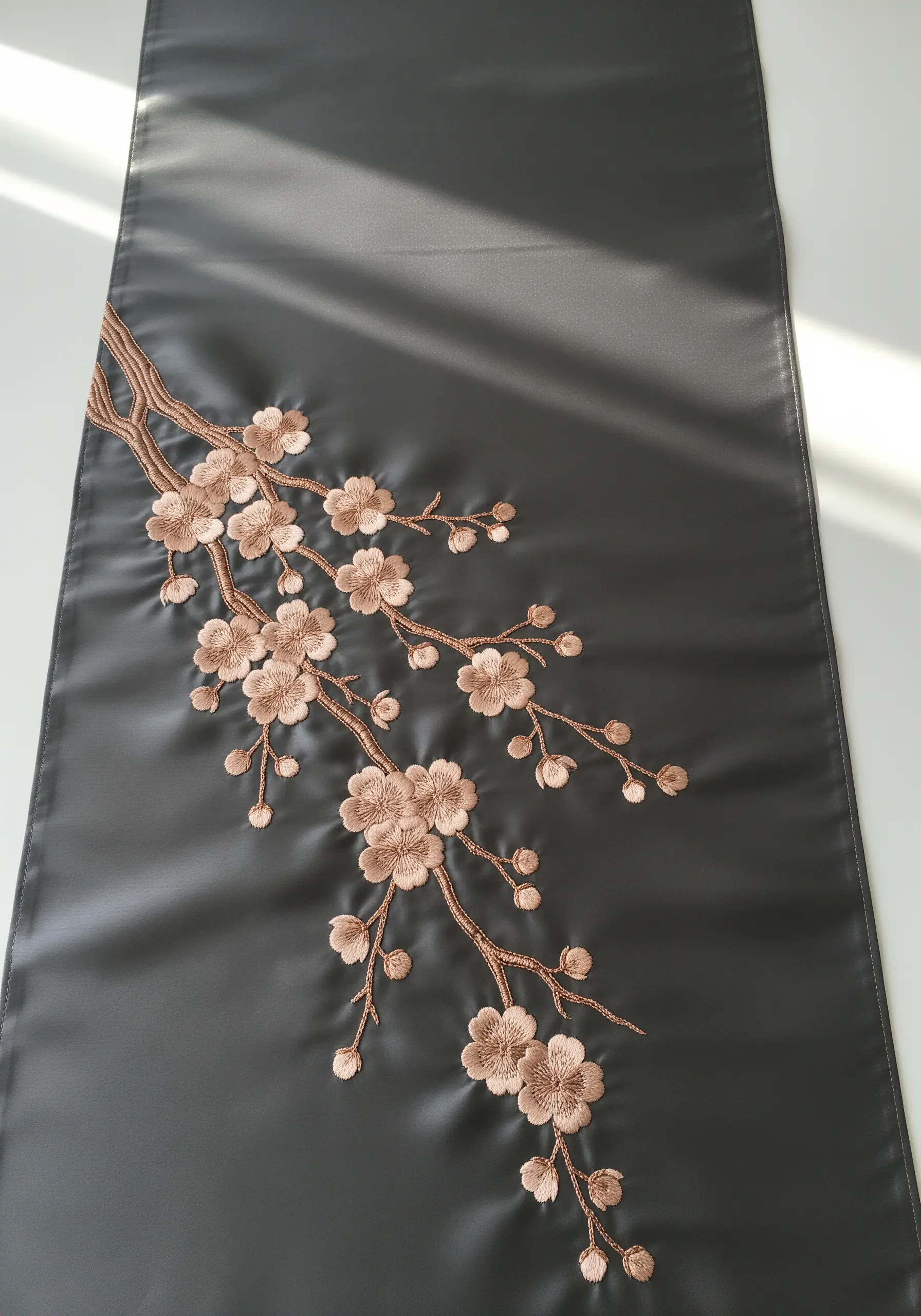
For a soft, romantic look, use a satin or sateen fabric that has a natural sheen to complement your metallic threads.
Embroider delicate cherry blossoms using a rose gold or pale copper metallic thread, which creates a warm, gentle contrast against a charcoal grey fabric.
Use satin stitch for the petals and a darker brown thread for the branches to ground the design.
The way the light plays on both the satin fabric and the metallic thread creates a beautiful, shimmering effect that feels elegant and serene.
26. Imply Luxury with a Moroccan Trellis
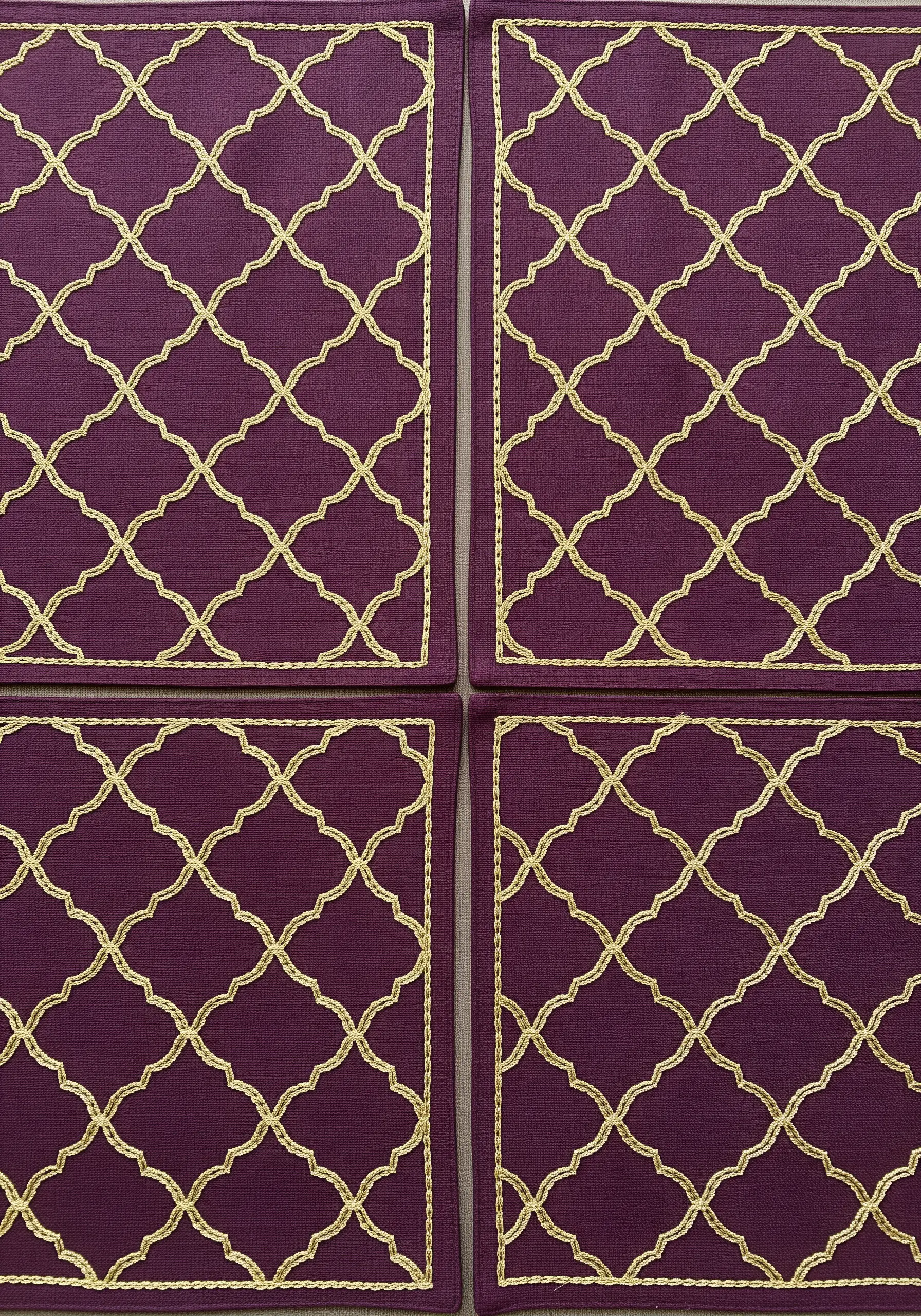
A simple Moroccan trellis pattern, stitched in a single gold metallic thread, can instantly elevate a placemat from plain to polished.
Use a split stitch or a small chain stitch to create the curved lines of the trellis; this adds a subtle texture and rope-like quality to the design.
The key to this pattern’s success is perfect symmetry and spacing. Use a fabric marker and a ruler to draw your grid before you begin stitching.
This geometric pattern provides a sophisticated frame for your dinner plates without being overly distracting.
27. Visualize Soundwaves in Metallic Thread
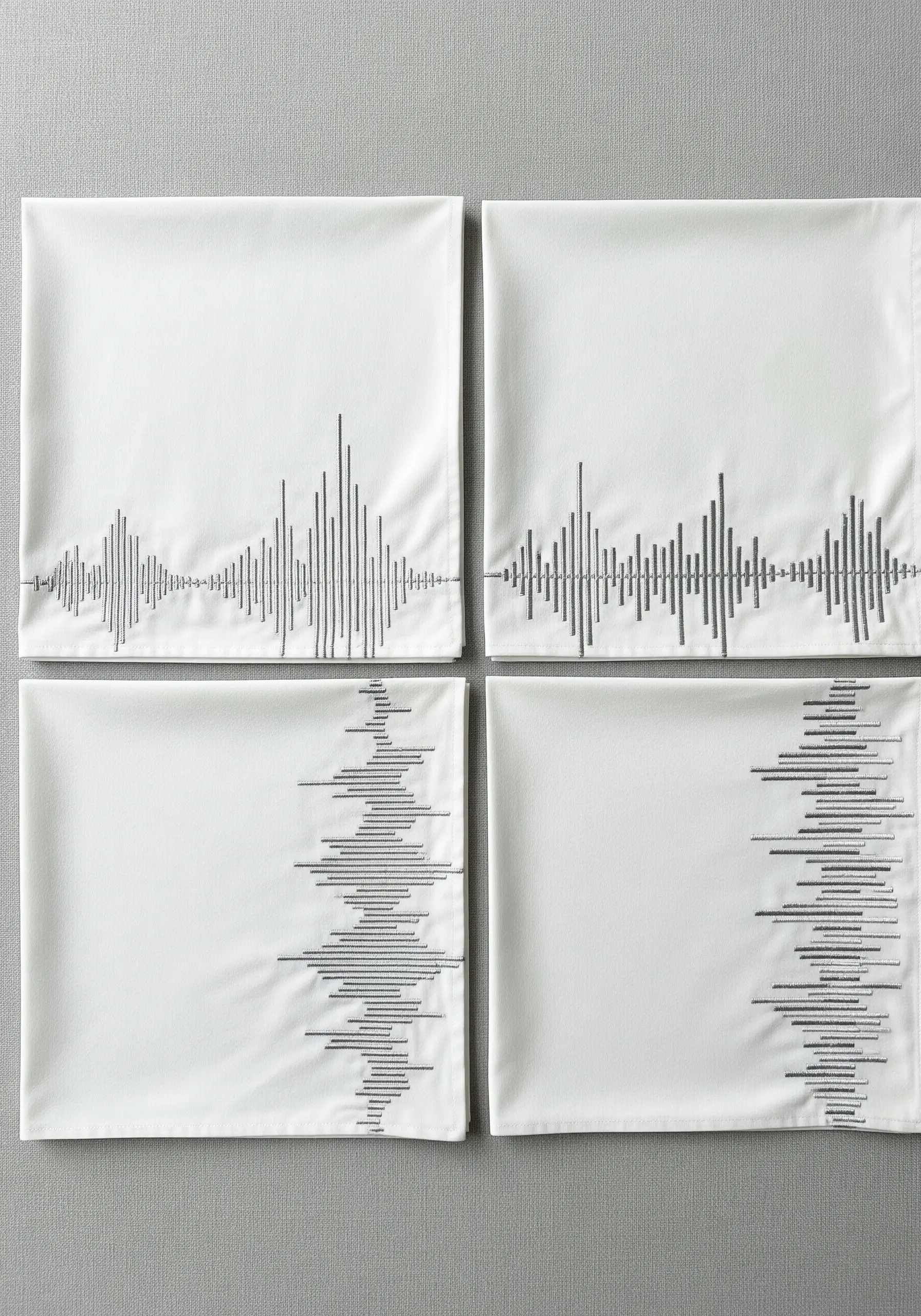
For a uniquely modern and personal touch, embroider the visual representation of a soundwave onto your napkins.
This could be a clip from a favorite song, a laugh, or the words “I love you.”
Use a simple straight stitch or a narrow satin stitch for the vertical lines, varying their height to match the soundwave pattern.
A single color of metallic thread, like pewter or silver, against a crisp white napkin creates a clean, graphic, and meaningful design that is sure to be a conversation starter.
28. Fill Velvet with Delicate Fern Fronds
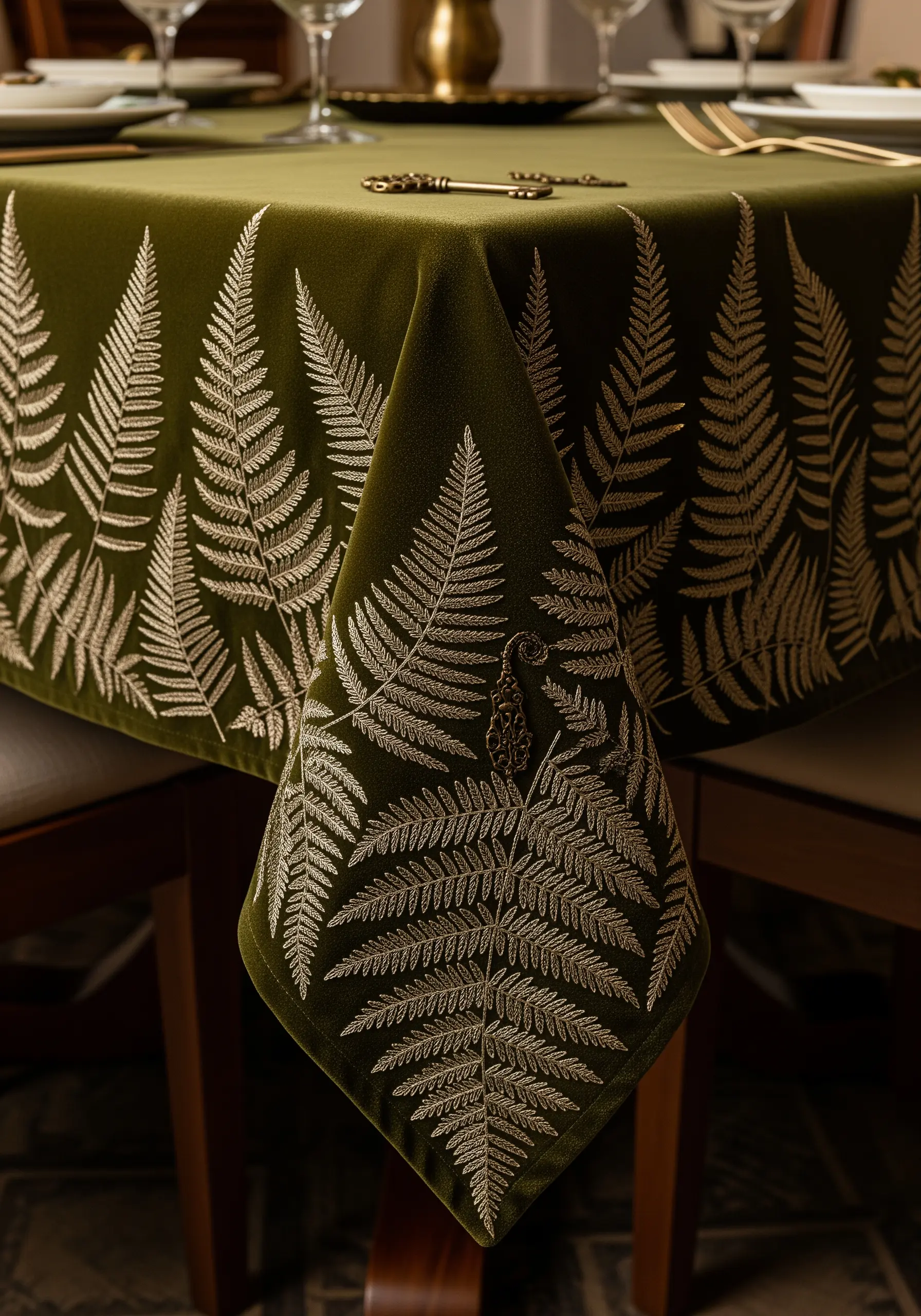
Combine the lush texture of velvet with the delicate shimmer of metallic thread for a design that is rich in contrast.
Use a light gold or champagne-colored metallic thread on an olive green velvet to evoke a magical forest floor.
Stitch the fern fronds using a simple fishbone stitch; this open stitch allows the plush velvet to peek through, creating a beautiful interplay between light and shadow, shimmer and matte.
Always use a tear-away stabilizer on the back when embroidering on velvet to prevent the stitches from sinking into the pile.