
Sometimes, the quietest actions create the most profound sense of peace. Embroidery is more than just a craft; it’s a way to slow down, to focus your breath, and to infuse a piece of your own calm into the very fabric of your home.
But perhaps you feel your stitches aren’t quite translating the serenity you feel inside. You want your work to look less like a hobby and more like intentional art—pieces that can genuinely transform a room’s energy.
Here, you won’t find complex instructions or demands for perfection. Instead, you’ll discover how small shifts in technique—choosing the right texture, understanding color harmony, or embracing negative space—can elevate your work into something deeply restorative.
Consider this your guide to stitching sanctuaries. Let’s pick up a needle and thread not just to create, but to cultivate tranquility, one stitch at a time.
1. Stitch a Serene Landscape with Color Blocking
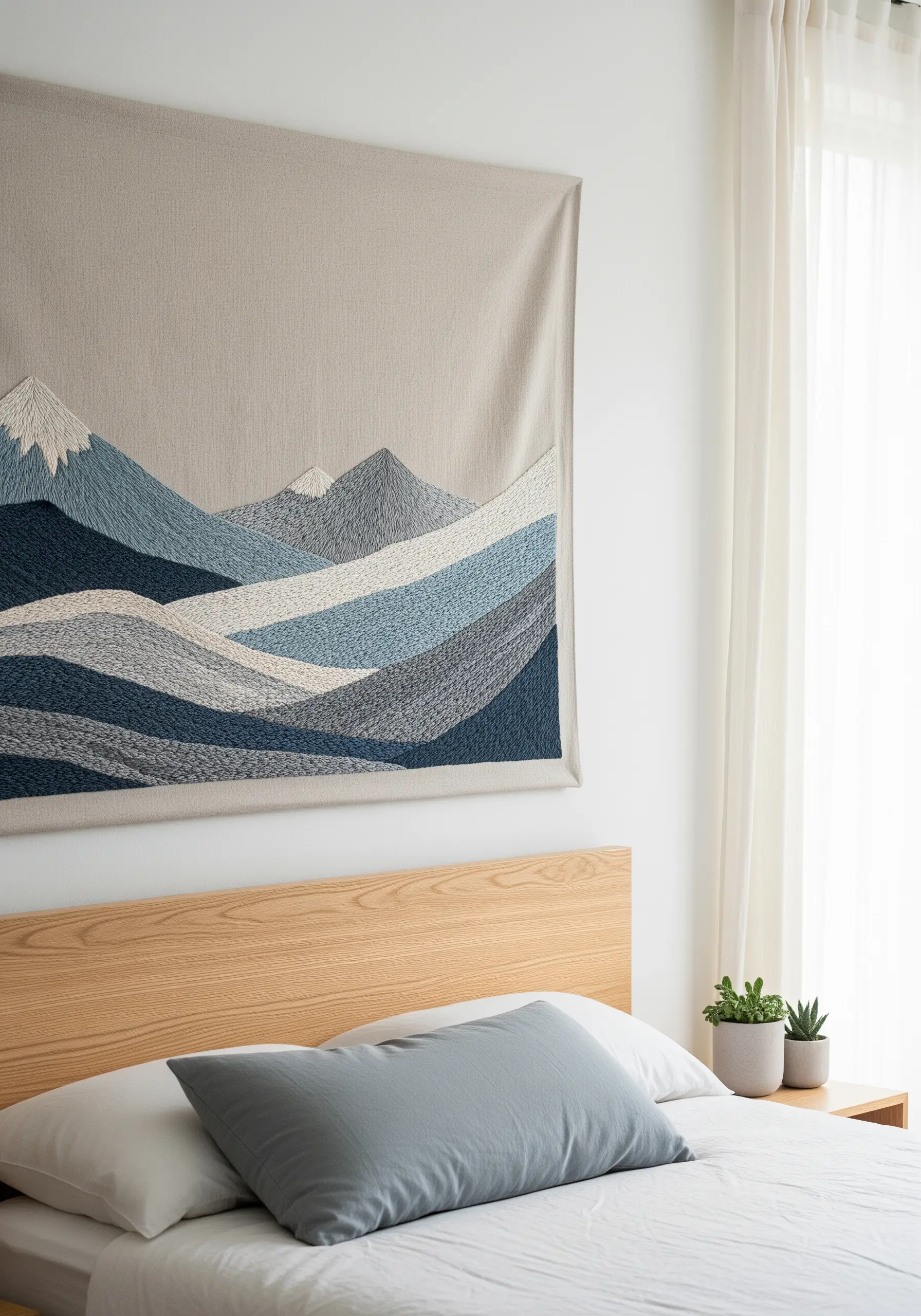
Create a calming mountain scene by dividing the composition into distinct shapes and filling each with a dense satin stitch.
Select a palette of five to seven muted tones—think slate blues, soft grays, and warm taupe—to ensure the final piece feels cohesive and tranquil.
Use a high-quality, even-weave linen as your base; its natural texture adds a layer of organic warmth without distracting from the clean lines of your stitching.
To keep your satin stitches perfectly smooth and parallel, work in smaller sections and always bring your needle up on one side of the shape and down on the other, never piercing the middle of a previous stitch.
This technique transforms a complex view into a graphic, modern statement, making it one of the most effective embroidered wall art ideas for creating a peaceful atmosphere.
2. Embrace Geometric Calm with Minimalist Line Art
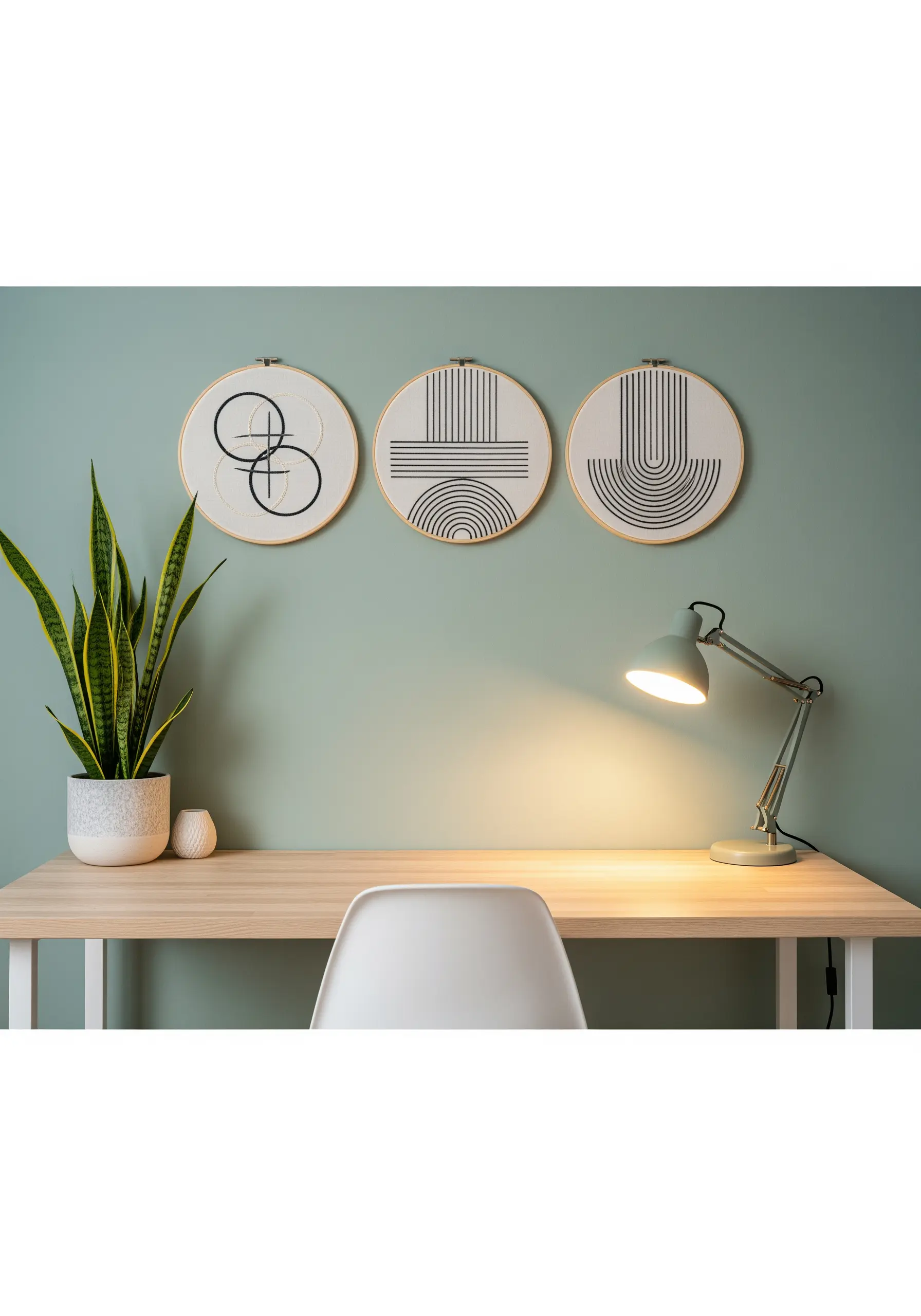
Achieve a sophisticated, modern aesthetic using only straight lines and simple curves stitched in a single, contrasting color.
A precise backstitch or split stitch using three strands of floss will give your lines a clean, uniform weight that feels intentional and graphic.
The power of this style lies in the negative space; by leaving much of the fabric unstitched, you create a visual resting point that feels uncluttered and calm.
Arrange three hoops in a series to tell a small visual story or explore variations on a single geometric theme.
This approach proves that minimal embroidery wall pieces can have a significant impact, making them perfect for a study or entryway.
3. Curate a Botanical Gallery Wall
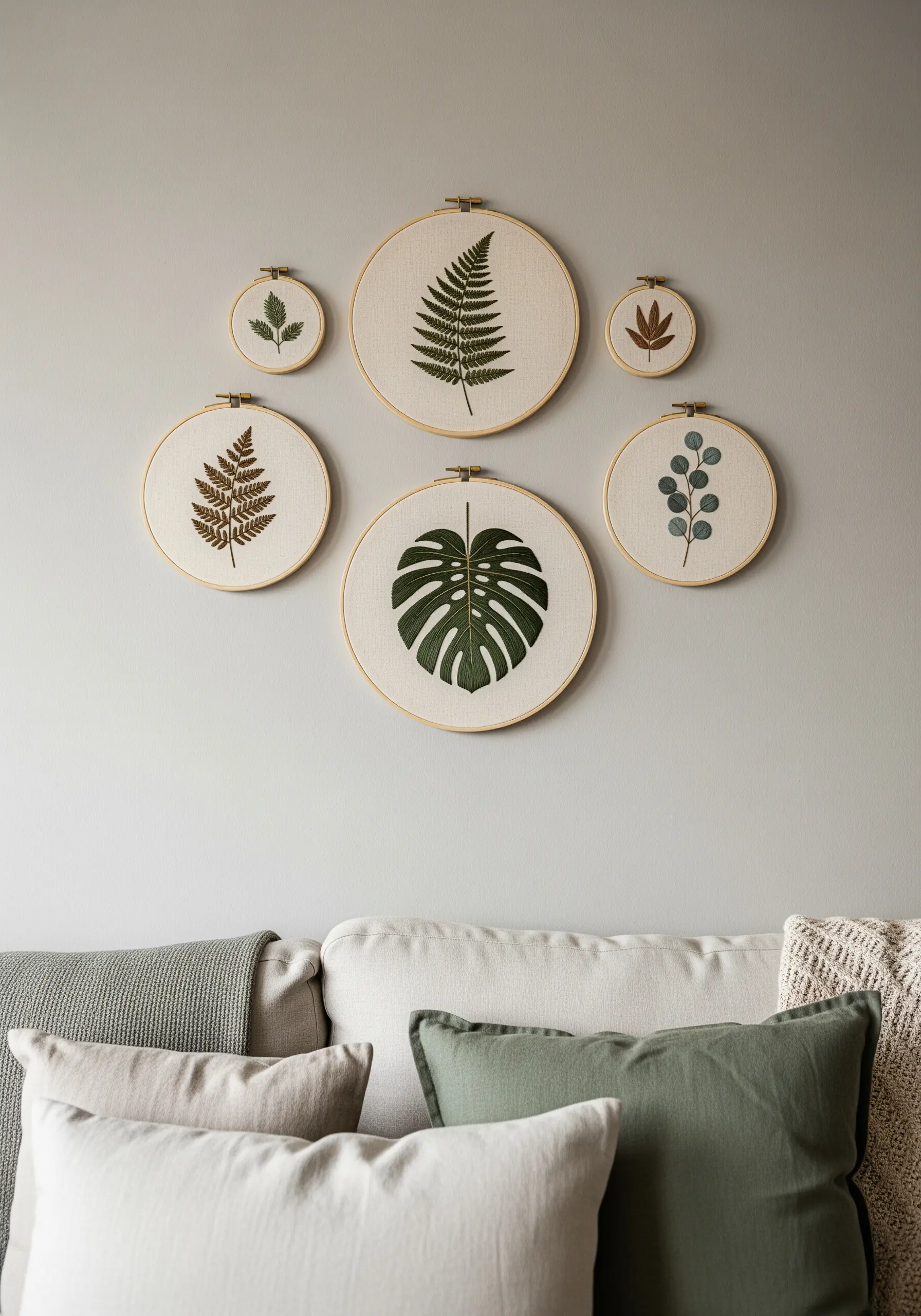
Turn a collection of individual botanical studies into a cohesive gallery wall that brings nature indoors.
Choose a variety of leaf shapes—from delicate ferns to bold monsteras—and stitch each one in its own hoop, varying the hoop sizes for visual interest.
For realistic texture, use fishbone stitch for the main body of the leaves and a simple stem stitch for the veins and stems.
To create depth, use two or three closely related shades of green and brown within a single leaf, subtly blending them with long-and-short stitch.
These botanical embroidery wall pieces look most effective when grouped in an organic, slightly asymmetrical cluster above a sofa or console table.
4. Build Depth with Dimensional Forest Textures
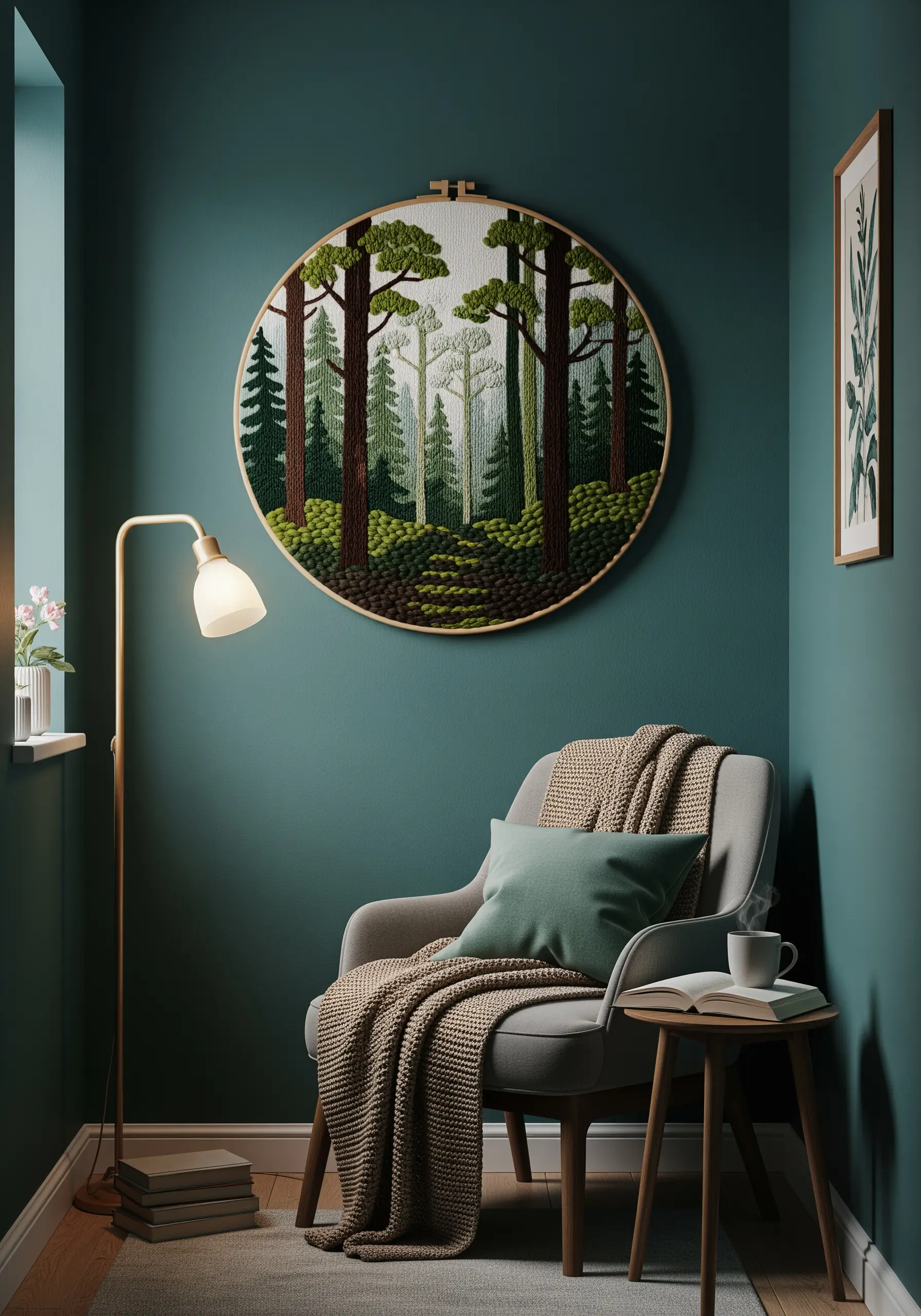
Create an immersive forest scene by using different stitches to represent distance and texture.
Use dense French knots or turkey work with chunky wool thread for the foreground foliage, giving it a raised, tactile quality that brings it forward visually.
For the trees in the mid-ground, use a classic satin stitch for the trunks and a lighter fishbone stitch for the branches.
Stitch the trees in the far distance with a simple backstitch outline or fewer strands of floss to create an atmospheric perspective, making them appear farther away.
This layering of textures is one of the best ways to capture nature’s textures in your next embroidery project, turning a flat hoop into a deep, inviting world.
5. Capture Graceful Movement with Flowing Line Work
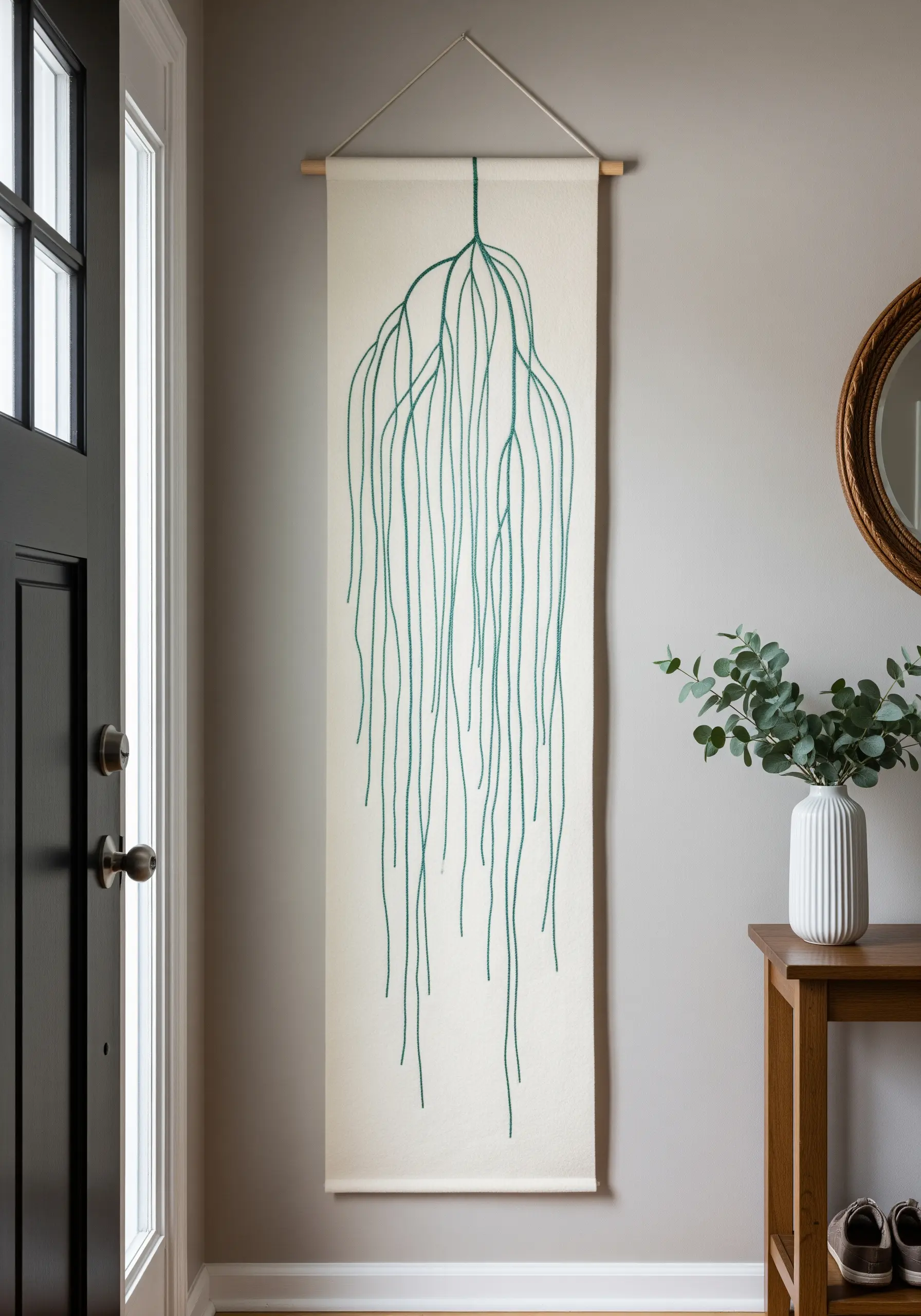
Evoke the gentle drape of a weeping willow with long, uninterrupted lines on a narrow vertical canvas.
Use a stem stitch or whipped backstitch to create smooth, flowing curves that mimic hanging branches without any harsh angles.
Choose a single, calming color like teal or moss green against a neutral cream or off-white fabric to let the beauty of the lines take center stage.
Vary the length of your stitched lines and allow them to overlap slightly to create a sense of natural, organic movement.
This minimalist approach makes for stunning embroidered wall hangings that are perfect for narrow spaces like entryways or hallways.
6. Find Stillness in an Intricate Mandala
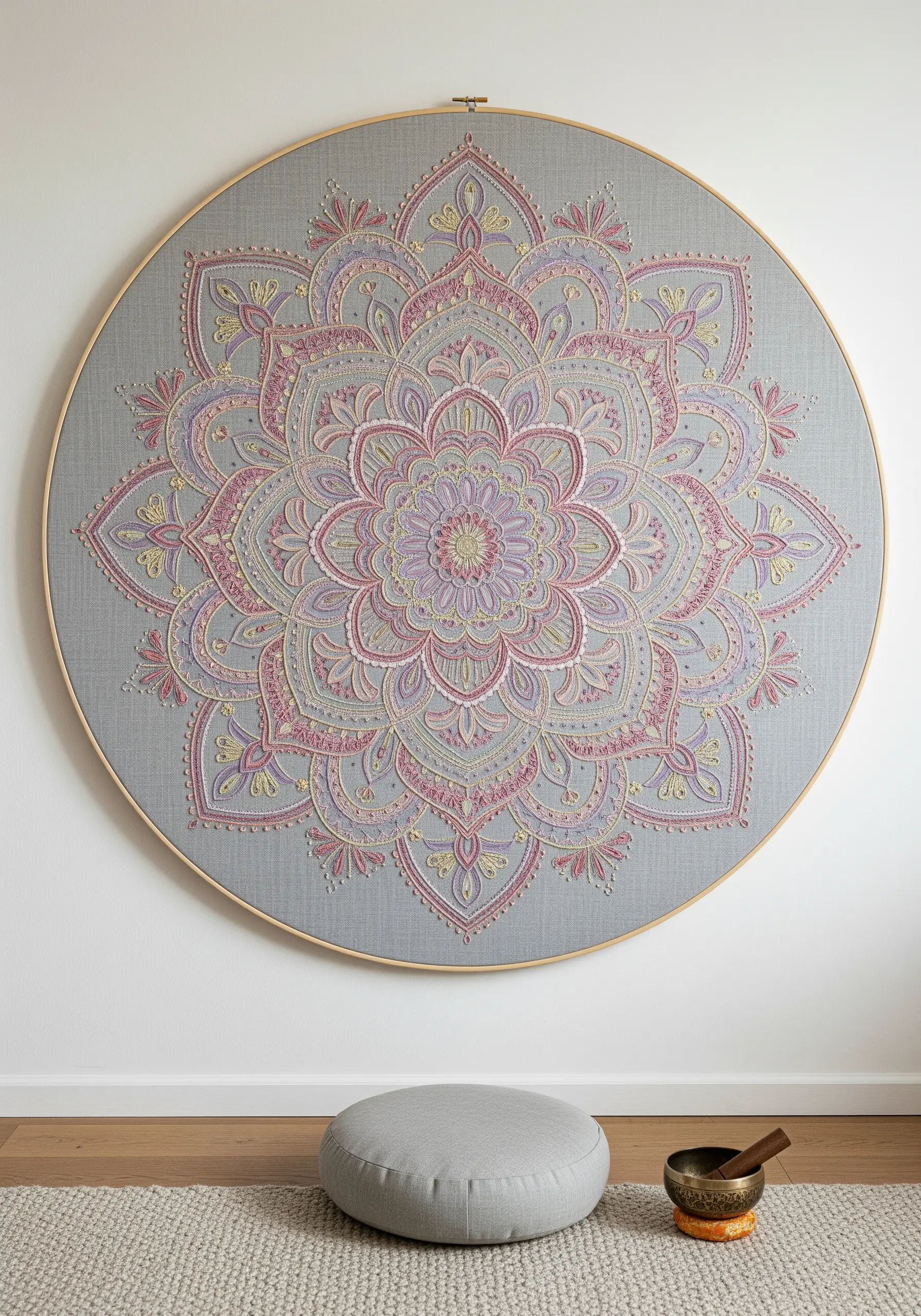
Stitch a large-scale mandala as a meditative practice that results in a powerful statement piece for a quiet room.
To avoid feeling overwhelmed, choose a limited palette of soft, analogous colors like lavender, dusty rose, and pale gold.
Use a foundation of backstitch for the intricate outlines and fill smaller sections with seed stitches or single French knots for delicate texture.
The repetition of stitches and patterns is inherently calming, making soft-tone embroidery mandalas an ideal project for mindfulness and stress relief.
Mount the finished piece in an oversized hoop to create a focal point in a meditation corner or bedroom.
7. Chart the Cosmos with a Lunar Triptych
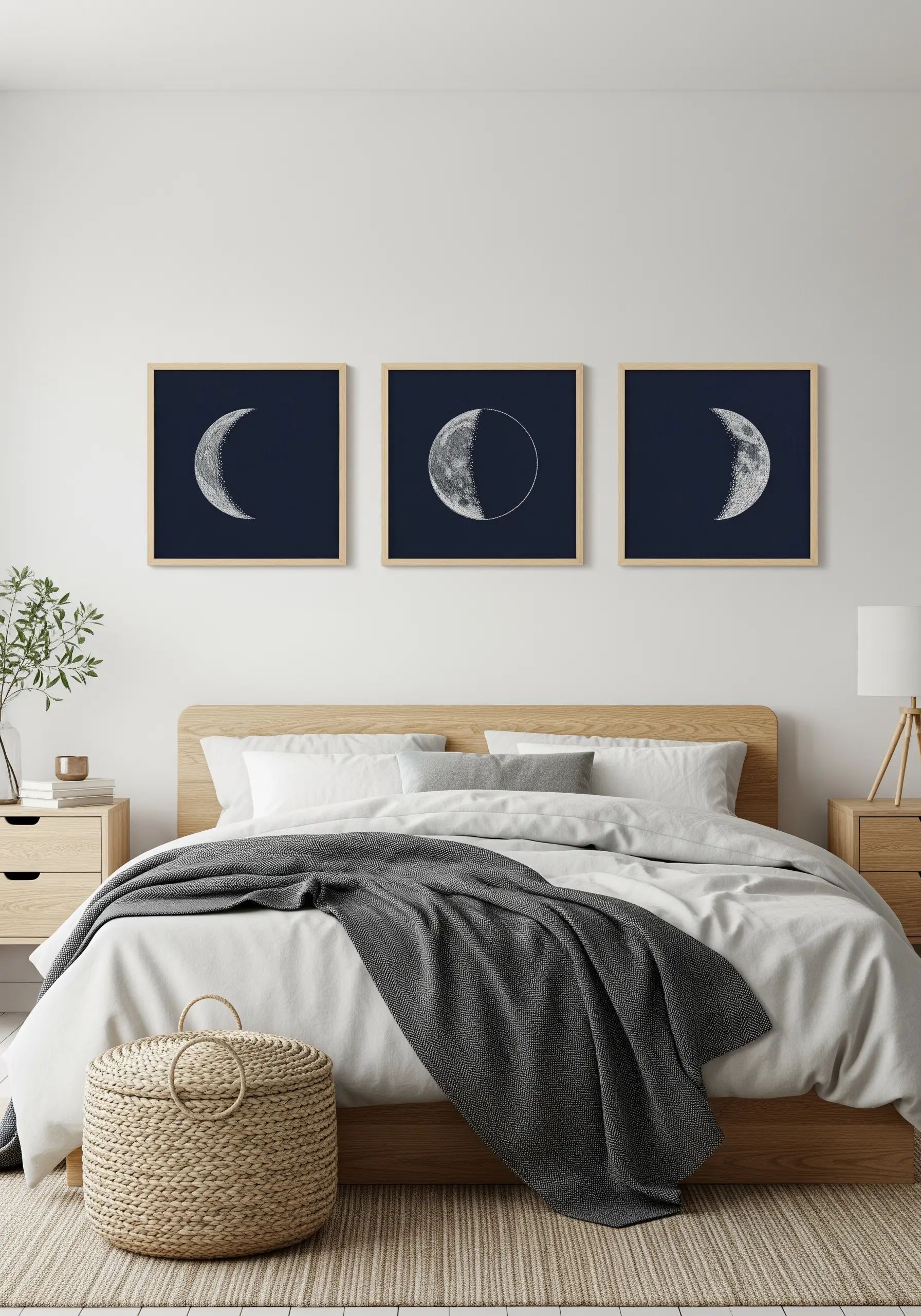
Create a sophisticated lunar series by stitching different moon phases on a dark, high-contrast fabric like navy blue or black linen.
Fill the moon shapes with thousands of tiny, randomly placed seed stitches and French knots using white, silver, and pale gray threads.
This technique, known as thread painting, creates a rich, cratered texture that beautifully mimics the moon’s surface.
Use a single strand of silver metallic thread sparingly to add a subtle glint that catches the light.
Framing each phase separately in a simple wooden frame transforms your stitching into a polished, gallery-worthy triptych, perfect for creating dreamy galaxies above a headboard.
8. Paint with Thread for Soft Botanical Forms
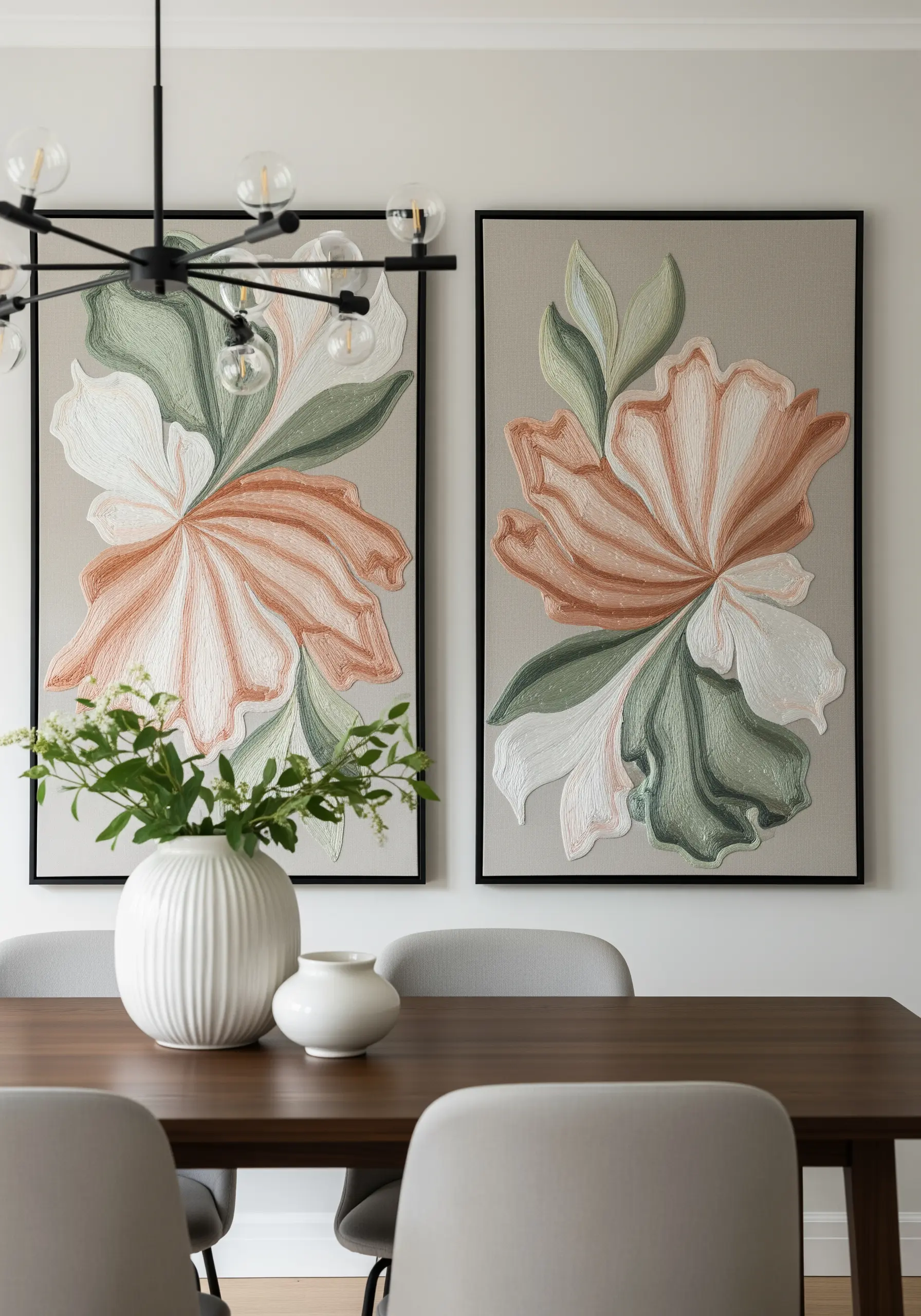
Move beyond simple outlines and fill large floral shapes with soft, blended colors using the long-and-short stitch.
This technique allows you to blend shades together seamlessly, creating a painterly effect that gives petals depth and realism.
Work with a single strand of floss for the most delicate gradients, laying your stitches in the direction of the petal’s growth.
Define the edges with a contrasting backstitch or stem stitch to give the soft shapes a clean, finished look.
Creating a diptych with complementary abstract floral embroidery hoops offers a balanced, artistic statement for a dining room or living area.
9. Sculpt Waves with Textured Couching
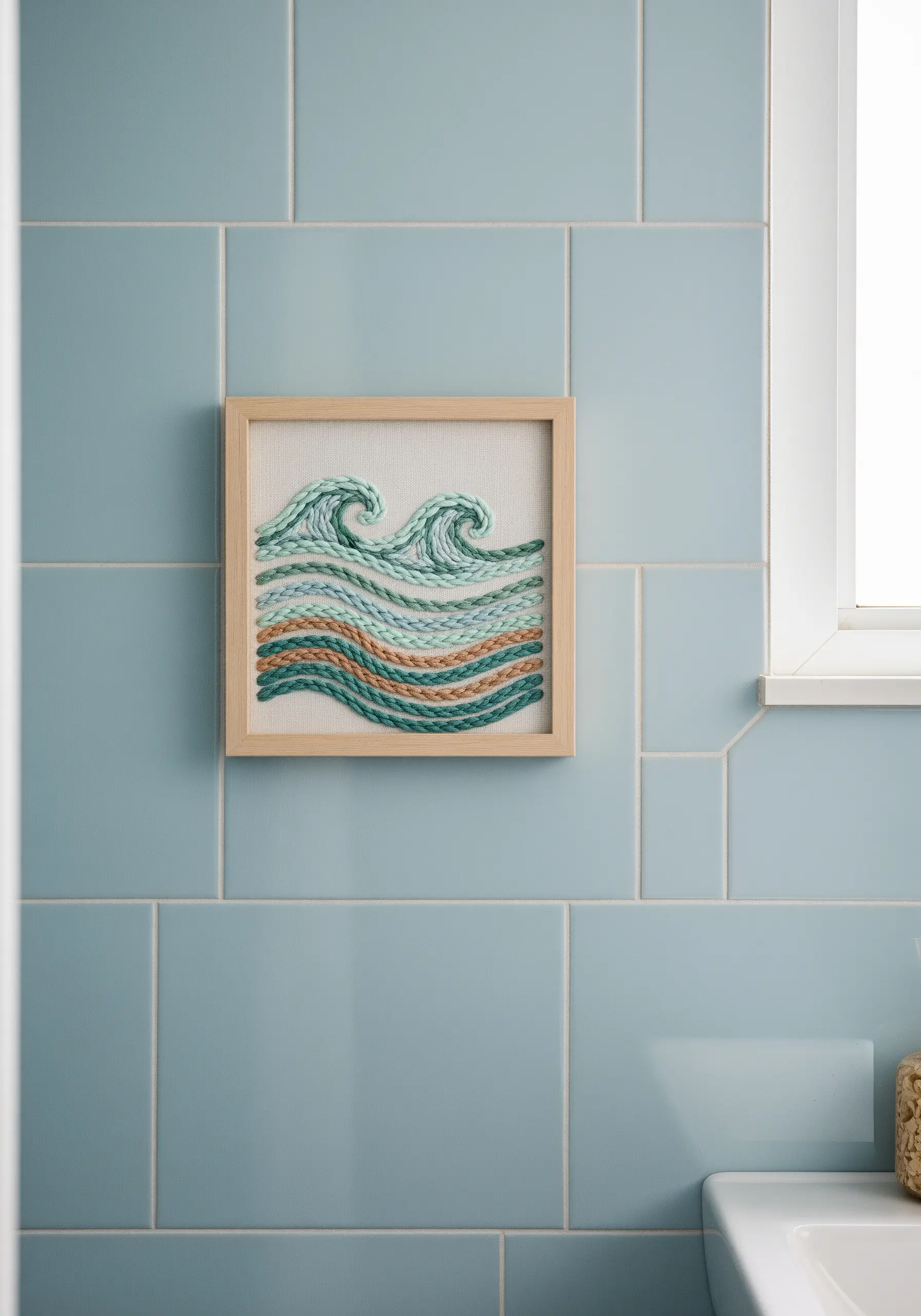
Capture the motion of the sea by using thick yarns or multiple strands of floss to create bold, textural waves.
Lay down your thick cord or yarn in a wave-like pattern on the fabric, then use a single strand of a matching or contrasting thread to tack it down with small, evenly spaced stitches.
This technique, called couching, allows you to create strong, dimensional lines that would be impossible with traditional stitching.
Layer different colors and thicknesses of yarn to build depth, suggesting the ocean’s movement and creating a visually compelling piece perfect for a bathroom or coastal-themed room.
It’s one of the most effective abstract thread waves & swirls techniques for dynamic art.
10. Play with Bold Contrast and Organic Shapes
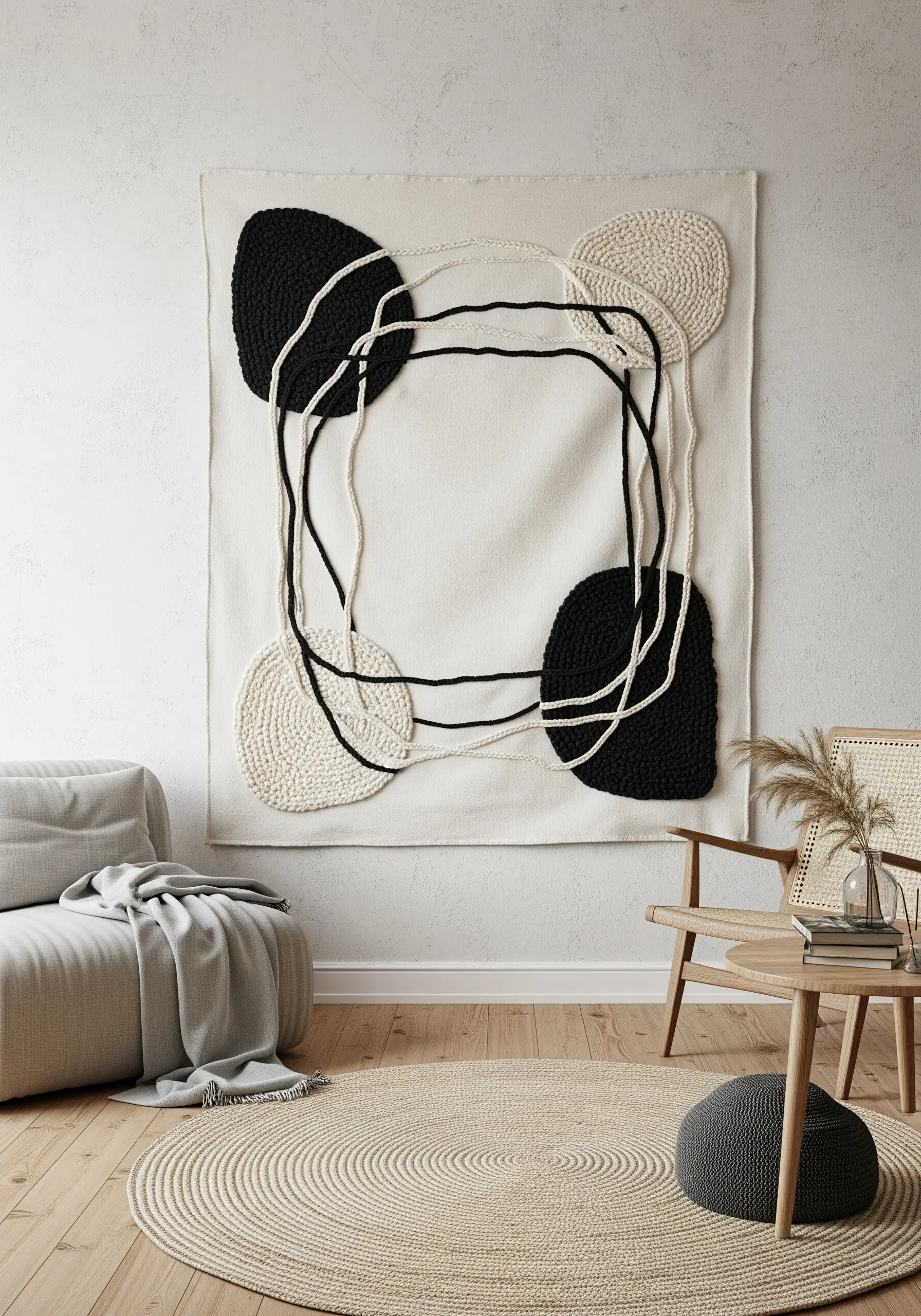
Create a high-impact abstract piece using only black and cream, focusing on the interplay between shape and texture.
Fill the solid shapes with dense, chunky stitches like turkey work or loop stitch using thick wool yarn for a rug-like, tactile surface.
Contrast this heavy texture with clean, couched lines that float over the canvas, connecting the different elements of the composition.
The simplicity of the two-tone palette allows the textures to become the main focus, resulting in a sophisticated and modern piece of abstract fabric collage embroidery.
11. Suggest Form with Geometric Shading
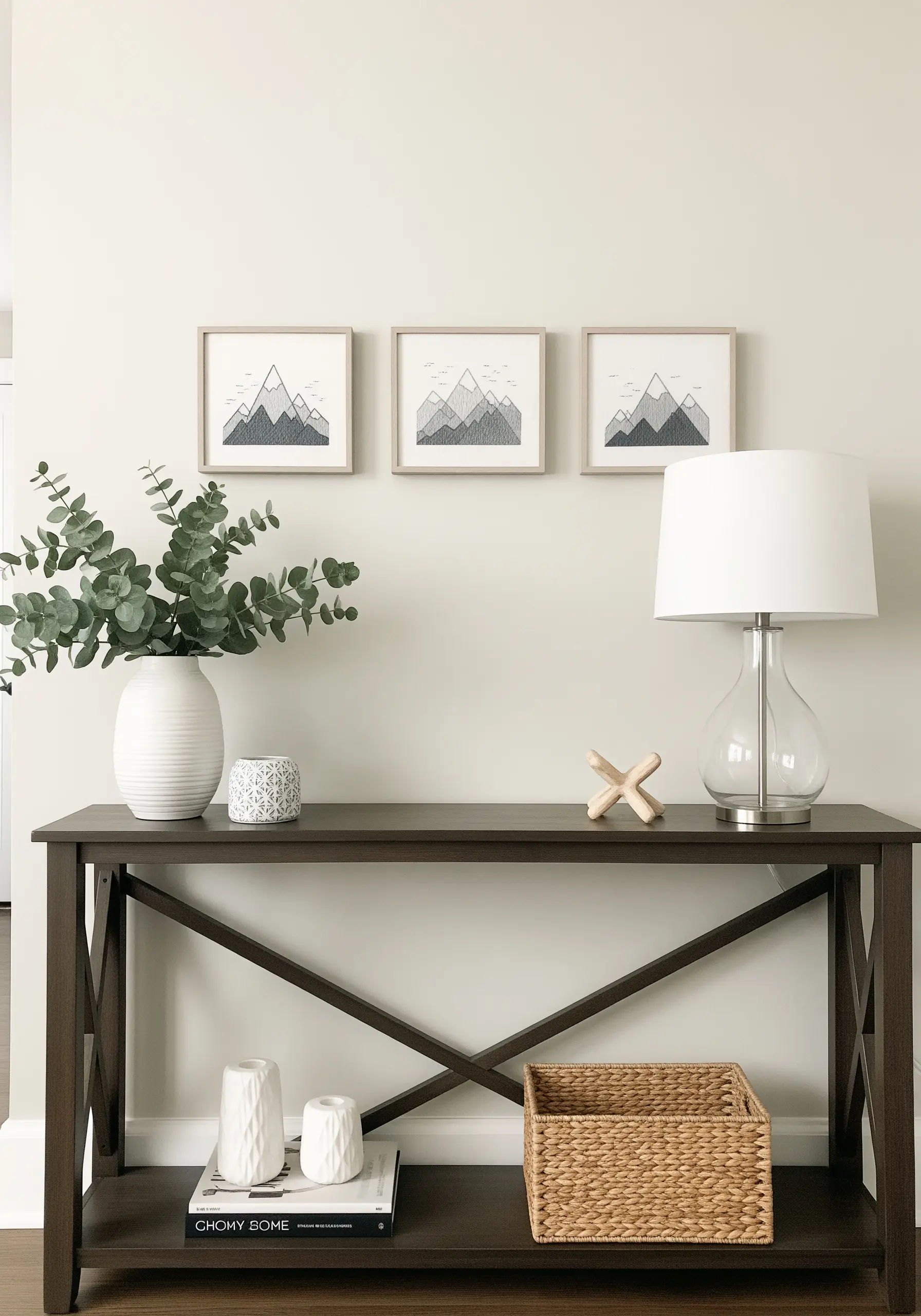
Render a minimalist mountain range using only straight stitches and clever spacing to imply shading and dimension.
Outline your mountain peaks with a simple backstitch. Then, fill the mountain bodies with vertical or diagonal straight stitches, placing them closer together for darker, shaded areas and farther apart for lighter, sunlit slopes.
This technique creates a sense of depth without any complex stitches, relying on the viewer’s eye to blend the lines.
Mounting three small, similar designs in a row creates a rhythmic and calming display for an entryway console, showcasing how minimalist embroidery projects can be incredibly effective.
12. Find Elegance in a Single Botanical Sprig
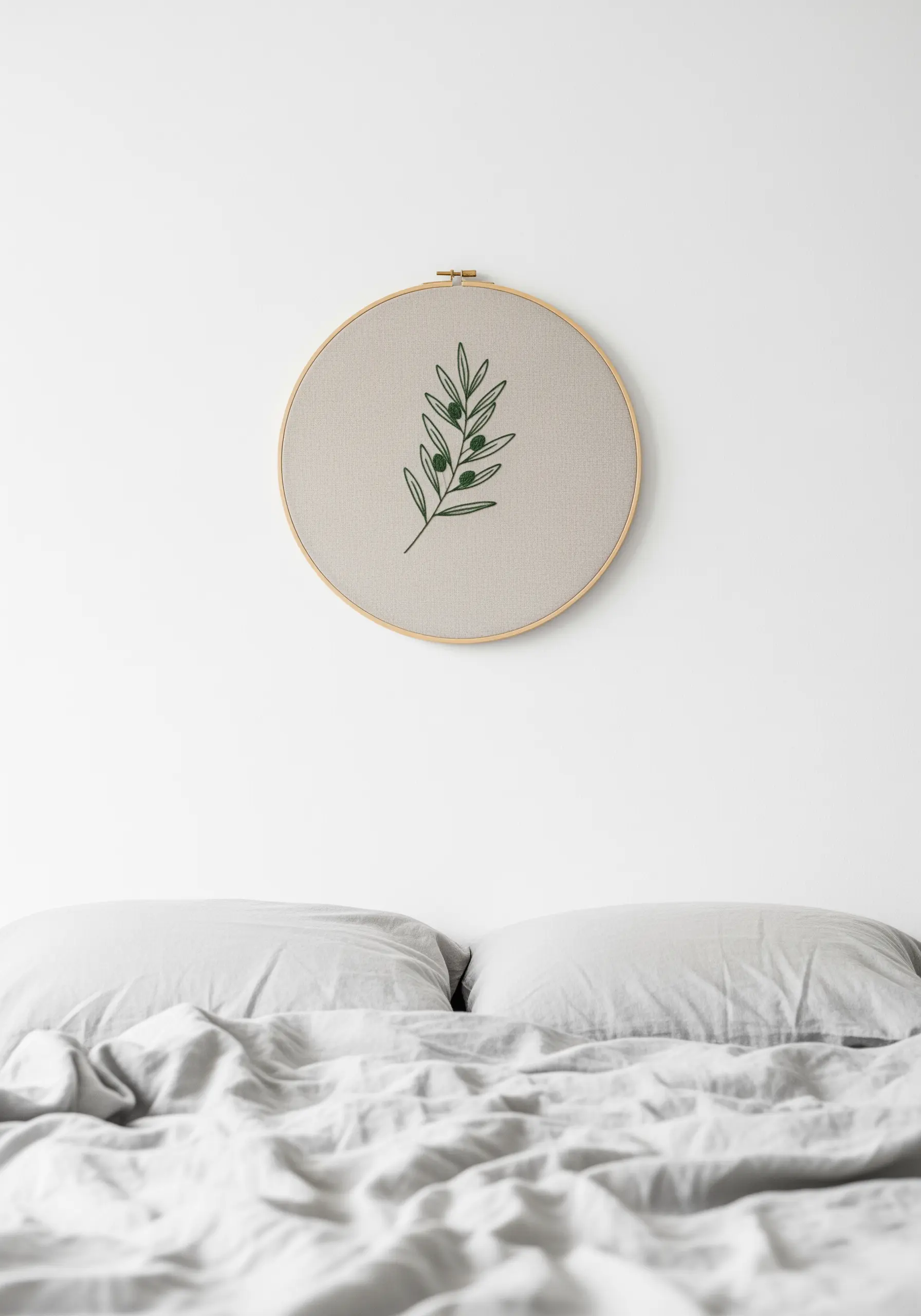
Celebrate the beauty of simplicity by centering a single, exquisitely stitched olive branch on a neutral linen background.
Use a delicate fishbone stitch for the leaves to create a central spine and gentle dimension. Add the olives with a few small, layered satin stitches or a single French knot.
The key to this piece is precision. Take your time with each stitch to ensure the shapes are clean and the lines are smooth.
The ample negative space around the motif creates a sense of peace and focus, making it a perfect piece of organic embroidery to hang above a bed for a touch of serene nature.
13. Frame a Mindful Message with Clean Typography
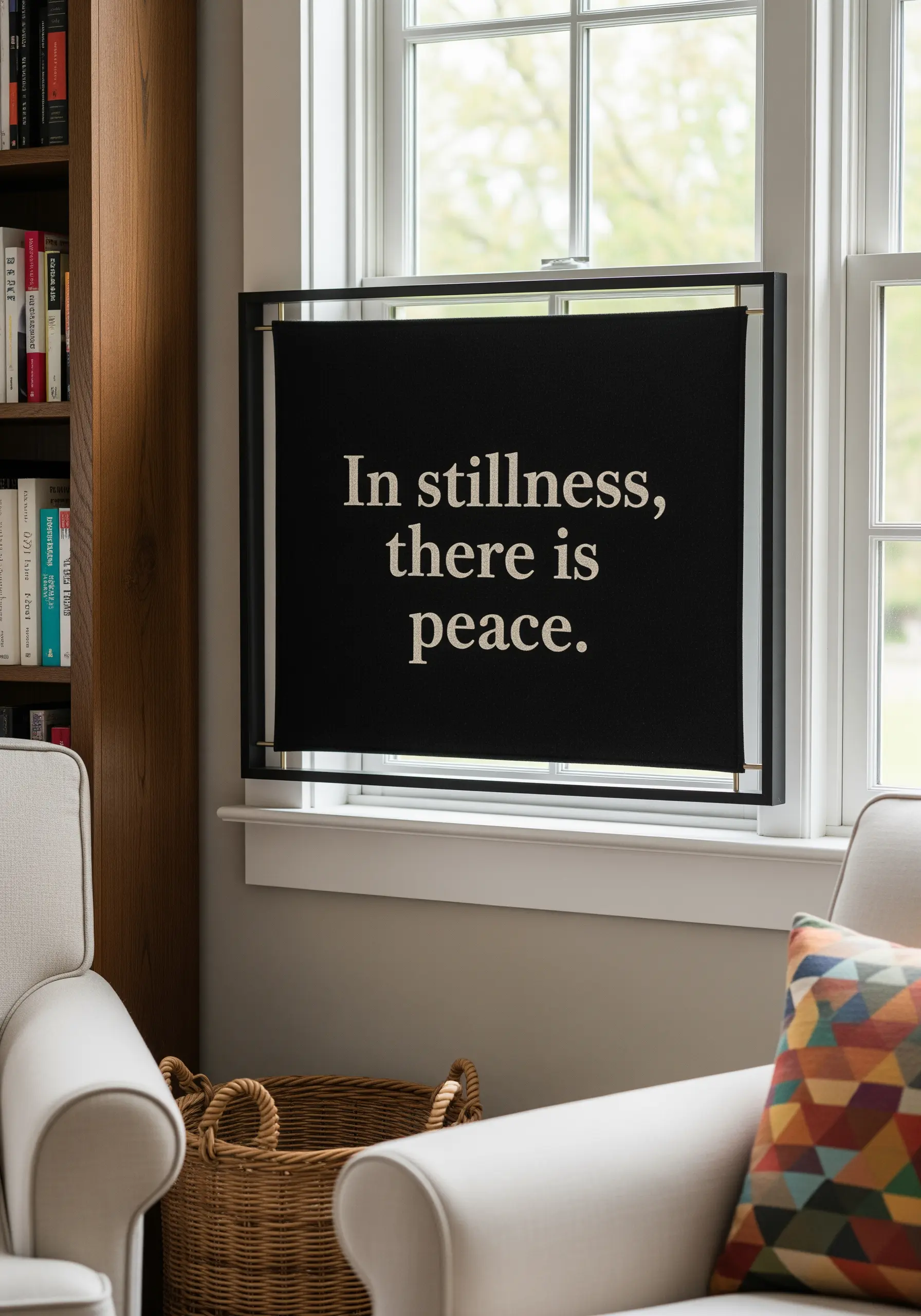
Transform a meaningful quote into a piece of art by focusing on clean, elegant lettering.
Choose a simple, sans-serif font and transfer it carefully onto dark fabric for maximum contrast.
Use a two-strand split stitch or backstitch to outline each letter, ensuring your stitches are small and consistent, especially around curves.
The high contrast between the cream thread and black fabric makes the message clear and impactful, turning it into a visual anchor for a quiet corner.
This is a wonderful way to create peaceful, poetic quote embroidery hoops that serve as gentle, daily reminders.
14. Capture Light with Sheer Botanical Mobiles
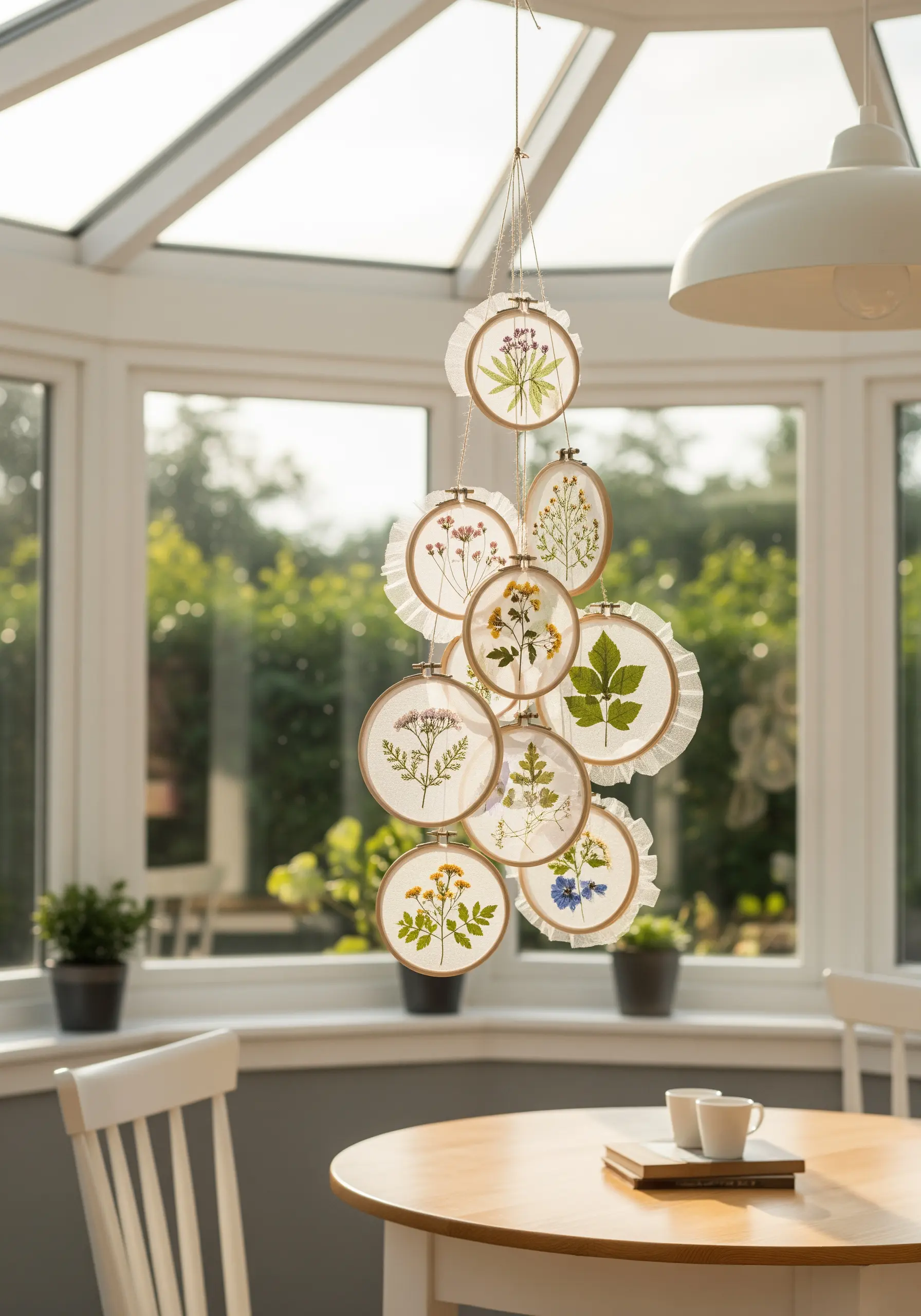
Stitch delicate botanicals onto sheer organza or tulle and arrange them in a cascading mobile for a truly ethereal effect.
To stabilize the delicate fabric, hoop it with a layer of water-soluble stabilizer, which you’ll rinse away after stitching, leaving only the thread on the transparent background.
Use simple stitches like backstitch and detached chain stitch, as complex fills can pull and warp the fabric.
When hung in a window, the light filters through the sheer fabric, making the embroidered flowers appear to float in mid-air. It’s a beautiful twist on pressed flower-inspired embroidery.
15. Weave a River of Texture and Movement
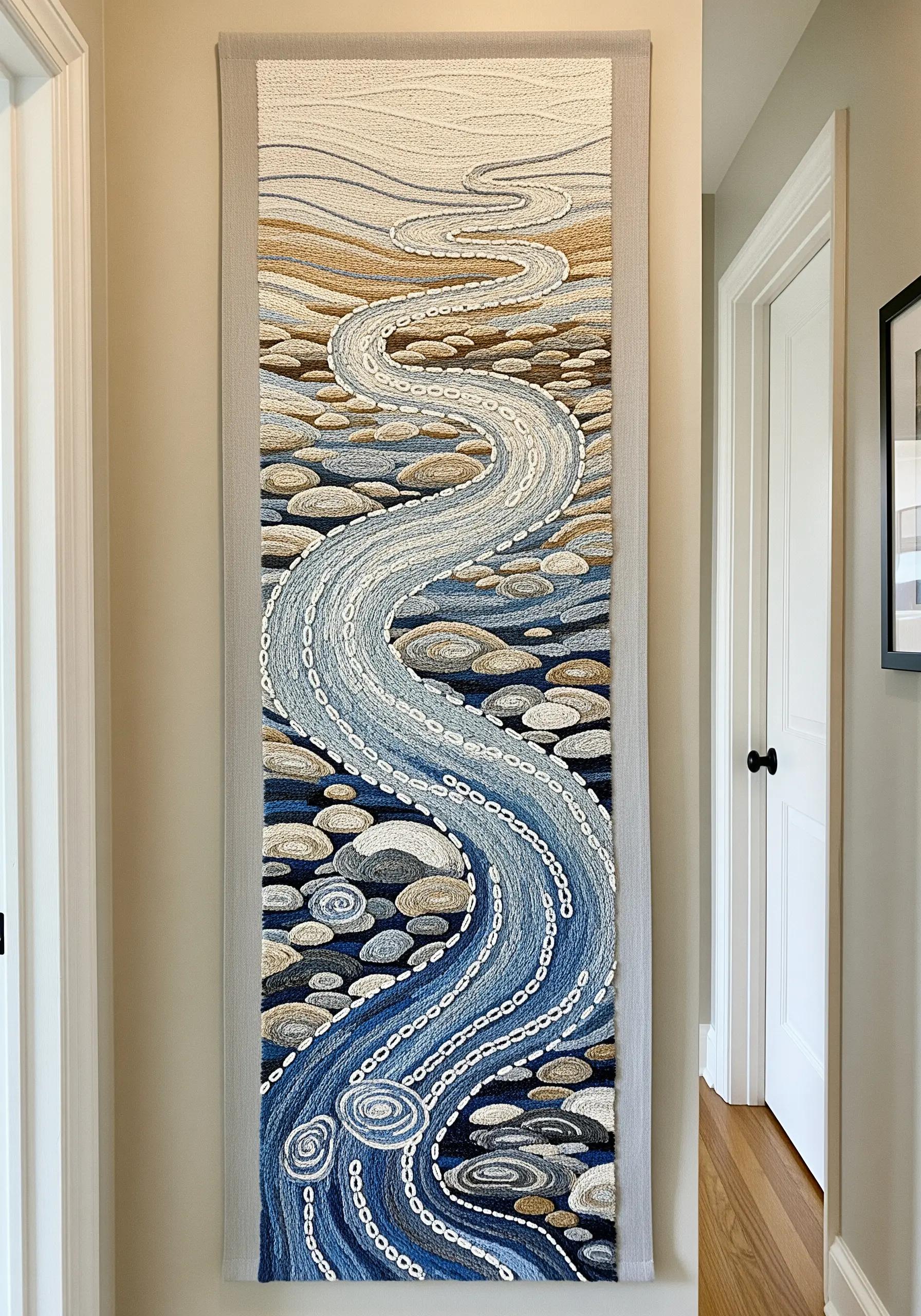
Create the impression of a flowing river over stones by combining various threads and directional stitches.
Use variegated blue and white threads for the water, laying down long, wavy stitches that follow the river’s path to create a sense of movement.
For the riverbanks and stones, switch to earthy, neutral-toned wool and cotton threads in varying thicknesses.
Fill the stone shapes with circular patterns of chain stitch or dense French knots to give them a rounded, dimensional look.
This texture-rich thread art creates a stunning narrative piece that draws the eye through the composition.
16. Isolate a Single Sprig for a Minimalist Study
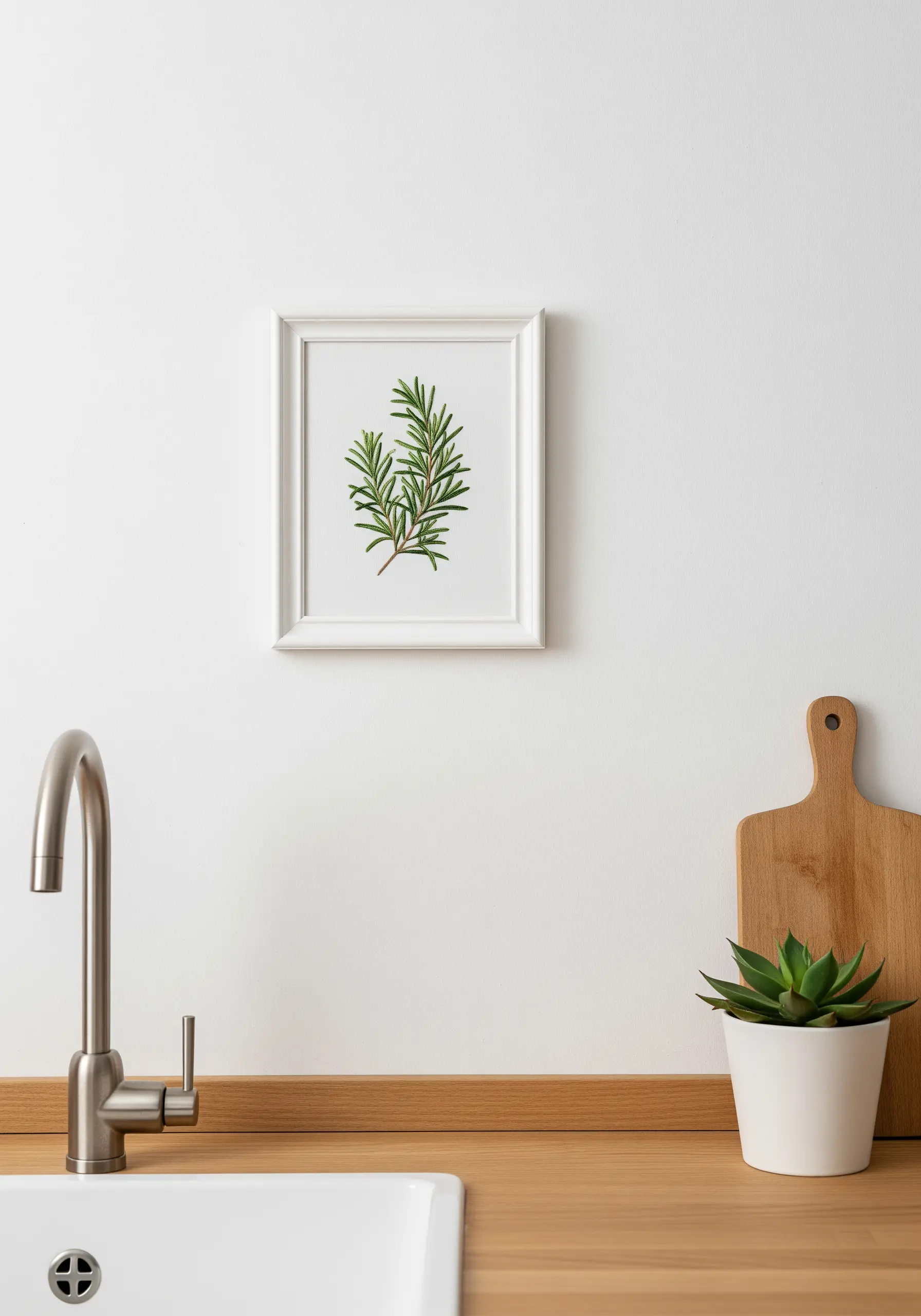
Elevate a simple herb, like rosemary, into a piece of fine art by focusing on its delicate details in a clean, minimalist presentation.
Use a single strand of green floss in a fly stitch or fishbone stitch to accurately capture the needle-like leaves.
Pay close attention to the way the leaves grow from the stem, ensuring your stitch direction is botanically correct for a touch of realism.
Placing this small, detailed work in a simple white frame and hanging it on an otherwise empty wall draws attention to its quiet beauty.
This is a perfect example of how medicinal herb embroidery designs can add a touch of calm to a kitchen or dining space.
17. Blend Macrame and Embroidery for a Tactile Statement
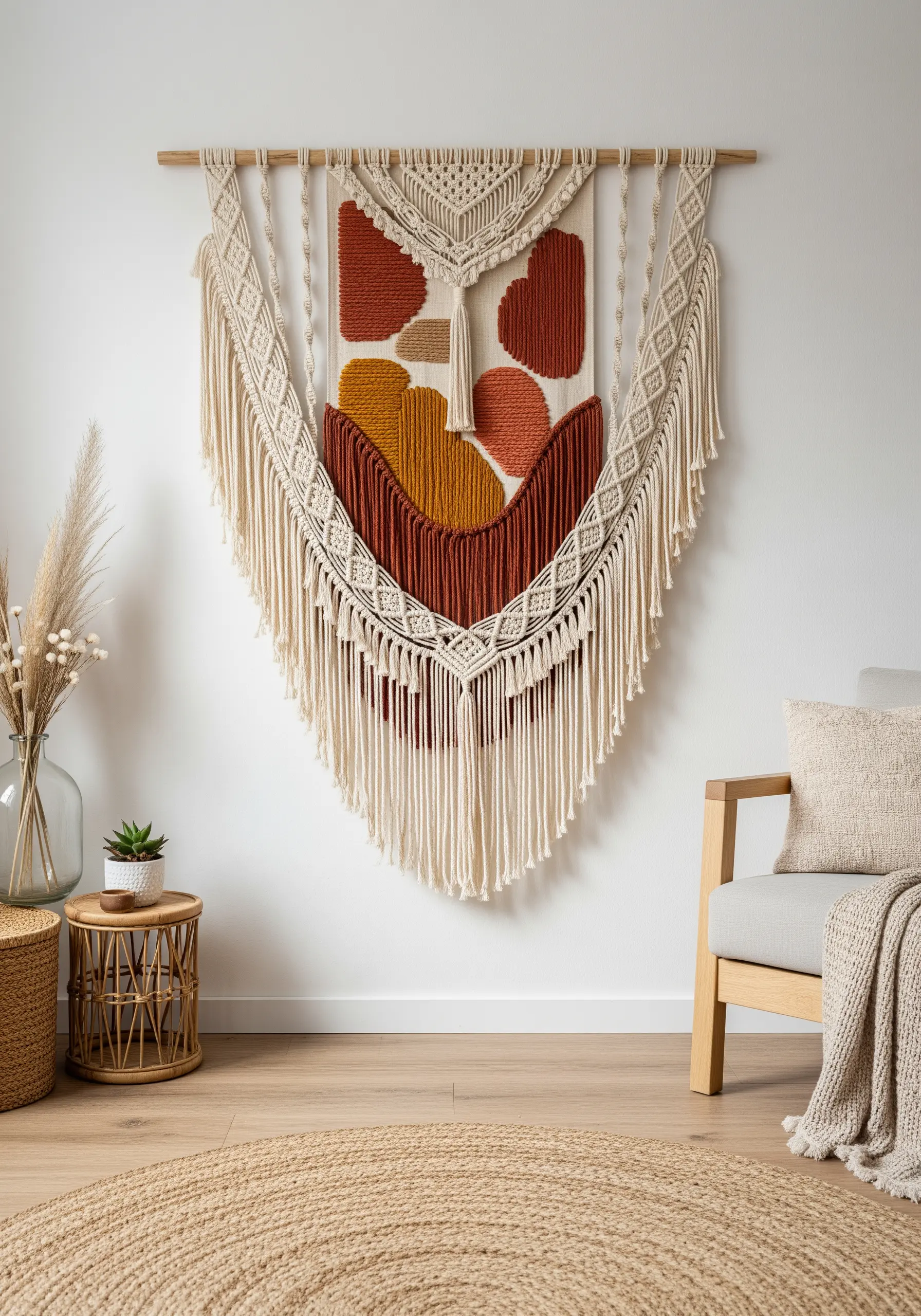
Combine the soft, knotted texture of macrame with the colorful detail of embroidery for a unique, bohemian-inspired wall hanging.
Create a macrame framework first, leaving open spaces or panels of tightly woven canvas within the design.
Use these canvas sections as your backdrop for stitching abstract color blocks with a dense satin stitch or long-and-short stitch.
Choose earthy, warm tones like rust, mustard, and terracotta to complement the natural cotton of the macrame cord.
This fusion of techniques results in stunning boho-inspired textile wall art with incredible depth and texture.
18. Create an Abstract Landscape with Textured Blocks
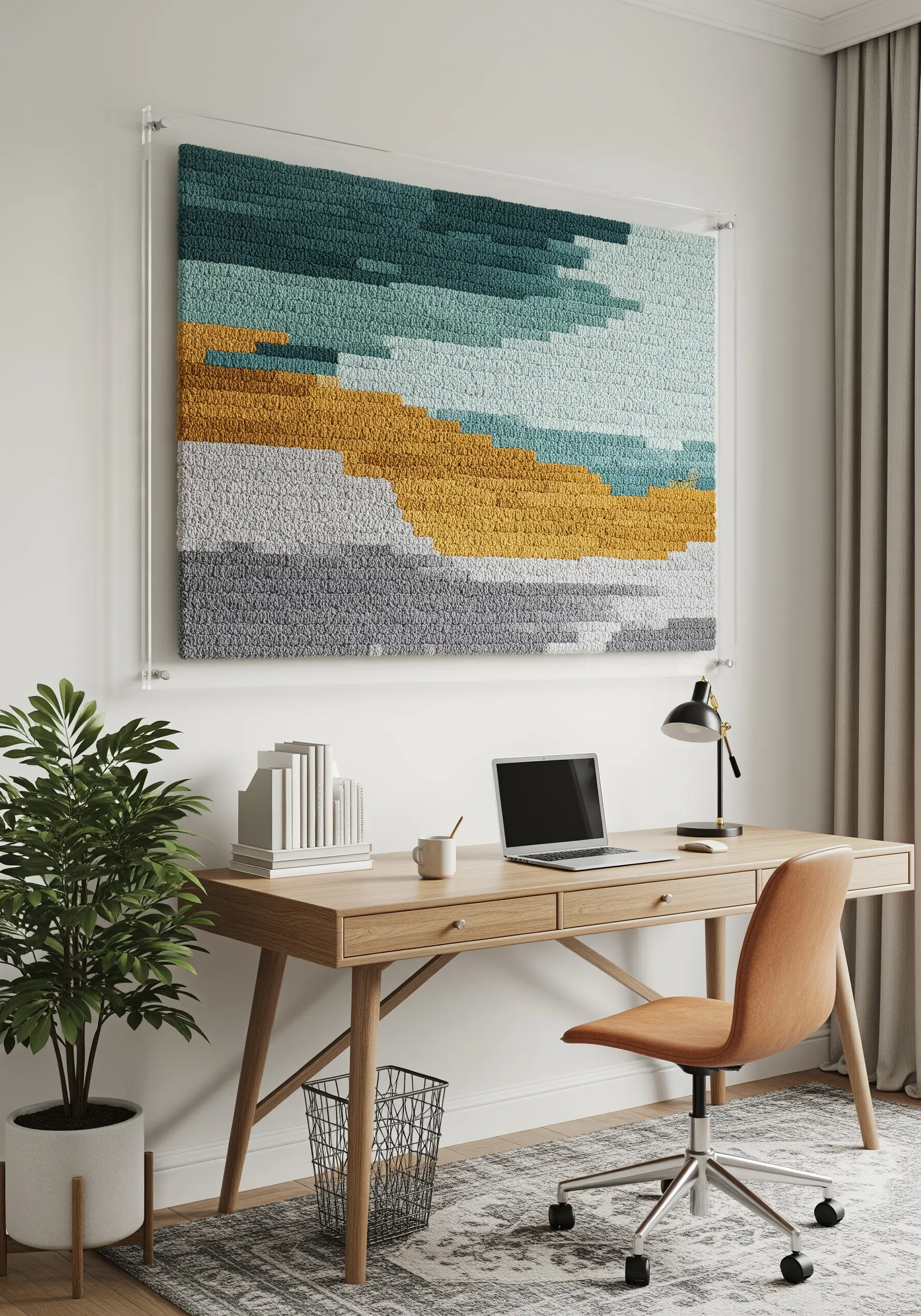
Suggest a landscape—like a coastline or sunset—using blocks of solid texture rather than distinct lines.
Fill large, organic shapes with a single, highly tactile stitch, such as the French knot, colonial knot, or loop stitch.
Assign one color to each textured block, choosing a palette inspired by nature: seafoam green, sandy yellow, and stormy gray.
Mount the finished textile in a modern acrylic floating frame to give it a contemporary, gallery-like finish.
These abstract thread landscapes invite touch and create a powerful visual impact in a modern office or living space.
19. Render the Moon in Intricate Detail
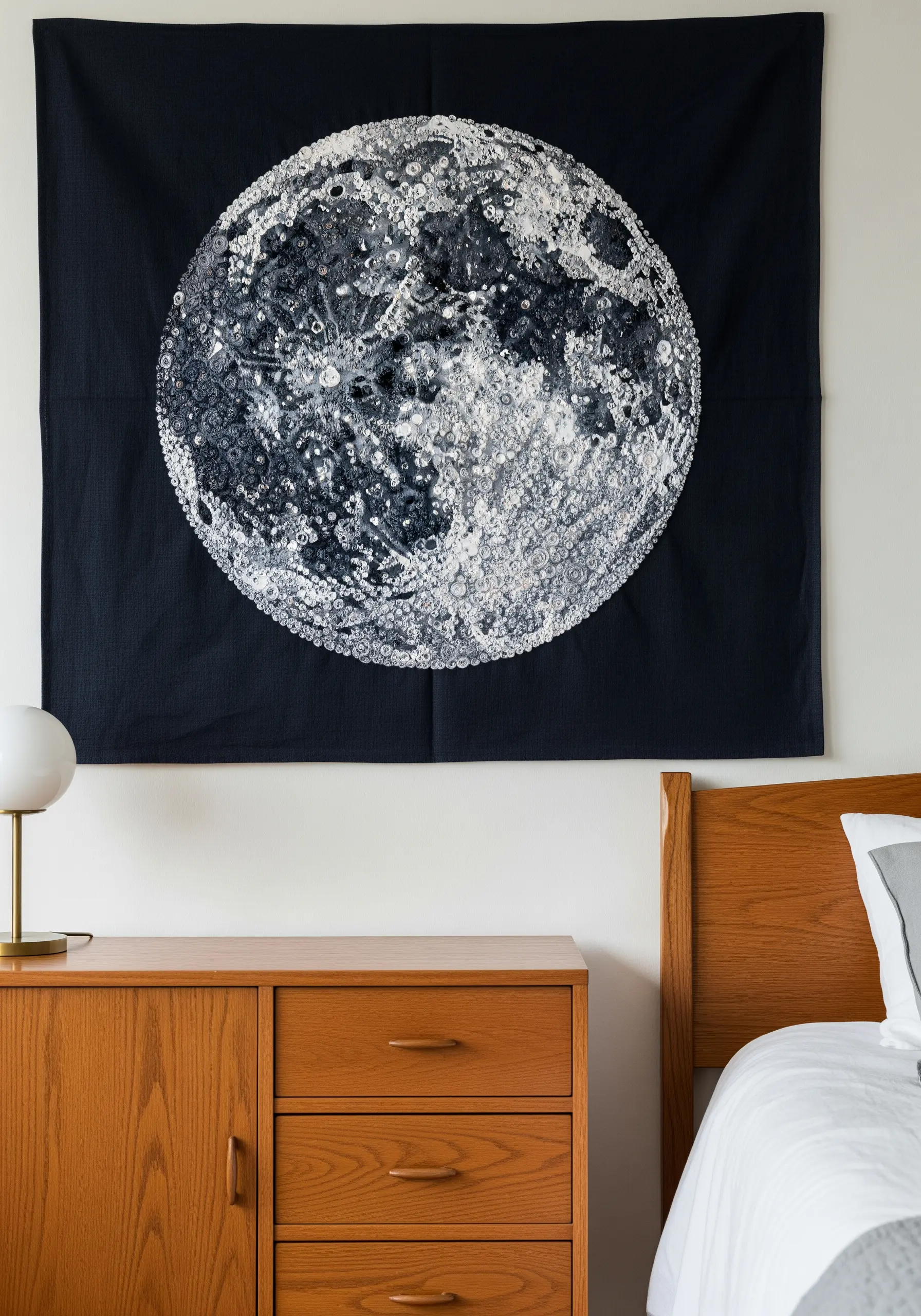
Challenge yourself to create a hyper-realistic lunar portrait using a dense collage of stitches on black fabric.
Use a mix of French knots, bullion knots, and seed stitches in white, silver, and gray to build up the complex, cratered texture of the moon’s surface.
Vary the size of your knots and the density of your stitches to create highlights and shadows, giving the sphere a three-dimensional feel.
Incorporate silver metallic thread and tiny white beads to represent shimmering stars and bright impact craters.
This ambitious project becomes a mesmerizing focal point, perfect for a bedroom that needs a touch of cosmic magic, much like these night garden embroidery ideas.
20. Stitch a Cozy Bookshelf Miniature
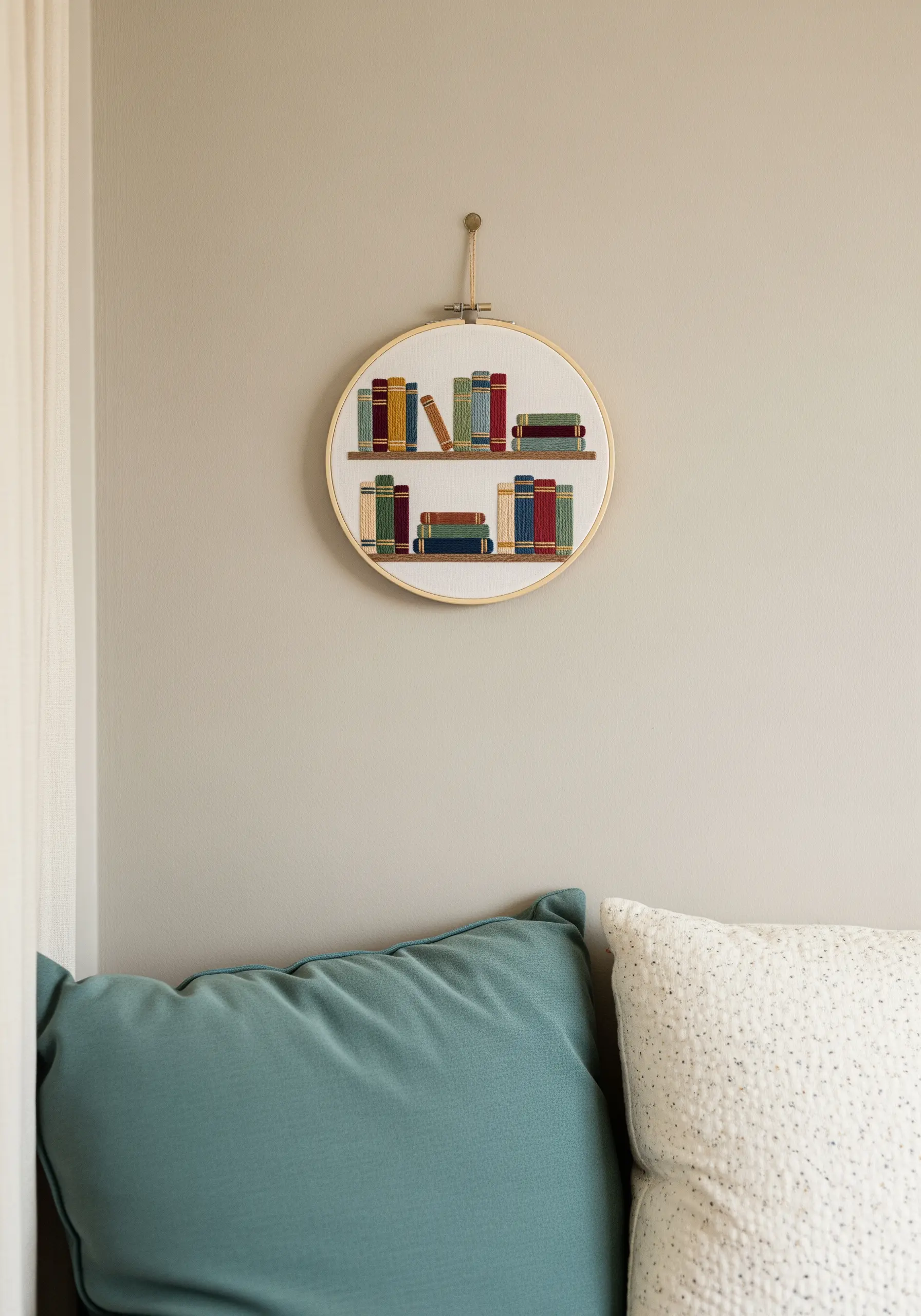
Capture the quiet comfort of a personal library with a charming, illustrative embroidery of a bookshelf.
Use vertical satin stitches for the book spines, changing colors to represent a varied collection. Use one or two strands of gold or silver metallic thread to add titles or decorative details.
A simple backstitch in a contrasting brown or black thread is perfect for outlining the shelves and the books themselves.
This small, detailed scene evokes a sense of peace and nostalgia, making it a perfect accent for a cozy reading nook or personal library, much like these modern tote bag embroidery designs for book lovers.
21. Find Balance with Abstract Stacked Stones
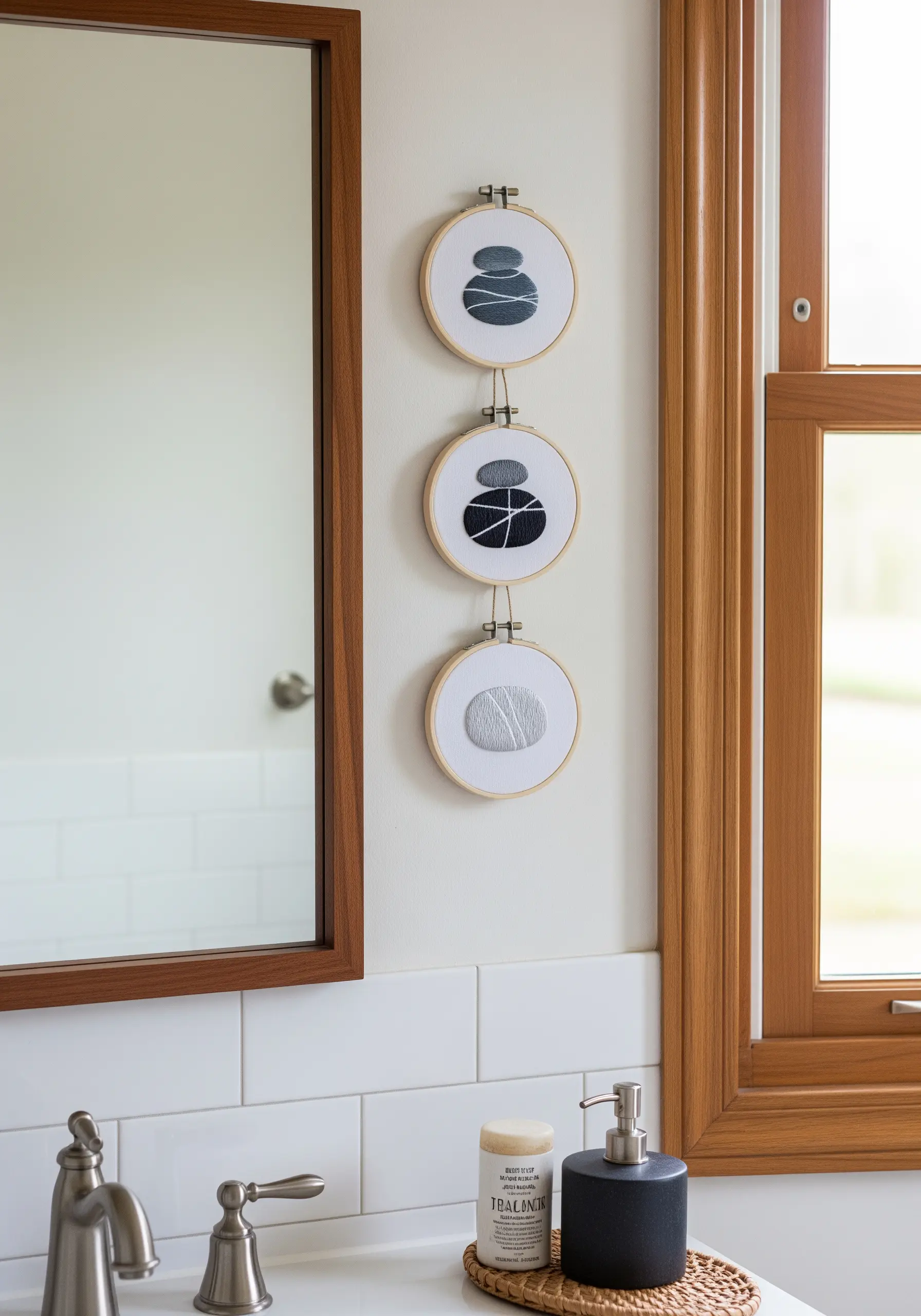
Embody the principles of zen and balance by stitching minimalist interpretations of stacked cairn stones.
Represent each stone with a simple, organic oval shape. Fill them with varied textures and patterns—one with horizontal satin stitches, another with concentric backstitches, and a third with a dense seed stitch fill.
Stick to a calming, monochrome palette of grays, blacks, and whites to keep the focus on the shapes and textures.
Hang three hoops vertically to mimic the act of stacking, creating a visual reminder of balance and tranquility in a bathroom or spa-like space.
These simple motifs are a great way to explore monochrome thread embroidery ideas.
22. Hang a Luminous Sunset Gradient
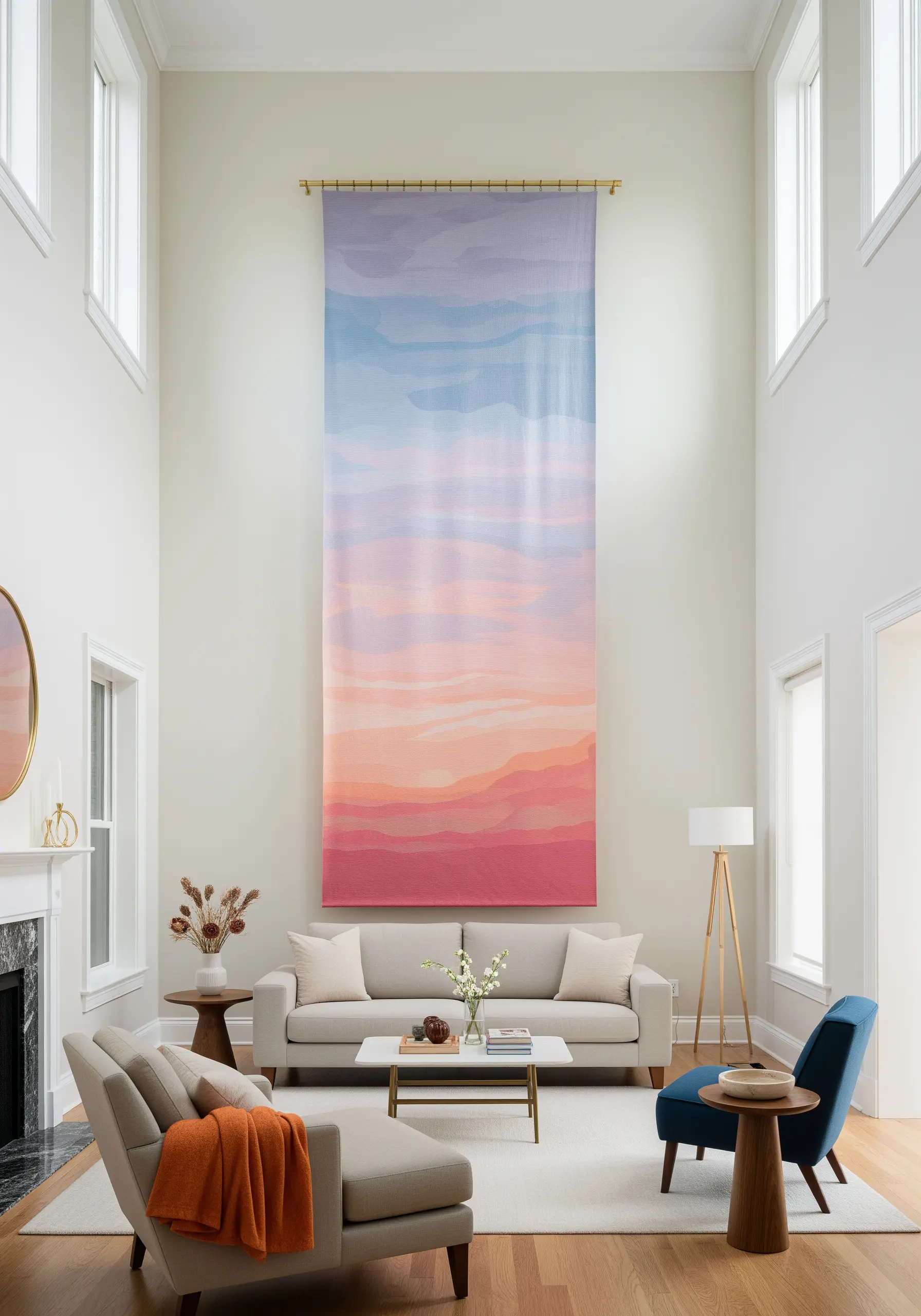
Create the breathtaking effect of a sunset sky on a large-scale wall hanging using soft color transitions.
Divide your fabric into horizontal, wavy bands of color. Fill each band with a simple satin stitch or long-and-short stitch.
The key is to use several shades within each color family (e.g., five shades of pink, five shades of orange) to blend one band into the next seamlessly.
This large-format piece requires patience, but the result is a luminous, calming focal point that warms up any room. It’s an advanced take on watercolor-style embroidery patterns.
23. Distill a Landscape to a Single Line
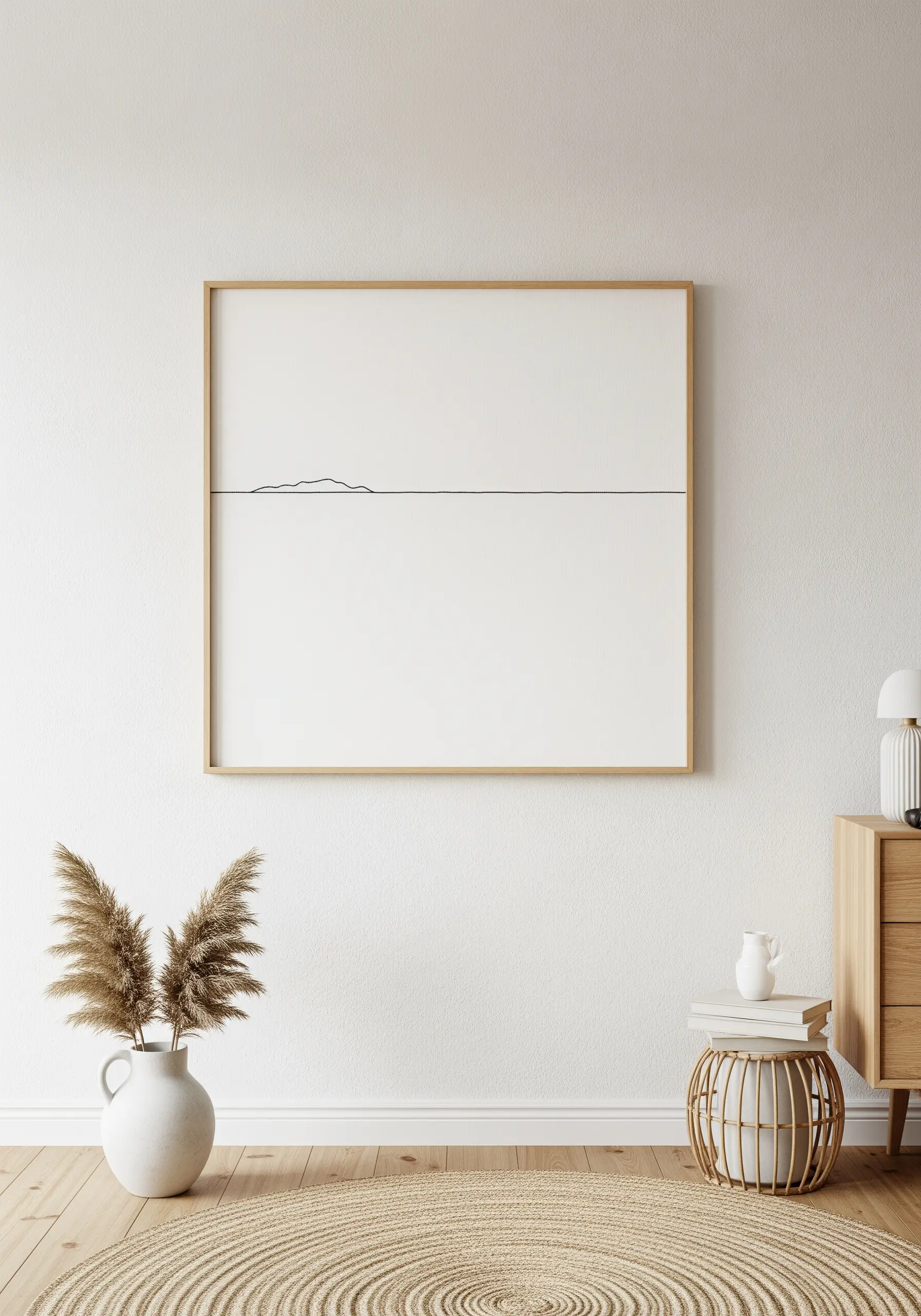
Capture the essence of a vast, open landscape with the most minimal of gestures: a single, clean horizon line.
Stretch your fabric taut in a large frame and use a single strand of black or dark gray thread to stitch a perfectly straight line across the canvas.
Add a tiny, subtle suggestion of a distant island or mountain range to break the line and anchor the composition.
This exercise in restraint creates an incredibly peaceful and sophisticated piece that celebrates the power of simplicity and negative space, a core tenet of minimalist embroidery wall art.
24. Add Dimension with Raised Botanical Stitches
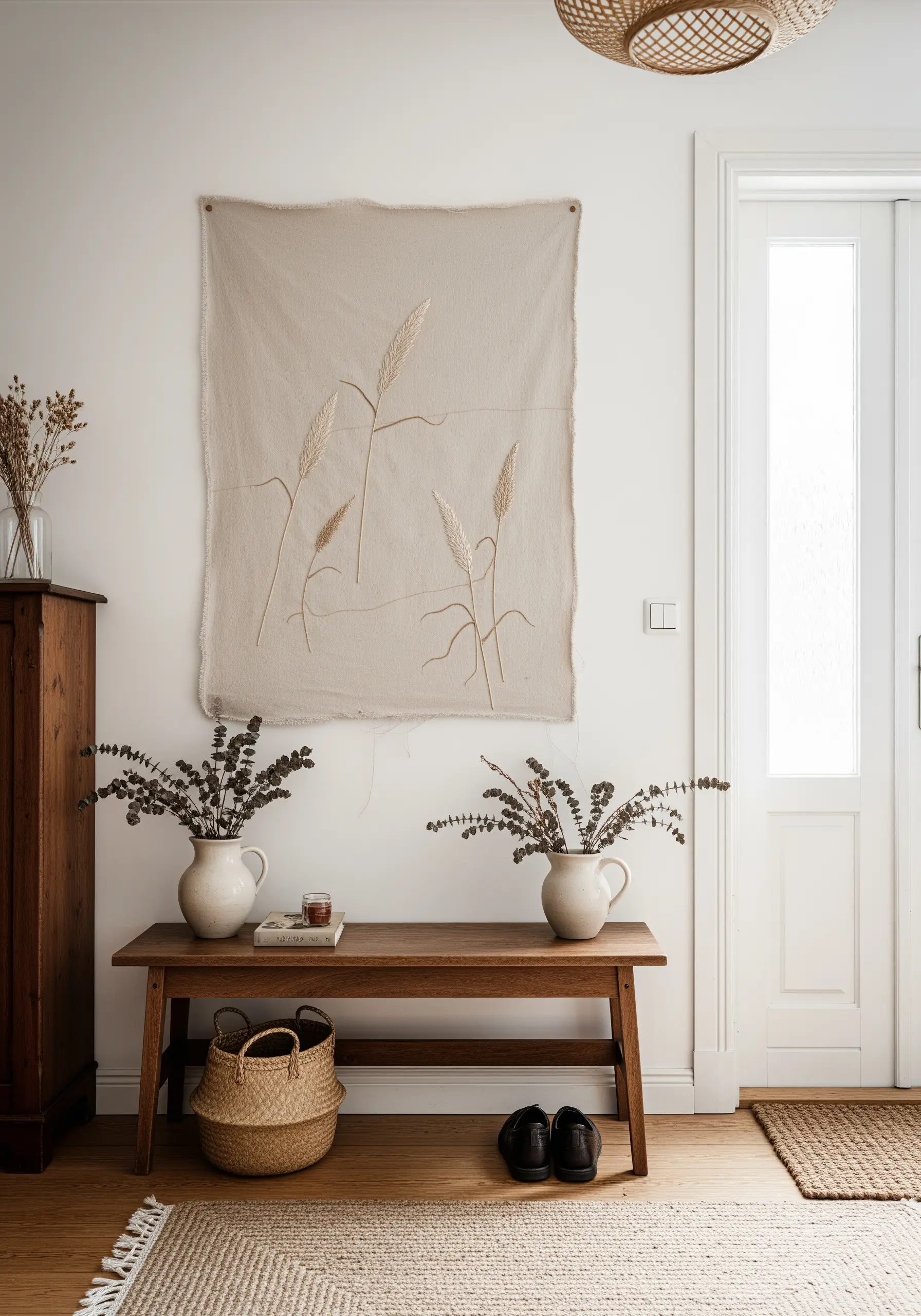
Mimic the texture of dried grasses and wheat stalks by using raised and 3D embroidery stitches.
Use a bullion knot or cast-on stitch to create the plump, seed-like heads of the grasses, which will stand away from the fabric.
For the stems, a simple stem stitch works perfectly. Leave the edges of your neutral linen fabric raw and slightly frayed to enhance the rustic, organic feel.
This tactile approach adds a sculptural quality to your work, making it one of the most interesting embroidery ideas inspired by the subtle textures of nature.
25. Explore a Symphony of Neutral Textures
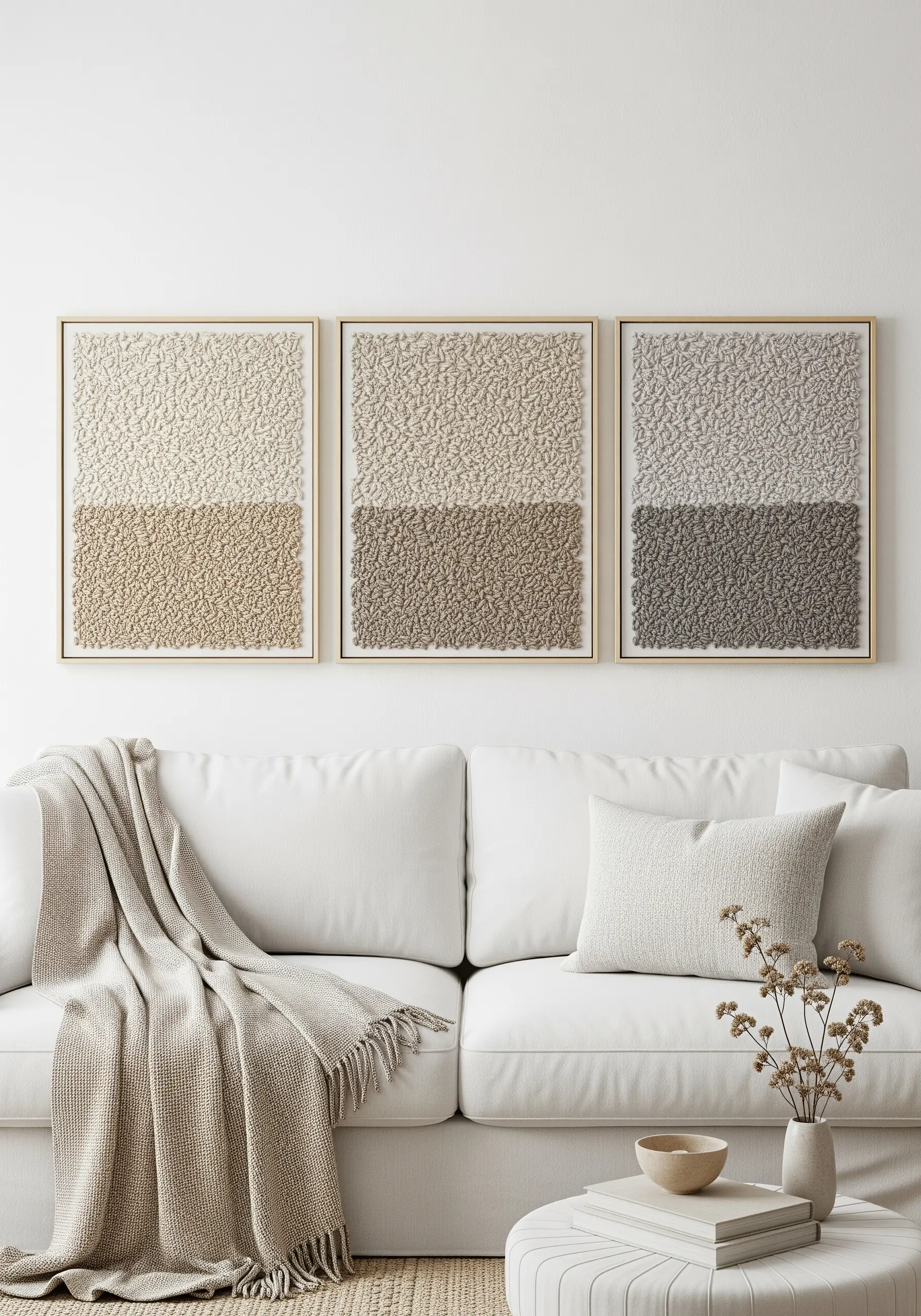
Create a sophisticated, calming triptych by focusing entirely on texture within a constrained, neutral color palette.
Divide each canvas into two blocks of color—ivory and taupe, cream and beige, light and dark gray.
Fill each block with a dense field of a single stitch, like French knots or seed stitches, using a matching thread color.
The subtle shift in texture between the two blocks and across the three panels creates a rich, tactile experience that is deeply soothing to the eye.
This is a masterful way to work with neutral-toned embroidery projects for a high-end, gallery feel.
26. Stitch a Feather with Delicate Gradients
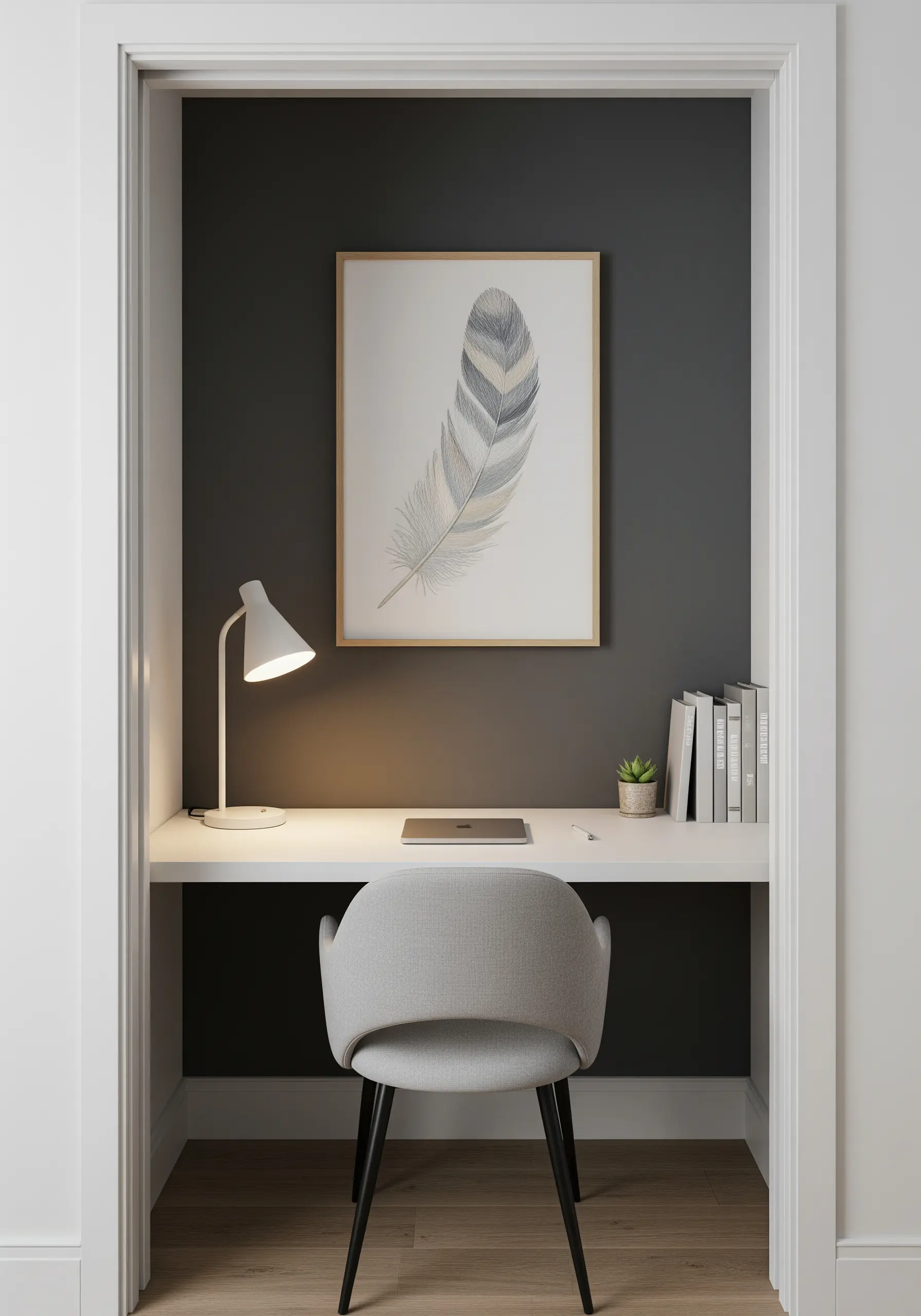
Capture the weightless quality of a feather by using long-and-short stitch to create incredibly soft color blends.
Work with a single strand of embroidery floss to achieve the most seamless transitions between shades of gray, cream, and muted blue.
Keep your stitches long and directional, following the natural grain of the feather’s barbs for a realistic effect.
Outline the central shaft with a thin, precise split stitch to give the piece structure.
Framed against a dark background, this delicate study becomes a powerful symbol of lightness and peace, perfect for a quiet workspace or nook. It’s a great way to practice realistic feather embroidery techniques.
27. Embrace Imperfection with Stitched Kintsugi
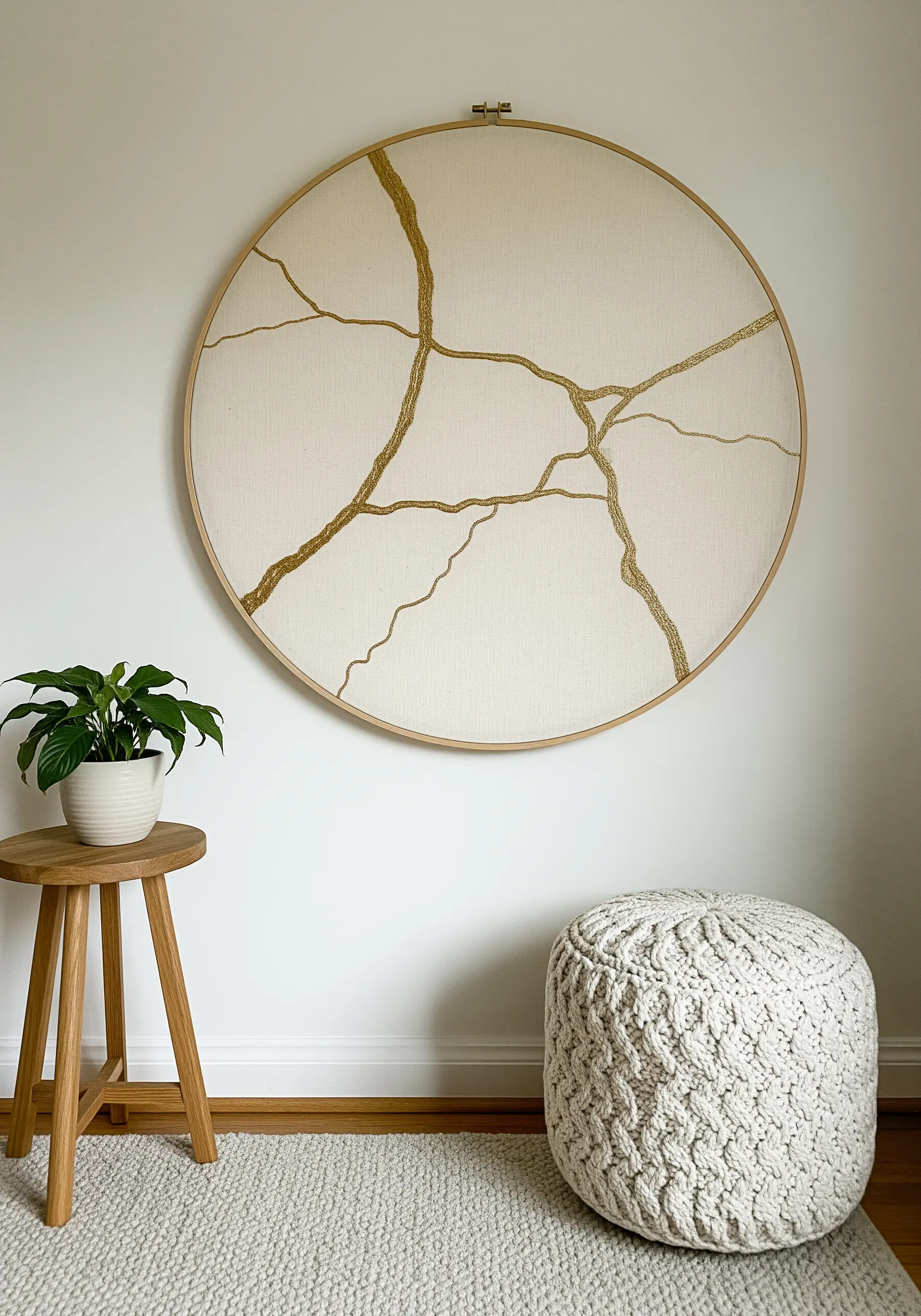
Translate the Japanese art of Kintsugi—repairing broken pottery with gold—into a beautiful embroidery concept.
On a neutral fabric, lightly draw a network of cracks. Then, fill these lines with gold metallic thread using a variety of stitches.
Use a couching stitch for thicker lines, a dense satin stitch for wider filled areas, and a simple backstitch for finer cracks.
This large-scale hoop art becomes a stunning metaphor for resilience and finding beauty in flaws, making it a deeply meaningful addition to any room, and a unique take on abstract metallic thread projects.
28. Capture the Glimmer of a Moonlit Sea
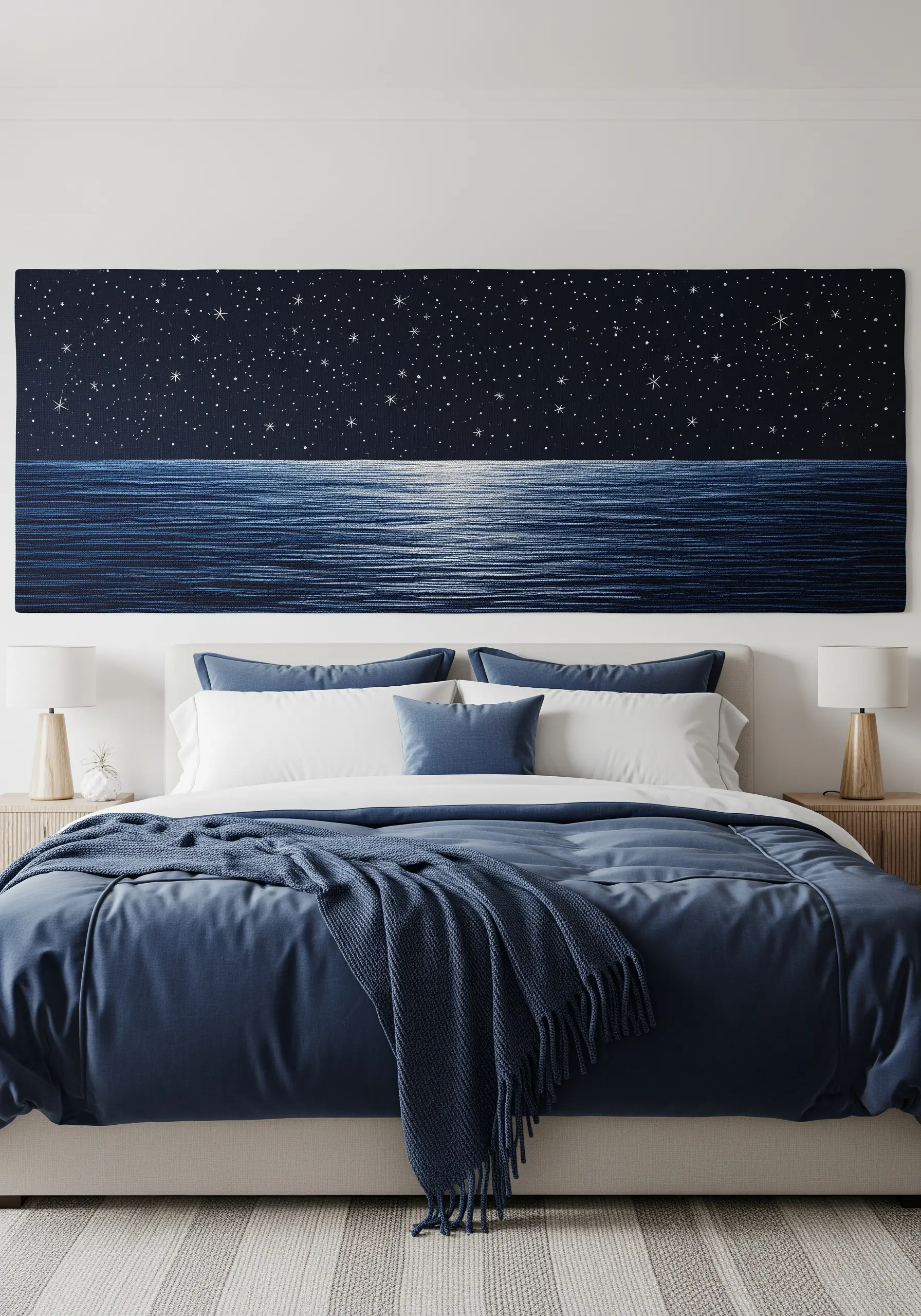
Evoke the tranquility of a calm night sea with a panoramic embroidered tapestry.
Use thousands of long, horizontal straight stitches in varying shades of deep blue and navy to create the water’s surface. Allow the stitches to overlap and blend for a shimmering, liquid effect.
Create the moon’s reflection by stitching a vertical path of silver, white, and pale blue threads down the center of the piece.
For the night sky, scatter a constellation of French knots and star stitches using bright white and metallic silver thread on the dark fabric.
This immersive piece transforms a bedroom into a serene, nocturnal sanctuary, a true example of apartment bedroom embroidery projects that create luxury.
29. Sculpt Soft Clouds with Needle Felting
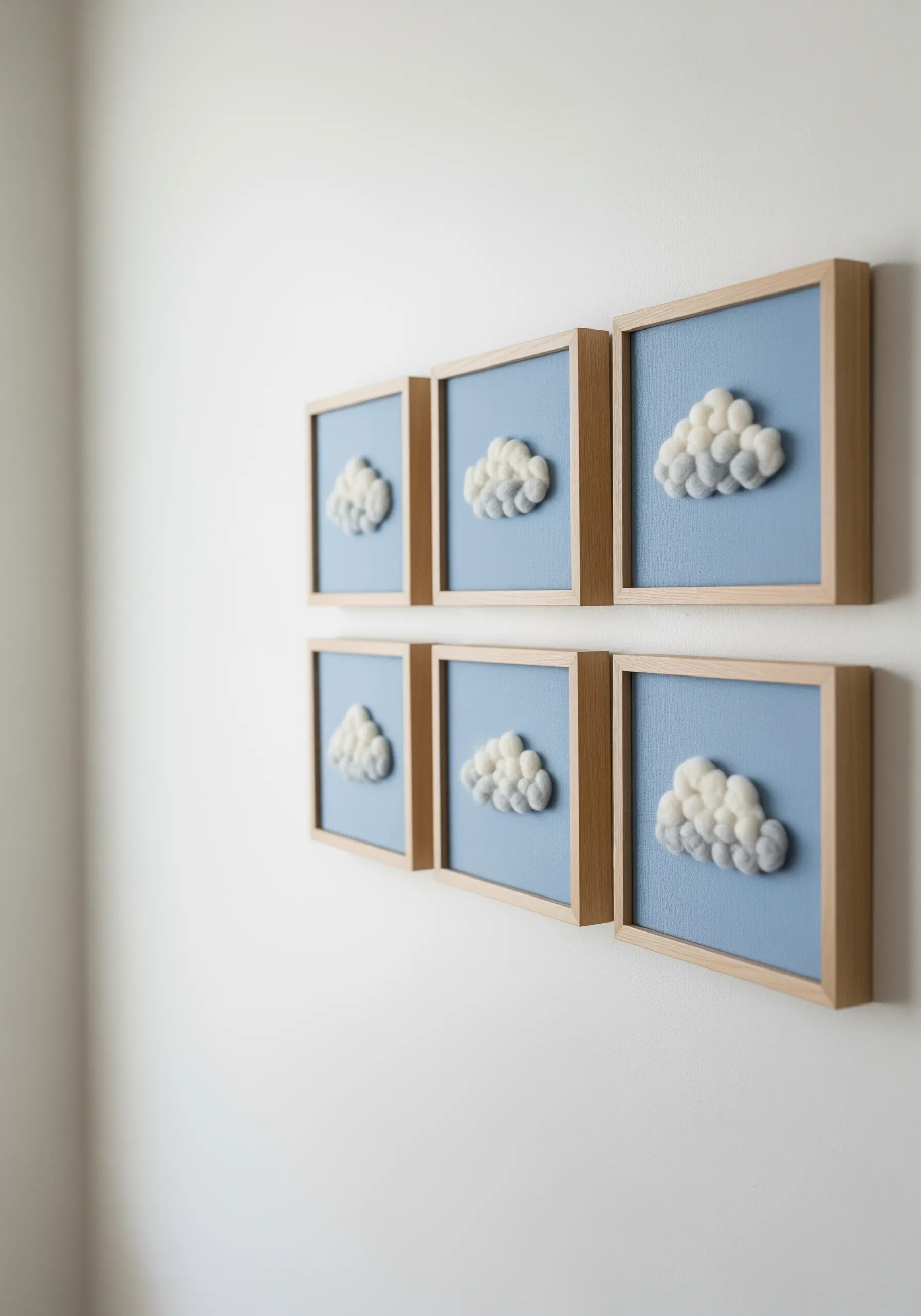
Combine embroidery’s base fabric with the sculptural softness of needle felting to create 3D cloud art.
Stretch a piece of sky-blue wool felt or linen in your frame. Then, using white wool roving and a felting needle, repeatedly poke the wool into the background fabric to create fluffy, dimensional cloud shapes.
Vary the amount of roving to create clouds of different sizes and densities for a natural, dreamy effect.
Arranging a series of these small, framed clouds creates a peaceful and whimsical gallery wall, perfect for a nursery or a calm bedroom corner, offering a different take on embroidered nursery decor.
30. Create Graphic Impact with Coiled Yarn
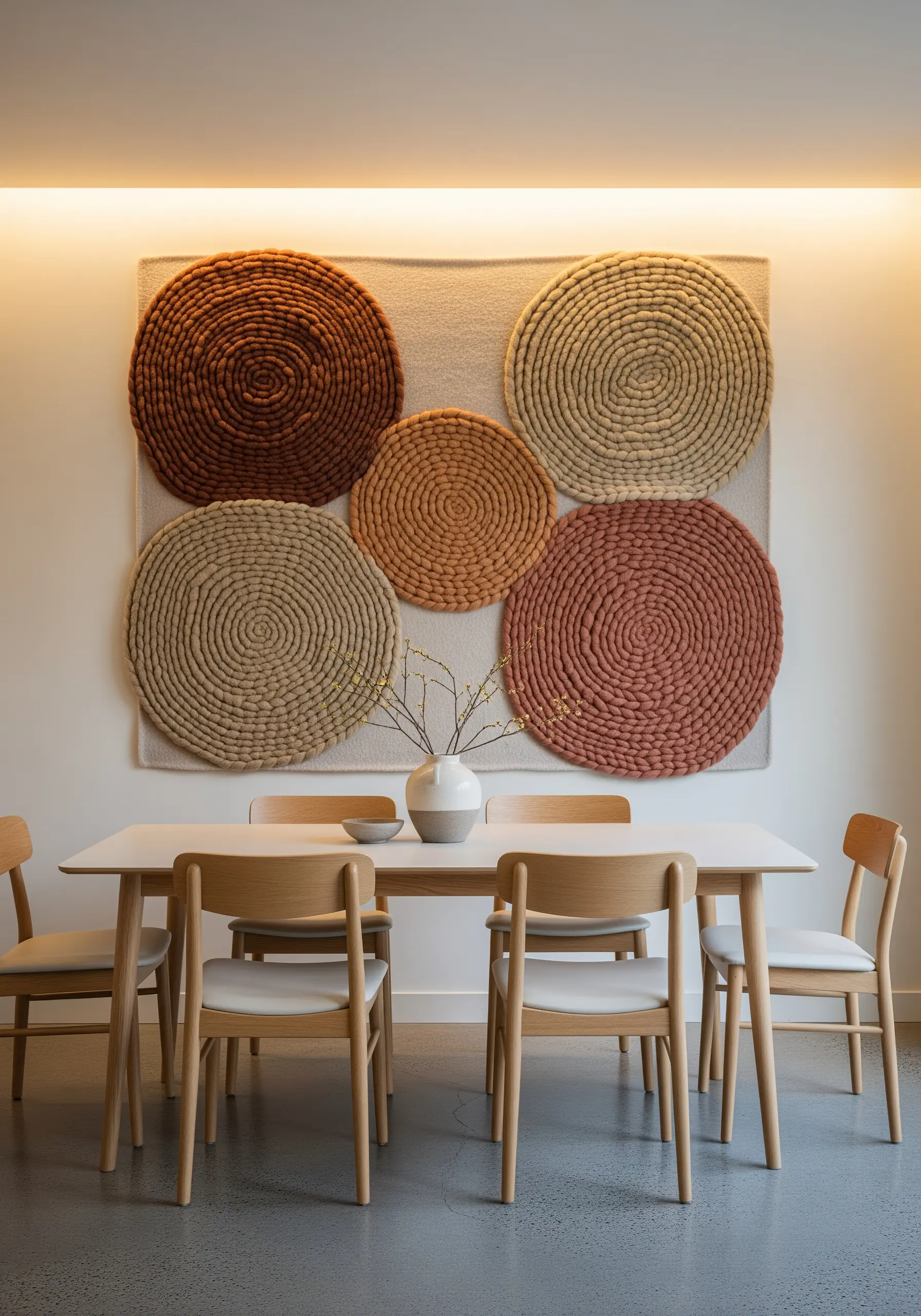
Achieve a bold, graphic look by coiling and couching thick yarn to create large, textured spirals.
Choose a palette of warm, earthy tones like terracotta, mustard, and dusty rose. Using a thick wool or roving yarn, begin coiling it into a tight circle on your base fabric.
As you coil, use a regular embroidery thread in a matching color to tack the yarn down from the back, keeping your stitches invisible from the front.
Group several of these textured circles of varying sizes onto a single large canvas for a powerful, contemporary composition that makes for stunning fiber art installations.
31. Cultivate Patience with a Detailed Bonsai
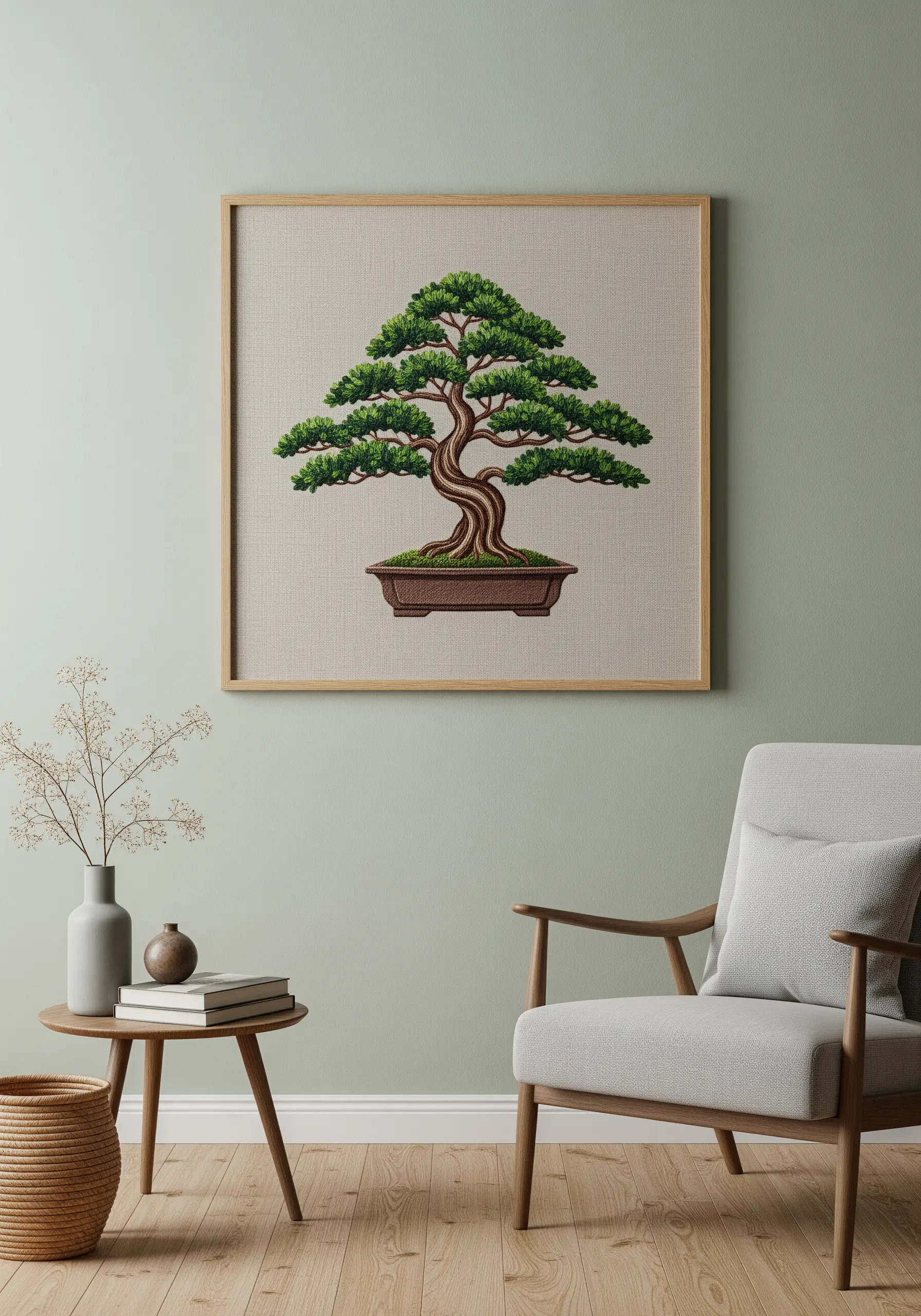
Stitch a detailed bonsai tree as a practice in mindfulness, focusing on the intricate textures of the trunk and foliage.
Use a whipped backstitch or chain stitch with variegated brown thread to create the gnarled, twisted texture of the bonsai’s trunk.
For the dense foliage pads, use clusters of French knots or bullion knots in several shades of green to create depth and dimension.
This project is a tribute to patience and controlled growth, and the finished piece becomes a symbol of harmony and balance, making it one of the most serene simple embroidery patterns that make statement wall art for a peaceful living space.


