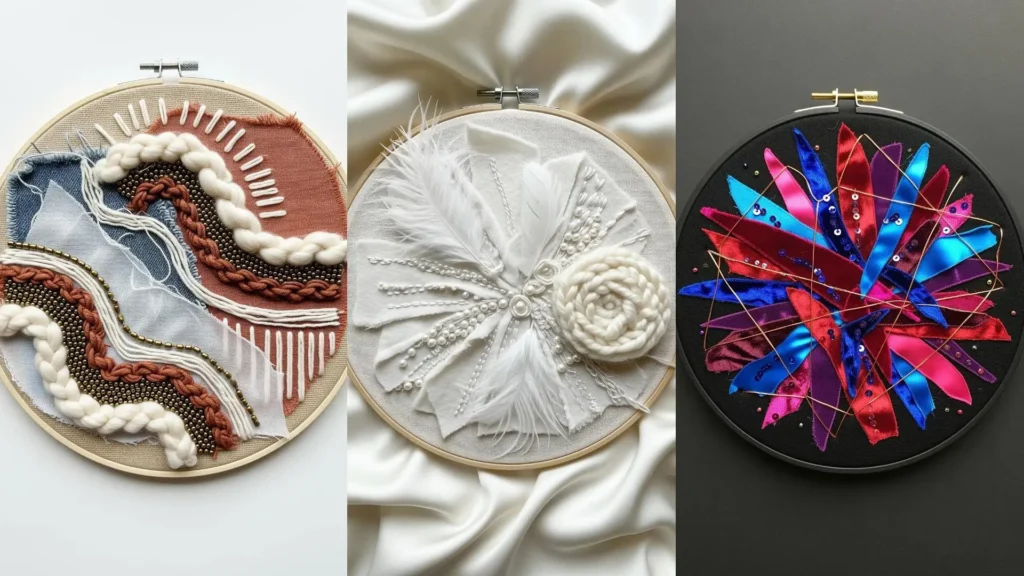
Perhaps you’ve found yourself staring at a finished piece, wondering why it doesn’t quite have that clean, polished look you admire in other artists’ work. It’s a common feeling, but the solution is rarely about mastering dozens of complex stitches. Instead, it’s about intention.
The shift from good to great embroidery happens when you begin to make deliberate choices about thread weight, stitch direction, and texture. It’s in knowing when to use three strands instead of six for a delicate line, or how angling your satin stitches can make a petal look like it’s turning toward the light.
These ideas are designed to guide you through that process. They focus on clean, modern techniques that honor the Scandinavian principle of simple, beautiful functionality. You have the skills already. Now, let’s refine them to create work that feels calm, confident, and perfectly at home.
1. Define Form with Graphic Outlines
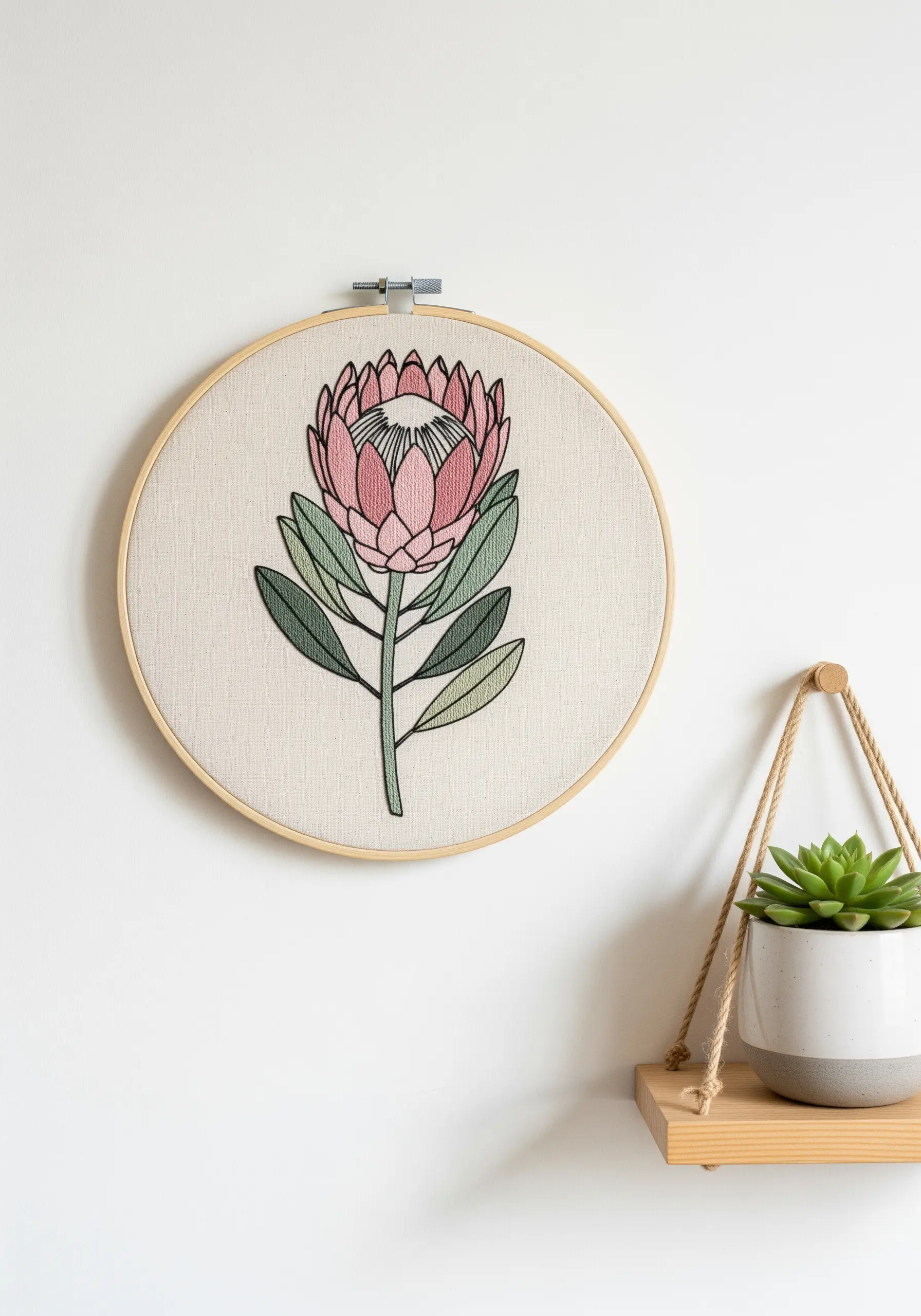
To achieve this clean, illustrative look, focus on the contrast between a bold outline and a smooth fill.
Use a split stitch for the dark outlines; this creates a sharper, more defined edge than a standard backstitch, mimicking the precision of an ink pen.
For the petals, fill with a directional satin stitch, angling your stitches to follow the natural curve of each petal.
This simple adjustment adds a sense of movement and realism without complicating the design.
Choose a tightly woven fabric like cotton twill to ensure your stitches lie flat and your outlines remain crisp.
2. Master Texture with Monochrome
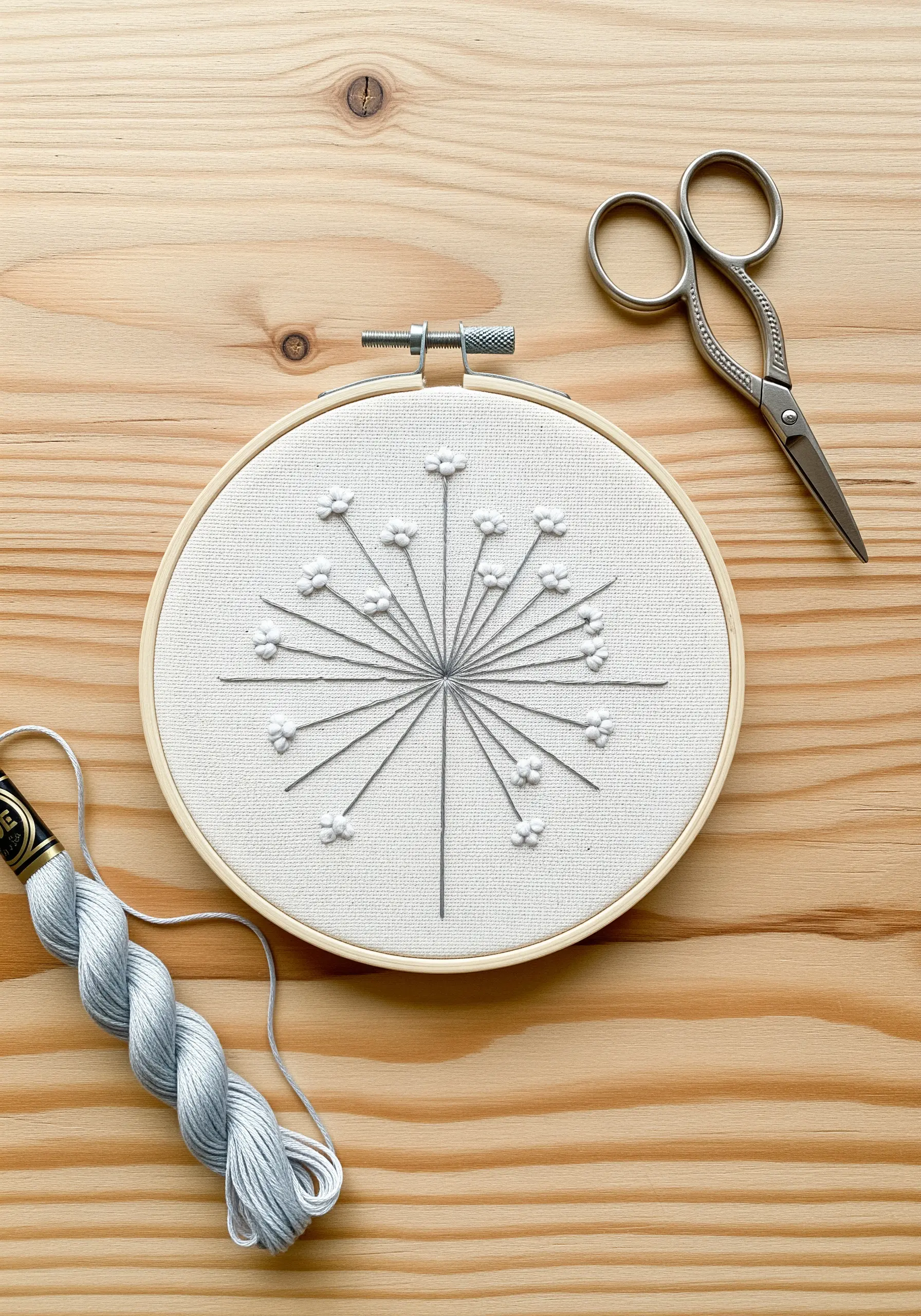
Explore the relationship between texture and form by working with a single color.
This forces you to focus on how different stitches interact.
Use a simple stem stitch for the radiating lines to create smooth, rope-like stems that guide the eye.
For the floral heads, use French knots with two or three wraps to create plump, tactile dots that contrast beautifully with the sleek stems.
Working on a textured fabric like a linen blend adds another layer of subtle depth, enhancing the overall minimalist aesthetic.
3. Animate Textiles with Botanical Line Art
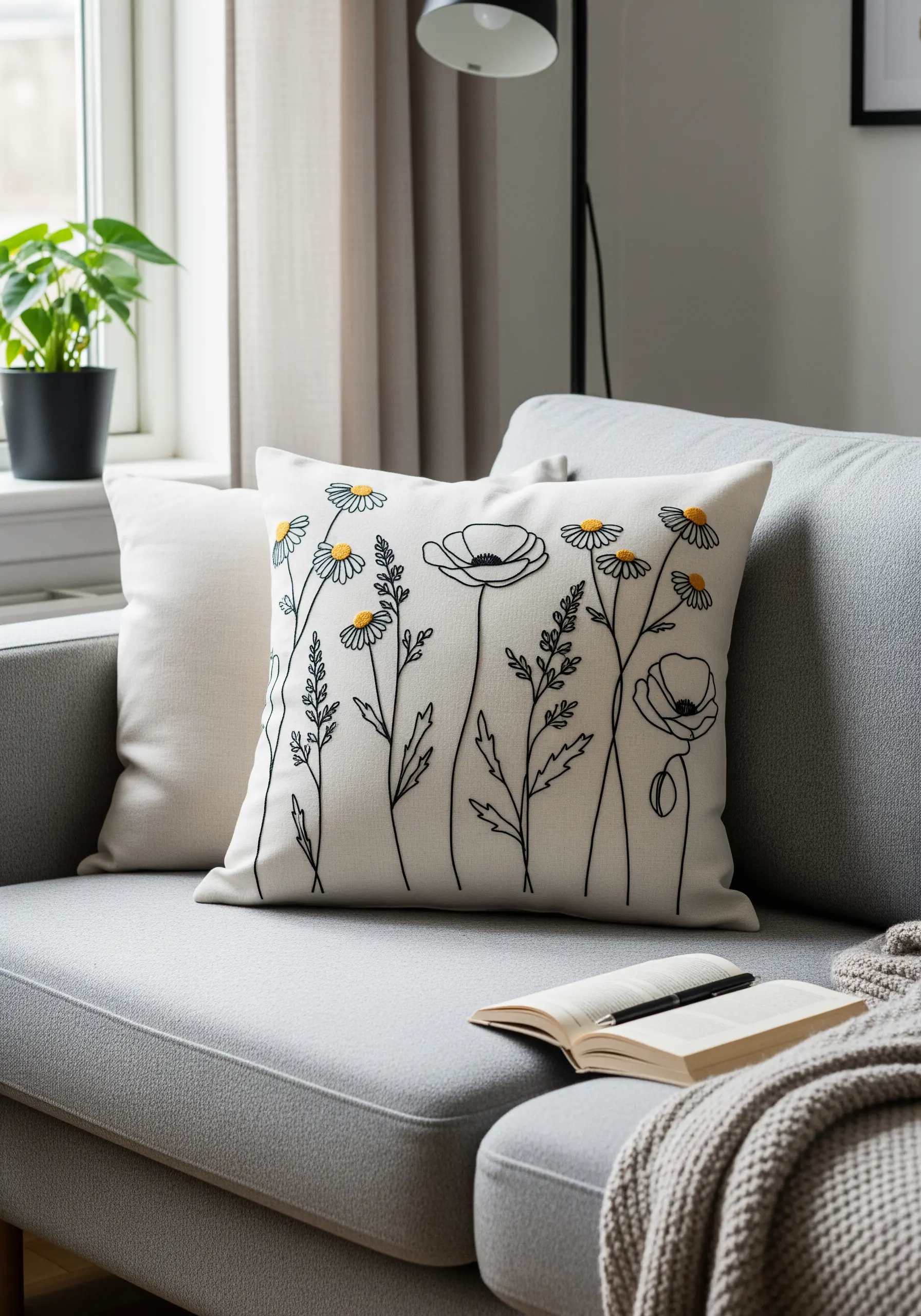
Transform a simple pillow cover into a piece of functional art with a sprawling botanical design.
Use a consistent backstitch with three strands of floss to achieve bold, clear lines that read well from a distance.
Introduce small pops of color, like the yellow satin-stitched centers, to create a focal point and prevent the design from feeling flat.
When stitching on cushion covers or other home textiles, always use a stabilizer on the back to prevent the fabric from puckering under the tension of the stitches.
4. Tell a Story with a Simple Triptych
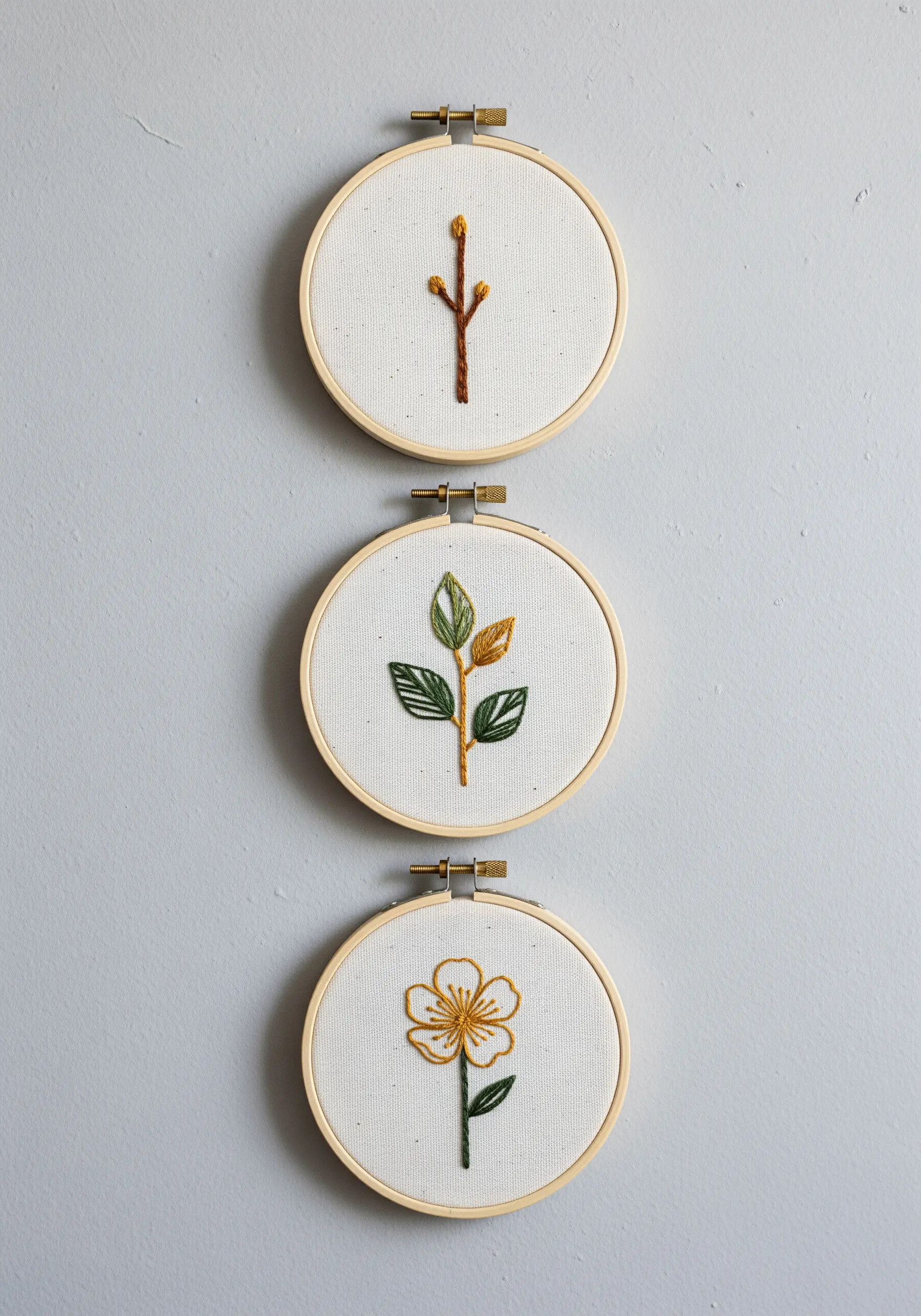
Create a cohesive narrative by embroidering a sequence of related motifs, like the life cycle of a plant.
Use the same color palette and fabric across all three hoops to unify the series.
Focus on executing simple stitches perfectly: a smooth satin stitch for leaves and petals, and a neat stem stitch for the stems.
This exercise proves that you don’t need complexity to create a meaningful and visually satisfying minimalist embroidery wall art series.
The negative space in each hoop is just as important as the stitching, so compose each element with care.
5. Carve Out Shapes with Negative Space
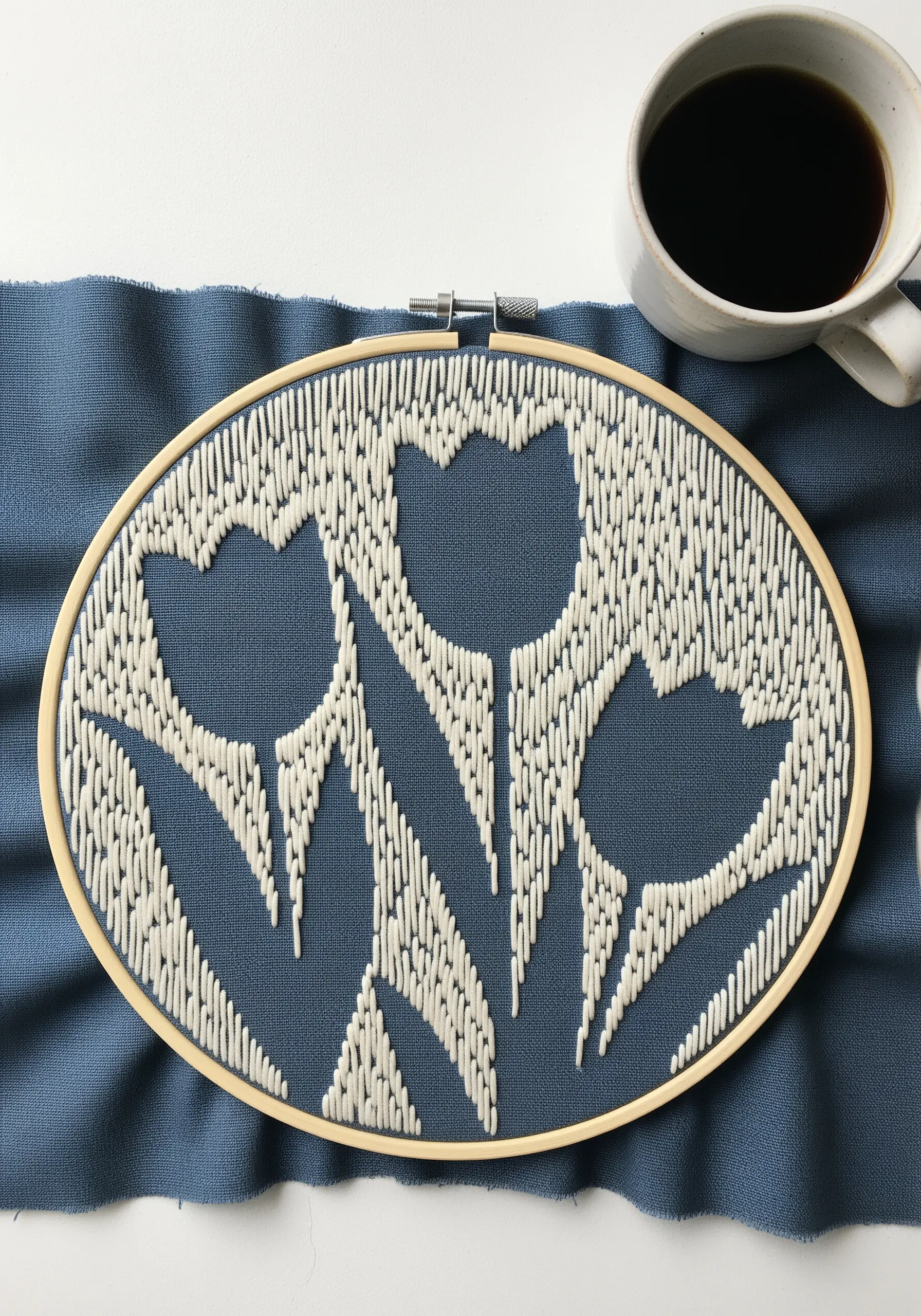
Instead of stitching the flower, stitch the background around it.
This technique, known as negative space embroidery, creates a striking, modern effect that feels both bold and delicate.
Trace your floral silhouettes onto the fabric first, then fill the surrounding area with dense, vertical straight stitches or a long-and-short stitch.
Vary the length of your stitches to create a dynamic, textured background that makes the un-stitched tulips pop.
A high-contrast color scheme, like off-white thread on deep blue fabric, maximizes the impact.
6. Paint with Thread Using Soft Gradients
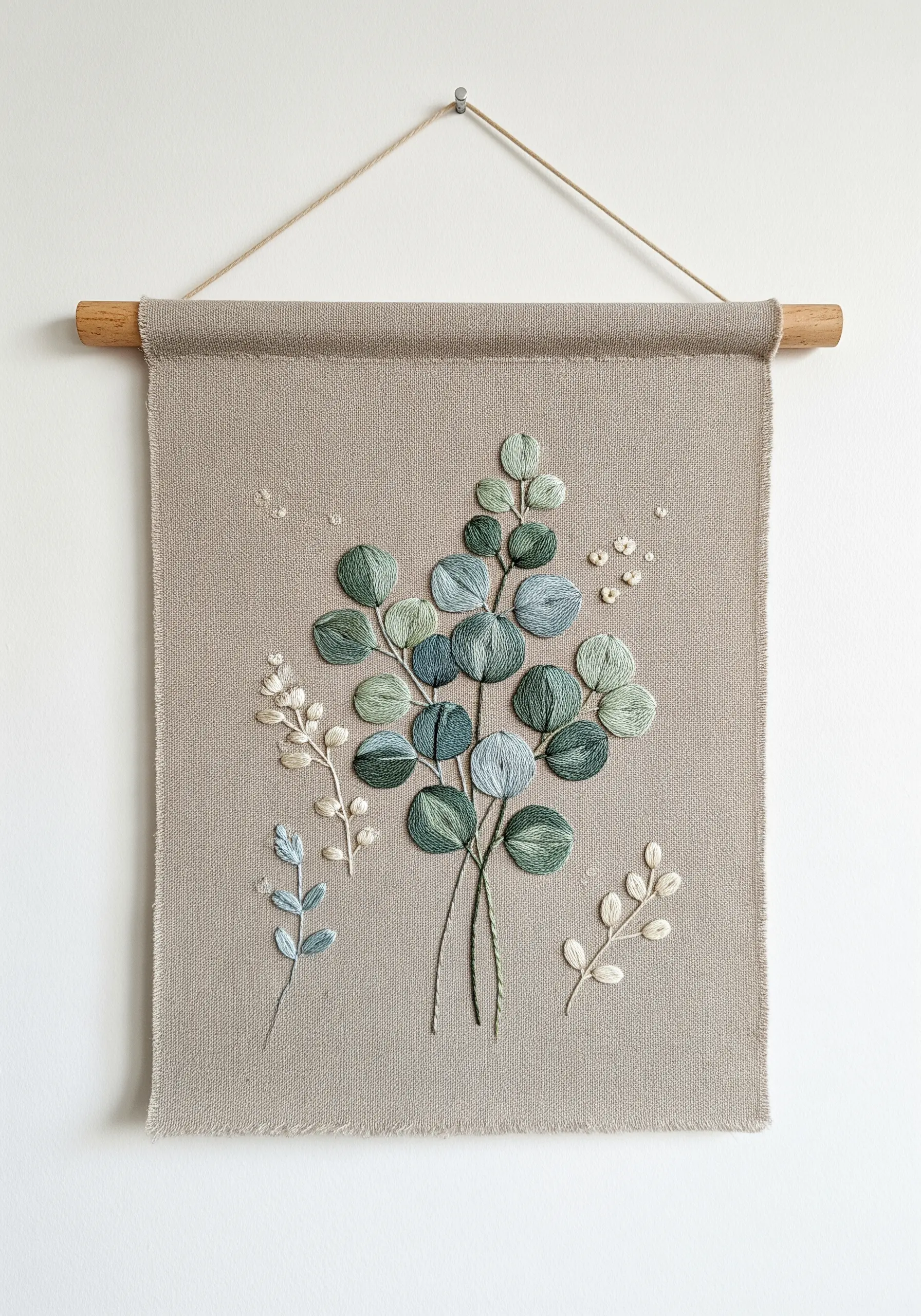
Achieve a soft, painterly effect by blending similar shades within each leaf.
Use a fishbone stitch or a satin stitch with two or three complementary tones of green and grey-blue floss.
Don’t strive for perfect separation between colors; allow them to overlap slightly to create a natural, organic feel.
Pairing these texture-rich thread art ideas with a neutral, earthy fabric like raw linen enhances the calming, natural aesthetic.
A few scattered French knots add a final, delicate touch, balancing the larger leaf shapes.
7. Capture Botanical Details in Miniature
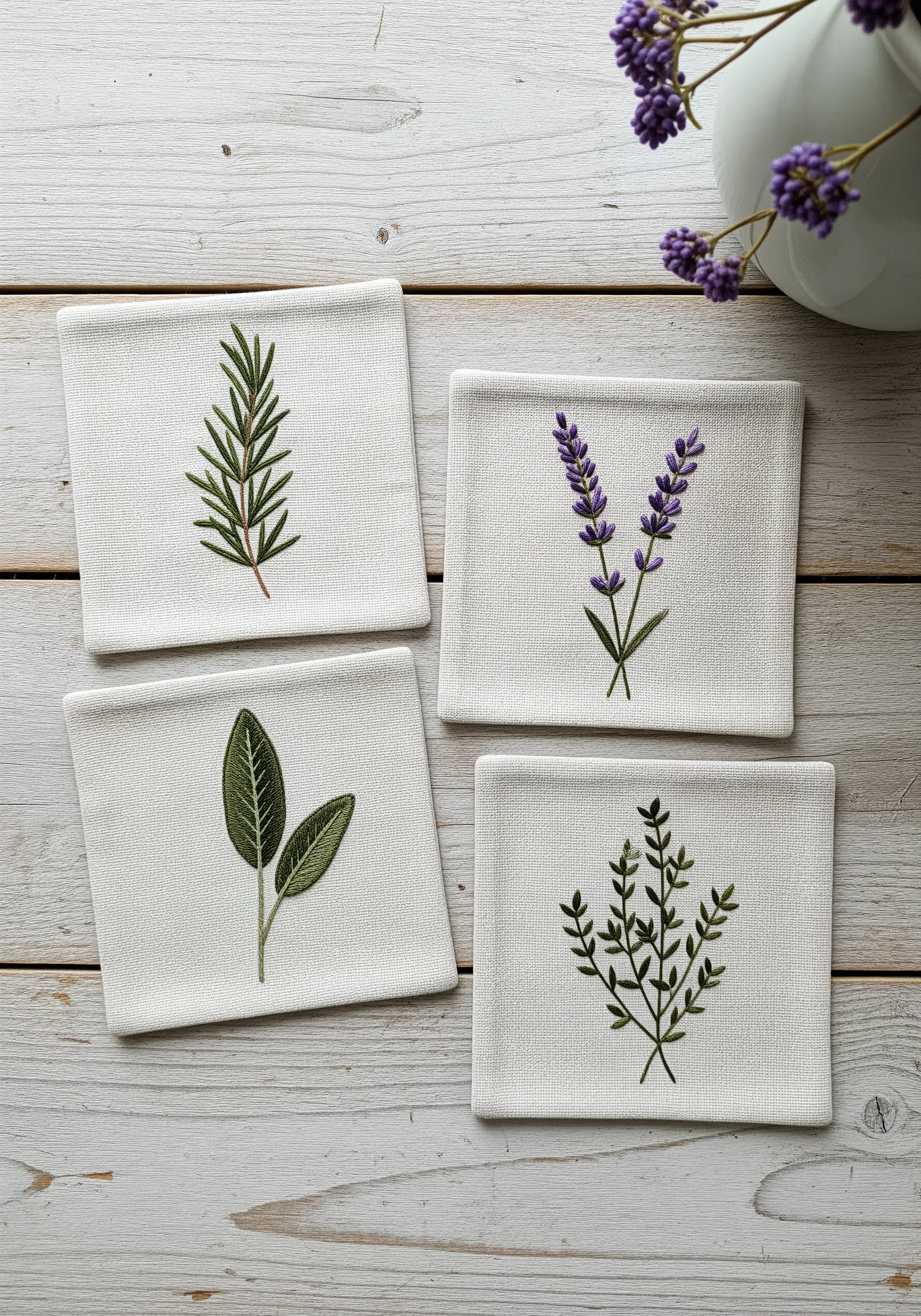
When working on small-scale projects like coasters, precision is everything.
Use only one or two strands of floss to capture fine details without overwhelming the design.
Select stitches that mimic the natural texture of the herbs: a fishbone stitch for the central vein of a sage leaf, detached chain stitches for lavender buds, and a simple stem stitch for woody rosemary.
This approach turns simple motifs into delicate, realistic studies of nature.
8. Build Dimension with Padded Satin Stitch
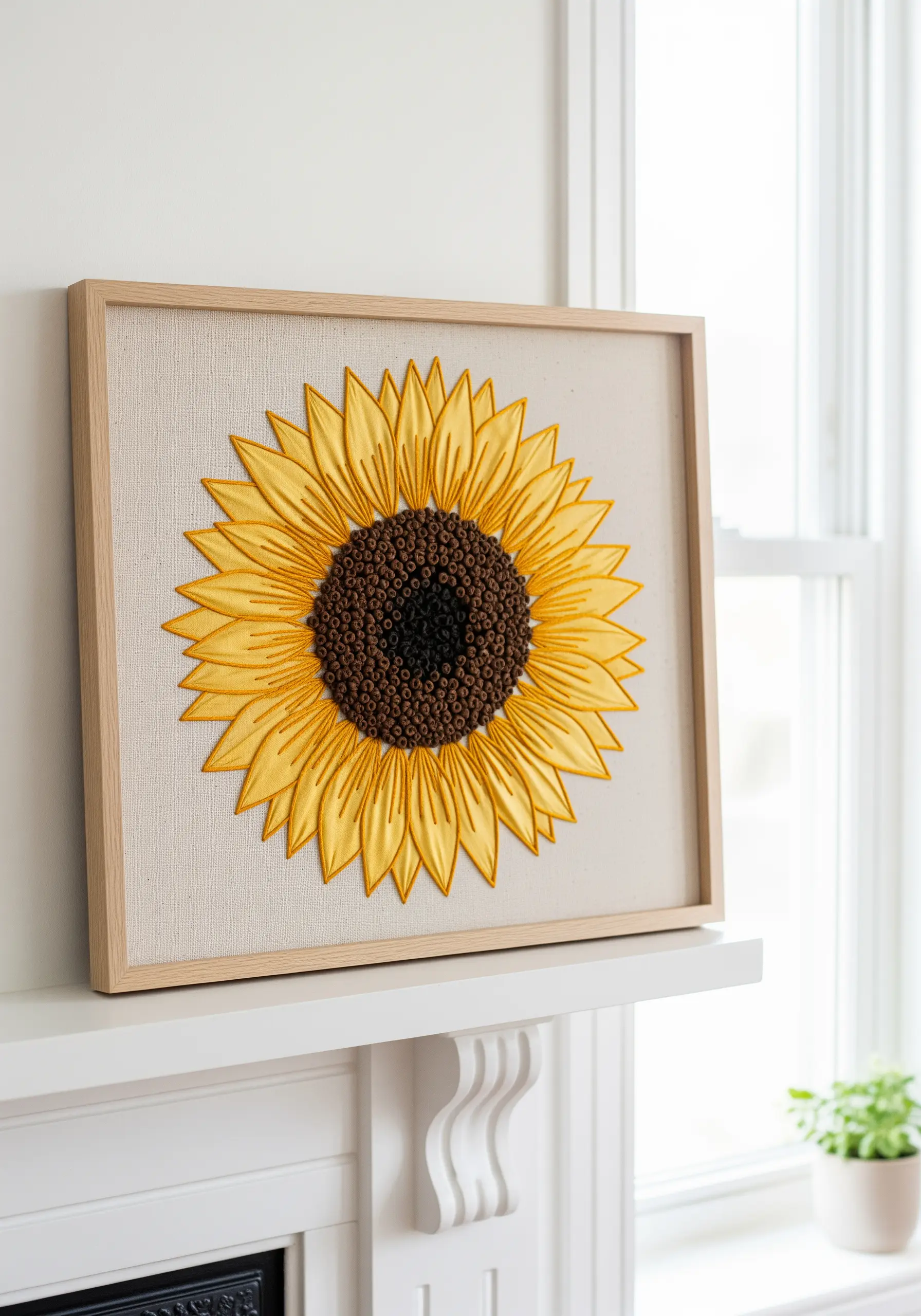
To give your flower petals a raised, three-dimensional quality, use a technique called padded satin stitch.
First, fill the petal area with a foundation of small, underlying stitches (like seed stitches or a perpendicular satin stitch).
Then, cover this padding with your final layer of long, smooth satin stitches.
This lifts the stitches off the fabric, creating dramatic shadows and highlights.
Combine this with a dense field of French knots for the center to create a piece with incredible tactile appeal.
9. Embellish Denim with Delicate Florals
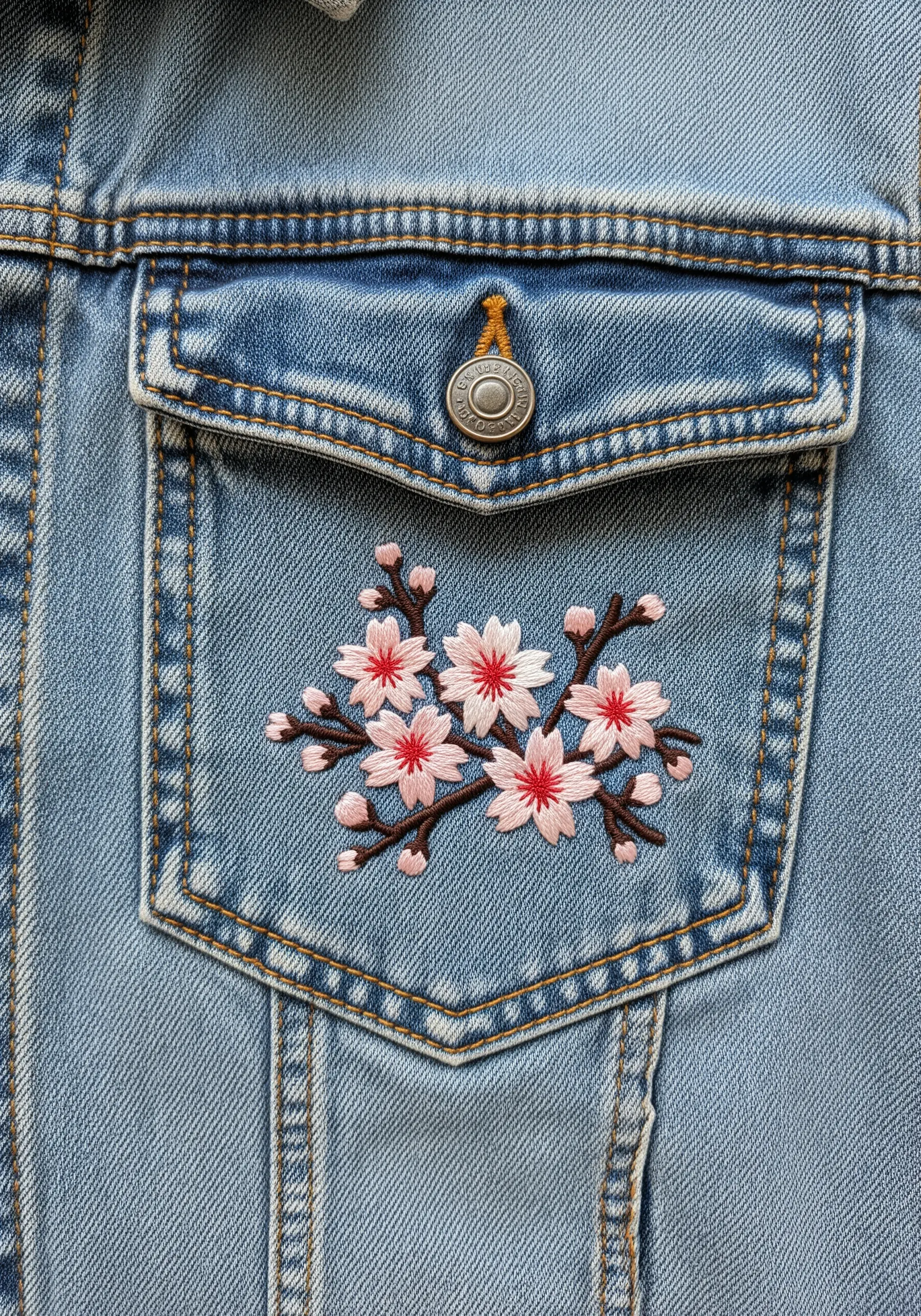
Bring a soft, organic touch to a sturdy fabric like denim by adding a delicate floral spray.
Always use a sharp, strong needle to easily penetrate the thick weave.
To prevent the design from distorting, apply a stick-on, wash-away stabilizer to the area before you begin stitching.
The contrast between the soft pink lazy daisy stitch flowers and the rugged blue denim is what makes this embellishment so effective.
This is one of those tiny embroidery patterns that make your clothes look custom-made and personal.
10. Create Rhythm with a Symmetrical Border
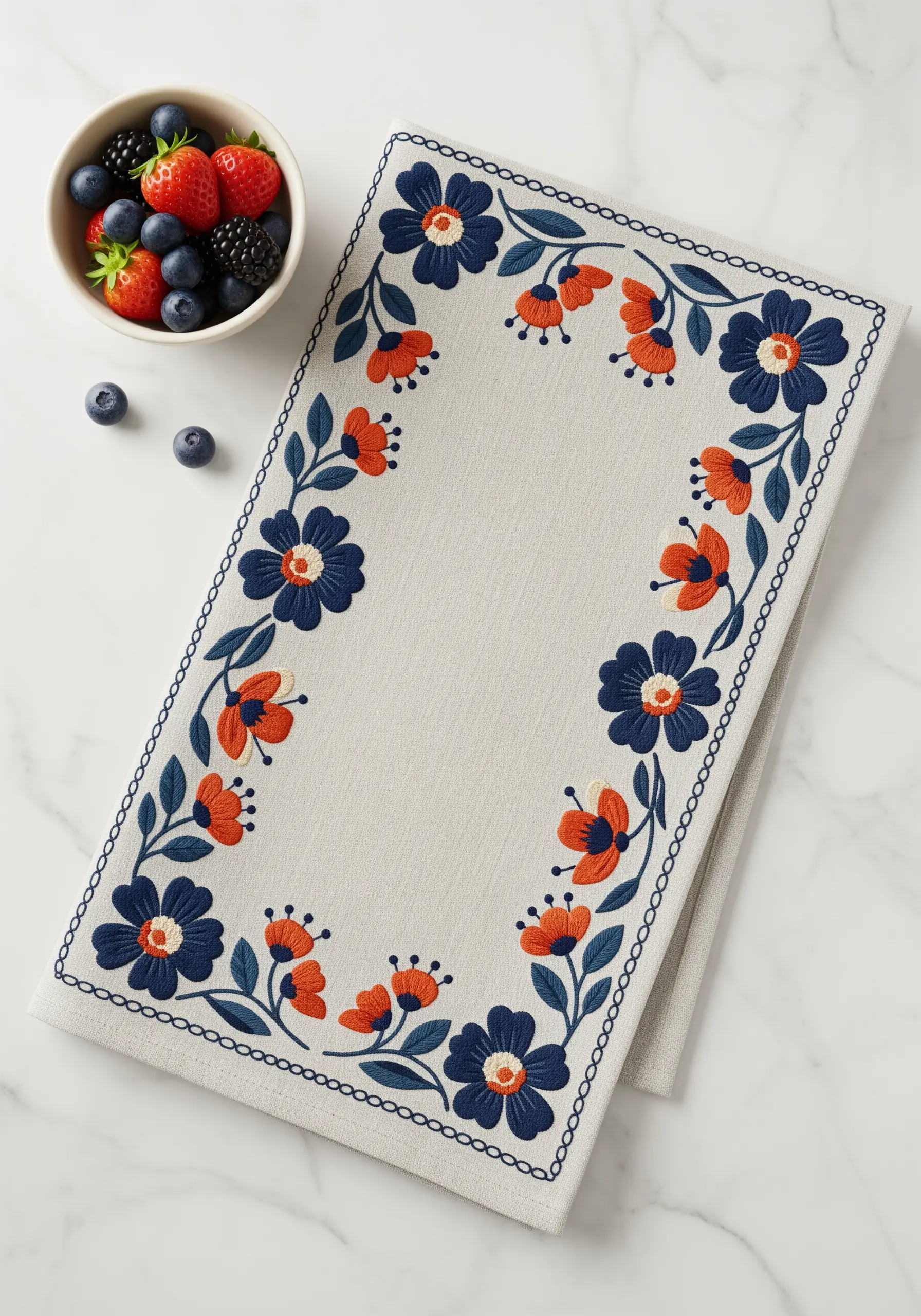
Frame a table runner or placemat with a balanced, repeating floral border for a polished, intentional look.
Carefully mark your pattern on the fabric before you start, using a water-soluble pen to ensure perfect symmetry.
A limited, high-contrast color palette—like navy, rust, and sage—feels modern and sophisticated.
The key to a successful border is impeccable stitch consistency, so focus on making every satin stitch and stem stitch as uniform as possible.
11. Play with Abstract Floral Forms
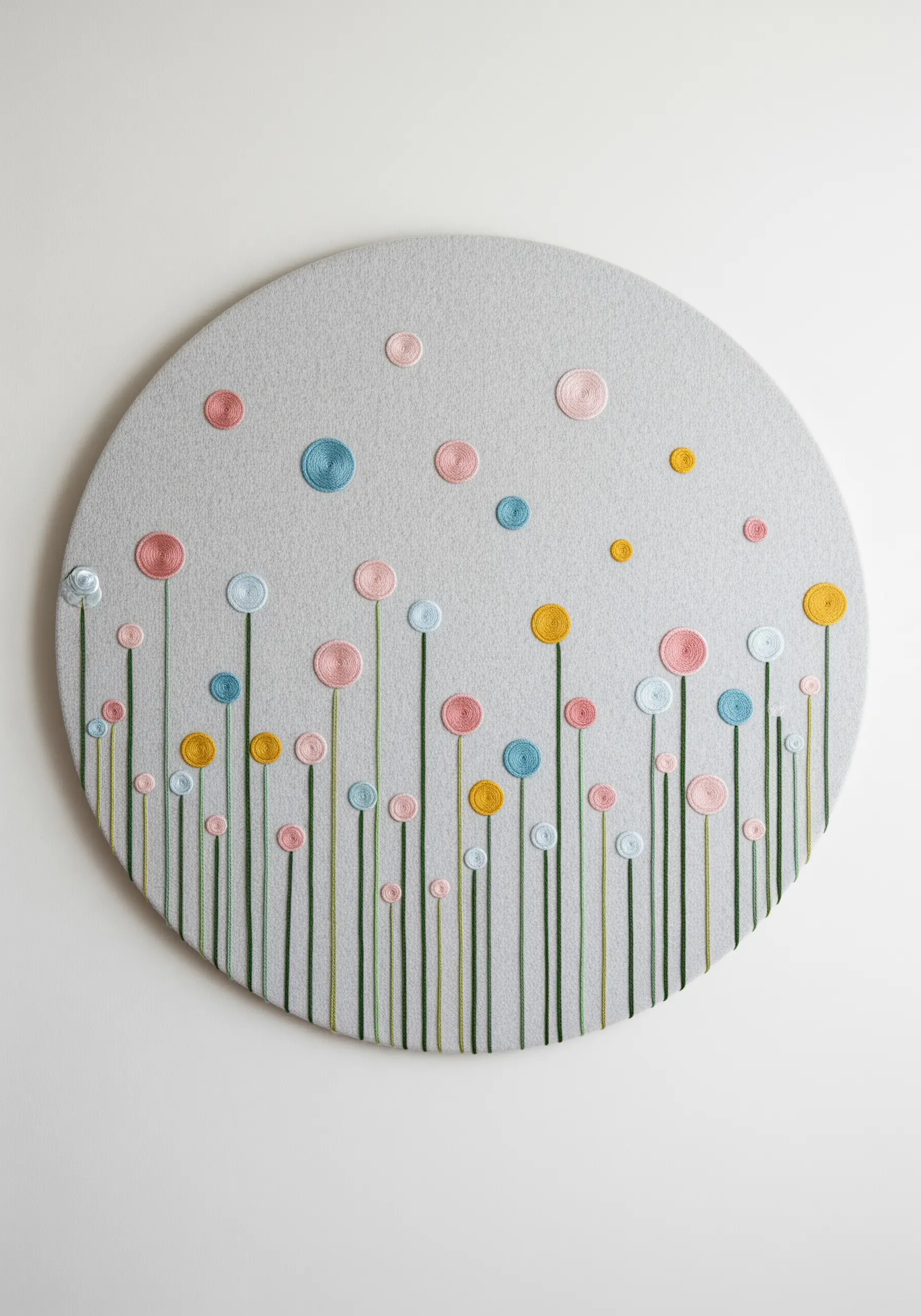
Reimagine flowers as simple geometric shapes for a playful and contemporary piece of wall art.
Create the flower heads by stitching dense, concentric circles or tight coils of whipped backstitch.
Use single, sharp straight stitches for the stems to maintain the clean, graphic aesthetic.
The composition’s success lies in the varied heights of the stems and the rhythmic placement of color.
Mounting the work on a felt-covered board instead of a traditional hoop adds to its modern, gallery-like feel.
12. Make a Statement with Bold Line Art
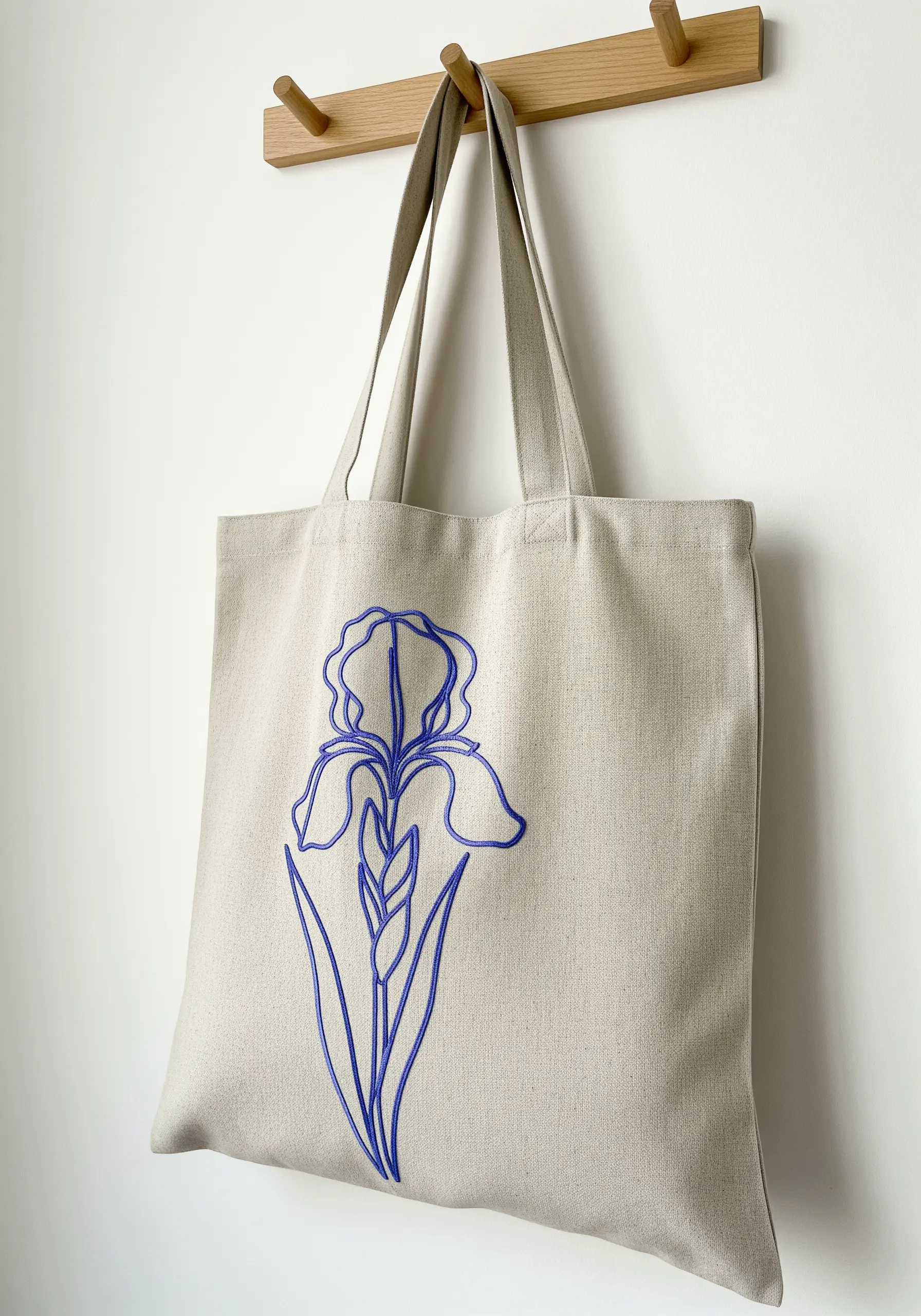
For a clean, graphic statement on a tote bag or other accessory, use a single, bold color and a strong line.
A whipped backstitch or a heavy chain stitch will create a raised, cord-like line that has more presence than a simple backstitch.
Use all six strands of your embroidery floss to maximize the line’s thickness and impact.
This minimalist line art embroidery pattern technique works best with designs that are simple, elegant, and continuous, allowing the unbroken line to be the hero.
13. Explore Stitch Variation in a Monochrome Palette
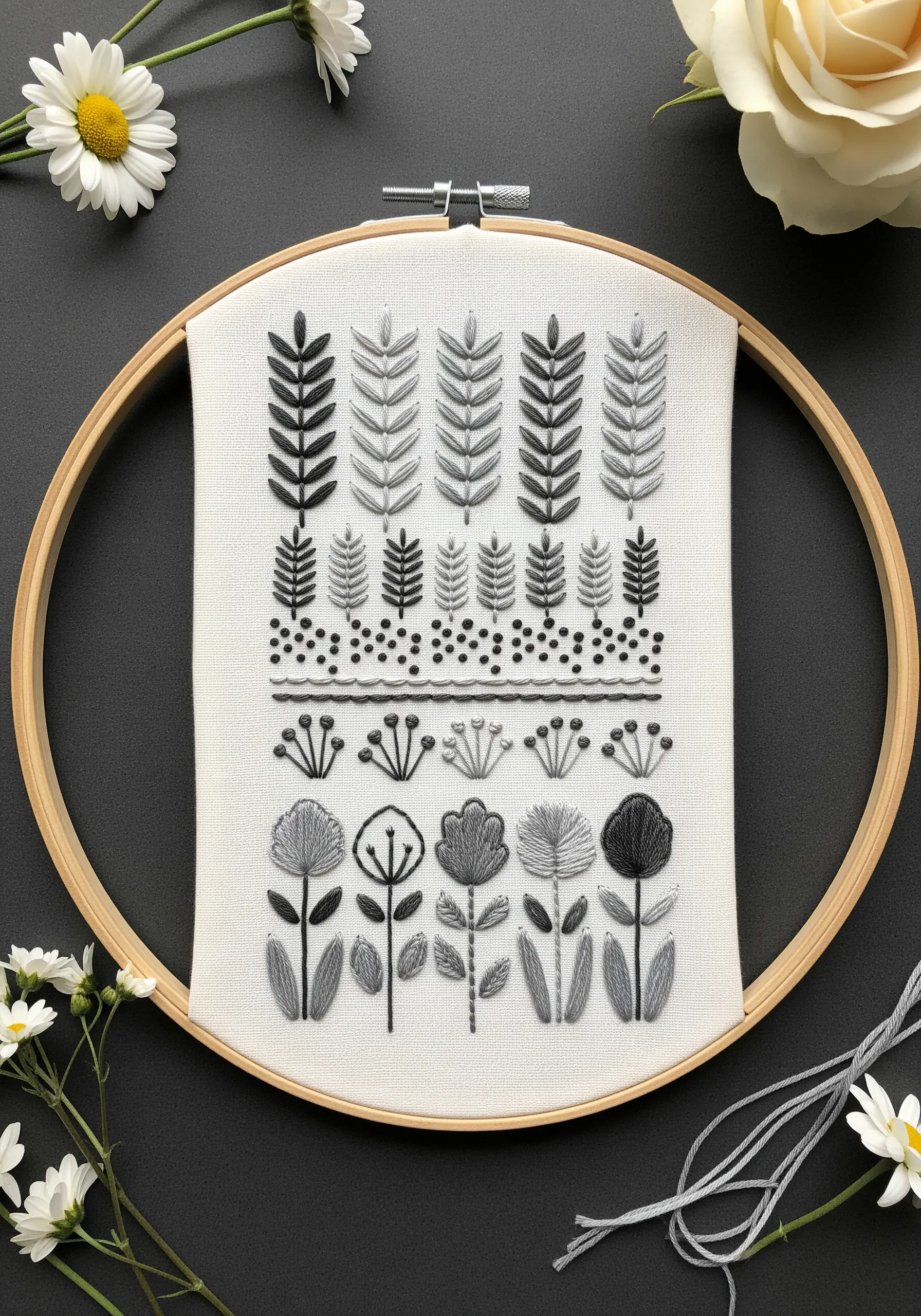
A monochrome sampler is the perfect project for honing your skills and understanding the unique texture of each stitch.
By removing color, you force the eye to focus solely on the form, density, and light-reflecting qualities of the thread.
Experiment with contrasting stitches side-by-side: the smooth sheen of satin stitch next to the bumpy texture of French knots, or the flat weave of a seed stitch against a raised woven wheel.
This is an invaluable exercise for any embroiderer looking to add more sophistication and control to their work.
14. Achieve High-Contrast Botanical Elegance
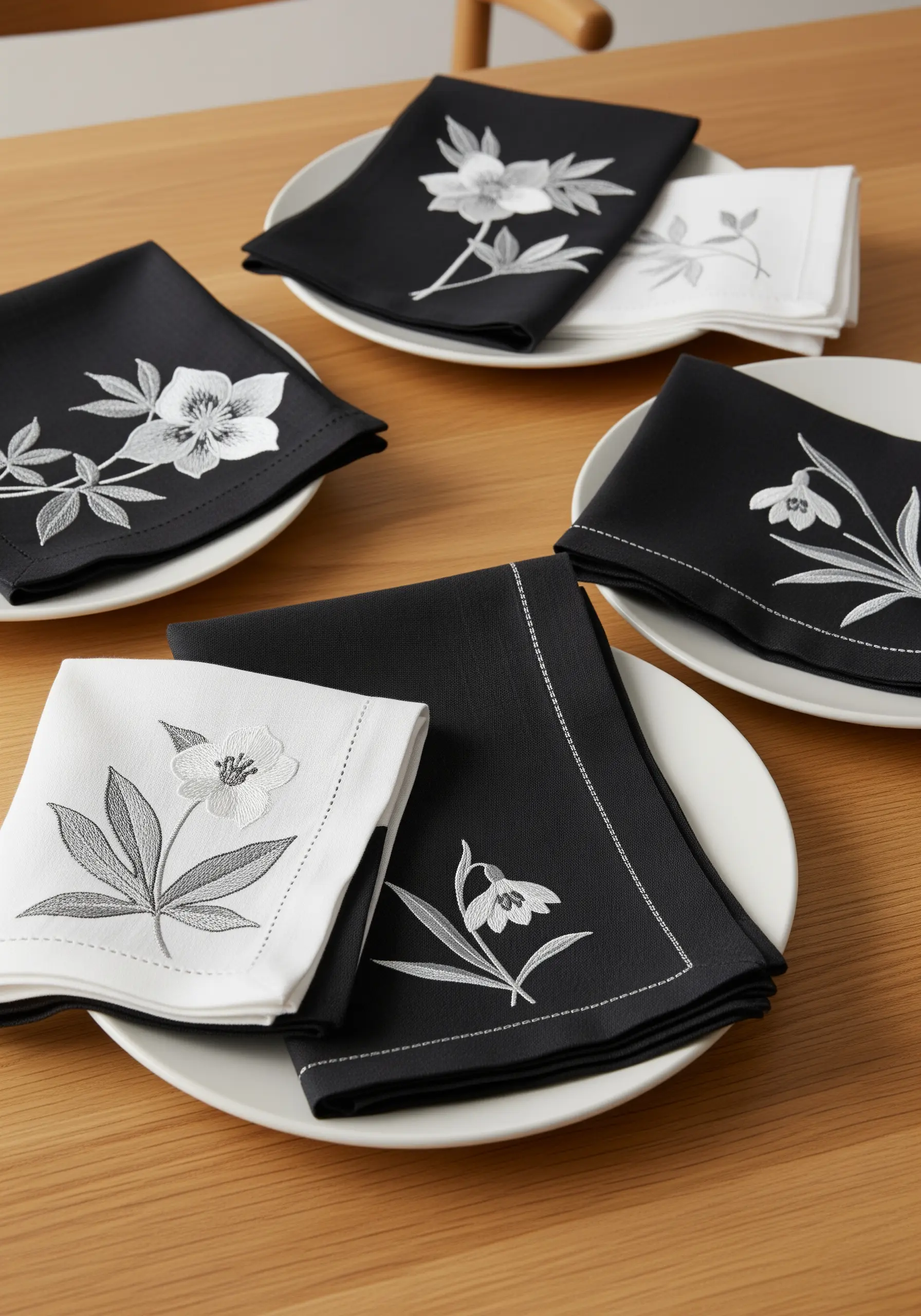
Create a dramatic, formal look by stitching with white and grey threads on black fabric.
To make light threads appear opaque on a dark background, use a high-quality, tightly twisted floss and ensure your stitch coverage is dense.
Use long-and-short stitch to create subtle shading on the petals, giving the flowers a soft, realistic dimension that prevents them from looking stark.
This high-contrast approach turns simple table linens into a sophisticated, artful tablescape.
15. Go Bold with Large-Scale Embroidered Art
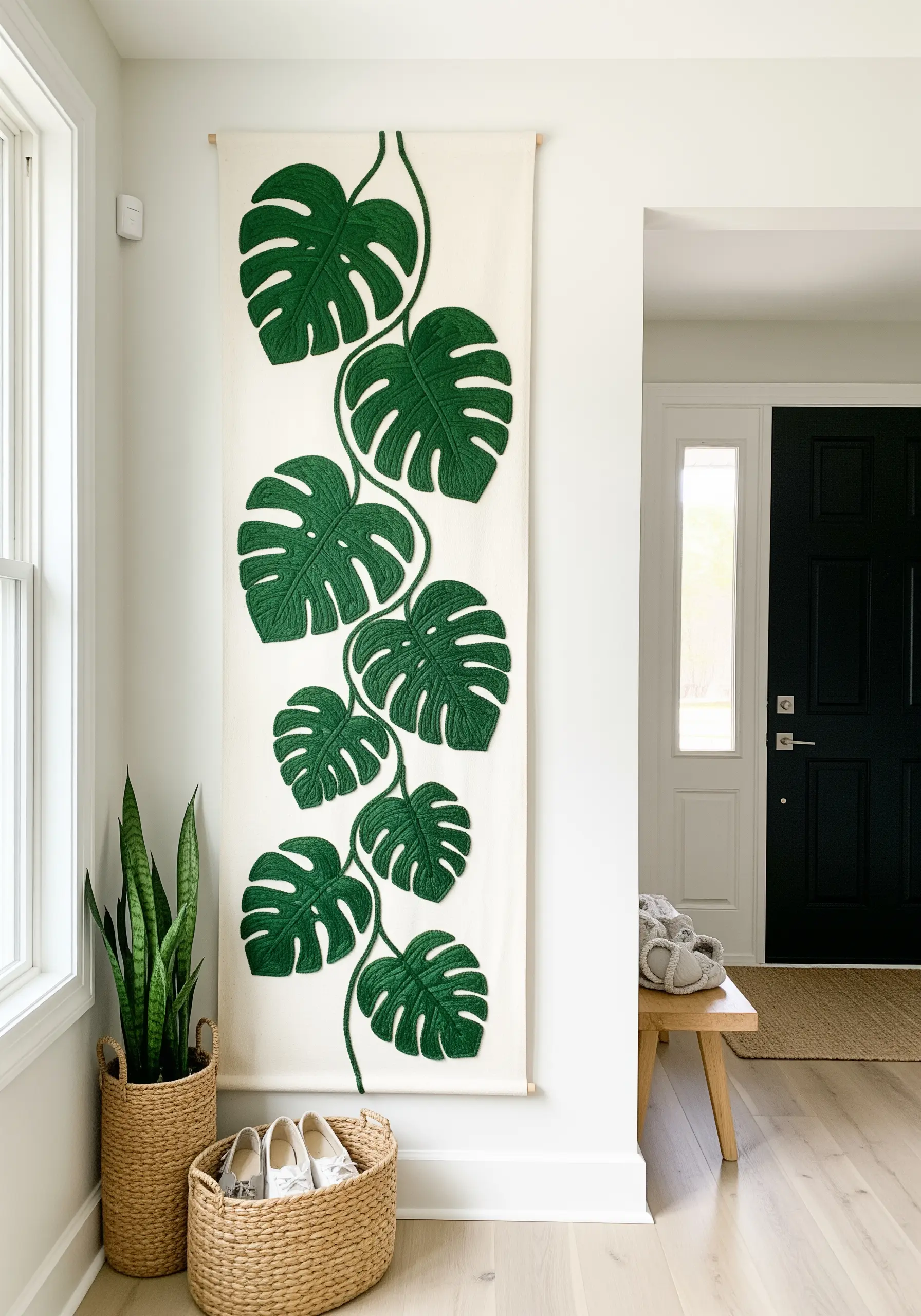
Make an unforgettable statement by taking your embroidery off the hoop and onto a large-scale wall hanging.
For large filled areas like these monstera leaves, avoid satin stitch, as the long threads can snag.
Instead, opt for a brick stitch or a dense long-and-short stitch fill, which creates a stable, textured surface.
This is one of the most effective large-scale embroidery tapestries for transforming a blank wall in a minimalist home, adding texture, color, and organic form.
16. Add a Delicate Accent to a Crisp Collar
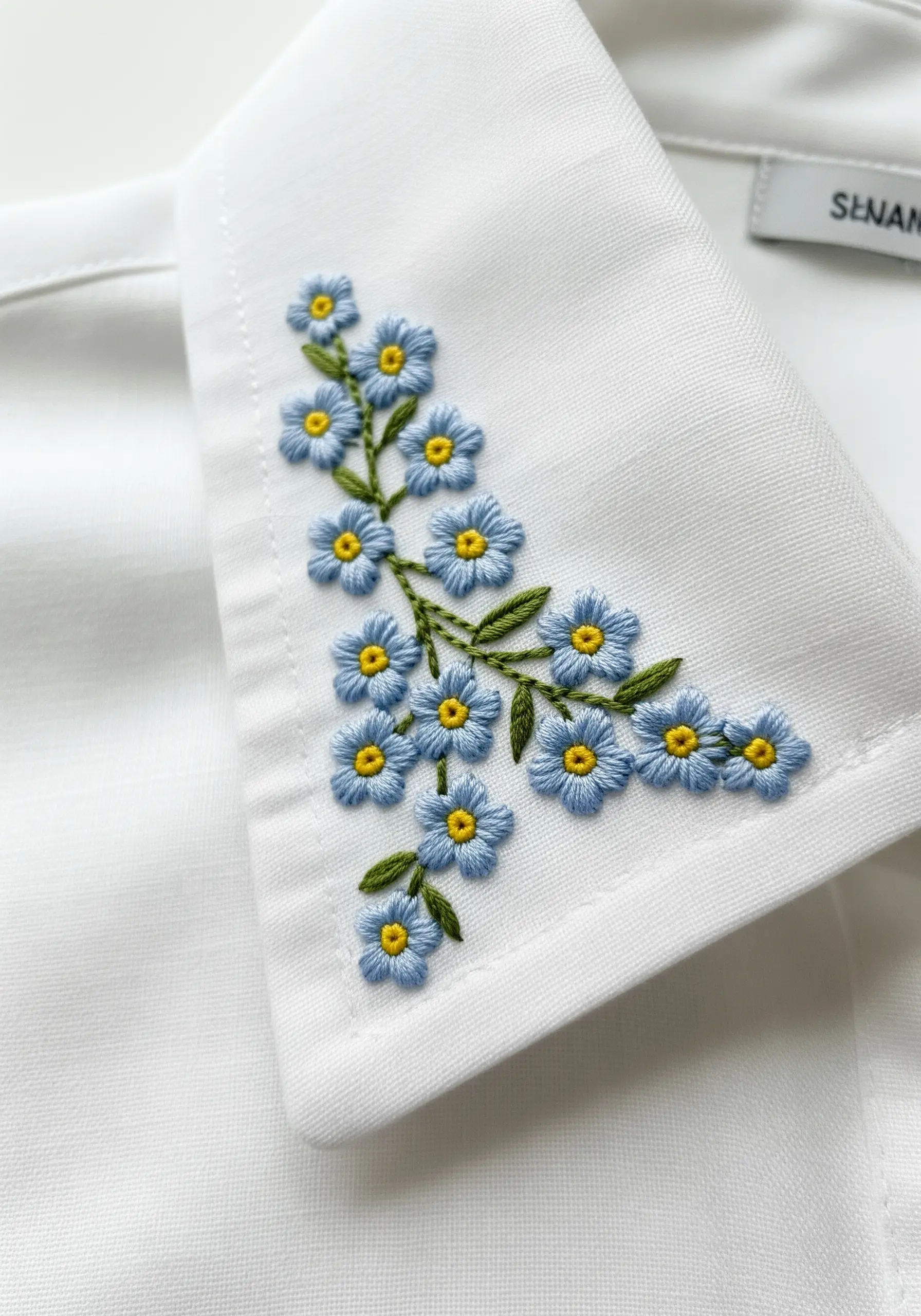
A tiny, well-placed spray of flowers can transform a simple white shirt into a unique, personalized piece.
For such fine detail, work with only one or two strands of floss.
Use lazy daisy stitches for the petals and tiny French knots for the centers—these stitches are quick to execute and perfect for miniature florals.
Always back the fabric with a lightweight, iron-on stabilizer to prevent puckering and give your stitches a solid foundation.
17. Evoke a Season with a Curated Color Palette
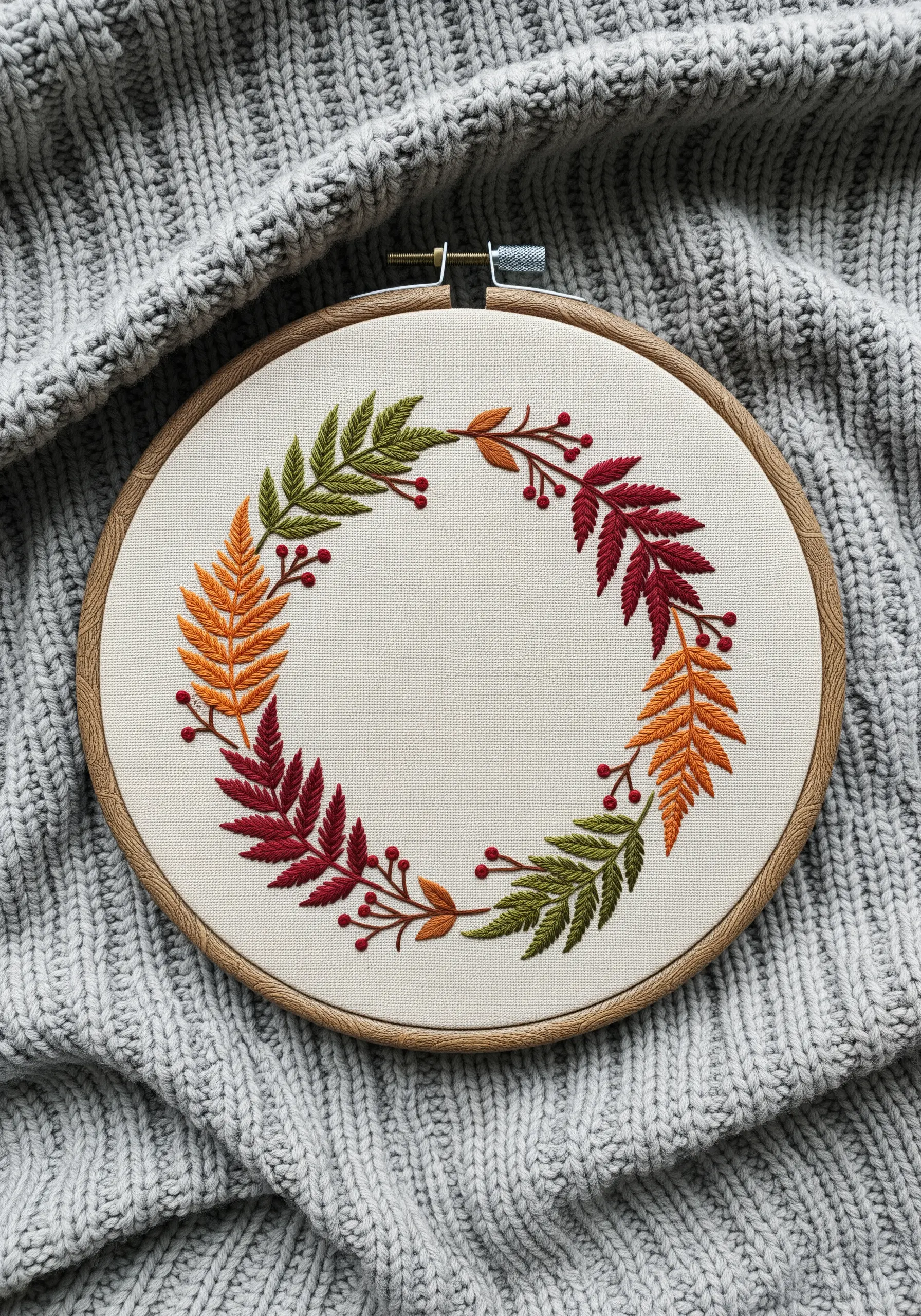
Capture the essence of autumn by selecting a harmonious color palette of rust, olive green, and deep red.
To create the realistic texture of fern fronds, use a fishbone stitch.
This stitch creates a central line down the middle of the leaf, perfectly mimicking a natural vein.
Small clusters of French knots serve as berries, adding pops of color and a contrasting circular texture to the feathery leaves.
This design demonstrates how fern and foliage stitch variations can create a rich, seasonal feel.
18. Turn a Lampshade into a Canvas
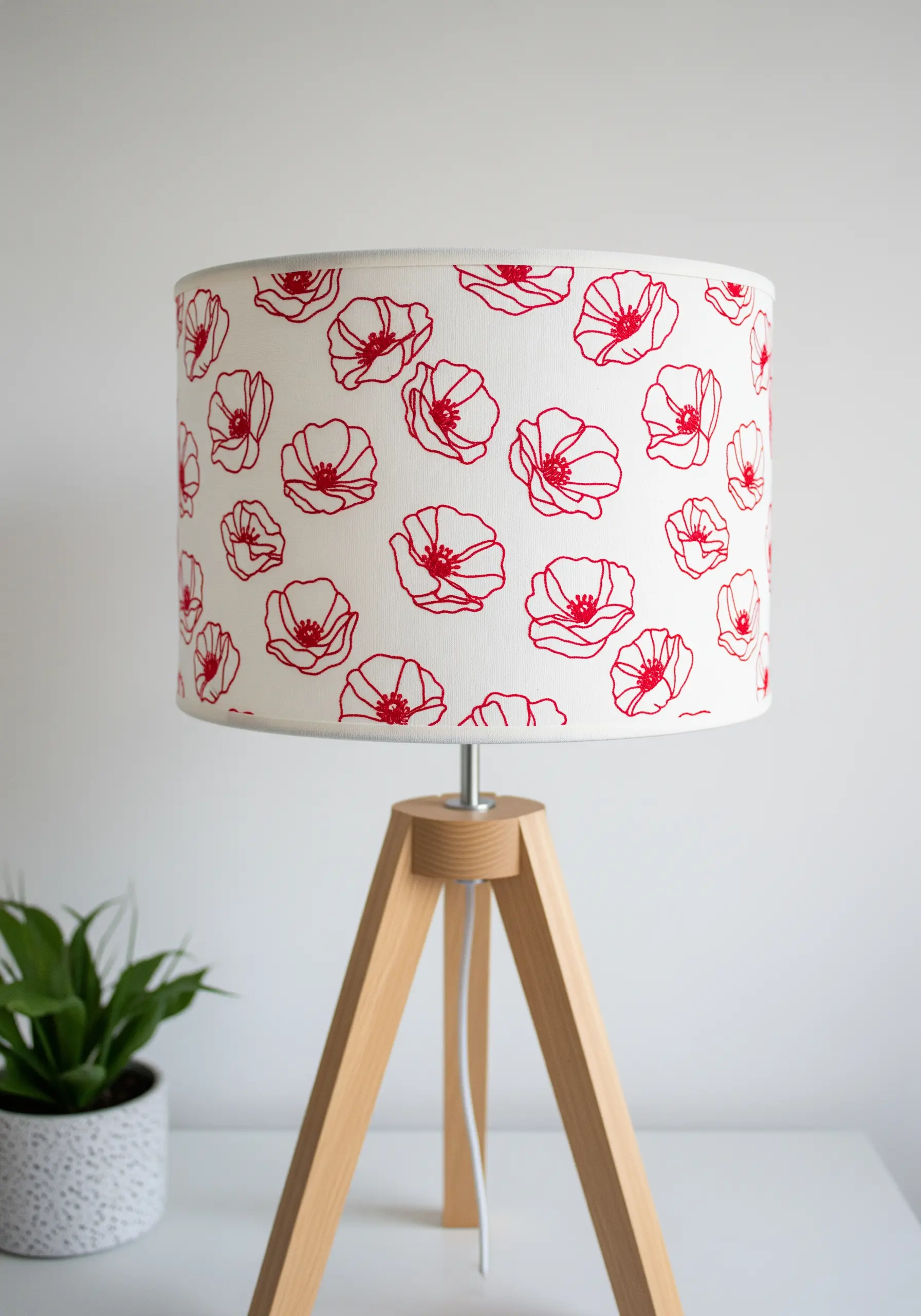
Elevate a simple lampshade by turning it into a piece of illuminated art with a repeating motif.
A simple, open line-art design is ideal, as it allows light to pass through and is easier to execute on a rigid, curved surface.
Choose a fabric-covered lampshade with a smooth weave.
Use a strong backstitch with three or four strands of floss to ensure the design is bold enough to be seen whether the light is on or off.
19. Create Perspective with Stitch Direction
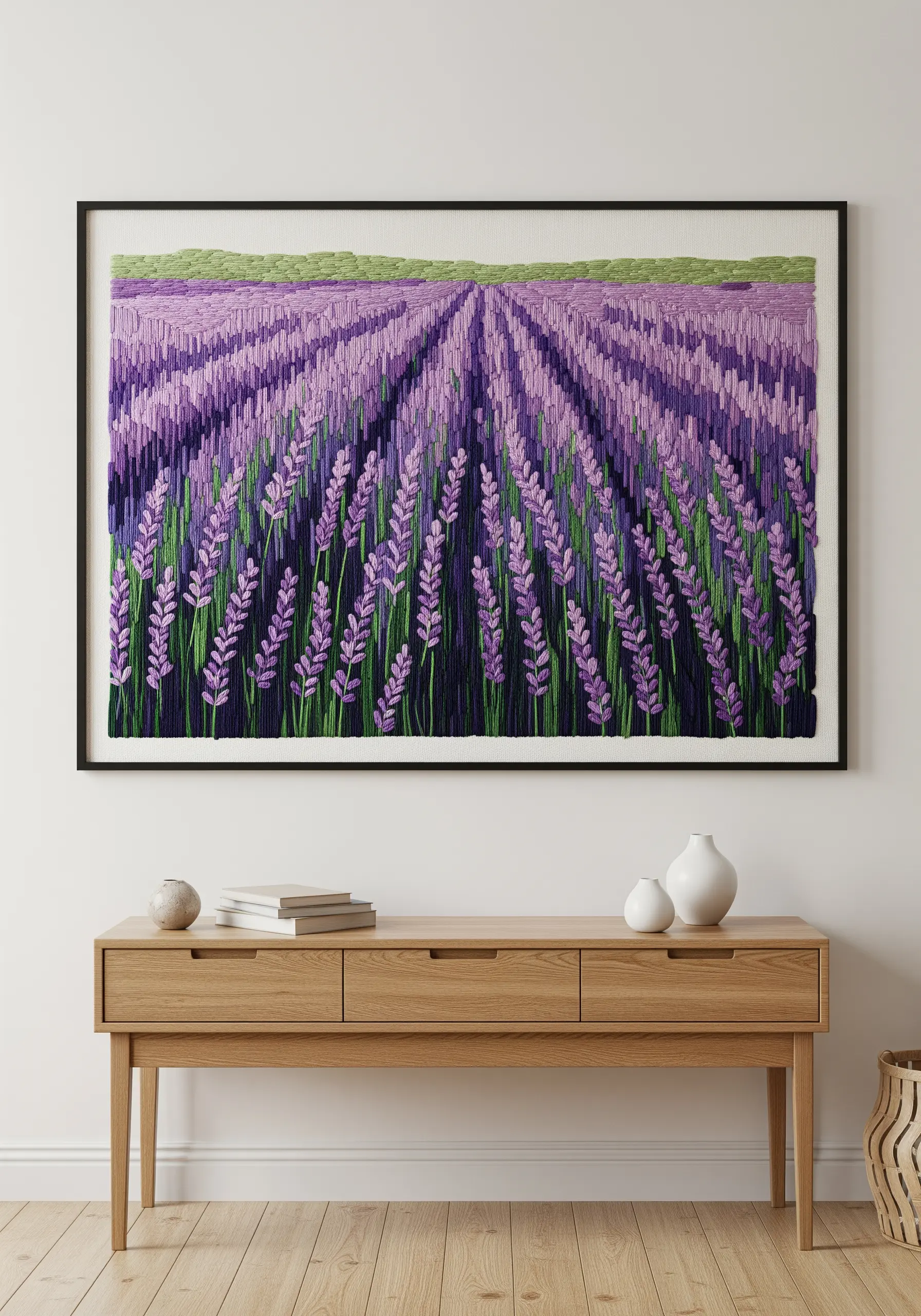
You can create a powerful illusion of depth and distance using nothing more than thread.
In this lavender field, the artist used vertical satin stitches placed in tight rows.
The stitches in the foreground are longer, stitched with brighter thread, and more defined.
As the rows recede, the stitches become shorter, less detailed, and use softer, hazier shades of purple.
This masterful control of stitch length and color is how you can paint a realistic landscape with thread.
20. Embrace the Simplicity of an Ink Drawing
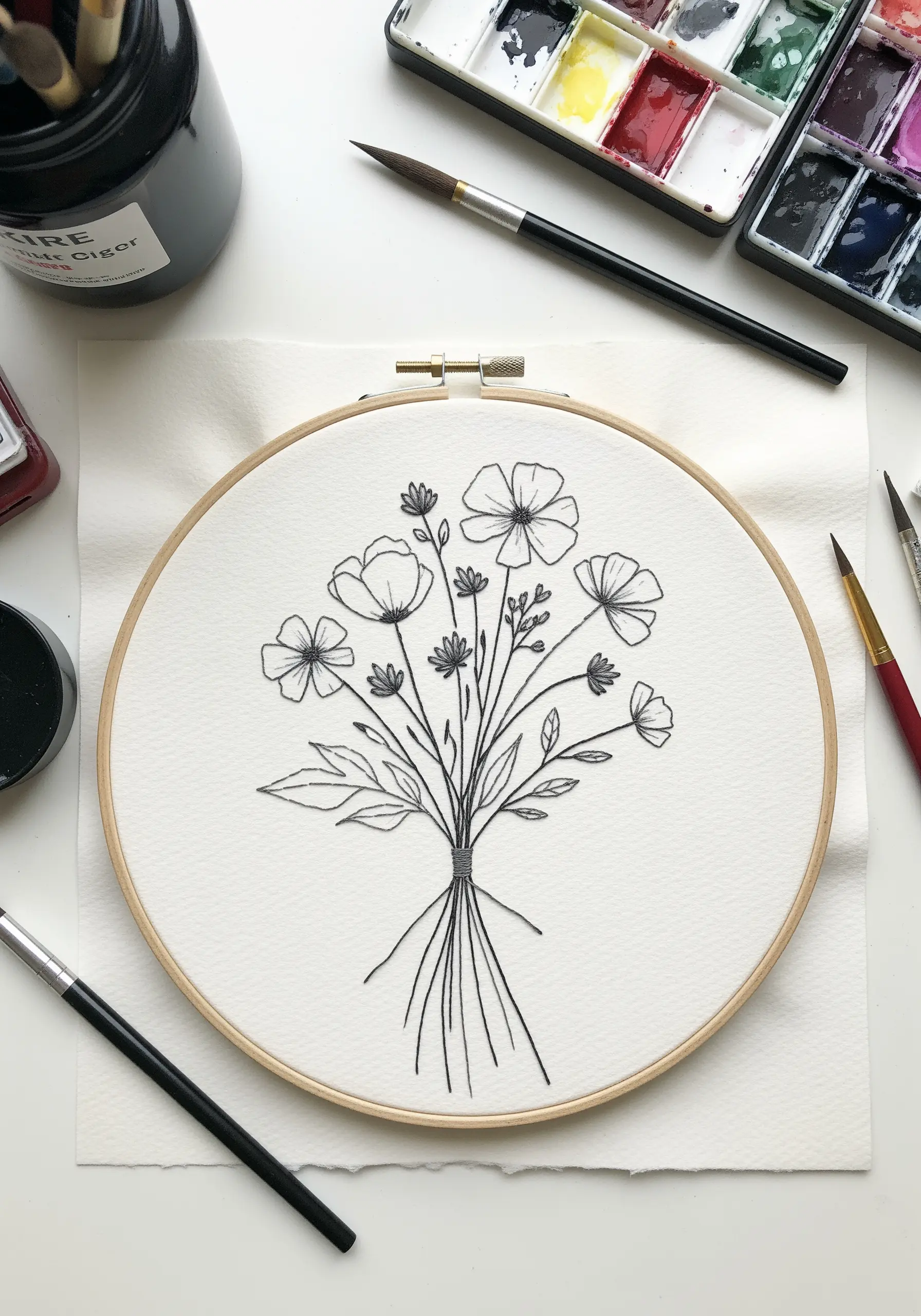
Capture the effortless charm of a sketchbook drawing by using a single strand of black thread on white fabric.
The goal is to create lines that look as fluid and expressive as ink.
Use a delicate backstitch or stem stitch, focusing on creating smooth curves and sharp points.
Don’t overwork the design; the beauty lies in its simplicity and the elegant interplay between the stark black lines and the clean white background.
This is one of the most impactful delicate line art embroidery ideas for a calm, artistic home.
21. Combine Beauty and Function in Kitchen Textiles
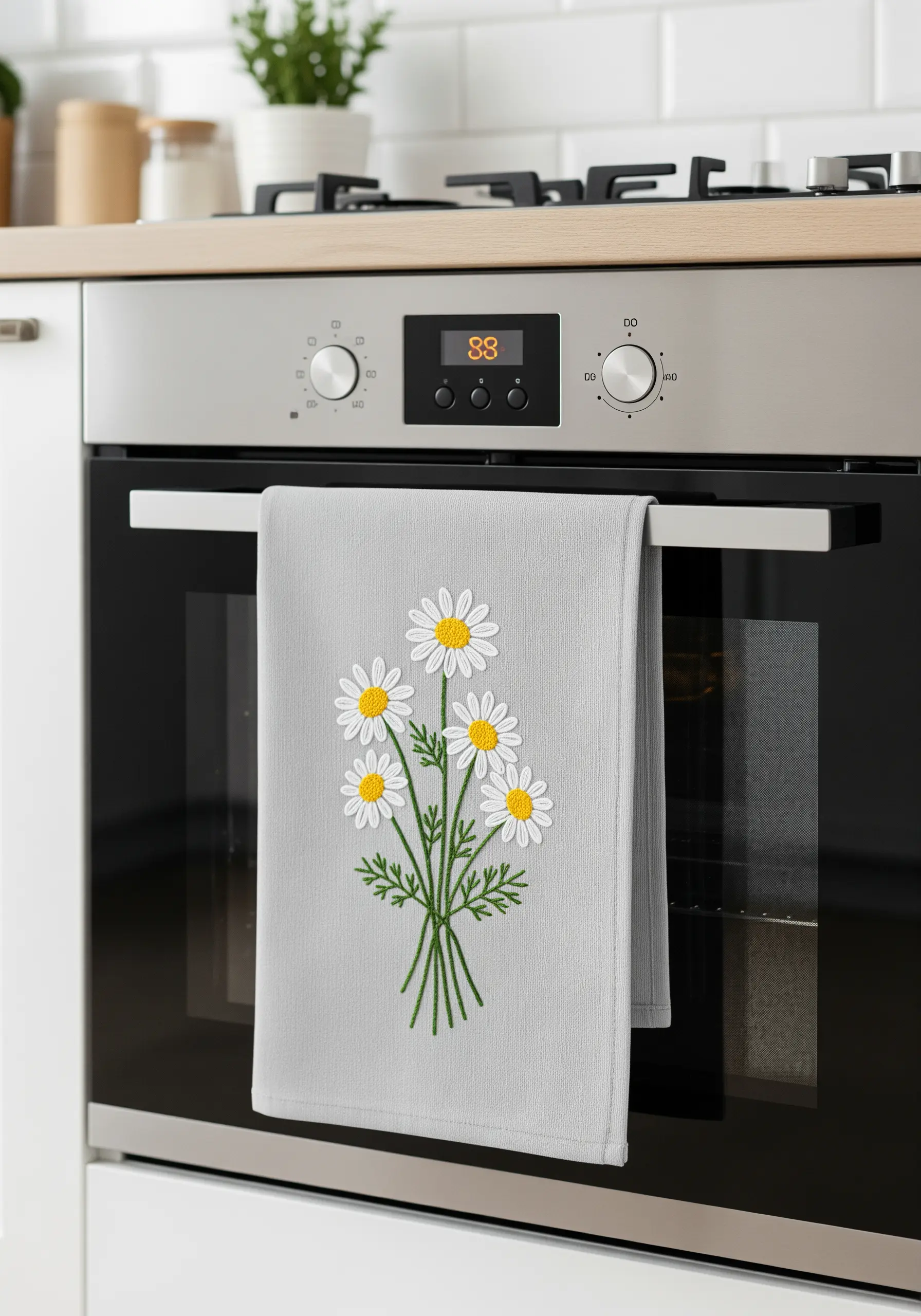
Embroidering everyday items like tea towels makes your home feel personal and thoughtfully curated.
When stitching items that will be frequently washed, always use high-quality, colorfast cotton floss to prevent bleeding or fading.
A simple design featuring satin stitch petals and French knot centers is both cheerful and durable.
Pre-washing your towel before stitching is a crucial step to prevent the fabric from shrinking around your finished embroidery later.
22. Create Ethereal Art on Sheer Fabric
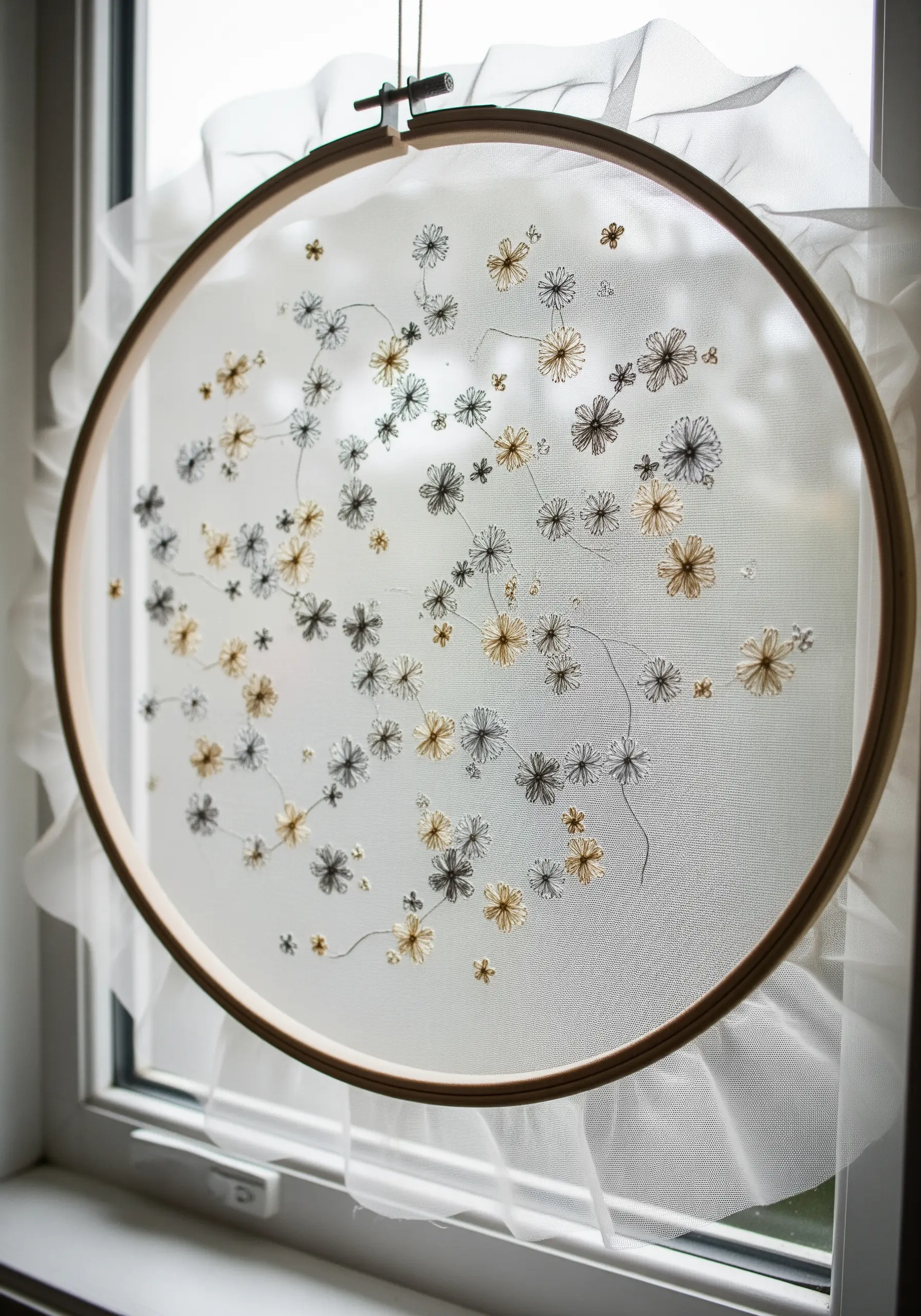
Stitching on a transparent fabric like organza or tulle creates a magical, floating effect, as if the flowers are suspended in air.
To do this, you must use a stabilizer.
Hoop your sheer fabric with a layer of water-soluble stabilizer; it will provide the support you need to stitch without puckering.
Once you are finished, simply rinse the piece in water, and the stabilizer will dissolve, leaving only your delicate stitches behind.
Keep your stitches small and light—lazy daisies and simple straight stitches work perfectly.