You have a deep appreciation for embroidery—for the rhythm of the needle and the way thread can bring an idea to life. But perhaps you feel ready to move your work beyond the fabric hoop, to explore new surfaces and create pieces with more dimension and narrative depth.
This is where the art of collage comes in. By combining paper, paint, and found objects with your stitches, you open up a world of expressive potential. Your thread is no longer just for decoration; it becomes a line that can draw, a texture that can sculpt, and a connection that can unify disparate elements into a cohesive, meaningful story.
These experiments are designed to be accessible, thoughtful, and inspiring. They are invitations to play with materials, to see how thread interacts with a torn paper edge or a glossy photograph, and to discover a new language for your creative voice. Let’s begin.
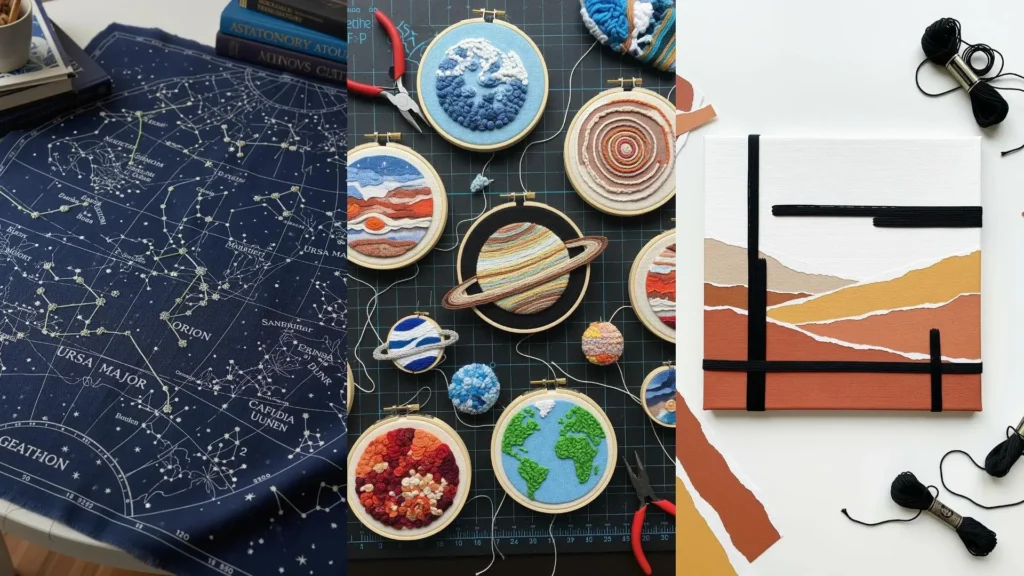
1. Celestial Cartography with Thread and Foil

Begin by layering your base materials: watercolor-painted paper, torn fragments of vintage maps, and a deep blue fabric for the night sky.
Use a single strand of metallic gold thread to stitch constellations with simple straight stitches, connecting pre-pierced points for clean lines on paper.
For the Milky Way, create a dense, textural cluster of French knots, varying the size and using a mix of white, cream, and pale gold threads to build depth and luminosity.
Finally, incorporate small pieces of silver foil or metallic paper, tucking them under other layers to add a subtle, light-catching element that enhances the celestial theme.
2. Botanical Pop-Up with Dimensional Stitches

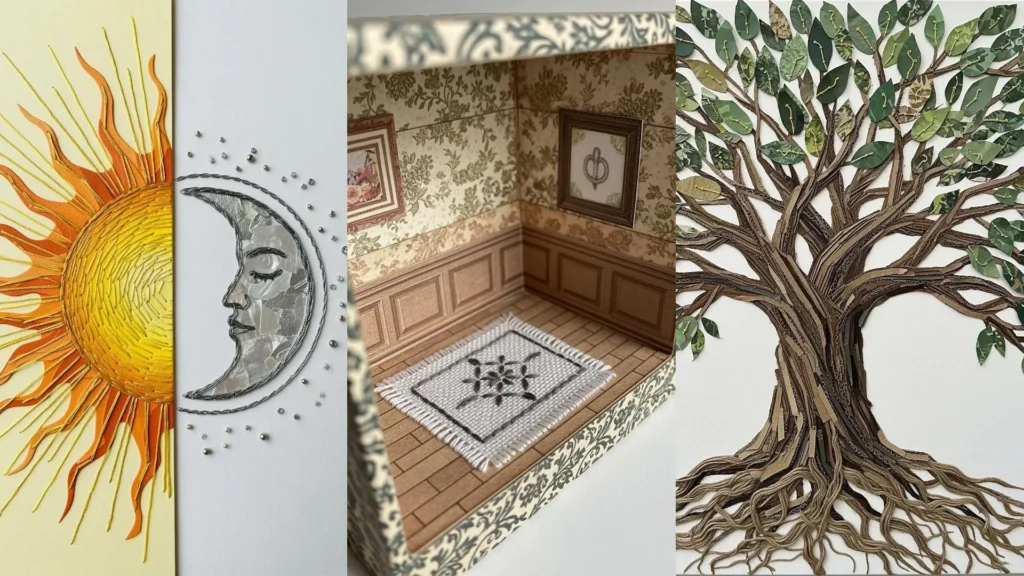
Create a dynamic composition by combining paper-cut leaves and petals with embroidery that extends beyond their edges.
Use a simple running stitch or backstitch to “draw” veins and stems, visually connecting the paper elements and grounding them in the composition.
Allow your threads to trail off the paper pieces onto the background, which blurs the boundary between materials and gives the artwork a sense of organic, uncontrolled growth.
This technique transforms a static arrangement into a piece that feels alive and actively growing.
3. Architectural Lines in Thread and Paper

First, arrange your geometric collage using a mix of papers with contrasting textures—like corrugated cardboard, speckled stock, and smooth, solid colors.
Once your paper base is set, overlay it with a thick cord or yarn to create a strong, structural grid.
This threaded grid acts as a unifying frame, bringing order to the varied shapes and surfaces beneath.
The bold, tactile line of the cord introduces a powerful visual tension that elevates a simple collage into a piece of considered, architectural art.
4. Fabric Appliqué with Painterly Stitchwork

Instead of stitching directly onto plain fabric, begin by creating your fox motif with fabric appliqué, cutting and layering colored fabric scraps to form the basic shape.
With the appliqué base in place, use directional satin stitches and long-and-short stitches to add fur texture, blending shades of orange, white, and rust to create a painterly effect.
This method allows you to build color and form quickly with fabric, then add refined, lifelike detail with thread.
Surround your central figure with delicate fern stitches to create a soft, botanical backdrop that complements the main subject.
5. Sculpting Waves with Fabric and Thread

Build a dynamic seascape triptych by layering torn strips of blue and white fabric, creating a base of color and movement.
To define the powerful crests of the waves, couch a thick blue yarn along their edges, which adds a strong, graphic outline and a sense of weight.
Create the seafoam by securing crumpled white tissue paper or fabric scraps with a dense texture of French knots and seed stitches.
This multi-material approach results in an incredibly tactile piece that captures the raw, energetic movement of the ocean.
6. A Portrait of Texture with Yarn and Lace

Create striking, dimensional hair in a portrait by using thick yarn instead of floss.
Couch multiple strands of yarn in varied neutral tones—brown, gray, taupe—to build up highlights, shadows, and realistic depth.
For even more texture, you can braid or twist the yarn sections before stitching them down to the paper base.
Juxtapose the heavy, rustic texture of the yarn with a delicate appliqué of fine lace for the collar, creating a beautiful and compelling contrast.
7. Intersecting Geometries in String and Foil

This is a modern interpretation of string art that relies on precision and material contrast.
Start with a base of layered paper circles using matte, metallic foil, and translucent vellum to play with light and reflection.
Carefully pierce holes along the circumference of the shapes and use a fine, strong thread to weave intersecting lines and parabolic curves between them.
The key to achieving crisp, clean geometric forms is maintaining consistent, taut tension in your thread throughout the process.
8. Jungle Foliage with Bold Thread Accents

Elevate simple paper-cut leaves by adding defining embroidered details that ground them in the composition.
Use a thick chain stitch or a padded satin stitch down the center of each leaf to create a raised, tactile vein that catches the eye.
For the flowers, a dense woven wheel stitch in a contrasting color provides a burst of texture that stands out against the flat paper background.
These stitched additions integrate the paper elements, making the entire piece feel cohesive and intentionally crafted.
9. Monochrome Narratives in Paper and Thread

Explore the power of pure texture by creating a composition entirely in white.
Layer different kinds of paper—crumpled, smooth, handmade, and torn—to create a subtle, varied base.
Use this layered canvas to build a sampler of textural stitches: dense clusters of French knots, neat rows of running stitches, buttonhole stitch wheels, and couched threads.
Working in monochrome forces the viewer to appreciate the interplay of light, shadow, and surface, resulting in a sophisticated and deeply engaging piece.
10. Crafting Greeting Cards with Stitched Accents

Add a touch of handmade elegance to paper-craft greeting cards with a simple stitched detail.
Before gluing your paper cutouts onto the card blank, use a backstitch or a running stitch to create a delicate border around their edges.
To ensure clean stitches without tearing, use a sharp, fine needle to gently pre-pierce the holes in the paper along your intended stitch line.
This small detail adds a thoughtful, textural quality that elevates your card from simple craft to a cherished keepsake.
11. An Autumnal Canvas for Future Stitches

Create a rich, layered foundation for your embroidery by collaging torn paper in a warm, autumnal palette.
This textured background becomes an inspiring canvas. You can add delicate veins to the skeleton leaves with a fine metallic thread to catch the light.
Consider adding clusters of French knots or colonial knots to represent fallen seeds, or use a wandering stem stitch to draw delicate branches that visually connect the paper elements.
The paper collage provides the color story; your stitches will provide the narrative and fine detail.
12. Charting Journeys with Needle and Thread

Personalize a vintage map by documenting your travels in thread.
Use a simple backstitch in a bold, contrasting color to trace the routes you’ve taken.
To highlight significant destinations or favorite cities, stitch a small, decorative motif like a woven wheel or a star stitch, which adds a raised, textural marker.
To prevent the paper from tearing, choose a sturdy map and consider mounting it onto a piece of fabric for extra support before you begin stitching.
13. Pop Art Portraits with Pointillist Stitching

Recreate the iconic Ben-Day dots of Pop Art by using French knots instead of ink.
After composing your bold, color-blocked paper portrait, fill in designated areas with a precise grid of uniform French knots.
This technique adds an unexpected and highly tactile dimension to the flat, graphic style, inviting the viewer to look closer.
For the most dramatic impact, use a high-contrast thread color—like bright red on clean white paper—to make the pattern pop.
14. Ethereal Botanicals on Translucent Layers

Create a delicate, light-filled composition by arranging pressed flower art on a sheet of lace paper or vellum.
Use a very fine thread—just one or two strands—to stitch a subtle, decorative frame around the botanicals.
A simple pattern of tiny lazy daisy stitches or a scalloped border adds a touch of elegance without overwhelming the fragile beauty of the flowers.
When this piece is backlit, the combined translucency of the paper, petals, and delicate thread creates a truly stunning, ethereal glow.
15. Visualizing Sound with Thread and Paper

Translate an abstract concept, like a sound wave, into a tangible, sculptural form.
Use layered strips of cardstock in varying shades to build the primary structure, representing the peaks and valleys of the wave.
Then, weave a continuous strand of thread through and around the paper architecture to represent the flow and frequency of the sound itself.
This technique allows you to transform invisible data into a dynamic, textural piece where the thread adds a sense of fluid movement and energy.
16. Illuminating a Cityscape with Threaded Fireworks

Bring a static paper cityscape to life by adding the explosive energy of embroidered fireworks.
Create the bursts using straight stitches of varying lengths radiating from a central point.
To make the display more dynamic, use a mix of colors and incorporate a metallic or satin floss that will catch the light and create a realistic shimmer.
This simple stitching technique instantly injects movement and celebration into your collage, contrasting beautifully with the dark paper sky.
17. Weaving Memories with Photos, Paper, and Thread

Use embroidery to create a powerful emotional and visual link within a narrative collage.
Stitch directly onto a vintage photograph to highlight a relationship or draw focus, as with the simple, poignant red heart shown here.
Allow the thread to travel across the different paper elements of your collage—ticket stubs, patterned papers, handwritten notes—to visually and thematically unify the entire story.
A simple running stitch can act as a literal and figurative thread, guiding the viewer’s eye through your collection of memories.
18. Coastal Textures with Rope, Gauze, and Netting

Step beyond embroidery floss and incorporate heavier, more unconventional materials to build texture.
Use thick jute rope, couched securely onto a painted paper or canvas background, to create bold, sculptural forms like these crosses.
Layer different fabrics like cheesecloth, medical gauze, and fishing net to evoke a raw, coastal atmosphere.
This experiment is less about precise stitches and more about building a tactile landscape through the interplay of rough, organic surfaces.
19. Sculptural Food Art with Coiled Rope

Create a playful and compelling 3D illusion by incorporating real-world textures into your art.
Use a thick, soft cotton rope to represent noodles, coiling and looping it on top of a printed or painted illustration of a bowl.
Secure the rope with a few strategically hidden stitches or a strong, clear-drying craft glue.
The surprising contrast between the flat image and the sculptural, tactile rope makes the artwork pop off the page in a delightful way.
20. Embellishing Fashion with Beadwork and Ribbon

Transform a simple fashion illustration into a piece of wearable art, right on the page.
Use silk ribbon embroidery to create lush, dimensional flowers, employing stitches like the ribbon stitch and French knot for realistic petals and centers.
Fill the bodice of the gown with a dense layer of tiny seed beads, bugle beads, and pearls to simulate a richly textured, corseted effect.
This approach is a perfect way to practice and showcase high-end embellishment techniques on a small, manageable scale.
21. A Desert Sunset in Torn Paper and Thread

Capture the soft, blended colors of a desert landscape by using layers of torn paper in sunset hues.
The organic, feathered edges of the torn paper create a painterly base for your stitch work.
Then, introduce embroidery to add sharp, graphic details that contrast with the soft background.
A bold satin-stitched sun provides a strong focal point, while simple straight stitches define the crop rows and cactus spines, adding a final layer of refined detail.
22. A Sampler of Stitches on Textural Paper

Create a personal reference library of stitches and textures by working on a gridded sampler.
Divide a page into squares and fill each one with a different type of paper: crumpled kraft paper, handmade cotton paper, smooth cardstock, or vellum.
In each square, practice a different stitch—like whipped backstitch spirals, gridded seed stitches, or woven bars—to see how it behaves on that specific surface.
This exercise is an invaluable way to understand how paper texture affects your threadwork and will expand your creative possibilities.