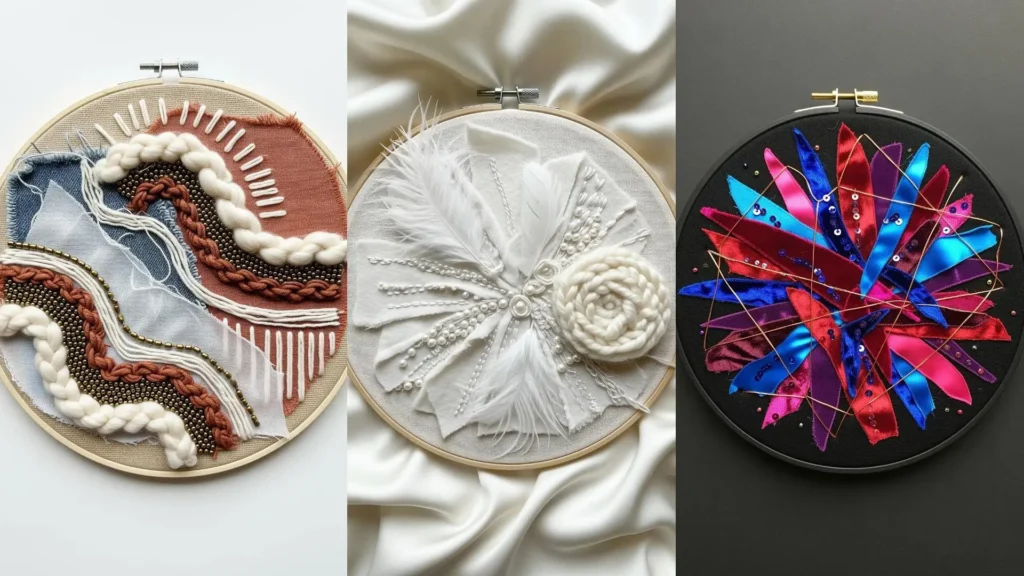
Before you thread your next needle, I want you to look at your linen differently. It isn’t just a background for your stitches; it’s a canvas for light, texture, and quiet intention. The space you leave empty is just as powerful as the areas you fill.
Minimalist design isn’t about doing less; it’s about making every single stitch count. It’s choosing the right thread weight to create a bold line, angling your satin stitch to mimic the way a leaf catches the sun, or using a single, continuous contour to capture a feeling.
These ideas are invitations to slow down and focus on the details that elevate a simple craft into art. You don’t need complex patterns or a hundred colors. You just need to trust your eye, embrace the texture of the thread, and allow each stitch to have a purpose.
1. Blend Appliqué and Stitch for Bold Focus
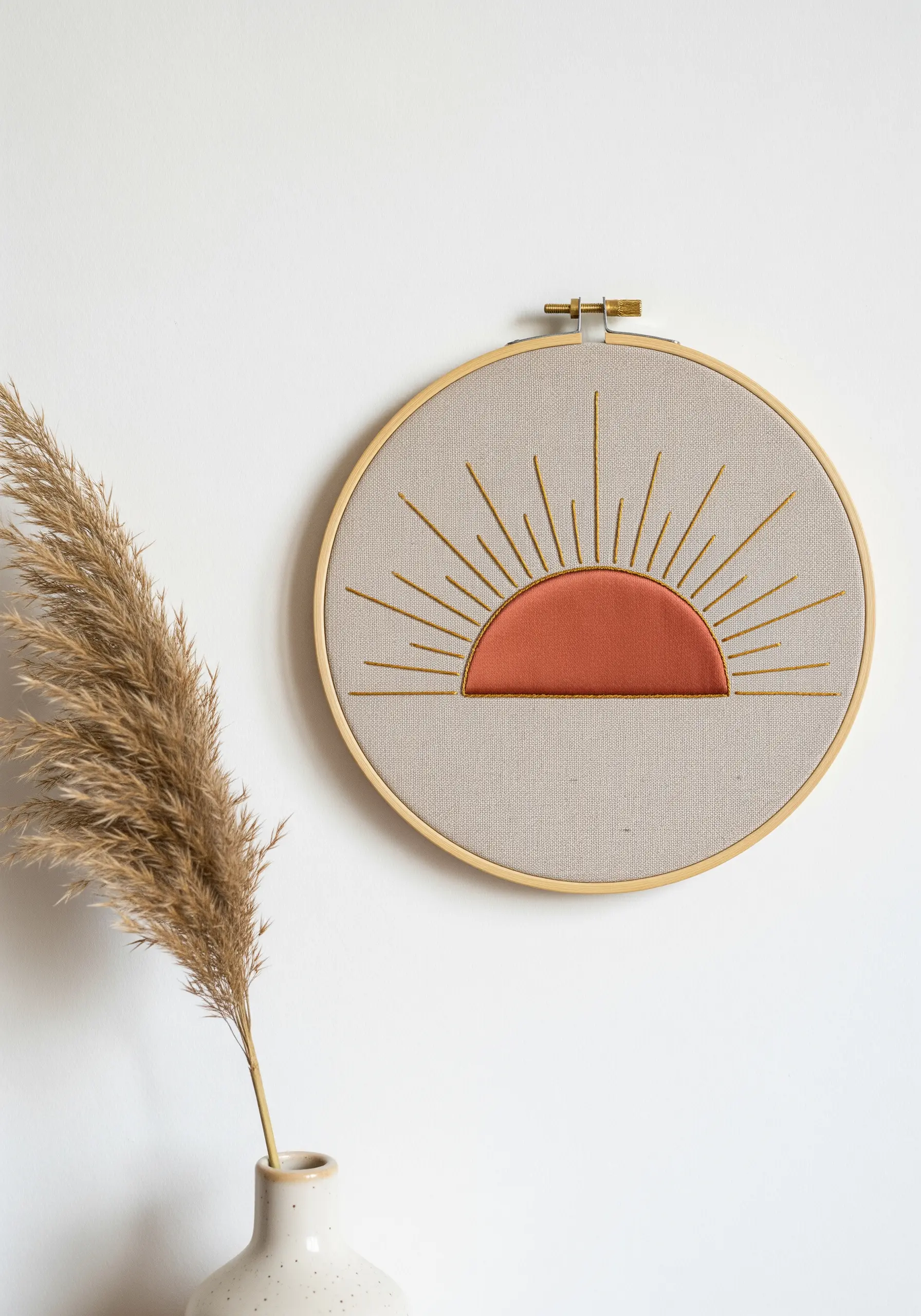
Combine fabric appliqué with simple line work to create a powerful focal point that feels both graphic and tactile.
First, cut your central shape from a non-fraying fabric like felt or wool blend, then secure it to the linen with a few hidden stitches.
The appliqué provides a block of solid, saturated color that contrasts beautifully with the delicacy of the stitched sun rays.
Finish with radiating straight stitches using a metallic or silk thread to catch the light, turning a simple motif into a sophisticated piece of minimalist embroidery wall art.
2. Weave Architectural Lines with Thread
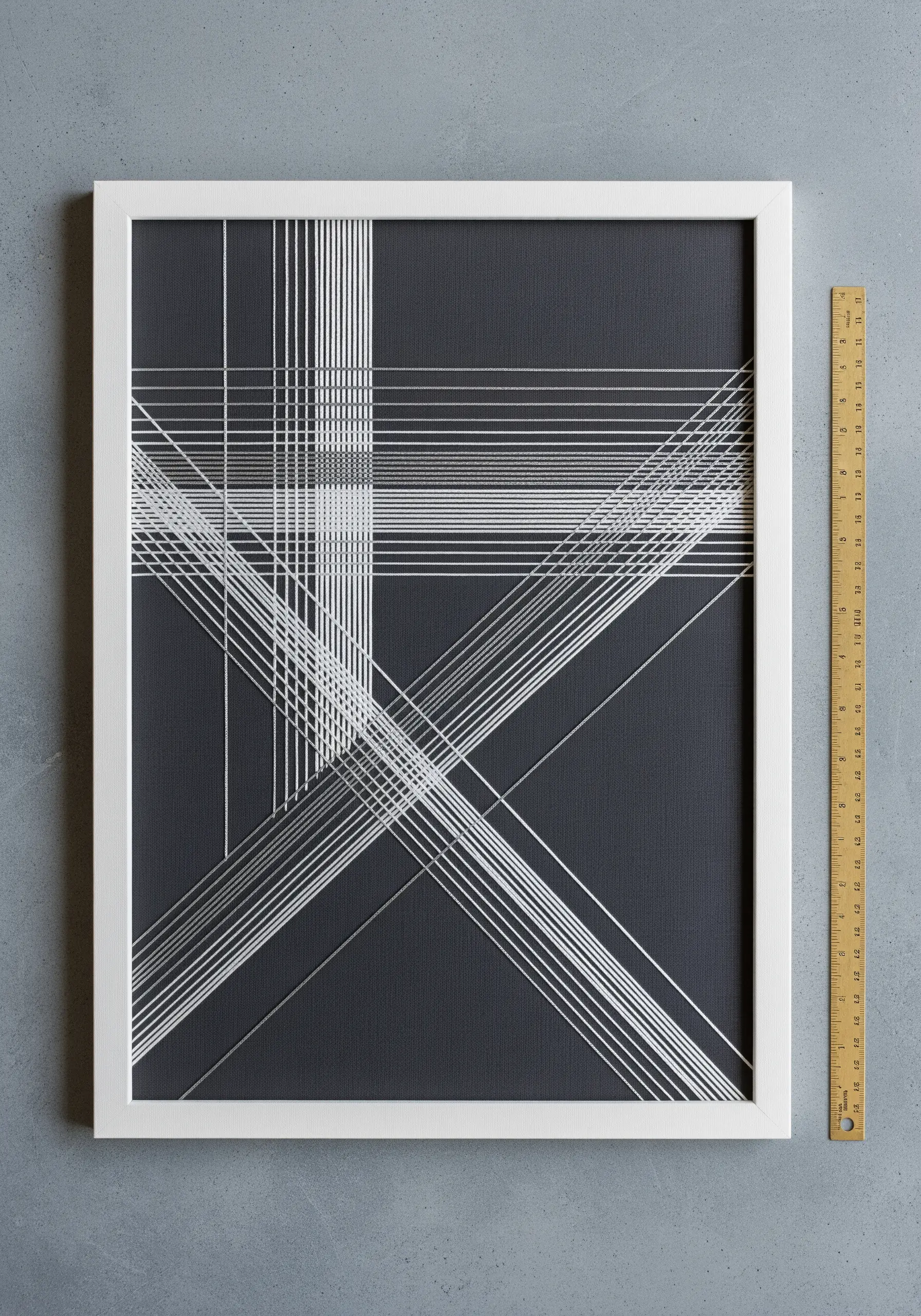
Transform a simple framed canvas into a loom for creating sharp, geometric compositions reminiscent of string art.
Instead of stitching through the fabric, you’ll stretch a single, continuous thread between pins or nails placed along the frame’s edges.
This technique is all about precision and tension; use a strong, smooth thread like pearl cotton that won’t sag over time.
The overlapping lines create an illusion of depth and transparency, proving that embroidery doesn’t always have to pierce the fabric to make an impact.
3. Master the Expressive Single-Line Contour
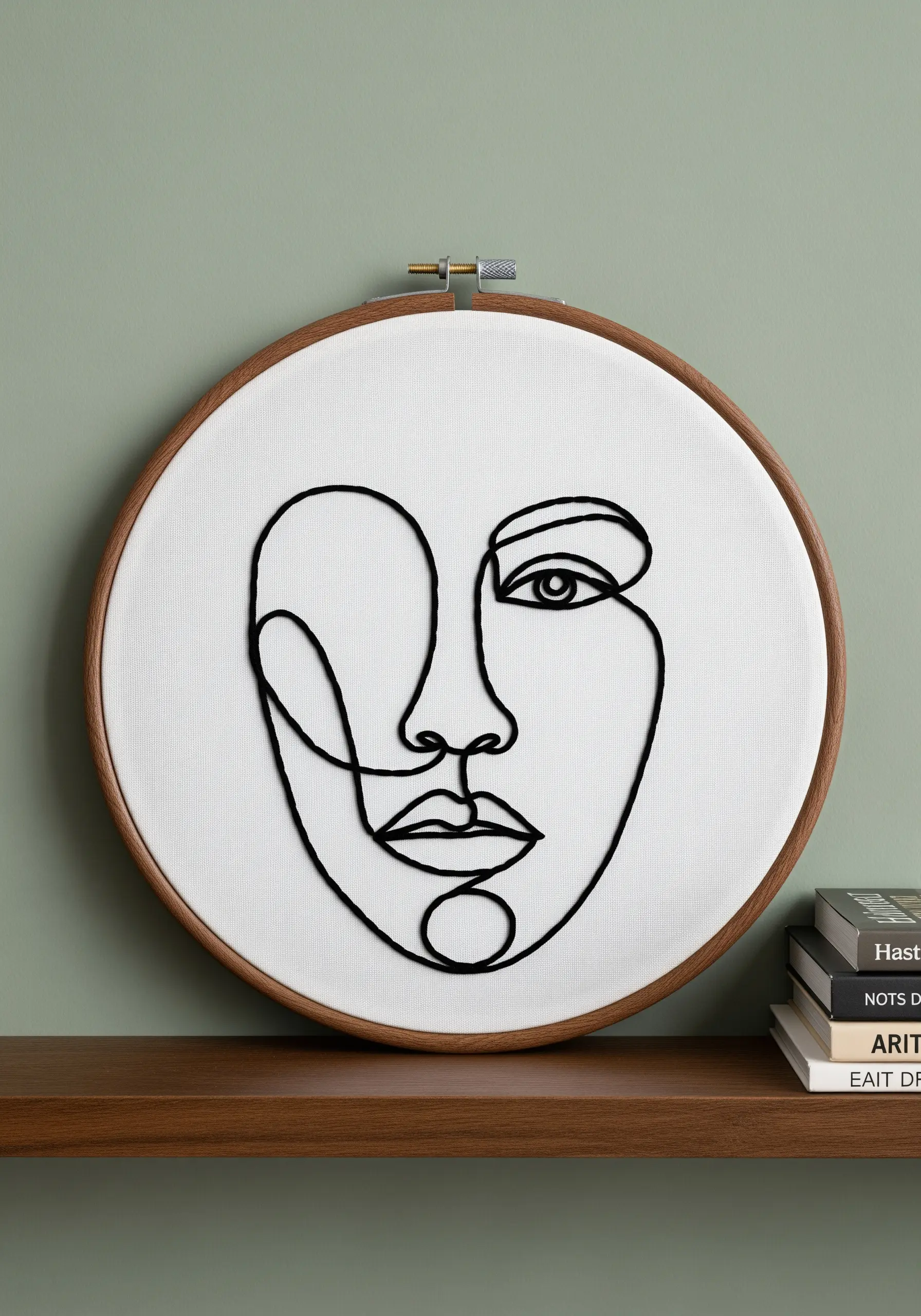
Capture the essence of a subject with a single, unbroken line to create fluid and modern artwork.
To achieve this bold, graphic look, couch a thick yarn or cord onto the fabric with a finer, matching thread—this gives you perfect control over sharp curves and angles.
Alternatively, use all six strands of embroidery floss with a steady whipped backstitch to create a smooth, raised line that has substance and presence.
This technique elevates a simple sketch into an intentional piece of art that can capture emotion in a single stroke.
4. Sculpt a Monochromatic Tactile Landscape
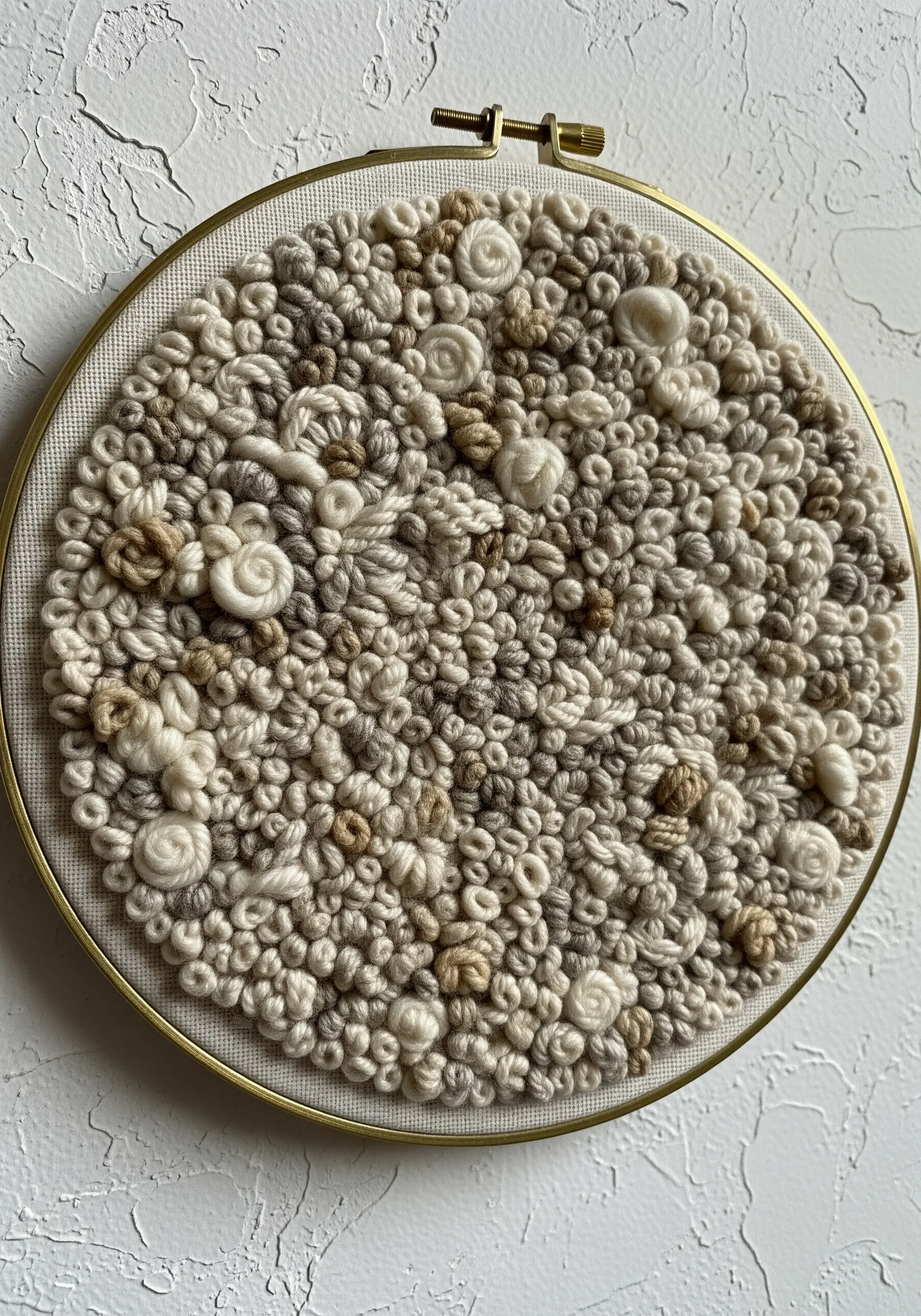
Move beyond flat stitches and build a surface rich with dimension using a limited color palette.
Combine French knots, bullion knots, and woven wheel stitches using threads of varying weights, from fine cotton floss to chunky wool yarn.
The key is to cluster your stitches densely, varying their height and texture to create an organic, coral-like topography.
Working with neutral thread on linen ensures the focus remains entirely on the intricate, sculptural forms you create.
5. Use Directional Satin Stitch for Botanical Form
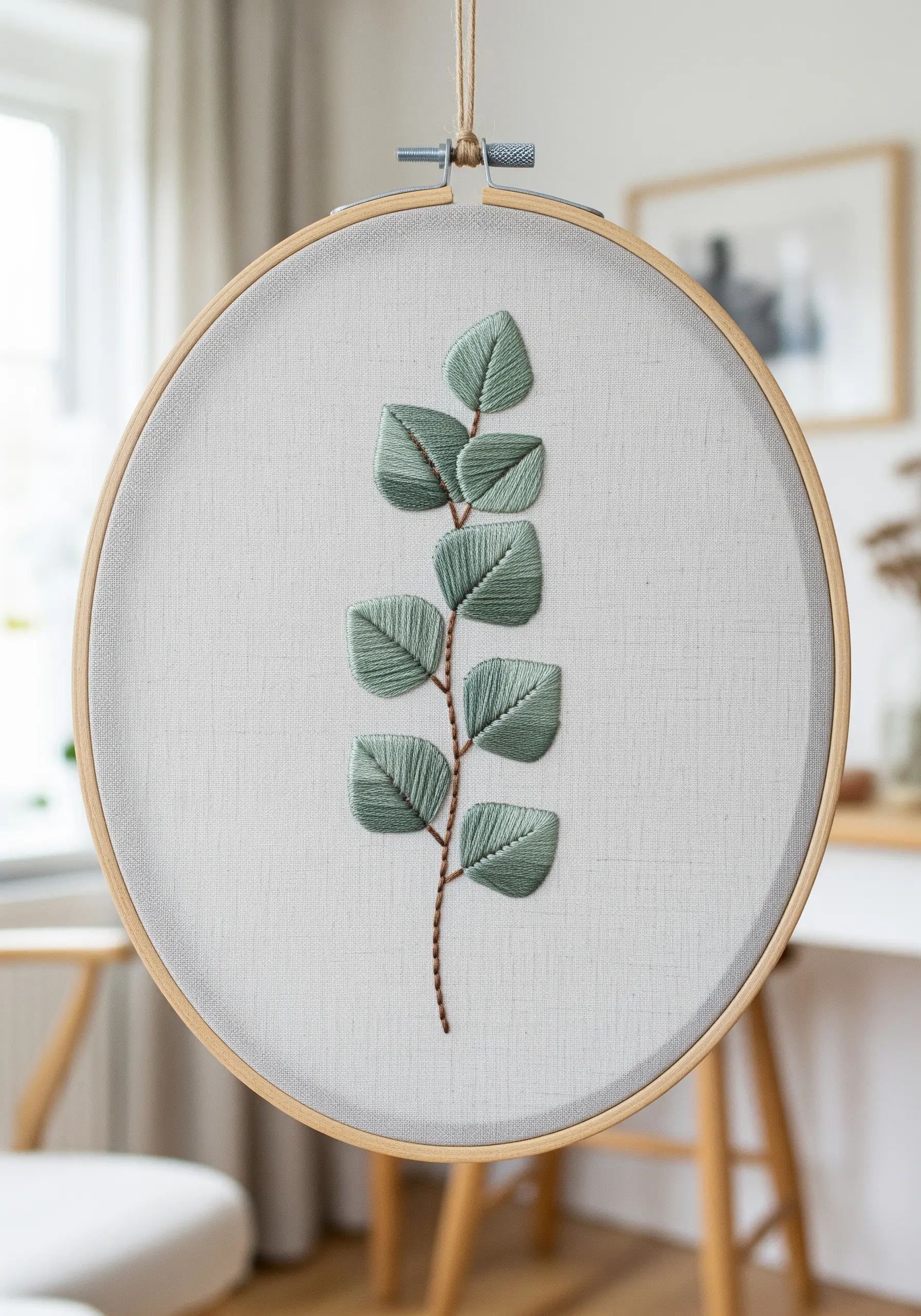
Give your botanical motifs a realistic, light-reflecting quality by carefully directing your satin stitches.
Instead of filling a leaf with flat, horizontal stitches, angle them to follow its natural centerline and veining, as if each stitch is a cell of the plant.
This simple adjustment creates an illusion of movement and dimension that makes the foliage feel alive.
Pair this technique with a crisp split stitch for the stem to ground your design, resulting in clean, modern floral embroidery that feels both organic and polished.
6. Define Space with Minimalist Line Art
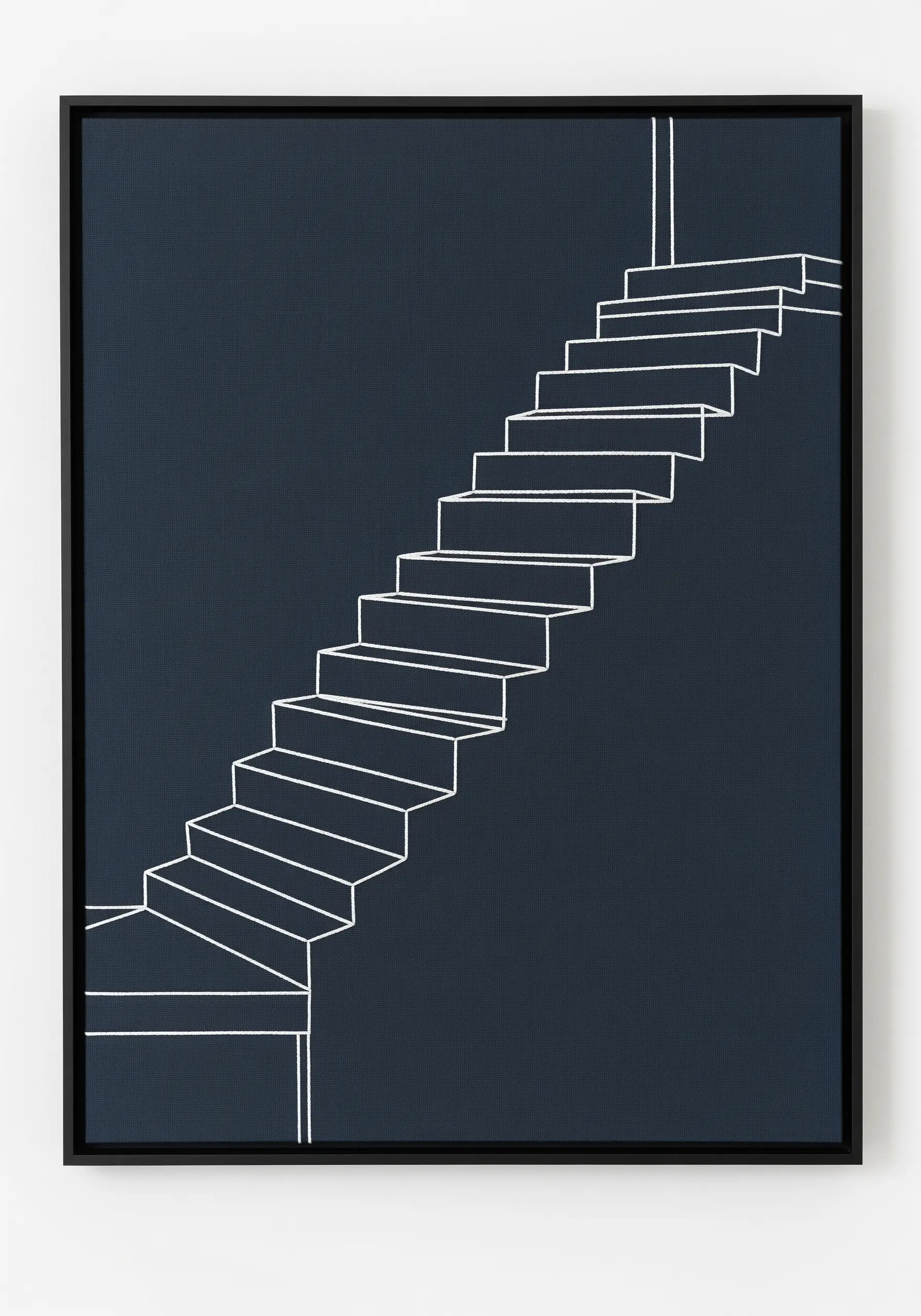
Embrace the power of negative space by using a single, high-contrast thread to outline architectural forms.
A simple backstitch is all you need, but your focus must be on absolute consistency in stitch length and tension to achieve that clean, graphic finish.
Stitching on a dark, tightly woven canvas makes a fine white thread pop, turning the unstitched fabric into an integral part of the composition.
This approach transforms a simple drawing into a sophisticated statement on form and perspective.
7. Create Movement with Abstract Color Blocking
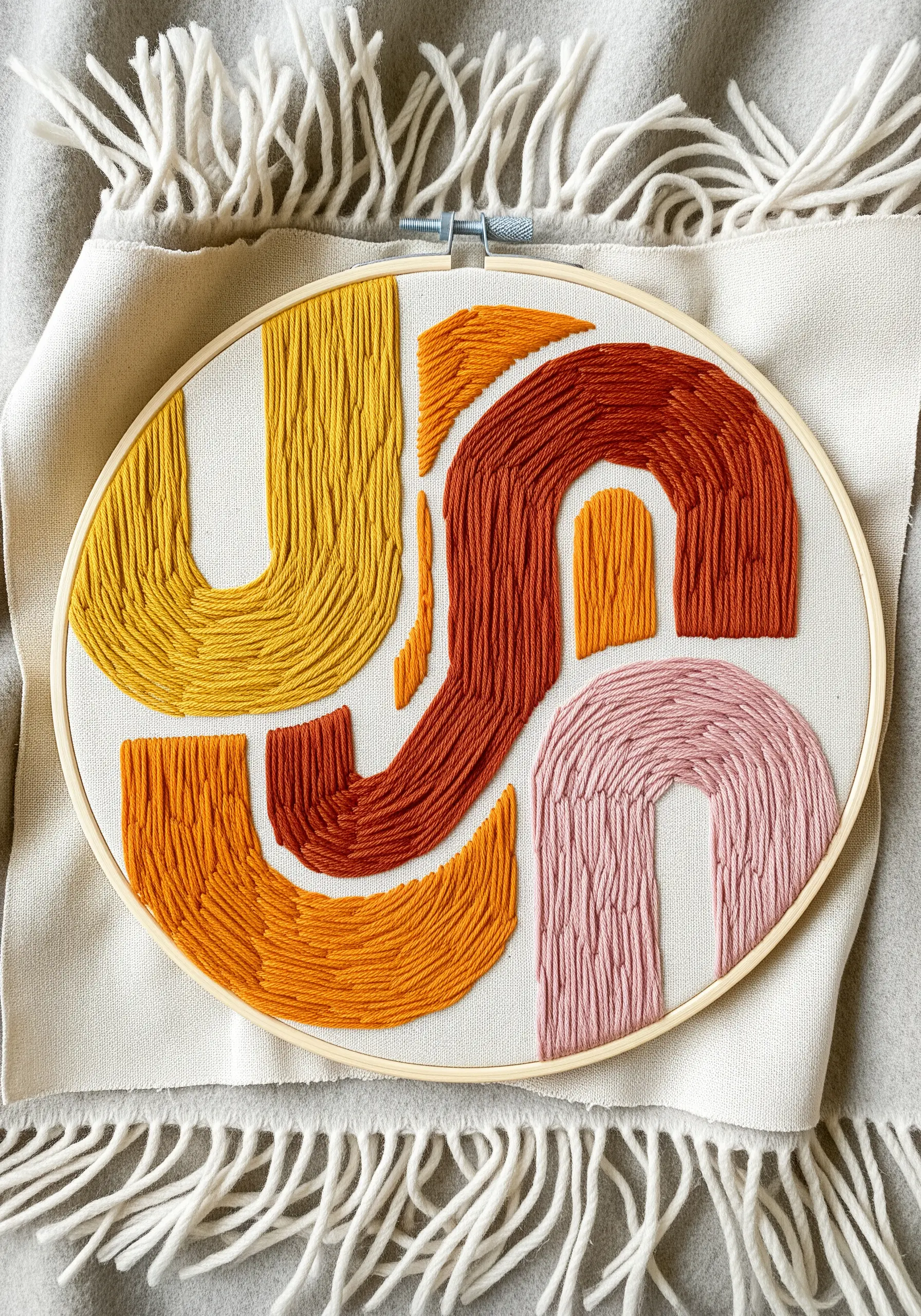
Fill abstract shapes with satin stitch, but treat each color block as an opportunity for texture and direction.
Instead of stitching everything horizontally, change the angle of your stitches for each shape—vertical, diagonal, or curved.
This subtle shift creates a dynamic surface where light reflects differently off each block, adding rhythm and life to the composition.
Using an analogous color palette—colors that sit next to each other on the color wheel—ensures the final piece feels cohesive and harmonious, not chaotic.
8. Frame a Delicate Motif with Dense Texture
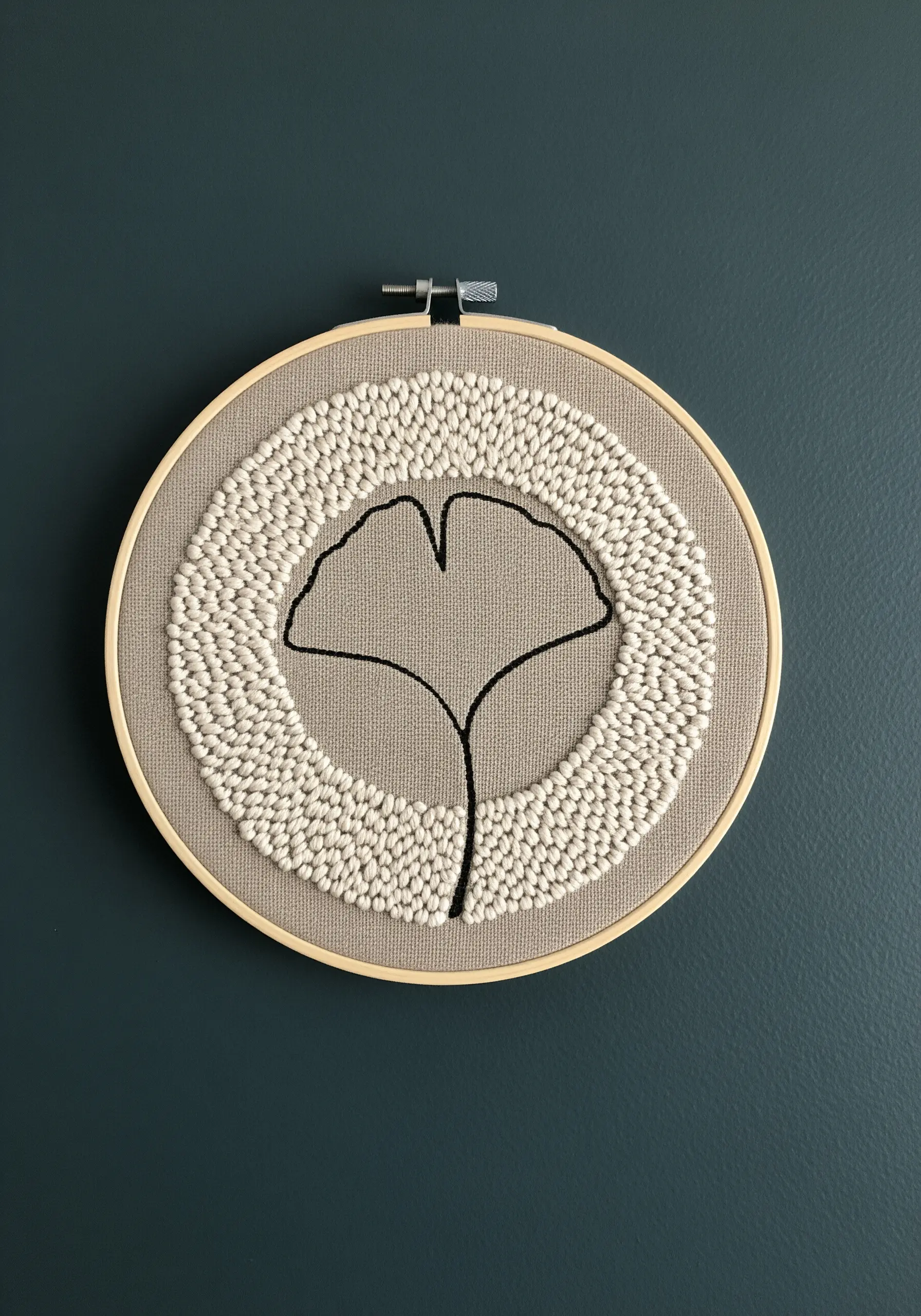
Make a simple line drawing stand out by surrounding it with a field of rich, uniform texture.
Use a single strand of black floss and a backstitch to create your central ginkgo leaf, keeping the lines clean and sharp.
Then, fill the surrounding circular frame with hundreds of tightly packed seed stitches or French knots in a neutral color like ivory or beige.
This textural contrast acts as a visual spotlight, drawing the eye directly to the delicate form at the center and giving the piece a refined, balanced feel.
9. Stitch the Night Sky with Star Stitches
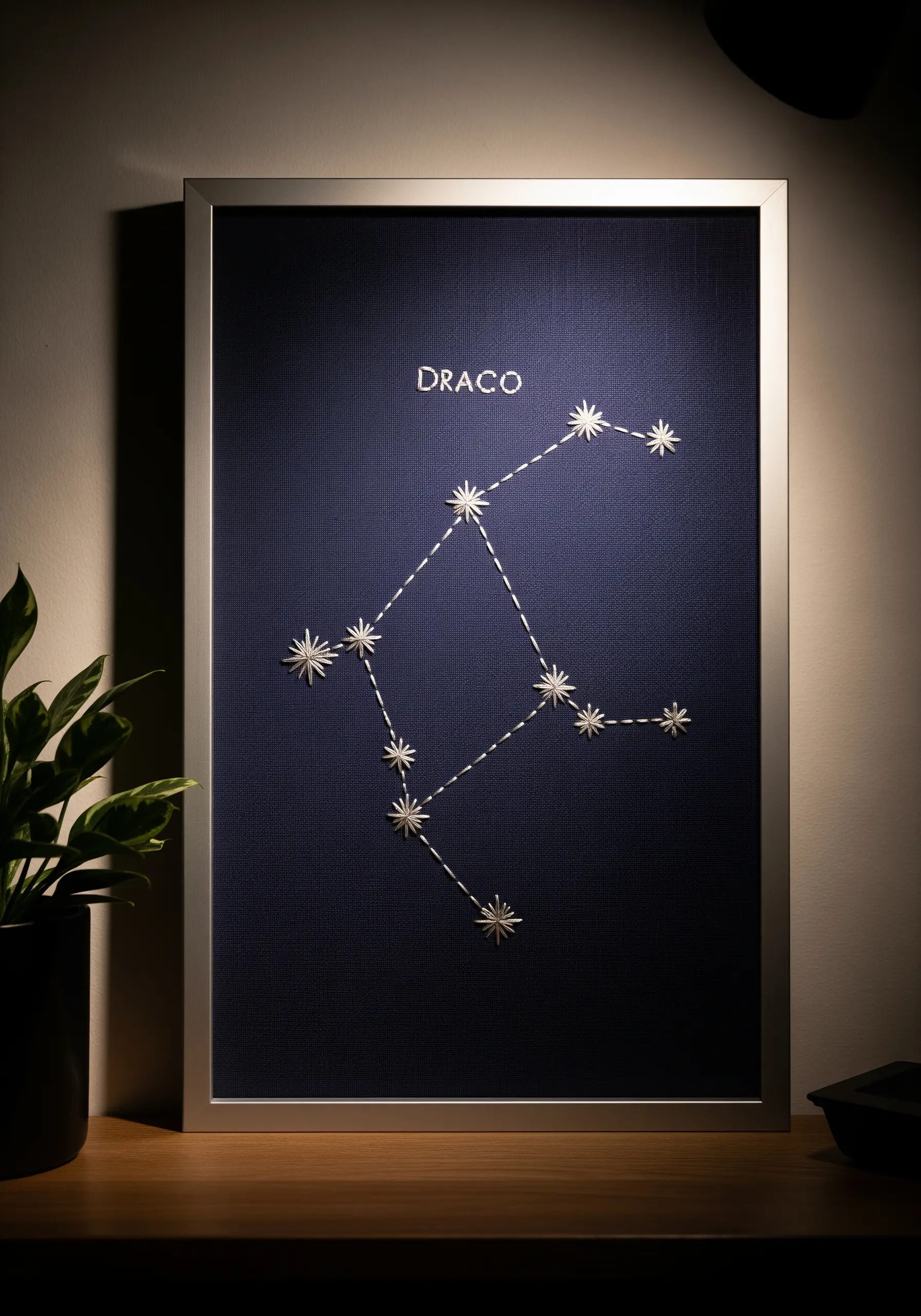
Recreate a constellation map on dark linen for a piece of personalized, celestial art.
Use a bright white or metallic silver thread for maximum contrast. Mark the star positions first, then create each one using a star stitch or a series of four to six straight stitches radiating from a central point.
Vary the size of your stars slightly to mimic the natural variation in their brightness.
Connect them with a simple, delicate backstitch to complete the constellation, creating a piece of wall art that is both personal and cosmic.
10. Paint with Thread Using Running Stitch Gradients
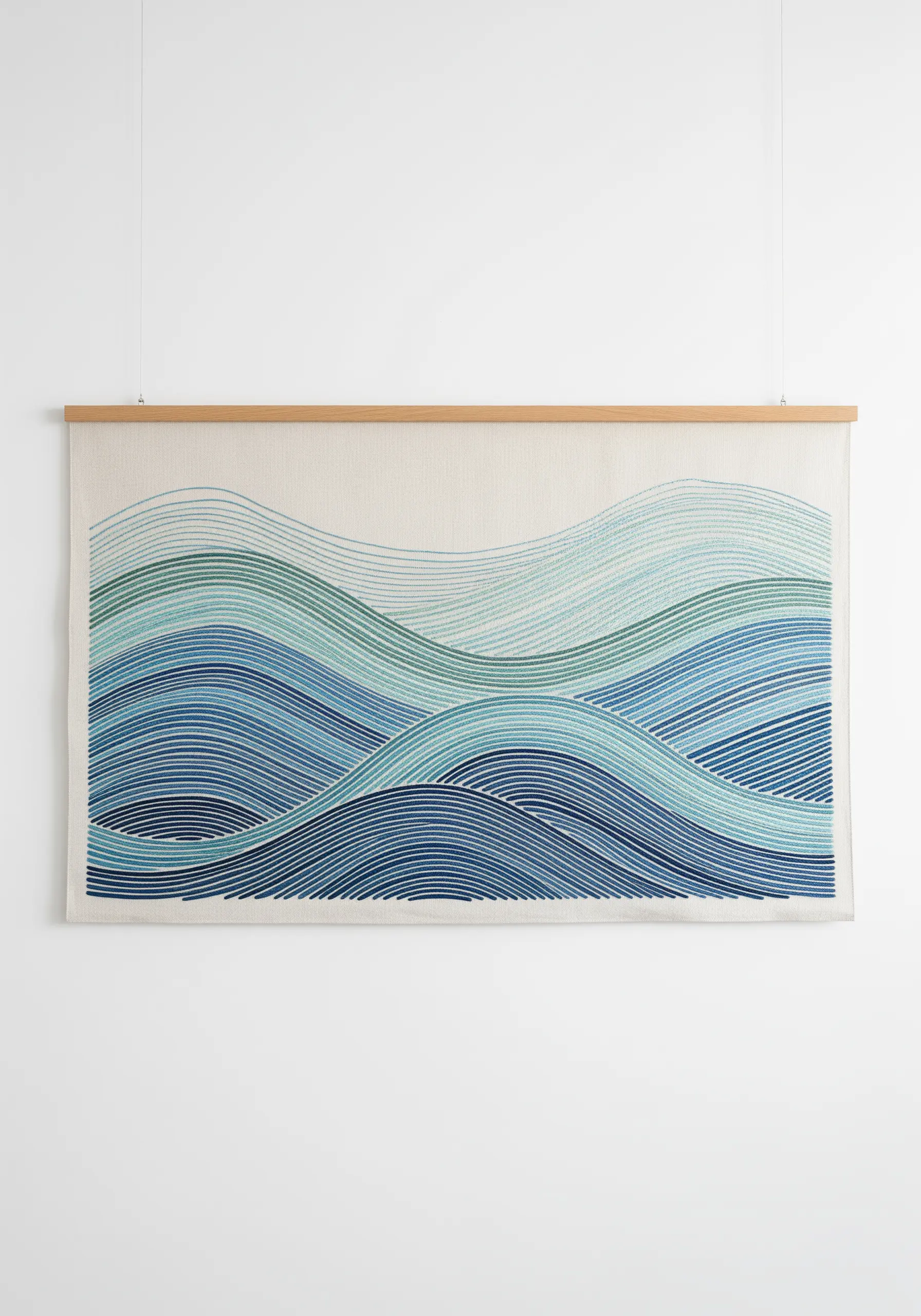
Create sweeping, painterly landscapes using one of the simplest stitches: the running stitch.
This technique relies on building up layers of color. Work in rows, using different shades of thread to create a smooth, blended gradient that mimics the movement of water or rolling hills.
The density of your stitches controls the saturation of the color—closer stitches create a bolder hue, while spaced-out stitches appear more transparent.
It’s a meditative method perfect for large-scale pieces like wall hangings, where the overall effect is breathtaking.
11. Compose a Balanced Study of Mini Motifs
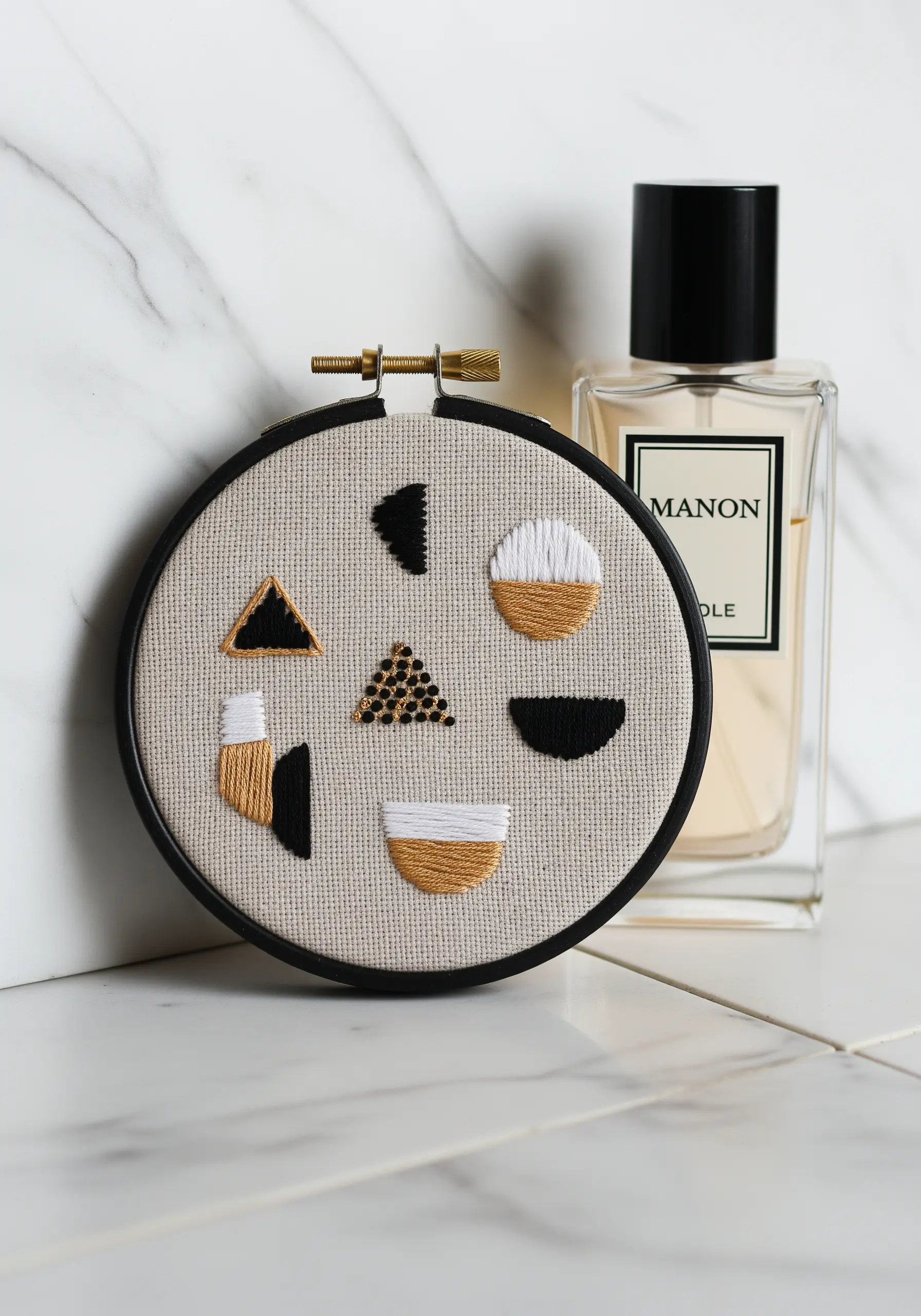
Practice composition and texture on a small scale by creating a balanced arrangement of geometric ‘doodles’.
Treat your hoop as a canvas for a collection of tiny shapes, each filled with a distinct stitch or color combination.
Combine satin stitch blocks, clusters of French knots, and simple line work in a cohesive palette of three or four colors.
This approach allows you to explore different techniques without committing to a large project, resulting in a chic, sampler-style piece of art.
12. Embrace Imperfection with Kintsugi-Inspired Stitches
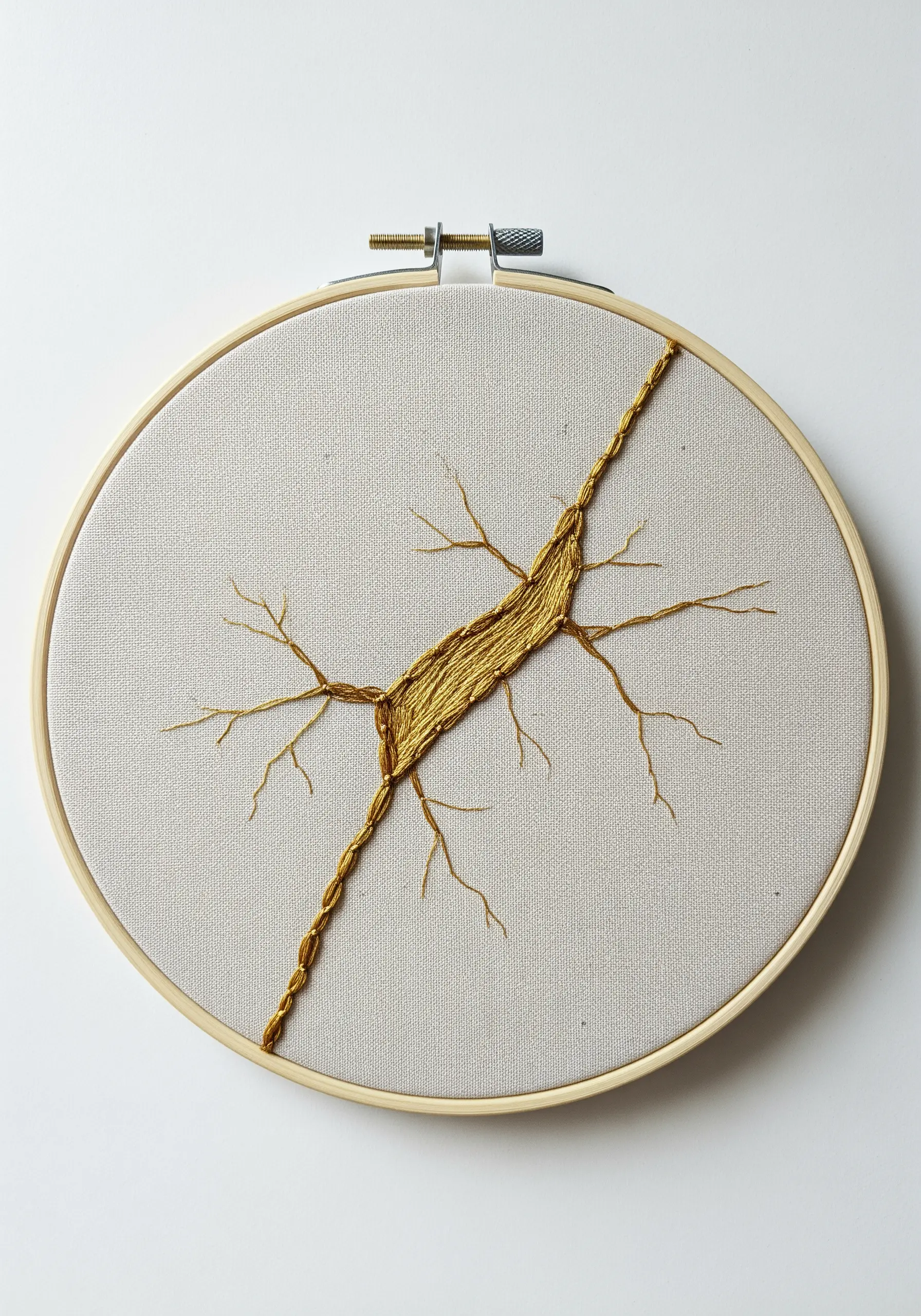
Translate the Japanese art of repairing broken pottery with gold—Kintsugi—into your embroidery.
Use a shimmering gold metallic thread to fill an abstract ‘crack’ in your fabric, celebrating the idea of healing and beauty in imperfection.
Create the main fissure with a textured stitch like a whipped backstitch or a slightly irregular satin stitch, then extend delicate, single-thread ‘veins’ outwards.
These abstract metallic thread projects turn a simple linen surface into a profound story.
13. Add Dimension with Layered Canvases
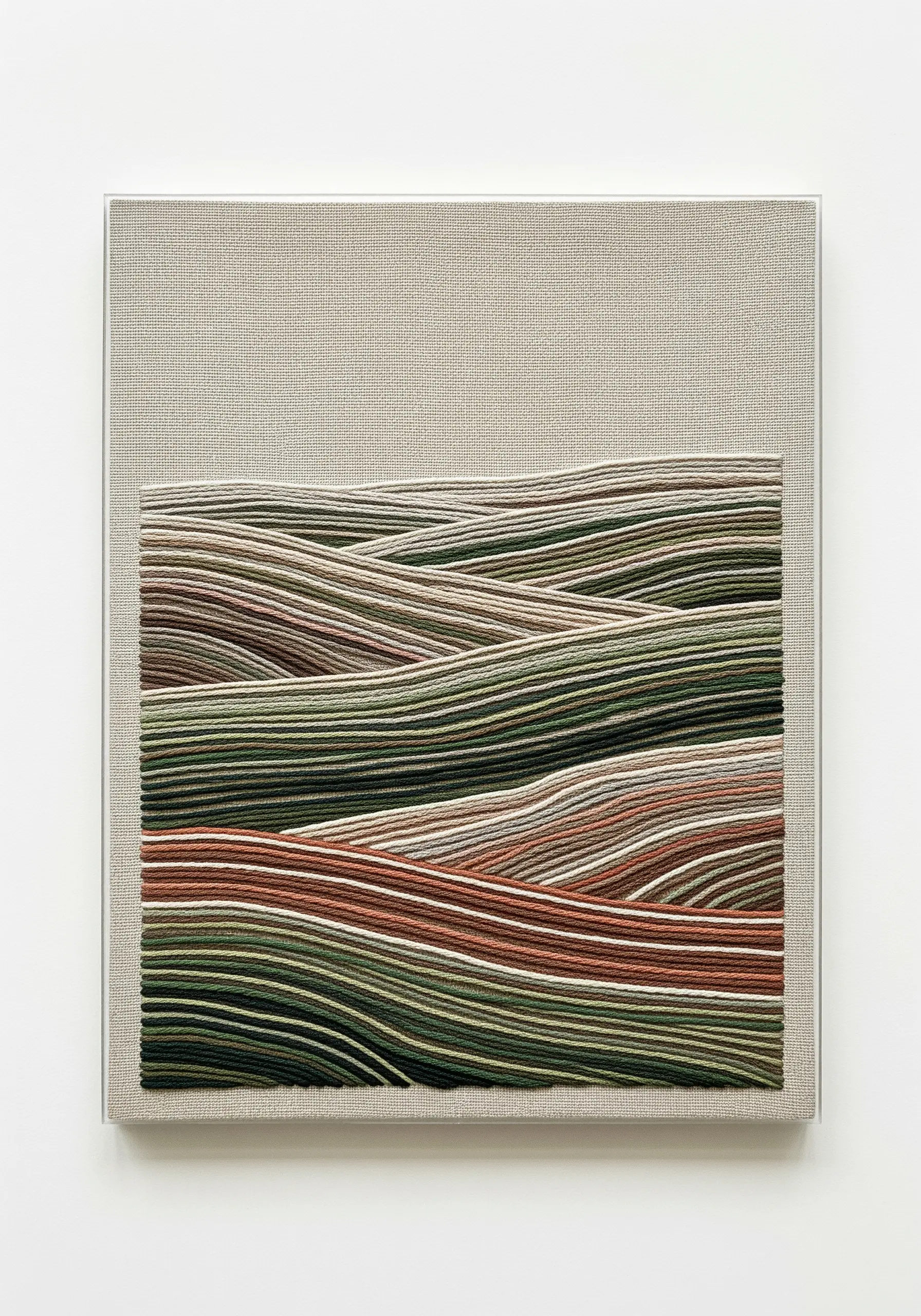
Elevate your embroidery by stitching on one piece of fabric and then mounting it onto a larger, fabric-wrapped canvas.
This creates a clean, intentional border and a subtle three-dimensional effect that makes the stitched portion appear to float.
Embroider your landscape of rolling hills using simple backstitches in an earthy, variegated thread for natural color shifts.
The final presentation feels less like a craft project and more like a piece of contemporary gallery art.
14. Create Painterly Strokes with Thick Fibers
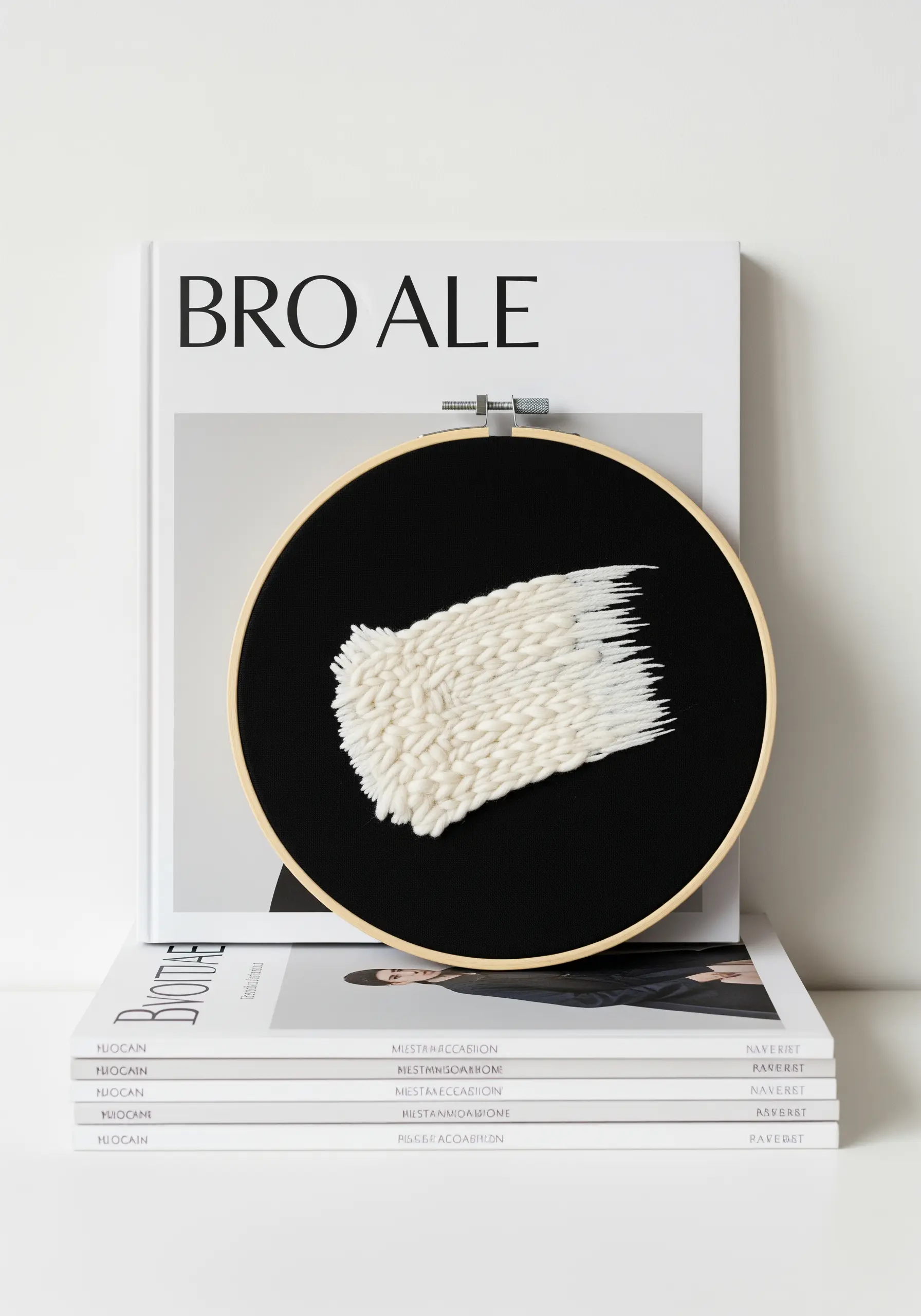
Make a bold, expressive statement by treating thick yarn or wool roving as if it were paint.
Use a punch needle or couch thick fibers onto a dark background to create a single, dramatic brushstroke.
The high contrast between a creamy white fiber and black fabric ensures the texture is the star of the show.
Leave the ends of the fiber loose and untrimmed on one side to create a raw, dynamic edge that enhances the sense of movement.
15. Explore Primary Colors and Directional Fills
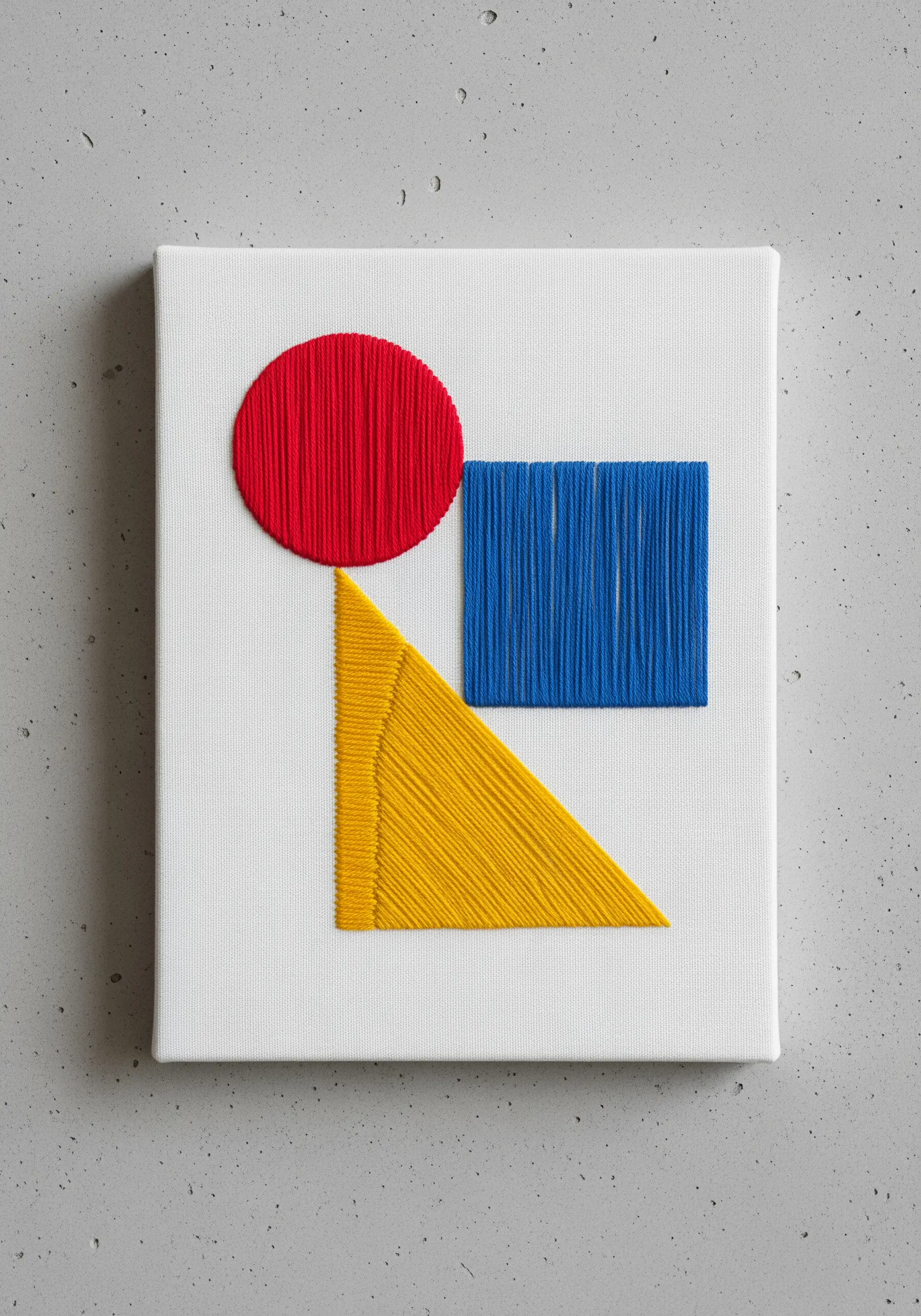
Revisit Bauhaus principles with a simple composition of primary-colored geometric shapes.
Fill each shape—circle, square, triangle—with long, straight stitches, but assign a different direction to each color.
Let the red stitches run vertically, the blue horizontally, and the yellow diagonally. This simple rule creates a subtle visual tension and structure that makes the composition feel deliberate and architectural.
These modern geometric thread art ideas prove that simplicity can have a powerful impact.
16. Capture Lightness on Sheer Fabric
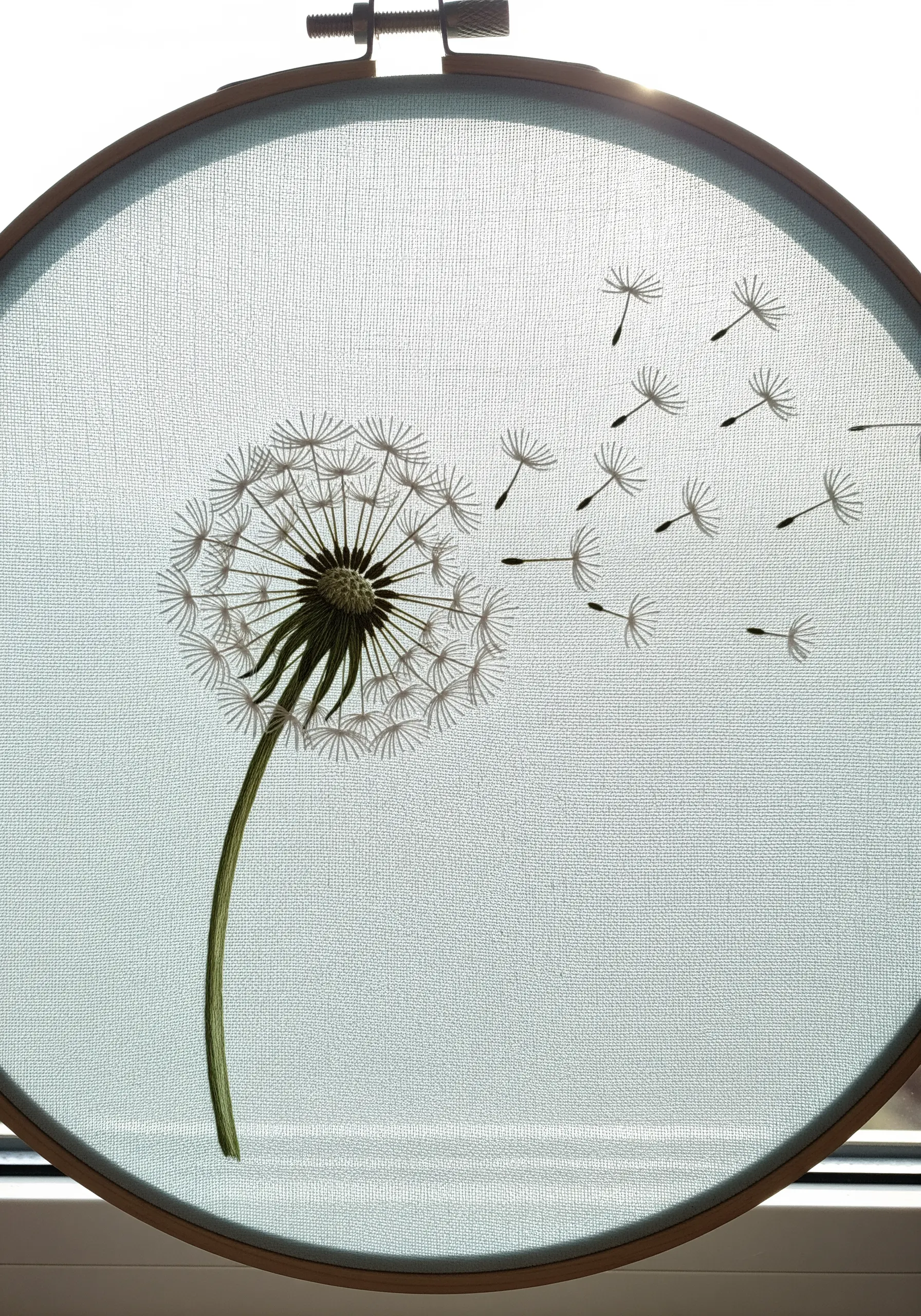
Choose organza or voile as your base to create ethereal designs that seem to float in the air.
The transparent nature of the fabric allows light to filter through, making it an essential element of the final piece.
Use single strands of floss for delicate details like dandelion seeds, which will appear to drift weightlessly.
When displayed against a window, the design comes alive, casting subtle shadows and interacting with the changing daylight.
17. Design a Cohesive Abstract Triptych
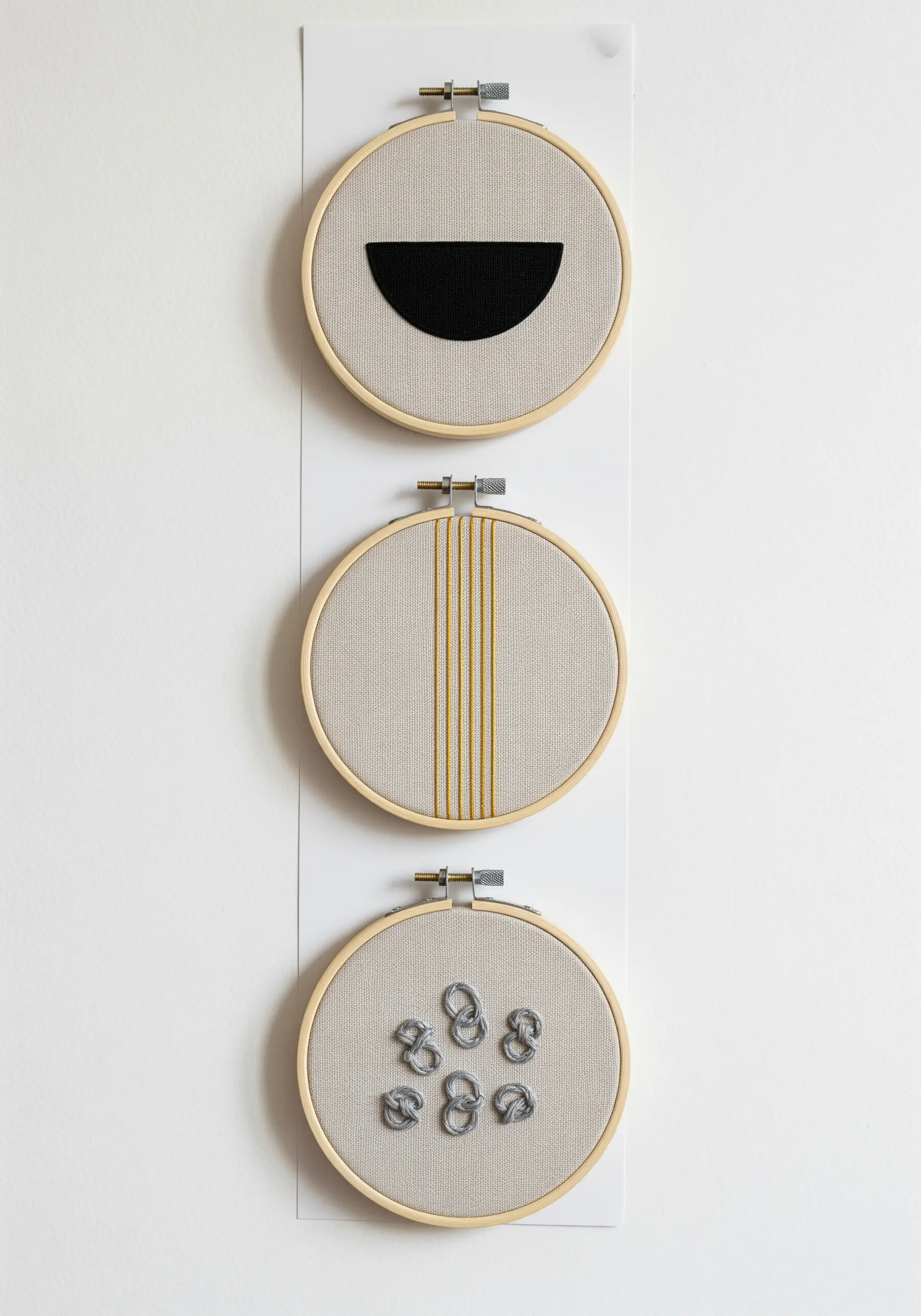
Tell a bigger story by creating a series of three small hoops that work together as a single piece of art.
To ensure they feel connected, use a consistent color palette and fabric across all three, but vary the abstract motif in each one.
This allows you to explore variations on a theme—lines, shapes, and textures—while creating a composition that has more presence on a wall than a single hoop.
It’s a smart way to fill a larger wall space with minimal stitching and maximum impact.
18. Trace Organic Patterns with Topographic Lines
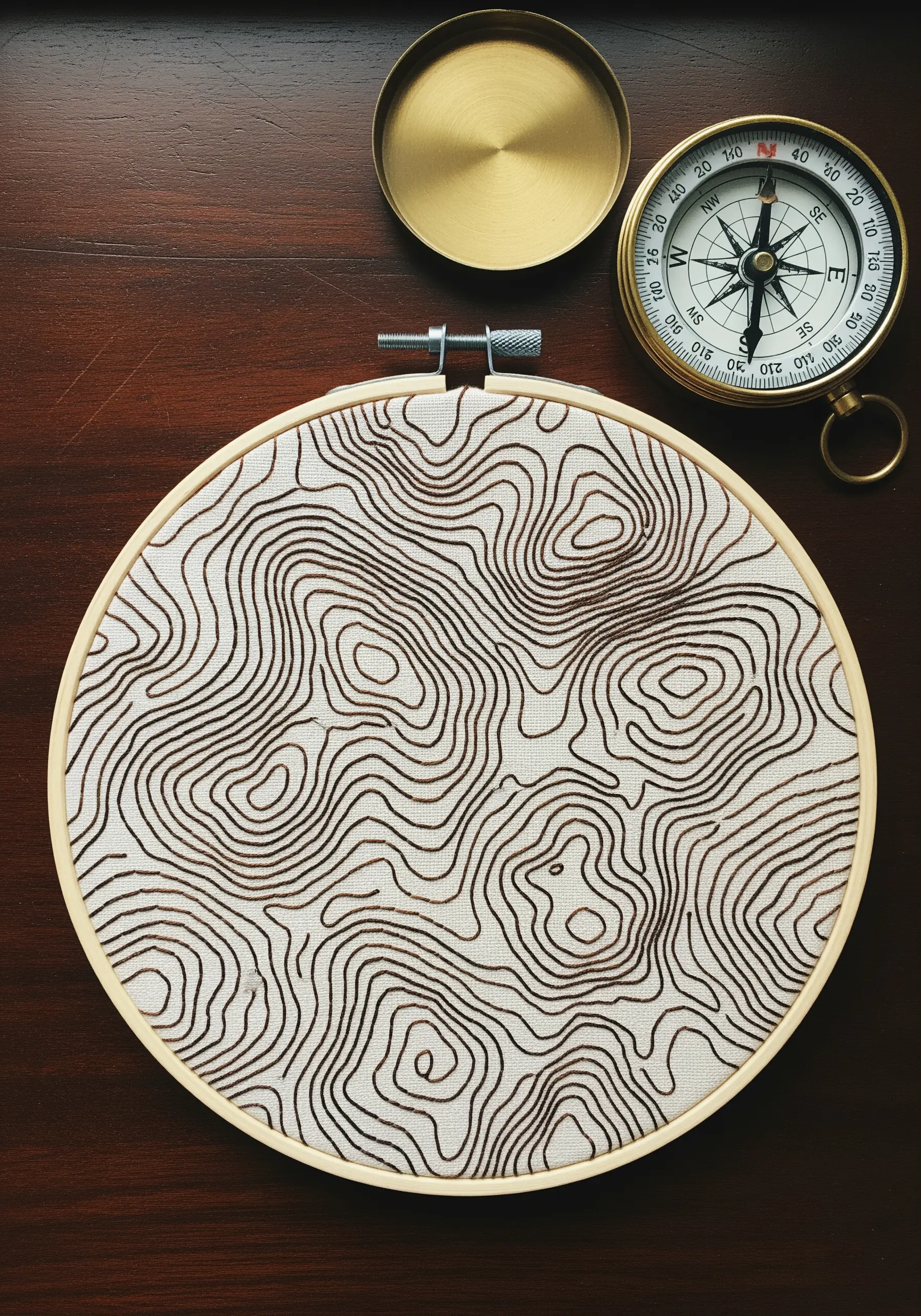
Use the contour lines from a topographic map as your pattern for a complex and mesmerizing design.
A simple backstitch or stem stitch is all that is required to trace these organic, flowing lines.
The beauty of this technique lies in the density of the pattern, which creates a rich visual texture from a very simple execution.
Choose a single dark thread on a natural linen to keep the focus on the intricate, earth-inspired forms.
19. Generate Optical Energy with Radiating Lines
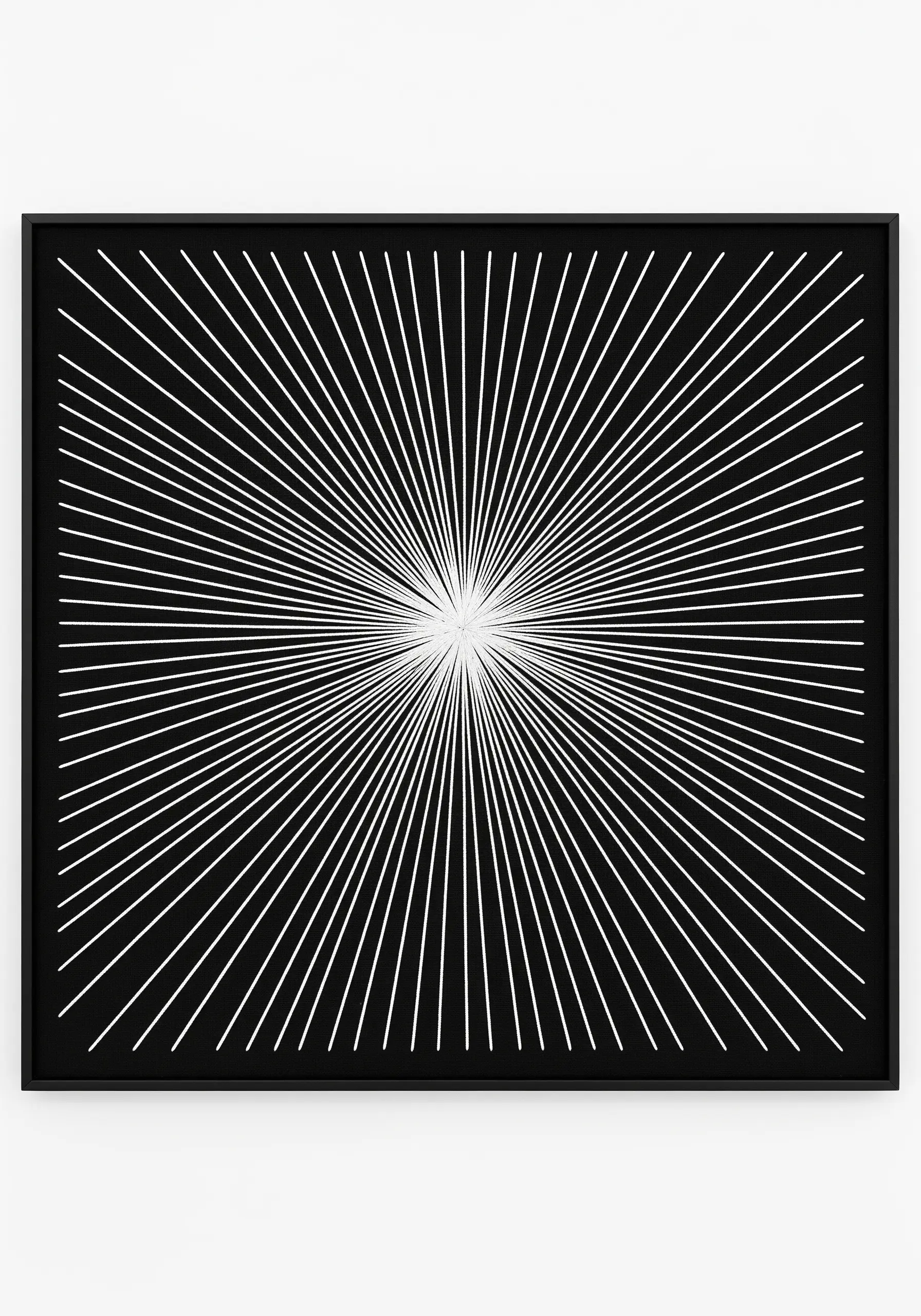
Create a powerful illusion of light and motion using nothing more than straight stitches.
Start from a central point and work your way outwards, stitching precise, radiating lines. As the lines converge at the center, the density of the thread creates a bright, starburst effect.
For perfect symmetry, lightly mark your fabric with a water-soluble pen and a circular grid before you begin.
This technique turns a flat surface into a dynamic focal point that seems to vibrate with energy.
20. Carve Sculptural Paths with Couched Yarn
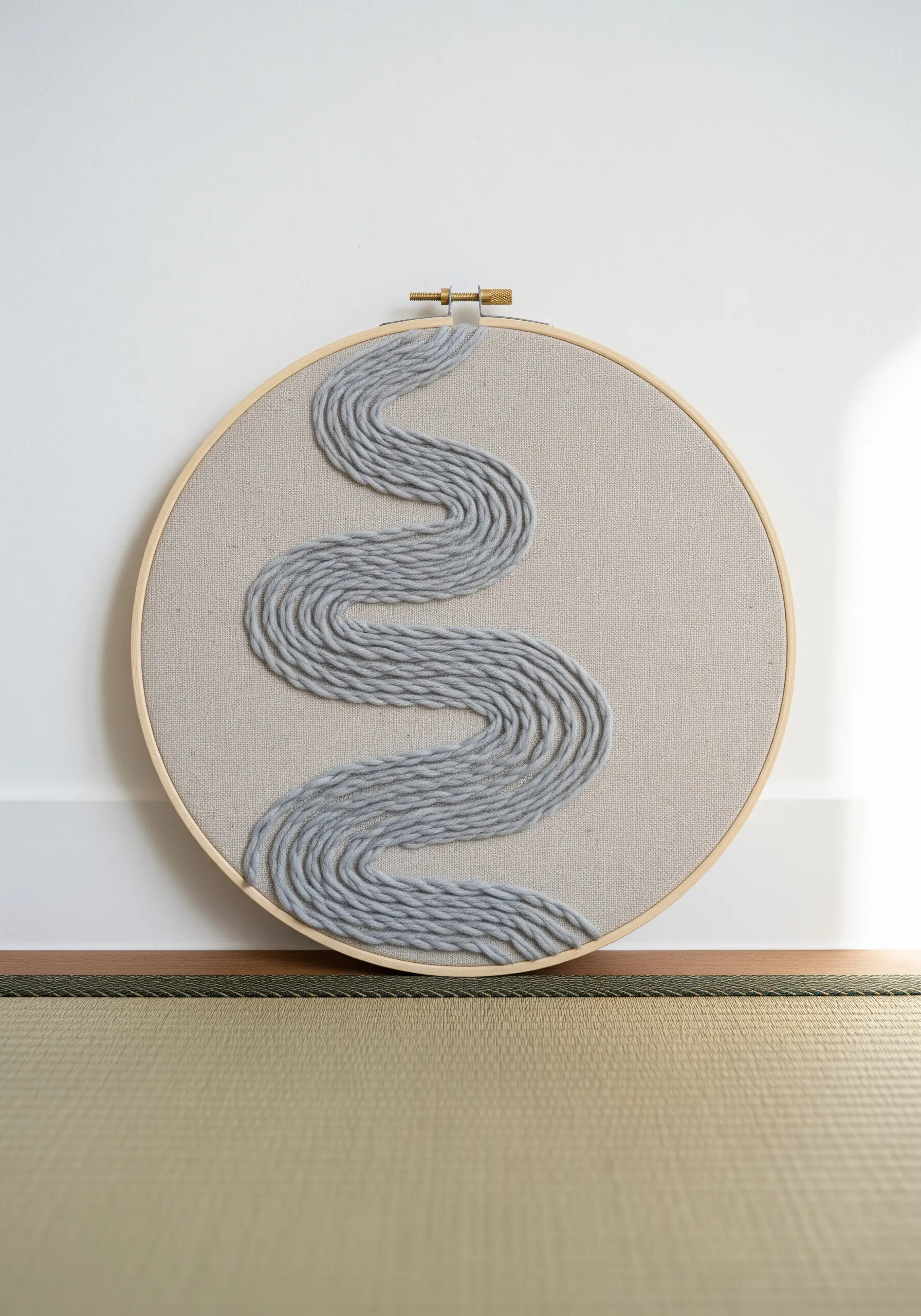
For a design that has bold, three-dimensional presence, lay down thick yarn and stitch it into place.
This technique, called couching, allows you to create thick, flowing lines that would be impossible with a needle alone.
Arrange your yarn in a meandering river-like path, then use a standard six-strand embroidery floss in a matching color to tack it down with small, evenly spaced stitches.
The result is a piece that invites touch and adds a soft, sculptural element to your wall.
21. Contrast Textures for Luminous Celestial Art
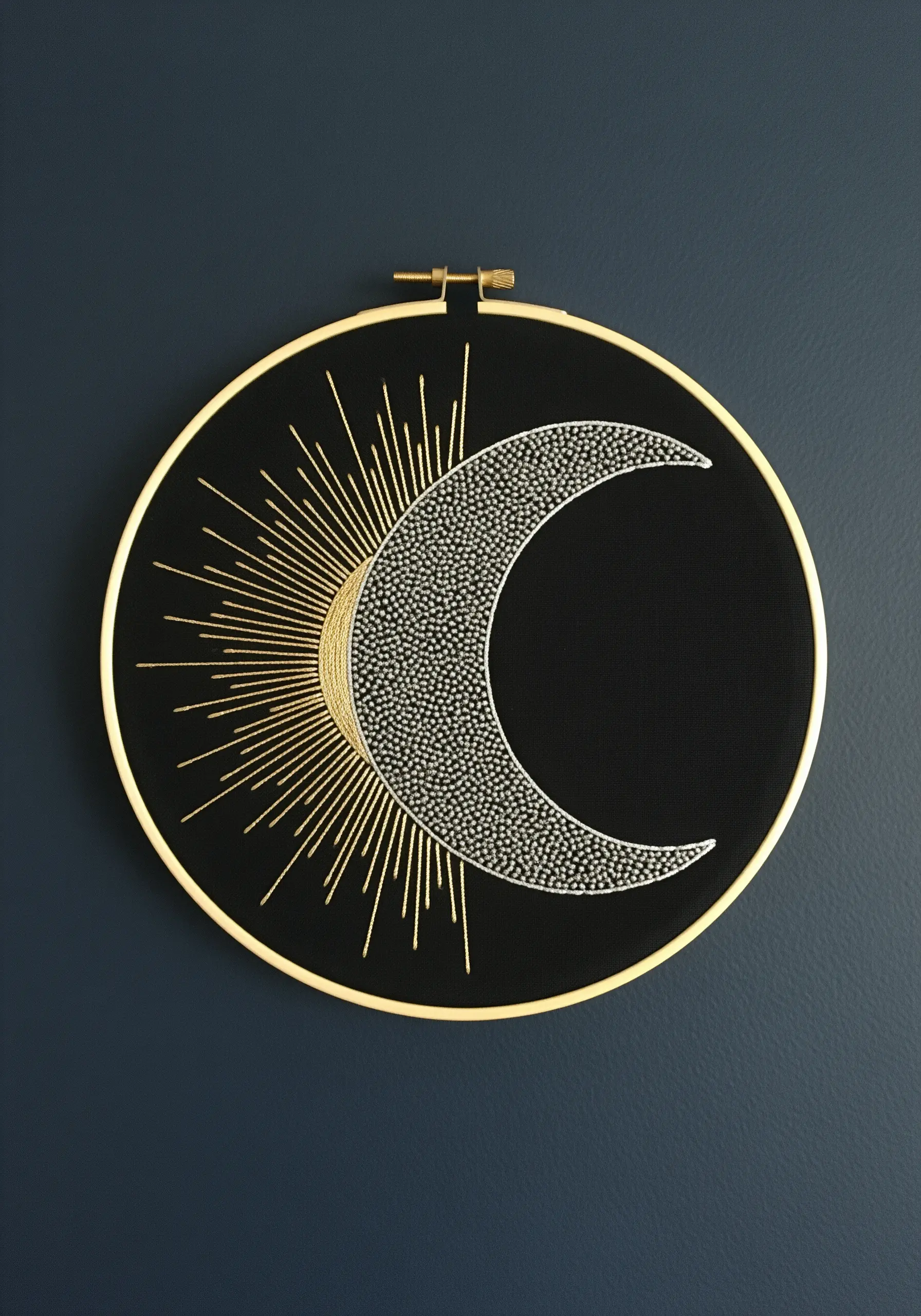
Give your celestial designs a magical quality by pairing two dramatically different fill stitches.
Use dense, tightly packed French knots in a matte white or silver thread to fill the moon; this creates a pebbled, light-absorbing surface that feels solid and cratered.
For the sun’s rays, use a shimmering gold metallic thread and stitch long, radiating straight stitches that will catch and reflect the light.
This play between matte and shine, texture and smoothness, is what makes the design so visually captivating on a dark fabric background.
22. Construct Large-Scale Art with Thread and Tension
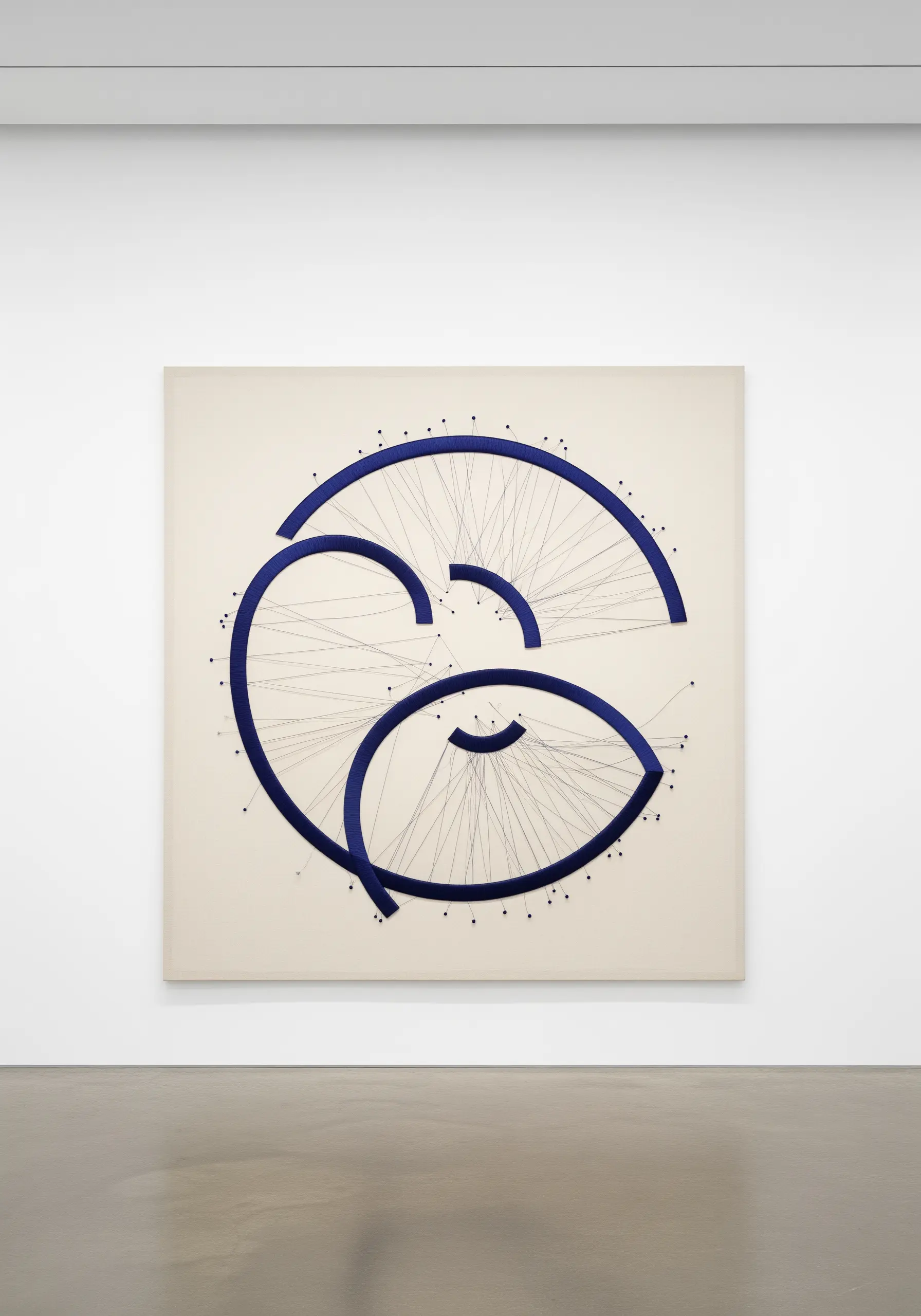
Think beyond the hoop and use a large, stretched canvas as the foundation for architectural thread art.
Instead of stitching through the canvas, insert pins or nails along the outlines of your abstract shapes and wrap thread between them.
This method allows you to create gallery-worthy DIY installations where tension, intersecting lines, and negative space are the primary design elements.
The result is a striking, large-scale piece that merges the precision of drafting with the softness of fiber.