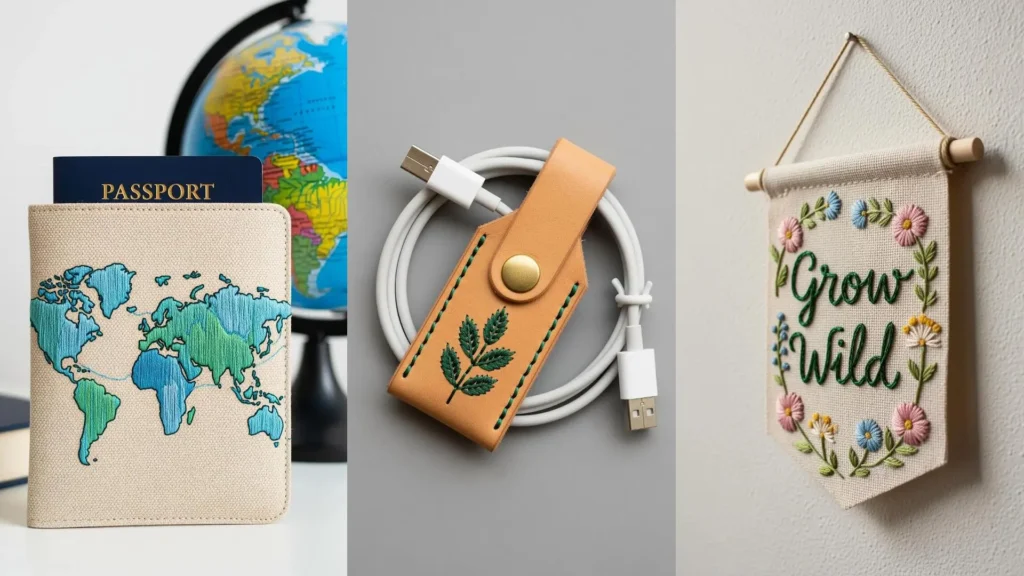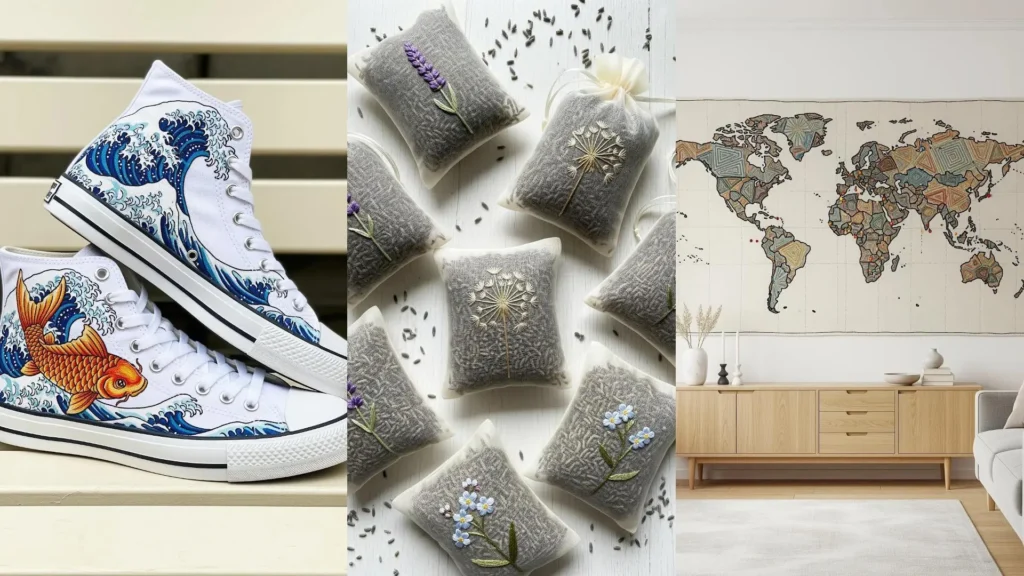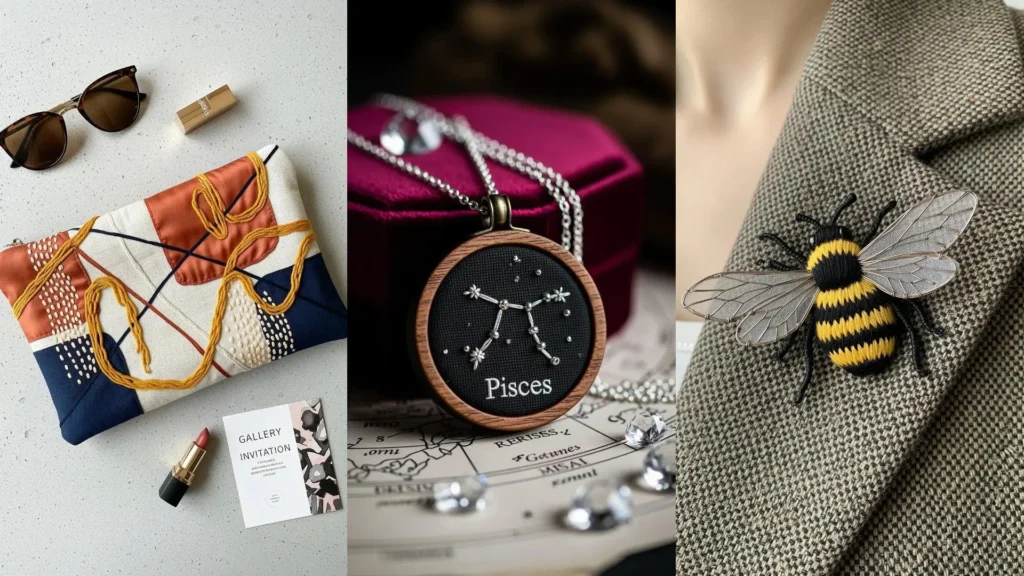
A handmade gift is a quiet conversation between you and the person who will receive it. It holds your time, your focus, and your intention within its threads. But how do you ensure that your care translates into a beautiful, polished piece that feels as special as your sentiment?
The answer isn’t about mastering hundreds of complex stitches or buying expensive supplies. It’s about making thoughtful choices—selecting the right stitch to create a specific texture, understanding how a single strand of thread can add delicate detail, or knowing when to combine materials for a truly dynamic effect.
These ideas are designed to guide those choices. Each one is a starting point for creating something not just handmade, but artful and full of personal meaning. Here, you’ll find the techniques to give your work the finish it deserves, turning a simple gesture into a lasting treasure.
1. Thread-Painted Pet Portrait
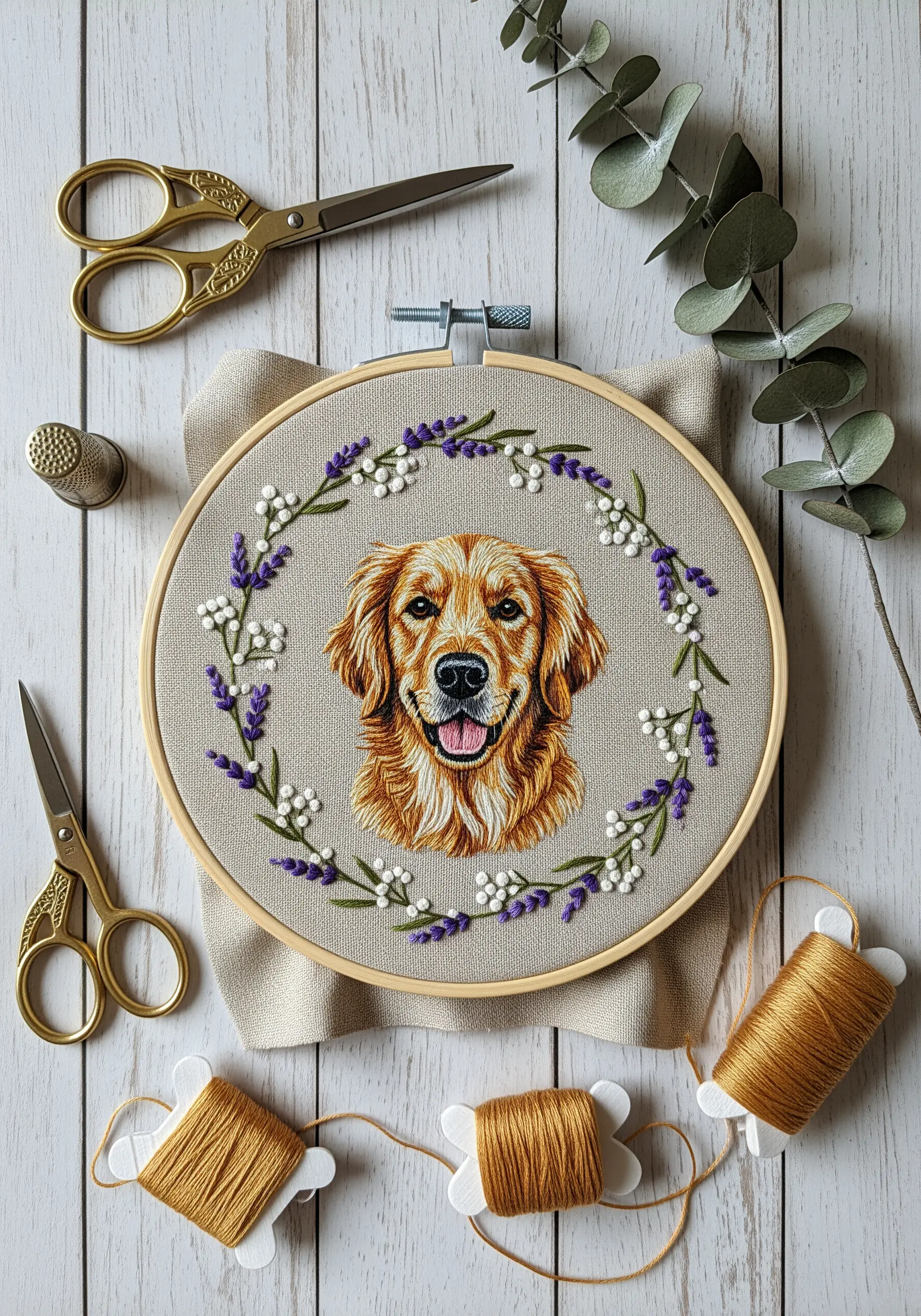
To capture the life in a pet’s fur, use the long-and-short stitch, often called thread painting.
Work with a single strand of floss and layer shades of the same color family—from dark gold to pale yellow—to create realistic depth and highlights.
This technique allows you to blend colors smoothly, mimicking the way light hits the fur.
For the surrounding floral wreath, use textured stitches like French knots and lazy daisies to create a soft frame that complements, rather than competes with, your central portrait.
This project becomes one of those thoughtful embroidery gifts that truly captures a bond.
2. Wearable Botanical Artistry
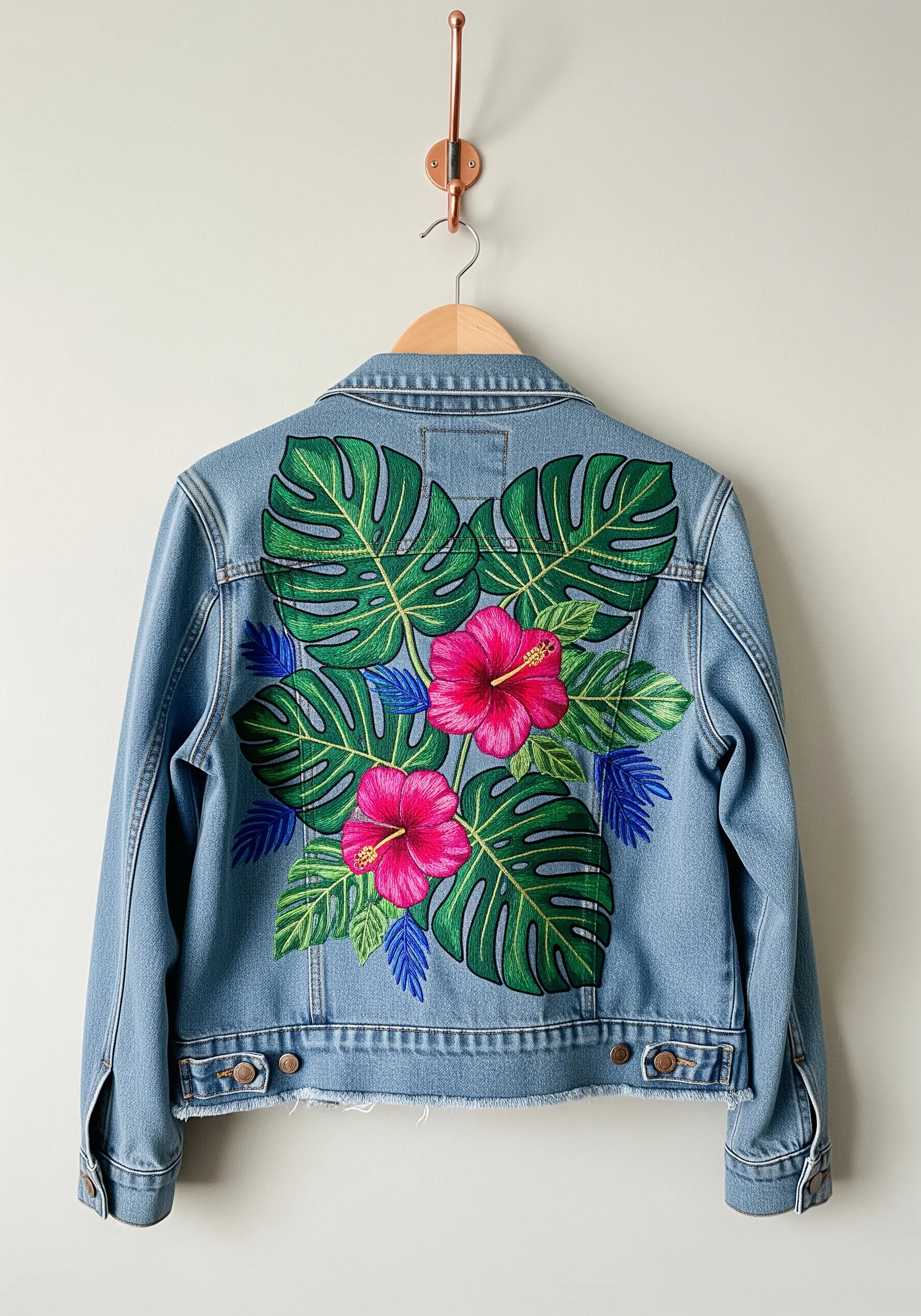
Create large, vibrant designs on denim by combining fabric paint with embroidery.
First, block in the main colors of the leaves and flowers with a thin layer of flexible fabric paint.
Once dry, use embroidery to add definition and texture—a crisp backstitch for the outlines and a stem stitch for the delicate leaf veins.
This mixed-media approach is faster than filling the entire area with thread and creates a dynamic contrast between the smooth paint and the raised stitches.
It’s one of the best leaf stitching techniques for turning vintage denim into trendy botanical wearables.
3. Celestial Constellation Keepsake
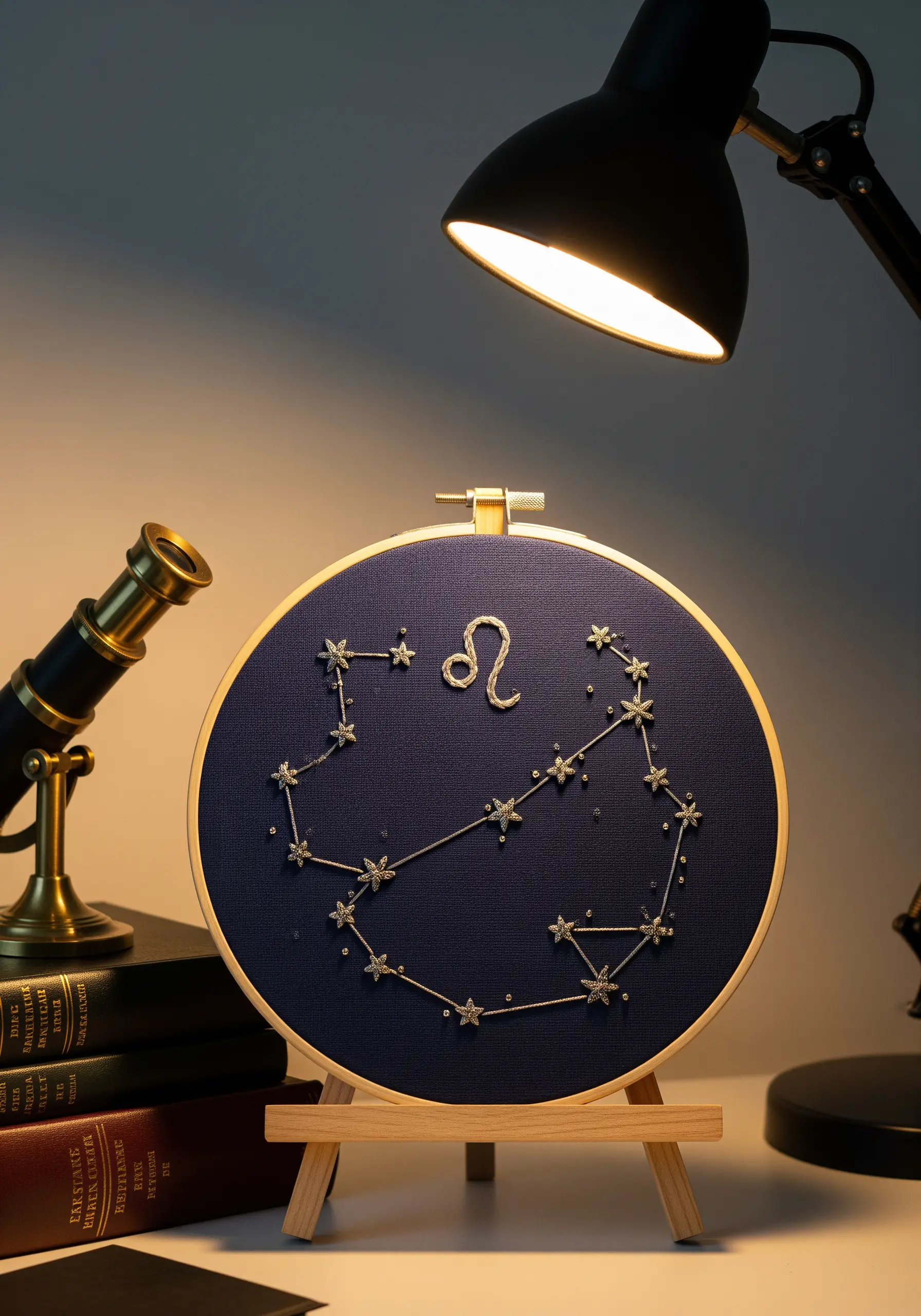
To give your celestial embroidery an authentic shimmer, choose your materials with care.
Start with a dark navy or black linen to serve as your night sky, ensuring high contrast.
Use a fine metallic thread for the constellation lines, stitched with a simple backstitch for precision.
For the stars themselves, alternate between tiny French knots, star stitches, and miniature seed beads to create varied points of light.
This mix of textures makes the constellation feel more dynamic and magical.
4. Heirloom Monogrammed Linens
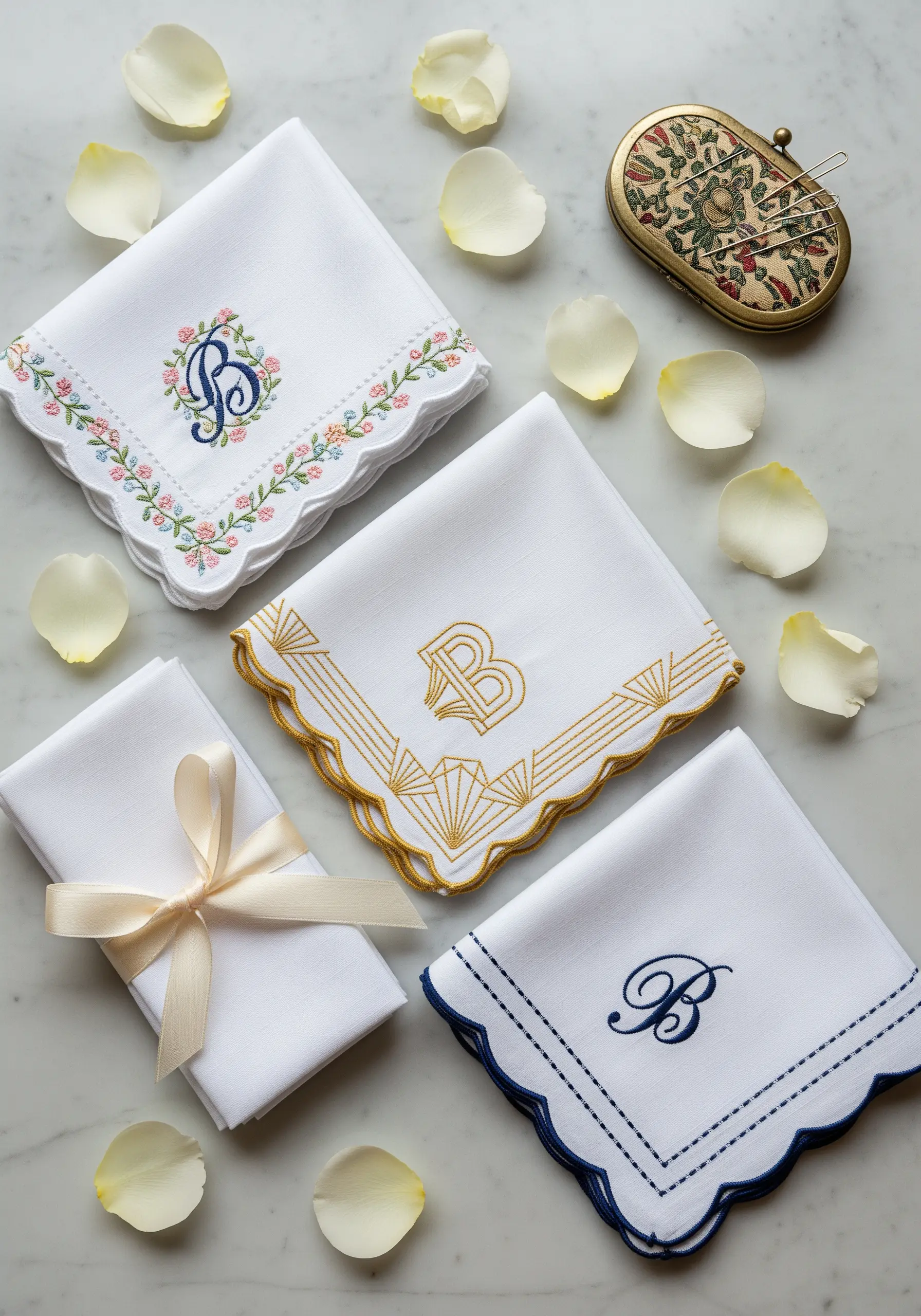
For a truly professional-looking monogram, the key is creating a raised, dimensional surface with a padded satin stitch.
First, outline your letter with a split stitch, then fill the shape with a foundation of horizontal straight stitches.
Finally, cover this padding with vertical satin stitches, ensuring each stitch lies close to the last for a perfectly smooth finish.
This preparation prevents the fine linen from puckering and gives the monogram a luxurious, tactile quality that feels timeless.
5. Whimsical Felt Mushroom Garland
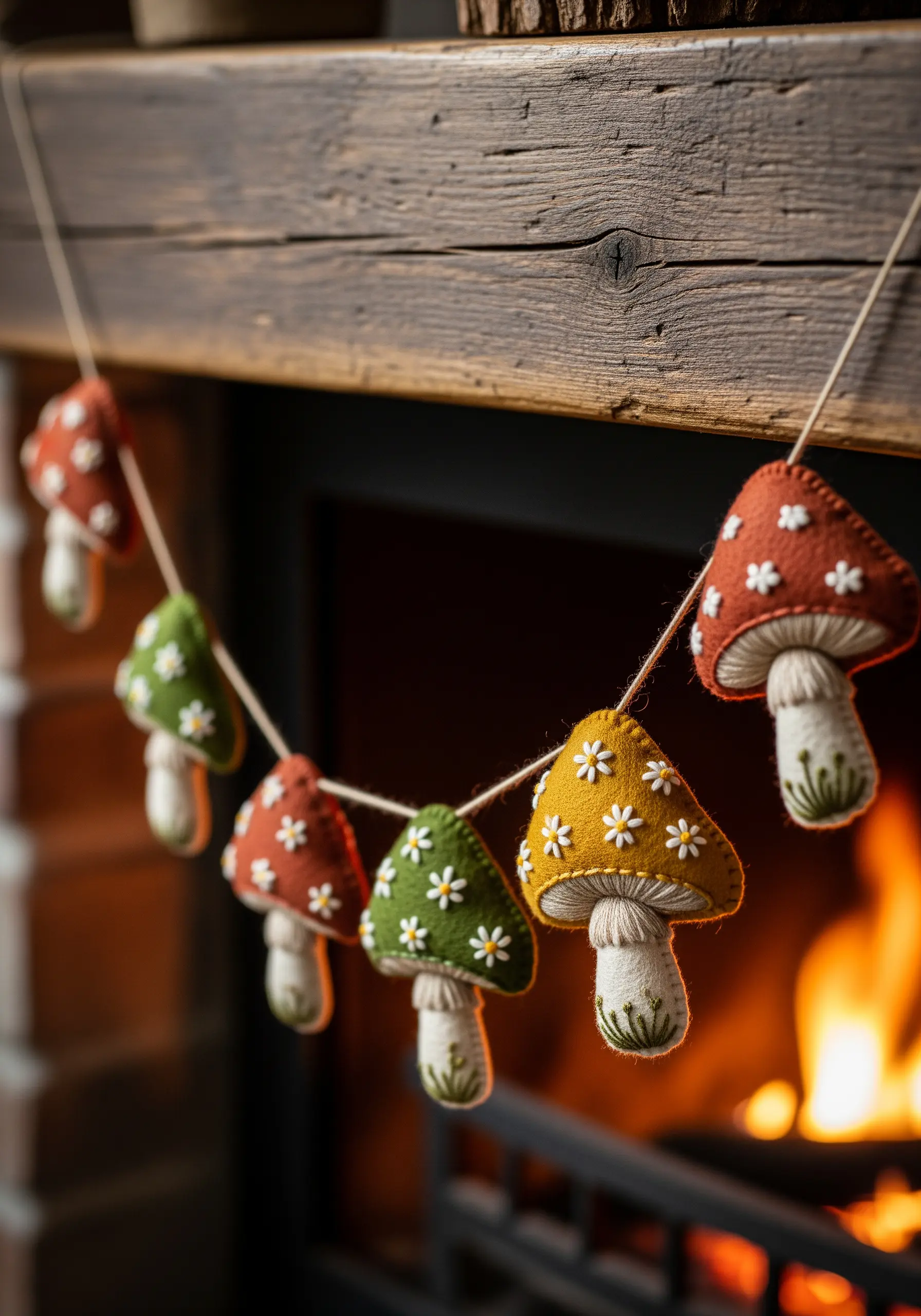
This charming garland is a wonderful introduction to 3D soft sculpture.
Use two layers of wool-blend felt for each mushroom, as its texture holds stitches beautifully.
Join the pieces with a decorative blanket stitch in a contrasting color, leaving a small gap for a pinch of stuffing to add dimension.
The embroidered details—lazy daisy stitches for the flowers and short straight stitches for the gills—are what bring these woodland treasures to life.
6. Minimalist Line Art Tote
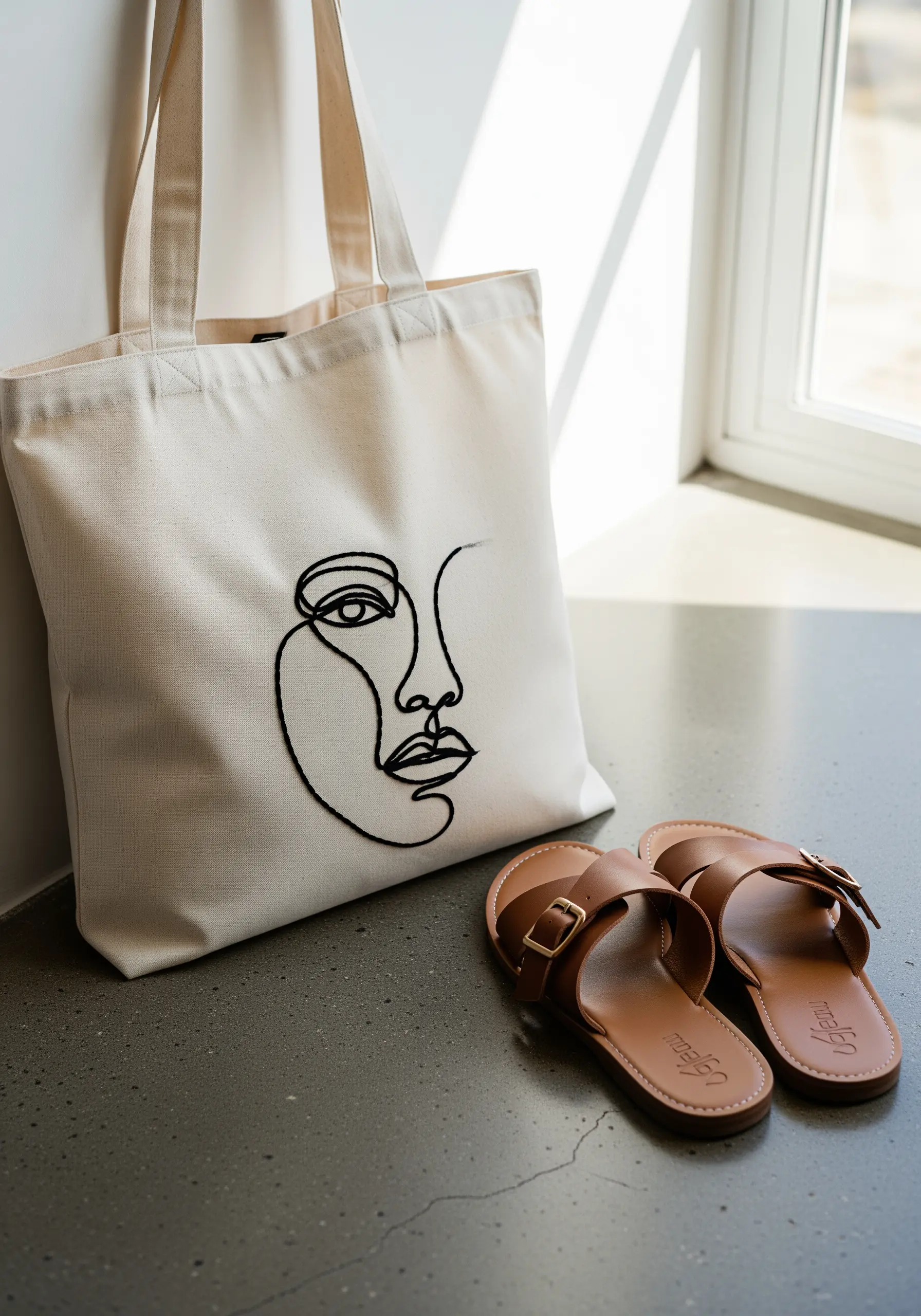
The elegance of a continuous-line design relies on a smooth, unbroken stitch.
Use a stem stitch or a whipped backstitch to achieve this effect, as both create a rope-like line that flows beautifully around curves.
Opt for all six strands of cotton floss or a thicker Perle cotton to give your line visual weight against the canvas.
Always use an iron-on stabilizer inside the bag before stitching; it prevents the fabric from stretching and ensures your lines remain crisp and clean.
You can use these techniques to transform plain tote bags into fashion statements.
7. Thread-Painted Mountainscape
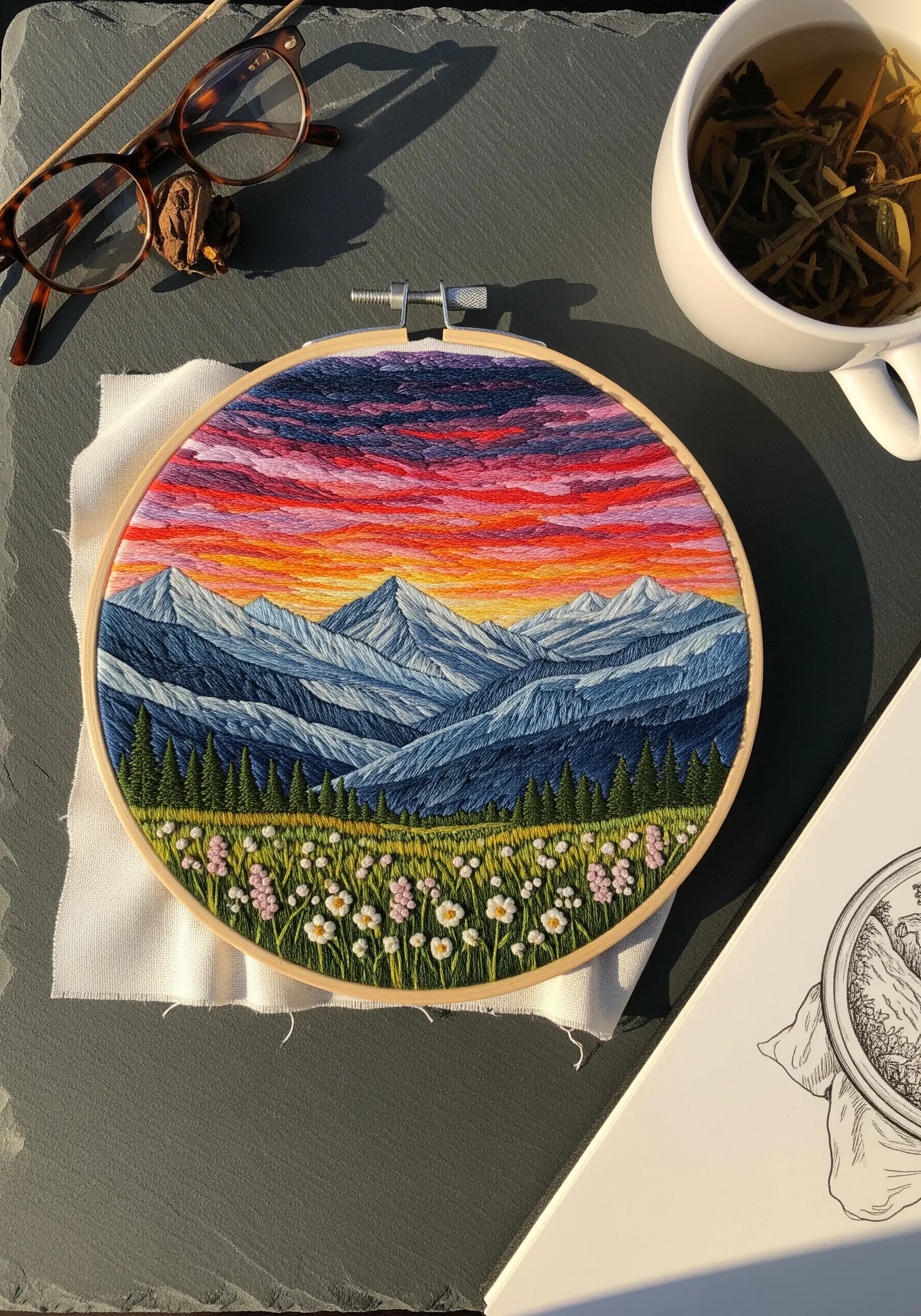
To create a painterly sunset, your needle becomes your brush, and your stitches are the brushstrokes.
Use long-and-short stitch for the sky and mountains, paying close attention to the direction of your stitches.
Keep the sky’s stitches horizontal to suggest a wide horizon, and angle the mountain stitches to follow the slopes and shadows of the peaks.
This directional work creates a sense of movement and perspective, transforming a flat image into a dynamic landscape.
8. Aromatic Lavender Sachets
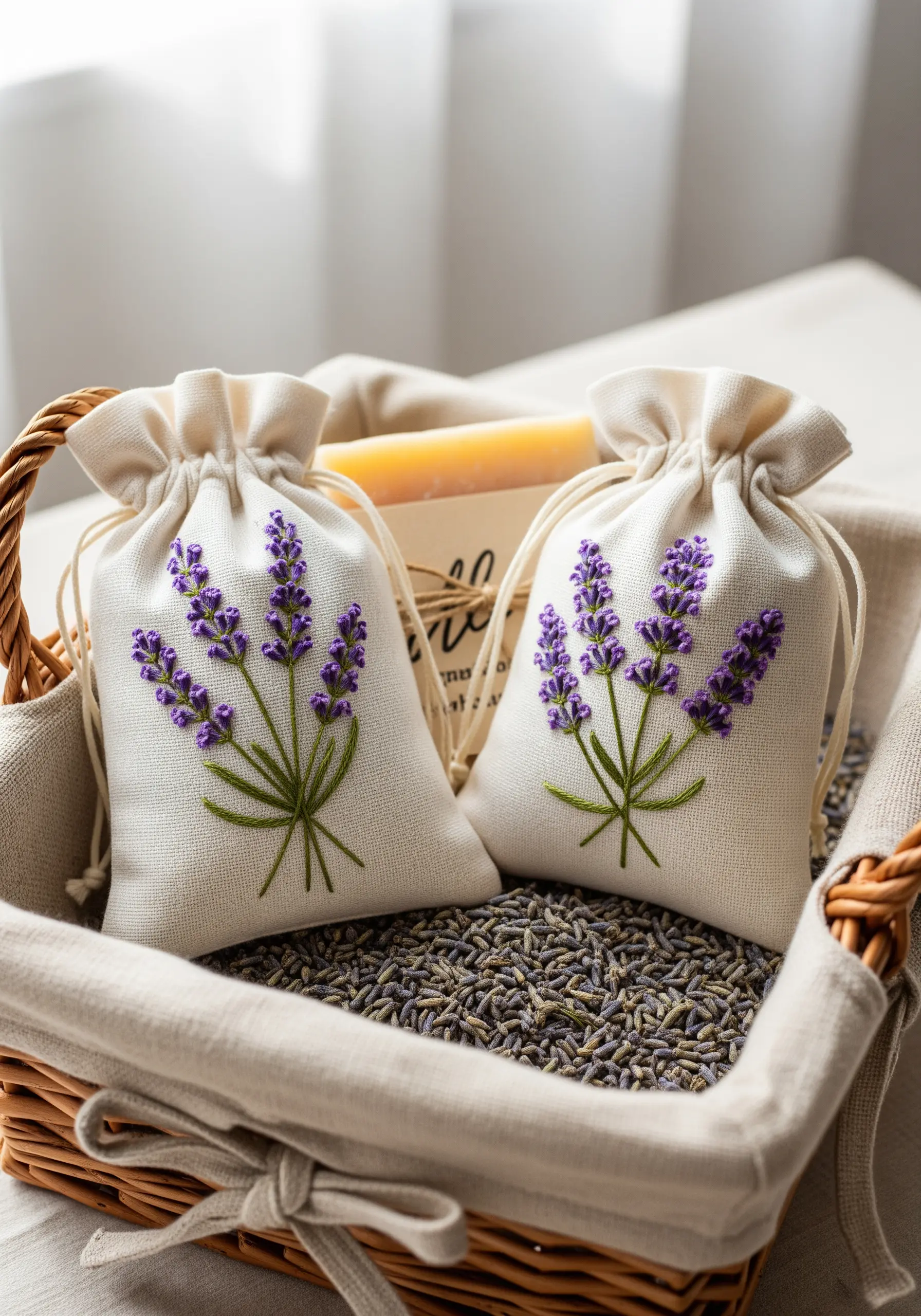
For a simple and elegant lavender design, focus on texture and form.
Use a stem stitch for the stalks to give them a slightly rounded appearance.
Create the blossoms with dense clusters of French knots, using two or three shades of purple to add depth.
Stitch the knots tightly at the top of the stalk and gradually space them out as you move down—this simple trick mimics the natural growth of a lavender flower and makes the design instantly recognizable.
9. Architectural House Portrait
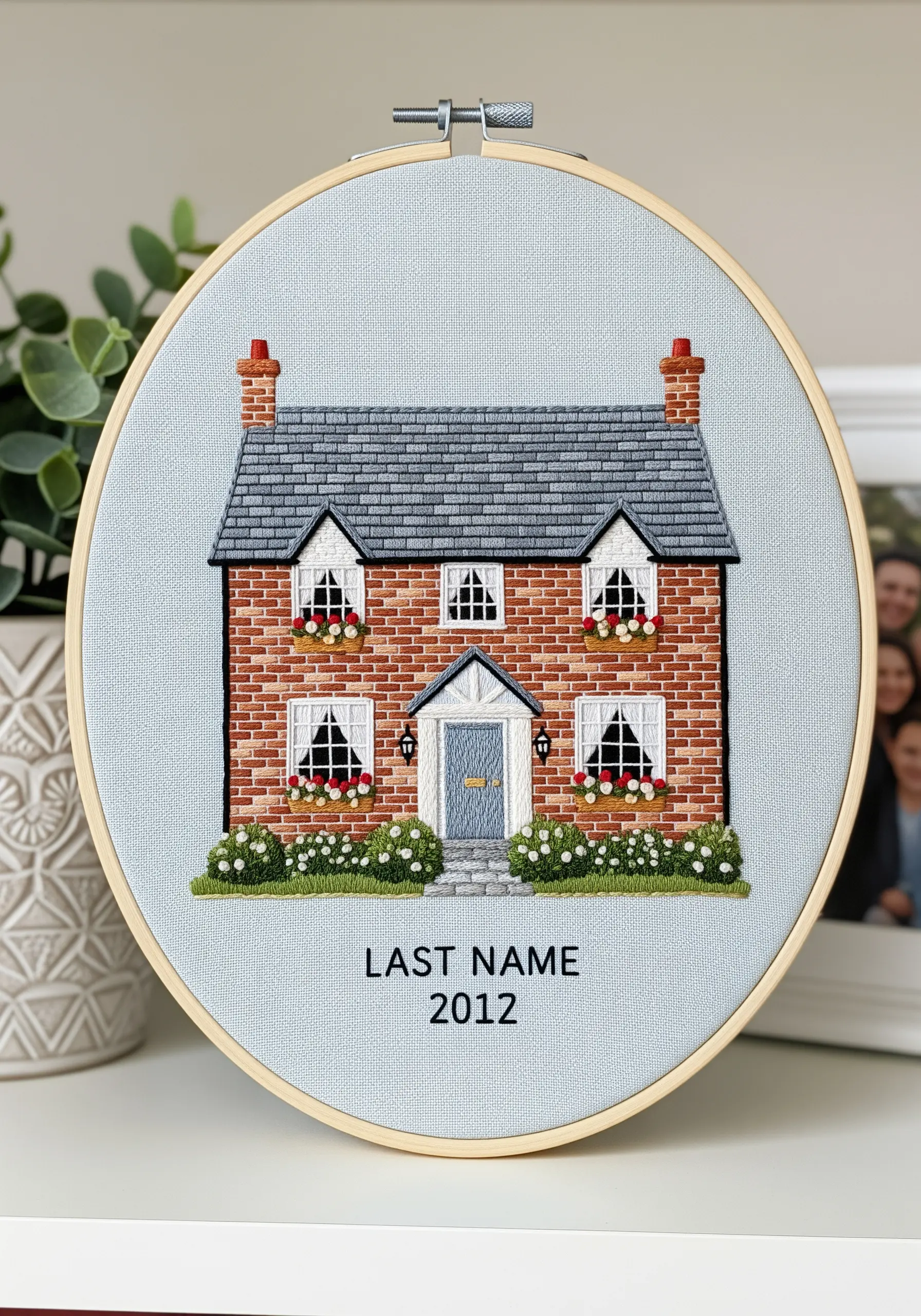
Translating architecture into embroidery is about simplifying textures and defining lines.
Use a single strand of thread and a precise backstitch for all structural outlines, such as windows, doors, and rooflines.
For surfaces like brick, you don’t need to stitch every single one. Instead, create the illusion of texture with staggered, single straight stitches in a slightly darker shade.
This approach keeps the design clean and readable while still capturing the character of the home.
10. Geometric Chain Stitch Cushion
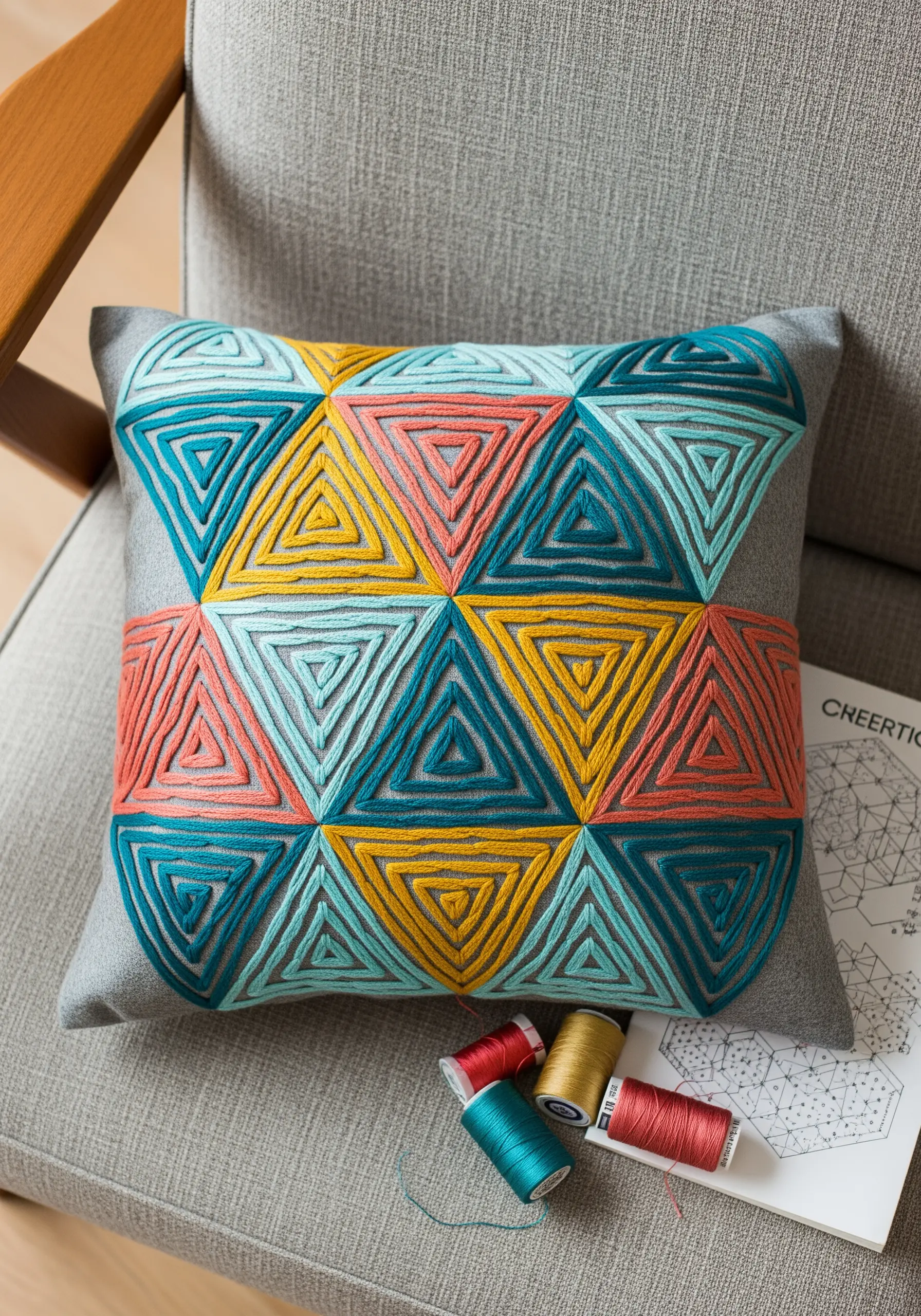
This design’s power lies in its rhythmic repetition and bold texture.
Use a thick thread, like cotton Perle or fine wool, to make your chain stitches plump and substantial.
Before you start, draw your geometric grid directly onto the fabric with a removable marker to ensure perfect symmetry and sharp corners.
The concentric stitching creates a visual illusion of depth, and a carefully chosen color palette will instantly elevate cheap pillows into designer decor.
11. Botanical Embellished Cap
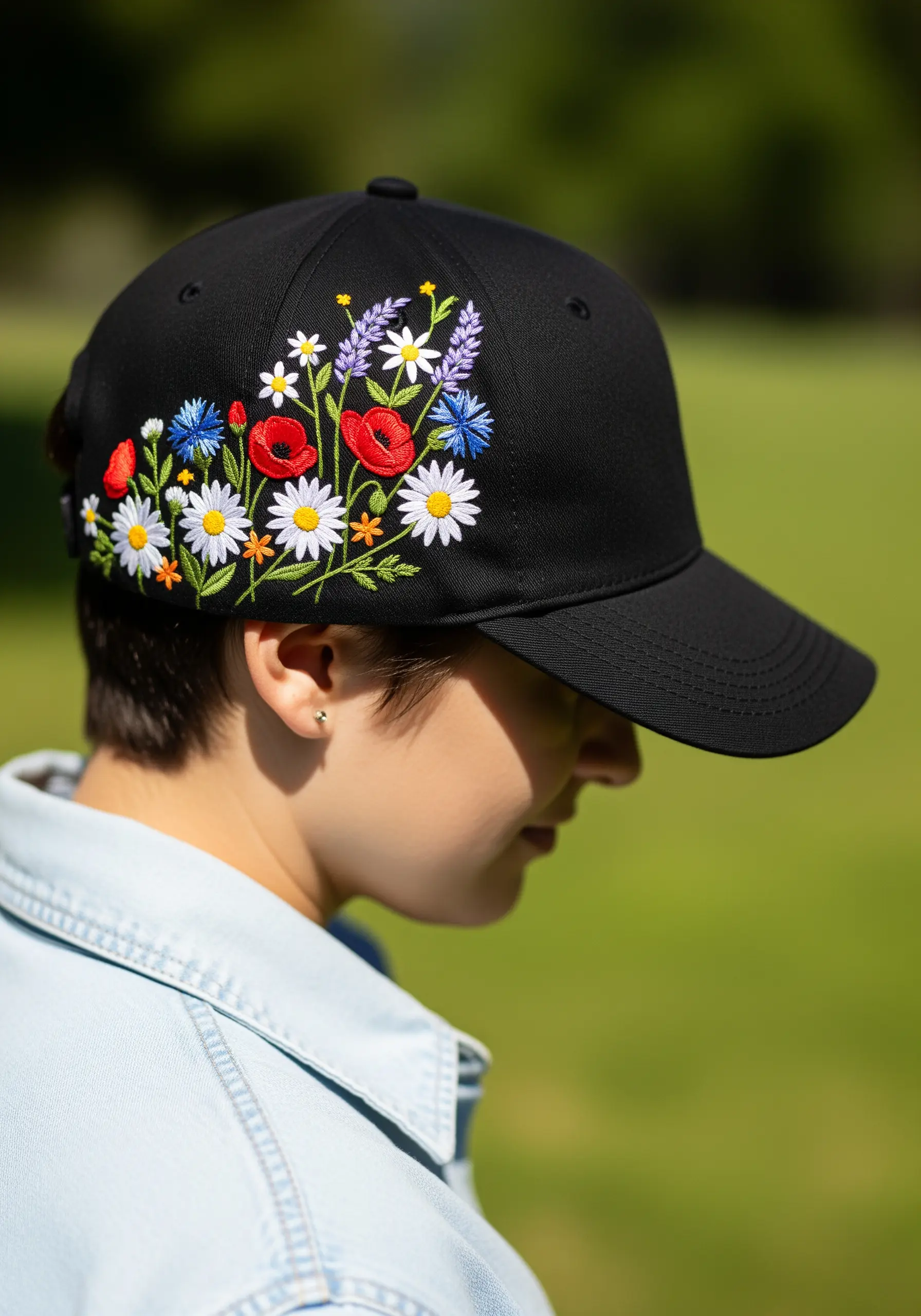
When stitching on a stiff, curved surface like a cap, choose your design and tools wisely.
A small 3- or 4-inch hoop will help you isolate and tighten a small section of the cap for stitching.
Use a sharp, sturdy needle that can easily pierce the thick fabric.
Stick to a medley of simple, open stitches like lazy daisies, French knots, and straight stitches, as dense satin stitching can make the cap rigid and uncomfortable to wear.
12. Heirloom Recipe Tea Towel
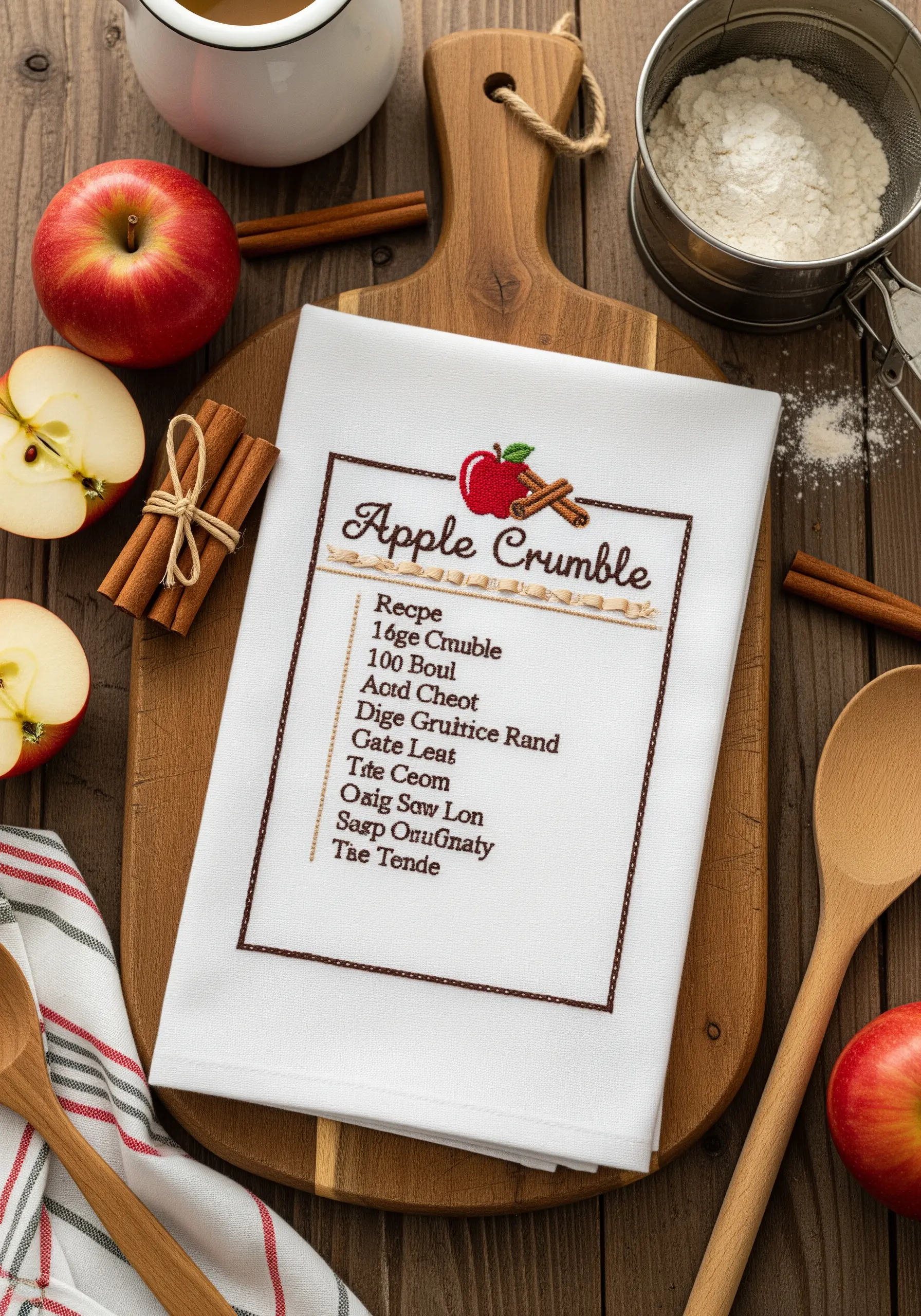
To preserve the charm of a handwritten recipe, transfer the script onto your fabric as accurately as possible.
You can use a lightbox or a sunny window to trace the writing with a water-soluble pen.
Use a simple backstitch with two strands of floss to replicate the handwriting, which is clear enough to read yet fine enough to capture the unique quirks of the script.
This transforms a simple kitchen towel into a deeply personal and functional piece of family history.
13. Dimensional Stumpwork Bee Pin
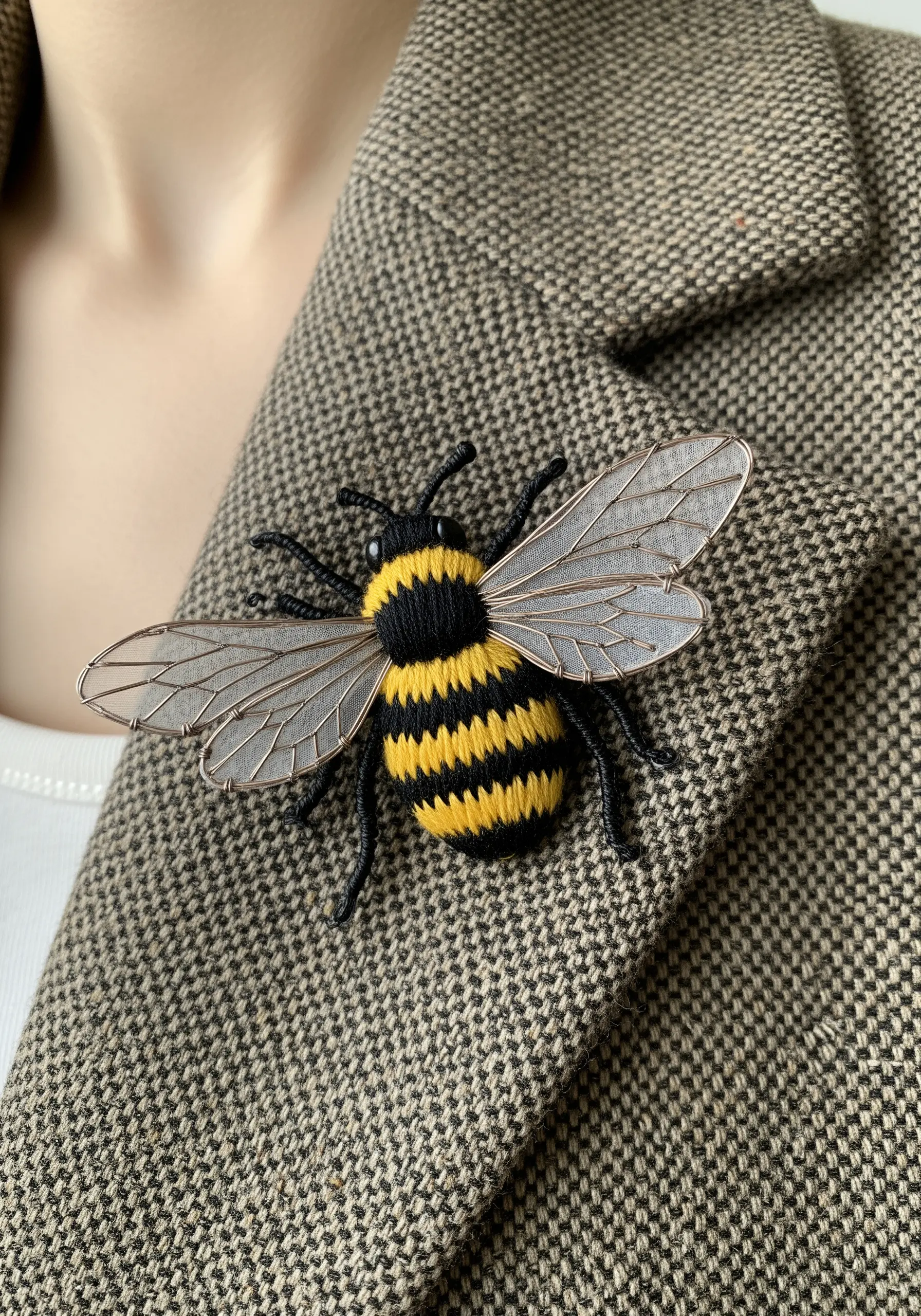
Stumpwork is the technique of creating raised, three-dimensional embroidery, and it’s perfect for creating lifelike insects.
The bee’s body is built up with layers of felt padding underneath a tightly worked satin stitch.
The delicate wings are crafted separately on a sheer organza fabric, outlined with a buttonhole stitch over a fine wire frame.
Once complete, the wings are cut out and attached to the body, creating a stunning piece of wearable art that seems ready to fly away.
14. Interactive Embroidered Travel Map
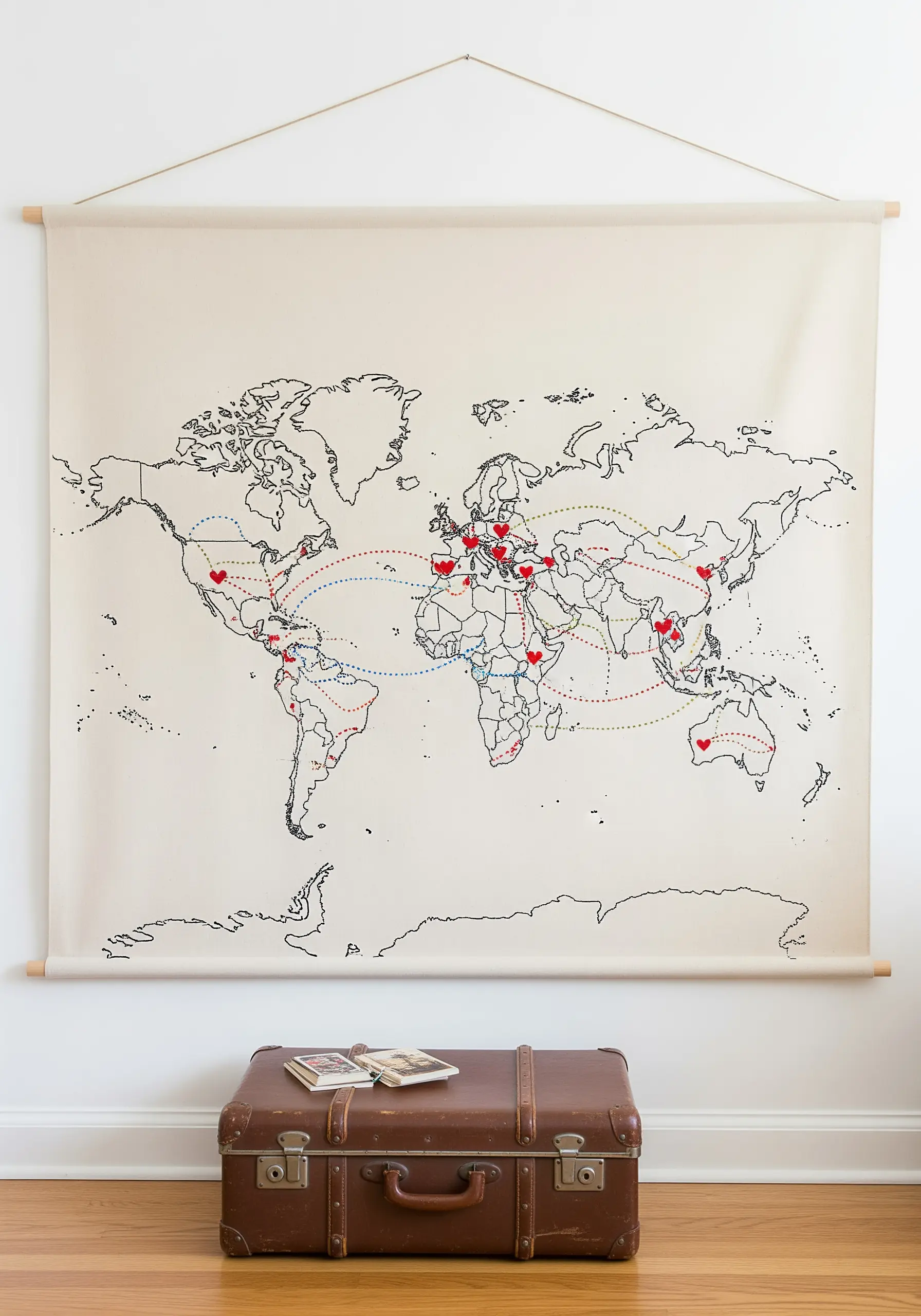
This is a gift that tells a story over time.
Start with a printed map on a large piece of sturdy canvas, then add the first few stitches to mark a meaningful place or journey.
The true gift is the potential for the recipient to continue the story, adding a small heart for each new destination and a dotted line of backstitches to trace their paths across the globe.
It evolves from a piece of decor into a living archive of their adventures.
15. Hand-Stitched Botanical Bookmark
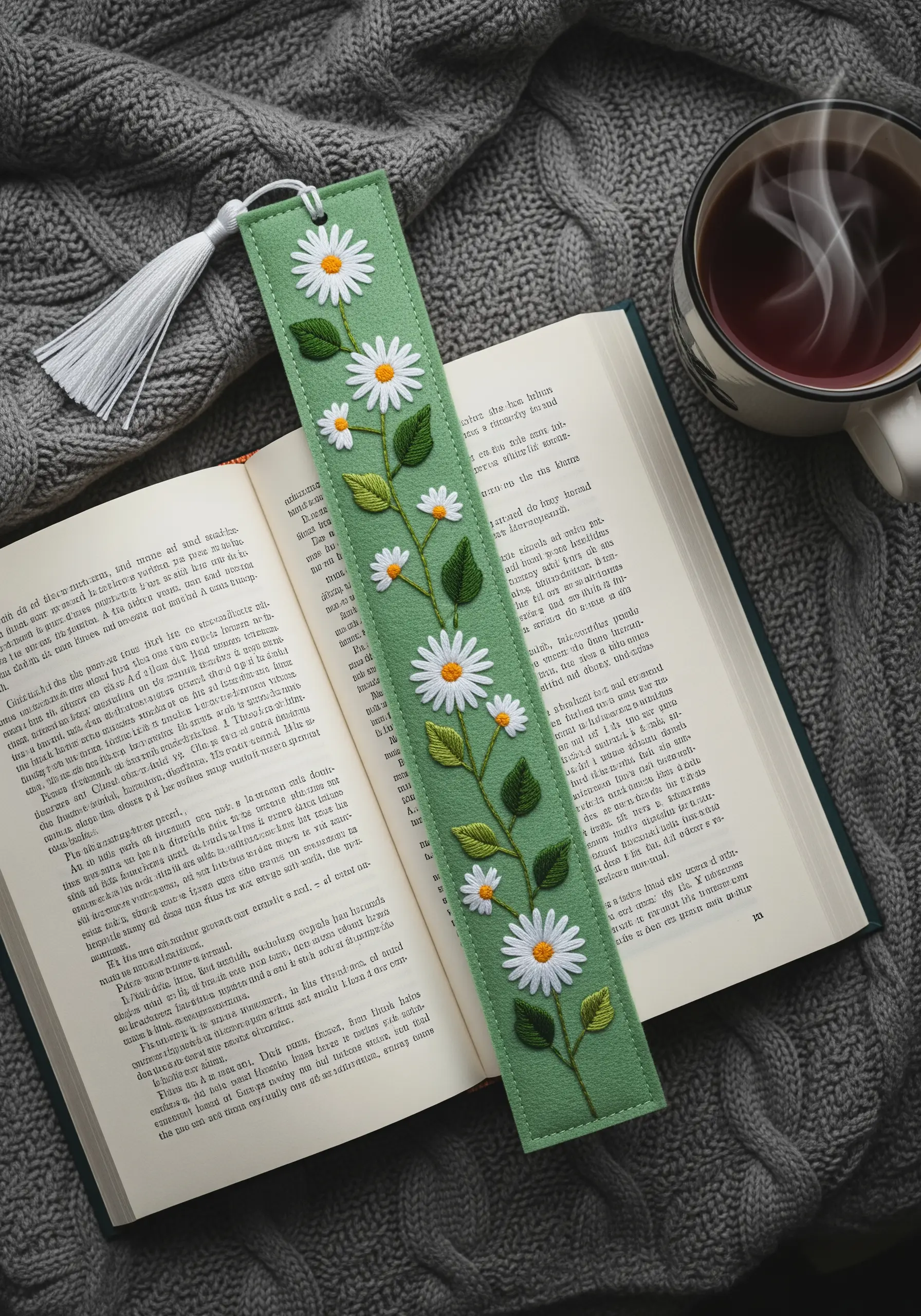
A perfect small gift, this bookmark’s polished finish comes from its construction.
Cut two identical shapes from felt and sandwich a piece of stiff interfacing between them for durability.
Before sewing the layers together, complete your embroidery on the front piece—a simple stem stitch for the vine and lazy daisy stitches for the petals and leaves.
Finally, join the front and back with a neat, even blanket stitch around the entire edge for a clean, professional look.
16. Miniature Constellation Pendant
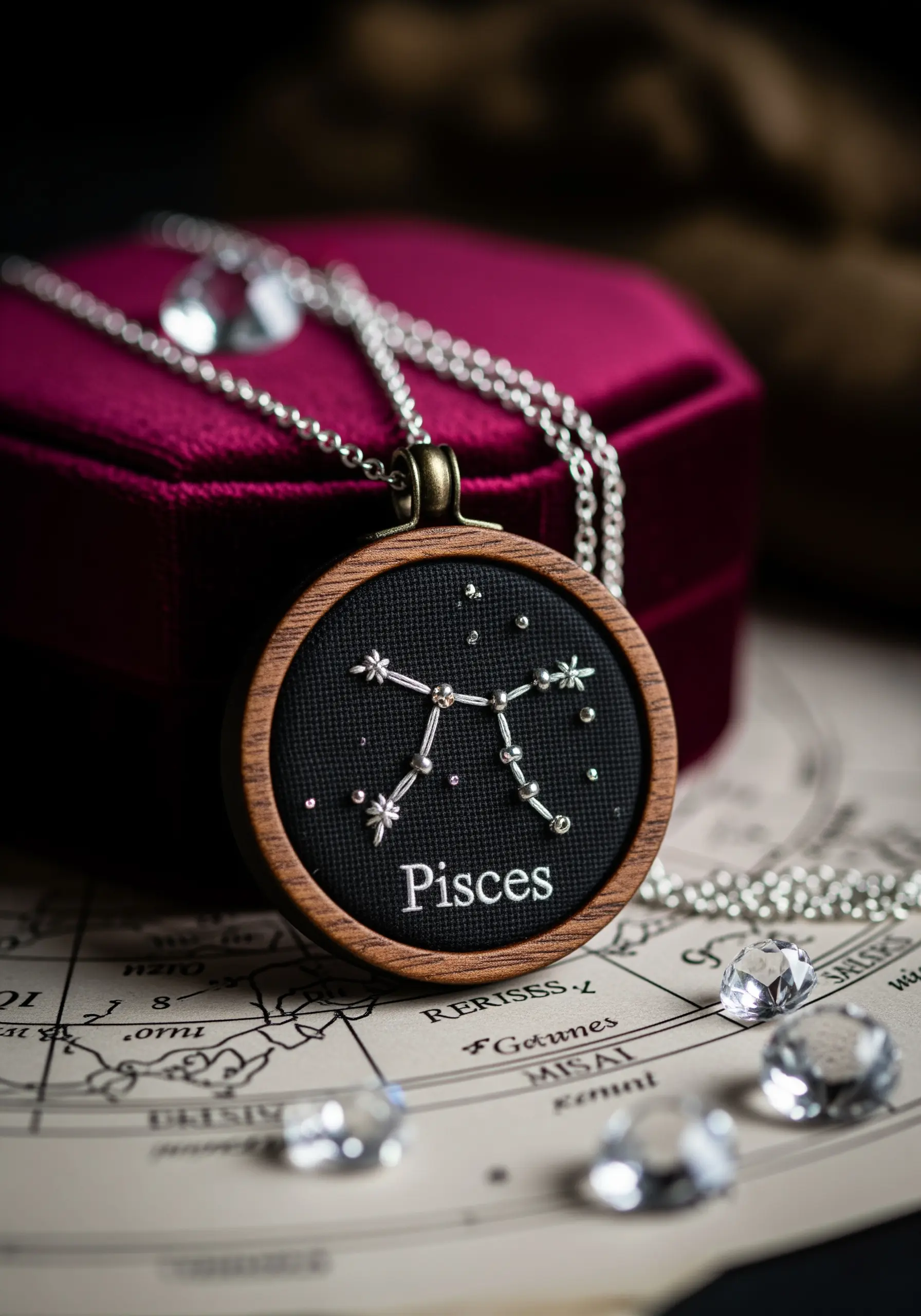
The beauty of a jewelry piece is in its fine details.
Work on a tightly woven black fabric with a single strand of silver metallic floss to ensure your stitches are delicate and precise.
Use tiny French knots or silver seed beads for the stars to give them a subtle sparkle and a slightly raised texture.
The finished piece can be mounted in one of the many available vintage-inspired tiny embroidery hoops that function as pendant settings, creating a truly unique accessory.
17. Mixed-Media Abstract Clutch
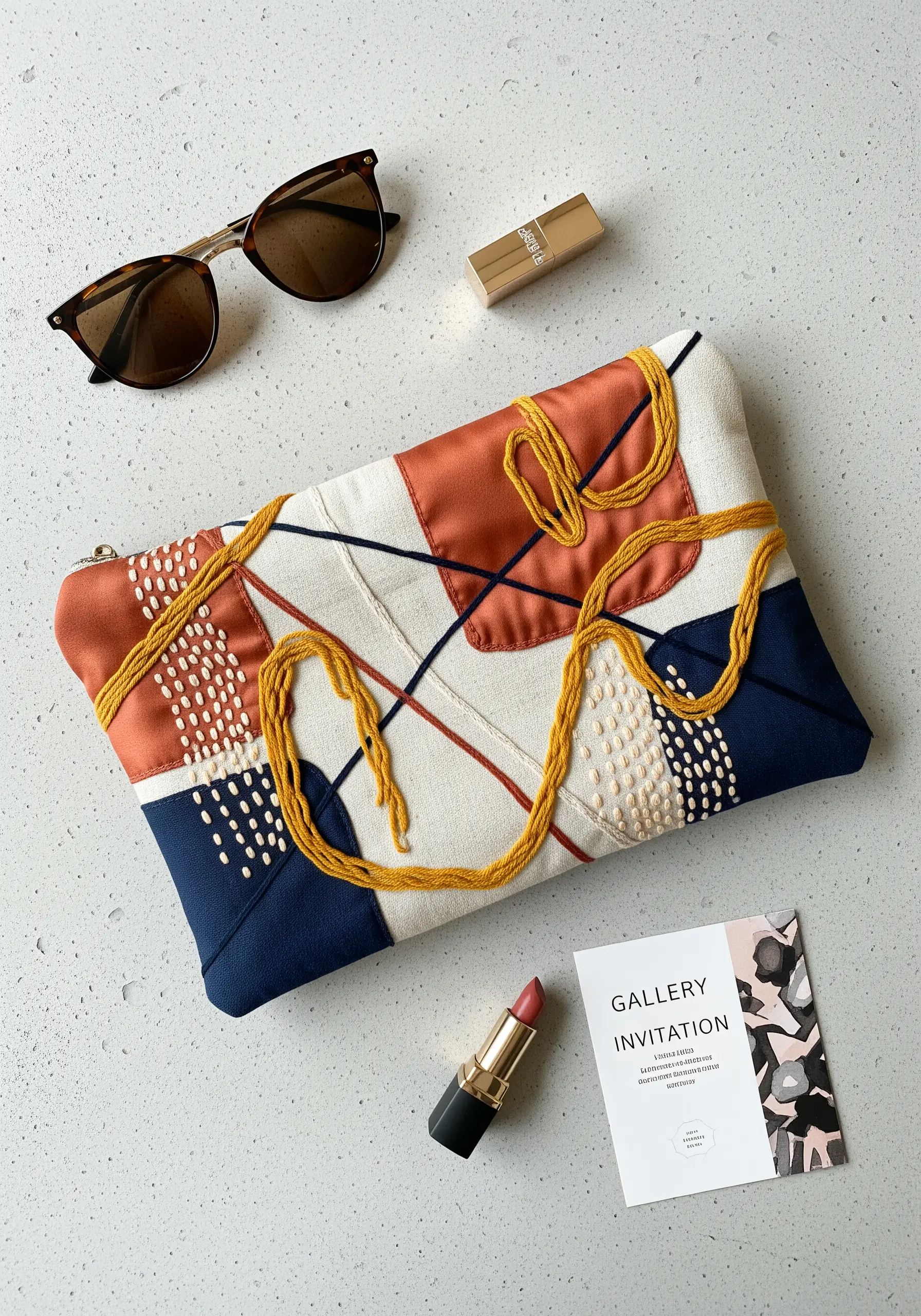
This design celebrates the interplay of texture and color.
Begin by creating a fabric collage, layering pieces of contrasting materials like raw silk, cotton canvas, and linen onto your base fabric.
Then, use embroidery to unite these disparate elements.
The technique of couching—tacking down a thick yarn or cord with small, perpendicular stitches—is perfect for adding bold, sculptural lines that follow the abstract shapes.
Areas of simple seed stitch add a final layer of subtle, unifying texture.
18. Welcoming Botanical Door Wreath
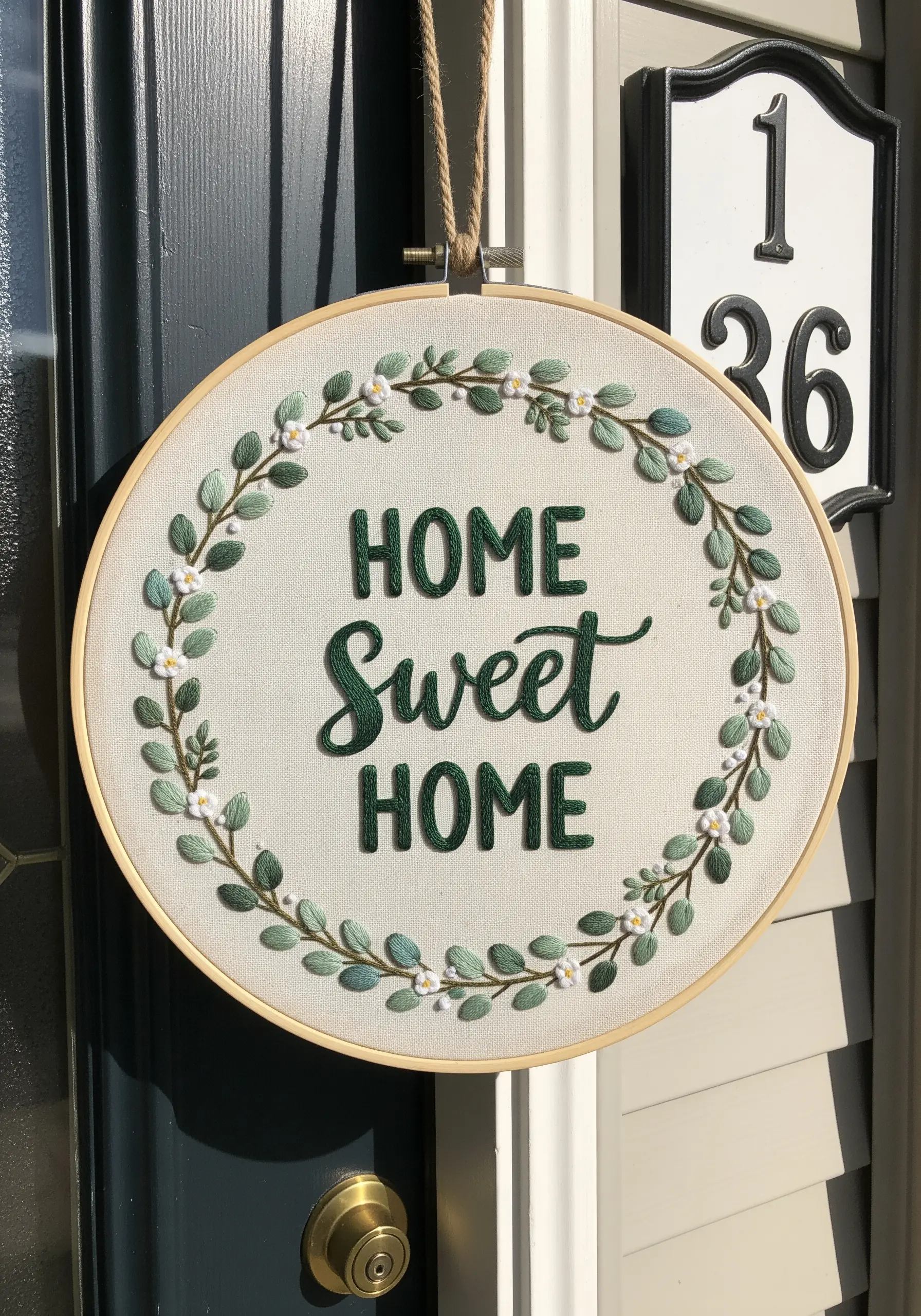
To make your lettering stand out, give it dimension with a padded satin stitch.
Trace your letters, then fill them with a base of horizontal split stitches before covering them with perfectly smooth, vertical satin stitches.
This creates a raised, rounded effect that catches the light beautifully.
For the delicate wreath, use the fishbone stitch for the leaves, as it creates a lovely central vein, and add small French knots for the flower blossoms.
19. A Stitcher’s Pocket Toolkit
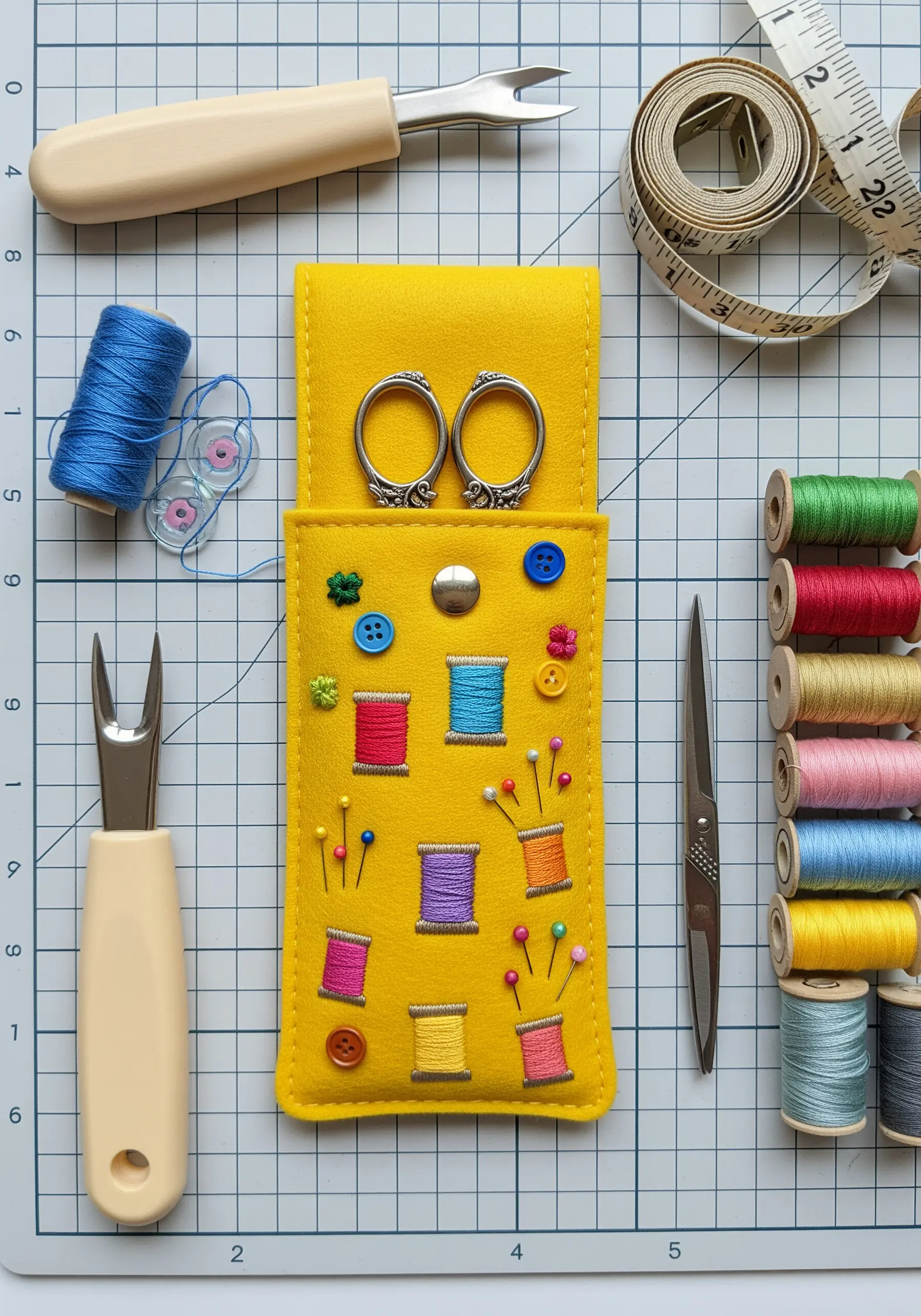
A thoughtful and practical gift for any fellow maker.
Felt is the ideal material for this project as it’s soft enough to hold pins and needles without fraying.
Create the miniature thread spools by wrapping floss around small appliquéd felt rectangles.
The beauty is in the details: add tiny buttons and straight-stitched pins to complete the playful trompe l’oeil effect. A simple running stitch is all you need to assemble the pouch.
20. Hand-Stitched Nursery Mobile
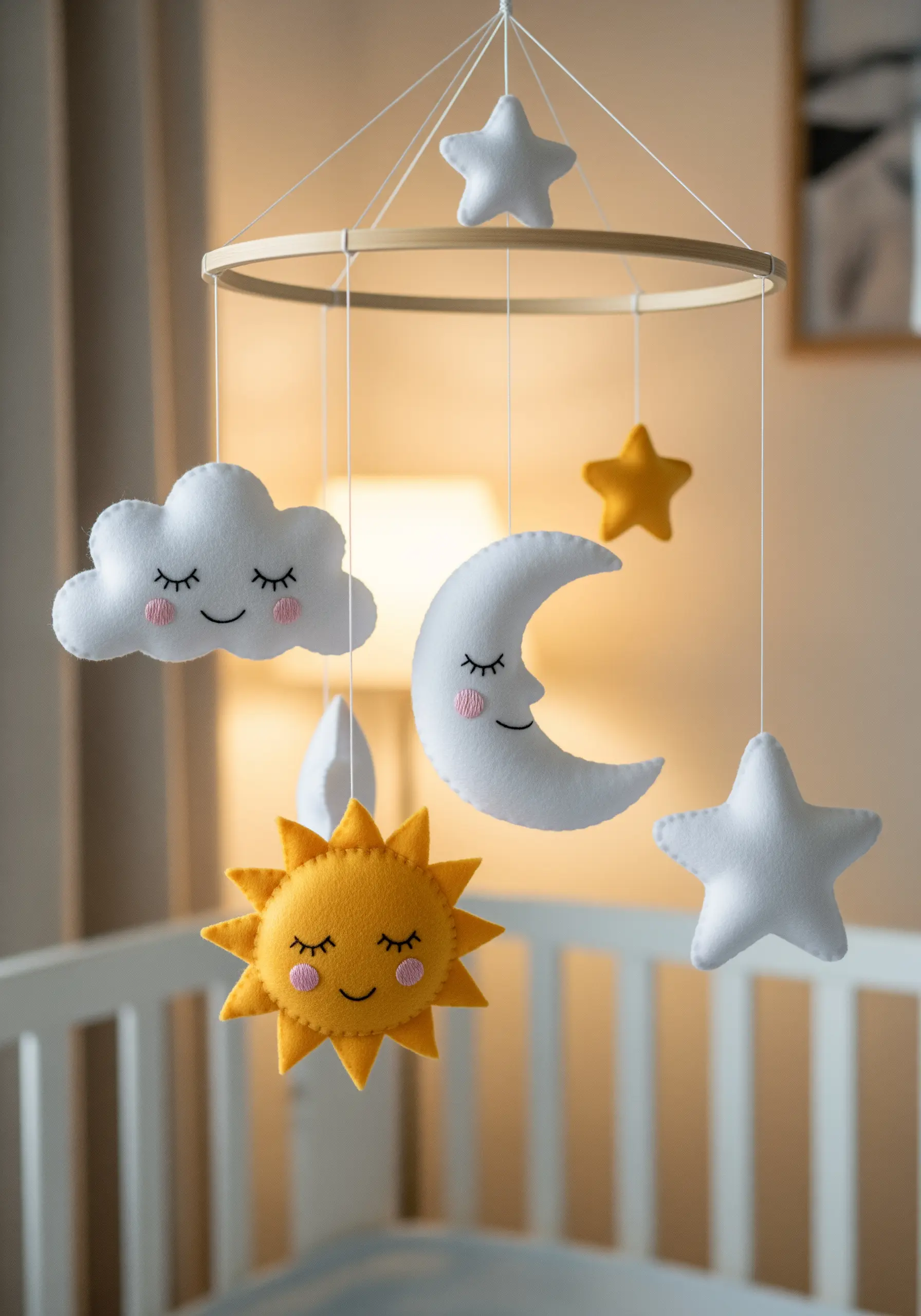
Create a gentle, heirloom-quality gift with soft felt and simple stitches.
Choose a muted, calming color palette appropriate for a nursery.
The small embroidered faces—just a curved backstitch for the eyes and a tiny straight stitch for the mouth—are what infuse these simple shapes with personality and sweetness.
Use a whipstitch or a neat blanket stitch to join the felt pieces, ensuring they are securely stuffed and sewn for a safe and lasting treasure.
21. Textured Cactus Pot Cozy
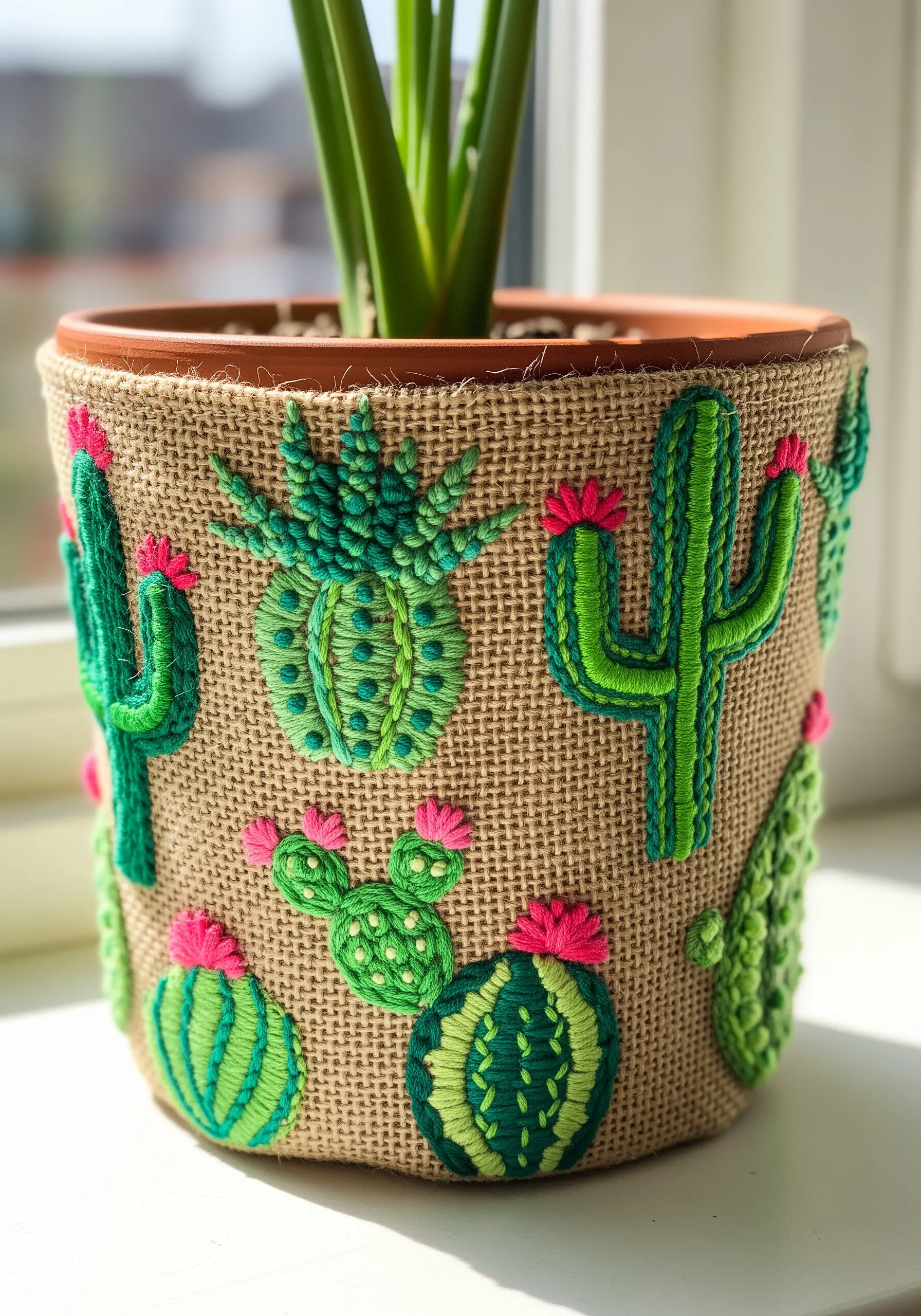
Burlap’s coarse, open weave is the perfect canvas for bold, textural embroidery.
Use a thick, smooth thread like Perle cotton, which won’t get lost in the fabric’s texture.
Play with different stitches to represent various cacti species: a chunky chain stitch for outlines, French knots for prickly pear spines, and woven wheel stitches for vibrant pink flowers.
These organic texture embroidery designs celebrate bold shapes and tactile surfaces.
22. Luxe Velvet Monogram Pouch
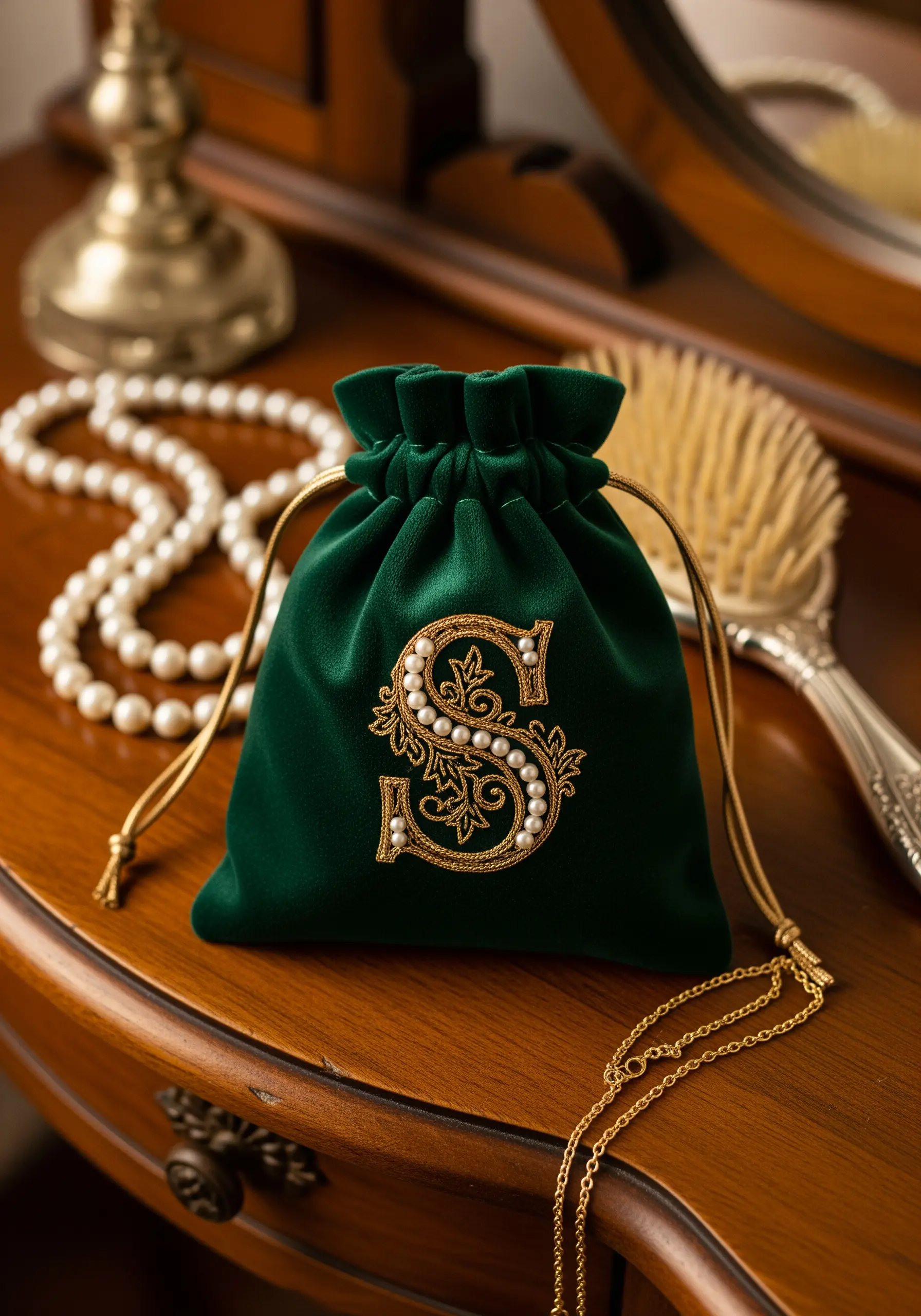
The secret to embroidering successfully on velvet is to manage its plush pile.
Always use a tear-away or wash-away stabilizer on the back to prevent the fabric from shifting and to give your stitches a stable foundation.
For the monogram, a delicate couched metallic cord or a fine chain stitch provides a clean, shimmering line that sits beautifully atop the velvet.
Adding tiny pearls or beads after the stitching is complete introduces an extra layer of texture and opulence.
23. Framed Botanical Greeting Card
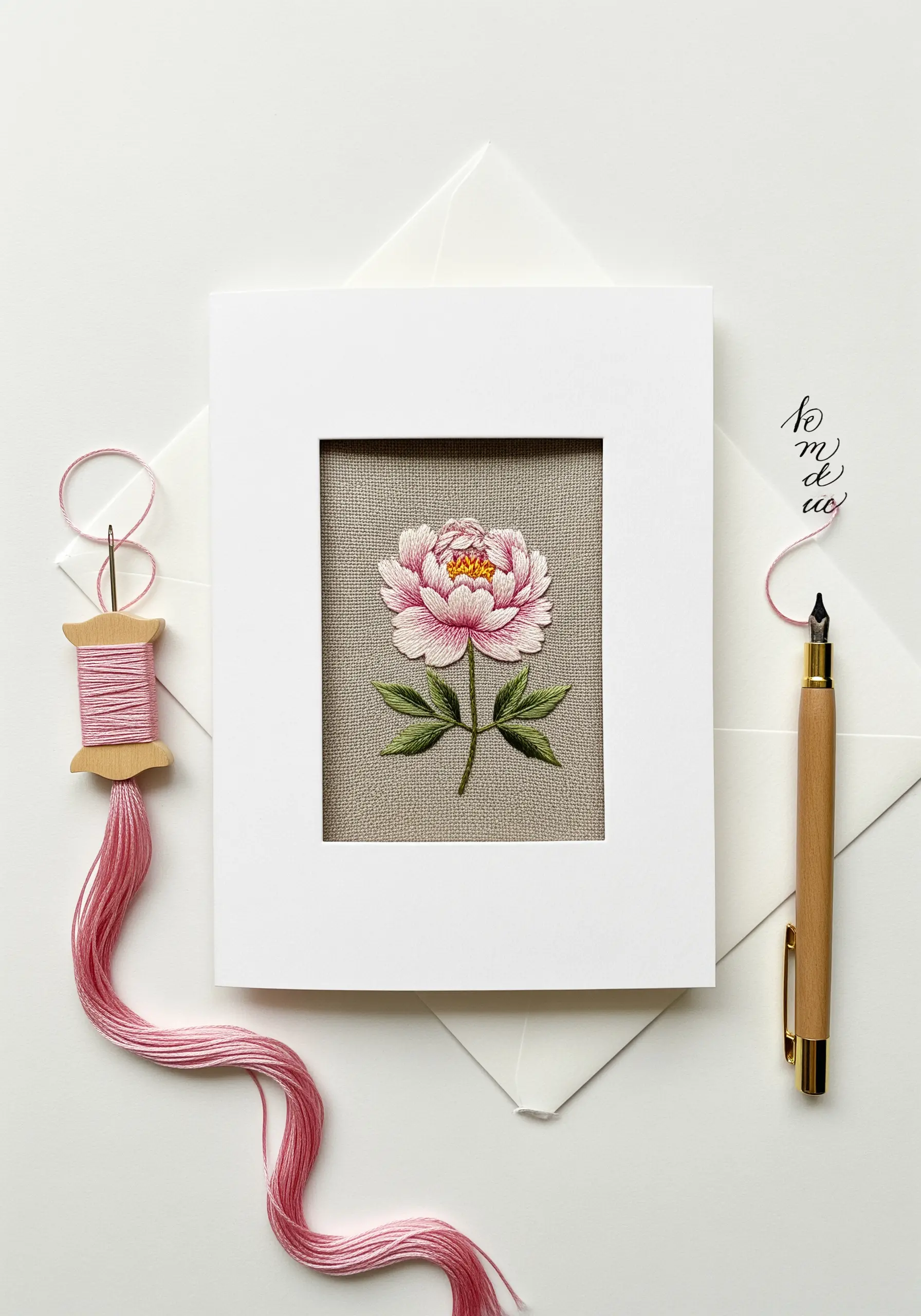
Elevate a handmade card into a permanent piece of art by thinking about its presentation from the start.
Stitch your design on a high-quality piece of linen slightly larger than the card’s aperture.
Use the long-and-short stitch to create soft, painterly color blending in the flower petals.
Once complete, carefully mount the embroidered fabric behind a pre-cut mat board before attaching it to the card front. It’s a gift designed to be framed and cherished.
24. Personalized Felt Eyeglass Case
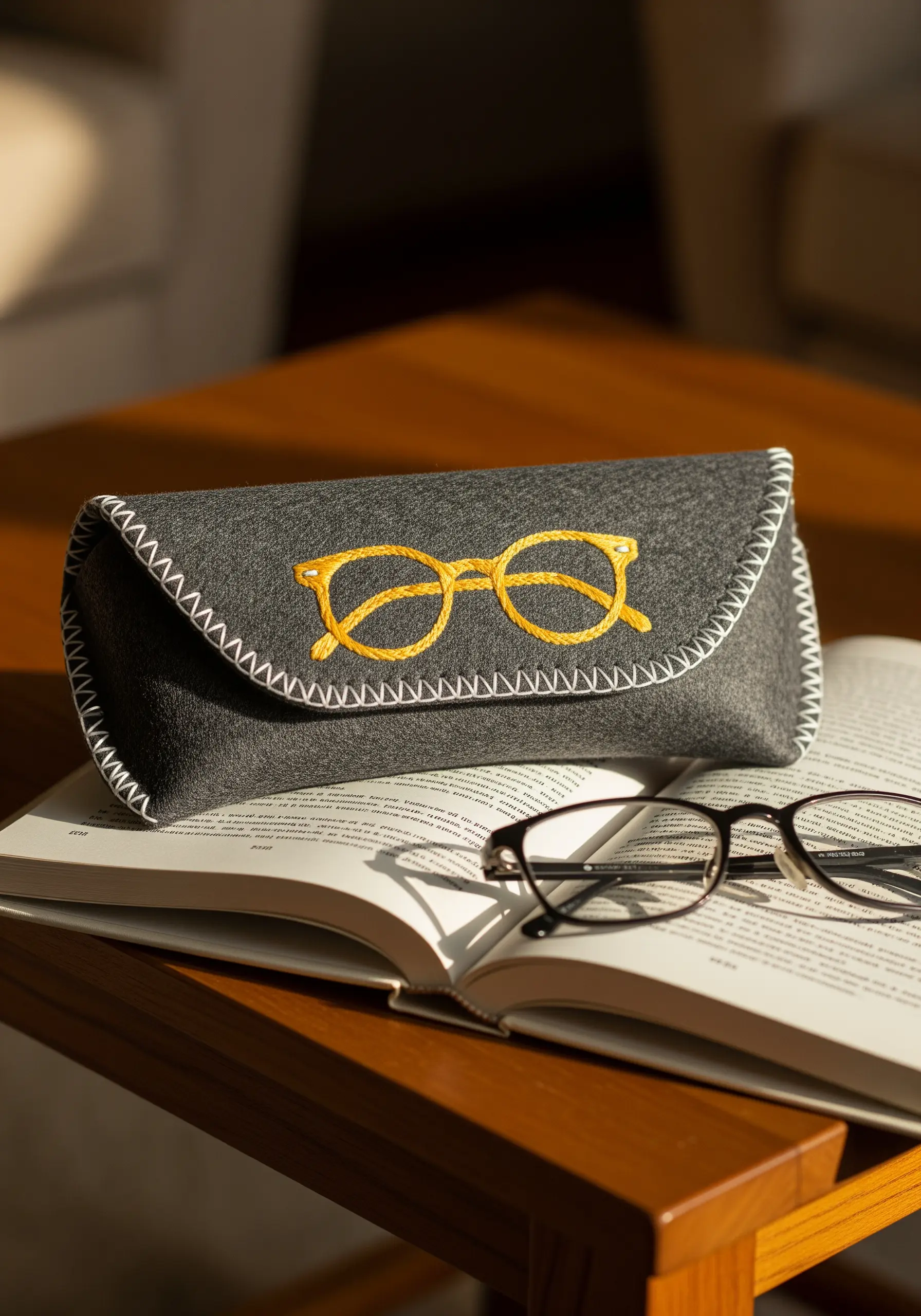
This is a wonderfully quick and satisfying project that looks incredibly chic.
Use a thick, stiffened felt to give the case structure and to protect the glasses inside.
The design’s effectiveness comes from its simplicity—a clean outline of a pair of glasses stitched in a contrasting color using a stem stitch.
Finish the edge with a decorative blanket stitch, which not only looks beautiful but also reinforces the seams for durability.