

That denim jacket in your closet holds more than just memories; it holds potential. The same goes for that favorite pair of jeans. They are blank canvases waiting for a story, and with a needle and thread, you can be the one to tell it.
Transforming them into something truly special isn’t about learning dozens of complex stitches. It’s about making intentional choices. It’s choosing the fishbone stitch to create a perfect leaf vein, using just two strands of floss for a delicate vine, or placing a single sprig where it will have the most impact. It is artistry found in detail, not difficulty.
Here, you’ll find 25 distinct ways to bring botanical life to your denim. Each technique is a key to unlocking a new level of polish and personality in your work. Let this be your guide to turning everyday fabric into wearable art that feels, and looks, like you.
1. Master the Fern Gradient with Directional Satin Stitch

Create a realistic fern by dividing each leaflet into three horizontal sections.
Use a directional satin stitch, angling your stitches at about 45 degrees toward the central stem.
Assign a different shade of green—light, medium, and dark—to each section, blending them slightly where they meet to create a smooth, natural gradient.
This technique gives the illusion of light hitting the frond, adding depth that a single color cannot achieve.
For the central stem, use a whipped backstitch to give it a raised, defined edge that stands out against the leaflets.
2. Create a Bold Monstera with Padded Satin Stitch Appliqué
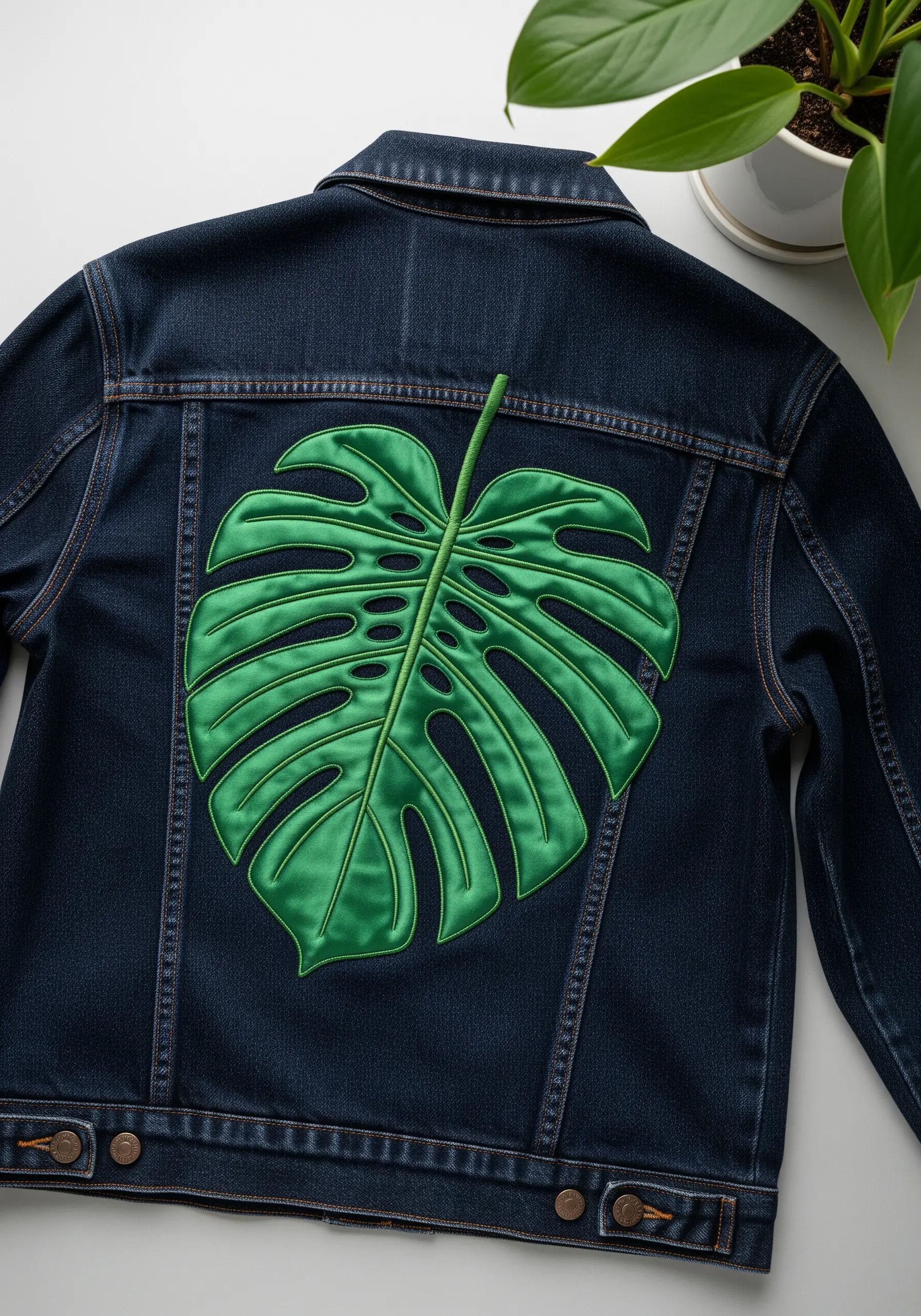
To achieve this clean, patch-like effect, start by cutting your leaf shape from a piece of sturdy green fabric.
Secure it to the denim with a fusible backing, then outline the entire shape and its inner details with a foundation of split stitches.
Work a dense satin stitch over this foundation, using a high-sheen rayon or silk thread. The padding underneath raises the stitches, creating a sharp, dimensional edge that makes the design pop against the denim’s texture.
This method provides a flawless finish that looks professional and is incredibly durable.
3. Stitch a Delicate Climbing Vine with Mixed Stitches
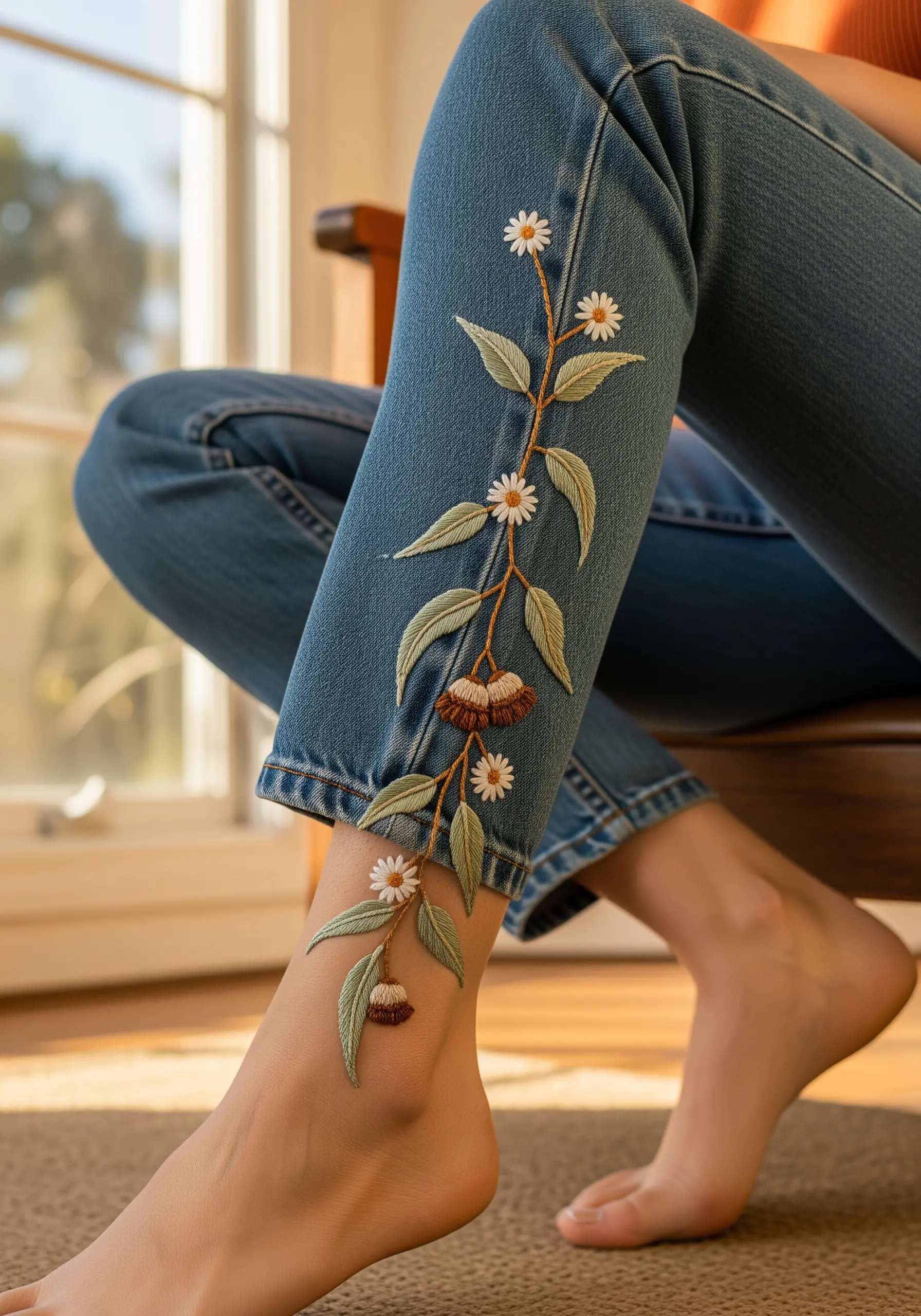
Combine several simple stitches to create a sophisticated, flowing vine that feels light and organic.
Use a fine, two-ply thread for the entire design to maintain its delicate appearance.
Work the main stem with a smooth stem stitch, then add leaves using the fishbone stitch for its central vein detail.
For the tiny white flowers, stitch five individual lazy daisy stitches in a circle, and place a single French knot in the center with a contrasting color like yellow or orange.
The key here is the variation in texture and form, which gives the composition whimsical spring energy.
4. Frame a Vest with Bold, Color-Blocked Autumn Leaves
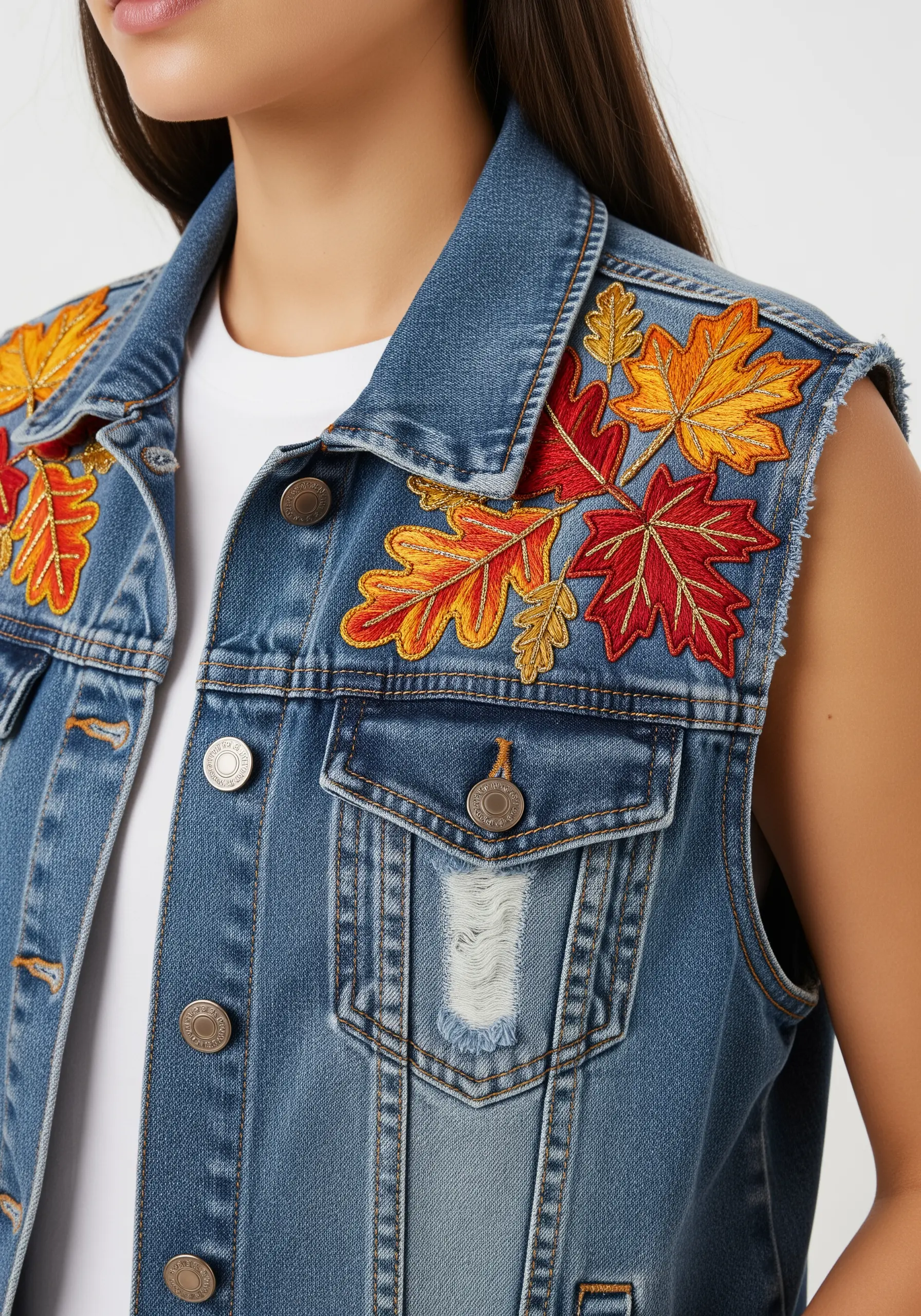
Transform a denim vest by focusing your embroidery on the shoulder panels for a yoke-like effect.
Use a warm, autumnal palette of red, orange, and gold, and fill each leaf with a directional satin stitch to suggest texture.
The most important element here is the heavy outline. Use a contrasting color like dark gold or brown and stitch it with a thick, raised chain stitch to make each leaf shape distinct and graphic.
This technique combines color theory with textural outlines to create a design that is both rustic and bold.
5. Scatter Floating Ginkgo Leaves for Artful Asymmetry

Create a sense of gentle movement by stitching ginkgo leaves as if they are falling across the collar and shoulders of your jacket.
Avoid perfect symmetry; instead, cluster some leaves together and let others drift off on their own.
Use a long-and-short stitch, starting from the base and fanning outwards, to mimic the ginkgo’s natural lines.
Stitching with a single shade of lustrous gold or mustard yellow thread gives the design an elegant, almost metallic finish against the cool blue denim.
6. Design a Botanical Sampler with Appliquéd Patches
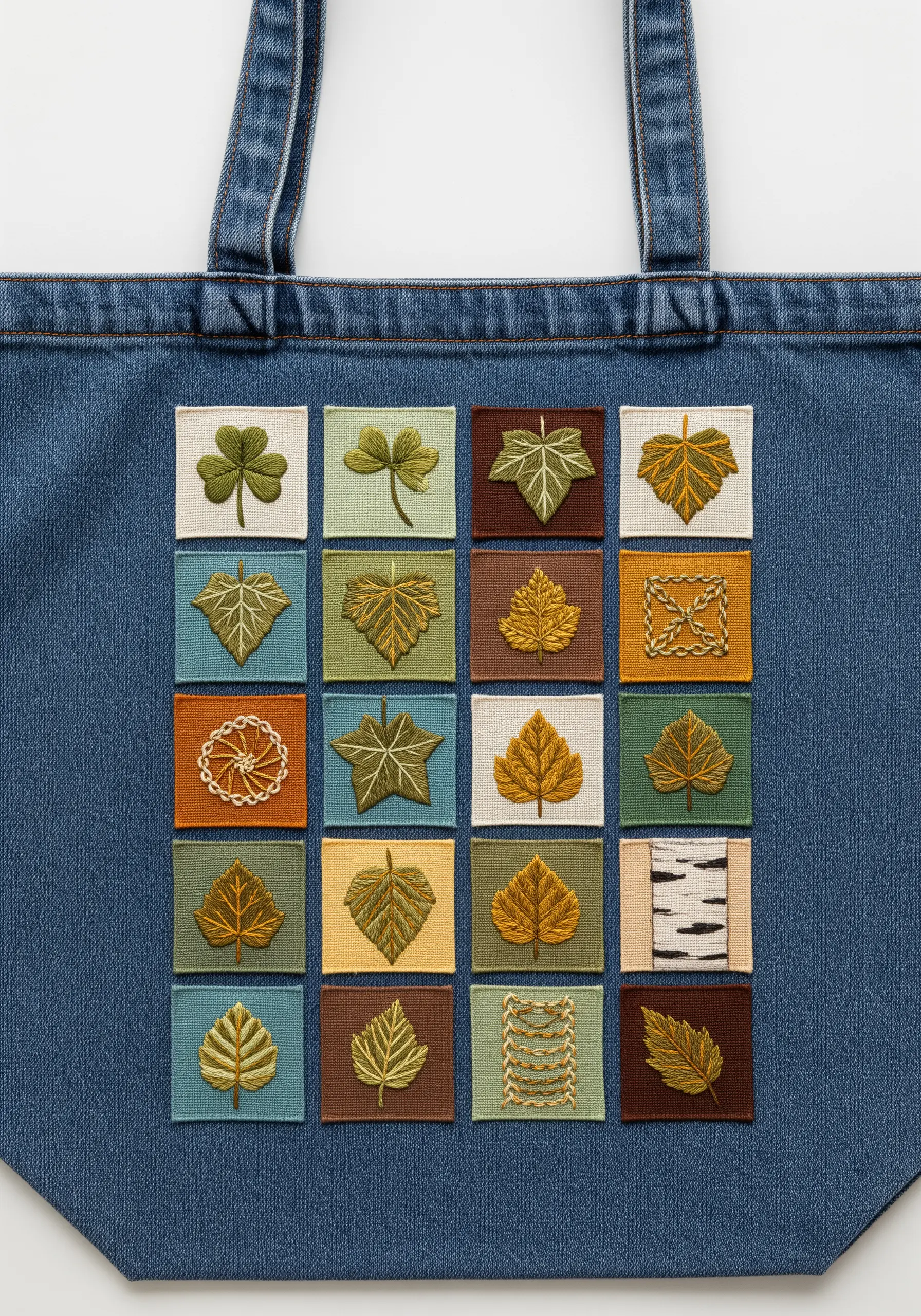
Turn your denim tote into a reference library of leaf stitches. This is a brilliant way to practice and display your skills.
Stitch various leaf designs—using fly stitch, cretan stitch, fishbone, and more—onto small squares of canvas or linen in complementary colors.
Trim each square neatly and arrange them in a grid on your bag before carefully stitching them down with a simple running stitch.
This creates a modern, quilt-inspired look that is both personal and a testament to your craft.
7. Create High-Contrast Ivy on Dark Denim

Make a climbing ivy vine stand out on black or dark-wash denim by using threads with a subtle sheen and varied tones.
Instead of a flat green, use a variegated thread or alternate between sage green and a silvery grey to give the leaves a realistic, light-catching quality.
Outline each leaf with a split stitch before filling it with fishbone stitch for a clean, defined shape.
A simple whipped backstitch creates a twisting, dimensional vine that connects the leaves, resulting in a design that is both elegant and dramatic.
This method is perfect for embroidering realistic foliage on jackets.
8. Integrate an Olive Branch with Smart Pocket Placement
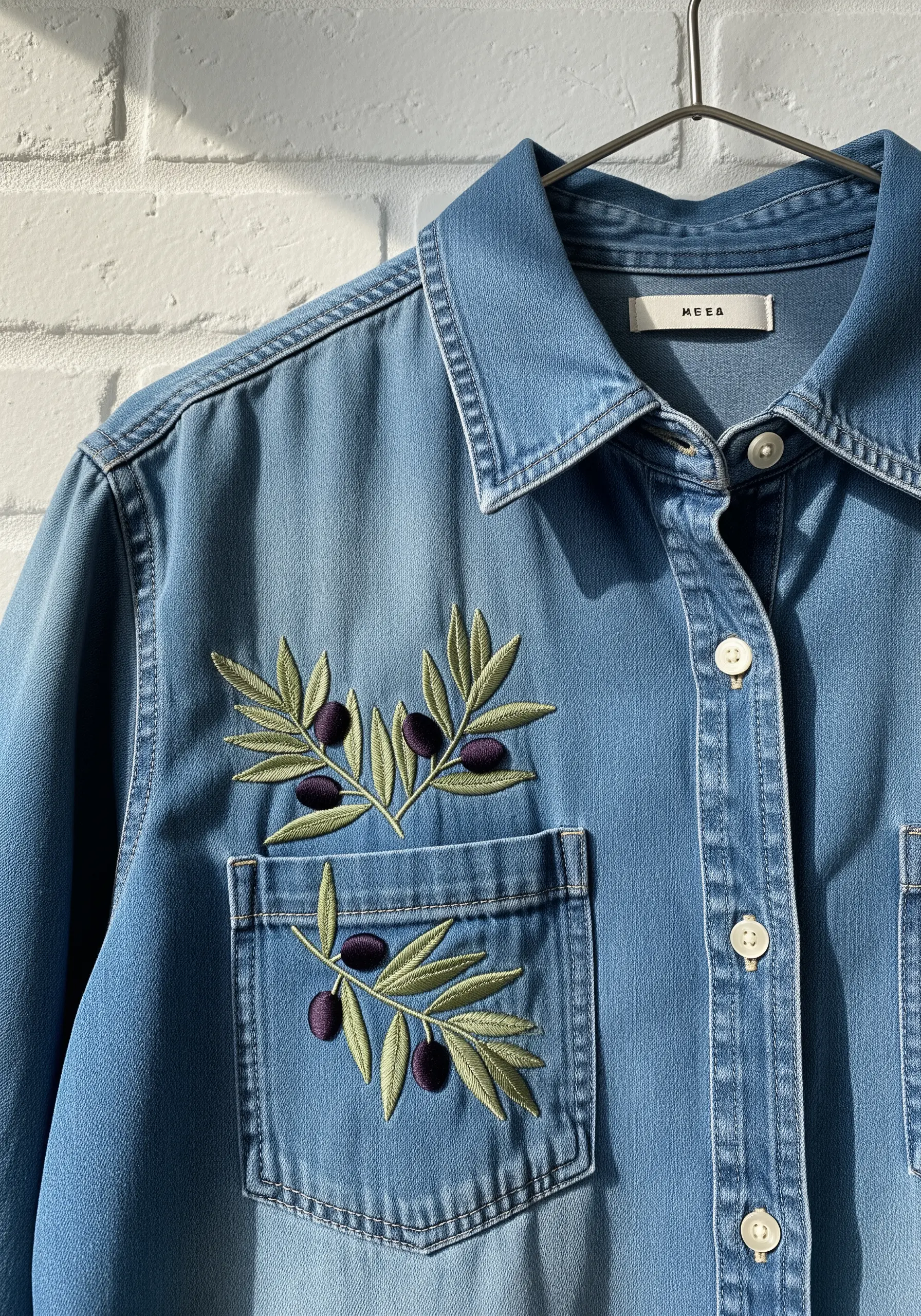
Elevate your design by making it interact with the garment’s existing features, like a pocket.
Position your olive branch so it appears to be growing out from behind the pocket, with some leaves stitched directly onto the pocket itself.
Use a soft, sage green for the fishbone-stitched leaves and a deep purple satin stitch for the olives to create a classic, Mediterranean feel.
Remember to stitch only through the top layer of the pocket to keep it functional. This thoughtful placement makes the embroidery feel intentional and fully integrated.
9. Stitch Symmetrical Banana Leaves for a Winged Effect

Create a stunning statement piece on the back of a jacket by stitching two large, symmetrical leaves that mimic the look of wings.
Use long-and-short stitch to create bands of color, blending shades of green from lime to deep forest green to replicate the plant’s natural variegation.
Always stitch from the outer edge of the leaf toward the central vein to ensure your stitches follow the natural growth pattern.
A bold, black split stitch outline will contain the colors and give the design a sharp, graphic finish. This is a great project to try tropical botanical embroidery patterns.
10. Add a Minimalist Accent with a Single Sprig
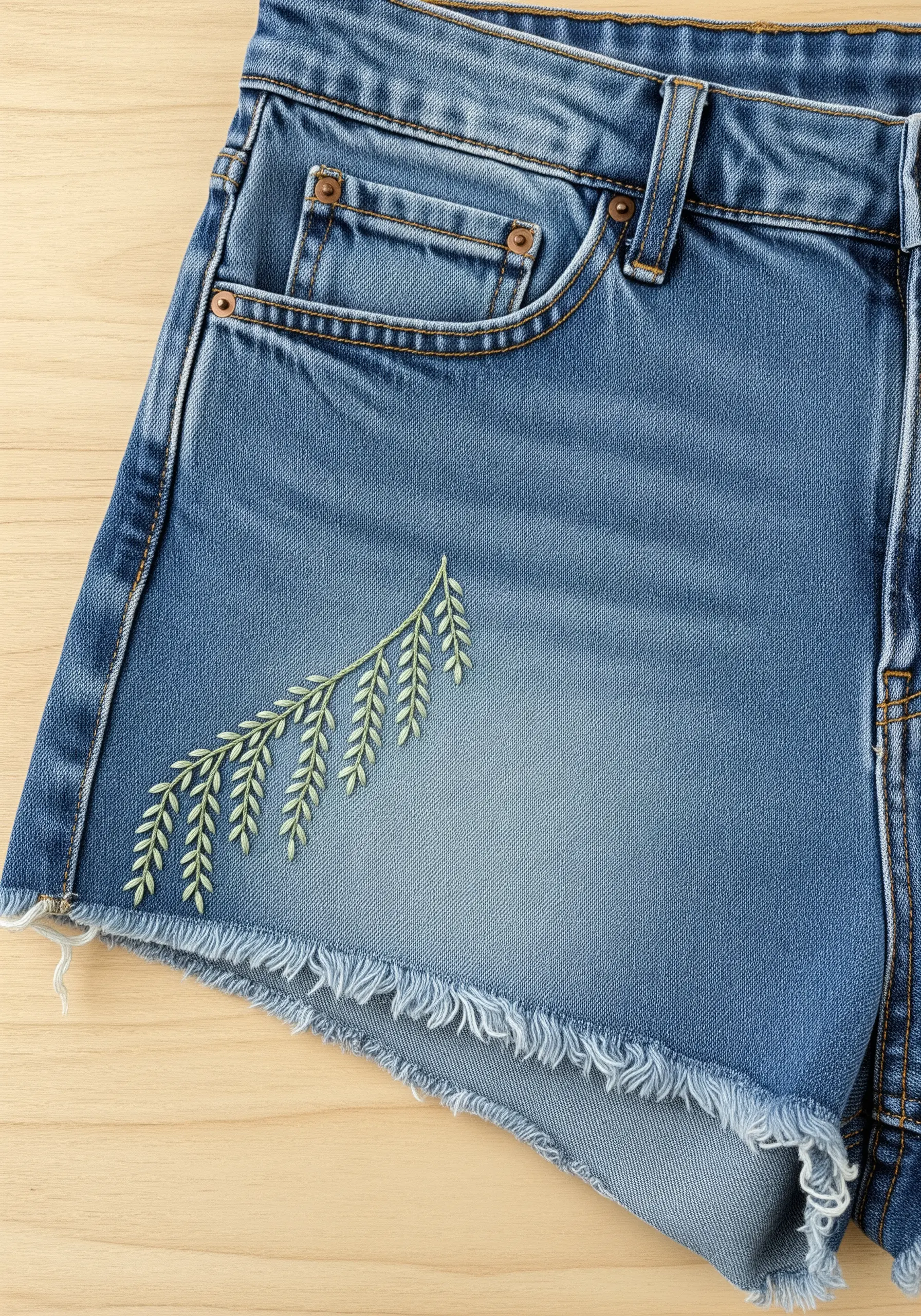
Sometimes, the most impactful statement is the most subtle one. A small, delicate sprig can add a touch of elegance to denim shorts or cuffs.
Choose a single, muted color like sage green or dusty blue that complements the denim wash.
Use a simple fly stitch for the leaves, arranged on either side of a stem stitch line. This stitch is quick, easy, and creates a beautiful leaf shape with minimal effort.
Keep the thread count low—just two or three strands—to ensure the result is refined and not bulky.
11. Build a Lush Monstera Cluster by Layering
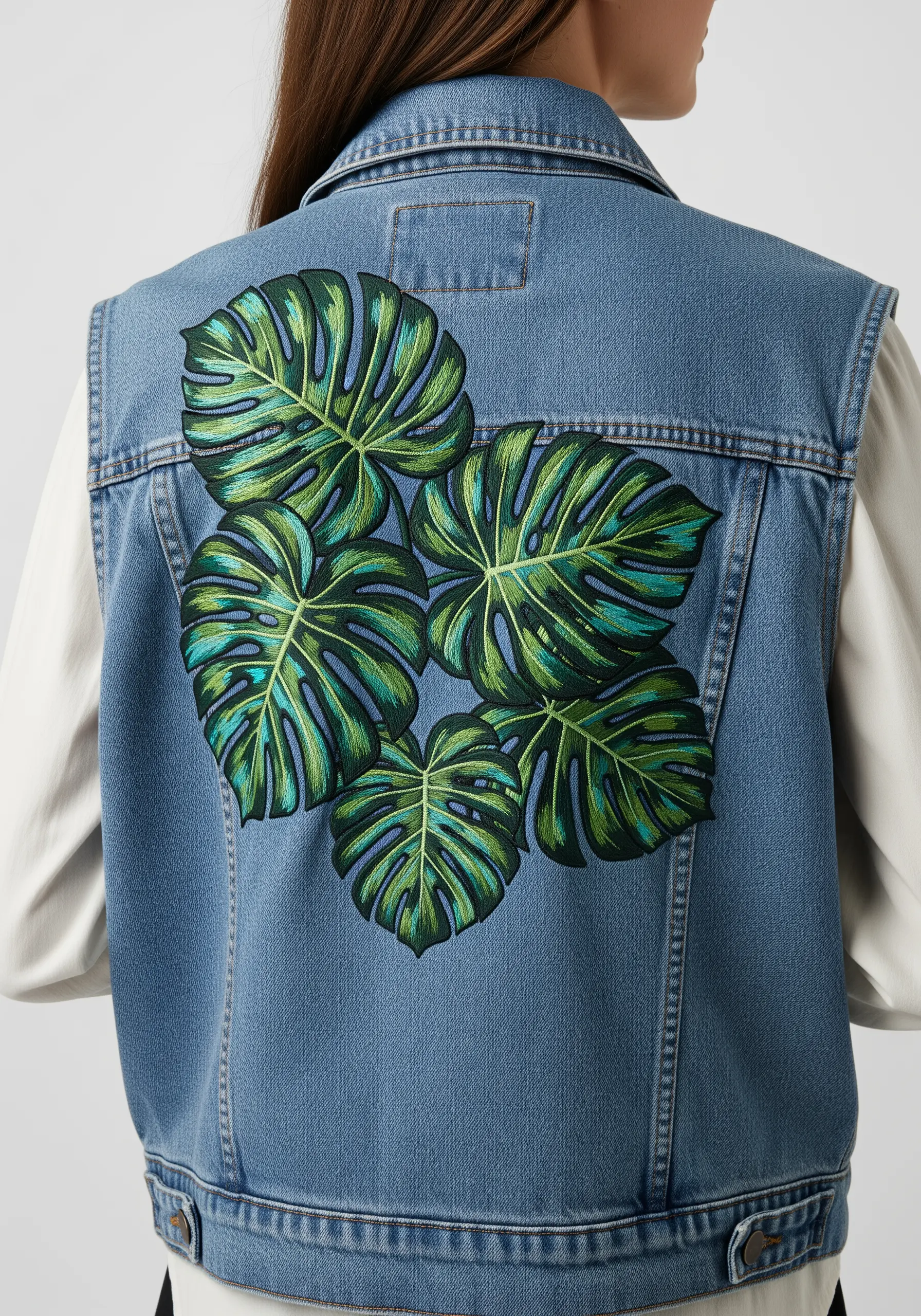
Create a dense, tropical feel by stitching overlapping monstera leaves. The trick is to plan your layers.
Start by stitching the leaves that will be in the background first. Once they are complete, stitch the foreground leaves on top, allowing them to partially cover the ones behind them.
Use a spectrum of greens, teals, and even deep blues to create shadows and highlights, which will enhance the illusion of depth.
This approach transforms a group of flat shapes into a dynamic, three-dimensional botanical texture that feels alive. Explore more ways to layer leaf stitching for added dimension.
12. Frame Distressed Details with Bold Red Maple Leaves
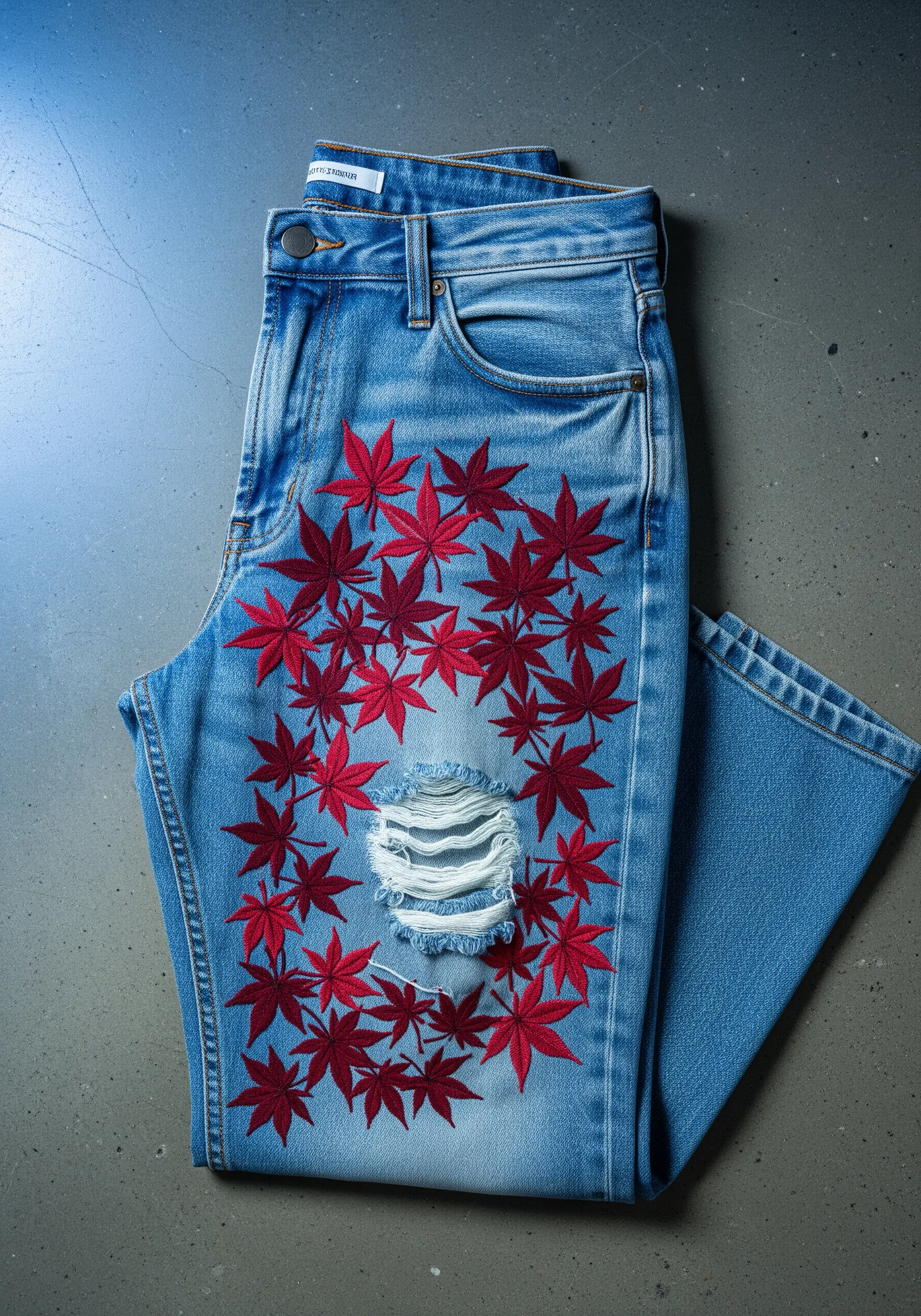
Turn a ripped pair of jeans into a design feature by surrounding the distressed area with embroidery.
A wreath of vibrant red Japanese maple leaves creates a stunning frame and draws the eye.
Use a dense satin stitch with a high-quality, colorfast red thread to ensure the color remains brilliant after washing.
Always use a stabilizer on the back of the denim, especially around a distressed area, to prevent the fabric from stretching or puckering under the tension of the stitches.
13. Embellish a Button Placket with Repeating Shamrocks
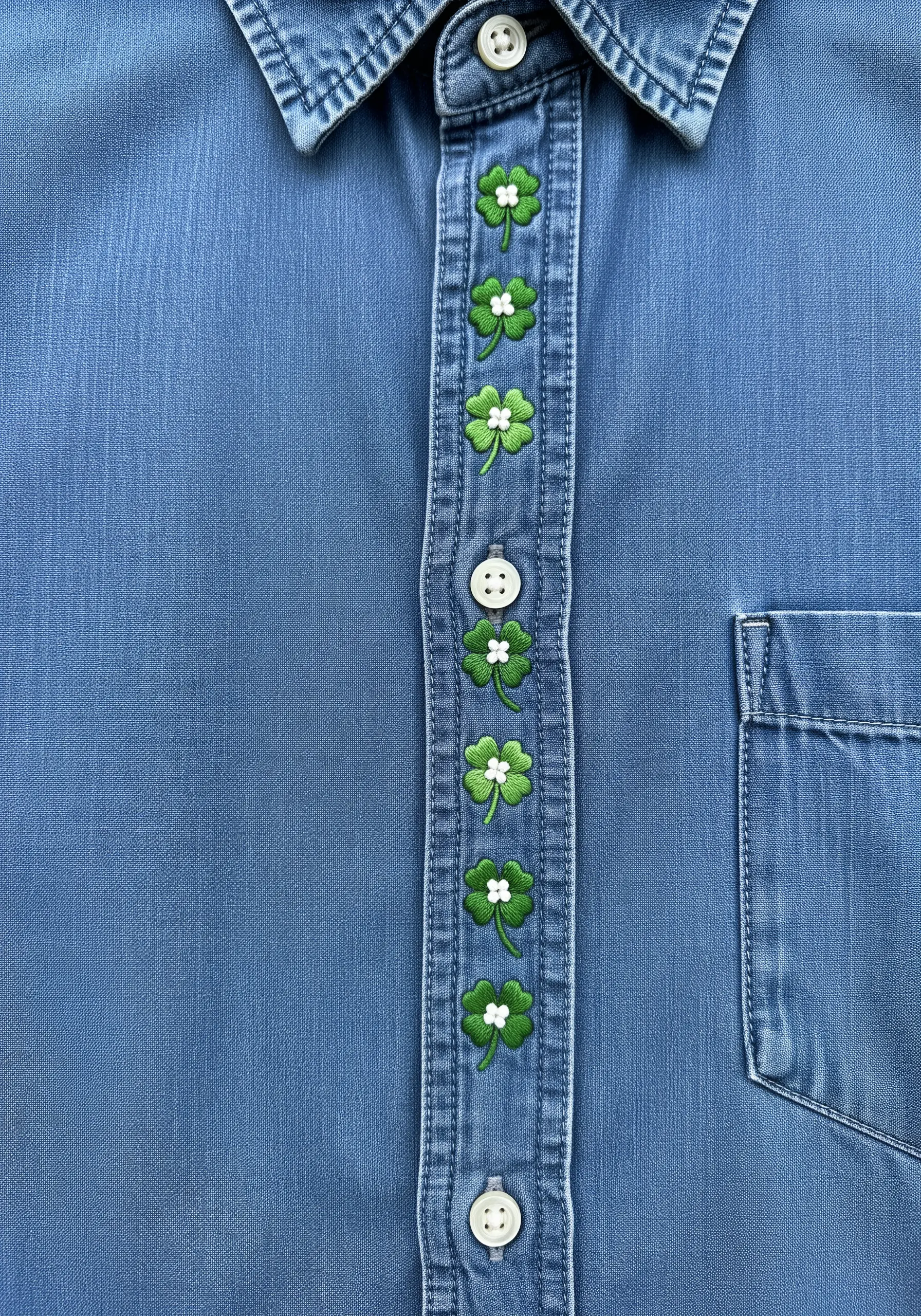
Draw attention to the finer details of a garment by adding small, repeating motifs to an unexpected area like the button placket.
Each shamrock can be quickly formed using three lazy daisy stitches for the leaves and a short straight stitch for the stem.
To create a perfectly consistent pattern, make a small template on paper to mark the placement for each shamrock between the buttons.
Adding a tiny white French knot flower in the center of each clover adds a final, charming detail.
14. Weave a Textured Forest Floor Along a Hemline
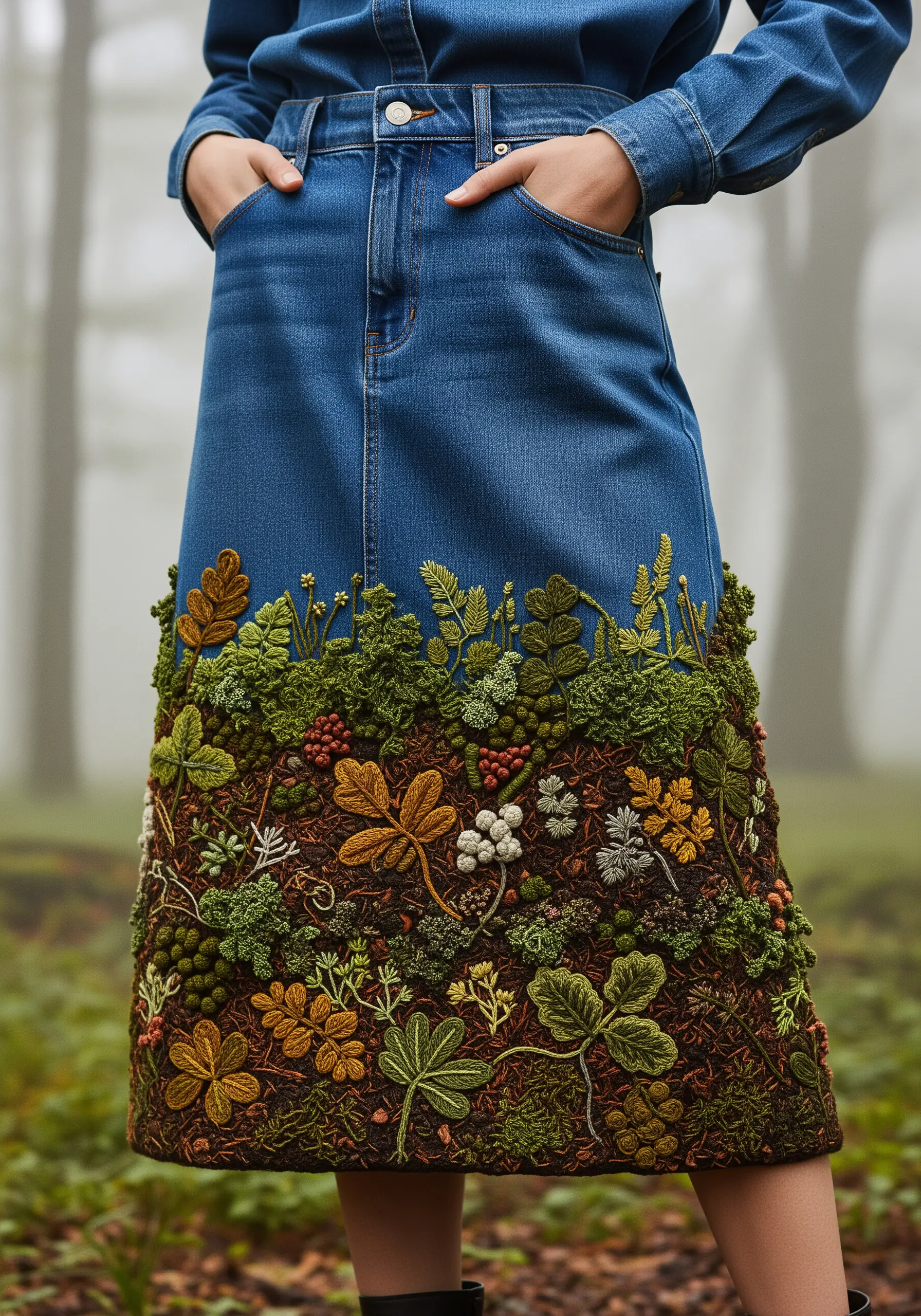
Move beyond individual leaves and create an entire ecosystem on the hem of a denim skirt.
This technique is all about building layers of texture. Use Turkey work to create a mossy, three-dimensional base, then add French and bullion knots for berries and fallen leaves.
Incorporate a variety of leaf stitches in autumnal shades for variety. Don’t aim for perfection; a bit of randomness makes it feel more natural and organic.
This is an advanced project that turns a simple garment into a true piece of wearable fiber art. Dive into more earthy texture embroidery patterns to expand your skills.
15. Replicate a Delicate Skeleton Leaf with Fine Linework
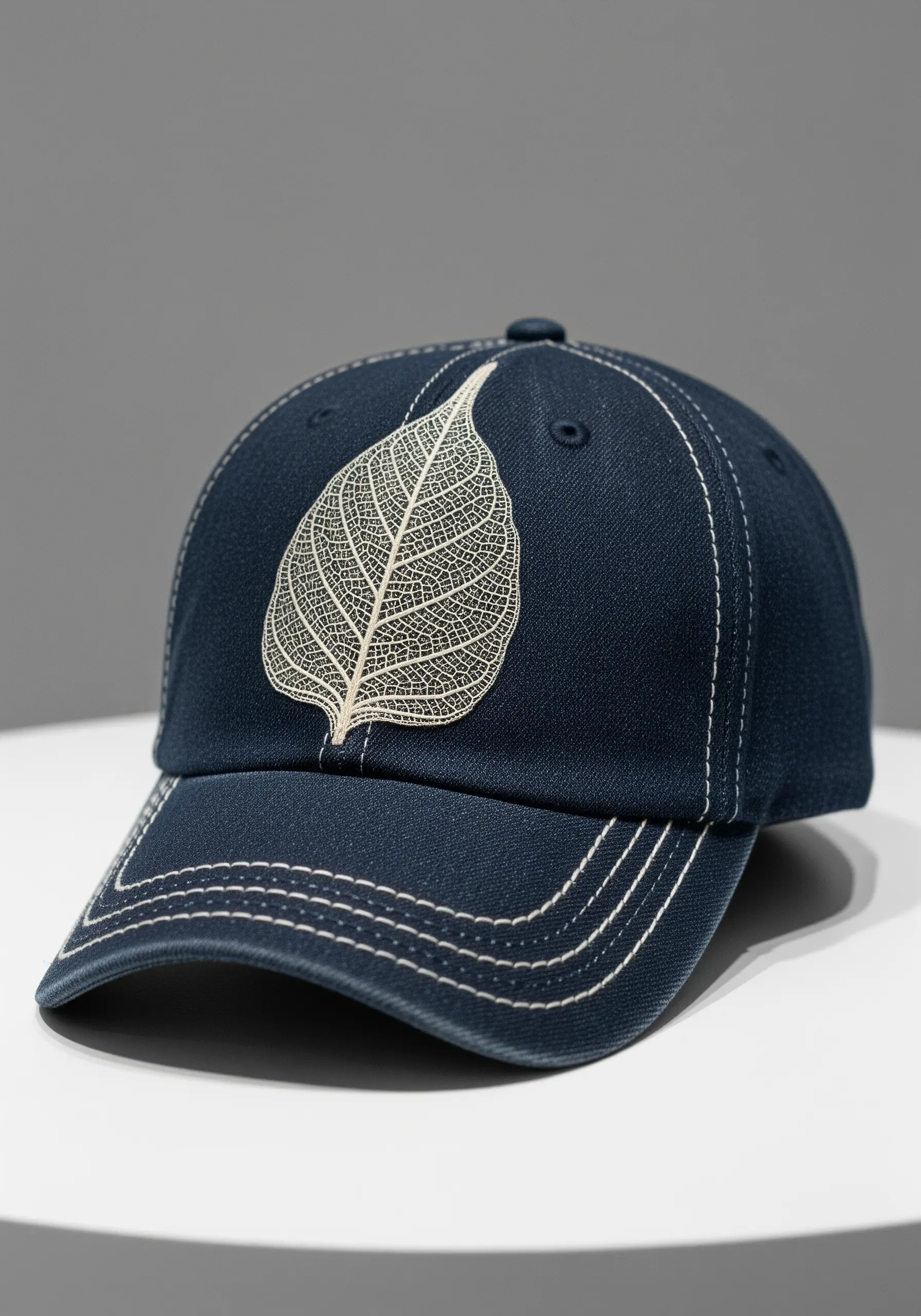
Capture the intricate beauty of a skeleton leaf by focusing purely on linework.
Use a single strand of off-white or light beige thread to contrast sharply with dark fabric, like on a baseball cap.
A simple backstitch is all you need. The challenge lies in the precision and density of the veins.
To ensure accuracy, print a high-resolution image of a skeleton leaf onto a water-soluble stabilizer, adhere it to your fabric, and stitch directly over the lines. The stabilizer will wash away, leaving only your perfect, delicate stitches. Study leaf vein details to master this look.
16. Craft a Timeless Laurel Wreath

The laurel wreath is a classic symbol of victory and honor, and it makes a powerful statement on the back of a jacket.
To create a perfectly curved shape, use an embroidery hoop that is slightly larger than the wreath itself to ensure even tension.
Each leaf is made with a fishbone stitch. To keep them consistent, draw a central guideline down the middle of each leaf shape and use it to direct your stitches.
Using a single, muted gold or olive-green thread lends a sophisticated, almost regal, quality to the finished piece.
17. Combine Botanicals with a Geometric Framework
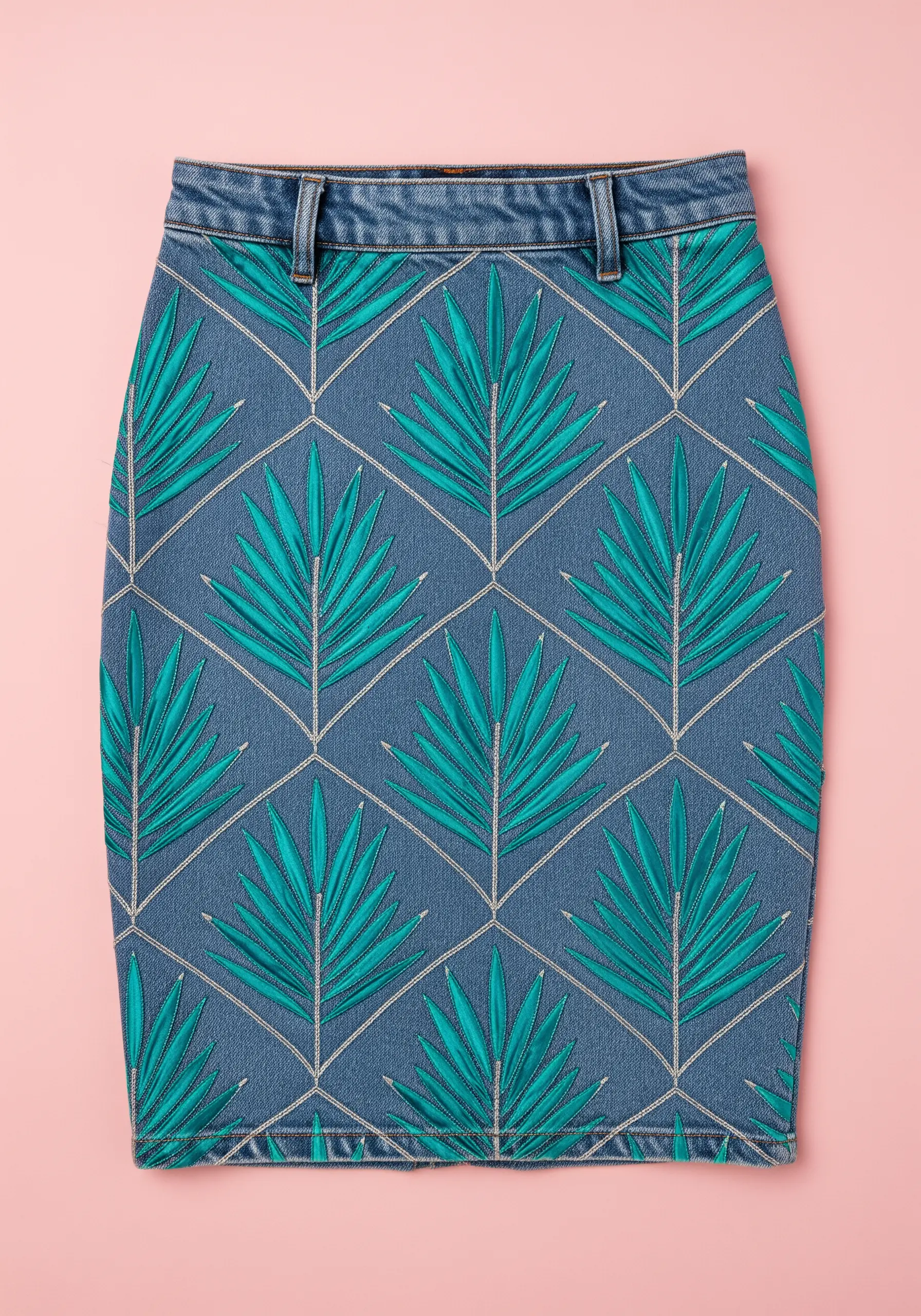
Create a striking, modern pattern by placing organic leaf shapes within a rigid geometric grid.
First, stitch the grid onto your denim skirt using a simple backstitch in a neutral color like white or silver. This provides the structure for your design.
Next, fill each diamond or square with a vibrant palm frond using a contrasting color like teal.
The interplay between the sharp, angular lines and the soft, natural curves of the leaves creates a dynamic visual tension that feels very contemporary. It’s a great way to try contemporary stitch designs.
18. Capture a Dandelion’s Fleeting Moment
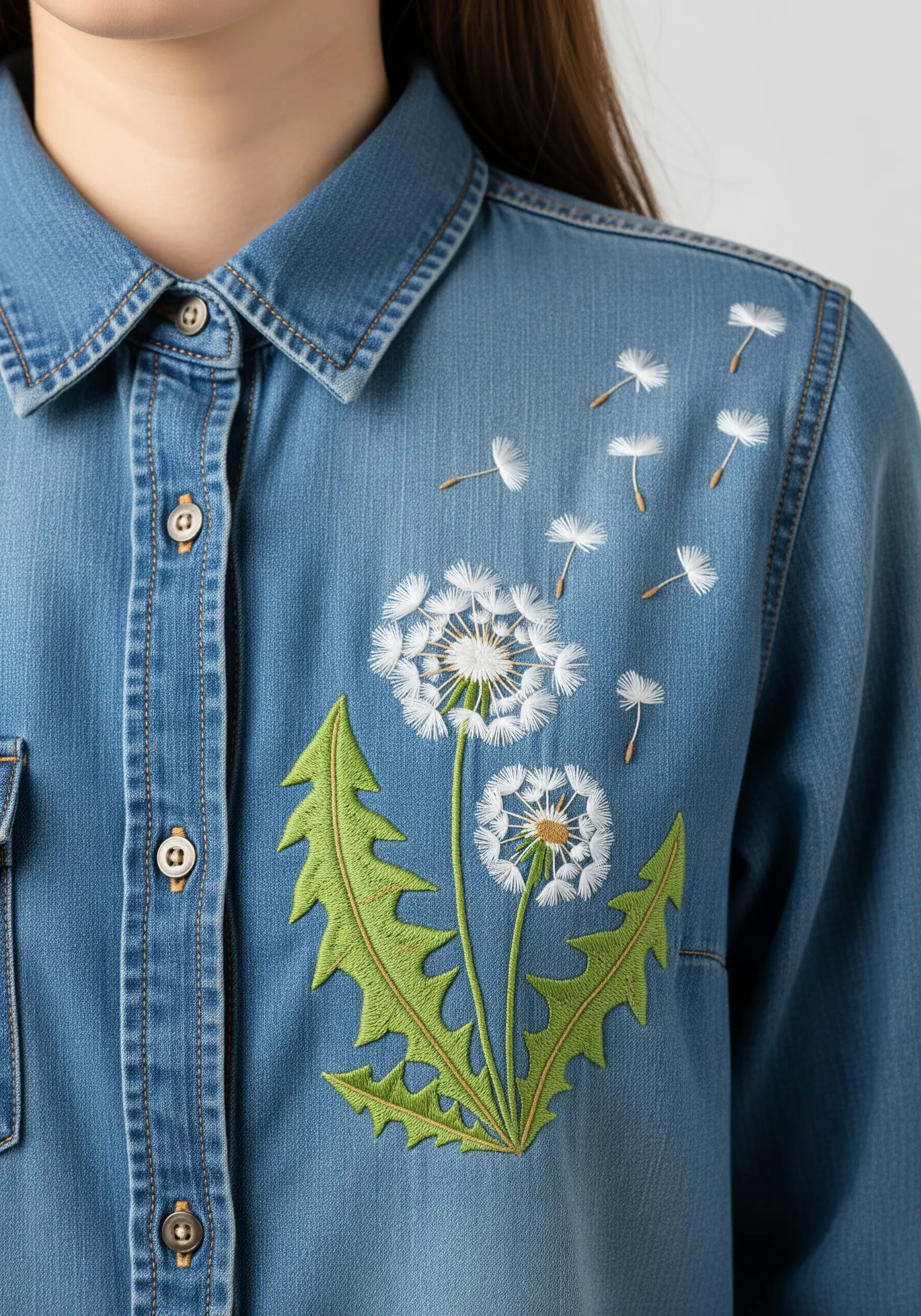
This design is an exercise in creating a sense of weightlessness and motion.
For the dandelion head, use radiating straight stitches in white, anchored with a cluster of yellow and green French knots at the center.
The real magic is in the floating seeds. Each one is a single, short straight stitch for the stem, topped with three even smaller, fanned-out stitches for the pappus.
Scatter them asymmetrically, as if caught in a breeze, to make the design feel alive and dynamic.
19. Weave a Thorny Vine Across a Seam
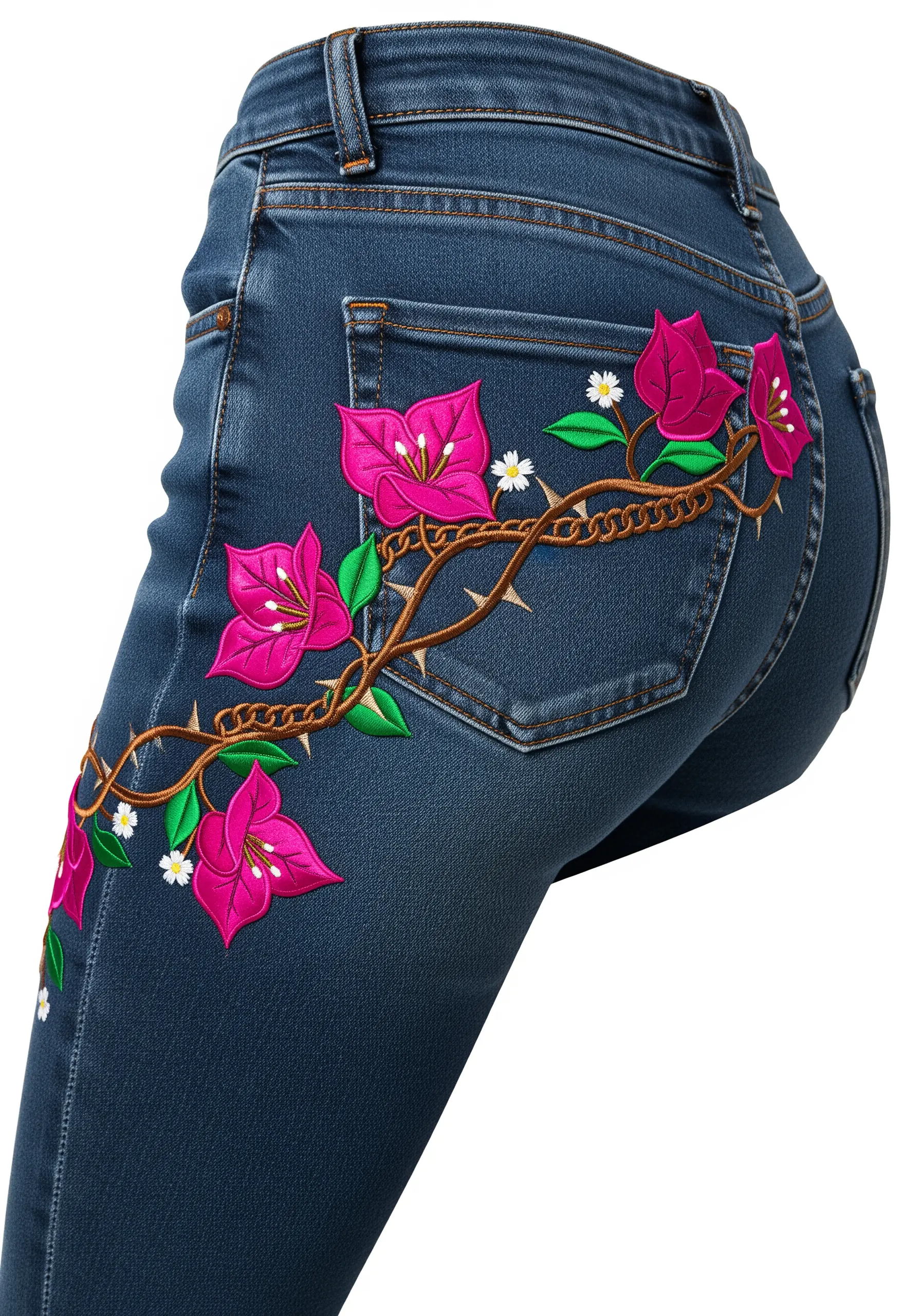
Create a dynamic design that flows across the body by wrapping a vine of bougainvillea around the hip and back pocket of your jeans.
For the vibrant pink bracts (the leaf-like flowers), use a long-and-short stitch to allow for subtle color blending.
The vine itself can be made more interesting by stitching a chain design, with tiny straight stitches for thorns.
This composition moves beyond a simple motif, turning the entire garment into a canvas and creating a truly unique piece of wearable art.
20. Achieve Understated Elegance with Tone-on-Tone Linework
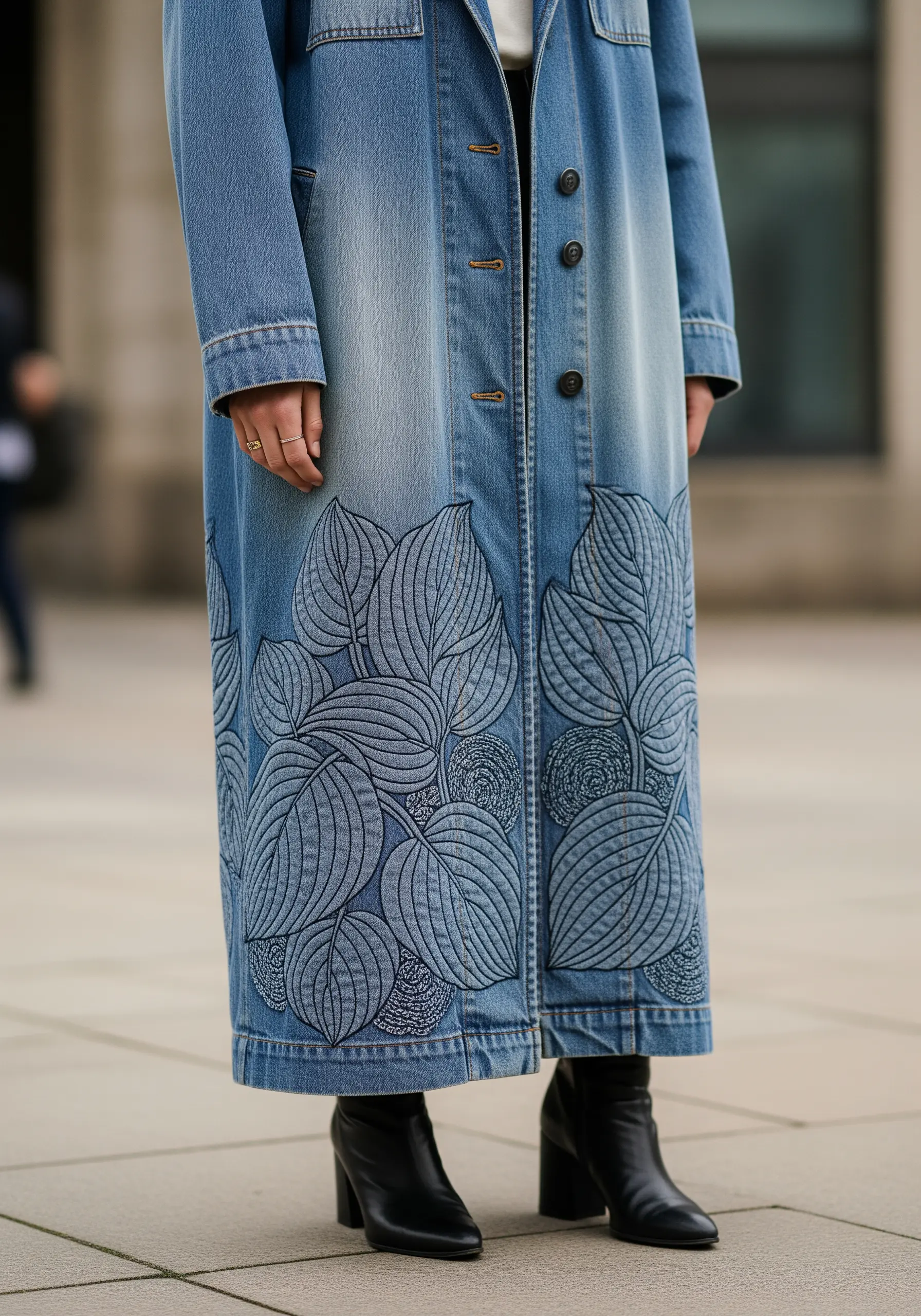
For a subtle, high-fashion look, choose an embroidery thread that is only a few shades different from your denim.
On this light-wash coat, a darker blue-grey thread creates a design that is visible through its texture rather than its color.
Use a clean, simple backstitch or stem stitch to outline large, overlapping leaf shapes.
This minimalist approach adds a layer of sophistication and feels incredibly intentional. Master the art of tone-on-tone embroidery techniques for a truly refined finish.
21. Add Playful Dimension with Knotted Raspberries
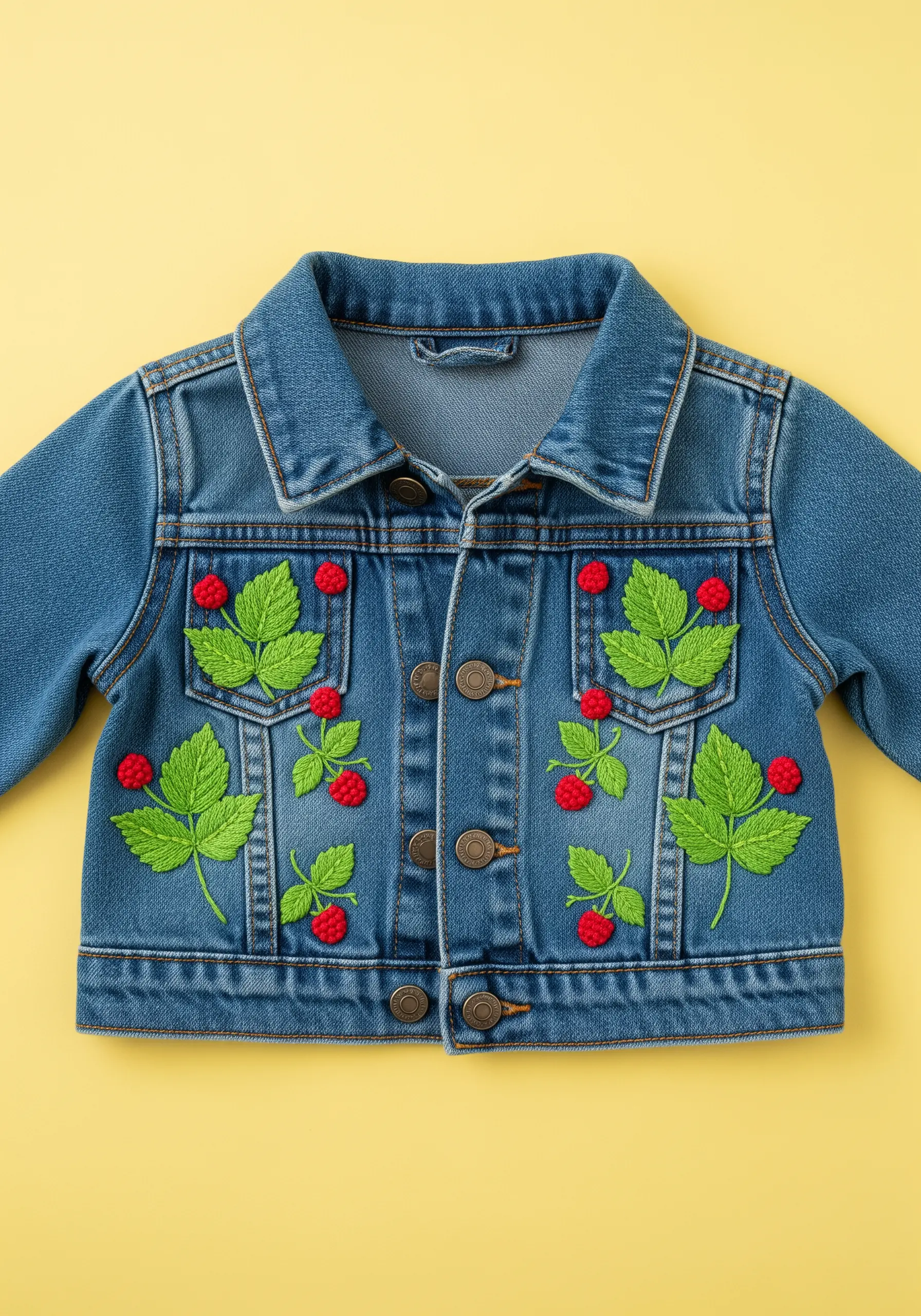
Create charming, textural fruit on a child’s jacket using dimensional stitches.
Form each raspberry by stitching a tight cluster of French knots in a bright red thread. This technique gives them a bumpy, realistic texture that is fun to touch.
Pair the berries with simple leaves made from a bright green fishbone stitch.
Symmetrical placement on either side of the jacket front creates a balanced and playful look, perfect for whimsical floral embroidery ideas.
22. Stitch Realistic Rosemary with Angled Straight Stitches
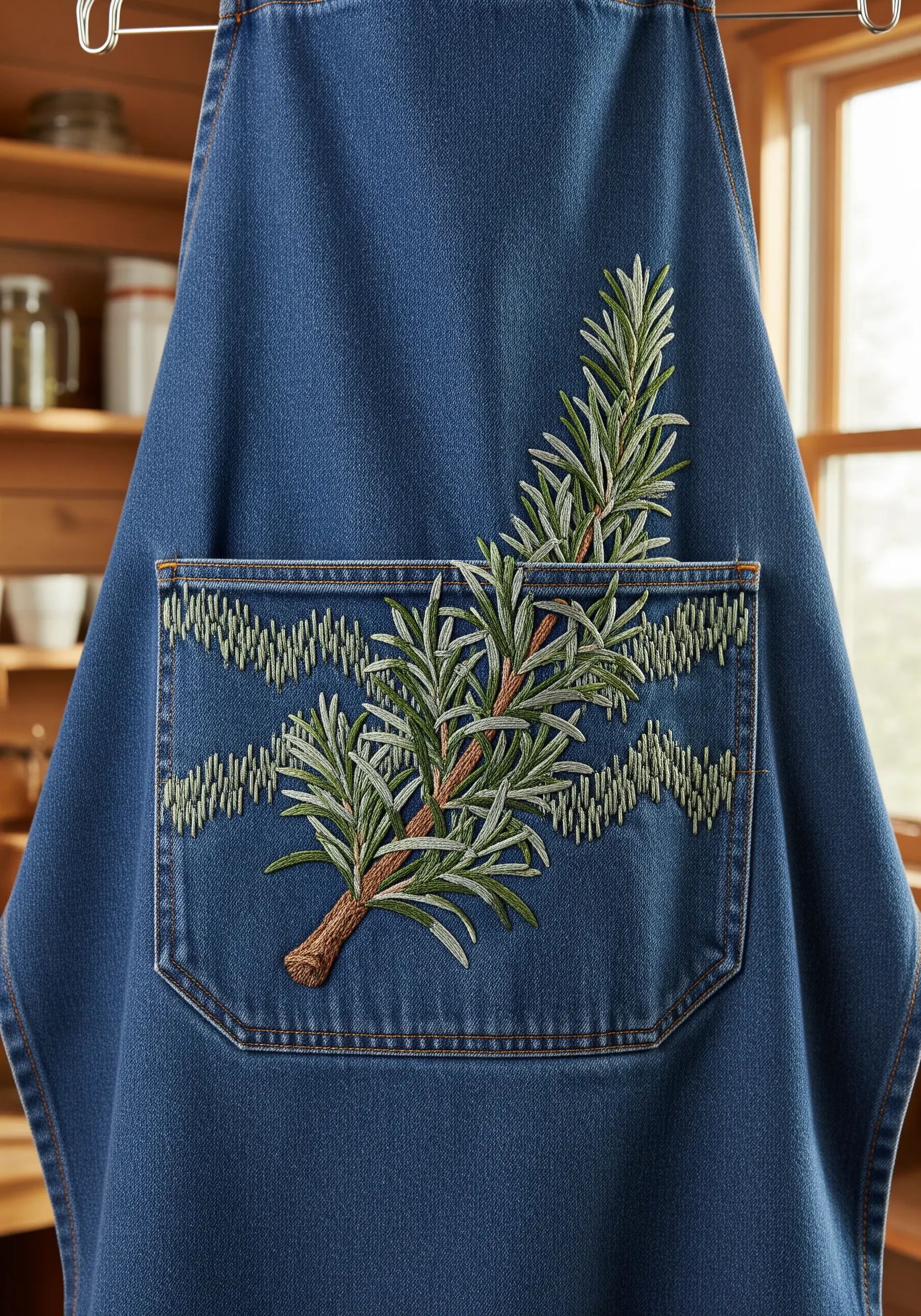
Capture the unique texture of rosemary by using short, angled straight stitches for the needles.
Use two or three similar shades of green and greyish-green, and stitch them randomly to mimic the plant’s natural color variations.
For the woody stem, couch a thicker brown thread or use a simple stem stitch.
The abstract, soundwave-like stitching in the background adds a modern, artistic contrast to the realistic botanical element in the foreground.
23. Go Big with a Statement Poppy on Wide-Leg Jeans
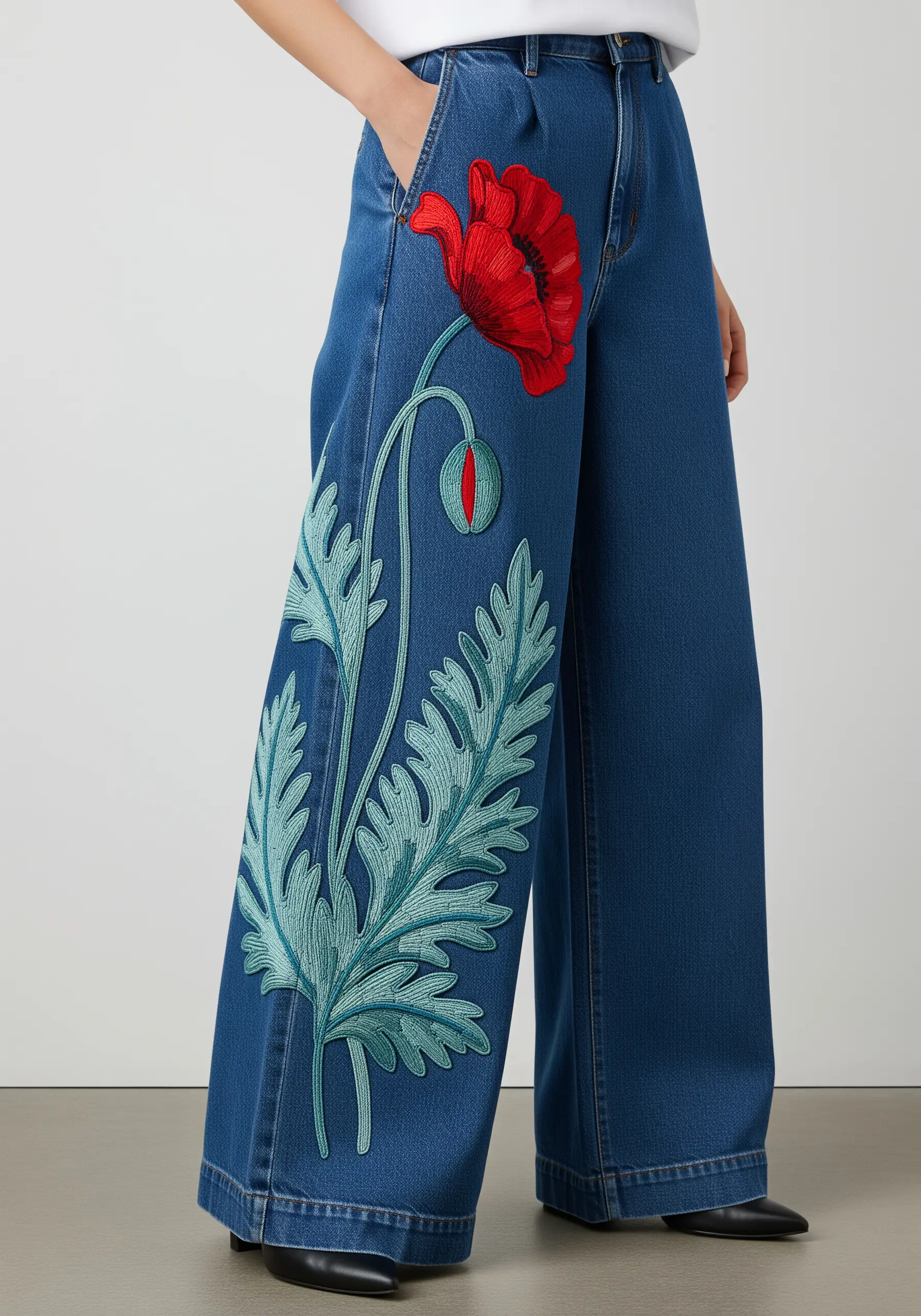
When working on a large scale, it’s essential to break down large shapes into manageable sections.
Fill the bold red poppy petals using the long-and-short stitch, working in rows to create subtle color gradients and a smooth, painted look.
For the expansive leaves, use a satin stitch but angle your stitches in different directions on each leaflet to create visual interest and reflect light differently.
Always use a heavy-duty stabilizer on the back of a large design to prevent the denim from puckering or warping. If you love this style, try other poppy-inspired stitches.
24. Electrify Your Denim with a Neon and Blue Palette
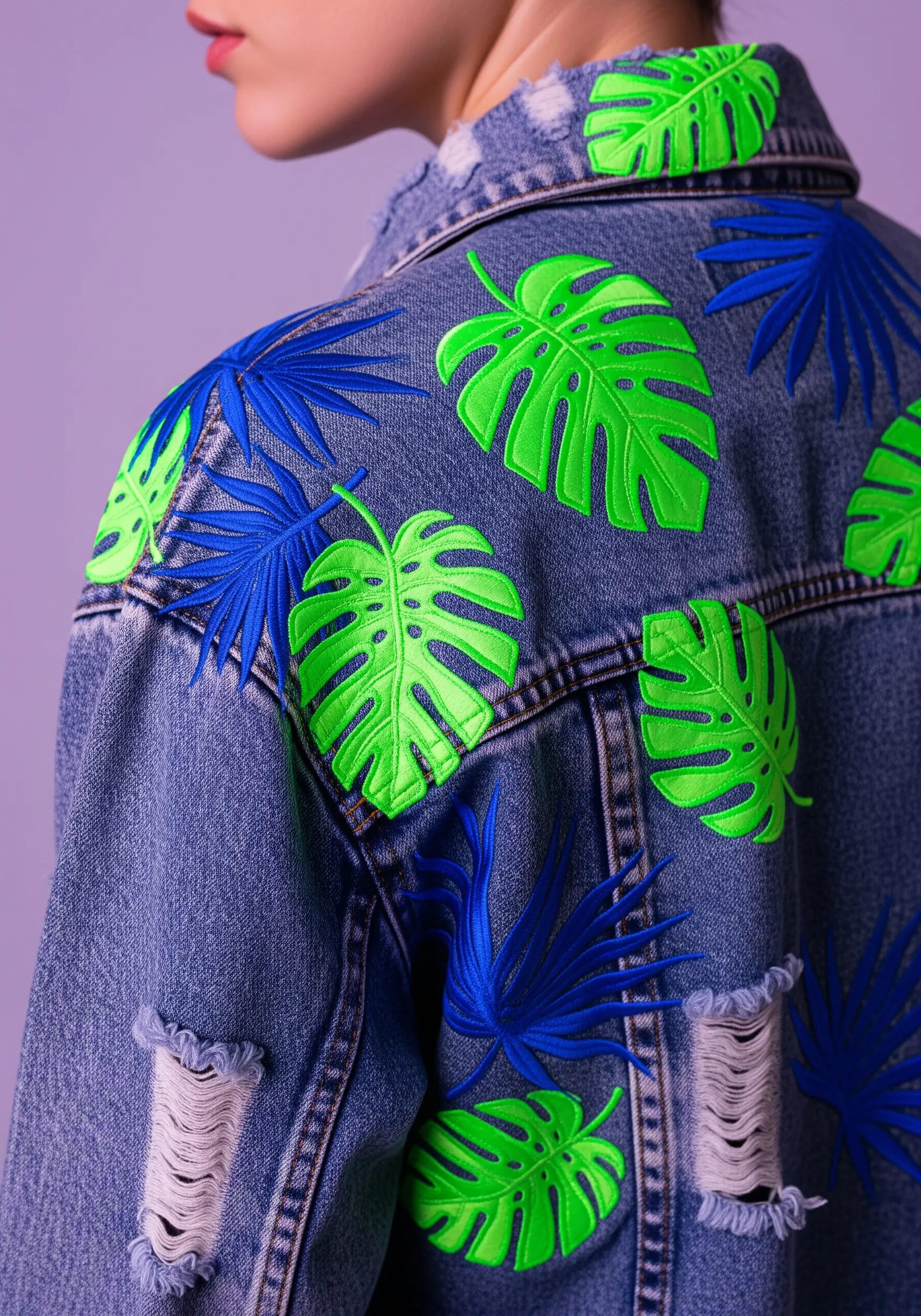
Make an unforgettable statement by pairing a fluorescent color with a deep, saturated one.
The intense contrast between neon green and royal blue gives these tropical leaves a graphic, almost digital, feel.
Use a dense, clean satin stitch to fill each leaf, ensuring your stitches are tight and even for maximum color impact.
This color combination works best on a mid-wash or distressed denim that provides a neutral-enough background for the colors to truly vibrate.
25. Sculpt a 3D Succulent Garden with Dimensional Stitches
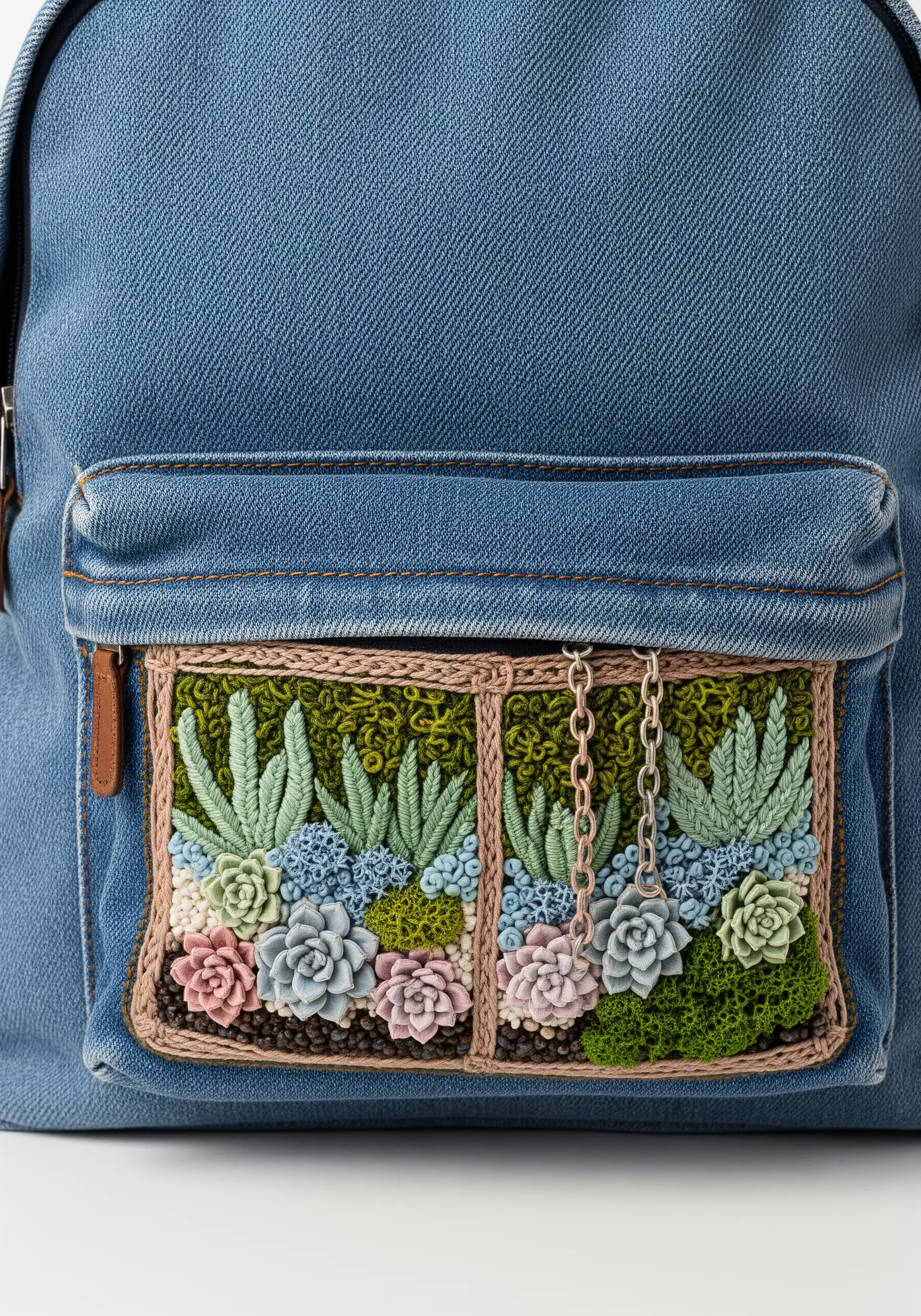
Create a miniature garden on a backpack pocket using highly textural, three-dimensional stitches.
Use the woven picot stitch to create the pointed leaves of echeverias, and form rosettes with bullion knots or cast-on stitches.
Fill in the gaps with French knots for soil or ground cover, and use a chunky Turkey work for a mossy effect.
Varying your thread types—from standard cotton floss to wool or silk—will further enhance the textural variety. This is one of the most rewarding contemporary texture techniques you can master.


