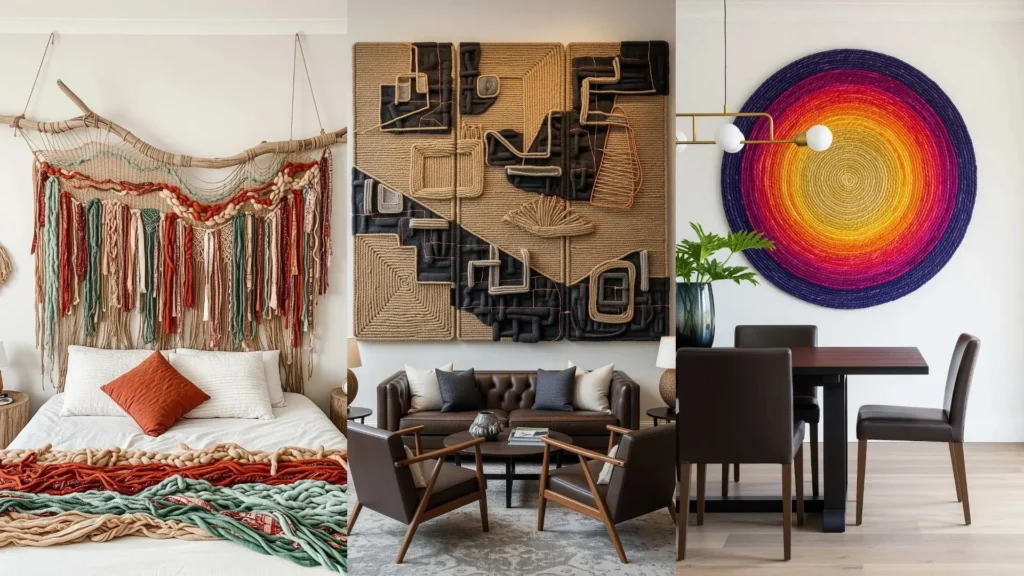
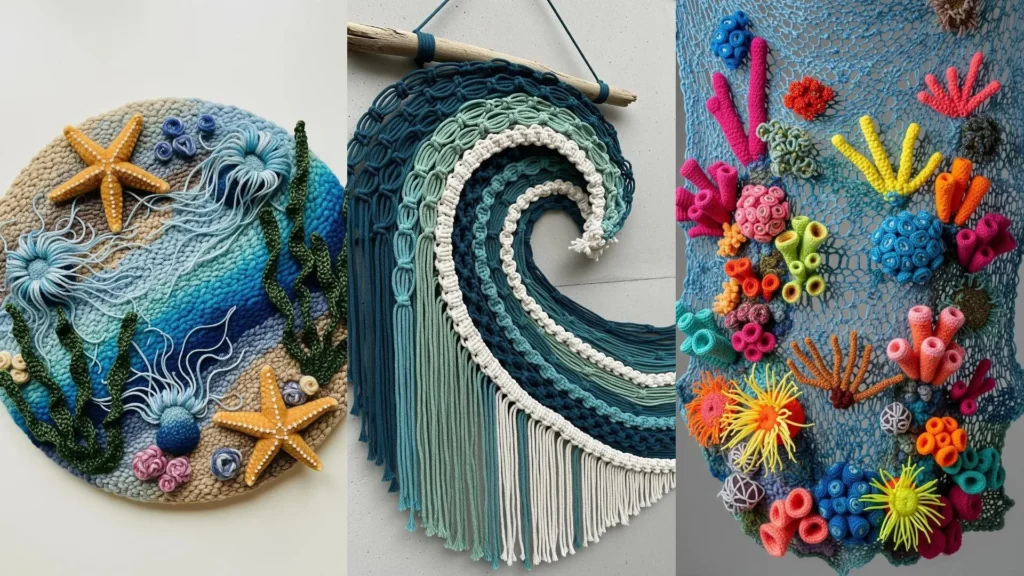
Forget the idea that yarn is only for knitting or that embroidery requires intricate, microscopic stitches. It’s time to think bigger—about texture, scale, and the simple, satisfying presence of fiber art on your walls.
You already have a love for thread and fabric. Now, I want to show you how to use those materials with more intention, creating pieces that feel less like craft projects and more like personal, modern art.
We’ll explore techniques that deliver stunning results without demanding perfection. From wrapping and knotting to punch needle and weaving, these ideas are designed to fit into your life and your space, bringing warmth, color, and a beautifully handmade touch to every corner.
1. Master the Dip-Dye Gradient

Transform a standard macrame piece by introducing a soft, painterly gradient with fiber-reactive dye.
To create a seamless transition, fully submerge only the tips of the yarn into the prepared dye bath, then slowly pull the piece upward over 30 to 60 minutes.
This technique allows the dye to wick up the fibers naturally, creating a beautiful ombré effect that draws the eye downward.
The contrast between the precise, structured knots and the free-flowing color gives the entire piece a modern, artistic finish.
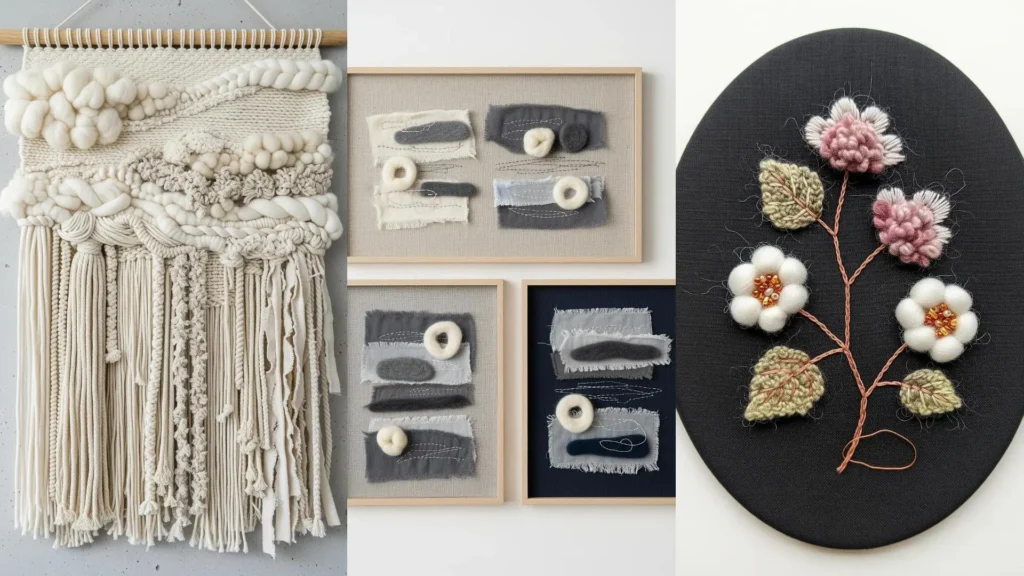
2. Weave a Topography of Texture

Move beyond flat weaving by incorporating yarns of dramatically different weights to build sculptural dimension.
Combine thick, unspun wool roving with tightly twisted cotton cord and medium-weight merino wool.
Use techniques like soumak stitch or rya knots to create raised, bubbly textures that stand out against a simple tabby weave background.
Working within a large embroidery hoop provides a built-in frame, making these mixed fiber projects that look like gallery art but are DIY accessible and easy to display.
3. Paint with Punch Needle Loops

Use a punch needle to create a dense, plush texture that feels like a pointillist painting made of yarn.
To achieve clean, defined color blocks, work your outlines first and then fill inwards, ensuring your loops are a consistent height.
This method prevents colors from bleeding into one another and gives your landscape crisp, graphic lines.
Mount the finished piece on stretched monk’s cloth or linen within a simple wood frame to let the textured artwork remain the focus.
These organic shape embroidery patterns for neutral minimal walls feel both modern and calming.
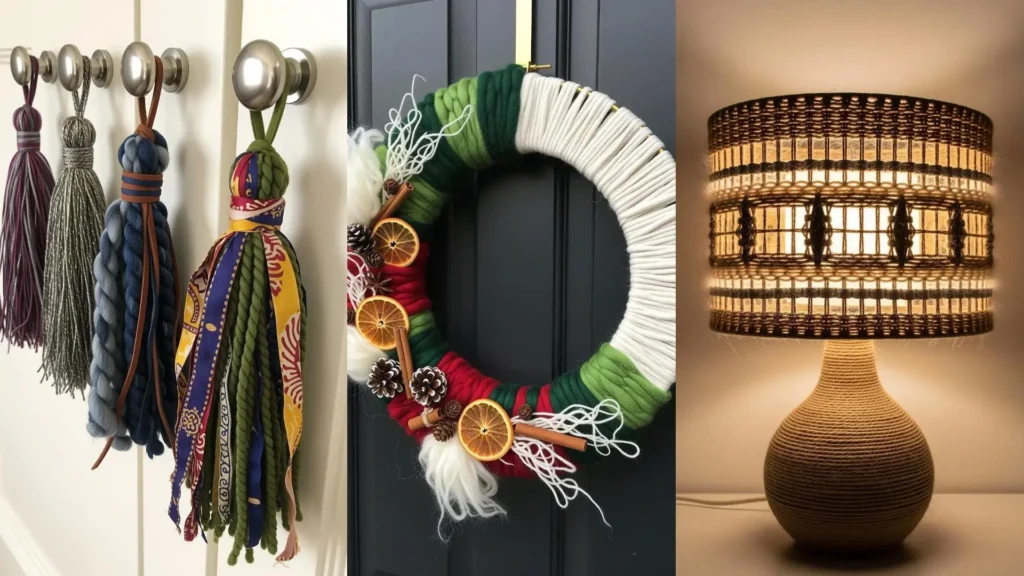
4. Elevate the Tassel Garland
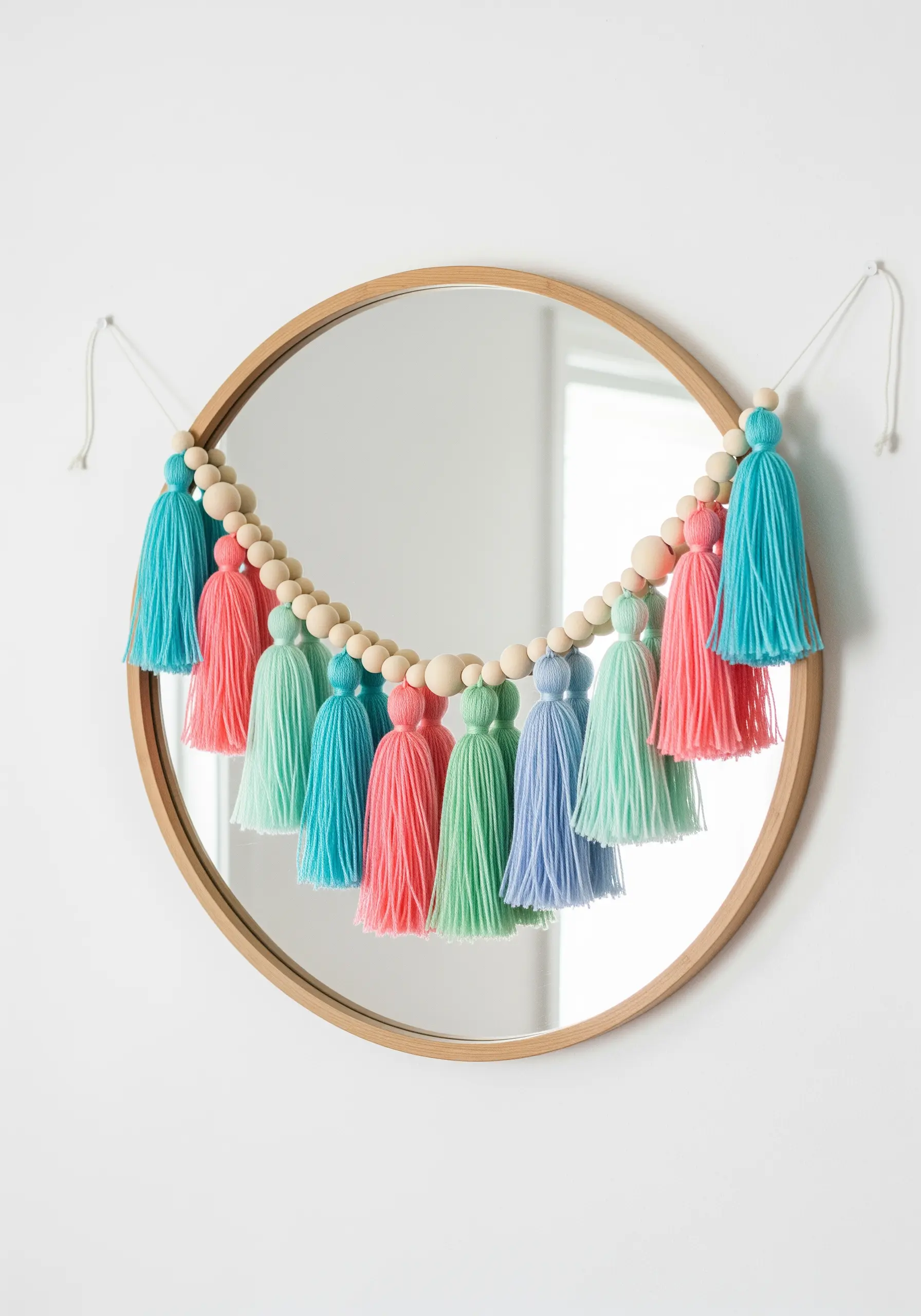
Refine the simple tassel garland by focusing on a sophisticated color palette and intentional spacing.
Instead of random colors, choose four or five complementary shades to create a harmonious rhythm.
Use smooth, round wooden beads as spacers between each tassel; this adds a natural texture and prevents the garland from looking cluttered.
For a professional finish, wrap the neck of each tassel tightly and consistently so they all have a clean, uniform shape.
5. Sculpt with Wrapped Yarn
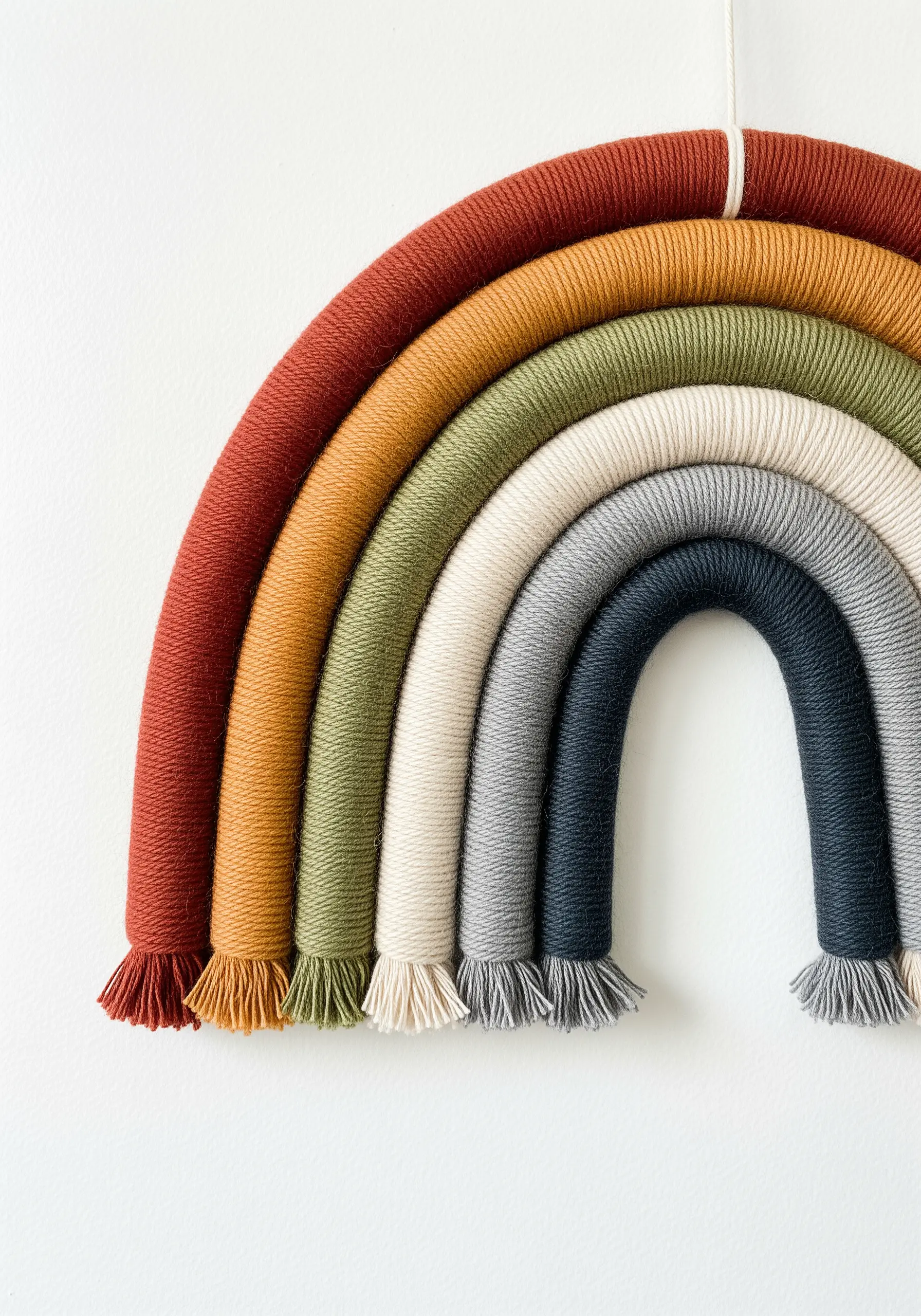
Create a structured rainbow arc with a refined, earthy palette by wrapping thick cotton rope with smooth yarn.
The key to a flawless finish is maintaining consistent, tight tension as you wrap, ensuring no rope shows through.
Secure the ends discreetly with a dab of fabric glue before shaping and sewing the arcs together from behind.
Choosing muted, cozy neutral decor ideas with handmade embroidery touches elevates this playful shape into a piece of modern art.
6. Design with Latch Hook Geometry

Explore the plush, satisfying texture of latch hooking to create a small, graphic wall hanging.
Working on a latch hook canvas (a grid-like fabric) makes it easy to execute precise geometric patterns without any drawing or tracing.
Plan your design on graph paper first to map out the color placement, treating each square as a single knot.
The resulting shag texture adds incredible softness and depth, turning a simple diamond pattern into a vibrant, tactile piece of art.
7. Distill Your Design to a Gradient
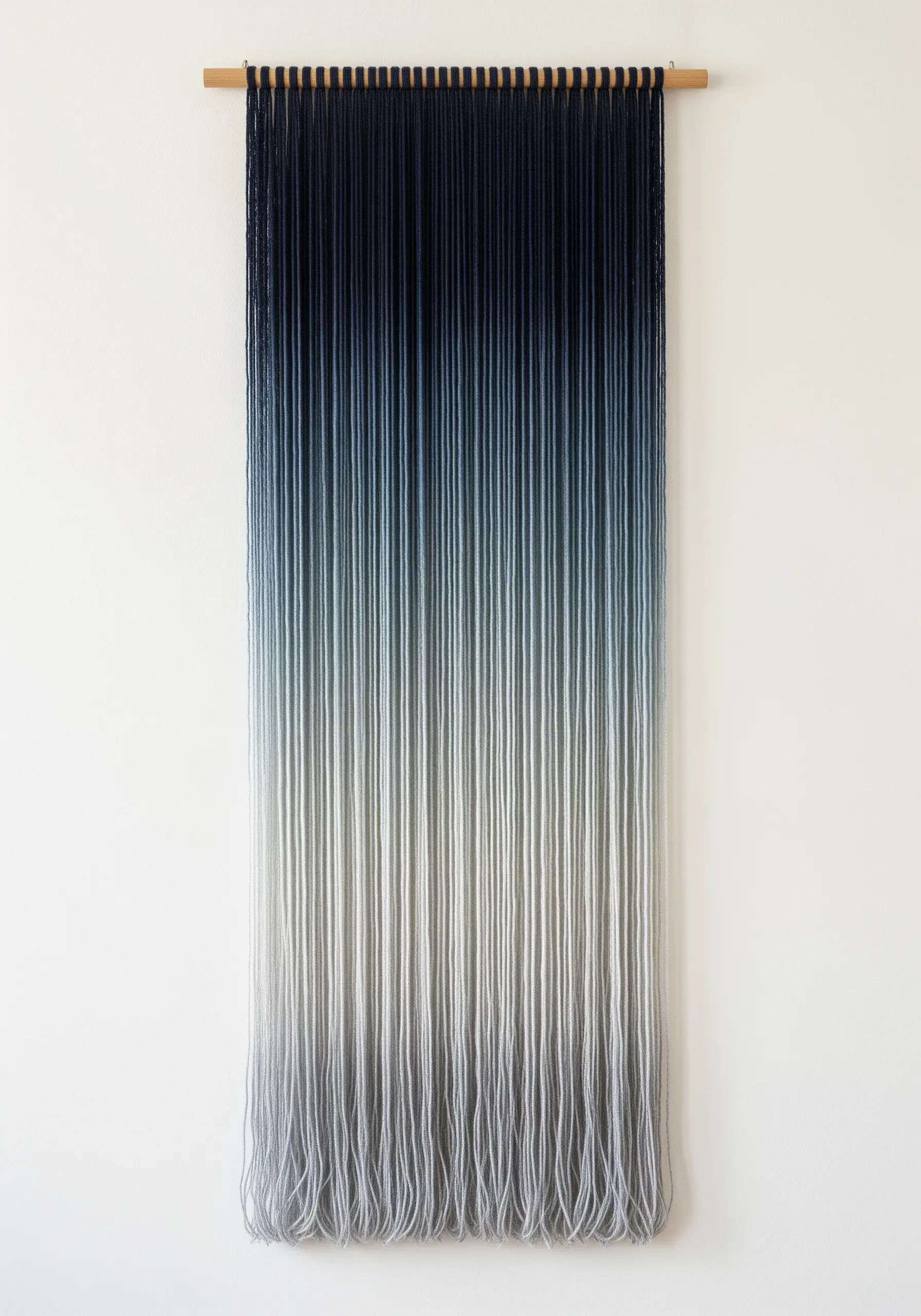
Make a powerful statement with the simplest of forms: a wall of threads transitioning through a single color gradient.
Instead of dyeing it yourself, source several skeins of yarn in graduating shades, from deep indigo to pale silver.
Cut all strands to the same length and attach them to a minimal wooden dowel using a lark’s head knot, arranging them in perfect color order.
This minimalist approach celebrates color theory and texture, proving that you don’t need complex patterns for a high-impact result.
8. Juxtapose Scale and Technique
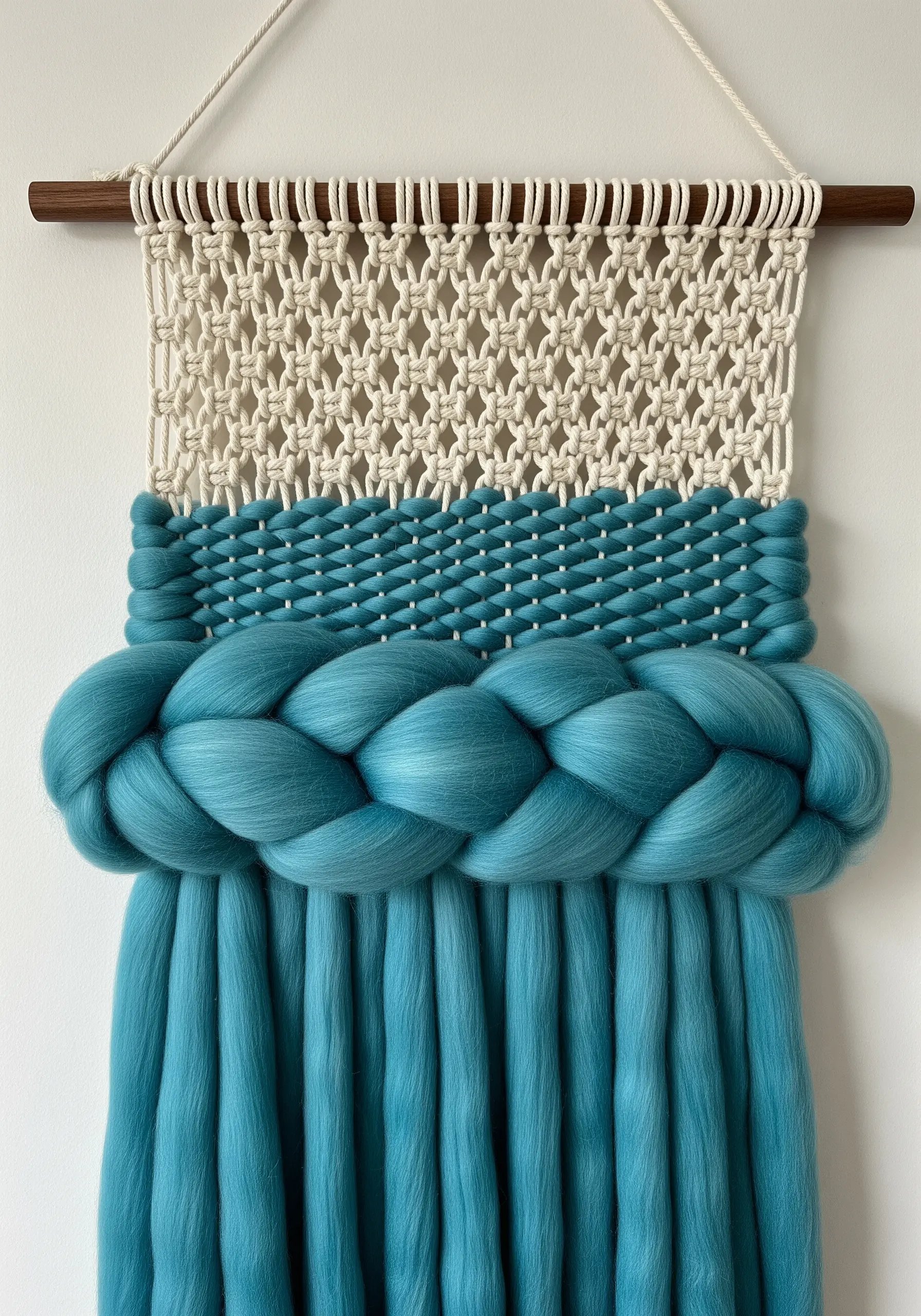
Create visual tension and interest by combining dramatically different fiber techniques in a single piece.
Anchor your design with a section of traditional macrame or flat tabby weave to establish a structured base.
Then, introduce an oversized braid made from super-chunky wool roving—its exaggerated scale provides a soft, sculptural contrast.
These unexpected fiber art installations that mix embroidery and sculpture feel dynamic and command attention, even in a small space.
9. Stitch the Stars with Metallics

Elevate simple line embroidery by choosing a dark fabric canvas and incorporating metallics and embellishments.
Use a single strand of metallic floss for the delicate constellation lines, which will catch the light beautifully against a navy blue background.
Instead of simple French knots, stitch the main stars with a star stitch or lazy daisies for more definition, and scatter tiny gold seed beads or sequins to represent distant galaxies.
This is one of those apartment bedroom embroidery projects that adds a touch of quiet magic.
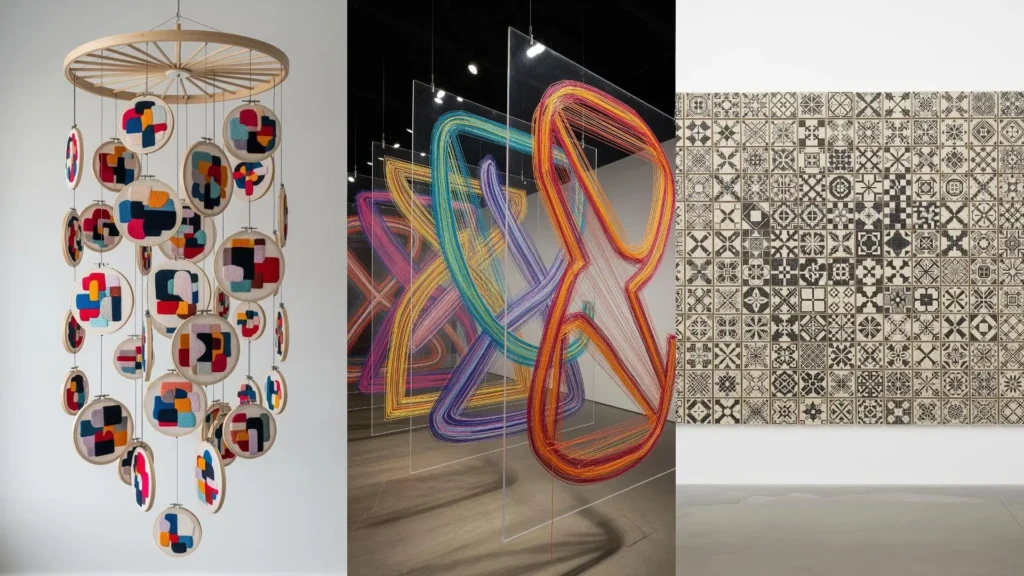
10. Compose a Floating Pom-Pom Mobile

Turn fluffy pom-poms into a sophisticated mobile through careful color selection and composition.
Choose a refined pastel palette and craft pom-poms of slightly varying sizes to create a more organic feel.
Hang them from a simple brass hoop using clear nylon thread at different lengths to achieve a sense of weightlessness and movement.
The key is balance—distribute the colors and sizes evenly around the hoop so it hangs perfectly level while looking effortlessly scattered.
11. Draw with Wrapped Yarn Waves

Use a simple canvas or piece of foam board as a loom to create fluid, abstract art without any knots or stitches.
Lightly sketch your wave design onto the canvas as a guide.
Secure the end of your yarn on the back with tape, then wrap it around the board, following your lines and layering colors to build up your composition.
The overlapping strands create a beautiful sense of depth and movement, making it a meditative and accessible way to ‘paint’ with fiber.
12. Weave a Meditative Mandala

Construct an Ojo de Dios, or God’s Eye, for a mindful project that combines structure and color play.
Instead of simple craft sticks, use cinnamon sticks as your base—they add a natural, rustic element and a subtle, lovely scent.
The diamond pattern emerges from the simple process of wrapping yarn around the crossed sticks in a consistent sequence.
Focus on maintaining even tension to keep the lines crisp and the shape balanced as you layer vibrant colors from the center outward.
13. Frame a Mirror with Macrame

Turn a plain, inexpensive mirror into a bohemian statement piece by adding a macrame frame.
Attach your cords directly to a sturdy metal ring that sits just behind the mirror’s edge.
Work a series of repeating knot patterns, like square knots or berry knots, around the entire circumference to build a dense, decorative border.
Finish by combing out the fringe and trimming it evenly for a soft, sunburst effect that adds warmth and texture to your wall.
14. Weave a Modern Tapestry Runner

Weave a narrow wall hanging that feels like a modern textile sampler, focusing on geometric shapes and textural bands.
Incorporate blocks of classic tapestry weaving to create clean triangles and stripes.
Break up the flat sections with horizontal rows of chunky, twisted soumak braids, which add a rope-like dimension and structure to the piece.
Even with a neutral palette, this interplay of flat and raised textures makes the piece visually compelling and perfect for narrow wall spaces.
You can create beautiful framed embroidery patterns that look like they belong in a gallery this way.
15. Sculpt with Driftwood and Fiber

Celebrate organic forms by using a piece of found driftwood as the foundation for a freeform fiber sculpture.
Instead of covering the wood completely, use yarn wrapping to accentuate its natural curves and textures.
Choose a color palette inspired by nature—like coastal blues and sandy beiges—and vary the thickness of your wrapped sections.
Leave some threads to hang freely, creating a beautiful interplay between the rigid wood and the soft, flowing yarn.
It’s one of the best ways to capture nature’s textures in your next embroidery project.
16. Craft a Tactile Monogram
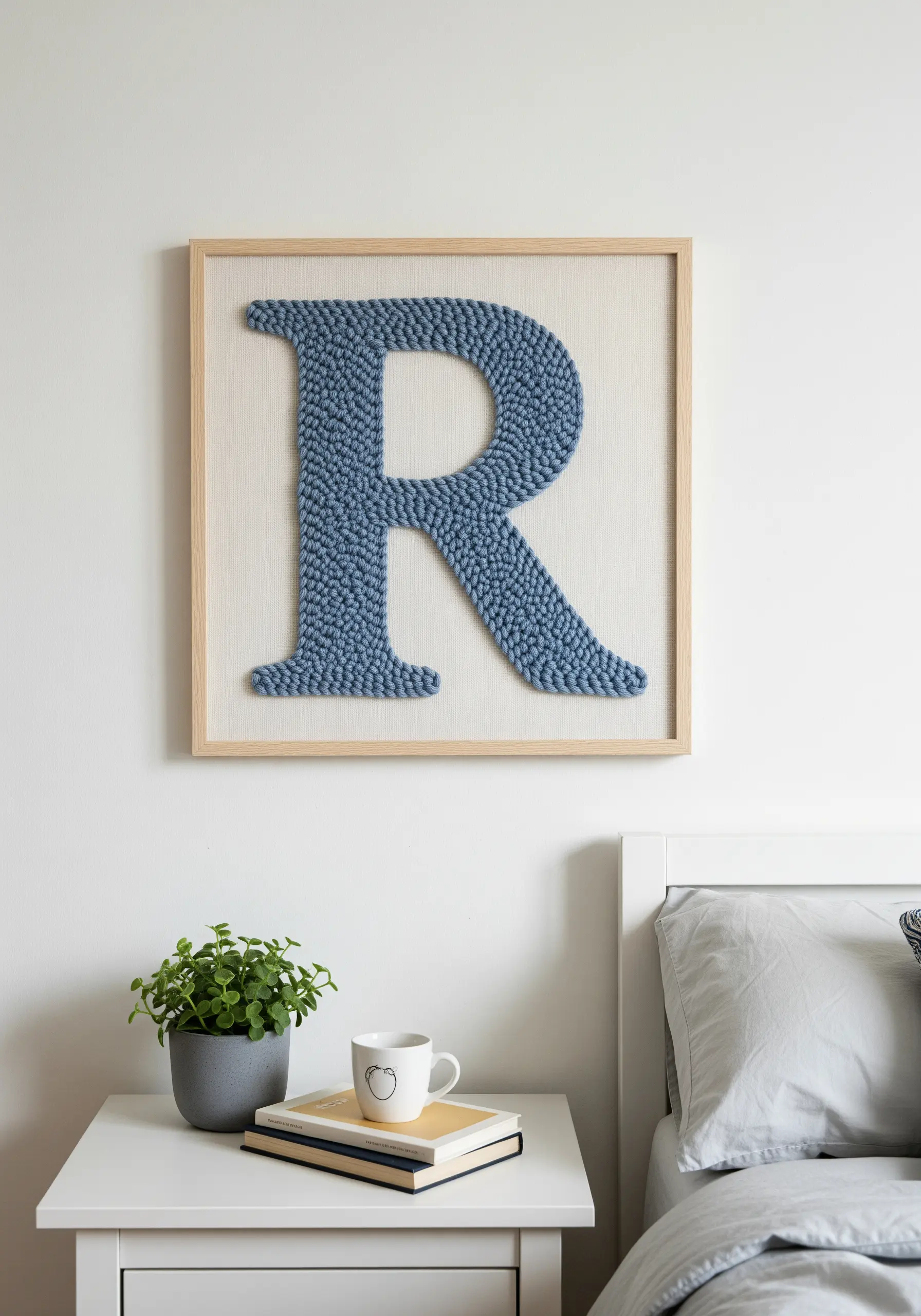
Create a personalized piece of art using punch needle to render a single, bold initial.
The beauty of this project lies in its textural simplicity; the thousands of tiny loops create a soft, almost velvety surface.
Choose a clean, sans-serif font for a modern aesthetic, and trace it onto your fabric before you begin punching.
Mounting the finished letter on a neutral linen background within a light wood frame ensures your personalized embroidery ideas to make your bedroom truly yours feel both sophisticated and cozy.
17. Showcase the Beauty of Raw Fiber
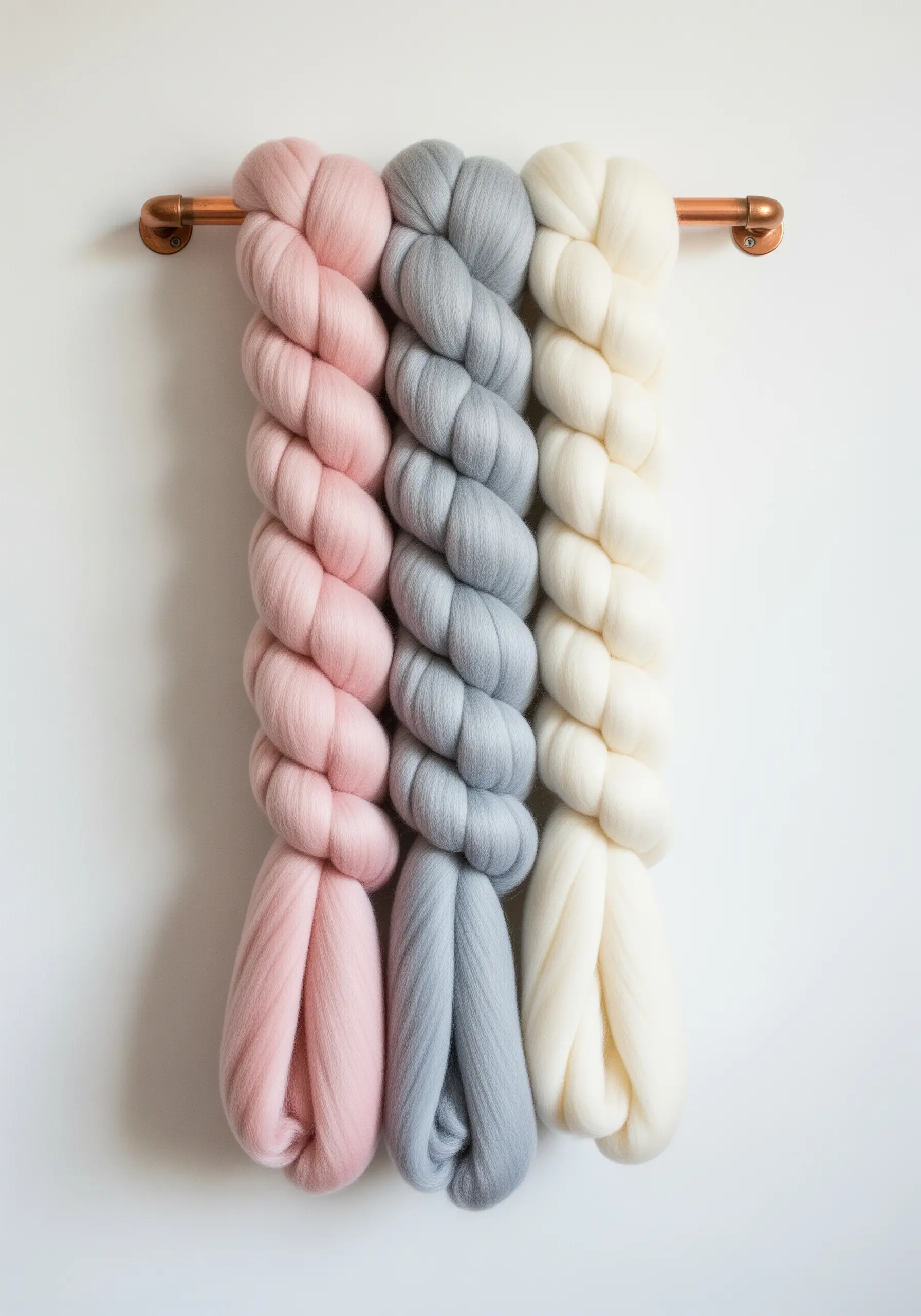
Make the material itself the art by focusing on the magnificent scale of unspun wool roving.
Create simple, thick braids or twists from several strands of chunky merino wool, which highlights its pillowy softness and volume.
Hang them from an unexpected hardware piece, like a copper pipe or a sleek wooden dowel, to create a compelling contrast between industrial and organic textures.
This is minimalism at its coziest—no complex techniques, just a celebration of beautiful fiber.
18. Compose a Fiber Sampler Collage

Think like a painter and create a collage using different fiber techniques as your ‘paint’.
On a stretched canvas, arrange various elements: coiled yarn circles, needle-felted abstract shapes, knotted ropes, and couched threads that meander like drawn lines.
Secure each piece with a few discreet stitches or fabric glue.
This approach transforms leftover scraps and experimental swatches into a cohesive piece of abstract art, making your fabric collage embroidery compositions that add storytelling to every stitch.