Your windows are more than just a source of light; they are a frame for your world and an unsung canvas in your home. In a compact city apartment, where every surface matters, the fabric of your curtains and blinds holds incredible potential. It’s a chance to do more than just manage light—it’s an opportunity to create it.
Think of embroidery not as just adding decoration, but as a way to manipulate that light. A metallic thread can catch the afternoon sun, a pattern on sheer fabric can cast soft shadows, and a splash of color can change the entire mood of a room. This isn’t about complex, time-consuming masterpieces. It’s about thoughtful stitches that add personality, texture, and a quiet, confident sense of home.
Here, you’ll find ideas that transform simple textiles into personal statements. Whether it’s a single, elegant line or a playful scatter of motifs, you have the power to redefine your space, one stitch at a time. Let’s make the light in your apartment something you don’t just see, but something you create.
1. Cascading Vines to Elongate Your Windows
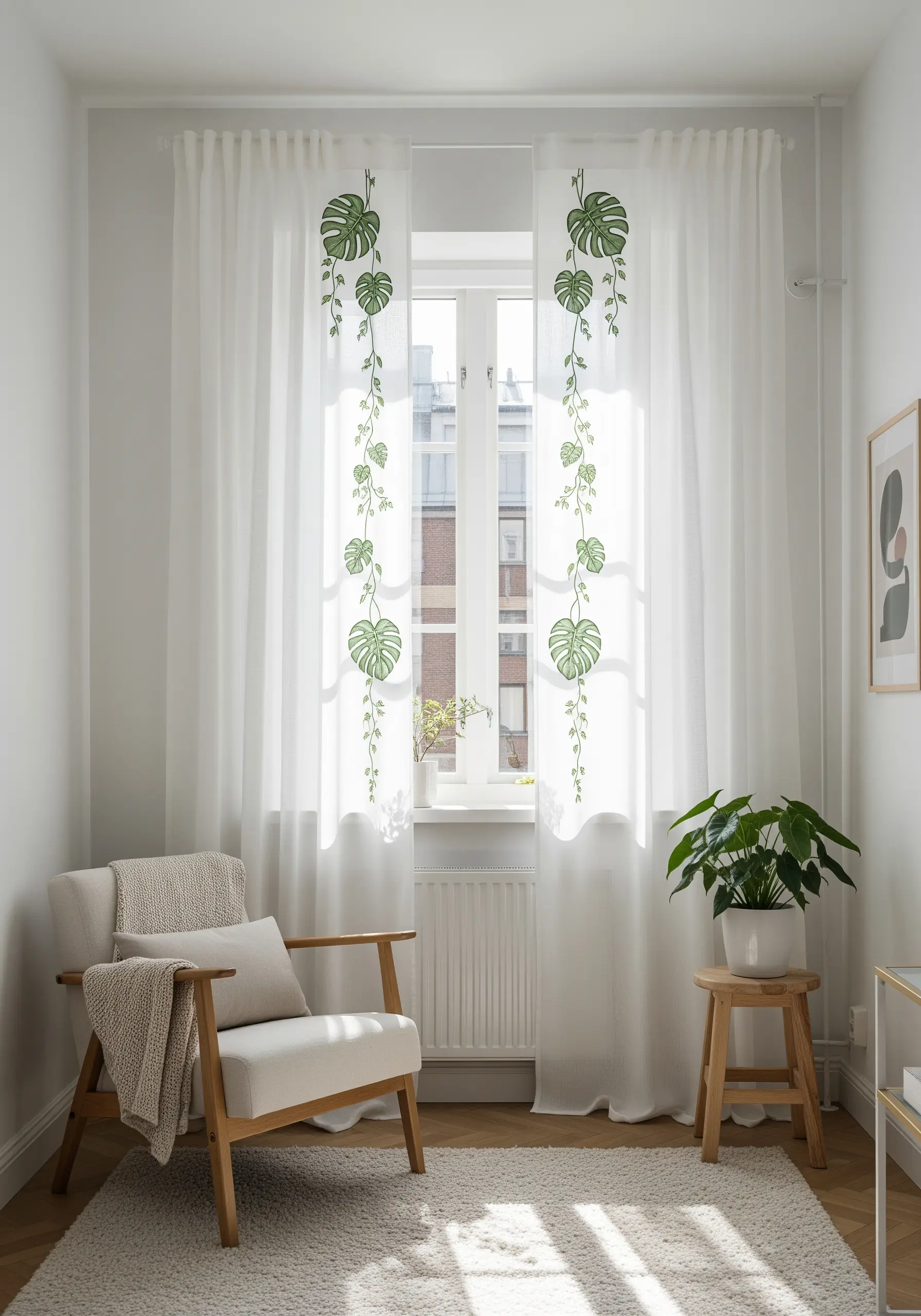
Draw the eye upward in a small room by embroidering a vertical design, like a trailing monstera vine.
Use a simple stem stitch for the delicate vines and outline the leaves with a split stitch before filling them with a smooth satin stitch.
On sheer curtains, a water-soluble stabilizer is essential to prevent puckering and support your stitches as you work.
Choose a 3-strand cotton floss; it’s heavy enough to be visible but won’t weigh down the lightweight fabric.
2. Radiant Sunbursts with Metallic Accents
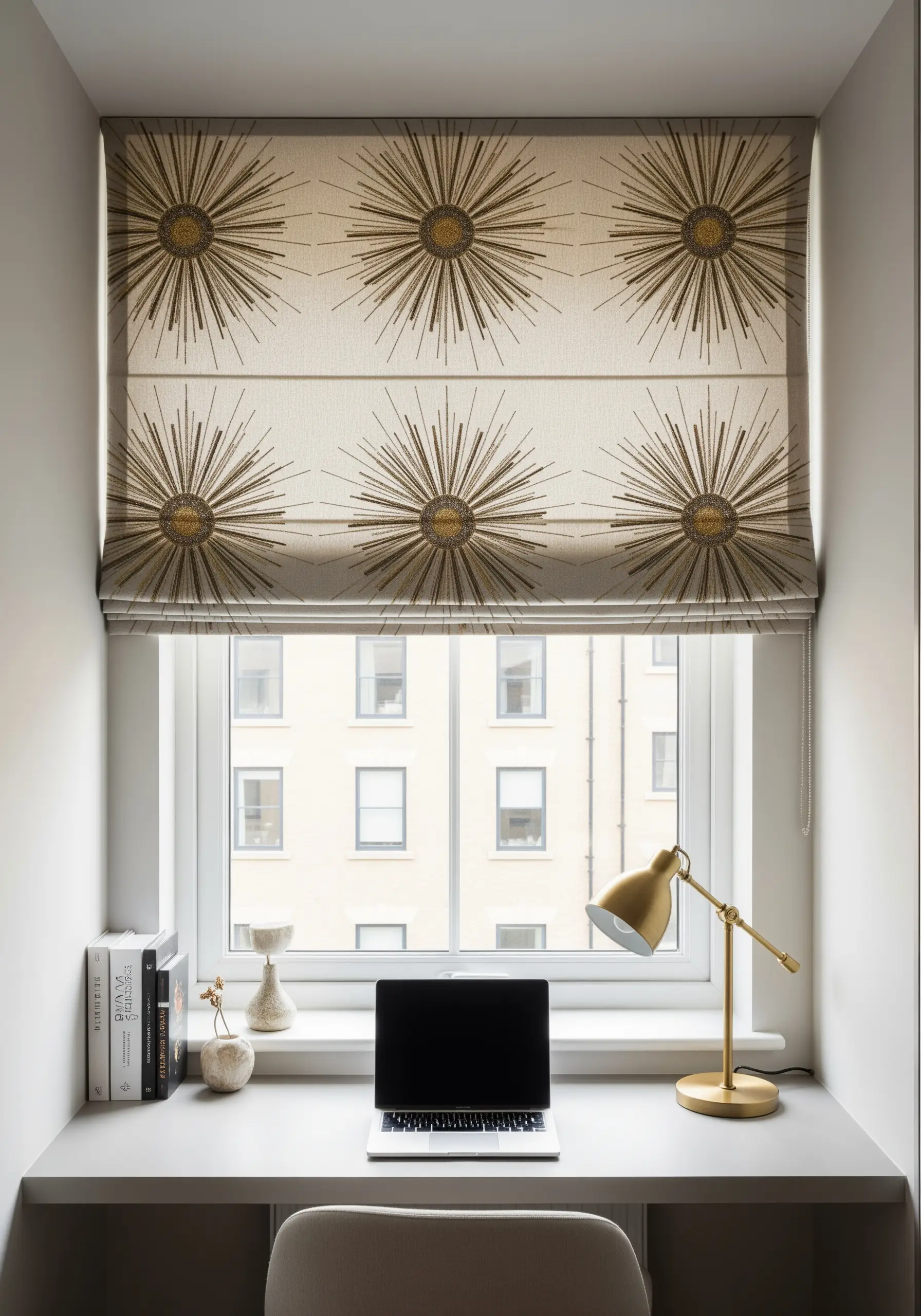
This mid-century modern design gains its power from precise repetition and a touch of glamour.
Create the rays with simple straight stitches, keeping the length and tension consistent for a clean look.
For the center, use dense French knots or a small satin-stitched circle.
Introduce a single strand of metallic thread alongside your primary color to catch the light subtly. These gold thread luxury wall art projects add a premium feel without overwhelming the design.
3. Bold Graphics with Fabric Appliqué
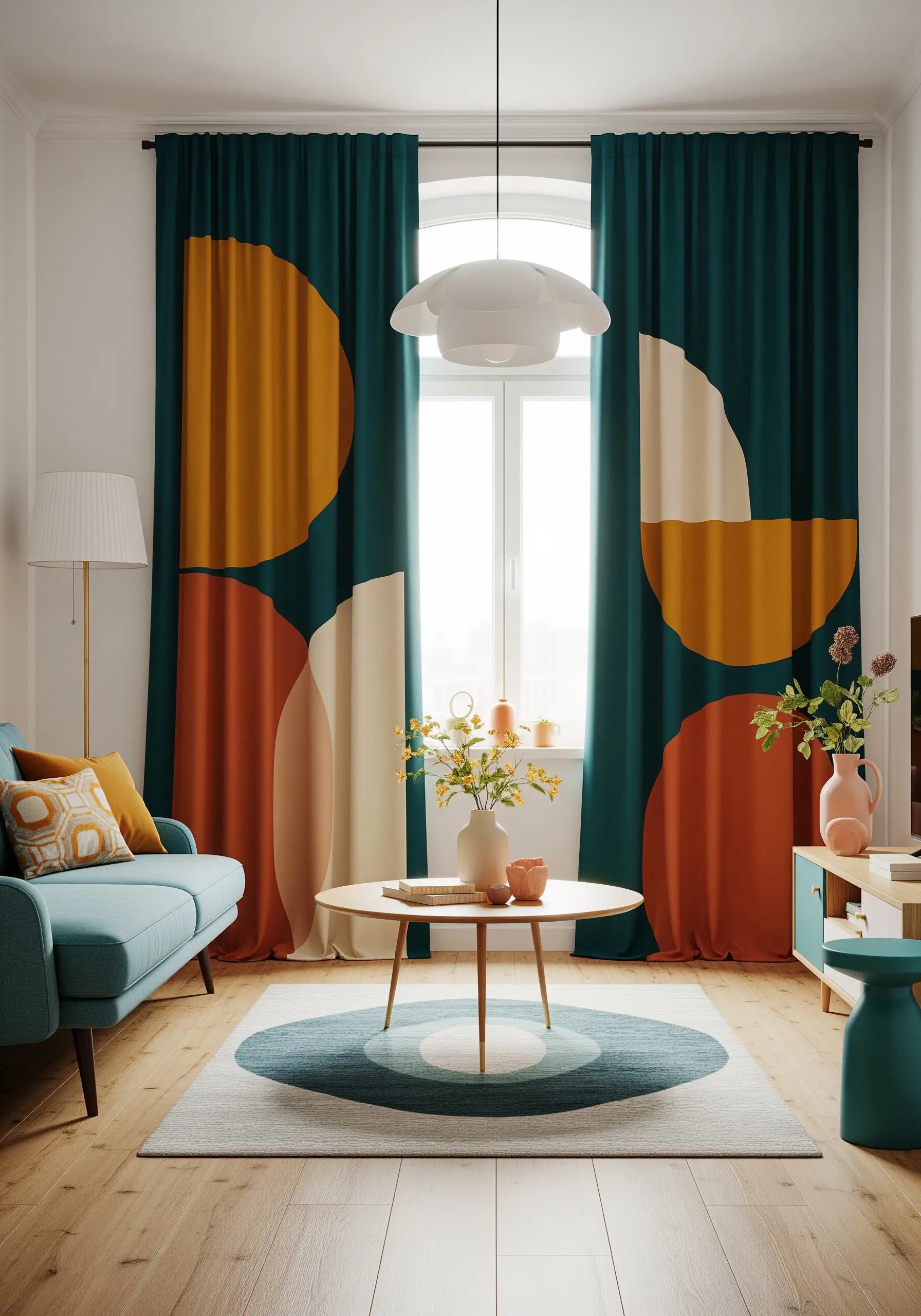
For large-scale, color-blocked designs, combining appliqué with embroidery is far more effective than trying to fill huge areas with satin stitch.
Cut your abstract shapes from a contrasting, non-fraying fabric like felt or linen.
Secure them to the curtain with a neat blanket stitch or a simple running stitch around the edge for a clean, graphic finish.
This technique creates bold fields of color and adds a subtle dimensionality that feels both modern and handmade.
4. Celestial Maps on Blackout Fabric
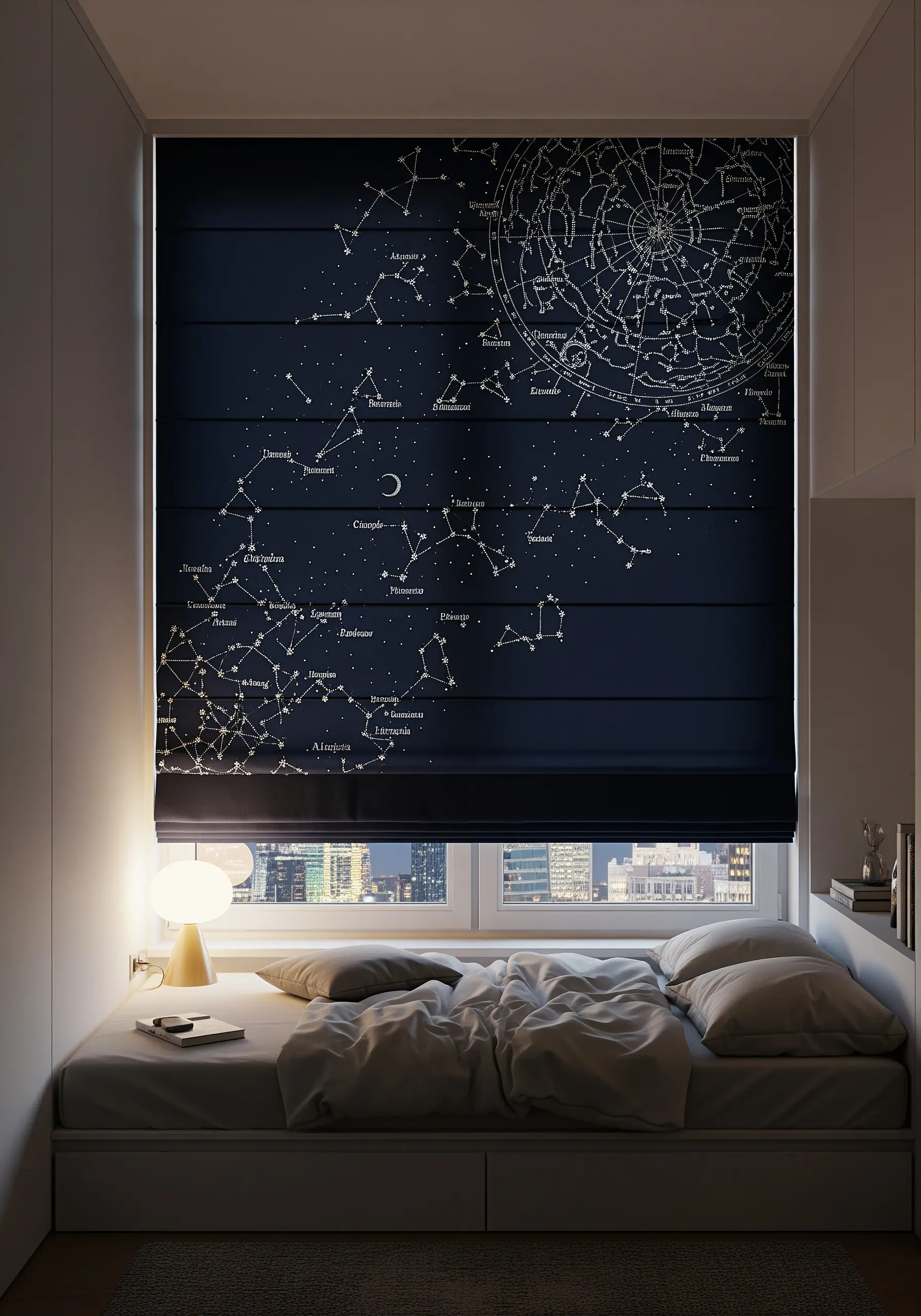
Transform a simple blackout blind into a view of the night sky.
Use a single strand of bright white, silver, or even glow-in-the-dark thread to make the design pop.
A simple backstitch creates crisp constellation lines, while a mix of French knots and tiny seed stitches gives the stars varying sizes and depths.
To make stitching through the heavy fabric easier, pre-punch your pattern holes with a fine awl or an unthreaded needle.
5. Free-Flowing Bohemian Floral Cascade
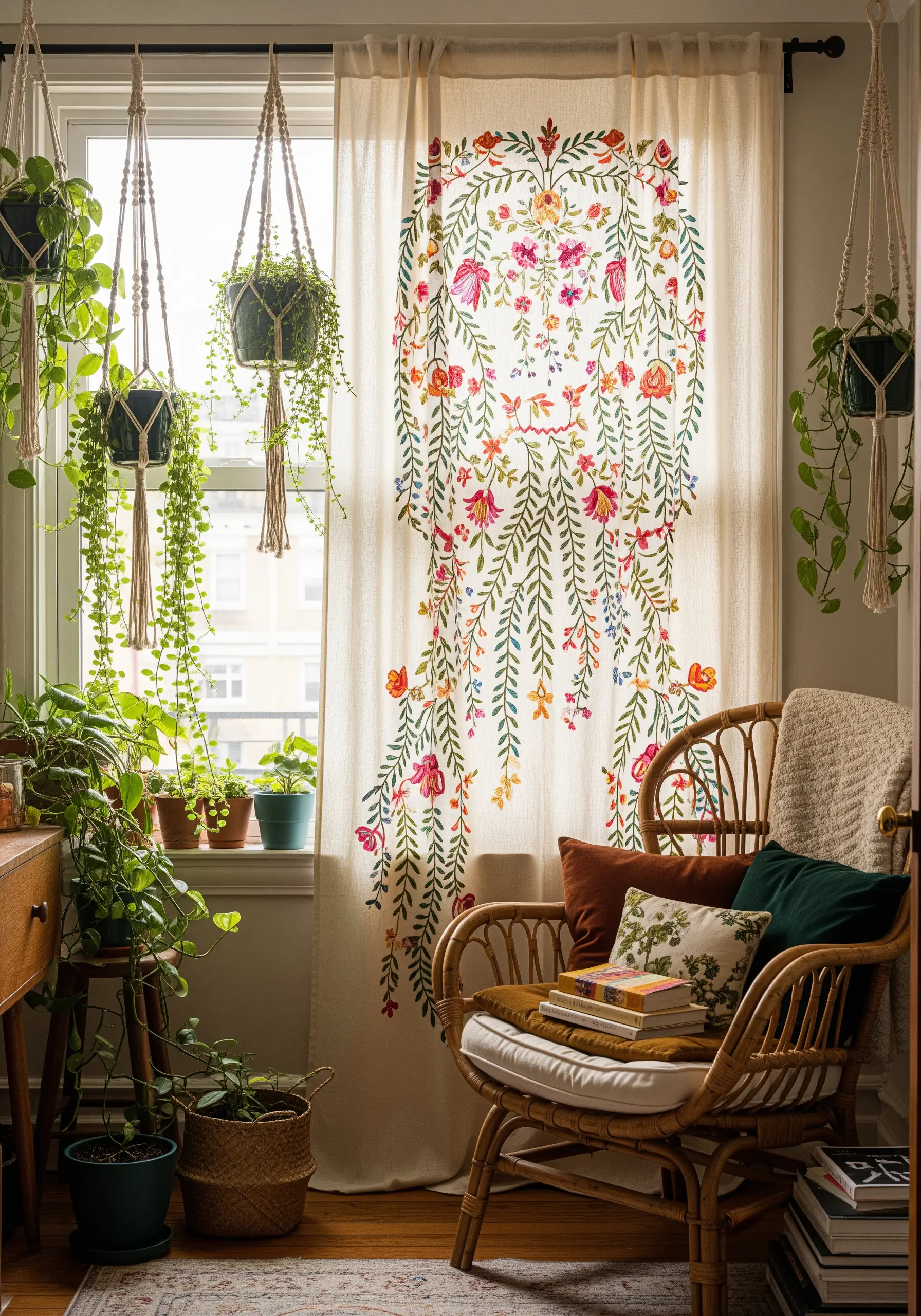
This lush, organic style celebrates texture and imperfection, making it perfect for creating a relaxed atmosphere.
Don’t aim for perfect symmetry; instead, let the design meander naturally down the fabric.
Vary your stitch types: use lazy daisy for small petals, satin stitch for fuller blooms, and stem stitch for winding vines.
For the foliage, place two or three different shades of green thread in your needle at once. This instantly creates natural-looking variegation as you stitch, adding depth without any extra effort. These bold bohemian floral embroidery ideas are all about creative confidence.
6. Minimalist Wave with Line Art Precision
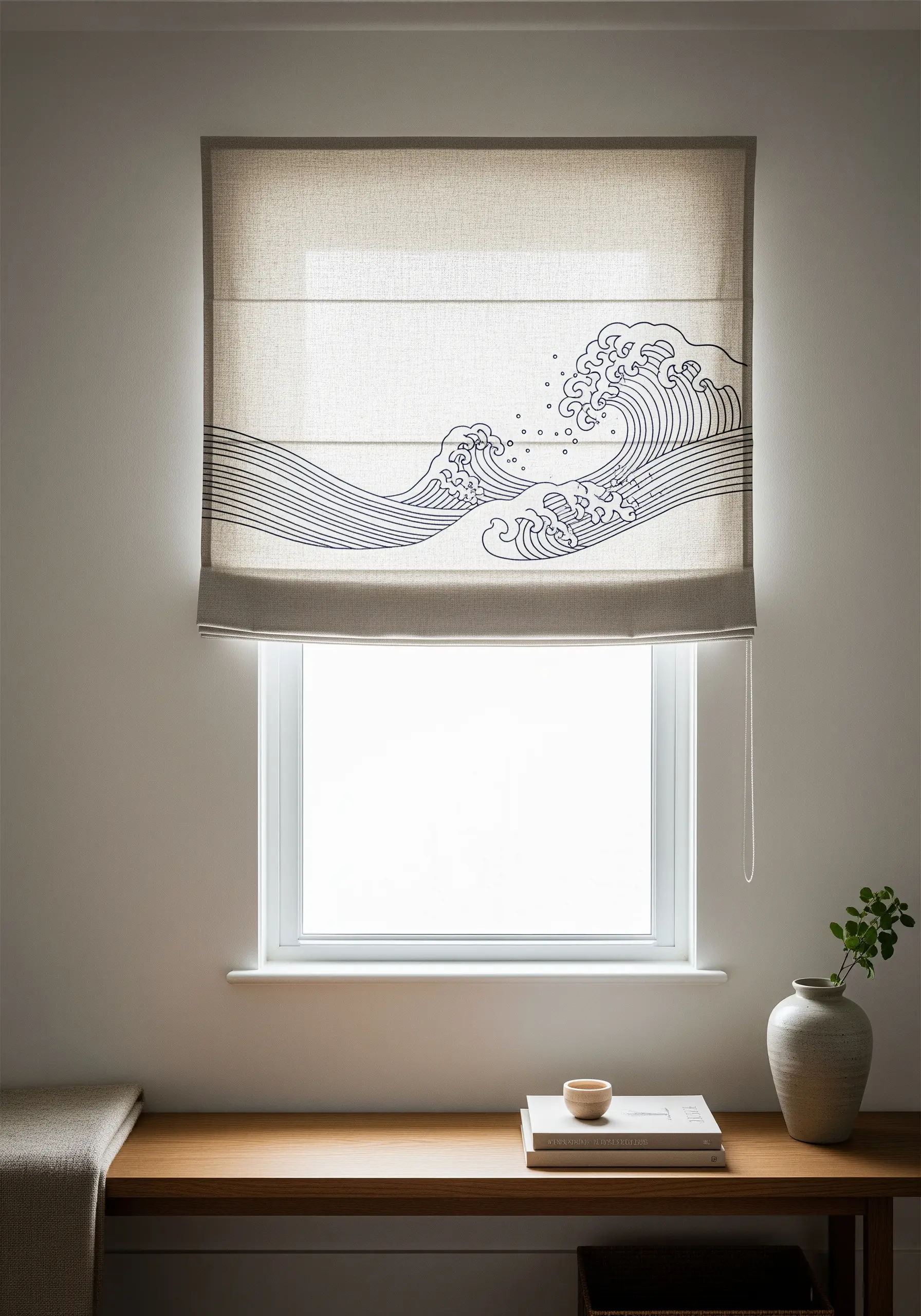
Capture the clean, graphic energy of Japanese block prints with a focus on line weight.
Use a whipped backstitch or a heavy chain stitch to create a raised, cord-like line that stands out beautifully against a textured linen blind.
Select a 6-strand floss or a fine perle cotton to give the line substantial presence.
The key to success is maintaining perfectly consistent tension, which ensures your curves are smooth and flowing, truly mimicking the motion of a wave.
7. Urban Skyline in a Single, Crisp Line
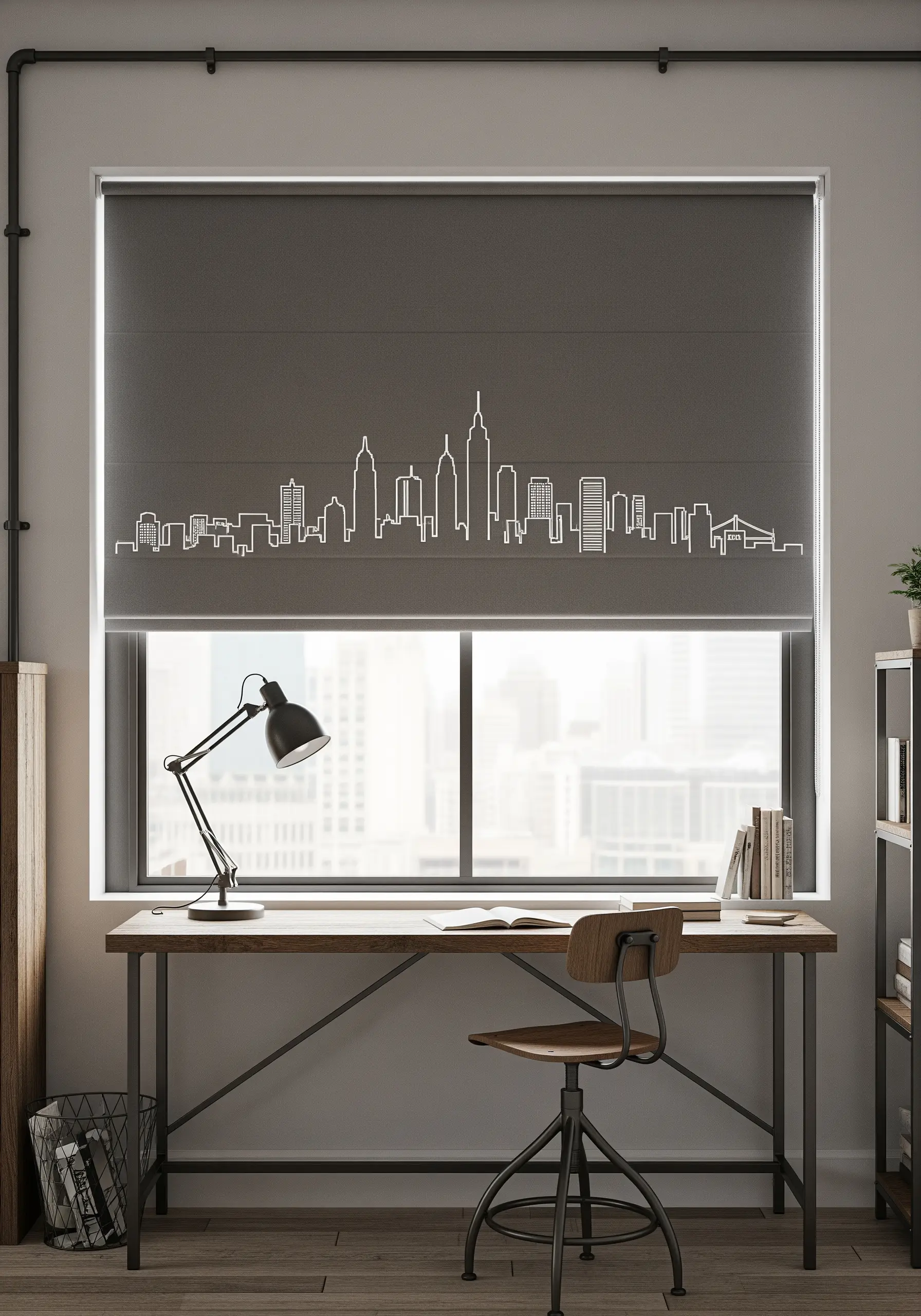
Reflect your city view with a clean, architectural silhouette embroidered directly onto your blind.
Use a stem stitch or split stitch to create a solid, uniform line that defines the skyline without adding unnecessary bulk.
Choose a high-contrast thread—like bright white on charcoal grey—to make the design sharp and graphic, echoing city lights against a dusky sky.
This is a perfect example of minimalist line art nature embroidery adapted for an urban landscape.
8. Vibrant Folk-Art Border for Kitchen Charm
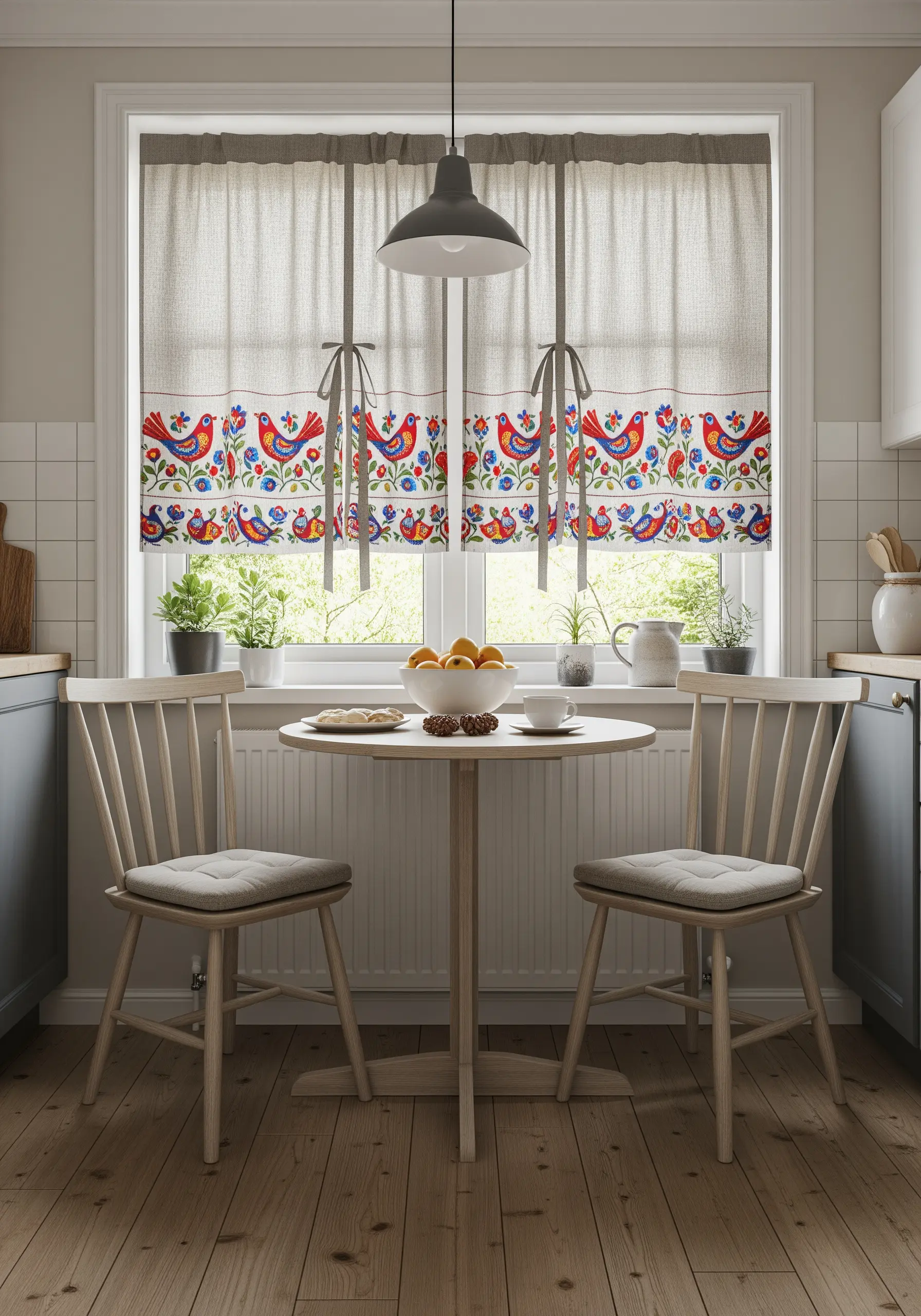
Inject cheer and personality into a small kitchen with a brightly colored folk-art border.
Use dense, neat satin stitches to fill in the main shapes like birds and flowers, then outline them with a contrasting backstitch for sharp definition.
To keep your repeating pattern perfectly symmetrical, use a water-soluble transfer pen and a stencil.
The charm of this style comes from the combination of bold color choices and tightly packed, traditional motifs.
9. Geometric Patterns in Tone-on-Tone Texture
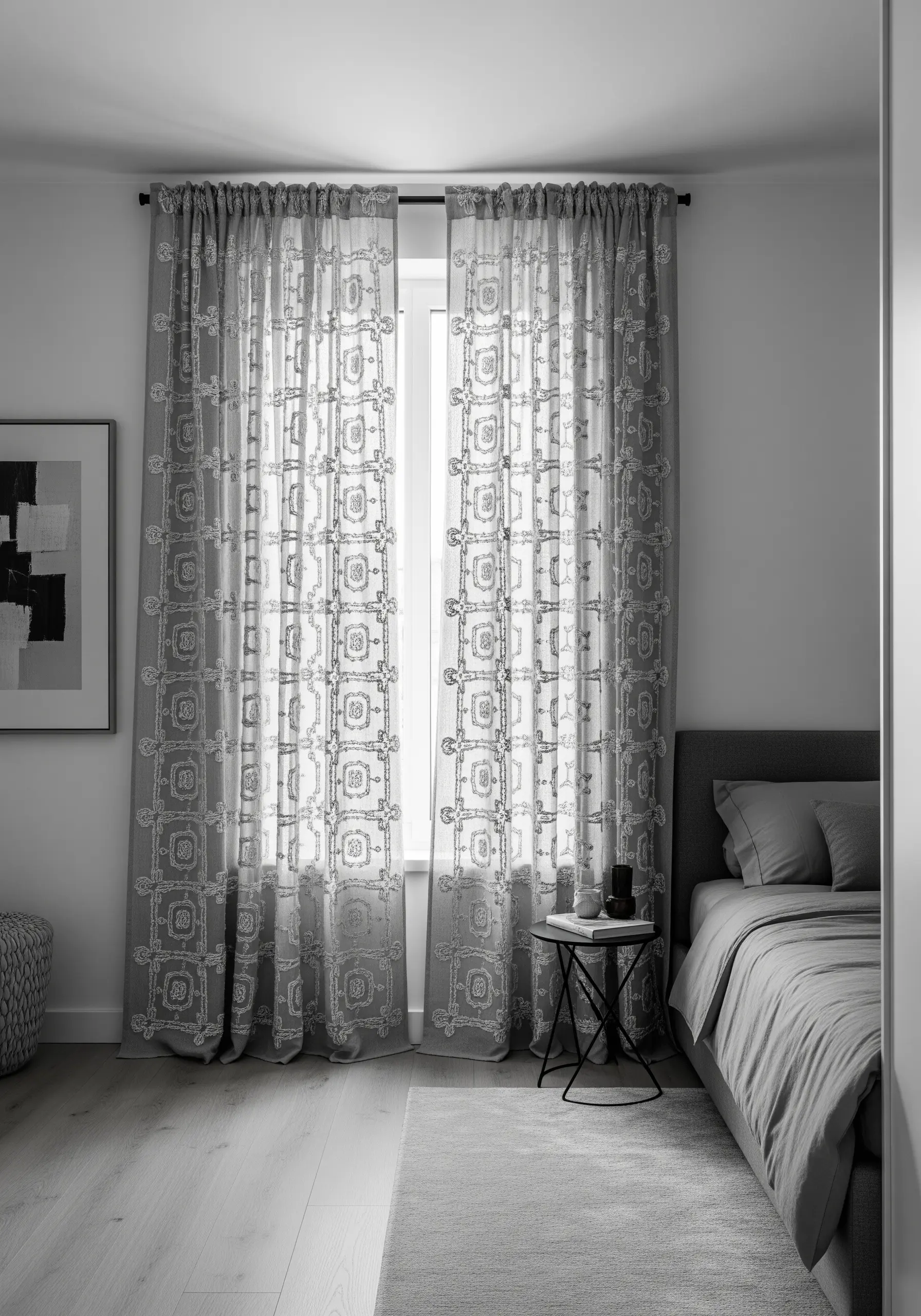
Create a sophisticated pattern that reveals itself through texture, not color.
Select a thread that is the exact same color as your curtain fabric, or just one shade lighter for a whisper of contrast.
Use stitches that create relief and shadow, like a thick chain stitch or a padded satin stitch, to form your geometric design.
The subtle play of light on the raised threads creates an effect of understated elegance. These tone-on-tone embroidery techniques are perfect for modern, serene spaces.
10. Scattered Motifs that Glow in Backlight
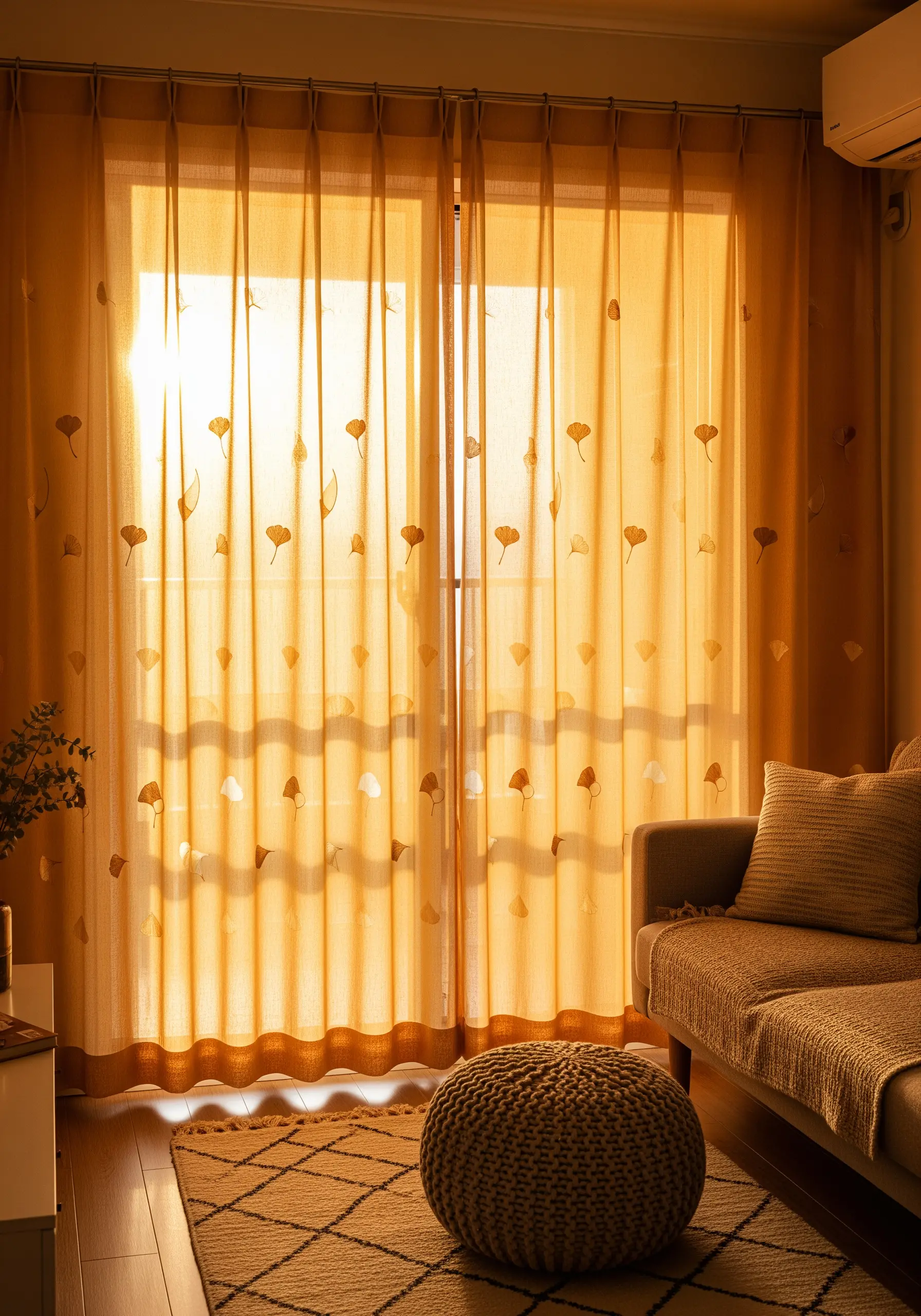
When embroidering on sheer curtains, always consider how the design will interact with sunlight.
Use a simple, solid satin stitch to create these ginkgo leaves. When backlit by the window, they will appear as elegant, glowing silhouettes.
Scatter the motifs randomly rather than in a rigid pattern to create a more natural, gentle effect, as if leaves are drifting down through the air.
11. Art Deco Fans with Metallic Sheen
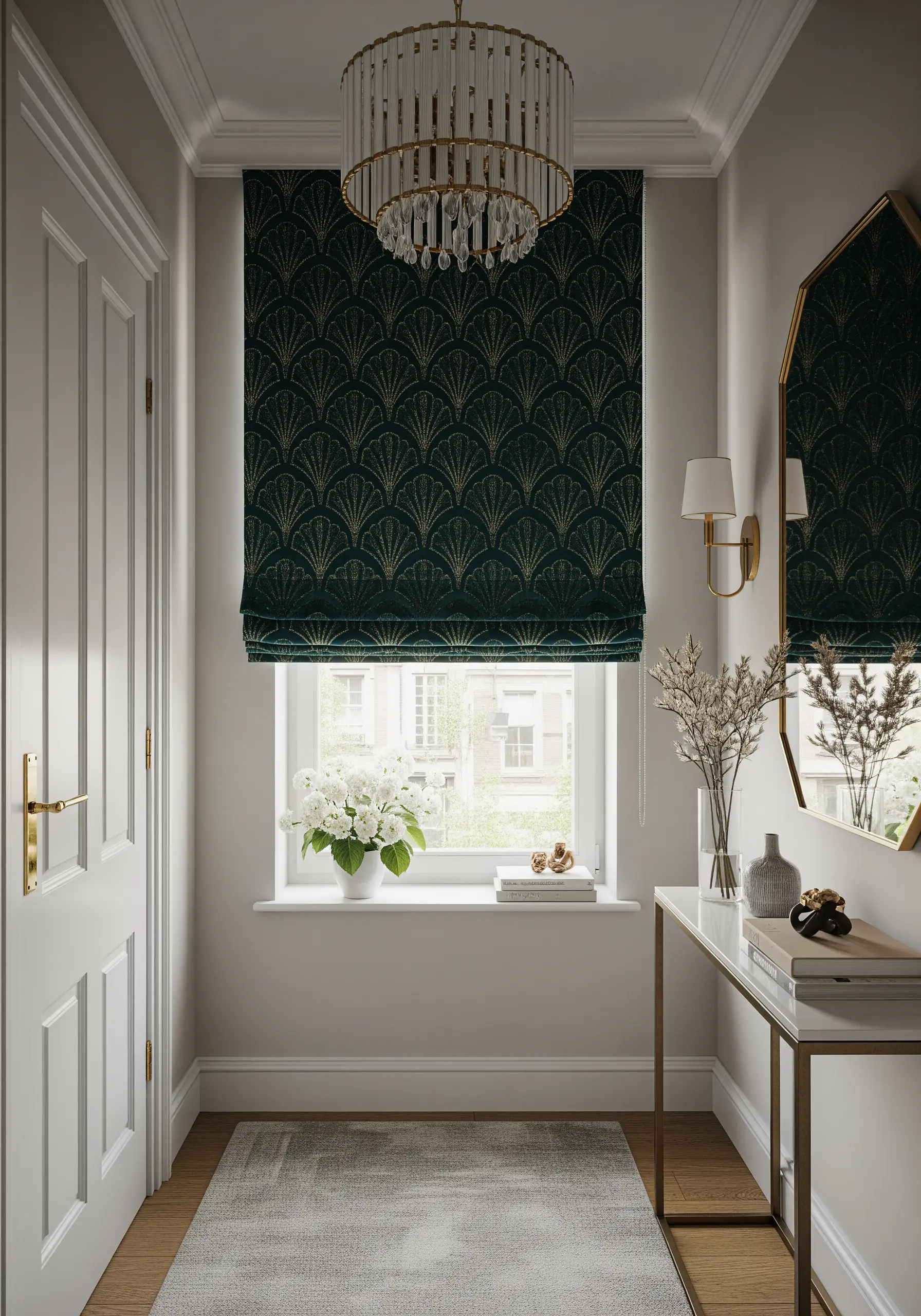
Capture the streamlined glamour of the Art Deco era with fine metallic thread and geometric precision.
A simple backstitch or stem stitch is all you need to create these iconic fan or shell shapes; the metallic thread does all the work.
The key to this style is flawless symmetry. Use a ruler and a heat-erasable fabric marker to ensure your lines are perfectly spaced for that signature opulent look.
12. Expressive Portraits in Continuous Line Art
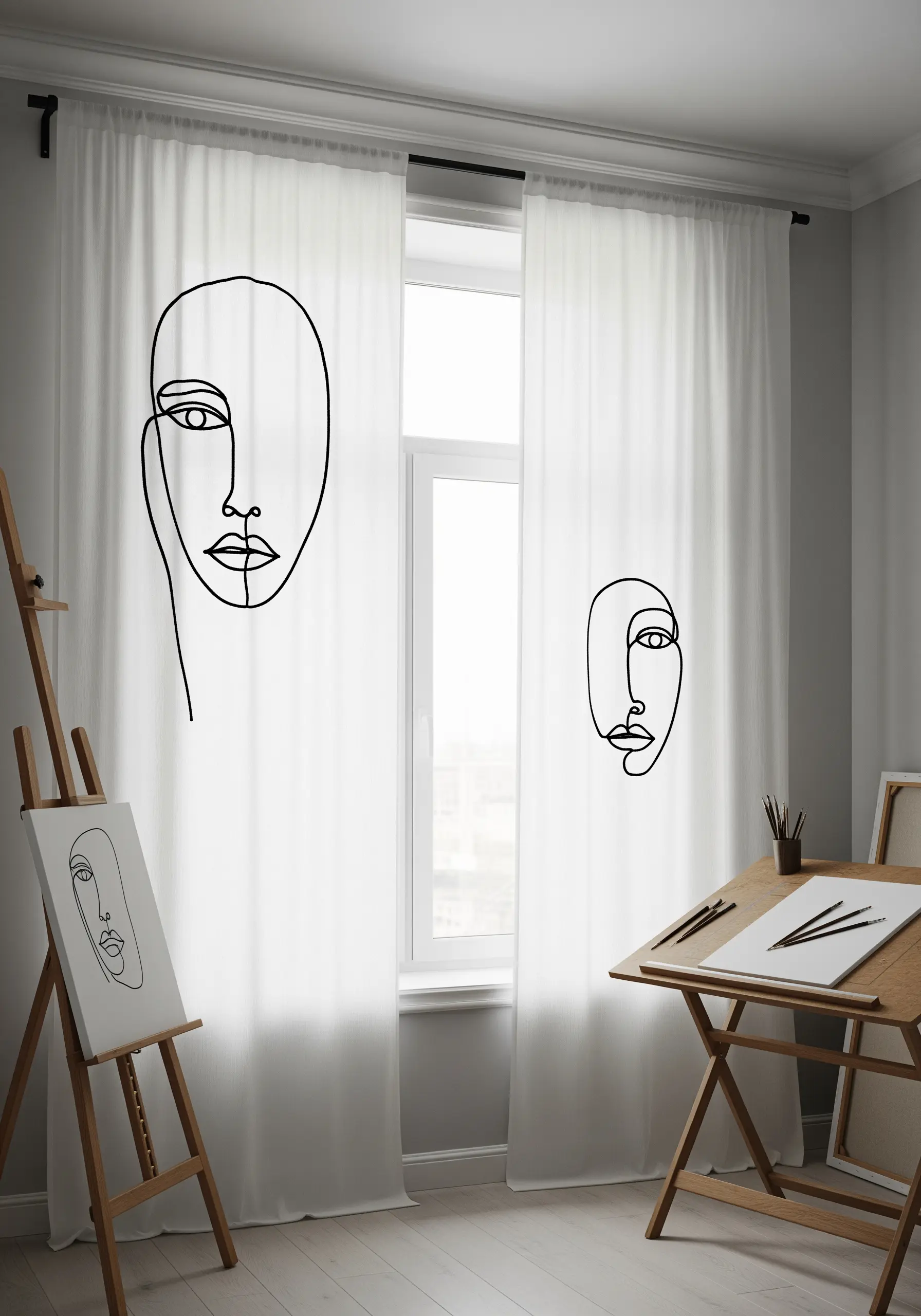
Transform your curtains into a minimalist art piece with a continuous line portrait.
Use a 3-strand black floss on sheer white fabric for a high-contrast, graphic effect that feels both delicate and bold.
Stitch the design with a smooth backstitch or stem stitch, trying to complete the motif without starting and stopping. This preserves the fluid, unbroken feel of the original drawing and elevates the final look. These abstract line art silhouettes are incredibly impactful.
13. A Vibrant Gradient of Vertical Stitches
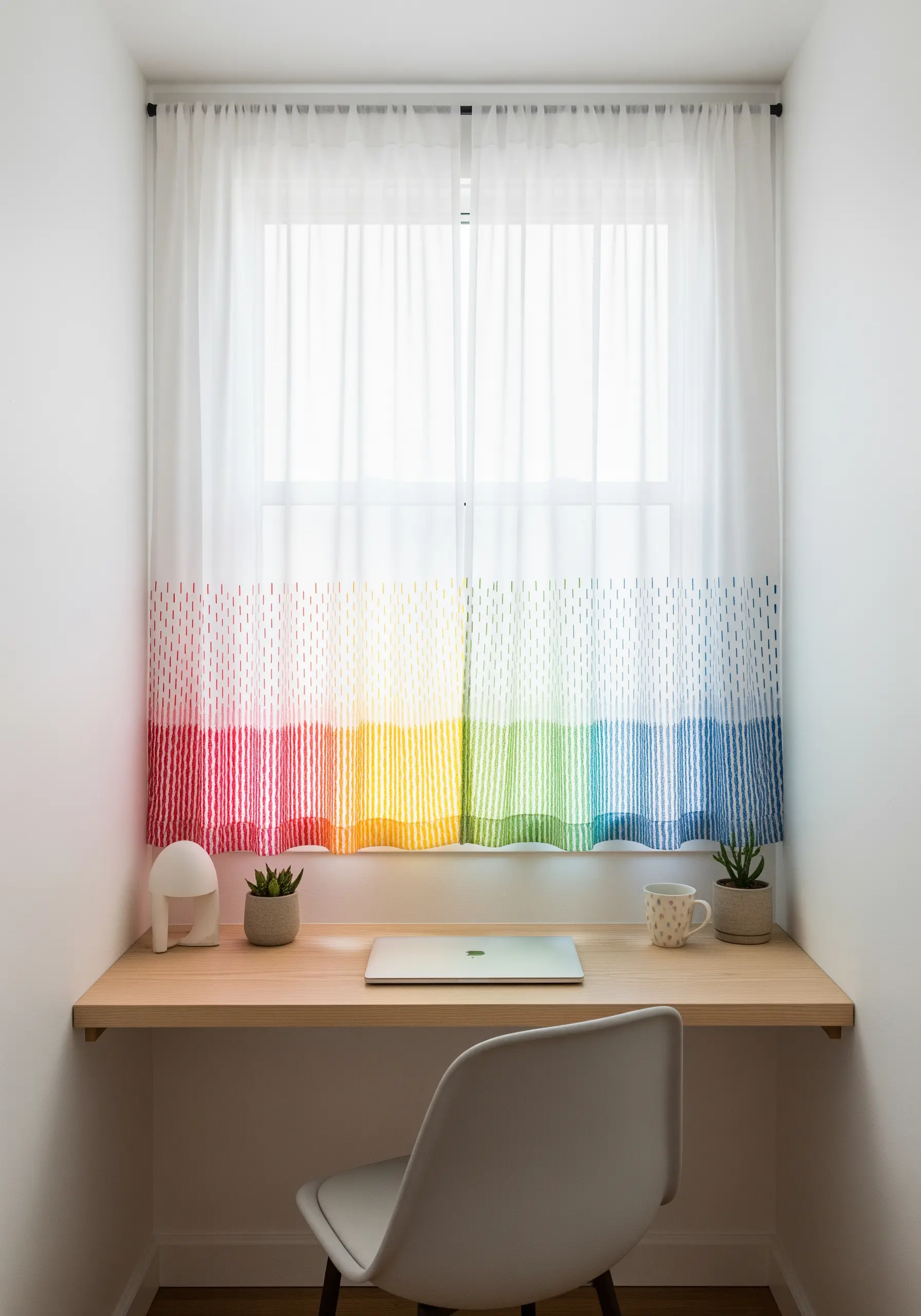
This stunning rainbow effect is achieved with nothing more than simple vertical straight stitches.
To create a smooth color transition, blend your threads between sections. For example, stitch a section with red and orange threads in the needle together before moving to pure orange.
Slightly varying the length of your stitches along the top edge will give the border a softer, more painterly finish.
14. Layered Botanicals for Realistic Depth
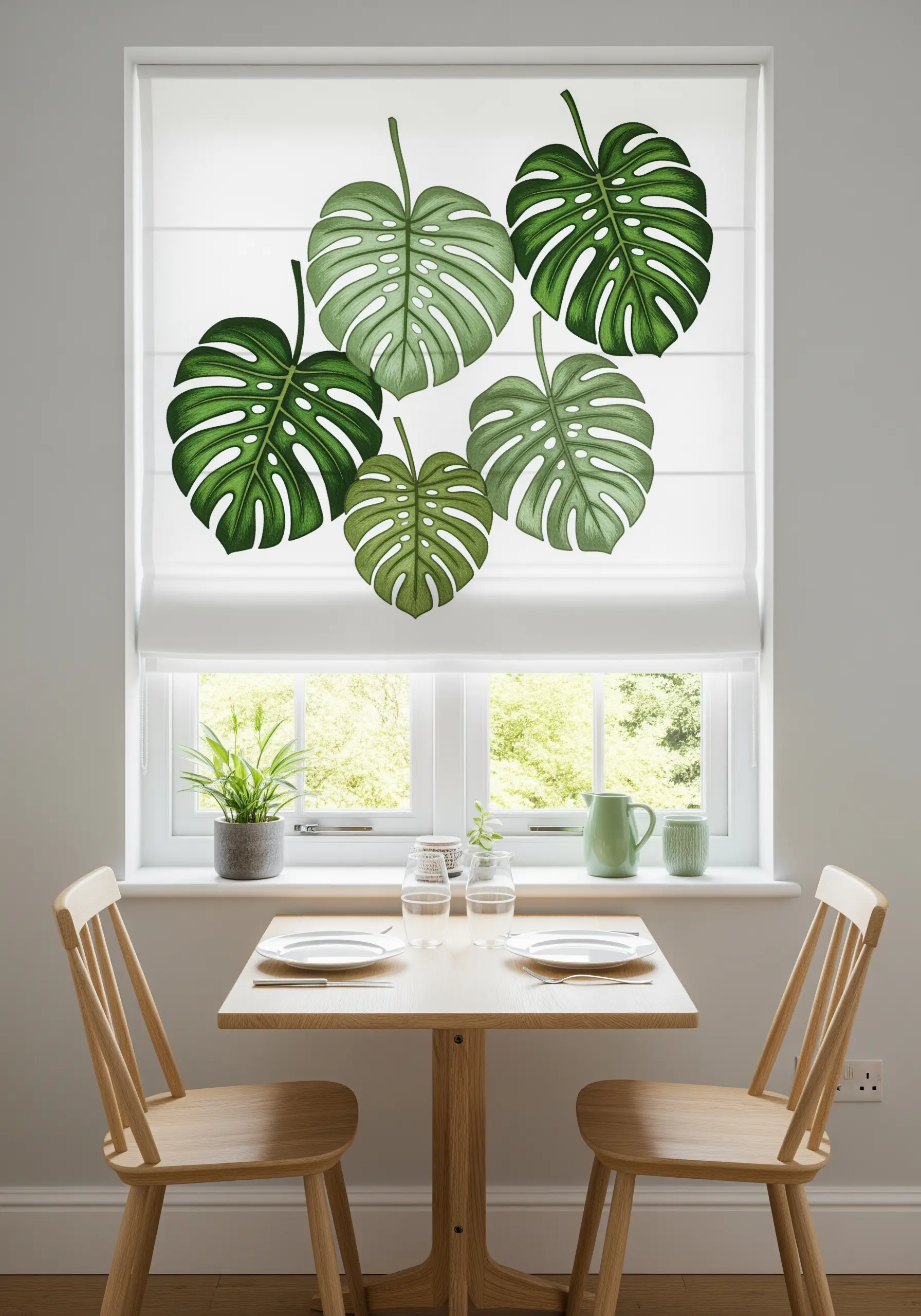
Give your embroidered leaves a lush, three-dimensional feeling with a simple color-layering trick.
First, stitch the leaves that appear to be in the background using a slightly lighter shade of green.
Then, stitch the foreground leaves over them using a darker shade, adding more detail like veins using a split stitch.
This technique creates a natural sense of depth without requiring complex thread painting. Master ways to layer leaf stitching for an instant upgrade to your botanical work.
15. Modern Folk Charm with Cross-Stitch
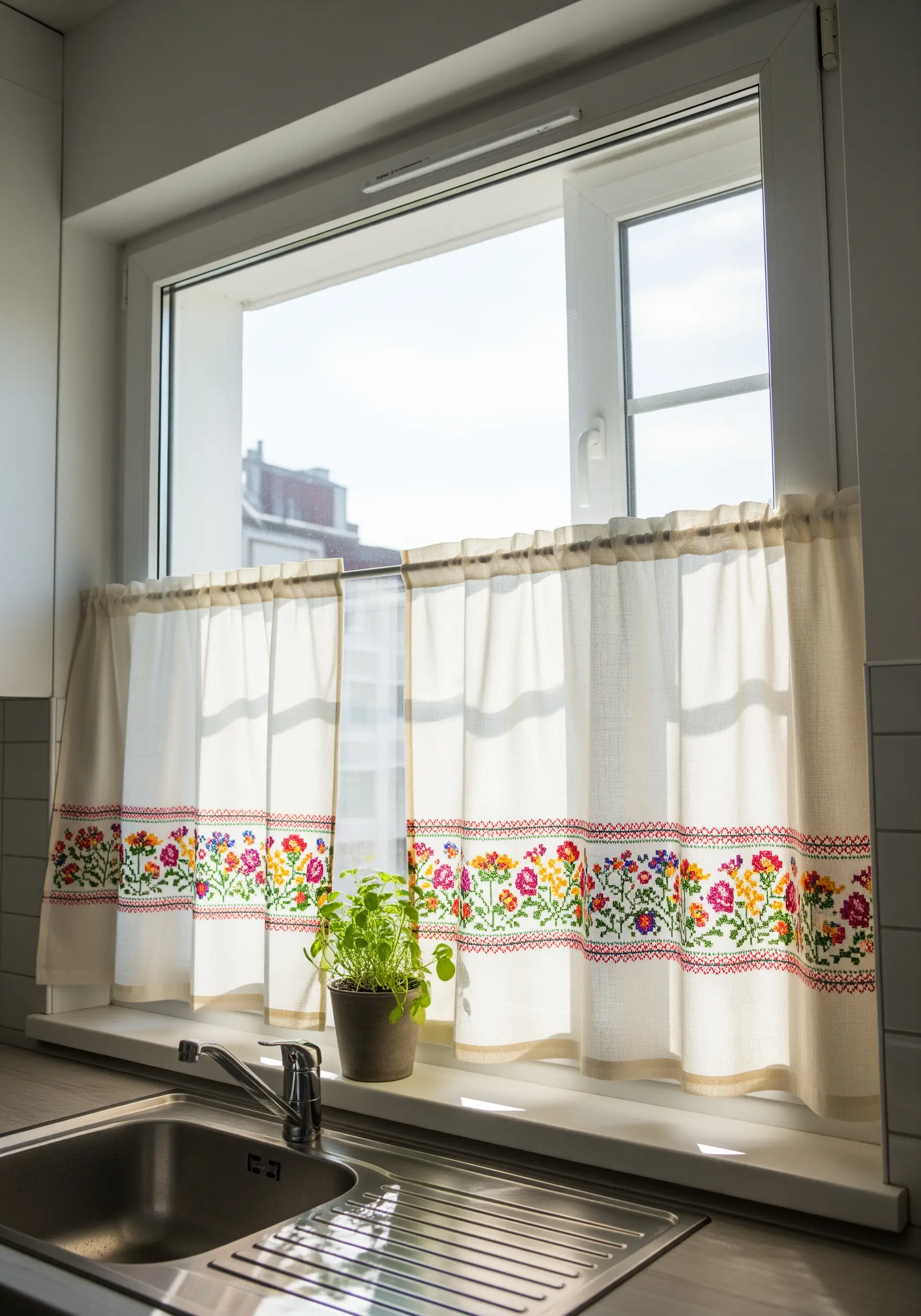
Breathe new life into traditional cross-stitch by applying it to a linen café curtain, using the fabric’s natural grid as your guide.
Choose a palette of bright, contemporary colors and a simple, repeating floral motif to keep the look fresh and modern.
The slightly pixelated quality of cross-stitch provides a charming, graphic texture that feels both timeless and perfectly suited for a cozy kitchen nook.
16. Subtle Paisley Sheen on Sheer Fabric
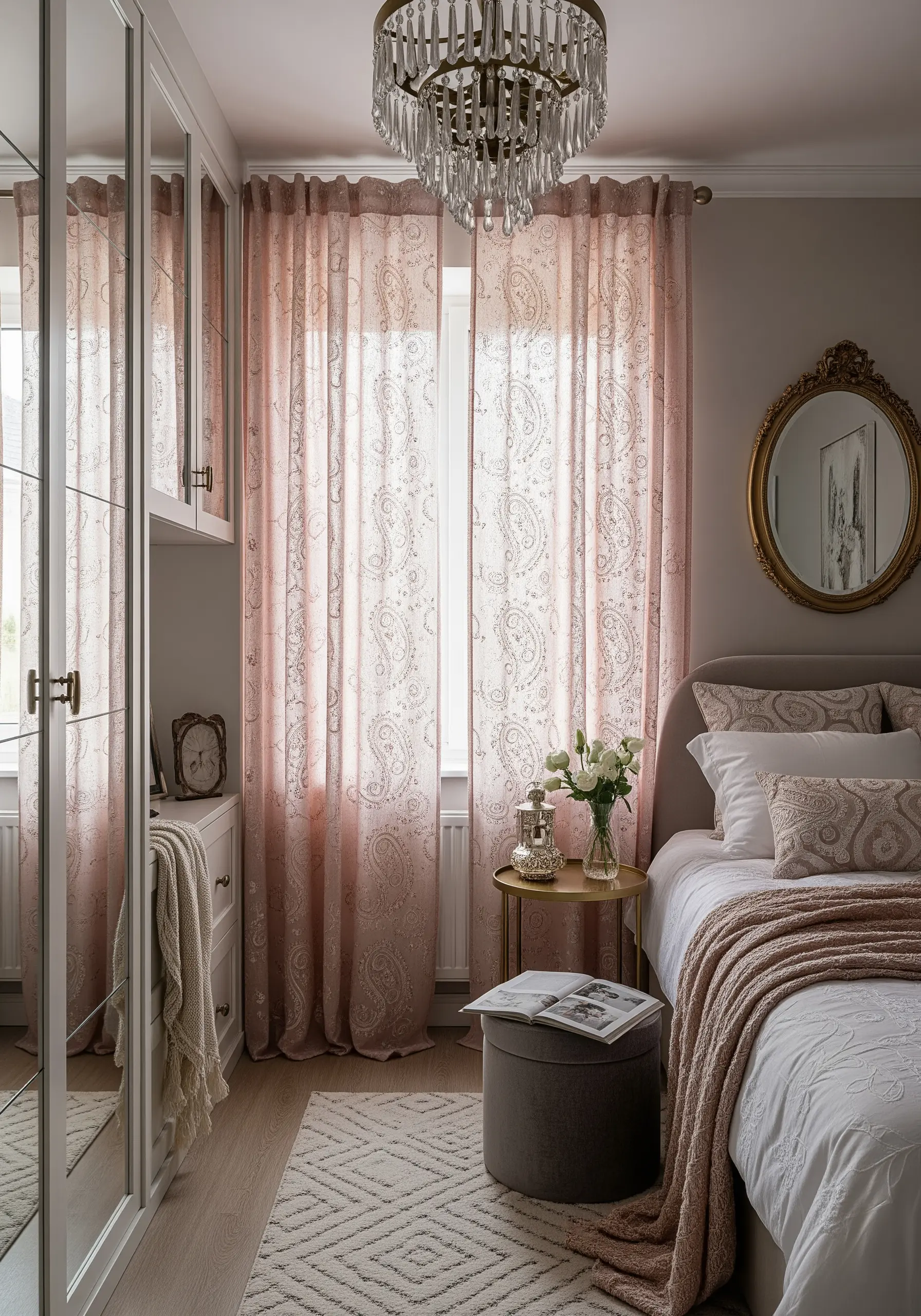
For an effect of understated luxury, choose a thread with a natural sheen, like rayon or silk floss.
Use a color that’s identical to your curtain fabric. The light will catch the reflective threads, making the paisley pattern appear and disappear as the fabric moves or as the light changes throughout the day.
This dynamic detail adds a layer of subtle, high-end elegance to your room.
17. An Ocean Gradient Painted with Thread
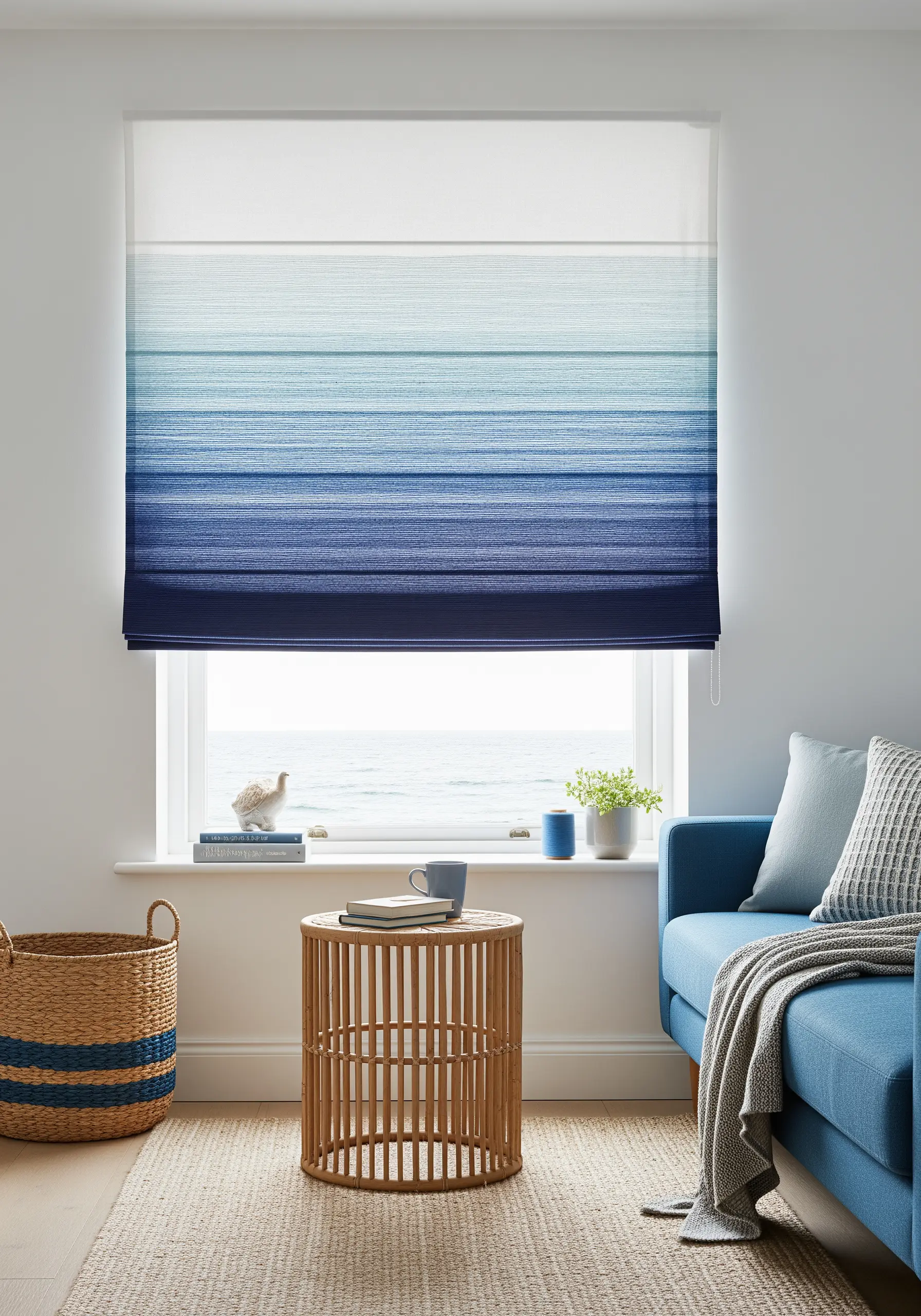
This beautiful ombré effect is a perfect introduction to thread painting, achieved with rows of long-and-short stitch.
Divide your blind into horizontal color bands and fill each one with stitches.
Where two colors meet, use a blend of both threads in your needle for a few rows to create a soft, seamless transition.
This technique beautifully mimics the deep, layered hues of the ocean, bringing a sense of calm to any room.
18. Immersive Woodland Scatter Pattern
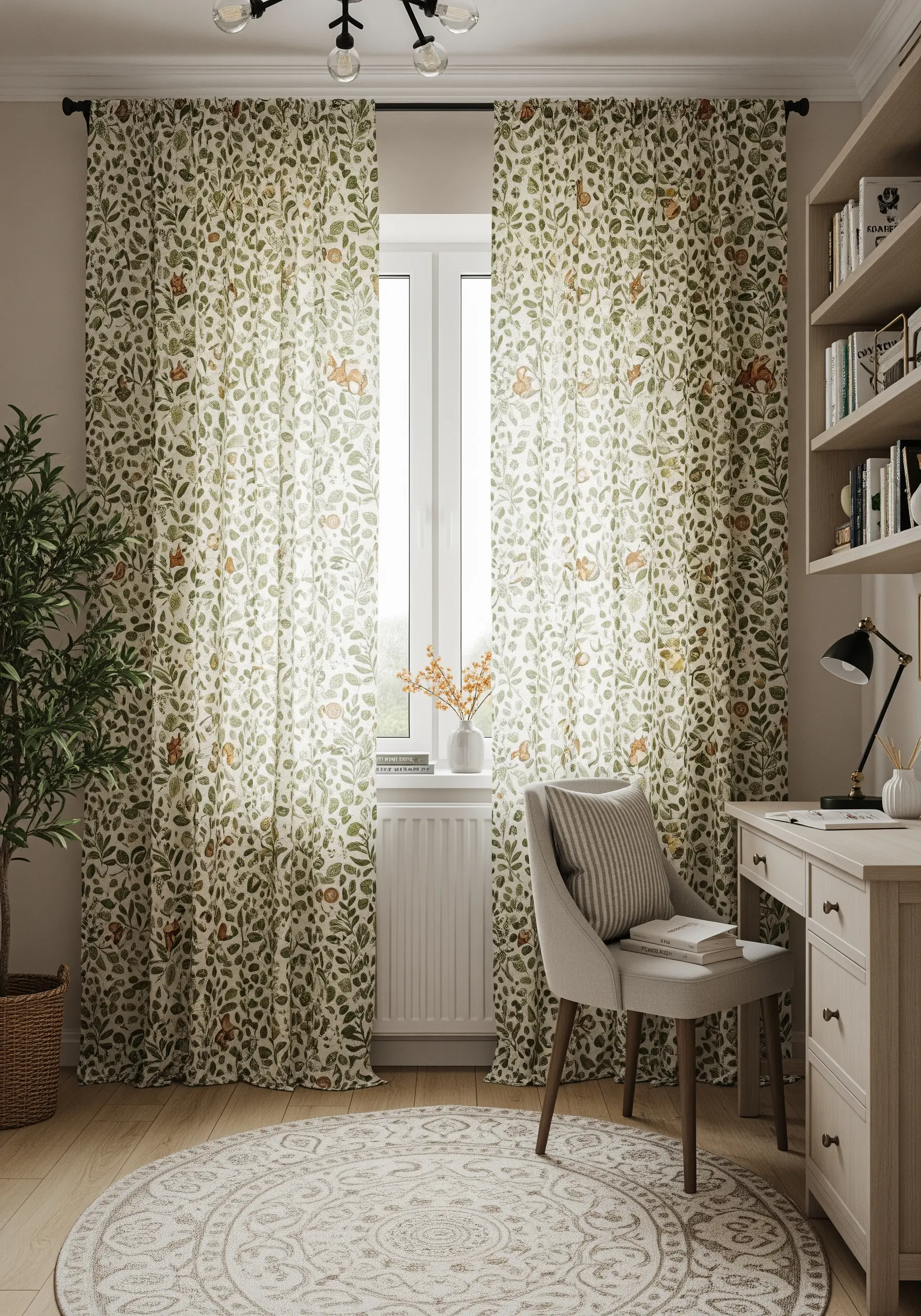
To create a dense, all-over pattern that doesn’t feel overwhelming, the key is to keep your individual motifs small and simple.
Stick to just two or three stitch types—like stem stitch for branches and satin stitch for leaves—to maintain visual cohesion across the entire curtain.
The magic of this design comes from the repetition and the way the small, delicate elements combine to create a larger, immersive woodland texture that invites you in.
19. Abstract City Grid with Straight Stitches
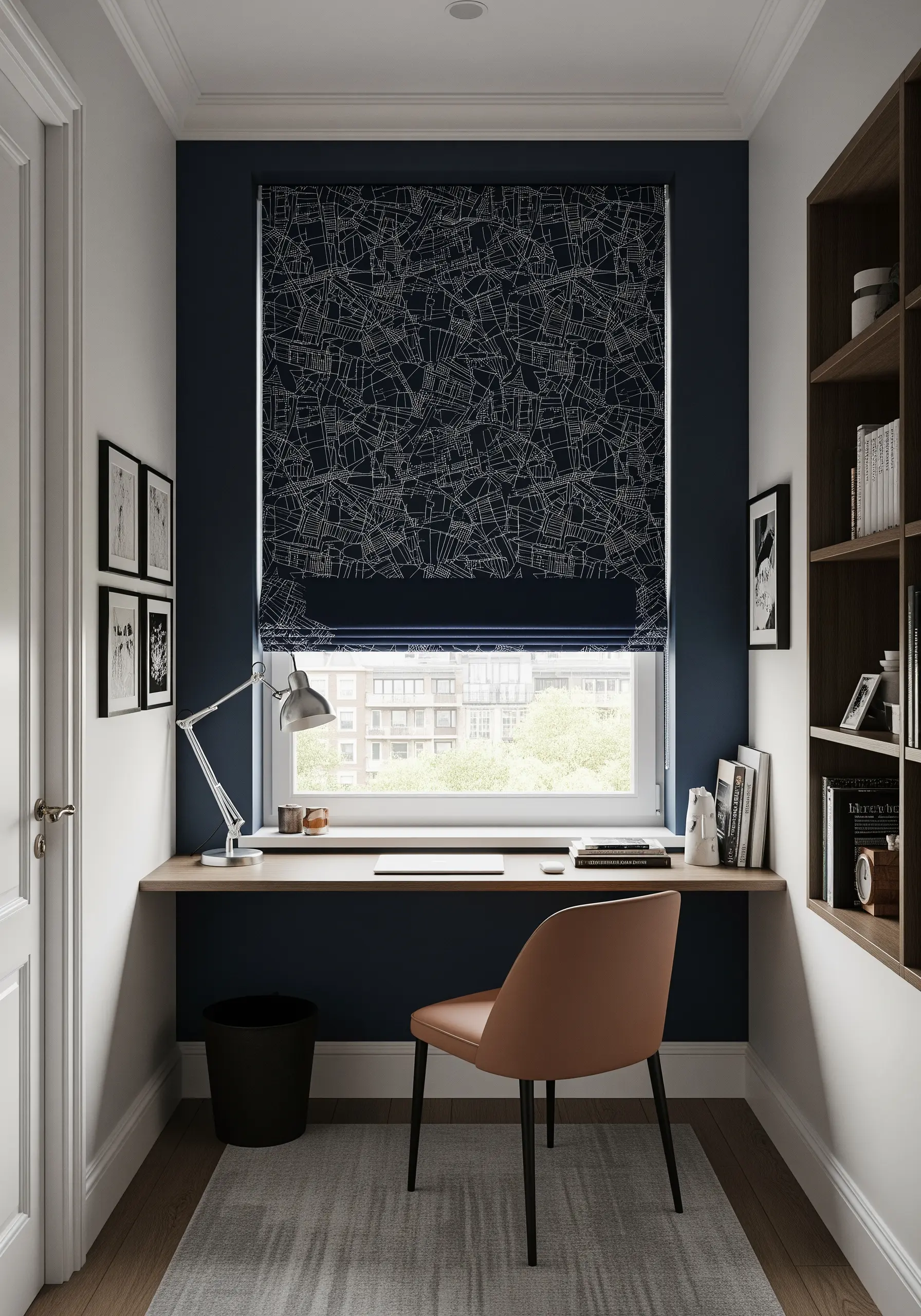
Capture the dynamic energy of a city map using only straight stitches in an overlapping, layered composition.
To create this controlled chaos, stitch your lines in multiple directions, allowing them to intersect freely.
Use a light, contrasting thread (like white on navy) to ensure the lines remain crisp and visible.
Embrace the imperfection—the varied angles and overlapping stitches are what give the design its vibrant, urban feel.
20. Delicate Dandelions Floating on Air
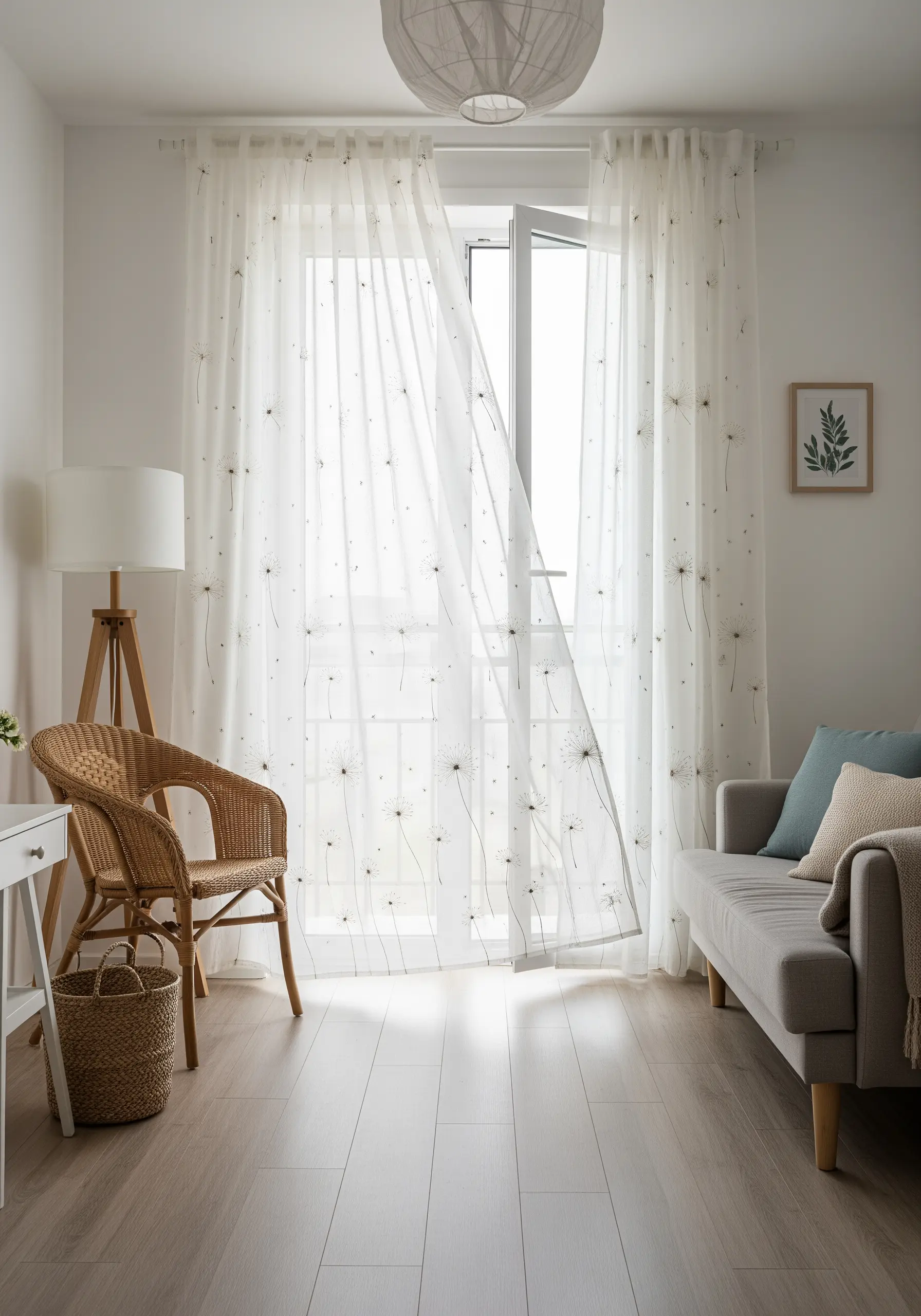
To achieve this airy, almost weightless feeling, use a very fine thread—a single strand of cotton floss is perfect.
Use simple straight stitches for the dandelion seeds and a small cluster of French knots for the central seed head.
Remember that on sheer fabric, the ways to combine thread and negative space are just as important as the stitches themselves; space your motifs generously to let the light and fabric breathe.
21. Interlocking Rings Using the Couching Technique
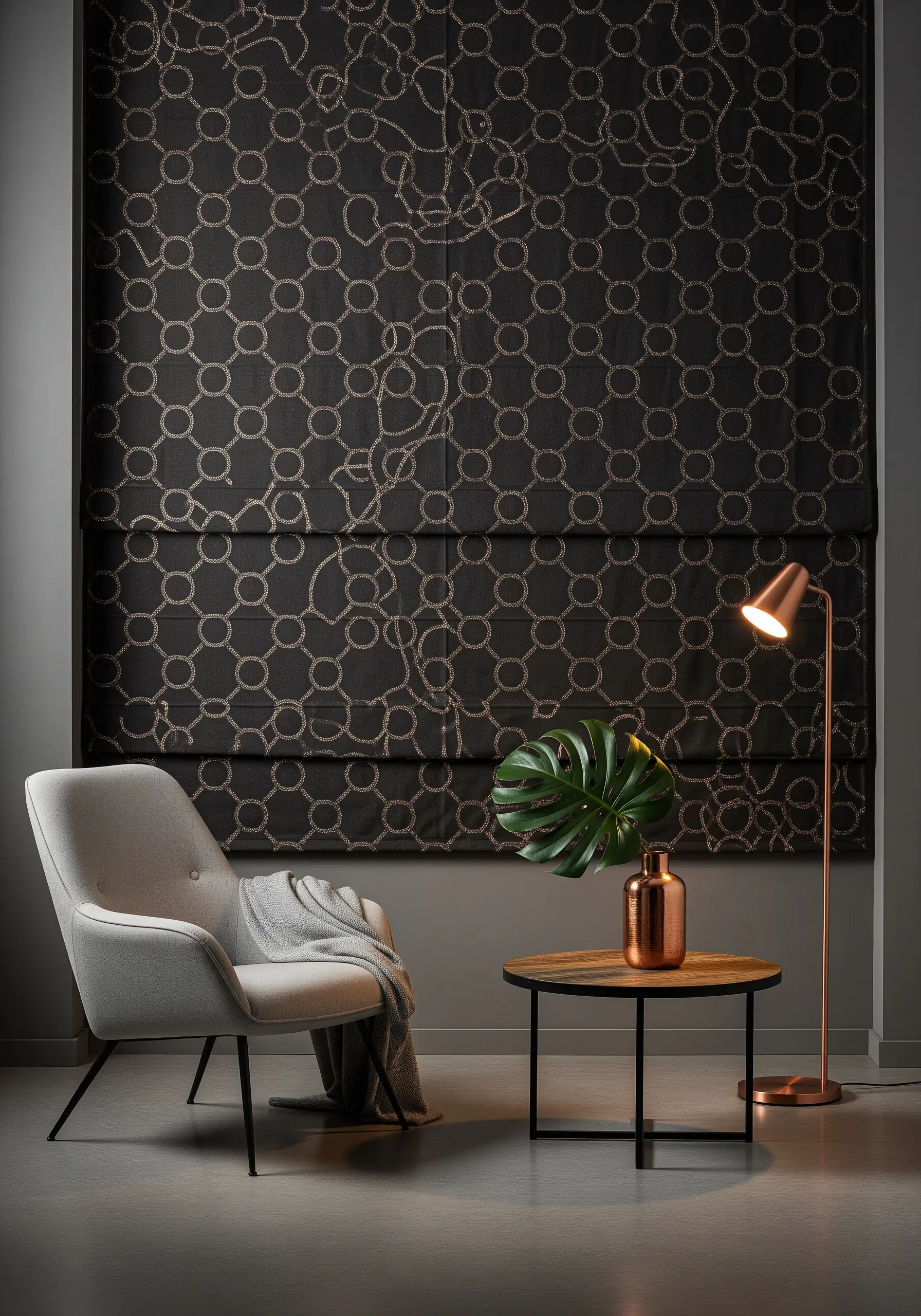
For clean, perfectly curved, overlapping shapes, the couching technique is superior to a standard stitch.
First, lay down a thicker thread (like a perle cotton) in the shape of your design.
Then, use a thinner, matching thread to tack it down with tiny, perpendicular stitches.
This method gives you a bold, raised line and flawless curves, making it ideal for graphic, interlocking patterns that require precision.
22. Textured Polka Dots with Knotted Stitches
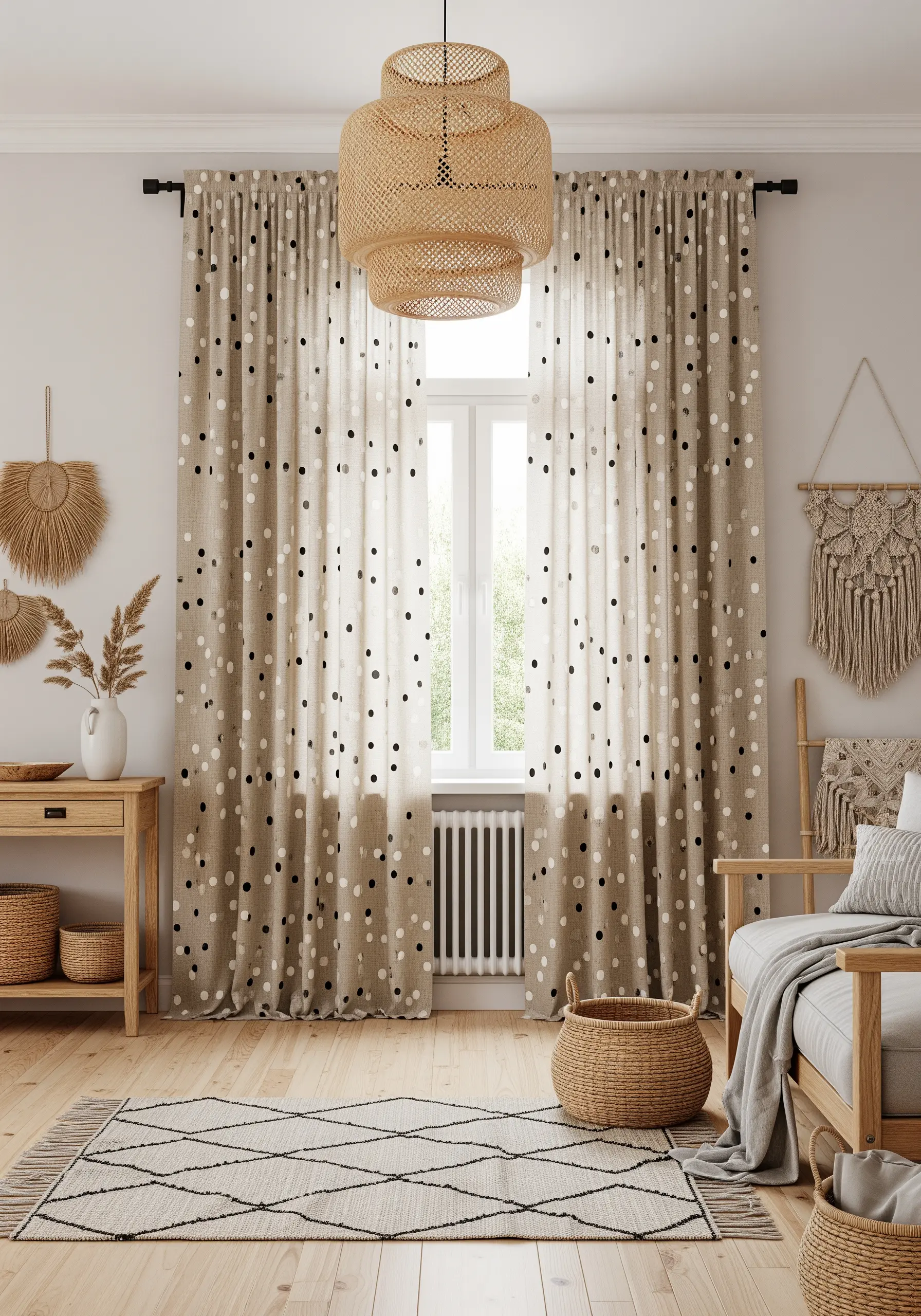
Elevate a simple polka dot pattern by replacing flat satin stitches with textured knots.
Use French knots or colonial knots to create tactile, raised dots. You can easily vary their size by changing the number of times you wrap the thread around the needle.
For a sophisticated yet playful look, use three coordinated shades from the same neutral color family, such as cream, taupe, and charcoal.
23. Flawless Script with a Whipped Backstitch
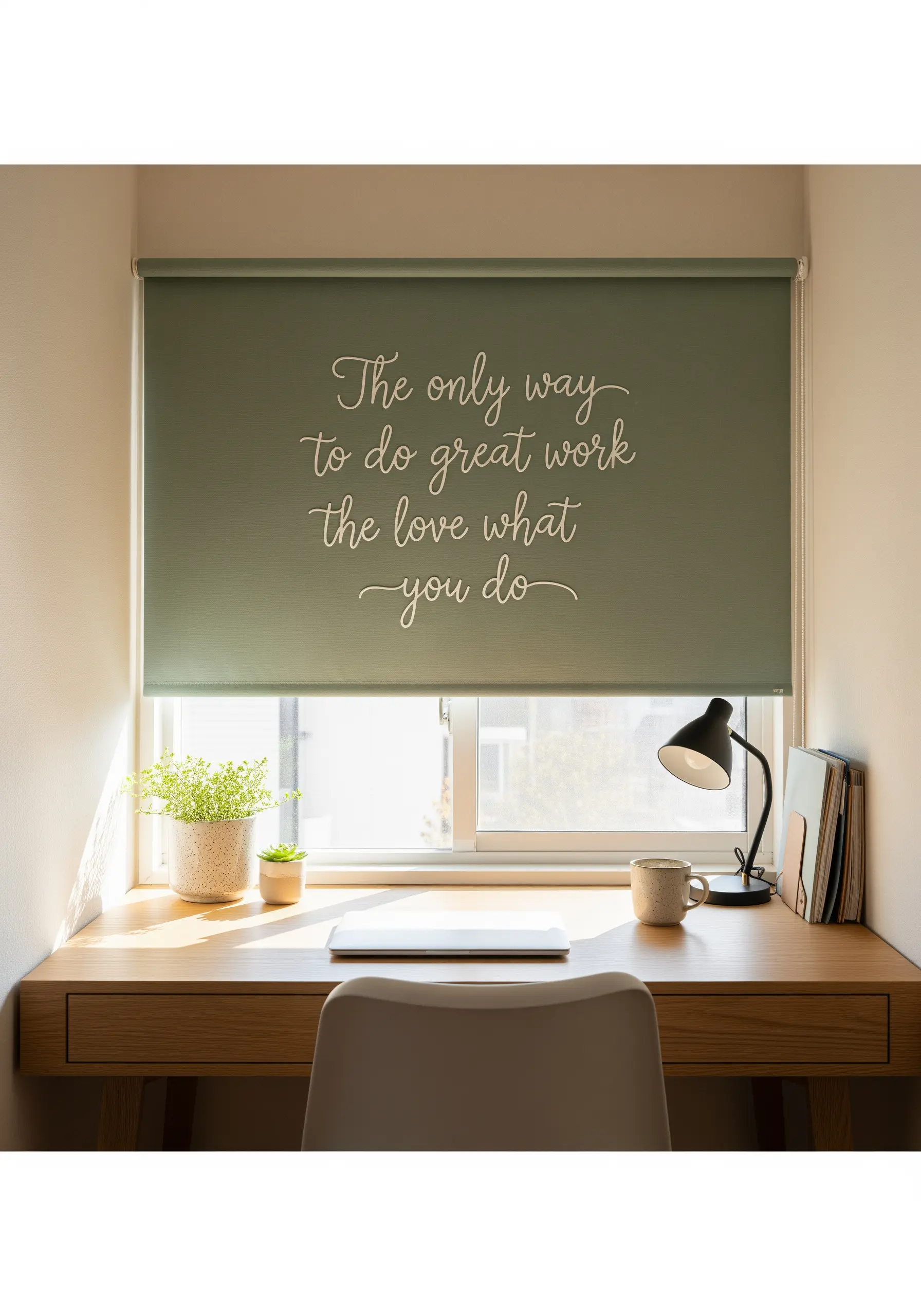
To achieve perfectly smooth, elegant lettering that looks like calligraphy, a two-step process is key.
First, stitch your quote using a simple backstitch to create a stable foundation.
Then, wrap that foundation with a second thread (this is called a whipped backstitch) to create a seamless, flowing line without any gaps.
This technique prevents puckering on the fabric and gives your script a professional, corded quality. It’s a great way to display minimal typography quotes.
24. An Underwater Scene with Richly Textural Stitches
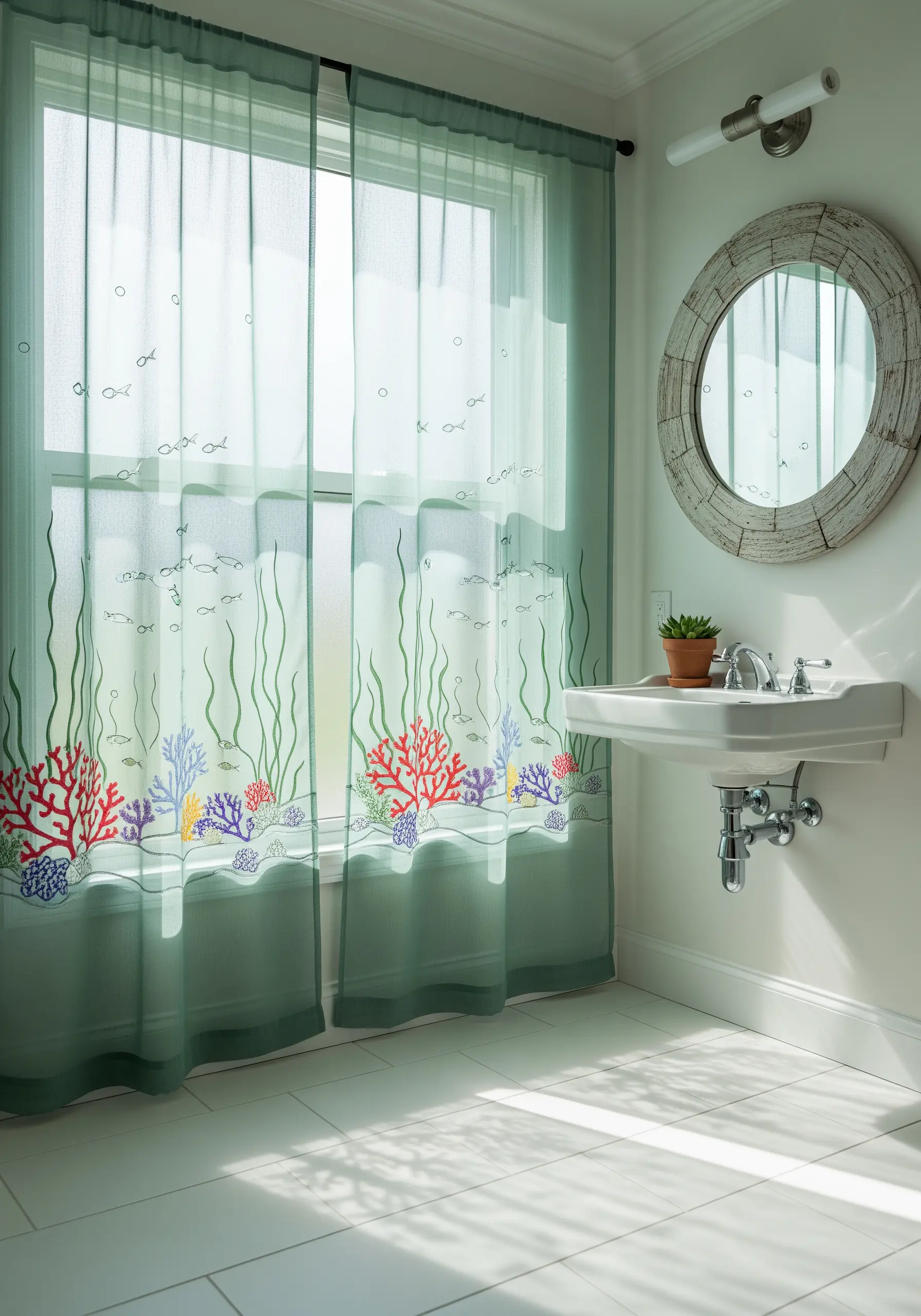
Bring a coral reef to life by choosing stitches that mimic the natural textures of the ocean floor.
Use clusters of French knots for sandy texture, the couching technique for long, flowing seaweed, and bullion knots or woven wheel stitches to create the complex, dimensional shapes of coral.
The variety in height and texture will create a vibrant, tactile underwater world that invites a closer look.
25. Autumnal Leaves with Variegated Thread
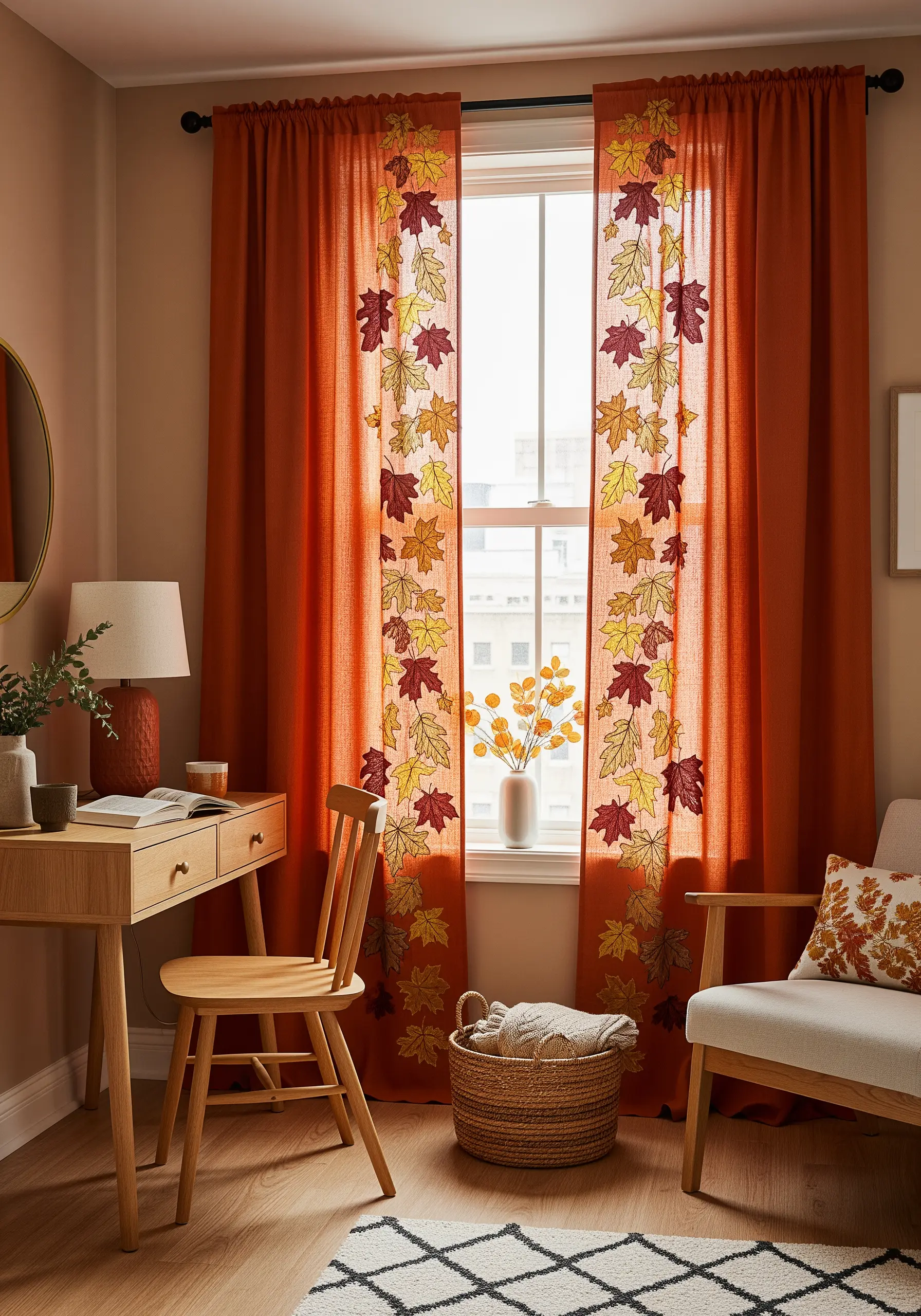
For leaves that have a natural, multi-toned appearance, simplify your work by using a variegated floss.
This special thread has multiple colors dyed along its length, so the colors will change automatically as you stitch, creating beautiful, organic blends with no effort.
Use a simple fishbone stitch for the leaves; it creates a central vein and angled sides that perfectly mimic the structure of a real leaf. Explore more seasonal embroidery decor ideas to keep your space fresh.
26. A Delicate Lavender Border for a Touch of Calm
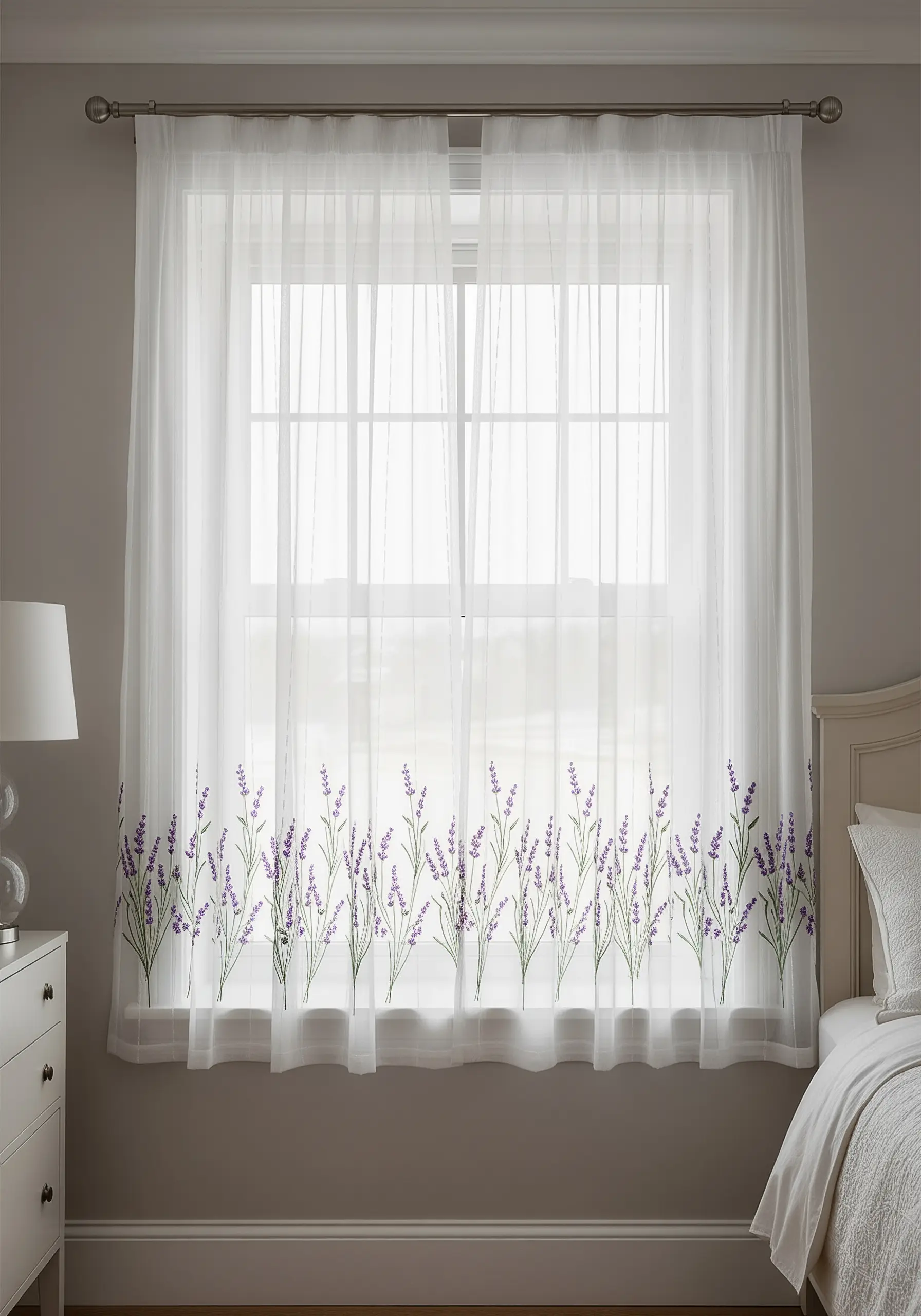
To stitch realistic lavender, it’s all about using the right simple stitches in combination.
Use detached chain stitches (also known as lazy daisies) for the tiny blossoms, clustering them tightly at the top of the stalk.
For the long, slender stems, a simple stem stitch in a soft green is perfect.
When working on a delicate fabric like sheer voile, use a lightweight tear-away stabilizer behind your work to support the stitches and prevent distortion.
27. Cheerful Lemons with a Perfect Satin Stitch
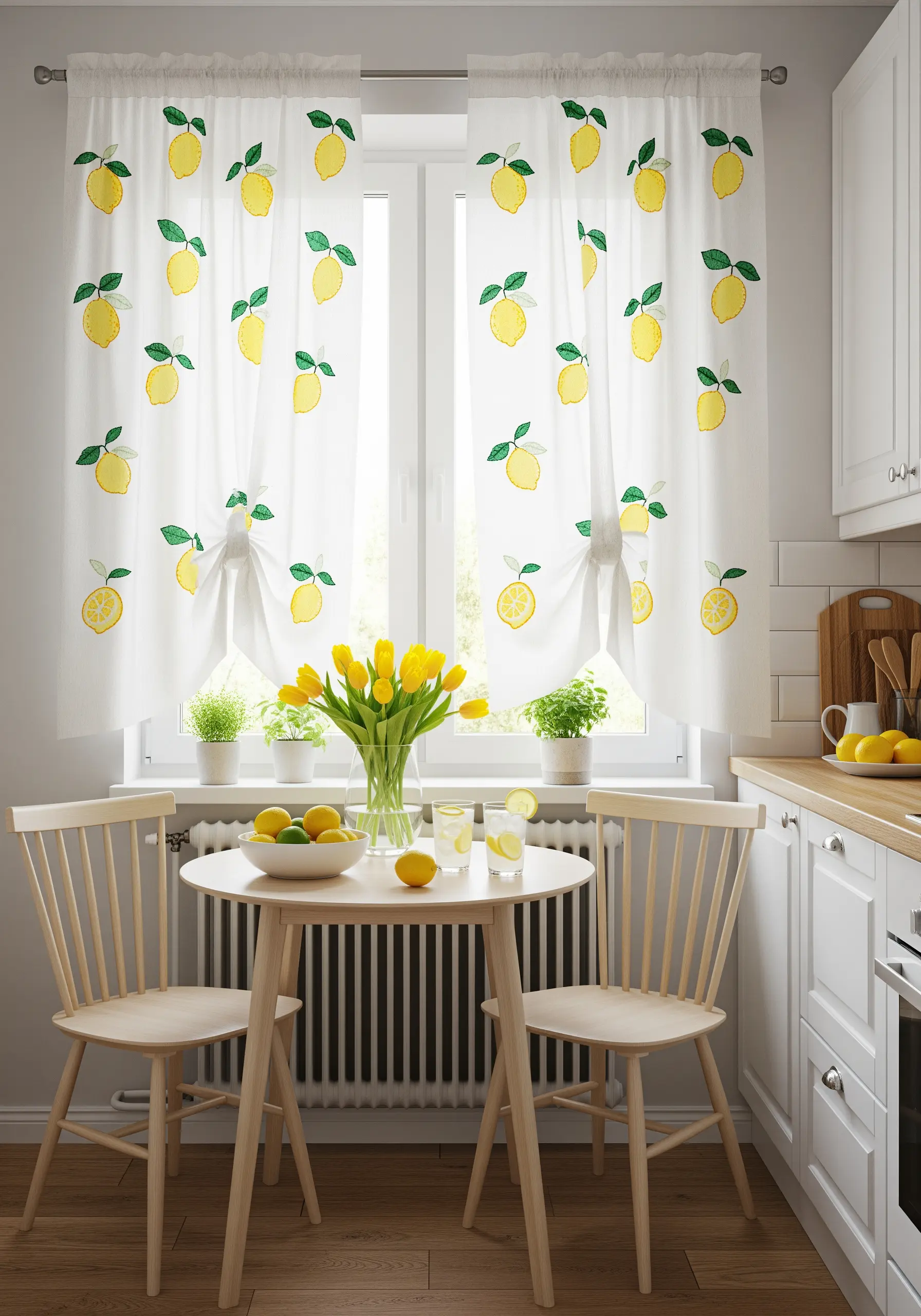
The secret to perfectly smooth, professional-looking satin stitches is to give them a defined edge to work against.
First, outline your lemon shape with a split stitch. This creates a slightly raised boundary for your satin stitches to tuck into.
As you fill the shape, your stitches will lay flat and the edge will be incredibly neat.
Add a single white straight stitch as a highlight to give the fruit a subtle shine and a touch of realism.
28. Frosted Snowflakes in a Glimmering Gradient
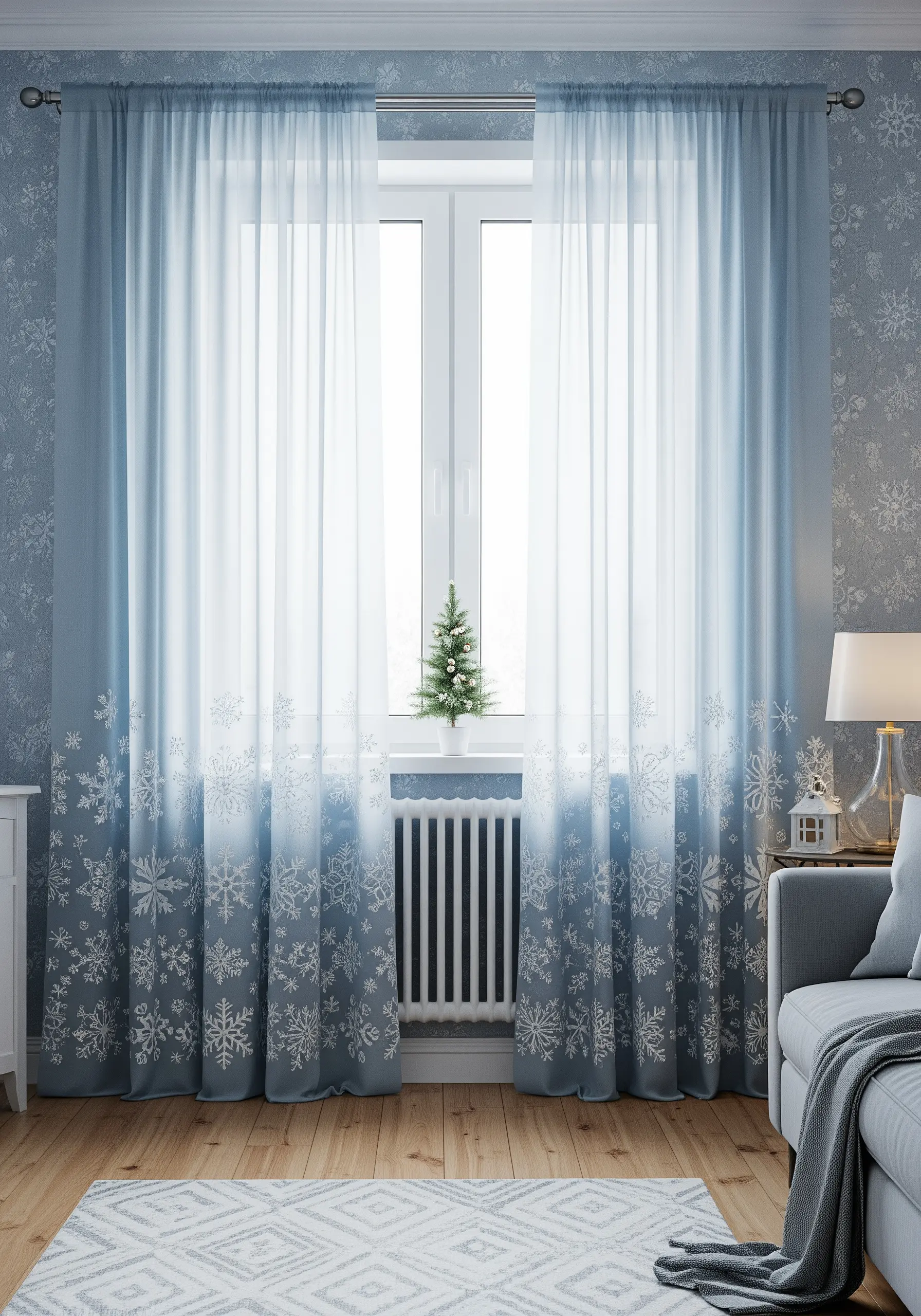
Create a magical frosted effect by embroidering a dense border of snowflakes at the bottom of the curtain, allowing them to become sparser as they float upwards.
Use a mix of white, silver, and pale blue threads to add subtle depth and variation.
A simple backstitch is all you need for the intricate arms of each snowflake, and including a metallic silver thread will make them gently sparkle in the light.
29. Bold Ink Splats with a Crisp Appliqué Edge
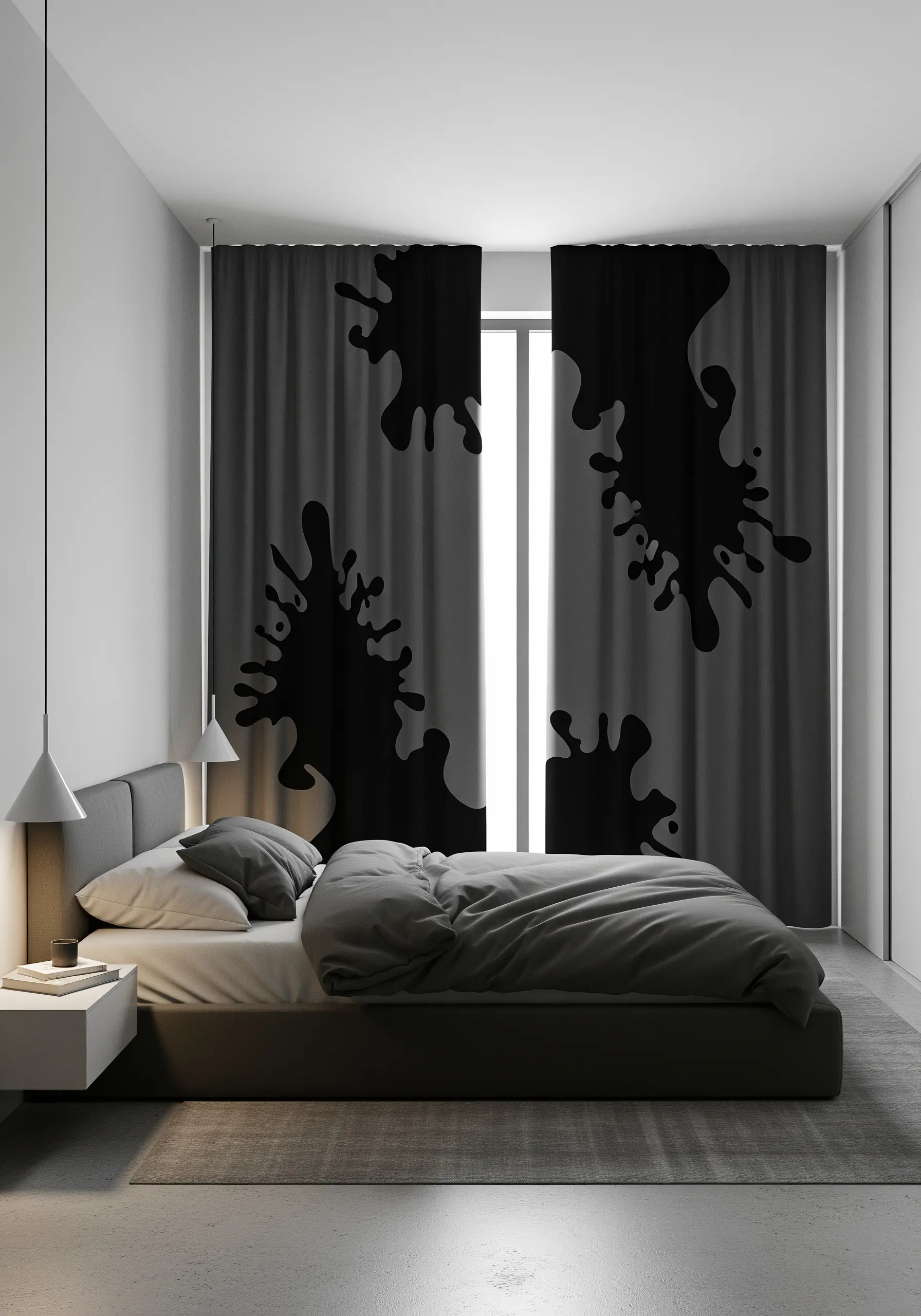
For a high-impact, graphic design with sharp edges, appliqué is a much cleaner technique than fill stitching.
Cut your ink splat shape from a non-fraying fabric like felt, or use an iron-on adhesive (like Heat’n Bond) on the back of a cotton fabric.
Once in place, secure the edges with a tight, nearly invisible slip stitch. This method gives you a perfectly crisp silhouette with a bold, contemporary feel.
30. High-Tech Circuits with Neon Thread
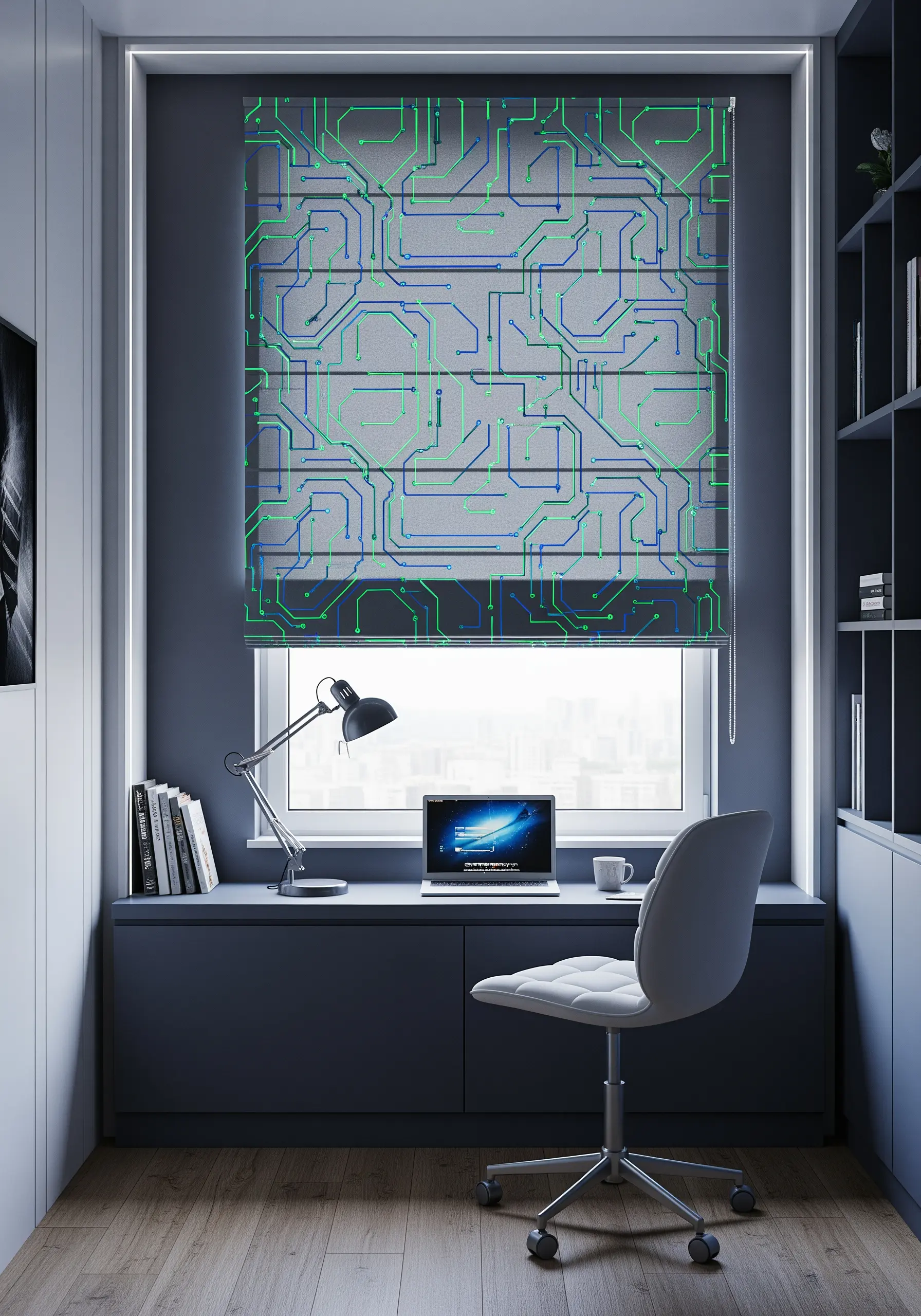
To create the illusion of a glowing circuit board, the right thread and fabric combination is everything.
Use a bright, fluorescent embroidery floss in neon green or blue for the circuit traces.
A simple backstitch or stem stitch will create the clean, precise lines you need.
To truly enhance the ‘glowing’ effect, stitch on a dark, matte fabric like a charcoal grey or black blind. The high contrast will make the bright threads appear to vibrate with electric energy.