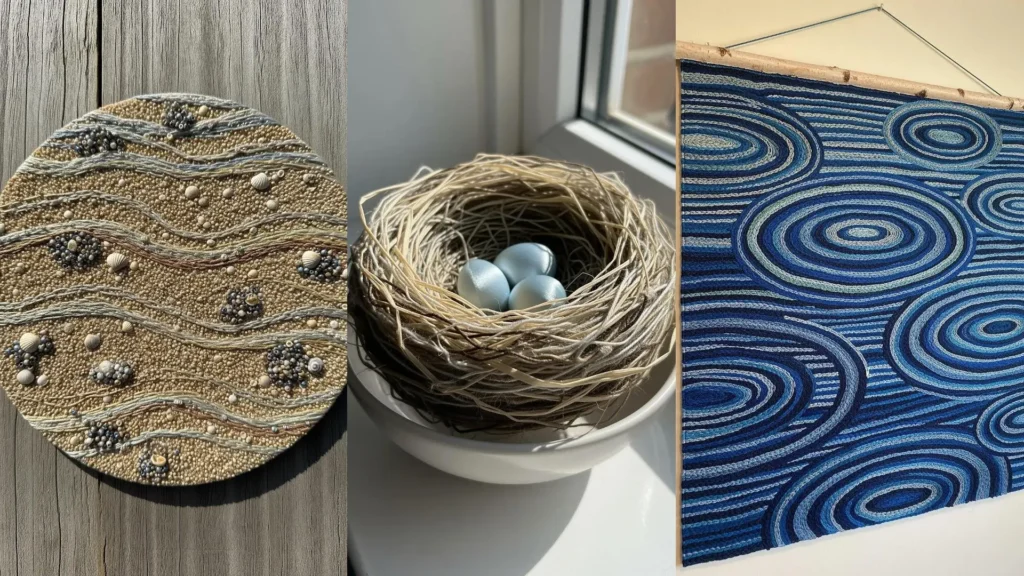
Have you ever looked at a mossy stone or the rings of a tree and wished you could capture that feeling—that perfect, quiet texture—in your embroidery? So often, we focus on color and shape, but the true soul of a piece can live in its tactile dimension.
Bringing natural textures into your work isn’t about mastering dozens of impossibly complex stitches. It’s about seeing the world differently and translating it with intention. It’s about choosing a thicker yarn to mimic bark, layering felt to feel like a smooth pebble, or using dense French knots to build a soft, moss-like surface.
Here, you’ll find ways to create depth, dimension, and a sense of organic reality in your embroidery. These are not just patterns; they are invitations to touch, feel, and bring the calm, grounding energy of the natural world into your home, one thoughtful stitch at a time.
1. Create a Moss and Bark Wall Tapestry

Build a deeply tactile surface by combining dense clusters of French knots with a coarse, neutral background like burlap or linen canvas.
Use several shades of green and chartreuse embroidery floss—mixing them within the knot clusters will give your ‘moss’ a realistic, variegated appearance.
For the bark texture, you can appliqué actual pieces of thin, preserved bark or use fabric manipulation techniques like scrunching and stitching down brown linen.
Frame the entire piece with a thick, couched wool roving to add a soft, containing edge that balances the wildness of the central texture.
2. Stitch a Cairn of Fabric-Appliquéd Stones
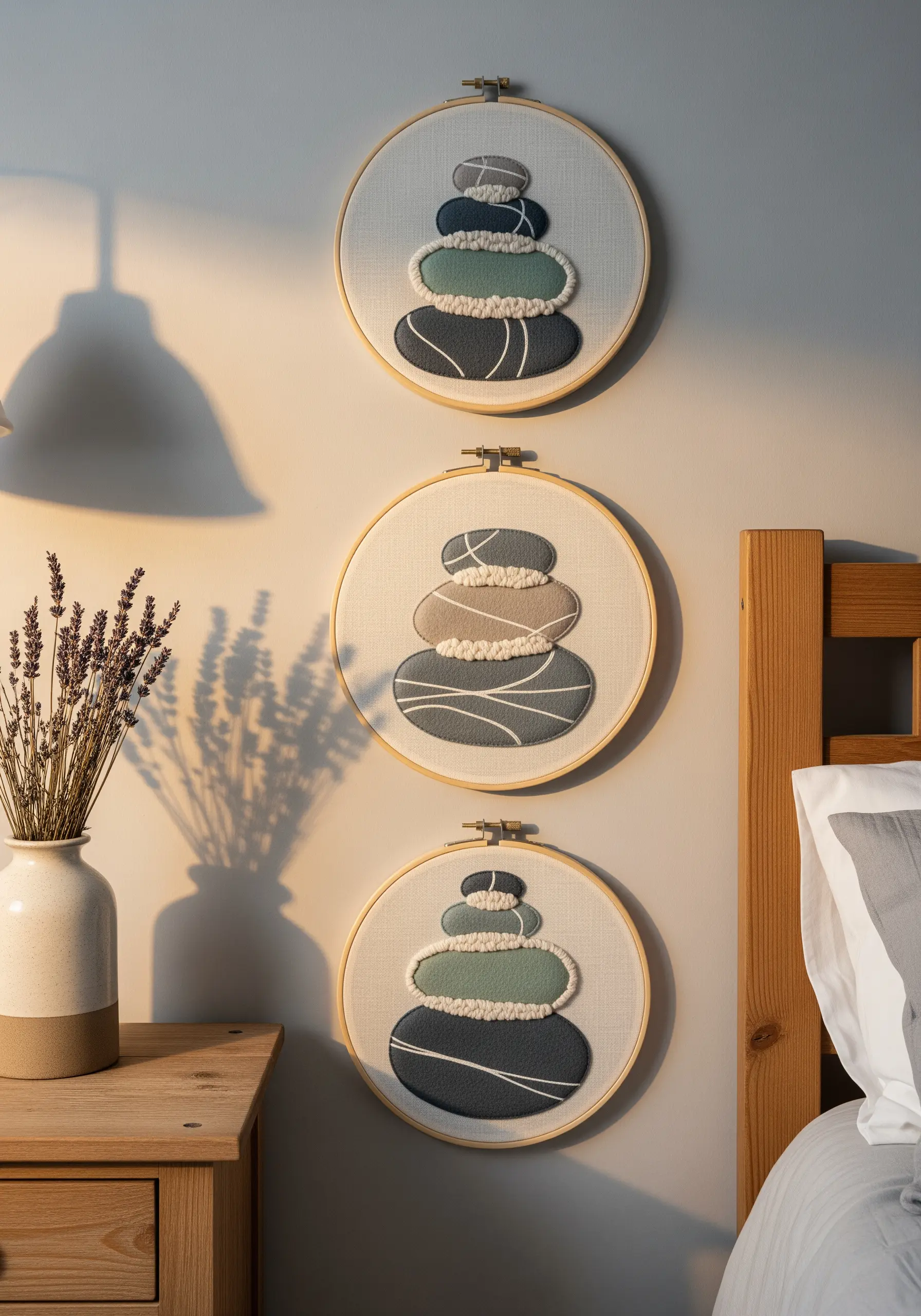
Achieve the smooth, rounded feel of river stones by using fabric appliqué with felt or tightly woven cotton in muted, earthy tones.
Cut your stone shapes, arrange them in a balanced stack, and secure them with a neat blanket stitch around the edges for a clean finish.
Add a band of high-texture detail by couching a thick, cream-colored yarn across one of the stones, creating a focal point.
For subtle surface detail, use a single strand of contrasting thread to add delicate, meandering lines with a simple backstitch, mimicking natural mineral veins.
3. Embroider a Wood Grain Table Runner
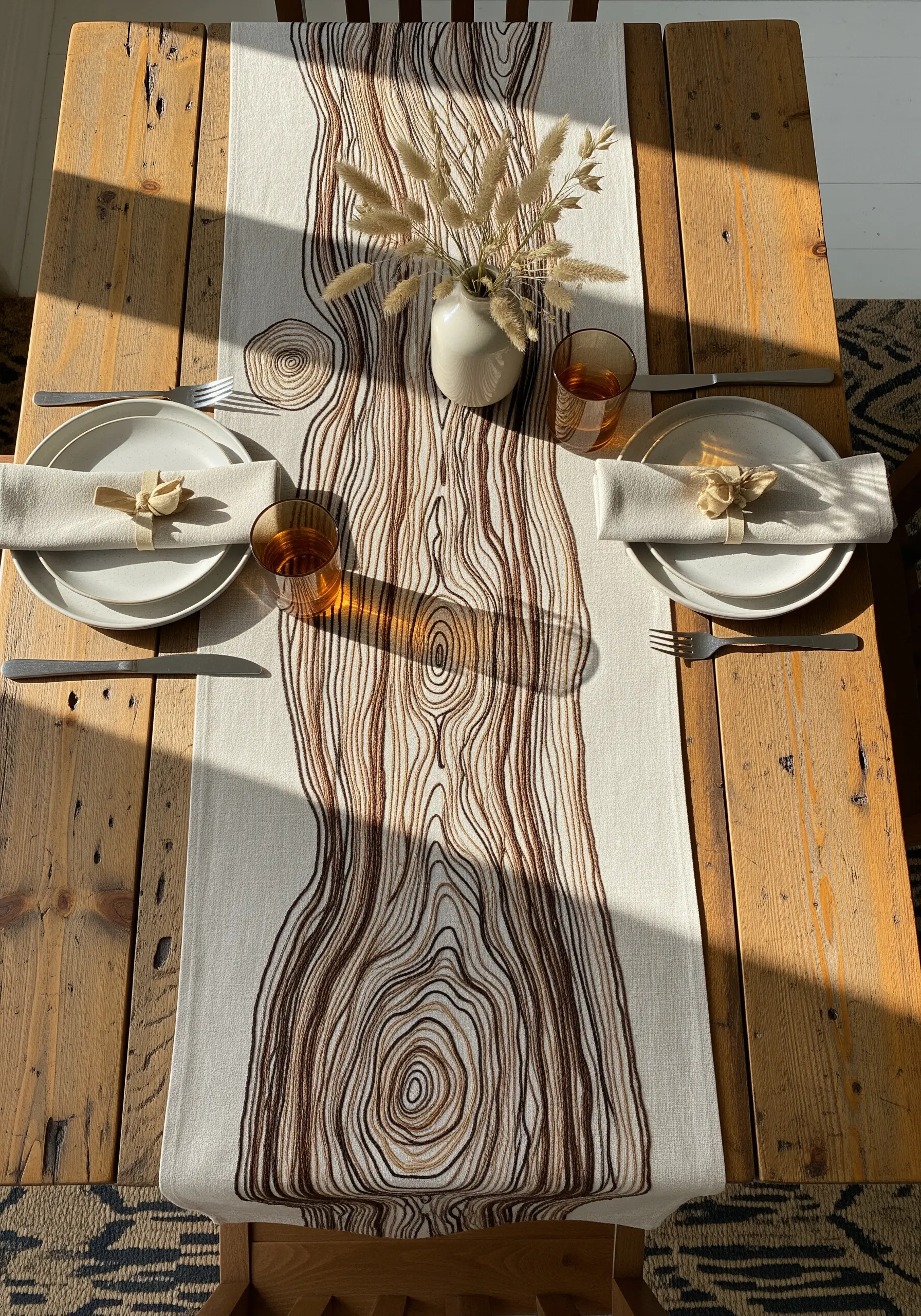
Transform a simple linen table runner by stitching the organic patterns of wood grain using a simple stem or split stitch.
Select three to four harmonious shades of brown and tan embroidery floss to create depth and realism in the rings and lines.
Vary the stitch length and density—placing lines closer together creates darker areas, while wider spacing suggests lighter wood.
This design celebrates imperfection; allow your lines to waver naturally, as this is what gives the finished piece its authentic, minimal line art character.
4. Craft a Pillow with Padded Botanical Motifs
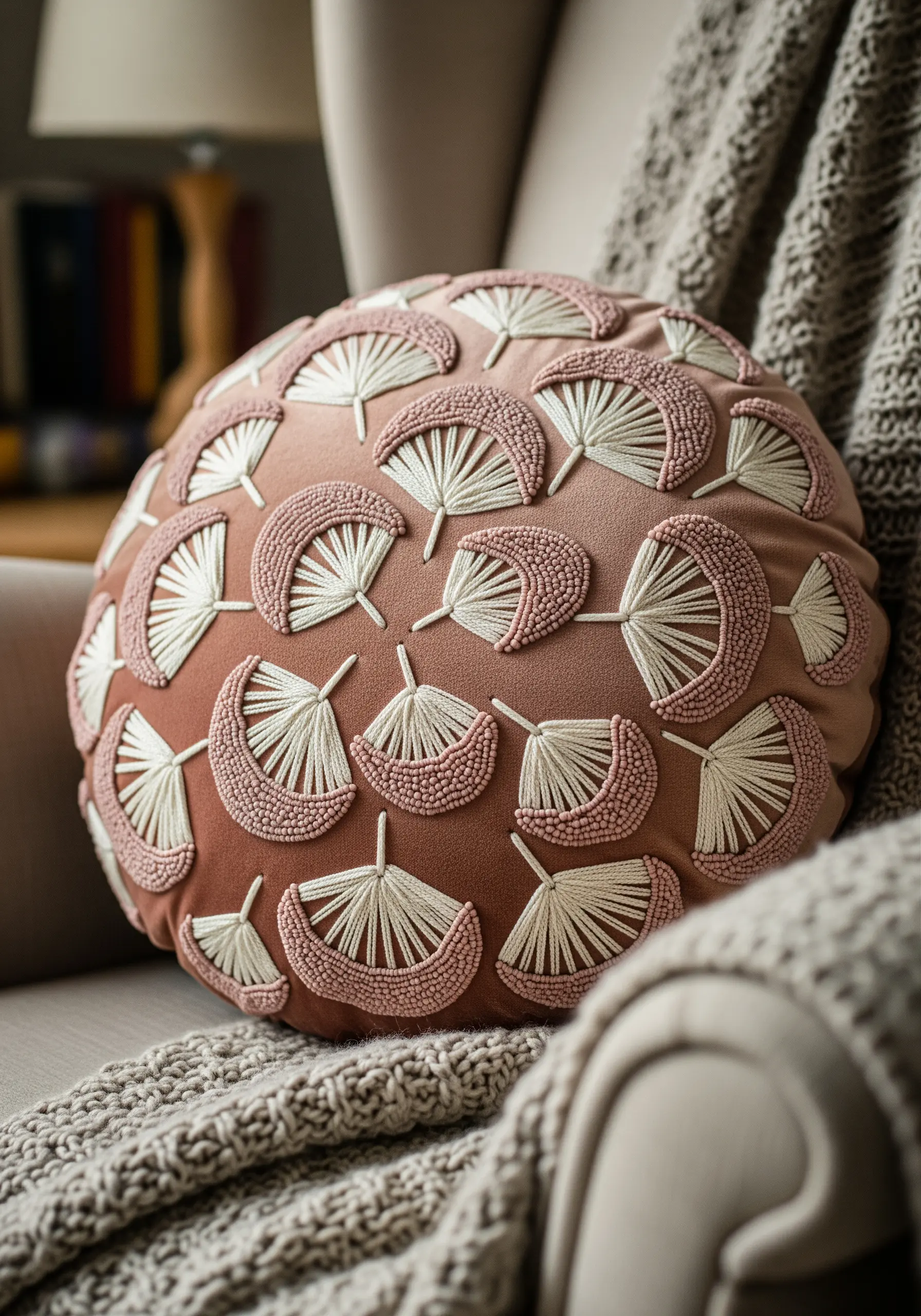
Give your fan-shaped motifs a sculptural quality with padded satin stitch, which lifts the design from the fabric surface.
Create this effect by first stitching a small felt shape or a series of foundation stitches onto your fabric, then covering it completely with your final satin stitches.
For the delicate, dotted texture, fill the adjacent shapes with a dense field of French knots or seed beads in a coordinating color.
This combination of smooth, raised surfaces next to granular textures creates a sophisticated and highly tactile piece perfect for accent pillows.
5. Design a Minimalist Dune-Inspired Throw
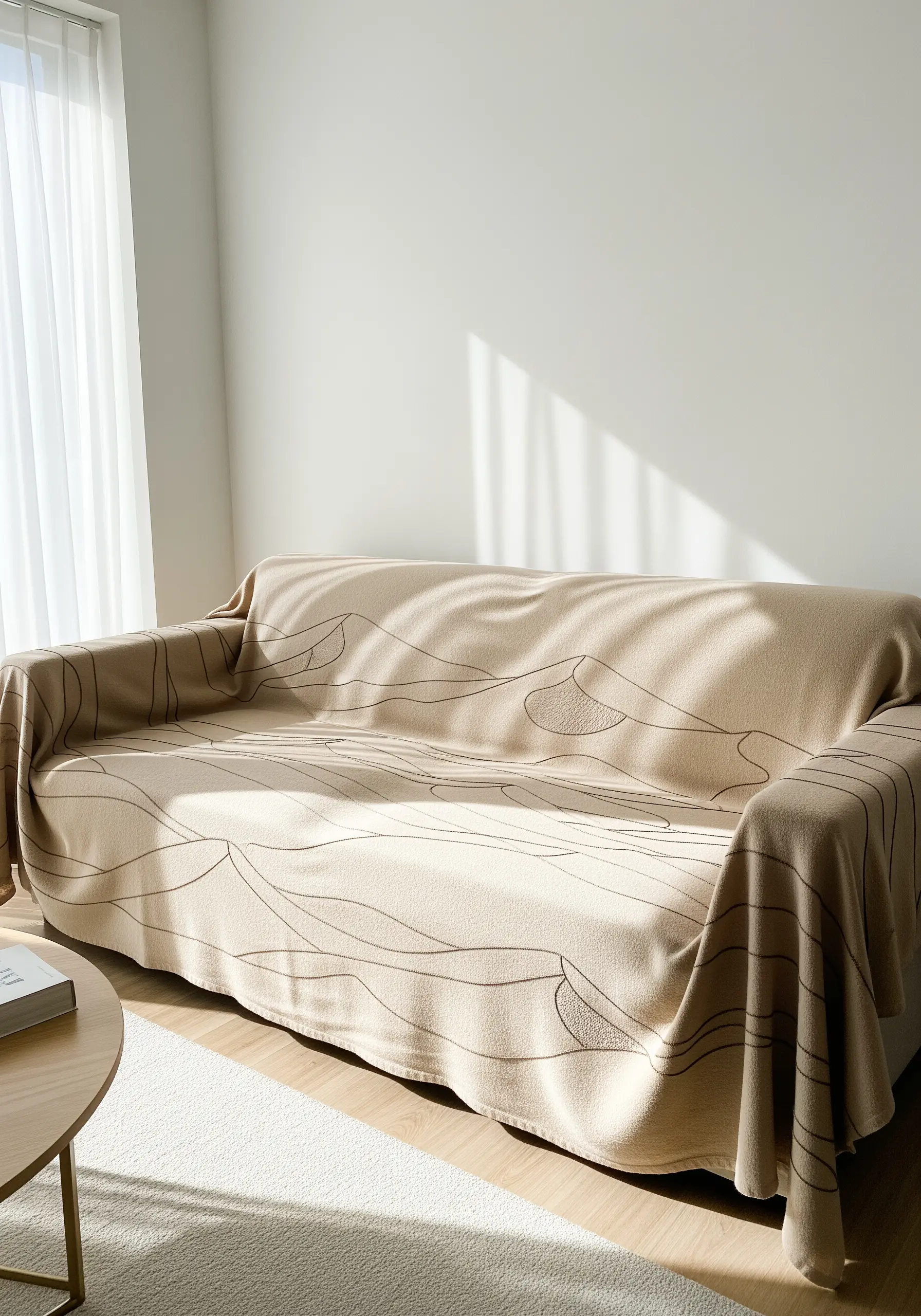
Embellish a simple knit or woven throw with sweeping, minimalist lines that evoke the gentle curves of sand dunes.
Use a chain stitch or a heavy stem stitch with a slightly thicker yarn or floss to ensure the lines have presence without overwhelming the soft textile.
Choose a thread color that is only a few shades darker than the blanket itself for a subtle, tone-on-tone effect that emphasizes texture over color.
This approach adds a layer of quiet, handcrafted luxury to an everyday object, turning it into a piece of functional art.
6. Construct a Sculptural Rope Ammonite
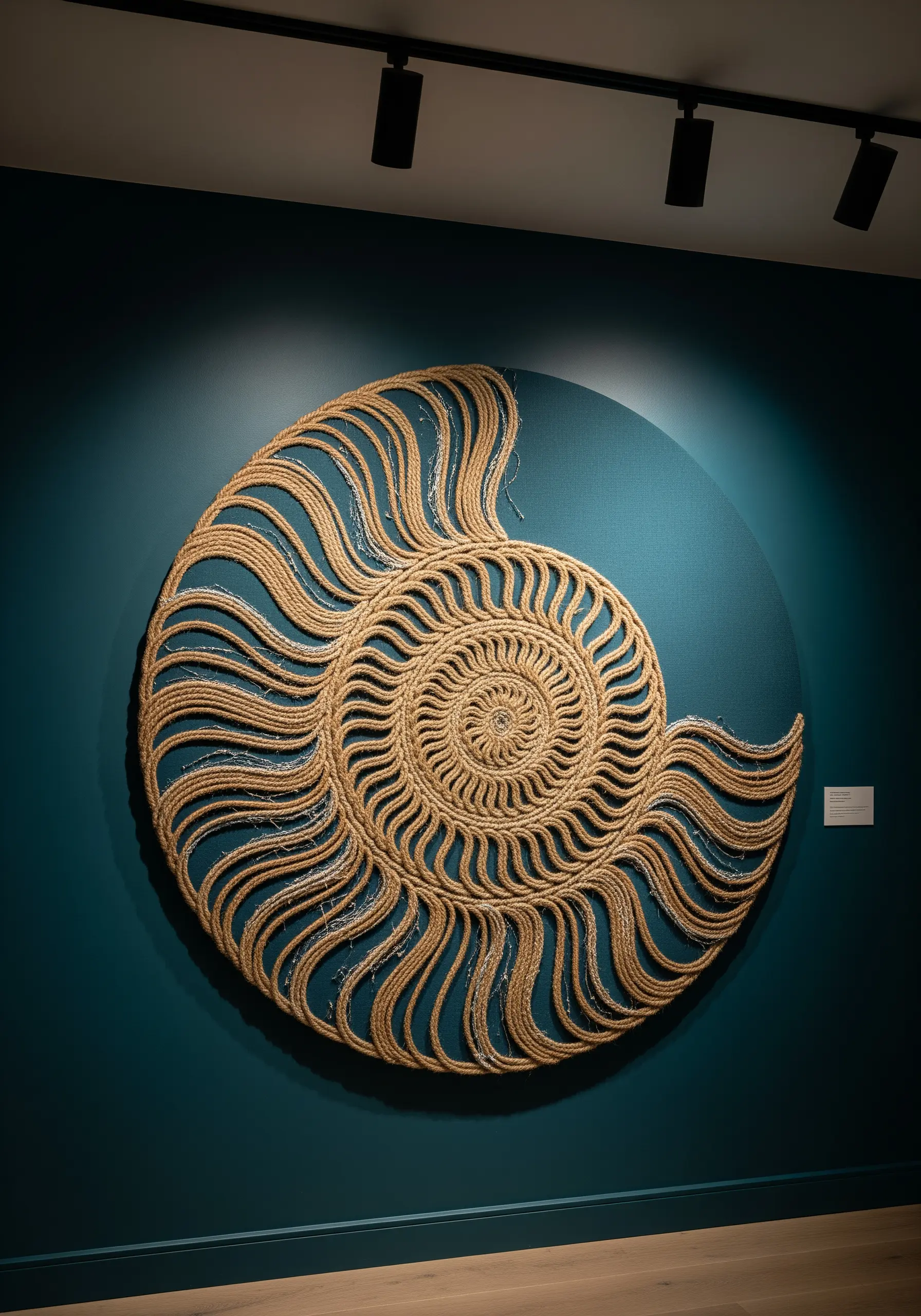
Create a large-scale statement piece by couching thick, natural fiber rope onto a sturdy canvas backdrop.
Begin coiling the rope from the center, stitching it down every inch or so with a strong, matching thread to keep the spiral tight and secure.
Introduce fine, contrasting threads to create delicate radiating lines or web-like details between the rope coils, adding a layer of intricacy.
This technique turns a simple material into a commanding piece of sculptural embroidery that plays with scale and raw texture.
7. Stitch a Translucent Skeleton Leaf Curtain
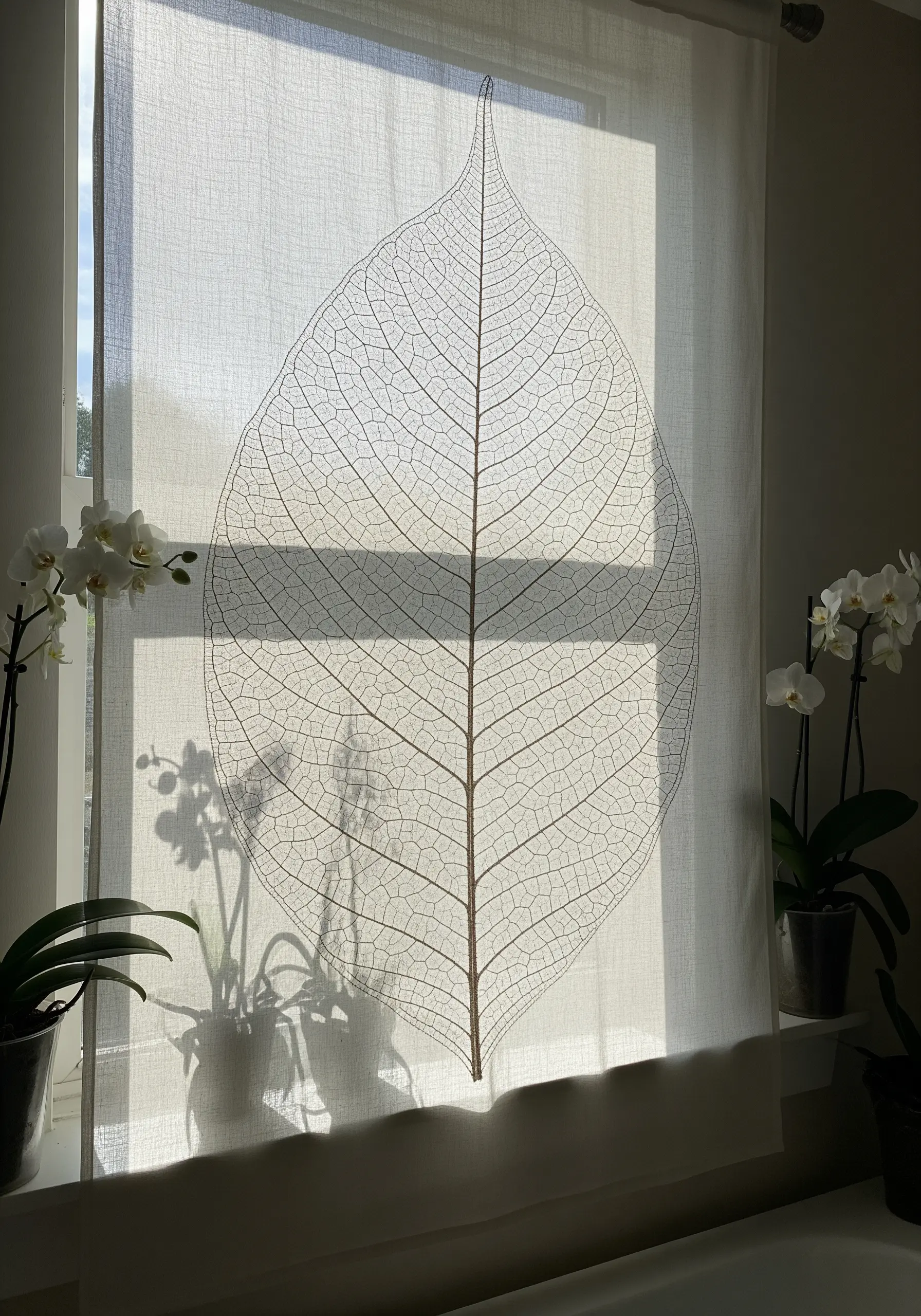
Embroider the delicate structure of a skeleton leaf onto sheer fabric, like voile or linen gauze, to play with light and shadow.
Use a fine backstitch or split stitch for the intricate network of veins, choosing a thread just dark enough to be visible when backlit by a window.
The key is the fabric choice; its transparency allows the stitched design to float, casting beautiful, intricate shadows that change throughout the day.
This project transforms a simple window treatment into a piece of delicate, light-interactive art.
8. Layer Thread and Fabric for a Birch Bark Effect
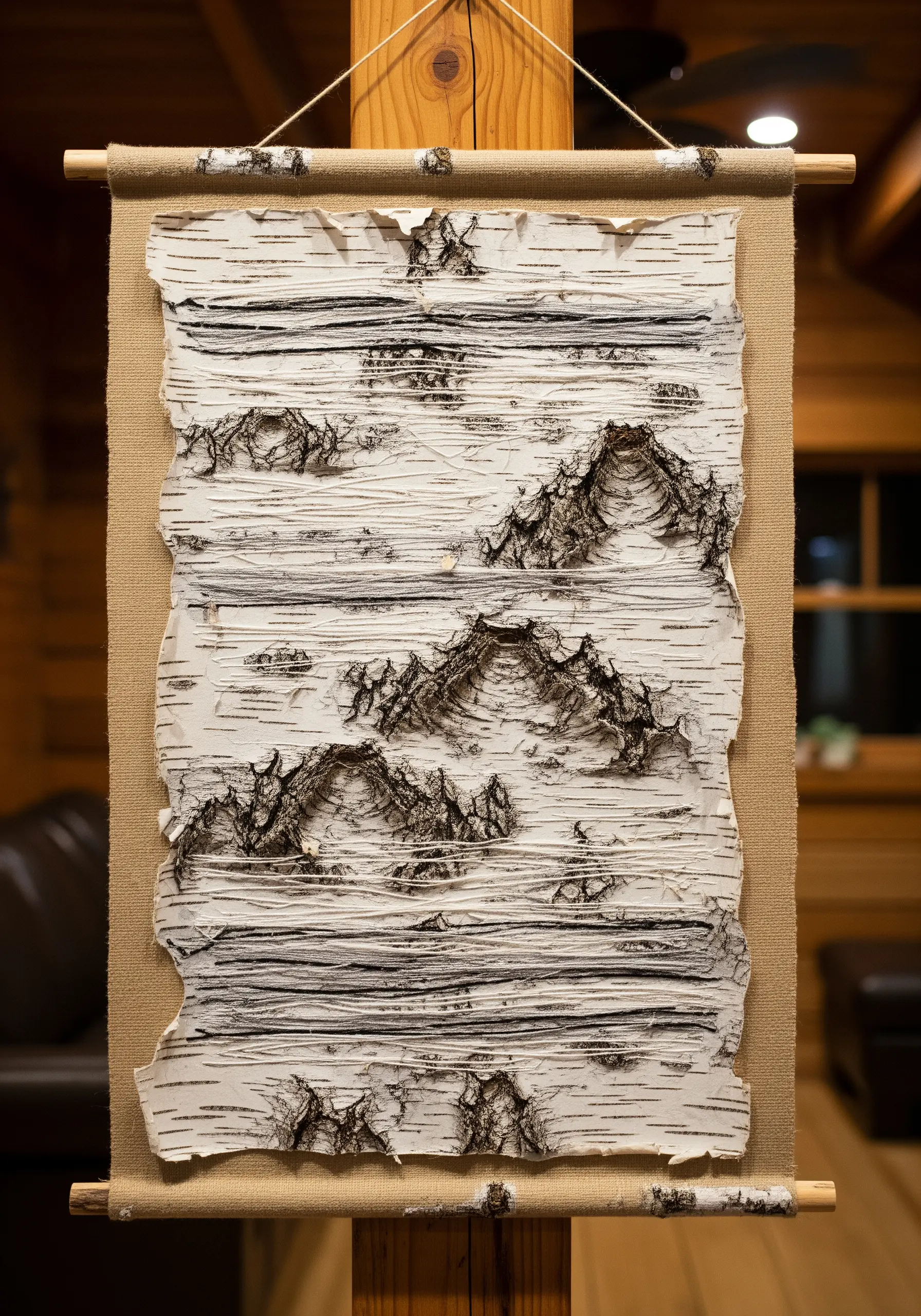
Recreate the peeling texture of birch bark by layering strips of off-white fabric and securing them with dense, chaotic stitching.
Use a free-motion machine embroidery technique or hand-stitch with black and grey threads to create the characteristic dark markings and lines.
Allow the edges of the fabric strips to fray and curl, enhancing the three-dimensional, papery illusion of real bark.
Mount the finished textile on a rustic backing like burlap to complete the natural, woodland-inspired aesthetic.
9. Create a Beaded Geode Embroidery Hoop

Capture the crystalline beauty of a geode by combining beadwork with layered felt appliqué for a rich, multi-textured surface.
Start by cutting concentric rings of felt in earthy tones and layering them onto your base fabric to form the outer stone structure.
Fill the center with a dense mosaic of seed beads, crystal chips, and small pearls in shades of purple and white to mimic a druzy cavity.
This mixed-media approach moves beyond thread to create a piece with genuine depth, sparkle, and geological texture.
10. Add Dimensionality with a Corded Couching Technique
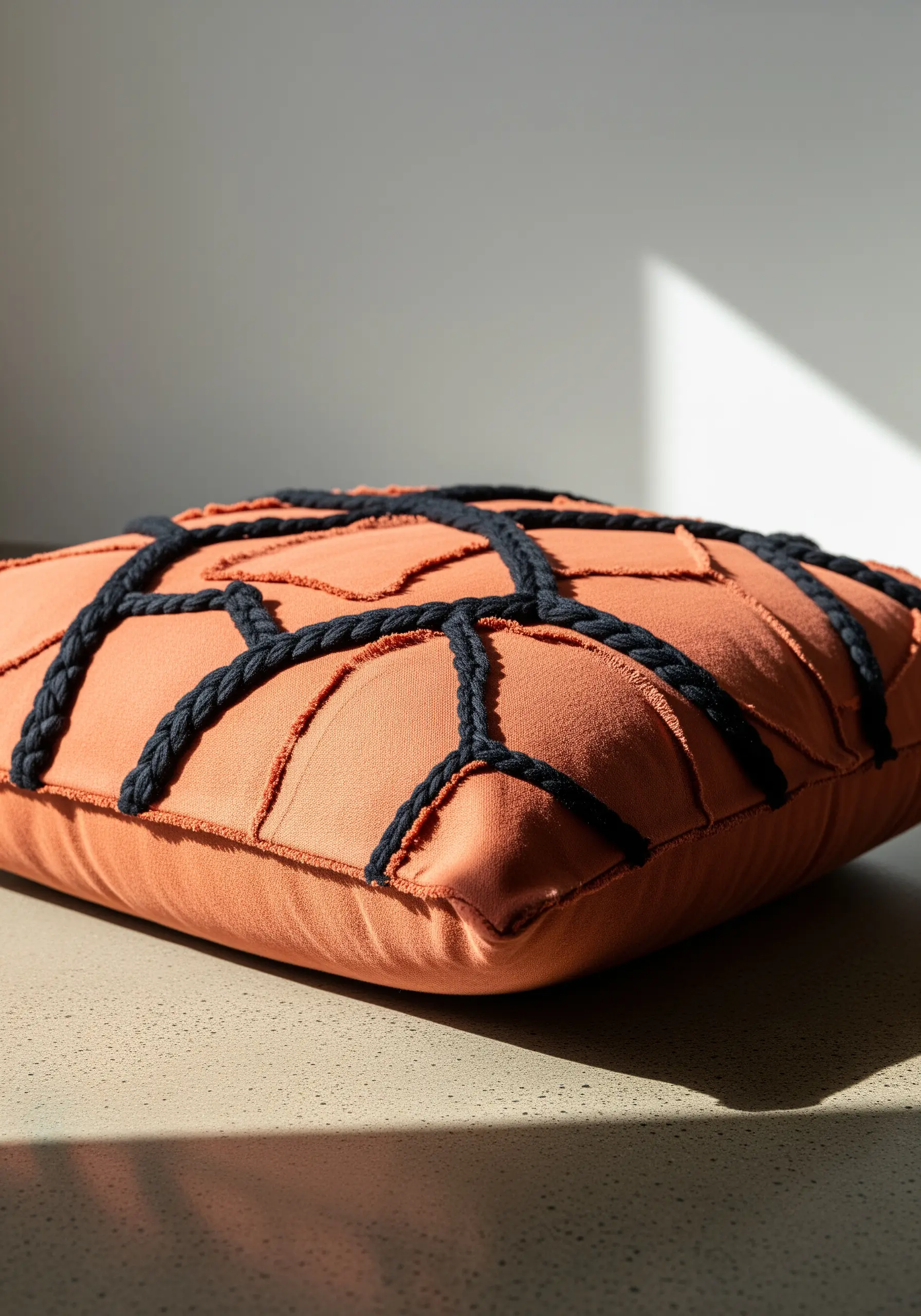
Introduce bold, graphic lines to a pillow by couching thick, contrasting cord onto the surface in a geometric or organic pattern.
Lay the cord along your design line and use a matching or contrasting embroidery floss to tack it down with small, evenly spaced stitches.
This technique, known as couching, is a fast way to add significant texture and a raised, linear element that stands out visually and physically.
It’s particularly effective for creating grid-like or vein-like patterns that add structure and interest to home textiles.
11. Craft Padded Appliqué Honeycomb Coasters

Make functional art with these honeycomb coasters, which combine metallic thread with padded appliqué for a luxe finish.
Cut small hexagon shapes from a gold faux leather or satin fabric. For the puffy effect, place a small amount of batting behind each hexagon before stitching it down.
Outline the entire honeycomb pattern with a gold metallic thread using a backstitch, which defines the shapes and adds a touch of glamour.
This project is a perfect way to practice precision stitching while creating a beautiful, useful item for your home.
12. Weave a Bird’s Nest with Natural and Fiber Elements

Construct a three-dimensional bird’s nest directly onto your canvas by incorporating natural materials like fine twigs and dried grasses.
Secure these elements by weaving and wrapping them with various brown and tan threads, using couching stitches to anchor them firmly to the fabric.
Create soft, downy textures for eggs or lining with needle-felted wool roving or clusters of fluffy French knots made with wool thread.
Add a few simple embroidered leaves using fishbone stitch to integrate the nest into a subtle botanical scene.
13. Capture Frost’s Delicacy with Dense Stitching

Emulate the crystalline structure of frost or a snowflake using dense, directional stitching on a dark, high-contrast fabric like navy linen.
Use a single color of thread—white or silver—and rely entirely on the texture of the stitches to create the design.
Work with a fishbone stitch or long-and-short stitch to create the branching, feathery patterns, ensuring your stitches are tight and uniform to create a solid visual mass.
This monochrome approach highlights how texture alone can create a powerful and intricate image.
14. Sculpt Ocean Foam with Fabric and Thread

Create the energetic texture of sea foam by manipulating sheer and lightweight fabrics like tulle and organza.
Layer different colors of fabric—sandy beige, aqua, deep blue—to create the water’s depth, then stitch them down with wavy lines.
For the foam, gather, twist, and scrunch white tulle into tight circles and clusters, securing them with French knots and straight stitches to mimic bubbles and spray.
This highly sculptural, mixed-media technique captures the movement and ethereal quality of the ocean’s edge.
15. Weave a Landscape with Thread and Fabric Strips

Move beyond simple stitching and weave a textile landscape using strips of fabric and thick yarns directly on a loom or a large frame.
Block out large areas of color for hills and sky, then introduce thin, embroidered running stitches to add fine detail and definition to the horizon lines.
The beauty of this method lies in the interplay between the coarse texture of the woven base and the delicate refinement of the embroidered accents.
This technique allows you to create large-scale, atmospheric pieces perfect for a statement wall hanging above a bed or sofa.
16. Isolate Texture with Monochrome Abstract Forms
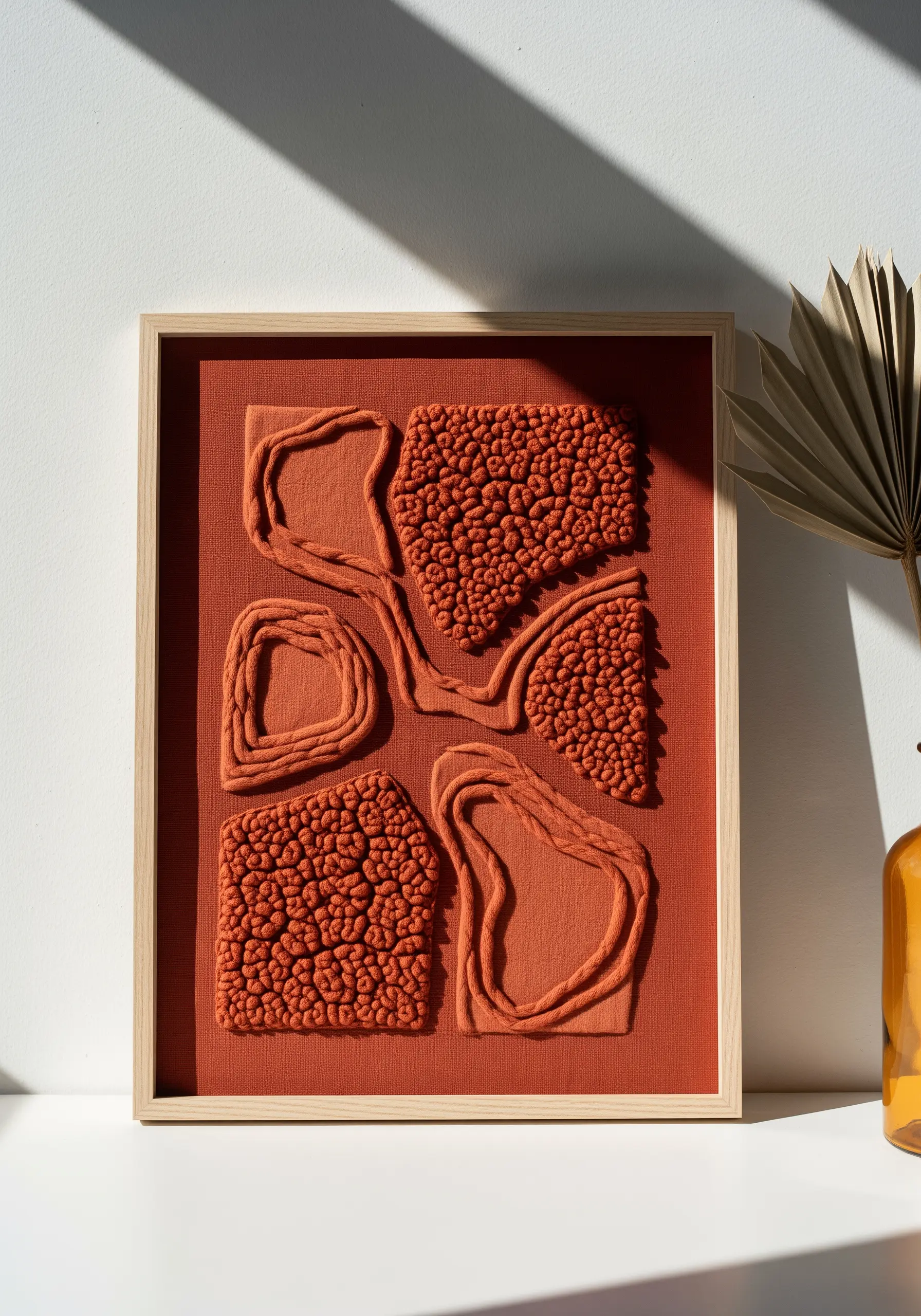
Explore pure texture by creating abstract shapes filled with dense, repetitive stitches, all in a single color.
Use a highly textural stitch like the French knot or bullion knot, packing the stitches tightly together to build a raised, coral-like surface.
Contrast these densely filled areas with clean, smooth outlines made from couched yarn or a bold chain stitch.
This monochromatic approach forces the viewer to focus entirely on the tactile quality of the work, making it a powerful exercise in abstract texture play.
17. Construct a Pebble-Inspired Textile Basket
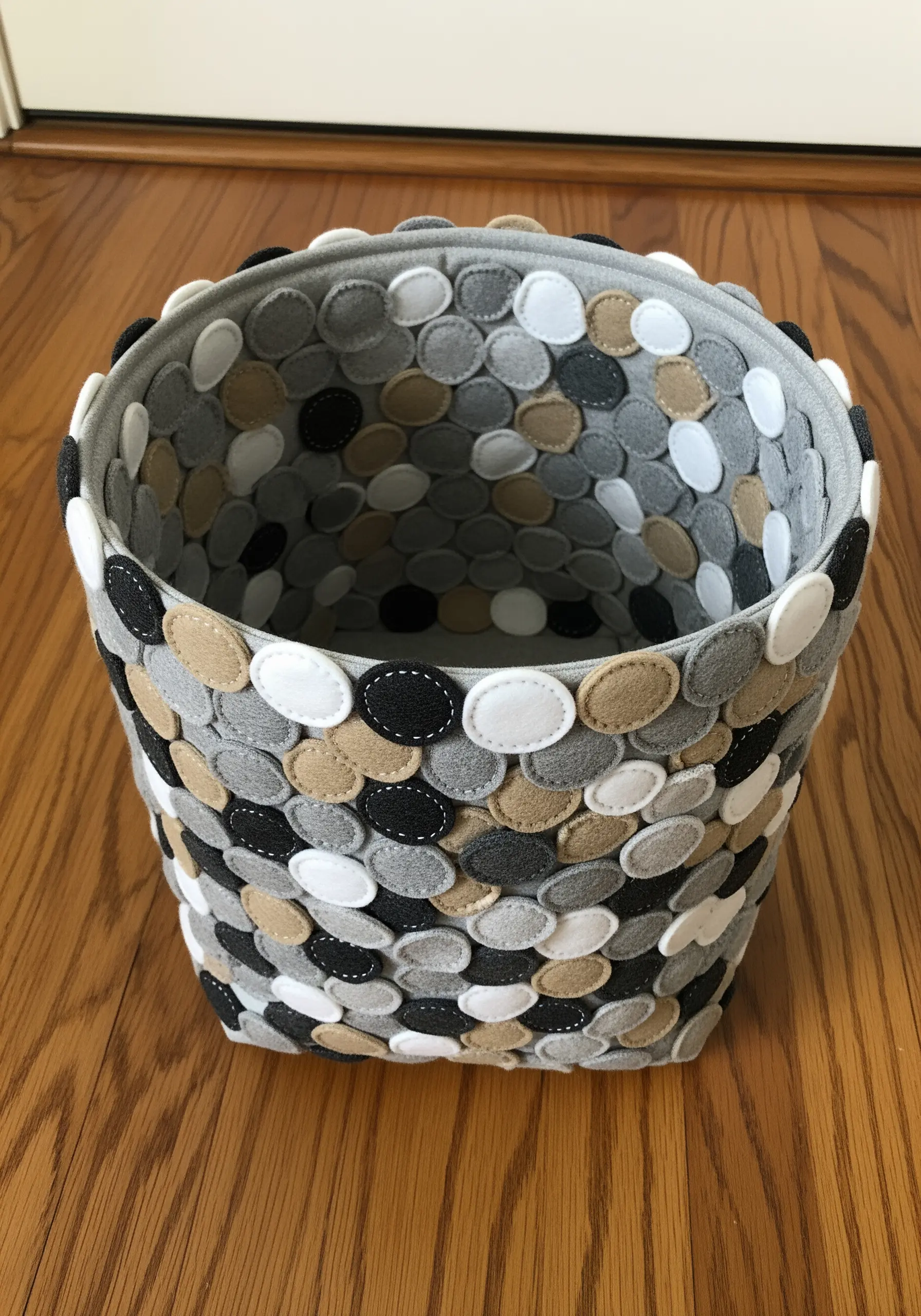
Build a unique and functional object by covering a simple fabric basket with layered felt circles to mimic the look of pebbles.
Cut circles from various neutral shades of felt—grey, black, white, and tan—for a natural, varied appearance.
Attach each circle with a single, simple stitch in the center, allowing the edges to remain free. Overlap the circles generously to create a dense, textured skin.
This project is a fantastic way to use up felt scraps while creating a stylish storage solution with a satisfying, bumpy texture.
18. Map a Starburst with Radiating Running Stitches

Create a large-scale, high-impact piece using one of the simplest stitches: the running stitch.
On a dark canvas, stitch countless lines radiating from a central point, varying their length and density to create a sense of explosive energy or cosmic expansion.
Use a bright, high-contrast thread like white or silver to maximize the visual impact against the dark background.
This technique proves that you don’t need complex stitches to create something dramatic; repetition and scale are powerful tools.
19. Create a Meditative Spiral with Chain Stitches

Explore color and rhythm by stitching a continuous spiral with the interconnected loops of the chain stitch.
Choose a variegated thread or switch colors every few rows to create a subtle gradient effect that draws the eye toward the center.
The key to a clean spiral is maintaining consistent stitch length and tension, making this a wonderfully meditative and skill-building exercise.
This simple yet hypnotic design is perfect for hoop art and allows for endless color experimentation.
20. Frame Nature with Pressed Flower Embroidery

Combine delicate pressed botanicals with the subtlest of stitches for a piece that captures the fragility of nature.
Carefully arrange your pressed flowers on a sheer or semi-sheer fabric like organza, then tack them in place with tiny, discreet stitches over the stems and thicker parts of the petals.
Add a simple running stitch border around the composition to create a clean, handmade frame that contains the arrangement.
This technique is about preservation and quiet embellishment, letting the natural beauty of the flowers remain the focus.
21. Sculpt Topographical Art with Layered Yarn

Create a stunning, three-dimensional canyon landscape by couching thick yarn in dense, topographical layers.
Use a full spectrum of analogous colors—from deep rust to pale ochre—to represent geological strata and create a sense of immense depth and shadow.
Instead of stitching on a flat plane, build the yarn up in organic, overlapping ridges to create a truly sculptural surface.
Presenting the work as a triptych (across three panels) enhances the sense of scale and makes it a commanding focal point for any room.
22. Embroider a Celestial Map with Star-Like Knots
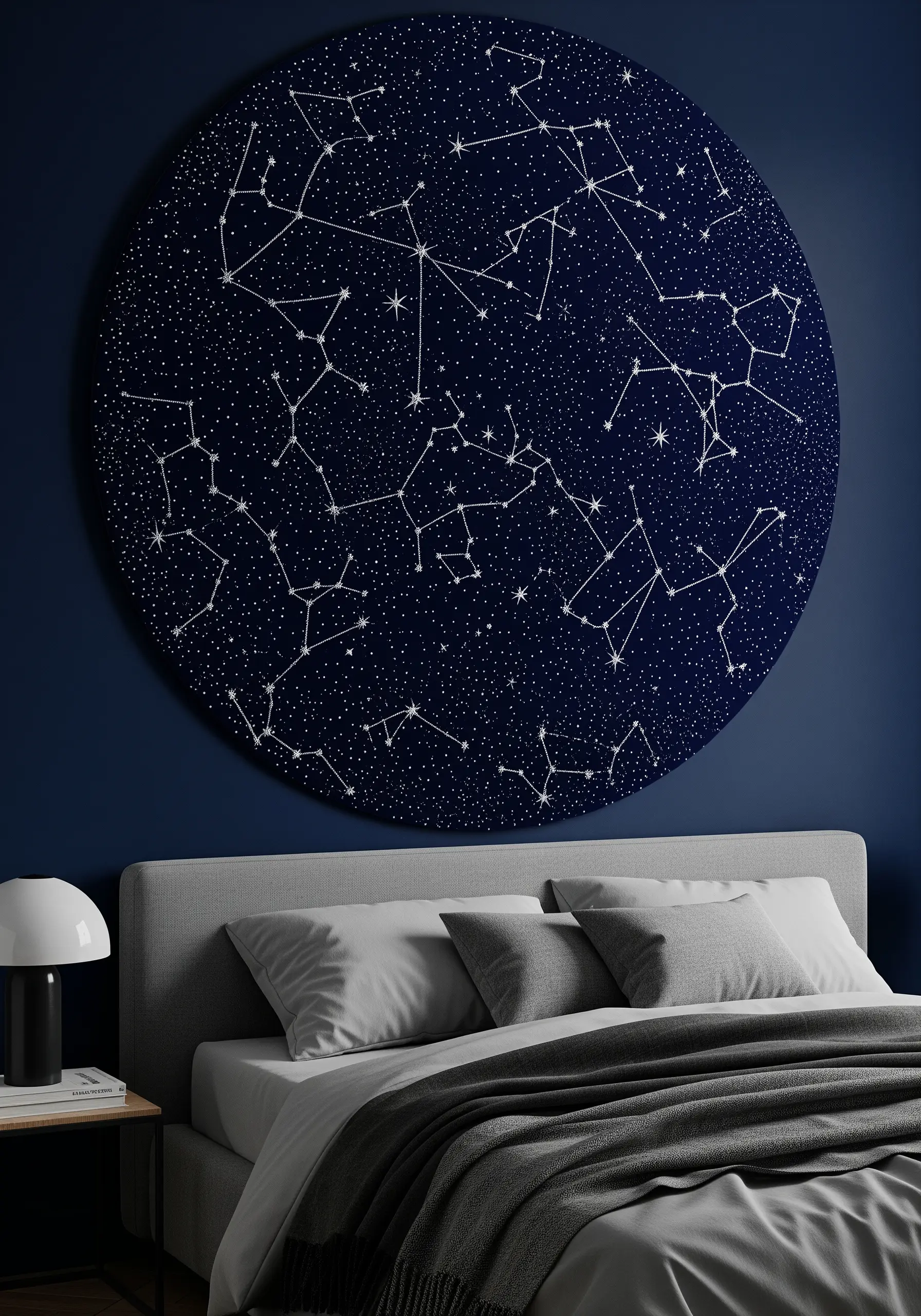
Transform a wall with a large-scale constellation map stitched onto a deep indigo or black fabric.
Use French knots and seed stitches of varying sizes and densities to represent stars and distant galaxies, creating a sense of cosmic depth.
Connect the main stars of the constellations with clean, fine lines using a simple backstitch in a bright white or silver metallic thread.
This project allows you to create an immersive piece of dreamy bedroom decor that is both beautiful and personal.
23. Stitch on Unconventional Surfaces Like Glass

Push the boundaries of embroidery by working on non-traditional materials like a pre-drilled sheet of acrylic or glass.
Use a fine, strong metallic thread to create geometric patterns, lacing it through the holes to build up lines and tension.
Add tiny seed beads to the thread as you stitch to mimic droplets of water, which catch the light and add a delicate, sparkling detail.
This experimental approach transforms thread into a fragile, transparent sculpture, proving embroidery isn’t limited to fabric.
24. Create a Coral Reef with Raised Stitches

Emulate the vibrant, crowded texture of a coral reef using a dense collage of highly dimensional stitches.
Combine stitches like woven wheel stitches (for rosette shapes), bullion knots (for tube-like structures), and French knots in a riot of bright, tropical colors.
Vary the thickness of your thread and the size of your stitches to create a dynamic surface where no two elements are exactly alike.
This maximalist approach is a joyful celebration of color and texture, perfect for a statement cushion that begs to be touched.
25. Design with Negative Space and Beaded Texture

Create a sophisticated design by contrasting a densely beaded area with a stark, un-stitched portion of your fabric.
Use a single color of seed beads to fill an organic, lace-like shape, creating a rich, caviar-like texture.
In a second area, use a contrasting metallic thread to create an open, airy pattern, allowing the background fabric to show through.
This clever use of positive and negative space results in a modern, graphic design that feels both opulent and restrained.
26. Construct an Autumnal Pouf with Felt Appliqué

Cover a simple pouf or ottoman with a cascade of layered, embroidered felt leaves for the ultimate cozy, autumnal accent.
Cut leaves from various shades of fall-colored felt—red, orange, yellow, and brown—and add simple vein details with a backstitch.
Attach the leaves in a dense, overlapping pattern, stitching them only at the base to allow the tips to curl up, enhancing the 3D effect.
This is a large-scale project that transforms a piece of furniture into a functional, textural sculpture.
27. Paint with Thread on a Textured Canvas

Achieve a rustic, weathered look by first preparing your canvas with a thin layer of paint or gesso before you begin stitching.
Use a palette of rust, copper, and brown threads to create an abstract, root-like pattern with a mix of couching, chain stitches, and chaotic straight stitches.
The underlying painted texture adds another layer of depth and grit to the piece, making the thread appear as if it’s growing out of a weathered surface.
This mixed-media technique creates a raw, elemental piece of art with incredible depth and surface quality.