You have the linen napkins, the thread, and the desire to create something beautiful. But turning a simple line drawing into an elegant piece of textile art requires more than just tracing and stitching—it requires intention.
Think of your needle as a fine ink pen. The goal isn’t just to make a mark, but to control its weight, its texture, and its flow. A simple switch from a backstitch to a stem stitch can turn a flat line into a rounded, sculptural one. Using a single strand of floss instead of two can mean the difference between a delicate whisper and a bold statement.
These patterns are your starting point. I’ll show you how to choose the right stitch for the right curve, how to use color and contrast to create mood, and how to add subtle texture that invites touch. Let’s transform your table linens from simple fabric into personal, luxurious accents, one stitch at a time.
1. The Understated Olive Branch: A Study in Texture
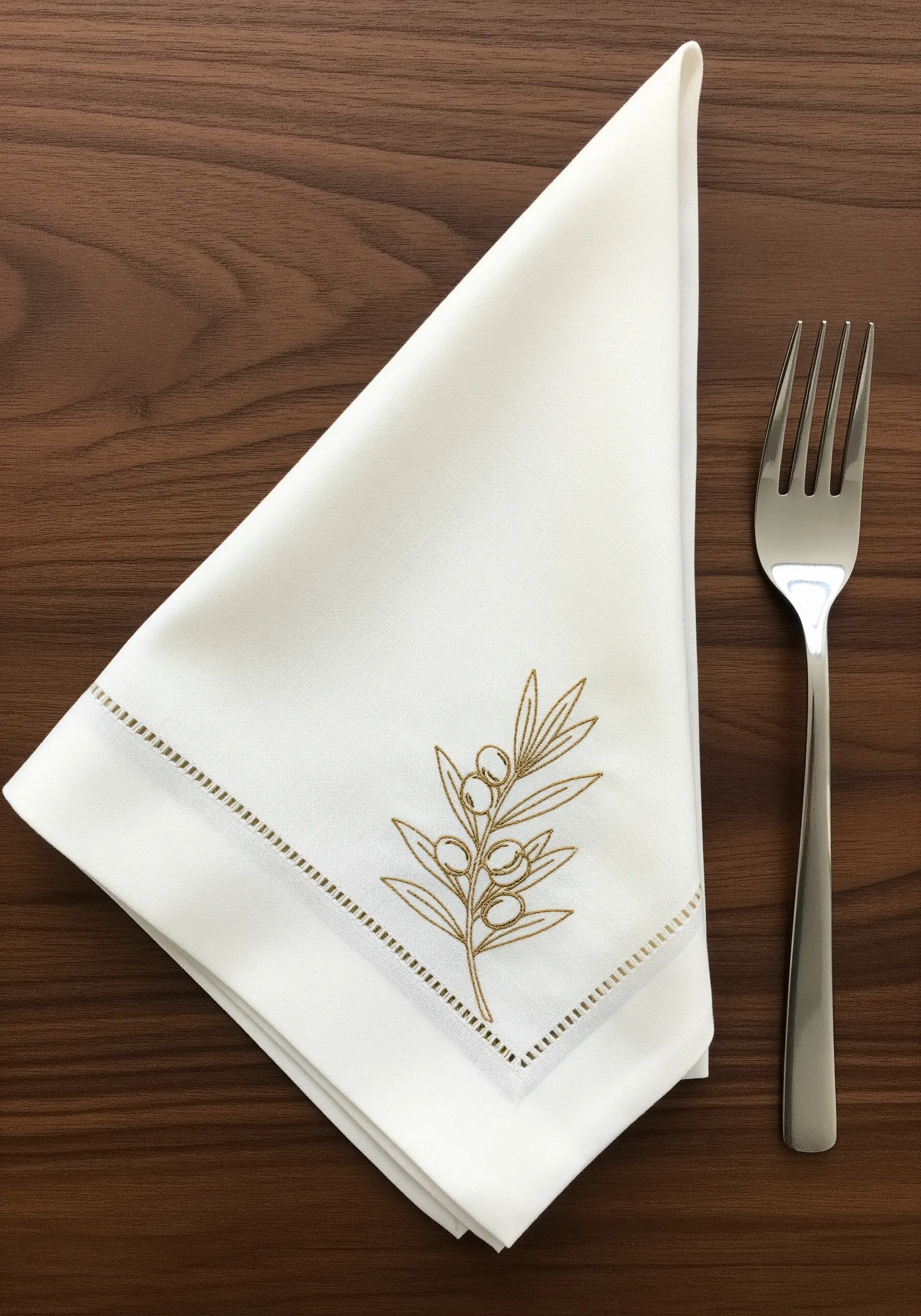
Create depth in this single-color design by focusing on stitch variation.
Use a whipped backstitch for the stem to achieve a smooth, raised line that feels refined.
For the leaves, a fishbone stitch with slightly spaced stitches allows the linen to show through, adding a delicate, airy quality.
Render the olives as small, tight satin stitch ovals for a subtle plumpness that contrasts with the open leaves.
The antique gold thread on crisp white linen offers a timeless elegance that elevates any table setting.
2. Continuous Line Portraiture: Mastering the Flow

The key to a fluid line art portrait is absolute stitch consistency.
Use a stem stitch with small, even stitches to smoothly navigate the complex curves of the face.
To prevent puckering at the sharp corners of the eyes and lips, slightly loosen your thread tension as you pivot.
A single strand of black floss on white linen creates a stark, graphic contrast that feels both modern and deeply personal.
This technique is less about perfection and more about capturing a steady, confident rhythm in your needlework.
3. Geometric Purity: The Woven Ring Motif

For crisp, clean geometric shapes, precision is everything.
Use a double-threaded backstitch or a fine chain stitch to achieve a bold, uniform line with substance.
To create the illusion of interwoven rings, carefully plan your stitch path, passing the needle under existing stitches where the lines should appear to tuck behind.
Using a high-contrast thread like bright white on charcoal gray amplifies the graphic, clean aesthetic of this geometric framed embroidery.
4. Capturing Motion: The Dynamic Hummingbird
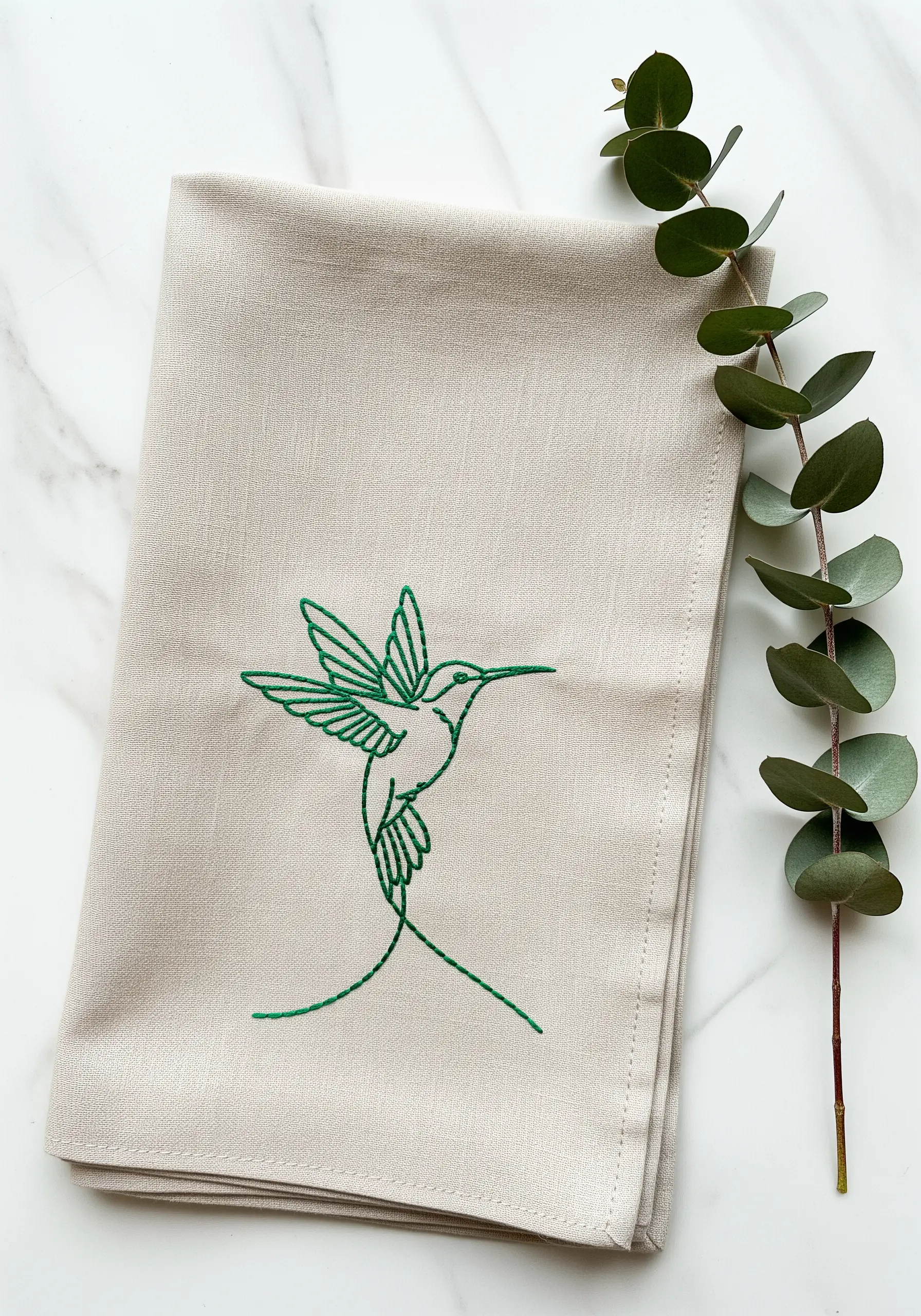
To give your line art a sense of movement, vary your stitch length and direction.
Use a split stitch for the bird’s body, keeping the stitches tight on curves and slightly longer on straight lines to suggest form.
For the delicate wing details, switch to a single-strand backstitch to create a lighter, more ethereal feel.
Let the final trailing line flow freely with a long, elegant whipped backstitch, suggesting the bird’s swift, energetic flight path.
5. Botanical Elegance: The Radiant Ginkgo Leaf
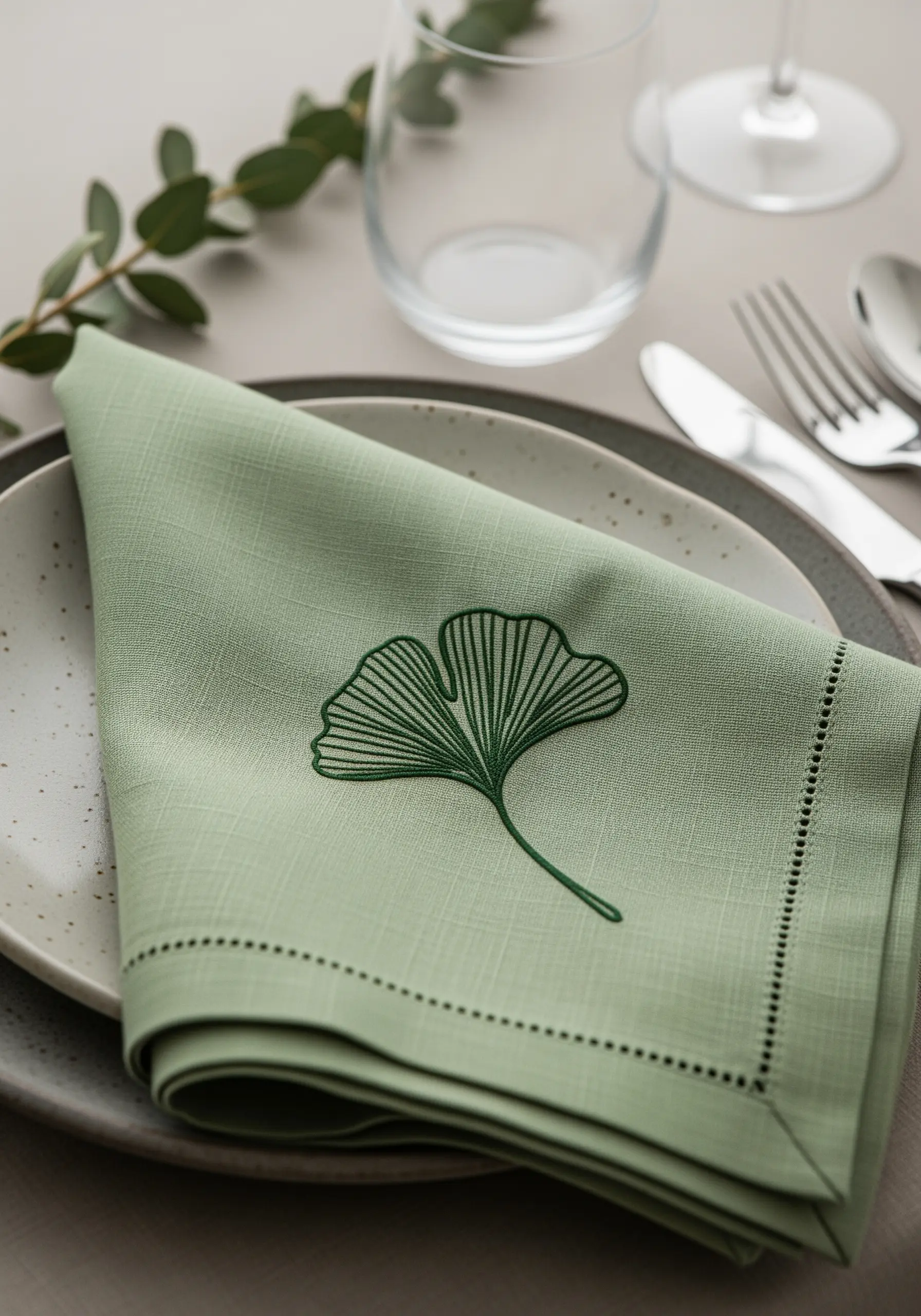
The unique beauty of a ginkgo leaf lies in its radiating veins.
First, outline the leaf shape with a stem stitch to define its iconic fan shape.
Then, fill the interior with straight stitches fanning out from the base of the stem.
Avoid perfect symmetry; slight variations in stitch length and angle will give your leaf a natural, organic feel.
A tone-on-tone color palette, such as dark green on sage, creates a sophisticated, layered effect that is subtle yet impactful.
6. Abstract Flow: Layering Lines for Oceanic Texture
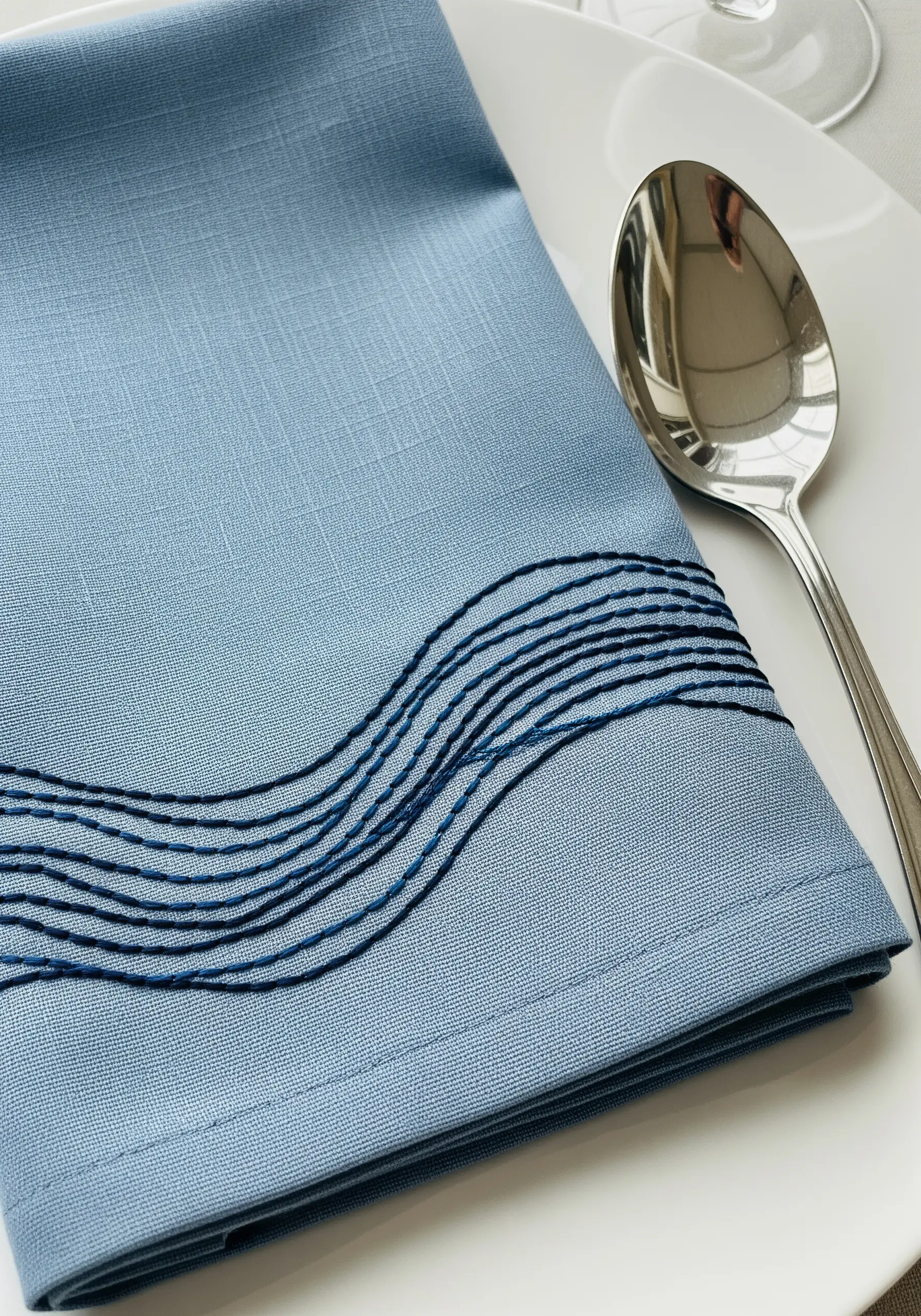
Create dynamic texture by layering multiple rows of whipped backstitch, which provides a smooth, corded finish.
Use two or three shades of the same color family—like navy, royal, and slate blue—to add subtle depth and dimension.
Stitch each wavy line separately, allowing them to overlap and intersect organically for a fluid, unplanned effect.
This technique builds a rich, tactile surface that mimics the movement of water, transforming a simple border into a piece of abstract thread art.
7. Minimalist Radiance: The Simple Sunburst

This design proves that simplicity, executed with precision, is incredibly impactful.
Use a single, long straight stitch for each sun ray, originating from a common point just below the napkin’s hem.
To ensure your lines are perfectly straight and taut, use a water-soluble marker and a ruler to draw guidelines before you begin.
A metallic gold thread on a warm, earthy terracotta linen captures the feeling of a rising sun, adding warmth to your table.
8. Delicate Gestures: A Single Line Narrative
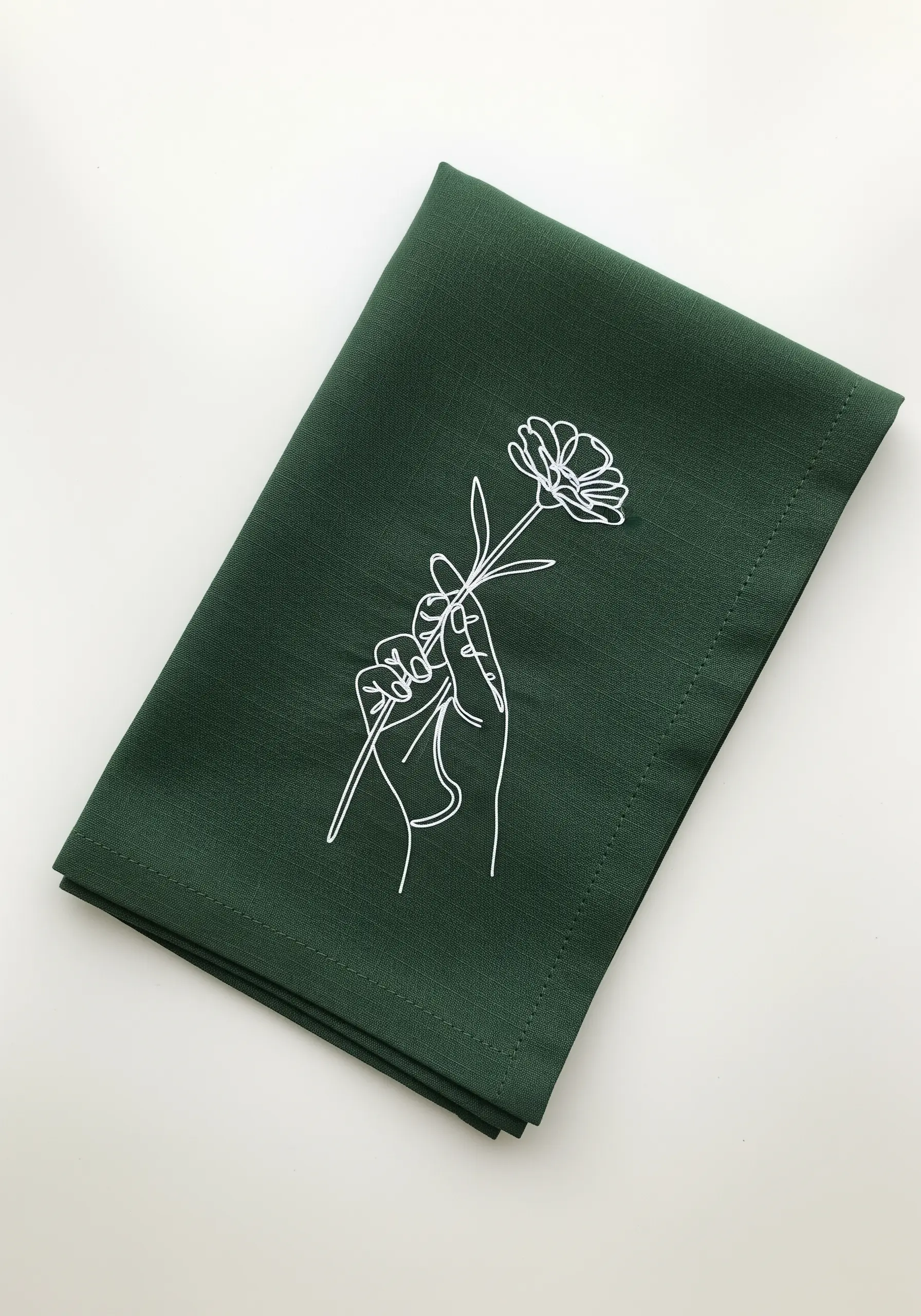
For intricate line art with fine details, a two-ply thread is essential for maintaining clarity and preventing bulk.
Use a simple backstitch, keeping your stitch length consistent—around 2mm—to handle the detailed curves of the hand and flower petals with grace.
On dark linen, a bright white or ecru thread creates a striking contrast that makes the delicate design pop.
This is a perfect example of how to use negative space to achieve luxury minimal art that feels both personal and polished.
9. Celestial Navigation: Stitching the Stars
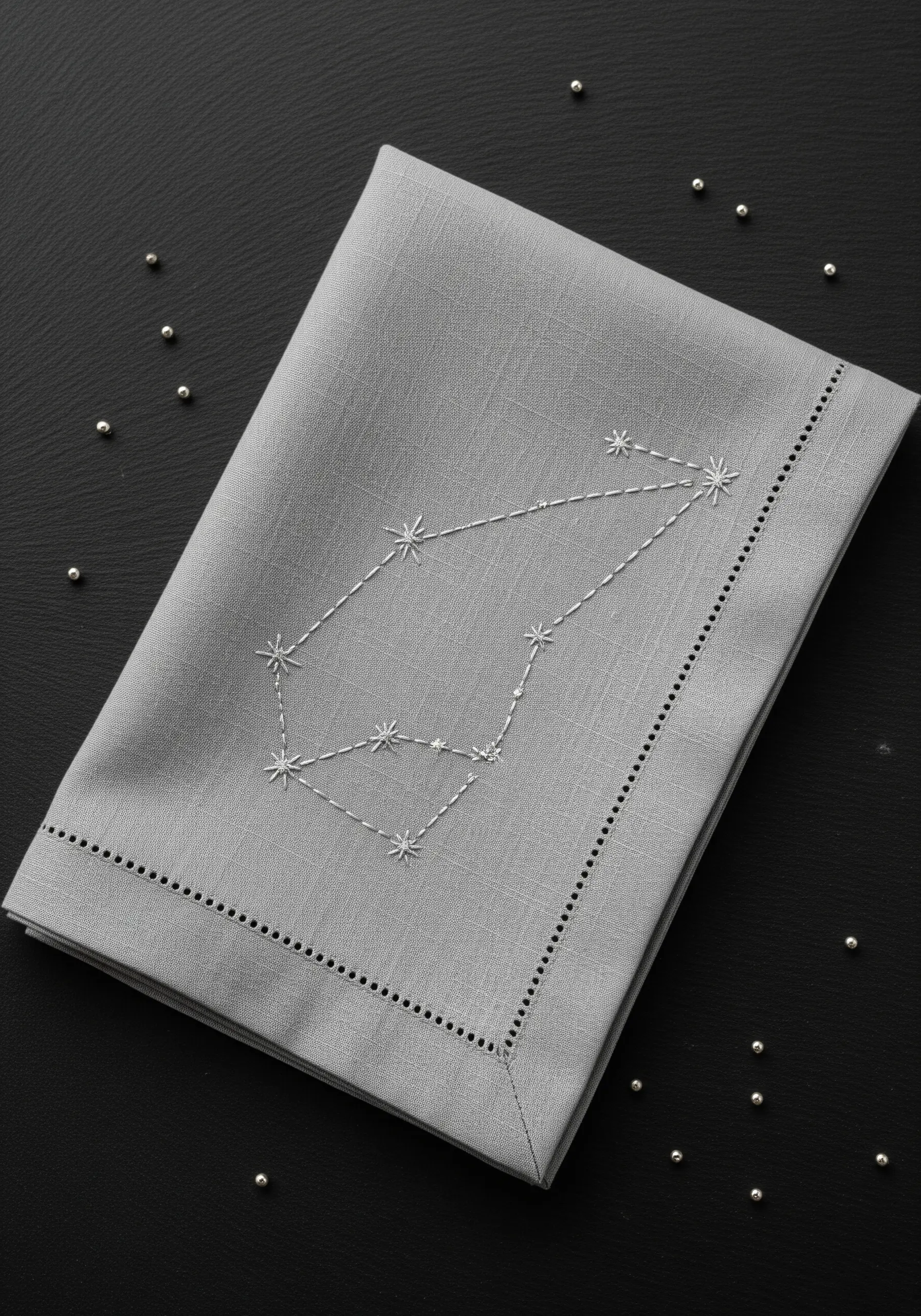
Create a personal celestial map on each napkin for a thoughtful, customized touch.
For the connecting lines, use a fine, single-strand backstitch to keep them delicate and almost invisible.
Make the stars the focal point by using small, six-pointed star stitches or tiny French knots for texture.
Using a silvery-white or metallic thread on a muted gray linen evokes the quiet magic of the night sky.
10. Playful Details: The Animated Bee
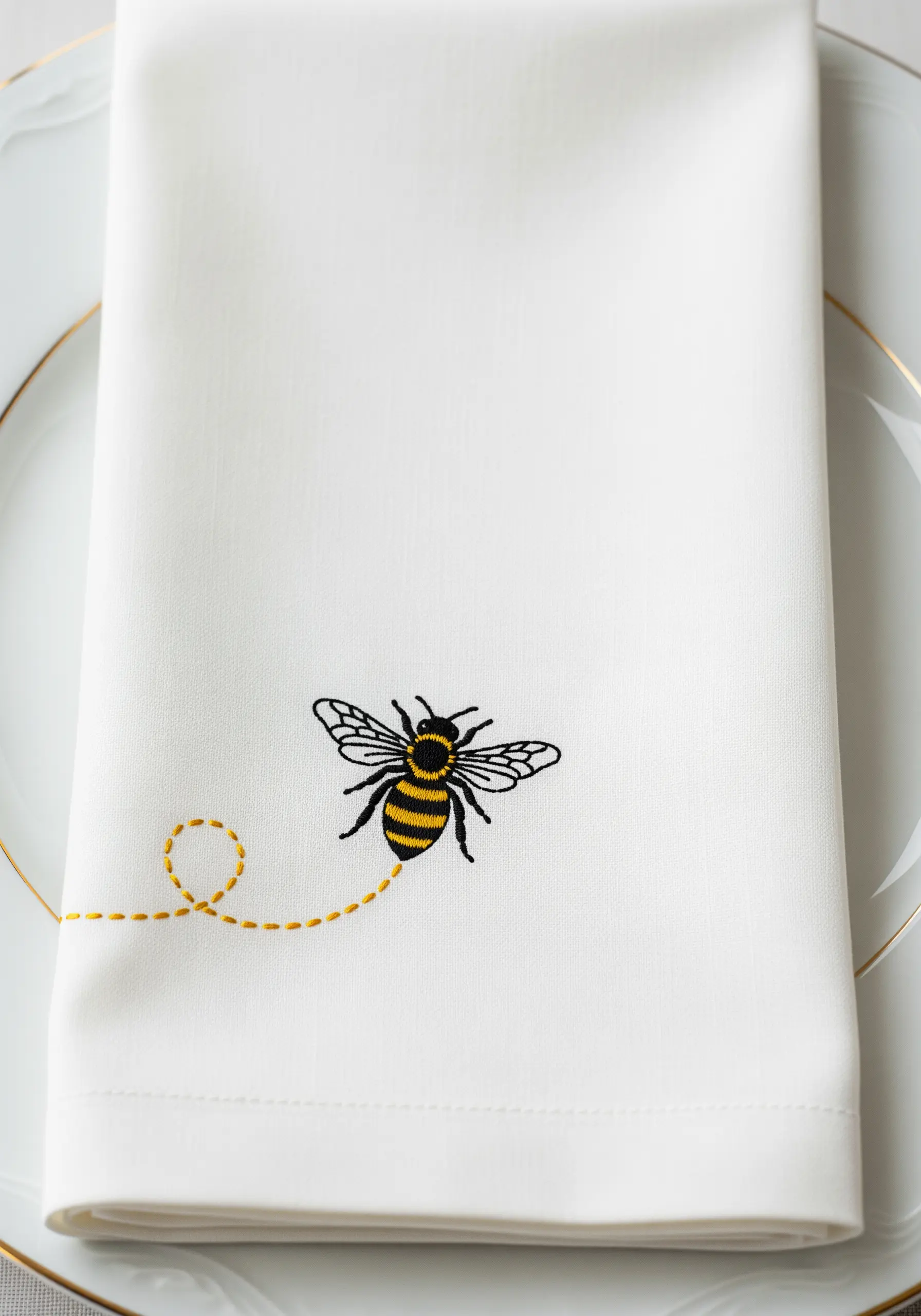
Combine filled stitches with line work for a dynamic and engaging effect.
Use a horizontal satin stitch for the bee’s stripes, alternating black and yellow thread for a bold, graphic look.
Outline the wings with a fine split stitch, leaving the inside open to suggest translucency and lightness.
For the dotted flight path, use a simple running stitch or a series of seed stitches in a contrasting color to add whimsy and movement.
11. Celebratory Lines: The Art of Continuous Contour
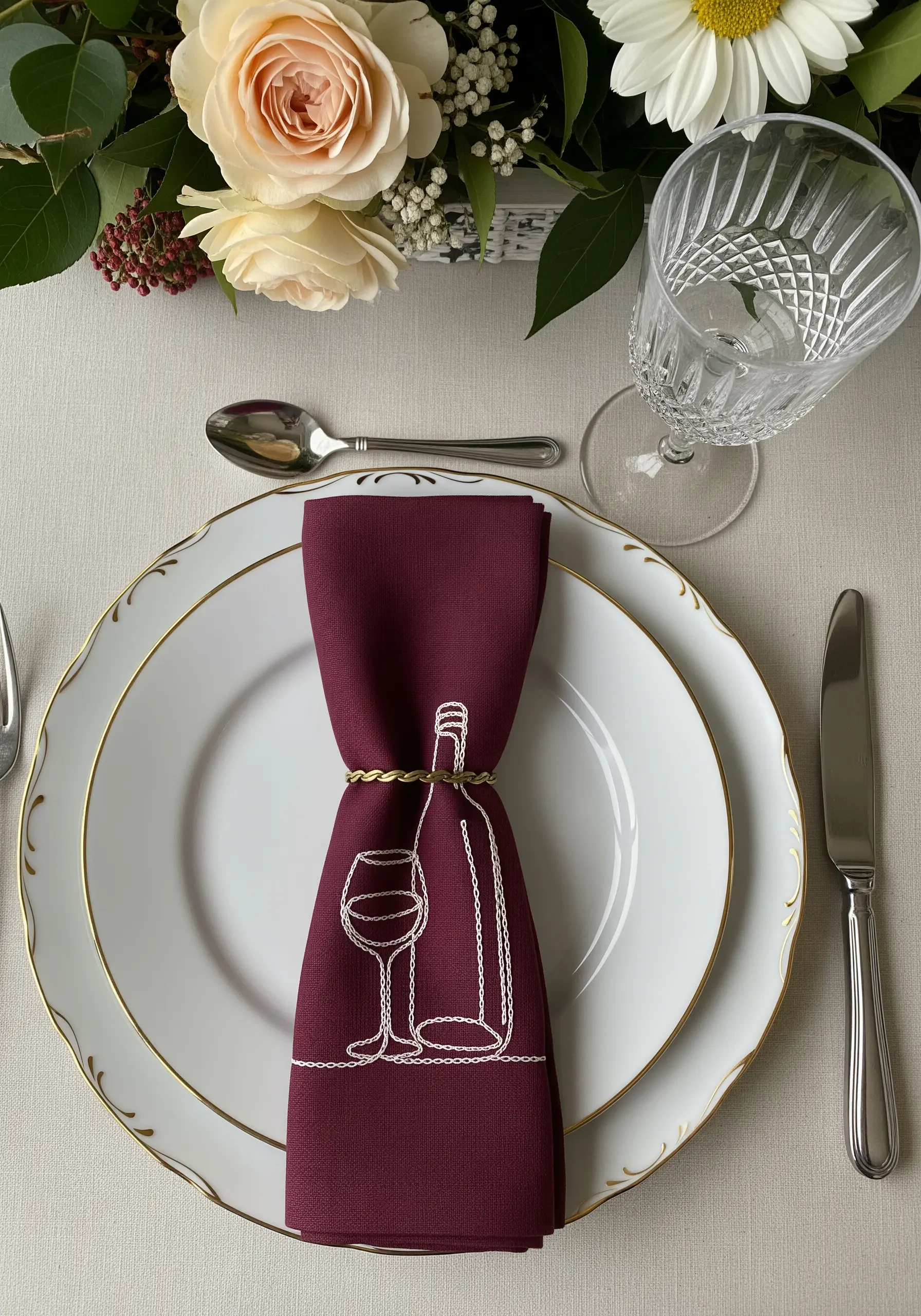
This single-line design celebrates the joy of shared moments with elegance.
Use a bright white or silver thread on a deep burgundy linen for a sophisticated, high-contrast effect perfect for formal dining.
A whipped backstitch will give your lines a smooth, rope-like quality that feels more elevated than a simple backstitch.
The challenge is to maintain a consistent flow without pulling the thread too tight, allowing the design to rest gracefully on the fabric.
12. Geometric Botanicals: Art Deco Precision

Embrace the sharp angles and stylized symmetry of the Art Deco era with this artichoke motif.
To achieve those crisp, clean lines, use a stem stitch and pivot sharply at each corner, pulling the thread taut.
Using a temporary stabilizer or a fabric marker to draw the pattern first is crucial for geometric accuracy.
The high contrast of deep red on blush pink gives the design a bold, graphic quality that feels both vintage and strikingly modern.
13. Landscape Vignettes: Sketching with Thread
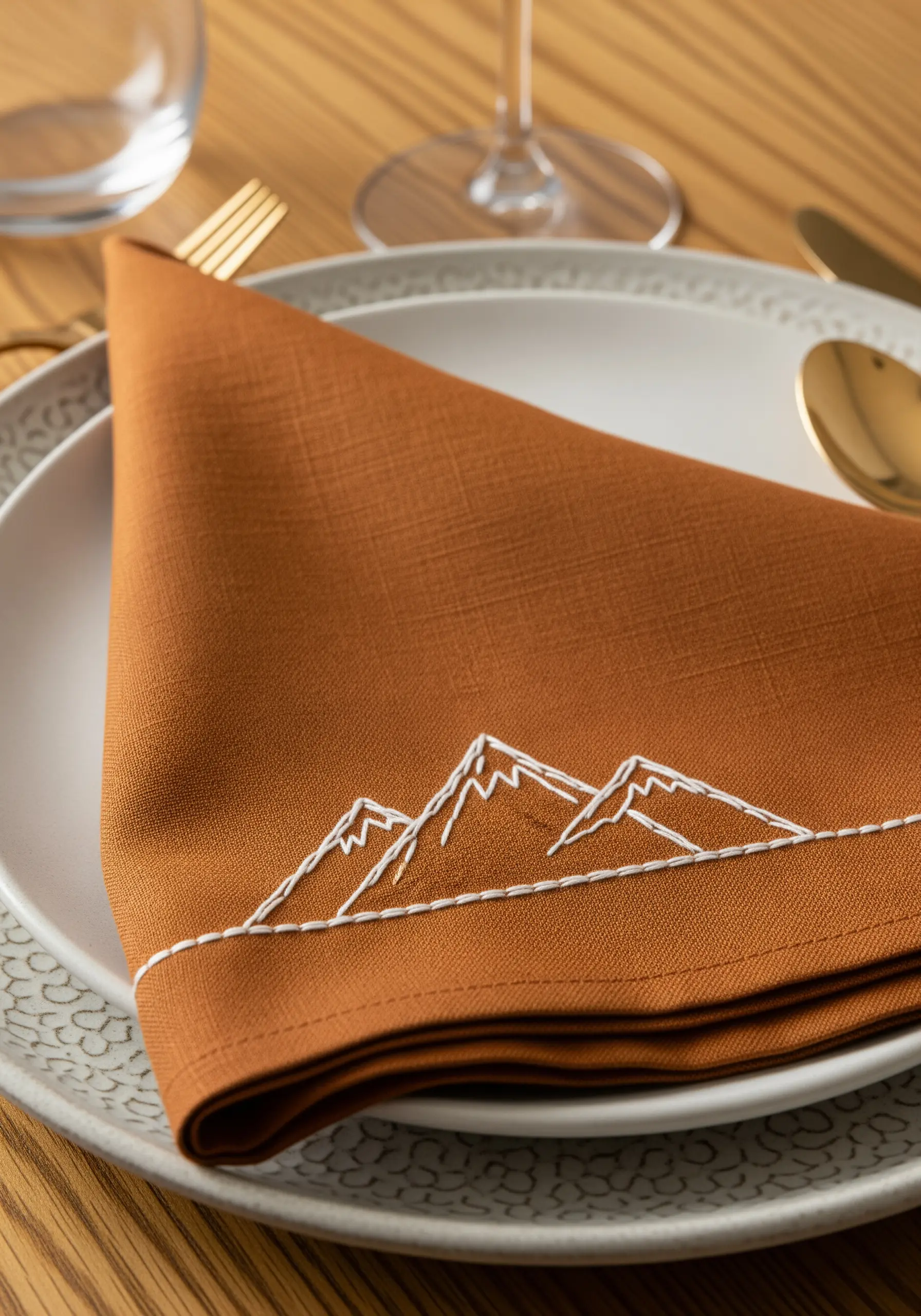
Create a surprising sense of depth using simple line variations.
Use a standard backstitch for the main mountain outlines.
For the snowy peaks, switch to a series of short, dense seed stitches in white to add texture and highlight.
The running stitch at the base grounds the design and connects it to the napkin’s hem, completing the vignette.
This technique effectively transforms a simple napkin into a small, stitched landscape.
14. Nautical Simplicity: Capturing the Coast
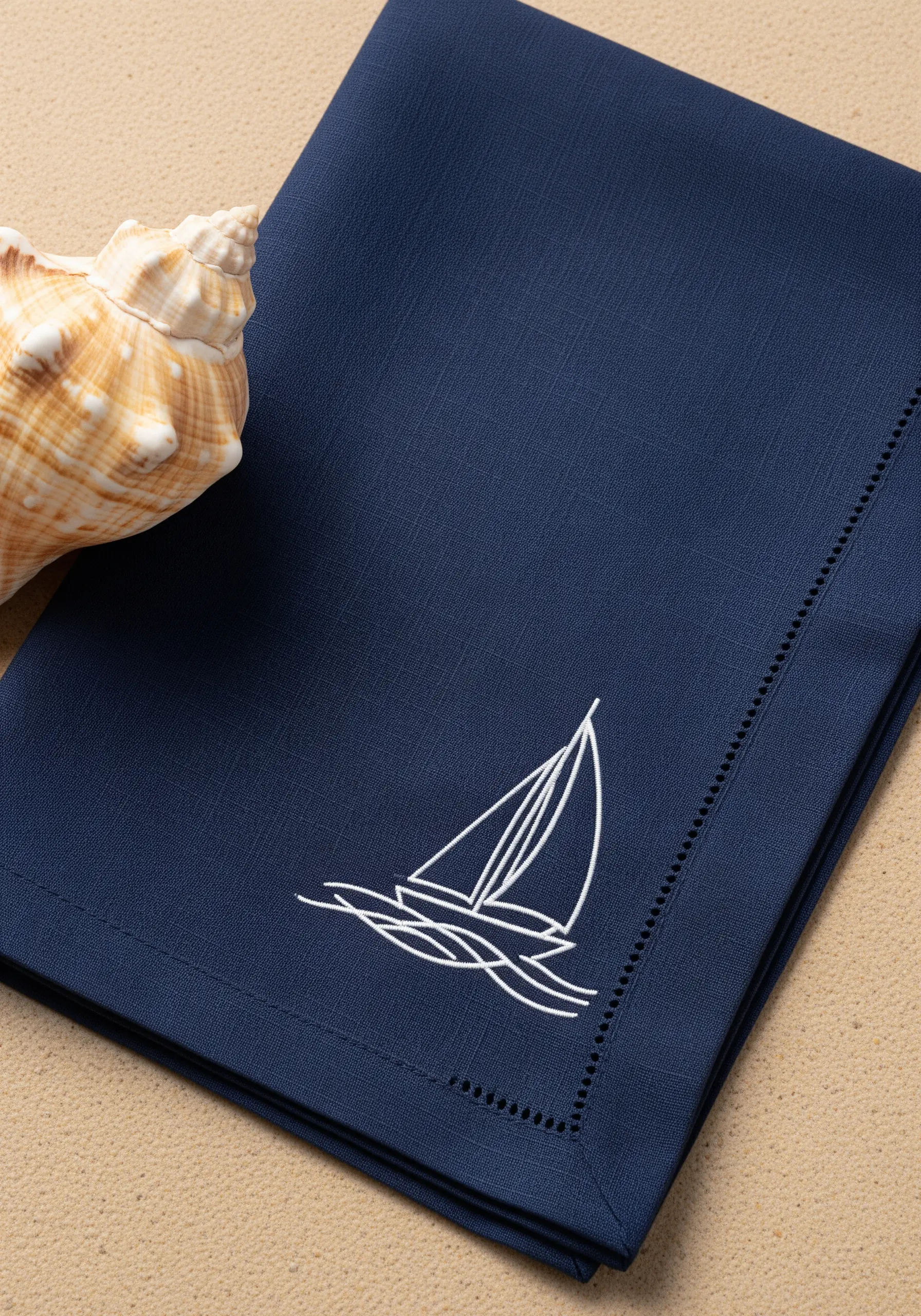
This design relies on the elegance of negative space to tell its story.
Use a bright white thread on deep navy linen to evoke a classic maritime feel that is both crisp and timeless.
A simple backstitch is all you need, but focus on keeping the lines for the sails and waves fluid and light.
The beauty lies in what’s left unstitched, allowing the fabric’s rich color to become the sea itself.
15. Botanical Textures: The Delicate Lavender
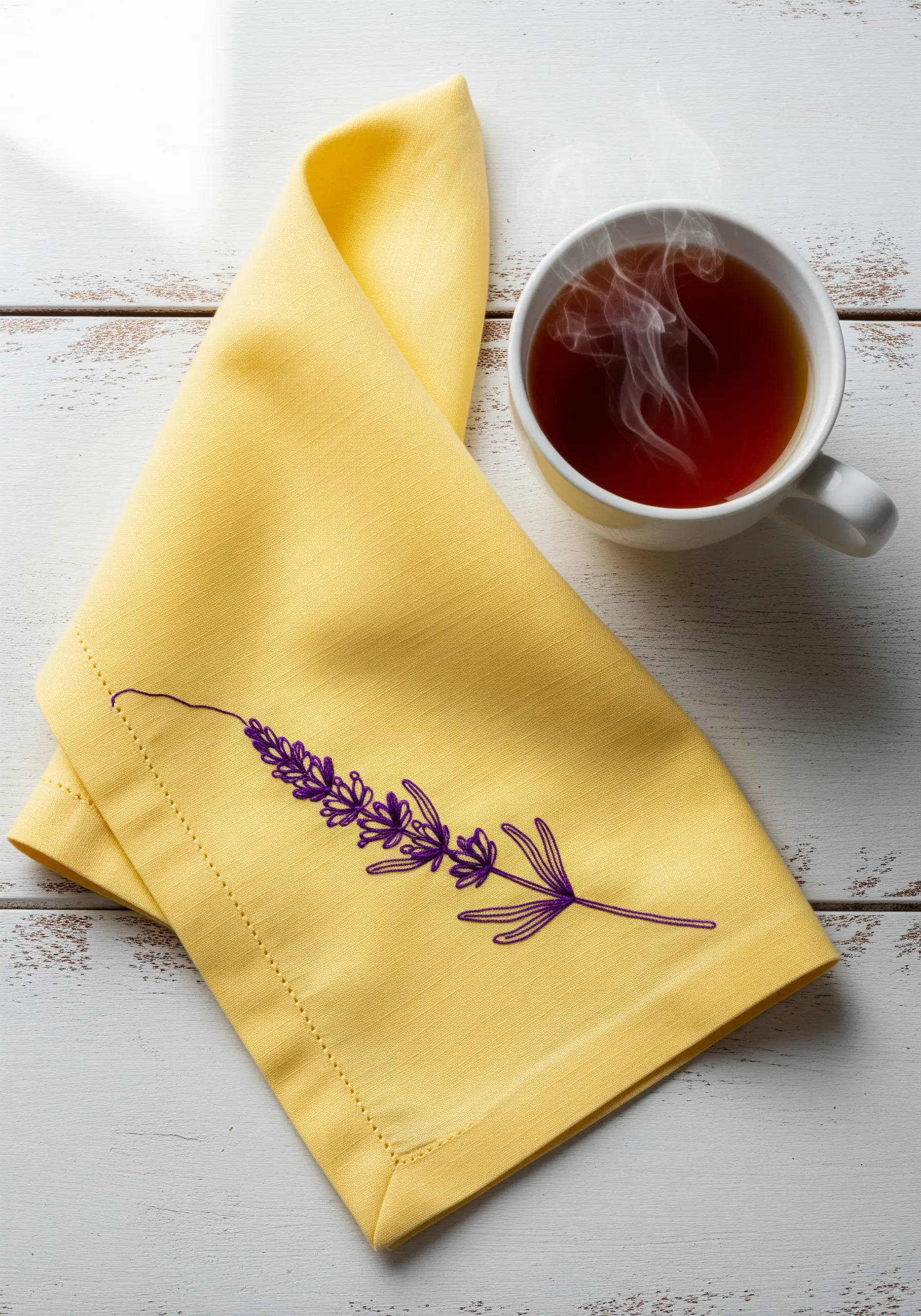
Build rich, organic texture by layering simple, accessible stitches.
Create the lavender blossoms with a series of small, angled straight stitches or lazy daisy stitches clustered along the top of the stem.
For the stem and slender leaves, a delicate stem stitch provides a clean, curved line.
The contrast between the soft yellow linen and the vibrant purple thread creates a cheerful, Provençal-inspired look perfect for brunch.
16. Expressive Abstraction: The Freeform Scribble
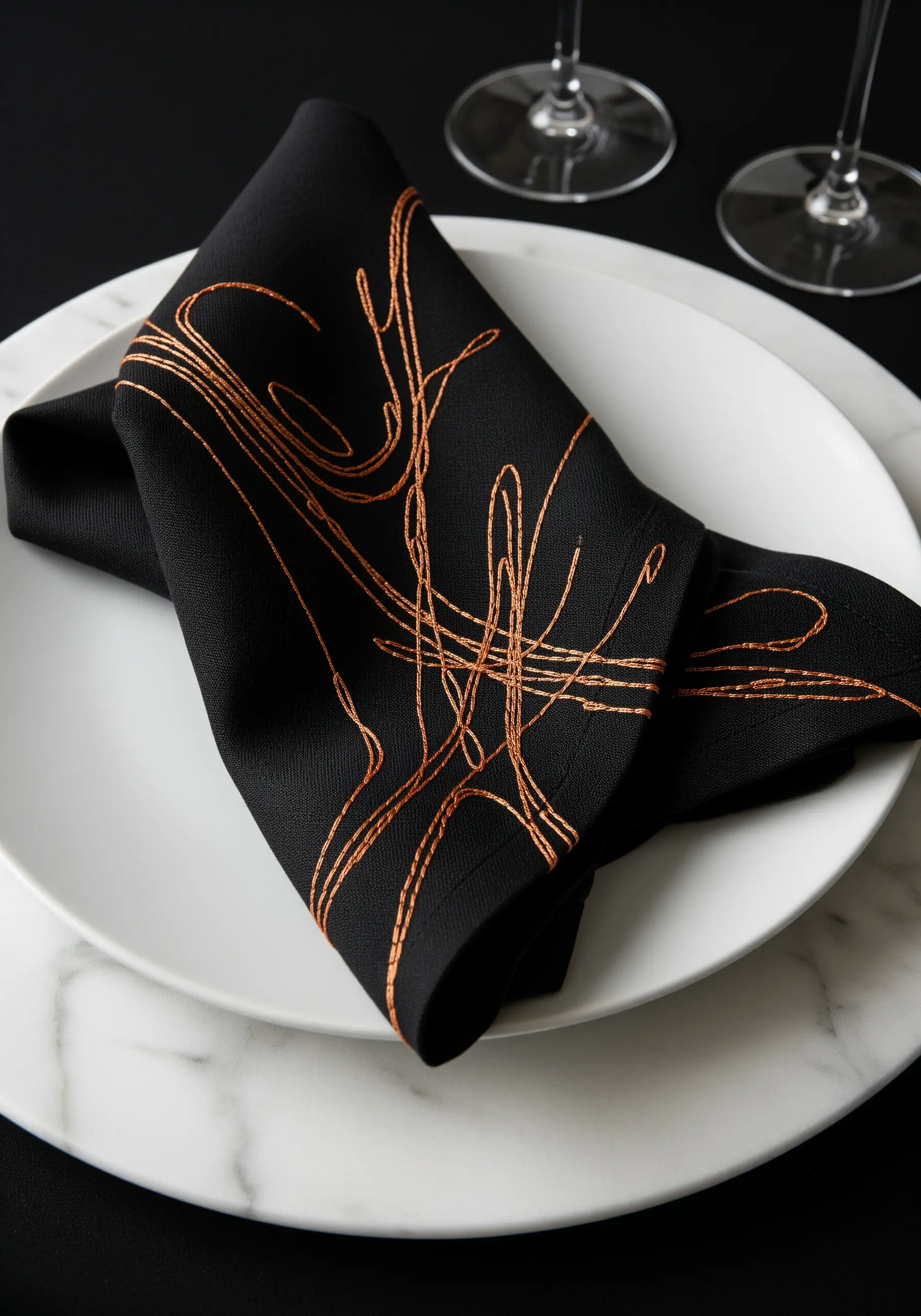
Embrace pure spontaneity with this expressive, abstract design.
Use a high-sheen metallic copper thread on black linen for maximum visual impact and light reflection.
Instead of following a pattern, stitch freely in overlapping loops and lines using a long, flowing running stitch or couching a thicker metallic yarn.
The goal isn’t perfection but capturing a raw, energetic gesture. This is a fantastic way to practice abstract thread painting on a small scale.
17. Narrative Lines: Storytelling Through Stitches
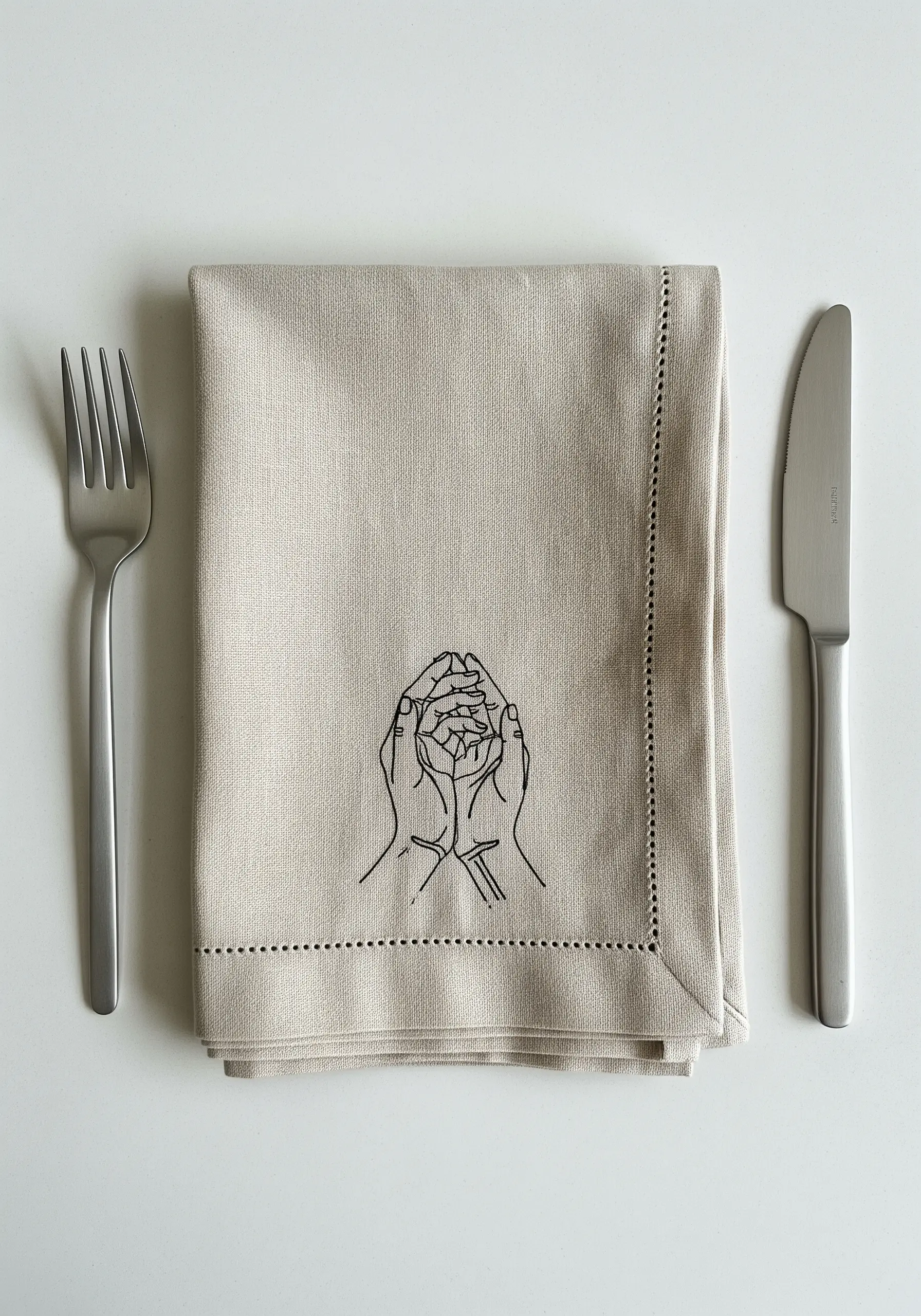
This quiet design tells a story of play and connection through simple lines.
A basic backstitch in black thread on natural linen gives it the delicate, considered feel of an ink drawing.
Pay close attention to your thread tension where the ‘strings’ of the cat’s cradle cross over the fingers.
You want the lines to be distinct but not so tight that they pucker the fabric, achieving a balance of control and subtlety.
18. Natural Detail: The Textured Fern
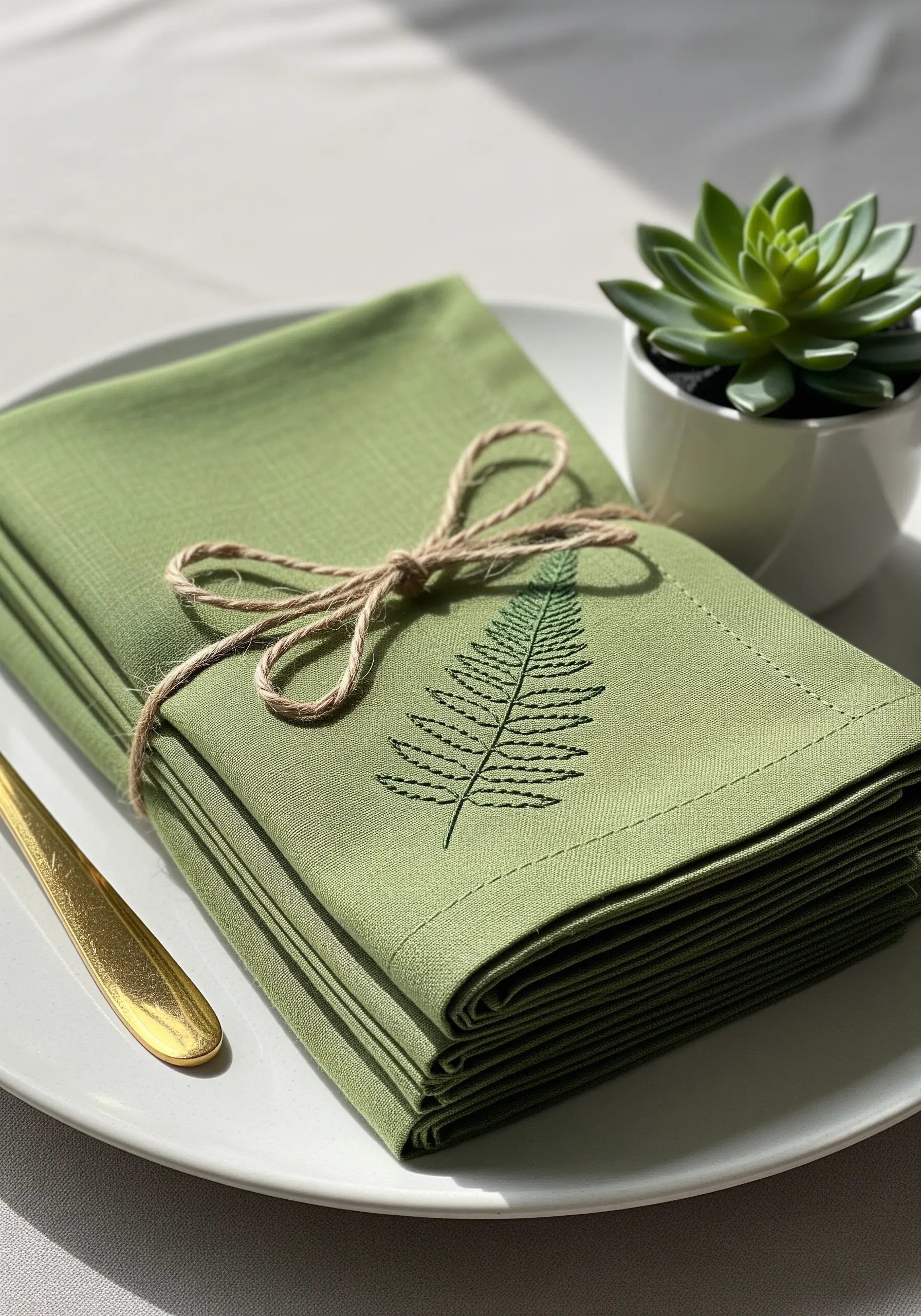
To create a realistic fern, focus on building texture through repetition and direction.
Use a backstitch for the central stem to give it a solid foundation.
For the individual fronds, stitch small, angled straight stitches on either side of the stem, pointing slightly upwards.
By subtly varying the angle and length of these stitches, you create a natural, feathered effect that mimics a real fern.
A tone-on-tone approach with a slightly darker green thread enhances the design’s organic sophistication.
19. Ethereal Lightness: The Delicate Feather
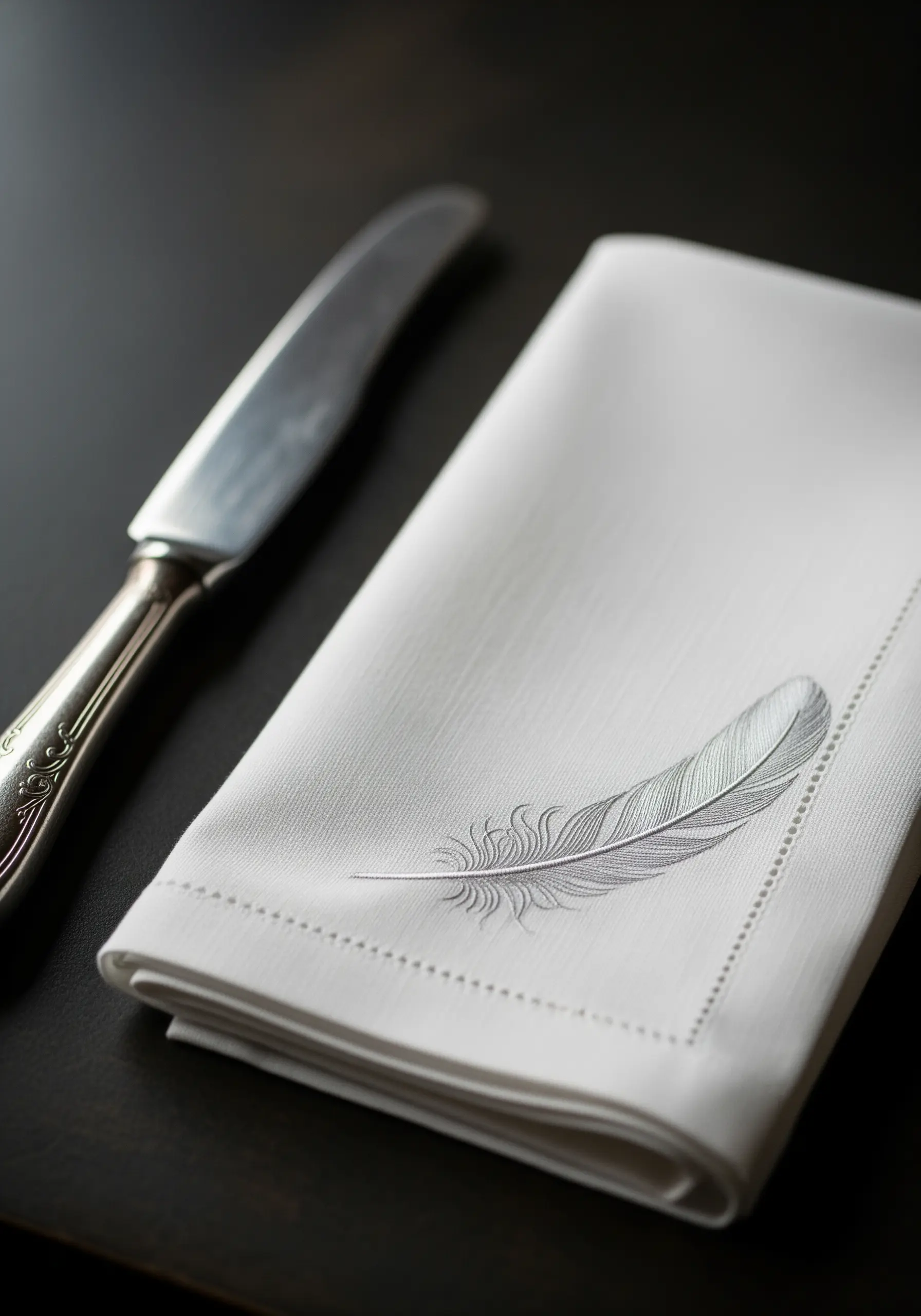
Capturing the weightlessness of a feather requires exceptionally delicate stitch work.
Use a single strand of silver or light gray floss to keep the design light and airy.
The central quill should be a fine whipped backstitch for a solid, smooth line.
For the barbs, use long, open fishbone stitches, allowing generous space between each stitch to create a transparent effect.
This technique is all about letting the fabric breathe through the design.
20. Metallic Accents: The Gilded Key

Add a touch of instant luxury with a bold metallic motif that catches the light.
To make metallic thread easier to work with, use shorter lengths (no more than 12 inches) and a thread conditioner to prevent tangling.
A chain stitch is perfect for this design, as it creates a thick, textured line that resembles a fine chain itself.
The combination of gold on a deep teal linen feels opulent and mysterious, perfect for a memorable dinner party.
21. Color Play: The Split-Color Fruit
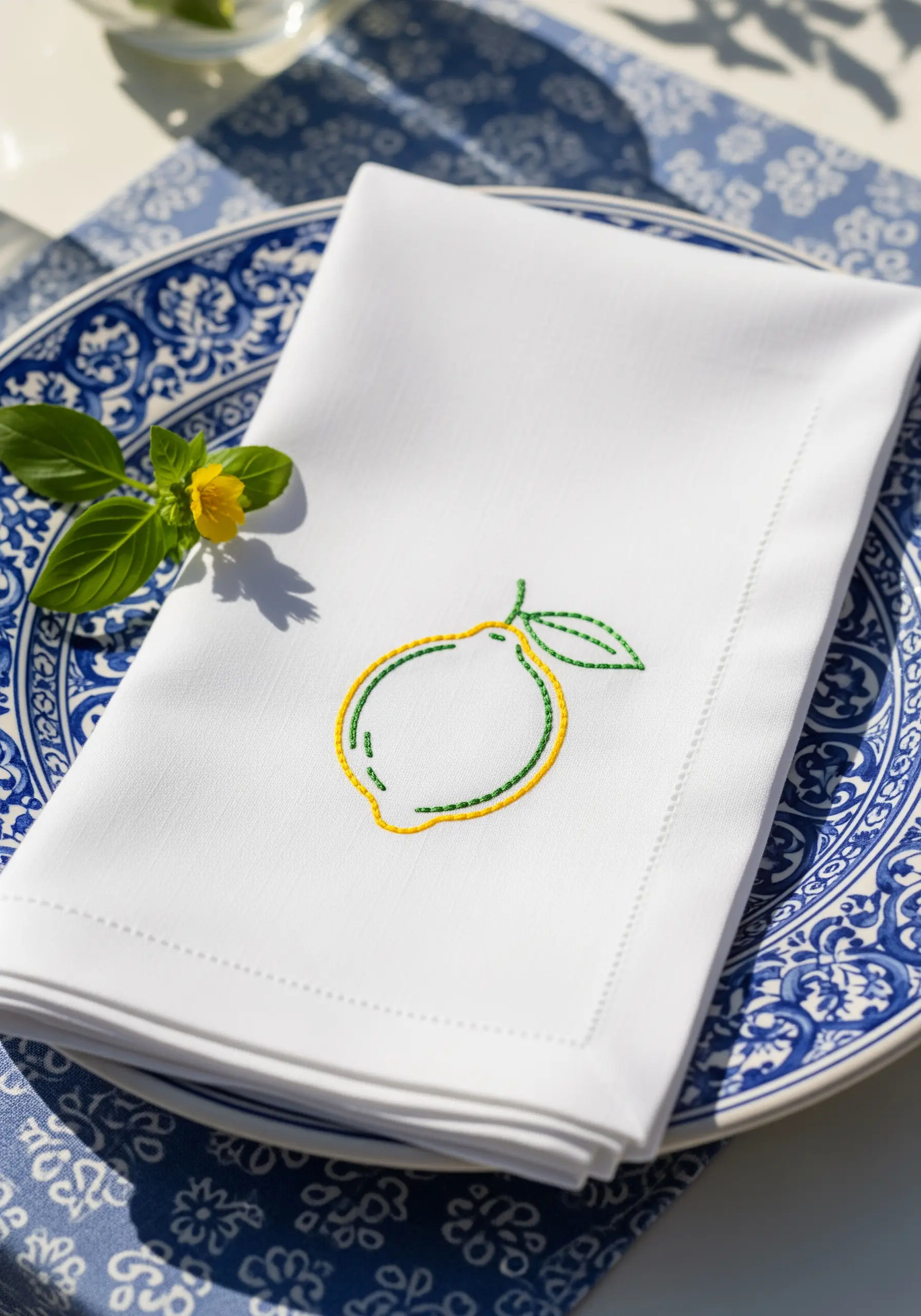
This design uses clever color placement to create a modern, playful twist on a classic motif.
Outline one half of the lemon in sunny yellow and the other half and leaf in lime green.
Use a split stitch for a smooth, continuous line that looks almost drawn on.
Where the two colors meet, ensure the stitches are neat and tight for a clean transition.
This simple color-blocking technique adds immense visual interest and a fresh, zesty feel.
22. Crystalline Structures: Geometric Line Art
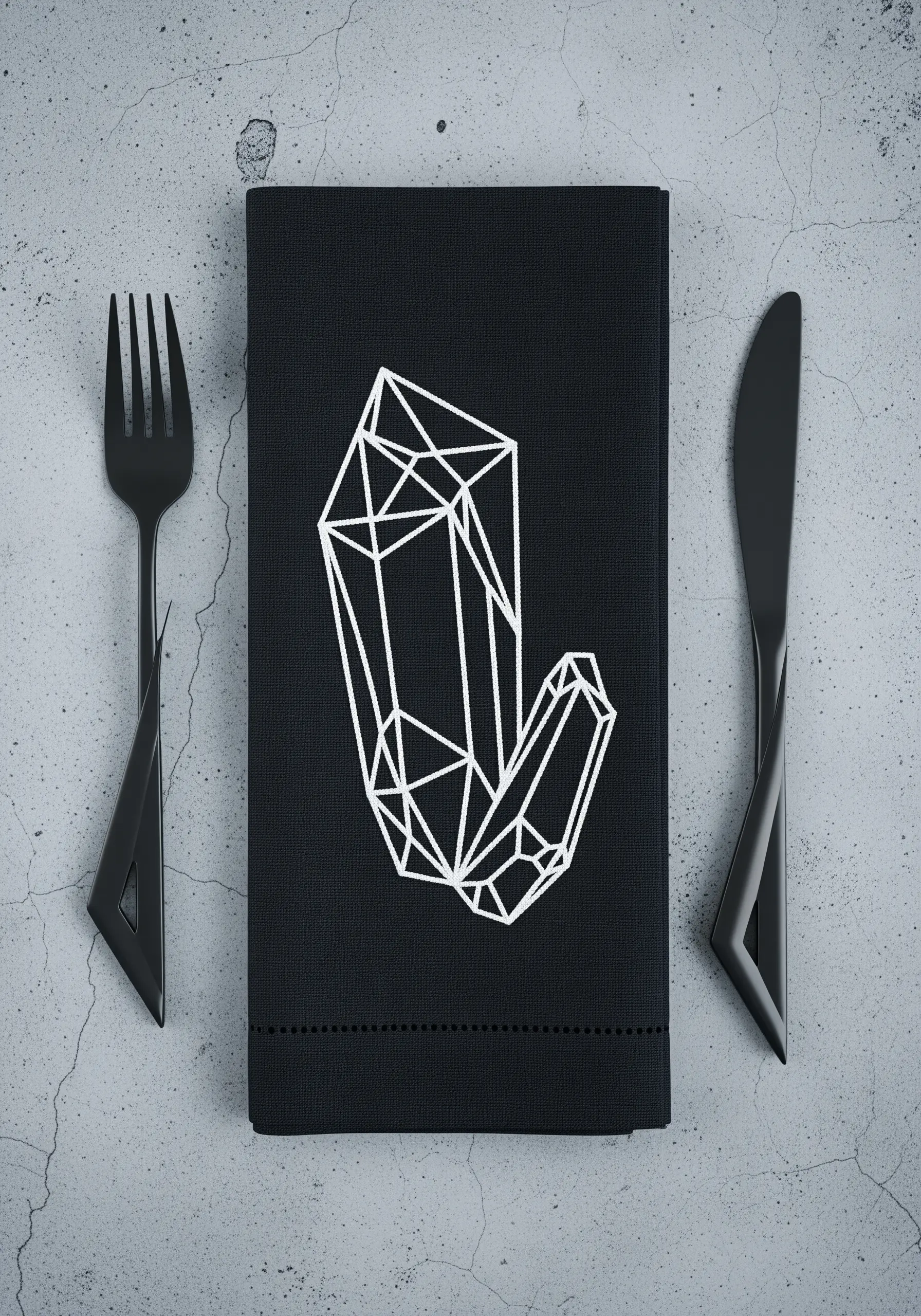
Achieve the sharp, faceted look of a crystal with precise straight stitches and careful planning.
Use a water-soluble stabilizer printed with your design to ensure your lines are perfectly straight and your angles are crisp.
A bright white thread on black linen creates a stark, graphic contrast that emphasizes the clean geometric form.
This is a great exercise in precision and control, where every single stitch contributes to the overall structure.
23. Morning Rituals: The Cozy Coffee Cup

Capture the comforting warmth of a morning coffee with this simple line art sketch.
A dark brown thread on natural linen provides a warm, earthy feel that complements the theme.
Use a backstitch for the solid outlines of the cup and saucer.
For the steam, use a looser, more organic stem stitch to create a sense of rising vapor—a small detail that adds life and character.
24. Whispers of Whimsy: The Floating Dandelion

Create a sense of delicate movement and lightness with a mix of stitches.
For the dandelion head, use a combination of straight stitches for the filaments and tiny French knots at the tips to create a fluffy texture.
The stem is a simple, fine backstitch that grounds the design.
For the floating seeds, use detached chain stitches (lazy daisies), scattering them organically to suggest they’re being carried by a breeze.
25. Understated Flora: The Elegant Calla Lily
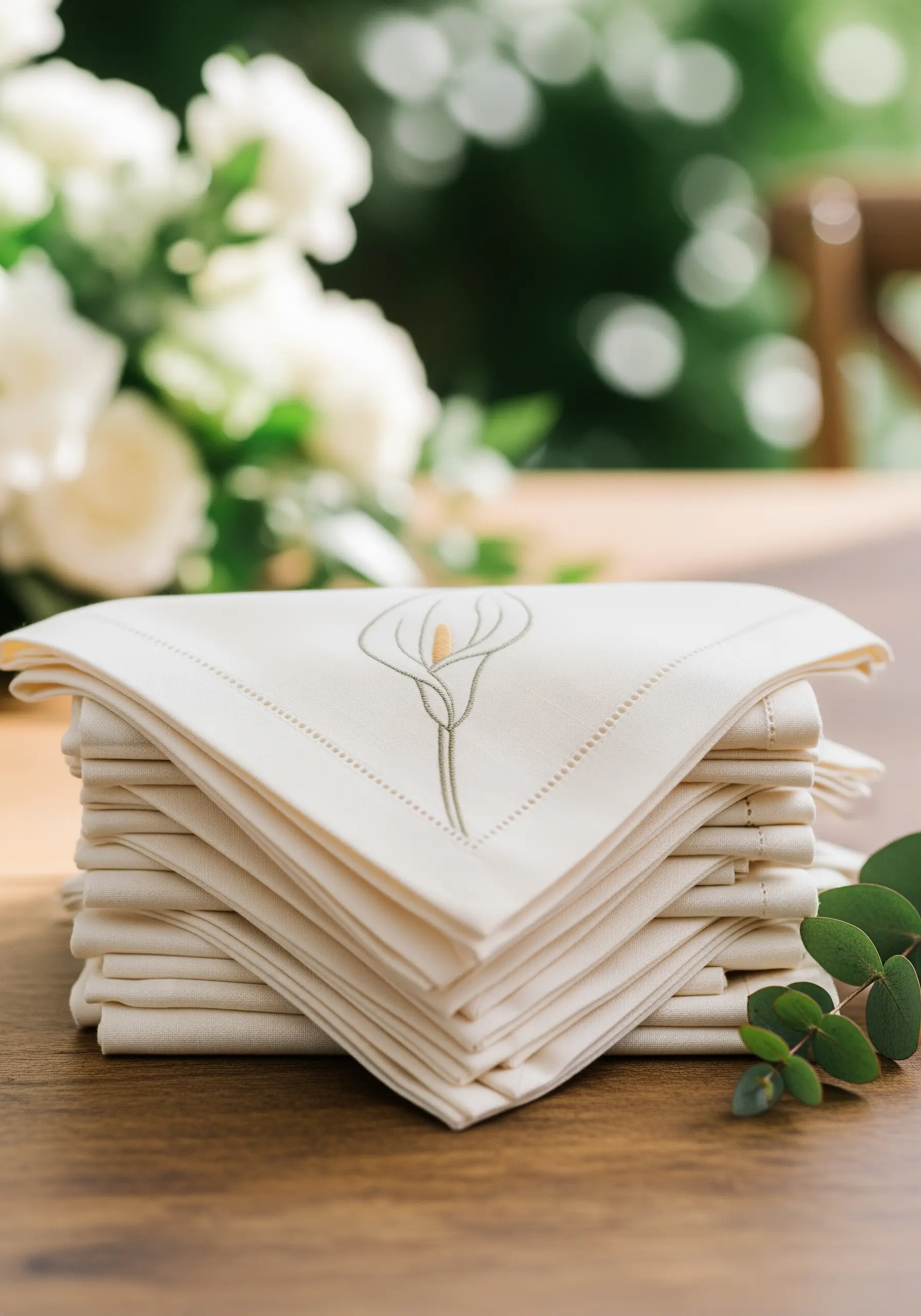
This design celebrates pure elegance through subtlety and a restrained color palette.
The stem is a simple stem stitch in a soft olive green.
For the flower, outline the iconic shape in a delicate off-white or ecru thread.
Fill the spadix (the central spike) with a few golden yellow French knots for a pop of color and texture.
The beauty is in the restraint, making it a perfect idea for handmade wedding anniversary gifts.
26. Bold Energy: The Neon Scribble

Make a high-impact, contemporary statement with a vibrant, abstract design.
Choose a shocking pink or neon thread and stitch it on black linen for maximum color vibration and contrast.
Use a whipped backstitch or a thick chain stitch to create a bold, continuous line that looks like an energetic brushstroke or a signature.
Let your stitches overlap and intersect freely to build a dense, textured area of pure color.
27. Vintage Glamour: The Chic Perfume Bottle

Evoke a sense of classic, feminine elegance with this stylized motif.
Use a silvery-blue thread on a dusty rose linen for a soft, vintage-inspired color palette.
To create the illusion of glass, use a double backstitch for the outlines.
This technique creates two fine, parallel lines that suggest transparency and reflection, giving the simple line art a sophisticated, dimensional quality.
28. Graceful Lines: The Soaring Crane
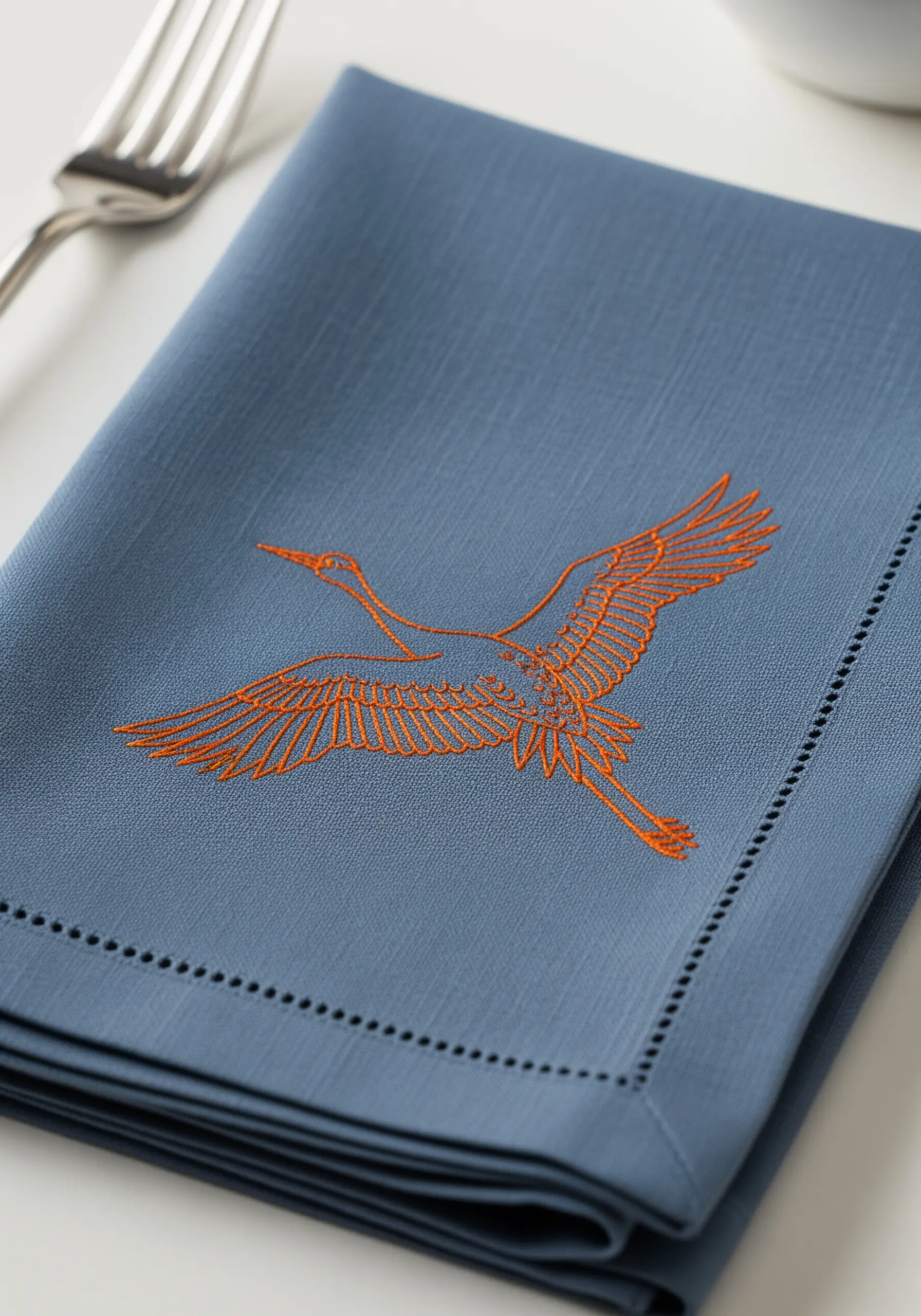
The elegance of a crane in flight is captured in its long, graceful lines and intricate details.
Use a vibrant orange thread on a muted blue-gray fabric for a striking color combination that feels both natural and artistic.
A fine backstitch is ideal for rendering the complex details of the feathers without making the design feel heavy or bulky.
Vary your stitch length—longer stitches for the broad wingspans and shorter stitches for the head—to create perspective and movement.
29. Zesty Accents: The Fiery Chili Trio
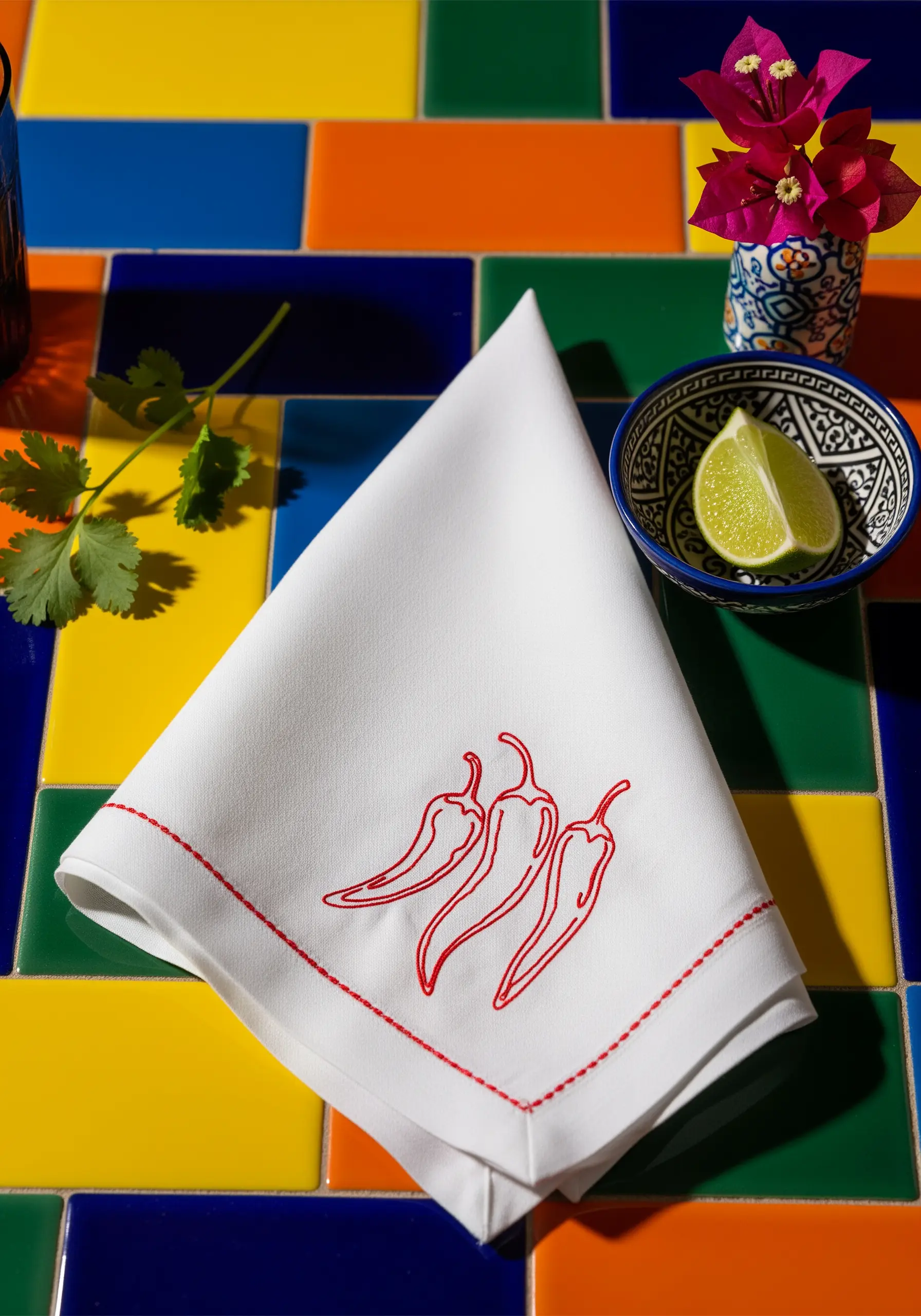
Add a playful and unexpected pop of color to your tablescape with this chili pepper design.
A bright red thread stands out beautifully on crisp white linen, creating a clean and festive look.
Use a stem stitch for the outlines to give them a slightly rounded, dimensional feel, like a plump pepper.
The simple running stitch border in the same red thread ties the motif to the napkin’s edge, creating a cohesive design.
30. Celestial Serenity: The Golden Night Sky
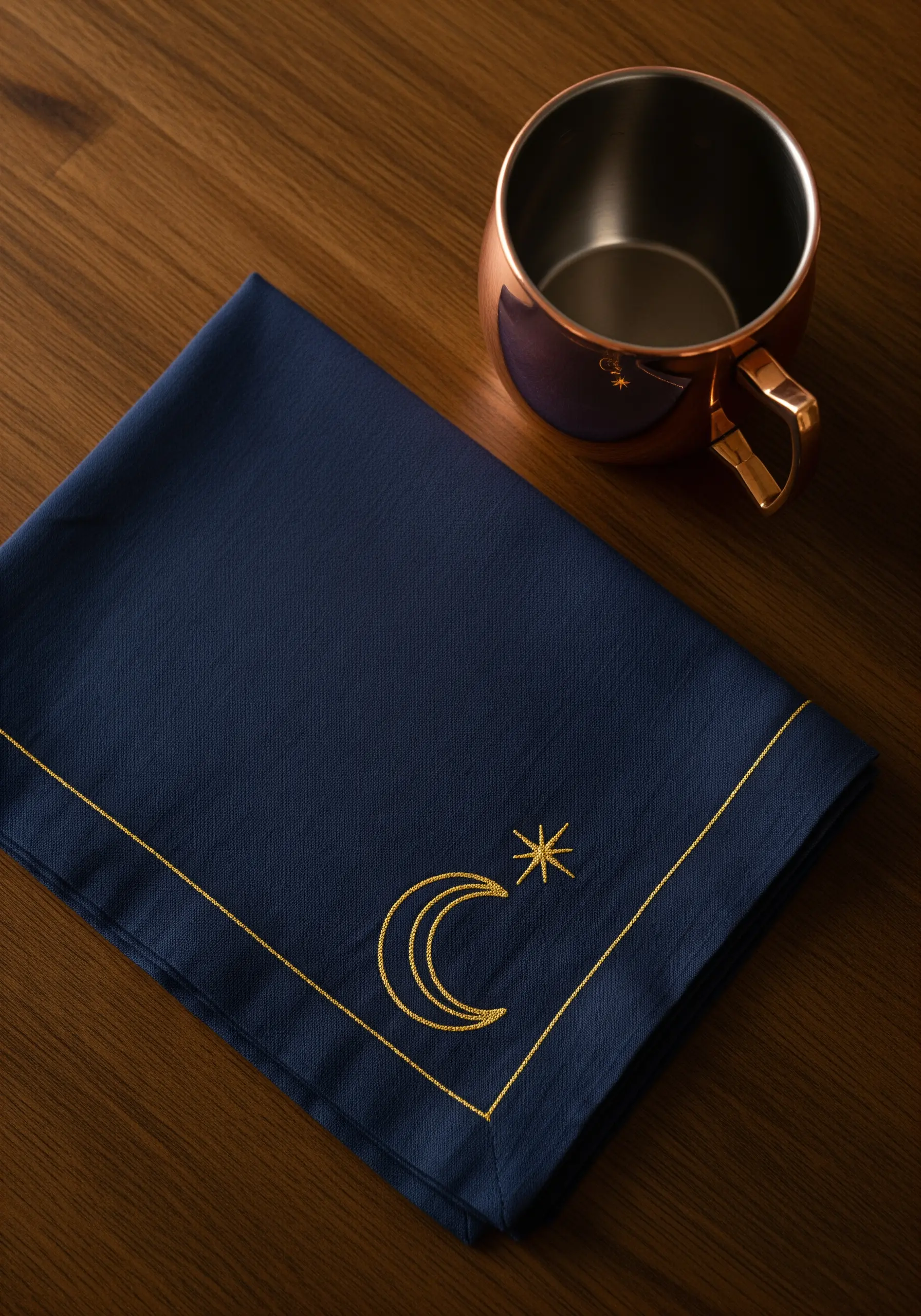
Create a touch of celestial magic with the rich glow of metallic thread.
On dark navy linen, a high-quality gold thread creates a luxurious and eye-catching effect.
Use a tight, smooth satin stitch for the crescent moon to give it a solid, shimmering surface.
For the star, a simple star stitch or a cluster of French knots will add a contrasting texture that sparkles.
A matching gold running stitch along the border completes the luxe, celestial theme.
31. Coastal Textures: The Sculptural Seashell
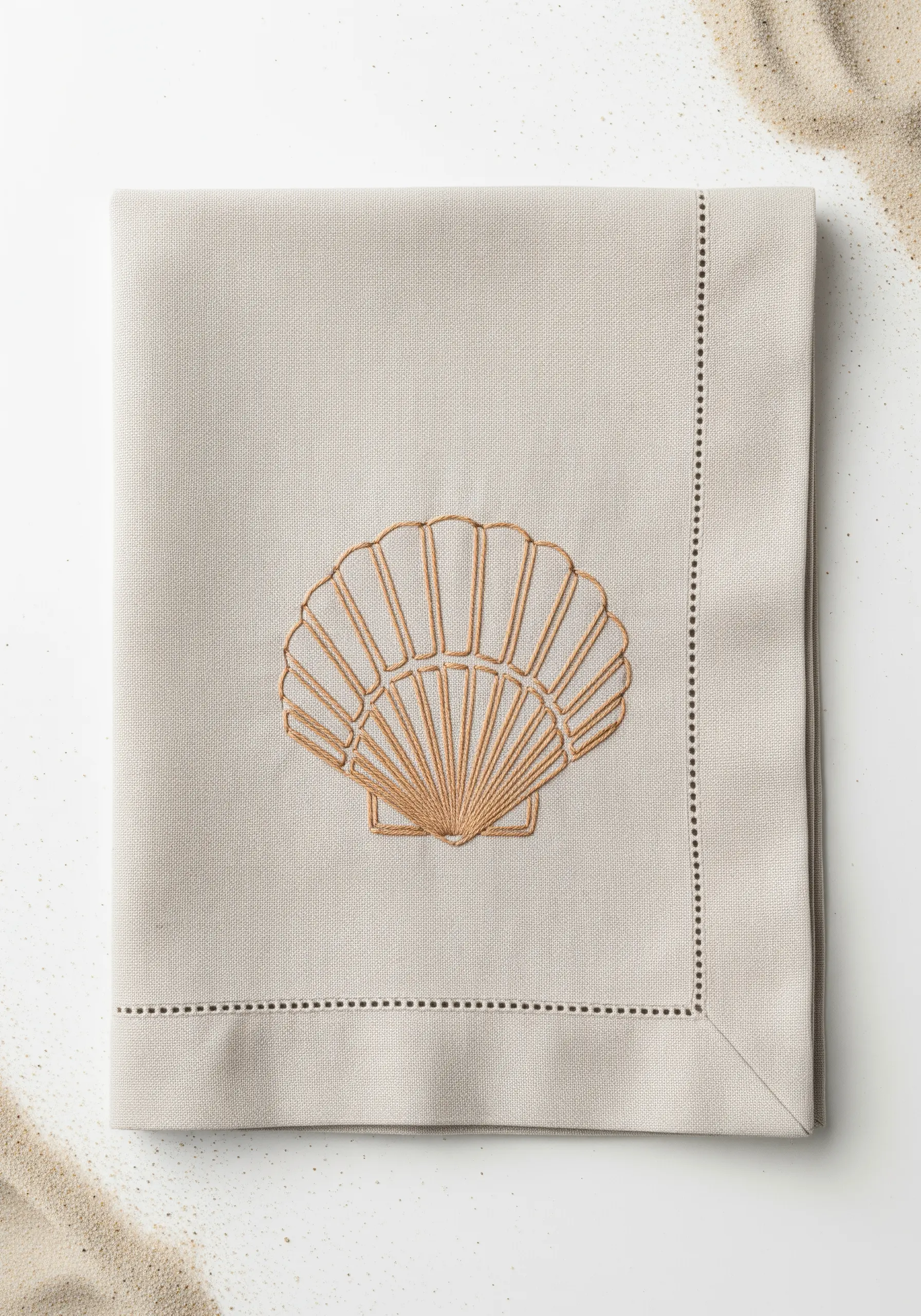
Recreate the radiating lines of a seashell by using stitch direction to create form and shadow.
First, outline the entire shell shape with a simple backstitch.
Then, fill the segments with long straight stitches that all originate from the base and fan outwards toward the scalloped edge.
Using a slightly darker thread for the outline and a lighter shade for the fill creates a subtle sense of depth, making the shell appear more sculptural.
32. Woodland Details: The Layered Pinecone

The organic beauty of a pinecone is found in its complex pattern of overlapping scales.
Recreate this effect by using a freeform fishbone stitch or a series of overlapping straight stitches.
Begin stitching from the bottom and work your way up, allowing each new row of stitches to slightly cover the one below it.
Using a variegated brown thread will add natural color variation and enhance the design’s rich, organic texture.
33. Artistic Expression: The Deconstructed Portrait
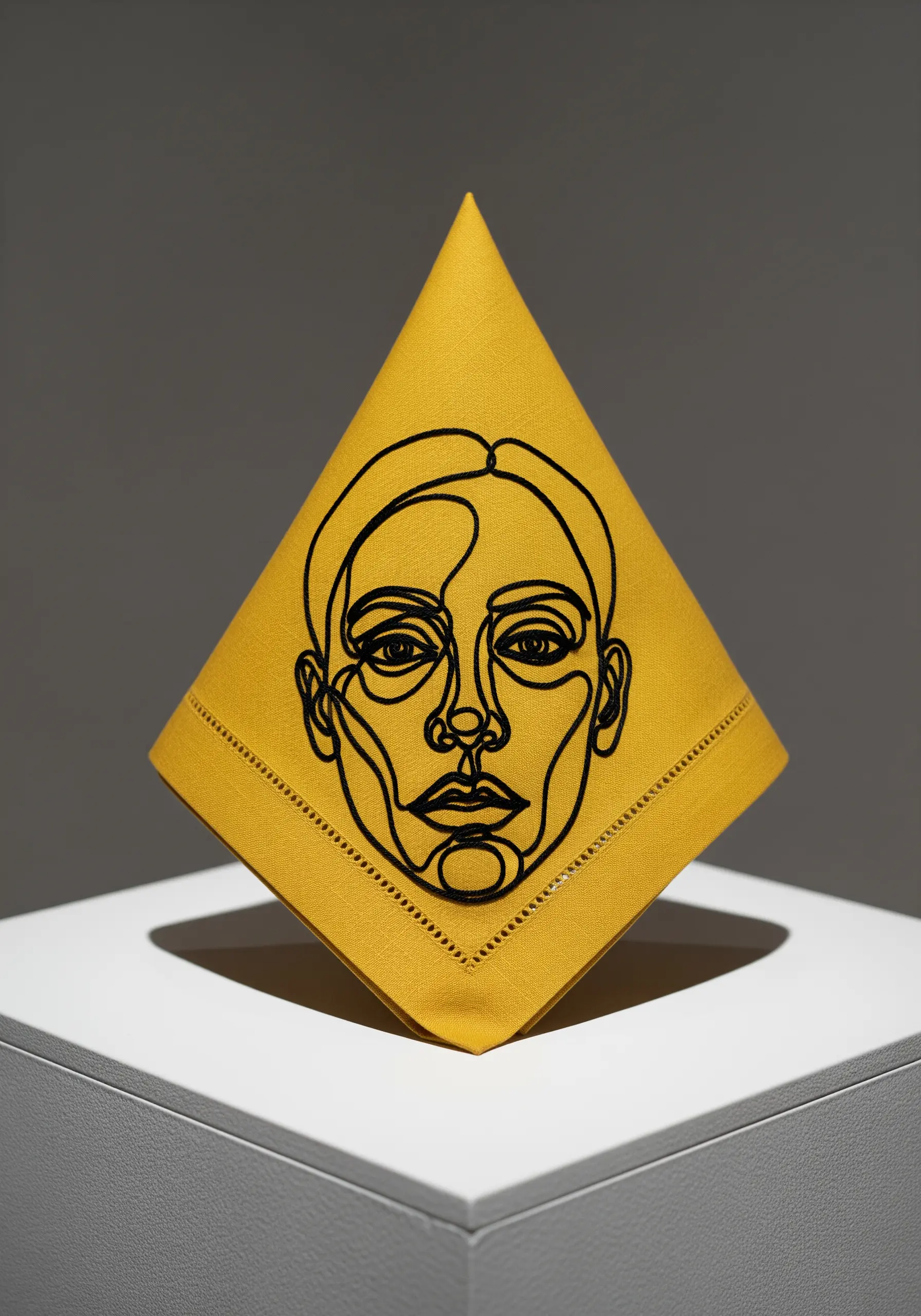
This bold, abstract portrait demands a strong, confident line to match its expressive energy.
Use a whipped backstitch or a fine chain stitch with a 3 or 4-ply black thread.
This creates a substantial, graphic line that holds its own against the vibrant yellow fabric.
Don’t shy away from overlapping your lines; this adds to the deconstructed, artistic feel of the piece.
It’s a statement that turns a functional item into a conversation starter.
34. Harvest Elegance: The Graceful Wheat Stalk

Capture the delicate, arching form of a wheat stalk with a few thoughtfully chosen stitches.
Use a stem stitch for the main stalk to give it a natural, gentle curve.
For the individual grains, use a series of small, detached chain stitches (lazy daisies) arranged alternately up the stem.
A single strand of gold or light brown thread on crisp white linen creates a look that is both rustic and incredibly elegant.
35. Geometric Nature: The Honeycomb Motif

This design balances geometric precision with a touch of organic irregularity for a modern look.
Use a simple backstitch in a warm yellow or gold thread to create the clean hexagonal shapes.
Instead of a perfect, repeating pattern, cluster the hexagons together in a more natural, slightly imperfect formation.
The contrast between the sharp geometric lines and the soft lavender fabric creates a visually pleasing and contemporary aesthetic.
36. Graphic Pop: The Intertwined Cherries
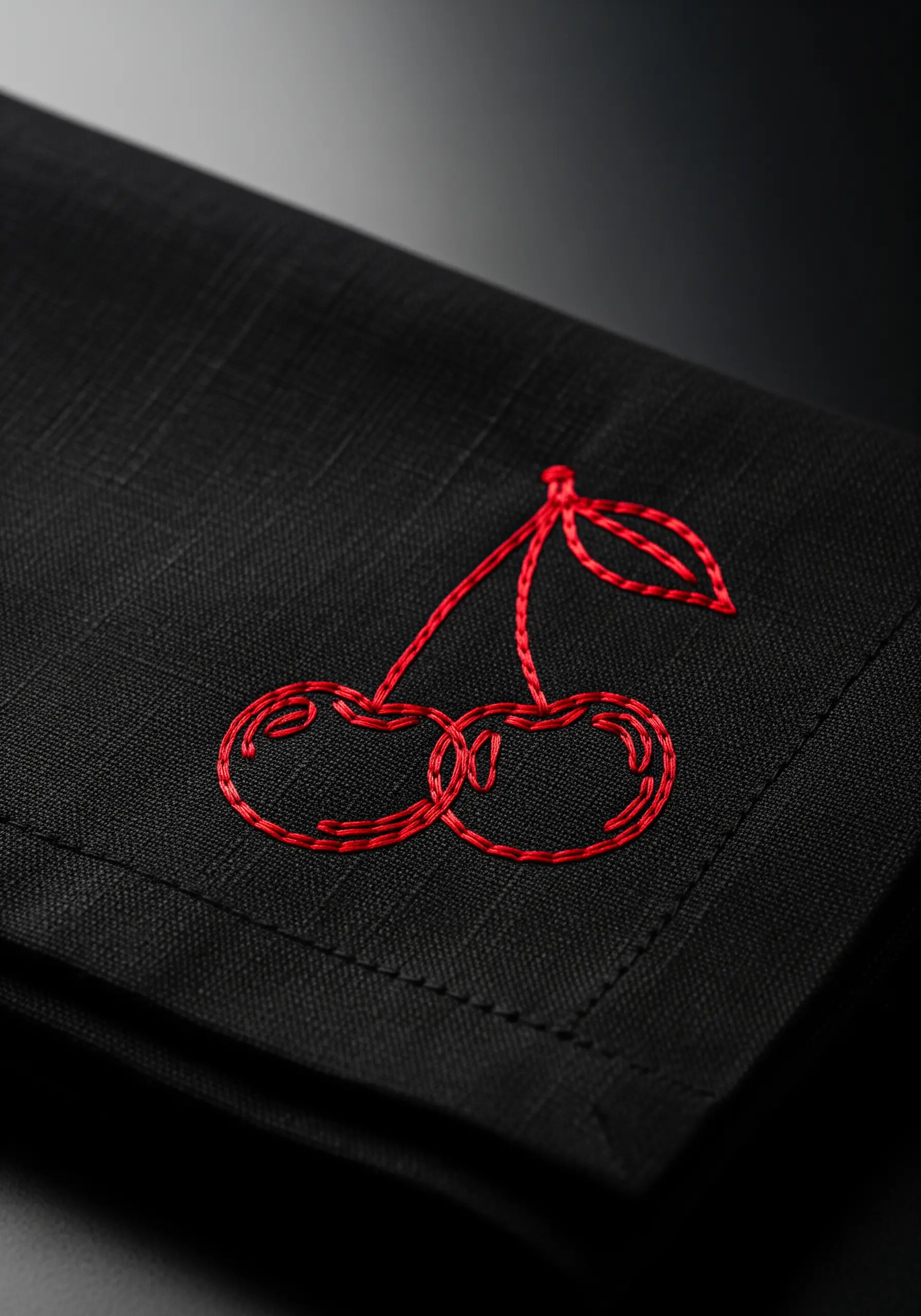
Create a bold, graphic statement with this playful cherry motif.
Use a bright red thread and a double backstitch for the outlines of the fruit.
This technique, which uses two parallel rows of backstitching, creates a thicker, more defined line that really pops against the black fabric.
For the stems, a simple whipped backstitch will give them a smooth, continuous curve, completing the clean, high-contrast design.