
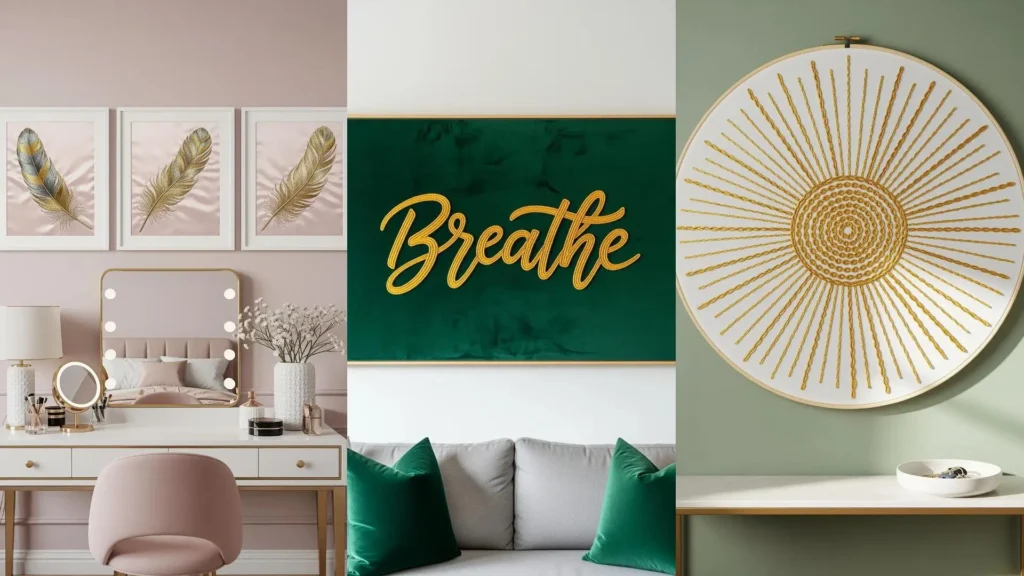
You have the threads, the fabric, and the desire to create something beautiful. But perhaps you feel a gap between the vision in your mind and the piece in your hands. It’s not about learning a hundred new stitches; it’s about learning how to use the ones you know with intention.
Gold thread isn’t just a color—it’s a material with its own properties. It can be sculptural, graphic, or fluid. It can catch the light to create dimension or define a line with minimalist precision. Understanding how to harness that potential is what transforms a simple project into a piece of art that feels genuinely luxurious.
Together, let’s explore how a few thoughtful adjustments—a change in stitch density, a surprising texture combination, or a new way of framing—can elevate your work. You already have the skill. Now, let’s refine the vision and give your home the premium, handmade touch it deserves.
1. The Art of Controlled Chaos: Sculptural Gold Splatters
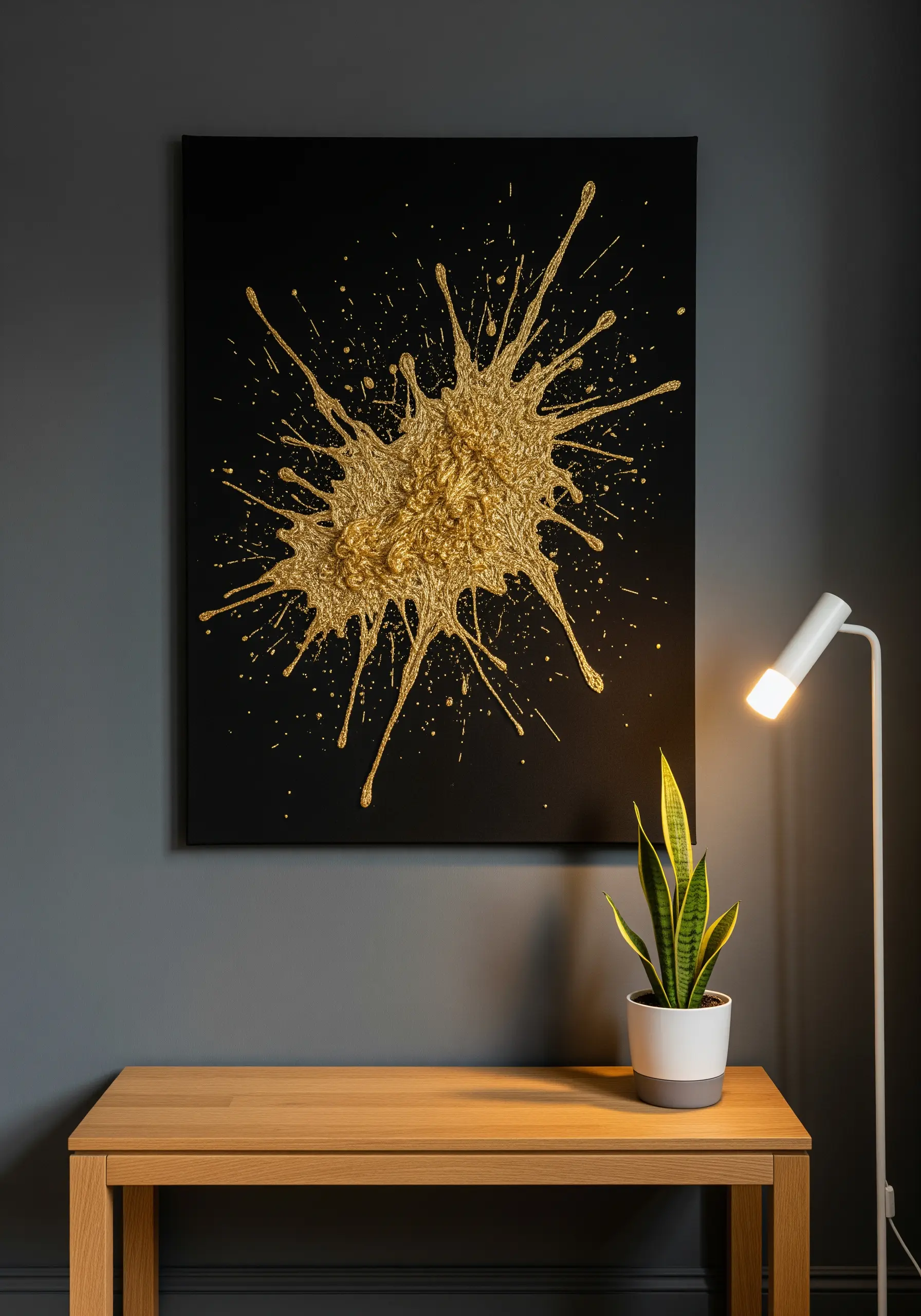
This isn’t just stitching; it’s thread sculpture.
To create this dynamic splatter, use a mix of gold threads—think smooth metallics, textured braids, and even fine wires.
Build the central mass with dense, overlapping couching stitches, laying down thick cords and securing them with finer metallic thread.
For the radiating splashes, use long, single straight stitches pulled taut to create tension.
Vary the thread weights dramatically to give the impression of fluid movement, from thick drips to fine mist-like specks.
The key is layering—work from the background splashes to the foreground texture.
2. Celestial Gallery Wall: Harmonizing Your Hoops
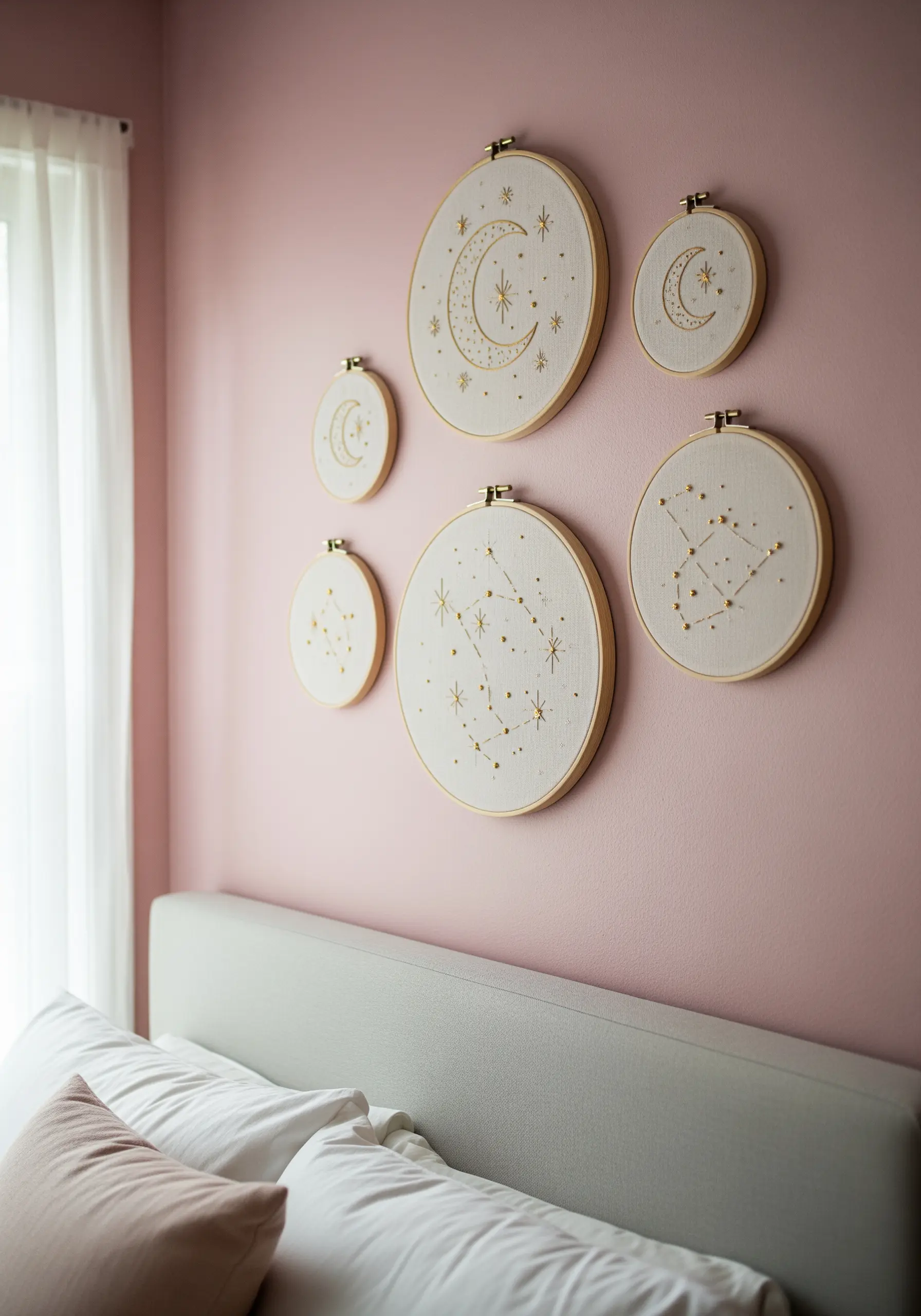
Create a cohesive celestial gallery by unifying your designs with a limited palette—just gold thread on natural linen.
This forces you to explore texture and line weight instead of color.
Use a fine backstitch for delicate constellations and a heavier chain stitch for the crescent moons to create a visual hierarchy.
The negative space is just as important as the stitching; a balanced composition feels calm and intentional.
Arrange hoops of varying sizes asymmetrically to guide the eye, creating a story that flows across the wall.
This approach turns simple stitches into professional, gallery-worthy art.
3. The Triptych Effect: Minimalist Gold Botanicals
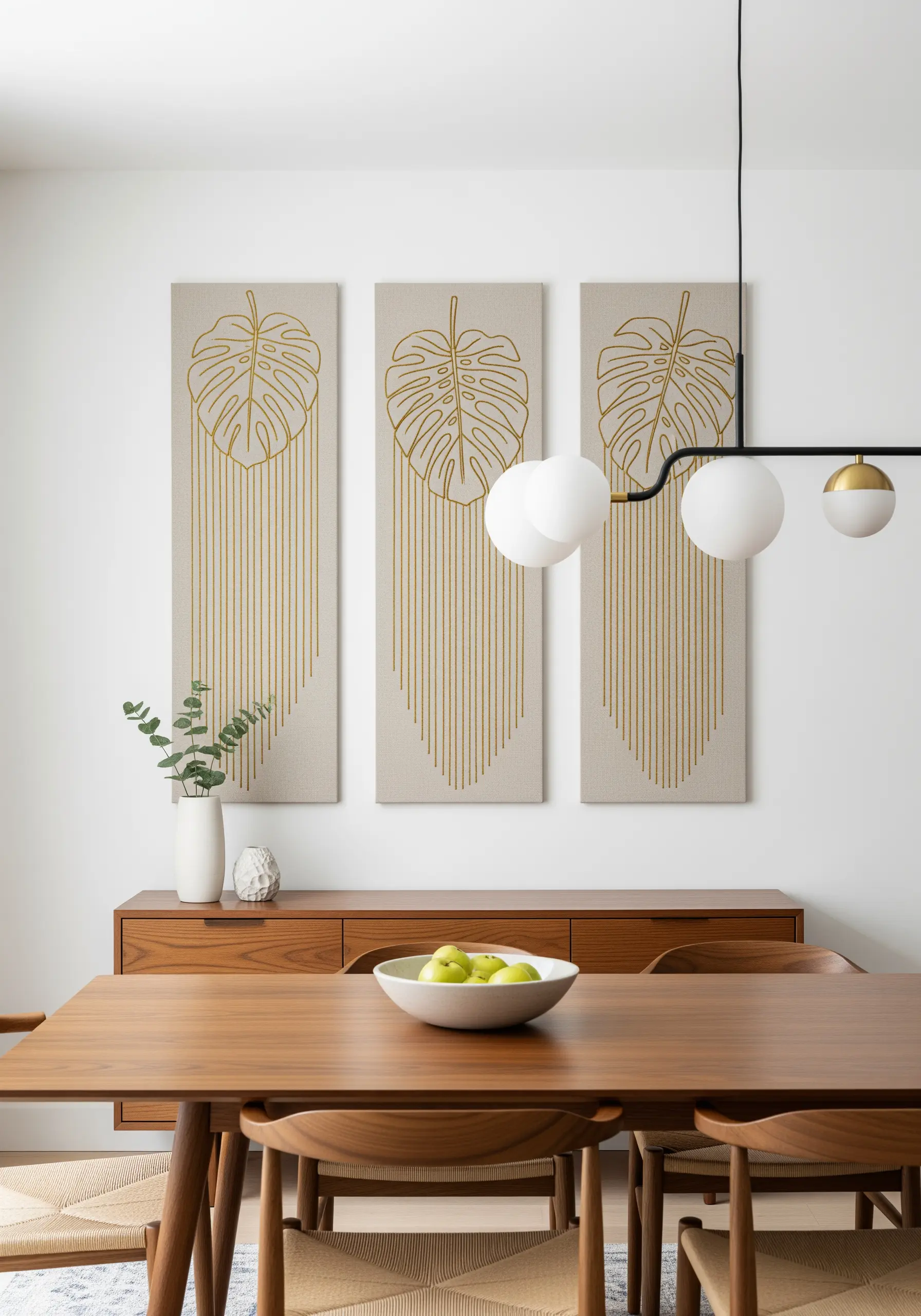
Elevate a simple line drawing by splitting it across three vertical canvases.
This triptych format adds instant sophistication.
Use a single, continuous line of chain stitch for the monstera leaf outline to give it a clean, graphic quality.
For the long, cascading lines, switch to a perfectly straight stitch, using a ruler and fabric marker to guide you.
The magic is in the precision.
The negative space and the tightly woven linen fabric become part of the design, creating an airy, modern feel.
4. Upholstery as Canvas: The Geometric Gold Headboard
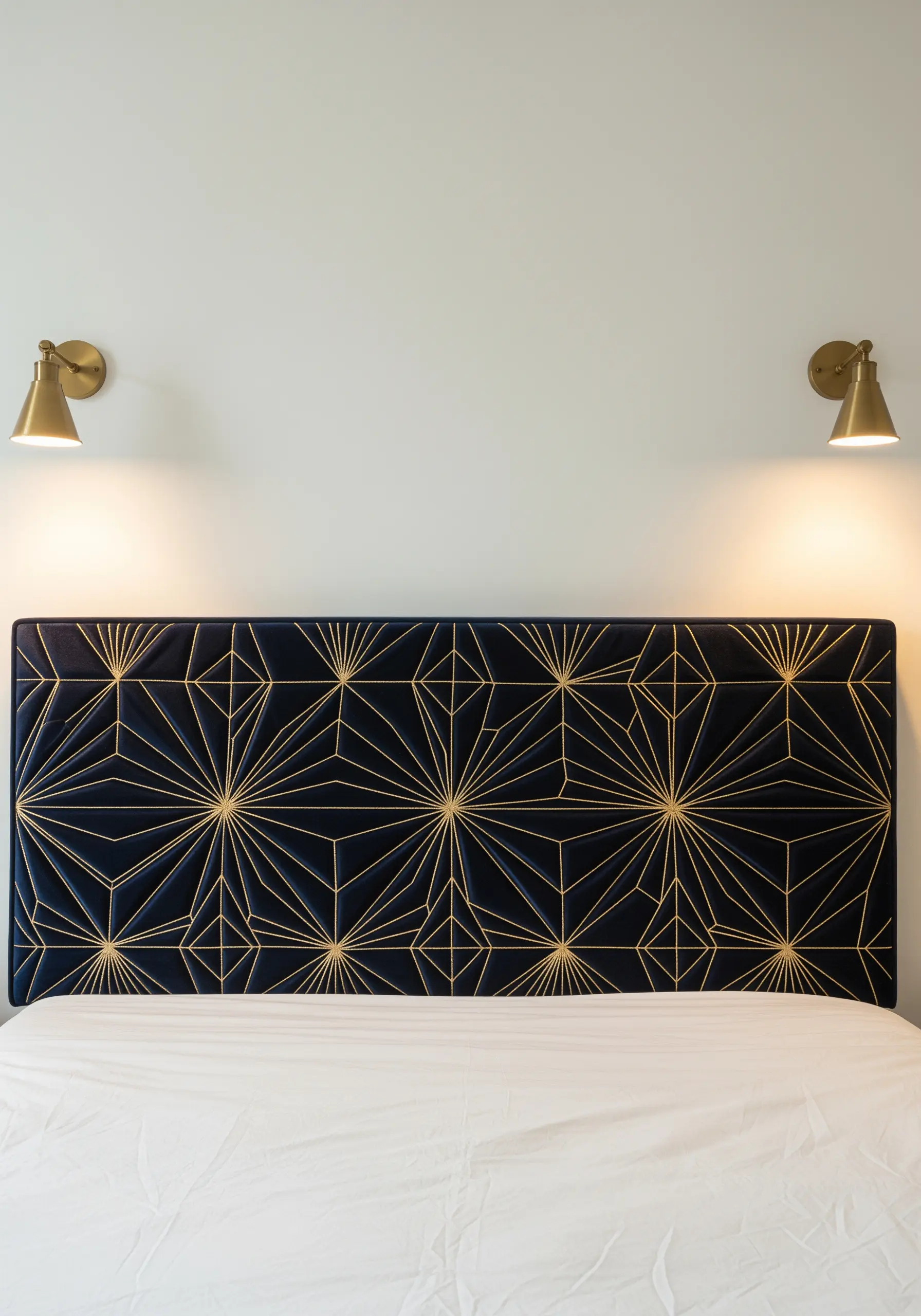
Transform a simple upholstered headboard into a statement piece using gold cording.
This technique, called couching, involves laying a thick cord onto the fabric and securing it with small, invisible stitches of a matching fine thread.
Plot your geometric pattern first with tailor’s chalk.
The contrast between the plush velvet and the sharp, metallic lines creates a luxurious tension.
This project requires patience, not complex stitches, and the result is a custom piece of furniture that looks incredibly high-end.
5. Dynamic Sunburst: Mastering Radiating Textures
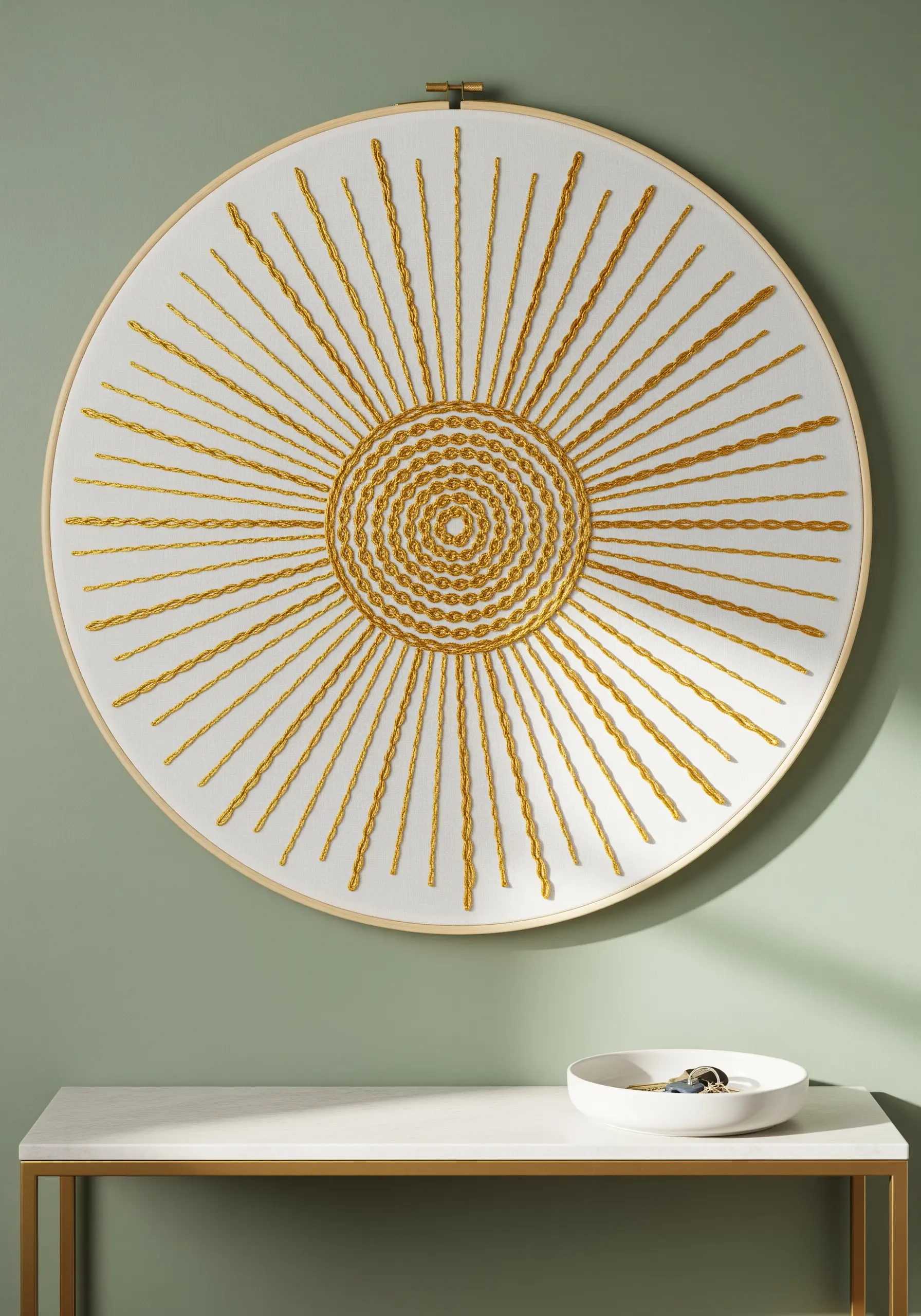
Create a sunburst with depth by alternating stitch textures.
For the central circle, use a dense, spiraling whipped backstitch to create a coiled, rope-like effect.
For the radiating sunbeams, alternate between a simple straight stitch and a thicker, twisted chain stitch.
This variation catches the light differently, making the piece feel alive and dynamic.
Use a heavier metallic thread for the chain stitches to make them pop.
This technique of varying textures within a monochrome palette is a core principle of minimalist embroidery DIYs.
6. The Single Line Portrait: Fluidity in Gold
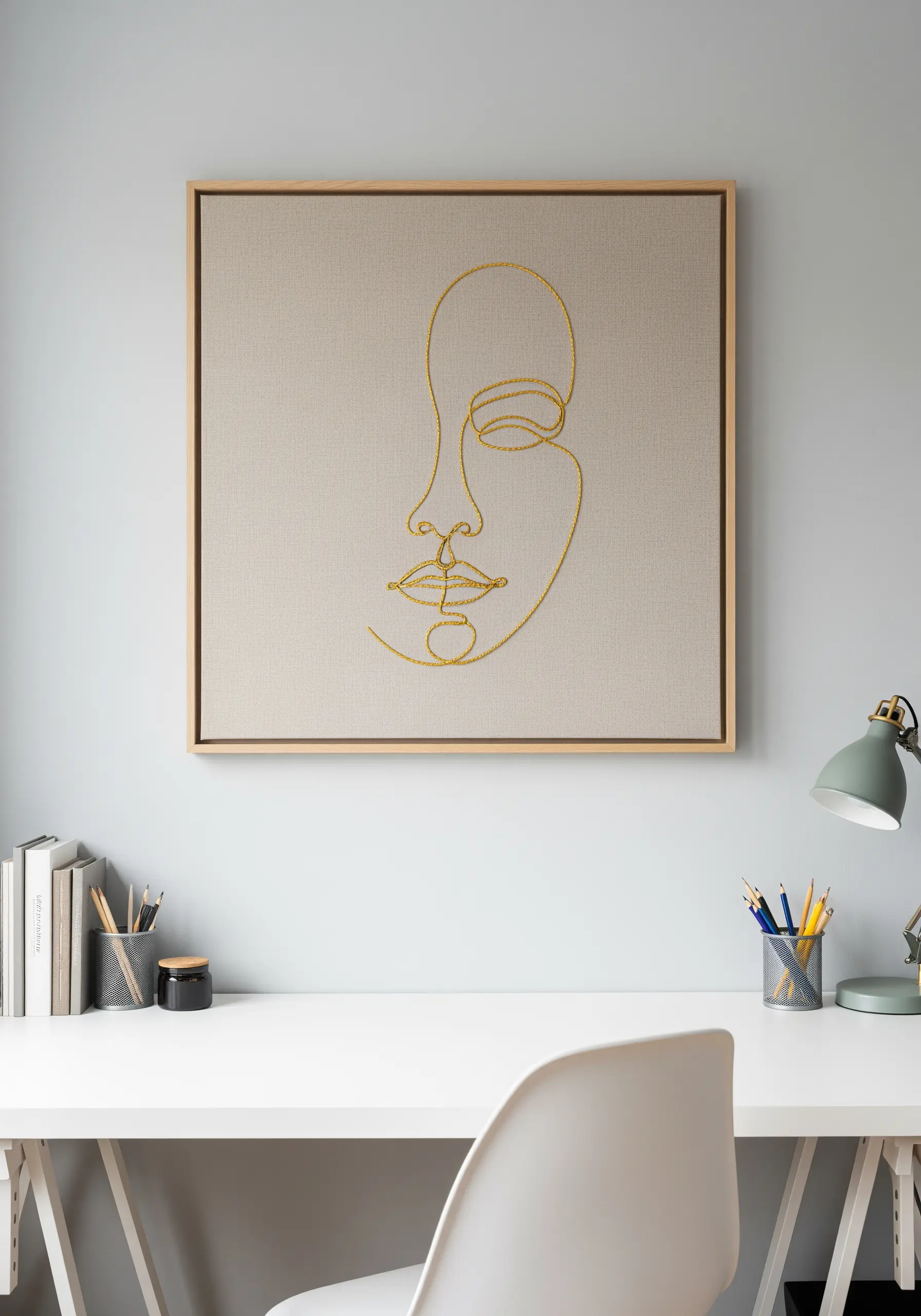
The beauty of a single-line design lies in its uninterrupted flow.
To achieve this, use a whipped backstitch or a stem stitch, which creates a smooth, rope-like line without sharp corners.
Plan your entire path before you begin, marking it lightly with a heat-erasable pen.
Use a high-quality gold thread that won’t snag or fray, as every imperfection will be visible.
The key is consistent tension.
This minimal portrait line embroidery on neutral linen feels both personal and effortlessly chic.
7. Thread Painting with Metallics: A Mountain Landscape
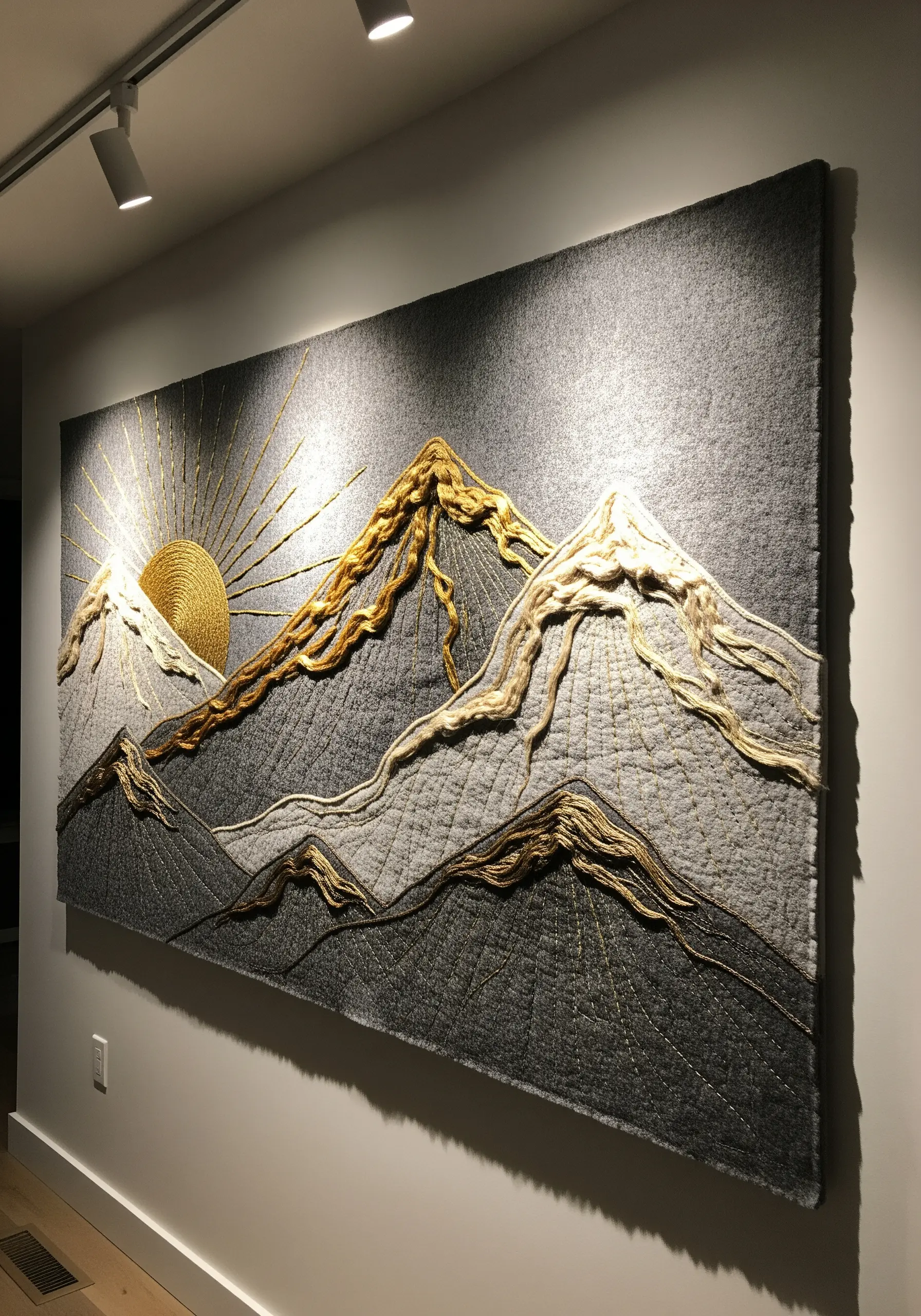
This is where embroidery becomes painting.
Create depth in this large-scale landscape by varying the density and direction of your stitches.
Use dense satin stitch for the solid gold sun, letting the light reflect off the smooth surface.
For the mountain slopes, use long-and-short stitches with a mix of gold, silver, and cream threads to mimic light and shadow.
The finest lines indicating contours are single strands of metallic thread, creating delicate highlights.
This piece is about building layers of texture to tell a story of distance and light.
8. Velvet and Starlight: Celestial Banner with Beaded Accents
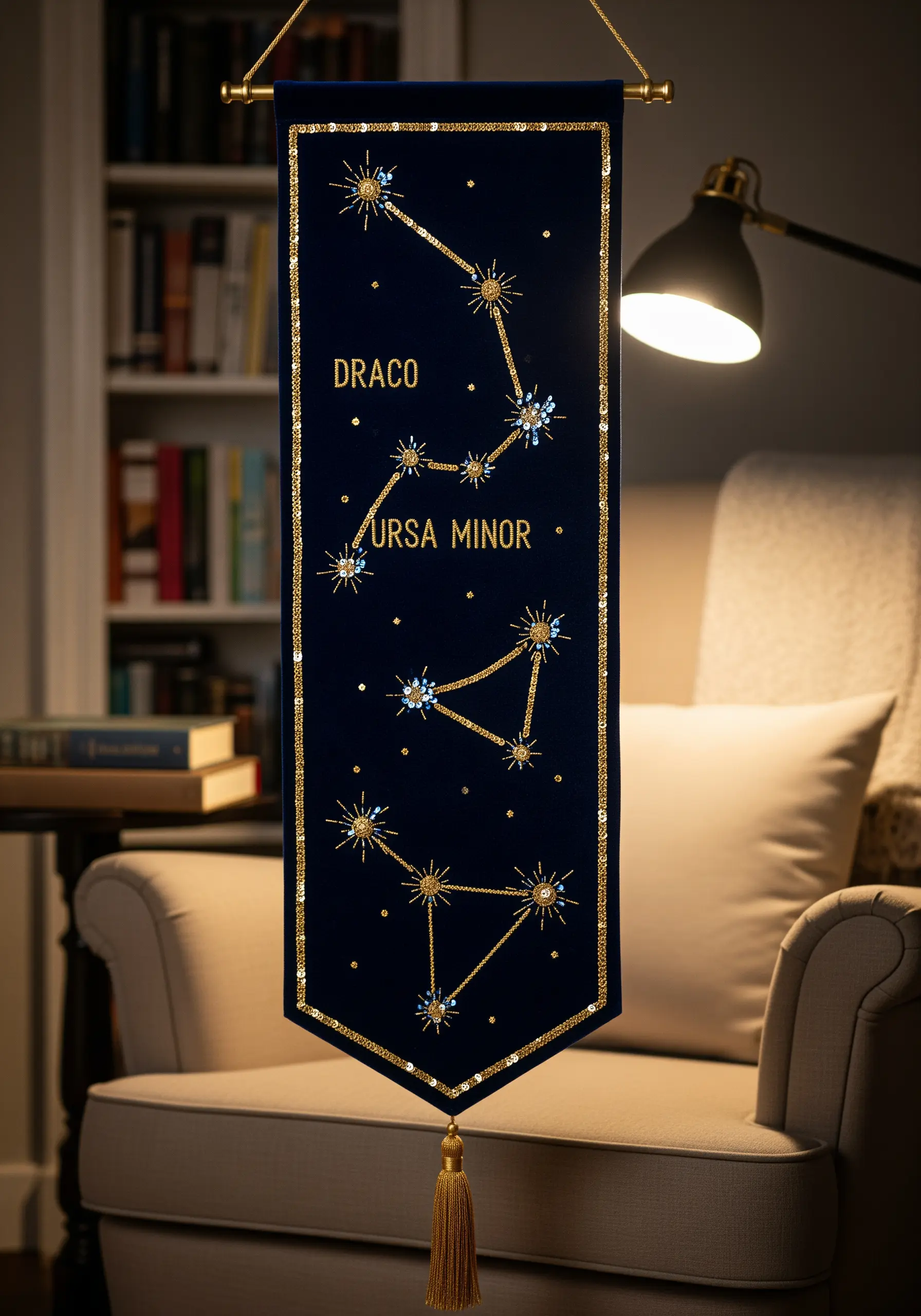
Combine gold thread with crystal beads to elevate a simple constellation design.
The rich texture of navy velvet provides the perfect deep-sky backdrop.
Use a delicate backstitch for the connecting constellation lines and tiny seed beads or French knots for the smaller stars.
For the larger, focal-point stars, stitch small clusters of faceted beads.
This mixed-media contemporary embroidery technique adds a three-dimensional sparkle that catches the light beautifully, making the piece feel precious and magical.
9. Cascading Botanicals: The Unframed Grid
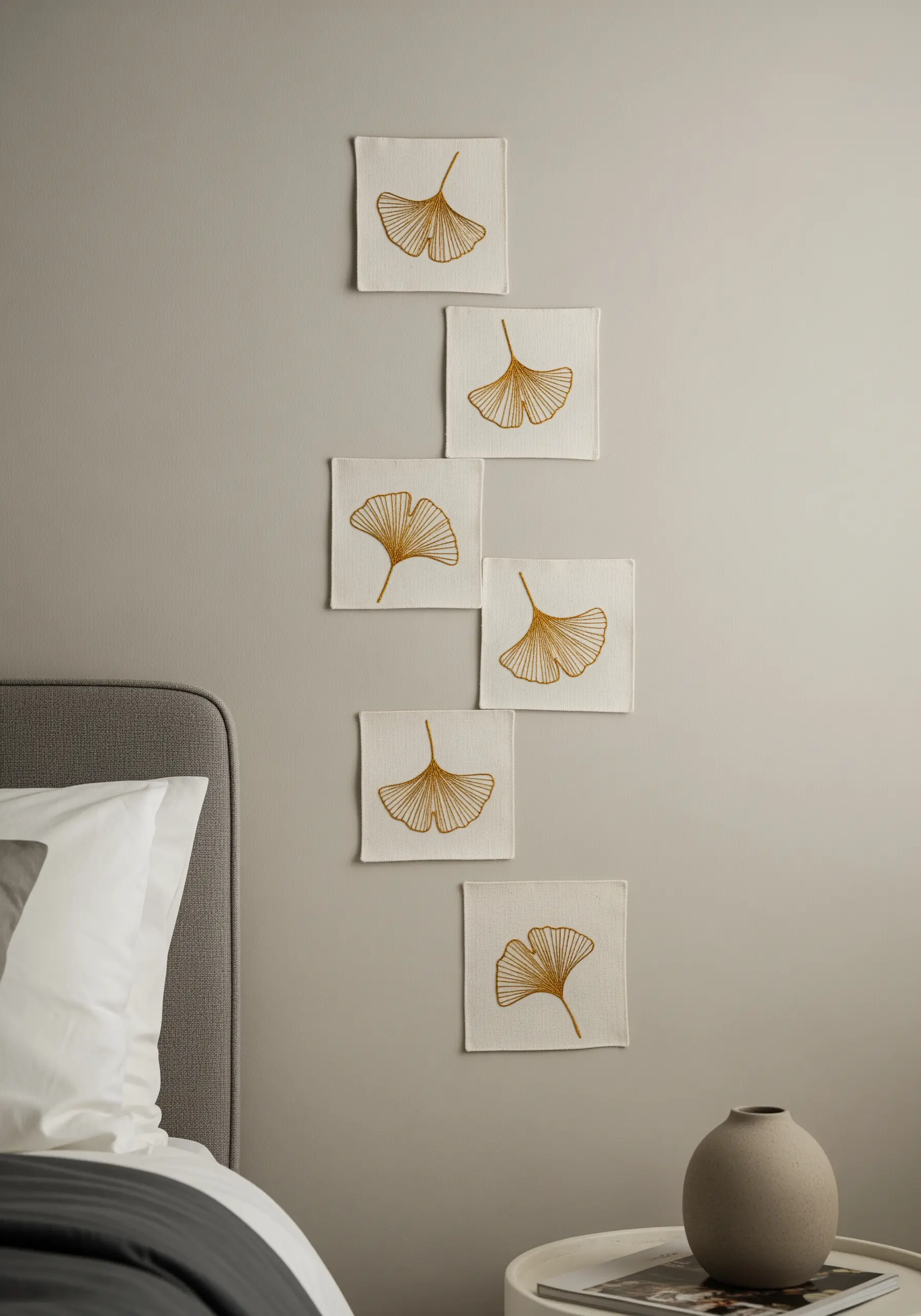
Displaying your work in an informal grid creates a sense of effortless style.
Stitch simple ginkgo leaf motifs onto small, individual squares of heavy linen.
Use a single stitch, like a split stitch or stem stitch, for a consistent, graphic look.
Instead of framing, finish the edges with a neat hem or leave them raw for a more organic feel.
Arrange them in a cascading pattern on the wall using small, clear pins.
This method allows the texture of the fabric and the simplicity of the design to take center stage.
10. Meditative Mandala: The Power of Repetitive Stitching
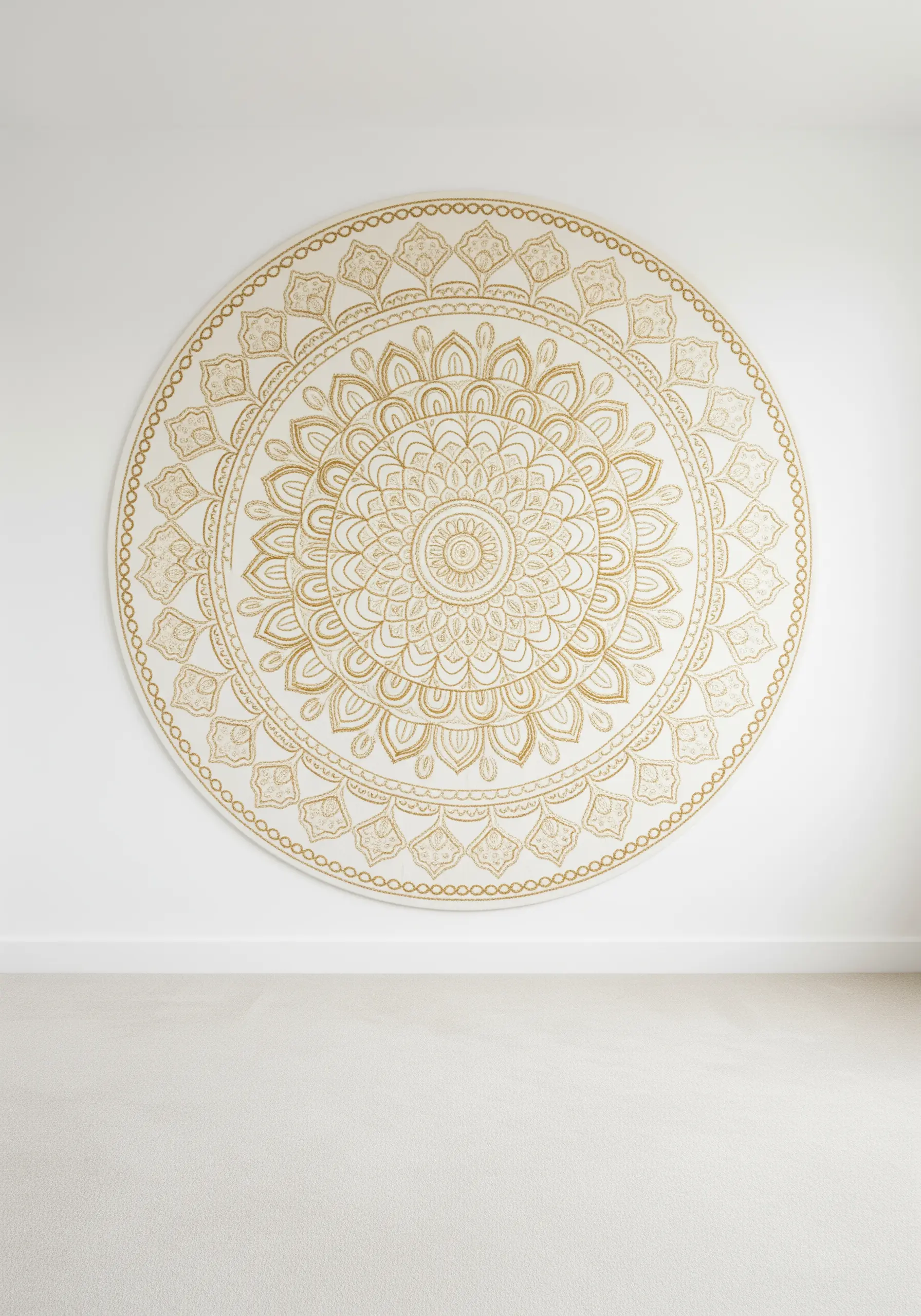
A large-scale mandala project is an exercise in precision and mindfulness.
To keep the intricate pattern clean, use a consistent stitch throughout, like a simple backstitch or split stitch.
The luxury comes from the sheer scale and the reflective quality of the gold thread against a stark white background.
Use a fine-tipped, heat-erasable pen to transfer your design accurately.
The repetition of the stitches builds a rhythmic, calming texture that draws the viewer in.
It transforms a simple stitch into mandala embroidery wall art that feels deeply serene.
11. Iconic Art Reimagined: The Embroidered Great Wave
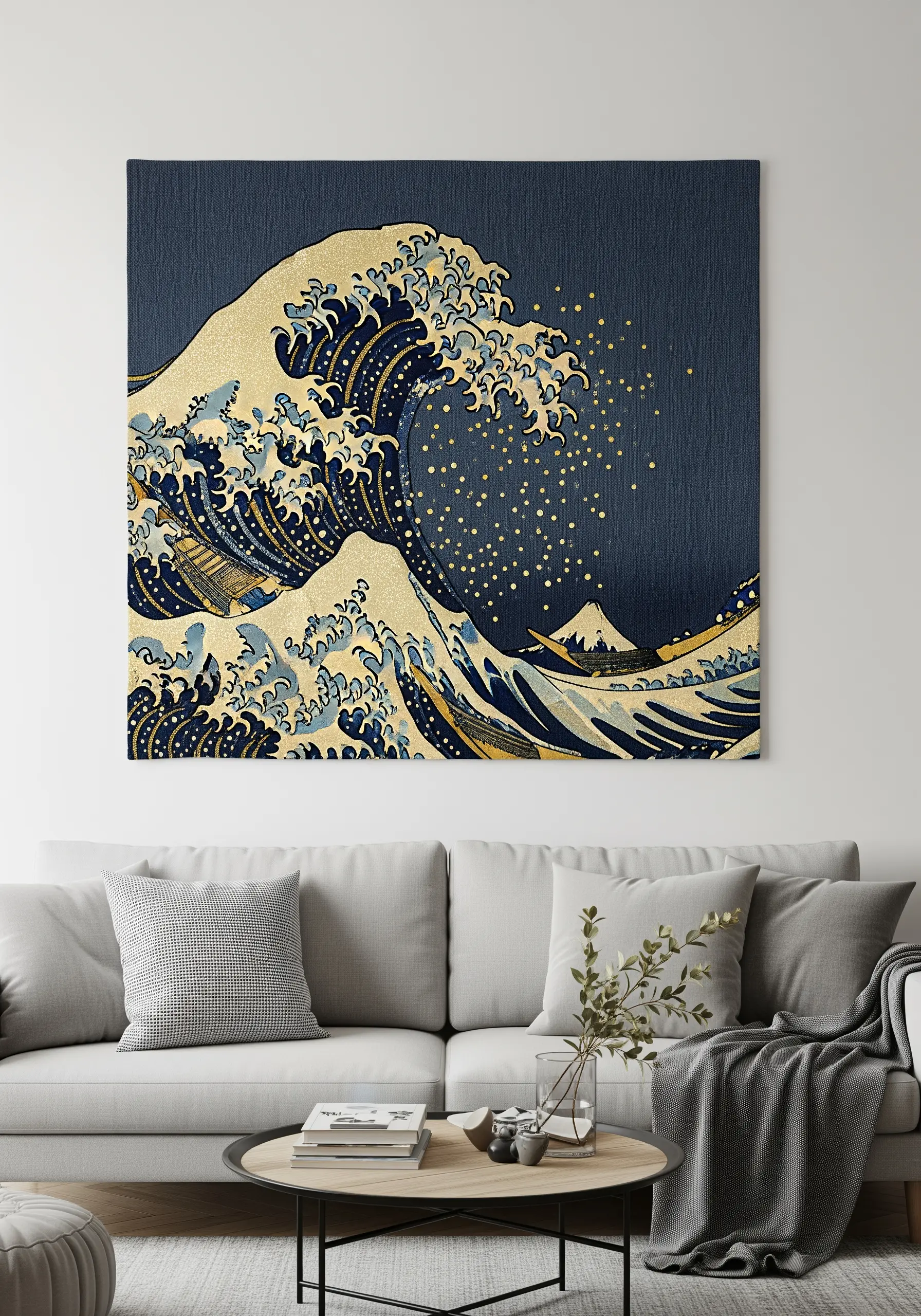
Recreate a classic masterpiece by translating brushstrokes into thread textures.
Use directional satin stitch for the smooth parts of the wave, ensuring your stitches follow the water’s movement.
For the sea foam, use dense clusters of French knots in white and pale blue to create a bubbly, three-dimensional effect.
Outline the entire design with a fine, dark blue backstitch to mimic the original woodblock print’s sharp lines.
The scattered gold French knots add a touch of modern luxury to the traditional design.
12. Architectural Lines: The Minimalist Cityscape
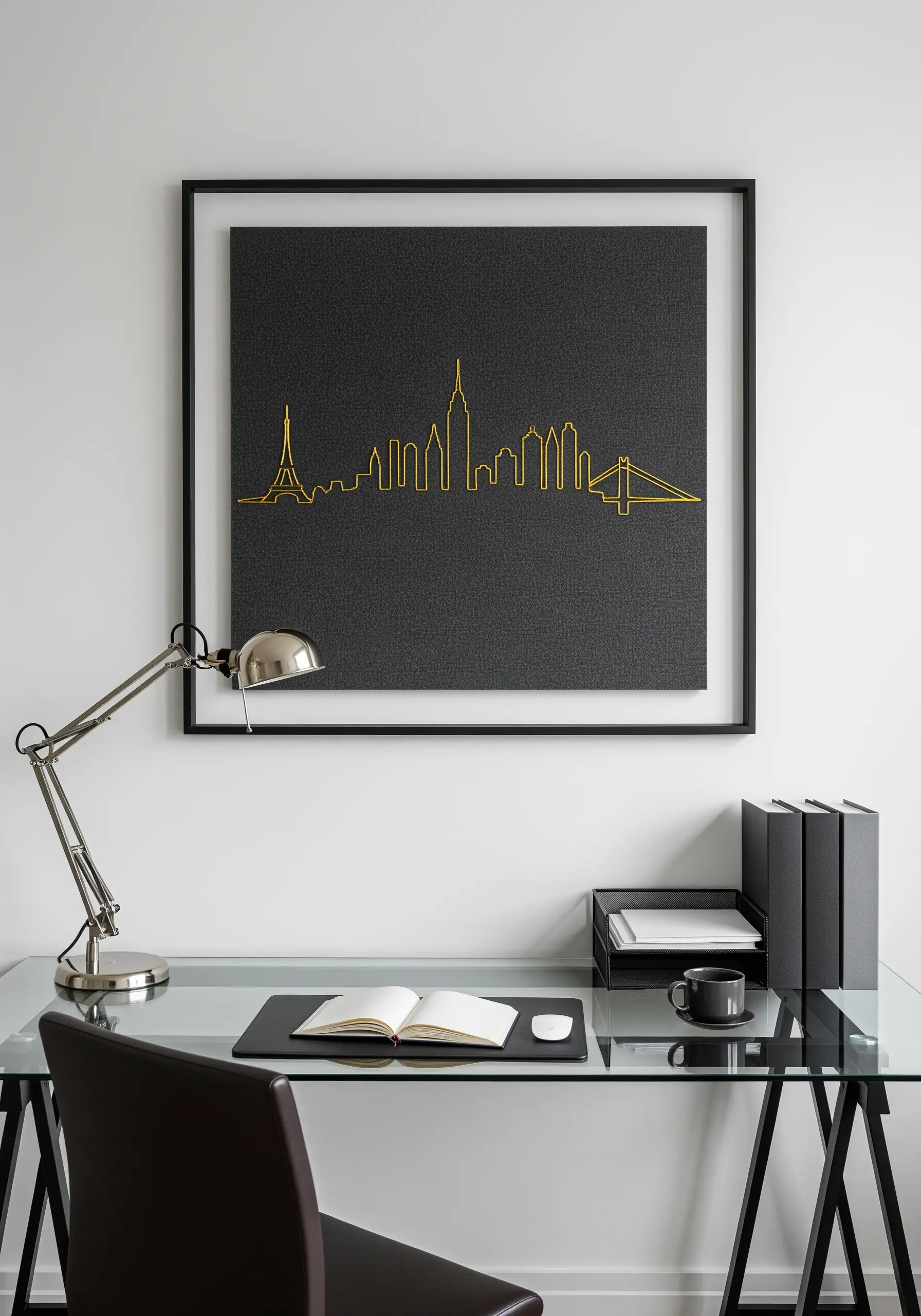
Capture the essence of a city with a single, unbroken line of gold thread.
This technique relies on perfect tension and a steady hand.
Use a stem stitch, which creates a slightly raised, cord-like line that stands out against the dark, textured fabric.
Before you start, trace the skyline onto your fabric with a white chalk pencil.
This is a perfect example of how simple line art can create a powerful, sophisticated statement.
The negative space is as crucial as the line itself.
13. Gilded Entomology: Adding Dimension with Thread
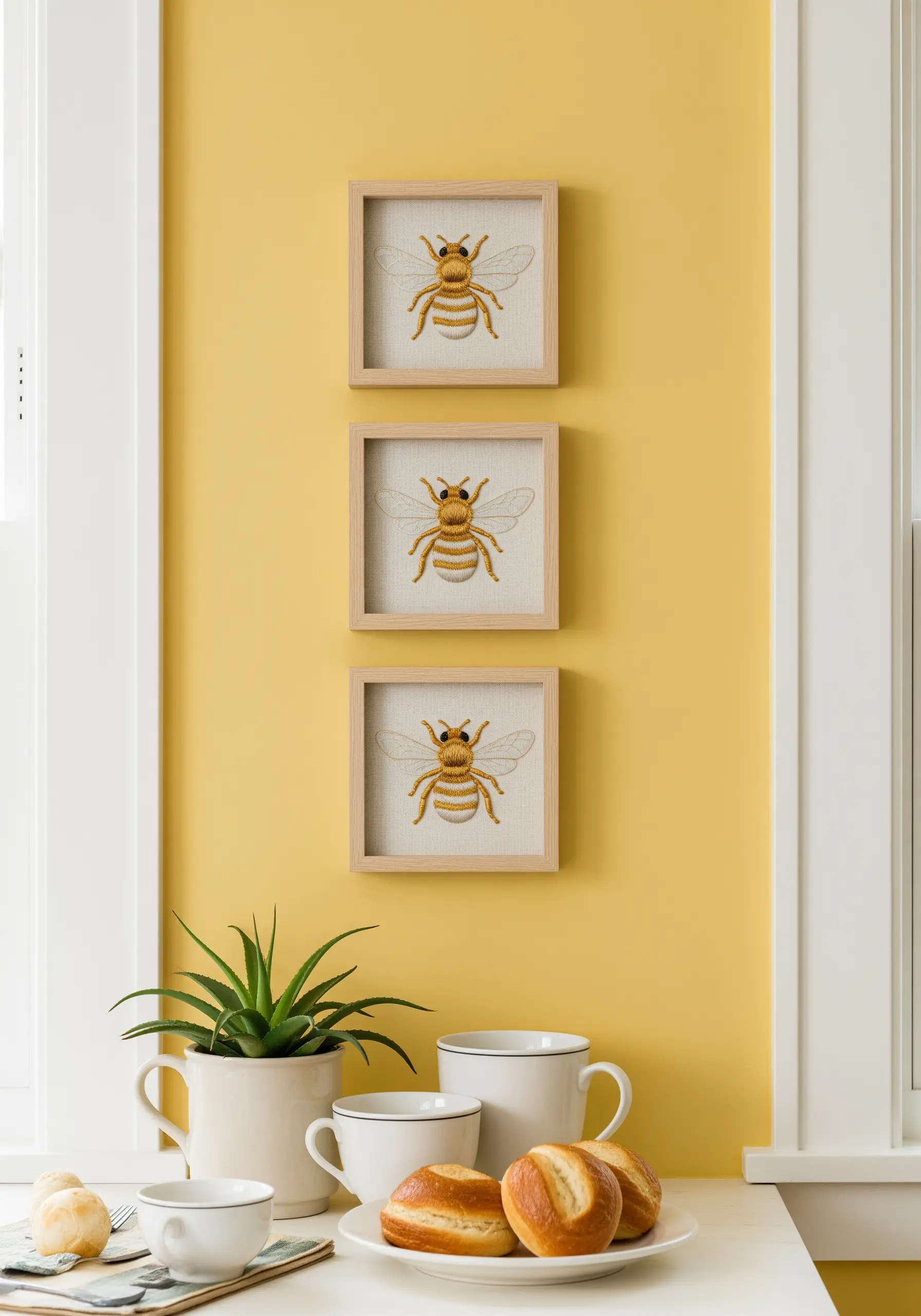
Bring these bees to life by layering different shades of gold and bronze thread.
Use a padded satin stitch for the body segments to give them a raised, rounded shape—achieve this by first creating a small base of straight stitches and then covering it with your final satin stitches.
For the wings, use a delicate, open fishbone stitch with a fine, silvery-gold thread to suggest transparency.
This attention to texture makes the embroidery come alive, turning a simple motif into a detailed study.
14. Embroidered Kintsugi: Mending with Gold Thread
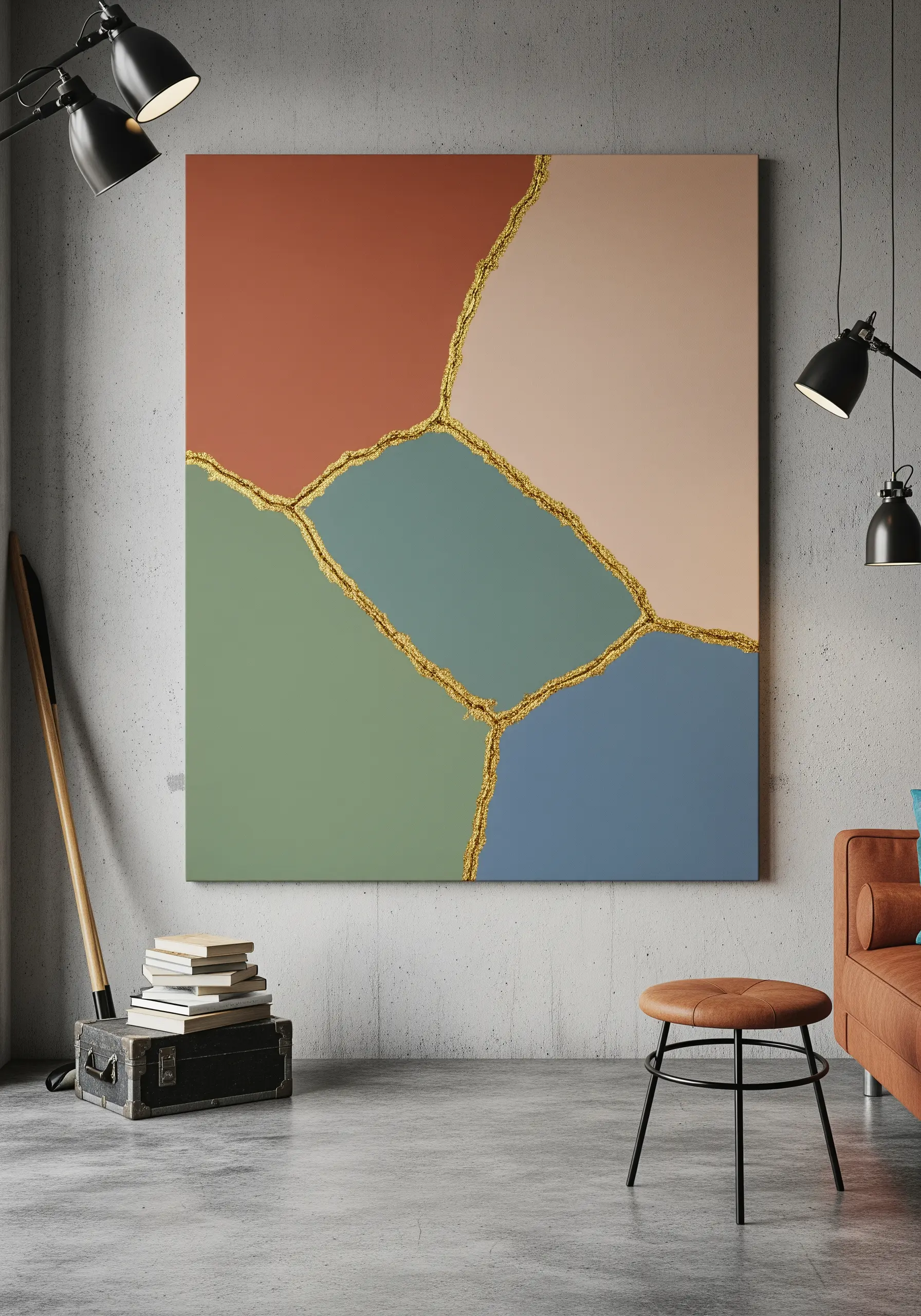
Apply the Japanese art of Kintsugi to fabric.
Create this look by piecing together blocks of painted canvas or different colored fabrics.
Along the ‘cracks’ where the pieces meet, use a heavily textured, irregular stitch like a couched braid or a thick, chunky chain stitch in brilliant gold.
The goal is not perfection but to celebrate the joinery.
This abstract fabric collage tells a story of beauty in imperfection, and the gold thread becomes the highlight.
15. Lunar Phases in Thread: A Gradient of Textures
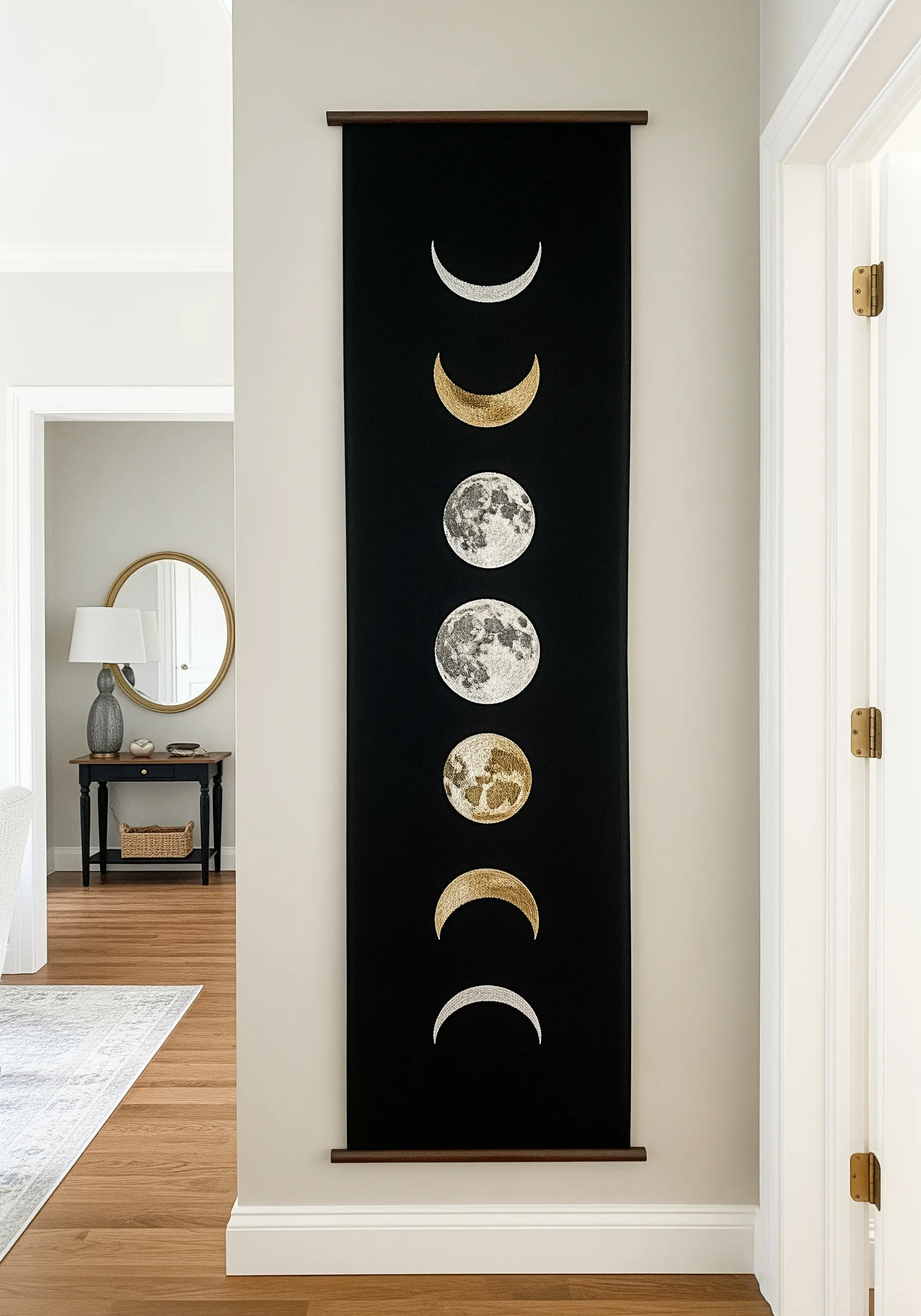
Illustrate the moon’s phases by varying your stitch fill and thread type.
For the crescent moons, use a simple satin stitch in a bright silver thread.
For the full and gibbous moons, create a cratered texture using a dense mix of French knots and seed stitches in variegated grey and white floss.
Introduce gold thread in the ‘harvest moon’ phase for a warm, dramatic contrast.
Stitching on black fabric makes the metallic and white threads pop, creating a powerful graphic statement.
16. Deconstructed Canvas: The Patchwork Wall Hanging
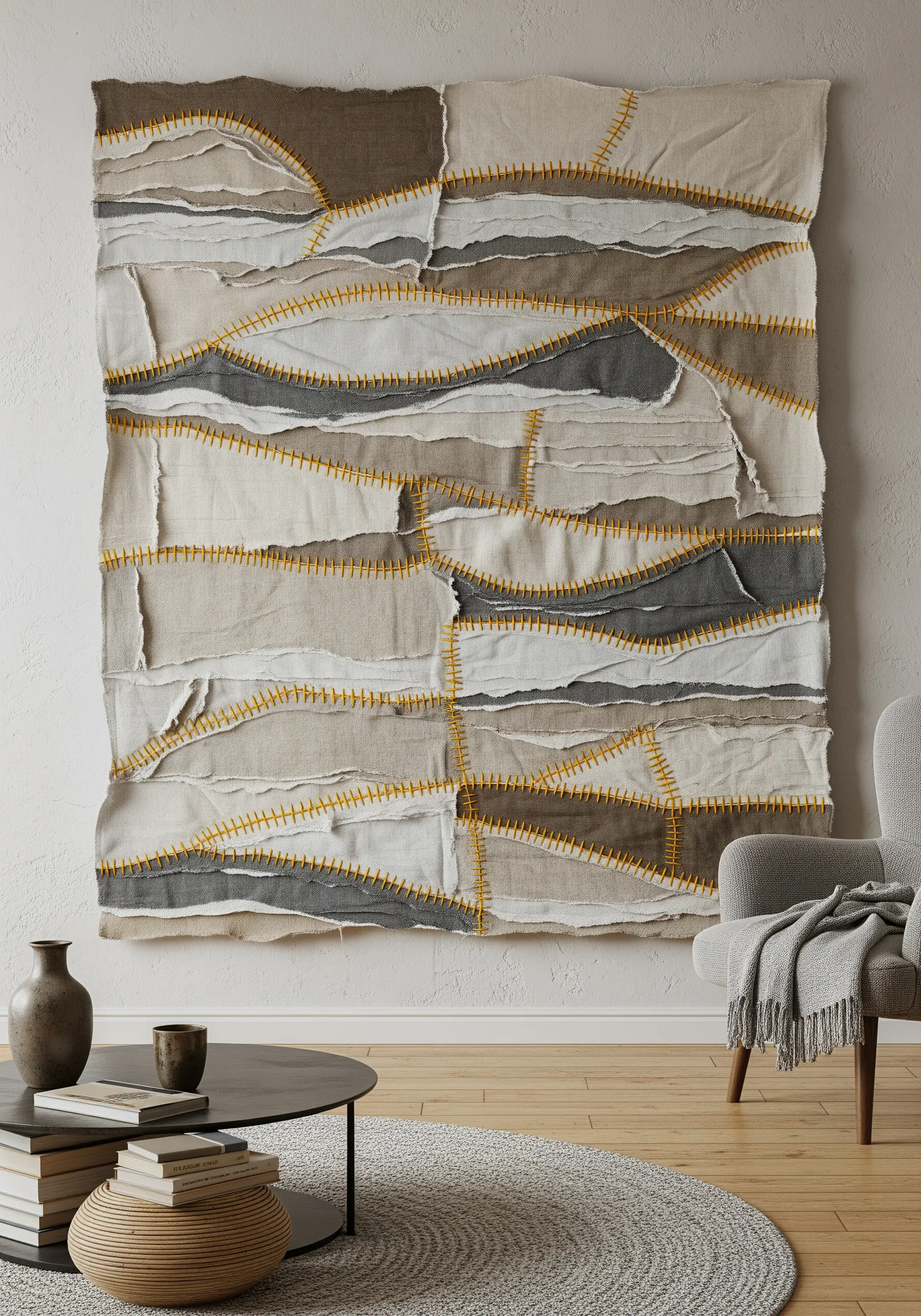
Create a large-scale textile piece with depth and history by layering torn strips of canvas and linen.
Use a bold, contrasting gold thread for the joining stitches.
Instead of neat, hidden seams, make the stitches a design element.
Use a simple but visible running stitch or a blanket stitch to connect the raw-edged fabric pieces.
The interplay between the neutral, earthy fabrics and the bright, metallic gold thread creates a stunning visual tension that feels both rustic and luxurious.
This is one of those handmade art pieces that tell a story through texture.
17. Featherlight Illusions: Blending Metallic Threads
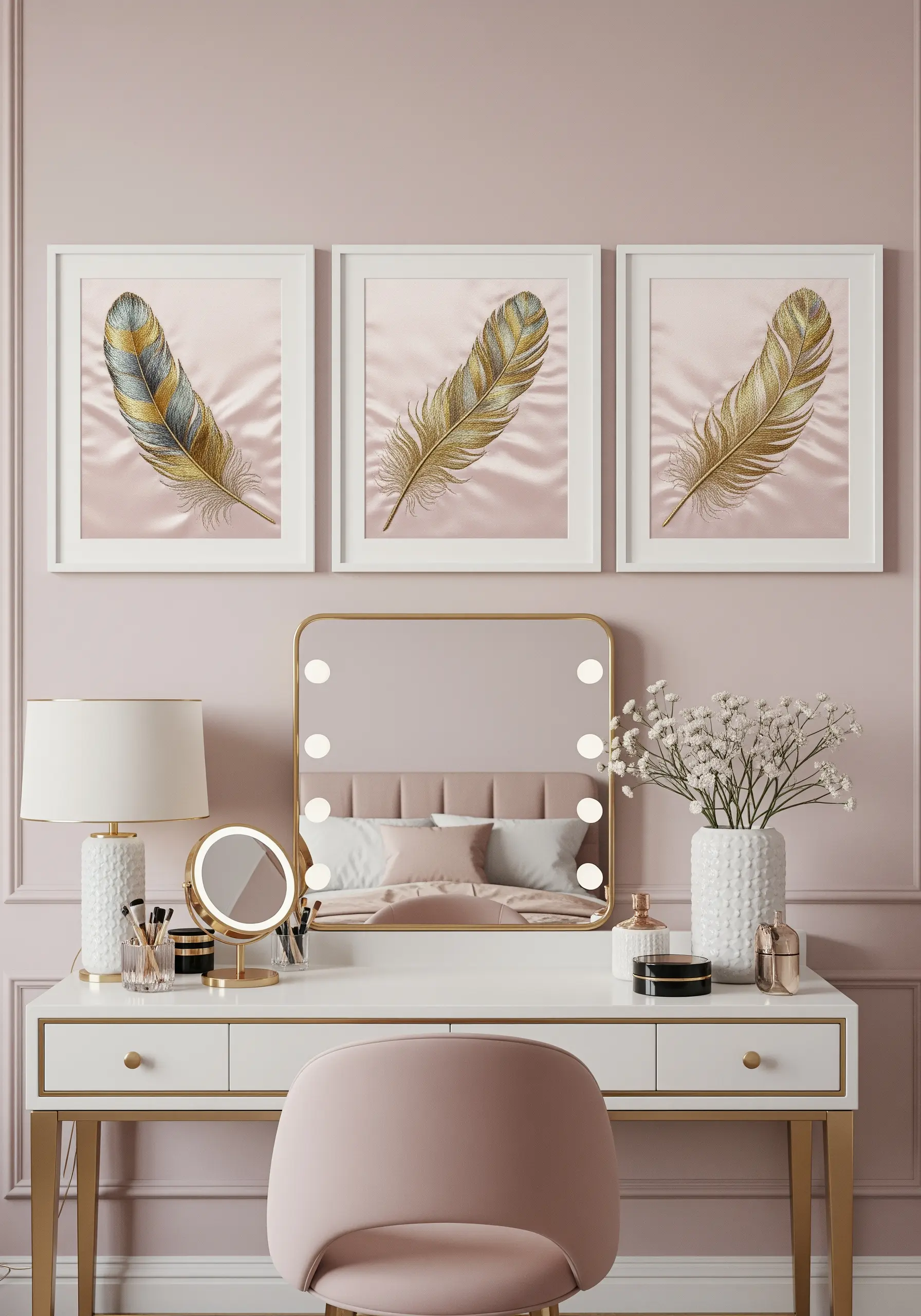
To capture the delicate iridescence of a feather, you need to blend your threads.
Use a long-and-short stitch technique, working with two needles at once—one with gold thread and one with silver or grey.
Allow the stitches to overlap and interlock naturally, creating a soft gradient that mimics how light hits a real feather.
For the central quill, use a single, raised line of stem stitch.
The effect is subtle, realistic, and deeply elegant.
18. Blueprint in Gold: Precision Stitching on Black
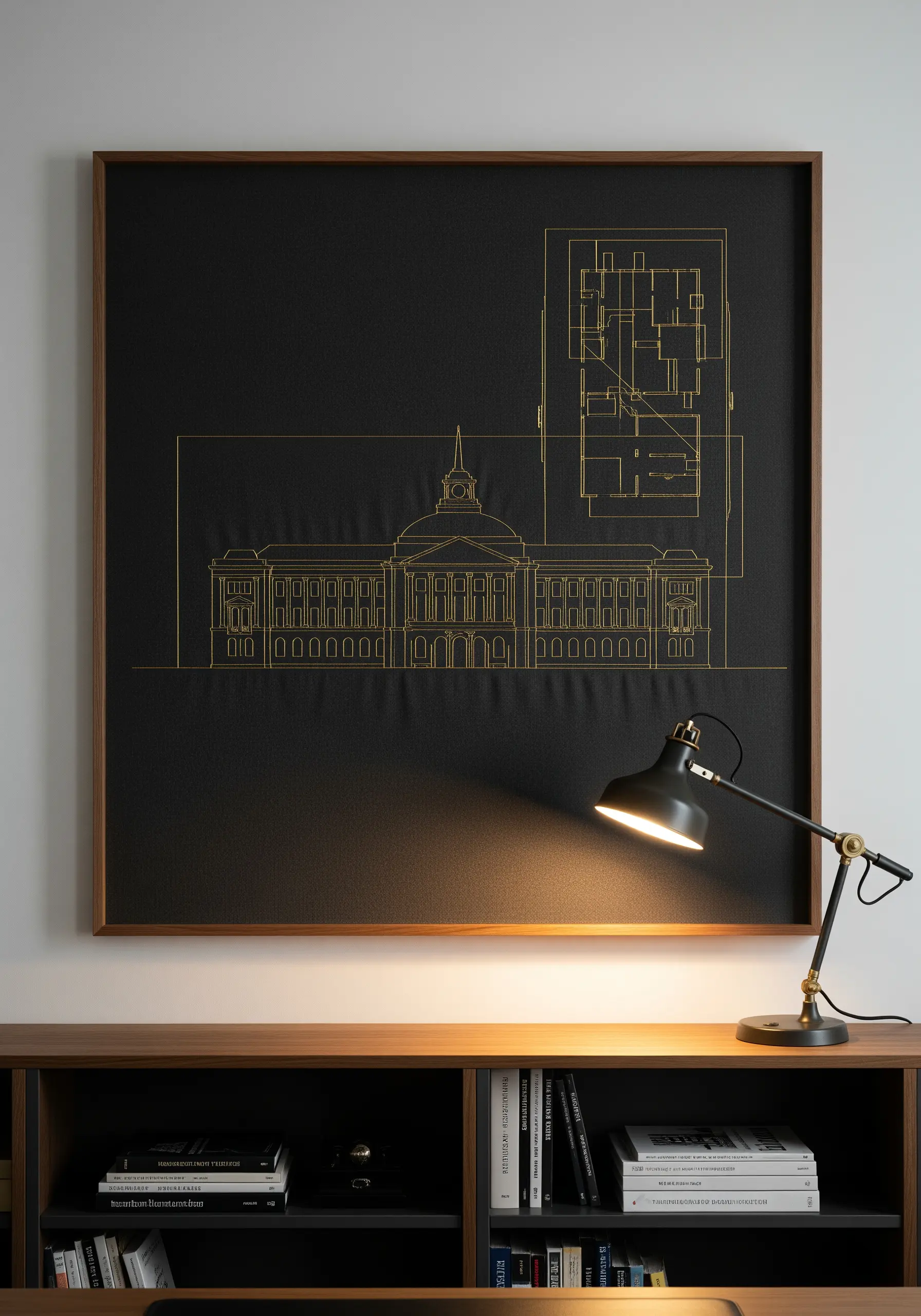
Recreate the precision of an architectural drawing with thread.
This project is all about clean lines and right angles.
Use a fine, single strand of gold metallic thread and a simple backstitch for ultimate control.
A black, even-weave fabric is essential for a crisp finish.
Transfer your design meticulously using a white transfer paper that won’t smudge.
The contrast is dramatic, turning a technical drawing into a piece of minimalist art.
19. Geometric Meets Organic: Dimensional Contrast
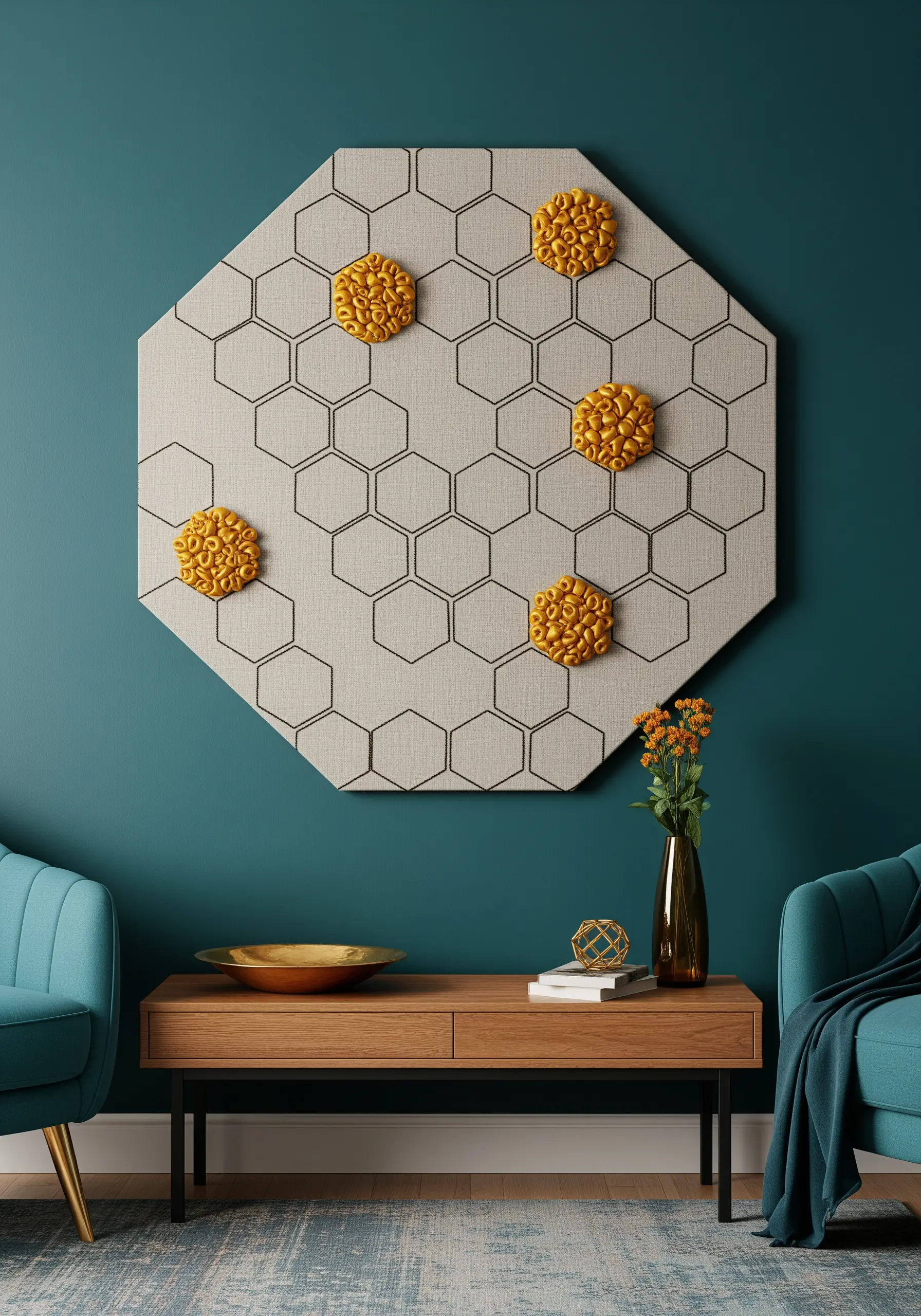
Create visual interest by combining flat, graphic lines with highly textured, 3D elements.
Stitch the honeycomb grid using a simple backstitch in a neutral grey thread to let it recede into the background.
For the golden floral clusters, use bullion knots or cast-on stitches packed tightly together.
These stitches create a raised, sculptural effect that seems to bloom right off the canvas.
This contrast in dimension is what makes the composition so captivating and modern.
20. Flowing Art Nouveau: Couching for Curves
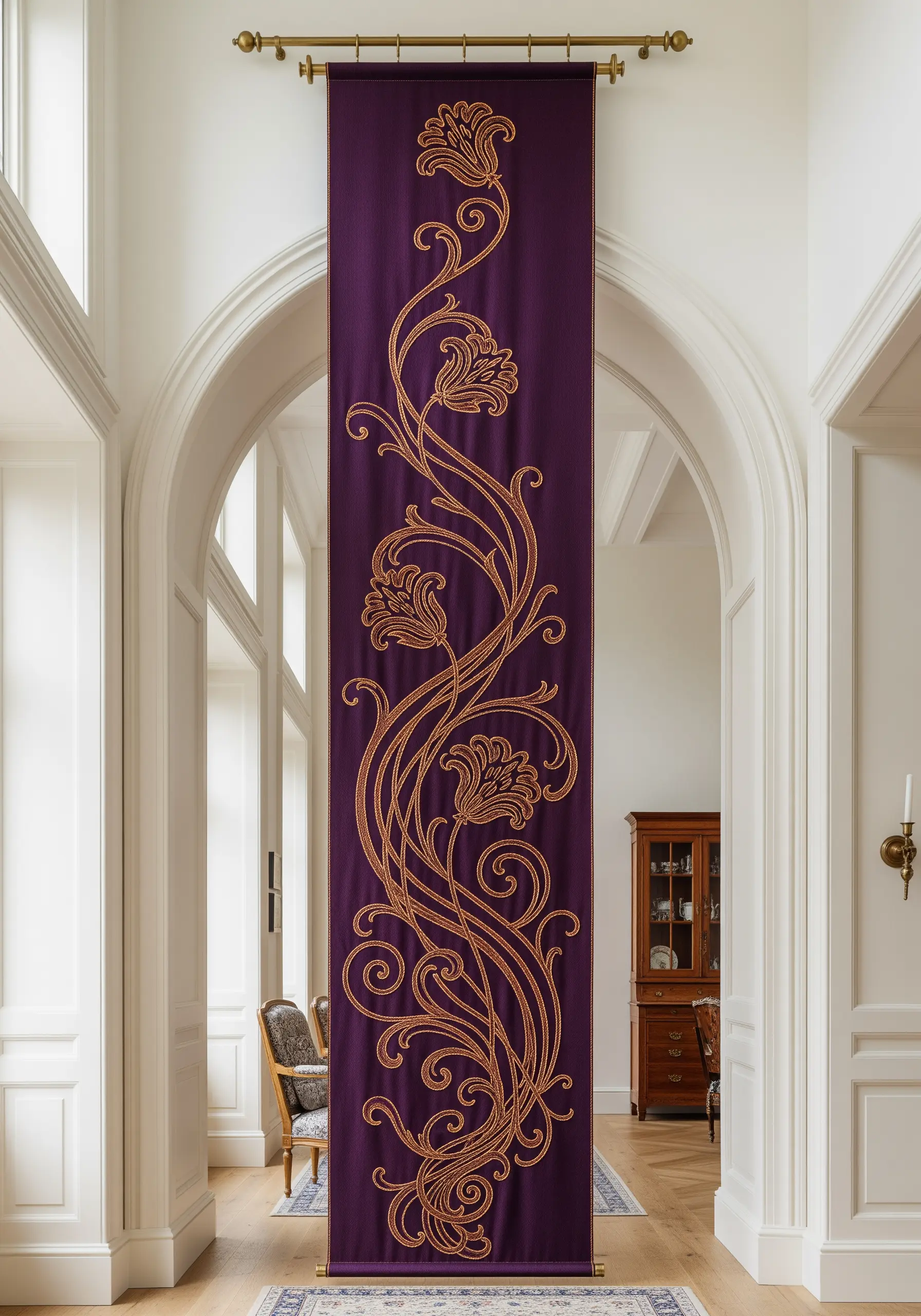
Master the elegant, swirling lines of Art Nouveau by using the couching technique.
Lay down a thicker, braided gold cord to form the main stems and outlines of your design.
Then, use a fine, matching metallic thread to tack it down with tiny, almost invisible stitches.
This method allows you to create perfectly smooth, continuous curves that would be impossible with regular stitches.
Fill in smaller areas with satin stitch to complete the opulent, gilded look on a rich fabric like purple velvet.
21. Dimensional Lettering: Sculpting with Thread
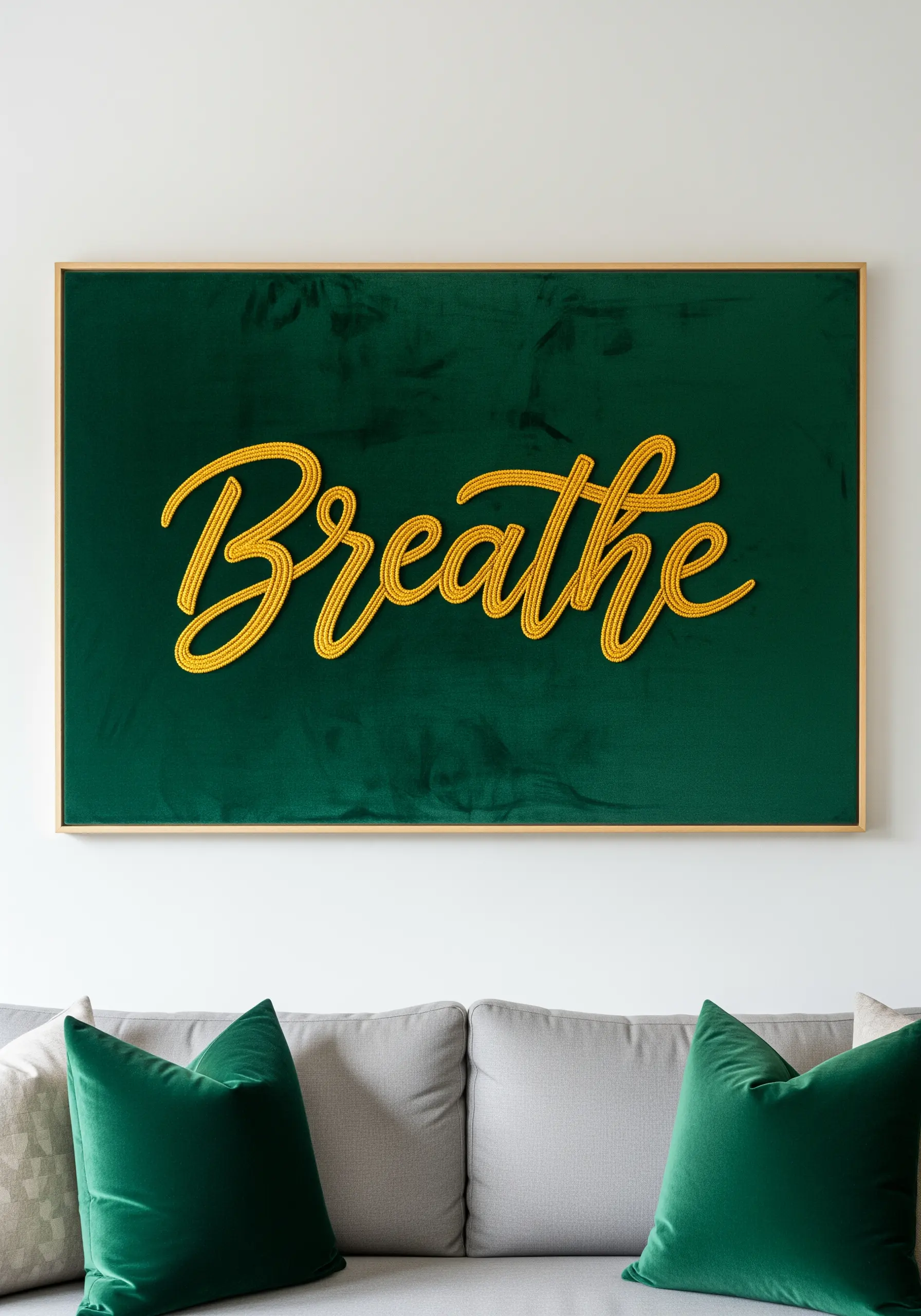
Make your stitched words stand out—literally.
This raised effect is achieved with a padded satin stitch, but on a much larger scale.
First, create the entire word shape using multiple parallel lines of a thick, chunky yarn.
Then, using a high-sheen gold thread, cover this padded base completely with vertical satin stitches.
The underlying yarn provides the volume, creating a soft, three-dimensional script that casts its own shadow.
It turns a simple word into a piece of framed embroidery art.
22. Optical Lines: The Hypnotic Gold Square
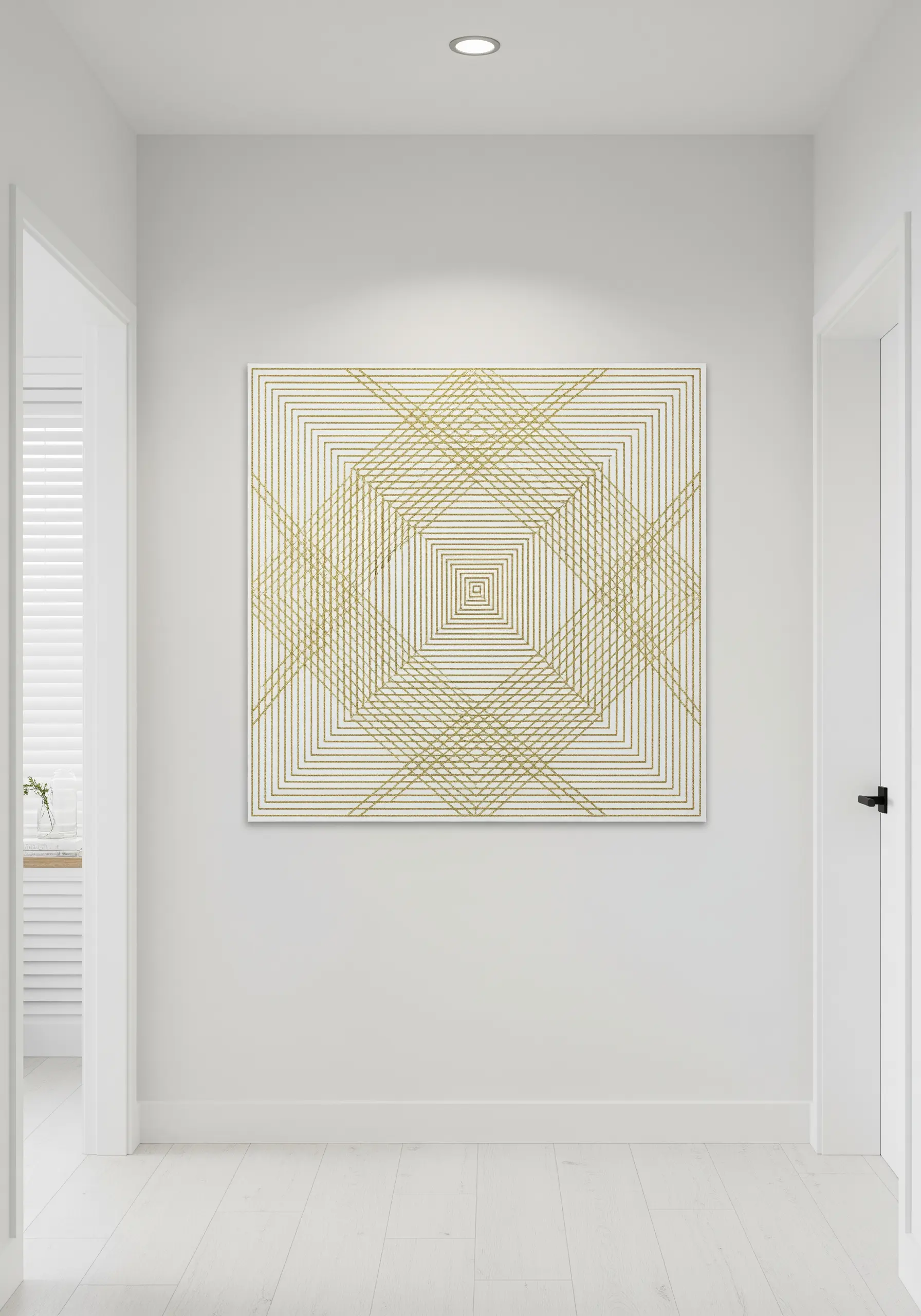
This piece is a masterclass in precision and tension.
It’s created not with filled shapes, but with hundreds of perfectly straight stitches.
To achieve this hypnotic, geometric effect, you must draw a precise grid on your fabric first.
Use a single strand of gold thread and stitch from point to point, ensuring every line is perfectly taut.
The overlapping lines create a moiré effect, an optical illusion of depth and movement.
It’s a minimalist concept that results in maximum visual impact.


