Have you ever finished a piece and felt that, while technically correct, it was missing a certain depth, a story only you could tell? It’s a quiet frustration many of us feel—the gap between the stitches we know and the art we want to create.
Elevating your work isn’t about mastering hundreds of new, complex stitches. It’s about shifting your perspective. It’s about learning to see thread, fabric, and color as characters in a story, and texture as the language they speak. It is about intention.
The ideas that follow are invitations to think like a textile artist. They explore how a simple change—in thread weight, in stitch density, in the combination of materials—can transform a flat design into a world of tactile expression. Let’s begin to stitch not just what we see, but what we feel.
1. Sculpt an Underwater Scene with Dimensional Stitches
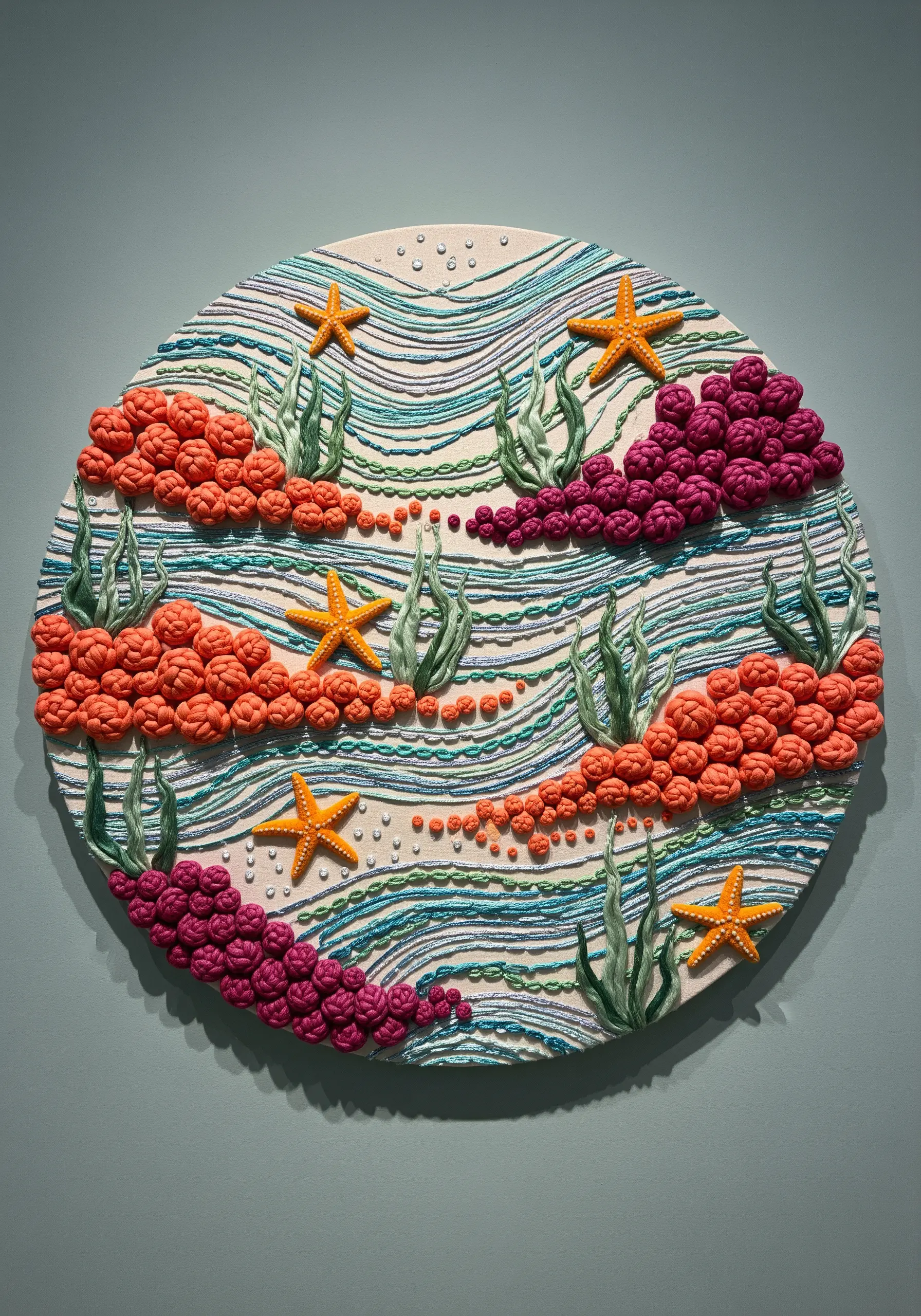
Create a sense of movement in water by couching multiple strands of variegated perle cotton in wavy lines, which adds both texture and a subtle color gradient.
For the coral, build up dense clusters of French or bullion knots using all six strands of embroidery floss.
Varying the knot height and density makes the texture more organic and realistic.
A few strategically placed seed beads can mimic air bubbles, adding a final layer of dimension and light-play to your underwater world.
2. Transform Vessels with Coiled Fabric and Thread
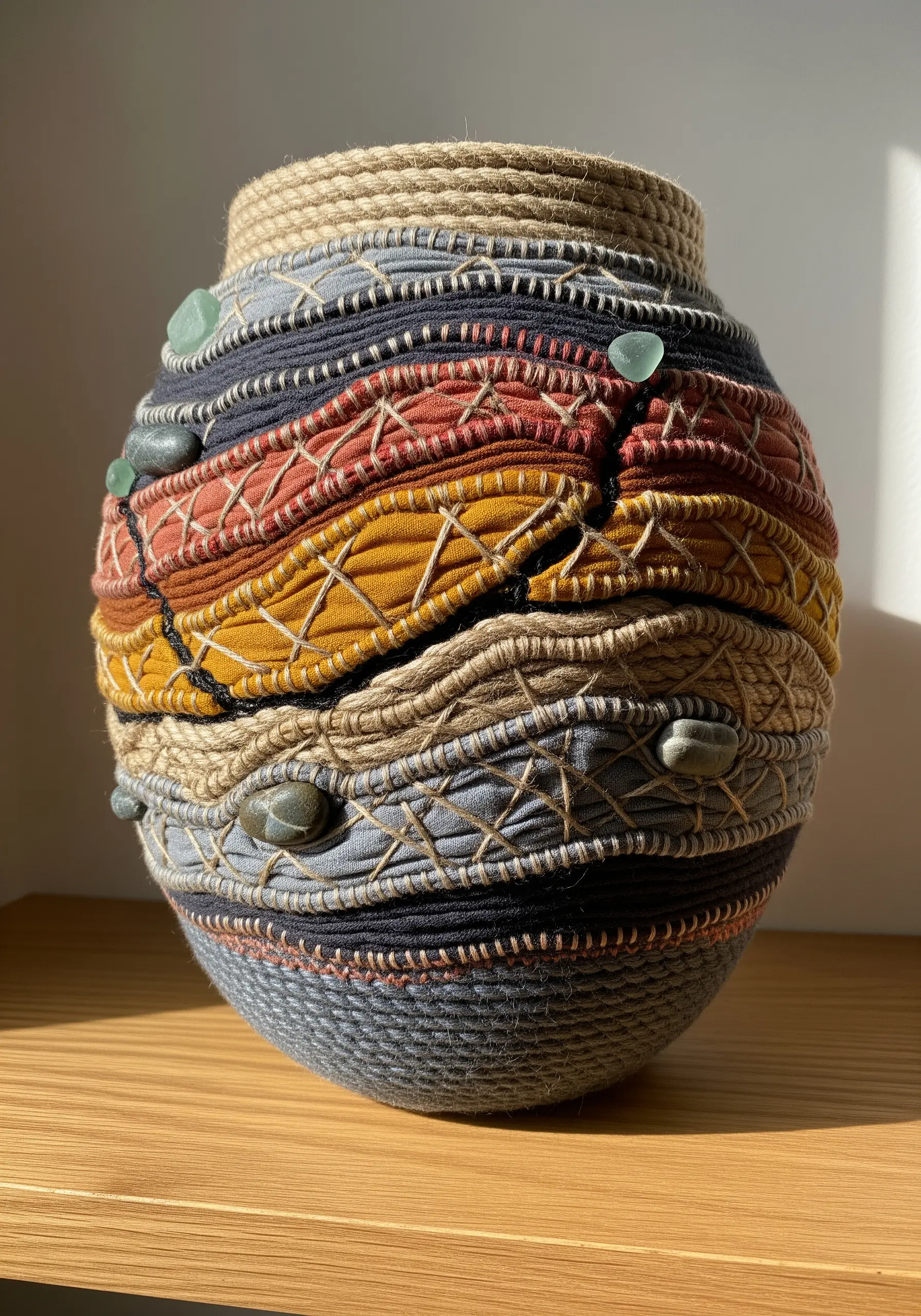
Translate your stitching skills to three-dimensional objects by wrapping a core material, like cotton rope, with thin strips of fabric.
As you coil the wrapped rope to build your vessel’s shape, use a thick thread or embroidery floss to secure the coils together with decorative stitches.
Experiment with contrasting thread colors and stitches like the cross-stitch or blanket stitch to add graphic interest.
You can even integrate smooth sea glass or beads between the coils for a touch of refined, natural texture.
3. Weave a Forest Story with Found Natural Objects

Move beyond thread by integrating natural elements directly into your weavings to tell a richer story.
Use chunky wool roving and loop stitches (like rya knots) to build up soft, mossy textures that create a foundation for your landscape.
Then, carefully weave in dried leaves, delicate twigs, or lichen, securing them within the warp and weft.
This method of incorporating found natural objects transforms a simple wall hanging into a tactile snapshot of a forest floor.
4. Chronicle the Seasons in a Tactile Fabric Book
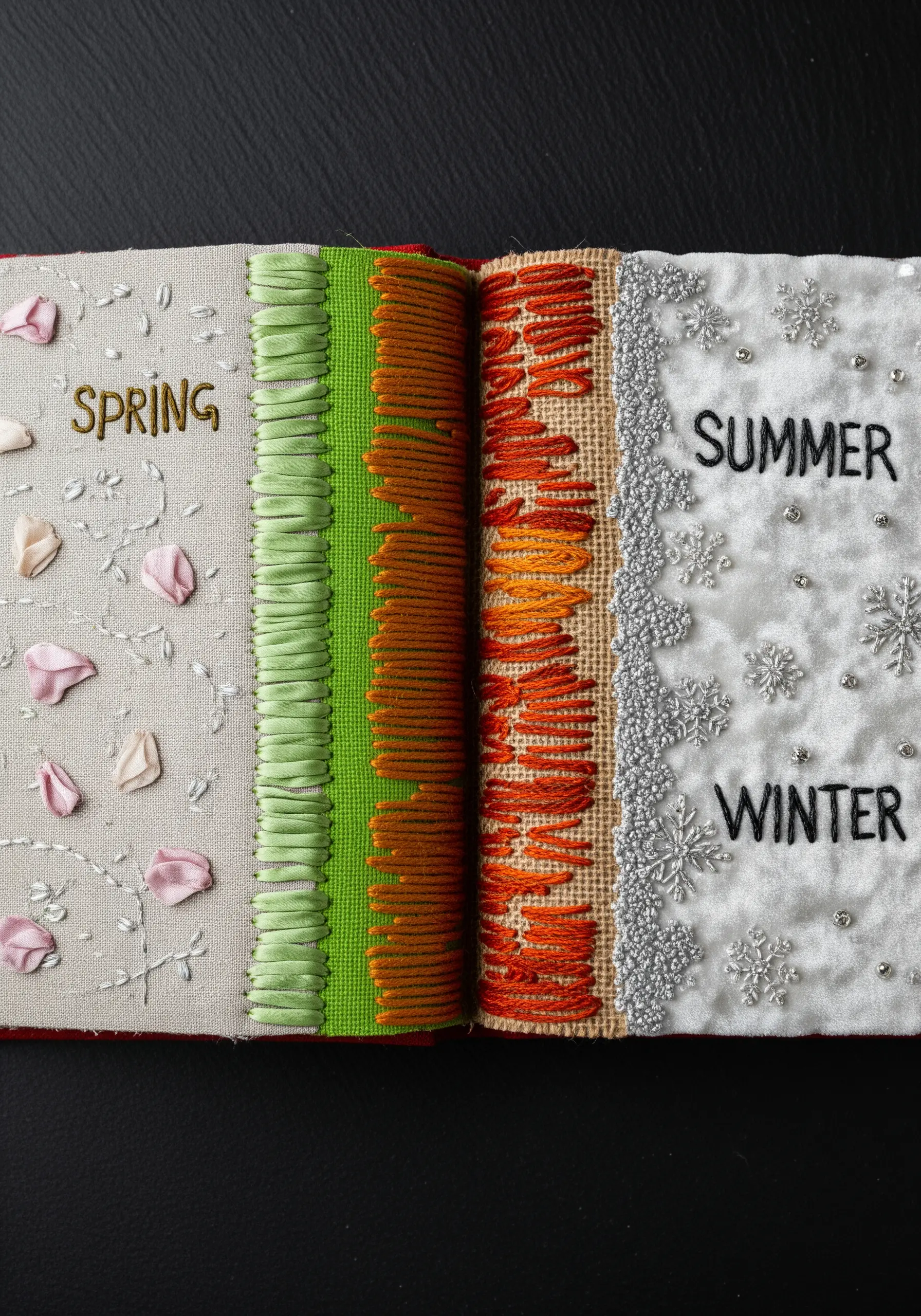
Tell a year-long story by dedicating each page of a fabric book to a season, focusing on contrasting textures to evoke a feeling.
For spring, use delicate silk ribbon stitches on linen to represent new petals.
For summer, try chaotic, layered straight stitches on a rough burlap base to suggest wild growth.
Use dense velvet fabric for winter, embellished with sparkling metallic thread and tiny beads for a frosty finish.
The physical change in texture from page to page is what makes the narrative so compelling.
5. Paint a Woven Sunset with Thread and Beads
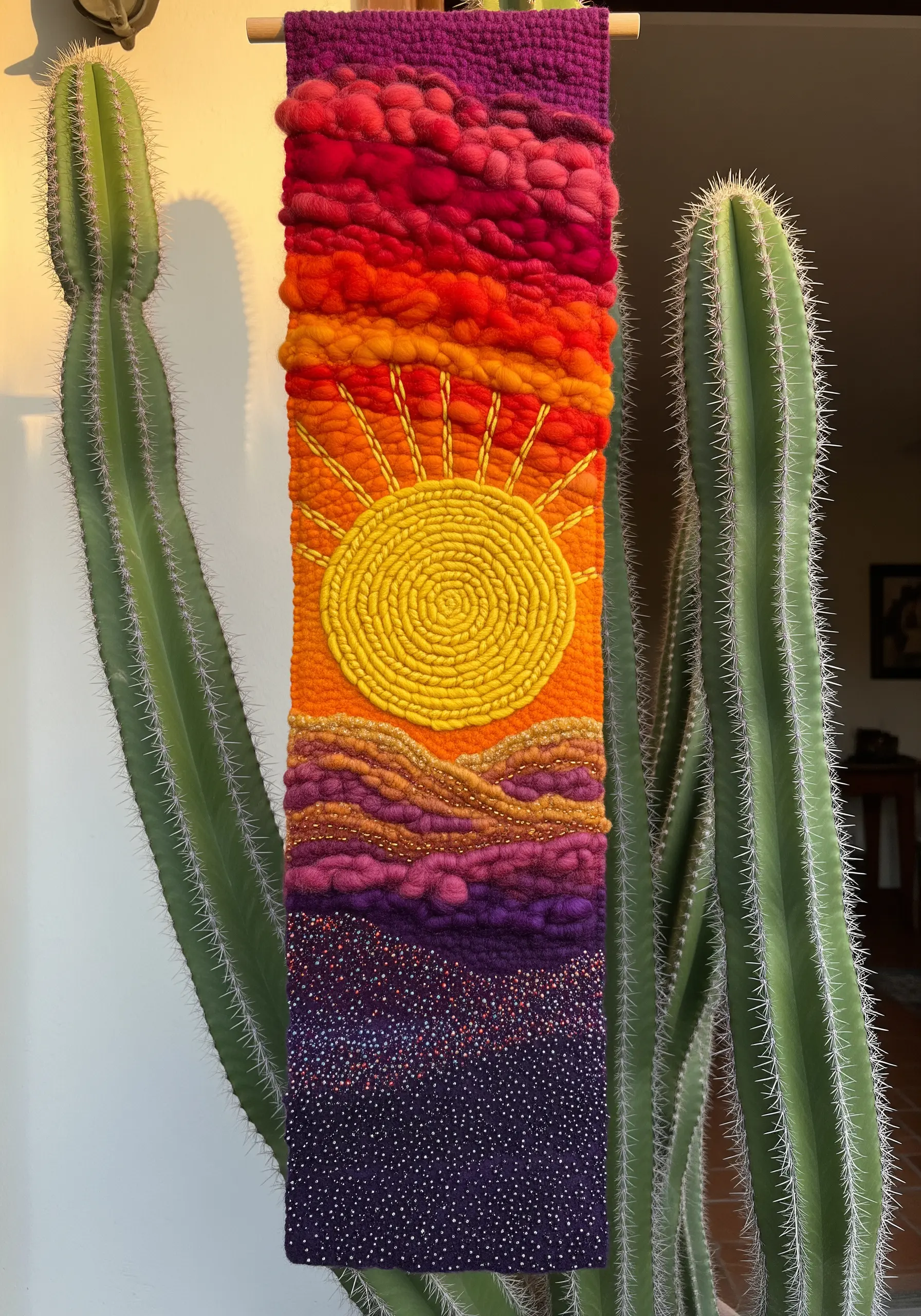
Create a stunning gradient sky in your weaving by blending different shades of wool roving, allowing the colors to bleed into one another organically.
For the sun, switch from weaving to embroidery by stitching a tight spiral of chain stitches or couched yarn directly onto the woven surface.
This shift in technique makes the central motif pop with clean, defined texture.
Finally, scatter tiny seed beads in the darkest part of the weaving to represent a starry night sky, adding a delicate, light-catching detail.
6. Create Sculptural Forms with Appliqué and Cord
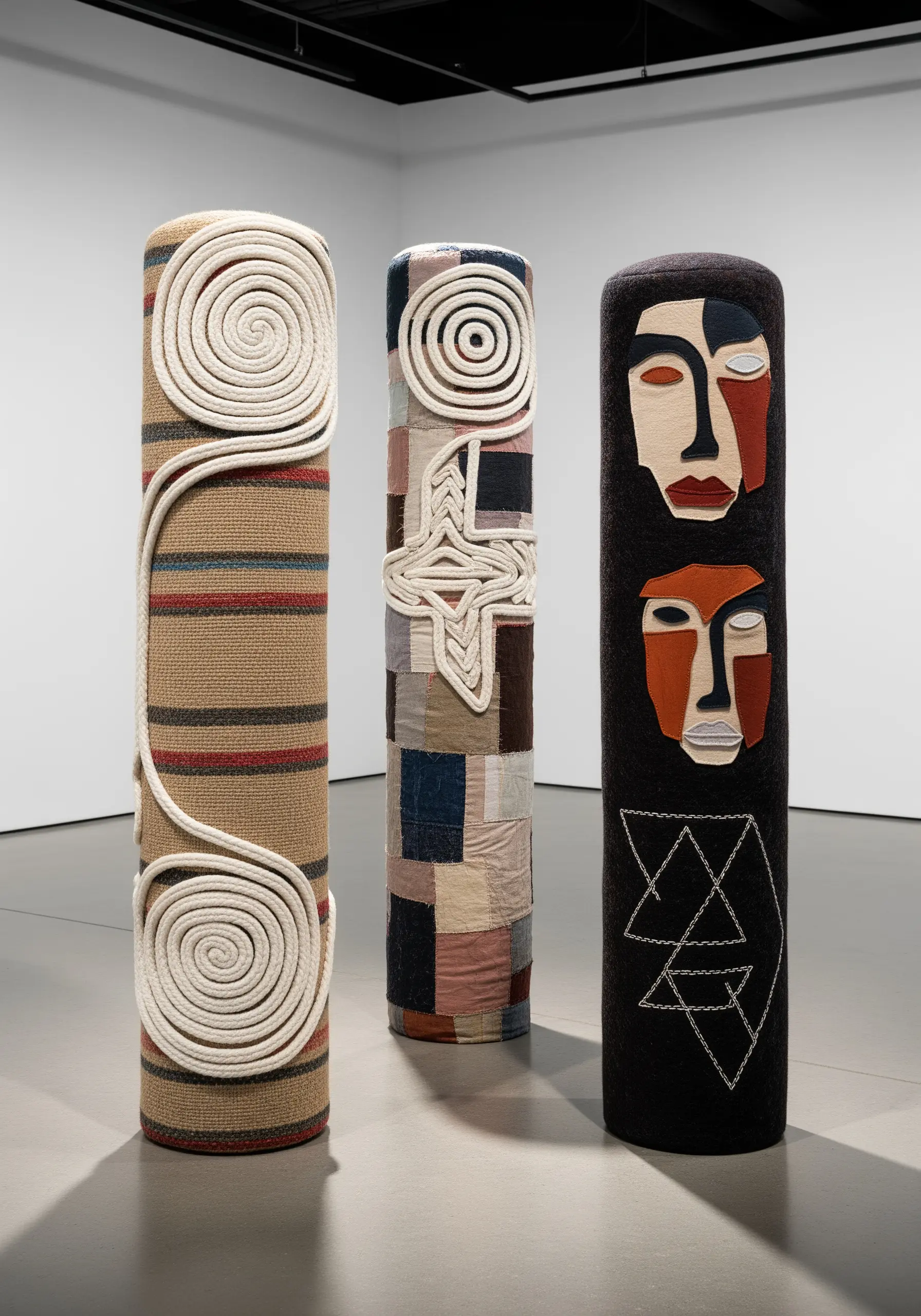
Give your work a bold, graphic quality by couching thick cotton cord onto a base of felt or heavy wool.
Instead of drawing with a single thread, you are outlining shapes with a sculptural line that creates instant dimension and shadow.
Combine this with fabric appliqué for color blocking, tucking the raw edges of your fabric shapes neatly under the couched cord for a clean, finished look.
This technique elevates simple shapes into powerful, tactile statements.
7. Capture Urban Energy with Thread Painting
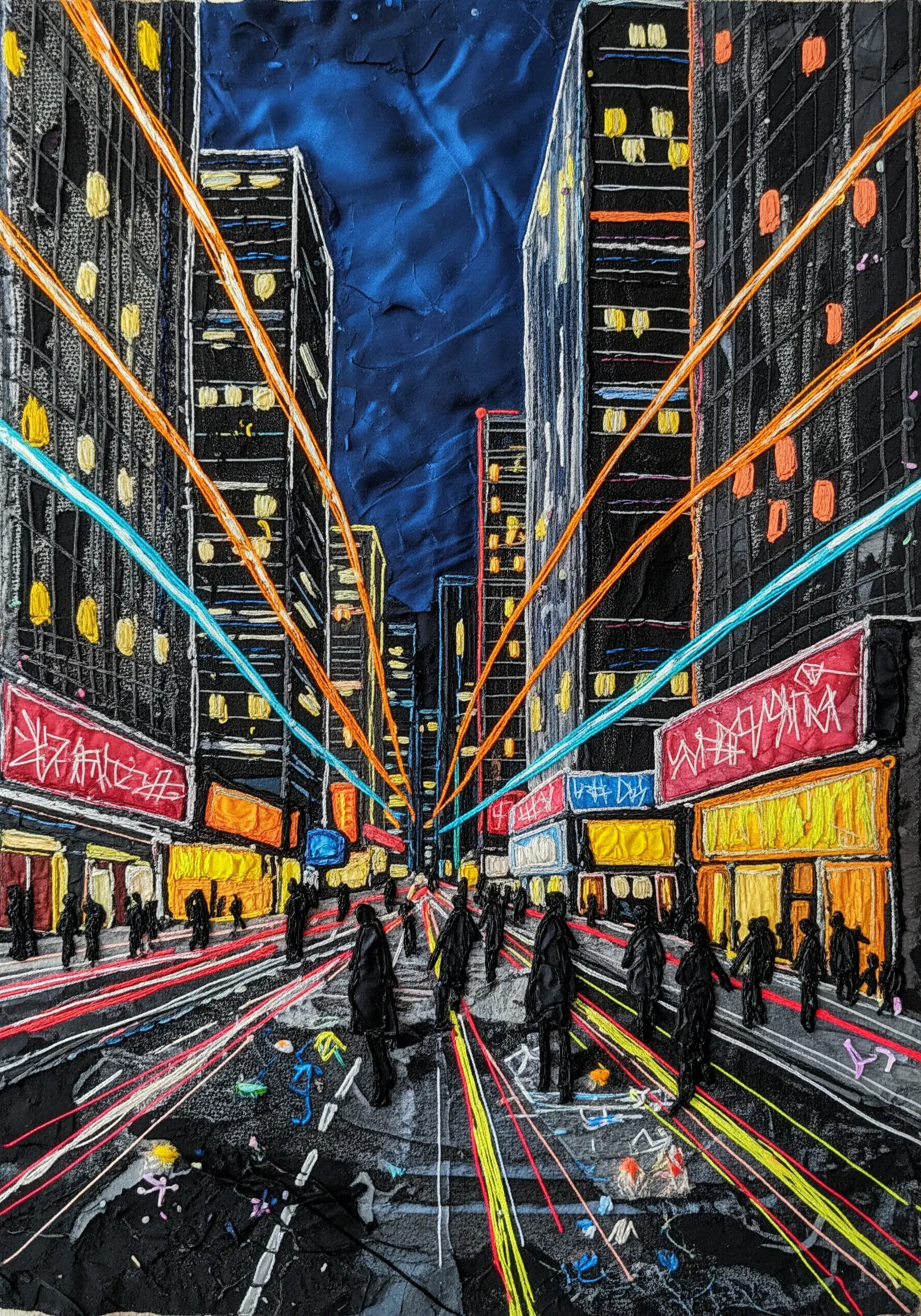
Evoke the feeling of a bustling city at night by first creating a textured, uneven background fabric—try scrunching and lightly painting dark blue silk.
Use long, single strands of neon and bright embroidery floss to stitch the light trails, pulling them taut across the composition to create a sense of speed and perspective.
Keep the figures and buildings simple, almost silhouettes, so that the focus remains entirely on the story told by the lines of light and motion.
8. Stitch Ethereal Motifs on Sheer Fabric
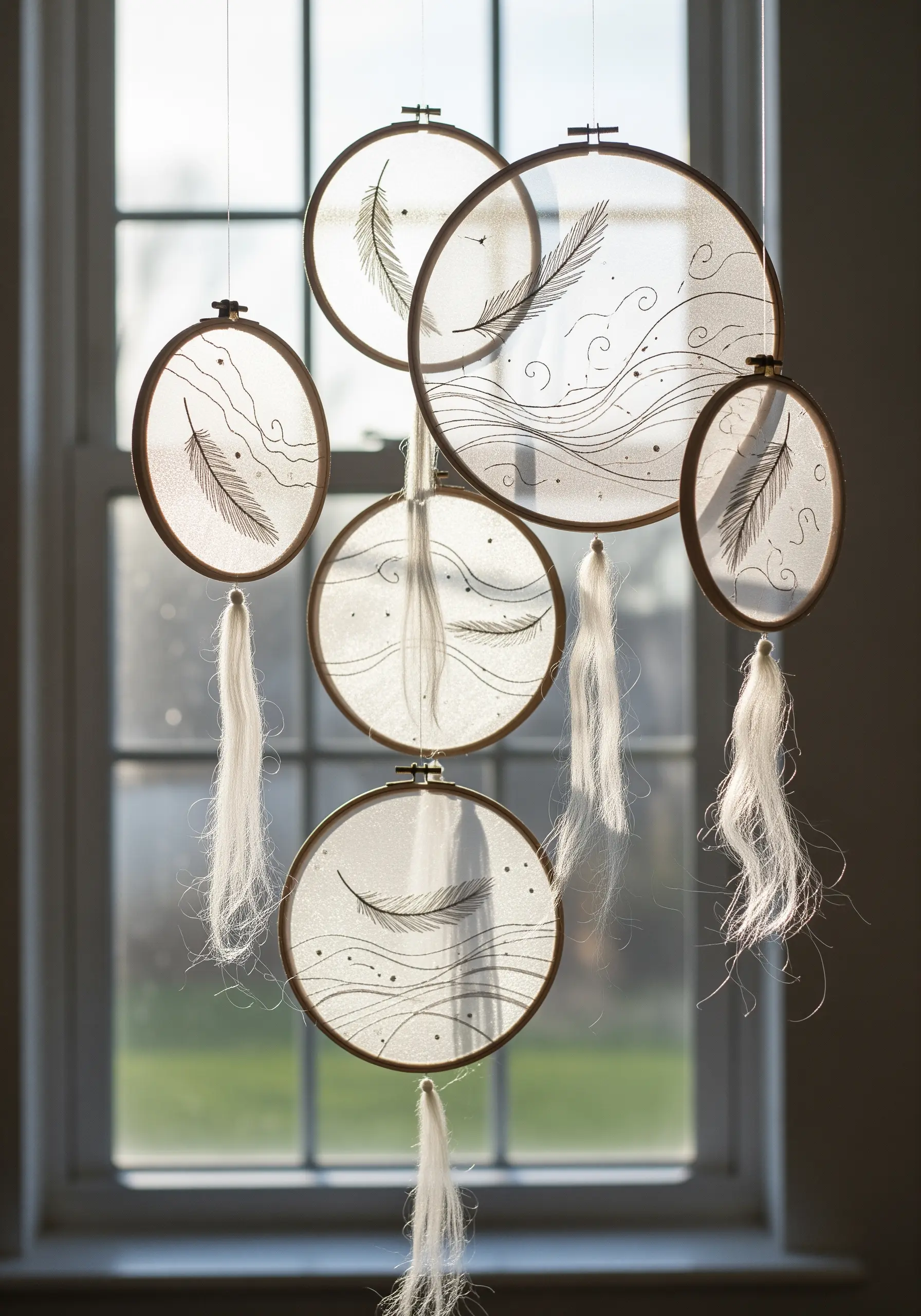
Create a sense of weightlessness by working on a sheer fabric like organza or tulle, which allows light to pass through your work.
To prevent puckering, always use a stabilizer behind the fabric while stitching, which you can tear or wash away later.
Use a simple backstitch or stem stitch with just one or two strands of floss for delicate motifs like feathers or botanicals.
The transparency of the ground fabric makes your stitches appear as if they are floating in mid-air, creating a truly magical effect.
9. Build a Textural Narrative Across Multiple Panels

Tell a story of transformation by creating a triptych where the texture evolves from one canvas to the next.
Begin the first panel with chaotic, tangled loops, perhaps using the turkey work stitch with threads left long and loose.
In the second panel, transition to more controlled, dense textures like tightly packed French knots in a gradient of color.
Conclude on the third panel with an explosion of joyful, three-dimensional elements like handmade pom-poms and sculptural fabric folds.
This progression tells a story of energy moving from chaos to structured joy.
10. Craft a Geode with Needle Felting and Beadwork
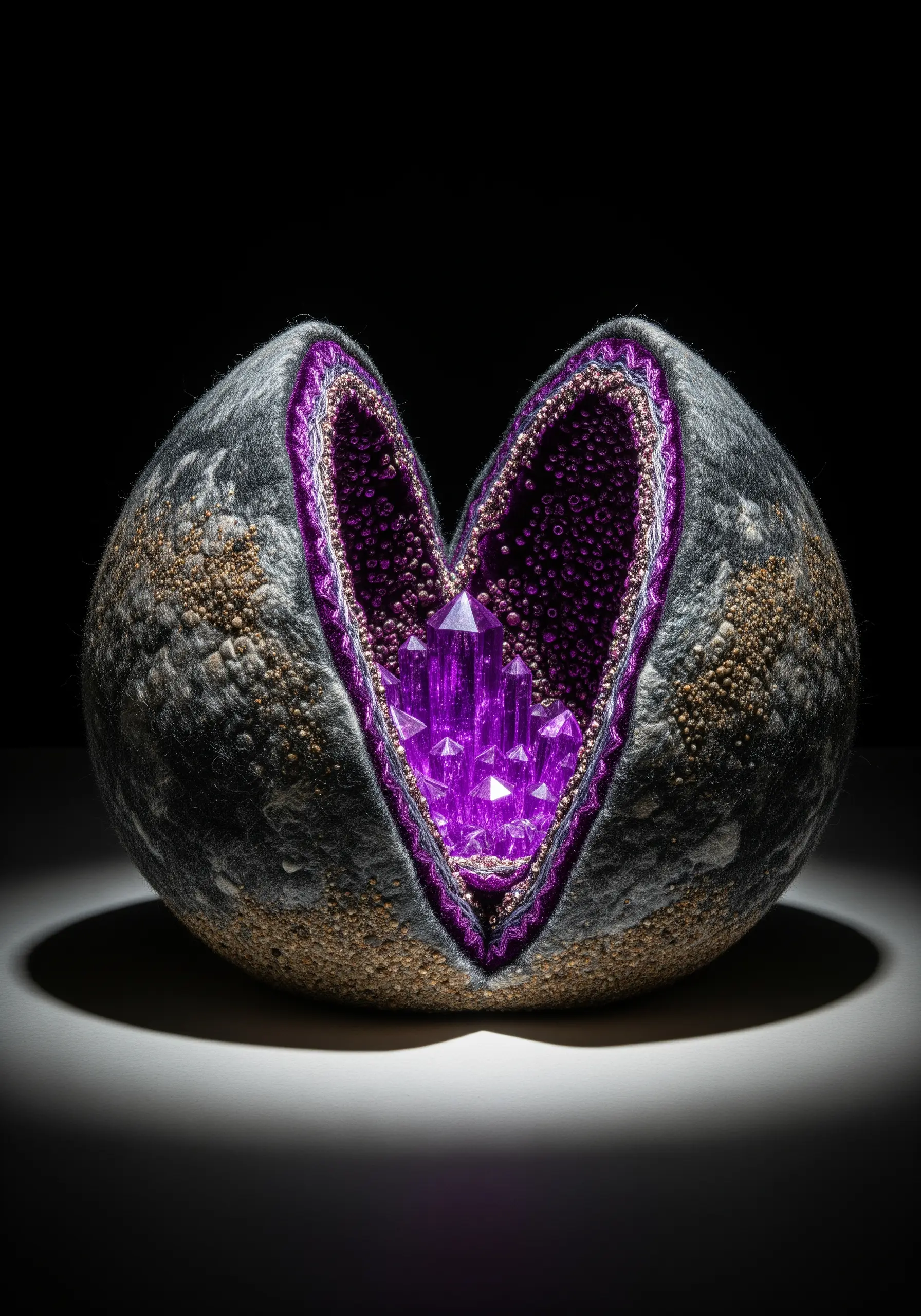
Construct a compelling secret world by creating a plain, rock-like outer shell with needle felting.
Slice the felted form open to reveal an interior cavity that you can fill with incredible texture.
Create the crystalline effect by lining the inside with dense clusters of seed beads, French knots in metallic thread, and larger, shard-like beads to mimic crystals.
The stark contrast between the simple exterior and the sparkling, complex interior is what gives the piece its power and sense of discovery.
11. Mimic Chunky Knits with Padded Appliqué
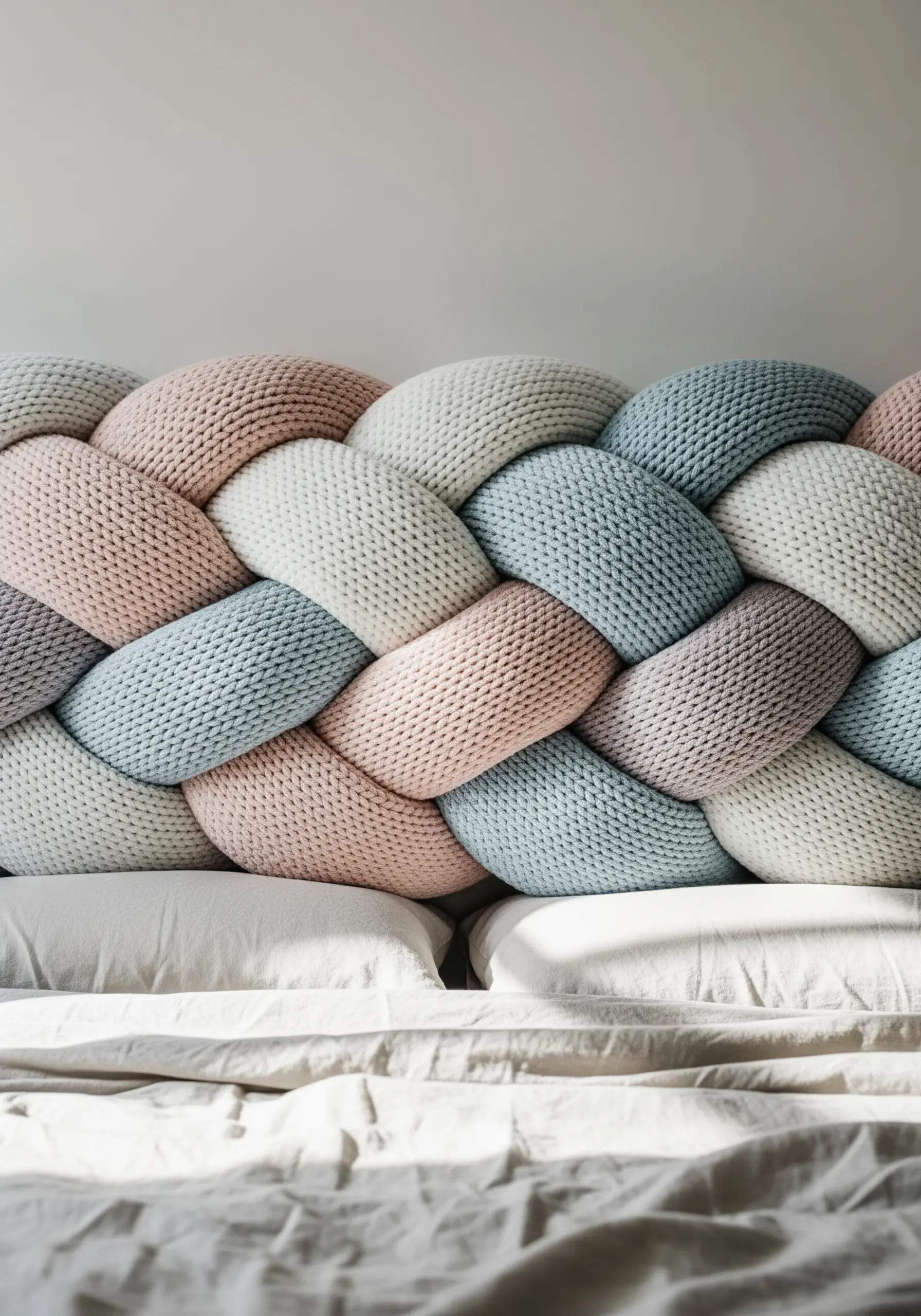
Achieve the cozy, oversized texture of a chunky knit without knitting needles.
Create long tubes of soft fabric, fill them with batting until they are plump, and stitch them closed.
You can then braid or weave these padded tubes together and secure them to a backing fabric to create a highly dimensional, soft-sculpture effect for pillows or wall hangings.
This technique allows you to control the color placement and scale in a way that traditional knitting cannot.
12. Map a Personal Journey with Appliqué and Stitch
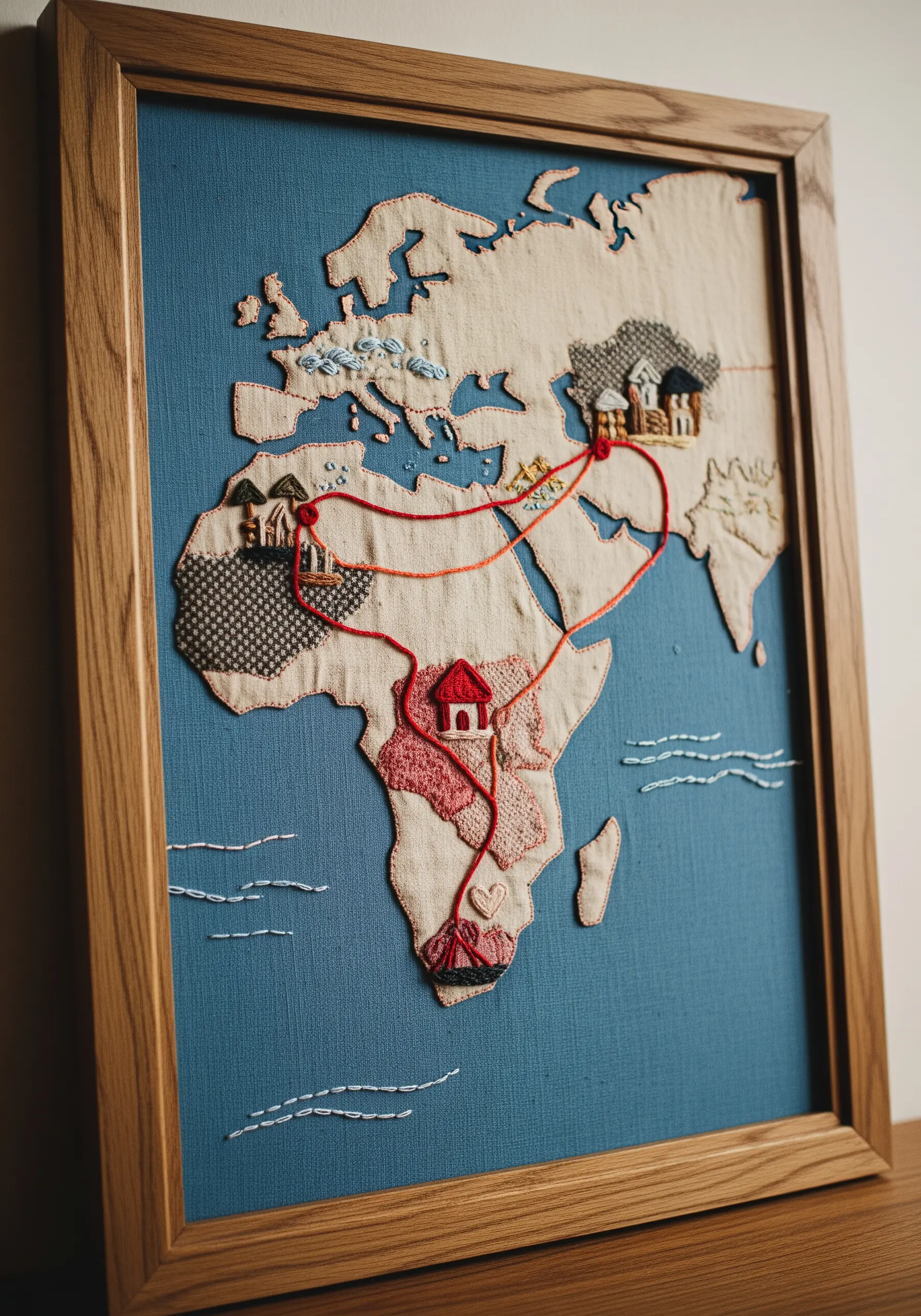
Turn a map into a personal story by using patterned fabric scraps for the continents and islands.
Appliqué the fabric pieces onto a solid background, then use a simple backstitch to define the coastlines for a clean, illustrative look.
Use a thicker cord or yarn to stitch a line that marks a significant journey, connecting important locations.
You can even add tiny, embroidered icons or structures to highlight meaningful places, turning the art into a unique travel-inspired narrative.
13. Layer Memories with Fabric Collage and Contour Stitching
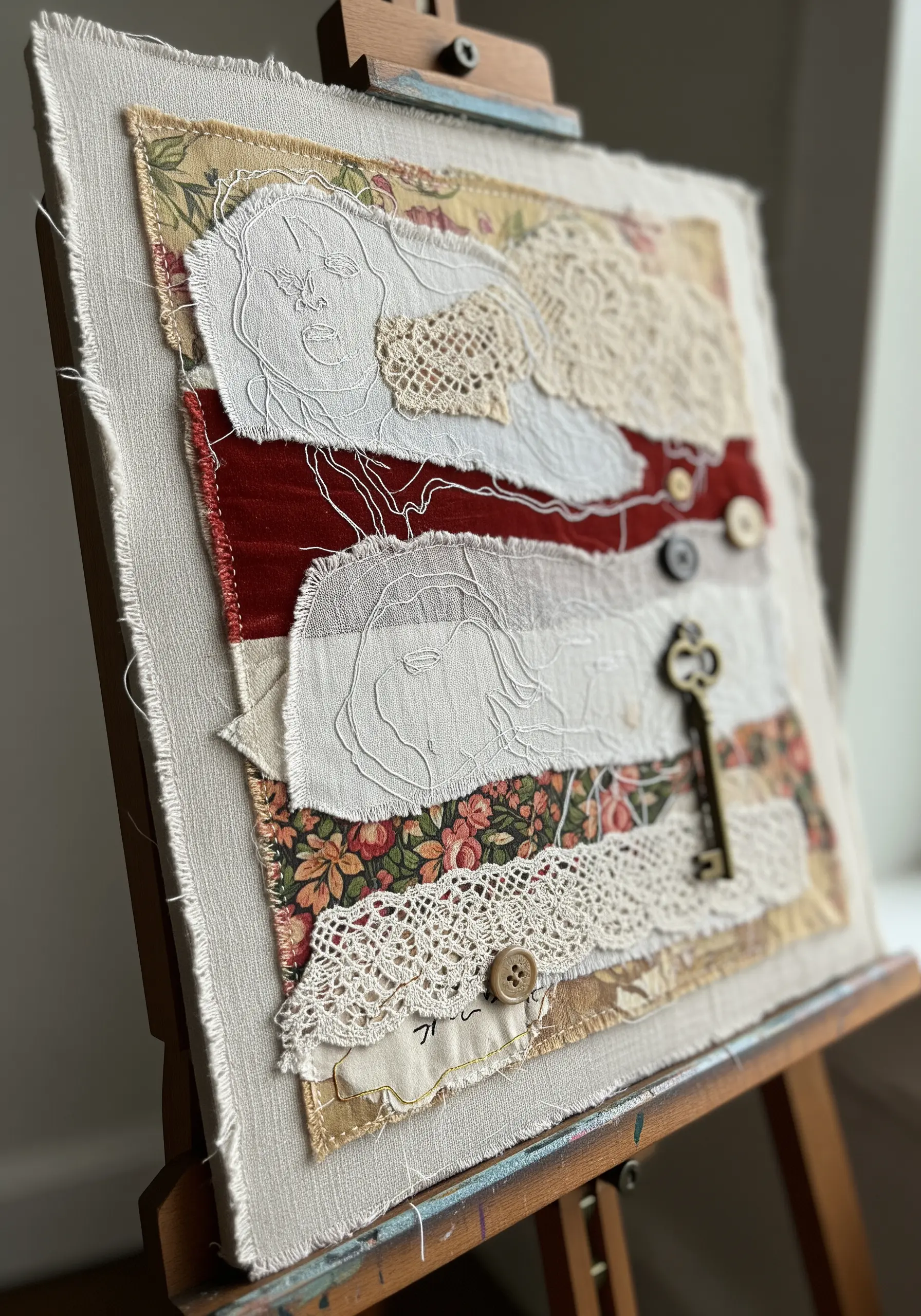
Build a deeply personal artwork by creating a collage from meaningful materials—scraps of old clothing, vintage lace, or snippets of letters.
Layer these elements on a canvas, allowing the edges to remain raw and frayed to honor their history.
Then, using a single, continuous line of thread, stitch a blind contour portrait over the top.
This technique, where you don’t look at the fabric while stitching, adds an intuitive, soulful quality that unifies the disparate elements into a cohesive memory piece.
14. Illustrate Movement with Sculptural Ribbon Embroidery
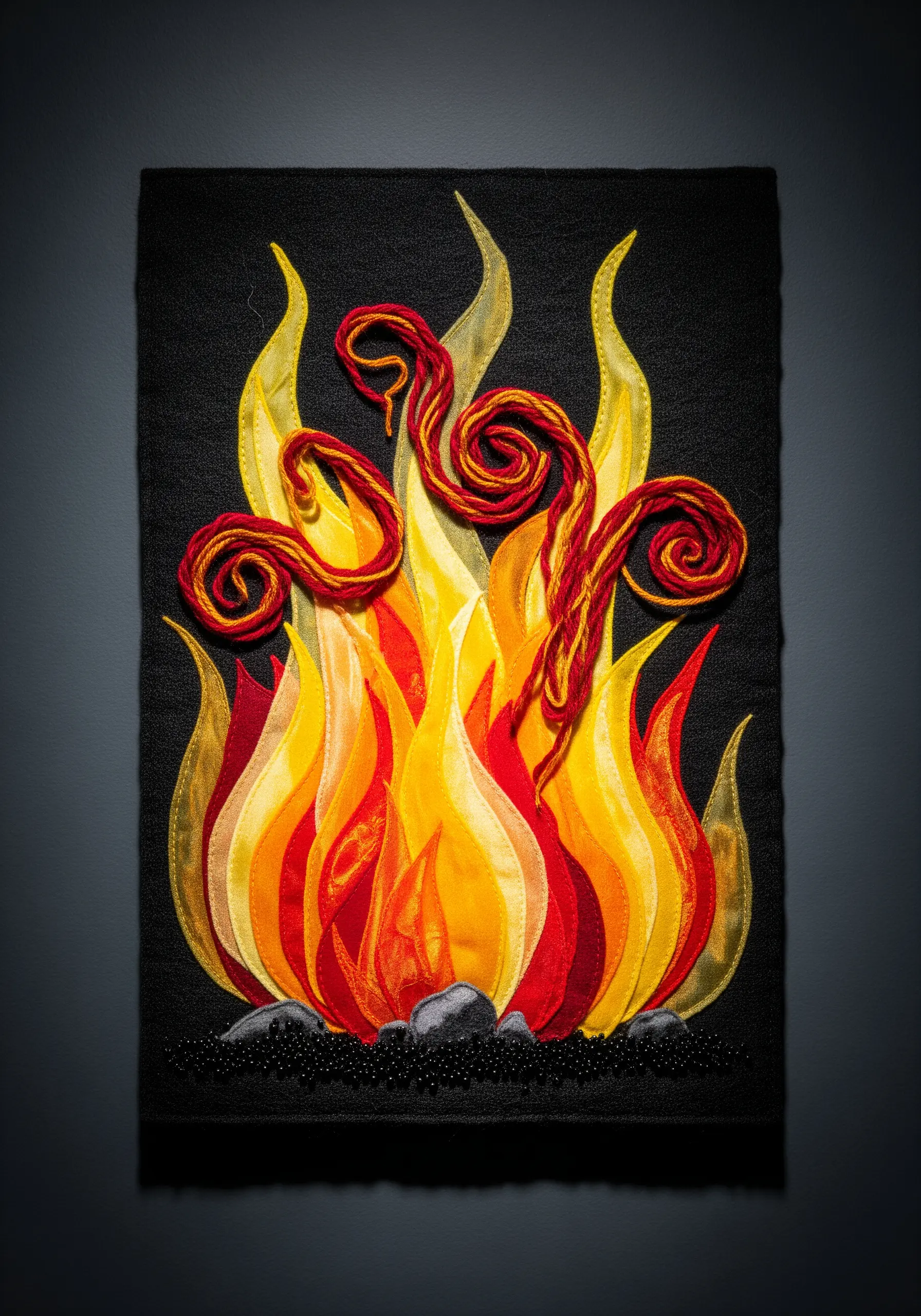
Capture the dynamic, flickering quality of fire by using silk or satin ribbon instead of floss.
Use ribbons of varying widths and colors—yellows, oranges, and reds—to create the layers of flame.
To give the flames their shape and movement, twist the ribbon as you stitch it down or create loops that stand away from the fabric.
Set against a stark black background, the sheen of the ribbon and its sculptural quality creates an incredibly vibrant and lifelike effect.
15. Document Growth with a Multi-Hoop Botanical Study

Tell the story of a plant’s life cycle by dedicating a series of embroidery hoops to each stage of its growth.
Start with a simple seed, then a sprout made with stem stitch, followed by leaves created with fishbone or satin stitch.
For the flower, use detached chain stitches or ribbon stitches for the petals and French knots for the center.
Arranging the hoops in sequence transforms a simple stitch sampler into a compelling narrative about growth and renewal, perfect for a botanical wall display.
16. Weave an Immersive Underwater World
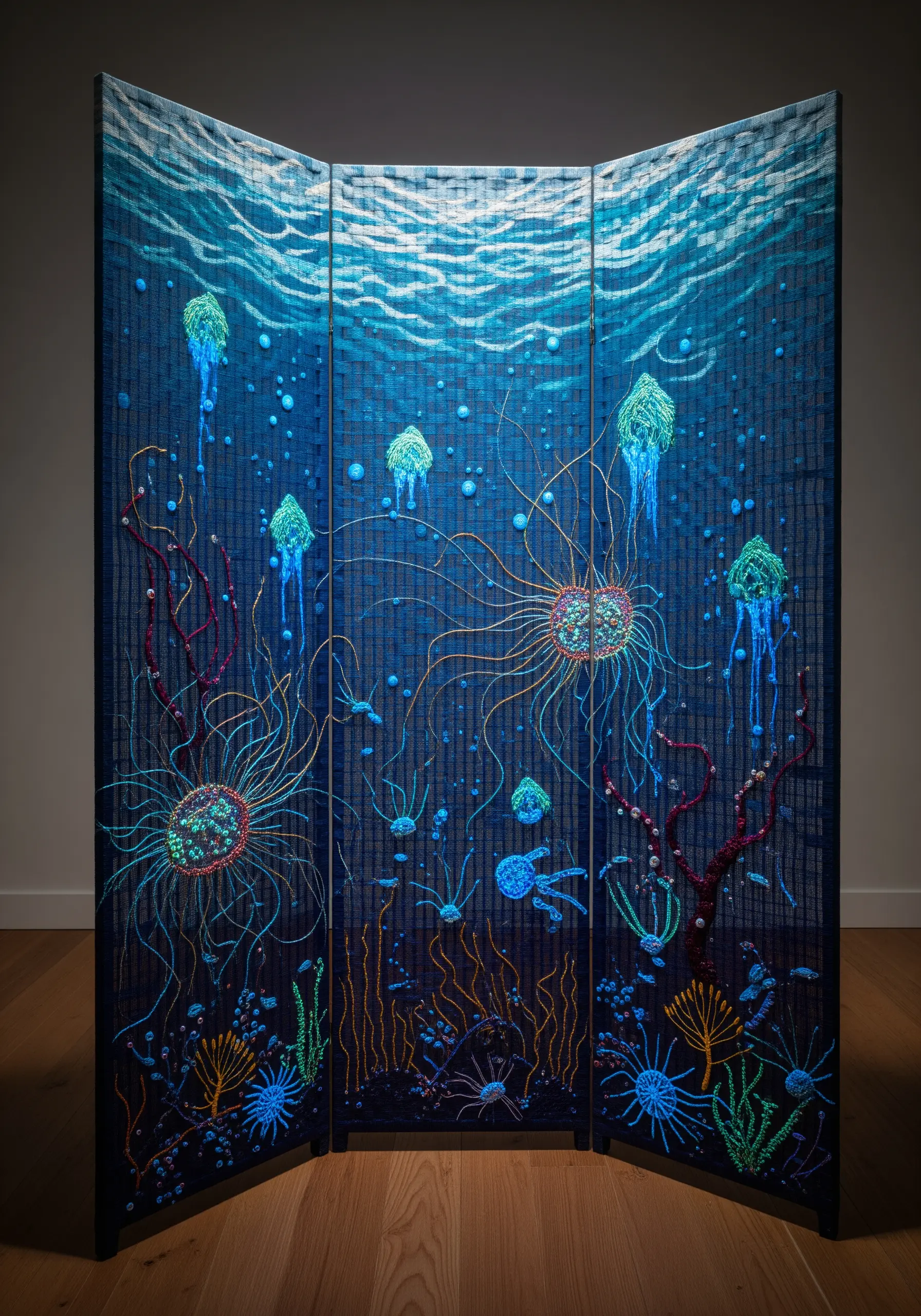
Create a truly immersive piece by using a large-scale format, like a folding screen, as your canvas.
For the water background, use a tapestry weaving technique with dozens of shades of blue thread to create a deep, realistic gradient.
Bring jellyfish to life by embroidering their bodies with turkey work loops, then letting different novelty yarns (bouclé, metallic, silk) trail down as long, expressive tentacles.
The sheer scale and combination of techniques draw the viewer into the scene completely.
17. Explore Restraint with Minimalist Graphic Textures
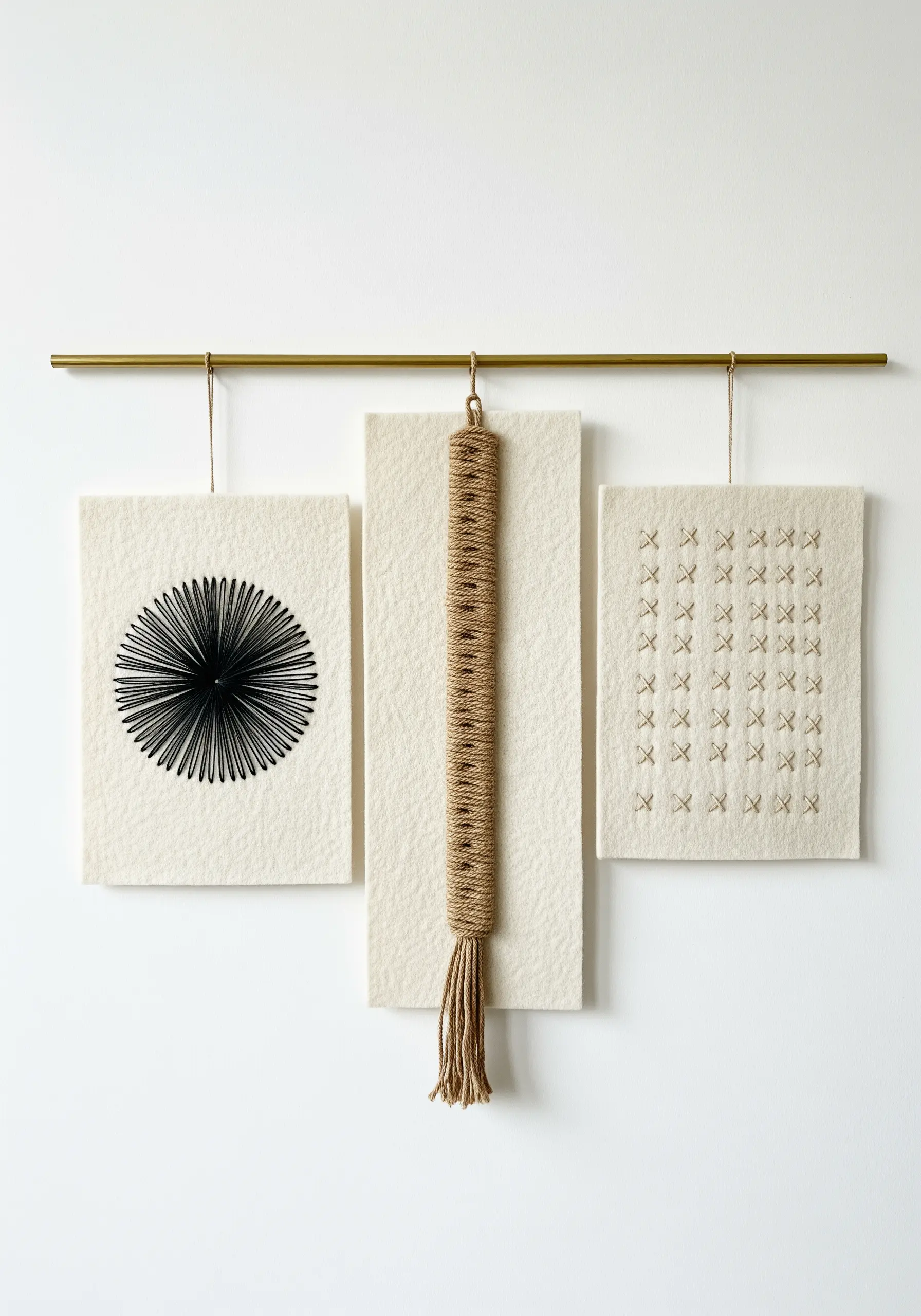
Demonstrate that storytelling doesn’t always require complexity; sometimes, the most powerful statements are the most restrained.
Work on a neutral, tactile surface like thick felt or handmade paper.
Use a single color of thread to explore disciplined, geometric patterns—a panel of radiating straight stitches, another of perfectly aligned cross stitches.
This focus on pure form and texture creates a calm, meditative story, proving the elegance of simplicity in minimalist graphic textures.
18. Sculpt Calming Zen Stones from Fabric and Thread
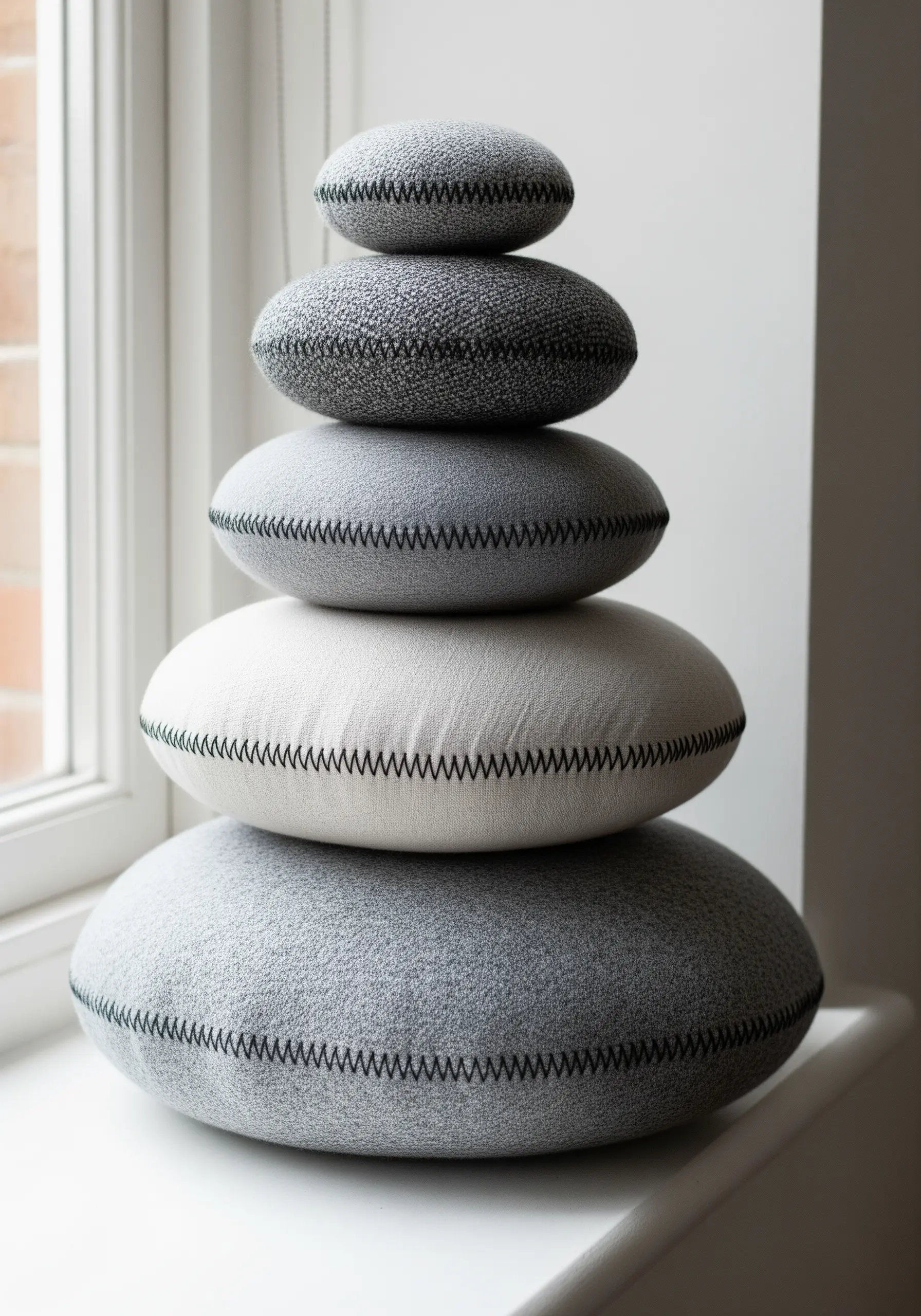
Bring a sense of balance and nature into your home by creating soft, sculptural stacking stones.
Sew pillow-like forms in organic, pebble shapes using tactile fabrics like felt, linen, or wool in serene, neutral colors.
Stuff them firmly so they can be stacked, and then add a single line of decorative stitching along the seam.
A simple running stitch or blanket stitch in a contrasting, thick yarn is all that’s needed to elevate these forms into a piece of meditative art.
19. Build Volumetric Texture with Dense Knotwork

To create the illusion of overflowing baskets of spices or flowers, rely on the power of densely packed knots.
Use colonial knots, which are sturdier than French knots, and pack them tightly together, completely covering the fabric surface within your desired shape.
Using variegated thread will give the piles a more natural, multi-tonal appearance without having to change colors constantly.
The resulting texture is so rich and high-profile that it begs to be touched, effectively conveying abundance and volume.
20. Weave a Narrative with Negative Space
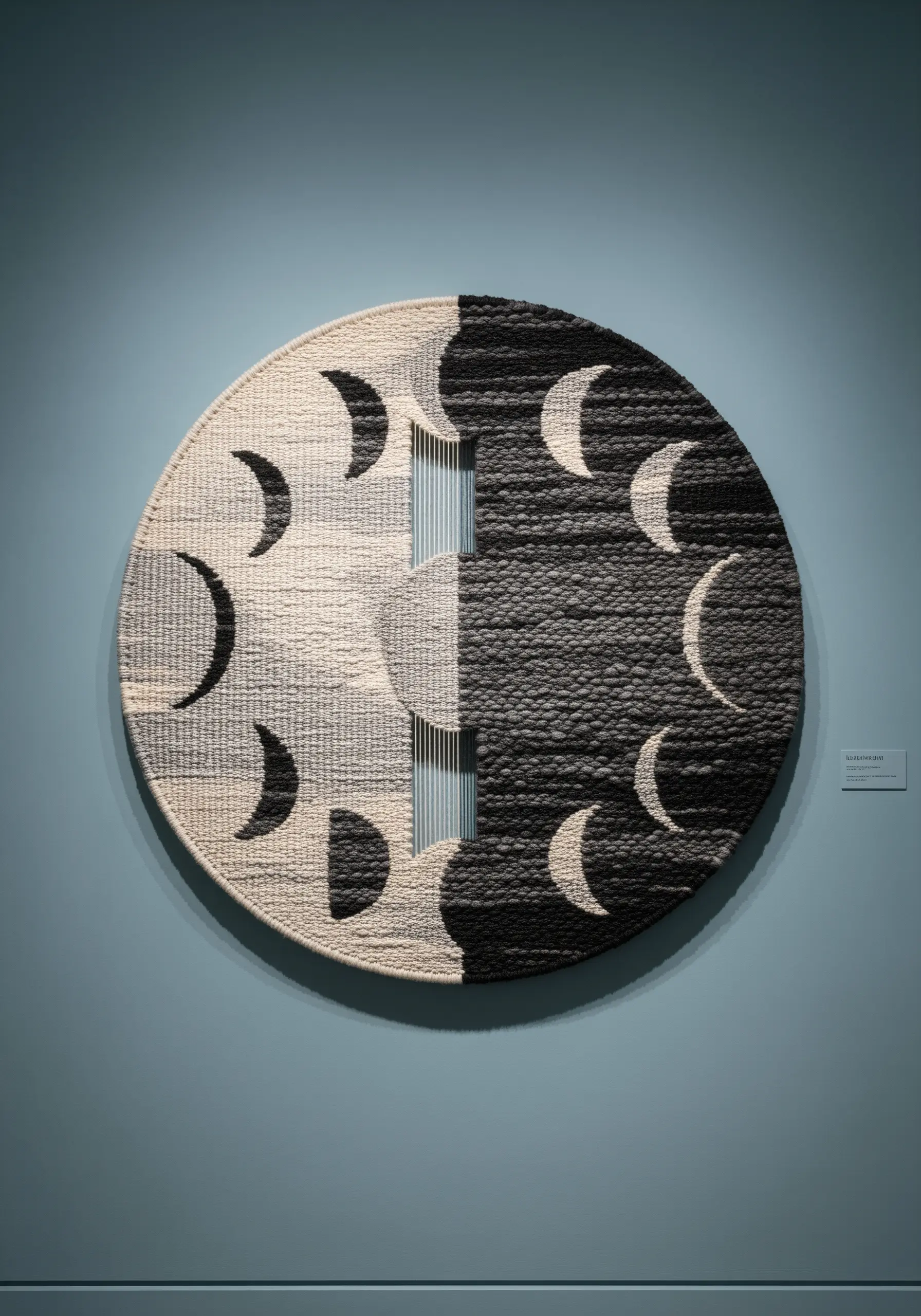
In tapestry weaving, the spaces you leave empty can be just as powerful as the areas you fill.
When weaving a circular piece, try leaving vertical slits or windows in the warp, as seen in this moon phase design.
This technique not only adds a surprising graphic element but also draws attention to the structure of the weaving itself.
It tells a story of cycles, light, and shadow, using both the presence and absence of thread to create meaning.