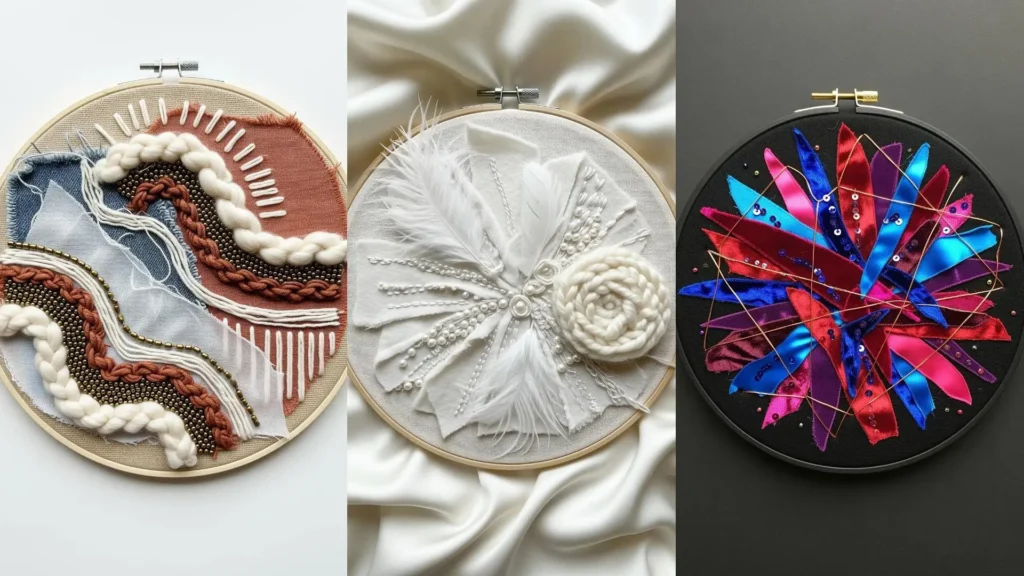
Before you thread your next needle, let’s set a new intention. Instead of just filling a shape, think about how your stitches can tell a story—of texture, light, and form. The difference between a simple motif and a piece of art often lies in one small adjustment: a change in stitch direction, a surprising texture, or a thoughtful color choice.
These cottage-cafe inspired ideas are more than just patterns; they are invitations to slow down and observe. Notice how a croissant catches the light, how steam curls, or how a sprig of rosemary grows. Translating those small details into thread is where the magic happens.
Let this collection guide you toward more intentional stitching. You don’t need complex techniques, just a fresh perspective. You’ll find that the most satisfying handmade embroidery touches are often the simplest, chosen with purpose and stitched with care.
1. Render Coffee Steam with a Sculptural Whipped Stitch

To give the steam a raised, cord-like effect, first lay down a simple backstitch outline for each swirl.
Then, using the same thread, whip your needle under each backstitch without piercing the fabric.
This technique adds dimension and a clean, graphic quality that a simple line lacks, making the steam feel like it’s floating above the fabric.
For the cup’s outline, use a split stitch to create a solid, sharp line that mimics the feel of a digital illustration.
2. Create a Flaky Croissant with Directional Satin Stitch

Achieve that perfectly baked look by blending three to four shades of golden brown using the long-and-short stitch technique.
Ensure your stitches follow the curved direction of each pastry segment; this simple adjustment creates the illusion of volume and light.
For the bright white highlights, use a crisp satin stitch with two strands of floss to suggest a delicate, sugary glaze.
This directional work is what separates a flat motif from one that feels tactile and realistic.
3. Stitch Realistic Herbs with Fishbone Stitch Leaves

Instead of using a basic satin stitch for the rosemary leaves, choose the fishbone stitch.
This technique creates a central vein down each leaf, mimicking natural growth patterns and adding immediate depth and realism.
Use two slightly different shades of green thread—one for the top half of the sprig, one for the bottom—to suggest light and shadow.
For the stem, a thicker, darker brown thread worked in a stem stitch will give it a sturdy, woody appearance against the delicate leaves.
4. Master Smooth Gradients on an Avocado Motif

To create the avocado’s creamy texture, use a long-and-short stitch to blend at least three shades of green, from a dark lime at the edge to a pale yellow-green near the pit.
Keep your stitches flowing in a slight curve around the center to enhance its round shape.
For the pit, stitch in a spiral or concentric circles with a satin stitch to create a smooth, dense core that contrasts with the softer flesh.
This careful color transition is what gives the simple shape a polished, dimensional finish.
5. Form Plump Berries with Woven Wheel Stitches

For these blueberry-like clusters, use a woven wheel stitch—also known as a spider web rose—to create perfectly round, textured motifs in minutes.
Start with a star of five straight stitches as your base, then weave your thread over and under each spoke until the shape is filled.
Using a variegated thread is the key here; it creates automatic color variation and depth in each berry without you needing to change floss.
This stitch adds a lovely, tactile quality to placemats and napkins.
6. Design Minimalist Felt Coasters with a Sharp Outline

This modern look is achieved by layering a simple felt appliqué onto a sturdy base.
For a hand-stitched version, cut your utensil shapes from felt and secure them with a temporary fabric adhesive.
Then, outline the shape with a tight, precise split stitch or backstitch using a contrasting thread color, like black or silver, to create a crisp, graphic edge.
The contrast between the soft, matte felt and the sharp, slightly shiny thread is what gives this project its refined, contemporary feel.
7. Achieve Bold, Crisp Shapes with a Satin Stitch Edge

To ensure your lemon slice has perfectly clean edges, first outline the entire shape with a split stitch.
This raised border acts as a guide and gives your satin stitches a clean edge to tuck into, preventing gaps or unevenness.
Fill each segment with a dense satin stitch, making sure all stitches lie parallel to one another for a smooth, uniform sheen.
Using a pure white thread for the pith makes the bright yellow of the fruit segments pop with vibrant energy.
8. Stabilize Linework on Canvas Tote Bags

When embroidering on flexible fabrics like canvas, a stabilizer is your best friend.
Iron a cut-away or tear-away stabilizer to the back of the fabric before you begin stitching your bread loaf outline.
This prevents the fabric from puckering and ensures your backstitches remain even and straight.
Using just three strands of floss for these plain tote bags keeps the design feeling light and modern, not heavy.
9. Frame Your Embroidery Like Modern Line Art

Elevate a simple line design, like this French press, by treating it as fine art.
Use only two strands of black floss and a precise split stitch to create a single, continuous line that looks clean and graphic.
Instead of a hoop, stretch your finished embroidery over a canvas frame, which you can purchase at any art supply store.
This display method removes the ‘craft’ context and presents your work as a piece of minimalist wall decor.
10. Combine Textures for a Playful Fried Egg Motif

The success of this piece lies in its dramatic textural contrast.
Create the bumpy, cooked egg white by filling the entire area with tightly packed French knots or colonial knots.
For the yolk, switch to a perfectly smooth, circular satin stitch with a golden yellow thread to mimic a shiny, liquid center.
This combination of textures makes the simple motif incredibly engaging and fun to touch.
11. Emulate Botanical Illustrations with Shaded Long-and-Short Stitch

To achieve the detailed, scientific look of this artichoke, treat each petal as its own small project.
Use a long-and-short stitch to softly blend muted greens with dusty pinks and purples, creating subtle shadows and highlights.
Work from the bottom row of petals upwards, slightly overlapping each layer to build realistic dimension.
Stitching on a muted, sage-green fabric provides a sophisticated backdrop that lets the delicate colors shine.
12. Add a Touch of Shine with a Single Highlight Stitch

Make your embroidered radishes look plump and freshly washed by adding a strategic highlight.
After filling the radish shape with red satin stitch, use a single strand of white floss to add a small, curved stitch or two on one side.
This tiny detail instantly creates the illusion of a glossy, reflective surface.
Embroidering on a dark, sturdy fabric like denim makes these bright colors appear even more vibrant.
13. Fill Shapes with Textured French Knots

Instead of a traditional fill stitch, use French knots to create texture and visual interest inside your pear outline.
Outline the shape with a clean backstitch first, then fill the interior with French knots using a contrasting or complementary color.
You can create a subtle gradient effect by spacing the knots more densely at the bottom and more sparsely toward the top.
This technique is perfect for adding a playful, tactile quality to simple shapes on drawstring bags or tea towels.
14. Create 3D Volume with Padded Satin Stitch

To make these coffee beans look truly three-dimensional, use a padded satin stitch.
First, fill the entire bean shape with a layer of foundation stitches (simple straight stitches).
Then, cover this padding with your final satin stitch, working your stitches in the opposite direction.
This underlayer raises the surface of the embroidery, creating a plump, sculptural effect that catches the light beautifully, especially when displayed as a group.
15. Unify a Set with a Cohesive Monochromatic Palette

When creating a set of embroidered items like these napkins, stick to a single thread color for all motifs.
This simple choice instantly makes the collection look intentional, elegant, and cohesive.
A rich burgundy or deep navy thread on crisp white linen provides a classic, sophisticated contrast.
Use a delicate backstitch with just two strands of floss to keep the linework refined and suited to fine table linens.
16. Enhance Motifs by Stitching on Textured Fabric

Let your fabric do some of the work for you by choosing a base with inherent texture, like this waffle-weave towel.
The fabric’s grid-like pattern creates a beautiful contrast with the smooth, organic lines of the embroidered wheat stalk.
For the wheat kernels, use a satin stitch, angling the stitches outward from the stem to mimic the way they grow.
The combination of a tactile fabric and a smooth motif creates a rich sensory experience.
17. Achieve a Pop-Art Look with Felt Appliqué

For a bold, graphic style, combine felt appliqué with a thick satin stitch border.
Cut your cheese wedge shape from a piece of bright yellow felt and use a fusible web to iron it onto your background fabric.
Then, use a contrasting color like orange to stitch a wide, dense satin stitch border that completely covers the felt’s raw edge.
This technique creates a clean, cartoon-like effect that looks fantastic when framed as modern art.
18. Layer Appliqué for Dimension on Textured Surfaces

Create depth in your appliqué motifs by layering different fabric pieces.
Here, the mushroom cap, stem, and smaller mushroom are all separate pieces, stitched down one by one to build up the design.
Applying this onto a textured fabric like corduroy adds another layer of visual and tactile interest.
Secure the edges with a simple running stitch or a neat blanket stitch for a charming, rustic finish that complements the cozy fabric.
19. Design an Organic Table Runner with Meandering Stitches

To create a flowing, natural-looking olive branch pattern, avoid making it perfectly symmetrical.
Use a simple stem stitch for the branches, allowing them to gently curve and wander across the fabric.
Stitch the leaves using a detached chain stitch (lazy daisy), varying their angle and spacing to mimic organic growth.
Using a single, muted color on natural linen is the perfect way to make your old linen look brand new with timeless elegance.
20. Define Overlapping Lines with a Whipped Backstitch

For a single-line drawing with overlapping elements, like this whisk, clarity is key.
A simple backstitch can look flat where the lines cross. Instead, use a whipped backstitch.
First, complete the entire outline in backstitch. Then, whip a second thread around the stitches to create a smooth, raised, cord-like line.
This technique gives the continuous line just enough definition and dimension to make the design easy to read and visually sophisticated.