
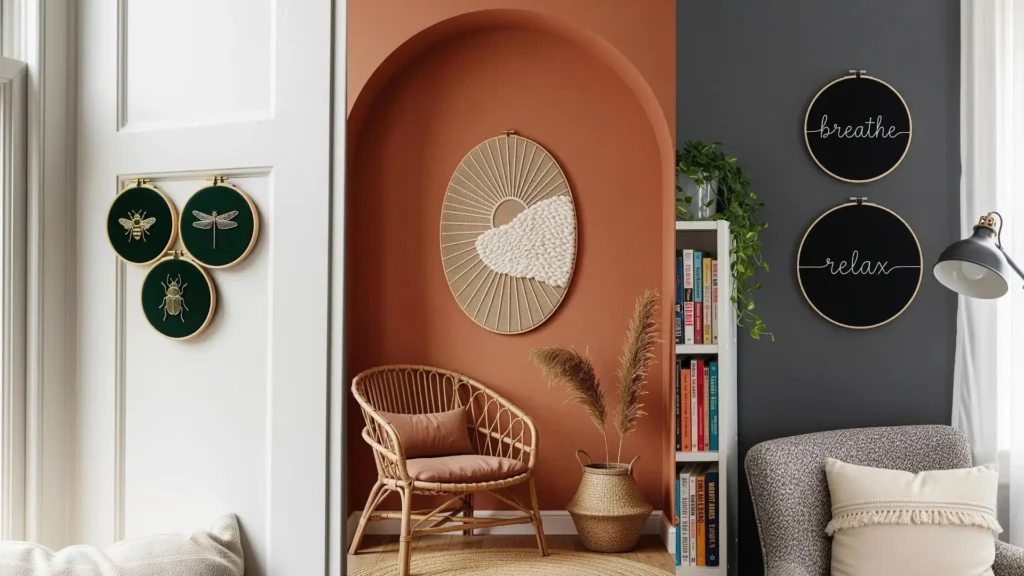
You don’t need complex patterns or a hundred colors of thread to create something beautiful. In fact, the opposite is often true. The most resonant embroidery comes from intention—from making every single stitch matter.
Minimalist embroidery is not about emptiness; it’s about clarity. It’s about choosing a simple form, a single line, or a subtle texture and executing it with care. This is where your skill truly shines and where your art finds its voice.
Think of these designs as invitations to slow down. They are perfect for creating a small, quiet retreat in the corner of your bedroom or next to your favorite reading chair. Let each stitch be a quiet moment of focus, a way to create calm in both your home and your mind.
1. Curate a Cohesive Botanical Trio
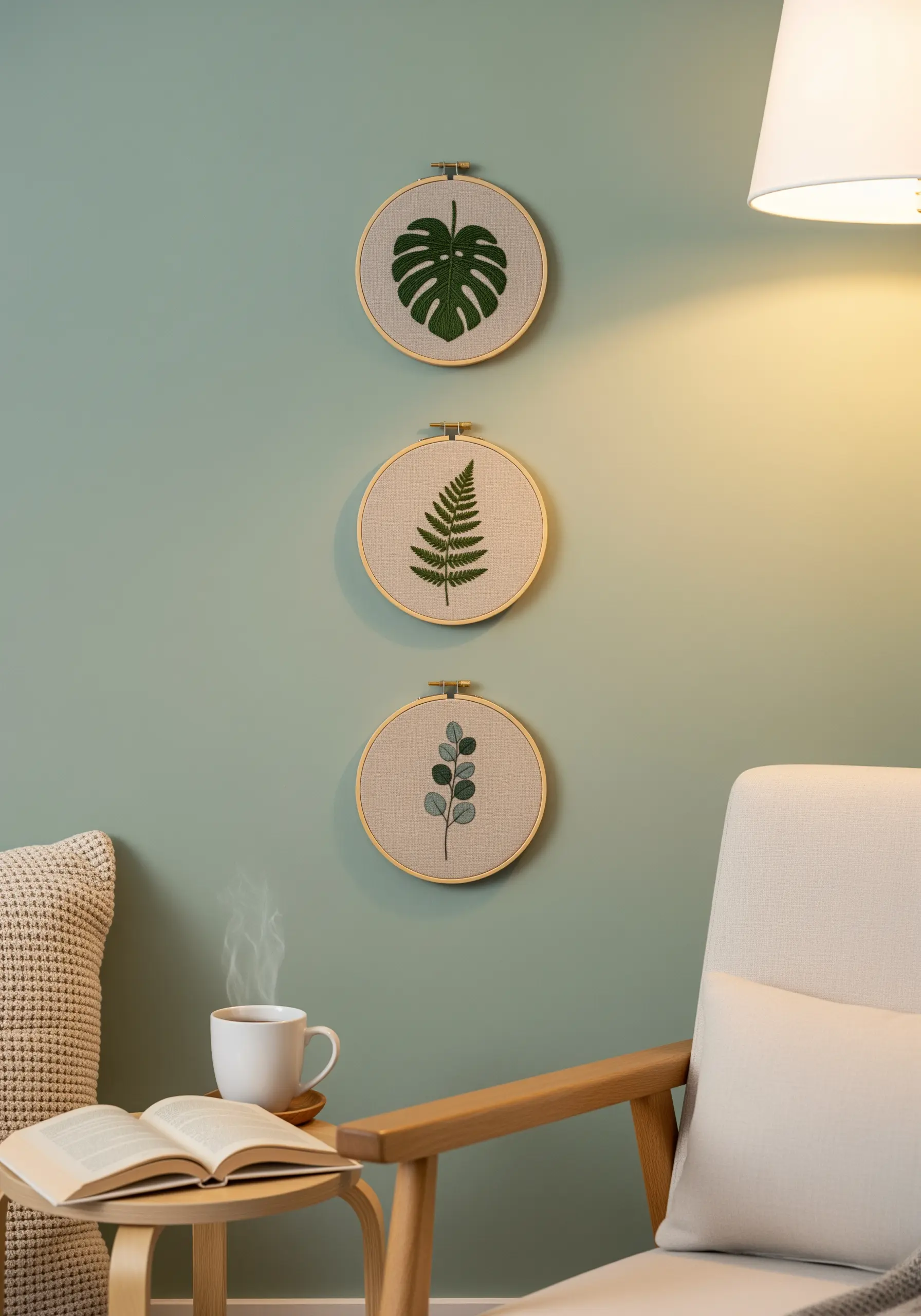
Create a gallery wall effect by stitching a series of related motifs, like these botanicals.
To ensure they feel connected, use the exact same beige linen fabric and natural wood hoops for all three pieces.
For the Monstera leaf, angle your satin stitches to follow the natural direction of the leaf’s segments, which adds a subtle, realistic sheen.
The fern and eucalyptus branch benefit from a delicate stem stitch for the main stalks and tiny detached chain stitches for the individual leaves, giving them dimension.
This grouping works because it balances a bold shape (Monstera) with two more delicate forms, creating visual harmony.
2. Master the Single-Line Portrait
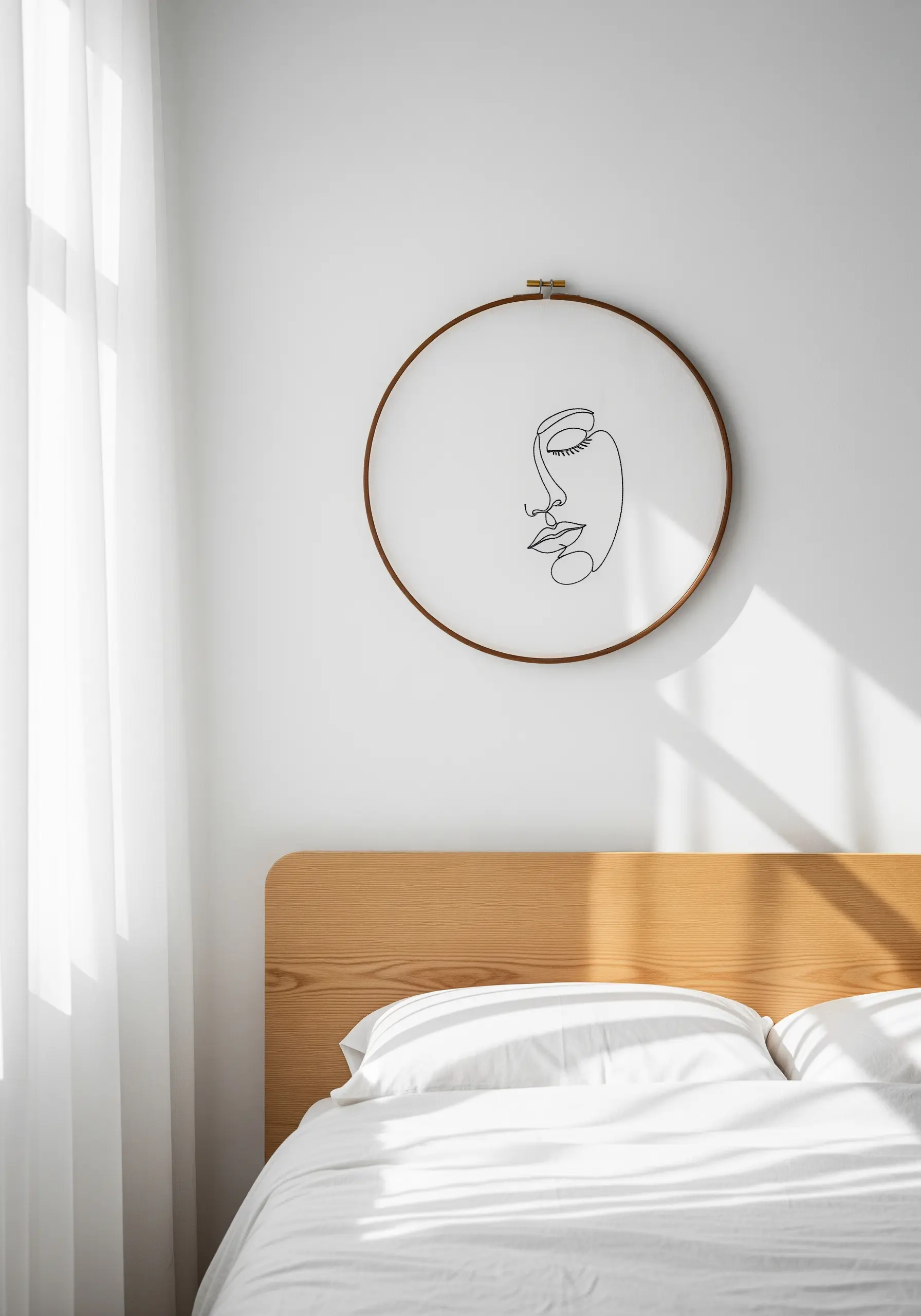
The power of an abstract face lies in its continuous, unbroken line.
To achieve this fluid look, use a whipped backstitch; first, create a standard backstitch outline, then weave a second thread through the stitches without piercing the fabric.
This technique smooths out the jagged edges of a typical backstitch, resulting in a single, elegant stroke.
Use two strands of black floss on a stark white cotton fabric to maximize contrast and let the pure form of the line art shine.
3. Illuminate a Nook with Celestial Motifs
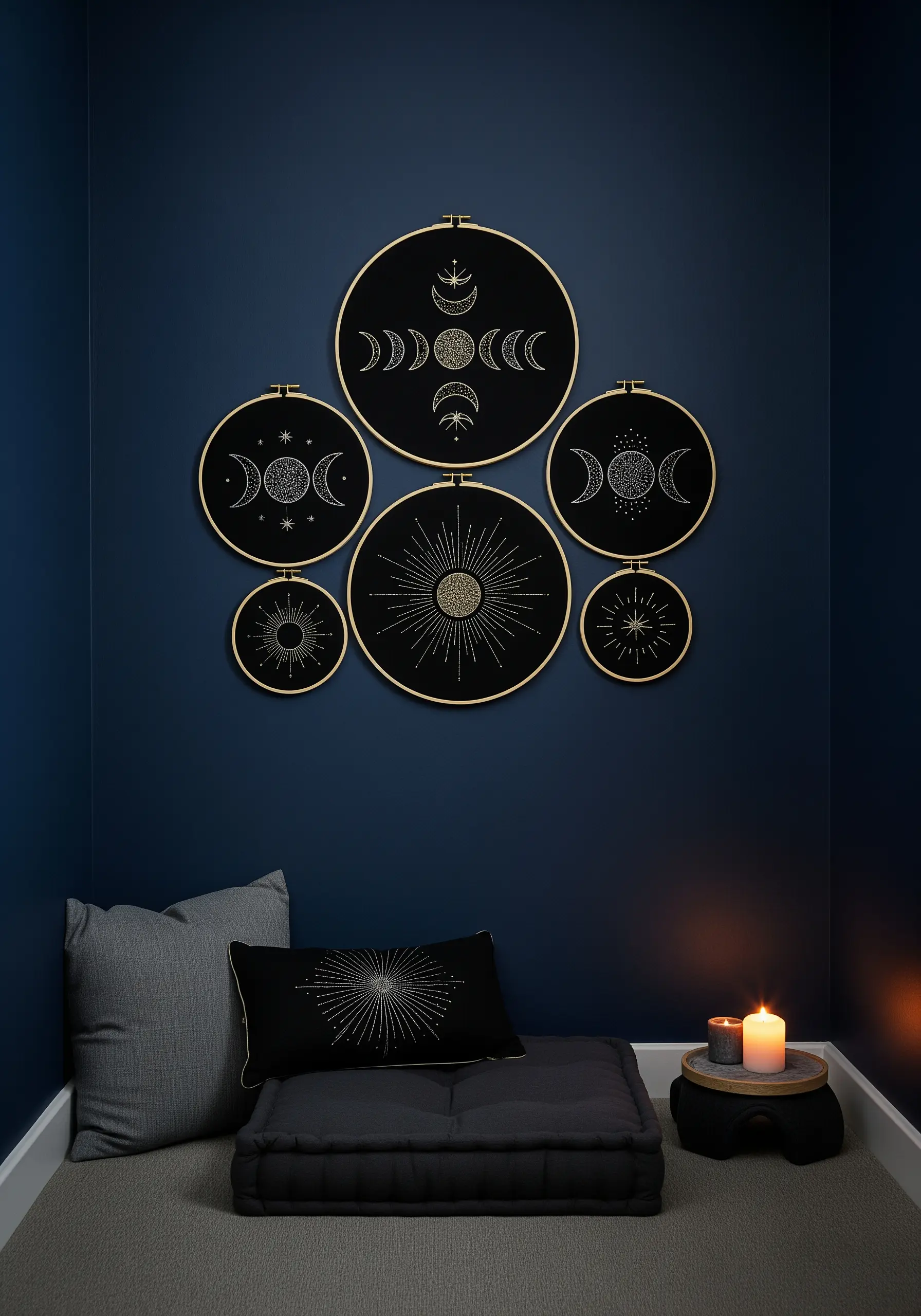
Transform a quiet corner into a meditative space with a celestial gallery wall.
Stitching with metallic thread on black fabric creates a stunning contrast that mimics a night sky.
To make the metallic floss easier to handle and prevent fraying, use shorter thread lengths (about 12 inches) and run it through a thread conditioner like beeswax.
Use a simple backstitch for outlines and tiny French knots or straight stitches for stars to add subtle texture to your tiny night sky embroidery designs.
4. Explore Texture with Geometric Seed Stitch
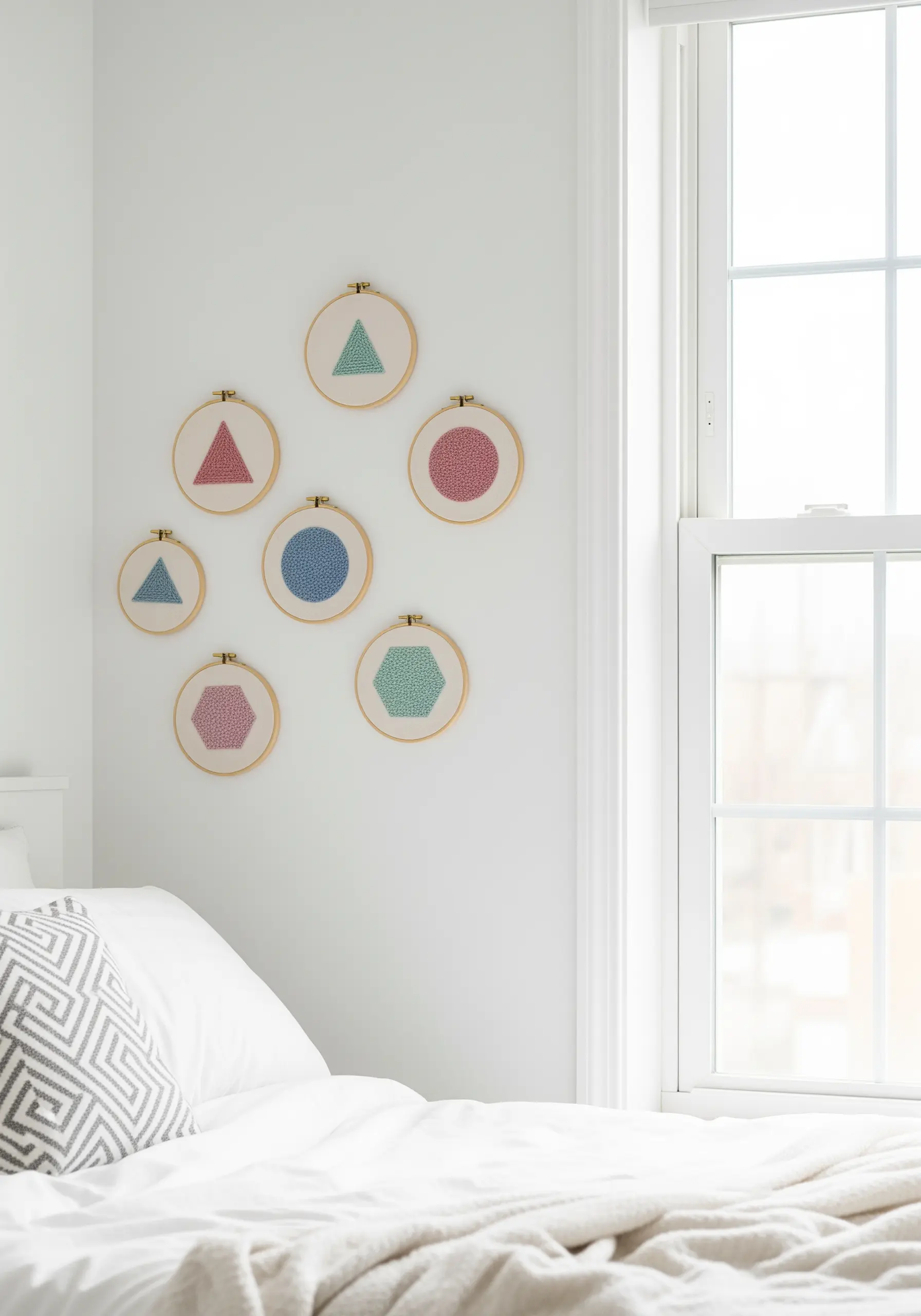
Move beyond simple outlines and explore textural fills for your geometric shapes.
Instead of a heavy satin stitch, fill each shape with a dense seed stitch—tiny, randomly placed straight stitches.
This approach creates a soft, stippled effect that feels modern and gentle, perfect for a bedroom.
Choose a soft, harmonious color palette like dusty rose and sage green to maintain a serene feel.
The texture invites a closer look, adding a layer of subtle complexity to these simple forms.
5. Juxtapose Architectural and Organic Lines
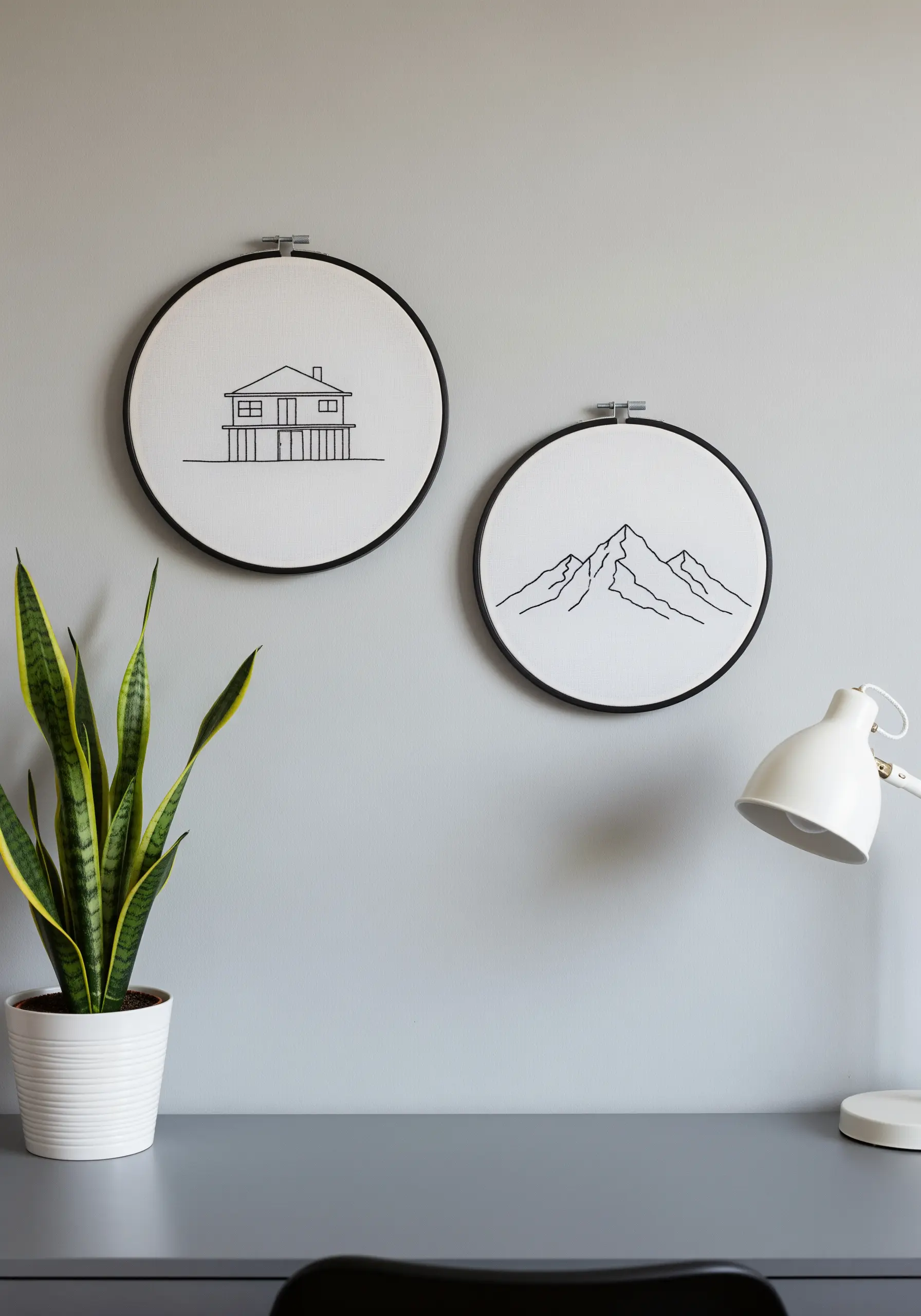
Create a narrative by pairing two distinct subjects, such as a structured building and a natural mountain range.
For the architectural lines of the house, use a precise backstitch with a single strand of floss to achieve a sharp, clean look.
In contrast, use a slightly looser split stitch for the mountains to give them a more organic, flowing quality.
This subtle shift in stitch style adds depth and character, making these minimal embroidery patterns more engaging.
6. Weave Chunky Yarn for Sculptural Effect
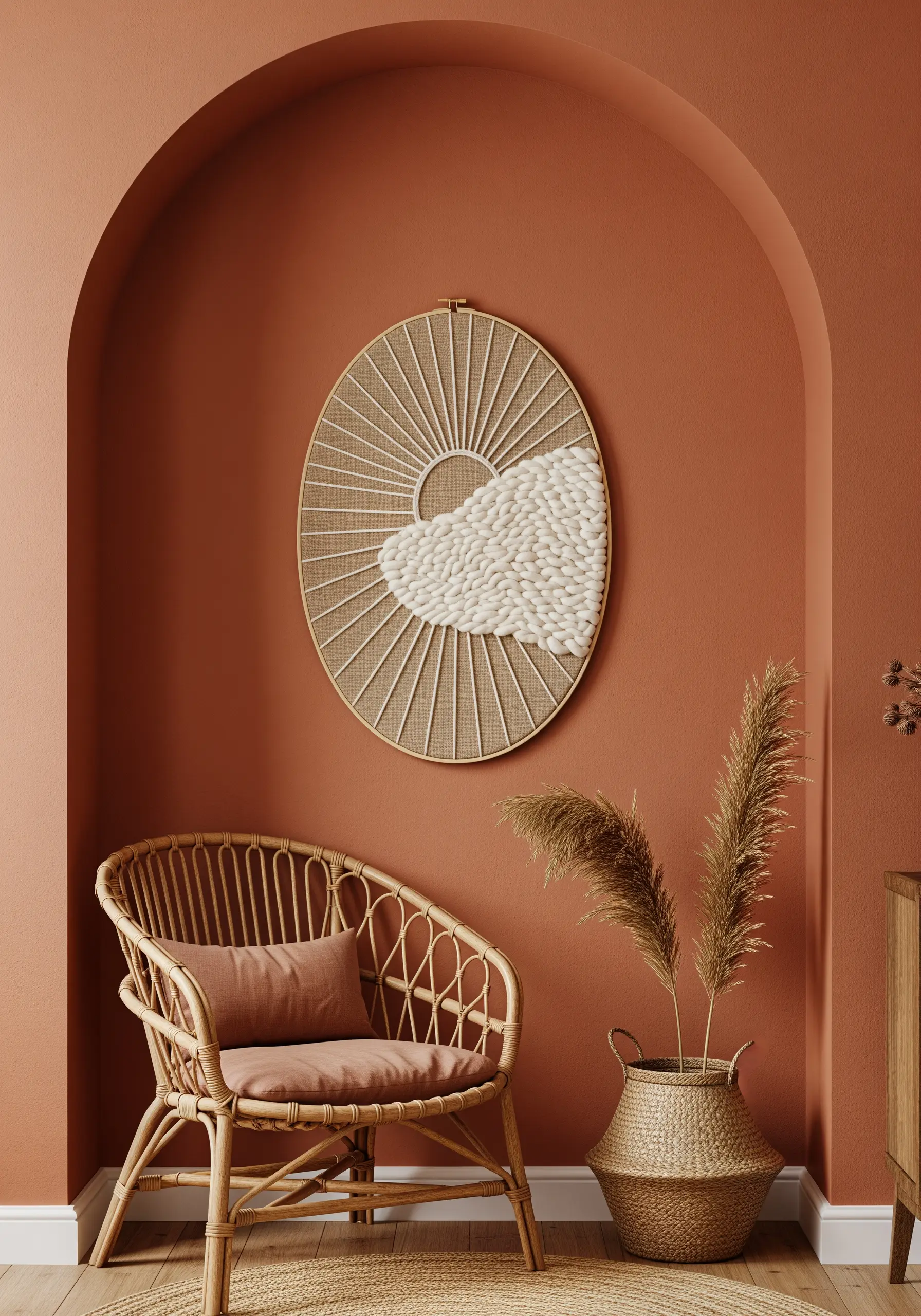
Introduce dramatic texture by combining delicate embroidery floss with thick, soft yarn.
First, create the radiating sun rays with a simple straight stitch using standard cotton floss.
Then, weave a chunky, unspun wool roving or yarn through the rays to create a soft, cloud-like form.
This mixed-media technique adds a bold, sculptural element that turns a simple hoop into a tactile statement piece.
The contrast between the fine threads and the bulky yarn is what makes the design so visually striking.
7. Tell a Year-Long Story in Four Hoops
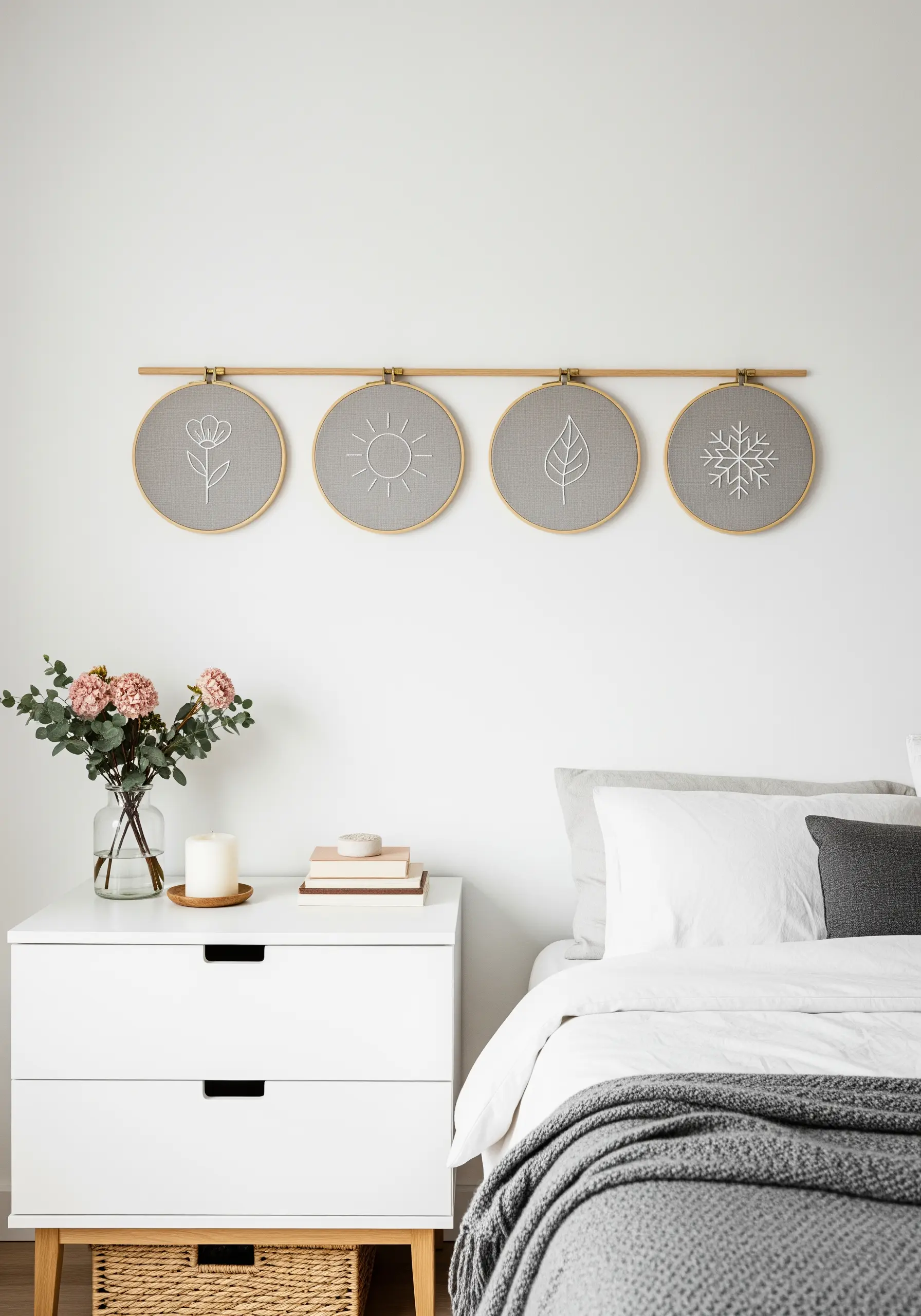
Represent the four seasons with simple, universal icons for a timeless wall display.
Use a clean, two-strand backstitch for each motif—a flower for spring, a sun for summer, a leaf for autumn, and a snowflake for winter.
Stitching in white thread on a neutral gray linen provides a calm, cohesive backdrop that works year-round.
Displaying them horizontally on a wooden dowel creates a single, unified art piece that is both minimalist and meaningful.
8. Create a Sculptural Braided Hoop
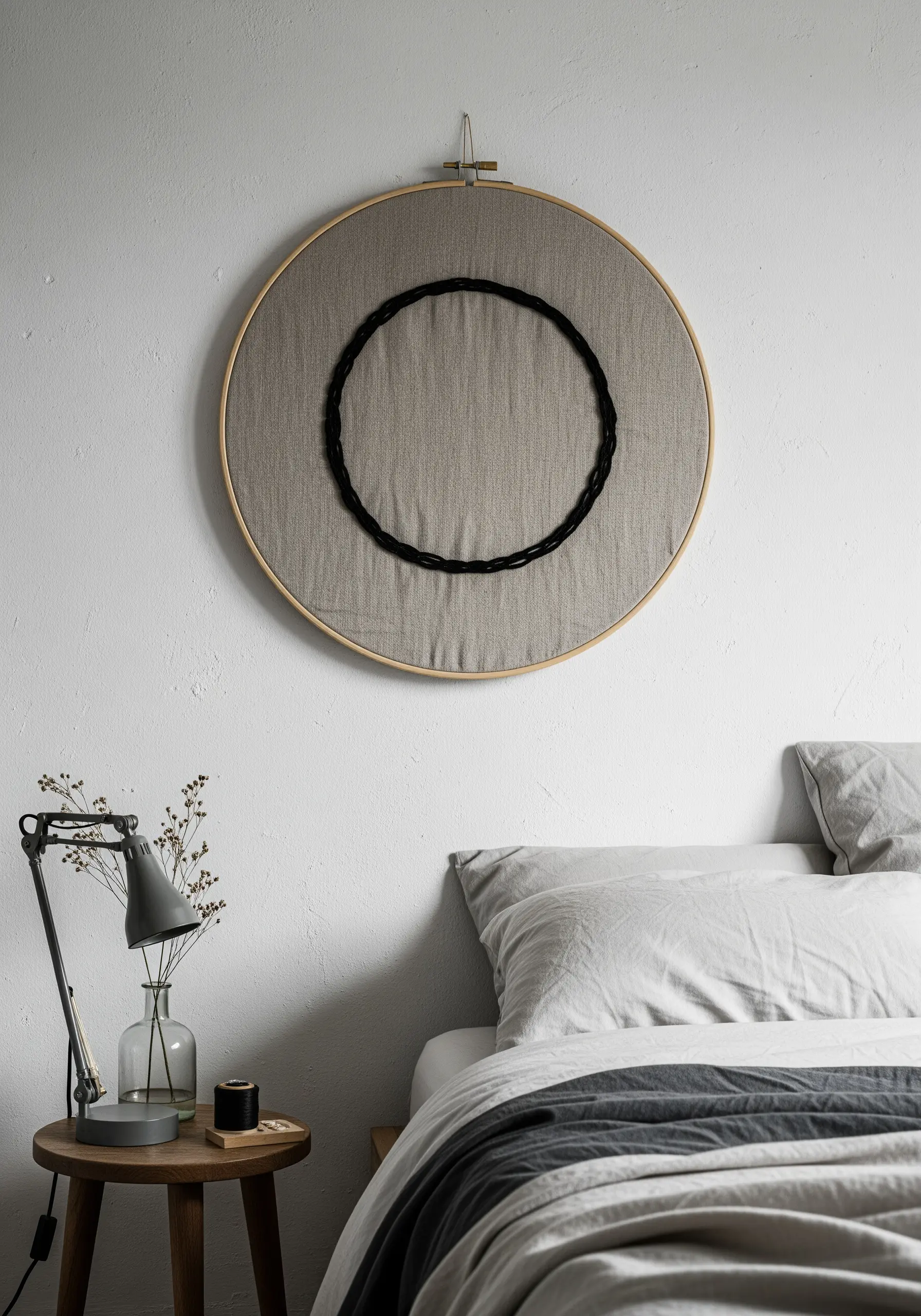
Elevate a simple circle by giving it bold, three-dimensional texture.
Instead of stitching a thin line, create this raised effect with a plaited braid stitch using all six strands of black embroidery floss.
Alternatively, you can couch a thick, pre-braided cord onto the fabric surface for an even faster result.
Placing this single, bold element on a large hoop with ample negative space creates a powerful, meditative focal point that feels both simple and complex.
9. Refine Your Lettering with Flowing Script
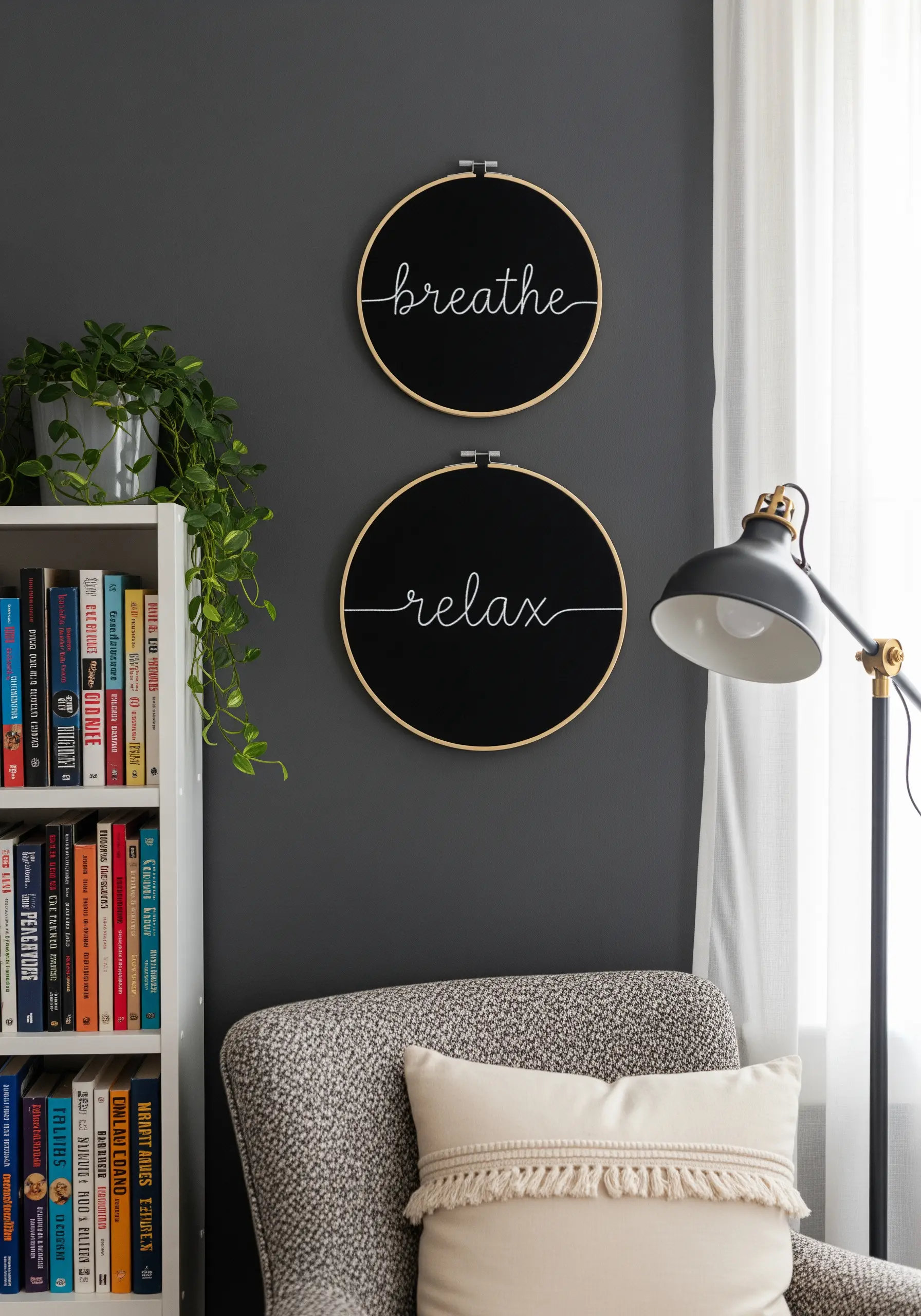
For elegant, cursive words, your stitch choice is everything.
Use a stem stitch or a whipped backstitch to create smooth, uninterrupted curves that mimic ink on paper.
Before you begin, write your word on paper and trace the path with your finger to understand the flow; this helps you plan where your stitches will start and stop.
Use a bright white thread on dark fabric to make your embroidered quote wall hangings pop with graphic contrast.
10. Add a Touch of Luxury with Goldwork Insects
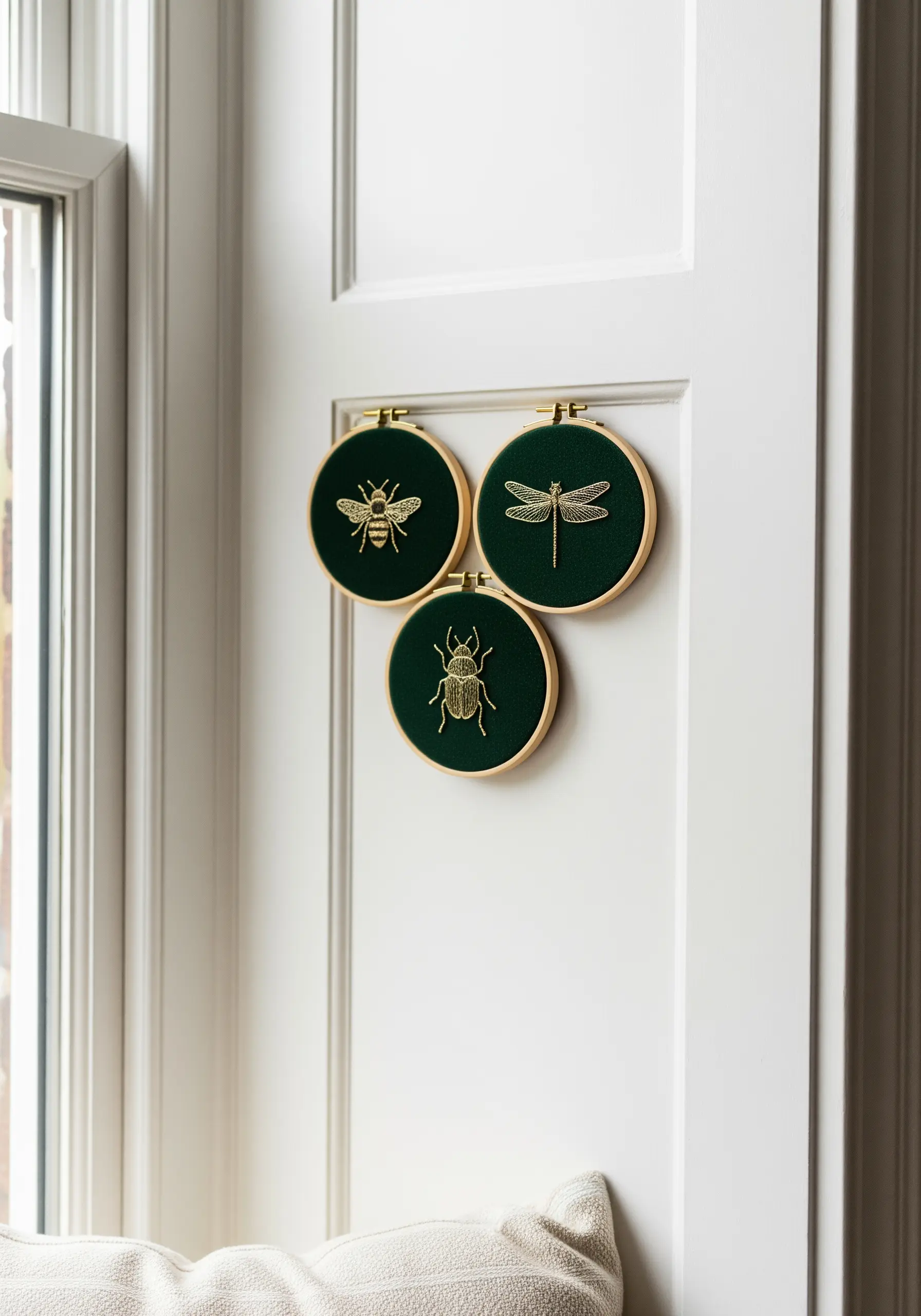
Stitch intricate insect motifs using gold metallic thread on a dark, plush fabric like velvet for a dramatic, high-end look.
Velvet has a deep pile, so use a tear-away stabilizer on the back to support your stitches and prevent the fabric from puckering.
A simple backstitch for the outlines and satin stitch for the bodies will catch the light beautifully.
These gold thread luxury wall art projects feel like precious, antique specimens for your wall.
11. Capture Playful Movement in Animal Silhouettes
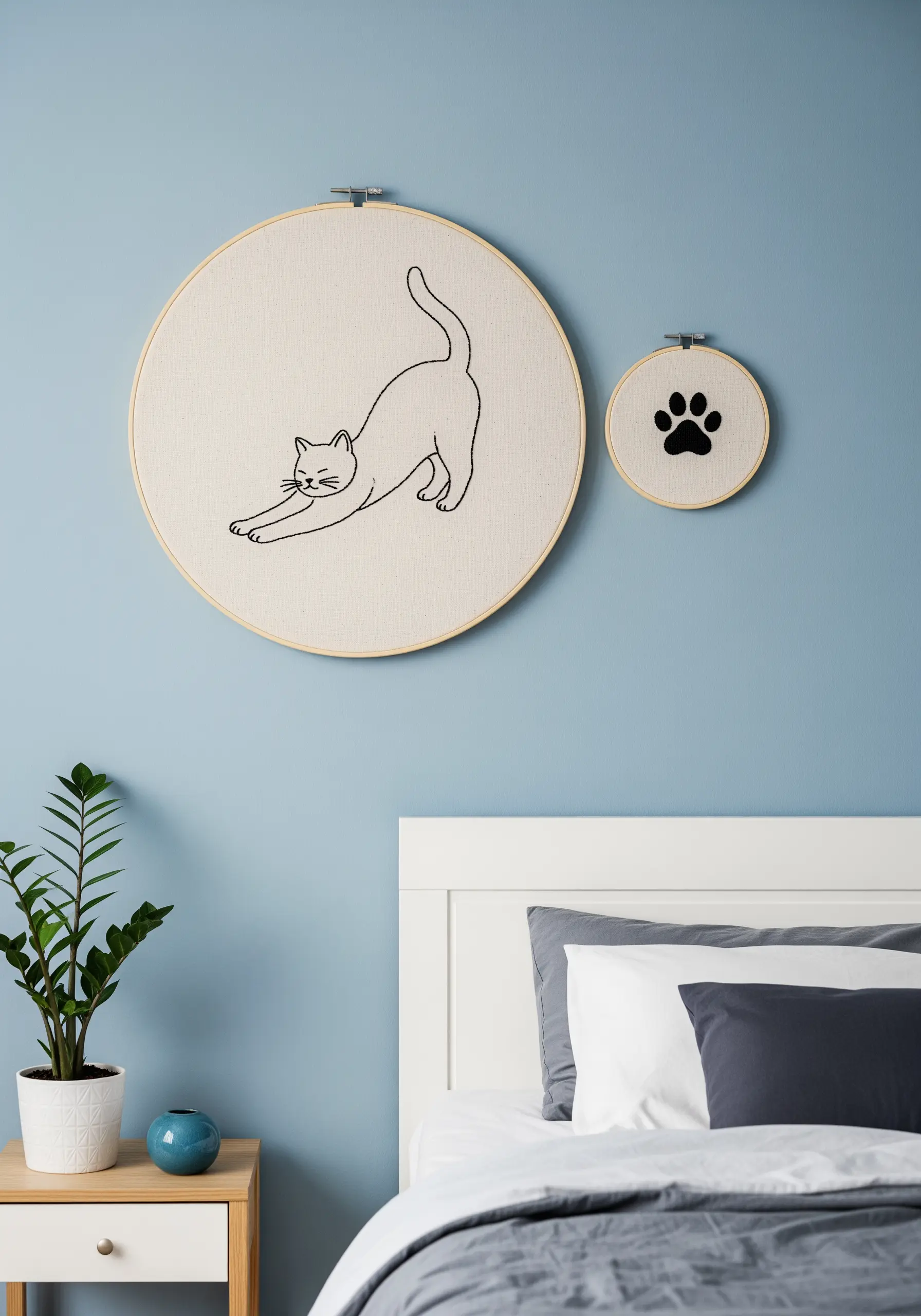
When embroidering an animal in motion, let your stitches reflect that energy.
Instead of using uniform stitch lengths, vary them slightly along the cat’s back to emphasize the curve of its stretch.
Use a slightly longer backstitch for the long, straight legs and shorter, tighter stitches for the detailed face and paws.
This subtle variation makes the simple outline feel more dynamic and alive, turning a static image into a moment of action.
12. Design with Abstract Precision
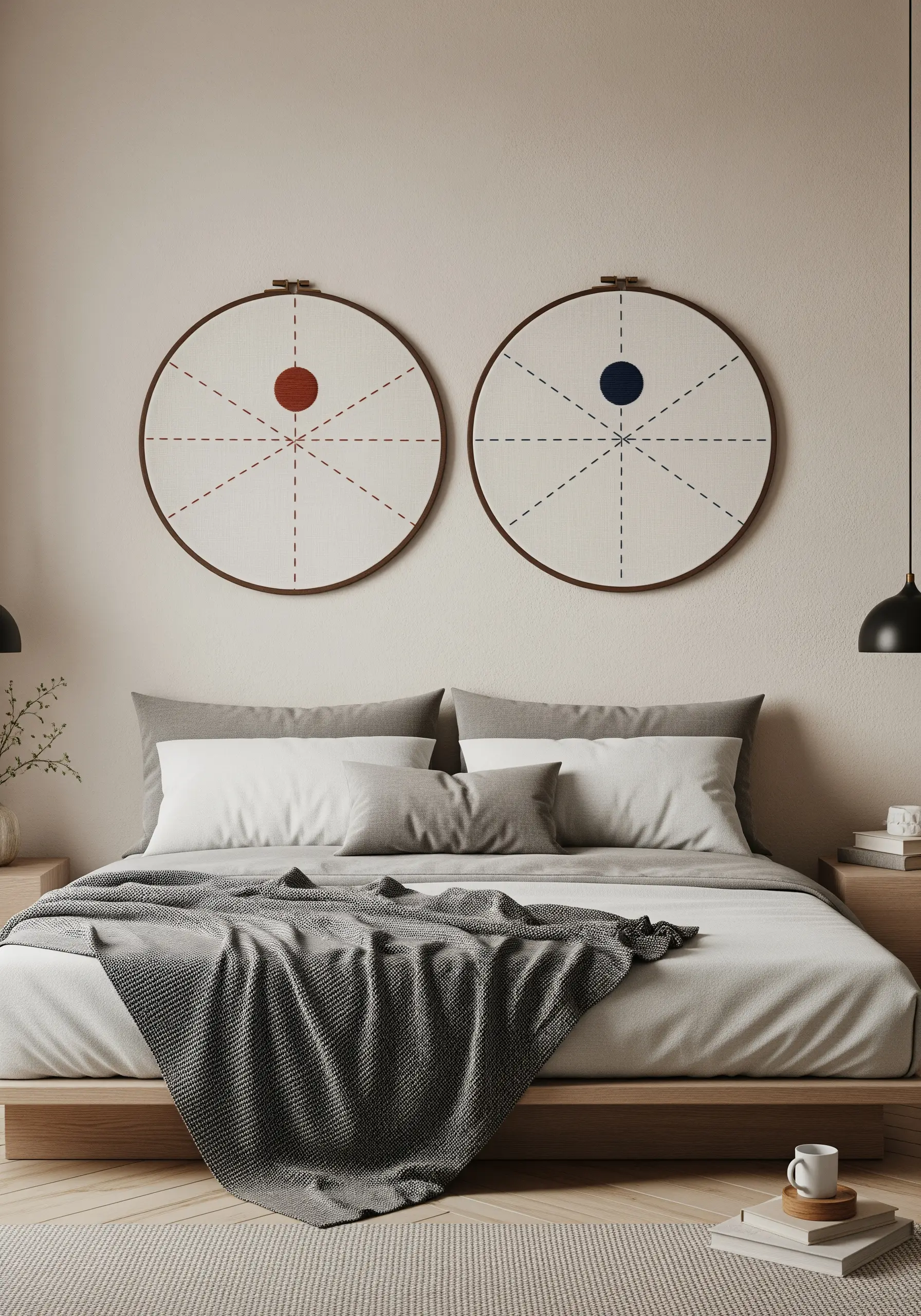
Create a clean, modern aesthetic by combining precise lines with simple geometric fills.
Use a ruler and a water-soluble pen to mark your guidelines perfectly before you stitch; accuracy is key to this design’s success.
Work the dividing lines with a neat running stitch, ensuring each stitch and gap is of equal length for a dashed effect.
Fill the center circle with a dense satin stitch, creating a single, bold pop of color that anchors the entire composition.
13. Stitch a Personal Soundwave
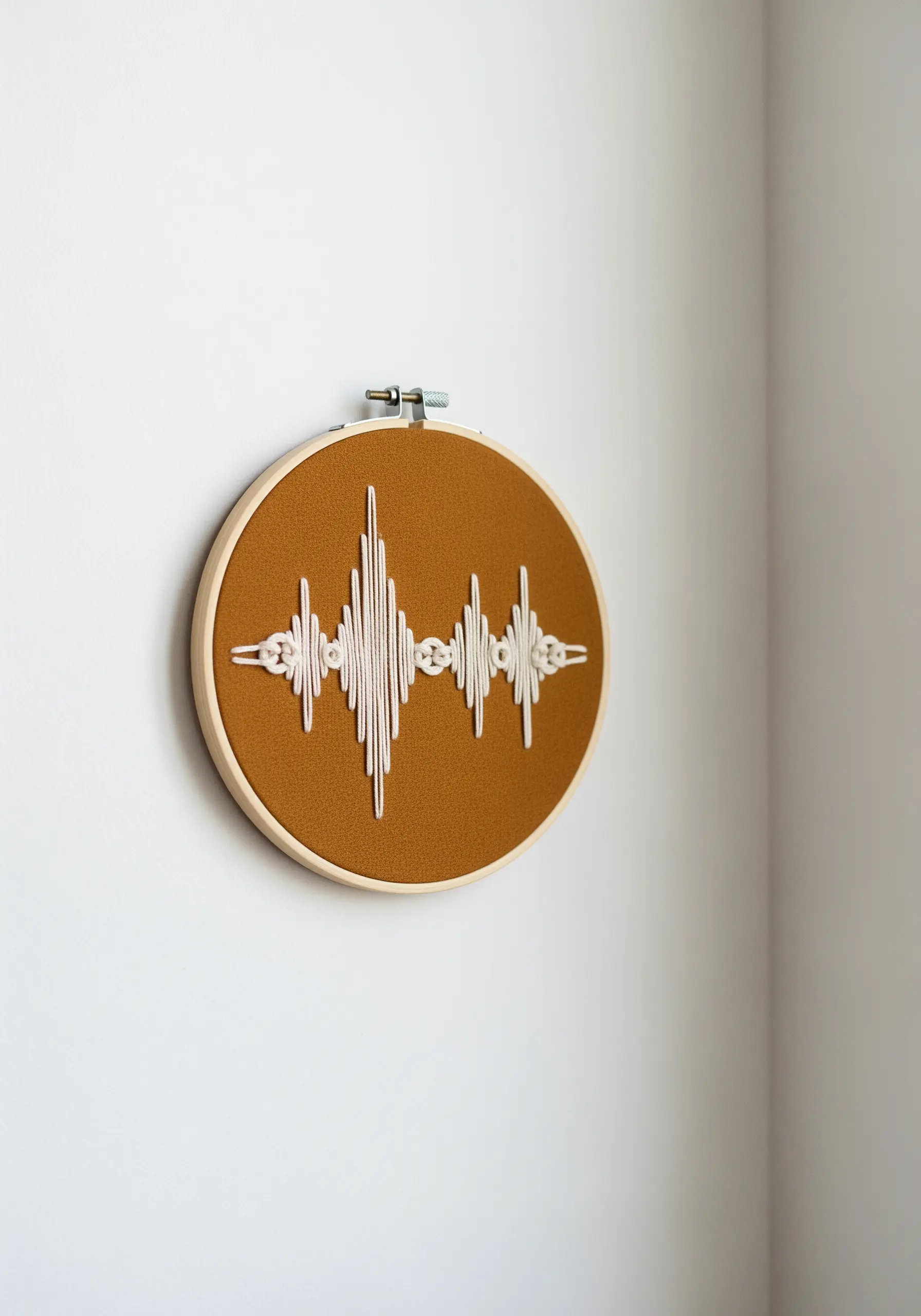
Turn a meaningful sound—a laugh, a name, a snippet of a song—into a tangible piece of art.
Record a short audio clip and take a screenshot of the soundwave to use as your pattern.
Use a thick thread or multiple strands of floss and a dense satin stitch to create the vertical lines, varying their height to match the waveform.
This highly personal design transforms an invisible memory into a visual and textural keepsake.
14. Embrace the Elegance of Monochrome Botanicals
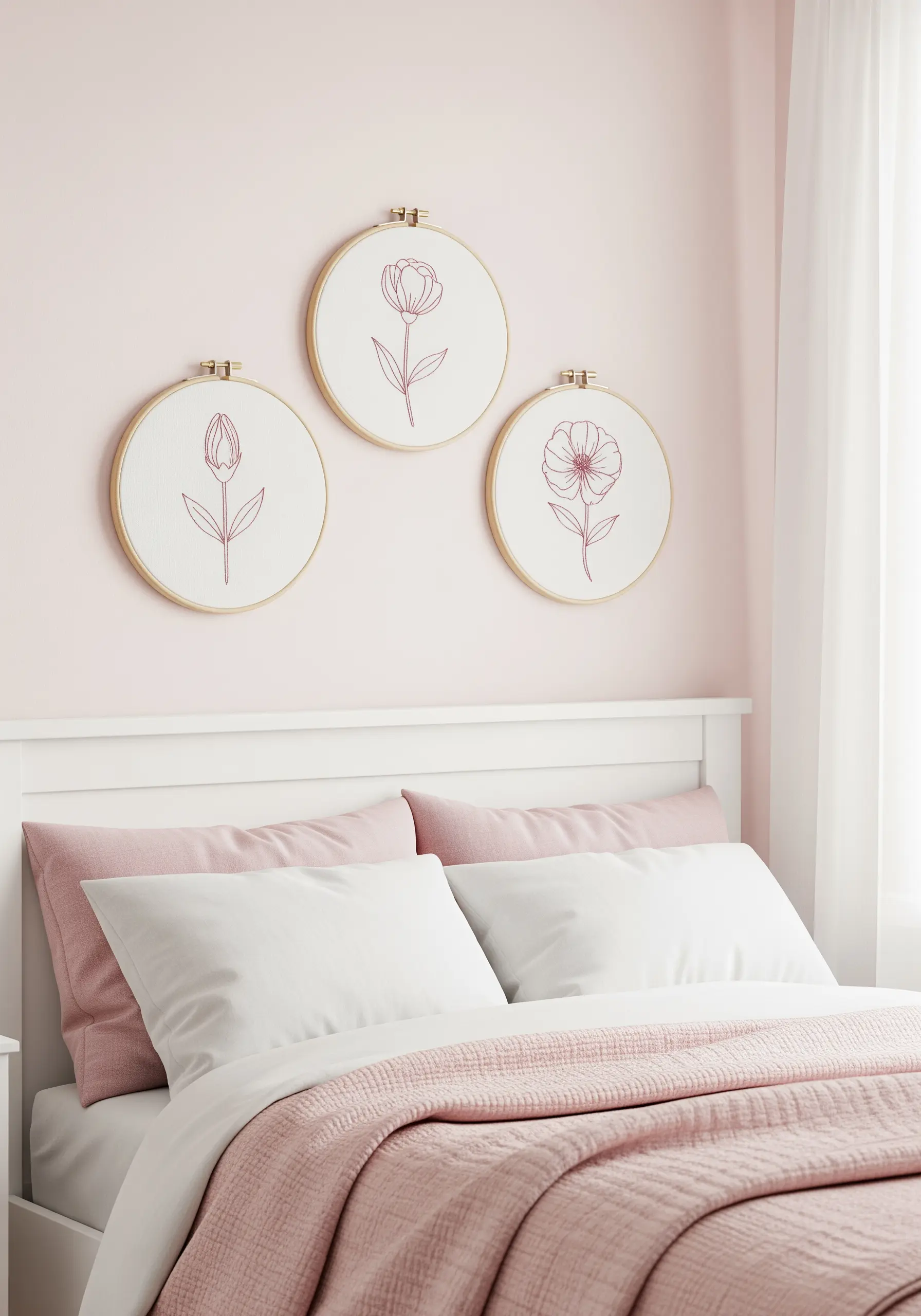
Working with a single color forces you to focus on the purity of line and form.
Choose a single hue, like this dusty rose, and stitch delicate botanical outlines on a neutral white fabric.
Use a split stitch for the stems and petals; it creates a slightly raised, chain-like texture that gives the simple lines more substance than a basic backstitch.
Grouping three similar but distinct floral designs creates a soft, romantic, and cohesive look perfect for a bedroom.
15. Create Ethereal Designs on Sheer Fabric
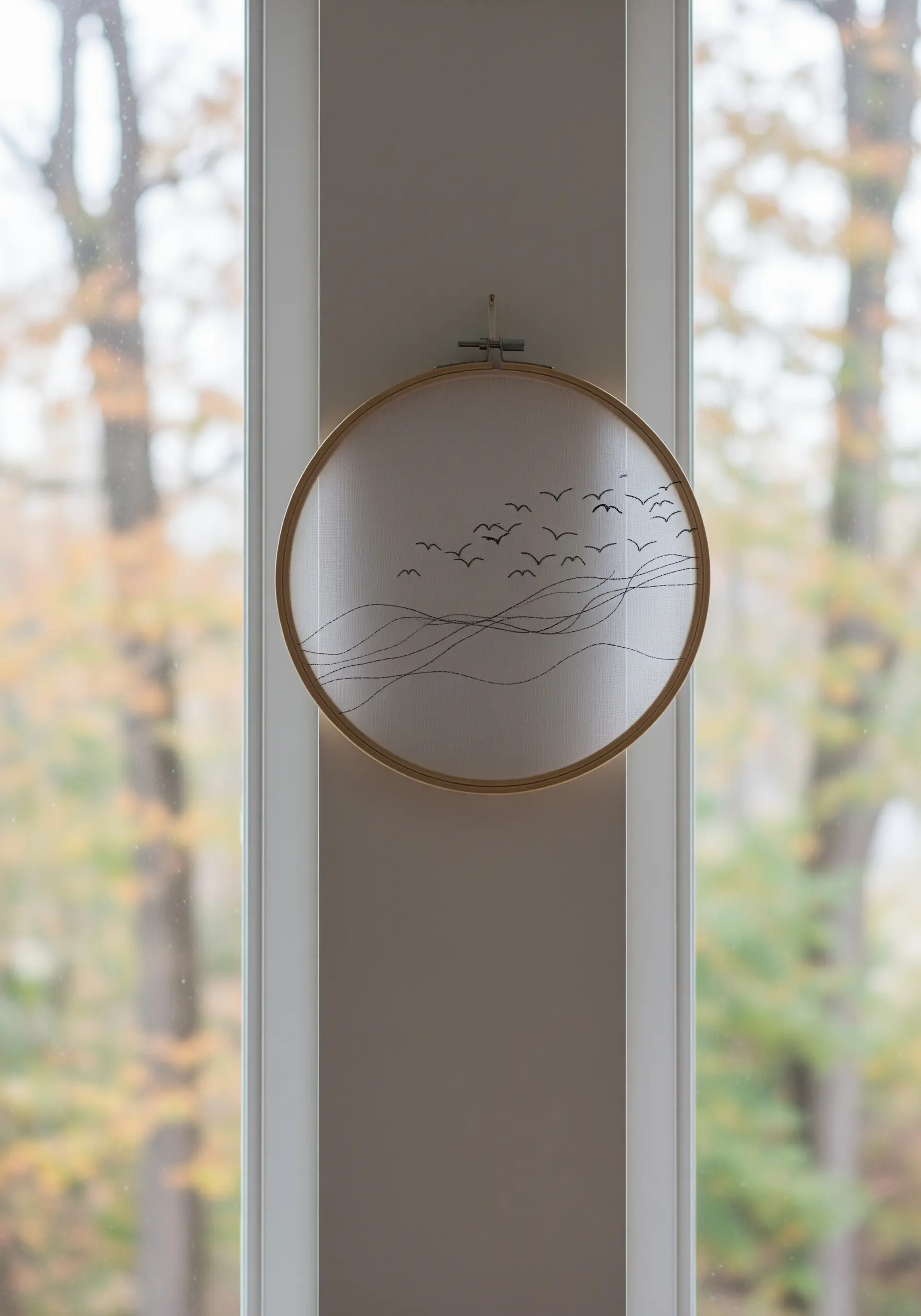
Stitching on a transparent fabric like organza or voile creates a magical, floating effect.
Because the fabric is so delicate, you must hoop it with a layer of water-soluble stabilizer; this provides the tension you need and prevents puckering.
Use a fine needle and a simple backstitch with only one or two strands of floss to keep the design light and airy.
Once you are finished, trim the stabilizer away and gently rinse to dissolve the rest, leaving your stitches suspended in air.
16. Make a Bold Statement with a Single Line
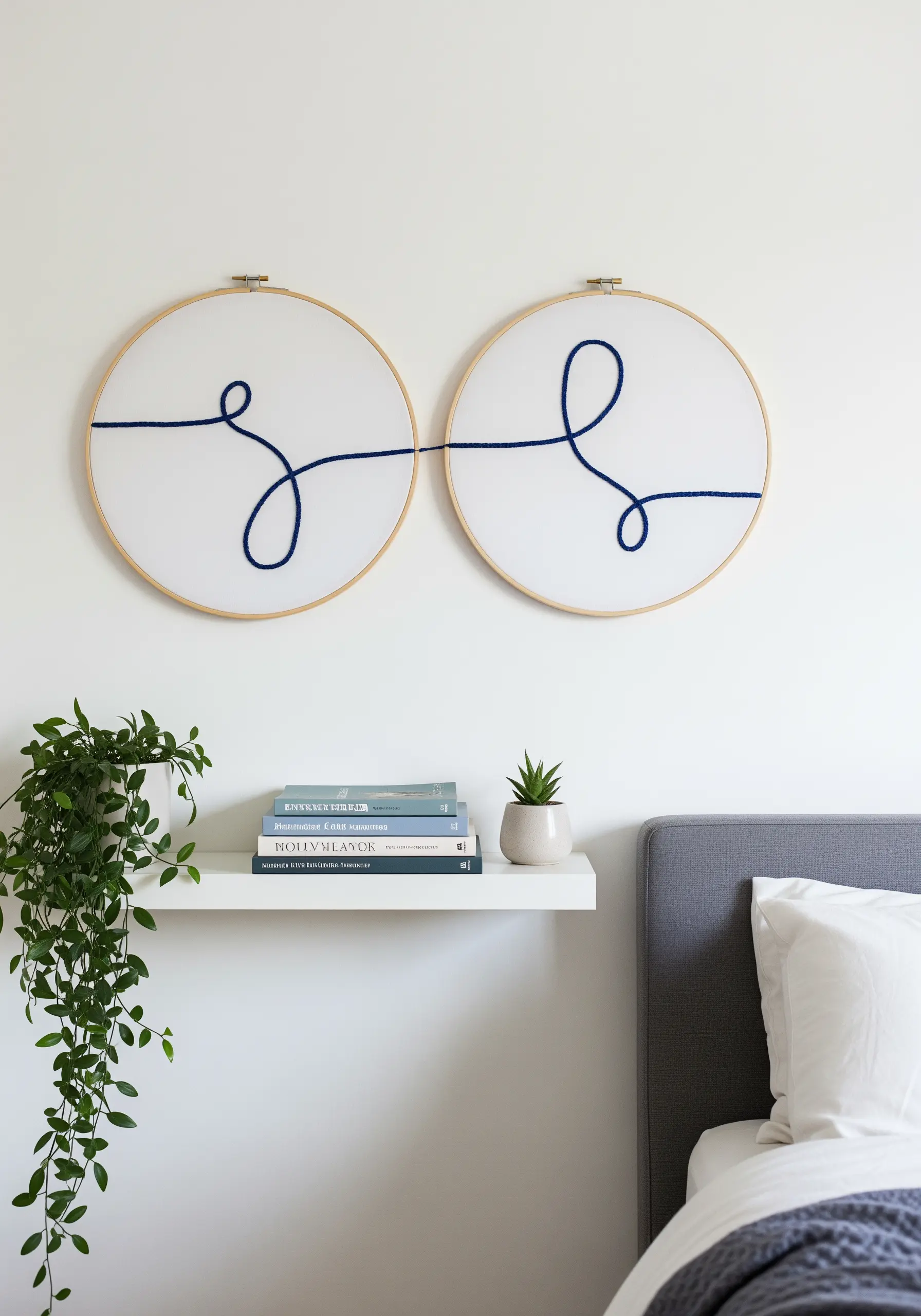
Sometimes, the most impactful design is the simplest one.
Create this high-contrast, sculptural look by couching a thick, chunky yarn onto your fabric.
To do this, lay the yarn in your desired shape and then use a single strand of matching embroidery floss to tack it down with small, evenly spaced stitches.
You can even extend the yarn from one hoop to another to create a connected diptych that feels like a single, continuous art piece.
17. Perfect the Art of the Simple Outline
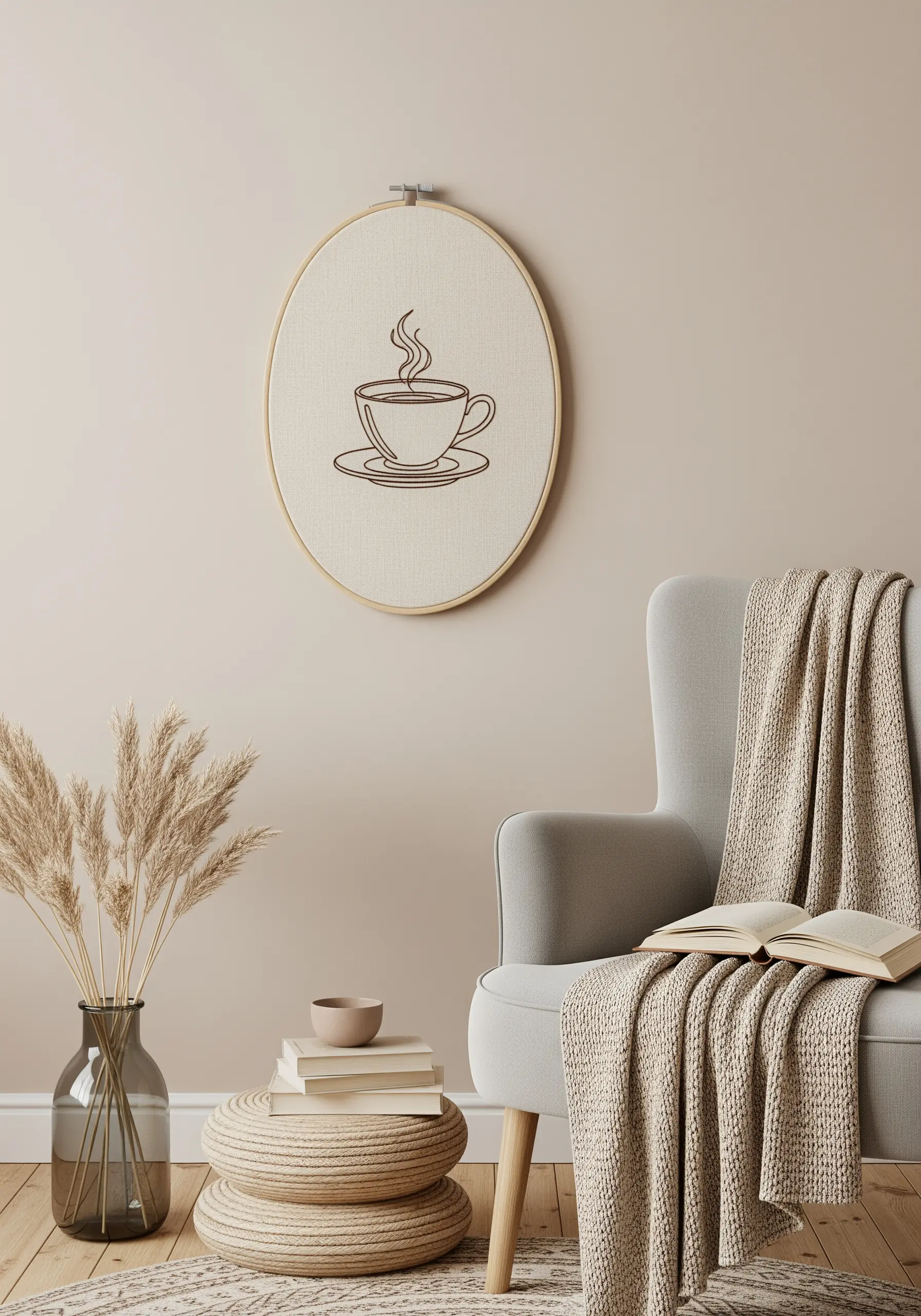
A simple motif, like a coffee cup, becomes a piece of refined art when the execution is flawless.
The key to a perfect outline is stitch consistency. Use a backstitch with two strands of floss, focusing on making every single stitch the exact same length.
To navigate tight curves, such as the handle of the cup, shorten your stitch length slightly for a smoother, less angular line.
Stitching a warm, comforting subject in a single color creates a piece of minimalist art that’s perfect for a reading nook.
18. Build a Landscape with Varied Textures
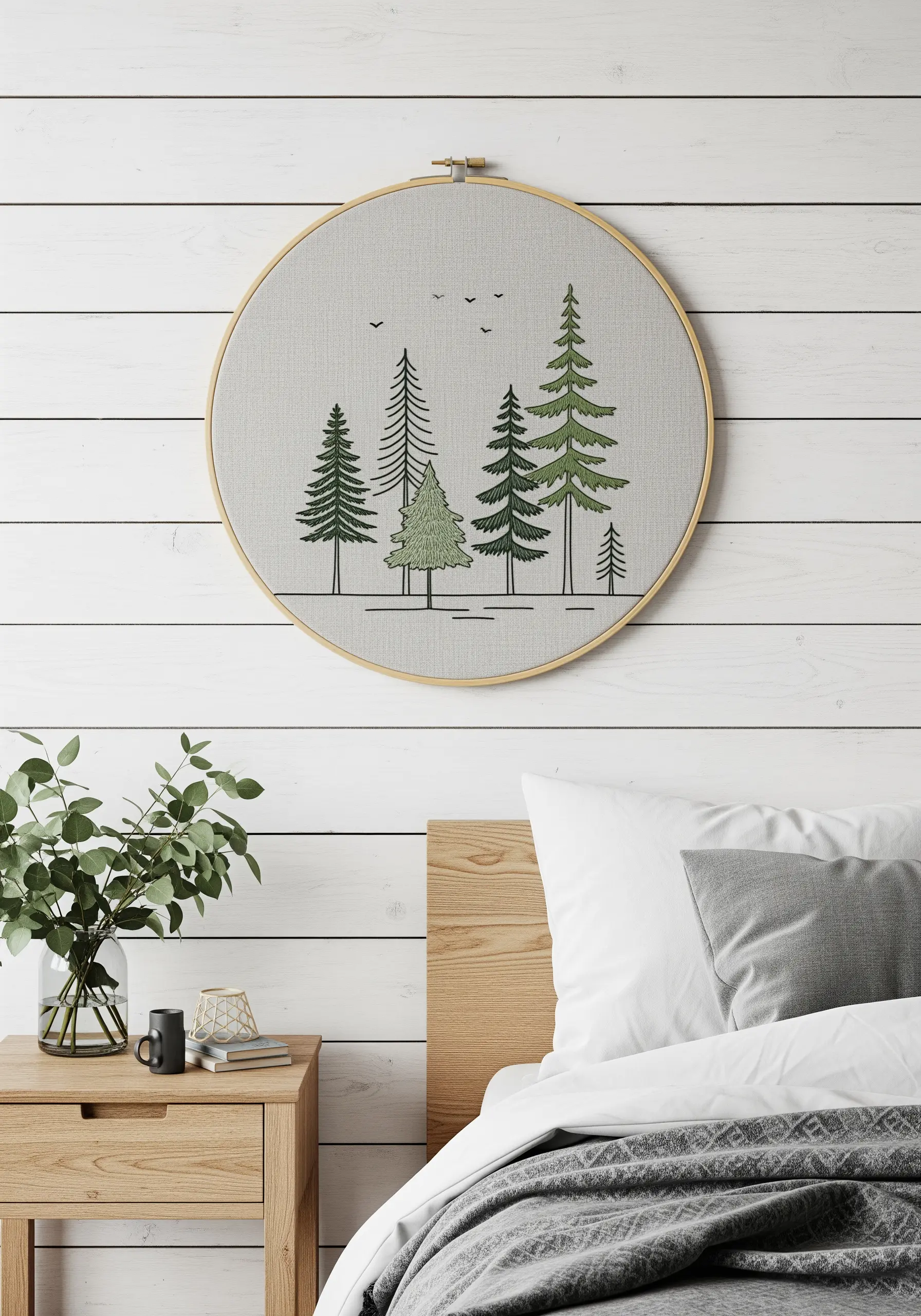
Create a sense of depth in a landscape by assigning a different stitch or color to each element.
Use a vertical satin stitch for the tree trunks and a series of straight stitches or French knots for the pine needles.
Embroider each tree in a slightly different shade of green to suggest distance and variety.
Even with simple stitches, this approach to texture and color layering transforms a flat scene into a dynamic woodland tapestry.
19. Add a Secret Glow to Your Bedside Decor
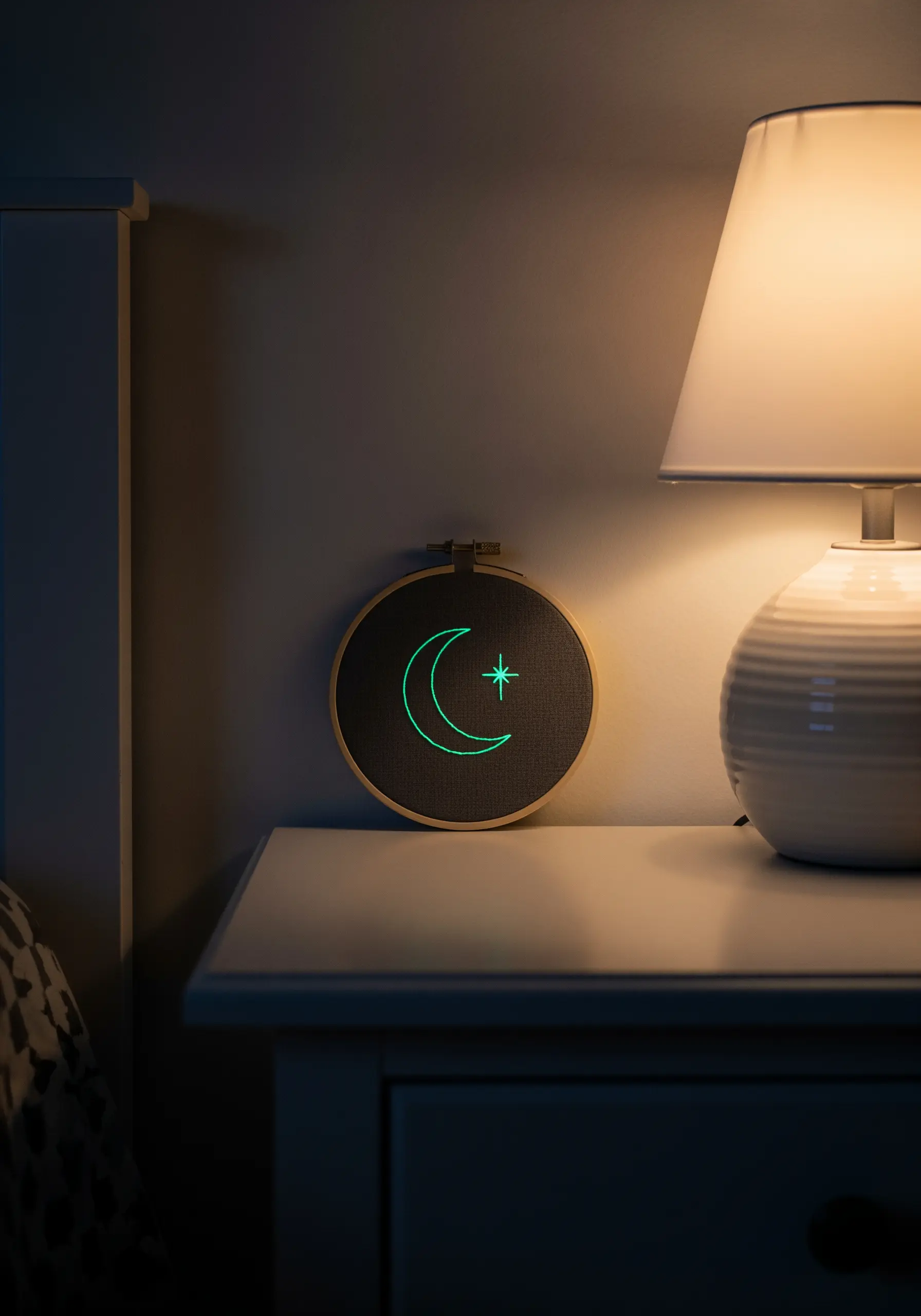
Surprise and delight with a design that comes to life after dark.
Use a specialty glow-in-the-dark embroidery floss to stitch a simple celestial motif, like a crescent moon and star.
This thread looks like plain white or off-white floss in the daylight but emits a soft glow in the dark after being exposed to light.
Stitch it on a dark fabric for the best effect, and place it near a bedside lamp to “charge” it before you go to sleep.
20. Design a Personal Symbol Grid
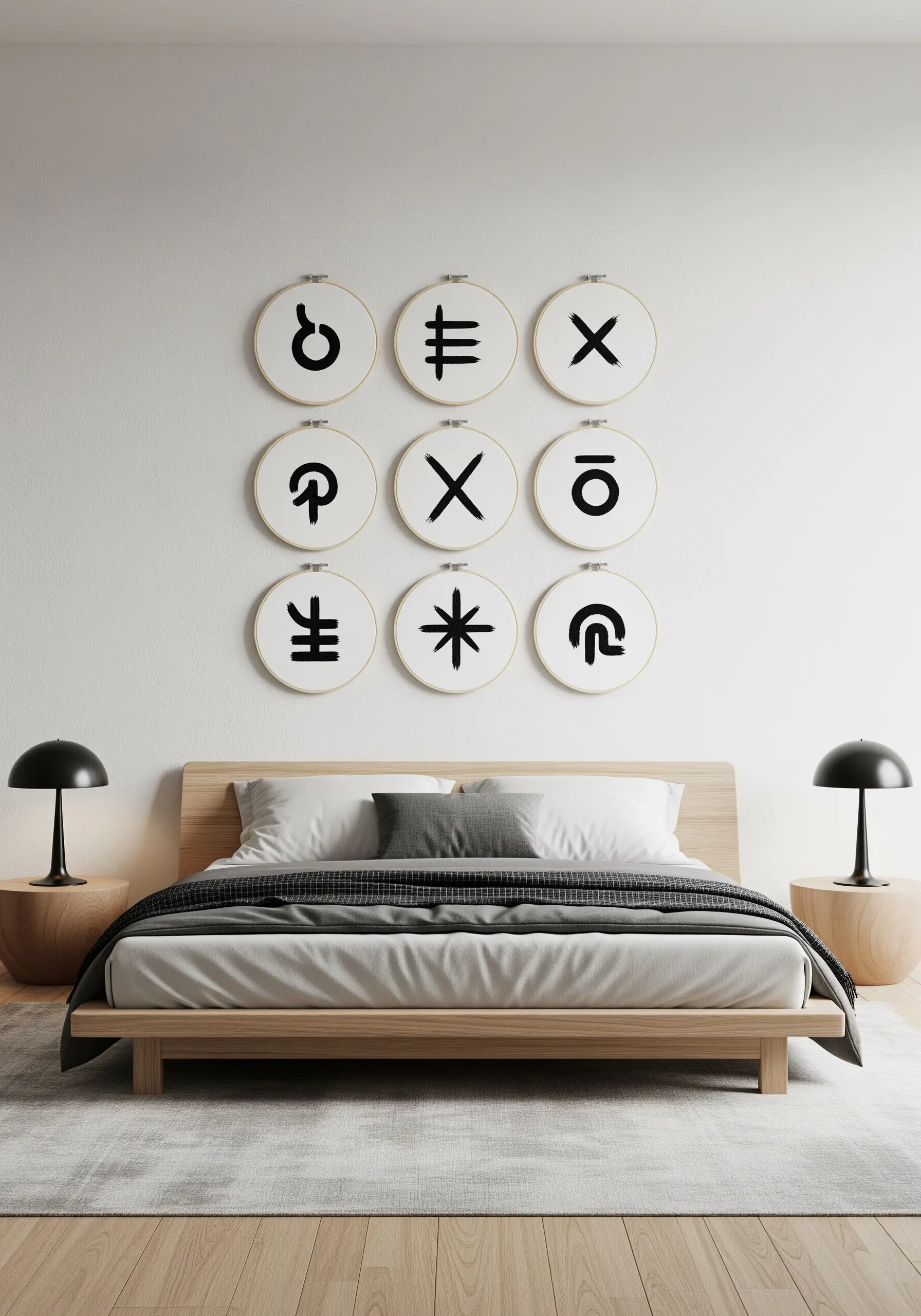
Create a modern, graphic gallery wall by designing your own set of personal symbols or abstract glyphs.
Sketch out nine simple, bold shapes that have meaning to you, then stitch them using a thick satin stitch with all six strands of black floss.
The key to this look is consistency: use the same size hoops, the same white fabric, and the same thread for each piece.
Arranging them in a tight grid transforms them from individual hoops into a single, large-scale piece of intentional art.
21. Tell a Story with Paired Objects
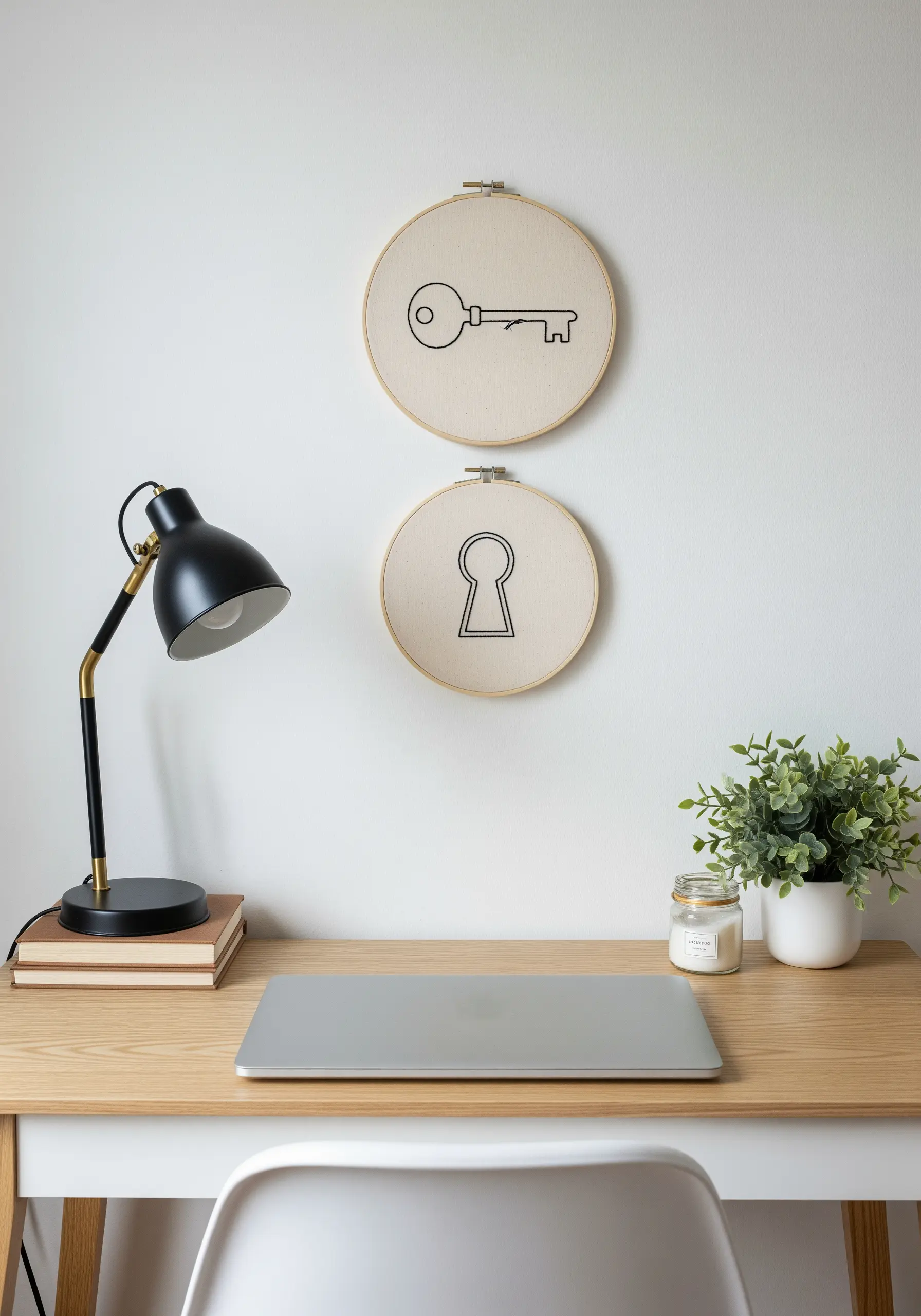
Two simple hoops can create a narrative that is greater than the sum of its parts.
Stitch a key in one hoop and a keyhole in another to imply a sense of connection, mystery, or belonging.
Use a clean, crisp backstitch to ensure the outlines are graphic and instantly recognizable.
The negative space around the objects is just as important as the stitches themselves, so keep the composition centered and uncluttered.
22. Paint a Landscape with Thread
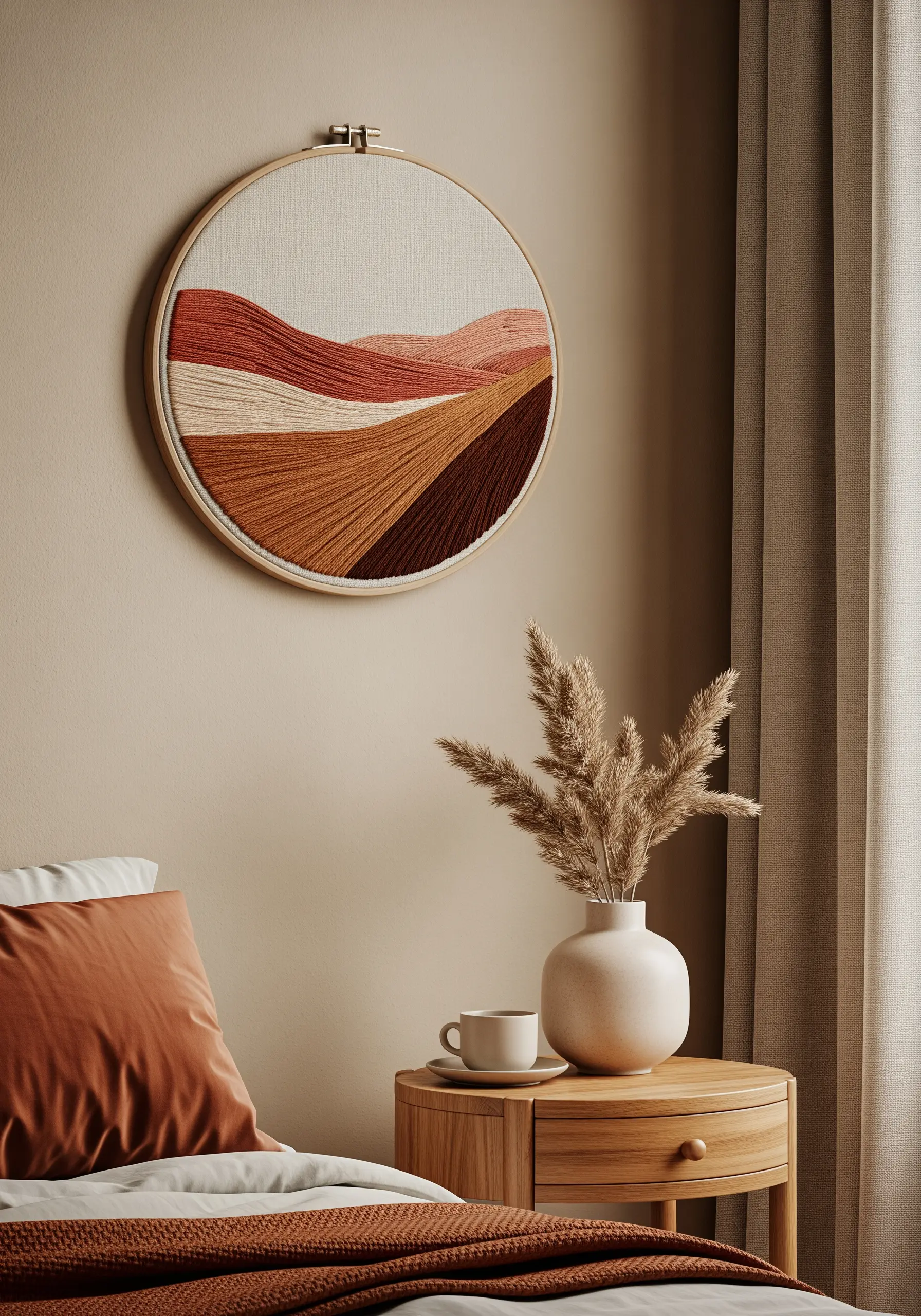
Create an abstract thread landscape by filling organic shapes with directional satin stitch.
Choose an earthy, tonal color palette—like terracotta, sand, and deep brown—to evoke rolling hills or a desert sunset.
Fill each colored section with long, straight stitches, but change the angle of your stitches for each new shape.
This technique, known as thread painting, allows the different sections to catch the light in unique ways, creating a sense of depth and movement.
23. Stitch an Icon for Your Reading Nook
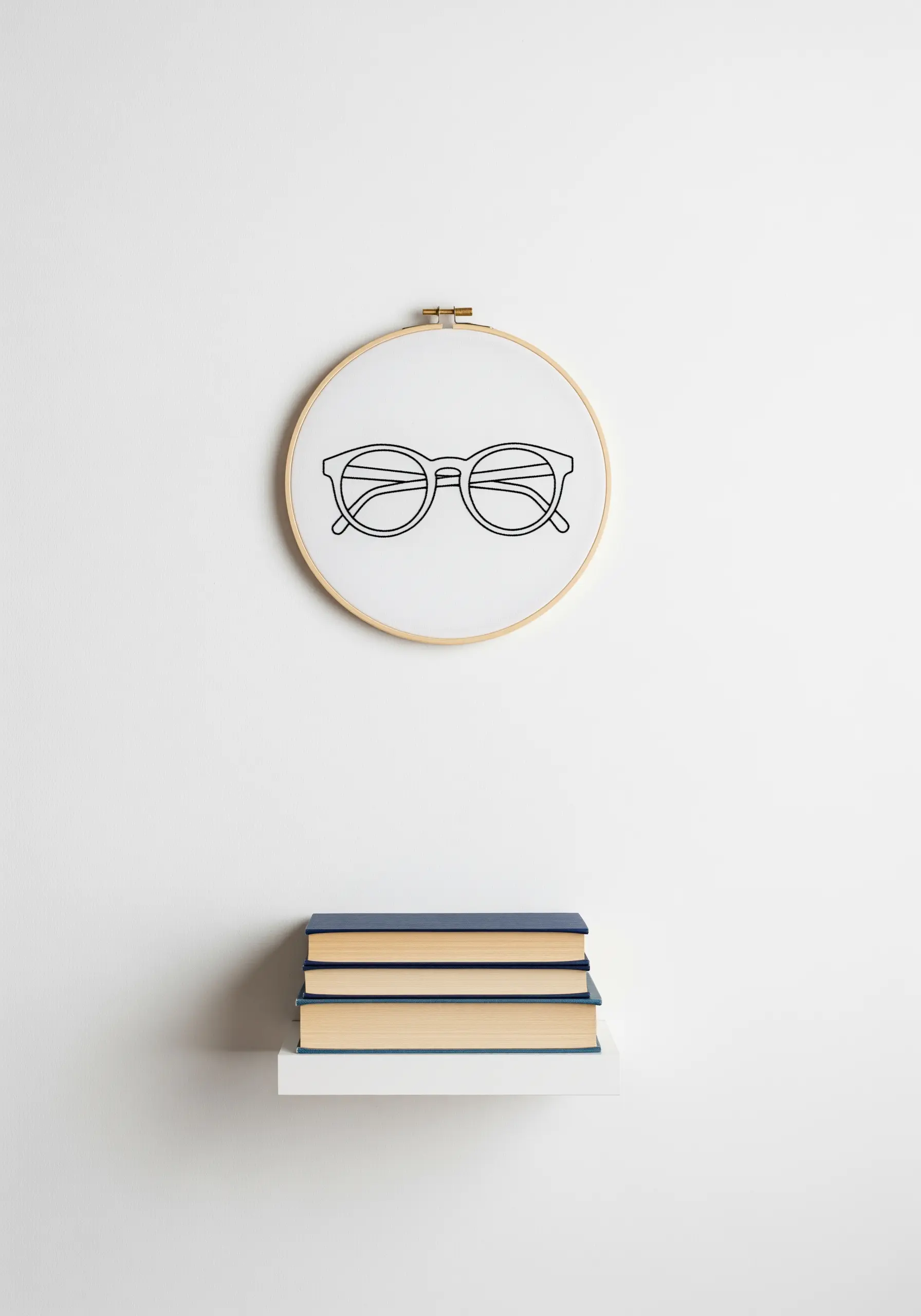
Celebrate your love of reading by stitching a simple, iconic object like a pair of glasses.
To ensure perfect symmetry, print your design onto a sheet of water-soluble stabilizer and hoop it along with your fabric.
Stitch directly through the paper pattern using a neat backstitch, then soak the finished piece in water to dissolve the stabilizer completely.
This method guarantees your lines are perfectly placed, which is essential for graphic designs like this.
24. Create Harmony with a Monochromatic Leaf Study
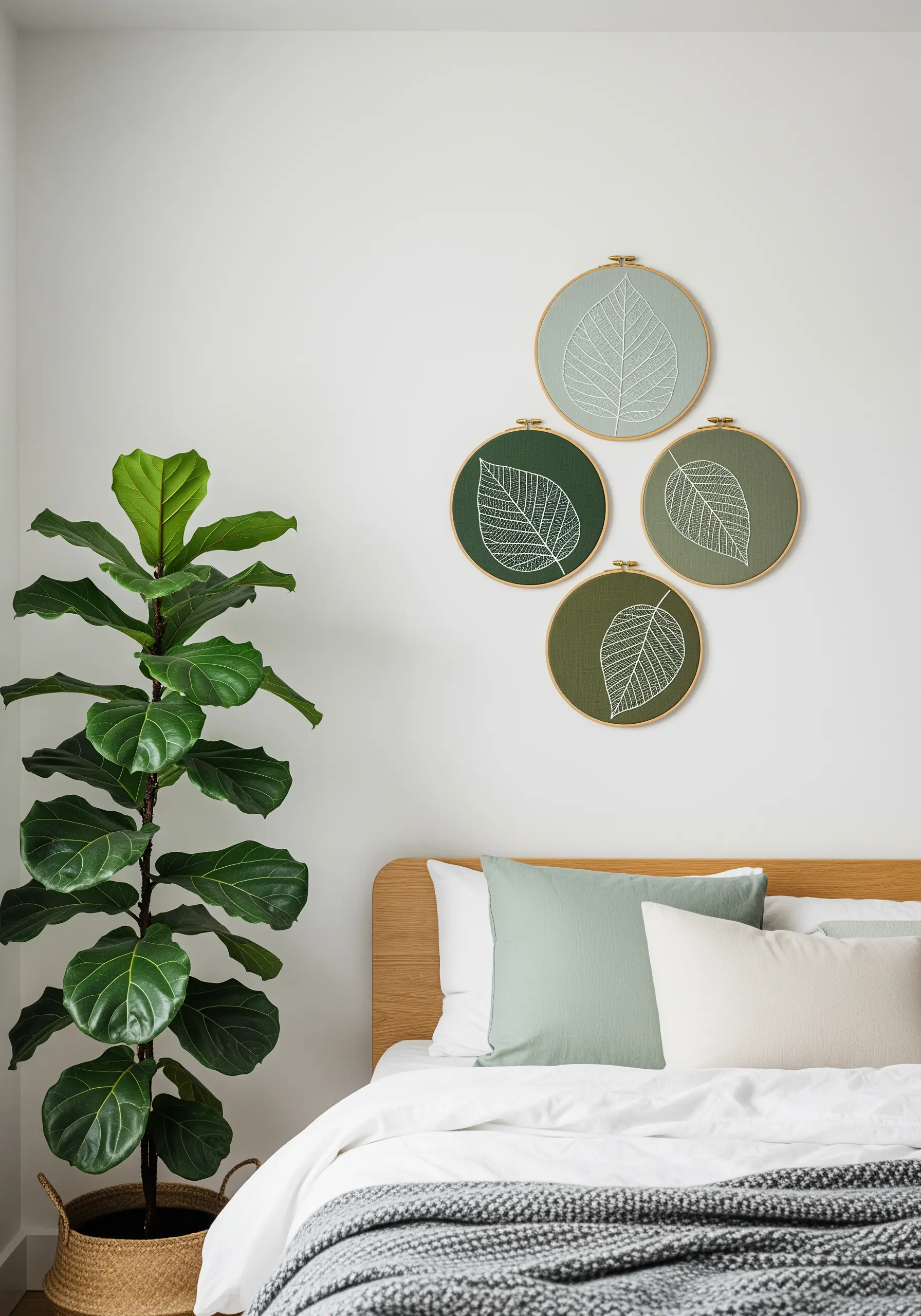
Explore the subtle beauty of a single subject by stitching leaf outlines on different-colored fabrics from the same color family.
Use a crisp white thread for all the leaves to unify the collection.
For the delicate veins, use a single strand of floss and a simple backstitch.
This study in tone and form feels both scientific and artistic, creating a calm, botanical display that highlights the intricate patterns found in nature.
25. Find Calm in a Meditative Maze
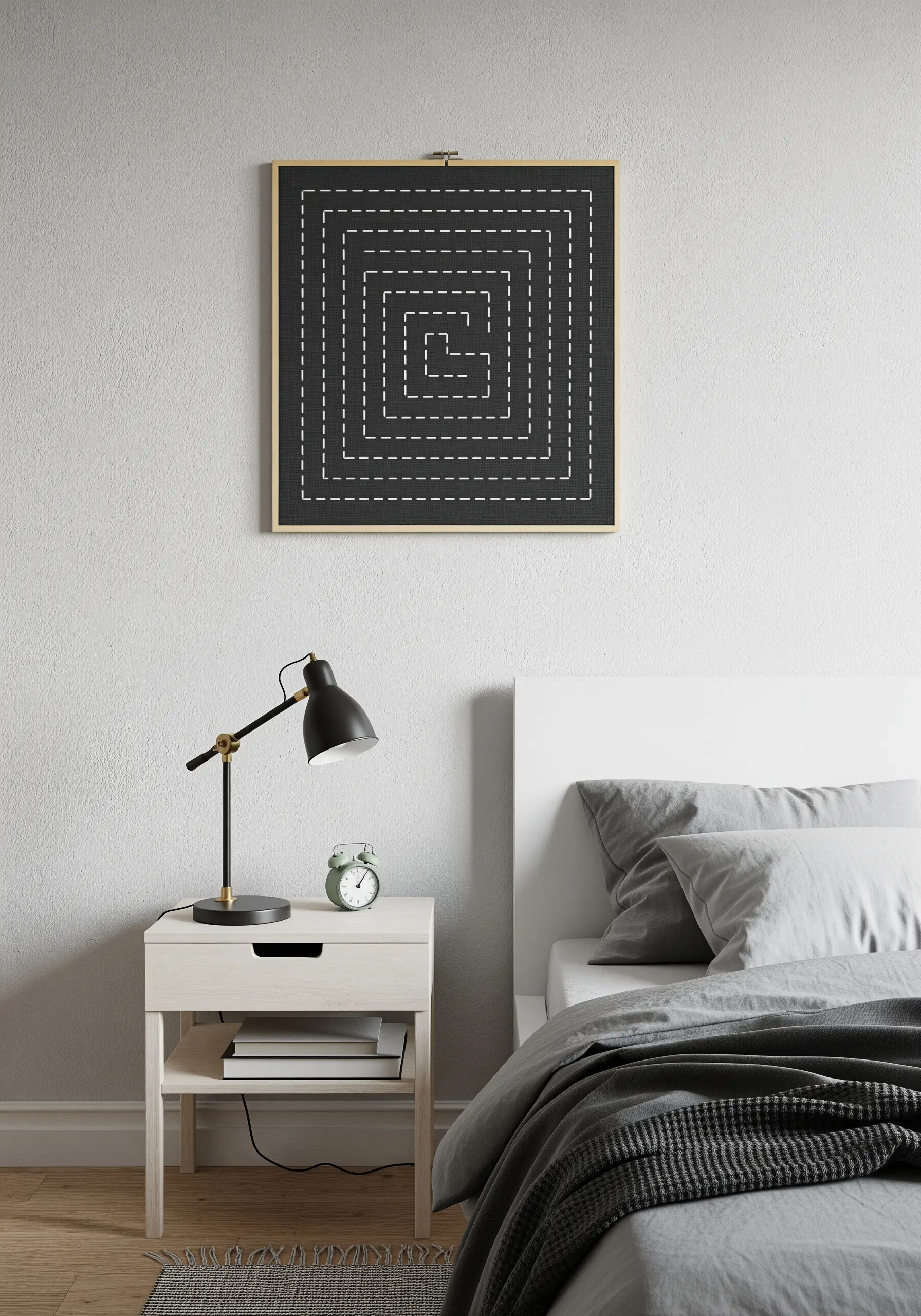
A geometric pattern like this maze is a perfect project for mindful stitching.
The repetition of the simple running stitch allows you to get into a calming rhythm.
Your primary focus should be on consistency—aim for each stitch and each gap to be the exact same length.
Use a high-contrast combination, like white thread on black fabric, to give the geometric thread art a bold, graphic impact that draws the eye inward.


