You have the stitches down, and you know your way around a hoop. But perhaps you feel a pull toward creating something with more presence, something that feels less like a pattern and more like a piece of art. The secret isn’t necessarily more complex stitching—it’s a richer conversation between your materials.
This is where mixed-fiber embroidery comes in. It’s the art of intentionally blending traditional embroidery floss with the softness of wool roving, the chunkiness of yarn, the shimmer of ribbon, or even the raw edge of torn fabric. Each new material introduces a new texture, a new dimension, and a new way to tell your story.
These ideas are here to show you how to think like a textile artist. You’ll learn not just what to combine, but why certain textures create harmony or tension. Prepare to see your needle and thread as just the beginning of what’s possible for your wall art.
1. Sculpt a Cosmic Swirl with Wool Roving
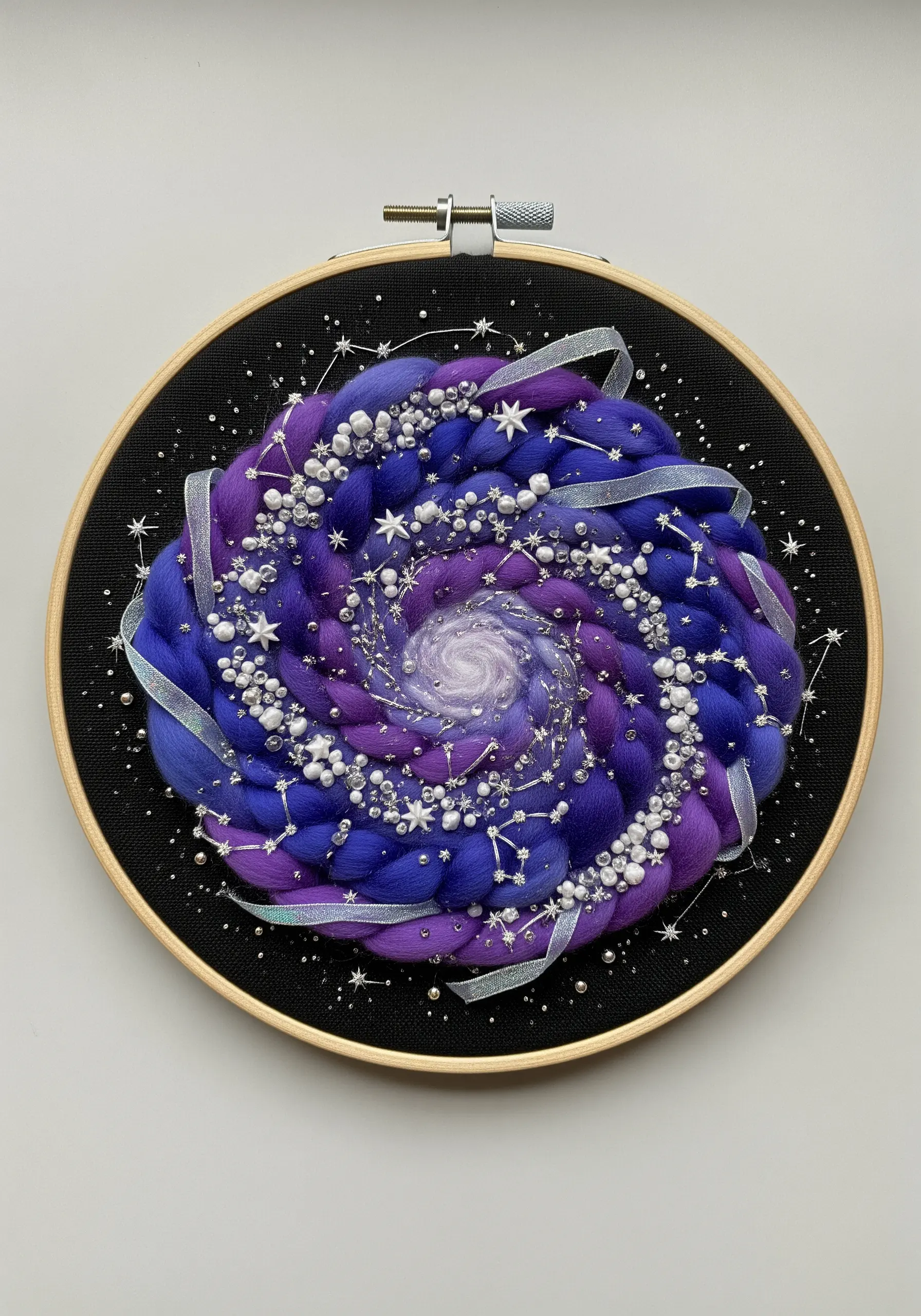
Create galactic depth by couching down thick wool roving in a spiral pattern, blending purple and blue tones as you go.
Secure the roving with a matching, thinner thread to keep the stitches invisible.
Weave a thin, iridescent ribbon through the spiral to catch the light, and scatter silver beads and tiny star-shaped sequins across the dark fabric to represent a starfield.
This technique turns your hoop into a dreamy, cosmic focal point, relying on texture more than intricate stitching.
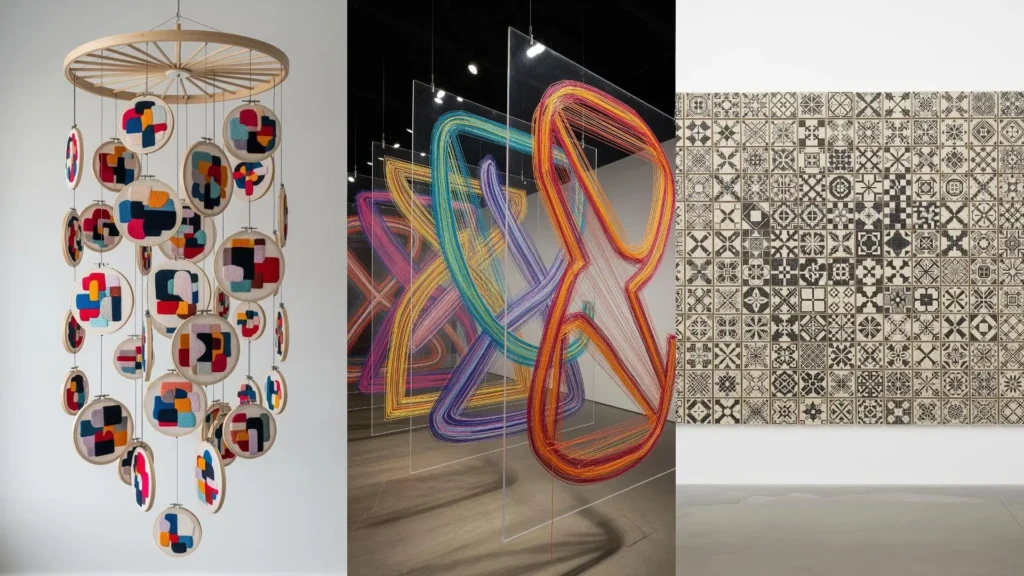
2. Frame Geometric Tension with String Art
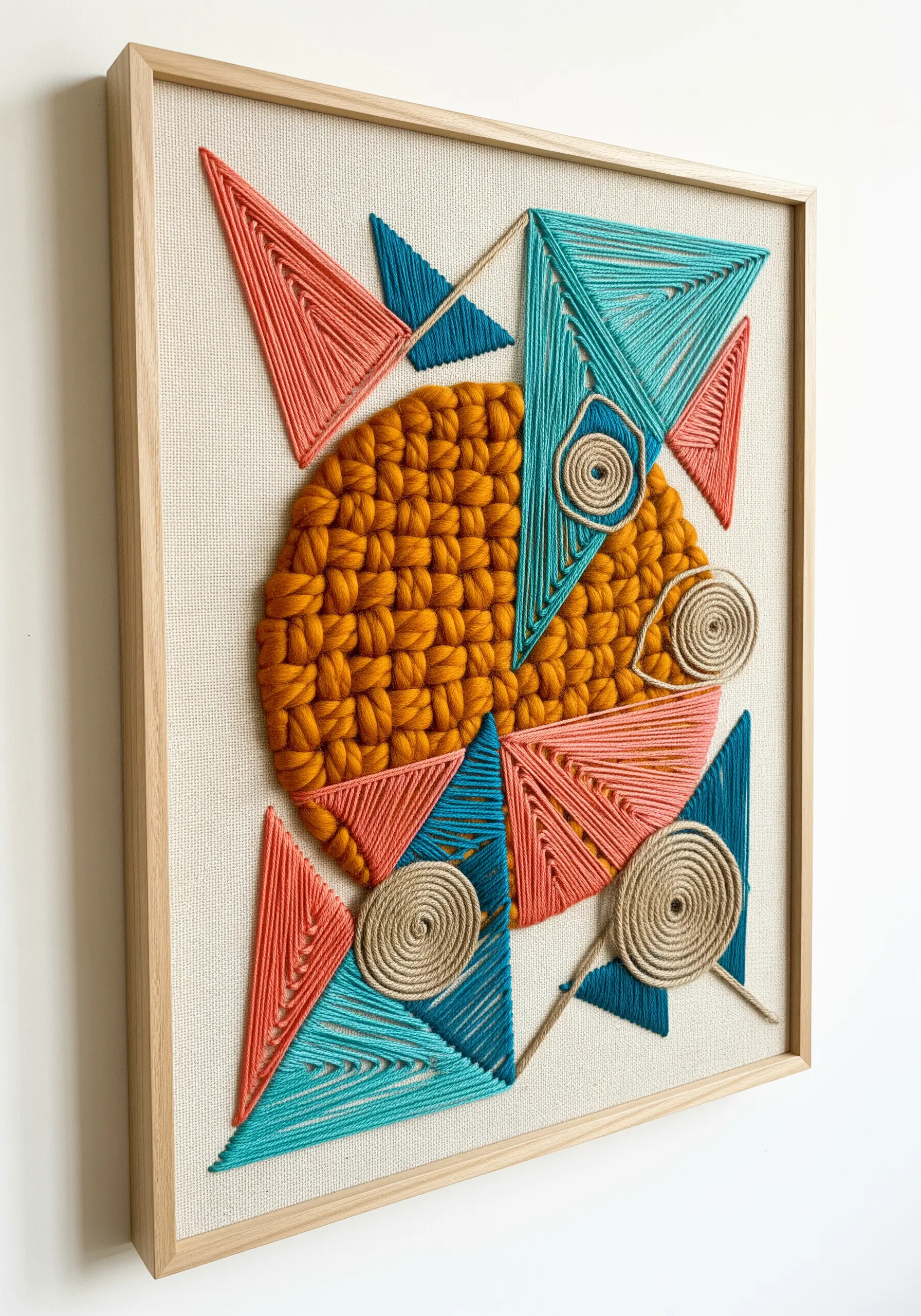
Transform your canvas into a piece of modern graphic art by adapting string art techniques.
Instead of hammering nails, use small, strong anchor stitches at the vertices of your geometric shapes.
Stretch thick yarn between these points to create crisp lines and planes of color.
Combine this with heavily textured areas, like the woven orange circle, to create a powerful contrast between taught lines and soft, woven forms.
This approach is perfect for creating abstract embroidery patterns that feel both graphic and handmade.
3. Build a 3D Woodland Floor with Natural Elements
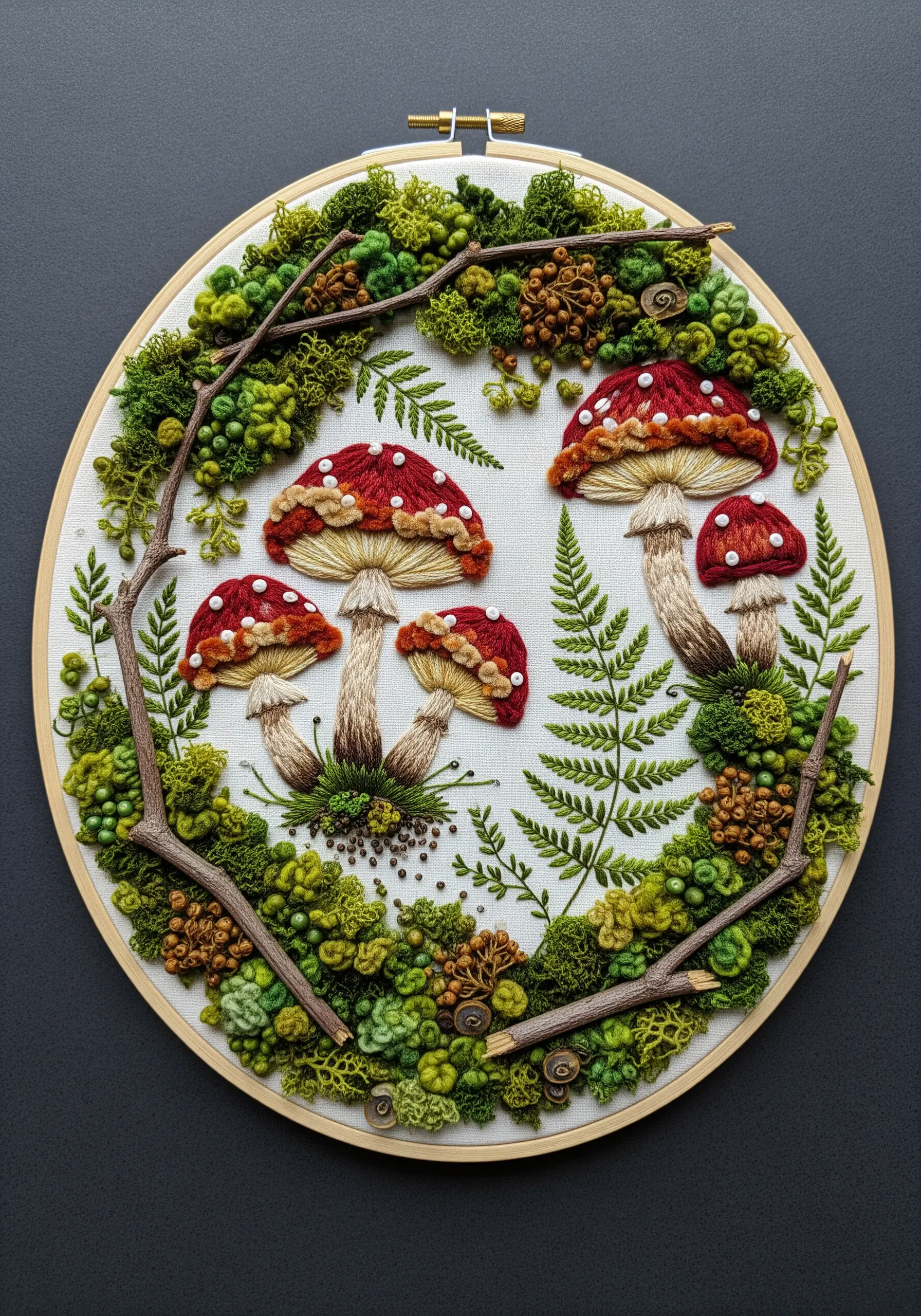
Bring your nature scenes to life by moving beyond thread alone.
Use stumpwork techniques for the mushroom caps to give them realistic dimension, and stitch the gills with single-strand thread for fine detail.
Surround your embroidered motifs with preserved moss, tiny twigs, and other natural materials, attaching them with a strong craft glue or discreet couching stitches.
This is one of the most effective ways to capture nature’s textures, creating a piece that engages more than just the eye.
4. Layer Luminous Landscapes with Wool Roving
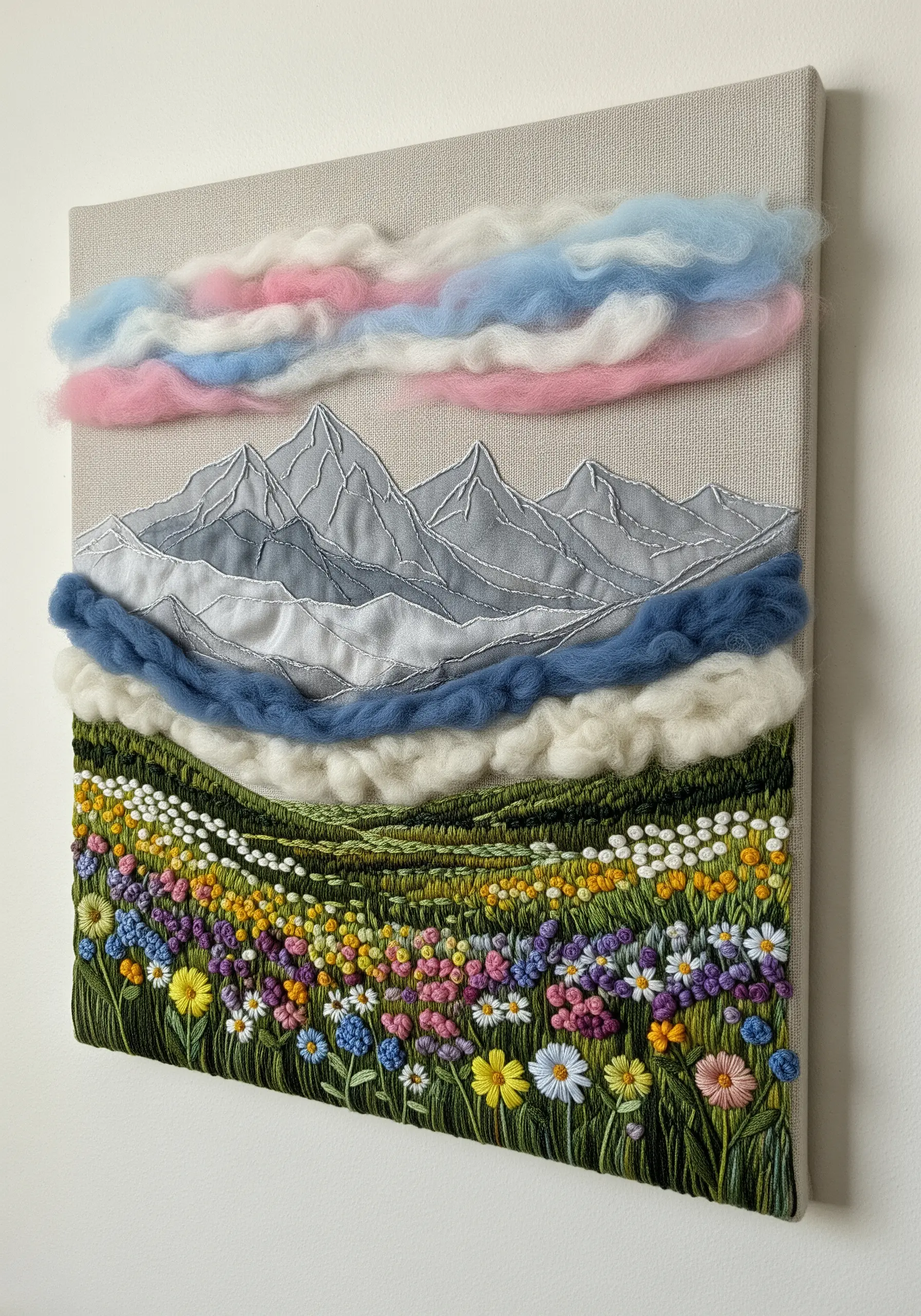
Create dramatic textural shifts in your landscapes by combining fine stitching with soft fiber.
Use wool roving for clouds and rolling hills, attaching it with a felting needle or couching it down with a single strand of matching floss.
Contrast these soft, blended areas with sharp, clean backstitches for the mountain outlines.
For the wildflower meadow, use dense French knots and lazy daisy stitches, which gives the foreground a rich, pointillist feel against the smoother textures above.
5. Weave an Abstract Seascape with Braided Fibers
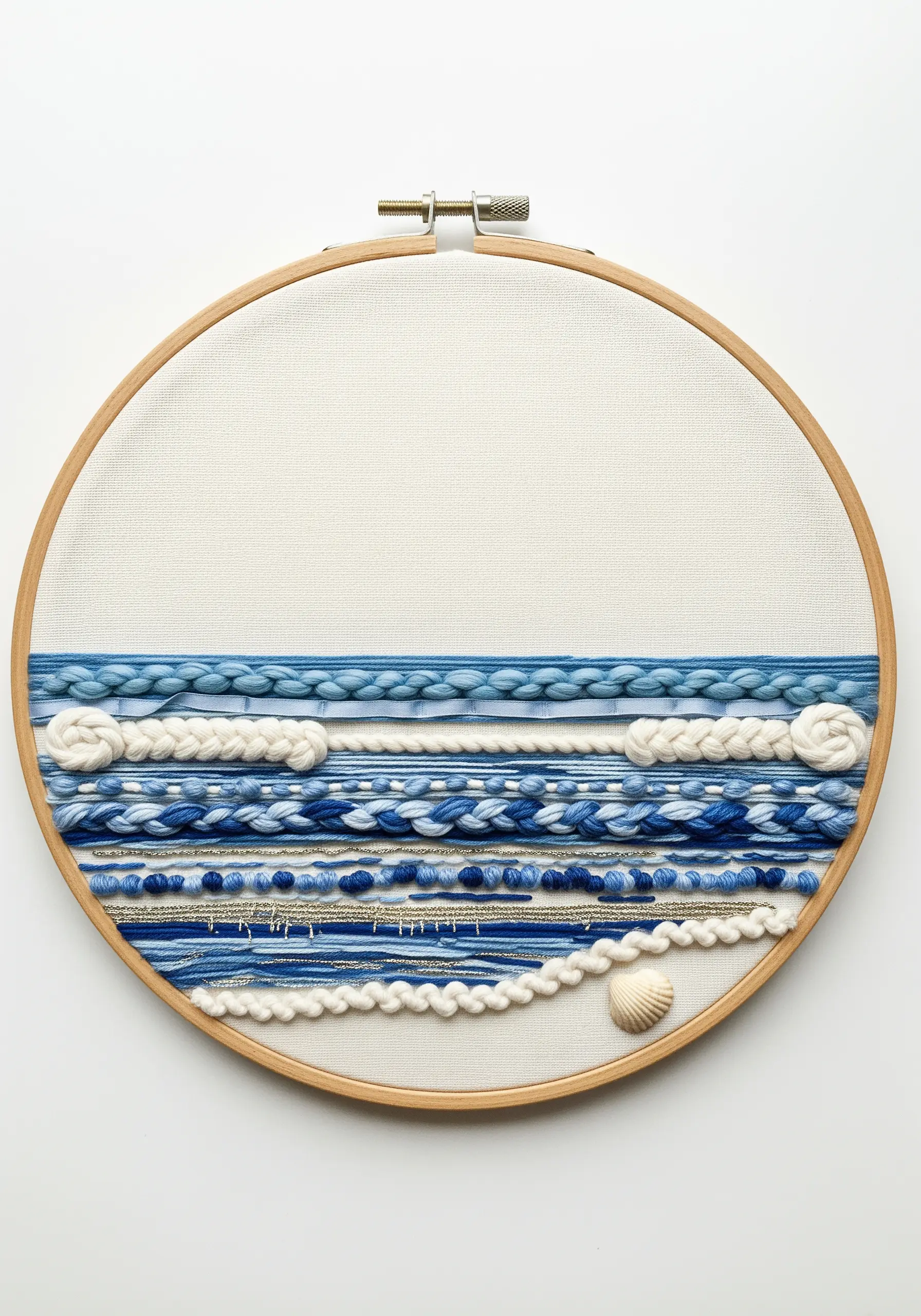
Evoke the sea by focusing on the texture of waves rather than a literal depiction.
Braid together different weights of yarn, cotton cord, and even strips of fabric in shades of blue and white.
Couch these braided and twisted elements onto your fabric in horizontal lines, varying their thickness and texture to create rhythm and movement.
Adding a single, real seashell anchors the abstract concept in a natural detail, completing your coastal-inspired fabric collage.
6. Engineer a High-Impact 3D Floral Bouquet
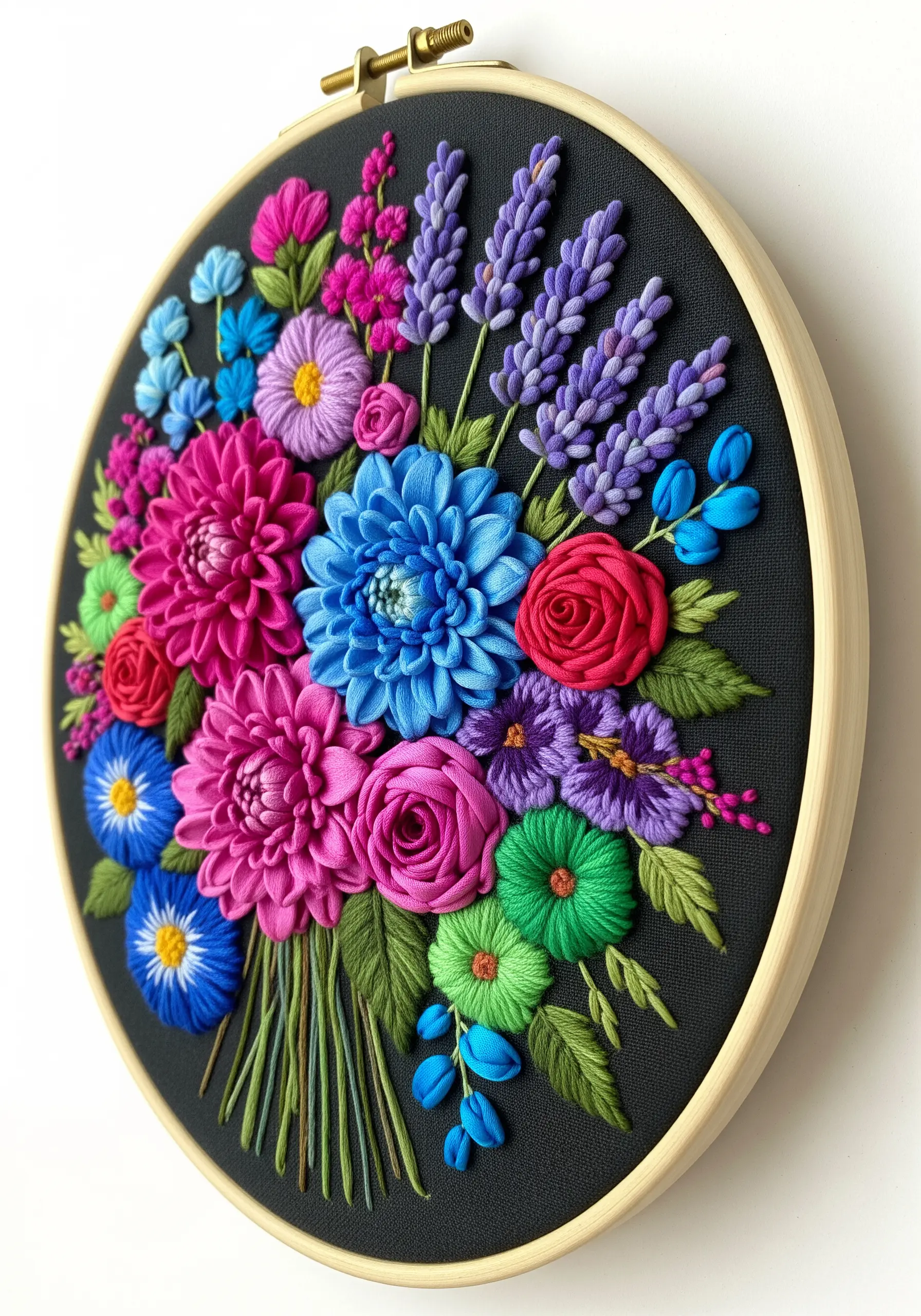
Make your florals leap off the fabric by using dimensional stitches and silk ribbon.
Create large chrysanthemums with layered lazy daisy stitches, and craft plump roses using the woven wheel stitch with ribbon instead of floss.
Use bullion knots for lavender and padded satin stitch for smaller petals to ensure every flower has a unique, raised texture.
Stitching on a dark fabric background makes these vibrant colors appear even more luminous and sculptural.
7. Marry 3D Florals with Architectural Stitches
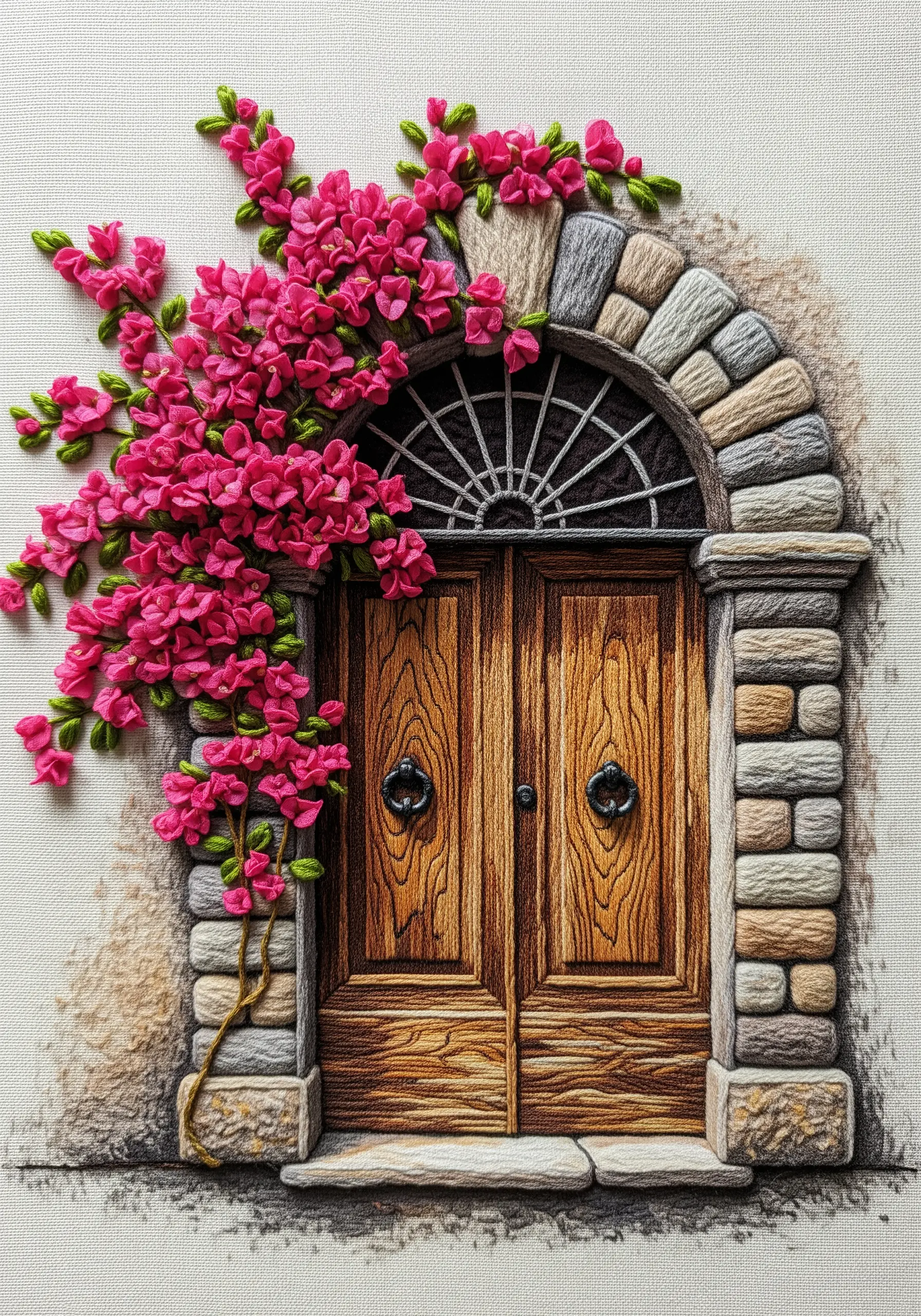
Create a stunning narrative by contrasting the organic chaos of nature with structured, man-made forms.
Use precise thread painting—blending single strands of floss—to achieve the realistic wood grain and stone textures of the door and archway.
Then, let voluminous ribbon-stitch bougainvillea spill over the hard edges, creating a dynamic interplay between soft and solid, wild and contained.
This technique transforms a simple scene into a captivating story.
8. Craft an Ethereal Jellyfish with Sheer Fabrics
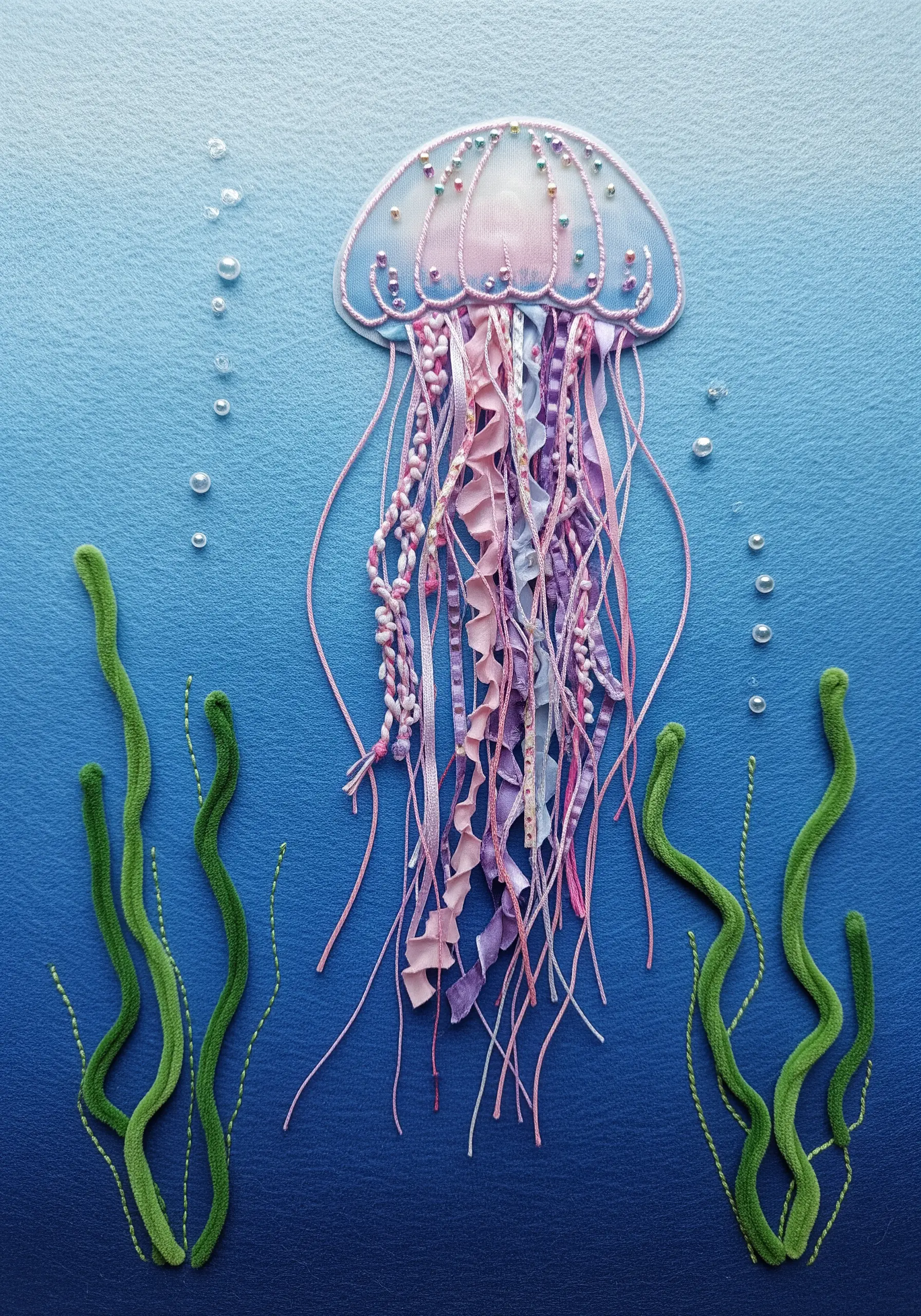
Capture the translucent quality of marine life by incorporating sheer materials.
Use a piece of tulle or organza as a base for the jellyfish bell, embroidering its delicate details with fine thread and adding seed beads for sparkle.
For the tentacles, use a mix of thin ribbons, novelty yarns, and braided threads in varying lengths.
This combination of materials creates a sense of weightlessness and captures the gentle, flowing movement of the creature.
9. Explore Monochrome Nuance Through Woven Textures
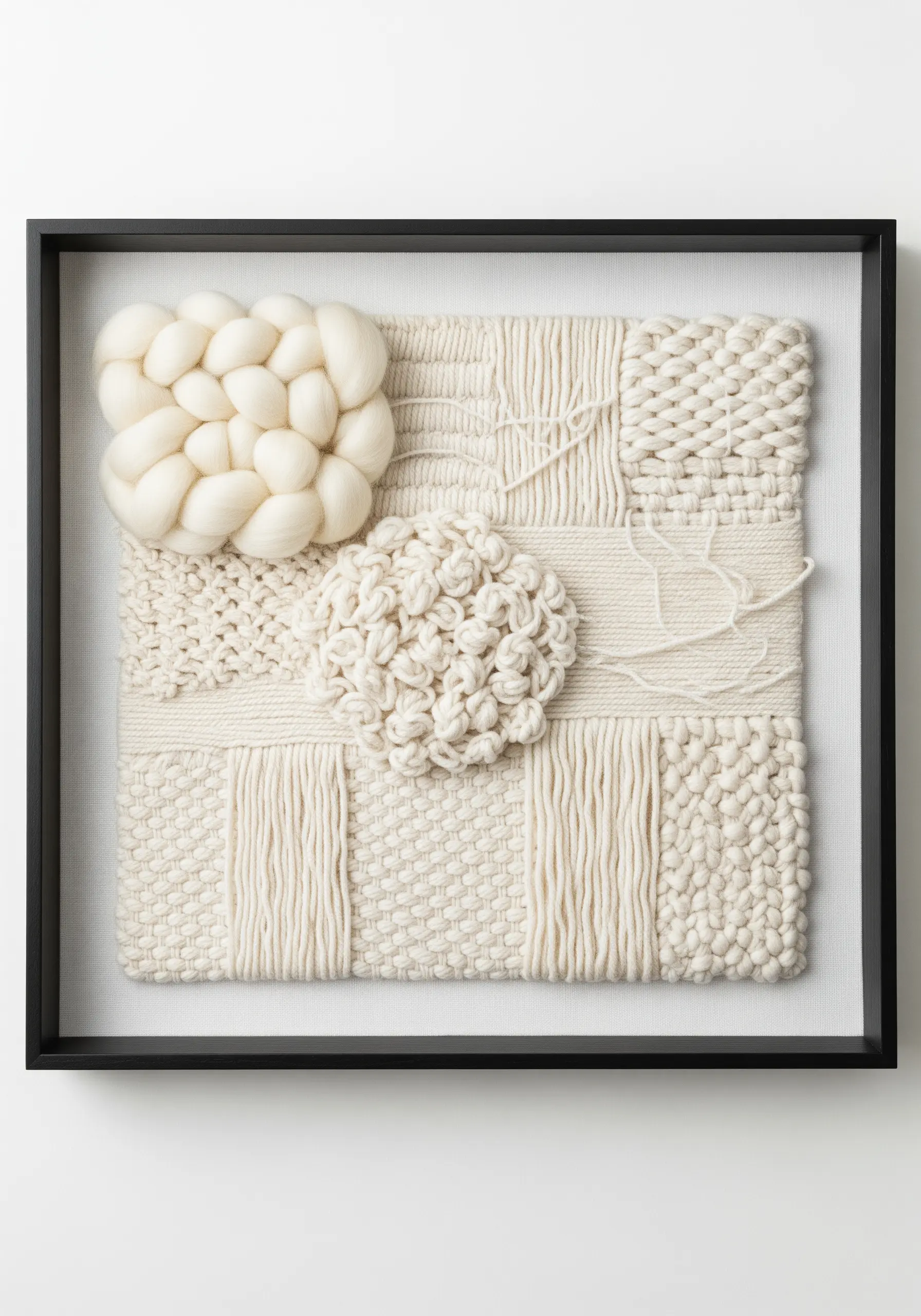
Challenge yourself to create a visually rich piece using only a single color.
The focus here is entirely on texture.
Divide your canvas into sections and fill each one with a different weaving or knotting technique using thick, soft yarn.
Experiment with chunky French knots, basketweave stitch, couched lines, and raised satin stitch to see how light and shadow play across the different surfaces.
These neutral earth-toned embroidery projects prove that texture can be just as expressive as color.
10. Ignite a Phoenix with Metallics and Braids
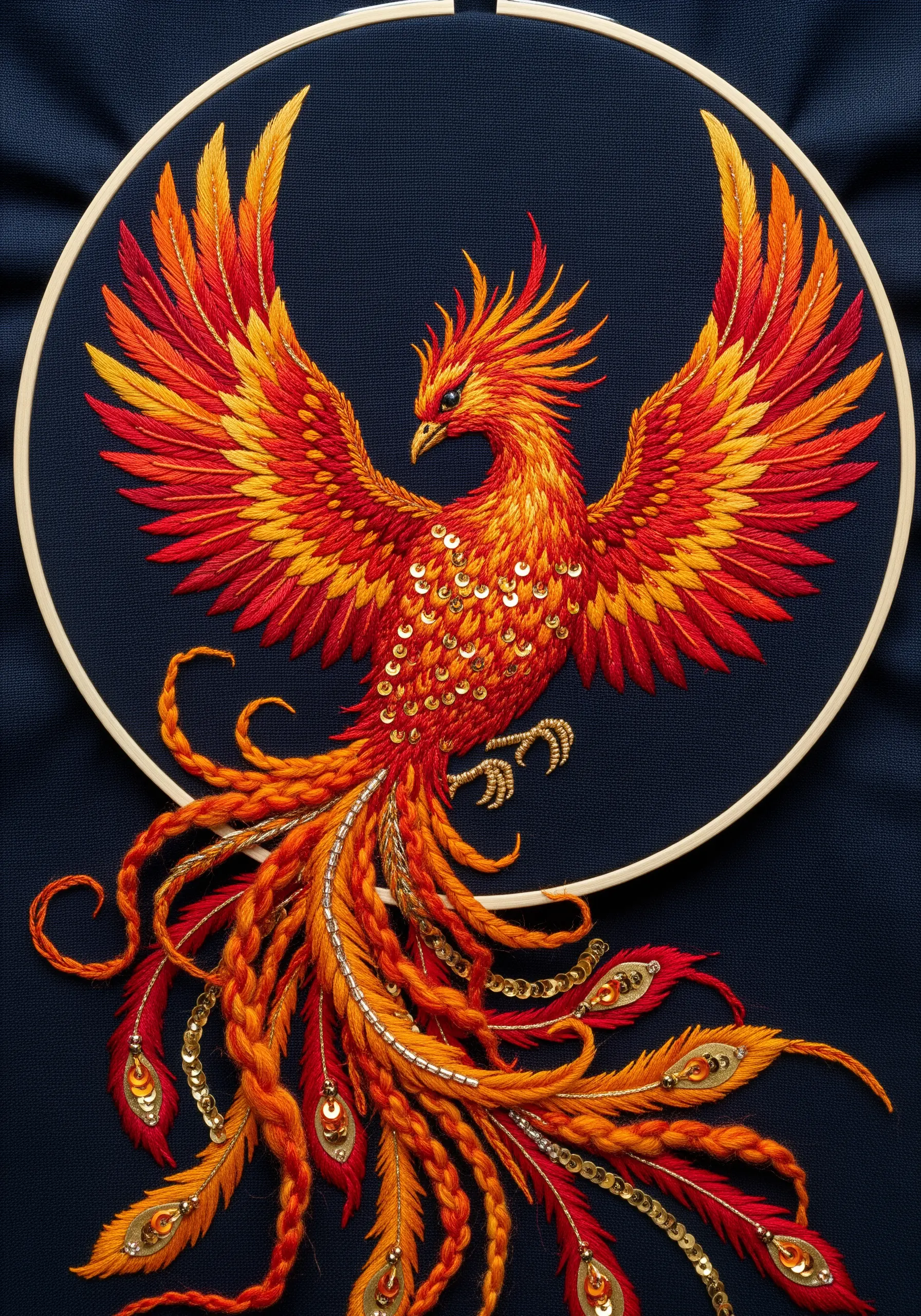
Elevate a classic motif by layering textures that evoke fire and light.
Use meticulous long-and-short stitch gradients for the feathers, but intersperse gold metallic thread to catch the light.
For added dimension in the tail, braid multiple strands of embroidery floss together and couch them down.
Finally, strategically place gold sequins on the body and tail feathers; they will shimmer and shift as the viewing angle changes, making the phoenix feel alive.
11. Frame a Beaded Centerpiece with a Roving Border
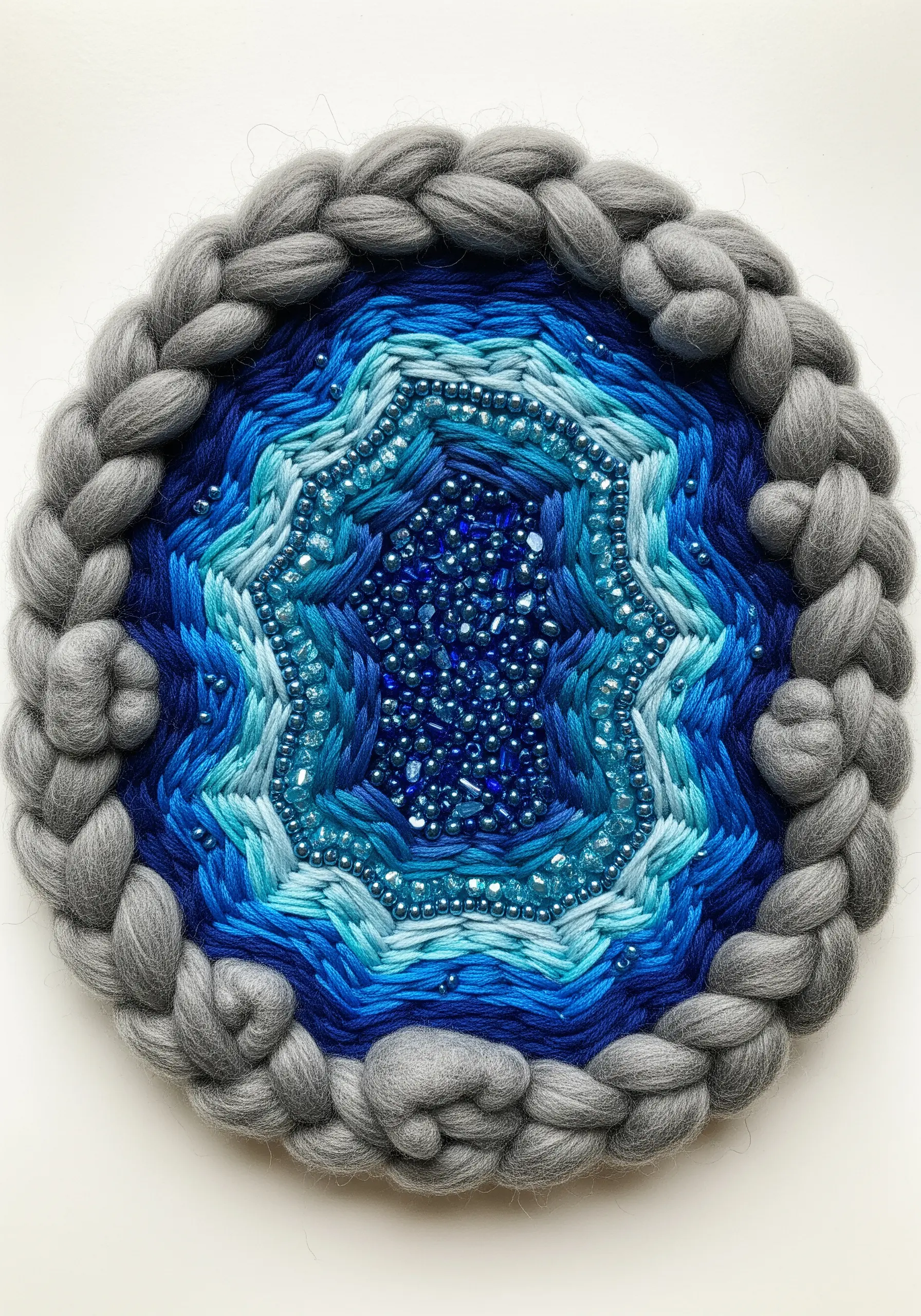
Create a captivating focal point by contrasting a hard, glittering texture with a soft, matte one.
Fill the central design with a dense concentration of seed beads, creating a rich, jeweled effect.
Surround this with concentric rings of couched yarn in an ombré pattern to soften the transition.
Finish the piece with a chunky braided frame made from wool roving; its softness and scale provide a beautiful counterpoint to the delicate beads within.
12. Sculpt Lifelike Hair with 3D Yarn Curls
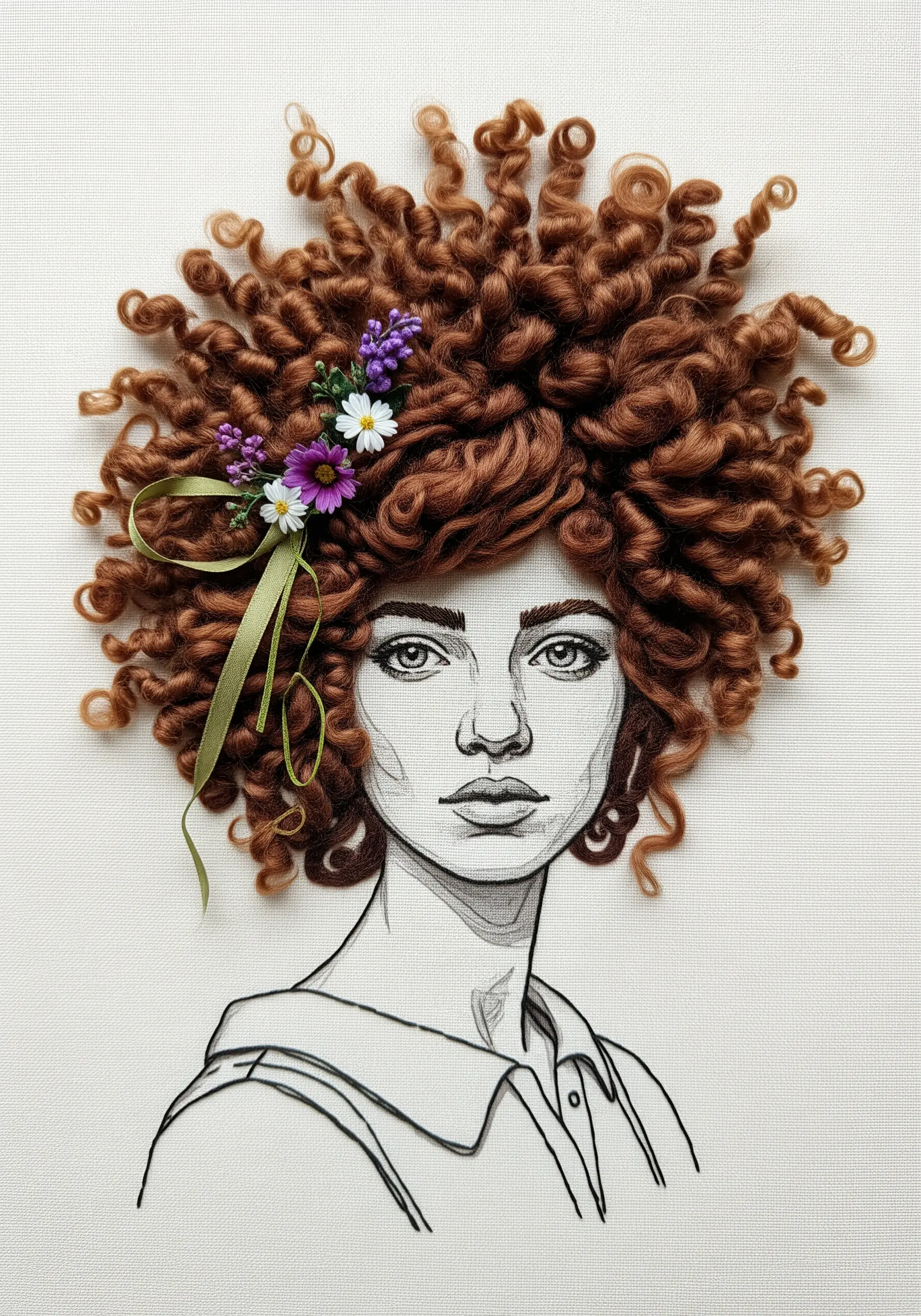
Move beyond flat portraits by giving your subject three-dimensional hair.
Start with a minimal line-art sketch of the face, stitched in a simple backstitch.
To create the curls, wrap yarn tightly around a knitting needle or dowel, apply heat (with a hair dryer) or steam to set the shape, and let it cool.
Slide the resulting coils off and tack them onto the fabric, layering them to build realistic volume and movement.
This technique adds an incredible sculptural quality to your hand-stitched portrait wall art.
13. Elevate Felt Appliqué with Corded Details
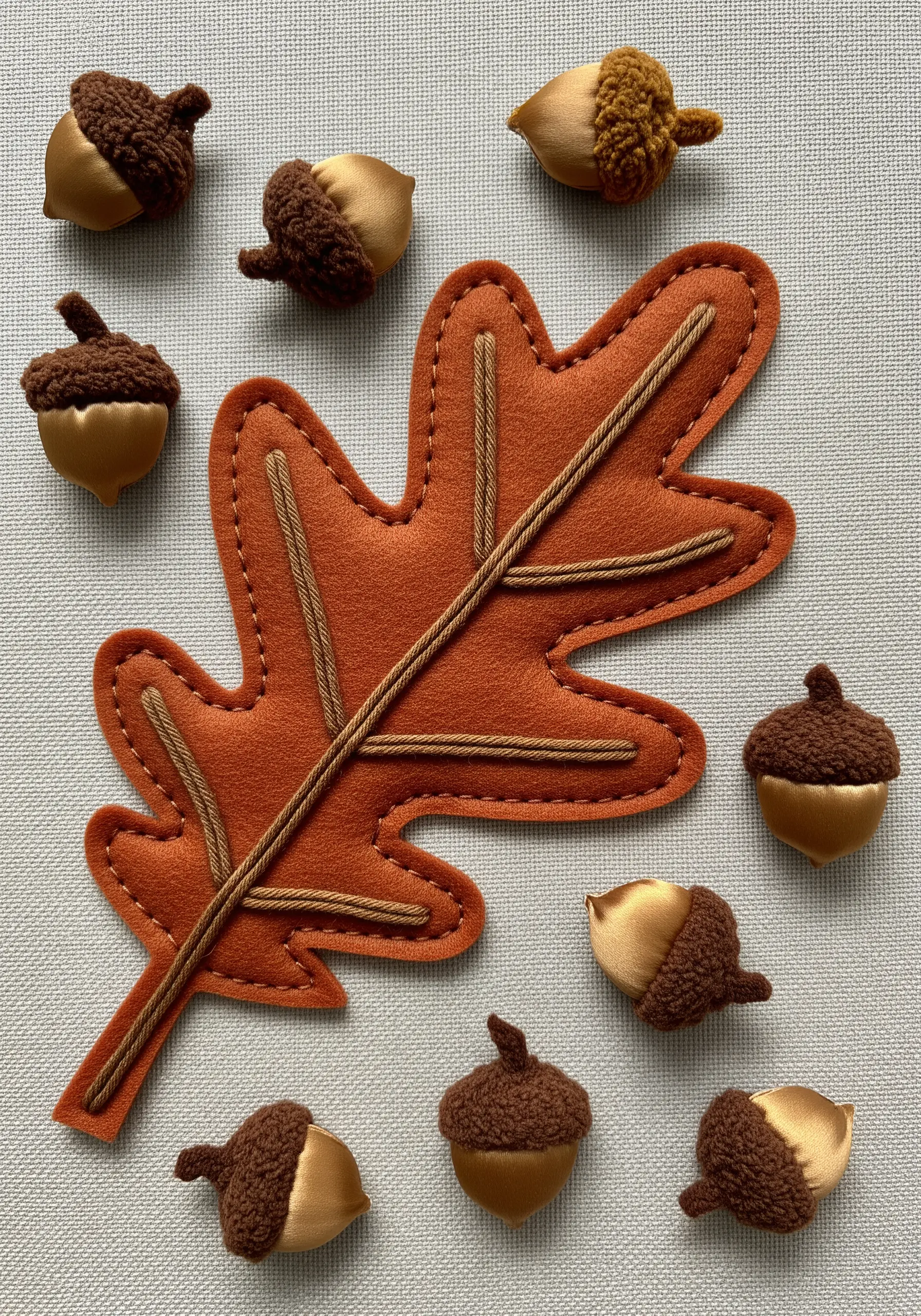
Add a clean, graphic quality to felt appliqué by using cord for your linework.
Cut your primary shapes from felt and secure them to the background fabric with a neat running stitch just inside the edge.
Instead of embroidering details like leaf veins, couch down a contrasting cord or thick thread.
This creates a raised, uniform line that is both visually striking and adds a subtle 3D element to the design.
14. Stitch a Neon Cityscape with Woven Elements
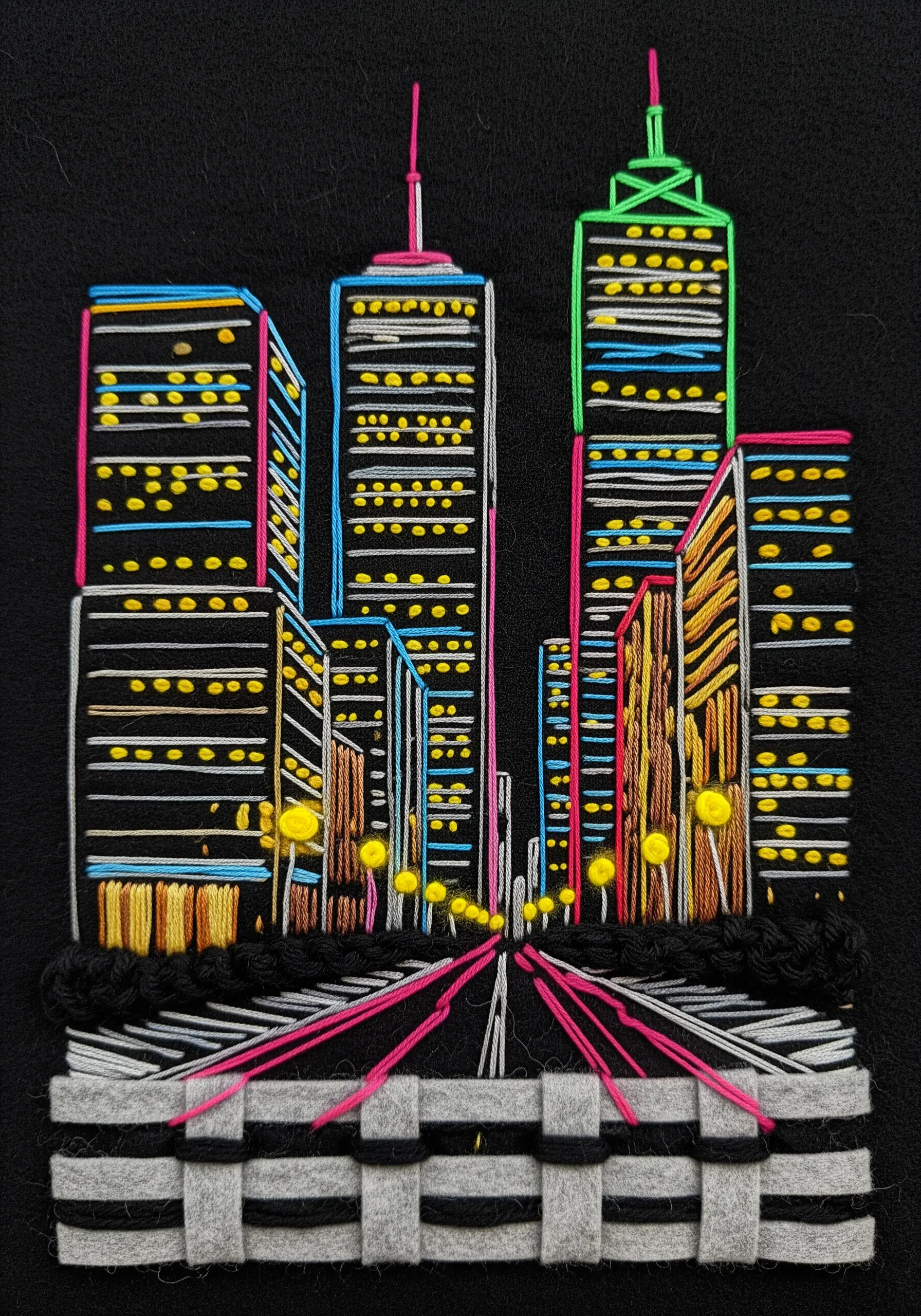
Capture the electric energy of a city at night with bold colors and mixed materials.
Use bright, neon-colored floss in simple satin stitches to represent glowing windows and signs on a dark fabric background.
For a dynamic foreground element, create a barrier or fence by weaving strips of felt or thick yarn through vertical warp threads stitched directly onto your canvas.
This blend of stitching and weaving adds depth and architectural interest.
15. Contrast Delicate Ribbon Work on a Woven Base
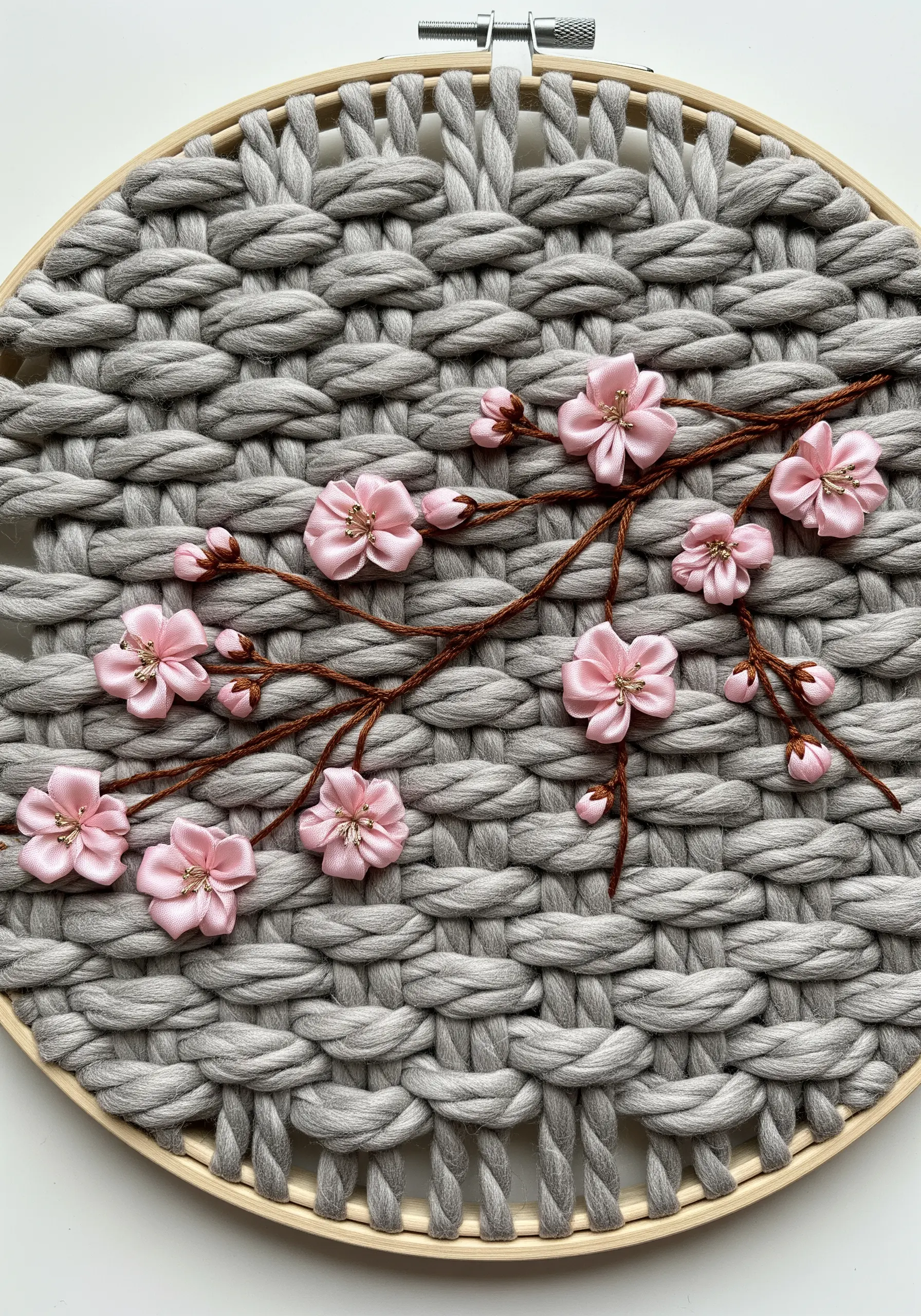
Create an unexpected textural pairing by working on an unconventional surface.
Instead of standard embroidery fabric, use a tightly woven macrame or chunky crocheted piece as your canvas.
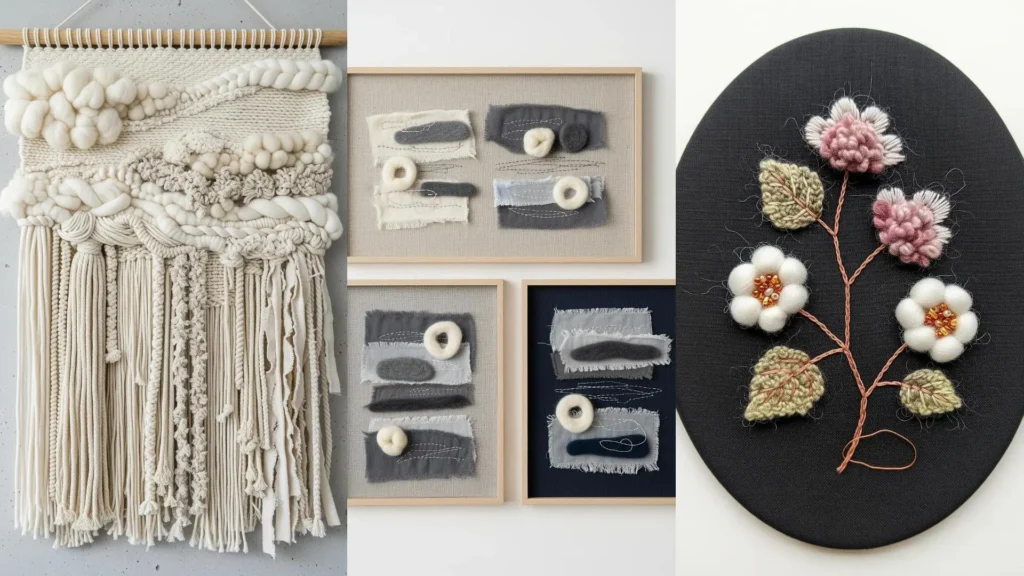
Stitch your design—like these delicate cherry blossoms made from silk ribbon—directly onto the woven base.
The contrast between the fine, delicate ribbon and the rustic, heavy texture of the background creates a uniquely compelling mixed-fiber piece.
16. Depict a Textured Desert with Knotted Stitches
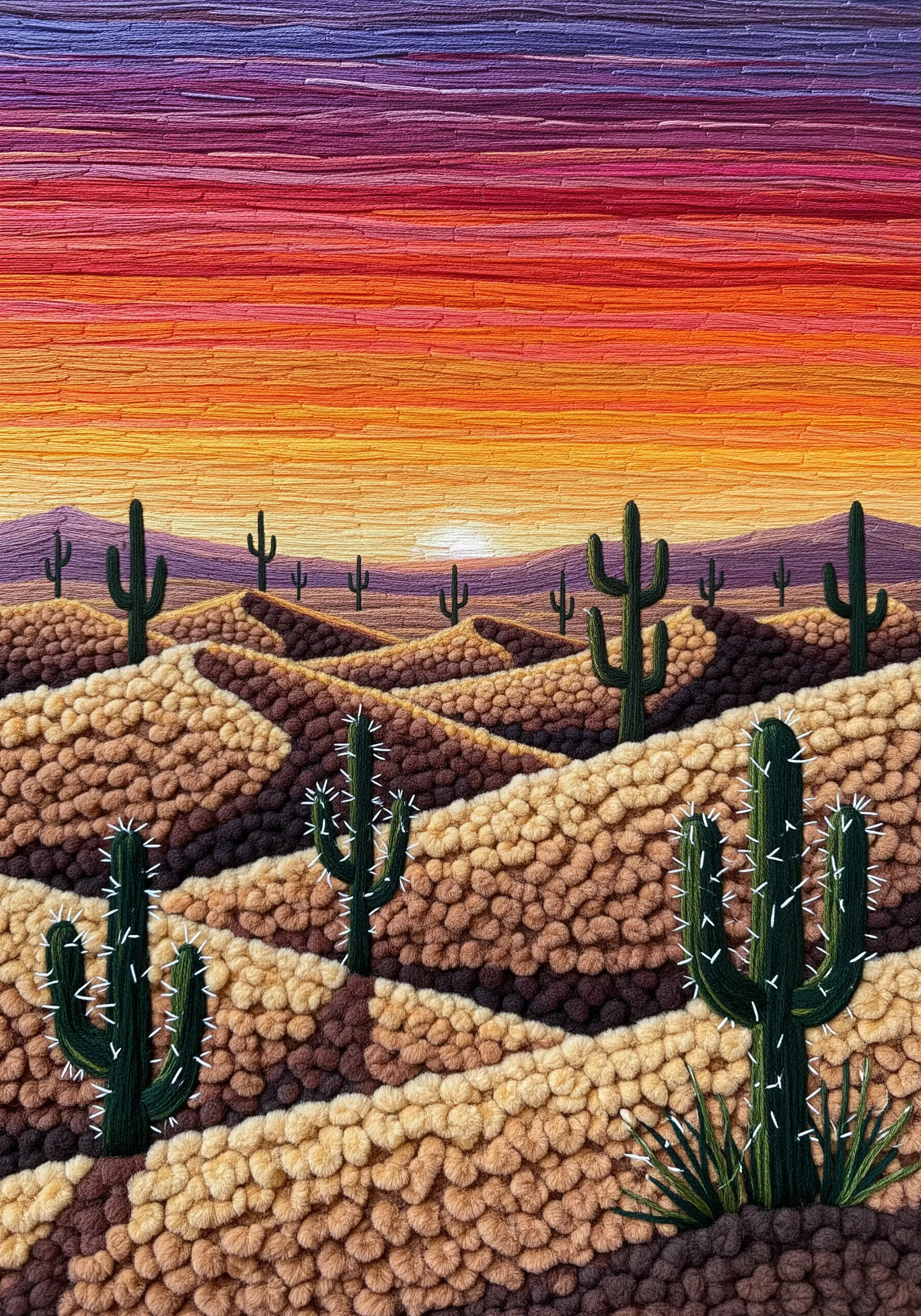
Use distinct stitch families to represent different natural textures in a landscape.
Create the rolling, pebbled desert floor with dense clusters of French knots, varying the colors to create shadow and depth.
For the smooth, expansive sky, switch to perfectly aligned long-and-short stitches, blending colors to create a seamless gradient.
This stark textural contrast is what makes the abstract nature-inspired embroidery feel so vast and immersive.
17. Incorporate Hardware into a Fiber Mandala

Add an unexpected industrial element to the softness of fiber art.
Build a vibrant mandala with concentric circles of braided or couched yarn in a rainbow palette.
Break up the textile layers by introducing a ring of metal chain, stitching it down securely with matching thread.
A small mirror at the center adds another non-traditional material, creating a focal point that reflects light and the viewer’s gaze.
18. Craft Expressive Typography with Braids and Beads
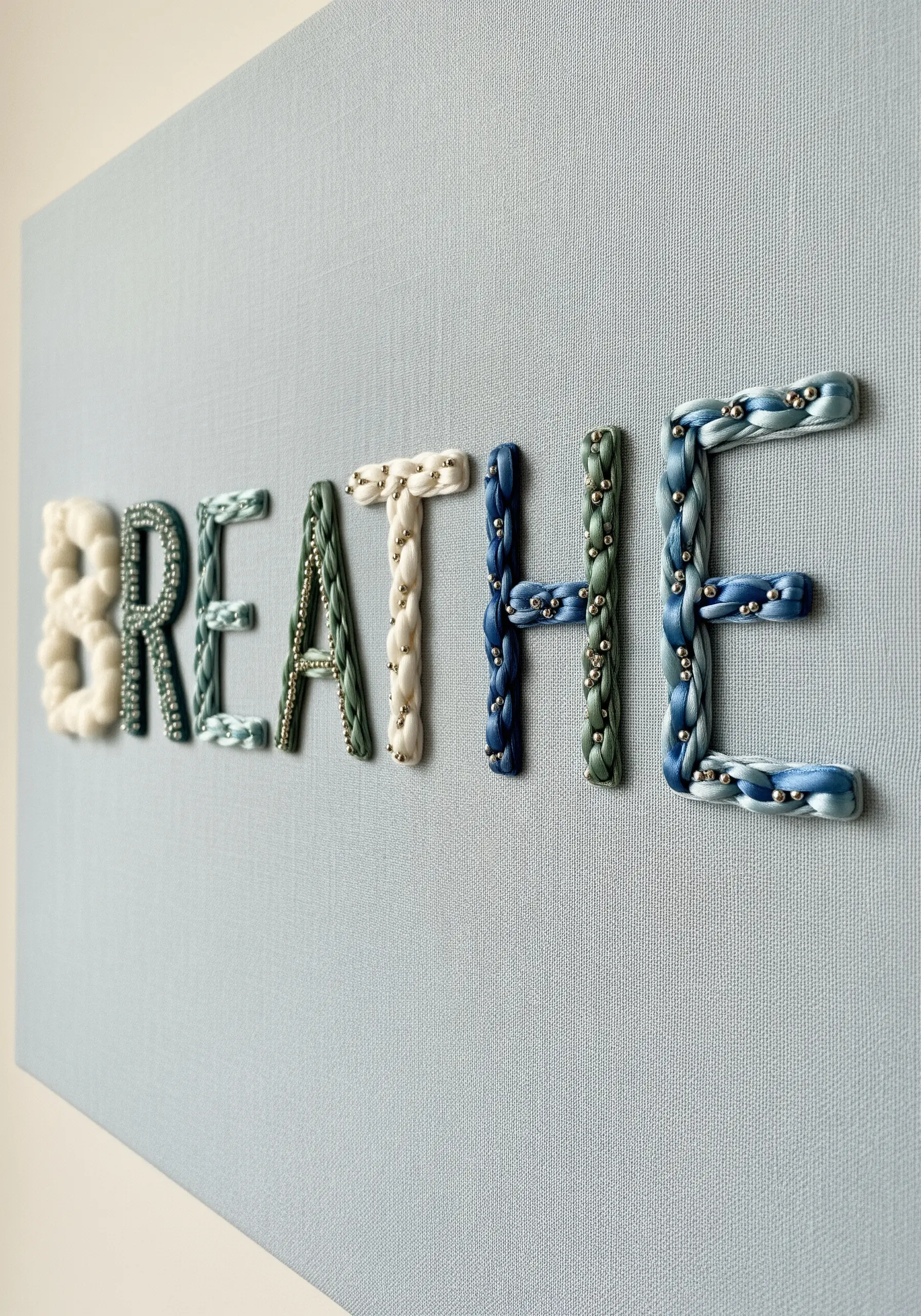
Give embroidered lettering a sculptural, three-dimensional quality.
Instead of using a simple backstitch, create your letters by braiding several strands of floss together first.
Couch this thicker, textured braid onto the fabric along your design lines.
For added elegance and a touch of light, embellish the letters by weaving or stitching tiny seed beads along the braids. This technique makes your words both readable and wonderfully tactile.
19. Build a Storybook Scene with Felt and Moss
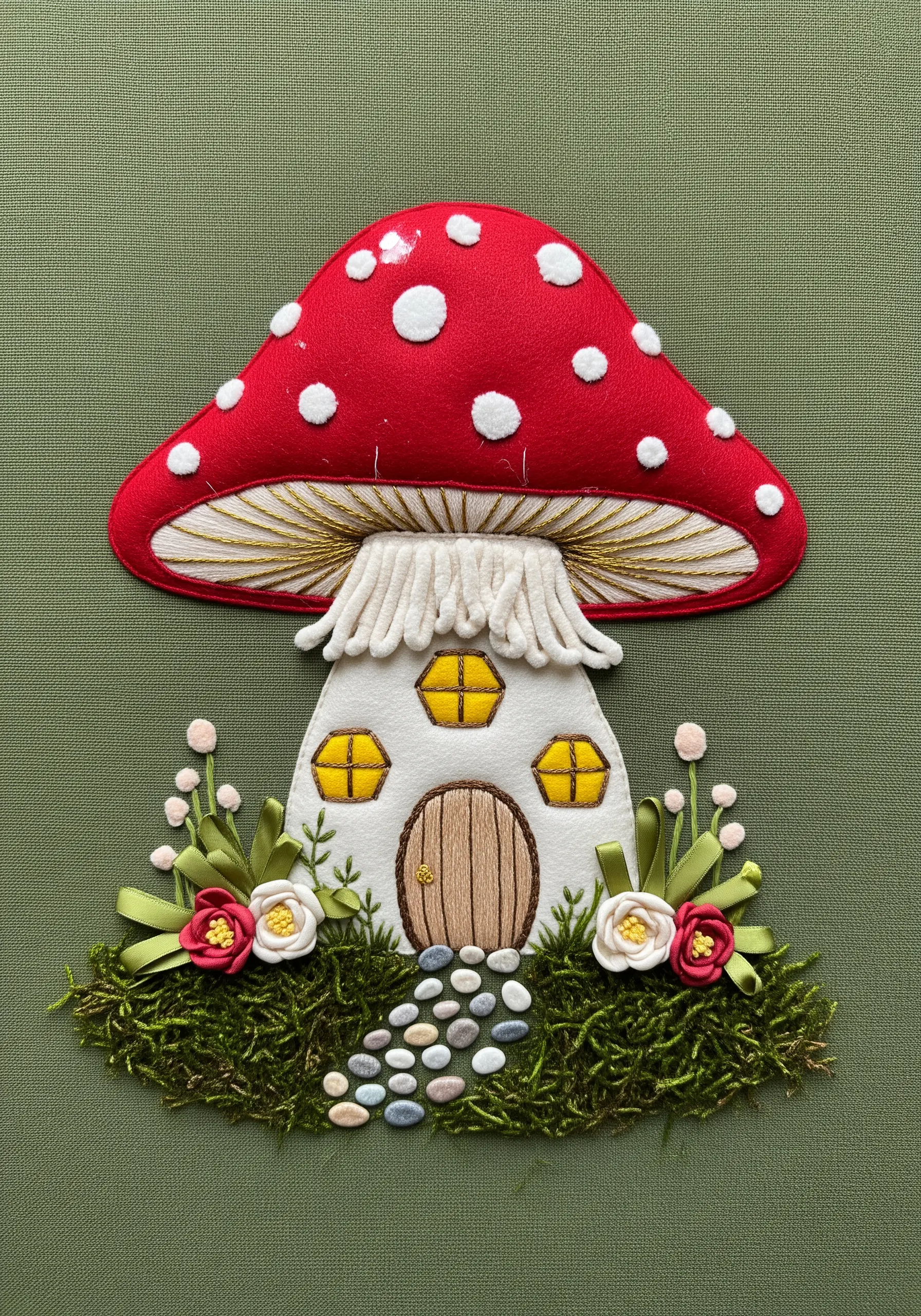
Create a charming diorama by layering different materials to tell a story.
Use felt appliqué for the main structural elements, like the house and the mushroom cap, using simple stitches for details like windows and gills.
Incorporate dimensional elements like silk ribbon for the flowers and preserved moss for the grassy ground.
Adding tiny pebbles for a walkway completes the miniature, whimsical world, making it a perfect piece of playful hoop art.
20. Stitch a Coral Reef with Raised Textures and Lace
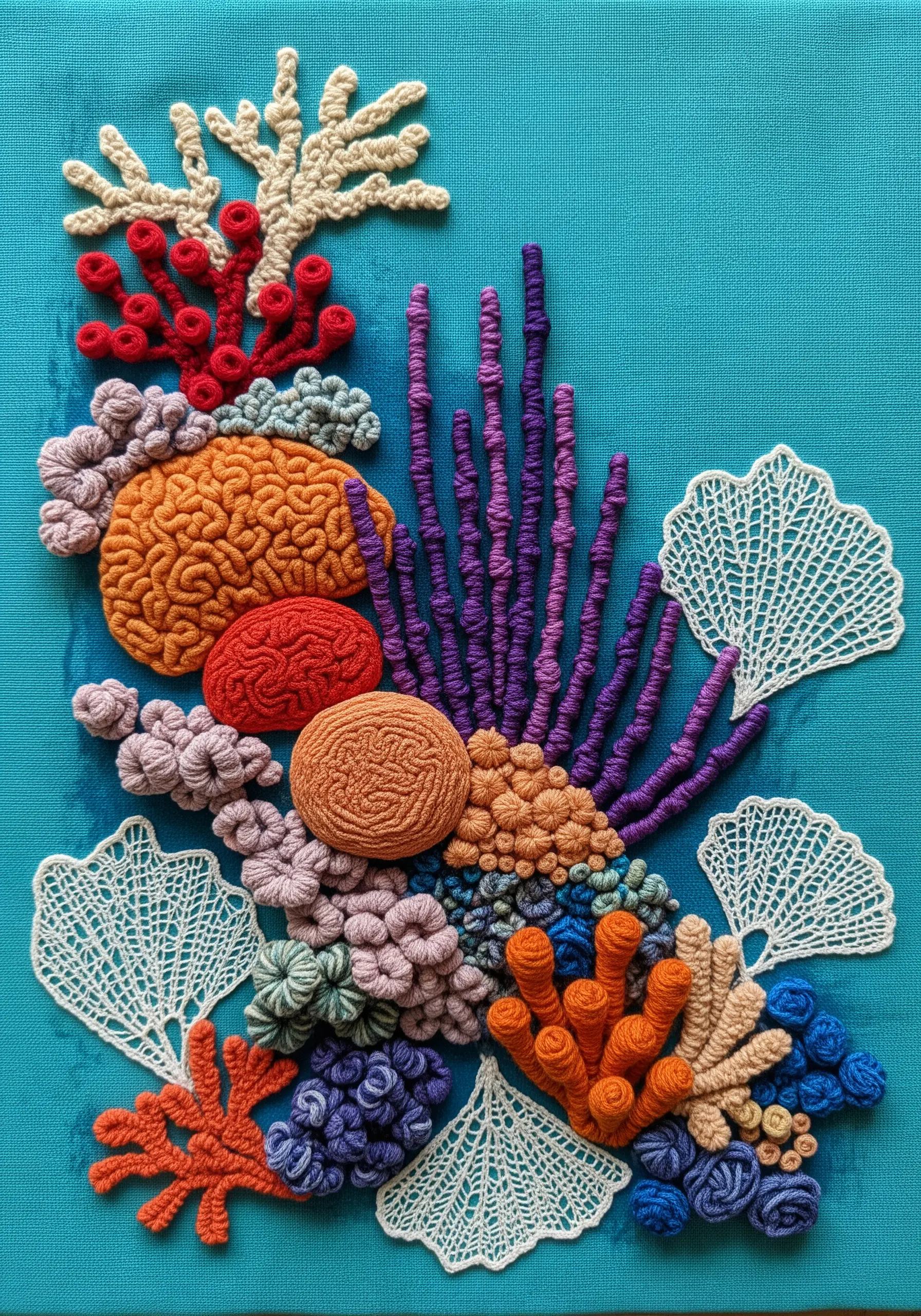
Recreate the diverse ecosystem of a coral reef by assigning different textures to each element.
Use bullion knots and dense French knots for brain coral, and apply raised stumpwork techniques for branching corals.
Incorporate small pieces of lace or tatting to represent delicate sea fans, attaching them so they have a slight lift from the background.
These contemporary texture techniques result in a rich, tactile underwater world.
21. Design a Solar System with 3D Fiber Planets
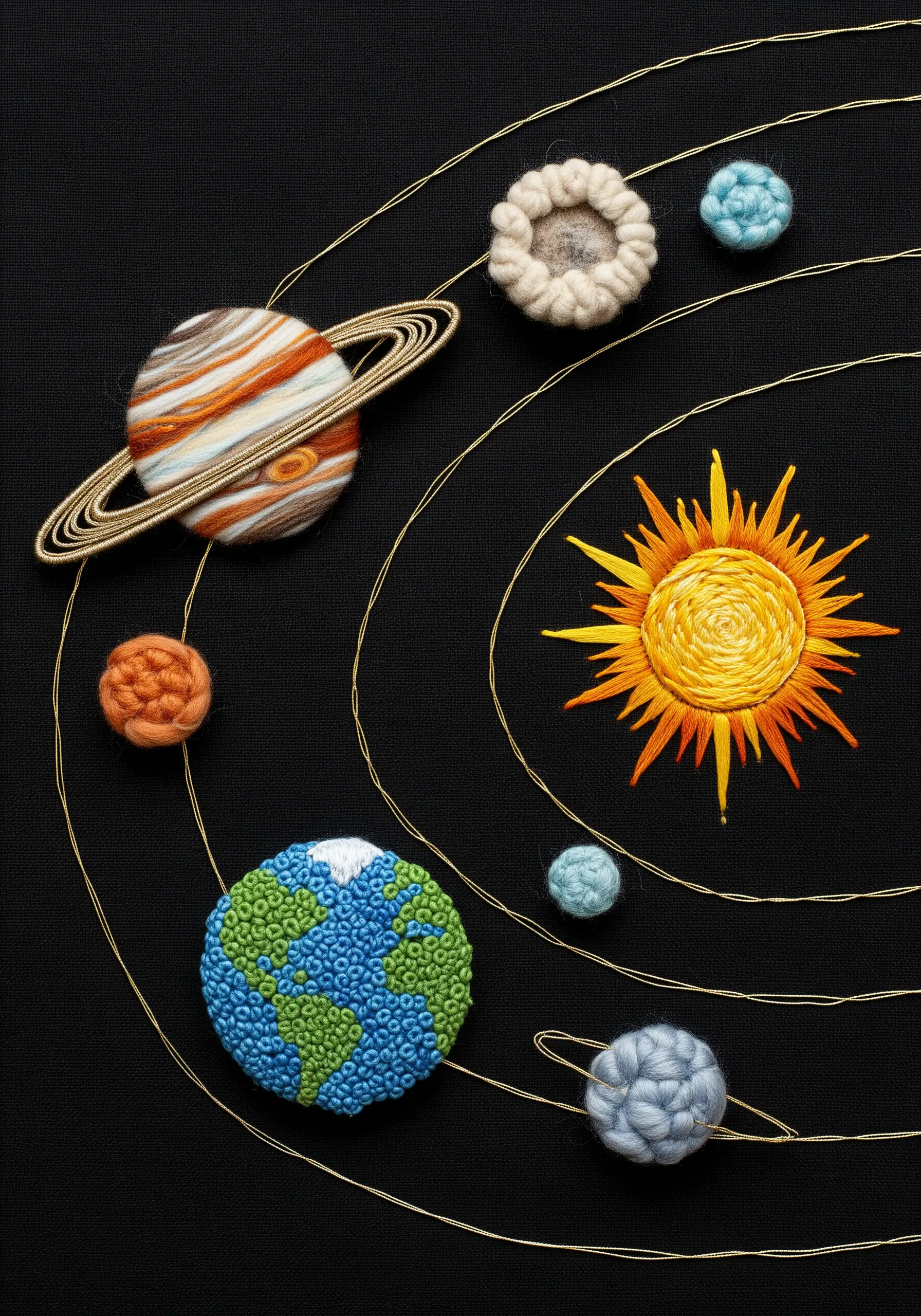
Construct a tactile solar system using wrapped and felted fiber spheres.
Create the planets by tightly wrapping yarn around a pom-pom maker or felt ball, or by needle-felting wool roving into dense spheres.
Attach them to a dark fabric background, which enhances the feeling of deep space.
Use a thin, elegant gold cord couched in sweeping curves to represent the planetary orbits, adding a clean, graphic element to the design.
22. Compose a Collage Bird with a Ribbon Tail
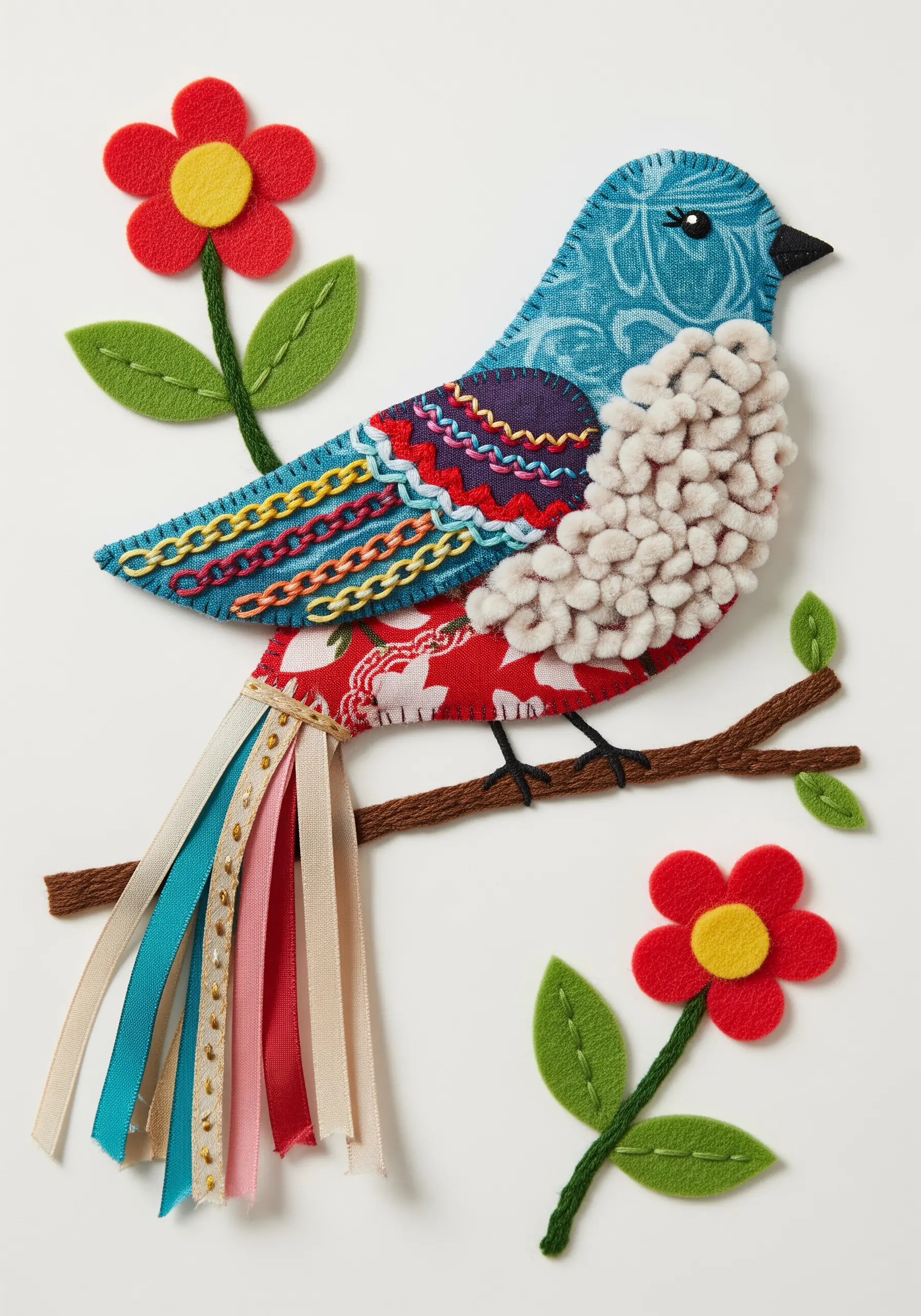
Create a playful, folk-art-inspired creature using fabric collage and mixed embellishments.
Cut the bird’s body from various patterned fabric scraps and appliqué them onto your base fabric.
Add embroidered details like a chain stitch border and a fluffy turkey work chest for texture.
For the tail, let a cascade of colorful ribbons and trims flow freely, adding movement and a celebratory feel to the piece.
23. Curate a Hexagonal Texture Gallery
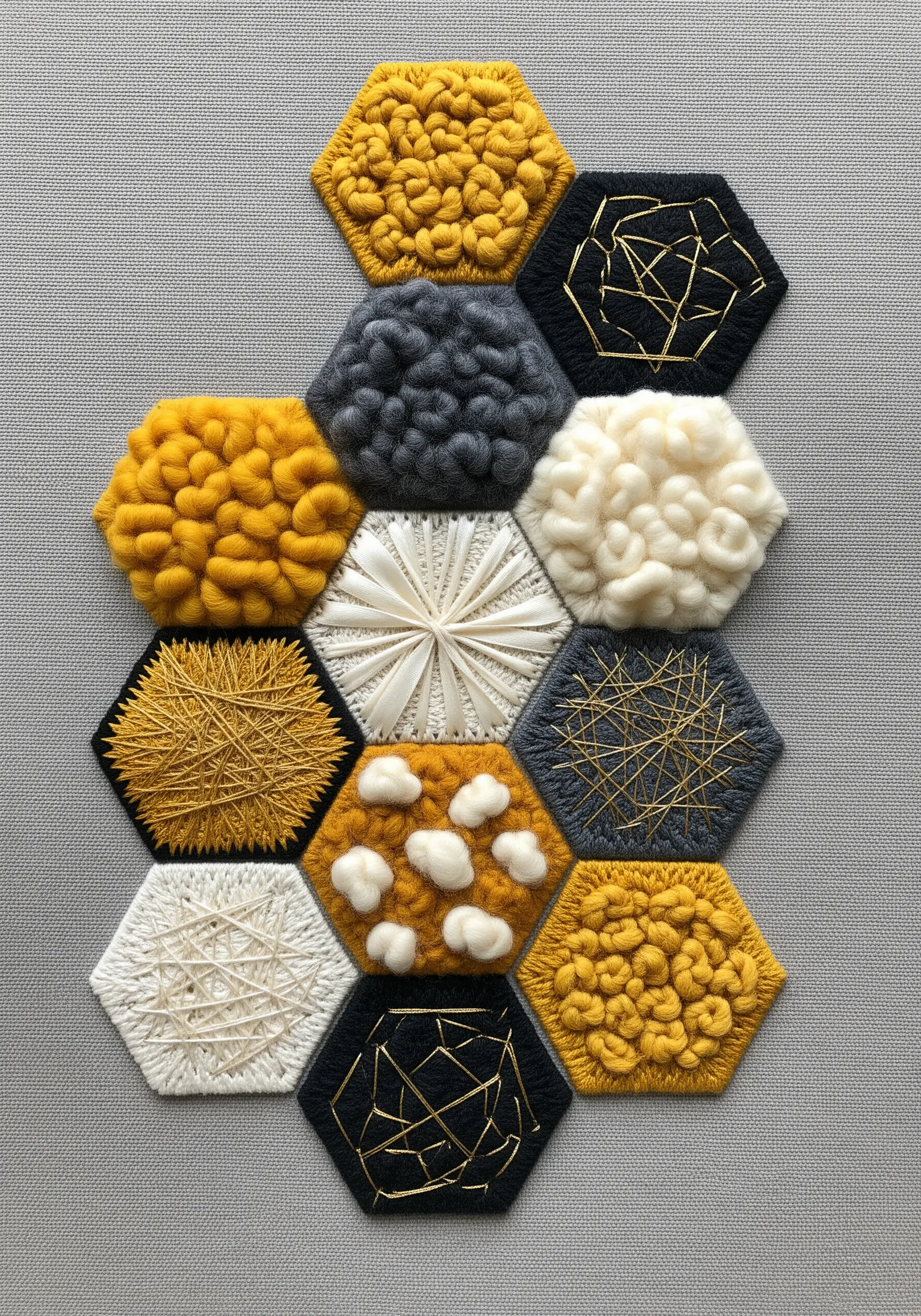
Create a stunning piece of modern wall art by focusing on a collection of textures within a structured grid.
Lightly draw a honeycomb pattern on your fabric.
Fill each hexagon with a different fiber or stitch technique: fluffy turkey work, dense French knots, woven patches, chaotic thread painting, or metallic accents.
This modular approach allows you to experiment freely and results in a sophisticated sampler of your skills, making it a perfect DIY embroidery piece for a gallery wall.
24. Stitch a Minimalist Zen Garden with 3D Stones
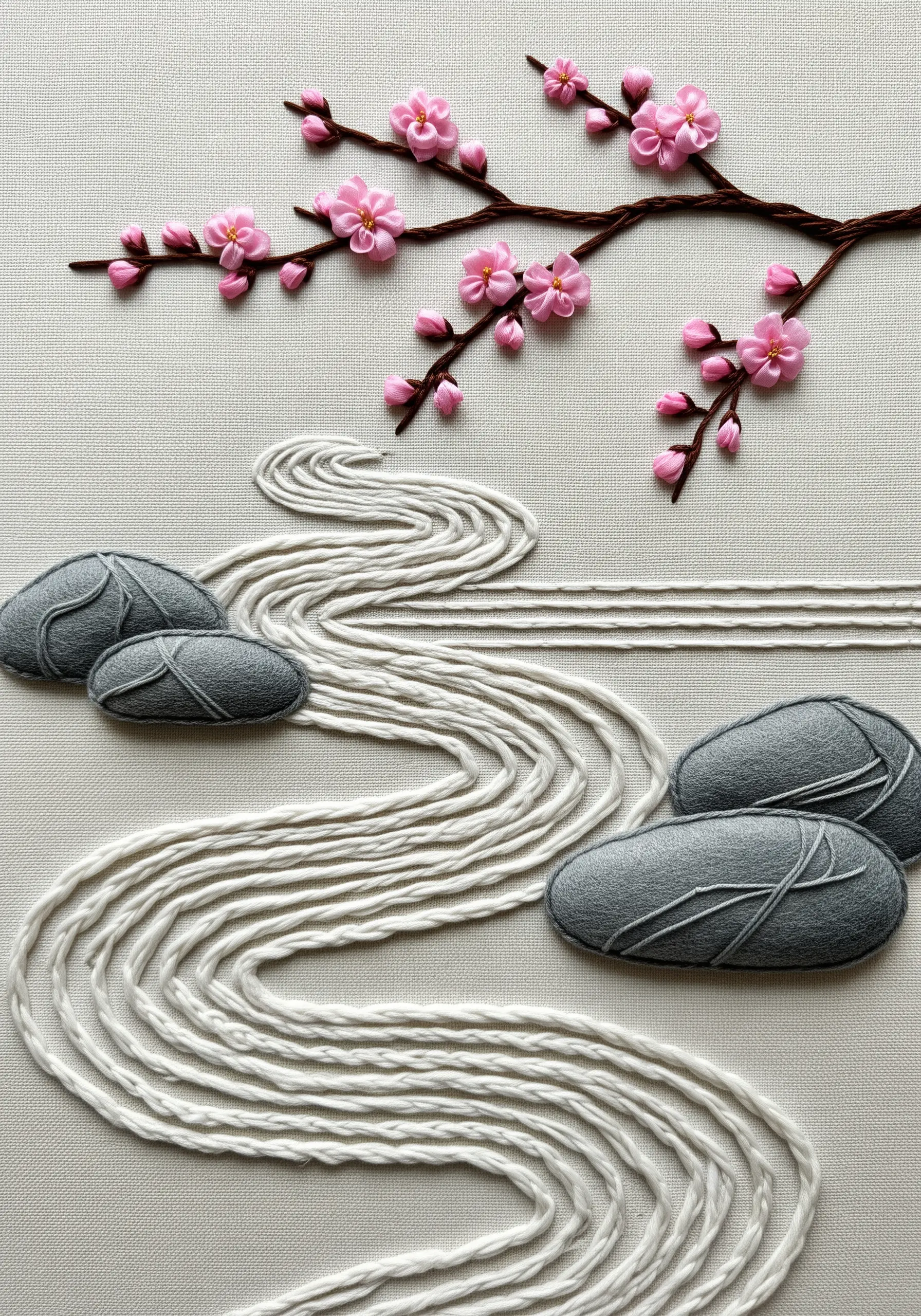
Evoke a sense of calm and tranquility through minimalist textures and forms.
Create the raked lines of the garden using simple, parallel running stitches or couched cord.
For the stones, use padded satin stitch—placing a small piece of felt underneath and stitching over it—to give them a smooth, raised, and perfectly rounded shape.
The contrast between the linear ‘sand’ and the solid ‘stones’ is the key to this serene composition.
25. Arrange a Felt and Ribbon Bouquet in a Teacup
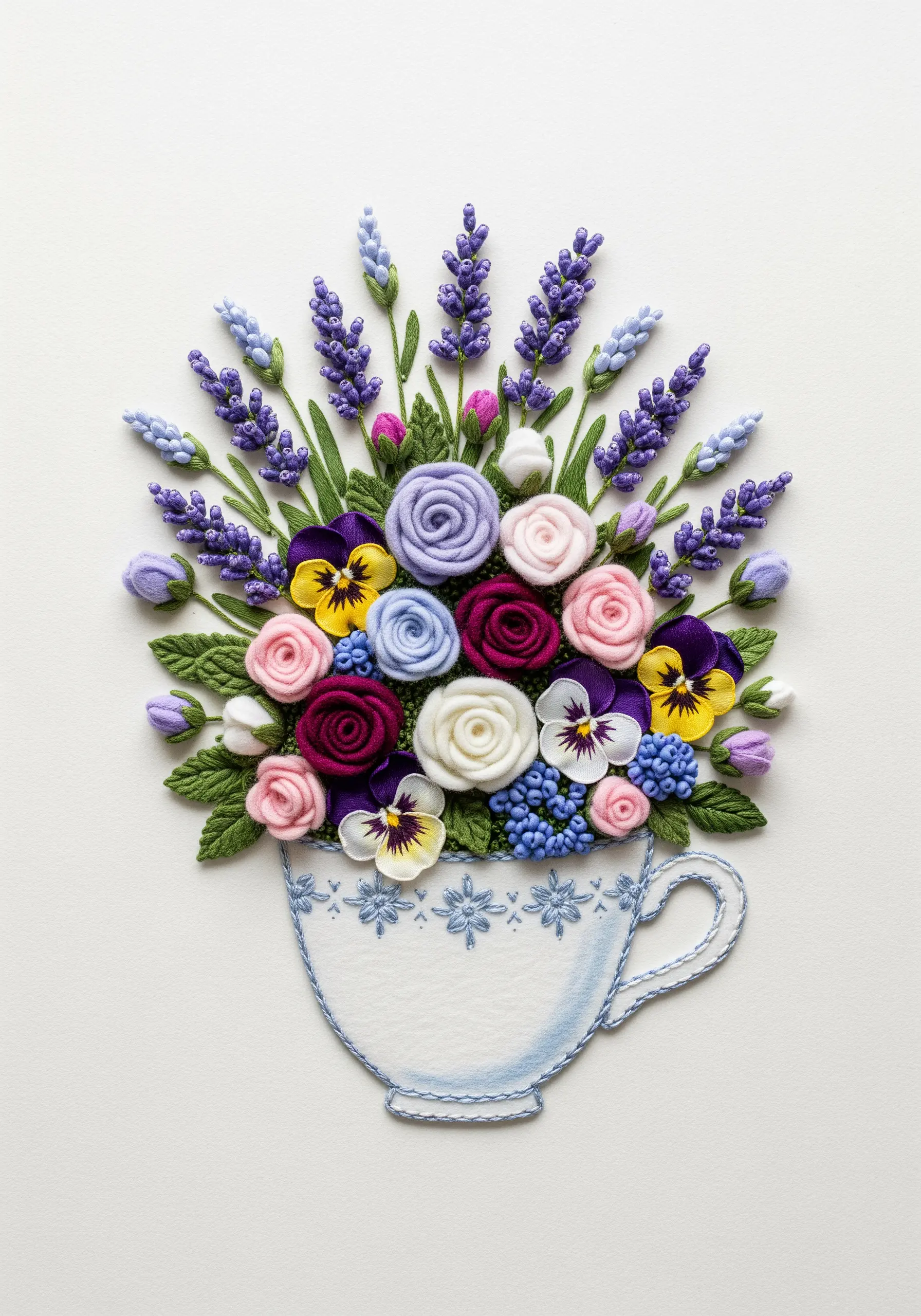
Combine simple line embroidery with lush, dimensional embellishments for a charming still life.
Outline your teacup using a clean backstitch or split stitch for a delicate, illustrated look.
Then, fill the cup with a vibrant bouquet of 3D flowers made from rolled felt roses, gathered ribbon pansies, and knotted floral buds.
This technique creates a wonderful illusion of depth, as the lush flowers seem to spill out from the flatly stitched cup.
26. Capture the Northern Lights with Shimmering Thread
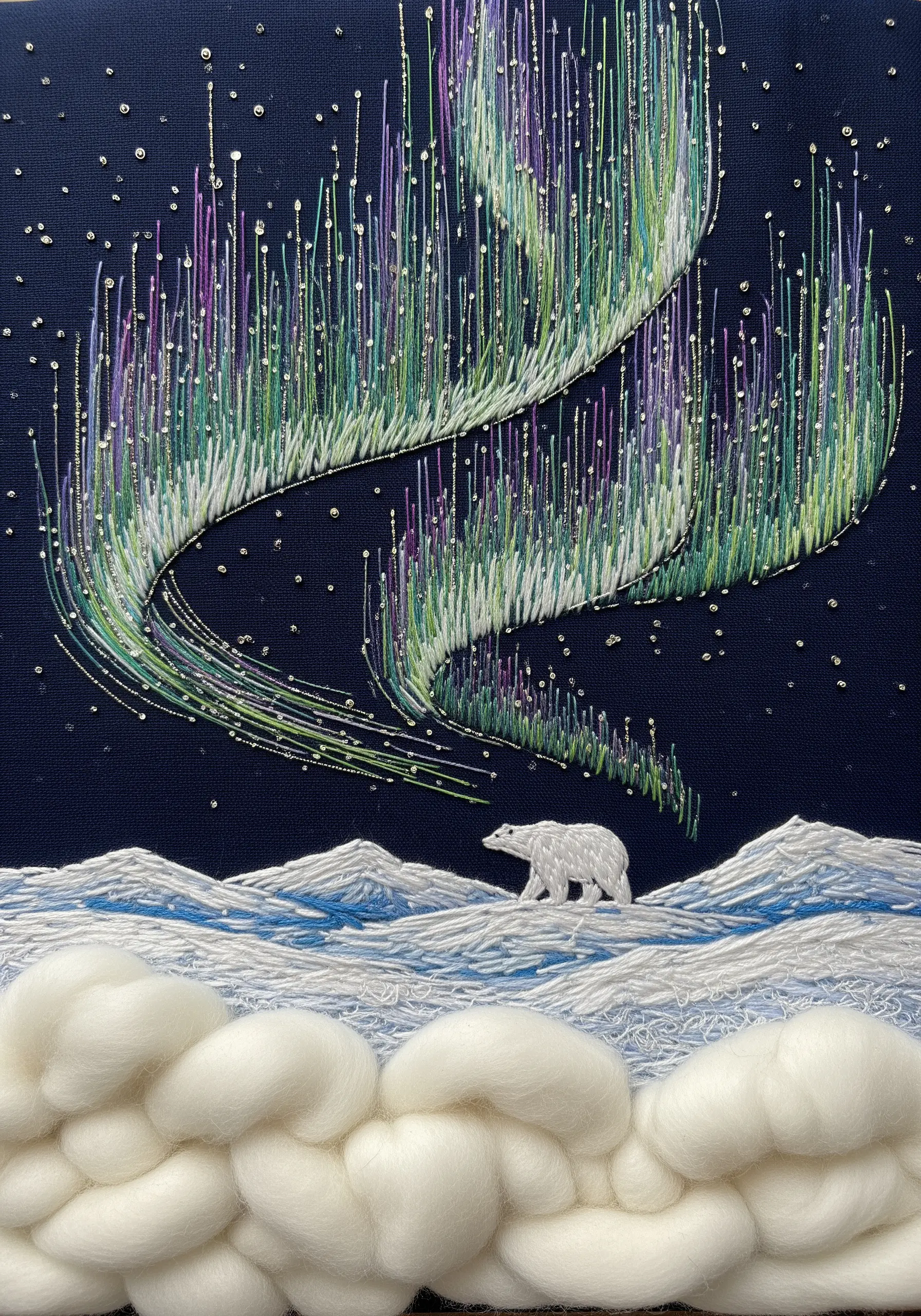
Recreate the ethereal glow of the aurora borealis using vertical stitches and light-reflecting materials.
Use long, straight stitches in variegated greens, purples, and whites, allowing them to overlap and blend.
Intersperse these with metallic and iridescent threads that will catch the light and shimmer.
A snowy foreground made from soft wool roving and tiny beaded stars in the dark sky complete this magical arctic scene.
27. Replicate Stained Glass with Satin and Cord
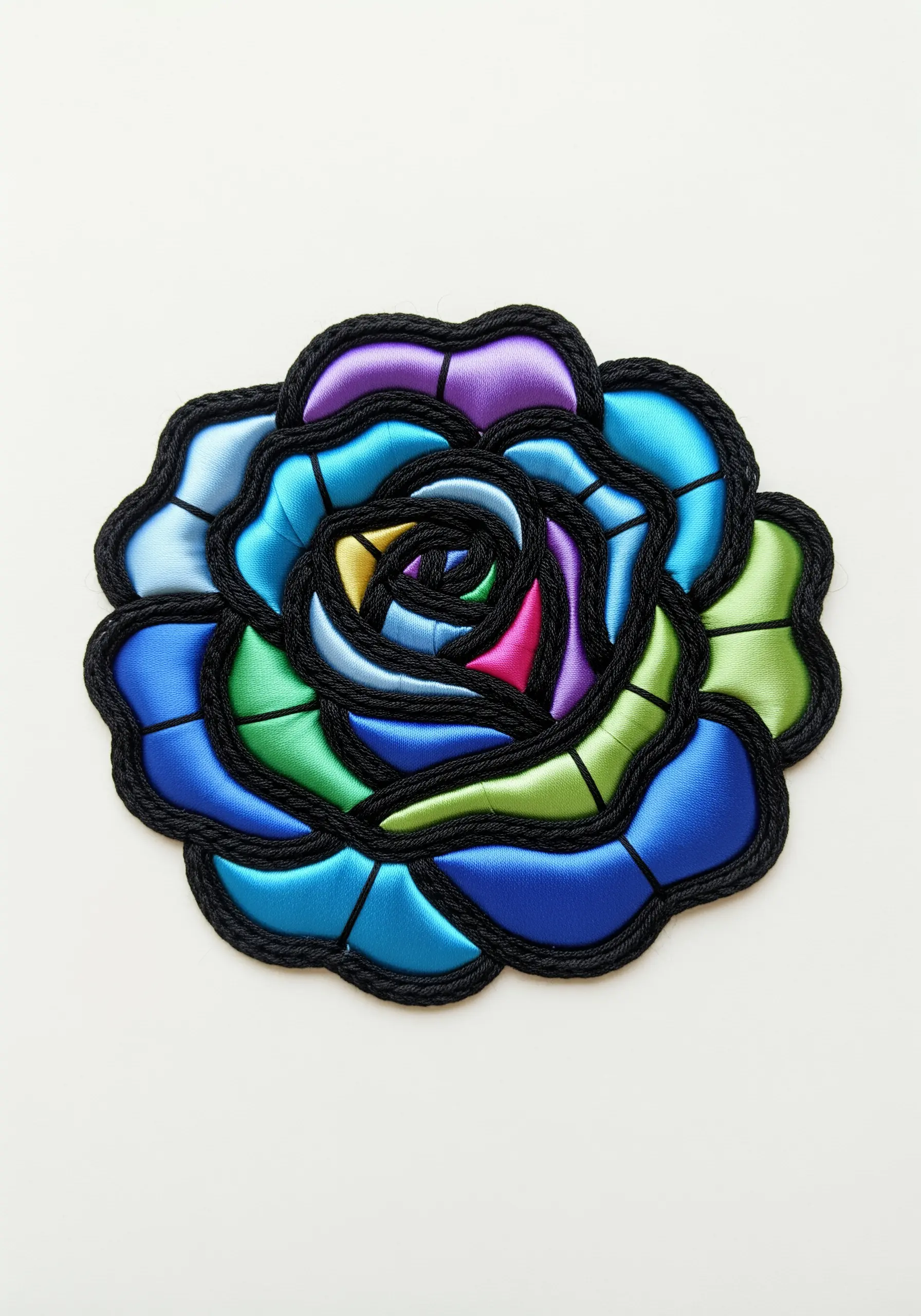
Achieve the luminous, graphic look of stained glass using fabric appliqué and bold outlines.
Cut your petal shapes from shiny satin fabric in various colors and use an iron-on adhesive to fix them in place.
Then, couch a thick black cord or yarn around each fabric piece to mimic the dark lead lines.
The contrast between the lustrous satin and the matte black cord is what creates the convincing and dramatic stained-glass effect.
28. Sculpt a Crashing Wave with Thread and Turkey Work
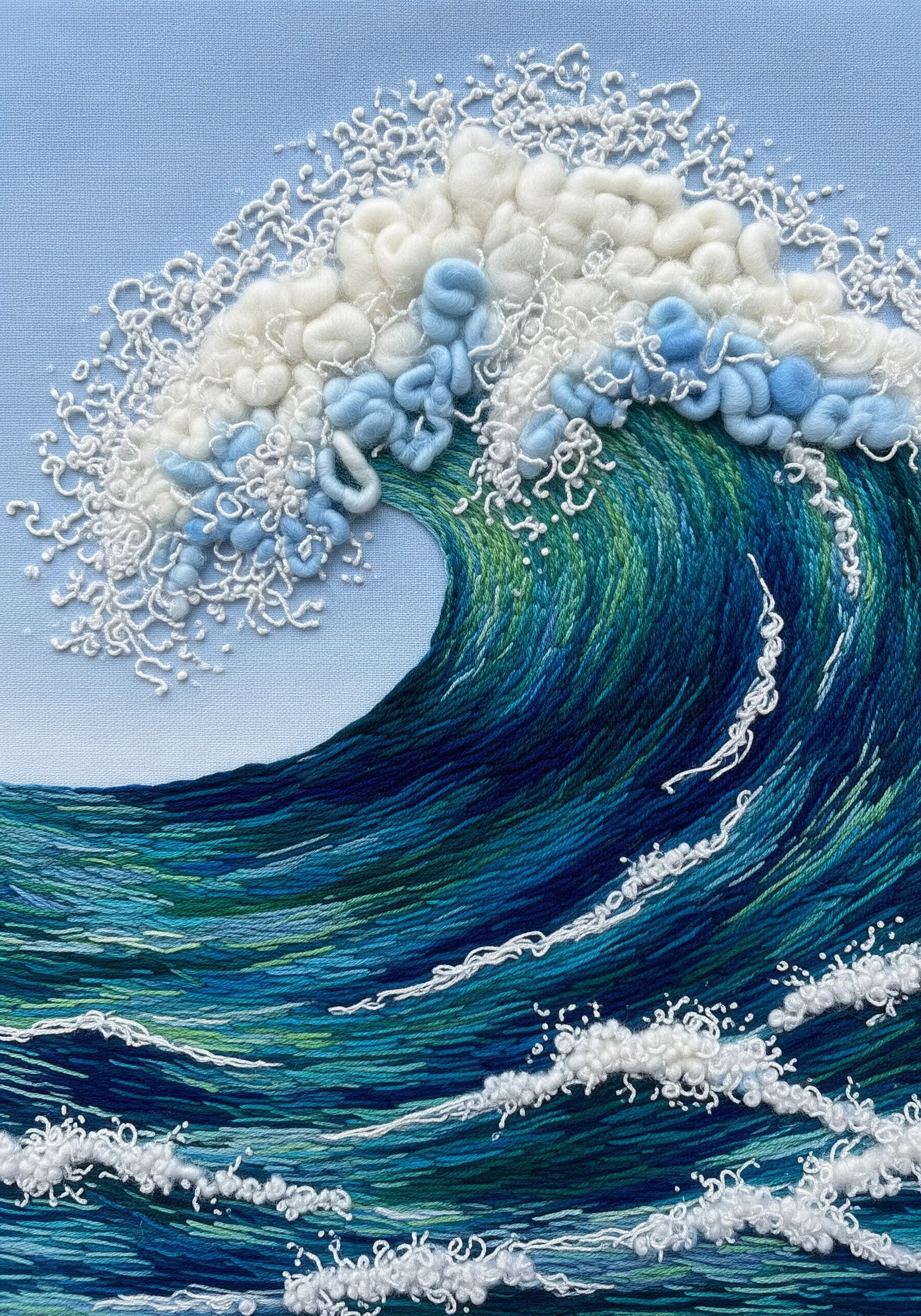
Capture the immense power and texture of an ocean wave using directional stitching and 3D knots.
Create the smooth, powerful body of the wave with long-and-short stitches, blending blues and greens to show depth and light.
For the foamy crest, use white turkey work. After making the loops, trim them to varying heights to create a frothy, chaotic, and wonderfully realistic sea spray effect.
This method turns a flat image into a dynamic, sculptural piece of fiber art.
29. Fill a Fruit Bowl with Highly Tactile Stitches
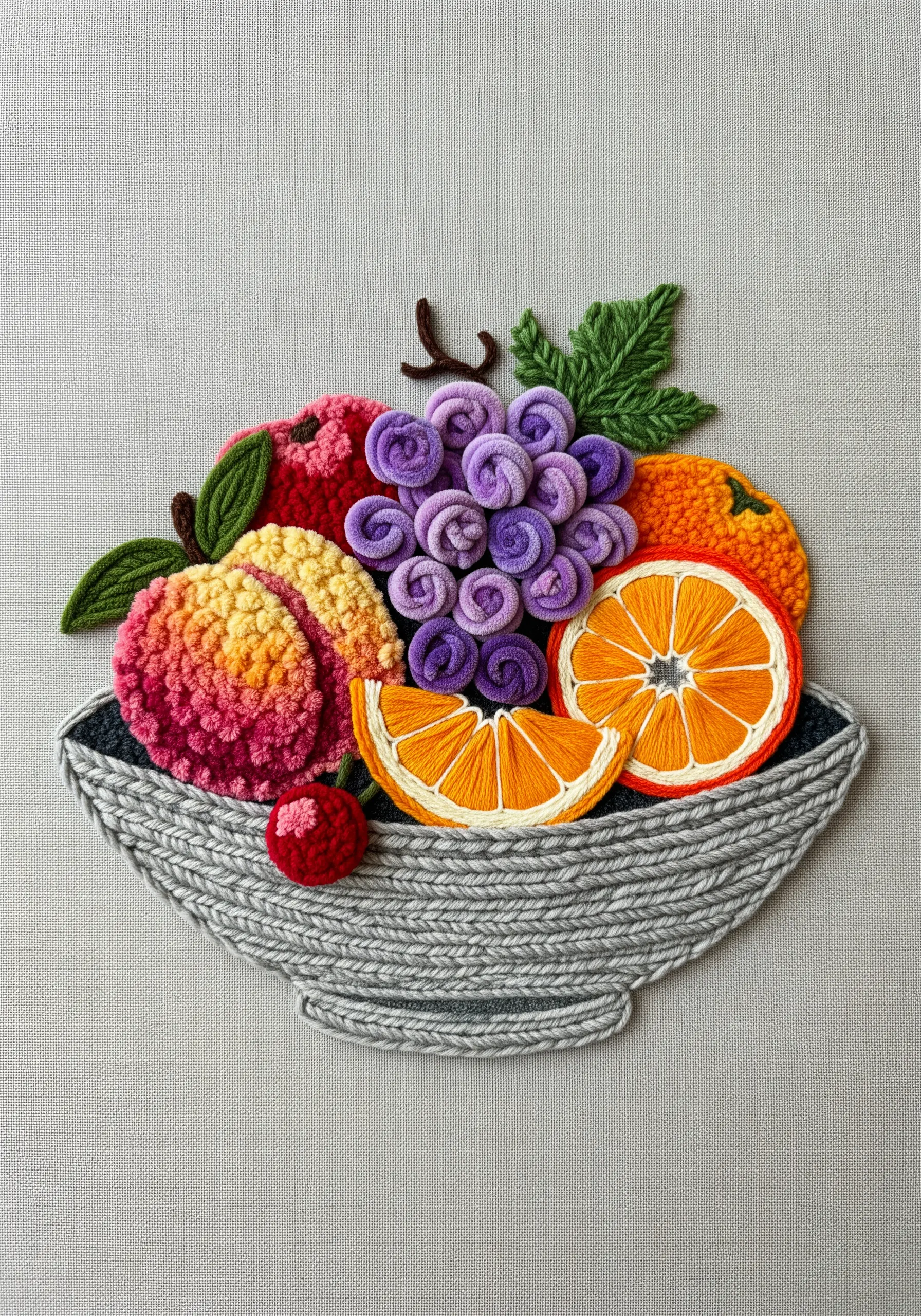
Move beyond color and shape to represent fruit with texture.
Assign a unique, dimensional stitch to each type of fruit to capture its essence.
Use tightly packed bullion knots for a bunch of grapes, dense French knots for the fuzzy skin of a peach, and a perfectly round woven wheel stitch to mimic the segments of a sliced orange.
This approach transforms a simple still life into a delightful tactile experience.
30. Build an Abstract Landscape with Deconstructed Fabric
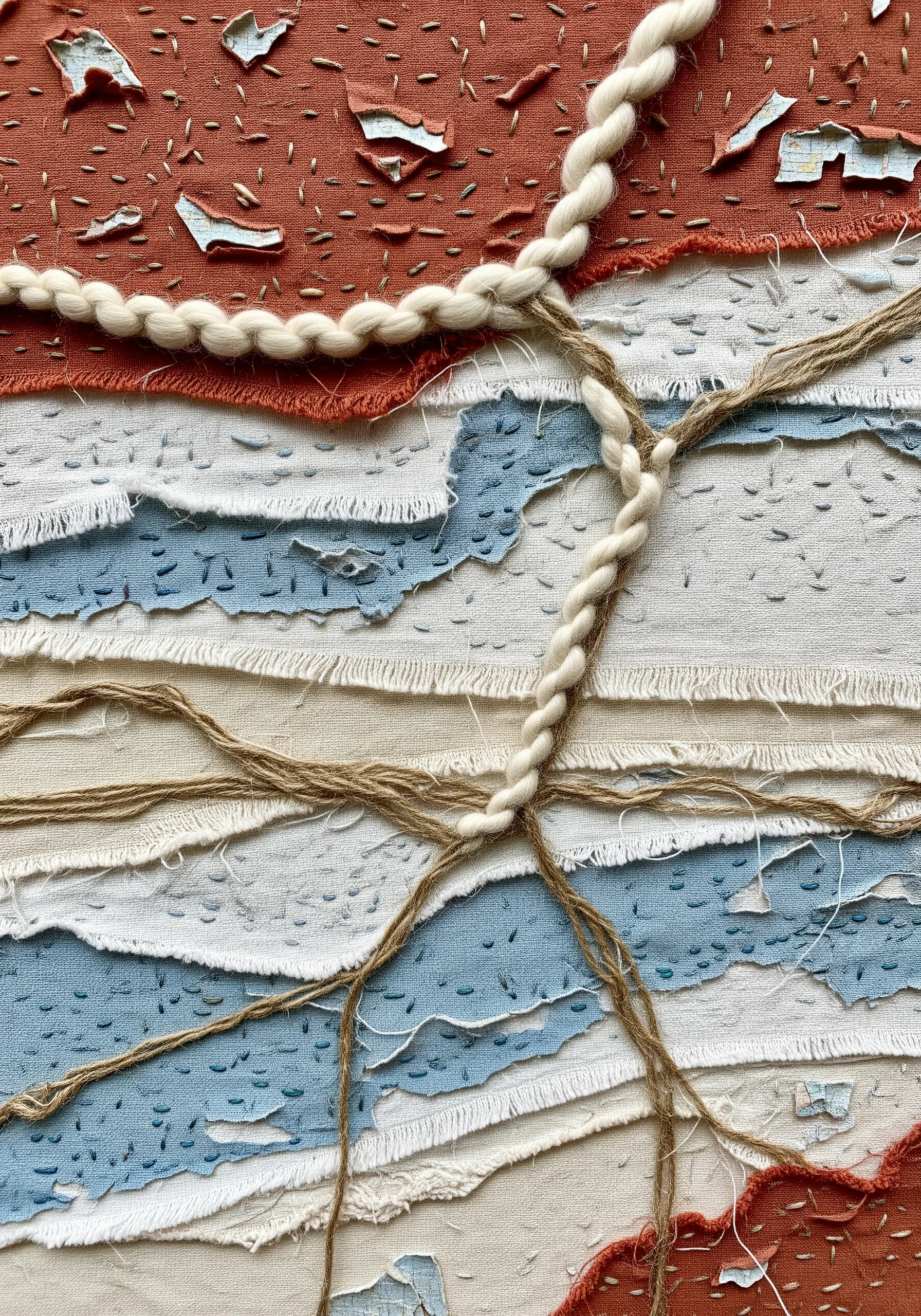
Create a raw, expressive landscape by layering ripped and frayed textiles.
Tear strips of canvas or linen in different colors and arrange them on your base fabric to suggest horizons or geological strata.
Secure these raw-edged pieces with simple running stitches or by couching down rustic twine across the composition.
This technique celebrates imperfection and focuses on the inherent texture of the materials, resulting in powerful abstract thread landscapes.