Have you ever found yourself pausing mid-stitch, wondering how to make your work feel more… alive? You’ve mastered the basics, but now you’re seeking that next layer, the one that transforms a simple project into a piece of personal art that truly resonates in your space.
The secret often isn’t in learning a dozen more complex stitches. Instead, it lies in the thoughtful combination of different fibers. It’s about understanding how the soft, cloud-like volume of wool roving plays against the tight twist of a cotton cord, or how a strip of smooth ribbon can cut through a matte texture to catch the light just so.
These ideas are your invitation to think like a sculptor, a painter, and a designer—all through the medium of fiber. They are prompts to experiment with weight, sheen, and form, allowing you to create pieces that are not only beautiful to look at but deeply satisfying to touch and to make. Let’s begin.
1. Weave with Unconventional Textures

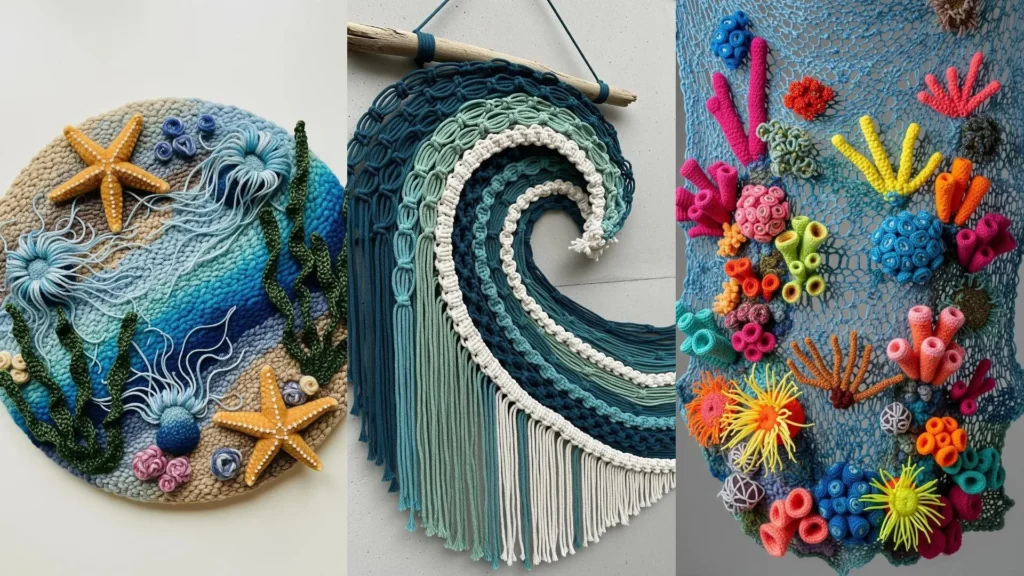
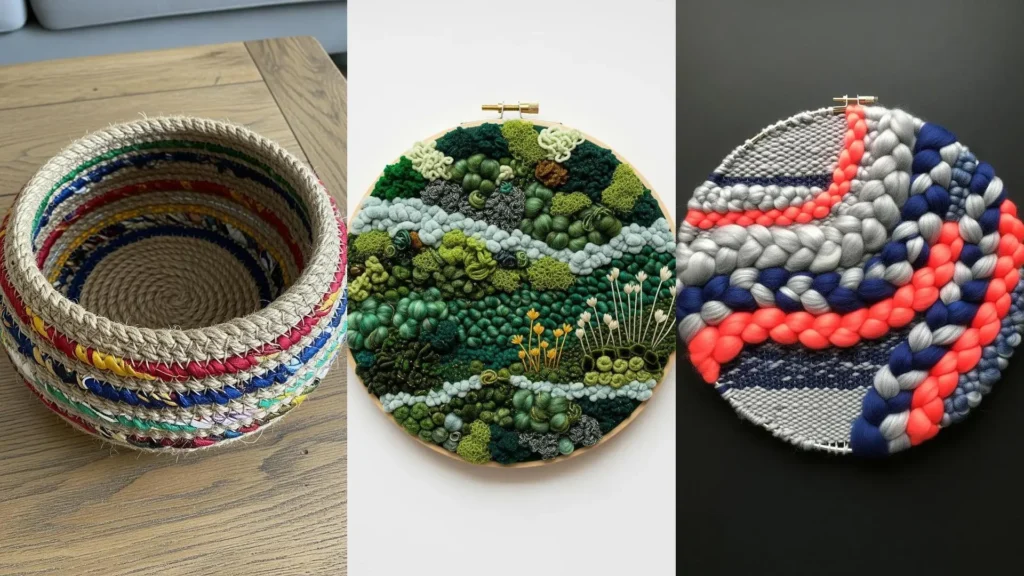
Introduce dynamic visual interest by combining fibers with distinctly different properties in a single woven piece.
Incorporate chunky, unspun wool roving for soft, cloud-like volume against the tight structure of macrame cord or standard yarn.
Integrate thin strips of satin or velvet ribbon; their smooth sheen provides a beautiful contrast to the matte finish of natural fibers.
Using a found object, like a piece of driftwood, as the hanger reinforces the organic, handmade feel of the artwork.
2. Compose a Punch Needle Gallery Wall
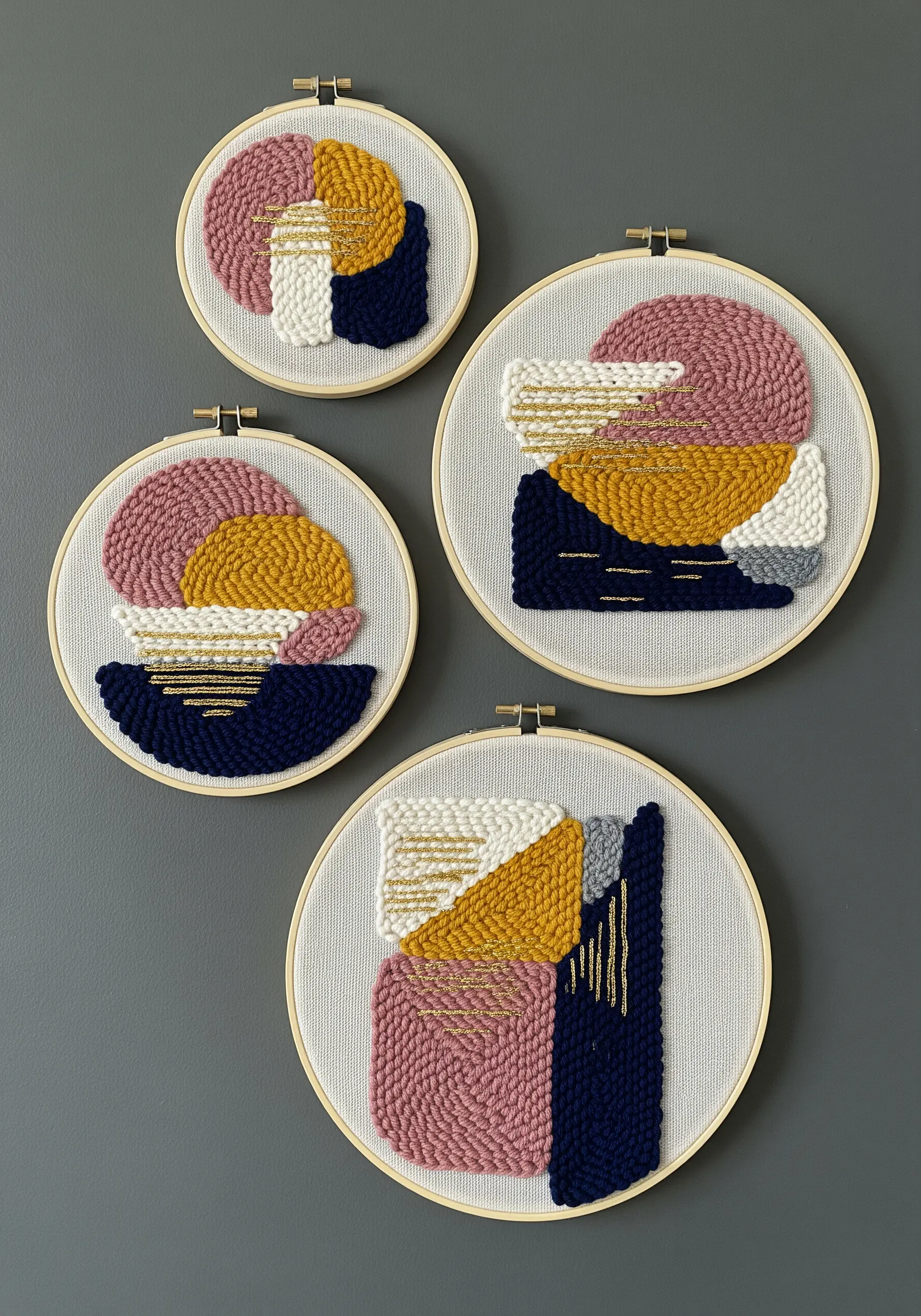
Create a sophisticated gallery wall by working on a series of smaller punch needle hoops that share a cohesive color story.
Use the same three or four colors across multiple abstract compositions to ensure the pieces feel connected, even if the designs differ.
For a subtle touch of luxury, integrate a single strand of fine metallic thread alongside your yarn in one small section.
This adds a light-catching element that draws the eye without overpowering the modern, graphic quality of the punch needle texture.
This approach helps you create minimal DIY embroidery pieces perfect for a gallery wall.
3. Craft a Coiled Rope and Fabric Basket

Turn simple craft rope into a functional and decorative vessel by wrapping it with thin strips of scrap fabric.
This technique allows you to upcycle leftover textiles and create a completely unique color pattern.
As you coil the wrapped rope to build the basket walls, use a sturdy embroidery floss in a contrasting color and a simple whip stitch to join the layers.
This visible stitch becomes a key design element, celebrating the handmade process.
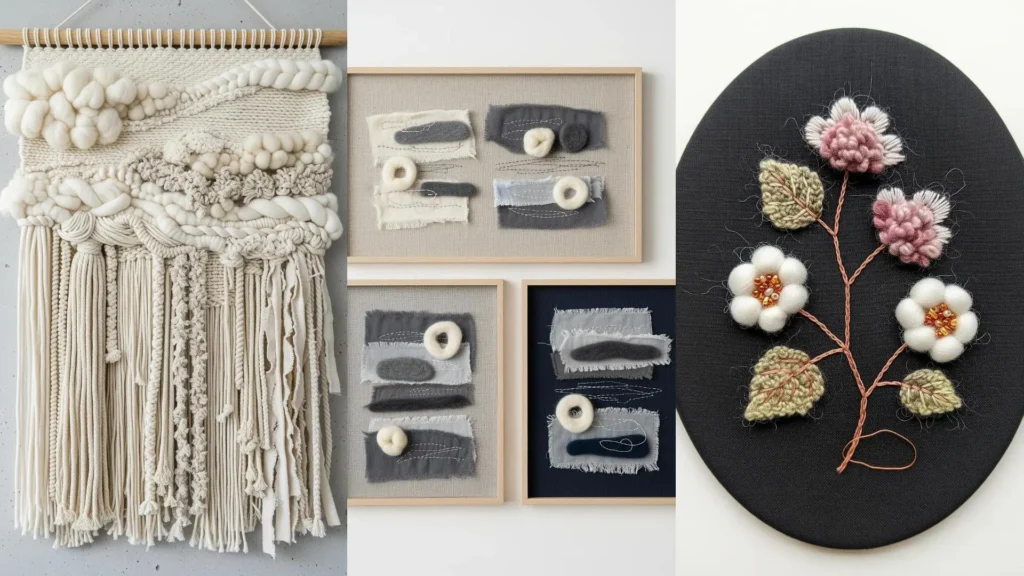
4. Explore Monochrome Fiber Art

Challenge yourself to work within a limited, neutral palette to push your exploration of texture.
When color is minimized, the tactile qualities of each fiber become the central focus.
Combine thick, braided sections, tightly looped knots, and smooth areas of plain weave to create a landscape of texture.
Unify the piece by creating long, elegant tassels that incorporate a blend of all the different yarns used in the main body of the work. This makes for beautiful, cozy neutral decor ideas.
5. Design with Bold, Tufted Color Blocks

Make a powerful visual statement by using a tufting gun or punch needle to create a large-scale, color-blocked tapestry.
Map out a simple geometric design and fill each section with a single, highly saturated color for a modern, graphic effect.
The dense, plush texture of the tufted loops gives the colors a deep, rich quality that paint cannot replicate.
Add an unexpected fringe element where two colors meet to introduce movement and another layer of tactile interest, resulting in stunning embroidered wall hangings.
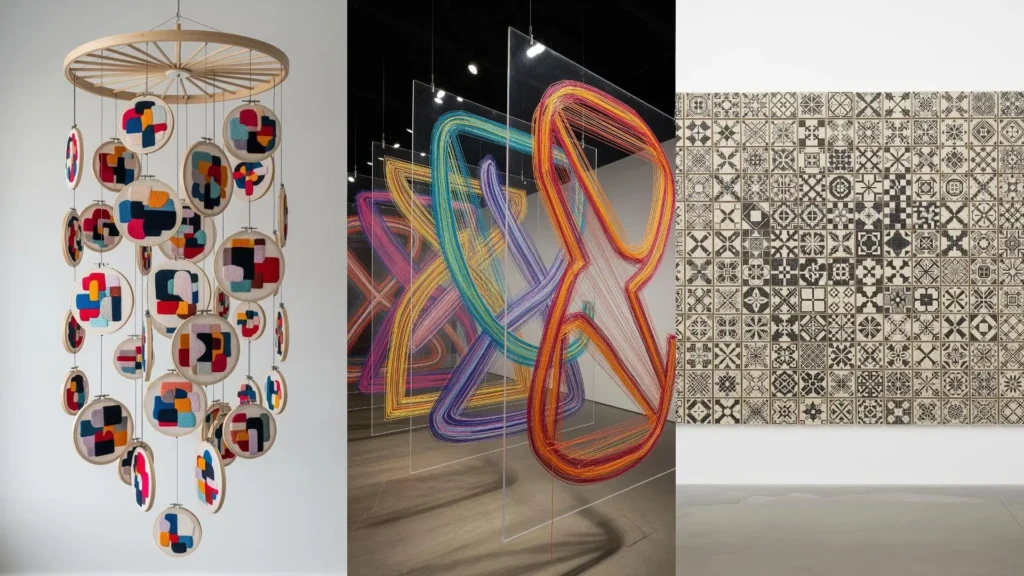
6. Sculpt a Serene Felted Mobile
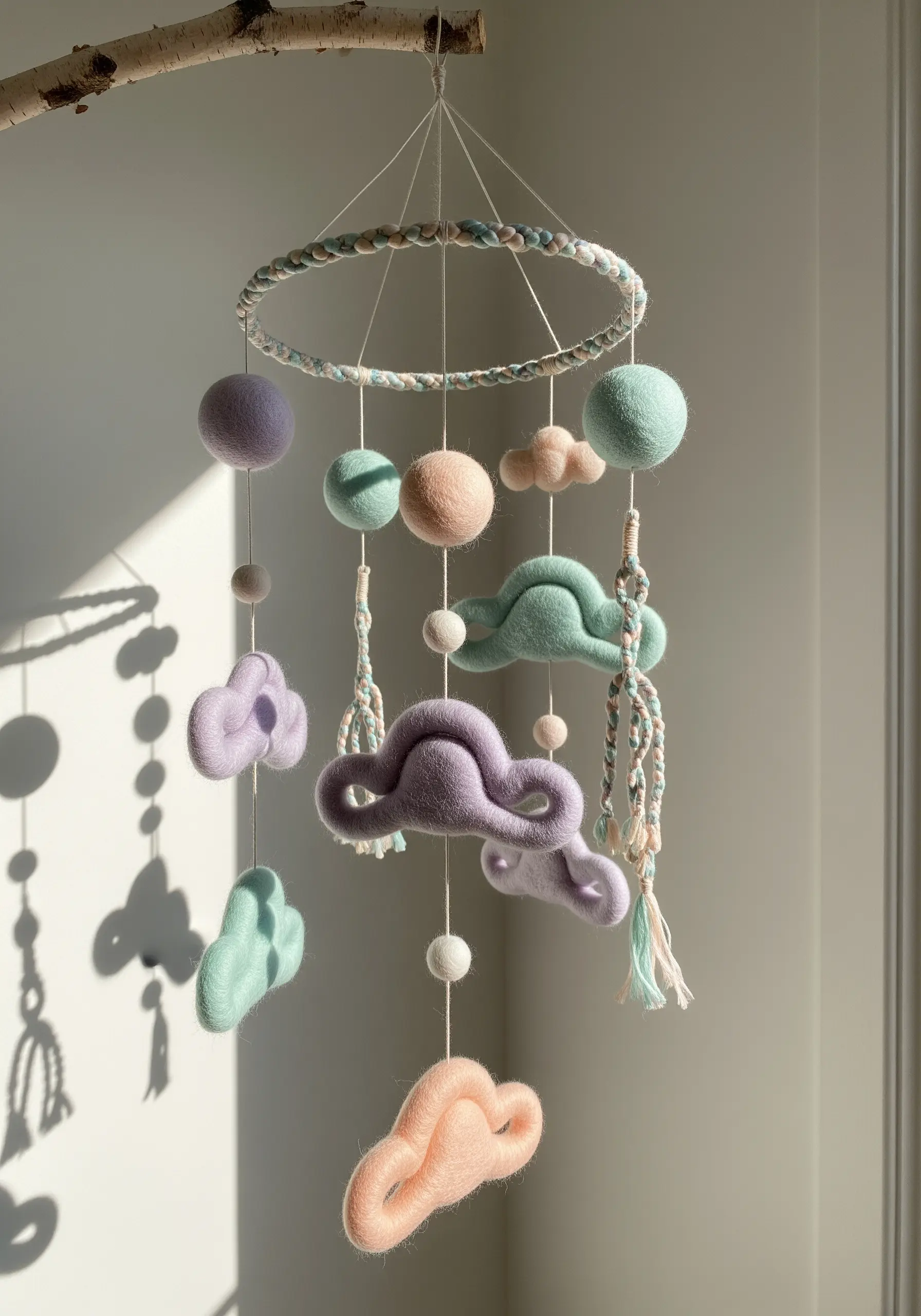
Use needle felting techniques to create soft, three-dimensional shapes from wool roving.
This method allows you to move beyond the flat surface and sculpt organic forms like clouds, spheres, and stars.
Choose a gentle, calming color palette and hang the finished felted pieces at varying lengths from a simple hoop wrapped in yarn.
The lightweight nature of the wool ensures the mobile will have beautiful, gentle movement, making it one of the most calming DIY embroidery projects you can try.
7. Sculpting with Fiber and Wire
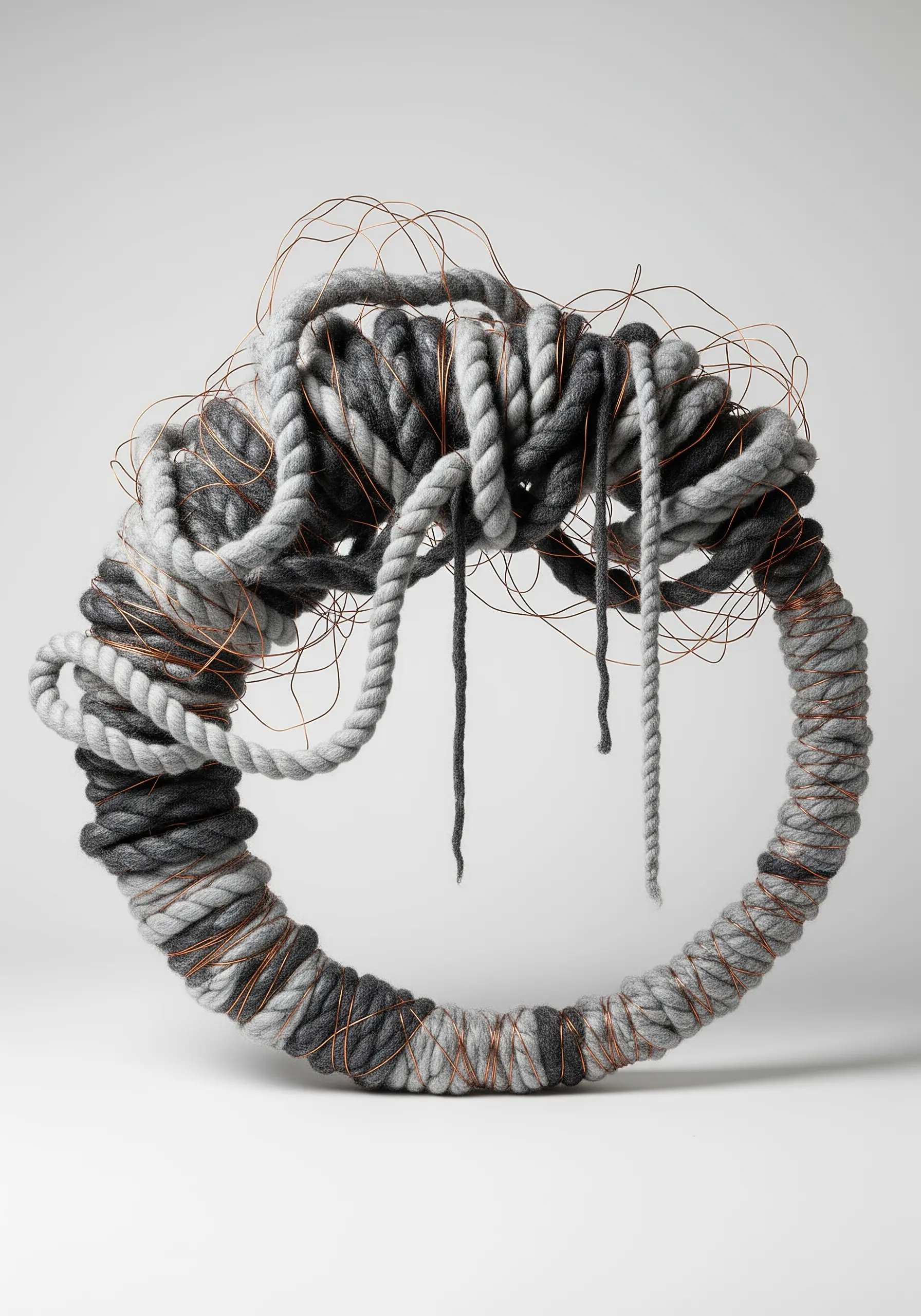
Create a dynamic, free-standing sculpture by combining soft and hard materials.
Wrap a thick rope base with wool yarn to establish the primary form and color.
Then, introduce a contrasting element like thin copper or brass wire, wrapping it loosely around the fiber structure.
The wire adds a metallic glint, structural integrity, and an element of controlled chaos, transforming the piece into modern art.
These are the kinds of handmade art objects that will transform any room into a gallery.
8. Weave with Natural, Dried Botanicals
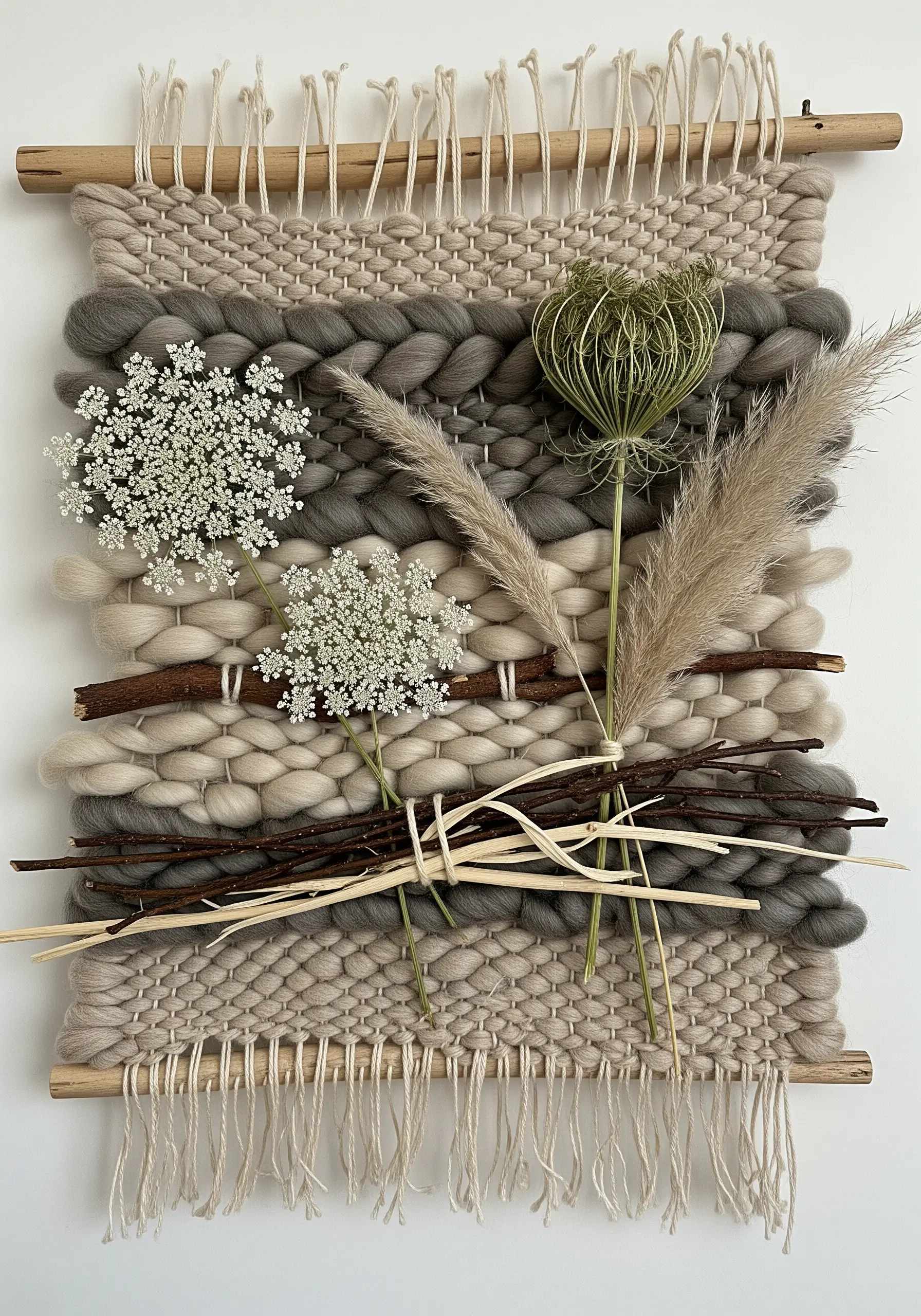
Incorporate elements of nature directly into your woven pieces for a truly unique, organic touch.
As you weave, gently lay dried botanicals—such as pampas grass, lavender sprigs, or delicate seed pods—between the weft threads.
Secure them with a few passes of your weft thread to hold them in place.
This technique adds a fragile, ephemeral beauty and a layer of texture that manufactured fibers alone cannot replicate, creating stunning handmade pieces that bring natural beauty into every corner.
9. Architectural String Art on Fabric
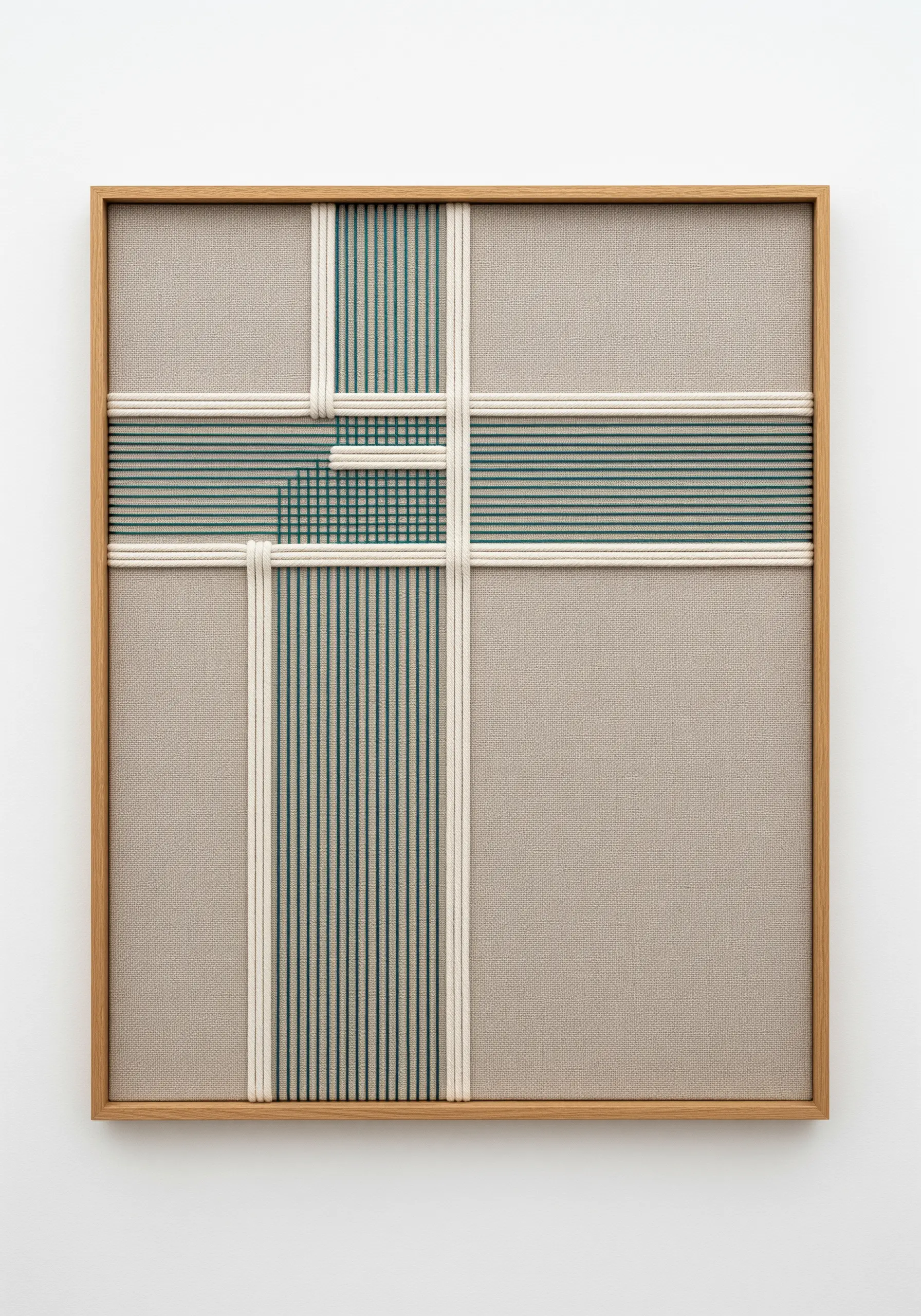
Create clean, graphic patterns by stretching thread over a fabric-covered canvas instead of stitching through it.
Begin by covering a sturdy wooden frame with a neutral, tightly woven linen or canvas.
Instead of a needle, you will wrap thread around pins or small nails arranged in a precise grid.
By layering the threads, you can build intricate geometric designs where the tension of the string creates crisp, architectural lines. This turns a simple frame into one of many framed embroidery patterns that look like they belong in a gallery.
10. Elevate Macrame with Mixed Textures
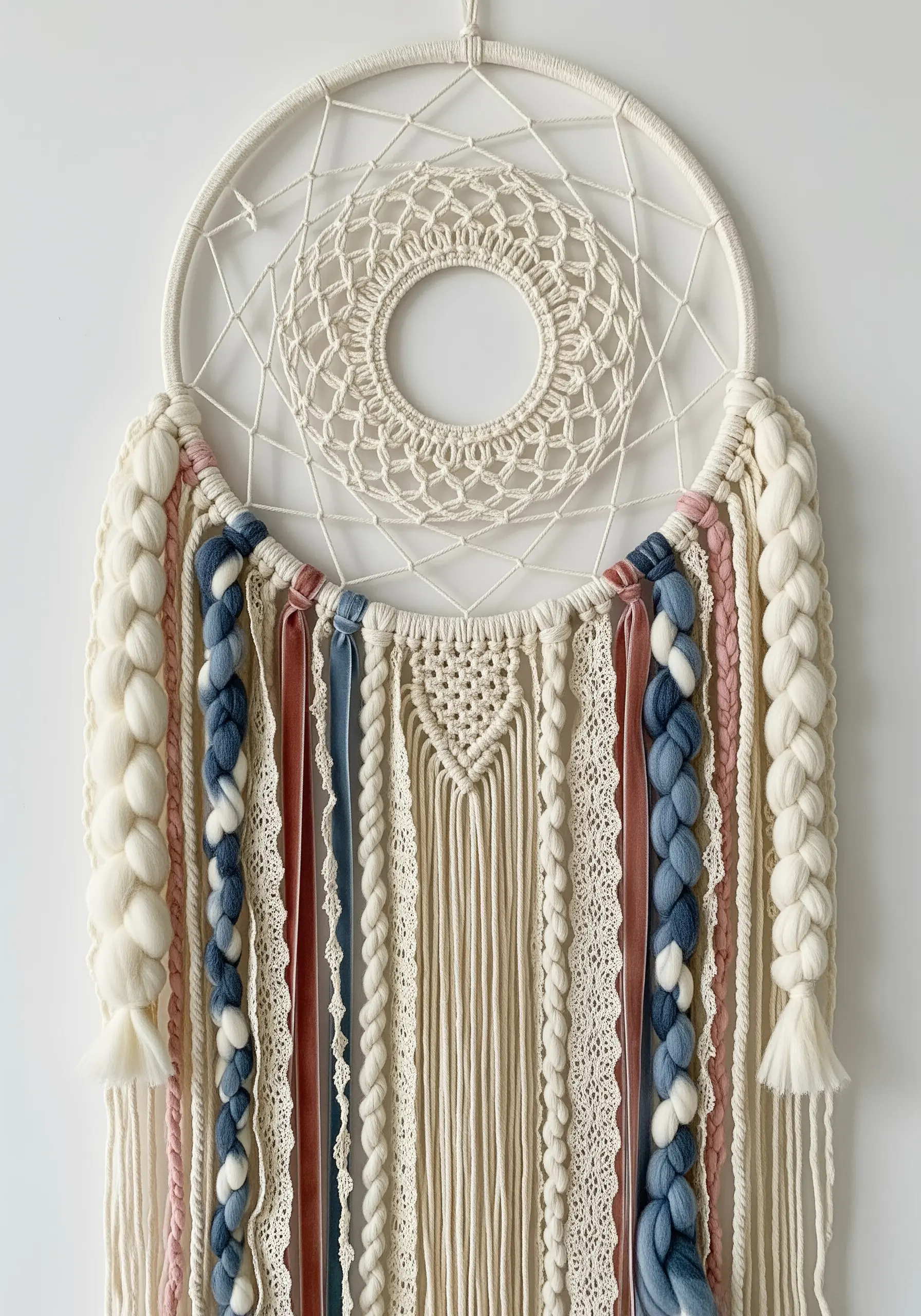
Move beyond standard cotton cord to give your macrame projects a more luxurious and sophisticated feel.
Integrate thick, unspun wool roving by braiding it or incorporating it into your knots for a soft, chunky contrast.
Weave in strips of luxe materials like velvet or silk ribbons to introduce a different sheen and a pop of rich color.
This blend of rustic knotting with refined textiles creates a compelling piece that feels both bohemian and elegant.
11. Stitching a Textured Moss Scape
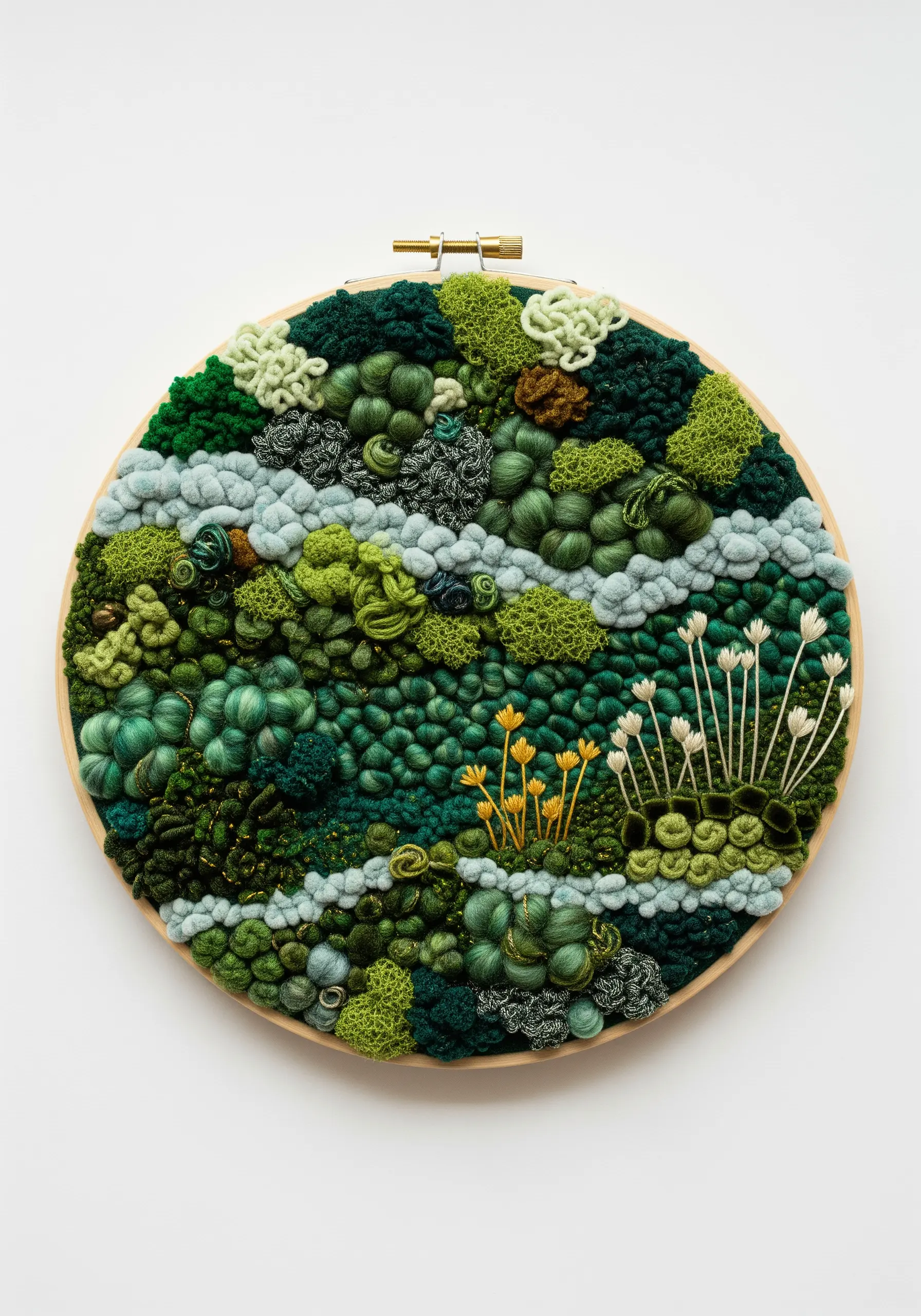
Recreate the feeling of a lush, natural landscape by focusing entirely on textural stitches within a single color family.
Use a variety of yarn weights and embroidery floss in multiple shades of green.
Combine dense French knots, bullion knots, turkey work, and woven wheel stitches to build up a dimensional, moss-like surface.
The variation in stitch and shade creates an incredibly rich, tactile piece that invites you to touch it, making it one of the most gorgeous mixed-fiber textures that everyone will admire.
12. Weave a Functional Art Screen
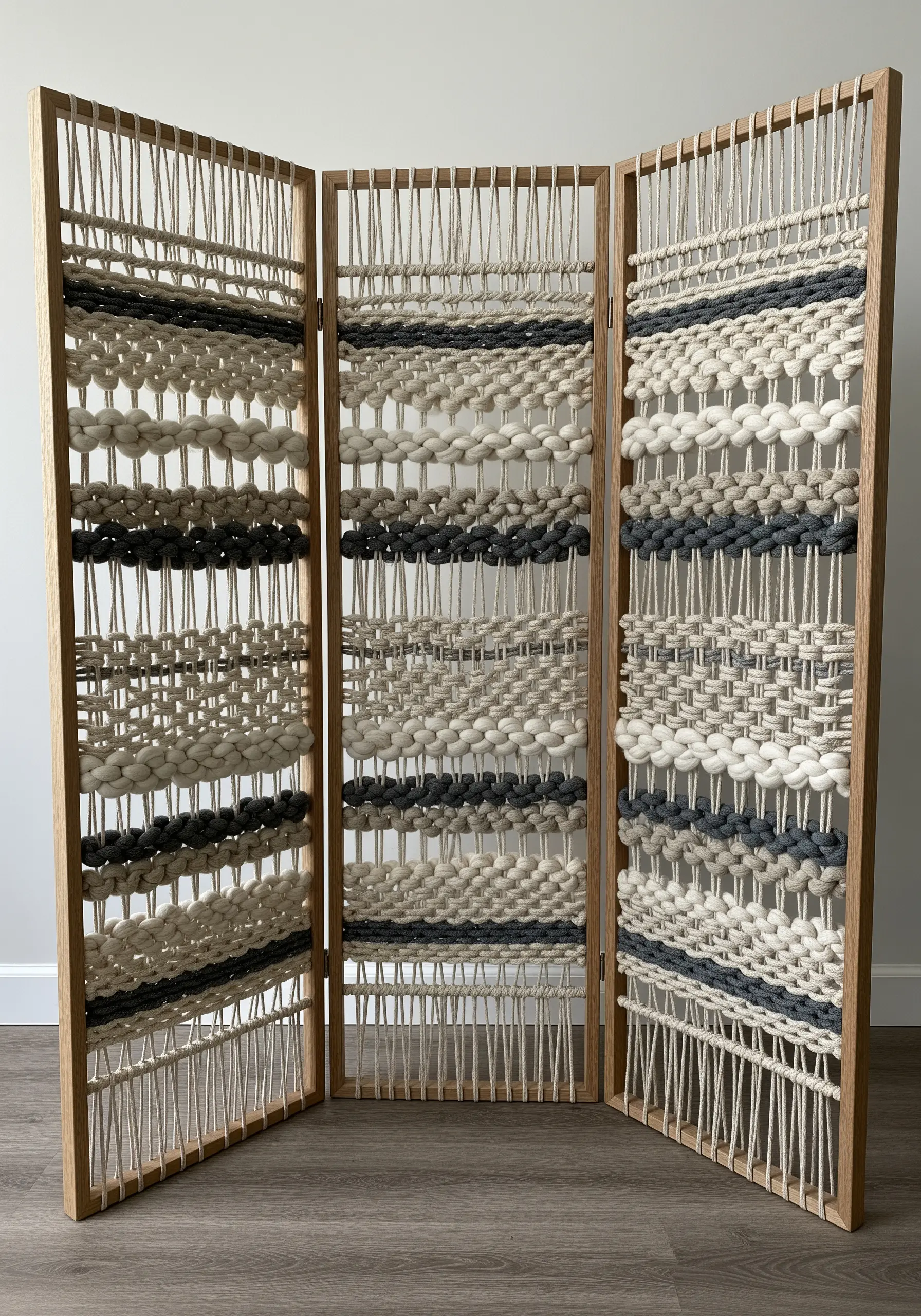
Apply your fiber art skills to a large, functional object like a folding room divider.
Use the panels of a simple wooden screen as your loom, stretching durable cotton warp threads vertically from top to bottom.
Weave horizontally with thick, chunky yarn or wool roving in a simple pattern.
The result is a piece that provides privacy and divides a space while also serving as a stunning, large-scale textural artwork.
13. Modernize the Macrame Plant Hanger

Give the classic macrame plant hanger a contemporary update by swapping traditional materials for modern alternatives.
Use braided jersey yarn (often called t-shirt yarn) in bold, bright colors to create a soft, substantial, and playful hanger.
The thickness of the material means the knots are larger and more graphic, and the project works up much faster than with fine cord.
It’s a quick and impactful way to add a pop of handmade color to your home.
14. Creating a Compositional Fiber Collage
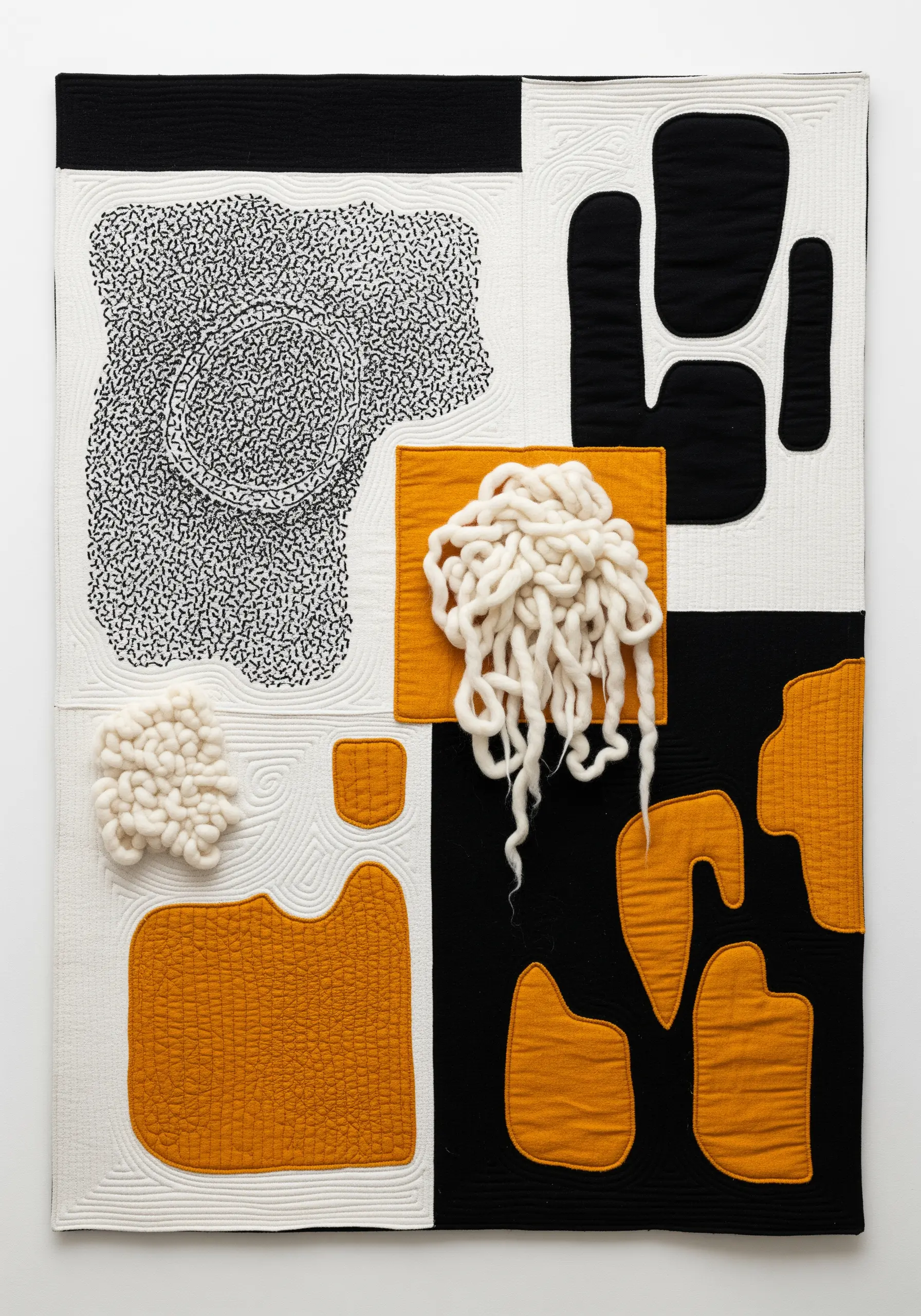
Approach your textile work like a painter creating a collage, layering different techniques, materials, and textures on a single surface.
Combine the fine, linear detail of free-motion machine quilting with bold, solid shapes of appliqué fabric.
Then, add a sculptural element, like coiled wool roving, that rises off the surface.
This multi-layered approach creates a dynamic composition full of depth and visual interest, turning fabric into one of many stunning mixed-fiber projects.
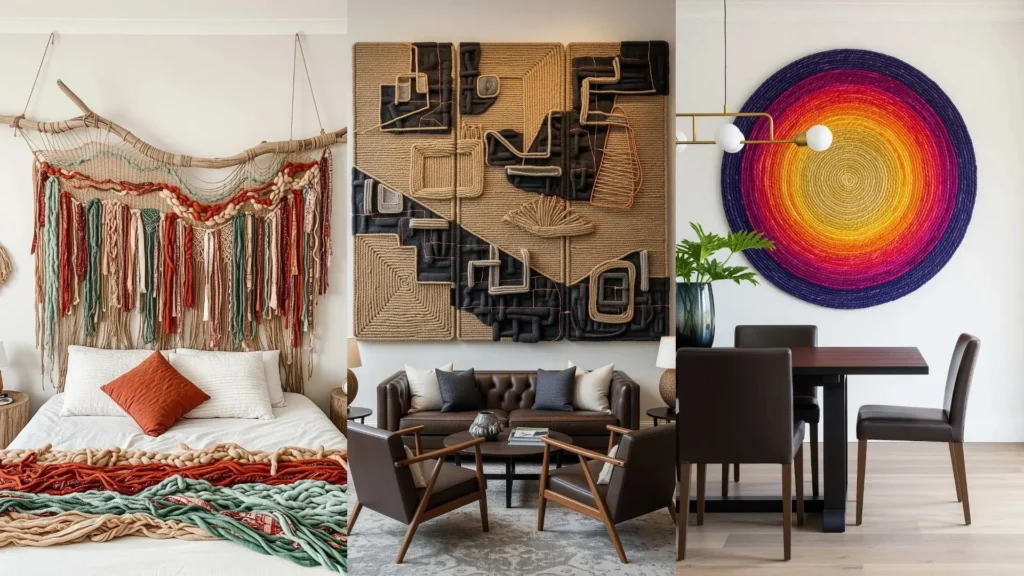
15. Weave a Soft, Textural Headboard

Create a dramatic and inviting focal point for your bedroom by crafting a large woven wall hanging to serve as a headboard.
Use extremely thick, unspun wool roving to achieve a plush, cloud-like texture that feels both luxurious and comforting.
Alternate between simple weaving patterns and thick, chunky braids to build visual rhythm across the piece.
The sheer scale and incredible softness offer a unique and cozy alternative to a conventional wooden or upholstered headboard.
16. Circular Weaving within an Embroidery Hoop

Repurpose a simple embroidery hoop as a loom for creating beautiful, circular weavings.
Create your warp by stretching threads across the hoop’s diameter, like spokes on a wheel, creating a strong center point.
Weave your weft thread in a spiral, experimenting with different yarn thicknesses and textures to build your design.
Introduce a single, high-contrast accent color, like a vibrant neon, to give your neutral weaving a sharp, modern edge.
17. The Multi-Technique Abstract Cushion
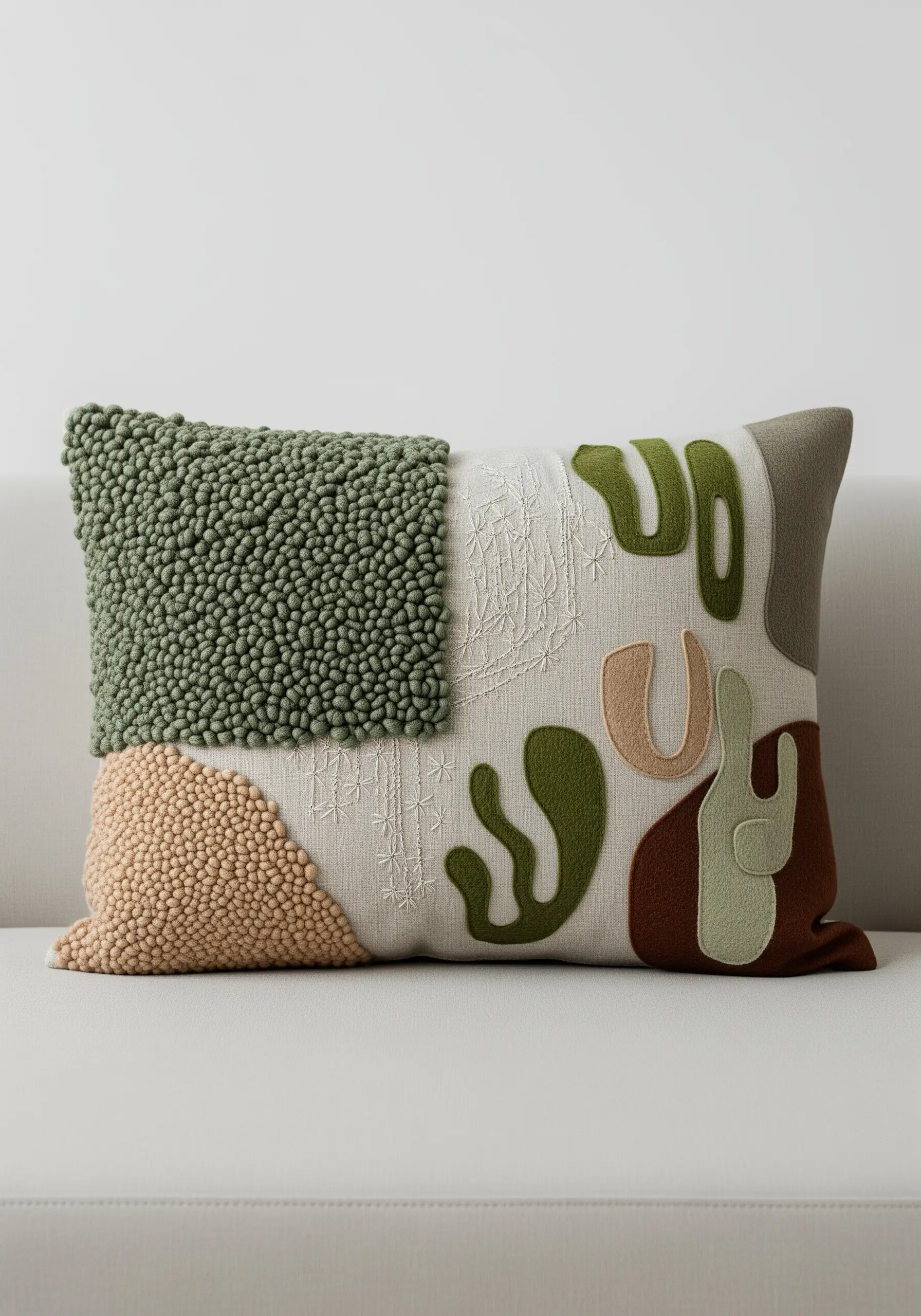
Transform a simple cushion into a tactile masterpiece by using it as a canvas for multiple fiber techniques.
Map out an abstract design and fill sections with different textures: dense, plush loops of punch needle, smooth surfaces of appliqué fabric, and the fine, linear detail of hand embroidery stitches.
This combination creates a rich, sensory object that invites not just sight but also touch, turning it into one of your favorite handmade embroidery touches.
18. Combine Macrame with Sculptural Wool
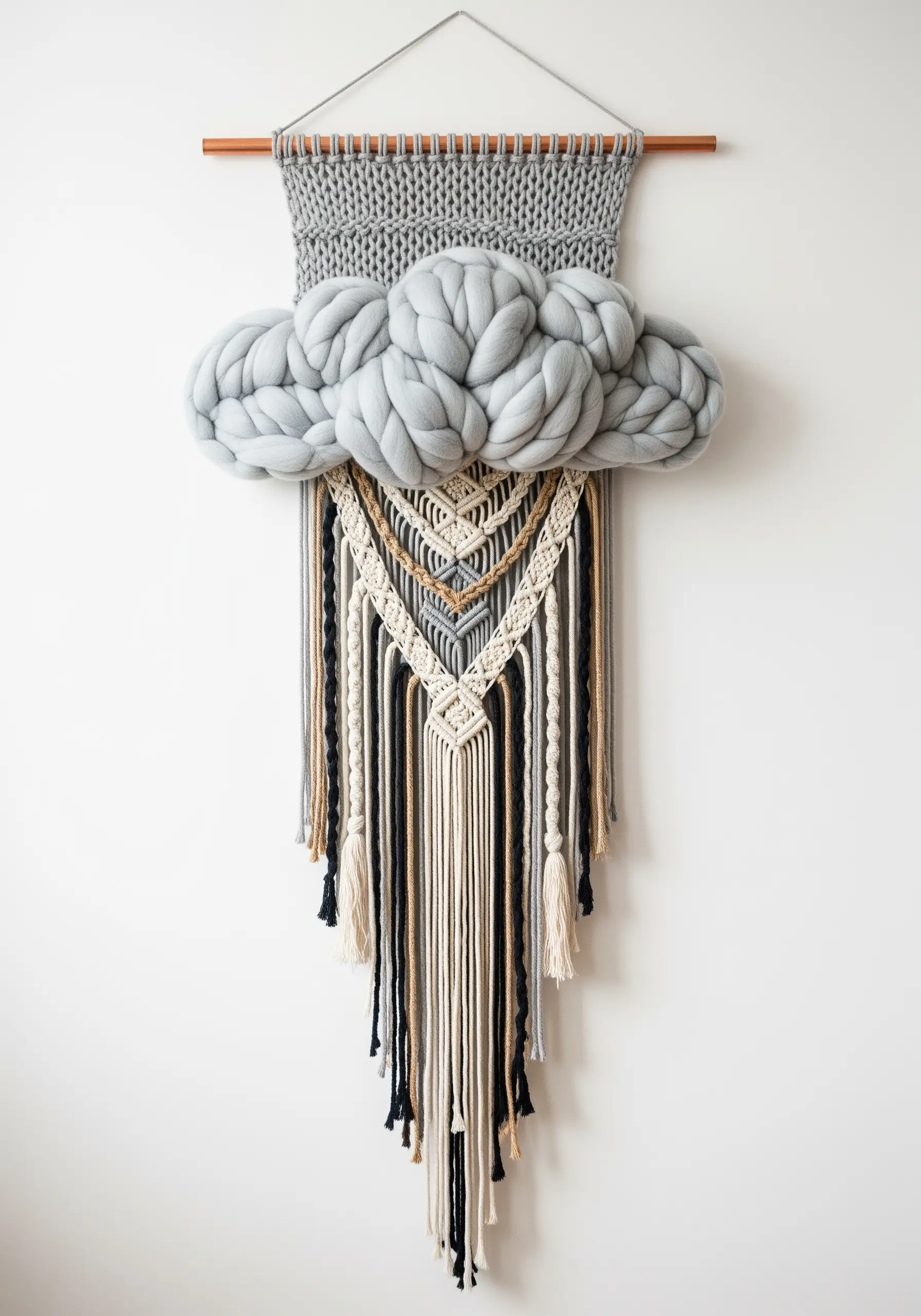
Add a soft, unexpected element to your macrame by integrating large, sculptural forms made from unspun wool roving.
Create the main body of your wall hanging with traditional macrame knots to establish a structured base.
Then, add a bold accent at the top or within the design by weaving in voluminous, cloud-like shapes of chunky wool.
This contrast between the defined knots and the soft, organic forms creates a dreamy and compelling visual effect, perfect for cozy mixed-fiber projects.
19. Craft a Textural Study on Canvas

Create a sophisticated piece of wall art by composing a collage of your material experiments on a stretched canvas.
Arrange and attach various textile elements: swatches of felt, small woven samples, neatly bundled yarn, and pieces of fabric featuring stitch tests.
This “deconstructed” approach celebrates the beauty of the materials and the creative process itself.
It transforms your practice swatches into a thoughtful and modern piece of high-texture fabric collage embroidery.
20. Tuft a Geometric Table Runner
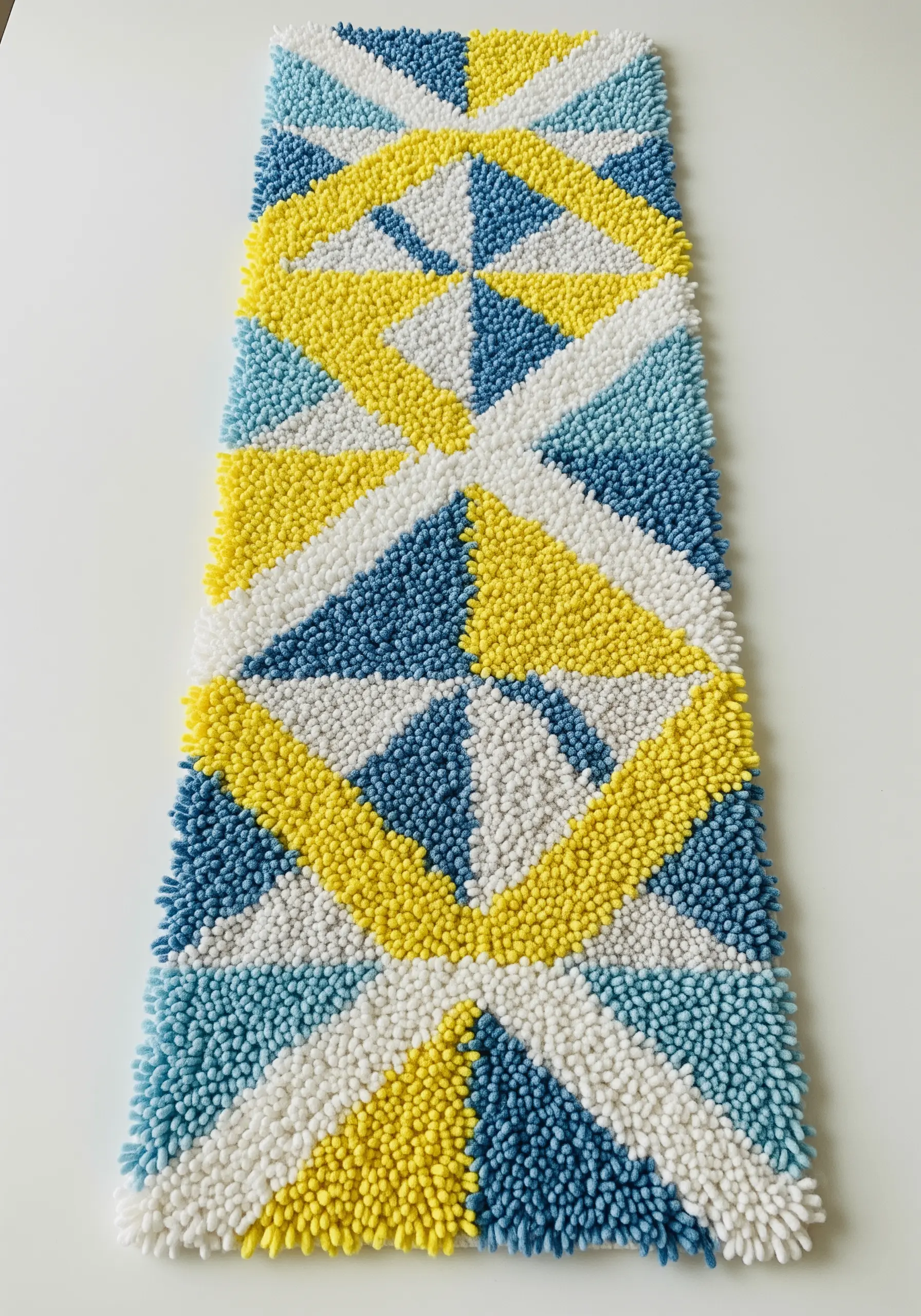
Use punch needle or a tufting gun to create a piece of functional art for your home, like a vibrant table runner or small rug.
Design a bold, repeating geometric pattern; the simplicity of the shapes allows you to focus on creating a consistent loop height for a plush, professional finish.
This technique produces a durable, richly textured item that adds a layer of handmade warmth and color to any surface.