
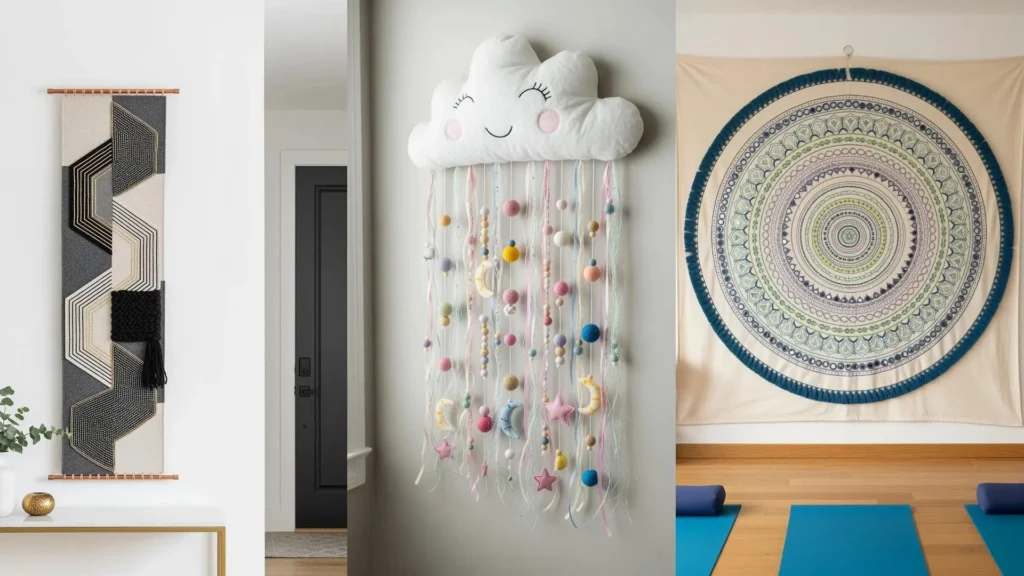
You’ve mastered the satin stitch and your French knots are perfect. But you feel a pull towards something more… something with more depth, texture, and personal expression. It’s time to move beyond the hoop and think like a textile artist, transforming your walls into galleries of your own making.
This is where the magic of mixed media comes in. By combining your embroidery skills with weaving, beading, fiber art, and even unconventional materials, you can create pieces that are not just stitched, but sculpted. It’s about letting a chunky wool roving tell one story and a delicate seed bead another, all within the same composition.
Here, we’ll explore how to blend these elements with intention. You’ll learn not just what to add, but why it works—how to create contrast, build dimension, and turn a simple surface into a tactile masterpiece. Prepare to see your needle and thread as just the beginning.
1. Layer Weaving and Embroidery for a Topographical Landscape
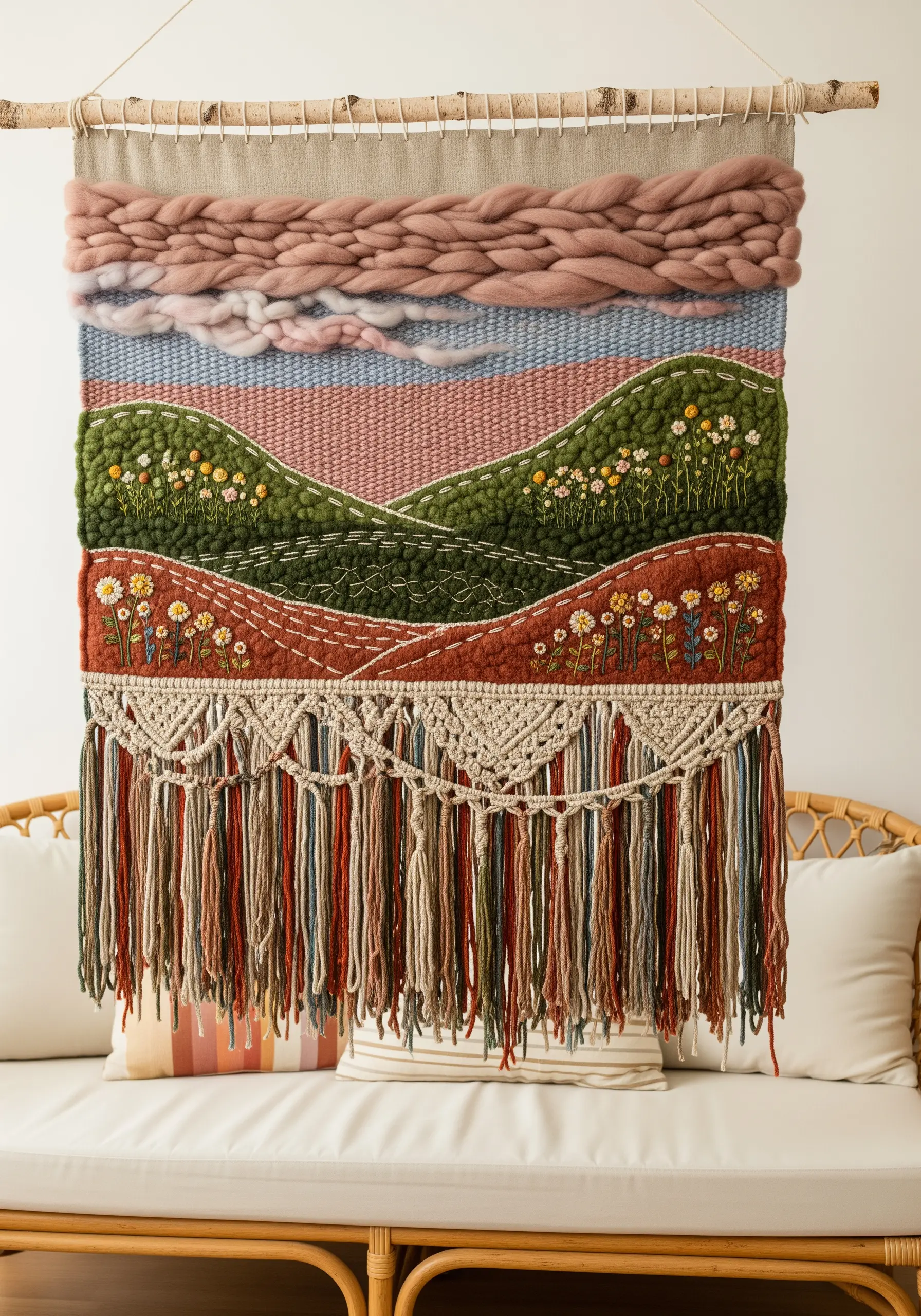
Begin by weaving distinct color blocks to form your background hills and sky, using thick wool roving for the clouds to create a soft, voluminous texture.
Vary the weaving tightness; a looser weave for the sky contrasts beautifully with a tighter weave for the foreground, adding depth.
Once the woven base is complete, introduce delicate embroidery directly onto the woven sections.
Use single-strand floss for tiny lazy daisy stitches and French knots to create wildflower meadows that appear fine and detailed against the chunky yarn landscape.
Finish with a macrame border to frame the composition and add a final layer of handmade texture.
2. Craft a Celestial Scene with Crystals and Metallic Thread
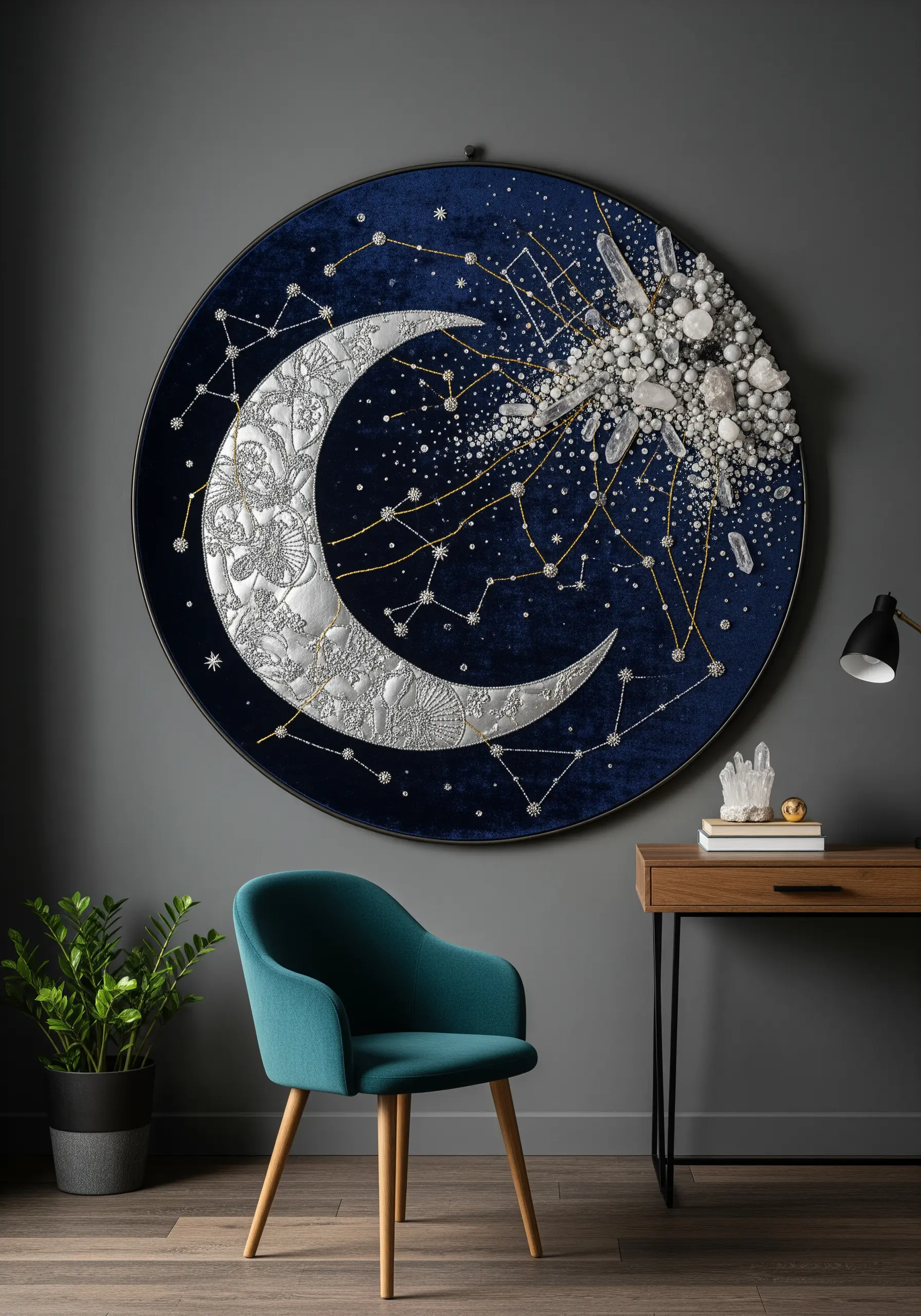
Choose a dark, rich fabric like navy velvet to create an immediate sense of depth and cosmic drama.
For the crescent moon, use a silver lamé or silk fabric appliquéd onto the velvet, then fill it with intricate white-on-silver whitework patterns for a detailed, light-catching surface.
Create a ‘comet tail’ by clustering clear quartz points, seed beads, and Swarovski crystals, securing them with strong nylon thread.
Scatter fine metallic threads radiating outwards from the cluster to form constellations, using simple straight stitches that catch the light.
The combination of matte velvet, shimmering silk, and reflective crystals results in a truly dynamic mixed-media masterpiece.
3. Design a Cohesive Triptych with Textural Motifs
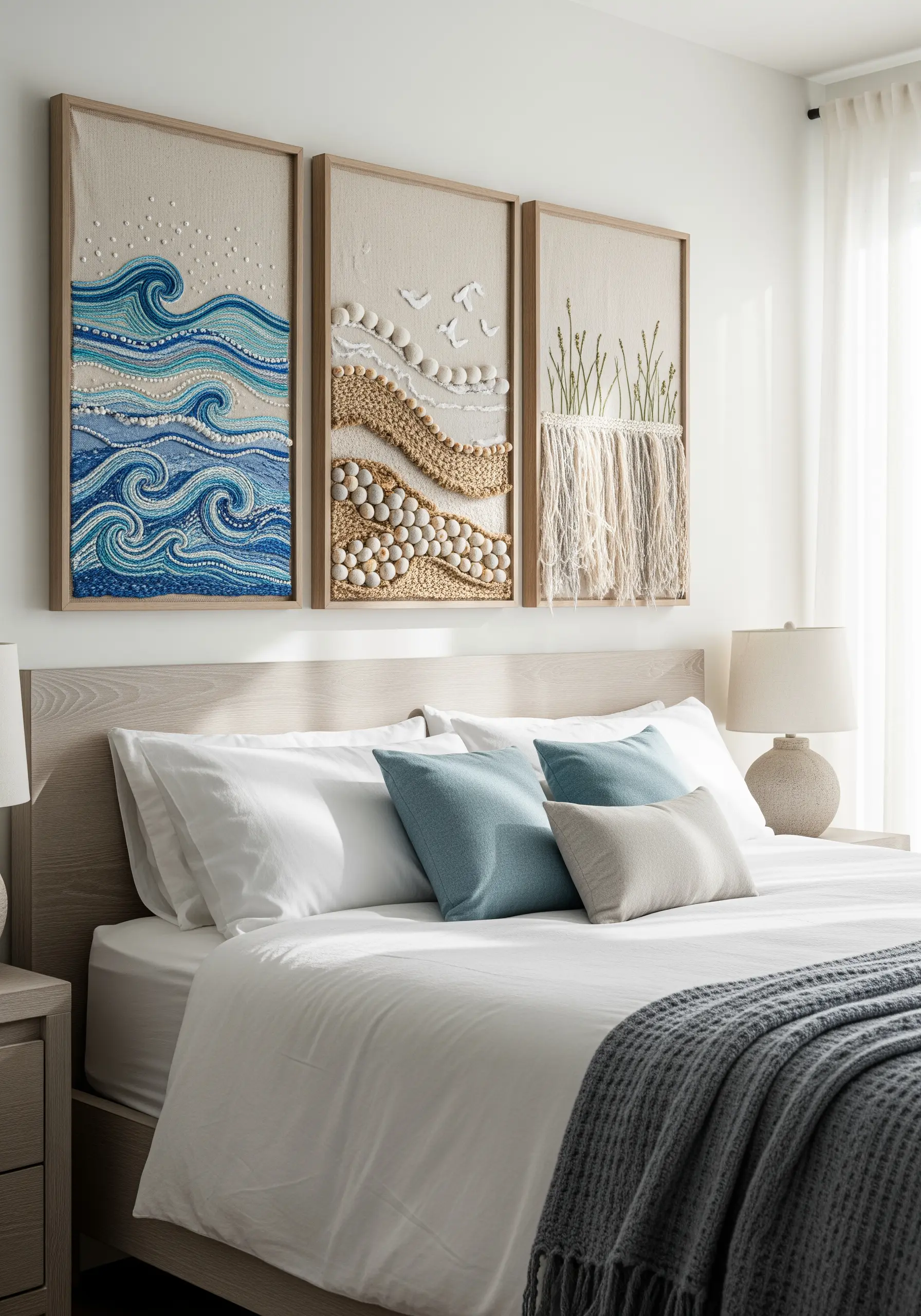
To create a unified multi-panel piece, maintain a consistent color palette and background fabric—like natural linen—across all frames.
Assign a different natural element to each panel: waves, sand dunes, and seagrass.
Render the ocean waves using a mosaic of seed beads and French knots in varying shades of blue and white to mimic seafoam.
For the sand, stitch down clusters of wooden beads and use raised satin stitch to form gentle dunes.
Create the seagrass with long, loose straight stitches and an unraveled yarn fringe, allowing the fibers to move freely and add a soft, organic feel.
This method turns a single idea into an expansive piece of coastal-inspired art.
4. Use Corded Appliqué for Bold, Graphic Botanicals
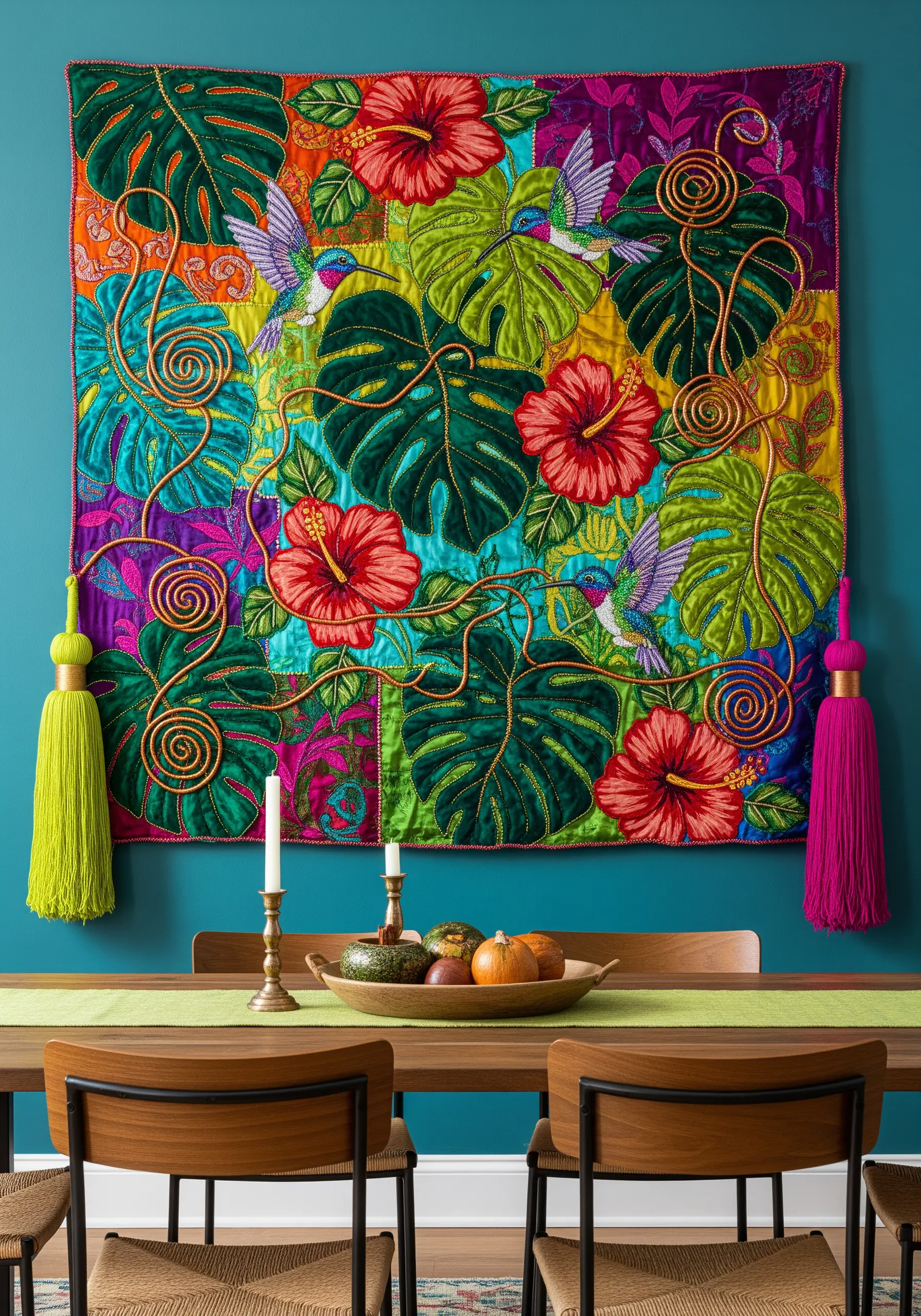
Elevate your floral designs by outlining each leaf and petal with a thick, couched cord before filling it with satin stitch.
This technique creates a crisp, defined edge that contains your stitches and adds a subtle three-dimensional quality, making the colors pop.
For the fill, use a long-and-short stitch to blend colors within the leaves, giving them a more realistic, light-and-shadow effect.
Contrast the smooth satin-stitched areas with hummingbirds made of tiny seed beads to introduce a different texture and sparkle.
Large, vibrant tassels in coordinating colors provide a bold finishing touch that balances the composition.
This approach is perfect for tropical leaf and flower patterns.
5. Weave Modern Geometry with Metallic Thread Accents
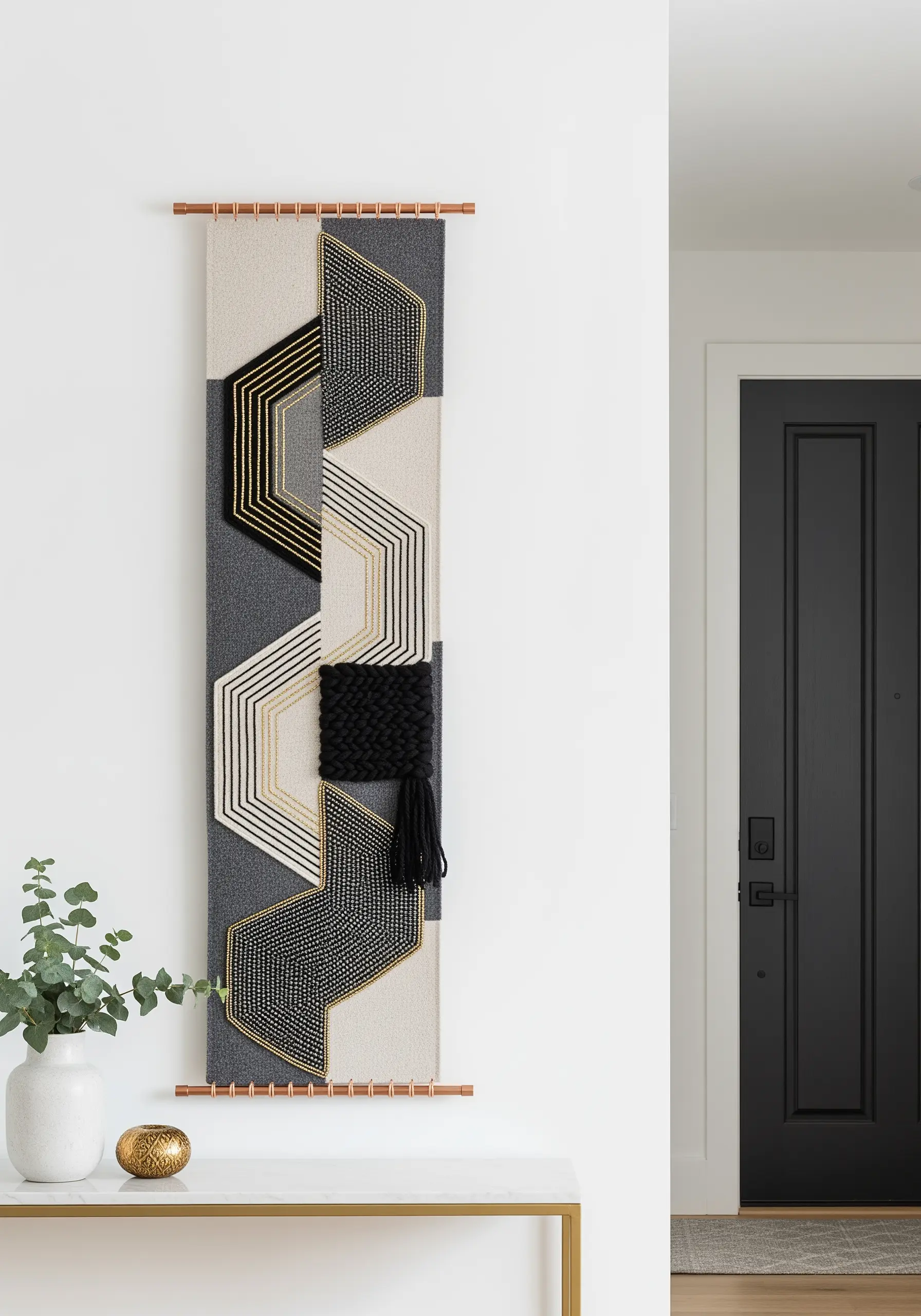
Create a sharp, contemporary wall hanging by combining flat-woven geometric shapes with precise lines of metallic embroidery.
Weave the main blocks in neutral tones like charcoal, gray, and cream to serve as a sophisticated canvas.
Instead of weaving with metallic yarn, which can be difficult, add it afterward as embroidery. Use a fine gold or copper metallic thread to stitch clean, concentric outlines around the woven shapes.
Introduce a focal point with a small, tightly packed section of black yarn using soumak weaving or Rya knots for a raised, sculptural texture.
This interplay between flat weave, shimmering lines, and high relief makes for a stunning piece of minimalist wall art.
6. Construct a Whimsical Mobile with Soft Sculpture and Beads
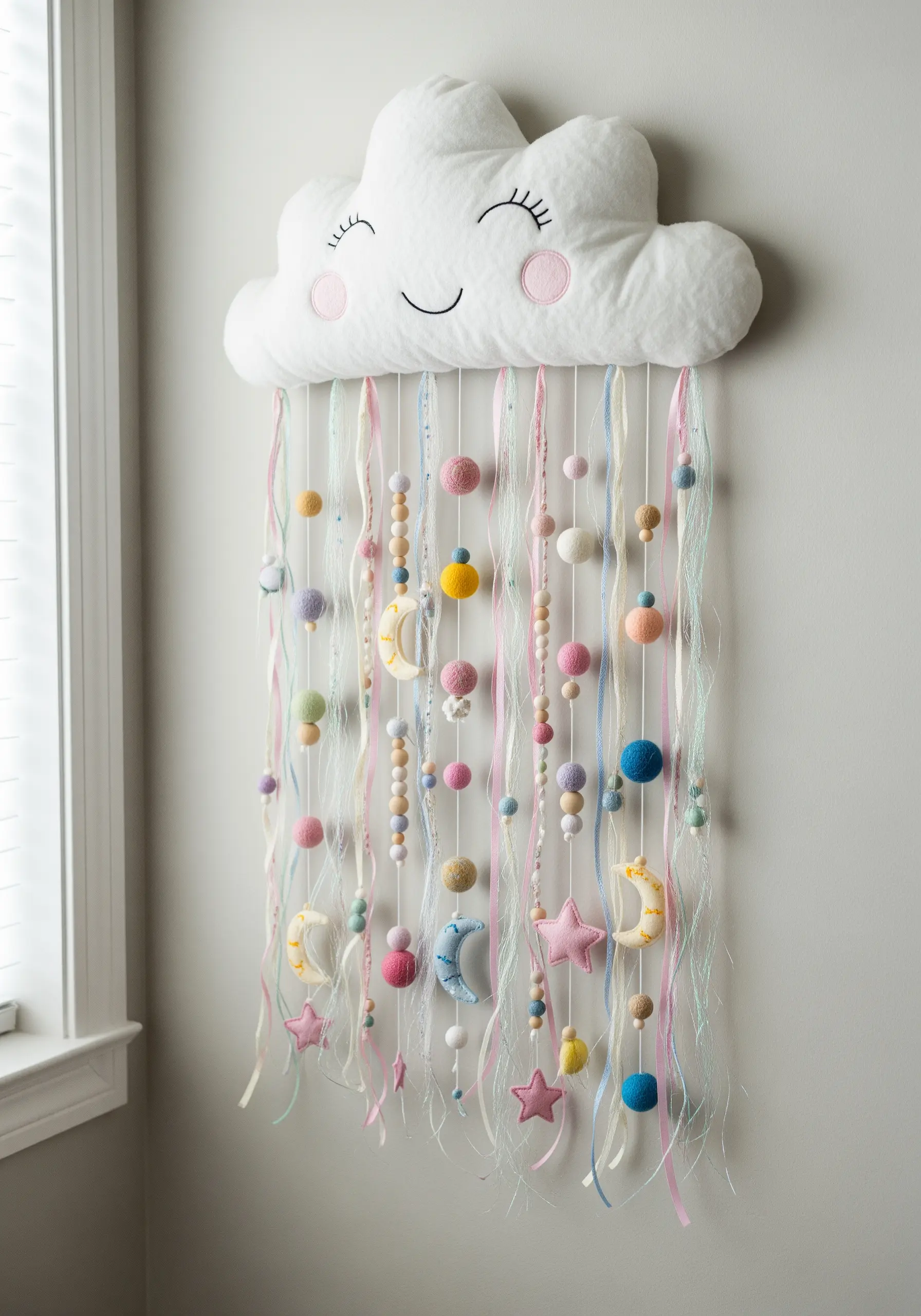
Start by creating a plush, three-dimensional cloud from soft white fabric, stuffing it lightly with poly-fil for a gentle, puffy shape.
Embroider a sweet, simple face using a basic backstitch for the lines and a satin stitch for the rosy cheeks.
To create the ‘rain,’ string together a playful mix of materials: pastel ribbons, wooden beads, felted wool balls, and small, handmade felt stars and moons.
Vary the lengths of the hanging strands to create graceful movement and visual interest.
This design combines basic sewing, simple embroidery, and jewelry-making techniques, making it a perfect nursery-friendly project.
7. Paint a Landscape with Varied Weaving Textures
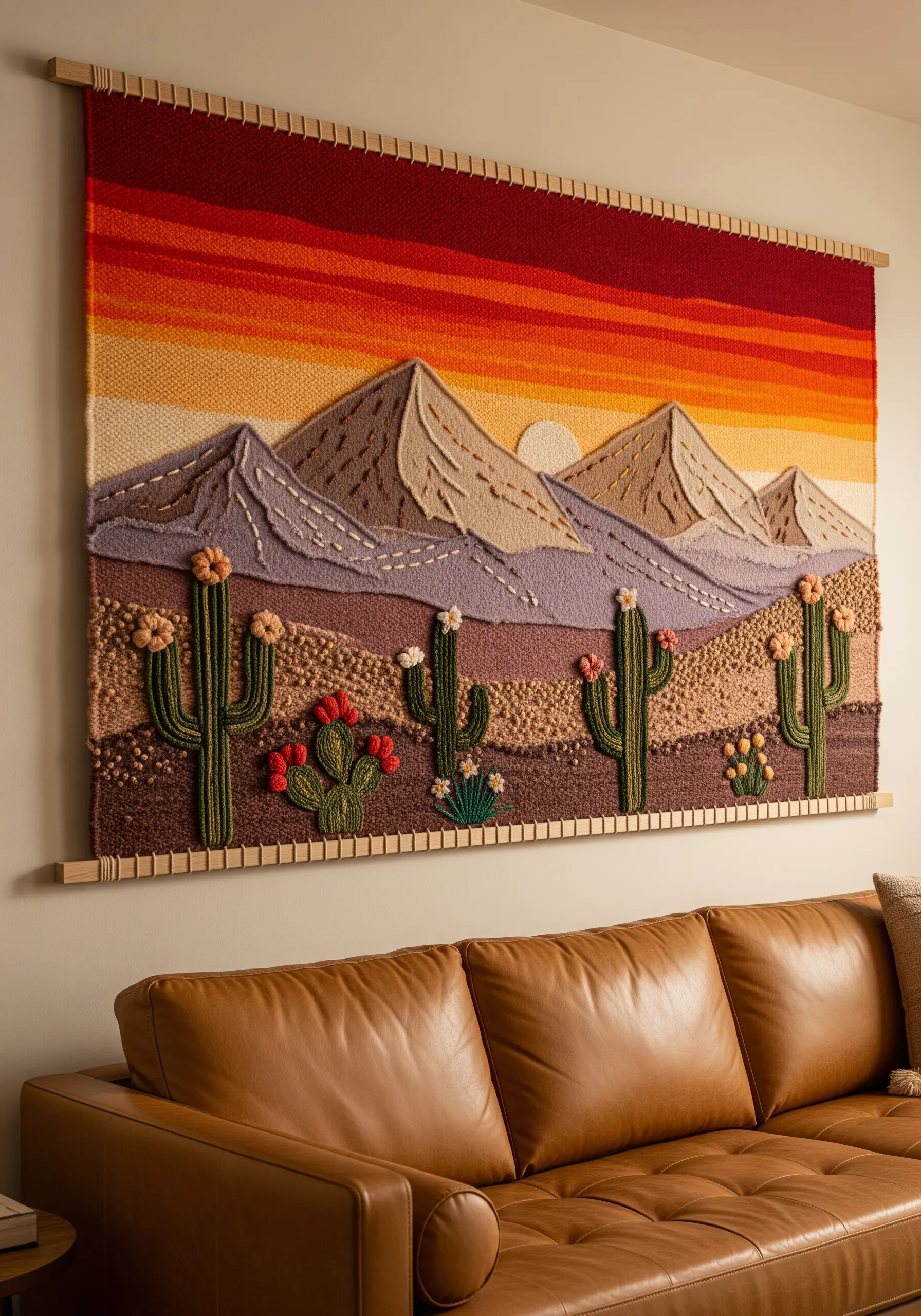
Build a large-scale woven tapestry by treating different yarn textures like paint strokes.
Use a smooth, flat tabby weave for the fiery sunset sky, blending colors to create a soft gradient.
For the mountains, switch to a soumak weave to create raised, directional lines that mimic rocky ridges.
Create the desert floor with nubby, textured yarns like bouclé or hand-spun wool to suggest uneven terrain.
Finally, add dimensional cacti and flowers using French knots and chunky turkey work (ghiordes knots) that stand out from the surface.
This textural mapping is key to capturing nature’s essence in fiber.
8. Achieve Dramatic Contrast with a Monochrome Palette
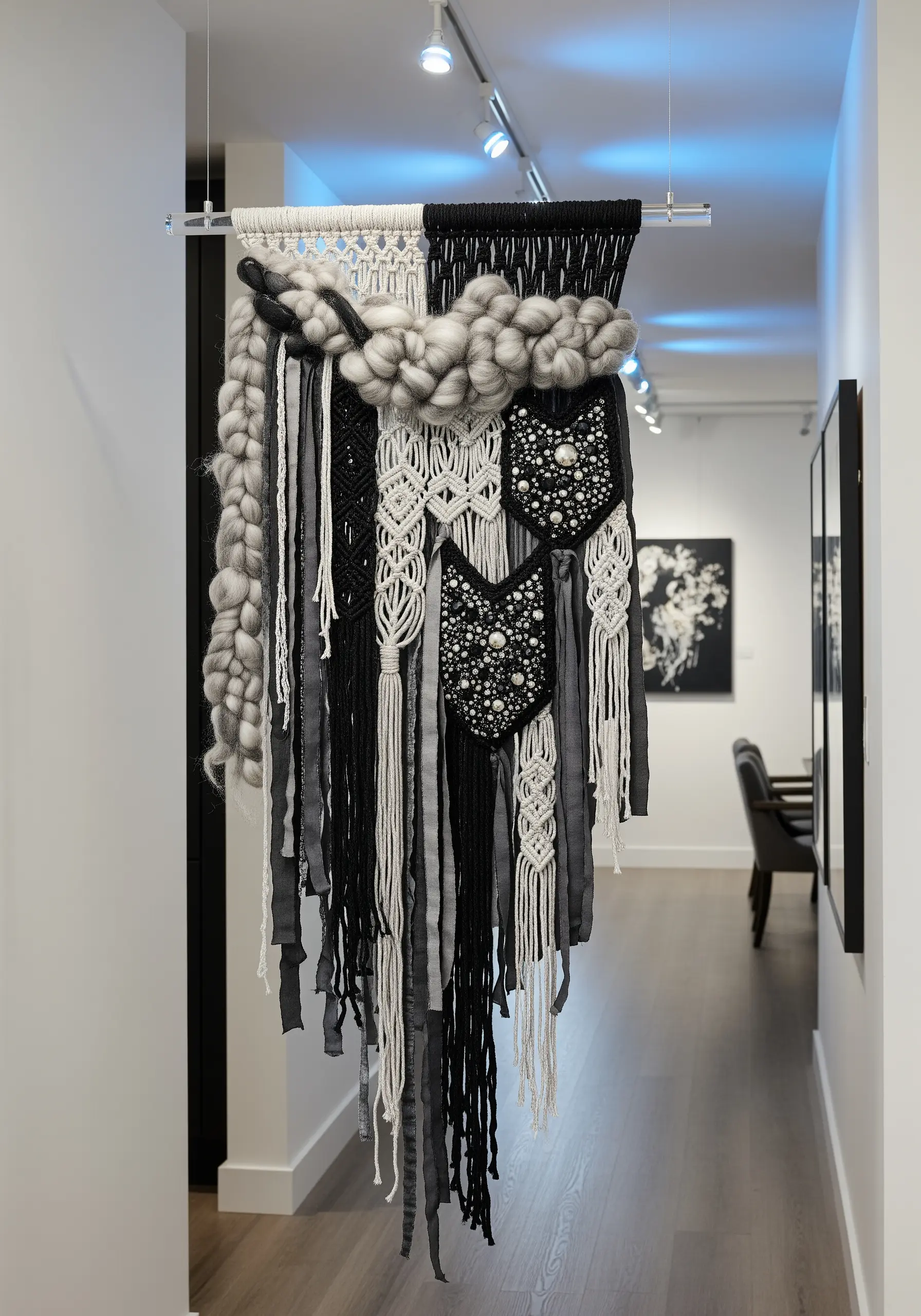
Explore the power of texture by limiting your color palette to black, white, and gray.
Combine different fiber techniques like macrame, weaving, and chunky wool roving to build a composition rich in physical form.
Introduce luxury and a point of visual contrast by embellishing specific sections—like the black diamond motifs—with clusters of pearls and silver beads.
The smooth, hard surface of the beads provides a striking counterpoint to the soft, fibrous materials surrounding them.
Leave some fabric strips raw and frayed to add a final layer of deconstructed elegance, creating a powerful piece of monochrome wall art.
9. Curate a Botanical Gallery Wall with Coordinated Hoops
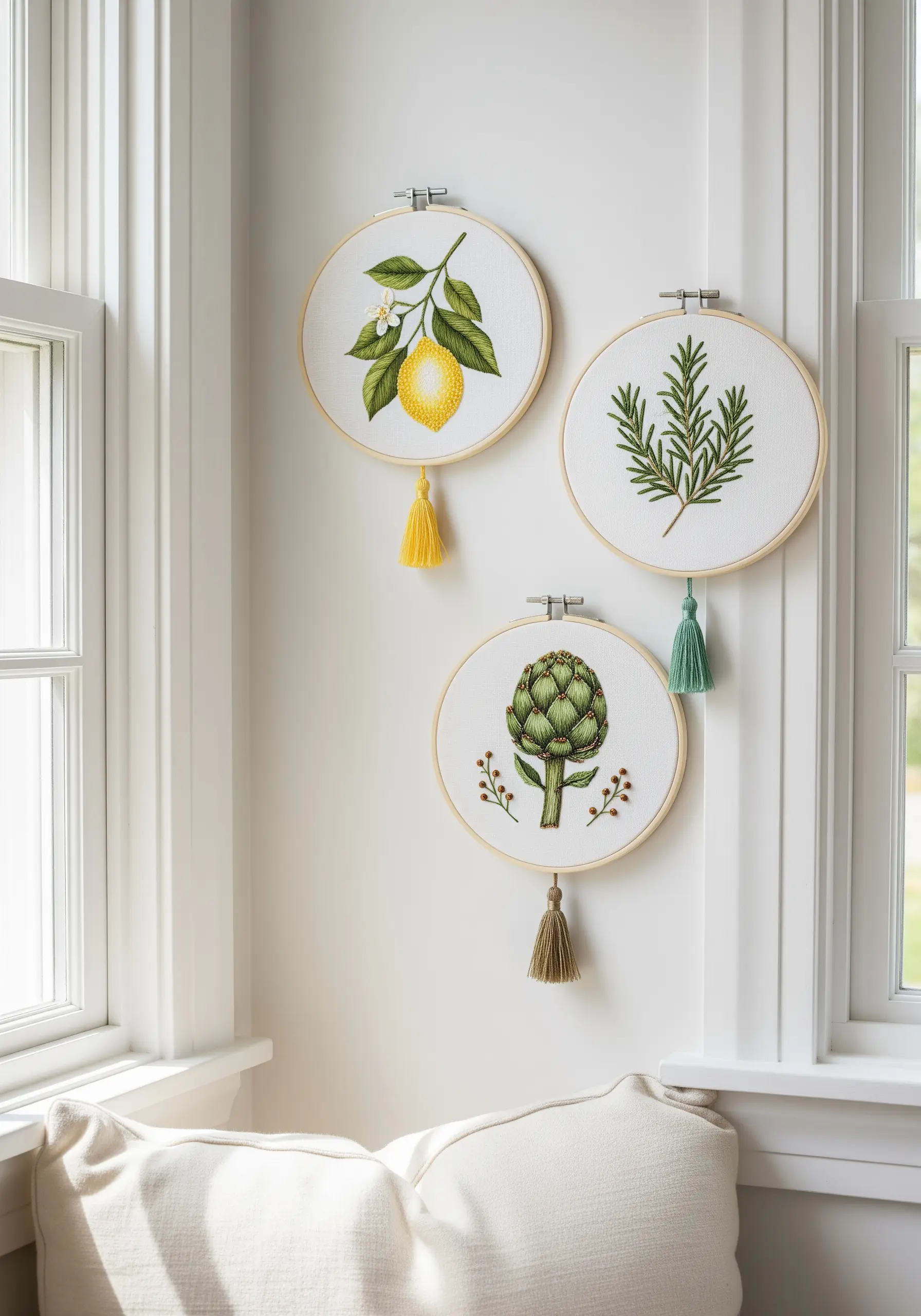
Create a sophisticated collection by selecting a theme—like botanicals from a specific region or culinary herbs—and executing each in its own hoop.
Use a high-quality, neutral fabric like white linen or cotton canvas for all pieces to ensure visual continuity.
Employ thread painting techniques (long-and-short stitch) to achieve realistic color gradients on leaves and fruits.
Tie the collection together by adding a small, handmade tassel to each hoop, choosing a color that pulls from the specific palette of that piece.
Arranging them together creates an effortless and inspiring hoop art gallery wall.
10. Embody Opulence with Velvet, Quilting, and Beading
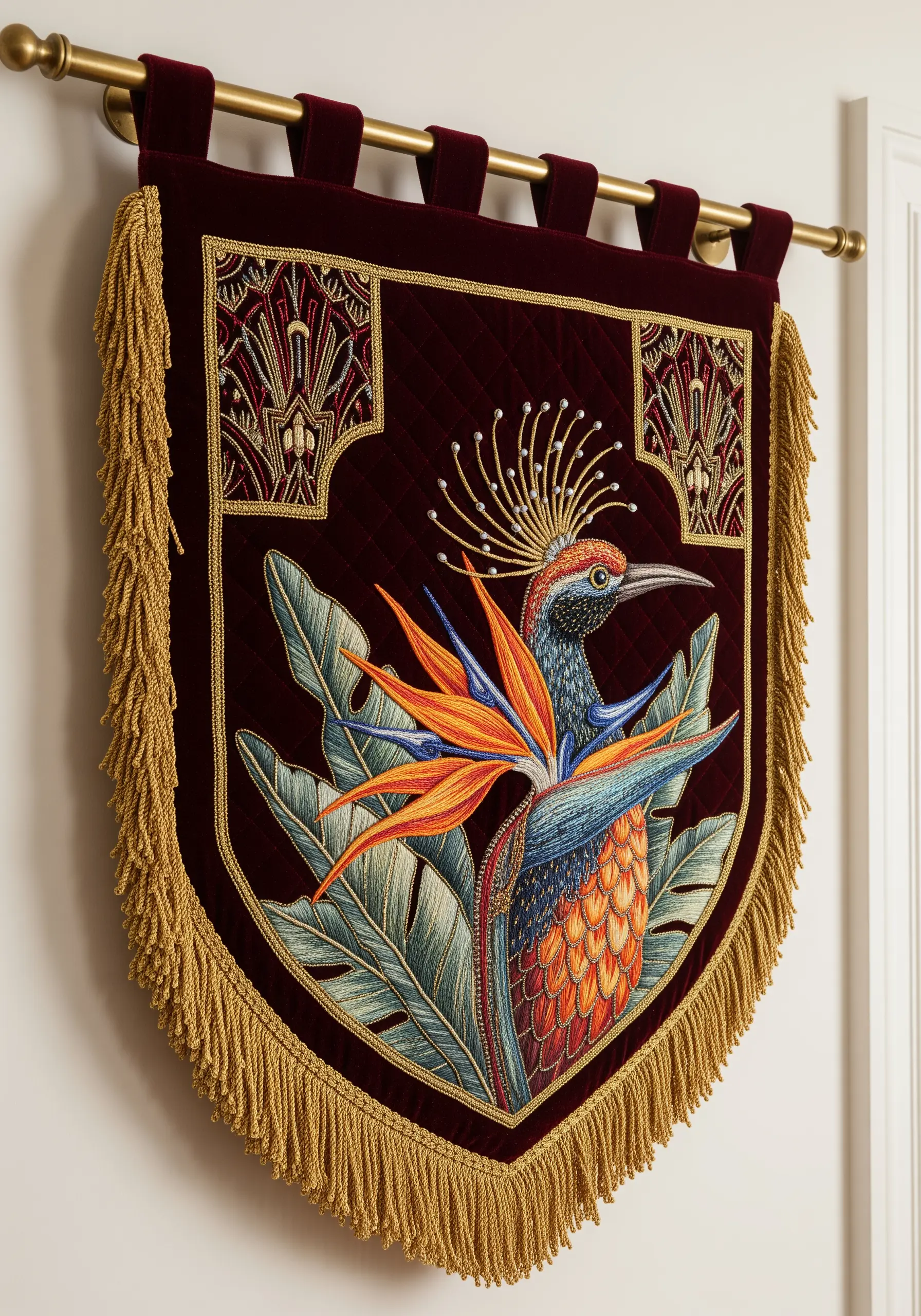
For a truly luxurious piece, start with a rich burgundy velvet base and add a layer of batting behind it.
Quilt the background with a simple diamond pattern to give it structure and a classic, plush texture.
Render your central motif—like the bird of paradise—with dense satin stitch and long-and-short stitch for vibrant, smooth color blending.
For the bird’s crest, create delicate, wire-like structures by couching metallic thread and accenting the tips with tiny pearls or crystals.
Frame the entire piece with a heavy gold bullion fringe to complete the regal, banner-like aesthetic.
This project is all about layering luxe materials for maximum impact.
11. Build a 3D Forest Scene with Layered Appliqué and Lights
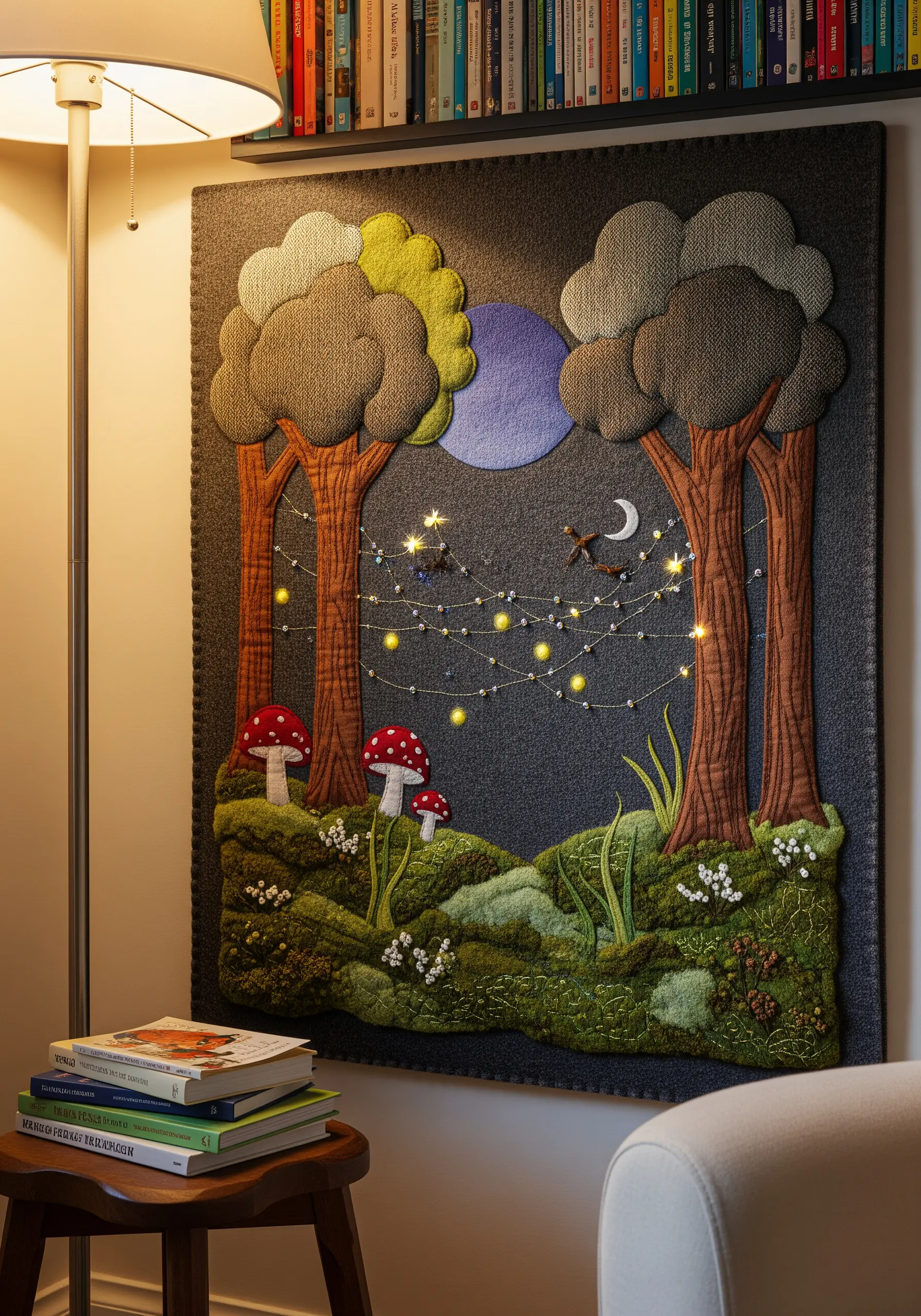
Transform your embroidery into a diorama by building layers of fabric appliqué on a sturdy felt or foam core base.
Use textured fabrics for different elements: rough linen for tree trunks, soft wool felt for canopies, and fuzzy, moss-like material for the ground.
Stitch details onto each appliqué piece *before* attaching it to the background to make the embroidery process easier.
For a magical touch, carefully pierce the background fabric and weave a string of battery-powered micro LED lights through the scene.
This combination of texture, layering, and light creates a captivating and whimsical textile artwork.
12. Sculpt with Fiber for Minimalist Abstract Art
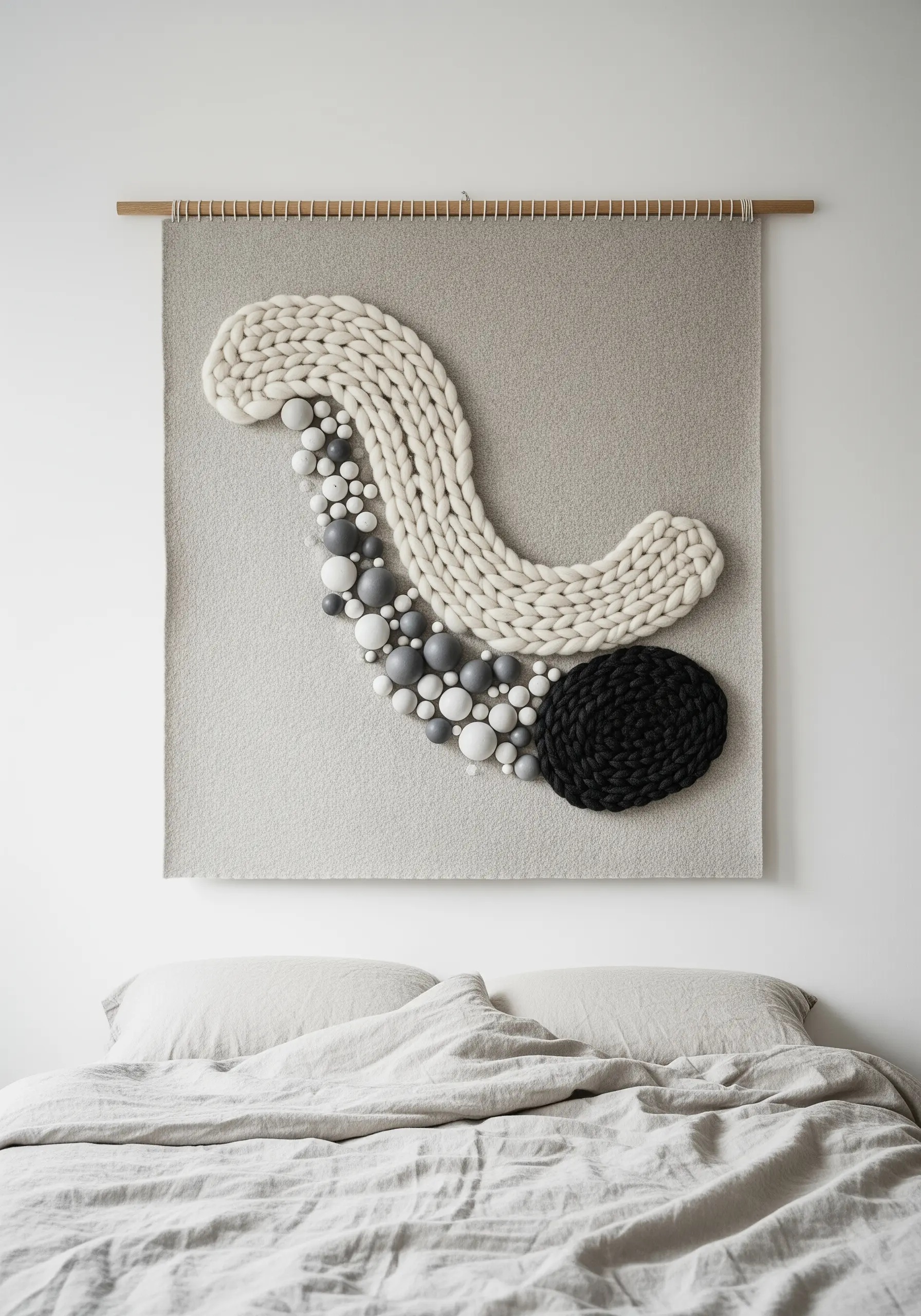
Explore form and composition by creating a high-contrast, sculptural piece on a neutral felt background.
Create the main swirling shape using extremely chunky wool roving, either by couching it down with a matching thread or needle-felting it directly onto the base.
Arrange a cascade of wooden beads and felted balls in varying sizes and shades of gray and white, creating a sense of flow and movement.
Anchor the composition with a tightly coiled circle of black yarn, which provides a strong visual endpoint.
The beauty of this piece lies in its simplicity and the tactile dialogue between the soft roving and the hard beads, a core principle of abstract fiber art.
13. Create a Visual Sampler with Mixed-Technique Blocks
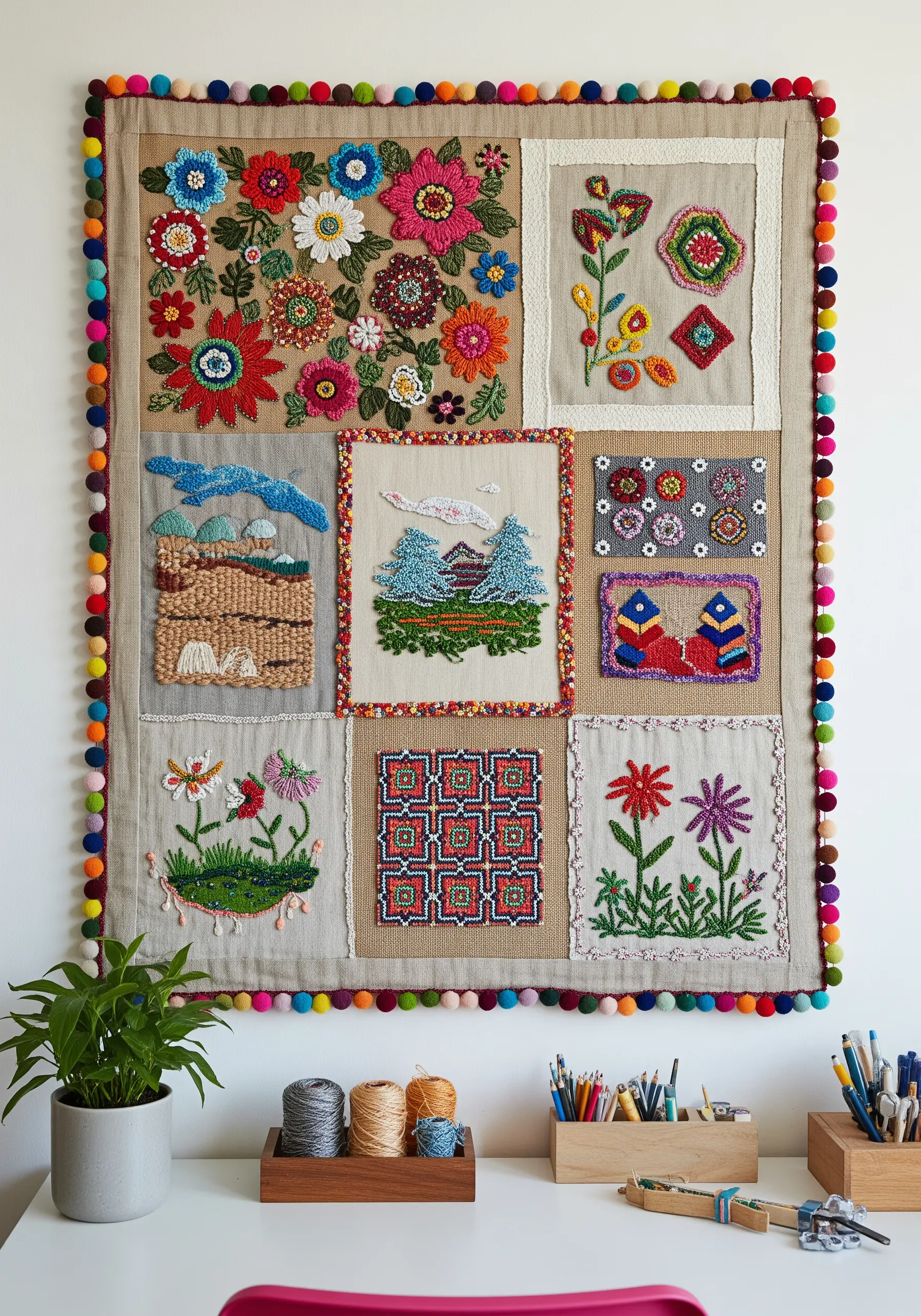
Design a textile quilt that serves as a canvas for your creativity by dividing a large piece of linen into distinct blocks.
Dedicate each block to exploring a different technique: one for beadwork, one for weaving, one for traditional floral embroidery, and another for geometric needlepoint.
This approach allows you to experiment with various materials and styles without committing to a single large-scale design.
Frame the finished piece with a playful pom-pom trim to unify the eclectic mix of styles and add a touch of handmade charm.
It’s a wonderful way to document your skills and create art that tells a story.
14. Combine Scientific Realism with Abstract Embellishment
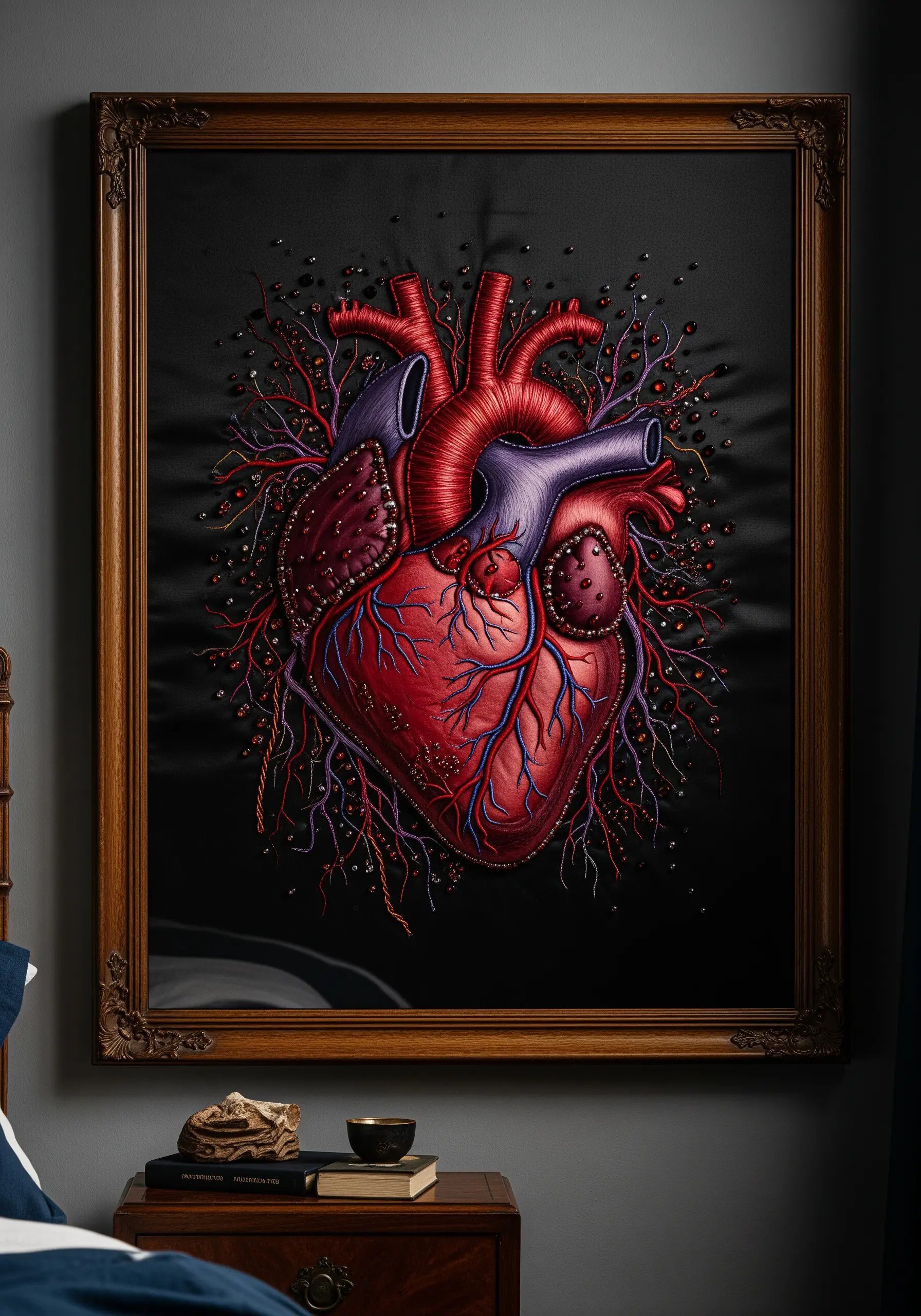
Choose a dramatic, high-contrast background like black silk or satin to make your colors appear exceptionally vibrant.
Use meticulous thread painting (long-and-short stitch) with single strands of silk floss to render the anatomical heart with realistic shading and detail.
After completing the embroidery, scatter tiny, dark seed beads around the heart to represent capillaries and add a subtle, shimmering texture.
This selective use of beading draws the eye and adds a layer of depth without overwhelming the intricate stitchwork.
Framing it in an ornate, traditional frame enhances the piece’s classic-meets-contemporary feel, turning it into a stunning piece of hand-stitched wall art.
15. Transform a Mirror with Wrapped Yarn and Radiant Spokes
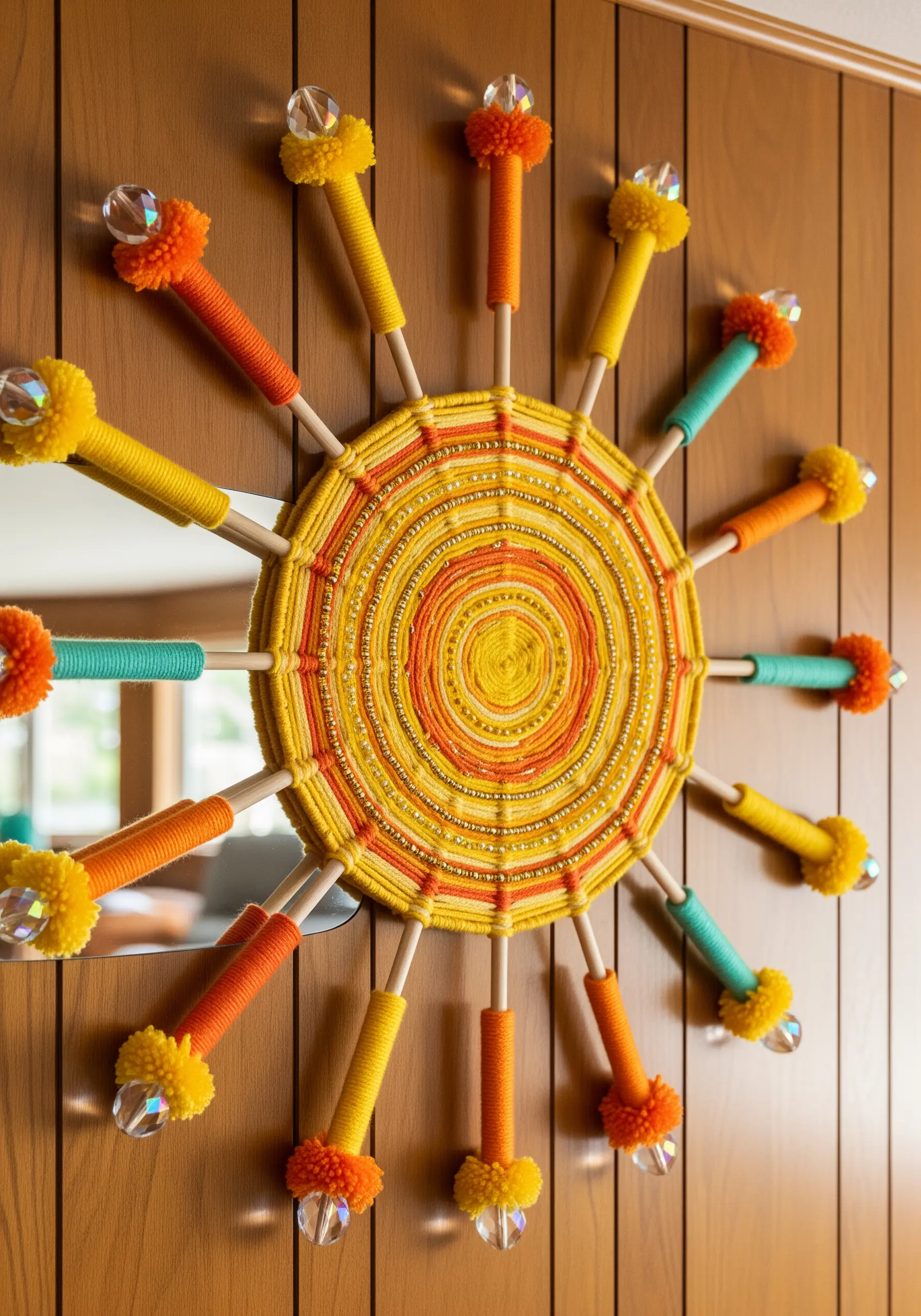
Turn a simple round mirror into a sunburst sculpture by creating a frame from a sturdy ring or hoop.
Wrap the central ring tightly with yarn, alternating colors to create concentric circles. Secure rows of metallic seed beads between the yarn wraps for a touch of sparkle.
Attach wooden dowels radially around the ring to act as the sun’s rays.
Wrap each dowel with colorful yarn and finish the ends with handmade pom-poms and large, faceted acrylic crystals that will catch and refract light.
This project is a brilliant example of how fiber art techniques can be applied to functional home decor.
16. Add Subtle Sparkle and Weight with Sequins and Stones
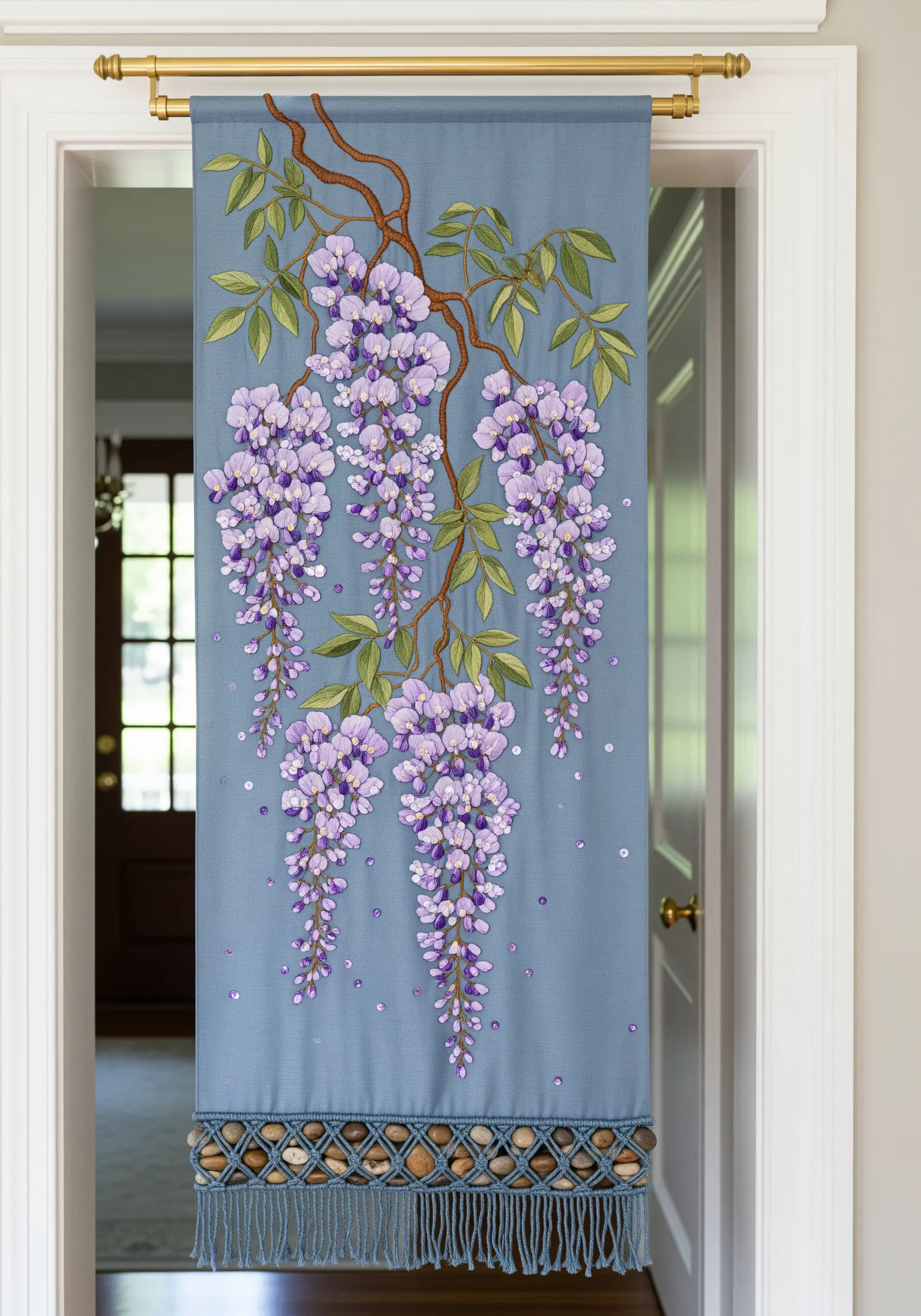
Create an elegant door or wall hanging featuring a delicate botanical like wisteria, using long-and-short stitch to blend the purple and white petals.
Instead of overwhelming the design with heavy beading, scatter a few iridescent sequins sparsely across the background fabric.
Stitch them down with a single, matching seed bead in the center for a secure and polished finish. This adds a subtle, water-droplet-like shimmer that only reveals itself as the light changes.
Finish the bottom edge with a heavy, hand-knotted border incorporating smooth river stones or large wooden beads for a beautiful drape and gentle weight.
These are the tiny details that add a luxe touch.
17. Build an Underwater World with Knots and Buttons
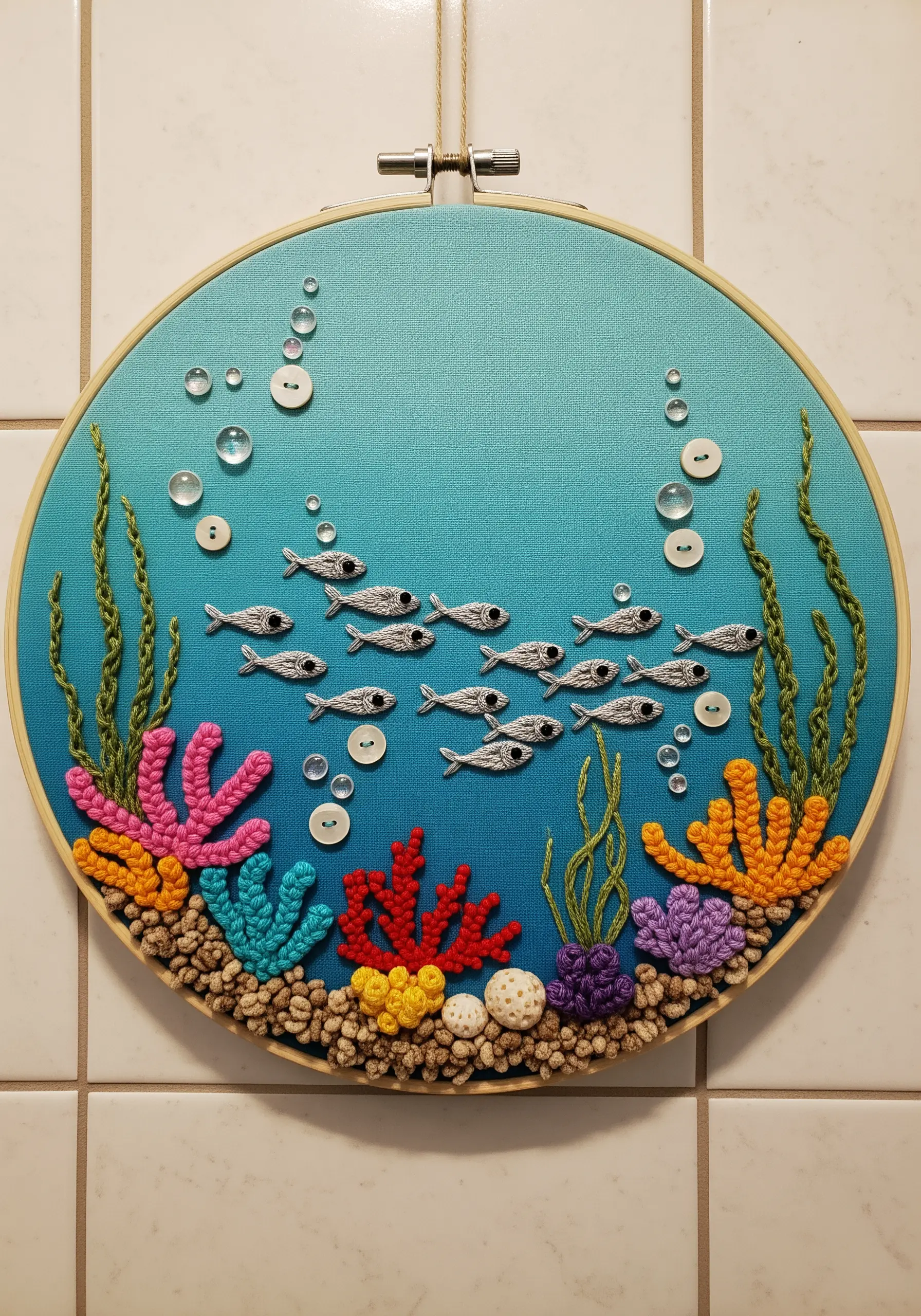
Start with a blue ombré fabric to instantly create the sense of water depth for your ocean scene.
Instead of stitching bubbles, use clear or pearlescent white buttons in various sizes. The varied shapes and sheens will catch the light beautifully.
For the seabed, use a dense carpet of French knots in sandy tones, adding a few real tiny shells or snail shells for authentic texture.
Create vibrant coral using bullion knots and pistil stitches in bright, contrasting colors like coral red, orange, and purple.
This playful combination of materials is perfect for ocean-inspired hoop art.
18. Combine 3D Yarn Lettering with Delicate Florals
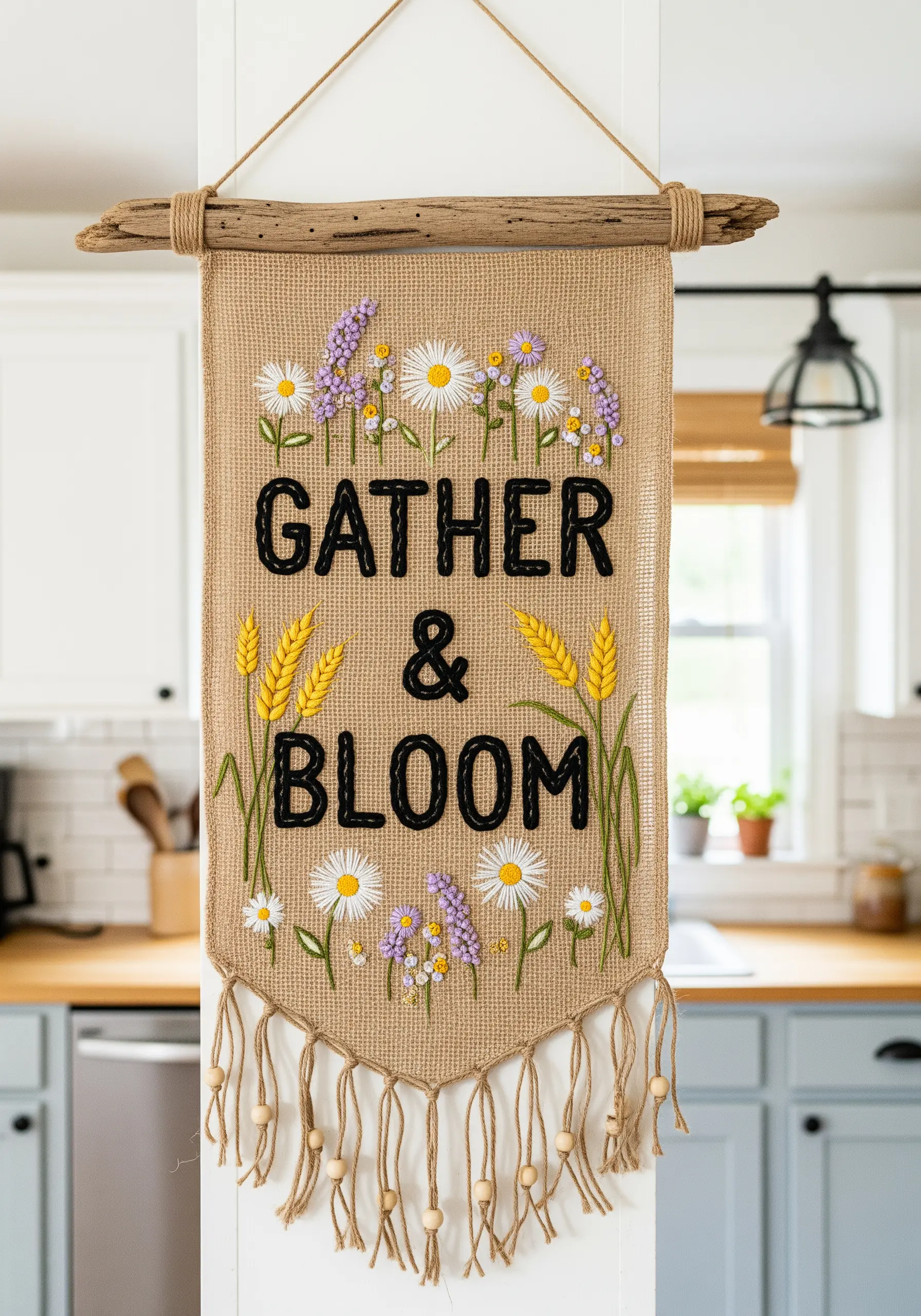
To create bold, dimensional lettering, lay down thick black yarn in the shape of your words and couch it onto a rustic burlap base with a thinner black thread.
The texture of the raised yarn against the coarse burlap creates immediate visual interest.
Contrast the heavy lettering by surrounding it with delicate, finely stitched wildflowers.
Use satin stitch for the daisy petals, French knots for the centers, and stem stitch for the wheat stalks.
Mount the finished banner on a piece of driftwood and add a simple tassel fringe to complete the modern farmhouse aesthetic, creating perfect seasonal decor.
19. Construct a Large-Scale Modular Textile Installation
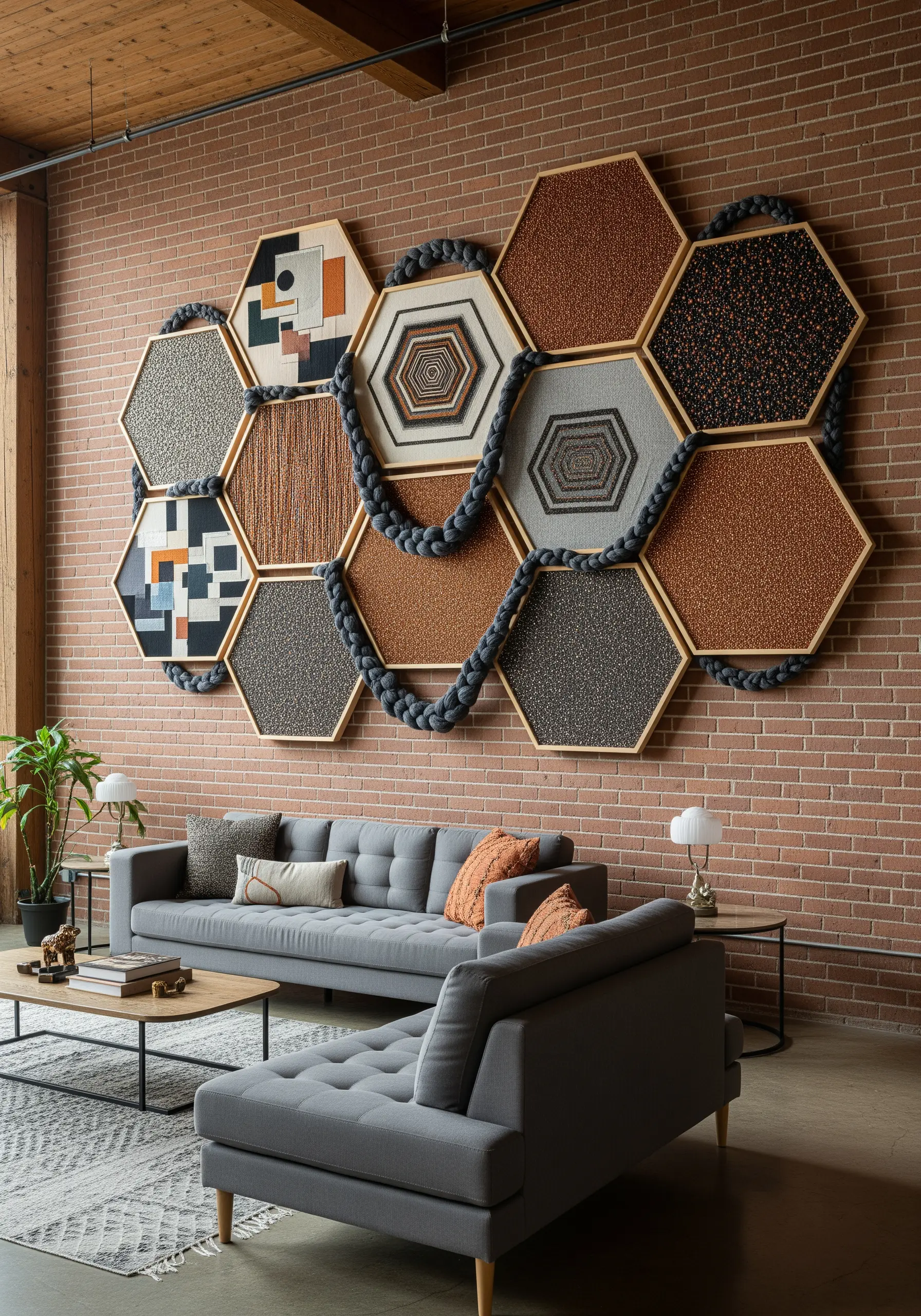
Think beyond the single hoop and design a large-scale feature wall using multiple hexagonal frames.
Cover each frame with a different but coordinating material: some with patterned fabric, some with solid textured weaves, and some with your own embroidered or beaded designs.
Arrange the hexagons in a honeycomb pattern on your wall, leaving some intentional gaps for visual breathing room.
Unify the separate elements by draping a thick, hand-braided cord or a chunky knit tube across the composition, weaving it over and under the frames.
This modular approach allows you to create statement-size wall art that can evolve over time.
20. Create a Meditative Mandala with Fringe and Mirrors
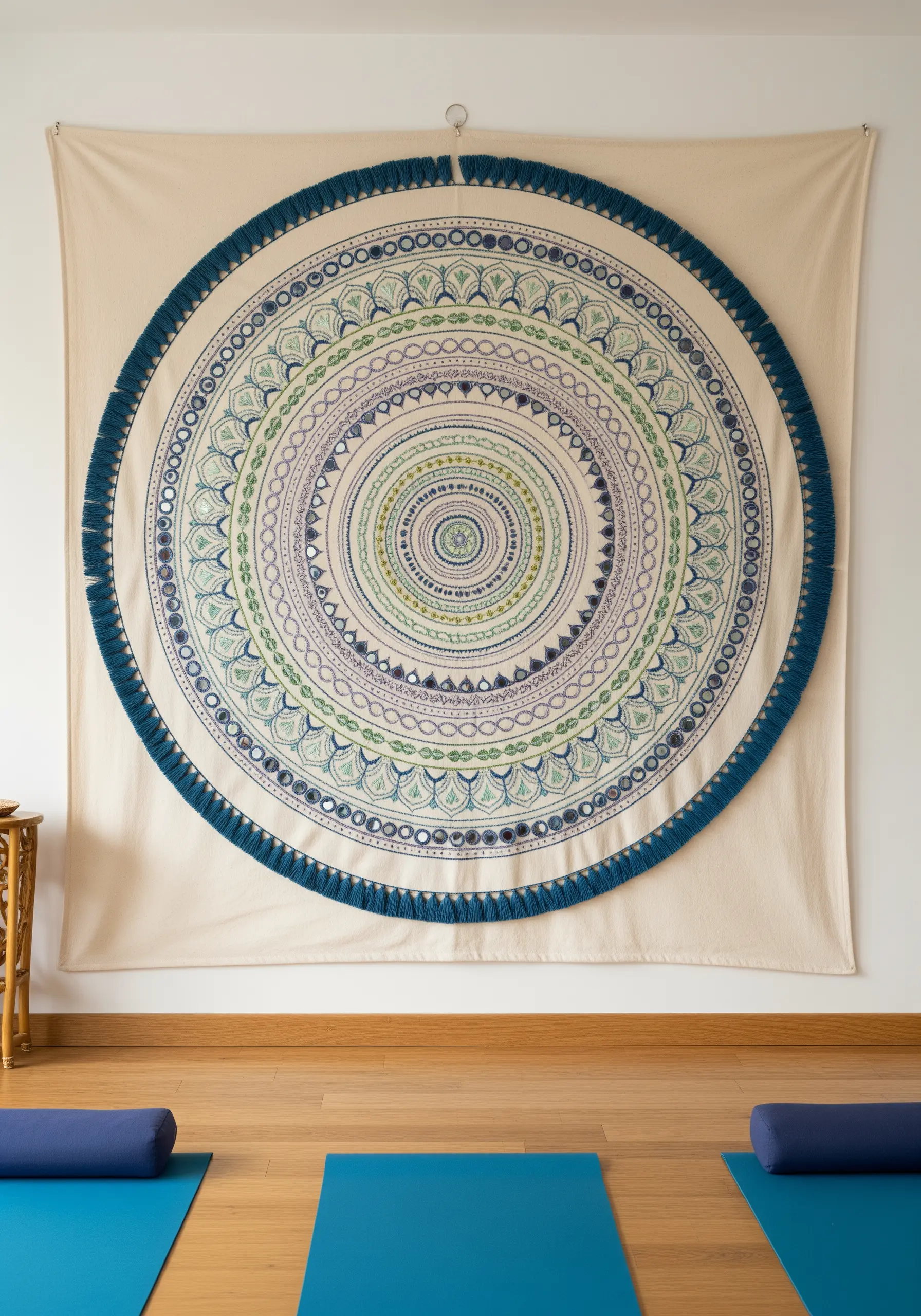
For a large-scale mandala, choose a durable, plain fabric like cotton canvas that can support the weight of the stitching and embellishments.
Instead of filling the entire design with dense stitches, use simple running stitches, backstitches, and seed stitches to create intricate, lace-like patterns.
Incorporate tiny shisha mirrors (or craft mirrors) into the design by stitching them down with a decorative buttonhole stitch frame. They add a traditional touch and reflect light beautifully.
Finish the piece with a thick, self-fabric fringe. This is done by pulling away the weft threads along the edge to leave only the warp threads, then knotting them into bundles.
This creates a stunning focal point for a calm space like a yoga or meditation room, like these mandala embroidery wall art ideas.


