You have the threads, the fabric, and the desire to create something modern and intentional for your walls. But perhaps you feel limited by traditional stitches, unsure how to translate your vision into a piece that feels both artistic and polished.
Let’s shift our perspective. Think of your thread not just as a tool for filling in shapes, but as a line itself—a tool for drawing, sculpting, and building with tension and color. Geometric thread art is less about mastering dozens of intricate stitches and more about understanding precision, composition, and the power of a single, perfectly placed line.
These ideas are designed to bridge that gap between craft and art. You will discover how to create depth with overlapping planes, how to use color to create optical illusions, and how to build large-scale installations from simple, manageable parts. This is your guide to creating sophisticated, architectural thread art that truly transforms a space.
1. Build Depth with Overlapping Planes
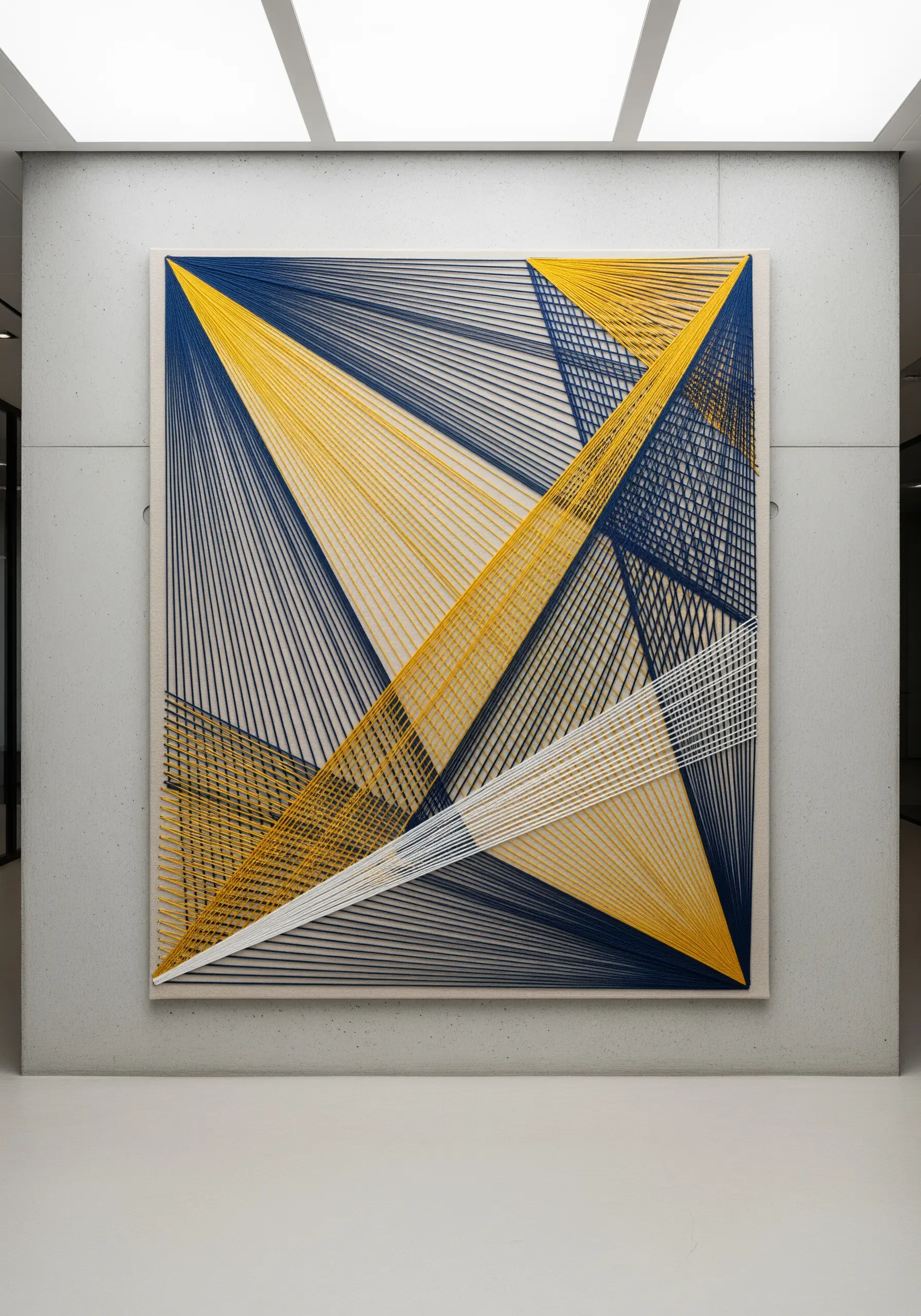
Create a sense of architectural depth by layering fields of straight stitches in contrasting colors.
Start with your background shapes, pulling threads taut from one edge of the frame to another.
Next, introduce a new color for the foreground element, stitching directly over the initial layers.
This technique relies on flawless tension; even a single loose thread can disrupt the geometric precision.
For large-scale pieces like this, use a durable, high-tensile thread like pearl cotton or even fine cord to prevent sagging over time.
The result is dynamic and feels more like a sculpture than a flat embroidery, making it one of the most impactful architectural string art designs you can create.
2. Master Precision with Whipped Stitches
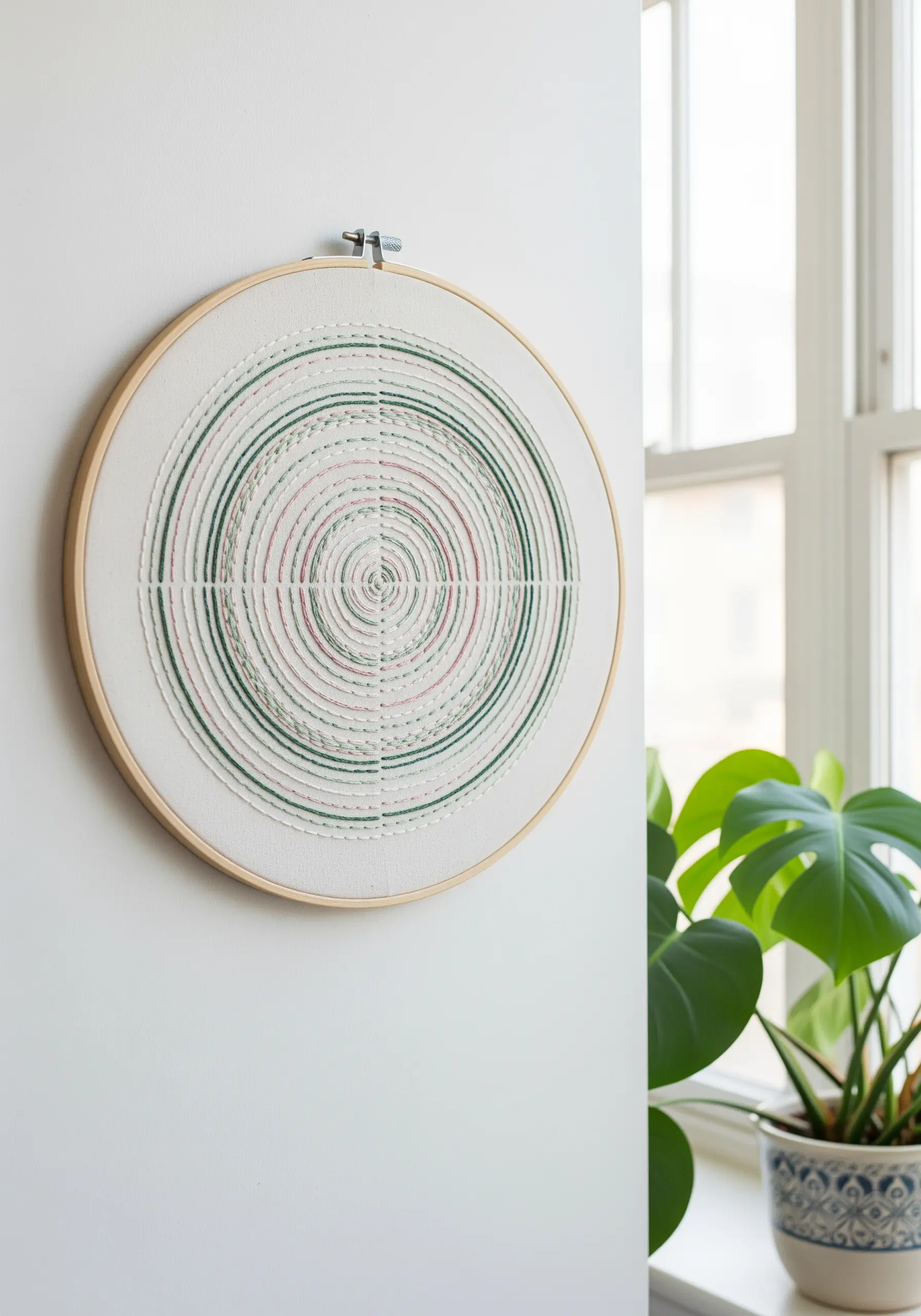
To achieve perfectly clean concentric circles, lay down a foundation of simple backstitches for each ring.
Then, take a new thread and ‘whip’ it around each backstitch without piercing the fabric, creating a smooth, raised line.
Alternate between a whipped backstitch and a simple running stitch for subtle textural variation between the rings.
This method prevents the jagged edges that often appear when stitching curves freehand.
For a meditative feel, explore neutral mandala embroidery patterns using this technique to bring a calming energy to your workspace.
3. Design a Cohesive Triptych
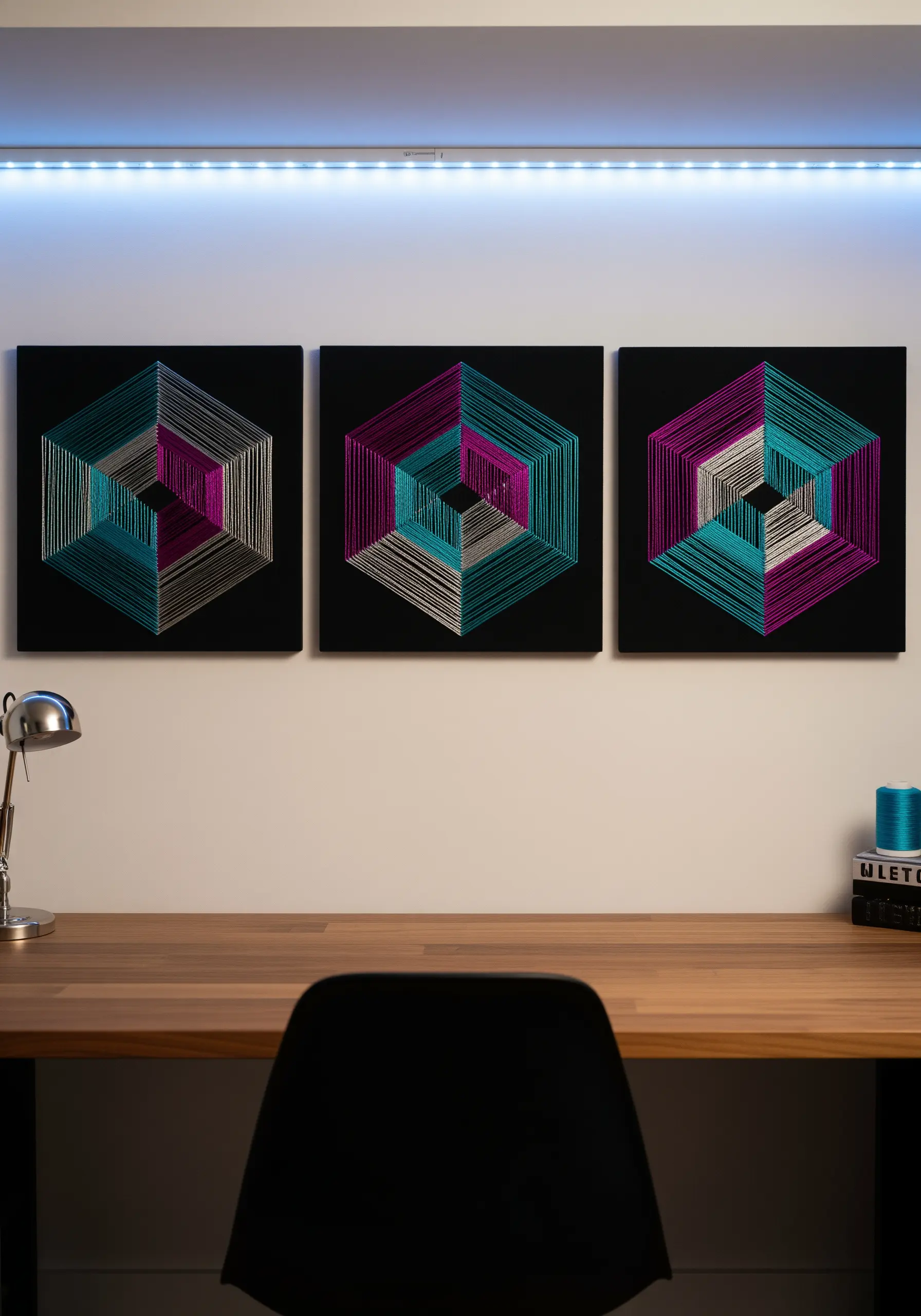
Elevate a simple geometric design by splitting it across three separate canvases to create a triptych.
Ensure continuity by using the exact same anchor points and color palette on each panel, varying only the internal thread paths.
A dark, matte background makes jewel-toned threads appear to float, enhancing the illusion of depth.
This is one of the most effective abstract optical illusion stitches can create; the shapes seem to shift as you view them from different angles.
Mount the canvases with a consistent 1-2 inch gap to allow each piece to breathe while maintaining a clear visual connection.
4. Construct a Modular Wall Sculpture
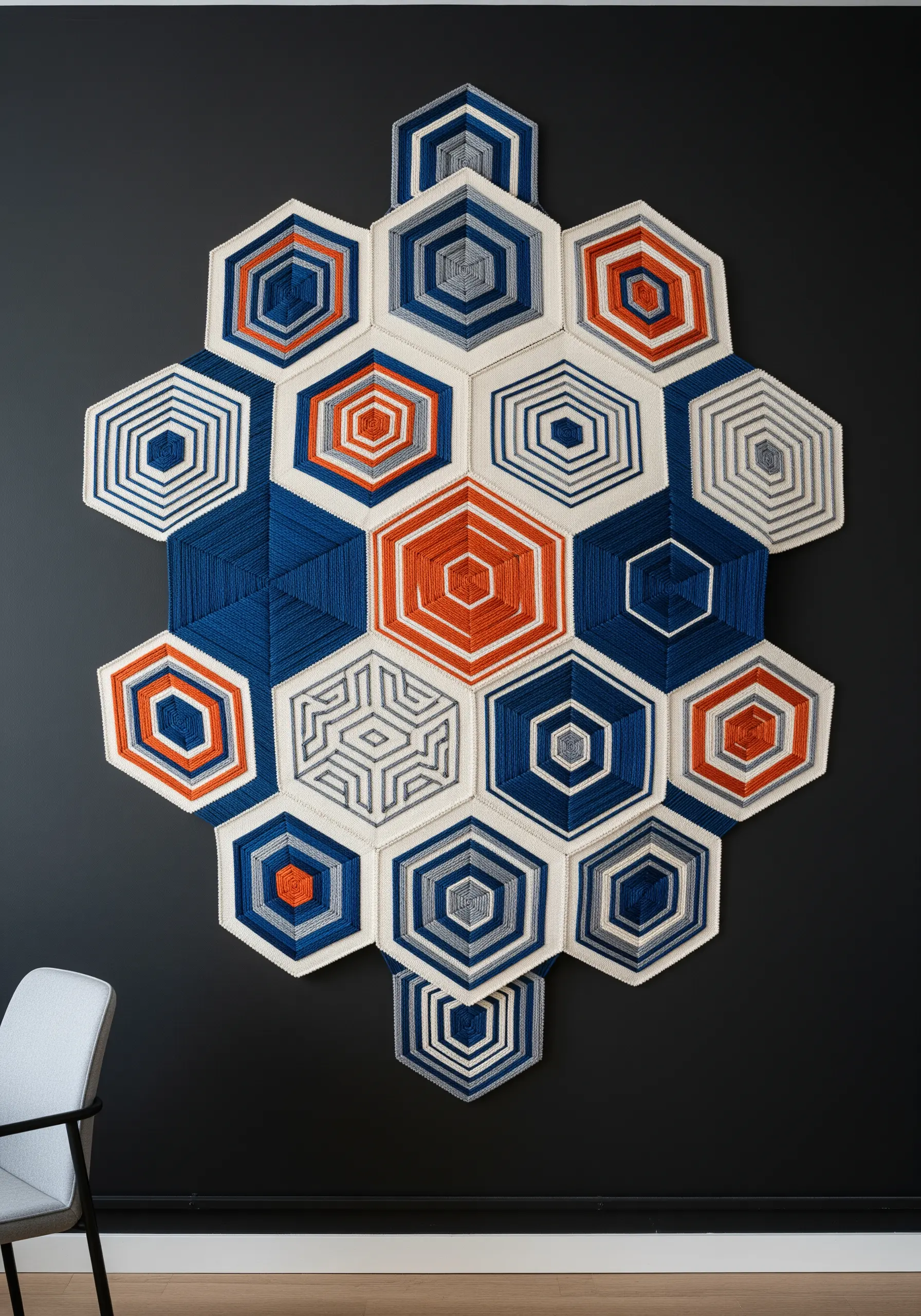
Move beyond the single hoop by creating a large-scale installation from smaller, modular components.
Embroider individual hexagonal canvases with complementary geometric patterns, then arrange them into a honeycomb-like structure.
Vary the density of the stitching—some solid, some linear, some patterned—to create rhythm and focal points.
This approach makes ambitious statement size wall art ideas feel manageable, as you can complete one small piece at a time.
Secure each module to a hidden backing board for a clean, floating effect on your wall.
5. Radiate Energy with a Sunburst Pattern

Create this clean, radiating effect by stitching straight lines from a curved baseline to points along an arc.
To achieve the subtle color shift, use two or three similar shades of thread in your needle at once.
As you stitch, the colors will blend organically, creating a much softer transition than blocking out sections of solid color.
This method beautifully mimics gradient petal techniques for stunning color blends but applies it to a sharp, modern geometric form.
The negative space is just as important as the stitches, so choose a high-quality linen or canvas that adds its own texture.
6. Fill Shapes with Tactile Texture
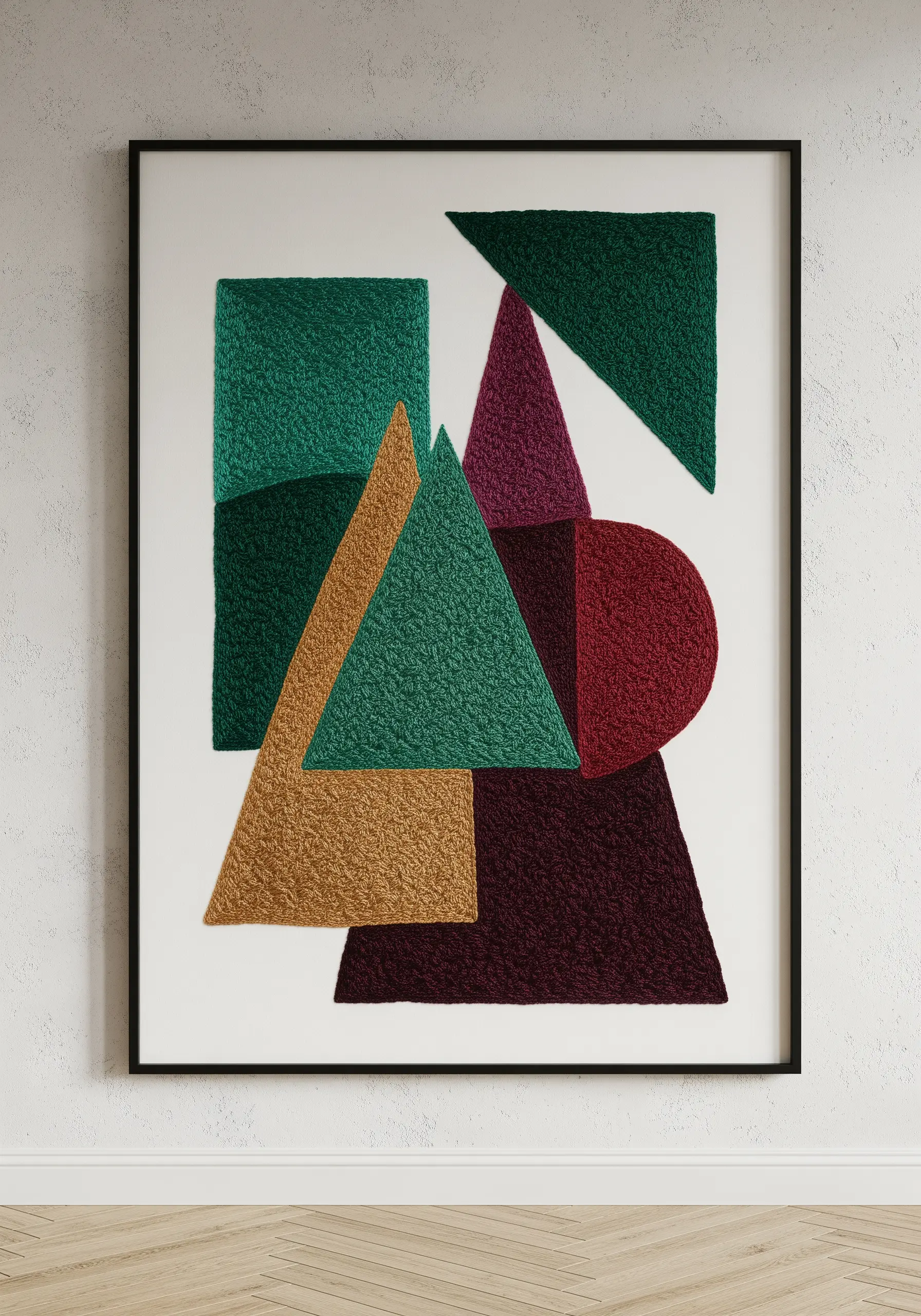
Give geometric compositions a surprisingly soft and complex surface by filling them with dense knots or seed stitches.
Instead of satin stitch, use thousands of French knots packed tightly together to create a plush, almost moss-like texture.
This contrast between the hard, clean edges of the shapes and the intricate interior fill is what gives the piece its power.
Keep your outlines sharp with a precise split stitch before beginning the fill.
Explore abstract fabric collage embroidery ideas to see how texture can define shape and evoke emotion.
7. Imply Form with Grids and Texture
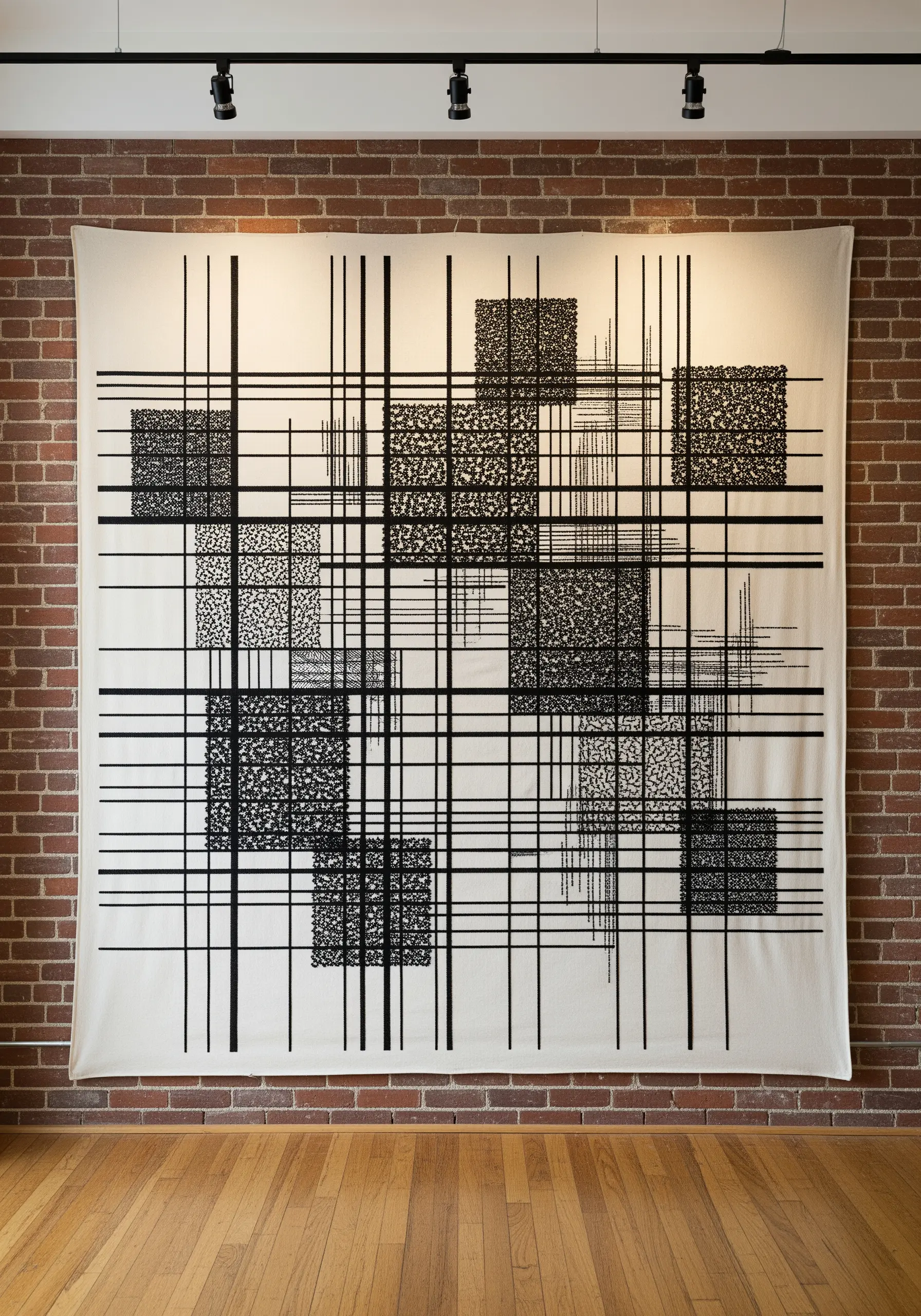
Suggest shapes and depth not with outlines, but with the interplay of stark lines and textured fields.
Use a single, bold color like black on a light fabric for a strong graphic statement that feels both minimalist and complex.
The ‘filled’ squares are created using dense, randomized stitches—like a digital static effect—providing a powerful contrast to the clean grid lines.
This is a perfect example of how modern grid dot stitch concepts can create an architectural feel.
For a piece this large, use a heavy-duty fabric like canvas or duck cloth to support the weight and tension of the threads without warping.
8. Elevate String Art with a Wood Base

Swap fabric for a beautifully stained wood panel to give your geometric art an earthy, substantial presence.
Carefully map your pattern and hammer in small, uniform nails (like brass escutcheon pins) to act as anchor points for your thread.
The warmth of the wood grain provides a stunning contrast to the sharp, vibrant lines of the thread.
These string art inspired mandala embroidery designs are especially powerful on a dark wood background, which makes the colors fluoresce.
Choose a variegated or ombré thread to create complex color shifts with a single spool.
9. Translate Blueprints into Stitched Art
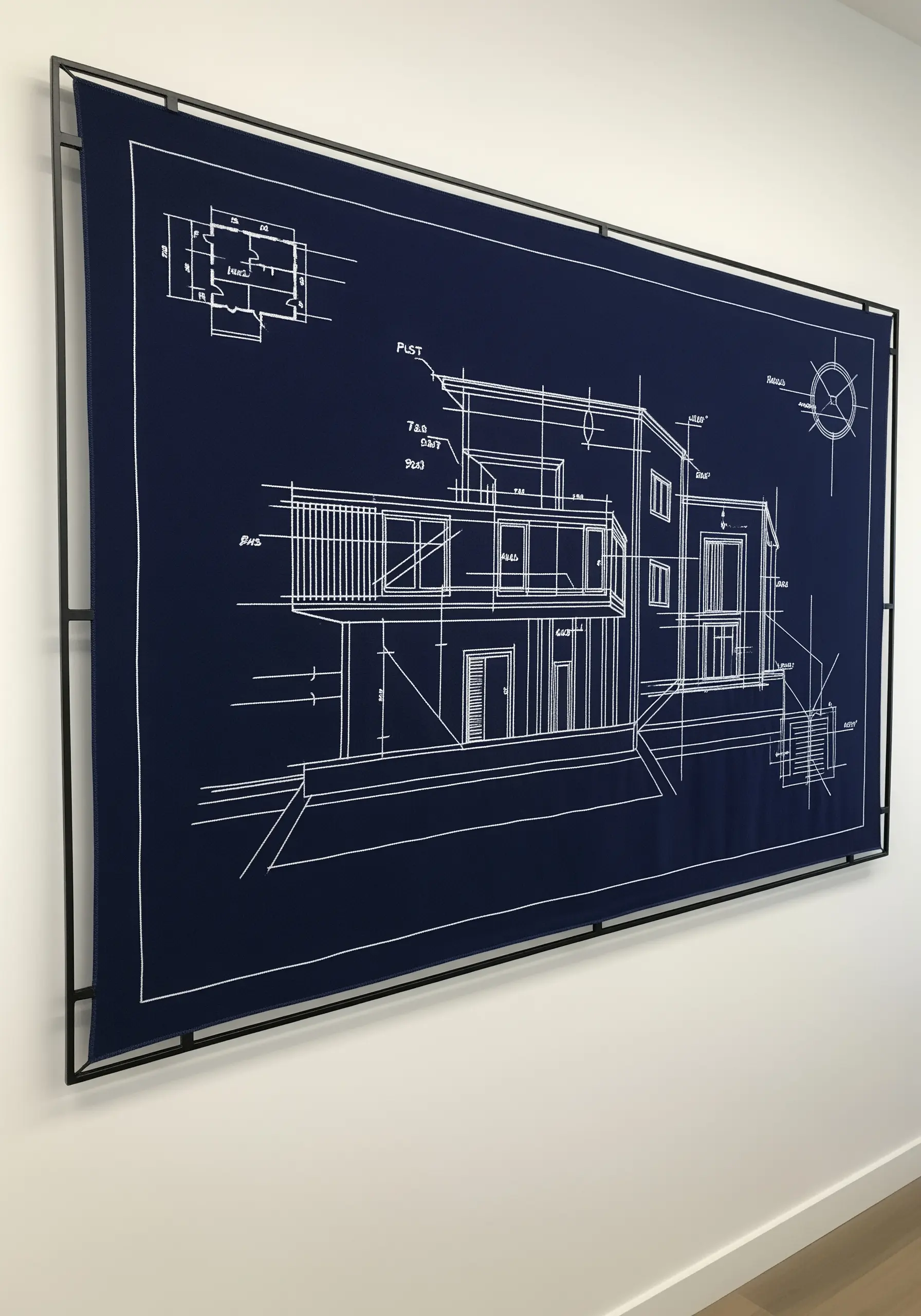
Transform a technical drawing, like an architectural blueprint or a favorite map, into a sophisticated piece of line art.
Use a simple backstitch or stem stitch in a single, high-contrast color to replicate the original lines with precision.
The key is consistency in stitch length to maintain the clean, drafted quality of the source material.
This technique shares its minimalist spirit with single-line face profiles, where every stitch is deliberate and essential.
Stretch the final piece over a frame or canvas for a taut, professional finish that enhances the architectural feel.
10. Create Op-Art with High Contrast
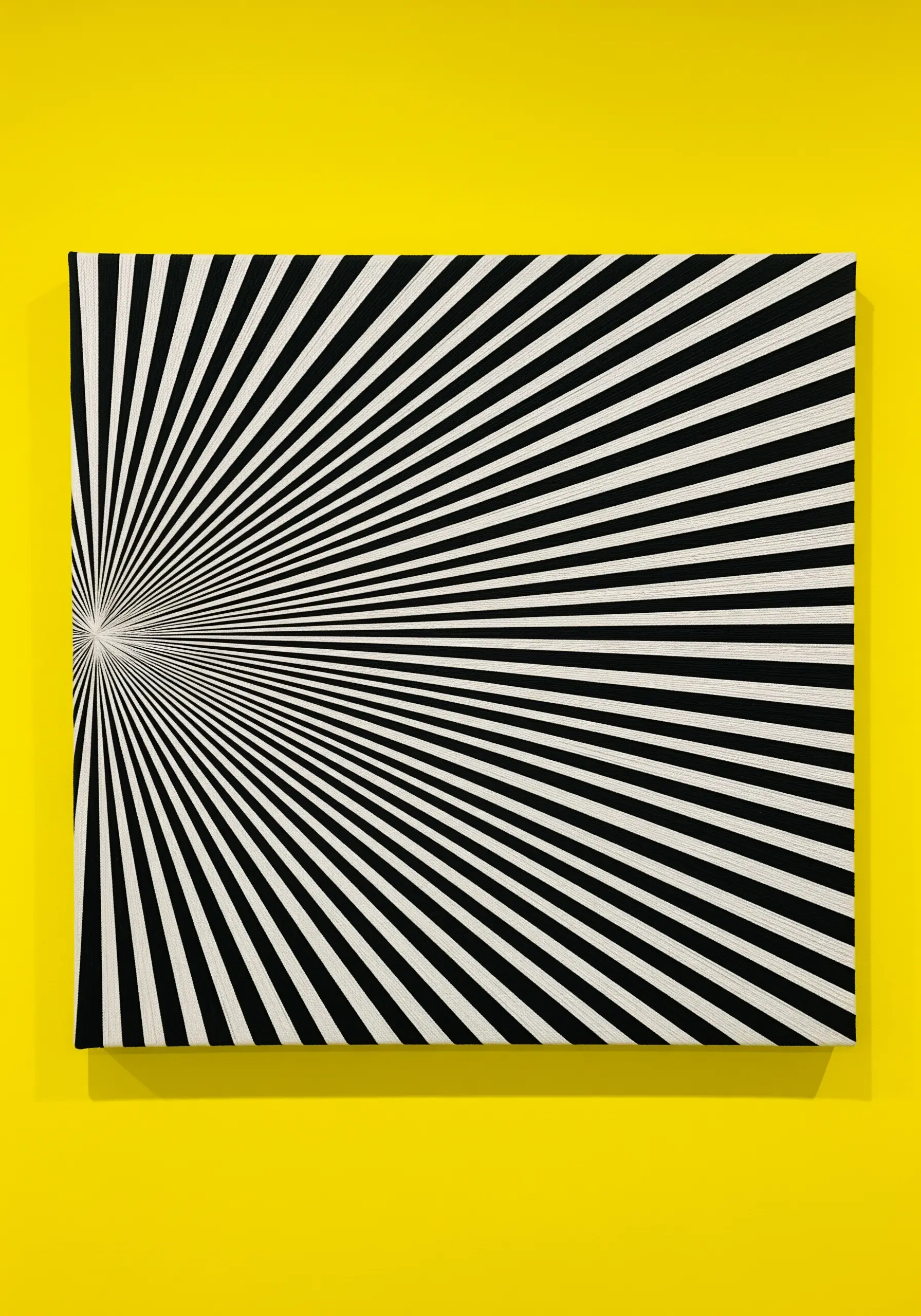
Harness the power of optical art by using densely packed satin stitches in a high-contrast palette like black and white.
To ensure your lines are perfectly straight and sharp, draw your design onto the fabric with a fine, erasable pen before you begin.
Work from the center outward, keeping your stitch tension firm and even to prevent the fabric from puckering under the density of the thread.
Explore other monochrome thread embroidery ideas to see how limiting your palette can maximize visual impact.
The resulting piece feels dynamic and almost vibrates with energy, making it a powerful focal point for any modern space.
11. Contrast Textures with Yarn and Thread

Create a dramatic visual hierarchy by pairing fine thread fills with chunky yarn outlines.
First, fill the interior of your shapes with delicate, straight stitches that create a subtle sheen and direction.
Then, couch a thick, textural yarn along the outlines to give the shapes a bold, sculptural border that pops off the canvas.
This technique is central to many cozy mixed-fiber projects, adding both warmth and graphic definition.
The contrast between the thick, matte yarn and the thin, lustrous thread creates a compelling tactile and visual experience.
12. Achieve Luxe Circles with Metallic Cord

For a refined, sculptural effect, use a metallic cord or braid instead of standard embroidery floss.
Because these materials are too thick to be pulled through fabric, you must use a couching technique: lay the cord on the surface and secure it with small, invisible stitches of a matching fine thread.
This allows you to create perfect, uninterrupted circles with a beautiful, raised profile.
These metallic thread wall art projects add a touch of sophisticated glamour to any room.
Spotlighting the finished piece will enhance the metallic sheen and cast subtle shadows, amplifying its three-dimensional quality.
13. Carve Landscapes with Vertical Stitches
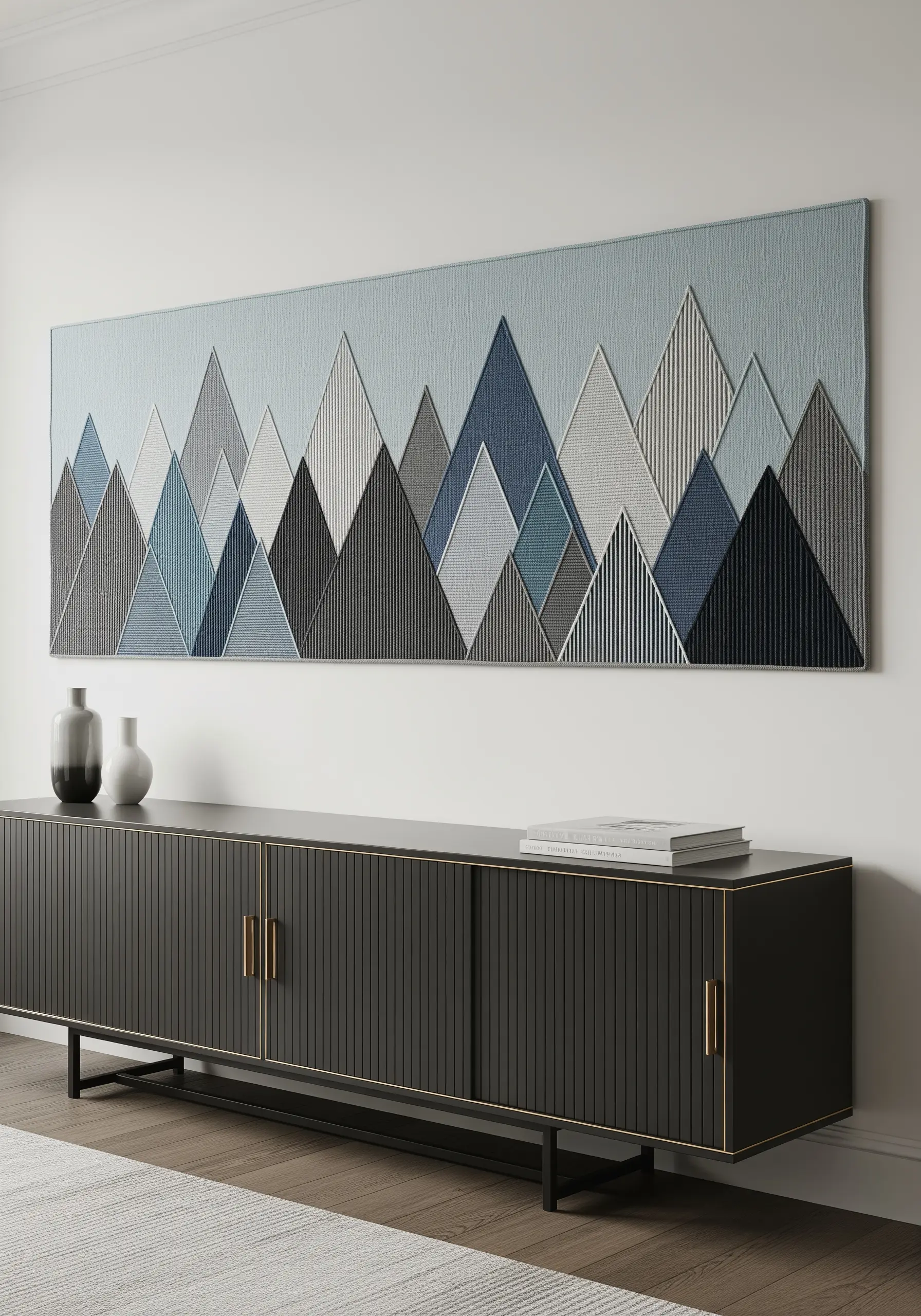
Depict a minimalist mountain range by filling triangular peaks with disciplined vertical stitches.
Vary the color and texture within each peak by alternating between different thread types and shades of grey, blue, and black.
Some sections can use a simple satin stitch, while others can be filled with alternating lines of two colors to create a subtle striped pattern.
This concept of building a scene with string is explored in string art nature trails featuring mountains, turning landscapes into geometric art.
The strict verticality of the stitches contrasts beautifully with the diagonal lines of the peaks, creating a calm yet dynamic rhythm.
14. Embrace Bauhaus with Bold, Curved Forms
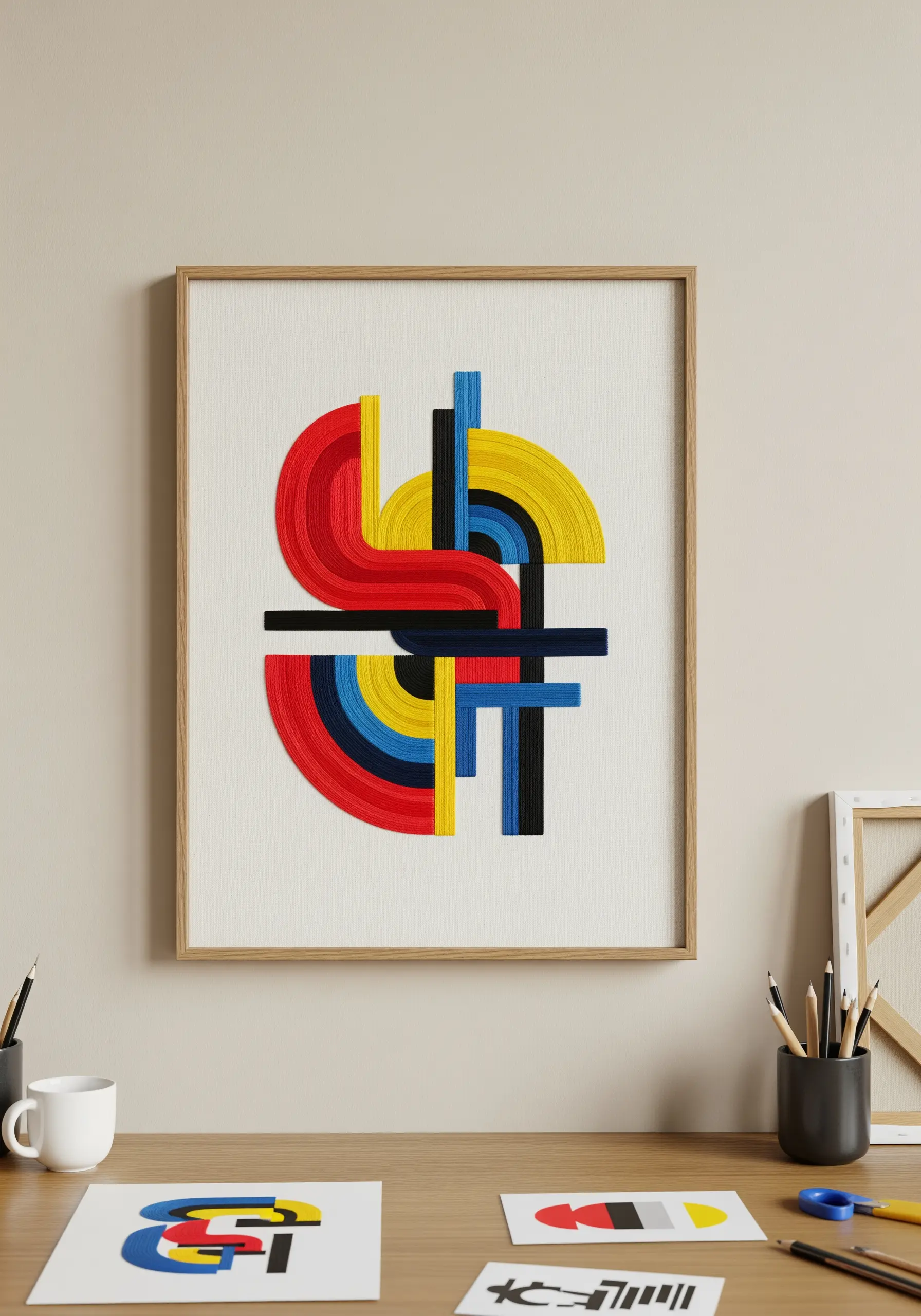
Channel the spirit of the Bauhaus art movement by focusing on primary colors and the interplay of curved and straight lines.
To get those perfectly smooth, thick curves, bundle several strands of floss together and couch them onto the fabric.
This technique gives your lines a solid, graphic quality that is difficult to achieve with a standard satin stitch.
Thinking about how colors interact is key to these abstract color psychology stitch ideas; the composition feels balanced yet energetic.
Frame the final piece in a simple, natural wood frame to complement the clean, modern aesthetic.
15. Integrate Natural Materials for Warmth

Combine the precision of string art with the organic beauty of natural wood for a piece that feels both modern and warm.
Using a round wooden panel as your base provides a beautiful, self-contained frame for the artwork.
The copper or gold tone of the thread and nails contrasts elegantly with the dark walnut grain, creating a rich, earthy palette.
This is a perfect example of how rustic string art farmhouse embroidery pieces can be adapted for a sophisticated, contemporary office.
Let the wood’s natural grain become part of the design, creating a subtle, swirling background for your geometric lines.
16. Sculpt with Thread for a 3D Grid

Take your thread art off the flat surface by creating repeating, three-dimensional forms.
These plus-shaped modules are crafted using a technique similar to stumpwork, where shapes are padded with felt or additional stitches before being wrapped in thread.
Arranging these raised elements in a precise grid on a felt or tweed background creates a stunning tactile field of pattern and shadow.
These abstract embroidery stitches that turn plain fabric into bold wall sculptures are perfect for a feature wall.
The play of light over the raised surfaces adds a dynamic quality that changes throughout the day.
17. Suggest a Skyline with Abstract Blocks

Evoke an urban landscape not by drawing buildings, but by stitching dense blocks of vertical lines.
Use a vibrant, energetic color palette of blues, oranges, and black to represent the city’s dynamism.
The density of the stitches varies, with some ‘buildings’ appearing solid and others more transparent, creating a sense of distance and layering.
This is a more abstract take on embroided city skyline wall decor, focusing on rhythm and color over literal representation.
Mounting the piece on a clear acrylic panel allows it to float in front of a window or glass wall, integrating it into the surrounding architecture.
18. Create a Shimmering Thread Burst

Achieve a dramatic starburst effect by using a metallic or high-sheen thread against a dark, matte background.
Stitch hundreds of straight lines radiating from a central point to the outer edges of your canvas.
For a subtle gradient, start with a light metallic thread at the center and gradually mix in a darker shade as you move outward.
This is one of the most effective abstract thread burst techniques for creating a sense of infinite depth and energy.
The way the metallic threads catch the light creates a mesmerizing, shimmering effect that makes the piece feel alive.