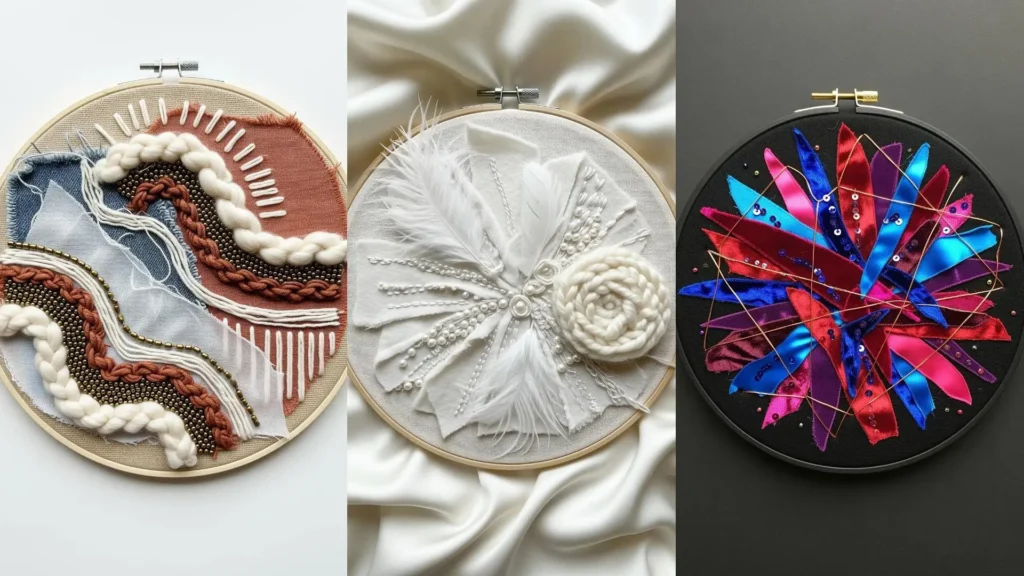
The clean lines of a grid and the simple punctuation of a dot are the building blocks of our digital world. They bring order to chaos, structure to information, and clarity to complexity. What if you could bring that same intentionality and modern precision to your embroidery?
This isn’t about learning dozens of complex new stitches. It’s about rethinking how you use the stitches you already know. It’s about placement, repetition, and texture. It’s about seeing your fabric not just as a canvas for flowing, organic shapes, but as a grid of possibilities—a surface ready for data visualization, pixel art, and structured patterns.
Here, you’ll discover how to translate the logic and aesthetic of technology into thread. You’ll learn why a perfectly placed French knot can feel as satisfying as a pixel, and how a grid of simple backstitches can become a foundation for incredible creativity. Let’s start stitching with a new kind of intention.
1. Circuit Board Precision with Metallic Thread
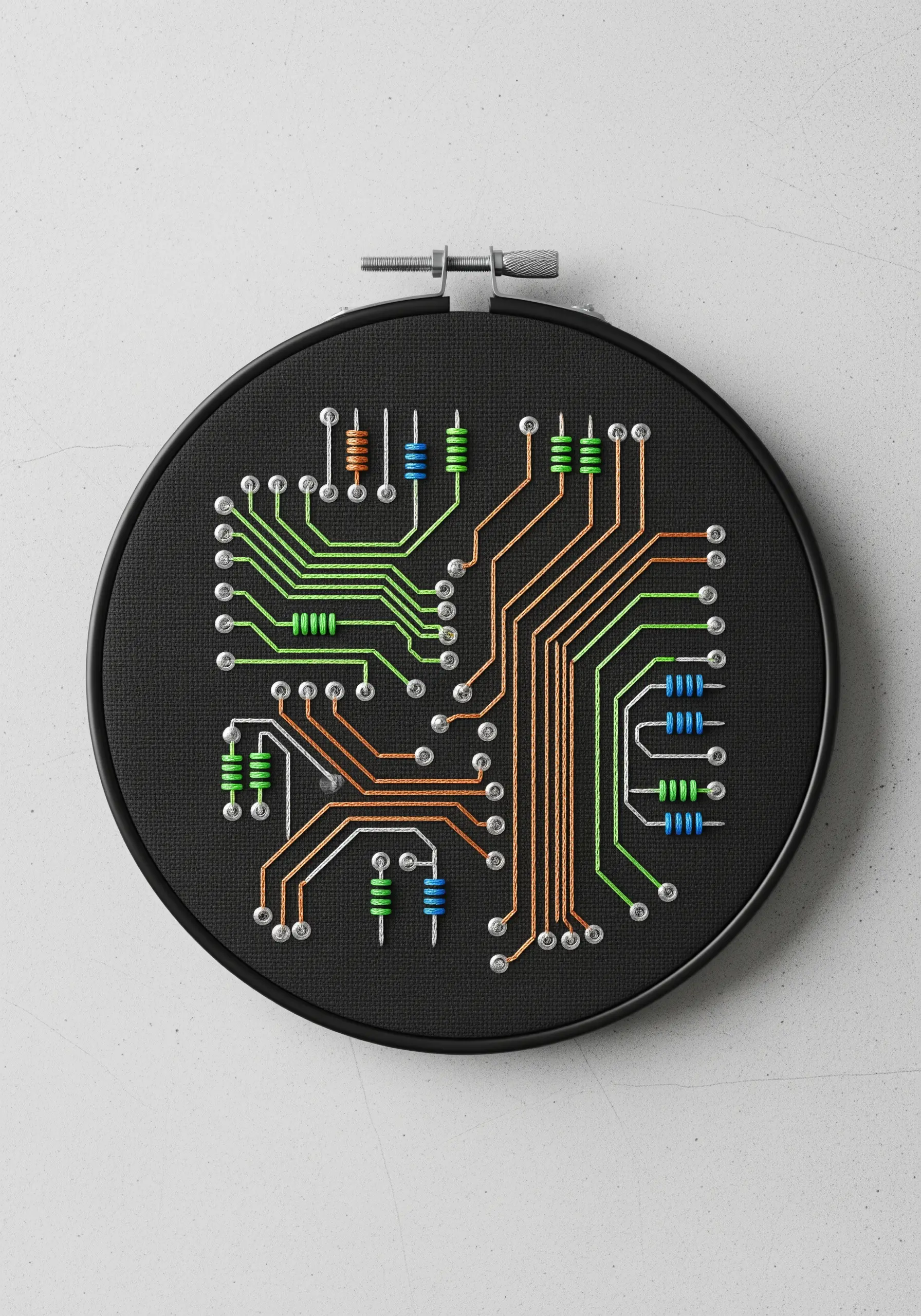
Recreate the intricate beauty of a circuit board by using a dark, high-contrast fabric like black cotton twill.
Use a simple backstitch or stem stitch for the conductive traces; a fine metallic thread will mimic the look of copper or silver pathways perfectly.
For the resistors, build up small, dense bars of satin stitch, wrapping two or three colors to create the iconic striped pattern.
A tear-away stabilizer on the back of your fabric is crucial here—it prevents puckering and ensures your lines remain crisp and geometric.
2. Mastering Pixel Art with Volumetric Cross-Stitch

To give your pixel art a satisfying, three-dimensional feel, use all six strands of your embroidery floss for each cross-stitch.
This technique turns each stitch into a plump, raised square, enhancing the blocky, retro aesthetic of the design.
Work on Aida cloth, as its natural grid provides the perfect scaffold for perfectly spaced pixels.
Remember to keep the direction of your top stitches consistent across the entire piece for a polished, professional finish that reflects the light evenly.
3. Binary Code: Combining Satin Stitch & Seed Stitch
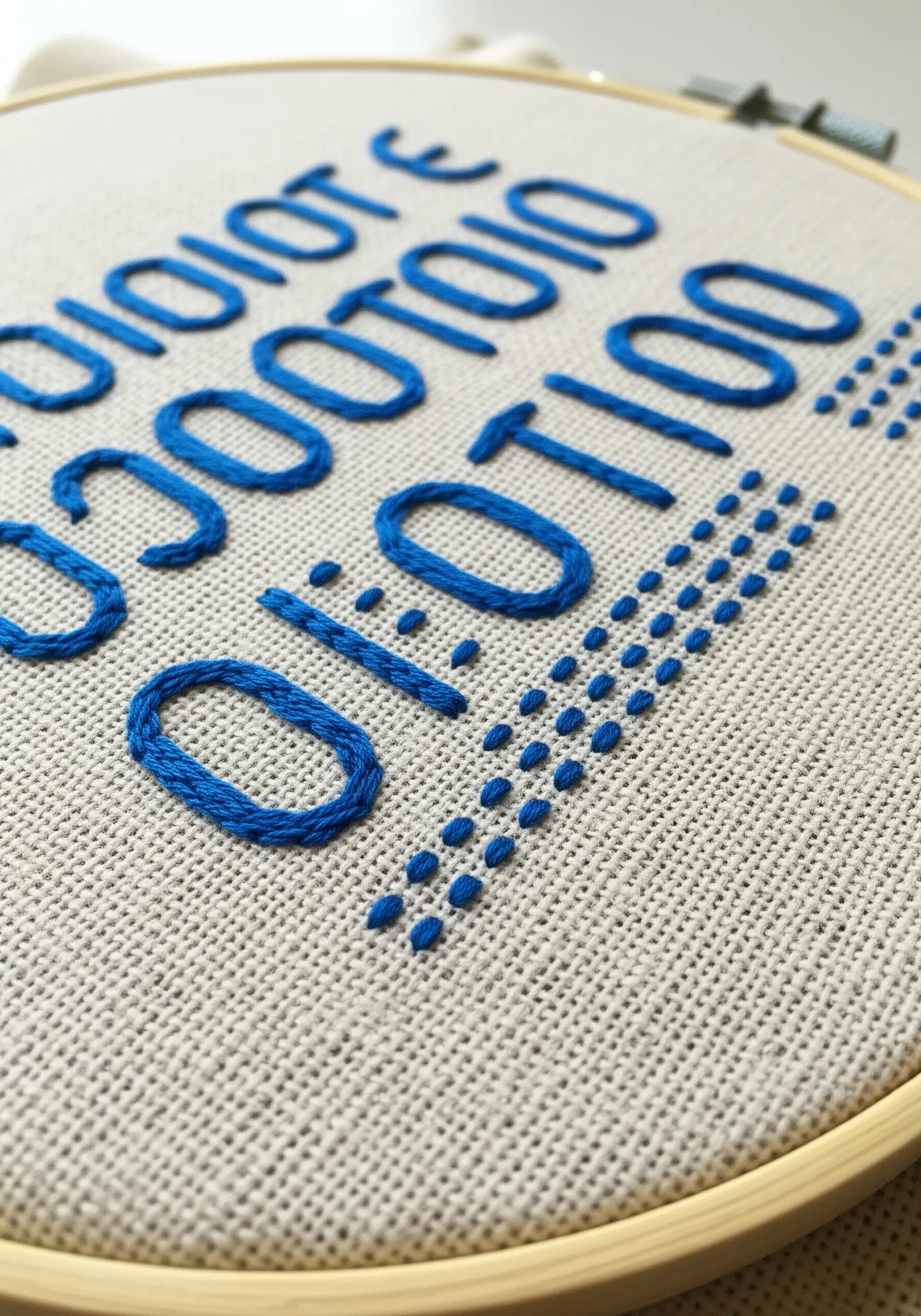
Translate digital language into a tactile design by contrasting smooth and textured stitches.
For the rounded numbers, use a padded satin stitch: create a base of small straight stitches, then cover them with a smooth satin stitch layer for a raised effect.
Contrast this smoothness with neat rows of seed stitches—tiny, individual straight stitches—to represent the dotted grid or digital noise.
This combination creates a visual hierarchy that is both meaningful and aesthetically pleasing.
4. Deconstructed Grids with Open Weave Stitching
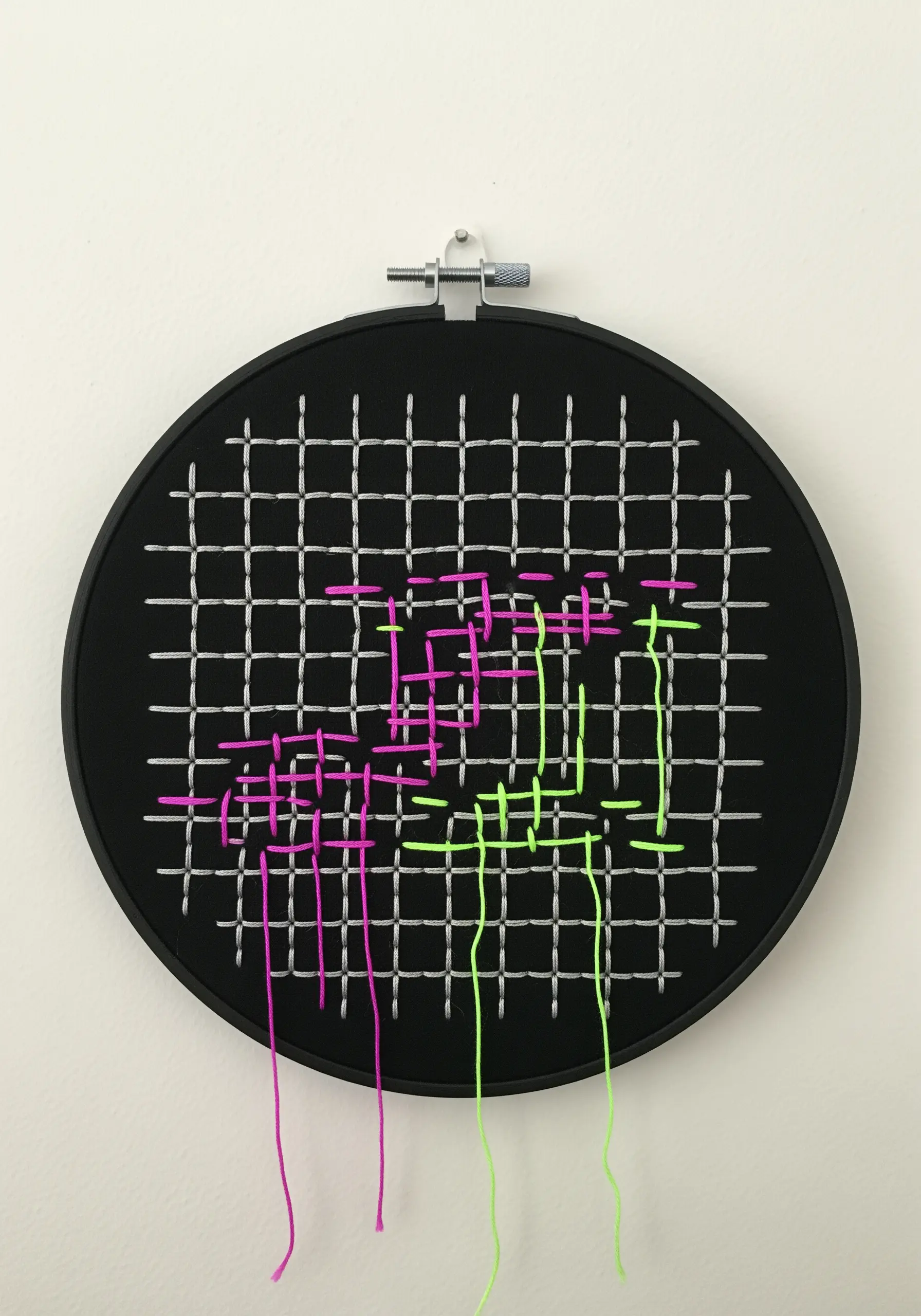
Create a foundation grid using a thin, strong thread like a silver metallic or a single strand of pearl cotton.
Instead of stitching a fixed design, use a blunt tapestry needle to weave thicker, colorful yarn or floss through your grid.
Let the ends hang loose for a deconstructed, work-in-progress feel that celebrates process over perfection.
This technique allows for incredible improvisation, letting you add and subtract color and texture as you go.
5. Visualizing Data with Textured French Knots

Transform an abstract scatter plot into a piece of compelling tactile art by representing data points with French knots.
Use a delicate backstitch for the X and Y axes to create a clean, minimalist framework.
Assign a different color to each data set, and cluster the corresponding French knots just as they would appear on a chart.
Varying the number of wraps around your needle for each knot will subtly alter its size, adding another layer of visual information.
6. Network Mapping with Appliqué and Couched Lines
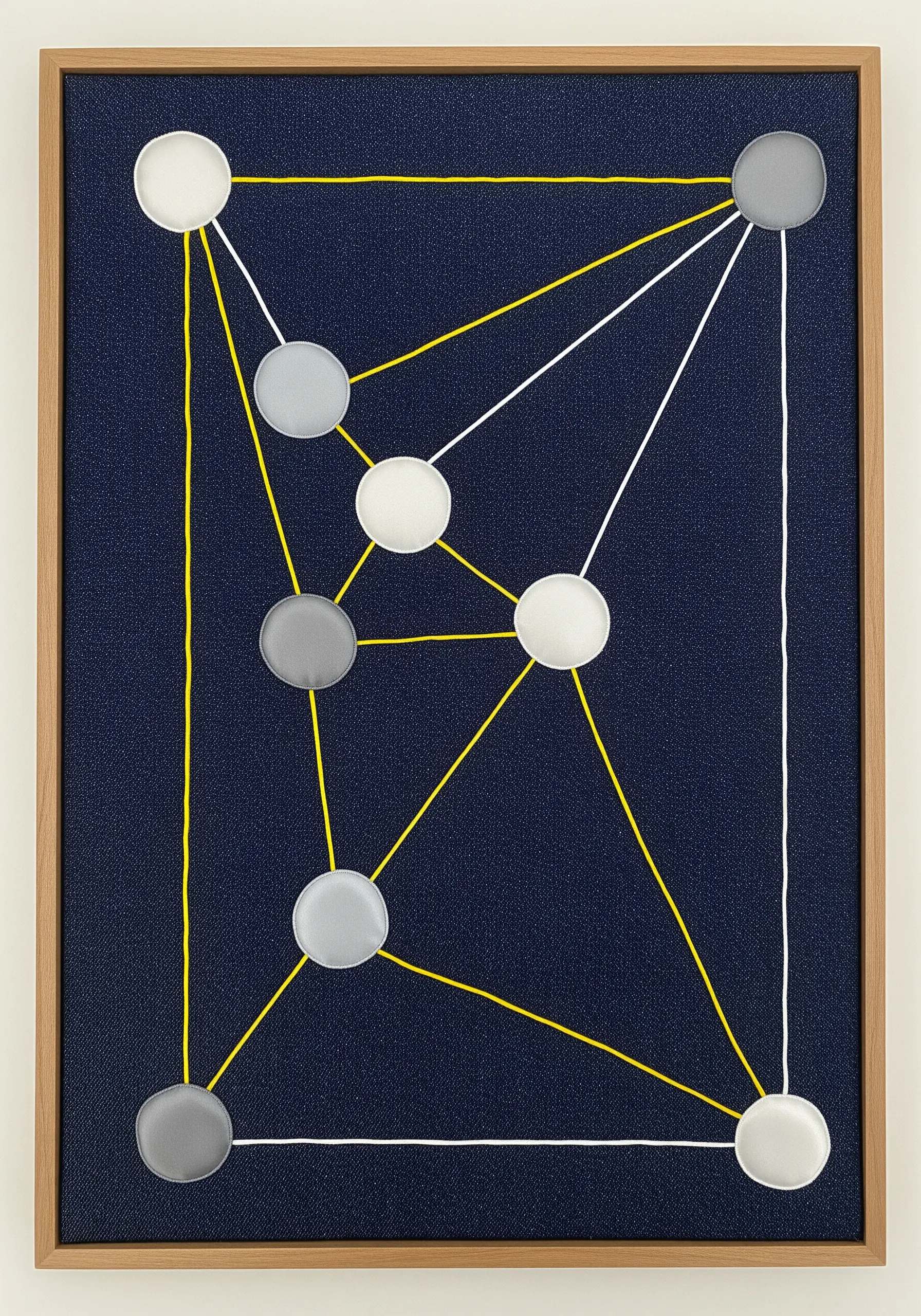
For clean, solid nodes in your network diagram, use small appliqué circles cut from felt or ultrasuede.
Attach them with a neat, almost invisible whipstitch around the edge for a crisp finish.
To create the connecting lines, use couching: lay down a thicker thread (like pearl cotton) along your desired path and tack it into place with a second, thinner thread using tiny perpendicular stitches.
This method produces perfectly straight or gently curved lines that are far sharper than a standard backstitch.
7. Sculpting Soundwaves with Vertical Satin Stitch

Capture the form of a soundwave by translating it into a series of vertical satin stitch bars.
For a dynamic gradient effect, use several shades of the same color, blending them subtly from one bar to the next.
The key to success is maintaining perfect tension and keeping your stitches packed tightly together without overlapping.
Using a high-quality, evenweave fabric stretched taut in a hoop will ensure your vertical stitches remain parallel and don’t distort the material.
8. Creating Digital Rain with Seed Stitch & French Knots

Achieve the iconic “digital rain” effect by stitching vertical lines of seed stitches on black fabric.
Use a vibrant, high-contrast thread color like neon green to mimic the glow of a classic computer monitor.
Vary the length and density of each falling line to create a sense of dynamic movement and depth.
Intersperse a few French knots among the seed stitches to represent brighter characters or glitches in the code, adding subtle visual interest.
9. Interactive Art: Stitching a Functional QR Code
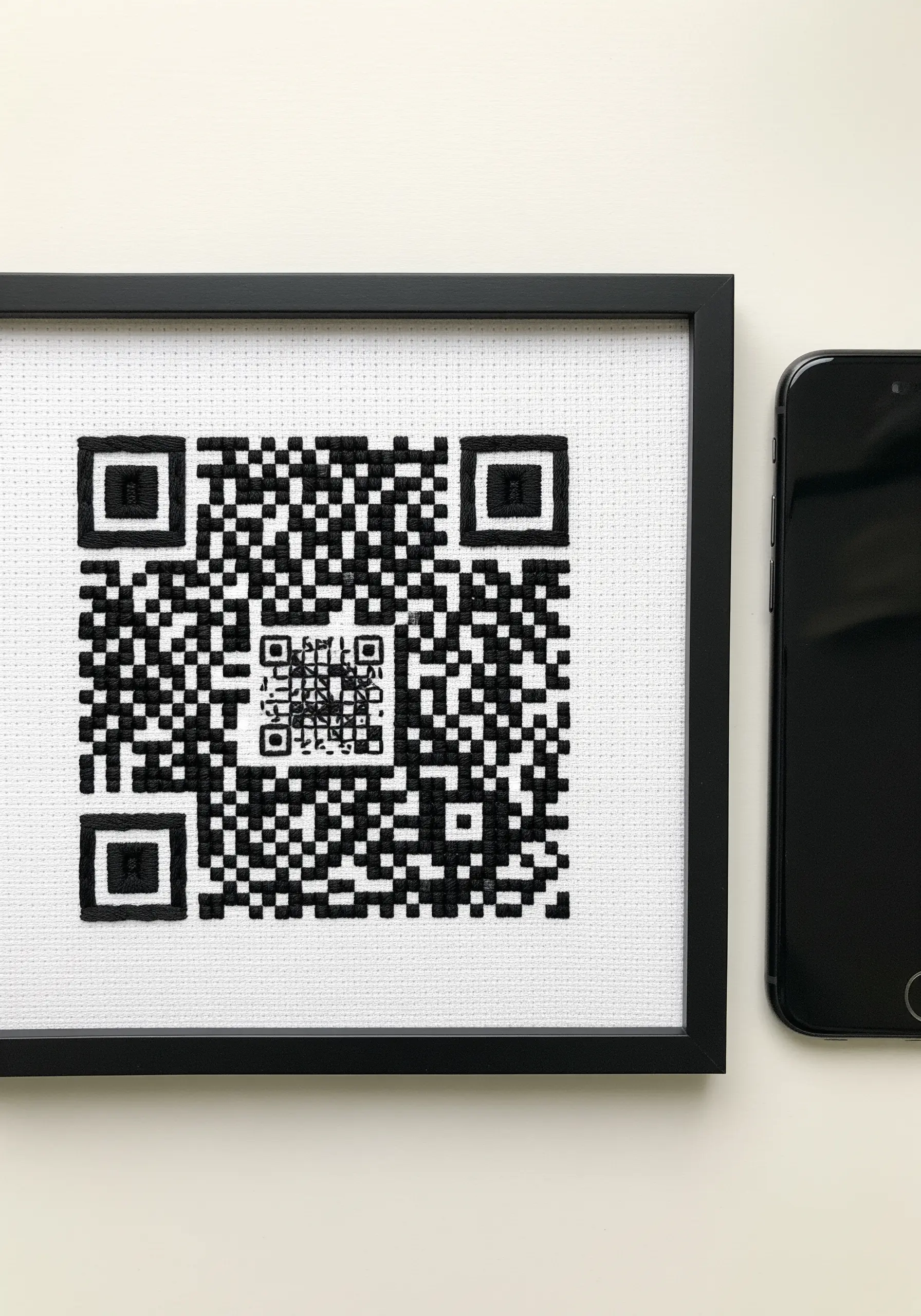
This project demands absolute precision, but the result is a stunning fusion of craft and technology.
Use a high-count Aida cloth (18-count or higher) to ensure your stitches are small and defined enough for a phone to read.
Map your desired QR code onto a cross-stitch grid pattern, treating each black square as a single cross-stitch.
Use a quality black floss and ensure full coverage with no white fabric showing through, as this is critical for the code to be scannable.
10. Building Geometric Patterns with Dimensional Knots
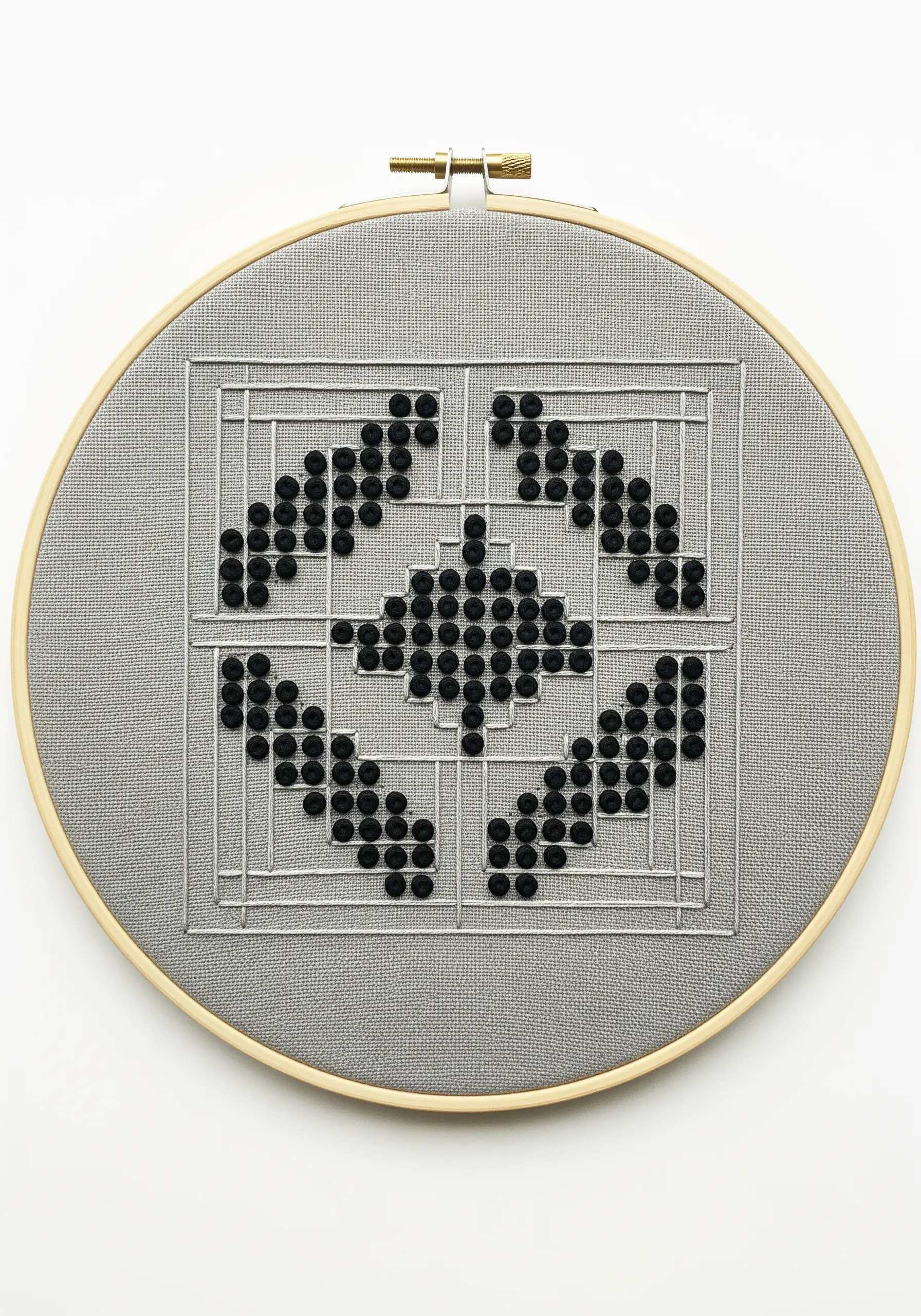
Create a striking contrast between line and texture by combining a delicate framework with bold, dimensional knots.
First, establish your geometric grid using a thin, clean backstitch in a metallic or neutral thread.
Then, fill designated areas with tightly packed French knots or colonial knots for a denser, more rounded finish.
Using a thicker thread like #5 pearl cotton for the knots gives them a powerful, sculptural presence against the fine lines of the grid.
11. Stitching a Rainbow Equalizer with Satin Stitch Blocks

The key to a vibrant audio equalizer design is flawlessly uniform satin stitch blocks.
To guarantee crisp, clean edges, first outline each colored block with a split stitch before filling it in with your satin stitches.
This simple preparation step acts as a ‘fence,’ keeping your fill stitches perfectly contained and sharp.
Stitching on black fabric is essential here; it provides the highest contrast, making the rainbow gradient appear to glow.
12. Dot Matrix Typography with French Knots
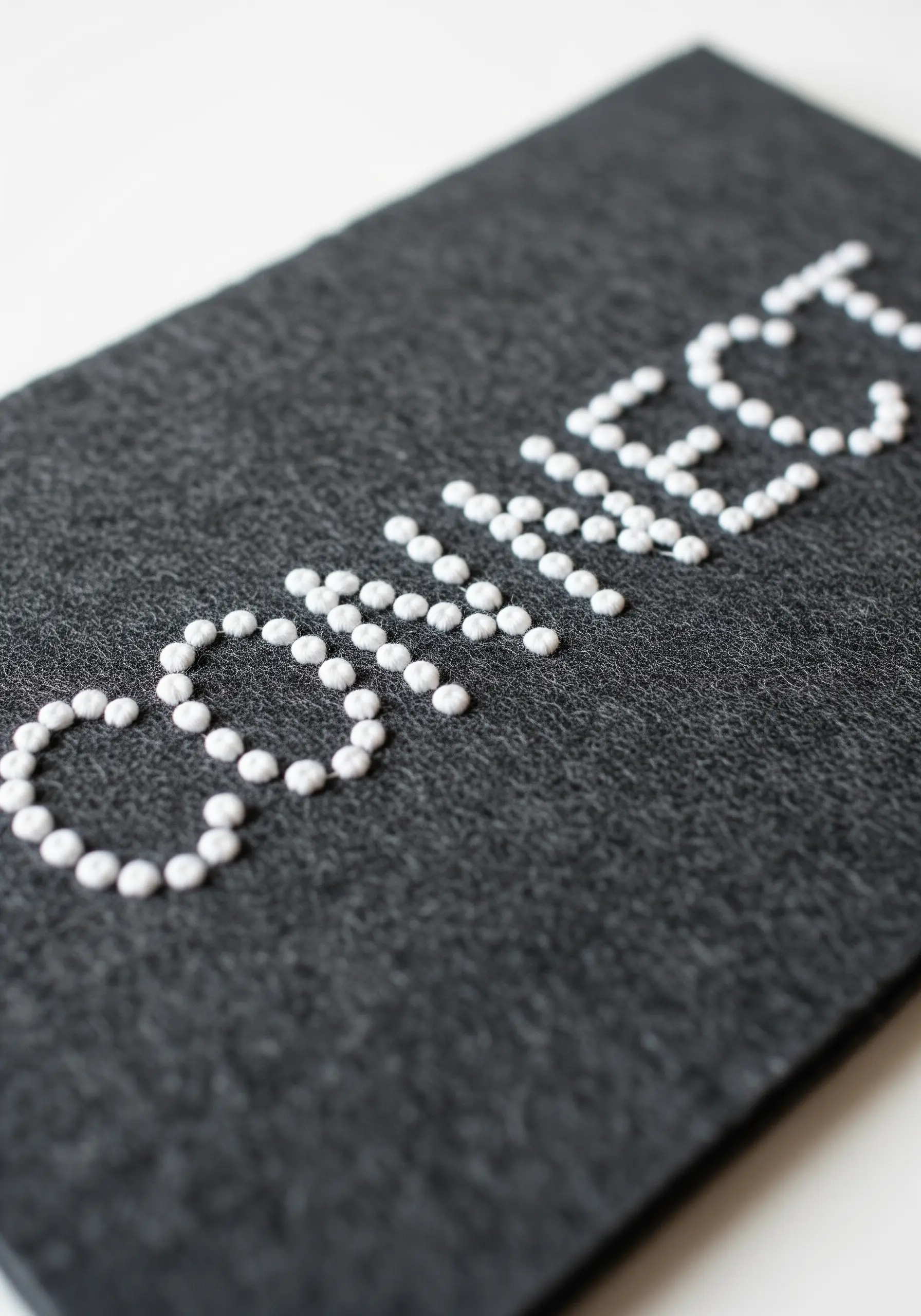
Recreate the nostalgia of dot matrix printing by forming letters from a grid of perfectly placed French knots.
For an even more uniform, raised effect, you can substitute the knots with small seed beads, attaching each one with a tiny backstitch.
This technique works best on a stable, non-stretch fabric like felt or heavy canvas, which can support the tension and weight without puckering.
Plan your letterforms on graph paper first to ensure consistent spacing and legibility.
13. Retro Grid Landscapes with Neon Thread

Capture the iconic 80s synthwave aesthetic using high-contrast colors and simple geometric forms.
Use a bright neon thread and a simple backstitch to create the glowing perspective grid and mountain outlines.
For the sun, fill a circular shape with concentric rings of satin stitch in graduating shades of yellow and orange.
The choice of black fabric is non-negotiable; it creates the deep, dark background that makes the neon colors vibrate with energy.
14. Data Streams: Mapping with Thread and Seed Beads
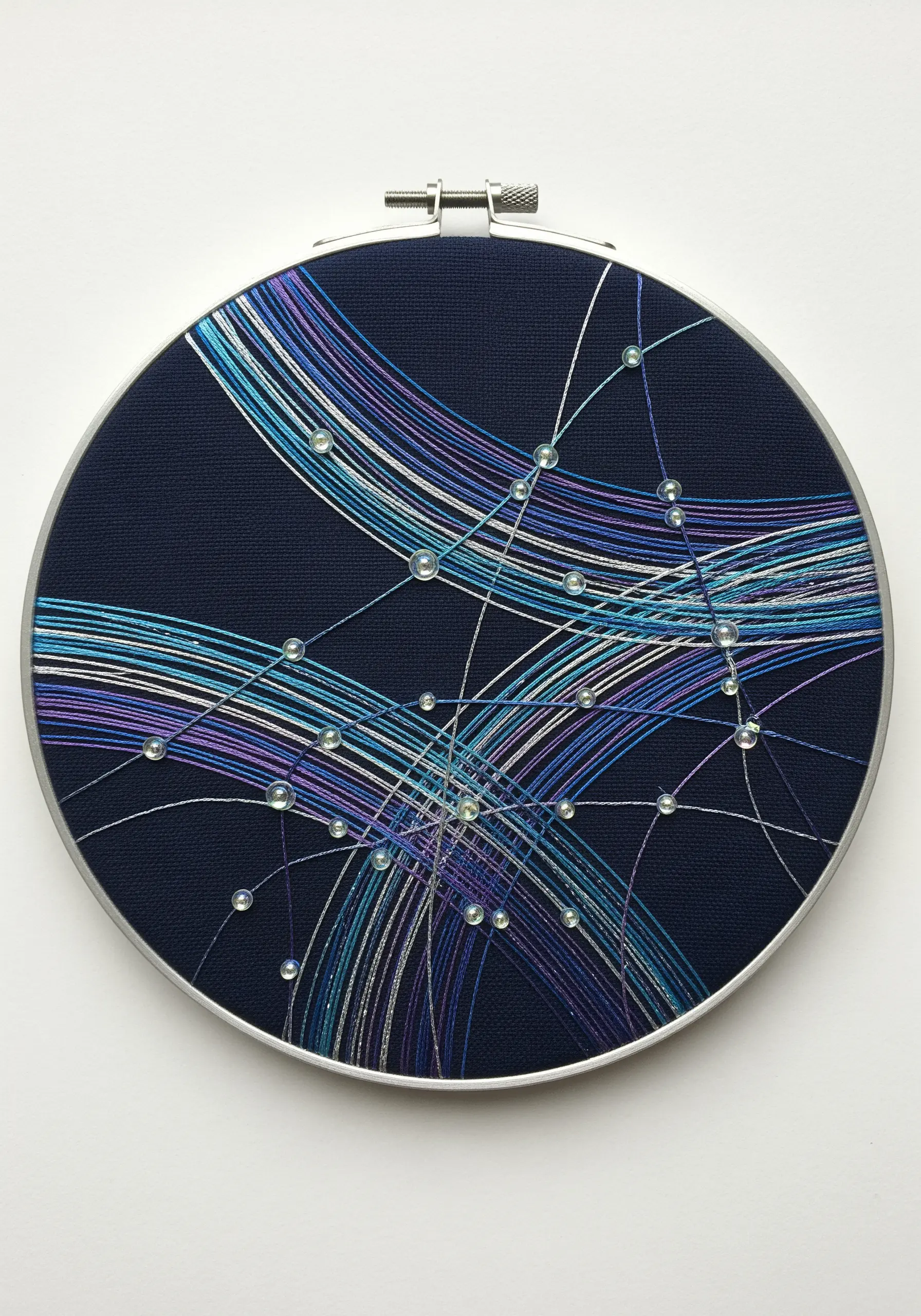
Visualize the abstract flow of information with elegant, overlapping lines of thread.
Use variegated floss in cool tones like blues, purples, and silver to create a sense of movement and light.
A simple split stitch will give you smooth, solid curves that can easily intersect and weave around each other.
Strategically place tiny, clear, or iridescent seed beads at the intersections to represent data points, adding a subtle sparkle that catches the light.
15. Architectural Honeycombs with Repetitive Backstitch
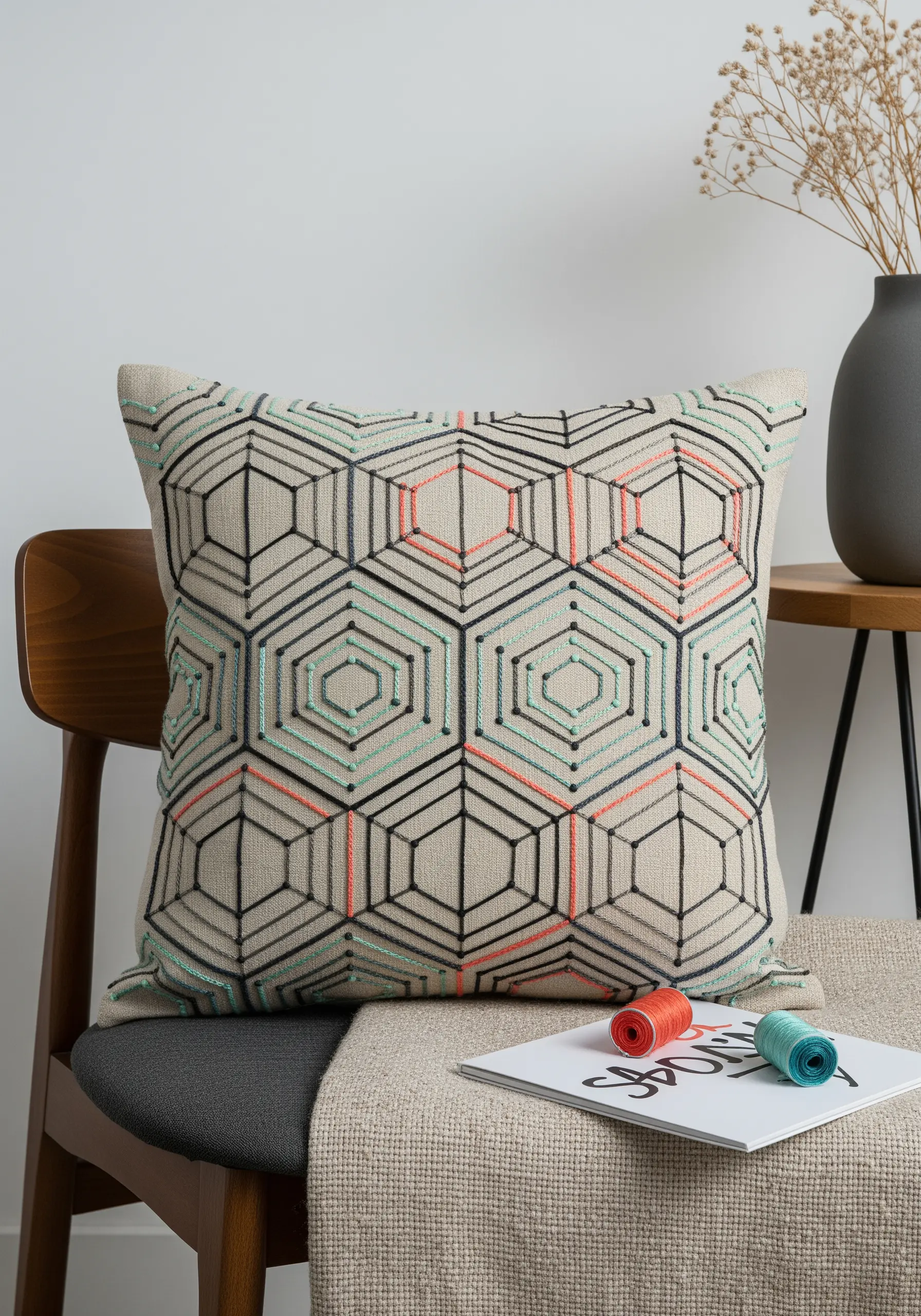
This design leverages the meditative power of repetition to create a complex pattern from a simple stitch.
Use a sturdy backstitch and a mid-weight thread, like a #8 pearl cotton, to give your lines substance and definition on home decor fabrics.
Work with a limited color palette, using one main color for the grid and introducing one or two accent colors to create rhythm and focal points.
This is a perfect project for transforming a plain pillow or tote bag into a piece of architectural art.
16. Minimalist Progress Bar with Contrasting Textures
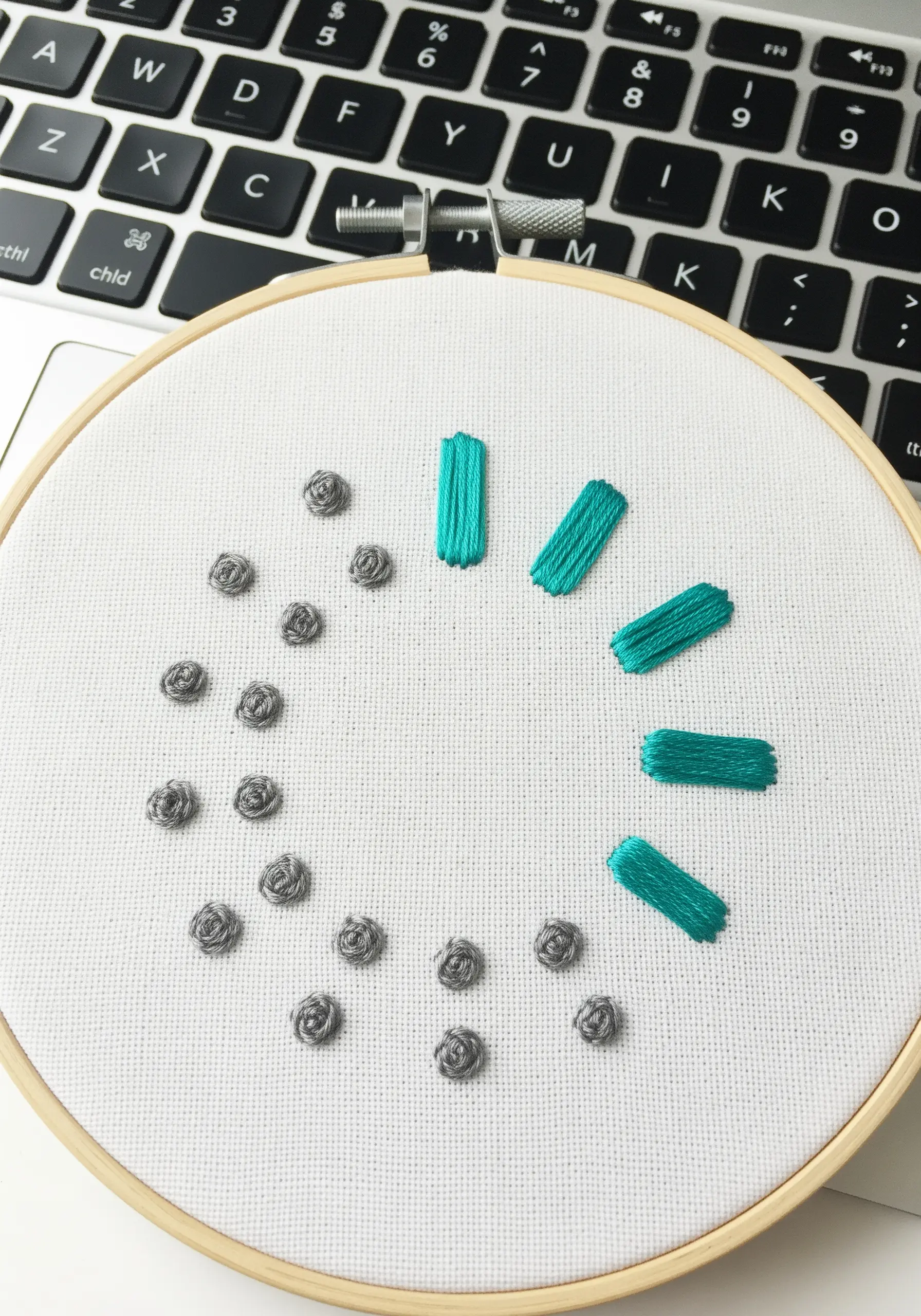
Tell a visual story of progress by juxtaposing two distinct stitch textures within a single motif.
Use sleek, smooth satin stitch bars to represent the ‘completed’ or ‘loaded’ sections of your design.
For the ‘pending’ or ‘unloaded’ areas, use a scattering of French knots or colonial knots.
This tactile contrast creates a powerful metaphor for process and completion, turning a simple graphic into a thoughtful piece of minimalist art.
17. Multi-Layered Circuitry with Thread Wrapping
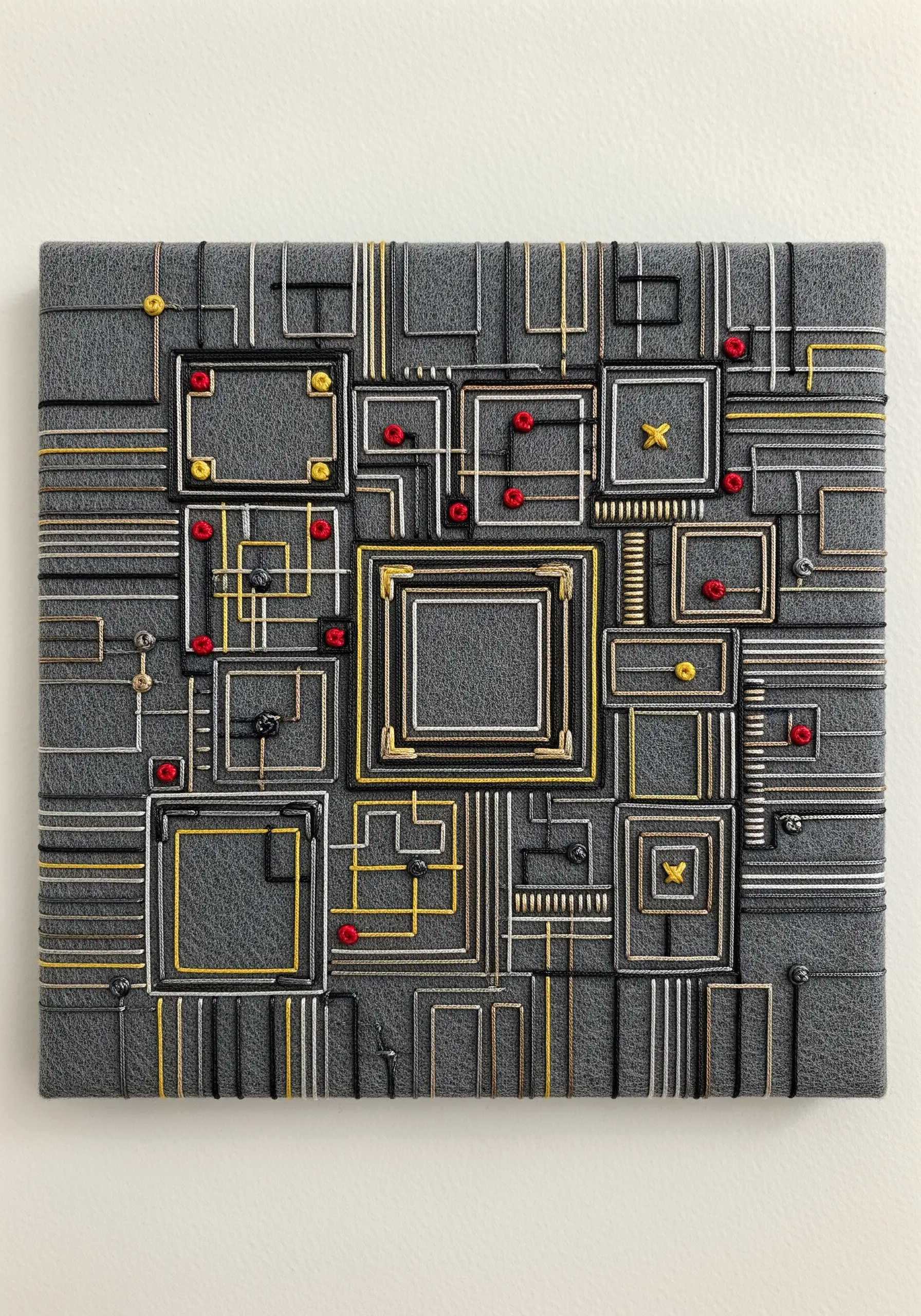
Create a highly textural, 3D circuit board by working on a thick felt base that can handle multiple layers.
For raised components, cut small squares of felt and wrap them tightly with metallic thread before stitching them onto the base.
Use couching for the main traces to achieve clean lines, and add French knots in contrasting colors to represent solder points.
This multi-media approach builds a design with incredible physical depth and tactile interest.
18. Topographic Contours with Layered Backstitch

To sculpt a 3D landscape in thread, the key is density and layering.
Stitch your contour lines extremely close together using a simple backstitch.
As you stitch, allow the lines to slightly overlap and build upon one another; this accumulation of thread creates the physical ridges that give the piece its topographic dimension.
Using a gridded fabric as your base will help you maintain accurate spacing and create a more precise final map.
19. UI Embellishments for Apparel
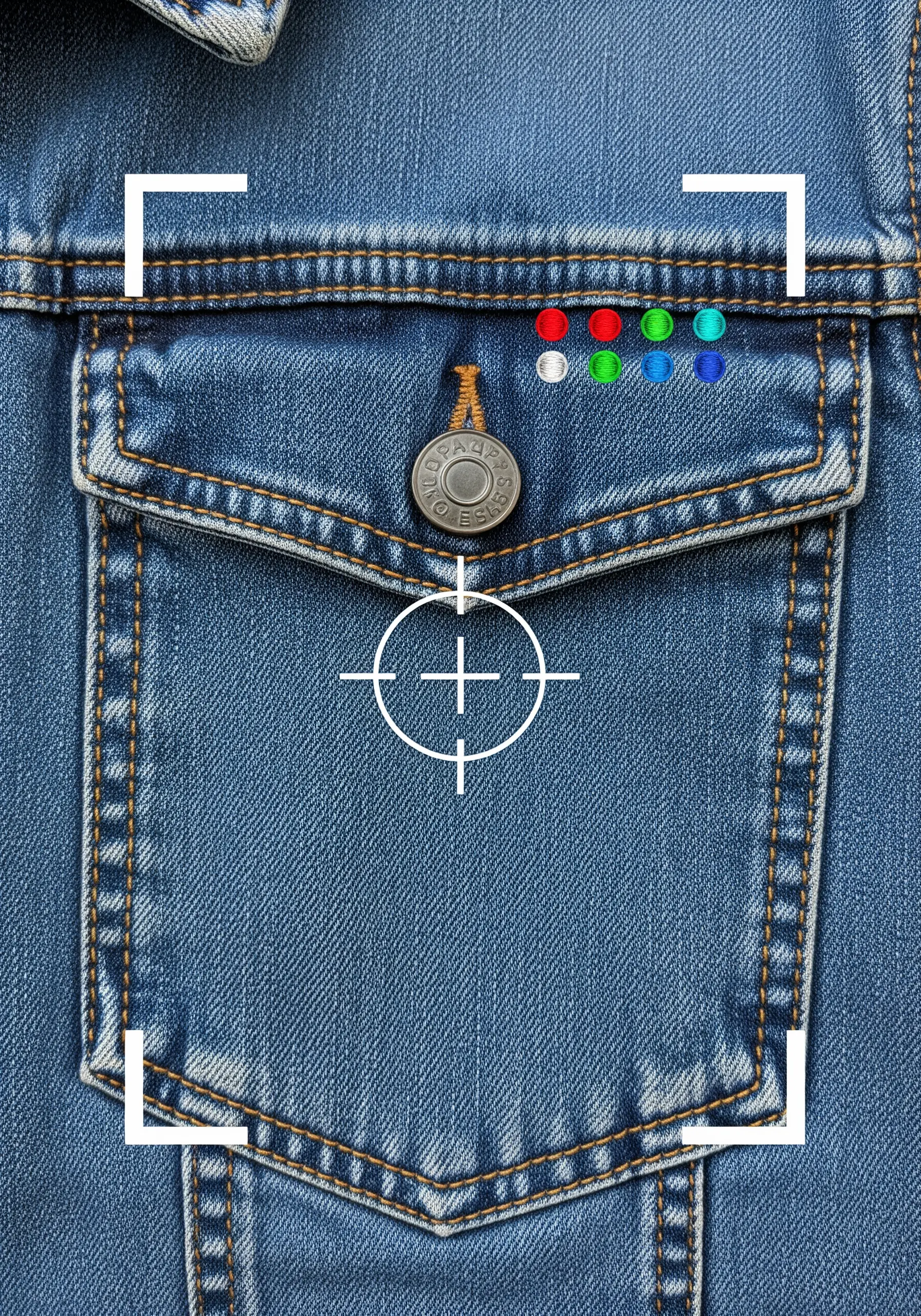
Add a subtle, tech-inspired detail to a denim jacket or backpack pocket with minimal UI elements.
Use a crisp backstitch in a high-contrast color like white to create the sharp corners of a focus reticle.
For the small indicator lights, don’t use French knots, which can snag easily on clothing.
Instead, create tiny, tight satin stitch dots for a durable and smooth finish that will withstand wear and washing.
20. Stitching Fractals with Repetitive Geometric Units

Explore mathematical beauty by building a complex fractal pattern from one simple, repeating shape.
The Sierpinski triangle, for example, is constructed entirely from small, outlined triangles.
Use a basic outline stitch like a backstitch or split stitch for precision and clarity.
The power of the design comes from meticulous repetition and a high-contrast color scheme—like white on black—which emphasizes the pure, graphic nature of the fractal.
21. Data Visualization with Color-Blocked Knots
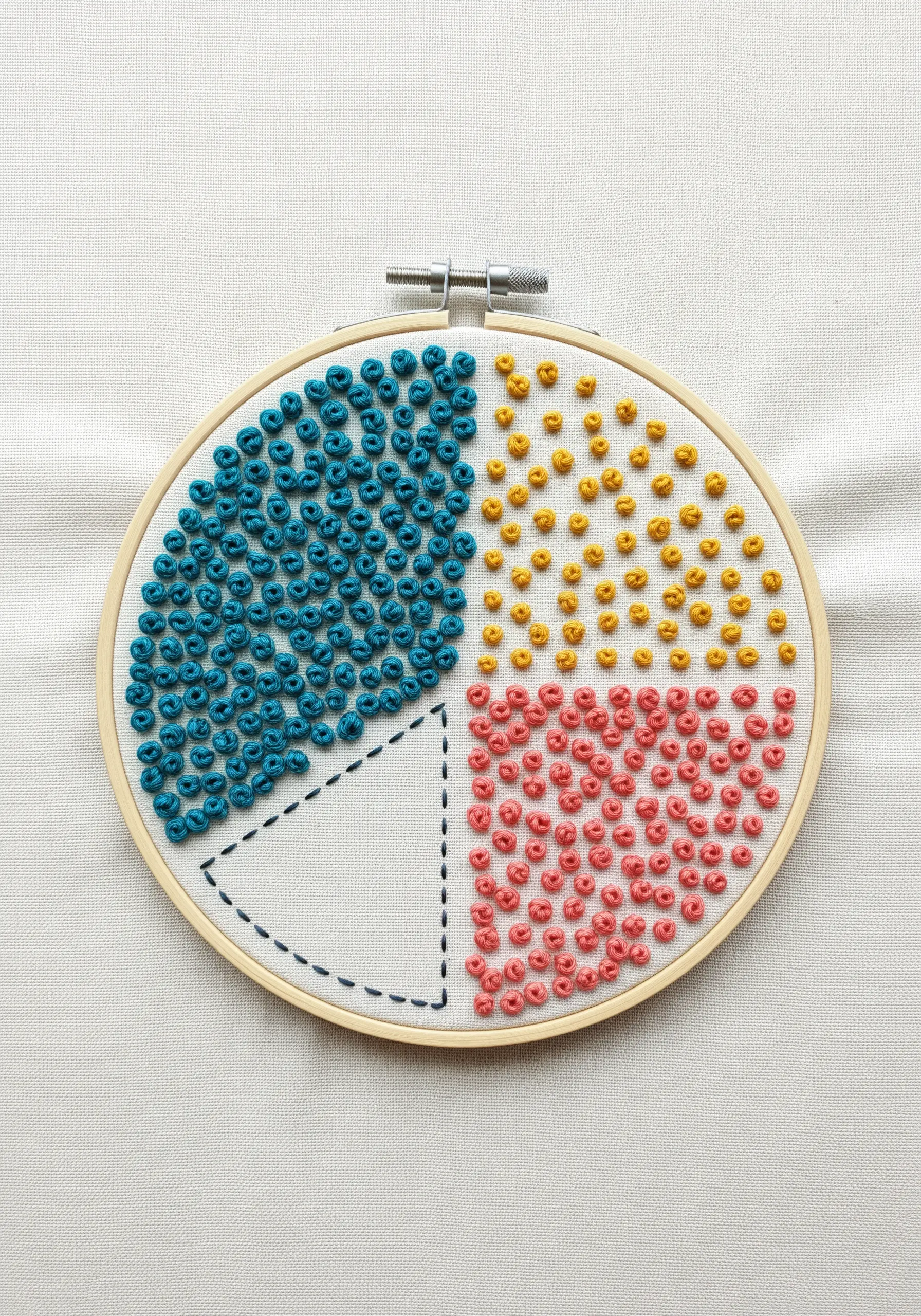
Represent segments of a pie chart or graph by filling them with dense fields of French knots.
To ensure your color-blocked sections have crisp, clean edges, first outline each segment with a tight split stitch.
This stitched border acts as a container, allowing you to pack your knots right up to the edge without them spilling over.
This technique transforms a flat, two-dimensional chart into a rich, textural object with satisfying dimension.
22. Felt Patches with Minimalist Status Indicators

Create your own tech-themed embroidered patch by using stiff felt as a durable, no-fray base.
Use a simple running stitch in a contrasting color for the outlines of the server bays or UI windows.
For the small status indicator lights, use tiny, neat cross-stitches in bright primary colors.
This combination of simple stitches results in a clean, graphic design that is perfect for embellishing backpacks, laptop cases, or jackets.
23. Celestial Mapping with Star Stitches and Beads

Begin your celestial map by stitching a subtle grid onto dark blue fabric using a single strand of silver thread.
For the prominent stars in your constellations, use a star stitch, varying its size by extending the length of its ‘legs’.
Connect the stars with a delicate backstitch, and then scatter tiny silver seed beads or French knots across the background to represent the distant starfield.
This mix of techniques creates a beautiful sense of astronomical scale and depth.
24. Minimal Data Blocks with Precision Satin Stitch
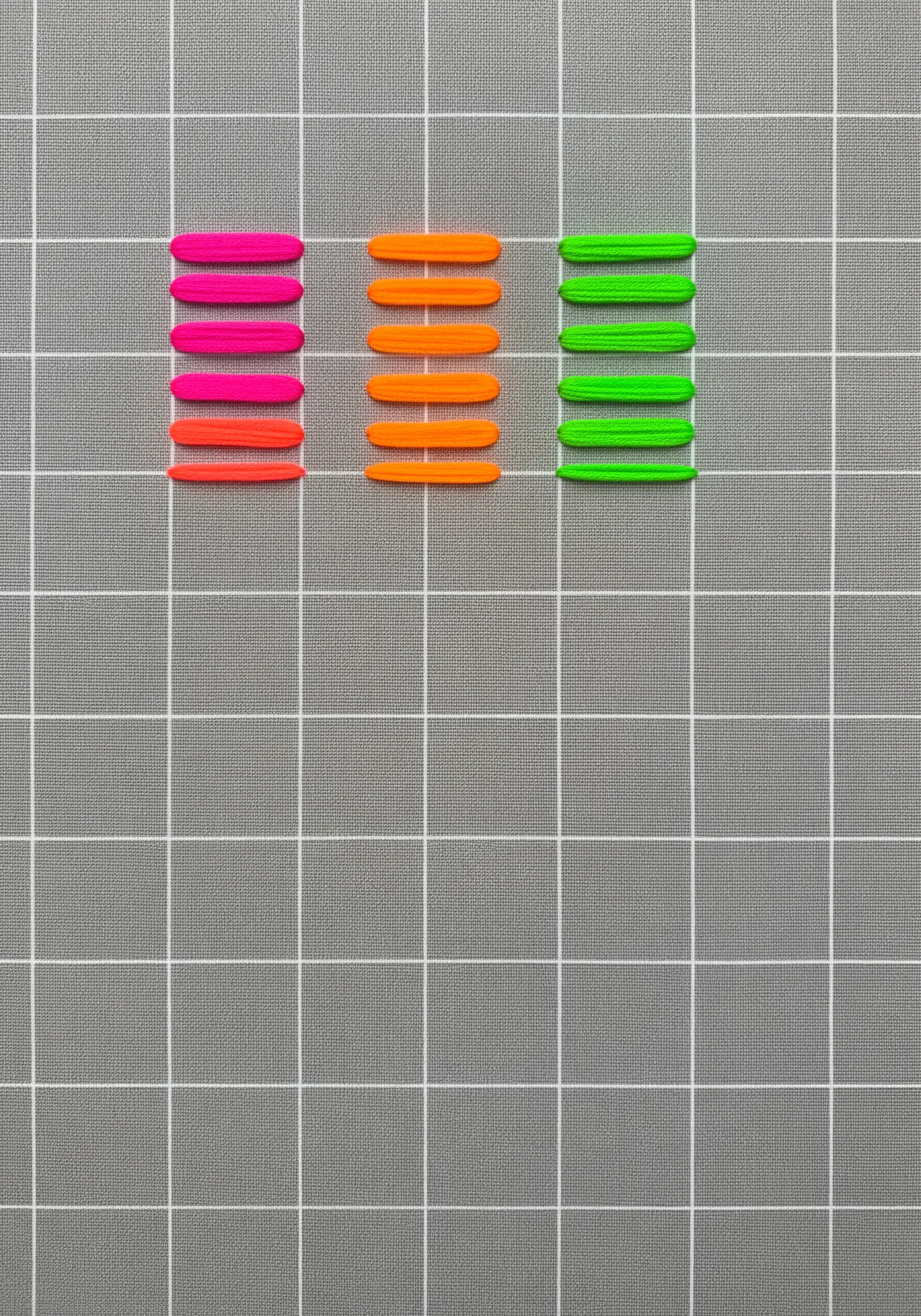
The success of this powerfully minimal design is entirely dependent on the quality of your satin stitch.
To achieve perfectly straight, sharp edges, outline each block with a split stitch before you begin filling.
Use a gridded fabric as a guide to ensure every block is perfectly aligned and uniform in size.
Choose a high-sheen floss, as its smooth surface will reflect light beautifully, emphasizing the perfection of your stitchwork.
25. A Modern Sampler with Digital Icons
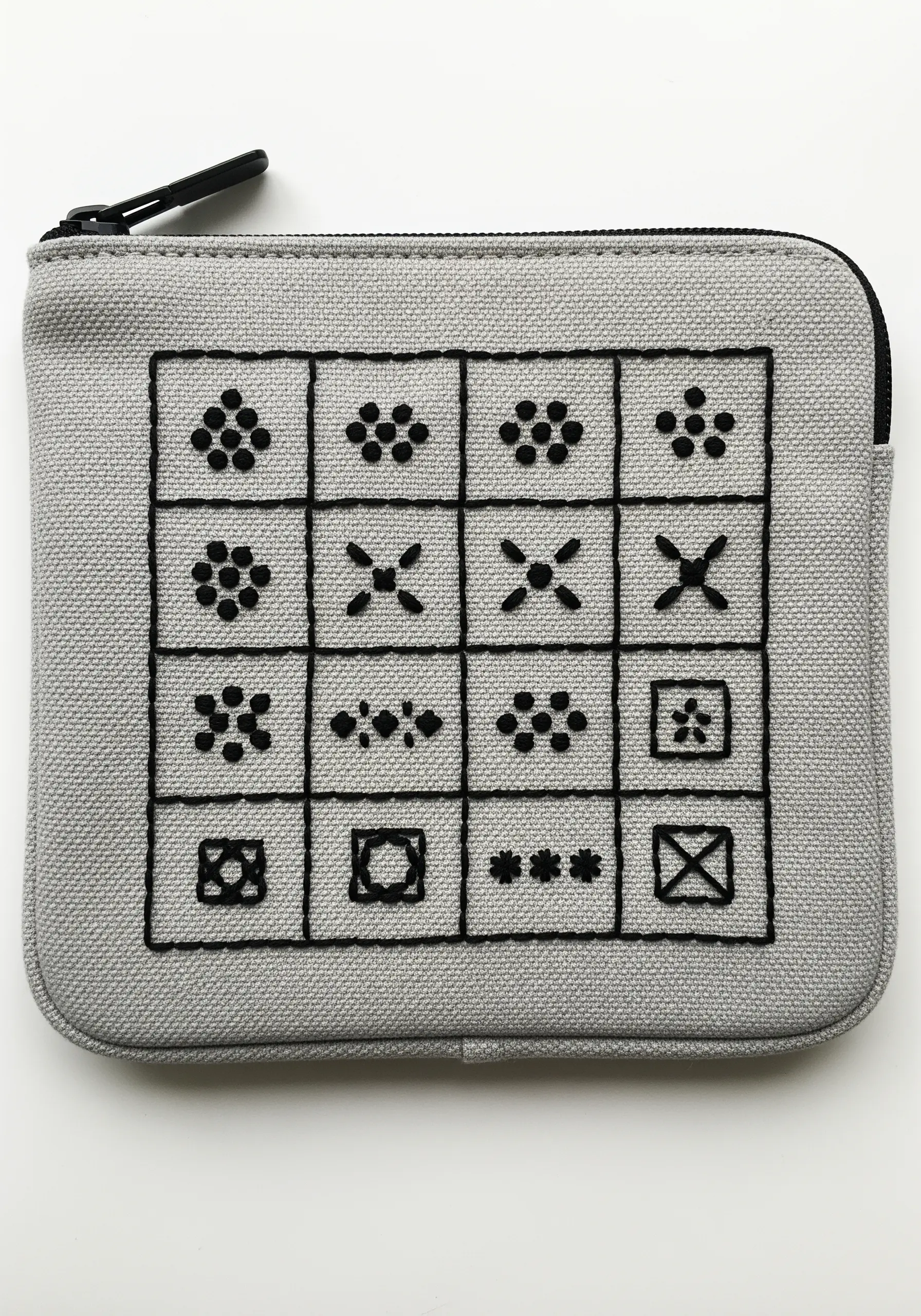
Reinvent the traditional sampler by creating a grid filled with your own vocabulary of modern, tech-inspired icons.
Combine a variety of simple stitches—like French knots, cross-stitches, straight stitches, and lazy daisies—to form your motifs.
Maintain a cohesive look by using a consistent thread weight and a limited color palette (like black on grey).
This turns your collection of symbols into a unified design that feels like a personalized digital interface.
26. Coding Syntax as Embroidered Typography
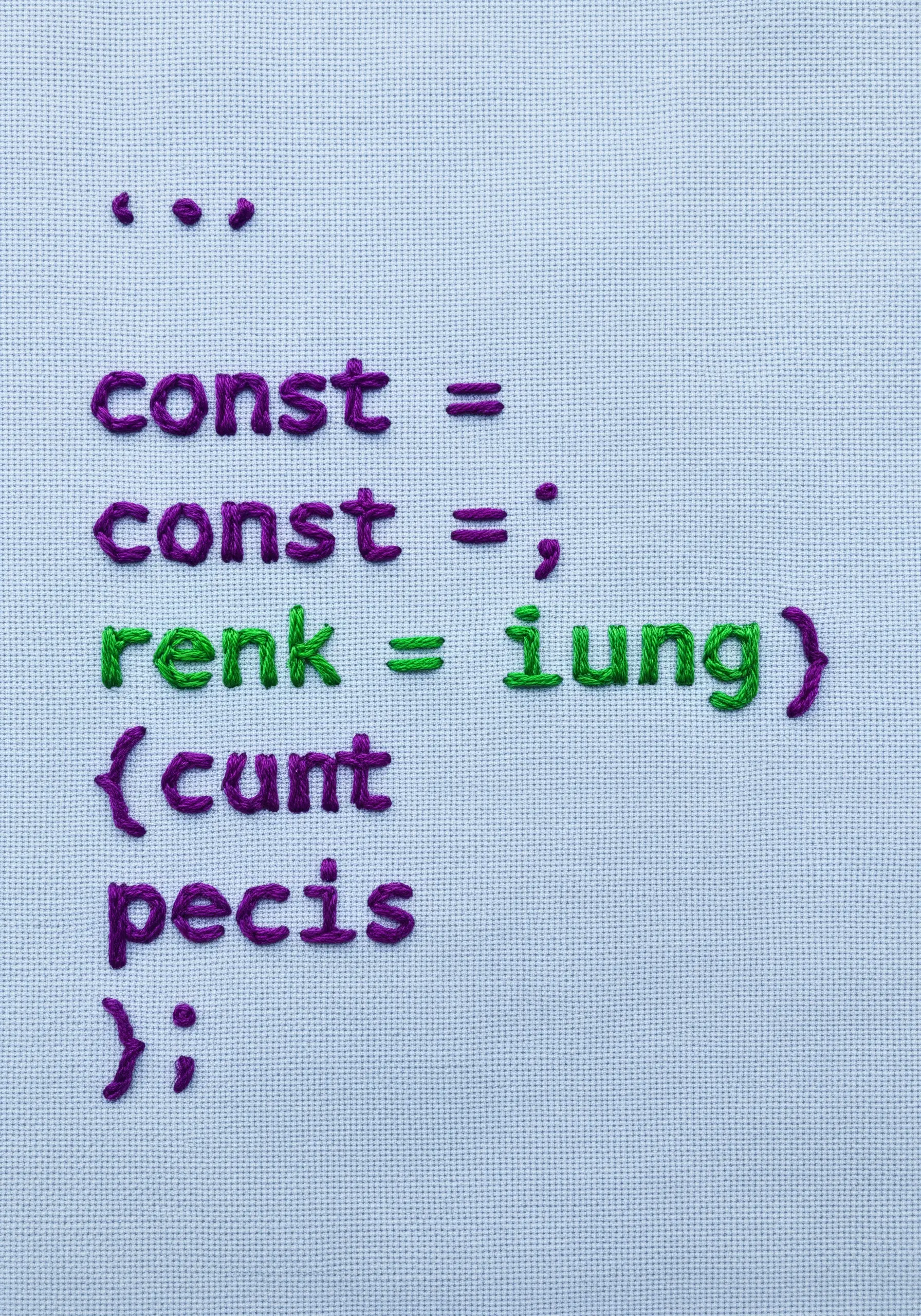
Transform a snippet of code into a piece of typographic art by paying close attention to the details of syntax.
Use a simple, clean backstitch for maximum legibility, treating each character with care.
Assign specific colors to different elements of the code—such as purple for functions and green for variables—just as a text editor would.
This color-coding adds a layer of authentic meaning and visual organization that any coder will appreciate.