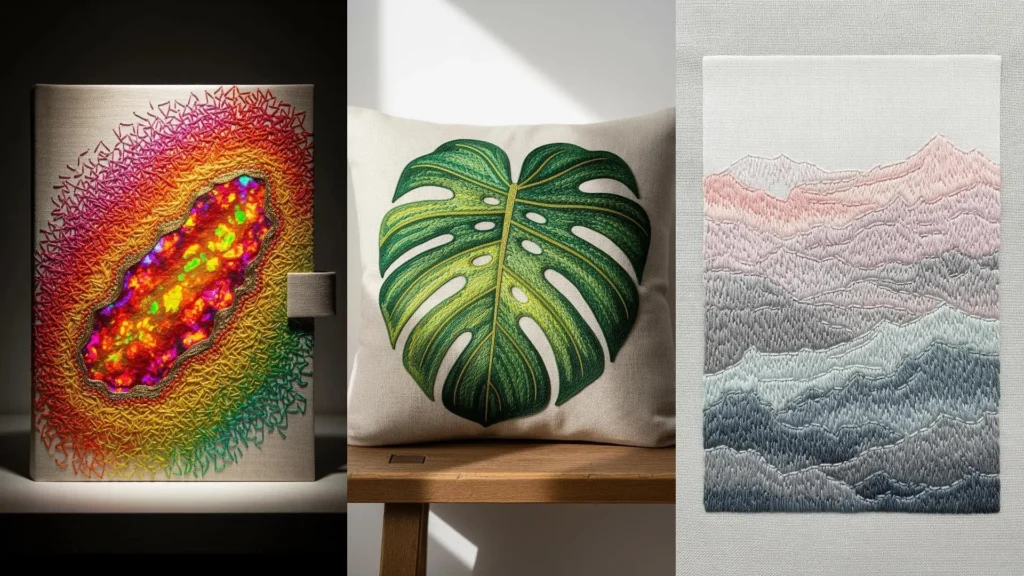
Let’s set aside the idea that embroidery must be perfect. Instead, think of your thread and fabric scraps as a language for texture and memory. The leftover pieces of a favorite shirt or a stained tablecloth hold stories, and your stitches can give them a new voice.
This is where thread collage begins—not with a flawless pattern, but with the tactile joy of layering materials. You don’t need complex stitches. You simply need to trust your eye for color and your hands’ ability to arrange, overlap, and connect. It’s about building a surface that feels as good as it looks.
In these ideas, you will find ways to let go of precision and embrace the character of recycled materials. You’ll learn how a simple running stitch can define a shape, how raw edges create softness, and how contrasting textures can build a world of depth on a simple piece of fabric. This is your invitation to create art that is sustainable, personal, and deeply beautiful.
1. Architectural Denim Patchwork
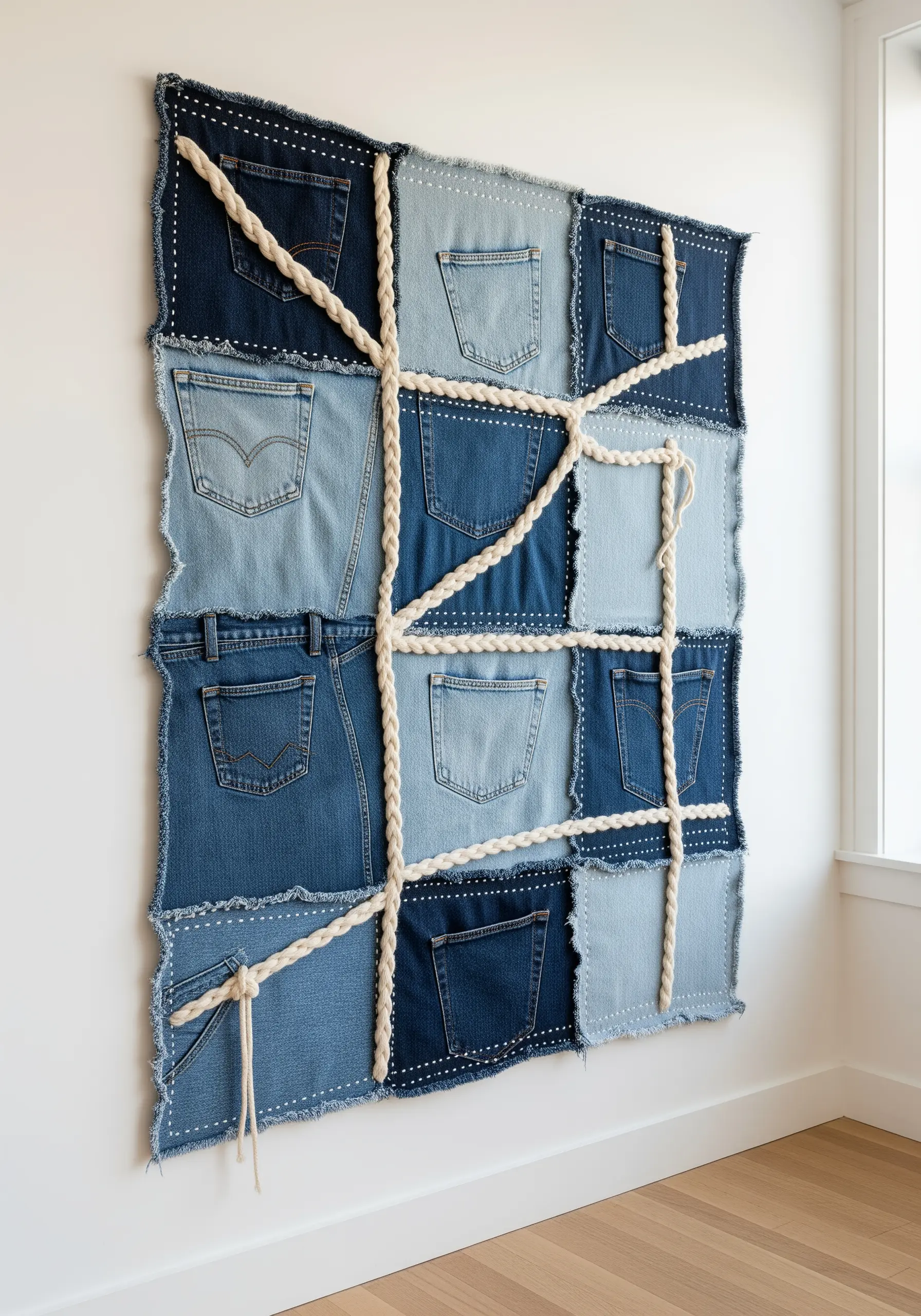
Repurpose old denim by cutting panels from the back of jeans, preserving the pockets for inherent texture and history.
Arrange the panels in a grid, alternating the wash and direction to create visual rhythm.
Instead of thread, use chunky, braided rope to connect the panels, couching it down with a heavy-duty needle and matching sashiko thread.
This technique elevates simple patchwork into a sculptural statement piece, where the rope creates a powerful textural contrast against the flat denim.
2. Painterly Sunset with Fabric Scraps
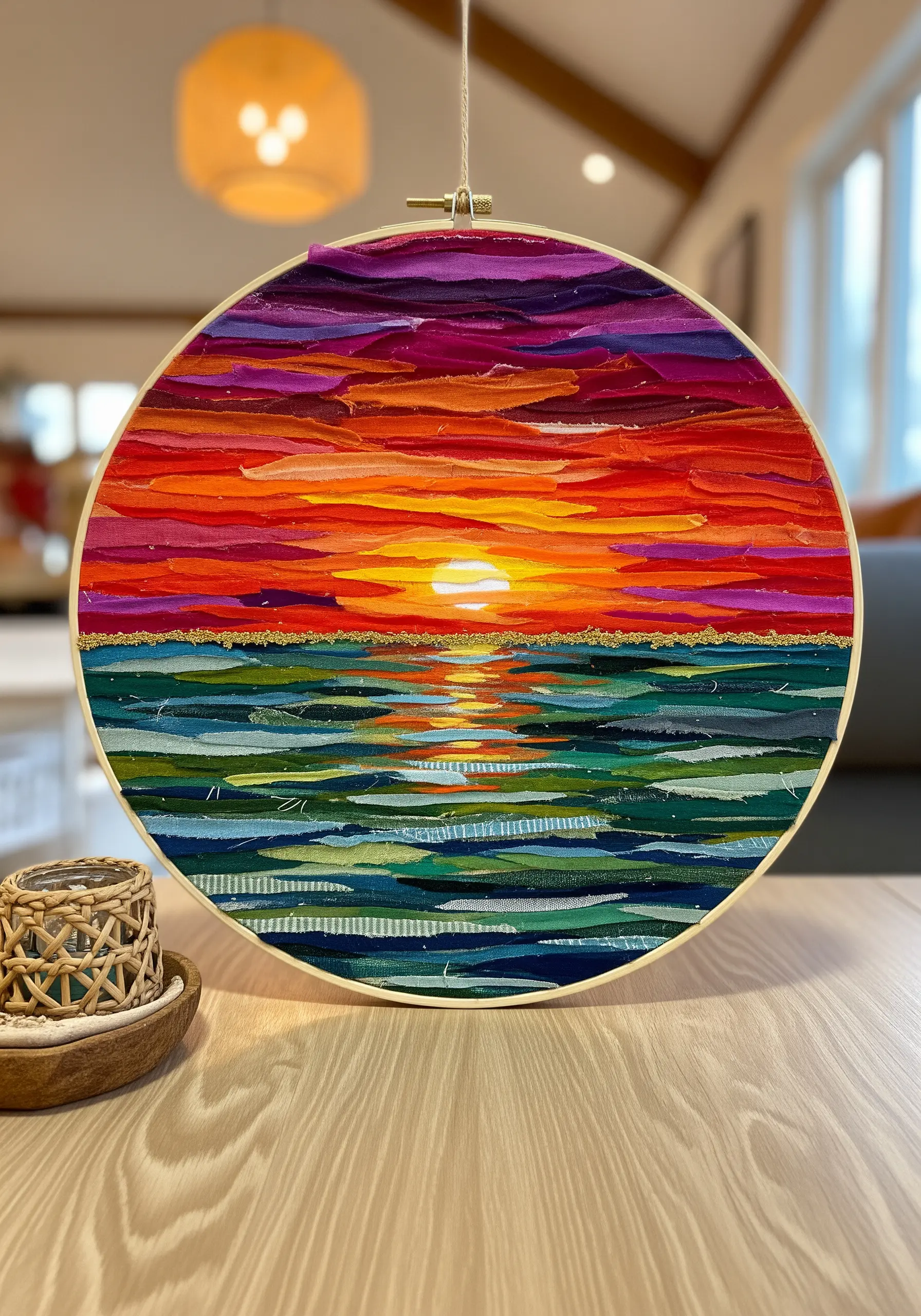
Create a stunning landscape by layering tiny strips of recycled fabric instead of using thread for color fills.
Arrange the strips horizontally, allowing their raw edges to build texture while their colors blend to create a painterly gradient effect.
Secure the fabric pieces with a simple running stitch or fabric glue, then add a single, sharp line of gold metallic thread along the horizon.
This accent introduces a touch of light and precision that makes the entire composition feel intentional and polished.
3. A Study in Negative Space
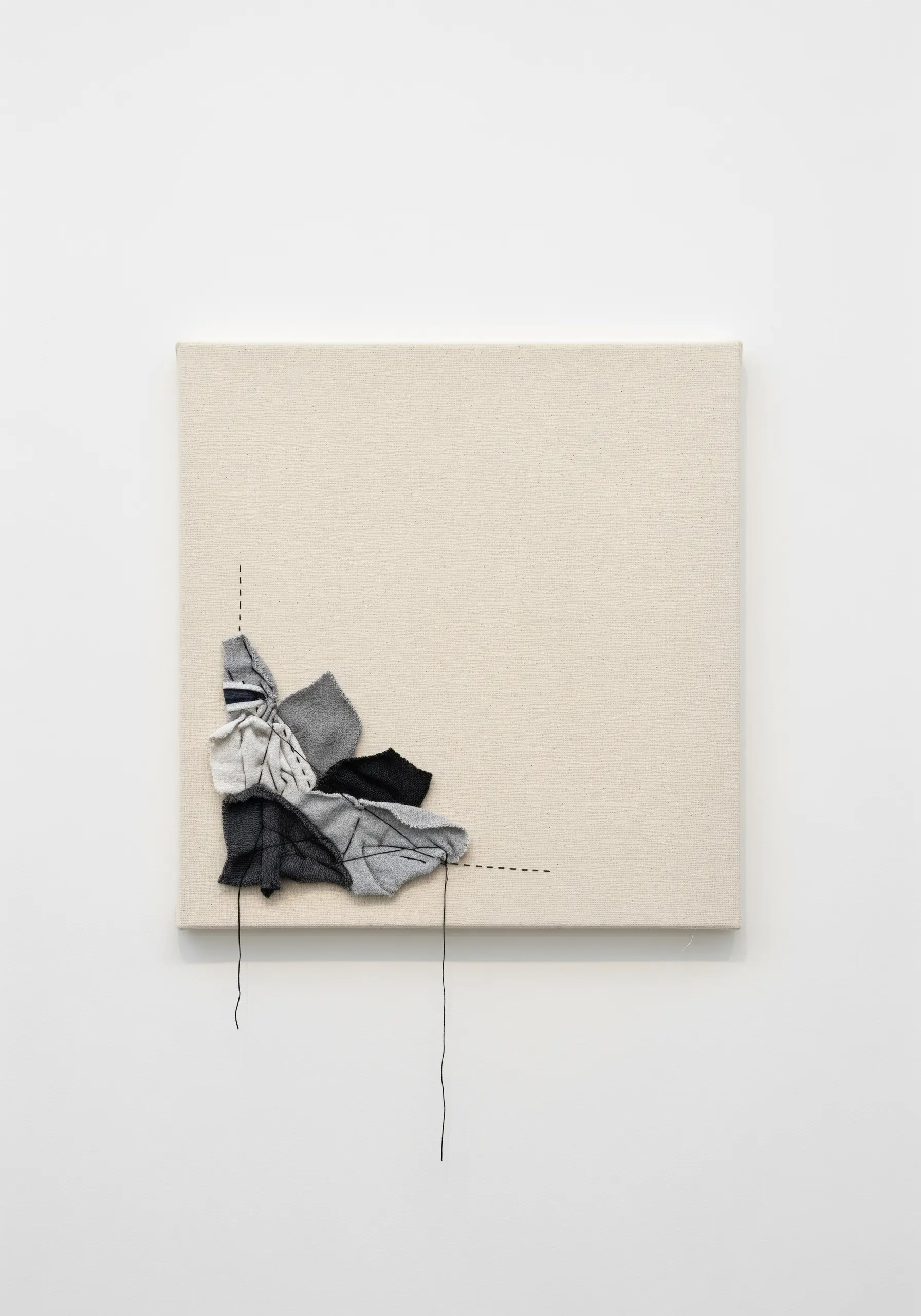
Challenge traditional composition by clustering your fabric scraps in one corner of a stretched canvas, embracing the power of negative space.
Layer textures and patterns—a hint of plaid, a solid grey, a delicate sheer—to create a small but complex focal point.
Use a simple, dark running stitch to anchor the pieces, extending the stitch lines beyond the fabric to guide the eye into the empty space.
This intentional imbalance creates a quiet, contemplative piece that feels both delicate and deliberate.
4. Electric Metropolis Thread Painting
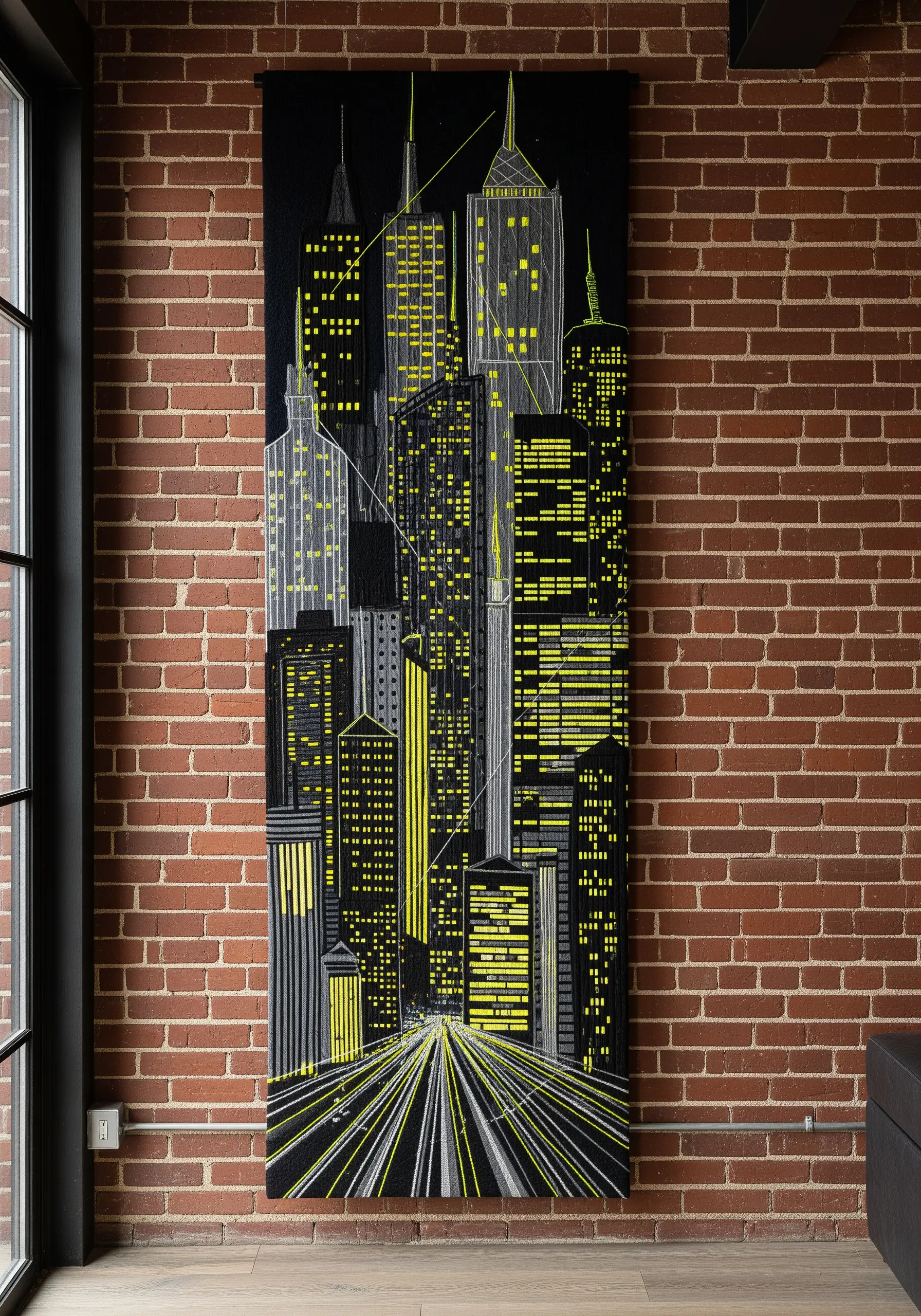
Translate a cityscape into a high-contrast textile collage by using a black fabric base, such as felt or heavy canvas.
Cut thin strips of recycled grey and neon yellow fabric to represent illuminated windows and architectural lines.
Arrange the strips vertically and horizontally, using their placement and density to create perspective and depth.
A few precise, stitched lines in a light gray thread can suggest finer details like antennas or structural frames, adding a final layer of realism.
5. Layered Botanical Reliefs
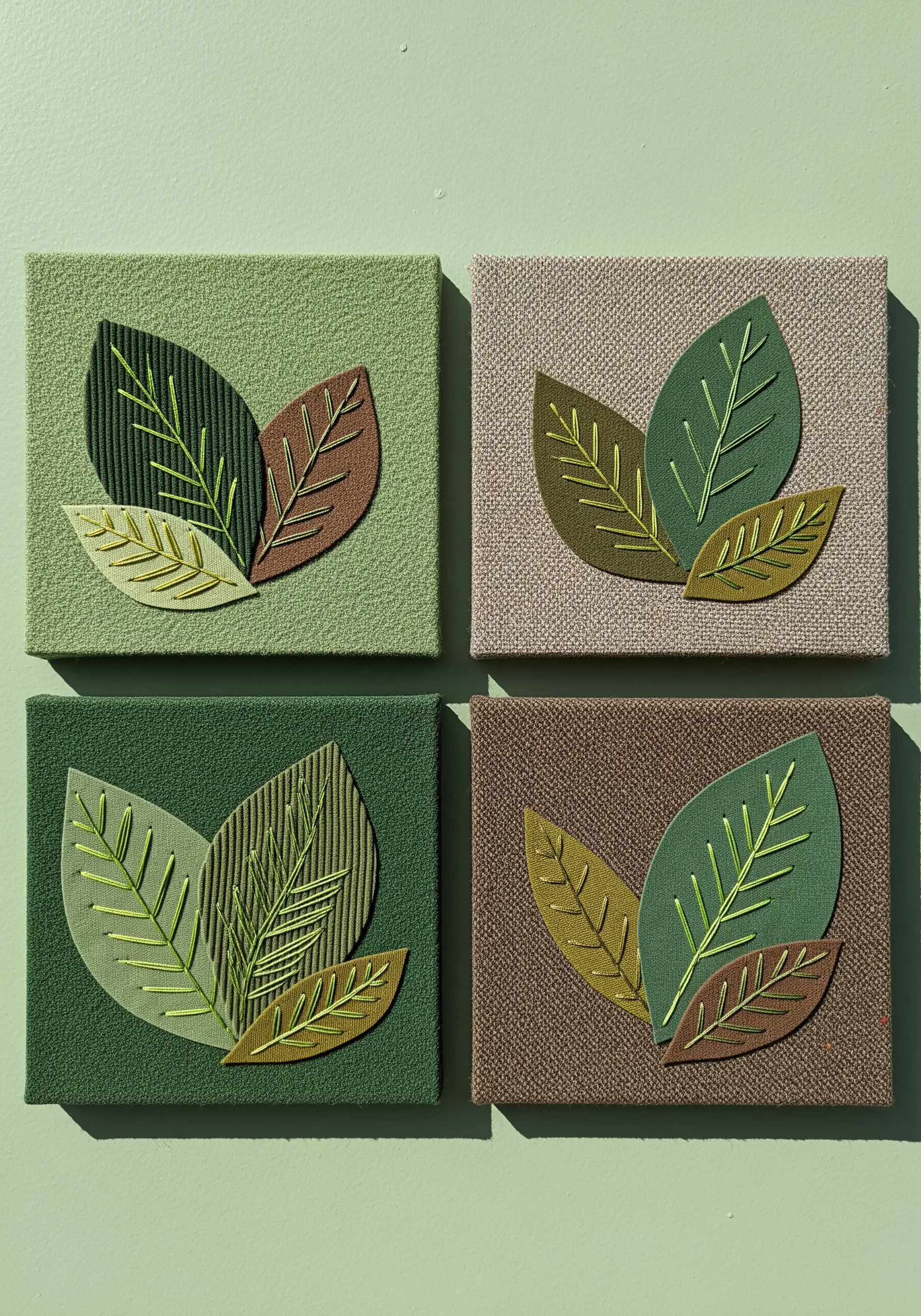
Create subtle, three-dimensional botanicals by layering fabric cutouts on textured canvas panels.
Choose fabrics with different weaves—like corduroy, linen, and felt—to give each leaf a distinct tactile quality.
Instead of filling the leaves, use simple backstitch or stem stitch to draw the veins, letting the fabric texture itself become the main feature.
Grouping four small canvases with coordinated earth-toned palettes creates a sophisticated, cohesive wall display.
6. Monochromatic Lace and Texture Study
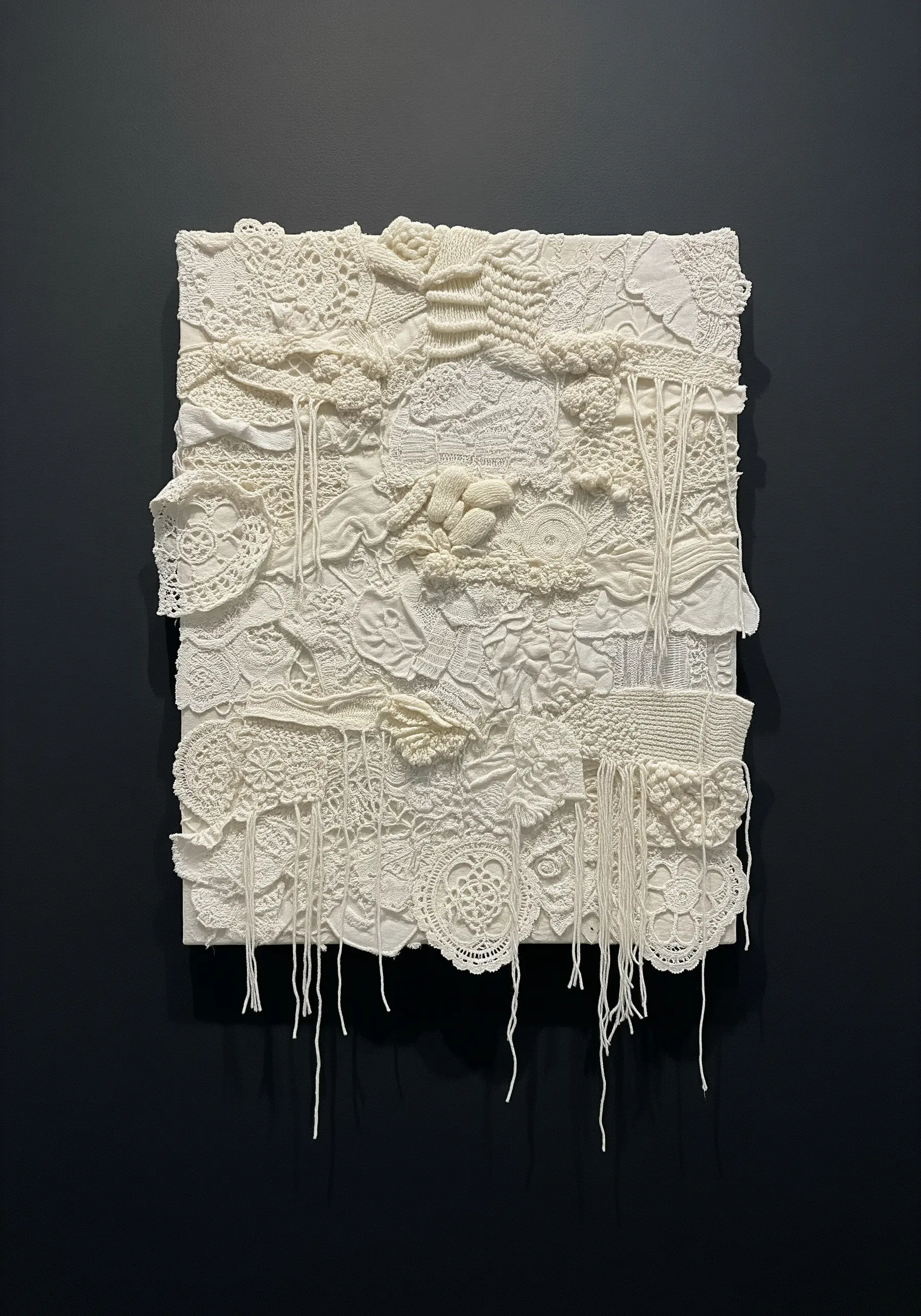
Explore the beauty of a single color by creating a collage from various recycled white and cream textiles.
Gather scraps of lace, old doilies, knitted swatches, and plain cotton, then layer them to build a rich, varied surface on a stretched canvas.
Secure the pieces with discreet stitches or fabric glue, allowing some elements like yarn to hang freely for a deconstructed look.
This monochromatic approach emphasizes texture over color, resulting in a sophisticated piece that invites closer inspection.
7. Ethereal Seascape with Sheer Fabrics
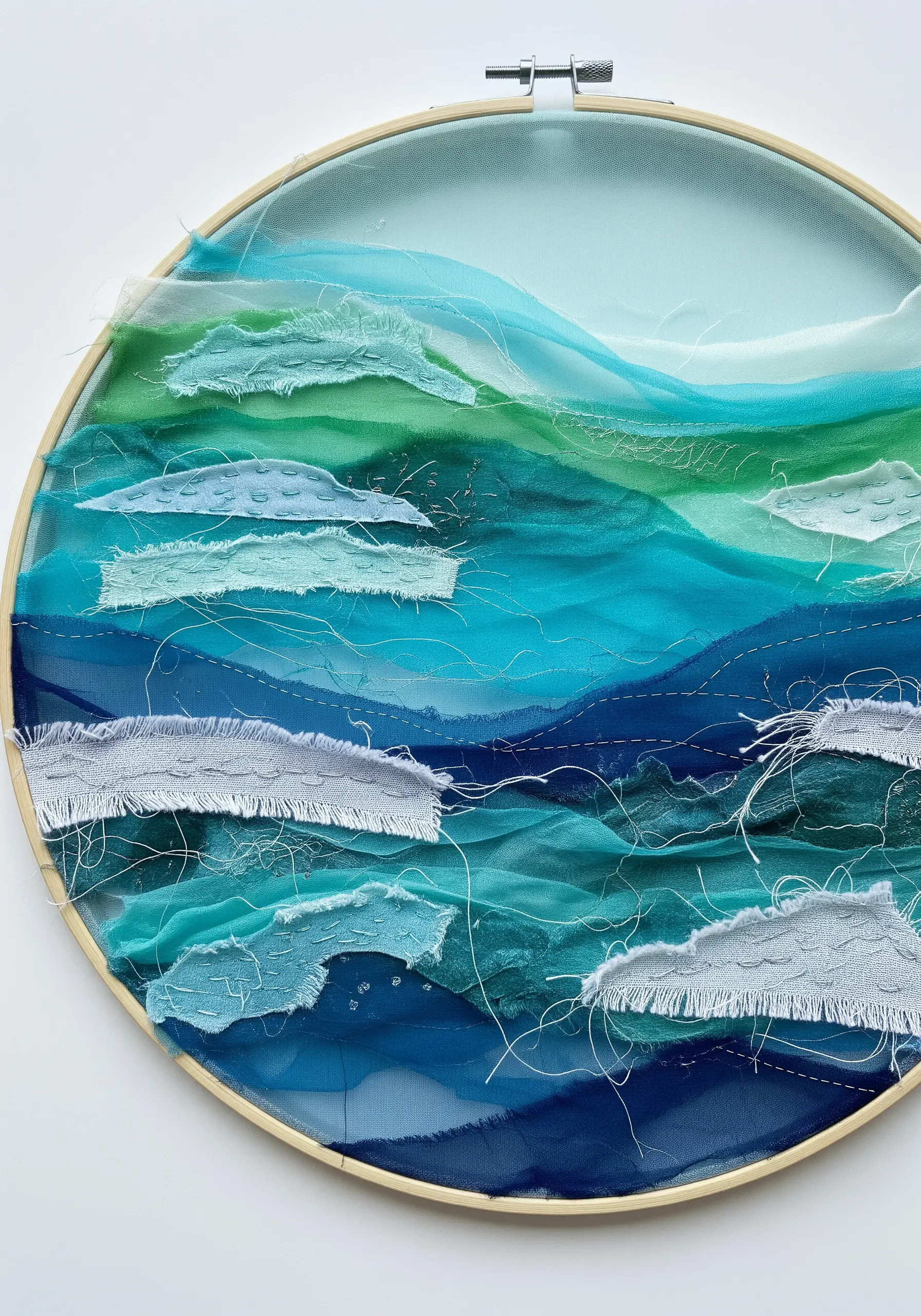
Capture the movement of water and clouds by layering scraps of translucent fabrics like chiffon, organza, and tulle.
Arrange the sheer layers to build up color density, creating the illusion of deep water and misty horizons.
Add opaque, textured fabric strips with frayed edges for contrast, representing sea foam or clouds.
Anchor the collage with minimal, scattered seed stitches, allowing the fabric to ripple and float, enhancing the piece’s airy, dreamlike quality.
8. Gradient Wall Art from Fabric Spines
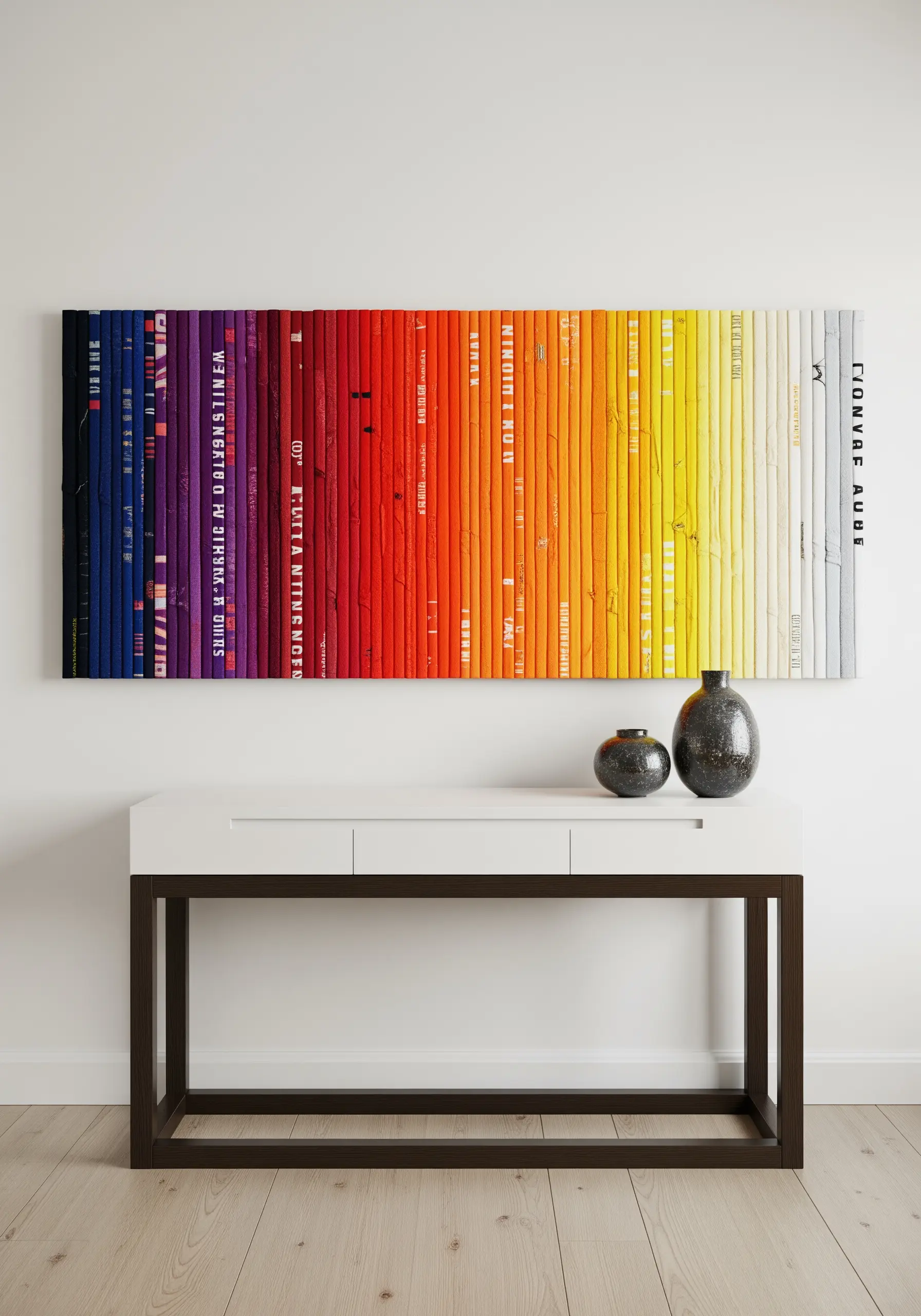
Construct a large-scale, impactful piece of wall art by arranging fabric scraps by color to form a smooth gradient.
This technique uses the folded edges or spines of recycled textiles, such as old t-shirts or book cloths, packed tightly together.
Mount them vertically on a long canvas or wooden board, ensuring the transition from one color to the next is seamless.
The result is a visually stunning installation that transforms simple recycled materials into a work of modern art.
9. Rustic Spirals of Jute and Denim

Combine rugged textures like denim, burlap, and jute rope to create a powerfully tactile abstract piece.
Create a patchwork base with frayed denim and burlap scraps, using a wide, visible whipstitch to join them.
Form tight coils with thick jute rope and secure them to the surface using a strong adhesive or by stitching through the base from behind.
The repetition of the spiral motif against the rough, layered background creates a design that is both rustic and highly structured.
10. Celestial Collage on Velvet
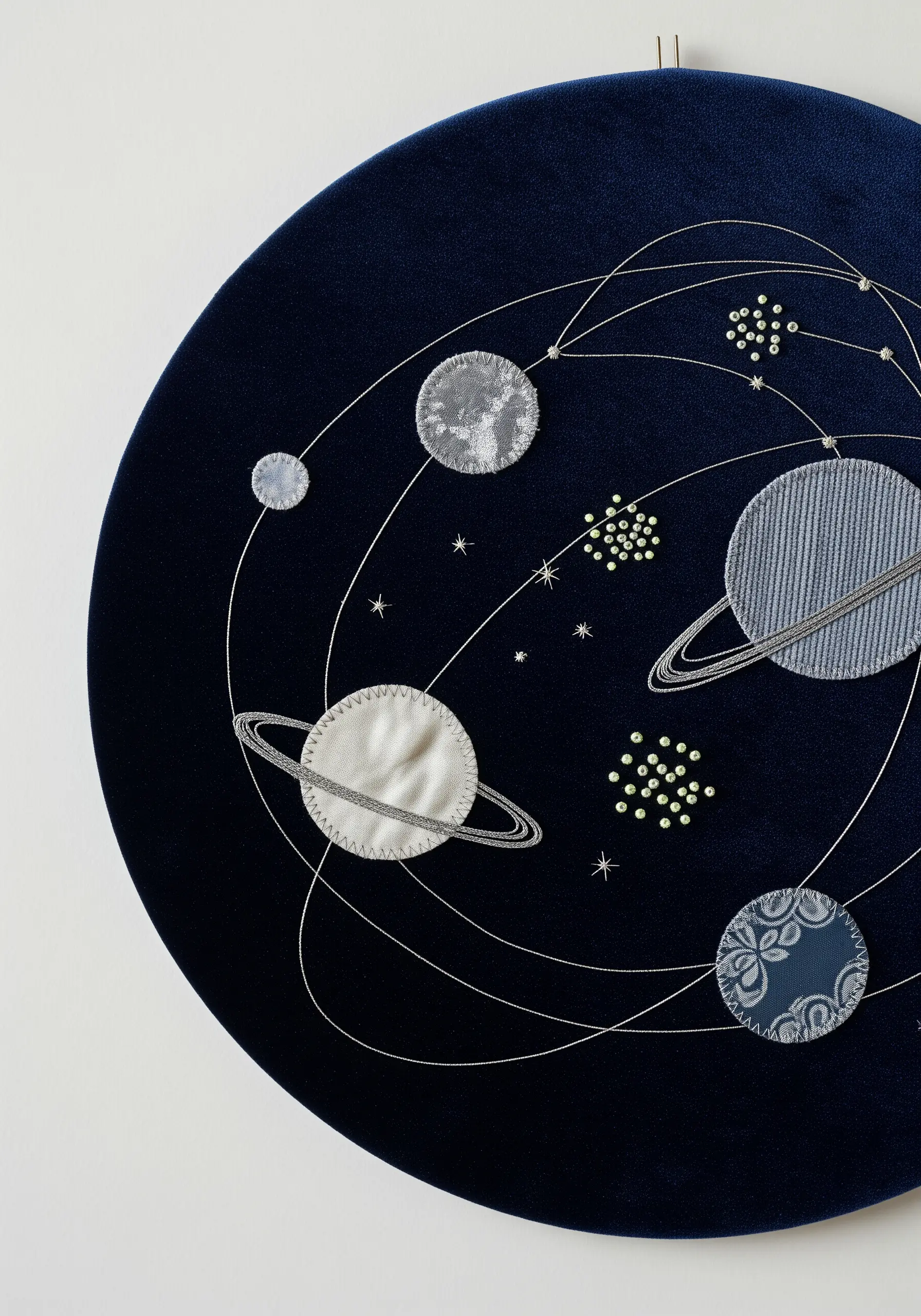
Set your cosmic scene on a deep navy or black velvet background to make lighter colors and textures pop.
Use scraps of gray corduroy, silver lamé, and patterned brocade for the planets, cutting them into clean circles.
Define the planetary rings and orbits with a fine, metallic silver thread using a simple backstitch for clean lines.
Incorporate tiny seed beads or French knots with glow-in-the-dark thread for stars, adding a final layer of sparkle and wonder.
11. Geometric Composition with Primary Colors
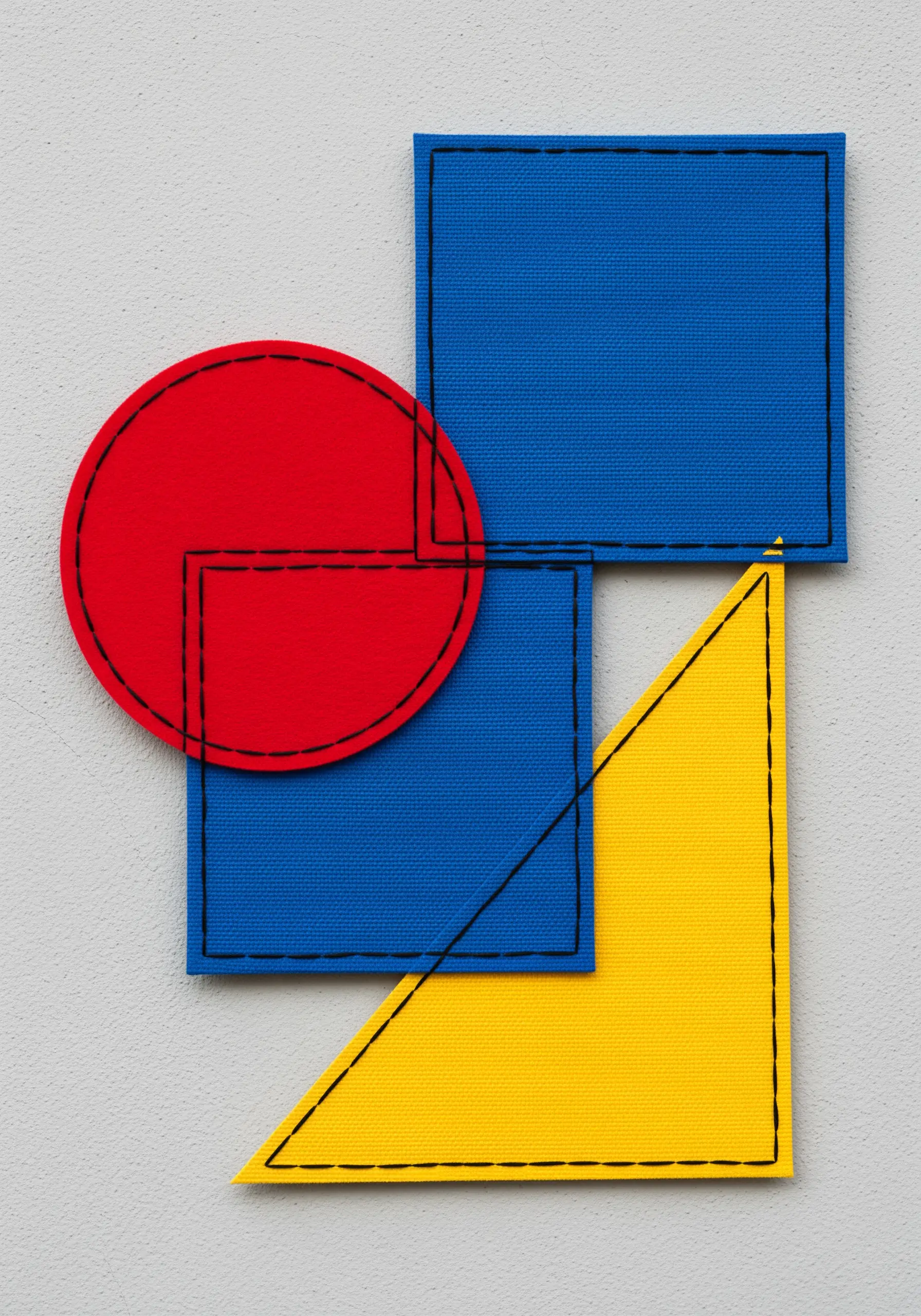
Explore classic abstract art by layering basic geometric shapes cut from brightly colored canvas scraps.
Use primary colors—red, yellow, and blue—for a bold, graphic statement reminiscent of Bauhaus design.
Overlap the shapes to create a sense of depth and interaction between the forms.
Outline each shape with a contrasting black running stitch, which adds a hand-drawn quality and visually separates the vibrant color blocks.
12. Sculptural Waves with Upcycled Textiles
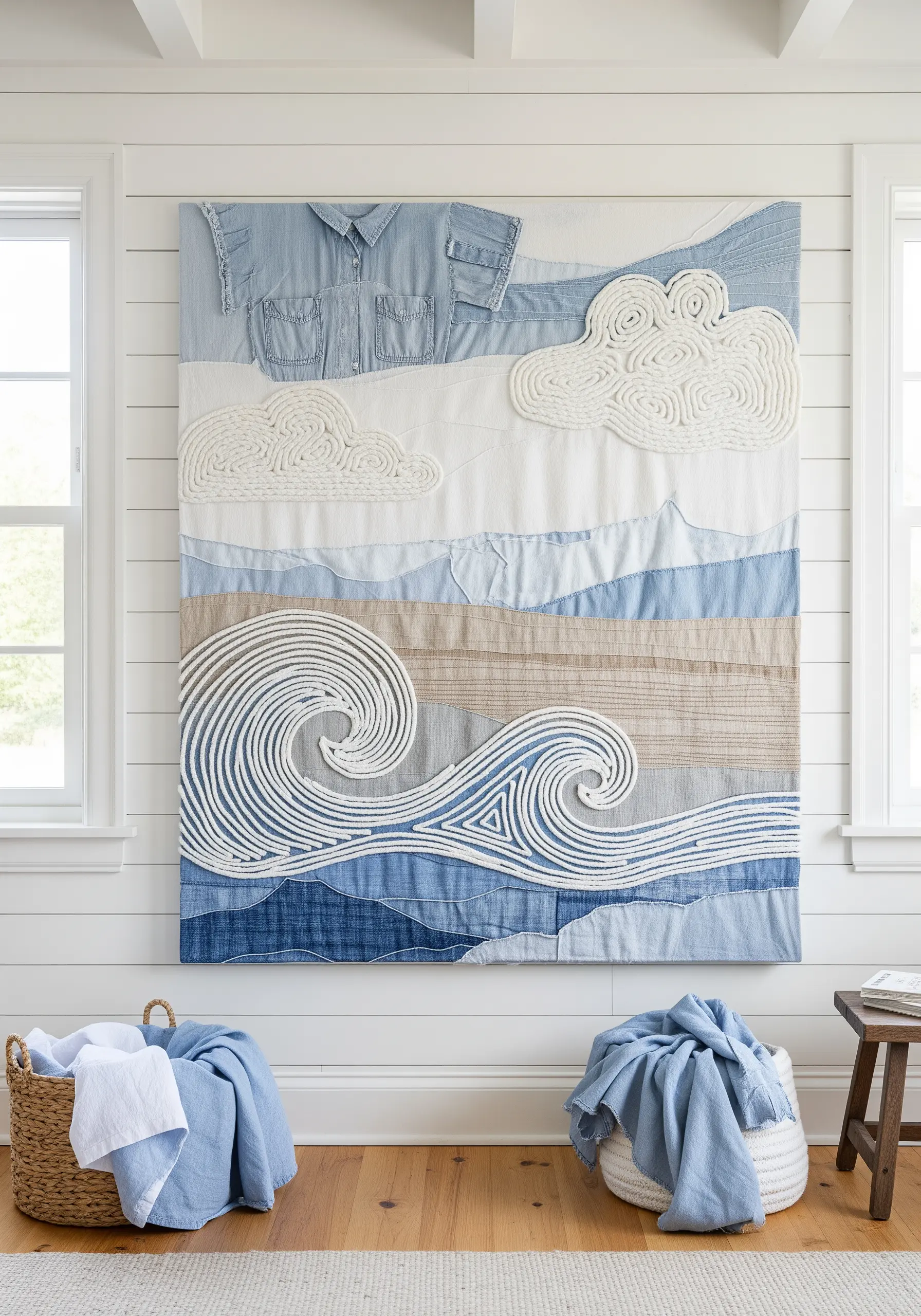
Create a large-scale coastal scene by piecing together horizontal strips of blue, white, and beige recycled clothing.
Incorporate whole garment pieces, like a shirt collar and placket, at the top to suggest clouds and add an element of surprise.
Form the waves and clouds using thick, coiled cotton rope, couching it down to create flowing, organic lines with incredible dimension.
This fabric collage technique gives new life to old clothes while making a stunning visual impact.
13. Cottagecore Patchwork with a Wandering Line

Assemble a charmingly chaotic patchwork from mismatched floral and gingham fabric scraps, leaving the edges raw for a rustic feel.
Instead of a traditional quilting pattern, allow the arrangement to feel organic and slightly uneven.
Then, introduce a single, meandering line of thick red yarn that travels across the entire piece, couched onto the surface.
This bold, free-form element unifies the composition and adds a modern, artistic touch to the cottagecore aesthetic.
14. Textured Forest Canopy with Fabric Loops
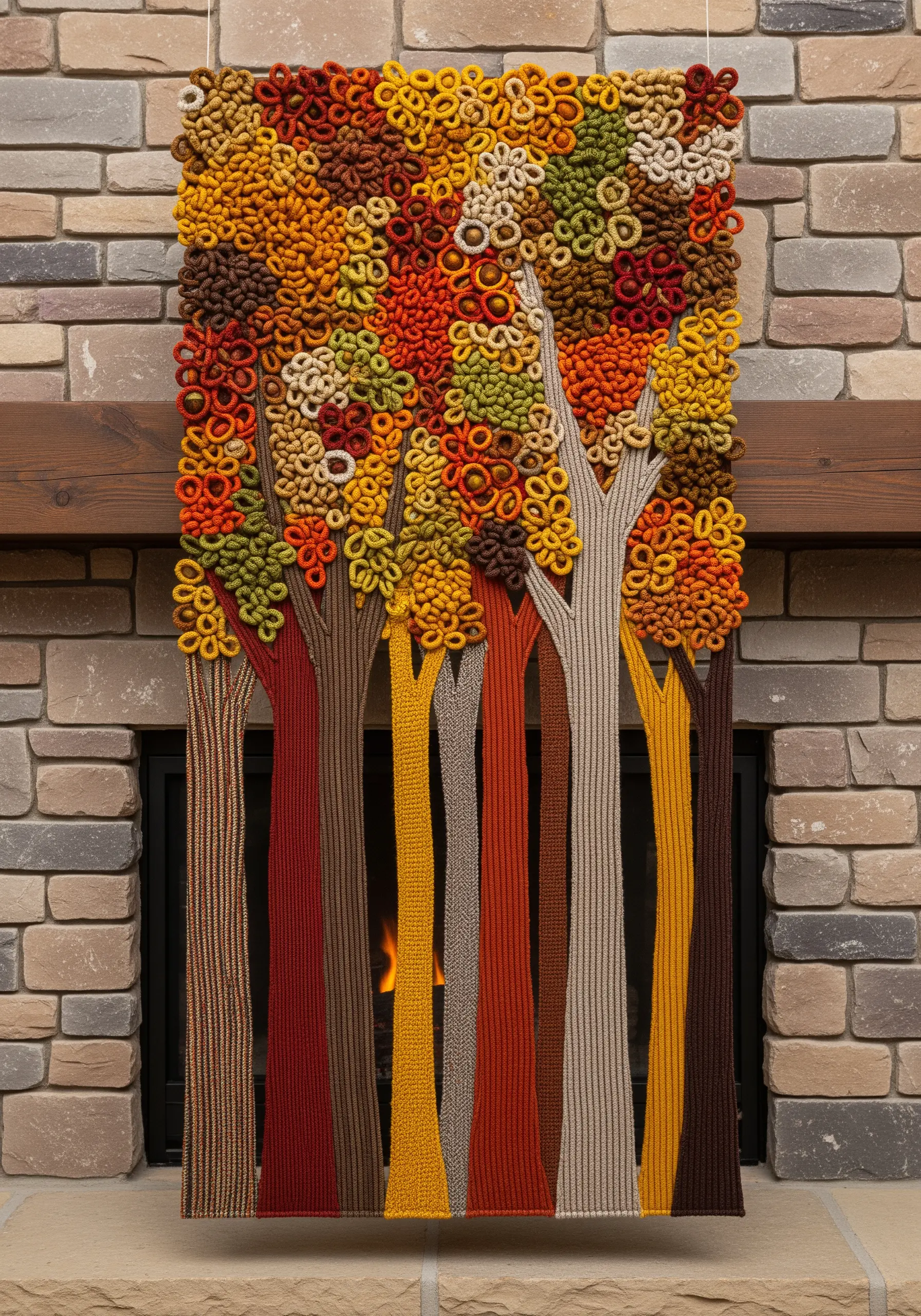
Build a dense, textural forest by creating hundreds of small fabric or yarn loops.
Wrap strips of recycled t-shirt yarn or fabric around your fingers or a small dowel to create uniform loops, then stitch them down at the base onto a backing fabric.
Cluster them tightly in autumnal colors to form the tree canopies, creating an incredibly tactile, three-dimensional effect.
Contrast the voluminous canopies with flat, appliquéd tree trunks made from vertically striped fabric to enhance the sense of height and perspective.
15. Industrial Grid with Leather and Grommets
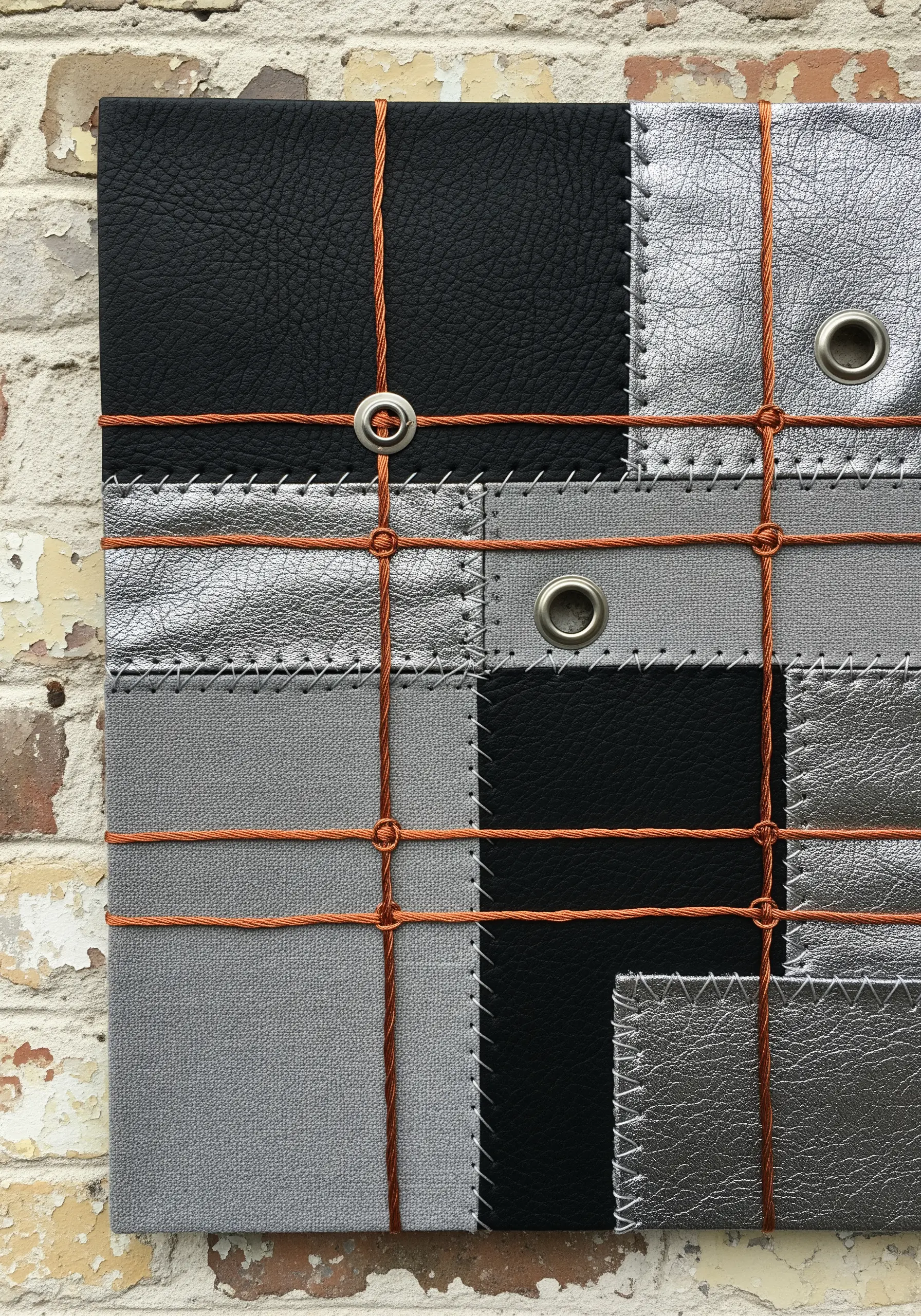
Combine scraps of recycled leather and faux leather in metallic and matte finishes for a sophisticated, industrial look.
Stitch the geometric patches together with a wide, visible stitch like a blanket or cross-stitch to emphasize the construction.
Incorporate metal hardware like grommets at the intersections of the patches for an authentic industrial accent.
Finally, create a grid by lacing a contrasting cord through the grommets, adding another layer of structure and color.
16. Pop Art Silhouette with Patterned Fabric
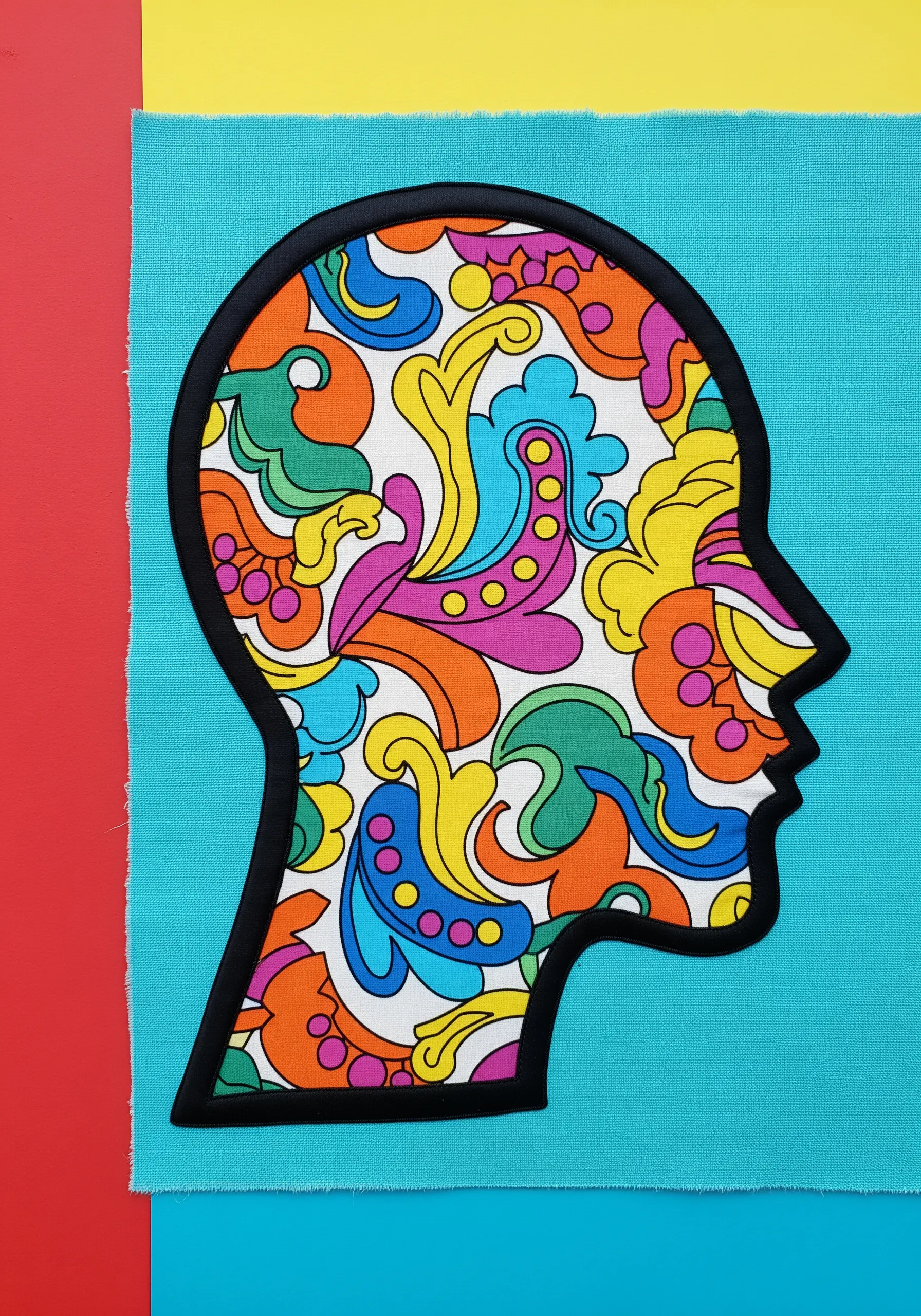
Make a bold statement by combining a simple silhouette with a vibrant, complex pattern.
Start by creating a strong outline of a shape—like a profile—from a solid black fabric and appliquéing it onto a contrasting background.
Then, carefully cut a piece of wildly patterned recycled fabric to fit perfectly inside the silhouette, creating an inlaid effect.
The stark black outline acts as a frame, containing the chaotic energy of the pattern and making the entire design pop.
17. Celestial Night Sky with Lace and Sequins
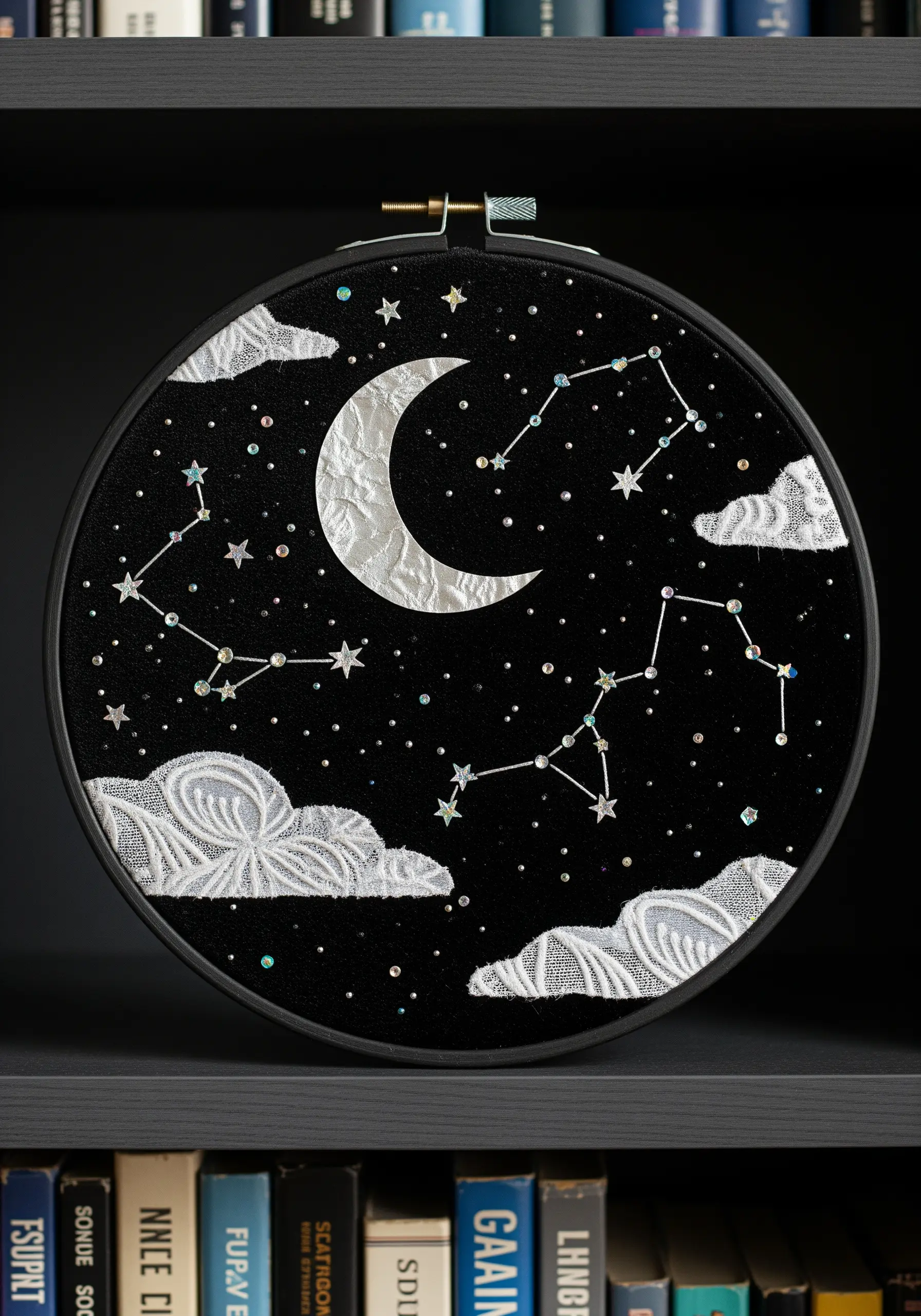
Create a dreamy night sky on black velvet, which provides a perfect deep, dark backdrop that absorbs light.
Use textured white or silver lace scraps for the moon and clouds, allowing the intricate patterns of the lace to suggest craters and wisps.
Stitch the constellations with a simple backstitch using a single strand of silver metallic thread for delicate, sharp lines.
Add scattered iridescent sequins or tiny beads to represent distant stars, catching the light and adding a magical shimmer.
18. Layered Desert Landscape Tapestry
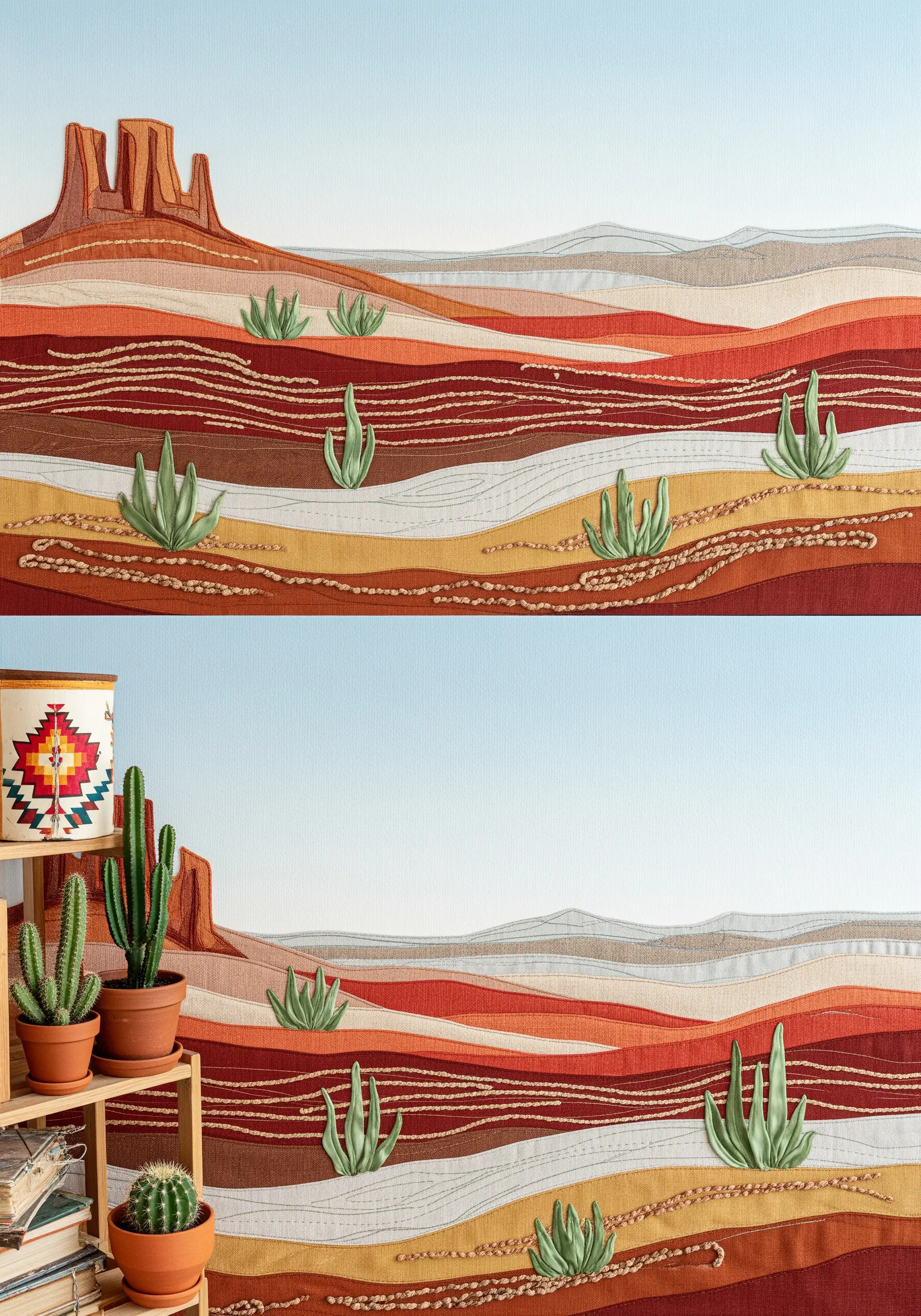
Build a sweeping desert scene by layering horizontal strips of fabric in earthy, desert tones.
Cut the top edge of each strip into a gentle, rolling curve to mimic hills and dunes before layering it over the next.
Introduce texture by adding rows of chain stitch or French knots along some of the fabric layers, suggesting sand ripples or sparse vegetation.
Appliqué small, stylized cacti cut from green fabric, using satin stitch to add dimensionality and highlight their forms.
19. Stained Glass Window from Fabric Scraps
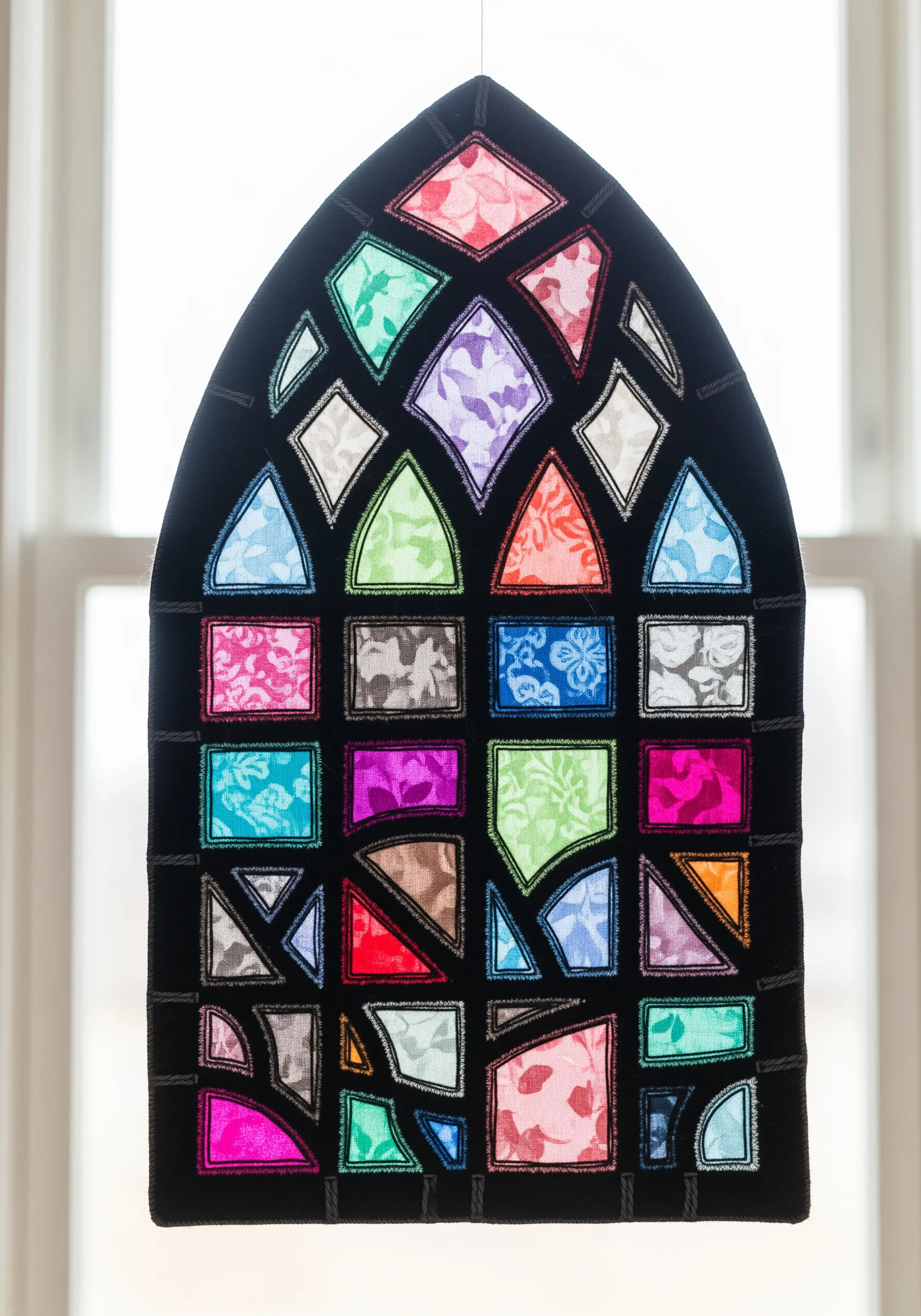
Mimic the luminous quality of stained glass by using brightly colored, patterned fabric scraps set within a dark frame.
Create the ‘leading’ by cutting a grid or design from a single piece of black or dark gray felt.
Cut your colorful fabric scraps to fit into the negative spaces of the felt grid, securing them from behind with fusible webbing or small stitches.
When hung in a window, the light will filter through the fabrics, making the colors glow just like real glass.
20. Flowing Lines with Braided Thread
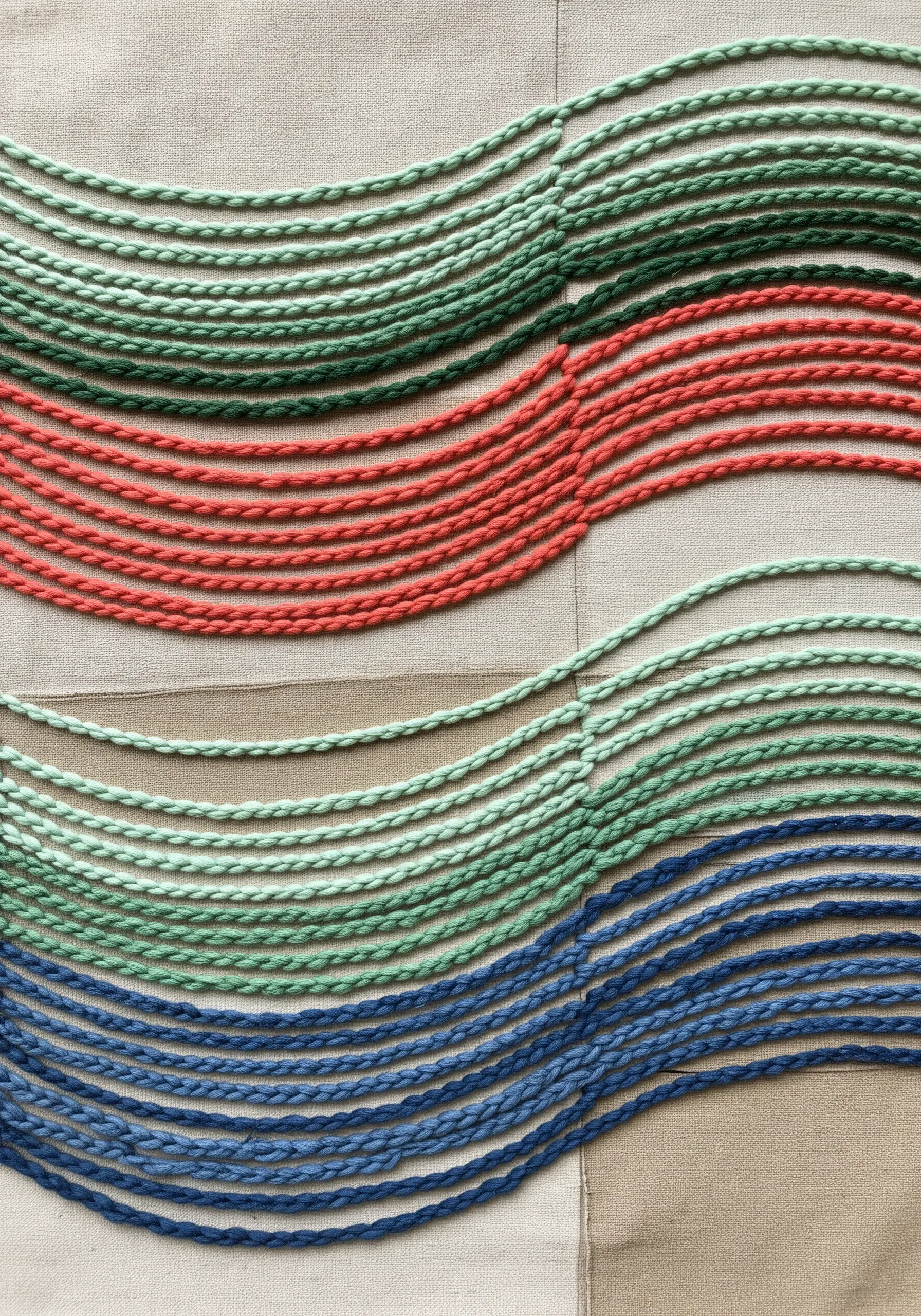
Create graceful, wave-like patterns by focusing on the thread itself as the primary artistic element.
Instead of stitching onto the fabric, first braid multiple strands of embroidery floss together to create thicker, more substantial cords.
Arrange these braided cords on a neutral fabric background in flowing, organic lines, securing them only at key points with small tacking stitches.
This technique allows the threads to drape and curve naturally, resulting in a piece with beautiful movement and a clean, modern aesthetic.
21. Minimalist Winterscape with Felt Appliqué
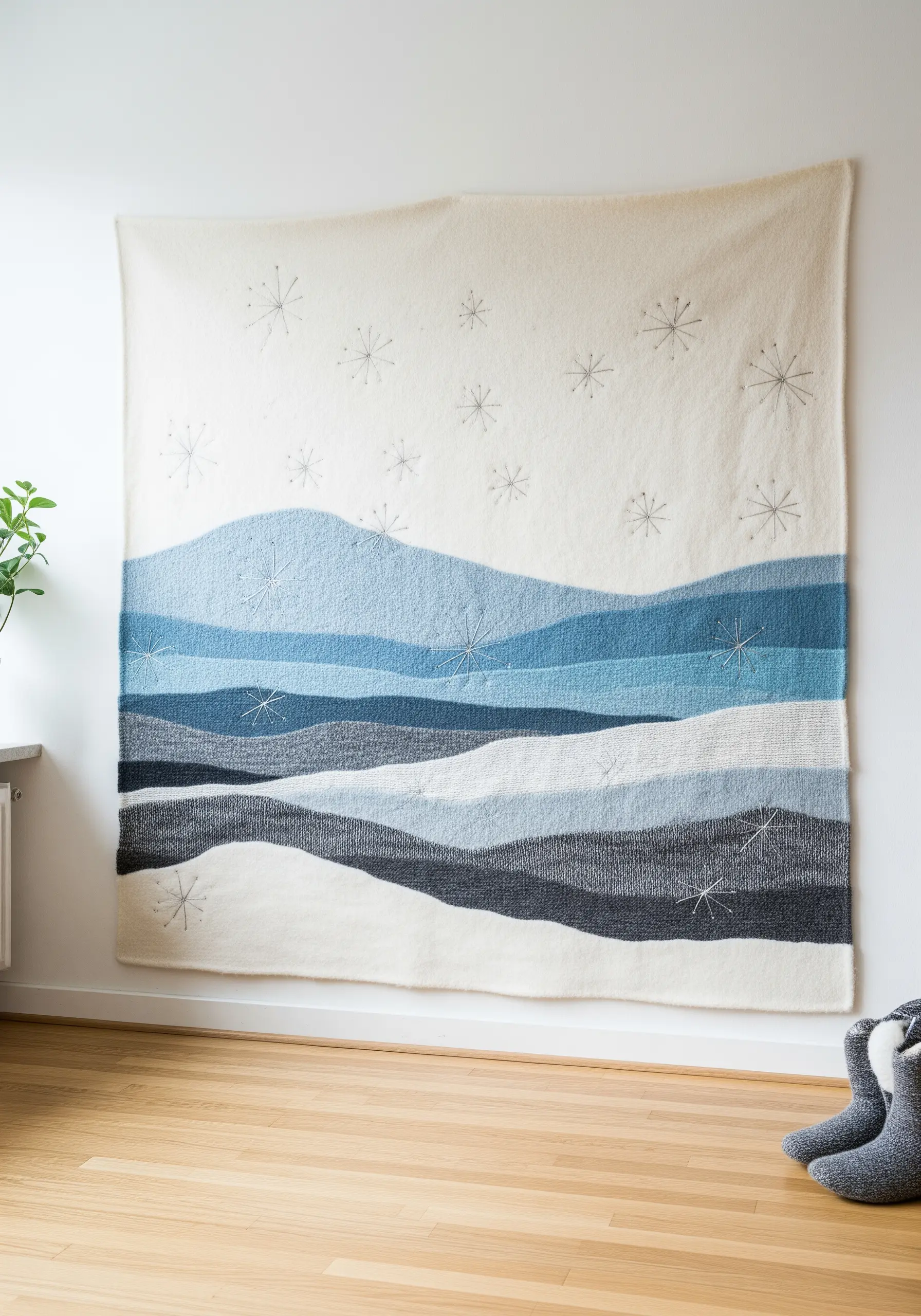
Evoke a quiet, snowy landscape using layered felt on a soft, neutral wool or flannel background.
Cut gentle, sweeping curves from shades of blue, gray, and white felt to represent rolling snowdrifts.
Layer the felt pieces to create depth and perspective, securing them with a simple whipstitch that blends into the fabric.
Add delicate starburst stitches with a fine silver metallic thread to suggest snowflakes, scattering them across the sky for a touch of subtle sparkle.
22. Deconstructed Tropical Flat Lay
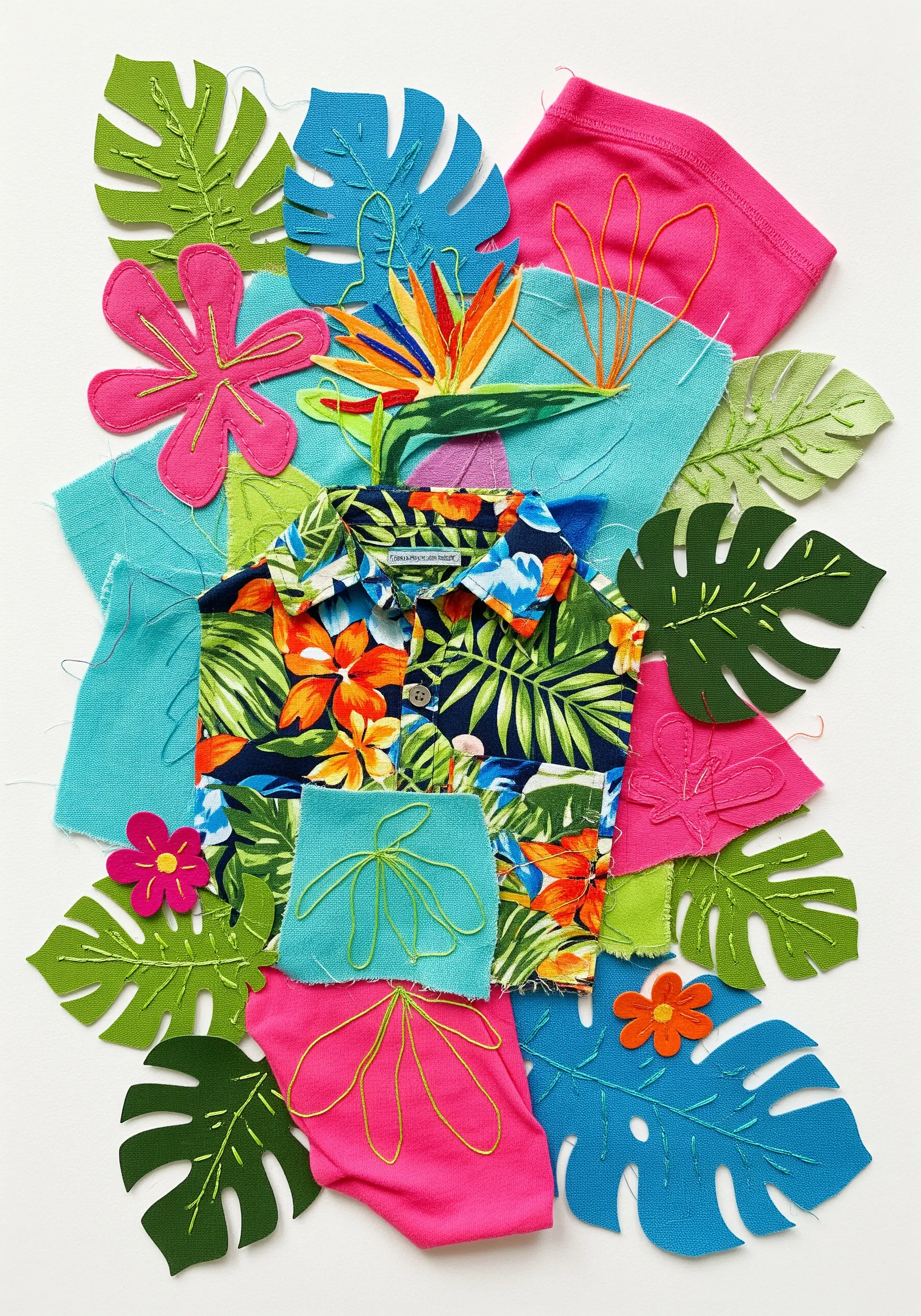
Create a dynamic composition by arranging fabric elements as if they are part of an exploded view or a creative flat lay.
Cut out individual components of a theme—like a miniature tropical shirt and separate monstera leaves—from recycled fabrics.
Scatter these pieces across a plain background, overlapping them to create energy and movement.
Use simple line embroidery to add details, like leaf veins or flower stamens, which helps to define the shapes and tie the disparate elements together.
23. Architectural Blueprint Collage
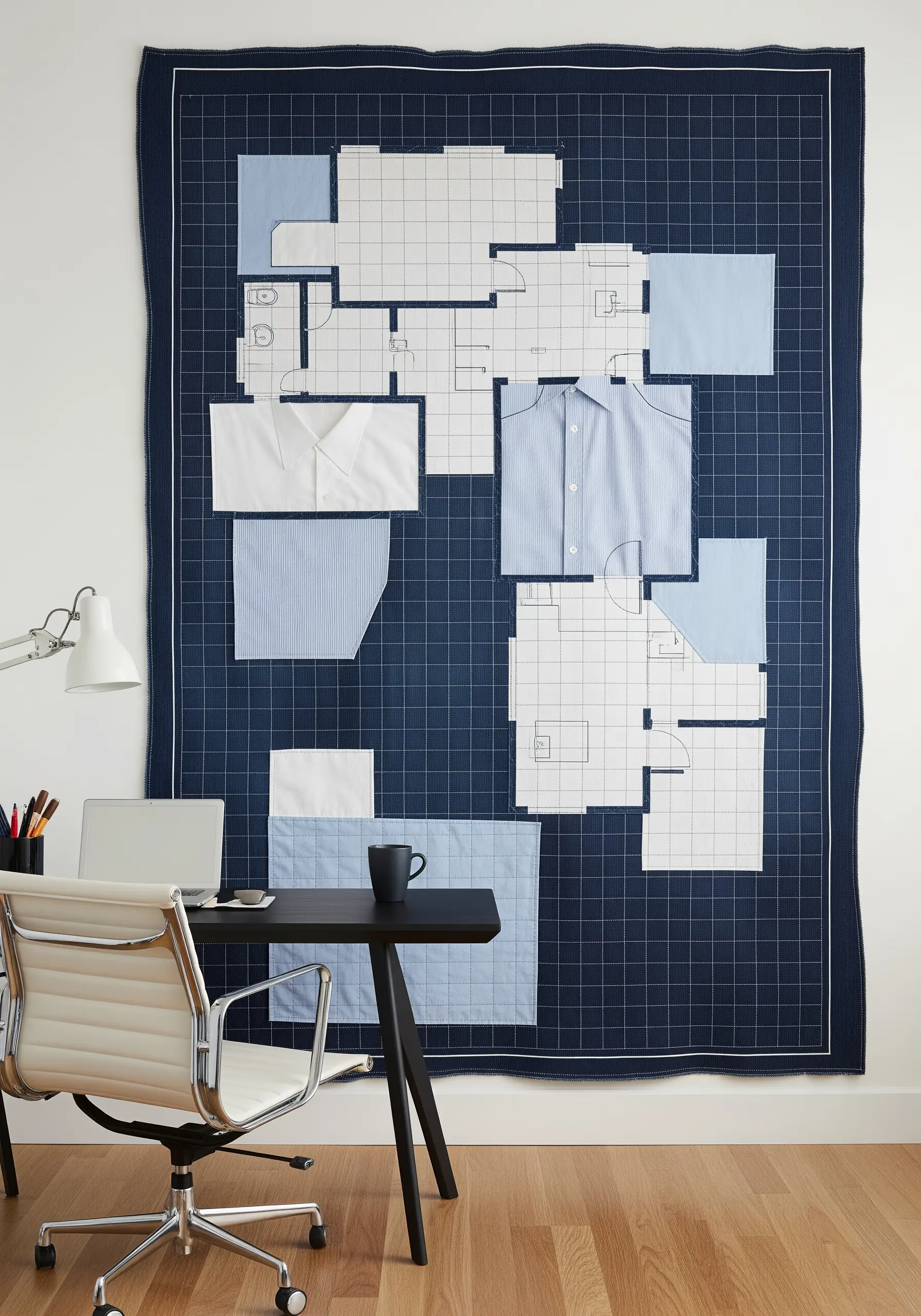
Translate a technical drawing into a large-scale textile piece using a dark, gridded fabric as your base.
Cut shapes representing rooms or spaces from recycled white and light blue dress shirts, using the existing patterns like pinstripes to add subtle texture.
Appliqué these fabric shapes onto the grid, aligning them to create a clean, architectural floor plan.
Use simple running stitches to add finer details like doors, windows, or furniture outlines, enhancing the blueprint aesthetic.
24. Abstract Topography with Visible Mending

Embrace raw, deconstructed aesthetics by patchworking neutral-toned fabric scraps with intentionally bold, visible stitches.
Use a palette of muted earth tones—linen, canvas, and cotton in shades of beige, gray, and cream—and leave the edges frayed.
Join the pieces with a thick, contrasting black or brown thread using a deliberately uneven blanket stitch or whipstitch.
Allowing threads to hang loose and keeping the stitching imperfect turns the act of mending into the central artistic feature of the piece.