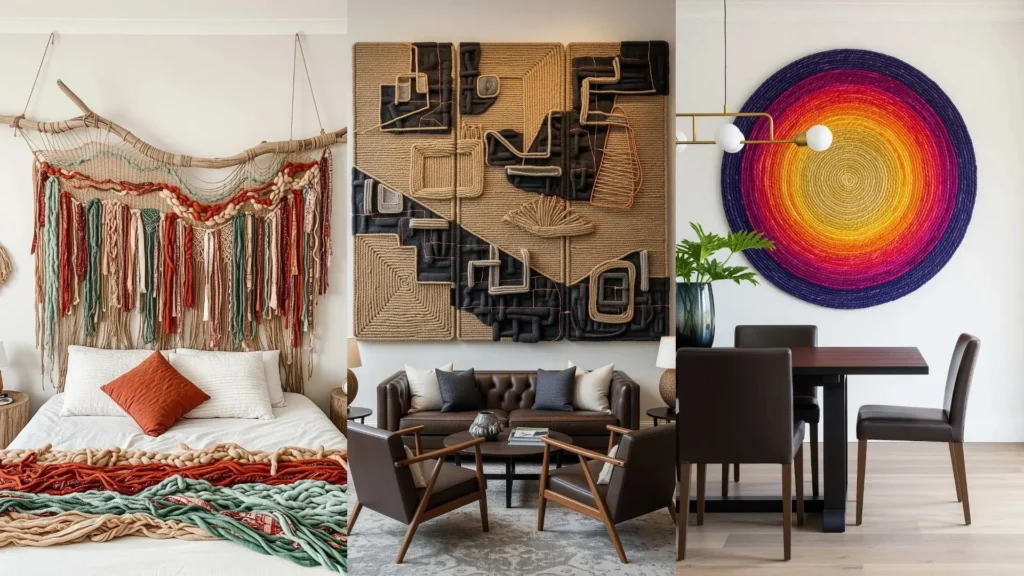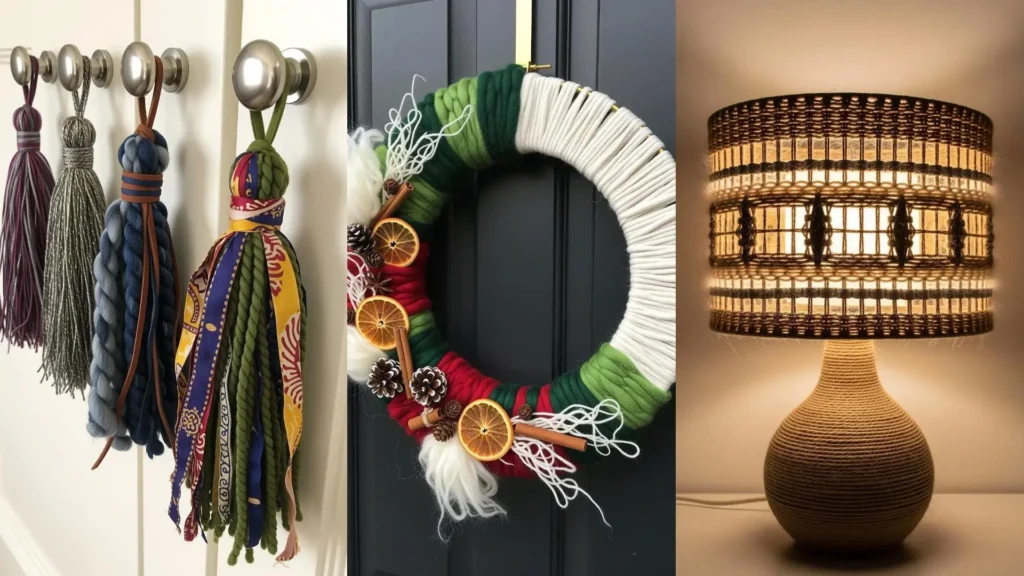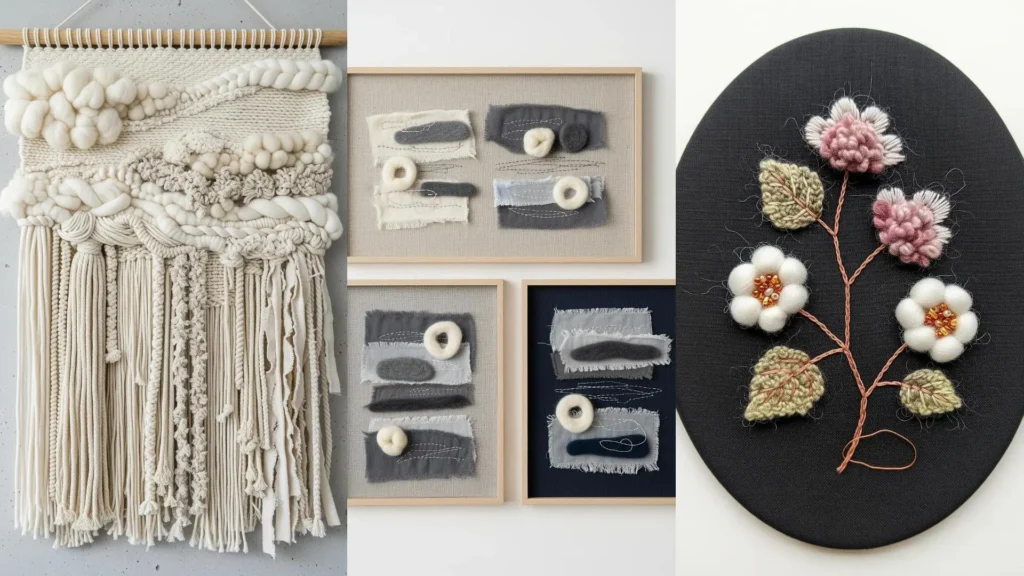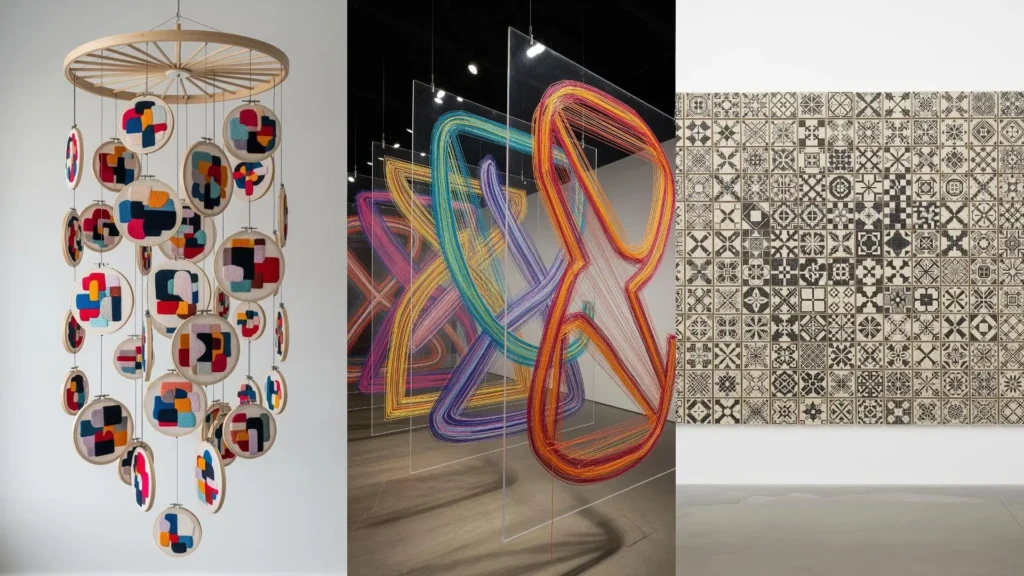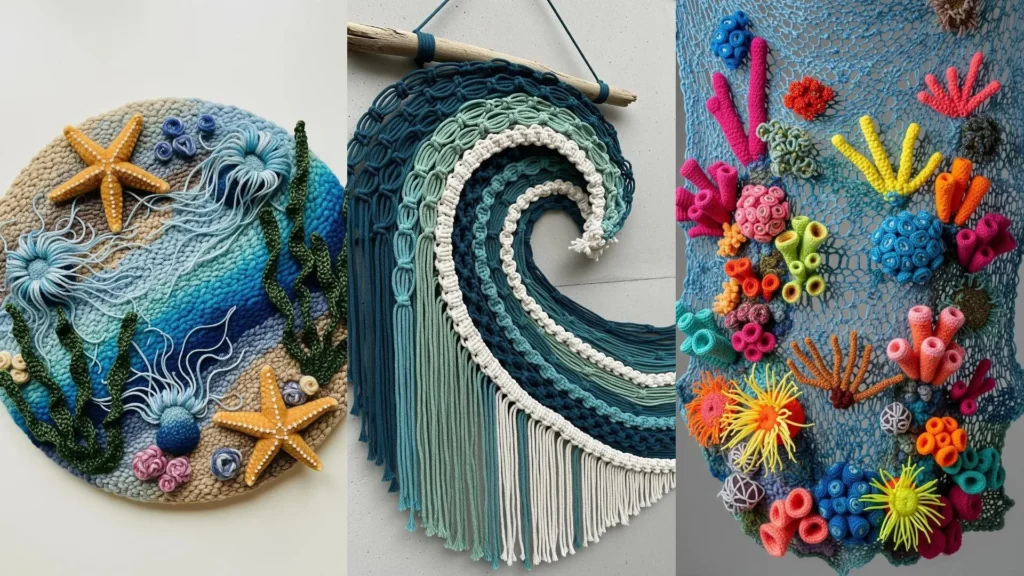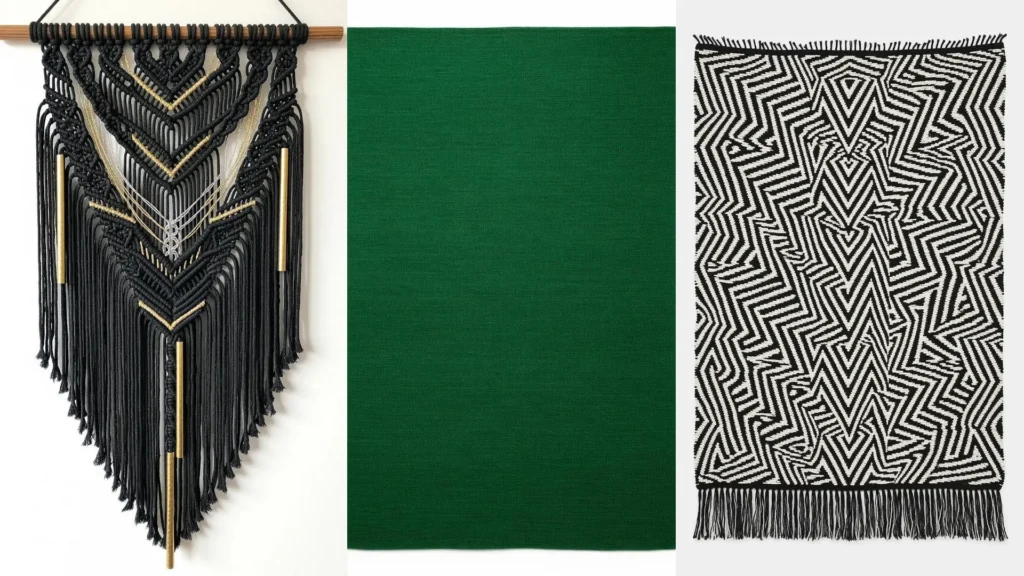
Beyond the embroidery hoop lies a world of texture, scale, and form waiting to be explored. Yarn wall art invites you to think like a sculptor, a painter, and a weaver all at once, using fibers to build pieces that can transform an entire room.
Here, you won’t find overly complex patterns. Instead, you’ll discover how to master foundational techniques—like color blocking with a punch needle, creating gradients with dye, or blending textures in a single weave. Each idea is designed to give you a new way of seeing your materials.
Whether you’re creating a small, minimalist knot or a large, expressive tapestry, the goal is the same: to make something with intention and impact. Let’s begin.
1. Weave a Statement Triptych
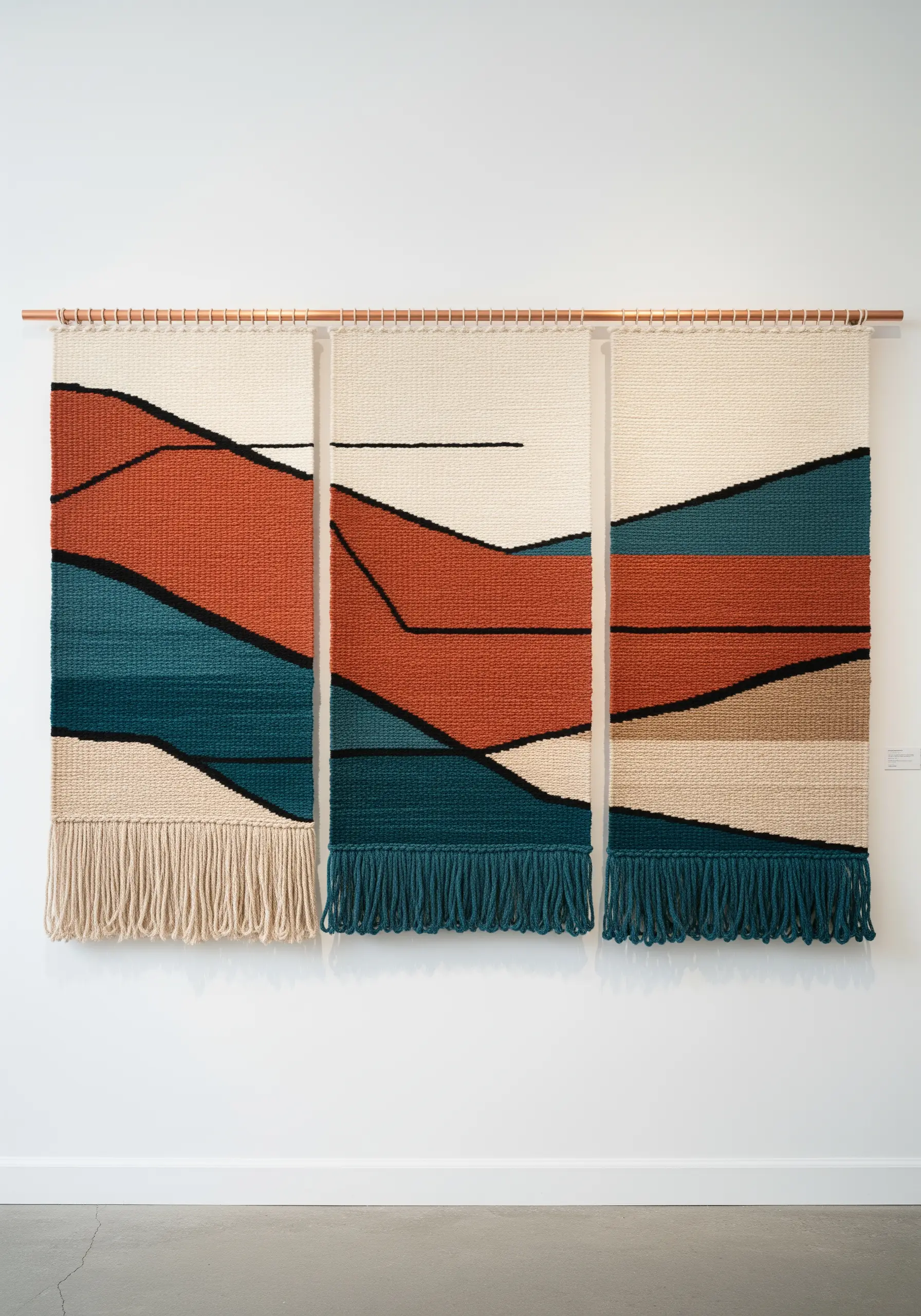
Create a large, cohesive statement piece by dividing your design across three separate woven panels.
This approach makes a grand-scale project more manageable and adds architectural interest to a wide wall.
Use a single, continuous line woven across all three canvases to unify the composition and guide the viewer’s eye.
For sharp, graphic shapes, use tapestry weaving techniques, ensuring your weft yarn completely covers the warp threads for bold color blocking.
Finish with a thick, uniform fringe on each panel to ground the design and add textural weight.
2. Combine Coiling and Macrame
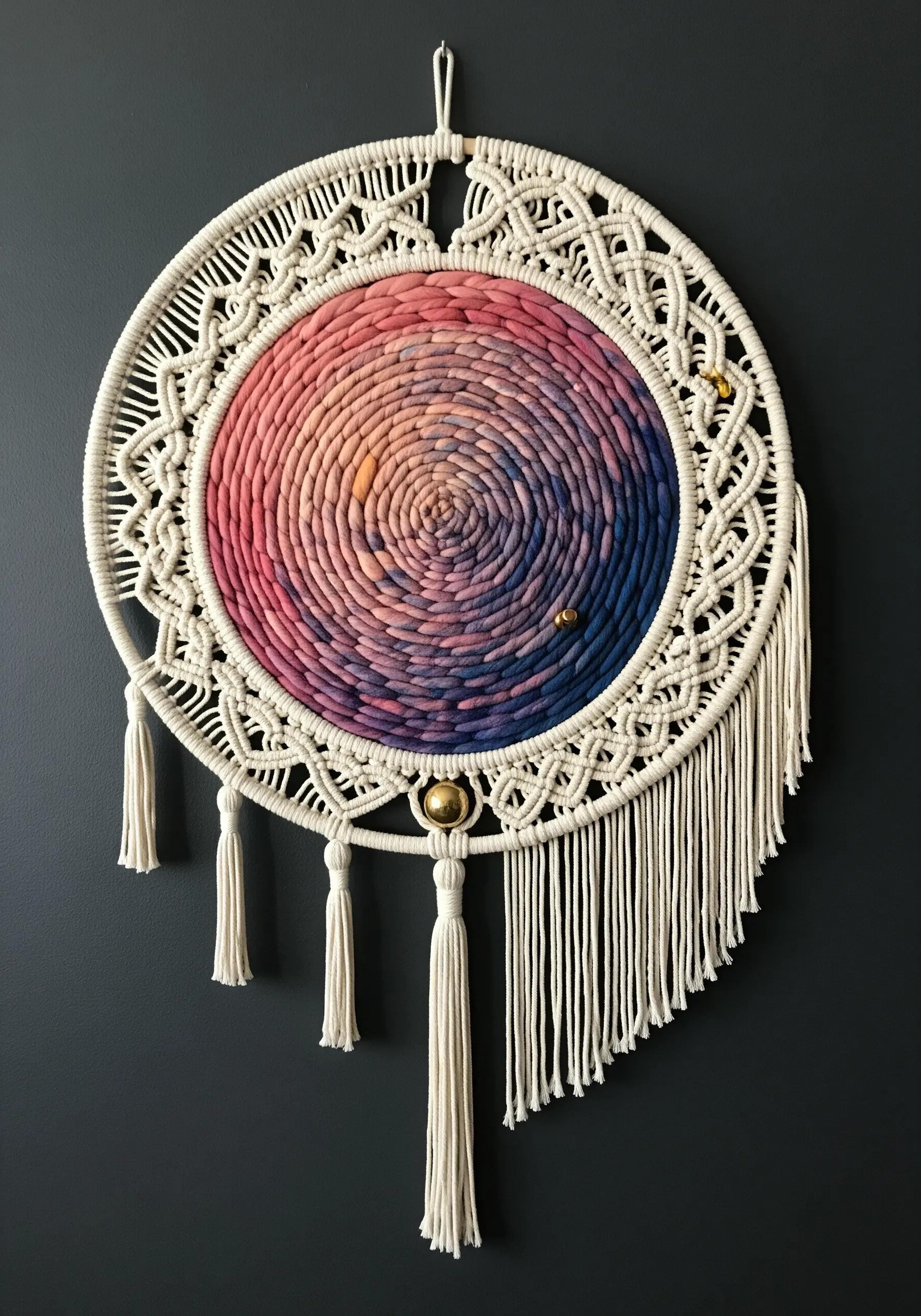
Create a stunning focal point by combining the painterly effect of yarn coiling with the structure of macrame.
For the center, wrap bundles of yarn with a single thread, coiling them into a tight spiral to build your design.
Use variegated or hand-dyed yarns to achieve soft, organic color transitions that resemble a watercolor sunset.
Frame your coiled masterpiece with an intricate macrame border, using classic knots like the square knot and clove hitch to add geometric contrast and texture.
A few strategically placed brass beads will catch the light and add a touch of warmth.
3. Master Punch Needle Color Blocking
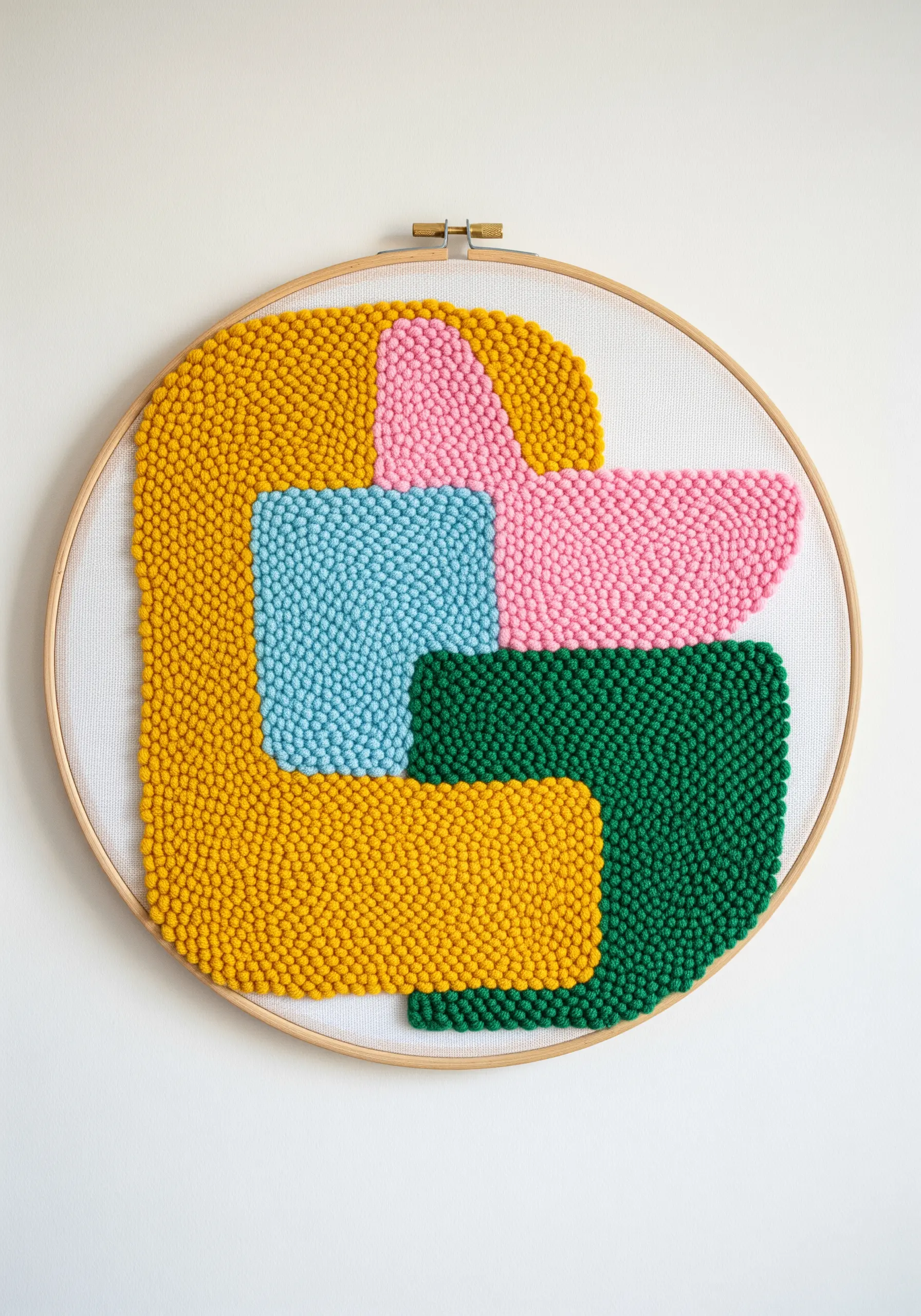
Use a punch needle to create plush, tactile shapes with the clean precision of graphic design.
Trace your abstract, interlocking shapes onto monk’s cloth, then fill each section with tightly packed loops of yarn.
The key to a polished look is maintaining a consistent loop height and density, which creates a uniform, carpet-like surface.
Choose a vibrant, high-contrast color palette—like mustard yellow, sky blue, and forest green—to make the geometric forms pop.
Stretching the final piece in a simple wooden hoop transforms your textile art into a ready-to-hang object.
4. Sculpt with Oversized Wool Roving
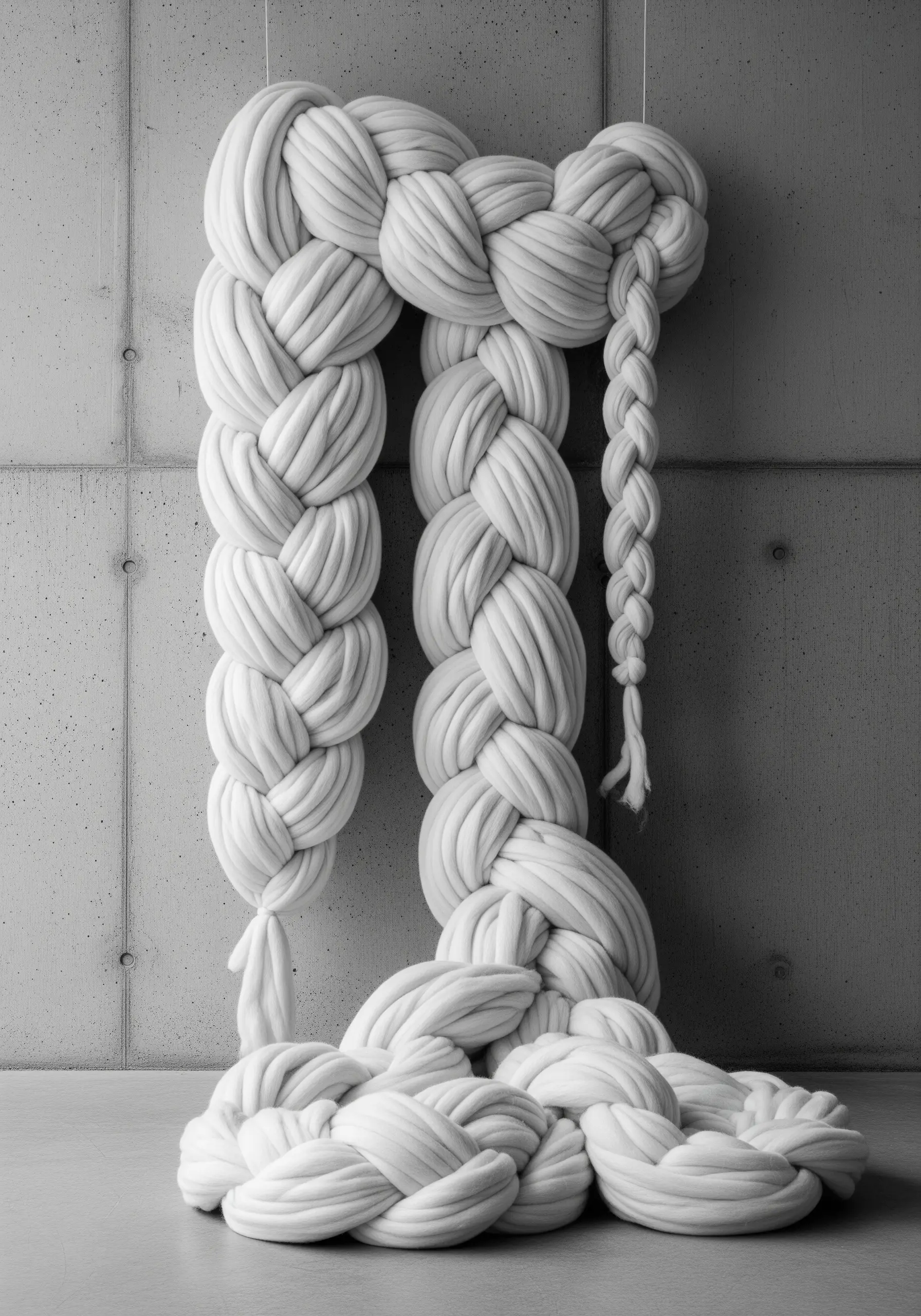
Move beyond the frame and create a dramatic, three-dimensional wall sculpture using giant, unspun wool roving.
This technique requires no needles—simply use your hands or arms to braid the thick fibers into a monumental plait.
The incredible softness and scale of the roving turns a simple braid into a powerful, tactile statement piece.
Display it against a hard, industrial surface like concrete to create a stunning contrast between soft texture and rigid architecture.
This is one of the large-scale embroidery tapestries that truly commands attention.
5. Tuft a Mondrian-Inspired Grid
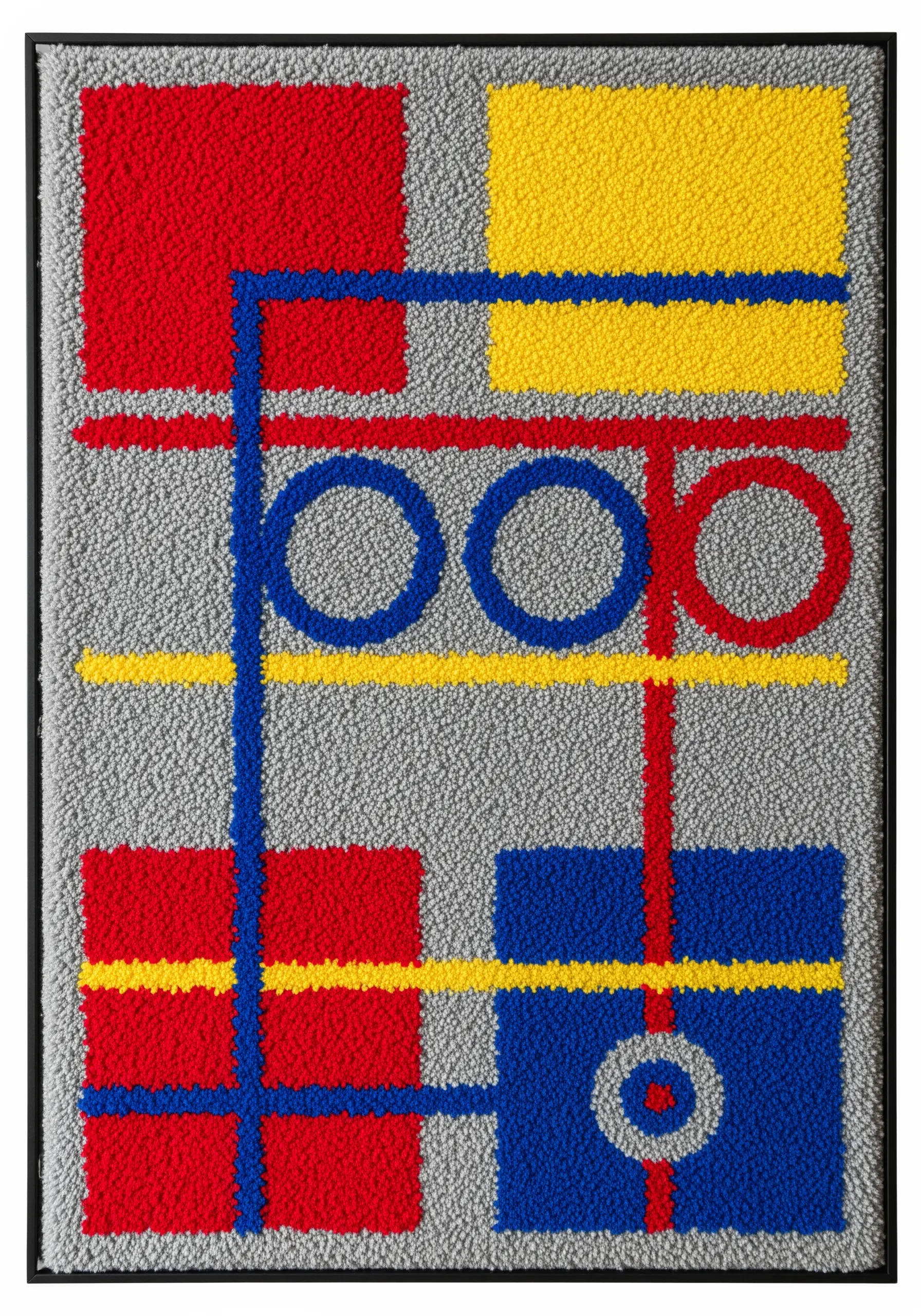
Translate the principles of geometric abstraction into textile art using a tufting gun or latch hook tool.
Create a composition of bold lines, squares, and circles using a primary color palette against a neutral gray background for a modern, Bauhaus-inspired look.
The dense, plush texture of the tufted yarn adds a surprising softness to the rigid geometric forms.
Ensure your lines are crisp by working methodically and packing the yarn tightly along the edges of each color block.
Framing the finished piece in a simple black frame contains the energy of the design and gives it a gallery-like finish.
6. Design with a Dip-Dyed Gradient
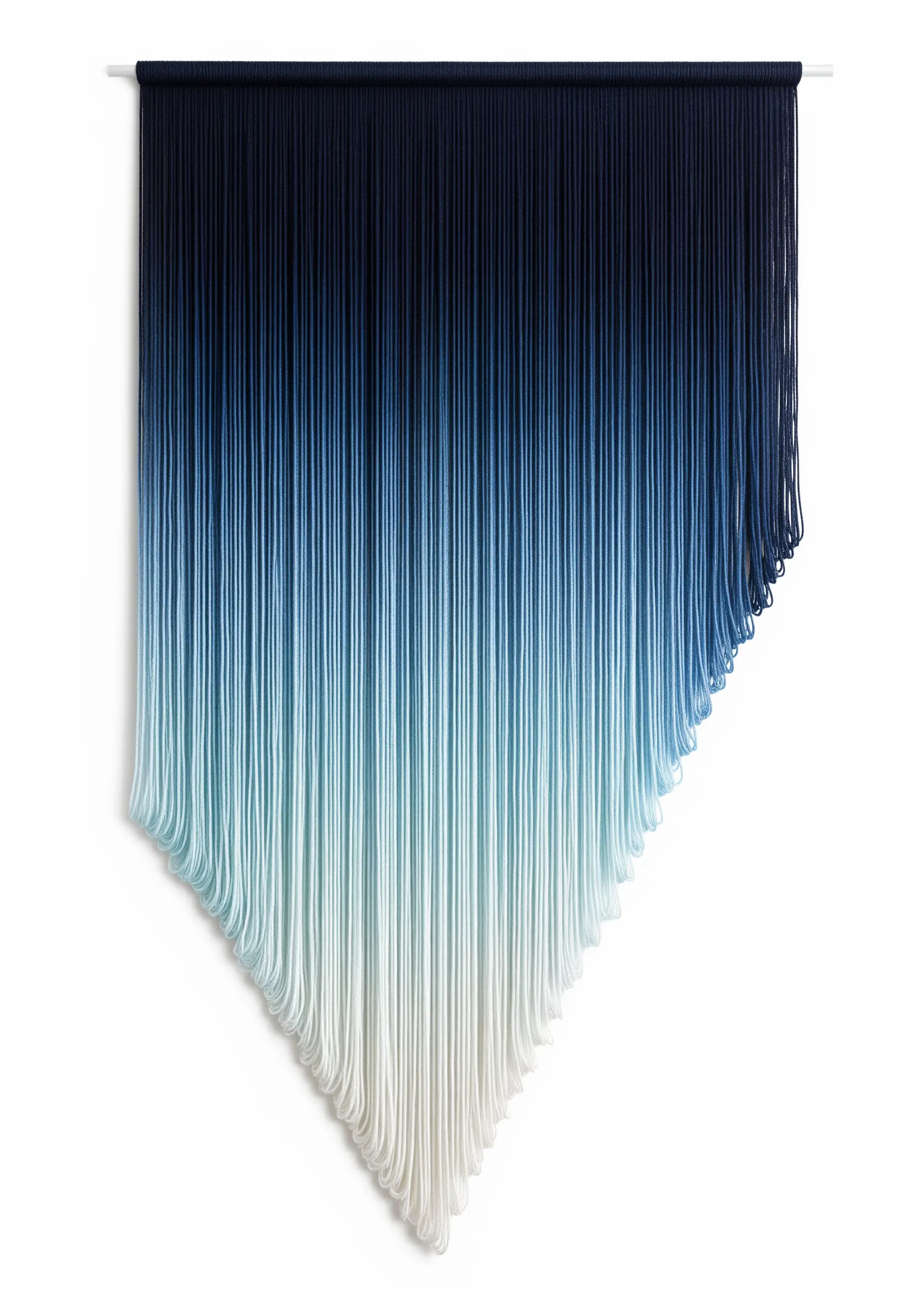
Create a breathtaking color gradient with minimal effort by dip-dyeing your yarn before you begin.
Start with white or ecru cotton yarn and use fiber-reactive dyes to create a seamless transition from deep indigo to pure white.
Once dyed and dried, hang the strands from a simple dowel, cutting them at an angle to create a dynamic, asymmetrical shape.
The beauty of this technique lies in its simplicity; the color does all the work, creating a piece that feels both serene and impactful.
7. Elevate Macrame with Metallic Details
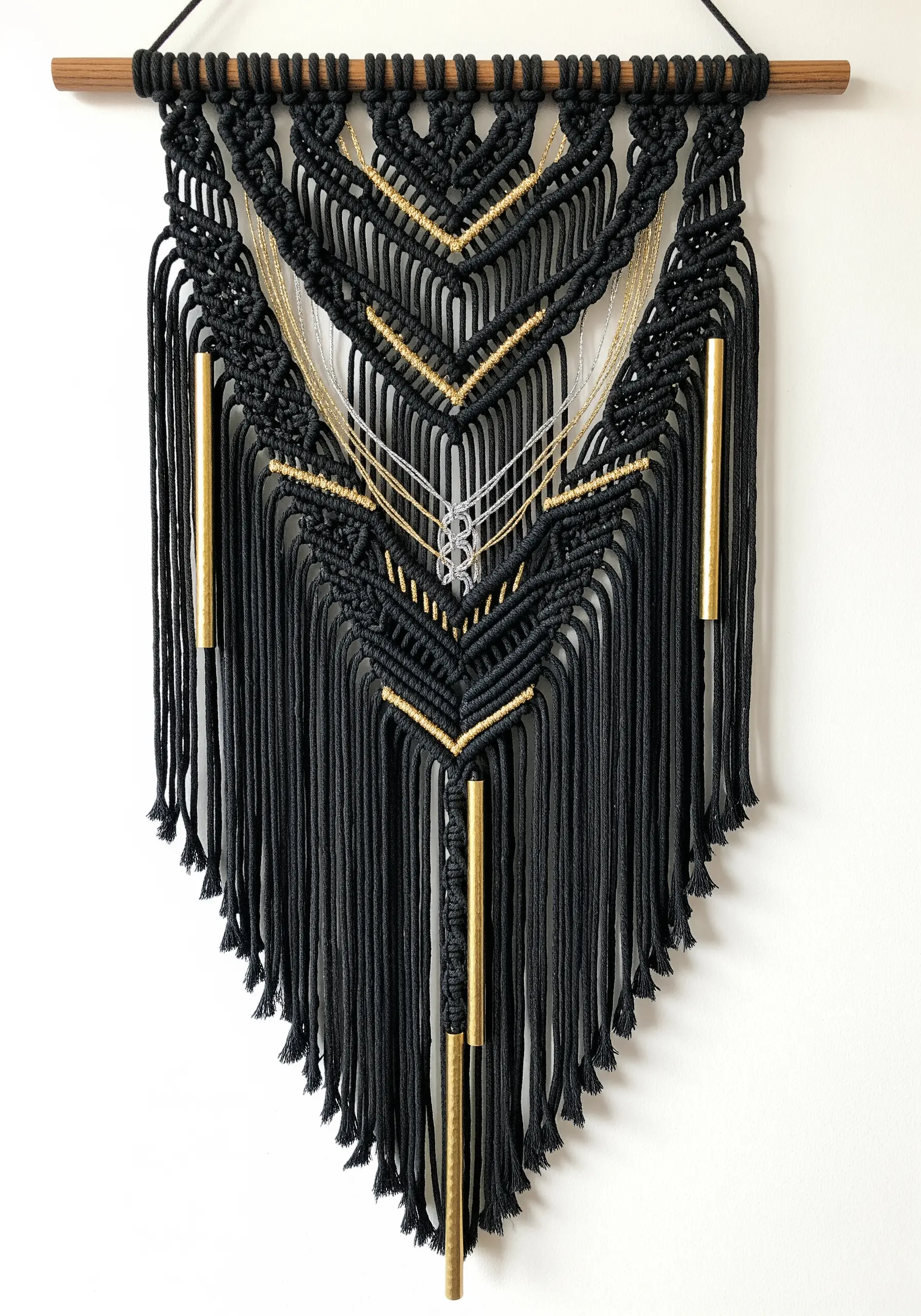
Transform a traditional macrame wall hanging into a sophisticated, Art Deco-inspired piece by incorporating metallic elements.
Weave gold and silver thread alongside your primary black cord to introduce subtle shimmer and light-catching detail.
Integrate polished brass tubes directly into your design; they add weight, structure, and a sleek, industrial contrast to the soft fibers.
This fusion of soft knots and hard lines creates a modern, luxurious aesthetic that feels both handmade and highly designed.
8. Build a Neutral Weaving Sampler
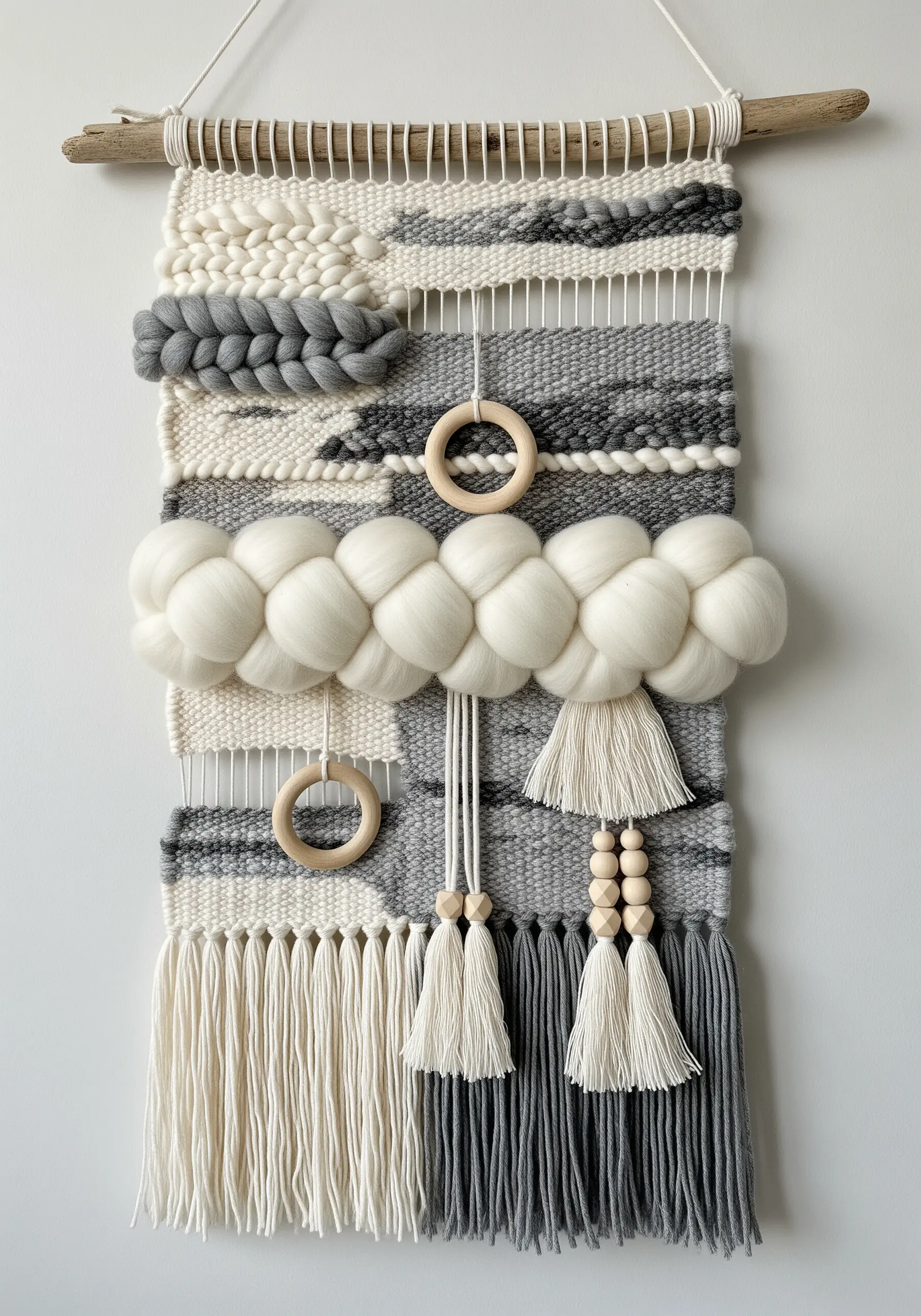
Explore the power of texture by creating a woven wall hanging that combines multiple techniques in a single, neutral color palette.
Incorporate thick, chunky soumak braids, cloud-like puffs of unspun roving, and classic tabby weave to build a landscape of texture.
Working within a restrained palette of grays and creams forces you to focus on form and material, making each textural change more impactful.
Add wooden rings and handmade tassels as thoughtful details that enhance the piece’s organic, handmade feel.
These mixed-fiber wall hangings are perfect for adding warmth to a minimalist space.
9. Juxtapose Industrial and Natural Fibers
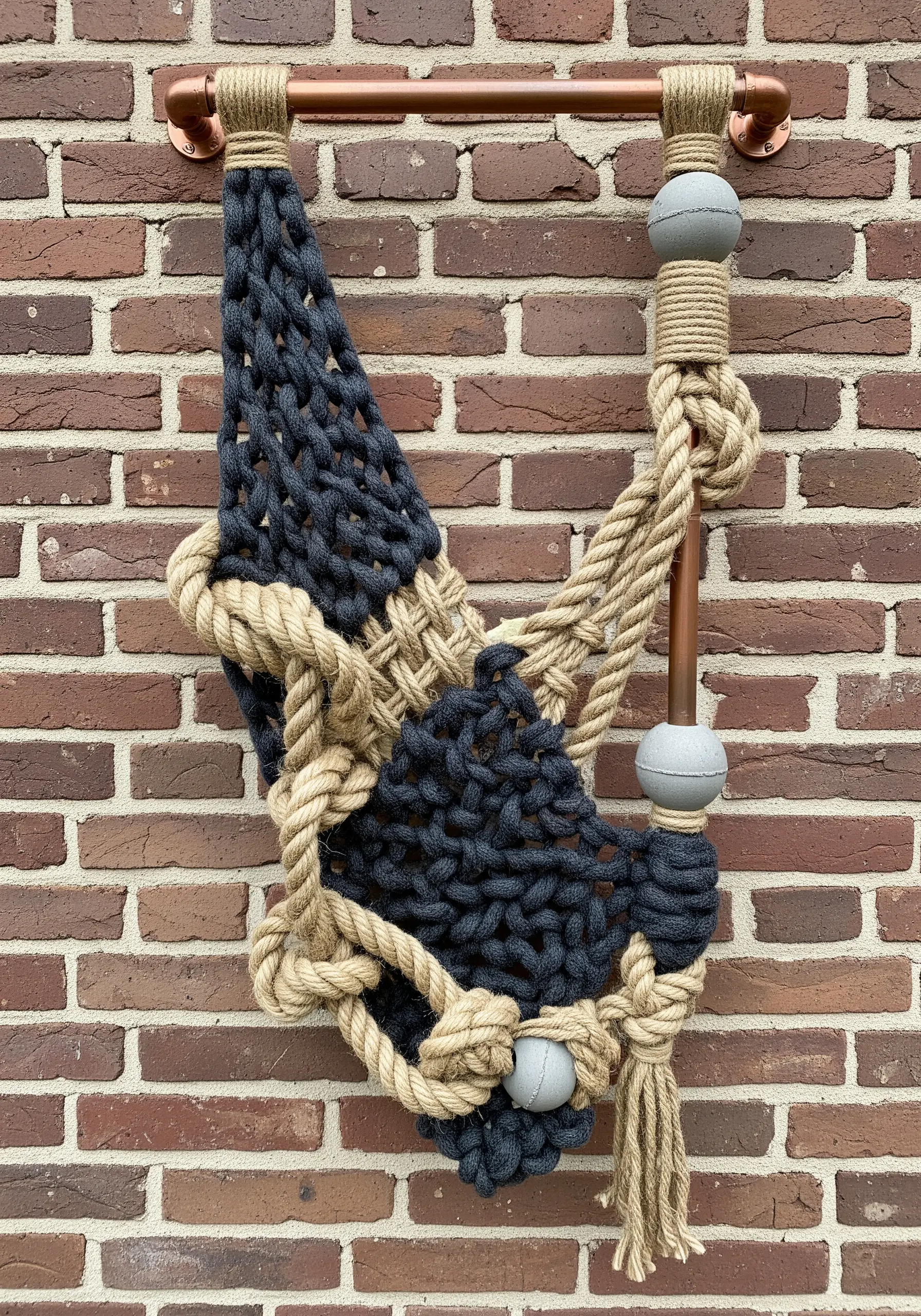
Create a powerful sculptural piece by contrasting hard, industrial materials with soft, natural yarns.
Use thick, rustic jute rope for structure, tying it in bold, functional knots that highlight its strength.
Weave in sections of soft, chunky-knit charcoal yarn to introduce a different texture and create visual tension.
Mount the entire composition on a copper pipe, allowing the warm metal to become an integral part of the final artwork.
This approach is perfect for creating yarn wall art pieces with a rugged, contemporary edge.
10. Couch Yarn Arcs for a Minimalist Diptych
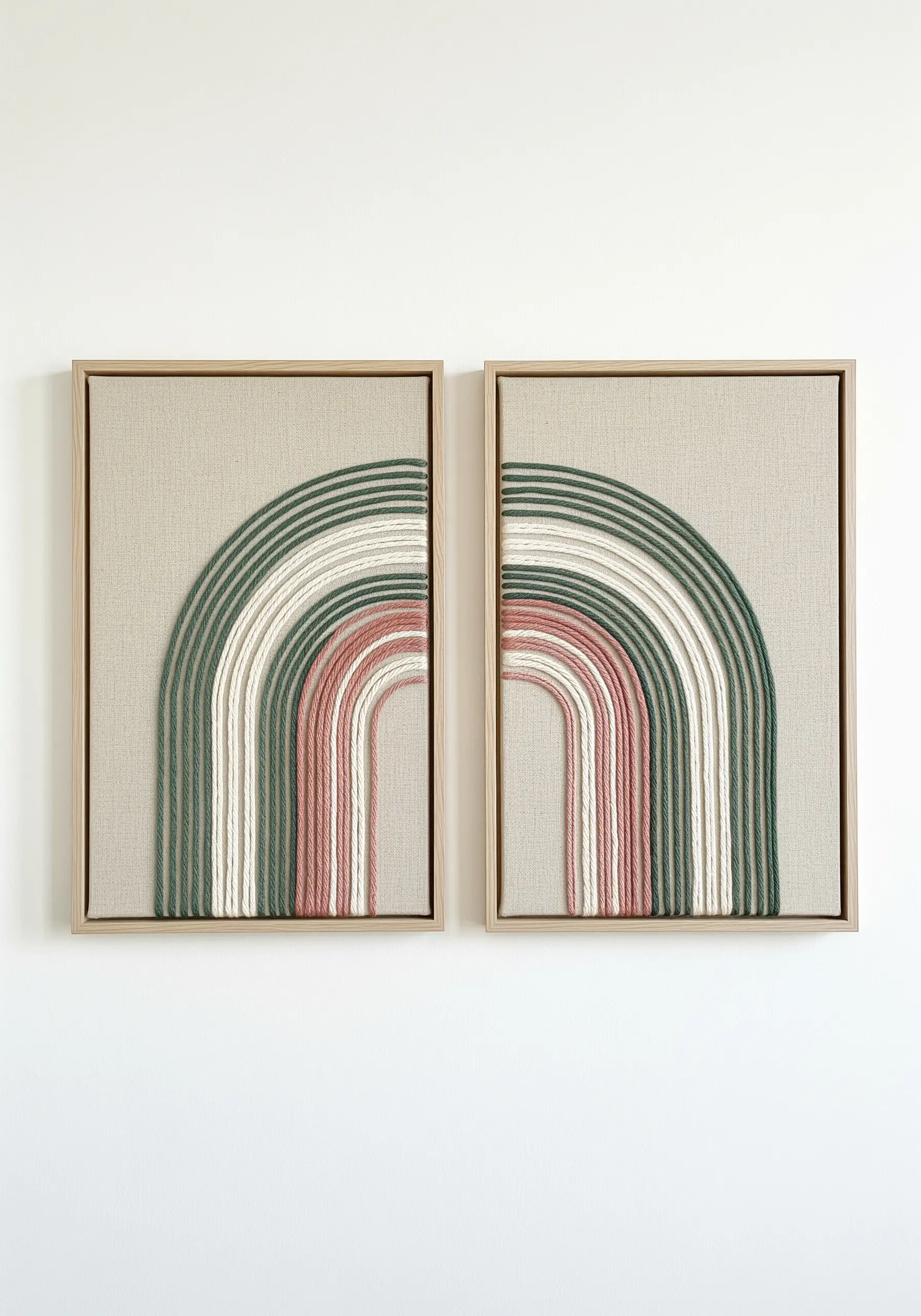
Create a clean, graphic statement with couching, a technique where you lay yarn on the surface of fabric and tack it down with small stitches.
Arrange parallel lines of yarn in graceful arcs on a neutral linen canvas to create a modern rainbow motif.
The key to a professional finish is maintaining perfect tension and even spacing between each strand of yarn.
Splitting the design across two framed panels (a diptych) elevates the simple motif into a sophisticated piece of coordinated art.
This is a perfect example of minimalist thread art ideas for clean aesthetic lovers.
11. Embrace Maximalist Freestyle Weaving
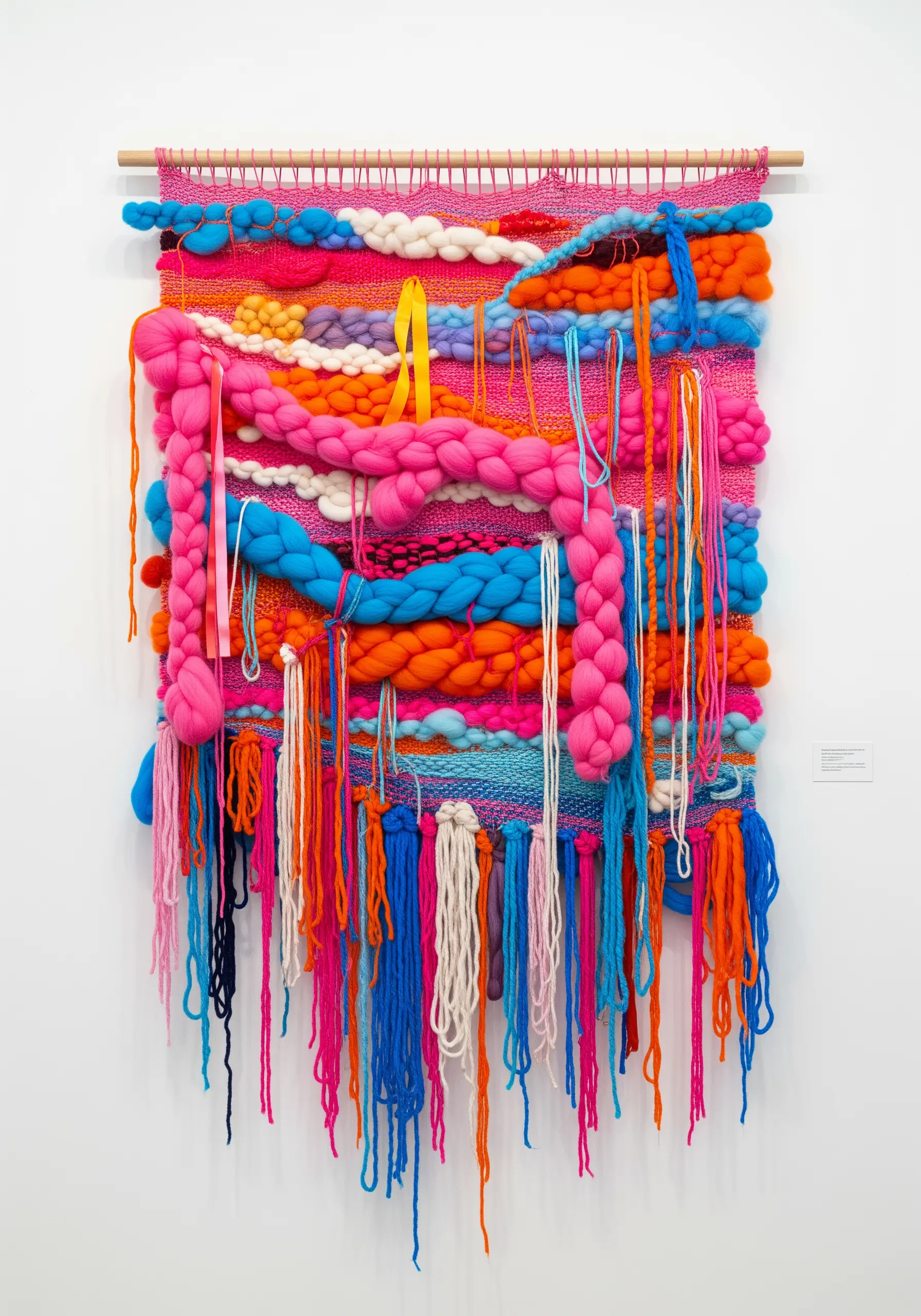
Let go of the rules and create an explosion of color and texture with an intuitive, freestyle weaving approach.
Combine yarns of every weight, color, and texture—from chunky roving and thick braids to fine threads and ribbons.
Allow your weaving to be intentionally imperfect, with loose ends, looping threads, and asymmetrical forms that celebrate creative freedom.
This style is less about precise technique and more about expressing energy and joy through fiber.
The result is a one-of-a-kind tapestry that is vibrant, dynamic, and unapologetically bold.
12. Create Op-Art with High-Contrast Weaving
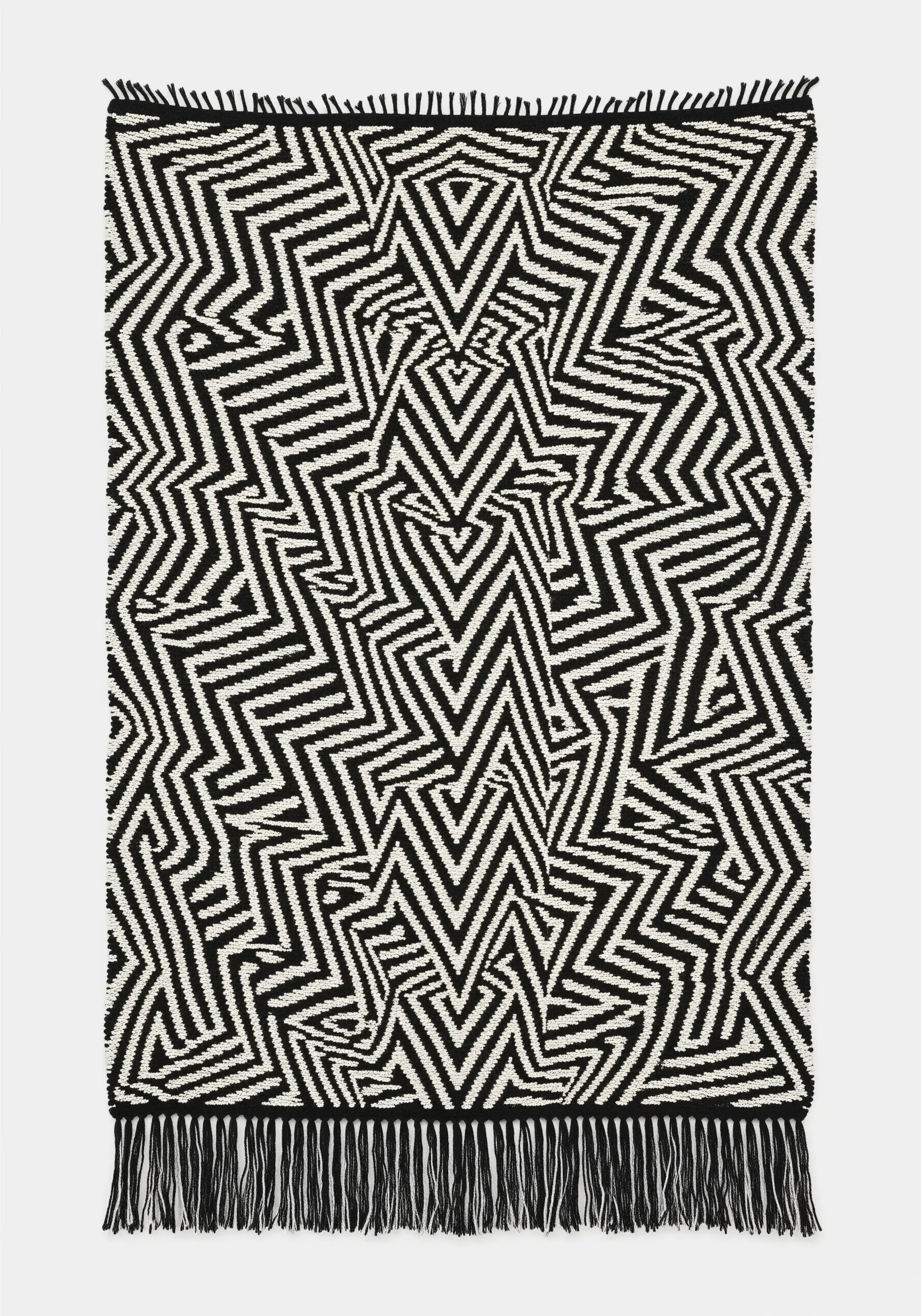
Use the stark contrast of black and white to weave a dynamic, optical art-inspired tapestry.
By arranging sharp, interlocking geometric shapes, you can create a sense of movement and vibration that captivates the eye.
This technique, often found in Kilim or tapestry weaving, requires precision to keep the lines between colors crisp and clean.
The intricate, almost dizzying pattern transforms a traditional flatweave into a mesmerizing piece of modern art.
A simple black fringe anchors the chaotic energy of the design.
13. Design with Negative Space
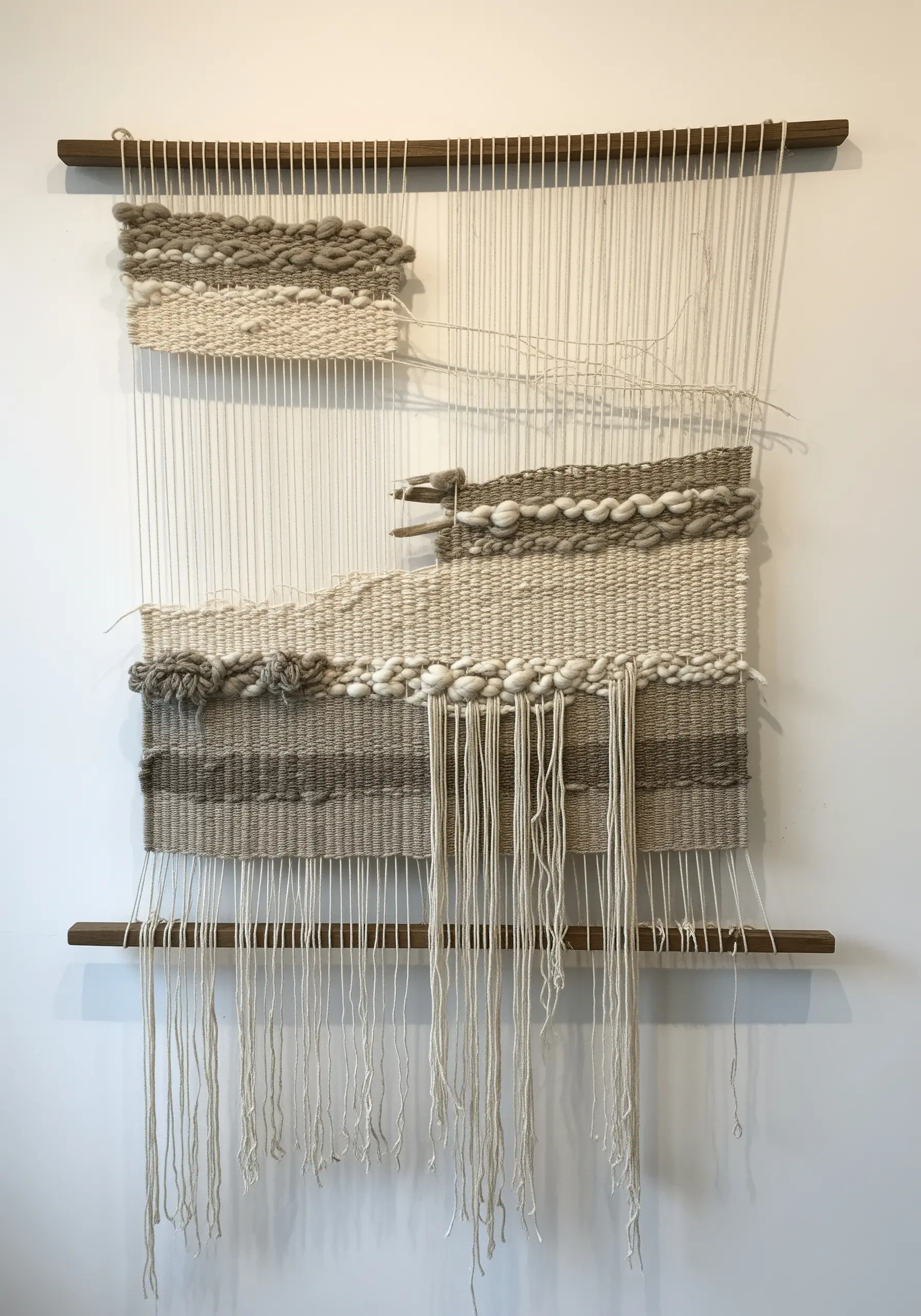
In weaving, the empty space can be just as important as the woven sections. Use this principle to create a delicate, deconstructed tapestry.
Weave small, textured blocks of neutral-colored yarn, leaving large areas of the vertical warp threads exposed.
This technique creates an airy, sculptural effect, drawing attention to the structure of the loom and the artistry of the weave itself.
Allow some weft threads to hang loose, adding to the piece’s fragile, organic beauty.
This is one of the most elegant minimal embroidery wall pieces you can make.
14. Weave a Monochromatic Texture Study
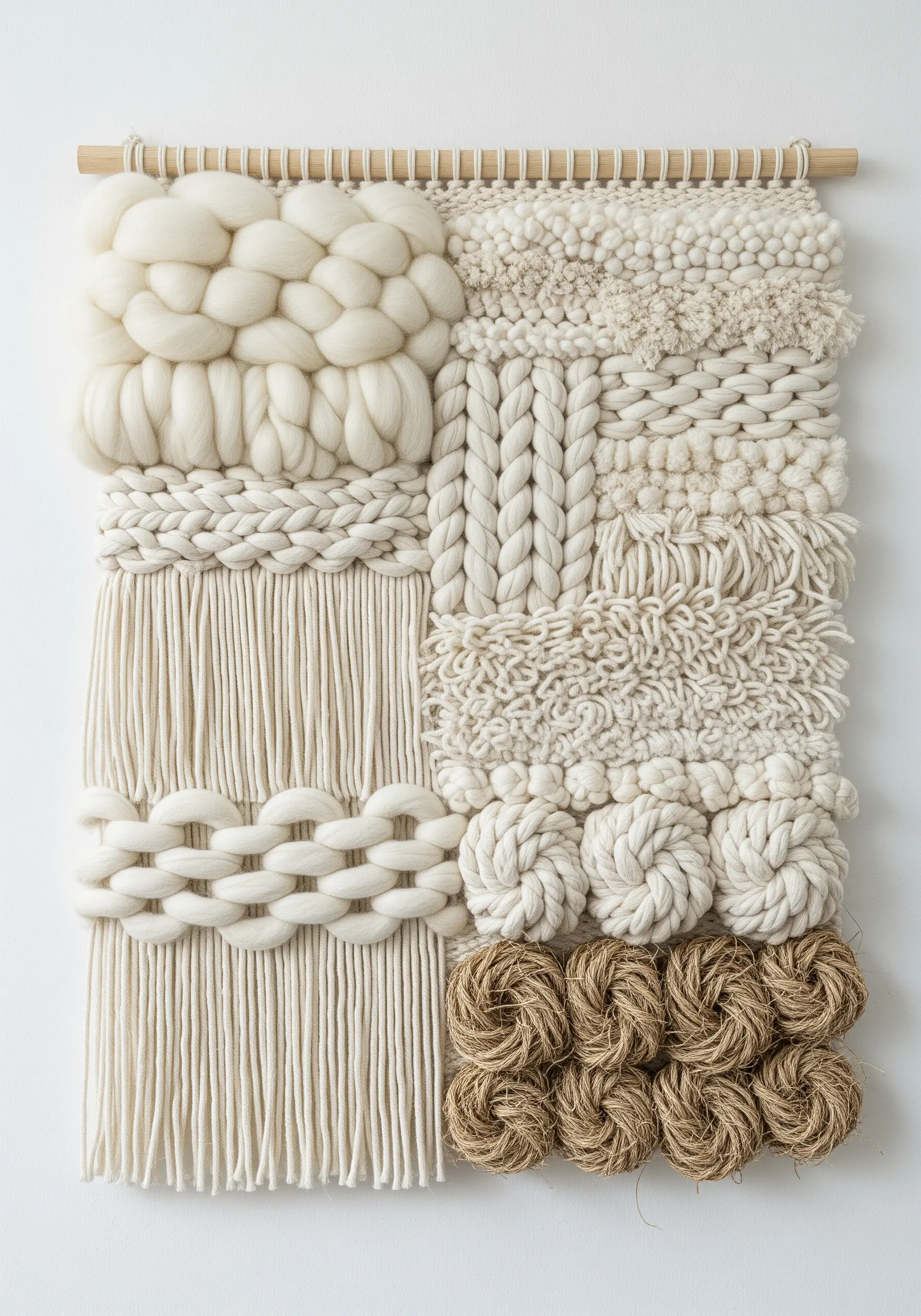
Challenge yourself to create a visually rich tapestry using only one color, focusing entirely on texture.
Build a sampler of different weaving techniques: chunky braids, fluffy Rya knots, tight soumak stitches, and simple tabby weave.
By removing color, you amplify the subtle differences between each texture, inviting viewers to look closer.
Combine different fibers like soft merino wool, rustic jute, and smooth cotton to further enhance the textural variety.
The result is a sophisticated, tactile piece that feels both unified and incredibly complex.
15. Paint a Landscape with Wool Fibers
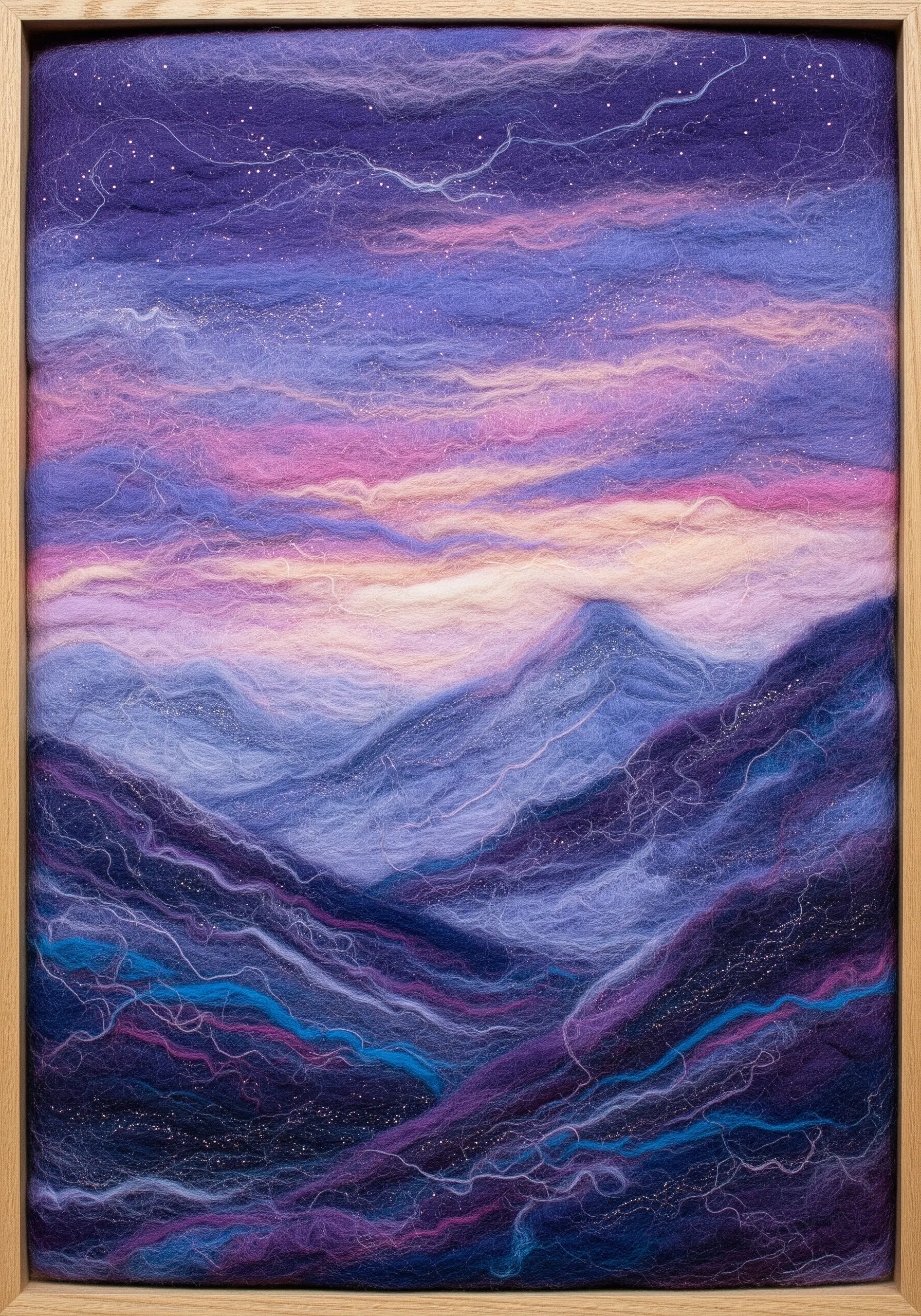
Use wool roving and the technique of needle felting to create a soft, atmospheric landscape that feels like a painting.
Layer wisps of colored wool fibers inside a shadow box frame, blending them by hand to create the soft gradients of a sunset sky and misty mountains.
Use a felting needle to gently tack the fibers into place and define the edges of your mountain ranges.
Incorporate fine, sparkly Angelina fibers or silk threads to represent stars or glistening rivers, adding a touch of magic.
These nature-inspired embroidery wall decor projects are perfect for serene spaces.
16. Curate a Punch Needle Gallery Wall
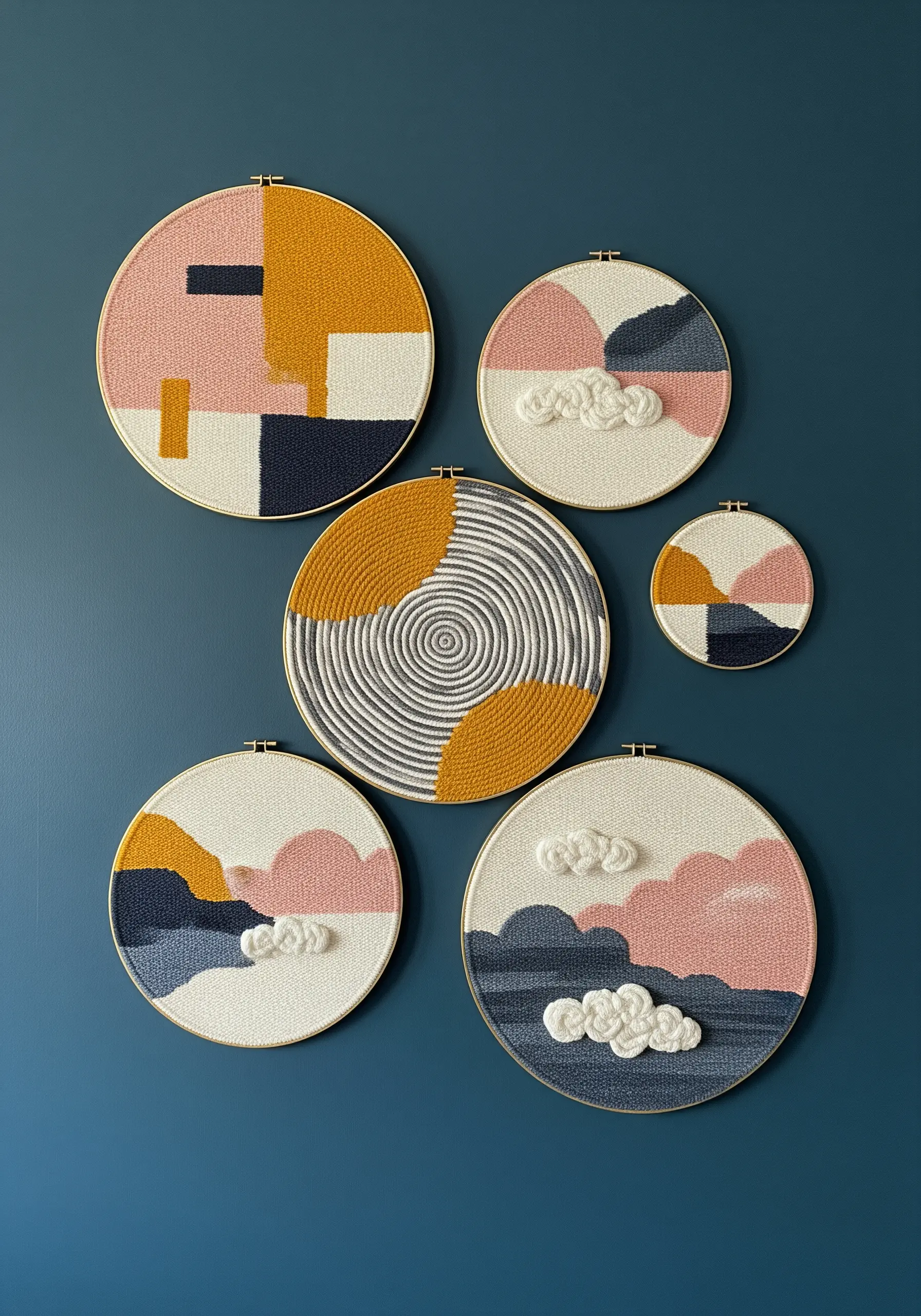
Design a collection of small, coordinated punch needle hoops to create a dynamic and personalized gallery wall.
Choose a unified color palette—like mustard, blush pink, and charcoal—to tie the different designs together.
Experiment with a variety of textures within your collection: flat stitches for a woven look, dense loops for plushness, and coiled yarn for sculptural dimension.
Varying the hoop sizes adds rhythm and visual interest, allowing you to create a composition that perfectly fits your space.
This is a fantastic way to build a gallery wall without visual clutter.
17. Weave Memories into a Macrame Net
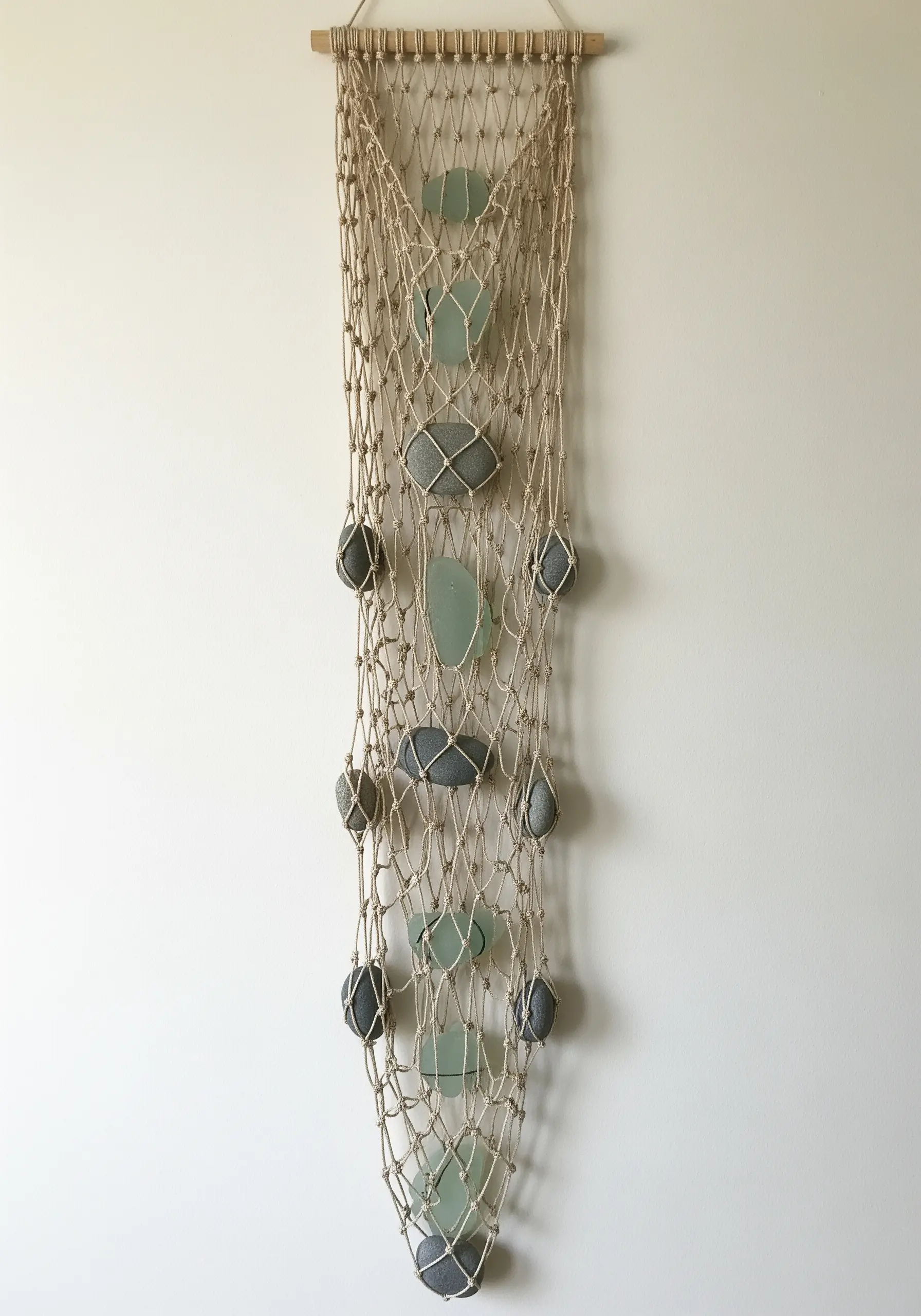
Turn your wall art into a personal story by creating a macrame net designed to hold meaningful found objects.
Use a simple netting technique with jute or cotton cord to create a rustic, organic structure.
As you work, incorporate treasures from your travels or nature walks, such as sea glass, smooth river stones, or driftwood.
The open, flexible design allows you to change and add to your collection over time, making it a living piece of art.
This design captures the essence of handmade art pieces that tell a story.
18. Create Pop Art with Tufted Circles
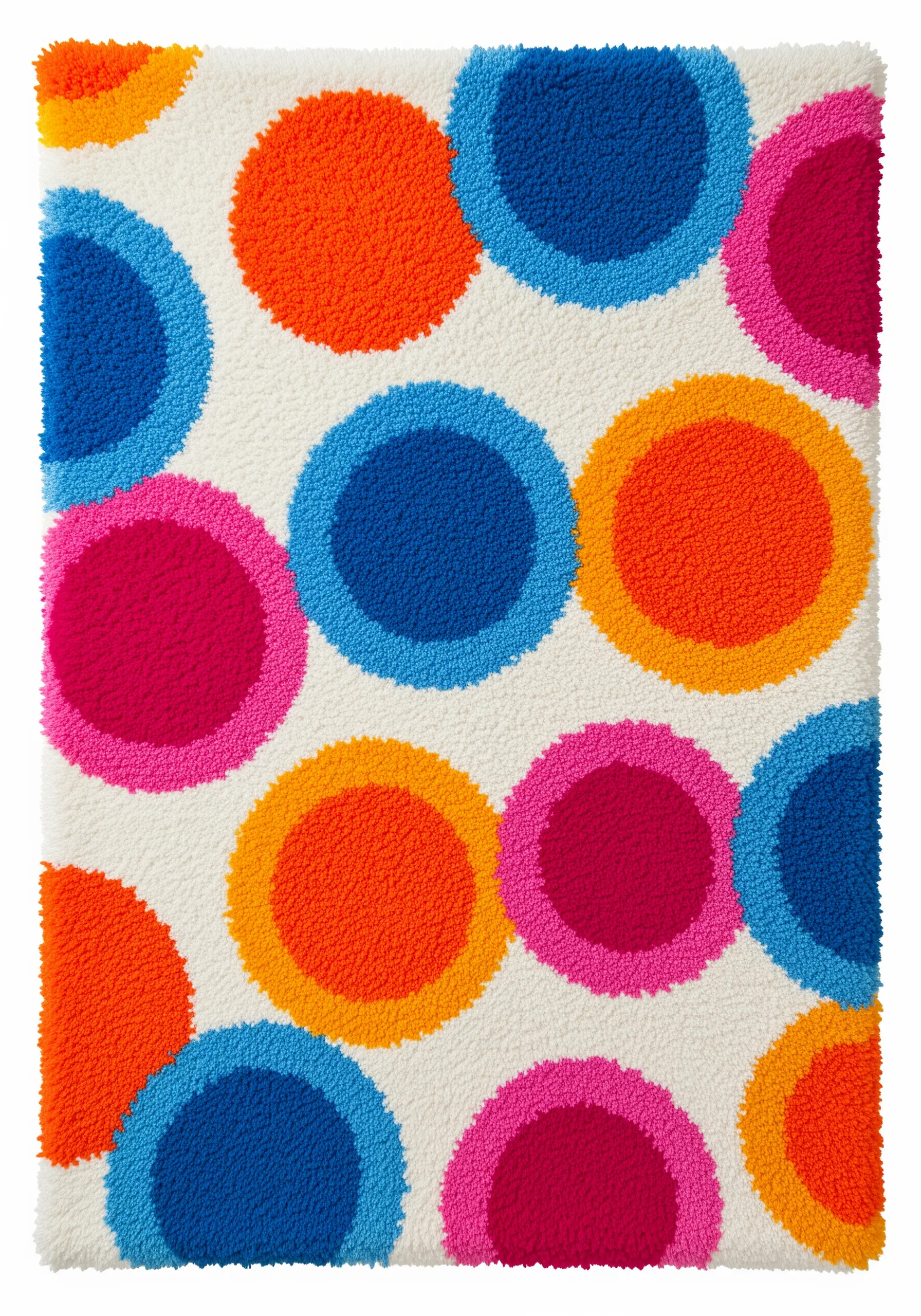
Channel the vibrant energy of 1960s Pop Art by creating a tufted wall hanging with bold, overlapping circles.
Use a tufting gun or latch hook tool to fill your design with a high-contrast palette of bright orange, fuchsia, and electric blue against a clean white background.
The dense, plush texture of the tufted yarn gives the simple graphic pattern a fun, tactile quality.
This playful and energetic piece is perfect for adding a splash of color and retro charm to any room.
19. Showcase a Single, Sculptural Knot
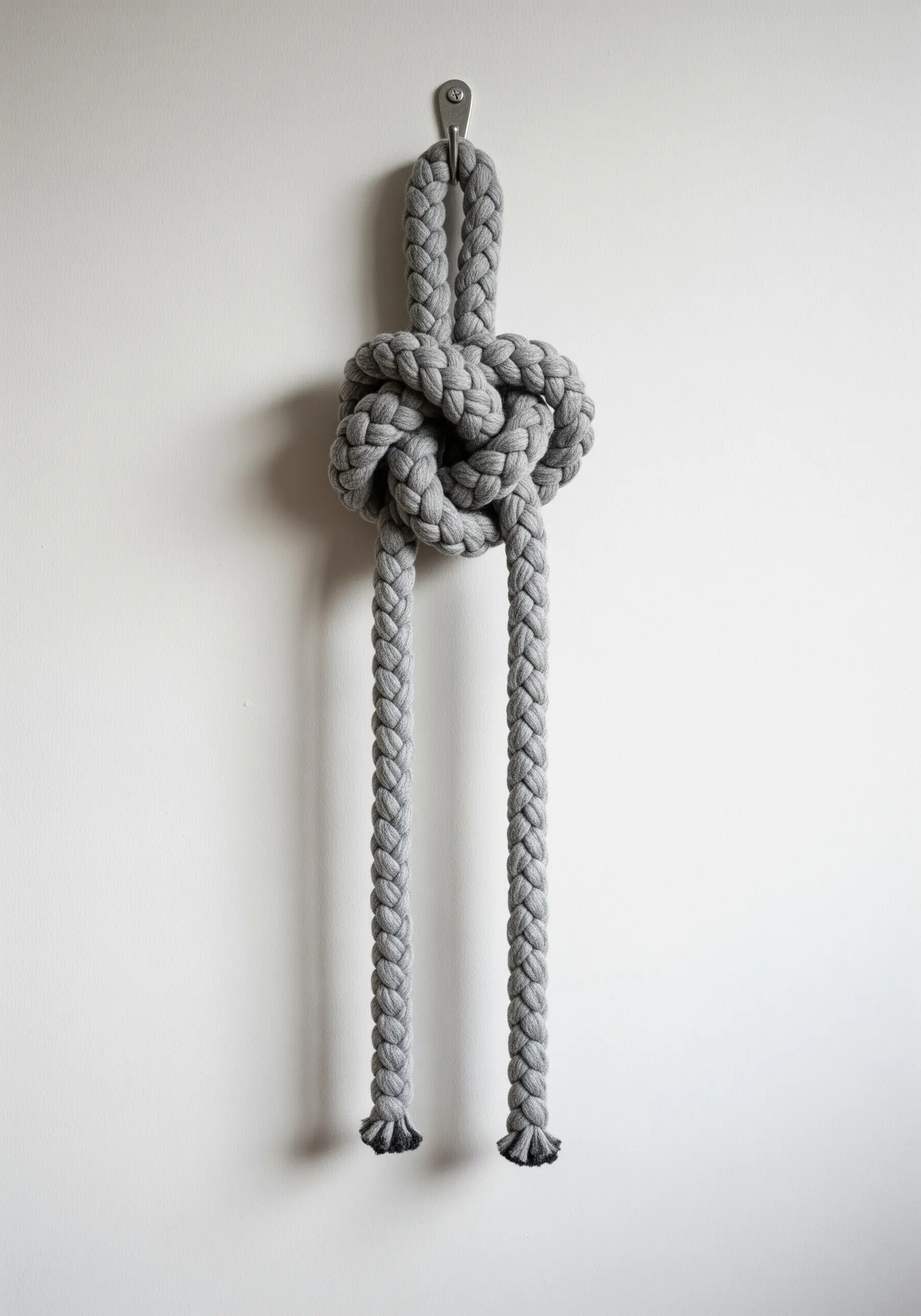
Make a powerful minimalist statement by focusing on the beauty of a single, intricate knot.
Use a thick, felted or braided cord to create a substantial knot, like a Celtic knot or a decorative monkey’s fist.
The simplicity of the composition draws all attention to the form, texture, and elegant lines of the knot itself.
Mount it directly on the wall with a simple, unobtrusive hook for a clean, sculptural look that feels both modern and timeless.
20. Explore Geometry with String Art
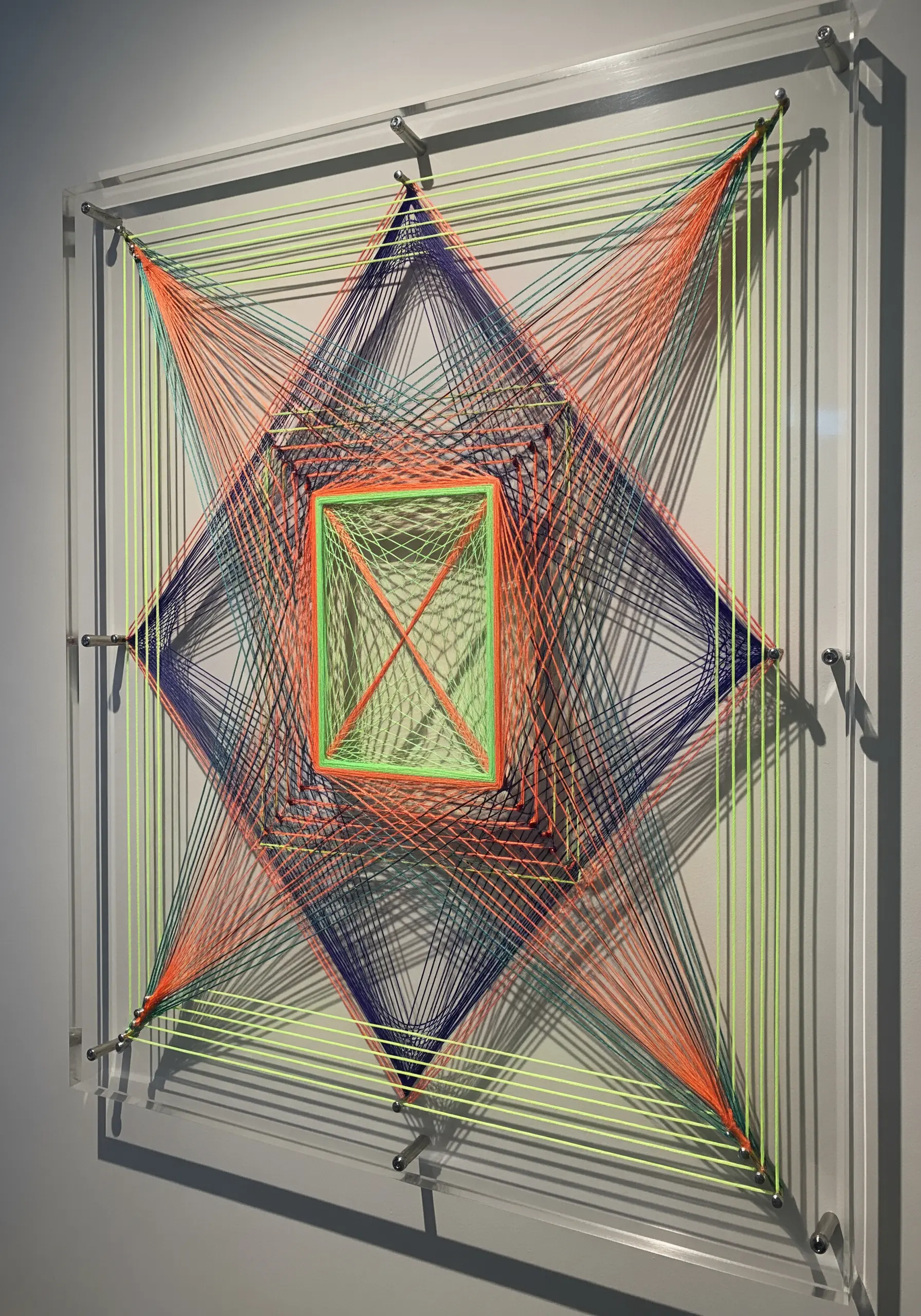
Create mesmerizing optical patterns using the classic technique of string art, where thread is wound between pins or nails.
Start with a clear acrylic or wooden board and map out a grid of anchor points.
Stretch colorful threads between the points to create layered geometric shapes; where the lines overlap, new colors and forms emerge.
Using neon thread on a transparent surface creates a futuristic, light-filled effect that feels incredibly modern.
This is a perfect project for lovers of modern geometric thread art ideas.
21. Embrace the Power of a Monochrome Field
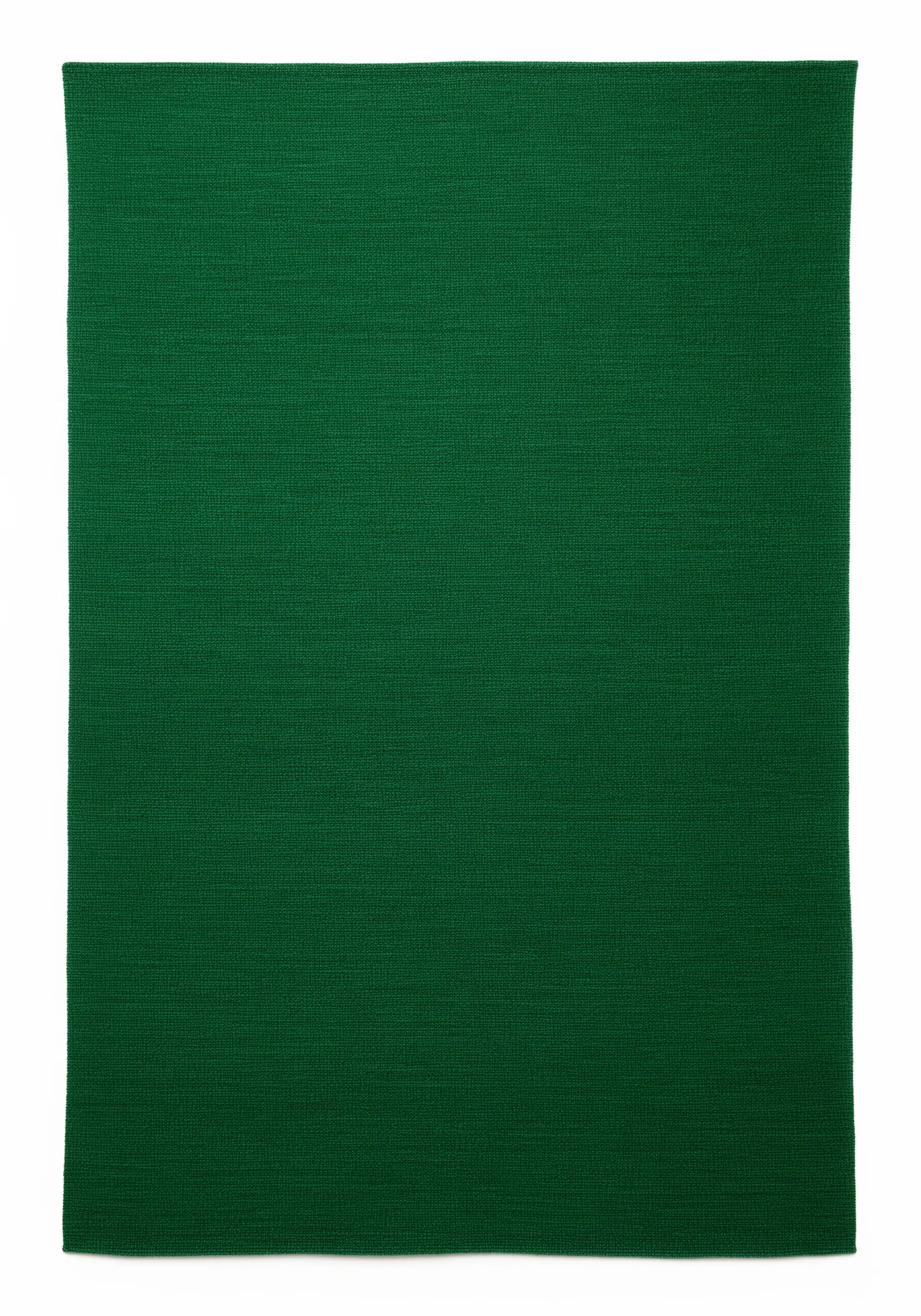
Create a profoundly calming and sophisticated piece by focusing on a single, uninterrupted field of color.
Weave a simple tabby stitch from edge to edge using a high-quality yarn in a rich, saturated hue like emerald green.
In this minimalist approach, the subtle texture of the weave and the depth of the color become the entire subject.
This type of work invites contemplation and adds a block of pure, meditative color to your space without any distracting patterns.
22. Center Your Macrame Around a Gemstone
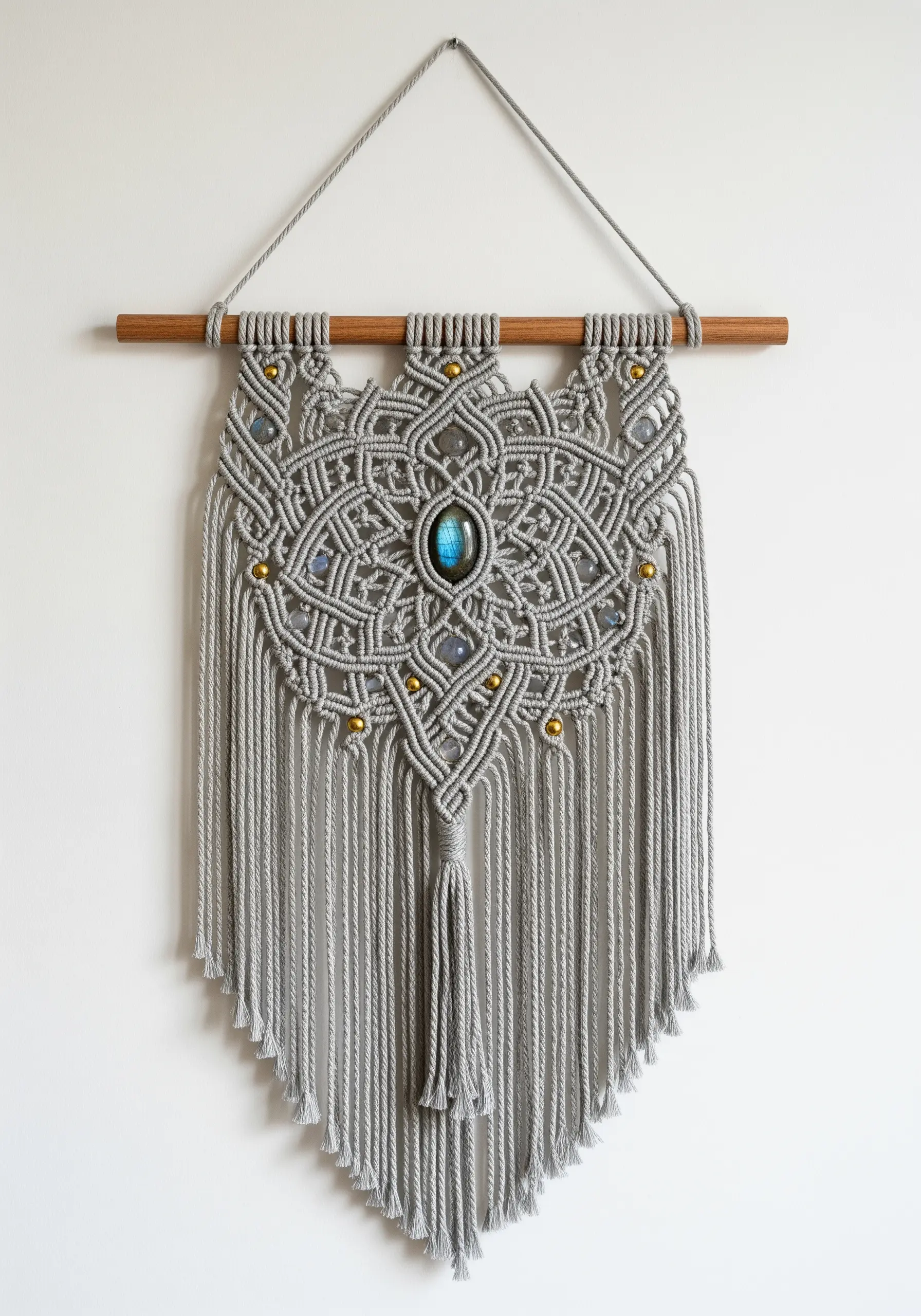
Design an intricate macrame piece where a beautiful, polished gemstone serves as the undeniable focal point.
Use a bezel-setting knotting technique to securely frame the stone at the heart of your design.
From there, build out a symmetrical pattern of detailed knots that radiates from the center, drawing the eye inward.
Choose a cord color that complements the stone—like this soft gray against the iridescent labradorite—to create a harmonious, elegant composition.
This technique elevates macrame from a craft to a piece of handmade jewelry for your walls.
23. Weave on a Sculptural Copper Loom
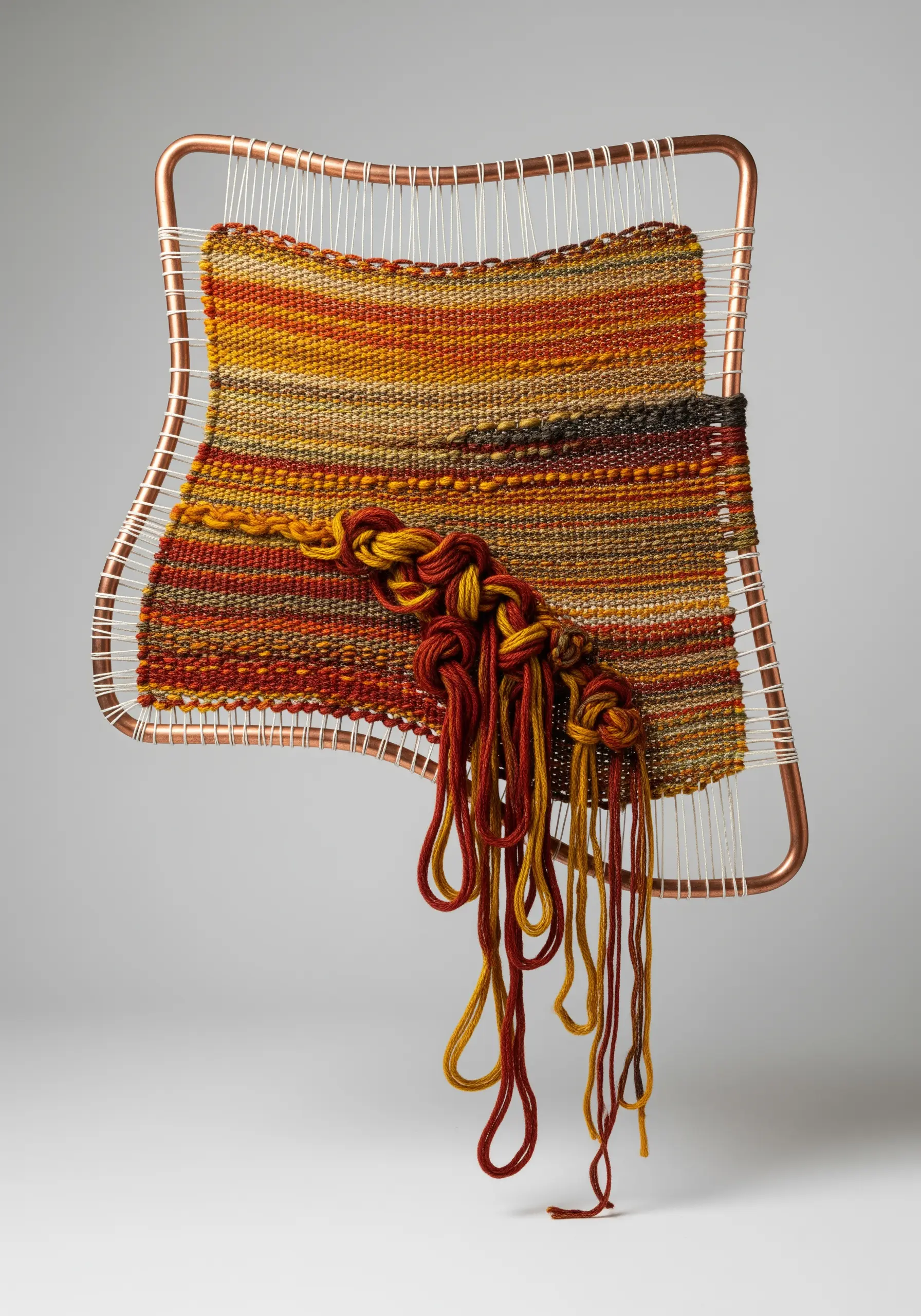
Challenge the traditional rectangular format by building your loom from an unconventional material like copper pipe.
The curved, fluid shape of the frame will directly influence your weaving, encouraging organic, freeform shapes.
Allow the warm, polished copper to remain visible, making the structure an integral part of the final artwork.
Let your woven yarns spill over the edges and hang loose, further breaking from the confines of a traditional tapestry.
24. Sculpt a 3D Landscape with Rya Knots
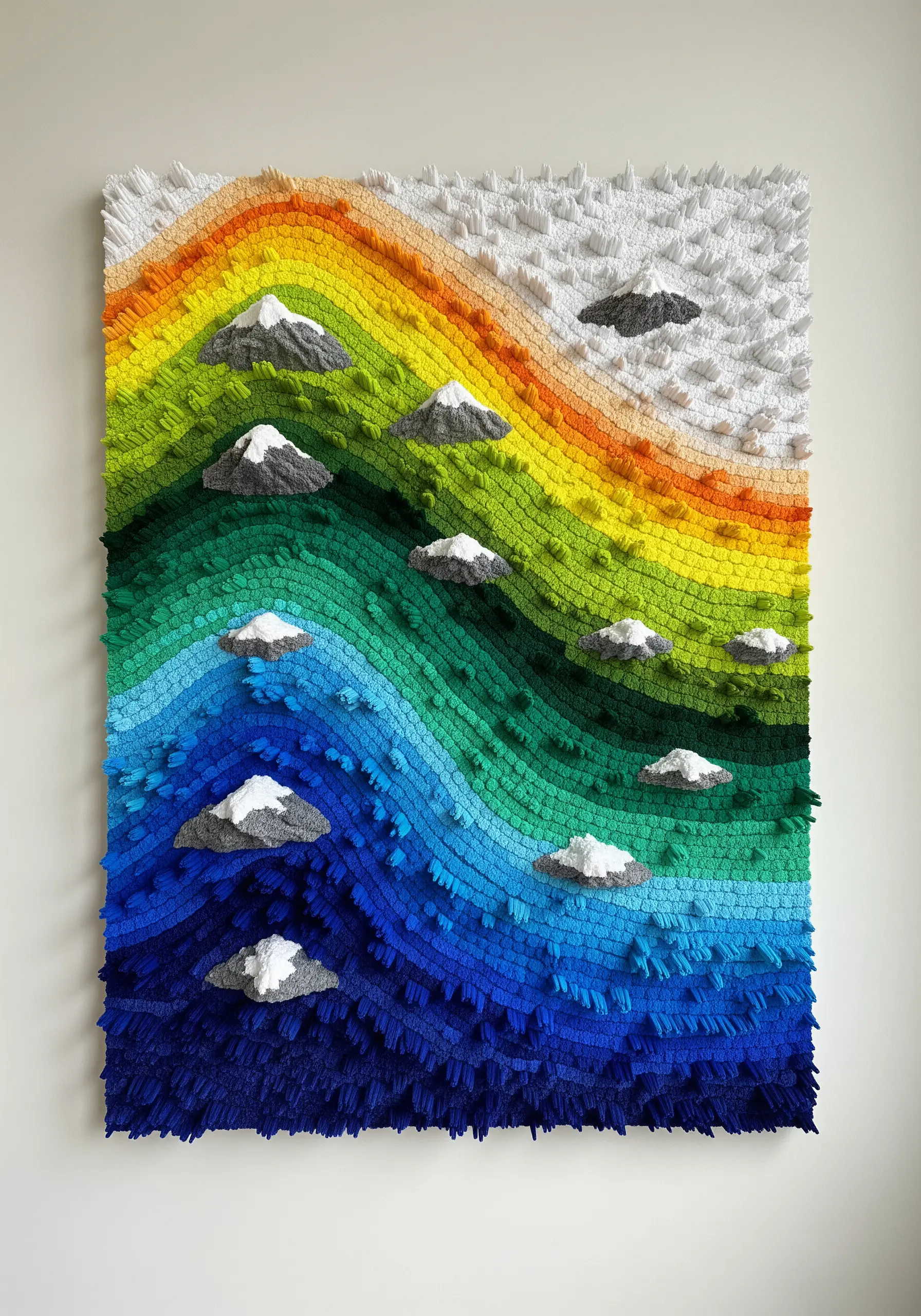
Build a breathtaking, three-dimensional landscape using thousands of individual Rya knots or cut pile loops.
Create a color gradient that mimics a natural vista, transitioning from deep ocean blues to vibrant greens and sunny yellows.
Vary the length of your yarn loops to create topographical texture, with shorter loops for flat plains and longer, shaggier loops for rolling hills.
Add small, felted mountains to create even more depth and transform your wall hanging into a tactile, sculptural map.
25. Construct an Architectural Thread Installation
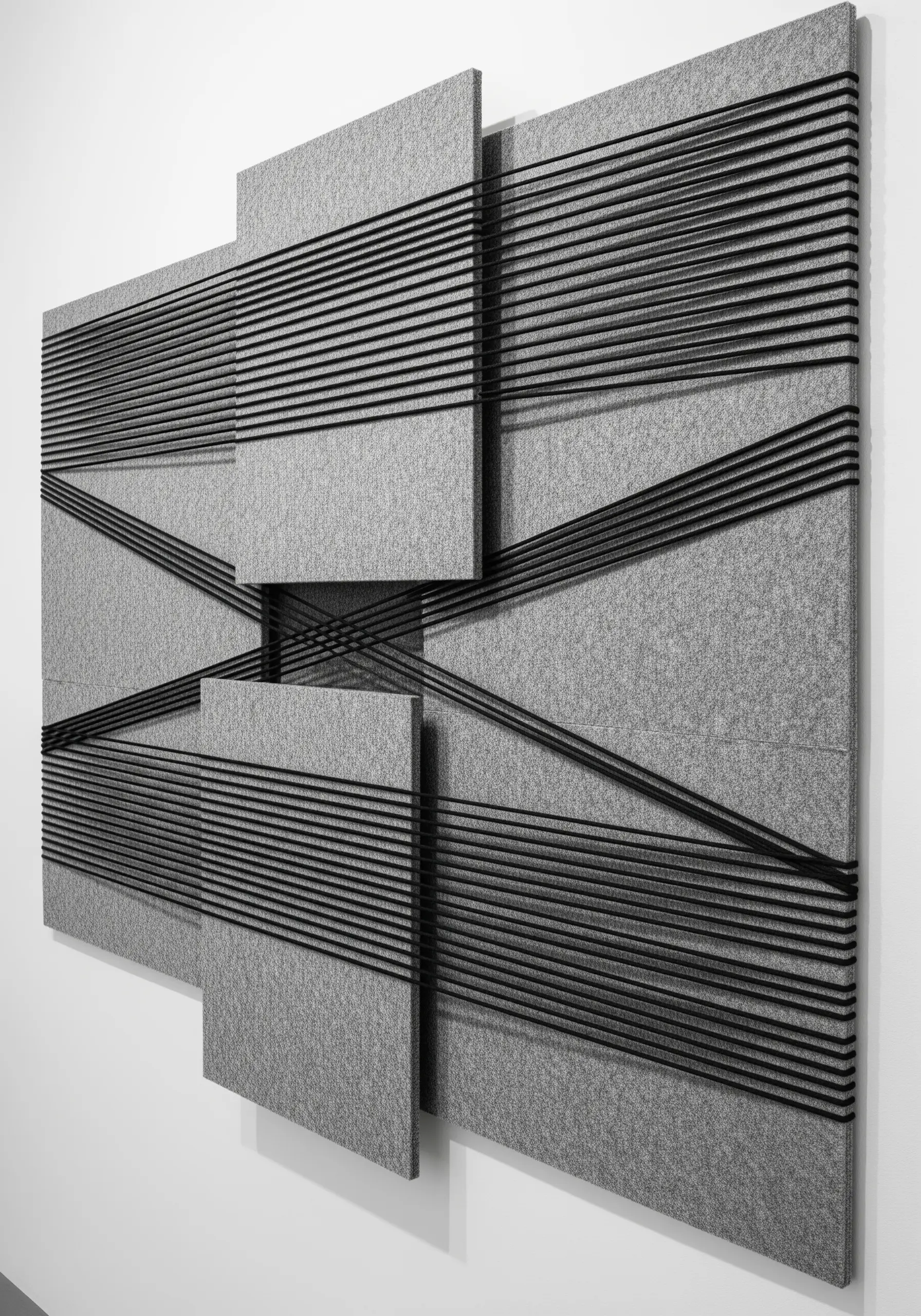
Use yarn to explore line, plane, and dimension by creating a multi-layered architectural installation.
Mount several fabric-covered panels at different depths to create a foundational structure.
Stretch taut lines of black cord between the panels, creating geometric patterns that cross and intersect in three-dimensional space.
The interplay of the threads with light and shadow creates a dynamic, graphic effect that changes as the viewer moves around it.
This is a sophisticated way to turn simple fiber into a commanding piece of contemporary art.