Your bedroom is more than just a place to sleep; it’s a sanctuary. And the details you choose are what transform it from a simple room into a personal retreat. A monogram, when thoughtfully executed, is one of the most elegant ways to make that quiet statement of ownership and care.
But achieving a chic, high-end look isn’t about overly complex designs or expensive materials. It’s about intention. It’s in the subtle contrast of a matte thread on a textured linen, the perfect density of a satin stitch, or the unexpected placement of a single, clean initial. It’s where your personal touch meets refined technique.
Think of your pillows, your linens, and even your curtains as canvases awaiting a signature. These ideas are designed to give you that clarity and confidence. You’ll learn not just what to stitch, but how and why it works, empowering you to create pieces that feel cohesive, polished, and uniquely yours.
1. Create High-Contrast Definition with Raised Satin Stitch

To achieve this formal, hotel-luxe monogram, start with a split stitch outline to create a crisp, defined edge for your letters.
Fill the shape with dense, smooth satin stitches, ensuring each stitch lies perfectly parallel to the last for a uniform sheen.
For the border, use a contrasting color and a simple backstitch, but double the strands of thread to give it the same visual weight as the monogram.
Choosing a high-sheen rayon or silk thread against a matte fabric like cotton sateen maximizes the light-catching effect, making the monogram the undeniable focal point.
2. Use Bold Appliqué for a Modern Serif Initial
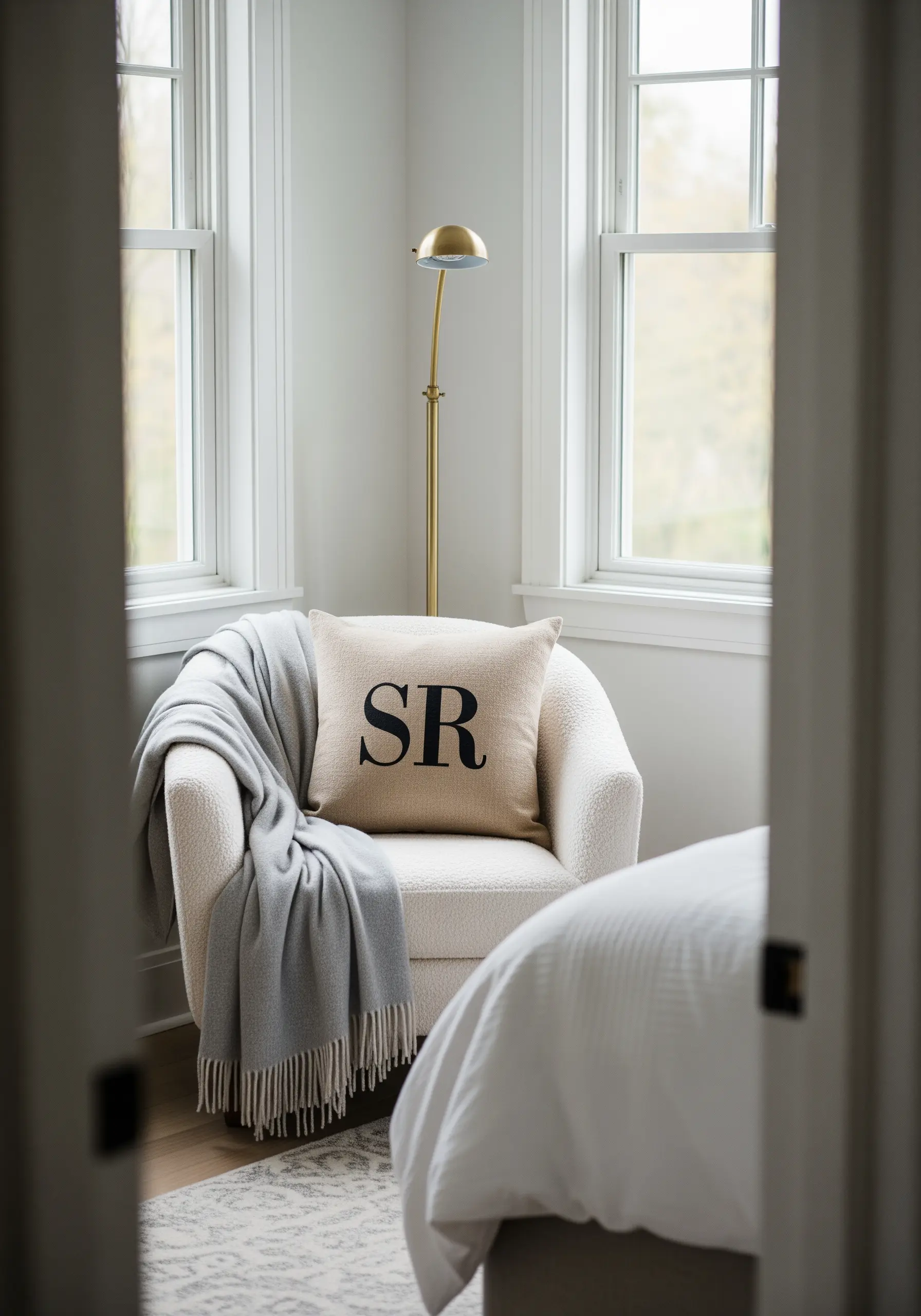
For a clean, graphic statement, forgo traditional stitching and use a felt or heavyweight twill appliqué for the letters.
Cut your initials precisely and secure them with a fusible bonding web before stitching the edges for a perfectly smooth finish.
Use a tight, almost invisible blanket stitch around the edges of the letters in a matching thread color.
This technique works best on highly textured fabrics like bouclé or thick-weave linen, where the smoothness of the appliqué creates a compelling textural contrast.
3. Construct an Abstract Monogram with Yarn Couching

Transform a simple initial into a large-scale piece of abstract art by using thick yarn or textile roving.
First, sketch your geometric, deconstructed letter onto a heavy canvas or linen backing fabric.
Lay the thick yarn along your drawn lines and use a standard embroidery floss in a matching color to tack it down with small, evenly spaced couching stitches.
This method allows you to create bold, graphic lines and fill large areas with incredible texture, turning a monogram into architectural yarn wall art designs.
4. Achieve Understated Luxury with Tone-on-Tone Linens
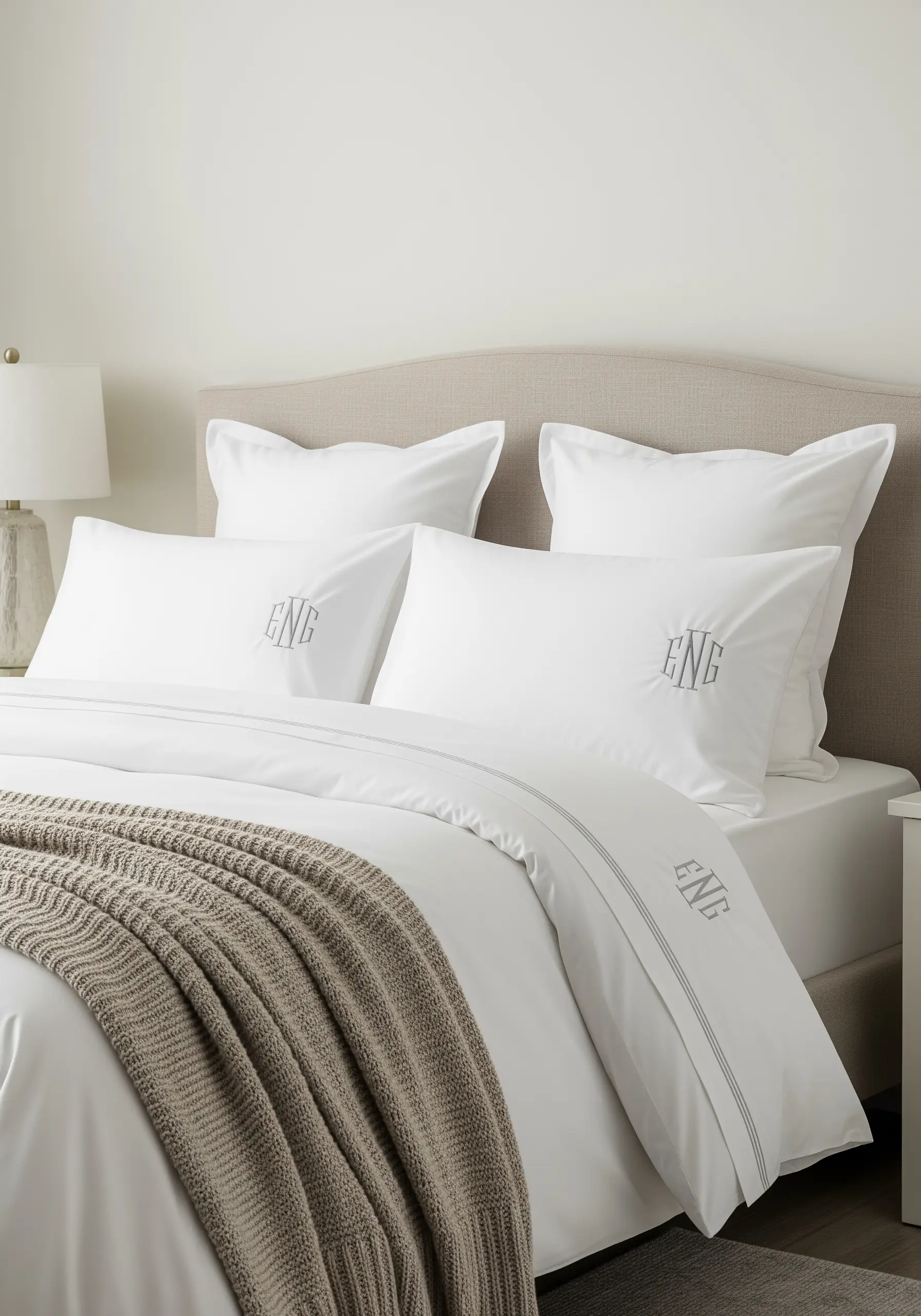
For an exceptionally chic look, choose a thread just one or two shades lighter or darker than your base fabric.
On high-thread-count cotton like percale or sateen, use a single strand of floss and a delicate backstitch for the monogram to avoid puckering the fine fabric.
The subtle contrast of this tone-on-tone embroidery technique creates an effect that is felt as much as it is seen, suggesting quiet luxury.
Strategic, repeated placement on pillowcases and the duvet’s edge unifies the entire bedding set with a bespoke touch.
5. Sculpt a Regal Monogram with Padded Satin Stitch
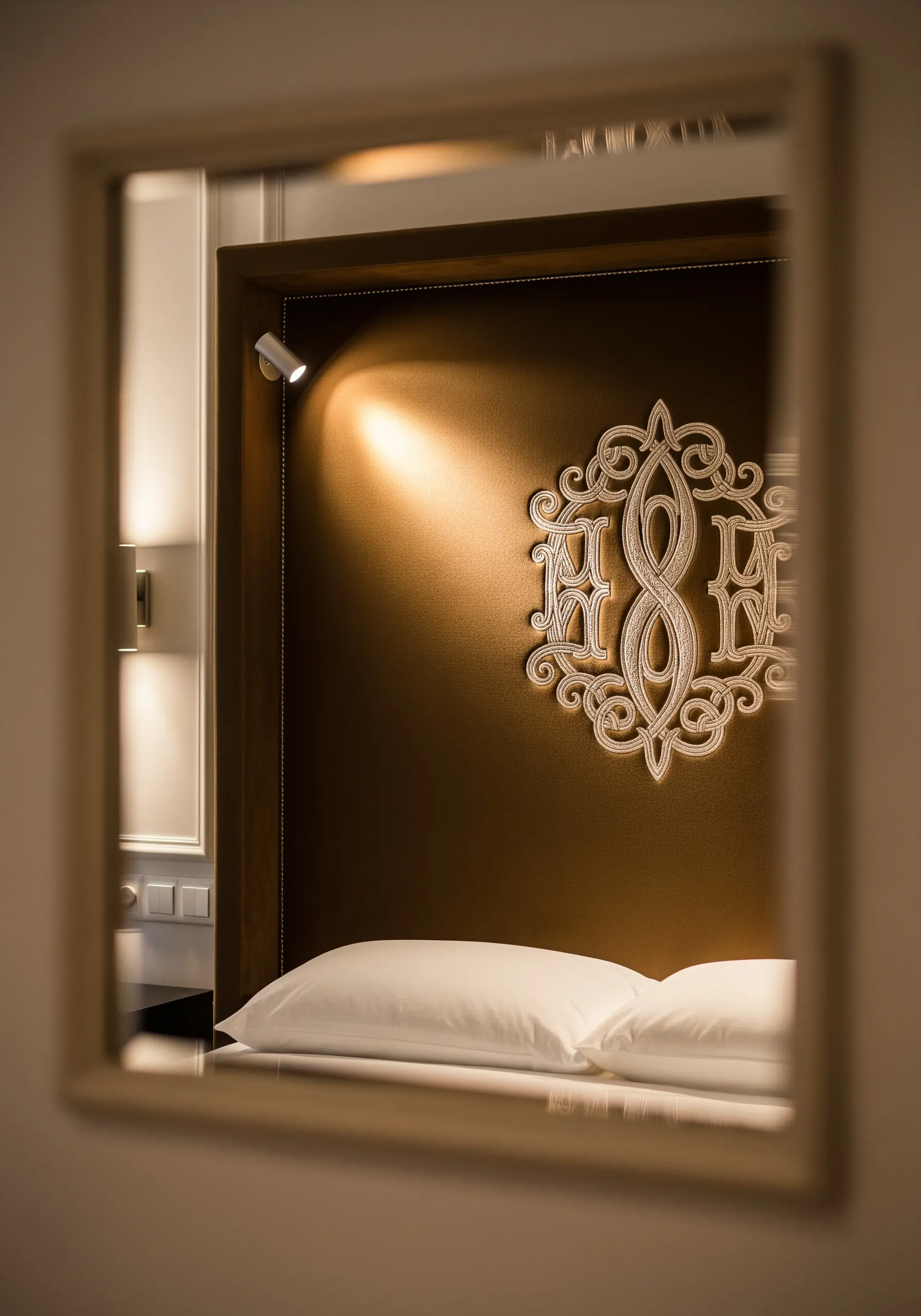
To give your monogram a three-dimensional, embossed quality, use a padded satin stitch, a core technique of stumpwork.
First, fill the shape of your letters with a layer of seed stitches or felt cutouts, creating a raised foundation.
Then, cover this padding with perfectly smooth satin stitches, pulling the thread taut to sculpt the curves of the letters.
Using a pearlescent white or ivory thread enhances the play of light and shadow, making the monogram appear carved and adding raised, sculptural embroidery effects to a fabric headboard.
6. Master the Classic Interlocking Vine Script
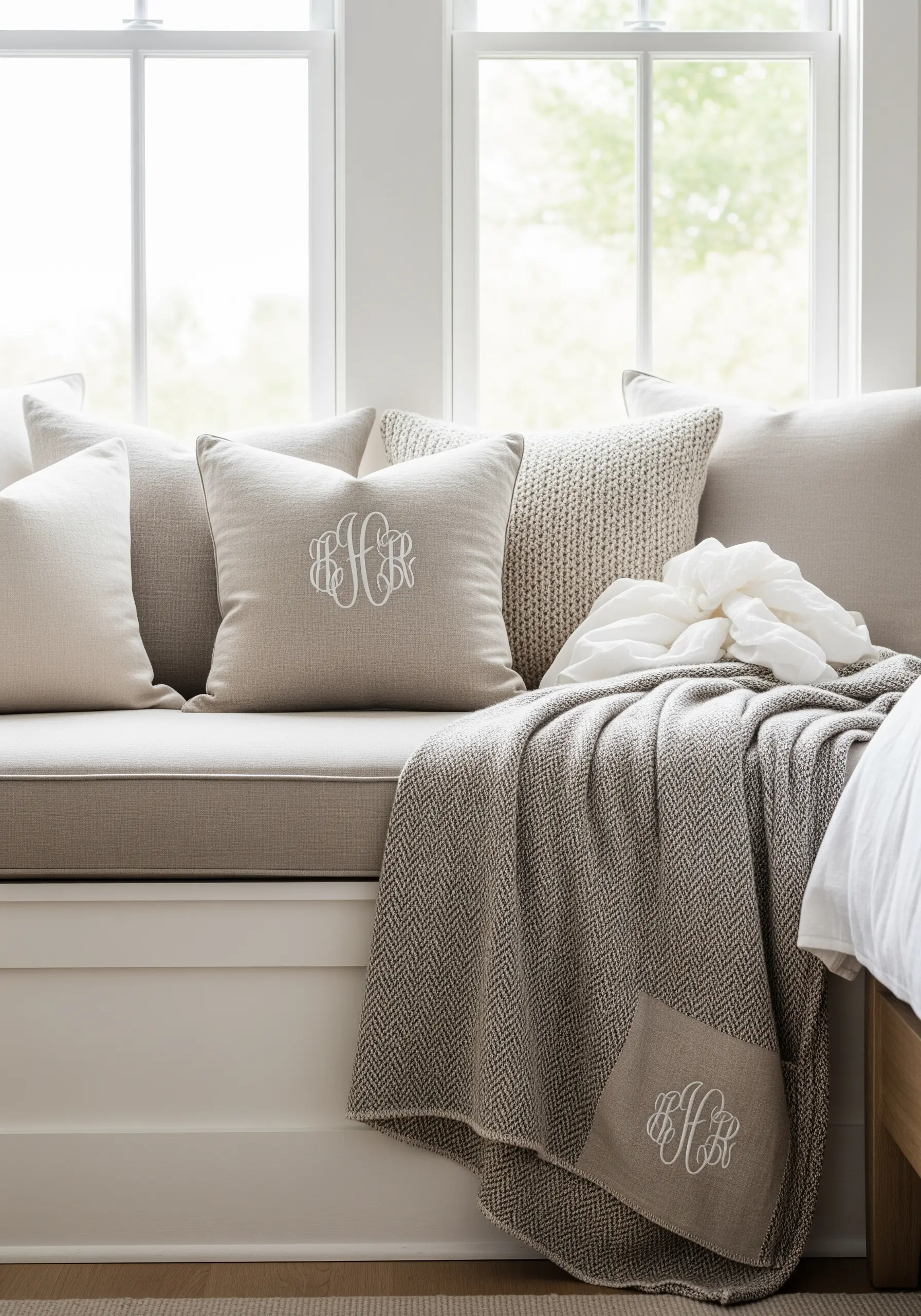
For a traditional, elegant script monogram, the key is fluidity and stitch consistency.
Use a fine-tipped, heat-erasable pen to transfer an intricate vine-style font onto your fabric, ensuring all overlaps are clear.
Work the entire design in a whipped backstitch. This involves completing a standard backstitch outline, then weaving a second thread through the stitches without piercing the fabric, creating a smooth, rope-like line.
This method is superior to satin stitch for complex curves, as it prevents thread separation and maintains a clean, continuous flow.
7. Add a Subtle Graphic Element with a Crown Motif
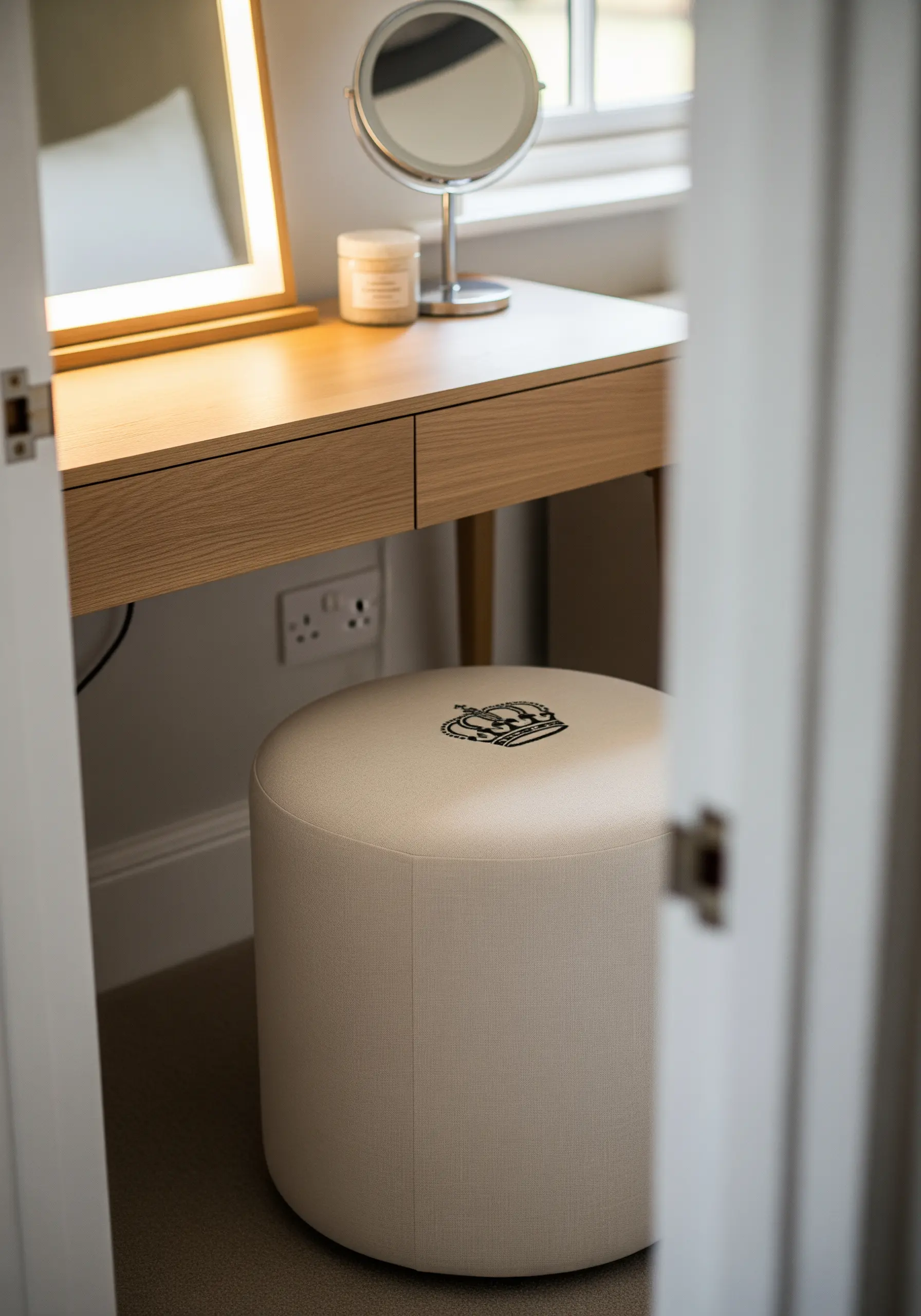
Personalize a piece of furniture with a small, unexpected detail that speaks of quiet confidence.
Instead of initials, consider a symbolic motif like a crown, stitched in a single, contrasting color.
Use a simple backstitch with two strands of floss for a clean, graphic look that doesn’t overwhelm the minimalist design of the furniture.
This technique is perfect for adding a bespoke touch to functional items like a vanity stool, transforming it into a personal accent piece.
8. Layer Fonts for a Dynamic Monogram Composition
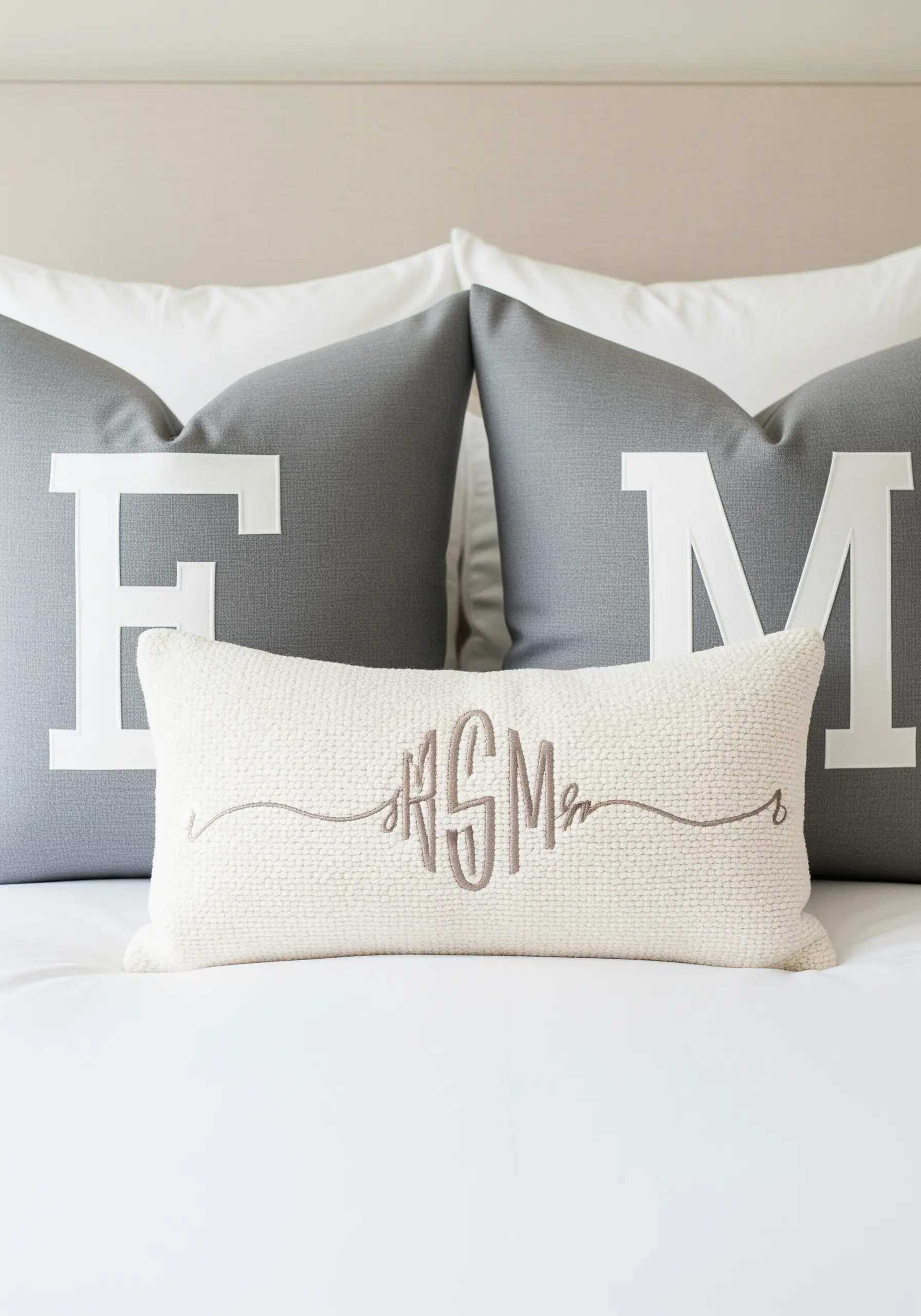
Create visual interest by combining different typographic styles within one arrangement.
Here, bold, appliquéd block letters provide a strong graphic backdrop for a more delicate, embroidered script monogram on the lumbar pillow.
For the script, use a split stitch, which creates a fine, chain-like texture that reads beautifully on heavily textured fabric like bouclé.
This layering of bold shapes and fine lines adds depth and sophistication, allowing you to combine multiple initials harmoniously.
9. Integrate Monograms as a Vertical Drapery Border
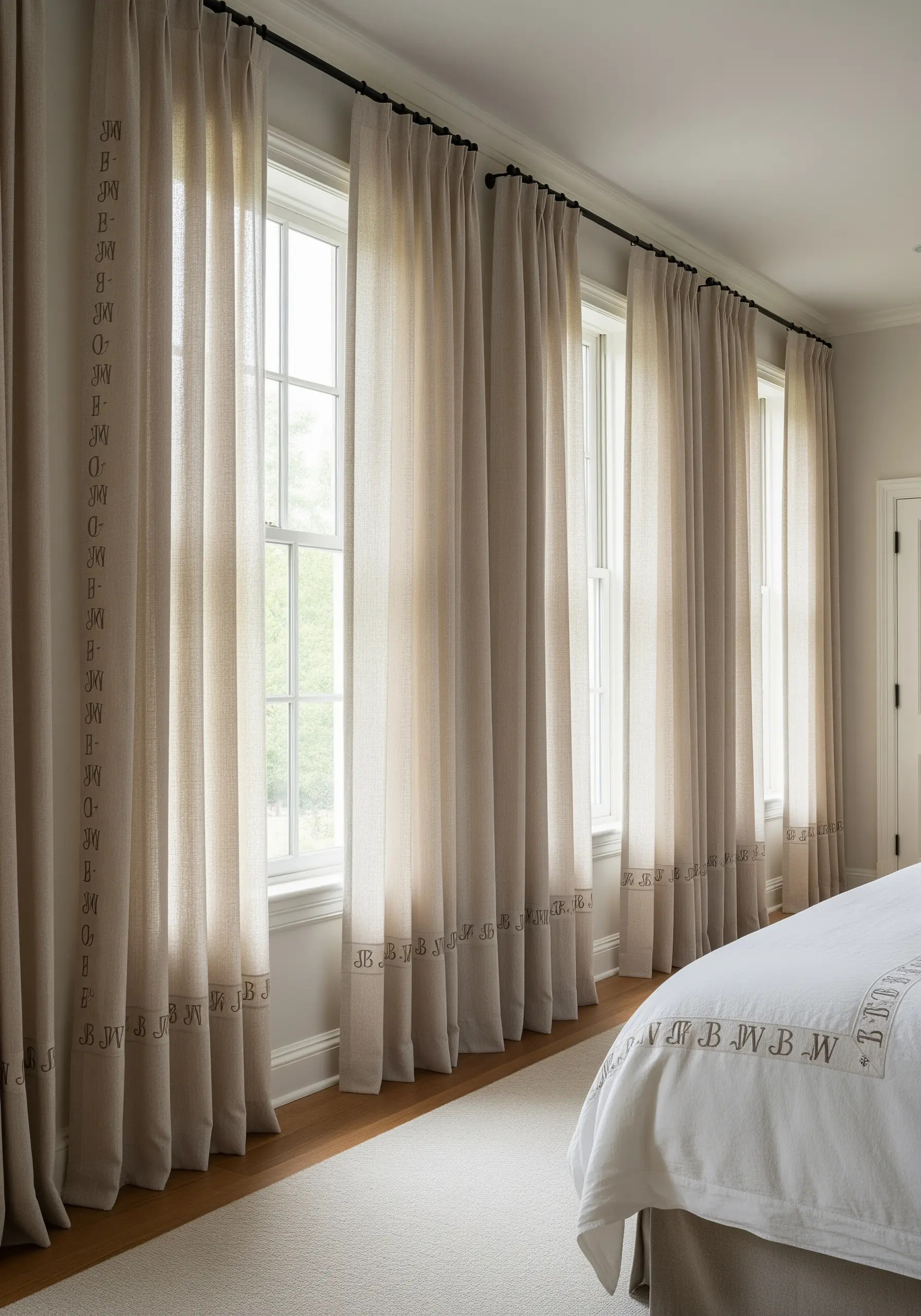
Use embroidery to create a custom, high-end detail on linen curtains.
Instead of a single monogram, create a repeating pattern of initials running vertically along the leading edge of the curtain panel.
A simple, open backstitch in a slightly darker neutral thread adds a subtle graphic element without compromising the curtain’s soft drape.
This technique draws the eye upward, enhancing the sense of height in the room and turning standard drapery into a bespoke architectural feature.
10. Complement Rustic Textures with Refined Stitching
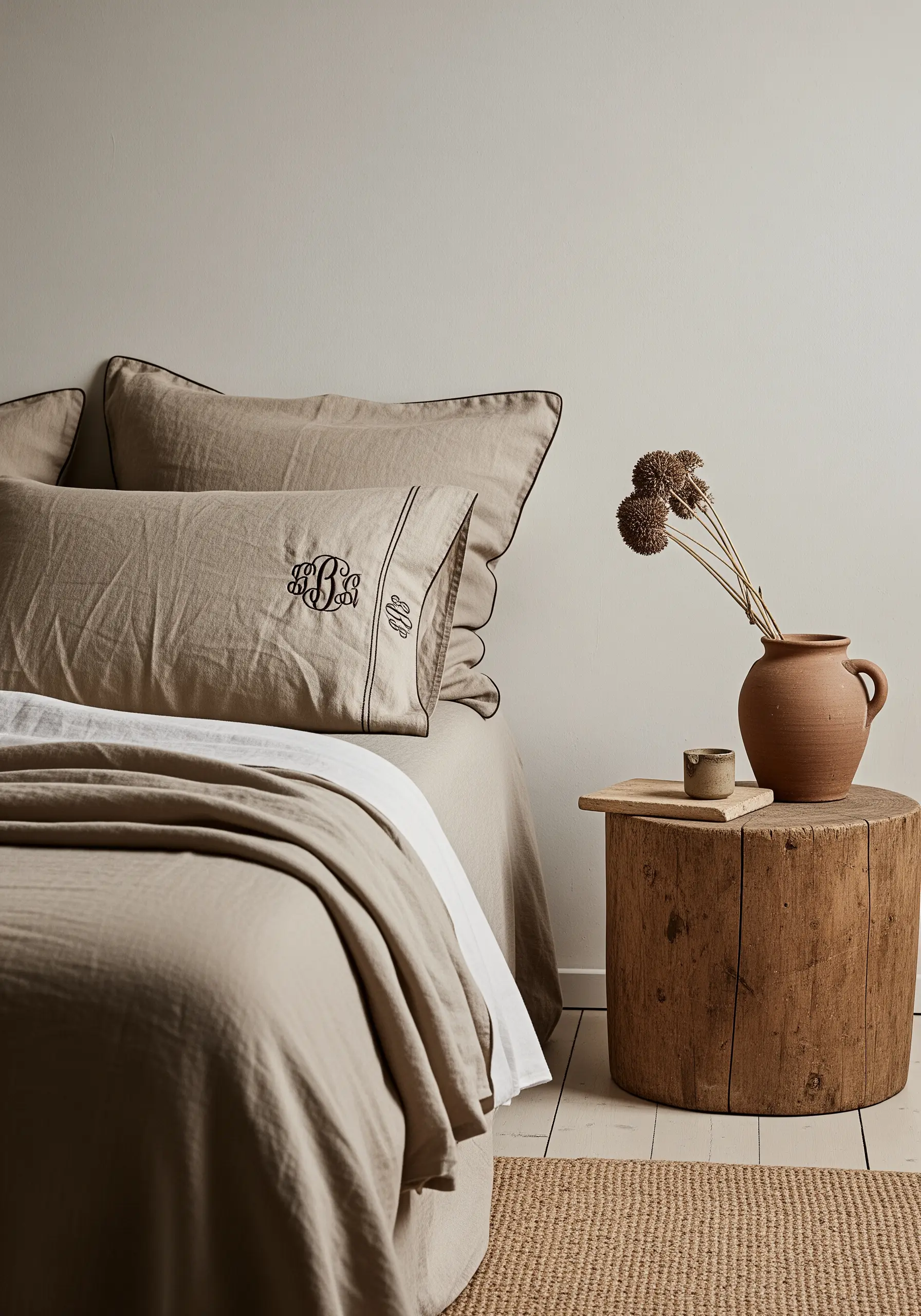
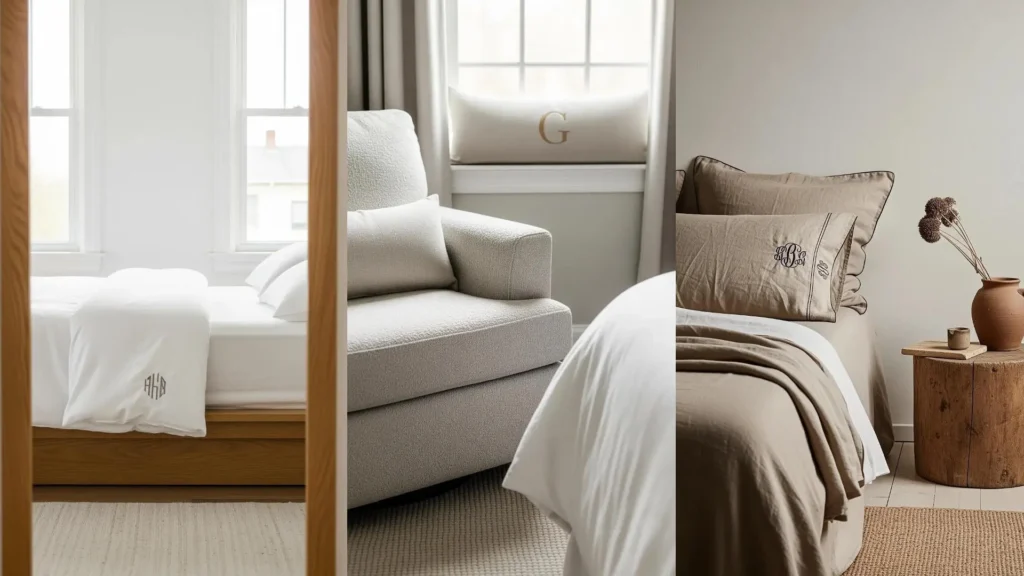
Juxtapose the raw, organic feel of wrinkled linen with the precision of a classic monogram.
Use a dark, contrasting thread to make the initials stand out against the earthy, neutral fabric.
For the ornate script, a combination of satin stitch for the wider strokes and backstitch for the delicate flourishes will maintain clarity and detail.
The crisp, piped border on the pillowcase frames the monogram and adds a tailored finish, balancing the relaxed texture of the linen.
11. Create Bold Texture with Chunky Yarn Couching
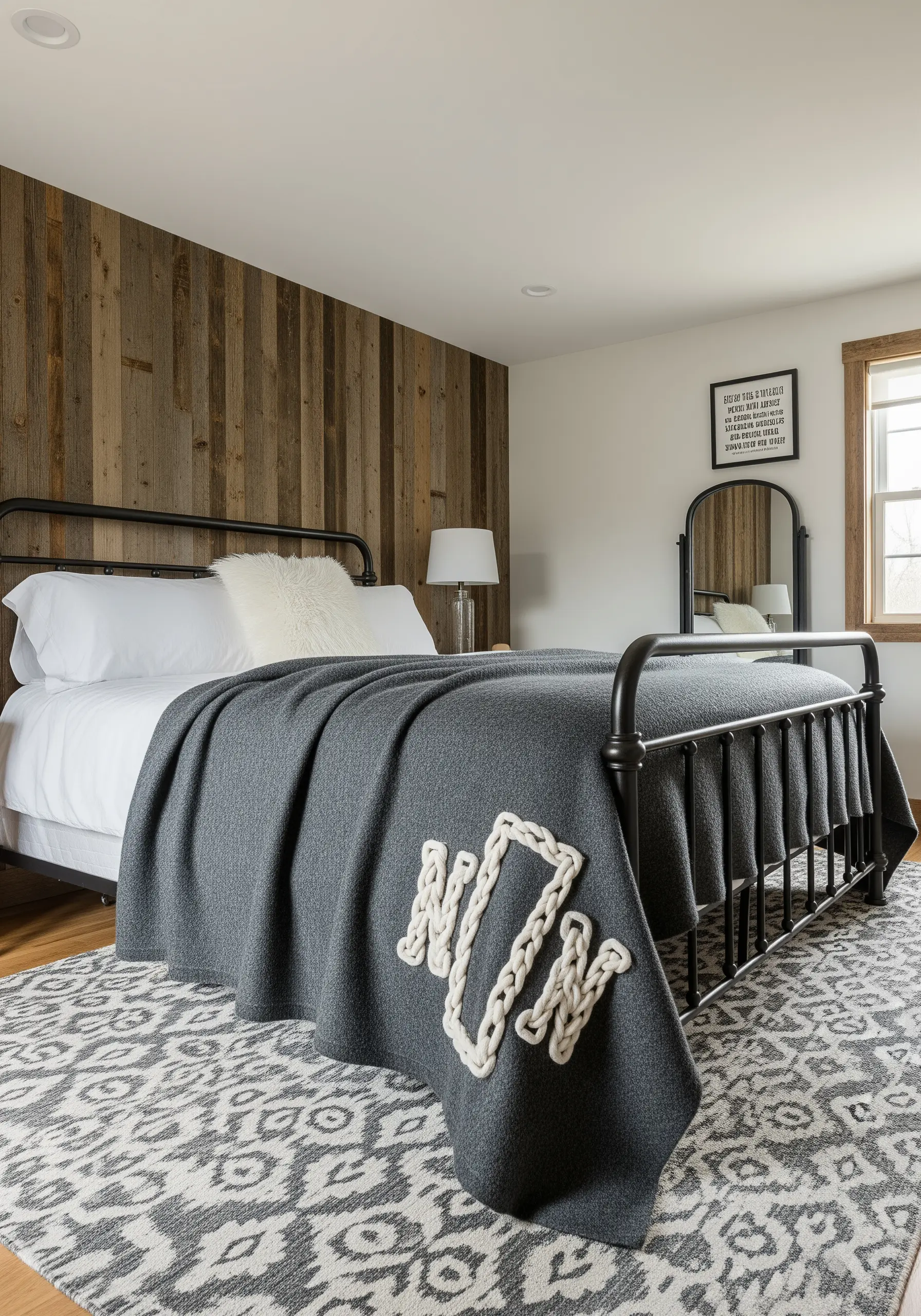
Make a powerful statement on a heavy blanket or throw by using extra-thick yarn for your monogram.
This technique, known as couching, involves laying the chunky yarn on the surface of the fabric and stitching over it with a thinner, matching thread to hold it in place.
Plan your letterforms to have continuous lines where possible, as this minimizes the need to tuck away bulky ends.
The immense texture of the yarn creates a design that is both visual and tactile, adding cozy, dimensional handmade organic pieces to your decor.
12. Frame Modern Initials for a Minimalist Look
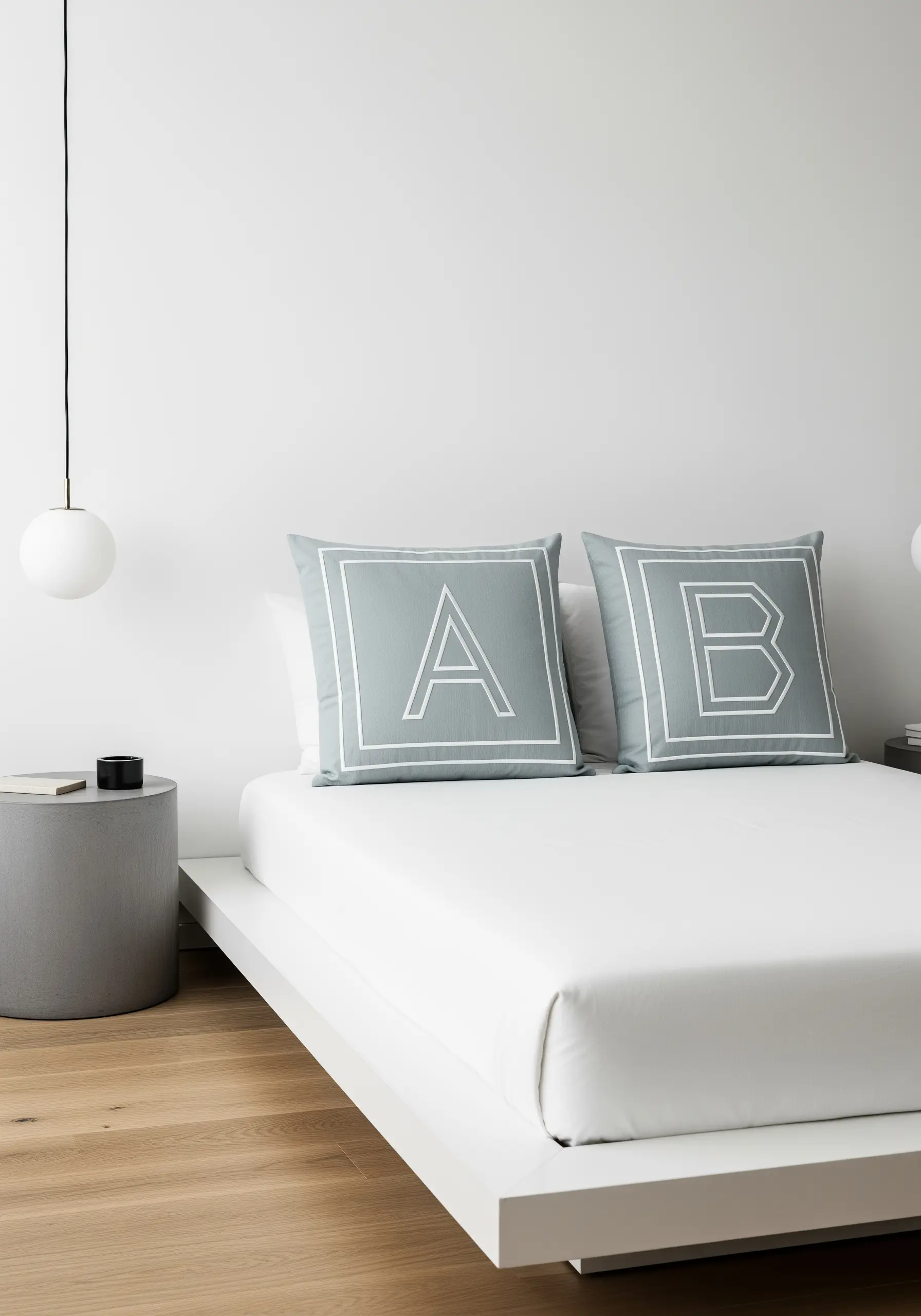
For a contemporary and clean aesthetic, contain your monogram within a stitched border.
Use a simple, sans-serif font for the initials and render them in a single, fine backstitch line.
Stitch a square border around the letters using the same technique and thread weight to create a balanced, cohesive look.
This design is highly effective on smooth, modern fabrics in cool, muted tones like sage green or slate gray, enhancing the minimalist, geometric feel.
13. Add Subtle Detail to Textured Weaves
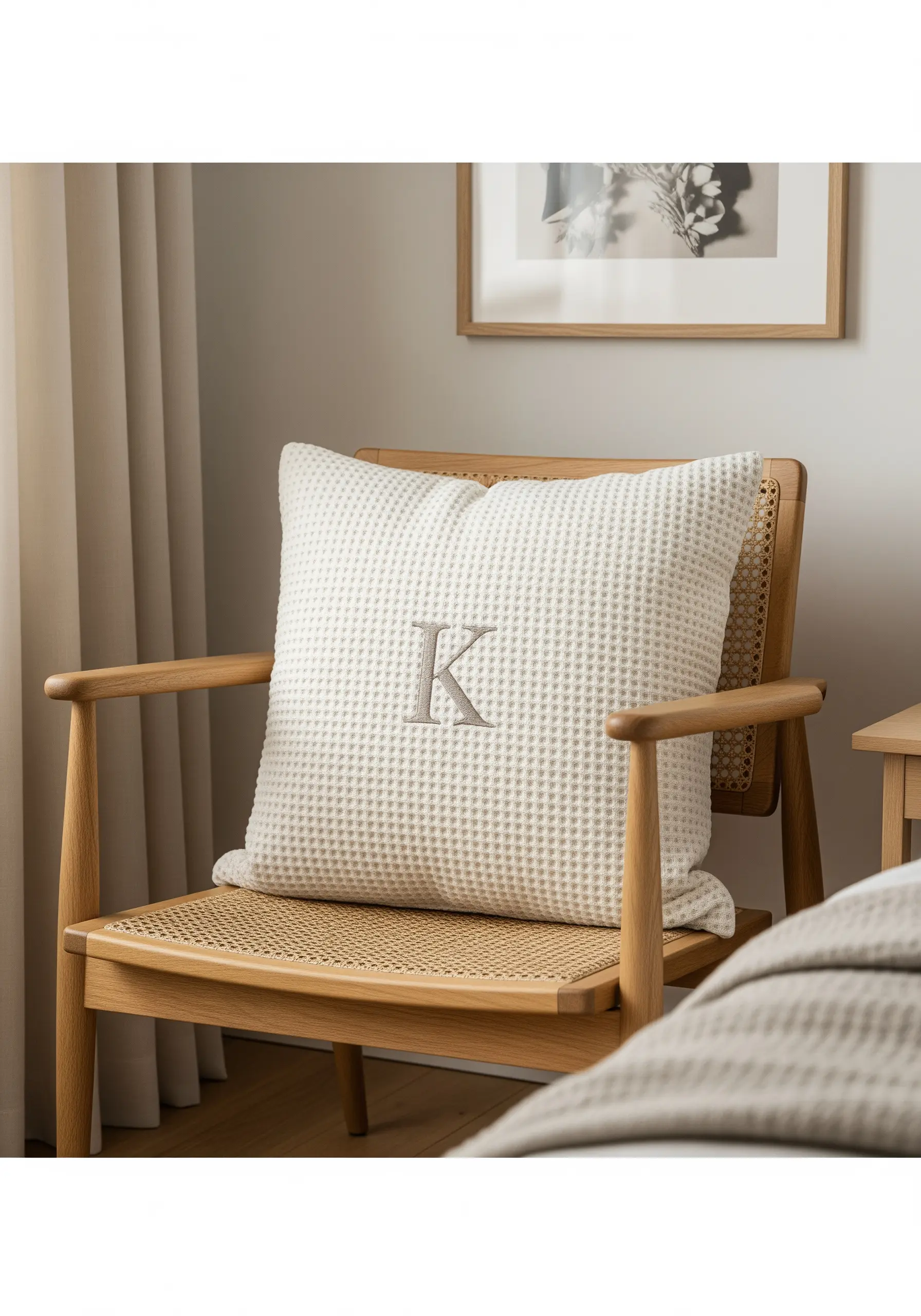
When embroidering on a textured fabric like waffle weave, choose a simple, bold letterform that won’t get lost in the fabric’s grid.
A classic serif initial works beautifully. Use a dense satin stitch, but first lay down a foundation of split stitches to create a smooth, stable base over the uneven surface.
This prevents the fabric’s texture from showing through your stitching and ensures a solid, professional-looking result.
A slightly darker, tonal thread color adds sophistication without competing with the fabric’s inherent texture.
14. Anchor a Bench with a Centered Lumbar Monogram
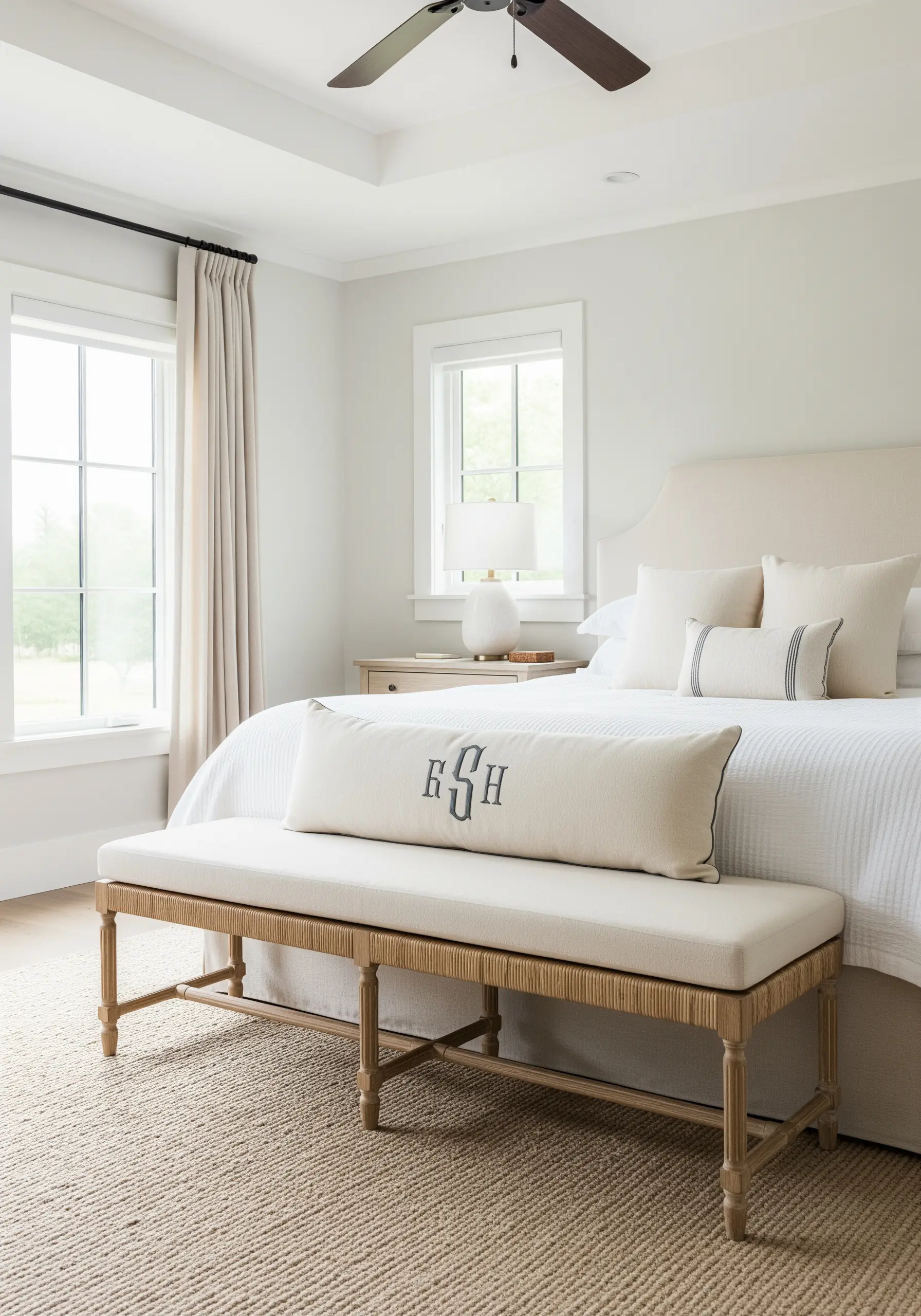
Use a long lumbar pillow to create a strong horizontal line at the foot of the bed, and center a monogram to act as a focal point.
Choose a compact, interlocking monogram style that reads clearly from a distance.
Use a dark thread that coordinates with other accents in the room, such as the curtain rods or furniture legs, to create a cohesive design story.
The dark piping on the pillow’s edge reinforces the shape and frames the monogram, giving it presence and polish.
15. Display Monograms as a Framed Triptych
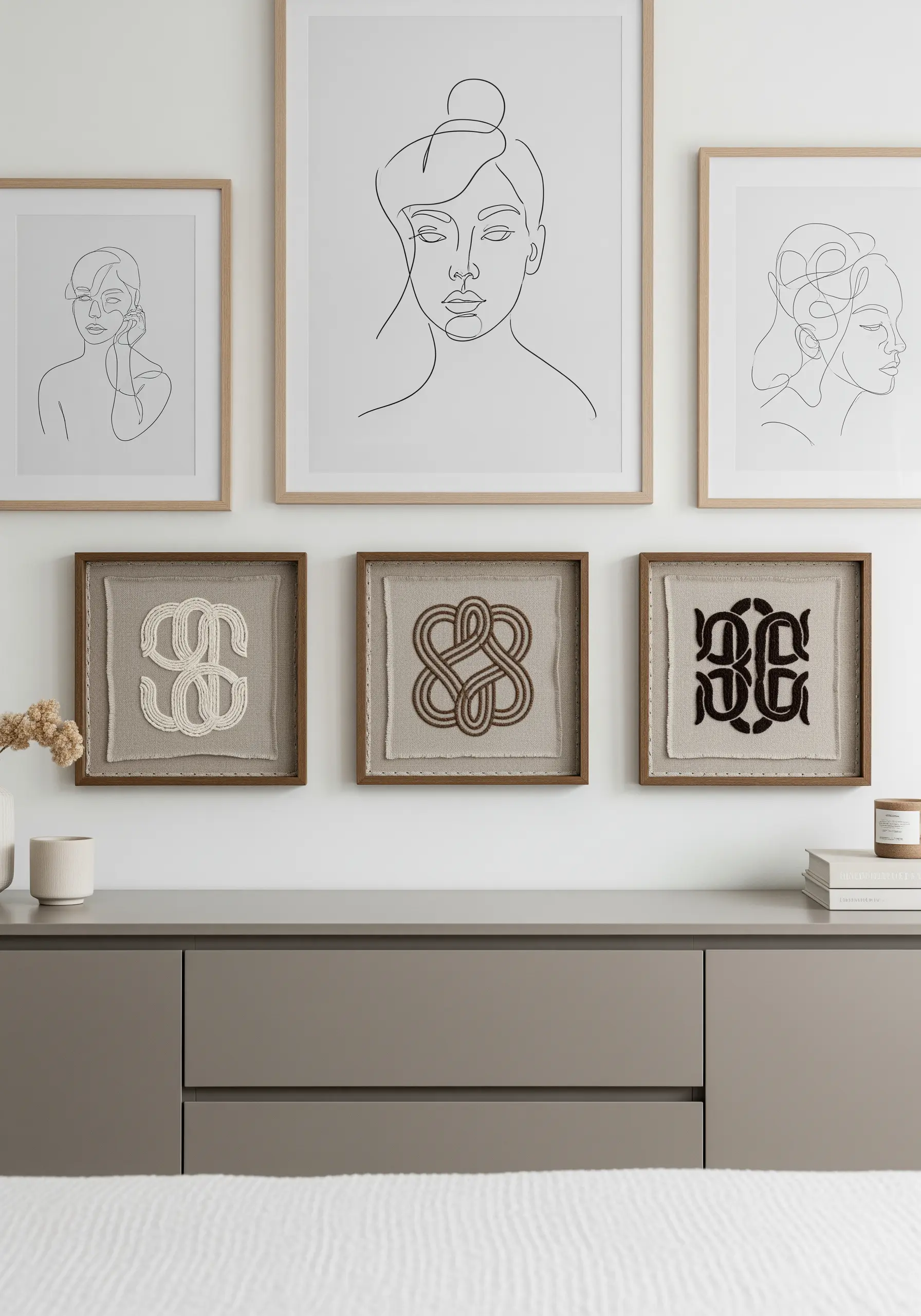
Elevate embroidery to fine art by stitching monograms on fabric and framing them as a gallery set.
To create a cohesive series, use the same raw linen fabric and frame style for each piece.
Introduce variety by using different thread colors from the same neutral palette and by exploring diverse stitching techniques, like chunky yarn couching or dense satin stitch fills.
Mount the fabric on acid-free board with the edges frayed slightly for a soft, textural finish before framing, creating a sophisticated hooped wall collage layout.
16. Coordinate Monograms Across Different Textiles
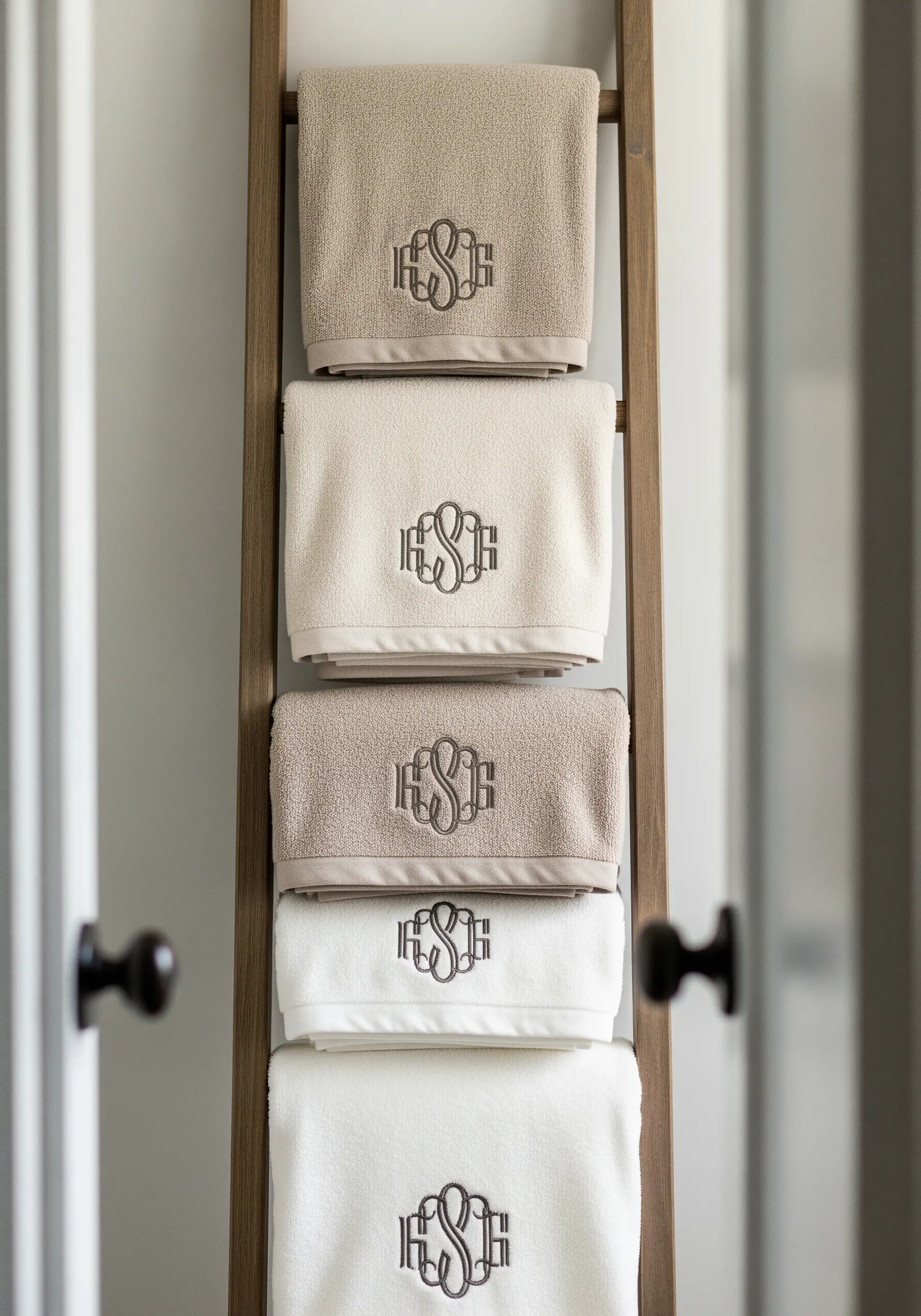
Create a harmonious and layered look in a bathroom or bedroom by using the same monogram style across various textiles.
While the monogram itself should be identical in font and scale, you can vary the thread color to complement the specific towel or linen it’s on.
Choose a thread with a slight sheen, like a pearl cotton, which will stand out beautifully against the matte, absorbent texture of terry cloth.
This repetition provides a subtle, unifying theme that makes the entire space feel curated and intentional.
17. Scale Up a Monogram for Utilitarian Objects
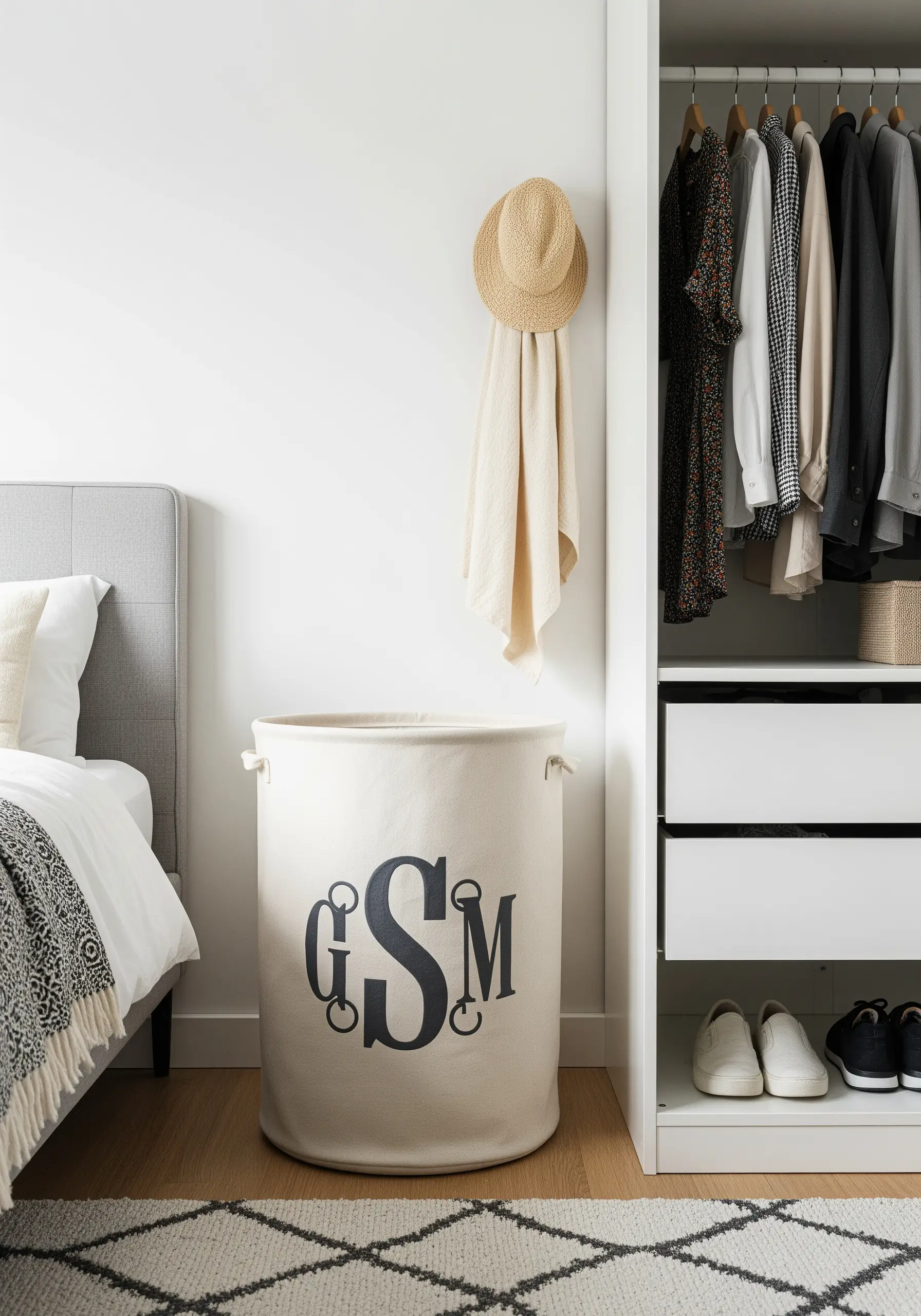
Make a bold statement on a functional item, like a canvas laundry basket, by dramatically increasing the scale of your monogram.
Use a thick, heavy-duty thread, such as a cotton sashiko thread or a fine yarn, to give the large letters the necessary weight and presence.
A simple backstitch or stem stitch is ideal for this application, as it creates a strong, clear line that is both durable and visually effective from across the room.
The oversized typography transforms a simple object into a piece of personalized graphic decor.
18. Use Metallic Thread for a Touch of Quiet Glamour
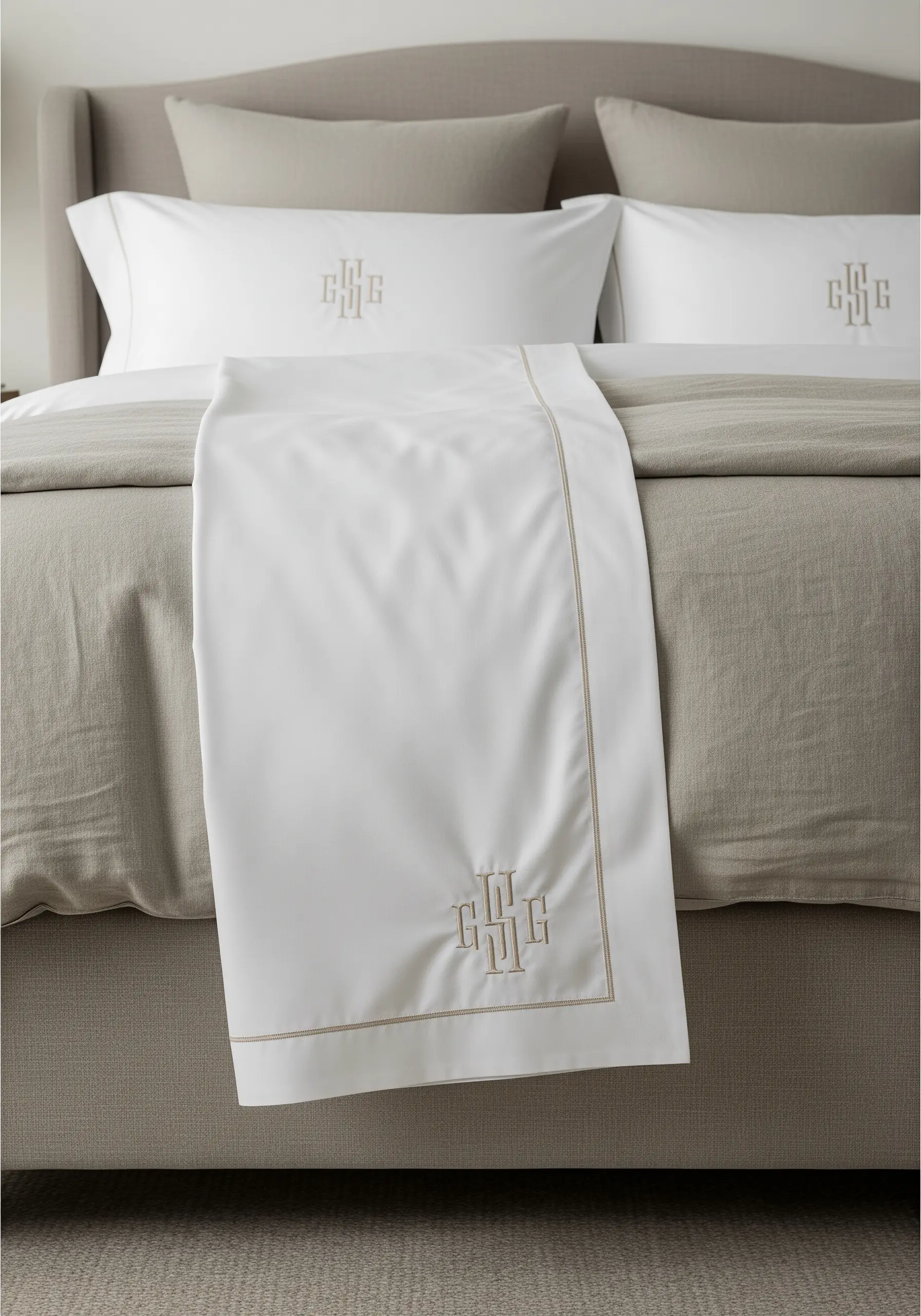
Introduce a hint of luxury to classic white bedding by using a soft metallic thread for the monogram and border.
Choose a muted gold or champagne metallic that complements the warm undertones of the taupe and beige accents in the room.
To prevent frustration, use a needle with a larger eye and work with shorter lengths of metallic thread to minimize fraying and tangling.
The subtle shimmer catches the light beautifully, adding a layer of sophisticated warmth that feels both classic and contemporary.
19. Embrace Simplicity with a Single Initial
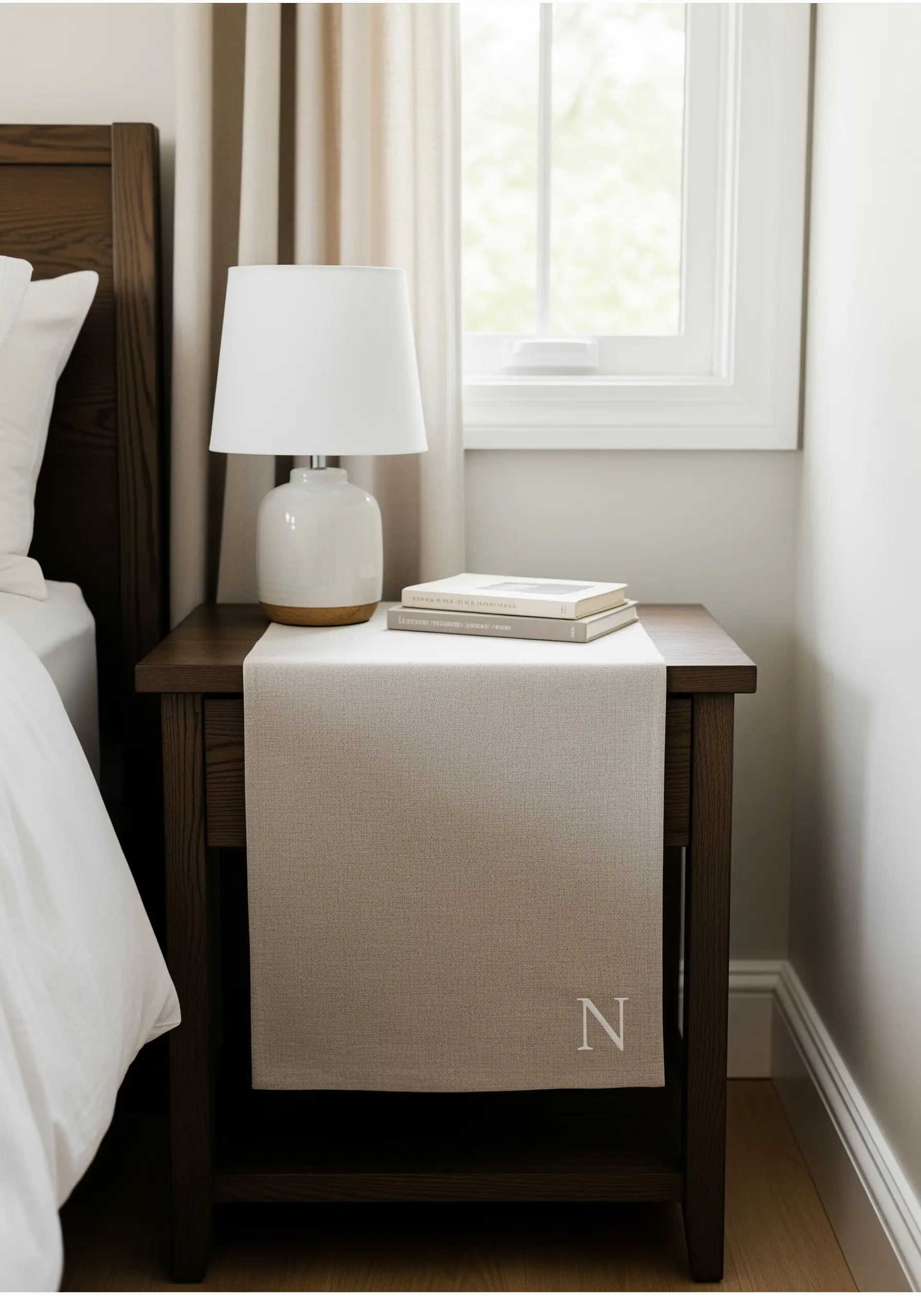
For a minimalist and modern aesthetic, opt for a single, elegantly placed initial rather than a full monogram.
Place the letter in an unconventional spot, like the bottom corner of a bedside table runner, for an unexpected, artful touch.
Choose a clean, classic serif font and stitch it in a contrasting color using a simple satin stitch for a solid, polished finish.
This restrained approach feels intentional and chic, proving that minimalist embroidery patterns can have a significant impact.
20. Define Form with Dimensional Cording
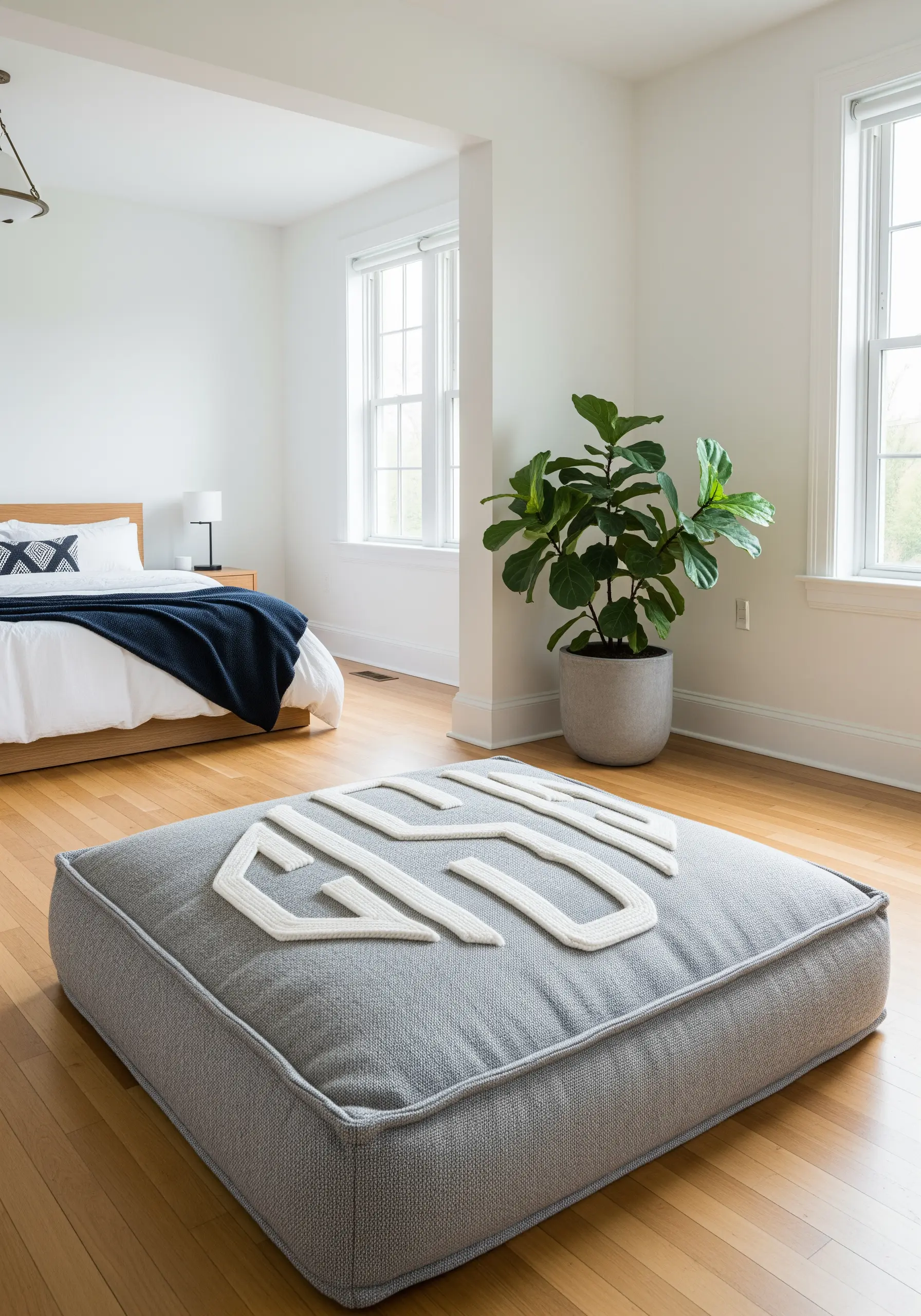
Create a highly textural and graphic monogram on a large floor cushion using thick cording or rope.
Lay down the cording along your design and use a strong, matching upholstery thread to couch it securely to the fabric surface.
The thickness of the cord creates a bold, raised outline that has significant visual and physical weight, perfect for large-scale applications.
This technique adds a sculptural quality to the textile, transforming it into a functional art object that invites touch.
21. Achieve a Soft, Ropelike Texture with Chain Stitch

For a monogram that feels both soft and defined, use a chain stitch to create the flowing lines of a script initial.
The interconnected loops of the chain stitch form a beautiful, braid-like texture that is perfect for single-line designs.
Use a pearl cotton thread, which has a natural twist and slight sheen that enhances the stitch’s definition and ropelike appearance.
This stitch is especially effective on soft, textural fabrics like muslin or gauze, where its texture provides a lovely contrast.
22. Inset a Monogram for a Tailored Finish
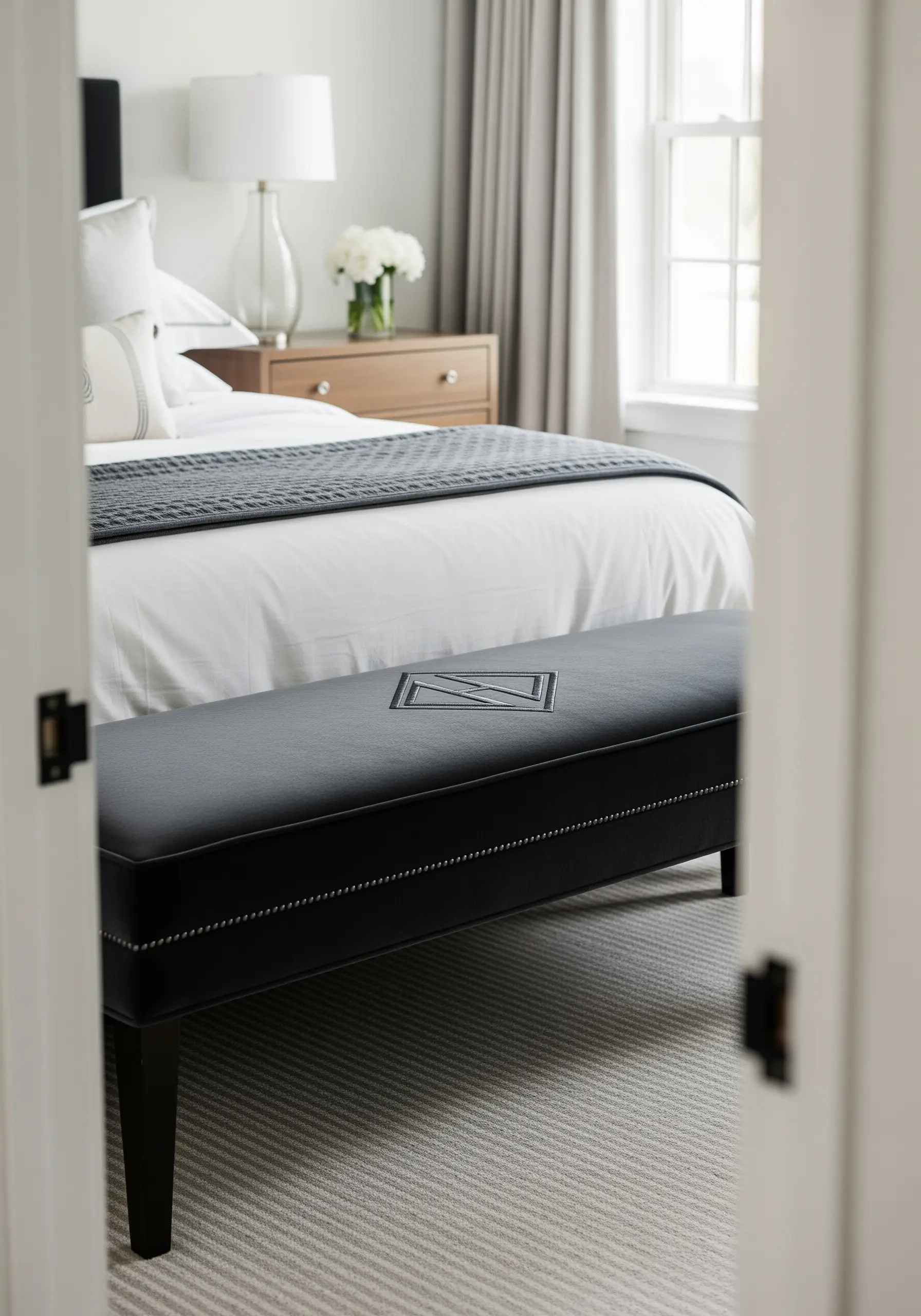
For a sleek and integrated look on upholstered furniture, consider an inset monogram.
This technique involves embroidering the monogram on a separate piece of matching or contrasting fabric, which is then precisely set into the main upholstery.
The monogram here, framed by a diamond shape, is rendered in a satin stitch that contrasts texturally with the smooth leather-like fabric of the bench.
This method creates a crisp, custom-made appearance that feels intentional and exceptionally high-end.
23. Create a Focal Point with a Single Monogrammed Pillow

In a serene, all-white bedroom, a single, dark monogram can act as a powerful focal point.
Choose a simple, classic font and embroider it in a contrasting charcoal or black thread on a central pillow.
The dark thread of the monogram should echo the piped edge of the pillow, creating a cohesive and deliberate design element.
This minimalist approach demonstrates how a small touch of high-contrast embroidery can anchor an entire space with confidence and style.
24. Add Warmth with a Metallic Gold Initial
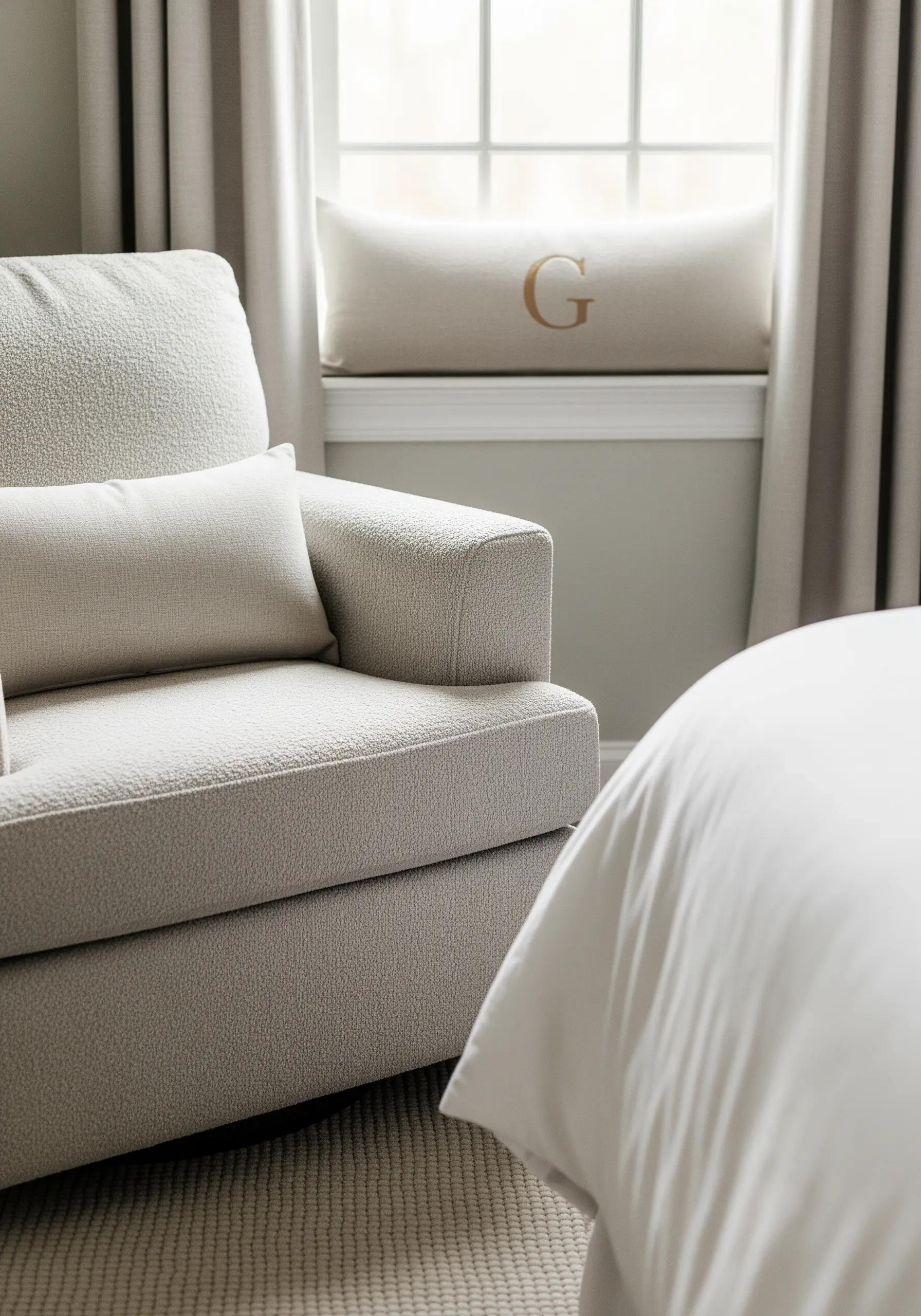
Bring a touch of warmth and subtle color to a neutral palette with a monogram stitched in a soft, burnished gold thread.
On a heavily textured fabric like bouclé, a simple, elegant serif font works best, as intricate details could be lost.
Use a satin stitch for the letterform, which allows the metallic thread to catch the light and reveal its warm shimmer.
This small detail connects with other warm elements in the room, like wood tones or brass fixtures, creating a cohesive and inviting atmosphere.
25. Use a Monogram to Mark a Minimalist Duvet
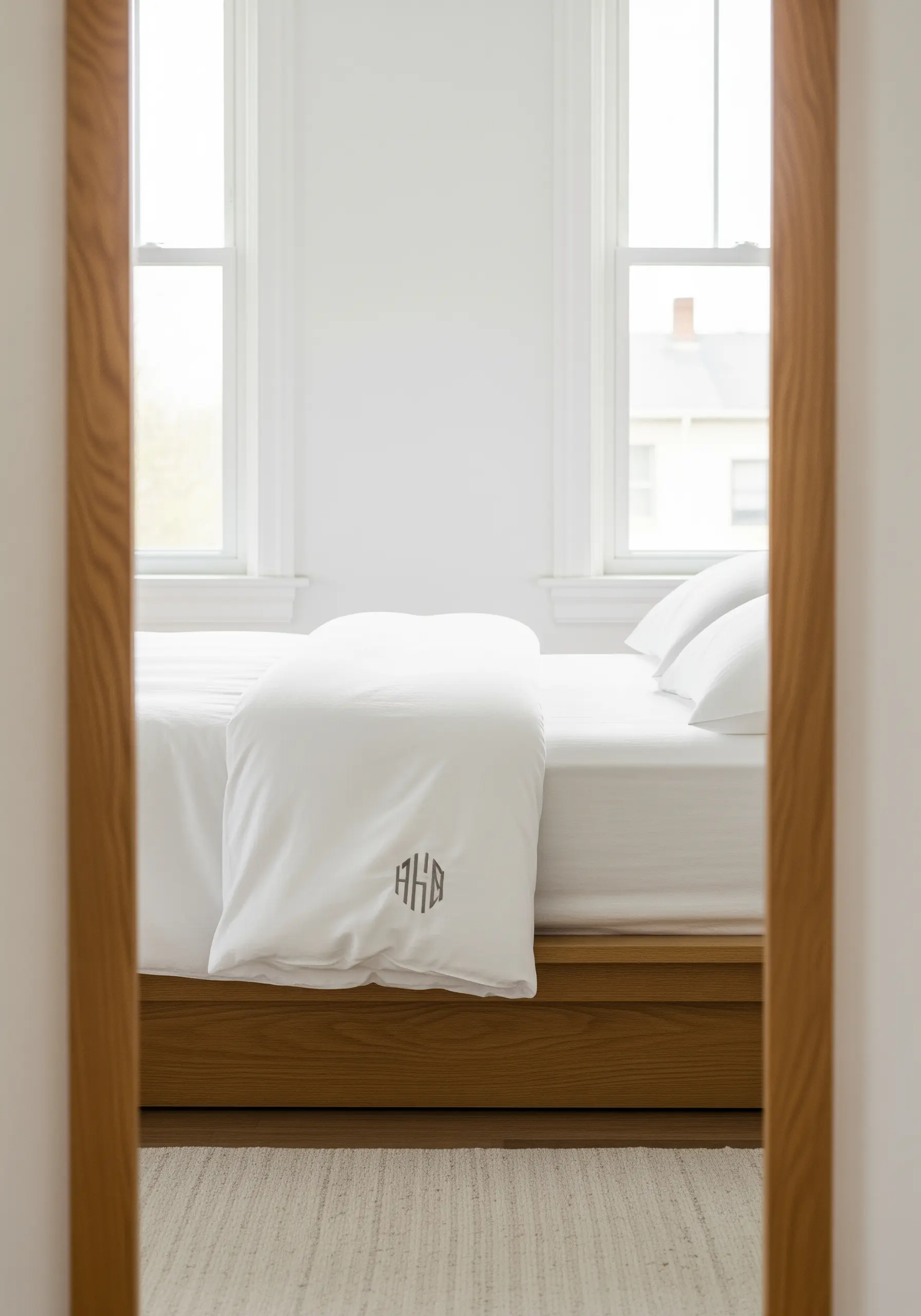
For a subtle, modern take on monogrammed bedding, place a small, classic monogram on the bottom corner of the duvet cover.
This off-center placement feels less traditional and more personal, like a quiet signature on a piece of art.
Stitch it in a soft gray thread on crisp white cotton for a gentle contrast that complements a minimalist or Scandinavian design aesthetic.
The simplicity of the design ensures it enhances, rather than distracts from, the serene and uncluttered feeling of the space.
26. Design Functional Art with Monogrammed Tie-Backs
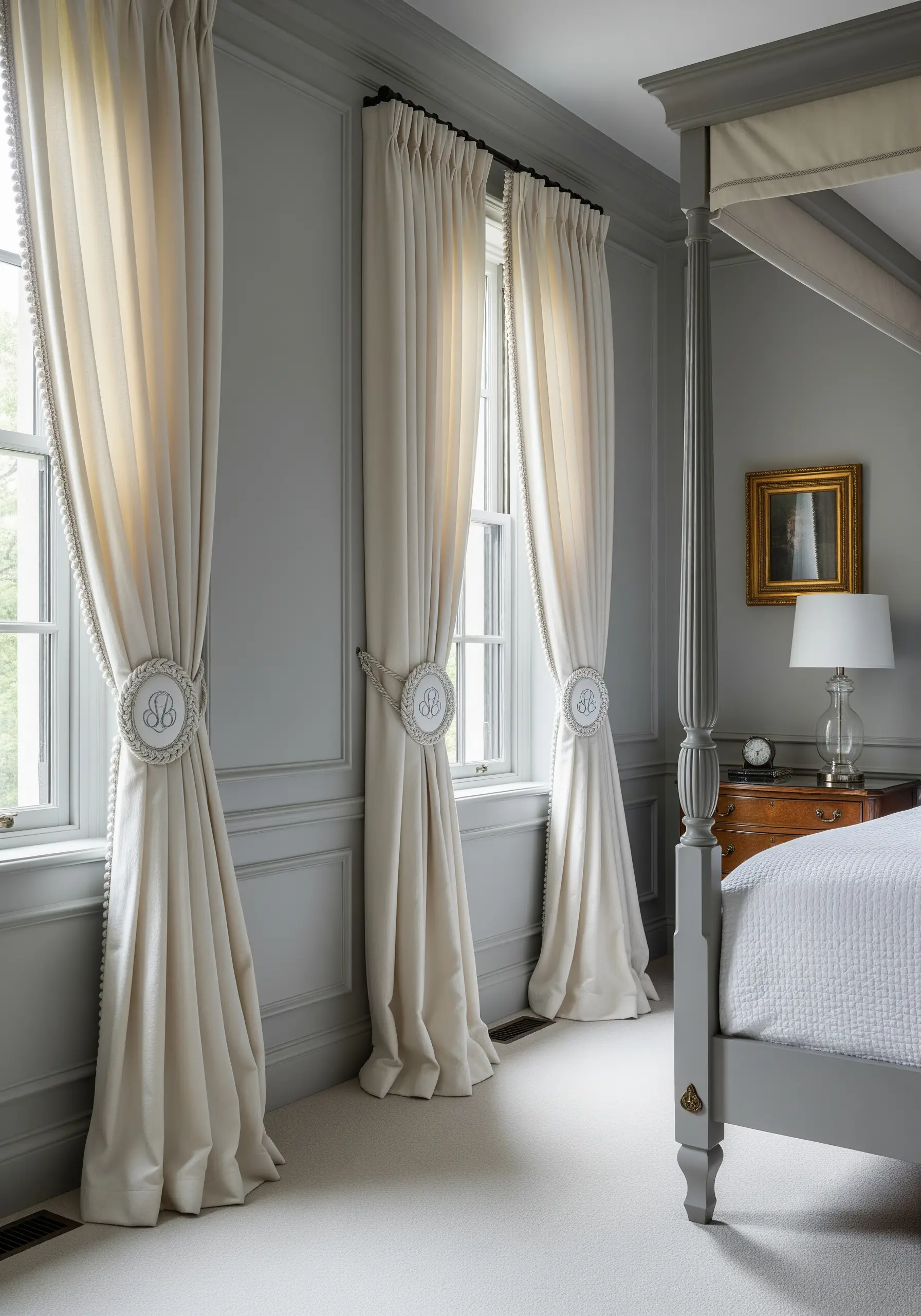
Transform a functional object like a curtain tie-back into a decorative, personalized element.
Embroider your monogram onto a sturdy base fabric, like linen or canvas, stretched in a hoop for stability.
Create a raised, dimensional effect by using a padded satin stitch, then finish the piece as a medallion by backing it with felt and trimming the edges.
Attaching these embroidered medallions to simple rope tie-backs adds a layer of bespoke elegance and historical charm to your window treatments.
27. Explore Typographic Variation in a Series
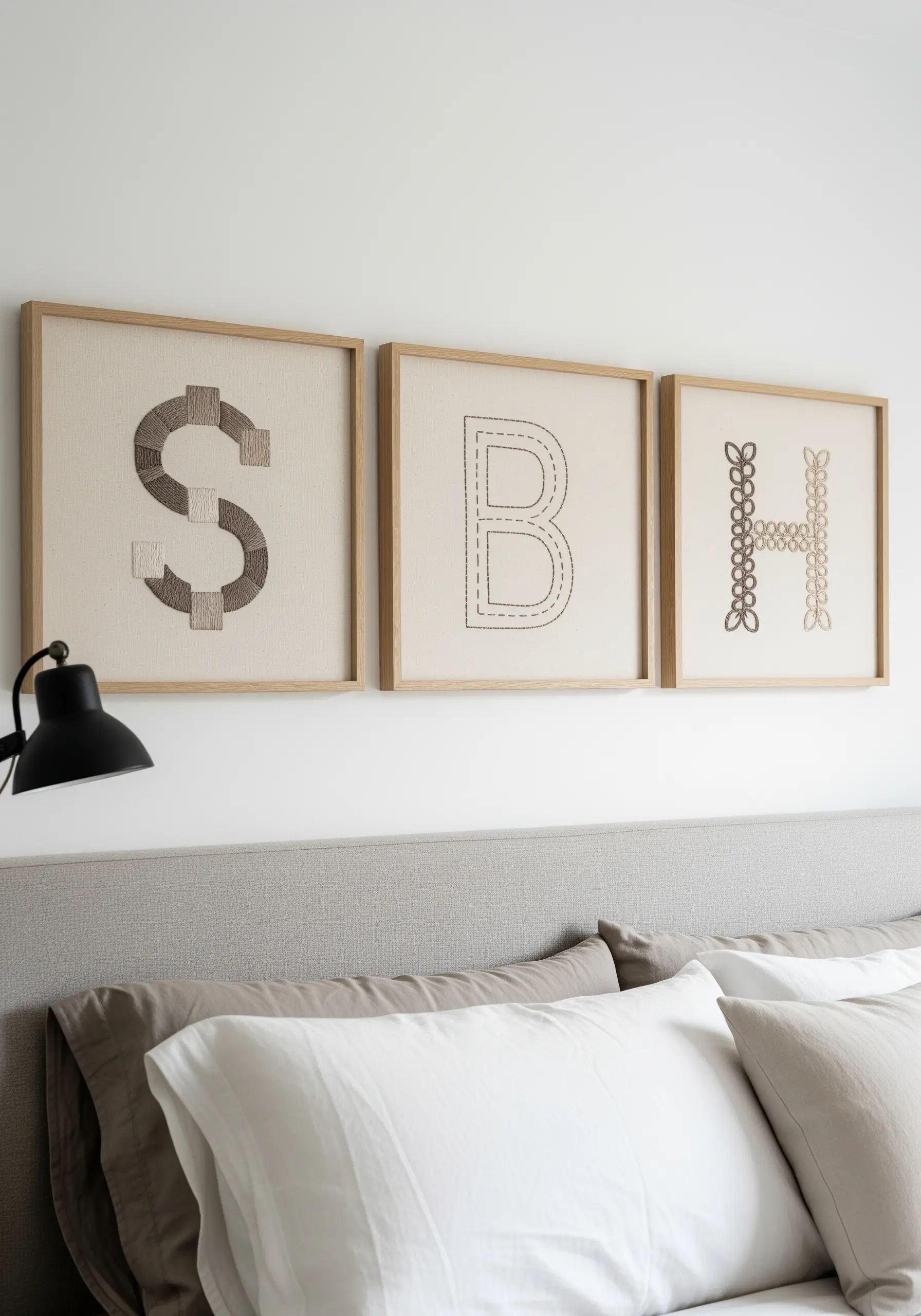
Create a dynamic gallery wall by dedicating each frame to a different stitch interpretation of a letter.
For the ‘S’, use color-blocking with satin stitch to create a geometric, ribbon-like effect.
Render the ‘B’ with a simple running stitch outline, emphasizing its clean form through negative space.
For the ‘H’, use rows of French knots or seed stitches to create a rich, textural fill.
This approach transforms simple initials into a compelling study of line, form, and abstract thread texture.
28. Apply a Satin Stitch Patch to Chunky Knits
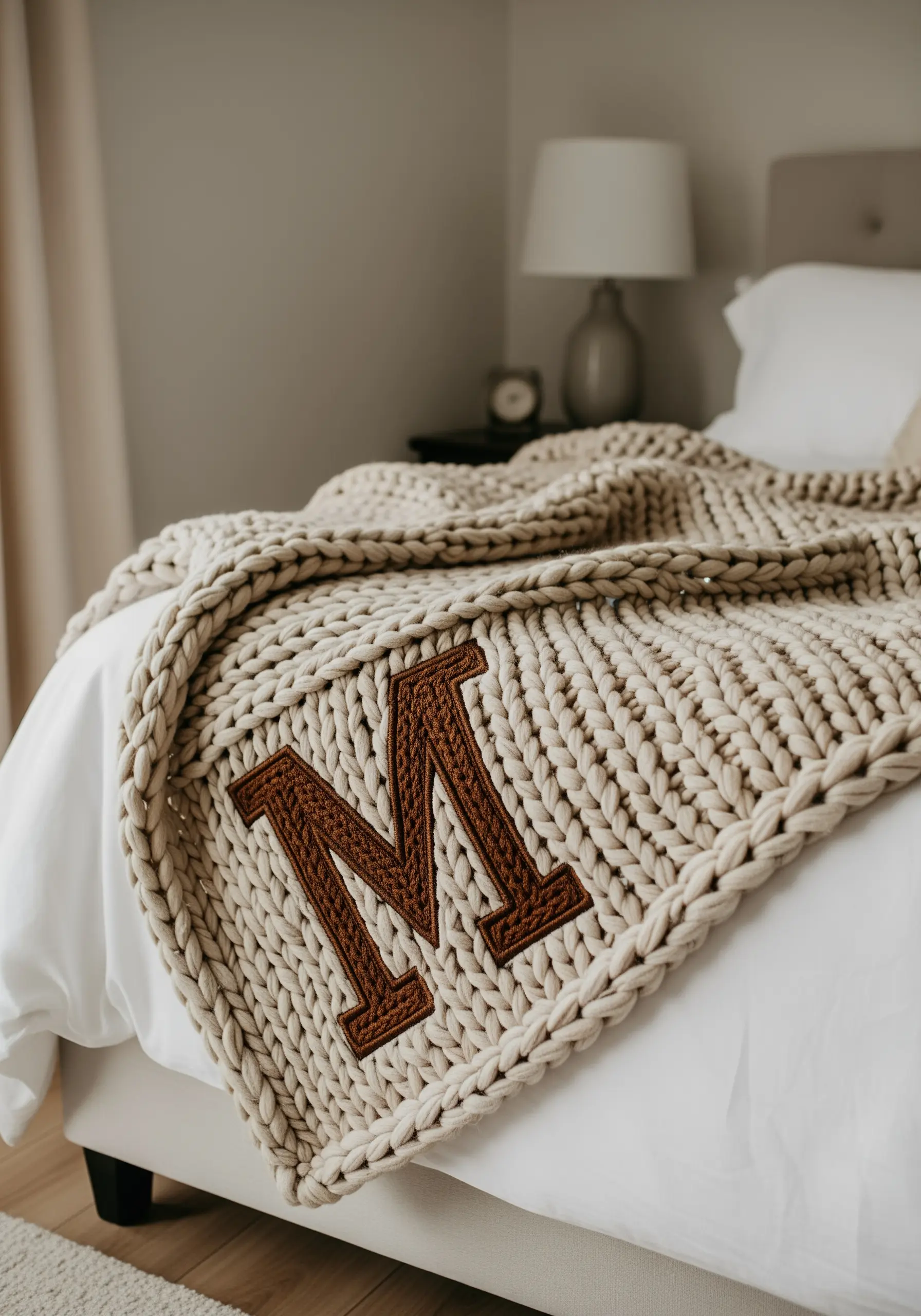
Embroidering directly onto a very chunky, open-weave knit can be challenging, as stitches can sink and disappear.
The solution is to create an embroidered patch. Stitch your monogram onto a piece of stable, tightly woven fabric like felt or cotton twill using a dense satin stitch.
Trim the patch closely around the letter, leaving a small border, and then carefully hand-sew it onto the surface of the knit blanket.
This ensures your monogram remains crisp and legible while adding a layer of textural contrast.
29. Add Delicate Detail with Seed Stitch Accents
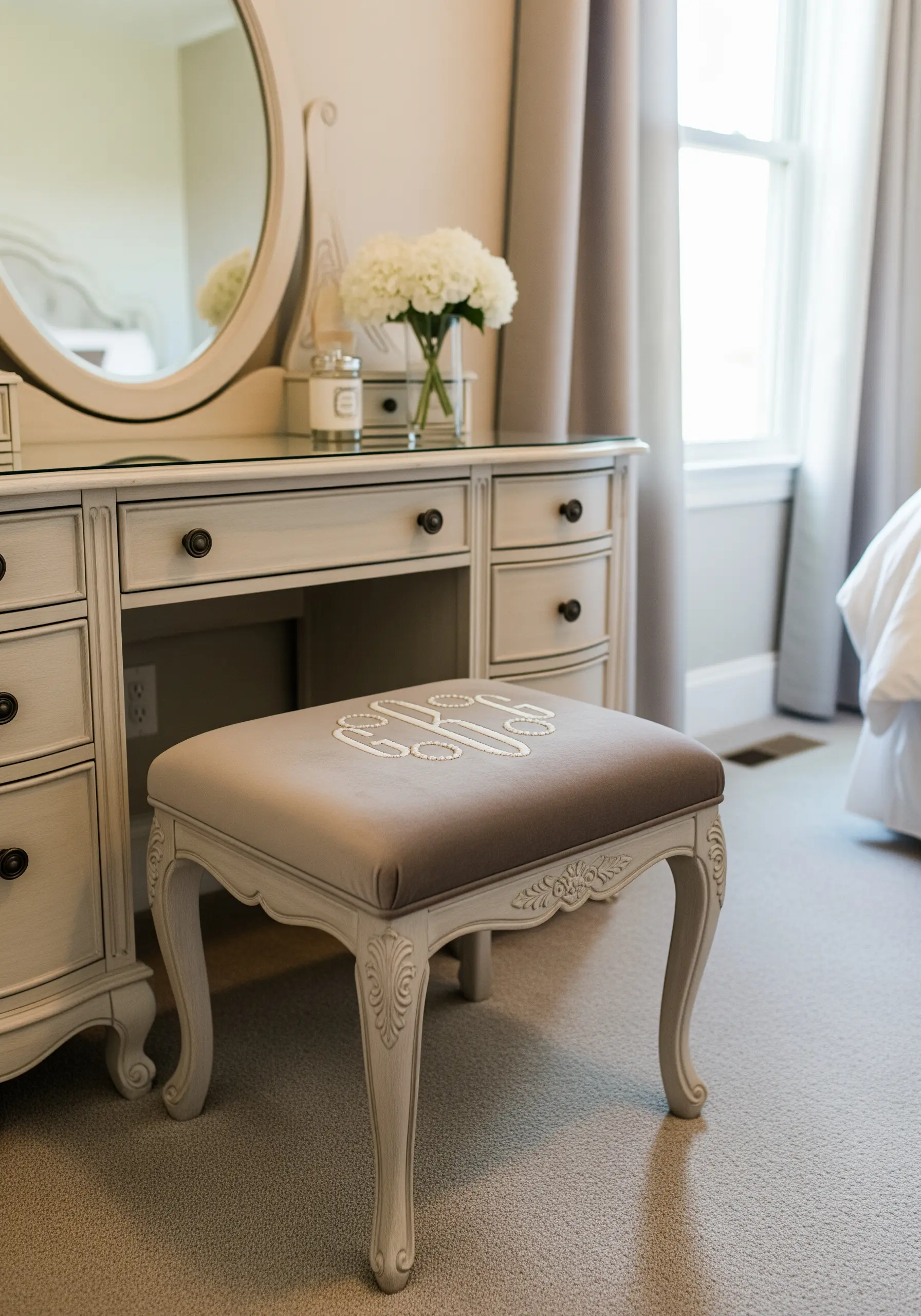
For an ornate monogram on a fine fabric like velvet or silk, use a combination of stitches to create dimension and shimmer.
Outline the main letterforms with a fine whipped backstitch in a soft, neutral thread.
Then, embellish the design with tiny, scattered seed stitches or French knots using a slightly lighter or metallic thread.
This technique adds a delicate, pointillist texture that catches the light, giving the monogram a subtle sparkle and a jewel-like quality without overwhelming the luxurious base fabric.
30. Create a Subtle Band of Monograms on Curtains
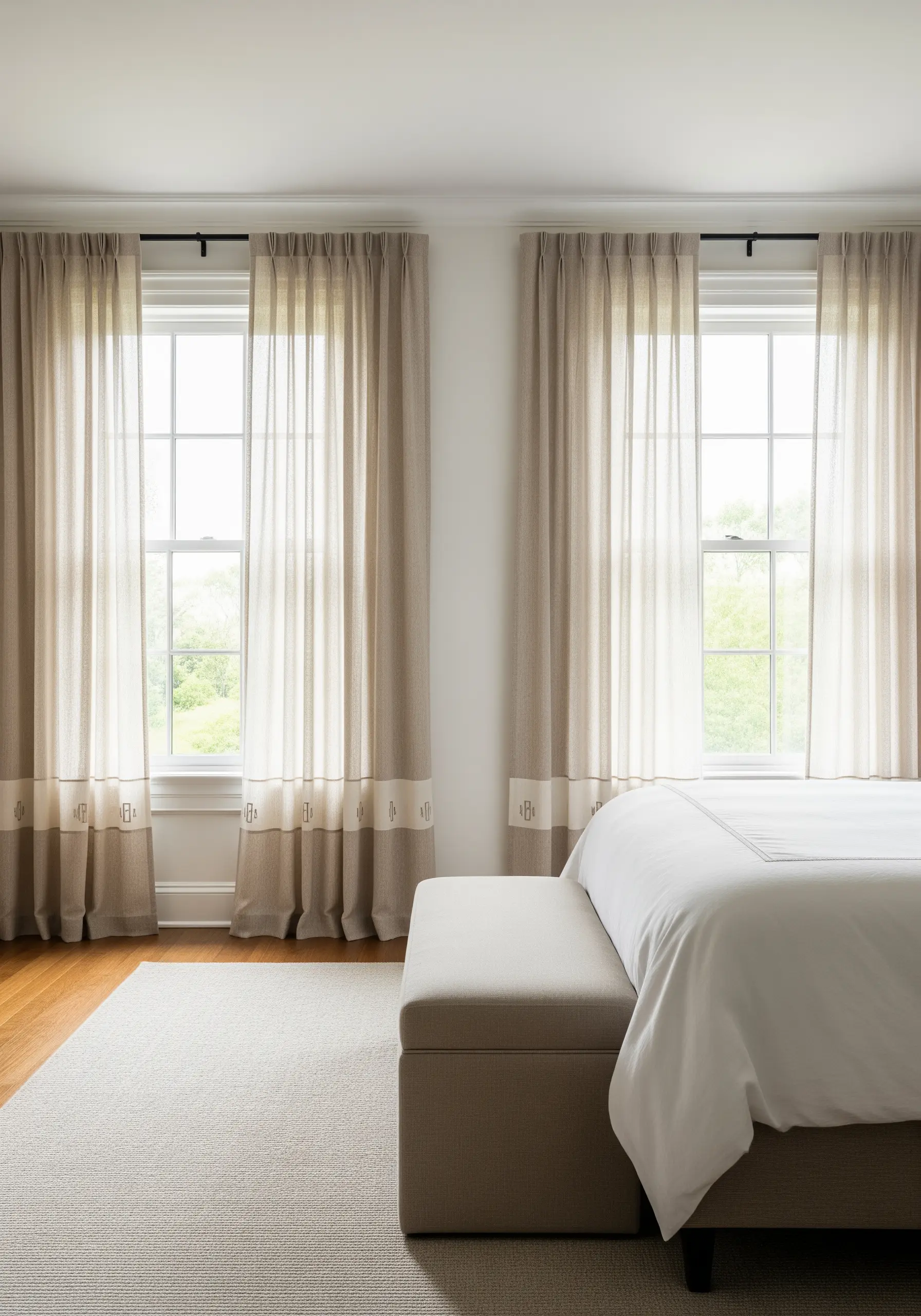
Instead of a single monogram, create a sophisticated border by embroidering a repeating band of initials across the lower portion of curtain panels.
This technique, often seen in high-end hotel design, adds a custom, tailored feel to the room.
Choose a thread color that matches the darker, solid fabric at the bottom of the color-blocked curtain for a seamless, integrated look.
Using a simple, clean font ensures the pattern remains elegant and doesn’t become overly busy.
31. Frame a Monogram with Delicate Botanical Accents

Soften a traditional, formal monogram by adding delicate, hand-stitched botanical elements.
After completing the main initials in a smooth satin stitch, use a fine, single-strand backstitch to add subtle sprigs of leaves or tiny vines framing the letters.
This combination of bold fill and delicate linework adds a layer of organic charm and personalization.
It’s a beautiful way to merge the structure of classic typography with the gentle feel of botanical monogram embroidery ideas.
32. Achieve a Bold Look with Thick Rope Appliqué
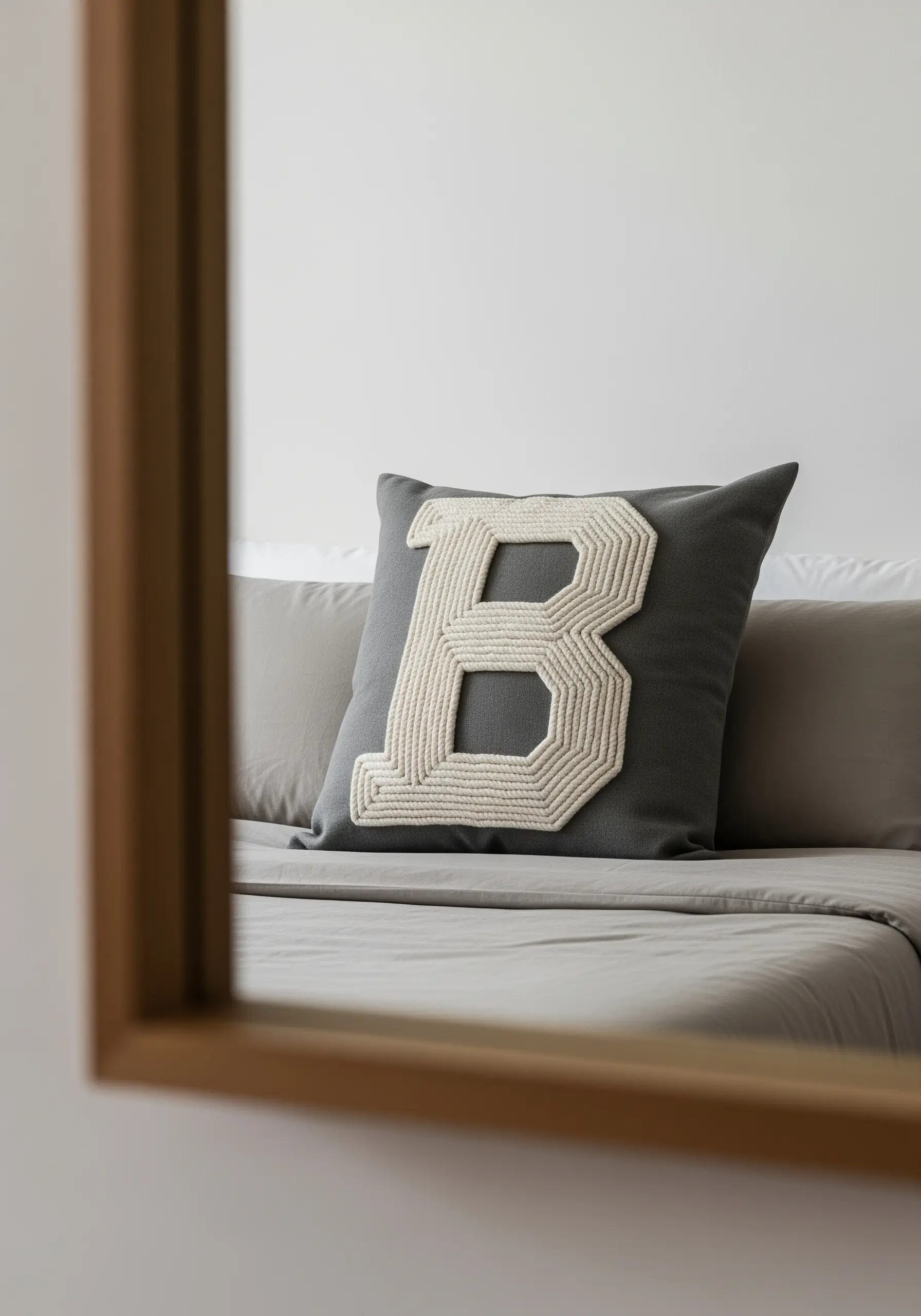
For a high-impact, graphic monogram, use a thick, braided rope or cord as your primary material.
Carefully shape the rope into your desired letterform on the fabric surface, using pins to hold it in place.
Secure the rope with a strong, invisible thread using a couching stitch, making sure to hide your stitches between the braids of the rope.
The result is a highly dimensional, textural design that feels both rustic and modern, perfect for making a statement on a simple cushion.
33. Integrate a Monogram Directly onto a Headboard
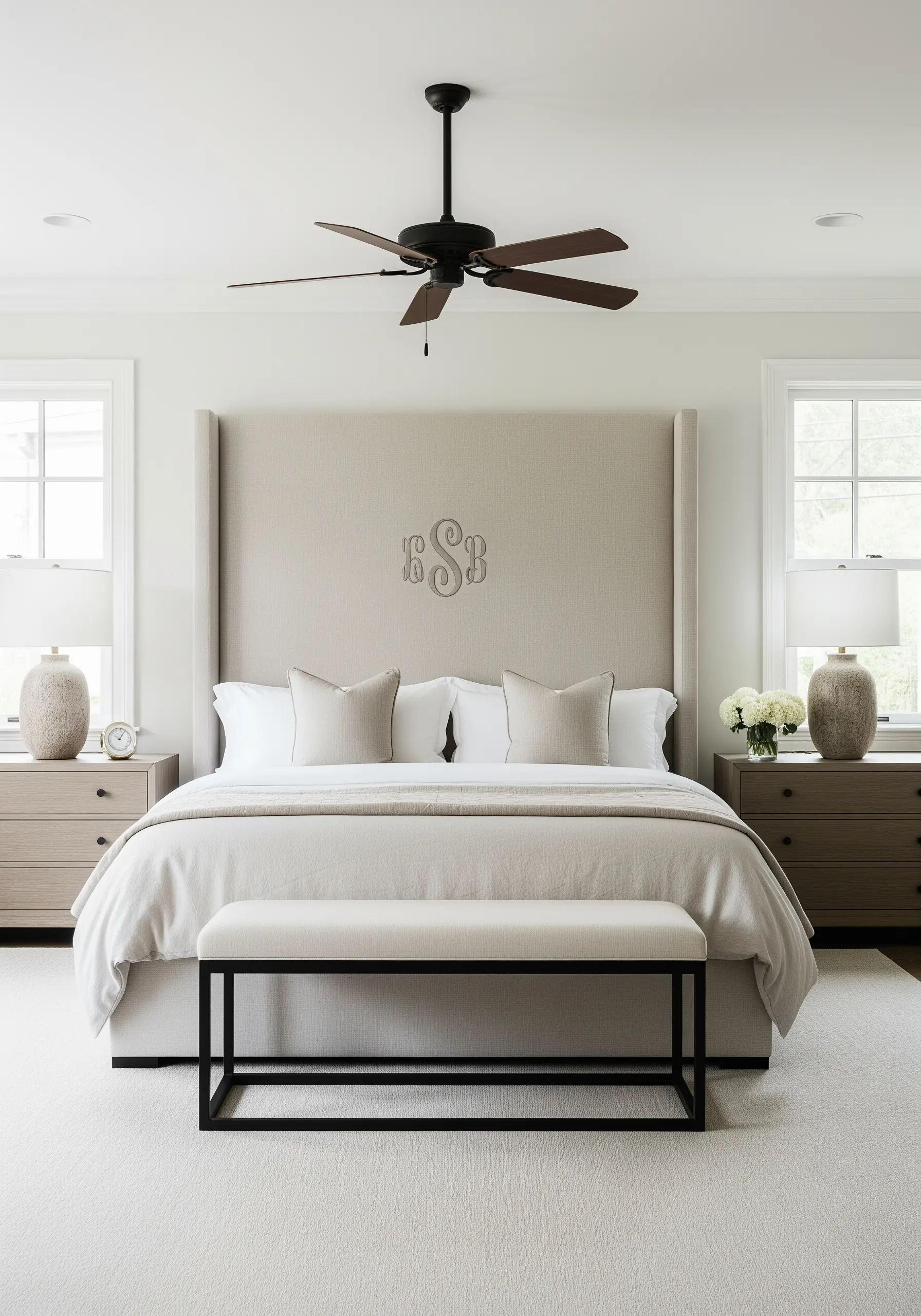
For the ultimate bespoke bedroom detail, embroider a monogram directly onto the fabric of an upholstered headboard.
Choose a thread color that is just a few shades darker than the headboard fabric for a subtle, elegant minimal wall decor effect.
A classic, interlocking script stitched with a smooth satin stitch adds a touch of timeless elegance without overwhelming the design.
This permanent personalization transforms the bed into the clear and sophisticated centerpiece of the room.
34. Contrast Smooth Stitching with Nubby Textures
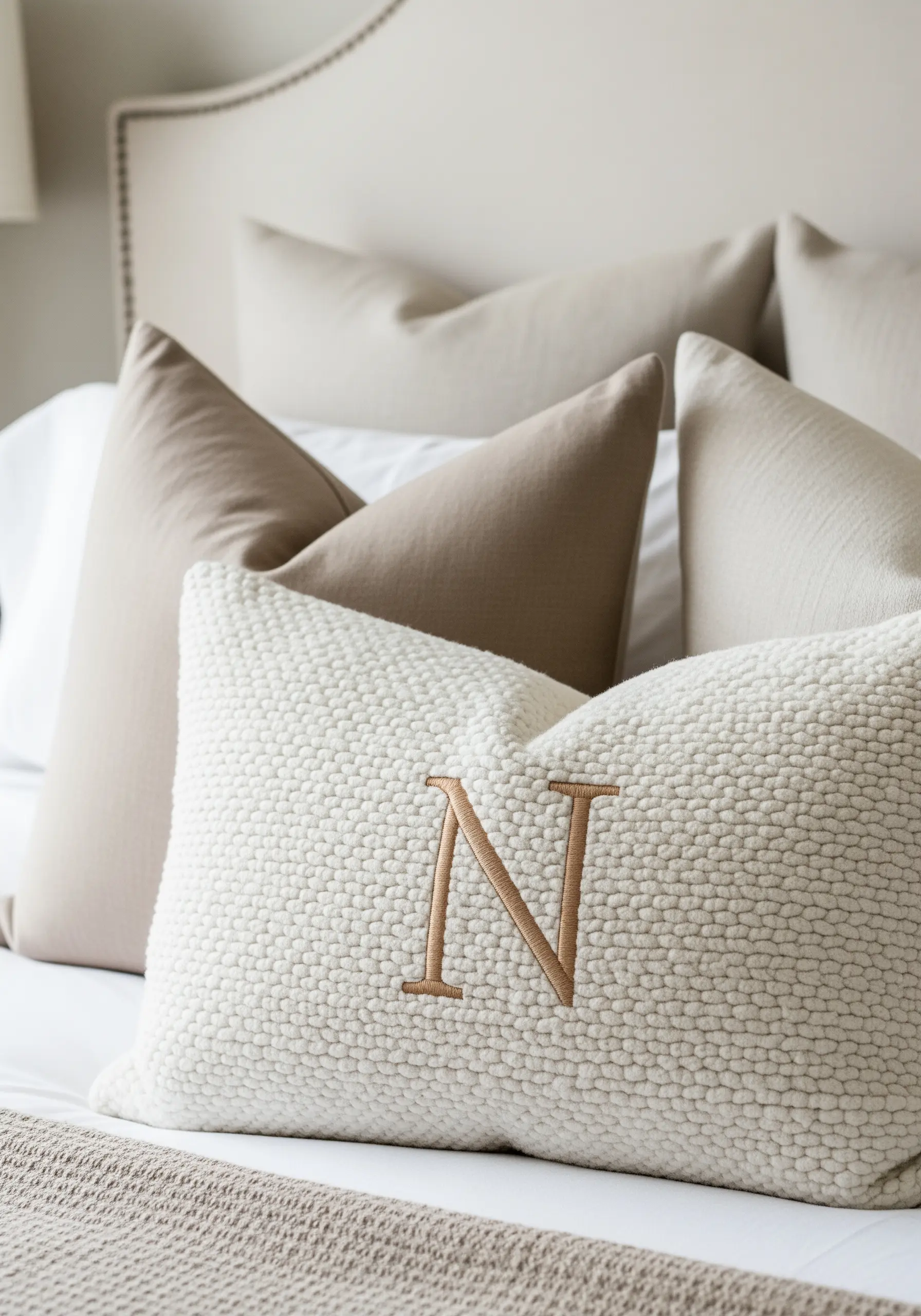
When working with a highly textured fabric like this nubby, woven cushion, your stitch choice is key to clarity.
A classic satin stitch provides a smooth, solid surface that stands out beautifully against the uneven background.
Choose a simple, clean letterform and use a thread color with enough contrast to be legible but still feel harmonious—like this warm taupe on ivory.
The juxtaposition of the smooth, uniform stitches against the organic, irregular weave of the fabric creates a rich and satisfying tactile experience.
35. Add a Minimalist Initial to Small Linens

Elevate everyday items like coasters or small napkins with a single, perfectly placed initial.
For these small-scale projects, choose a fine, single-strand cotton floss and a simple, clean font.
A few carefully executed backstitches are all that’s needed to create the letterform, providing a touch of personalization without adding bulk.
This minimalist approach turns a functional object into a thoughtful detail, demonstrating how understated embroidery projects can add quiet luxury to your space.
36. Make a Statement with Large-Scale Calligraphy
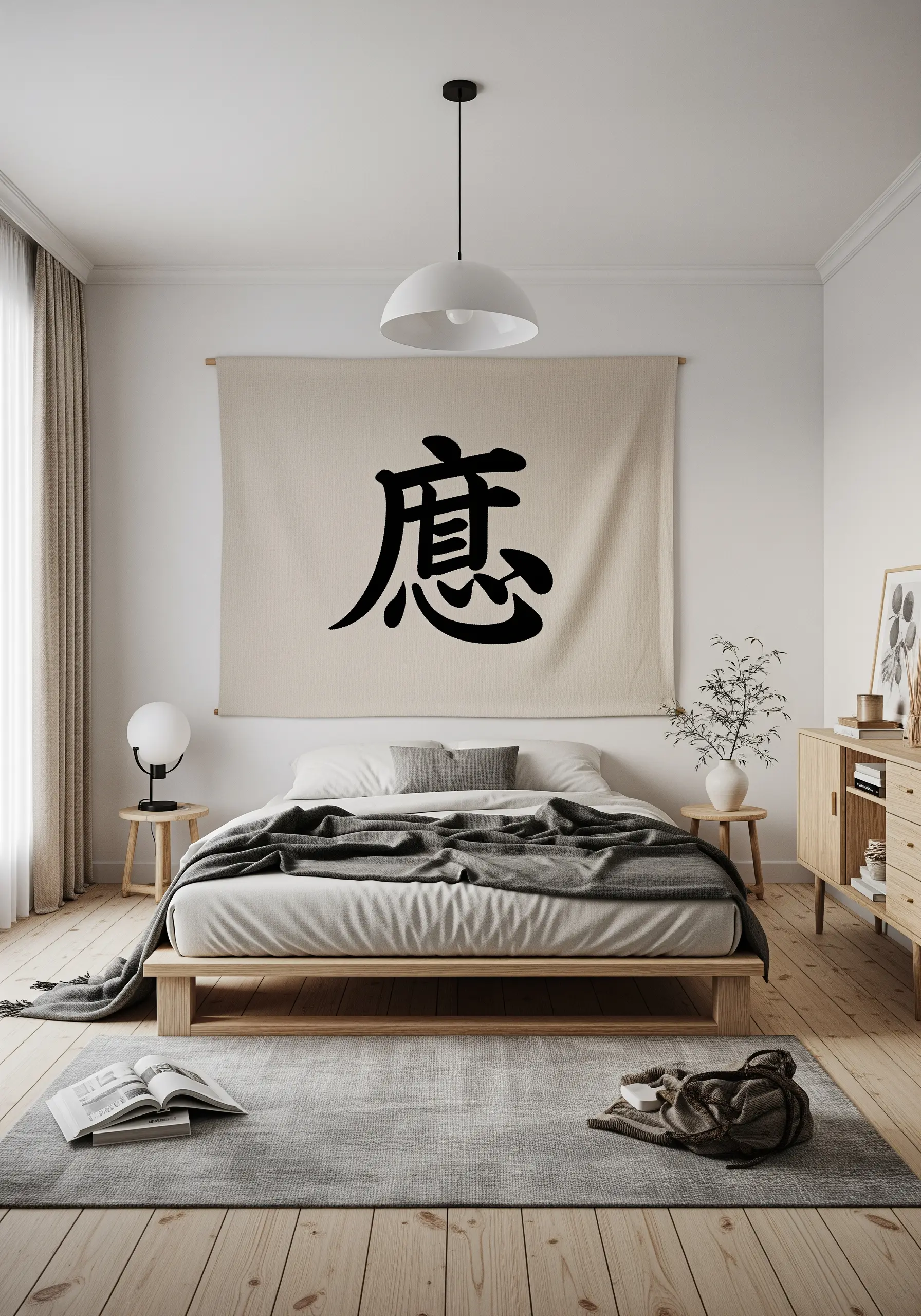
For a serene, minimalist bedroom, consider a large fabric wall hanging featuring a single, meaningful character or symbol instead of a traditional monogram.
To achieve the bold, calligraphic strokes, use a satin stitch fill with a dark, matte cotton thread on a light, neutral linen or canvas.
Ensure your stitches follow the direction of the brushstrokes for an authentic, fluid appearance.
This approach transforms embroidery into a form of meditative art, creating a peaceful and intentional focal point above the bed that evokes a Japanese zen-inspired design.