You’ve mastered the basic stitches, yet you feel a gap between the work you’re creating and the polished, intentional art you aspire to make. When you look at intricate Asian textiles, you see a story told in thread—a level of detail and grace that feels just out of reach.
The secret to bridging that gap isn’t about learning dozens of complex new stitches. It’s about refining your technique—understanding how the angle of a single satin stitch can mimic the sheen on a feather, or how varying your thread’s thickness can create the illusion of depth in a monochrome design.
These 20 patterns are more than just beautiful motifs; they are masterclasses in composition, texture, and color theory, borrowed from centuries of textile artistry. Each one offers a specific, actionable way to elevate your work, turning simple table linens into expressive pieces that feel both personal and professional. Let’s begin.
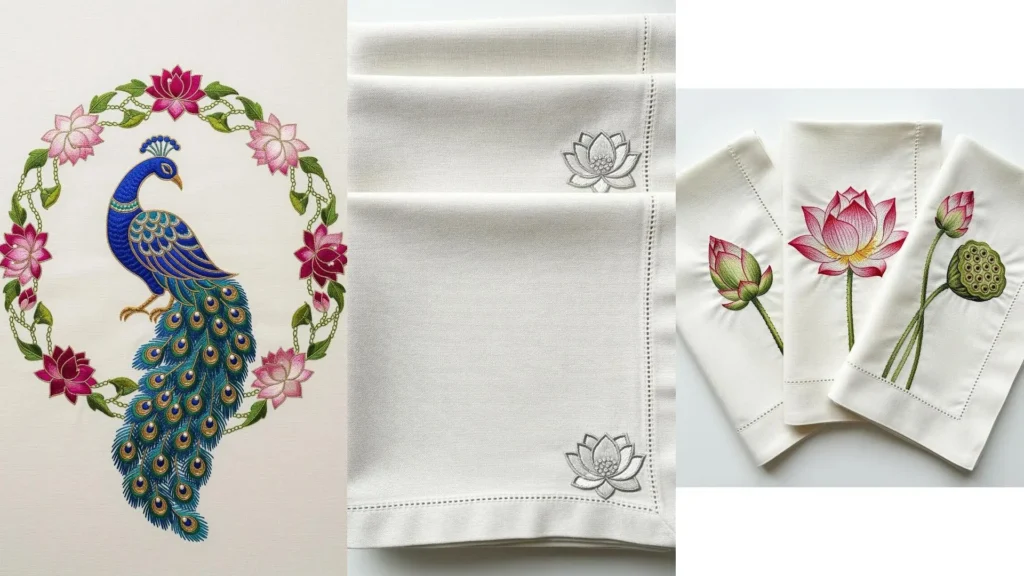
1. Master Feather Gradients with Directional Satin Stitch

To achieve the peacock’s vibrant, layered plumage, focus on directional satin stitch rather than simple fills.
Vary the angle of your stitches for each color section to mimic how feathers catch the light, creating a subtle, shimmering effect that adds realism.
For the tail ‘eyes,’ use a metallic gold thread for the final outline to add a touch of luxury and define the shape against the deep blues and greens.
The lotus wreath provides balance; keep the stitches softer and less dense than the peacock to ensure the bird remains the focal point.
2. Create Depth with Monochrome Thread Painting

Recreate the elegance of ink wash paintings by using just one or two shades of thread on a neutral linen runner.
Use a single strand of black or charcoal floss for the delicate water ripples and outlines, suggesting form with minimal detail.
For the lotus pads and petals, switch to two or three strands and use a dense satin stitch or long-and-short stitch to create solid, shaded areas.
This contrast between delicate line work and solid fills gives the composition a sophisticated, graphic quality reminiscent of single-line face profiles, proving that color isn’t always necessary for impact.
3. Isolate a Motif for Modern, Graphic Napkins

Instead of a full scene, isolate a single, iconic element like the peacock feather for a modern, minimalist statement on dinner napkins.
Position the motif asymmetrically in a corner to create visual interest and leave ample functional space on the napkin.
Use a high-sheen rayon or silk thread for the satin-stitched color blocks to make the jewel tones pop against the matte fabric.
Ensure your satin stitches are tight and uniform, creating a smooth, almost printed appearance that feels both luxurious and contemporary.
4. Combine Metallic Thread and Sequins on Satin
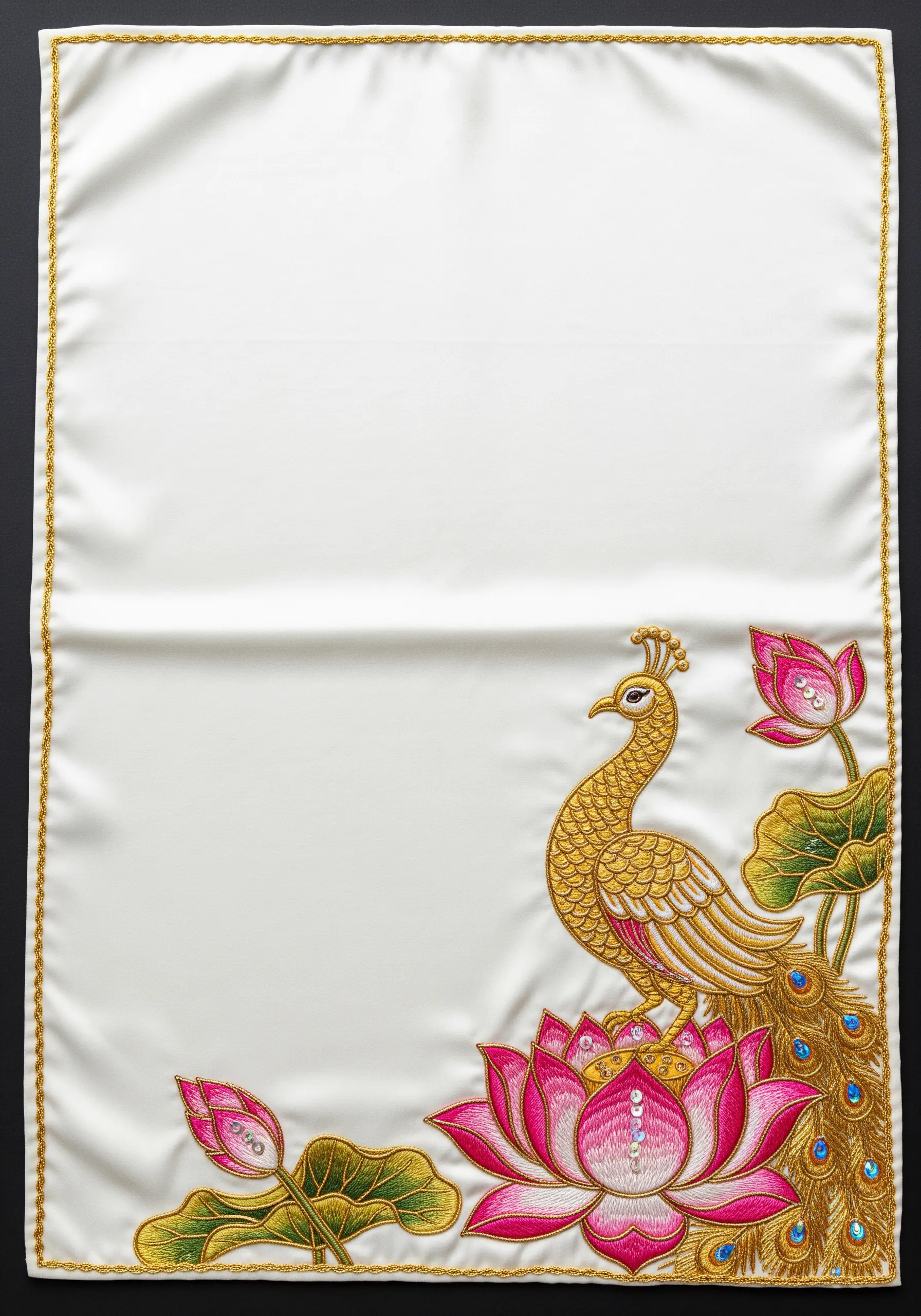
Elevate your design on a high-sheen fabric like satin by introducing metallic threads and subtle embellishments.
Use a couching stitch for the gold outlines to ensure the metallic thread lays flat and smooth, preventing it from snagging or twisting.
Incorporate tiny, clear, or gold sequins in the center of the tail feathers to catch the light and add a hint of refined sparkle without overwhelming the piece.
The smoothness of the satin fabric enhances the metallic glow, making this technique perfect for special occasion placemats or table runners.
5. Design a Cohesive Tablecloth Border
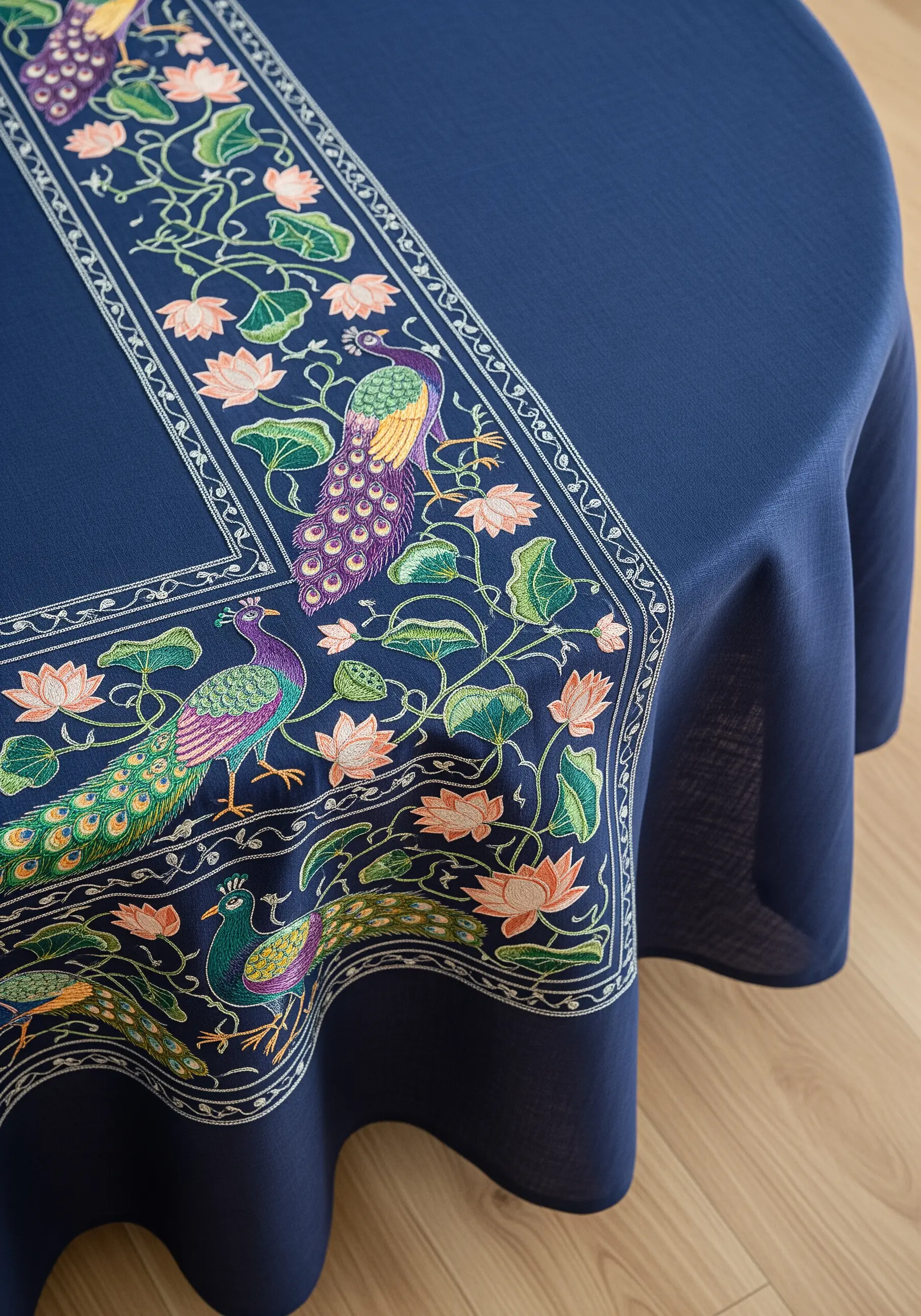
Frame your tablecloth with a continuous border that unites the peacock and lotus motifs into a flowing, narrative design.
To ensure consistency, create a reusable stencil for the repeating elements and use a light, water-soluble marker to transfer the pattern.
Use a crisp backstitch or stem stitch for the scrolling vines and outlines to create a uniform line that connects everything visually.
This approach transforms a simple tablecloth into a bespoke piece, proving that thoughtful placement is as important as the stitching itself, much like other modern minimalist table linen embroidery ideas.
6. Achieve Elegance with Tonal Line Art

Create a sophisticated, airy design by stitching intricate line art with a thread that is only a few shades lighter or darker than your base fabric.
Use a silver or pearlescent white thread on a jewel-toned satin for a subtle, shimmering effect that appears and disappears with the light.
A fine split stitch or backstitch is ideal for capturing the delicate veins of the lotus leaves and the flowing lines of the stems.
This technique relies on negative space, allowing the simple elegance of the drawing to shine without the distraction of multiple colors.
7. Use Bold Color Blocking for Graphic Impact

Make a powerful statement on dark fabric by using solid blocks of vibrant, contrasting color.
Outline each color section with a precise split stitch before filling with satin stitch; this creates a raised, clean edge that prevents colors from bleeding into one another.
Choose a high-contrast palette—like bright blues, yellows, and reds against charcoal gray—to make the motif feel graphic and modern.
This approach to abstract color psychology allows the simplified shapes of the peacock to become the hero of the design.
8. Embrace Understated Luxury with a Single Motif

For a timeless and versatile set of napkins, choose a small, singular motif and place it discreetly in one corner.
Stitching a silver-gray lotus on off-white linen creates a subtle, tone-on-tone effect that whispers elegance rather than shouts.
Pair the embroidery with a hemstitch border, a traditional finishing technique that adds a touch of heirloom quality.
These minimal embroidery patterns are perfect for formal dining, as they complement rather than compete with your dinnerware.
9. Weave Geometric and Organic Forms Together
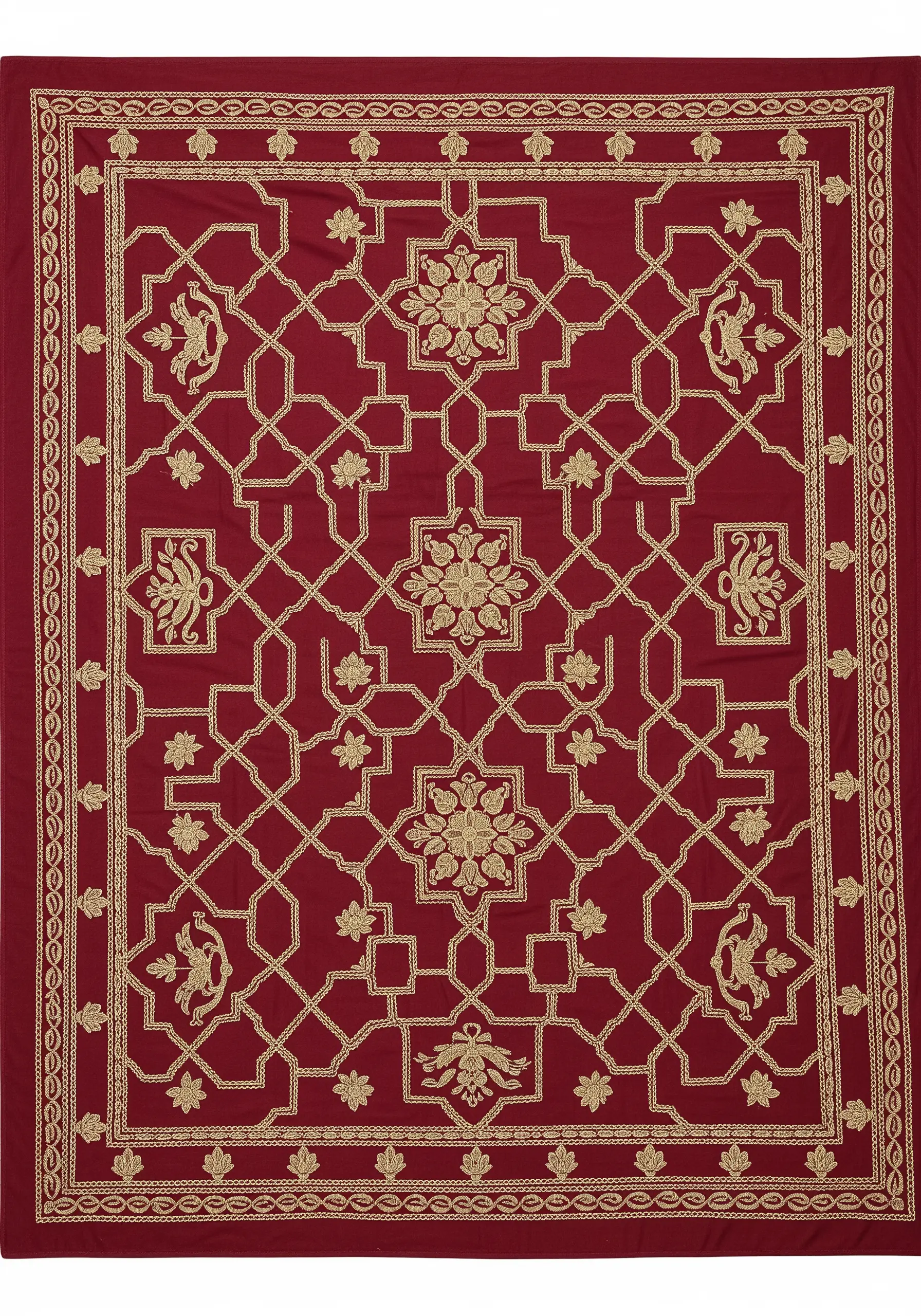
Create a formal, tapestry-like effect by containing soft floral and bird motifs within a rigid geometric framework.
Use a sturdy couched cord for the intersecting gold lines to give them a raised, architectural quality that contrasts with the flatter satin-stitched flowers.
The repetition of the simplified bird and lotus shapes within the grid creates a rhythm and order that feels both classic and opulent.
This technique works beautifully for a large, decorative tablecloth intended as a statement piece on a sideboard or dining table.
10. Capture Movement with Whispy, Open Stitches
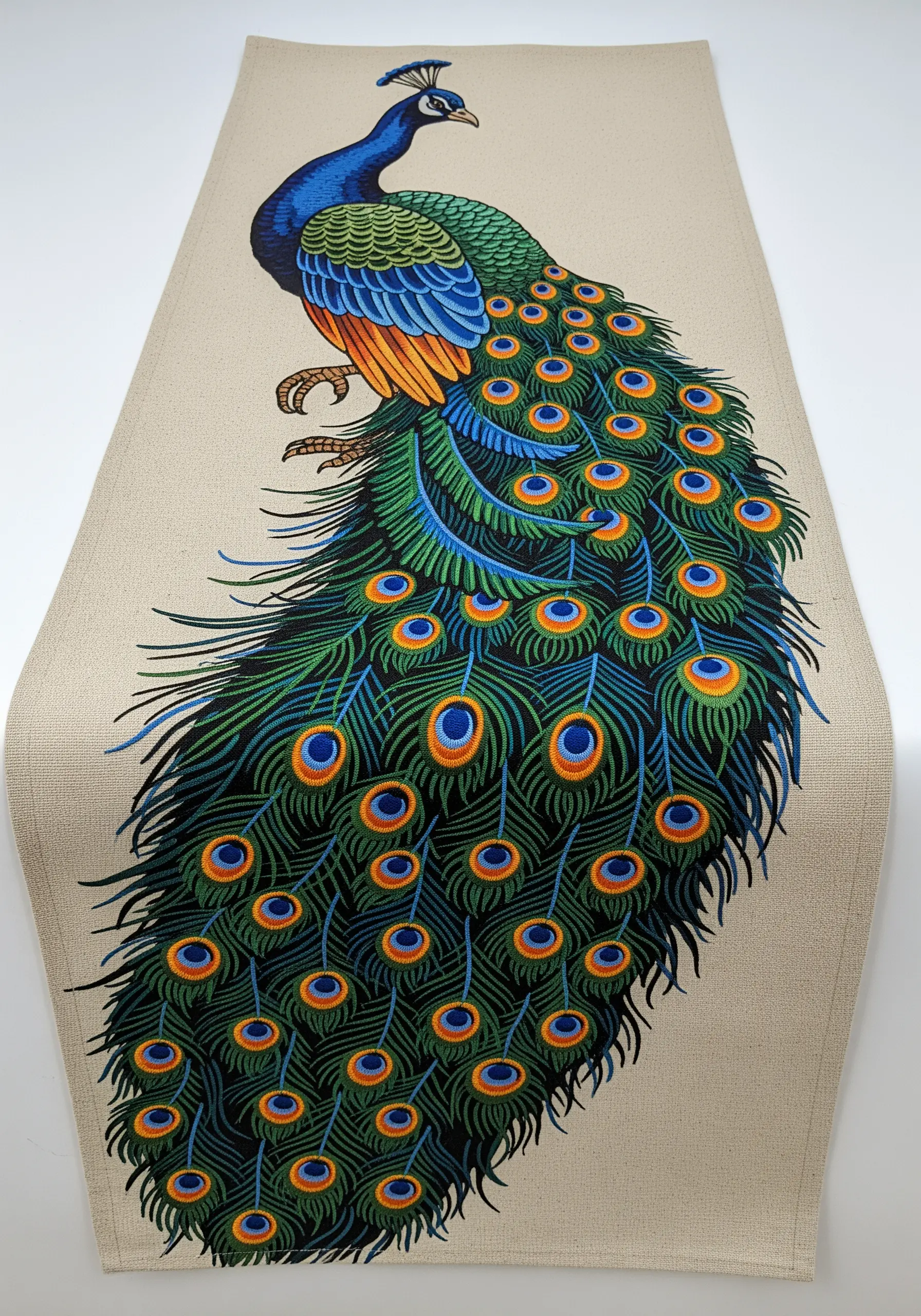
Give the peacock’s tail a sense of life and movement by incorporating long, loose, and slightly curved stitches.
Instead of dense satin stitch, use open fly stitches or single detached chain stitches for the feather ends to create a light, airy texture.
Allow some of the background fabric to show through the tail; this negative space enhances the feeling of lightness and prevents the large motif from feeling heavy.
Focus the dense, detailed stitching on the peacock’s body to ground the design, letting the tail cascade freely down the table runner.
11. Build a Vibrant Mandala Placemat

Transform a simple placemat by centering it with a bold, embroidered mandala inspired by lotus petals.
Use a fabric compass to draw perfect concentric circles as your guide, ensuring your design is perfectly symmetrical.
Assign a different vibrant color to each ring and use a consistent satin stitch, angling your stitches toward the center to create a sunburst effect.
This meditative, repetitive stitching process results in a powerful, energetic design that frames each place setting beautifully.
12. Curate a Cohesive Tablescape with Balanced Motifs

Design a complete table linen set by strategically placing coordinated motifs across different pieces.
Place larger, more detailed designs like the perched peacock on the tablecloth corners and placemats, where they have room to shine.
Use a smaller, simplified element, like a single lotus flower, for the napkins to maintain a visual link without creating clutter.
Unify the entire set with a consistent color palette and a simple, colored border on each item, which ties everything together elegantly.
13. Create a Playful Pattern with Scattered Elements
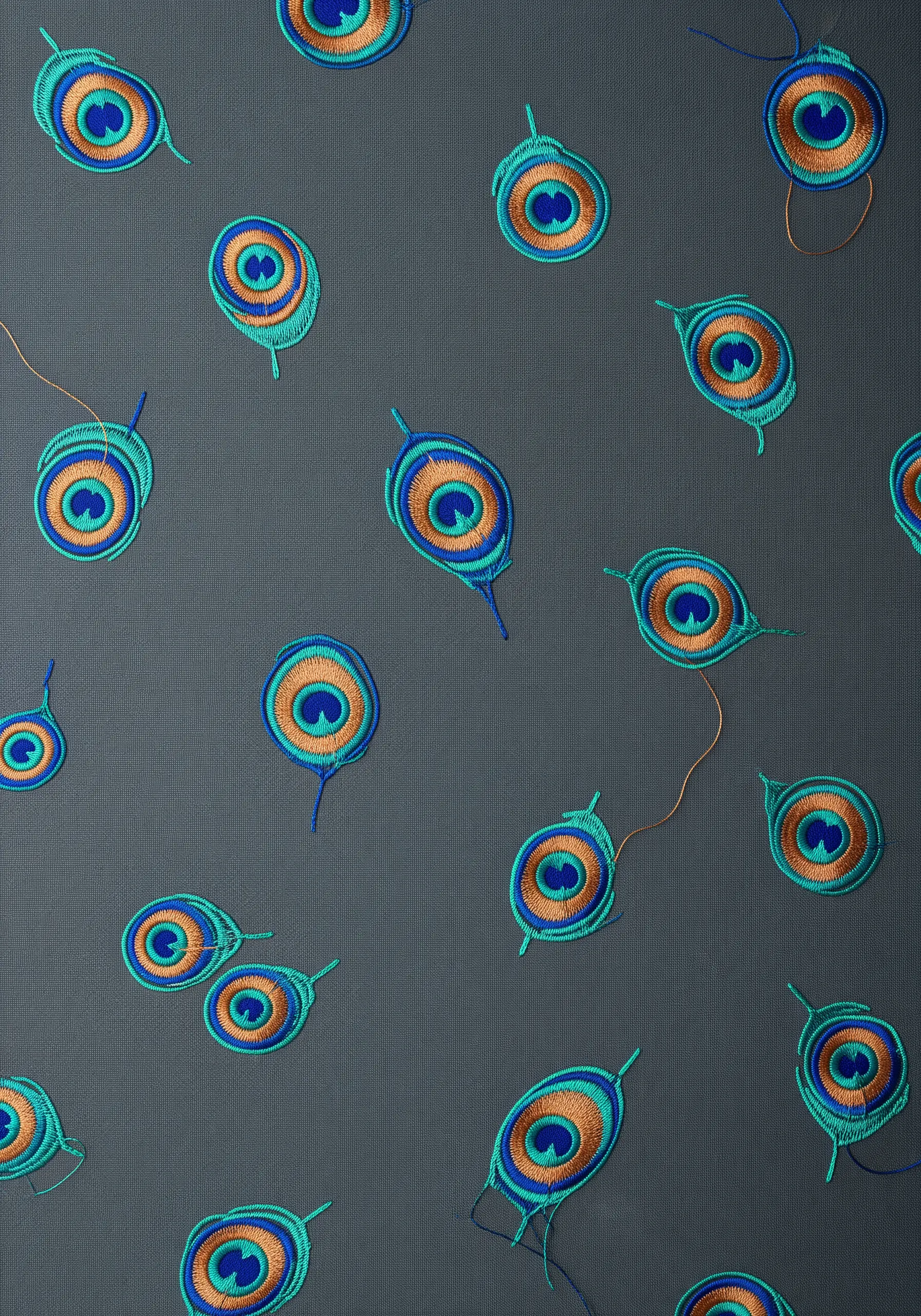
Design a contemporary textile by deconstructing the peacock feather into a single ‘eye’ motif and scattering it across the fabric.
Vary the angle and spacing of each feather to create a dynamic, random pattern that feels organic and modern.
Embrace imperfection; leaving a few loose starter or end threads visible, as if a work-in-progress, adds a touch of artistic authenticity.
This all-over pattern is perfect for creating custom fabric for placemats, runners, or even cushion covers that feel unique and playful.
14. Achieve a Painterly Effect with Thread Blending

Mimic the soft gradients of a watercolor painting by using the long-and-short stitch technique for a ‘thread painted’ finish.
Use multiple shades of a single color within each petal or feather, blending them seamlessly to create realistic highlights and shadows.
For the water, run long, horizontal stitches in shades of gray and silver to suggest reflection and movement, stitching them more sparsely than the main subjects.
This detailed approach, a form of floral thread painting, works best on a fabric with a slight sheen, like silk or sateen, which enhances the rich, blended colors.
15. Add Dimension with 3D Embroidery Techniques

Bring your lotus flower to life by creating a three-dimensional version for a napkin ring using stumpwork techniques.
Stitch each petal separately over a thin, flexible wire, then cut them out and assemble them to create a lifelike bloom.
Use French knots or small seed beads for the flower’s center to add texture and a realistic focal point.
Mounting the 3D flower on a luxurious fabric like velvet creates a stunning textural contrast and an unforgettable detail for your table setting, showcasing unexpected embroidery techniques.
16. Evoke Folk Art with Graphic Running Stitch

Channel the simplicity of folk art or Japanese Sashiko by rendering a complex subject like a peacock with a simple running stitch.
Use a thick, contrasting thread, like white perle cotton on dark indigo fabric, to make every stitch prominent and intentional.
Focus on the outline and internal patterns, using stitch length and direction to create texture and the illusion of shading.
This minimalist approach celebrates the beauty of the hand-stitch itself, turning a placemat into a piece of graphic textile art.
17. Create Formal Symmetry with Mirrored Motifs

Design a dramatic and formal table runner by arranging identical motifs in perfect, mirrored symmetry.
Stitch peacocks facing each other to create a balanced composition that draws the eye inward, towards the center of the table.
Use a single, high-contrast color, like gold on black velvet, to emphasize the silhouettes and create a feeling of pure opulence.
The raised texture from dense couching or padded satin stitch will give the design an embossed, luxurious feel perfect for formal occasions.
18. Layer Sheer Appliqué and Embroidery
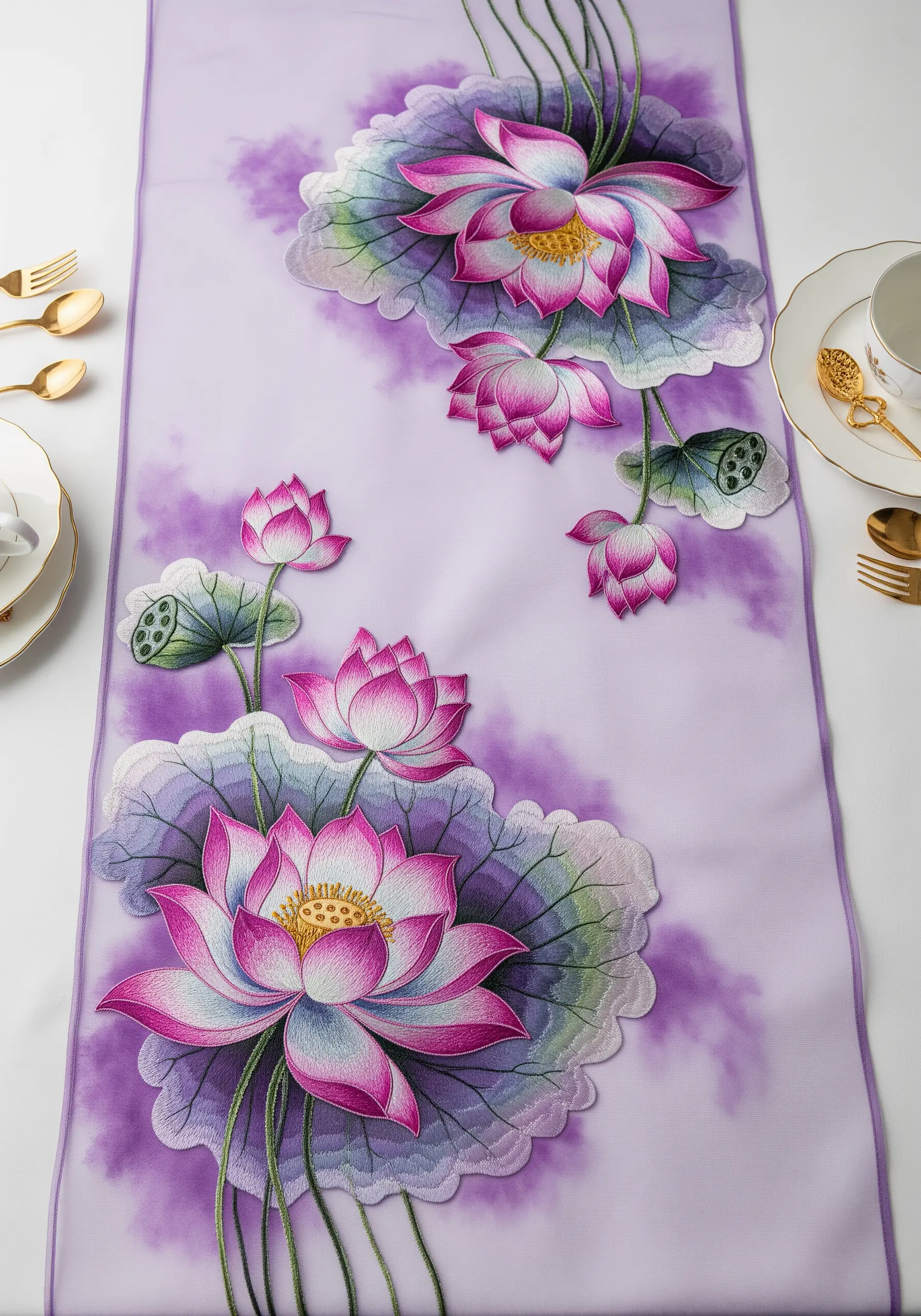
Combine embroidery with sheer fabric appliqué to achieve soft, watercolor-like color fields that would be difficult to create with thread alone.
First, tack down pieces of colored organza or chiffon to form the base of the lotus petals and leaves.
Then, stitch over the appliqué with detailed outlines and veining, which secures the sheer fabric and adds definition.
This mixed-media approach allows you to build up soft, translucent layers of color, perfect for capturing the delicate nature of lotus flowers on an organza runner.
19. Tell a Botanical Story Across a Napkin Set

Create a sophisticated and engaging napkin set by dedicating each piece to a different stage of the lotus life cycle.
Embroider a tightly closed bud on one, a fully opened blossom on another, and a mature seed pod on the third.
Use the same color palette and stitch style across all three designs to ensure they feel like a cohesive, narrative collection.
This thoughtful approach turns a simple set of napkins into a conversation piece, celebrating the beauty of botanical progression.
20. Anchor an Asymmetrical Design on a Large Surface

When embroidering a large item like an oval tablecloth, resist the urge to center your design.
Instead, anchor a large, dramatic motif like a full peacock to one side, allowing its tail to sweep gracefully across the surface.
This creates a dynamic, asymmetrical composition that feels more artistic and less static than a centered medallion.
Balance the large motif with a few small, scattered lotus buds on the opposite side to ensure the design feels harmonious without being predictable.