You have the threads, the needles, and the desire to create something beautiful, but perhaps you feel that your work is missing a certain spark—that professional touch that turns a simple stitch into a piece of art.
The secret isn’t in mastering hundreds of complex stitches. It’s in learning how to use simple techniques with intention. It’s about placement, texture, and the subtle details that make a design feel balanced, personal, and complete.
These small ideas are designed to help you see your clothes not just as fabric, but as a canvas. Each one is a starting point for you to refine your skills, build your confidence, and transform the ordinary pieces in your wardrobe into something that is uniquely, beautifully yours.
1. Botanical Accents on Crisp Collars

Place a single botanical sprig on a collar point for an elegant, asymmetrical detail that draws the eye.
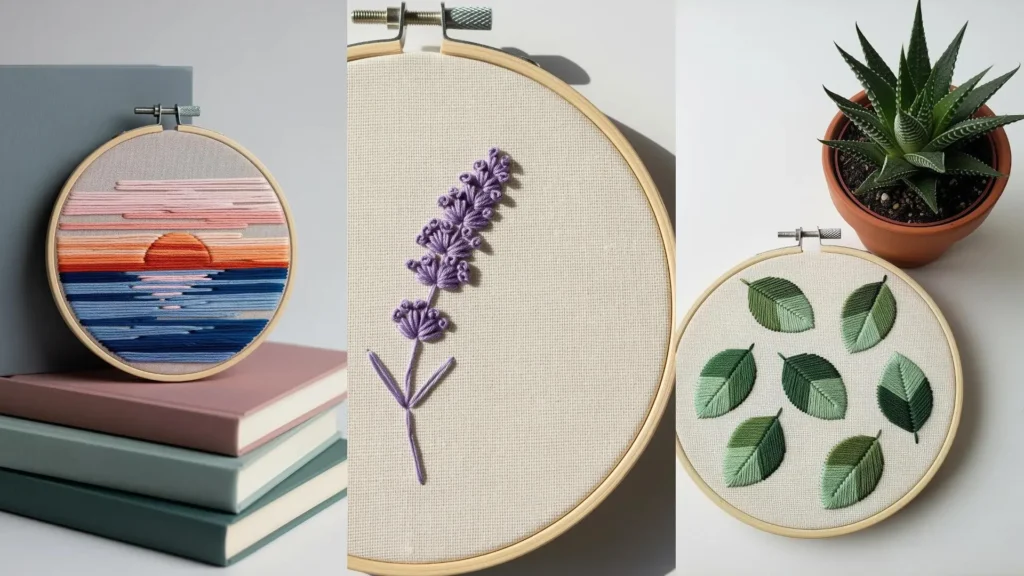
Use French knots for the lavender buds to create a raised, tactile texture that contrasts with the smooth fabric.
For the leaves and stem, first create a clean guide with a split stitch outline, then fill it with a satin stitch—this simple preparation prevents frayed edges on a high-wear area like a collar.
Select two or three closely related shades of purple for the buds to give the design subtle depth and realism.
2. Sharp Outlines for Graphic Motifs

For a clean, modern look on jersey or t-shirt fabric, a bold outline is your most powerful tool.
Use a single strand of black thread and a tight backstitch to define the shape crisply.
Fill the stripes with a directional satin stitch, ensuring each stitch lies flat and parallel to create a smooth, solid block of color.
Always use a cut-away stabilizer on the back of knit fabrics; it prevents the design from puckering or stretching out of shape during stitching and washing.
3. Celestial Details on Denim Cuffs

Use high-contrast thread—like bright white, silver, or a light metallic—to make your design stand out against dark denim.
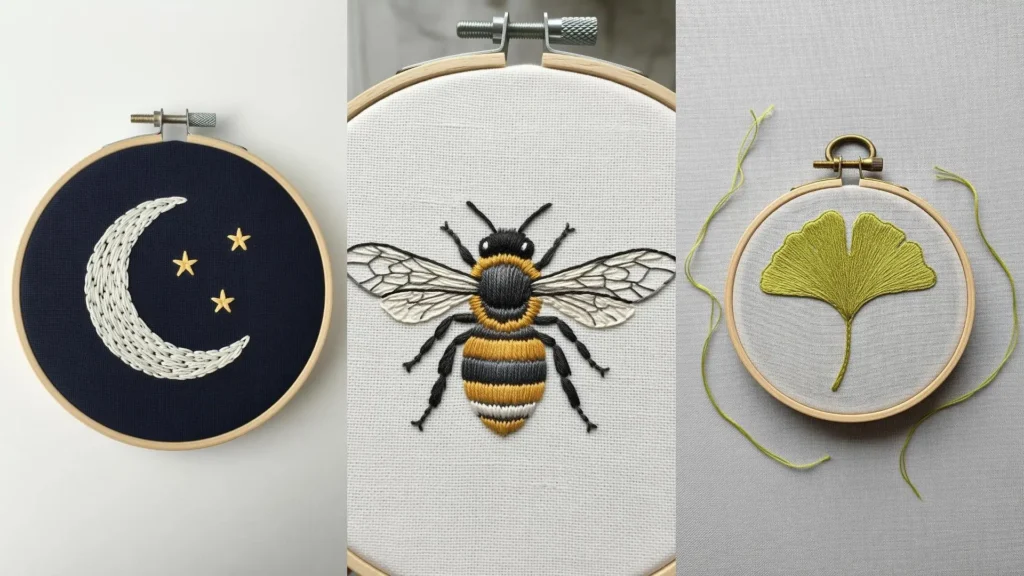
A dense satin stitch for the crescent moon creates a solid, light-catching surface that feels smooth and substantial.
For the stars, you can use a simple star stitch or tiny, individual straight stitches for a more scattered, delicate effect.
Placing the design on a cuff turns it into a subtle, personal detail that reveals itself with movement.
4. Abstract Line Art with Couching

Create expressive, free-flowing lines without repeatedly piercing the fabric by using the couching technique.
Lay down a thicker thread, cord, or yarn in your desired shape, and then tack it down with small, perpendicular stitches in a thinner, matching thread.
This method allows you to add bold abstract thread motions to heavy fabrics like denim while preserving the garment’s drape and softness.
It’s significantly faster than a traditional line stitch and offers unparalleled freedom for creating smooth, dramatic curves.
5. Minimalist Motifs on Patterned Fabric

When embroidering on a busy background like stripes, choose a design that is simple and airy to complement the pattern, not compete with it.
A single-thread backstitch or a delicate running stitch creates an illustrative feel that feels light and intentional.
The dashed line here is a perfect example of using negative space to imply movement and keep the design from feeling heavy.
This approach proves that powerful embroidery doesn’t always require dense stitching; sometimes, the lightest touch is the most effective.
6. Geometric Color Blocking with Satin Stitch

Achieve a clean, graphic look by mastering the overlapping satin stitch.
To ensure crisp intersections, always stitch the rearmost shape completely first.
Then, begin the overlapping shape by bringing your needle up just inside its outline and taking it down just outside the edge of the first shape.
Using a water-soluble stabilizer is non-negotiable for geometric work; it allows you to draw perfect guides and provides the tension needed for flawlessly smooth stitches.
7. Personal Mantras on Sweatshirt Cuffs

Place a meaningful word or a short mantra on your sleeve cuff for a personal reminder that’s just for you.
For a delicate script on stretchy fleece, use a two-strand split stitch. It creates a smooth, solid line that mimics handwriting and has enough flexibility to move with the knit fabric.
A lightweight, iron-on stabilizer is essential here to prevent the soft fabric from stretching or distorting as you stitch.
8. Appliqué with an Embroidered Edge

Combine fabric appliqué and embroidery for a bold, textured result that is surprisingly quick to complete.
Cut your shape from a non-fraying fabric like felt or use an iron-on adhesive for cotton, then tack it down.
Secure the shape with a simple running stitch or a decorative blanket stitch around the edge. This adds a handcrafted detail while securing the piece permanently.
This technique is perfect for adding large blocks of color to sturdy canvas tote bags without the time commitment of a large fill stitch.
9. High-Contrast Constellation Stitching

A minimalist constellation is an elegant way to personalize a dark garment, like the shoulder of a hoodie or the back of a jacket.
Use a bright white, silver, or glow-in-the-dark thread for maximum visual impact against the dark fabric.
Connect each star with a simple straight stitch, and form the stars themselves with either a small star stitch or a single, tight French knot for a subtle, raised effect.
The beauty of this design lies in its understated simplicity and the personal meaning it can hold.
10. The Perfectly Padded Satin Stitch

To give a small motif a raised, three-dimensional profile, build a foundation of padding stitches first.
Fill the shape with a base layer of small straight stitches or seed stitches, running perpendicular to the direction of your final satin stitch.
When you work your satin stitch over this padded base, the threads are elevated, creating a smooth, pillowed effect that catches the light beautifully.
This is a core technique for making simple shapes feel luxurious and professional.
11. Landscape Embroidery on a Pocket

Transform a simple shirt pocket into a miniature canvas for a landscape scene.
Use stitch direction to create texture and perspective: fill the snowy peaks with angled long-and-short stitches, and use horizontal satin stitches for the foreground layers.
Varying the thread colors, even slightly, will enhance the sense of distance and terrain.
This technique elevates a basic flannel shirt into a unique piece of wearable art with a story.
12. Playful Motifs with a Polished Finish

For a crisp, illustrative effect, outline your shape *after* you have filled it with satin stitch.
Use a single strand of black thread and a tight split stitch or backstitch around the perimeter of the motif.
This technique, known as outlining, defines the edges, conceals minor imperfections in your fill stitches, and makes the colors pop dramatically.
The tiny white highlight—just a single straight stitch—is the final touch that adds dimension and brings the cherries to life.
13. Peekaboo Motifs for a Touch of Whimsy

Create a playful moment of discovery by tucking a small embroidered motif into a pocket seam or corner.
A simple outline stitch, like a backstitch or stem stitch, is all that’s required to create a strong silhouette.
Using a dark thread on light denim creates a bold graphic contrast that catches the eye.
This discreet placement adds a secret layer of personality to your clothes, a delightful detail for those who look closely.
14. Radiant Lines on Ribbed Knits

When embroidering on a stretchy, ribbed fabric like a beanie, your best choice is the simple straight stitch.
These stitches can nestle neatly between the ribs of the knit, creating a clean look that moves and stretches with the fabric without causing puckering.
Arrange your stitches in a radiating pattern to form a stylized sun or flower—it’s a design that is quick, graphic, and perfectly suited to the texture of the garment.
15. Textured Geometric Scatter Patterns

Instead of a flat satin stitch, fill small geometric shapes with a textured stitch like the seed stitch or tiny French knots.
This approach adds a wonderful tactile quality and helps the embroidery feel more integrated with the texture of a sweater knit.
By scattering these textured patches across the garment, you create a balanced, modern pattern that feels both playful and sophisticated.
Use a soft, harmonious pastel palette to maintain a gentle, cohesive look.
16. Detailed Botanicals with Fishbone Stitch

For leaves that require a central vein and realistic texture, the fishbone stitch is your go-to technique.
This stitch creates a built-in spine while laying down angled stitches that perfectly mimic the natural growth pattern of a leaf.
By working each tiny leaflet of this fern in fishbone stitch, you can build a complex, organic form with surprising simplicity.
This single stitch adds both direction and dimension, instantly bringing your botanical designs to life.
17. Layered Whipped Stitch for Flowing Lines

To create smooth, raised lines that suggest movement, use a whipped backstitch or whipped running stitch.
First, lay down a foundation line of backstitch. Then, using a second thread (in the same or a contrasting color), weave it around each backstitch without piercing the fabric.
By layering several of these whipped lines in varying shades of blue, you can create a beautiful sense of depth and flow, perfect for depicting water, wind, or elegant swirls.
18. Delicate Linework on Dark Fabric

Achieve fine, ethereal lines on a dark background by using just a single strand of high-contrast floss.
A simple straight stitch is perfect for creating the dandelion seeds, radiating from a central point with precision and grace.
The power of this design is its minimalism. The use of negative space and fine lines ensures the motif feels light and airy, just like a real dandelion seed head caught in the wind.
19. Outline Stitching on Chunky Knits

When embroidering on a heavily textured, chunky knit, your design needs to sit on top of the fabric, not sink into it.
Choose a simple line-art design and use a thicker thread, such as pearl cotton or all six strands of embroidery floss.
A basic stem stitch or backstitch will create a bold, clear line that complements the cozy texture of the garment while adding a charming, cozy detail.
20. Modern Mending with an Embroidered Patch

Elevate a simple repair into a statement design feature with a modern, embroidered patch.
Instead of using a traditional woven patch, create your own by stitching directly over a worn area or small hole with a dense, smooth satin stitch.
Choosing a bold color like this cobalt blue and an organic, abstract shape turns the functional elbow patch into a contemporary and intentional artistic detail.
21. Micro-Motifs on a Garment Hem

A tiny, finely detailed motif placed in an unexpected spot—like the hem of a shirt—is a mark of subtle sophistication.
To achieve this level of intricacy, you must use a single strand of embroidery floss and a precise, tiny backstitch.
This type of embellishment adds a secret element of personality to a garment, a quiet nod to a hobby or passion that makes the piece uniquely yours.
22. Dimensional Stitches for Pattern Making

Create a dynamic, all-over pattern using a dimensional stitch like a woven wheel or a raised Dorset button stitch.
These stitches add significant texture and lift, transforming a flat piece of fabric into a tactile work of art.
By arranging them in a neat grid, you create a modern, repeating pattern that feels both organic and orderly, elevating a utilitarian item like an apron into something truly special.
23. Combining Thread and Chain Textures

Create compelling visual contrast by incorporating different materials into your embroidery.
Here, the soft feather is beautifully rendered using a long-and-short stitch to create realistic shading and texture.
The delicate, draped chains are then created using a detached chain stitch. This mix of soft thread and graphic lines creates a stunning juxtaposition, adding a sophisticated, bohemian edge to a classic denim jacket.