Sometimes, the quietest details make the strongest statement. If you’ve ever felt that your embroidery, while beautiful, could feel more intentional or polished, you’re in the right place. The goal isn’t to add more, but to refine what’s already there.
This is about moving beyond just following a pattern. It’s about understanding why a single strand of thread works better than two for a delicate outline, or how changing your stitch direction can mimic the texture of a real leaf. These small adjustments are where your unique artistic voice begins to emerge.
Here, you’ll find subtle, thoughtful ideas that add character without creating clutter. Each one is a small shift in technique or perspective designed to elevate your work, build your confidence, and help you create pieces that feel deeply and truly yours.
1. The Unexpected Detail
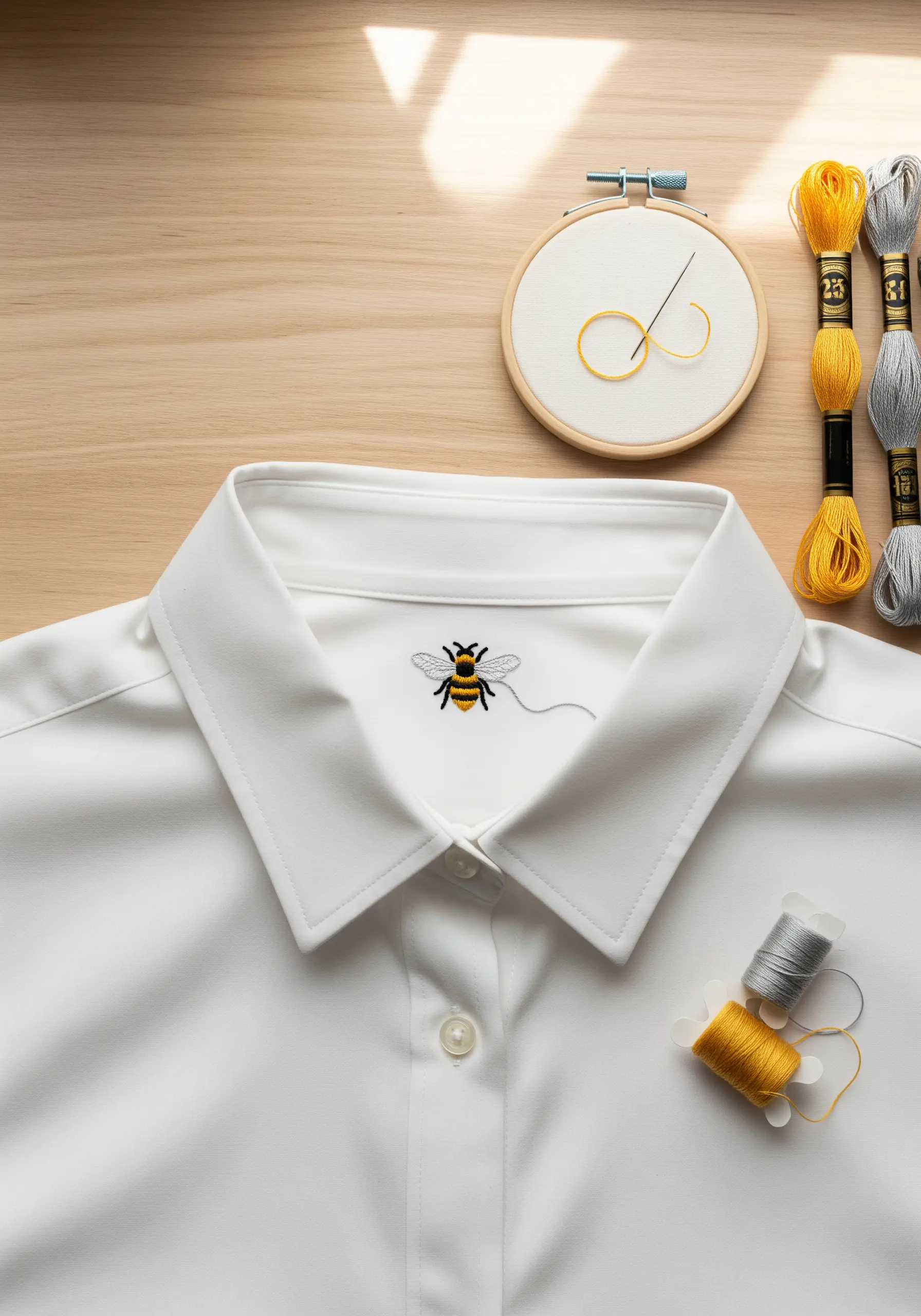
Place a tiny, meticulously stitched motif where it is least expected—like just below the collar of a crisp shirt.
Use a single strand of floss to achieve fine detail with a satin stitch for the body and a simple backstitch for the wings and flight path.
This technique transforms a classic garment into a conversation piece, adding a hidden story that is personal to you.
The trailing thread is a deliberate, playful choice that adds movement and a touch of the undone, making the design feel alive.
2. Stitching on Felt and Paper
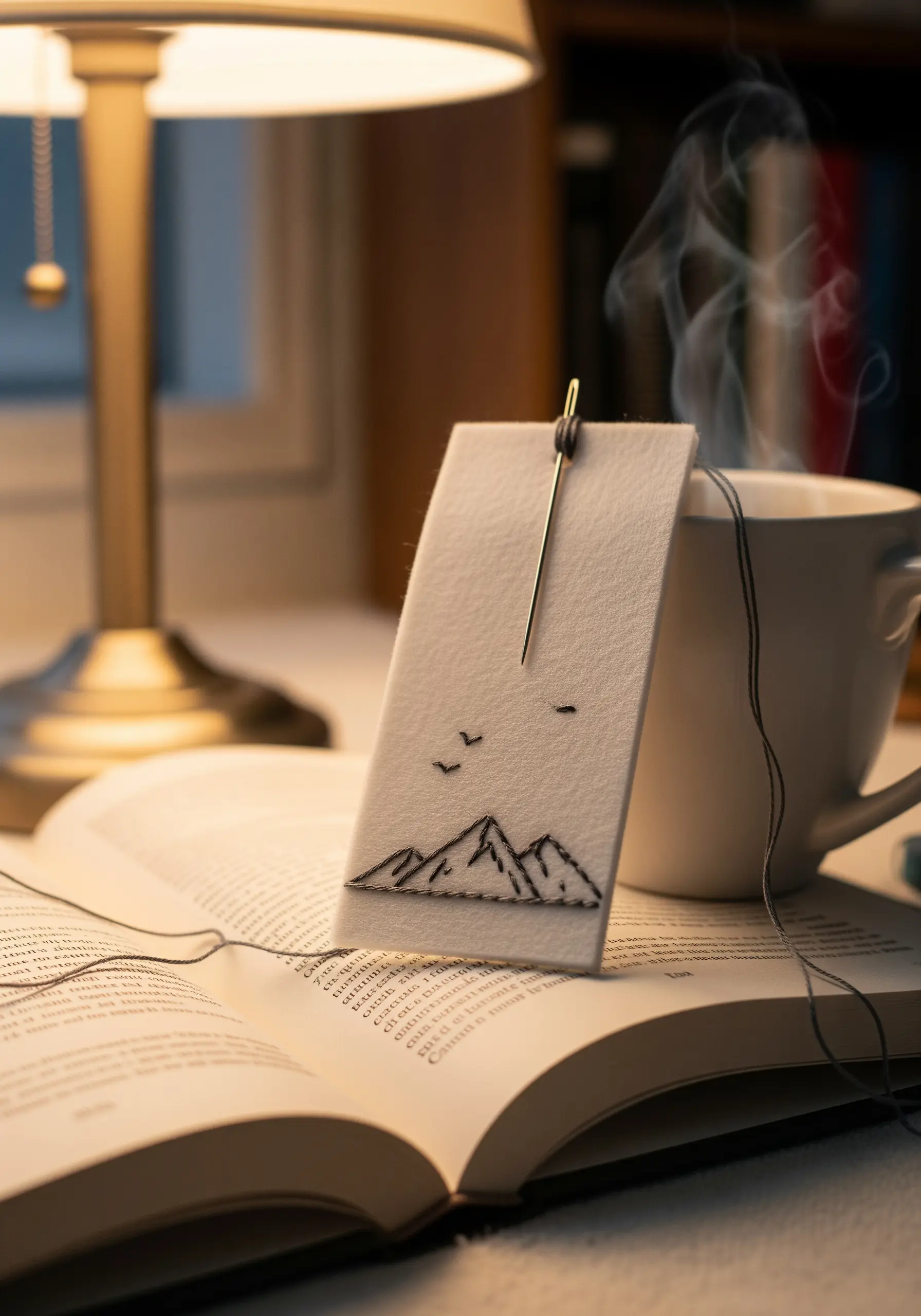
Embroider on unconventional materials like thick felt or high-quality cardstock to create unique objects like bookmarks or art cards.
First, pierce your holes with a fine needle or awl to prevent tearing the material as you stitch.
Use a simple backstitch with just two or three strands of floss to create a clean, graphic illustration that won’t buckle the surface.
This method gives your linework a crisp, print-like quality that stands out beautifully against the matte texture of the felt.
3. The Cohesive Herb Garden Set
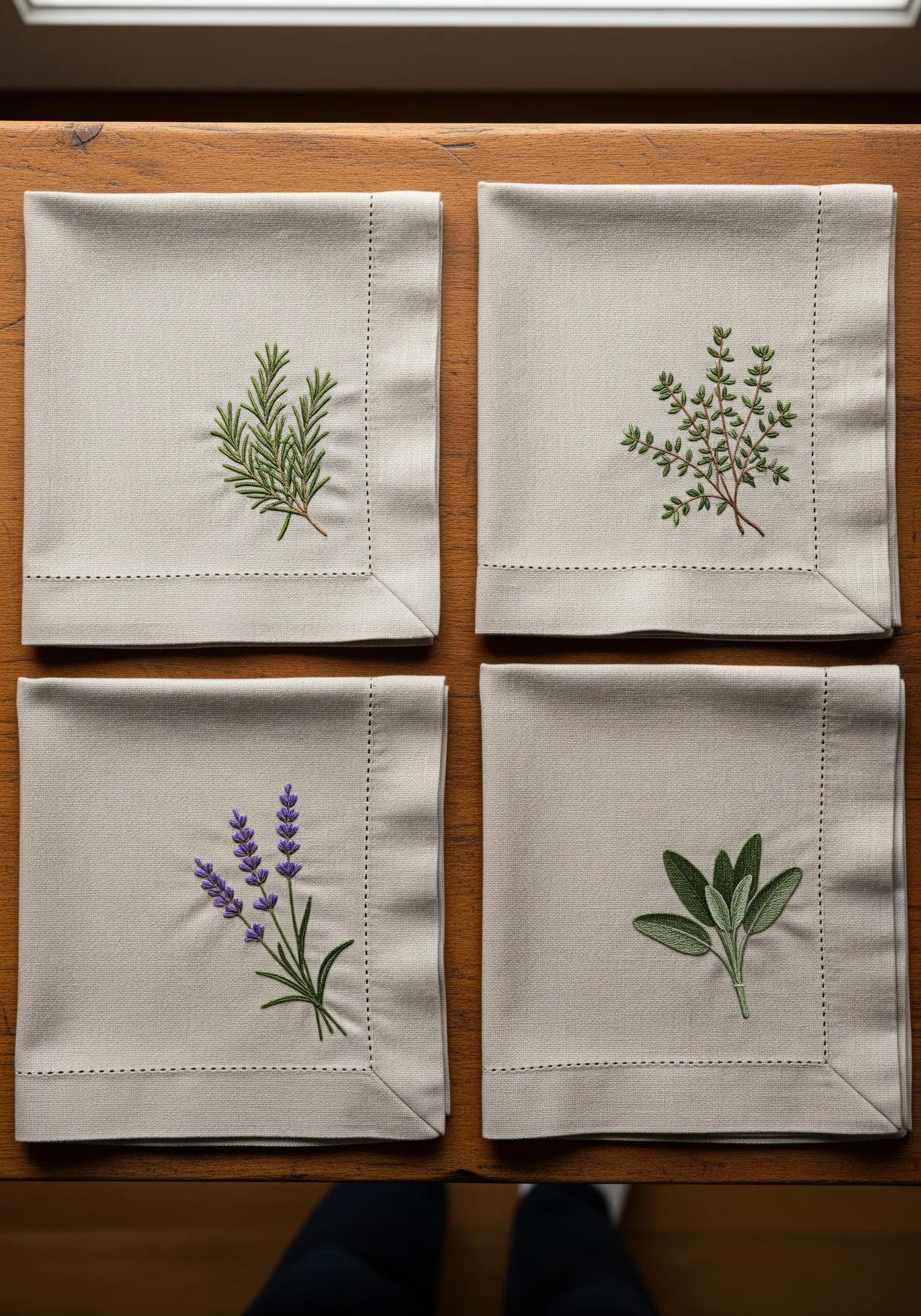
Elevate simple table linens by embroidering a collection of related motifs, such as culinary herbs.
To create a harmonious set, maintain a consistent scale and placement for each design, like positioning each herb in the same corner.
Use a fishbone stitch for leaves like sage and rosemary to create a central spine and natural texture, and add French knots for lavender buds to introduce a subtle, three-dimensional element.
This approach turns everyday napkins into a thoughtful, curated collection, perfect for gifting or personal use.
4. Metallic Accents on Denim
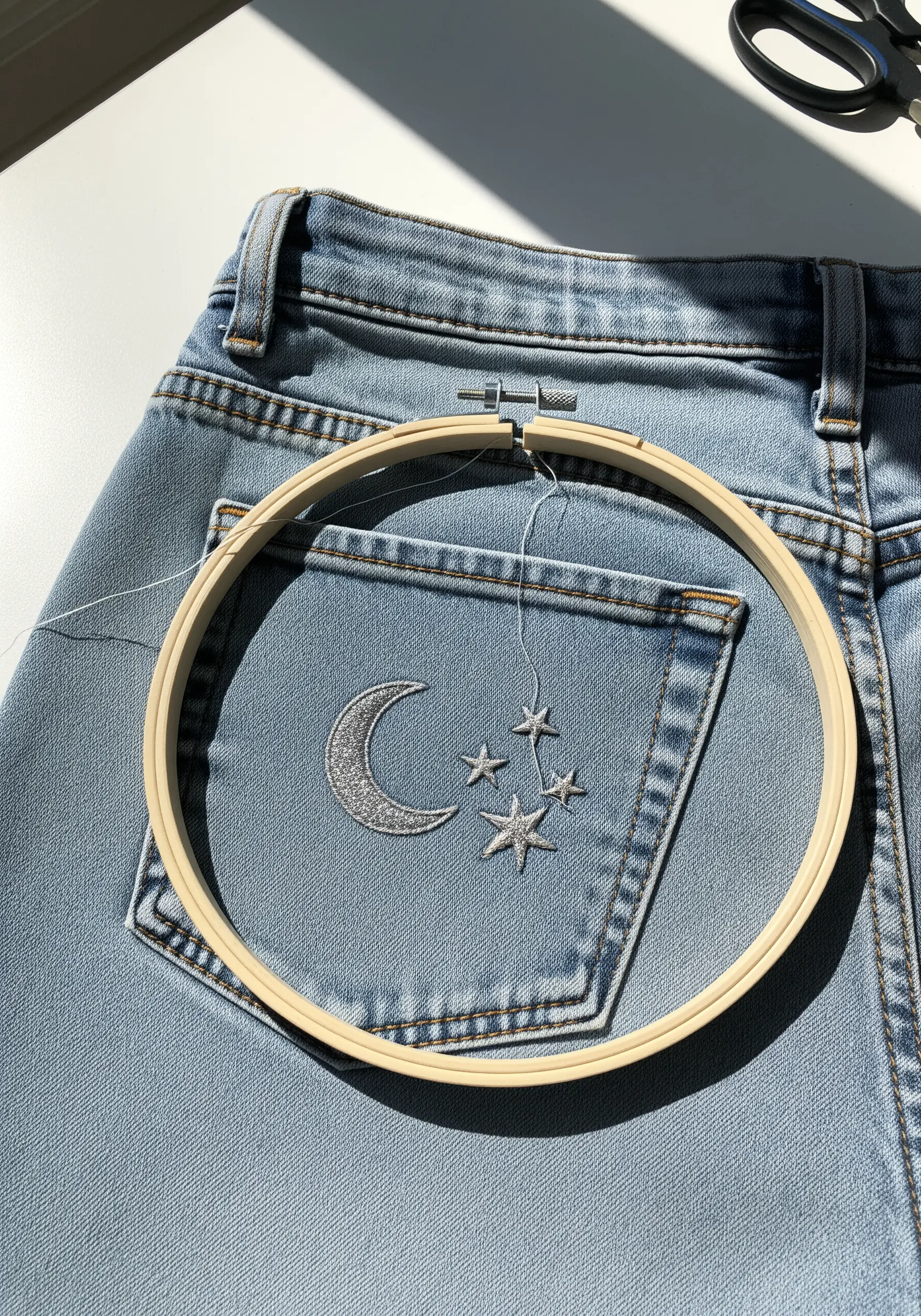
Add a touch of magic to durable fabrics like denim by using specialty threads.
Choose a silver metallic or light-reflecting thread to create a celestial motif that catches the light beautifully against the dark fabric.
Fill the shapes with a dense satin stitch or a more forgiving brick stitch, which helps minimize gaps and creates a smooth, patch-like finish.
Always use a thread conditioner with metallic floss to prevent fraying and tangling, ensuring your stitches remain clean and bright.
5. Single-Line Art on Book Covers
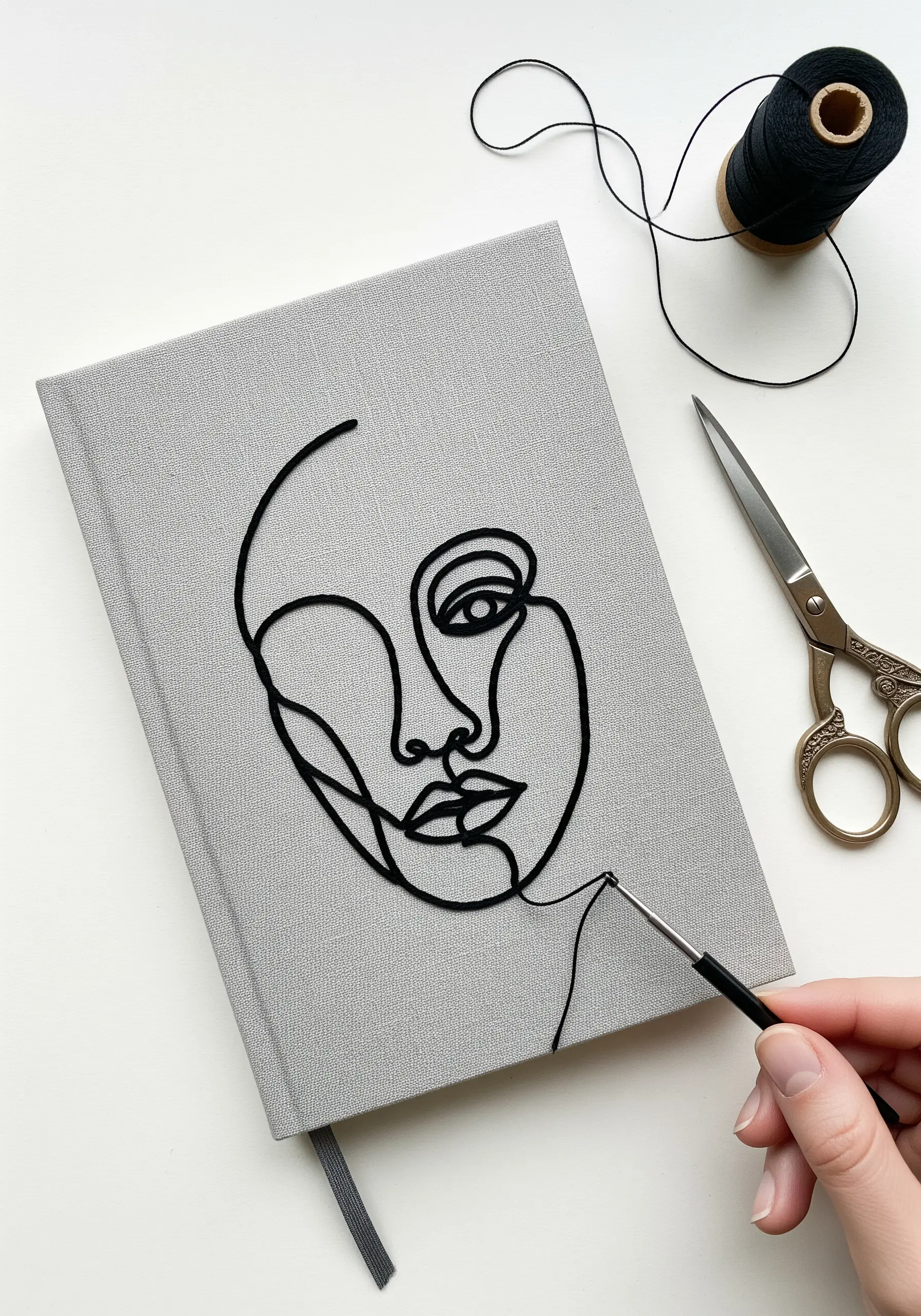
Transform a simple journal by embroidering a continuous line-art portrait onto its fabric cover.
To achieve a smooth, unbroken line, use a couching stitch: lay a thicker thread or yarn along your design path and tack it down with a finer, matching thread.
Before you begin, use an awl to pre-pierce the holes through the cardboard cover, which makes stitching easier and prevents warping.
This technique turns a functional object into a piece of minimalist art, making it deeply personal and expressive.
6. Crisp Motifs on Knitwear
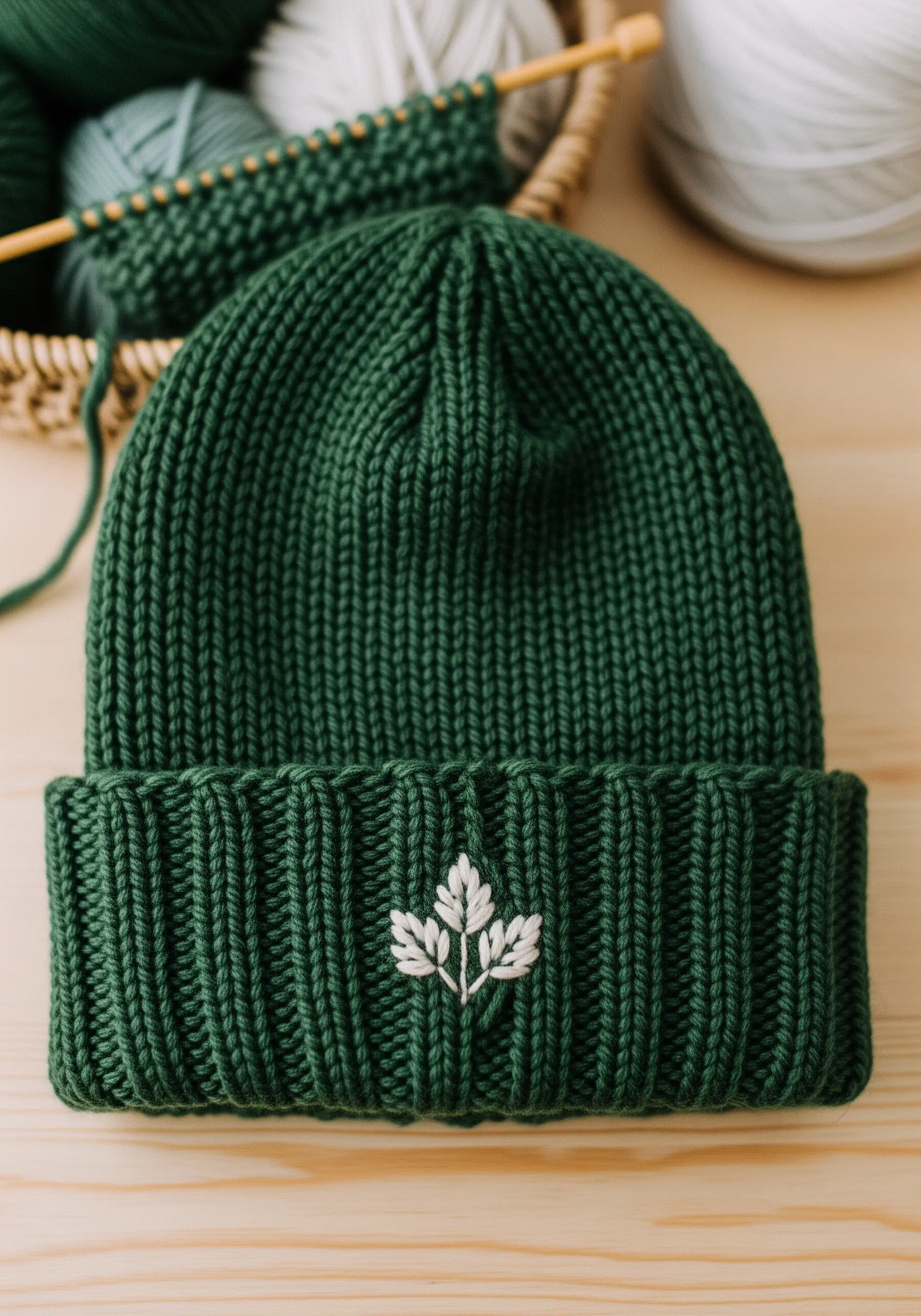
Embroidering on knitted items like a beanie requires stabilization to prevent the design from stretching or disappearing into the weave.
Apply a layer of stick-on, wash-away stabilizer to the front of the knit before you begin stitching; this provides a smooth surface to work on.
Use a satin stitch for the fill and outline it with a split stitch. This creates a crisp, defined edge that makes the motif pop against the ribbed texture of the hat.
Choose a contrasting, high-quality thread that is durable enough to withstand wear and washing.
7. Textural Lavender Bouquet
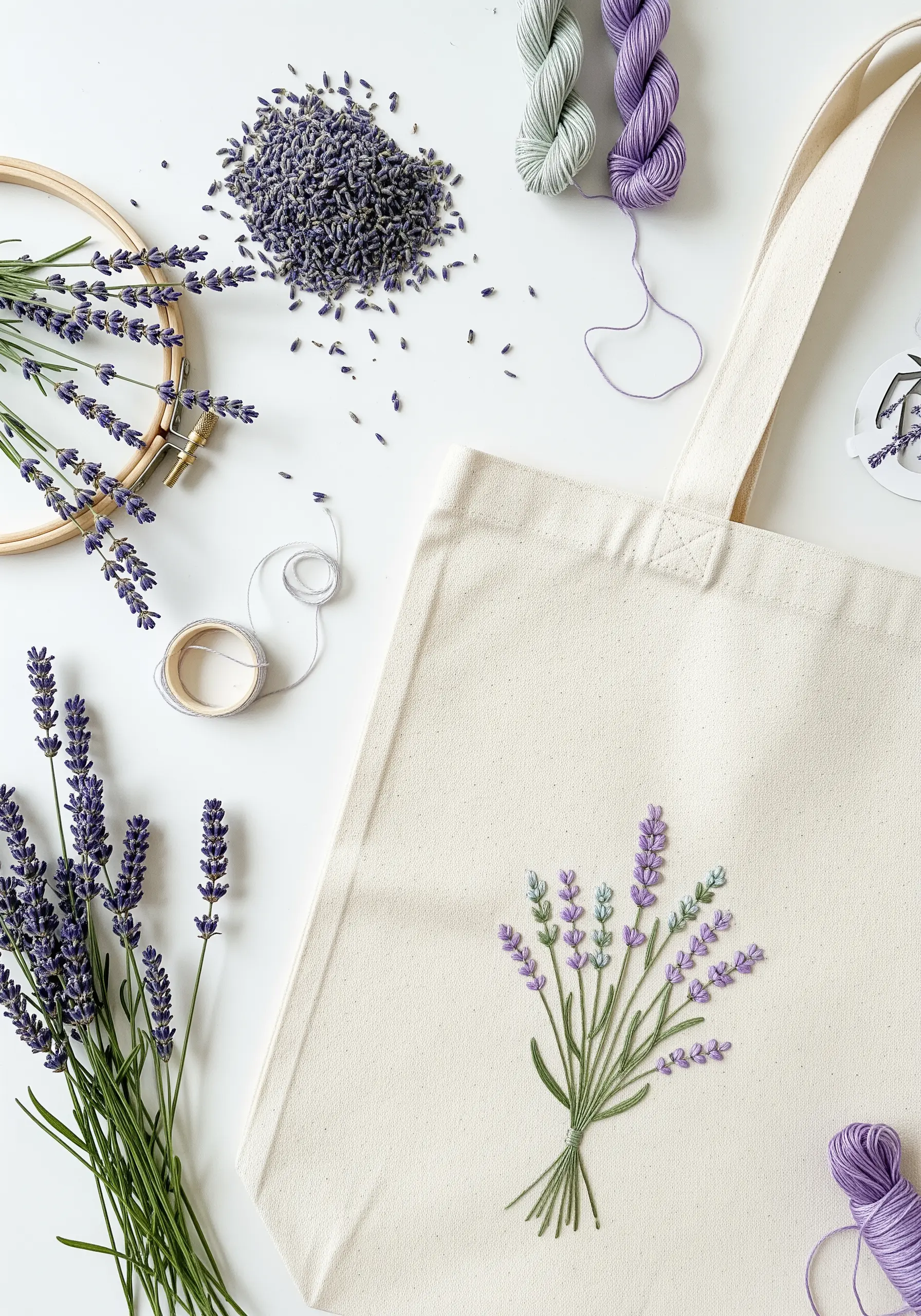
Combine different stitches to give your botanical designs realistic texture and dimension.
For a lavender bouquet, use French knots for the flower buds, varying the number of twists around the needle (one or two) to create buds of different sizes.
Use a simple straight stitch or stem stitch for the stalks, gathering them at the base to create the impression of a tied bundle.
This tactile approach makes the embroidery more engaging and lifelike, transforming a simple floral tote bag into a piece of art.
8. Minimalist Wave on Canvas

Add a subtle, personal touch to canvas sneakers with a simple, repeating motif.
A single line of waves stitched along the side is understated yet stylish. Use a basic backstitch or stem stitch for a clean, uniform line.
Choose a durable, colorfast thread that can withstand the elements. For extra longevity, you can apply a thin layer of clear fabric glue, like Fray Check, to the back of your stitches inside the shoe.
This small detail allows for self-expression without overwhelming the minimalist aesthetic of the footwear.
9. Geometric Constellation Stitching
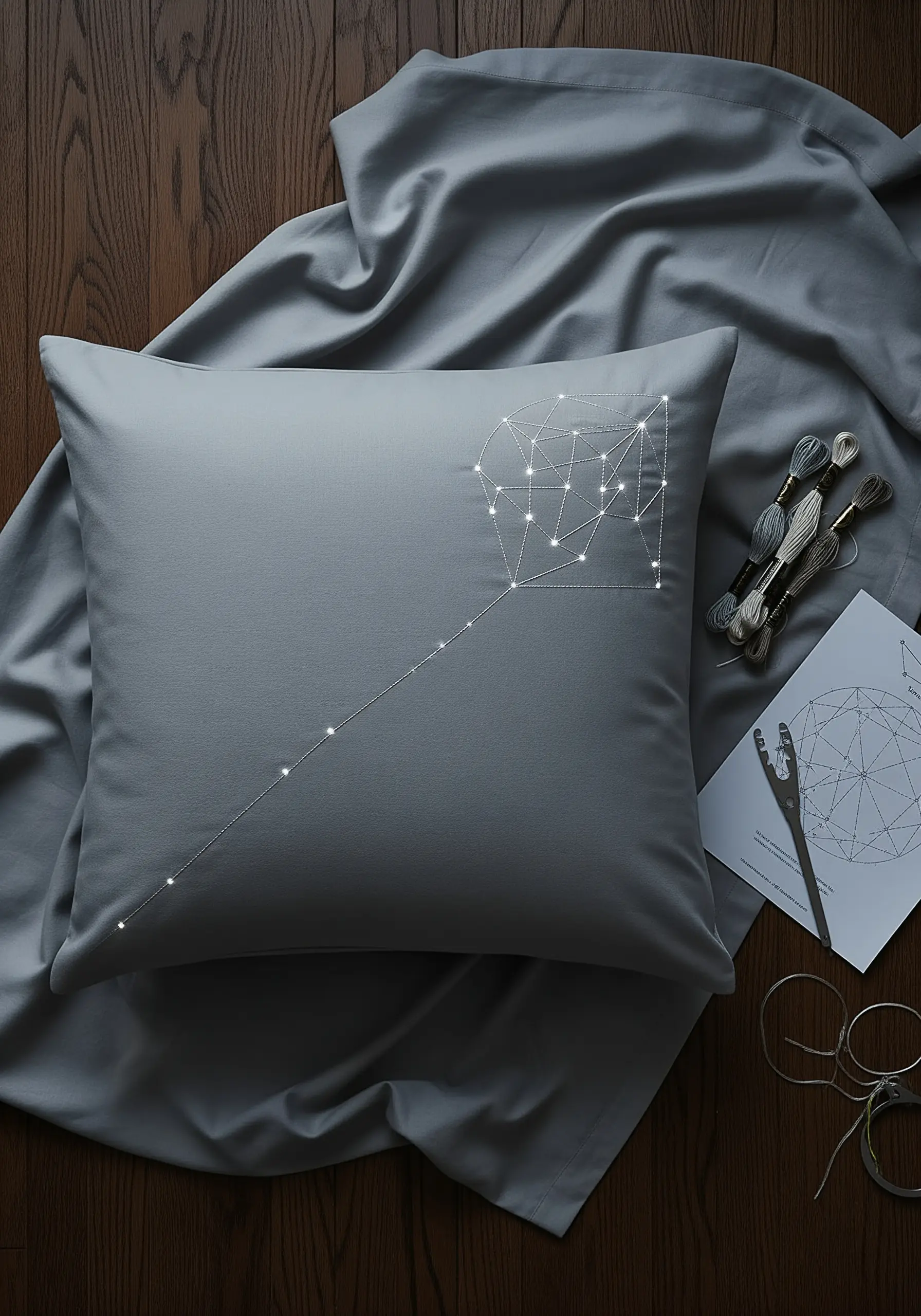
Create a modern, graphic design on home décor items like pillowcases using simple geometric forms.
Stitch a constellation using a clean running stitch for the connecting lines and small French knots or single satin stitches for the stars.
Use a light, high-contrast thread (like white or silver) on a dark fabric to mimic a starry night sky.
This minimal stitch pattern adds a touch of sophisticated, celestial character without adding visual clutter to your space.
10. The Refined Padded Monogram
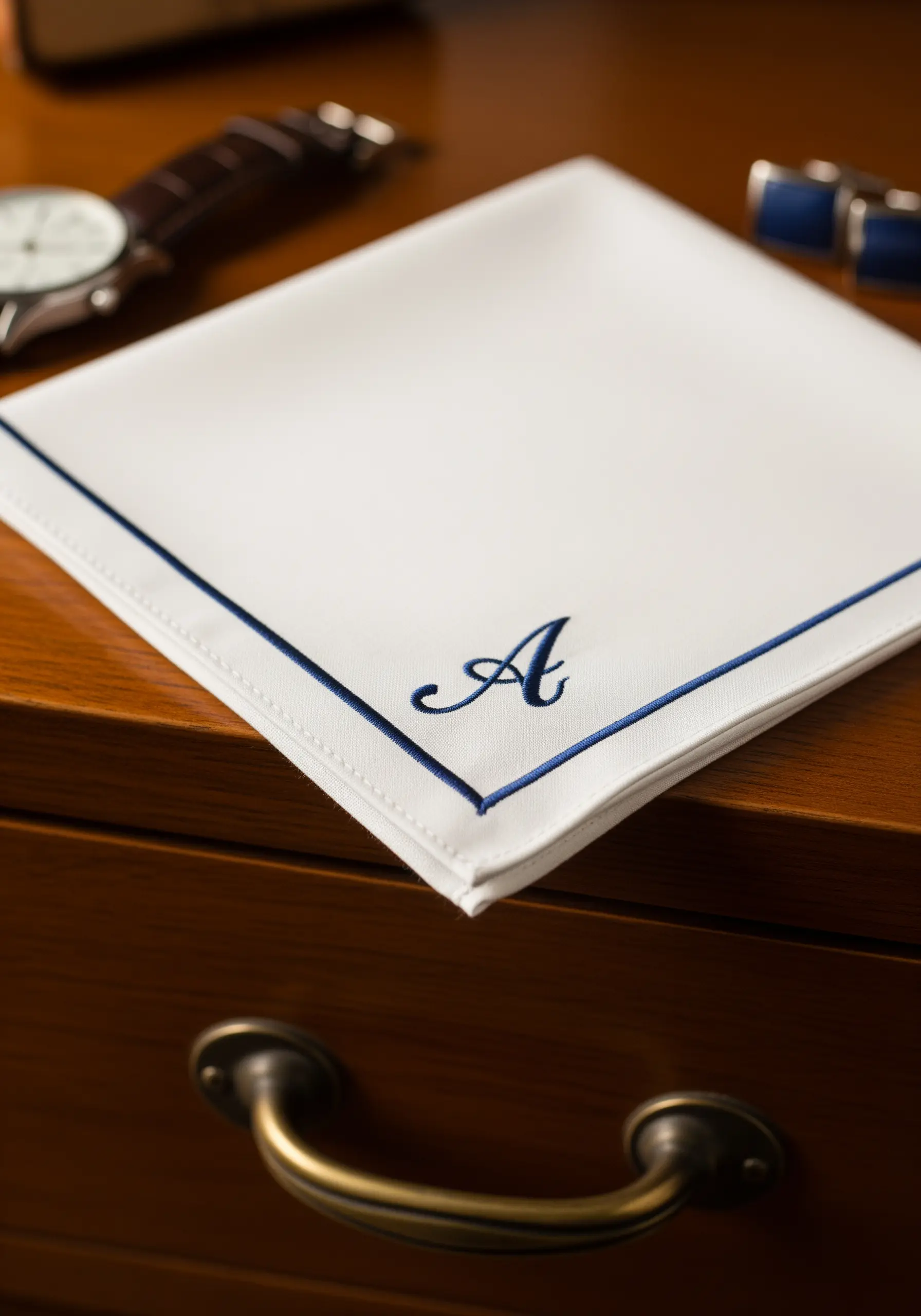
For a truly classic and luxurious finish on items like handkerchiefs or towels, use a padded satin stitch.
First, create a base layer of small, underlying stitches (like seed stitches) within the outline of your letter. This padding will give the final monogram a raised, three-dimensional effect.
Next, cover the padding with smooth, even satin stitches, ensuring they are pulled taut and lay closely together for a flawless finish.
Outlining the shape with a split stitch beforehand provides a crisp edge to stitch against, resulting in perfectly defined minimal monogram styles.
11. The Radiating Ginkgo Leaf
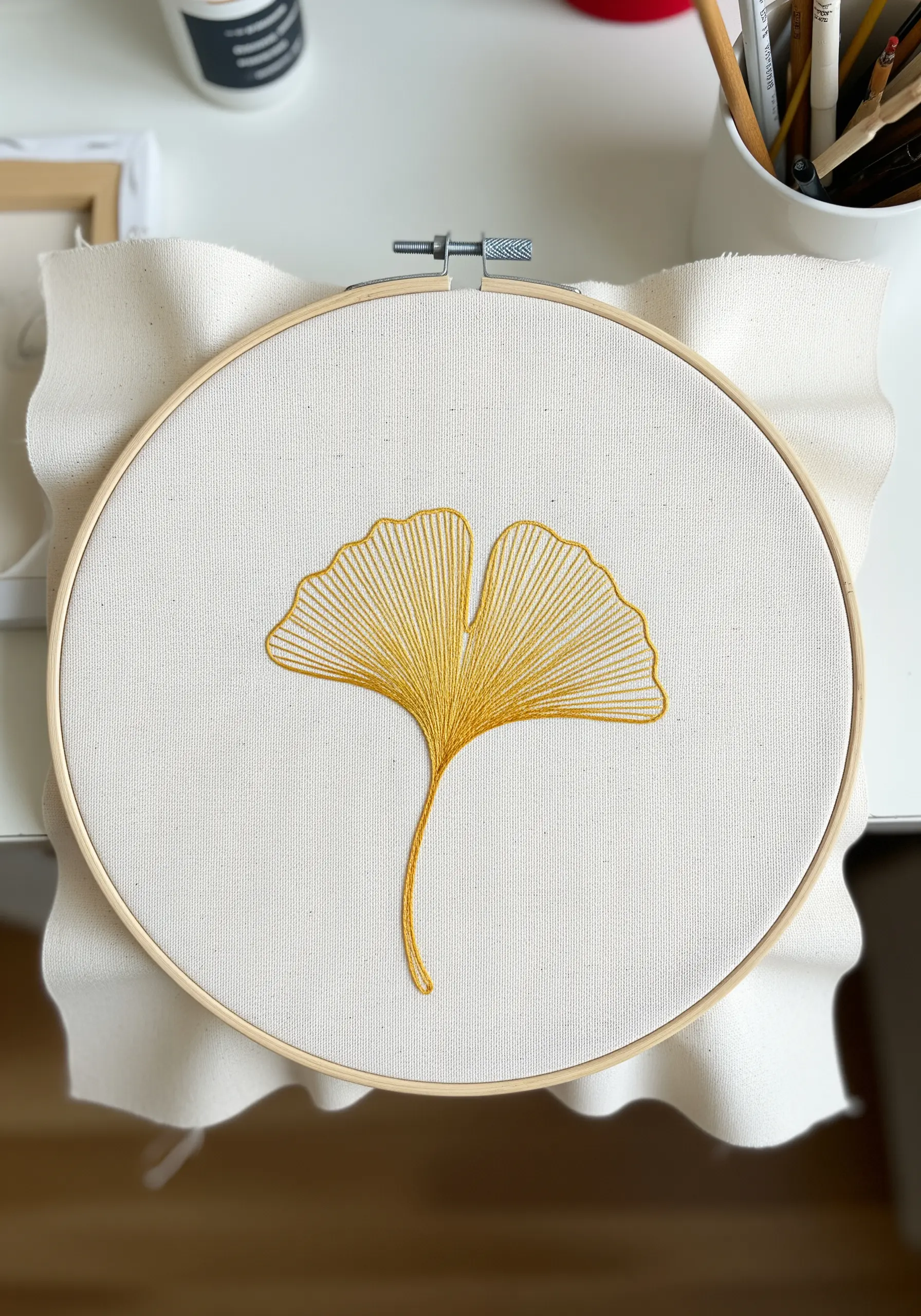
Capture the delicate structure of a ginkgo leaf by focusing on stitch direction.
Use a radial satin stitch, where all your stitches originate from the base of the leaf and fan outwards towards the curved edge.
This technique naturally creates the fine, radiating lines characteristic of the leaf, turning a simple fill stitch into a detailed botanical study.
Using a single, vibrant color like marigold yellow emphasizes the form and creates a striking piece of minimalist art.
12. The Origami Line Work
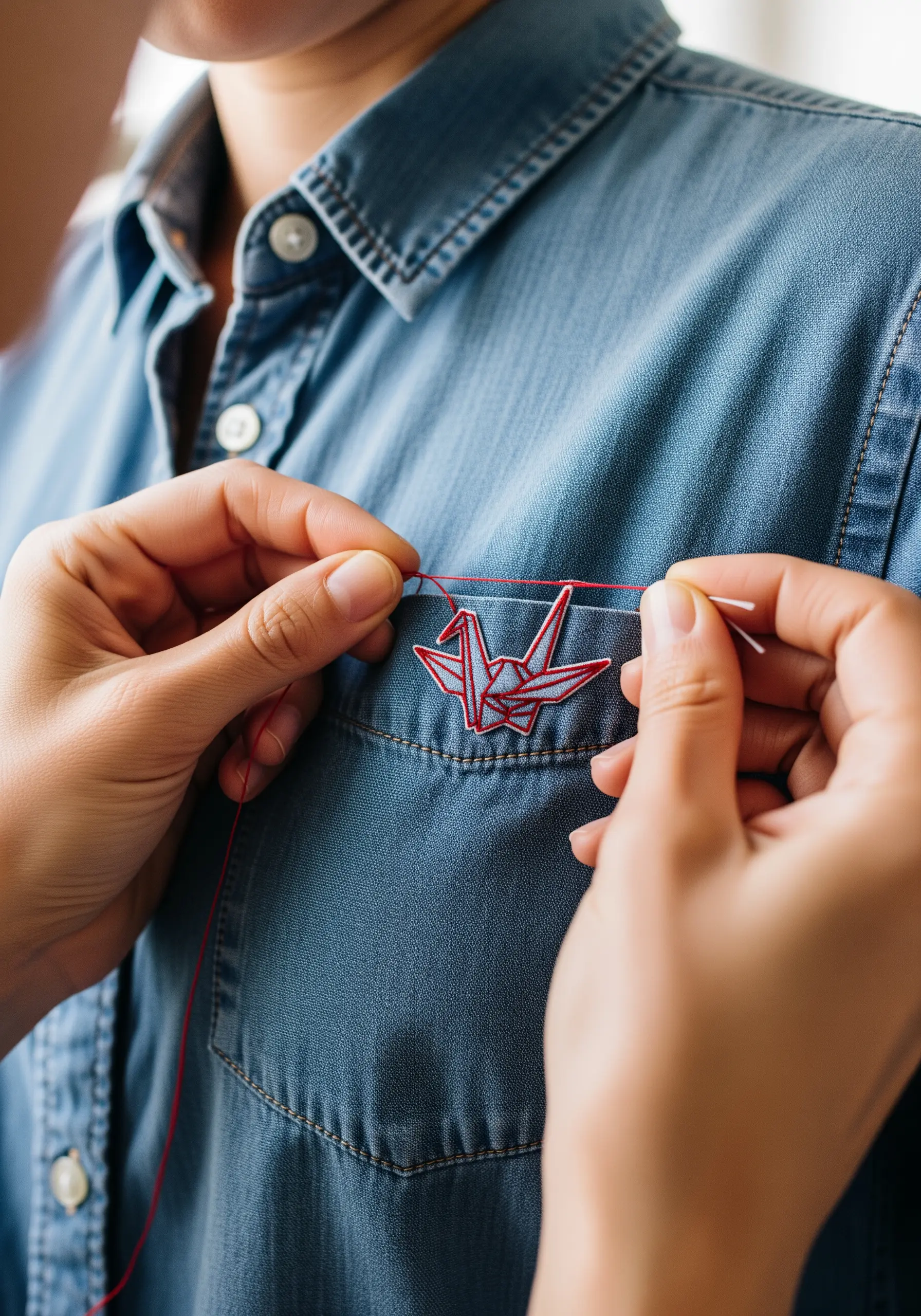
Emulate the crisp folds of origami by using precise, geometric linework on your fabric.
Choose a design like a paper crane and stitch it using a meticulous backstitch or split stitch to create sharp, defined lines.
Use a high-contrast thread, like red on denim, to make the geometric form stand out as a bold, graphic statement.
This technique celebrates form and line, adding an artistic, sculptural element to a simple garment.
13. Soft-Fill for Delicate Fabrics
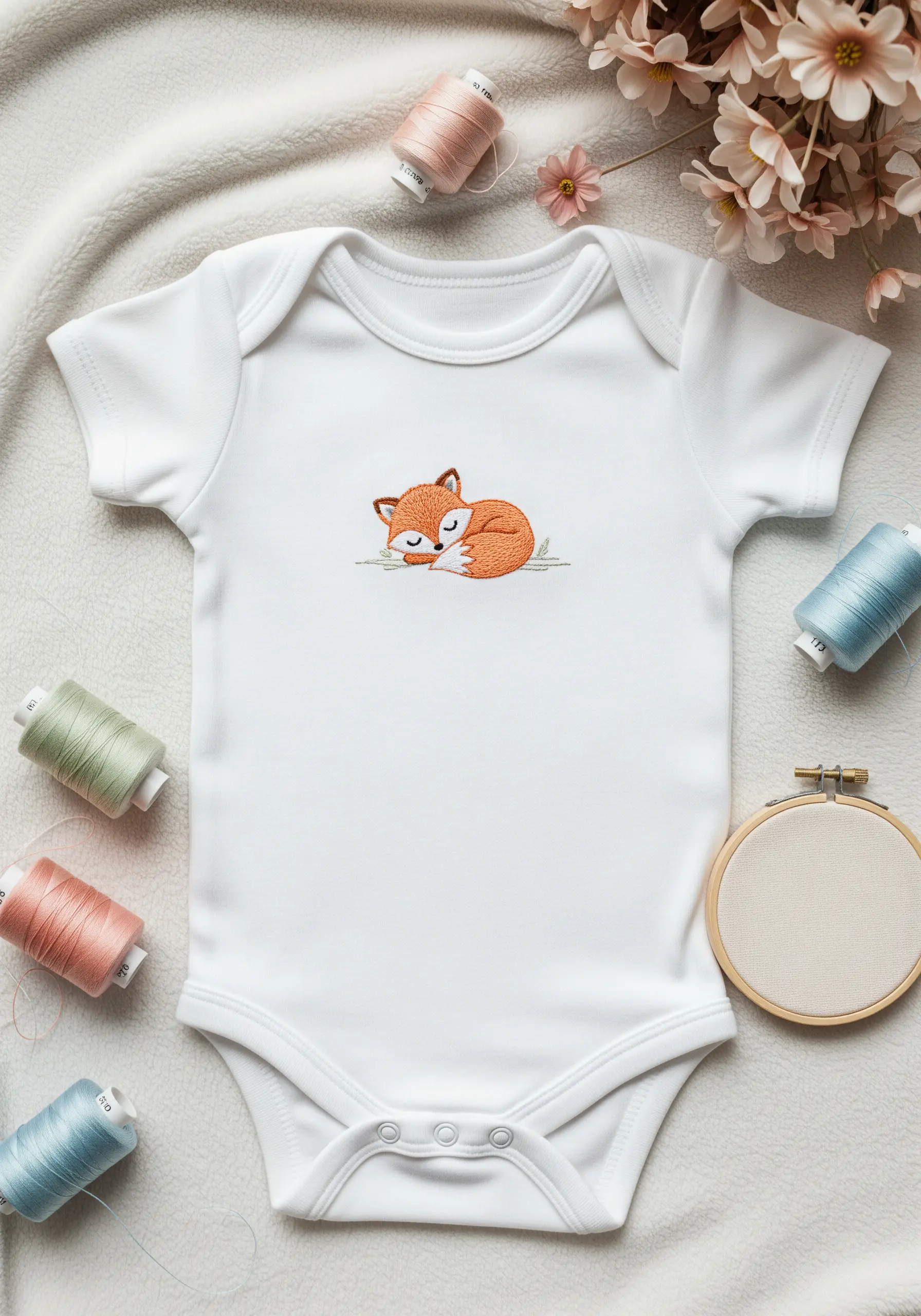
When embroidering on soft, stretchy fabrics like a baby’s onesie, choose stitches that move with the garment.
The long-and-short stitch is perfect for filling shapes, as it creates a soft, textured effect similar to fur and is more flexible than a dense satin stitch.
Always use a soft, iron-on backing like Sulky Tender Touch over the reverse side of your embroidery. This protects sensitive skin from scratchy threads.
These fox deer embroidery patterns, when stitched this way, become gentle and wearable art.
14. Creating a Sense of Weightlessness
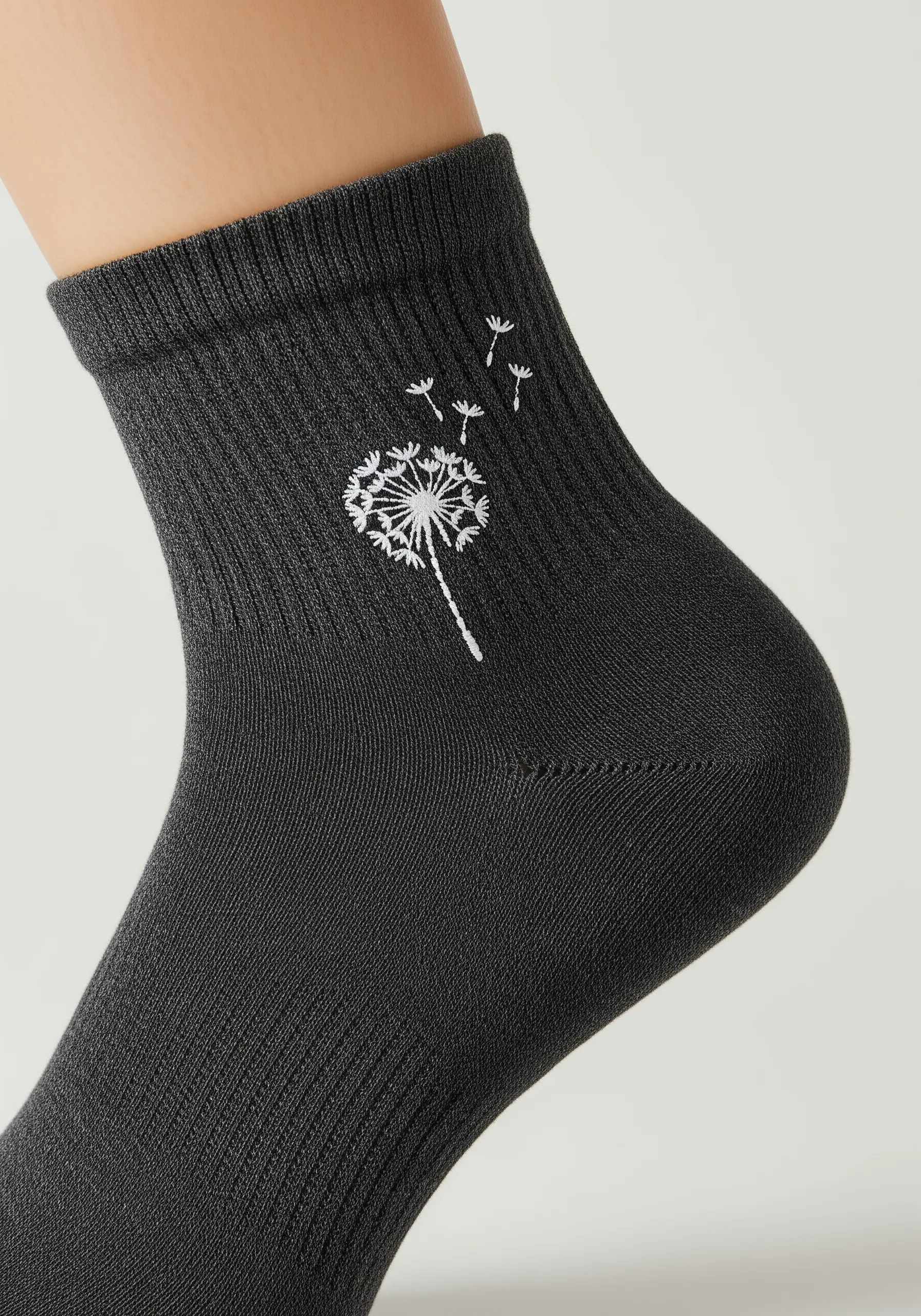
Capture the delicate, airy nature of a dandelion by using light, detached stitches.
Use single, detached chain stitches or fly stitches to represent the floating seeds, which gives them shape and a sense of movement.
For the main puff, use a series of fine straight stitches radiating from a central point, keeping them light and not too dense.
This technique is all about restraint—using negative space to convey lightness and delicacy on an everyday item like a sock.
15. The Graphic Offset Outline
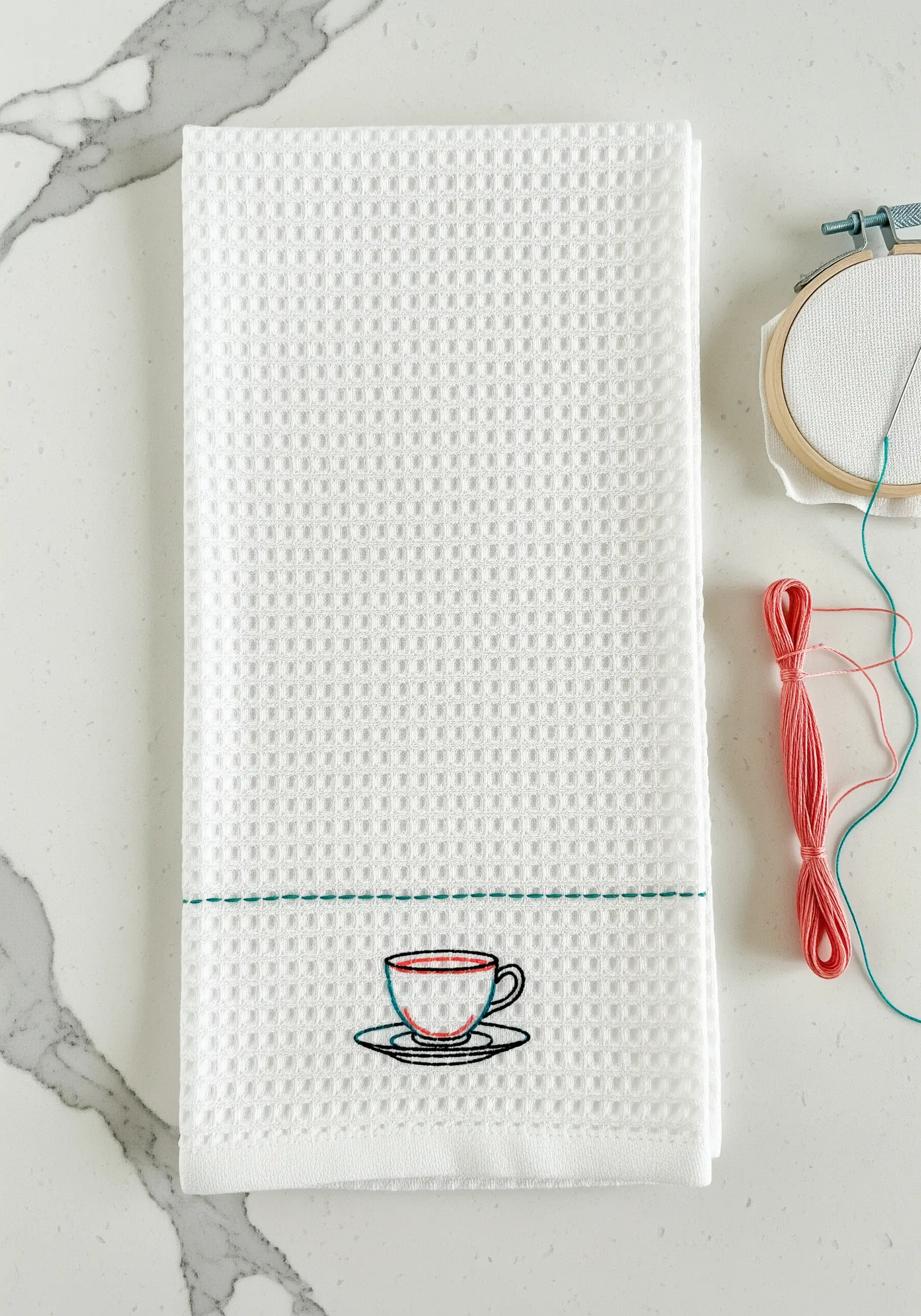
Add a modern, playful touch to a simple line drawing by incorporating an offset color pop.
First, stitch your main design—like a coffee cup—using a clean backstitch in a neutral color.
Then, add a second outline slightly offset from the first, using one or two bright, contrasting colors. This creates a subtle 3D or chromatic aberration effect.
This technique works especially well on textured fabrics like waffle-weave towels, where the simple lines create a crisp contrast.
16. Embroidering a Lampshade
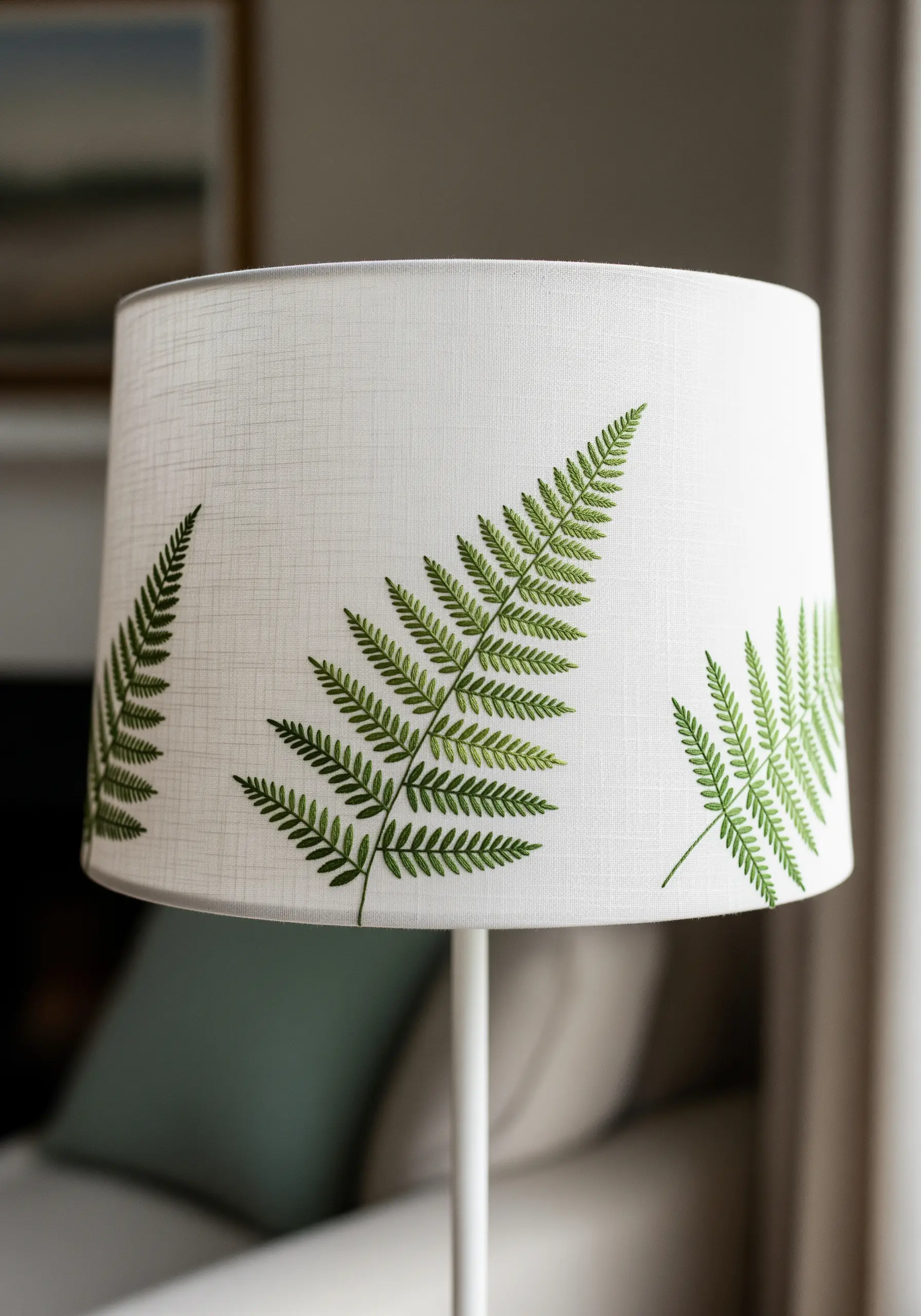
You can embroider on a fabric lampshade to create custom, high-end home décor.
Use a very sharp needle and a thimble to push through the stiff, often paper-backed fabric without damaging it.
A fishbone stitch is ideal for fern leaves, as it creates a beautiful, textured fill with a defined central vein, mimicking the natural form of the frond.
Repeat the motif around the shade at varying heights to create a natural, botanical pattern that casts interesting shadows when the lamp is on.
17. Bold Texture with Yarn
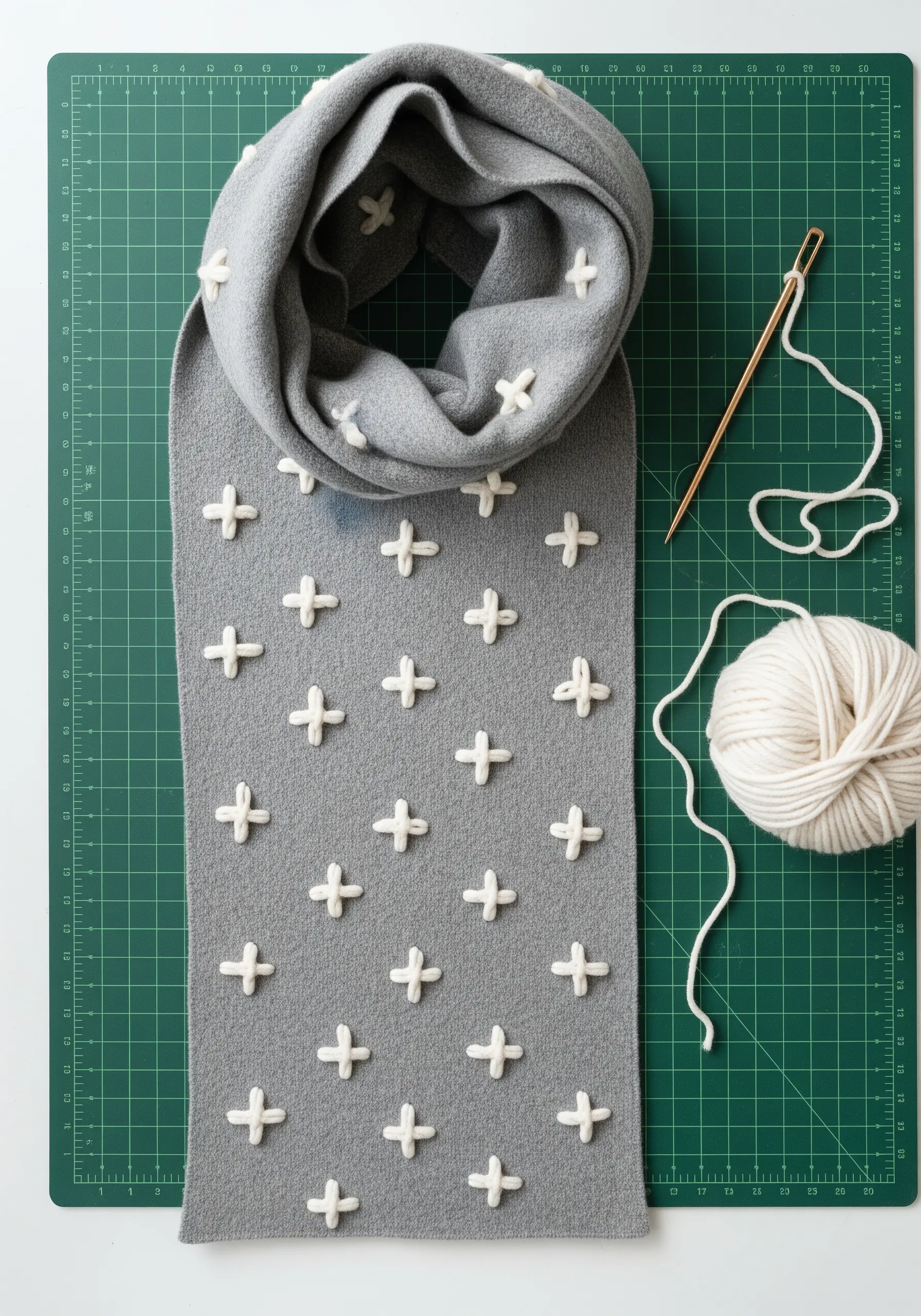
Move beyond embroidery floss and experiment with thicker fibers like wool yarn for a bold, textural effect.
Use a large-eyed tapestry needle to stitch simple, repeating shapes like plus signs onto a woven fabric like a scarf.
Each plus sign is just two overlapping straight stitches, but the thickness of the yarn gives it a plush, three-dimensional quality.
This is one of those unexpected embroidery techniques that adds warmth and a modern, handmade touch with minimal effort.
18. The Narrative Path
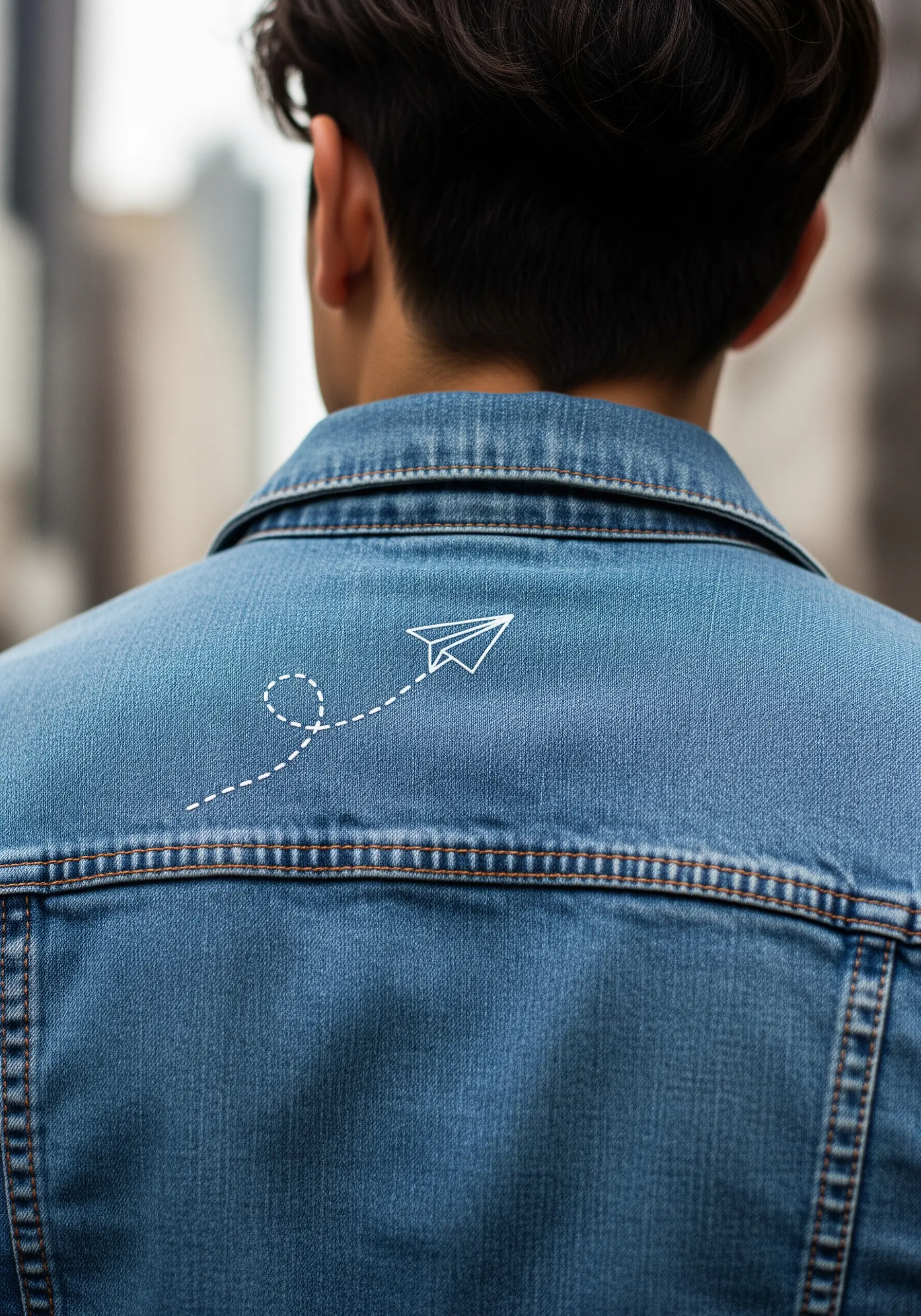
Tell a small story with your stitches by combining a simple motif with a path of movement.
Embroider a paper airplane using a clean backstitch, then add a looped, dotted line behind it using a simple running stitch.
This combination creates a sense of motion and whimsy, turning a static design into a dynamic moment.
Placing this subtle detail on the back yoke of a denim jacket adds a secret, personal touch of adventure.
19. Monochromatic Thread Painting
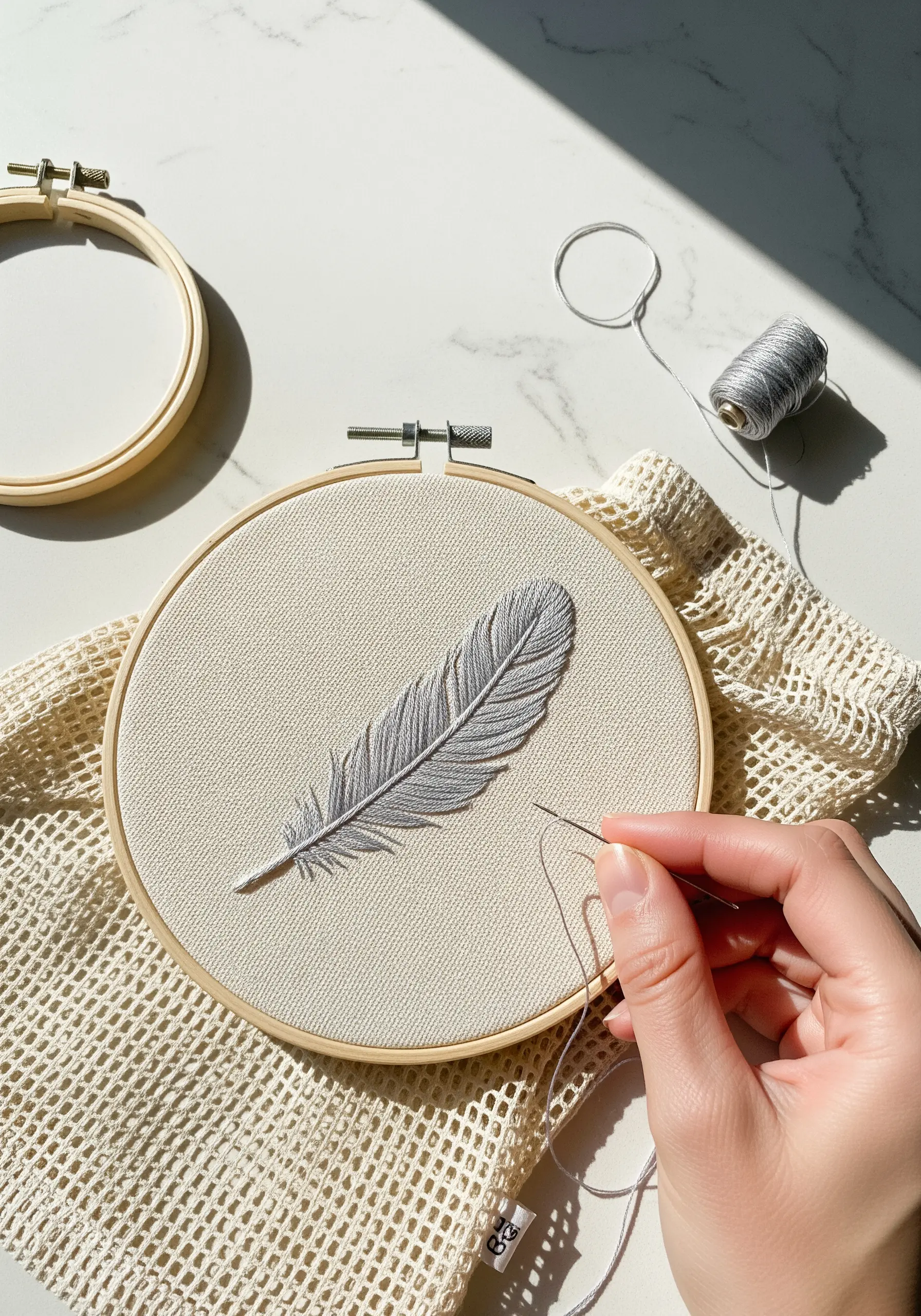
Achieve stunning realism and depth using only different shades of a single color.
To create a feather, use three to four shades of grey and the long-and-short stitch to blend them seamlessly.
Start with the darkest shade at the quill and gradually work your way to the lightest shade at the tips of the barbs.
Realistic feather embroidery techniques like this rely on subtle color shifts and directional stitching to create lifelike texture and form.
20. Geometric Micro-Stitching
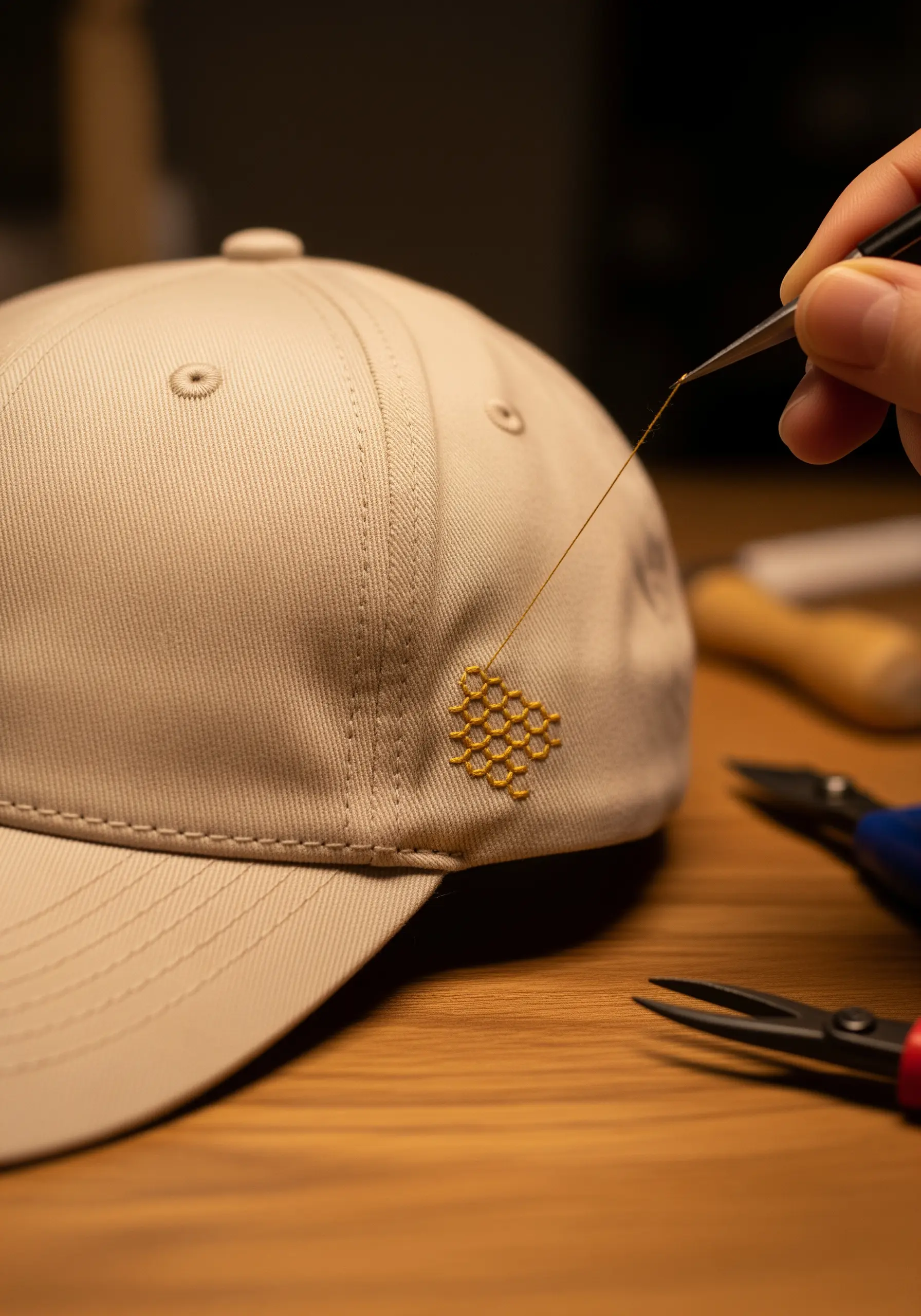
Add a tiny, precise geometric detail to an accessory like a baseball cap for a subtle, modern accent.
A small honeycomb pattern can be created using a series of connected straight stitches or a continuous stem stitch worked in a hexagonal pattern.
Because you’re working on a thick, curved surface, a small, sharp needle and a thimble are essential. You may need to stitch without a hoop.
This micro-embroidery adds a touch of bespoke character that is clean, minimal, and intentional.
21. The Contour-Line Sketch
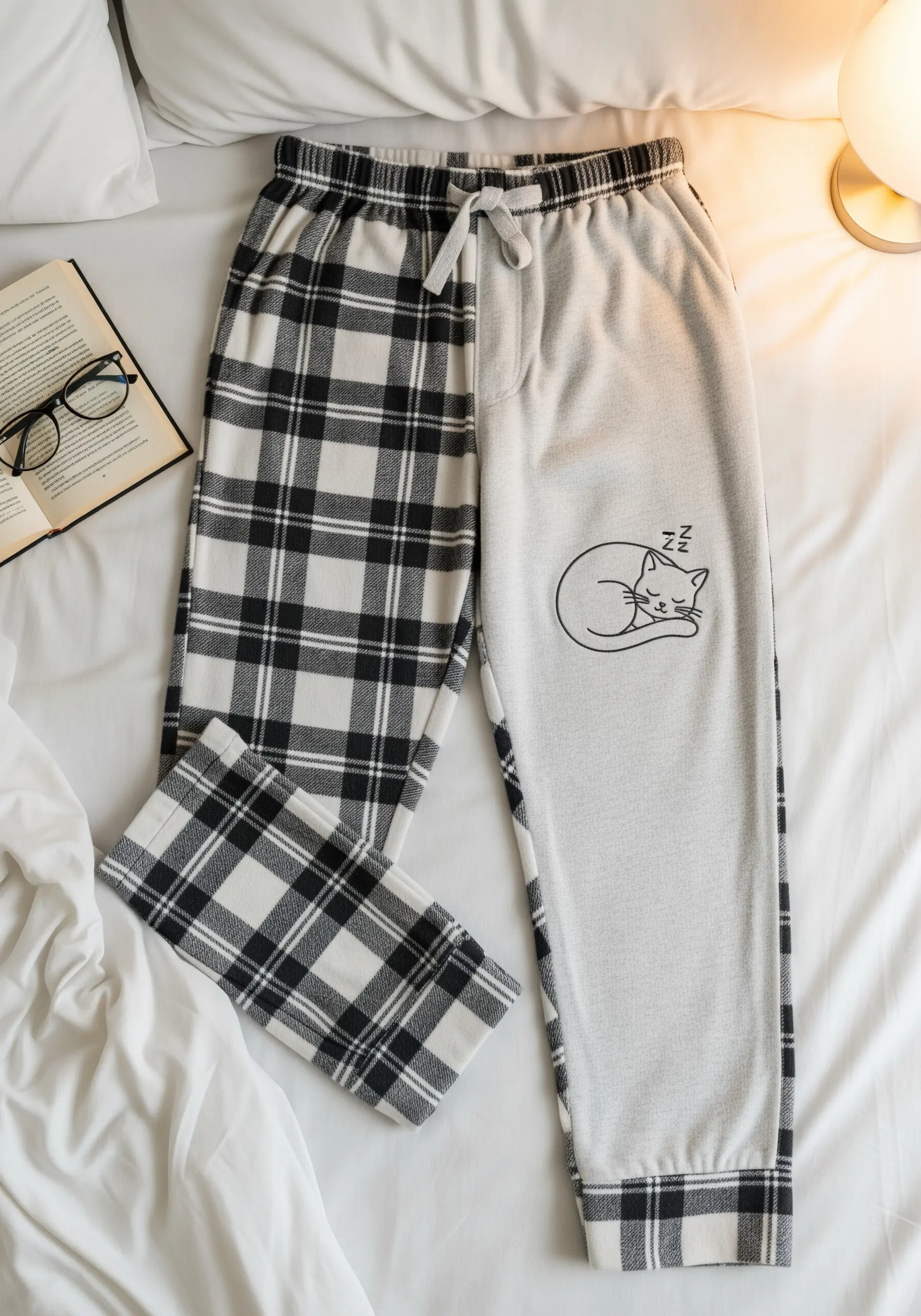
Capture the expressive quality of a line drawing by embroidering a design in a single, continuous stitch.
Choose a simple contour sketch, like a sleeping cat, and translate it to fabric using a smooth stem stitch or a whipped backstitch.
This technique highlights the fluidity and character of the line itself, creating a piece that feels both personal and artistic.
It’s a perfect way to add a subtle, custom touch to comfortable items like pajama pants or a sweatshirt.
22. The Thematic Motif
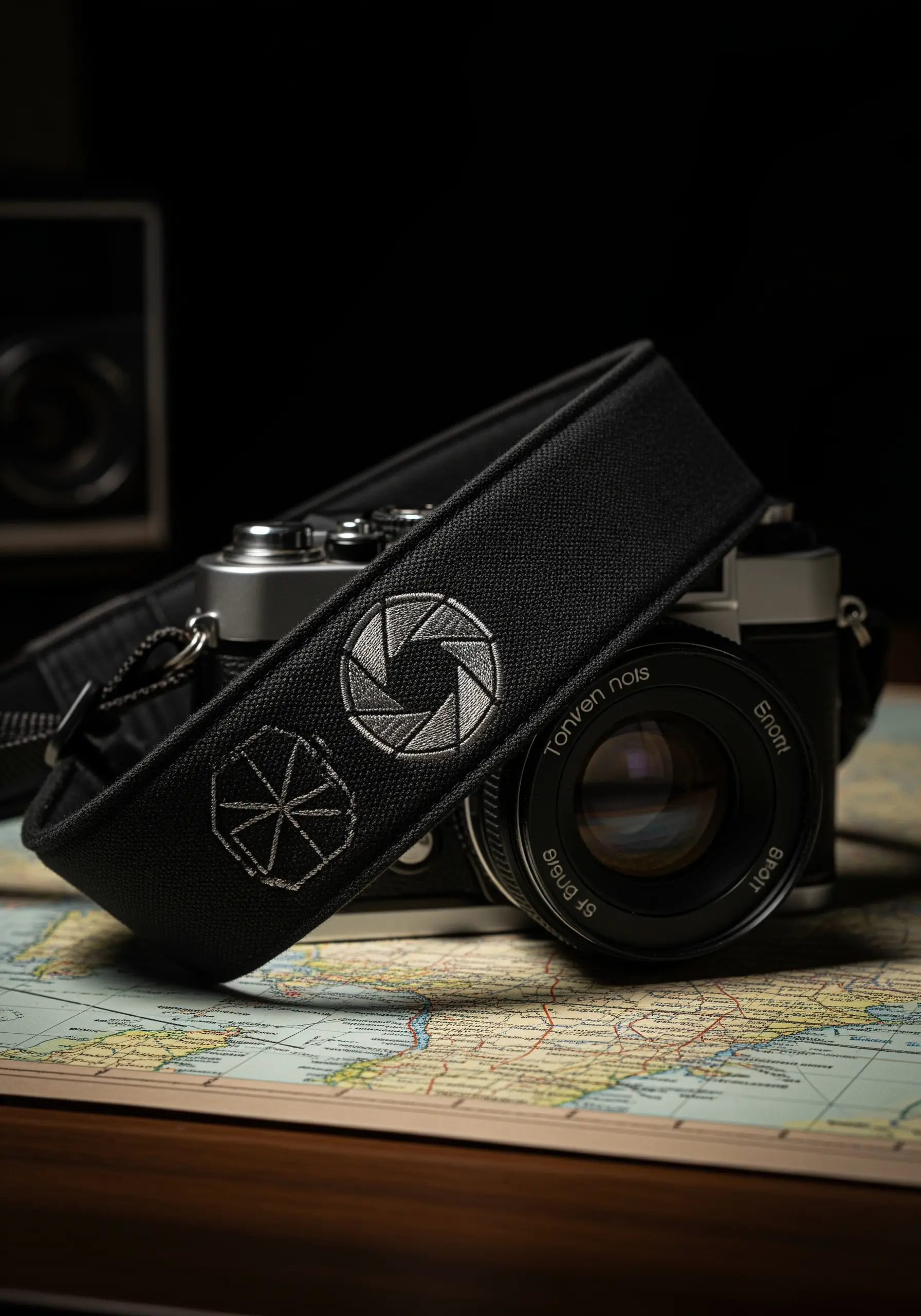
Personalize your gear by adding a motif that reflects its use, like embroidering a camera aperture on a camera strap.
Use a satin stitch for the blades of the aperture, ensuring your stitches are neat and parallel to create a clean, graphic look.
Working with a light-colored thread like silver on a black background creates a high-contrast design that is both subtle and immediately recognizable.
This approach turns a functional item into a unique piece that reflects your passion and attention to detail.