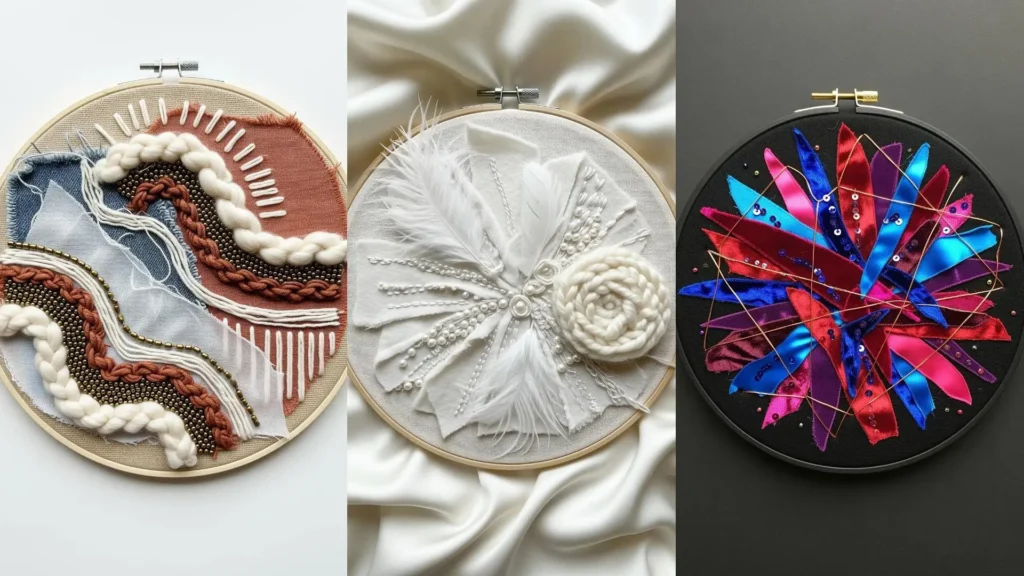
Your pillowcases are more than just a place to rest your head—they are blank canvases waiting for a touch of intentional artistry. Forget complex, time-consuming patterns. The most profound transformations often come from the simplest, most deliberate stitches.
This collection is about elevating the ordinary through minimal design. You’ll discover how a single stitch, repeated with precision, can create rhythm and texture. You’ll see how focusing on line, contrast, and negative space turns a basic pillowcase into a piece of decor that feels both personal and professionally designed.
Think of this as a quiet conversation between thread and fabric. Each idea is an invitation to slow down, to appreciate the elegance of a well-placed line, and to create something beautiful that brings a sense of calm and character to your home.
1. Create a Celestial Grid with Beaded Starbursts
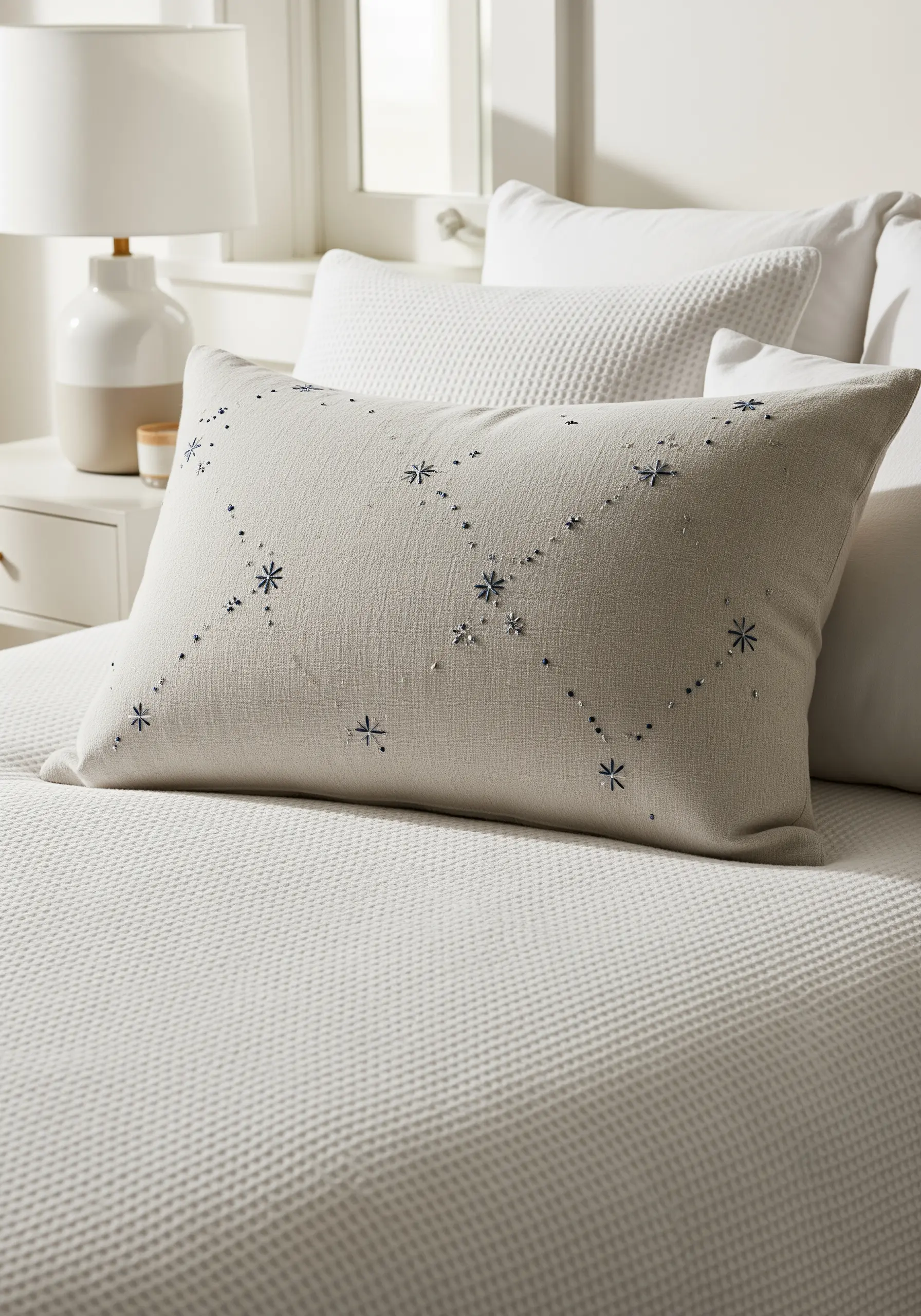
Transform a plain linen pillowcase by creating a subtle, repeating diamond pattern with a simple backstitch.
At each intersection of your grid, stitch a small starburst using three intersecting straight stitches.
For a touch of quiet luxury, add a single seed bead or a small, dark sequin to the center of select starbursts—this catches the light without overwhelming the minimal design.
Choose a thread color just a few shades darker than your fabric, like a slate blue on oatmeal linen, to ensure the pattern feels integrated and serene.
For added shimmer, consider using a single strand of metallic thread for the starbursts, which provides a delicate contrast against the matte cotton floss of the grid.
2. Contrast Textures with a Chunky Yarn Appliqué
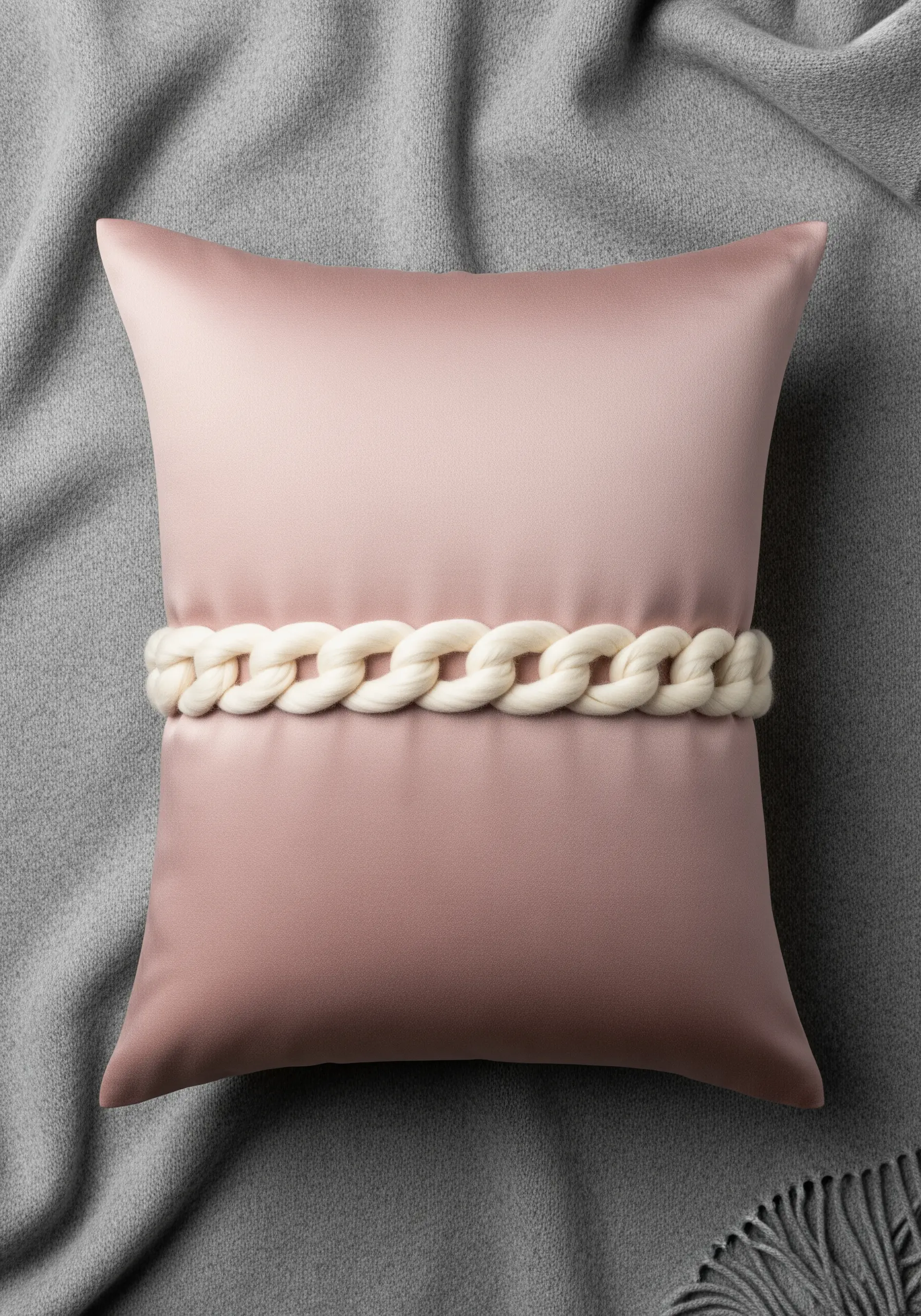
This technique introduces bold, sculptural texture by combining different fiber arts.
Create or source a chunky braided or knitted cord from soft merino wool roving.
Instead of stitching *through* the pillowcase, you will appliqué this cord directly onto the surface of a contrasting fabric, like silk or satin.
Use a strong, matching thread to discreetly tack the cord in place from behind, hiding your stitches within its fibers.
This juxtaposition of the smooth, lustrous pillow and the soft, matte wool creates a powerful tactile and visual statement—a perfect example of how mixed fiber creations can elevate home decor.
3. Achieve Organic Lines with a Variable Backstitch
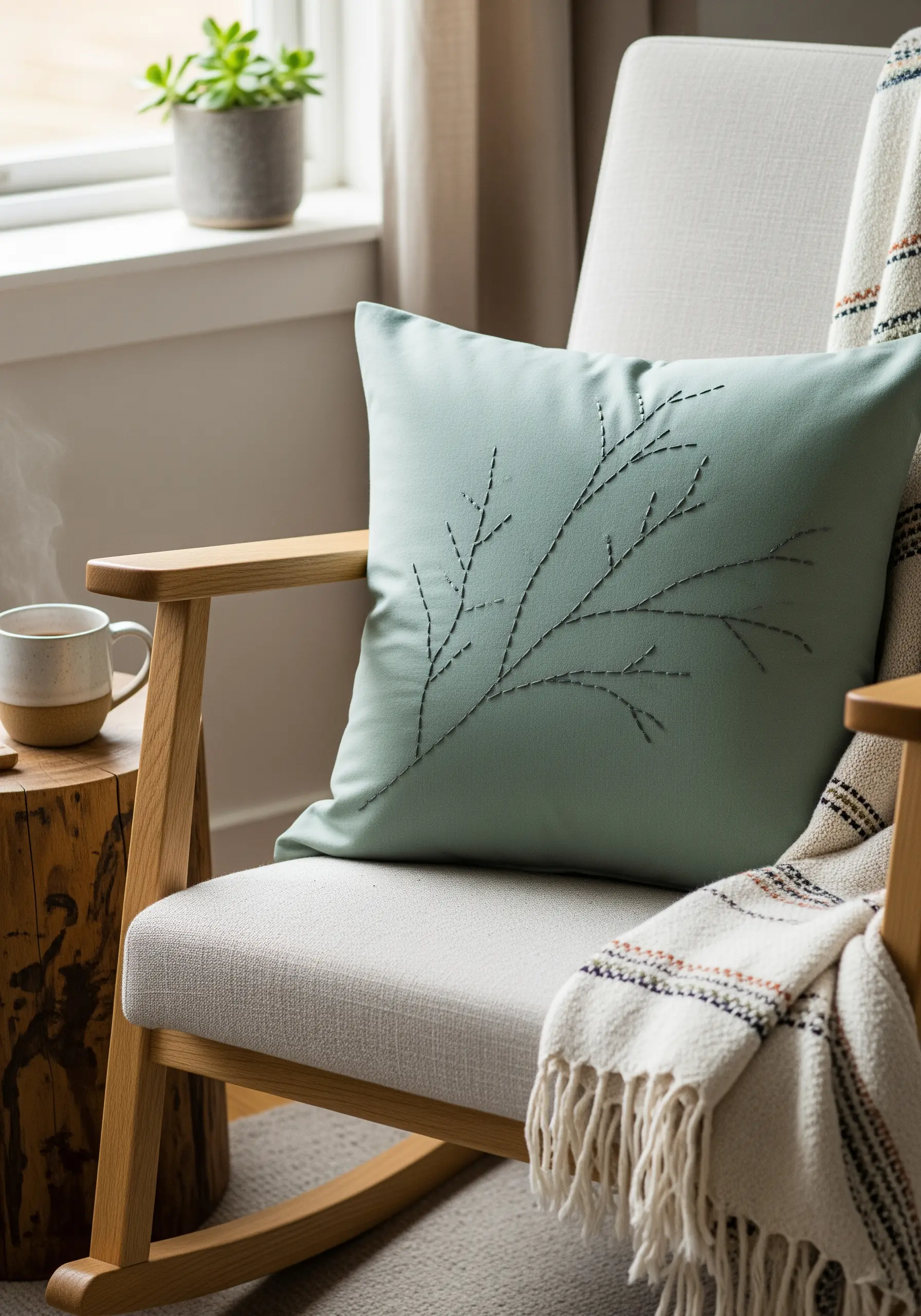
To embroider realistic branches or other natural forms, move beyond a perfectly uniform backstitch.
Instead, vary the length of your stitches—longer on the main branch, shorter and more delicate on the smaller twigs.
This subtle shift mimics the way branches grow in nature, giving your work a fluid, organic quality that a rigid stitch cannot replicate.
Use a matte cotton floss in a dark, contrasting color like charcoal on a sage green fabric to emphasize the clean, graphic silhouette.
This approach turns simple outlines into compelling botanical line art embroidery patterns, focusing purely on form and line.
4. Weave a Raised Grid for Architectural Dimension
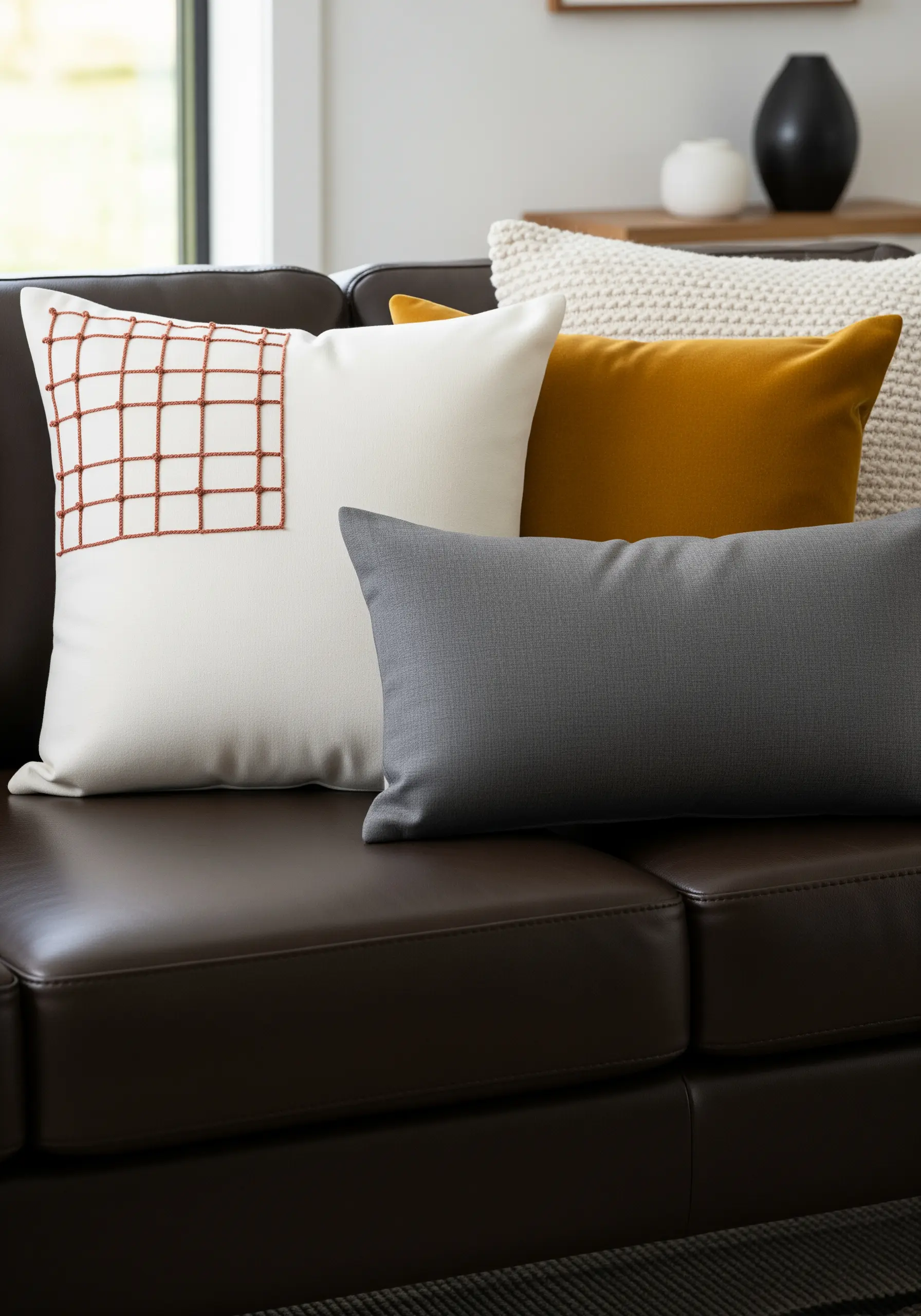
Add tactile depth to your pillowcase with a woven grid, a technique that stands out from the fabric surface.
First, create a foundation of long, parallel straight stitches, then weave your thread over and under these stitches without piercing the fabric.
Use a blunt tapestry needle for the weaving portion to avoid snagging the foundation threads.
A thicker thread, like pearl cotton or sashiko thread, is ideal for this, as it creates a more substantial, dimensional effect.
This technique works beautifully as a single, off-center block of texture, introducing one of many modern grid dot stitch concepts that feel both handmade and highly structured.
5. Imply Movement with an Intersecting Running Stitch
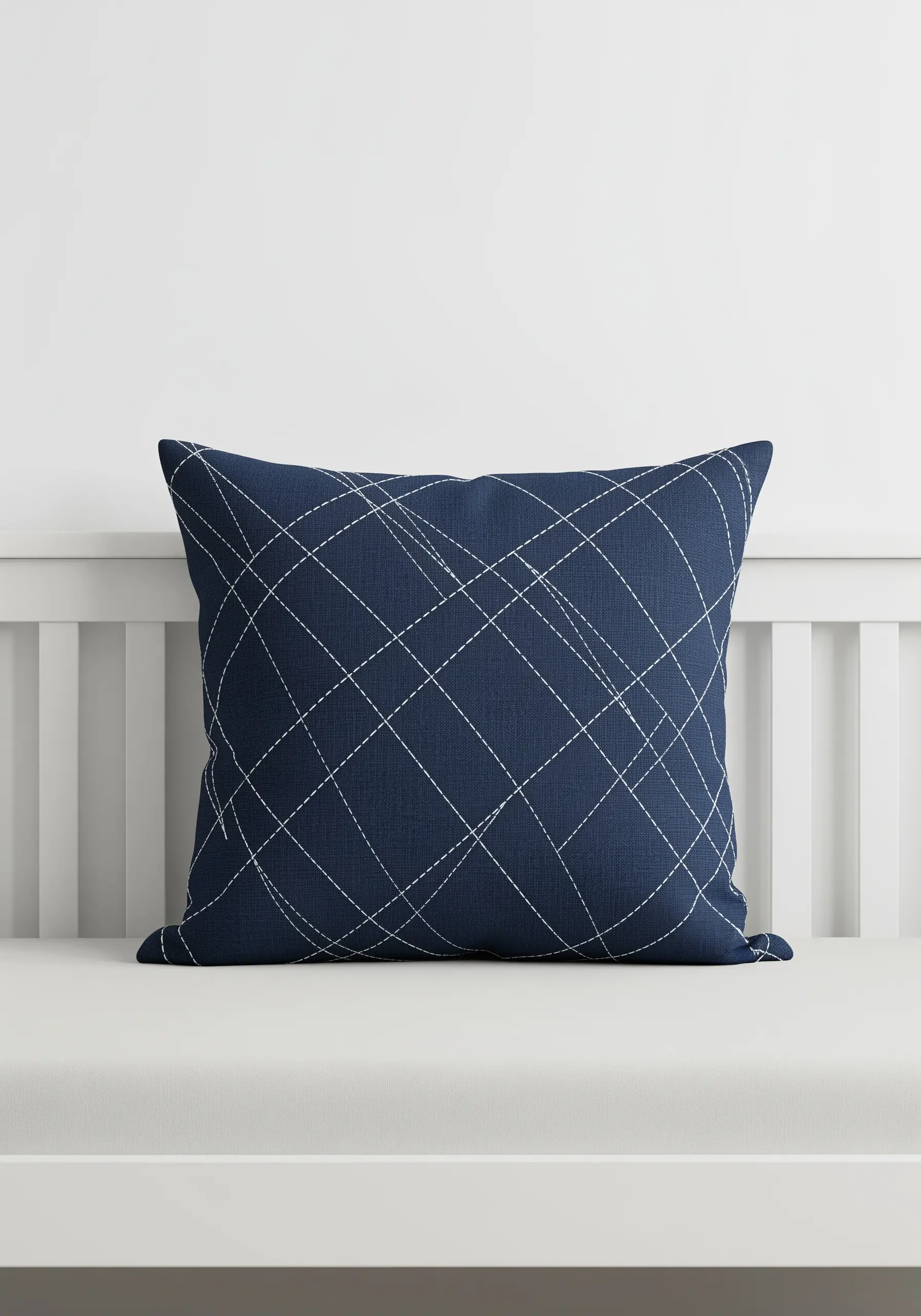
This design proves that the simplest stitch can create the most dynamic patterns.
Use a long running stitch to create a series of intersecting diagonal lines across the pillowcase.
The key to a polished finish is consistency: ensure the length of your stitches and the gaps between them are uniform.
Mark your lines with a water-soluble pen and a ruler before you begin to guarantee straight, evenly spaced paths.
The high contrast of white thread on a dark navy fabric makes these minimal embroidery patterns feel energetic and modern.
6. Layer Chain Stitches for Fluid, Wave-Like Motion
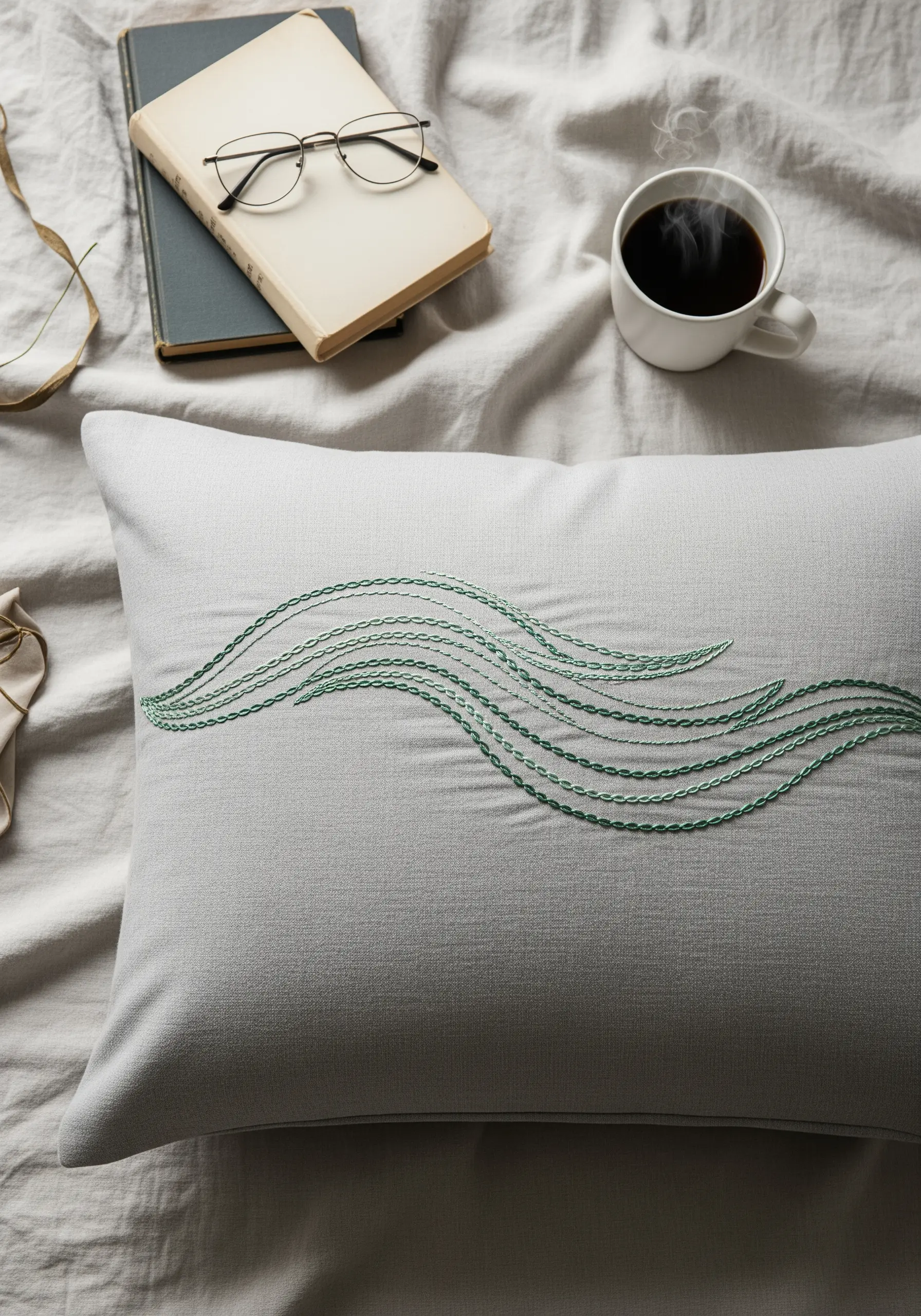
Capture the feeling of gentle movement by stitching parallel, flowing lines of chain stitch.
The interlocking loops of the chain stitch create a beautifully textured line that has more presence than a simple backstitch.
To create this wave-like effect, draw several organic, undulating lines that echo one another but never touch.
Stitch each line completely, ensuring your tension is even to prevent puckering.
These simple embroidery designs that make your old linen look brand new are perfect for adding a sense of calm and flow to a bedroom.
7. Master High-Contrast Graphics with Satin Stitch
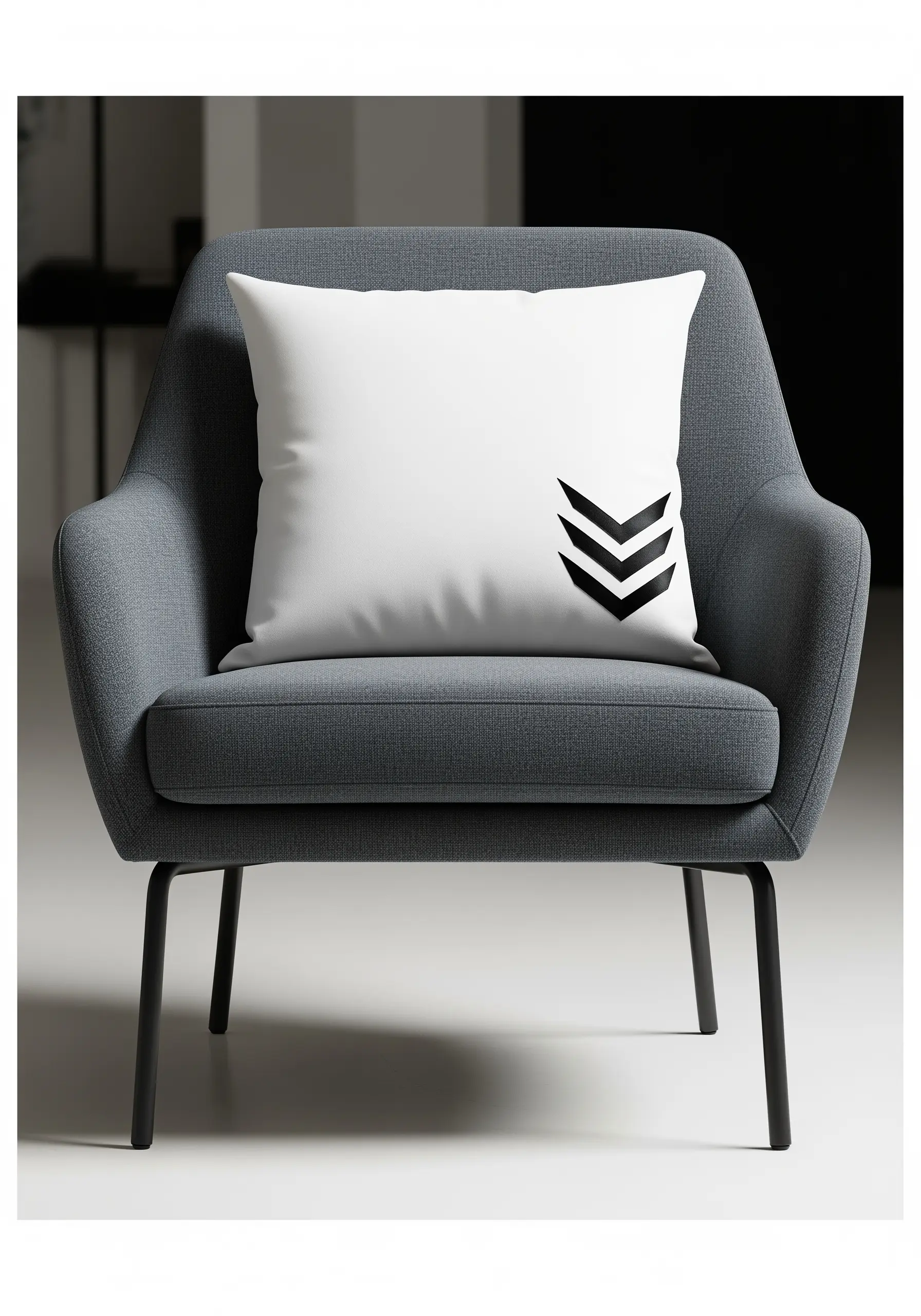
For a bold, graphic motif that truly pops, focus on creating a dense and flawless satin stitch fill.
First, outline your shape with a split stitch; this creates a raised, sharp edge that contains your satin stitches and prevents them from sinking into the fabric.
Then, fill the shape with parallel straight stitches, laying each one snugly against the last without overlapping.
A high-contrast palette—like black on pure white—is essential for this minimalist, high-impact aesthetic.
These are the kind of stitched details that make plain walls pop elegantly when applied to decor.
8. Build a Textural Gradient with French Knots
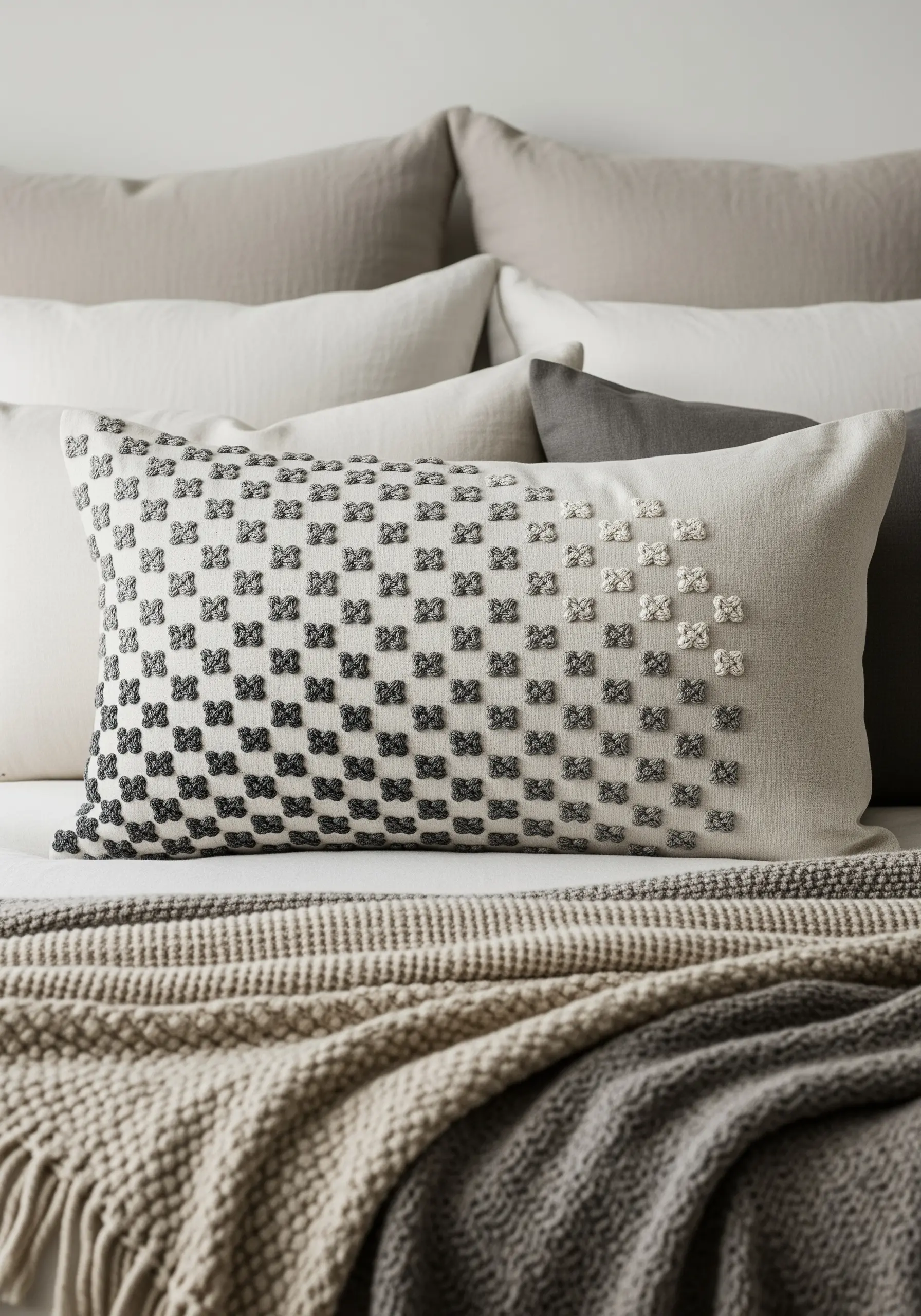
Create a sophisticated, pixelated effect by clustering French knots in a geometric pattern.
Instead of a single color, use three or four shades of the same hue—from dark to light—to create a subtle ombré effect across the design.
Map out your grid with a fabric marker and assign colors to different sections to plan your gradient before you begin.
This technique transforms a simple knot into a tool for shading and texture, making it perfect for neutral color gradient embroidery ideas that add depth to neutral decor.
Wrap the thread two or three times around the needle for plump, uniform knots.
9. Define Sculptural Shapes with Couching
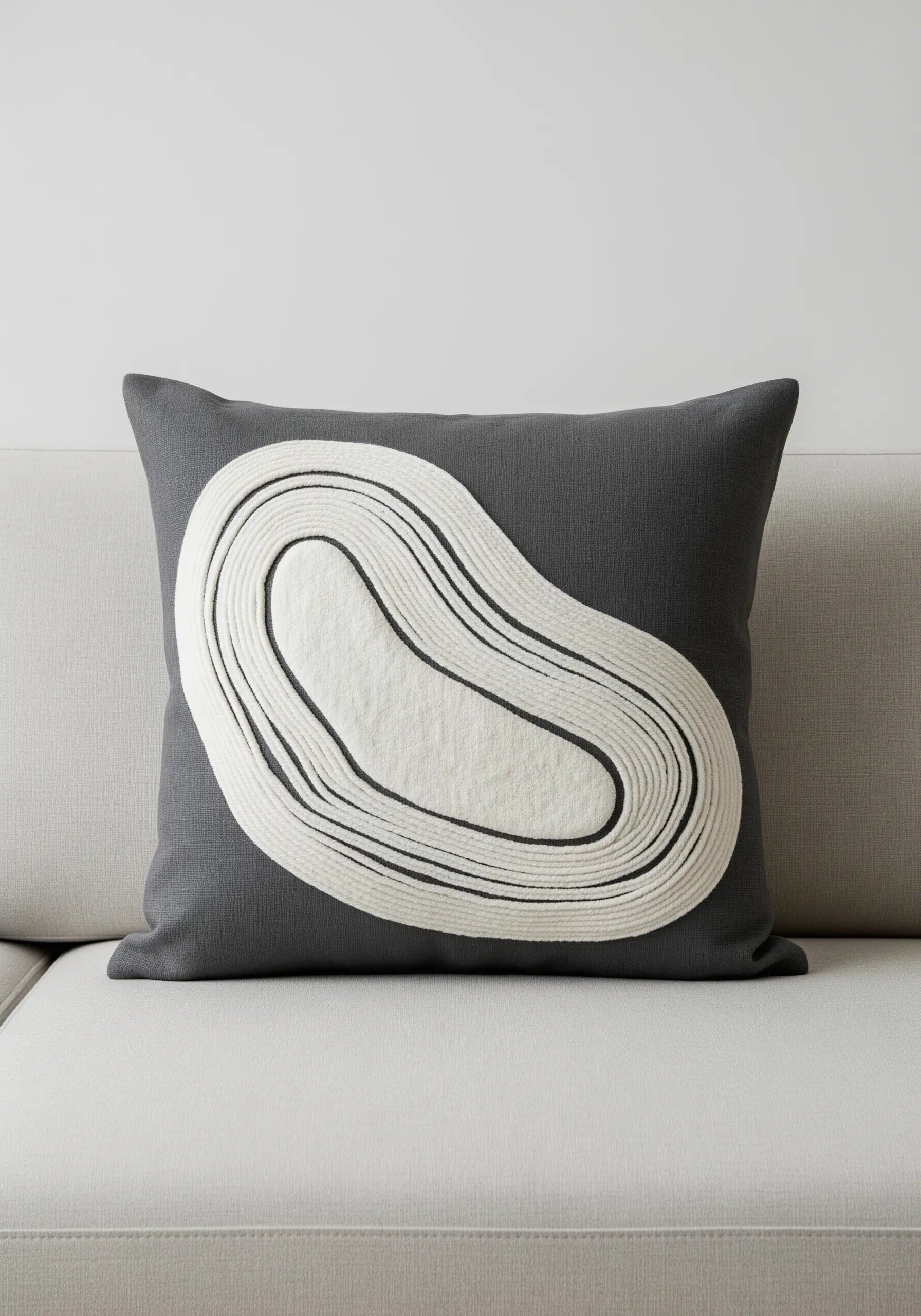
Couching is the perfect technique for creating bold, artistic lines that would be impossible with traditional stitches.
Lay a thick material—like yarn, cord, or even felted wool strips—onto your fabric in an organic, freeform shape.
Then, use a thinner, contrasting embroidery floss to stitch over the cord at regular intervals, tacking it securely to the pillowcase.
This method separates line from texture, allowing you to create impressive, three-dimensional designs with ease.
It’s one of the most effective ways to introduce natural texture embroidery patterns into your work without complex stitches.
10. Radiate Warmth with a Minimalist Sunburst
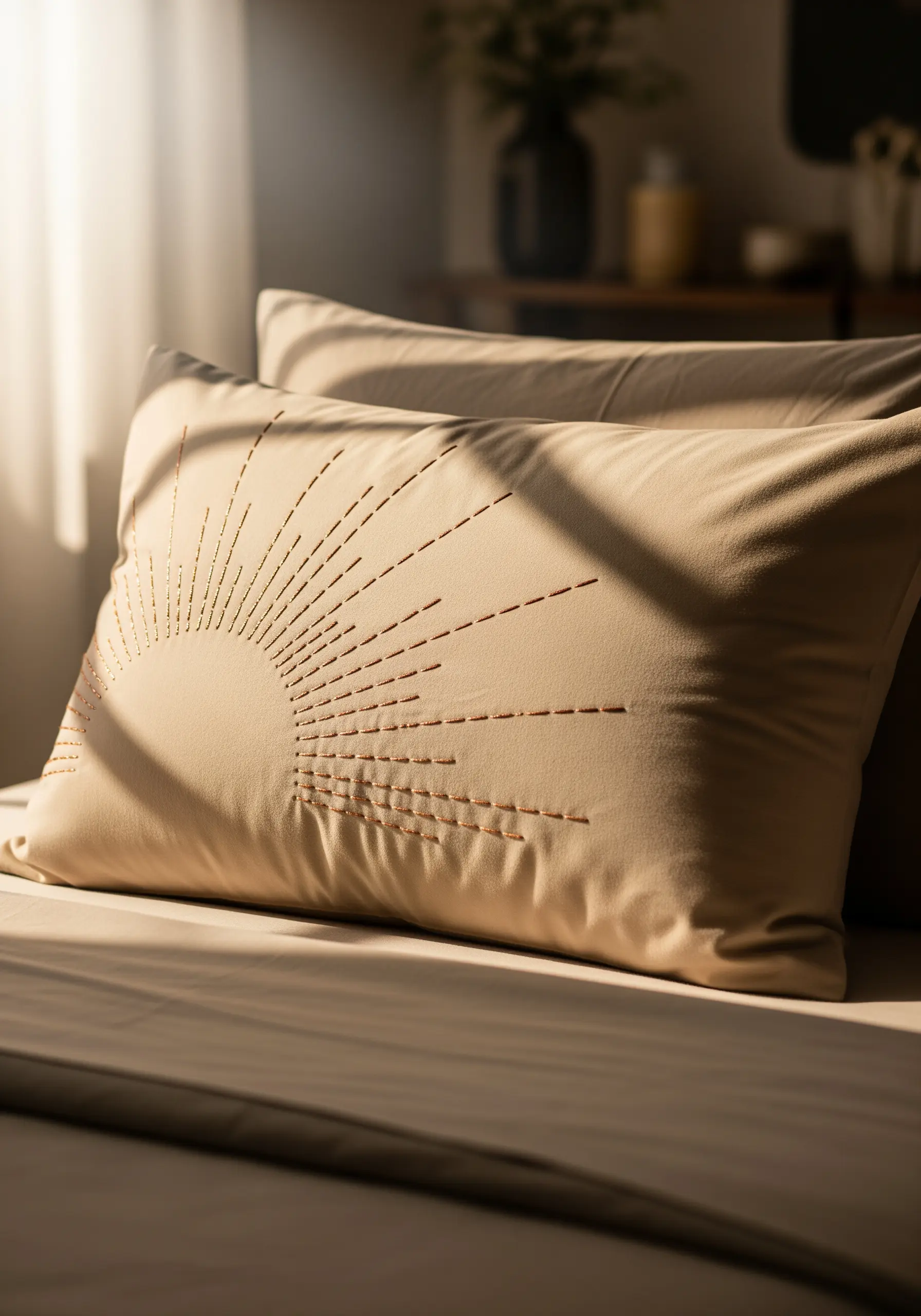
Evoke the feeling of sunlight with a simple, radiating pattern of straight stitches.
Draw a semi-circle or arc as your guide, then stitch lines of varying lengths fanning out from it.
The beauty of this design lies in its imperfection; the lines don’t need to be perfectly spaced to feel intentional.
Use a warm, earthy thread color like terracotta or ochre on a neutral beige fabric to enhance the gentle, sun-bleached aesthetic.
This is one of those nature-calm stitching projects that instantly brings a sense of peace to a space.
11. Create a Gentle Rhythm with Seed Stitch Columns
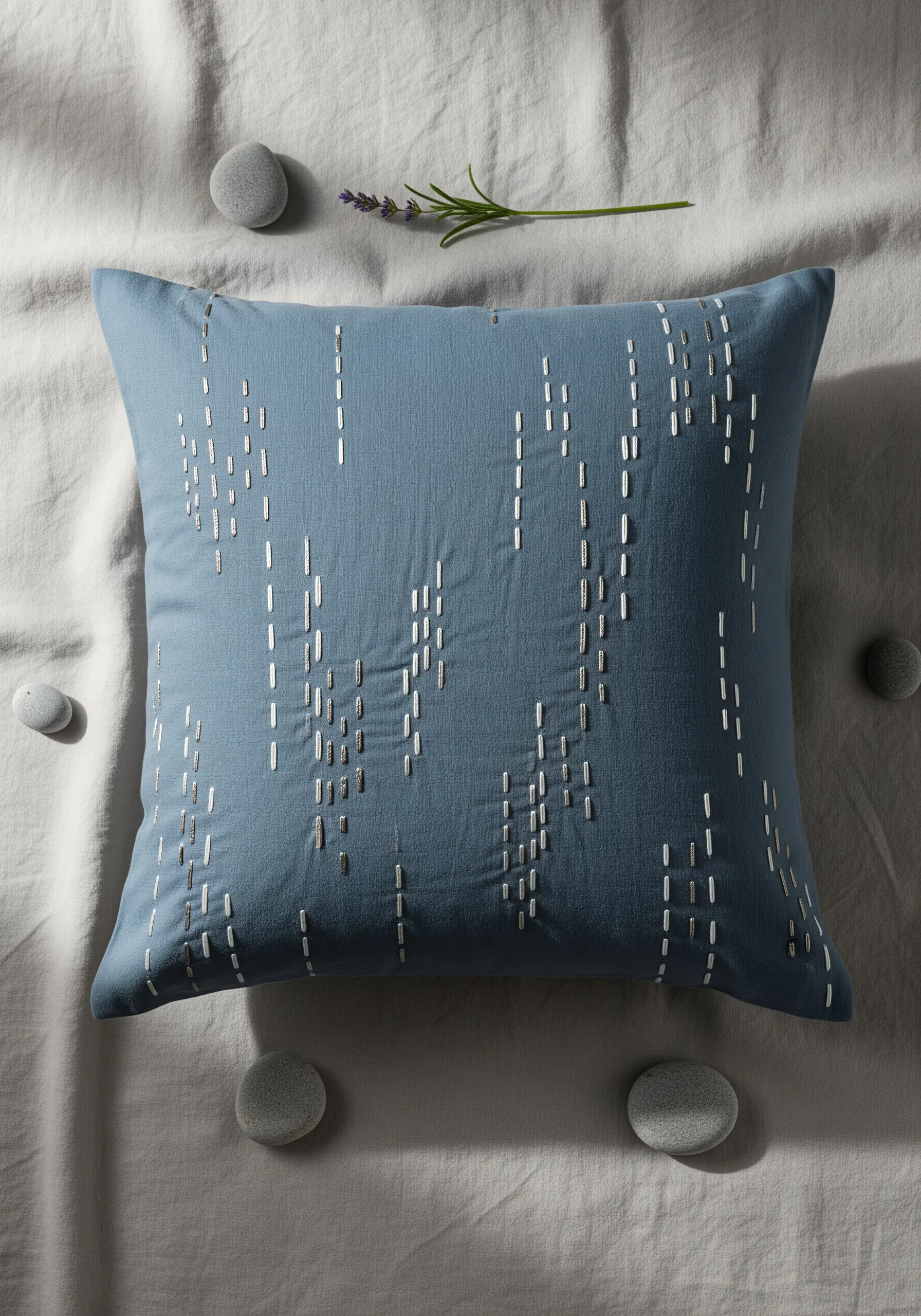
The seed stitch—a scattering of small, simple straight stitches—can be organized to create a serene and sophisticated pattern.
Instead of a random scatter, arrange your stitches in loose vertical columns of varying density.
This creates an effect reminiscent of falling rain or shimmering light, adding texture that is both subtle and dynamic.
Using a thread with a slight sheen, like a silk or rayon floss, against a matte cotton fabric will enhance this light-catching quality.
This approach elevates simple linen tone embroidery cushion covers, turning them into understated art pieces.
12. Frame Geometric Motifs with a Whipped Backstitch
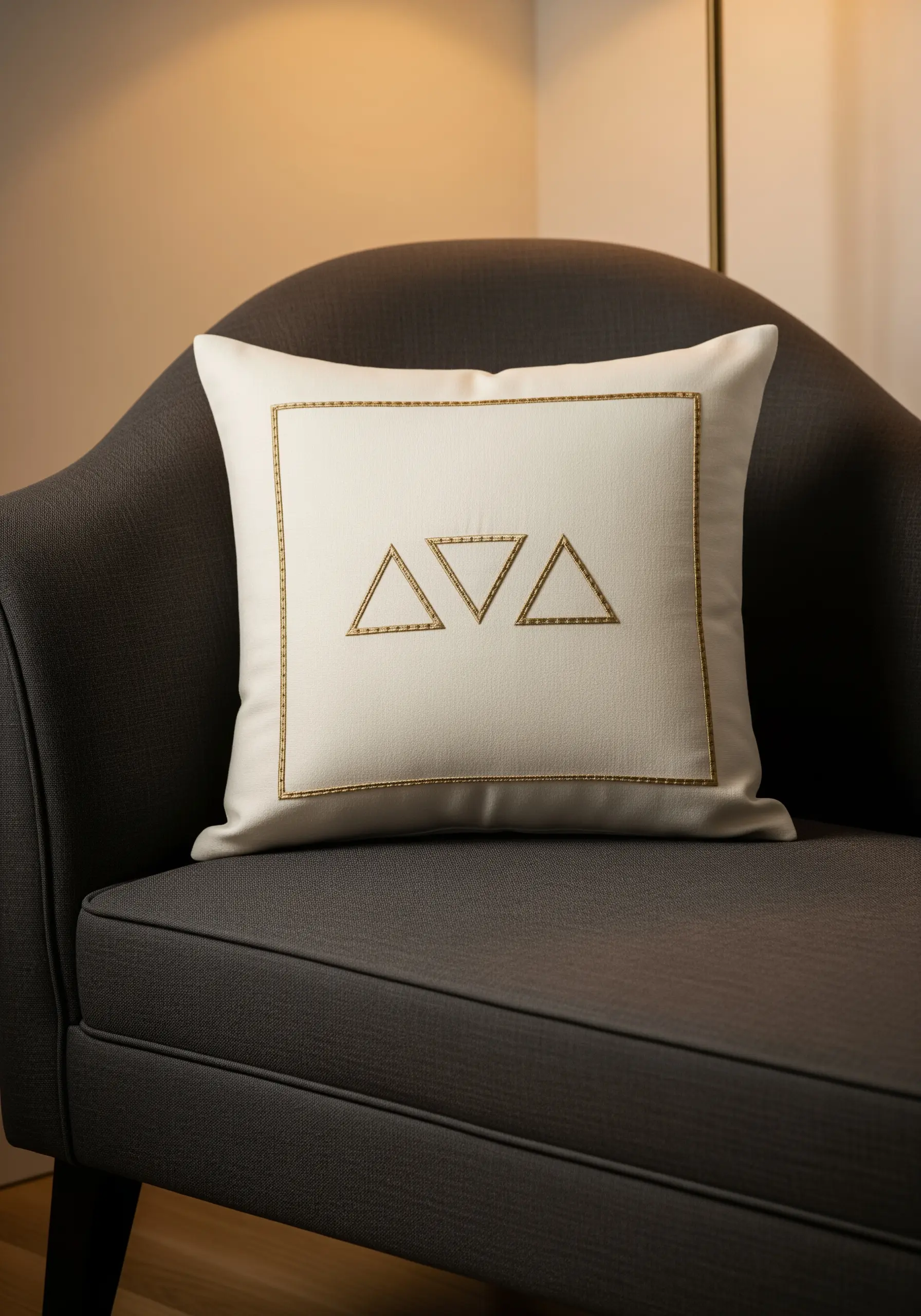
Elevate simple geometric shapes by giving them a defined, cord-like border.
First, stitch your triangles or squares using a basic backstitch.
Then, without piercing the fabric again, whip a second thread around each backstitch, creating a raised, twisted effect that looks incredibly polished.
Using a metallic gold thread for this technique adds a touch of art-deco elegance, turning a simple pillow into something that feels luxurious and custom.
It’s a small detail that makes framed embroidery patterns feel complete and intentional.
13. Block Color with Thick Yarn Couching
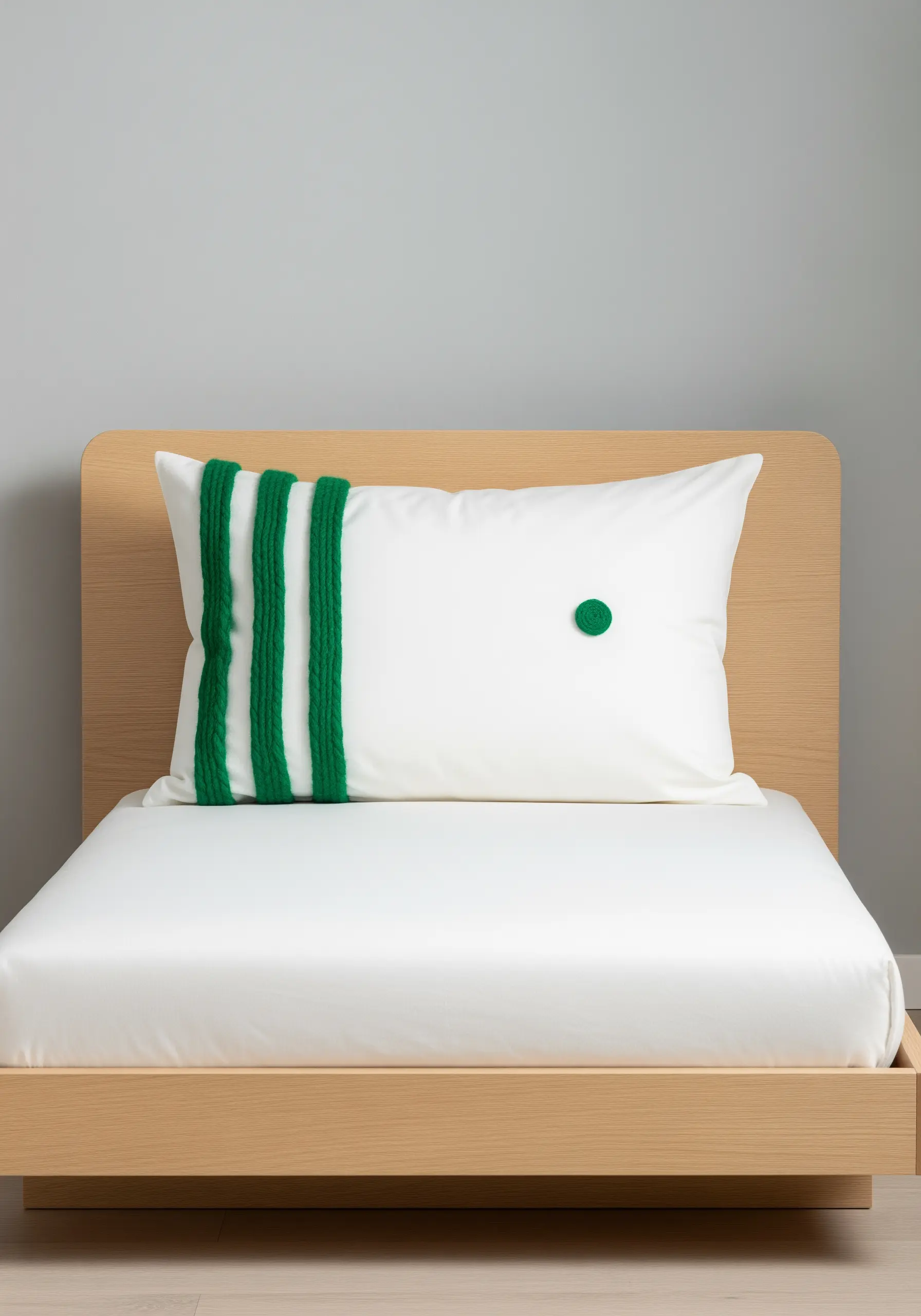
Make a bold, graphic statement by applying thick yarn directly to your pillowcase for a modern color-block effect.
Lay several strands of chunky yarn parallel to each other, creating a solid band of color and texture.
Use a matching, thinner thread to discreetly couch the yarn in place, hiding your tacking stitches between the yarn strands.
Balance the composition with a single, isolated element on the opposite side, like a small cluster of French knots or a thread-wrapped button.
These bold, graphic styles are perfect for minimal DIY embroidery projects you’ll actually want to hang in a modern space.
14. Embrace the Artistry of a Sketch-Style Stitch
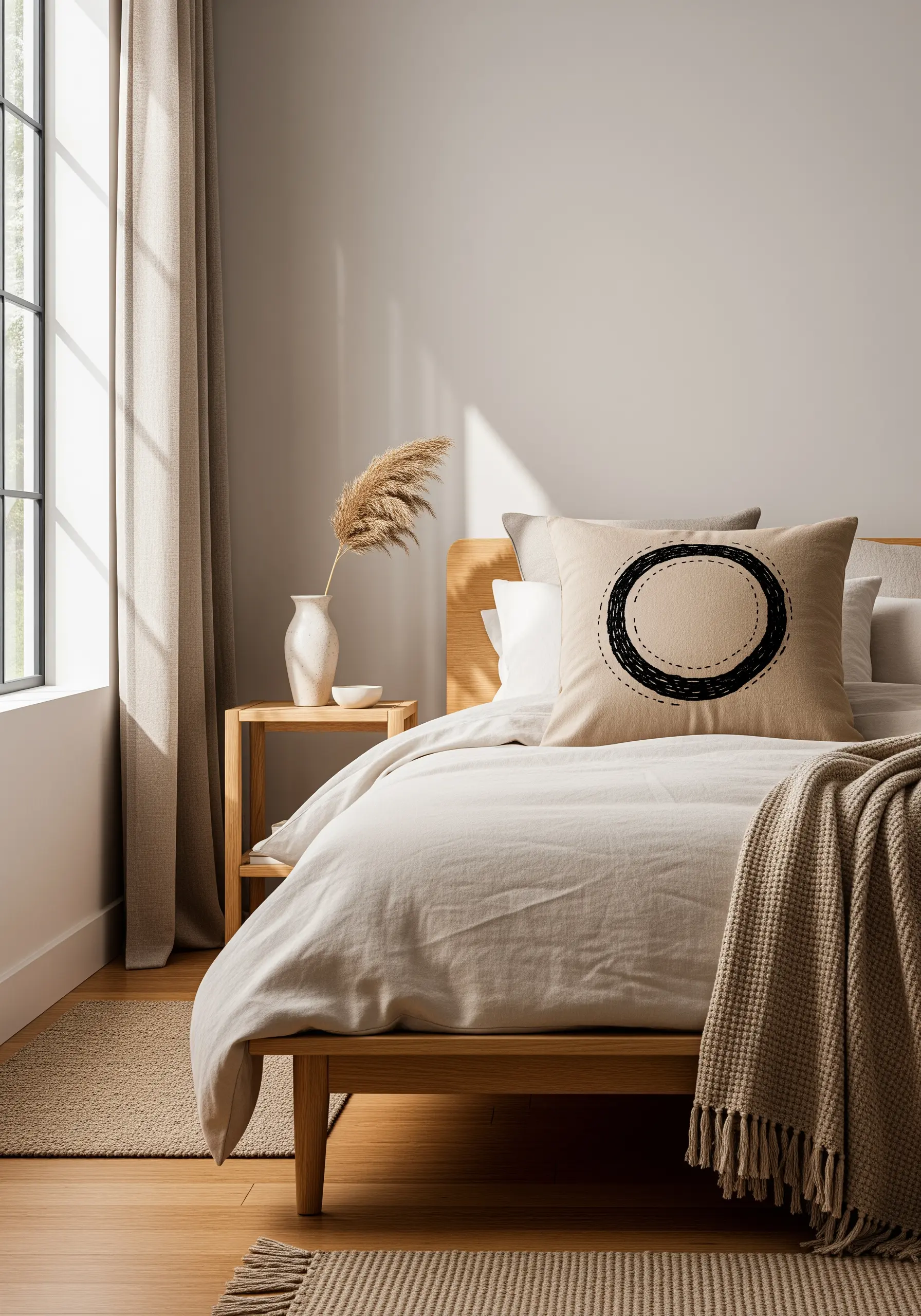
Replicate the look of a quick, gestural ink drawing by intentionally making your stitches imperfect.
Using a simple backstitch or stem stitch, go over your circular outline multiple times, allowing the lines to overlap and vary in length and angle.
This creates a dynamic, sketchy texture that feels personal and artistic.
Use a thick, dark thread like black pearl cotton on a natural, unbleached linen to emphasize the graphic, hand-drawn quality.
These are the handmade embroidery touches that make every room feel natural and lived-in.
15. Build a Precise Pattern with Simple Crosses
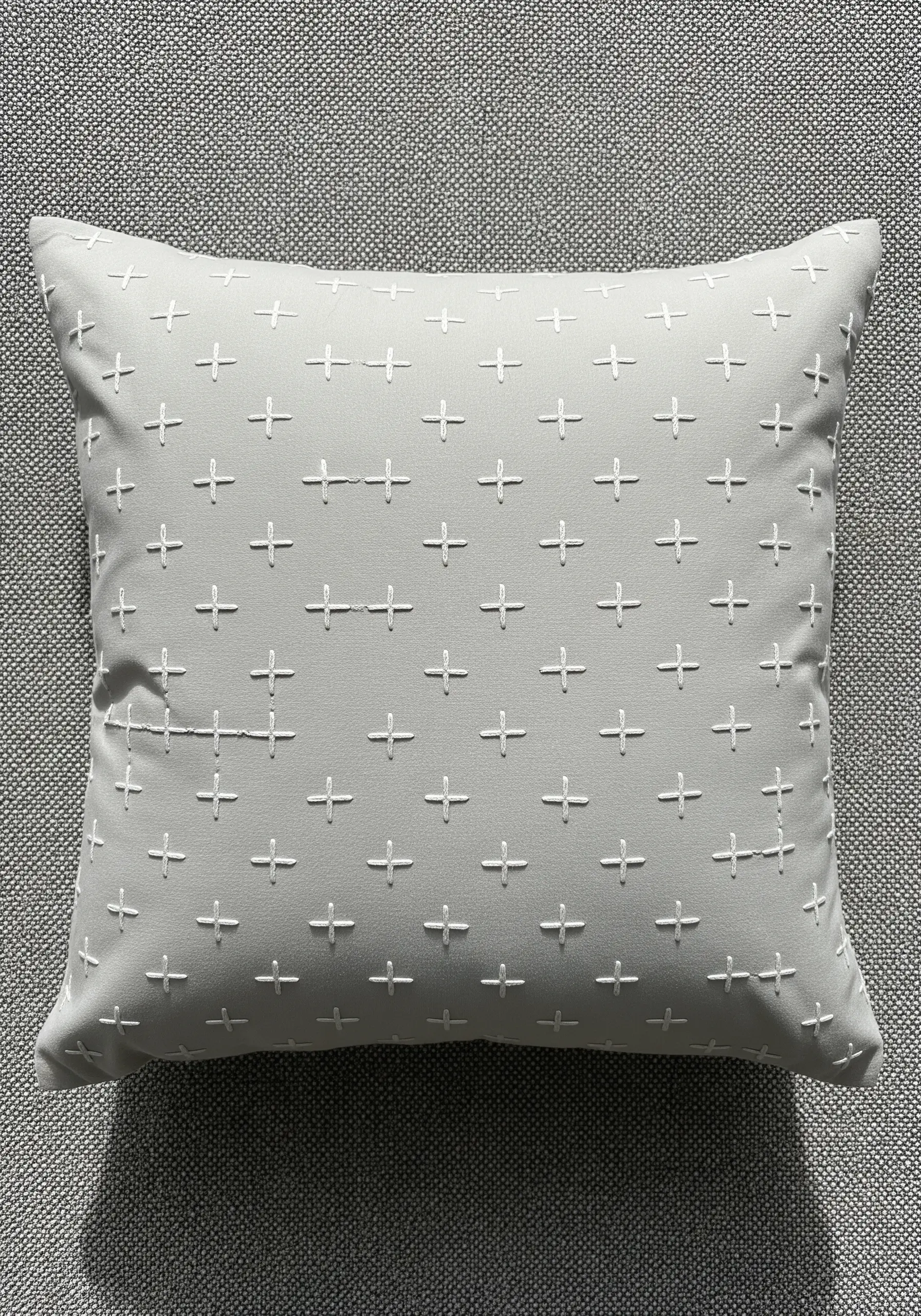
This design is a masterclass in precision and the power of repetition.
Create a clean, modern pattern by stitching a grid of simple plus signs (+) using two intersecting straight stitches.
To ensure a professional finish, use a ruler and a disappearing ink marker to create a light grid on your fabric first.
This guide will help you keep your crosses perfectly aligned and evenly spaced.
The tone-on-tone effect of white thread on a light grey fabric makes these minimalist stitch designs feel sophisticated and calm.
16. Map Organic Contours with a Single, Flowing Line
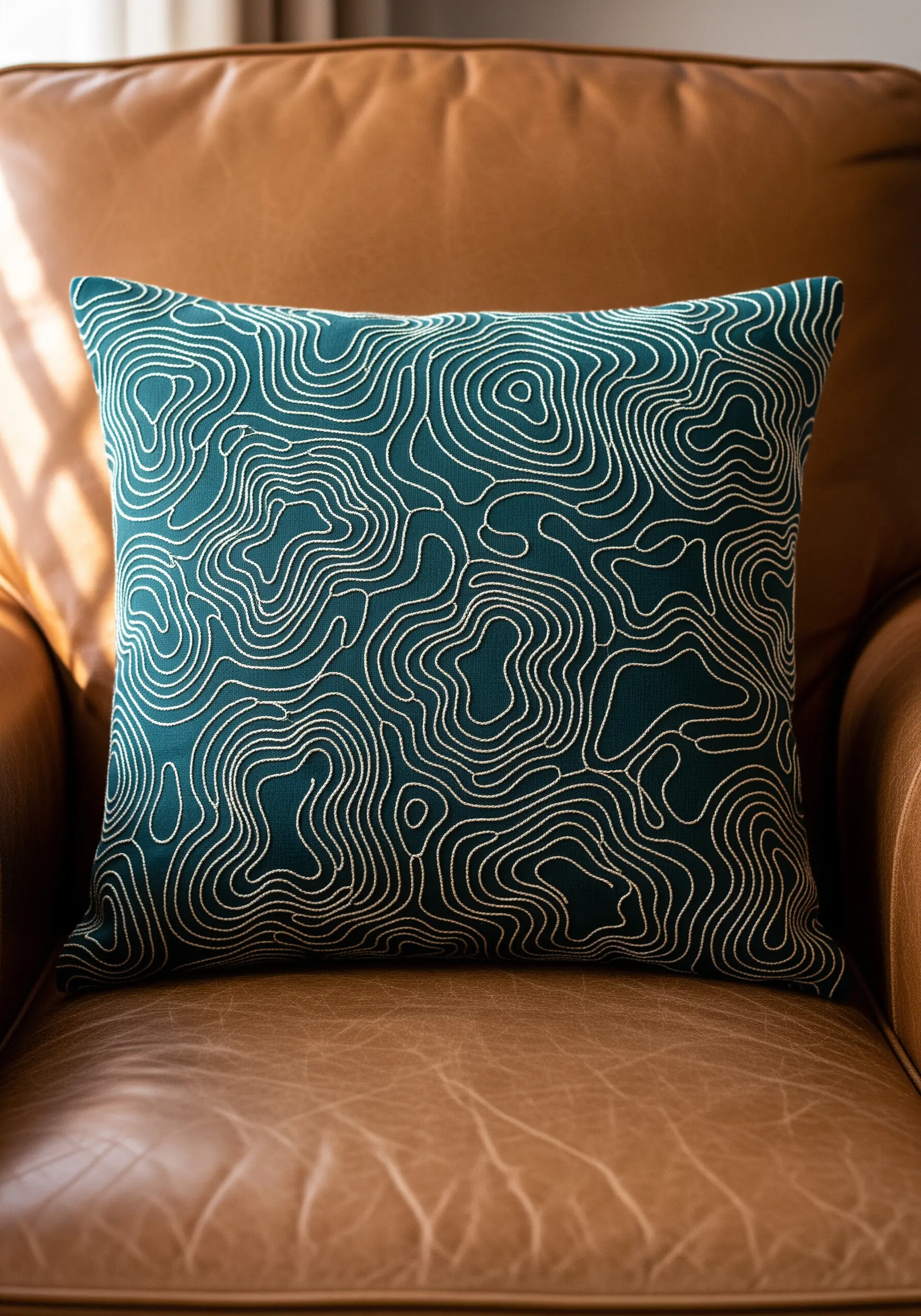
Create a mesmerizing, all-over pattern that mimics topographic maps or wood grain.
This effect is achieved with a single, continuous line stitched using a split stitch or stem stitch, which creates a smooth and unbroken feel.
Lightly draw your meandering, organic lines onto the fabric with a water-soluble marker before you begin, ensuring your paths swirl and curve without intersecting.
The high contrast between a light thread and a dark fabric base makes these intricate organic embroidery designs the focal point of any room.
17. Design a Minimalist Grid with a Dashed Line
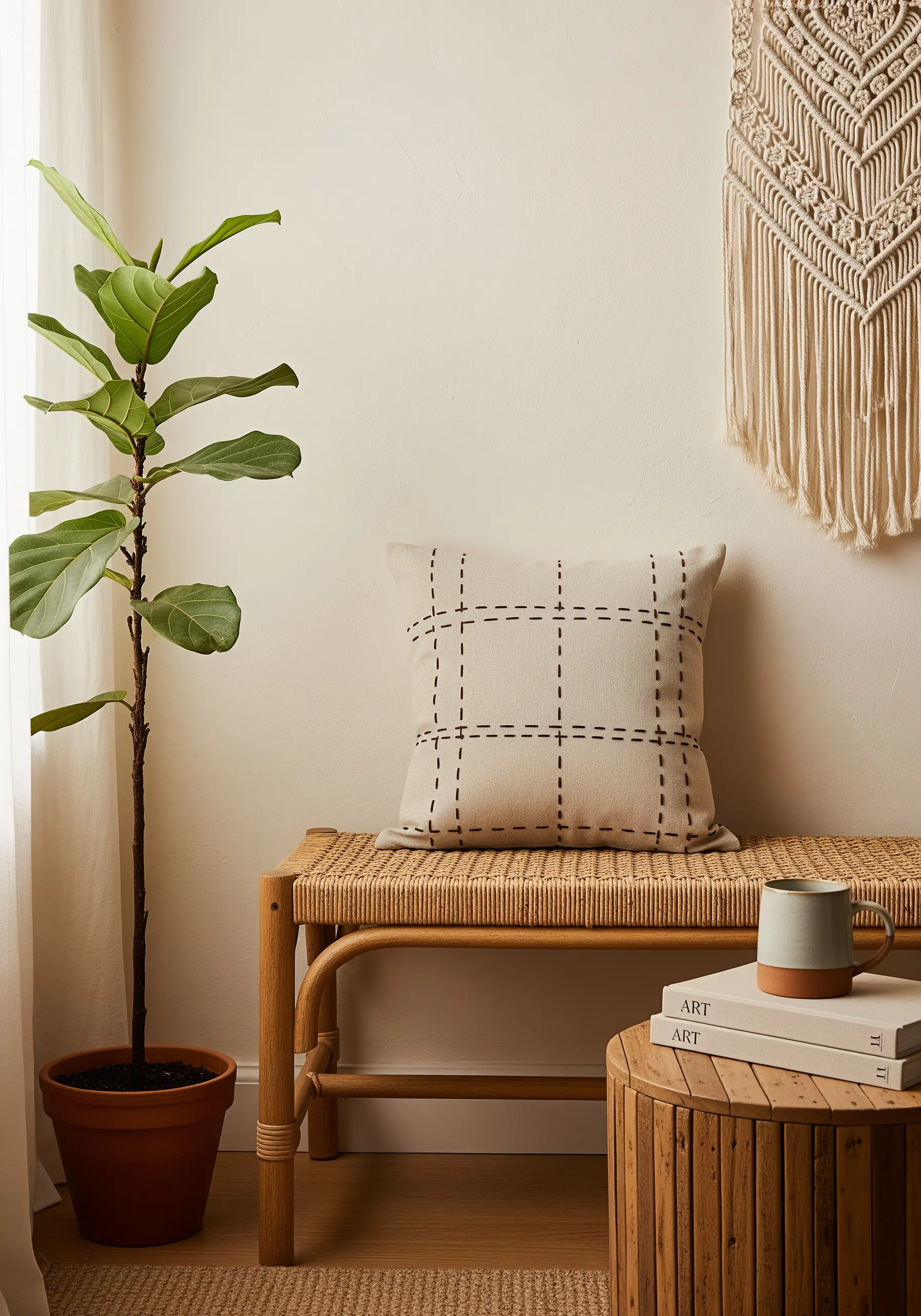
For a softer, more subtle take on a classic grid, use a running stitch to create a windowpane pattern.
The small gaps in the dashed line break up the rigidity of a solid grid, adding a delicate, airy quality to the design.
Maintain consistent stitch and gap lengths for a clean, intentional look.
This pattern is particularly effective on fabrics with a natural texture, like linen or canvas, where the simplicity of the stitch complements the material.
It’s a perfect example of the greige ivory embroidery art ideas that work so well in modern rustic interiors.
18. Trace Delicate Details with Fine-Line Stitching
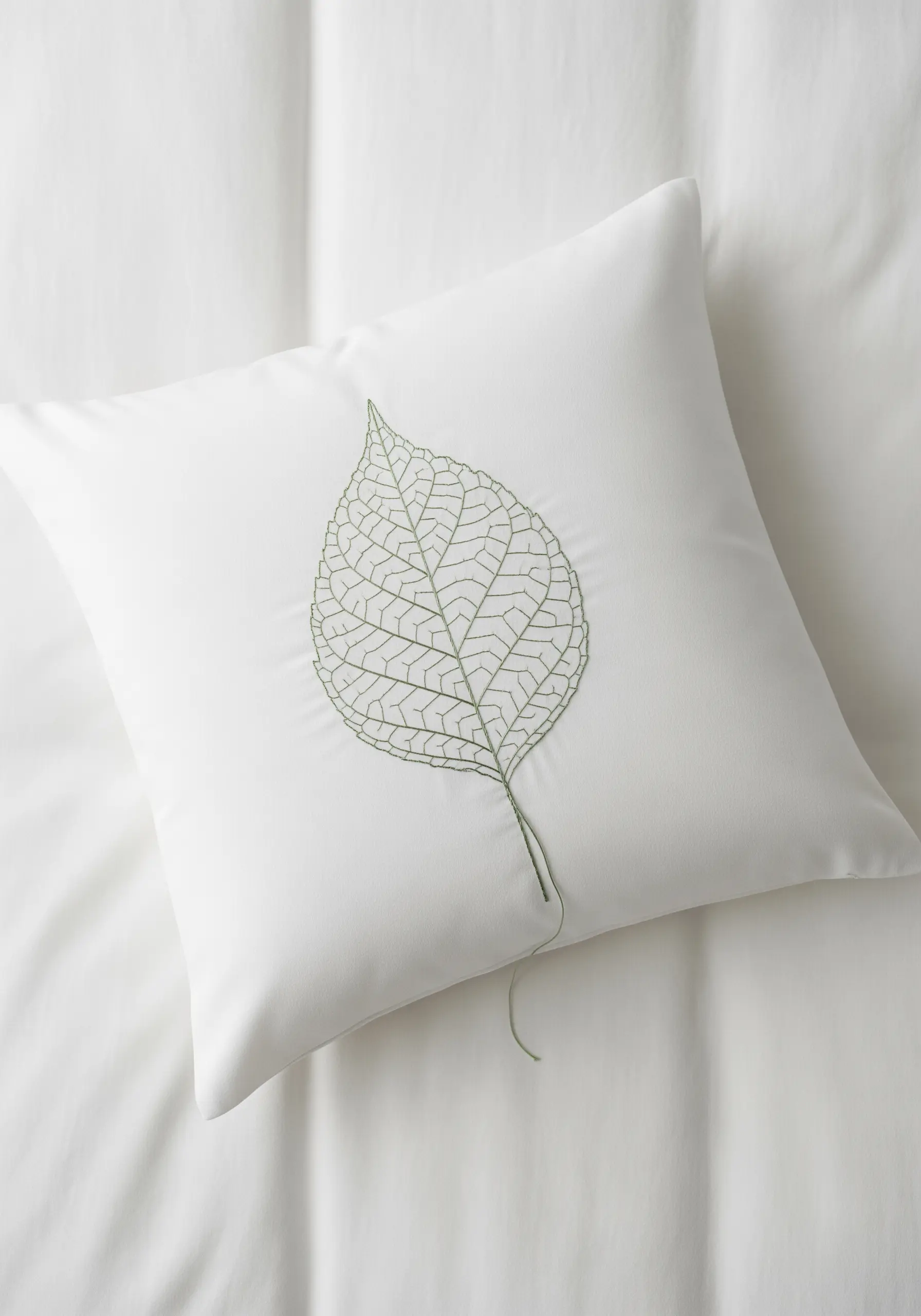
Capture the intricate beauty of a skeleton leaf by focusing on extremely fine line work.
Use only a single strand of embroidery floss to ensure your stitches are delicate enough to render the complex network of veins.
A split stitch is ideal for this, as it creates a solid, clean line that mimics the precision of an ink drawing.
Trace a real leaf or a detailed photograph for an accurate pattern.
This project elevates simple hand embroidery leaf patterns from simple motifs to botanical studies.
19. Form a Graphic Chain with a Raised Stitch
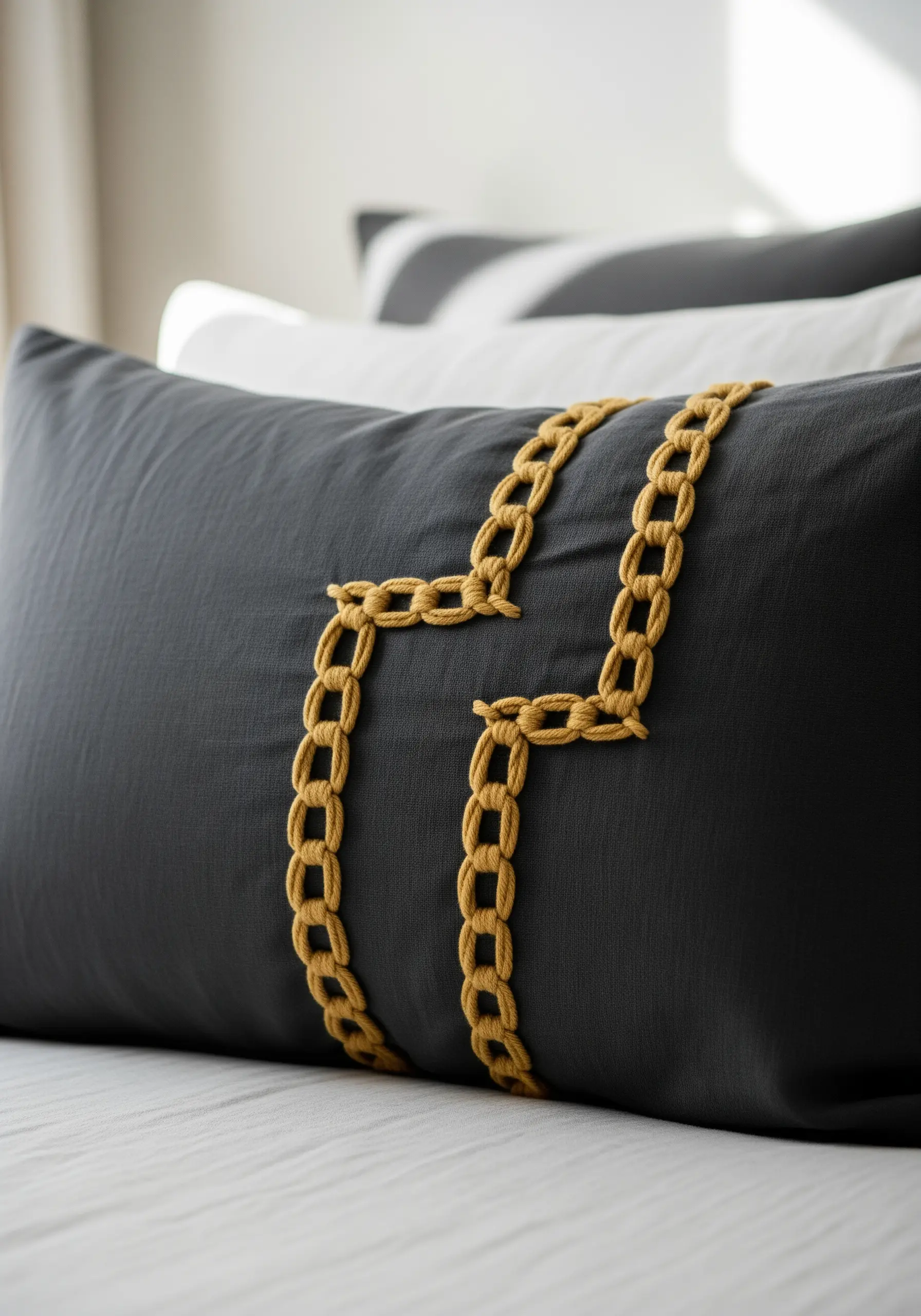
Create the illusion of an interlocking chain with a highly dimensional stitch.
Use a raised chain stitch or a detached chain stitch worked in rows to build this geometric pattern.
The key is to link each stitch into the one before it, forming a continuous, three-dimensional line that stands proud of the fabric surface.
A bold, high-contrast color combination like mustard yellow on charcoal grey enhances the graphic, modern feel of the design.
These abstract color psychology stitch ideas use color and form to create a powerful visual impact.