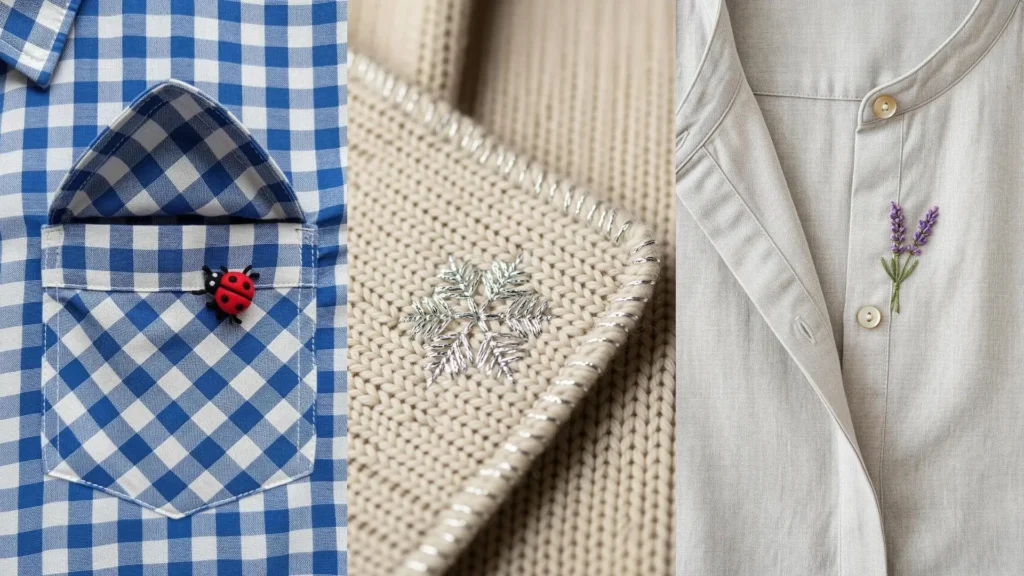
Your dining table is more than just a piece of furniture; it’s a canvas waiting for a story. Before you even think about centerpieces or dinnerware, consider the foundation: the linen. The right embroidery can transform a simple piece of fabric into a conversation starter, an heirloom, a true statement of your personal style.
Forget perfectionism and the fear of a misplaced stitch. Instead, think about texture, color, and placement. A single, well-executed motif has more power than a dozen imprecise ones. It’s about choosing a technique that feels good in your hands and a design that brings you joy every time you see it.
Here, you’ll find ideas that move beyond simple patterns. We’ll explore how to use thread to create depth, how a change in stitch direction can mimic light, and how even the most minimalist design can radiate pure elegance. This is your invitation to create not just a beautiful table, but a memorable experience.
1. Art Deco Glamour with Metallic Thread

Create a dense, repeating fan pattern using a high-sheen gold or silver metallic thread against a dark, luxe fabric like navy linen or velvet.
Keep your satin stitches short and uniform to maximize light reflection and prevent snagging, which gives the runner a heavy, expensive drape.
This technique relies on texture and repetition, not color, to make a dramatic statement. The contrast between the shimmering thread and the matte fabric is what delivers pure opulence.
2. The Enduring Elegance of a Laurel Monogram
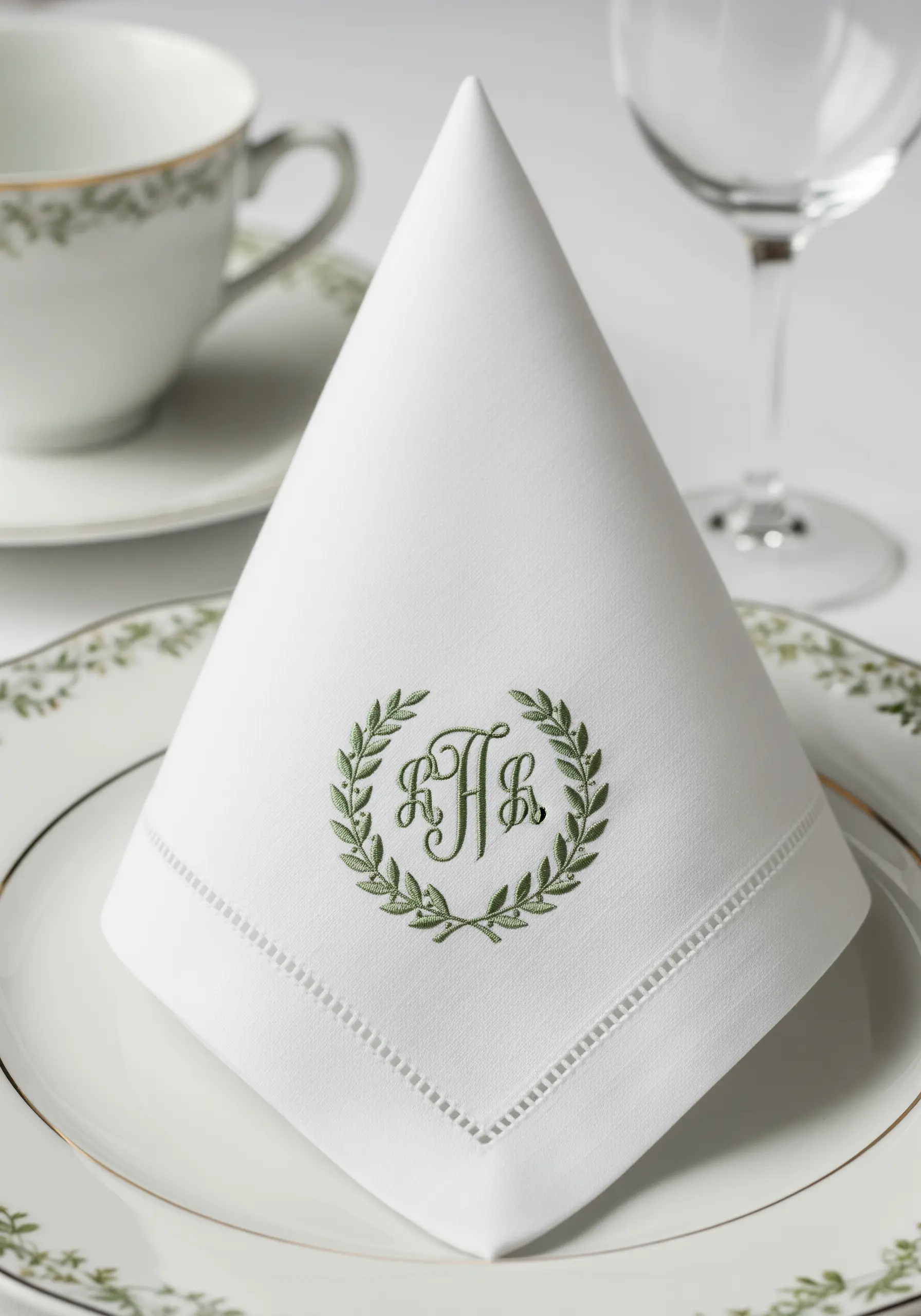
For a truly timeless napkin, frame your initials with a delicate laurel wreath.
Use a single strand of floss in a soft, muted green for the foliage, working the leaves in a fishbone stitch to create a central vein and subtle dimension.
The monogram itself should be stitched with two strands in a padded satin stitch to give it a raised, distinguished presence that stands out against the fine linen.
This balance of delicate detail and prominent lettering is the secret to personalized table linen that feels both personal and impeccably classic.
3. Cascading Wisteria with Thread Painting
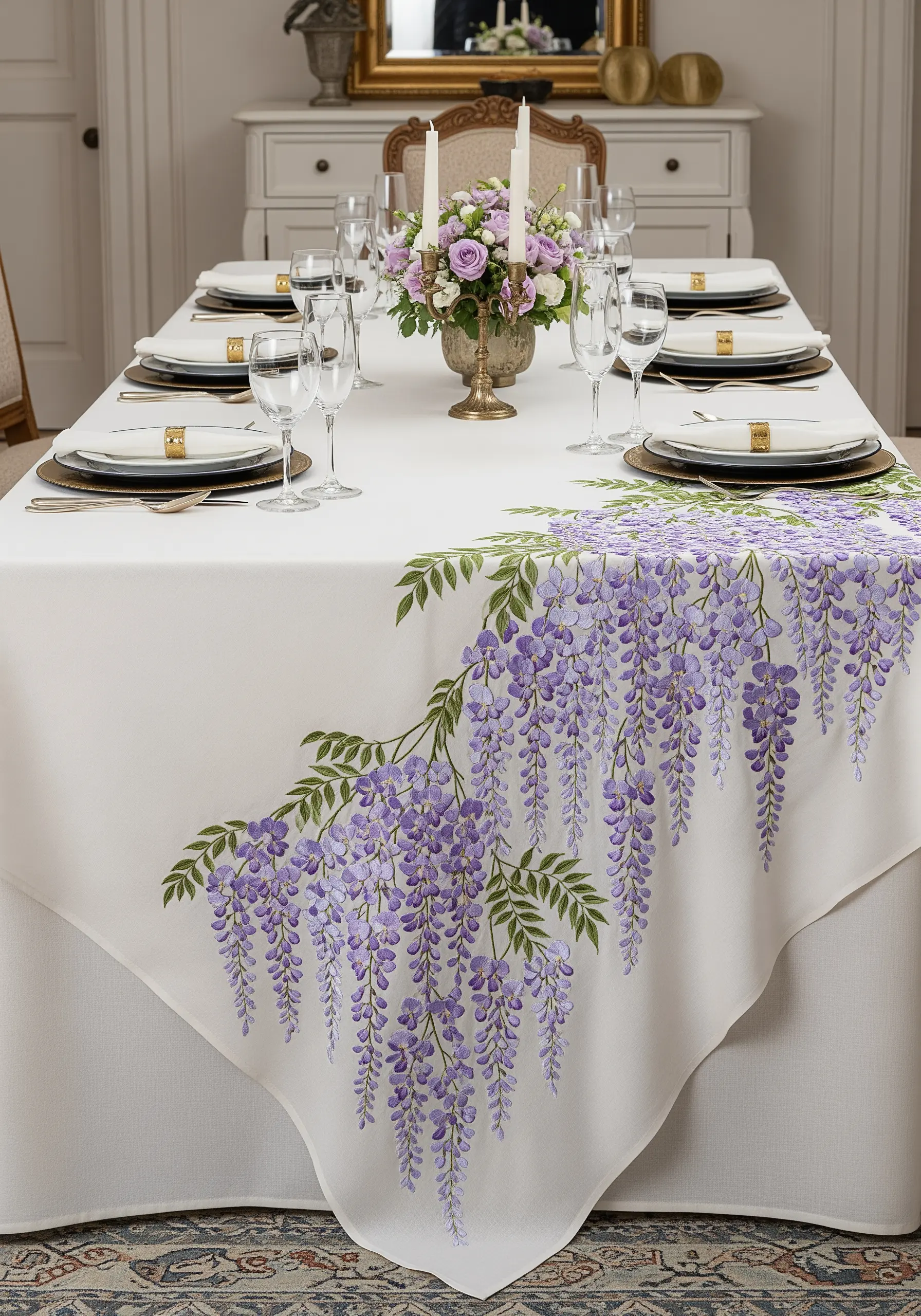
Let a floral design drape organically over the corner of your tablecloth instead of centering it.
Achieve the soft, painterly look of wisteria blossoms by using long-and-short stitch in three or four shades of lavender and violet.
Blend the colors seamlessly to create a realistic gradient, making the clusters appear full and heavy.
For the leaves and vines, use a simple stem stitch in varying shades of green. This keeps the focus on the voluminous, cascading flowers.
4. Coastal Textures with Coral Motifs

Bring a sophisticated coastal feel to your table with stylized coral branches and seashells.
Combine flat satin stitches for the smooth surfaces of shells with clusters of French knots to mimic the bumpy texture of coral.
Use a modern palette of coral, aqua, and gold against a neutral linen base to keep the design fresh and not overly thematic.
Carry a single, smaller motif onto the plate to create a cohesive, professionally styled place setting.
5. Celestial Wonder with Minimalist Constellations

Scatter constellations across a deep navy tablecloth for a touch of cosmic magic.
Use a single strand of white or silver metallic thread to keep the lines crisp and delicate.
Vary the stars by using simple straight stitches, tiny star stitches, or single French knots—this subtle variation adds visual interest and mimics the night sky’s irregularity.
The beauty of this design is in its negative space; avoid overcrowding to maintain an elegant, uncluttered feel.
6. Rich Pomegranate Seeds in Raised Stitch

Create a bold, luxurious centerpiece on a velvet runner with a pomegranate motif.
Fill the seed sections with dense French knots using a vibrant red silk or rayon thread for a glossy, jewel-like effect. This raised texture is key to making the fruit pop.
Outline the entire pomegranate with a thick, couched gold cord. This defines the shape sharply and adds a regal, formal finish that complements the velvet fabric.
7. Narrative Serenity with Koi and Water Lilies

Turn your tablecloth into a tranquil pond scene by placing motifs thoughtfully around the edge.
Use directional satin stitch on the koi fish, angling your stitches to follow the curve of their bodies and create a sense of fluid movement.
For the water, use long, horizontal running stitches in various shades of blue and white. This simple technique creates the illusion of ripples and reflections without complex stitching.
This design tells a story, inviting guests to look closer and appreciate the artistry.
8. Modern Botanicals in Single-Line Art

For a clean, contemporary look on napkins, choose minimalist line art botanicals.
Use a whipped backstitch with a medium-weight black thread. This technique creates a perfectly smooth, uninterrupted line that looks almost drawn on the fabric.
The key is simplicity and precision—a single, confident line is more impactful than a heavily filled design. This approach is perfect for a modern, Scandinavian-inspired table setting.
Group different leaf designs together for a curated, gallery-like set of napkins.
9. Iridescent Peacock Feathers with Silk Threads

Capture the dramatic beauty of peacock feathers by using threads that reflect light.
Choose silk or rayon floss in jewel tones—deep blues, teals, golds, and greens. Their natural sheen is essential for mimicking the feather’s iridescence.
For the ‘eye’ of the feather, use concentric circles of satin stitch in contrasting colors. Radiate long, wispy straight stitches outward from the center to create the feather’s delicate filaments.
10. Autumnal Appliqué-Style Leaf Border
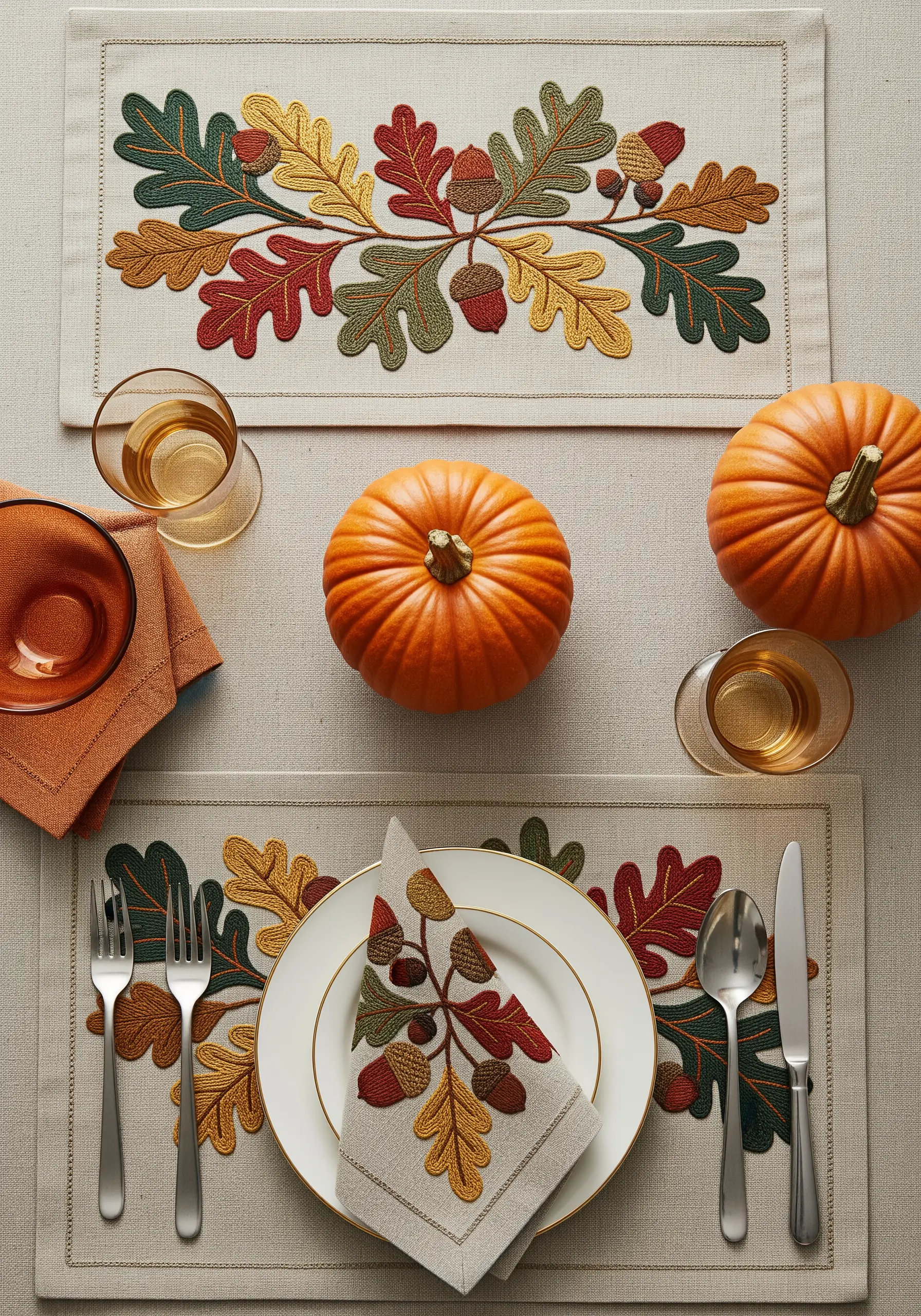
Achieve a clean, graphic look for seasonal table linens with an appliqué effect.
Instead of using fabric patches, fill in your leaf shapes completely with a dense satin stitch.
Then, outline each leaf with a darker, contrasting color using a tight backstitch. This technique defines the shapes, making them look like crisp, layered appliqués with perfect edges.
Use a warm, earthy palette of rust, gold, and forest green to evoke an autumnal feeling.
11. Moroccan Tilework with Open-Stitch Geometry

Recreate the look of intricate Moroccan tilework with geometric patterns and open space.
Use a combination of satin stitch for the solid elements and an open fill, like a lattice stitch or laid work, for the patterned sections. This creates a contrast that mimics the grout lines of tiles.
Work on a deeply colored fabric like this cobalt blue to make the white, yellow, and aqua threads pop, enhancing the Mediterranean feel.
Finish the runner with a delicate, scalloped border stitch for a polished, cohesive look.
12. Delicate Cherry Blossoms on a Pastel Canvas

Capture the ethereal quality of cherry blossoms by stitching them on a soft, complementary background like this sage green.
Use long-and-short stitch for the petals, blending pale pinks and whites to create a soft, watercolor effect.
Add tiny yellow French knots to the center of each blossom for a touch of realism. The branches, rendered in a dark brown split stitch, provide a strong structure that makes the delicate flowers stand out.
13. Whimsical Folk Art with Bold Fills

Embrace the charm of folk art with simple, stylized motifs like this bird.
Use bold, contrasting colors like red and royal blue against a neutral linen background. The impact comes from the color choices, not complex shading.
Fill the shapes with a smooth satin stitch, and add decorative details like dots and swirls with a simple backstitch in a contrasting color. This combination of block color and fine detail is characteristic of folk art.
14. Golden Harvest Wheat Sheaf

For a motif that symbolizes abundance, embroider a classic wheat sheaf.
Use a lustrous gold or warm yellow thread and work the wheat stalks in a directional satin stitch, angling your stitches upward to mimic natural growth.
For the binding that ties the sheaf together, use a basketweave stitch or a series of tight, parallel satin stitches. This creates a distinct, textural contrast that makes the design feel three-dimensional.
Stitch on a damask or brocade fabric to add another layer of subtle, traditional elegance.
15. Aromatic Herbal Wreath Centerpiece
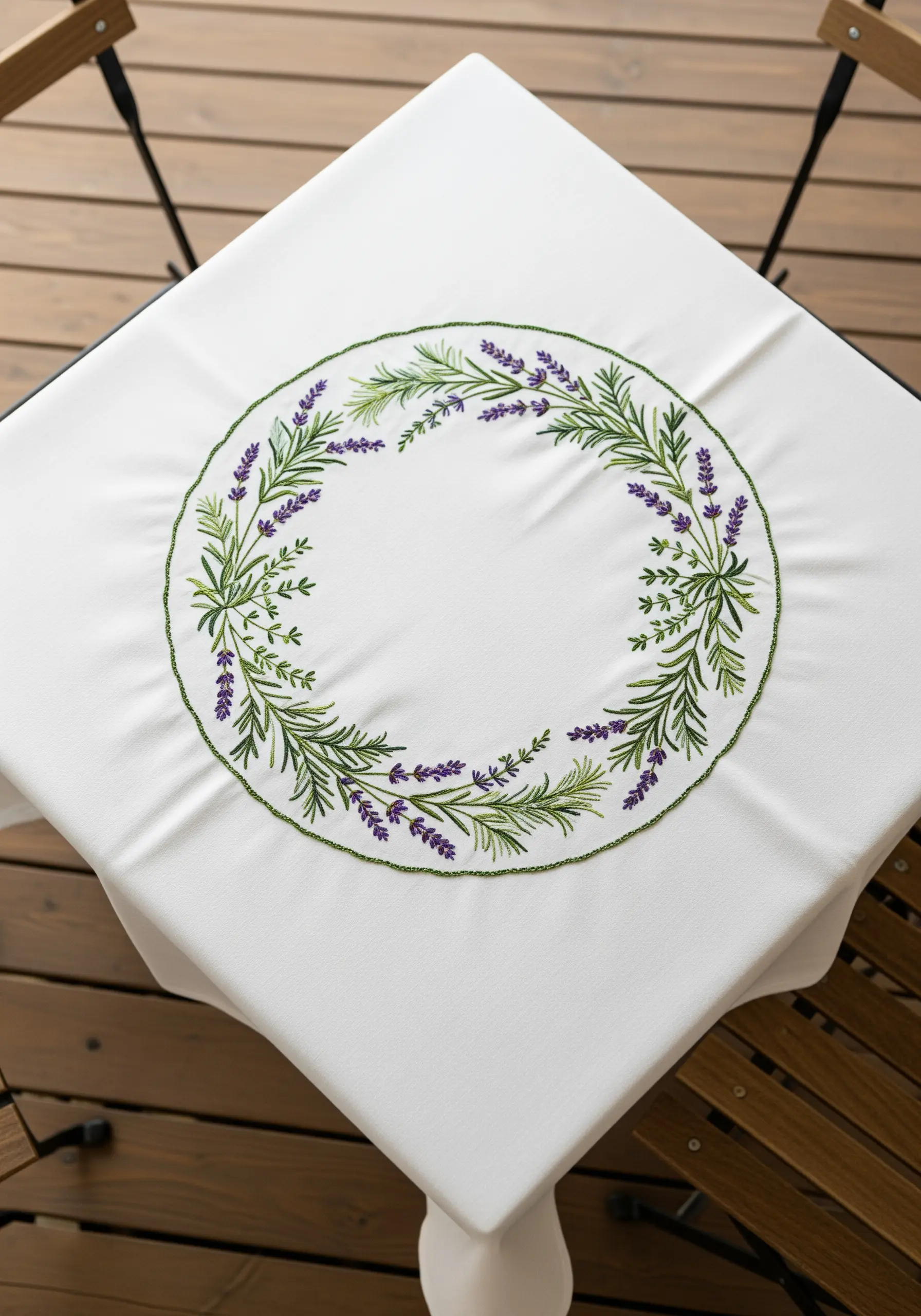
Create a beautiful and symbolic centerpiece with a wreath of embroidered herbs like lavender and rosemary.
Use a variety of stitches to differentiate the plants: lazy daisy stitch for rosemary leaves, French knots for lavender buds, and stem stitch for the branches.
Incorporate several shades of green to give the wreath depth and a more natural, less uniform appearance. This is a perfect way to frame a central serving dish or floral arrangement.
16. Abstract Ocean Waves on Ombré Fabric

For a truly modern and artistic statement, embroider flowing lines onto hand-dyed or ombré fabric.
Use a couching technique to lay down multiple strands of thread at once, creating thick, expressive lines that follow the color transitions of the fabric.
Vary the thickness of your lines by using different numbers of strands. Mix in a single metallic thread with your cotton floss to add a subtle glint, like sunlight on water. This turns a simple placemat into abstract thread art.
17. Embellished Beetles with Mixed Media

Elevate your embroidery by incorporating beads, pearls, and metallic threads for a collection of stunning beetle motifs.
Use iridescent and metallic floss to create the shiny carapaces, then add tiny seed beads or small pearls to add dimension and texture.
Outlining each beetle in a fine gold thread provides a crisp, defined edge that makes the colors and textures pop against the black fabric.
This is a perfect example of embroidered mixed media, turning simple napkins into individual works of art.
18. Mediterranean Lemon Grove Border

Bring a touch of the Mediterranean to your table with a vibrant lemon border.
Use a padded satin stitch to give the lemons a plump, rounded shape. To do this, stitch a layer of small, underlying stitches in the center of the lemon before covering it with your final satin stitches.
Stitch the leaves using a fishbone stitch to create a realistic central vein, and use a twisted chain stitch for the branches to give them a woody texture.
19. Ethereal Wildflowers on Sheer Organza

Create a light, floating effect by embroidering delicate wildflowers on a sheer table runner.
You must use a lightweight stabilizer (like a water-soluble one) that can be removed after stitching to prevent the sheer fabric from puckering.
Use delicate stitches like lazy daisy, small French knots, and fine stem stitches. Heavy satin stitches will weigh down the fabric and ruin the airy aesthetic.
Scatter the motifs sparsely to enhance the feeling of lightness and transparency.
20. Stained-Glass Dragonfly Motif
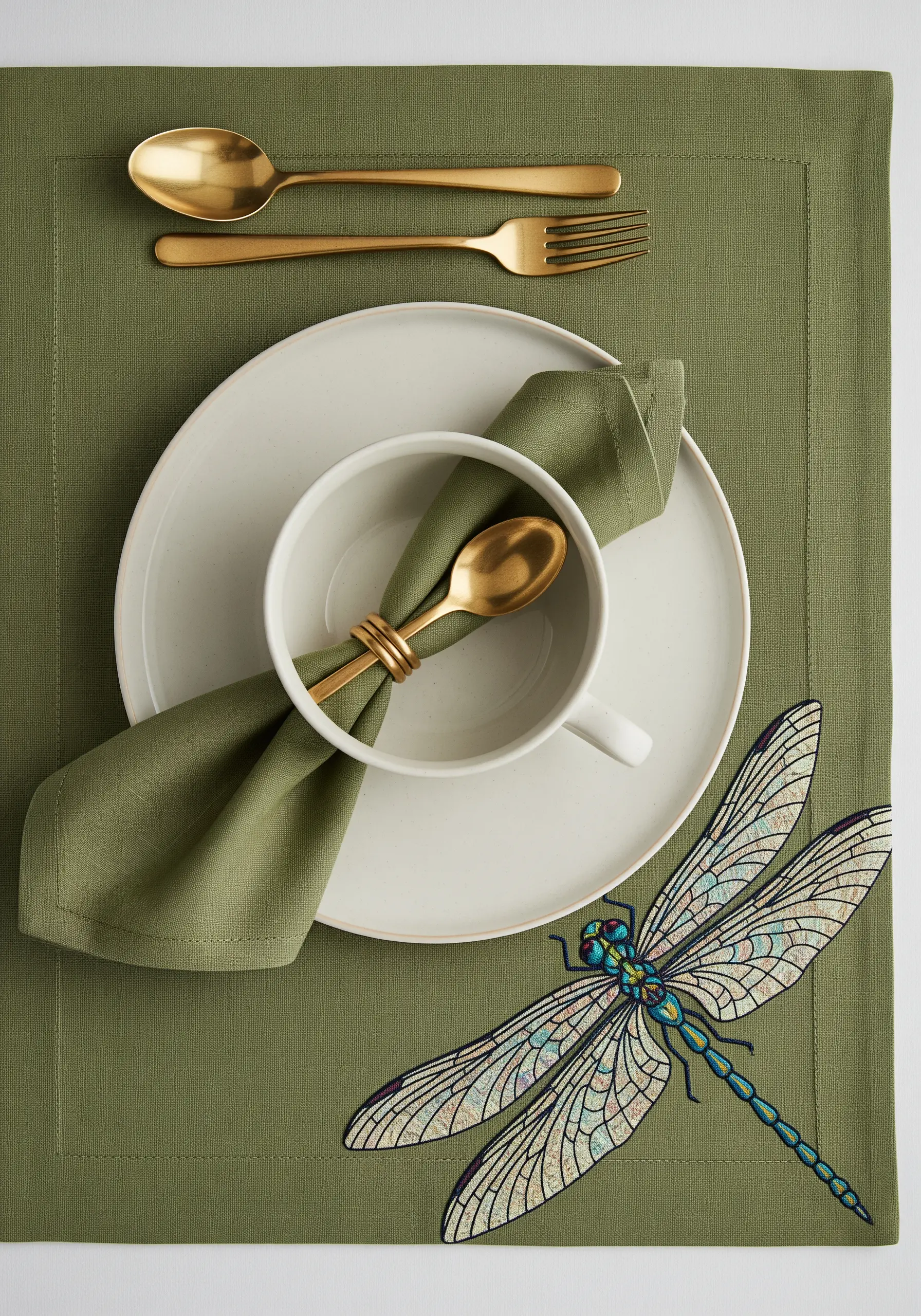
Recreate the look of stained glass by outlining intricate shapes and filling them with color.
For the dragonfly’s wings, use a fine black or dark grey thread to backstitch the delicate cell-like patterns.
Fill each small section with a single, long satin stitch or a few strands of laid work in iridescent or variegated thread. This technique mimics the transparent, multi-toned look of glass panels.
The contrast between the dark outlines and the luminous fills is what creates the stunning effect.
21. Classic Toile de Jouy Narrative Scene

Capture the timeless charm of Toile de Jouy by using a single color of thread on a cream or white linen background.
This style is all about illustrative line work. Use a fine stem stitch or a two-ply split stitch to recreate the detailed pastoral scenes.
The key is consistency in your stitch length and tension to achieve the look of a printed engraving. It’s a testament to how monochrome thread can tell a rich story.
22. Festive Holly with 3D Appliqué

Add dimension to your holiday napkins by combining embroidery with simple appliqué.
Cut the holly leaf shapes from a piece of felt or cotton fabric and attach them to the napkin with a neat blanket stitch around the edges.
Embroider the central vein of the leaves directly onto the appliqué piece. For the berries and mistletoe, use raised stitches like French knots or attach small beads for a realistic, three-dimensional effect.
23. Bold Geometric Lines with Raised Satin Stitch

Make a strong, modern statement with a geometric design that mimics architectural details.
Use a padded satin stitch to give the golden lines a raised, almost three-dimensional quality against the dark, textured fabric.
A tear-away stabilizer is crucial here to prevent the dense stitches from causing the fabric to pucker, ensuring your lines remain perfectly straight and crisp.
The interplay of light on the raised, smooth stitches against the matte background creates a sophisticated and dynamic look.
24. A Lush Monstera Leaf Placemat
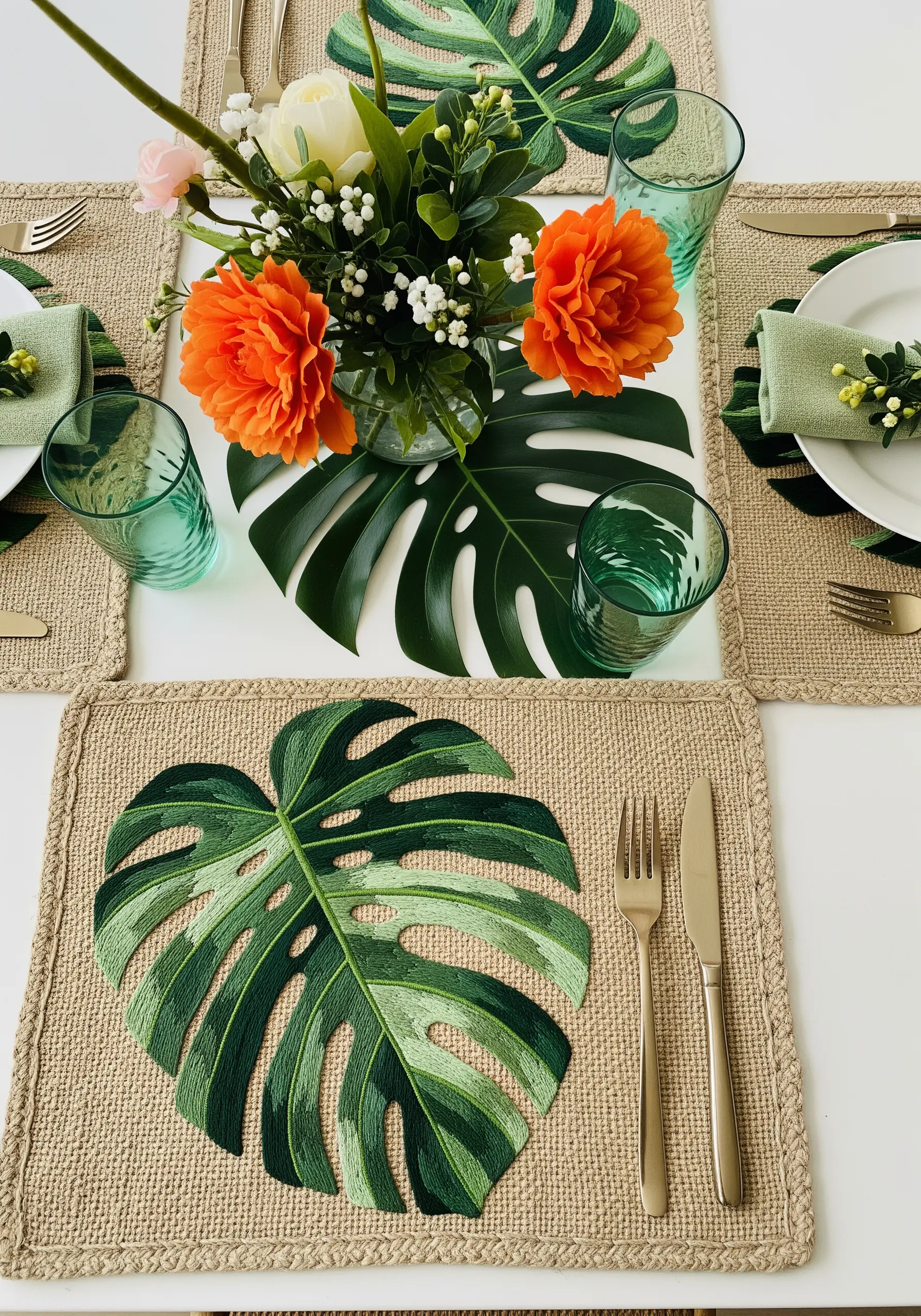
Make a single, large botanical motif the star of your placemat.
To create the color variation in the monstera leaf, divide it into sections and use long-and-short stitch to blend different shades of green, from light lime to deep forest.
This thread painting technique gives the leaf a realistic, variegated appearance. Outline the entire leaf and its iconic splits with a dark green backstitch to ensure the shape is clearly defined against the burlap-like fabric.
25. Arts and Crafts Inspired Repeating Pattern

Channel the style of William Morris with a dense, all-over pattern of flora and fauna.
The key to this look is balance and repetition. Plan your layout carefully so the motifs interlock in a natural, rhythmic way across the entire surface.
Use a limited, harmonious color palette and consistent stitch types—like satin stitch and stem stitch—to create a cohesive, tapestry-like effect that feels both intricate and orderly.
26. Subtle Seashell with Gradient Shading

For a touch of understated coastal elegance, embroider a single, realistic seashell in the corner of a napkin.
Use a directional satin stitch, angling your stitches to follow the natural ridges and curves of the shell. This creates highlights and shadows that give the shell a convincing 3D shape.
Work with a subtle gradient of just two or three colors—like ivory, pale pink, and a touch of beige—to achieve a delicate, lifelike appearance without overwhelming the design.
27. Romantic Peonies in Muted Tones
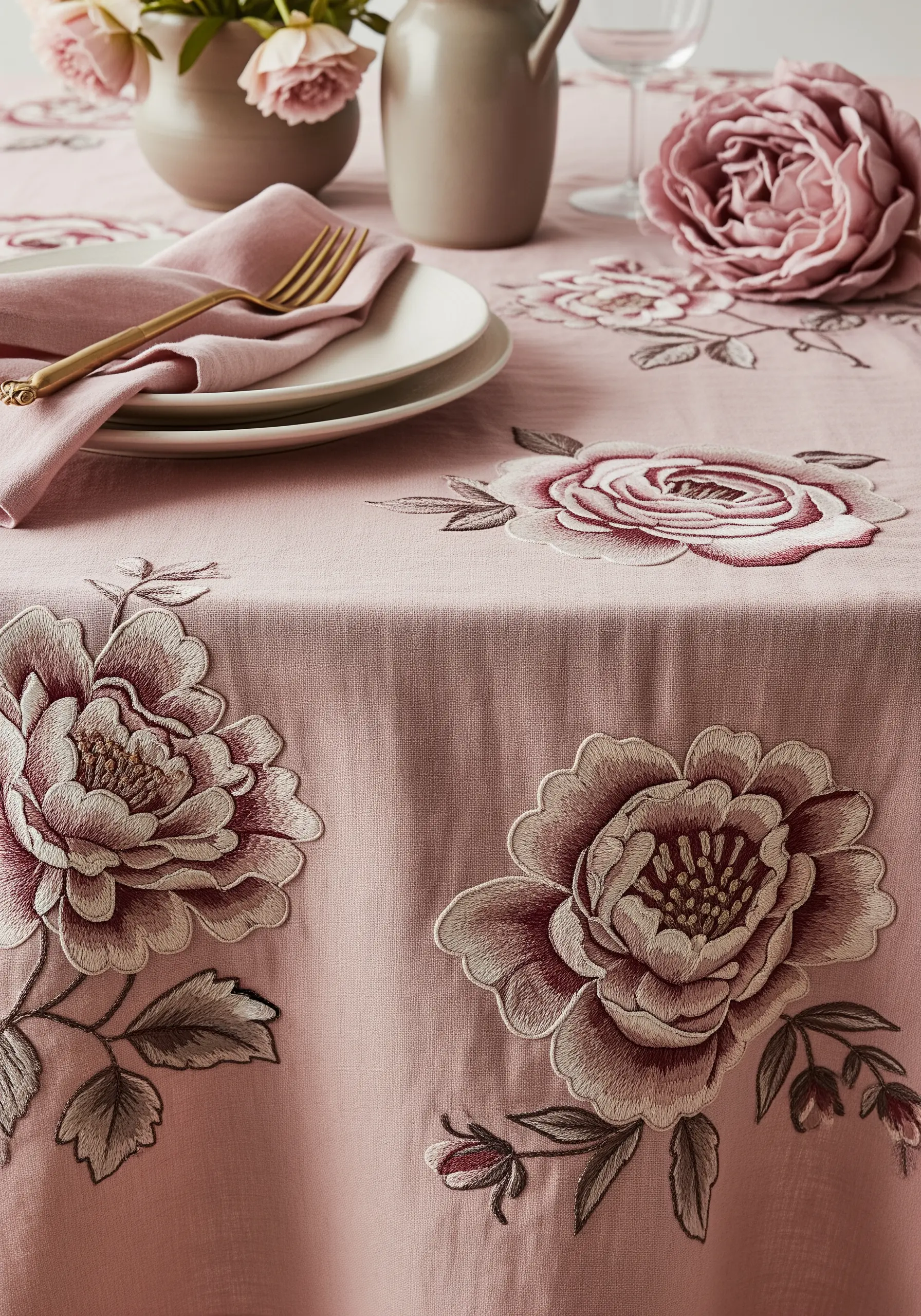
Create a soft, romantic tablescape with large-scale floral embroidery in a dusty rose palette.
To give the petals a full, layered look, use a combination of long-and-short stitch for the larger areas and satin stitch for the folded-over edges. This creates depth and dimension.
By pairing the muted pinks with soft grey-green leaves and outlines, you maintain a sophisticated, monochromatic feel that is elegant rather than overly sweet.
28. Hyper-Realistic Feather with Thread Painting

Challenge your skills by recreating a single, incredibly detailed feather as a statement piece on a table runner.
This technique is all about advanced thread painting. Use a single strand of floss and blend dozens of colors to capture every subtle shift in iridescence and pattern.
Keep your stitches long, fine, and angled slightly outward from the central quill to mimic the feather’s natural structure. The result is a piece of art that invites close inspection.
29. Portuguese Azulejo Tile Motif
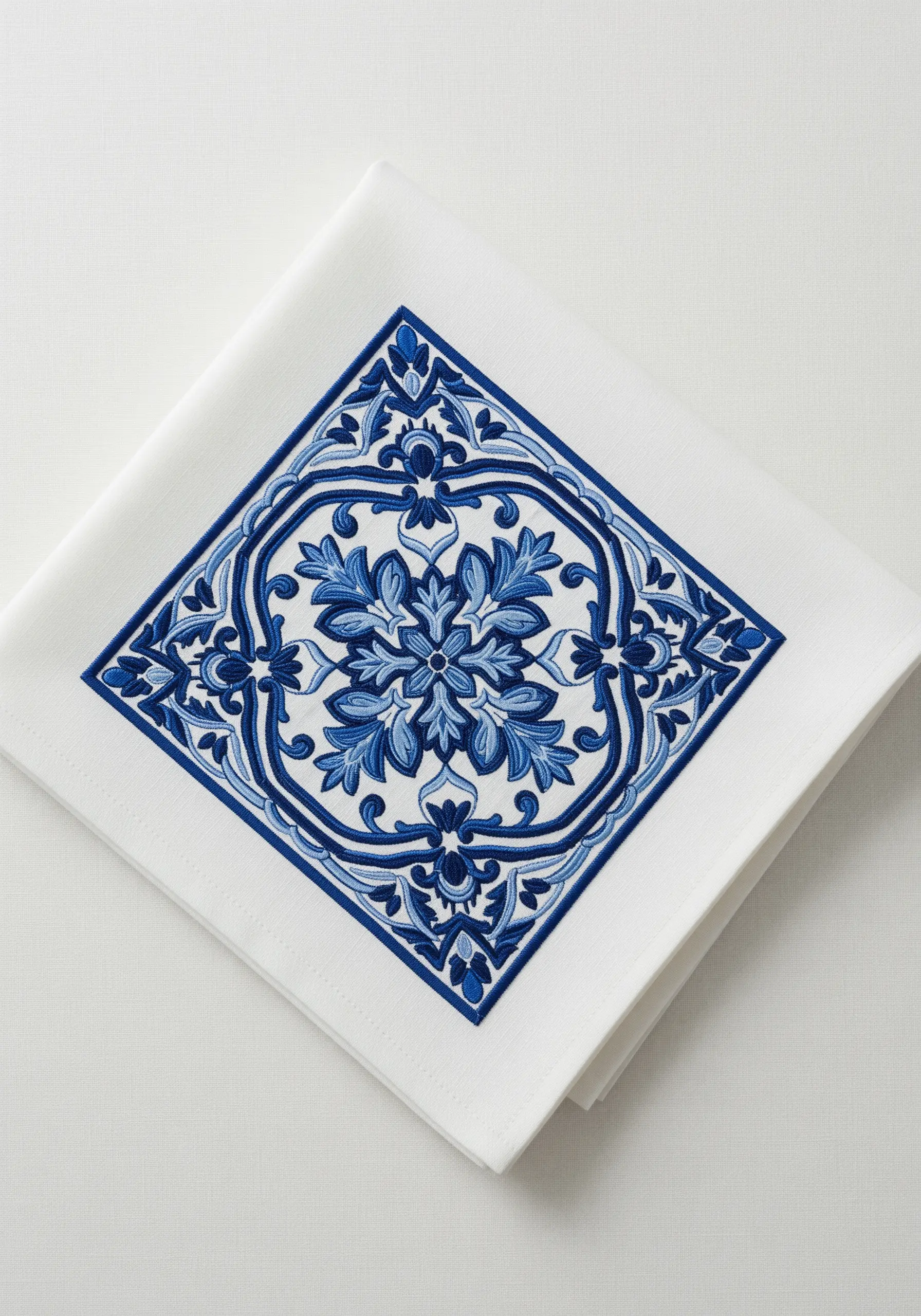
Translate the beauty of Portuguese blue-and-white tiles onto your table linens.
Use three to four shades of blue to create depth and replicate the hand-painted quality of azulejos. Use the darkest blue for outlines, a medium shade for filled areas, and the lightest for highlights.
Combine dense satin stitch for the solid shapes with delicate stem stitch for the finer, swirling details. This contrast in stitch density is what makes the design feel authentic and intricate.
30. Minimalist Honeycomb and Bee Accents

Add a touch of playful sophistication with a simple, graphic honeycomb pattern.
Use a clean backstitch or stem stitch in a single color to create the geometric honeycomb outline. This minimalist approach feels modern and chic.
You can then add small, dimensional bee charms or stitch tiny bees separately and tack them on. This mix of 2D geometry and 3D accents creates a delightful, interactive tablescape.
31. Heirloom Lace with Cutwork Embroidery

Create the ultimate statement of luxury with cutwork, a technique that turns your tablecloth into lace.
First, you’ll outline your design with a running stitch, then go over it with a tight, dense buttonhole stitch. The magic happens when you carefully trim away the fabric inside the stitched areas.
This requires precision and a sharp pair of embroidery scissors, but the result is a breathtaking, heirloom-quality piece that combines the substance of linen with the delicacy of lace.