Have you ever finished an embroidery project and felt it was missing a certain something? You chose the colors, you made the stitches, but it doesn’t quite have the polished, intentional feel you dreamed of.
The secret to creating embroidery that truly elevates a space isn’t about mastering hundreds of complex stitches or buying expensive threads. It’s about learning to apply simple techniques with precision and purpose. It’s in the tiny, thoughtful details—a perfectly executed monogram, a single motif placed in just the right spot, a texture that begs to be touched.
Think of thread as your paint and fabric as your canvas. These ideas are designed to show you how small, deliberate accents can transform everyday objects into personal works of art. Let’s move beyond just following patterns and start making design choices that infuse your home with quiet luxury and a style that is unmistakably yours.
1. Botanical Accents on Everyday Linens
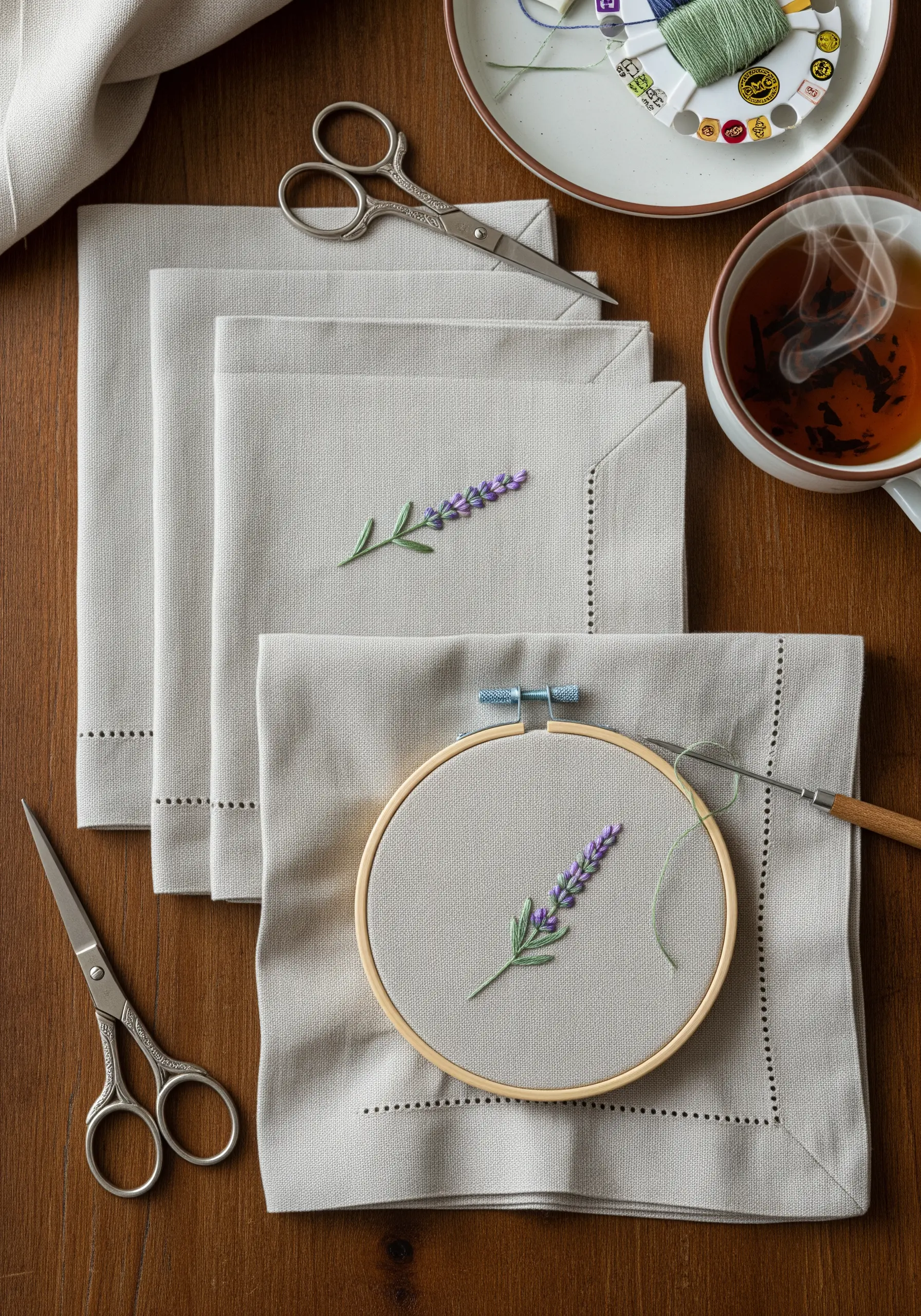
Embroidering on linen napkins adds a layer of quiet luxury, but the fabric’s open weave requires a gentle touch.
Use a lightweight stabilizer on the back to prevent puckering, which you can trim or tear away after you’re finished stitching.
For a delicate lavender sprig, use a stem stitch with two strands of green floss for the stalk, and tiny, single-strand straight stitches or French knots for the blossoms.
This restrained approach ensures the motif complements the fabric rather than overwhelming it, creating handmade embroidery touches that feel both personal and refined.
2. Minimalist Motifs on Luxe Velvet
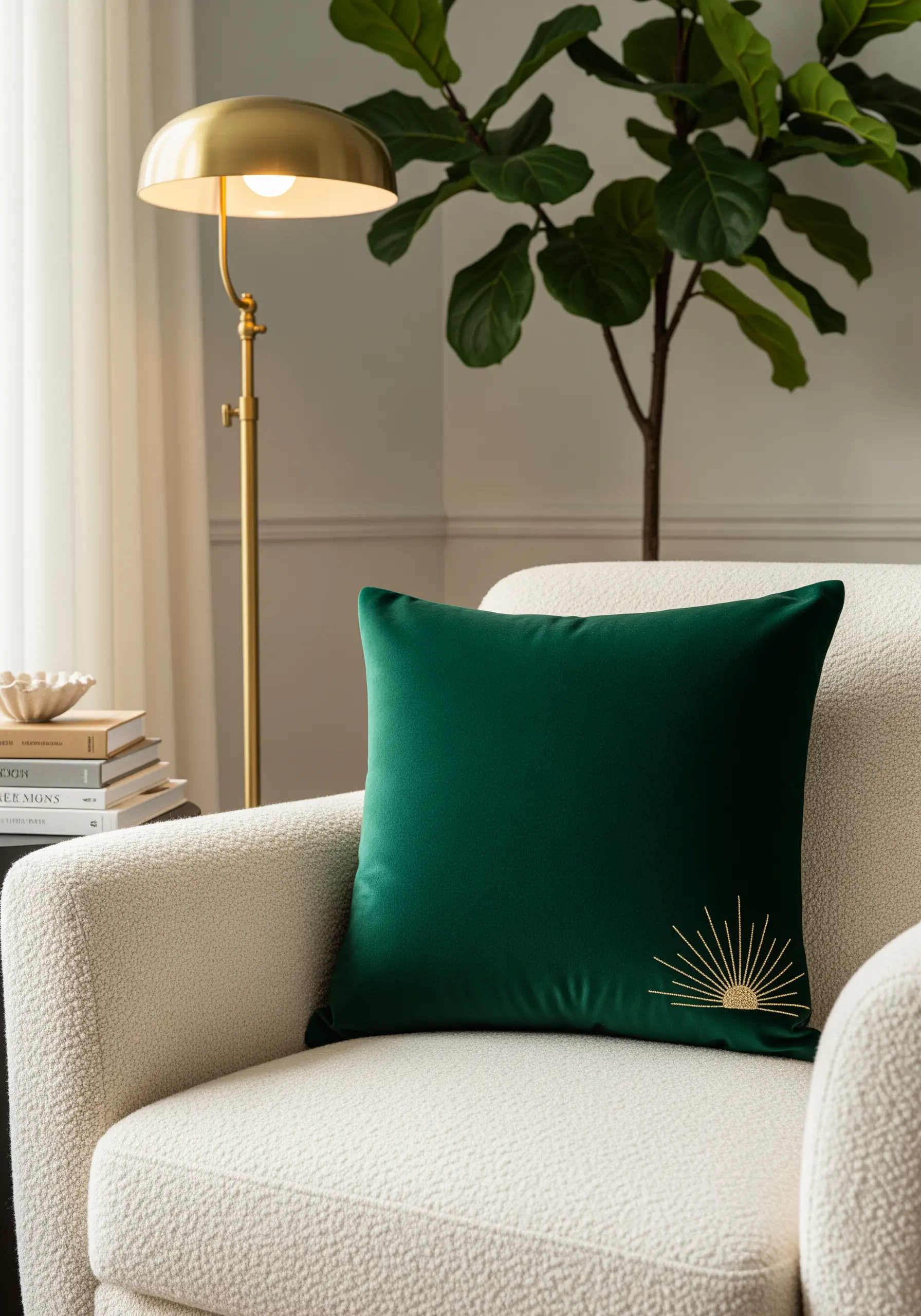
Velvet’s plush pile offers a dramatic background for clean, graphic embroidery.
When stitching, use a sharp, fine needle to part the fibers rather than pierce them, and keep your thread tension relaxed to avoid crushing the texture.
A simple backstitch using a high-sheen rayon or a fine metallic thread creates a striking contrast that feels both modern and opulent.
Place a single, geometric sunburst in an unexpected corner to draw the eye and add an intentional design element.
3. Crisp Herbal Sprigs for Kitchen Textiles
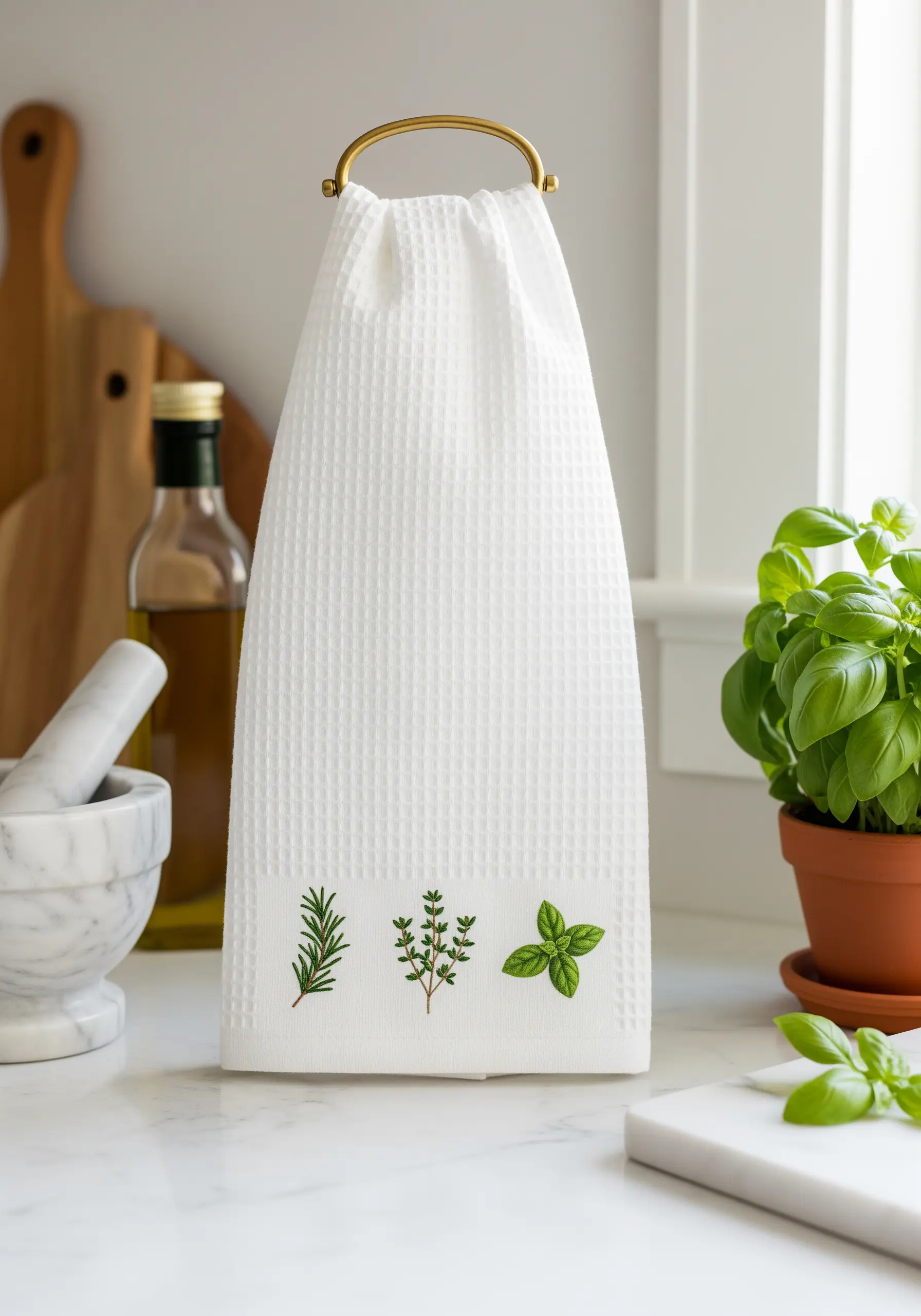
The deep grid of waffle-weave fabric can cause stitches to disappear, so your technique needs to ensure the design sits proudly on the surface.
Apply a water-soluble stabilizer over the fabric before you begin; it creates a smooth canvas for your stitches and dissolves completely in water.
Use foundational stitches like stem stitch for stalks and detached chain stitches for leaves, as they create solid shapes that won’t get lost in the fabric’s texture.
This method ensures your herbal motifs look crisp, clean, and professional.
4. Dimensional Florals for Functional Art
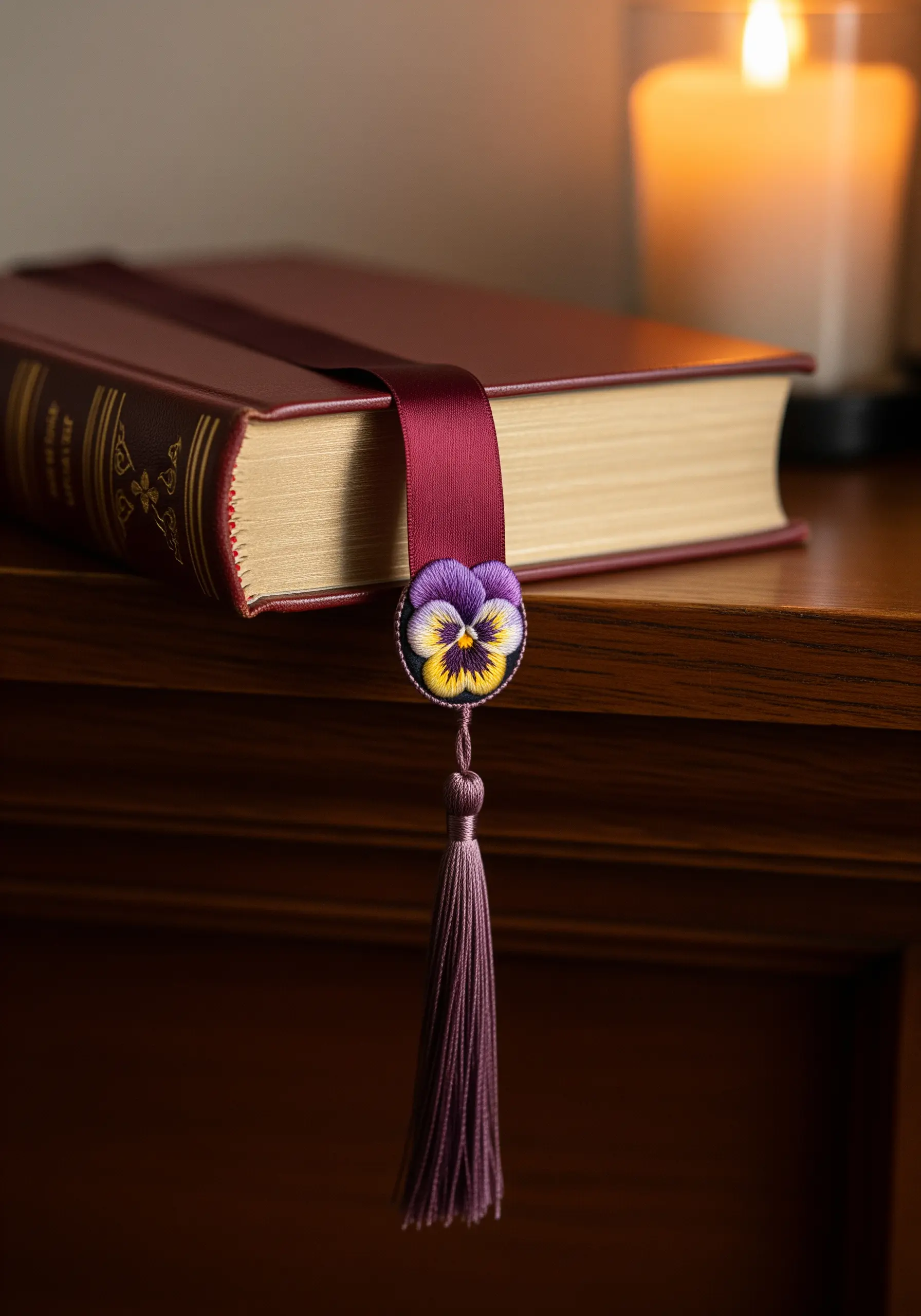
To achieve the painterly quality of this pansy, you need to think in layers of color, not just lines.
Use the long-and-short stitch, often called thread painting, to blend shades of purple, violet, and yellow seamlessly across the petals.
Work with a single strand of floss for the most subtle gradient color floral embroidery, starting from the outer edge and working inward to create realistic depth.
Once complete, mount the embroidery on a piece of felt-covered cardstock to give it the structure it needs to function as a beautiful and durable bookmark.
5. Scattered Stitches for Ambient Lighting
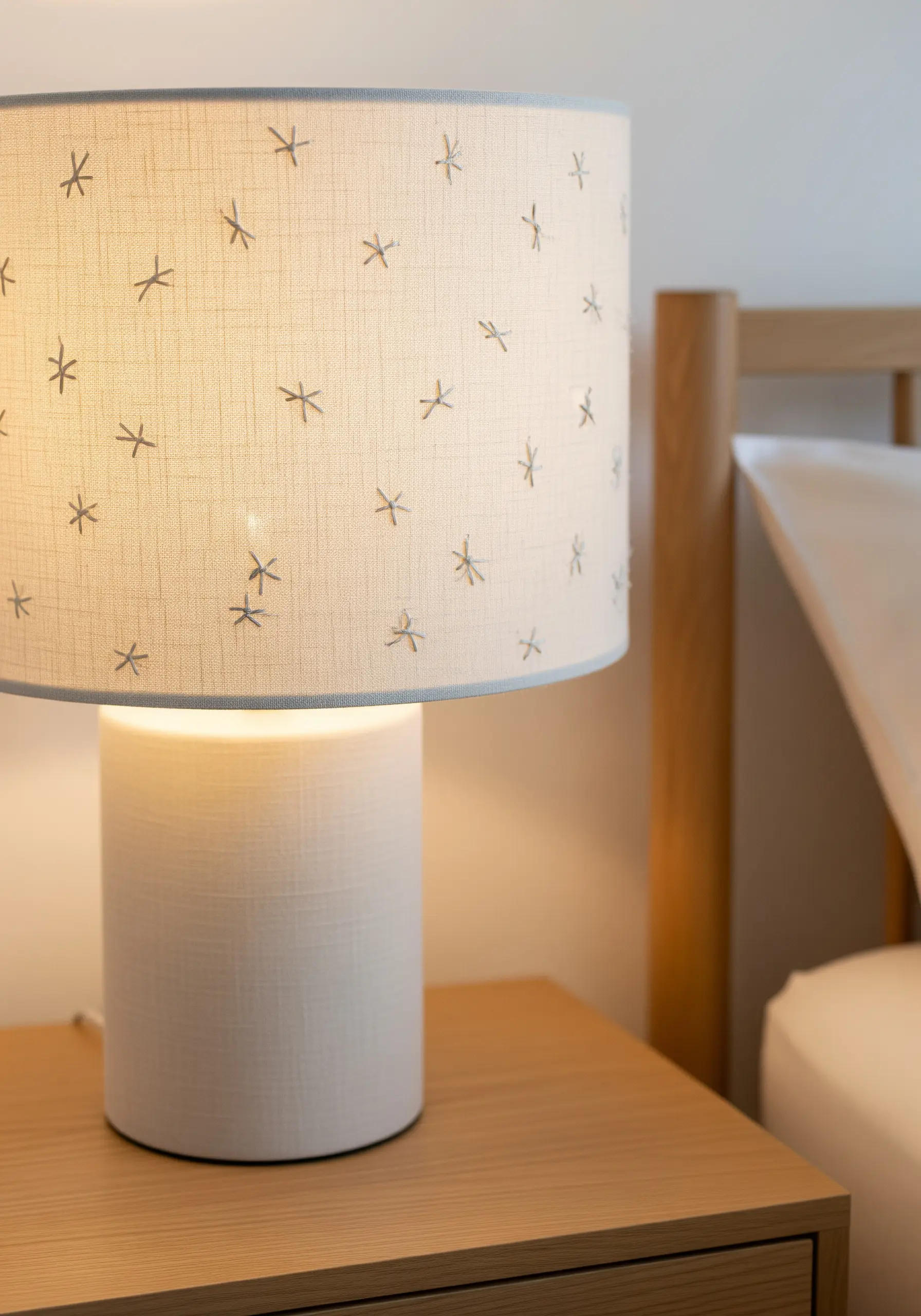
Embroidering a lampshade transforms it from a simple light source into a decorative object.
Use a sturdy thimble to help you push the needle through the stiff, treated fabric without straining your fingers.
Instead of a complex design, scatter simple star stitches or seed stitches across the surface in a random pattern.
When the lamp is turned on, the light will diffuse gently through the tiny holes, creating a subtle, starry effect that adds warmth and texture to your room.
6. Elegant Monograms on Textured Towels
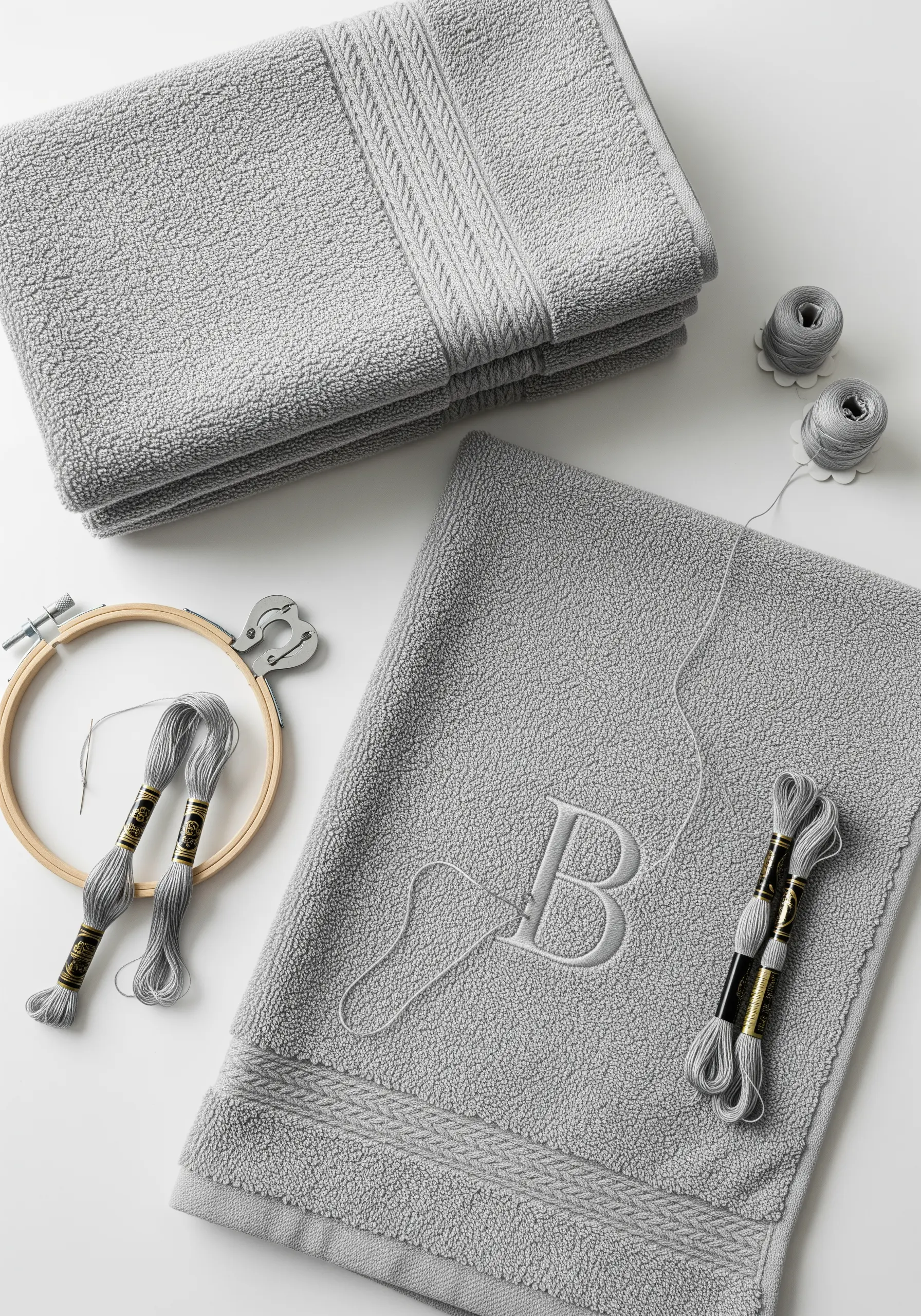
The secret to sharp, professional-looking embroidery on plush terrycloth is to control the surface texture.
Place a sheet of water-soluble topping over the towel before hooping; it will create a flat plane and prevent your stitches from sinking into the loops.
For a classic monogram, use a dense satin stitch with all six strands of floss. The topping ensures each stitch lays smoothly next to the last, resulting in a raised, clean-edged letter that looks truly luxurious.
7. Trailing Vines as Functional Details
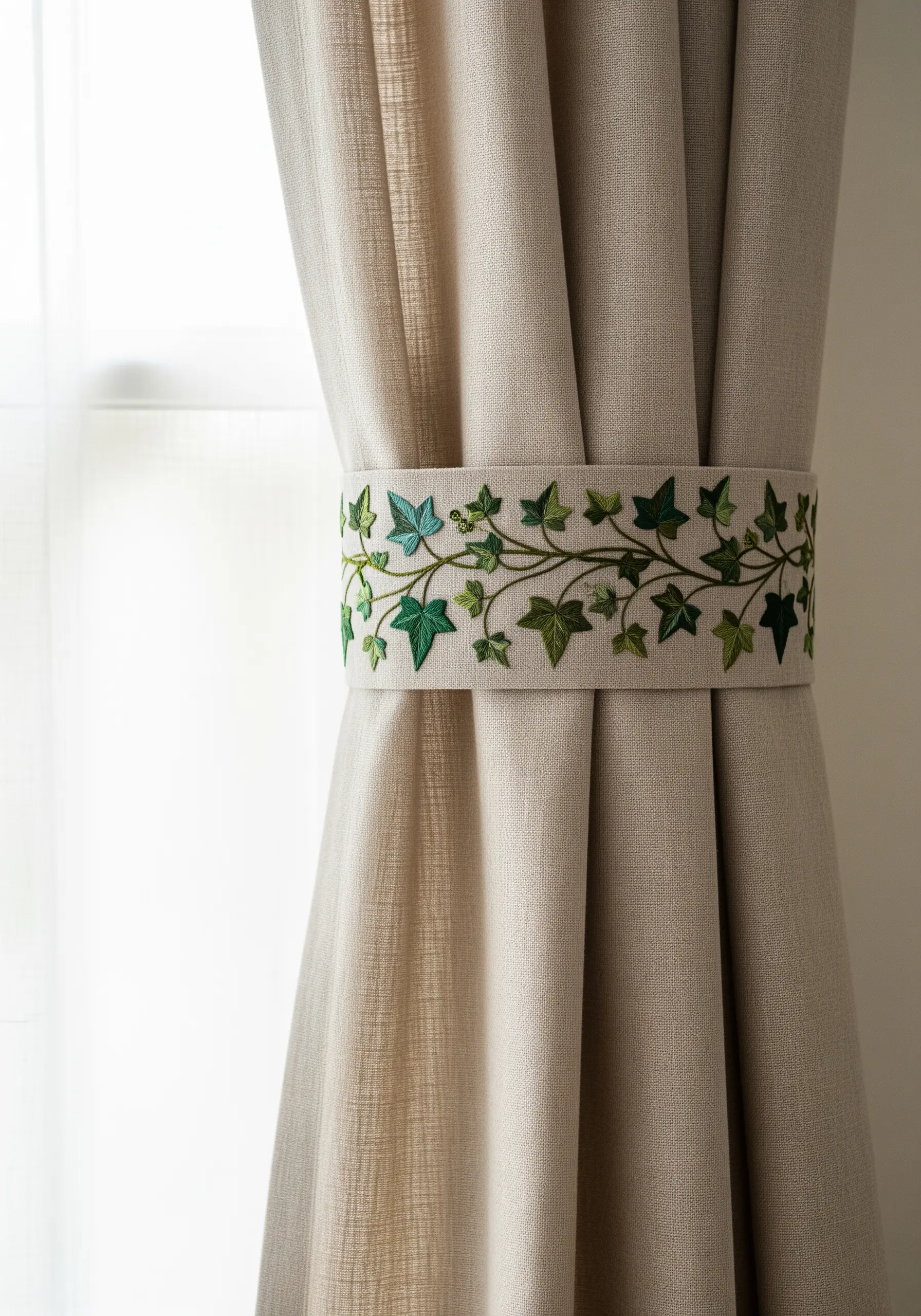
Turn a purely functional item like a curtain tie-back into a piece of decorative art.
Use a variegated green thread to achieve natural-looking color shifts in the ivy leaves without needing to switch your floss constantly.
Combine a wandering stem stitch for the vine with fishbone stitch for the leaves—this pairing gives the design an organic, lifelike movement.
A few leaves stitched with a contrasting high-sheen thread can mimic the look of morning dew, adding a final layer of detail.
8. Color-Blocked Corners on Modern Coasters
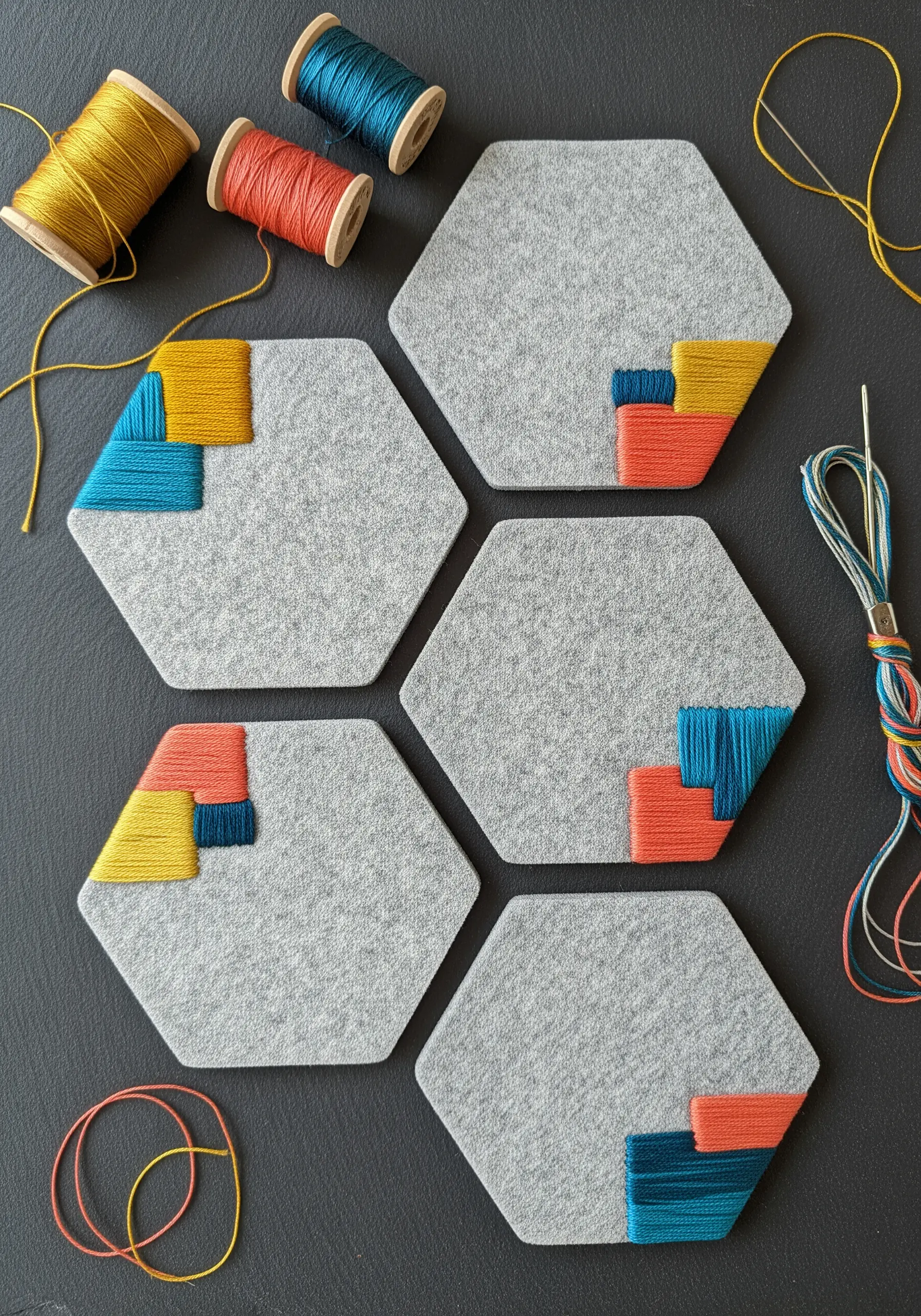
Use embroidery to create bold, graphic statements on minimalist materials like felt.
Here, wide satin stitches are used not as a filler but as a primary design element, forming clean, geometric blocks of color.
On thick felt, you can use heavier pearl cotton or all six strands of embroidery floss to achieve a satisfyingly chunky texture.
Use a disappearing ink pen and a ruler to draw precise guidelines, ensuring your color blocks have perfectly crisp edges for a sharp, contemporary finish.
9. Scented Sachets with Botanical Bouquets
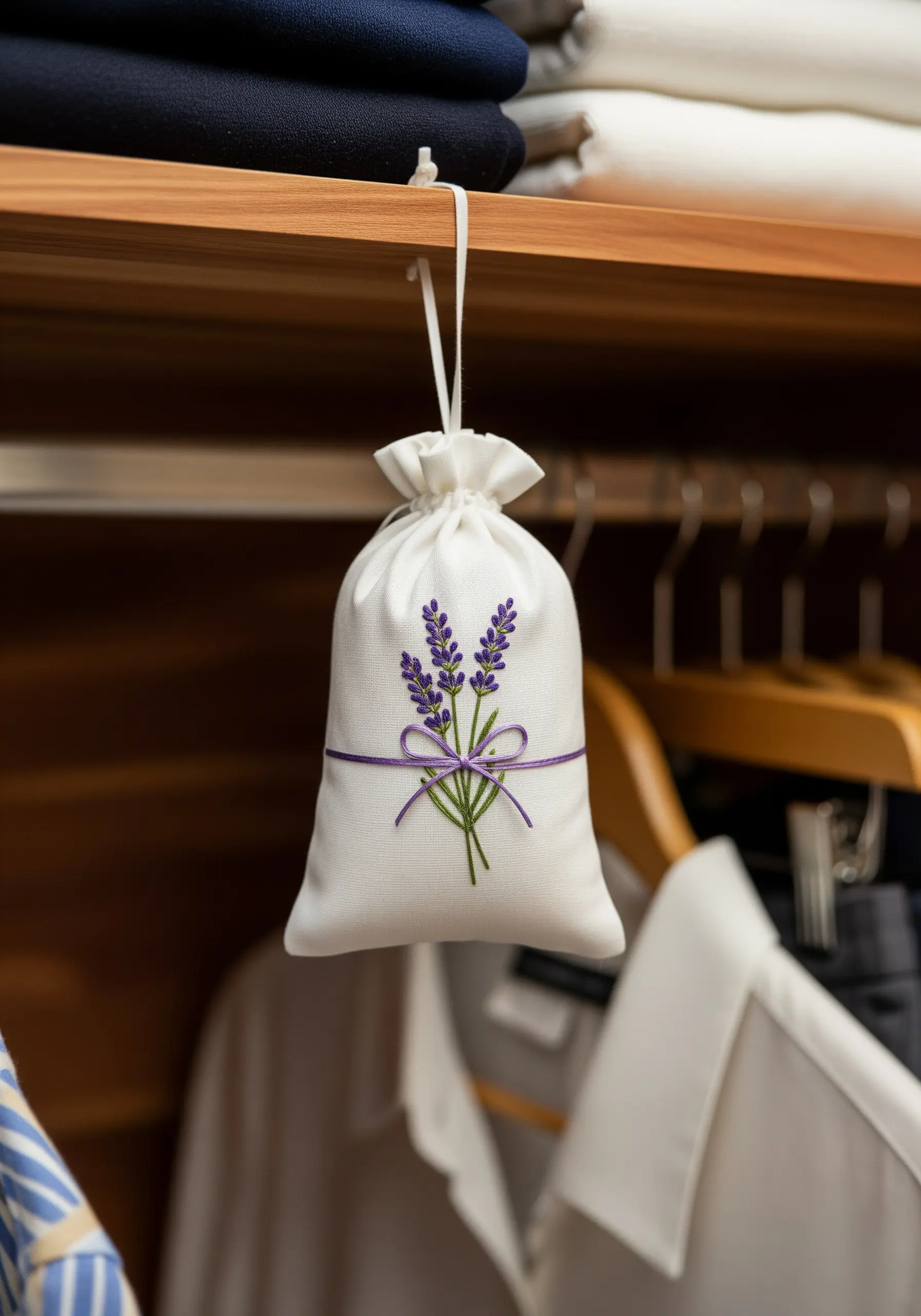
When working on a small scale, every stitch counts.
For a delicate lavender bouquet on a small linen sachet, use only two strands of floss for the stems and tiny French knots for the buds.
To create the ribbon, switch to a single strand of floss and use a neat backstitch. This variation in thread weight creates a visual hierarchy, making the fine ribbon appear to be delicately tying the fuller stems together.
It’s these subtle choices that elevate simple small embroidery patterns into something special.
10. Scripted Words on Fabric-Bound Books

You can achieve the fluid look of cursive script without a single stitch by using the couching technique.
Select a thicker, textural thread—like pearl cotton or fine yarn—and lay it on the book cover along your drawn design.
Then, using a second, much finer thread in a matching color, make tiny tacking stitches over the main thread to secure it in place.
This method creates a clean, raised line that looks incredibly professional and is perfect for adding inspirational quote string art designs to journals and albums.
11. A Refined Geometric Border for Bed Linens
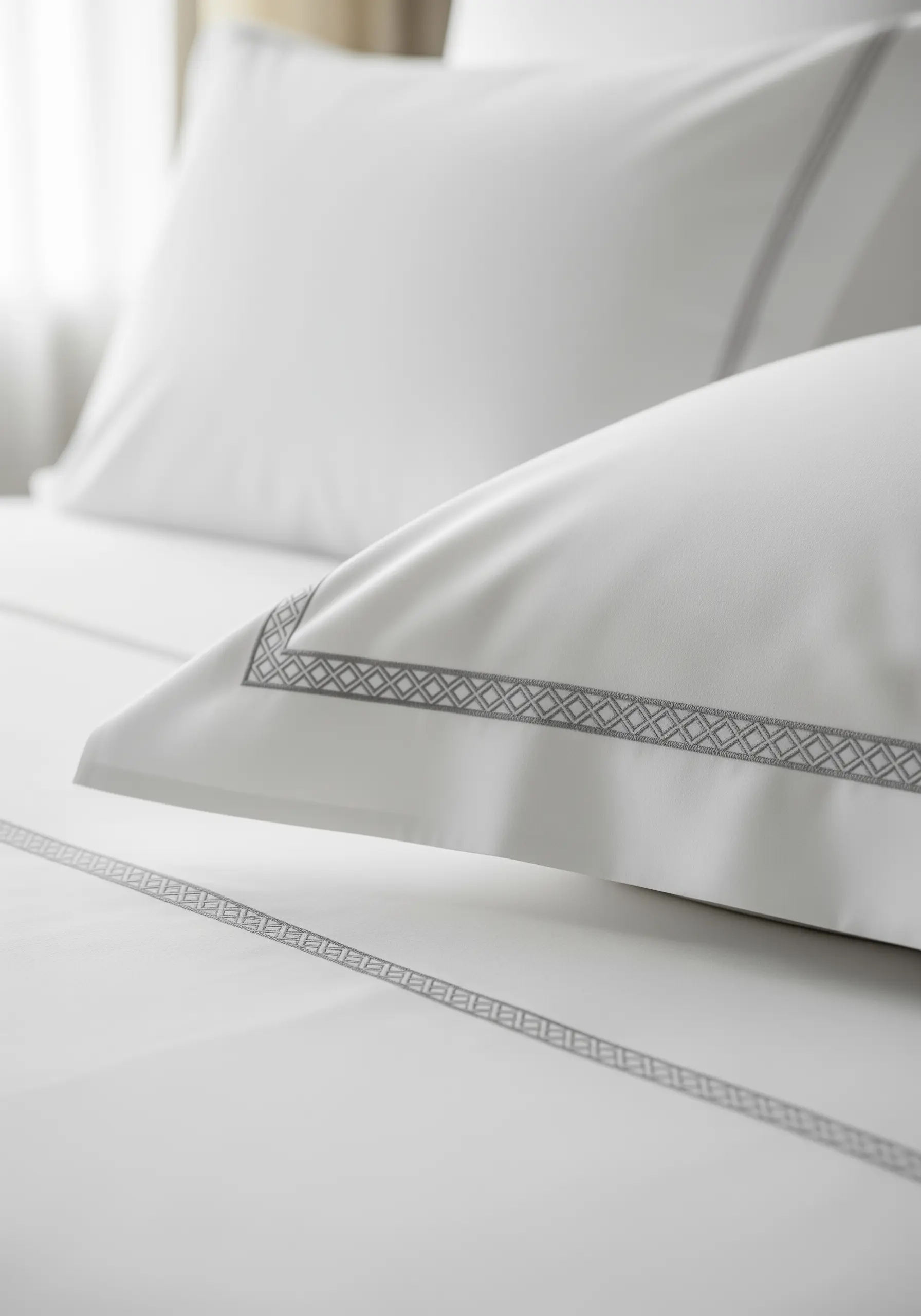
The key to a hotel-quality finish on bed linens is absolute precision.
Choose a classic geometric pattern and a single thread color that provides a subtle contrast against the base fabric—think grey on white or navy on cream.
To guarantee uniformity, use a stick-and-stitch stabilizer printed with a grid pattern to guide your work.
A simple, consistent backstitch is all you need; the power of this design lies in its perfect repetition and clean lines, which add a touch of bespoke elegance.
12. Sculptural Stitches for 3D Botanicals
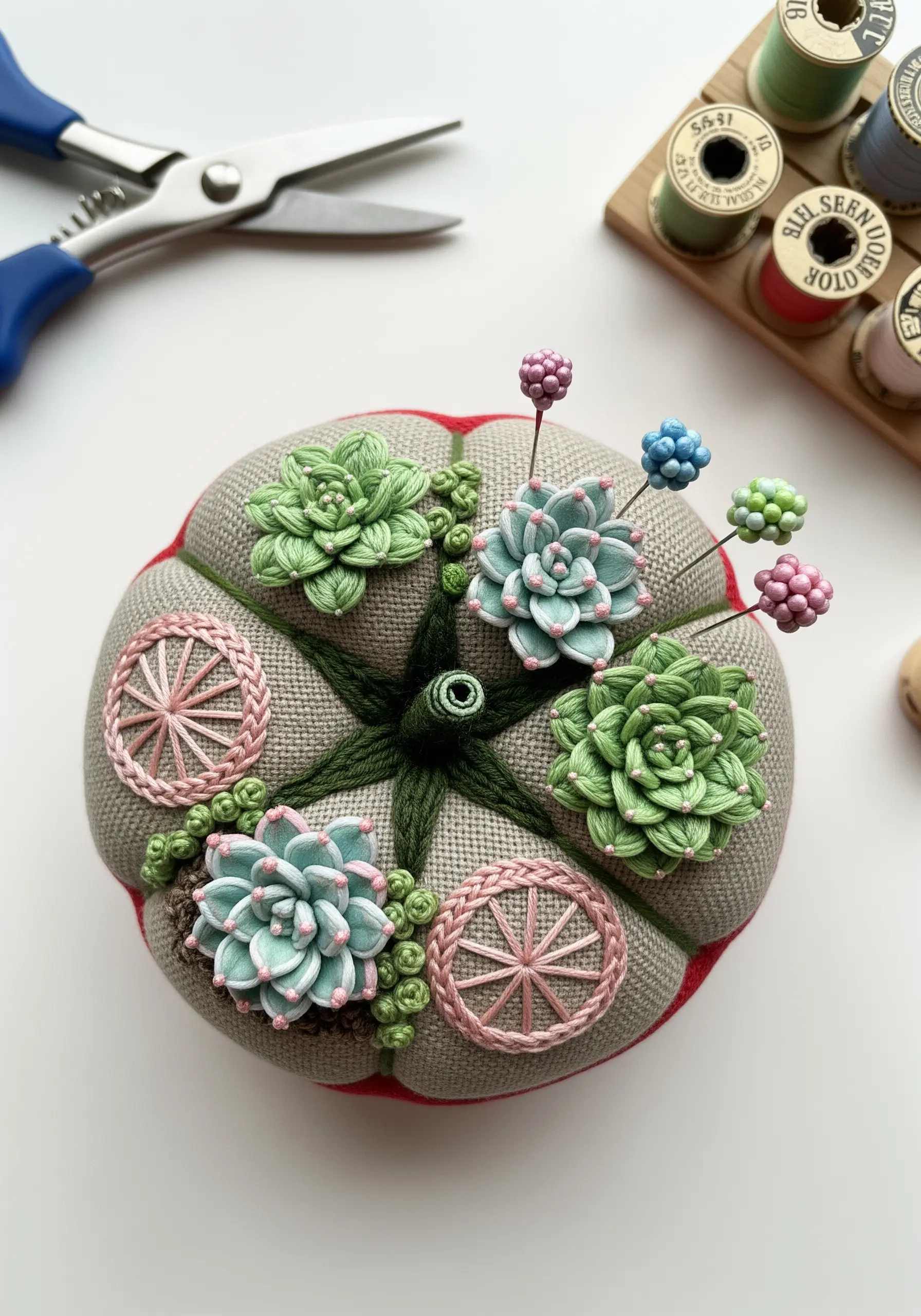
Move beyond flat embroidery by using textural, three-dimensional stitches to create a miniature succulent garden on your pincushion.
The woven picot stitch is perfect for forming layered petals: create a star-shaped foundation of straight stitches, then weave your thread through these spokes to build the rosette.
Combine these with plump bullion knots and French knots to create a variety of shapes and textures, turning a humble sewing tool into a delightful piece of fiber art.
13. Celestial Motifs for Elegant Tablescapes
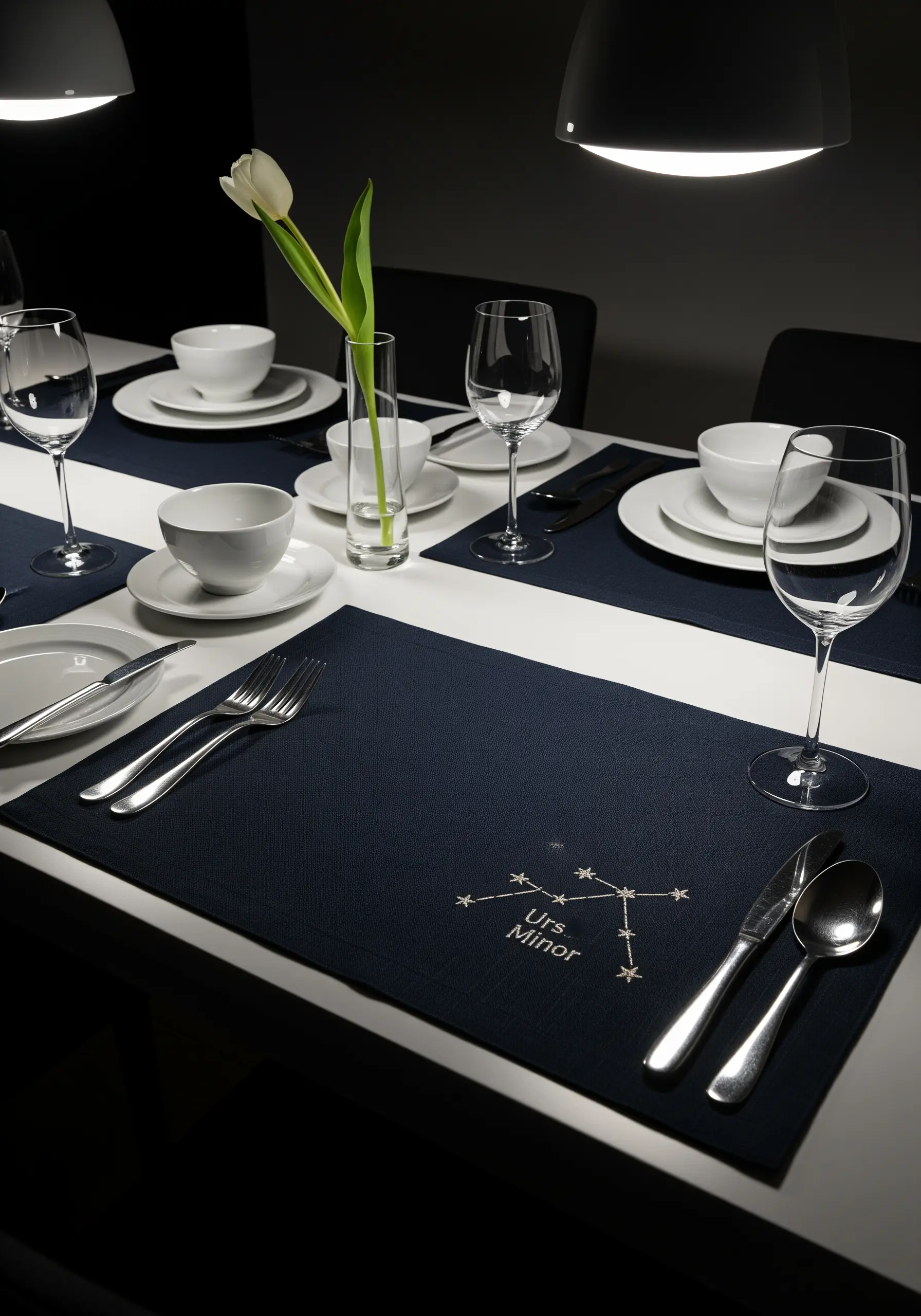
Transform a simple set of placemats with a touch of cosmic elegance.
To map out a constellation, use French knots for the stars—wrap the thread around the needle once for small stars and twice for larger ones to create variation and depth.
Connect the knots with a fine, single-strand backstitch to form the constellation’s delicate lines.
Stitching with a bright white or metallic silver thread on a dark navy fabric enhances the celestial effect, making your dinner setting feel truly magical.
14. Minimalist Landscapes with Single-Line Art

This design demonstrates the power of restraint, capturing the essence of a mountain range with one unbroken line.
Using a simple backstitch and a high-contrast thread—like white on charcoal felt—creates a bold, graphic statement.
On a non-woven, stable material like felt, you don’t need a hoop or stabilizer, making it a quick and impactful project.
This is a perfect way to turn everyday items into pieces of organic embroidery designs.
15. Thread Painting for Realistic Iridescence
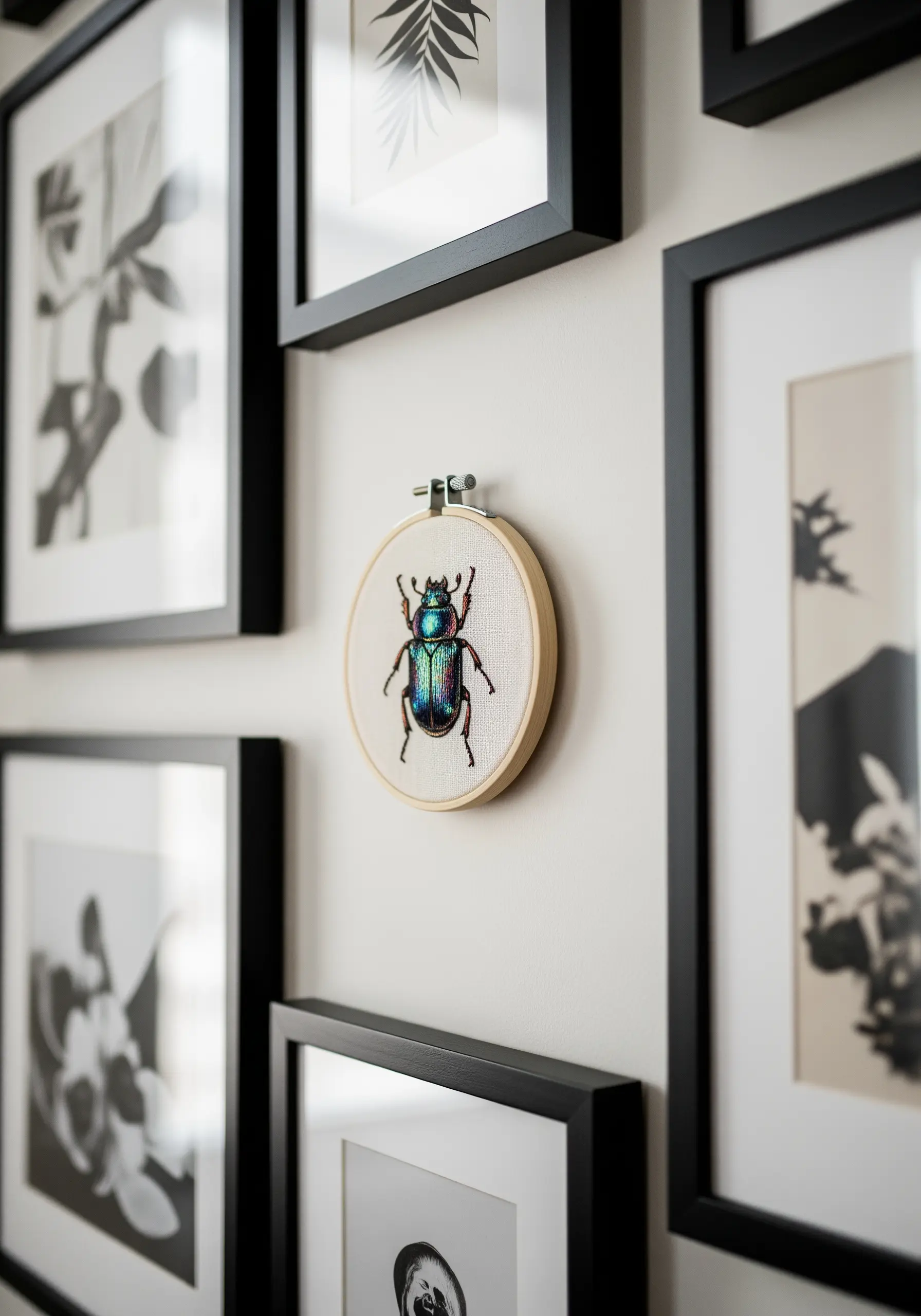
Capturing the shimmering, multi-tonal surface of a beetle’s carapace is an exercise in color blending.
Use a mix of metallic and satin floss in shades of blue, green, and teal, and lay your long-and-short stitches in the direction a real beetle’s shell would curve.
This directional stitching is what creates the illusion of light hitting the surface. By blending the colors subtly where they meet, you can create a stunningly realistic, iridescent effect.
This tiny piece becomes a jewel-like focal point among framed photos, adding unexpected texture and color.
16. A Playful Motif for Conversational Dining
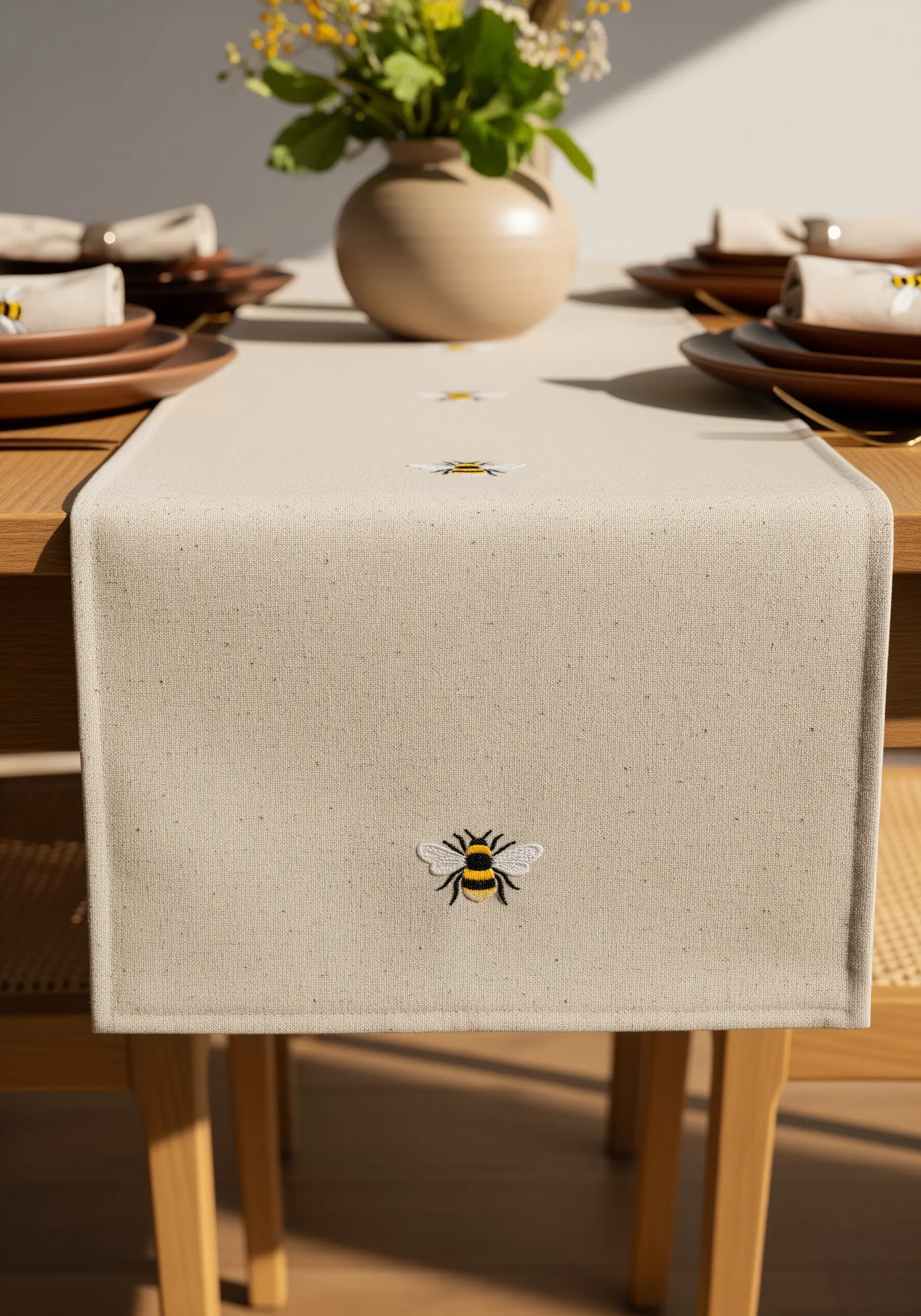
A simple, repeating motif adds personality and a cohesive theme to a plain table runner.
To make these bees feel dimensional, use a padded satin stitch for their bodies. First, create a small foundation of straight stitches within your outline, then cover this padding with satin stitches perpendicular to the foundation.
This technique gives the bees a subtle, rounded shape that lifts them from the fabric, making them appear more lifelike and tactile.
17. Functional Lettering for Organized Spaces
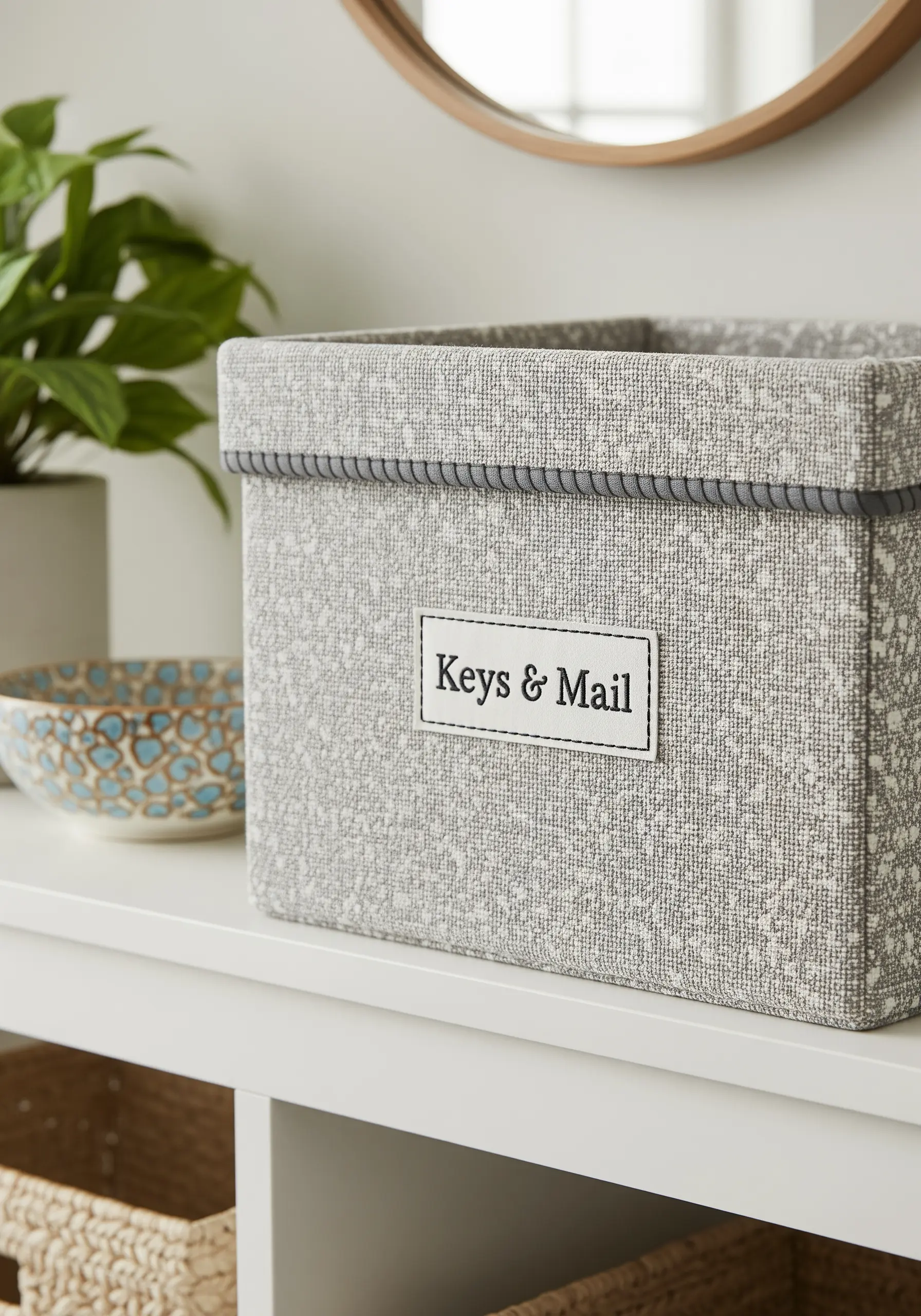
Integrate your craft into your home’s organization system with stitched labels.
For crisp, highly legible text, use a neat backstitch with three strands of floss. This gives the letters enough weight to be easily readable from a distance.
To attach the label patch to the bin, a simple running stitch along the border is functional, but using a blanket stitch adds a decorative, handcrafted detail that elevates the final look.
18. Golden Botanicals on Natural Canvas
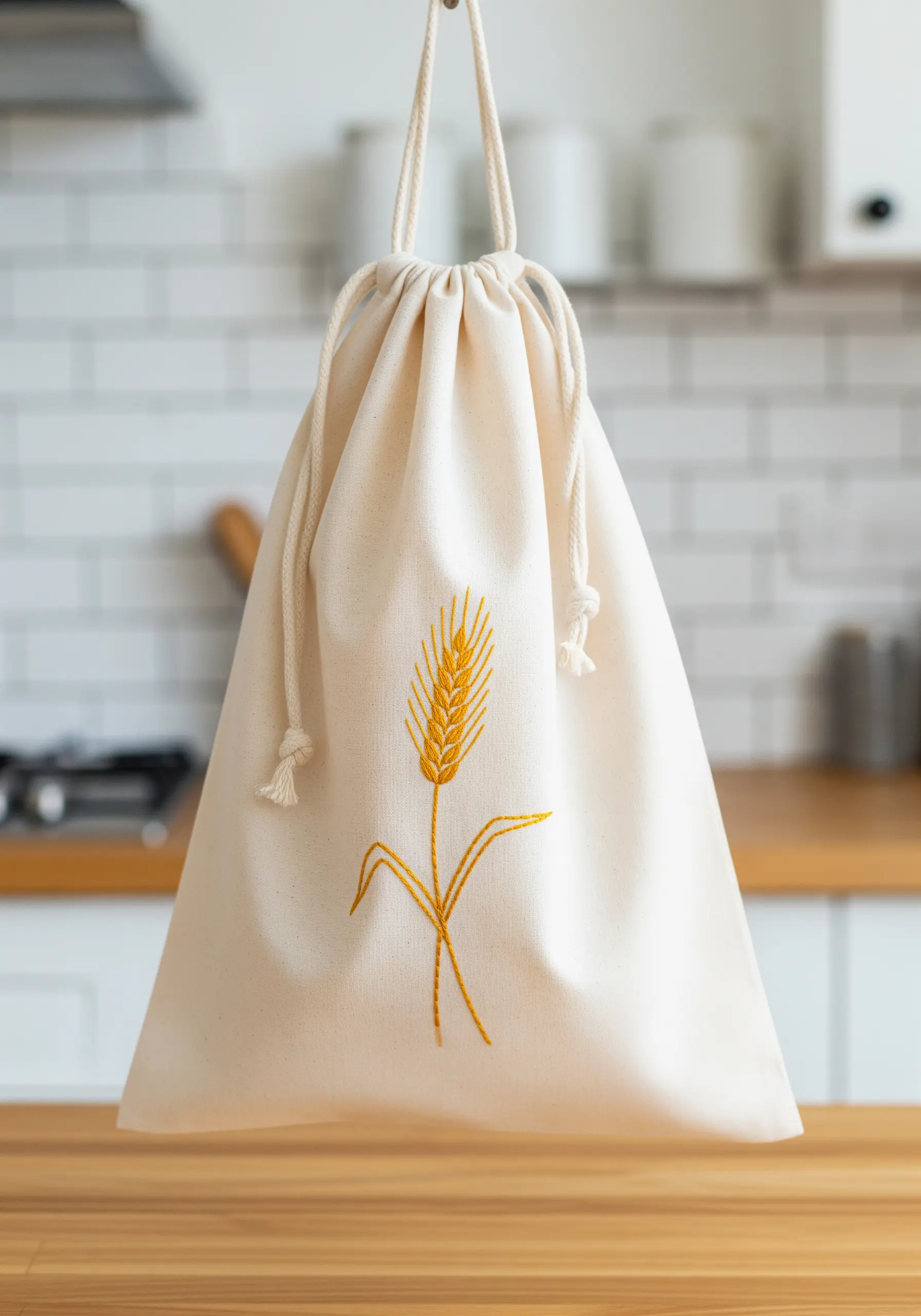
A single, well-executed motif can transform an ordinary object like a canvas bag into something special.
The fishbone stitch is ideal for creating the texture of a wheat stalk, as its overlapping stitches naturally mimic the pattern of the grains.
Choosing a thread with a slight sheen, like pearl cotton, creates a beautiful contrast against the matte finish of the canvas, adding a touch of understated elegance.
19. A Subtle Touch for Sustainable Goods
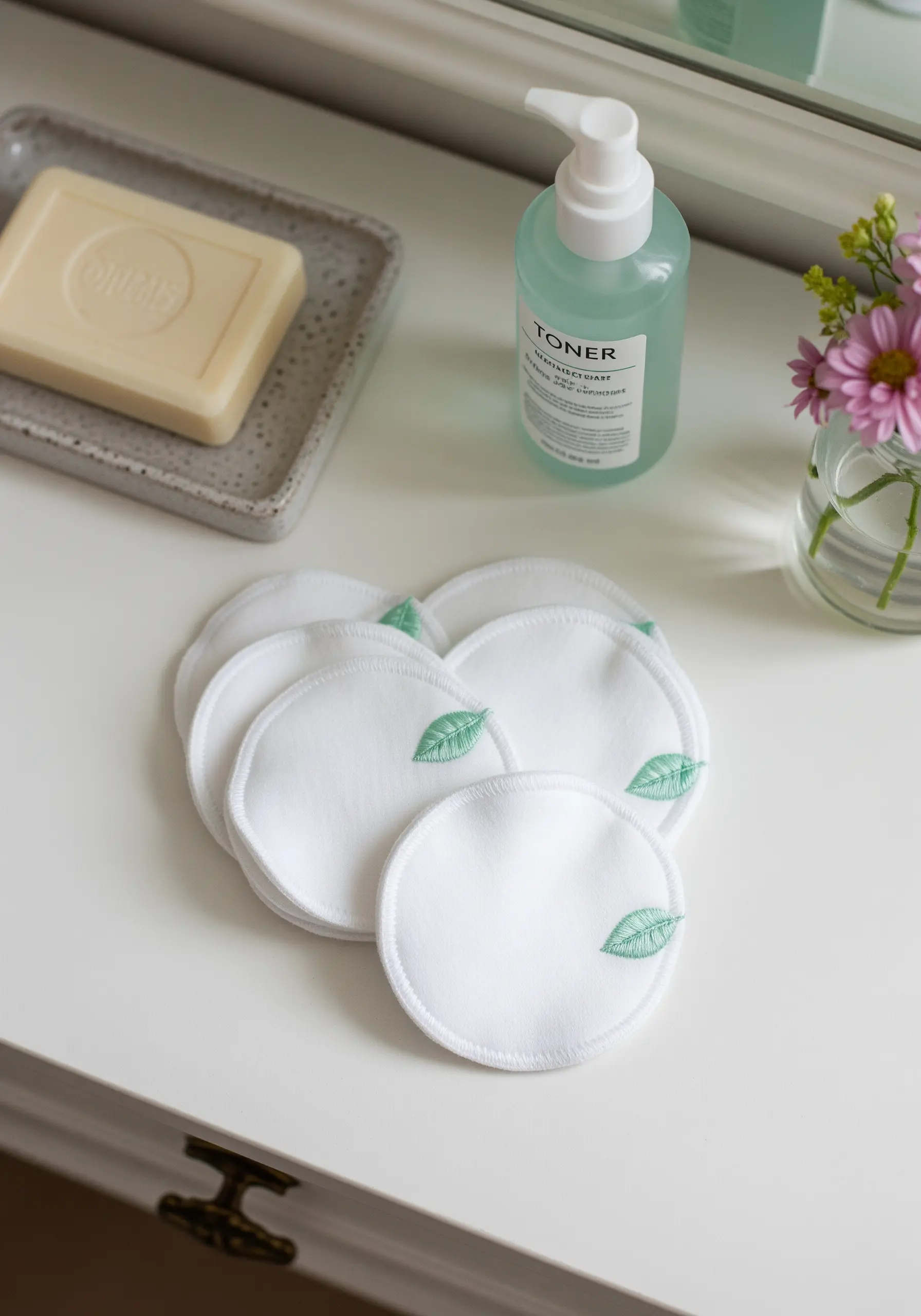
When adding embroidery to functional items like reusable face pads, the goal is to enhance, not interfere.
A tiny, solitary leaf stitched with the fishbone technique adds a touch of natural beauty without creating unwanted texture.
Use only one or two strands of floss to keep the embroidery flat and soft against the skin. This small gesture transforms a simple, sustainable product into a personal, cherished item.
20. A Pop of Color on Kitchen Essentials
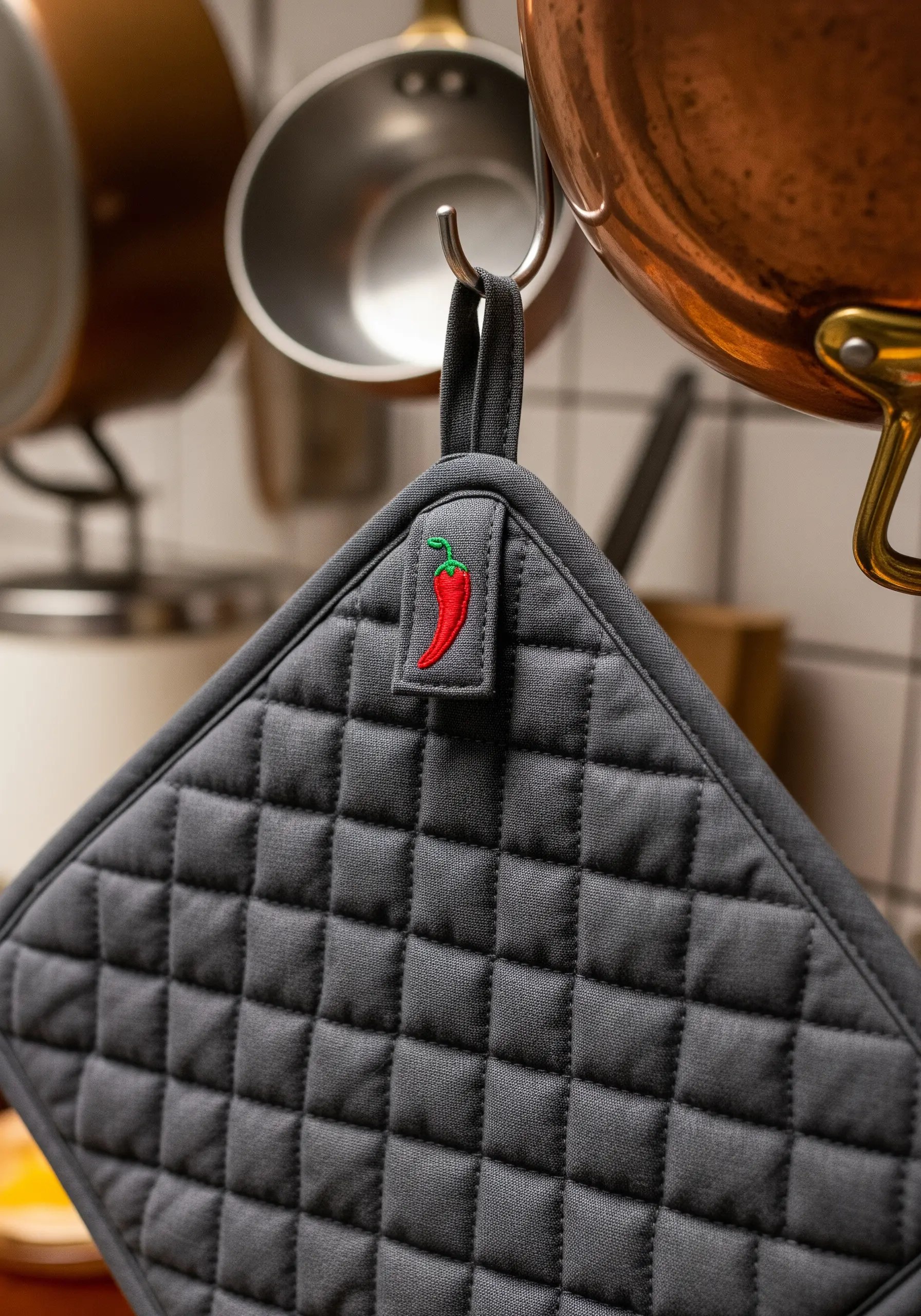
Even the most utilitarian items in your kitchen can be a canvas for a bit of creative expression.
On a thick, quilted pot holder, a padded satin stitch is the perfect choice for a small motif like this chili pepper.
The extra layer of foundation stitches underneath makes the design pop, giving it a playful, three-dimensional quality that stands out against the textured background.
It’s a tiny detail that brings a spark of joy to an everyday task.
21. Geometric Sashiko for Everyday Objects
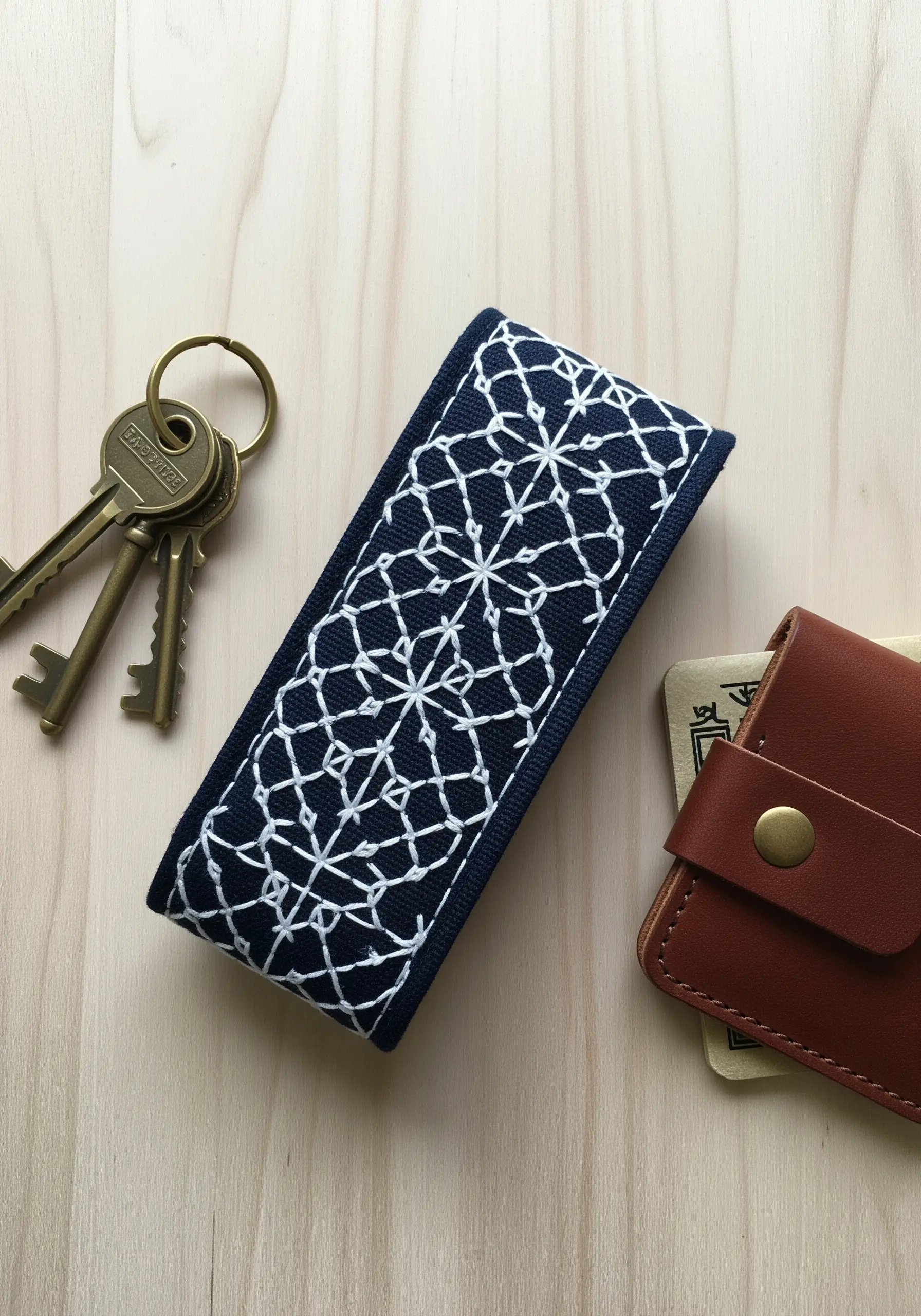
Sashiko, the traditional Japanese form of decorative reinforcement stitching, is perfect for adding graphic patterns to small accessories.
The technique uses a simple running stitch, but its power comes from the precision of the grid and the uniformity of the stitches.
Use a thick, non-divisible sashiko thread or all six strands of embroidery floss in a high-contrast color to make the geometric design bold and impactful.
This meditative process results in a beautiful and durable piece.
22. Unexpected Embellishments for Closet Details
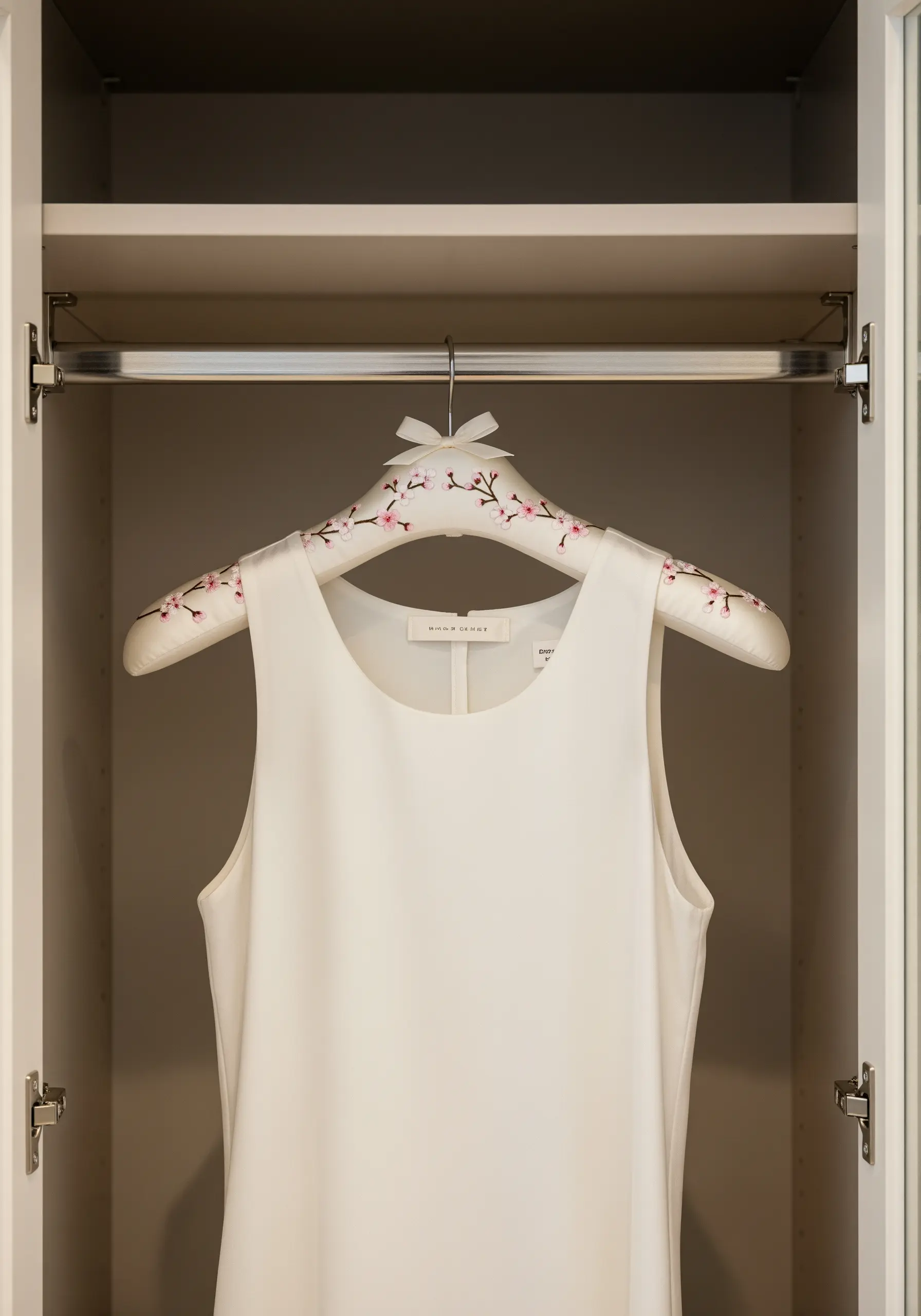
Extend your creative touch to the most overlooked corners of your home, like the inside of your closet.
A padded clothes hanger becomes a canvas for a delicate scattering of cherry blossoms. Use detached chain stitches for the petals and simple straight stitches for the branches.
By avoiding a perfectly symmetrical pattern, you create a more natural, organic feel, as if the branches are gently growing across the hanger. This is a beautiful way to add a hidden, aesthetic embroidery touch.
23. Heirloom-Quality Monograms for Bedding
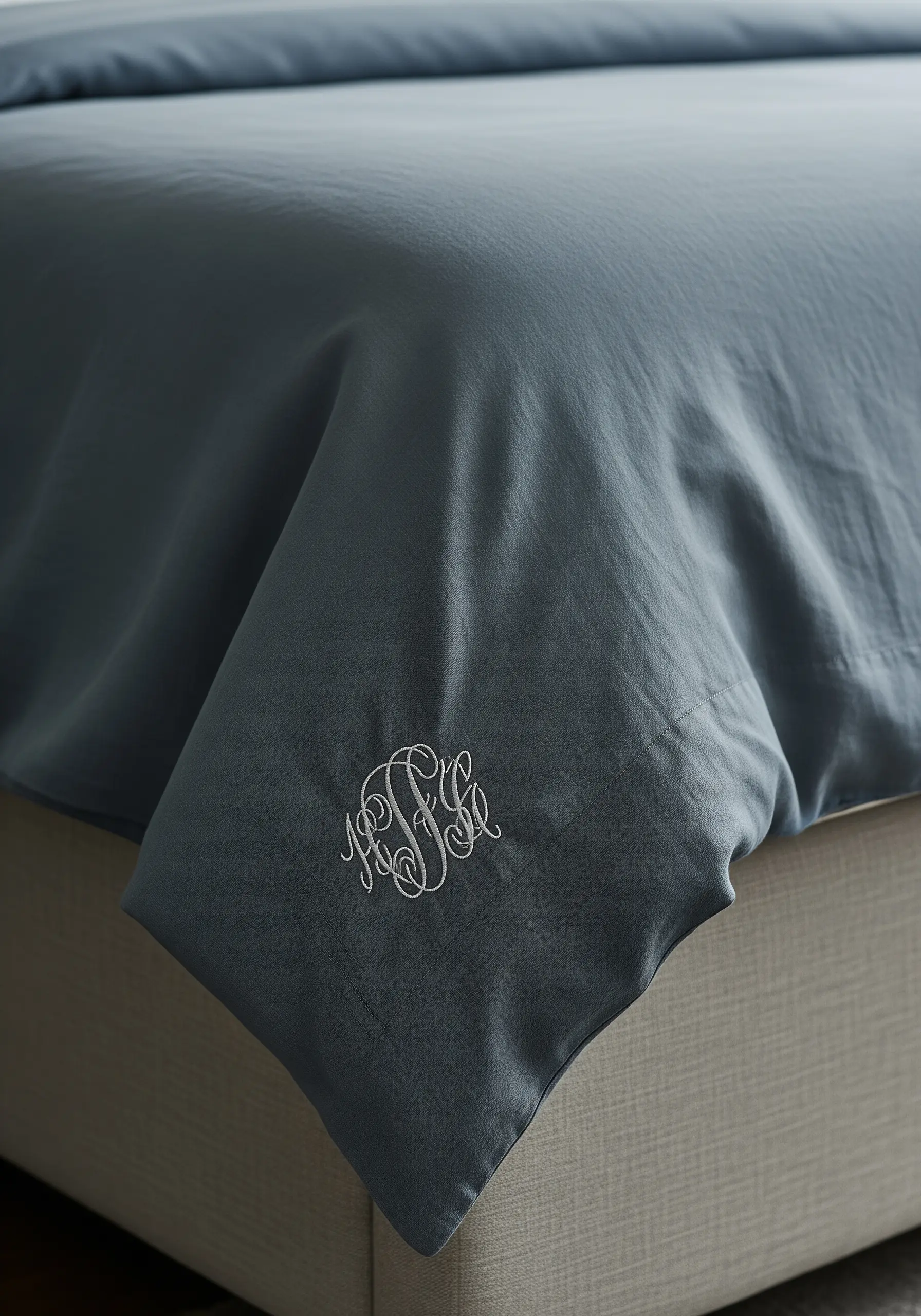
For an intricate, multi-letter monogram that feels like a family heirloom, technique is paramount.
Start by outlining the entire shape with a fine split stitch. This creates a raised, controllable edge for your fill stitches.
Then, fill each section with satin stitches, carefully following the curves of the letters to create a sense of movement and dimension.
Using a tone-on-tone color palette—like soft white on a deep blue—results in a look of quiet, sophisticated luxury.
24. Appliqué Techniques on Chunky Knits
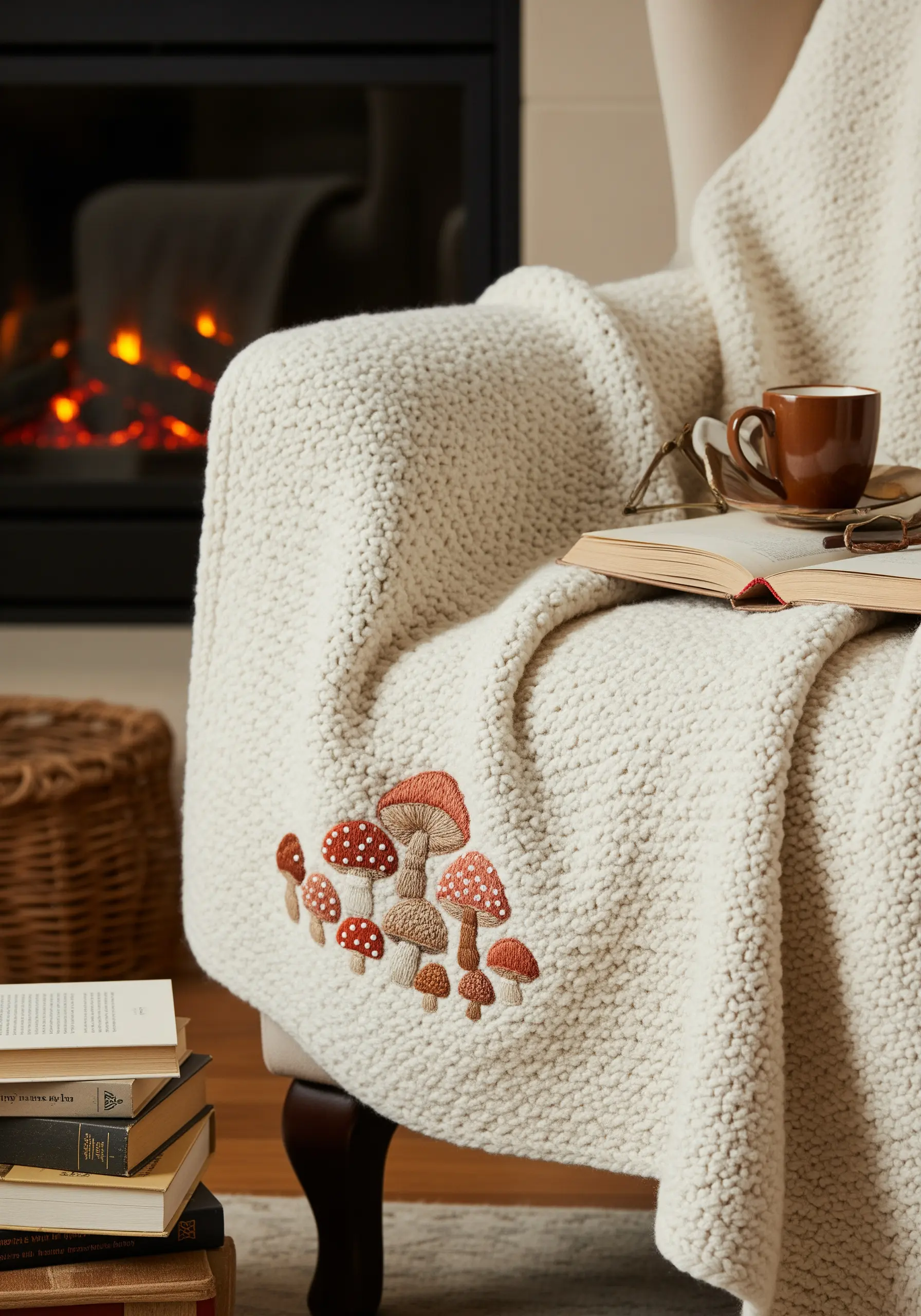
Directly embroidering on a loose, stretchy knit can lead to puckering and distortion.
The solution is to create your detailed design on a separate, stable piece of fabric like felt or linen first.
Once your mushroom cluster is complete, carefully cut it out, leaving a tiny margin around the edge. Then, appliqué this patch onto the blanket using a neat, decorative blanket stitch.
This method preserves the integrity of both your embroidery and the embroidered throw.
25. Upholstery Embellishment as a Focal Point
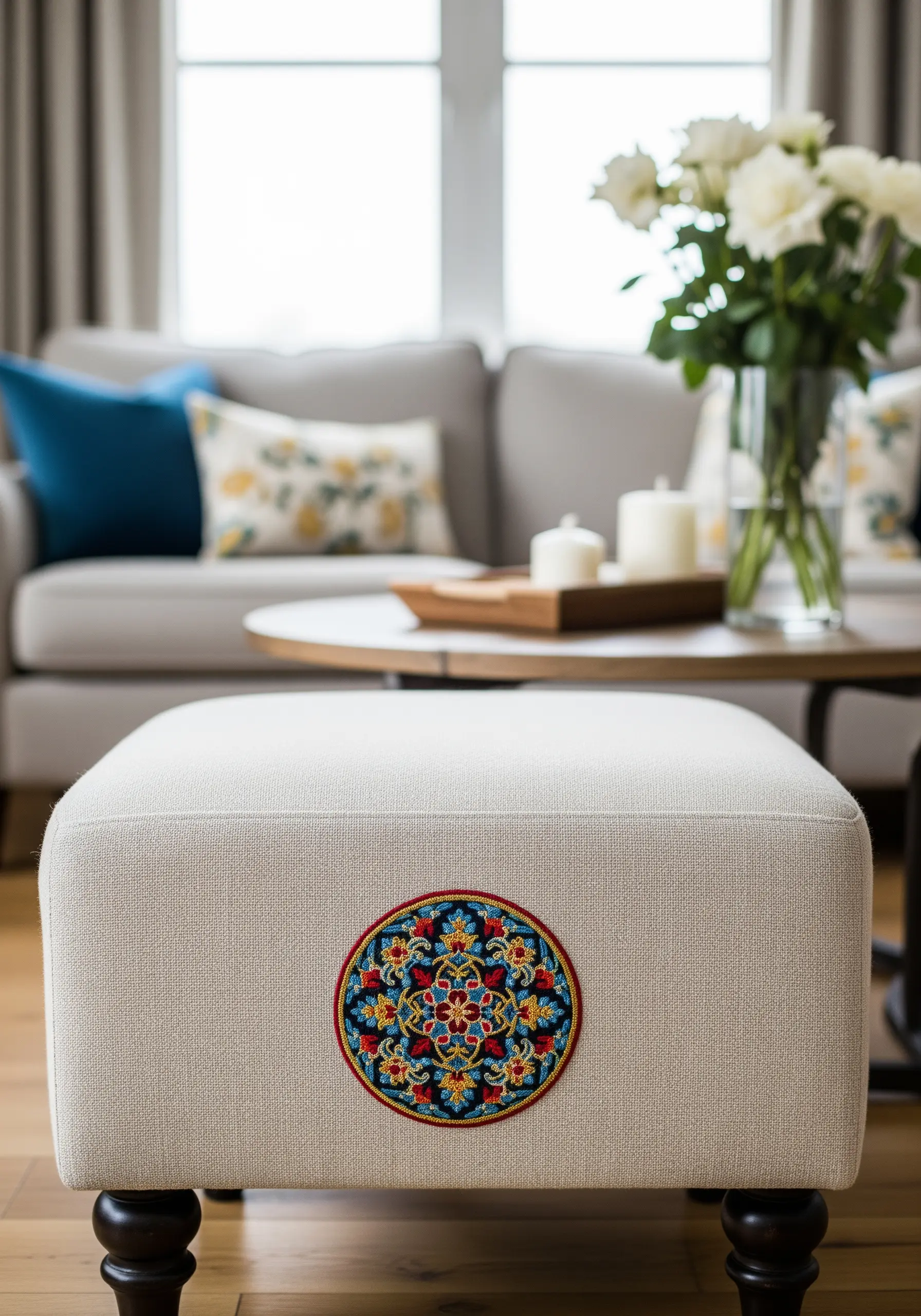
You can add a custom, high-end touch to simple furniture without reupholstering it completely.
Stitch a complex, vibrant medallion on a piece of heavy-duty fabric like canvas or denim. Treat this finished embroidery as a decorative patch.
Adhere it firmly to the ottoman with permanent fabric glue, then stitch around the perimeter with a strong backstitch or a decorative couched cord to blend the edges seamlessly. This creates a stunning, integrated focal point.
26. Vibrant Thread Wrapping for Woven Baskets
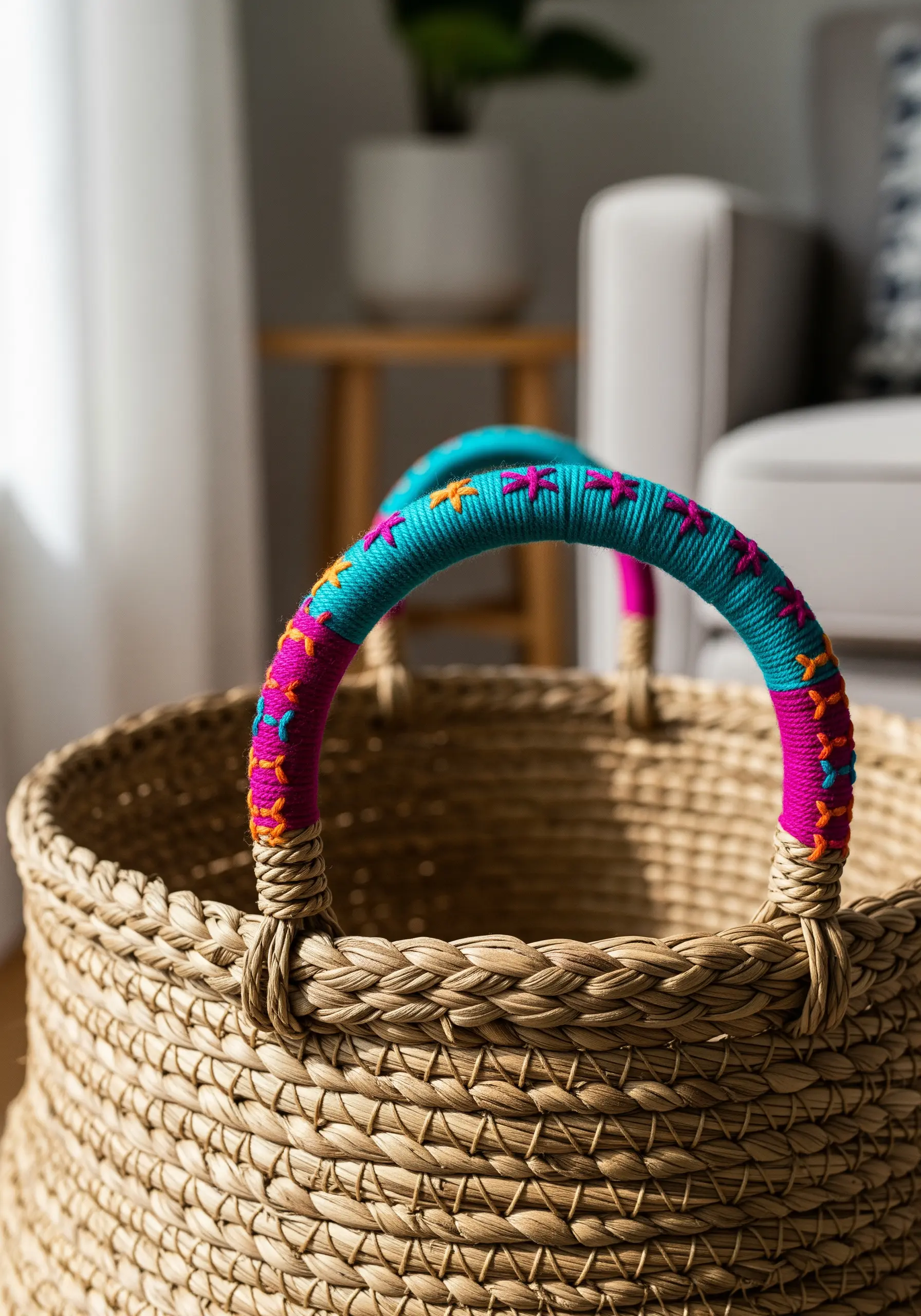
This technique adds a pop of color and personality to a woven basket without a single stitch into the basket itself.
Tightly wrap sections of the handles with different colors of embroidery floss or yarn, securing the beginning and end of each thread with a discreet knot or a dot of glue.
For extra detail, use a contrasting thread to add simple cross-stitches or star stitches over the wrapped sections. It’s a fast, easy, and non-destructive way to customize natural fiber baskets.
27. Hoop Art as Reusable Gift Embellishment
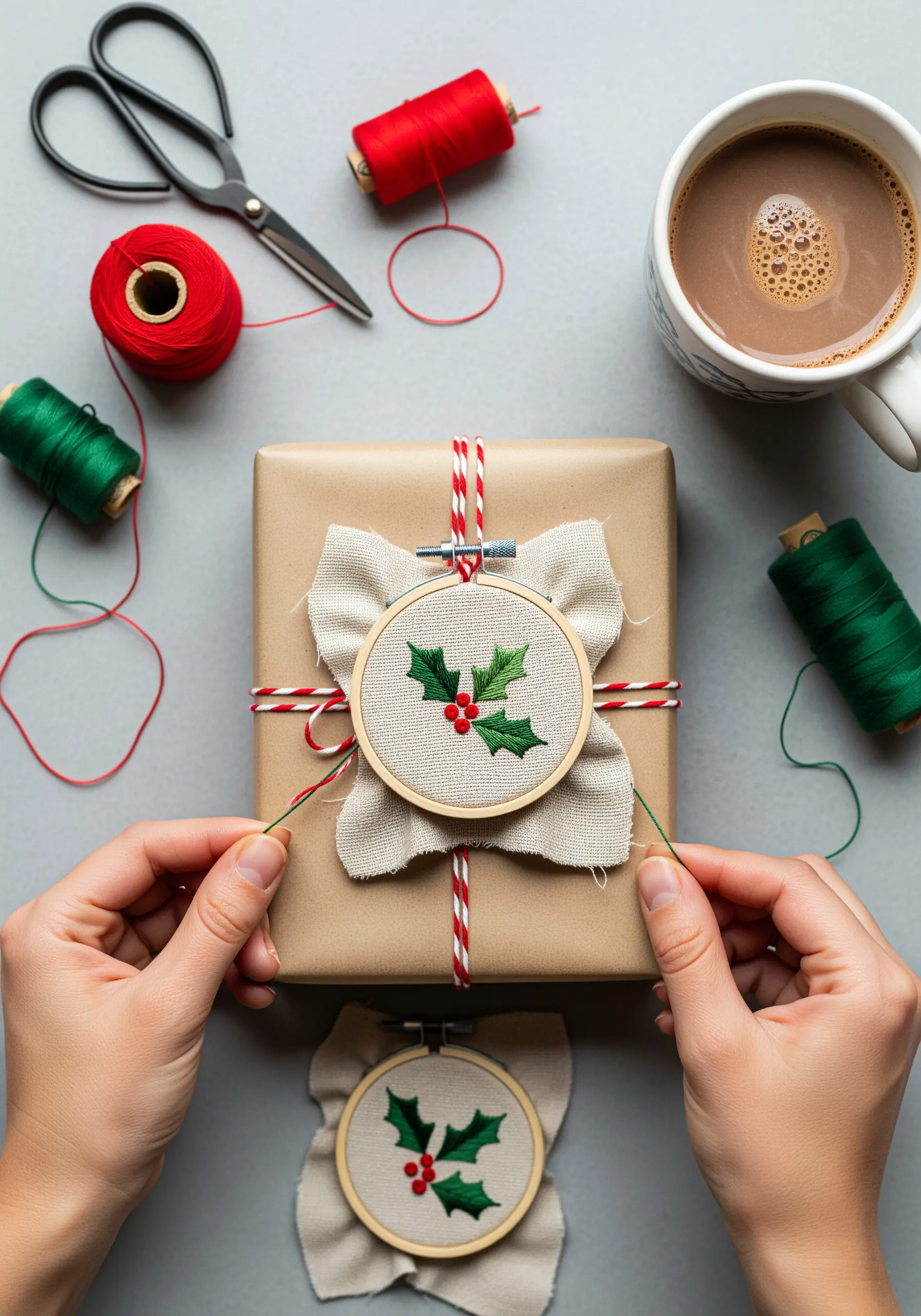
Elevate your gift-giving by replacing disposable bows with a small, thoughtful piece of handmade art.
Stitch a simple festive motif—like this classic holly—in a tiny 3-inch embroidery hoop.
Use satin stitch for the leaves and bold French knots for the berries. The finished hoop can be tied onto any package, serving as both a beautiful gift topper and a keepsake ornament for the recipient to enjoy for years to come.