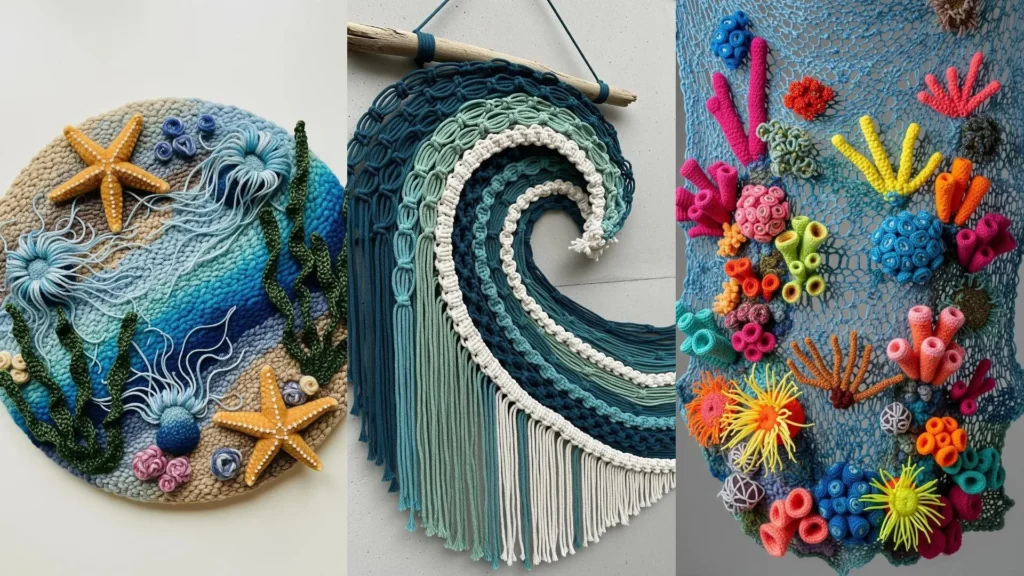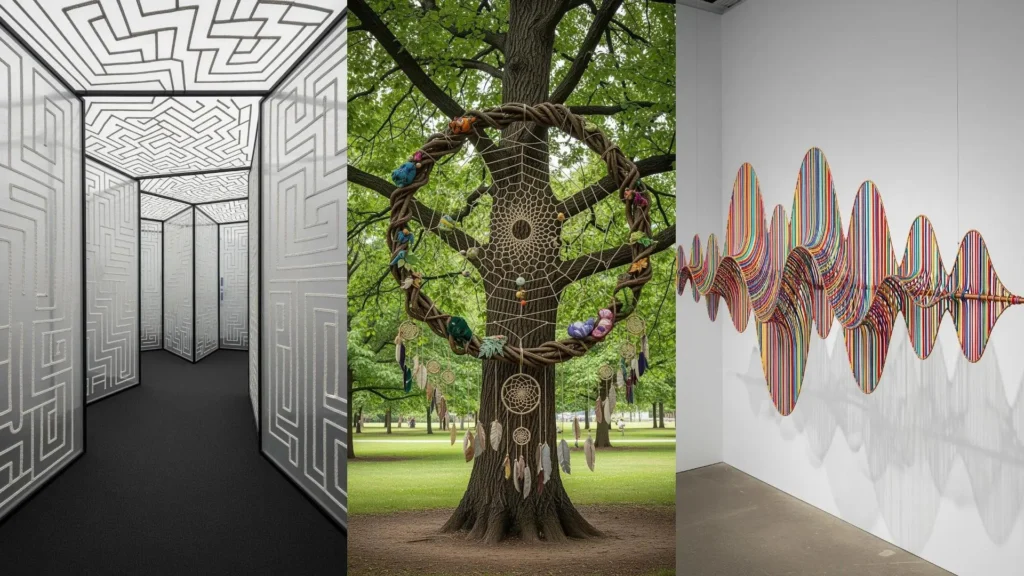
Have you ever felt that your embroidery, as lovely as it is, could be something more? That it could move beyond the hoop and interact with the world in a bolder, more structural way? It’s a common feeling—the desire to push your threads from two dimensions into three, to give them weight, form, and presence.
The good news is, you don’t need to completely reinvent your craft. The transition from stitching on fabric to creating fiber sculpture often begins with a single, simple shift in perspective. It’s about seeing a wire frame, a piece of driftwood, or even a crack in a plate not as a limitation, but as a canvas.
Here, we’ll explore how core embroidery techniques—wrapping, knotting, couching, and layering—can be applied to build form and texture in unexpected ways. You’ll learn to think like a sculptor, using thread not just to decorate a surface, but to become the surface itself.
1. Sculptural Thread Wrapping for 3D Forms
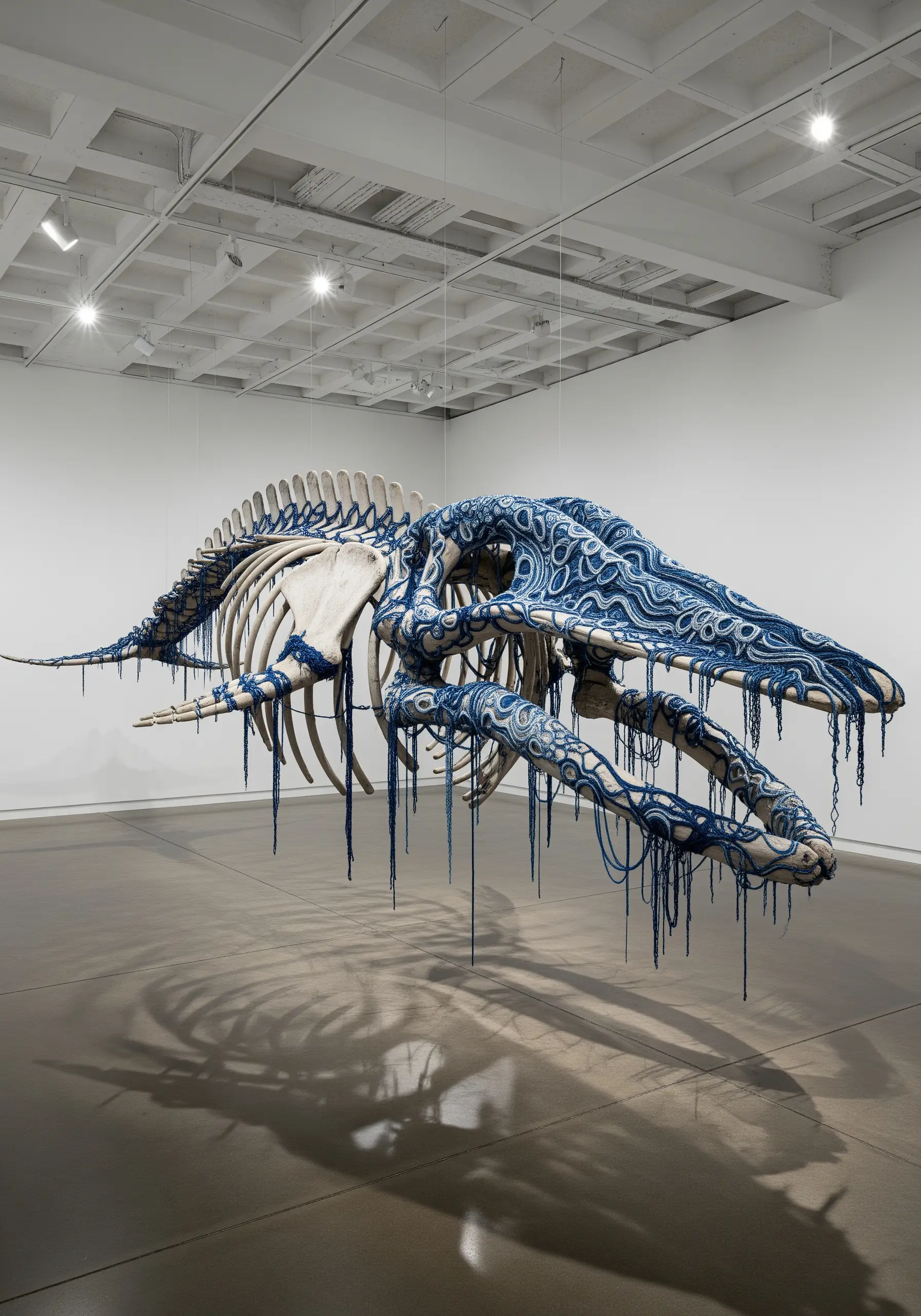
Transform a simple wire armature or found object, like a piece of driftwood, into a sculptural piece by wrapping it tightly with yarn or thick floss.
Create visual interest by varying the color and texture of your threads, laying them in swirling patterns that follow the object’s contours.
To secure the threads without glue, use a couching stitch with a finer, matching thread at key intersections—this keeps the finish clean and professional.
This technique moves your embroidery off the hoop and into three-dimensional space, focusing purely on line, color, and form.
2. Ethereal Effects with Glow-in-the-Dark Thread
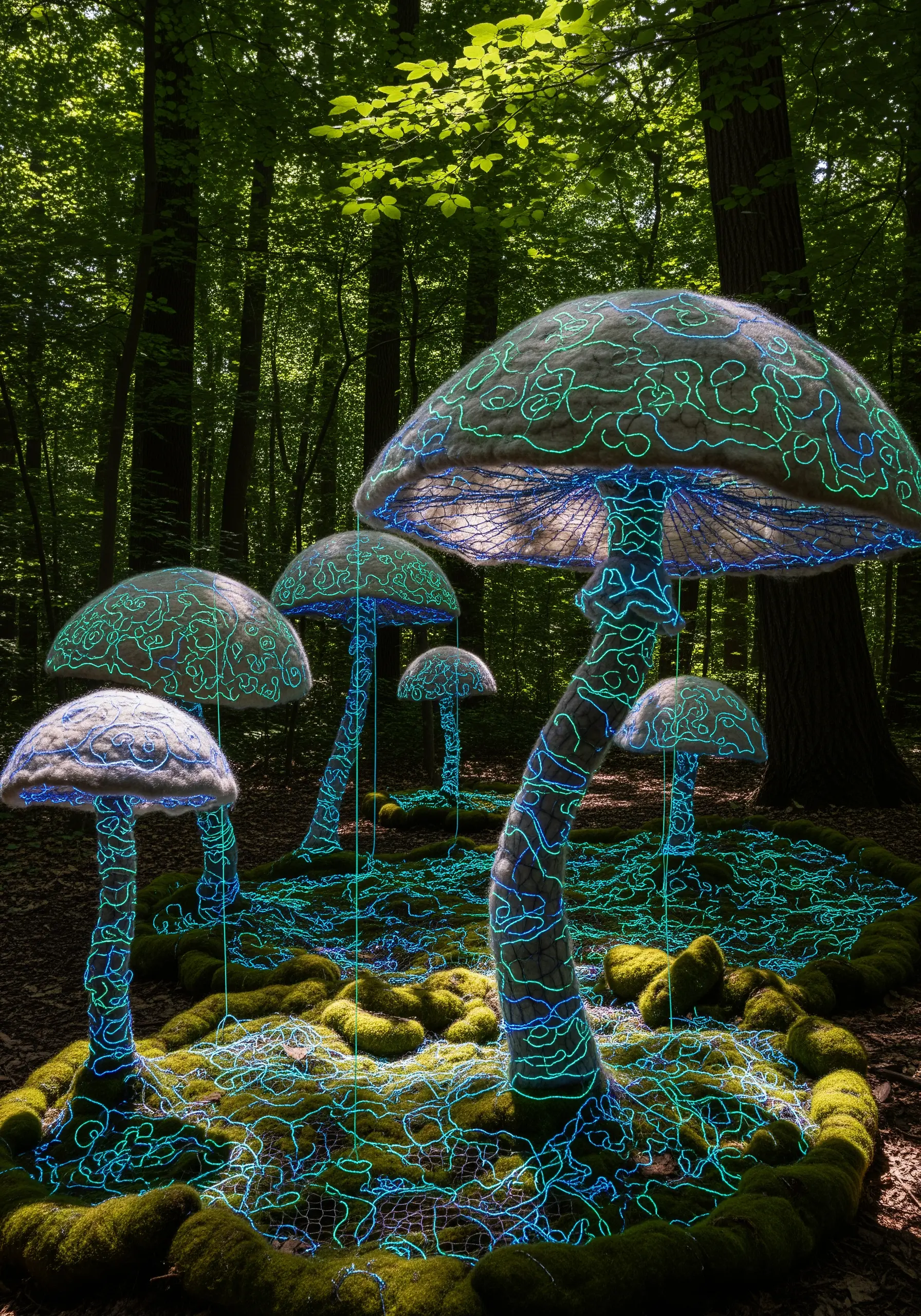
Create a design that comes alive in the dark by substituting standard floss with glow-in-the-dark or UV-reactive thread.
Stitch your motif on a dark fabric, like black or navy linen, to maximize the luminous contrast when the lights are off.
For the brightest glow, use dense fill stitches like satin stitch or long-and-short stitch, as this concentrates the thread’s phosphorescent properties.
This is a simple material swap that adds an unexpected, magical dimension to otherwise traditional forest floor embroidery projects.
3. Dynamic Braids That Break the Frame

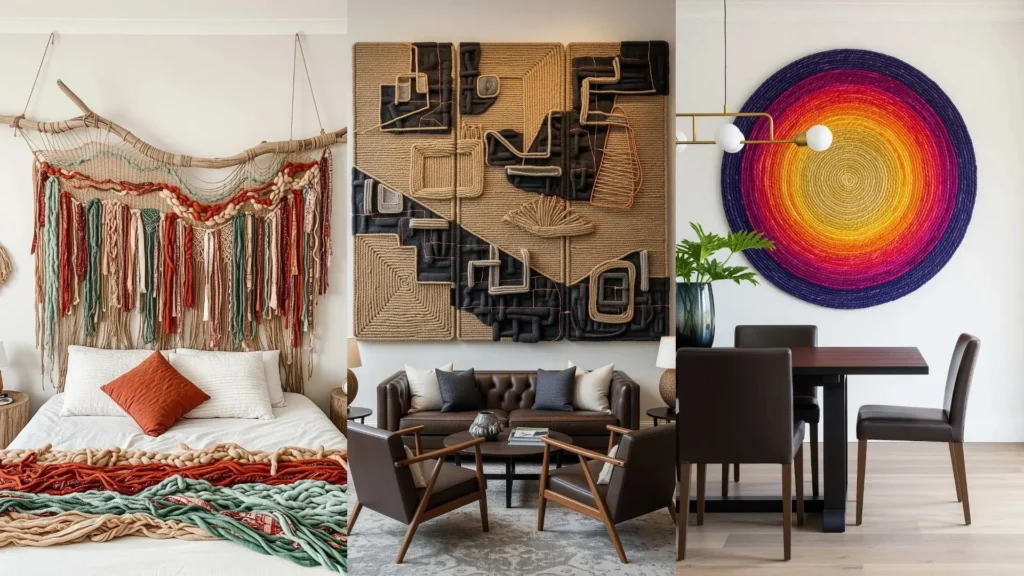
Introduce sculptural energy to your work by incorporating chunky, braided yarn that extends beyond the confines of the hoop or frame.
Create thick, pliable ropes by braiding multiple strands of chunky wool or cotton yarn together.
Anchor these braids to your fabric base with strong couching stitches, allowing the ends to drape, loop, or spill out into the surrounding space.
This technique physically connects your embroidery to its environment, creating an installation-like feel even on a small scale.
4. Building Hyper-Textural Underwater Worlds
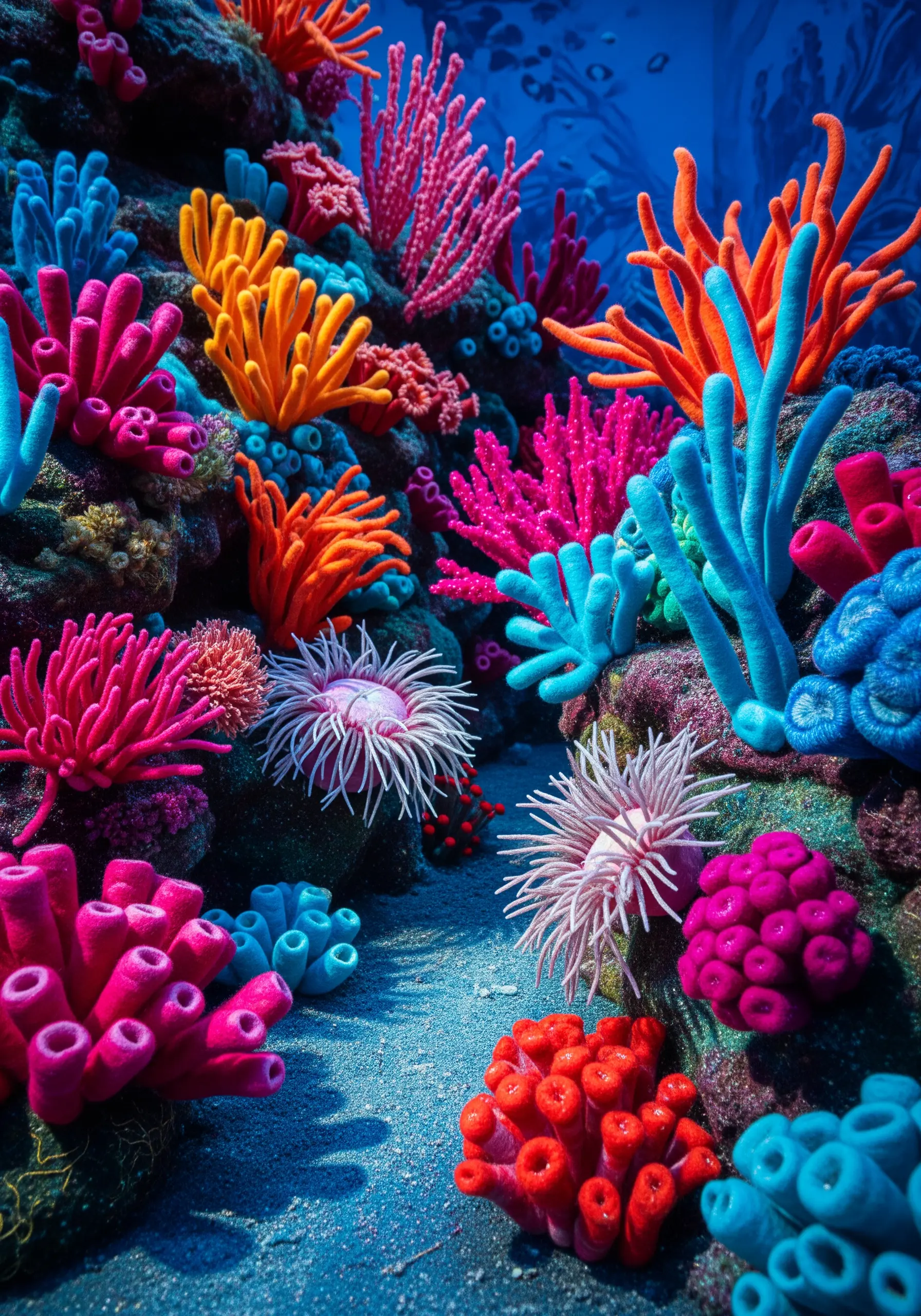
Recreate the dense, layered look of a coral reef by combining multiple high-texture stitches in a concentrated area.
Use bullion knots for tubular coral shapes, French knots for polyps, and cast-on stitches for anemone-like tentacles.
Work with a variety of thread types—velvety chenille, fuzzy wool, and smooth perle cotton—to create a rich, tactile ecosystem.
The key is density; pack your stitches tightly together to build up a surface that invites touch and close inspection.
5. Crafting Volume with Monochromatic Knots
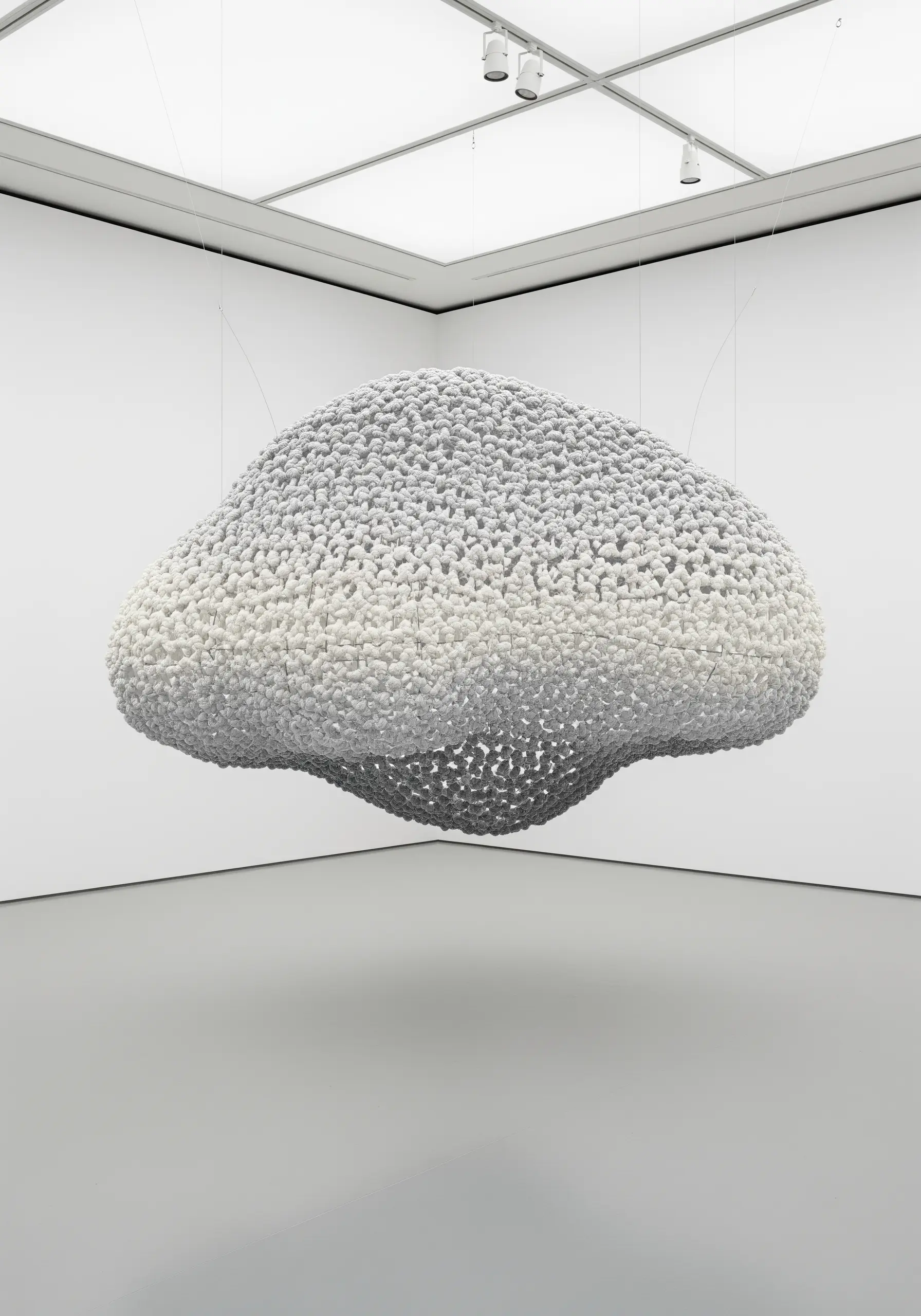
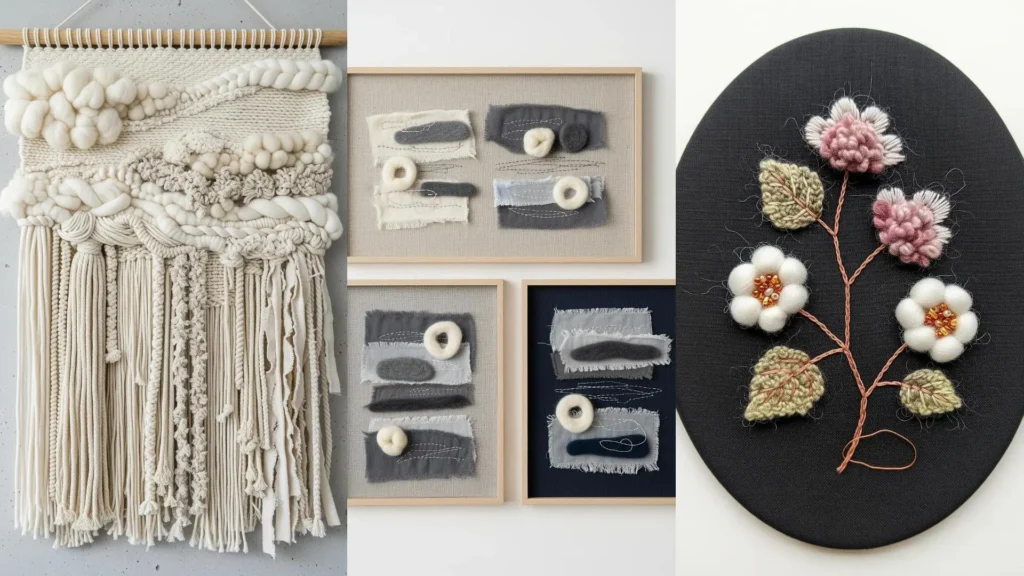
Build impressive sculptural forms using a single, repetitive stitch, like the French knot or Turkey work loop.
Instead of focusing on color, prioritize texture and form. Create a dense, unified surface by packing thousands of knots together.
To create soft gradients and shadows, subtly shift your thread color through different shades of the same hue, like moving from pale grey to white.
This minimalist approach proves that you can achieve powerful sculptural effects through sheer density and subtle tonal shifts.
6. Integrating Fiber Art into Found Environments
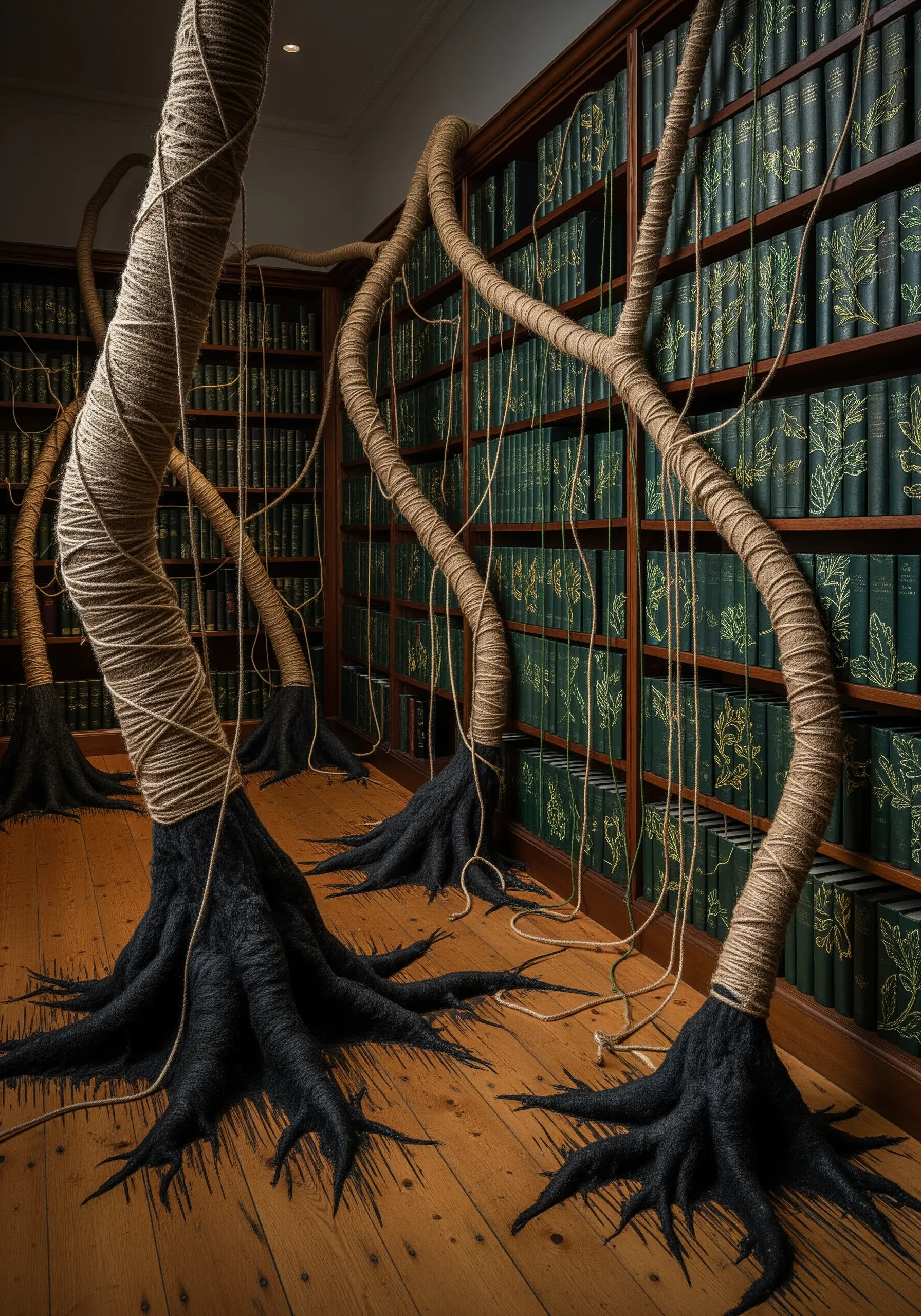
Merge your fiber art with existing objects to create a compelling narrative, transforming a space rather than just decorating it.
Wrap natural or architectural elements—like a branch, a chair leg, or even a stack of old books—with twine, jute, or thick wool.
Allow threads to dangle and trail, connecting the wrapped object to the floor or surrounding furniture, suggesting growth and history.
This method turns your stitching practice into a form of site-specific installation, inviting viewers to see their environment differently.
7. Architectural String Art on 3D Frames
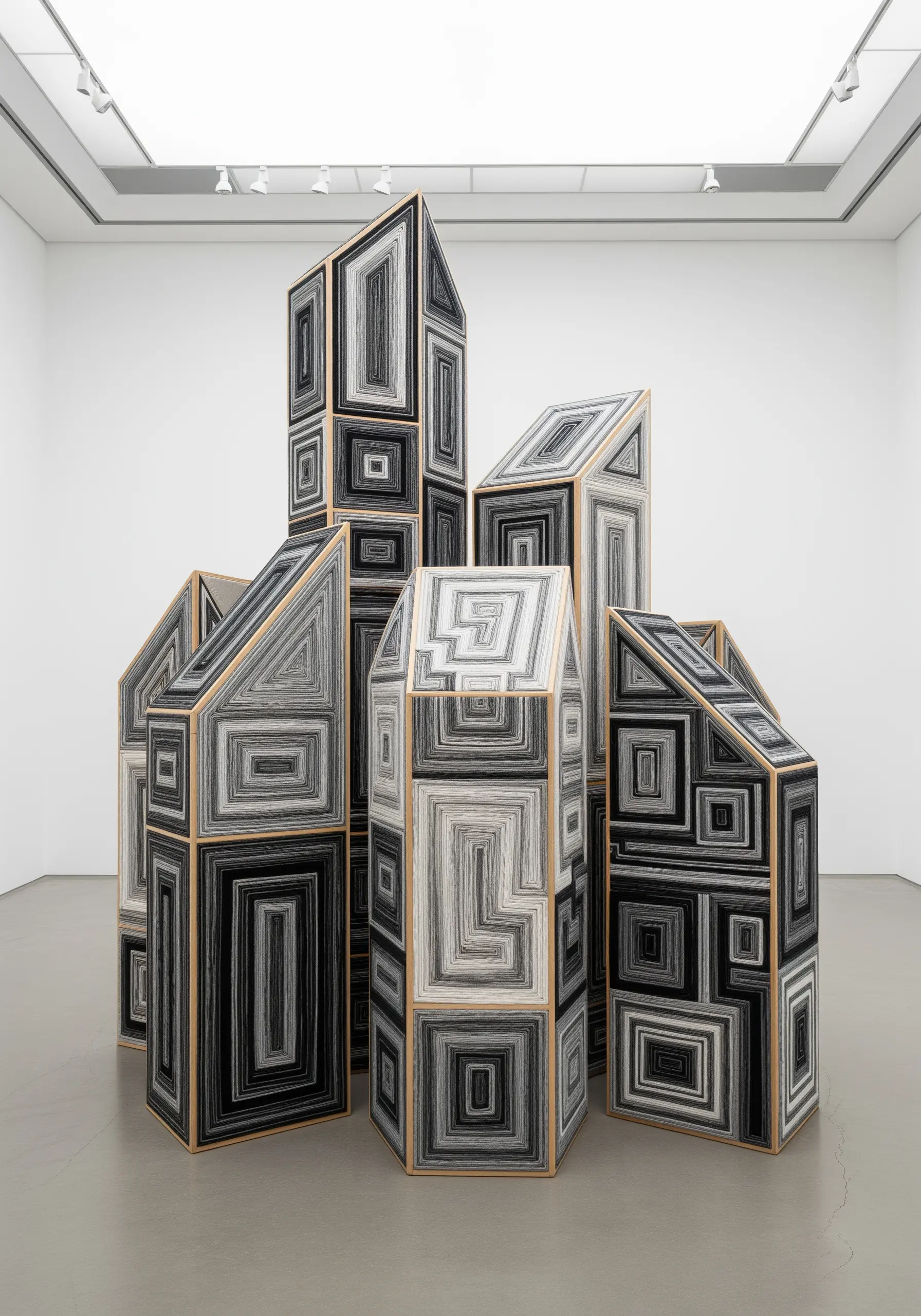
Move beyond flat surfaces by creating geometric string art on small, three-dimensional wooden frames.
Build simple house-shaped or abstract frames from balsa wood or even sturdy cardstock.
Wrap thread methodically around the frames, creating crisp lines and hypnotic geometric patterns through layering and tension.
Focus on a monochrome or limited color palette to emphasize the clean lines and shadows created by the overlapping threads.
8. Creating Suspended Sculptures with Sheer Fabric

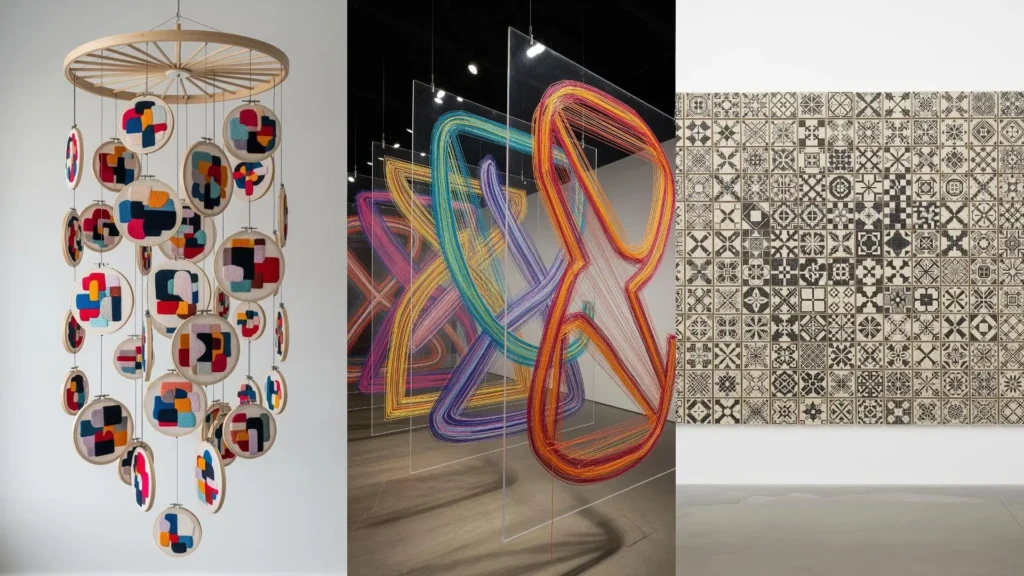
Construct ethereal, floating sculptures by using embroidery hoops as structural armatures.
Stretch a sheer fabric like organza or tulle across the hoop and stitch a delicate pattern on it to form the main body of your sculpture.
For tentacles or trailing elements, attach long strips of torn fabric, ribbon, and variegated yarns, letting them hang freely.
Grouping these elements at different heights creates a stunning installation that plays with light, shadow, and gentle movement.
9. Mending Fractured Surfaces with Bold Stitching
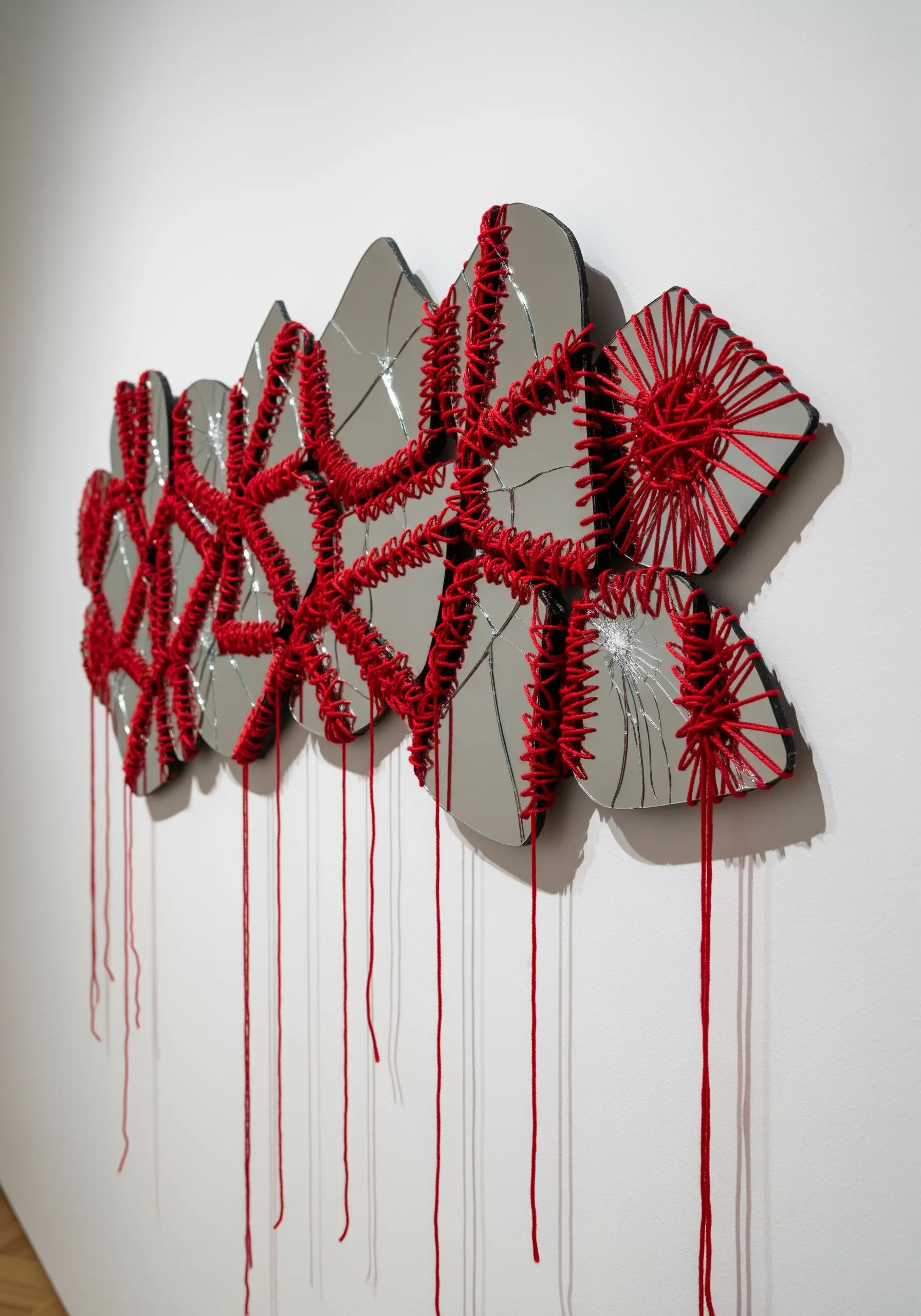
Explore the Japanese art of Kintsugi (golden repair) by using thread to mend broken objects.
Carefully break an inexpensive ceramic or mirrored object and arrange the pieces on a sturdy fabric backing.
Instead of glue, use bold, contrasting thread to stitch the fragments together with wide, visible couching or blanket stitches.
This technique transforms an act of destruction into a beautiful statement about repair, resilience, and highlighting imperfections.
10. Painting with Fiber to Transform a Surface
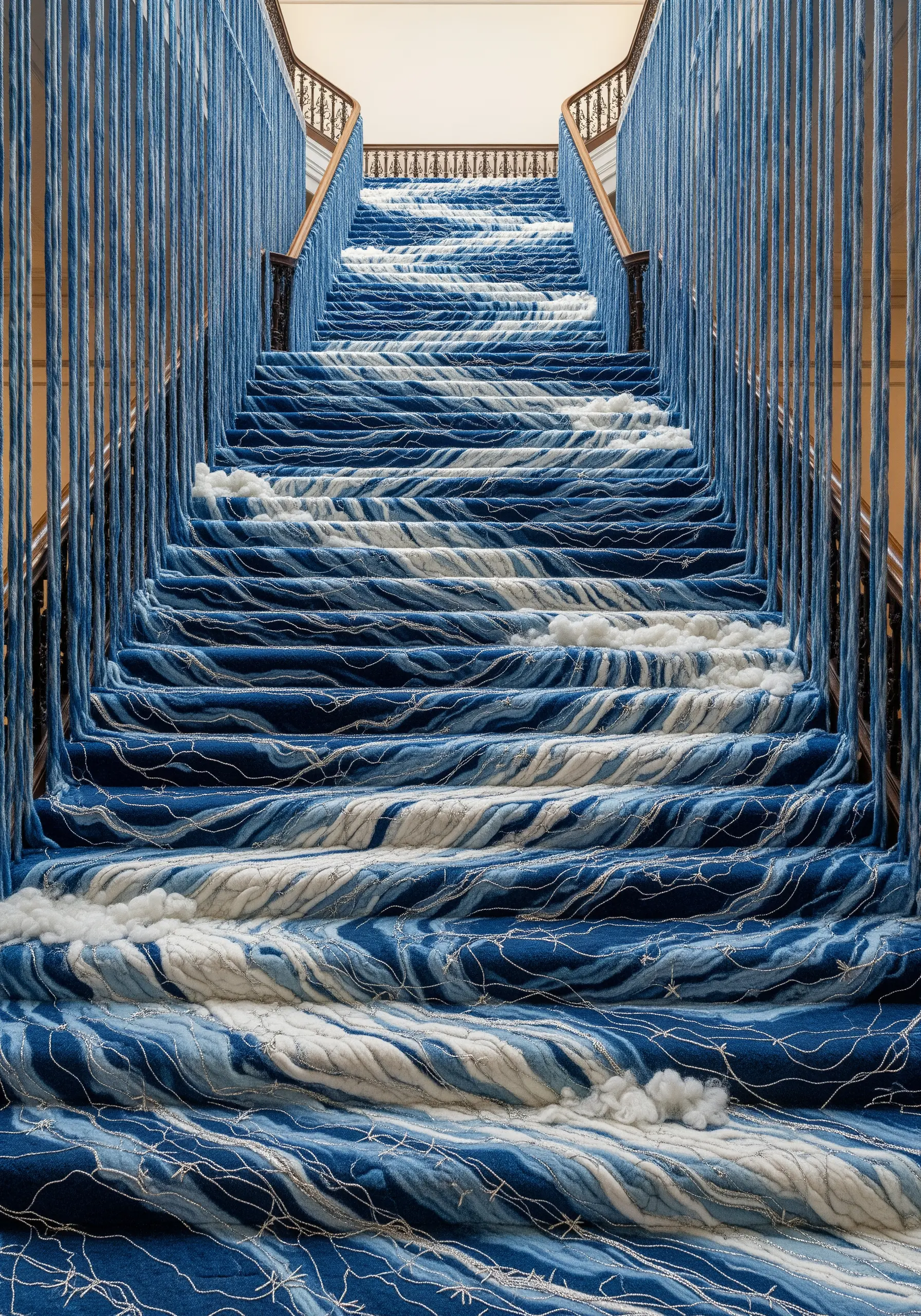
Use thread and raw fiber to completely resurface an architectural element, creating an immersive textile painting.
Lay down a base of fabric and build up layers of color using long, flowing stitches in variegated threads to mimic the movement of water.
Incorporate tufts of unspun wool roving or felt to add soft, cloud-like textures for highlights and foam.
This large-scale thinking encourages you to see any surface, big or small, as a potential canvas for a texture-rich embroidery landscape.
11. Sculpting with Negative Space and Thread
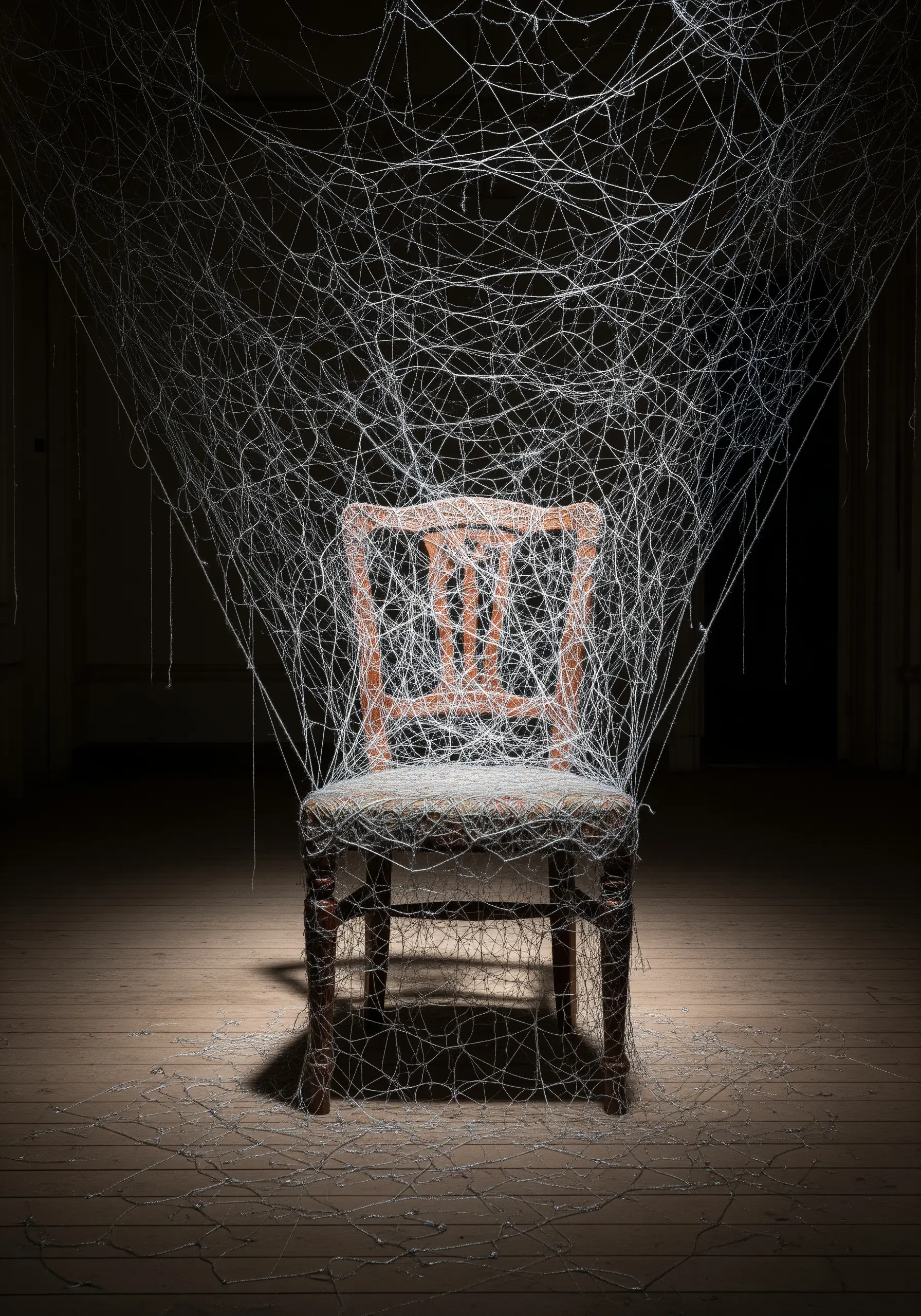
Create a sculpture that is more air than substance by stretching single strands of thread across a space.
Use a rigid object or a large frame as an anchor, wrapping and crisscrossing fine, strong thread to build a delicate, web-like structure.
The focus here is not on stitches but on the tension of the lines and the shapes they create in the empty space between them.
This minimalist approach is a powerful exercise in composition, proving that what you leave out is as important as what you put in.
12. Applying Graphic Patterns to Wire Forms

Use thread wrapping as a way to apply color and pattern to a sculptural wireframe, like painting with yarn.
Create a simple humanoid or animal figure from sturdy wire to serve as your three-dimensional canvas.
Wrap sections of the form tightly with different colored yarns, creating bold, geometric patterns and sharp color blocks.
This technique blends the graphic quality of illustration with the tactile nature of stunning mixed-fiber projects.
13. Recreating Crystalline Textures with Thread and Beads
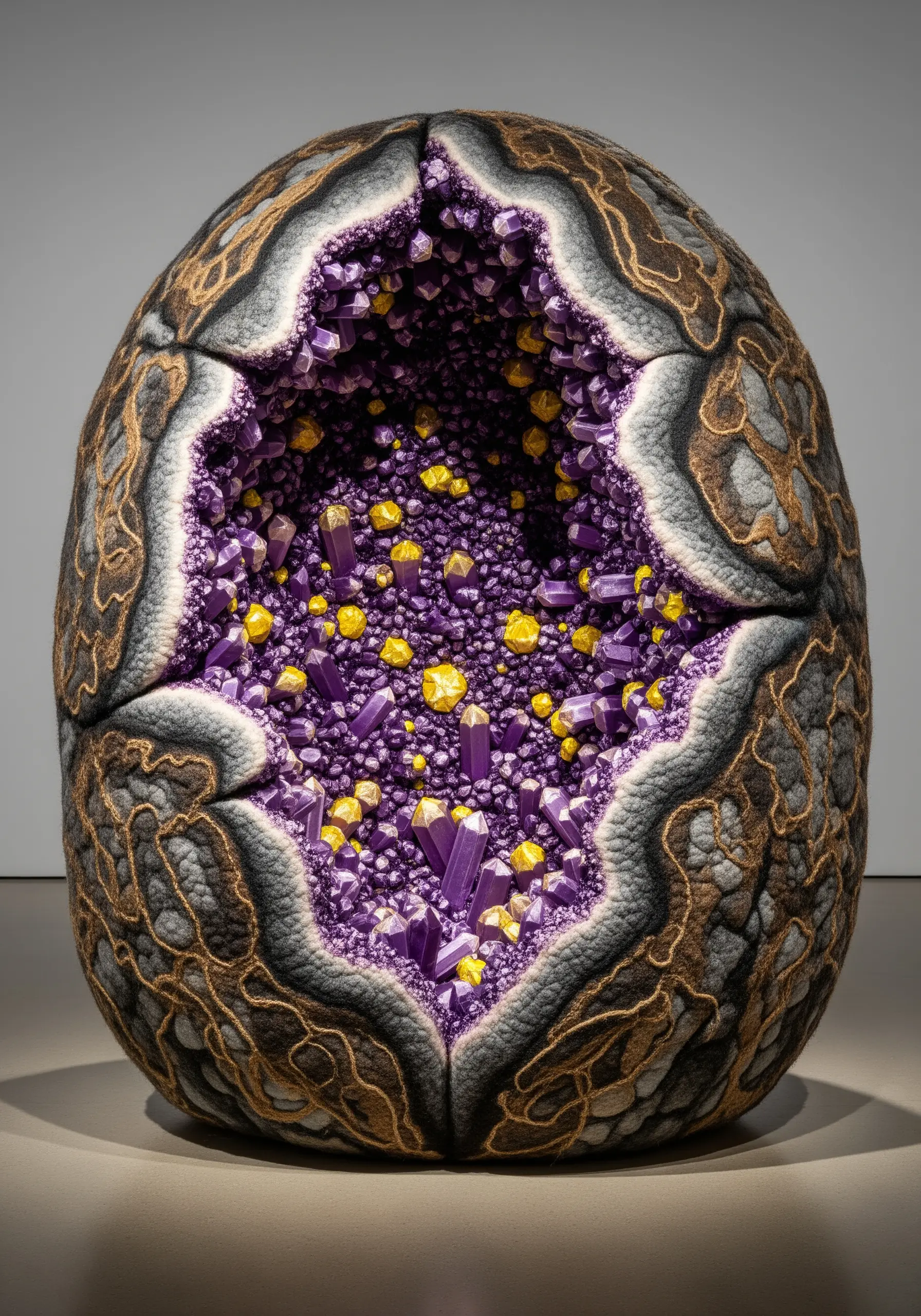
Mimic the complex textures of a geode by combining beading, knotting, and precise satin stitching.
Use small seed beads or crystal chips for the sparkling center, securing them with a strong thread.
Create the crystalline formations with densely packed French knots and short, sharp satin stitches in metallic or silk floss for a subtle sheen.
Build the outer layers with felt appliqué or long-and-short stitch in earthy tones to ground the shimmering interior.
14. Minimalist Stitching on Soft Sculptural Objects
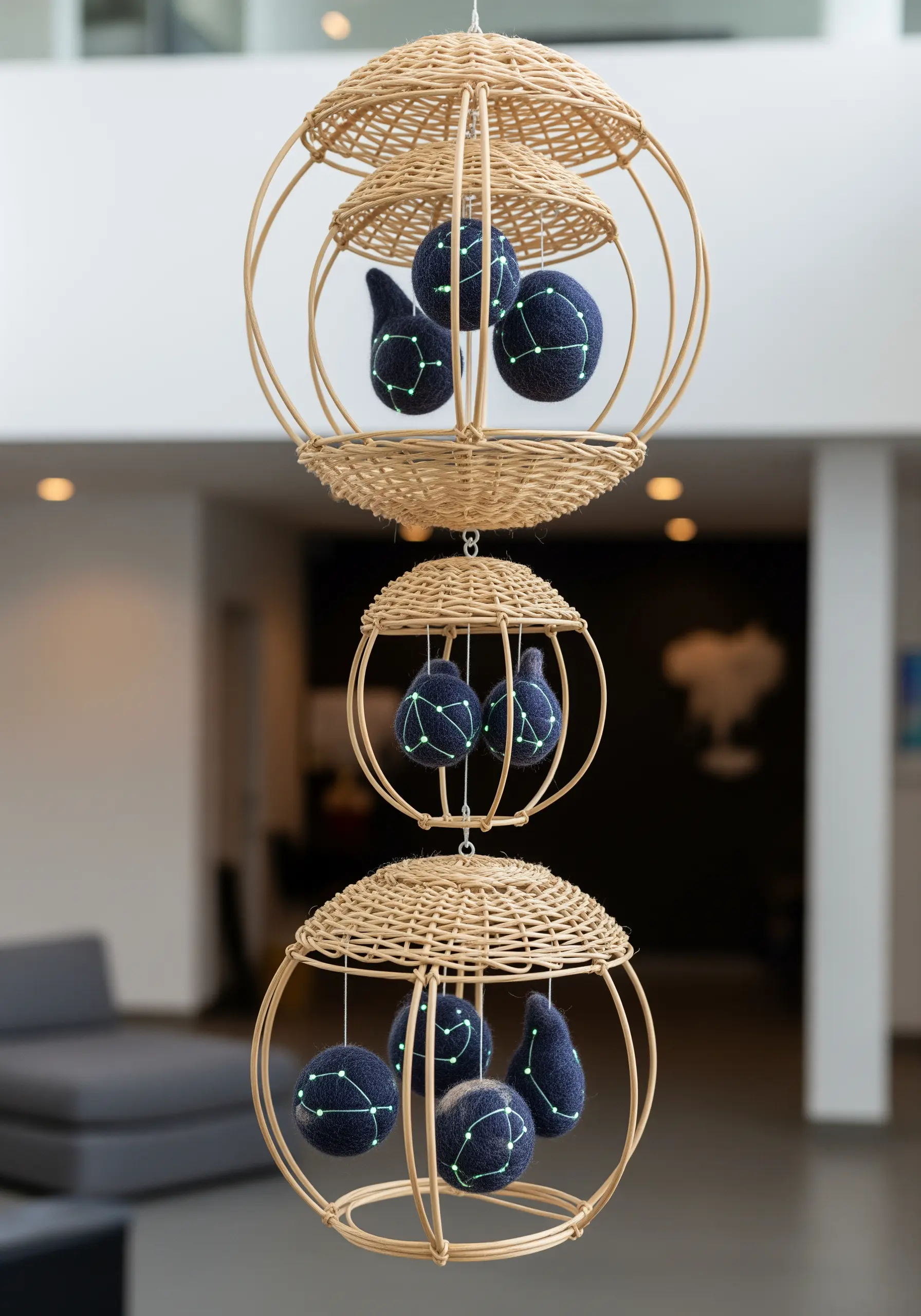
Elevate simple, soft forms by adding delicate, precise embroidery that acts as a focal point.
Create or source simple 3D shapes, like felted wool balls or small fabric spheres.
Use a single, contrasting thread color to stitch a clean, graphic pattern—like a constellation or a geometric symbol—directly onto the curved surface.
This pairing of soft, simple forms with sharp, minimal embroidery designs creates an object of quiet, modern elegance.
15. Juxtaposing Soft Stitches with Hard Surfaces
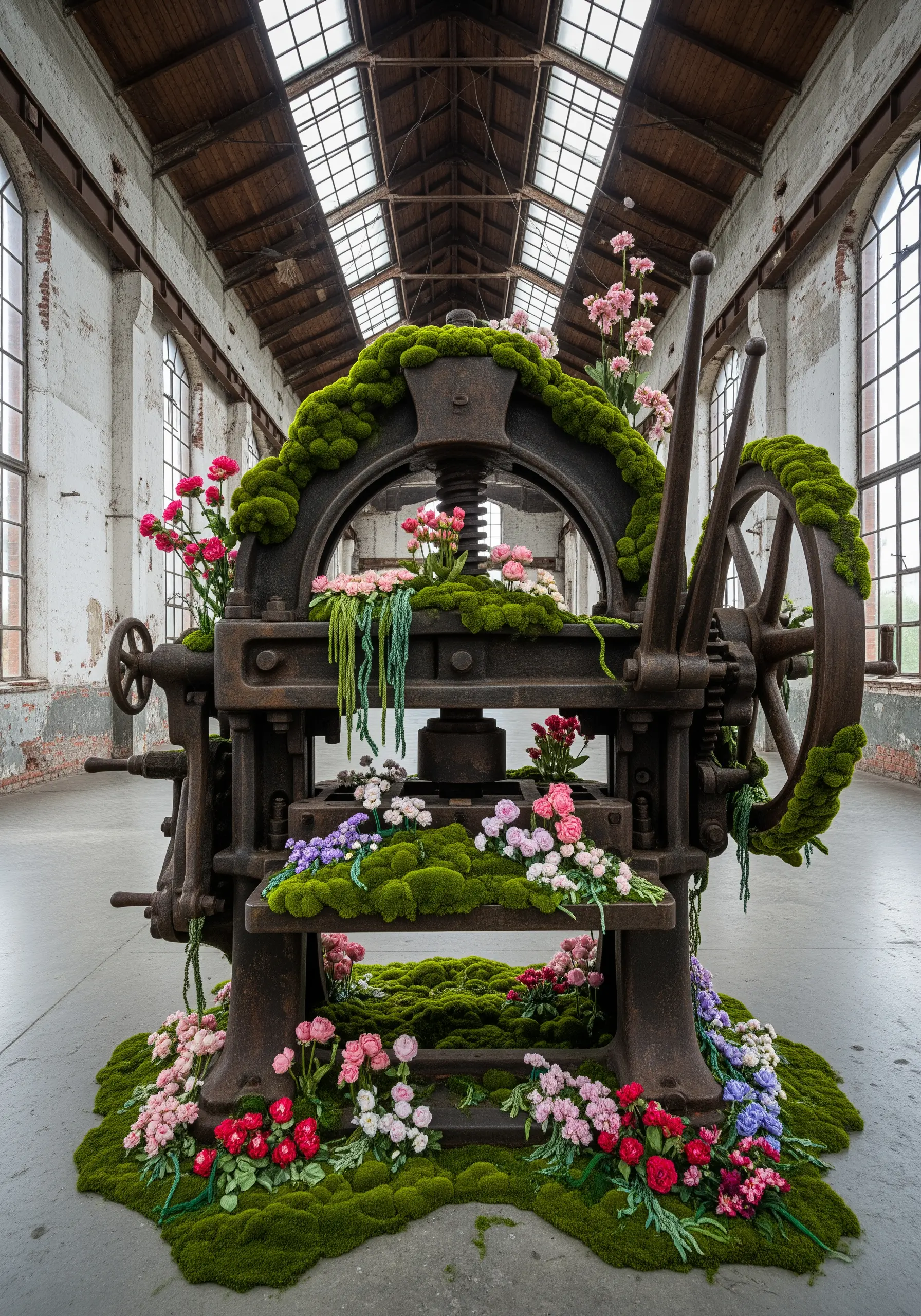
Create a surprising and compelling visual contrast by adding soft, organic fiber art to a hard, industrial object.
Use stumpwork or woven wheel stitches to create highly dimensional flowers and leaves that appear to grow from the object.
Combine these with textured moss effects, achieved with French knots or Turkey work in various shades of green.
This technique challenges expectations and creates a beautiful narrative about nature reclaiming man-made structures.
16. Exploring Optical Depth with Thread and Canvas
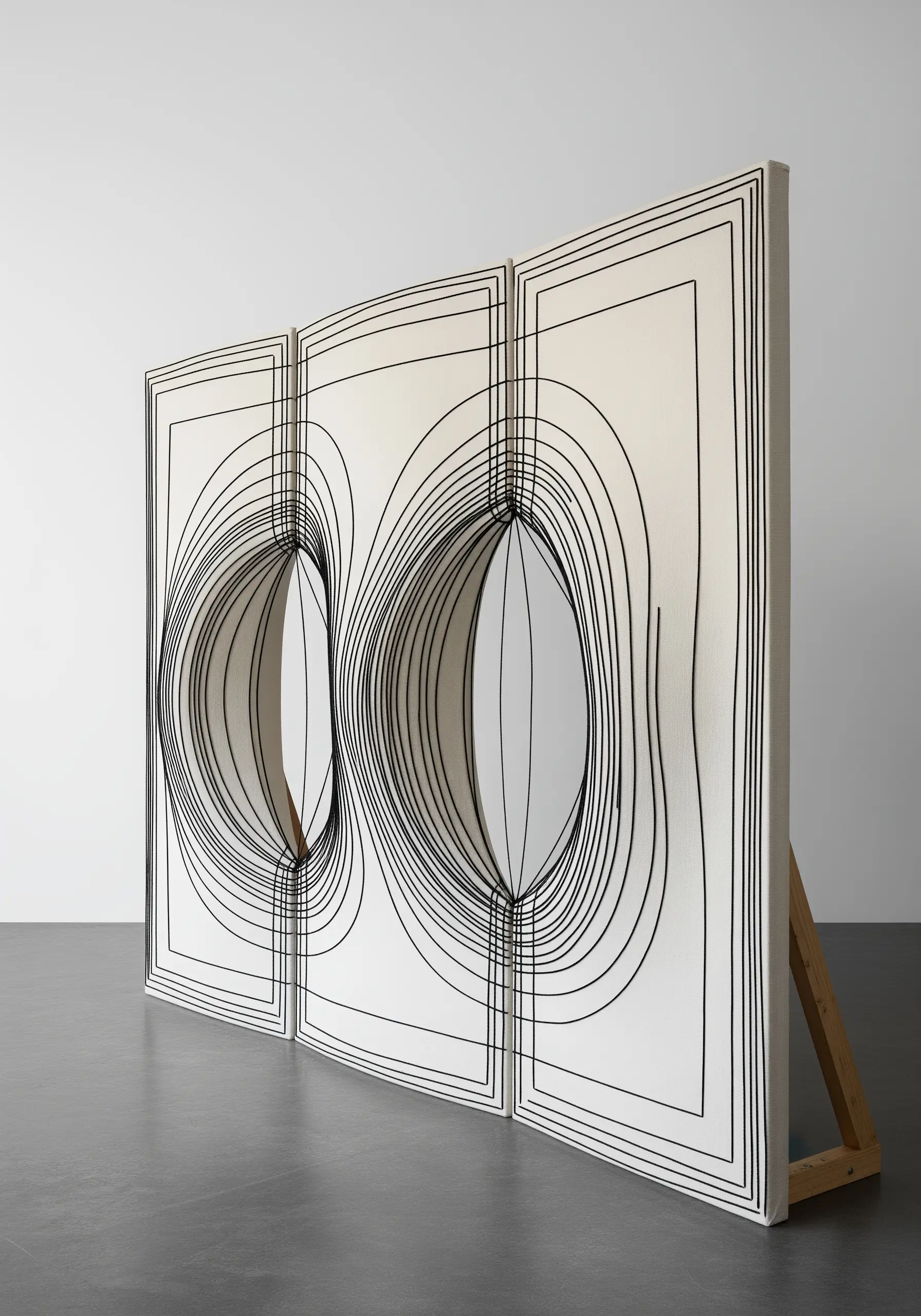
Use thread to create the illusion of three-dimensional space on a two-dimensional plane.
Stretch canvas over multiple panels, creating cut-outs that allow thread to pass from front to back.
Pull single strands of dark thread through these openings in smooth, parabolic curves, building up lines that suggest magnetic fields or gravitational pull.
The tension and precision of the lines create a powerful optical illusion, turning simple thread into a dynamic diagram of unseen forces.
17. Combining Solid Forms with Stitched Transparency
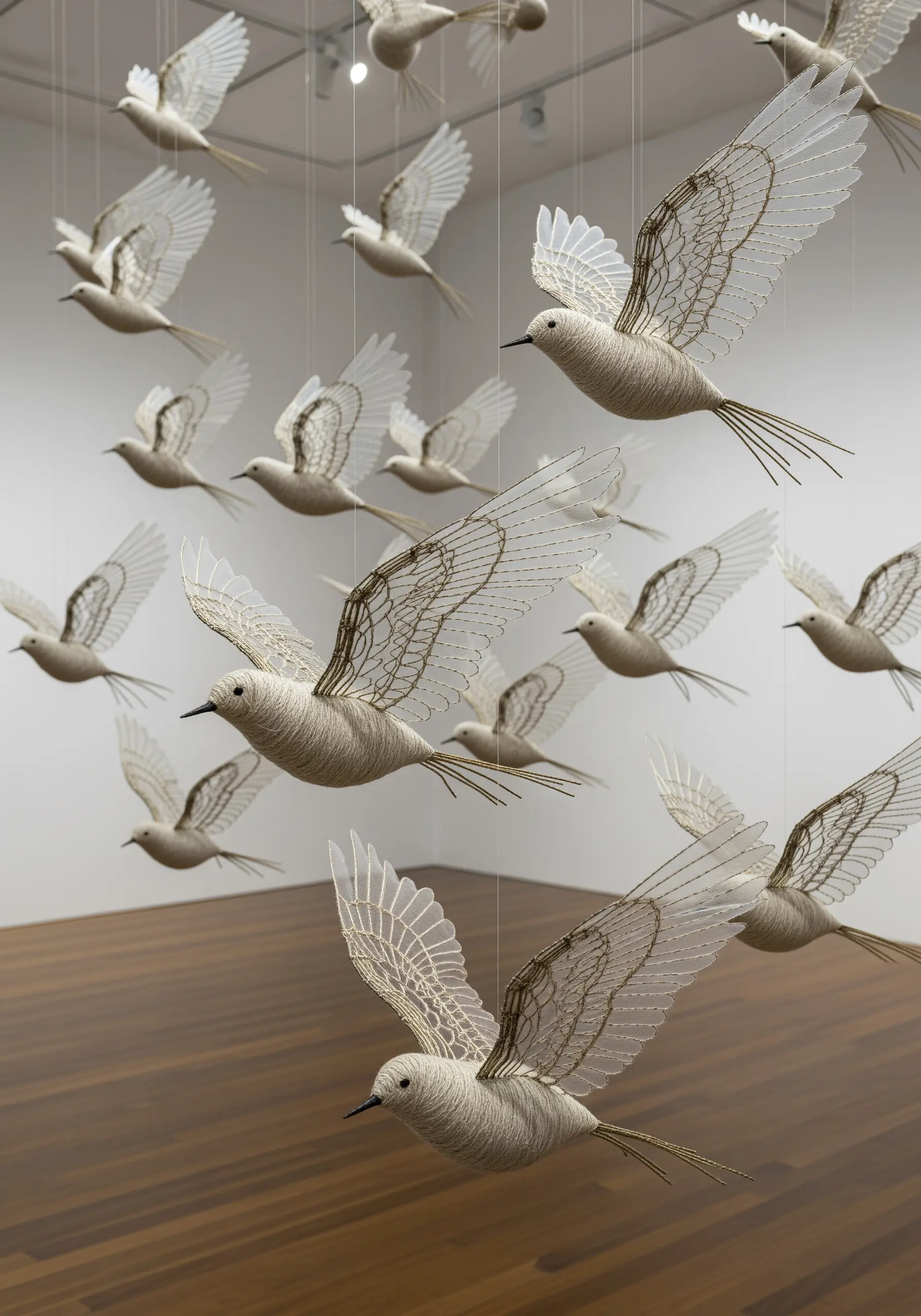
Give your sculptures a sense of lightness and motion by pairing solid, wrapped bodies with delicate, transparent wings.
Create the solid form by wrapping a core shape with a neutral-colored thread for a smooth, dense finish.
For the transparent elements, stitch directly onto water-soluble stabilizer. When dissolved, only the thread ‘skeleton’ remains, creating a lace-like effect.
This mixed fiber project beautifully contrasts substance and fragility, suggesting both strength and delicacy.
18. Immersive Environments with Bold Cord Work
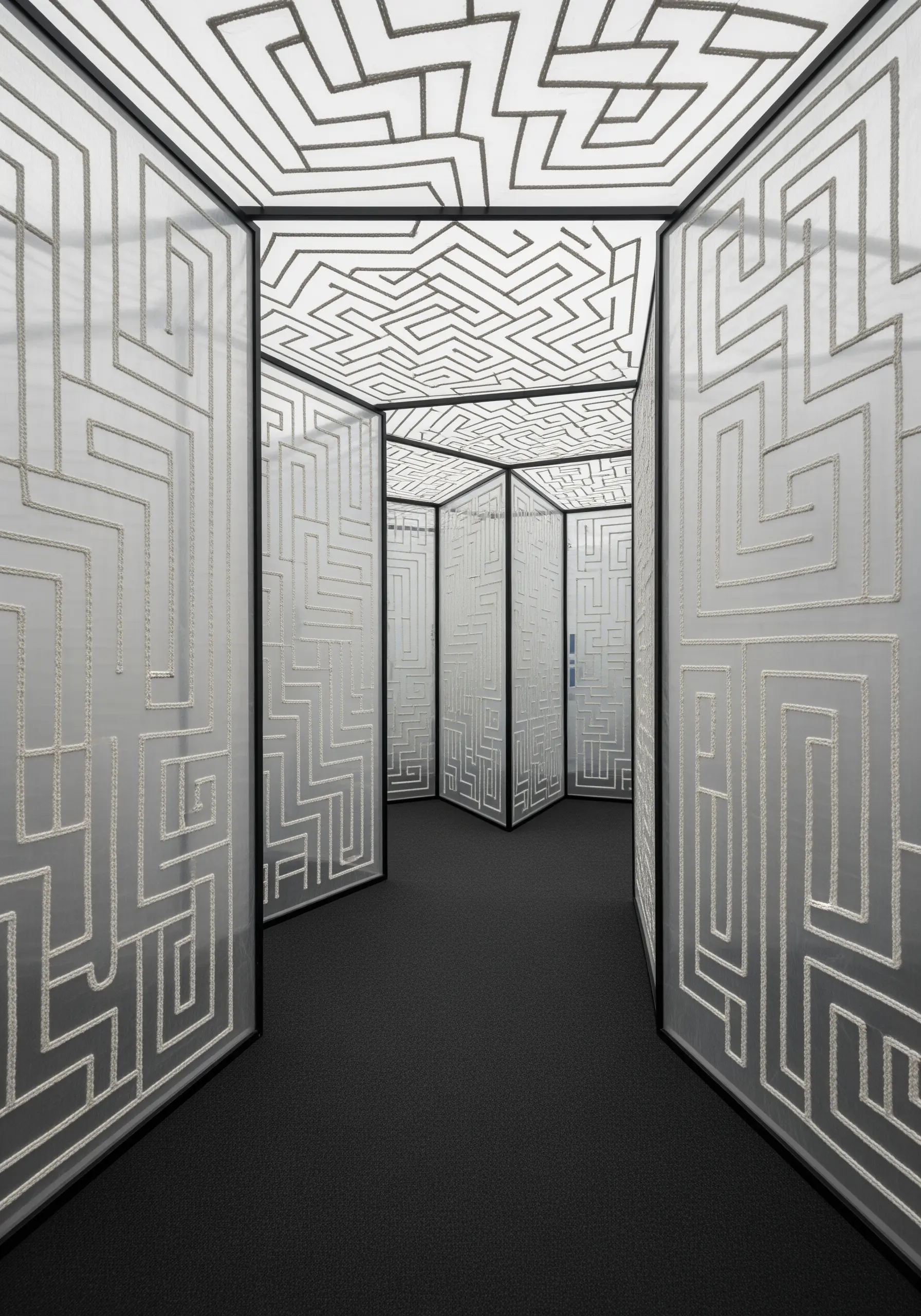
Think beyond the frame and use thick cord or rope to create an immersive, architectural installation.
Instead of stitching onto fabric, apply thick, textural cord directly to walls or transparent panels using a strong, clear adhesive or by couching it onto a fabric backing.
Use a single, continuous line to create a maze-like pattern that surrounds the viewer, turning a simple line into an entire environment.
This large-scale approach transforms a basic craft material into a powerful tool for defining and altering space.
19. High-Detail Embellishment on Velvet Forms

Use the richness of velvet as a base for intricate, high-contrast embellishment that emphasizes form.
Create a simple, three-dimensional plush sculpture from a deep-colored velvet, which absorbs light and makes metallic threads pop.
Use couching—a technique where you lay down a thick thread and tack it in place with a smaller one—to create precise, raised lines with gold or silver cord.
This combination of plush texture and sharp, metallic detail creates a look of immense luxury and anatomical precision.
20. Mimicking Organic Textures with Mixed Fibers

Recreate the complex, rugged textures of nature by layering different types of fibers and techniques.
Use needle felting to create a soft, mossy base, then add the rough texture of bark by wrapping twine or coarse yarn around structural elements.
Incorporate couched stitches with jute or sisal rope to define roots and branches, letting some ends hang loose for a wild, untamed feel.
This approach to capturing nature’s textures relies on combining, rather than isolating, different fiber crafts to achieve a realistic, multi-layered effect.
21. Conveying Motion with Felted Fibers
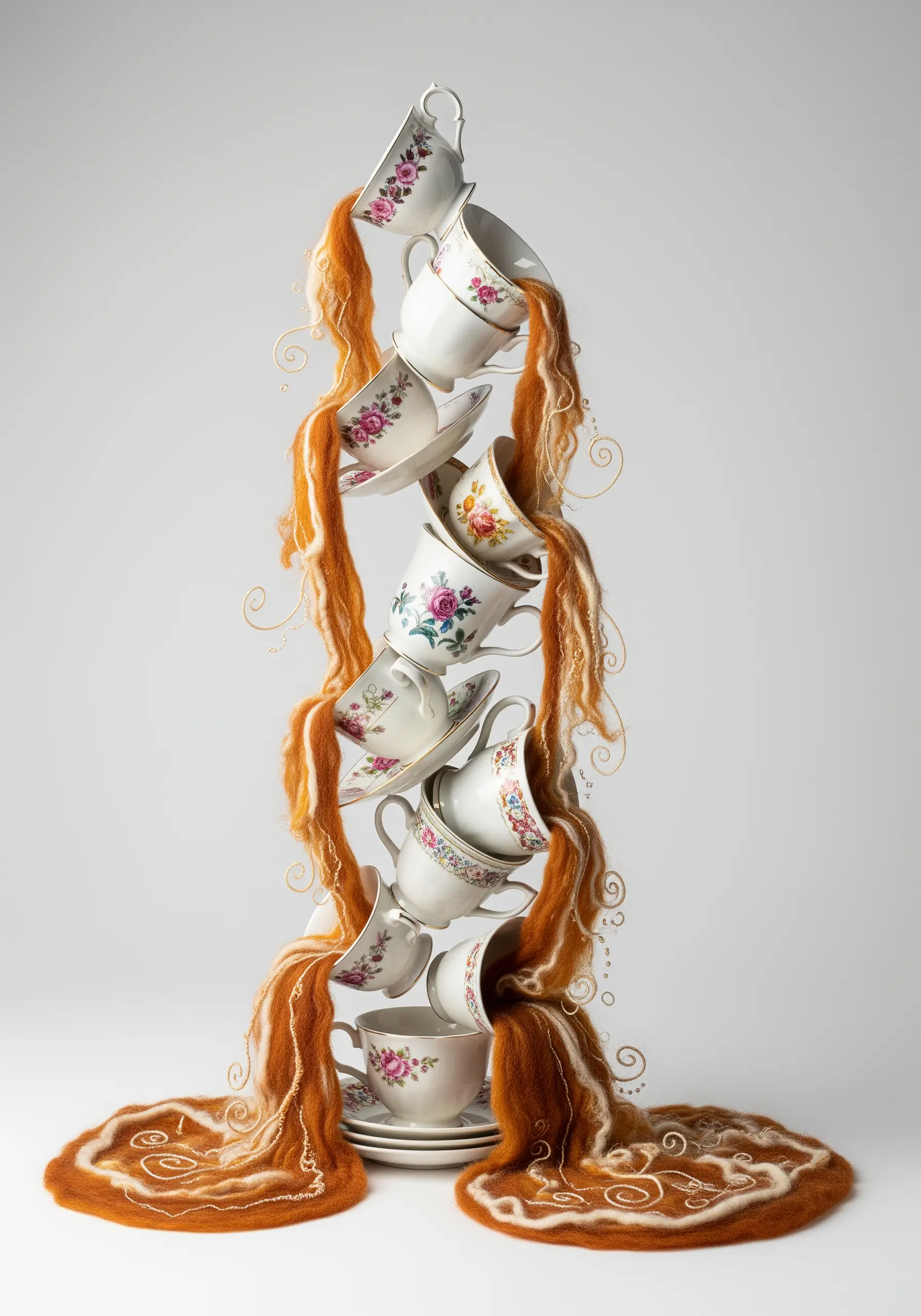
Use unspun wool roving to create dynamic, flowing sculptures that seem to capture a moment frozen in time.
Needle felting allows you to sculpt wool fibers into solid forms, which can be shaped to look like splashing liquid or billowing smoke.
Integrate found objects, like teacups or vases, into your sculpture to create a surreal narrative and a strong anchor for the flowing wool.
The soft, fibrous texture of the wool provides a beautiful contrast to the hard, smooth ceramic, enhancing the sense of movement.
22. Visualizing Data with Colorful String Art
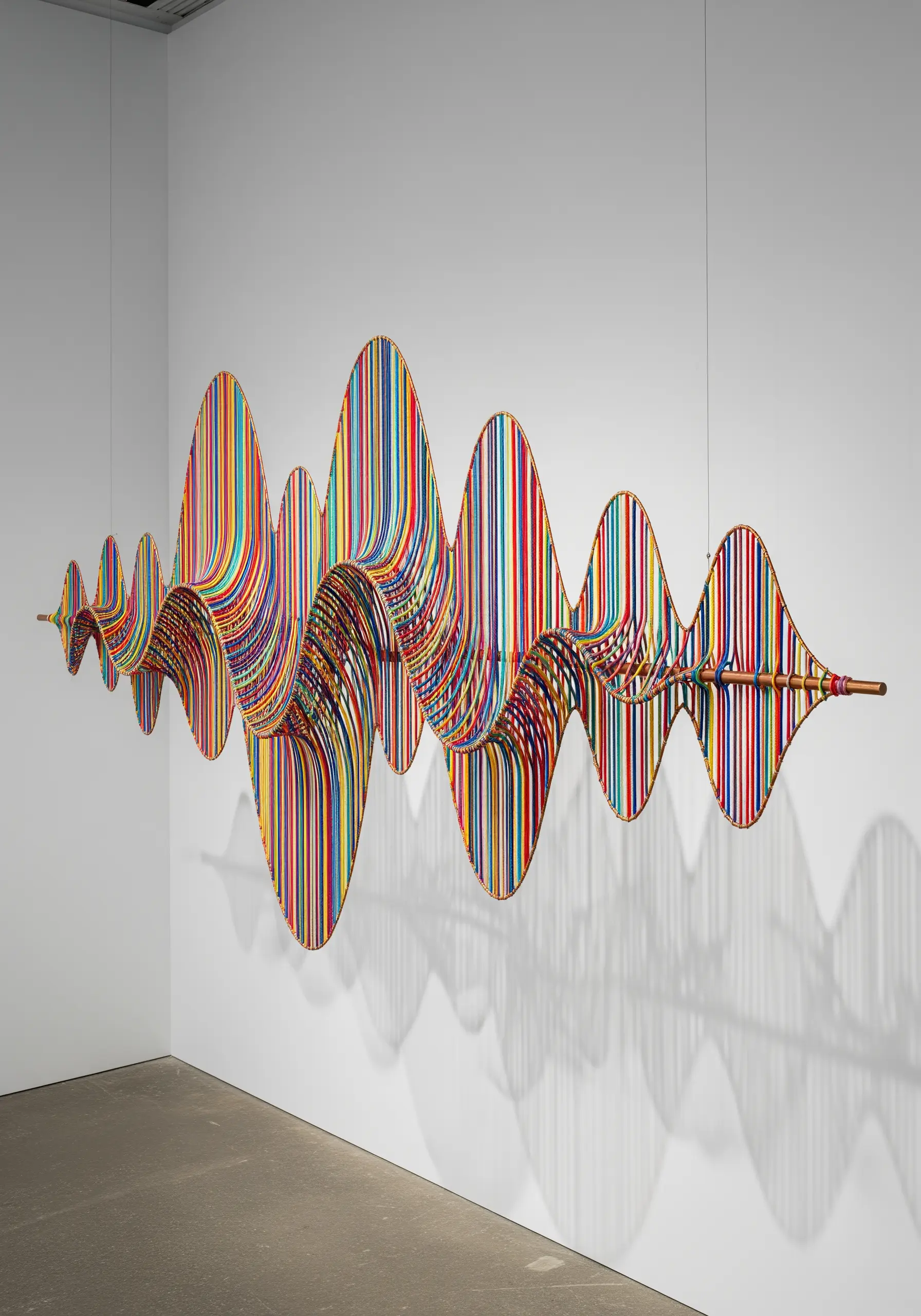
Translate abstract data, like a soundwave or a chart, into a vibrant, three-dimensional string art installation.
Create a framework of pins or thin rods that maps out the peaks and valleys of your chosen data set.
Weave colorful threads or fine yarn between these points, using color changes to represent different frequencies or values.
This technique turns invisible information into a tangible, rhythmic sculpture that is both analytical and beautiful.
23. Building Topographic Landscapes with Layered Felt

Create stunning 3D maps and landscapes by layering cut pieces of felt to represent changes in elevation.
Cut concentric, organic shapes from different colors of felt, stacking them from largest to smallest to build up your topography.
Add fine details with embroidery: use French knots for clusters of trees, backstitch for rivers, and seed stitches for towns or trails.
This tactile approach to map-making results in a piece that is both geographically informative and artistically expressive.
24. Upcycling with Macrame and Fiber Embellishments

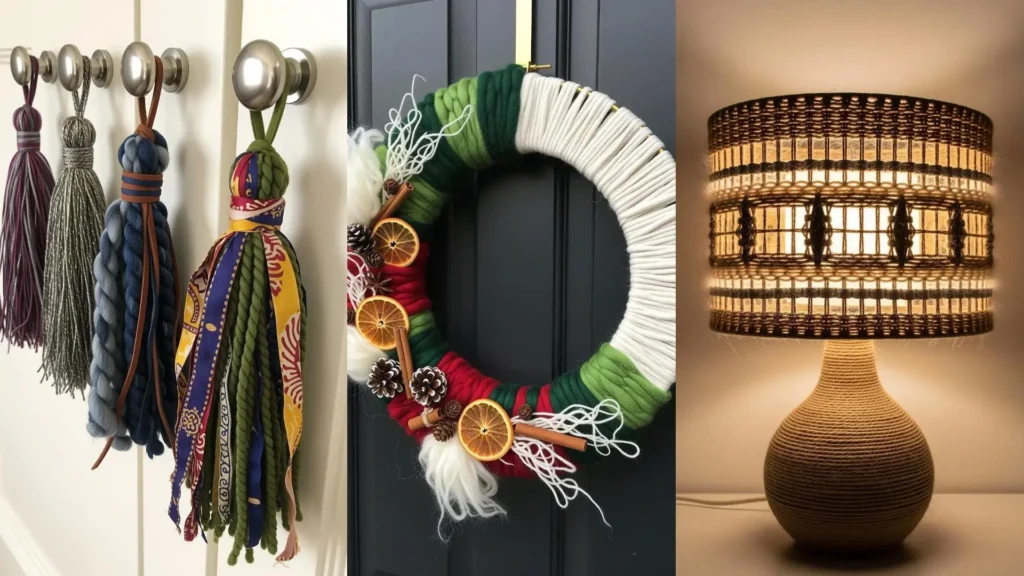
Breathe new life into a dated or plain object by adorning it with macrame knots, tassels, and wrapped cords.
Use the existing frame of a chandelier, lamp, or wire basket as the structural base for your fiber additions.
Combine classic macrame knots, like the square knot and half-hitch, with simple yarn wrapping to create a variety of textures.
Adding handmade tassels and small, stitched details provides a final layer of bespoke, bohemian elegance.
25. Sculpting with Freestanding Lace Techniques

Create ethereal, self-supporting sculptures made entirely of thread using the freestanding lace method.
Heavily embroider a dense, interconnected pattern onto a sheet of water-soluble stabilizer fabric.
Once the stitching is complete, dissolve the stabilizer in water, leaving behind only the rigid, lace-like structure of your thread.
While still damp, you can shape the lace around a form (like a mannequin or a vase) to give it a permanent, three-dimensional shape as it dries.
26. Scaling Up Traditional Crafts for Natural Installations

Take a familiar craft, like making a dreamcatcher, and scale it up dramatically to create an impactful outdoor installation.
Replace the small hoop with a large, rustic element like a hand-bent grapevine wreath or a bicycle wheel.
Use thick rope or jute for the central weaving and embellish it with oversized, handmade elements like felted rocks and braided yarn.
By radically increasing the scale, you transform a personal object into a piece of public art that interacts with its natural surroundings.
27. Elevating Found Objects with Yarn Wrapping
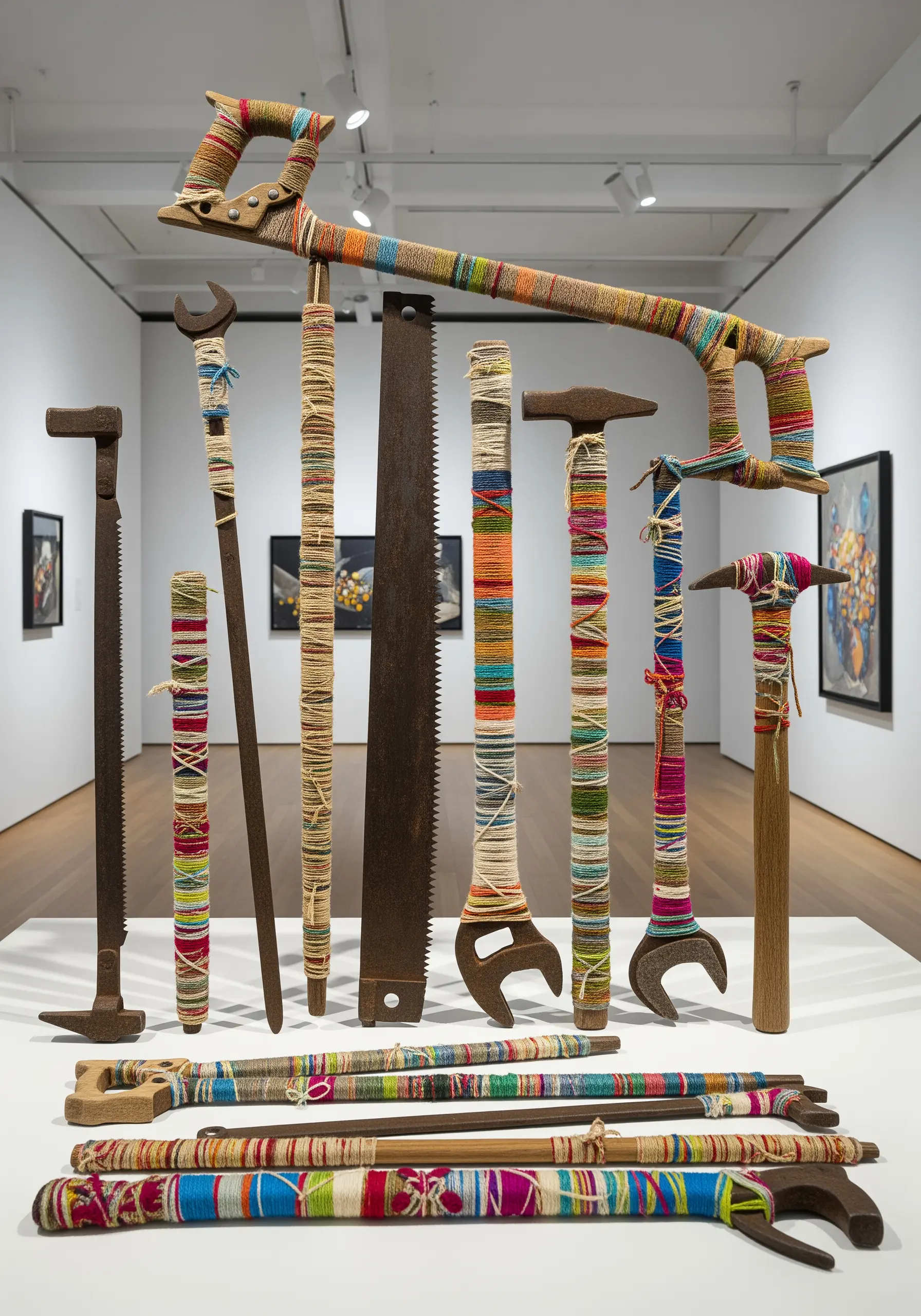
Use the simple, meditative technique of yarn wrapping to transform mundane, utilitarian objects into colorful art pieces.
Select objects with interesting shapes but overlooked surfaces, such as old tools, kitchen utensils, or stones.
Tightly wrap sections of the objects with variegated or brightly colored yarn, creating new patterns and textures.
This process honors the object’s original form while completely changing its context, turning everyday items into creative handmade art objects.