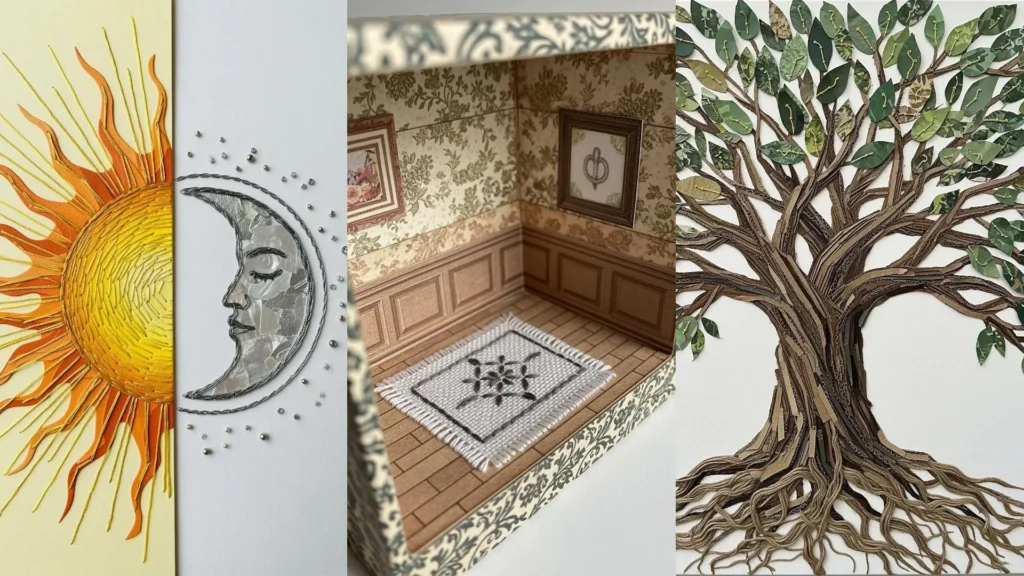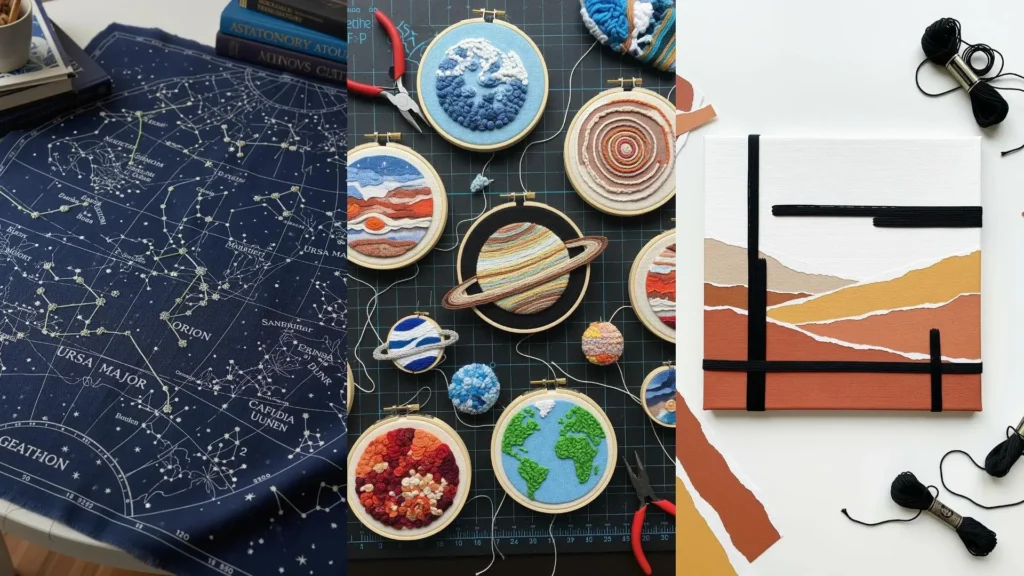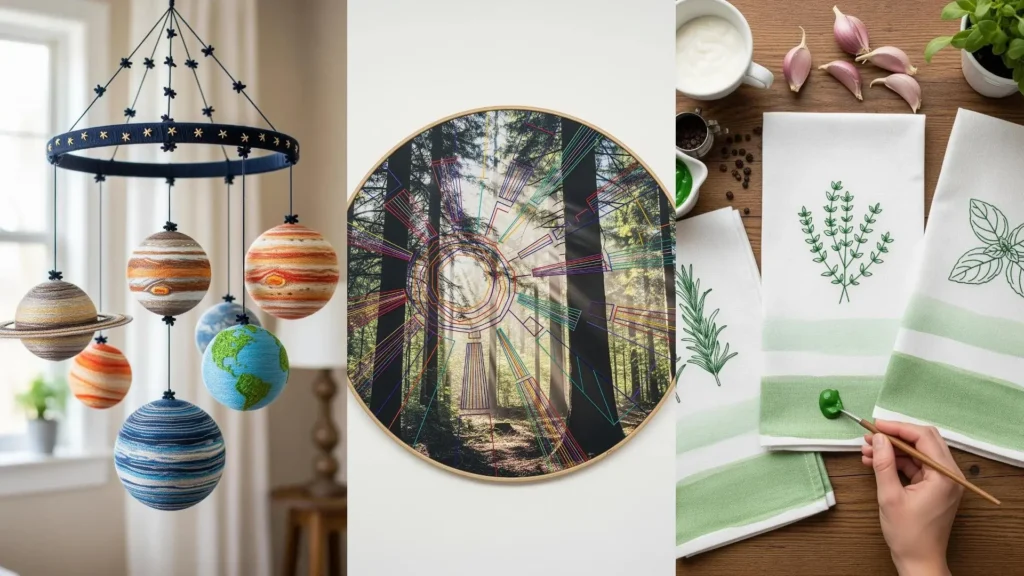
Let’s rethink where your embroidery can live. Beyond the hoop and off the apparel, your thread is waiting to interact with new surfaces—paper, paint, wood, and even clay. This isn’t about learning complex new skills, but about expanding your creative toolkit, allowing you to see the world as a potential canvas.
Combining embroidery with other media gives your work a depth and character that thread alone cannot achieve. It’s the contrast that creates the magic: the soft texture of a French knot against a smooth, painted surface; the glint of metallic thread over a vintage photograph; the delicate line of a stitch tracing an impression in clay.
Here, you’ll find thirty ways to step into that world. Each idea is a starting point, an invitation to experiment with texture, color, and form. You’ll see how these combinations can transform your stitching from a craft into a sophisticated art form, creating home décor pieces that are not just beautiful, but deeply and uniquely yours.
1. Watercolor Washes as an Embroidery Canvas
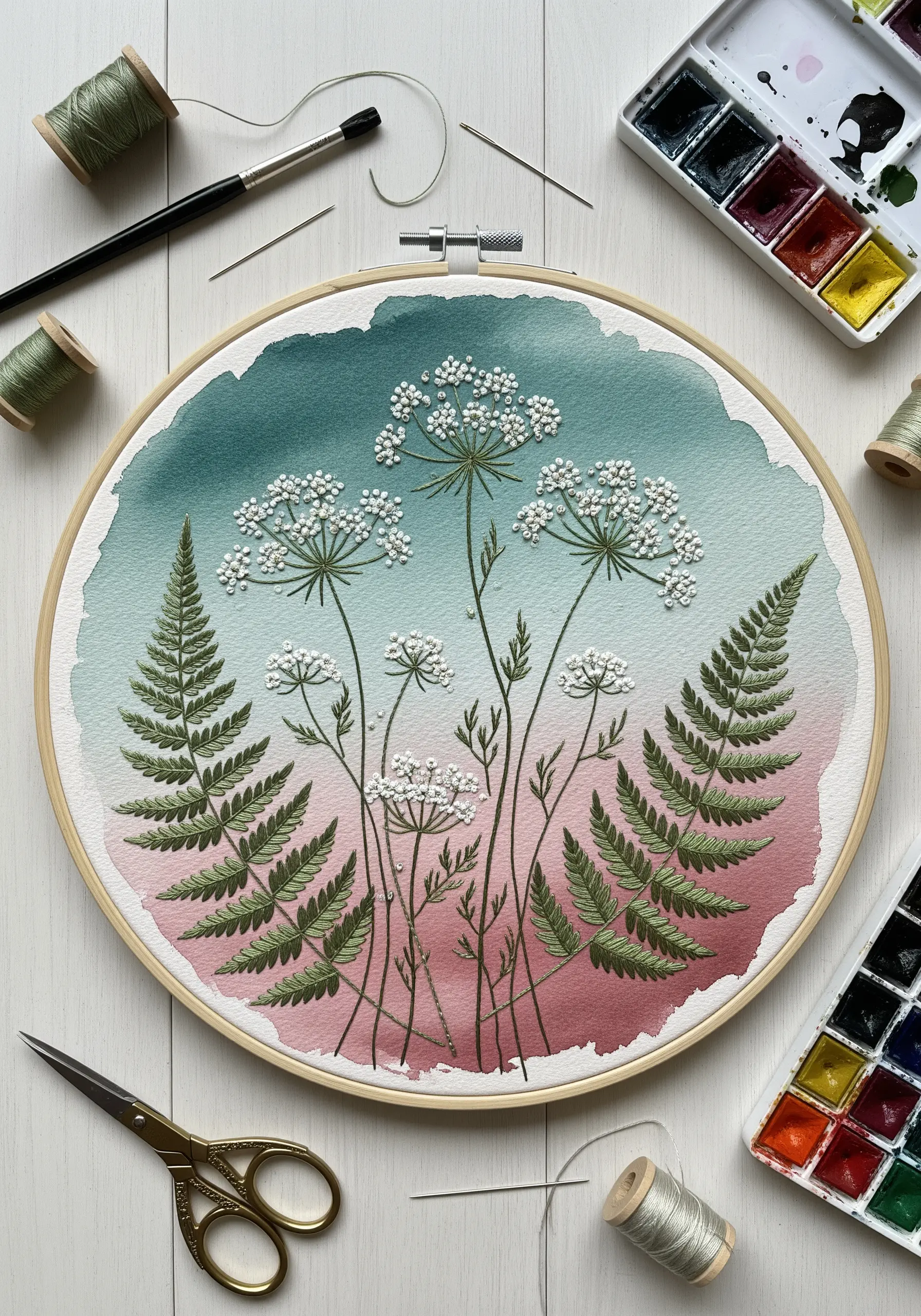
Begin by applying a soft watercolor wash to your embroidery fabric, allowing the colors to bleed into one another for an atmospheric effect.
Stretch the dry, painted fabric in your hoop, then use high-contrast thread to make your stitches pop against the gentle background.
For delicate details like these flower heads, use dense clusters of white French knots; they sit beautifully on the surface and add a rich, tactile dimension.
This technique turns your fabric into a canvas, creating botanical embroidery wall pieces that feel both painterly and textural.
2. Sculptural Landscapes with Yarn and Texture Paste
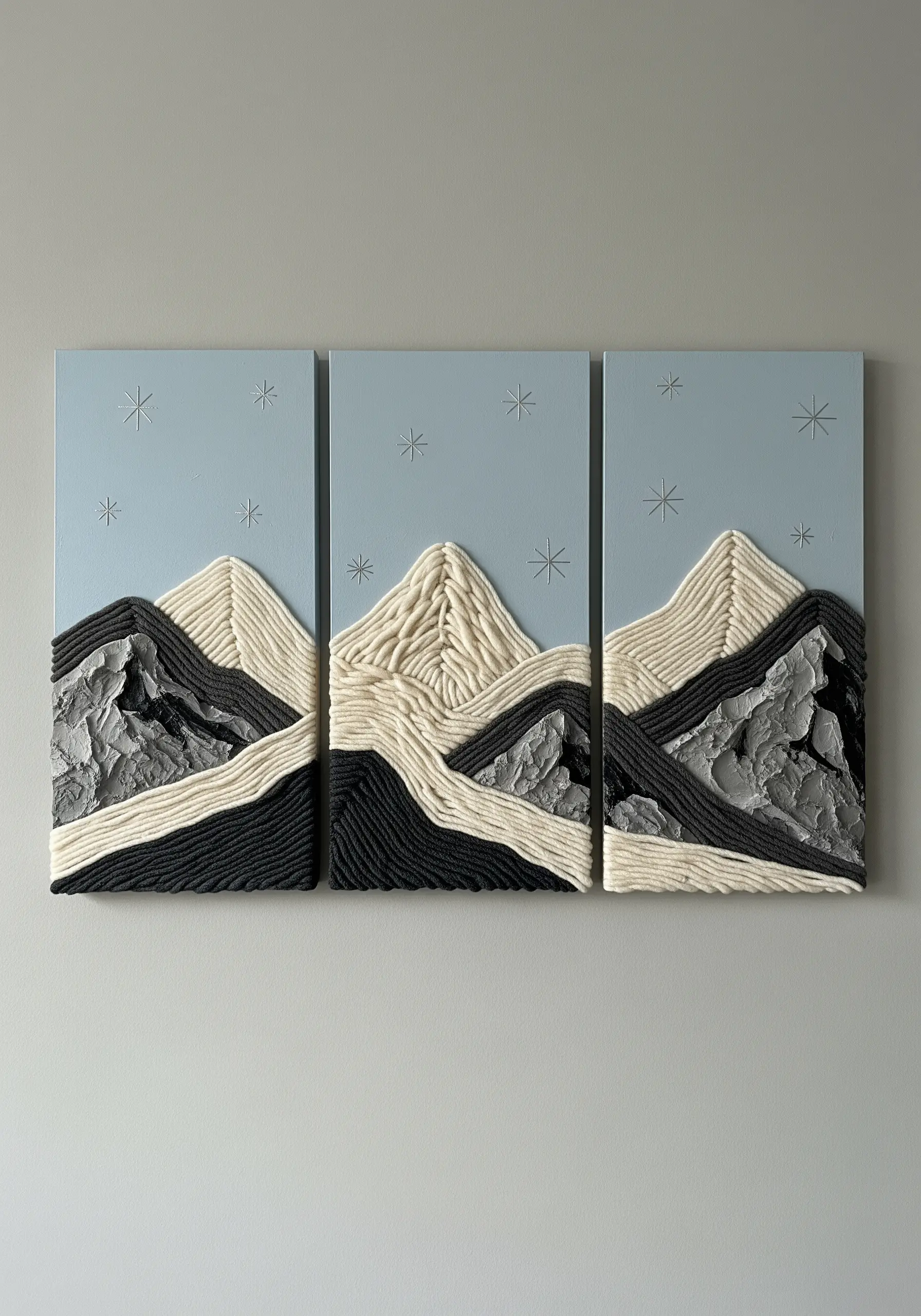
For a truly three-dimensional piece, work across a triptych of wooden panels or canvases.
Apply a thick layer of modeling paste with a palette knife to form the rocky, textured parts of your mountains, letting it dry completely to create a hard, tactile surface.
Then, couch thick yarn or wool roving onto the panels to form the smooth, flowing lines of the snowy peaks.
This contrast between the rough, matte paste and the soft, linear yarn is what gives the piece its dramatic visual and physical depth.
3. Layered Paper Ephemera with Stitched Motifs

Build your canvas by creating a collage of vintage papers, like sheet music or pages from a botanical guide, onto a hard surface like a book cover or wooden panel.
Stitch your central motif onto a separate piece of heavy paper or felt first; this allows you to create clean, dense stitches without tearing the delicate collage base.
Appliqué the finished stitched motif onto your background, then add flecks of gold leaf for a touch of light and luxury.
This method of DIY collage projects results in a clean, raised element that stands out from the rich background.
4. Shadow Box Dioramas with Stitched Constellations
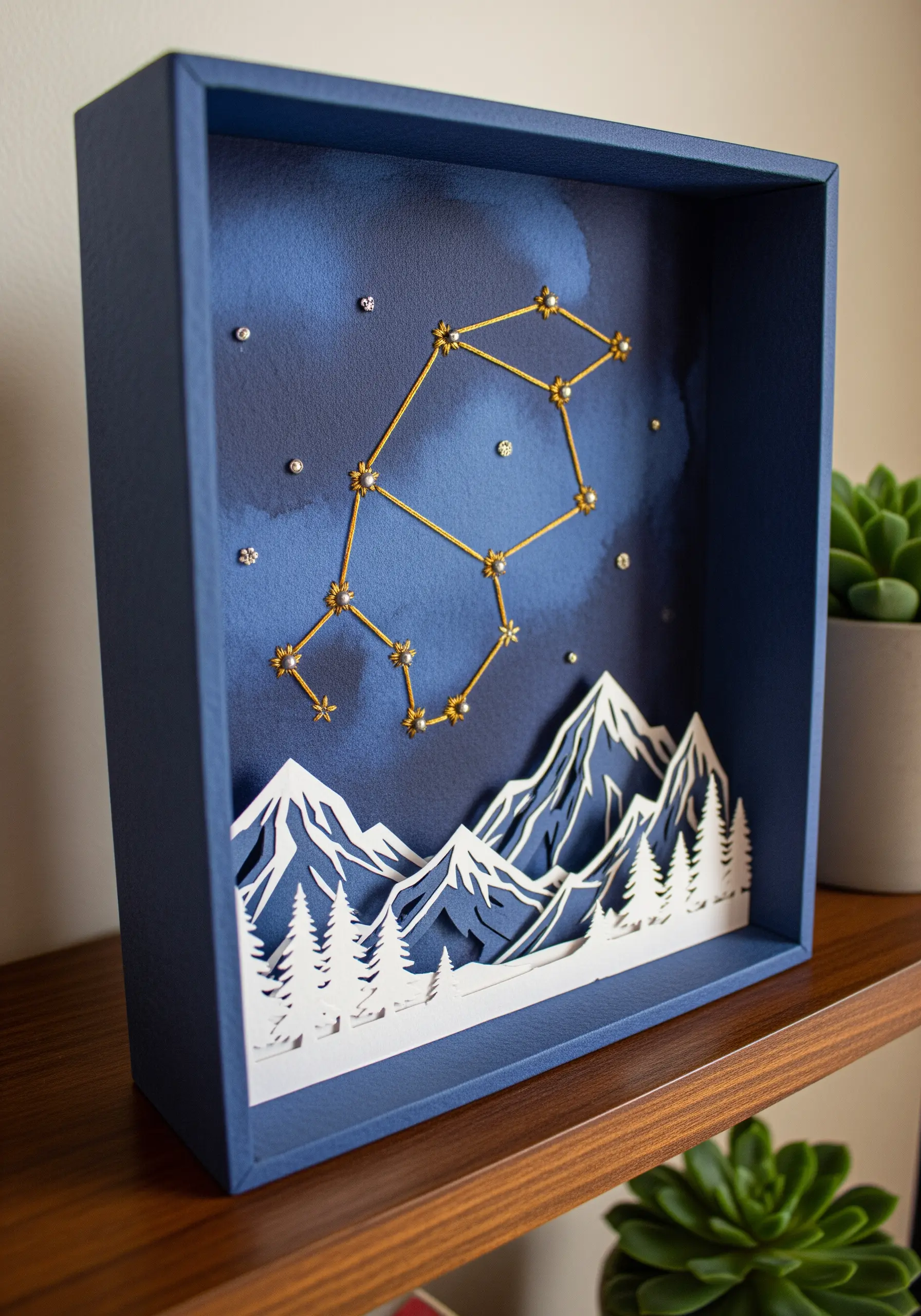
Transform a simple shadow box into a deep, narrative scene.
Paint the back panel with a dark watercolor wash to create a night sky, then install layers of paper cutouts to build a foreground with perspective.
For the constellation, carefully pierce holes in the back panel and use a lustrous metallic thread to connect small beads, crystals, or star-shaped sequins.
This technique creates a genuine sense of depth, with the threadwork catching the light differently from the matte paper landscape.
5. Abstract Compositions with Raw-Edge Appliqué
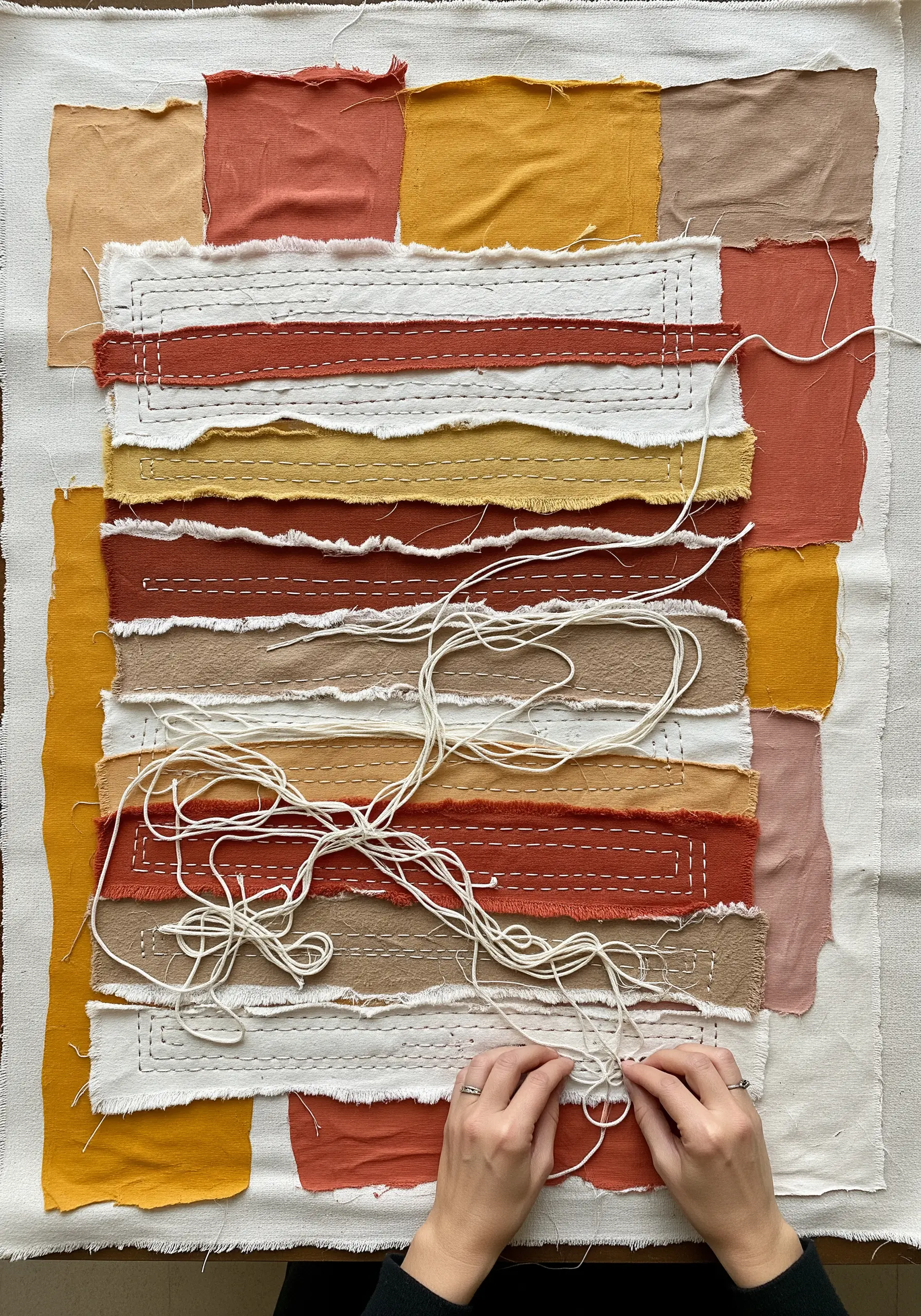
Embrace a more organic, process-driven approach by collaging with raw-edged fabric scraps.
Arrange pieces of linen, cotton, or hand-dyed textiles onto a backing fabric, allowing for overlap and fraying.
Use a simple, strong running stitch in a contrasting color to secure the layers, treating the stitches as drawing marks rather than just functional seams.
Allowing threads to hang loose becomes part of the design, creating abstract fabric collage embroidery ideas that feel beautifully imperfect and alive.
6. Geometric Thread Overlays on Photographic Prints
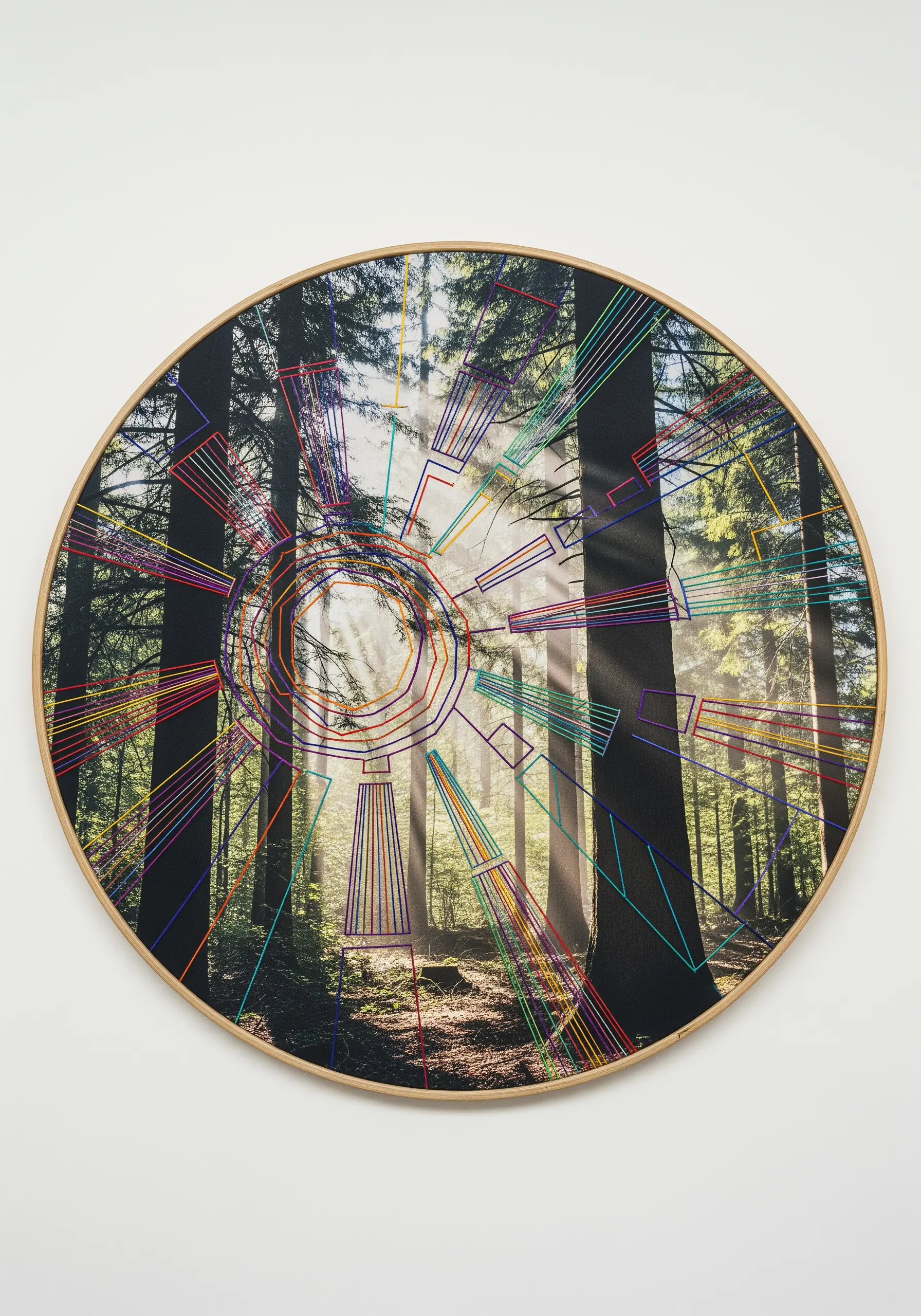
Add a layer of personal interpretation to a photograph by stitching directly onto it.
Choose an image with strong lines or a clear light source, and have it printed on thick, matte photo paper or printable fabric for durability.
Use an awl or a thick needle to carefully pre-punch holes along your intended geometric design; this prevents the paper from tearing as you stitch.
Bold, straight stitches in vibrant colors create a dynamic contrast, turning a simple photo into a unique piece of DIY wall art embroidery.
7. Delicate Embroidery on Paper Lanterns
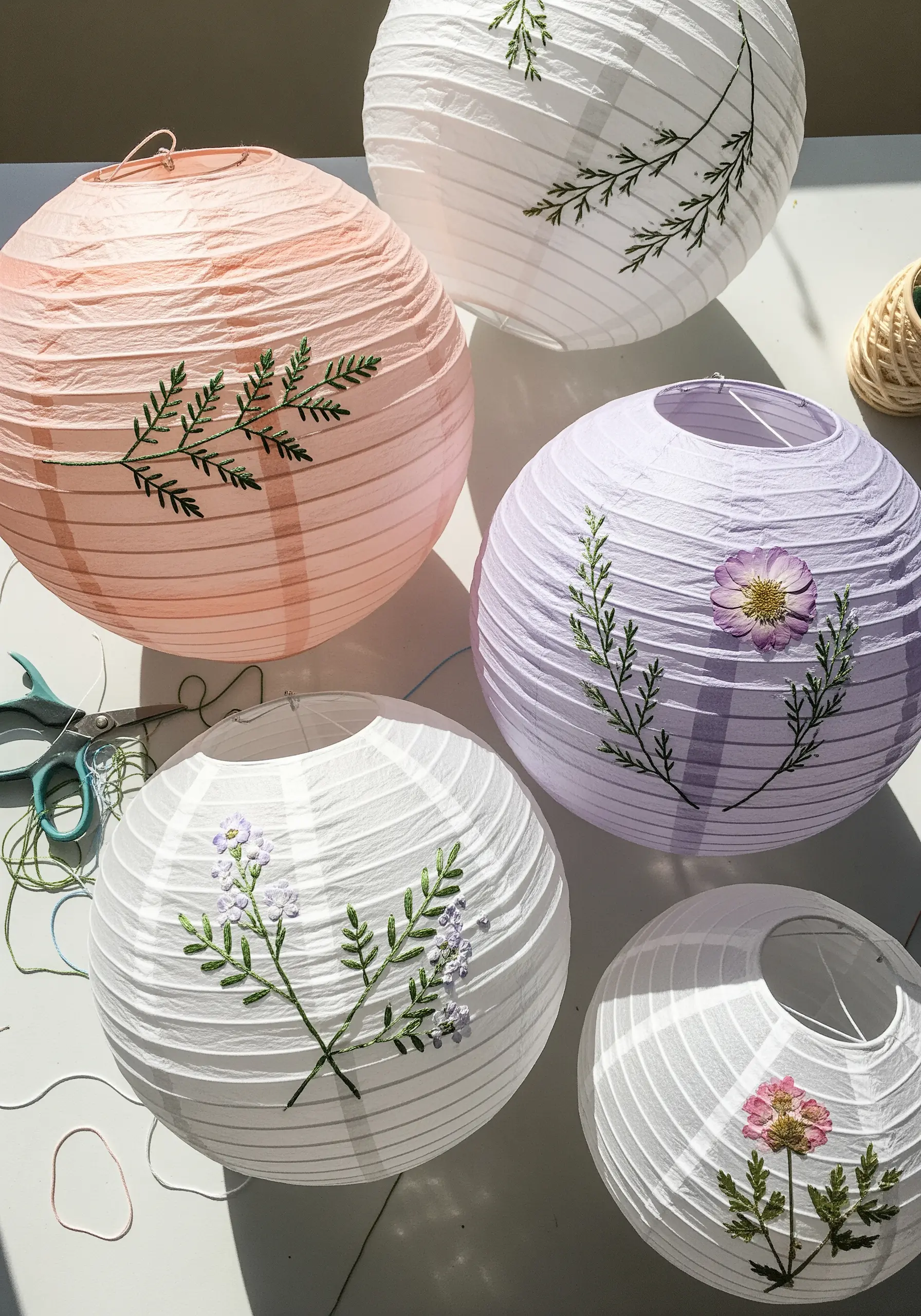
Stitching on paper lanterns requires a light touch and minimal tension to prevent tearing.
Use a very fine, sharp needle and just one or two strands of embroidery floss for your botanical motifs.
Simple stitches like stem stitch, lazy daisies, and single straight stitches are most effective.
You can also integrate pressed flowers into your design, securing them with a few tiny, discreet stitches or a dab of clear archival glue for a layered, mixed-media effect.
8. Architectural Form with Stitched Paper Layers

Use thread not as decoration, but as a structural and defining element in a paper sculpture.
Cut multiple identical shapes from heavy cardstock or watercolor paper.
Use a simple running stitch along the edge of each piece before assembling them.
When stacked and fanned, the consistent line of thread emphasizes the final form’s curves and creates a visual rhythm, proving that even the simplest stitches can build extraordinary shapes.
9. Personal Narrative Maps with Threaded Journeys
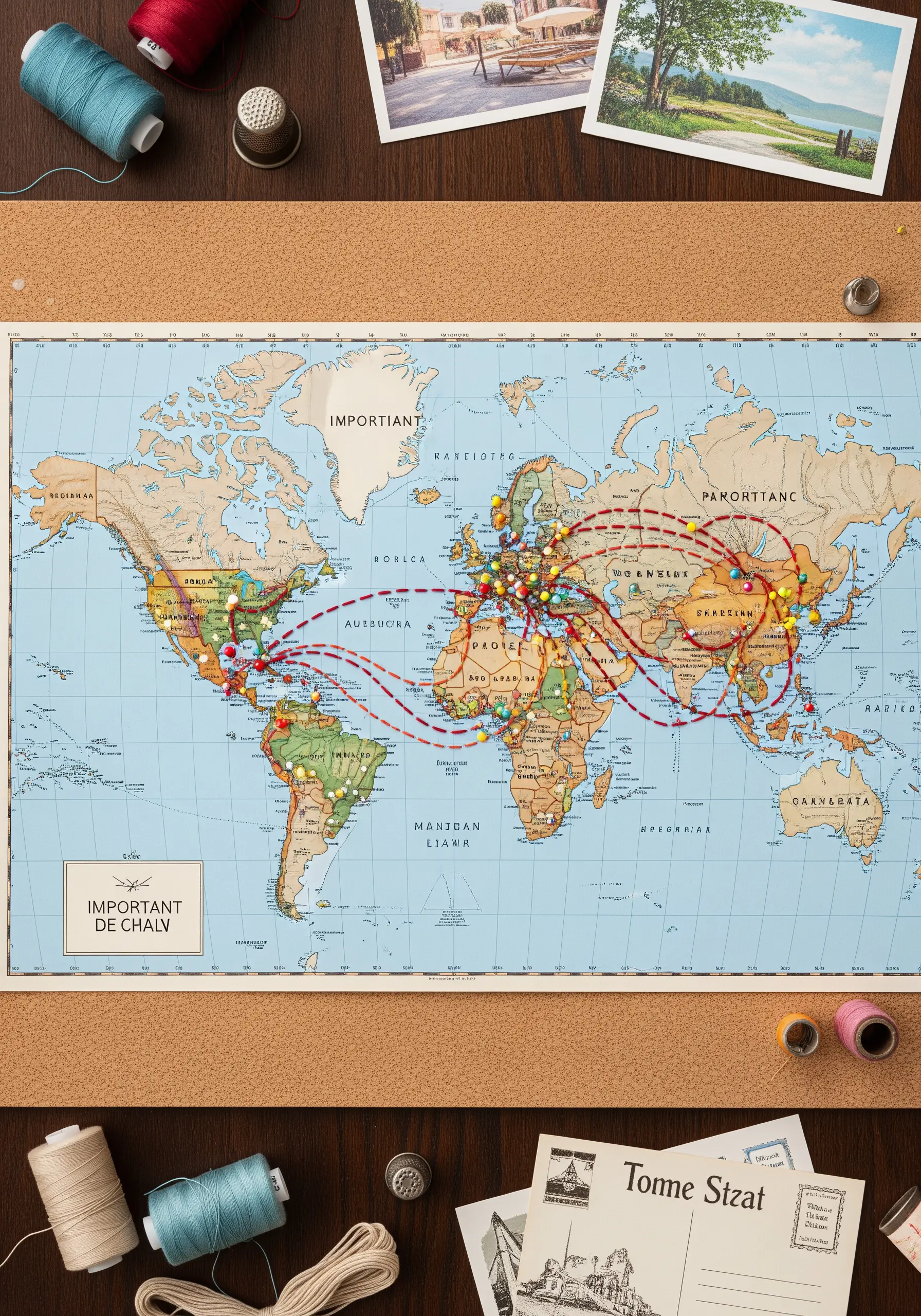
Transform a standard map into a deeply personal artifact by stitching your own story onto it.
Mount the map on foam core or cork board to provide stability and depth for your stitches.
Use different colors of perle cotton or embroidery floss to trace routes of travel, connecting places you’ve lived or memorable journeys.
Mark significant locations with French knots or seed beads to create travel-inspired embroidery hoops that tell a story on your wall.
10. Textured Monograms with Wrapped and Knotted Fibers
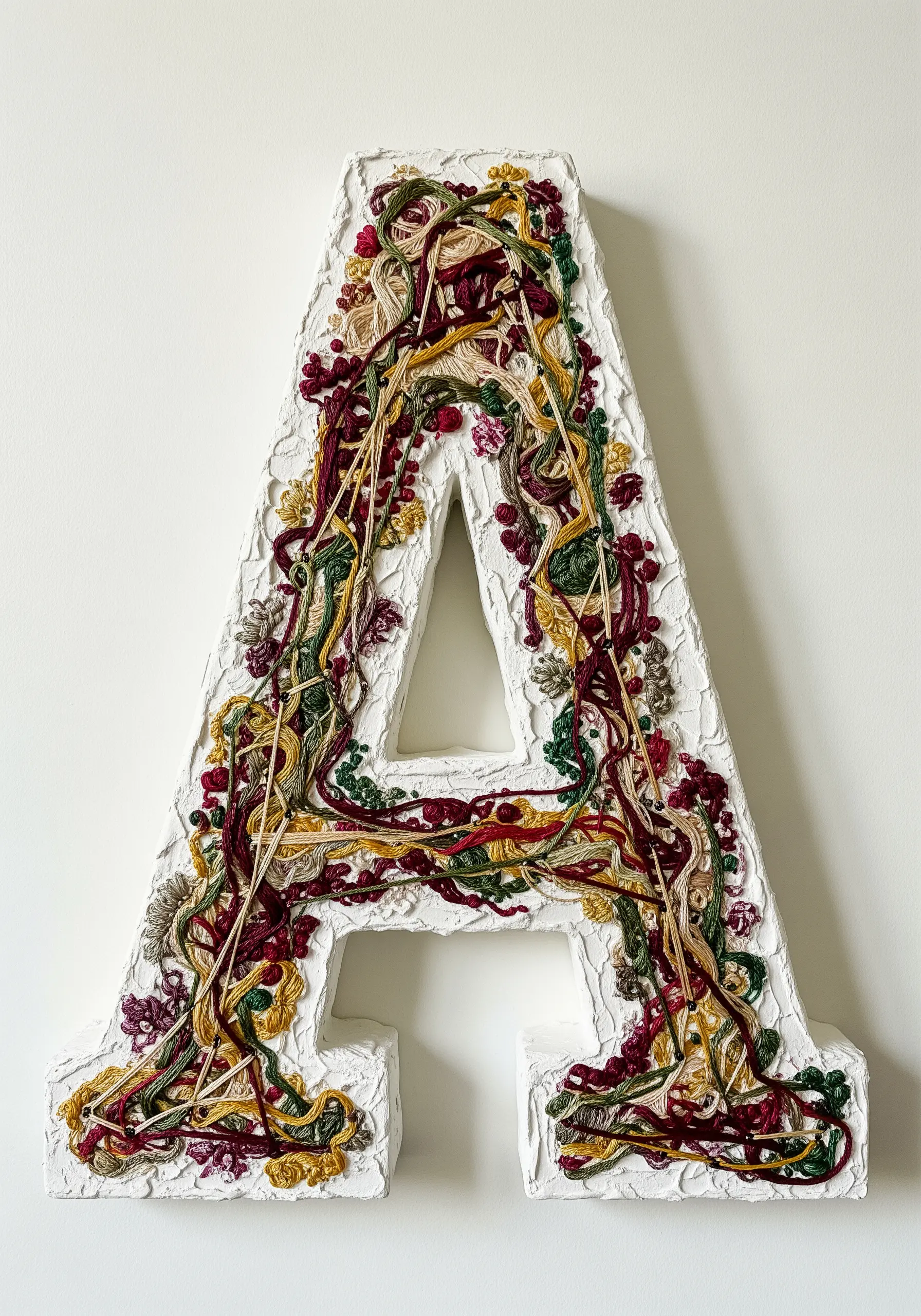
Turn a simple letterform into a complex, tactile sculpture.
Start with a wooden or papier-mâché letter base. Apply a layer of gesso or texture paste for grip.
Wrap, couch, and weave a variety of fibers—from fine silk thread to chunky wool yarn—across its surface.
Incorporate dense clusters of French knots, bullion knots, and woven wheel stitches to build areas of intense texture and color, transforming a simple initial into a rich fiber art statement.
11. Geode-Inspired Art with Resin and Beaded Embroidery

Mimic the stunning layers of a natural geode by combining fluid art with dimensional embellishment.
Pour resin or fluid acrylics onto a canvas to create the smooth, vibrant center.
After it cures, build the outer rings using gold leaf, texture paste, and a mix of beads, crystals, and metallic thread.
Use beading techniques and couching to secure larger elements and create crystalline structures that catch the light.
12. Thread Painting on Sheer Fabric over Wood
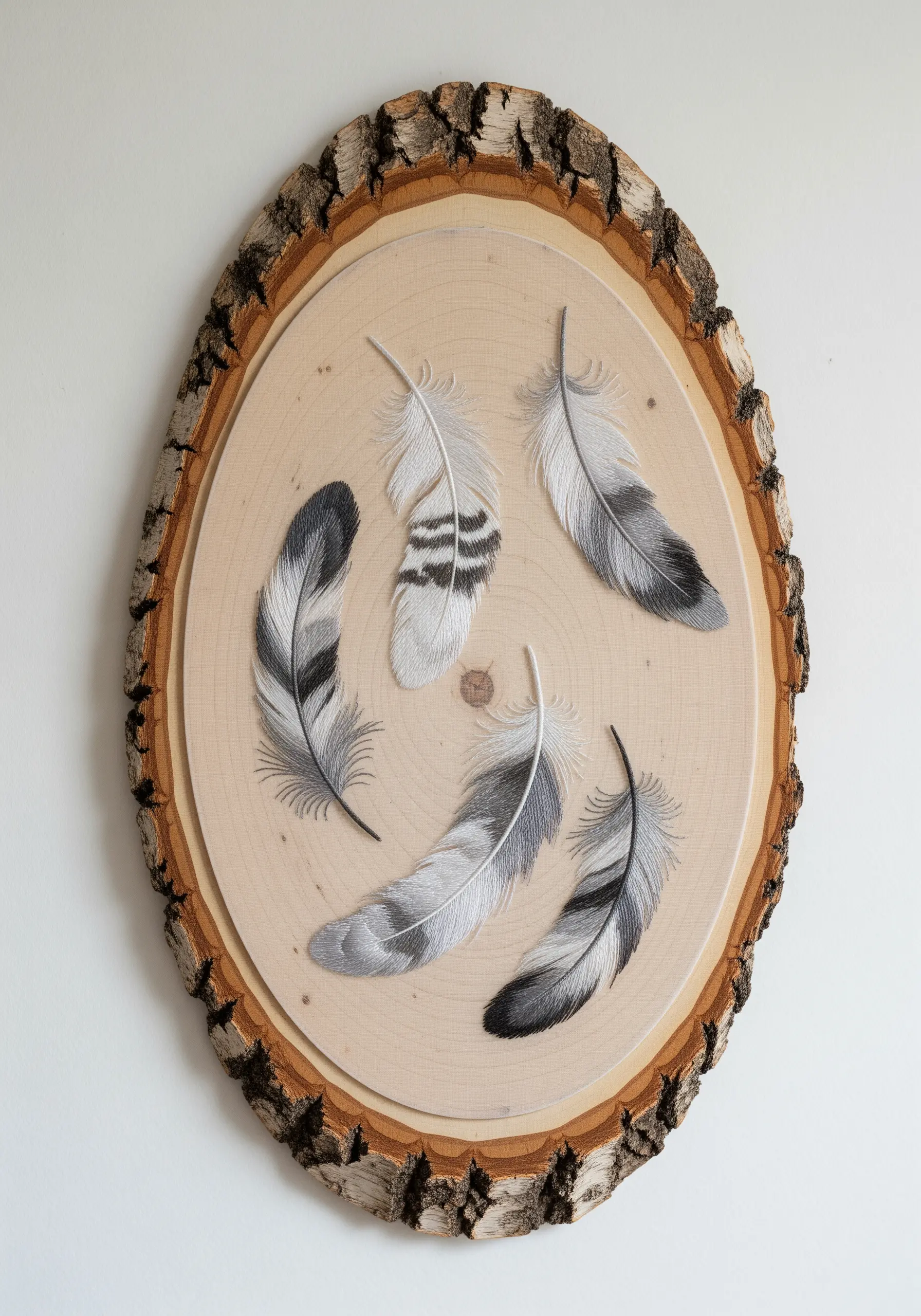
Create a stunning floating effect by stitching not on wood, but on a sheer fabric mounted over it.
Complete your embroidery—in this case, realistic thread-painted feathers—on a piece of organza or tulle stabilized in a hoop.
Once finished, carefully trim and stretch the sheer fabric over a wood slice or panel.
The natural grain of the wood becomes the background, lending warmth and an organic quality to the delicate threadwork that would be impossible to achieve otherwise.
13. Impasto Waves with Stitched Foam Details
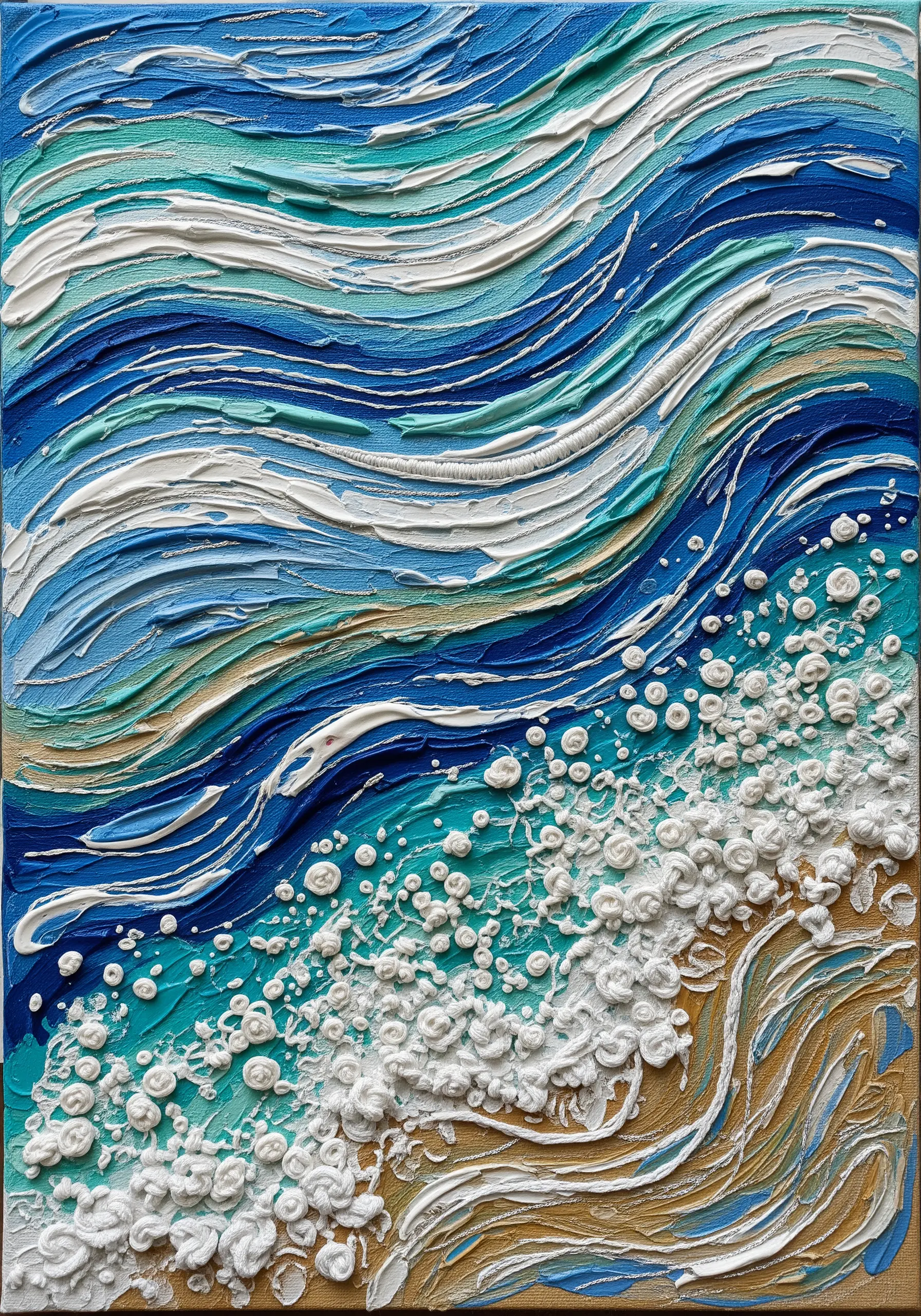
Marry the bold strokes of painting with the fine detail of embroidery.
Use a palette knife to apply thick acrylic impasto or modeling paste to a canvas, creating dynamic, sculptural waves.
Once the paste is fully cured, use your needle and thread to add clusters of white French knots and colonial knots along the crests of the waves.
These small, precise stitches create the perfect illusion of sea foam, offering a delicate textural contrast to the sweeping painted gestures.
14. Functional Art with Decoupage and Embroidered Appliqué

Elevate a simple wooden tray by layering different media for a protected, functional finish.
First, decoupage the base of the tray with vintage papers, such as stamps or letters.
Separately, stitch your design on a piece of evenweave fabric, then cut it into a clean patch.
Adhere the embroidered patch to the center, then pour a layer of clear art resin over the entire surface.
The resin seals and protects both the paper and the thread, creating a durable, glossy, and completely unique serving piece.
15. Minimalist Motifs with Fabric Paint and Outline Stitching

Achieve a clean, modern aesthetic by pairing painted color blocks with crisp embroidered lines.
Use a soft-bodied fabric paint to create gentle, watercolor-like stripes on a kitchen towel or napkin.
After heat-setting the paint, use a simple backstitch or stem stitch in a dark, contrasting thread to add a minimalist botanical design.
The sharpness of the stitched line against the soft, diffused color creates a balanced and sophisticated look.
16. Upcycled Denim with Sashiko-Inspired Patches and Paint
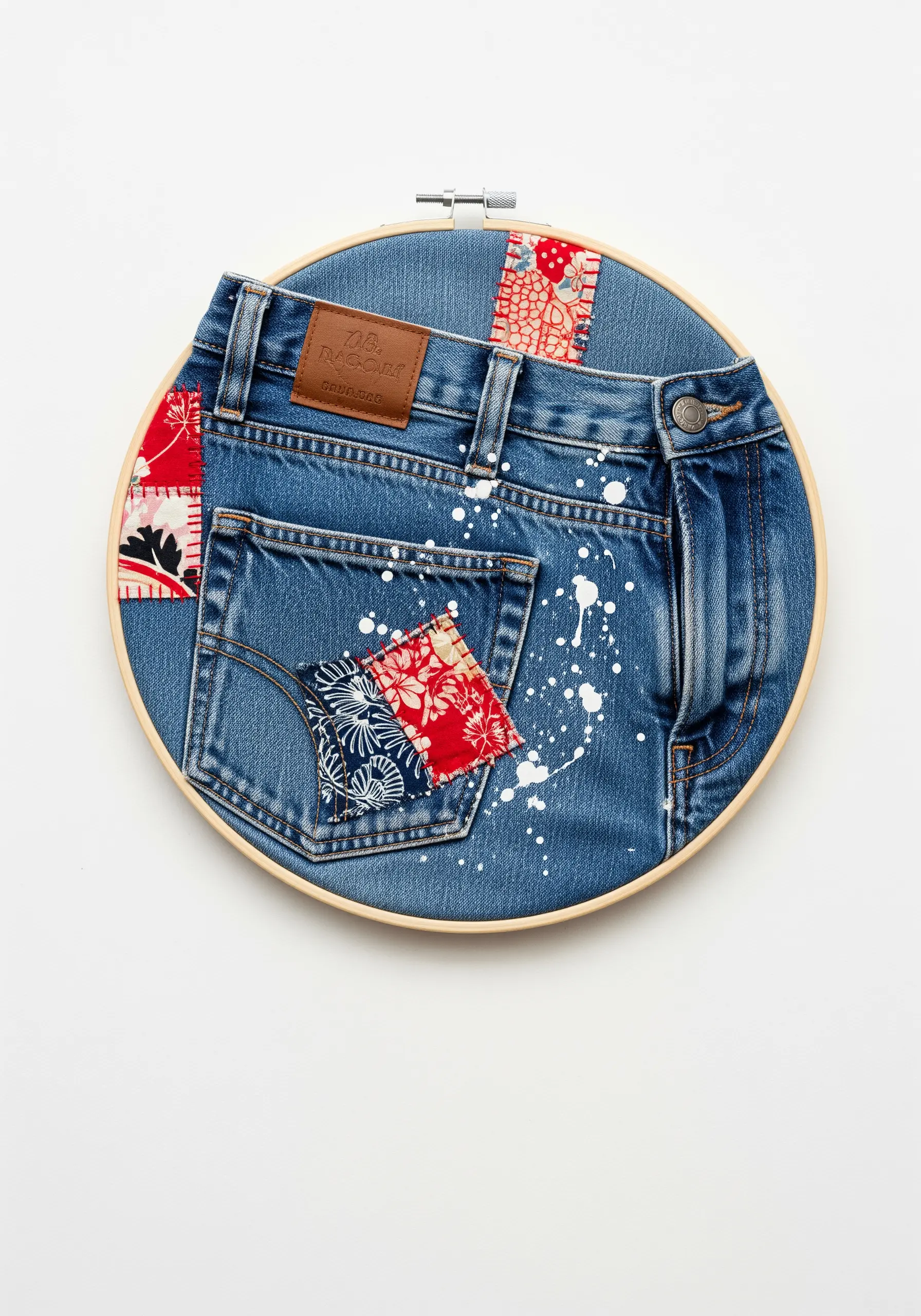
Treat a piece of old denim as a canvas for telling a new story.
Frame a section of repurposed jeans within a hoop to create a contained composition.
Use a simple, visible running stitch to apply colorful fabric patches, evoking the style of Boro mending.
Finish the piece with an energetic splatter of white fabric paint, a gesture that unifies the different textures and colors into a cohesive work of art.
17. Highlighting Architectural Drawings with Thread
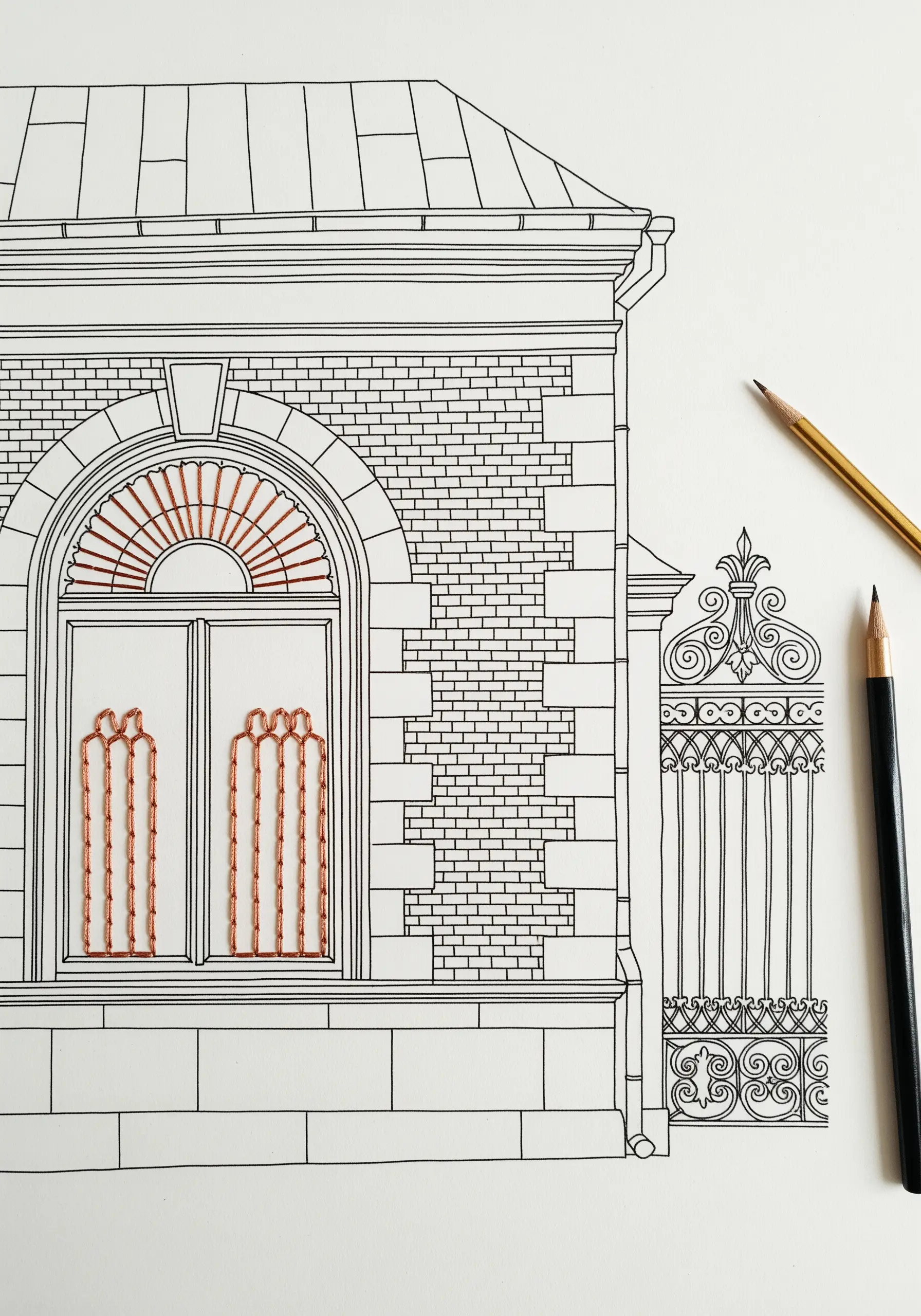
Use thread to add a surprising pop of color, texture, and focus to a technical line drawing.
Print or draw an architectural design on heavy cardstock.
Instead of stitching the entire image, select one key element—like the windows—to render in thread.
Use simple satin stitches to ‘fill in’ the chosen areas. The introduction of fiber adds warmth and a human touch, transforming a flat illustration into a mixed media paper art piece.
18. Woven Paper Tapestries with Embroidered Accents
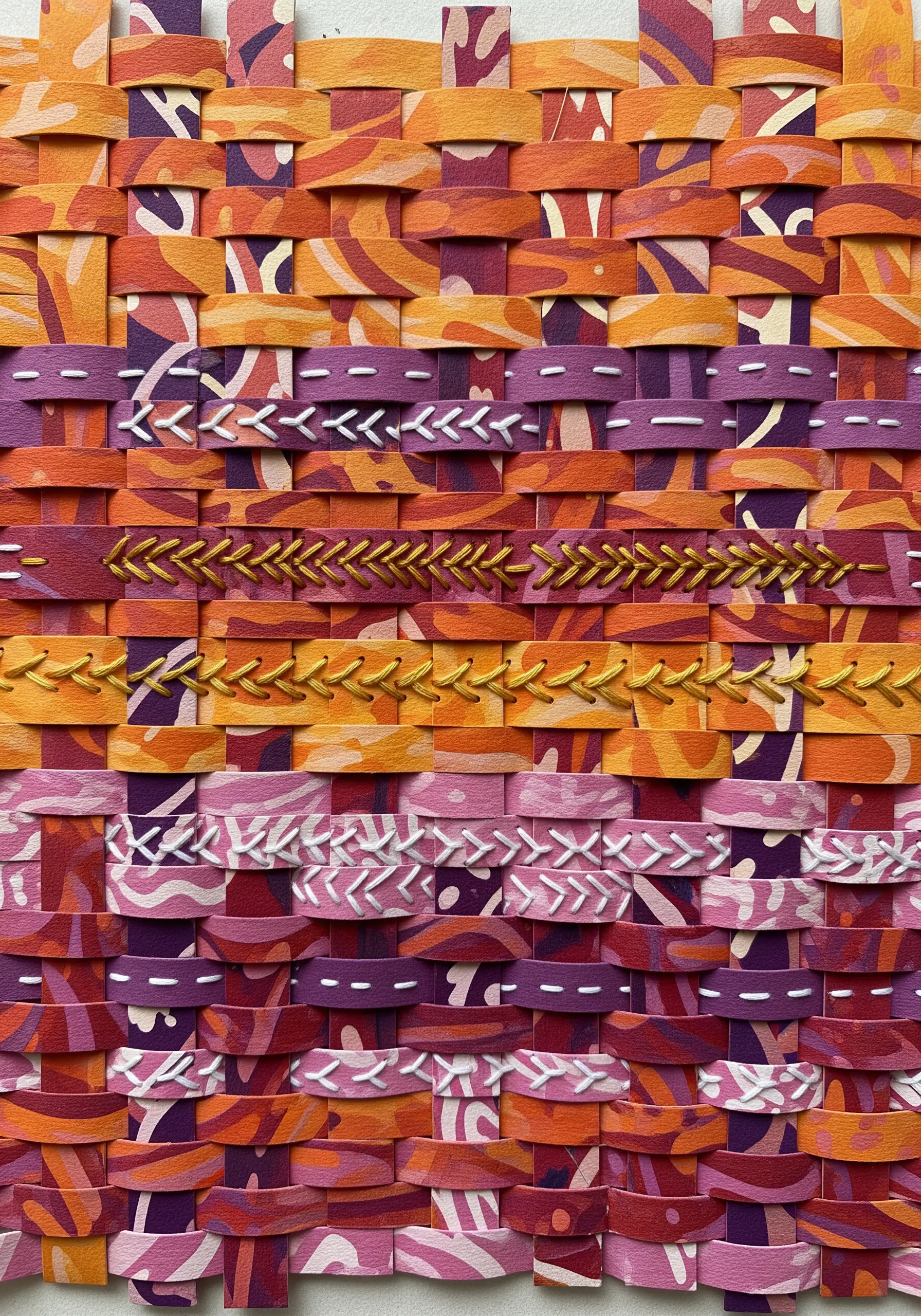
Create a fabric-like surface from paper to serve as a unique embroidery ground.
Weave together strips of painted or patterned cardstock to form a sturdy, textured base.
Using a blunt tapestry needle and thicker thread, you can stitch directly into the woven structure.
Simple, graphic stitches like cross stitch, herringbone, or fly stitch add another layer of pattern and transform the paper into a rich, textile-like tapestry.
19. 3D Floral Embellishments on a Painted Portrait
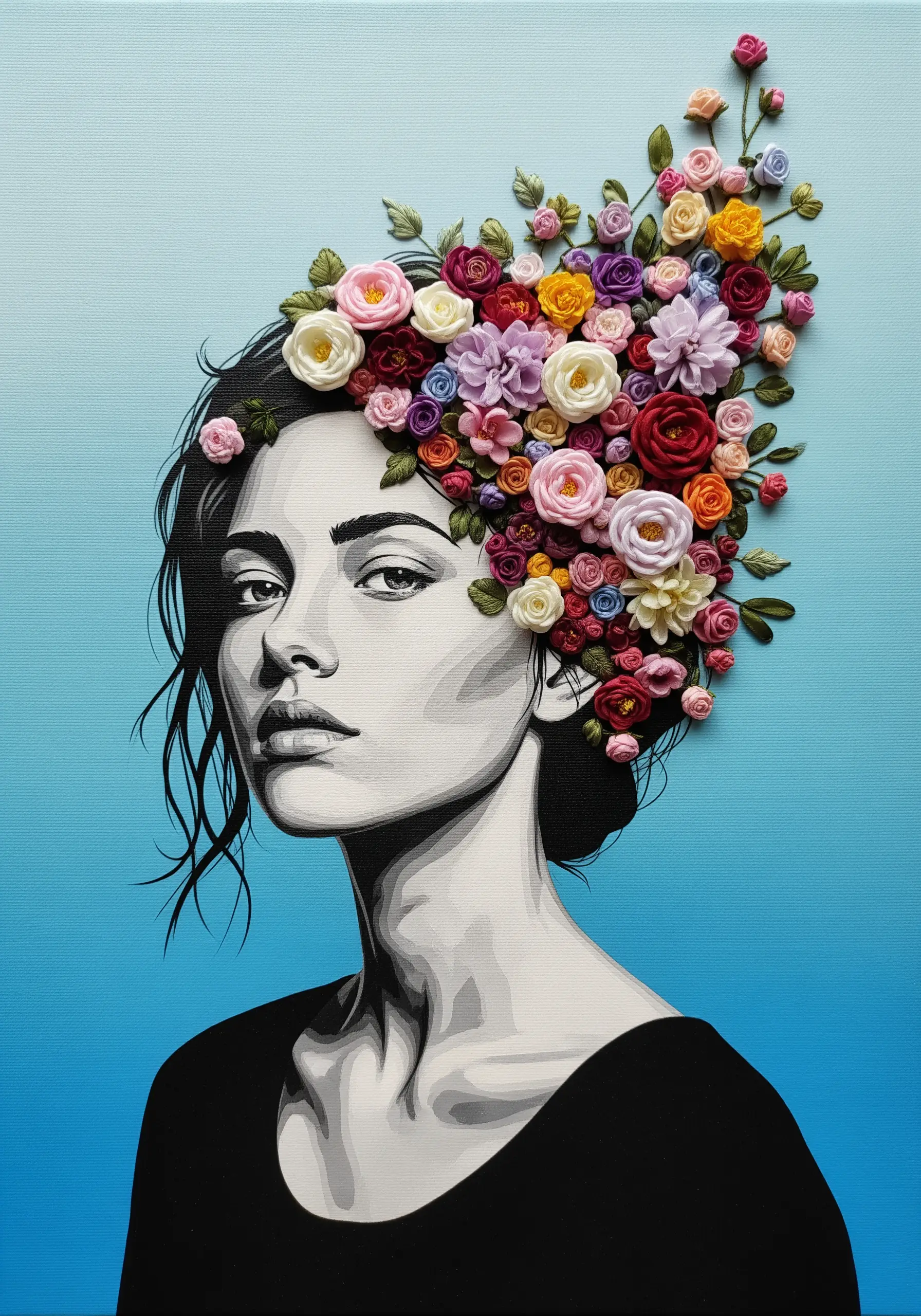
Bridge the gap between two and three dimensions by adding sculptural embroidery to a flat image.
Start with a printed or painted portrait on a stretched canvas.
Using a mix of silk ribbon and six-strand floss, build a cascade of dimensional flowers directly onto the surface.
Ribbon stitch, French knots, bullion knots, and cast-on stitches are perfect for creating realistic petals, buds, and textures that bring the portrait to life.
20. Intricate Mandalas with Metallic Thread on Painted Canvas

Create a truly luminous effect by pairing metallic thread with a painted background.
First, apply a wash of acrylic paint to your canvas, blending colors to create a soft, moody backdrop.
Once it’s completely dry, stitch your mandala using a high-quality metallic thread.
The way the smooth, reflective thread catches the light against the matte paint creates a dynamic, captivating shimmer that enhances the intricacy of your stitchwork.
21. Abstract Geo Art with Impasto and Thread on Linen
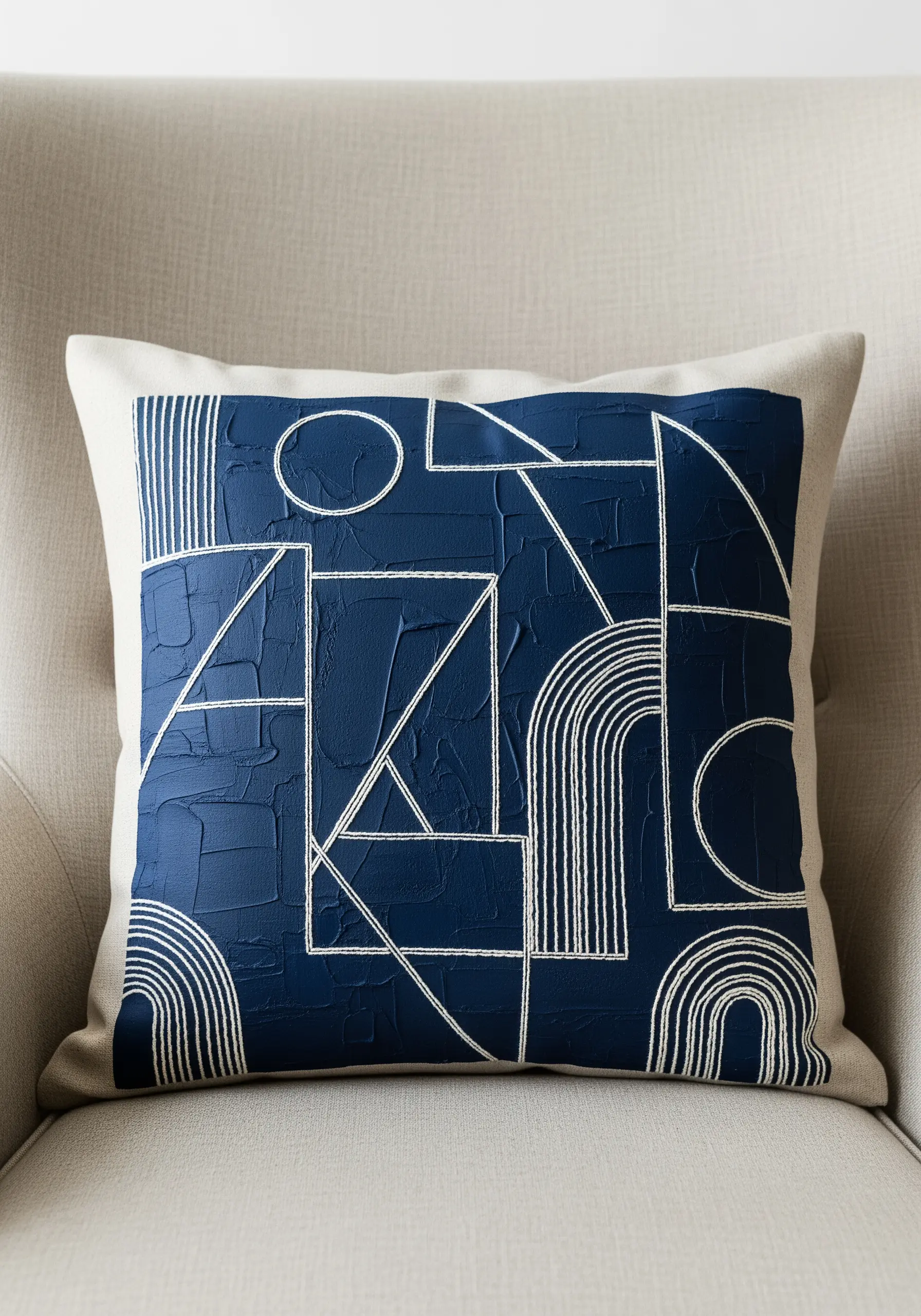
Add a highly tactile and modern finish to your home textiles.
On a plain linen cushion cover, use a palette knife to apply thick fabric paint or a flexible modeling paste in bold, abstract shapes.
After it has fully cured, use a high-contrast thread to add clean, linear embroidery—outlining the shapes or creating parallel lines.
The sleek geometry of the thread against the rough, sculptural paint creates a sophisticated interplay of textures.
22. Stitched Details on Plaster or Clay Leaf Impressions

Capture the delicate venation of leaves by combining impression with embroidery.
Press fresh leaves into a slab of air-dry clay or plaster of Paris and let it harden.
Using a pin vise or a very fine drill bit, carefully create a series of holes along the lines of the leaf impression.
Then, use a single strand of thread and a fine needle to stitch through the holes, adding a layer of subtle color and texture that highlights the natural pattern.
23. Floating Embroideries on Layered Organza

Achieve an ethereal, museum-quality display with sheer fabric and a floating frame.
Stitch your individual motifs onto separate pieces of stiff organza or tulle.
Layer these embroidered sheer panels inside a double-glass frame, creating space between them for a subtle 3D effect.
This method makes your embroidery appear to float weightlessly, allowing light to pass through and interact with the threads in a beautiful, delicate way.
24. Embroidered Illustrations on Watercolor Paper Bookmarks
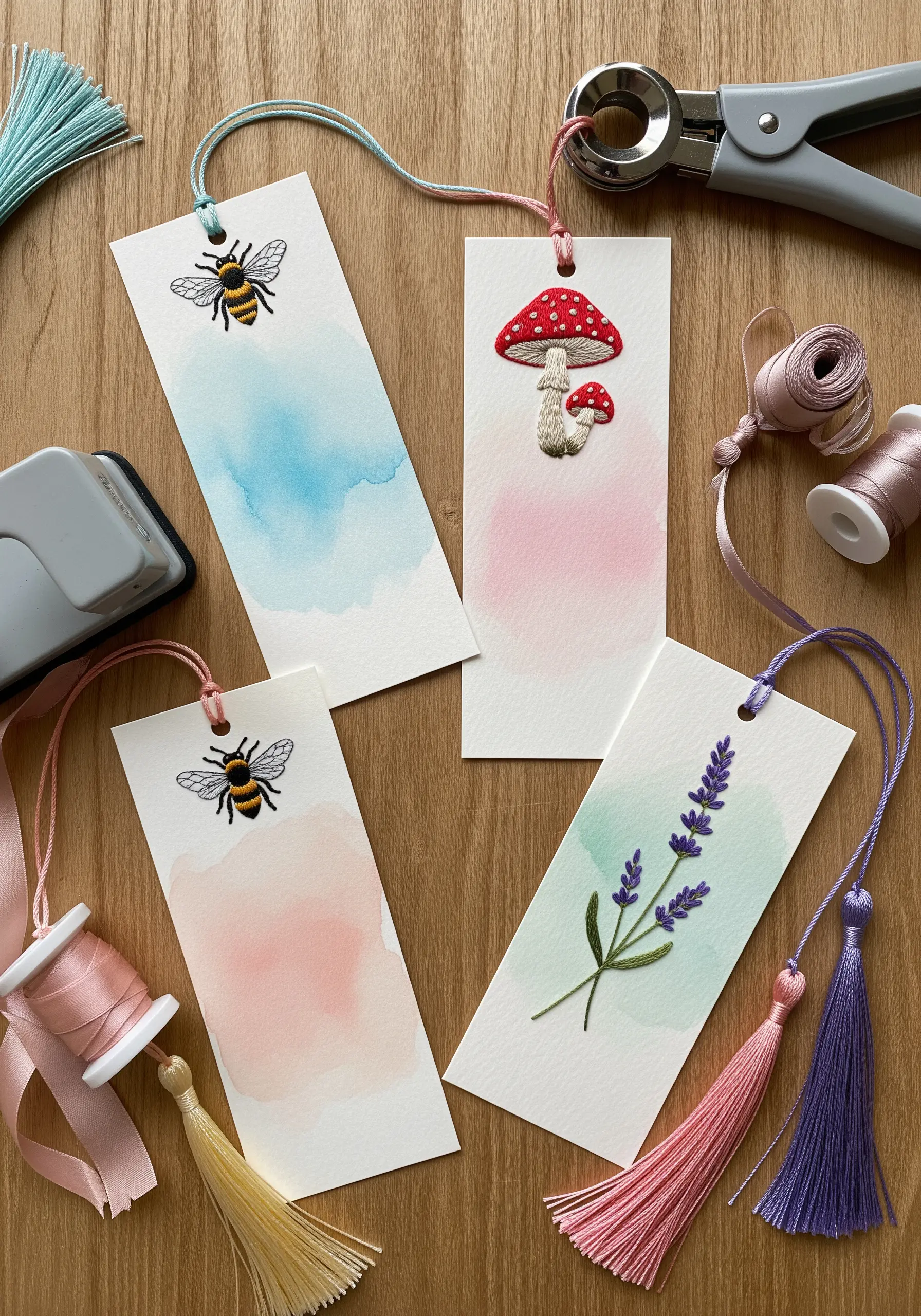
Create small, precious works of art that are also functional.
Use a heavy watercolor paper (at least 140 lb/300 gsm) to prevent buckling.
Apply a simple, light color wash as a background and let it dry.
Carefully pierce stitching holes with your needle before you begin sewing, and use just two or three strands of floss to avoid tearing the paper.
This creates a delightful blend of soft color and crisp, textural stitching.
25. Shadow Box Assemblage with Wrapped and Stitched Objects
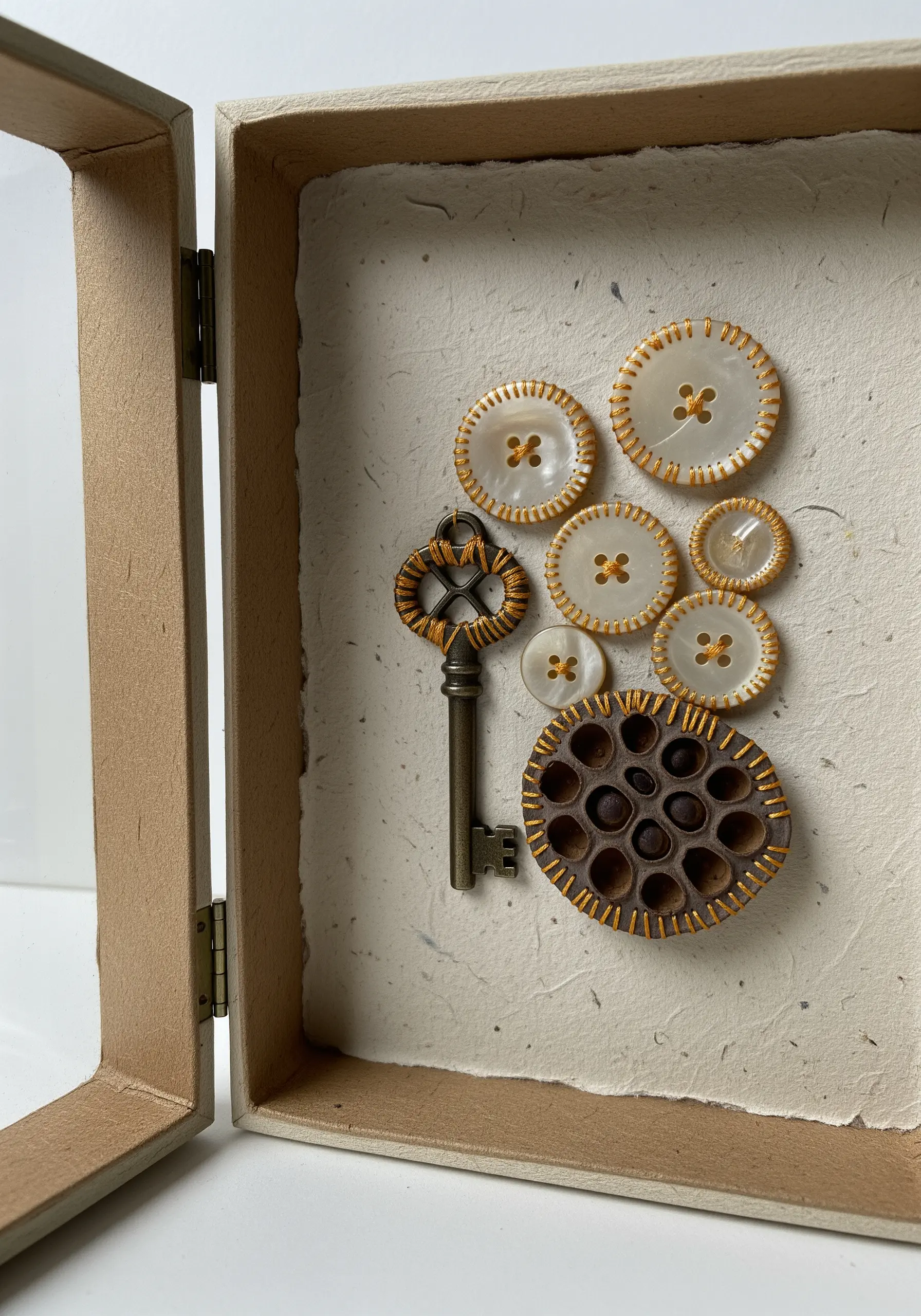
Unify a collection of found objects by introducing thread as a common element.
Use embroidery floss to wrap parts of an object, like the head of a key, or use simple stitches to add a decorative border to a button.
This technique of selective embellishment adds color, texture, and a sense of deliberate craftsmanship, transforming a simple assortment of items into a cohesive and personal assemblage.
26. Celestial Mobiles with Thread-Wrapped Planets
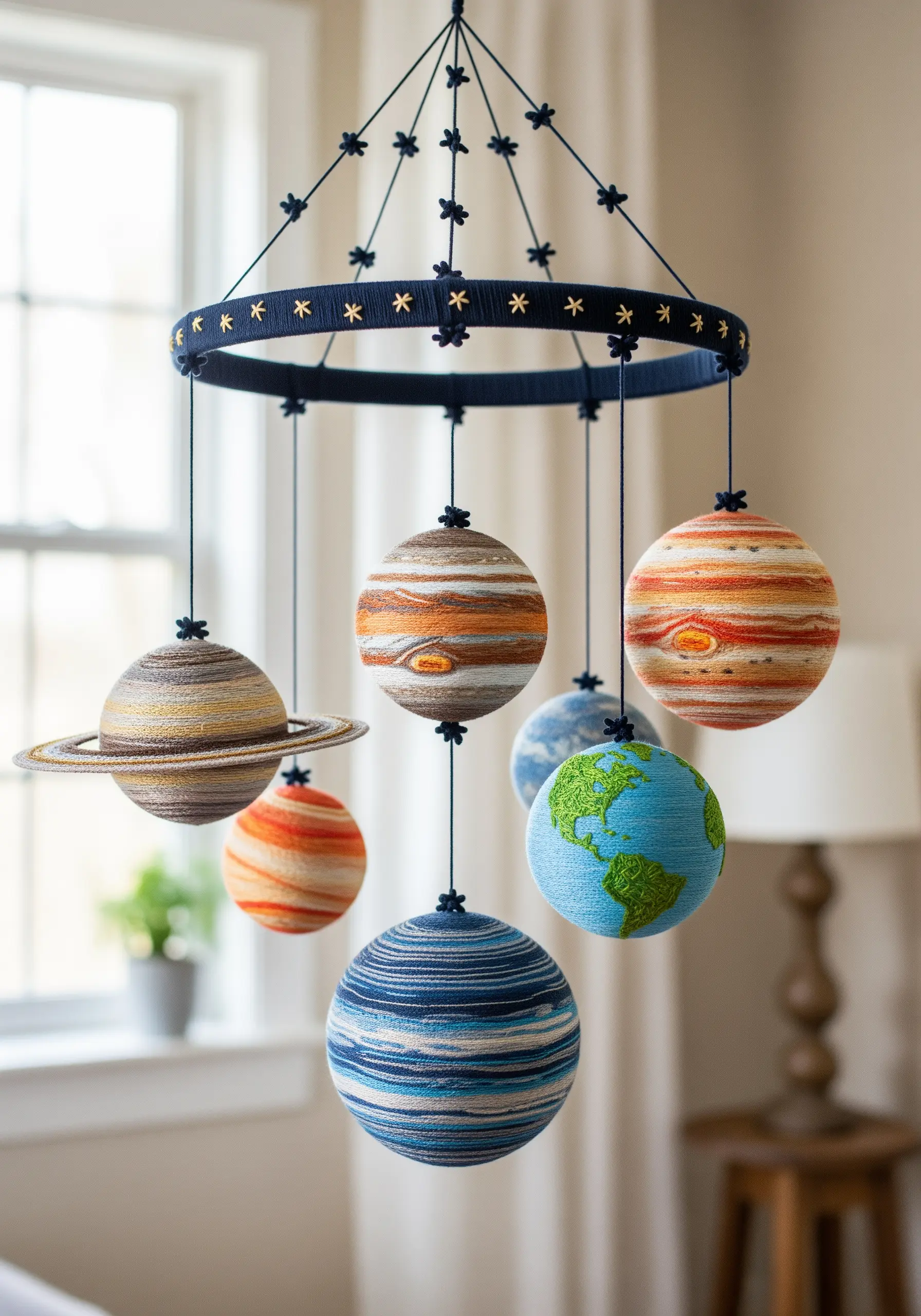
You don’t always need a needle to create stunning fiber art.
Use polystyrene orbs as a base for planets and begin wrapping them tightly with different colors of embroidery floss to create stripes and patterns.
Secure the ends with a dab of glue.
For details like Earth’s continents, you can add a few carefully placed stitches over the wrapped surface.
This is a wonderfully meditative process that turns thread into beautiful, touchable spheres.
27. Improvisational Stitching on Fabric Collage
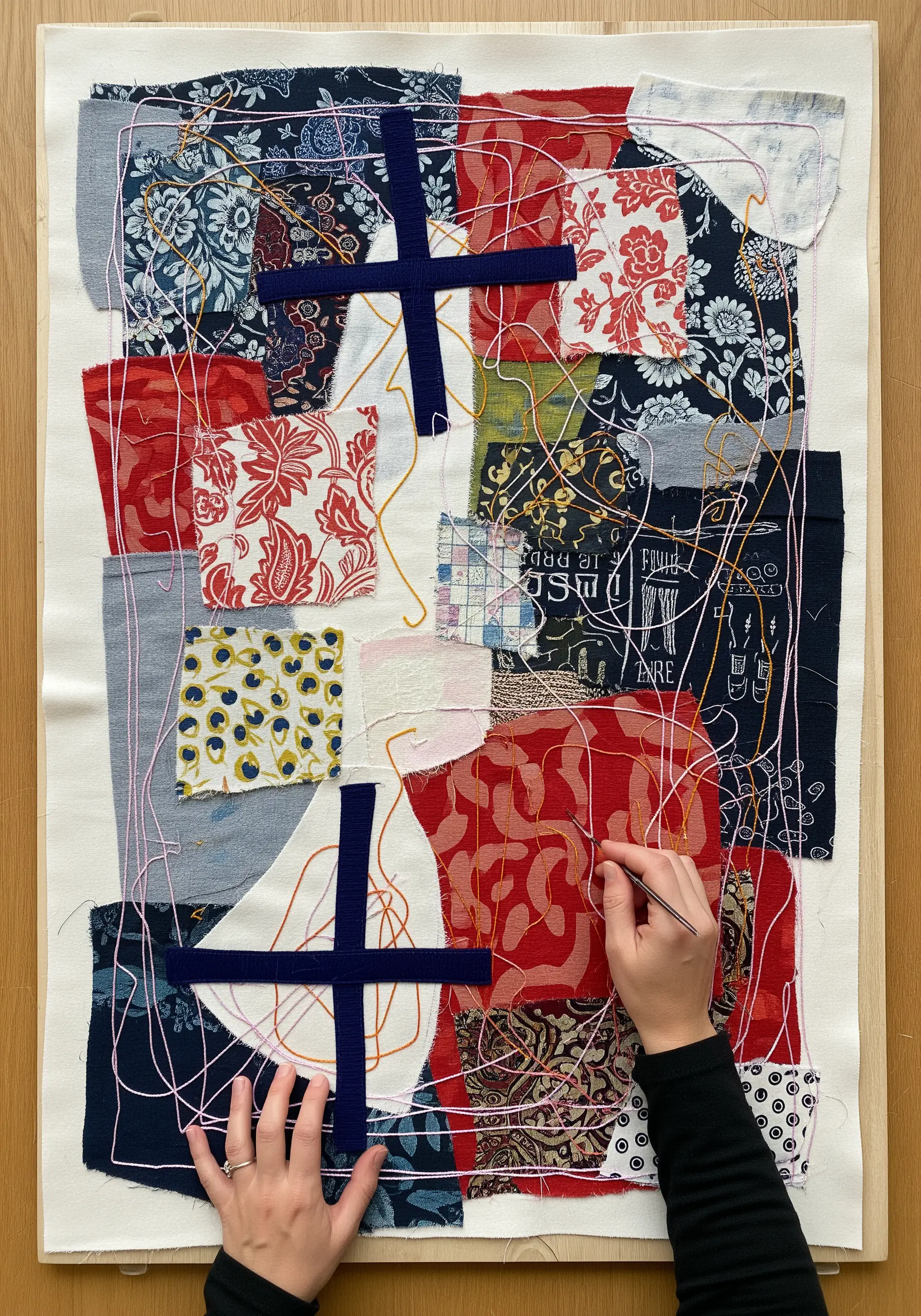
Use your thread like a pen to create an expressive, layered textile drawing.
Begin by creating an abstract collage of fabric scraps on a larger backing piece.
Then, stitch freely over the entire surface, letting your thread wander to create scribbles, loops, and organic lines.
This approach is about capturing energy and movement rather than precise representation, resulting in beautifully complex fabric collage embroidery artworks.
28. Mending Broken Ceramics with Golden Thread
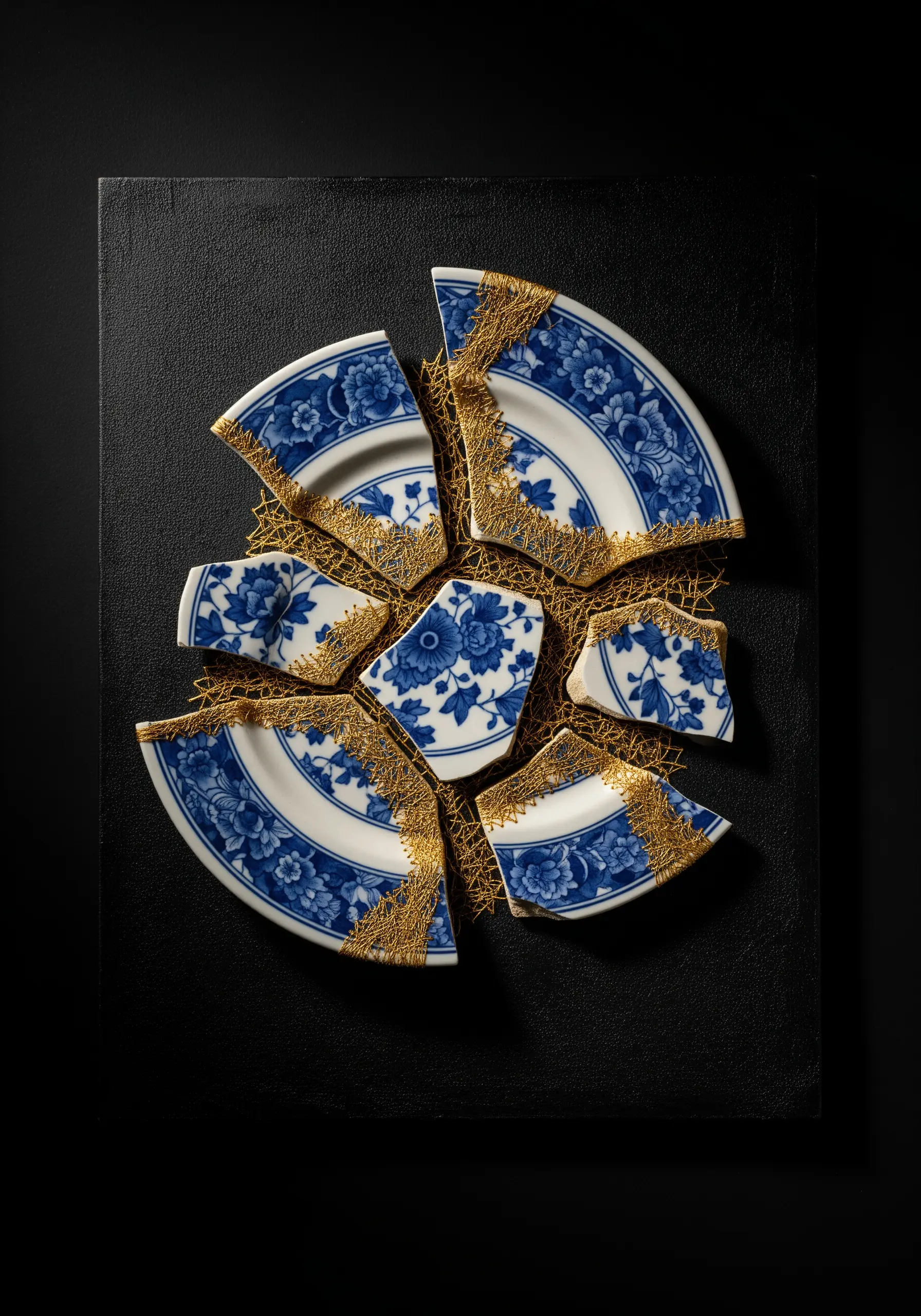
This is a textile interpretation of Kintsugi, the Japanese art of repairing broken pottery with gold.
Arrange the broken pieces on a fabric-covered board, leaving slight gaps between them.
Then, using a lustrous golden thread, create a delicate lattice or web of stitches in the gaps, connecting the pieces visually.
This technique doesn’t repair the object, but rather honors its history and finds beauty in its imperfections through the delicate art of stitching.
29. A Pointillist Cityscape with Pins and French Knots

Create a shimmering, dimensional cityscape by thinking like a pointillist painter.
On a dark painted canvas backed with foam core, use colorful French knots to represent the glowing windows and lights of the city.
Incorporate round-headed map pins for another layer of texture and light-reflection.
The combination of soft, matte knots and hard, glossy pins creates a dynamic surface that feels vibrant and alive.
30. Geometric Studies on Mini Canvases
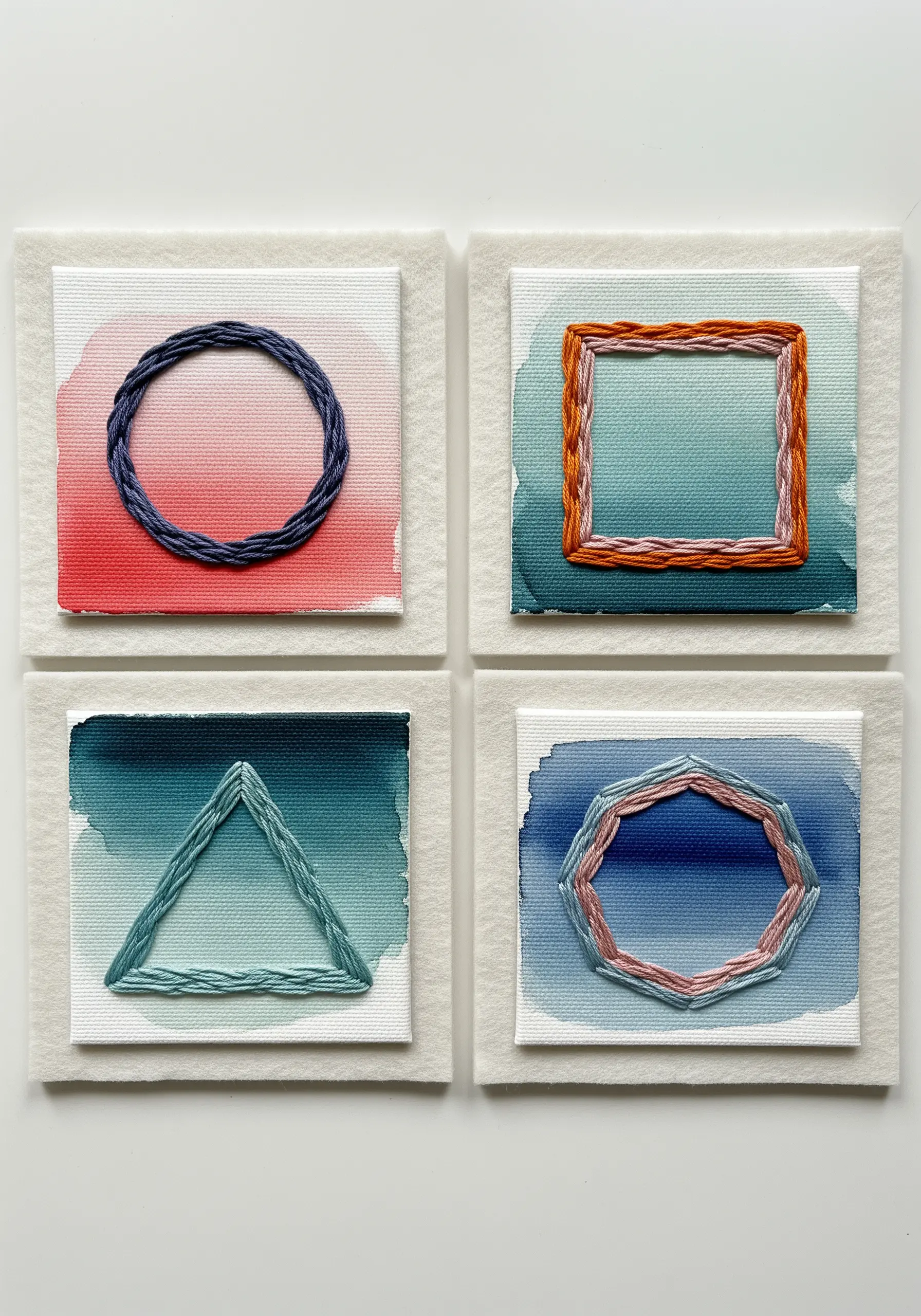
Explore the relationship between color, shape, and texture with a series of small studies.
Apply a soft watercolor wash to several mini canvases, experimenting with different color gradients.
Once dry, use a thick, textural thread like perle cotton to stitch a single, bold geometric shape in the center of each.
A whipped backstitch or a heavy chain stitch provides a strong, raised line that contrasts beautifully with the soft, painterly background.