I know that feeling. You finish a piece, and it’s beautiful, but you sense it could be something more. You want to move beyond following a pattern and begin creating work that feels like art—work that has presence, intention, and a quiet confidence that can command a room.
The secret isn’t in learning more complex stitches or buying more expensive threads. It’s in learning to see the space between the stitches as an active, powerful element of your design. The fabric is not just a background; it’s your canvas. The negative space is not emptiness; it’s a voice.
In this collection, you won’t find complicated instructions. Instead, you’ll find 36 ways to rethink the relationship between thread and fabric. You’ll learn how to use scale, texture, line, and placement to create pieces that feel both minimal and luxurious—art that is deeply personal and truly sophisticated.
This is where your craft evolves. Let’s begin.
1. Frame a Statement with Sculptural Appliqué
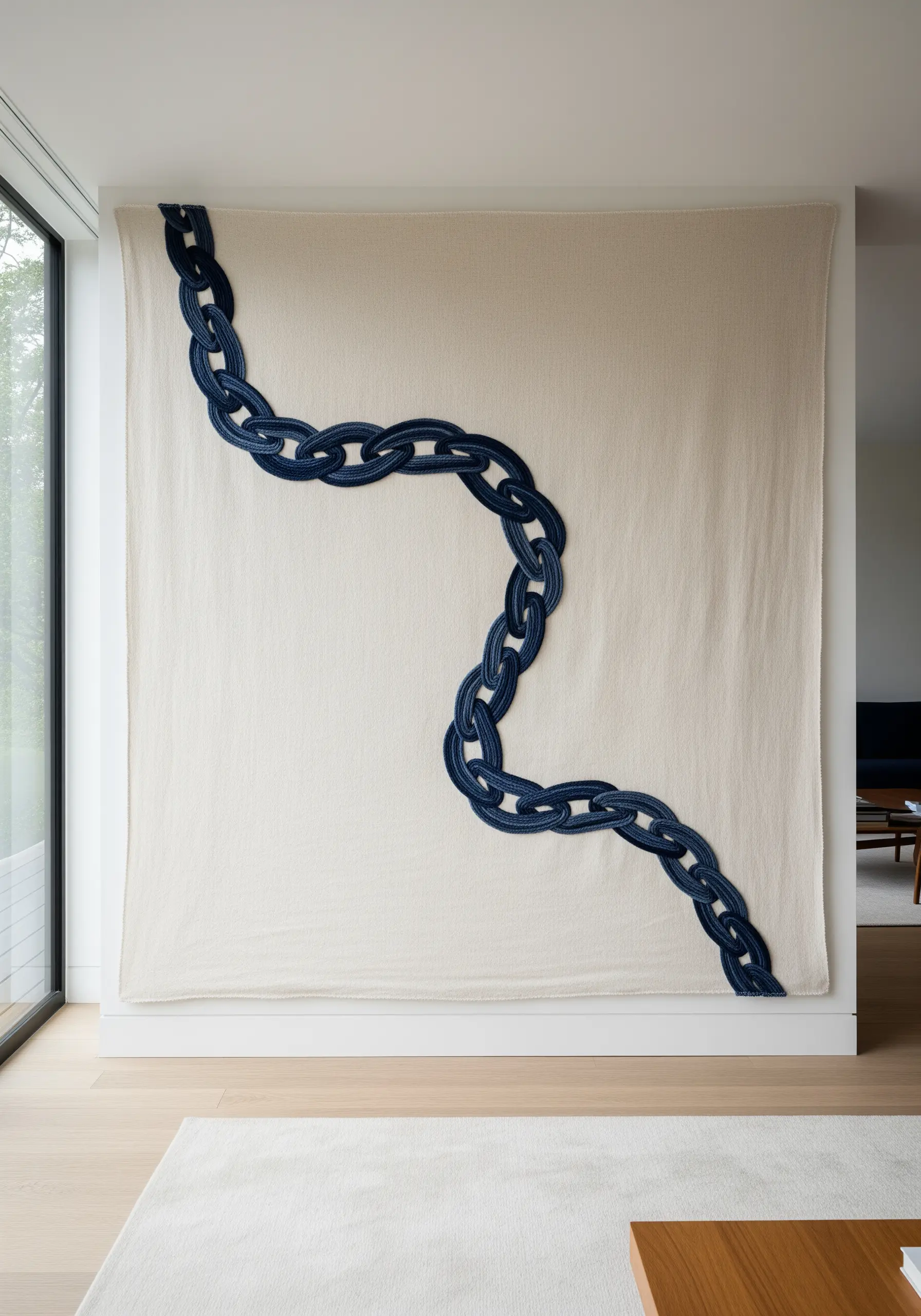
Create a powerful focal point by appliquéing a bold, dimensional motif onto a large-scale textile hanging.
Instead of embroidery floss, use strips of heavy fabric like denim, felt, or canvas to form your shapes.
Secure the appliqué with discreet couching stitches along the edges, using a thread that matches the appliqué fabric to keep the focus on its form and texture.
This technique turns a simple line into a graphic, sculptural element, where the weight of the motif provides a stunning contrast to the lightness of the background fabric.
2. Chart a Galaxy with Varied French Knots
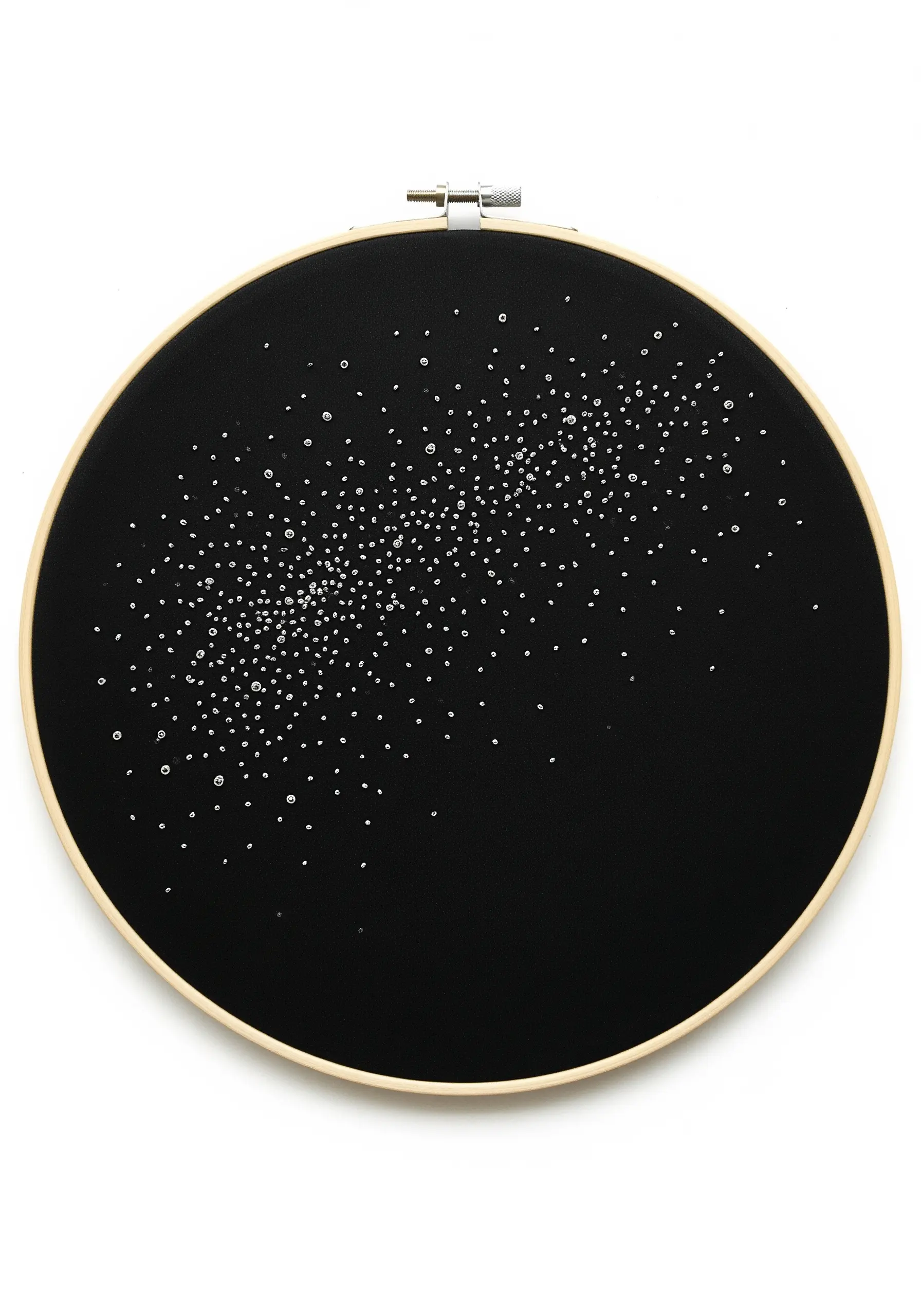
To create a celestial sweep that feels organic, use French knots in varying sizes and densities.
Use a single strand of high-sheen white or silver thread on a matte black cotton or linen fabric for maximum visual contrast.
Create dense clusters of knots that gradually disperse into scattered, individual stitches. This mimics the natural formation of a galaxy and makes the negative space feel like the vastness of space itself.
This technique is not about perfect placement but about creating a rhythmic, textured flow across the hoop.
3. Construct an Architectural Triptych
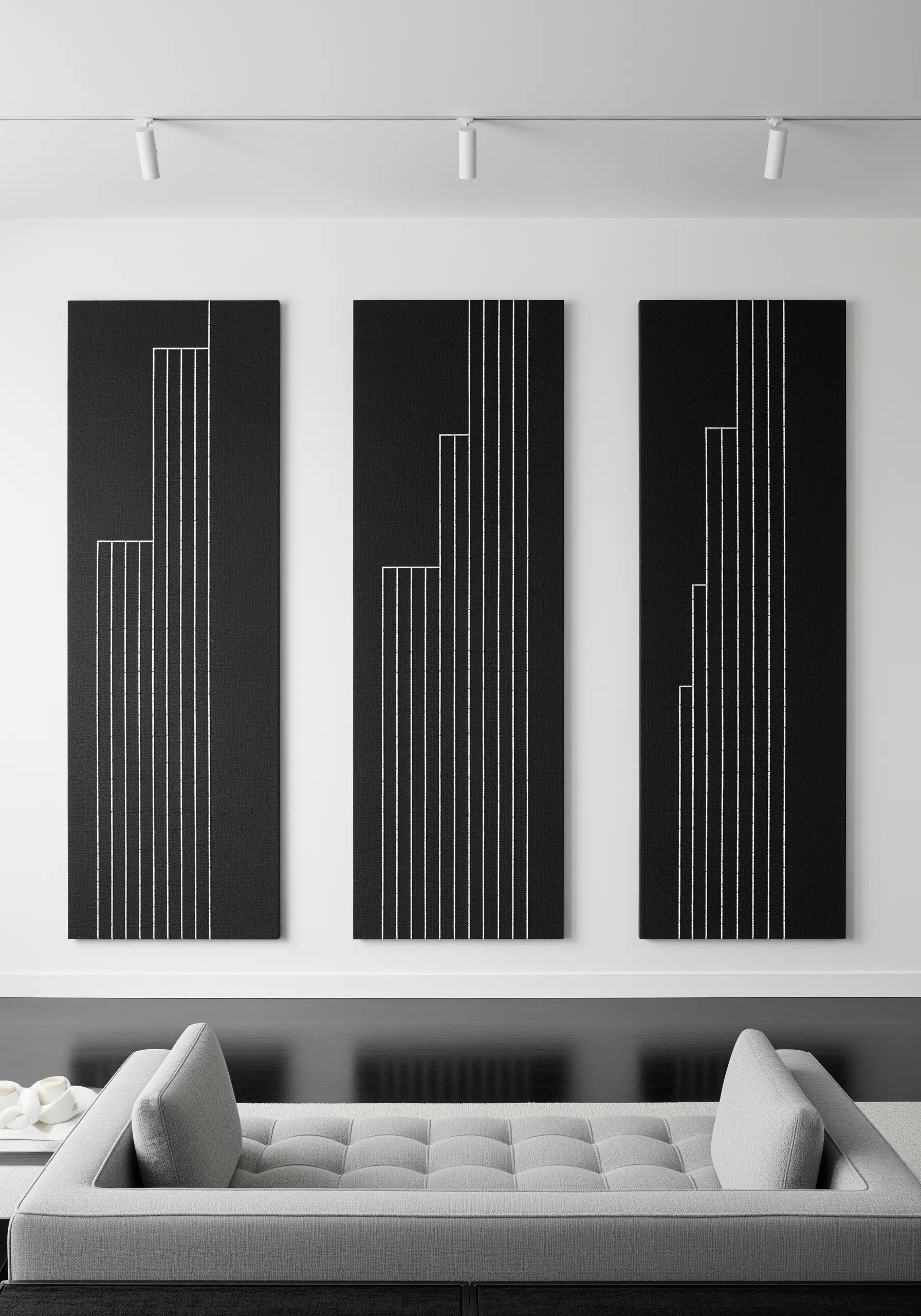
Translate the clean lines of a city skyline into a multi-panel wall art piece.
Stretch black canvas over three identical rectangular frames and use a single strand of white thread for sharp contrast.
Stitch perfectly parallel vertical lines using a taut backstitch. By varying the height of the line groups across the panels, you create a cohesive, minimalist composition that feels both architectural and abstract.
This method uses negative space to build a sense of scale and structure, turning simple stitches into a modern installation.
4. Cultivate Calm with Meditative Circles
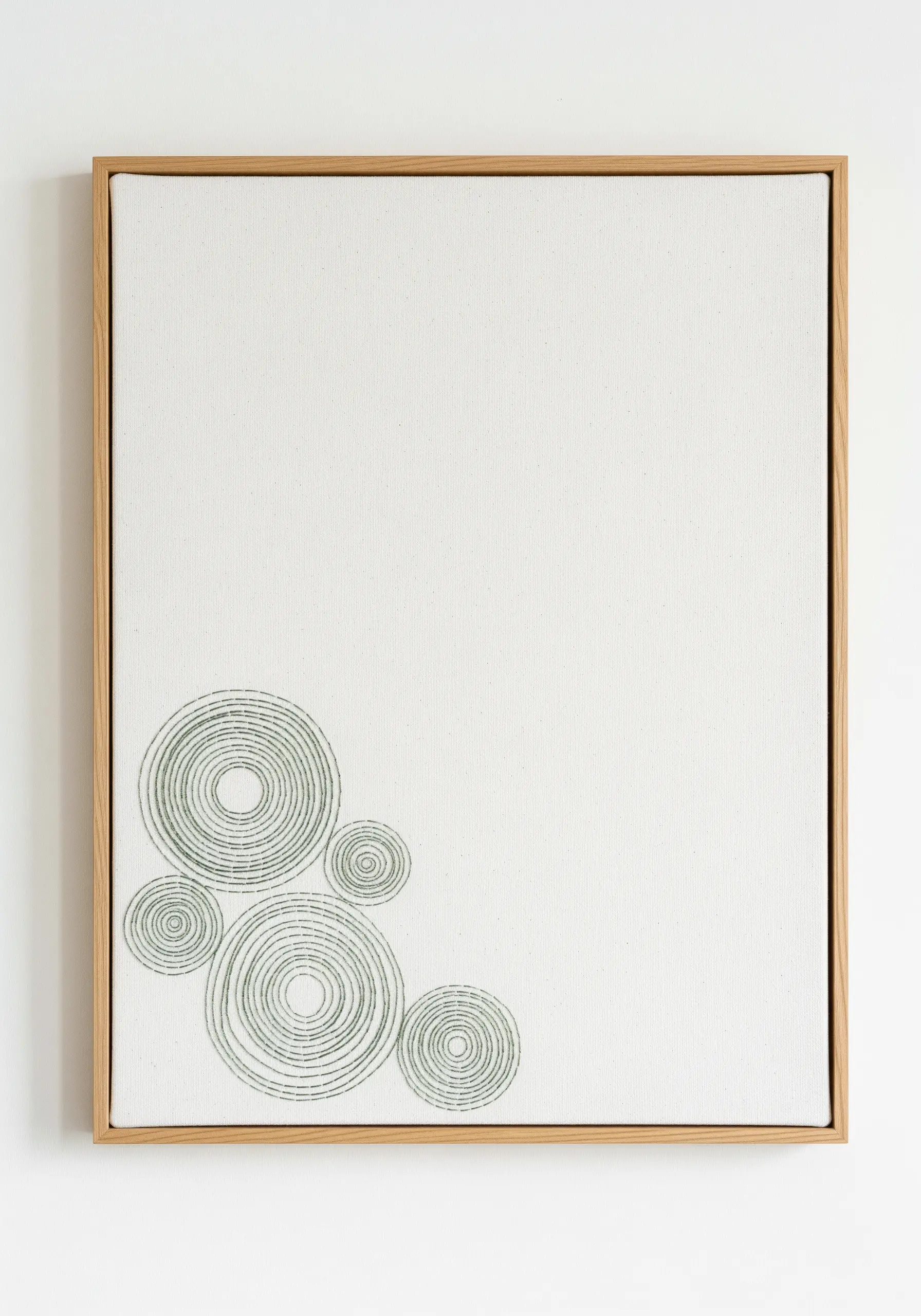
Explore the beauty of repetition by stitching concentric circles in a corner of your canvas, leaving the rest of the space empty.
Use a simple running stitch with a thread color that’s only a few shades different from your fabric, like sage on ivory.
The subtle inconsistencies of hand-stitching will add a warm, organic texture that a machine could never replicate.
This design choice creates a quiet, grounded focal point that draws the eye without overwhelming the senses, proving that minimalist embroidery can be incredibly expressive.
5. Capture Movement with a Cascade of Motifs

Create a dynamic sense of flow by scattering small, individual motifs diagonally across a large textile panel.
Stitch simple leaf shapes using a fishbone or satin stitch, but vary the colors slightly within an autumnal palette to give each one unique character.
Arrange them in a dense cluster at the top, allowing them to become more sparse as they travel down the fabric. This gradient effect makes the empty space feel active, like a gust of wind carrying the leaves.
6. Stitch the Shape of Sound
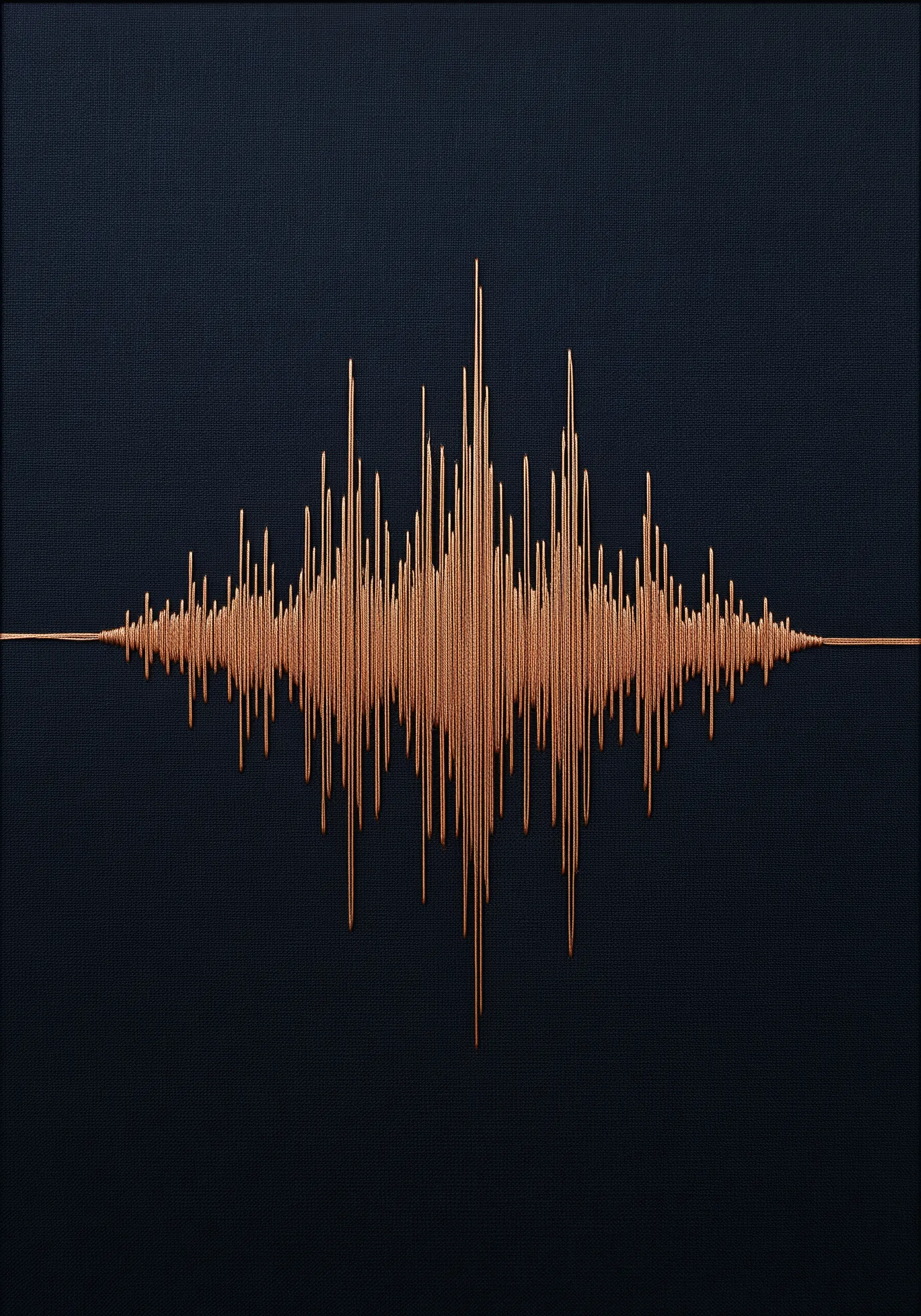
Turn a soundwave into a highly personal and modern piece of art by translating its peaks and valleys into thread.
Use a metallic thread, like copper or gold, on a dark, non-reflective fabric such as matte velvet or heavy linen to create a striking contrast.
A raised stem stitch or a couched metallic cord will give the line a clean, defined, and continuous quality. This technique transforms an invisible concept into a tangible, textural statement, literally stitching sound.
7. Draw in Space with Suspended Threads
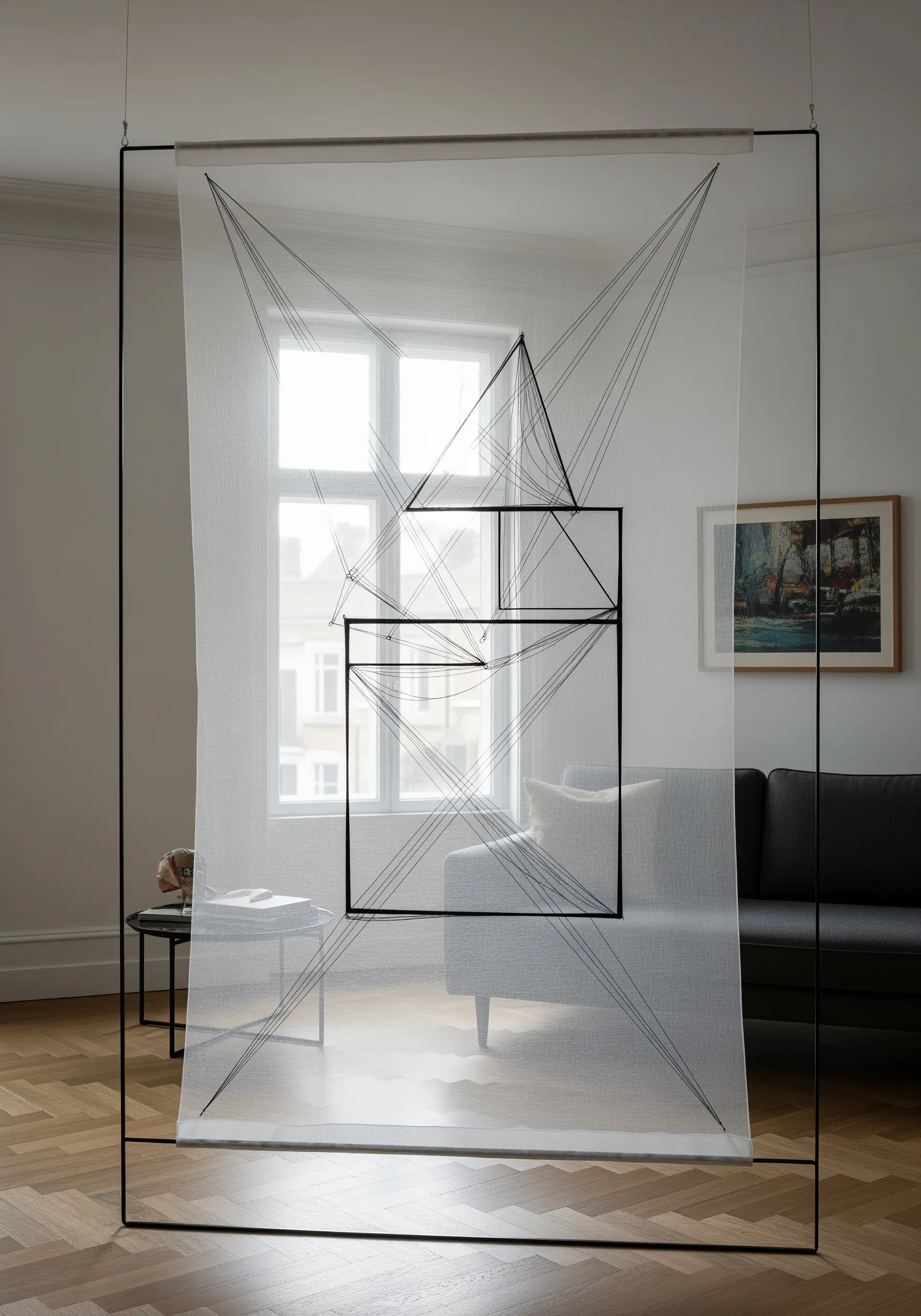
Elevate your embroidery by taking it off the fabric entirely, creating a floating three-dimensional drawing.
Use a rigid metal frame as your canvas and stretch strong, fine black thread between its edges to construct geometric shapes.
Alternatively, stitch your line art onto a sheer organza panel. The transparency allows the design to interact with the light and space behind it, creating shifting shadows and a sense of weightlessness.
This approach challenges the very definition of embroidery, turning thread into a tool for spatial sculpture.
8. Impose Order with a Minimalist Grid
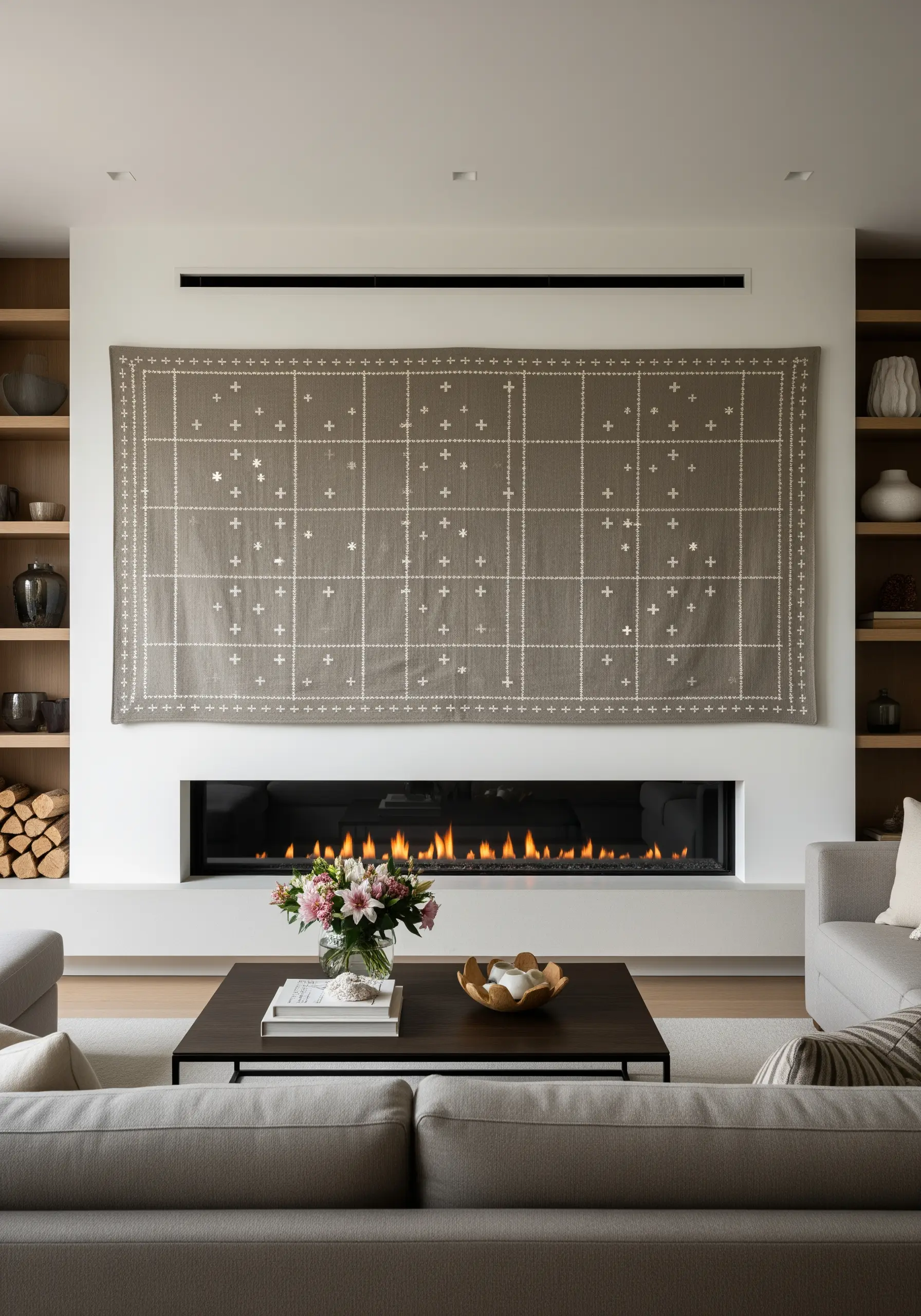
Create a sophisticated, calming effect with a precisely stitched grid on a large textile hanging.
Use a simple repeating motif, like a small cross stitch or a plus sign, at the intersection of your grid lines.
Choose a high-contrast palette, such as cream thread on taupe or charcoal linen, to emphasize the clean, geometric structure.
The negative space within the grid is just as important as the stitches themselves, creating a pattern of quiet and focus. This is a perfect example of how minimal embroidery wall pieces can define a room.
9. Build a Topography of Texture
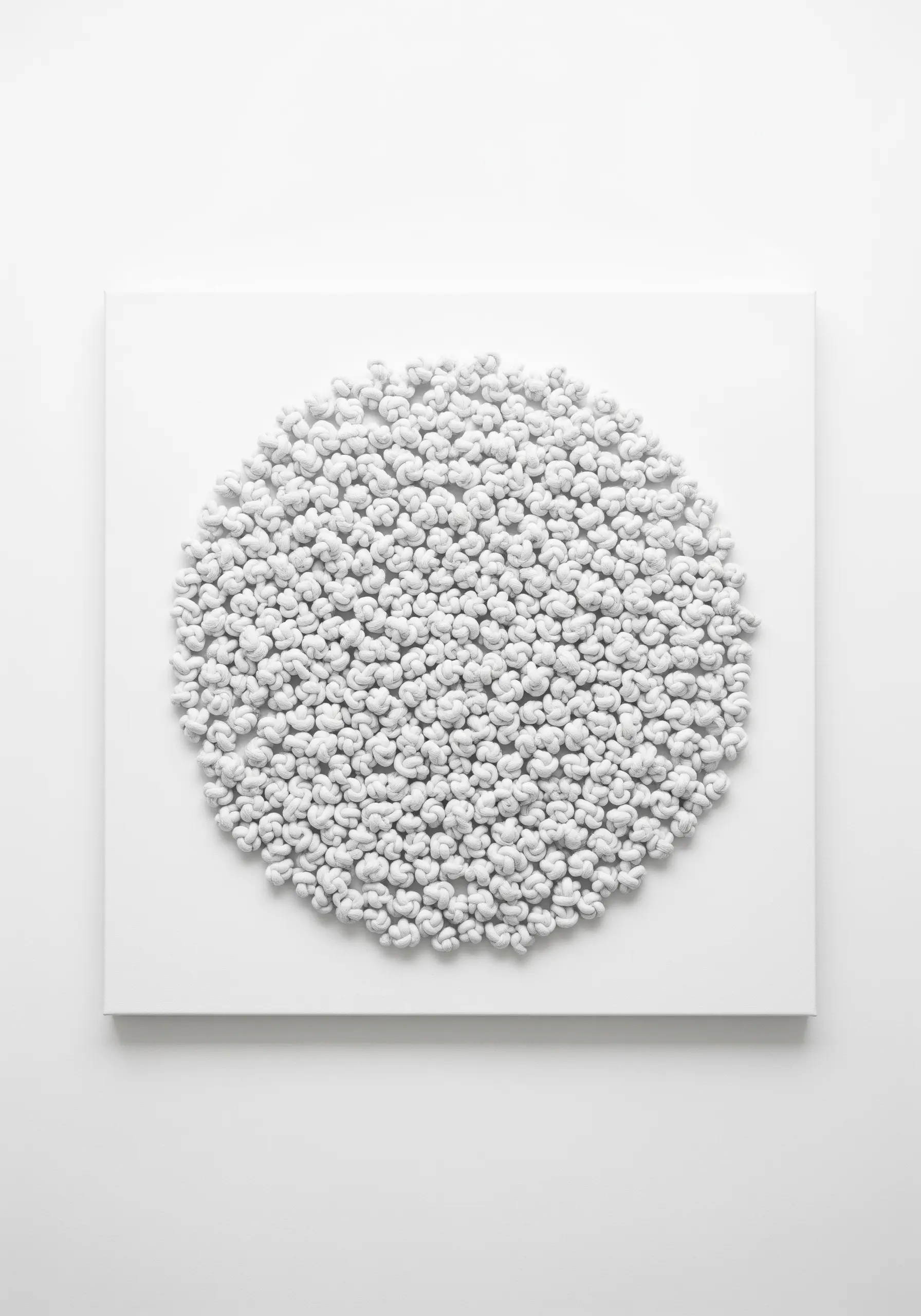
Focus entirely on texture by filling a simple shape with a dense collection of highly dimensional stitches.
Use a thick, soft yarn or 12 strands of cotton floss to create tightly packed French knots or bullion knots.
By working in a monochrome palette (white on white), you remove color from the equation, forcing the viewer to appreciate the intricate landscape of shadows and highlights created by the stitches.
This transforms the thread from a tool for drawing into a medium for sculpture.
10. Define a Corner with Abstract Lines
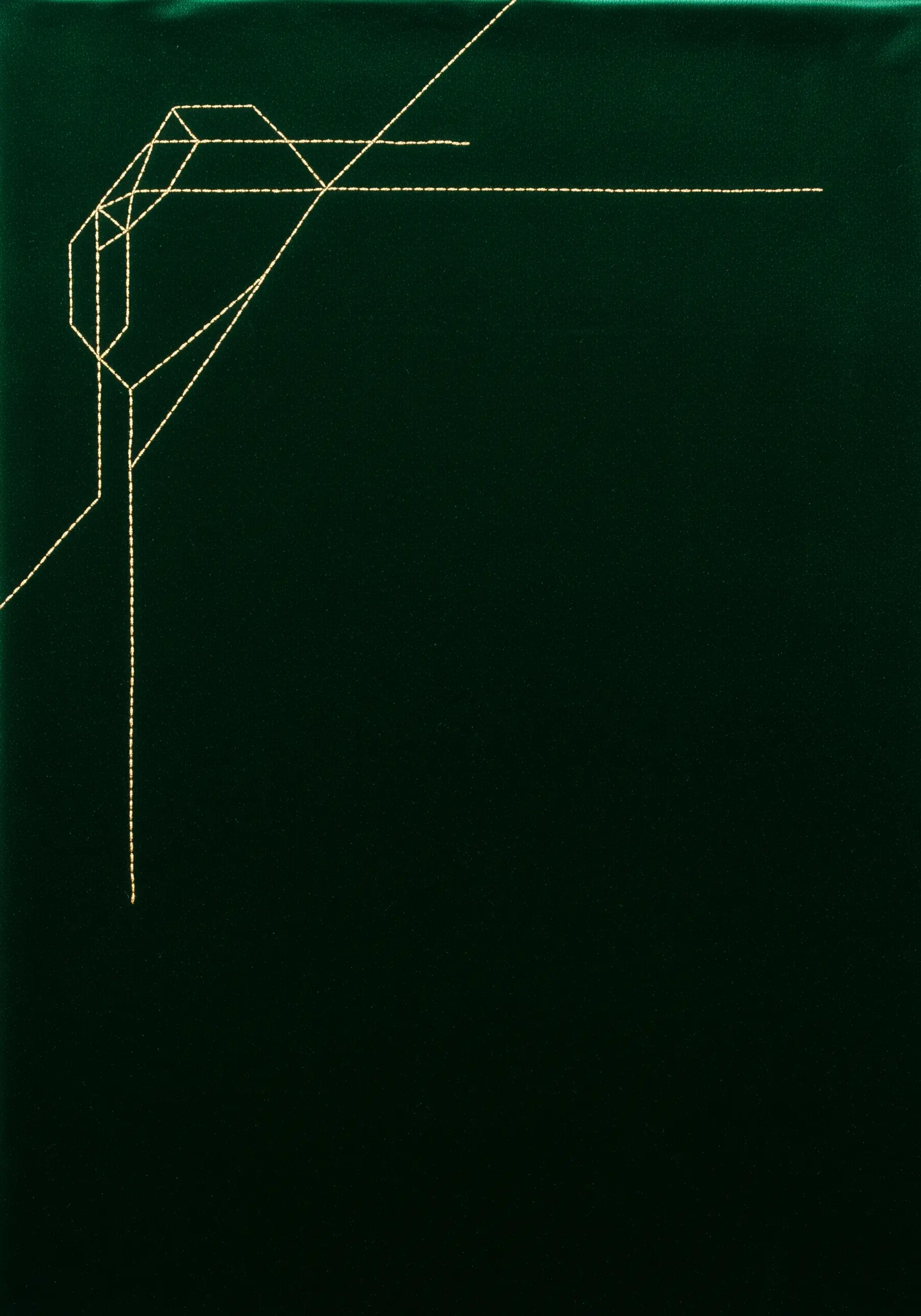
Suggest a larger form by stitching only a corner of a geometric shape, allowing the viewer’s mind to complete it.
Use a high-lustre metallic thread, like gold or silver, on a rich, dark fabric like emerald velvet for a luxurious effect.
A simple, neat backstitch will create a crisp, graphic line that feels intentional and precise.
The power of this technique is in what you don’t stitch; the vast negative space becomes an active part of the composition, creating tension and intrigue.
11. Embrace Gravity with Cascading Threads
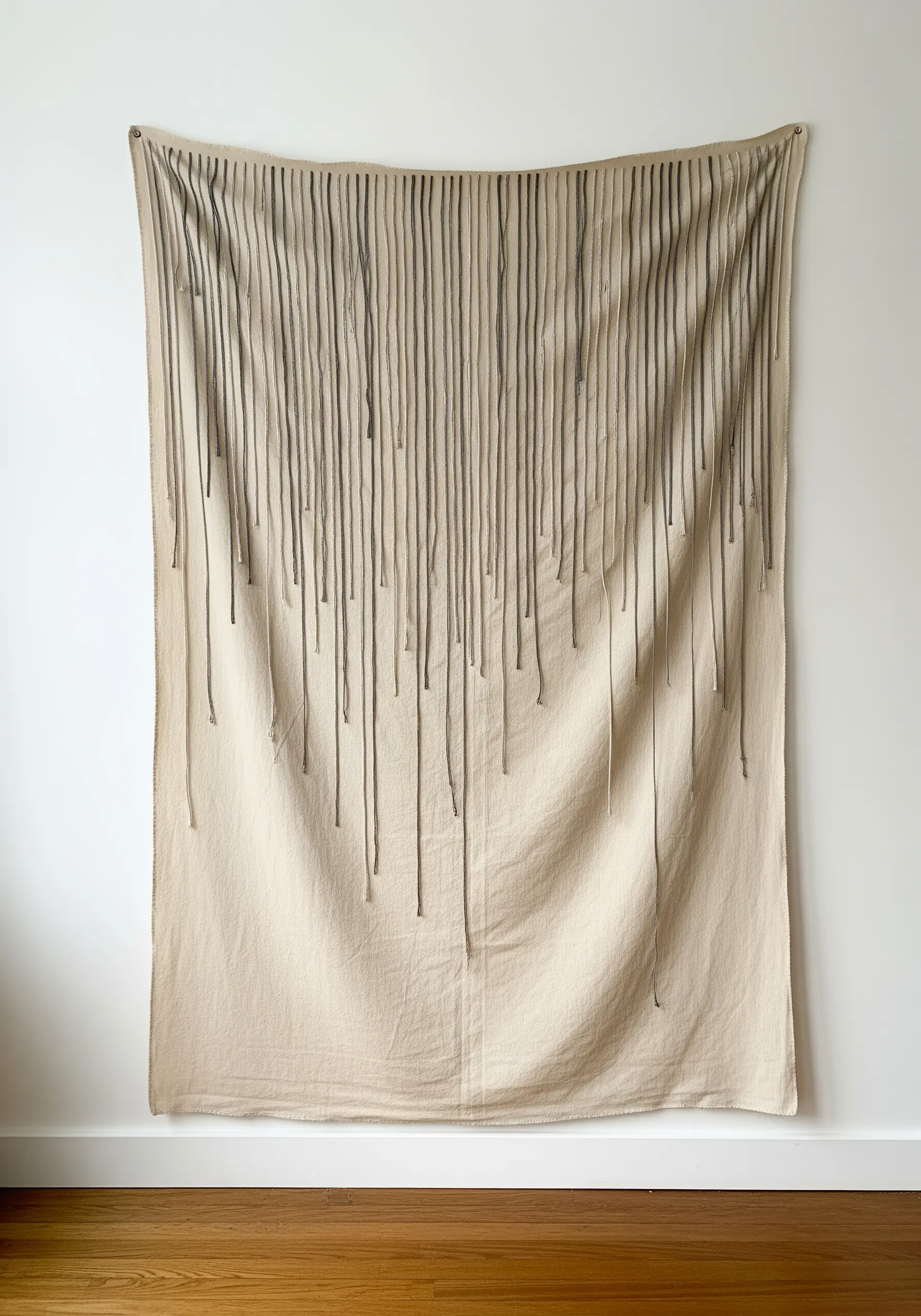
Incorporate the raw element of the thread itself by letting it hang loose as a key feature of your design.
Secure thick cords or yarns at the top of your fabric with a simple series of running stitches, then allow them to drape downwards.
Create a subtle color gradient or vary the lengths of the threads to add visual interest and a sense of organic movement.
This technique adds a sculptural, tactile quality and highlights the material nature of the threads you work with.
12. Weave Light with String Art Mandala
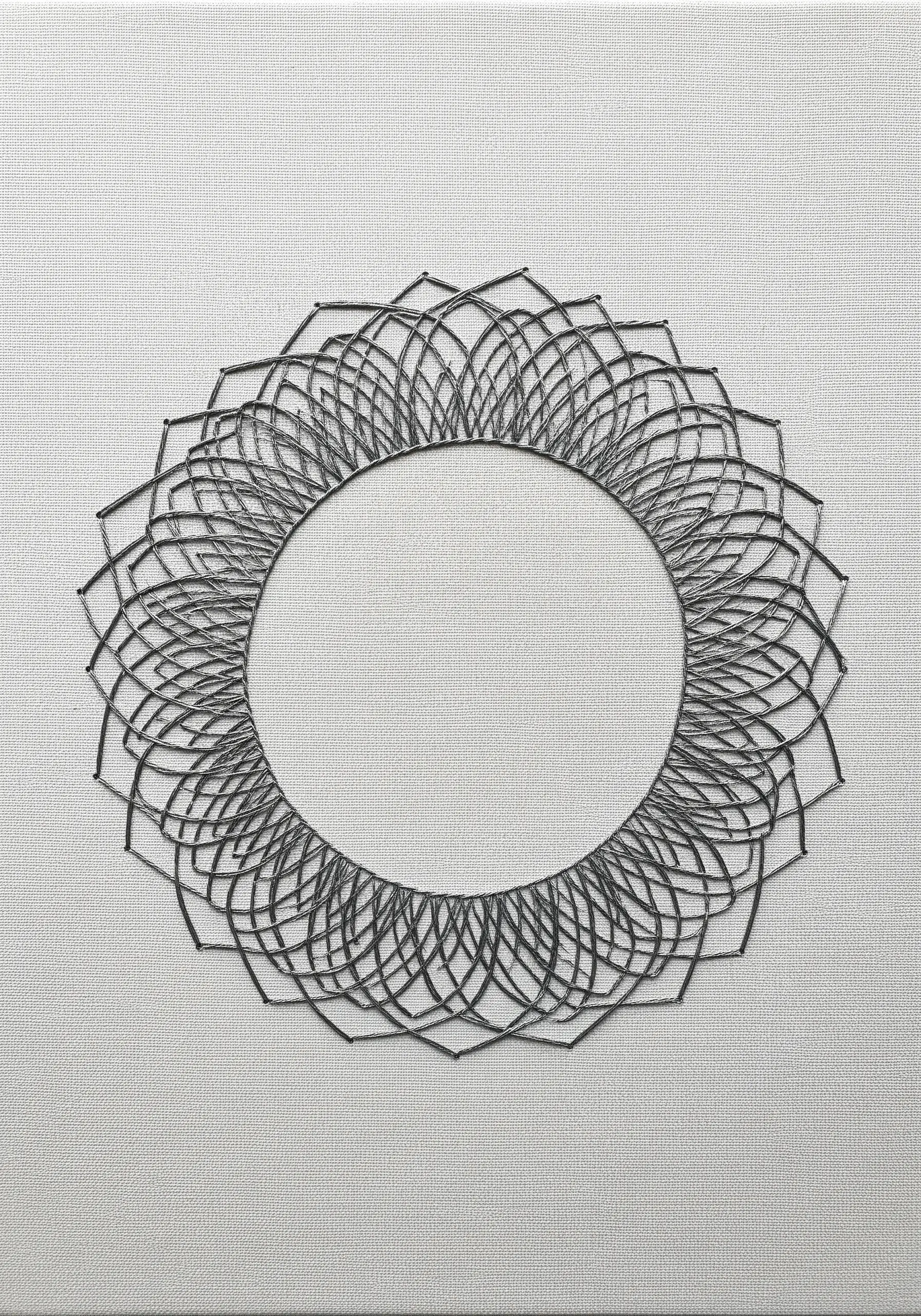
Create intricate, lace-like geometry by adapting string art techniques to a stretched canvas.
Instead of a hoop, use a sturdy framed canvas and map out your design with small, evenly spaced pins or nails around the perimeter.
Wrap a single, continuous strand of fine, strong thread—like a metallic or silk filament—between the pins to build up layers of overlapping lines.
The result is a design that feels impossibly delicate and precise, capturing light and creating an illusion of depth.
13. Juxtapose Form with Abstract Appliqué
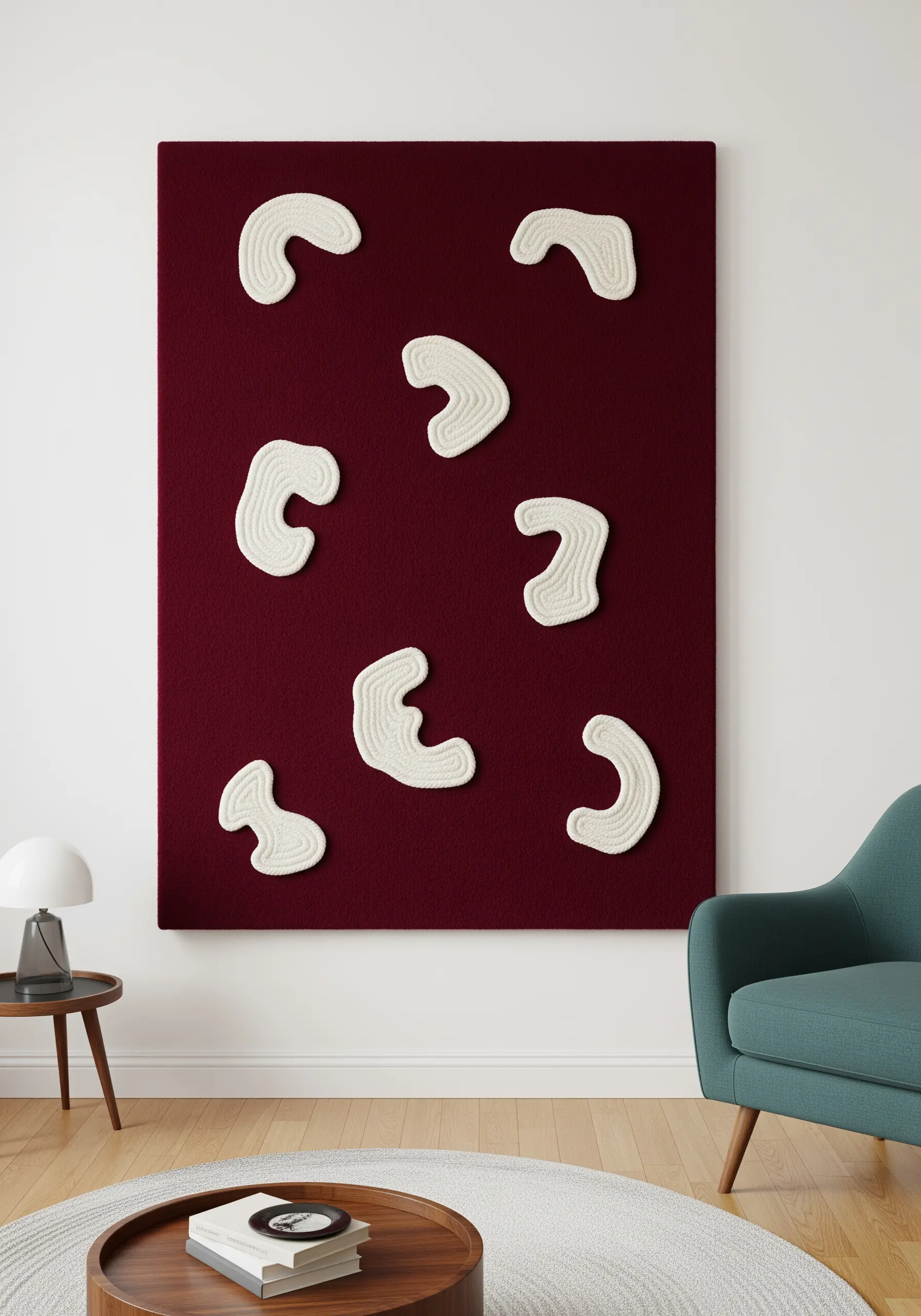
Create a playful yet sophisticated composition by placing soft, organic shapes against a bold, solid background.
Use a thick, textured cord or yarn, couched down in tightly packed rows, to create raised, abstract forms.
The contrast between the deep burgundy felt background and the creamy white, tactile shapes creates a dynamic visual tension.
This method focuses on the interplay between color, texture, and negative space to achieve a balanced and modern look.
14. Guide the Eye with a Meandering Path
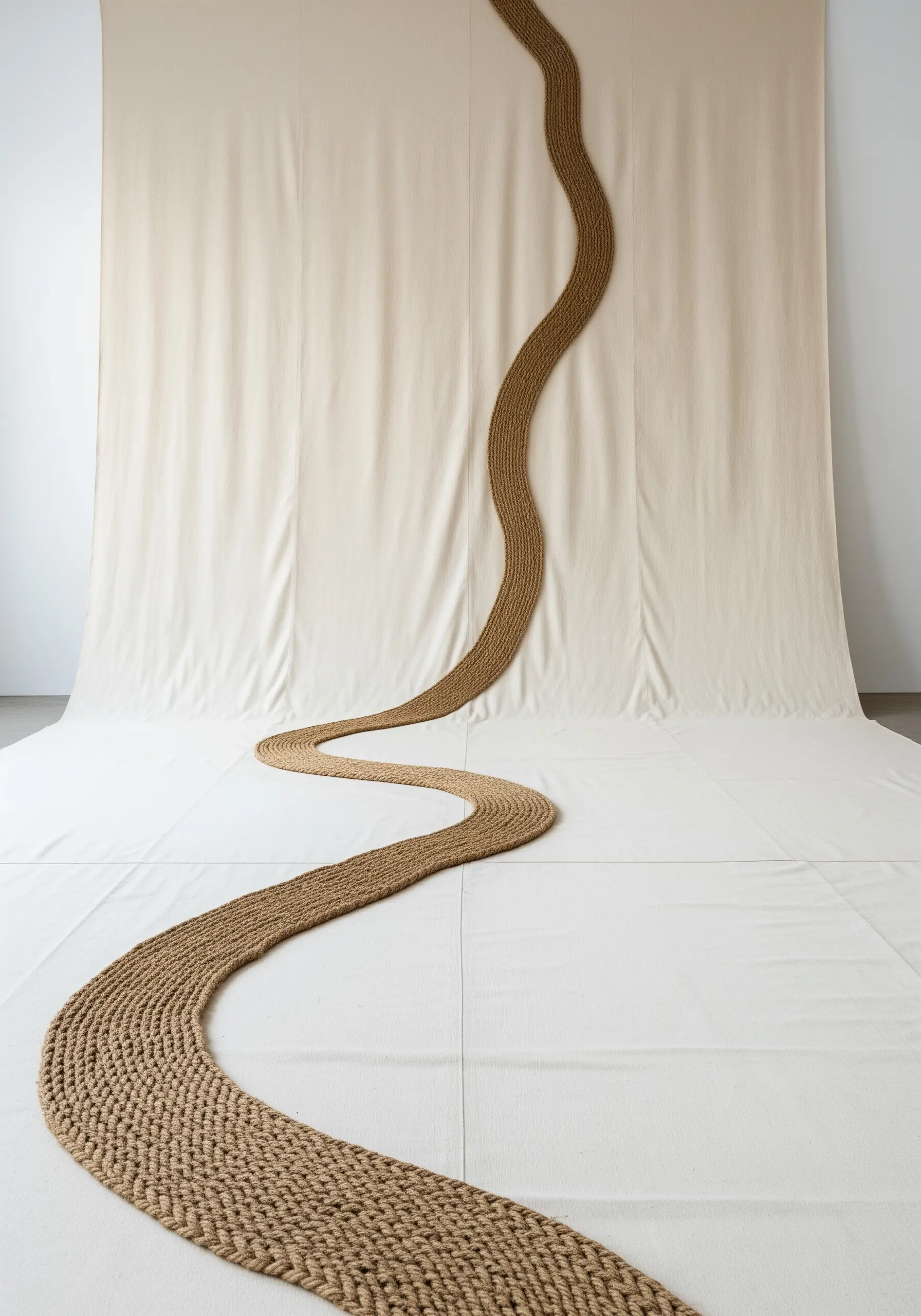
Make a monumental statement by creating a single, continuous element that flows through a large space.
Instead of thread, use a thick, natural rope like jute or sisal, securing it to a massive fabric backdrop with heavy-duty couching stitches.
The texture of the rope provides a rustic, earthy contrast to the smooth fabric, and its winding path guides the viewer’s eye through the entire installation.
This elevates embroidery to the scale of environmental art, transforming a room.
15. Sculpt Mountains with Directional Stitches
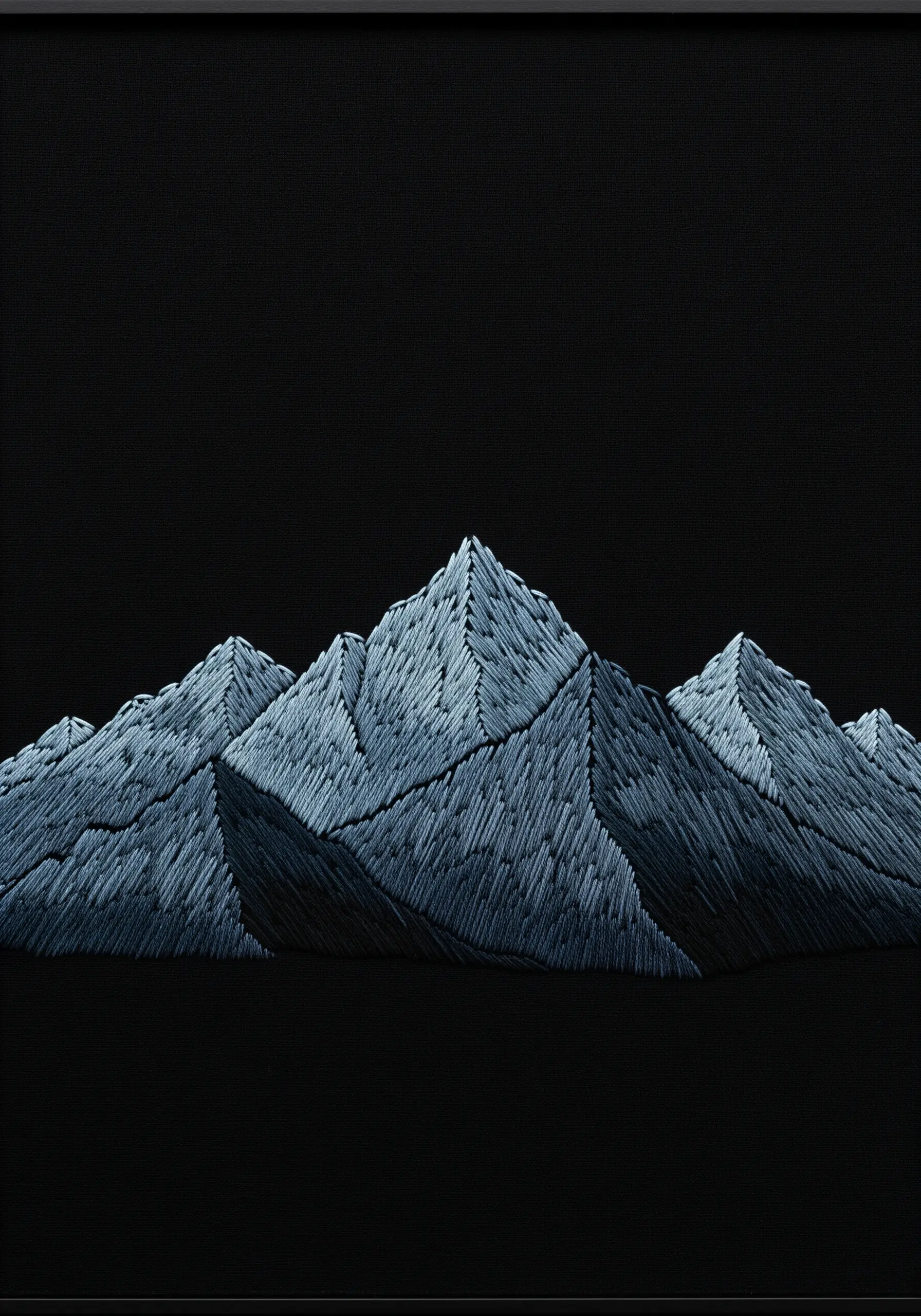
Create the illusion of sharp, rocky planes using nothing but thread and stitch direction.
Use a long-and-short stitch, but instead of blending colors, use a limited palette of cool grays and blues to represent shadow and light.
The key is to change the angle of your stitches abruptly to define the different facets of the mountain. This technique, stitched on black fabric, makes the forms feel solid and chiseled, emerging from the darkness.
16. Isolate Color for Maximum Impact

Demonstrate the power of restraint by using a single, vibrant color in an otherwise empty composition.
Stretch white canvas across two separate panels to create a diptych.
Couch down several strands of bright red thread to form a crisp, clean line—vertical on one panel, horizontal on the other.
The stark white negative space amplifies the energy of the red, and splitting the design across two surfaces forces the viewer to consider the relationship between them. This is an exercise in pure, confident minimalism.
17. Integrate Thread with Natural Textures
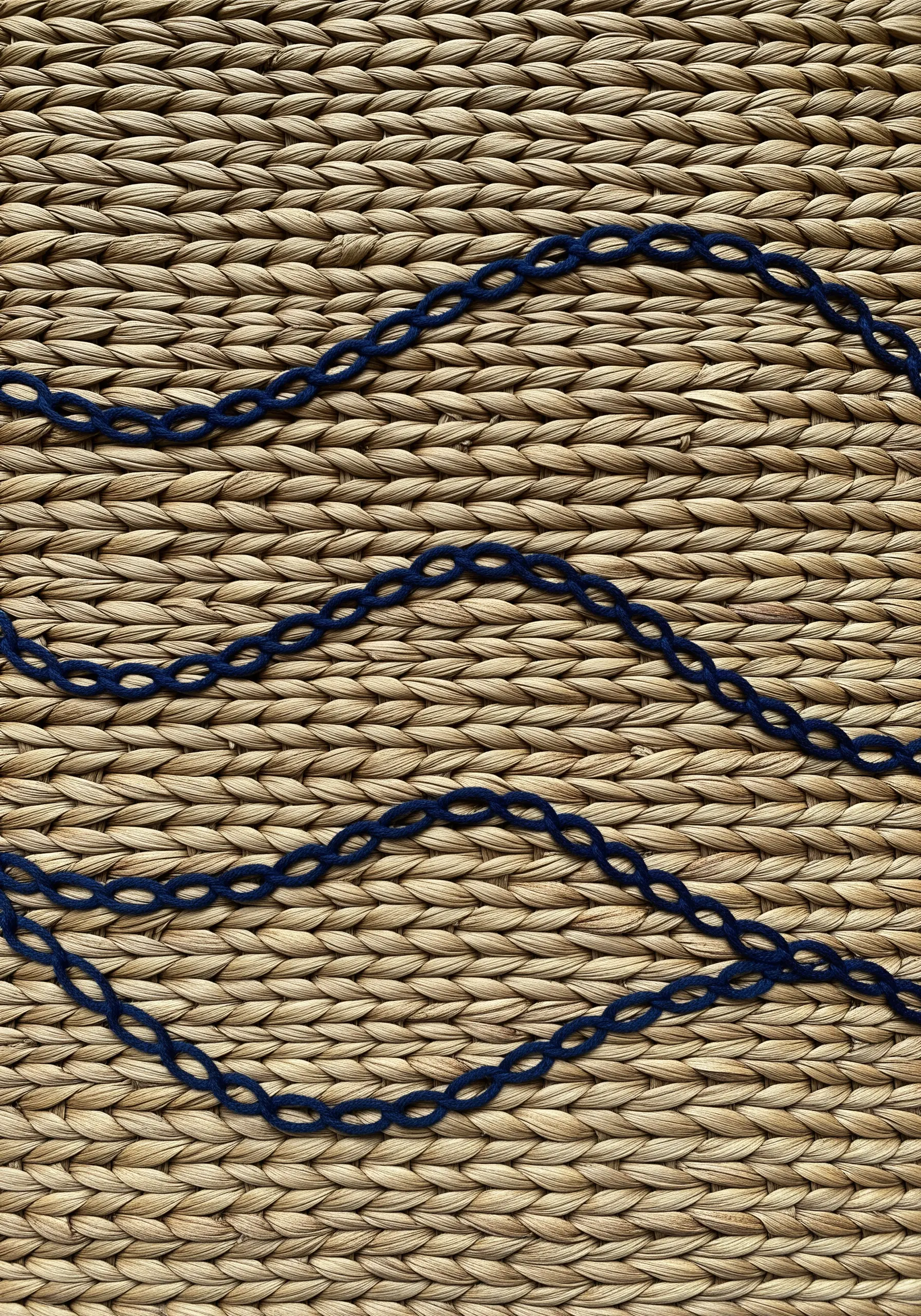
Move beyond fabric and explore stitching on unconventional, textural surfaces like woven seagrass or wicker.
Use a thick yarn and a large, blunt needle to weave a simple pattern, like this open chain stitch, directly into the existing structure of the material.
The contrast between the smooth, dyed yarn and the rustic, natural fiber of the background creates a compelling tactile and visual dialogue.
This approach connects your stitching to the world of natural materials and found objects.
18. Trace Topography with Echoing Lines
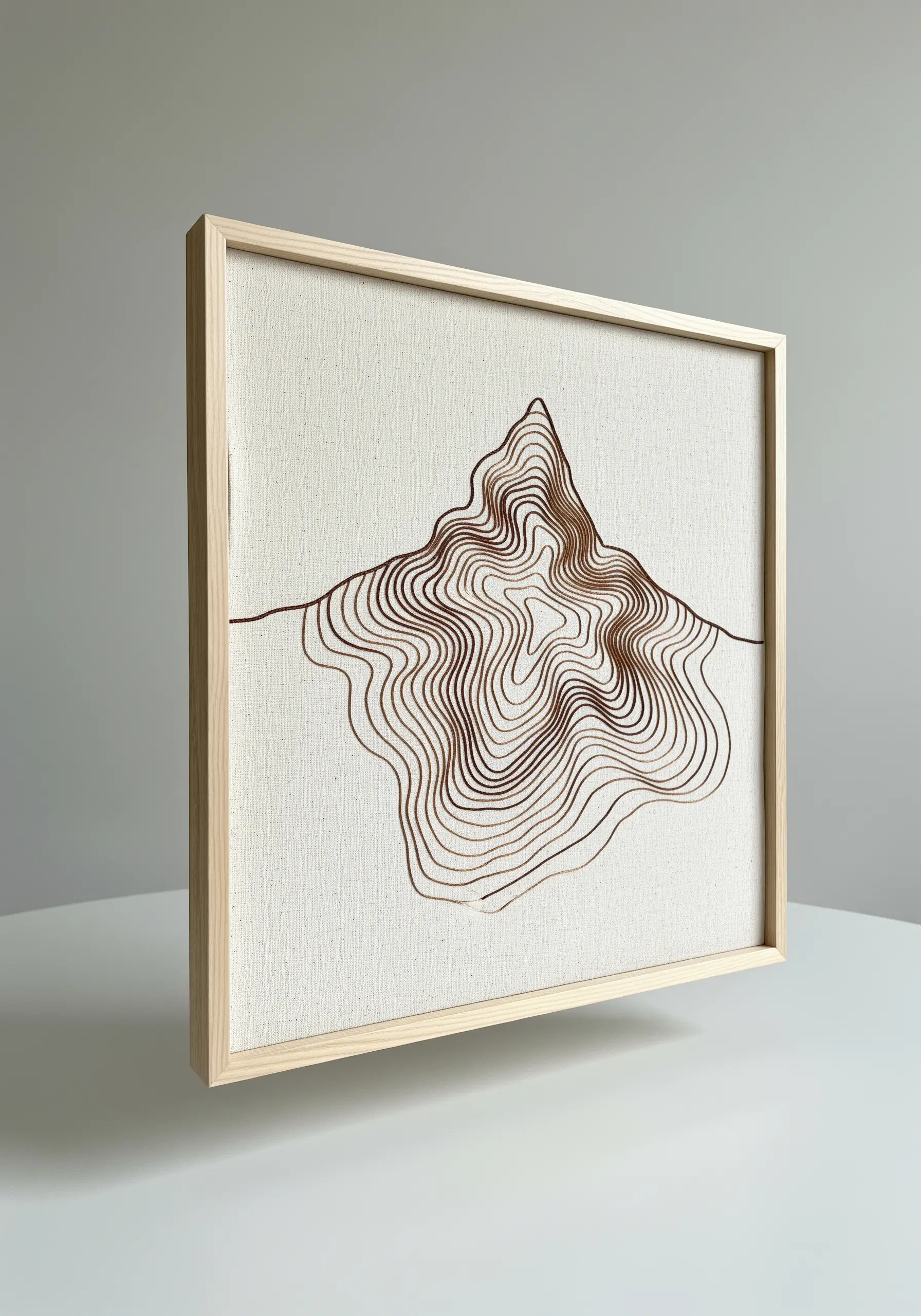
Create a sense of depth and vibration by stitching concentric lines that echo a central form.
Draw a simple shape—like this mountain silhouette—and then use a basic backstitch to trace organic lines that ripple outwards from it.
Using a single color of thread on a neutral linen canvas keeps the focus on the rhythmic quality of the lines.
The final piece feels like a topographic map or the rings of a tree, telling a story of growth and landscape through pure line work.
19. Balance Presence and Absence
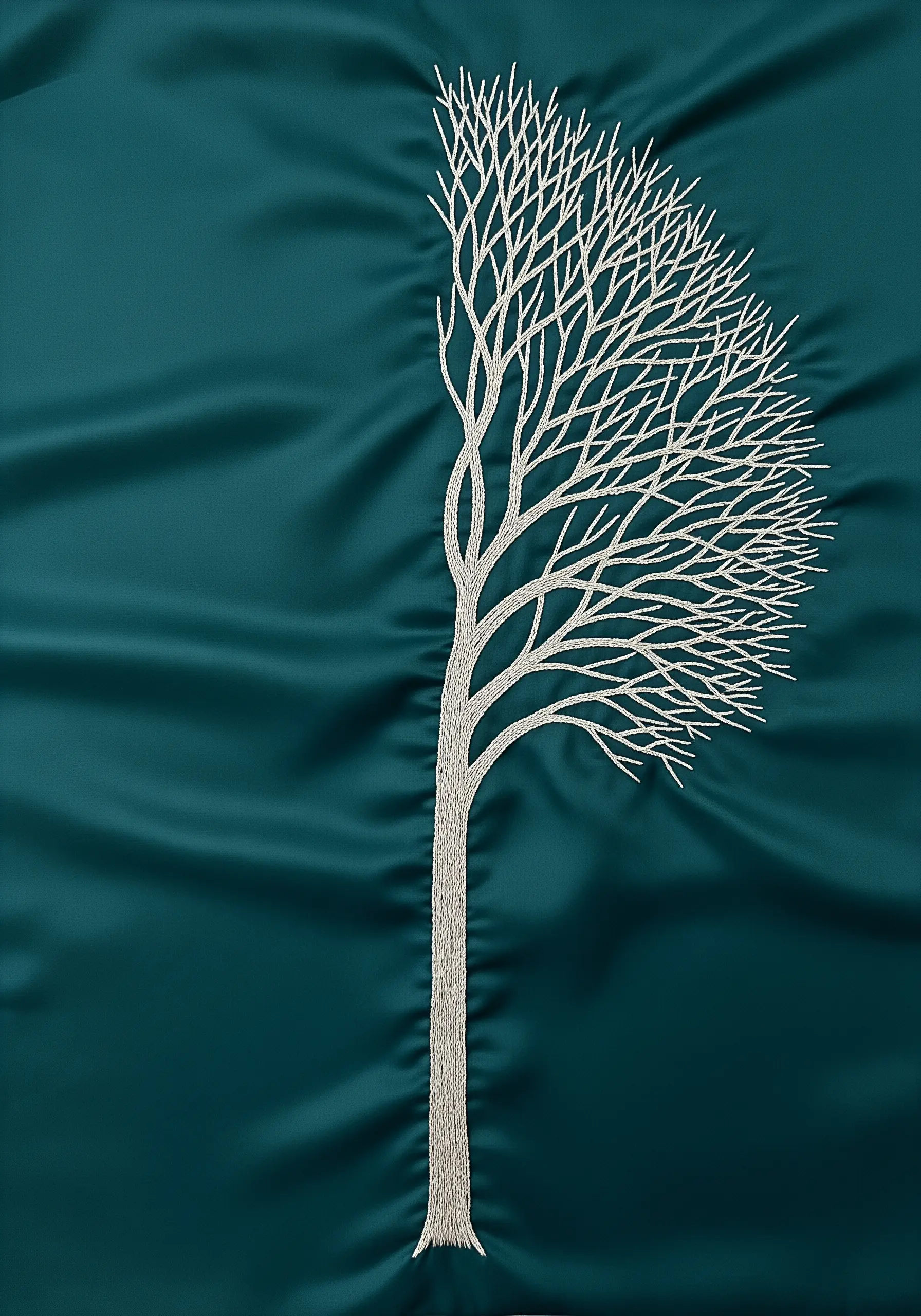
Create a visually arresting composition by presenting only half of a familiar object, like a tree.
Use a dense satin stitch for the trunk and delicate straight stitches for the intricate branches. The clean, straight edge where the tree is bisected makes the design feel deliberate and graphic.
Stitching a light-colored thread onto a dark, lustrous fabric like teal satin makes the motif pop, while the vast empty space next to it feels just as intentional and significant as the stitched half.
20. Weave a Focal Point of Pure Texture
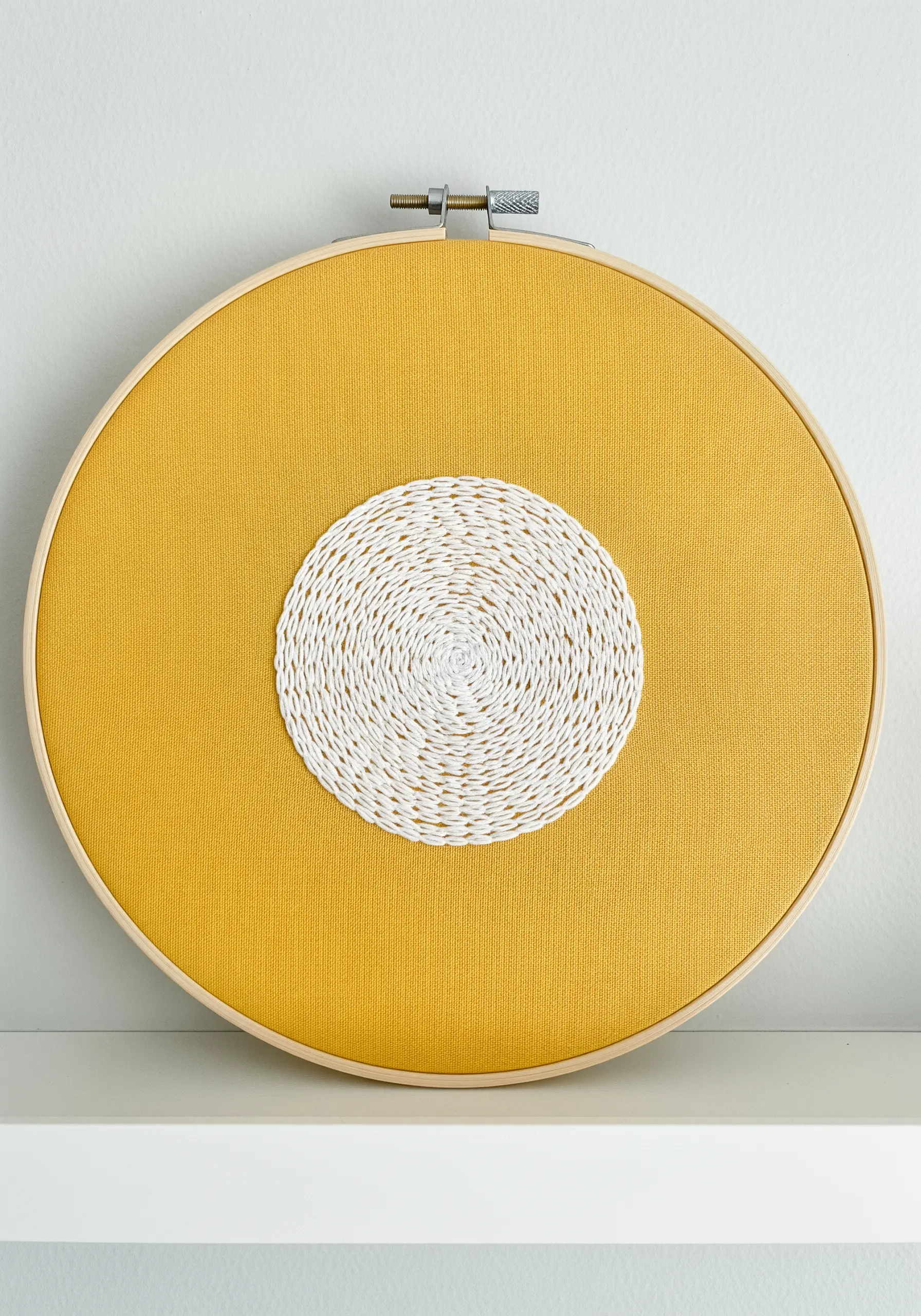
Draw the eye to the center of your hoop with a single, highly textural element.
Use a circular weaving stitch (or a woven wheel stitch) with a thick, matte white cotton thread to create a dense, satisfying medallion.
Placing this solitary white circle on a boldly colored, tightly woven fabric like mustard yellow canvas creates an undeniable focal point.
The simplicity of the composition allows the intricate texture of the weaving to take center stage.
21. Make a Statement with a Broken Circle
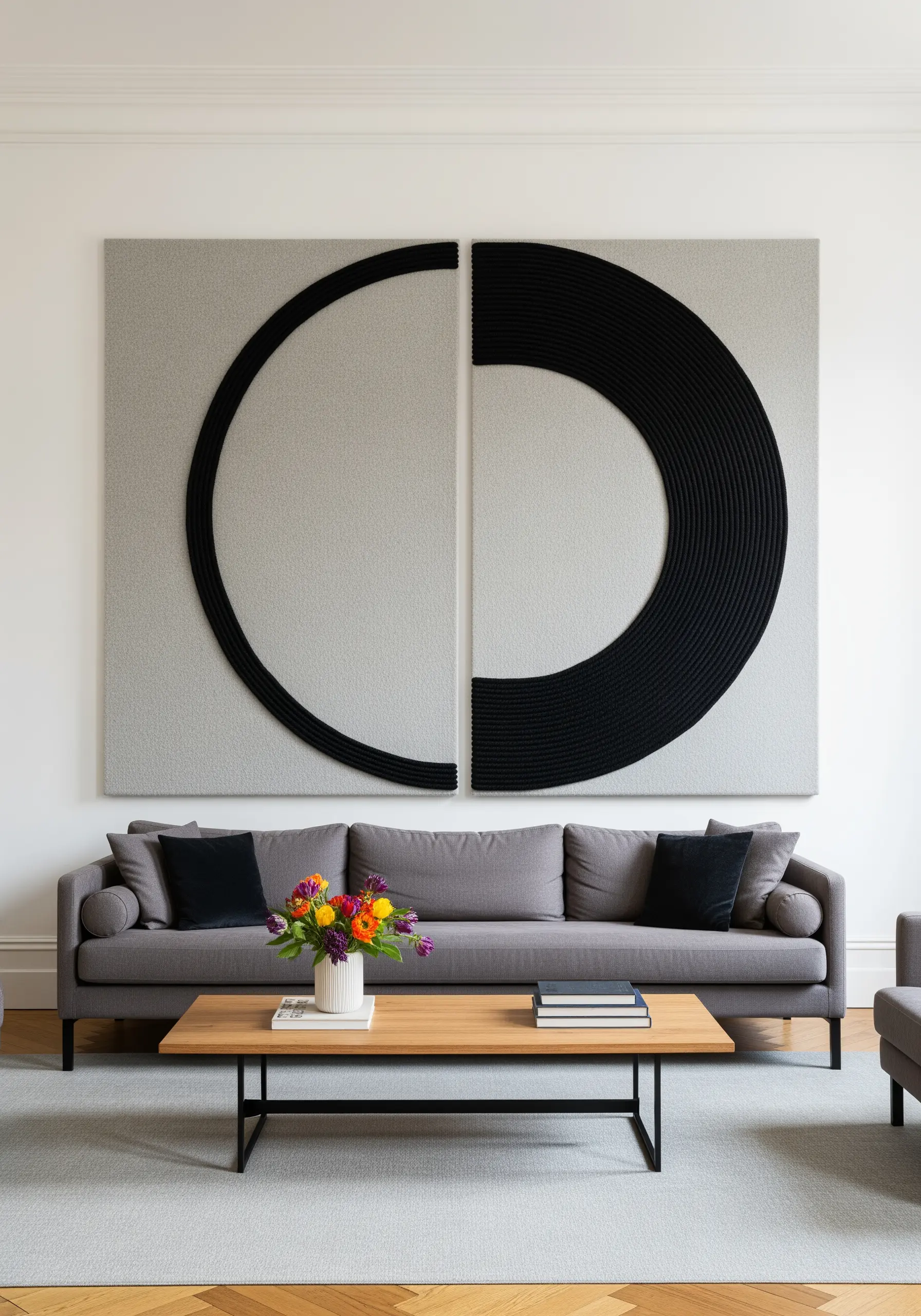
Amplify the impact of a simple shape by splitting it across two large panels.
Use thick, black cording, couched down in tight, concentric rows, to form a massive circle. The deep texture of the cord contrasts with the subtle weave of the light gray background fabric.
The physical gap between the two canvases interrupts the circle, forcing the viewer to engage with the piece more actively to complete the form in their mind.
This technique turns a simple geometric shape into a dynamic, large-scale installation.
22. Suspend Stitches in Ethereal Space
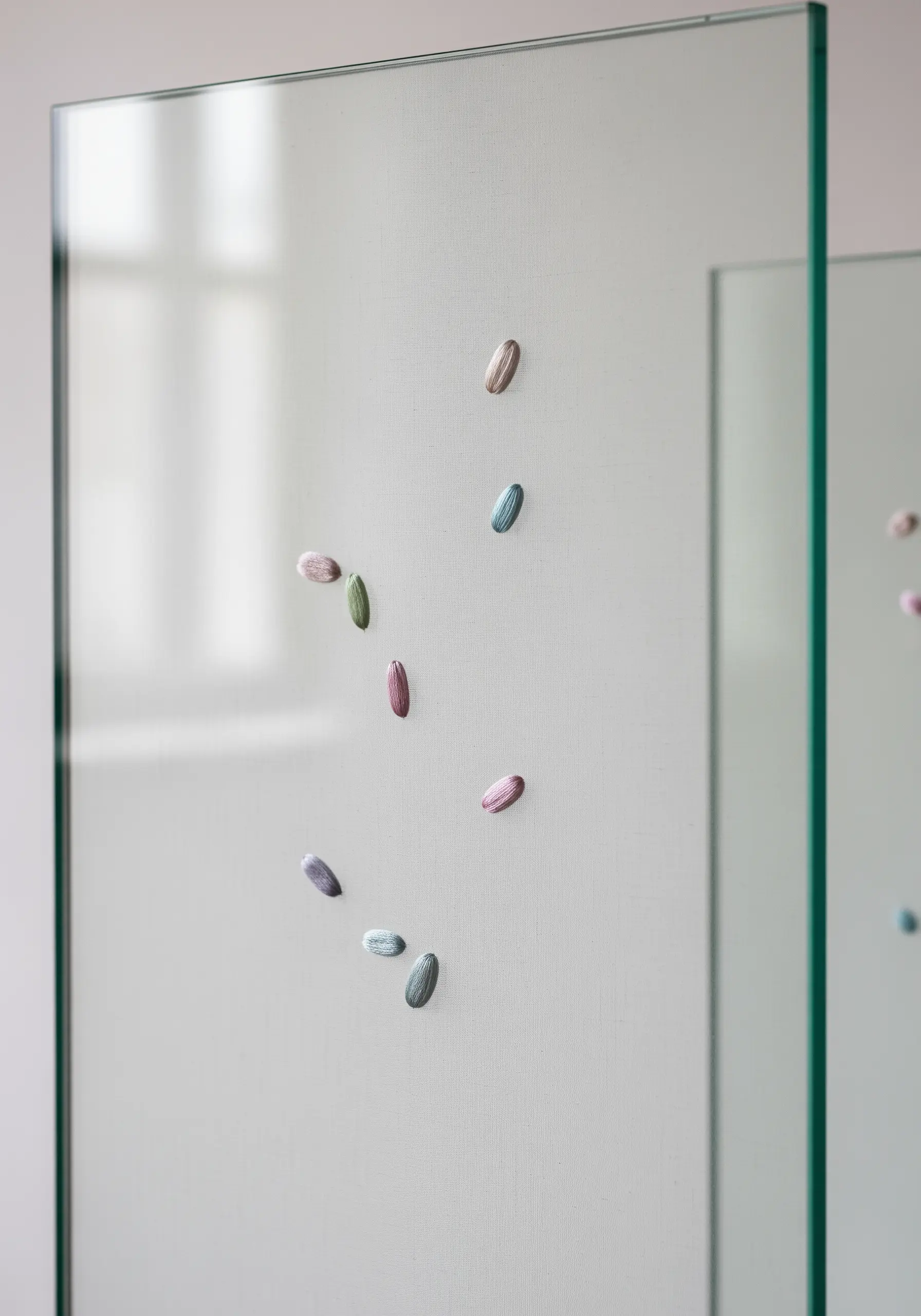
Create the illusion of floating motifs by stitching on a dissolvable stabilizer and displaying the results between glass.
Stitch small, solid satin-stitch shapes using subtly variegated thread to give each one a unique, gem-like quality.
Once the stabilizer is washed away, you are left with thread-only elements. Arranging these delicate “thread paintings” on a glass panel makes them appear to float in mid-air.
This advanced technique removes the background entirely, making thread and light the only mediums.
23. Electrify a Silhouette with String Art
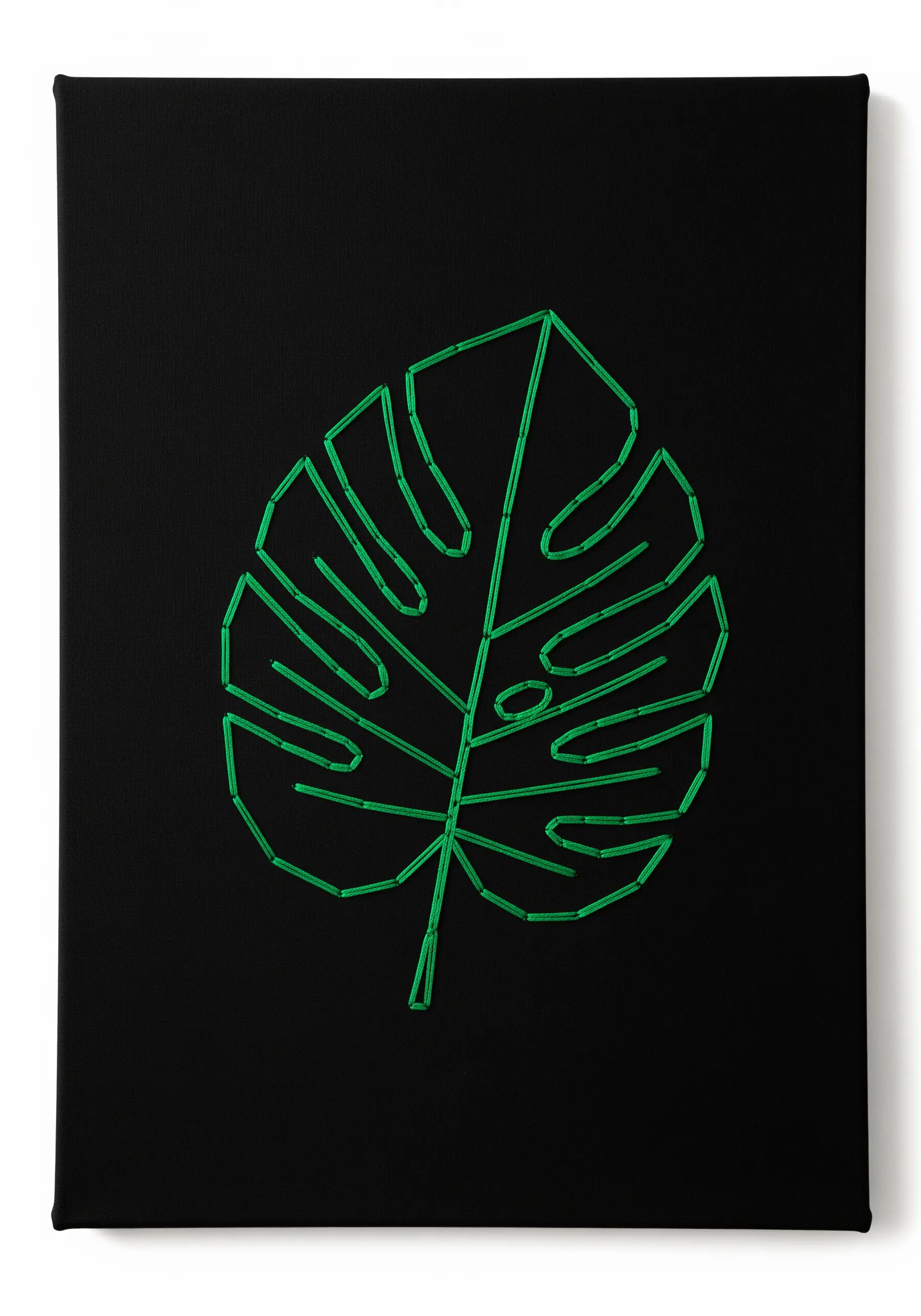
Give a classic botanical motif a vibrant, contemporary edge using string art techniques on canvas.
Outline a monstera leaf with small pins on a black-painted canvas.
Instead of a natural green, use a neon-colored thread wrapped tautly between the pins to create the iconic shape.
The technique results in sharp, graphic lines, and the electric color against the black background creates a bold, pop-art statement that feels both handmade and strikingly modern.
24. Paint with Texture Using a Pointillist Gradient
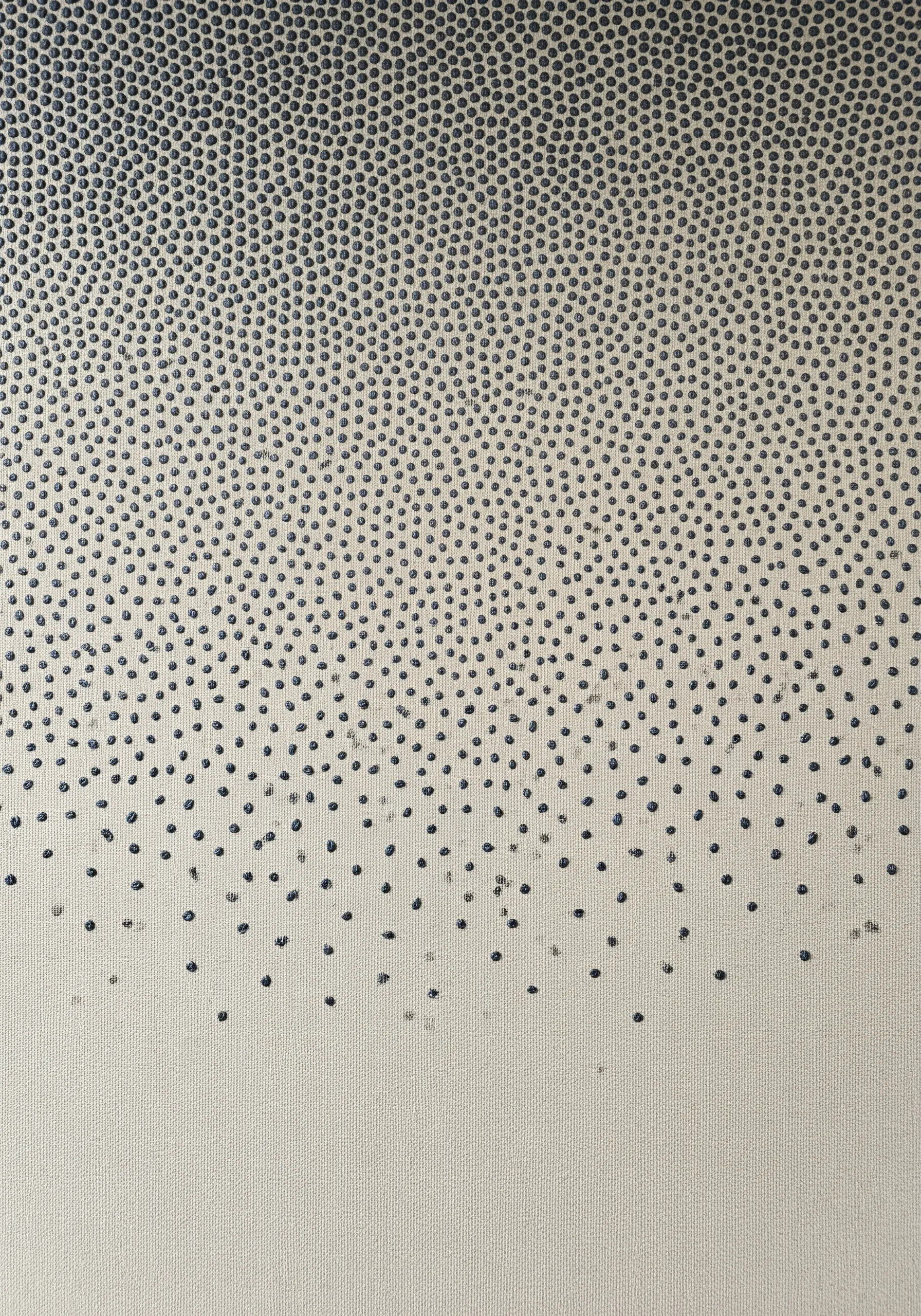
Use the density of your stitches to create a smooth, seamless gradient that fades into nothing.
Fill the top of your canvas with tightly packed French knots in a single dark color.
As you move down the fabric, gradually increase the amount of negative space between each knot until they are sparsely scattered at the bottom.
This pointillist approach creates a beautiful sense of depth and movement, showing how texture can be used to render light and shadow.
25. Define a Minimalist Horizon
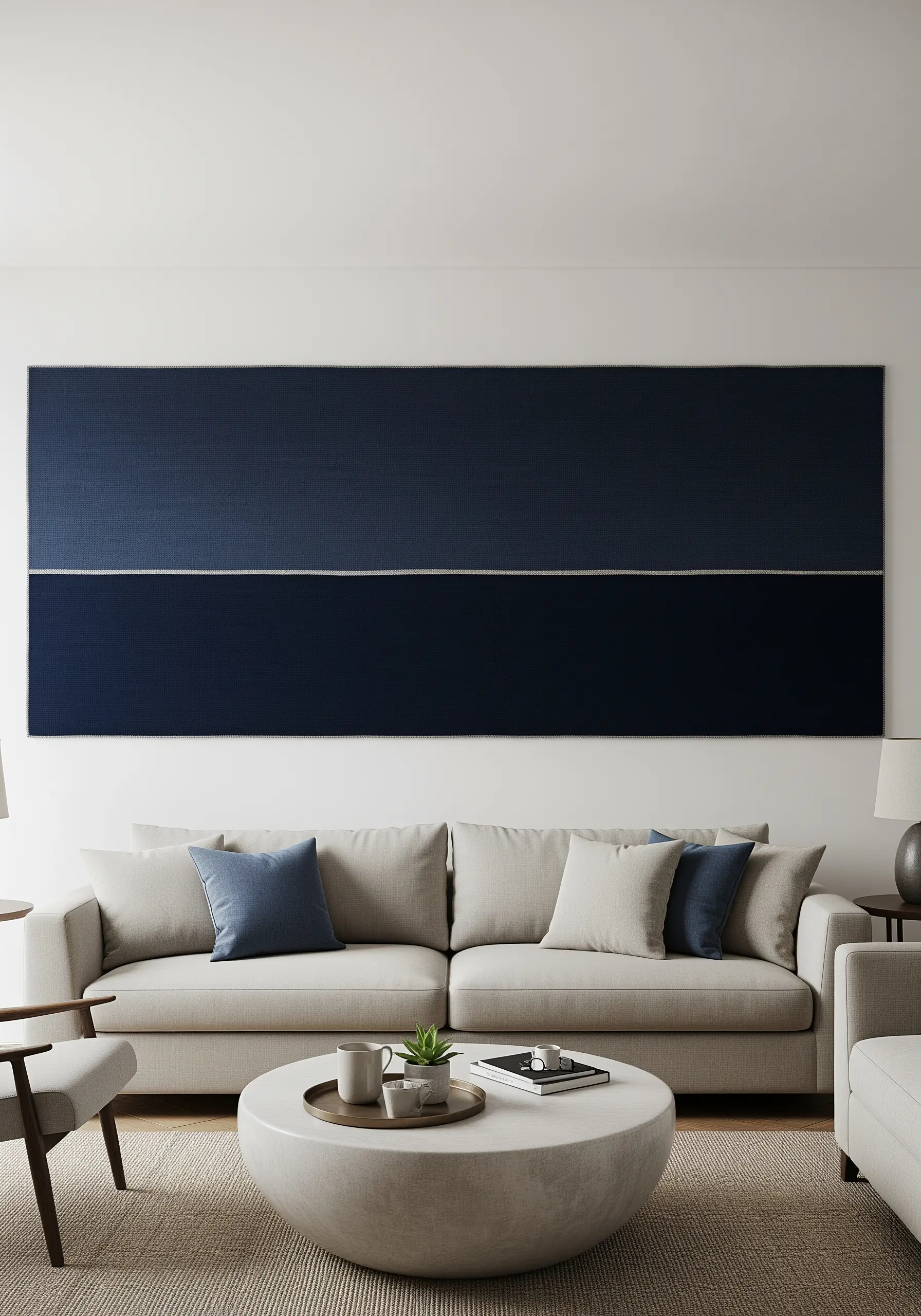
Evoke the feeling of a vast landscape or seascape with the simplest possible elements: two blocks of color and a single line.
Fill the canvas with dense, horizontal satin stitches, using two shades of a deep, moody color like indigo.
Separate the two color fields with a single, sharp line of a high-contrast thread, such as silver or white. This line becomes the horizon, transforming the abstract color blocks into a serene, minimalist landscape that invites contemplation.
26. Chart a Path with a Single Couching Line
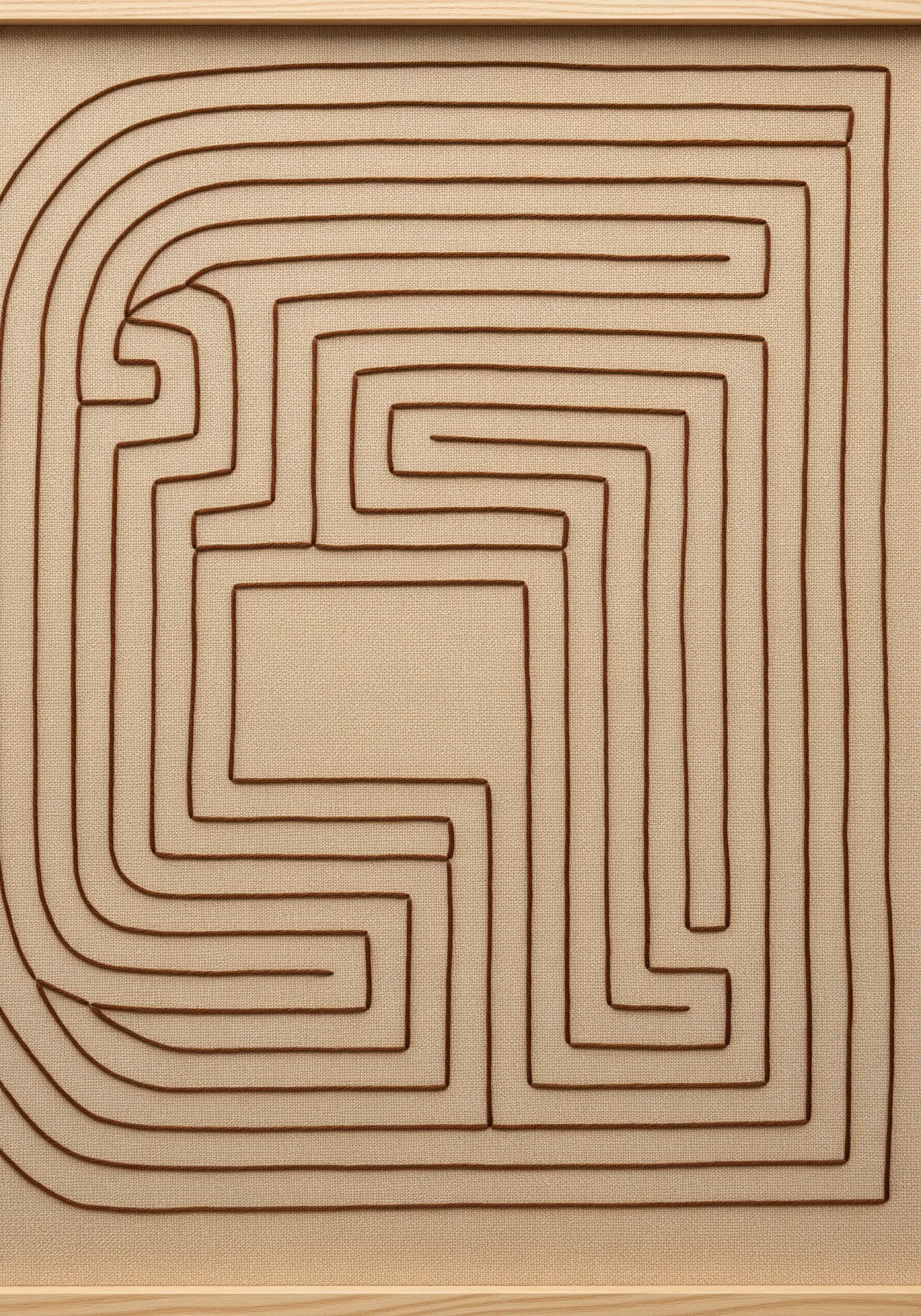
Create a complex, continuous design with a single, unbroken line by using the couching technique.
Lay down a thick, smooth cord or yarn in a maze-like pattern on your fabric.
Then, use a thinner, matching thread to tack it down with small, evenly spaced stitches. This method allows you to create sharp angles and fluid curves with a consistent line weight that would be impossible with other stitches.
The final piece becomes a meditative journey for the eye to follow.
27. Embrace Controlled Chaos
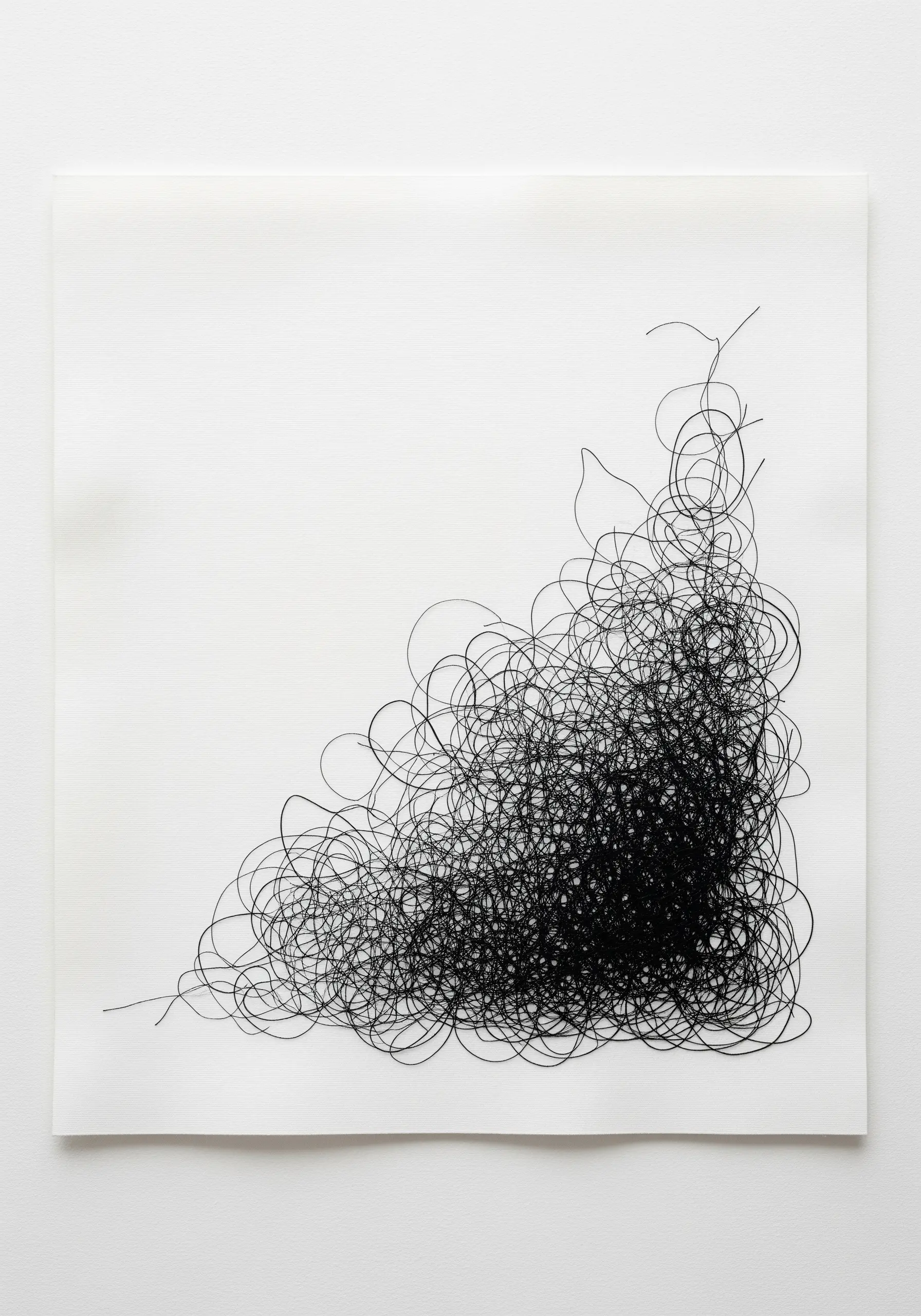
Create a dense, energetic texture by allowing your thread to tangle and build upon itself in a controlled area.
Using a fine black thread on a clean white surface (like paper or canvas), stitch freely and randomly, layering loops and lines until you’ve built a mass of chaotic texture.
By confining the “scribble” to one corner, the wild energy of the stitched area is balanced by the calm of the surrounding negative space. This is a perfect technique for expressing raw emotion through thread.
28. Layer Shapes with Architectural Felt
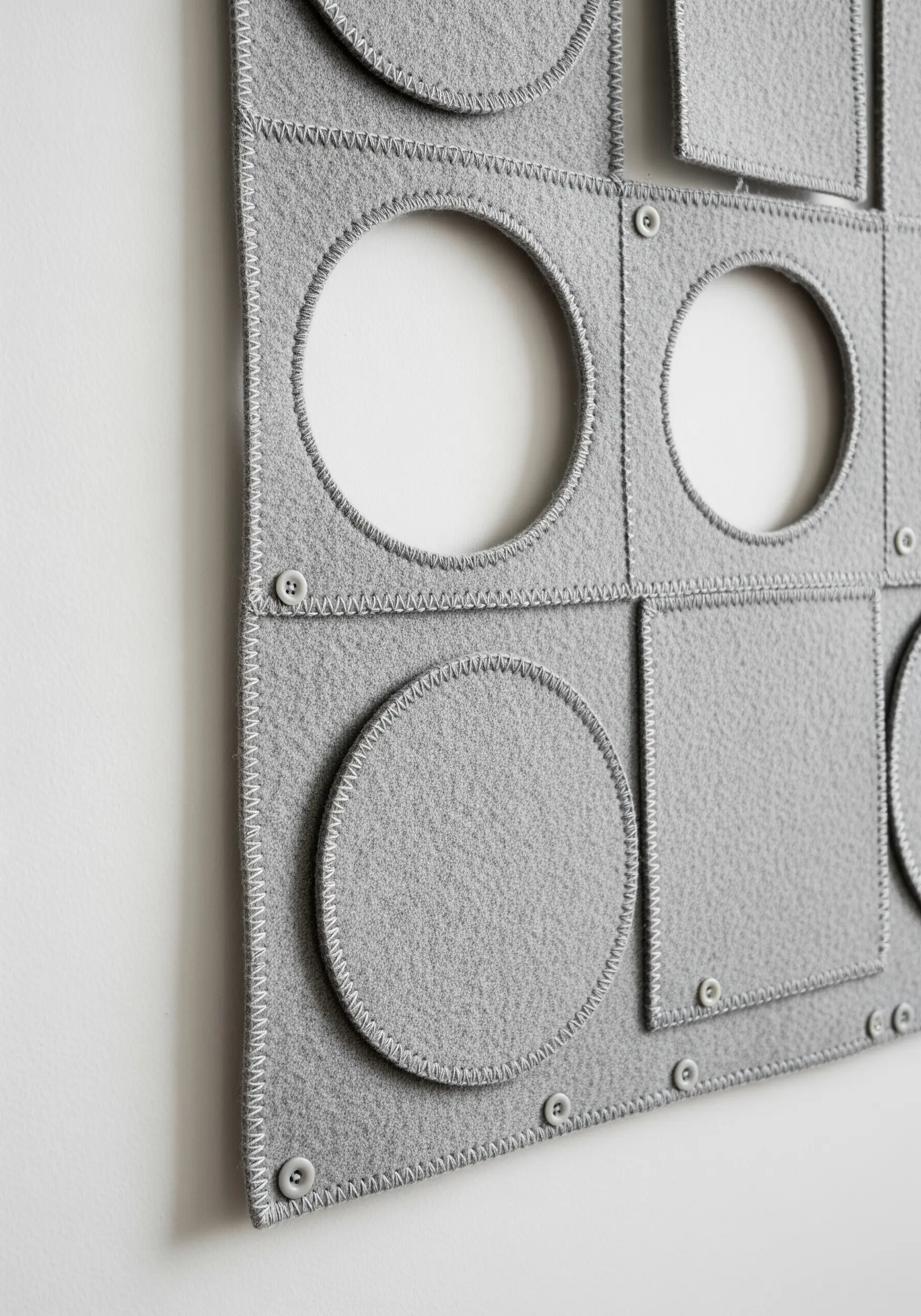
Explore positive and negative space by layering cut felt panels to create a modular, geometric wall piece.
Use a thick, sturdy felt as your base and top layers. Cut out graphic shapes like circles and squares from the panels.
Secure the layers together with a visible, decorative stitch—like a zigzag or blanket stitch—along the edges. This technique creates a sculptural, architectural quality, where the cut-outs become windows to the layer or wall behind.
29. Paint a Brushstroke with Yarn
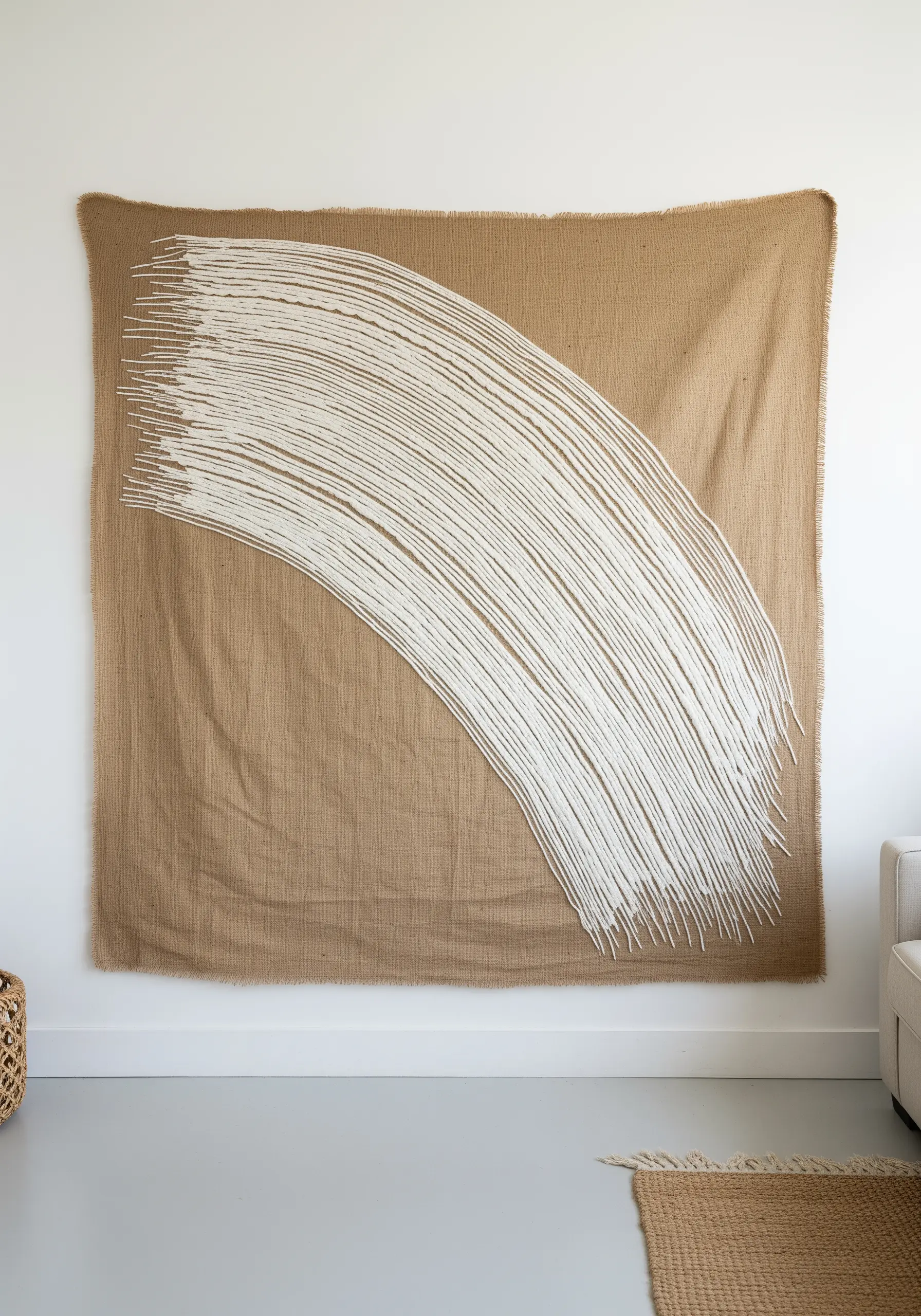
Mimic the expressive energy of a painter’s brushstroke using thick yarn on a rustic fabric.
Use long, parallel straight stitches, laid close together, to create a wide, sweeping arc of white yarn on a raw burlap canvas.
The texture of the thick yarn contrasts beautifully with the coarse, open weave of the burlap, creating a piece that is both graphic and deeply tactile.
This technique celebrates the raw materials and brings a painterly gesture to your textile art.
30. Add Dimension with Fabric Contouring
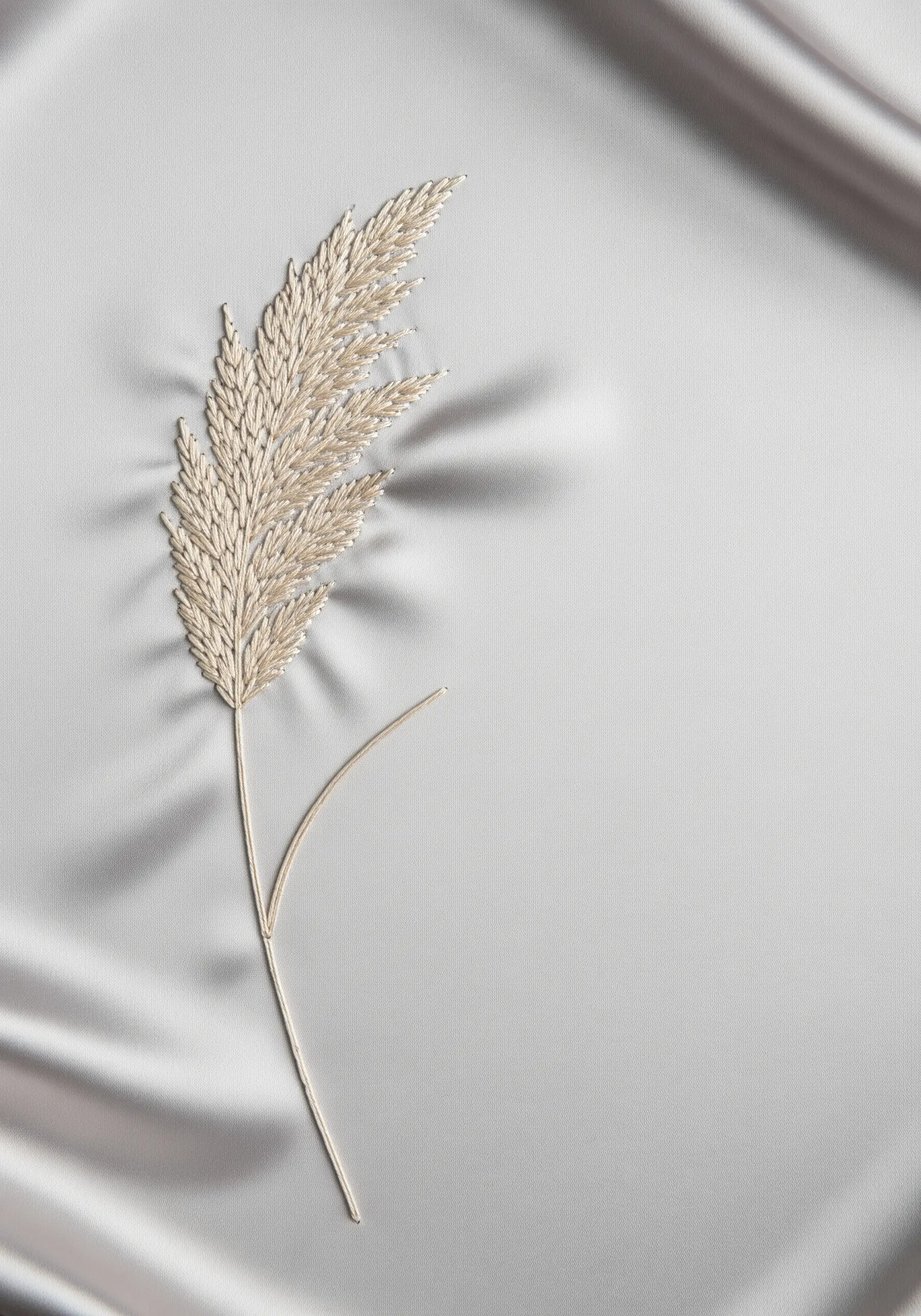
Use the tension of your stitches to gently sculpt the fabric, adding a subtle three-dimensional quality to your work.
Stitch a delicate motif, like this pampas grass, onto a lightweight, lustrous fabric like silk or satin.
As you place your satin and stem stitches, allow the thread’s tension to create slight puckers and contours in the fabric around the motif.
This effect creates natural shadows and highlights, making the embroidery feel like it’s organically growing from the surface.
31. Achieve Rhythm Through Grouped Repetition
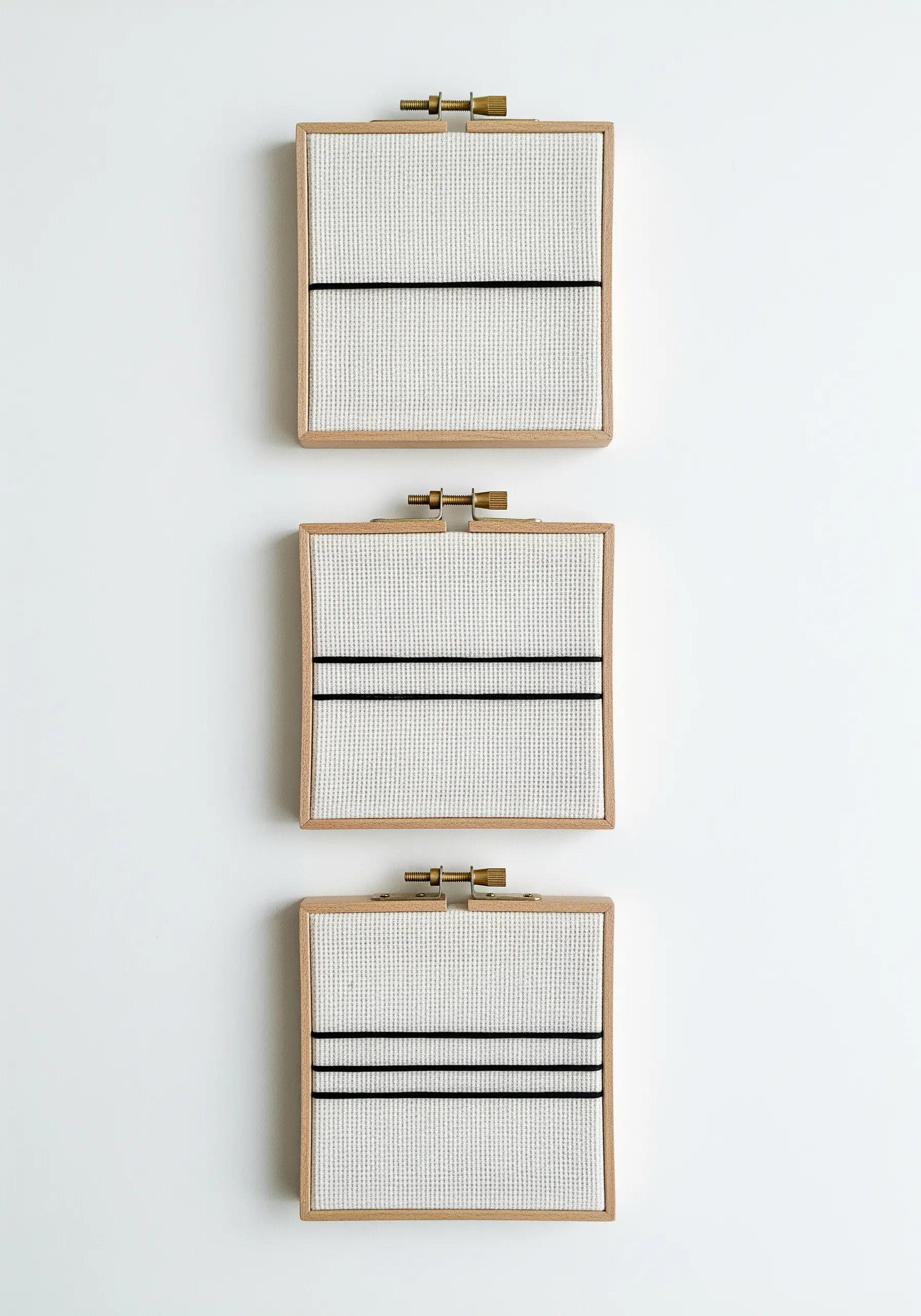
Turn the simplest of stitches into a sophisticated art piece by arranging them in a deliberate, repeating series.
Use small, rectangular hoops and a textured fabric like Aida cloth as your canvas.
In each hoop, stitch a few perfectly straight, taut horizontal lines of black thread.
By displaying the three hoops together as a triptych, the simple lines create a sense of rhythm and cohesion, proving that minimalism is about thoughtful arrangement, not just simplicity.
32. Introduce a Sculptural Accent
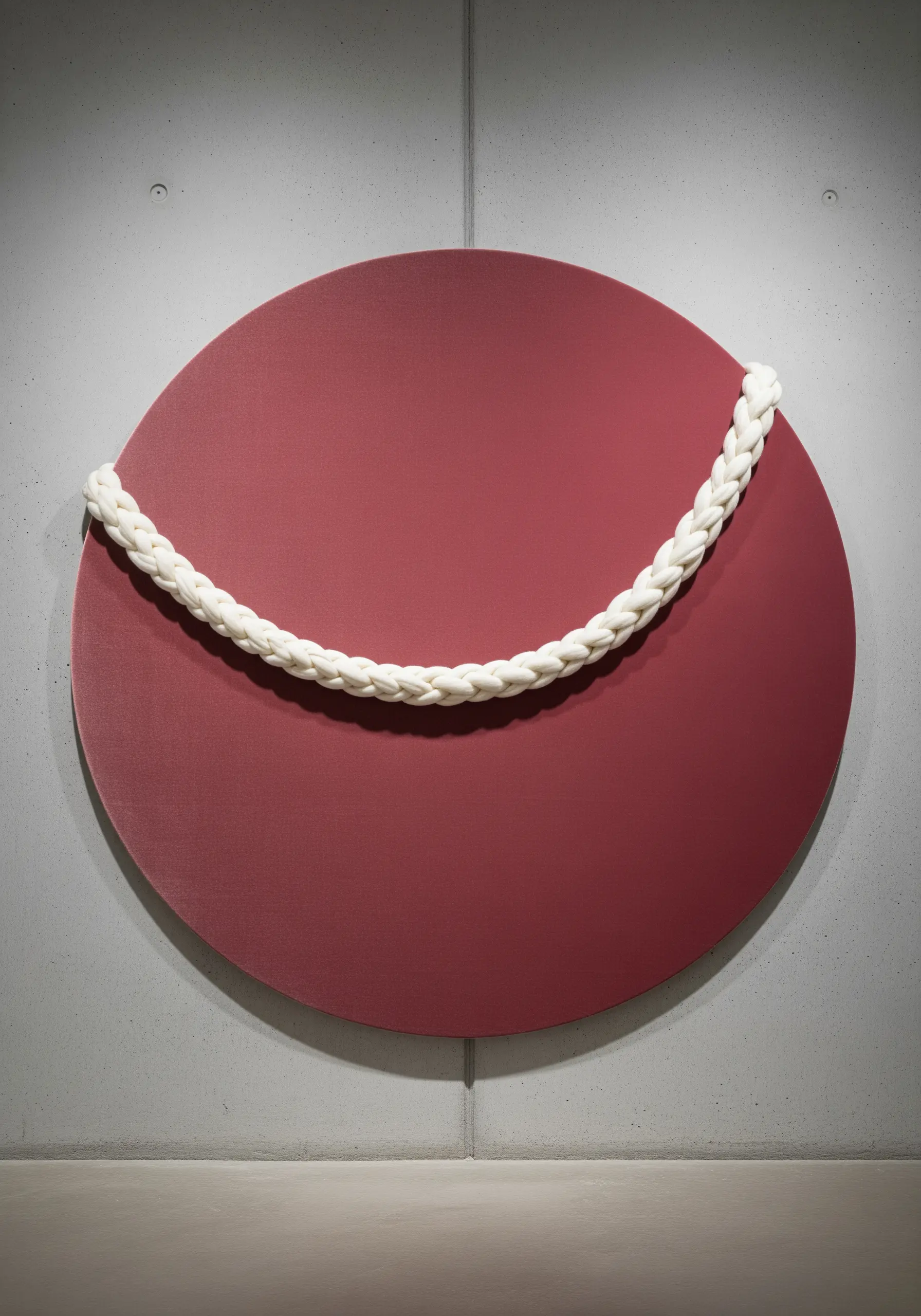
Create a striking focal point by adding a single, highly textural and three-dimensional element to a flat surface.
Mount a smooth, matte fabric onto a circular board or canvas.
Then, appliqué a contrasting element, like this thick, white, pre-braided cord, across the surface in a gentle arc.
The stark difference between the flat, colored plane and the chunky, sculptural form creates a powerful visual statement that bridges the gap between embroidery and sculpture.
33. Explore Subtlety with Tone-on-Tone Texture
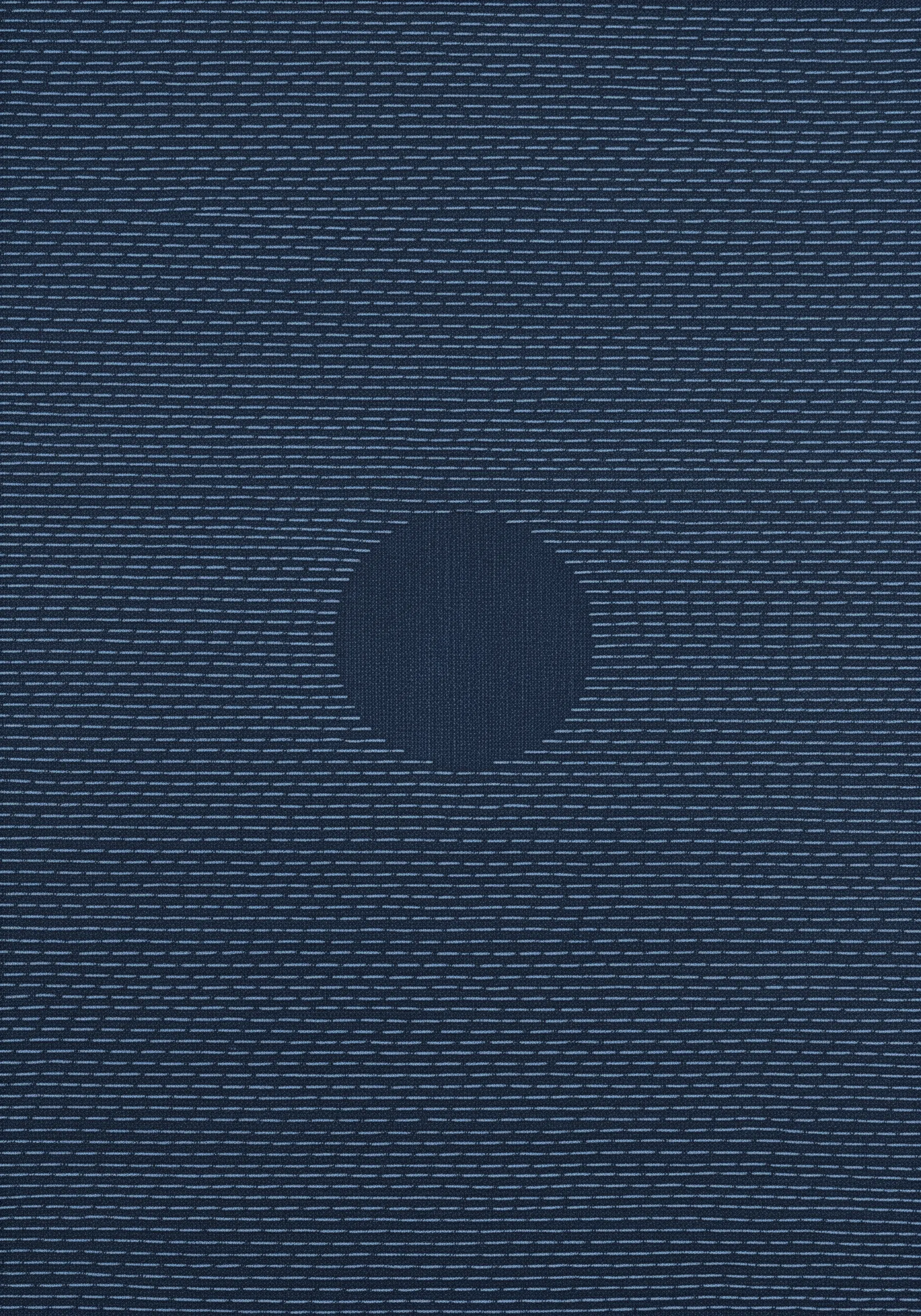
Create a sophisticated design that rewards closer inspection by using thread that is almost the same color as your fabric.
Stitch a dense pattern of short, horizontal running stitches using a thread that is just one or two shades lighter or darker than your background fabric.
By leaving a shape, like this central circle, unstitched, you use negative space in reverse. The design is revealed not by what you stitch, but by where you don’t, creating a subtle, elegant effect visible through shifting light and shadow.
34. Give Presence to a Small Motif
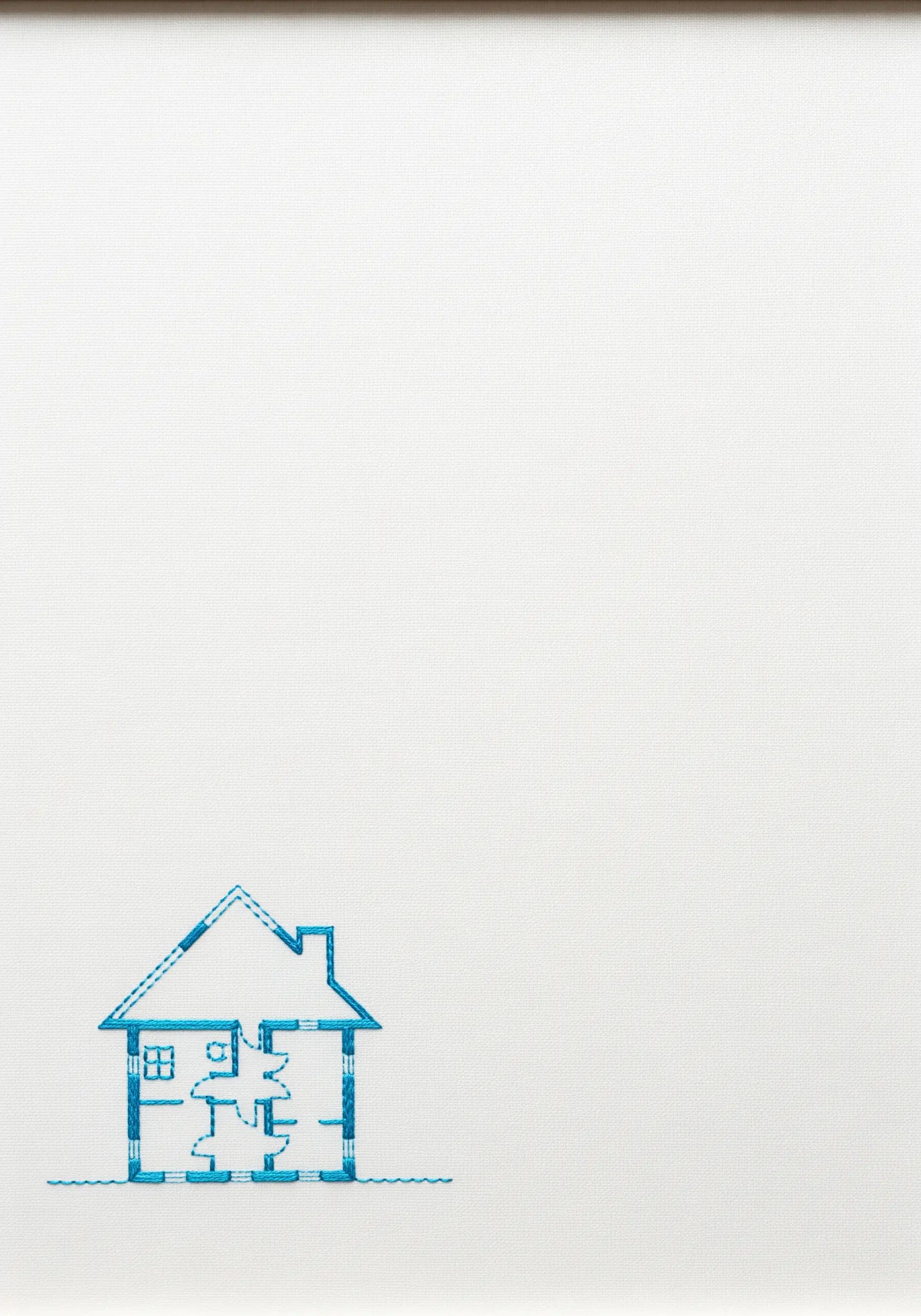
Emphasize the importance of a small, detailed subject by placing it within a vast expanse of negative space.
Use a simple backstitch to create a clean line drawing, like this architectural floorplan, in the corner of a large piece of stretched canvas.
The emptiness of the surrounding fabric acts as a natural frame, drawing the viewer’s eye directly to the intricate details of your stitching.
This technique communicates confidence and makes the small motif feel precious and intentional.
35. Construct Form with Woven Thread
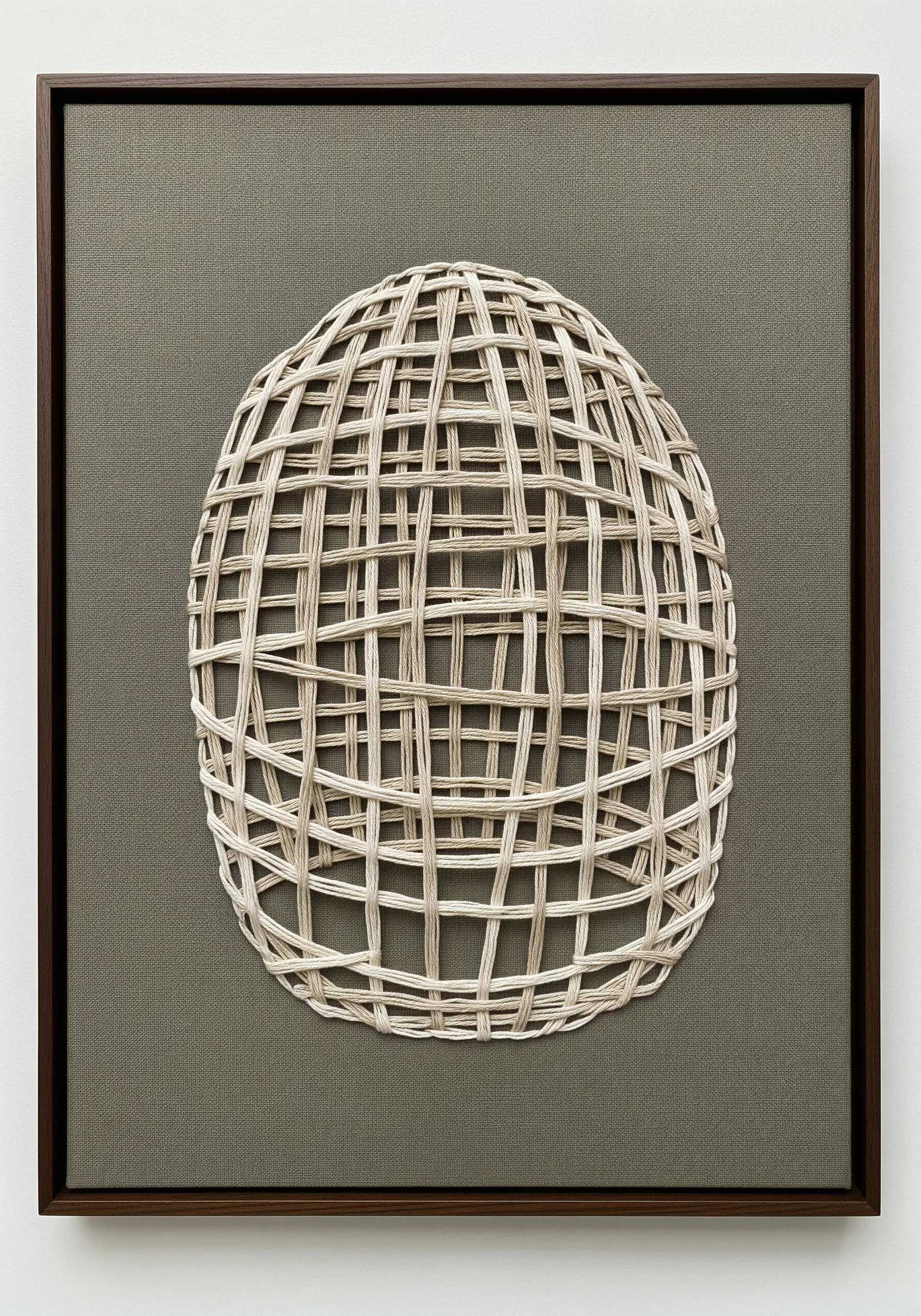
Build a three-dimensional, basket-like form directly on your canvas by weaving threads together.
First, create a grid of long, straight stitches to act as the warp. Then, use a blunt needle to weave a second set of threads—the weft—over and under the warp threads.
By pulling the threads taut and allowing them to curve naturally, you create a sculptural, spherical shape that appears to lift off the fabric surface.
This technique combines the principles of weaving and embroidery to create stunning textural art.
36. Define Space with a Single, Perfect Outline
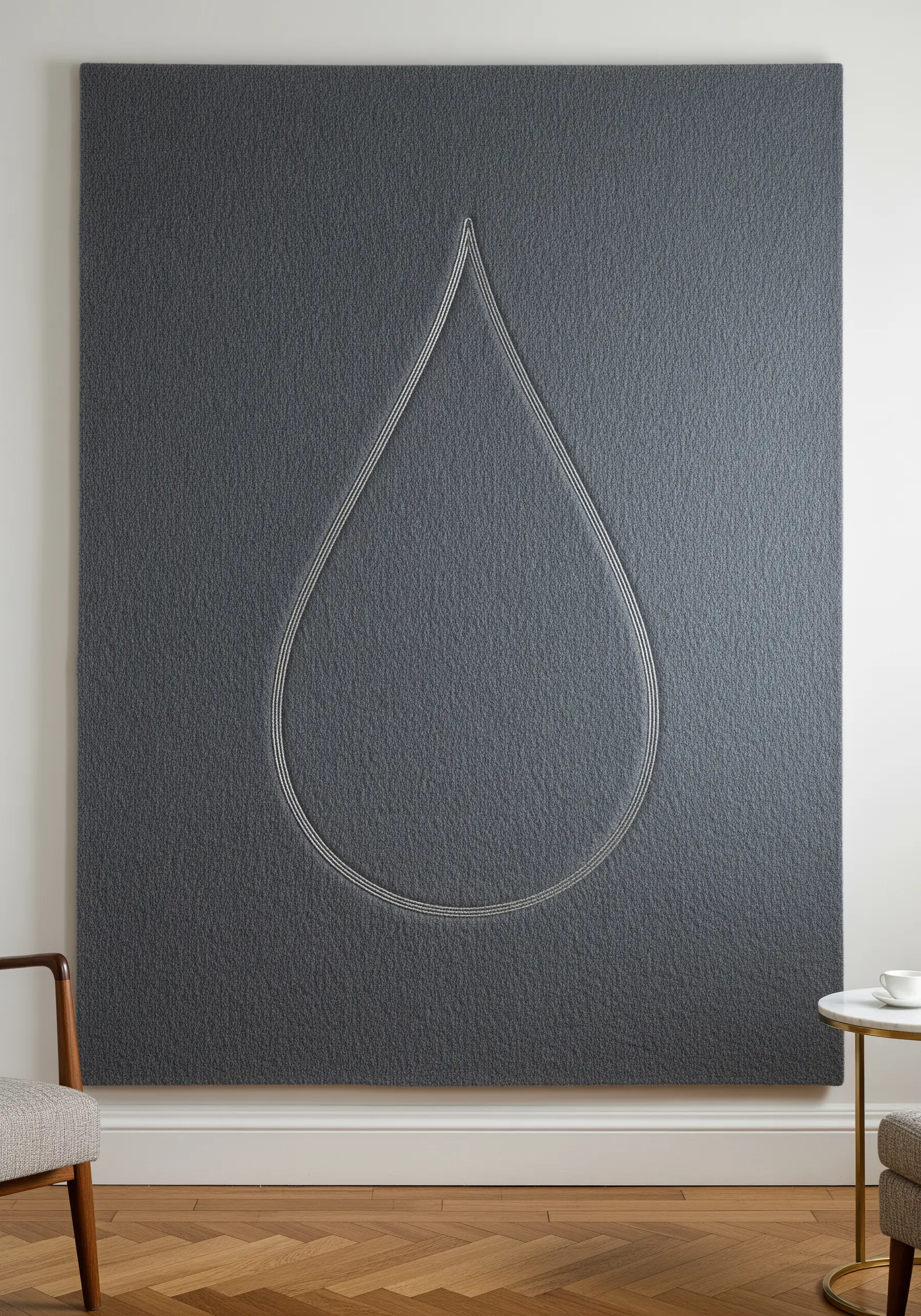
Capture the essence of a shape using only its outline, leaving the interior as a quiet field of negative space.
Use a fine metallic cord or a precise double-threaded backstitch to create a flawless, elegant line, like this teardrop.
Mounting it on a richly textured, dark fabric—such as charcoal wool or felt—enhances the luminosity of the outline.
This is the ultimate exercise in minimal luxury, where the simplicity of the form and the quality of the single line do all the talking.